Scarlet Morning

Since their bad-tempered caretaker, Hestur, disappeared, Viola (fourteen) and Wilmur (fifteen) have lived alone, scavenging, reading The Book and making up games on a dead island in Dickerson’s Sea. Hestur told the children about how the land was ravaged by salt after a terrible event – the Great Blow. This happened after Scarlet Morning, a bloodthirsty pirate had murdered the much-loved queen, Hail Meridian and taken her crown, so it was said.

When a pirate ship, the Calamary Rose arrives, its Captain, Cadence Chase, is searching for The Book that Viola and Wilmur have, they offer it in exchange for being allowed to go along with her.
Thus begins an epic, enormously dramatic adventure involving secret puzzles, revelry with a crew of pirates; possibly even the appearance of the aforementioned Scarlet Morning, and most challenging for the two youngsters, separation from one another.

The author’s cleverly constructed world building is superb and the story highly entertaining and sometimes creepy, made all the more so by his black and white illustrations, the diverse characters, and the cliff-hanger ending that leaves readers eager for what’s to follow.

Highly recommended for older readers who love enthralling magical fantasy adventures. Buy for individuals and for school collections.

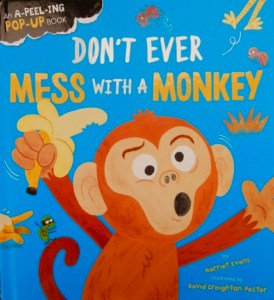
First Friends: Colours, First Friends: Opposites / Don’t Ever Mess with a Monkey

Colours begins with the nursery children and their teachers heading outside to play. The instruction is, ‘Look high, look low. / Look all around!// So many colours/ to be found.’ There are black ants marching across the sand, pink worms wiggling on two children’s hands, a red slide, a blue swing and a purple bar to swing along, as well as a wonderfully messy opportunity to use mud and leaves to create mudpie faces. Meanwhile at the water tray a floating and sinking activity has yellow, orange and white objects to test. Then just before snack time everybody blows bubbles with rainbow colours. The final spread encourages interactive learning with a ‘can you find’ showing all the coloured items featured throughout the book.
In Opposites, we join the children preparing for a rest time with some winding down movements that involve stretching high and low, then yawning, mouths open and sleepy eyes closed. When everyone wakes up, some are smiling, others frowning as they stack the mats up and take down the toys.
During the remainder of the session the narrative builds in other opposites – empty/full, small/big, behind/ in front and the final spread asks listeners to act out eight pairs of opposites.
Both books have bright, inclusive illustrations that show a diverse cast of characters.

The latest in the Don’t Ever pop-up series features five wild animals that live in the savannah region. Readers/listeners are warned against riding a zebra, boxing with hyenas, question the decision of rhino, rob an ostrich or give a monkey food that isn’t to its taste. For sure, the results will be far from pleasant for anyone who ignores the warning on each spread.
Harriet’s rhyming text accompanies David Creighton-Pester’s dramatic scenes, each of which includes one or more bit part players that young children will enjoy spotting

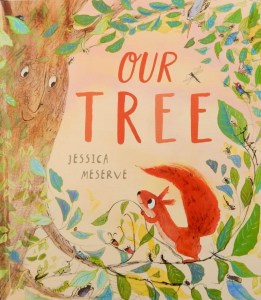
Our Tree

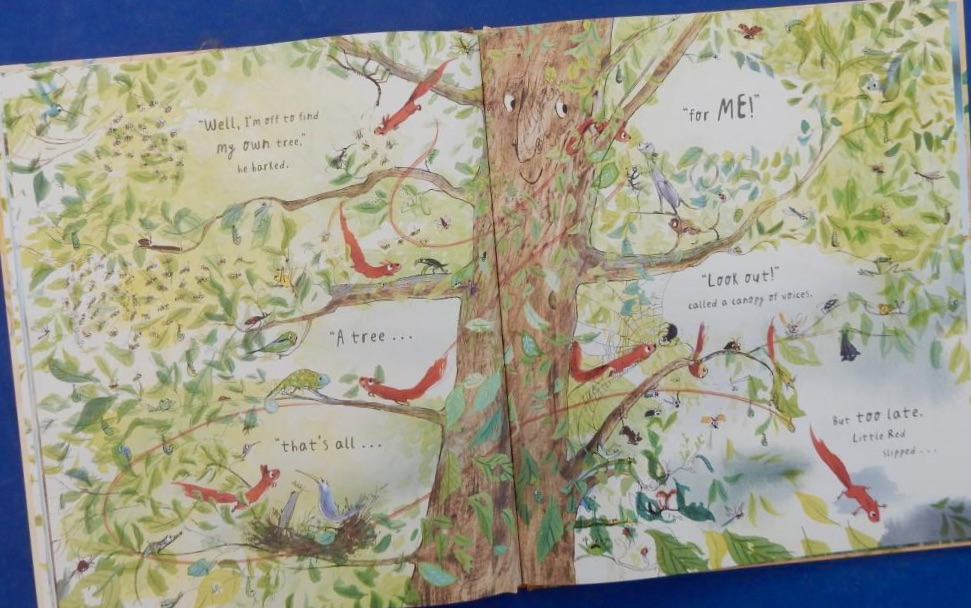
When Little Red the squirrel scampers up the trunk of the titular tree uttering, “This tree is all for me” he receives some surprises and several lessons.

Before long the squirrel realises that he is not on his own: animals of all shapes and sizes spend time on or around the tree. They use its branches to rest upon, they nibble its leaves, use it as a place to congregate; Elephant even enjoys using it as a back scratcher but none of these trouble Tree; rather it makes them feel welcome. Little Red has no intention of sharing however and decides to seek a tree of his very own, but in his haste, he slips,

tumbles and lands on something soft.

What follows is a somewhat perilous encounter with a leopard and thereafter a change of heart from Little Red. He finally realises that to be surrounded by friends who are ready to cover your back is extremely valuable. Will his host allow him to stay? Indeed yes and Tree even introduces Little Red to a special new playmate. Undoubtedly, life is better together: community is the way to go.

This message comes across loud and clear from Jessica Meserve’s treasure of a tale with her delicately detailed illustrations. It’s one that shows young humans how important it is to learn to accept others and to share.

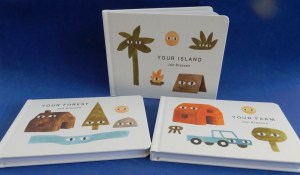
Your Forest / Your Farm / Your Island

Eyes, eyes and more eyes. Every element in each of the three books has an eye, most have two and they all begin the same way. ‘This is your sun. It is coming up for you.’ Thus it positions the child reader as central to the whole.

Your Forest then gives that child suggestions to allow them to assemble a woodland scene comprising trees, a cabin, rocks, a friendly forest ghost (that only appears at night), a stream and a bridge. As the sun sets, the eyes close and the forest sleeps, all but one thing …
Sleepy time pleasure of the inimitable Klassen kind.

Like the previous book, as well as starting at sunrise, Your Farm, ends at night with the young reader receiving permission to sleep and think about the following day. Little ones then meet in turn a tree, a barn, a horse (to go in the barn) ditto some hay, a truck – in the barn too, a stool upon which to sit beneath the tree and a fence to surround everything. The sun then starts to sink, the eyes become sleepy and eventually close altogether. On the final page, it’s the moon that is wide-eyed and wide awake.

In common with the other books, little readers are given the power of creation of Your Island and it’s evident from the outset that the objects belong to the child. Item by item a palm tree, plants, a tent (to go beside the plants beneath the tree, a fire of the magic kind for it never goes out, a boat, a bird that takes to the wing from time to time comprise the island which is fully assembled come sundown. Then eyes close, the island sleeps , the reader contemplates tomorrow on the island under the watchful eyes of the moon.Another whimsical wonder to fuel the imagination and provide pre bedtime pleasure of the empowering, world-creating kind. If you have a toddler, I urge you to try all three and see … see… see.

Wild Magic: Legend of the Black Lion

Meet twins Misha and Ziggy. They each have a secret superpower: Misha can talk to animals and Ziggy can transform into animals of all kinds. As the story opens the summer holidays have just started when their Dad, a wildlife photographer, receives a phone call from his producer. He’s off to Ethiopia the following week to film the Black Lion recently spotted there. However when he rings Grandma Joy to ask her to look after the twins, he discovers she’s somehow got the dates mixed up and is on a Caribbean cruise. Consequently Dad has no option but to take the twins with him to Ethiopia. Needless to say they’re absolutely thrilled: maybe they will see a Black Lion.

However, soon after arriving Dad receives bad news; the Black Lion hasn’t been seen for several days. Moreover poachers have been sighted in the area. While Dad and the crew work on a new plan to find the lion, the twins start finding ways of their own to communicate with the local animals.

Before long they learn that the Black Lion has been hurt when poachers tried to steal him

and now he’s in great danger.. The twins are determined to save him but can they?

Abiola Bello’s pacy tale is just right for younger KS2 readers. Emma McCann’s black and white illustrations add gentle humour to the telling and in addition to the story there are some facts about both Ethiopia and black lions.

Snack Please!

Along with many little humans (including some of my relations), Gertie mouse has gone from an eager devourer of all kinds of food to a constant demander of snacks – many varieties of snacks especially her favourites. The result is that she feels too full when it comes to meal times and the sharing of the delicious meal her daddy has so painstakingly prepared.

And, no matter what she and Daddy do together, Gertie would always say, “Snack, snack”. Feeling totally frustrated her dad decides something must be done so he takes his little snacker to see Grandma at the community garden. Surprisingly little Gertie gets so involved with helping the workers there that she barely even thinks of snacks. Moreover, when her gran asks what Gertie would like to do with the fruits of her labours, she surprises her dad with her idea.

What a delicious celebration of preparing and sharing food: any parent who has a snack fanatic like Gertie would do well to get their hands on this fun story that looks at young children’s food habits.
Georgie Birkett’s illustrations are full of wonderful details that both adult readers aloud and young children will enjoy exploring; and her mouse characters are SO endearing.

Signs of Survival: A Memoir of the Holocaust

This is a true story of two sisters, Renee (age ten) and Herta (age eight). It’s based on video testimonies of the Jewish siblings born and living in Bratislava, the capital of what was then Czechoslovakia, during World War II. Both the girls’ parents and Herta are deaf, so they all communicate by means of sign language with Renee acting as the family’s ears. The book opens in 1943 with Renee’s voice and then alternates between hers and Herta’s.

By then, so adept has Renee become at recognising the sound of soldiers’ boots beneath the windows of their apartment that she’s able to warn other family members of danger, ie Nazi soldiers rounding up fellow Jews in the town.

Having been sent to a farm for safekeeping by their parents, the sisters eventually find themselves the last Jews in Bratislava and they give themselves up to the Slovak police. The police put the girls on a train bound for Bergen-Belsen, to join their parents so they were told. However what the girls didn’t know was that their parents had been sent to Auschwitz.

We read vivid accounts of the horrors the siblings witnessed, but what stands out is the power of the relationship between the sisters and Renee’s protectiveness that sustained them through horrendous ordeals.

When the war ends, the sisters are sent to Sweden where they learn their parents are dead; there they spend three years. The final part tells of the girls’ post war lives in the USA, where with the help of the Red Cross, they arrived to live with American relatives residing in New York in 1948.

Then follows a poem written by Renee, an epilogue written by Joshua M.Greene giving historical background relating to the Holocaust, and some photographs.

Simply told, this compelling, enormously moving story will linger with you long after you close the book.
It’s a must read for primary children especially those learning about World War Two in their history lessons.

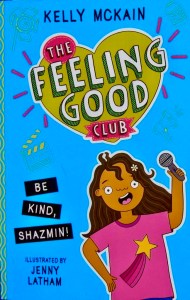
Sona Sharma: Wish Me Luck / The Feeling Good Club: Be Kind, Shazmin!

With its Tamil Nadu setting, the Sona Sharma series is one of my very favourites for younger readers. In this fourth story, Sona’s much-loved teacher is getting married and the entire class has been invited. This she learns on the last day before a mid-term break. So far so good, but then Sona sees on the invitation that Miss Rao’s husband to be comes from a place called Vijayawada that’s several hours away by train and by tradition the bride moves to live in her husband’s city. Definitely not good and Sona and her friends want to try and stop this happening so they start making a ‘lucky’ plan to keep Miss Rao as their teacher.

With this in mind, despite her list of things to do during the break, Sona is preoccupied with the possibility of having to bid farewell to her teacher. So. aided and abetted by Elephant, she begins to search for lucky charms . The night when her Amma hears about all of this, her response is, “Fortune favours the brave, Sona. … If you want something, go and make it happen.”

Sona’s way of doing so is to write a petition, get all her friends to sign it, as well as others at the wedding and then after the ceremony, hand it to their teacher. She puts a great deal of effort into this project; but what will be the outcome?

With its theme of embracing change, this enchanting story exudes warmth and family love throughout and as always, Chitra has woven several South Indian Hindu customs into her narrative including some details of the Kanyadaanam ceremony at the wedding

and Paatti’s story about Rudraksha beads, prompted by the seeds Sona’s friend Renu adds to their collection of lucky charms. Whether read aloud or alone, Jen Khatun’s illustrations add to the delights of the book.

‘Sometimes I miss the old Charita so much it actually makes my stomach hurt.’ So writes her younger sister, Shazmin in her journal at the start of this third episode in the series wherein Bella, Archie and Shazmin help one another to face and cope with the things that worry them by means of supportive friendship and mindfulness activities.

Shazmin is upset that her elder sister, Charita, now a teenager, no longer wants to hang out with her. In a desperate attempt to impress Charita, she persuades Bella and Archie to participate in the making of a video with her, but she keeps the real reason for so doing to herself.

The three friends start working on the video but things keep going wrong, there are misunderstandings and squabbles and the project seems to be heading for the scrap heap.


Is there any way that what started out as a potential prize-winning video, can be rescued, even if that means it taking a rather different direction. And can harmonious relations be restored both in Shaman’s family and with her two Feeling Good Club buddies? Perhaps, but it will take some mindfulness by all concerned.

Children’s well-being has really come into focus since covid and Kelly McKain’s series of highly accessible stories with personable characters openly sharing their emotional ups and downs in situations that children can relate to, provides gently humorous, warm much-needed mentoring in book form.

Ember Shadows and the Lost Desert of Time

Having saved her sister, taken down the Fate-Weaver and freed the future, Ember expected things in Everspring to be easier. However not everybody is happy. Ember herself is struggling with the consequences of her actions for there are people who don’t know how to live their lives without the Fate Cards telling them what to do. Then, she discovers something awful on Mount Never: someone has been cutting people’s Fate Threads. 

Convincing herself that this is her fault, Ember is determined to stop the Thread Cutter and so together with Hans, she sets off in search of clues, eventually realising that her only chance of preventing the Thread-Cutter from doing more harm is to go back in time to put a stop to it.

Following the strange signs S.E.C.R.E.T. lead Ember and the ever supportive Hans into an astonishing and unbelievably strange world. It is fortunate indeed that Hans is with her for Ember encounters several characters that she’s not sure she can trust, one being a boy named Falcon.

With time running out in which to find the Thread-cutter, can Ember work out who this is and even if she can’t change the past, can she help to forge the best future possible for Everspring residents.

The author has a special talent for both world-building and word play, which she uses to great effect in this inventive, hugely thought-provoking fantasy. Hans’ description of the boat they use at one point as ‘amaza-brillia-fabu-ling’ is terrific and the creation and naming of the underwater world of Emocean, where Ember finds herself, is ingenious. 

I love what Ember says as she addresses a meeting in the final chapter, “Most of all, you’ve got to believe in yourself, no matter what. because you can choose who to be now. So, make it someone good.” For that I add my applause to that which filled the meeting hall.

Raquel Ochoa’s black and white illustrations make the story even more exciting.

The After School Crime Club / Sticky Pines: The Wrath of the Blob

Willow is a loner, she’s grieving for her beloved Nanna. Now she’s starting to feel a sense of isolation for no-one can fill the void left by Nanna who was a huge fan of 50s musical films especially Singing in the Rain, which is mentioned frequently throughout the story.

Then she joins an after school study group, at the local bookshop, The Book Box, and there all the other students are way more confident than she is; some are members of her year 6 class although they’ve never conversed. One is Tay Welding who intrigues Willow: she appears to be the school ‘bad girl’ but her nonchalant, I don’t care attitude rather appeals to Willow. She now begins to reflect on her social isolation and starts to feel she might just want to feel accepted and to fit in somewhere.

When some of the study group members take advantage of Willow, daring her to do things she knows in her heart are wrong, to gain membership of their club, she does so. However she keeps hearing Nanna’s voice questioning the choices she’s making and she feels increasingly conflicted.

Can she work out who her true self actually is? In so doing perhaps she can help her Mum process her own grief too.

Hayley Webster writes about the need for acceptance with sensitivity, honesty and empathy. I’ve not read any of her previous books but will certainly seek them out. This one is pitch perfect for older KS2 readers.

This is the concluding story in the epic, action-packed, sci-fi adventure series: it’s at once wonderfully weird, funny and full of mystery, danger and risks.

Lucy Sladan races against time in an endeavour to save the world from total obliteration. Her friends, the Nagalons, are fighting to survive having been captured by Milo’s despotic father, largely because he considers them different and thus a potential threat, while Milo himself has been trapped in a huge impenetrable blob, which has been exposed following the draining of Black Hole Lake. Lucy though is an enormously brave, tenacious character who doesn’t stray from the path she believes to be the right one; she has some difficult decisions to make along the way and faces huge danger. As her friendship with Milo develops, the boy too has difficult decisions to make, for he’s conflicted between his father’s expectations of him and the feelings he has for Lucy

You will be on the edge of your seat from beginning to end of this thrilling series finale. You’ll find yourself thinking hard about some of the issues raised – particularly difference and acceptance, understanding and showing empathy – long after you’ve closed the book, but that’s what cracking writing like this should do to its readers.

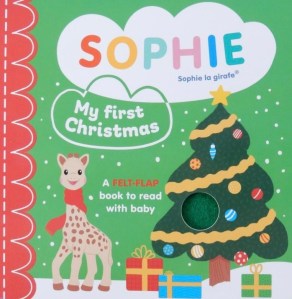
Sophie: My First Christmas / Sophie: Baby’s First Year

These are two new books both featuring Sophie the Giraffe – thanks to Templar Publishing for sending them for review

Sophie: My First Christmas

In this interactive, seasonal board book Sophie giraffe and her friends are having fun in a game of hide and seek. It begins outside in a snowy landscape with fir trees and a snowman as hiding places,

then moves indoors where a huge present and a stocking make good places behind which to disappear and wait for little hands to lift the felt flaps and reveal other animal players.
Finally, with Sophie ready and waiting, it’s time to open her door and see who has arrived – just in time for Christmas.

Simple, fun and an ideal offering for a baby’s first Christmas.

Sophie: Baby’s First Year

The text of this book is written from the viewpoint of the baby and provides a journal wherein to collect all those important details of a little one’s first twelve months. It begins even before his/her birth with three spreads allocated to in turn,’Before I was born’, ‘Being pregnant’ and ‘Family Tree’, which are followed by ‘The day I was born’ and ‘All about me’; and the final spread extends beyond that first year with space for birthday photos until the subject is five years old.
There are spaces for such things as handprints and footprints, envelopes in which to keep mementos and each page is well designed with some animal characters helping to make it visually attractive.

This would make a great gift for new parents or for a child’s dedication or naming ceremony.

Board Book Fun: Parp! / What is Chick going to do?

These are two new board books from Happy Yak – thanks to the publishers for sending them for review

Parp!
Mike Henson and Jorge Martin


Have some room freshener to hand when you share this whiffy book with your little ones.
It tells the tale of what happens as a group of assorted animals get into a lift, the doors close – it’s a tight fit – and then shortly after, one of their number breaks wind emitting a very very stinky aroma. But who was the culprit?

At the next floor, the lift stops, the doors open and an animal exits – the whiff maker? We’re not sure. The same thing happens again as soon as the lift continues its journey – PHOAW! 

Then at the next floor another animal walks out and so it continues until there are just two animals left – or are there? No! make that three. So who is the malodorous culprit? …
All is eventually revealed though the identity of the parp perpetrator might come as a surprise.

With sliders Mike Henson’s squashy, stinky scenario, and a red herring on every one of Jorge Martin’s splendidly expressive spreads, this is huge fun; it’s as well it’s so sturdily built as I’m sure it will need to stand up to lots of re-reads.

What is Chick going to do?
Carly Madden and Caroline Dall’Ava


In this interactive board book that provides a statement and then asks the titular question on every spread, toddlers are introduced to six hatchlings, every one of which is ready for its very first experience. Each chick’s particular adventure is discovered when the curved flap is opened to reveal a colourful scene that often includes little humans.

The first little one belongs to a mother hen and once free from its shell she greets the world with a ‘Cheep, cheep!’. Next comes an adventurous duckling, followed by a little moorhen Then there’s a puffy-looking baby plover, 

a gosling and finally, a cute, sleepy owl ready to take a snooze alongside her parents.

Bright, inviting and engaging, this little book offers plenty of opportunities for adult/child conversations.

Supertato The Great Eggscape! / Rita Wants a Fairy Godmother

These two picture books are additions to popular series:thanks to their publishers for sending them for review

Supertato The Great Eggscape!
Sue Hendra and Paul Linnet
Simon & Schuster Children’s Books

With chocolate and subterfuge at its heart is the latest Supertato episode. Easter is approaching as the story begins. The customers and staff have long since gone from the supermarket when the veggies discover that all the Easter eggs have vanished from the seasonal aisle. Immediately Supertato names his number one suspect: of course this is the work of Evil Pea.
Now, the dastardly character has barricaded himself inside his Easter egg castle.

Pretty quickly Supertato comes up with a plan to break in and liberate the chocolate from the fortress but will his disguise fool pea? Unfortunately not; Pea soon has Supertato held captive, which leaves the veggies to come up with their own rescue plan. What are the chances this one will work or will it be a case of foiled again?

Rita Wants a Fairy Godmother
Máire Zepf and Mr Ando
Graffeg

Getting dressed independently is one of those tasks that young children tend to struggle with and so it is with the endlessly imaginative Rita. In this the fourth book, the little girl entertains the possibilities that having her very own fairy godmother to act as personal dresser might mean. No more of those annoying ‘hurry up’ cries from her mum, no more struggles with sleeves or tussles with trousers. Instead, at the mere twirl of a wand she could wear the world’s most beautiful clothes no matter the occasion.
On the other hand, supposing said fairy godmother gave her inappropriate footwear 

or clothing and even worse, insisted on prettiness at the expense of fun …
Hmm! maybe that wasn’t such a good idea after all.

Like their previous books in the series Máire Zepf and Mr Ando’s godmother episode will be enjoyed by preschool children and I suspect adult sharers will have a good giggle over the two final spreads of Rita in action.

Diversity Matters: We Are Family / Bindu’s Bindis

We Are Family
Lucy Reynolds and Jenna Herman
Doodles & Scribbles

‘Your family may be big / or small, / tiny or … / terrifically tall. / Perhaps you’re / raised by one dad / or mum. / Or do others / help and . ../ join the fun?…’
So begins the simple rhyming narrative in this non-fiction picture book wherein Lucy Reynolds explores the concept of family.
Fact boxes provide additional information about the exemplars she uses from the animal kingdom 

to show the many varieties there are, while at the same time, the rhyme speaks directly to readers about the possible kind of family theirs might be. The result is a positive, inclusive message coupled with information on the specific creatures chosen, which are illustrated in Jenna Herman’s mixed media, patterned illustrations.
A safe way to explore the diversity of human families, especially in a foundation stage or KS1 classroom. In the latter children can better appreciate the wealth of information about the animals featured.

Bindu’s Bindis
Supriya Kelkar and Parvati Pillai
Sterling

Bindu absolutely loves the bindis her Nani sends her from India each month with their different shapes, sizes and colours; and even more she loves the connection she feels when she wears them.Then one day, joy of joys, Nani comes to visit and the family go to the airport to meet her. However this joy is curtailed as they are soon forced to confront the xenophobic people standing outside with their racist placards. 

At first Bindu wants to rip off her bindi but manages to overcome her feelings of despondency. Back at home child and Nani are soon enjoying one another’s company especially when Bindu returns from school and picks a bindi to match her grandparent’s mood.

Then comes the day for Bindu to wear a bindi to school for the very first time; she’s to perform an Indian dance in a talent show so Nani makes sure the two of them match. But when it comes to her turn Bindu’s worries about other people’s reactions cause the little girl to have an attack of stage fright. 

Can Nani help her granddaughter summon up some inner courage, rediscover her sparkle and thus save the day?
A picture book that demonstrates the strength of family bonds showing how they can transcend long distances. The richly coloured illustrations capture Bindu’s changing emotions throughout the story and the racism strand offers a starting point to open up discussion within a family or an educational setting.

When the War Came Home

When the War Came Home
Lesley Parr
Bloomsbury Children’s Books

Lesley Parr has written another wonderful story, again set in Wales. It’s an enthralling look at the impact of the first world war on a mother and her daughter, Natty who acts as narrator.

The girl is absolutely furious when her outspoken mother announces over supper that she’s lost her job and that the two of them will have to leave home to live with relations. Four days later, they’ve packed their bags and are moving in with her aunt, uncle and family on their smallholding in another Welsh valley.

Nothing is the same, school in particular, but Natty has to confront the terrible after effects of the war both on her cousin Huw (who faked his age in order to fight) and on Johnny who is at the local hospital for ex-soldiers. Huw suffers from terrors at the sound of loud bangs and grief at the loss of his best friend, while Johnny doesn’t even remember who he is.

Natty determines to help both these young men and there’s also a mystery for her (and readers) to unravel. Added to that she finds another cause to champion and decides that some causes are most definitely worth fighting for: perhaps she’s not quite so different from her mother after all.

This is a gripping tale for older readers, told with great sensitivity and superb characterisation that gives some insights into both the longer term impacts of war and of poverty, both of which are just as relevant today as they were back then.

Einstein the Penguin

Einstein the Penguin
Iona Rangeley and David Tazzyman
Harper Collins Children’s Books

Iona Rangeley’s seasonal debut novel is sheer delight. It begins one chilly December afternoon in the Stewart household when mum suggests a visit to London Zoo.

It’s an excursion like many family outings with disagreement about which animals to look at, things being rushed and time running out. In this instance running out almost before seeing the penguins, almost but not quite for suddenly the children, Imogen and Arthur, spot a small penguin that seems to want them to be its friend.

“Can we keep him?” begs Imogen to which Mum responds by addressing the penguin directly, “And you Mr Penguin, must come and stay with us whenever you like.”

Little does she expect that later that evening what should appear at their front door but said penguin complete with rucksack. There’s only one thing to do thinks Mr Stewart: invite him in for supper and so they do, on the understanding of course that they take him back to the zoo next day.

That’s the intention but the following morning this plan quickly unravels when the zoo report that none of their penguins is missing. Time for a bit of investigating it seems. The siblings discover that penguin’s name is Einstein and that he’s lost his penguin friend, Isaac; but where is Isaac now?

With Christmas drawing ever closer Einstein’s ‘temporary, take-each day-as-it-comes’ stay is extended with the children turning detective in earnest as they determine to discover Isaac’s whereabouts. Next stop is Edinburgh but then what? …

With plenty of suspense, superb characterisation, quirkiness and a compelling plot, this is much more than a Christmas read. It’s made all the more fun by plenty of David Tazzyman’s characteristic scribbly drawings.

I’d love to hear more of Einstein et al.

The Chime Seekers

The Chime Seekers
Ross Montgomery
Walker Books

Eleven year old Yanni is anything but happy about his new life: he’s moved to Fallow Hall, into a home that he hates, largely on account of needing more space since the arrival of his baby sister, and the thought of joining a new school part way through term is awful too. In fact from the start he hates everything about it: the surroundings send frissons of fear right through him. Surely things can’t get any worse, or can they?

It’s All Hallows Eve and now despite all Dad said, he’s about to be left at home minding his year old baby sister, or not quite alone, for who should appear just when his parents are ready to leave for their night out, but his cousin Amy.

Once they’ve gone, Yanni goes into baby Ari’s room and makes a fateful wish: he wishes that she’d never been born. Suddenly something weird happens and he sees a man standing in the doorway, a man who makes him feel decidedly uncomfortable, but despite this Yanni invites him in.

Deciding that something is deeply wrong, even more so after the man has become aware of Ari, Yanni is overtaken by a strangeness that results in the man stealing his baby sister away and leaving in her place a changling: a changling who can do unlikely things such as acrobatics and throwing things around.

The cousins are briefly at a loss and then Amy reminds him that All Hallows Eve is a night when “faeries come roaming.’ When the borders twixt their world and the Land of Fae are at their thinnest. Thus anything is possible, even the stealing of babies by a wicked faerie.

Now the boy realises that he must do all in his power to get his sibling back from this creature who has a whole lot of powerful magic up his sleeve. He and Amy embark on a quest in another world and undertake a series of tasks in order to put everything right back as it was before he made that fateful wish. It’s a journey that throws up monstrous challenges and tests Yanni’s resources to their limits as the Faery tosses nigh on impossible challenges at him.

Nerve-wracking this story most definitely is, as readers with hearts in their mouths, follow the action. But ultimately, the power of love reigns, outweighing that of evil; and what about the power of a name? … 

Intensely powerful too is Ross Montgomery’s telling that, with his author’s magic, held this reviewer right through to the final page. I love David Dean’s cover illustration too and his occasional black and white ones during the narrative.

The Good, The Bad and the Spooky

The Good, The Bad and the Spooky
Jory John and Pete Oswald
Harper

With more than 150 spooky stickers for youngsters to have their own fun with, this is a Halloween themed continuation of Jory John and Pete Oswald’s popular series presented by a sunflower seed, aka The Bad Seed.

Now despite Halloween being the Seed’s favourite time of year he’s in an extremely bad mood on account of not being able to find a truly awesome costume for the big night. Nothing he’s tried seems to hit the spot or come anywhere near things he and his friends have dressed as on previous occasions and now everybody seems to want to be independent.

It appears that there’s only one thing to do and that’s to make everyone else think the big holiday event has been postponed. Seed looks as though he’s making a return to his baaad ways: an announcement is made.

Then, enter stage left a good neighbourly pumpkin seed proffering some words of wisdom for our narrator Seed to consider … What will he do – sabotage the whole event and spoil the fun for everyone or focus on what the evening is really all about?

With Jory John’s witty, pun-punctuated narrative that delivers some life lessons and Pete Oswald’s hilarious illustrations, this is a thought-provoking charmer that’s just right for pre Halloween sharing.

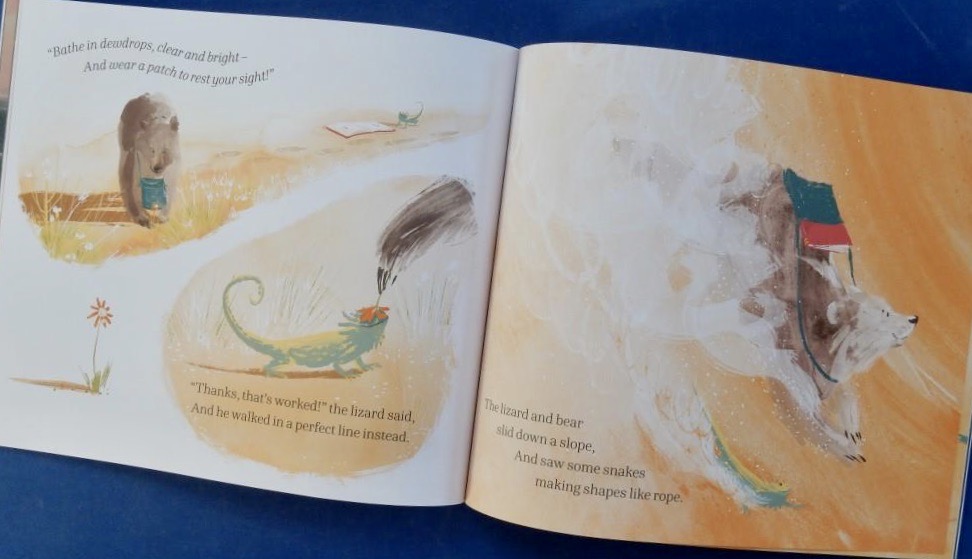
The Bear and her Book

The Bear and her Book
Frances Tosdevin and Sophia O’Connor
UCLAN Publishing

“The world is big and there’s much to see, / And a bear must go where she wants to be.” So says the curious bear one moonlit night and having decided to visit somewhere she can gaze at the starlit sea, she packs just one thing, her ‘Bear’s Big Book of Being Wise’ and off she goes.

Soon she reaches that sandy shore with its starlit sea and there she meets a crab with a claw that needs attention. More than willing to assist, Bear sits and refers to her special book wherein she finds just the cure needed to fix the crab’s claw.

Then, as the two sit looking into the star-spangled darkness bear decides she still needs to see more of the big wide world and bidding farewell heads off to the jungle.

Having prescribed a cure for the crocodile with a cold and enjoyed a swim, she sets off again.

In the desert she helps a lizard with a swollen eye

but now she yearns for somewhere without land. Our traveller finds a port, jumps on a ship and stows away in a box.

When unpacked, she discovers close by, a place with books galore and she gets a wonderful surprise. Actually not just one surprise …

Frances Tosdevin’s rhyming narrative with its repeat refrain, and Sophia O’Connor’s gorgeous scenes documenting bear’s travels and her deeds of kindness are sheer delight: a tribute to the power of books and a lovely demonstration of going where your heart takes you.

Where is the place you most want to be, I wonder.

The Wall and the Wild

The Wall and the Wild
Christina Dendy and Katie Rewse
Lantana Publishing

At the edge of Stone Hollow town, young Ana grows a garden – a perfect garden, tidy and full of life; it’s in stark contrast to the wild, the place where she tosses her unwanted, left over seeds and against which she creates a boundary to delineate and shelter her orderly garden from the disorder beyond.

Soon Ana’s garden is full of scented flowers, delicious fruit and vegetables, leafy trees and birds and insects in abundance. It’s a place where people like to stop and admire what they see, but while they might be full of admiration, Ana is not.

Certainly not when she notices unfamiliar plants that have started to grow; these she pulls up, tossing them and other seeds that she now rejects into the wild. She also builds her boundary a bit higher and now her garden isn’t quite so thriving: less tasty crops grow and the numbers of visitors both natural and human, diminish. Despite this Ana continues to reject many seeds and shoots, hurling them into the ever-increasing wild against which she keeps on building up her boundary until eventually it’s an enormous wall.

Now at last Ana stops and takes stock of her creation – first on her side of the wall and then finally, she decides to look beyond …

What she discovers is truly astonishing and unexpectedly beautiful in its own way. Time to start removing some of that wall …

Both a fable, and a cautionary tale of sorts, Christina Dendy’s story, in tandem with Katie Rewse’s vibrant illustrations, shows the importance of biodiversity and of embracing and appreciating wildness. It’s great to see the subtle inclusion of Ana’s hearing aid in this beautiful book, which offers a great way to introduce the idea of rewilding and its potential benefits especially to those readers with gardens of their own.

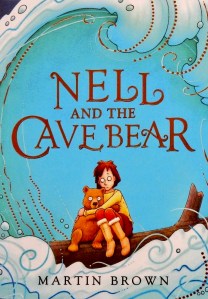
Nell and the Cave Bear

Nell and the Cave Bear
Martin Brown
Piccadilly Press

This story is the first of a series by Horrible Histories illustrator Martin Brown and it features a young Stone Age girl Nell, and her Cave Bear. Nell has no parents and lives in a cave with her tribe, and her pet and best friend the titular bear.

Everywhere the girl goes, the bear goes too, keeping her safe and comforting her whenever the chores and bossing around she receives get her down.

When she learns that her clan plan to give her beloved Cave Bear away to the visiting Sea Clan cousins, Nell decides that it’s time to run away.

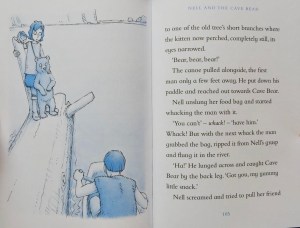
Together girl and bear embark on an adventure which takes them along the stream that passes their cave and soon, as they follow wherever the stream leads, the two become not runaways but explorers. They face thirst and hunger, mammoths and scary hunters

but never give up hope as, joined by a kitten, they keep looking for a safe place where they can be together.

Martin Brown writes simply and beautifully with warmth, a gentle humour and plenty of excitement.

Superbly illustrated this tale of long ago is just right for new solo readers who will be swept along with the adventurers relishing every moment of being in the company of Nell and Cave Bear. This adult reviewer most certainly did.

The Naughtiest Unicorn on Holiday / Super Cute: Fun in the Sun

These are two young fiction books both by Pip Bird, kindly sent for review by Farshore

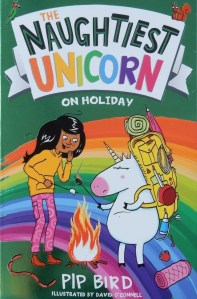
The Naughtiest Unicorn on Holiday

The latest addition to The Naughtiest Unicorn series sees Mira and Dave off on an adventure holiday – their best ever adventure so Mira anticipates. Especially as there’s to be a secret quest to discover a special Golden Marshmallow. With sleeping bag rolled and rucksack packed with essentials (and a bit more too) she can hardly contain her excitement and Dave is going positively bananas or rather toffees. Having discussed the various poo possibilities for humans and unicorns, members of Red Class are finally ready to make that foray into the Wild Woods where they’ll be under the care , not of their teacher Miss Glitterhorn but of energetic leader, Ms Mustang, a stickler for teamwork.

Will the adventurers ever manage to put up their tents – that is the first challenge followed closely by, will Dave consume all the marshmallows stashed in the special snack box?

Then what about the raft-making activity? Readers will certainly get some laughs over this, but what of team Mira, Raheem and Jake and their unicorns?

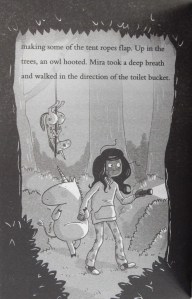
With the first day’s adventures duly over it’s time to bed down for some shut-eye but that’s when the weird noises start up: what or who is making those, not to mention the scary shadowy shape? …

With the usual generous serving of farts of the unicorn variety, this is a thoroughly enjoyable romp for fans of Mira and Dave and I’m sure having induced lots of giggles, they’ll win a fair few new followers too.

Super Cute: Fun in the Sun

New to me is the author’s World of Cute where preparations are underway for the annual summer Friendship festival.

With Micky Pig in charge, delicious treats to share are baked in Micky’s outdoor kitchen Mudporium. The first taster will be a Special Guest. So will this be, as Cami declares, “The best Friendship ever!” ?

Not if one of the vital baking ingredients is missing … This is the first indication that a saboteur is at work; surely that couldn’t be so – could it?

I’m not sure if this series will gain as many fans as The Naughtiest Unicorn but it’s worth offering to young solo readers to taste for themselves: they’ll certainly find lots of yummy confectionery including a volcano cake that erupts strawberry jam, in this story that celebrates our differences.

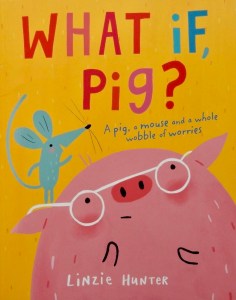
What if, Pig?

What if, Pig?
Linzie Hunter
Harper Collins Children’s Books

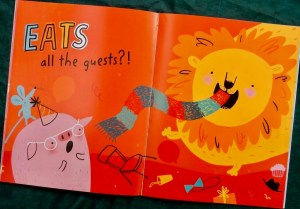
The porcine character in this story is a thoroughly kind, endearing character that has endeared himself not only to his best pal Mouse, but also to a host of other animals. They all think themselves lucky to have him as a friend but what they don’t know is that he’s a panicker. So when he decides to plan a perfect party, it’s not long before he gets an attack of the ‘what ifs’. ‘What if a ferocious lion eats all the invitations or even the guests … ‘

What if nobody comes (or everyone does and has a dreadful time) or worst of all ‘What if no one really likes me at all?’

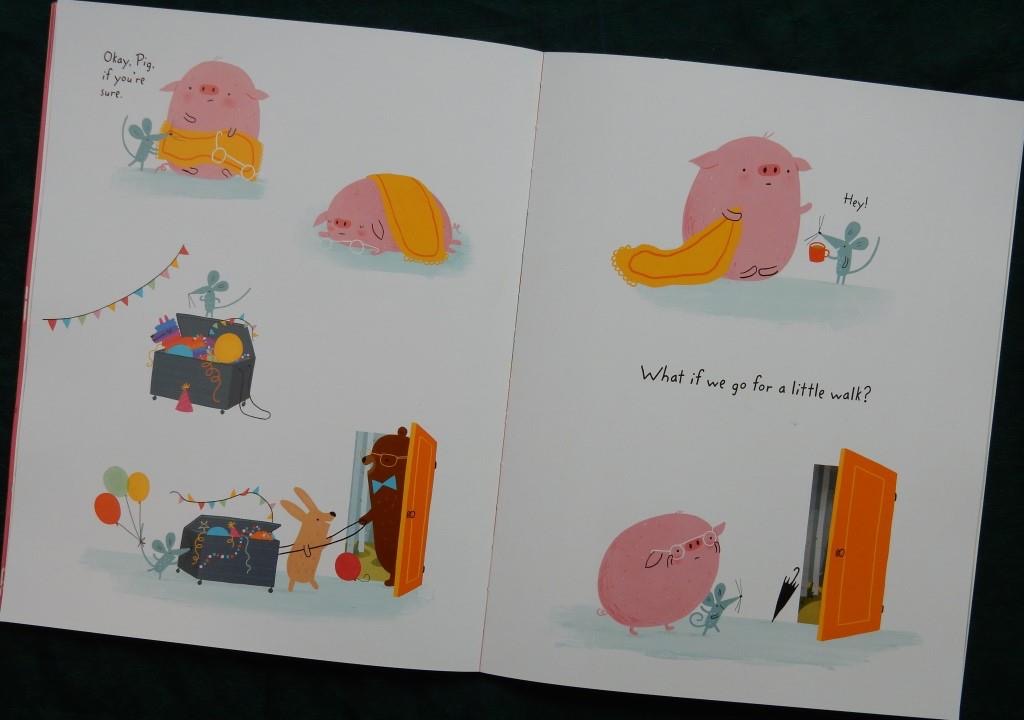
There’s only one thing to do – cancel the party, an idea in which he has his friend Mouse’s support.

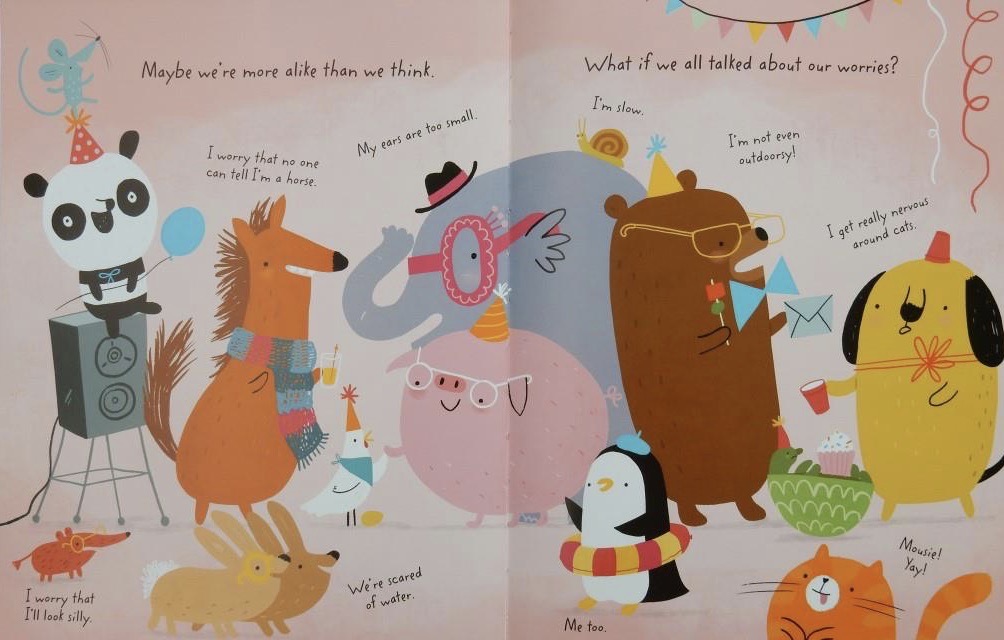
Off go the two for a walk in the woods during which Mouse reassures his downhearted pal, ‘Things don’t stay grey for very long.’ And sure enough they don’t as what Pig doesn’t know is that Mouse has been instrumental in ensuring that they don’t, for Pig’s friends are more than ready to return the friendship they’ve been shown …and to share some secrets in response to Mouse’s ‘Maybe we’re more alike than we think.’

With its powerful themes, engagingly delivered, this is a terrific read aloud: the author/illustrator makes every single word count and her illustrations are a quirky delight – every one.

‘What if we all talked about our worries?’ provides the ideal starting point for a discussion on feelings, worries in particular, with youngsters either at home or in the primary classroom. If we want children to develop resilience, I suggest a copy in every foundation stage and KS1 class collection.

Sometimes I Am Furious

Sometimes I Am Furious
Timothy Knapman and Joe Berger
Macmillan Children’s Books

Who can fail to fall for the adorable little person standing in angry mode on the cover of this book. She’s the narrator too, so we get the picture straight from the toddler’s mouth as she talks of life as she sees it – the high points and the lows. The times when you feel like sharing some of the good things, or being helpful perhaps; even when one of your special grown-ups has made a mess of things.

All too often it seems though, things just don’t feel fair AT ALL: your parents boss you around, your favourite cake has sold out; your body in your tights feels all wrong and your yummy ice cream splats on the floor. These things are totally INFURIATING.

It’s at times like that when you need a good cuddle and some welcome words of advice spoken softly.

Then next time those ‘not fair’ feelings start to bubble you know some lovely deep breaths, slow counting and a happy song will take care of your fizzly emotion – well almost always.

What a smashing way to present to little ones (and grown ups) the gamut of emotions that are part and parcel of toddler life, as well as some simple strategies to deal with life’s lows. In their dynamic delivery – verbal and visual – of one of life’s vital lessons, team Timothy and Joe have created a cracking book that is just the thing for sharing and discussing with little ones at home, or in an early years setting. (Perfect for supporting PSED.)

Judy Moody Gets Famous! /Judy Moody Saves the World! /Judy Moody Around the World in 8½ Days

It’s good to see Walker Books reissuing the Judy Moody books including:


Judy Moody Gets Famous!
Judy Moody Saves the World!
Judy Moody Around the World in 8½ Days

Megan McDonald, illustrated by Peter H. Reynolds

It’s her multitude of moods that make Judy who she is and now she’s on a quest to get fame, fuelled by the fact that arch rival Jessica Finch has got her photo on the front page of the newspaper having won a spelling contest. Green with envy, Judy currently feels ‘about as famous as a pencil’.

Can she too get her own fifteen minutes of fame? Definitely not on account of her spelling skills but what about with that cherry pip that our resourceful miss advertises at the garage sale as a ‘Genuine Cherry Pit from George Washington’s tree’ (dating back to 1743)? Err, maybe not. 

But does Judy ever get her write-up? Yes, but to find out how, you’ll need to get your hands on a copy of this charmer of a tale that’s ideal for new solo readers.

Saving the world is the irrepressible Judy’s intention; rather it isn’t actually, for what she sets out to do in the second story is to win the Crazy Strips 5th ‘design your own bandage contest’. But then her little brother Stink decides to enter too and unlike big sis, he has done his design and sent it off before Judy gets an inkling of inspiration.

Thank goodness then for Mr Todd’s science lesson about the devastation of rainforests. Suddenly Judy sees her entire family and people at school using products that include constituents from the rainforest – coffee, ice-cream, chewing gum, lipstick and pencils. At last she has a mission but now all she has to do is save the rainforest … 

Again, delightful, quirky humour eventually wins through.

In Judy Moody Around the World in 8½ Days there’s a new girl in Judy’s parallel class. Like Judy she has a rhyming name – Amy Namey – and she also collects chewing gum. Guess who isn’t happy? What will Amy be: best enemy or new best friend? 

When Amy invites Judy to join the My-Name-Is-a-Poem club, Judy becomes devoted to her new friend, which definitely doesn’t go down well with her old pals.

Something that does though is the ginormous pizza that culminates the Y3 classes project …

There’s a lesson to be learned from this story that puts me in mind of a song a friend once taught one of my foundation stages classes that begins thus, ‘Make new friends /But keep the old. / One is silver. / The other gold.’

Due partly to Peter H. Reynolds’ terrific illustrations, Megan McDonald’s Judy Moody certainly deserves her following and these reissues will surely win her lots more friends.

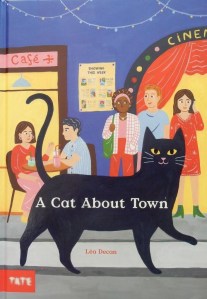
A Cat About Town

A Cat About Town
Lèa Decan
Tate Publishing

‘A cat about town’ the feline narrator of this book, surely is. Owned by Lisa, the moggy is seldom at home (one day a week to be precise); the rest of the time there’s a busy schedule in operation.

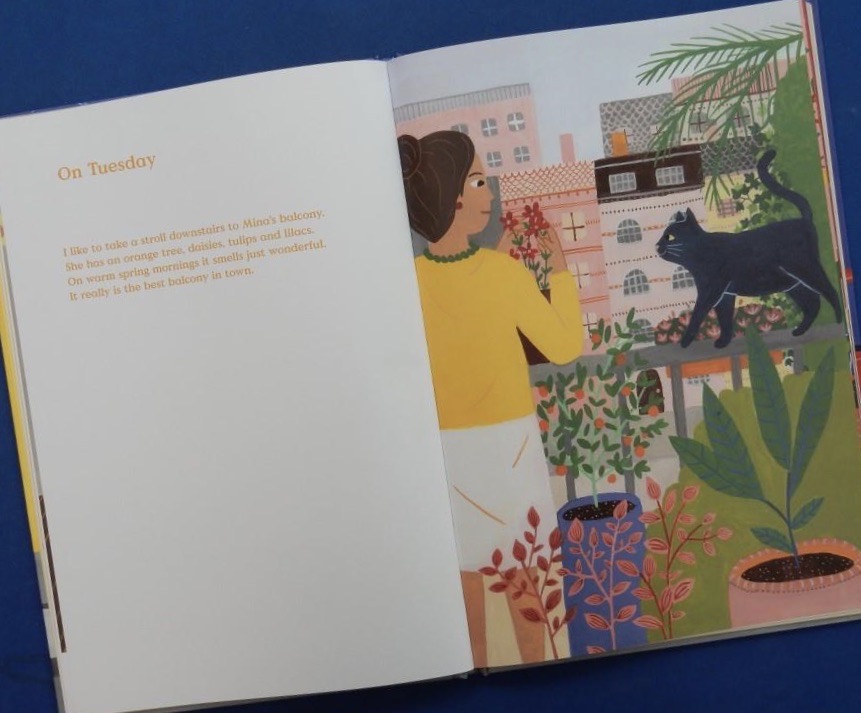
Mondays are taken up by visiting writer and intellectual, Sebastian; Tuesdays are spent downstairs mainly on Mina’s balcony crammed with plants that look and smell amazing.

Come Wednesday on the dot of twelve noon, it’s a trip to Granny Yvonne whose granddaughter visits for lunch – and it’s truly delicious, not to mention, filling.

Thursdays are for artist Maud and a bit of culture, albeit in rather messy surroundings. Apparently our narrator is the favourite subject of this famous creative woman.
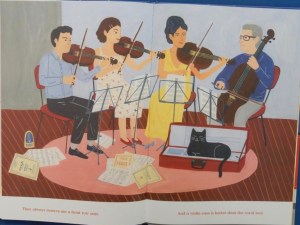
Musicians of the local string quartet gather on Fridays so it’s culture of a different kind on that day and our feline visitor has the most comfortable seat in the house.

On Saturdays it’s a case of a double date: Amélie receives a visit from her boyfriend; and the narrator meets the elegant Capucine with her alluring eyes and the two cats take a wander through the city streets.

Sunday though is home and Lisa’s day; it’s she after all’s said and done, who ‘takes care of me’.

Cat lovers especially, will relish this playful, first-feline narration and the alluring, gorgeously colourful scenes of the abodes in which Lisa’s cat spends most of his days. What about the nights, one wonders …

The Corinthian Girl

The Corinthian Girl
Christina Balit
Otter-Barry Books

To the ancient Greeks, female babies were dispensable: it was up to the father to decide whether or not to participate in a special naming ceremony giving the child the right to be a citizen. Sometimes it was a difficult decision for girls were expensive and one day would need a dowry, and so it was for the father of the Corinthian Girl in this story.

He wraps the child in swaddling rags, ties a Doric coin around her neck and leaves her on a stone bench, hoping somebody – perhaps a childless couple, or a merchant wanting a slave – might take her away.

Eventually an elderly slave from Athens takes her home to his master’s house where he raises her with the other slaves. Now the Master of the house, Milos, happened to be an ace javelin thrower and Olympic hero, with just one of his sons, Dion, still at home.

Sometimes Dion would invite the Corinthian girl to play with him and one morning his father stops to watch them. Wondering who this athletic girl is, he calls his son to bring her to see him right away.

Next day sees the start of a year’s training for the Corinthian girl in preparation for the Heraean Games (women only version of the Olympics), during which time she becomes super tough, lithe, fast and courageous.

When spring comes Milos, Dion and the girl go to the stadium of Olympia for the games. There, not only does she prove unbeatable in every event she enters, but she is given the name Chloris by Milos who also announces to the crowds that she is his adopted daughter.

As Chloris carves her name on the column of Hera’s temple somebody in the watching crowd sees the coin around her neck and remembers …

Christina Balit’s painterly illustrations have a power of their own, capturing superbly the slave girl’s spirit, determination and athleticism. Although the characters in her exciting, inspiring story are inventions, the details of place and time are accurate. Further details of the Heraean Games are given in a final factual spread.

Be A Tree!

Be A Tree!
Maria Gianferrari and Felicita Sala
Abrams Books for Young Readers

‘Be a tree! // Stand tall. / Stretch your branches to the sun.’

So begins this gorgeous book. With its lyrical text and beautiful, vibrant watercolour, gouache and coloured pencil illustrations author and illustrator invite readers to look anew at ourselves and at trees, one of nature’s true treasures. By so doing we come to realise that humans and trees share similar physical characteristics: trunks and spines, branches and arms, a protective outer layer – bark and skin, a topmost crown and more.

Throughout, the trees – no matter their particular species, of which many are shown – take centre stage, standing tall and majestic, and viewed from a variety of perspectives, frequently dwarfing the humans who play, sit, walk beneath, or climb upon them.

In addition to basic anatomy, we’re asked to consider similarities such as the importance of sharing resources, alerting one another to danger, (by means of ‘a wood wide web of information’), to see the strength in diversity, while gently urging each and every one of us towards- a ‘family, a community, a country, a cosmos’ where ‘There is enough for all.’

What a wealth of wonder and learning potential is packed between the covers of this book,. It’s one to return to over and over, perhaps first being encouraged be we child or adult, to stretch and uncurl like the tree’s overground parts, then curl, coil and become rooted, as a prelude to considering the ways in which we can take our cue from the trees in how we live our lives. (The final pages suggest ways to help save trees, how to build community, there’s a spread on a tree’s anatomy and some suggested further reading and websites to visit.)

The Rock From the Sky

The Rock From the Sky
Jon Klassen
Walker Books

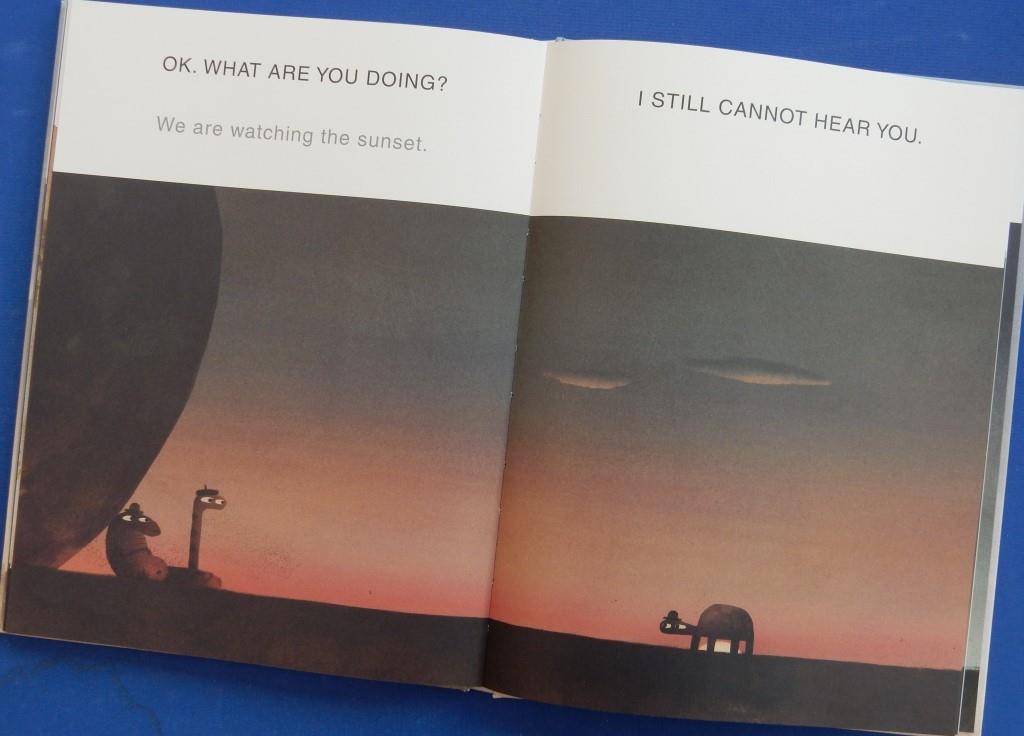
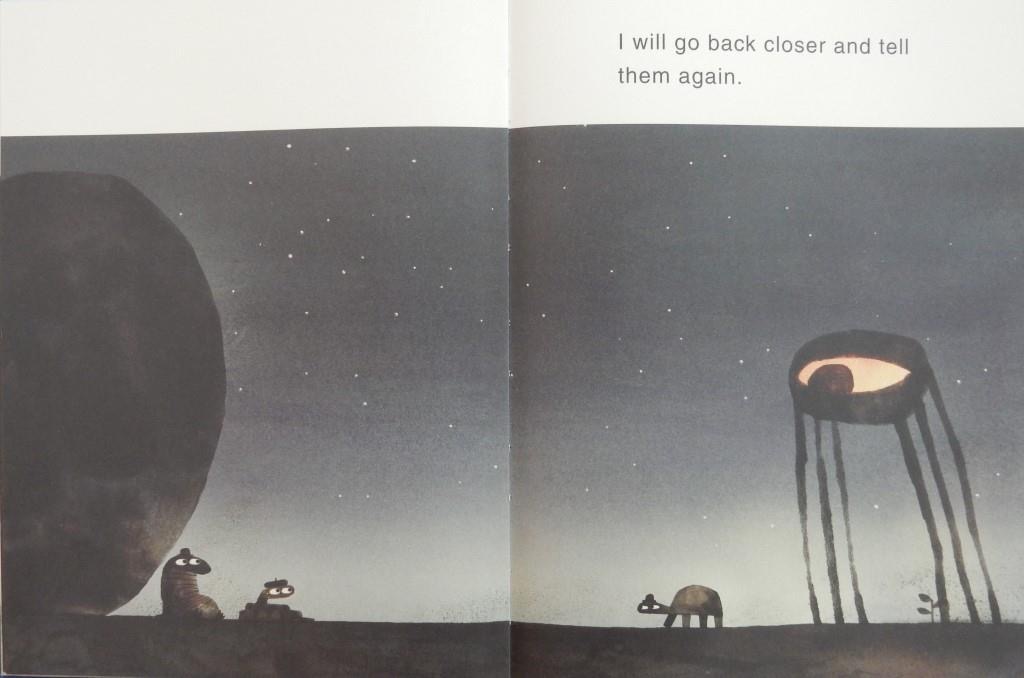
Quintessential quirky Klassen is this sequence of five connected short comic episodes delivered with the author’s dead pan humour, not to mention that its main characters – a tortoise, an armadillo sport Klassen’s signature style hats.

The entire thing is delivered through (colour-coded) dialogue between Tortoise and Armadillo (plus those characteristic Klassen eye-movements).

The topic under discussion in The Rock is the best place to stand/sit. Tortoise favours one particular spot, “I don’t ever want to stand anywhere else.” But Armadillo is unfavourably disposed towards it, “Actually I have a bad feeling about it.’ And rightly so; he instead goes off to try another spot. A to-ing and fro-ing ensues but it’s not until Snake rocks up to join Armadillo that Tortoise decides to join them too – and only just in time … for something huge and mightily heavy falls on his erstwhile spot. Of course, we readers in on the joke, have been anticipating same all the while as we enjoy the mounting tension.

In The Fall, Armadillo attempts to act helpfully while Tortoise tries to save face zzzz. Episode three sees the two, eyes closed, contemplating the future

watched by a futuristic creature, while The Sunset is a contemplation of same – kind of;

and finally, in No More Room Tortoise takes umbrage “Maybe I will never come back” and is once more under the watchful Eye now no longer in the future,

but perhaps soon to be in the past. Thank goodness for asteroids!

Another weird and wonderful Klassen gem, albeit somewhat longer (90 pages) than usual, set in a minimalist landscape that offers much to ponder upon in a Waiting For Godot for primary school readers.

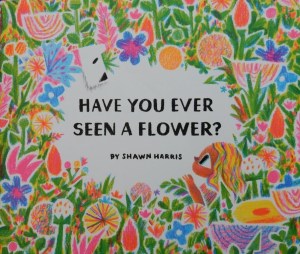
Have You Ever Seen A Flower?

Have You Ever Seen A Flower?
Shawn Harris
Chronicle Books

This a visual feast if ever there was one. It begins in an intricately constructed city in which the only thing of colour is a small girl with rainbow tresses dashing out through a door where a car awaits within which is a terrier.

As the car moves out of the city, the dreary greyness turns first white and then explodes into a riot of colour, till the car stops.

We next see the child, her joy palpable, surrounded by fields alive with fluorescent flowers. She stops, stoops and, breathing deeply, imbibes the beauty of a single bloom and in so doing has an existential experience of complete connectedness: it’s as though she and the flower become a unified life force.

All the while, the text invites readers to ponder such questions as ‘Have you ever seen a flower using nothing but your nose? Breathe deep … what do you see?’ … “Have you ever seen a flower so deep you had to shout HELLO and listen for an echo just to know how deep it goes?’

We share the child’s exhilaration as she clutches a plucked wildflower, before herself becoming transformed into a flower.

There’s much to contemplate and reflect upon in what is, for both child and reader, a wonder-filled transformational journey into consciousness itself.

An exciting debut for Shawn Harris as author/illustrator. With their changing perspective and focus, his colour pencil illustrations are mesmerising, the playful narrative rich in metaphor with occasional alliteration and assonance. Who can resist its urgent intensity?

Beautiful Day! / Take Off Your Brave

Beautiful Day!
Rodoula Pappa and Seng Soun Ratanavanh
Cameron Kids

In the company of a small child we experience the seasons’ riches through a sequence of twenty haiku-like poems. Rodoula Pappa’s words are as if spoken by said child, whose activities we follow starting with Spring: ’Beautiful day! / Teach me, too, how to fly, / mother swallow.’ are illustrated in Seng Soun Ratanavanh’s richly patterned scenes beautifully crafted as if from Japanese washi paper. 

There’s much to enjoy no matter the season: Summer offers lush peaches, somnolent-sounding music and ‘Among the reeds, / a new galaxy – / fireflies.’ as well as days by the sea.

Come autumn there’s an abundance of busy chipmunks and dahlias bloom prolifically and its time for the wild geese to travel. 

With winter soft snow falls and there are preparations for Christmas, while ‘In the rock’s crack, / deep green, full of light – / winter blossom.’

There’s a feeling of serenity about the entire book; it’s as though the words are asking us to slow down, stand and stare, imbibing the beauty of the natural world so wonderfully depicted, no matter what time of year.

What a lovely starting point for children’s own seasonal reflections this book would make in a primary classroom.

Take Off Your Brave
Nadim, illustrated by Yasmeen Ismail
Walker Books

The Russian writer, storyteller and poet Kornei Chukovsky talked of young children as ‘linguistic geniuses’ playful and creative users of language and this book of poems by four year old, Nadim is a wonderful demonstration of this.

Responding to prompts from his mother, with the initial guidance of poetry teacher, Kate Clanchy (who has written an insightful foreword to this book) the little boy shared his thoughts about a variety of things from his feelings on returning home from nursery school, his best friend,

his mum, doing something scary, his wish. To read each of these is to share in something of how a four or five year old sees the world (something that I as a nursery and reception teacher for many years particularly enjoy); there’s no attempt at emulating adult poetry, rather, this is a child’s voice capturing those moments of happiness, joy, love, loneliness, peacefulness, togetherness, hopes, fears and dreams.

‘You always have sad moments / Happy moments / Nice moments / Angry moments // And when you smush those moments together / They make a great feeling / Called: / ABRACADABRADOCUOUS.’

And rest assured everyone has indestructible love to share for ‘Baddies love their baddie friends / Even very baddie ones. // Nothing can make love disappear / Not spells / Not magic / Not mermaids / Not anything. … ‘

Accompanied by Yasmeen Ismail’s illustrations – who better to capture young children being themselves – this is a lovely demonstration that poetry is for everybody.

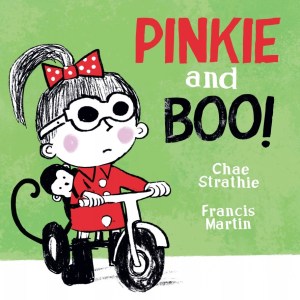
Pinkie and Boo!

I’m thrilled to be part of the blog tour for super Indie publisher Little Door Books’ latest picture book, about a new sibling in the family written by award-winning author of the So You Think You’ve Got it Bad series, Chae Strathie and illustrated by Francis Martin.

Pinkie and Boo!
Chae Strathie and Francis Martin
Little Door Books

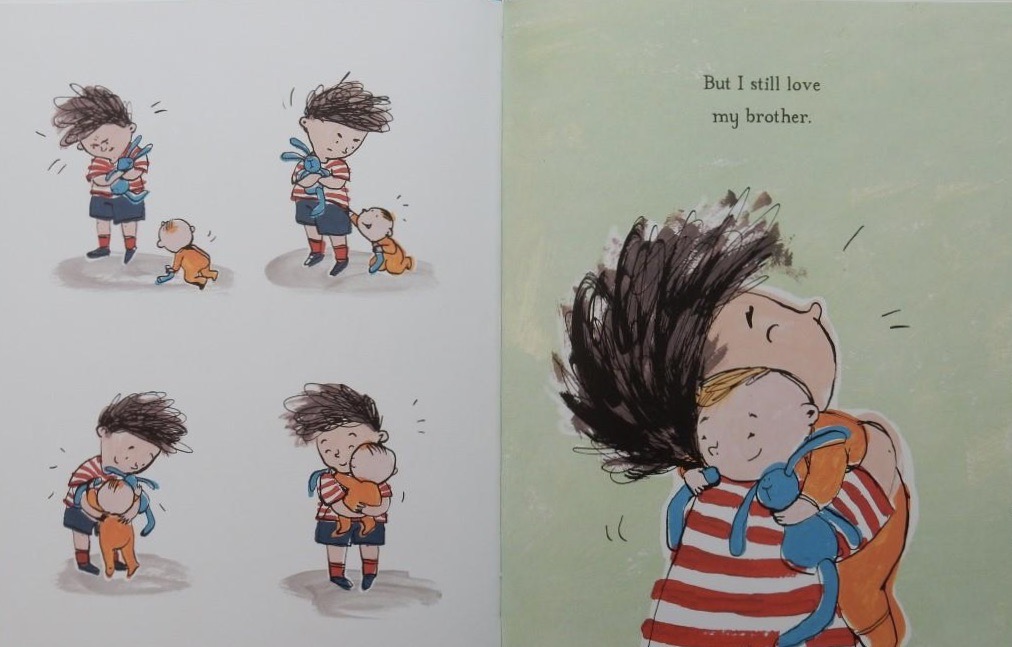
When Pinkie learns that she’s soon to become a big sister, she’s far from happy, envisioning such disasters as getting carried off by evil seagulls or being turned into a stinky rat on account of – horror of horrors – a baby. And, on seeing the infant she’s even less impressed by such a strange looking, whiffy being.

Dad tries pacifying Pinkie with the present of a cuddly toy monkey. She names him Boo, noisily introduces him to the baby displeasing her parents who banish her to the garden.

There, Pinkie shares with Boo her concerns about her place as smallest in the family having been usurped by the new arrival, and her fears of being overlooked. Boo comes up with some ‘SUPER-BRILLIANT’ ideas but the results — plucked flowers for dad, a chaotic messy kitchen and misplaced crayon creativity, are anything but super- brilliant so far as the recipients are concerned.

Fortunately Pinkie has help clearing up what she deems ‘Boo’s fault’. But then while she’s having some thinking time in her room, Boo has another of his flashes of inspiration.

Can plan B work the wonders both Pinkie and Boo are hoping for?

Chae and Francis’ portrayal of Pinkie’s feelings of uncertainty about her place in the family, and the way she reacts, are spot on. Their spirited little girl with her wild imagination and don’t mess with me attitude is simply adorable.

Fantastically funny, full of chaos, mess and mayhem and most important, a whole lot of love, even if it does take some time to understand that sharing dad and mum isn’t as terrible as Pinkie anticipated.

I love everything about this book and I’m sure its target audience will too.

Charlie Chooses / The Truth About Babies

Charlie Chooses
Lou Peacock and Nicola Slater
Nosy Crow

Charlie is an anxious, indecisive little boy unable to make decisions about such small things as light on or light off at bedtime, and what ice-cream to have, wearing spotty pants or stripy ones, which would often result in going without.

So when it comes to choosing what he wants for his birthday, he really is faced with a problem. Lou presents these difficulties uncritically even this biggie, merely allowing Nicola’s illustrations to do much of the talking to young audiences.

We see a downcast Charlie emerging from the library having consulted the ‘perfect present’ book, then suddenly and unexpectedly being offered that hitherto illusive idea – a rescue dog.

Off he goes but uh-oh! At the rescue centre he’s faced with yet another choice and a very difficult one

so Charlie leaves the centre sans pooch but then …

One determined little canine supplies the perfect ending to this story and Charlie ends up with just the right companion to help soothe those choosing-worries henceforward. But what about a name? Maybe …

Most certainly this delightful book is one I would choose to share with little ones, be that one-to-one or as a class.

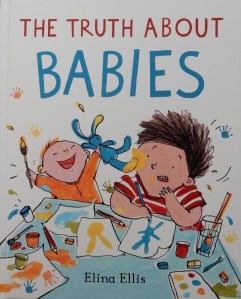
The Truth About Babies
Elina Ellis
Two Hoots

A small child narrator talks of the arrival of a new baby as his parents extol the virtues of babies in general.

These tiny beings are supposedly beautiful, fond of sleeping, they’re joyful little bundles, sweet smelling

gentle and delicate – perfect angels no less. Or are they?

Now comes the big reveal from our older sibling who nonetheless considers one particular newcomer to the family monstrously, irresistibly lovable …

There’s a touch of Tim Archbold about Elina Ellis’ comical illustrations of a family with a new baby and what that really means rather than what her text says.

Great fun to share and discuss whether or not listeners have experienced (or are about to) a new addition the family.

The Dodos Did It!

The Dodos Did It!
Alice McKinley
Simon & Schuster

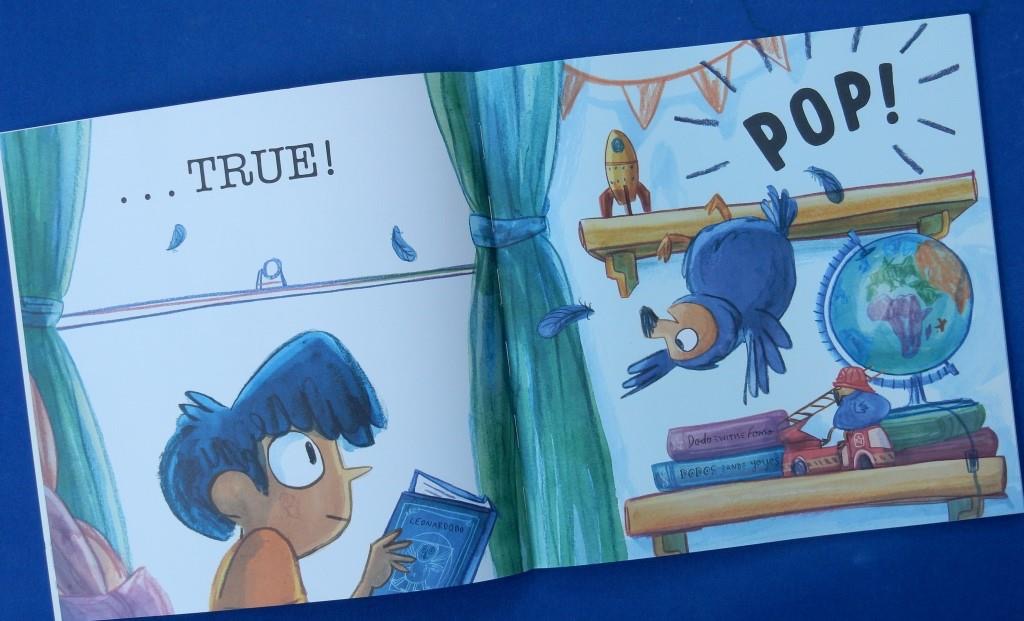
Jack is obsessed with dodos. A dodo is what he wants more than anything else in the whole world so he makes a wish.
Almost unbelievably … 

Not content with just the one dodo however, the boy keeps on wishing until one has become ten. including a spectacle wearer. The huge fun they provide quickly turns to chaos 

and not surprisingly, two decidedly displeased parents . Jack tells them the mess was made not by him but the dodos, though unsurprisingly Mum doesn’t believe a single word.

The creatures then create havoc at the swimming pool, the playground, the cafe and in the library and the supermarket, 

all the while his mum and dad insisting “Dodos don’t exist” when Jack blames the mayhem on the creatures.

After a whole day of dodo disasters Jack is sent to his room where he makes another wish … Oops!
Jack, you really should choose your words more carefully when you make a wish.

This story will certainly provide giggles aplenty for little ones, but what amused me more than anything else was to see on the title page that Alice McKinley has assigned a name to each of the clutch of mischief-makers, but you’ll have to get your own copy of this romp to find out what they are.

The Little Pirate Queen

The Little Pirate Queen
Sally Anne Garland
New Frontier Publishing

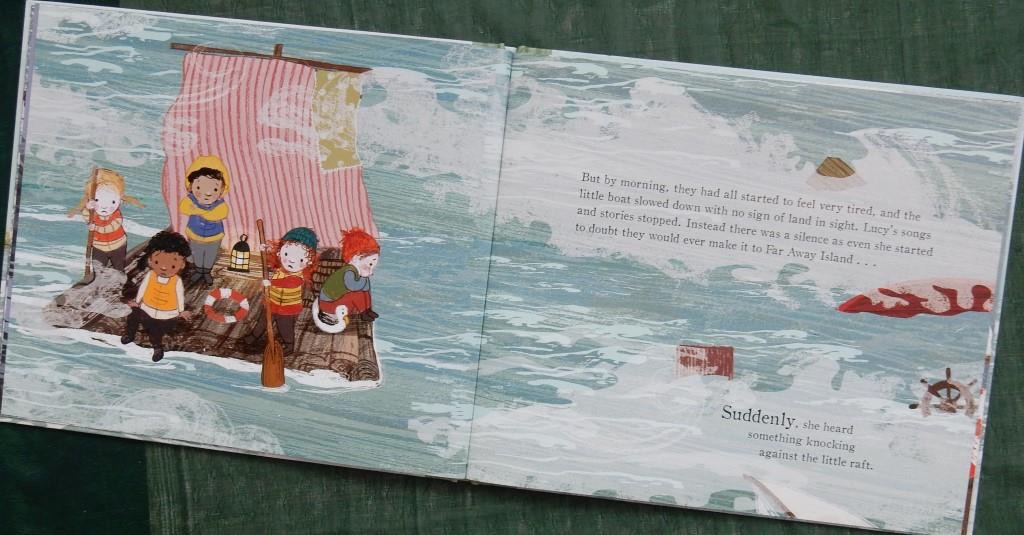
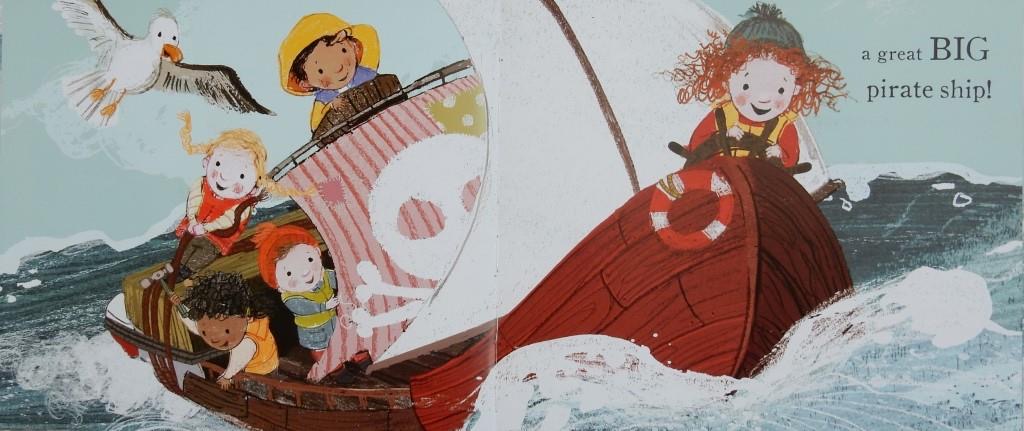
Meet young Lucy who makes a weekly voyage on her rickety raft in search of Far Away Land, a place where nobody before has ever set foot.

Over the weeks her raft has become increasingly dilapidated, despite her efforts at repairing the damage; but nonetheless, Lucy’s sailing skills have improved. Even so her craft is no match for the speed of the other children’s boats and that makes her a little downcast. To lift her spirits, she imagines herself a brave ‘Pirate Queen’ which helps, but only sometimes.

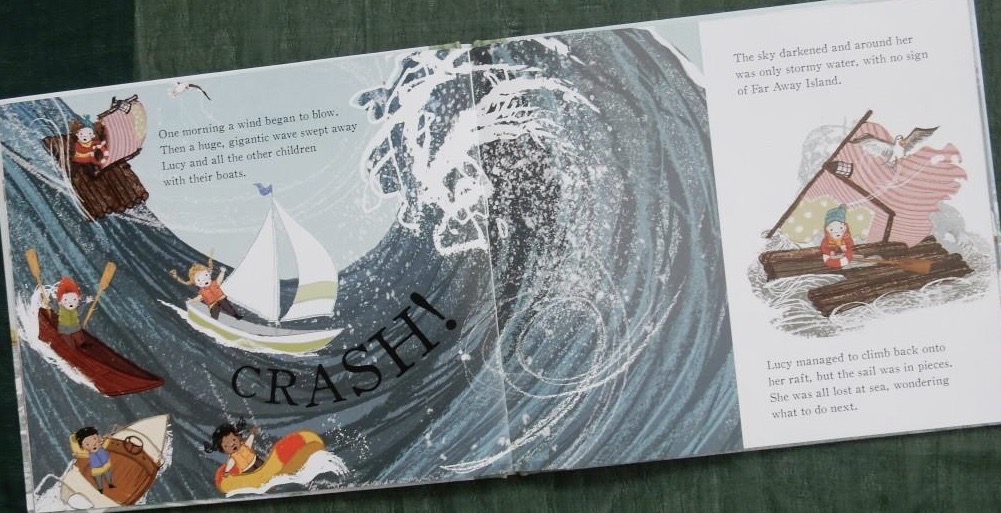
One morning a strong wind blows up and an enormous wave leaves Lucy lost and alone on stormy waters.

Alone that is until she spies four other children clutching pieces of wood and rope, desperately trying to keep afloat. Lucy succeeds in hauling them aboard her frail raft

and proceeds to give them lessons in rowing and sail repairs. Come nightfall they’re all able to enjoy Lucy’s tales and songs of lost treasure and pirates.

But will they ever reach that Far Away Island? …

An enjoyable tale of a resilient adventurer, with themes of resourcefulness, empowerment, friendship and more. Young would-be voyagers around the age of Lucy especially, will love this, particularly those wonderful dramatic seascapes.

Swim, Shark, Swim!

Swim, Shark, Swim!
Dom Conlon and Anastasia Izlesou
Graffeg

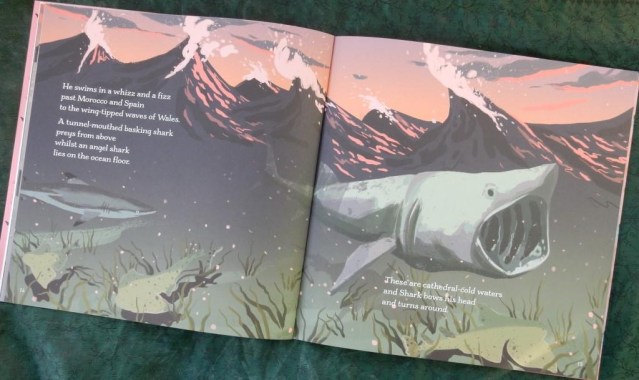
In the second of this Wild Wanderers series we join Shark – a blacktip reef shark – in an exploration that takes him on a long, long journey through the oceans of the world searching for a home. Seemingly it’s an almost circular swim that starts and finishes in the waters around Australia.

On his journey he encounters all manner of marine creatures including penguins and a tiger shark off the southern Cape of Africa,

and an angel shark in European waters.

There are blue sharks, octopus and squid in North American waters while off South America lurk Hammerheads. In the Pacific he sees dolphins, humans and in the kelp forest a Great White shark. Off the coast of Hawaii manta rays and green sea turtles dive and dance; 

then finally there is the Great Barrier Reef and a host of other blacktip sharks all of which help the reef in its struggle to survive.

Totally mesmeric is Dom Conlon’s poetry of motion, which cleverly weaves a sub-aquatic non-fiction story that is ideal for sharing with children either in KS1 or KS2. Anastasia Izlesou’s visual images too, transport readers and listeners to an underwater world of wondrous richness and beauty.

As well as the factual information contained in Shark’s odyssey there is a map tracing his path and a double spread of facts about sharks and the other marine animals.

Omar, the Bees and Me

Omar, the Bees and Me
Helen Mortimer and Katie Cottle
Owlet Press

One of my favourite weekend walks takes me past a goat willow or pussy willow tree that my partner and I call ‘the buzzing tree’. In spring it’s alive with bees and you can hear them busily working long before you reach the tree. You can almost hear a similar buzz emanating from the cover of this new picture book.

Said buzz is set in motion when newcomer Omar takes a slice of his mum’s special honey cake into school for show and tell. He talks of how once upon a time back in Syria his grandpa who grew apricot trees and jasmine, was a keeper of bees.

This sets teacher Mr Ellory-Jones thinking and before long the members of his class have decorated the entire corridor outside their classroom with paper jasmine flowers and the children are pretending to be buzzy bees. He also tells his pupils about the importance of bees and of growing bee-friendly flowers for them to feed on. The children’s questions prompt further explanation and during playtime, having observed the greyness of her surroundings, Maisie (the story’s narrator) comes up with a wonderful idea. “We should make a REAL bee corridor … All the way from our school to the park next to my grandad’s garden. He’s got a beehive!”

With the backing of their teacher, the class order packets of wildflower seeds. Seeds they sprinkle into envelopes with growing instructions, requesting recipients to put the pots on their windowsills.

Next day operation delivery is carried out and then the waiting starts.
When spring finally arrives, there’s evidence that people have done as asked …

and by the time summer comes two good things have happened. Maisie and Omar have become best friends and there are wild flowers in abundance stretching from school to park. Grandad too is thrilled to have an abundance of bees in his garden.

A new school year starts and now it’s Maisie’s turn to talk at show and tell: her chosen object – a jar of honey from her grandad’s bees. Hurrah! Can you guess what Omar brings into school to share the following day … (There’s even a recipe included).

With themes of sustainability, the environment, intergenerational relationships, and connectedness, this is a smashing book to introduce young children to the importance of protecting and enhancing the natural world, in particular our precious bees.

Katie Cottle’s inclusive, mixed media illustrations complement the story beautifully: she captures the mood and feeling of the classroom, street and garden perfectly.

Can Bears Ski?

Can Bears Ski?
Raymond Antrobus and Polly Dunbar
Walker Books

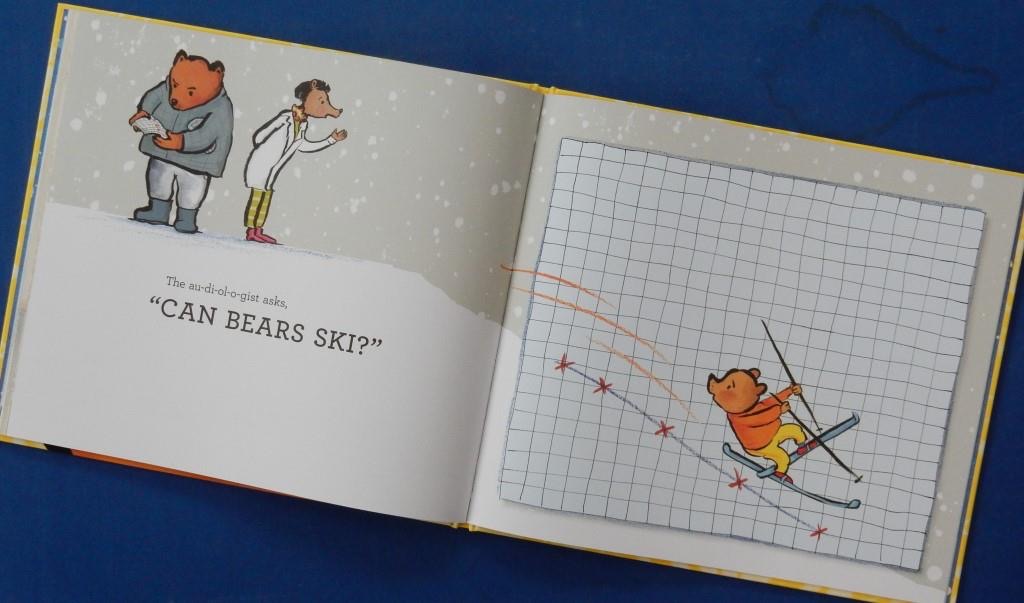
Why does everyone keep asking “Can bears ski?” That’s the puzzle for the little bear narrator of this story.

Dad says it frequently, the kindly class teacher says it,

puzzled classmates say it, “Can Bears ski?”

One day after school Dad takes his little cub to visit an ‘au-di-ol-o-gist’ She does lots of tests and she too asks that same question …

The audiogram shows little bear has hearing loss.

Eventually several weeks and more tests later she prescribes hearing therapy and lip-reading classes. She also gives little bear a pair of ‘plastic ears called hearing aids.’.

These enable the cub to realise what everyone has been asking all along. “Whoa … Is life this loud?!”
All the noise now means that our narrator feels tired sometimes and out come the hearing aids. The library was a place of peace pre hearing aids; perhaps it will be still; and a bedtime story is certainly on the agenda with Dad taking care to speak clearly and look directly at his little one.

And what about answering that titular question? What do you think?

The book’s author, poet and educator Raymond Antrobus, is himself deaf and this, his debut picture book draws on his personal experience, demonstrating how a small deaf child can feel frustrated and isolated in a hearing world. The illustrator Polly Dunbar also brings her own experience of partial deafness to her scenes of the hugely likeable protagonist attempting to cope with a plethora of sensory challenges – shaking bannisters and wobbling pictures, a ground shaking classroom floor for instance..

The resulting collaboration is a hugely compassionate book wherein Dad’s love is evident throughout. (This is just one individual’s experience of being deaf so there’s no mention of BSL or any form of signing.)

A thoughtful story to share in foundation stage settings and families whether or not these include a young one with hearing loss.

A Poem for Every Winter Day

A Poem for Every Winter Day
edited by Allie Esiri
Macmillan Children’s Books

I’m still relishing my daily reading of A Poem for Every Autumn Day as I start writing this review of Allie Esiri’s latest selection, the first month of which is December. The riches herein take us through, with two offerings per day, to the end of February, by which time one hopes, we’ll have a spring selection.

As in the previous book, Allie prefaces each of her selected poems with a brief introductory, background paragraph linking it to the date on which it appears.

You’ll surely find some of your favourites and take delight in making some new discoveries too: I was excited to find a fair few that were new to me and lots of familiar ones both traditional and new, from Coleridge to Wendy Cope and Robert Louis Stevenson to Benjamin Zephaniah.

Ist December remembers and celebrates Rosa Parks and all she stood for, with a poem by Joseph Coelho, and another by Jan Dean, both superb; also on the theme of Black American experience is Maya Angelou’s very powerful Still I Rise that follows straight after.

Wearing my teacher hat, I was enormously moved especially to discover spoken word artist, George Mpanga’s (aka George the Poet) The Ends of the Earth. It begins ‘A child is not a portion of an adult. It’s not a partial being. /A child is an absolute person, / An entire life.’ And concludes ‘Go to the ends of the Earth, for children.’ Equally moving and as pertinent now as when W. H. Auden wrote it in 1939 is Refugee Blues chosen here for 10th December which is Human Rights Day.

Inevitably snow features several times: there’s Brian Patten’s Remembering Snow that talks of the transformative effect on a little residential street and Snow in the Suburbswherein Thomas Hardy highlights its effects on animals. Then as expected there are a number of poems celebrating aspects of Christmas both secular and religious.

Strangely, three consecutive early January choices, Sara Coleridge’s The Months, A.A. Milne’s Lines Written by a Bear of Very Little Brain and Stopping by Woods on a Snowy Evening (Robert Frost) are poems I’ve learned by heart and can still recite – the first at primary school, the second at around the same age, at home, and the third at the beginning of secondary school.

What more uplifting way than Edward Thomas’ Thaw to look forward to the coming of Spring: ‘ Over the land freckled with snow half-thawed / The speculating rooks at their nests cawed / And saw from elm-tops, delicate as flower of grass, / What we below could not see, Winter pass.’

This superb seasonal celebration is an ideal companion for dark chilly evenings and bright days too, to read alone and to share with the family.

Molly and the Lighthouse

Molly and the Lighthouse
Malachy Doyle and Andrew Whitson
Graffeg

This is the fourth title in the splendid series featuring young island dweller Molly.

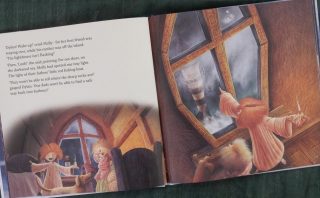
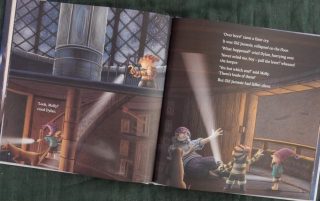
One night she wakes up and realises that something is very wrong: the lighthouse has stopped working, the harbour and sea are in darkness and the fishing boat aboard which both her own father and her best friend Dylan’s, is out at sea. Worse still a storm is raging: how will the boat find its way safely back to the harbour without a guiding light? One night she wakes up and realises that something is very wrong: the lighthouse has stopped working, the harbour and sea are in darkness and the fishing boat aboard which both her own father and her best friend Dylan’s, is out at sea. Worse still a storm is raging: how will the boat find its way safely back to the harbour without a guiding light?

And what has happened to Old Jamesie, the lighthouse keeper – something must be wrong with him or he’d never have allowed the light to go out.

Having alerted her mother, who heads off to the harbour to make a fire to guide the boat safely home, Molly (plus her doll Megan) and Dylan set out to check on the old man in the lighthouse.

Full of dramatic excitement, this is a superbly told, heart-warming tale of teamwork, determination, the consideration of others and finally, heroism. Equally superb and in real harmony with the telling are Andrew Whitson’s illustrations. The drama and tension is heightened by his use of varying perspectives, textures and a changing colour palette.

A smashing book to share over and over, and for those interested in finding out some information about lighthouses, the inside cover contains 10 interesting facts about them.

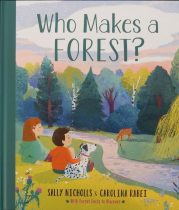
Who Makes a Forest?

Who Makes a Forest?
Sally Nicholls and Carolina Rabei
Andersen Press

I received this lovely book the day after I’d spent a gorgeous (slightly damp) morning walking in a forest not far from my Gloucestershire home. I commented to my partner what an uplifting experience it was, (and always is) in stark contrast to all the pandemic doom and gloom in the media. Had I been out with youngsters I might well have asked them if they’d ever wondered how such a forest came into being: now I have an ideal starting point.

On the first page is posed the title question, followed by a number of possibilities, as two children, a male adult and a dog walk in a forest landscape.

How can something so vast and full of closely-growing trees and often, dense undergrowth have come into being? Could it have been created magically – by a giant perhaps? Or, as a large company enterprise? Or perhaps by other groups of humans?

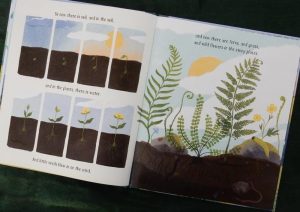
It’s almost impossible to believe that something so huge was once very small but it’s true, as Sally’s effective story tells and Carolina Rabei’s beautiful illustrations show, demonstrating to children the entire process starting from bare, stony ground that becomes soil through the action and interaction of lichens, algae, moss,

and tiny insects causing a gradual fertilisation of the ground and eventual formation of soil.

Then come the first flowers, ferns and grasses,

the seeds and spores of which spread, becoming more flowers that attract bees and insects that feed on them.

Growth and change continue through the years, the centuries until there’s a huge ecosystem that we call a forest.

As the story concludes we come full circle to the ‘who made’ question and then read, “No. / It was the seeds / and the bees and the / roots of the trees. / It was a thousand / thousand tiny things. // And together they changed the face of the earth.’ A fitting finale to an inspiring story.

Not quite the end of the book though for the final five pages provide interesting facts about forests in various parts of the world and a last word about making a difference that relates to deforestation.

Whether for home bookshelves or school classroom collections, I strongly recommend this book.

Kitty and the Great Lantern Race / Kevin and the Biscuit Bandit

The welcome return of favourite characters in two series from Oxford University Press

Kitty and the Great Lantern Race
Paula Harrison and Jenny Lovlie

At the annual lantern festival young Kitty, superhero in training, returns in a fifth adventure, ready to enchant young solo readers with her nocturnal catlike superpower.

Kitty is pleased with the lantern she’s created for Hallam City’s Festival of Light but as the parade is just beginning, a mysterious burglar is at work among the crowds. Having spied a shadowy figure, Kitty knows that she’s going to have to call on her feline superpower as she turns investigator.

Now her mission is to prevent the festival being spoiled and without the assistance of her firework fearing cat crew, she must summon all her superhero skills and bravery to chase the fast-moving thief.

As always Paula’s words and cast of cracking characters, combined with the plethora of Jenny’s arresting two-coloured illustrations are a delight. This tale of friendship, family, building self-confidence and being brave is an ideal read for Kitty’s countless established followers, as well as others just starting out on chapter books.

Kevin and the Biscuit Bandit
Philip Reeve illustrated by Sarah McIntyre

There’s a crisis in Bumbleford. For a whole week, somebody has been slowly but surely stealing the town’s entire stock of biscuits. Make that two crises for now Roly-Poly Flying pony Kevin, stands accused of the crime of stealing said biscuits – all the evidence seems to point in his direction – despite his not remembering eating the biscuits, which he surely would have, fig rolls and all.

The only ones left anywhere (and that’s in the next town), are some speciality Sprout Squashies, good for you but tasting disgusting and fart-inducing, especially when sampled by a certain RPF pony.

To avoid arrest, and hence removal from Max and family, poor Kevin is forced to go on the run – or rather the wing – from the local police constabulary. With Kevin already being dubbed as the Biscuit Bandit, it’s the Horse Prison for him unless Max and Kevin’s friends can help find clues to clear his name.

The search is on: can they unearth the real culprit (not forgetting the biscuit stash) before the police track them down?

Once again team Philip and Sarah have created a hilarious and enthralling adventure – a whodunnit – with its wealth of wordplays and asides, ensuring that readers giggle their way right through to the final reveal.

Never let it be said that Sprout Squashies don’t have their uses.

Great Lives: Martin Luther King JR, Anne Frank, Stephen Hawking & Cleopatra

Martin Luther King JR
Anne Frank
Stephen Hawking
Cleopatra

Button Books

These are four titles in the publisher’s new infographic biography series Great Lives in Graphics aimed primarily at older KS2 school readers.

Whether their interest is in human and civil rights, the holocaust in the German -occupied Netherlands as a member of the Frank family desperately trying to avoid being detected by the Gestapo; an awesome scientist and cosmologist who refused to let his ALS diagnosis hold him back; or, the woman in ancient Egypt who first married her brother, became a wise political figure and writer of books on medicine and science, going on to make a famous match with Antony,

then one of these will definitely be worth seeking out and putting their way.

Martin Luther King’s story is one that, despite his awesome achievements, and his “I have a dream” speech “… that my four little children will one day live in a nation where they will not be judged by the colour of their skin but by the content of their character”, which inspired America to end segregation, the world changing, peaceful protests he used in overcoming enormous obstacles, is conveniently and sadly forgotten by a certain element of the population of the US today.

I had to laugh when I read that Anne Frank was dubbed a ‘chatterbox’ by some of her teachers in her Amsterdam school, something that I was also often called at school.

Each book has an introductory page of narrative, a timeline, details of family life and spreads detailing the subject’s key achievements; and each brings to life through its stylish, easily understood infographics, the person and the accomplishments of a memorable human being.

Well worth adding to primary school topic boxes and libraries.

The World Made a Rainbow

The World Made a Rainbow
Michelle Robinson and Emily Hamilton
Bloomsbury Children’s Books

What a gorgeous book this is, and it’s pitch perfect for children at the present time of continuing uncertainty when very little seems normal, and for youngsters a lot of what’s happening isn’t fully understood (and that’s only the children!)

Michelle and Emily’s story begins when everyone must stay at home and inevitably friends and relations are being missed – but only until ‘everything mends’ as the child narrator’s mum says unable to be more specific regarding time.

Meanwhile normal life is on hold but there are things that families can do and this one, like so many others during this 6 months of pandemic, have to carry on somehow, some way. And one way is to make a rainbow – that symbol of hope that so many of us have been displaying.

But mum has to work, so it’s down to dad to look after a little brother (‘who’s going berserk’) with the result that our narrator has to be extra creative.

As she works on her rainbow (aided by dad when he’s free ) the little girl finds each new colour stirs a memory or acts as a reminder of something

or somebody.

Eventually her creation is a truly special piece of art and one that she’s happy to put on display in her window so that everyone can enjoy it. And yes, things aren’t perfect but in the meantime there’s much she (and we) can be thankful for.

The story is so movingly and beautifully written and illustrated.

Thank you, Michelle and Emily and of course Bloomsbury Children’s Books for this touching, heartfelt book.

Yes, it’s one for now, but not just for now: it will surely act as a reminder to reflect on in the future, of that time in 2020 when, with ever more new challenges, we all pulled together as communities, showing what the mum in the book said, “All rainstorms must end, and this rainstorm will, too.”  As the little girl says in conclusion, “And we’ll still have each other when this rainstorm ends.’

(A percentage of the proceeds of sales will be donated to The Save the Children Fund.)

A Robot Ate My Grandma / Level Up! Last One Standing

A Robot Ate My Grandma
Dave Cousins, illustrated by Catalina Echeverri
Little Tiger

This is the third in the series about twins Jake and Jess and their babysitter robot, Robin.

Now in addition to minding the children, Robin has a new job – or rather two: he’s in charge of the lighting for the school play (a musical version of Little Red Riding Hood) and also acting as the narrator of same.

But then the robot starts mal-functioning time and again and the only person who can fix him is his creator, the twins’ STEM expert Grandma. The trouble is she’s gone AWOL and in her place is – can you believe – a robot, albeit an excellent Grandma look-alike.

Mum assures them Grandma has merely gone on holiday so it’s down to the twins to sort things out.

Then they discover someone in her garage workshop and having inadvertently shot the old person, it turns out that she’s none other than Granny Andersen, the twins’ great grandmother accompanied by her ferret, Wee Freddie.

Now there’s a semblance of a team,

but can they discover what’s really happened to Granny, and if necessary, pull off a rescue?

There’s plenty to keep newly independent readers turning the pages of this zany story, not least being the introduction of a new character, Granny Andersen. There are also lots of laughs, a fair few tense moments and terrific illustrations by Catalina Echeverri breaking up the text and adding additional humour and drama to the telling.

Level Up! Last One Standing
Tom Nicoll, illustrated by Anjan Sarkar
Little Tiger

Video-game obsessed best friends Flo (narrator) and Max are stuck inside a video game series. As this book opens, one minute they’re in a plane flying over Last to Leave terrain and the next they are parachuting (just) down to land in the middle of the village square. Game on.

Before long they find themselves face to face with an old adversary, Rhett Hodges, commonly known as Hodges claiming he wants to team up with them. But can he be trusted?

Time’s running out so should they take a chance on his offer?Seemingly it’s their one chance and Flo’s Mum needs saving. Determined to make it to the end and get back home, they get into a speedboat with Hodges and away they go.

Fast and furious is the action and with so much at stake in the toughest battle ever, readers will be on the edge of their seats right to the very end. There are plenty of Anjan Sarkar’s black and white illustrations to add to the dramatic atmosphere throughout.

Zoom: Ocean Adventure & Zoom: Space Adventure / Where’s My Peacock?

Zoom: Ocean Adventure
Susan Hayes, illustrated by Sam Rennocks
Zoom: Space Adventure
Susan Hayes, illustrated by Susanna Rumiz
What on Earth Books

These are two titles in a new board-book non-fiction series for curious toddlers.

In the first we meet Noah and join him and his turtle on an ocean adventure as he takes his boat out to sea, dons his diving gear and plunges into the water.

His first location is a coral reef, a good place for a game of hide-and-seek with some fish. Next stop is a seagrass meadow with its seahorses, dugongs and a wealth of other creatures, some of which emerge from the kelp.

Danger suddenly looms in the shape of a hungry great white shark from which Noah must make a hasty escape by climbing into his submarine and diving down to the darkest depths.

There’s also a sunken pirate ship with treasure and more to discover as Noah heads for the Antarctic and an iceberg with penguins atop, made all the more dramatic by its large die-cut shape,

Indeed die-cuts are a feature of every spread and with their clever placing each one offers a different view depending on whether the page is turned forwards or back.

The Space Adventure is Ada’s and begins with her (and her cat) boarding her rocket ship and awaiting the countdown which is delivered through wordless die-cut illustrated pages shaped as the numbers 5 through to 1.

Then the rocket blasts off skywards towards the moon, docking at the International Space Station to make a delivery and for Ada to perform some urgent repairs before making a lunar landing to collect scientific samples.

Thereafter, the rocket explores the Solar System viewing all the different planets before heading home once more.

Characteristic of both, rather longer than average board books are: the surprise pop-up on the penultimate spread, the wealth of visual details in Sam Rennocks and Susanna Rumiz’s vibrant illustrations, the die-cut pages, the relatively short narrative and the fact that both Noah and Ada actually experience their journeys through their imagination.

Sturdily built, these are well worth putting into a nursery collection or adding to your toddler’s bookshelf.

Where’s My Peacock?
Becky Davies and Kate McLelland
Little Tiger

In their latest touchy-feely, hide-and-seek board book, thanks to Becky Davies’ simple repeat patterned and Kate McLelland’s alluring patterned art, toddlers can follow the trail of footprints and discover a long tailed lemur, a feathery owl and a brightly hued toucan before locating the dazzling tailed peacock that has almost, but not entirely, hidden himself away.

Tactile fun for tinies and the possibility of learning some new vocabulary.

Impossible! / I’m Sorry

Here are two recently published picture book from Little Tiger:

Impossible!
Tracey Corderoy and Tony Neal

Dog runs a laundry in a busy city but has a longing to see the ocean.

One day he comes upon Ocean Magic, a new kind of washing powder. The product promises ‘seaside freshness with every wash’ but apparently there’s something else within the box too.
Into the machine goes the powder and out later, along with the clean washing, emerges a crab suffering from a bad attack of nausea.

Dog and Crab discuss the situation over a cuppa

and eventually after declaring several times that driving Crab all the way back home is impossible, Dog lets himself be persuaded to undertake the trip.

Off they go together on a journey that takes several weeks during which they create a special memories map of their trip.

En route they encounter other travellers with seemingly impossible challenges of their own.

Now it’s Dog’s turn to utter the ‘nothing is impossible unless you say so’ maxim and with the assistance of their new friends, Dog and Crab finally reach their destination.

Both are delighted with the ocean paradise but then Dog declares he must return to his city job – or must he?

Follow your dreams and don’t allow obstacles to stand in your way, is the message Tracey’s tale imparts to youngsters. Equally the ‘it’s only impossible if you say so’ message is one we all need to remember especially in challenging times.

Tony Neal’s bright, lively, illustrations inject additional humour into the telling offering fun details to enjoy on every spread.

I’m Sorry!
Barry Timms and Sean Julian

In Walnut Wood live best friends, Scribble (squirrel) and Swoop (owl) and each morning they walk a considerable distance bringing their special things to their regular meeting spot.

Scribble has a special pencil that acts as word assistant in his play script writing, the finished dramas entertaining his friend. Swoop’s special thing is a toolbox that enables her to build anything and everything.

One day they decide to move in together; their place has ‘room for two and a little left over’.

It’s the left over bit – the veranda – that causes a rift, for each has designs on it.

A huge row ensues over the ownership of this: should it be a stage or a workshop?

Scribble decides to try and make amends with the aid of his trusty pencil but can a single word apology fix things or is something else needed?

There’s food for thought and discussion with little ones in this story that demonstrates that sometimes actions speak louder than words. Sean Julian’s beautifully expressive watercolour illustrations are for me the true show-stealers in this book.

The Stars Just Up the Street

The Stars Just Up the Street
Sue Soltis and Christine Davenier
Walker Books

Mabel’s grandpa loves to tell stories of the thousands of stars in the night sky where he grew up and this draws in his granddaughter Mabel who loves to look at the five stars she can see through her bedroom window and the nineteen visible from her back garden’s ‘narrow patch of sky’.

When Grandpa and Mabel go walking in the town looking for the myriad of stars he saw in his youth, the plethora of street lights and houselights make it impossible.

What can she do about the lack of the real darkness that would allow the stars to become visible?

Now Mabel has a mission: to convince other people to turn off the lights. First she goes to her neighbours who having done as requested are amazed at the number of stars now visible – around two hundred. “Look, the Big Dipper!” cries one in surprise.

More people agree to switch off but to get the street lights turned out, Mabel must appeal to the town’s mayor. This, with dogged persistence and a reminder that everyone was a starry-eyed, star watching child once upon a time, she eventually does.

The story concludes with a community celebration with everybody gathering up on the hill to view the wonders of the night-time sky, now filled with stars,

an event that seems destined to become an annual new moon tradition with  picnics and telescopes.

Sue Soltis’ beautifully told, inspiring story of the love between Grandpa and grandchild, of determination, community and controlling light pollution, will appeal to urban star-gazers especially, as well as one hopes encouraging youngsters to take up the challenge and campaign for what they believe is right and to stand against those things which are detrimental to our world. Christine Davenier’s ink-wash illustrations capture both the beauty of the night sky liberally sprinkled with stars, and the young girl protagonist’s heartfelt determination.

Would that it were so relatively easy: our towns and cities at night are ablaze with unnecessary artificial lights, almost wherever one looks: every town, every city needs a Mabel.

Midge & Mo / Judy Moody Super Book Whiz

Midge & Mo
Lara Williamson & Becky Cameron
Little Tiger

Starting at a new school is almost always a bit scary and many children go through those ‘I want things to be how they were before we moved’ feelings. It’s certainly the case for Midge in this latest story in the Stripes series of full colour fiction for new solo readers.

Midge’s parents have separated and Midge is faced with having to start at a new school with all the challenges that presents. He really doesn’t want to embrace the change, instead he wants his old school and friends, and his parents together.

On his first day he receives a warm welcome from teacher, Mr Lupin who asks Mo to be Midge’s buddy. This proves to be a challenging role, for no matter how hard she tries, Midge remains sad and silent.

At the end of the day, Mr Lupin encourages her to keep on trying.

Back at home that night, Mo has an idea. She reaches for the snow globe her mum and dad gave her when she was a newbie at school and sits down with her parents whose words of wisdom inspire her to create a special something for Midge.
At school the following morning, she tries again with Midge and her actions precipitate a change in him: little by little, the clouds begin to shift …

Told and illustrated with obvious empathy, Lara’s words and Becky’s illustrations express so well, the emotional turmoil of Midge. It’s a lovely warm-hearted story for young just-independent readers as well as providing an ideal opportunity to explore the feelings associated with changing schools and/or a parental separation.

Judy Moody Super Book Whiz
Megan McDonald, illustrated by Peter H. Reynolds
Walker Books

My goodness, I hadn’t realised just how many Judy Moody books there now are.

Although there is a competition in this story regarding factual recall of things in stories and I’m somewhat uncomfortable with that, books and reading rule and that must be a good thing.

Judy Moody and her brother Stink are both on their school bookworm team (along with Frank and Judy’s erstwhile arch nemesis Jessica, Frank and Sophie). They have to read all the books on the list in order to beat the team from a school in the nearby town. There’s money for the school library as a prize and their much-loved teacher, Mr Todd is asking the questions, but can team Virginia Dare Bookworms out-perform The Fake-Moustache Defenders with their star, ‘Mighty Fantasky, Fourth grader’.

In order to be in with a chance the Bookworms will need to read at every possible opportunity – on the bus, in karate class, at the dining table, sick in bed, even.
Judy tries speed-reading while Stink fashions a cape using sticky post-it notes both of which are not quite the answer.

However, enthusiasm for reading never wanes in this exciting bookish battle, (all titles read are listed after the story), and let’s just say that it’s a win for books, for hard work and for determination.

I’ll leave you to decide to whom that applies and suggest you get a copy of the book for your classroom or a bookish young reader. Either way the final list of books, as well as the story, with its liberal scattering of funky Peter H. Reynolds illustrations, provide literary inspiration and enjoyment.
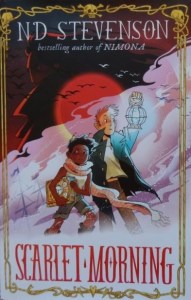
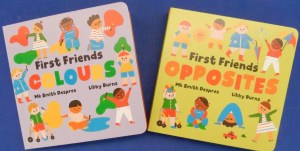
Smell My Foot!

Smell My Foot!
Cece Bell
Walker Books

If you happen to be looking for a book for readers who might have struggled a little or want something funny and a tad pungent in graphic novel style then Cece Bell’s bonkers book will tick those boxes.

Without further ado let me introduce its comedic duo: Chick is the pedantic, manners obsessed one; The socially inept Brain, despite appearances, can’t quite get the hang of such niceities as ‘please’ and ‘thank you’ and simple greetings, despite Chick’s modelling them for him. Instead of copying, his response is direct action. For instance Chick says, “ But I will not smell your foot until you say PLEASE.’ … ‘Like this ; please smell my foot.’ ‘Oh! OK!’ comes Brain’s response followed immediately by …

and so it goes on until finally the pair have smelled each other’s feet.

Chapter two sees the arrival of Spot the dog and a lot more social behaviour modelling and foot sniffing ensues until Spot invites his tutor home for lunch – UH! OH!

Chapter 3 demonstrates beautifully how clueless Chick really is: will he become a dog’s dinner or might his supposedly daft counterpart come up trumps by stepping in at the crucial moment? Polite, Chick-pleasing foot sniffing might not be his forte but sniffing danger could be an altogether different matter.

I’ll leave you to surmise and move rapidly on to the final chapter: oops that’s a bit of a giveaway but this hilarious saga does have a happy ending just about!

I absolutely love the way the author sends up the awful reading scheme language of yesteryear books such as Janet and John, Peter and Jane or the US equivalents Dick and Jane, the latter just happen to rhyme with this book’s delectable duo.

Super, slightly stinky spluttersome silliness of the first order, a friendship you won’t forget in a hurry, priceless comic-strip sequences with a dialogue only text, and short, bite-sized chapters: what more can a perhaps less than eager reader ask? Once anyone samples this, I suspect the demand will be “More of Chick and Brain please!”