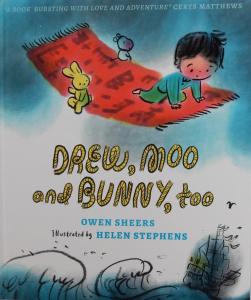
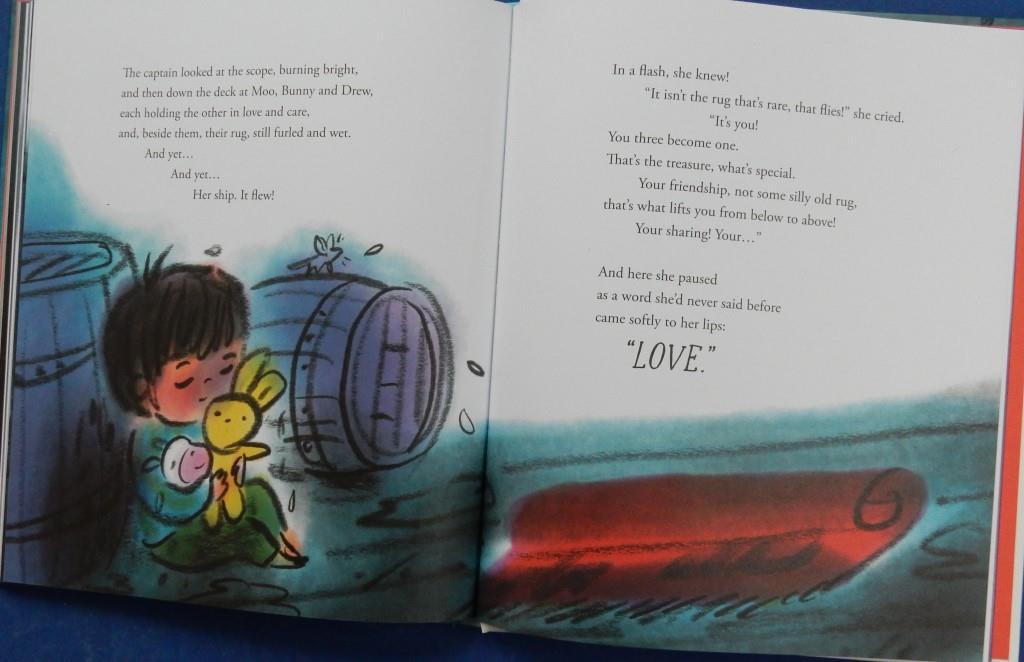
Need a House? Call Ms. Mouse!

Need a House? Call Ms. Mouse!
George Mendoza and Doris Susan Smith
The New York Review Children’s Book Collection

Ms Henrietta Mouse is no ordinary rodent as her company sign board on the title page shows. Her team comprises builders, decorators and designers. We then see Henrietta’s Portfolio, which is pretty sizeable and includes Squirrel’s Treehouse, Trout’s Paradise, Mole’s Manor, Caterpillar’s Cocoon and Lizard’s Cliff House.She would be the first to admit that despite her creativity and imagination, without the help of her loyal, skilled team of mice, she wouldn’t manage.

First of all Henrietta listens to what her clients have in mind: Squirrel, for instance, wanted to feel as though he lives in a spaceship.

Farmer Rabbit needs lots of storage space for his summer crops, so Ms Mouse designs a home with a root cellar and Spider, a music lover, is the proud owner of a recording studio attached to his web.

Be they grand or simple, Henrietta knows what to do to create the house that reflects their lifestyle – the home of their dreams. Her own preference is for the simple life

In his captivating story, author George Mendoza offers readers some information about design and the building process and every one of Ms. Mouse’s creations is a visual feast, thanks to Doris Susan Smith’s intricate pen and ink and watercolour illustrations. These provide a cutaway view for each of the houses, so readers can really appreciate the complexity of their design.

Who wouldn’t want to live in a diverse community such as that of this group of animals.

First published in 1981, it’s good to see this book being made available to a new audience of youngsters.

Bees & Beetles / Not Just Another Book about Farm Animals / Not Just Another Book about Things That Mooove

Bees & Beetles
Nia Gould and Molly Littleboy
Little Tiger

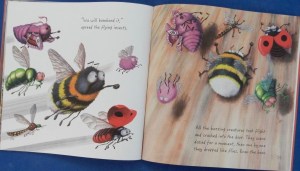
A surprising amount of information about bugs, in easily digestible portions, is found on the pages of this sturdy, split page ‘flip-flap’ book, the second in a series for the very young.

Children will enjoy being able to change the scenes by flipping the cut portions of the alternate pages to create a different but related scene for first ants, the second showing the inside of a nest; 

then spiders – the start and finish of a web. Following this, youngsters will encounter several different creepy crawlies – dragonflies, grasshoppers, beetles, fireflies and ladybirds on and among flowers in a meadow; transforming the habitat they’ll discover snails and slugs, earwigs, centipedes and below ground level, wriggling earthworms. Bees come next and finally various caterpillars and butterflies.

A useful book to support a minibeasts theme; one that is frequently explored by foundation stage learners.

Presenting information to young children in an entirely different, but equally effective way are

Not Just Another Book about Farm Animals
Not Just Another Book about Things That Mooove

Noodle Juice, illustrated by Jake McDonald
Noodle Juice

In the first the author offers facts in mouth- watering morsels about farms, and their livestock in a humorous style, with contributions from the animal residents along the way. There are spreads featuring hens, pigs, horses, sheep, cows, turkeys, ducks, geese, goats and even llamas. Did you know that you can tell whether a turkey is male or female by examining its poo?

Jokes abound – these are as likely to appeal to adults as the intended young audience and Jake McDonald’s illustrations are suitably comical.

The same is true in the second book that begins by giving a simple definition of transport and goes on to present spreads on myriad modes of moving from place to place. The information is presented by a cow narrator that seems to have a penchant for puns. Here’s an example. 

Readers will encounter feet (as in walking), boats, cycles, trains, cars, buses, trucks, planes, helicopters and rockets all of which have bovine drivers or pilots.

The busy final spread of both books asks ‘Can you find …’ In the farm book, readers have to try and spot the farmer; in the transport book there’s an elephant to locate.

Wacky fun for fact fanatics.

The Bear who had Nothing to Wear

The Bear who had Nothing to Wear
Jeanne Willis and Brian Fitzgerald
Scallywag Press

Told in jaunty rhyme, this is a cautionary tale of sorts about Albie bear and his search for identity. Albie bursts onto the scene clad in nothing but fur but what kind of bear is this? Time to choose some clothing to suit his personality.

Having spent Monday dressed in bonnet, bootees and onesie, he tosses them aside crossly declaring, ‘That’s not who I am! Today I’m a prince so I need a gold crown.’ However, by the end of the next day, the princely outfit has been cast aside with a scream of disgust and out comes a wand, wings and a dress fit to go to a ball. The only thing is no invitation is forthcoming.

So it goes on throughout the entire week by which time Bear’s consumerism must have cost him a considerable amount – cowboy gear, piratical attire, country clothes – 

but has he found out anything about his true self? Happily so and in addition he makes sure that all his discarded items don’t go to waste.

Jeanne Willis’s text is huge fun to read aloud and Brian Fitzgerald’s entertaining scenes of Albie’s ever changing gear and his various fashion fiascos in his search for his true self are sure to appeal to young listeners. I suspect this will become a story time favourite.

Albert and the Pond / Supertato: Mean Green Time Machine

These are new stories about favourite characters – thanks to Graffeg and Simon & Schuster for sending them for review.

Albert and the Pond
Ian Brown and Eoin Clarke
Graffeg

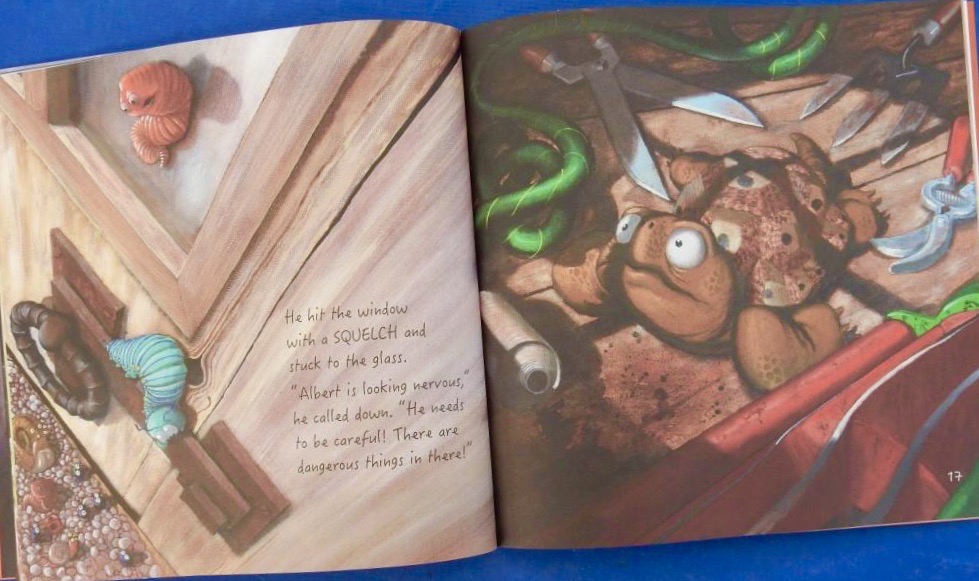
There’s a new pond in the garden where Albert tortoise lives, quite a deep one, so he knows not to venture in. Suddenly as he stares into the water, he notices a pair of eyes staring straight at him, but they blink and disappear. Albert tells all his friends, who take a look too, but the creature merely blinks and swims away.

No matter the weather, Albert visits the pond to check on his new pal every day but one day there’s no sign of the little creature and even though his garden friends try to cheer him up, Albert still misses his newest friend.
Autumn arrives and Albert makes a final visit to the pond before hibernating but of his friend there is no sign, not even a bubble.

The following spring you can guess where Albert heads when he emerges from his sleep and he gets the surprise of his life. Not one pair of eyes but many, many similar pairs are now staring straight up through the water at the tortoise.

Suddenly Albert hears a voice and is astonished to learn that he already knows its owner. How could that possibly be? Appearances can be deceptive …

Young children will love being in the know before Albert and be highly amused to see the efforts of the garden creatures as they attempt to play a game altogether with their amphibian friend.

With Eoin’s wonderful stand out, almost realistic illustrations, so brilliantly expressive and beautifully textured and Ian’s gently humorous and educative text, Albert’s numerous fans will delight in this latest tale. (Those new to this particular character can find out about the real Albert in the back matter after the story.

Supertato: Mean Green Time Machine
Sue Hendra and Paul Linnett
Simon & Schuster

One night in the supermarket Supertato and the veggies are holding in their giggles as they look at Supertato’s baby photos. Carrot’s comment that Supertato looks ‘super cute’ in one picture prompts the spud to say that he hasn’t always been super. Guess who is listening in: of course it’s Evil Pea, who wishes he’d eliminated Supertato before he’d acquired those super powers.

A pineapple’s remark about a Time Machine prompts Evil Pea to start building exactly that. Having collected all the ingredients from various shelves plus some snippings from Supertato’s slippers, he stirs the mixture and hey presto! Three time crystals: one for the backward journey, one to come back and a spare – just in case.

Then with the clock set, wheee!

Baby Carrot is somewhat confused when the pea demands to be taken to see Supertato but she does know a potato and before long right there in front of the pea are all the veggie babies eager to play his game. Having dealt, so he thinks, with all except Baby Potato, Evil Pea approaches him threateningly. The little spud retreats

and you’ll never believe what happened next, although it really, really did.

Super silly and super fun, but that’s what readers have come to expect when they’re in the company of Supertato et al. This one is super exciting too, especially when the revelation about Evil Pea is shared with all the veggies.

My Tree

My Tree
Amy Sparks and Fiona Lumbers
Scholastic

The small girl narrator of this story had a favourite place, her tree, which she loved dearly. It acted as a listener when she felt sad and a playmate when she needed an adventure. No matter what, the tree was always on her side; her family loved it too, no matter the weather. And what a wealth of nature relied on that tree: it provided food for squirrels, a nesting pace for birds, and of course it acted as the starting point for a multitude of exciting imaginary adventures.

One night however, everything changes; incessant rain and wind result in the tree’s destruction. No more adventures: the little girl is distraught.

But then she notices something wonderful. The wind has scattered the tree’s fruits all over the ground; she knows what to do next. Having planted an acorn, the girl tends to it, giving it water and telling it exciting stories.

Gradually both child and tree grow … and grow … and grow … Now the girl has a special new best friend; one that will stay with her for ever, so she hopes.

Just as the narrator found joy in nature, so too do many of us, children and adults. It’s always there offering hope of renewal and the possibility of new beginnings. ‘In my end is my beginning’ – so said TS Eliot at the conclusion of East Coker. And so it is for the tree in Amy Sparks’ warm, reassuring story with Fiona Lumbers inspiriting illustrations.

The Chalk Garden

The Chalk Garden
Sally Anne Garland
Sunbird Books

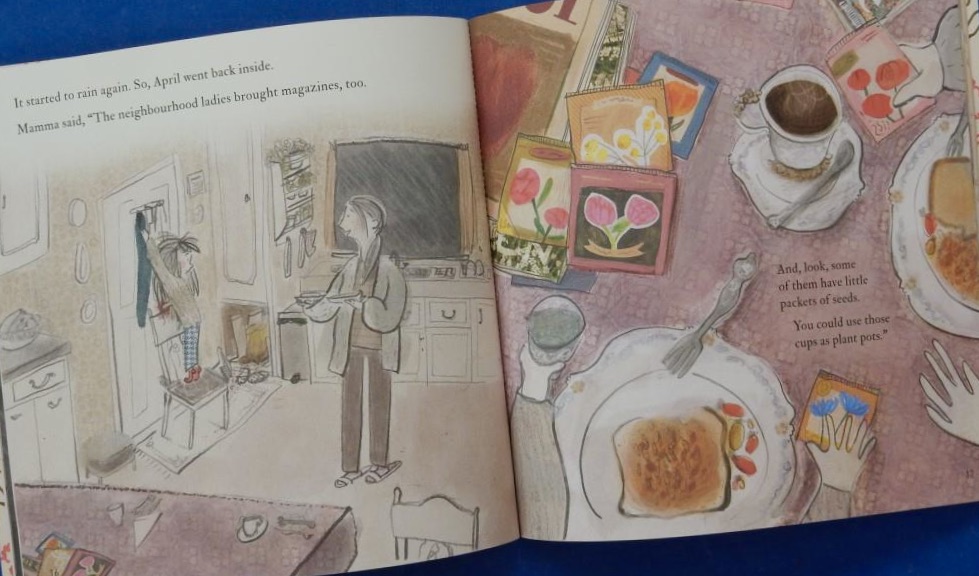
Having recently moved to a new home with a garden made almost entirely from concrete slabs, young Emma is excited to hear the sounds of birds in the next door garden but none ever comes to hers. So, she tries to create a colourful environment in her own backyard using her chalks but all that comes is rain washing off the drawings and leaving everything grey once more.

As she stands miserably thinking, that’s my chance of attracting birds gone, she notices something green poking up through a crack in the paving stones, one of which wobbles when she steps on it. She calls her Dad and points it out. Dad’s response is to move the slab. Emma is thrilled to see lots of minibeasts where the slab had been and so begins a process of rewilding an area of the garden.
Emma is an observant child; she notices when the soil needs to be watered

and little by little, green shoots start to push up, grown from the seeds blown in.

She loves the ants. spiders, ladybirds and other small creatures but one thing is still missing. Summer days are warm and the shoots explode into brightly coloured flowers that attract pollinating insects and Dad has to remove more slabs to accommodate the burgeoning wildlife. Still determined to attract feathered visitors, Emma makes a bird, bath, feeders and more.

Then finally she hears something she’s been waiting for and working for.

It’s lovely to see the changes taking place in the gorgeous illustrations of transformation and one hopes that children will be inspired by Emma’s efforts and, with parental consent, do some wild planting of their own so they too can become patient observers of the natural world.

A blooming gorgeous, gentle story that I’d strongly recommend for home and classroom sharing; and I think, Sally Anne Garland’s best so far.

Snug As A Bug?

Snug As A Bug?
Karl Newson and Alex Willmore
Happy Yak

‘I’m as snug as a bug in a rug, I am. / As snug as a bug could be. / There has never been a bug / in THE WHOLE WIDE WORLD / so happily snug as me!’ So says Ronald, the little bug, from the comfort of his conker shell bed but little does he know how short a time this will last, for no sooner are the words uttered than there comes a DING-DONG! at his door.

Suddenly our bug is dashing off on a very dangerous adventure, hotly pursued by a series of hungry creatures, all with the intention of making little Ronald their dinner. As he runs as fast as his tiny legs can carry him, through a dark cave,

woods and along a river bank, as he floats along just out of reach of pursuers,

even as he’s washed over a waterfall, he keeps insisting ‘I’m as snug as a bug in a rug, I am! … ‘

Can he possibly make it back to that cosy place from whence he started? Will he really ever be that snug bug again? Small he may be but our bug is mighty too, so you’ll never know – unless you get hold of this smashing book. Meanwhile keep your fingers crossed for Bug.

There’s a delicious deliberate dissonance between Alex Willmore’s highly dramatic scenes of the chase and chasers, and Karl’s narration. A story time treat for both young listeners and adult readers aloud.

Squishy McFluff’s Camping Adventure / Hello Summer

Squishy McFluff’s Camping Adventure
Pip Jones and Ella Okstad
Faber

Ava and her Dad, plus of course Squishy McFluff, Ava’s invisible cat, are off on a weekend camping trip. They appear to have packed the car with everything but the kitchen sink, so how have they managed to leave the tent behind? Apparently Ava was aware of the omission but decided to keep quiet so they would end up having to build a den to sleep in.

This she starts to do as soon as they reach the campsite. While collecting leaves and branches, she encounters a boy who introduces himself as Idris; his dog is Farida and they so they say, are ace den builders. Ava challenges Idris to see who can build the best den and off they go, amassing the materials;

it looks as if it’s going to be a fierce competition, though Idris does his best to be friendly. Ava however has a trick up her sleeve.

What will the outcome be? Could the two rivals perhaps join forces and even become friends?

Author Pip Jones’ rhythmic, rhyming text is fun and reads aloud well and Ella Okstad’s scenes of the very visible action, and the mischief on Ava’s part, are the perfect accompaniment to the words.

Hello Summer
Jo Lindley
Farshore

This is the third in the Best Friends With Big Feelings series wherein the seasons of the year have taken on human form and are best friends. When the season changes, the crown is passed from one friend to another and the crown wearer leads their games.

All four Little Seasons are excited as they gather ‘neath the Tick Tock Tree for Spring to pass the weather crown to Summer. With the long days and bright sun, the friends decide to visit the beach so they load up their cart with summery supplies and head off. The journey proves to be rather eventful; the four try to look on the bright side when plans start going haywire, but eventually tempers fray.

Once at their destination, everybody’s mood is upbeat again and Winter suggests they build a sandcastle. What a splendid one they make but once again, disaster strikes and the result is a very angry Summer.

Time once again to use that calming technique, Spring has shown him.

Before long Summer is ready to apologise to his understanding friends and the day ends happily.
Demonstrating the importance of having empathetic, supportive, friends especially when angry feelings arise, this is a fun summery story to share and talk about with young children, either at home or in the classroom.

Into The Wild

Into The Wild
Thomas Docherty
Oxford Children’s Books

As night falls a small boy gives full rein to his imagination.

Joe lives in a city flat where, so he thinks, there isn’t any wild. However as he looks out from his bedroom window, he quickly realises that there is a whole lot more than he first thought. Then some of the outside starts coming into his very own room and this leads him to venture out into the wild city. By careful, close looking he discovers wildlife up in the branches of the trees, between the cracks in the pavement and hiding away beneath the bushes. Moreover, the more Joe looks, the more the wild proliferates

and eventually it’s everywhere, stunning in its beauty and full of surprises but most importantly, it is home to everything and every one, very precious and needs to be treated as such.

The wild has assuredly invaded Joe’s mind and his dreams, but not only that, it’s in his heart too.

Richly imagined too are Thomas Docherty’s illustrations for this magical story. Young children (and adults) will love poring over the multitude of gently humorous details in every scene.

The final page invites readers to go outside and search for the wild things in their own city or town; let’s hope they take up the challenge.

Thunderboots

Thunderboots
Naomi Jones and Rebecca Ashdown
Oxford Children’s Books

What she lacks in stature, young Trixie makes up for in sheer joie de vivre. She dashes up the stairs in her home, cartwheels along corridors and generally makes her presence felt to the other residents of her apartment block who call her Thunderboots.

When it’s time for her to start school, Trixie is excited and she loves school, her teacher, the new friends she makes and playing on the outdoor equipment. Moreover she really enjoys learning, especially listening to stories but her favourite of all lessons is PE.
One thing she finds really challenging though is learning letters and writing. School isn’t such fun any more ; everything feels hard, so she tells her empathetic Dad.

Dad says that everyone learns differently and that is perfectly fine; he sees things and thus learns differently from others: he calls this a ‘superpower’.

Next day at school Dad and Trixie’s teacher chat and make a learning plan to help his little girl, who has dyslexia, with the things she finds tricky.

This includes a class circle time where everyone highlights something their neighbour is especially good at. Now at last Trixie decides that having a superpower and learning differently is just a part of who she is.

Drawing on her own experiences of growing up, the author has created an empowering story of a neurodivergent child, who happily, had the understanding and support she needed. In this celebration of everybody’s unique abilities, Rebecca Ashdown portrays Trixie as a thoroughly endearing character, bursting with energy and enthusiasm for life and I’m sure young children will love exploring the fun details in every one of her scenes be they at home or in school.

My Small World: Dinosaurs

My Small World: Dinosaurs
Caryl Hart and Harry Woodgate
Simon & Schuster Children’s Books

Two small children take readers on an adventure to their imaginary prehistoric world, the land of the dinosaurs.

Therein among erupting volcanoes, they will watch dinosaur cousins – baby pterosaurs learning to fly,

encounter the herbivorous Europasaurs, dive down deep in the ocean and meet an Ichthyosaur, not strictly a dinosaur but a dolphin-like, fish-eating lizard,

take a ride upon the back of an enormous Brachiosaurus while tempting it with something delicious. Suddenly though there comes a fear-inducing ROAR made by a ravenous T.Rex, time to take cover or else perhaps become its next meal. Off go the little humans, following the tracks left in the swamp by a family of Stegosaurs having some fun, then watched by smiling Triceratops they climb up the volcano side and look down upon other dinosaurs hunting or swimming until sunset.

Time to bid farewell to those dino-friends and return to reality. Little humans (with a bit of adult help) can then start assembling some materials to create their very own Dinosaur Land. Instructions are offered at the end of the adventure and the book ends with a ‘my small world’ map.

Author Caryl Hart and illustrator Harry Woodgate have chosen a topic that’s sure to appeal to small children in this, the first of a new series where imagination is key and there’s playfulness aplenty. The rhyming story reads aloud well and the illustrations are infused with gentle humour and alive with vibrant colours.

Cleo the Completely Fine Camel

Cleo the Completely Fine Camel
Wendy Meddour and Carmen Saldaña
Oxford Children’s Books

Nothing can stop Cleo the camel feeling on top of the world and absolutely fine or can it? She’s such a ‘glass half full’ kind of creature that even when the sand under her feet is burning hot, the sweat is pouring off her face and she’s so thirsty that she licks the surface of a rock, she insists to fellow desert dwellers Lizard, Jerboa, and the circling vultures, that she feels happy.

Suddenly a fearsome sandstorm blows up, almost completely burying Cleo. Her friends dig her out and still she maintains that she is fine, despite her hump having shrunk significantly. Along comes Ostrich who has just emerged from the sand. “I’m fed up. Fed up of sandstorms, Fed up of the heat. And fed up of getting sand in my eyes.” Cleo still tries the ‘we’re desert animals’ line but Ostrich continues with “Yes, I feel rubbish. Totally awful. Absolute pants. How about you?” Will Cleo finally take that leap of confidence and admit how she really feels?

Thankfully for all, yes she can and having faced up to reality, she follows Ostrich’s lead in search of an oasis where welcome refreshment awaits.

Wendy Meddour’s story gently and humorously imparts an important life lesson to young children: it’s all very well putting on a brave face but not to the detriment of your own well-being. Carmen Saldaña makes the searing desert heat radiate from the pages in her illustrations, which show the impact on the animals – humped or not – as they struggle to cope with the harsh reality of desert life.

Cinder & Ella / The Selfish Giant

Cinder & Ella
Barbara Slade and Lucia Soto
Owlet Press

Kind, clever and beautiful, Cinder lives a life of drudgery with her mean stepmother and idle stepbrothers. Nothing she does seems to please them, but what pleases Cinder herself is dreaming, not of a handsome prince, but a gorgeous, long-haired girl with blue eyes, who happens to be a princess.

Princess Ella too has dreams but as yet she can’t quite imagine what they might lead to. What she does know though, is the reason why her royal parents are hosting a ball to honour her eighteenth birthday. It’s a celebration to which everyone in the land is invited and one that thrills Cinder’s stepmother, who imagines either of her son’s as the perfect partner for the princess. In their separate abodes both Cinder and Ella are distraught.

Come the night of the ball. Cinder is left with countless chores to do while her stepmother and stepbrothers go off in their carriage. As she sits thinking of all those desirous of winning the heart of Ella, she hears a deep whisper, “Make a wish,” coming from Midnight, her horse. Surprised, she does so and magic happens. Her old ragged clothes become a fine outfit and a pumpkin becomes a gold carriage, pulled of course, by Midnight. On arrival he gives the twelve o’clock warning about the magic expiring and off goes Cinder into the palace ballroom.

So enraptured with one another, are they that Princess Ella and Cinder dance the night away 

until that fateful midnight chiming begins and off dashes Cinder. Can the two overcome the odds and get their happy ever after? Let’s say that in this instance, thanks to hope, a special horse

and determination, love’s power prevails.

Just right for celebrating Pride Month, this is an enchanting reworking of a favourite fairy tale.

The Selfish Giant
Oscar Wilde, illustrated by Rita Voutila
Allen And Unwin

Richly coloured, finely detailed oil paintings grace every spread of this classic Oscar Wilde story of the self centred giant who returns from a seven year absence spent staying with his Cornish ogre friend to discover children playing in his garden. Children he immediately bans by erecting a high wall and putting up a ‘trespassers will be prosecuted’ sign. The only visitors that enjoy the garden for a whole year are the winter elements, Snow, Frost, the North Wind and Hail; 

the children are forced to play outside in the road.

As many adult readers will already be aware though, those children eventually creep back in, the giant sees the error of his ways and even helps a small boy trying to climb a tree. The remainder of the tale, which takes place over years, is told in the text of the book.

With lots of Christian symbolism for those who want to look for it, the story is a powerful lesson in selfishness and its consequences; Rita Voutila’s Northern Renaissance style art has a power of its own.

This Girl Can Be A Bit Shy / I Just Ate My Friend

This Girl Can Be A Bit Shy
Stephanie Stansbie and Hazel Quintanilla
Little Tiger

Narrated by little Ruby, ‘I am brilliant. I’m also a little bit shy.’ we learn of her different days: some when she feels brave, bouncy and full of chat, and others when she wants to go it alone, not playing with anybody, not talking to others just hiding herself away in one of her favourite hiding places where no-one can look at her and she doesn’t have to join in with things her friends are doing.

Her Dad understands exactly and wisely suggests, “Tell people kindly if you’re feeling shy.’

No matter what though, there is one thing Ruby is never too shy to say: can you guess what that is?

This is the second book wherein we meet the delightful Ruby as main protagonist and it’s a pleasure to be back in her company, empowering others with her thoughts, energy and actions now that she’s turning six, as we see in some of Hazel Quintanilla’s enchanting illustrations.

I Just Ate My Friend
Heidi McKinnon
Allen & Unwin

Darkly humorous is this tale of a monster that eats its friend and spends almost the rest of the book searching for a new one – to no avail. Those asked, ‘Hello! Would you be my friend?’ find the impulsive protagonist in turn, too big, too small, too scary, too slow

and then there’s just a flat refusal sans reason. Just when it seems he’ll remain lonely evermore, what should come along but another potential candidate for friendship with alluring eyes and a beguiling smile …

This simple story with its patterned text is perfect for those in the early stages of learning to read and they will likely delight in the unexpected twist with which the story ends.

My Brother George

My Brother George
Kelly & Zoe Allen and Tara O’Brien
uclan publishing

The creators of My Momma Zo, LGBTQ+ parents Kelly and Zoey Allen and illustrator Tara O’Brien, have collaborated on a new picture book about having the courage to be different.

Molly acts as the narrator and tells how her slightly older brother, whom she dearly loves, has long hair that confuses some people; they think he’s a girl and thus her sister.

Molly now feels sufficiently confident to stick up for George, pointing out that he’s her brother. This receives mixed results and one woman’s comment about him being ‘too pretty to be a boy’ angers Molly, who for once is unable to find the right words to respond.

Hurrah for George though: he replies thus, “I think you should get to know someone before finding out their gender.” and ever since her brother has gained more confidence. He plays with dolls, borrows his sister’s clothes, enjoys baking and is a fan of zombies; he also is an expert at nail adornment.

Despite still getting called a girl and being the source of amusement at times, he knows everything he does is just part of being true to himself and so he endeavours to help others understand, often under the watchful eye of Molly who is always there for him should she be needed.

Stylishly illustrated in bright colours by Tara O’Brien and frankly told in a heartfelt manner by Kelly and Zoe Allen, this is another empowering story that encourages everyone to be who they truly are, and to feel confident and comfortable in themselves. With too many adults quick to be judgemental about those they perceive to be different, we need this book and more similar ones in primary classrooms, libraries and homes.

Luna and the Treasure of Tlaloc

Luna and the Treasure of Tlaloc
Joe Todd-Stanton
Flying Eye Books

At the start of this, the fifth of the Brownstone Mythical Collection series, Professor Brownstone introduces readers to Luna Brownstone, the most cunning of all the Brownstones. Daughter of renowned and respected adventurers known for their selfless acts, Luna decides after her parents were robbed and left abandoned while on a mission, that she would look after nobody but herself. This is just what she did: running away from home as soon as she was old enough, Luna began stealing priceless treasures from all over the world.

On the hunt for her next treasure, she goes to Aztec America and there learns of a young girl, Atzi, who has volunteered to undertake a journey, taking an offering, to the Aztec rain god Tlaloc and imploring him to save her village from drought. Luna decides on a cunning plan: she’ll befriend the girl, take her map and find the rain god on her own.

Their journey to his home beneath a sacred mountain is full of hazards including strange creatures

and they have to solve a riddle to discover the entrance to the palace. Luna realises that she must work with Atzi to navigate powerful waterfalls and evade hungry creatures, avoid dangerous ice shards and much more. Suddenly as they near their destination, Atzi is in peril of her life. Luna finds herself unable to let her die, though she doesn’t abandon her plan to steal the gold offering.

But is there something else that matters more than treasure and self- interest: Luna is soon faced with a crucial decision: does she have within her the power to change?

Luna is a rather different protagonist from others in the picture book cum graphic novel series – an anti-hero – and as always, Joe Todd-Stanton’s richly coloured illustrations for this thought-provoking story are full of wonderful details to pore over.

The Goat and the Stoat and the Boat

The Goat and the Stoat and the Boat
Em Lynas and Matt Hunt
Nosy Crow

Sit back, sail along and enjoy the rhyming fun from the team who gave us The Cat and the Rat and the Hat; the text for this one is every bit as funny and lively and Matt Hunt’s highly energetic scenes of what turns out to be a fair bit of rocking and rolling, which inevitably leads to some pretty catastrophic consequences, are just superb.

It all begins with Stoat floating merrily along in his favourite boat when along comes Goat. Goat too wants to float in that same boat so on he leaps.

The problem is that although Stoat is well aware of the way to keep safe therein, Goat most certainly is not. All he wants is to have fun too. Pretty soon however, things start to turn nasty. Stoat seizes a pencil and lays claim to the boat, which develops into a pencil power dual.

That is when, in addition to the rocking and rolling, the boat starts wibbling and wobbling, tilting and tipping and it’s not long before there’s a big splash in the moat. You’ll quickly guess the cause of that. Now the thing is that Goat in that colourful coat is able to stay afloat; not so however, Stoat. Is it time for a truce?

Adult readers aloud will need to take care their tongues don’t get into a twist when they share this cleverly constructed tale. Young listeners will delight in the cumulative chaos that the animals cause; Matt Hunt’s expressive illustrations portray this with panache..

Ingenious Edie Master Inventor of Tiny Town

Ingenious Edie Master Inventor of Tiny Town
Patrick Corrigan
Flying Eye Books

Meet young inventor Edie, one of the tiny inhabitants of Tiny Town. She loves nothing better than to create new contraptions and her aim is that each new one is even better than any of her previous inventions. She always keeps what she’s working on top secret – no help from anybody else, ever.

However that is until the arrival of Magpie; he with a particular penchant for all things shiny and a plethora of disguises. Edie decides this marauding meanie has to be stopped so she sets to work inventing clever Magpie traps but none is successful in doing the job. 

The girl is distraught especially after needing to call for assistance from her friends to extricate herself from entanglement engineered by Magpie. 

As she sits sobbing at her failures, first Ladybird and then others of her pals suggests that this is an occasion when they should all work together if they want to trap the thief.

The following day there appears on Tiny Town’s street something ‘new and mysterious’. Surely an irresistible attraction for any creature on the lookout for shiny objects. Could this be a case of community action winning the day?

That the power of the imagination and creativity play a vital role in scientific, technological and engineering discoveries and advances is demonstrated so well in Patrick Corrigan’s illustrations of Edie’s inventions. I love the miniature world created in this story, the demonstration of the importance of community action and wholeheartedly recommend sharing it with young children at home and in the classroom.

Did You Do This Poo?

Did You Do This Poo?
Lucy Rowland and Gareth Conway
Scholastic

A little unicorn turns detective when walking in the forest one morning, on account of a strange aroma that on further investigation turns out to be a rather large, slimy poo. He asks readers to join him in a search for the poo perpetrator.
First to be questioned is Rabbit who happens to hop by, but responding to the interrogation thus, “My poos aren’t so slimy. They don’t have that smell. In fact, they’re so nice that I eat them as well!”, it’s obvious that Rabbit is innocent. So too is Wise Owl – a splat clears that creature. Then Badger appears and on being asked like the others, ‘did YOU do this poo?’ does turn a tad pink but is quick to point out that he uses a special latrine in which to drop his excretory matter. Bear, Bat and Deer’s poos don’t match the pongy turd either.

It appears that somebody is not being truthful, but who could it be?

Suddenly Badger advances and explains that earlier that morning, he’d gone to his latrine, found it engaged and unable to hold on, did a dump elsewhere – the very one that they’ve spent so long trying to identify.

Now with the culprit having owned up, the animals – now poo experts – turn their attention to examining what was left in Badger’s pit. Will they solve that case? Have you?

Let’s just say this poo leaver has no option but to own it with pride.

With her combination of unicorn protagonist and poo, rhyming expert extraordinaire, Lucy Rowland, is surely on to a winner with young children, even more so with Gareth Conway’s hilarious scenes of the animals’ search for the pooing culprit. A smashing whodunit for story time sharing; you might want to have some air freshener at the ready.

Rita & Ralph’s Rotten Day

Rita & Ralph’s Rotten Day
Carmen Agra Deedy and Pete Oswald
Scholastic

Separated by several hills, best friends Rita and Ralph live quite some distance apart but they have established a daily routine, a ritual really. They both go ‘down the hill, and up the hill, and down the hill, and up the hill’ to meet under the apple tree between their houses. There they ‘high-five, pinkie-shake, do a cha-cha-cha, play zombie tag, and make daisy chains.’
One day though, they decide to play a new game, Sticks and Stones. Ralph accidentally knocks Rita who ends up with a very sore bump on her head and they both run off back home, Rita angry, Ralph sorry for hurting his best pal.


He wants to apologise so he makes the entire journey to Rita’s house. What a walk! ‘down the hill and up the hill … ‘He arrives feeling a tad grumpy and his apology doesn’t come across as very genuine so Rita’s door remains closed. Off storms Ralph back home leaving Rita feeling the need to say sorry. Off she runs – you know how it goes –

but her thoughts en route anger her and she also leaves without apologising. Now the two children are both mad and sad. What a rotten day and it’s followed by a sleepless night.
A new day begins and Rita and Ralph head out to their usual meeting place. Can peace resume? Of course it can for ‘best friends always find a way… ‘

Thoroughly engaging and what fun this will be in a story time session with all that upping and downing of hills, high fiving, pinkie shaking, cha-cha-cha’ing. The author provides a note showing how to play the ‘Mr Wiggle and Mr Waggle’ hand game after the story, a story which shows how anger can sometimes cause ridiculous behaviour and saying sorry to a treasured friend is a vital, often up and down, process. Pete Oswald’s digitally worked gouache illustrations skilfully uses the format, showing the hilly landscape, the contrasting homes of Rita and Ralph, not to mention occasional guest appearances of Ralph’s cat and Rita’s dog, and humorously depicting the feelings of both children in their constantly changing expressions and body language.

Rory’s Room of Rectangles

Rory’s Room of Rectangles
Ian Eagleton and Jessica Knight
Owlet Press

With Father’s Day coming up Rory’s class are making cards but he is feeling conflicted. His Dad no longer lives with him and his Mum, who has a live in new boyfriend Tony. Rory sees his Dad at weekends; the rest of the time is spent at home with Mum and Tony, whom he likes a lot, but inevitably he misses Dad very much.

So who should he send his card to? Anger takes over and at home time the boy tears his card in two and puts it in his coat pocket.

On Father’s Day as he sits with his Mum and Tony, Rory remembers that card still stashed away in his coat. Is Dad feeling lonely, he wonders as the rain falls. Tony is a perceptive man; he notices Rory’s change of mood and suggests the two of them go outside together saying, “I’ve been saving up some money for a rainy day.”

Off the two of them go together, and make their way to an art gallery with wonderful paintings of all kinds. They stop and sit in a room full of rectangles of different colours where Rory feels as though his clashing feelings are being reflected back to him. As the colours wield their power, the boy finds his eyes filling with tears.

The empathetic Tony responds with these words, “ I guess life is like an art gallery … sometimes it’s full of happiness and joy, sometimes it’s scary, and sometimes it’s sad But that’s OK. Whatever you feel is OK.”

Outside once more, as the sun sets, Tony has one more surprise for Rory … As the day ends Rory realises, on their walk back beneath a beautiful sky, that there is no need for him to feel torn.

Inspired by author, Ian Eagleton’s own experiences of being a new adoptive father, this powerful heartfelt tale of a blended family is sensitively illustrated by debut book illustrator Jessica Knight, whose portrayal of Rory’s roller coaster of emotions and his supportive adults is in perfect harmony with the telling.

A Bed of Stars

A Bed of Stars
Jessica Love
Walker Books

This beautiful demonstration of how powerful knowledge can be, begins with the child narrator telling readers that the immensity of the whole universe makes him feel so small as to be insignificant. This thought would keep him awake at night, but then one morning over breakfast his father announces, “We’re going camping you and me.”

The two pack up what they need and set out for the desert in the old family truck. The smell changes from ‘rubber and french fries’ as they leave the city and head into the mountains where it smells sweet and smoky. Dad talks of the flowers they pass and when they reach their destination, he points out the tiny beetle footprints in the sand. The two then jump in the dunes,

lie back and observe and name the birds and set up camp together. They build a fire, sing songs and watch the sunset.

Come bedtime, as they lie gazing skywards, the boy reiterates his fear of going to sleep because of the vastness of the universe. ( I love how beautifully this is mirrored in the blanket.) Dad knows just what to say and explains in his calm, thoughtful manner that stars are made of energy, “Same as you. Same as the beetles and crows and coyotes. We’re all friends and family in this universe. Maybe if you learned their names, they wouldn’t feel so much like strangers.” Then snuggled up together, the two give distinctive names to every star they can see and with fear transformed, the child drops off to sleep.

The next day, after hot chocolate and a greeting to the desert flora, the two are ready to return, The child repeats en route, the names of “all the new friends I’ve met… beetles, cacti, coyotes, stars,” At home Mum shares a surprise of her own making. Now at last, the child feels ‘at home in the universe.’

This tender, reassuring story with its scattering of small word pictures, shows just how a parent’s empathy and undivided attention allows his child to gain a different perspective on the universe. Jessica Love’s delicate watercolour, gouache and ink illustrations convey both intimacy and vastness making this contemplative story perfect for bedtime sharing (or any time), especially for anyone experiencing a lack of confidence similar to that of the child narrator.

My Bollywood Dream

My Bollywood Dream
Avani Dwivedi
Walker Books

Friday nights are special for the little girl narrator and her family, who set off through the hectic city streets of Mumbai, destination the cinema. En route in their car, the girl uses her camera to capture the sights and sounds of the city and in so doing imagines a movie evolving all around her, with action,

dance sequences and songs. Seemingly she has aspirations of becoming a movie director.

Once at the cinema, she immediately feels the excitement building in the audience until a hush descends and the film begins. It’s a typical Bollywood love story with lots of Hindi songs and dancing but it’s not just the actors that dance. Caught up in the music, up leap members of the audience and start moving in time to the beat, united briefly, by the hypnotic rhythms.

Our narrator concludes in upbeat mood, saying, “Bollywood movies are filled with many dreams and adventures that I haven’t yet had. … but one day I know I can create my own.”

Author/illustrator Avani Dwivedi has based her debut picture book on her own experiences of growing up in Mumbai and she really captures the vibrancy of Mumbai streets although I found it rather more chaotic on my most recent visit than her portrayal here. She captures too the magic of those movies, as they were, as they are and probably always will be, hopefully though with more women directors

Lola Saves the Show

Lola Saves the Show
Katherine Halligan and Guilherme Karsten
Walker Books

Created in association with The National Theatre, this fun adventure set on opening night, has most of the action taking place behind the scenes.

With the play soon to begin, best friends Lola and Oliver wait backstage and with necessary business done, Lola is about to enter stage left. But disaster strikes when she notices that a vital prop is not among those assembled on the table.
The only way to save the show is for Lola to find the Very Important Handkerchief. Off she dashes with Big Ed (her minder) and Oliver in hot pursuit, stopping to create mild chaos in various departments.

Lola is unstoppable even scaling the heights of the theatre when suddenly she remembers something and knows she must retrace her steps at top speed.

Back where she began, Lola finally finds that which she seeks and with not a single moment to spare, she makes her entrance before the waiting crowd. What a shining star she proves to be, but after her performance, something is lacking which makes the show’s saviour very sad. Happily however, Oliver knows just what is needed and all ends happily.

Guilherme Karsten’s funny, vibrant artwork is suitably dramatic and the fact that Lola is not a human is shown, but never mentioned in Katherine Halligan’s text makes the book all the more amusing. I love the names of the places Lola visits in her search for that missing article. (Further information about theatrical terms is given after the story)

More Peas Please!

More Peas Please!
Tom McLaughlin
Bloomsbury Children’s Books

One supper time – on a Tuesday to be precise – Milo and Molly are sitting having their supper of lasagne and peas. Having wolfed down his lasagne Milo jumps up with a shout of “Finished!” His sister tells him otherwise and a conversation ensues, with Milo giving all manner of reasons why he can’t possibly eat the tiny roly objects, relating to their greenness, shininess and bounciness, as well as their sheer number.

Molly listens carefully and then gives her side, speaking of their strength-giving properties, as well as their ability to make Milo taller and super-smart. 

She then seizes her brother’s plate but can she manage to persuade him to return to the table and polish off those peas? He certainly appears to be having a change of heart about them …

With Milo’s fanciful food notions about harmless little spherical seeds and a surprise twist, this amusing story, hilariously illustrated by the author, is one to share with young picky eaters especially, though it will more than likely please the palates of other young children too. I especially love the way Tom McLaughlin brings Milo’s imaginings to the page. 

Broccoli anyone?

Daddy Do My Hair: Deji’s Haircut

Daddy Do My Hair: Deji’s Haircut
Tolá Okogwu and Chanté Timothy
Simon & Schuster Children’s Books

Author and hair-care educator, Tolá Okogwu, celebrates Afro hair again in her rhyming story, this time focusing on the relationship between a father and son.

The tale begins on the morning of Nana’s wedding and she declares that both father (who is giving the bride away) and son (who will act as page boy) are in need of haircuts and right away.

We follow Daddy and Deji as they race against time to find a barber’s shop that is open when they discover their usual one is closed. Daddy calls relations and friends for advice, all the while remaining upbeat about getting to the wedding on time.

Eventually they find one that offers haircuts accompanied music, and with pets allowed. Dad is done first and looks the business but then a moggy takes a leap causing the barber’s hand to slip.

The page-boy to be is distraught but his dad offers to fix his haircut and at home gets working with the clippers; but will they make it to the wedding on time?

After the story, Tolá talks about her desire to create ‘mirrors and windows’ that give children an opportunity to read books that reflect their lives and cultures; she does exactly that in Deji’s Haircut, although the rhyme creaks slightly a couple of times. Echoing the author’s desire, Chanté Timothy’s vibrant illustrations are stylishly cool.

Also included are haircare tips for Afro hair from the author.

Big Cat / Winston and The Indoor Cat

Big Cat
Jess Racklyeft
Allen & Unwin

Meet seven year old Catherine, an adventurer and investigator who likes everything to be ‘just so’ : her papers are organised by colour, her trainers always at the ready and her compass close at hand.

When she learns of Big Cats prowling near the city, she’s intrigued and next morning she wakes with a Big Cat hunt already in her mind. So, with essentials in her backpack, she sallies forth leaving ‘lures in the wildest place she knew.’ When her search yields no success, she sits alone to finish her snack and suddenly finds she’s face to face with a large, satisfied feline. This creature is totally unlike Catherine – lawless and chaotic

– but nonetheless the two bond, discovering they both love adventures. Catherine tells her new friend of her discoveries and Big Cat helps her make exciting new ones. The story ends on a wonderful note with Big Cat carrying ‘a little bit of Catherine in her pocket’ and Catherine keeping ‘a big piece of Big Cat in her heart.’ I love that.

Jess Racklyeft created this lovely story during lockdown in Melbourne where as she says in an introductory note, “ I discovered new places close to home … took new paths, looked for magic in the mundane” – and found it with the increased sharpness of cat-like eyes.

The book, with Jess’s detailed watercolour illustrations, pays tribute to small adventures, making new discoveries and appreciating what is around you. I think these are things a great many of us found close to home during those lockdown times. It also shows how spending time in the company of someone very different from yourself is often beneficial to both parties.

It is certainly true for the characters in this story


Winston and The Indoor Cat
Leila Rudge
Walker Books

Friendship and individuality are explored in this tale of Winston the outdoor one and the Indoor Cat, very different moggies indeed that form an unlikely friendship.

Winston’s outdoor existence suits him perfectly with its opportunities to explore freely and have exhilarating experiences. Then one morning he is surprised to encounter The Indoor Cat, albeit behind glass and decides to free the pristine, leisure loving creature. Winston goes on to show The Indoor Cat all the great things about outdoor life and his new friend has to agree, it is thrilling

but not really what he wants.

Back home he goes, inviting Winston back for lunch, after which he shows him all the wonderful things about life indoors. Yes, it’s a life of leisure and luxury, Winston agrees but not the life for him, most of the time anyhow.

This simple tale of respecting differences, staying true to yourself and being open to new experiences is told with a simple, straightforward text and gently humorous watercolour and pencil illustrations. Ideal for sharing with very young listeners.

Zeki Goes To The Park / Grandads Are the Greatest

Zeki Goes To The Park
Anna McQuinn and Ruth Hearson
Alanna Max

Another wonderfully loving little book starring the adorable Zeki. It’s a hot, sunny day and we join him and his Mummy as they set off for the park. There they meet up with some friends, Yu, her mummy and little baby sibling.

Zeki and Yu do the usual things that toddlers do in such situations such as use the swings (with parental help of course), build sandcastles

and bury themselves in the sand before sitting down with the others for a yummy picnic under the trees. Come sundown, they bid farewell to one another and set off home with their respective parents.

Anna McQuinn’s use of joyful, sometimes exuberant language as befits Zeki and Yu’s rides on the springy horses and their splashing in the cool water is a delight to read aloud and every one of Ruth Hearson’s illustrations radiates the wholehearted playfulness and focussed concentration of small children when engaged in activities they enjoy.

Perfect for sharing with toddlers around the age of Zeki and sufficiently robustly constructed to stand up to all the re-readings the book will surely have.

Grandads Are the Greatest
Ben Faulks and Nia Tudor
Bloomsbury Children’s Books

It’s the day of a special picnic – Grandads’ Summer Picnic – and it’s being held in a large field full of wild flowers and trees; an idyllic spot for each child to introduce his or her own very special grandad. This they do through Ben Faulks’ jaunty rhyming text and Nia Tudor’s wonderfully warm, inclusive illustrations, each with a wealth of details and an evident abundance of joy being able to share that special intergenerational love.

One grandad is a baker, famed for his yummy cakes, another is a retired builder; there’s an explorer,

an inventor, a barber, a fisherman who likes to tell salty tales, a magician who appreciates help from his young apprentice, a hang-gliding enthusiast, and a grandad who spends lots of time sharing books and singing songs with his young grand-daughter, someone who’s always there when a bit of extra comfort is required. Every one of them is different but all show an abundance of love to his grandchild.

Ideal for sharing with a grandparent on their special day in early October, but equally one to read with young children on Father’s Day coming up in June. (in the UK)

The Frog’s Kiss

The Frog’s Kiss
James Mathew and Toto
Scholastic

I was knocked out by the beauty of Toto’s misty illustrations for this LGBTQ+ retelling of the frog prince story: it’s such a wonderful debut as a picture book team James and Toto.

The book begins with a frog sitting atop a lily pad when suddenly something falls into the pond. Frog investigates and discovers a book; a book that shows a frog very similar to himself being kissed by a princess. The image of the kiss stirs his froggy heart and he decides to search for a special somebody too.

His quest eventually takes him to a castle surrounded by gorgeous gardens wherein there is a pond with a fountain just like that of the book he’d found.

Having washed off the dust from his travels, frog sits and waits and waits. As the moon rises, three princesses appear, come for the summer ball. Unbeknown to frog, one, so the king and queen hope, will become the bride for their son.

Devastated by what the three princesses say when it’s suggested they might kiss a frog, our frog sits once more on a lily pad feeling stupid. All of a sudden who should approach but a prince who addresses him and having received consent, tenderly picks up the frog and kisses him. And the rest, of course leads to a happily ever after fairy tale ending. After all, everyone deserves that.

It’s no exaggeration to say James and Toto have done the Grimm tale proud. This is a stunner.

Welcome, Rain!

Welcome, Rain!
Sheryl McFarlane and Christine Wei
Greystone Kids

Directly addressing the rain, a little girl pays tribute to its wonders – the fresh, happy smell, the muddy puddles it makes for splashing in, and the water it provides for seeds and plants to grow.

Moving indoors she says thank you for the tap water for baths, cooking in and washing up, and for making tea. Having paid tribute, the child then moves on deciding as she watches while hugging her dog reassuringly, that, ‘maybe that’s enough for now, Rain. The creeks and lakes are full and the birds are huddled in our trees …’

As is nature’s way, the rain does stop eventually and fun outdoor activities restart, until that is the hot weather becomes too much to bear. Then again comes a change of tone: ‘We miss you, Rain, … and the trees and flowers that drink you up miss you more than we do.’

Coming full circle, the rain returns and I love how the young narrator curled up in bed says, ‘Good night, Rain. You are a bedtime pitter-patter lullaby playing on the roof. … a drip-drop song of raindrops singing in the trees.’

Christine Wei’s beautifully patterned images and her dense hues bring her landscapes to life in Sheryl McFarlane’s upbeat poetic celebration of what is for many of us, an increasingly unpredictable facet of our lives, the rain.

Rubbish? Don’t Throw It Away!

Rubbish? Don’t Throw It Away!
Linda Newbery and Katie Rewse
Otter-Barry Books

Members of Dragonfly Class are having an upcycling day and they’re all excited. Lucy found lots of pine cones in her grandad’s garden and she and her friends decide to turn them into owls. 

Yasmin’s mum has donated lots of old coat-hangers – just the thing to use for making mobiles and paper plates are ideal for masks.
Ali’s dads have brought along a large sink and this makes a splendid pond; 

others have brought a leaf collection; this becomes a collage; Mohammed’s enormous box is perfect for a fort ; a length of fabric is fashioned into lots of different items. 

Christmas wrapping paper becomes all manner of funky hats 

and the parents and care-givers involve themselves in creating a mosaic for the garden; the garden is also where old tyres become planters while back indoors odd socks are super puppet bases and there are lots of clever ways to put other old items to use again too.

Not only have these children had terrific fun, they are never going to look upon ‘old rubbish’ without thinking, what can this be turned into?

This inclusive community of adults and children are a great demonstration of working together for the good of our precious environment. After sharing author and environmental campaigner, Linda Newbury, and illustrator Katie Rewse’s story, why not hold a similar event in your early years setting.
(Simple instructions for each activity are provided at the end of the book as almost all of them will need adult assistance.)

Monster Support Group: The Werewolf’s Tale

Monster Support Group: The Werewolf’s Tale
Laura Suarez
Flying Eye Books

Being true to yourself and celebrating difference are key themes in this the first of the new Monster Support Group series.

The book begins with Lowell entering an underground room where a meeting is being held. He sits down and begins his story.
We hear that he has recently moved to the village with his family and is struggling to fit in at his new school. He is rather different and has become the target for the bullies, Cassius Steel and his cronies. Then the changes started. Initially Lowell thought these were just ordinary, growing-up kind of changes: becoming hairier, moodier and smellier but then came the stranger changes that despite his best efforts, cannot be hidden.

After a particularly bad day at school he shut himself in his bedroom but his twin sister, Lys appeared on the scene, just as Lowell was morphing into a werewolf. This it transpires is on account of an ancient family curse. The following morning the twins visit the library to do some research about werewolves 

and come upon several books containing legends about them including the one his father had mentioned the previous night; each one mentions possible cures for the curse. 

These he tries but despite apparently having beaten the curse, the very next month on full moon night, it’s evident that the cures haven’t worked.

Back to the library go Lowell and Lys where they discover the Monster Support Group. Lowell joins the group and shares that story. Can anybody there help him with his ‘furry’ problem? Or is he happier being his unique self?

Drawing on mythology, this is a vibrantly illustrated, enjoyable story with a vital message about being yourself and that works for anyone; but those who see the werewolf trope as a metaphor for a boy’s transition from puberty through adolescence, into maturity, will find it somewhat strange that although the blurb says Lowell is twelve, he is portrayed as several years younger.

Holey Moley

Holey Moley
Bethan Clarke and Anders Frang
Little Tiger

Gus the Goat must surely be in the majority when, on encountering a mole who introduces herself as Mavis, he guesses that she lives in a hole. ‘A mole in a hole. / A moley in a holey / A holey moley!’ Not so however; and there follows a hilarious exchange between the two characters with Gus suggesting various other places where Mavis must live and the mole naysaying each one. It’s certainly not on a pole, nor in a sausage roll, 

or any of the increasingly outlandish places he puts forward.

Mavis remains cool, calm and collected as Gus gets carried away with his anarchic silliness, eventually showing the goat her home. 

That’s not quite the end of the story though but to see how the story concludes you will have to get yourself a copy of this super book.

Deadpan humour abounds in Anders Fang’s illustrations, several of which include other silent bit-part players enjoying the duo’s conversation. I absolutely love the hole-arious rhyming narrative from debut author Bethan Clarke who really has done herself proud here with her guess obsessed, rhyme obsessed Gus and long-suffering Mavis. And what a gift she offers KS1 teachers who will not only have their children laughing aloud from the outset, but also wanting to join in with Gus’s rhyming guessing, relishing the tale’s final twist and perhaps adding some of their own ideas – once the story is finished. Anyone who wants to get across the ‘language is fun’ message to young children needs to share this, though I anticipate cries of ‘Read it again’ when you do.

I’m Not Scared: A Big Hedgehog and Little Hedgehog Adventure

I’m Not Scared: A Big Hedgehog and Little Hedgehog Adventure
Britta Teckentrup
Prestel

When Little Hedgehog wakes one morning early, Big Hedgehog is nowhere in sight. “Big Hedgehog, where are you?” comes the cry. No answer: of course Little Hedgehog is not at all scared as it sets off to search. Could that noise coming from the basement be that of Big Hedgehog? Yes it is and with a picnic basket packed ready for an adventure for two.

The adventurers set out into the forest, Big Hedgehog whistling cheerfully to keep their spirits up but strangely the whistling continues even after Big Hedgehog stops the song. Now both Hedgehogs feel a little bit scared,

but not once the other whistlers become visible.

After a while there comes a powerful smell: it’s a fox. The two curl themselves into spiky balls and roll away down the hill and Little Hedgehog tries to convince Big Hedgehog all is fine – no fears at all. They play in the meadows then discover that the picnic basket is still in the forest. Oh those hunger pangs!

As dusk begins to fall and the two wend their way home there’s another scary moment as they cross the path of a moving car, only to realise that they’ve gone the wrong way.

When their friend Black Cat appears out of the fog, they recount their adventures and then accept the offer of a ride home. I wonder what Little hedgehog had to say on the way …

A lovely demonstration of navigating childhood fears that will help little ones understand that, be they big or small, everyone feels scared from time to time and it’s better to share how you feel than keep it to yourself.

From a rather gloomy basement to a misty meadow and a dark, shadowy landscape. Britta’s beautiful, richly textured illustrations created from different perspectives, are full of atmosphere and detail. The book has a longish text but it’s not one to be hurried through: this artwork needs to be savoured.

Between Night and Day

Between Night and Day
Sean Julian
Oxford Children’s Books

Pongo is an orangutan of the ‘safe-in-the-day’ kind. One day when picking a mango for breakfast, she comes upon Bulu a tiny bat – a ‘safe-at-night’ sort of bat. Narrowly missing becoming a passing eagle’s next meal as it swoops through the forest, Bulu tells his new friend of his dislike of the daytime. His fear is palpable as we see in Sean Julian’s illustration and Pongo senses the bat’s panic right away, deciding to take the tiny creature back home to his dark cave.

En route the orangutan shows her companion some of the things she loves about the forest but all the while Bulu is afraid.

Even more so when they stop for a drink at the pool and he’s confronted with a face staring out at him. His fear turns to pleasure however, and as the two proceed, both of them are enjoying themselves.

At Bulu’s dark cave, it’s Pongo that becomes fearful but he accepts his friend’s invitation to view his home. Now Pongo’s imagination runs wild and it’s Bulu’s turn to allay his companion’s fears

and continue inwards till they reach the bat’s favourite place.

Eventually it’s time for the two to part company but every sunset Pongo fondly recalls their meeting. Is there a way the friends can be together again?

Sean’s tale of friendship and seeing things from another’s viewpoint is beautifully illustrated with scenes that powerfully evoke its steamy tropical rainforest setting and the feelings of the two animals.

My Dad is a Tree

My Dad Is a Tree
Jon Agee
Scallywag Press

When Dad, busy sweeping up leaves, notices his small daughter, Madeleine standing arms outstretched he wants to know what’s she’s doing and why. ‘Because a tree gets to stay outside all day long’ comes her reply. The wily lass then urges her dad to emulate a tree too; he does so ‘But only for a minute!’

Dad however proves to be a very realistic tree. To begin with a baby owl falls asleep on his shoulder, then a robin builds a nest in his hair and he has also attracted insects, 

an arachnid and a squirrel. Moreover he gets hit by a kite, drenched by a sudden shower and is still standing arms outstretched when darkness descends. No matter what he says, Madeleine assures her dad that trees don’t mind; they aren’t afraid of the dark.

Eventually though Dad has had enough; apparently the little owl feels the same and returns to its parent. His daughter has the final words though: ‘We definitely are not trees. But that’s OK We got to stay outside all day long!’ And tomorrow – that’s another day.

The lengths some children will go to to get what they want and the way some dads will go over and above the call of duty for their little ones: told and illustrated in a dead pan style, Jon Agee’s small drama is sure to resonate with fathers and small daughters especially.

Penguins Don’t Wear Pink / Missing Violet

Penguins Don’t Wear Pink
Jeffrey Turner
Beaming Books

Henry the penguin has a passion for pink things but best of all is his pink peaked cap, which he wears to school every day. The other animals’ teasing causes him to do some thinking 

and he decides to wear a hat of a different colour. Nobody comments on his green hat the following day, nor the blue one or the orange one on the next two days. Henry has another think and decides that no matter what his fellow students might say, he’ll wear the pink hat again on the fourth day. Will the response be any different this time? What do you think?

Brightly illustrated this is a sweet story about having the confidence to be yourself, able to wear any colour you choose, no matter who you are or what others think.

A helpful book to start a discussion with young children.

Missing Violet
Kelly Swemba and Fabian Faiallo
Beaming Books

The young narrator of this story talks of her best friend Violet, as ‘an expert at spreading sunshine. Her healing hugs made falls hurt less.’ So when Violet becomes very sick and then dies unexpectedly, the narrator experiences ‘a swirl of feelings all at once’. 

We share her emotions ‘My heart pinched. My insides ached’ first through a rainbow of swirling colours 

and then when she visits a counsellor, through separate colours: orange for bewilderment, red for anger, blue for deep sadness.

When she turns to her mum for further help, the two of them paint pictures of the two girls together and decorate a special box in which to keep them. Still the tears come so she tries talking to her classmates and discovers that they too miss Violet. They decide to say goodbye to their friend by writing notes to Violet and blowing bubbles in the school playground in a gentle farewell ritual. 

With its hopeful ending, this story of loss and grief is pitched just at the right level for young children.

One Button Benny and the Dinosaur Dilemma

Thank you to Little Door Books for inviting me to participate in the blog tour for the new Benny story; please check out the other participants’ posts.

One Button Benny and the Dinosaur Dilemma
Alan Windram and Chloe Holwill-Hunter
Little Door Books

It’s great to see robot Benny back for a third adventure and what an eventful one it is despite the fact that it’s set on a Friday, which should be more relaxed as it’s when he and his fellow robots get together for their weekly dance party. Moreover, during the last week Benny hasn’t needed to press that large red emergency button on his tummy even once.

Having spent the party morning working on their dance moves, the robots decide they need a bit more practice so off they go to the park. There they hone their boogieing, 

then take a super-high jump, landing simultaneously. This causes a massive THUMP and the ground opens under their feet causing them all to cascade down, down into a deep dark hole.

Time to press that red button, decides Benny; the result being they narrowly escape being smashed to smithereens.
Seemingly however, that is just the start of their troubles for, from the surrounding blackness comes first a grumbling sound 

and then a tremendous ROARRRR. You can probably guess what was making those sounds.

Can Benny’s emergency button save them once again? And can they get back from whence they came in time for that funky Friday night dance party?

Chloe Holwill-Hunter’s engaging illustrations really do turn the robots, especially Benny, into real characters able to dance the night away and to empathise with anyone in need..

Who’s for apple pie?

The Selfish Crab

The Selfish Crab
Anya Glazer
Oxford Children’s Books

Claude is a hermit crab and he’s exceedingly proud of his shell, justifiably so as it’s the most beautiful of all the hermit crab shells on the beach where he lives. However, hermit crabs don’t keep their shells forever; when they outgrow them, they have to search the seashore for empty replacements. What this particular group of hermit crabs do is that when a suitable one is found, the crabs all come together, line themselves up in order of size and one by one move along and into the next biggest shell. 

However, Claude decides he’s not going to participate in the exchange line up and flatly refuses so to do. 

His fellow crabs muddle along but life remains peachy for inconsiderate Claude with that special shell of his although it does start to feel a tad on the tight side, whereas Alphonso, a tiny crab has to put up with a shell that is way too large.
But then as the two chat about things, Claude mentions birds 

and before you can say, beware! the two crabs are seized and find themselves in circumstances they wouldn’t wish on any fellow crustacean, let alone a supposed friend. Could this perhaps be an opportunity for Claude to let go of his selfish ways and start thinking of the other hermit crabs?

This story is based on real hermit crab behaviour (details on the final spread). Anya Glazer uses speech bubbles to add further humour to her telling and the illustrations, which are a mix of the naturalistic and comical, will induce lots of giggles from children.

Marvellous Margot / Nila’s Perfect Coat

Marvellous Margot
Lou Peacock and Ingela P Arrhenius
Nosy Crow

Margot has a big heart and is always ready to lend a helping paw to her friends; she’s also aware that cake and kindness are the ideal combination. With that in mind, one sunny morning she bakes a special cake for her pal Oscar, places it in her little wagon and sets out through the city to Oscar’s home. 

On the way though she encounters several other friends each of which is either upset, cross or frustrated. Now Margot has a fix-it attitude and stops to assist each one, also offering them a slice of Oscar’s cake once their problems are solved. 

You’ve probably guessed what has happened to the cake by the time she arrives at Oscar’s but he greets her with a big hug, kind words and a surprise.

Lou Peacock’s wonderfully warm story with themes of friendship and kindness and the repeat refrains for joining in with, is charmingly illustrated by Ingela P Arrhenius with sufficient detail and bright colours to keep youngsters engaged.
Share with little ones at home or in a foundation stage setting. Teachers, there’s lots of potential if you read it in the classroom.

Also with themes of kindness and friendship is

Nila’s Perfect Coat
Norene Paulson and Maria Mola
Beaming Books

Nila enjoys ‘treasure hunting’ in charity shops and one day when out shopping with her Mum, a coat catches her eye. It’s warm and a perfect fit but her mum tells her that she doesn’t need another one. However she is willing to let her buy it using birthday money given to her by her Dad, if he agrees. Meanwhile it must go back on the stand. Dashing out to catch the bus the following morning, Nila forgets her coat, only to find there’s another girl, Lily also sans coat. This means both girls have to stay inside at playtime as it’s cold. Nila’s invitation to Lily to join her in a game is turned down: in fact Lily seems distant and the mention of a coat by their teacher at hometime upsets her.

Having spent the weekend with her Dad and getting the go ahead for the purchase of the coat, they go back to the charity shop and Nila makes the purchase. As they walk past Lily’s home, she notices a For Sale sign outside and Dad says “Her family is going through a hard time,”.

Back with her Mum, Nila contemplates her new coat 

and says that there is somebody who needs it much more than she does. Her decision about what she should do means that nobody has to stay inside during playtime on Monday.

This gentle lesson showing the difference between needing and wanting something, and the role of charity shops in reducing waste, is told in a non-preachy, sensitive way, and equally warm are Maria Mola’s illustrations

A Child Like You / People Power: Peaceful Protests that Changed the World

A Child Like You
Na’ima B. Robert and Nadine Kaadan
Otter-Barry Books

Beautifully illustrated and presented, speaking directly in a sensitive, heartfelt manner to young readers, author Na’ima and illustrator Nadine celebrate the four children featured, whose actions will surely act as a rallying cry for all children, showing that no matter what, there is always hope.

Inspired by young campaigners and activists, Greta Thunberg, Yusra Maardini, Marley Dias 

and Iqbal Masih, the book highlights the issues of climate change, the refugee crisis, the under representation of black girls in children’s stories, child labour and enforced slavery. 

These four youngsters show the way that other children too – children like them – can also be the change, make the change happen and inspire others to make changes, to speak out strongly on behalf of the dispossessed and the oppressed – to stand up for human rights and make our world a better place for everyone.

A book for all KS1 classrooms.

People Power: Peaceful Protests that Changed the World
Rebecca June, illustrated by Ximo Abadia
Prestel

Rebecca June and Ximo Abadia provide readers with a close up look at thirteen revolutionary movements that protested peacefully in various parts of the world, allocating two spreads to each one.

It’s amazing to think that in the UK women have had the vote for less than a century; ‘Votes for Women’ was the battle cry of the women’s suffrage movement on a march through the streets of London one rainy, wintry day in 1907 in what became known as the Mud March; but it took more than twenty years of protesting to achieve their goal.

It was women too, who campaigned peacefully by surrounding the US airbase in the English countryside where nuclear cruise missiles were stored. Their actions were an inspiration to anti-nuclear movements throughout the world.

There are examples of people power from other continents such as the Montgomery Bus Boycott where in 1955, Rosa Parks refused to give up her seat to a white woman and the boycott, which lasted a year, forced the city to change its rules on racial segregation on its buses. Sadly racial discrimination is still with us, both in the USA and throughout the world; hence the necessity for the Black Lives Matter demonstrations prompted by the unlawful killing of the African American, George Floyd by a police officer.

Environmental activists too have a place in this book with Greta Thunberg and her Fridays For Future movement involving young people; but new to me are the ‘Defenders of Pureora Forest’ whose protests against deforestation of this New Zealand tropical rainforest, an important site in Maori culture, saved the forest and led to the ending of felling by the New Zealand Government of all native forests owned by the state.

These and the other movements featured are described in Rebecca June’s straightforward, engaging but never preachy text, and Ximo Abadia’s stylised, often arresting illustrations, both of which convey the message that peaceful protest can effect change, every single voice matters and nobody is too young to start getting involved to make the future better for all of us; what’s needed is optimism, determination and a strong sense of hope.

An important book for primary classrooms everywhere.

The Dog That Nino Didn’t Have

The Dog That Nino Didn’t Have
Edward van de Vendel and Anton Van Hertbruggen
Eerdmans Books for Young Readers

In a woodland landscape, lives a boy named Nino. Nino has a dog – but he doesn’t – or only in his imagination. His mum can’t see the creature, nonetheless the boy, whose dad, – a pilot – is away much of the time – knows said dog listens to his dad’s long distance calls. When Nino goes into the woods, the dog copies the actions of the squirrels, it jumps on to great-gran’s lap when they go to visit her, likes the taste of salty tears

and dives into the lake when the boy goes boating.

Then one day that dog disappears and a different one with other interests takes its place; a soft, sweet pooch everybody can see.

Things feel rather different for Nino now, but nonetheless the presence of a real dog doesn’t stop him imagining a whole host of other animals and even several additional dogs.

Nino is highly imaginative – using his imagination to fill the void his father leaves during his absences and to navigate change; he’s also resilient and loves the outdoors.

This unusual, contemplative story is strange and gently powerful; the detailed illustrations predominantly in green and brown hues, brilliantly evoke a time in the recent past when children were able to play safely in the countryside without adult supervision.

A thought-provoking demonstration of the power of the imagination to help and perhaps heal in difficult times.

Mabel’s Topsy-Turvy Homes / Simon the Hugger

These are recent publications from Beaming Books – thanks to Suzy Senior and the publisher for sending them for review.

Mabel’s Topsy-Turvy Homes
Candy Wellins and Jess Rose

Many children find themselves facing a situation similar to that of Mabel the protagonist in this story. Her parents are separated and as a consequence she has to move back and forth between her mother’s and her father’s homes. With different layouts and different routines she finds this rather difficult to cope with.
When it’s Mabel’s turn to care for the class pet iguana for the weekend, having read the accompanying diary, she cannot help but compare her existence with that of a creature that is passed between many different homes and also has lots of fun adventures. In so doing she realises just how much fun she’s had and how having two homes has its advantages as well as downsides.

The book ends on an upbeat note, ‘… two houses means double the fun.’

With the diverse cast of characters shown in Jess Rose’s vibrant, expressive illustrations, the story provides children with a safe space within which to think about some of the unsettling feelings – positives and negatives – their own parents’ separation causes.

A useful book to have among class resources for a topic on families or homes.

Simon the Hugger
Stacy B. Davids and Ana Sebastián

Simon the sloth loves to hug: he hugs pretty much anything and anyone from his friends and family to flowers and rocks, he even hugs himself.

But then one day his friend Elsa the jaguar doesn’t want his farewell hug at the end of their game, Trixy the owl turns down his congratulatory hug for her art prowess and when he tries hugging the baby Tamarin, Bingo, she too says “NO!”

Confused and upset, Simon makes himself a sign asking others to hug him. Along comes Ricky porcupine to do just that but as he advances, Simon realises that for the very first time he doesn’t want to be hugged. Ricky however is happy to offer an alternative way of showing friendship. That, and a cry of hurt from Elsa, help Simon realise that not everyone is in hugging mood at exactly the same time and the other person must always give their consent prior to a hug.

Cartoon style illustrations and a simple, straightforward text convey the important message about invading another’s personal space without their permission.

In the back matter, the author offers a guided discussion and questions that teachers and caregivers could use to discuss the topic with young children.

Ning and the Night Spirits

Ning and the Night Spirits
Adriena Fong
Flying Eye Books

Ning, a quiet boy, lives in a little town in a lush valley at the edge of a forest. Each evening he helps his parents light lanterns to ward off the night spirits. Ning wants to know if the spirits really are scary but he’s unable to ask the other children as he finds making friends as scary, or more so, than any spirit he could imagine.

Bothered by his parents’ reaction to his lack of friends, Ning creeps out of the back door one night and into the forest 

where he finds himself face to face with a night spirit, a creature that looks anything but scary. Indeed Ning realises it’s the creature that is scared of him. The two quickly become friends and the cute little creature shows him the wonderful forest animals and the secret world of the night spirits. Ning discovers that rather than being scary, the spirits are scared, scared of the bright flames of the townsfolks’ lanterns that hurt their eyes, causing them to take refuge in the forest.

The boy knows that he must try and help his new spirit friends, but to do so he needs to find the courage to speak to the other children and enlist their help. Can he do that? Back home he works on a plan …

Adrian Fong has created a magical world in a far eastern setting for her debut picture book that tells a story about friendship, gaining the confidence to confront your fears and not making prejudgements about others. When you share the book with young children at home or in school, take time to look closely at the illustrations of the inside of Ning’s home and the parade through the town, they’re rich in cultural detail.

Unicorn Not Wanted

Unicorn Not Wanted
Fred Blunt
Happy Yak

Acknowledging that there is already a plethora of unicorn picture books on the market, Fred Blunt offers something rather different: a cowboy story set of course, in the Wild West – or does he?

Unfortunately, despite the author having declared this book a unicorn-free zone, a one horned ungulate – a female one – and a pug in disguise have managed to sneak themselves in and once there make it their mission to find acceptance in the narrative, no matter what.

Little by little they wheedle themselves more and more into the limelight with stunts involving aerobatics,

wrestling and superhero-ing until the storyteller resorts to a costume cover-up.

But is it a success? Umm …

The main characters are an absolute hoot, their body language and facial expressions are superbly silly and brilliantly done, while the banter between the two and the narrator is highly entertaining.

All in all so much better that a run-of-the-mill unicorn story that will be enjoyed by young unicorn lovers, NOT unicorn lovers, and adult sharers, who can have enormous fun reading this aloud. This one certainly did. YEE HAW!

A Damsel Not in Distress

A Damsel Not in Distress
Bethan Stevens
Frances Lincoln Children’s Books First Editions

Regular readers of this blog may already know that I’m a fractured fairytales enthusiast and Bethan Stevens has chosen to turn the traditional Rapunzel story inside out, throwing the stereotypical helpless princess trope right out of the window. Our damsel states from the outset – or tries to – that she certainly is not distressed, nor is she trapped in her tower by a curse. Indeed she lives with her grandma and the castle moat is full not of horrific monsters, but ducks and frogs. In fact she seems pretty satisfied with her lot, except for the fact that her story is being spoiled at every turn of the page.

When her peaceful yoga session is interrupted, 

she cleverly predicts the fate of the first gallant knight that comes to rescue her from the massive dragon that has appeared. The brave Prince Charming is equally unhelpful but who’s this? A gnome with acrophobia supposed to scramble up the brambles to the top of a tall tower – really?

Our protagonist has had enough and is determined to turn the story around so its finale is to her liking? Can she do so and how? Hot chocolate anyone?

This is huge fun with Bethan’s text and illustrations working really well together, and the expressions on the faces of the characters are hilarious be they human or animal.

Small Stanley’s Big List of Scary Stuff

Small Stanley’s Big List of Scary Stuff
Angie Morgan
Otter-Barry Books

We all worry from time to time but I doubt many people have lists of worrying things as long as Stanley’s. Though this small boy’s world feels bursting with horrors, he longs to be brave like the superheroes he reads of. Instead however, he compiles a ginormous list that never stops growing, for wherever he goes, whatever he does, Stanley thinks of another item to add to his list

– even not having his list with him. It’s no surprise then that he stops playing with his pals – it’s just too difficult; but eventually things get totally out of hand.

Off goes Stanley to consult his Grandad who suggests a walk in the fresh air. In itself this is a good remedy for worries; but no sooner had they ventured out than a wind gets up. Another scary thing and one that snatches the list right out of Stanley’s hand, up and away.

Needless to say the wind pays no heed to the boy’s cries but as they walk back home, he feels strangely lighter and decidedly playful. He even goes so far as to accept his friend’s invitation to play. Hurrah! And now playing with friends has replaced list making, though very occasionally Stanley does wonder what happened to that tally of terrifying items.

The book concludes with Stanley’s short list of helpful hints about feeling scared, for those who read his story.

Angie Morgan’s mixed media illustrations are full of amusing details that both children and adults will appreciate though the former may need help reading the tiny writing on some of Stanley’s lists. Her vibrant artwork really brings to life Stanley’s emotions; and the interconnectedness of the words and pictures works splendidly.

Grandpa and the Kingfisher

Grandpa and the Kingfisher
Anna Wilson and Sarah Massini
Nosy Crow

This is such a gorgeous book, lyrically and lovingly written by Anna Wilson in memory of her father whose favourite bird was the kingfisher.

It begins one spring with a young child, Grandpa and their dog sitting together beside the river when suddenly there’s a flash of blue and a kingfisher darts past: ‘Its beak long and sharp. / Its wings shining like jewels. / It’s breast golden-red, like a sunset.’ Arrowlike it dives down beneath the water and when it surfaces, there’s a fish in its beak.

As spring gives way to summer the child narrator tells how on another visit to the river, they notice there are now two kingfishers – the original male and a female.

They watch the birds create a nest and eventually have a brood of chicks.

All the while, Grandpa has become more and more tired and frail looking. He tells the child, “No one lives forever … There wouldn’t be enough room for us all! …. Only nature goes on forever.” Adult readers can sense what is coming. even as the child says, “I’ll look after you, Grandpa.”

By December the adult birds have died and Grandpa reminds the child, “No one lives forever.”

Next spring Grandpa too has died and the child narrator tells us how much he is missed. In this gentle way one young child has experienced some of the wonders of nature and learned about the cycle of all life.

Now on my walks beside a stream near to where I live, not only will I be watching out for the kingfishers I know to inhabit its banks, I will be thinking about this story with Sarah Cassini’s beautiful, superbly well-observed illustrations of the natural world and Anna’s touching text.

A must for family and classroom sharing.

There’s No Such Thing As Dragons

There’s No Such Thing As Dragons
Lucy Rowland and Katy Halford
Scholastic

Prompted by the titular remark of his grandfather during a story-sharing session, a young child embarks on a mission: to find out whether or not dragons exist. Before leaving he packs the items he needs in his backpack and asks the readers to assist in the search. 

Then having checked his own abode the lad heads off up the hills, climbs a mountain, 

and then enters a forest, takes flight in a hot air balloon, tries the museum and several other places but with no success. He does find the occasional knight in the castle though, before heading to the final location on his list of possibilities: the rocky seashore below the castle.

As he sits checking his dragon book beside the entrance to a cave who should appear but his grandpa who has been searching for him all the time. Reluctantly the boy concedes “There’s no such thing as dragons” 

as the two watch the shadows dancing in the moonlight. Suddenly as they are about to depart, they hear a sound and there’s a distinct rise in the temperature … Then comes a surprise revelation: what could it be?

Lucy’s spirited rhyming text scans well, so it’s a good one to read aloud to a class or group; and individuals will enjoy scanning Katy Halford’s illustrations that underscore the whimsical humour of the story as they too search for the dragon hiding in plain sight.

Monsters in Trucks / Tiny T.Rex and the Grand Ta-Da!

Monsters in Trucks
Laura Baker and Nina Dzyvulska
Happy Yak

Put together two subjects popular with young children – monsters and trucks – and you’re surely on to a winner.

That’s what we have in this picture book that takes us to a world populated by truck-driving monsters. They come in all shapes and sizes, some happy, others downright grumpy; there are more than forty kinds in all, many in one way or another engaged in the construction of a monster city. Some however, appear to have other things in mind such as partying and there’s one among their number that’s a thief on the loose; he needs to be apprehended and fast.

Can little humans pick a favourite: it might be grump monster (so busy being grumpy that he drives right into a big hole), roar monster, prickly monster, tickle monster, or perhaps jiggly monster who is in the queue for the loo.

I loved the snuggle and cuddle monsters.

Laura Baker’s rhyming romp of a text and Nina Dzyvulska’s vividly coloured scenes work well together, the fun details of the latter offer plenty to talk about. Further fun comes in the form of a ladybird that lurks in every scene.

A sharing of this book in an early years setting may well result in an outbreak of monster creativity.

Tiny T.Rex and the Grand Ta-Da!
Jonathan Stutzman and Jay Fleck
Chronicle Books

Tiny R.Rex and Pointy, the delightful dinos. are back and having seen a poster for the school talent show, have decided to enter. Tiny is fairly confident but Pointy is more than a tad apprehensive. Then inspiration comes in the form of their hero the Amazing Presto whose book they turn to. ‘Magic is meant to be shared’ they read: that means their joint skills could carry them through.

First though they need to train, so they don top hats, wield wands, appoint an assistant – Bob the teddybear – and choose their special magic word.

Magic though, especially a disappearing trick, doesn’t just happen; mistakes are part of the learning process

and their confidence starts to wane. Time to go back to the drawing board. Then after some very careful planning and a creative boost, the two are ready to step forward and face the audience – well almost. Suddenly Pointy is overwhelmed by nerves: can he summon his inner courage and make an appearance after all?

Patience, perseverance and supporting one another are key in this latest outing for Tiny and Pointy, with the former taking centre stage in terms of the narration. There’s food for thought at the show’s finale.

As always this dino. duo are charmers and are likely to win new human friends after a sharing of the vibrantly illustrated story.