April’s Garden

April’s Garden
Isla McGuckin and Catalina Echeverri
Graffeg

It is evident from the lack of bright colour in Catalina Echeverri’s first three spreads, that April is feeling downcast, living with her mum in a room in temporary accommodation. There is a garden – something Mum refers to as contributing to the ‘silver lining’ she keeps talking about, but it always seems to be raining, making her daughter feel even more confined.

When Mamma suggests drawing the garden of her dreams, April creates a colourful scene.
Eventually the rain stops and April heads outside for some fresh air, but it’s not long before down comes more rain so in she goes, to learn that attached to the magazines the neighbour ladies have given them. are some packets of seeds.

Despite the rain, April heads back outside with the seed packets and some cups. She plants the seeds and goes back inside. Then comes a long, long wait during which April, despite Mum’s words of wisdom – “Lovely things are just around the corner,” – feels more and more dejected. She rushes out into the garden to give vent to her emotions, after which she feels slightly less angry.

Some months later, it’s time for the two of them to move to their new home, With them they take all the cups with the seeds April had planted and joy of joys, she notices in them something is starting to sprout.

Finally, after several weeks, beautiful flowers are blooming in every cup: at last April is filled with happiness.

Hope is key in this moving, superbly and sensitively told and illustrated story of the healing power of nature, finding solace in the seeds and renewal.

Pick A Story: A Superhero + Mermaid + Dragon Adventure

Pick A Story: A Superhero + Mermaid + Dragon Adventure
Sarah Coyle and Adam Walker-Parker
Farshore

This is the third in the interactive picture book series that encourages children to read in a different way, inviting them to use their imagination and direct the route the story takes. Herein Sarah Coyle and Adam Walker-Parker have integrated a superhero, mermaids and dragons into a tale to recover an important drawing of a bicycle.

It begins as Davy is on his way to school proudly clutching his best ever picture for Show and Tell when suddenly the picture vanishes. Was the taker a superhero stuck for creative inspiration, a fiery dragon, marauding mermaids perhaps; and can any of these be of assistance in Davy’s search for the missing article?

Along with enjoying Sarah’s lively text with its word play aplenty and choosing the narrative direction, readers are invited to give thought to a number of questions that relate to the text and Adam Walker-Parker’s zany, eye-catching scenes: ‘What would you buy if you had five sea gems to spend?, ’What’s your super-cool handshake?’

and ‘What’s your favourite thing to do with a friend?’

Decision making is an important skill for children to learn and this story and the previous ones are a super way to foster this; with a diverse cast of characters, the book will appeal to a lot of readers. Add to family bookshelves and KS1 class collections – I wonder what might happen if two children read the book together?

Shine

After the end of the summer holiday, Kai’s enthusiasm for returning to school and meeting his friends again, is quickly dampened on the very first day. The reason for this, he tells his mother, is because having participated in building a den, which he understood was for everyone, the other children told him he was too tall to fit inside. “I wish I wasn’t tall.” he says.
His mother responds, “Be proud my son, that you are tall; stand as high as you can be.” His height, she continues, enables him to see beyond what other children can. Yes, Kai is different in this respect but he should be true to himself, letting the special light that is within us all, shine through.

Next evening at bedtime, Kai is upset again, this time on account of being laughed at for the small scar beneath his eye. He feels this imperfection stops him from being normal.

Now dad speaks, gently telling his son to be proud of his scar for it adds to his shine. Then he opens the curtains and asks whether it’s possible to say that either the stars or the moon is best. ‘Everyone is different, son. You must be true to you. // Within us all is a special light. / Will you let yours shine through?” Kai nods in assent and then it’s time to say goodnight. The boy now realises that the very things that make him different also make him special.

At school the following playtime, Kai’s friend, Sam, is upset: she had been told she was too small to join the game of basketball. Kai shares his parents’ wisdom , likening her speed when she plays to a shooting star. An ideal complement for his height – the perfect team. Moreover the two impress their classmates and the boy who had laughed at Kai’s scar realises that he needs to apologise for his unkindness.

Then when he asks to join their game, Kai’s affirmative response is “we all can shine if we just unite.”

Kai underwent a big change as, with his parents help, his low self-esteem was transformed into inner confidence, and an ability to understand the importance of both individuality and inclusivity.

Sarah Asuquo’s narrative is presented in prose and the text breaks into rhyme whenever a character speaks. Nadia Fisher’s mixed media, digitally worked illustrations shine a light on Kai’s feelings as he navigates the first week back at school and a steep learning journey.

Doggy Dance Off

Doggy Dance Off
Steve Smallman and Robert Starling
Little Tiger

There’s plenty going on should you care to join the cool canines and pay a visit to the Doggy Dance Off. However, despite the flea-ridden Superstar DJ Patch who’ll immediately get you a’scratching, all disco dancers are having the time of their lives.

There’s golden retriever, Eva, the dance floor diva, Dynamite Doug, the body popping pug

and Duke Doggy Doo a punk rocker cockapoo bounding up and down kangaroo style. The newbie Lenny Labrador is so super-excited he leaves a puddle on the floor so beware should you feel like kicking your shoes off and joining the masked dancer that just can’t wait to perform the boogie woogie and several other show-stopping dances,

unaware of where she was putting her paws. However, despite her prowess, this masked marvel isn’t all she seems as a sudden slip sends her mask flying skywards, likewise her hat, and a splendid surprise awaits both readers and the movers and shakers at the Doggy Dance Off. Moreover should you subsequently pay this venue another visit, you’ll find it’s been renamed.

Steve’s rhyming text goes with a real swing when you read it aloud and coupled with Robert Starling’s funky disco dance scenes of the pooches strutting their stuff, you’re guaranteed a fun-packed time if you venture between the covers of this full-on canine caper.

One Little Word

This image has an empty alt attribute; its file name is dscn9676-3.jpg


Two friends are playing in the park when suddenly an unspecified incident happens between them. There’s face pulling, shouting and a monster appears – The Argument – that keeps on growing as the quarrel escalates and the two children separate. Still the beast grows involving all the other children and making the most of the situation to keep on getting bigger and bigger

This image has an empty alt attribute; its file name is dscn9677-3.jpg

until the two that triggered things stand face to face and the girl who is narrating gives the other one a nasty push, immediately resulting in her feeling ‘sad and angry, mixed-up and confused’. He retaliates with a push too and both children end up in floods of tears. Those tears prove cathartic and the two are able to exchange just one tiny but crucial word. The effect on The Argument is dramatic: it gradually shrinks

This image has an empty alt attribute; its file name is dscn9678-3.jpg

until it disappears completely and very soon the park is full of happy, laughing children once more.


This is absolutely brilliant, both verbally and visually. Allison Colpoy’s attention to detail is superb, capturing the changing expressions of the two protagonists and their concerned, supportive pals. Her colour palette is hugely effective in highlighting the emotional journey and accompanying physical changes of the engaging adversaries especially : what a superb complement for Joseph’s lyrical telling.

This terrific book needs to be in every primary classroom to be shared over and over, carefully considered and discussed. The potential of its impact is tremendous – like that of The Argument at its most monstrous.

Deep

Deep
Stephen Hogtun
Bloomsbury Children’s Books

In this wonderful story we follow a mother whale and her little one from the time the infant takes his first breath. Guided by his mother, the calf learns to swim alongside her and is keen to travel without her, but first, mother and calf must take a long journey together. We accompany the pair as they head into the unknown on a swim that is sometimes stormy and challenging,

but with his mother close at hand to offer reassurance and protection, the calf learns to face his fears as well as see beauty in the peaceful nights they spend together.

Eventually of course, as it is for all mothers, she realises that it’s time for her offspring to set out and make his way alone in the world,

safe in the knowledge that should he need her, his mother is always waiting.

Wise, gentle, lyrical and exquisitely illustrated, this is a book that truly expresses the devotion and love of the mother whale and her young one. Capturing to perfection the beauty of the ocean world, it not only conveys the feelings of the two whale characters, but also the universal bond of a human mother and her infant – what greater gift than knowing you are loved?

An immersive tale to open up discussions about growing up and life’s journey; this is one to share at home or in a KS1 classroom.

Little Chimpanzee / Little Whale / Little Monkey / Tiny Tadpole

Little Chimpanzee
Anna Brett, illustrated by Rebeca Pintos
Little Whale
Anna Brett, illustrated by Carmen Saldaña
Words & Pictures

These are the latest additions to the Really Wild Families series of fun, informative interactive books for children and adults to share.
Having introduced itself, Little Chimpanzee invites readers to spend a day exploring its African rainforest home and meeting the sociable family community comprising father, mother, older brother, aunts, uncles and cousins. The creature narrator explains how chimpanzees care for and groom each other and talks about the social structures and relationships in the group , including how they communicate with one another.There’s a spread about chimp conservation and another about the vital work of Jane Goodall and the chimps in Gombe Stream National Park.
The narrative is followed by a quiz and a craft activity. A charming, effective way for young children to find out about our nearest relative, while gently reminding them of the importance of caring for creatures in the wild; vibrantly illustrated with gentle humour.

The Little Whale of the title introduces itself and the rest of its pod of humpback whales and readers join their annual journey from warm waters to search for the cold waters of the Antarctic Ocean where there’s plenty of food. On the way we learn about how the creatures move, their external features, breathing, breeding, diet and feeding,

possible predators and whale song.
Following the story are the usual factual spread, a look at conservation, a craft activity, a quiz and we meet Migaloo, a albino humpback that lives off the Queensland coast of Australia. Carmen Saldana’s underwater illustrations are beautiful and really add to the book’s appeal.

Narrative works really well as a means of transmitting information to young children and these are additions to the Amazing Animal Tales series that also successfully use this approach along with straightforward facts found beneath the flaps.

Little Monkey
illustrated by Caroline Rabei
Tiny Tadpole
illustrated by Qu Lan
both written by Anne Rooney
Oxford Children’s Books

Little Monkey is a spider monkey and we first encounter him high in the rainforest treetops clinging round his mother’s tummy as she moves from branch to branch. Lifting the full-page flap reveals two pages of information and a simple question to further engage listeners.
As the story continues there is information about feeding, what this entails.and how it changes as he becomes more independent, an independence that makes him want to go off exploring by himself.

Anne Rooney’s way of presenting the information is appealing and perfectly pitched for an Early Years audience, the special skill being the combination of the two styles, with Caroline Rabei’s delightful illustrations containing just the right amount of detail.

The Tiny Tadpole also lives in the rainforest but further south than the monkey family. Herein we follow the transformation from tadpoles hatching out of the protective jelly eggs and the growth and changes that ensue in their habits and in the care provided by the mother frog,

until the tiny black dot has become a froglet. This one is illustrated using a rich colour palette by Qu Lan and every picture is bursting with life.

How To Feed An Elephant

How To Feed An Elephant
Sam Wilde and Sarah Horne
Oxford Children’s Books

In the unlikely event that an elephant should be able to read and thus, respond to a wanted poster in the same way as the one in this story did, then you will definitely need to be able to provide the creature with an appropriate diet and know how to take care of it too. With regard to food, both quality and quantity are important

and since elephants are thirsty creatures, you will need access to at least 200 litres of water daily and that doesn’t include that required for washing your pet unless it insists on having mud baths.

Poo, as you might expect, will be plentiful but it won’t go to waste as it helps to add vegetation to your garden.

Comfortable sleeping quarters are another important consideration, and despite elephants only sleeping for a couple of hours per night, you really don’t want your neighbours complaining about a lack of sleep on their part on account of its noise.

It’s more than likely however, that having given it a go, you and your family will decide that despite the affectionate bond you’ve formed with your colossal pet pachyderm, it would be better off living back home with its own family; and who knows, a more suitable pet could turn up at any time …

Totally silly but enormous fun, especially with that final farewell spread, Sam Wilde’s straightforward text and Sarah Horne’s hilarious illustrations, many of the latter including the silent bit part playing resident moggie, work really well together.

After the story is a ‘top elephant facts!’ spread. This might result in some children having even more fun envisaging a few of these facts using the characters from the story. Furthermore, did you know that elephants can be either right- or left-tusked, I certainly didn’t.

Nabil Steals a Penguin

Nabil Steals a Penguin
Nishani Reed and Junissa Bianda
Nosy Crow

On the last day of a holiday in France with his parents, Nabil is at the zoo watching the penguins when one of them addresses the boy introducing itself as Pierre. The penguin goes on to complain about his dull diet – fish, fish and more fish, saying he’d love to sample something more exciting. Obligingly, Nabil offers to share his lunch with Pierre and before you can say ‘spicy’ the penguin has scoffed the lot.

As the family are departing, Pierre bids farewell to his fellow penguins and dives into Nabil’s backpack and eventually, after a somewhat worrying journey for Nabil, the family plus penguin reach home. Very soon Nabil’s sister suspects something strange is going on: how on earth is the boy going to conceal his increasingly lively guest from his parents?

The answer is, he can’t. Into the bathroom comes Mum;

what will her reaction be? Young readers and listeners may well be surprised at what happens thereafter. I’m sure they’ll approve however.

Deliciously daft, this tasty offering is author Nishani Reed’s debut picture book. Junissa Bianda’s wonderfully expressive illustrations capture Nabil’s consternation at the antics of the lively stowaway and the delight of the entire family in the final few spreads.

Vegetable biryani anybody?

Hamster Heroes

Hamster Heroes
Peter Bently and John Bond
Harper Collins Children’s Books

Following on from their terrific Dogs in Disguise and Cats in Chaos, team Bently and Bond present another pet-themed picture book. Here a team of courageous hamsters respond to calls from Hero HQ and proceed to take on alien gerbils invading from outer space. Those are immediately seen off by PomPom aka Hammerham and her trusty massive mallet.

But a second threat soon follows in the form of giant chinchilla, Chinzilla. This time Jiffy, transforms into Superham and sends the monster packing.

Snack time is underway when their broccoli feast is rudely interrupted by another call: their worst enemy Goldenpaw Guinea-Pig is on the screen with his dastardly weapon threatening to vamoosh with the entire world supply, right under the noses of the snackers.

However he’d reckoned without Pushkin morphing into The Bulk and along with the other super hamsters, giving chase. Hurrah for those hamster heroes and hurrah for pulling off an awesome rescue of this reviewer’s favourite vegetable – bonus accolades for that and have a good snooze, you super-pets.

Peter’s deliciously silly rhyming narrative combined with John’s wacky scenes of the super-hamsters in action, deliver what will surely become a story time favourite with young listeners at home, or in the classroom or nursery.

Hello Me!

Hello Me!
Dr Naira Wilson and Elisa Paganelli
Little Tiger

Positivity is key in this gentle book wherein the author, a child psychologist, presents a young boy narrator explaining and showing how he gradually learns self-care and self-acceptance.
He begins thus: ‘Sometimes I think my mind is like a house. Just like a house, I need to treat my mind with love and care.’

Like all of us, this child has flaws and makes mistakes, but just like us all too, he acknowledges those mistakes using them as a powerful learning tool.

When jealousy rears its head, our narrator accepts that nobody is perfect and everyone is different. The important thing is to be flexible in your attitude to routines, make the best of what you have and not to be afraid to ask for help when it’s needed. Friends and their love are key but so too is learning to love yourself for who and what you are.

The final spread breaks down the key points in the narrative, augmenting them with vignettes taken from Elisa Paganelli’s beautiful larger illustrations.
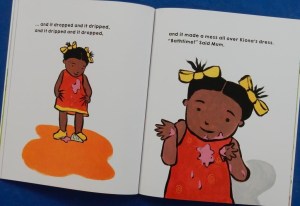
Accessible and easy for young children to relate to, this would be a good book to open up a classroom circle time discussion on looking after and loving oneself.

The Quickest Bedtime Story Ever!

The Quickest Bedtime Story Ever!
Louise Fitzgerald and Kate Hindley
Nosy Crow

Most young children will go to extreme lengths to delay getting into bed and this behaviour is what debut author, Louise Fitzgerald, plays on in her story.
According to our narrator, the story contains just ten words: well that’s as maybe, but there’s a whole rigmarole to go through beforehand. First, we – the listeners and the four little animal characters herein – need to promise to go to sleep at the end of the book. Then, in fairness, the grown-up reader aloud must promise to use their best reading voice and of course that will only be possible if said voice has done a whole-hearted warm-up. Comfort is crucial for all parties involved, so pillows must be plumped up,

a check kept so no pages are skipped (as if!). It’s vital too, for all the toys to be tucked in (they love a bedtime story and you can devise a way of doing this) – check they’re all present as the odd one could still be lurking unnoticed. Oops! almost neglected a bit of a razzmatazz,

but that over – hurrah! We can begin – we’re on the way … zzzzzzz.

This hugely funny take on the bedtime formalities will surely strike a chord with vast numbers of humans, young and adult but it’s difficult to know which category will like it more. I really, really, really wish I’d had this book yesterday when I was putting a very reluctant three year old relation to bed; a procrastinator of the first order, she could give Louise Fitzgerald more than a few additional ideas. I know young Faith and countless other preschoolers will love exploring the plethora of funny details in some of Kate Hindley’s spreads and joining in with the actions depicted on many others (more opportunities for delaying tactics).
I suspect sharing this story will become part of the bedtime routine in many a household.

Sunny and the Birds

This image has an empty alt attribute; its file name is dscn9572-2.jpg


Sunny and his family have only recently moved to a new country. Almost inevitably there are things his dad misses. Every evening when they watch the birds through the window and Danny’s father asks him if he can name them, Dad’s response refers to similar ones “back home”. His son’s reply is “But this is our home!”

This image has an empty alt attribute; its file name is dscn9573-2.jpg

It’s evident that Dad doesn’t yet feel at home where he now is. In the middle of the night both Sunny and his Dad are wide awake and the boy acknowledges his father’s sad feelings.


This image has an empty alt attribute; its file name is dscn9574-2.jpg

After school the following day, Sunny’s Nanna meets him and the boy asks if they can go and buy Dad a present – a surprise. Can his bird-related plan help his father begin to feel at home in this new country?


As always Wendy Meddour’s story is written with great sensitivity. Presenting what for many immigrant families is a challenging time, she shows how with love, support, kindness and nature’s healing power, the process of adjustment to a different life can begin.


The richness and beauty of the natural world – real and remembered – is elegantly captured in Nabila Adani’s misty illustrations and you can read the changing emotions in her portrayal of the two main characters.


With more and more schools having immigrants as part of their community, this book would help children understand how newcomers might be feeling. Share at home, share in the classroom and invite listeners to participate in discussion, whatever the setting.

Going to Big School / Come To School Too, Blue Kangaroo!

Told alternately from the perspectives of Ava and Jack, this is an account of their first day at ‘big’ school.
Ava, is excited, enthusiastic and has butterflies fluttering in her tummy, Jack, in contrast is shy and nervous; he has moths flapping around in his tummy. On arrival in the noisy playground, Ava is eager to get involved whereas Jack hangs back, upset by the busyness. Happily however, the kind reception teacher, Miss Moloney notices Jack’s shyness and whispers to him that everybody – she included – has first day nerves.

As we follow the two children through their first day we see how they react differently – at story time, 

fruit time, during a colouring session, at lunchtime and during the afternoon of free play: there’s no sense that one set of reactions is right or wrong (better or worse). By hometime, Ava’s actions have helped Jack feel more relaxed 

and they both depart as happy friends, eagerly looking forward to tomorrow.

The author includes things that by their very newness, might be a challenge for young children – a big, round hat and a lunchbox with clips so stiff they require the help of a buddy to open, both of which are shown in Danielle McDonald’s bright, inclusive illustrations. Whether or not children are moving from a preschool setting or going straight into a reception class, this book will reassure them that the going to big school milestone will be unique for them all, and that everything will be fine.

This is the ideal book for children about to start a new school and with its brilliant, wonderfully warm art and enchanting telling, it remains my very favourite starting school story.

Blue Kangaroo’s owner, Lily is off to a new school and decides to take Blue Kangaroo too. Ready with new bags, both child and toy anticipate the big day: Blue is excited about school – the fun things to do, the friends waiting to be made and new experiences. Lily on the other hand is worried that Blue might be frightened about getting lost, or feel too shy to talk to anybody.

Having been greeted warmly by her teacher, Lily is soon happily engaged in the busy school day, 

and Blue watches thoughtfully from the windowsill as Lily enjoys painting, playing and joy of joys – story time. 

Come hometime, Lily is so excited about her day that the almost inconceivable happens: Blue Kangaroo is left at school all by himself . However, his sadness quickly gives way to happiness because now he can do all the things Lily did during her fantastic school day including reading Quentin Blake’s dancing frog story. 

He also leaves a surprise for everyone to discover the following morning.

It’s so clever the way the author makes Lily express her anxieties and fears about starting school by putting them onto the unworried Blue Kangaroo.

The Ocean Gardener

The Ocean Gardener
Clara Anganuzzi
Little Tiger

The author/illustrator of this book was raised in the Seychelles where this tale is set.
Ayla and her mum’s beautiful island home is surrounded by a coral reef and one morning while out swimming with her mum, Ayla notices that as she goes further out, something is wrong: the colours of the coral are faded and the fish are disappearing.

The girl is upset and asks her mum why these things are happening. Surely it can’t be too late to save this wonderful part of the ocean’s eco-system.

Fortunately, Mum, a marine biologist, has a plan and the very next day she and Ayla start working bringing tiny pieces of coral from the sea into their home and so begins operation coral reef rescue. It’s a lengthy process and eventually after some time Mum decides the coral growths are ready to return to the ocean and they create their ocean garden.

That place is Ayla’s destination each day for what feels like forever; she tends to the coral and awaits the return of the fish until at last …

Clara Anganuzzi’s gorgeous illustrations capture so well the beauty of the coral reef and at the same time present the highly complex issue of global warming in a positive manner that will appeal to young readers, while also offering hope that the work of marine biologists such as Chloé Pozas, whom we meet after the story in a spread giving more information about coral nurseries, can restore these precious parts of our oceans’ ecosystems.

Victor, the Wolf with Worries

Victor, the Wolf with Worries
Catherine Rayner
Macmillan Children’s Books

Victor is a young wolf beset with worries: he worries about almost everything. He considers himself to be not ‘wolfish’ enough, not brave enough, not big enough, nor fierce enough, so he resorts to pretence.
However this leads to worries about how his shortcomings will impact upon other wolves; for example if he attempts to act fiercely, he could end up accidentally frightening his fellow wolves. And so his worries just keep on growing.

Fortunately, Victor has a best friend, Pablo. Empathetic Pablo notices Victor looks worried and with his help and understanding, and some coping strategies, Victor’s worries gradually recede. He begins to feel braver, bigger, fiercer and increasingly wolfish.

Not only does Victor’s anxiety wane but he also learns something else important: he is not the only one who worries about these things, so too does Pablo and all their fellow wolves.

As it is with wolves, so it is with humans. The practical ways Victor was shown to handle his anxieties, are equally effective with young humans, and not so young ones, so this story offers an ideal starting point to help children deal with issues affecting their mental well-being.

In Victor and indeed Pablo, Catherine has created hugely engaging characters with wonderfully expressive eyes. Those winsome wolves stunningly portrayed in her ink and watercolour illustrations will surely win the hearts of any reader or listener.

Sala, Mountain Warrior

This image has an empty alt attribute; its file name is dscn9570-2.jpg


Sala, Mountain Warrior
Wakanyi Hoffman and Onyinye Iwu
Otter-Barry Books


When Sala sees a poster announcing a school camping trip that involves climbing a mountain near her Grandmother’s village, she’s excited at the prospect but also rather worried. Nevertheless, with her Grandmother’s stories, encouragement and a week’s preparation, she registers for the climb – the only girl to do so. She wants to be brave like her Great-Grandfather.

This image has an empty alt attribute; its file name is dscn9571-2.jpg

Before the climbers leave, her Grandmother gives her a water gourd as a good luck present and after a long journey in the school bus, they reach the bottom of the mountain. There they make their base camp.


Early the following morning their mountain guide. Laibon, leads them on the first stage of the climb, which they do by afternoon. Next day , the climb is harder work and not everyone reaches the third campsite. Sala perseveres despite feeling a bit shaky and eventually gets to the field of ‘Forever Flowers’ as Laibon calls them, showing the girl his beads and giving her words of encouragement. That night Sala’s dream is of those pink flowers, but all too soon it’s time for the last leg of the climb. Setting off before sunrise, Sala starts to doubt herself.

This image has an empty alt attribute; its file name is dscn9561-2.jpg

Can she make that final push? Yes, with a special something given to her by Laibon.
Back at base camp after their descent, the climbers are greeted by the entire party and somebody unexpected is there too, with something extra special for Sala.


Author, Wakanyi Hoffman’s uplifting present-day story was inspired by her childhood memories of spending school holidays in the foothills of Mt. Kenya where her grandmothers passed down their indigenous knowledge and wisdom through the telling of stories. Onyinye Iwu (you will likely recognise her name if you’re familiar with the Too Small Tola tales) illustrates the text with a colour palette that captures the natural hues of the setting, the intricacy of the Samburu peoples’ beaded accessories and the feelings of the climbers, especially Sala.


An empowering book that deserves to be in every primary school collection.


Ray

Ray
Alex Latimer
Oxford Children’s Books

Such were the delights of Mouse’s walk that the little rodent failed to notice the lateness of the day.
After the sun has disappeared he sits alone frightened at the prospect of going home in the dark. Then from within a flower, there comes a glow and from it emerges a firefly; she introduces herself as Ray and offers to light Mouse’s way home. A grateful Mouse accepts but denies being afraid of the dark and off they go.

Mouse follows his guiding light but suddenly stops at the sight of a shadowy shape – ‘a snake’ coiled ready to strike, he thinks. Fortunately he’s mistaken and Meerkat, also not afraid of the dark, joins the travellers. After a while there’s a cry of “A bear! We’re done for!’ Ray investigates and informs her followers, it’s a pair of hens roosting . As you might expect said hens are not afraid of the dark either and off they go again, Mouse, Meerkat and two hens led by Ray until …


The journey continues with the addition of five green frogs and three squirrels, all of which have ‘reasons’ for joining the entourage, and each being welcomed by the words “Of course, … I’m Ray and I’ll light your way.’

Eventually in front of them a lion shadow looms large. Now Mouse, well used to being bamboozled by shadow shapes says, “ … that’s not a lion at all! That’s my home.’ He tells Ray to illuminate the shape, which she does.

Here our story takes a sudden dramatic turn … confessions re the dark are forthcoming and then a certain firefly proffers her oft repeated promise once more.

Deliciously tongue-in-cheek, Alex Latimer’s travellers’ tale will de-light young listeners, as well as adult readers aloud who will be amused at the excuses given by various animals for wanting to be led by Ray’s light. I have no doubt Alex Latimer had great fun creating his shadow shapes and he might well inspire children to experiment with a black crayon, paint, oil pastel or even play around cutting black paper.

This Is a School / Two Wheels

This Is a School
John Schu and Veronica Miller Jamison
Walker Books

Debut picture book author John Schu and illustrator Veronica Miller Jamison present a school that I would happily teach in or send a child to. In fact it’s much more than a place of learning, or rather perhaps it’s a place of learning in the very broadest sense. What we have here is a community with children at its heart; the very first sentence, ‘This is a child.’ speaks volumes to me, indicating this is somewhere where youngsters are helped to flourish in the broad sense. Children’s experiences lead to growth and transformation – their questions are welcomed

and their mistakes are seen as a vital part of the process of learning. Everybody herein, children, teachers, librarians, other staff, head teachers, helpers and visitors are valued and trusted too: and every single member of this community helps in the creation of its ethos.

This splendid celebration of a school is assuredly one to share with newcomers on their very first day. The illustrations, created in vibrant watercolour, acrylic and digital collage media match the upbeat tone of the writing, both combining to convey a vital message.
Would that all primary schools were more like the one herein.

A considerable amount of learning also takes place in

Two Wheels
David Gibb and Brizida Magro
Walker Books

The father of the little boy narrator of this story is obsessed with bikes and he has several different kinds – one for speed, one for muddy terrain, one for togetherness and one for a relaxing ride. The boy’s siblings and mum also have bikes but our narrator does not. Dad’s response to his refusal to sit on the baby seat any longer is to suggest he try his brother’s three wheeler, which he does. He also likes to help Dad fix other people’s bikes.

One day Dad presents his small son with a balance bike, then relatively soon after, a cycle with two big wheels and two stabilisers. This means that our narrator is allowed to ride out in the street. He practises and practises

until Dad decides it’s time to remove the stabilisers; this he does at the top of a hill. Then with words of encouragement rising in his ears, off goes the boy, gradually building up speed until he reaches the bottom – just in time for a big, congratulatory hug from Dad.

In her textured, patterned illustrations Brizida Magro shows the delight on the child’s face and the thrills as he progresses from tricycle rider to fully-fledged two-wheeler rider (We don’t see any spills though I’m sure there must have been some. One of my relations, after a tumble, kicked her bike and called it, “nincompoop bike!” though she was back in the saddle pretty soon after ) Author David Gibbs’ text portraying a very supportive Dad, is based on his experience of his own Dad teaching him to ride a bike. Becoming an independent cyclist is one most adults and proficient youngsters will recall, along with the trials and tribulations along the way.

This tale of patience and determination is one to share especially with those starting on the road to becoming confident bike riders.

The Midnight Babies

The Midnight Babies
Isabel Greenberg
Abrams Books for Young Readers

The midnight hour strikes but one little toddler is wide awake and waiting. What for you might be wondering: the arrival of the Midnight Babies and they arrive from near and far, some on their feet, others on their knees or perhaps hitching a ride. they’ve brought along a variety of musical instruments and other sound-making equipment to clash and batter along the way.

Tonight it’s the turn of Wide-Awake Baby to lead the parade to Nodoff.. With a rousing song, off they go on their quest, first through the Forest of Nightlights. Here as in other places along the route, the heinous forces of sleep are doing their utmost to lure the tots into slumber and it’s a golden light that one of their number finds irresistible. Zzzzzzz!

Next comes the Sea of Stories where a storyfish with seabooks is too strong a temptation for another baby

but plenty are left to move on to the Garden of Lullabies – uh oh! a third baby drops off.

Now it’s time to cross the Rockabye River and that requires great determination to resist its rolling motion – another baby is lulled by the gentle undulating.

Finally the somewhat depleted army reaches the shores of Nodoff where waits a decidedly intimidating Teddy Army. The babies create a great cacophony but its no match or the blanket of darkness that envelops them, one by one, till every one has succumbed save Wide-Awake. Is there anything that could tempt her to Sleep. “Her eyes begin to close. No. Never! Must . . . stay . . . awake . . . ALL NIGHT.’ But wouldn’t it be nice, oh so nice, to go to Sleep?” … Finally ahhhh-hhaaaaaa! She joins the others in the land of Sleep where they play and eat the night away, unable to remember why they ever tried so hard to stay awake.

The next morning Wide-Awake Baby, aware she fell victim to sleep, resolves to resist more strongly that night …

Featuring as it does, lots of wide-eyed tots, this wry story is definitely not one to read to little ones just before bedtime. The lively pencil and charcoal illustrations, digitally coloured, offer plenty to explore and keep the eyes of tinies wide open.

The Best Bad Day Ever

The Best Bad Day Ever
Marianna Coppo
Frances Lincoln Children’s Books

The feeling when we wake up and straightway know that it’s going to be a bad day, will be familiar to adults and perhaps to some children too. It’s certainly the case for little Wolfie, even his cuddly companion, Pepito, is in a bad mood.

Off Wolfie goes to school, through a street of happy-looking people and arrives late.

Nothing he tries turns out right and our small narrator feels nobody understands how he feels.

Then snack time comes and despite getting a fruit he dislikes, things start to look up. After a rest – not a sleep though for another little one stays awake too – the afternoon passes all too fast

and at home time, two little ones report to their respective parents, “It was the BEST BAD DAY EVER!”
Bring on tomorrow!

In just a brief text and scenes with an abundance of deadpan, gentle humour, Marianna Coppo captures that bad day feeling, going to on show how a kind action by another can change everything, making that great big frown into a beaming smile. All that’s needed is somebody who empathises and interacts, and … gone are those grumps.

Add to any preschool book collection, share it and invite the little ones to talk – to one another – in the first instance.

A Boy, His Dog and The Sea

This image has an empty alt attribute; its file name is dscn9548-2.jpg


A Boy, His Dog and The Sea
Anthony Browne
Walker Books

To relieve his boredom, Danny’s mother suggests he takes the family dog, Scruff, for a walk on the beach, to which Danny responds, “The beach is boring. Nothing ever happens there.” She replies, “Keep your eyes open; you never know what you might see.” 

Off go Danny and dog onto the beach, Scruff excited, Danny downcast: he’d much prefer to be playing with his older brother. However having found a stick and tossed it into the sea, the boy is impressed when Scruff retrieves it for the first time ever. After spending some time playing that game, Danny feels weary so he sits on the shingle and starts examining the pebbles, discovering on close inspection, lots of interesting things.

This image has an empty alt attribute; its file name is dscn9549-2.jpg

After a while the two continue wandering along the strand till they come upon a number of people waving excitedly as they look out to sea: Danny looks too, wanting to know what they’re waving at. In the distance he spies a tiny person waving too.

This image has an empty alt attribute; its file name is dscn9550-2.jpg

Having thought for a bit, Danny points seaward: “Fetch, Scruff!” he says and the dog does as he’s bid, swimming fast at first, then losing pace but never giving up.

Eventually two figures emerge from the waves, one canine, the other human. But who is it? Danny is very surprised to hear a familiar voice praising him and calling him a hero, something Danny says should rightly be applied to Scruff.

From front to back endpaper, every page is a visual treat; one would expect no less from Anthony Browne: I love the rather portly person with tattoos all over his arms, the faces and other designs on and with, the stones, the clever cloud formations and all the other somewhat surreal things that emerge the more you look at these awesome illustrations. If you share this poignant story with a class or group rather than an individual child, make sure you give them plenty of time to peruse the pictures and leave the book available for further exploration and excited discussion.

Rhinos Don’t Cry

This image has an empty alt attribute; its file name is dscn9500-2.jpg


Rhinos Don’t Cry
Mark Grist and Chris Jevons
Bloomsbury Children’s Books


Milo is a lively life-loving little rhino but he has one small problem. This is on account of having watched his hero, movie star Spike-O Mcree on TV one evening announcing that despite upsetting things happening, ‘rhinos don’t cry!” As a consequence, Milo decides that crying is bad and that’s what he tells himself when something goes wrong. Until that is, he discovers that his beloved pet moggy Pickles has gone missing.

This image has an empty alt attribute; its file name is dscn9501-2.jpg

With Spiko’s words ringing in his ears, Milo holds back his tears as he helps his mum create signs to post in the neighbourhood. Instead of tears Milo gets an unpleasant feeling all through his body and it stays with him even when he and Mum go out to put up their signs.
Milo has just one sign left to post when he pauses outside the cinema and who should approach him but his movie star hero . Hard as he tries, Milo simply cannot hold his tears any longer; he sobs. This causes Spike-O Mcree to start crying too and Milo now feels bewildered at what he sees.
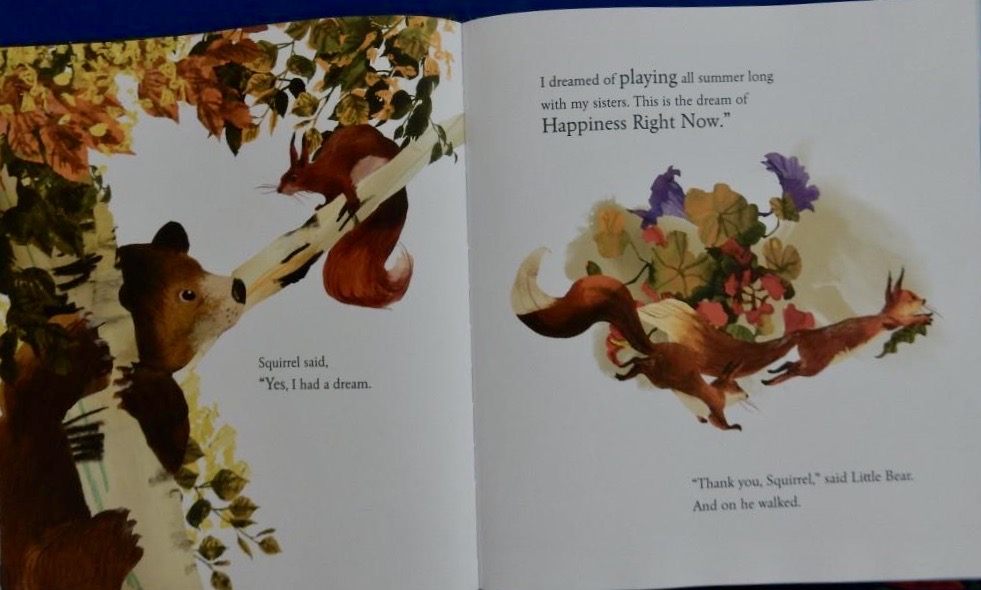
This image has an empty alt attribute; its file name is dscn9502-2.jpg

Having told his hero what he saw on TV just the previous night, the movie star explains that the film was made long back and he now feels completely differently about shedding tears. It can be a brave thing to do.


There they both stand crying together when there comes a familiar sound – not sobbing this time but something very welcome coming from not far away.


Great for opening up discussion, at home or in the classroom, this story has an important message: it’s fine to cry, whoever you are. Spike-O Mcree makes a great role model showing how being tough isn’t always tbe best response, as well as that you can shed tears when you’re sad or scared, but also when you’re happy. It certainly isn’t being weak.

Grandpa is Here

Grandpa is Here
Tanya Rosie and Chuck Groenink
Walker Books

Meeting her Grandpa at the airport with her parents, the little child narrator quickly overcomes her initial shyness when he gives her an enormous hug, and on the drive back home she anticipates all the things she wants to share with Grandpa.

When he opens up his case, out comes the aroma of Persian spice and other culinary delights, including walnuts from his very own trees. The little girl doesn’t speak any Farsi and Grandpa seemingly doesn’t speak English but they laugh in the same language.

After he’s had a nap, our protagonist takes the opportunity to show Grandpa various places she loves as they take ‘the darkest path in the world’, wandering downhill and up tall hills. She introduces him to a horse named Santiago and Malou the frog and hills she calls Mount Sledge-Top and Rabbit View. As they sit looking at the view, the child wishes Grandpa could stay to share the coming of spring. “Grandpa is like snow, I never want him to go, never want his magic to leave,’ she thinks to herself.

As the sun goes down the two make their way back to the family home and there everyone sits and shares a celebratory meal

until they can’t stay awake any longer. Somebody does though and she creeps in to see her Grandpa fast asleep; gently she reaches out her hand and touches his and ‘hope that these days go slowly’ – just like the falling snow flakes she sees through the window.

Tenderly told through Tanya Rosie’s lyrical rhyming narrative in which the loving connection between grandpa and granddaughter is implicit; so it is too in Chuck Groenink’s illustrations which radiate the warmth and tenderness of the intergenerational bond. Like that tight hug at the start of the story, this will surely evoke strong emotions in adult readers who share this with children.

Memories are made like this.

The Happy Hut

The Happy Hut
Tim Hopgood
Walker Books

The child narrator of this story and two siblings loved to visit Grandpa Martin’s bright yellow beach hut, doing so in every season. In spring they enjoyed rock climbing and dodging the showers. In summer they would picnic on the wooden deck and paddle in the sea, though on occasion Grandpa Martin would get soaked, prompting his “flipping fiddlesticks!’ reaction. Summer afternoons were passed in card playing and the evenings in listening to Grandpa Martin read. Autumn days were for kite flying, some meteorological learning

and Grandpa would take the opportunity to do essential repairs and give the hut a coat of paint, aided of course by his three ‘Happy Hut Helpers’. Wintery days were spent walking along the seashore, then back in the warmth of the hut, hot tea, fruit cake and woolly socks awaited.
One spring Grandpa Martin falls ill and the hut is left without any visitors and nobody to do the essential upkeep. That winter a fierce storm badly damaged the yellow hut.
When the family returns the following spring, a big restoration task awaits but rather than repaint the hut in its original yellow, the narrator uses a sky blue hue as a special reminder of their beloved Grandpa Martin: now the hut is a place of cherished memories ‘our happy hut!’

Wonderfully warm, Tim’s tale of love, loss and memories is presented with tenderness and sensitivity in both words and pictures. This is a book to share with Grandpas, as well as to enjoy both with family members and in the KS1 classroom.

This Rock is Mine!

This image has an empty alt attribute; its file name is dscn9535-2.jpg


This Rock is Mine!
Kaye Umansky and Alice McKinley
Alison Green Books


What starts as a silly spat between two frogs about the ownership of a small rock quickly escalates into a full scale fight with each frog in turn drawing the other’s attention to belongings that prove the rock is theirs..

This image has an empty alt attribute; its file name is dscn9536-2.jpg

Unbeknown to the two little amphibians, their altercation has been watched by a very large long-legged, long-necked bird. Suddenly, as we see in Alice McKinley’s close-up scene, a menacing shadow appears over the disputed rock and two tiny lives are in danger of being extinguished.


This image has an empty alt attribute; its file name is dscn9537-2.jpg

After a desperate dive and a decision about the worthiness of the cause of their argument, the frogs come to two conclusions: the first is that the rock is after all, ‘no good’ and another needs to be found; the second is that friendship is far better than fighting and sharing is the way to a happy co-existence.


Kaye Umansky’s bouncy rhyming text combined with Alice McKinley’s dramatic visuals make a superb read aloud that adults will delight in presenting to young children; they in turn will delight in the unfolding of events. I really love what happens on the penultimate spread where we see two rocks and an indication that frogs are not the only creatures with a possessive streak.

Lilly & Myles: The Torch

Lilly & Myles: The Torch
Jon Roberts and Hannah Rounding
Graffeg

Set during the summer holidays, this story features Lilly and Myles, her assistance dog. The two are staying with Lilly’s Grandma who lives at the seaside. Lilly has autism and experiences the world differently; she often finds it hard to communicate too.

One night she finds a torch and while enjoying exploring the clicking sounds it can make, discovers her Grandma standing there. Together the two of them embark on an adventure that takes her to the seashore. Lilly’s acute sense of hearing makes the sounds of frogs in the pond especially exciting; she also enjoys the feel of the long grass as she runs seaward, and counting the spots on the ladybird.

In her excitement, when Lilly reaches the mouth of a cave Grandma had mentioned in stories, she decides to explore, failing to notice some other children petting Myles. Venturing further inside the cave, she accidentally drops her torch and is beset by fear. The sound of dripping water is just too much and having regained her braver feeling, and retrieved the torch, Lilly moves on, all the while imagining monsters lurking and waiting to catch her.

Happily the only thing waiting for Lilly is Myles, ready to calm her and guide her back to her gran’s house.

Throughout this heartwarming story, both Jon Roberts the author who has a child with autism, and Hannah Rounding, whose mixed media art is rich in detail, gently and beautifully convey the emotions children with sensory challenges might face, while highlighting the importance of friendship and showing the vital role played by assistance dogs in giving support and comfort. (Their role with those with autism is new to me.)
Both the book’s creators show how vital it is that in our wonderfully diverse world, we all, adults and children, accept and understand that every neurodivergent person is different, and celebrate that neurodiversity. A copy of this insightful book should be in every primary classroom.

(10% of royalties go to Dogs for Good and 10% to Dogs for Autism).

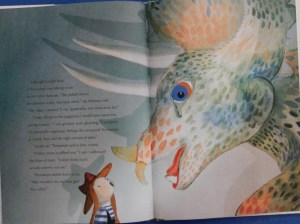
When Dinosaurs Walked The Earth

When Dinosaurs Walked The Earth
Sean Taylor and Zehra Hicks
Frances Lincoln Children’s Books

It seems young children can’t have too many dinosaur stories; this is a splendidly silly one about three dinosaurs. There’s Smallosaurus, she’s a herbivore; there’s great big Badasaurus who enjoys consuming small dinosaurs that eat a plant-based diet and finally there’s the monstrous meat-eating Worseasaurus.

The action begins with Smallosaurus wandering along with a smile on her face on account of the juicy ferns that she’s spied ahead – just the thing for a delicious breakfast. Hold it there! This is exactly what Smallosaurus does on realising that rather than the peaceful rock she first thought, she’s actually confronting great big Badasaurus whose idea of a good breakfast – ‘a small dinosaur, with a plant-based diet’ – is standing in front of him. Time to activate those little grey cells Smallosaurus; however only possessing a walnut-sized brain, she dashes away – in the wrong direction …

However, it transpires that Badasaurus has a brain even smaller than Smallosaurus and so he too makes an error …

Back to Smallosaurus who now strolls along again, this time between peaceful rocks and large trees, her mind once more of those juicy ferns. Little does she realise that Badasaurus is back, albeit looking slightly frazzled but still eager to sate his appetite with one small dinosaur, with a plant-based diet.

Oh my goodness, this situation requires another round of thinking by Smallasaurus. She decides to take cover behind a large tree but it turns out she’s over-estimated its size. Uh oh! Here comes her’ sad and terrible ending’. Or is it another error – a chomping one – by Badasaurus?

Step forward Worseasaurus, you now have a choice between two meaty dinosaurs for your breakfast. I wonder what SHE goes for …

With a cleverly constructed narrative containing surprises aplenty, Sean Taylor’s prehistoric romp will delight young audiences, as will Zehra Hicks’ bright splodgy scenes of those days When Dinosaurs Walked the Earth.

The Thing at 52

The Thing at 52
Ross Montgomery and Richard Johnson
Frances Lincoln Children’s Books

This tale is narrated by a little girl who makes friends with the large fluffy Thing that lives close to her home.

Deciding to take him a flower, she and her mother call on the creature and are invited in to what the girl thinks is a strange house with just a single chair, newspaper rugs and a fridge containing only jars of mustard – fifty of them. His response to her question about feeling lonely is answered thus, “All things are lonely sometimes.”

As their friendship blossoms, the two spend more and more time together, sometimes going on adventures,

and the child learns that there are hundreds more Things just like her friend.

The narrator organises a wonderful party for all the Things, but then suddenly the special Thing looks very old

and the worst happens: with a hug as they watch the sunrise, the Thing disappears. All that remains are his old photos and memories of the wonderful times the two had spent together.

This tale of friendship and loss is all the more powerful on account of its gentleness. Death is never mentioned though it can be inferred from the somewhat dreamlike story. Dreamlike too are Richard Johnson’s soft-focus illustrations that have a potency of their own and are a superb complement to Ross’s words.

Finn’s Little Fibs

Finn’s Little Fibs
Tom Percival
Bloomsbury Children’s Books

Finn is super-excited; he and his little sister, Simone, are spending a few days staying at Grandma’s house: It’s a place full of beautiful but fragile things but his over excitement while playing with his ball indoors results in the accidental breakage of her clock. His efforts at mending it don’t work so, a worried Finn tells a lie, blaming the breakage on his sister.

No sooner is the lie out of his mouth than POP! a little blob appears, noticed only by Finn, although Grandma clearly has doubts about the plausibility of what he’s said.

This makes the boy panic: out comes another lie, followed immediately by another blob. The lying escalates and by the end of the weekend Finn is besieged by blobs and he’s feeling so upset with what he’s done that he can’t enjoy himself. It’s time for big brother to admit the truth but has he got the courage?

Happily yes, the blobs disappear and his understanding Grandma accepts his apology.
With everything back as it should be, the rest of the holiday is great and Finn resolves to always try and tell the truth.

As always, in his latest story in the Big Bright Feelings series, Tom describes the physical sensations and feelings that beset the guilty Finn in a way young children can relate to, and his illustrations with the waxing and waning of the blobs do a wonderful job in showing his changing emotions. A great starting point for discussions on the importance of being honest, taking responsibility for your wrong doing and forgiveness.
A must to add to foundation stage class collections and family bookshelves if you have a young child.

The Thunk

The Thunk
Michelle Robinson and Deborah Allwright
Bloomsbury Children’s Books

Unlike everyone else, Hector Voltaire is convinced that one day he will find the legendary, supposedly extinct, Thunk. Such is his enthusiasm that his schoolmates tease him for believing in the wondrous being, but does this deter Hector? Certainly not, he’s all the more determined, though he knows his mission will require skill, patience and a fair bit of equipment; the last he crams into his backpack.

Off he goes and whereas his map reading skills let him down, his powers of observation definitely don’t. Eventually his reward comes in the form of the somewhat malodorous creature he seeks, out for an afternoon stroll.

Pretty soon though, it becomes evident that Hector is going to have to make use of his counting skills, for he’s in for a very large surprise. Hurrah! Now everybody must surely believe the lad about the creature’s existence; but will he go back and divulge what he now knows, or draw up another plan?

What a great read aloud. Young listeners, be they at home or in the classroom, will take great delight in accompanying Hector on his expedition of discovery presented through Michelle’s rhyming narrative and Deborah’s dramatic scenes of the Thunk hunt.

Lenny Has Lunch

Lenny Has Lunch
Ken Wilson-Max
Alanna Max

The strong bond between a father and his infant son, Lenny, is beautifully captured in this simple story that unfolds in the family kitchen. We watch as Daddy prepares a healthy lunch for his little one – chopping the various veggies, putting them and the pasta in pots to cook on the hob – and enjoying a sing-song until the meal is ready to eat. We then see Lenny relishing his lunch, he’s at the messy eating stage and his dad remans close at hand, as does the family dog, Wilbur,

until Lenny has finished eating and then it’s face wash time, after which Lenny and Wilbur play together.

Throughout the entire sequence, a sense of calm prevails and Ken Wilson-Max portrays this to perfection in his bold, bright scenes that complement the telling; a telling that has lots of fun onomatopoeia – ‘Splash! Slurrp! Slurrp! Splash!’ and ‘Suck, suck. Plop!’ – for small children, who like Lenny are at that imitative stage, to copy. Young children will also enjoy joining in with Daddy, and Lenny as they sit together singing and acting “Row, row, row your boat / gently down the stream. … “

Altogether a lovely presentation of family life, this is ideal for families with a toddler.

Moving the Millers’ Minnie Moore Mine Mansion

Moving the Millers’ Minnie Moore Mine Mansion
Dave Eggers and Júlia Sardà
Walker Books

This non-fiction story begins back in the 1870s when a dog belonging to a prospector was digging in the ground and found not the gopher it had been chasing, but silver. This discovery very soon became Minnie Moore Mine. Several years later the mine was sold to an Englishman, Henry Miller, making it Miller’s Minnie Moore Mine. It made him extremely rich. He found a wife, packed her off to Europe for a while, giving him time to build a riverside house they would share on her return – Millers’ Minnie Moore Mine Mansion. There a son was born to the couple.

When Henry died his widow, Annie was tricked by a crooked banker to invest her money in his bank; it failed and she lost almost all of it. With the little left she bought some pigs intending to become a breeder. However the Bellevue townsfolk would have none of it 

so our enterprising Annie devised a plan – a pretty elaborate one – to move the house out of town. And so she did. Aided and abetted by her son and some hired workers, Millers’ Minnie Moore Mine Mansion was shifted just four miles down the road, 

where without pig restrictions, Annie, Douglas and the porcine team thrived for many years. 

Crazy but true, though if you want to know how they managed to move, you’ll need to get your trotters on a copy of Dave Eggers and Julia Sardà’s book. The former’s chatty, humorous writing style and droll, often dramatic art rendered in earthy tones by the latter show how human perseverance and resourcefulness win through on several occasions.
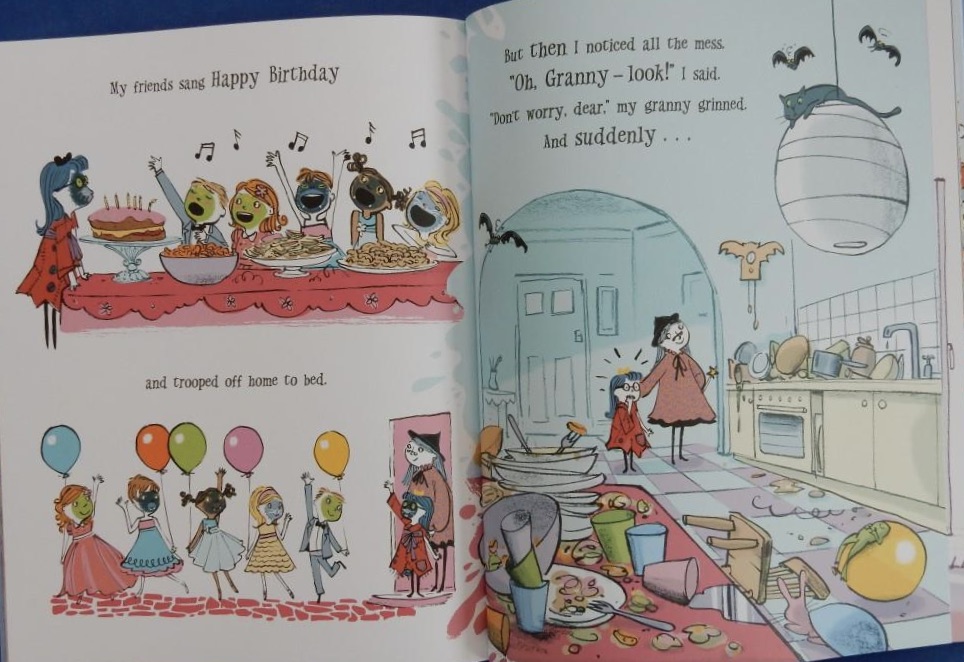
Slightly bizarre, this would make an entertaining read aloud.

Fly, Butterfly, Fly!

Fly, Butterfly, Fly!
Dom Conlon and Anastasia Izlesou
Graffeg

The butterfly addressed in the title is a Cabbage White. As she flits about with the other butterflies in the meadow, she considers herself too plain in comparison with the surrounding flora and her more colourful butterfly companions, the likes of Small Tortoiseshells and Chalk Hill Blues. Consequently it’s a case of ‘Fly, Butterfly, Fly, as she embarks on a journey to butterfly habitats across the world.

First stop is the Amazon rainforest burgeoning with richly hued fauna and flora. However, Butterfly is aware that attractiveness can cause danger due to those on the lookout for something tasty to eat,

so she takes flight again, next stop Mexico. There, along with the humans, the Monarch butterflies are celebrating the Mexican Day of the Dead. There are less of this species now though, as their vital food plants are being killed.

Off goes our Butterfly once more – to the tropical forests of India. There she’s in for a colourful surprise, for out of what appears to be the leaf covering on the ground, rises a host of Dead Leaf butterflies.

Over then to Papua New Guinea’s Mount Lamington volcano, home of the world’s largest butterfly, the Queen Alexander where the hues of the caterpillars make Butterfly think of her home, far away.

Off she goes heading homewards but her journey isn’t yet done; she stops over in the USA, where as in many other parts of the world, butterfly numbers are on the wane. Our common or garden Cabbage White has vital pollination work to do before she finally reaches the place from whence she started; the place where in fact, her colour is exactly right and where, satisfied among her own, she must now lay her eggs in readiness to say, “crawl, Caterpillar, crawl.’

Through Butterfly’s travelog, comprising Dom Conlon’s poetic narrative together with Anastasia Izlesou’s show-stopping illustrations, readers are made aware of the desperate plight of all too many of the world’s precious butterfly species.
An important addition to the Wild Wanderers series and let’s hope, a wake-up call to us all to do whatever we can to stop further decline in butterfly numbers wherever we are.

The Planet in a Pickle Jar

The Planet in a Pickle Jar
Martin Stanev
Flying Eye Books

The brother and sister in this story aren’t keen on visiting their Grandma’s house. They consider it boring and would much prefer to spend all their time using their screens. Immediately we see some of what they are missing by so doing. They don’t enjoy her meals, or listen to the stories she tells: but a boring Grandma she is most assuredly not. Just take a look at her shopping, knitting and pickle making.

Then one evening she starts telling them something she considers important and on this occasion the children do listen and even spend time that night thinking about what has been said. As they do so a star falls from the sky and vanishes; so too has Grandma when they go to tell her about it. 

Their search yields only a wild cat that gives chase, and the children flee to the basement via a door they’d not noticed before. There they discover shelf upon shelf of pickle jars in which are preserved everything Grandma considers precious – ‘history, languages, nature, memories, smells, feelings’ and more. In addition, she has created an amazing underground sanctuary for endangered wildlife.

When eventually the children find Grandma, she explains that in order to prevent the complete destruction of the natural world, she now needs help to continue her life’s work. And so it is that , along with Grandma, the two children become custodians of the planet. 

Let’s hope that other children too are inspired by the story. It’s magnificently illustrated by the author and tells much of the tale without the need for lots of words; indeed what is shown is often at odds with what is said.

A book to share and discuss at home and in the classroom, and most importantly, for children and adults to act upon.

Never Ever Ever Ask a Pirate To A Party

Never Ever Ever Ask a Pirate To A Party
Clare Helen Welsh and Anne-Kathrin Behl
Nosy Crow

When is a party not a party? Find out in this zany book.

The child narrator of the story is planning the perfect party and as readers are being told what they need to know about how so to do, there’s a knock at the door. In bursts a sword wielding pirate accompanied by Polly parrot, ace stealer of presents. 

Said pirate is closely followed by a huge scary dragon, a unicorn with a hatred of ‘mess’ and a resulting need for the perfect bath, 

and a spaceship full of little aliens. Our narrator says the only option is to send the whole lot packing; but is a quiet party with not a single guest to share in the delights of cake, or to give a present, what a party giver really wants?

Perhaps there’s a much more enjoyable alternative where all those aforementioned party-wrecking guests are on their very best behaviour.

Ah-ha! It seems as though the aim – a perfect party – is getting under way at last. 

Or possibly not …

Anne Kathrin-Behl’s lively illustrations of the ensuing chaos caused by the unruly behaviour of the various guests, combined with Clare Helen Welsh’s text with its ‘never, ever, ever ask’ refrain, lots of knock knocks to join in with and a surprise ending, make a lively read aloud that makes clear the pleasures of sharing fun times with your friends.

How To Spacewalk / Wind: Discovering Air In Motion

How To Spacewalk
Kathryn D. Sullivan and Michael J. Rosen
Walker Books (in collaboration with MIT Kids Press)

In 1984, Kathryn Sullivan became the first woman to walk in space: in this book, illustrated with photographs and Rosen’s ink and pastel images, she shares her story.
As a child in the 1950s, Kathryn developed an interest in science early on but like other girls, she wasn’t encouraged to follow her interest. However, with determination and perseverance she studied geology and became an oceanographer, eventually applying to join NASA’s astronaut programme for which she was accepted, as well as receiving an offer to explore the ocean depths in a submarine. She chose the first option.

From then on the author addresses readers as though they are participants in her training as an astronaut. What is it like to do a spacewalk? How do you use cutting-edge equipment? What does it feel like to wear and carry out experiments in a hugely heavy space suit? – space armour as it’s called here.

What about experiencing weightlessness?. Will I suddenly feel scared?

A large amount of fascinating factual information is presented, but alongside this we share an empowering account of a woman fulfilling her dreams; it’s one that will surely encourage child readers to live the ‘life you invent’ – to reach for the stars, whatever that means for them.

Wind: Discovering Air In Motion
Olga Fadeeva
Eerdmans Books for Young Readers

Translated from the original Russian by Lena Traer, this book poses and explores eighteen wind- related questions, devoting a double page spread to each question, with illustrations by the author.
The responses to the first – Where does wind come from? are somewhat playful; for instance ‘Maybe there are giants… / who blow air with all their might?’ and ‘Or maybe the wind comes from the wings of a large bird?’.

However from there on the tone changes and What is wind? is answered with a scientific explanation ‘Wind is the horizontal movement of air over the surface of the Earth’ … The author then interweaves information on meteorology, biology, ecology, history, even venturing into outer space, so there’s plenty to keep readers interested.

Each double spread is distinctively designed and the richly textured illustrations are strikingly executed using acrylics, collage and digital media.

Included in several scenes are a little girl, sometimes accompanied by her grandfather and one assumes the questions are coming from the child.

Created with the help of a meteorologist, this exploration of my least favourite element is engaging and absorbing: I would recommend adding the book to primary school collections.

Bear Is Never Alone

Bear Is Never Alone
Marc Veerkamp and Jeska Verstegen
Eerdmans Books for Young Readers

An ursine piano player entrances the forest community with his beautiful music making, but non-stop playing is very tiring and the other animals demand more than the exhausted creature can give, so he stops for a break. However, the listeners just won’t hear of it and yell, “More, more, more!’ repeatedly

until pushed to his limits, Piano Bear gives forth an almighty ROOOOAAAAR’ that scares even himself.

Then comes a tirade from the other animals, which Bear ignores completely. When the last of their voices has disappeared Bear looks up: “I’m alone,” he sighs. However, this isn’t so, for there in front of him stands a zebra.

A thoughtful zebra that offers to read Bear a story in return for all his beautiful music making. Initially Bear refuses but straightaway changes his mind and calls her back with “Zebra, wait! I have an idea! Let’s be alone together.” After all, having a story read to you by a friend is a fun experience he doesn’t want to miss.

Yes, the ending feels a trifle abrupt but the author’s message about Bear’s need for some solitude after giving of himself for so long, definitely comes through in Laura Watkinson’s translation of Dutch author Marc Veerkamp’s telling. Stars of the show, along with Bear, are Jeska Verstegen’s mixed media black and white illustrations with occasion splashes of red for this story that provides just sufficient space for readers and listeners to form an understanding of how we should treat one another. I love the way she builds that dramatic crescendo of the listening animals’ demands across several double spreads culminating in Bear’s almighty roar.

We Are Expecting You! / Dear Star Baby

We Are Expecting You!
Barney Salzburg
Scholastic

Little elephant excitedly anticipates the arrival of a new sibling but it’s hard having to wait so long. However the little purple pachyderm goes through all the things the two siblings will do together- play peekaboo, tell jokes for instance. “I will read to you. I can sing to you. …

We can dance together. …”

Reminding this reviewer somewhat of Mo Willems’ artwork, Saltburg’s simple, stylised illustrations show the little elephant always close to its expectant mother directly addressing her bump until the wait almost gets too much and its “I can’t wait for you to be here” changes into a very loud assertion of readiness. All the time the focus of the brief text is on what the siblings will share, making this a warm and captivating way to introduce the notion of a growing family to a very young child.

Sadly not all pregnancies end in a joyful outcome as we see in

Dear Star Baby
Malcolm Newsome and Kamala Nair
Beaming Books

This is a heartfelt story written as a letter from a small boy to his baby sibling that didn’t come home. He starts by saying how happy he felt as he helped his Daddy prepare the room, accompanied his Mama to buy some gifts and Dad shared stories about being a helpful big brother. But then Mama goes to hospital and his parents have to break some very difficult news: the baby won’t be coming home after all, and has gone to be with the stars.

He goes on to talk about the things he was looking forward to doing with his sibling and how the family members process their grief after this devastating loss.

Miscarriage is something many families experience and Malcom Newsome’s tender telling written out of his own personal experience, and Kamala Nair’s equally tender illustrations expressing love, loss and remembrance, offer a safe space for those who lose a baby through miscarriage, as they share the book.

Everybody’s Equal

Everybody’s Equal
Patricia Hegarty and Greg Abbott
Little Tiger

This is a follow-up to Everybody’s Welcome by the same author and illustrator team.

Mouse is standing in the forest clearing near his home when he hears a lot of banging and crashing. It’s Stoat building a tall sturdy fence designed to keep Mouse out -“because you don’t belong” he tells the little creature.

Mouse doesn’t just accept this; he responds “Everybody’s equal, / I’m sure you will agree. / I’m as good as you / and you’re as good as me.” – a verse he repeats several times during the story.

He calls all his friends together to try and form a plan to make Stoat change his mind. This causes a squabble about electing a leader but Mouse knows just what to say to move things forward. Then suddenly as Stoat puts the finishing touches to his fence, he hears a cry for help. The house in which Mouse and his pals live, having built it together, has caught fire and the animals desperately need water.

However Stoat’s fence is blocking access to the river. Will he do the right thing so the other animals can get to the water that can put out the flames?

Happily yes; seemingly Stoat has seen the error of his ways and realised that as Mouse has been saying all along, everybody’s equal.

Patricia’s rhyming text reads aloud well and together with Greg Abbot’s woodland scenes in muted hues that use split pages to build up layers of the story, and that crucial die-cut , show that life is much more enjoyable when everybody is included in the fun.

Adult readers aloud will likely see some parallels with current events that are happening in the UK and other parts of the world. Young listeners will understand the importance of Mouse’s words about equality and inclusivity and one hopes apply them to their own lives.

Animal Explorers: Ivy the Bug Hunter

Animal Explorers: Ivy the Bug Hunter
Sharon Rentta
Alison Green Books

Meet Ivy the elephant, a hater of bugs, or rather that is early in the day when she’s trying to enjoy her picnic. However, thanks to an encounter with Emperor Swallowtail caterpillar, by the evening she’s telling her mum that she loves bugs and wants to be a bug hunter. So Mum agrees to let Ivy accompany her new caterpillar pal on a bug safari.

Next morning Ivy is up early to assemble her equipment and a tasty picnic (for herself); the caterpillar sates his appetite by munching on leaves en route. They see various kinds of bug houses, up high and down low as well as a huge termite nest, then at Emperor’s next snack stop beside a pond, they watch all sorts of aquatic bugs.

As the safari stops continue, Ivy learns about camouflage, drawing in her notebook, some examples of bugs that disguise themselves ,and also comments that her companion has shed his skin four times. At nightfall as the fireflies glow in the sky, Emperor Swallowtail is exceedingly sleepy and informing Ivy how proud he is of her, says that she must continue without him hereafter, then promptly falls asleep.

The following morning Ivy can’t see a sign of the Emperor but there is a ‘funny brown thing stuck to a branch’. Savvy children will likely know what that is but not Ivy. However, remembering Emperor’s last words, she continues her bug hunt, has the occasional set-back but makes lots of exciting discoveries,

though still she wonders if she’ll ever see her friend again. Then one afternoon, to her delight something makes her sneeze: I wonder what that could be.

Sharon Rentta’s vibrant, gently humorous scenes of the safari are a delight to pore over and she has included brief biographies of famous real life bug hunters at the end, as well as a page showing the life cycle of the Emperor Swallowtail.

This is science writing for the young in a highly accessible, absorbing and fun form.

What’s That, Jack? / Doe’s Dandelions

What’s That, Jack?
Cédric Ramadier and Vincent Borgeau
Gecko Press

Jack, a short black dog is with George, his tall blue pooch pal. Suddenly they see a large dark blue sphere falling through the sky. It ‘bomphs’ down right close to them as Jack dozes. Waking up his pal, George asks, ‘Hey! What’s that, Jack?’ But Jack knows not. 

They start to investigate by poking, prodding and pushing the thing, which starts to roll. With it go the two dogs and when it reaches a cliff edge, over they go. The same “What is it, Jack’ prompts the response ’It might be a parachute!’ as the thing flattens out and they each grab hold of the side, floating down into a river. Therein the thing morphs into a raft and once on land again, further possibilities emerge.

But then after a night’s sleep, the two watch as the object disappears once more, just as mysteriously as it came leaving the friends none the wiser as to its identity. One thing they do agree on though is that ’it was wonderful.’

Written by Cédric Ramadier in a simple manner with repeat phrases to join in with, and illustrated in a bold, naive style, by Vincent Borgeau, this adventure presents the idea of uncertainty in a playful manner that young children can relate to. It works either as a read aloud for a group or class, or with its patterned text, as a solo read for those starting to read for themselves.

Doe’s Dandelions
Laura Renauld and Jennie Poh
Beaming Books

Almost everywhere I walk or drive at the moment I see fields, banks and verges covered with dandelions – weeds to many humans but a gorgeous splash of colour for others. This book, which features Doe and her animal friends has a similar theme.

As the story starts Doe is eagerly anticipating showing her daffodils in the Spring Petal Parade. However as she looks around her garden she notices something else has crept into her daffodil bed – dandelions and they’re popping up everywhere. Off she goes to warn her friends about the dastardly dandelion invasion.

However she soon learns that not everyone views dandelions as a nuisance. Porcupine enjoys eating the leaves; 

Squirrel calls them ‘tiny suns’ and considers they mix well with her snowdrops and Bear has a yard full of them and uses them as a feature in his wishing garden.

Astonished at the different perspectives, she now has a much wider view of something she once thought was a problem. Will she include them in her exhibit for the Petal Parade? What do you think? And what about her friends; will it be a case of – daffo-do or daffo-don’t?


A joyful celebration of friendship and nature, beautifully illustrated by Jennie Po whose textured, patterned art is a delight. Look at each scene closely or you may well miss some of the details such as minibeasts. (The final spread gives a step-by-step guide to holding your own petal parade.)

Afterward, Everything Was Different

Afterward, Everything Was Different
Rafael Yockteng and Jairo Buitrago (translated by Elisa Amado)
Greystone Kids

Wordless until the very last double spread, this story starts with six spreads of a bison hunt and only then do we have the title page. By that time readers will have already been sucked in by Rafael Yockteng’s powerfully atmospheric black-and-white illustrations, even though the hunt goes badly for the hominid hunters of the Pleistocene era.

The men then rejoin the others in their tribe and we follow the travels of one particular family as they journey,

clad in animal furs, apart from the young children, who are naked, even in the heavy snow, always on the lookout for signs of predators be they from footprints or other signs. As they search for a cave in which to make a home, the intrepid travellers come upon many wild creatures, one of which becomes a rug in their cave.
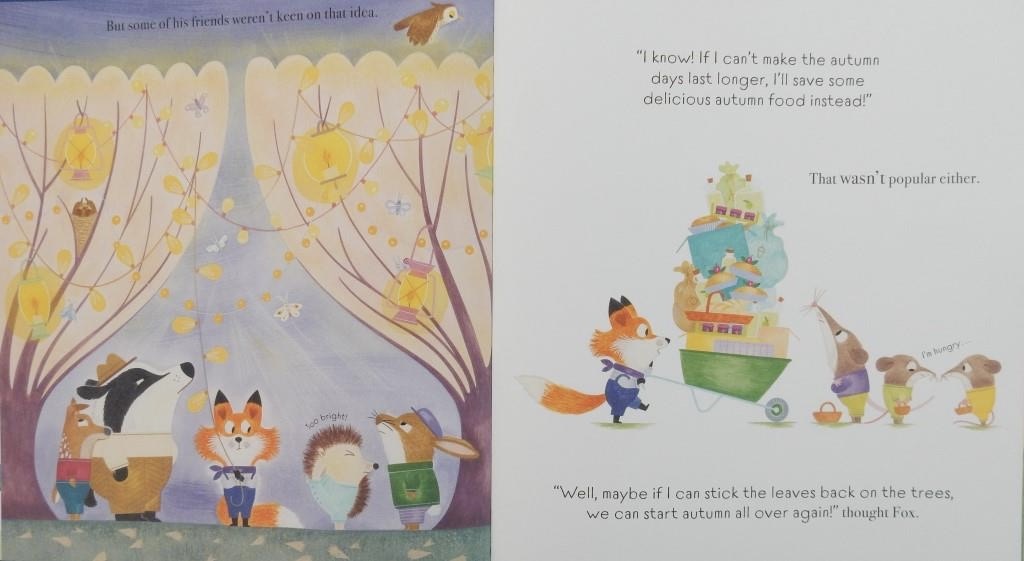
One girl is left alone in the cave and having paid close attention to everything thus far, she creates with a charred stick, beautiful cave drawings on the walls depicting the details of their journey.

This hugely thought-provoking book is a wonderful testament to survival, to art and to stories and how they make us human. Share and ponder upon it at home or in the classroom. Afterward, Everything Was Different is bound to spark conversations on human history and awe at the power of Yockteng’s art drawn in graphite and white ink.
(Backmatter provides further information on the Pleistocene era.)

What Will I Discover? / The Stars

These are both Greystone Kids titles – thanks to the publisher for sending them for review

What Will I Discover?
Tanya Lloyd Kyi and Rachel Qiuqi

‘Sometimes I think scientists know everything about the world’ muses the girl narrator of this book. She goes on to mention several examples of some of what they have discovered: that otters tie themselves to kelp to prevent them floating off during sleep, that the feet of sea stars are tubular; that macaws have bony tongues to help crack hard shells and glass frogs have see through skin to help them hide. She also talks of fossil evidence, looks afar out into space and within the human brain where nerve cells communicate with one another. But even so, our narrator has some yet unanswered questions: why does every humpback whale sing a different song? How many bits of rock bounce and collide in a sandstorm? How do trees learn to communicate through their roots; what tiny creatures hide in the ice of Antarctica and how do they manage to survive?

Then closer to home, ‘How do ideas pop into my head?’ and finally her biggest question of all – that of the title, which is one only she can answer.

The last page asks readers to search back through the book’s pages for 10 tiny images and, enthusiastically underwrites ‘investigating, inventing, or creating’ as necessary qualities for scientists, concluding that despite extensive research in all STEAM areas, we humans still have so much to learn.
Tanya Lloyd Kyi offers an open invitation for young readers be they at home or in the classroom: always be curious and look for answers. This is underscored through Rachel Qiuqi’s alluring scenes including those of seascapes, the jungle, the desert, flora and fauna, dinosaurs, outer space and neurons within the brain.
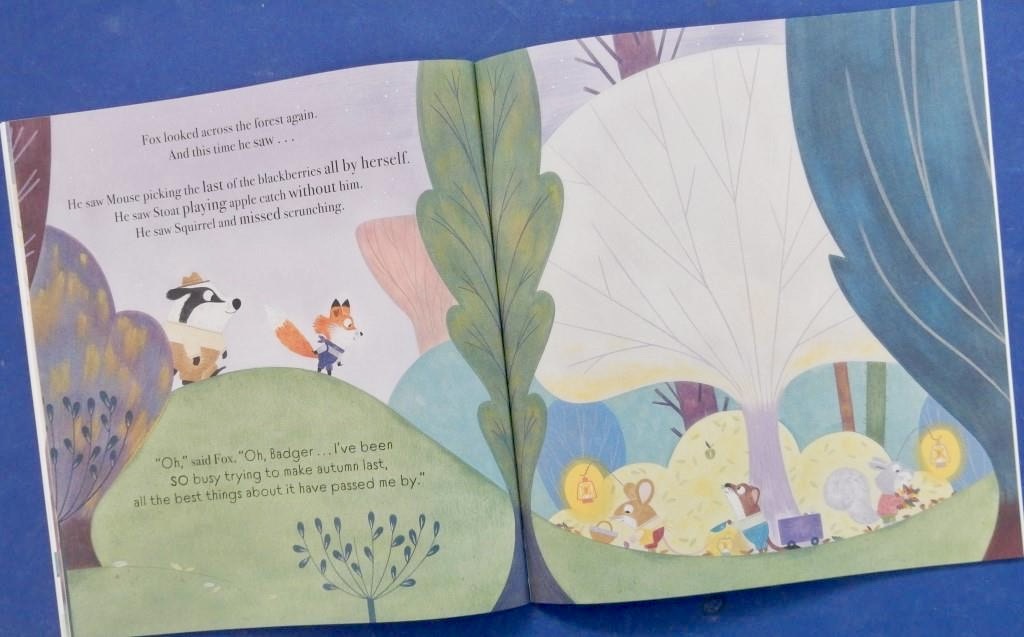
Narrative non-fiction recommended for KS1 learners.

Also likely to appeal to readers with inquiring minds is

The Stars
Jacques Goldstyn (translated by Helen Mister)

Set in Montreal, this story introduces Yakov who acts as the book’s narrator. he’s the older brother of three sisters who he has to take to the park every day when he’d much prefer to be reading about space. Into space is somewhere he aspires to go one day in the future; meanwhile he constructs rocket ships from empty packaging, His father is against his aspirations but his mother is more encouraging. 

One day at the park Yakov meets a girl, Aisha, reading about space while supposedly minding her siblings. It turns out that she and her family have just moved close to where Yakov’s family live. With a shared interest the two become great friends and spend time star gazing together. Both fathers are far from happy and even erect a wall between their two homes to prevent Yakov and Aisha from meeting.

Years pass and Yakov becomes a scientist working at NASA. One day he attends a big international astronomy conference and guess who is also attending. Since then they’ve not been apart.

Author/illustrator Jacques Goldstyn presents a fair amount of information in telling this story of two young people who, against the odds, pursue their passionate interest in the stars and the universe.

A Zoo In My Shoe

A Zoo In My Shoe
Jason Korsner and Max Low
Graffeg

As you’ll see on the front cover of this book, Jason Korsner has selected seven different wild animals to place in his trainer – sorry, shoe, or it’ll be a no brainer because the first set of rhymes won’t work.

The structure is similar to that used in I Like to Put Food in My Welly and it’s equally, hilariously silly.

Zoo is the first word and everything starts sensibly with ‘Lots of wild animals live in the zoo. / Before a long trip you should sit on the loo. / My feet are so long, they poke out of my shoe.’ for which Max Low offers three cartoony illustrations – one per sentence.
Turn the page and the daftness takes over and we have, ‘ Lots of wild animals live in the loo. / Before a long trip you should sit on my shoe. / My feet are so long, they poke out of the zoo.’ Opposite this is an equally zany three line rhyme with more of Max Low’s illustrations, which are becoming increasingly surreal.

The other animals featured on the verso pages are in turn, Tiger, Giraffe, Penguins, Sea Lion, Lemur, 

Leopard and Elephant, each of which has a double spread of playful permutations of the original sensible (ish) three rhyming lines.

A splendidly funny read aloud that will quickly have young children in fits of laughter at the assemblage of wordplay and likely wanting to try and invent some of their own; there are plenty more zoo animals to play the language game with.

Cake!

Cake!
Ellie Patterson and Gabriela Gil
Little Tiger

This tasty offering will surely set the taste buds of young humans tingling as they follow the events of this birthday cake whodunnit. Bunny and seven brothers are all missing their birthday cakes but who has eaten them? Was it Tiger? Not according to the large striped cat who tells the bunnies it was Rhino and indicates the cliff edge across which is a tightrope. Over teeter the bunnies plus Tiger and despite the rope snapping, they find themselves right beside Rhino who certainly looks somewhat sticky.

She though shifts the blame to Flamingo and the animals all head to the lake where they spy another pretty obvious cake gobbler among the flamingo flamboyance.

Suddenly the bunnies realise they’re the only ones in the lake so they decide to wend their way home sans cakes.

However, there’s a surprise waiting for them: the culprits have made amends and tasty treats await the home comers. But there’s one final surprise in the form of a large chunk that’s missing from one bunny’s cake. Who is the culprit this time?

With an important message about owning up to your wrong-doings, and showing you are sorry, this engaging story, deliciously illustrated by debut illustrator Gabriela Gil will delight young listeners either at home or in a pre-school setting.

How the Sea Came to Be

How the Sea Came to Be
Jennifer Berne and Amanda Hall
Eerdmans Books for Young Readers

Jennifer Berne divides her rich poetic account into three parts: The Birth of the Sea, The Birth of Life and All That the Sea Came To Be, covering geology, oceanography, biology and evolution over 4.5 billion years – an enthralling journey indeed, especially when set alongside Amanda Hall’s show-stopping mixed media illustrations. The layout of every spread is a joy to explore.

The verbal imagery grips from the outset: ‘Volcanoes exploded from inside the Earth. / They blazed and they blasted and boomed. / And comets and asteroids crashed out of the sky, icy and rocky they zoomed.’

Having presented nature’s violence in storms and volcanic eruptions, the author and artist present the emergence of microscopic life forms – ‘smaller than small, and adrift in the seas,’ that gradually combined and changed into new 

and larger forms: ‘frilled creatures that wiggled and crawled’ as well as drifting, squishing jellyfish with their thread-like tentacles and then came the worm – a creature that ‘points as it squirms’.

Eventually we reach the multi-layered aquatic zones of the present time 

and then slowly return to the surface encountering a wealth of amazing marine flora and fauna to land at last on the shores of now, where people are exploring the rock pools.

Scientifically accurate throughout and written in almost faultless rhyme, there are no labels but it’s not difficult to locate the creatures named if you look carefully. Moreover, those who want to dive deeper can use the additional resources at the end of the book.

Totally immersive and with a wide appeal, this is a book for any collection.

The Mermaid Moon

The Mermaid Moon
Briony May Smith
Walker Books

Mermaid Merrin and human girl, Molly are best friends. Molly’s home is in a cottage near the harbour side at Merporth a fishing village from where she can watch the sea from her bedroom. Merrin lives with her mum, Nerissa in a cave carved in the wall of the harbour. The girls played together every day after school, Molly above water, Merrin below.

One might each year Merporth celebrated the Mermaid Moon festival. On that night Perrin’s mum allows her daughter to go and join the celebrations with a Cinderella-like warning to “make sure to be home before the moon’s reflection disappears from the sea… ’. Using a special Mermaid Moon magic

Merrin is able to ascend, fly through the air and visit the streets full of stalls and celebrating villagers.

When the market closes Molly takes Merrin to see her bedroom

but all too soon, through the window Merrin notices the moon glinting and knows she should start for her own home. She does so but gets distracted on the way. Will she be able to make it home in time? Perhaps, but only with some extra special help from Molly and a very large sea creature.

Briony’s modern fairytale wherein friendship is key, will appeal specially to thoughtful readers and listeners who enjoy a touch of magic, which is something that her illustrations in particular are imbued with.

Special Delivery / Good Night Little Bookshop

Special Delivery
Polly Faber and Klas Fahlen
Nosy Crow

Children who love reading and books will be fascinated by the story of a book – a book just like this one – that goes on a journey.

It starts with Jay counting down the sleeps to his birthday and on the opposite page we see people on their way into a factory in a distant land, the factory being where copies of the book are being printed, cut, pressed and packed

ready to go in a container lorry to the docks and onto a massive freight ship to continue its journey.
Having sailed across the sea, the book travels by train to a warehouse before being loaded into a delivery van and taken to a book shop., Pip’s Bookshop.

Along cycles Jay’s Gran who goes in, buys a copy of Special Delivery and goes to the post office. Then follows further travelling for the book – to the sorting office where it’s placed in a sack, collected by a postie named Molly (many of the workers involved in this whole journey are named) and finally delivered to Jay.

He loves his present. Being a thoughtful boy, he makes a thank you card for his Gran – his ‘special delivery’ is by hand.

As well as a subtle look at international trade and those who make it happen, this book with illustrations of all kinds of machines and workers involved in the processes, will be a good introduction to interconnectedness of both objects and people. For those who want to know more, there are three pages of ‘Special Delivery Numbers’.

Polly Faber provides just sufficient information in her text and Klas Fahlen’s bright digital illustrations provide further details in visual form. An interesting, thought-provoking book that can be shared in KS1/ lower KS2 classrooms that covers several areas of the curriculum.

Good Night Little Bookshop
Amy Cherrix and E.B. Goodale
Walker Books

The special author event is over and it’s almost time for Little Bookshop on Little Street to close for the evening. First though there’s a goodnight ritual to perform. We see a little girl reaching for a picture book from those displayed on the shelves; a woman leaves to the accompaniment of of the door bell’s ‘Ding, ding, ding’, followed by a goodnight to the till with its ‘Ring, ring, ka-ching!’ And so it continues with goodnights to friends who’ve come from afar,

to familiar pooches and their owners, to forgotten glasses and hat, to the bookshop cat and the boxes of new books waiting to be shelved for the following day. Each of these and more are bid goodnight as well as discovering something of the work of bookshop owners and booksellers.

We see it all in E.B. Gooddale’s detailed illustrations that accompany Amy Cherrix’s gentle poetic words, which, in addition to being an ode to this particular independent bookshop, mentions little bookshops everywhere and concludes with a wish to “dream  big, dear readers, wherever you are.”

A lovely bedtime rhyme with a difference that had a special appeal for this adult reviewer who is a fan of indie bookshops and has worked in a couple too.

A Hero Like Me

A Hero Like Me
Angela Joy, Jen Reid and Leire Salaberria
Frances Lincoln Children’s Books

‘They call him ‘HERO’, but he’s no HERO – not to me.’
So it says on the first spread of this picture book – a fictional account – inspired by the events of 7 June 2020, when, during an anti-racism protest, prompted by the killing of George Floyd by police in the USA, a statue of seventeenth-century slave trader Edward Colston was pulled down and thrown into Bristol Harbour.

Co-author Jen Reid was among the protesters that day, and despite being afraid of heights, she felt compelled to climb onto the empty plinth and raise her fist above her head in a black power salute  – a moment that was captured on camera and shared all round the world.

Written together with Angela Joy, this wonderfully inspiring story relating the events of that memorable day are retold through the eyes of a girl who every day on her way to school sees the huge statue of the so-called hero, in reality a man who sold freedom for cotton and tea. She knows this man is not a hero.
However, it’s not easy to find real heroes: people who stand up for Justice, Peace and Kindness so our young narrator takes things into her own hands. She, her family and friends create placards and march, shouting out for what they believe in.

They march towards that bronze statue of Colston and eventually that towering statue becomes a toppling one that is dragged by many pairs of hands to the harbour’s edge and thrown into the water. Then in it’s place stands a real hero, a young woman with fist held up for Black Peace and Black Power

A few weeks later, (15th July) on her walk to school, the narrator sees a statue of Jen Reid by artist Marc Quinn had been added to the empty plinth. Called A Surge of Power, it was only in place for 24 hours.

Adding even more impact to Angela Joy and Jen Reid’s empowering words are Leire Salaberria’s distinctive, bold, stylish illustrations. Together they have created an important book for young readers; one that shows them a hero can be just like themselves, as well as offering them hope in humanity, in particular in those who stand up for what is right: activism can lead to change. It’s a must for primary classrooms and family bookshelves.