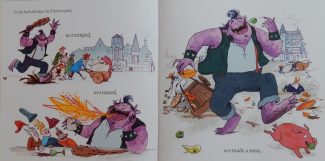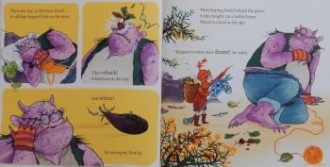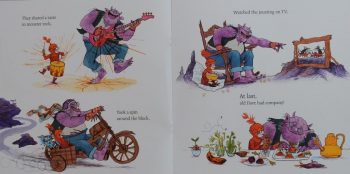
My Book about Brains, Change and Dementia

My Book about Brains, Change and Dementia
Lynda Moore and George Haddon
Jessica Kingsley Publishers

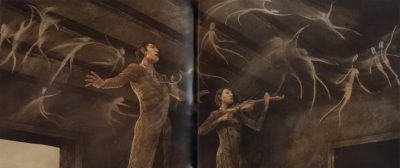
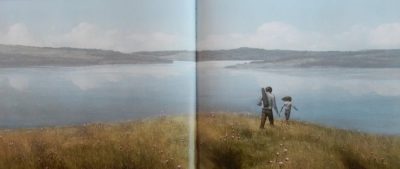
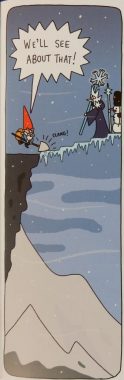
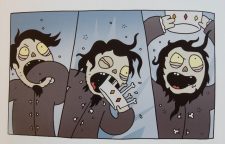
In picture book form, author Lynda Moore (a family counsellor who works with children impacted by dementia in Australia) and illustrator/cartoonist George Haddon, deliver an explanation in straightforward terms that will help young children understand something of the sensitive subject of dementia.

Starting generally, there’s an explanation of brain function; how it is a vital organ involved in everything we do.

The author then moves on to say that like other parts of the body, a person’s brain can also get sick and we generally call the disease dementia.

Youngsters are reassured that the changes that may happen to someone with dementia, (a relative perhaps)

are not their fault or indeed that of anybody else.
The importance of care and kindness are stated, as is the fact that dementia is incurable.

Readers/listeners are then given the option to skip the next few pages, which explain that ultimately, dementia can end in death.

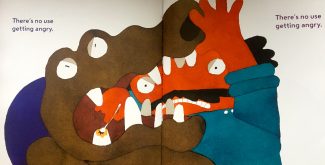
Finally and also reassuringly, the book concludes by saying that if you know someone with dementia it is acceptable to feel happy, sad, scared or angry (mad) but it’s important and helpful to share your feelings.

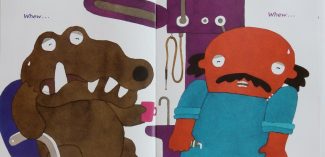
Concise, compassionate and young-child friendly, with amusing illustrations, this is an excellent book that should be in  all early years settings, every school, nursing home and when appropriate, a family library.

Board Book Beauties: I am Little Fish! / Wiggly Wiggly

I am Little Fish!
Lucy Cousins
Walker Books

I cannot imagine any little tot resisting Little Fish’s invitation to join him and play,  on the first page of this wigglesome, rhyming, finger puppet delight.

In addition to a whole lot of tail wiggling -at varying speeds – there’s bubble blowing,

as well as showing off his shimmying, twirling and whirling moves.

Then Little Fish introduces his fishy pals who’ve come to join him in a dipping down diving game of peek-a-boo.

And finally, up swims Mum for a spot of kissing.  Just perfect!

Wiggly Wiggly
Michael Rosen and Chris Riddell
Walker Books

Here’s a selection of the most join-in-able playful Rosen rhymes from the original A Great Big Cuddle, illustrated by Chris Riddell in super-energetic style.

It’s absolutely certain to get your little ones ‘Tippy-Tappy’ ing, ‘Boing! Boing’ing squash, squishing, ‘wiggly wiggly’ing, ‘buzz buzz buzz’-ing, ‘moo moo, moo’ing, ‘squawk squawk squawk’ing ‘splosh, splash, splosh’-ing, ( doesn’t Chris Riddell draw elephants awesomely,

not to mention finger walking, waving, talking, tiring, flattening, buttering, spreading and ‘bed’ding down.
There’s also plenty of munching and crunching as you lunch with a crocodile.

We meet sad-looking Mo being cuddled following a fall in a puddle and then it’s time for monkey business with half a dozen of the cheeky little animals.

After which, I have absolutely no doubt your toddler(s) will demand that you turn back and start all over again.

If this brilliant board book doesn’t give the vital ‘language is fun’ message to both children and adults, then ‘I never writ nor no (wo)man ever loved’ Apologies to the bard. No, not the author!

Anna and Otis

Anna and Otis
Maisie Paradise Shearring
Two Hoots

Imagine befriending a snake. Not keen probably, but snake, Otis is the unlikely best friend of young Anna and the two spend happy, adventurous days together safe in the confines of the garden.

One day though, Anna announces to Otis that tomorrow they ought to go exploring the town, a suggestion that leaves Otis lost for words. After all neighbours and delivery people tended to tread very cautiously when they spied the reptile, so an entire town, Hmmm!

Nevertheless, next day, Anna having attempted to allay Otis’ concerns, the two sally forth.

Anna’s words however are very soon proved wrong: seemingly everyone in the town gives the impression of being as she’d put it earlier, ‘very silly mean’ people.

Inevitably, Otis is sad; Anna angry, though she tries to be reassuring. Bravery and direct approaches are her suggestions, first stop being Silvio’s hairdressing salon. The visit proves a success and word starts to spread.

Emboldened Anna purchases a skateboard for herself and a set of wheels for Otis.

Pretty soon, people at the skate-park are impressed at his wheelie prowess; the bush telegraph springs into action again and come lunch time it’s more of a party than a meal for two.

By the time the day’s over the friends are very tired. Anna invites Otis to spend the night and thereafter the friendship continues apace, sometimes just the two of them but on other days it’s a trip into town to visit all their wonderful new and very welcoming pals.

In her funny tale of overcoming fears and gaining acceptance, with gently humorous illustrations full of wonderful details to delight and linger over, the author portrays an unusual friendship that should, if not endear readers to Squamata such as Otis, at least help overcome their angst about them.

Stuck for more summer reading for your children? Try Toppsta’s Summer Reading Guide

Where’s the Mermaid? / Crossword Puzzles for Vacation & Word Search Puzzles for Vacation

Where’s the Mermaid?
Chuck Whelon
Pop Press
Meria mermaid and her 10, finned friends, no make that 9 since one’s a ball, visit sixteen different locations, some I’d say highly unsuitable for aquatic beings but the mad characters have gone and hidden themselves in such crazy places as a hair salon, a circus big top (they need help to escape from here) and a pop concert, as well as some rather more fitting ones including the Mer King’s sub-aquatic palace where a special celebratory parade is taking place;
under the Arctic ice of at the North Pole where they engage in a plastic pollution clean up and a lido-type thing at beach Hotel Bliss.

It is, according to the PR from Penguin Random House, the year of the mermaid. Really? I must have missed something, somewhere. No matter, I know quite a few young mermaid fans (some are also unicorn enthusiasts) who will be delighted to lay hands/fins on a copy of this search-and-find adventure book.
The entire book is pretty crazy but lots of fun. It’s likely to challenge even the most practised spotters as they search each scene for Meria and her entourage frolicking among the crowds.

Hours of fin-some fun assured for those that take the plunge into the colourful spreads and become caught up in cartoonist Chuck Whelon’s funny scenarios. Oh, I forgot to say, the Mer King’s precious golden mer-treasures are rumoured to have been stolen and tracking them down will entail another round of searching and puzzling: there are more than 30 golden objects as well as over 30 suspects. It’s as well that all the answers are provided on the final spreads.

Crossword Puzzles for Vacation
Trip Payne
Word Search Puzzles for Vacation

Mark Danna
Puzzle Wright Junior

The first title contains 40 crossword puzzles for young solvers from 8ish to enjoy. Most of the content is likely to be within the knowledge range of youngsters though the odd clue here and there may well need some adult or older sibling/friend in-put.
And just in case everyone is completely flummoxed, the answers are all given at the end of the book.

The 58 word searches in the second book are thematic with topics ranging from things made of glass –‘Looking (for) Glass’ to ‘Seuss on the Loose’ – I particularly like that one. To add to the fun, the word searches are a variety of interesting shapes appropriate to the particular puzzle theme; so for instance ‘Just Say No’ wherein every word contains the letters NO, the puzzle is shaped thus …
whereas ‘Tree-mendous’ is a tree-shaped puzzle. (Note: the spelling of some words is American)
There are also puzzles within puzzles too, and every one contains a hidden message; it might be a silly saying, a riddle or perhaps a pun.

Hours of fun sans screens guaranteed with these two pocket sized paperbacks and they’re just right to tuck into a bag for a long car journey or for holidays.

Little Owl’s First Day / This is the Way We Go to School

Little Owl’s First Day
Debi Gliori and Alison Brown
Bloomsbury Children’s Books

Leaving a parent to begin school or nursery for the very first time, particularly when a younger sibling is still at home, can be a bit bothersome for little ones and so it is for Little Owl.

We first met the delightful character when a new sibling arrived and now he’s facing his first day at school.

When he wakes up on the big day, he isn’t feeling full of excitement as his Mummy Owl anticipates; instead the little fellow doesn’t even want to get out of bed. “I want a small day. I want to stay at home with you and Baby Owl,” he tells her.

After a lot of cajoling, they’re all ready to sally forth but then Little Owl is reluctant to pick up his new owlbag. Eventually, with Little Owl calling the tune, he sets off pushing his baby in the pram while Mummy carries his bag.

At the school door Miss Oopik is ready with a welcoming greeting; and reassuring farewell’s over, Little Owl is gently encouraged to try his wing at painting.

His picture is Mummy and Baby Owl moonbound in a rocket, and they seem to occupy his every thought for a considerable part of the morning until snack time is announced. And then it looks as though Little Owl might just have found a friend as he and Tiny Owl share the contents of their owlbags with one another.

The rest of the session seems to pass in a flash before Miss Oopik calls them all together for a story.

Soon, who should be waiting outside but Mummy and Baby Owl; but Little Owl is much too sleepy to tell them all about how he spent his time.

Debi Gliori’s gently humorous tale is a real situation soother that will embrace a first timer like a warm comfort blanket, especially since it’s woven together with Alison Brown’s scenes of adorable strigine characters small and not so small.

This is the Way We Go to School
illustrated by Yu-hsuan Huang
Nosy Crow

Ideal for little ones about to start, or already at nursery or playschool, is this board book version of a favourite song, complete with sliders. With these your child can help the little tigers in the early morning to get out of bed; eat their breakfast, brush their teeth

and walk to school, where they smilingly wave a farewell to their parents before rushing inside to join their friends.
In addition to the sliders that facilitate getting up, teeth brushing and waving, there’s a wheel to turn that brings into view a host of other animals all hurrying schoolwards.

Both the tigers’ home, and the journey to school spreads have plenty of interesting details for little humans to spot and discuss.

Inside the front cover, is a QR code to scan onto a phone or tablet and download that provides a sing along version of the song.

Sorrell and the Sleepover

Sorrell and the Sleepover
Corrinne Averiss and Susan Varley
Andersen Press

Have you ever kept something about yourself or family a secret from a best friend so as not to feel inferior? That’s what one  of the main characters in this lovely story decides to do.

It revolves around best friends Sage and Sorrel (squirrels). Pretty much everything about the two is the same: they like the same games, sing the same songs and say the same things at the same time. Even their tails have identical stripes.

Sorrel is thrilled when Sage invites her to stay at her house for a sleepover; rather than feeling nervous about her first night away from home, Sorrel is excited as she packs her overnight nutshell.

Sage’s home is impressive, a huge branching conifer that includes nests for her aunties and her cousins as well as Sage’s immediate family. But as the two friends snuggle up for the night, Sage’s comment about looking forward to a reciprocal visit causes Sorrel to worry so much about the difference between the two homes that she decides not to invite her friend back. Best friends don’t have differences, she tells herself.

Sage however is persistent and so Sorrel invents a series of excuses: a poorly mum, a burst pipe; the painting of their home resulting in the newly pink leaves being too wet for visitors to stay.

It’s this pinkness however that finally puts paid to further inventive excuses on Sorrel’s part. It also results in the truth being revealed about her home.

Sage, being a true and empathetic friend, isn’t at all concerned about their difference; to her it’s a cause for celebration.

Telling it with tenderness and understanding, Corrinne Averiss has created a story of two trees and two squirrels that will particularly resonate with under confident children who have done the same as Sorrel, but it’s a book that needs to be shared and discussed widely in schools and early years settings.

Susan Varley echoes the warmth of the telling in her beautiful illustrations. I’ve been a huge fan of her work ever since Badger’s Parting Gifts: her art never fails to delight and so it is here: delicate, detailed and utterly enchanting, every spread.

Sweep

Sweep
Louise Greig and Júlia Sardà
Egmont

We all find ourselves in a grumpy mood from time to time but for Ed it’s massive.
Ed is in a BAD mood. It had begun as a very small trip induced one but rapidly escalates until it’s blown up into a huge raging storm engulfing everything in its wake.

All the while Ed keeps his head right down, eyes to the ground where so his mood seems to say, are interesting things.

If only he’d chosen to lift his gaze he’d have felt uplifted by the sight of beautiful things, but no. Determined to proceed in this manner, on he goes, Ed and his bad mood.

Finally it’s become so bad, the whole town is in its thrall: no birdsong, no flowers, just a huge blackness.

Now Ed is conflicted: his bad mood still wants him continue in this way but Ed begins to wish the whole thing had whirled and swirled its way into oblivion.

How much longer can he keep this up, especially as fatigue and hunger pangs begin to manifest themselves.
But has he gone just too far? Can he give up this overwhelming bad mood?
Something must change surely?

And sure enough something does. Up springs a new wind, small at first but growing and growing until the world looks different: much brighter, making Ed feel a little foolish. Was it all for naught?

Not quite, for he suddenly spies something before him on the ground,

something that might possibly be a spirit lifter … a bad mood extinguisher that enables him to see the beauty surrounding him. Not only that, he knows he has two ways to look at life; it’s up (or down) to him …

Author Louise Greig delivers another powerful story, rather more punchy than Between Tick and Tock and The Night Box. This one, with Júlia Sardà’s dramatic, sombre hued illustrations feels altogether different, but equally absorbing and finally, uplifting.

A Different Boy

A Different Boy
Paul Jennings
Old Barn Books

Following on from the wonderful A Very Different Dog, Paul Jennings has written a second very different, equally gripping book.

Orphan Anton has recently arrived as a resident at Wolfdog Hall, a terrible place where no-one even knows his first name, lessons are miserable affairs, the teachers thoroughly unpleasant.
Pretty soon, the boy makes a break for it, and surprisingly, despite threats to the contrary, he isn’t followed. He is however without money or friends.

Hearing the horn sounding from a ship down the hill in the harbour the boy makes his way to the pier. The ocean liner has yet to leave and Anton watches people making their way up the gangplank, bound for a new land of promise, peace and plenty.

One of the passengers is Max, a rather strange-looking boy with a face resembling a porcelain doll and wearing a jumper absolutely covered with ribbons, labels and badges looking like, so Anton thinks, nothing less than a noticeboard. He’s also wearing a black arm band.
A peculiar exchange takes place between the boys after which at Max’s instigation, they exchange name labels and Max leads him aboard. Unlike Anton, the lad is accompanied by his mother.

Thus begins Anton’s new life as a stowaway.

During the voyage he gradually comes to know more about the rather strange seeming Max who has identical bald-headed boy puppets, one wearing a green jumper, the other a red one.

In tandem readers discover through text printed in italics that he once had a brother, Christopher, who died in a fire while Max was rescued.

Later in the main text Max’s mother explains that this was a recent event, and that now her son needs someone to look out for him in his twin brother’s stead. She also posits the idea that when they arrive in the ‘New Land’ Anton could live with them. A deal is made.

Shortly after, disaster strikes, there’s a rescue, a startling revelation concerning the identity of who had really died in the fire, another startling revelation, about Anton this time. And, there’s a satisfying ending; what more can you ask? Oh yes, there are occasional slightly spooky line drawings too.

Like all books by Paul Jennings, this one (based very loosely on the author’s experience of emigrating to Australia from England as a boy) draws you in immediately and grips you throughout . Like the author’s previous titles too, it’s superbly written without a wasted word. Having said that, it’s also quite unlike any of his previous titles.

Wild Violet!

Wild Violet!
Alex Latimer and Patrick Latimer
Pavilion Children’s Books

Following on from Woolf, the brothers Latimer return with their second collaboration and it’s young Violet who is star of the show. That’s not quite how others see this extremely spirited little miss however.
By all accounts she was born wild and despite predictions, has failed to outgrow this wildness on reaching four years old.

Washing isn’t on her agenda, nor is anything that might vaguely resemble good table manners; her hair is disgusting – full of all manner of undesirable bits and pieces; wall art and nocturnal shrieking are more her thing.

Imagine how tiring all this is for her parents. One day as exhaustion overwhelms them, they decide to call on her grandmother, begging for an afternoon’s respite.

Gran obliges and decides the zoo with its calming fresh air and plethora of birds is a good place. However the animals are not good role models for the little miss and by the time they reach the Monkey House gran is shattered.
So shattered, that come home time, she catches hold of the wrong hand,

delivering a rather different looking ‘Violet’ back to her parents.They too fail to notice; after all the new Violet’s habits are almost the same as those of the old.

Violet herself meanwhile is having the time of her life in her new abode, until that is, night comes and with it insomnia. Now there’s nobody to clear up her mess or read her a bedtime story; there’s no morning bath or tasty breakfast, let alone warm parental embraces.

A quick phone call by the zoo-keeper soon has the switch sorted out, but it’s a rather different little girl who greets her parents when they come to collect her.

Is Violet now a reformed character? Well yes and no. Mostly it’s the former but on the days when her mum takes her to visit her simian pals, that’s the time her wild side manifests itself.

We adults all know a Violet-type character and I’ve certainly taught a few children who could give her a good run for her money. This makes Alex Latimer’s story all the more enjoyable for readers aloud; children on the other hand will simply revel in Violet’s utter irrepressibility so wonderfully portrayed in Patrick Latimer’s scenes of mischief and mayhem.

Another winner for the Latimer partnership.

The Dodo Made Me Do It

The Dodo made Me Do It
Jo Simmons, illustrated by Sheena Dempsey
Bloomsbury Children’s Books

Instead of the usual deadly dull summer holidays, 10-year-old Danny yearns for adventure. As usual though, he’s sent off to spend six whole weeks with Granny Flora who lives in the wilds of Scotland in a farmhouse, in a village called Kinoussie. To make matters worse nothing ever happens in this outlandish environ, it receives an awful lot of rain, has a population of ‘weirdies, oldies and older weirdies’. Promising it is not, particularly as his gran is porridge obsessed and the place is over-run with midges.

There’s only one person of around Danny’s age anywhere in the vicinity and that’s science-mad Susie. ‘You can make this work, Danny!’ his mum tells him as they part. ‘There is fun to be had up here. You just have to make it happen!’
And make it happen is what Danny does.

Over breakfast – yes porridge – Danny learns of a shipwreck just off the coast a very long time ago.
Quickly the lad hatches a plan of action A & E: Adventure & Excitement, he calls it, that involves visiting the precise location of the shipwreck, finding enough treasure to make him sufficient money to buy a train ticket home and once there to spend his booty on a holiday in a sunny spot somewhere distant.

Instead what he discovers is something even more unlikely than ancient treasure, it’s can you believe, a dodo!

Thereafter, said dodo gets Danny (along with Susie who becomes a kind of sidekick) into all manner of tricky situations just trying to keep the creature safe, fed and quiet.

In addition though, he finds himself confronting a criminal who’s come to Kinoussie seeking a place to hide away. Hmmm!

Why did he ever wish for excitement?

With a liberal sprinkling of comical drawings from Sheena Dempsey, this cracking Jo Simmons’ tale is to say the least, hilarious. Perfect holiday reading.

If you need more suggestions for your children’s summer reading, you could try Toppsta’s Summer Reading Guide

Tomorrow

Tomorrow
Nadine Kaadan
Lantana Publishing

Over the past couple of years there have been several excellent picture books featuring families or individuals fleeing a war-torn home country and seeking refuge in another, often far distant land. But what of those who remain in such a place, a country such as Syria say, where war is all around?

This is the way of life for Yazan and his mother and father.

Yazan no longer sees his next door neighbour and friend, nor does he go to the park. In addition, school has stopped and surprisingly, Yazan misses it.

Artistically inclined, Yazan’s mother used to spend a considerable time painting, sometimes with her son watching, sometimes painting alonlgside.

It’s the news on TV that occupies much of her time and attention nowadays though, and his father is also preoccupied.

Yazan meanwhile does his best to keep busy himself; but how much doodling, pillow building and paper aeroplane making can you do before boredom sets in?

Going stir crazy he yells his ”I want to go to the park NOWWWWWWWW!!” request to his parents.
Then, ignoring his mum’s “Not today,” response, the boy ponders and then the temptation of his shiny bike is just too much.

Once outside however, nothing looks the same: no stall holder, no playmates, only alarming explosions all around. What should he do: continue his journey or return home?

Suddenly, catching sight of another person, his mind is made up. Then Yazan and his dad walk back quietly hand in hand.
Once home, what his mother does after giving him a huge hug and a warning about going out alone again, makes his heart soar. If he can’t go to the park, then at least she can bring one to him …

And that, for the foreseeable future, will have to suffice.

Over the years I have taught a good many young children who, with their parent(s), have fled conflict in various countries including Sierra Leone, Somalia, Sudan, Sri Lanka, Afghanistan and more recently, Syria; and although one never questioned them about their experiences, in time some did open up, often through their art, about what they had been through.

At that time there were no picture books such as this one for me to draw upon and it’s impossible to imagine what life for a young child must have been like.

Originally published in Arabic in 2012, Nadine Kaadan’s spare, matter of fact telling, in combination with her sometimes sombre, colour palette, create a powerful portrayal of the stark reality that expresses something of what she has witnessed. Towards the end, her watercolour and pencil scenes bring the light into the darkness of a child’s initial confusion, and one family’s near imprisonment within their loving own home.

I close by quoting the author’s final sentence in her letter to readers at the back of this moving book: ‘Today, we wait for a time when “tomorrow” can be a better day for all Syrian children.’ This is surely something we all hope for.
In the meantime, let’s share Nadine’s story as widely as possible.

Super Pooper and Whizz Kid Potty Power / CREATURE vs. TEACHER

Super Pooper and Whizz Kid Potty Power
Eunice Moyle and Sabrina Moyle
Abrams Appleseed

My partner and I spluttered our way through breakfast reading this, so much so that we almost wet ourselves laughing; it’s an absolutely priceless potty training board book.

Parents needn’t worry about that potty training regime; expert help is at hand courtesy of the Moyle sisters’ team Super Pooper (female) and Whizz Kid (male).

They’ve got the whole thing absolutely sorted; from # secret codes for pee and poo, bumble rumble or sprinkle tinkle alerts, the potty dash and pants clearance …

through waiting time (can be tedious),

to the final result. Phew! What relief!

Adult pleasing superheroes pretty much guaranteed and the reward – ‘BIG BOY AND BIG GIRL UNDERPANTS!
Then all that’s left is that vitally important hygiene routine …

If this doesn’t get your little ones weeing and pooping in the right place then I’ll eat my errr? – hat!

CREATURE vs. TEACHER
T.Nat Fuller and Alex Eben Meyer
Abrams Appleseed

Creature (of large friendly Frankenstein appearance) and teacher (a white-coated boffin-looking kind of person) are in totally different moods. Creature feels playful while teacher’s head is full of equations, formulae and is often completely immersed in a book.

The challenge is, can creature ‘s loopy kite flying,

dance moves, spin turns

and bum wiggling efforts have the desired effect of getting teacher to lighten up and join the fun.

Fuller’s paired rhyming words accompanied by Meyer’s outstandingly bright comic-strip graphics make for a great groovy fun book that’s bound to engage and delight .

Help! I’m a Detective

Help! I’m a Detective
Jo Franklin, illustrated by Aaron Blecha
Troika

This is the 3rd story to feature middle in the family, Daniel Kendal, and his pals who are polar opposites of one another.

It starts badly with Dan being blamed for the fact that little Timmy has been wielding a stapler, and then just as he’s on the point of leaving for school, the police come knocking on the door. No, the officer hasn’t come to arrest Dan despite what his big sister says to the contrary.

However when he learns about the burglary at Miss Duffy’s residence and then tells his two best friends geeky Gordon and Freddo at school, it seems there’s nothing for it but to assume the role of detective and help the police apprehend the thieves.

Being the near victim of fratricide, a second burglary involving a stolen x-box – surely big sister Jess and boy friend Dazzer couldn’t be the thieves, or could they? Plus an almost ‘friendicide ‘with Dan on the receiving end, as well as a plethora of poo, of the pooch variety I hasten to add, will the boy detectives ever succeed in their task? Can Dan possibly emerge as a hero for once?

With hilarious dialogue, an action-packed, fast moving narrative and suitably zany illustrations from Aaron Blecha, the whole unlikely story is exceedingly silly but enormous fun.

Ballet Bunnies / We Are Family

Ballet Bunnies
Lucy Freegard
Pavilion Children’s Books

Young Betty bunny aspires to be a ballerina but she’s only ever performed for her baby sister Bluebell.

At home Betty dances at every opportunity, in every room, but when it comes to dance class it’s not the same, especially with the end of term show fast approaching. Unlike her fellow dance students Betty feels clumsy and she can’t remember the right steps.
She does however, put her own interpretation on those moves and fortunately her teacher sees the best in every one of his students, providing fun rehearsals and a part for them all.

Betty works on losing her nerves but what will happen come the big day when among the audience will be her biggest fan, Bluebell?

Lucy Freegard’s cute characters and ballet scenes executed in pen and watercolour are sure to appeal particularly to budding dancers of the human kind, while her story of doing one’s best, over-coming your fears and finding confidence should resonate with all.

We Are Family
Claire Freedman and Judi Abbot
Simon & Schuster Children’s Books

A celebration of sibling love is exemplified by an array of endearing young animals small and not so small.
Be they lively lion cubs, diving ducklings, mischievous monkeys, milkshake slurping polar bears, fighting foxes, cake consuming kitties or frolicsome frogs,

brothers and sisters can be enormously irritating at times, but no matter what, even the trickiest of tasks become less bothersome with a sibling to assist.

Claire Freedman’s fluently flowing rhyming text combined with Judi Abbot’s captivating scenes of animal activities will enchant toddlers (with or without siblings) as well as their parents and carers.
We all love a little bit of mischief and there’s plenty of that herein.

The Cook and the King

The Cook and the King
Julia Donaldson and David Roberts
Macmillan Children’s Books

In this tale the king, being of a hungry disposition is desperately seeking not a handsome rich prince to wed his daughter but, a cook.

Having eliminated almost all of those who apply – supposedly the finest in the land, but serving up runny eggs, tough meat and worse, he’s left with just one pretty desperate looking fellow going by the name of Wobbly Bob. Yes, he’s dressed in cook’s gear but his name is far from promising and he’s a self-confessed wimp. Masterchef material he most definitely is not. But could he be?

The guy lacks the courage to tackle any of the tasks needed to ensure his highness gets his favourite fish and chips meal.

No prizes for guessing who does more than the lion’s share of the work.

Finally though, the two sit down to dine together, but does the meal pass muster, or must the king keep on looking for a cook?

Splendidly funny: Julia Donaldson serves up yet another winner. With its inbuilt 3Rs – rhythm, rhyme and repetition, this is a splendid read aloud, join-in story.

There’s plenty of food for thought: why are those courtiers pinning up the ‘Wanted Royal Cook’ poster? And what has happened to make the king resort to unappetising pizza deliveries? Both of these questions spring to mind in the first few pages, both scenarios being shown in David Roberts’ fine equally winning, hilarious illustrations of same.

(The story is, so we discover on the credits page, based on one the author’s son made up for his daughter– the story telling prowess is seemingly, in the genes.)

Where in the Wild

Where in the Wild
Jonny Lambert and Poppy Bishop
Little Tiger Press

Poppy Bishop gets poetical in her passion for wildlife and its protection in this visual and verbal evocation of the world’s animal habitats and how crucial it is to save these wonderful wild places from further destruction by human actions.

She takes us to meet creatures of the land and sea as we visit nine different faunal homes, the first being the river where otter speaks out.

We also spend time in the tropical rainforest alive with screeching monkeys, beautiful butterflies and other insects and a leopard introduces itself.

The hot savannah comes next, home to elephants, leopards, vultures, bats and scorpions: here a tunnelling meerkat tells of his digging prowess.

Scorpions are also found in sun-scorched desert regions, the next stopping place; home also for snakes, mice, lizards and the camel that describes its flat feet.

Next to cooler climes and a beautiful woodland inhabited by roosting jays, a bluetit sings about its home and diet,

and badgers roam both here and on grassy plains.
Thereon too reside wolves, buzzards, deer and other birds of prey.

Evergreen forests, the Arctic tundra and oceans are the three final locations, each with its own array of wonderful creatures large and small.

Strategically placed die cuts and a related question cleverly provide a link between habitats on each spread.

The last page and inside back cover are a rhyming plea for readers to act as advocates, speaking out for and doing whatever they can to save these precious places and their creatures; and short paragraphs about special adaptations, destructive human actions and a last plea to care for what we have for the sake of the animals.

Heartfelt, beautifully illustrated with Jonny Lambert’s fantastic collage style art, this is I hope, a book that will stir young readers and adults alike to play their part in the preservation of our precious planet.

More Would You Rather

More Would You Rather …
John Burningham
Jonathan Cape (Penguin Random House Children’s Books)

There’s been a recent spate of books celebrating the amazing achievements of women and men from all walks of life and from all over the world, as well as others putting forward the notion that where girls are concerned, they can do anything they set their minds to.
In his new book, John Burningham, (or rather the cheeky-looking child on the cover) invites readers to do something rather different; to ponder somewhat more unlikely possibilities posited in a series of questions. He wants us to consider the unlikely, and to make a choice about such rather disgusting sounding scenarios as having a camel being sick down your neck, an elephant emitting an extremely stinky toot, or falling flat in a field full of cows and your face landing in a pile of s— .

Pet ‘perhapses’ are – a cuddly koala, a vicious-looking vulture, a jagged-toothed alligator or a winsome woolly sheep. Hmm?

Just imagine the excuses you’d have to come up with should you be careless enough ‘to break Granny’s favourite jug’, ‘scratch the car’ or ‘spill paint all over the carpet’ – whoops!

Then, supposing if for no apparent reason you were the source of amusement to all and sundry; would that be better than having an eagle steal all your clothes? (Even worse might be the latter happening in front of that crowd.)

I’ve never got sufficiently close up to a hippo of any sort, let alone one with bad breath, and I don’t have an Aunt Zelda, but I wouldn’t relish having to cope with either of those bestowing a kiss upon me. On with the trainers and a hasty retreat, would be my response.
Think about having to spend a night under the stars – no not at a seaside campsite – but with your bed on the moon; is that preferable to nestling up with a whole lot of baby birds, or is the safety of your own bed the best option?

I wonder …
And that phrase is the key to this fabulous book. I’ve spent countless happy hours with various classes of children UUUUGGGHH! -ing and YUCK!-ing, laughing over, deliberating on, , discussing and generally having a whole lot of fun, with Burningham’s original Would You Rather so I cannot wait to share this one with all its imagination-rousing potential.

Need more ideas for your children’s holiday reading: try Toppsta’s Summer Reading Guide

The Only Way is Badger

The Only Way is Badger
Stella J Jones and Carmen Saldaña
Little Tiger Press

Which would you rather have, complete conformity or fabulous friendships? I know which I’d choose every time but not so the main character in Stella Jones’ super story. Badger is a separatist and has started posting ‘BE MORE BADGER’ type signs all over the forest causing consternation among the other woodland animals.

Supposedly to make matters easier for his so-called friends he presents a list of activities, badger-like digging being number one.
This immediately eliminates ungulate Deer, and Badger sends him packing most unceremoniously.

Requirement number two is fitting through the doorway of Badger’s sett. In go Racoon, Skunk, Squirrel and the other small creatures. Outcast, and over the wall are large bummed Bear and massive-antlered Moose.

So it continues with further ejections: those of Hedgehog, Bunny and Beaver for their badger-barking attempts.

Of the remainers Racoon and Skunk pass muster on account of their black and whiteness whereas the colourful birds, butterflies and bugs become persona non grata.

Badger is now revelling in his monotonously coloured surroundings; not so Racoon and Skunk especially as they hear  happy sounds issuing from behind that wall and spy Badger wielding a paint brush standing beside paint cans that match his colours.

By the end of the day Badger’s task is complete but as he stands solo among the trees a thought strikes him: what has he done?

There can only be one way forward here …

Hurrah for difference; long live divergence and inclusivity; oh and learning from your mistakes too as yes, Badger does finally see the error of his ways in this timely picture book.

There are just SO many ways this can be interpreted depending on what you bring to the story eloquently illustrated by Carmen Saldaña. The gentle humour of her scenes, in particular the expressions and body language of the animals speak volumes.

A book that’s absolutely perfect for a community of enquiry discussion in schools and should be shared and celebrated as widely as possible. I certainly intend to do both of those.
In addition pairs of children could co-create story boxes or dioramas using the book as a starting point; there are puppet possibilities, ditto hot-seating and MUCH more.

Professor Astro Cat’s Space Rockets

Professor Astro Cat’s Space Rockets
Dr Dominic Walliman and Ben Newman
Flying Eye Books

With Brian Cox-like charisma, Walliman and Newman’s Professor Astro Cat blasts off on a new adventure, launching us into space courtesy of the prof. It’s he that describes first, in easily comprehendible terms for young readers, the workings of rockets.
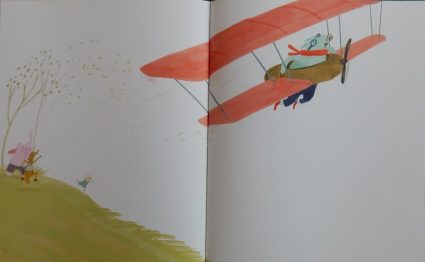
Next comes a brief (and selective) ‘History of Space Travel’ that begins in 1947 with fruit flies, and is followed by Laika (her reportedly ‘painless’ death in orbit is not mentioned), monkey Albert and then in 1961, Yuri Gagarin, the first human space traveller who managed to orbit the earth.

The huge Appollo 11 features thereafter with the famous first moon landing of two of the crew’s three astronauts in 1969.

Readers also hear of ‘Modern Space Shuttles’: Columbia, Discovery (that carried the Hubble Space telescope), Challenger that was especially memorable for carrying Sally Ride the first American woman, in space and the first African American, Guion Bluford.

Looking to the future, the final spreads are devoted to NASA’s work in progress, Orion and the Space Launch System; the possibilities of space tourism for ordinary mortals, a brief mention of star travel and on the last page, a short glossary.

In all this, the Prof. is accompanied in Ben Newman’s characteristically stylish retro looking illustrations, by his two pals, the similarly clad feline and sidekick mouse.

Sufficiently powerful to send the youngest of primary children rocketing on their way towards becoming ardent space enthusiasts, and into potential science careers I suspect.

How to Nab a Rabbit

How to Nab a Rabbit
Claire Freedman and Monika Filipina
Simon & Schuster Children’s Books

All kinds of people write books but it’s less often that one reads one penned by the Big Bad Wolf and he appears rather confident in his prowess as author of How to Nab a Rabbit. Not that I have any particular interest in so doing, but I am exceedingly interested in picture books and the fellow appears to have hired a super illustrator to aid and abet him, hence I’m sticking with it.

Despite all the bragging, said author looks to be rather less adept at carrying out his recommended ploys than he’d like readers to think, certainly if the demonstration of The Stalking Strategy is anything to go by. Obviously as he says, the first thing is to locate their lair but when it comes to the second and sly part ‘just pretend you’re passing by’, our writer is well and truly out-smarted by his prey. To make matters worse, there’s a Bear in the vicinity with a penchant for wolf pud.

Next comes The Hole-in-the-Ground Hoax and once again, ineptitude on the writer’s part means he lands himself in it – literally!

And guess who’s there ready and willing to give him a paw out …

He has an audience of the undesirable kind when he executes this one: it’s called The Love Lure and at first glance it appears pretty successful.

Notion number four is even more of a disaster: the guy can’t even have himself delivered to the correct address and gets himself well and truly stuck at the wrong one too.

By now you’re probably thinking that our wolf-writer is a total disaster and you’re not far wrong: maybe his advice about cooking up a veggie alternative is the right way to go, so long as it doesn’t give this particularly bungling wolf any fresh ideas about authorship…

What a smasher of a book this is. Absolutely luscious faultless rhyming narrative from Claire Freedman stirred in with equally appetising illustrations from Monika Filipina will have listeners – not to mention adult readers – dribbling with delight and the former salivating for immediate further helpings. So says this reviewer, who just happens to be a vegetarian!

Millie’s Missing Yawn

Millie’s Missing Yawn
You Jung Byun
Pavilion Children’s Books

We’ve probably all, in the UK at least, had trouble sleeping these past few weeks on account of the heat, so perhaps it’s one of those kind of sultry nights for young Millie. Sleep eludes her despite carrying out her usual warm bath, putting on of favourite pjs, sharing of her favourite book and the bestowal of a goodnight kiss on teddy Milo. What’s missing is her yawn, she tells her ted, and the two spring out of bed to start a search for it.

Dozy dog Barley certainly hasn’t seen it, neither have equally sleepy moggy Cucumber and pigeon Douglas.
Millie decides to look further afield, calling on Lady Liberty, the Moai Heads

and Mona Lisa. Even from the penguins her query receives a sleepy ‘’Oh no, sorry”; they’ve spent all day skiing, sledging and snowball making.

Hippo is eager to show off his own gaping yawn but hasn’t seen so much as a glimpse of Millie’s. Ditto the Great Sphinx.
If that world trip with all its yawners hasn’t got your listeners doing enormously wide AAAAAAHHHHs then nothing will. But what is Millie to do? Seemingly there is only one thing;

but her lunar voyage too proves yawnless, at least for her, although the bunnies certainly appear ready for some shut eye.

Feeling defeated, Millie decides to return home and as she lies back tucked up safely in her bed once more, contemplating the night sky and those she’s met, no doubt your audience will be able to predict what happens next …

This superbly soporific story is full of yaaaaawing characters all beautifully portrayed by the author You Jung Byun whose illustrations are full of lovely patterns and textures. Aaaahhhhh, I feel another yawn starting to engulf me …

Girls Can Do Anything

Girls Can Do Anything
Caryl Hart and Ali Pye
Scholastic
Let’s hear it for girl power!
This is a celebration of what girls can do narrated in Caryl Hart’s enormously empowering jaunty rhyme:
“I’m a GIRL! I’m FANTASTIC! I’m strong, brave and proud!” so say a huge diversity of girls in no uncertain terms as they talk about their attire – anything goes; demonstrate their unique prowess as sports participants and students favouring a huge variety of subjects – maths, writing, science, music, art and more.
The older they get, the more amazing they become: there are environmentalists, vets, zookeepers, scientists of all kinds, machine operators

and life-savers.

They can be rough and tough or soft and gentle, they can speak up for others …

and a great many help improve people’s lives.

Ali Pye’s cast of splendidly inclusive young females have enormous va-va-voom;

and the front endpapers are a gallery style presentation of possibilities for the future, while those at the back are fifteen named portraits (some more recognisable than others) of high achievers in many walks of life including Malala Yousafzai, Serena Williams, Olympic medallist LGBTQ boxer Nicola Adams, first woman-British firefighter Josephine Reynolds and author Chimamanda Ngozi Adichie.

Having read the book together with a five year old in the park after school , I spent 15 minutes exploring the endpapers with her; a woman came and sat on our bench with her phone. After a couple of minutes she put it away asking if she could listen as she thought the book ‘so brilliant’. I said ‘Be my guest’. She then called her friend over to share the experience. Five-year-old Emmanuelle instantly recognised Serena Williams but I had a fair bit of explaining to do with several of the others. Well worth the effort though.

In short, in this highly infectious adulation, it’s a case of no holds barred when it comes to girls; they’re undoubtedly a force to be reckoned with, cheered and applauded. Once again, let’s hear it for girl power!

Wizarding for Beginners!

Wizarding for Beginners!
Elys Dolan
Oxford University Press

Dave the dragon spent his last tale honing his skills as a would-be knight and now returns, along with his best pal, Albrecht; he of story-telling prowess, the glossy-coated, somewhat noxiously smelling goat.
Now they’re going undercover as wizards in order to gain entrance to the decidedly shady Wizarding Guild with the aim of freeing their friends from the evils of dastardliest of all wizards, the hair-obsessive, tantrum throwing terrible Terence: he who has ambitions to take over the entire world.

But once inside this exceedingly strange rule-bound place,

No bums on the table especially on spaghetti night.

it isn’t many hours before Albrecht has managed to get himself kidnapped and shoved into a sack (on account of his glossy coat so we later learn) and it’s down to Dave to rescue him. In this enterprise he’s ably abetted by Brian who just happens to be a female wizard – something Dave discovers when he follows Brian into the loo, the ladies loo no less. But her gender isn’t Brian’s only secret; her magic so she admits is rather reliant upon porridge – yes porridge – but that does happen to be Dave’s favourite breakfast (mine too actually).

A deal is struck: the two team up and with additional assistance from an emotional wreck of a monster named Pansy who’s large, lonely, lacks self-confidence and is all ‘owie’ on account of having fought a tiger.

While all this is going on poor Albrecht is having a pretty terrible time. Terence is making him confront the magic mirror,  a thoroughly nasty piece of work that appears to have nothing good to say about anyone or anything.

Or does it?

If all these shenanigans haven’t whetted your appetite for this splendidly silly saga, then let me just throw into the mix a brand new dessert called Squirrel Parfait, some further great reveals in the gender department, rule rubbishing galore, a reunion and errr, that would be telling!

Hurray for porridge power, for the splendid plugs for books, reading and libraries, and the plethora of jokes herein.

Elys Dolan’s second Dave saga is as deliciously daft and enormously enjoyable as Knighthood for Beginners. This is a great read, especially for those who like their stories liberally sprinkled with crazy illustrations of the Dolan kind.

Need more help finding summer reading for your child? Try the Toppsta Summer Reading Guide

Cyril and Pat

Cyril and Pat
Emily Gravett
Two Hoots

The super-talent that is Emily Gravett adds another book to her roster of read aloud crackers.

It stars a squirrel named Cyril, a lonely creature until that is, he meets Pat, another ‘squirrel’.
Thereafter the two spend happy times together in Lake Park inventing fun games, putting on puppet shows, skate-boarding and playing Hide-and-seek and Pigeon Sneak.

Cyril is completely oblivious to the outward differences between them despite being told time and again that his friend is not like him.

So what, I can hear you thinking; it was certainly my reaction.
Eventually though, Cyril heeds the negative comments of the other animals and he and Pat part company.

Inevitably Cyril is lonely once more: those games are no fun when played all by himself and he leaves the park putting himself in great danger.

Will he now realise his mistake and find his erstwhile friend once more?

Worry not: the author in her inimitable way provides a wonderful resolution that is altogether satisfying for both her main characters and her audience, although not for pooch, Slim, pursuer of the friends throughout most of the book.

Yes, this fine friendship story is wonderfully funny and stunningly illustrated in lush colours, but like all good stories it raises questions for readers to ponder as well as an important unspoken environmental message. (Love the Tidy rubbish bin.)

100 Dogs / Hey Duggee Sticky Stick Sticker Book

100 Dogs
Michael Whaite
Puffin Books

No this isn’t 101 Dalmations, it’s a mere one hundred pooches all packed between the pages of this romping, racing, rhymer of a book.

Herein you’ll meet dogs of every kind you can imagine and some you probably can’t: dogs big and small, bad and sad, dogs shaggy, baggy and wag-wag-waggy, fluffy ones and scruffy ones. Watch out for whiffy and sniffy ones, or those that might drool all over your best shoes.

There are dogs of the expected hues -with or without spots – but also a red one, a pink one and a yellow one.
Some look friendly (even to dog-phobic me); others appear decidedly vicious

or just downright weird.

One has even had the audacity to leave its calling card right there on the page.

Each and every one of these canine beauties has been lovingly portrayed by Michael Whaite especially for the delight of readers, canine lovers of all ages in particular.

There’s just one dog in:

Hey Duggee Sticky Stick Sticker Book
Ladybird Books (Penguin Random House Children’s Books)

Young children who are familiar with the CBeebies series featuring Duggee and his pals, and in particular his Hey Duggee Stick Song will not be surprised that sticks feature large in this activity book. It is after all a sticker book but the first activity is to greet all the members of the Squirrel Club and shout ‘Woof’. Only then can you proceed.

What follows are ten stick-related activity pages and a centre spread of stickers to use in some of the activities. These include a stick-collecting route to follow in order to build a campfire; a find two the same game; a spot the difference spread, a word search, a maze and a game of ‘sticks and ladders’.

Just right to entertain little ones over the school holidays, especially on a journey or should the warm sunny days disappear.

Can You See a Little Bear?

Can You See a Little Bear?
James Mayhew and Jackie Morris
Otter-Barry Books

Stunningly beautiful illustrations by Jackie Morris accompany James Mayhew’s sequence of rhyming statements relating to a variety of animals and a question ‘Can you see a little bear …?’ as we accompany the young polar bear on a fantasy journey.

It takes us through a medieval landscape during which he encounters hot air balloons, entertainers of various kinds, a camel train and a host of exotic creatures including an elephant, musical mice, parrots, peacocks, a walrus, zebras and a whale, beautiful moths, foxes, dolphins and geese.

Little bear engages in activities such as balancing on a ball, and head standing; he tries on items of the performers’ attire

and even participates in a performance.

Then, towards the end of the book into the array comes a big bear carrying a light to guide the little one homewards

for a bath, some tea and then, as he’s drifting into slumbers, bed.

The patterned text and questioning nature of the rhyme serves to draw the listener’s focus into the spectacular scenes, gently guiding attention towards the little bear’s named activity among the wealth of gorgeous detail on each spread. For example ‘Parrots can be green / and parrots can be red, / Can you see a little bear standing on his head?’

Full of mystery and magic and along the way introducing colours, opposites and contrasts: this book was first published over a decade ago. If you missed it then I urge you to get hold of a copy now: it’s sheer, out of this world bedtime enchantment for both child and adult sharer.

20,000 Leagues Under the Sea

20,000 Leagues Under the Sea
Aleksandra Artymowska
Big Picture Press

Graphic designer and illustrator Aleksandra Artymowska has taken Jules Verne’s novel and created an absorbing picture book puzzler.

At the invitation of Captain Nemo, readers are invited to set sail seeking adventure and a treasure beyond price. All they have to do is to enter the hatch of the Nautilus and descend, then search the seven seas for seven locks with which to open his secret sea chest.

Easy enough surely? Not quite, especially as there’s a giant squid lurking somewhere ‘neath those seas.
Those who embark on the treasure hunt will however be participants in a unique sub-aquatic experience taking them deep, deep down under the sea..

First of all there’s the correct button to find that will get the submarine started and of course, the steering wheel, to make sure you stay on your chosen course.

With a variety of challenges including hidden symbols and keys to detect, mazes to navigate, art works to locate, corals and shells to compare,

a reef to steer through, weird and wonderful creatures aplenty to surprise and perhaps alarm, all of which are part and parcel of the host of strange seascapes and labyrinthine mazes explorers encounter. Surreal sights abound.

Dive down in Nautilus and you’ll more than likely remain submerged for several hours, before you surface, with or without having spotted the compass hidden in plain sight in each and every scene. And just in case you haven’t solved all the posers, the author/artist has provided the answers at the back of the book. Happy exploring.

Cinderfella

Cinderfella
Malachy Doyle and Matt Hunt
Walker Books

I do love a fractured fairy tale and Malachy Doyle has smashed the Cinderella story well and truly with this funky, bang up-to-date rendition.

The star of the show is undoubtedly Cinderfella himself but he has two thoroughly undesirable, enormously lazy, extremely bossy older brothers named Gareth and Gus.

You can just imagine their reaction when an invitation arrives announcing junior karate champion Kayleigh’s birthday bash. Cinders is most definitely not on the guest list, they inform him.
However, once the two have scooted off to strut their stuff at the dance, Ruff comes upon the invitation and all is revealed …

With his brothers out of the way, there’s nothing to prevent Cinderfella from raiding their wardrobe and sure enough, therein he finds the perfect gear to disguise and make himself look the height of cool. Ruff too discovers something that’s just the ticket. Now all they need to do is make sure they get home before Gus and Gareth. Gear and carriage sorted and it’s off they go.

At the party, Kayleigh is singularly unimpressed at the preponderance of Groovy Chicken dancers but then she catches sight of somebody whose moves are altogether different: he and his canine pal are doing the Funky Monkey and she wants to join them …
They dance the night away – well almost

– but then Cinderfella’s watch reminds him that it’s time to scoot and off he and Ruff dash, Cinders dropping his sunglasses in his wake.

No prizes for guessing who picks up those shades and then the search is on.

Will the ace disco boppers be reunited and live as far-out friends ever after.

Matt Hunt is the perfect illustrative partner for Malachy Doyle here: his hip guys and gals are a wonderfully inclusive cast of characters and those party scenes are certain to make you want to get up and swing your hips to and fro, swing those hips and go, go, go as you too join in with that Funky Monkey. You might even be tempted to try a few karate kicks too.
Utterly irresistible.

Please Mr Magic Fish!

Please Mr Magic Fish!
Jessica Souhami
Otter-Barry Books

Jessica Souhami has taken the traditional story of the fisherman and his increasingly greedy wife and turned it into something even more magical, tossing in some silver sparkles along the way.

Here the fisherman goes by the name of Jack, and his insulting, constantly complaining wife is Liz.

Their wish to the magic fish Jack catches and agrees to release,

for a ‘small dry cottage, a blue teapot and some bread and cheese in the larder’, once granted, soon won’t do

and escalates first to a large sunny house, then after another week, to a palace full of luxurious items fit for a lord and lady.

Now that obliging fish grants all these wishes without receiving a single word of thanks from the acquisitive couple until finally he’s had enough, so when they return for yet another, instead of making them King and Queen of the land he gives Jack and Liz the biggest surprise of all.

I wonder if they were ever satisfied … Did they learn from the error of their ways? What do you think?

The direct manner of telling as befits the tale works so well as a read aloud and those stylish collage illustrations for which Souhami is renowned are just SO superbly expressive.

If looks could kill, those the fish bestows upon the greedy couple would knock them stone dead in an instant.

Toby and the Tricky Things

Toby and the Tricky Things
Lou Peacock and Christine Pym
Nosy Crow

If the consequence of young Toby’s burgeoning independence – able to pour his own milk, read his own bedtime stories and reach the snacks intended “just for mummies” – means bothersome breakfast,

‘Bad Buttons’, for an entire day, ‘Wrong Wellies’ likewise and even worse, problematic pants and loopy loo paper, then Mummy Elephant’s Big Boy isn’t happy.

Even when he’s managed to get her attention for two minutes on account of the bathroom disaster, Baby Iris is demanding that attention YET AGAIN! Hmmm!

If that’s how it’s to be, then Toby is off on his own Big Boy’s adventure.

Suitcase packed with potentially useful toys, garden door successfully opened, stairs down duly descended, he’s off flying solo on the swing.

Soon though hunger pangs strike and a sudden downpour dampens his spirits (and those Toys That Might Be Useful aren’t at all so), then who should be there, just at the right moment with words of comfort and encouragement but his very own Mummy Elephant.

Yes, there will still be occasions when sharing a Mummy will be the trickiest of all things but now Toby knows that however big he gets, he will always be her baby.

Lou Peacock’s gently humorous tale looks at one of those bothersome situations that many older siblings have to contend with, doing so in a reassuring warm-hearted manner that will surely resonate with adults and children alike.

Samuel and Ruby absorbed in the story

The Elephant family as portrayed by Christine Pym is absolutely enchanting. She captures the changing feelings of Toby wonderfully and Mum’s love of her offspring shines out despite her obvious dilemma of being torn between two little ones. “Hey, I know that story,” one of my listeners said of the book being shared by the three characters on the back cover.

Bee Boy: Attack of the Zombees

Bee Boy: Attack of the Zombees
Tony De Saulles
Oxford University Press

We’ve heard about the parasite infected ‘Zombie’ bees in the USA and now here they are in this, new Bee Boy book.

For those who have yet to meet Melvin Medley, he lives with his mum and keeps a hive of bees on the roof of his tower block. His secret power is that he can, when his beloved bees need him, become a bee himself.

This is his second story and at the start he walks to school with best pal Priti to discover at the gates a boy dressed in a hoodie with golden cuffs, golden trainers and boy band styled hair stepping from a Rolls Royce. It’s newcomer to St John’s Primary, Berty Crump, nephew of millionaire business tycoon Sir Crispin Crump. And, Melvin is charged with looking after him on his first day.

Eager to do anything for his favourite teacher, Melvin introduces himself to Berty who immediately announces that he hates bees. “Gross” he calls them. Things are not looking good.

Then when a peculiar sickness bug that turns people yellow suddenly hits the school, starting with his arch-enemy Norman Crudwell and Berty, both of whom have honey sponge at lunch time, Melvin knows he has to start investigating.

His first question is to Daisy who gave Melvin his bees. She talks of bees getting sick on account of feeding on plants treated with noxious chemicals, suggesting sick bees might make sick honey.

Further questions crop up when Mel and his own bees discover a factory on the edge of the woods, a field full of gigantic flowers, drones spraying nasty chemicals, metal-suited beekeepers and oh, my goodness, Zombees!

Could all this have anything to do with that dastardly-looking uncle of Berty’s?

Passionate bee advocate, Tony De Saulles has penned another funny, exciting, pacy story, with a vitally important conservation message. Liberally scattered throughout are his comical cartoon style illustrations.

Need more summer holiday recommendations for your children? Try Toppsta’s Summer Reading Guide

The Night Dragon

The Night Dragon
Naomi Howarth
Lincoln Children’s Books

Let me introduce a totally awesome dragon by the name of Maud. I should say that at the start of the always awesome, Naomi Howarth’s story, said dragon doesn’t feel at all awesome. She’s shunned by fellow dragons on account, so they say, of her lack of strong wings, A “weedy wimp” is what Gar calls her, while Brimlad is sure she’s insufficiently tough to take on the sun.

Poor Maud despairs she’ll ever be a night dragon.

Her only friend, Mouse, is encouraging, telling her that to be dragon of the night she need only be herself. Maud has her doubts.

One afternoon, Brimlad decides to celebrate his 557th birthday by throwing a party, but there’s one dragon that doesn’t get an invite. Instead she watches from behind a rock as the others drink, fight and one after another, fall into a deep sleep.

Time passes and still the dragons slumber as Maud notices a complete lack of clouds in the sky, and of nightfall there isn’t a sign.

Maud is at a loss. Mouse however isn’t. He knows what Maud must do and all he needs to do is encourage and persuade her that with him alongside, or rather behind her, she can spread those gorgeous wings of hers and fly.

Slightly emboldened, Maud leaves the mountain edge, tumbling at first and then suddenly, soaring. Soaring and emitting the most amazing clouds of rainbow hued smoke from her nostrils.

Over the mountains and fields, above winding rivers, winging over cities they go, filling the entire sky with the most fabulous shades of many colours,

until finally, as they pause for a rest, the sun starts to sink and night begins to fall.

Mouse’s words of thanks also let his friend know that just by being herself, Maud has made everything beautiful.

Now both Mouse and Maud have a new and very important role to perform – every single day …

Friendship, self-belief and daring to be different shine through in this dazzlingly beautiful picture book fable that reads like a neo folk tale. For me at least, Naomi Howarth has outshone her previous bobby-dazzlers and that’s no mean feat.

Get it, celebrate it and share it wherever you can. From cover to cover, it’s a stunner.

Really Remarkable Reptiles / Turtles, Snakes and other Reptiles

Really Remarkable Reptiles
Jake Williams
Pavilion Children’s Books

Award winning designer, Jake Williams introduces us to an amazing assortment of reptilian creatures in this his first picture book.
He provides us first with an introductory spread with paragraphs explaining what reptiles are biologically, their evolution, egg laying and habitats. Next come a reptile timeline, which goes back as far as the age of the dinosaurs, and a life cycle.

Thereafter are four sections, one each devoted to – ‘Lizards’, the carnivorous ‘Snakes’, ‘Turtles and Tortoises’ and ‘Crocodiles and Alligators’.

Included in the first group are chameleons and many people probably tend to think of those as just one kind; I was aware of different species but surprised to learn that there are over 200 chameleon species, nearly half of which live only in Madagascar.

I was also fascinated to read that the Sailfin water lizard is a metre in length, has a fin 7cm tall and can be found in a variety of colours – brown, green and yellow, adult males often turning bright blue to attract a potential mate.

Most people shudder at the mere mention of snakes; I’m certainly no snake lover but apart from the poisonous ones, am not frightened of them. I even once had to demonstrate (at the request of the hotel naturalist),their harmlessness to a group of female workers who were scared to go and clean the cottage rooms after one discovered a snake had got into one. Having it wrapped around me was I thought, over and above the cause of nature.

It happened to be a variety of tree snake, not the South American Emerald kind featured here,

as this was in Kerala (south India). I would however have been exceedingly alarmed to come upon a live and highly venomous, Sea snake on the beach or ocean’s edge there (although I did find a number of dead ones).

The domed-shape shelled Turtles and Tortoises form the next section. Did you know their shells have a web of nerve endings and a tortoise or turtle is sensitive on every centimetre of its shell? One fascinating fact I learned about female green sea turtles is that they often choose the same beach on which they were hatched to lay their eggs.
The last section includes the largest of all living reptiles, Saltwater crocodiles that can grow as long as 7m.

Did you know that crocodiles swallow stones as a food grinding aid in their stomachs? Ouch!

The final pages of this absorbing book are devoted to Habitats and environments, (reptiles are found on every one of the continents except Antarctica, residing in such diverse places as deserts, rainforests, mountain parks and cities but sadly some species have been lost or are under threat due to human action. We can all do our bit to help conserve them: using less packaging and recycling can help.

Also on the same theme is a much smaller book:

Turtles, Snakes and other Reptiles
Amy-Jane Beer and Alice Pattullo
Lincoln Children’s Books

This handy Pocket Guide, written by natural history expert, Dr Amy-Jane Beer introduces the four main reptilian groups and after introductory spreads entitled ‘What is a Reptile?’ and ‘Reptile Life’ come several spreads devoted to the different families with representative examples.

Did you know for instances that Sea turtles are able to sleep holding their breath underwater for hours? That Komodo dragons have gums that bleed easily, turning their saliva pink; or that Blind snakes hunt their prey using their sense of smell?

This is a good, get-up-close look, finely illustrated by Alice Pattullo, at the various species and an introduction to a fascinating topic that may well get young readers hooked on biological science.

Need more suggestions for your children’s summer reading? Try Toppsta’s Summer Reading Guide

The Worry Box

The Worry Box
Suzanne Chiew and Sean Julian
Little Tiger Press

It must surely be a symptom of our troubled times that there’s been a spate of recent picture books on the theme of anxiety, and the mental health of young people is constantly under discussion, due in no small part to the prevalent pressurised education regime, a legacy of a certain politician currently championing the dreaded BREXIT.

The most recent of such books to come my way is The Worry Box wherein we meet the worrisome Murray Bear along with his big sister, Milly.

It’s waterfalls with their potential for ‘bigness’ and loudness that present the first of Murray’s worrying possibilities. Fortunately though, his fears in this respect are allayed by Milly as they make their way home.

Back inside Milly introduces her coping tool, a worry box, to her sibling, explaining how it works. They make one for Murray and they head off to meet their friends at that waterfall.

Once there Murray remembers to use his special box when he starts feeling worried about climbing a tall tree.

After a fun-filled afternoon, the mislaying of Milly’s backpack delays the friends and they’re not ready to leave until sunset. It’s then that Lara reveals her worries about the dark. Now it’s Murray’s turn to offer reassurance, a helping paw and co-use of his special box until they’re safely home,

after which the sibling bears stand in the moonlight contemplating their amazing day together.

Enormously reassuring for all little worriers is Suzanne Chiew’s story while Sean Julian’s gorgeous illustrations of the verdant natural landscape setting make you want to pause on the dragonfly littered riverbank, refreshing waterfall and scale the tree along with the animal characters so beautifully portrayed herein.

When I taught KS1 children we’d often have a worry tree (branches standing in a container) in the classroom. Children wrote their worries on leaf-shaped coloured paper, hung them from the twigs and then every day or so, those that wanted to shared what they’d written with the class. A discussion could arise or the mere act of hanging up the leaf often worked on its own. After sharing this book, children might create their own worry box for use at home or the class could make a communal one that is used in a similar way.

No matter what, a shared reading will help listeners let go of their concerns and enjoy embracing new challenges.

The Night Watch Ninjas

The Night Watch Ninjas
Lily Roscoe, Lisa & Damien Barlow
Simon & Schuster Children’s Books

HIYAAAAAAAA! The Night Watch Ninjas are here, charged with keeping the town free from nocturnal mischief makers and there’s one in particular they’re eager to apprehend; the year’s most wanted bad guy.

Do not be fooled by his cute-looking demeanour: what lies beneath that bushy tail of his is, so we hear, ‘THE BOTTOM OF TOXIC DESTRUCTION’.

That badass has escaped from gaol and there’s a red alert. No time for midnight feasts when he’s on the loose and now he’s dropped one of his gross, malodorous bombs.
He has to be stopped before the entire world is engulfed in egregious odours. Off go the ninjas in their warrior wagon and before long Koala spies a huge green cloud issuing forth from the cinema.

False alarm! Stinker has tricked them.

But who is that little old lady offering her assistance? Don’t be fooled guys; that talk of the object of their search entering the Bat Cave Café might well be another dupe. And it is!
The Ninjas are trapped, well and truly; or are they? One of their number, Koala, is the other side of the door. Perhaps she can release her pals.

Luckily she can and once free, Fox reminds the gang of a vital ninja rule: get inside your opponent’s mind. That’s what they put into practice as they follow their prey into the all-night supermarket. Can they track Stinker down, and if so where?
I’m sure young listeners will be eager to supply suggestions as to what might be the favoured fare of a fiery-bottomed skunk.

It seems that the Ninjas have made a catch. Game over, or is it? …

A bedtime tale quite unlike others: this one will definitely not lull your little ones into a soporific state. Rather they’ll be cheering for those Night Watch Ninjas so colourfully portrayed in Lisa and Damien Barlow’s zany scenes of nocturnal shenanigans, that or issuing a series of ‘EEEEUUUGGHHHs’ and ‘YUCKs’ as you share Lily Roscoe’s wonderfully windy tale.

Up the Mountain

Up the Mountain
Marianne Dubuc
Book Island

Old Mrs Badger is a kindly soul residing at the foot of a small mountain. She loves to walk and does so every Sunday, climbing up to the top of the mountain and sometimes stopping en route collect things such as mushrooms for a friend

or to help one in need.
One Sunday she comes upon a little cat eager to accompany her on her journey though he lacks the confidence. Fortunately Mrs Badger knows just the thing to make the challenge easier for Leo

and so the two continue climbing together.

Her companion is inquisitive and quick to learn; Mrs Badger encouraging, wise. and generous with her wisdom.

Finally they reach their destination.

There follow many Sundays when the two friends climb together and gradually week by week, month by month Mrs Badger starts to grow weary on their walks and now it’s erstwhile mentee Leo’s turn to take on the mentoring role.
Then comes a day when Mrs Badger doesn’t feel strong enough for an uphill hike so Leo heads off alone. And so it continues with the cat bringing back treasures to share with Mrs Badger.
Eventually the mountain has become Leo’s but then one day that too changes: now Leo has a new friend with whom to share all that natural beauty.

Marianne Dubuc’s moving cyclical tale has a quiet beauty that holds readers in its thrall throughout, and demonstrates so touchingly the power of intergenerational friendships. Her scenes, both intimate and expansive, are superbly detailed and beautifully textured, and her colour palette spot on for the rural setting.

Foods of the World / Transport and Travel

Foods of the World
Libby Walden and Jocelyn Kao
Transport and Travel
Sandra Lawrence and Jem Maybank
360 Degrees

Aimed primarily at KS2 (7-11) readers these are two of the Mini Hardback series, neatly packaged, alluringly illustrated with spreads playfully subtitled..
In the first book Libby Walden takes a broad view of what we eat, rummaging around in kitchens around the world and unearthing all manner of diverse and delicious dishes and tasty treats, from tagines

to turnips – albeit ones used as lanterns in Richterswil near Zurich in November,  shark meat (served in Iceland as Hákarl) to strudel, cannali to chewing gum and bubble gum – yes even those are included, despite having no nutritional value, on account of needing to be chewed.

In addition to the vast array of culinary delights, readers can find out about unusual utensils and absorb a range of fascinating food-related facts.
Cooking techniques too are covered, (my favourite of those here is the tandoor used in Indian cuisine).

So too are food terms, in particular those coming from the French language.
There’s also a look at the notion of ‘good manners’: not finishing everything on your plate is impolite in China, while Middle Eastern (and also in my experience, on the Indian sub-continent) people often eat with their fingers, but it has to be the correct (right) hand; to use the left hand would be a faux pas.
When you travel abroad are you a person who relishes the thought of sampling the cuisine of the country you’re visiting or do you seek out places to eat that serve as nearly as possible what you’re used to at home.
I’m one of the former although in some places it’s less easy to find suitable eating places since I’m a vegetarian who also tries to avoid anything dairy so I eagerly devoured this book. So too will young readers who enjoy a good nosh.

Fascinating factual Transport and Travel related snippets are presented in the second title, some historic, some present day and one or two. looking to the future.

Moving around on land, through water, in the air, under ground and undersea are all covered though the book is divided into four main parts: travel on wheels, on rails, through the air and water.

We’re given a look at the great lengths people all over the world have gone to in order to get from one place to another as effectively as is humanly possible. Inviting illustrations offer readers a passenger’s eye view of such diverse modes of transport as tuk-tuks,

a gondola, a life boat, a bi-plane and a bicycle. What’s your favourite means of travelling?

When the Moon Smiled / Vehicles ABC

When the Moon Smiled
Petr Horáček
Walker Books
Full of twinkling charm is this board book version of a favourite Petr Horáček counting story.

One evening the moon rises to discover that everything down below has gone topsy-turvy. The animals that should have been awake are nowhere in sight while those that ought to have been asleep are still awake.

Time to light the stars and set things right, thinks the moon. And so he does, one by one.

The first star lit sends the dog into the land of nod; the second is for the two cats; they stretch and go out on the prowl.

Then in turn he goes on to light a star, for, the three cows, four bats,

five pigs, six foxes, seven geese, eight mice, nine sheep and finally, the tenth star is for the moths.

Now the entire sky is full of stars shining down over the farm and all’s right with the world.

It’s a perfect bedtime story for little ones, so written in a lyrical manner and illustrated in mixed media by Horáček, as to induce a feeling of somnolence.

Children will love to join in counting the stars and animals along with the moon as he alternates between setting to rights the diurnal and nocturnal creatures, before falling fast asleep themselves.

Vehicles ABC
Jannie Ho
Nosy Crow

Just right for introducing an assortment of 26 means of transport, from ambulance to zeppelin, is this alphabetic array of vehicles that run on land, move across water or fly through the air.

If your child’s at that stage, it’s great for learning letters of the alphabet by name and also the initial sounds; although electric car and ice-cream van, unicycle, Queen Mary and express train will need a bit of extra talking about (one of the snags of phonics).

With bold bright images against equally bright backgrounds to enjoy, the sounds of the various vehicles to make – both you and your toddler can have fun being inventive over this – plus possibilities such as wheels, lack of, who might drive and countless other possible things to talk about, this little board book is simply bursting with a wealth of language learning potential.

EtchArt: Enchanted Garden / EtchArt: Forgotten Jungle

EtchArt: Enchanted Garden
EtchArt: Forgotten Jungle
A.J.Wood, Mike Jolley and Dinara Mirtalipova
Wide Eyed Editions
These two additions to the EtchArt series will have their users setting out on a folk-art inspired journey through nature as they use the stylus provided to remove the inky-black covering and etch away at the nine beautiful Enchanted Garden or Forgotten Jungle scenes.

The former takes us to Fantastic Flowers, The Bird Fountain, we meet Crafty Cat, look In the Apple Tree and The Garden Pond, visit A Strawberry Patch, enjoy The Garden’s Bounty, Roses Galore and watch Crazy Caterpillars.

Authors Wood and Jolley provide instructions for each location as well as words of encouragement and a rhyming couplet to accompany Dinara Mirtalipova’s illustrations, which bring a chic elegance to each spread.

And the final verse bids users farewell with: ‘This magic garden is revealed / It’s time for us to part / Its wonders are no more concealed – / it’s your own work of art.

So it is with the latter, only the first line of the verse changes to ‘Forgotten Jungle’.
In this mysterious place users spy Perfect Parrots, call on Tiger Tiger, spot Lively Lizards and Amazing Orchids,

visit Hummingbird Heaven, enjoy some Monkey Business, observe The Sacred Ibis and The Jungle by Night and finally see Lazy Leopards.

In each scene you can take off the entire covering, or create swirling, twirling patterns, stripes, dots or whatever takes your fancy by way of personalisation.

Both are thoroughly enjoyable, absorbing and also restful, so long as you don’t let an under 3 year old loose with the stylus.

Perfect holiday activity away from the sun!

Give Peas a Chance (Dinosaur Juniors)

Give Peas a Chance (Dinosaur Juniors)
Rob Biddulph
Harper Collins Children’s Books

Hurrah! There’s a whole story starring Nancy, one of the Dinosaur Juniors brigade we first met playing a bit part, strumming her guitar in Greg’s Happy Hatchday tale.

Yes that little dino-guy does put in an appearance too in the form of a co-consumer of Nancy’s unwanted peas. The problem being Nancy detests all things green so when she’s called in for her dinner

and told in no uncertain terms that she can’t go out and join her pals until her plate is empty, peas and all, she just has to cook up a quick plan.

As Greg passes beneath her window, Nancy utters these words loud and clear, “Mmmm, peas! / I’d eat them all day long. / Dad says they’ll make me / super strong.

This utterance immediately has Greg salivating and asking for a share, which of course Nancy is only too willing to provide.

A similar thing happens when Sue comes along and her desire, as Nancy knows, is to be super speedy so all she needs to do is alter her pea praising poem to include the words “super fast” and Sue too is at the ready to receive a forkful of the little green veggies.

Chess-playing Otto is likewise attracted to the window and Nancy’s promise of the bestowal of super smartness upon those that consume those little green balls, so he cannot wait for a brain-boosting mouthful.

Now Nancy’s plate is completely clean. Mission accomplished and off she can go to play …

Err, maybe not quite yet, for Dad is about to become the bearer of some good news.

Again a super-stylish Rob Biddulph feast for ears and eyes, not to mention taste buds: those vibrant colours, especially the green hues are just SO appetisingly alluring.

Absolutely brilliant, the prehistoric pals do it once more: I wonder which of the dino-littles will star in the next of the series. Will it be Sue, or Otto; or perhaps Winnie, Wilf, Hector, Martin or Boo? There will be a huge number of fans waiting in eager anticipation after consuming this rhyming treat.

Welcome: A Mo Willems Guide for New Arrivals

Welcome: A Mo Willems Guide for New Arrivals
Mo Willems
Walker Books

‘This is a board book, no make that a book, like no other – A Mo Willems Guide for New Arrivals’: this hilarious offering is probably best suited for new parents, despite the fact that the narrator appears to be speaking directly ’THANK YOU FOR JOINING US’ … ’PLEASE ENJOY YOUR STAY’ to a new babe, in the manner of a travel brochure or similar.

It goes on to detail a short list of activities to enjoy such as ‘SLEEPING and WAKING, EATING and BURPING, POOPING and MORE POOPING’ as well as forthcoming highlights: MUSIC, CATS and STORIES – hurrah for that one. – that the infant will encounter in its early life.

Not everything is a bed of roses naturally, but the voice is again reassuring with Willems’ arch humour shining through in its ‘WE REGRET TO INFORM YOU’, that goes on to mention unkindness, fighting, wastefulness and soggy toast and ICE CREAM DISASTERS. This list is countered with upbeat intentions of happy tears, warm embraces and sharing of ice creams.

I’ve no idea what babes, even a couple of years on, would make of the LOG-IN CODE spread, one of the few that doesn’t have road sign like pictograms.
But, they’ll certainly benefit both emotionally and linguistically from the shared reading underlined with the ‘while we read this book together’ refrain; and enjoy particularly the shiny mirror on the inside front cover.

Superbly executed and sturdily built to stand up to those all-important shared readings, this is affirming, thought-provoking, and meta humour notwithstanding, overarched by love.

Next time somebody I know has a baby, this is the book I’ll be buying them.

“You’re Called What?!”

“You’re Called What?!”
Kes Gray and Nikki Dyson
Macmillan Children’s Books

Spluttersome delight is guaranteed in the latest of Kes Gray’s comic outpourings.

He takes us to the Ministry of Silly Names where there’s a queue of weird and wonderful creatures all intent on changing their monikers.

As each one reaches the counter and reveals what it’s called: Cockapoo, Monkeyface Pricklebat, Pink Fairy Armadillo, Blue-Footed Booby,(thanks to Jonny Lambert I’d heard of that one) Ice Cream Cone Worm,

Shovelnose Guitarfish, Blobfish

and yes, Bone-Eating Snot Flower Worm … the hoots of laughter from those behind get ever louder (and longer), in tandem, if my experience is anything to go by, with those of listeners.

Nikki Dyson’s hilarious portrayal of each animal with its peeved, or perhaps acquiescent countenance, is rib-ticklingly funny; but perhaps the best bit of all – no make that the second best bit – is the discovery that each and every one of these animals actually exists.

The funniest bit, at least for me, is when the final creature, the Aha Ha Wasp announces what its new name is to be.
Revealing this would most definitely spoil the fun so you’ll just have to lay your paws, feelers, fins or other appropriate appendages on a copy of the book pronto.

With its impeccable comic timing, this one’s beyond priceless, probably as much so as the author’s Oi Frog! and if your audience’s love of language isn’t boosted 100% after hearing the story, then I’m off to stick my head under the frill of that Tasselled Wobbegong.

I might have to do that anyway: one read aloud, with all those ‘HA HA’s, has left me utterly exhausted.

Shifty McGifty and Slippery Sam The Missing Masterpiece

Shifty McGifty and Slippery Sam The Missing Masterpiece
Tracey Corderoy and Steven Lenton
Nosy Crow

A fox with a penchant for paintings – really? Yes really; one going by the name of Cunningham Sly and he steals them – in Paris no less.

However, that’s where the famous canine bakers Shifty McGifty and Slippery Sam have just arrived with a special commission, to create a culinary edifice – a gingerbread Eiffel Tower- in time for the opening of the art exhibition at Galerie Bonbon. With only an hour to complete their work before the doors open, there’s not a second to lose despite the fact that Sam has spotted a ‘wanted’ poster displayed outside and is already on the alert.

En route to the kitchen Sam points out the location of a masterpiece, so he thinks, to Shifty, but his pal is on his way back to their van to collect something they’d left therein.

Once in the kitchen Sam is surprised to encounter a dapper-looking vulpine character and has a strange feeling he looks familiar. The dapper gent however assures him this can’t be so on account of his being an artist who spends all his time indoors on his work. Sam is impressed. But then as he dashes to inform his pal, they see something alarming and immediately, the chase is on.

Can they apprehend the wily thief and if so, will that dip in the River Seine have ruined the priceless Bone-a-Lisa portrait;

or is there perhaps a possibility that two masterpieces, one culinary and one artistic will be on view for the celebratory opening party of the exhibition?

Time after time in this series Tracey delivers a faultless rhyming narrative that is sheer delight to read aloud and full of tasty titbits. Steven Lenton’s scenes with their Parisian backdrop, portray with panache, the bakers’ plight as they strive to complete their double task and avert disaster. (There’s that spider to spot on every spread too.)

Another successful culinary caper with the crime busting canine duo: this would make a cracking TV cartoon or even perhaps, a stage show.

Caterpillar and Bean

Caterpillar and Bean
Martin Jenkins and Hannah Tolson
Walker Books

Here’s a beautifully illustrated, narrative information book that cleverly combines two life cycles, that of a runner bean and an unnamed butterfly. (I’m not aware of a butterfly whose food plant is the runner bean.)

Written by conservation biologist and author, Martin Jenkins it’s the latest in the Science Storybook series for young children with growth and change as its themes.

Starting with a wrinkly bean seed ‘neath the ground, readers can follow its development as first a tiny root emerges, followed by (above ground) green leaves, then more green leaves onto one of which a white dot of an egg appears.

From this hatches a caterpillar that nibbles and grows, nibbles and grows,

shedding three skins, almost stripping the plant of its foliage.

Fortunately though, the plant too continues growing apace, but of the caterpillar there is no sign. Instead, dangling on a thread is a chrysalis.

Meanwhile bean pods have replaced the flowers and are swelling ready to shed new bean seeds after which, come winter the plant dies.

Not so the chrysalis however, that is awaiting spring when …

Simply and effectively told in a reader-friendly chatty style, alongside growing your own beans and caterpillars this is an excellent introductory book.

Ten Minutes to Bed Little Unicorn

Ten Minutes to Bed Little Unicorn
Rhiannon Fielding and Chris Chatterton
Ladybird Books (Penguin Random House)

I must admit having seen it’s sparkly cover with that pink hued unicorn I didn’t want to like this book but having had children’s responses to it, and shared it one to one with several individuals, I’ve changed my mind.

Essentially it’s a tale about a spirited little unicorn named Twinkle who, like many young humans, does all she can to resist her dad’s “Ten minutes to bed!” warning.

Thus begins a countdown as the lively, far from tired unicorn, begins frisking through the forest, dancing and prancing, chasing the little creatures in the first three minutes and then she discovers a trail of footprints. Footprints that lead first to the sighting of a huge hairy troll,

then this being flashing across the sky, as well as the star.

Be honest, what would you do in that situation?

The problem is with four minutes left, Twinkle is, she realises, lost. There’s just one thing to do to get herself back in time, but will it work? Will she get home and if so, will she do so before the ten minutes expire? Remember, this is a magical story so …

With its rhyming text that reads aloud well, Rhiannon Fielding’s story works nicely as a bedtime tale, but equally as a shared read with a nursery group, or as an individual supported read for someone just gaining confidence as a reader of texts other than the boring schemes schools offer. Its predictable, patterned counting down nature and Chris Chatterton’s child-appealing, other worldly illustrations that also help when it comes to predicting the words coming next, contribute to its relative ease of reading. How magical is it for a six year old to be able to say, “I read that myself” like the little girl in the photo.

Alesha was over the moon to be  able to read this story herself.

.
Don’t forget to explore the Land of Nod maps back and front, one is a daytime landscape,

the other shows the same panorama at night. There’s a great deal of potential in those alone for further exploration and perhaps 3D map making, especially if you happen to have a little toy unicorn.

Wonders of the World

Wonders of the World
Isabel Otter and Margaux Carpentier
360 Degrees

The world is a truly amazing place and its wonders, some of which were formed naturally and others made by humans, are really a sight to behold. In this book author Isabel Otter and illustrator Margaux Carpentier present them for us all to see and appreciate without even moving from our seats. Better still is being able to see them with your own eyes but I as a fairly well travelled individual have visited only two of them, India’s Taj Mahal

and The Colosseum in Rome and some of them I think are no longer in existence.

In all we pay a vicarious visit to twenty one wonders thanks to the stand out bright images, descriptive text and lift-the-flap details.
We’re shown seven ancient wonders including the Temple of Artemis in Turkey, the Colossus of Rhodes and the Hanging Garden of Babylon.

Look out for the wheel feature on this page.

Those representing the modern world include the Great Wall of China, which was actually started in 221BCE and said to be the longest structure ever built by humans, having grown over 2000 years to it enormous present (21,196km) length.

Sadly of those presented on the final spread of Natural Wonders one, the Great Barrier Reef, is in great danger on account of global warming caused by we humans.

Each of these wonders could be a starting point for further exploration by interested readers and the whole book would make a great discussion topic with groups or individuals presenting their particular favourite to the rest of the class.

I personally would love to see those Hanging Gardens but there isn’t any chance of that since no trace of them has ever been found. Instead I’ll just have to do with imagining them.

A Stone for Sascha

A Stone for Sascha
Aaron Becker
Walker Books

I could just write a single word in response to this story– awesome – but that wouldn’t help those who have yet to encounter Aaron Becker’s new wordless picture book. Nor would it do justice to his remarkable lyrical endeavour.
My initial reading called to mind two poems of T.S. Eliot, the first being the opening line of East Coker: ‘In my beginning is my end.

In Becker’s beginning we see a girl collecting flowers and discover they’re an offering for her beloved dog, Sascha’s grave.

The family – mother father, daughter and son – then leave home for a seaside camping holiday.
As night begins to fall the girl heads to the water’s edge and we see her standing beneath a starry sky about to throw a smooth stone.

Thereafter, time shifts and what follows are spreads of a meteor hurtling earthwards to become embedded in the ocean floor and we witness the evolution of our planet as the stone works its way upwards and out, as life transitions from water to land, dinosaurs roam and then give way to early mammalian forms.

Having broken the surface as an enormous protrusion, the stone is quarried and transported to a huge ancient royal edifice where it’s carved into an obelisk.

Wars, looting, fragmentation and remodelling occur as the stone moves through history becoming part of first a religious monument, then a bridge; is fashioned into a fantastical dragon and placed in an ornate carved chest; taken to an island and installed in a chieftain’s dwelling, stolen,

lost at sea and eventually, having moved through eons of time, is polished smooth and carried by the waves to the shore where stands the girl who finds it.

Now, as she presses the stone to her cheek she appears to have made peace with the situation and perhaps, her loss and grief.

The stone’s final resting place – as far as this story goes – is atop Sascha’s gravestone.
(You can also trace the whole journey through the timeline maps that form the endpapers.)

Becker’s layered pastel spreads – digitally worked I think – have in the present time, a near photographic, quality. The scenes of bygone eras where the degree of sfumato intensifies are, in contrast imbued with a dreamlike quality, being as Leonardo da Vinci said of the technique he too employed, ‘ without lines or borders’.

This intensely moving, unforgettable, multi-layered, circular tale is open to countless interpretations and reinterpretations depending on what we bring to the book, at any particular time. Assuredly, it makes this reviewer think about our own place in the cosmos and our connection to past and future, for to return once more to T.S. Eliot:
Time present and time past / Are both perhaps present in time future, / And time future contained in time past.’
Burnt Norton

Make & Play Safari

Make & Play Safari
Joey Chou
Nosy Crow

This latest Make and Play theme will last all year round and enthuse young makers with a variety of activities, the most important being the construction of a safari scene, once the various pieces from the first eight pages have been pressed out and slotted together.
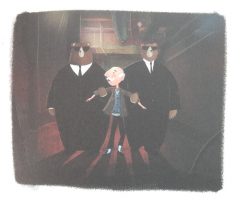
You get a jeep transporting a family of enthusiastic-looking safari goers with cameras and map,
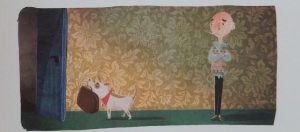
zebras and a hippo, a lion family, two giraffes, a pair of crocodiles, meerkats, another hippo, an adult and infant elephant, a couple of monkeys to swing in a tree, a rhino and another tree with a leopard resting in its branches.

With these sturdy items – both sides of each piece is coloured – children can create and re-create different small world scenes and then carefully replace the various parts back in the equally robust card pages. (Very small children will need a little assistance in the construction and replacing of parts.)

Joey Chou’s art will appeal to youngsters, as will the activities on the other spreads. The crafty ideas are making a ‘bendy monkey’ and a pair of binoculars; the foodie ones are, a yummy snake sandwich and equally tasty-looking animal cupcakes; instructions are provided for creating a safari map to use in a game outdoors.

The words of a ‘Five Little Monkeys’ song take up another spread. I would have chosen another Five Little Monkeys song that has the monkeys swinging from a tree teasing Mr Crocodile, as it seems to fit the overall theme better, but that’s a small criticism.

All in all this is excellent value and should engage young users for a considerable time, not just the once, but over and over.

10 Reasons to Love a Lion / 10 Reasons to Love a Penguin

10 Reasons to Love a Lion
10 Reasons to Love a Penguin

Catherine Barr and Hanako Clulow
Lincoln Children’s Books

The latest additions to this environmentally concerned series that introduces children to, and encourages their positivity towards, animals in the wild, takes readers to some highly contrasting locations.
In 10 Reasons to Love a Lion we discover that sadly, there is only one species of lion remaining in the wild, living in central and southern Africa

and the Gir Forest National Park in Gujarat, India.
Unlike other big cats, lions are social animals, living in prides and in Africa, so we learn, huge territories of arid savannah are patrolled by each pride which might comprise as many as three magnificently-maned males, plus lionesses and their offspring.

I was unaware that despite their having quills that are potentially lethal to lions should their skin be pierced and become infected, the large cat predators – the females do the hunting – like eating these prickly creatures. Ouch!

In addition to this information we’re told about lions’ ability to see in poor light when hunting, thanks to their ‘glow-in-the-dark eyes; hear of the playfulness of cubs; their manner of greeting and becoming friendly towards, other lions using their individual oily scent; and their propensity to sleep, particularly after fully sating their appetites.

Other birds and animals are also featured in Hannah Clulow’s realistic-looking scenes; so for instance we can tell which location – African or Indian – it is by say, the presence of an Indian peacock, or ostriches.

Scattered throughout the book are 5 ways in which we all can show our appreciation towards lions and thus perhaps help in their preservation.

In contrast there are 18 penguin species, which, with the exception of the Galapagos penguin all live in or near Antarctica. Each one is pictured on the opening spread of 10 Reasons to Love a Penguin.

Ecologist and environmentalist, Catherine Barr adopts a similarly engaging style as she writes of these flightless birds as ‘super speedy swimmers’ using their ‘underwater wings’ to ‘twist and turn’ as they hunt for fish. She talks of their specially shaped eyes that help underwater vision while searching for ocean food, some of which unfortunately is being depleted by large floating nets that might also entangle the penguins.

We see and read of penguins tobogganing on their tummies,

sneezing salty water, some species huddling close together to fend off the chill – their feet still suffer though; discover the mating habits of adelies; the chick rearing of emperors penguins; the loss of waterproofing during their ‘catastrophic moult’ and more.

Again, interspersed throughout are 5 ways we humans can help the cause of penguin preservation.

Written in collaboration with the Natural History Museum, these are two to add to primary classroom collections, and for ecologically aware individual readers.

Going Solo: The Princess in Black Takes a Holiday / Hubert and the Magic Glasses

The Princess in Black Takes a Holiday
Shannon & Dean Hale and LeUyen Pham
Walker Books

Princess Black has a double identity moving between Princess Magnolia and her black clad alter ego and it’s a pretty full-on, hard going existence and one that causes her to pay the penalty of a lack of a decent night’s sleep.
Now her slumbers are disturbed once again and having donned her transforming dark disguise, despite near exhaustion, she’s ready to leap into action once more.

Consequently when the Goat Avenger (who bears a close resemblance to her pal Duff the goat boy), offers to take over goat-guarding

and keep watch against marauding monsters, thus allowing the black sporting princess to take a much needed holiday, she cannot resist the opportunity.

Bags packed, Princess Magnolia is off on her bike to the seaside.

However her much-needed rest and relaxation are short lived for even on the beach, a monster shows up, emerging from the waves to cause havoc and scare the sunbathers out of their wits.

Time, (while Goat Avenger is still bravely playing the hero back home), to grab that black garb, step up and do battle with the brute.

Of course, in the end, our resourceful princess does finally get that much-needed holiday sans monsters, sans screaming humans, just her and sand, sea, sunshine and the odd bit of shade courtesy of a few coconut palms.
Brimming over with action, humour –due occasionally to the princess not recognising her friends, as well as monsters of the not really scary variety, the Hale partnership has penned another great chapter-book adventure story for readers just flying solo that’s bursting with engaging, action-packed illustrations from LeUyen Pham to smile at. Equally though, plenty of in-built sound effects to let rip with, make it a super read aloud.

Also ideal for new solo readers is:

Hubert and the Magic Glasses
Candice Lemon-Scott and Joe Spellman
New Frontier Publishing

When it comes to soccer, young Hubert’s skills as goalie for the under 12s Goodview Primary Able Ants team leave a lot to be desired: at best he’s mediocre. But then his team itself isn’t likely to be under enormous pressure in their next match when they take on the Wandering Wombats, reputedly the worst team in the district.

We first meet Hubert as he sits in the changing room struggling to tie his own boot laces, so nervous is he feeling while the other players are already on the field warming up. However despite the lad letting several goals in, his team does manage to win that match.

Next, Hubert’s team have to play in the quarter finals – a real challenge against a decent team – but then at dinner Hubert is faced with yet another problem when his mum announces that she’s made an appointment for him to see an optometrist.

The verdict? Astigmatism and Hubert is prescribed glasses: he’s not happy.

Just over a week later though, as he’s attempting to eat his breakfast Hubert is finally persuaded to put on his glasses and from then on everything in his life takes on an altogether different view.

With a new version of their goalie, can the Able Ants eventually win through: after all those glasses of Hubert’s aren’t just ordinary ones.

Issues of confidence building, team relationships, taking charge of your life, peer pressure and more are embraced in this amusing pacy narrative that has cool colour illustrations by Joe Spellman sprinkled throughout.