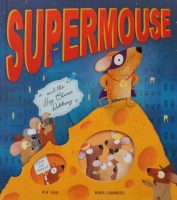
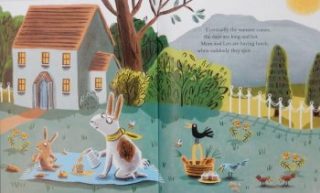
Supermouse and the Big Cheese Robbery

Supermouse and the Big Cheese Robbery
M.N. Tahl and Mark Chambers
Little Tiger

If you want a book whiffing over with exceedingly cheesily pungent puns and other word plays, not to mention a number of wheyward characters, gratinate or otherwise, then this will certainly be to your taste.

Without further odour let’s head over to Mouseopolis where everyone is eagerly anticipating the grand unveiling of the city’s ‘most magnificent morsel’, the Big Cheese.

Disaster is revealed as soon as the mayor pulls back the curtain. All that’s on view is a holey communication from the dastardly thief.

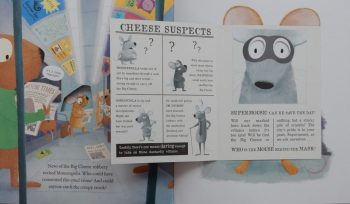
News of the robbery has everyone puzzling and a list of suspects is published in the Daily Mouse, along with an article on the possible cheese saviour.

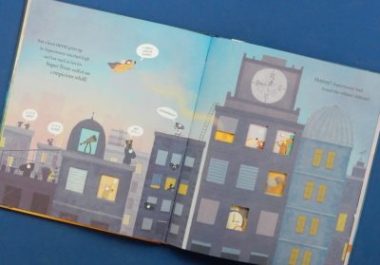
Before you can say Stilton, Supermouse aka Peter Parmesan, is on the trail searching out every suspicious pong be it high or low.

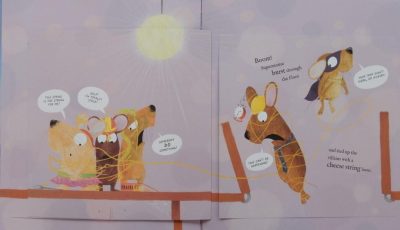
Little does he know however, that a trap has been set by the roguish robbing rodents. Perhaps all is not lost though for the ground whereon their cutter stands, starts to shake.

Here’s what then ensues …

but can Supermouse manage to caerphilly secure that scrumptious delicacy he seeks, enable justice to be served and return a hero?

Despite the occasional challenge to my vegan sensibilities, this reviewer positively relished this morsel of literary madness cooked up by cheese-loving author M.N. Tahl and scrumptiously layered with Mark Chambers’ tongue-tingling illustrative treats, liberally peppered with speech bubbles, logos and signs. With its flaps, peep-through and sometimes unfolding, pages, not to mention the action-packed plot, adventure-loving audiences will devour this and demand seconds.

I Am Brown

I Am Brown
Ashok Banker and Sandhya Prabhat
Lantana Publishing

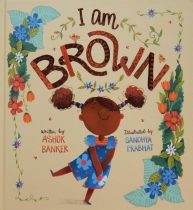
Internationally acclaimed author but debuting as picture book writer Ashok Banker, and illustrator/animator Sandhya Prabhat have together created a wonderful celebration of loving the skin you’re in – brown skin, that is.

Merely reading the title of their book took me back to a time when I was visiting the Ranakpur Jain Temple in Rajasthan. Standing at the bottom of the steps leading up to it I was stopped by three young women wanting to take photos. One put her arm against mine and commented “You are so beautiful with your light skin and fair hair.” I was extremely embarrassed when another of them said, “Yes white skin beautiful, brown skin not beautiful.” She then invited me to her wedding soon to be celebrated. I hastened to say to these stunning girls that they were beautiful but I felt I hadn’t convinced them when we parted. If only somebody had given them a book that turns the whole skin colour question on its head like I Am Brown  when they were younger.

After its terrific front endpaper, the book begins with one lively child announcing ‘I am brown / I am beautiful / I am perfect’, then showing herself as the epitome of love, friendship and happiness.

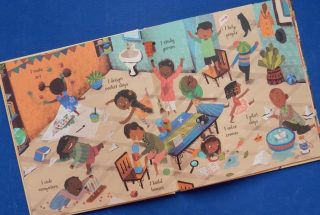
We see a wide variety of occupations from astronaut to actor, writer to doctor and more, as well as …

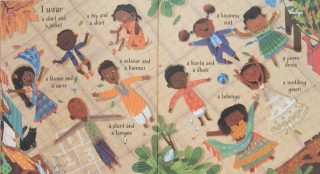
The question of diversity is addressed in a multitude of ways – country of origin by a group of children around a globe with continents named (every one except Antarctica); that nineteen different languages are spoken – several Indian ones as well as Urdu, Turkish, German, English, Portuguese, Russian, Arabic, Chinese, French, Spanish, Swahili and Japanese. We see a wide variety of clothing,

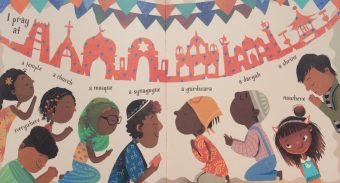
food – tacos, noodles, vindaloo, places where ‘I pray’ including everywhere and nowhere.

Fizzing high spirits and happiness prevail in a book that makes readers feel good about themselves, concluding ‘I am brown / I am amazing/ I am YOU’.

What better way to end this thoroughly uplifting, cover to cover, ode – verbal and visual – to being brown, of being you, and of being whatever you want to be.

An absolute MUST for early years setting and classrooms everywhere.

That’s Good, That’s Bad

That’s Good, That’s Bad
Joan M. Lexau and Aliki
Prestel

Prestel have brought back a vintage classic published first in 1963 with splendid reproductions of Aliki’s superb illustrations. Here’s what happens:

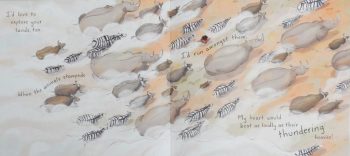
A boy sitting on a rock in the jungle is confronted by a tiger. The tiger politely tells the lad to run away. “… I will run after you. And I will catch you. And I will eat you, Boy, so run from me” it says.

Boy however is too tired, Tiger asks why and hoping to avoid his fate, the boy begins to tell the tiger his tale.

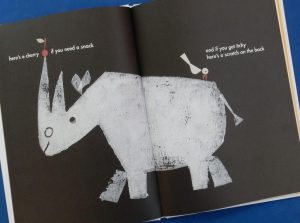
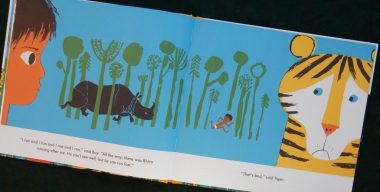
It’s a thrilling one with frights, falls, fun and a bit of flight that involves encounters with a rhino

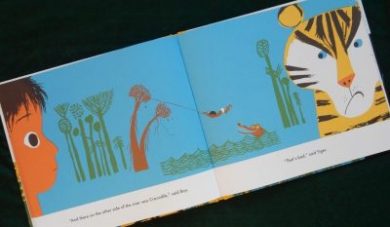
and a crocodile

that’s sure to enthral youngsters, just as it does the hungry tiger. I know though, that it’s the former who will end up having a jolly good laugh at the satisfying ending.

There’s a lot to like about this book: the way the boy character demonstrates the power of storytelling; Joan Lexau’s own skill at telling what is essentially a tale-within –a-tale – and a real page turner it is too.

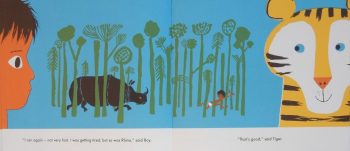
Then there’s Aliki’s visual storytelling: I love the way she places the story-telling Boy and Tiger on opposing pages as though viewing the action from the sidelines, with Boy’s own narrative unfolding on the verso and Tiger’s comments “That’s good”,

“That’s bad” or variations of same, being made on the recto each time. The subtle changes to the facial expressions of these characters are wonderful, really bringing to life the double drama.

Clever and deliciously droll.

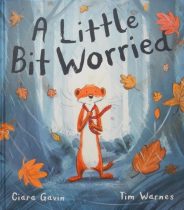
A Little Bit Worried

A Little Bit Worried
Ciara Gavin and Tim Warnes
Little Tiger

Do you embrace the challenges life throws at you or shut yourself away, fearful of what might happen? Here’s a story that offers a look at life from both viewpoints, through the eyes of Weasel – he’s the fearful one, and Mole, the upbeat character.

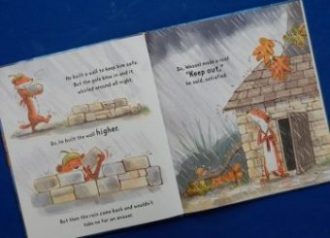
It’s the changes in the weather that cause Weasel concern: first a sudden downpour, followed by hail and strong winds. So much so that he builds a safe place and shuts himself away inside.

Time passes and he’s just getting used to his solitary state when up pops Mole demanding to know where he is. Weasel says it’s a fortress and invites Mole to help him guard it. Mole however, is having none of it, insisting it’s a home and making himself comfortable. He then proceeds to act his upbeat self,

countering every one of Weasel’s downbeat remarks about the storm raging outside with fun alternative suggestions, insisting that storms can provide opportunities to build a snowman, make you feel ticklishly joyful,

or create the perfect puddles for a good splash-about with some wonderfully warming soup.

After their discussion Weasel asks Mole the all-important question, “What do you do when you feel afraid to face something?”

What happens thereafter will make you smile; it certainly made both the characters of Ciara Gavin’s story do just that – for not one, but two reasons.

Perhaps there’s a little bit of Weasel and a little bit of Mole in us all; what’s important however is to understand our feelings and responses to those challenging situations. In that way can we show empathy to others who respond differently.

Tim Warnes’ gently humorous illustrations show so well the two very different characters and how it’s possible to complement one’s self-protectiveness with another’s joie de vivre.

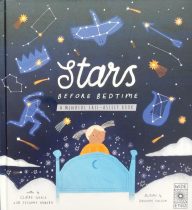
Stars Before Bedtime / What’s in Your Mind Today?

Stars Before Bedtime
Claire Grace & Dr Jessamy Hibberd, illustrated by Hannah Tolson
Wide Eyed Editions

As the authors of this book, Claire Grace a writer/editor and clinical psychologist and writer Dr Jessamy Hibberd remind us in their introduction, it’s not always easy to fall asleep in our world of constant stimulation and establishing a bedtime routine can help enormously.

To that end they have created a combination of bedtime story, and mind and body-calming exercises to help youngsters wind down as they bid ‘goodbye to the wriggles and the fidgets’ before dropping off into peaceful slumbers.

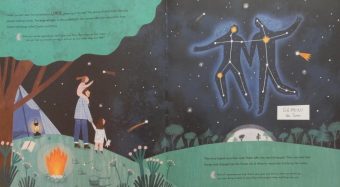
Brief stories about the constellations of the night sky,

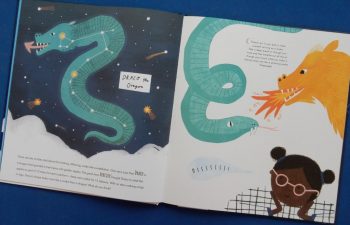
inspired by mythology, together with instructions for mindfulness exercises related to the particular story form the basic elements; those and Hannah Tolson’s surrounding visuals created with a restful colour palette, which contain a mix of the starry night sky with symbolic representation of the constellations

and homely images of the related physical exercises in a detailed bedroom setting. (An appropriately coloured lavender crescent moon symbol is used to indicate the relevant text for each exercise.)

Among the activities included are yoga style poses, stretches, guided visualisations and conscious breathing.

Pages for grown-ups at the front and back offer ‘how to’ suggestions as well as ways you might use the book. (Each double spread can stand alone if you don’t want to read the entire book, so for instance you could choose to share the story of Draco the dragon and the accompanying stretching snakelike exercise and breathing.)

Wearing my teacher and yoga teacher specialising in yoga with children hats, I recommend giving this book a go. It should pay dividends if you persevere. Try out the different strategies suggested so that you establish that much desired, peaceful routine mentioned at the outset.

More mindfulness for little ones in:

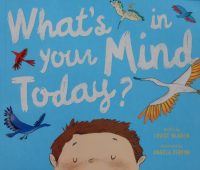
What’s in Your Mind Today?
Louise Bladen and Angela Perrini
Little Steps Publishing

There’s always a way to let go all our thoughts no matter what we have in our minds, as this gentle book shows and tells using a variety of children and their thoughts.

By focussing on the simple breathing exercises in Louise Bladen’s calming verses, and Angela Perrini’s attractive, quirky illustrations of the mentioned girls and boys,

both children and adults can quell their busy minds and find a place of tranquillity.

It’s a Great Big Colourful World

It’s a Great Big Colourful World
Tom Schamp
Prestel

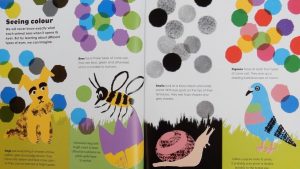
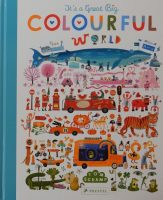
Otto the cat wakes one morning wondering why everything is so grey. His chameleon friend, Leon is on hand to show him the delights of the various shades of grey and the multitude of beautiful grey things around.

Thereafter Leon takes him on a journey through the wonderful world of colour starting with grey’s components, the complementary black and white.

Moving on from those it’s a veritable riot of colours each represented by a plethora of characters and objects large and small. Yellow includes a yellow submarine, a big yellow taxi, a variety of cheeses, a butterfly and banana peel.

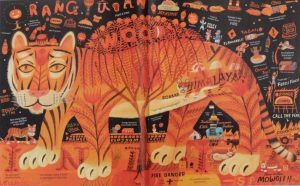
One orange spread is dominated by a magnificent tiger that’s found its way to Orange County and as yet, hasn’t consumed the tomato soup, clementines or orange juice on the previous spread.

There’s a wealth of transport on the red pages that also include Red Square and tulips – no not from Amsterdam but Turkey.
Flamingos strut their way across the pink spreads maintaining their colour courtesy of the pink algae and shrimps they dine upon.

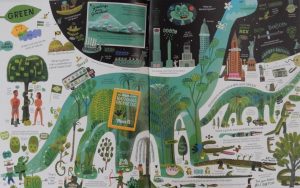
Rather more restful on the eye the blues have a whale that swims through all four pages at once and the greens with dinosaurs, crocodiles, plants aplenty and the occasional caterpillar,

not forgetting Greenland.

Beer, cupcakes, tanned sunbathers, brownstone houses, a toffee even, are part of the brown spreads; and both the colour tourists Otto and Leon are hiding in plain sight on every spread, each  cleverly adapted to their surroundings. In the final pages the friends are thrilled by the coming together of all the colours for a glorious final journey through the four seasons.

However many times you look at this ingenious, intricately detailed offering from Tom Schamp, you’ll always find something new.

In addition to being a feast for the eyes, with his playful linguistic imagination and references, Schamp guarantees that this book will have a wide age appeal. No matter what you bring to it, you’ll emerge richer and wanting to dive straight back in, hungry for more.


Meet the Planets

Meet the Planets
Caryl Hart and Bethan Woollvin
Bloomsbury Children’s Books

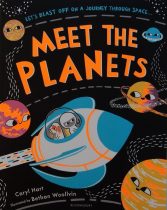
Caryl Hart gives voice to the individual planets as we join a little girl aboard a rocket and zoom off on a space adventure around the solar system.

Our first encounter is with The Sun, ‘the biggest thing up in the sky. /I’m friendly but don’t get too close now / or I’ll frizzle you up to a fry.’ it warns, going on in rhyming speak to inform about its role as daytime warmth provider and light supplier for growing plants before concluding “But be careful, I’m really a /
Great ball of fire – / the HOTTEST and FIERCEST / you’ve seen!”

As the journey progresses little ones will love to join in with the rhymes and  spy all the staring-eyed planets – zippily speeding Mercury, deceptively named Venus that boasts of FIERCE spitting volcanoes, our own friendly Earth with its silvery Moon, mighty windswept Mars with its rust-coloured dust.

Then come giant gaseous ball Jupiter – the planet king; sparkly, shimmering Saturn that can’t resist drawing attention her beauty;

the windy ice ball Uranus; ‘Ice Giant’ blue-looking Neptune

and finally, relatively small Pluto accompanied by Charon.

Youngsters will undoubtedly have a total blast as they whizz through the sky, relishing every planet they meet, and even manage to rendezvous with earth once more, just in time for bed. Bethan’s illustrations are, as ever, totally out-of-this-world strikingly brilliant and such a superb complement for Caryl’s cleverly constructed rhyming text.

Splendid stuff this, for bedtimes and all other times too.

Board Books and a Squidgy One

Baby’s Very First Faces
illustrated by Jo Lodge
Campbell Books

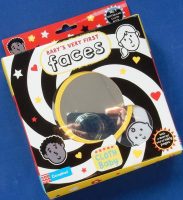
With its mirror, crinkly pages and high contrast images and patterns, this hand-washable book is just the thing to share with a new baby. It features in turn a daddy, a mummy, and a baby. In case you are reluctant to take it out of your home, there is a Velcro strap that can be attached to a buggy while you’re out and about.

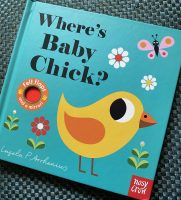
Where’s Baby Chick?
Ingela P Arrhenius
Nosy Crow

Spring’s well and truly in the air: the ideal time to introduce toddlers to some new life with this latest hide-and-seek book. Tucked away behind the felt flaps on the brightly coloured, patterned spreads are Baby Bunny, Baby Lamb, Baby Kitten and Baby Chick. The final spread contains a mirror and asks ‘And where are you?’
Simple interactive delight to share with your little one.

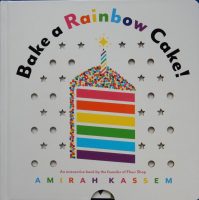
Bake a Rainbow Cake!
Amirah Kassem
Abrams Appleseed
A veritable explosion of colour is the outcome of artistic baker Amirah Kassem’s board book extravaganza.

She gives the essential step-by-step two word instructions at the top of each page, beneath which is a jazzy illustration with either a tab to pull, a wheel to turn or a flap to lift as you ‘Pour it!/ Mix it!/ Colour it! / Bake it!’ and so on until, once the frosting has been applied, it’s time to lavish on the sprinkles and wish. Then turn the page to the final …

Short and VERY sweet! Irresistibly so in fact. Mmm! Yum, yum. Yummy! Second helpings please, will come the cry from the little ones you share this tasty board book with.

Old Macdonald’s Things That Go
Jane Clarke and Migy Blanco
Nosy Crow

There’s a whole lot more sounds than moos and baas down on Old MacDonald’s farm: the farmer has a passion for noisy vehicles, by all accounts.
His car vrooms; his tractor chugga-chugga chugs; the combine goes rattle-swish everywhere. He even has a bus that beep-beeps its way around full of jolly animals.

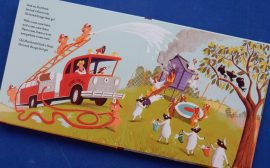
Seemingly he has extensive farmland for there’s a swoosh-swooshing motor boat and it appears he’s fortunate in having a fire truck on hand to deal with accidents of the incendiary kind, ‘nee-nawing’ into action when things get a bit over-heated.

But there’s even more; I’ll let you work out what choo-choos across the fields and what zoom-zoom’s into the air.

Each of Migy Blanco’s jolly digital spreads shows the farmer and his animals joyfully dashing around in one or more of the vehicles, before the two penultimate tongue-twisting spreads, before the 50’s-looking vehicles whizz towards the finish line. If you can actually slow down though, there’s plenty to pore over in every scene.

Jane Clarke’s rowdy spin off from the classic nursery song will surely have little ones giggling as well as singing along. One wonders what else Old Macdonald might have down on that farm of his; or maybe he could take a holiday and experience all manner of seaside sounds.

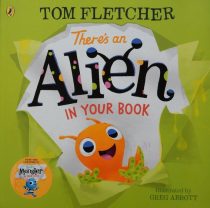
There’s an Alien In Your Book

There’s an Alien in Your Book
Tom Fletcher and Greg Abbott
Puffin Books

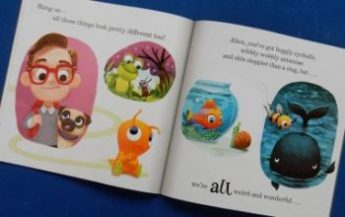
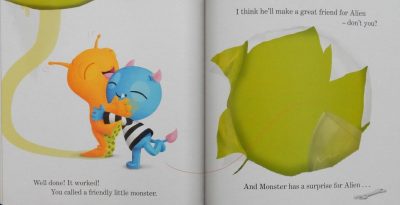
Just out in paperback is the latest in the series wherein different characters invade a book and the book itself becomes part and parcel of the story-telling device.

The Fletcher/Abbott team were on to a good thing when they created that monster a couple of years back. Now in the fourth interactive extravaganza it’s the turn of a little alien and it arrives on account of its spaceship crash-landing on the first page in a cloud of smoke.

With the spacecraft appearing to be broken beyond repair, it’s up to us (adult and child together) to try and get the little creature back home where he belongs – but how?

Certainly not by pulling a scary face – that only serves to make him sob and need some TLC. Instead we can jiggle and wriggle the book in various directions

and if that isn’t successful, maybe try imagining various earth animals so our visitor knows he doesn’t belong.

Or is there perhaps an alternative solution altogether?

With bright, zany illustrations from Gregg Abbott, its themes of difference, acceptance and friendship,

this fun book is a great share with an important message that is never too early for little ones to begin to think about.

Who is in the Egg?

Who is in the Egg?
Alexandra Milton,
Boxer Books

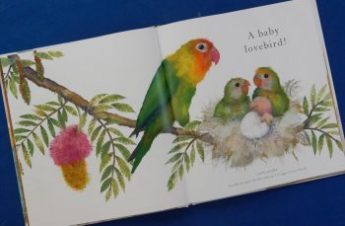
Kate Greenaway shortlisted artist, Alexandra Milton has created some absolutely gorgeous illustrations to answer her titular question as she explores what is going to emerge from the nest in the tree;

the bright, white egg in the sticky, muddy swamp; that mere bean-sized object which is waiting in the tunnel, underground; the almost sand-covered one on the beach.

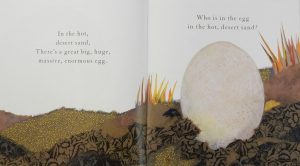
Then what about that pear-shaped egg on a pair of feet that stand in the freezing snow and ice; or, moving to a hot sandy desert location, what could possibly come out of the simply massive egg, waiting there?

In addition to delighting in the stunning art portrayals of the infants and parents in their natural habitats, readers can learn some interesting facts in the brief paragraph that accompanies each animal featured.

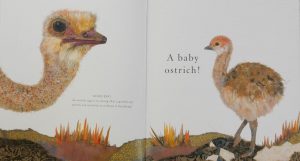
The front endpapers depict a sequence of eggs from smallest to largest for readers to try and match with the illustrations on the pages, while the final endpapers show the relative size of the six  eggs from the smallest ‘platypus’ to largest ‘ostrich’, should you want to cheat, or perhaps check.

Quite simply, beautiful through and through.

Little Owl’s Bedtime / Put Your Botty on the Potty!

Here are two fun books for your toddler bookshelves:

Little Owl’s Bedtime
Debi Gliori and Alison Brown
Bloomsbury Children’s Books

It’s lovely to see Little Owl starring in another episode. It’s ‘late o’clock’ and bedtime. Mummy Owl has shared with him a bedtime story and now it’s shut eye time. However, like many little ones, this young owl starts delaying tactics. First he requests another story and his mummy agrees on condition that it will be the last.

Story duly read and ‘sweet dreams’ wished, Little Owl is still finding reasons why he cannot go to sleep.

Patient Mummy Owl explains the reasons why dark is necessary,

even going to the trouble of providing a very tiny night lamp.

Nothing doing: the lumpy pillow persists and then cuddly, ‘Hedge’ has gone missing. Happily though she’s found pretty soon and now surely sleep will come. Not it seems quite yet though: how long before Mummy Owl’s patience is tested to its limit, one wonders.

Still the complaints come: too hot, hungry and now Little Owl needs a wee.

Then he’s excited about what tomorrow has in store. If he doesn’t drop off soon, it will be tomorrow anyway; but his Mummy ‘s promise looks as though it might finally do the trick …
Sweet dreams Little Owl, sweet dreams Hedge, sweet dreams Baby Owl and happy bath-time Mummy owl – you’ve certainly earned it.

What a gorgeous way to end the day if you have a little one; make sure you lay down the ground rules first though, just in case s/he tries the Little Owl tactics.

Debi’s warm text and Alison’s equally warm illustrations work in perfect harmony: who wouldn’t want to snuggle down after sharing this one?

Put Your Botty on the Potty!
Sam Lloyd
Pavilion Books

Courtesy of Little Moo, here’s a fun look at potty training, monster style.

When we meet Moo, she’s nappy clad and far from happy so to be, partly one suspects because there’s new baby sister in the Monster family wearing, guess what – a nappy. Time for Moo to grow up, shed the nappy and bare the botty.

Needless to say, Mummy instructs Moo to call a halt on the monster messes that ensue. It appears though that Mummy has a clever plan, for next morning a gift-wrapped surprise arrives at the door.

Moo’s bot is a perfect fit for a sit and that’s exactly what he does … for a protracted period until eventually … (success!)

There’s more to learn though as Mummy monster talks of botty wiping, then demonstrates hand washing and drying. The monsters then head into town for some ‘grown-up’ pants purchasing; and finally smartypants Moo is ready for a celebration.

With its bold, zany art, jaunty rhyming text and flaps to explore, little ones and their adults can enjoy some fun times with the former doing some important learning.

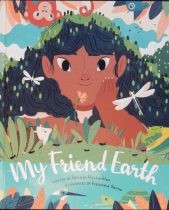
My Friend Earth

My Friend Earth
Patricia MacLaughlan and Francesca Sanna
Chronicle Children’s Books

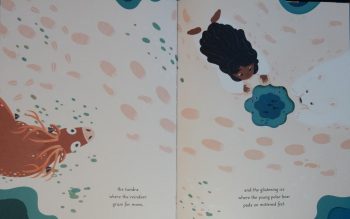
The combined talents of award winning writer Patricia MacLaughlan and illustrator Francesca Sanna have created a wonderfully inspiring celebration of Mother Earth.

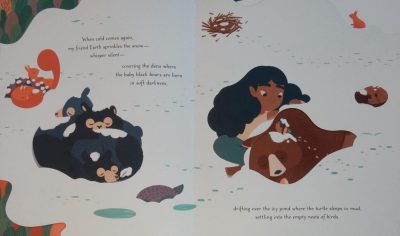
Through Patricia’s lyrical text, seemingly spoken by a child narrator, and Francesca’s beautiful, boldly coloured scenes with their intricate layered die-cuts, youngsters are invited to share in and savour nature and its beauty.
The message is soft-spoken yet its subtle gentleness wields a power that will definitely inspire children as they savour the changing seasons, starting with Earth waking from its winter nap roused by the sounds of spring – the farmer at work in the garden, the bird song.

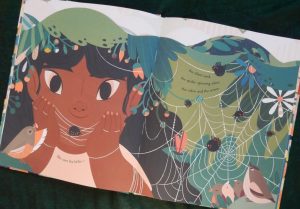
Not just the sounds though, the sights – of a ‘silent seed, / the spider spinning silver, / the robin and the wrens.’;

and larger creatures too – an albatross on the wing, a tunnelling mole. She gently guides animals to their sleeping places and to their mothers.

There’s such beauty in the landscapes too, be they grassy prairies, icy arctic;

beneath the sea.

Each one is affected by the elements – the heavy rains; the fierce autumn winds; the soft, silent whispers of snow as it blankets ‘… my friend Earth’ with its flora and fauna waiting for the arrival of the sun that heralds spring once more.

There’s beauty too, and tenderness, in Patricia’s alliterations: ‘the baby black bears are born in soft darkness’

though every sentence, every phrase, is a joy to read.

Francesca’s art is a perfect complement for the text – those enticing die-cuts set into her lovingly portrayed scenes of nature, helping to create at every page turn, a time to savour the sights and sounds of the natural world.

Yes Earth is our friend but most important, we all need to be Earth’s friends – before it’s too late.

You might want to use this wonderful book to help celebrate the 50th anniversary of Earth Day (22nd April) with its theme of climate change. In the meantime buy it, share it, give it.

The Pirates are Coming!

The Pirates are Coming!
John Condon and Matt Hunt
Nosy Crow

Can there be room on the shelf for yet more pirate books? It’s pretty likely as children seem to have a penchant for things piratical; and John Condon and Matt Hunt’s salty offering will definitely be a crowd pleaser.

It tells of young Tom who daily climbs the hill overlooking the sea in the hope of spying a pirate ship; and one day he does – so he thinks.

He rings a bell and all the villagers dash for cover; turns out though, that it’s a case of misidentification. Tom’s dad reminds him pirates have ‘BIG’ ships. Undaunted, Tom continues his daily watch but again and again he gets it wrong, needlessly sending the villagers into hiding.

Unsurprisingly they begin to get blasé and so the next time Tom yells “PIRATES” as he rushes down the hill,

not a single person hides – until that is, they hear the tell-tale “squawk!’ of a parrot.

Here, the tale takes a twist and the finale is a wonderful surprise. I certainly don’t want to be a story spoiler so I’ll leave the villagers in hiding and the pirates sailing silently into the harbour, gangplank at the ready …

John Condon’s story is full of drama, and superbly paced, with plenty of laughs along the way: further laughs will be induced thanks to Matt Hunt’s splendid illustrations. On every spread there’s something giggle worthy – rather, make that several things.

If you enjoy putting on a performance with your story sharing, you’ll absolutely relish reading this one with a group of youngsters and they’ll love it too.

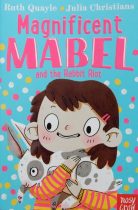
Magnificent Mabel and the Rabbit Riot

Magnificent Mabel and the Rabbit Riot
Ruth Quayle, illustrated by Julia Christians
Nosy Crow

Mabel Chase is a spirited girl. She sees how things ought to be and knows what she wants – kind of. It’s pets that she wants in the first story finding it totally unfair that her parents deny her one. Even more unfair is that Mabel’s big sister is given a pet rabbit, Henry for her birthday and she doesn’t appear very interested in the creature; after just one morning she leaves him behind while she gallivants off to spend her birthday money. Of course, Mabel cannot resist stepping into the caring breech

and pretty soon the place is in chaos. Not only that but she decides to clean out the hutch; this involves using a green fluffy duster that doubles up rather well as a broomstick – uh oh!

The strange thing is Mabel comes out of the whole episode squeaky clean and being showered with praise.

Oh, and she seems to have replaced her penchant for rabbits with a different kind of animal …

There’s another crisis situation in the second story – it happens when Mabel discovers she has suddenly developed a wobbly tooth and she’s anything but keen on the tooth fairy. Time to put her ‘spare time’ dental skills into practice. Despite her best efforts the tooth does eventually fall out and then she has to work out how to deal with that tooth fairy. I’ll leave her pondering the dilemma and merely add that it’s not the only one Mabel faces in this episode.

The third story has Mabel complaining about the unfairness of life AGAIN. Now it’s on account of not having a sprinkler in the garden. However Elsa Kavinsky does have one so perhaps it’s time to work on cultivating their friendship.

Maybe then she’ll let Mabel have a play in hers … This episode has “Pixie Play Date’ in its title but if you want to know how pixies come in you’ll need your own copy of Magnificent Mabel and the Rabbit Riot.

I’d most definitely recommend getting a copy if you have a newly independent reader in your class or family; it would make a super fun book to share too. I love the way it’s presented from Mabel’s viewpoint; she’s a totally endearing narrator and SO good at keeping calm when faced with emergencies. I love too Julia Christians’ plentiful illustrations; she’s captured Mabel’s character splendidly, and those of her family and friends.

This is a series that could run and run.

What Will These Hands Make?

What Will These Hands Make?
Nikki McClure
Abrams Books for Young Readers

Having posed the title question on the first spread, a grandmother narrator explores various possibilities encouraging her audience to join her as she imagines and celebrates a plethora of crafts that are used in creating the various items that might be made.

So, ‘will these hands make: ‘a teacup for a child / a bowl round and shiny / a quilt to warm / a chair for listening?’

Venturing into the great outdoors, the ’Will these hands’ refrain is repeated and answered thus ‘a hat for a baby’s head / a wall to walk along / a gate to open / a garden for many?’

Nikki McClure’s signature cut-paper, beautiful inky scenes extend  the words as she continues to ask ‘WILL THESE HANDS MAKE: … ’ on a further eight spreads between which are double spreads – superbly detailed wordless scenes of a townscape, a busy street, people going to a birthday celebration

and a close up of same.

By the end we see a community wherein all feel safe and nurtured;

and the final spread provides two large ovals asking the reader to consider “What will your hands make” and to trace one hand in each circle.

In most illustrations, McClure uses a pop of colour – red, creamy yellow, blue or white – to highlight fabric, hair, a bicycle frame, a boat.

There is so much to love here: the ‘what if? nature of the entire book; the collaborative community created as we follow the unfolding story the author/illustrator fashions of a family preparing to go to the party; the wide age range the book speaks to; the notion that the best gifts are those made by hands, voices and hearts – our own or other people’s.

We Catch the Bus

We Catch the Bus
Katie Abey
Bloomsbury Children’s Books

If you have a little one with a penchant for all things vehicular, then they’ll surely love this book. What it lacks in story, it certainly more than makes up for in the bright, busy, vehicle-packed illustrations that are full of giggle-making details.

Every spread takes a different theme be it buses, planes, trucks, trains, diggers, cars, bikes,

boats, emergency vehicles, tractors or rockets; and children can make up their own stories inspired by what’s happening on any of the pages; there’s certainly plenty of action on each one.

‘We catch the Bus / Which bus would you catch?’ is the lead-in to the first spread whereon we find 10 different buses, all being driven by jolly-looking animal characters and there are plenty of other zany animal characters to spot too. One waiting at a bus stop asks “How many footballs can you count?” while the driver of the book bus inquires “What’s your favourite story?”

Every other spread has a similar relevant lead-in and an abundance of ways to involve youngsters. They could look for the fish on the airport spread or perhaps play spot the fairy tale characters/items; maybe they’ll discover that a certain big bad wolf keeps putting in an appearance.

This book surely guarantees hours of enjoyable immersion.

Money-Go-Round

Money-Go-Round
Roger McGough and Mini Grey
Walker Books

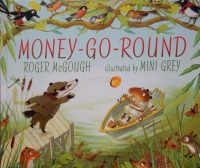
Well-loved poet, Roger McGough has penned a witty picture book inspired by characters from Kenneth Grahame’s classic story The Wind in the Willows.

Illustrated by the award winning Mini Grey this longish tale follows transactions made with a shiny gold coin.

It begins when Mr Toad hands it over to Miss Lavender Mole in payment for a room in her Tree House Hotel.

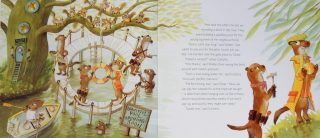
As a result Miss Mole is able to pay Sam Stoat what she owes him for painting the hotel’s front door the week before. He in turn can thus pay his debt to Basil Badger who is thus in a position to pay young Walter Water Rat for the boat trip he took the badger’s family on the previous weekend.

Walter hastens off to pay the rest of what he owed the otters

and so it goes on until finally … that golden coin comes full circle right back where it started.

But that isn’t quite the end of this exceedingly clever story as we discover by reading the lead article in the local rag – The Wild Wood Bugle –  the latest edition of which the final pages of the book comprise.

Mini Grey does the author’s tale proud with her superb art. Both her bordered and unbordered pictures are an absolute delight: full of humour and wonderful details to feast upon.

There’s a Crocodile in the House / The Magic of Mums

Celebrating two smashing new Otter-Barry Books compilations of performance poets writing:

There’s a Crocodile in the House
Paul Cookson, illustrated by Liz Million

It’s great to see another book by performance poet Paul Cookson and it’s full of zany offerings to delight both adult readers aloud and primary school readers. Lots of the poems are absolute musts for classroom audience participation.

Take the very first poem that gives the book its title; it simply bounces along and with children chanting each line after you, it becomes a double bounce every time.

Then what about The Toilet Seat Has Teeth! What fun to have a whole class of 6/7 year olds yelling ‘OW!’ and bouncing up off their seats whenever you read that line, ( nine times by my reckoning).

This one seemed even more hilarious when I read it because the book arrived on the same day we’d had our new Japanese toilet installed. Now it may not have teeth but it does have all kinds of other interesting features.

As does Paul’s giggle-inducing book for not only is there a croc. but there are also such creatures as The T Rex That Rocks, The Warty Hog and The Porky Pine;

not forgetting the riot-rousing Bottoms! – “Bottoms that are twitching / Bottoms that are itching / Bottoms that are slipping / Bottoms that are tipping / Wobble Bottoms / Jelly bottoms / Wriggle bottoms / Smelly bottoms.’. How such a plethora of bottoms wriggled their way into Paul’s hilarious collection is his only to know.

What this erstwhile infant teacher, reviewer knows though is that your class will be reduced to hysterics, not to say any KS1 or nursery teacher that shares it.

I wouldn’t mind betting that Liz Millions had a good giggle creating the smashing illustrations for this cracking book.

The Magic of Mums
Justin Coe, illustrated by Steve Wells

With Mother’s Day coming up on 22 March, this is the ideal time to grab a copy of this super compilation celebrating The Magic of Mums, another terrific read aloud, and I’m pretty sure young readers will find their own particular special mother figure lurking somewhere within its covers: and to make life easier, Justin has penned a poem (or two or even three) for every letter of the alphabet.

So if you think your mum is let’s say, an Anxious Mum, there ‘s a poem ready and waiting; there’s also Action Mum and Adoptive Mum representing A.

Everyone knows how hard their mum works so there’s a One-Hundred- miles-an-Hour Mother as well as this special tribute to a Diamond Mum …

For me the Dad-Mum is also a true diamond: ‘ I know I do not have your mother’s magic. / I just cook the recipes / that keep her in our memories / and try to keep the house / as she would have it. // And because your mum / could never bear / to see you sad, / I do my best to love you / twice as much / for both of us / be both / your mum and dad.’

Not all the mums featured are of the human kind however; there’s Earth Mother, Queen-Bee Mum and the enormously moving Tree Mum too.

Steve Wells captures the spirit of every mum he’s illustrated (and that’s most of them) in his line drawings.

Altogether a super celebration of motherhood in all its shapes and forms for individual reading, or even better, reading aloud to that certain awesome mum, or perhaps Two Mums, for as a little girl narrator of Justin’s poem of that name says, ‘ I have two mums to love me / so there’s two mums I love.’
Felix After the Rain

Felix After the Rain
Dunja Jogan (translsated by Olivia Hellewell)
Tiny Owl

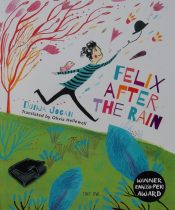
Felix is full of sorrow; in fact the boy appears to be carrying the weight of the world’s sorrows on his shoulders or rather in the huge suitcase he hauls around with him everywhere he goes. Each time something upsetting has occurred in his life, it causes his suitcase to increase in weight; so much so that it’s become almost impossible to move.

One day when it feels as though his sadness has become completely overwhelming, desperately in need of a rest, Felix stops and falls asleep beneath the shade of a tree.

A small boy playing close by sees the case, opens it and all the pent-up feelings are released into the sky causing a tumultuous storm.

Very soon though, the storm abates leaving Felix feeling calm, light and happy. A total transformation has occurred

and with a joyful heart he goes back home mightily relieved and ready to share his happy feelings with everyone around.

With its themes of the power of the importance of friendship, and of letting go of baggage we carry and being able to move forward, this is a very powerful book that speaks to both children and adults.

Dunja Jogan’s storytelling illustrations are enormously potent too, and her colour palette is exquisite.

Families, school classrooms, early years settings, in fact anywhere that children might spend time – should have a copy of this.

Board Book Treats

Dress Up!
Jane Foster
Templar Publishing

Little ones can make sure the characters in Jane Foster’s Dress Up! are suitably clad whatever the weather or what they want to do.

Bear needs to go out but there’s a downpour so a coat and wellies are required. Hamster is thinking of a stroll in the sunshine – a pair of sunglasses and a hat are a good idea for her.
Brrr! Cat is venturing into the snow: warm mittens and scarf are just the thing.

Frog on the other hand needs to be geared up with goggles and armbands for swim time.

It’s the end of the day when we meet Monkey. Once he’s got on his PJs and slippers, it’s time to say “toys away” and bid him ‘Goodnight’.

On each recto, opening a flap on Jane’s vibrantly portrayed animal, and a slider alongside, enables your little one to assist the animal with its snazzy outfit. A simple descriptive phrase followed by ‘Can you put on … ?’ set against a bright background poses the challenge.

Interactive fun, a predictable text and alluring art – what more can a toddler ask of a board book – oh yes, the chance to develop manipulative skills too.

I Forgot to Say I Love You
Miriam Moss and Anna Currey
Macmillan Children’s Books

This is a sweet story to read with the very young and it’s now available in a sturdy board book format.

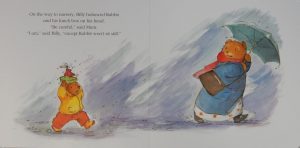
It’s time Little Billy Bear was up, dressed and having his breakfast ready for nursery but he’s procrastinating on account of Rabbit his favourite soft toy. Mum though hasn’t time for his dawdles or she’ll be late for work.

Consequently she hurries him along

all the way to where Mrs Brown is waiting at the nursery door where she hands him over and dashes off.

Poor Billy is more than a little bit upset as Mum has left without saying that all important “I love you” to her son; moreover she still has Rabbit in her bag across her back.

Billy is convinced that Rabbit’s lost. Mrs Brown tries to placate the little bear who is now distraught, when suddenly in bursts Billy’s mum with Rabbit safe and sound and she’s ready to comfort him and tell her son she loves him. Then all is finally well.

Anna Currey beautifully captures both Billy’s changing feelings and the inherent warmth of Miriam Moss’s text with her scenes of the early morning rush that include details that make you want to slow down

and savour them rather than rush along with the characters.

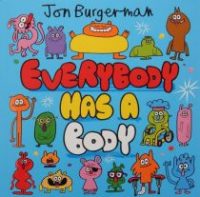
Everybody Has A Body

Everybody Has a Body
Jon Burgerman
Oxford University Press

In his characteristic playfully daft style, Jon Burgerman takes a look at bodies.
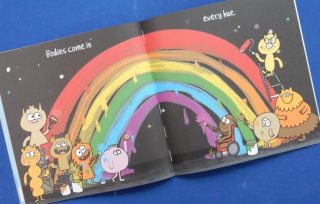
We all have one after all, and no matter its shape, size or colour, our body is something we should be proud of.

He presents us with zany illustrations of big bodies and small bodies, wide ones and tall ones; bodies weak and strong,

narrow and looooooooong.

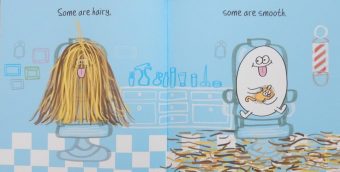
Then of course, there are hairy bodies as well as the smooth variety.

Some bodies might make us clumsy while others make us groove.

Either a soft body or a rough one is a possibility, as is one bendy or tough.

There’s also the thorny question of age, since a body may be old or new.

The one thing that is certain though, is this:

What a lot of bodies – has Jon captured yours in his zany art and rhyming words?

A fun read aloud with lots to think about and talk about; equally, with its brief text and fun art, this is great for those starting to read to try for themselves, and SO much more interesting than a dull scheme book.

Amelia Fang and the Naughty Caticorns

Amelia Fang and the Naughty Caticorns
Laura Ellen Anderson
Egmont

There’s a new baby on the way in Amelia’s household and inevitably her mother’s attention is focussed on that. Consequently Amelia and her best buddies Florence and Grimaldi take charge of the adorable caticorns.

It’s sure to be such wonderful fun caring for Gerrard, Butler and Mo, isn’t it? After all, Amelia’s Aunt Lavitoria has given her assurance that she’s only just collected them from the very best school, so they’re certain to be very well behaved. Moreover, experience in caticorn care will stand Amelia in good stead for being a FANGTASTIC big sister to her soon to be born sibling; and she’s eager to impress on that score.

However, looking after what prove to be three very excitable, mischievous caticorns, turns out to be rather more than Amelia has bargained for. Indeed after a mere five minutes babysitting, the little creatures have disappeared.

Having rounded them up once more, you might imagine they’d settle down, but oh dear me, no! They merely move on to chaos-creating in the kitchen.

Perhaps it’s time for Amelia to bring out some of the presents from the suitcase her aunt left for the caticorns, suggests Florence.

Or maybe not …

As with its predecessors, this story (that includes some great messages about Amelia’s potential role as responsible big sis), is wonderfully wicked fun and the illustrations are terrific.

Established fans will relish it and I’m certain any newcomers to the delights (and horrors) of the series will be hooked too.

Not An Alphabet Book: The Case of the Missing Cake

Not an Alphabet Book: The Case of the Missing Cake
Eoin McLaughlin and Marc Boutavant
Walker Books

If ever there was a book that immediately snares the attention it’s this one.

A serious crime has been committed, so the bear narrator of this intended ABC would have us believe on page 1: the enormously tempting creamy, lavishly sprinkled chocolaty cake meant to represent the letter C on page 5 has been stolen. Poor bear is beside himself and entreats readers to assist in tracking down the perpetrator of the act whose hiding place is somewhere between the covers of the book.

Off we go then, to interrogate potential suspects; first stop the letter A where the response is ‘no comment’.

Even at this early stage, if you’re sharing this story with little ones, the clues are evident and they’ll be relishing their inside knowledge.

Okay, on we go again, whizzing past Bear’s B page – uh-huh! – and we know C won’t yield anything helpful so the next stopping point is D where fearful Dog has an alibi, so we see.

We move on and there’s a wonderful cross-questioning of a couple of traditional tale characters to relish on F and G.

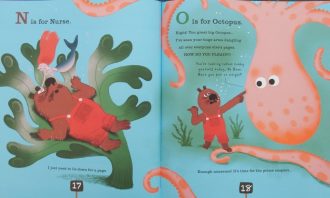
Bear’s narrative is superb, as tongue-in-cheek, he thinks aloud rather than quizzing H, I, and J before receiving a lightning blow on the next page and down he plunges for a spot of restorative TLC from the character representing N.

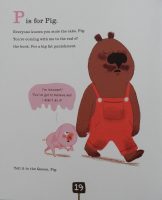
Octopus however is far less tender-hearted, indeed it’s downright suspicious but Bear hastens on to P where there’s a wrongful arrest of an unsuspecting porcine creature …

all of which takes us onwards letter by letter to V and W where a certain character is almost, but not quite, rumbled and we might leave him basking in his own glory but that is not quite the end of the story …

What an absolutely tongue-tingling, delightfully delicious book author Eoin McLaughlin and illustrator Marc Boutavant have conjured up between them. Everything about their delectable detective daftness is brilliantly done and I’ll guarantee any audience you share it with will immediately demand second or even third helpings.

Weird Little Robots / A Super Weird Mystery: Danger at Donut Diner

Weird Little Robots
Carolyn Crimi, illustrated by Corinna Luyken
Walker Books

Science lover, Penny Rose moves to a new neighbourhood and spends much of her time in the shed creating little robots – robots with character – using found bits and pieces. What she really wants as a newbie though, is a human friend.
When she meets bird watcher and birdhouse maker extraordinaire, Lark, who also lacks a friend, the two girls become kindred spirits.

At Lark’s suggestion they create an entire roboTown in the shed from discarded oddments and lava lamps. But their friendship is tested to its limits when Penny Rose (but not Lark) is invited to try out for the Secret Science Society. She breaks a promise made with Lark by showing some of the robots to the society members (who are popular pupils at school) in order to prove her worth. Can their friendship survive?

With its message that girls can do anything, this story of friendship, forgiveness and being true to yourself, is an absolute gem – compassionate and funny. There are sufficient twists and turns in the plot to ensure readers remain engrossed; and the language of Crimi’s telling is apposite: ‘Her cheeks burned hotter than a Bunsen burner’ for example. Both main characters are wonderfully divergent and their dialogue really reflects their personalities.

Corinna Luyken’s illustrations are great too – especially those robots.

A Super Weird Mystery: Danger at Donut Diner
Jim Smith
Egmont

This is the first of a new hilarious detective mystery series from the Lollies award-winning creator of the popular Barry Loser books. If you like your books SUPER WEIRD then this one is definitely for you.

Melvin has just moved from the city to Donut -a circular island with a hole in the middle – and he’s shall we say, underwhelmed.
However when he meets Rhubarb, creator of her own school newspaper and a total obsessive where mysteries are concerned, things become rather different.

To date Rhubarb hasn’t actually had anything mysterious to write about but Melvin notices that the children at school are acting very strangely indeed. This couldn’t by any chance be connected with the Donut Hole Monsters that everyone is so keen on collecting, or could it?

It’s not long before the two of them scent a mystery and are hot on its trail. The trouble is, this trail is going to plunge them slap bang into the centre of the donut hole.

If only the two can get back out safe and sound, then perhaps at last Rhubarb will have something to report on in her newspaper. That assumes that they solve the mystery before the entire population of the town is brainwashed. No easy task then …

Packed full of laugh-making moments and crazy pictures, Jim Smith has another winner here, methinks.

Dandelion’s Dream

Dandelion’s Dream
Yoko Tanaka
Walker Books

Let me say at the outset, this dreamlike wordless story is an absolute beauty.

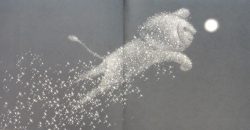
It begins one night in a field with a dandelion bud that unfolds into a flower upon which appears a lion’s face: indeed the entire plant morphs into a lion with a corolla of a mane and limbs where once were leaves. A veritable transformation has taken place.

Full of joy, the creature sets out to see the world.

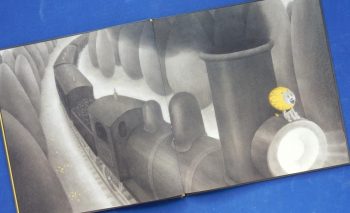
Dashing across the field he leaps onto the funnel of a passing train,

then after a sudden bend in the line, is pitched off again. He lands safely, hitching a ride on the back of a sheep that’s heading for the harbour.

There the lion boards a ship whereon he receives shelter from a rainstorm ‘neath a gull’s wing. The craft is bound for a skyscraper city where he’s dwarfed by the sheer size of both humans and buildings.

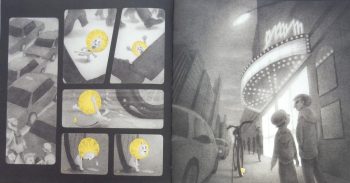
Seeking some respite from the overwhelmingness of the big city, our adventurer enters a cinema.

The events of the film sweep him away and in his imagination he becomes pilot of one of the toy planes being flown by a child character.

From up high above what look like fluffy clouds, but are fluffy balls of white seeds, he looks down –

and here reality returns – as he heads towards his very own dandelion field now full of mature seed heads.

There he too sets seed and almost immediately his plethora of parachute seeds are blown skywards, coalescing along with those of his fellow plants, into

Cinematic in feel, this story is superbly paced by the clever use of panelling on some of Yoko Tanaka’s spreads. The graininess and greyness of her illustrations add to the dreamlike quality of ‘dandy-lion’s’ joyful adventure, underlying which is the life-cycle of a dandelion plant.

Out of this world incredible this utterly enchanting book surely is. It’s absolutely amazing where imagination can take you, be you author, illustrator, story character or reader.

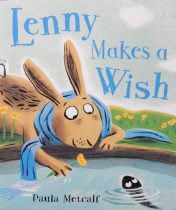
Lenny Makes a Wish

Lenny Makes a Wish
Paula Metcalf
Oxford University Press

I wonder how far into this heartwarming story it will be before youngsters guess the identity of the ‘fish’ Lenny rabbit comes upon while out picking flowers for his mum one spring day.

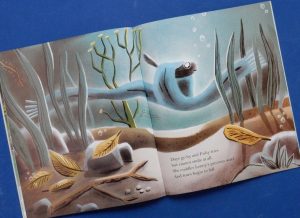
Needing a little rest from his activity, Lenny sits down beneath a tree and spots a ‘funny little fish / as black as black an be’

That the little creature is all alone makes the young rabbit feel sad and he inquires about the whereabouts of the fish’s parents. What he learns is that a storm has separated her from her family.

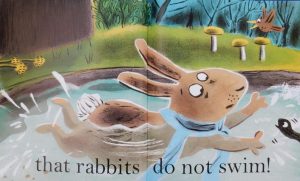
Having pondered upon what to do, Lenny offers himself as a friend but then realises that a fish out of water is unable to breathe. Back into the water goes Fishy rapidly followed by Lenny but what is immediately evident is 

Happily his mum arrives in the nick of time to rescue her little one and give him a warning. Then it’s a very sad Lenny that bids farewell to his fishy friend and so she doesn’t forget him, he presents her with his blue scarf.

Time passes; Fishy appreciates her gift but suddenly tears start  welling up.

Lenny meanwhile also misses Fishy and one bright, clear night he makes a wish upon the biggest star in the sky.

The sunny summer days come around and all of a sudden while Lenny and Mum are having their lunch,

they receive a surprise visitor wearing a blue scarf.

Has Lenny’s wish perhaps been granted?

The combination of Paula Metcalf’s rhythmic, rhyming text and gently humorous illustrations with their wealth of of wonderful details, makes for a great read aloud. It’s a lovely celebration of kindness, and friendship against the odds as well as offering an unobtrusive lesson in natural history.

Little Bird Lands

Little Bird Lands
Karen McCombie
Nosy Crow

‘Fifteen years ago, my mother looked down upon me – cradled and broken in her arms – and made a wish. She wished that I might live, since it seemed likely that I would not.’ So begins Karen McCombie’s sequel to the superbly written Little Bird Flies. (If you’ve not read it you might want to start there.)
The brave, determined Bridie aka Little Bird, and her father and brother Lachlan have now been in the US for two years and are in a snowy copper mining settlement in Michigan. Here they face plenty of challenges: a fever lays Bridie low but happily there’s a woman doctor temporarily lodging with them at Hawk’s Point; the mine in which Lachlan has found work is said to have a Chippewa curse on it, and a ghost of a Chippewa maiden supposedly haunts the entire town.

When Dr Spicer suggests to Bridie that she gets involved in the setting up of a school for the local children and the newcomers, the girl’s initial reluctance at the idea of teaching quickly gives way to excitement and resolve.

The issues of taking land from the Native American peoples, of reservations and of the incomers’ selfishness rear their ugly heads. So too does that of who has the right to the education the doctor and Bridie are offering; as well as the question of whether or not ‘servant’ Easter – as she’s deemed by ‘cocky’ boy, Charlie – and Bridie can become true friends.

Then comes a disaster at the mine causing terrible injuries to many of the workers. Is this remote place ever to feel like home? Especially when Bridie discovers the secret that Easter has been keeping about her mistress for many months …

Later, when she finally understands what Lachlan has been trying to tell her about this ‘mistress’ and comes face to face with her, she realises that the young woman has the knowledge and the power to ruin her life and those of her father and brother all over again …

Totally engrossing throughout: McCombie’s carefully researched, compelling story chronicling Bridie’s experiences as an immigrant, is superbly woven and ultimately uplifting; all its characters really come to life; and there’s SO much to think about.

If you’re searching for a book to offer a confident upper KS2 reader, or want something of a historical nature to share with a class, this is a smasher.

The Last Tree

The Last Tree
Emily Haworth-Booth
Pavilion Books

Trees are one of our planet’s greatest assets in the fight against climate change, so why oh why are the grownups in The Last Tree so careless in their use of this precious resource?

We first meet them when they’re searching for a suitable place to live and they spy their first tree; it’s part of a forest. They enjoy the summer living among the trees and sleeping outdoors.

Come winter they start cutting down a few branches for firewood but this leaves space for the rain to come through and extinguish their fire.

With each new season the loss of the trees creates further problems provoking yet more trees to be lost culminating with the construction of …

Now only one spindly specimen remains.

Inevitably with no view except their wall, the villagers become inward, self-obsessed and thoroughly disenchanted. Instead of a happy community they distrust one another and the adults in every family covet that single remaining tree sending their children to harvest it.

With axes in hand the children creep beyond the wall but in the joy of seeing one another they quickly forget their purpose. Rather than cutting down that tree they care for it, watching it thrive and grow, bringing instead planks to their parents who use them for barricading themselves in their homes.

Even so the wind comes blowing down the fences and out rush the adults to discover …

In the bright daylight they recall the good times and understand their foolishness.
Time to make a fresh start: and so it is that the last tree becomes the first of a brand new forest.

A timely parable of the destruction of the natural world and its effect on our planet’s climate, made all the more effective by Emily’s hugely potent graphics rendered in shades of green and grey.

As in our ‘extinction rebellion’ times, here too it’s children who have the imagination to become the agents of change.

Talking Is Not My Thing

Talking Is Not My Thing
Rose Robbins
Scallywag Press

Having a neurodiverse member of the family can be challenging for everyone as Rose Robbins, the author/illustrator of this, her second book knows so well for she has a brother on the autism spectrum and she also teaches young people who have autism.

Much of this story is conveyed through the female narrator’s thought bubbles; the rest through her brother’s words in speech bubbles and Rose’s dramatic illustrations. The narrator’s opening thought is ‘I don’t speak. But my brother finds it easy.’
Having followed her brother’s call to come indoors as dinner is almost ready, we learn how she does sometimes attempt to speak using her voice but the words come out wrong. Furthermore as the narrator is sound sensitive the noises of dinnertime cause her some distress, but she likes to feel included.

She also on occasion needs to convey how she feels or what she needs by means of one of her flashcards ( PECS symbol cards perhaps),

It’s great that brother and sister are able to play games together and that sometimes little sister acts as teacher.

Clearly understanding is not a problem, for shared story sessions with her brother reading aloud from a book, give his sister much pleasure.

At other times, such as when things go missing, mutual assistance is enormously beneficial. First a beloved soft toy bunny is located

and then once his sister is safely in bed, she finds her brother’s lost car. A highly satisfactory ending to their shared day.

Once again, Rose has created an enormously empathetic story that she conveys with subtle humour and a sense of respect for the siblings she portrays in Talking Is Not My Thing.

That sense of respect and understanding is what I saw yet again very recently while walking in the grounds of Ruskin Mill College, a specialist education establishment near my home that caters for neurodiverse students of between 16 and 25. A fairly newly admitted boy whom I’ve never seen stand still before, stood transfixed watching a heron that had perched atop a tree in the grounds. At least three members of staff stood fairly close keeping a watch on his wellbeing, allowing the boy to take as long as he wanted to observe, what was for all of us an awe-inspiring sight.

Lion Lessons

Lion Lessons
Jon Agee
Scallywag Press

When the boy narrator protagonist of this story decides to take lion lessons, he quickly discovers that despite the ‘7 easy steps’ claim in the window of the teaching establishment, the diploma course is a steep learning curve.
The teacher is an actual lion with a degree awarded by the Harvard School of Claw and before starting on the ‘steps’, the learner must first engage in some yoga stretches.

Thereafter though, things rapidly go downhill. The teacher is less than impressed at his pupil’s efforts at appearing fierce. Roaring, selecting stomach-filling fare, prowling,

sprinting and pouncing are equally far from promising. In fact the lad’s scores are well below par.

Then comes the seventh step: Looking Out for Your Friends. Could this be the game changer perhaps …

Maybe, just maybe our small student can grow in stature and discover his inner lion sufficiently to surpass our expectations and become the proud owner of that graduation Lion Diploma after all …

What an artful fusion of words and pictures. With its deliciously droll, punchy narrative and littering of splendidly comic details on every spread, Lion Lessons will keep listeners on the edge of their seats right up to its deadpan final twist.

A simply stupendous, superbly paced read aloud say I; Jon Agee does it again.

Elsie

Elsie
Nadine Robert and Maja Kastelic
Abrams Books for Young Readers

On fine sunny Sundays the seven Filpot rabbit children go fishing. Six are enthusiastic; divergent thinking, Elsie (with her head in a book), is not.

However she does go along following her own creekside path and when it comes to bait, despite her siblings’ advice, Elsie insists she’s going to put a buttercup on her hook.

Why not, after all, surely thinking for oneself and having innovative ideas is the right way to go: and so it is here, for Elsie’s is the rod that twitches and she’s the one with a successful haul.

Now is the time for her six siblings to listen to her point of view.

The combination of Maja Kastelic’s retro feel, vibrantly hued, detailed illustrations rendered in tempera and watercolour, and Nadine Roberts’ lively text mostly in the form of dialogue (with some judicious use of capital letters), result in a book that is thought-provoking, and hints at the notion of neurodiversity

All in all, a sweet story with important messages about being true to yourself and showing respect to those with different ways of relating to the world.

King Mouse

King Mouse
Cary Fagan and Dena Seiferling
Walker Books

As softly spoken as this fable is, its message is powerful, its theme highly pertinent.

The story begins with a wordless spread rendered in soft silvery graphite to which has been added very gentle digital colour.

Turning the page reveals a just woken hungry mouse discovering not food but a tiny crown in the grass.

The mouse dons the crown; it fits perfectly and very soon a bear comes along. “Are you a king?” he asks. The mouse considers briefly before replying in the affirmative. “Hail to the king!” comes the bear’s response.

Before long a crow and a tortoise have come along and they all set about collecting food for the ‘king’.

Up comes a fox suggesting they create a dramatic offering to alleviate the mouse’s boredom and the mouse voices his approval.

In the meantime a snake too discovers another crown in the grass and puts it on her head. The other animals decide she’s a queen and show due respect, all but mouse; he’s less than pleased.

Then it’s the fox’s turn to discover a crown – that’s two queens and before you can say ‘ruler’ the other animals all declare themselves either a king or a queen.

All that is except the bear and off he goes in search of a crown. Unsuccessful, the bear is downcast as he watches the others prancing round showing off their regality and then he shambles away.

The mouse notices his absence and seeks bear out. Then the little creature fashions a special gift for the bear

and together the two share and savour what is really important.

Who is the real leader here and what makes him/her so? These are questions you could invite the children you share this poignant book with to consider and talk about.

The thoroughly engaging story of inclusion and friendship ends with a beautiful balance  created by a final wordless page …

Throughout, Dena Seiferling’s illustrations provide additional visual interest with details you need to search for, as well as in the form of tiny playful vignettes on many of the pages of text.

They Did It First:50 Scientists, Artists and Mathematicians Who Changed the World

They Did It First: 50 Scientists, Artists and Mathematicians Who Changed the World
Julie Leung and Caitlin Kuhwald (edited by Alice Hart)
Macmillan Children’s Books

This book profiles 50 STEAM boundary-breaking trailblazers – pioneering artists, scientists and mathematicians – each of whom overcame enormous challenges to make incredible contributions in their own fields, and in one way or another, change the world for the better.

Some Julie Leung selected will already be familiar to readers – Ada Lovelace, Alan Turing,

Jane Goodall, Toni Morrison, Aretha Franklin, for example, but  that many others will probably not be.

It’s clear that the author has made an effort to feature men and women from around the world, as well as choosing from a variety of cultural and ethnic backgrounds. Thus she highlights Nikola Tesla, the first person to invent the AC motor (1887) Johanna Lucht the first deaf engineer to help manage a crewed NASA flight from mission control – “Never give up” she advises aspiring deaf engineers and scientists” with time and patience … “you will gain hearing allies.” along with the first Chinese woman – Tu Youyou – to be awarded a Nobel Prize (2015) in Physiology or Medicine.

New to me are Alexa Canady who faced an uphill struggle as a woman of colour, to become the first female African American neurosurgeon;

she specialised in paediatric care, saving numerous young lives.

I’d not heard either of Riz Ahmed, first EMMY Award winner for acting (2017) who is of Asian descent;

and other than her name I knew little about Zaha Hadid, the first woman to be awarded the Pritzker Architecture Prize (2004).

The subjects, arranged chronologically, mostly came to prominence in the 20th or 21st centuries, although Isaac Newton (1668) is there, as are two 18th century people Maria Gaetana Agnesi, an Italian mathematician, and German astronomer Caroline Herschel.

Like me, I suspect youngsters reading this fascinating and inspiring compilation, will be prompted (perhaps by their motivational quote) to do their own digging to discover more about some of these incredible people starting perhaps with some of those for who a vignette portrait with a sentence beneath and a brief paragraph on the next spread, are all we’re given. To that end there is a final list of books and other resources.

Also at the end of the book is a time line, as well as a note from the illustrator, Caitlin Kuhwald whose stylised portraits, painted digitally, are instantly eye-catching..

Role models for aspiring youngsters, all.

I DIdn’t Do It!

I Didn’t Do It!
Michael Foreman
Andersen Press

In his haste to see the finish of the Big Cycle Race would-be champion bike racer and proud owner of a new bicycle, Milo,

precipitates a concatenation of escalating chaos through the town, shouting “I didn’t do it” at every consequence of his determined haste to arrive before the competitors take the flag.

He does so, reaching the finish line just as the participants are about to make their final sprint,

and just in time to set off in hot pursuit after the thief as he makes off with the prize trophy.

Will Milo succeed in apprehending the dastardly cup snatcher?

What will happen to the baby that’s hurtling through the air and who will secure the prize trophy?

In this story Michael Foreman lets his wonderful watercolour illustrations do most of the talking, keeping the text to a minimum.

As a result, not only is this superb piece of slapstick a terrific read aloud book, but, with its speech bubbles and noises that orchestrate Milo’s journey, it’s also great for children in the early stages of their journey as readers. Make sure you read it to them first though.

Wild Wolf

Wild Wolf
Fiona French
Otter Barry Books

The inspiration for Greenaway medal winner, Fiona French’s Wild Wolf story was an Algonquin folktale called ‘Moowis’. However, a sighting in the Rocky Mountains of a single black wolf by the author some ten years back inspired her to write a different ending from the original folktale’s sad conclusion.

It’s a story of pride and its consequences for Proud Girl and Bravest Warrior. There’s rejection, anger, revenge,

love,

remorse, forgiveness and the life saving action of the wise guardian spirit narrator Wild Wolf.

Finally though, it’s love that wins out.

The bright artwork executed in oil crayons, with added graphite and coloured pencil detail, is arresting and stunningly beautiful. Fiona’s illustrations are inspirited by First Nation costume, quillwork, embroidery and beadwork of the Algonquin people of Canada and North West USA. Every single spread is a visual feast; what a wise choice of the publishers to use matt paper for the pages. (Make sure you check out the gorgeous patterned endpapers.)

This wonderful book is rich in potential for classroom use and I have no doubt many readers, either at home or in school, will be reaching for oil pastels/crayons to experiment with their own designs after studying the art herein.

(A donation from sales of the book will go to the Katarokwi Grandmothers’ Council of Kingston, Ontario.)

Narwhal’s Otter Friend

Narwhal’s Otter Friend
Ben Clanton
Egmont

This is the fourth graphic novel style Narwhal and Jelly book and it’s as brilliant as ever.

It begins with an encounter between best pals Narwhal and Jelly, and newbie Otter. Narwhal declares self-professed ocean explorer, Otty, “Otterly awesome!” Ever-sceptical Jelly on the other hand, is less enthusiastic and disinclined to believe some of his stories.

His enthusiasm wanes further when Narwhal invites Otty to accompany him on an adventure. “Really? Does this mean we’re friends?” Otty asks. “Pretty much!” comes the response.

Guess who is jealous and feels left out. So much so that he decides to seek out a new friend; not very successfully
and eventually he befriends a rock, he names Rocky.
They play ‘oodles of awesome games’ that Rocky excels in ‘Go Fish . . . Marco Polo . . . Staring Contests’ as Jelly informs Narwhal and Otter when the latter finally hunt them down.

You’ve probably surmised that it was never Narwhal and Otter’s intention to sideline Jelly and he’s over the moon – or rather, the rainbow – to be invited to join them on the ‘awesomest adventure ever’. ‘Seas the day’ guys!’

As always Ben Clanton’s illustrations are terrific – whimsical, witty, wonderfully expressive. His text has its measure of splendidly groanworthy puns and there’s the usual sprinkling of animal facts as well as another Super Waffle and Strawberry Sidekick offering, from Jelly and Rocky on this occasion.

Plunge in and relish the three tales and more in this friendship tester; it’s a laugh-out-loud winner once again.

I Am NOT An Elephant

I Am NOT An Elephant
Karl Newson and Ross Collins
Macmillan Children’s Books

Hurrah! Team Karl/Ross have created a splendid sequel to their I am a Tiger with star of the show, Mouse, returning in all his naysaying glory, as he struggles against the odds to convince various beasties “I am NOT an elephant.” The odds being in turn, a lizard – who starts the concatenation of pachyderm positive ID-ing, followed by porcupine.

This sets our little rodent off doing some noisy acrobatics as evidence.

It’s of little use though, for up rocks a third creature going on about poor Mouse’s pong.

This leads him to make a shall we say, unwise claim, which almost ends in disaster; but our quick thinking Mouse tries another tack that includes some rather creative thinking,

culminating in a flying leap into unknown territory.

But hey! What’s this? If you’ve been observant from the outset, you’ll have noticed that Mouse reclining against a large subungulate foot nibbling a tasty fruit, and by now he’s rather anxious to finish dining so long as he’s not put off by any unexpected malodourous whiffs … after which it’s probably time to do away with his final claim and break into rhyme.

That way leaves the stage wide open for a third glorious episode of hilarity courtesy of Karl and Ross. They’ll be hard pressed to get Mouse to out-perform his show-stopping theatrics in this superb piece of silliness though.

Little Lost Fox

Little Lost Fox
Carolina Rabei
Egmont

Despite the lack of other children in the vicinity of her country home, Kate is never lonely. Her friends and playmates are her toys; there’s story-loving Miss Bunny, Mr Ted, with a penchant for picnics and her favourite Ruby the Fox.

Imagine Kate’s distress when she notices Ruby has gone missing.

She searches everywhere and then spies a trail of pawprints that she follows until she discovers a real fox cub.

Kate implores the cub to return Ruby but the little creature only howls.

The little girl understands that the cub is lonely and decides that a cuddle from a parent will make everything feel all right.

Off they go together on a find Ruby’s mummy adventure that takes them first to a hollow tree wherein they see not a fox but a squirrel mummy. By the waterside there’s a mummy water vole but no mummy fox

and on the hillside a rabbit mummy appears.

Eventually Kate discovers more pawprints of the same shape as the cub’s, leading into a wood, a wood full of strange sounds. Suddenly a pair of green eyes stare out of the bushes and the cub heads straight for …

Now the hour is getting late and with the foxes reunited, Kate must head for home. It’s a long way; how will she find her way back safely? Perhaps with a bit of assistance from her new-found friends. Friends that will keep returning to spend more time with her …

This warm story of caring, determination and friendship is a delight. Carolina Rabei’s richly hued, detailed illustrations show so well the main characters’ changing feelings as well as the beautiful rural landscape setting.

Pug Hug

Pug Hug
Zehra Hicks
Hodder Children’s Books

We first see Pug standing at the window looking out as his young owner departs for school.

Seemingly the dog is desperate for a hug. The trouble is no matter which animal he approaches, not a single one wants to hug.

Cat doesn’t like hugs, Hamster is too difficult to catch, Rabbit is busy chomping,

hugging a goldfish doesn’t really work. Maybe a parrot will oblige; but no, all he receives to his request is amusement at his efforts to please.

Lots of the potential huggers are fast asleep and it appears as though our hug seeker is about to give up in despair. But then he gets an offer, he definitely CAN refuse – and fast …

Will Pug ever have that elusive huggy moment he so much desires, and if so from what source?

Zahra’s smudgy, superbly expressive illustrations showing in particular, Pug’s entreaties, are enough to make any human – even those like this reviewer who isn’t a dog fan – feel like embracing him as he keeps on getting rebuffed.

The text takes the form of Pug’s requests and the responses from the animals along with a sequence of encouraging suggestions and comments from an external narrator.

The result is picture book harmony of words and pictures creating a story that is both funny and satisfying.

Boundless Sky

Boundless Sky
Amanda Addison and Manuela Adreani
Lantana Publishing

It’s almost impossible to imagine how a bird tiny enough to fit into your hand could undertake a flight halfway round the world and back. One cool September morning however, as Alfie stands in his garden a little bird pays a brief visit before flying off over the fields towards the sea.

A mother on board one of the fishing boats comments to her son, “Off they go, flying south for the wintertime!”

The journey continues over snowy mountains where village children spy the home seeking flock. Then as Bird undertakes the hardest part of the journey over the desert, a little girl Leila calls, “Bird! Welcome to my home” offering a welcome drink to the visitor.

Having flown above the jungle to the river, over the plains and grasslands, Bird finally has a view of an African lake. Home at last.

Summer passes quickly and it’s time to start the return journey but when Bird stops at Leila’s oasis home, she receives no reply from the little girl.

As she crosses the ocean once again a storm blows up

and it’s an exhausted Bird that rests in a mountain village before continuing her flight back to a garden in a town from where she started her flight, and where Spring it on its way.

A delighted reunion takes place there …

Some things are left unsaid – but readers are shown so much more – in this beautiful, moving, tenderly illustrated story of flight, searching, and finding a home; and the story’s poignant homecoming finale will really touch your heart.

Flights of Fancy

Flights of Fancy
Quentin Blake, Anne Fine, Michael Morpurgo, Jacqueline Wilson, Michael Rosen, Julia Donaldson, Anthony Browne, Malorie Blackman, Chris Riddell, Lauren Child
Walker Books

Now in paperback, here’s a truly special gem of an anthology subtitled ‘Let your imagination soar with top tips from ten Children’s Laureates’. It brings together the ten awesome authors and illustrators who have held the title (given in celebration of their outstanding achievements) and first awarded to Quentin Blake in 1999.

To open, Michael Morpurgo explains how the original idea of the role (each person holds it for two years), was first thought up by himself and Ted Hughes, the then Poet Laureate.

You might be especially interested in poetry, rhyme and wordplay, if so head first to the sections from Michael Rosen and Julia Donaldson. Michael in Poetry Belongs to Everyone talks about playing around with a word to create a poem. Julia Donaldson’s Plays to Read and to Write discusses one of her own plays that she based on the Aesop’s fable, The Hare and the Tortoise, offering a fun, lively 6-parter

If you’d rather be playful in the visual sense then Anthony Browne’s The Shape Game could be your starting point: having talked about how to play it, he showcases some examples from 3 other famous illustrators to whom he gave the same shape to play as the one of his own shown in the book. The potential with this one is endless. Probably that is the case with most of the chapters however.

In The Only Way to Travel, Quentin Blake writes with reference to  Dahl’s stories, about how when illustrating someone else’s texts it’s important to ‘put yourself inside their story’ and capture the atmosphere before diving in and drawing those fabulous illustrations of his.

More about how other fabulous illustrators approach their drawing and what provides their inspiration comes from Chris Riddell –

make sure you check out his brilliant cartoons of all ten Children’s Laureates in the final section – and Lauren Child.

How fantastic and moving is Michael Morpurgo’s Find Your Own Voice that tells children how to do so in ‘I Believe in Unicorns’.
I thoroughly enjoyed too, Malorie Blackman’s Taking a Word for a Walk using SEA as her example,

before she moves on to discussing from whose viewpoint a story is being told when one writes.

If you want to inspire children to let their imaginations soar, then you really, really must have a copy of this cracker of a book in your home or classroom; not only will it do just that, but it will also ignite or add fuel to a passion for reading, writing and illustrating. (BookTrust, which manages the Children’s Laureate gets 50p from every sale.)

Runaway Robot

Runaway Robot
Frank Cottrell-Boyce, illustrated by Steven Lenton
Macmillan Children’s Books

After being in a road accident, twelve year old Alfie has been fitted with a prosthetic hand – this makes him ‘a bit bionic’ he tells us. Along with the loss of his hand though, the boy has lost his confidence.

He explains how he bunks school( aka Limb Lab) – ‘swerving school’ he calls it, and instead of joining in the “New Life’ lessons he goes to hang out at the arrivals lounge of the airport.

On one such swerving occasion Alfie accidentally loses his state-of-the-art hand. At lost property, instead of his hand, the lad finds Eric, a six-foot tall, metal robot with a propensity for singing the national anthem. “I AM YOUR OBEDIENT SERVANT” Eric announces and “I CAN ANSWER ANY QUESTION” (except the ones he doesn’t know the answer to, that is.)

Eric too is missing a limb, one if his legs. Despite this, unlike the other robots Alfie decides Eric is anything but ‘a disappointing robot’. Indeed, he declares him ‘the most-not-disappointing robot you could ever meet’.

It’s no surprise then that the boy will do everything he can to keep the illegal Eric from being crushed at the R-U-Recycling scrapyard.

No easy task as despite his fine manners, Eric takes instructions literally, which inevitably gives rise to a fair few problems.

But with reports of a rogue robot at large terrifying the estate, should Alfie even be bent on saving Eric?

Alfie’s world might be full of things robotic (he does make some new human friends too) though in essence this story is about what being human really means.

With a plot that makes you both laugh and cry, that’s what makes Frank Cottrell-Boyce’s highly original book so satisfying. Add to that a sprinkling of Steven Lenton’s smashing illustrations and what you have is an unmissable treat.


Mermaid School

Mermaid School
Lucy Courtenay, illustrated by Sheena Dempsey
Anderson Press

The first of a new Lucy Courtenay series sees young mermaid Marnie Blue determined to make a good impression on her very first day at Mermaid School.

She has the usual first day nerves about making friends, and is concerned at the prospect of perhaps having to ride a seahorse but she has something additional to be worried about.

Her aunt, the famous singer and DJ, Christabel Blue, is an ex pupil and her reputation as a student at the same educational establishment leaves a lot to be desired. Indeed she is on record as having been the naughtiest mermaid the school has ever had on role. In contrast Marnie’s mother was a model student.

Marnie really wants to impress both staff and fellow pupils but will her teachers give her a fair chance or have they already decided what kind of newbie they’re dealing with in the latest Blue family enrollee to Lady Sealia Foam’s Mermaid School?

Her first day is definitely not a success except that Marnie makes friends with Pearl Cockle. Surely the mayhem-causing snake in her school bag couldn’t possibly have been put there by her aunt, could it? If not then who was responsible?

What about Orla, who from the outset seems determined to be unkind to her and causes her to get into trouble? Something decidedly fishy appears to be going on.

Then Orla goes missing; who will come to her aid?

There’s SO much more to discover about life at Mermaid School and Marnie’s family in this story that bubbles with excitement; all the more so thanks to Sheena Dempsey’s illustrations.

I know one 7-year-old reader who is already eagerly anticipating Book 2, The Clamshell Show, coming in May.

Emmanuelle engrossed in the story

Some of Emmanuelle’s comments on this book:
“It was VERY, VERY, VERY good and very funny, especially Marnie’s aunt, Christabelle Blue. I really like that she said the Mermaid school was ‘terrible’ and also her love aspect with a human.”

She was also inspired to draw this picture of Marnie’s aunt.

Rhinocorn Rules!

Rhinocorn Rules!
Matt Carr
Egmont

Matt Carr’s Ron is a rhinocerus after my own heart – a fun and art loving, rule subverter, full of ideas of the divergent kind.

Being grumpy, a loner and ready to charge should anything approach is not for him. Instead Ron is at heart a fun-loving, art and music enthusiast, brimming over with creativity and joy. Moreover he wants to share his joyful ideas with the other animals but none of the rule-abiding creatures is interested.

Life for Ron is pretty mundane until one sweltering afternoon at the waterhole he catches sight of his dull reflection in the water. Thinking that if only he could show himself as he really is then friendship would follow, an idea strikes him and Elmer the patchwork elephant style, Ron sets to work with his creativity …

Once he’s dried off he is transformed into a true life work of art and as you might expect, he now feels A-MA-ZING!

Time to get himself noticed and so he does: first he impresses the meerkats and before long lots of animals are eager to have fun and be friends with the transformed Ron. Happiness at last.

Happiness however is not what his fellow rhinos feel; oh dear no. Ron is a total embarrassment, so they tell him.

Fortunately though, the meerkats stand up for their new friend and point out something that hadn’t occurred to the rhinos. Realisation dawns and then there’s only one thing to do … and Ron does it in one deft move of his forelimbs.

I wonder what new rules he created in place of old ones. What three would you have chosen?

Through his droll illustrations and heartfelt words Matt has created a thoroughly inspiriting story. The message is loud and clear: be true to yourself, be proud of who you are; and if that means finding a way round, over or under the rules then so be it, and good on you.

Love the cleverly worded title and the final ‘Did you know?’ page.

Everybody Counts


Everybody Counts
Kristin Roskifte (translated by Siän Mackie)
Wide Eyed Editions

This immersive book subtitled ‘A counting story from 0 to 7.5 billion’ is the 2019 winner of the Nordic Council Children and Young People’s Literature Prize. It’s easy to see why. It’s like no other counting book, that’s for sure and what is counted is people, people from 0 (no one) to 7.5 billion – the entire world.

The people are members of groups and many belong to two or more groups and so stories evolve around the characters, starting with a boy and his family making a total of 5.

You can follow these characters through the book, seeing how their various life stories intersect and diverge.

The narrator makes brief comments about people in their settings, for example in the classroom scene, of the 20 children ‘One of them is thinking about all the people who’ve lived before us. One of them has lost the class teddy bear. One of them is dreading football training. One of them will become prime minister.’

However, much is left unsaid so there are sufficient gaps for readers to fill and likely fill differently, on each reading.

Dive in, get lost in the pages, stop; study each one thoughtfully, and move on; eventually you’ll have met 2768 people. Then perhaps move back; the ‘spotting section’ at the end will certainly encourage you to do that.

Most importantly though, whatever other interpretations readers make, the indisputable messages that emerge are, that we are all part of one enormous, interconnected world group – the human race – and that each one of us has our own unique story, for as the title says, Everybody Counts.

Just imagine how many philosophy for children sessions might evolve if you start exploring this ingenious, visual festival of a book in the classroom.

Gnome

Gnome
Fred Blunt
Andersen Press

I was recently thinking I hadn’t seen anything new from Fred Blunt and then this cracker from Andersen Press arrived in my mail.

Mr Gnome is a naysayer if ever there was one. No matter how politely the requests made to him are proffered, his response is always in the negative.

So, it’s “No” to accompanying him on his fishing expedition

and a resounding “NO” to coming to the aid of Mr Hedgehog, even for a reward.

As for the plea from the witch who does assist Mr Hedgehog, our curmudgeonly Gnome may be about to get his comeuppance when he flatly refuses to stop fishing in her pond.

Deliciously silly, Fred Blunt’s cautionary tale will have readers and listeners spluttering in delight especially at the finale but not just that. Every spread is chuckleworthy – it’s impossible to choose a favourite – and Fred’s comic timing is spot on as it builds up to the wonderful climactic revelation.

Share it here, share it there, share it everywhere you can: I wouldn’t mind betting you’ll get the same immediate “read it again” demand (maybe with the odd ‘please’) as you close the covers as I did.

The Surprising Lives of Animals

The Surprising Lives of Animals
Anna Claybourne and Stef Murphy
Ivy Kids

The author of this look at animal lives talks in her introduction of the close link between humans and other animals, dividing the book into five aspects of behaviour that we all exhibit. She then goes on to explore elements of each one through a wide variety of animals both large and small, using playfulness (Having Fun), Thinking and Feeling, Everyday Life, co-existence and community (Living Together), and Settling Down and reproducing, as themes.

Adults as well as young readers will find plenty of interest: I was surprised to learn for instance that seagulls have been observed playing catch by dropping a stick or a stone from high up in the sky then swooping down to catch it before it reaches the ground – an aspect of playfulness so some scientists think.

Did you know that octopuses are highly intelligent and are able to work out how to undo screw-top jars and childproof containers to get their tentacles on tasty snacks?

Or that that an African grey parrot named Alex, studied by animal brain scientist Dr Irene Pepperberg was able to identify different colours, shapes and materials, and sort items into categories? This is just one of the numerous things she discovered during her 30 years of training and working with the bird.

Equally clever in their own way are the Army ants found in South America that are able to build bridges out of their own bodies. Then having done so they use the bridges to get across gaps and work co-operatively until all members of a colony have traversed the gap. That’s teamwork for you.

Anna Claybourne mentions the work of a number of animal scientists in her ‘Scientist Spotlight’ insets. Her narrative style makes the entire book highly readable as well as informative; and Stef Murphy’s illustrations illuminate not only the animals’ fascinating behaviours but also their habitats and characteristics.

Recommended for family bookshelves as well as primary school collections.

Poems Aloud

Poems Aloud
Joseph Coelho, illustrated by Daniel Gray-Barnett
Wide Eyed Editions

Joseph Coelho is a performance poet so it’s no surprise that the nineteen poems in this book are first and foremost, intended to be read aloud or performed. Through so doing children can have lots of fun and discover the pure pleasure of spoken words.

There are poems for a range of moods and for each one, Joseph provides a helpful introductory line or so about reading it out loud.

There are some short playful alliterative Tongue Twisters to start with, including the sibilant The Slime Takeover that children will definitely delight in:
‘Slipping, shimmering, stinking slime, / sloppy cerise or shades of scarlet sublime. / It sticks and sucks and spits and spools, snaking slime slumping several school walls./ The slime swells and stretches, and starts to sprout, … ‘

They’ll also relish The Chilly Chilli with its homophones. Here’s the second verse telling how it feels since being ‘shipped to store’:
‘A little chilly chilli / feeling cold and in a knot. / Not a happy, chilly chilli. / In fact, this chilli feels quite ill / like it’s caught the flu. / It flew all this way / packed in a plane / to add heat to otherwise plain food.’
It sounds as though the poet had as much fun composing this as youngsters will when they read it, emphasising the bold words as he suggests.

As I write today the following are my favourites  (although they might well be different on another day): This Bear with its figurative language such as is used in the opening verse:
‘This lumbering bear is old / This lumbering bumbling bear / has shuffled over rugged imagined mountains. / Urged his bulk, slow and strong. / Slow as geography. / Strong as tree growth / through the forests of his mind.’
What a wonderful picture that paints in the reader’s mind even without the splendid illustration.

I love too the short Animals offerings that include Lion: ‘I am meat-licker, / bone-cruncher, / big–meower. / I cat walk with pride. / My mane is a hairdo of envy. / My roar is a rumble of mountains. / My claws, a savannah of pain.‘ Superb!

Next is the fantastically fanciful Something Wondrous, the first line of which urges:
‘Peer from your window in the deep of night.’ You might spy these, for its second verse goes thus:
‘A unicorn nibbles the gold leaf tree, / hobgoblins fist-fight in every flower. Mermaids flop from a luminescing sea. / Earth giants show-off their hidden powers.’ Joseph’s  power with poem creating is certainly not hidden and I really like the use of silhouettes in Daniel Grey-Barnett’s illustration.

The final one of today’s favourites conjures up a place whose sights, sounds and smells I’m familiar with. Even if you’ve never been On the Streets of New Delhi this poem will make readers feel that they’re experiencing the place. Here’s how it begins:
‘On the streets of New Delhi / a small brown dog yawns. / The morning light is golden / on the new streets of barking New Delhi.’
It concludes, thanks to the cumulative nature of the last line of each verse: ‘on the new streets of barking, selling, thrumming, chuckling New Delhi.’
Get hold of this cracking book to discover what causes the thrumming and chuckling referred to. Or you could cheat and look carefully at the action-capturing illustration  below;

but buy the book anyway – it’s a smasher!

The Monster in the Lake / Unicorn Academy: Isla and Buttercup

Here are the latest stories in two magical series from Nosy Crow

The Monster in the Lake
Louie Stowell, illustrated by Davide Ortu
Nosy Crow

We’re back in the magical world Louie Stowell took us to in Dragon in the Library with youngest magician in the world, Kit Spencer. Beneath that library in Book Wood, she’s having ‘spelling’problems. She hasn’t been distracted, her pronunciation was spot on as were her hand gestures; so why, oh why, are her spells going haywire?
Then Kit and her pals learn two things: one: they can understand what the animals they encounter in the park are saying and two: Dogon the delightful dragon dog is poorly, very poorly.

Definitely time for a spot of investigation …

Almost before you can say ‘weird’ the friends find themselves face to face with a strange creature calling itself Lizzie and saying it’s a Lesser Nessie from Scotland.

After a conversation with Lizzie, the friends return to the library and before long they’re embarking on a double rescue undertaking in Scotland, via one the library’s portal books.

Once there they discover a mobile library and its librarian Duncan. Then follows a terrific adventure full of mermaids, ancient curses and much more. It’s dangerous, nail-bitingly tense and absolutely perfectly paced.

Once again Louie Stowell’s telling with its mix of magic, friendship and bookish references works a treat, and with Davide Ortu’s stylish illustrations, the result is another spellbinding foray into the world of Kit, Faith, Josh and Alita.

An absolutely brilliant, unmissable story for primary readers: and what a superb final observation by Faith, “Whatever else changes, whatever threats we face … We will always have books.”

For slightly younger readers:

Unicorn Academy: Isla and Buttercup
Julie Sykes, illustrated by Lucy Truman
Nosy Crow

Can it really be the 12th visit to the magical Unicorn Academy? I know one girl, now seven, who has lapped up all the stories so far and has been eagerly awaiting this new one. I’m sure she will devour it in a single sitting.

The term is drawing to a close and Isla is eager to graduate along with all the other girls. When her unicorn Buttercup discovers that his magical power is ‘finding magic’ Isla hopes that he’s capable of using this special power to find the evil Ms Willow who has disappeared.

Does 2nd year student Valentina know anything about her whereabouts – she’s certainly acting strangely. Why is she receiving so many letters, and who is sending them?

Once again, teamwork is key in this adventure: Will the girls find the missing teacher; will Isla finally believe in herself and will everyone receive their graduation scroll at the end of term?

River Stories

River Stories
Timothy Knapman, Ashling Lindsay and Irene Montano
Red Shed (Egmont)

Prepare to immerse yourself in Timothy Knapman’s tales of five rivers.

Our travels begin on the African continent with a trip along the Nile, at 6,695 km. the world’s longest river. Rising in the African jungle it comprises two tributaries, the Blue Nile and the White Nile, and flows through forests, mountains, lakes and deserts before reaching the Mediterranean Sea.

However its exact source is disputed. Timothy tells readers that one explorer John Hanning Speke declared the true source to be Lake Ukerewe (now called Lake Victoria).  During the trip we learn of festivals, historic events associated with the river, view some wildlife and visit the pyramids, tombs and temples of Egypt.

The second journey is along the Mississippi that extends the entire length of the US all the way to the Gulf of Mexico. This river is home to over 1000 animal species and flows through the site, I was fascinated to learn, of Cahokia, a lost 12th C city.

We’re in Europe for the third journey that takes us from a glacier in the Swiss Alps to the Netherlands where the Rhine’s delta is located.

There are mentions of music and musicians, magic, myths and legends, and sightings of fairytale forests as well as castles, windmills and bulb fields.

High on a Tibetan plateau is where the Yangtze journey starts. We read of dragons and dolphins, glimpse pandas and if the timing is right, see the amazing Dragon Boat Festival.

The Amazon with its incredible rainforest flora and fauna is the river of the fifth trip. There’s so much to discover and I was astonished to learn of Ed Stafford’s walk along its entire length, making him the first person to do so, a journey of 6,992 km that took him 860 days – WOW! Awesome!

There’s much of interest whether yours is history ancient or modern, geography, mythology or something else Timothy includes, and illustrators Aisling Lindsay and Irene Montano show in the engrossing, vibrant spreads that unfold to show the entire length of each river journey.

World stories to wallow in for sure.

Neither of the rivers I’m personally familiar with – the Thames and the Ganges – are included in Timothy’s book; now’s that another story – or many.