So You Want to be a Frog

So You Want to Be a Frog
Jane Porter and Neil Clark
Walker Books

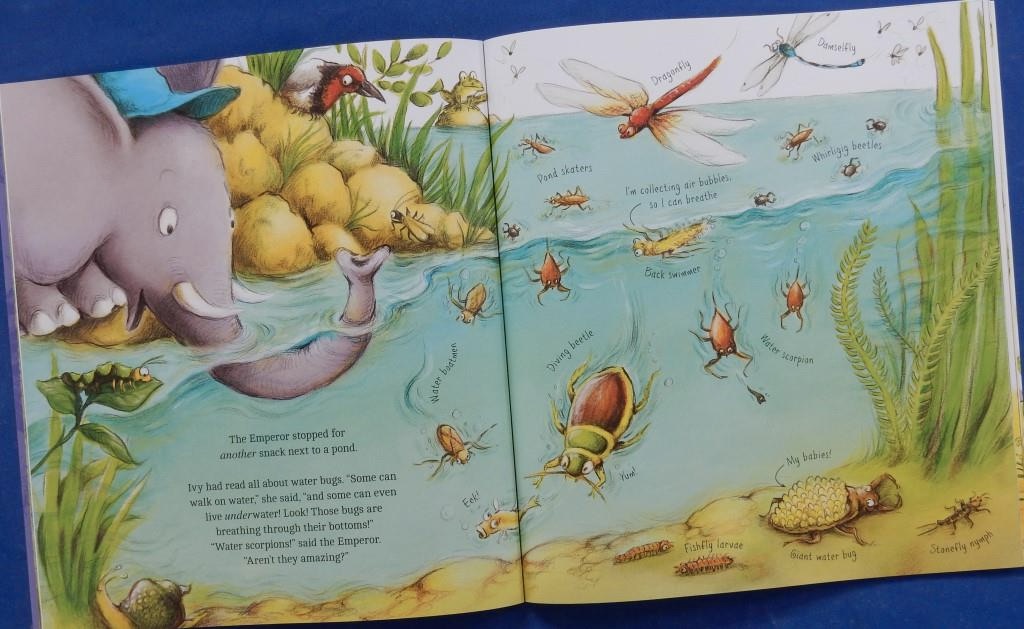
In her follow-up to So You Want to Be an Owl, author Jane Porter presents what it takes to be a frog. Should you decide to give it a try, you may be surprised to learn that it requires a considerable number of skills; so says Frog Club leader, Fabio Frog. Happily he is on hand to provide support and information via a set of rules..
First off, (remember there are several stages in your life-cycle) you will need to work on your wriggling. Then, once you’ve lost that tail, jumping is an important way of moving and your tongue becomes a vital part of your anatomy – it’s very useful for catching flies. Did you know, that should you manage to catch a fly, your eyeballs will push the food down your throat? Although if slugs are more appealing, they’re another live option (no self-respecting frog would eat anything already dead).
You’ll also need to be able both to breathe underwater (there’s a fuzzy-looking Hairy Frog’ that has hairs to help) and ‘drink through your skin’.

Colour is another consideration – not all frogs are green like Fabio, although there are a fair few green species in various parts of the world. Others though don’t even live in ponds: a few are desert dwellers, others high in the branches of tropical trees.

Quite a number are poisonous too, so beware.

As always Jane Porter’s love of nature shines through in her writing, which is highly engaging and fun for young readers. Cleverly integrated with the text are Neil Clark’s amusing, detailed illustrations. A considerable amount of verbal and visual information is to be found between the pages of this non-fiction picture book. One last word or several: croaking and ribbiting are not the only froggy sounds, but to discover other possibilities, you’ll need to get your own front limbs on a copy of Jane and Neil’s book.

Scientists in the Wild: Galápagos

Scientists in the Wild: Galápagos
Helen Scales and Rômolo D’Hipólito
Flying Eye Books

Along with a team of seven scientists from around the world who have a variety of special interests and expertise, readers are invited aboard the research ship, Sula, the aim being to study the flora and fauna of the Galápagos Islands, especially those unique to the archipelago.

Their tasks will include counting penguins: high numbers indicate that the population is healthy, What they find on this first stop is that nearly half the penguins they see are juveniles; this is good for it means the adults are breeding well.

The next job, after measuring a tiger shark is to attach a satellite tag to the creature and then track its movements. On the same island is a cove: a good stopping point for some underwater filming of the sea lions with a focus on what fish they’re eating.
The islands are home to a large variety of iguana species, one of which is very rare and the team stop off on one to count the endangered Pink land iguanas. Much, much tinier are the microscopic phyto- and zooplankton that play a crucial part in feeding the marine life around the islands.

The richness of the subaquatic flora and fauna attracts huge animals to the Galápagos to feed including sperm whales and one of the team wants to try and discover what it is these whales are communicating to one another.

It’s impossible to mention all the team investigates in a short review but readers find out about such topics as climatic conditions, a successful breeding programme of almost extinct Espania tortoises; there are spreads about Darwin and how the islands inspired his On the Origin of Species; the underwater volcanoes and their ‘mysterious’ ecosystems; and the final spread presents on going work in the Galápagos islands.

Helen Scales, herself a marine biologist, writes in an engaging manner, holding the reader’s interest throughout. I was excited to find the spread on Blue-footed boobies having loved Rob Biddulph’s picture book that starred the bird.

Stylish, detailed illustrations by Rômolo D’Hipólito play an equal part in conveying the science and keeping readers absorbed.


Aziza’s Secret Fairy Door and the Magic Puppy / Star Friends: Mystic Forest

Aziza’s Secret Fairy Door and the Magic Puppy
Lola Morayo, illustrated by Cory Reid
Macmillan Children’s Books

In her latest magical adventure it’s not just Aziza who goes through her magic door; her brother visits the world of Shimmerton too. It happens shortly after Otis has been pleading with their parents to get them a dog despite the ban on flat dwellers keeping such pets in their homes. Almost immediately Aziza goes to her bedroom and sees that her fairy door is making those ticking sounds again. Suddenly the door opens and Aziza passes through, closely followed by her big brother, also pulled through by its golden beam.

The siblings arrive in Shimmerton to find the village fete is in full swing. Encouraged by Aziza’s fairy friend Peri to have a turn at the giant roulette wheel, Otis learns he has chosen the winning number and selects for his prize a puppy – a magical one. But Hainu as he names the pup is not as easy to handle as he anticipated though like most pups this one loves sticks.

Suddenly the midday bell rings heralding the unveiling of the ancient clock, a clock that represents spring and growth, without which nothing will grow. Horror of horrors! The three hands of the clock are gone and thanks to a rash action by the Gigglers, all three have returned to their places of origin. Aziza, Otis, Peri and Tiko must find them and they only have till sunset to do so.

They need to fix the clock before it’s too late.

With an abundance of magic, friendship, teamwork and a generous sprinkling of mischief this inclusive tale, inspired like the previous one by fairies and creatures from world mythology, will enchant new solo readers. Cory Reid’s quirky illustrations are a delight and the perfect fit for Lola Morayo’s telling.

Star Friends: Mystic Forest
Linda Chapman, illustrated by Kim Barnes
Little Tiger

I’ve not previously met the Star Friends, Maia et al, a group of children with a special secret: they have magical animal friends who help them learn magic and fight evil, some of it from the Shades.

In this book, Maia’s human friends Sita, Ionie and Lottie are excited about spending half term at a forest camp. They are hoping to learn all kinds of survival skills but Mrs Coates who has a farm on the forest edge is not at all happy about the arrival of campers, fearing they will upset her free-range chickens. Then strange things start happening. 

First the boots belonging to all those sharing Maia’s tent disappear and are later found in the stream where the boys went to collect water. Then the four girls discover the den they’d spent so long building the previous day has been completely destroyed. 

Add to that various objects are being moved from one place to another. Surely somebody isn’t trying to sabotage the camp, are they? If so, is it Mrs Coates or is it some kind of bad magic? No matter what or who, Maia and her friends are absolutely determined to find out and stop their trip being spoiled completely.

The author’s mix of magic, talking animals, strong friendship and problem solving works well and with the addition of Kim Barnes’ black and white illustrations, this addition to the adventure series with a difference, will appeal strongly to many newly independent readers whether or not they’ve read previous Star Friends books.

That’s My Flower!

That’s My Flower!
Alice Hemming and Nicola Slater
Scholastic

The rather possessive rodent and his feathered friend from The Leaf Thief return in a new story.

When Squirrel wakes one morning he’s excited to discover that the leaves are back on the trees: hurrah! it’s spring.

Suddenly Squirrel is surprised by unusual buzzing and cuckoo-ing sounds. Then a strange bird flies at his head. Fortunately Bird is close by to explain about spring’s arrival being heralded by a bumblebee, a cuckoo and a swallow.
Then Squirrel notices a small, yellow flower that reminds him of the sun: another sign of spring explains Bird. By now Squirrel has decided that he likes spring but goes on to claim ownership of the flower and starts trying to protect it.

It mustn’t get wet, nor be attacked by bees, he decides until Bird tells his pal that the flower needs rain and that visiting bees help flowers. Moreover, “Your flower is a wild flower … It’s there for everyone to enjoy,”

Still Squirrel continues his safekeeping activities by covering the flower with a bucket, with disastrous results, he later discovers.

Happily though, Bird persuades Squirrel just to leave the flower alone. The following morning, a wonderful surprise awaits when the two wake up.

Bird’s gentle lesson has been a success. Such a fun lesson it was too, for young readers and listeners certainly. They will be sure to laugh at Squirrel’s lack of understanding regarding the natural world, made all the funnier by Nicola Slater’s portrayal of Squirrel’s custodial antics and his friend’s reactions.

Let’s hope Alice Hemming’s story will encourage respect for the natural world in children.

Montgomery Bonbon: Murder at the Museum

Montgomery Bonbon: Murder at the Museum
Alasdair Beckett-King, illustrated by Claire Powell
Walker Books

With a moustache and beret at the ready, there’s a new sleuth on the block; it’s ten-year-old Bonnie Montgomery aka Montgomery Bonbon, Widdlington’s best detective. He is always at the crime scene on the look out for likely suspects and searching for clues, usually accompanied by erstwhile ice-cream seller, Grampa Banks whose van comes in very useful for stake outs. Clever, easily ignored by adults and with excellent powers of observation, this unlikely crime-fighting duo are the stars of this first in a mystery series.

As the story starts, Bonnie and Grampa Banks are visiting the Hornville Museum – Widdlington’s oldest building. Suddenly there’s a frightful scream and they are plunged into darkness. A security guard has been murdered and a carved stone eagle has been stolen. On goes her disguise and transformation! There is Montgomery Bonbon, on the case in an instant. Quickly on the scene too is Inspector Sands; she is definitely not a fan of Montgomery Bobbon and in return Bonnie has a very low opinion of the detective.

A few clues are soon found and Bonbon is immediately on the trail of suspects, the thief and the appropriately named Blowpipe Killer. Could any of the museum staff have played any part in the murder or theft? I love the clever way illustrator Claire Powell provides readers with a look at Bonbon’s case notes throughout and her depictions of the characters are superb.

With some tricky red herrings, an interfering scarlet macaw, seagulls, crisps and scones along the way, can our determined young detective maintain her cover and solve the case before disaster strikes again?

Beckett-King has created some superb characters in his gently humorous, thought-provoking debut novel, not only team Bonnie and Grampa whose fondness for one another and their age difference are a big asset, but several others too including Bonnie’s new friend Dana Hornville. Youngsters will love meeting them and like this reviewer, eagerly anticipate more of Bonnie. Has she been perhaps taking lessons from a certain Belgian detective whose voice (or rather David Suchet’s) I caught echoes of as I read.

Batpig: Too Pig To Fail

Batpig: Too Pig To Fail
Rob Harrell
Walker Books

Batpig, aka Gary, returns along with his pals Brooklyn (bat) and Carl (fish) in three further episodes.

In the first, The Class that Wouldn’t End, the three are stuck in what seems to be a never ending maths class: something is definitely wrong here – it’s apparent even to maths fan Brooklyn. It turns out that the slowness of time is on account of vengeful Time Guy (the name Timekeeper was already taken). Thanks to a ‘supernatural bolt of energy’ Time Guy is now able to control time and has gone rogue. Batpig must now figure out how to make time fly if they ever want to escape the monotony of endless fractions. 

Could fun be the answer? …

The (much shorter) middle story Aquarium Dreams features ‘fin socks’ – a scam by all accounts, or rather Carl’s – and bees – which he greatly fears. This sets things up nicely for episode three, Light, Camera, Chaos! This crazy comedy features a pair of space aliens, a torrent of stinky gym socks and a Bumblekitten intent on attacking Mrs Fishbol’s establishment. Can Gary et al. save the day again?

Supportive friendships are key in these super-hero scenarios.

Established fans will gobble up Too Pig To Fail; those new to the gang might be better to start with When Pigs Fly and then move on to this one.

Diary of an Accidental Witch: Unexpected Guests / Super Happy Magic Forest and the Distant Desert

Diary of an Accidental Witch: Unexpected Guests
Perdita & Honor Cargill, illustrated by Katie Saunders
Little Tiger

It’s always a delight to be in the company of Bea Black and the first thing she does according this latest journal (after having a scrumptious tea out with her dad) is to attend the inaugural meeting of Finkelspark Club along with fellow founding members.

The following day though, the spring term at Little Spellshire School of Extraordinary Arts begins and Bea has other things on her mind: a history project, her allocated famous witch from the past being Minerva Moon; then there’s the visit from school inspectors who will not be impressed if they catch sight of anything at all magical going on. 

In addition, Bea has accidentally taken home what appears to be an ancient diary written by Minerva Moon, from Old Bertie’s bookshop and she can’t return it as the owner, Bertie, has gone away.

The good news is that Bea and her dad are going to stay in Little Spellshire but with all those things going on, one eleven year old witch has a lot to keep her busy, not least making sure her school isn’t closed down.

The series just gets better and better: this fourth book seems to have even more zany magical mayhem, humour and surprises than ever. It’s a sparkling delight for primary readers.

Super Happy Magic Forest and the Distant Desert
Matty Long
Oxford University Press

This fourth book in the Super Happy Magic Forest chapter series starts at the Gnome Tashwhisker exhibition where Tiddlywink the pixie accidentally gets trapped inside a cursed puzzle cube. Endeavours to free him are unsuccessful, leaving Blossom feeling more than a little guilty about fiddling with the cube. The only hope of freeing Tiddlywink, so says Gnome Tashwhisker’s Desert Diaries, is for the five heroes ie Herbert, Tiddlywink, Blossom, Twinkle and Trevor, to journey all the way to the Distant Desert and there to consult the all-knowing Almighty Oracle. This they must do before the sands of time run out. 

The journey, despite its length is the easy part, for when they reach the Oracle, it’s fast asleep. A Desert Diary entry tells them this: “only adventurers who have completed the Desert Trials and thus earned three trial gems are worthy of waking the Oracle.’ 

Is that a possibility for our heroes? Perhaps with help from the genie, if they can first reunite her with her magic lamp. Then there are still those particularly prickly cacti to contend with, 

as well as a recalcitrant magic carpet. This quest is certainly going to test the heroes to their limits

Super clever, super silly and super fun: as ever the madcap frolics of Matty Long’s forest dwelling characters are a treat for primary readers, not to mention this adult reviewer.

Nightspark

Nightspark
Michael Mann
Hodder Children’s Books

In this Ghostcloud sequel, Luke, who escaped from Battersea Power Station, is back with his family and has started making a new life (in an alternative London). By day he’s an Apprentice Detective; by night he travels on his kite-cloud along with ghost friend Alma, helping lost souls make their final journeys.

However, Luke’s thoughts and dreams, or rather nightmares, are filled with his friend Ravi who was left behind. This makes Luke feel terribly guilty. He learns that Tabatha (the power station’s owner) has Ravi and many other child labourers, held prisoner.

On his first day working at the Detective Guild with his mentor, Inspector Oberdink, things don’t go well; he manages to cross the Inspector who tasks Luke with envelope-filling. While so doing he comes upon a witness statement referring to Tabatha; but when he questions Oberdink, the inspector dismisses it as an old tramp’s ramblings. Nevertheless, Luke slips it into his pocket.
That evening Luke and Alma take to the skies and when Alma hears about Luke’s nightmares, she suggests a visit to a ghost that can read dreams. Instead they first find themselves at a Ghost Council meeting where the council head shares the memories of a Battersea guard and they see the building being broken into and someone escaping with a case.

With an opportunity to discover what is really going on, Luke and Alma soon find themselves in terrible danger, not only from human enemies but ghostly ones too. Can the two, with some help from friend, Jess, discover who is behind that break-in and what the case contained. Most important: can Luke find where Ravi is and bring him home safely? With that strong sense of loyalty and love, as well as being very determined, Luke sometimes overlooks the threats to his family and friends. Apart from Alma, who can really be trusted?

Michael Mann draws readers in from the outset, taking them on a breathtaking adventure that includes superb descriptions, until we reach a satisfying and affecting conclusion. I couldn’t put it down.

Get Real, Mallory!

Get Real, Mallory!
Daisy Hirst
Walker Books

Nomi loves drawing; her Dad makes positive comments about her dog depiction but her brother Stephen makes fun of her Mallory picture. “…why is your bear in the sky? … You’re better at drawing fish” he comments. However with a fish tank on the kitchen counter top that’s no surprise; if Nomi had a real dog, it would make dog drawing much easier, so she thinks. But nobody in their flats is allowed a dog so “HA! Get real, Nomi” is Stephen’s response.

That evening in frustration, Nomi scrunches up her picture and tosses it aside. Mallory’s smile don’t make the dog special; “Get real, Mallory!” she says. And Mallory does just that.

Somewhat conflicted: ‘I wanted to tell everyone. I didn’t want anyone to know.’ Nomi suggests heading to the park, which happens to be where her brother is going.

Dogs are banned from the playground but ever resourceful, Nomi provides Mallory with a disguise and adds occasional barks to his. No matter her brother ignores her, a wealth of opportunities keep the pair happily engaged for a long while,

until hunger pangs eventually cause her to head homewards.

What of Mallory come bedtime? Happily he’s not too far away …

Daisy Hirst has a great ear and eye for detail. With Nomi as narrator, her text is a delight read aloud and her images of the child and her imaginary dog capture the togetherness of the two with panache. There is SO much to enjoy about this book, especially the way it celebrates the power of the imagination.

Oh, Armadillo! This Party’s All Wrong!

Oh, Armadillo! This Party’s All Wrong!
Ellie Irving and Robert Starling
Happy Yak

Kind, gentle Armadillo lives deep in the rainforest and longs to make friends: however he has a tendency to get everything wrong. One day he has an idea: perhaps if I throw a party I will make a few friends, after all everyone loves parties. Having made invitations off he goes to deliver them. The first goes to Jaguar who is hoping a large springy sponge cake will be on offer. Back home goes Armadillo, creating so he hopes, the perfect sponge cake.

Out he goes again, next stop the Apes: they want games especially musical chairs, pass the parcel and hide and seek. Armadillo rushes home and gets to work …

Then for the balloon loving Lemurs, Armadillo fashions what he hopes is the perfect balloon, sufficiently large for lots of passengers.

On party day our host eagerly awaits his guests and having welcomed them all, announces the fun and games. Seemingly though Armadillo’s ideas are rather different from what the other animals are anticipating: shock horror! He’s devastated by their reactions, so is this the end of his party and hoped-for friendships?

Happily not. An accidental trip that sends him hurtling onto the sponge cake and thence into the air and finally back to earth doesn’t just render the guests speechless but it makes Armadillo see things in a different light; he’s ready to acknowledge and even take pride in his divergent thinking and creativity.

Will he persuade the others to join him in some truly original ways of having fun? You bet … And as for finding friends, certainly, but Armadillo stays true to himself, muddled and different. Hurrah!

A smashing story to show children, especially those who like the protagonist think differently, that rather than a problem, it’s something to celebrate.

Out of the Blue

Out of the Blue
Robert Tregoning and Stef Murphy
Bloomsbury Publishing

Imagine your reality is a dystopian one wherein those in power have decreed that everything must be the colour blue. Imagine too that you are a child who loves yellow growing up in such a place. That’s how it is for the boy protagonist in this powerful story and as a result he has become indoctrinated with the idea that to be a yellow-lover is bad, so much so that he dare not even tell his Dad about his secret.

One day when participating in a collection of all things not blue to await collection by the refuge disposal crew, the boy discovers a tiny yellow rubber duck. This he stashes in his school bag. Back home he hides the duck away in the cupboard with all his other yellow things and then sits down to dinner with his Dad. How he longs to tell Dad of his find. That night the boy retrieves his duck carefully and then in an act of brave defiance he liberates all his treasures …

When he hears footsteps approaching, the boy fears the worst, but his Dad’s reaction is both surprising and reassuring. Perhaps being a lover of yellow is acceptable. Thus begins a chain reaction and before too long, change is afoot until everyone feels safe to be true to themselves in a glorious rainbow coloured world.

Would that this were so throughout our own world so that everybody can be fearlessly proud of who they are.

Robert Tregoning’s powerful, sensitive rhyming story grew out of his own experience of growing up gay in the 1990s under Section 28 law, which didn’t disappear from the UK statute books until early this century. Stef Murphy’s equally powerful illustrations capture both the fear and the liberating feeling of joy, not only of the boy but also of the book’s diverse cast of characters.

Love yourself no matter who or what you love is a crucial message that children need as soon as possible. Sharing a special picture book such as this one is a great place to start.

The Time Tider

The Time Tider
Sinéad O’Hart
Little Tiger

Time tiding – the art of locating and capturing a warp of unspent time lies at the heart of this fantastic book.

Constantly on the move, twelve year old Mara and her father Gabriel live in a battered old van, packed with glass vials and other strange items. This is how Mara’s life has always been, though she has never understood why. Her only bedroom is a bunk, she’s never been to school, or made any friends. It’s something to do with her father’s job, although Mara doesn’t know what that really is, though he often hurries off to secret meetings. On such occasions he returns with sufficient money for half a tank of petrol or a visit to a cafe; but what he’s traded she knows not. With their travelling lifestyle, often moving by night, the two are able to avoid those her father suspects are following them.

One morning having woken to find her father out, Mara comes across Gabriel in the middle of one of his meetings: the transaction she sees and what ensues immediately, trouble her deeply. She really HAS to know what her father actually does: after all, people ‘don’t just vanish do they?’ On his return she starts to question him but he tells her very little before their van is under attack. Telling his daughter to drive, Gabriel hastily gives her some instructions and jumps out.

Finding herself abandoned with his old bag in which is a handbook containing a strange set of instructions, ‘For the Attention of the Newly Appointed Time Tider’, it’s up to Mara to attempt to do as her father said, the first thing being to find someone called Lenny, of whom she has only a very vague recollection.

Then she encounters a boy called Jan who tells her that he knows Lenny but has bad news about the man and other things. The two become friends, Jan joins the search, which grows increasingly dangerous; but it’s hard to know who can be trusted so the pair rely largely on their instincts.

As the plot twists this way and that, the author poses a number of important questions for readers to consider about power and how it can corrupt, and the lengths one would go to for somebody you love. There’s also the issue of how isolating fear and grief can be with the result that your focus is on what you’ve lost at the expense of what you still have.

With Sinéad O’Hart’s skill at world building, the story is hugely exciting and compelling. Mara is such a credible character – hugely determined and despite her self-doubt, very capable.

I’ll say no more, rather I’ll leave you to ponder : If you could extend your life or that of a loved one, no matter how the possibility arose or the consequences for others, would you do so?

Beware the Blue Bagoo

Beware the Blue Bagoo
Karl Newson and Andrea Stegmaier
Happy Yak

Rumours are rife about the Blue Bagoo: a mean marauding monster to be feared, that is for certain. But wait a minute: has anyone actually met or even seen this beastie that supposedly likes to dine on humans. Now there’s a young detective determined to uncover the truth. She roams the streets finding plenty of people ready to make statements about the monstrosity but what she discovers is something of a surprise.

Can she convince her fearful fellow townsfolk that they’ve got it all wrong? Or is it her that’s wrong after all …

Rumours are nasty things, they spread rapidly causing people to jump to conclusions about all kinds of things rather than finding the truth for themselves. Nobody should make a judgement about another person based on hearsay or appearance. With its cleverly executed twist, Karl’s rhyming account of the escalating rumours in the seaside community of Rumourville, and one person’s resolve to find the truth, contains a crucial message for us all. It’s one that’s particularly pertinent in our troubled times of misinformation. Andrea Stegmaier’s illustrations are terrific fun

and the way she varies the layout of her spreads keeps the visual impact high; there’s a smashing portrait style close up and a fair degree of quirkiness throughout.

Add this to your list of must reads.

Hop, Hop! / One Little Egg

Both these titles are from Little Tiger: thanks to the publisher for sending them for review

Hop, Hop!
Isabel Otter and Sophie Ledesma

In this interactive ‘slide and seek’ board book little humans can follow Little Bunny through an entire day from sunrise to bedtime. In so doing they will meet Bunny’s forest friends, those that live in and on the river and goodness me, behind a large rock, not completely hidden so youngsters can guess what’s there, is something growly, furry and hungry.

After all that hopping and scurrying, Little Bunny needs to sleep, zzzz.

With sliders to move up and down, or in and out, flaps to open and a wheel to turn, young children will be developing their fine motor skills, enjoying a simple story and feeling involved in Bunny’s day. Then with a final spread that asks, ‘What did you spot on the way?’ showing ten labelled items, they can also develop their observation skills.

For older children, also with a nature theme, and lots of interactive elements is

One Little Egg
Becky Davies and Charlotte Pepper

This sturdy book is part of a non-fiction series that encourages children to use all their senses to actively engage with and explore in detail, the natural world.

Starting with eggs, Charlotte Pepper presents brightly-coloured spreads of birds’ nests, birdsong, feathers and birds in flight. There’s a spread devoted to bird spotting – you can do this without binoculars no matter where you are –

the food chain and urges youngsters to become involved in helping birds (and indirectly all wildlife), survive and thrive. The text presents a wealth of facts, some of which are hidden beneath flaps adding further reader involvement, and there are questions and activity suggestion boards that will stimulate discussion with young children.

A lively, engaging introduction to the wonders of the world of birds.

I Want To Be A Duck / I Want To Be A Bunny

I Want To Be A Duck
I Want To Be A Bunny

illustrated by Pintachan
Oxford Children’s Books

These are the first titles in the publisher’s Move and Play series. Each comes with a mask to cut out from a flap inside the front cover and has a QR code which enables users to see and hear the movements of the featured characters.

The little duck starts by demonstrating his quacking and then invites little humans to emulate him. We then follow the duck as he waddles to the pond wiggling his bum and slapping his webbed feet against the ground.

Splash, he goes into the water and starts paddling those webbed feet. Feeling somewhat hungry, duck nibbles at various small water dwelling creatures. This he does by sticking his bottom up and bobbing his head beneath the surface. Along comes a dragonfly: paddle paddle goes duck in pursuit , duck flaps his wings and takes to the air, missing his prey and landing splash, back in the pond only to discover that the farmer has come to feed him. Gobble, gobble goes duck. Little humans are asked to try doing each action and making each sound during the simple story.

The Bunny story follows a similar pattern and this time there’s hopping, nose twitching, nibbling, digging , stretching up,

running, tail bobbing, hopping and snuggling down to sleep for youngsters to copy.

Both books end by putting the entire sequence together on a spread and asking ‘Do the …. Dance’.
Pintachan’s bright, dynamic illustrations are alluring and engaging and Kate Woolly’s words are pitched at just the right level to encourage the very young to get active.

Who Ate All The Bugs?

Who Ate All The Bugs?
Matty Long
Oxford Children’s Books

Doing something rather different, though still in his trademark zany style, Matty Long, creator of the Super Happy Magic Forest series takes a look at the food chain, courtesy of his minibeast narrator, Snail. The mollusc is on the trail of a dastardly killer and is determined to track down whoever is destroying bugs all over the place and bring them to justice. No help is forthcoming from any of her buggy companions so she just has to go it alone.

Bird is quick to proclaim his innocence

so Snail moves on, stopping off in the cabbage patch for a bit of sustenance and to question the bugs she finds there.

Eschewing Grasshopper’s advice to “let it go’ she creeps through the grass to accuse her next suspect, Snake. Wrong again! However Snail isn’t giving up that easily so she heads next to the greenhouse to confront her final suspect.

The arachnid isn’t guilty though, so should Snail finally take notice of Glow-worm’s insistence that “You can’t fight the food chain.” Time for some serious thinking on Snail’s part.

That’s not quite the end of this scientific story but is it perhaps the end of our justice-seeker? She might just have found out the hard way … Try asking a certain amphibian.

A slice of scientific learning served up in a deliciously funny manner that will surely have both children and adults chortling. Make that two slices – the final double spread provides additional buggy facts and the bug hunt activity page will likely send youngsters back to the start to track down the minibeasts in various stages of their life cycles. For this adult reviewer Who Ate All The Bugs is perhaps my favourite of Matty’s picture books so far.

Lizzy and the Cloud

Lizzy and the Cloud
The Fan Brothers
Frances Lincoln Children’s Books

The Fan Brothers set their story in a bygone era when zeppelins hovered above the row of shops and people rode penny farthing cycles.

Every Saturday Lizzy and her parents go walking in the park. Most of the children visiting make straight for the roundabout or the puppet show but not Lizzy: despite clouds being ‘a bit out of fashion’ in those days, she makes for the Cloud Seller. From him she buys not one of the fancy animal clouds on a string, but an ordinary cloud. This she names Milo. (Naming your cloud was the first instruction in the accompanying manual.).

Lizzy takes great care of her cloud, following the instructions, watering it daily, taking it for walks and allowing it to go soaring out of her window while she held the string firmly in her hand.

Over the months, Milo grows … and grows until one day it covers the whole ceiling.

There’s no instruction in the book to help fix the growing problem, then one night there’s a thunderstorm. It’s this that steers her towards a vital realisation: Milo has outgrown her room; she can’t contain him any longer: her cloud needs a bigger sky. Lizzy must do what is best for Milo and so she sets it free.

This beautiful meditation on letting go is brilliantly imagined and by blending the ordinary everyday with the extraordinary, the Fan Brothers deliver a truly original fable. It gently shows children that sometimes one needs to allow somebody (or something) you love to move on and that in time, those raw memories will become something sweet to be cherished always.

The delicate, dreamy illustrations in soft greys and browns with muted colours, are perfect for showing the alternative reality in which the tale unfolds. Whimsical and wonderful.

Big Feelings

Big Feelings
Rebekah Ballagh
Allen & Unwin

Author/illustrator Rebekah Ballagh has drawn on her skills as a counsellor to create a book to help develop children’s emotional literacy and better manage their feelings. Combining storytelling, illustration and child-friendly strategies, she uses fourteen child characters to help explore fourteen different emotions. Written in verse, each story introduces a character whose emotion has an effect on the body and then explains what to do about it.

For example, Charlie is feeling very anxious: reading in class scares him; he’s frightened of monsters and of getting into trouble. He has a sinking feeling in his tummy, but by breathing slowly and talking to his teddies, he gradually calms himself.

Chloe feels angry: she stamps and stomps, slams doors and shouts at her brother; her anger is showing her that something hasn’t gone her way or perhaps she’s feeling sad. That’s okay she needs to acknowledge the feeling and diffuse that anger. Chloe does, first by naming it and then actively; she might breathe slowly and count, or jump around and throw pillows at the wall.

With each character, the author not only helps expand children’s emotional vocabulary; she also empowers them by showing examples of how better to cope with these feelings in everyday life. She makes it clear though, it’s not about fixing feelings, it’s fine just to sit quietly and let them be. ‘Feelings are messages from the heart sent here to help you. So listen close and take a breath, they’ll show you what to do.’ If you know why, you’ll likely know what …

The second part of the book offers tools and resources to aid adults in supporting the mental wellbeing of youngsters.

Bright, expressive illustrations, including a bee to find on each spread, help ensure Rebekah’s wisdom and understanding enables both children and adults to get the most from the book. It’s one to use both at home and in primary classrooms.

Super Questers: The Case of the Missing Memory

Super Questers: The Case of the Missing Memory
Lisa Moss and Dr Thomas Bernard, illustrated by Amy Willcox
Quest Friendz

Lilli, Bea and Leo return with a new problem. Bea’s toy robot is malfunctioning and to fix it they travel to the magical Questland.

On arrival they are greeted by the Queen who immediately asks for their help. The evil Lord Grumble is wreaking havoc with his new Memory Machine, stealing memories from everyone, including the Queen. The Superquesters are determined to solve the problem and find Lord Crumble’s Memory Machine before it’s too late for Questland.

To do so they have eight science,

mathematical and logic-themed quests to undertake with the help of the reader. Each quest has a different challenge: stars not shining as they should, planets not orbiting the sun, forgotten recipes,

and homing birds that have forgotten how to fly.

Adventure and enchantment await both readers and Superquesters as they work to restore a properly functioning memory to the Queen and her Questland subjects.

Cleverly constructed, this interactive book presents a different STEM aspect in each quest and it’s highly engaging. Much of the text is in the form of dialogue, there are rewards, stickers and terrific, inclusive illustrations by Amy Willcox as well as a glossary of STEM skills; and the solutions are given at the end. Playful learning of a high quality.

As Brave As A Lion

As Brave As A Lion
Erika Meza
Walker Books

The little girl narrator and her lion have a special relationship, so says the child. No matter what she does, her brave lion friend stays close by. It helps her find the courage to use her voice and makes her feel safe in the dark.

One day they set out on an adventure together in the playground where a new ‘rocket-fast’ slide has been installed.

Up, up, up climbs the girl, with the lion following but just before she reaches the top she looks down. Confidence crisis! Both the narrator and her lion are stranded. Will they have to remain stuck up there forever, both too frightened to move either up or down?

No matter how fast I go, or where I end up, my brave lion sticks with me—my lion’s always there! So thinks the little girl to herself. Moreover he makes her feel as though she can do anything so maybe now it’s time to reverse roles. Can she summon the inner strength to be there for her large companion when he clearly needs her to?

Vibrantly illustrated, mostly in primary colours, Erika Mesa’s first person story really captures the little girl’s thoughts as it portrays an exceptional friendship showing how the child is enabled to find unforeseen courage thanks to her bond with an imaginary creature.

Share and talk about either at home or in the classroom: this is a book to empower young children.

High Top

High Top
Tom Lacey
Little Tiger

Set in Shoe Town and starring a snazzy red trainer, dubbed the sneaker that just can’t stop, our hero is always on the lookout for fun in this lively romp. His unstoppability however, frequently ends in an upset, not for High Top, but for those he encounters as he hurls himself into the action wheresoever he finds it.
Having inadvertently discombobulated first Lorraine Boot, then the Shoezanne Ballerina and artist Vincent Van Toe,

High Top boings and whooshes his way to the park.

There, somewhat weary at last, he encounters Platoe, the most sagacious of shoes (and slippers). Platoe suggests High Top relaxes alongside him whereupon he cannot resist recounting to Platoe all the fun he’s had. What the wise one says in reply though, really does make High Top think hard about his actions.

Can he find it in himself to apologise and even think of a way to make amends to his fellow footwear for his ebullient actions. What would you do?

Laced with humour and soled with an important (maybe for some, a tad preachy) lesson for youngsters, this highly colourful, wacky tale with wordplay aplenty and a join-in chorus, was fashioned by Tom Lacey, which I discovered is – the ‘shoedonym’ of a group of creative ‘sole mates’ who have apparently written and illustrated a number of other books too.

Not Just Another 123 / Not Just Another abc

Not Just Another 123
Not Just Another abc

illustrated by Jack Viant
Noodle Juice

All kinds of crazy shenanigans occur between the covers of these concept books; their creators clearly had both adult and child audiences in mind when they dreamed them up. Whether or not young children will understand the clever combinations of visual and verbal humour, I have yet to decide. However I certainly had a good laugh at for example, in 123 the chicken and egg conundrum, the flexible flamingos working on their yoga asanas

and the sheep endeavouring to emulate them and the not so elegant octopuses getting their tentacles in a twist as they do a repeat performance of the hokey cokey. After a tongue twister involving toucans, a representative of each animal group turns up on the final spread – a number line – to encourage little humans to count from one to ten.

The abc book uses three letters per spread (except for the y and z page), and the chosen words on each verso combined with the illustration on the recto, present a mini story as well as perhaps, a starting point for a longer tale co-created by adult and child. Facing the words ‘alligator before crocodile’ are two scaly creatures standing outside a door above which is the sign ‘Dr Smiles Dentist’ and via speech bubbles they discuss who should go in first. The possibilities are many here, but my favourite is this …

I suspect the dragon’s thought bubble will go way over the heads of young children though they can have great fun generating ideas as to what might happen next. The fairy is clutching a wand so maybe she can find a way to save herself …

Different parts of speech – adjective, verb, noun, preposition – comprise the word combinations used adding the possibility of an extra grammar lesson for older readers.

As the characters’ speech bubbles on the covers assert ‘Boredom-free guaranteed!’

Squeeze In Squirrel! / Take a Leap, Sheep!

Squeeze In Squirrel!
Take a Leap, Sheep!

Tony Neal
Oxford Children’s Books

These two books introduce and explore maths topics for young children, the first presenting capacity, the second, position. As with the previous titles Tony Neal presents themes and vocabulary based on the Early Years Foundation Stage maths framework and using a group of animal characters, delves into them through funny scenarios that just might happen in real life.

Squeeze In Squirrel! begins with the Rabbit and Squirrel about to depart for a trip with Rabbit at the wheel of his rickshaw. However Squirrel suddenly realises he’s sans luggage. Off he dashes and as he struggles with his trunk, other animal friends turn up one by one, each wanting a ride and the accommodating driver agrees to them getting aboard the vehicle. Eventually with the auto seemingly full to capacity, Squirrel returns dragging that trunk and somehow manages to cram in too.
Off they go but almost immediately …

Is there a way they can still reach that beach destination?

In the second story Sheep points out a ferris wheel behind a wire fence and poses the question to his pals, ‘How can we get inside?’ Two of their number start to climb over the fence, pausing on top to ask, “Can you stretch up?’ By turn the remaining creatures find a way into the enclosure,

Sheep doing so in spectacular fashion. Up comes Elephant who points out the obvious, something his friends failed to notice …

With maths concepts woven into both pictures and text, these books promote children’s mathematical thinking and introduce fundamental maths concepts in an effortless and enjoyable manner. Not only that, they foster a love of story and offer opportunities for little ones to develop their language skills in tandem.

Don’t Be Silly!

Don’t Be Silly!
Padmacandra
Scallywag Press

Bouncy Bo and Little Smudge live in a castle with their very serious-minded father, Mr Judge. All the adults they encounter are serious too and whenever the siblings try to enjoy themselves, all they hear is “Don’t be silly!”

After a consultation the two little ones decide that perhaps if they try to be grown up, their father will be impressed. They don what they consider appropriate clothing but their endeavours fail to impress.

One day their father instructs them to put on winter gear and implores them not to be silly as they’re off to visit their grandparents, who have just returned from a very long tour. A big surprise awaits Bo and Smudge when their Grandma and Grandpa greet them thus …

and proceed to carry out all kinds of unexpected and very energetic antics. This pair really do know how to enjoy life but what will be the reaction of their grandchildren?

Padmacandra’s tale, told through a jaunty rhyming text containing that oft repeated titular catchphrase and comical illustrations is a delight. There’s a wealth of detail in every picture, large or small, that provides additional stories for the observant. The message is a vital one: fun is a key ingredient if you are to live your life to the full.

How To Make A Story

How To Make a Story
Naomi Jones and Ana Gomez
Oxford Children’s Books

When Milo asks his mum for a brand new story, she suggests he should make one up for himself. This presents a problem for the boy who worries about getting it wrong but Mum assures him that ‘you can’t get stories wrong’. She mentions the need for a beginning, middle and end, and supplies a prompt to get his ideas flowing.Having named his protagonist Wolf, Milo dashes into the garden in search of ideas and there he finds his Nana. She supplies the next prompt which really gets the boy’s creative juices flowing.

Then back indoors, Dad’s comment about the middle of a story sets him off again, conjuring forth tumbling rocks and hungry monsters.

Further ideas come and by now Milo thinks his story is amazing, but how to end it.

In his room once more, he puzzles over this, recapping and then starting to play with his bricks. Can this further stimulate his creative muse enabling him to come up with a really satisfying ending. It surely can and even better, he finds an audience with whom to share his story, ‘Wolf’s Big Adventure’.

Ana Gomez presents Milo’s tale complete with child-like art on the penultimate spread and the book ends with him finding a safe place to keep his book until next time, but is it quite as safe as he thinks …

What a lovely way to explore story-telling with young children. Naomi’s narrative together with Ana’s illustrations make a superb starting point for children’s own storying.

Let’s Stick Together

Let’s Stick Together
Smriti Halls and Steve Small
Simon & Schuster

Best friends Bear and Squirrel return in story number three wherein Squirrel suggests they throw a party and Bear, somewhat reluctantly agrees, leaving Squirrel to take the lead in its organisation.

Immediately the bushy-tailed rodent sets about arranging furniture, baking lots of goodies to eat and setting up the music system. Already Bear is feeling less than enthusiastic about their plan but Squirrel reassures him all will be well and continues amassing the necessary items.

By now Bear is overcome with shyness and thinks about heading off up to bed. However, he has second thoughts and agrees to make a quick appearance.

Before long the party spirit engulfs him and he really lets himself go.

Suddenly though it seems that things aren’t quite as they should be: oh no! Squirrel is nowhere in sight: now someone else is having a crisis of confidence. Can Bear save the day, or rather the night?

The essential warmth and gentle humour of the previous Bear and Squirrel stories is evident from the outset. Smriti’s jaunty rhyming telling and Steve’s splendidly expressive illustrations, be they poignant or humorous are enormously appealing; like their characters, the co-creators continue their felicitous partnership..

Bear and Squirrel’s loyalty and friendship no matter what, leaves a warm glow inside the reader long after the book has been set aside. A must for early years settings and family collections.
Lost

Lost
Mariajo Ilustrajo
Frances Lincoln Children’s Books

When a polar bear finds himself in a bustling concrete city, he knows not how he got there but he does know that he is totally lost. His attempts to ask for help are ignored – everybody is too busy to take any notice, so Bear joins a queue. Rather than the help he’s hoping for Bear receives take away coffee and discovers it definitely isn’t to his taste.

All he gets from the help desk he tries next, is a tube map that’s thrust into his paw. His North Pole home isn’t marked thereon, so Bear boards an underground train and suddenly he hears a small voice greeting him with a friendly hello.

Bear follows the child and her mother when they leave the train and the little girl leads him into her home. She makes Bear feel welcome but despite the love shown, still he knows this can’t be his forever home.

Despairing that she has no idea where the North Pole is, Bear suddenly spies a book on the shelf, takes it down and shows his host pictures of where he’s from. Soon a plan is formed and equally quickly Bear is wrapped up and air-lifted

all that way back from whence he came. There a snuggly hug (if anything in such a chilly place can be called that ) from his fellow polar bears and he shows them something very special that he’s brought with him from his little human friend.

MariaJo’s story-telling style is a skilful synthesis of humour and touching emotion that conveys the comfort and support that a loving friendship can provide in a way that both children and adults can appreciate.

The book will certainly resonate with all of us concerned about the hostile environment that the UK is currently presenting to those who arrive on our shores feeling completely lost so far from home.

Press Start! Game On, Super Rabbit Boy! / Super Rabbit Powers Up!

Press Start! Game On, Super Rabbit Boy!
Press Start!! Super Rabbit Powers Up!

Thomas Flintham
Nosy Crow

As the first story opens in this graphic novel series, Sunny, the boy protagonist starts playing his favourite video game – Super Rabbit Boy – and its that storyline which comprises most of the book. The setting is Animal Town, a peaceful place where the inhabitants are fun-loving animals, especially Singing Dog who loves to make others happy.

Enter fun-hating King Viking who aided and abetted by his army of robots dog-naps Singing Dog. Who can save the day? The best chance is to send Simon the Hedgehog, the fastest among the Animal Towners, to get help from Super Rabbit Boy; he who gained his powers by consuming a super magical carrot.

Subsequent chapters take Super Rabbit Boy through six increasingly hard levels each of which has classic, video game–style settings and enemies to defeat.

No matter what happens though, the game player protagonist must not give up. Nor of course must Super Rabbit. Can the latter save not only Singing Dog but Animal Town’s fun.

Two, brightly coloured artistic styles distinguish the two storylines, the human one ending with a “PLAY AGAIN?” to set things up for a new adventure.

In Super Rabbit Powers Up Sunny’s family can get involved in what’s going on in the adventure as the game console is connected to the television. Super Rabbit receives a letter from King Viking informing him that he intends to find the legendary Super Power Up. This is supposed to make the finder invincible.

The race is on to discover its whereabouts. First stop for Super Rabbit is to ask for assistance from Wisdom Tree whose help comes in the form of a map (only to be used in times of great need)

leading to the Secret Dungeon wherein the Super Power Up is hidden. Off he goes but can that Super Rabbit find the three keys and get inside that large door to discover that which he seeks? It might be possible with some help from a friendly ghost (so it says) named Plib the Plob. If so it will stop the dastardly king’s plan to gain immeasurable power.

Just right for those readers just starting to fly solo: paying tribute to the power of video games Thomas Flintham’s series is a treat which imparts the occasional life lesson as each pacy story unfolds.

Puppy Club: Coco Settles In / Dragon Storm: Erin and Rockhammer

Puppy Club: Coco Settles In
Catherine Jacob, illustrated by Rachael Saunders
Little Tiger

The second of the series sees Elsa and her fellow Puppy Clubbers – Jaya, Arlo, Willow, Daniel and Harper – all coping with the ups and downs of life with a new puppy. Elsa especially is finding things tough with two cats in her home as well as her puppy Coco. The cats chase Coco all over the house, Coco chews everything left lying around and Mum seems stressed all the time.

Thank goodness Elsa has fellow club members ready with lots of useful suggestions for keeping Coco out of trouble and ideas for helping her bond with the moggies.

Meanwhile other things on the Clubbers’ minds are the imminent visit to the vets for the puppies’ injections and a class presentation related to an organisation that helps animals. No doubt readers will guess what Elsa et al choose as their subject. However with frequent disasters in Elsa’s home, she cannot help but feel anxious: suppose her mum has had second thoughts about keeping Coco.

With puppy love aplenty, strong supportive friendships, training advice and puppy facts and lots of Rachael Saunders’ black and white illustrations to break up the text, young solo readers with a liking for animals especially, will enjoy this.

Dragon Storm: Erin and Rockhammer
Alastair Chisholm, illustrated by Eric Deschamps
Nosy Crow

This is the sixth of the fantasy series set in the land of Draconis and it’s another exciting, action-packed page-turner that’s ideal for new solo readers. We’re plunged straight into the drama with Erin in the sand circle facing a number of opponents in some Dragonseer sword-fighting training. A training session it may be but Erin is determined to beat each of the other trainees and this she does. She’s less successful at summoning her own dragon, something that her fellow Dragonseer students seem to find easy – a click of the fingers is all they need do.

As a result Erin is somewhat lacking in self-confidence: she’s fearful of the feelings she experiences when trying to summon her dragon, Rockhammer despite the reassurance that Drun offers her. She becomes even more worried when Lady Berrin, Dragonseer Guild’s chancellor informs her there’s a place just outside the city she wants her to go to that might help with her panic attacks. Despite what she’s told, it seems to Erin that she’s being thrown out just like happened when she was in foster care.

Both Erin and fellow Dragonseer trainee, Connor (who Erin doesn’t get on with) are sent off to Stillness. Perhaps spending time here will help the two build a better relationship and maybe with Connor’s support Erin can succeed in summoning Rockhammer just when he’s most needed.

Courage, friendship and trust are key themes in this powerful tale which ends on a cliff-hanger.

Halle had a Hammer / No Pets Allowed! / Mischief on the Moors

These are new publications in the colour banded Bloomsbury readers series – thanks to the publisher for sending them for review

Halle had a Hammer
Richard O’Neill and Michelle Russell, illustrated by Elijah Vardo
No Pets Allowed!
Chitra Soundar, illustrated by Fay Austin
Mischief on the Moors
Stephen Davies, illustrated by Maria Dorado
Bloomsbury Education

At ‘Lime Level’ Halle had a Hammer is a story about a Romani Traveller family whose truck is specially fitted out so that as well as a home, it’s a workshop that can move to wherever they have customers. The workshop is Halle’s favourite place and she’s had instilled in her the importance of putting things back where they belong after use. Having learned how to use tools, she is now teaching Henry, her younger brother tool using skills as they make a wooden box for his toy cars.
When their work takes the family back to the village of Trindle to make some new signs for a race, Halle discovers that her hammer isn’t in her toolbox and Henry was the last person to have used it. Happily though it turns up in time for her to play her part in the sign-making and Henry redeems himself by drawing a map that turns out to be particularly useful. The race is a great success and the following day the family move on to their next assignment.
Another story that provides an insight into an all too frequently misunderstood minority group written and illustrated by storytellers and an artist who are all members of Romani families.

At the same reading level, illustrated in black and white is Chitra Soundar’s No Pets Allowed! wherein we meet Keva and her family – Mum, Grandpa and Grandpa’s pet tortoise, Altas – who live above Grandpa’s pet adoption centre. Atlas goes everywhere with Grandpa until the day Grandpa has to spend time at the hospital for a series of check-ups. The trouble is the hospital has a ban on pets. Keva is determined to change the mind of the seemingly curmudgeonly hospital manager, Mr Sallow. Can she possibly succeed in winning him over?
A funny story that demonstrates the importance of family and of pet powers with humorous black and white illustrations by Fay Austin.

Stephen Davies’ tale is set on Dartmoor and inspired by folklore. Mischief in the Moors is the result of a mysterious creature that sisters Daisy and Liberty encounter when out riding their bikes. Could it perhaps be a pixie like those in the book of local folklore that once belonged to Gran. According to this book pixies play tricks on humans but they also respond positively to kindness.
Suddenly very strange things start happening and with their entries for the local fete to be prepared, that is the last thing any of the family needs. Impish mischief or something else? That is what the sisters need to work out as soon as possible.
A magical adventure imbued with humour and illustrated by Marta Dorado that will keep readers involved as the girls try to solve the mystery. (Grey book band)

If I Were The World

If I Were The World
Mark Sperring and Natelle Quek
Bloomsbury Publishing

By making it sound personal this book really gets across the crucial messages about our precious environment and climate change. Written in rhyme and using ‘If I were the world’ repeatedly to introduce topics including plastic pollution, the toxicity of fossil fuel gases, the loss of animal species for various reasons, over-fishing of the oceans and catastrophe-causing climate change Mark Sperring presents the harmful things we are doing to our planet.

Then comes a rallying cry, “It’s time to take ACTION! We must do ALL WE CAN!” and the focus shifts to what can be done by each and every one of us to heal the damage. Things like recycling our waste, stopping deforestation, the greening of cities by planting seeds really can make a difference. Either we do so or the harm will definitely be irrevocable.

Natelle Quek uses three children to champion the environmental cause showing them first witnessing the harms mentioned in the words and then participating in the actions called for. Her illustrations are powerful and arresting, causing the reader to stop and look carefully at the wealth of detail included in each one

and in so doing extending the already impactful text. A smashing book both to share in primary classrooms and with individuals at home.

A Spoonful of Spying

A Spoonful of Spying
Sarah Todd Taylor
Nosy Crow

Both baker par excellence at her mother’s patisserie in Paris and a somewhat unconventional spy, Alice Sinclair has an exciting double life. In this story she is working alongside a new senior partner Claude.

Now her patisserie skills extraordinaire have taken her to the World Fair being held in Paris, where again she finds herself combining her baking expertise with espionage.

Both artists and inventors are attending the fair and thanks to a chance encounter with Eva, one of the models, Alice finds herself thrown into the world of high end fashion, (the author’s amazing descriptions of the dresses and outfits matches those of the cakes). After employing her brilliant creative artistry to impress designer, Monsieur Fouray, from her vantage point in the fashion hall she is able to continue to work undercover as a spy watching the audience and trying to decide if anyone is acting suspiciously.

With people going missing, it soon appears to Alice that there are enemy agents with different interests: innovative clothing designs and ground-breaking aviation in the form of an aircraft prototype, code-named ‘Daedalus’. Could there perhaps be a connection?

Clues and suspects mount, then Alice makes another young friend, a talented engineer named Sophie who has made a glider. Both Sophie and Eva subsequently come to Alice’s aid just when she needs: Sophie with her glider and Eva on a motorbike. But who are the two students that Alice keeps on seeing and is Sophie too trusting of them? With so much at stake, will brave, determined Alice be able to draw all the threads together and save friends, families and more.

Sarah Todd Taylor gets your taste buds tingling right from the outset, gradually turning up the heat and keeping the reader guessing until the plot reaches its dramatic and satisfying denouement. I really love the way the new characters contribute to this show stopping sequel.

Dig Dig Digger

Dig Dig Digger
Morag Hood
Two Hoots

What begins as an ordinary day at the roadworks, becomes an extraordinary adventure for Digger.
Digger has decided enough is enough when it comes to downward action; Digger decides that she wants to try the new experience she’s recently heard of. No more dark and worm-filled mud: UP is the way to go. However, for a weighty machine such as she, it’s not easy to get airborne,

but eventually, she’s able to take to the air on a solo adventure.

Digger loves the blue but after a while she realises that as well as excitement, up is empty and far from her familiar home ground. Now down is where our Digger wants to be; although perhaps not where she suddenly finds herself. No friends in sight;

but perhaps there is a solution if Digger reverts to her normal downwards occupation …

As always Morag Hood is splendidly silly and her droll humour will delight both children and adults; and the character will appeal strongly to machine-mad young children especially. So will the trail that little ones can follow with a finger as Digger goes down, along, up and down again over the pages.

There’s A Beast in the Basement!

There’s A Beast in the Basement!
Pamela Butchart, illustrated by Thomas Flintham
Nosy Crow

We’re back in the company of Izzy and her friends for yet another splendidly silly, chaotic tale that begins with their headteacher Mr Graves dashing around the school emptying the contents of every cupboard onto the floor. Strange indeed, so what is bothering him? He even starts sobbing during assembly. Assuredly something is wrong.

The following day they hear talk of ‘missing treasure’. The obvious answer is that hidden away somewhere in their school lies something very valuable. It’s time for the gang to investigate. Led by Gary Pertie (they had to let him be involved because he seems to know things the friends don’t) they start following him to an area that’s out of bounds.

They discover that beneath the school is a basement; add to that those decidedly weird scraping noises and sighs: the assumption is that not only is there treasure down there but also a sinister guardian beastie watching over it.

Probably Mr Graves has his sights set on securing the treasure for his own purposes.

We can always count on the gang to let their imaginations run wild: they certainly do here with wonderfully wild theories coming thick and fast. There’s lots of ‘FREAKING OUT’, a very clever invention or two (that’s down to Gary) and Jodi jostling to take back leading the investigation, all of which result in a hugely entertaining read. All this plus Thomas Flintham’s very funny illustrations, the liberal scattering of capitalised and otherwise adorned words in the text: what more can one ask? A pizza made by Gary’s dad to consume while reading the story, perhaps.

Sometimes I Just Won’t

Sometimes I Just Won’t
Timothy Knapman and Joe Berger
Macmillan Children’s Books

Determined is a word that springs immediately to mind when referring to young children and their decision making, and the small boy in this story surely is being stubborn about quite a lot of things. He won’t share his balance bike; he won’t eat his peas; bedtime is a definite no no 

and bath time brings big problems be it getting in or getting out. Many parents will recognise these scenarios; they certainly can be exhausting for all concerned.

However the opportunity to spend calming down time with an empathetic grandparent like the grandmother herein, especially when she’s so good at cuddles and a chat, work wonders, allowing our protagonist to take another look at some of the things he simply won’t do. 

You never know, they might just turn out to be things he loves to do after all.

As we see, this lad has certainly taken what gran says to heart about him being allowed to choose if something isn’t feeling right; about one or two things though, he remains obdurate…

This terrific follow up to Sometimes I am Furious is written in Timothy Knapman’s jaunty rhyming first person narrative and Joe Berger’s splendidly expressive illustrations capture the emotions with humour that works for both children and adults.

Mort the Meek and the Perilous Prophecy

Mort the Meek and the Perilous Prophecy
Rachel Delahaye, illustrated by George Ermos
Little Tiger

Mindful of the introduction to this tale, lacking a rat disguise I worked on my scuttling and creeping skills, then donned my brown jacket and trousers before settling down to read Mort and Weed’s latest adventure, which like the previous two, begins in the rat-infested kingdom of Brutalia.

Happily for the two of them, or maybe not all that happily, some of the story takes place on a different island named Bonrock. Before that though, the friends meet two girls from Bonrock, Vita and Genia. It’s to this place that, not long after, the best friends are sent on a military mission, which will likely start ringing alarm bells for if you’ve read the first two books, you will know that Mort and Meek are staunch pacifists.

Bonrock seems pretty idyllic; surely the inhabitants won’t greet them with ‘fists of ferocity’ as happens on Brutalia? Are they friendly or as it appears to the two pacifists, intent on inflicting torture on their own people? It starts to look that way to the visitors as Genia and Vita show Weed and Mort around the classrooms and kitchens respectively. However misunderstandings are abundant in this story – I’ll say no more on that topic. I will say though that Weed develops a serious crush.

So much happens before the finale: there’s oodles of excitement, the possibility of a very painful punishment and Brutalia has a new Royal Soup Sayer; but throughout Mort is as determined as ever to promote peace and harmony over fury and fighting.

Rachel Delahaye is a superb linguist – her writing is cleverer and wittier with each new book. The wordplay is wonderful; even the characters get involved in explanations of such things as homophones and this works well. Whether the essence of the story is trusting strangers and fearing soup or fearing strangers and trusting soup, you can decide when you read it.

I’m off to change out of my brown attire and have a bowl of tomato soup. Oh yes and adding to the deliciousness of the book are George Ermos’ black and white illustrations.

Darwin’s Super-Pooping Worm Spectacular

Darwin’s Super-Pooping Worm Spectacular
Polly Owen and Gwen Millward
Wide Eyed Editions

Charles Darwin is famous for his contribution to the understanding of evolutionary biology in particular his ‘On the Origin of Species’ but I wonder how many people are aware of his intense fascination with earthworms and the work he did on that topic.

Darwin was convinced that these little creatures were under-rated by the scientists of the Victorian era, many of whom considered them mere pests. So, he set about discovering their ‘superpower’. He tested their eyesight; but realised that worms don’t have eyes, then, their hearing – no ears either. What he found was that rather than eyes and ears, earthworms possess receptors in their skin that can sense not only light and dark but also vibrations.

In addition they could sense the smell of foods they liked but none of these could he really rate as a superpower.

However, Darwin’s abiding interest led him to chance upon the lowly earthworm’s superpower. Their poo helps make soil healthier but he only managed to persuade people after he’d paid a visit to Stonehenge and then received some ‘poo help’ from friends in various parts of the world. Eventually he described them as ‘nature’s plough’ and at last the people at his presentation began to take notice of what Darwin was saying: these worms feed all the plants humans depend upon.

This is such an entertaining way to introduce child readers to the methodical manner in which Darwin conducted his experiments. I really enjoyed the inclusion of a bespectacled worm’s viewpoint on Darwin’s experiments as will youngsters. Polly’s text has the perfect complement in Gwen Millward’s engaging illustrations.

(The final spread gives facts about earthworms in general and includes mention of the Earthworm Society and links to relevant websites) Absorbing and fun, this is science writing for children at its best.

I Am Happy

I Am Happy
Michael Rosen and Robert Starling
Walker Books

Here is the third in the series from this author/artist partnership that uses animals to present feelings and emotions to young children.

The little puppy narrator is almost bursting with happiness, so much so that it skips through puddles, chases after bubbles, dances the waltz, turns somersaults, rolls down a mountain, puts on a show and more.

Yes it’s absolutely a flight of fancy but it certainly expresses that unadulterated mood of sheer joy of little humans that we adults love to see.

With guest appearances from the cat that starred in I Am Angry and the squirrel from I Am Hungry Michael’s exuberant rhyming text and Robert Starling’s bold, energetic illustrations will surely act as an open invitation to youngsters to talk about and celebrate their own feelings.

Great for sharing with individuals or in an early years setting. I wonder if the rabbit that pops up and joins in the action part way through the book will be the main protagonist in the next title in this sequence.

Where’s Mrs Panda? / Bizzy Bear: Chinese New Year

Both these board books are from Nosy Crow – thank you to the publishers for sending them for review

Where’s Mrs Panda?
Ingela P Arrhenius

In addition to Mrs Panda, Mr Elephant, Mrs Yak and Mr Leopard are hiding.n this latest in Arrhenius’s popular, fun, find the animals felt-flap book. Little ones are asked to help a bird, a small rodent or a butterfly discover their whereabouts. On the final spread is a hidden mirror for the little humans to see their own reflections.

Simple, effective and ideal for sharing with the very youngest.

Bizzy Bear: Chinese New Year
Benji Davies

We join Bizzy Bear and his pals as they celebrate Chinese New Year together. Young children will enjoy using the five sliders to help Bizzy Bear decide on which outfit to wear and hang up the lanterns in a straight row to welcome guests. That done, it’s time to sit down with his friends for a special meal. Then everyone gathers in the square to watch the firework display light up the sky ready to welcome that special festive dragon.

The simple rhyming text, Benji’s spirited scenes that are full of detail and a slider on each spread, ensure lots of involvement for little ones, who along with enjoying story with its interactive element, will develop their fine motor skills and learn something of how the festival is celebrated. If you’ve yet to introduce your little human to Bizzy et al, this is a good place to start especially as it’s the lunar new year this weekend that starts the Year of Rabbit, which Bizzy’s rabbit friends will love.

I Really Really Love You So

I Really Really Love You So
Karl Newson and Duncan Beedie
Little Tiger

The adorable little bushbaby returns in a new and altogether different kind of ‘Really Really’ tale. Now the narrator has a vital message to impart; but how best to do it? That is the burning question. This particular bushbaby is prepared to go to enormous lengths to demonstrate love for somebody very important.

The possibilities are many and sometimes extreme including scaling the tallest mountain to write a loving message

and wrestling with a crocodile. More down to earth ideas come in the form of a floral bouquet, a magic trick or a model robot; perhaps studying what other animals do to say ‘I love you’ and copying such loving expressions as stamping and stomping

or squawking might work better. Assuredly there are myriad ways, but sometimes far, far simpler and most definitely the best way is … What do you think?


Karl’s first person rhyming text together with Duncan Beedie’s illustrations, which are bursting with humour, make a wonderfully warm, fun story for reading with young children.

Now We’re Together

Now We’re Together
Nicola Edwards and Jenny Bloomfield
Little Tiger

The world around us is full of wonders – real wonders; but unless we turn off the screens that constantly distract us with their virtual experiences we all miss so much.

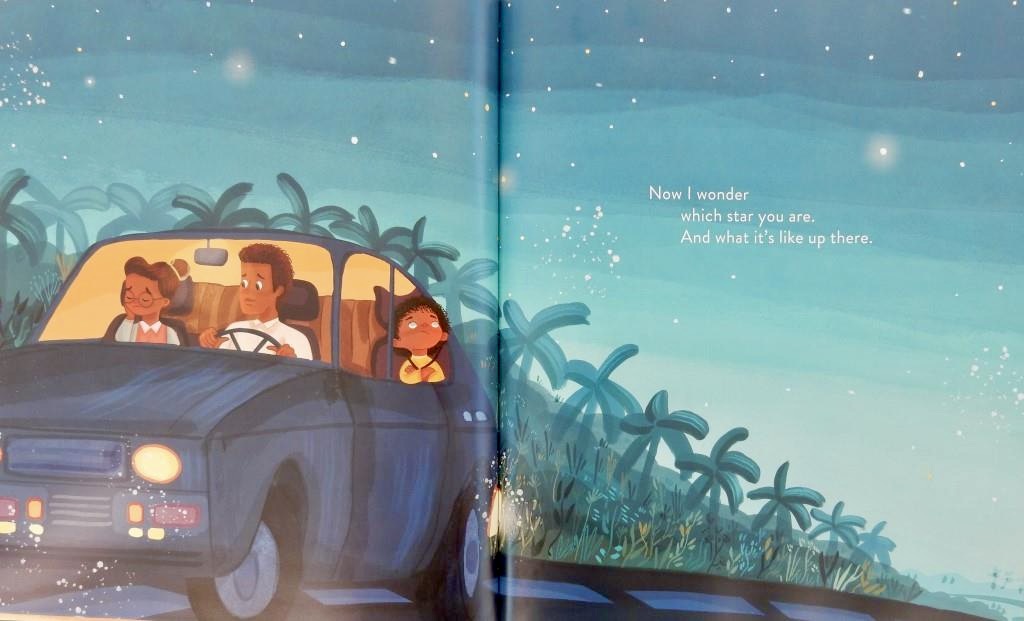
The adult in this rhyming story decides that it’s time she and her child start by plunging themselves into darkness, holding hands and venturing outside for a real life adventure. Wow! In the night sky the moon becomes a massive pearl surrounded by stars shimmering like diamonds.

We join the two as uninhibited, they skip, splash, dance, swish and run through puddles and tall grass, into the woods where they pause for a while. Fireflies put on a magical show just for them

and then off the pair go, out of the woods and onto the seashore just as the sun begins to rise heralding the dawning of a new day – just as it does always.

Back through the streets already busy with the morning rush they go, aware that those around them are as distracted as ever by those flickering screens.

Nicola Edwards’ lyrical text and Jenny Bloomfield’s arresting illustrations convey a vital message to children and adults in this heartfelt, uplifting book. I hope it reaches a wide audience.

Blackbeard’s Treasure

Blackbeard’s Treasure
Iszi Lawrence
Bloomsbury Education

This is a swashbuckling adventure set in the Caribbean in the early eighteenth century and features real pirates.

Eleven year old Abigail Buckler lives with her father, a plantation owner; she’s being brought up as a young lady wearing the finest clothes and isn’t allowed to play in them or go out alone. Abigail is resentful of the fact that Boubacar, a young slave who is being trained as a clerk, gets more of her father’s attention than she does. 

However all that changes when pirates attack, slaying Major Buckler. Abigail starts to question everything she has come to understand about right and wrong, and ultimately about family, as she and Boubacar embark on the Salt Pig, a ship crewed by pirates and bound for Nassau.

Abigail makes some highly unlikely friends, a surprise revelation is made about Boubacar and both of them face numerous life-threatening situations and ups and downs in their relationship during the next two or three months, with Abigail having to take a number of difficult decisions. 

Will she and Boubacar be able to hang on to their very existence?

What a dazzling cast and where there are pirates there must surely be treasure somewhere; or is there? ARRRR! that would be telling.

This tale will have you on the edge of your seat as the plot twists this way and that, while at the same time providing a wealth of historical detail about the Atlantic slave trade, the damage caused by empire and the human losses resulting from the provision of such luxuries as sugar and tobacco to Europeans.

The Bookshop at the Back of Beyond

The Bookshop at the Back of Beyond
Amy Sparkes
Walker Books

This third adventure in the House at the Edge of Magic series sees the travelling house in the magical land of Beyond where Nine, wizard Flabbergast and companions have come to look for Dr Spoon’s partner, Professor Dish.

Their search takes members of the party into various shops; all must be visited and something bought at each one. The shopkeepers are often less than helpful and some shops seem never to be open, most notably the bookshop.
Add to all his the fact that Nine is determined to unearth the secrets her mother left behind. She has a guilty secret too; both Flabbergast and witches also have secrets. Power-craving Aunt Ophidia is determined to get the secret formula that Dish and Spoon have been working on but the others from the magic house are frustrated by the continued non-opening of that bookshop. A showdown seems inevitable.

The entire story fizzes and zizzes with madcap magical happenings and mayhem as the fast paced plot zigs and zags. Amy Sparkes’ world building is superb as ever and I love the way her characters develop in this one. It’s altogether weird and utterly wonderful including Ben Mantle’s cover illustration.

Read this to a KS2 class and they will be entranced.

Monster Hunting: Monsters Bite Back

Monster Hunting: Monsters Bite Back
Ian Mark, illustrated by Louis Ghibault
Farshore

In this second of the zany adventure series, Jack, his best friend Nancy and grumpy, 200-year-old monster hunter Stoop, head off to Scotland where certain monsters are misbehaving.If you’ve read Monster Hunting for Beginners you will know that when monsters start doing that, it’s the job of monster hunters to sort them out.

The monsters in Scotland are causing trouble and making life extremely difficult for the Sisters of Perpetual Misery, the nuns who reside in the ancient Muckle Abbey.

Said nuns have such apt names as Nun the Wiser, Nun Whatsoever, None of This, None of That, Nun of the Above (what fun the author must have had inventing those and others). If they move from their home, which just happens to be above the underworld, it will be THE END OF THE WORLD AS WE KNOW IT.

This task is fraught with obstacles including discontented ghosts, fog goblins, strange loch monsters (maybe they’ll even encounter Nessie) and a newly established and hence rival, hunting agency, which Nancy may or may not join. Not to mention dodgy bowls of cabbage.

Can our favourite monster hunters save the day and hence, the nuns? I truly wish them the beast of Loch with this challenge.

Enormous, or rather monstrous, fun, which is added to by Louis Ghibault’s hilarious illustrations, plus the intermittent lessons about monsters provided throughout the story.

We Are Love / Don’t Mix Up My Dinosaur

These are two new titles from Little Tiger – thanks to the publisher for sending them for review

We Are Love
Patricia Hegarty and Thomas Elliott

Animal parents furry, wrinkly, scaly and feathery invite little humans to watch their demonstrations of love for their offspring. Whether it’s leaping squirrels, plodding pachyderms, diving dolphins, waddling penguins or whatever, we can find loving care in a multitude of places. Young children will be reassured to see that the final pages show a mother and her small child showing their heartfelt love for one another.

A clever cutaway design feature enables the second of the two spreads allocated to each loving parent and little one, to show them coming together to form a heart shape. 

A simple rhyming text that flows nicely and Elliott’s textured illustrations of the featured creatures make for a reassuring lap book or bedtime book to share with the very youngest, some of whom may notice that there are other unnamed animal pairs in the background also forming heart shapes and even some minibeasts forming hearts with their wings.

Don’t Mix Up My Dinosaur
Rosamund Lloyd and Spencer Wilson

Five dinosaurs provide tactile fun in this matching game of a book. By turning the wheel little ones can help Triceratops find her missing horn; enable Ankylosaurus to get back his lumpy, bumpy club, make sure Velociraptor and her fluffy tail are reunited, 

put Parasaurolophus’s crest where it should be and put Spinosaurus and her scaly tail together again.

The wheel is easily moved by little hands and young children will enjoy meeting the various brightly coloured dinosaurs – in their correct or mixed-up forms. They’ll also enjoy learning (and trying to get their tongues around) their correct names; these are provided on the back cover though not in the simple repetitive text. Interactive, inventive and appealing.

Maths Words for Little People: Shapes / Sums

Shapes
Sums

Helen Mortimer and Cristina Trapanese
Oxford Children’s Books

These are titles in the Maths Words For Little People series that aims to develop young children’s confidence in mathematical vocabulary and early maths concepts.

Set indoors, Shapes begins by affirming that our everyday lives are full of different shapes – both flat and solid. Some are made of straight sides and corners whereas others – curved shapes – have no corners. (Examples of each are given.)

Various kinds of pattern are depicted, as are shape sequences and tessellation.

A simple explanation of solid shape with several examples in varying sizes comes next, followed by a look at (bilateral) symmetry and finally there are a few questions for young children to answer. For adult users are ten suggestions for getting the most out of the book; and the final page has a brief glossary.

Using a similar structure, and a garden setting, Sums has spreads on more and less, add and take away, and part and whole.

A variety of arrangements of five objects (seeds) is presented and little ones are encouraged to count each set. Counting on and counting back are introduced along with a number line for some practice,

followed by a spread with ladybirds that focuses on the +, – and = signs. The notion that order matters in subtraction but not in addition is demonstrated and then we meet zero and how it has no bearing on the answer if zero is added or subtracted.
Daisy patterns are used to explain number bonds for five and the last spreads follow the same structure as Shapes.

Visually attractive, with fun characters and written in an engaging manner, these little books are ideal for one to one sharing at home and should help young children be more mathematically assured in a nursery or other early years setting.

Word Trouble

Word Trouble
Vyara Boyadjieva
Walker Books

Starting somewhere new is often stressful but when everybody else speaks a different language it is likely to be much more difficult. So it is for Ronnie who has just moved to a new country.

Despite his parents’ efforts to equip him with some basic English vocabulary, his attempts at communication when his nursery teacher asks Ronnie to introduce himself are less than perfect. Sadly his classmates seem unwelcoming and Ronnie is upset that everybody giggles at him.

Back home he recounts what has happened to his mum and dad who do their best to reassure him.

The next day begins well and the other children want to get to know Ronnie better, but due to his lack of vocabulary he is unable to respond appropriately to their questions, leading to further confusion and leaving Ronnie as despondent as ever.

A trip to the park with Dad after school opens the way first to some non-verbal communication and then joyous laughter. It’s this laughter that leads Ronnie not only to the beginnings of friendship,

but also a realisation that both laughter and kindness are universal languages.

Illustration too is a universal language as Vyara Boyadjieva shows in her empathetic portrayal of Ronnie’s feelings and the challenges of being in a new country.

Ultimately uplifting, this sensitive debut picture book deserves to be in all early years and foundation stage settings.

Frank and Bert :The One Where Bert Learns To Ride A Bike

Frank and Bert :The One Where Bert Learns To Ride A Bike
Chris Naylor-Ballesteros
Nosy Crow

Chris Naylor-Ballesteros’s bear, Bert and fox, Frank, return in a new story again narrated by the latter.

The two pals would dearly love to go on a ‘big bike ride’ but as we see, although things start off satisfactorily, it’s not long before Bert gets the wobbles and something goes wrong.

However one day with Bert claiming that he’ll be just fine, they set off together once more. After a while those wobbles start and oops … 

Frank’s not giving up that easily though and he comes up with a supportive idea … or perhaps not.

Can Frank manage to think up something very special to help his best friend get back into the saddle again? And if so, can the two of them get all the way up to the top of that steep hill and safely down again without a disaster?

With its fun final twist, Chris’s story shows friendship at its best – understanding, trusting and ever patient.

Giggles galore guaranteed when you share this comic combination of words and pictures. I love the measured use of florescent colour and the unspoken commentary on Bert’s efforts provided by the bit part players.

I look forward to further episodes starring this delectable duo.

The Octopus, Dadu and Me

The Octopus, Dadu and Me
Lucy Ann Unwin, illustrated by Lucy Mulligan
uclan publishing

Twelve year old Sashi’s Dadu (grandfather) has dementia and it’s getting worse. He becomes agitated suddenly, sometimes violent, and now doesn’t recognise his family. So, after a very difficult visit to the care home where he lives, Sashi’s Dad has come to a decision: no more visiting.

Sashi is devastated and her relationship with her Mum and Dad becomes increasingly strained: They just don’t seem to understand how she feels or even want to listen to her. Surely they realise what a very special bond she and Dadu (an erstwhile engineer) have built up over the years: how can they not see this decision as a betrayal of that loving relationship, Sashi wonders.

Endeavouring to make her feel better, her parents take Sashi to the local aquarium and there she encounters Ian, an octopus. Like her Dadu, Ian seems trapped in the wrong place, She decides the creature is indicating to her that it wants to be set free. She begins to channel all her feelings into planning so to do and she enlists the help of two really good friends, Hassan and Darcie.

This compassionate debut story shows a girl using her creativity and imagination to help her process her feelings about Dadu

and her character feels totally credible.

Lucy Mulligan’s black and white illustrations capture Sashi’s creativity in drawings of some of her comic strips and other art.
Prepare to be engulfed by the tentacles of this book from the outset and have a box of tissues at the ready as you read.

Ways to Say I Love You

Ways to Say I Love You
Madeleine Cook and Fiona Lee
Oxford Children’s Books

The opening lines of Elizabeth Barrett Browning’s sonnet 43 How Do I Love Thee? sprang to mind as I read this picture book, which is a celebration of love, and in particular familial love. Madeleine Cook explores some of the multitude of ways love is expressed: it might be the tender, gentle way in which a parent holds a baby or tiny child; perhaps it’s a caress; a shared experience of the natural world when out for a walk. Sometimes it’s being there with a hug when a child is upset, or a playful tickle at feeding time and a book shared at bedtime.

Being shown love helps a small child to develop self belief and the confidence to forge a path in life. Those things come when love is shown by a listening ear and a readiness to talk things over; also through helping a youngster to learn basic life skills, as well as being supportive when a child takes an important big step such as starting nursery or school.

Those who are shown love from the outset are most likely to be loving towards others as they become more independent; love is a choice and a decision. But one thing is certain, love is conveyed differently by countless different people and that is portrayed so well in Fiona Lee’s diverse characters.

Could it possibly be that love has the potential to bind us all together – if only …

This hug of a book is a delight to share.