Sunny and the Birds

This image has an empty alt attribute; its file name is dscn9572-2.jpg


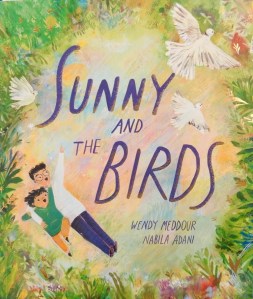
Sunny and his family have only recently moved to a new country. Almost inevitably there are things his dad misses. Every evening when they watch the birds through the window and Danny’s father asks him if he can name them, Dad’s response refers to similar ones “back home”. His son’s reply is “But this is our home!”

This image has an empty alt attribute; its file name is dscn9573-2.jpg

It’s evident that Dad doesn’t yet feel at home where he now is. In the middle of the night both Sunny and his Dad are wide awake and the boy acknowledges his father’s sad feelings.


This image has an empty alt attribute; its file name is dscn9574-2.jpg

After school the following day, Sunny’s Nanna meets him and the boy asks if they can go and buy Dad a present – a surprise. Can his bird-related plan help his father begin to feel at home in this new country?


As always Wendy Meddour’s story is written with great sensitivity. Presenting what for many immigrant families is a challenging time, she shows how with love, support, kindness and nature’s healing power, the process of adjustment to a different life can begin.


The richness and beauty of the natural world – real and remembered – is elegantly captured in Nabila Adani’s misty illustrations and you can read the changing emotions in her portrayal of the two main characters.


With more and more schools having immigrants as part of their community, this book would help children understand how newcomers might be feeling. Share at home, share in the classroom and invite listeners to participate in discussion, whatever the setting.

Dirty Bertie: Splash! / Dirty Bertie: Mighty Mishaps / The Trapped Puppy

These are additions to popular young fiction series – thanks to publishers Little Tiger for sending them for review.

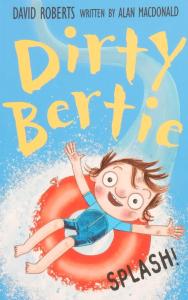
Dirty Bertie: Splash!
David Roberts, illustrated by Alan MacDonald

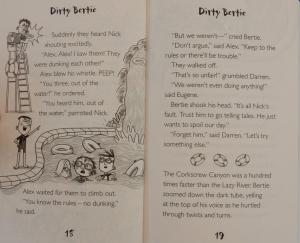
This is Bertie’s 35th set of escapades and some people will be surprised that he’s still as full of crazy ideas as ever. In the first Bertie and pals, Darren and Eugene are finally being treated by Bertie’s mum to a visit to Splash City, the new waterpark. However they hadn’t reckoned on arch enemy Know-All Nick also being there and worse still, Nick’s cousin, Alex is one of the lifeguards. Alex is quick to point out the set of rules that must be obeyed or serious consequences would result.

Can the three friends still have the fun time they’d anticipated, that is the vital question.

Moggy! sees the three friends, aided and abetted by Whiffer, searching high and low for neighbour, Angela Nicely’s missing moggy, Pusskins, with a reward of £50 on offer to the finder. Eventually they find what Bertie is sure is Angela’s cat but it turns out to be a case of mistaken identity. Somebody else has found Pusskins; but who and what happens to the promised reward?

In Breakdance! Miss Boot announces that to celebrate the school’s seventy-fifth anniversary, Class 3 will dance for the parents – and rehearsals get under way immediately. Bertie is determined not to participate and comes up with a clever plan. It turns out there’s more than one way of Breakdancing: game, set and match to Miss Boot.
Ridiculous as ever, but that’s what makes these stories such fun.

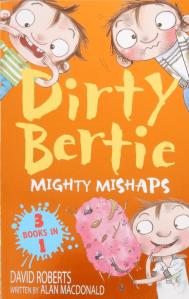
If readers have missed previous high jinks of the Bertie kind, the publishers have recently released another single volume bind-up Dirty Bertie: Mighty Mishaps: containing Yuck!, Loo! and Toothy!

The first contains episodes wherein Bertie turns green at the fair, causes mayhem while dressed in his costume for Victorian Day and teaches a toddler her very first word, “Bum”.
Loo! presents a toilet emergency on the way back from a school outing; a sandcastle competition that is nothing but a damp squib; and the possibility of a house move, something Bertie will do his utmost to prevent.
Toothy! has Bertie suffering from severe dentist-itis; jetting off on holiday and having loo queue trouble during the flight and finally, some ice-cream issues of the worrying kind.
Bertie is one of those characters who, despite everything he does, is a real charmer.and all the books are great promoters of the vital ‘reading is fun’ message.

The Trapped Puppy
Holly Webb, illustrated by Sophy Williams

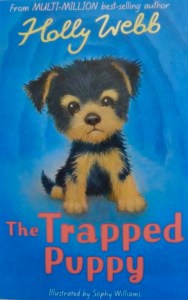
Amelia, her parents and older brother are out walking on the rocky hillside with their dogs, Mickey and Poppet. Amelia throws a stick for Poppet to retrieve, slips over and is a bit dazed. Coming too she realises that Poppet has disappeared but nobody noticed what happened to the puppy. They spend some time looking but with dusk descending they return home hoping to discover Poppet waiting for them. However, the puppy has fallen down an abandoned mineshaft and is unable to get out.

The following morning the search resumes, with the aid, later on of some Mountain Rescue volunteers. Eventually they hear scuffling sounds from underground. Now all they need is to work out a way of extricating little Poppet safely.

The narrative switches between the view point of the rescuers and that of Poppet, which keeps readers on tenterhooks and there are some tense moments – Sophy Williams captures several in her illustrations, but the rescue team are determined. Will Amelia go home with her beloved puppy?

An exciting addition to Holly Webb’s hugely popular puppy series.

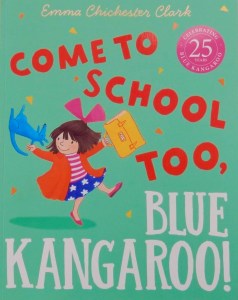
Going to Big School / Come To School Too, Blue Kangaroo!

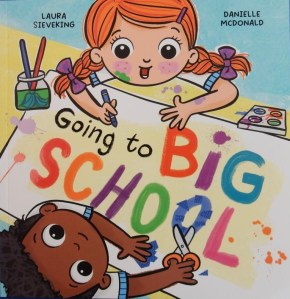
Told alternately from the perspectives of Ava and Jack, this is an account of their first day at ‘big’ school.
Ava, is excited, enthusiastic and has butterflies fluttering in her tummy, Jack, in contrast is shy and nervous; he has moths flapping around in his tummy. On arrival in the noisy playground, Ava is eager to get involved whereas Jack hangs back, upset by the busyness. Happily however, the kind reception teacher, Miss Moloney notices Jack’s shyness and whispers to him that everybody – she included – has first day nerves.

As we follow the two children through their first day we see how they react differently – at story time, 

fruit time, during a colouring session, at lunchtime and during the afternoon of free play: there’s no sense that one set of reactions is right or wrong (better or worse). By hometime, Ava’s actions have helped Jack feel more relaxed 

and they both depart as happy friends, eagerly looking forward to tomorrow.

The author includes things that by their very newness, might be a challenge for young children – a big, round hat and a lunchbox with clips so stiff they require the help of a buddy to open, both of which are shown in Danielle McDonald’s bright, inclusive illustrations. Whether or not children are moving from a preschool setting or going straight into a reception class, this book will reassure them that the going to big school milestone will be unique for them all, and that everything will be fine.

This is the ideal book for children about to start a new school and with its brilliant, wonderfully warm art and enchanting telling, it remains my very favourite starting school story.

Blue Kangaroo’s owner, Lily is off to a new school and decides to take Blue Kangaroo too. Ready with new bags, both child and toy anticipate the big day: Blue is excited about school – the fun things to do, the friends waiting to be made and new experiences. Lily on the other hand is worried that Blue might be frightened about getting lost, or feel too shy to talk to anybody.

Having been greeted warmly by her teacher, Lily is soon happily engaged in the busy school day, 

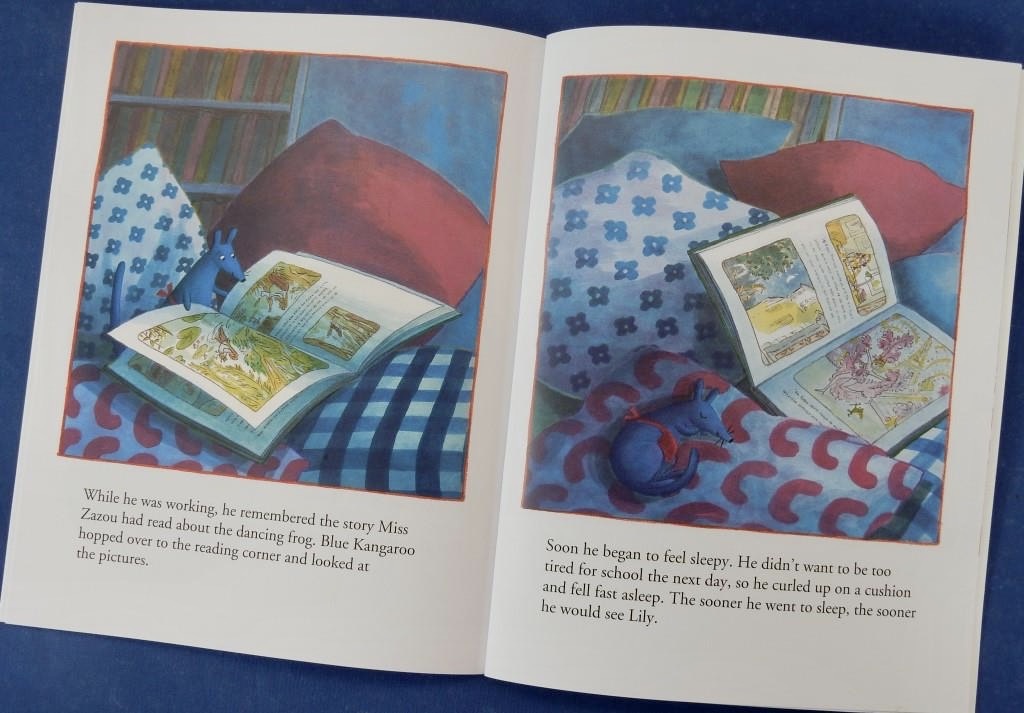
and Blue watches thoughtfully from the windowsill as Lily enjoys painting, playing and joy of joys – story time. 

Come hometime, Lily is so excited about her day that the almost inconceivable happens: Blue Kangaroo is left at school all by himself . However, his sadness quickly gives way to happiness because now he can do all the things Lily did during her fantastic school day including reading Quentin Blake’s dancing frog story. 

He also leaves a surprise for everyone to discover the following morning.

It’s so clever the way the author makes Lily express her anxieties and fears about starting school by putting them onto the unworried Blue Kangaroo.

The Ocean Gardener

The Ocean Gardener
Clara Anganuzzi
Little Tiger

The author/illustrator of this book was raised in the Seychelles where this tale is set.
Ayla and her mum’s beautiful island home is surrounded by a coral reef and one morning while out swimming with her mum, Ayla notices that as she goes further out, something is wrong: the colours of the coral are faded and the fish are disappearing.

The girl is upset and asks her mum why these things are happening. Surely it can’t be too late to save this wonderful part of the ocean’s eco-system.

Fortunately, Mum, a marine biologist, has a plan and the very next day she and Ayla start working bringing tiny pieces of coral from the sea into their home and so begins operation coral reef rescue. It’s a lengthy process and eventually after some time Mum decides the coral growths are ready to return to the ocean and they create their ocean garden.

That place is Ayla’s destination each day for what feels like forever; she tends to the coral and awaits the return of the fish until at last …

Clara Anganuzzi’s gorgeous illustrations capture so well the beauty of the coral reef and at the same time present the highly complex issue of global warming in a positive manner that will appeal to young readers, while also offering hope that the work of marine biologists such as Chloé Pozas, whom we meet after the story in a spread giving more information about coral nurseries, can restore these precious parts of our oceans’ ecosystems.

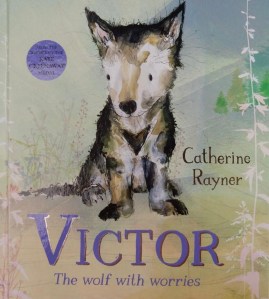
Victor, the Wolf with Worries

Victor, the Wolf with Worries
Catherine Rayner
Macmillan Children’s Books

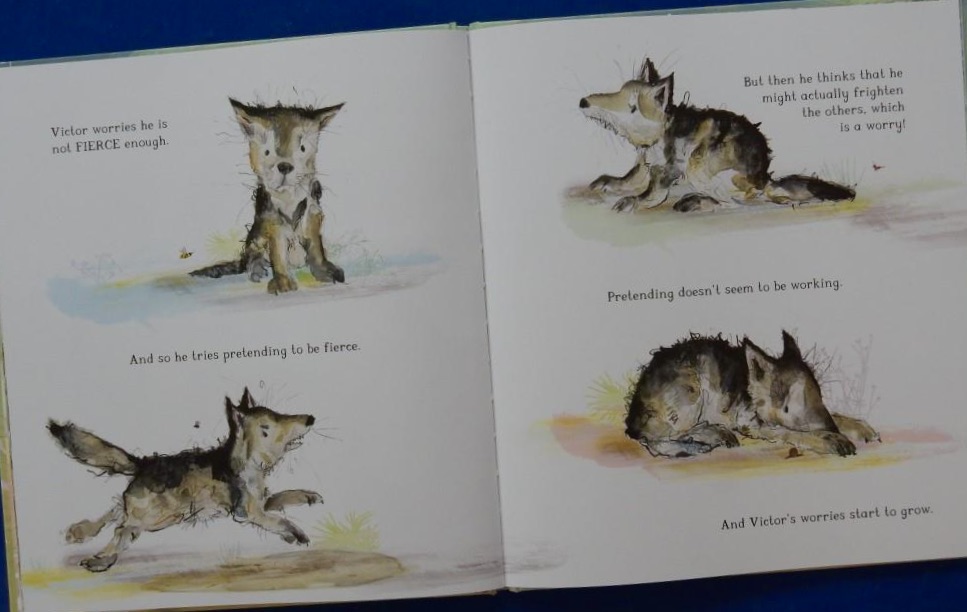
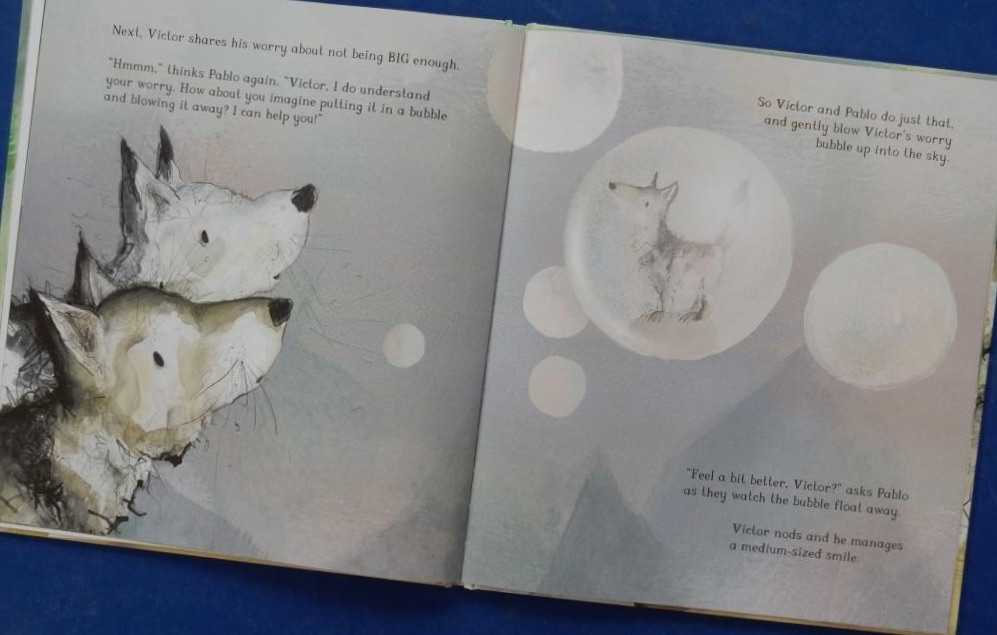
Victor is a young wolf beset with worries: he worries about almost everything. He considers himself to be not ‘wolfish’ enough, not brave enough, not big enough, nor fierce enough, so he resorts to pretence.
However this leads to worries about how his shortcomings will impact upon other wolves; for example if he attempts to act fiercely, he could end up accidentally frightening his fellow wolves. And so his worries just keep on growing.

Fortunately, Victor has a best friend, Pablo. Empathetic Pablo notices Victor looks worried and with his help and understanding, and some coping strategies, Victor’s worries gradually recede. He begins to feel braver, bigger, fiercer and increasingly wolfish.

Not only does Victor’s anxiety wane but he also learns something else important: he is not the only one who worries about these things, so too does Pablo and all their fellow wolves.

As it is with wolves, so it is with humans. The practical ways Victor was shown to handle his anxieties, are equally effective with young humans, and not so young ones, so this story offers an ideal starting point to help children deal with issues affecting their mental well-being.

In Victor and indeed Pablo, Catherine has created hugely engaging characters with wonderfully expressive eyes. Those winsome wolves stunningly portrayed in her ink and watercolour illustrations will surely win the hearts of any reader or listener.

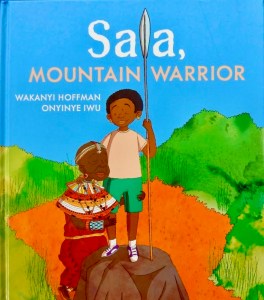
Sala, Mountain Warrior

This image has an empty alt attribute; its file name is dscn9570-2.jpg


Sala, Mountain Warrior
Wakanyi Hoffman and Onyinye Iwu
Otter-Barry Books


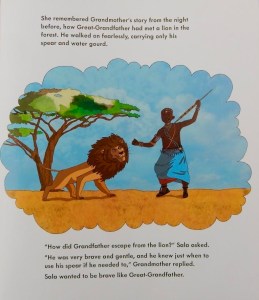
When Sala sees a poster announcing a school camping trip that involves climbing a mountain near her Grandmother’s village, she’s excited at the prospect but also rather worried. Nevertheless, with her Grandmother’s stories, encouragement and a week’s preparation, she registers for the climb – the only girl to do so. She wants to be brave like her Great-Grandfather.

This image has an empty alt attribute; its file name is dscn9571-2.jpg

Before the climbers leave, her Grandmother gives her a water gourd as a good luck present and after a long journey in the school bus, they reach the bottom of the mountain. There they make their base camp.


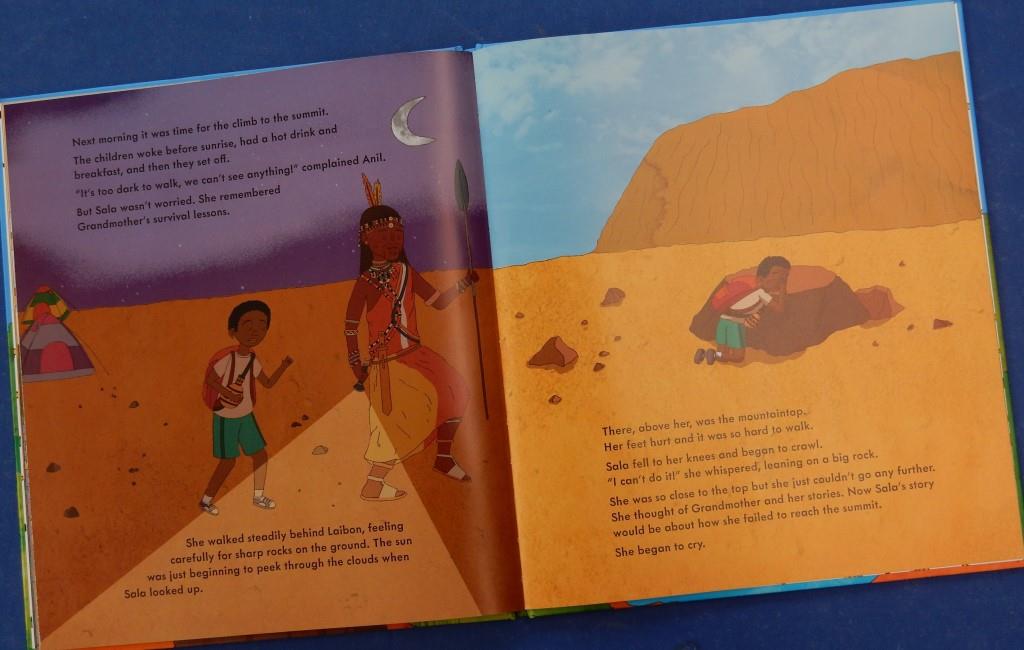
Early the following morning their mountain guide. Laibon, leads them on the first stage of the climb, which they do by afternoon. Next day , the climb is harder work and not everyone reaches the third campsite. Sala perseveres despite feeling a bit shaky and eventually gets to the field of ‘Forever Flowers’ as Laibon calls them, showing the girl his beads and giving her words of encouragement. That night Sala’s dream is of those pink flowers, but all too soon it’s time for the last leg of the climb. Setting off before sunrise, Sala starts to doubt herself.

This image has an empty alt attribute; its file name is dscn9561-2.jpg

Can she make that final push? Yes, with a special something given to her by Laibon.
Back at base camp after their descent, the climbers are greeted by the entire party and somebody unexpected is there too, with something extra special for Sala.


Author, Wakanyi Hoffman’s uplifting present-day story was inspired by her childhood memories of spending school holidays in the foothills of Mt. Kenya where her grandmothers passed down their indigenous knowledge and wisdom through the telling of stories. Onyinye Iwu (you will likely recognise her name if you’re familiar with the Too Small Tola tales) illustrates the text with a colour palette that captures the natural hues of the setting, the intricacy of the Samburu peoples’ beaded accessories and the feelings of the climbers, especially Sala.


An empowering book that deserves to be in every primary school collection.


Princess Minna: The Best Princess / Dragon Storm: Skye and Soulsinger

Both these books are additions to Nosy Crow series that are hugely popular with fantasy loving newly independent readers: thanks to the publisher for sending them for review

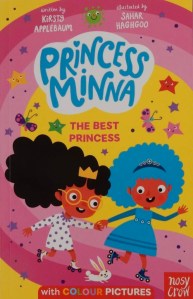
Princess Minna: The Best Princess
Kirsty Applebaum, illustrated by Sahar Haghgoo

For those not familiar with Princess Minna, she lives in Castle Tall-Towers with the King and Queen, wizard Raymond and Lorenzo, the princess’s best dragon friend. Princess Minna loves to sort things out when something isn’t right in the kingdom and she also loves to hear her magic mirror say that she is the best princess of all.

One day though, when she asks the mirror her usual question, she is first puzzled and then very upset at its response: “Well, at the moment, Princess Sky-Blue is the best princess in all the kingdom.” Said princess is apparently on holiday in Princess Minna’s kingdom. Time for the resident princess to put her sorting out skills to use and get rid of this visitor.

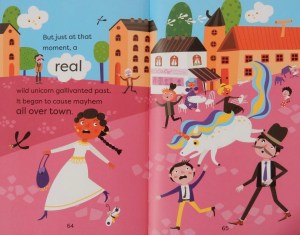
Little does Princess Minna know however, that the rival princess also has a number of special skills for sorting things out and she is able to counter each of the brilliant ideas Princess Minna tries with one of her own. It’s only when a unicorn emergency suddenly hits the town that Princess Minna realises that she must reveal what she’s being trying to keep hidden from Princess Sky-Blue.

Will she be happy with what happens thereafter? Let’s just say that those doves are once more swooping around Castle Two-Towers, which once again has that delightful aroma of tutti-frutti ice cream.

These stories are deservedly popular with young first-chapter book readers and her latest adventure will win Princess Minna many more fans as well as pleasing her established followers.

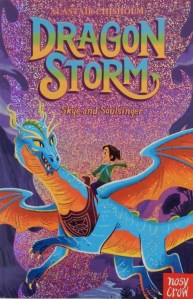
Dragon Storm: Skye and Soulsinger
Alastair Chisholm, illustrated by Eric Deschamps

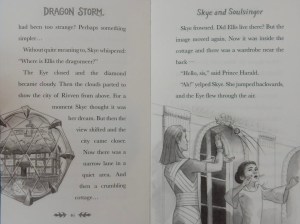
When Princess Skye returns to Riven, she discovers changes are afoot in the city. Quickly she learns that the kingdom of Draconis is under attack from two previously friendly kingdoms and the king himself has been hurt by dragons. As a result citizens of Draconis are preparing to go to war with the Dragonseer Guild. Skye though, is against the war and knows there is no threat from the Guild. So, when her brother is at a meeting, she creeps into Prince Harald’s room, locates the Dragon’s Eye and asks a question of it.

However, she is discovered in the act by her returning brother and has to postpone her anti-war plan until later. This she then sets in motion with the help of her friend and maid, Moira, eventually finding herself face to face with Mira.

Before long Skye meets Lady Bernie and is told that she’s a dragonseer whose dragon is Firedreamer, about which the princess has serious doubts, doubts which are later justified. Eventually with the danger of dragons disappearing for ever, thanks largely to her brother’s reckless warmongering deeds, Skye brings about a transformatory action and there before her is Soulsinger, her dragon.

How this story ends, I won’t divulge, but with Alastair Chisholm’s exciting storytelling and Eric Deschamp’s splendid illustrations, it will surely satisfy readers.

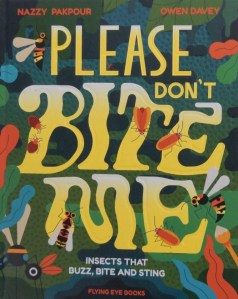
Please Don’t Bite Me!

Please Don’t Bite Me!
Nazzy Pakpour and Owen Davey
Flying Eye Books

With a partner who can’t walk more than twenty metres without stopping to examine the vegetation for insects in various stages of metamorphosis – complete or incomplete – Nazzy Parker explains the difference – I was I suppose, predisposed to be interested in the contents of this book. It introduces readers to six varieties of insect pests, mosquitoes, lice, wasps, cockroaches, fleas and bedbugs; the very names, excluding wasps, make me want to squirm.

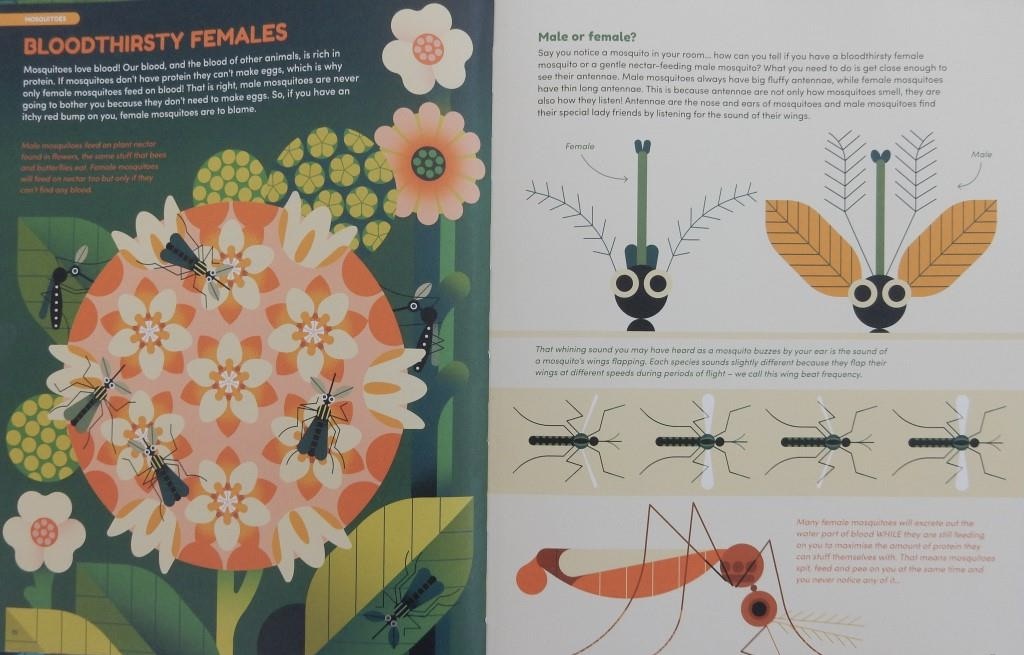
Pakpour starts by defining insects and the scientists who study them after which three or more spreads are devoted to each of the aforementioned pests. She describes their appearance including the difference between males and females, their impact on humans and how they find us, their habitat – I was intrigued to discover that mosquitoes are found everywhere except Antarctica and Iceland where it’s too cold for them to survive, and that it’s only the females that bite.

We also read about their habits and their development from egg to adult. Mosquitoes, wasps, and fleas undergo ‘complete’ ie four stage metamorphosis, whereas lice, cockroaches and bedbugs have a three stage, or incomplete metamorphosis.

Can you believe that there are more than 5,000 different kinds of lice, each kind being specific to the kind of animal it feeds on. Those that feed on humans spit saliva that can take as much as thirty days for us to develop an allergic response to. Weirdly though the very mention of a child in one of my classes having headlice has always made me start itching round my hairline straight away.

As for cockroaches, I will never forget the sight of an enormous one crawling across the pillow of our room in one of Jaipur’s five-star luxury palace hotels; it certainly didn’t get a five star review from me despite the fact that so we are reminded herein, the creatures don’t actually feed on human blood.

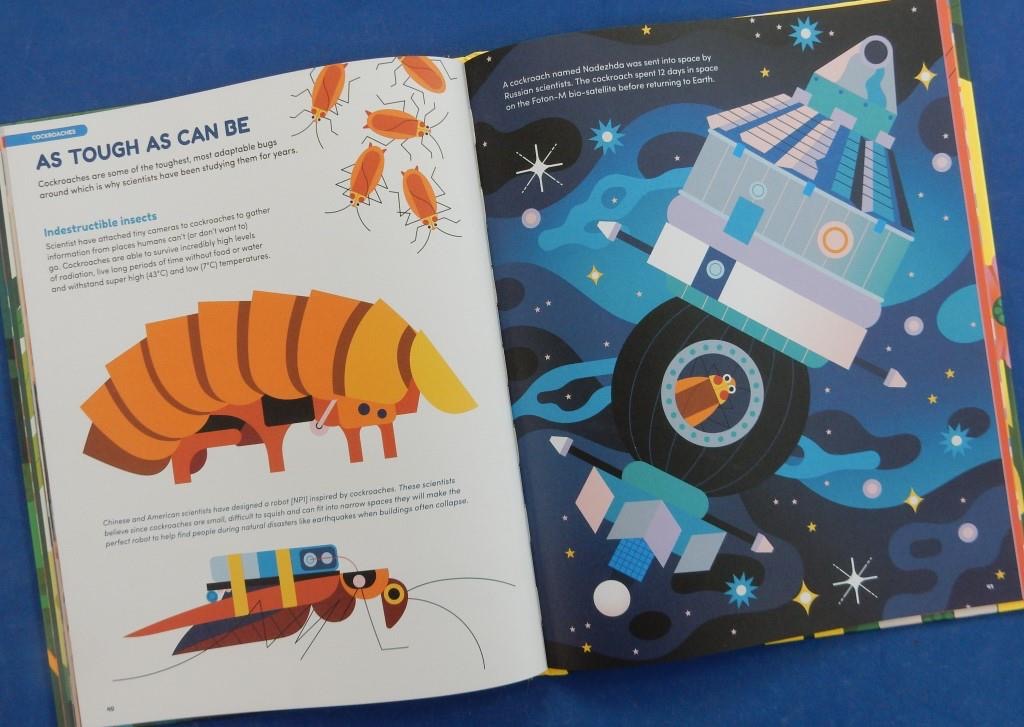
The author provides lots of fascinating snippets of information including that Chinese and American scientists have designed a robot inspired by cockroaches and that Russian scientists sent a cockroach into space for twelve days on a bio-satellite.

Probably though what is most important is the role of various insects in the world’s ecosystem; this is assigned the book’s final paragraph.

Owen Davey’s stylised, stylish illustrations work really well with biologist, Nazzy Pakpour’s text. Not the first book one would go to for general information about insects but a thoroughly engrossing one nonetheless.

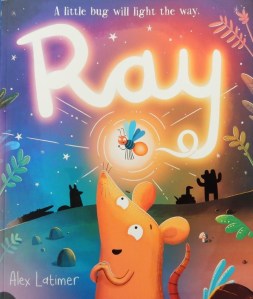
Ray

Ray
Alex Latimer
Oxford Children’s Books

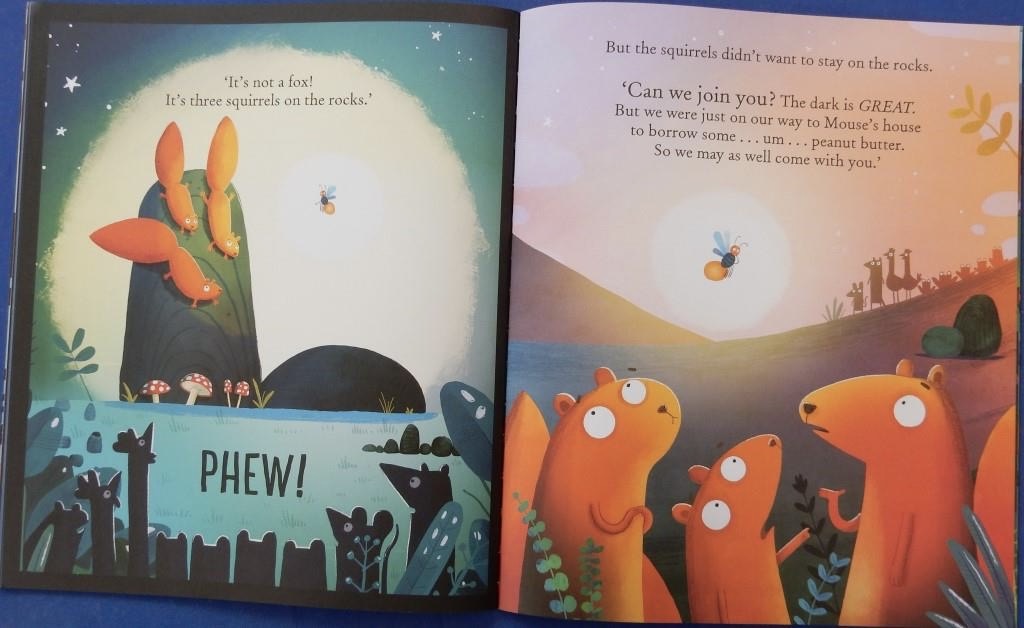
Such were the delights of Mouse’s walk that the little rodent failed to notice the lateness of the day.
After the sun has disappeared he sits alone frightened at the prospect of going home in the dark. Then from within a flower, there comes a glow and from it emerges a firefly; she introduces herself as Ray and offers to light Mouse’s way home. A grateful Mouse accepts but denies being afraid of the dark and off they go.

Mouse follows his guiding light but suddenly stops at the sight of a shadowy shape – ‘a snake’ coiled ready to strike, he thinks. Fortunately he’s mistaken and Meerkat, also not afraid of the dark, joins the travellers. After a while there’s a cry of “A bear! We’re done for!’ Ray investigates and informs her followers, it’s a pair of hens roosting . As you might expect said hens are not afraid of the dark either and off they go again, Mouse, Meerkat and two hens led by Ray until …


The journey continues with the addition of five green frogs and three squirrels, all of which have ‘reasons’ for joining the entourage, and each being welcomed by the words “Of course, … I’m Ray and I’ll light your way.’

Eventually in front of them a lion shadow looms large. Now Mouse, well used to being bamboozled by shadow shapes says, “ … that’s not a lion at all! That’s my home.’ He tells Ray to illuminate the shape, which she does.

Here our story takes a sudden dramatic turn … confessions re the dark are forthcoming and then a certain firefly proffers her oft repeated promise once more.

Deliciously tongue-in-cheek, Alex Latimer’s travellers’ tale will de-light young listeners, as well as adult readers aloud who will be amused at the excuses given by various animals for wanting to be led by Ray’s light. I have no doubt Alex Latimer had great fun creating his shadow shapes and he might well inspire children to experiment with a black crayon, paint, oil pastel or even play around cutting black paper.

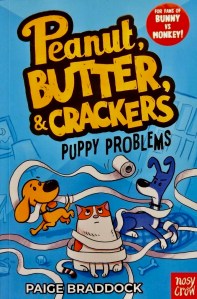
Peanut, Butter & Crackers: Puppy Problems

Peanut, Butter & Crackers: Puppy Problems
Paige Braddock
Nosy Crow

Butter (a cat) and Crackers (a dog) are rescue animals living a life of harmony – more or less – until their human brings home a large box containing not snacks aplenty as they’d hoped, but Peanut, a puppy. Said puppy pees in such inappropriate places as beside Crackers’ water bowl – not the thing to do to a sensitive, considerate home loving dog – especially when the pup then proceeds to drink from the bowl and gobble up Crackers’ favourite crunchy food. If that’s not bad enough, young Peanut keeps both Crackers and Butter up at night and then has the audacity to demolish half of Crackers’ breakfast before the dog has surfaced after a decidedly delayed sleep. The little mischief then upends the rubbish bin leaving the contents strewn across the floor.

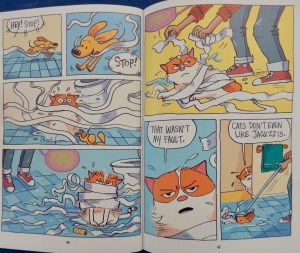
My favourite part was Butter introducing the toilet as a jacuzzi and demonstrating how it works; we end up with loo paper strewn across the bathroom floor and wrapped around instigator of the incident. 

This is followed by chewed trainers, a chomped cushion and dare I say, shredded books.

Back comes the human: now surely such has been the puppy’s behaviour it will mean farewell to him but all that happens is a finger wagging, not even a raised voice. Something must be done and done it is, accidentally on purpose by Butter, at night and it results in the Peanut being alone and lost in the dark. 

This could be the time when, for the two long-time residents, compassion kicks in. Can the three find a way to co-exist so all ends happily in this first book in a series of highly humorous graphic novels?

Paige Braddock’s action-packed illustrations together with the affable banter between Butter and Crackers make for an ideal comic book style starter that younger readers will love, be they or be they not, pet lovers. (An author’s note explains that Peanut, Butter, and Crackers are based on her real life pets; she also provides introductory character information and a pictorial map of the setting.)

This Is a School / Two Wheels

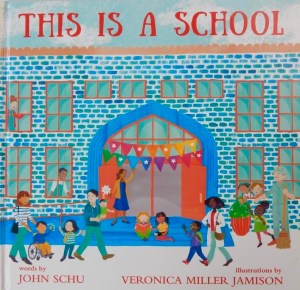
This Is a School
John Schu and Veronica Miller Jamison
Walker Books

Debut picture book author John Schu and illustrator Veronica Miller Jamison present a school that I would happily teach in or send a child to. In fact it’s much more than a place of learning, or rather perhaps it’s a place of learning in the very broadest sense. What we have here is a community with children at its heart; the very first sentence, ‘This is a child.’ speaks volumes to me, indicating this is somewhere where youngsters are helped to flourish in the broad sense. Children’s experiences lead to growth and transformation – their questions are welcomed

and their mistakes are seen as a vital part of the process of learning. Everybody herein, children, teachers, librarians, other staff, head teachers, helpers and visitors are valued and trusted too: and every single member of this community helps in the creation of its ethos.

This splendid celebration of a school is assuredly one to share with newcomers on their very first day. The illustrations, created in vibrant watercolour, acrylic and digital collage media match the upbeat tone of the writing, both combining to convey a vital message.
Would that all primary schools were more like the one herein.

A considerable amount of learning also takes place in

Two Wheels
David Gibb and Brizida Magro
Walker Books

The father of the little boy narrator of this story is obsessed with bikes and he has several different kinds – one for speed, one for muddy terrain, one for togetherness and one for a relaxing ride. The boy’s siblings and mum also have bikes but our narrator does not. Dad’s response to his refusal to sit on the baby seat any longer is to suggest he try his brother’s three wheeler, which he does. He also likes to help Dad fix other people’s bikes.

One day Dad presents his small son with a balance bike, then relatively soon after, a cycle with two big wheels and two stabilisers. This means that our narrator is allowed to ride out in the street. He practises and practises

until Dad decides it’s time to remove the stabilisers; this he does at the top of a hill. Then with words of encouragement rising in his ears, off goes the boy, gradually building up speed until he reaches the bottom – just in time for a big, congratulatory hug from Dad.

In her textured, patterned illustrations Brizida Magro shows the delight on the child’s face and the thrills as he progresses from tricycle rider to fully-fledged two-wheeler rider (We don’t see any spills though I’m sure there must have been some. One of my relations, after a tumble, kicked her bike and called it, “nincompoop bike!” though she was back in the saddle pretty soon after ) Author David Gibbs’ text portraying a very supportive Dad, is based on his experience of his own Dad teaching him to ride a bike. Becoming an independent cyclist is one most adults and proficient youngsters will recall, along with the trials and tribulations along the way.

This tale of patience and determination is one to share especially with those starting on the road to becoming confident bike riders.

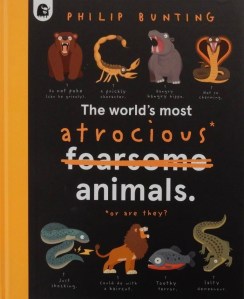
The World’s Most Atrocious Animals

The World’s Most Atrocious Animals
Philip Bunting
Happy Yak

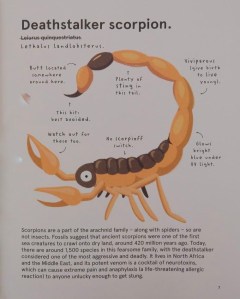
In the third of this fact-filled series Philip Bunting introduces readers to over fifty of the scariest creatures in the natural world, each of which is given both its Latin name and amusing Bunting tag. Thus the death stalker scorpion or Leiurus quinquestriatus is also Lethalus landlobstrous – very appropriate since a sting from this North African nasty can be excruciatingly painful and can cause anaphylaxis.

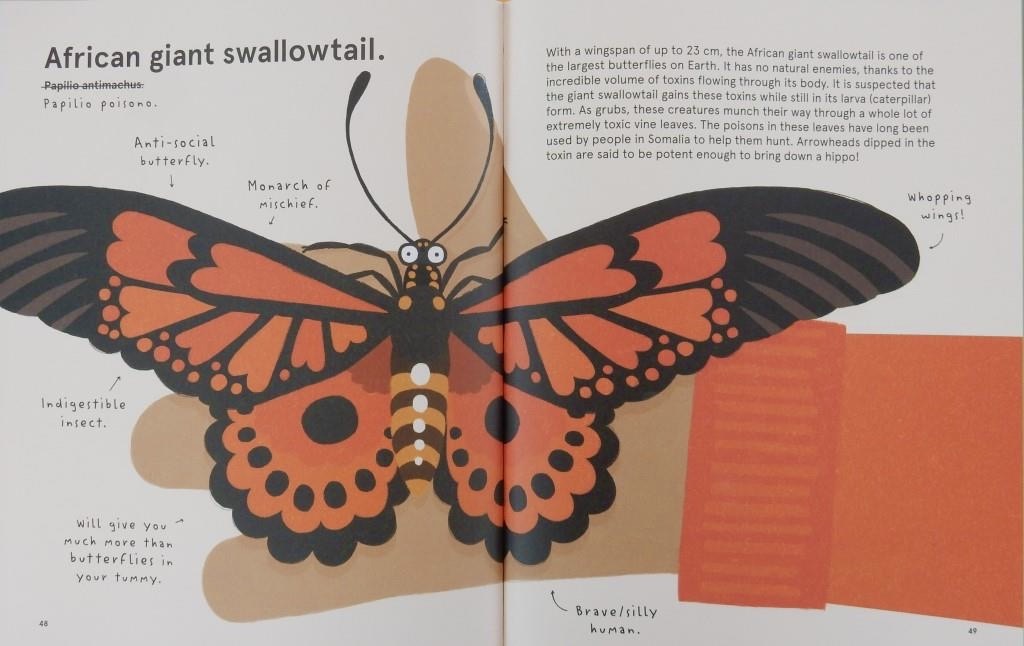
In similar fashion to the previous titles, the author uses a plethora of puns, some of which will really make you laugh (or groan depending on your mood): a group of orcas ‘sing together to form an orcastra’ and the African amphibian Trichobatrachus robustus – hairy frog to you and me – is ‘known to kermit hideous crimes’ and an encounter with an African giant swallowtail ‘will give you more than butterflies in your tummy’ – that is on account of the vast volume of toxins that flow through its body.

Moreover, should you find yourself paddling on the shores around Madagascar, Mauritius or other countries located in the Indian Ocean, be very sure not to set foot near a geography cone snail; the potent venom of this predatory mollusc could, if the nasty creature chose to inject you, finish you for good since there’s no known antivenom. No wonder that so we read, the beast has ‘shelled out extra for. a fancy pattern’.

Maintaining a good balance between humour and straightforward information, along with large, striking illustrations, Philip Bunting covers a wide range of animals of the truly scary sort. Anyone with an interest in animals, especially of the atrocious or fearsome kind, will love this book; it’s a great addition to The World’s Most …. Animals’ series.

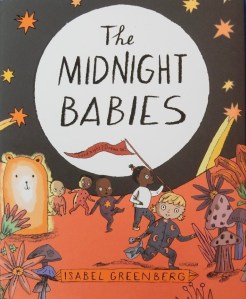
The Midnight Babies

The Midnight Babies
Isabel Greenberg
Abrams Books for Young Readers

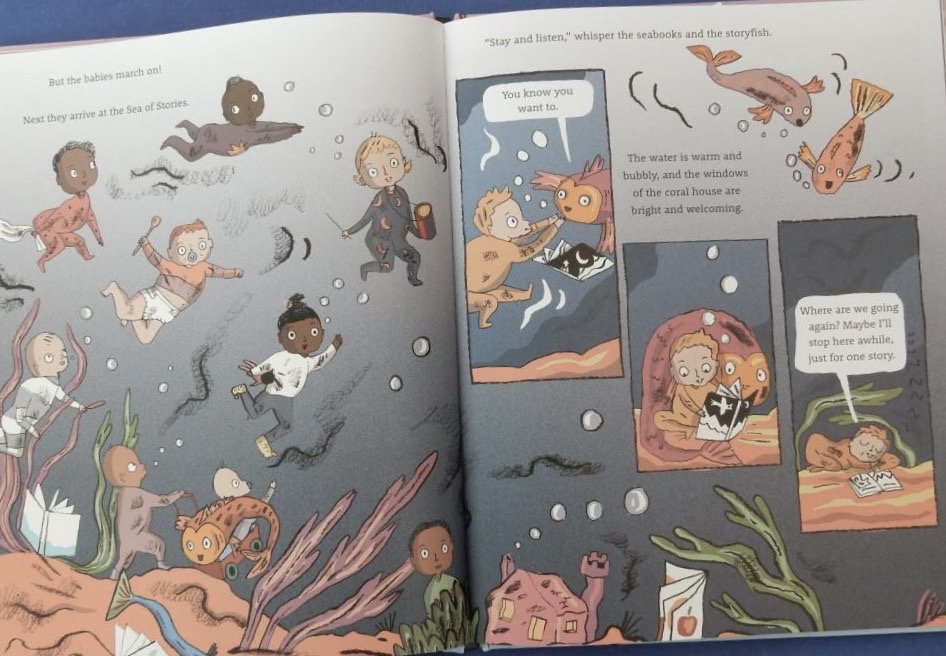
The midnight hour strikes but one little toddler is wide awake and waiting. What for you might be wondering: the arrival of the Midnight Babies and they arrive from near and far, some on their feet, others on their knees or perhaps hitching a ride. they’ve brought along a variety of musical instruments and other sound-making equipment to clash and batter along the way.

Tonight it’s the turn of Wide-Awake Baby to lead the parade to Nodoff.. With a rousing song, off they go on their quest, first through the Forest of Nightlights. Here as in other places along the route, the heinous forces of sleep are doing their utmost to lure the tots into slumber and it’s a golden light that one of their number finds irresistible. Zzzzzzz!

Next comes the Sea of Stories where a storyfish with seabooks is too strong a temptation for another baby

but plenty are left to move on to the Garden of Lullabies – uh oh! a third baby drops off.

Now it’s time to cross the Rockabye River and that requires great determination to resist its rolling motion – another baby is lulled by the gentle undulating.

Finally the somewhat depleted army reaches the shores of Nodoff where waits a decidedly intimidating Teddy Army. The babies create a great cacophony but its no match or the blanket of darkness that envelops them, one by one, till every one has succumbed save Wide-Awake. Is there anything that could tempt her to Sleep. “Her eyes begin to close. No. Never! Must . . . stay . . . awake . . . ALL NIGHT.’ But wouldn’t it be nice, oh so nice, to go to Sleep?” … Finally ahhhh-hhaaaaaa! She joins the others in the land of Sleep where they play and eat the night away, unable to remember why they ever tried so hard to stay awake.

The next morning Wide-Awake Baby, aware she fell victim to sleep, resolves to resist more strongly that night …

Featuring as it does, lots of wide-eyed tots, this wry story is definitely not one to read to little ones just before bedtime. The lively pencil and charcoal illustrations, digitally coloured, offer plenty to explore and keep the eyes of tinies wide open.

What Can You See? At the Zoo / Word Museum / Where’s Mr Train?

What Can You See? At the Zoo
Katie Ware and Maria Pereira
Little Tiger

Maria Pereira’s cutaway scenes of a zoo park present an absolute wealth of animals, large and small. Reptiles and insects share the first spread, along with several frogs. Turn over to see lots of brightly coloured birds and a pair of slumbering owls; then it’s off to a more arid part of the park where meerkats await. On the last three spreads there are tigers and monkeys; a watery area with penguins, seals and sharks and finally, hippos keeping cool, rhinos, elephants, zebras and giraffes – two of each creature as well as a couple of wading water birds.
At each location there’s a ‘can you spot … ?’ question and some snippets of information. Plenty to engage little human visitors to this particular zoo.

Word Museum
Sophie Ledesma and Isabel Otter
Little Tiger

Along with Oriel ostrich and her students, little human learners can explore the word museum in this interactive book that introduces them to learning topics – museums and words. The tour starts in the ancient pottery arcade, proceeds to the animal gallery and thence, the furniture hall, after which it’s time for a quick snack break at the rooftop cafe. Next comes an exploration of gadget corridor with lots of different devices on view and the tour concludes outside in the fashion courtyard.
Sophie Ledesma’s lively, patterned illustrations and Isabel Otter’s engaging text will set young children on the road to becoming culture vultures as they explore the exhibits, peek through die-cuts, lift the gatefold on each spread and answer the questions posed, while learning lots of new words along the way. Fun learning, quality board book style that’s just right to share with toddlers

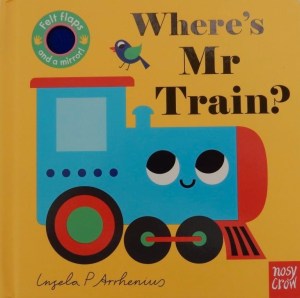
Where’s Mr Train?
Ingela P Arrhenius
Nosy Crow

The latest in this felt-flap hide-and-seek series introduces toddlers to four different means of travelling: a tram, a ferry boat, a bus and a train. Each except the completely hidden bus has a small part slightly visible before the flap is opened and the final spread shows all four in their entirety and there’s a mirror behind the flap.
With simple bright illustrations and a simple question and answer text, this is ideal for the very youngest children.

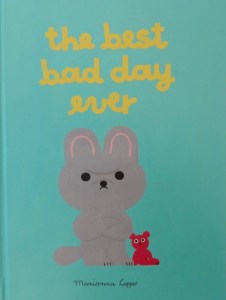
The Best Bad Day Ever

The Best Bad Day Ever
Marianna Coppo
Frances Lincoln Children’s Books

The feeling when we wake up and straightway know that it’s going to be a bad day, will be familiar to adults and perhaps to some children too. It’s certainly the case for little Wolfie, even his cuddly companion, Pepito, is in a bad mood.

Off Wolfie goes to school, through a street of happy-looking people and arrives late.

Nothing he tries turns out right and our small narrator feels nobody understands how he feels.

Then snack time comes and despite getting a fruit he dislikes, things start to look up. After a rest – not a sleep though for another little one stays awake too – the afternoon passes all too fast

and at home time, two little ones report to their respective parents, “It was the BEST BAD DAY EVER!”
Bring on tomorrow!

In just a brief text and scenes with an abundance of deadpan, gentle humour, Marianna Coppo captures that bad day feeling, going to on show how a kind action by another can change everything, making that great big frown into a beaming smile. All that’s needed is somebody who empathises and interacts, and … gone are those grumps.

Add to any preschool book collection, share it and invite the little ones to talk – to one another – in the first instance.

Barry Loser Double Trouble!

Barry Loser Double Trouble!
Jim Smith
Farshore

Here we have three more supremely silly episodes in the life of the boy with an unfortunate surname and his entourage.

The first, Doppelbärry, sees complete consternation among those on their way to school, when they are summoned to Mogden Square to receive an announcement from the owner of Fronkle Corp regarding the substitution of their favourite drink Fronke with a new, and so the company would have it believe, improved version. Moreover, any remaining cans of the original have been destroyed. Surely things can’t get any worse.

Actually, they can ,for when they arrive at school, their teacher announces the arrival of a newbie in the class, one Harry Doozer, who bears an uncanny resemblance to Barry.

Harry and his family have just moved into the neighbourhood.
From then on the day goes from awful to atrocious ,with some temporary hairlessness, until that is, the gang members pay a visit to a recently opened antique shop, after which things begin to look a whole lot better …

Episode two has Barry judging The short story telling competition during which some pretty terrible tales are told, one starring Bogey and Poopoo with an ending that leaves one of the two characters devastated.

Think Big, episode three, involves these letters DEENTH – gigantic ones at that – and the strong possibility of being stuck inside Darren Darrenofski’s brain forever. Clearly that can’t happen or we’d have no more totally ridunkulous stories featuring Barry et al. – no the adjective I just used is not a misprint, but my made up word, invented long before a very similar one that occurs herein.

Nonsensical surreal absurdity that will be a winner for the countless, already established fans of Barry and no doubt bag him a fair few new followers too.

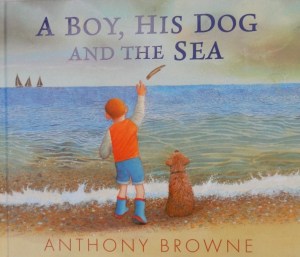
A Boy, His Dog and The Sea

This image has an empty alt attribute; its file name is dscn9548-2.jpg


A Boy, His Dog and The Sea
Anthony Browne
Walker Books

To relieve his boredom, Danny’s mother suggests he takes the family dog, Scruff, for a walk on the beach, to which Danny responds, “The beach is boring. Nothing ever happens there.” She replies, “Keep your eyes open; you never know what you might see.” 

Off go Danny and dog onto the beach, Scruff excited, Danny downcast: he’d much prefer to be playing with his older brother. However having found a stick and tossed it into the sea, the boy is impressed when Scruff retrieves it for the first time ever. After spending some time playing that game, Danny feels weary so he sits on the shingle and starts examining the pebbles, discovering on close inspection, lots of interesting things.

This image has an empty alt attribute; its file name is dscn9549-2.jpg

After a while the two continue wandering along the strand till they come upon a number of people waving excitedly as they look out to sea: Danny looks too, wanting to know what they’re waving at. In the distance he spies a tiny person waving too.

This image has an empty alt attribute; its file name is dscn9550-2.jpg

Having thought for a bit, Danny points seaward: “Fetch, Scruff!” he says and the dog does as he’s bid, swimming fast at first, then losing pace but never giving up.

Eventually two figures emerge from the waves, one canine, the other human. But who is it? Danny is very surprised to hear a familiar voice praising him and calling him a hero, something Danny says should rightly be applied to Scruff.

From front to back endpaper, every page is a visual treat; one would expect no less from Anthony Browne: I love the rather portly person with tattoos all over his arms, the faces and other designs on and with, the stones, the clever cloud formations and all the other somewhat surreal things that emerge the more you look at these awesome illustrations. If you share this poignant story with a class or group rather than an individual child, make sure you give them plenty of time to peruse the pictures and leave the book available for further exploration and excited discussion.

The Wonder Brothers

This image has an empty alt attribute; its file name is dscn9581-2.jpg


The Wonder Brothers
Frank Cottrell-Boyce, illustrated by Steven Lenton
Macmillan Children’s Books


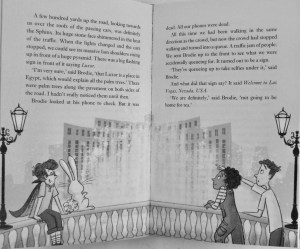
The focus of this tale is cousin trio – Middy, Nathan and Brodie, plus a very large, show-stealing rabbit, Queenie. It’s the summer holiday and Nathan and Brodie have, as usual, come to stay with Middy in Blackpool. Middy’s dad, Uncle Kevin is the electrician responsible for the Blackpool Illuminations and the Tower; Middy’s mum, Auntie Anya, is the ‘Boss’ plumber of Blackpool Tower. This enables the three children to be on the scene when the world’s greatest magician, Perplexion, aka the Master of Mystery, comes to switch on the Illuminations as the penultimate stop of his final world tour. He will, as Uncle Kevin tells the children. ‘appear, turn the lights on and then disappear.’


That might just be the understatement of the decade. For, the Wonder Brothers (Middy and Nathan) upstage Perplexion’s appearance with a magic trick of their own; then the morning after Perplexion has magically made the Blackpool Tower disappear, Nathan appears on television, announcing that The Wonder Brothers will make it reappear. Which is why, or maybe how, they accidentally end up, not going home for tea, but in Las Vegas.

This image has an empty alt attribute; its file name is dscn9582-2.jpg

There, following some incidents in the Camelot Casino Hotel, we find them talking to Captain Jimenez of the Metropolitan Police Department. You couldn’t make it up could you? – unless you happen to be the author of this splendidly comical book of course. Comical it might be, but the final sentence is one of considerable depth.


Steven Lenton’s black-and-white illustrations add some visual magic to the wonderful word weaving of Frank Cottrell-Boyce who must have done a considerable amount of research for this story.


It’s said that prestidigitation is the thief of time: it was certainly so where this book is concerned – the minutes and hours whizzed by and I just couldn’t put it down until I’d got to that final Ta-Dah!


Rhinos Don’t Cry

This image has an empty alt attribute; its file name is dscn9500-2.jpg


Rhinos Don’t Cry
Mark Grist and Chris Jevons
Bloomsbury Children’s Books


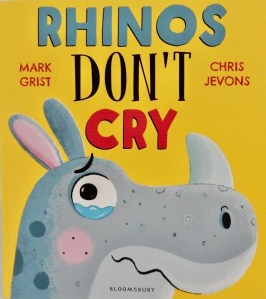
Milo is a lively life-loving little rhino but he has one small problem. This is on account of having watched his hero, movie star Spike-O Mcree on TV one evening announcing that despite upsetting things happening, ‘rhinos don’t cry!” As a consequence, Milo decides that crying is bad and that’s what he tells himself when something goes wrong. Until that is, he discovers that his beloved pet moggy Pickles has gone missing.

This image has an empty alt attribute; its file name is dscn9501-2.jpg

With Spiko’s words ringing in his ears, Milo holds back his tears as he helps his mum create signs to post in the neighbourhood. Instead of tears Milo gets an unpleasant feeling all through his body and it stays with him even when he and Mum go out to put up their signs.
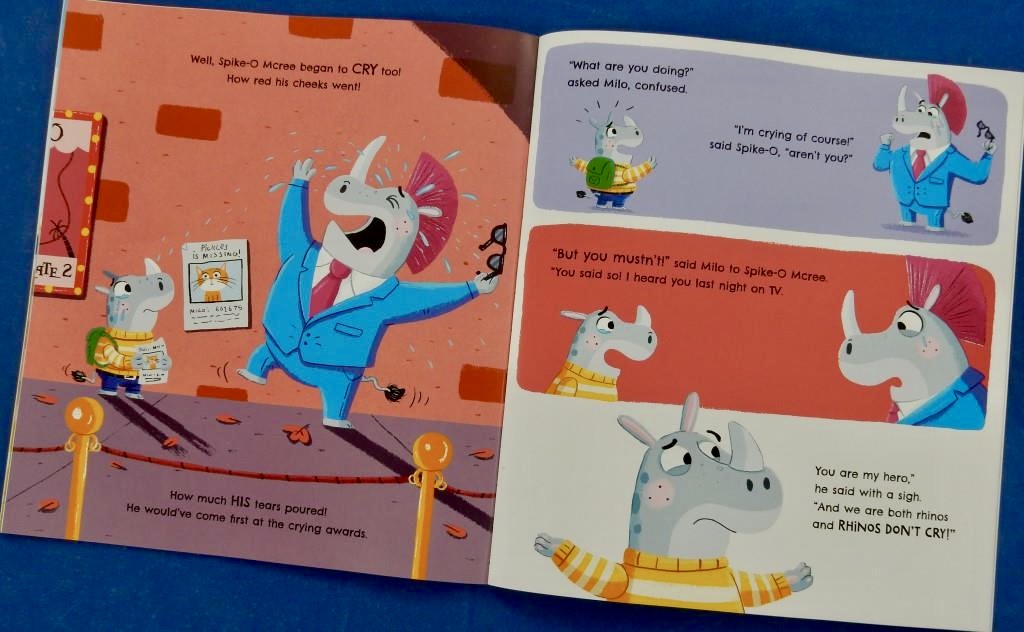
Milo has just one sign left to post when he pauses outside the cinema and who should approach him but his movie star hero . Hard as he tries, Milo simply cannot hold his tears any longer; he sobs. This causes Spike-O Mcree to start crying too and Milo now feels bewildered at what he sees.

This image has an empty alt attribute; its file name is dscn9502-2.jpg

Having told his hero what he saw on TV just the previous night, the movie star explains that the film was made long back and he now feels completely differently about shedding tears. It can be a brave thing to do.


There they both stand crying together when there comes a familiar sound – not sobbing this time but something very welcome coming from not far away.


Great for opening up discussion, at home or in the classroom, this story has an important message: it’s fine to cry, whoever you are. Spike-O Mcree makes a great role model showing how being tough isn’t always tbe best response, as well as that you can shed tears when you’re sad or scared, but also when you’re happy. It certainly isn’t being weak.

Grandpa is Here

Grandpa is Here
Tanya Rosie and Chuck Groenink
Walker Books

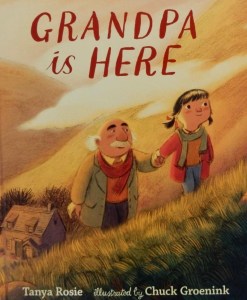
Meeting her Grandpa at the airport with her parents, the little child narrator quickly overcomes her initial shyness when he gives her an enormous hug, and on the drive back home she anticipates all the things she wants to share with Grandpa.

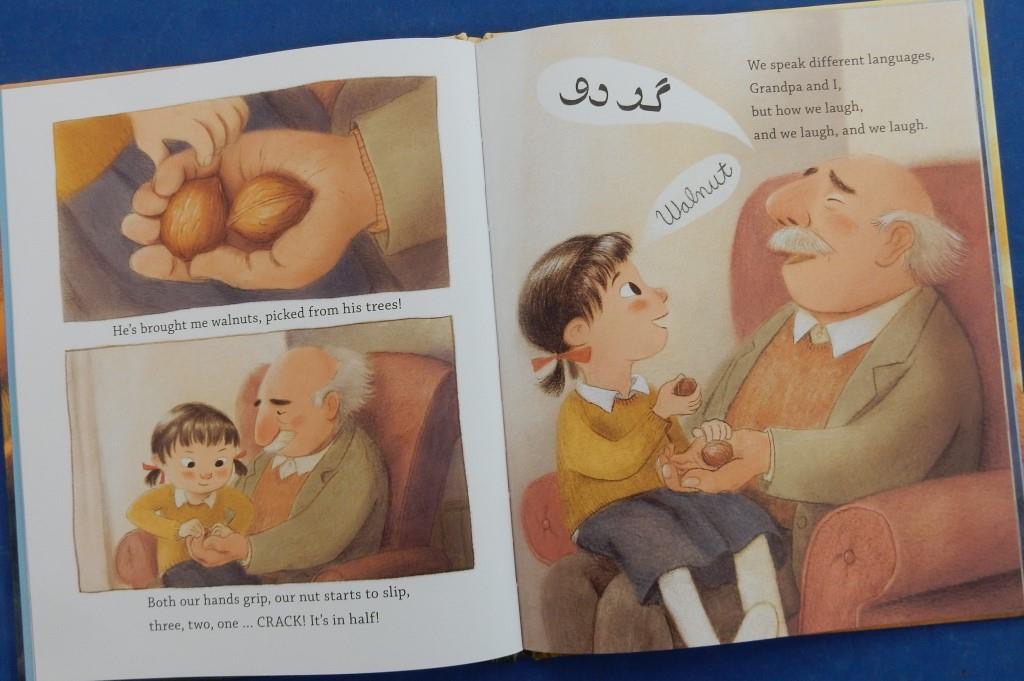
When he opens up his case, out comes the aroma of Persian spice and other culinary delights, including walnuts from his very own trees. The little girl doesn’t speak any Farsi and Grandpa seemingly doesn’t speak English but they laugh in the same language.

After he’s had a nap, our protagonist takes the opportunity to show Grandpa various places she loves as they take ‘the darkest path in the world’, wandering downhill and up tall hills. She introduces him to a horse named Santiago and Malou the frog and hills she calls Mount Sledge-Top and Rabbit View. As they sit looking at the view, the child wishes Grandpa could stay to share the coming of spring. “Grandpa is like snow, I never want him to go, never want his magic to leave,’ she thinks to herself.

As the sun goes down the two make their way back to the family home and there everyone sits and shares a celebratory meal

until they can’t stay awake any longer. Somebody does though and she creeps in to see her Grandpa fast asleep; gently she reaches out her hand and touches his and ‘hope that these days go slowly’ – just like the falling snow flakes she sees through the window.

Tenderly told through Tanya Rosie’s lyrical rhyming narrative in which the loving connection between grandpa and granddaughter is implicit; so it is too in Chuck Groenink’s illustrations which radiate the warmth and tenderness of the intergenerational bond. Like that tight hug at the start of the story, this will surely evoke strong emotions in adult readers who share this with children.

Memories are made like this.

The Song That Sings Us

The Song That Sings Us
Nicola Davies, illustrated by Jackie Morris
Firefly Press

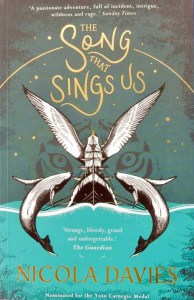
This thought-provoking, dystopian eco-thriller is set in a world governed by the sinister Automators. In this world too, live certain humans who have a power, siardw, that enables them to understand animal thoughts; they are called the Listeners. The ruthless Automators want to destroy anyone who has this gift and drive the rest of the citizens into cities, away from nature’s influences where “They must be made to understand that animals and plants are resources to be owned and used; that they have no rights.” Their slogan is ‘escape the tyranny of nature’ and anything not manufactured is being destroyed.

As the story starts Harlon and her twin siblings, Ash and Xeno, are trying to help their mother defend their home against the approaching Automators. Ma tells them to flee to save themselves – and their world. They must seek out a ‘lost island’. Their flight begins with the three snowboarding down a 6,000-foot sheer slope, but the siblings are separated, so they must each find a way to carry out Ma’s final instruction.

We follow their individual journeys through wild landscapes, even right into the centre of the enemy’s empire. Xeno, with her affinity with birds, and Ash, are in particular danger because they are Listeners and should the merciless Automators discover this, they will obliterate the twins’ minds. All three siblings are really up against things, but like-minded people and nature itself are fighting back and the Automators fail to realise the strength of their network.

Thrumming through this tale is an interconnecting force, liorna that ‘flows from earth and sea to sky’ and runs through all living things, until it’s time to sing the world anew … to unite in ‘the song that sings us … ‘ It’s a song to which readers will definitely add their voices and sing with all their hearts in the joyous finale.

Wow! Just wow! Wow at the quality of the writing and the way Nicola has interwoven all the strands of the story with such consummate artistry: with so many wonderful characters, animal and human, (and some mal-intentioned ones) – this epic tale is powered by her deep love of nature and fuelled by her knowledge and understanding of zoology.

My Brilliant Plan to Fix Everything

My Brilliant Plan to Fix Everything
Ben Davis
Scholastic

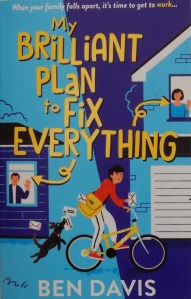
It’s the start of the summer holidays – the first since Alex’s mum and dad separated – and the boy is finding it tough. Dad is currently living at Alex’s Uncle Pete’s house, in the granny flat and works as a postie in a small village called Fishwick about a fifteen minute cycle ride from where Alex lives with his mum and older sister, Indie.

Determined to get his parents back together, Alex devises a plan: he just needs his Dad to finish that novel he began writing, way back, thus restoring his self-esteem so he’s back to his normal self – the one Mum fell for. Faking a letter, he tricks his Dad into thinking that he can have a four week sabbatical courtesy of the exclusive ‘Post UK Artistic Leave Scheme’ and thus produce the book he’s always wanted to write. What this means is that Alex will take over his Dad’s postal route and all that entails for the summer holidays. Easy as that!

Convincing Dad’s co-workers, Lloyd and Miriam of the veracity of the scheme is the next step, but having done that Alex realises that what he’s taken on is way harder than he’d envisaged. There are the two biggest bullies in his school who, having mocked him, throw the contents of his delivery bag everywhere, Then he has to avoid bumping right into his Mum showing clients around properties the estate agent she works for, have on their books. Plus the bully boys go on to toss his mail trolley into the middle of the canal; plus, Dad’s boss, Peregrine is getting suspicious.

In addition there’s the girl living on a boat on the canal, Willow. She starts helping Alex with his round but there’s something she keeps from him for some time – something that could wreck the boy’s plan and much more too. Can Alex possibly keep all those plates spinning long enough to accomplish his plan.

Sometimes funny but always full of warmth, love, determination and community spirit, this story has at its heart a very special father-son bond that will have readers rooting for Alex and Carl.

The Happy Hut

The Happy Hut
Tim Hopgood
Walker Books

The child narrator of this story and two siblings loved to visit Grandpa Martin’s bright yellow beach hut, doing so in every season. In spring they enjoyed rock climbing and dodging the showers. In summer they would picnic on the wooden deck and paddle in the sea, though on occasion Grandpa Martin would get soaked, prompting his “flipping fiddlesticks!’ reaction. Summer afternoons were passed in card playing and the evenings in listening to Grandpa Martin read. Autumn days were for kite flying, some meteorological learning

and Grandpa would take the opportunity to do essential repairs and give the hut a coat of paint, aided of course by his three ‘Happy Hut Helpers’. Wintery days were spent walking along the seashore, then back in the warmth of the hut, hot tea, fruit cake and woolly socks awaited.
One spring Grandpa Martin falls ill and the hut is left without any visitors and nobody to do the essential upkeep. That winter a fierce storm badly damaged the yellow hut.
When the family returns the following spring, a big restoration task awaits but rather than repaint the hut in its original yellow, the narrator uses a sky blue hue as a special reminder of their beloved Grandpa Martin: now the hut is a place of cherished memories ‘our happy hut!’

Wonderfully warm, Tim’s tale of love, loss and memories is presented with tenderness and sensitivity in both words and pictures. This is a book to share with Grandpas, as well as to enjoy both with family members and in the KS1 classroom.

Smugglers’ Fox

This image has an empty alt attribute; its file name is dscn9600-2.jpg


Smugglers’ Fox
Susanna Bailey
Farshore


It took just a few minutes for Susanna Bailey’s wonderful word weaving to engulf me in a cocoon, unwilling to emerge until this story, with Keith Robinson’s splendid cover illustration, reached its conclusion.


Johan (nearly eleven) considers it is his role to look after his four year old brother Rio, especially after an incident on the beach, following which their Mam disappears and the social workers say she isn’t coming back this time.


It’s not long before Johan learns that the two of them are to be split up and he is to go and live with long-term foster carer, Mimi, in a little house at Robin Hood’s Bay. ‘I need a plan … me and Rio are stitched together like threads in a jumper . If they pull us apart , we’ll both unravel, and we won’t be Rio or Jonah any more. We won’t be anything,’ he tells readers, going on to call himself ‘Bad-Luck Jonah,’ Nevertheless move he has to, but not before making an unbreakable pinkie-promise to Rio that he has a plan.

At Mimi’s Johan spends a lot of his time making a book of illustrated stories for his brother to show he’s not forgotten him and because it’s part of his three part plan. The second part is being co-operative and helpful to Mimi and the third is trying not to worry about the sea. It’s far from easy when Mimi takes him for a walk to buy something tasty for a treat and while they’re out, a fox suddenly appears, a hungry-looking one, which Johan can’t help but feed. So begins the building of a bond between boy and fox.


Then Mimi shows Johan Grandpa Ted’s secret box containing what might be a treasure map: could this help him keep this promise to Rio? But then things get too much for the boy; he runs off and as a result meets Freddie in what he learns is his Dad’s allotment. Freddie is also familiar with the fox and it turns out that Mimi knows Freddie too. The more time Johan spends with his new friend, the more he’s convinced that Freddie is hiding something.and eventually he shares his troubles with Johan.


A few days later, Johan finds himself in a very dangerous situation and as he says, ‘Digging for Rio, For my friend Freddie. Digging for my life.’


Sometimes the way Johan describes his feelings is so poignant I felt raw inside, but this book ends with the boy accepting things he never thought he could because ‘whatever happens, we’re always part of one another. Jonah, Rio, Freddie. And the smugglers’ fox.’ That is because this haunting story comes from the heart, not only Jonah’s but that of Susanna Bailey too, for she was once a fostering and adoption social worker.

This Rock is Mine!

This image has an empty alt attribute; its file name is dscn9535-2.jpg


This Rock is Mine!
Kaye Umansky and Alice McKinley
Alison Green Books


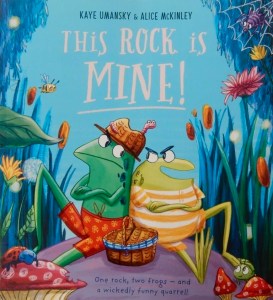
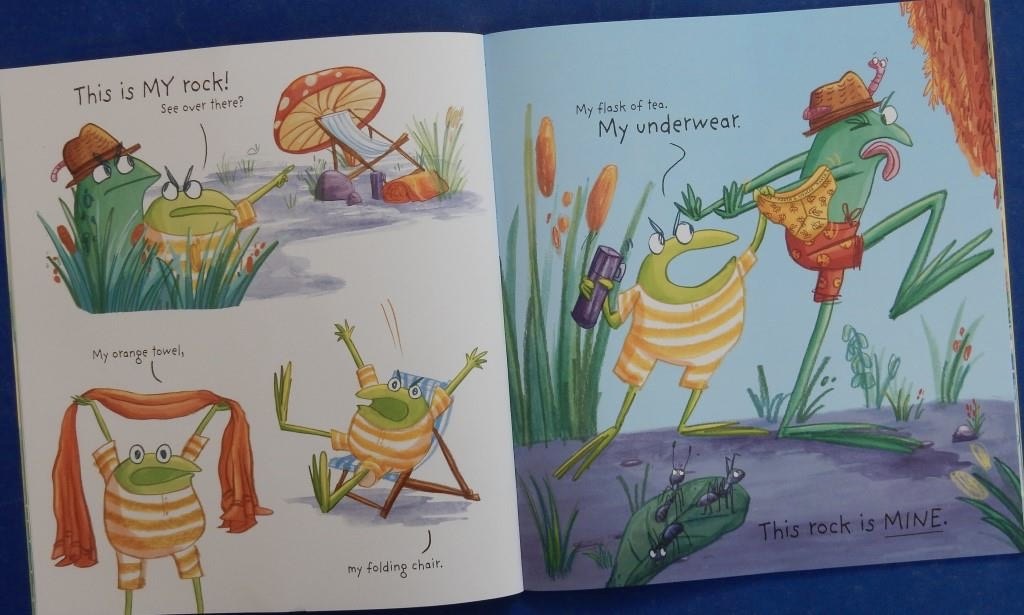
What starts as a silly spat between two frogs about the ownership of a small rock quickly escalates into a full scale fight with each frog in turn drawing the other’s attention to belongings that prove the rock is theirs..

This image has an empty alt attribute; its file name is dscn9536-2.jpg

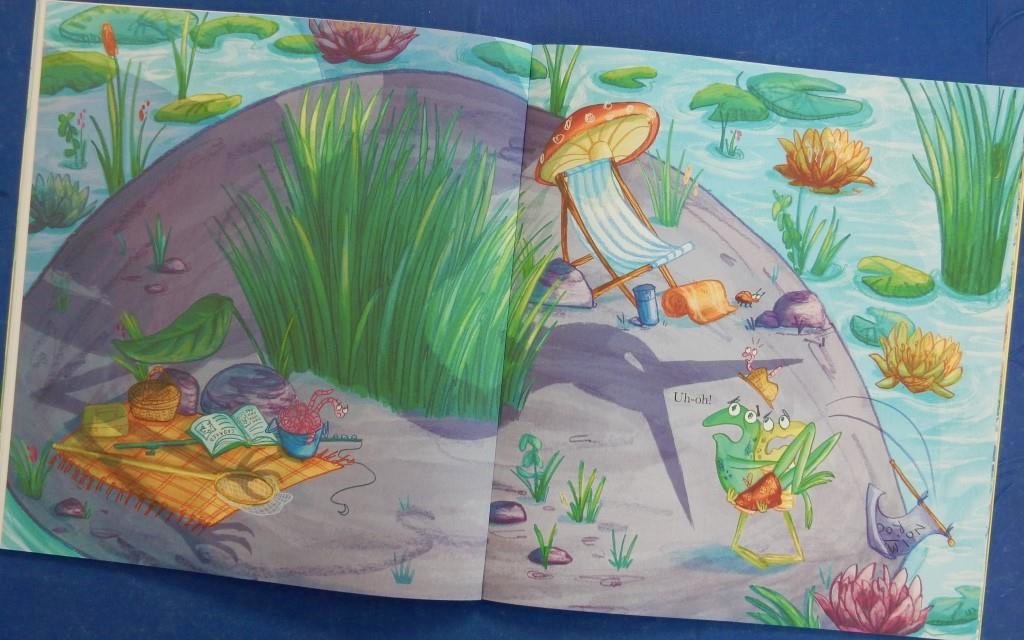
Unbeknown to the two little amphibians, their altercation has been watched by a very large long-legged, long-necked bird. Suddenly, as we see in Alice McKinley’s close-up scene, a menacing shadow appears over the disputed rock and two tiny lives are in danger of being extinguished.


This image has an empty alt attribute; its file name is dscn9537-2.jpg

After a desperate dive and a decision about the worthiness of the cause of their argument, the frogs come to two conclusions: the first is that the rock is after all, ‘no good’ and another needs to be found; the second is that friendship is far better than fighting and sharing is the way to a happy co-existence.


Kaye Umansky’s bouncy rhyming text combined with Alice McKinley’s dramatic visuals make a superb read aloud that adults will delight in presenting to young children; they in turn will delight in the unfolding of events. I really love what happens on the penultimate spread where we see two rocks and an indication that frogs are not the only creatures with a possessive streak.

Agent Moose For Your Spies Only

This image has an empty alt attribute; its file name is dscn9593-2.jpg


Agent Moose For Your Spies Only
Mo O’Hara and Jess Bradley
Scholastic


This bumper volume contains three previously published Agent Moose books: Agent Moose, Agent Moose on a Mission and Agent Moose: Operation Owl.


In Agent Moose, Special Agent Anonymoose and his owl sidekick Owlfred, are tasked with the case of a missing turtle. With Agent Anonymoose feeling bitter that Camo Chameleon has been awarded his ‘100 crimes solved’ trophy, Moose and Owlfred set about tracking down Terrance Turtle, witness in a recent high-profile robbery. However it seems that something is awry at South Shore where it transpires folks are disappearing, never to be seen again. Is this something to do with Camo who is busy hosting a party to celebrate his award? As Anonymoose and Owlfred are going to have to go undercover to discover what is happening to the Big Forest animals, it’s as well that, thanks to the former’s skill they are able to assume a number of disguises, a mermaid, a palm tree, and a coconut for instance.

This image has an empty alt attribute; its file name is dscn9592-2.jpg

Owlfred’s ability to remain calm in a crisis is an asset too. Can they crack this challenging case? You bet they can and in so doing they’ll have readers thoroughly engaged throughout, giggling at the wealth of jokes and the shenanigans of the criminal chasers.


Jess Bradley’s hilarious artwork and Mo O’Hara’s super funny story make for a highly accessible graphic novel, whether or not readers are making their first foray into the genre.


During a period of quiet Agent Moose has been passing the time working on a personal theme tune in advance of a visit from his grandmother. Having met her at the railway station with Owlfred, after Granny’s spectacular appearance, the family reunion is interrupted by an urgent request for help from Woodland HQ.


This image has an empty alt attribute; its file name is dscn9591-2.jpg

Once again our not-so-super sleuth sets out to save the day with Owlfred at his side, and Granny along for the ride, just so long as she doesn’t embarrass him; it’s a case of Agent Moose on a Mission. The animals in the forest are being intimidated into giving up their prize possessions by someone, leaving them too terrified to disclose who it is. As the three of them search for clues, drink hot cocoa and attempt to interview victims, it soon becomes clear that they are facing a daunting opponent. Summoning all his courage .Agent Moose battles with his fear of heights in an attempt to save the day in this second exciting, giggle-inducing story.


Agent Moose: Operation Owl sees Moose and his Not-Quite-So-Special-Agent Owlfred on an assignment to discover who is responsible for the flash floods that are causing havoc in the Big Woods. The pressure really increases when Moose’s boss Madame HQ disappears, seemingly kidnapped; but by whom? No prizes for guessing who’s responsible. If Moose can pull off this mission, he might just get that article in The News of the Wild paper he so badly wants. If the excellent disguises are anything to go by, he certainly deserves so to do. And Owlfred receives a well-deserved surprise too.


If you know any primary readers yet to discover Agent Moose, this book of three stories is an absolute bargain and what a wealth of language lessons they will absorb as they follow the splendid silliness.

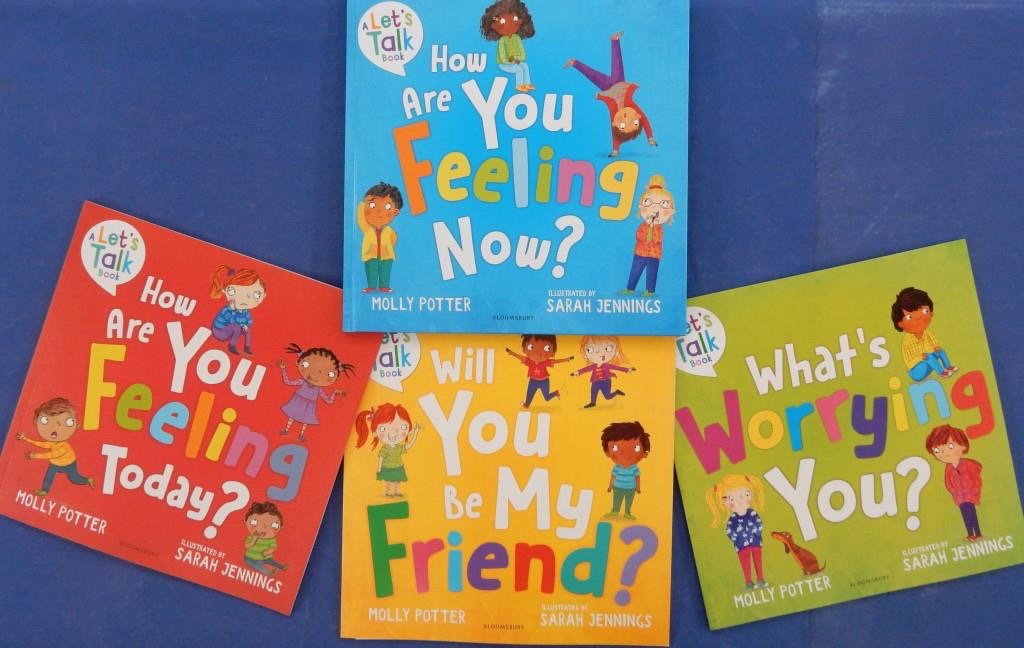
How Are You Feeling Now? / How Are You Feeling Today? / The Same But Different / Will You Be My Friend?

How Are You Feeling Now?
How Are You Feeling Today?
What’s Worrying You?
The Same But Different
Will You Be My Friend?

Molly Potter and Sarah Jennings
Bloomsbury Education

How Are You Feeling Now? is a hardback addition to the interactive Let’s Talk series; the other titles are, in the publisher’s words ‘refreshed paperback editions’ of existing titles.

Developing emotional intelligence is a key part of children’s education in the early years and in her newest title Molly Potter adds another twelve ways of feeling to happy, angry, bored, worried, sad, excited, grumpy, scared, quiet, jealous, embarrassed and shy, which were discussed in How Are You Feeling Today? again devoting a double spread to each one. The new ones are giggly, anxious, confused, disappointed, proud, brave, frustrated, guilty, lonely, grateful, surprised and playful. For each, she explains what the feeling means and offers several suggestions – some sensible, others slightly offbeat, to help manage it. ‘Tell an adult that you need clarification because you are confused. It’s fun to use fancy words!’ or ‘ ‘Say I am SO confused. See how long you can say “so” for!’

Those of us who work or live with young children know they experience a whole range of emotions every day. A lot of them do not know how to deal effectively with these emotions. Since the start of the COVID pandemic many more youngsters began finding it difficult to cope with the gamut of feelings that beset them and this is still true now. So, books like this new one, written in straightforward, child friendly language giving fun, imaginative, positive ways to deal with these feelings, illustrated with Sarah Jennings’ appropriately expressive vignettes is a welcome resource for both parents and those in education. Also included is a guide for parents with information about emotional intelligence and advice about how we as adults can be important role models.

Worrying is normal, adults worry and so increasingly do children, often due to the pressures of the education system. In What’s Worrying You? Molly identifies other possible reasons why a child might feel worried: falling out with a friend, being picked on, arguing parents, fears and phobias, jealousy, being ignored, not having friends to play with and being ill. The verso acknowledges the child’s feelings and provides several words for their feelings: a great way to open a conversation and to help the child concerned verbalise how they feel. The recto comprises ‘things to remember’ in the form of gentle guidance and suggestions to improve the particular situation. As always the tone is spot on for young children. Back matter offers a Feelings glossary and guidance for adults about helping a child to talk about their worries.

Both The Same But Different and Will You Be My Friend? have been reviewed previously on this blog. All the titles deserve a place in Foundation Stage settings and families with young children.

Batpig: Go Pig or Go Home

Batpig: Go Pig or Go Home
Rob Harrell
Walker Books

Porcine superhero, Gary, is back with two more stories of skylarking presented in graphic novel format.
The first, Careful What You Wish For, sees Gary getting his snout in a twist at the prospect of the history and biology tests the following day. Nevertheless, rather than staying at home and studying that night, he assumes his Batpig alter ego and heads out into the city to fight crime.

As a reward for preventing a robbery at the Weird Old Magic Shop, the owner gives Batpig a pouch containing a magical learning potion. Back at home Gary decides how to word his spell command and then goes off to sleep.

It will come as no surprise when I say that the spell does not go to plan. The following morning he wakes to find Sharkraham, come to assist with the tests, which it does. Whether or not this is cheating is a debatable question. Twenty four hours later Gary has something far, far worse than a couple of tests to worry about;

something in the form of a destructive squown or evil squid clown. It would appear from the beastie that our porcine pal has a vital lesson to learn. Will Gary ever work out what that is and if so, will he finally hold his trotter up and admit that doing well in tests by devious means is wrong?

In the second episode, Camp Danger, Gary (sans his suit), along with buddies Brook and Carl, is off to sleep-away Camp Moldy Snout.

Before long Carl has made some new friends, then too does Brook; this makes Gary feel rather excluded. But then after some alarming incidents in and around the lake including the emergence of a very frightening monster, Gary decides he must step in. even if it results in him revealing his secret identity to the other campers.

This is bad enough but it leads to his arch enemy and self-dubbed greatest ever supervillain, The Butcher, appearing on the scene and she means big trouble.

High energy humour at the heart of which is friendship. Fans of Gary et al will devour this eagerly.

Lilly & Myles: The Torch

Lilly & Myles: The Torch
Jon Roberts and Hannah Rounding
Graffeg

Set during the summer holidays, this story features Lilly and Myles, her assistance dog. The two are staying with Lilly’s Grandma who lives at the seaside. Lilly has autism and experiences the world differently; she often finds it hard to communicate too.

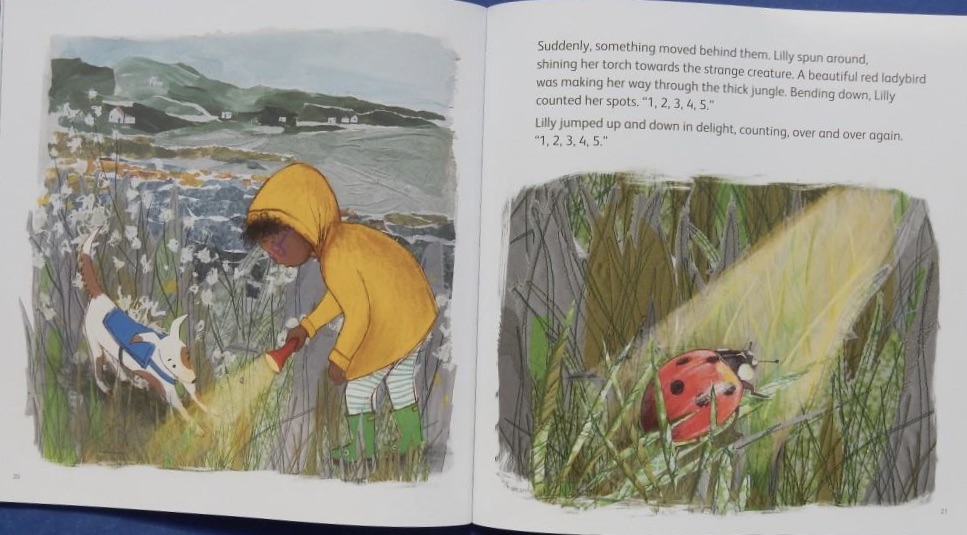
One night she finds a torch and while enjoying exploring the clicking sounds it can make, discovers her Grandma standing there. Together the two of them embark on an adventure that takes her to the seashore. Lilly’s acute sense of hearing makes the sounds of frogs in the pond especially exciting; she also enjoys the feel of the long grass as she runs seaward, and counting the spots on the ladybird.

In her excitement, when Lilly reaches the mouth of a cave Grandma had mentioned in stories, she decides to explore, failing to notice some other children petting Myles. Venturing further inside the cave, she accidentally drops her torch and is beset by fear. The sound of dripping water is just too much and having regained her braver feeling, and retrieved the torch, Lilly moves on, all the while imagining monsters lurking and waiting to catch her.

Happily the only thing waiting for Lilly is Myles, ready to calm her and guide her back to her gran’s house.

Throughout this heartwarming story, both Jon Roberts the author who has a child with autism, and Hannah Rounding, whose mixed media art is rich in detail, gently and beautifully convey the emotions children with sensory challenges might face, while highlighting the importance of friendship and showing the vital role played by assistance dogs in giving support and comfort. (Their role with those with autism is new to me.)
Both the book’s creators show how vital it is that in our wonderfully diverse world, we all, adults and children, accept and understand that every neurodivergent person is different, and celebrate that neurodiversity. A copy of this insightful book should be in every primary classroom.

(10% of royalties go to Dogs for Good and 10% to Dogs for Autism).

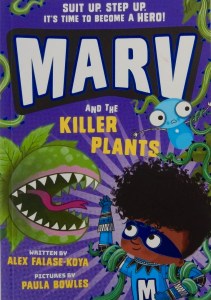
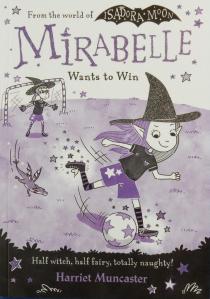
Marv and the Killer Plants / Mirabelle Wants to Win

These are new titles in series popular with new solo readers: thanks to Oxford Children’s Books for sending them for review

Marv and the Killer Plants
Alex Falase-Koya, illustrated by Paula Bowles

When Marvin and his classmates take part in a competition to design a new garden for the school grounds, he’s eager to win, and to give him some ideas his Grandad takes him to the botanical gardens. There he sees some Venus flytraps in the hothouse and makes a drawing of one. Later on he encounters one of his class friends, Eva. She has come to get some ideas for her design too. But when the competition winner is announced and it’s Eva, he wonders if she has copied his design and he later accuses her of so doing.

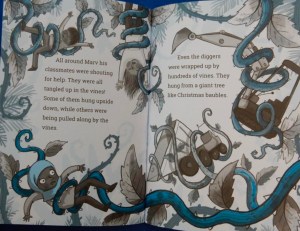
It’s not long before that is the least of Marv’s worries: the partly completed school garden has become a jungle thick with creeping vines and it appears that the school too, not to mention the whole town, could be overrun with writhing tendrils.

Time for Marv to don that superhero suit

Suddenly atop a thick vine, Marv spies a figure calling herself Violet Vine, a supervillain, so Marv’s side-kick robot Pixel, tells him. Moreover when a gigantic Venus flytrap shoots up out of the ground right before his eyes there’s a strong likelihood that for Marv, it’s a case of be careful what you wish for.
His first task though, is to rescue his friend, Joe, who is entangled upside down in a thick vine. With this done, he has a second rescue to attempt – this time from the mouth of the gigantic Venus flytrap. Having succeeded in task two, Marv’s work is far from finished. Assisted by his super-suit accoutrements, can he finally outsmart the wicked Violet Vine and rid the school of her killer plants?

Fast paced, fun and with a lesson about jealousy, this fifth of Marv’s challenging adventures shows him at his invincible marvellous best (almost all of the time). Paula Bowles has done a fantastic job with her dramatic illustrations.

Another favourite series continues with drama of a different kind in

Mirabelle Wants to Win
Harriet Muncaster

Mirabelle is excited to hear one morning that famous footballer, Chrissy Gold, an ex pupil of her school, is coming to watch the students play football. First though, Mirabelle et al have to learn how to play human football, which means strictly no magic. Mirabelle is extra happy when she learns that Chrissy is only half witch, just like she is.

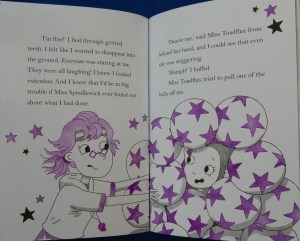
PE teacher Miss Toadflax assembles all the pupils on the field and explains the rules and basics of the game. Then the practice session gets under way and Mirabelle quickly discovers that human football is more difficult than witchball. Could a teeny tiny touch of magic help her play well and thus impress Chrissy Gold; maybe her side could even win the all important game.

Needless to say, where Mirabelle and magic are concerned, things don’t go smoothly.

Mirabelle ends the session soaking wet but still wanting to win that glittering trophy that’s been promised. She’s even more eager, having met Chrissy, so much so that she forgets to check her kit before going onto the field for the crucial match.

By the end of what proves to be a highly eventful game, refreshments and some very sound advice, from Chrissy, our little half witch, half fairy has learned a very important lesson.

With sprinklings of mischief and a large dollop of mayhem, this latest instalment starring Isadora Moon’s cousin is as sparkling as ever and will have Mirabelle’s fans cheering from the touch sidelines.
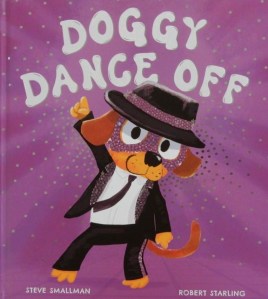
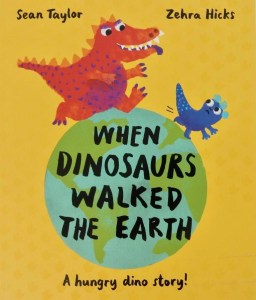
When Dinosaurs Walked The Earth

When Dinosaurs Walked The Earth
Sean Taylor and Zehra Hicks
Frances Lincoln Children’s Books

It seems young children can’t have too many dinosaur stories; this is a splendidly silly one about three dinosaurs. There’s Smallosaurus, she’s a herbivore; there’s great big Badasaurus who enjoys consuming small dinosaurs that eat a plant-based diet and finally there’s the monstrous meat-eating Worseasaurus.

The action begins with Smallosaurus wandering along with a smile on her face on account of the juicy ferns that she’s spied ahead – just the thing for a delicious breakfast. Hold it there! This is exactly what Smallosaurus does on realising that rather than the peaceful rock she first thought, she’s actually confronting great big Badasaurus whose idea of a good breakfast – ‘a small dinosaur, with a plant-based diet’ – is standing in front of him. Time to activate those little grey cells Smallosaurus; however only possessing a walnut-sized brain, she dashes away – in the wrong direction …

However, it transpires that Badasaurus has a brain even smaller than Smallosaurus and so he too makes an error …

Back to Smallosaurus who now strolls along again, this time between peaceful rocks and large trees, her mind once more of those juicy ferns. Little does she realise that Badasaurus is back, albeit looking slightly frazzled but still eager to sate his appetite with one small dinosaur, with a plant-based diet.

Oh my goodness, this situation requires another round of thinking by Smallasaurus. She decides to take cover behind a large tree but it turns out she’s over-estimated its size. Uh oh! Here comes her’ sad and terrible ending’. Or is it another error – a chomping one – by Badasaurus?

Step forward Worseasaurus, you now have a choice between two meaty dinosaurs for your breakfast. I wonder what SHE goes for …

With a cleverly constructed narrative containing surprises aplenty, Sean Taylor’s prehistoric romp will delight young audiences, as will Zehra Hicks’ bright splodgy scenes of those days When Dinosaurs Walked the Earth.

Evie and Rhino

This image has an empty alt attribute; its file name is dscn9578-2.jpg


Evie and Rhino
Nerida McMullen, illustrated by Astred Hicks
Walker Books


This tale is based upon a true story of a shipwreck in 1891 off the south-west coast of Victoria in a coastal region well known for shipwrecks. One such was SS Bancora, which was travelling from Calcutta with a cargo of animals bound for Royal Melbourne Zoo. Among the animals was Rhino: the creature manages to make it to the shore, along with possibly some monkeys, parrots and cranes.


Enter Evie, a ten year old girl who lives with her once famous ornithologist grandfather, in an erstwhile grand mansion, Lunar House, having lost both her parents in a shipwreck two years back and since when she hasn’t spoken a word. She doesn’t any longer go to school and thus it is that the day after the Bancora shipwreck, she is wandering along the dunes to the beach and makes a discovery that will transform her life, and that of Rhino, for ever.


Told from alternating viewpoints, Evie’s and Rhino’s, we see the two forming an unlikely bond, a very deep one that provides a balm for the girl’s grieving spirit. All too soon though, the zoo sends a representative to recover the amazing animal. However Evie isn’t prepared to let Rhino go without doing her utmost to keep her beloved animal.


This image has an empty alt attribute; its file name is dscn9579-2.jpg

In Evie and Rhino, Nerida McMullen has created two hugely endearing characters, and we meet a number of other interesting characters too. The storytelling is superb – you’ll find yourself laughing at Rhino’s antics, and tearful on occasion, at the challenges both Evie and Rhino face; it’s a truly memorable tale of rediscovering your inner strength and your voice, and the healing power of friendship.

Scattered throughout the book are Astred Hicks’ deftly drawn illustrations along with occasional telegrams and cook’s apple pie recipe – apple pie having played a significant part in the story.

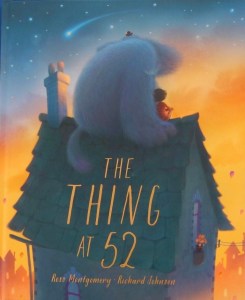
The Thing at 52

The Thing at 52
Ross Montgomery and Richard Johnson
Frances Lincoln Children’s Books

This tale is narrated by a little girl who makes friends with the large fluffy Thing that lives close to her home.

Deciding to take him a flower, she and her mother call on the creature and are invited in to what the girl thinks is a strange house with just a single chair, newspaper rugs and a fridge containing only jars of mustard – fifty of them. His response to her question about feeling lonely is answered thus, “All things are lonely sometimes.”

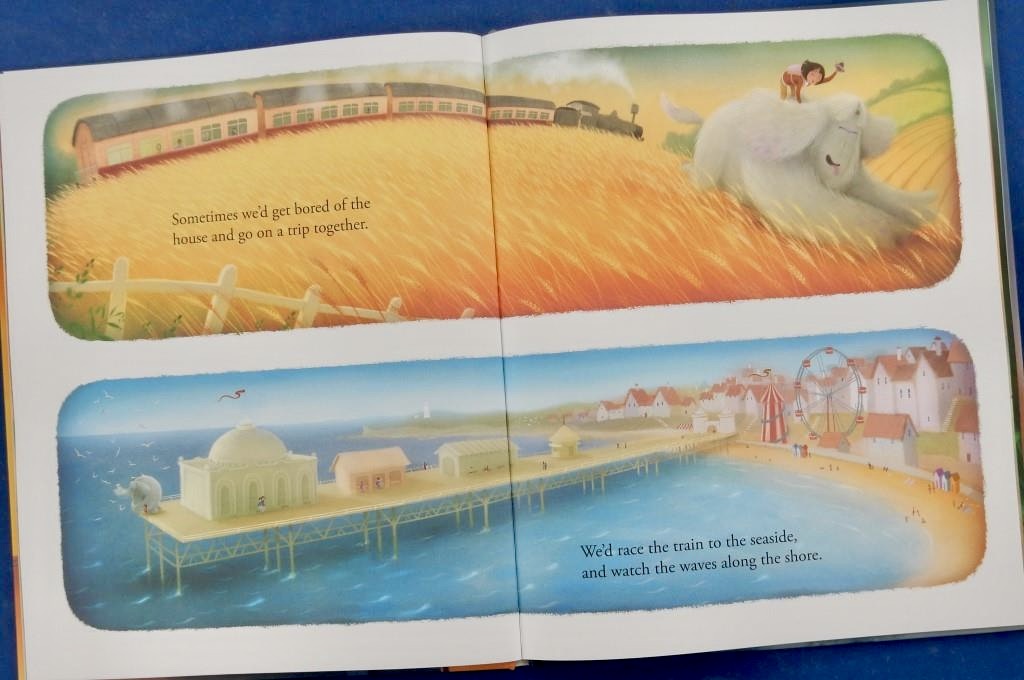
As their friendship blossoms, the two spend more and more time together, sometimes going on adventures,

and the child learns that there are hundreds more Things just like her friend.

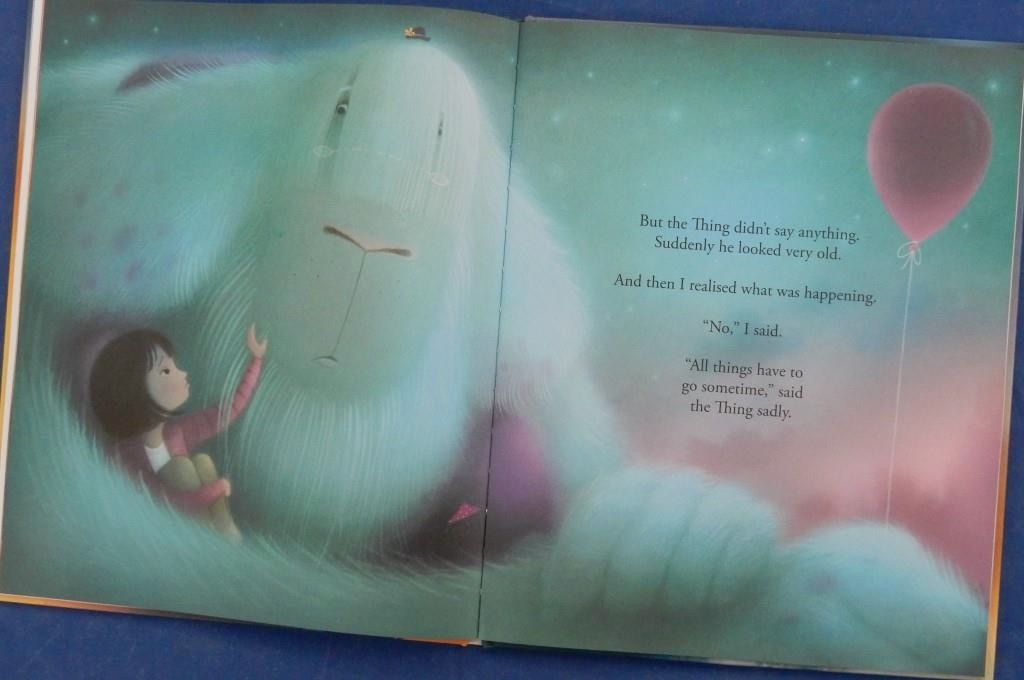
The narrator organises a wonderful party for all the Things, but then suddenly the special Thing looks very old

and the worst happens: with a hug as they watch the sunrise, the Thing disappears. All that remains are his old photos and memories of the wonderful times the two had spent together.

This tale of friendship and loss is all the more powerful on account of its gentleness. Death is never mentioned though it can be inferred from the somewhat dreamlike story. Dreamlike too are Richard Johnson’s soft-focus illustrations that have a potency of their own and are a superb complement to Ross’s words.

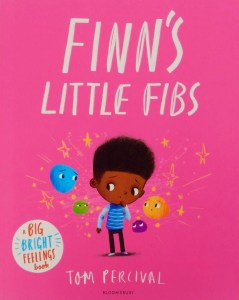
Finn’s Little Fibs

Finn’s Little Fibs
Tom Percival
Bloomsbury Children’s Books

Finn is super-excited; he and his little sister, Simone, are spending a few days staying at Grandma’s house: It’s a place full of beautiful but fragile things but his over excitement while playing with his ball indoors results in the accidental breakage of her clock. His efforts at mending it don’t work so, a worried Finn tells a lie, blaming the breakage on his sister.

No sooner is the lie out of his mouth than POP! a little blob appears, noticed only by Finn, although Grandma clearly has doubts about the plausibility of what he’s said.

This makes the boy panic: out comes another lie, followed immediately by another blob. The lying escalates and by the end of the weekend Finn is besieged by blobs and he’s feeling so upset with what he’s done that he can’t enjoy himself. It’s time for big brother to admit the truth but has he got the courage?

Happily yes, the blobs disappear and his understanding Grandma accepts his apology.
With everything back as it should be, the rest of the holiday is great and Finn resolves to always try and tell the truth.

As always, in his latest story in the Big Bright Feelings series, Tom describes the physical sensations and feelings that beset the guilty Finn in a way young children can relate to, and his illustrations with the waxing and waning of the blobs do a wonderful job in showing his changing emotions. A great starting point for discussions on the importance of being honest, taking responsibility for your wrong doing and forgiveness.
A must to add to foundation stage class collections and family bookshelves if you have a young child.

The Lovely Dark

The Lovely Dark
Matthew Fox
Hodder Children’s Books

As the story opens Ellie is coping with the loss of her grandmother three years back, early on in the pandemic and being unable to say goodbye. During the pandemic too, a boy named Justin and his family moved into an empty house on Ellie’s street and the two become good friends. I love Ellie’s comments relating to forming of their friendship: “ … Books are the key. … When you meet someone new and they’ve read the same books as you … and they feel the same way as you do about them, it means they’re all right in your book. … You have a kind of shared language.”

Ellie and Justin visit an uncovered Roman mosaic where they are involved in a devastating accident. Both children find themselves in the Underworld but on two completely different journeys.
Ellie’s path leads her to a place called Eventide House, a school ‘of sorts’ so Mrs Cauke, the ‘headmistress’ tells her. Despite the days there being pleasant and almost without restrictions, Ellie soon senses something isn’t right about the place. However she discovers a girl, Ash, in the library and the two make a pact.

By this time though Ellie is more determined than ever to return to the world of the living especially so she can see her new baby brother. But will she manage to do so?

I found myself needing to put this amazing, very special book aside several times as I read, such were the sad feelings it engendered. It’s written with great sensitivity, and tenderness, cleverly mixing the 21st century world devastated by the pandemic with Ancient Greek mythology as the author explores loss and grief through a protagonist who never loses hope. Add to that the tribute Ross makes to the power of books and stories:: there’s nothing more this reviewer could ask.

I’m now going to seek out Matthew’s first book, The Sky Over Rebecca.

The Thunk

The Thunk
Michelle Robinson and Deborah Allwright
Bloomsbury Children’s Books

Unlike everyone else, Hector Voltaire is convinced that one day he will find the legendary, supposedly extinct, Thunk. Such is his enthusiasm that his schoolmates tease him for believing in the wondrous being, but does this deter Hector? Certainly not, he’s all the more determined, though he knows his mission will require skill, patience and a fair bit of equipment; the last he crams into his backpack.

Off he goes and whereas his map reading skills let him down, his powers of observation definitely don’t. Eventually his reward comes in the form of the somewhat malodorous creature he seeks, out for an afternoon stroll.

Pretty soon though, it becomes evident that Hector is going to have to make use of his counting skills, for he’s in for a very large surprise. Hurrah! Now everybody must surely believe the lad about the creature’s existence; but will he go back and divulge what he now knows, or draw up another plan?

What a great read aloud. Young listeners, be they at home or in the classroom, will take great delight in accompanying Hector on his expedition of discovery presented through Michelle’s rhyming narrative and Deborah’s dramatic scenes of the Thunk hunt.

Johnny Ball Professional Football Genius / Rudy and the Skate Stars

This image has an empty alt attribute; its file name is dscn9519-2.jpg


Johnny Ball Professional Football Genius
Matt Oldfield, illustrated by Tim Wesson
Walker Books


In his role as manager, nine year old Johnny Ball has recently led the Tissbury Tigers to glory at the world’s top youth tournament. He’s basking in the glory when he is approached by soccer agent, Darren Dealz telling him that the Tissbury Thundercats want an assistant manager for their Under-12s academy team and that somebody should be our young narrator.


Johnny lands the job with the proviso that he remembers that manager, Jaz ,is the one in charge – the decision maker – and he mustn’t overstep the mark. A challenge if ever there was one, particularly as his best friend Tabia is joining the squad.


This image has an empty alt attribute; its file name is dscn9520-2.jpg

It’s a steep learning curve for Johnny, who as ever, is bursting with ideas; there’s a serious falling out with his bestie and unwelcome interference from Darren Deals but the assistant manager never loses sight of his main goal – that Tissbury Thundercats team take the Prime League title.


Champions or not? Johnny Ball fans will relish this amusing story with its liberal sprinkling of suitably dramatic drawings by Tim Wesson. Assuredly it’s a winner in this reviewer’s book.

This image has an empty alt attribute; its file name is dscn9564-2.jpg


Rudy and the Skate Stars
Paul Westmoreland, illustrated by George Ermos
Oxford Children’s Books


Excitement is high when werewolf Rudy and his friends, Femi (a mummy) and Edie (a ghost) discover that the Skate Stars competition is coming to their hometown, Cobble Cross and the legendary Jessie Howler is to be the judge. With the event just a week away the three pals know they must practise hard to stand any chance of a medal and Rudy is up super early next morning to start working on his moves. He’s only just got started when a group of wolf boys turn up looking smart and performing impressively. One of their number, Wolfgang. introduces the crew as the Night Owls and starts chatting to Rudi. He also asks Rudy to show some of his moves.
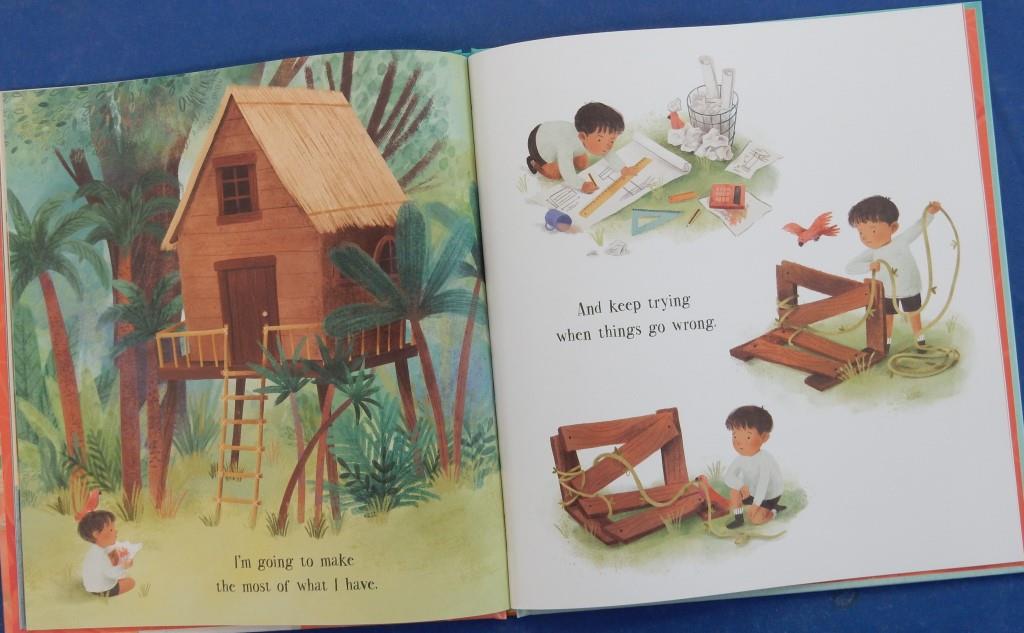

The following day Wolfgang suggests that Rudy enters the competition with them instead of Femi and Edie, saying that he’s much more likely to win if he does. The little werewolf can hardly believe his luck: it’s always been his dream to stand on top of the podium with a gold medal around his neck but switching teams means that he must agree to follow Wolfgang’s lead. However he decides to join the Night Owls team; but on the day of the competition, having had a chat with Jessie Fowler, Rudy feels conflicted: should he go for winning and risk losing his friends?

This image has an empty alt attribute; its file name is dscn9565-2.jpg

He tells Wolfgang he’s changed his mind and prefers to skate with The Power Pack.
What happens thereafter shows Rudy that winning the gold medal isn’t what really matters most.


This fourth story of Rudy and his pals is certain to please his followers among those just flying solo as readers and they’ll likely find additional fans among young skateboarders new to the series. As always George Ermos’s super-cool illustrations help break up the text and ramp up the action.
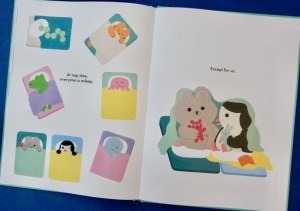


Lenny Has Lunch

Lenny Has Lunch
Ken Wilson-Max
Alanna Max

The strong bond between a father and his infant son, Lenny, is beautifully captured in this simple story that unfolds in the family kitchen. We watch as Daddy prepares a healthy lunch for his little one – chopping the various veggies, putting them and the pasta in pots to cook on the hob – and enjoying a sing-song until the meal is ready to eat. We then see Lenny relishing his lunch, he’s at the messy eating stage and his dad remans close at hand, as does the family dog, Wilbur,

until Lenny has finished eating and then it’s face wash time, after which Lenny and Wilbur play together.

Throughout the entire sequence, a sense of calm prevails and Ken Wilson-Max portrays this to perfection in his bold, bright scenes that complement the telling; a telling that has lots of fun onomatopoeia – ‘Splash! Slurrp! Slurrp! Splash!’ and ‘Suck, suck. Plop!’ – for small children, who like Lenny are at that imitative stage, to copy. Young children will also enjoy joining in with Daddy, and Lenny as they sit together singing and acting “Row, row, row your boat / gently down the stream. … “

Altogether a lovely presentation of family life, this is ideal for families with a toddler.

Moving the Millers’ Minnie Moore Mine Mansion

Moving the Millers’ Minnie Moore Mine Mansion
Dave Eggers and Júlia Sardà
Walker Books

This non-fiction story begins back in the 1870s when a dog belonging to a prospector was digging in the ground and found not the gopher it had been chasing, but silver. This discovery very soon became Minnie Moore Mine. Several years later the mine was sold to an Englishman, Henry Miller, making it Miller’s Minnie Moore Mine. It made him extremely rich. He found a wife, packed her off to Europe for a while, giving him time to build a riverside house they would share on her return – Millers’ Minnie Moore Mine Mansion. There a son was born to the couple.

When Henry died his widow, Annie was tricked by a crooked banker to invest her money in his bank; it failed and she lost almost all of it. With the little left she bought some pigs intending to become a breeder. However the Bellevue townsfolk would have none of it 

so our enterprising Annie devised a plan – a pretty elaborate one – to move the house out of town. And so she did. Aided and abetted by her son and some hired workers, Millers’ Minnie Moore Mine Mansion was shifted just four miles down the road, 

where without pig restrictions, Annie, Douglas and the porcine team thrived for many years. 

Crazy but true, though if you want to know how they managed to move, you’ll need to get your trotters on a copy of Dave Eggers and Julia Sardà’s book. The former’s chatty, humorous writing style and droll, often dramatic art rendered in earthy tones by the latter show how human perseverance and resourcefulness win through on several occasions.
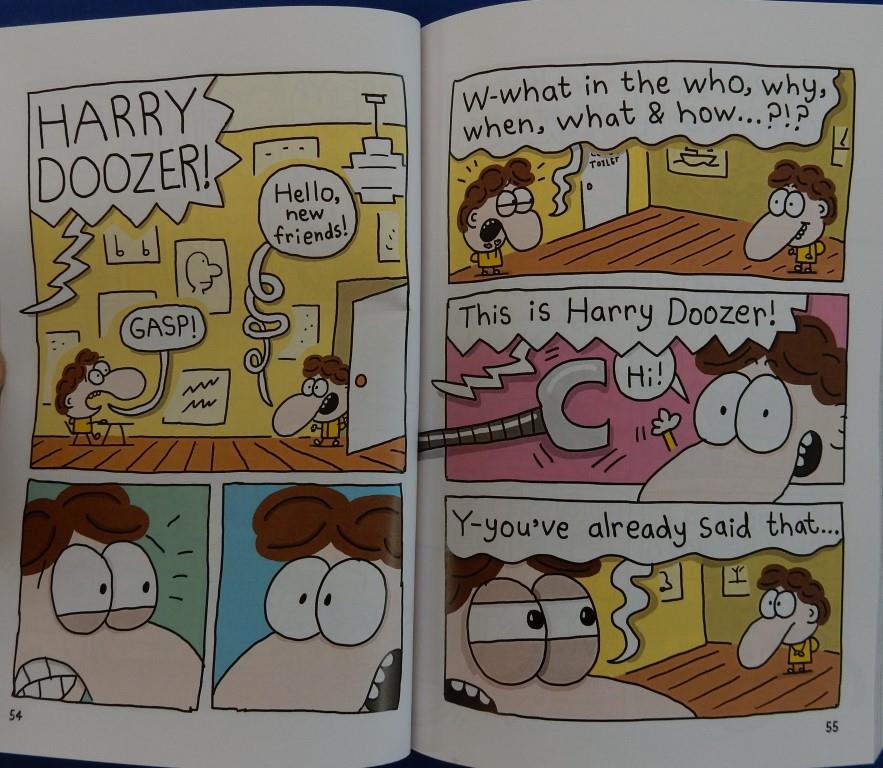
Slightly bizarre, this would make an entertaining read aloud.

Fly, Butterfly, Fly!

Fly, Butterfly, Fly!
Dom Conlon and Anastasia Izlesou
Graffeg

The butterfly addressed in the title is a Cabbage White. As she flits about with the other butterflies in the meadow, she considers herself too plain in comparison with the surrounding flora and her more colourful butterfly companions, the likes of Small Tortoiseshells and Chalk Hill Blues. Consequently it’s a case of ‘Fly, Butterfly, Fly, as she embarks on a journey to butterfly habitats across the world.

First stop is the Amazon rainforest burgeoning with richly hued fauna and flora. However, Butterfly is aware that attractiveness can cause danger due to those on the lookout for something tasty to eat,

so she takes flight again, next stop Mexico. There, along with the humans, the Monarch butterflies are celebrating the Mexican Day of the Dead. There are less of this species now though, as their vital food plants are being killed.

Off goes our Butterfly once more – to the tropical forests of India. There she’s in for a colourful surprise, for out of what appears to be the leaf covering on the ground, rises a host of Dead Leaf butterflies.

Over then to Papua New Guinea’s Mount Lamington volcano, home of the world’s largest butterfly, the Queen Alexander where the hues of the caterpillars make Butterfly think of her home, far away.

Off she goes heading homewards but her journey isn’t yet done; she stops over in the USA, where as in many other parts of the world, butterfly numbers are on the wane. Our common or garden Cabbage White has vital pollination work to do before she finally reaches the place from whence she started; the place where in fact, her colour is exactly right and where, satisfied among her own, she must now lay her eggs in readiness to say, “crawl, Caterpillar, crawl.’

Through Butterfly’s travelog, comprising Dom Conlon’s poetic narrative together with Anastasia Izlesou’s show-stopping illustrations, readers are made aware of the desperate plight of all too many of the world’s precious butterfly species.
An important addition to the Wild Wanderers series and let’s hope, a wake-up call to us all to do whatever we can to stop further decline in butterfly numbers wherever we are.

The Horse who Came Home / The Lost Bear Cub

The Horse who Came Home
Olivia Tuffin
Nosy Crow

Hannah and her elder sister, Millie live at Heartwood, a pony farm and stables. Their dad, an ex-showjumping champion, trains and sells on only the most exclusive ponies; though in reality this means he leaves much of the day to day business to a young man, Ashley, who Hannah increasingly distrusts, despite him being the son of the highly trustworthy old Johno.

Already we see that this is no run-of-the mill pony book merely about winning rosettes and cups at gymkhanas and championships – although that is part and parcel of the story. So too is the fact that film makers, Horsetalk, want to make a six-part documentary about Heartwood.

Then Hannah rescues a dirty, thin pony, Bella, which seems to recognise their stableyard and she suspects her father recognises the pony although he denies it. However nobody appears to want to help care for the pony so Hannah decides to do so herself. She’s supported in her endeavour by her pal, ace photographer, Freddie and riding friend, Gaby.

Unlike pony books back in the day when the young me loved reading them, the internet, mobiles and social media play an important part in this one. There’s a fair bit of wheeling and dealing as Hannah discovers the further she digs into Bella’s history and she realises that Heartwood stables is not the perfect place she had always believed it to be. Can she unscramble what is going on and if so, where will her loyalties lie – with her family or with the horses she loves?

A gripping read, that includes a rescue, some heart-breaking revelations for Hannah and Millie, and an optimistic ending for the sisters.

The Lost Bear Cub
Holly Webb, illustrated by David Dean
Little Tiger

Lucy is thrilled to be spending her summer holiday in Canada, staying with cousins and her Uncle Pete and Auntie Cass. She’s fearful though, at the possibility of encountering bears, cougars, coyotes and eagles on their first hike and even more so when she goes camping with her relations, but without her parents.

Wandering along the waterside alone at the campsite looking for pebbles, Lucy suddenly has the feeling that she’s being watched. There just a few metres away, she sees a small black bear and thinks it’s most likely a cub that’s got separated from its mother.

That same evening after a pretty wet end to their camping expedition, Lucy looks through an upstairs window of her cousin’s house and there she spies a bear trying to drink from the water feature in the grounds – a small bear that looks familiar. Now it’s definitely the bear she feels frightened for, not herself. The trouble is, nobody else believes her.

The following day, after an exchange of feelings between Lucy and her cousin Kitty, the girls have a narrow escape from a cougar after which the girls see a very angry adult black bear that starts taking swipes at the big cat. Some very scary moments follow but there’s not just one, but two happy reunions, one human and one ursine.

With several nail-biting episodes, some of which are shown in David Dean’s black and white illustrations, Holly Webb’s latest story offers something rather different from her cat and dog books. Confident new solo readers will enjoy Lucy’s adventures on the wild side..

The Planet in a Pickle Jar

The Planet in a Pickle Jar
Martin Stanev
Flying Eye Books

The brother and sister in this story aren’t keen on visiting their Grandma’s house. They consider it boring and would much prefer to spend all their time using their screens. Immediately we see some of what they are missing by so doing. They don’t enjoy her meals, or listen to the stories she tells: but a boring Grandma she is most assuredly not. Just take a look at her shopping, knitting and pickle making.

Then one evening she starts telling them something she considers important and on this occasion the children do listen and even spend time that night thinking about what has been said. As they do so a star falls from the sky and vanishes; so too has Grandma when they go to tell her about it. 

Their search yields only a wild cat that gives chase, and the children flee to the basement via a door they’d not noticed before. There they discover shelf upon shelf of pickle jars in which are preserved everything Grandma considers precious – ‘history, languages, nature, memories, smells, feelings’ and more. In addition, she has created an amazing underground sanctuary for endangered wildlife.

When eventually the children find Grandma, she explains that in order to prevent the complete destruction of the natural world, she now needs help to continue her life’s work. And so it is that , along with Grandma, the two children become custodians of the planet. 

Let’s hope that other children too are inspired by the story. It’s magnificently illustrated by the author and tells much of the tale without the need for lots of words; indeed what is shown is often at odds with what is said.

A book to share and discuss at home and in the classroom, and most importantly, for children and adults to act upon.

Never Ever Ever Ask a Pirate To A Party

Never Ever Ever Ask a Pirate To A Party
Clare Helen Welsh and Anne-Kathrin Behl
Nosy Crow

When is a party not a party? Find out in this zany book.

The child narrator of the story is planning the perfect party and as readers are being told what they need to know about how so to do, there’s a knock at the door. In bursts a sword wielding pirate accompanied by Polly parrot, ace stealer of presents. 

Said pirate is closely followed by a huge scary dragon, a unicorn with a hatred of ‘mess’ and a resulting need for the perfect bath, 

and a spaceship full of little aliens. Our narrator says the only option is to send the whole lot packing; but is a quiet party with not a single guest to share in the delights of cake, or to give a present, what a party giver really wants?

Perhaps there’s a much more enjoyable alternative where all those aforementioned party-wrecking guests are on their very best behaviour.

Ah-ha! It seems as though the aim – a perfect party – is getting under way at last. 

Or possibly not …

Anne Kathrin-Behl’s lively illustrations of the ensuing chaos caused by the unruly behaviour of the various guests, combined with Clare Helen Welsh’s text with its ‘never, ever, ever ask’ refrain, lots of knock knocks to join in with and a surprise ending, make a lively read aloud that makes clear the pleasures of sharing fun times with your friends.

How To Spacewalk / Wind: Discovering Air In Motion

How To Spacewalk
Kathryn D. Sullivan and Michael J. Rosen
Walker Books (in collaboration with MIT Kids Press)

In 1984, Kathryn Sullivan became the first woman to walk in space: in this book, illustrated with photographs and Rosen’s ink and pastel images, she shares her story.
As a child in the 1950s, Kathryn developed an interest in science early on but like other girls, she wasn’t encouraged to follow her interest. However, with determination and perseverance she studied geology and became an oceanographer, eventually applying to join NASA’s astronaut programme for which she was accepted, as well as receiving an offer to explore the ocean depths in a submarine. She chose the first option.

From then on the author addresses readers as though they are participants in her training as an astronaut. What is it like to do a spacewalk? How do you use cutting-edge equipment? What does it feel like to wear and carry out experiments in a hugely heavy space suit? – space armour as it’s called here.

What about experiencing weightlessness?. Will I suddenly feel scared?

A large amount of fascinating factual information is presented, but alongside this we share an empowering account of a woman fulfilling her dreams; it’s one that will surely encourage child readers to live the ‘life you invent’ – to reach for the stars, whatever that means for them.

Wind: Discovering Air In Motion
Olga Fadeeva
Eerdmans Books for Young Readers

Translated from the original Russian by Lena Traer, this book poses and explores eighteen wind- related questions, devoting a double page spread to each question, with illustrations by the author.
The responses to the first – Where does wind come from? are somewhat playful; for instance ‘Maybe there are giants… / who blow air with all their might?’ and ‘Or maybe the wind comes from the wings of a large bird?’.

However from there on the tone changes and What is wind? is answered with a scientific explanation ‘Wind is the horizontal movement of air over the surface of the Earth’ … The author then interweaves information on meteorology, biology, ecology, history, even venturing into outer space, so there’s plenty to keep readers interested.

Each double spread is distinctively designed and the richly textured illustrations are strikingly executed using acrylics, collage and digital media.

Included in several scenes are a little girl, sometimes accompanied by her grandfather and one assumes the questions are coming from the child.

Created with the help of a meteorologist, this exploration of my least favourite element is engaging and absorbing: I would recommend adding the book to primary school collections.

Bear Is Never Alone

Bear Is Never Alone
Marc Veerkamp and Jeska Verstegen
Eerdmans Books for Young Readers

An ursine piano player entrances the forest community with his beautiful music making, but non-stop playing is very tiring and the other animals demand more than the exhausted creature can give, so he stops for a break. However, the listeners just won’t hear of it and yell, “More, more, more!’ repeatedly

until pushed to his limits, Piano Bear gives forth an almighty ROOOOAAAAR’ that scares even himself.

Then comes a tirade from the other animals, which Bear ignores completely. When the last of their voices has disappeared Bear looks up: “I’m alone,” he sighs. However, this isn’t so, for there in front of him stands a zebra.

A thoughtful zebra that offers to read Bear a story in return for all his beautiful music making. Initially Bear refuses but straightaway changes his mind and calls her back with “Zebra, wait! I have an idea! Let’s be alone together.” After all, having a story read to you by a friend is a fun experience he doesn’t want to miss.

Yes, the ending feels a trifle abrupt but the author’s message about Bear’s need for some solitude after giving of himself for so long, definitely comes through in Laura Watkinson’s translation of Dutch author Marc Veerkamp’s telling. Stars of the show, along with Bear, are Jeska Verstegen’s mixed media black and white illustrations with occasion splashes of red for this story that provides just sufficient space for readers and listeners to form an understanding of how we should treat one another. I love the way she builds that dramatic crescendo of the listening animals’ demands across several double spreads culminating in Bear’s almighty roar.

Genie and Teeny Wish Upon a Star

Genie and Teeny Wish Upon a Star
Steven Lenton
Harper Collins Children’s Books

This is adventure number four in the cracking Genie and Teeny series for newly independent readers.
After another case of incompetence Grant is back in Genie World but hiding at home in the tea-lamp with his family, having been banished from Wishaluzia by Queen Mizelda because he accidentally turned her into a snake. With her royal guards always on the lookout for the little genie, others in his family have just disguised him as a guard when trouble appears in the form of a huge fire-breathing cat monster. Before you can say ‘chaos’ , which is what immediately ensues in Wishazulia, Grant is swept away with some of the royal guards and finds himself face to face with the Queen and promising to protect her from the monster.

He quickly learns that his ‘Alaka-blam-a-bumwhistle’ incantation is not going to get rid of the beast

and that another plan is required. A plan that involves his family (including some of Dad’s ‘Jim-a-jam-a-jumplebumps!’ chanting and a helping paw, or four, from his best friend in the entire universe, Teeny the Earth dog.

As with previous titles, this thoroughly engaging story has a plethora of puns, some burps and farts, those splendid chants and Steven’s wonderful drawings at almost every turn of the page. Those new to the series can start here as the events of previous books are outlined in an introduction before the story begins, and I imagine having read this, newcomers will want to seek out the first three and giggle their way through those too. They also work well as read alouds to those not quite ready for their first chapter books. Steven concludes this one with a lesson on how to draw Queen Mizelda.

We Are Expecting You! / Dear Star Baby

We Are Expecting You!
Barney Salzburg
Scholastic

Little elephant excitedly anticipates the arrival of a new sibling but it’s hard having to wait so long. However the little purple pachyderm goes through all the things the two siblings will do together- play peekaboo, tell jokes for instance. “I will read to you. I can sing to you. …

We can dance together. …”

Reminding this reviewer somewhat of Mo Willems’ artwork, Saltburg’s simple, stylised illustrations show the little elephant always close to its expectant mother directly addressing her bump until the wait almost gets too much and its “I can’t wait for you to be here” changes into a very loud assertion of readiness. All the time the focus of the brief text is on what the siblings will share, making this a warm and captivating way to introduce the notion of a growing family to a very young child.

Sadly not all pregnancies end in a joyful outcome as we see in

Dear Star Baby
Malcolm Newsome and Kamala Nair
Beaming Books

This is a heartfelt story written as a letter from a small boy to his baby sibling that didn’t come home. He starts by saying how happy he felt as he helped his Daddy prepare the room, accompanied his Mama to buy some gifts and Dad shared stories about being a helpful big brother. But then Mama goes to hospital and his parents have to break some very difficult news: the baby won’t be coming home after all, and has gone to be with the stars.

He goes on to talk about the things he was looking forward to doing with his sibling and how the family members process their grief after this devastating loss.

Miscarriage is something many families experience and Malcom Newsome’s tender telling written out of his own personal experience, and Kamala Nair’s equally tender illustrations expressing love, loss and remembrance, offer a safe space for those who lose a baby through miscarriage, as they share the book.

Me and the Robbersons : Bandit Karaoke

Me and the Robbersons : Bandit Karaoke
Siri Kolu
Little Tiger

Wonderfully anarchic, this is a story translated from the original Finnish by Ruth Urbom.

Maisie has been sent to music camp for the summer but determined not to stay there, she sends an SOS to friends she made the previous summer, a bandit family, the Robbersons.

Before you can say ‘sweets’, Maisie is whisked away and embarking on her second summer of heists and much more. “Now that Maisie’s back with us, the sky’s the limit!’ declares Wild Karl as the bandit van roars on its way, kidnap successfully carried out.

Maisie quickly becomes an integral part of the Robberson’s robbing, acting as a damsel in distress standing in the road having supposedly missed the bus home. However the family’s main focus and thus Maisie’s, is the Summer Shindig at the end of which a new Supreme Bandit is to be elected, the aim being that it’s Wild Karl who takes the crown. Let the tough training regime begin.

It appears that the Robbersons have already decided which event Maisie should enter – the Fib-Off, and she’ll face some extremely tough opponents. Yes, lying is part and parcel of this, but there’s a fair bit of dishonesty in other events, by various bandit clans.

So, who will end up with the highest total score and thus participate in the Bandit Karaoke? Who will become Supreme Bandit for the next decade and whose face will it be on that special Orkola liquorice coin – a last minute prize offered by the Farnaby family?

This second title featuring Maisie and the Robbersons is a twisting, turning action-packed romp with an exciting cast of characters that will make a splendid escapist read this summer.

Everybody’s Equal

Everybody’s Equal
Patricia Hegarty and Greg Abbott
Little Tiger

This is a follow-up to Everybody’s Welcome by the same author and illustrator team.

Mouse is standing in the forest clearing near his home when he hears a lot of banging and crashing. It’s Stoat building a tall sturdy fence designed to keep Mouse out -“because you don’t belong” he tells the little creature.

Mouse doesn’t just accept this; he responds “Everybody’s equal, / I’m sure you will agree. / I’m as good as you / and you’re as good as me.” – a verse he repeats several times during the story.

He calls all his friends together to try and form a plan to make Stoat change his mind. This causes a squabble about electing a leader but Mouse knows just what to say to move things forward. Then suddenly as Stoat puts the finishing touches to his fence, he hears a cry for help. The house in which Mouse and his pals live, having built it together, has caught fire and the animals desperately need water.

However Stoat’s fence is blocking access to the river. Will he do the right thing so the other animals can get to the water that can put out the flames?

Happily yes; seemingly Stoat has seen the error of his ways and realised that as Mouse has been saying all along, everybody’s equal.

Patricia’s rhyming text reads aloud well and together with Greg Abbot’s woodland scenes in muted hues that use split pages to build up layers of the story, and that crucial die-cut , show that life is much more enjoyable when everybody is included in the fun.

Adult readers aloud will likely see some parallels with current events that are happening in the UK and other parts of the world. Young listeners will understand the importance of Mouse’s words about equality and inclusivity and one hopes apply them to their own lives.

Animal Explorers: Ivy the Bug Hunter

Animal Explorers: Ivy the Bug Hunter
Sharon Rentta
Alison Green Books

Meet Ivy the elephant, a hater of bugs, or rather that is early in the day when she’s trying to enjoy her picnic. However, thanks to an encounter with Emperor Swallowtail caterpillar, by the evening she’s telling her mum that she loves bugs and wants to be a bug hunter. So Mum agrees to let Ivy accompany her new caterpillar pal on a bug safari.

Next morning Ivy is up early to assemble her equipment and a tasty picnic (for herself); the caterpillar sates his appetite by munching on leaves en route. They see various kinds of bug houses, up high and down low as well as a huge termite nest, then at Emperor’s next snack stop beside a pond, they watch all sorts of aquatic bugs.

As the safari stops continue, Ivy learns about camouflage, drawing in her notebook, some examples of bugs that disguise themselves ,and also comments that her companion has shed his skin four times. At nightfall as the fireflies glow in the sky, Emperor Swallowtail is exceedingly sleepy and informing Ivy how proud he is of her, says that she must continue without him hereafter, then promptly falls asleep.

The following morning Ivy can’t see a sign of the Emperor but there is a ‘funny brown thing stuck to a branch’. Savvy children will likely know what that is but not Ivy. However, remembering Emperor’s last words, she continues her bug hunt, has the occasional set-back but makes lots of exciting discoveries,

though still she wonders if she’ll ever see her friend again. Then one afternoon, to her delight something makes her sneeze: I wonder what that could be.

Sharon Rentta’s vibrant, gently humorous scenes of the safari are a delight to pore over and she has included brief biographies of famous real life bug hunters at the end, as well as a page showing the life cycle of the Emperor Swallowtail.

This is science writing for the young in a highly accessible, absorbing and fun form.