My Granny is a Queen

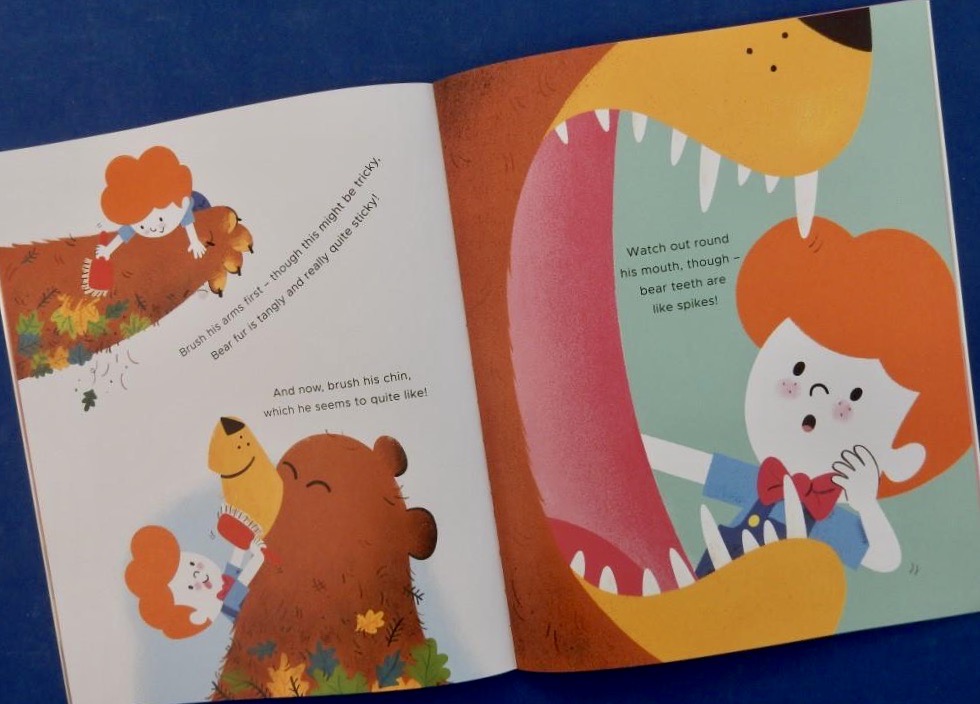
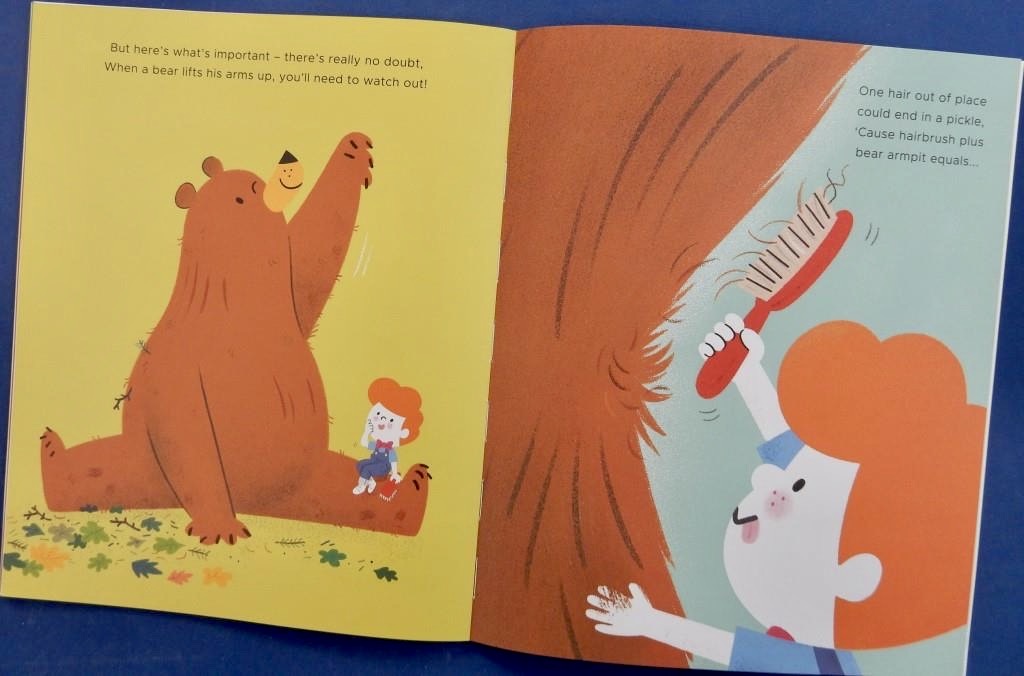
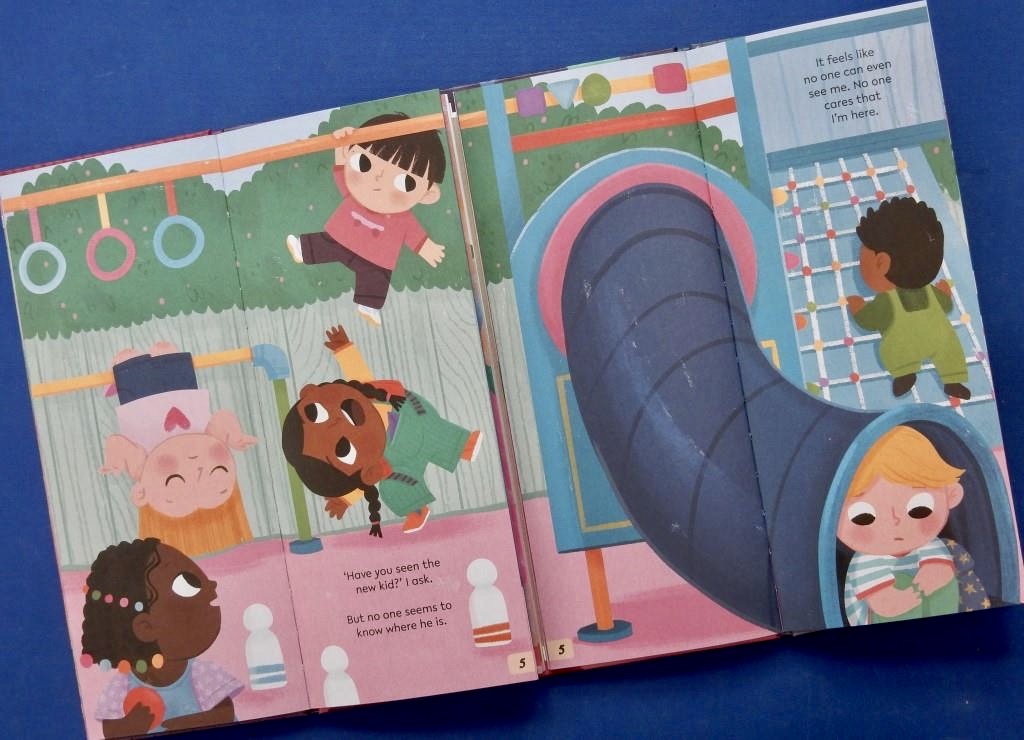
My Granny is a Queen
Madeleine Cook and Rebecca Ashdown
Oxford Children’s Books

Twelve children proudly and lovingly introduce their respective grandmothers in this wonderfully warm-hearted, celebratory book. Each one is, in the eyes of her doting grandchild, a true queen even if not HRH The Queen.

The first – granny – is greeted on arriving for a visit with curtsies and a red carpet on which to walk.
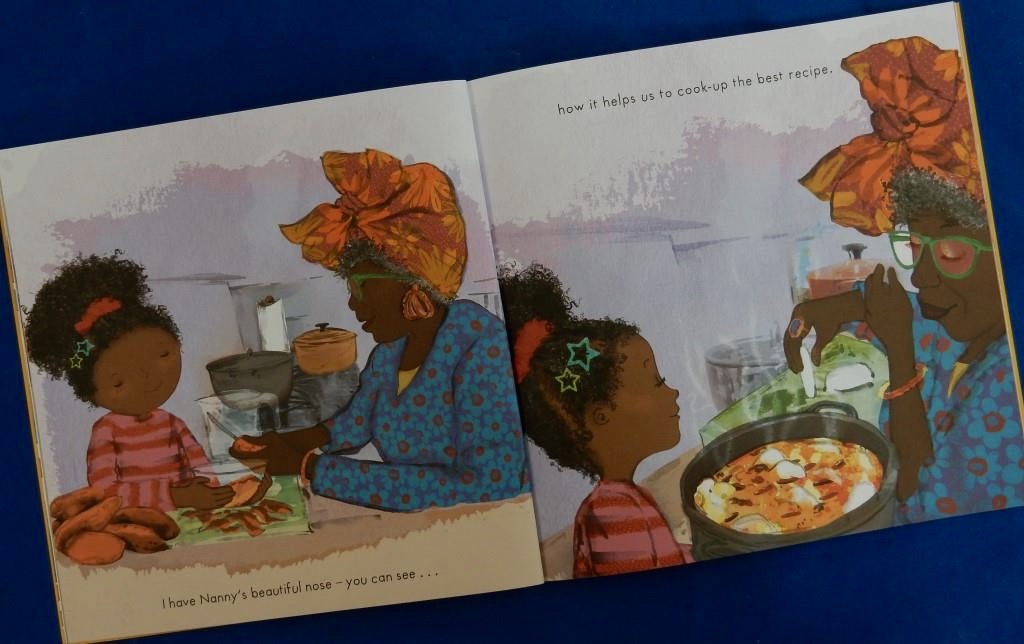
Then in turn we meet nana with her royal pets Lord Stinkerton and Lady Battenberg the Third, classy pooches for sure though a tad mischievous at times; nonna with her precious royal jewels; oma, who arrives in her carriage ready to take the family for a drive into town.

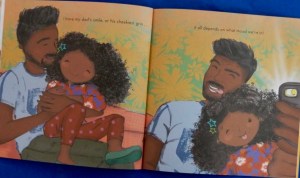
Bibi has a penchant for spectacular events and she’s more than happy to be accompanied by her grandchild; grandma – she of the royal wave – is frequently greeted by well-wishers when out and about; nai nai inspires her grand-daughter with encouraging speeches; gran on the other hand is a bestower of special awards for bravery. Nanny’s home is a distant castle so family news often has to be communicated via technological devices; Baba loves to relax after a busy day …

whereas nani is a terrific teller of bedtime stories and abuela has a very special crown. Apart from giving their grandchildren love and affection there’s something else all these wonderful people have in common: now what might that be? … Party anyone?

A terrific celebration of grandmothers, of differences, and the special bonds of familial love that transcend all else.

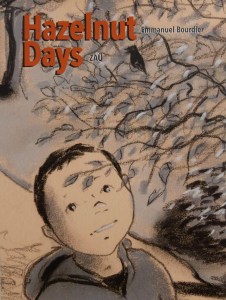
Hazelnut Days

Hazelnut Days
Emmanuel Bourdier and Zaü
minedition

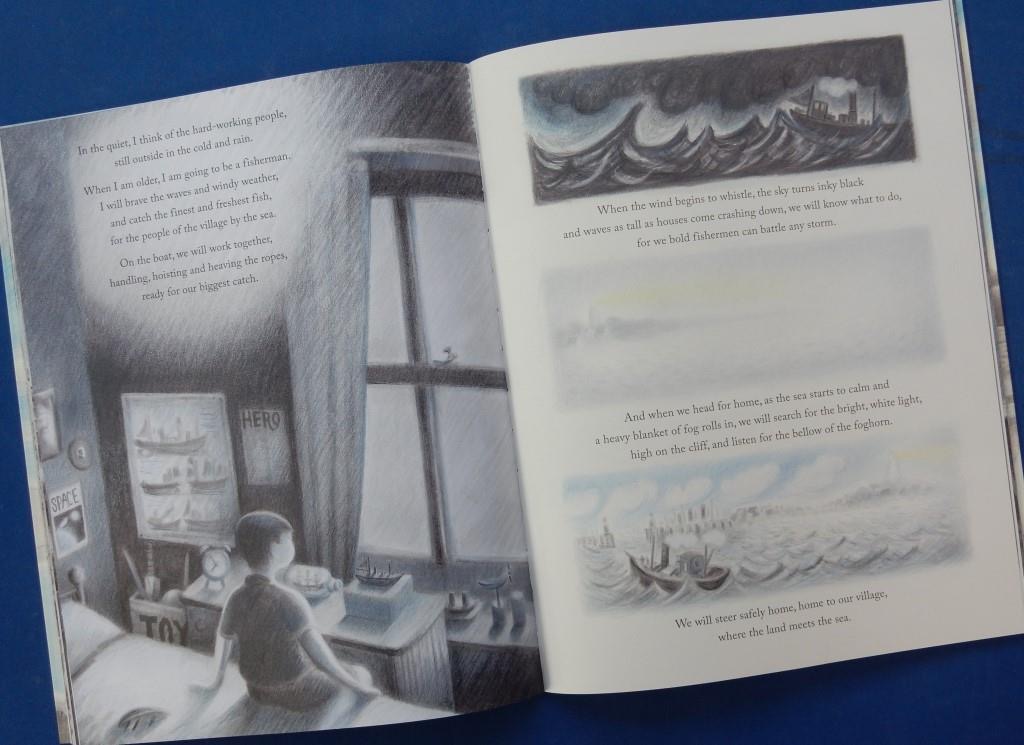
The boy narrator sees his father just once a week, when he visits him in prison. We know not why he’s there but we do discover that it’s for a long stretch and we learn a lot about him and about the complex relationship the narrator has with his Dad or “Cave Bear” as the boy and his mother call him in their conversations. Conversations with school friends are tricky for the boy who never reveals that his Dad is in prison. Instead he tells them, “He’s a ‘cloud sculptor, a mole tamer, an inventor of dirty words.”

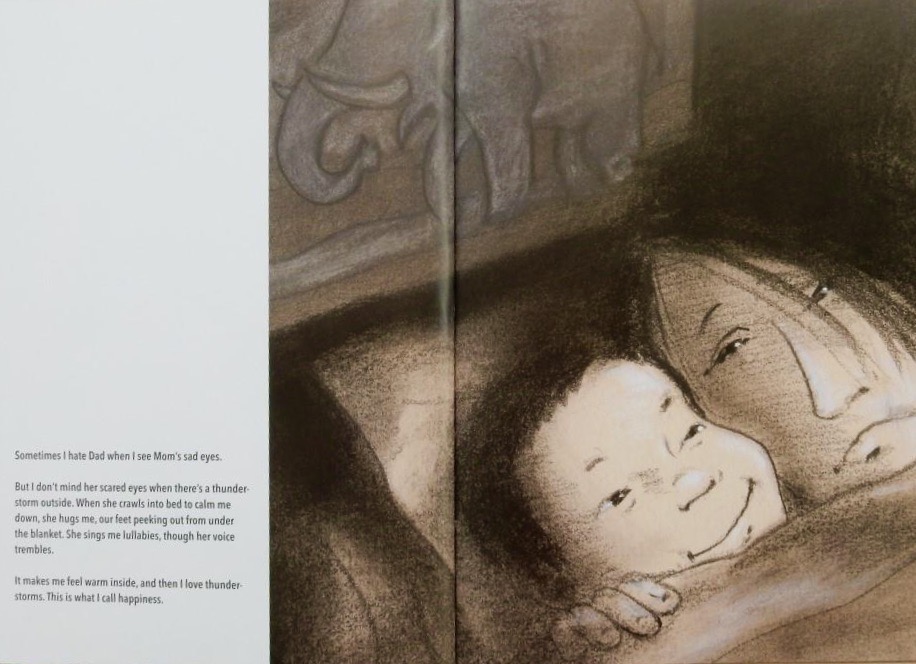
During his son’s visits Dad smells of cigarettes along with peppermint or hazelnut on account of the two bottles of cologne Grandma once gave him. He has a gold tooth, a short temper, a good sense of humour, he’s strong and likes to copy bird sounds and imitate people. The boy blames his Dad for the anguish and sadness – the ‘fog – in his Mum’s eyes, hating him for that,

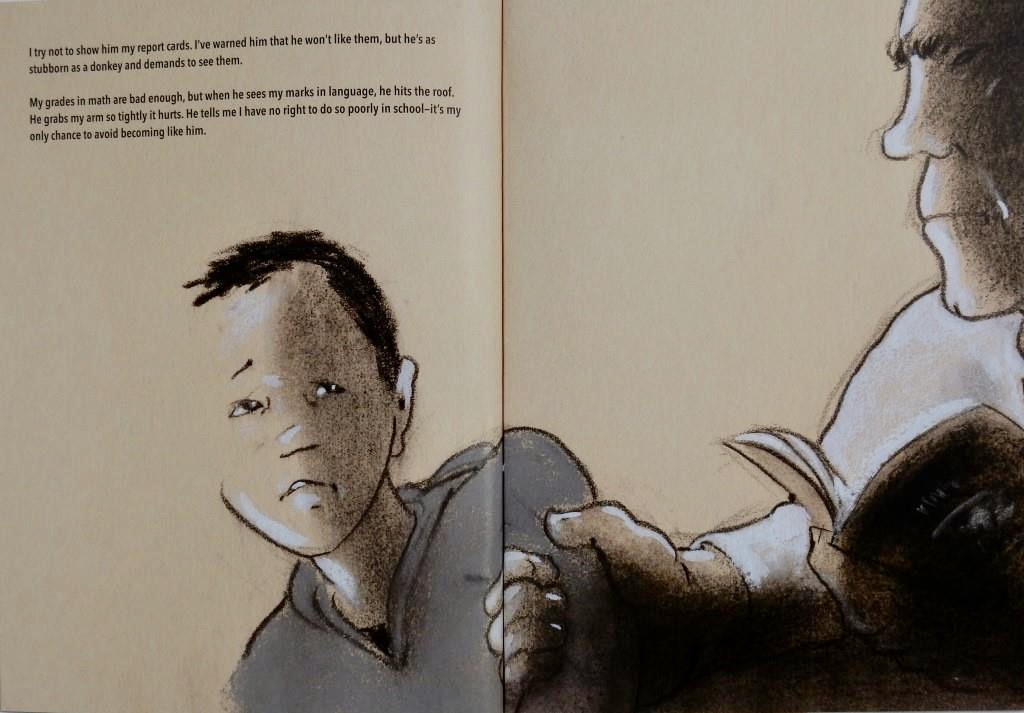
and fearing his fury over the lad’s school reports.

However, when visiting time is over and Dad cries, the narrator’s love is reawakened and he leaves with thoughts of retaining that special Dad smell till the following week, as well as bringing him a supply of hazelnuts.

This is a powerful evocation of a situation seldom presented in picture books. Both words (elegantly translated from Bourdier’s original French) and Zaü’s (André Langevin) charcoal, sepia-toned illustrations are empathetic and full of emotion, working perfectly together to produce an unforgettable book for older picture book audiences.

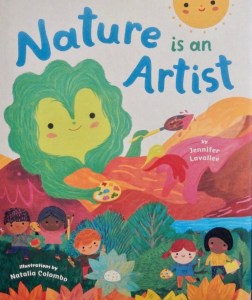
Nature is an Artist

Nature is an Artist
Jennifer Lavallee and Natalia Colombo
Greystone Kids

Nature has many awesome qualities not least of which is its incomparable artistry – its beauty and its incredible variety: that is what this book explores and celebrates.

There is complete harmony between author Jennifer Lavallee’s rhyming text and Natalia Colombo’s striking illustrations of nature – both its manifestations and the green being that leads a group of five children on an exploratory journey through various beautiful natural landscapes showing them the sunrise over some hills; a field alive with buzzing bees and daisies growing in abundance around the trees; the rich colours of summer flowers in full bloom as they begin to scatter the petals. 

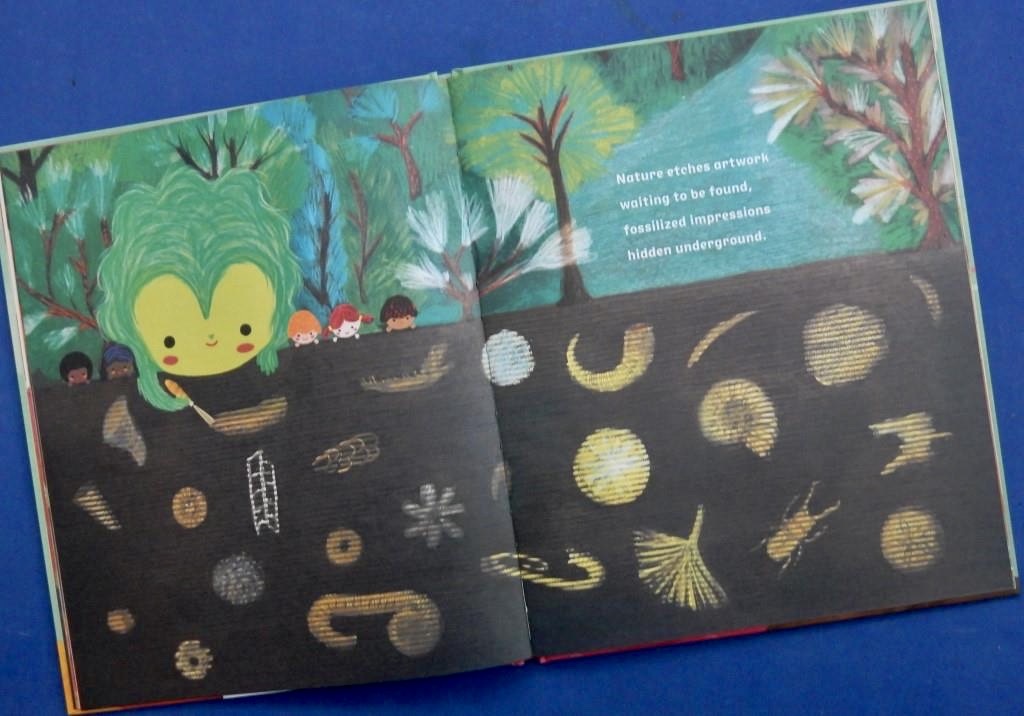
Next, resting on a rock at the water’s edge, nature shows itself as sculptor extraordinaire, carving and moulding rocks and clay. Then hidden deep beneath the ground lies evidence of nature’s etchings – those fossil impressions making patterns we all so love to find; 

while with rain and sun together, high up in the sky, nature creates a rainbow: a kaleidoscope of gorgeous colours, a prism up above.

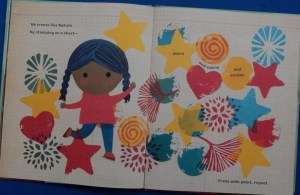
As the children witness each stunning landscape one of their number with nature now as teacher/mentor is inspired to recreate what they’ve seen in art of their own making: one by finger painting, another making a colour paper collage, one sculpts towers in sand; fossil etchings are done by stamping various shapes on a large sheet 

and a rainbow is formed from torn tissue paper pasted on a glass jar and a lighted tealight within to provide the glow.

Whether used in a classroom or at home, those with whom this book is shared should not only develop a deeper appreciation of the natural world but also be motivated to try some of the art techniques the book includes.

Granny Came Here on the Empire Windrush

Granny Came Here on the Empire Windrush
Patrice Lawrence, illustrated by Camilla Sucre
Nosy Crow

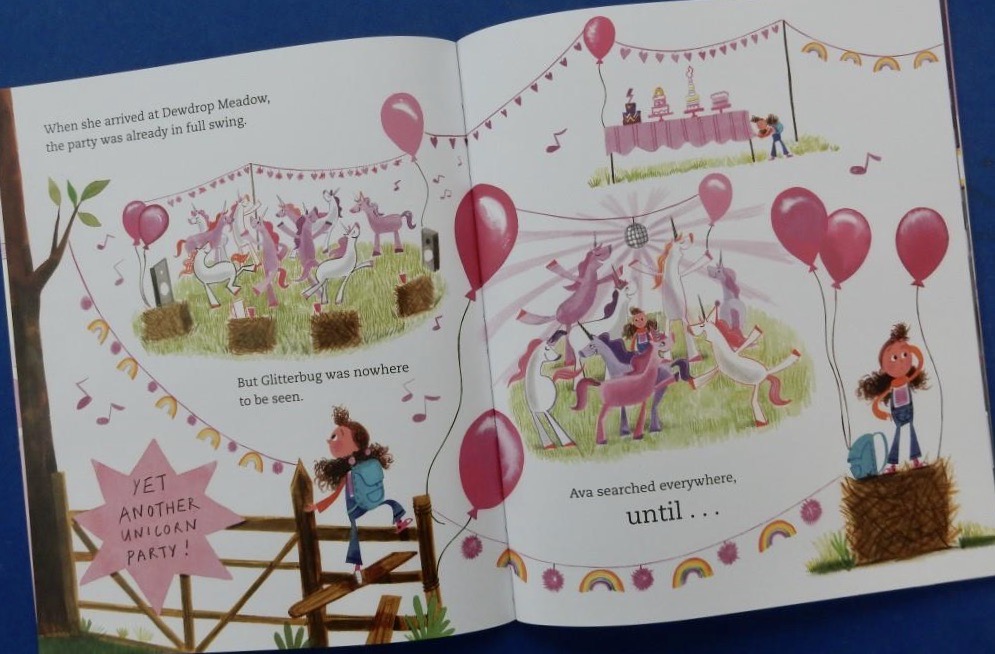
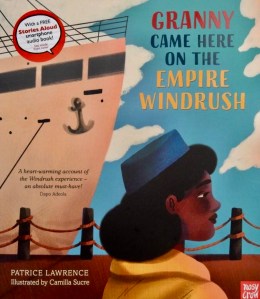
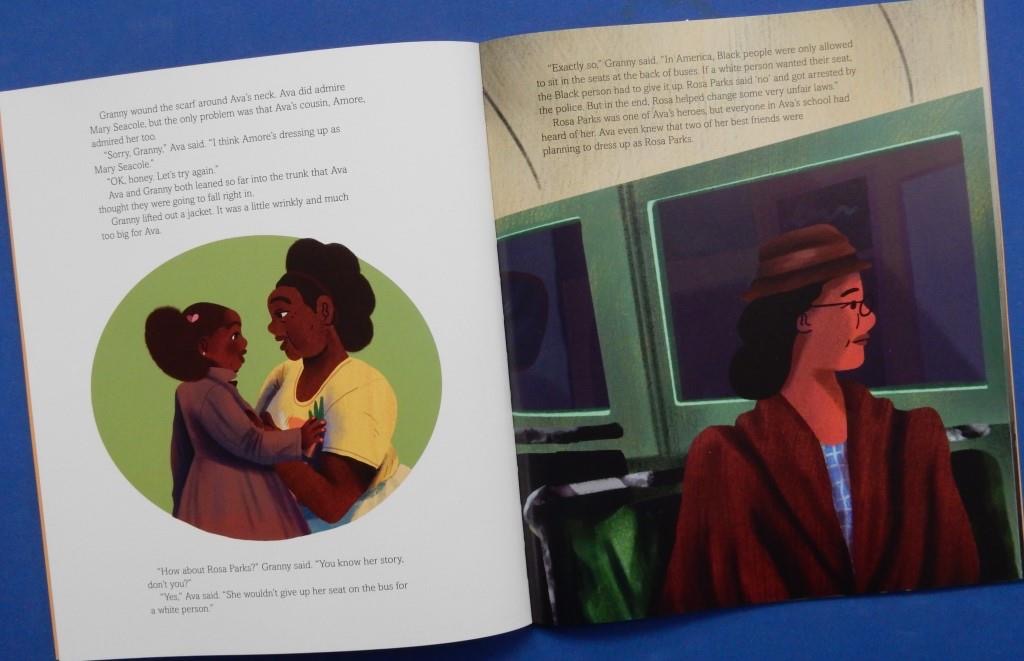
This wonderfully warm book follows Ava and her Granny as together they search Granny’s trunk one Sunday for a costume suitable for Ava to wear at her school dressing up event to represent someone she admires. Rummaging through the various items of clothing, jewellery and other objects Granny is reminded first of Winifred Atwell on account of the sparkling bead necklace, then Mary Seacole who sometimes wore a red scarf just like that in the trunk, a jacket makes her think of Rosa Parks. In each instance Ava’s grandmother tells her a little bit about each of the women mentioned: the glamorous pianist, the nurse who tended the wounded during the Crimean War, the brave woman who refused to give up her seat on the bus.

Then, hidden under all the clothes, Ava unearths something she’s not seen before: it’s a small cardboard grip in which Granny had carried presents she was given when she left her home in Trinidad and came to England on the Empire Windrush.

As she pieces together a story using the objects – a smooth grey pebble, an empty jar, a small blue hat and a pair of lacy gloves, we learn of the intense feelings of homesickness and loneliness her grandmother experienced; and how she built a life for herself in a new, chilly country, meeting and marrying the man who was to become Ava’s grandad. This woman – her own beloved Granny – is Ava’s real hero, the one she chooses to dress as.

With Patrice Lawrence’s perfectly paced telling and Camilla Sucre’s richly hued, vibrant art, this is a truly moving story that celebrates both the Windrush generation and their achievements, and the bond between Ava and her grandmother.

A superb book to share and discuss with young listeners at home and with primary children both in KS1 and KS2.

George the Brave

George the Brave
Eva Papoušková and Galina Miklínová
Graffeg

It’s off to Australia for this tale of a little wombat called George. I learned something about wombats like George before reading the story book for there’s an information page at the start. Did you know that in addition to being protected by law on account of their rareness, wombats are able to protect themselves by thrusting their rear ends at an enemy.

Let’s meet our protagonist George, and his friends. Fred the Kangaroo, Annie the Goose and Lizzie the Mouse invite George to join them in some games one day. Having got permission from his parents and a warning to be on the lookout for possible dangers in the form of hungry predators, he demonstrates his life-saving moves and off he goes to the dark woods to meet his pals. Their first game is hide and seek and when it’s George’s turn to be the seeker, he hides his eyes and starts singing a little song. However upon uncovering them he finds himself face to face with Wilma the Fox. Eek!

Now Wilma is a sly creature with her mind on her next tasty meal. To that end she invites George to show her his home and when he wants to know why, she’s gets angry. After all an entire wombat family is much more satisfying that one little one.

George is suspicious and sensing danger, flees as fast as he can. The trouble is, Wilma too has fast paws and is hot on his trail. Now is the time for George to be truly brave and use that strong, bony bottom of his.

Is it enough to do the necessary? Let’s say that Wilma loses more than just a tasty meal on account of his bum-thrusting stance. 

And George? He’s learned an important life lesson about facing one’s fears – kind of!

Young children will relish George’s new story with its embedded wombat fact. With that big surprise, superb cross-hatched illustrations and dryly humorous text, it’s both lots of fun and informative. It also offers a good starting point for a circle time discussion about standing up for yourself.

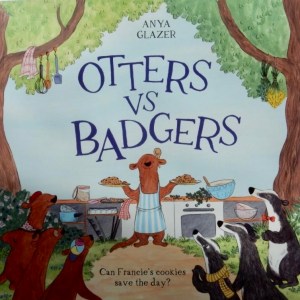
Otters vs Badgers

Otters vs Badgers
Anya Glazer
Oxford Children’s Books

Here’s a tale about difference and happily, divergent thinking; and it has a vital lesson for people of all ages, so long as they’re willing to learn from Otters and Badgers.

In this story, said creatures reside on opposite sides of the divide – a river – that they find impossible to share without resorting to pawicuffs over territorial rights. As a consequence to avoid further inflaming the situation, their two leaders decide that no badgers and no otters must EVER cross the river.

Now here’s where the divergent thinker comes in: she’s an otter and her name is Francie. A tad shy by nature, she’s the best baker of cakes anywhere along the river, so say her fellow otters anyhow. Certainly her cake creations are delectable and she loves to invent spectacular new treats too. One day while out hunting for the perfect ingredient for her next batch of baking, so wrapped up in her task is she that she strays into enemy territory.

She’s spotted so doing but fortunately her fast feet carry her out of harm’s way. However it’s not long before there’s a confrontation on otter territory with the badgers demanding to see the marauding otter. While the heated talks continue Francie is busy doing what she always does, emergency or not.

What will be the outcome of her labours now? Could it finally be time to call a truce?

In these increasingly troubled times of ours, it’s easy to draw parallels between this story and the real world. Drawing attention to the futility of conflict, Anya Glazer’s amusing telling in combination with her droll, delightfully detailed illustrations, show that compromise, finding what we have in common and learning to live peacefully side-by-side with others however different they may at first seem, is so much better that hostility.

Don’t miss the recipe for baking yummy chocolate chip cookies at the end of the story.

Maya’s Walk

Maya’s Walk
Moira Butterfield and Kim Geyer
Oxford Children’s Books

Maya and her father love to walk together and no matter where they go, they make full use of all their senses so that they get the very best out of their time. With their eyes they might discover a wealth of ‘tiny secrets’ be they insects on the move or plants just beginning to sprout. They run their fingers over different surfaces experiencing different sensations as they do so. 

If their feet take them through a town they listen out for the gamut of sound that surrounds them: singing birds, ringing bells, barking dogs and the constant chatter of humans. Then once out of the hustle and bustle it’s fun to be more energetic both on the way to the park and inside it where, once again, there’s an abundance of sounds and movements to emulate.

Whatever the weather – be it rain or shine – there’s always plenty to bring delight, especially if by chance a rainbow appears and Maya and Dad can focus on finding and matching all its colours with things in nature and then using their other senses too, to fully appreciate what they see. Then perhaps some of those wonderful things will become the subject of her dreams.

How fortunate is Maya to have a parent who makes every walk an adventure and who helps to make sure she finds that all important awe and wonder as she experiences the world around her.

A beautiful book to share with young children be they at home, nursery or school, preferably, with heightened awareness, just before going out walking.

On My Papa’s Shoulders

On My Papa’s Shoulders
Niki Daly
Otter-Barry Books

The little boy narrator in Niki Daly’s compelling picture book has just started school. He’s fortunate to have members of his extended family to take turns to walk with him through the busy town to the school gate.

Mama is a quick walker and so they always arrive in plenty of time for goodbye kisses before the bell rings. Gogo likes to leave early so the two of them can avoid the busy road and along the quiet way they find lots of look at and chat about, and perhaps even pause over.

Gogo is full of wise words, talking to her grandson about how he should be gentle with his friends.

Rainy days are reserved for Tata who is fond of puddle splashing, though his more easily tired legs mean he prefers the shortcuts and needs to pause for a rest en route – the perfect opportunity for a spot of whistling. In addition to whistling, hugs are Tata’s speciality.

“But the days I love the best are when Papa takes me to school.” That’s what our narrator tells us from his vantage point on Papa’s shoulders: it’s a place where he’d like to stay for ever but knows that when they reach the school gate that “I love you” exchange is coming and their parting will only be while Papa goes off to work on a building job while the little one joins his friends in the classroom for a spot of building of his own – make sure you look at his finished construction.

Yes this gorgeous, gently humorous book truly does celebrate that father/son bond, but it also celebrates the bond between the boy and the various other members of his family – each one offering something different.

One I’d strongly recommend adding to foundation stage collections and to family bookshelves, especially if there’s a child around the school starting age. Why not start by sharing it on Father’s Day this June.

Mermaid Kenzie

Mermaid Kenzie
Charlotte Watson Sherman and Geneva Bowers
Boyds Mills Press

Mermaid Kenzie as she prefers to be called, is a lover of everything sea-related. She creates sea scenes in her bedroom and goes onto the beach whenever she can. “Mermaids don’t clean up,” she insists when her Mama tells her to tidy her imaginary sea world away before venturing out. “Then this mermaid don’t go to the beach,” she retaliates. Mother and child visit the seashore by day and by night, digging for treasure, building sandcastles, venturing into echoing caves and rowing out on the ocean to look for marine wildlife.


Mermaid Kenzie loves to don her mermaid tail when they take their boat out and sometimes wearing her mask and snorkel, she dives beneath the waves playing with her seal pal named Cocoa. On one occasion, she’s horrified to discover the plastic bags causing pollution to the ocean’s ecosystem.

Mama tells her that during her own childhood, the ocean was alive with ‘squishy, squashy sea creatures’ – a veritable underwater zoo. Now is definitely time to revise her “Mermaids don’t clean up” rule. “This mermaid cleans up for my sea pals,” she announces.

Back on the shore she begins the task, urging friends to join her and so they do at the behest of “Mermaid Kenzie, Protector of the Deeps.”

Author Charlotte Watson Sherman’s narrative effectively mixes rich lyrical description – ‘Mist silver the water, / briny taste on our tongue. / Seaweed perfume the air. / Grey, the heron, drift past, / wing almost blocking the sun.’ – and dialogue. ending her story on an upbeat note that will surely inspire youngsters to take similar action for the ocean-protecting cause. Geneva Bowers digital illustrations rendered predominantly in blue, yellow and green hues present some vivid underwater scenes with a swimming Kenzie’s hair floating out behind her, adding to her ‘mermaid-ness’.

When I Was a Pirate

When I Was a Pirate
Tom Silson and Ewa Poklewska-Koziello
Flying Eye Books

Here is a story that radiates the warmth of intergenerational love.

As a grandfather playfully interacts with his grandchildren, he reminisces about his life as a pirate back in the day and in so doing unearths his sense of adventure and wonder. Remembering sailing upon the high seas, he recalls the sounds of whale songs, those searches for treasure maps, stormy waters withstood thanks to a sturdy ship, and of course, discovering buried treasure as a swashbuckling salt.

With a sprinkling of magic and a sackful of heart in both words and pictures, the story richly imagined through Tom Silson’s rhyming text and Ewa Poklewska-Koziello’s richly patterned, detailed scenes is one that grandads in particular will absolutely love to share with little ones.
“When I was a pirate, we watched night waves shimmer, / As stars reflected on dark seas below. / We cruised cosmic currents, a Milky Way swimmer. / When I was a pirate and the world was aglow.”

Who knows what wonderful memories so doing might conjure up for said grandparents, while for young children, there’s a wealth of creative potential to be unleashed after a shared reading of this.

Home Is Where the Hive Is

Home Is Where the Hive Is
Claire Winslow and Vivian Mineker
Sunbird Books

This story told from the viewpoint of Beatrice or ‘Flower-Finding Scout Bee #7394’ is one I’d strongly recommend sharing with KS1 children.

Beatrice lives with her 50,000 sisters in Big Tree Hive a place that with its wealth of tasty flowers close by and plenty of room for storing honey, has been a home for bees for ages and ages. Now however the neighbourhood is undergoing changes: the flower patch has been paved over, the stream is being polluted and tall buildings obstruct the light from the area of the hive.

When the queen bee announces that it’s time for all the hive residents to find a new home, Beatrice is determined to find a place that is the equal of Big Tree Hive and off she flies. There’s plenty of danger and she feels scared, but Beatrice isn’t one to give up easily so she keeps on searching. Will her adventure be a success; will she have sad or good news to impart when she flies back to her old home; and what will be the reaction of her sister bees?

With its themes of urban development and the loss of green spaces, Claire Winslow writes from the heart about a topic she clearly finds important to share with youngsters. In support of bees and other pollinating creatures, after the story she provides information and suggestions to help readers, their families and teachers make a difference.

With Vivian Mineker’s vibrant illustrations, this is definitely a book for KS1 class collections and for family shelves.

This Is Not A Dinosaur! / Drawing Outdoors

This in Not a Dinosaur!
Barry Timms and Ged Adamson
Nosy Crow

The NOT dinosaur that the small boy in this story meets is definitely a versatile creature. Said large green, possibly prehistoric being that appears in the playground offers all manner of exciting, special and useful possibilities as a playmate. It can become pretty much anything and everything from a sign-osaur to a soccer star supersonic-kick-osaur; it might morph into a tonsorial wonder-worker trimming and skilfully styling your tresses,

or a fearsome freebooter sailing upon the ocean deep. One thing is certain: should you decide to befriend this beastie, there are fun adventures aplenty in store; you might even find yourself scaling a mountain, flying through the air

or tip-toeing into a creepy haunted house.

With its wealth of wordplay, Barry Timms’ rhyming text combined with Ged Adamson’s funny, action-packed scenes of a burgeoning friendship add up to a super story to share with young humans, definitely NOT dinosaurs around the age of the un-tailed protagonist, be that at home or in school. I’ve no doubt if you read this with a Foundation Stage or KS1 class, they will imagine themselves into many more playful NOT dinosaur situations. The classroom potential this book offers is huge.

Drawing Outdoors
Jairo Buitrago, (translated by Elisa Amado) and Rafael Yockteng
Greystone Kids

Between two lush green mountains, beside a pure blue river in the middle of nowhere stands a small school. Education is far from dull for its pupils however. Through a girl narrator we hear about one particular day when their teacher greets them with the news that their learning will be done outside and she leads them off with notebooks and drawing equipment at the ready. ‘We are explorers” says the narrator. Even the twins who have already walked a long way to reach school leave their reluctance at the door, motivated by the prospect of an adventure day out.

First into view as they reach the river bank, among the lush vegetation stands a Brontosaurus!

Then, there’s a Triceratops,a Stegosaurus, Pterodactyls, a roaring Tyrannosaurus Rex. Finally, the group sit to eat their snacks on a branch “as big as an Ankylosaurus”.

Then with a wealth of drawings it’s back to that school with ‘almost nothing. A blackboard, some chairs. And … a teacher, and a Brontosaurus that’s as big as a mountain.’

With Jairo Buitrago’s spare, matter of fact text, it’s left to listeners and readers to decide whether the dinosaurs we see in Rafael Yockteng’s landscapes are real or not. Their book pays homage to the imaginative teachers who truly value creativity one wishes all children will meet in their time at school. I’m sure re-reads will the requested after a sharing of this story with young children.

New Baby

New Baby
Sarah Shaffi & Isabel Otter, illustrated by Lucy Farfort
Little Tiger

Young, lively twins, Bilal and Sofia eagerly anticipate the arrival of what Bilal calls a “bean in her tummy” and his sister “an apple pip”. Bilal talks of sharing his favourite animals while Sofia says she’ll show the babe how to make rockets. By winter, the Ammi’s tummy has grown considerably and she tires easily so although Baba urges gentleness the children find it hard to understand why there’s a need for her frequent snoozes. Teamwork is crucial at this time is the response from Baba.

The following morning he greets the twins with the news that the birth is imminent so their parents are off to the hospital and reassures them that Grandma and Grandpa will look after them in their absence.

Now the twins focus is on whether the new sibling will be a boy or a girl though Grandpa insists that is not an important issue. Next day the twins meet their new baby brother, Farhan, whose name their mother says means happiness and laughter.

Inevitably things at home change, for the twins now have to share their Ammi and Baba with another person and sharing is more difficult than they’d expected. Most days have their ups and downs

and reminders of teamwork are made. Then the twins put their heads together and come up with an idea: I wonder what they’re planning to do …

What a smashing family both authors and illustrator have created in this warm, reassuring and affirming story: they present so well the gamut of emotions, from elation to exhaustion, various members of the family experience both before and after the birth of the baby. A lovely book to share, especially with young children in a situation similar to that of the twins.

A Quokka For the Queen

A Quokka For the Queen
Huw Lewis Jones and Fred Blunt
Happy Yak

Having read this madcap rhyming royal romp it’s difficult to decide who had more fun, author Huw Lewis Jones creating his alliterative animal gifts – 40+ possibilities, though only 21 in her majesty’s summing up list, or Fred Blunt illustrating same in his splendiferous playful pictures.

It’s her royal highness’s birthday and she’s already received a vast number of presents when one more is duly delivered, having come all the way from Australia. Imagine her surprise when from the parcel leaps a Quokka, a creature unfamiliar to her highness; but she quickly takes a shine to the animal, deciding that this particular birthday will be different. She and her new furry friend will be the givers of presents.

Now being who she is, the Queen has a lot of people whom she deems must be the receivers of their gifts, from the butler and the baker to soldiers and sailors, and from a poet to the prime minister (really?).

Fortunately for her, the Quokka is a superb suggester of suitable animals, including tarantulas for all those important teachers – hmm!

Mightily impressed by the efforts of the Quokka, she then realises that she’s forgotten about asking her helpful friend to choose something for itself. I wonder what the Quokka’s choice will be …

The perfect picture book to share in celebration of the Queen’s Platinum Jubilee and at any time thereafter.

Eye Spy / Bugs

These are two picture books that celebrate the natural world: thanks to Scallywag Press and Little Tiger for sending them for review

Eye Spy
Ruth Brown
Scallywag Press

With her stunningly beautiful scenes and playful rhyming, riddling text, Ruth Brown provides readers and listeners with an altogether different I spy experience that begins at sunrise and ends at sundown with the appearance of the moon in the dark night sky. In all there are a dozen riddles to solve and the same number of objects from the natural world to find hidden in plain sight on the full page illustration on each recto.

Every nature scene is a delight – a veritable visual feast at every turn of the page -and some of the hidden things are much more tricky to find than others, such is the wealth of detail and clever use of colour in each one, be it the wheat field, the verdant meadow,

the stone wall, the autumnal bracken or the close up view of the base of a tree, to name just some of the sights we’re treated to.

No matter though, for the answer to each riddle is given on the following page.
This is a book to treasure and return to time and again: even when you can find all the hidden items there is SO much to see and be awed by in Ruth’s wonderful works of art.

Bugs
Patricia Hegarty and Britta Teckentrup
Little Tiger

In a rhyming narrative Patricia Hegarty takes readers and listeners through the year focussing on happenings in the natural world. These are shown in Britta’s bold, scenes that take us close up to a wealth of minibeasts and the greenery on which they land, rest, crawl and sometimes nibble
We see an abundance of new life in the springtime, be it day or night; then come the summer, changes are afoot: the caterpillar pupates and we see a chrysalis hanging from a tree branch.

Turn the page and it’s revealed what has emerged among the richly hued flowers that have burst forth. Now in the sun Ladybird needs to be extra alert for fear of becoming a tasty tidbit for a hungry bird whereas summer nights are all aglow with fireflies flitting to and fro.

Autumn brings dew and plenty of bees are still busy collecting pollen while grasshoppers chirp and leap among the turning leaves and grasses. As the days grow ever colder heralding winter, it’s huddling and hibernation time until once again nature bursts forth once more and the cycle repeats itself.

Peeking through the holes in the die-cut pages allows youngsters to experience more fully the wealth of natural colours, greens especially, that Britta has used throughout her alluring artwork.

Snakes on a Train / Maisy Goes on a Nature Walk

Snakes on a Train
Kathryn Dennis
Walker Books

The sibilant sounds of the hissing train and slithering snakes takes little ones and their readers aloud on a playful railway journey with a group of scaly reptiles. Having handed over their tickets and boarded the train, with the safety checks duly completed, the passengers find themselves encountering such things as a runaway pig on the track, a dark tunnel, a high hill, and a tall bridge before finally reaching their destination just before it’s time to find their dens and have some shuteye.

A fun sharing book illustrated in simple concrete colours and silhouette shapes: tinies will love hissing along to those snakes and that sound of the train.

Maisy Goes on a Nature Walk
Lucy Cousins
Walker Books

With her bag duly packed, Maisy meets her friends Tallulah , Charley, Cyril and Eddie for a nature walk in the park. There’s lots to see such as dragonflies flitting above and in which tadpoles and fish swim; woodland animals peeping out from between the trees, many of which are filled with noisy birds. Maisy gets close to the earth to hunt for minibeasts …

before they all stop beside the hives all abuzz with bees in the wildflower garden where Cyril gets out his magnifying glass for a closer look at those little creatures that live around the flowers. Finally comes what all children love to do – build a den together and then have a picnic lunch.

Another bright episode in the life of every small child’s favourite mouse character that’s just right for sharing with the very young.

Who Jumped into the Bed? / The Best Bed for Me

Who Jumped into the Bed?
Joe Rhatigan and Julia Seal
Sunbird Books

On Julia Seal’s serene wordless opening spread we see, side by side, two adults slumbering peacefully. Then first a small girl, then her brother, followed by a cat, a drooling dog, a slithering snake, 

a host of feathered fliers and a creature with an extremely long neck all make their way into the sleeping accommodation designed for two. Finally, bump! Out falls Dad and with bleary eyes makes his way to the kitchen where he sets to work preparing a delicious-looking breakfast. Guess what: when the hoards hear that this is on offer, every single one – be they bed jumper, snucker, wanderer, bounder, slitherer, flier or neck stretcher want to partake of the feast there and then.

I’m sure many parents will recognise at least the child invasion, in Joe Rhatigan’s rhyming narrative whereas young listeners will delight in joining in with the ‘Who —- into the bed? and be amused at the growing number of intruders that so innocently worm their way under the covers.

The Best Bed for Me
Gaia Cornwall
Walker Books

It’s bedtime for Sweet Pea – so says mama – but seemingly this little one wants to delay sleeping. Making imaginative demands of the animal kind – a koala high up in a tree, a puffin tucked into a burrow, 

a bat that dangles from a branch for instance – the child attempts, in between Mama’s efforts with the bedcovers, to emulate the creatures named.

Having gone through a fair number of creature possibilities together with their ways of sleeping, Sweet Pea eventually comes to the conclusion that a “big-kid bed, with a soft pillow and a fluffy blanket … is the best bed for me.” At last it’s time to bid goodnight to a patient, understanding Mama and snuggle down for the night.

In her pencil and watercolour, digitally finished illustrations, Gaia Cornwall shows another female caregiver with a baby affectionately watching Sweet Pea’s stalling tactics. 

There’s a gentle soporific feel to both Gaia’s visuals and telling, along with gentle humour, making this a playful, tender bedtime tale with added animal antics.

One More Try

One More Try
Naomi Jones and James Jones
Oxford Children’s Books

Mightily impressed with the tall tower the squares and hexagons are building during a play session, that Circle invites triangle and diamond friends to co-construct a tower of their own. They soon discover that easy as edifice erecting might appear, it’s nothing of the sort; indeed it’s fraught with problems of the balancing kind.

However circle, diamond and triangle aren’t giving up that easily; they decide to undertake a training regime to build up their strength. Now although this additional strength helps a bit, a tumbling tower soon results. Perseverance is the name of the game where Circle is concerned, so can a bit of studying improve things? It does, but the tower still wobbles much more than that of the squares and hexagons.

Down but definitely not out, Circle takes time out to give himself a new angle on the challenge.

While so doing, he receives a message from above and although it takes a bit of re-enthusing all the others, they agree to give it one final try working with Circle’s plan. Will success be the reward for refusing to abandon their aim?

In a manner similar to The Perfect Fit, the Jones partnership cleverly combine themes of problem-solving, determination, imagination and mental toughness with mathematical concepts relating to shape. Naomi’s amusing narrative with its plethora of speech bubbles, mainly of the uplifting kind, together with James’s shape characters that while appearing two-dimensional on the page, prove themselves to be anything but, work in perfect harmony: it can’t be easy to give simple shapes personalities but this illustrator has certainly found a way.

I Love Me! / We Are the Rainbow!

I Love Me!
Marvyn Harrison and Diane Ewen
Macmillan Children’s Books

Narrated by two small children, this enormously empowering book of positive affirmations came about as a result of the author Marvyn’s own child-rearing experience.

Starting on a Monday, it takes us through the week giving examples to back up the powerful statement. So, Monday’s declaration, ‘I am brave’ is demonstrated by using the big slide, superhero play, facing up to monsters and showing courage in new situations.

Tuesday is brain boosting day with showing one’s skill at maths, reading, dressing and potion brewing. And so it continues through the week as in turn the focus word is brave, kind, 

happy, loving and on Sunday, ‘We are beautiful!’ Those though aren’t the only uplifting statements the book contains, as is revealed beneath the fold-out page that comes before the author’s notes for parents and carers.

This book, with Diane Ewen’s bold, eye-catching mixed media illustrations of the affirmations in practice might have originated with black parents/carers and their offspring in mind, but the powerful feelings of self-worth it will engender in children are crucial to developing confidence in every single youngster no matter who they are, making it an important book for all family and classroom collections.

We Are the Rainbow!
Claire Winslow and Riley Samels
Sunbird Books

One colour at a time, this lovely little rainbow of a board book explores the LGBTQIA+ flag, its symbolism and history. The first eight spreads each use a colour to highlight a particular attribute: purple is for spirit, a reminder to listen to your heart, you are unique. Blue is for harmony, ‘Together our voices can change the world.’ Yellow is sunlight – ‘Happiness grows when you let your light shine.’ These important heartfelt messages are for everyone so the next colour, brown, is for inclusivity and this is followed by black for diversity.

Having presented each of the colours of the rainbow plus black and brown, 

we see a joyful rainbow spread: ‘The rainbow is for PRIDE. Pride means being glad to be who you are’. The final spread is devoted to a short history of how the Pride flag developed since it was first created in 1973.

Yes, this is a board book but its messages of acceptance, empathy, kindness, inclusivity and celebrating who you are, are vital for everyone; it can easily be used with older children, perhaps in a circle time or assembly.

You Can’t let an Elephant drive a Racing Car

Thank you to Bloomsbury Children’s Books for inviting me to participate in the blog tour for this hilarious book

You Can’t let an Elephant drive a Racing Car
Patricia Cleveland-Peck and David Tazzyman
Bloomsbury Children’s Books

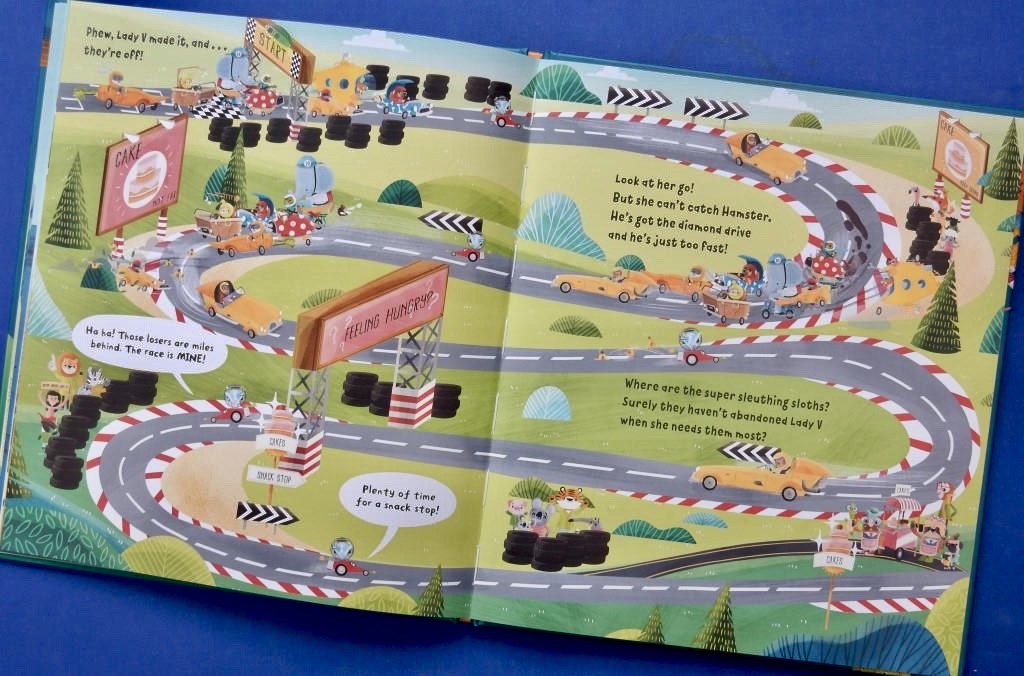
In their latest crazy collaboration wherein animals’ antics result in madness and mayhem as they try their paws, snouts, tails, trunks, beaks and other parts of their anatomy at activities normally the province of humans, team Cleveland-Peck and Tazzyman present an unlikely assortment of creatures competing in sporting contests. Starting with the titular elephant sabotaging his chances before the race even begins, among others there’s a junior alligator trying her luck as a figure skater, a kangaroo unable to keep control of the bat in a cricket game, an unaware walrus in a bicycle race – an international one moreover, a wombat that gets the wibble-wobbles in a weight-lifting event

and an entire team of agile monkeys attempting to steal the show at the gym display.

In case you’re wondering if any of these entries end in a medal or a cup, let’s merely say participation is what matters and trying one’s best, and there’s nothing better at the end of the day than a communal frothy immersion to ease those fatigued muscles.

I‘m sure Patricia and David’s well-intentioned contenders will have readers falling off their seats in giggles at the absurdities presented herein and likely trying to imagine some further sporting scenarios for their own animal olympics.
I now hand over to author Patricia to tell you about how she works:

A DAY IN THE LIFE OF A WRITER

I am lucky enough to live in the country surrounded by fields and woodlands and it is no exaggeration to say that on most days I wake up to the sound of birdsong. I usually spend an hour or so having breakfast and pottering around the kitchen before heading to my writing room. I always feel happy entering it. I think my greatest good fortune is that I am doing something I love and something I wanted to do from about the age of ten.

No two days are the same, but it is good to have a bit of a routine. I usually have emails to  answer first, this week they include one from South Africa and one from Australia. After dealing with the most urgent of them, I settle down to write. Sometimes I write articles about things which interest me: these include odd quirky people, textiles, plants and travel. I wrote one going on a dawn picnic with my children to watch the sun rise – something everyone should do once in their lives.

Often though, I am working on a children’s book. For the texts of the Elephant series, because the books are comparatively short, every single word counts. I have sometimes spent a day or more over one word. But if words are the bricks I use, rhyme, rhythm and assonance are the foundations on which I build stories. I often wander around the house crazily chanting rhymes to myself. I love doing it, but it is not as easy as you’d think.
Sometimes I go travelling far away. My writing has secured me many wonderful trips; most recently to the Arctic where I saw the Northern Lights and went dog sledding but also as far as China, Japan and Mexico. Wherever I go I find things of interest which eventually filter through my imagination into my stories.

When I am at home, I try to go for two walks. Sometimes I go along the lane, into the woods and down to a stream. I look to see which flowers are in bloom, listen for buzzards mewing like kittens overhead and keep my eyes open for the deer which live around here. Other days I stroll our own place where I can see our bees, sheep and poultry. These can inspire a story. I remember throwing some spaghetti out and the sight of the ducks with it twiddled round their beaks gave me the idea for a picture book, The Queen’s Spaghetti. Wherever I am there are stories not far away.

Sometimes I write in the afternoon, sometimes I go out and about – but I always spend the last couple of hours of the day looking over what I have written earlier. As a writer you are never completely off duty. I have a notebook and pen next to my bed because sometimes a great rhyme or a great idea will come to me after I’ve put out the light. As I don’t always put on my glasses it can be a challenge to decipher them by the light of day! I have learned the hard way that I never remember these gems if I don’t scribble them down. There are plenty of ideas out there, it’s just a question of catching them as they fly past.

Please check out the other stops on the tour too

A little bit of Respect

A Little Bit of Respect
Claire Alexander
Happy Yak

In this episode the Ploofers land their rainbow cloud on an island they’ve not visited before and start getting to know its residents. Initially things go well and all is amiable between visitors and residents but then one of the latter singles out Little One making him the centre of attention, which he finds very upsetting and demeaning.

Being called ‘cutie pie’ and told he looks ‘a bit peeky, weeky’ is the last straw; feeling frustrated and insignificant, Little One’s temper gets the better of him.

But then thankfully, he finds support and empowerment from an unexpected source with whom he shares how he’s feeling.

“Well, I don’t like it when you call me cute. It makes me feel small. I may be small but I still need a little bit of respect,” he tells the islander who caused his discomfiture. What will be the outcome of his new found assertiveness? Having stood up for himself, will Little One receive an apology?

With a surprise just before the end, Claire Alexander’s heartwarming tale of self-respect, respecting others and finding a friend to share your problem with, offers another important life lesson to young children, as well as lots of starting points for Foundation Stage circle-time discussion. I love the cutaway rainbow lettering on the front cover and the way Claire captures the feelings of Little One throughout.

Flooded

Flooded
Mariajo Ilustrajo
Frances Lincoln Children’s Books (First Editions)

Full of water, wit and a little one’s bit of wisdom is this debut picture book from Mariajo Ilustrajo, about a city inhabited solely by animals. It happens one summer beginning on a day just like all the others except that the entire place is rather wet. Initially all the residents except one are happy to use the excess of water as a chance to splash about in wellies and carry on with life as normal, merely making it a topic of conversation and a source of fun.

As the water level keeps on rising there remains a lone voice that shows increasing concern as most others become further involved in their own issues, until that is, some of the smaller animals start having problems.

Eventually a small volume of water has become an enormous problem, impossible for anyone to ignore; but is there anybody that knows what should be done? Happily yes and at last that little creature is able to voice a simple (and we readers would think, obvious), solution. With the entire population working as a team …

the plug is extracted and the drowning of the city is finally halted. Yes, new problems arise and have to be dealt with, but happily now community collaboration rules and solves …

This tale of pulling together in times of need is wonderfully illustrated by an exciting newcomer using ink and graphite and digitally coloured. The text is kept to a minimum allowing the wealth of funny details in each scene to do much of the storytelling.

Leilong’s Too Long! / Albert Supersize / Rita Wants a Genie

Leilong’s Too Long!
Julia Liu and Bei Lynn
Gecko Press

The endearing brontosaurus Leilong is acting as school bus for Max, Maggie, Mo and their friends, taking care where he puts his massive feet and sometimes pausing to fill up on grass cakes on the way. Despite him always looking out for those he might help 

too many accidents are happening on account of his enormousness and with them, numerous complaints and even fines. Consequently the school has to drop the dino-bus and poor Leilong is devastated. He goes off and hides away. Or so he thinks. Not for long though; perhaps with the help and kindness of his little human friends, there’s a new role for Leilong just waiting to be discovered.
Julia Liu’s text (translated by Helen Wang) and Bei Lynn’s child-like, cartoon style illustrations work in perfect harmony. The details in every spread are a delight – wonderfully expressive and playful. Whether or not you’ve encountered Leilong before, I’m sure he’ll win your heart.

Albert Supersize
Ian Brown and Eoin Clarke
Graffeg

Tortoise, Albert has big dreams – massive ones sometimes like the time he dreamt he came to the aid of roaring dinosaurs threatened by erupting volcanic action (no, not the type Albert is prone to emit from his rear end). On this occasion though, when he’s aroused from dreamland by his minibeast friends, Albert discovers he must come to their aid too: the roof of their flowerpot shelter is damaged and in need of repair.
Drawing upon his dream, slowly and carefully Albert does the necessary, making his friends very happy. 

“You might have BIG dreams, Albert, but you’re just the right size to help us,” a worm comments.
Full of gentle humour, kindness and creatures, this latest Albert episode told in Ian Brown’s dramatic style and with Eoin Clarke’s hilarious illustrations is every bit as entertaining as ever.

If you’ve yet to meet Albert, I recommend you do so; at the back of the book you can even find out about the real Albert that inspired the author to tell these stories.

Rita wants a Genie
Máire Zeph and Mr Ando
Graffeg

Young Rita’s at it again with those big ideas of hers. Now she wants a being that will, unquestioningly, carry out her every command. Uh-oh! Having contemplated all the possibilities that having a genie at her beck and call would bring, she realises that her latest flight of fancy might not be her wisest after all. For isn’t it so that a genie must obey the wishes of whomsoever rubs the lamp where it lives? …
Andrew Whitson aka Mr Ando transports readers along with Rita to a magical eastern land of golden palaces, peacocks, lush fruits and swirling sand in his scenes for this latest story in the series he co-creates with author Máire Zeph. It’s an important learning journey for the small protagonist and another fun fantasy to share with those around Rita’s age.

How Rude! / How Selfish! / How Messy!

How Rude!
How Selfish
How Messy!

Clare Helen Welsh and Olivier Tallec
Happy Yak

How superb! are both Clare’s words and Olivier Tallec’s pictures for the books in this series, each being told mainly through Dot and Duck’s dialogue.
In How Rude! Duck arrives at Dot’s for a tea party. From the start his thoughtless behaviour sabotages Dot’s every effort as he complains about the food and the drink, while Dot does her upmost to keep calm: one can see her frustration mount as her cheeks grow redder and redder until she decides to retaliate.

However, after apologies from both sides, all ends happily with smiles and evidence of an important lesson learned.

Another vital life-lesson for young children is brilliantly delivered in How Selfish! and now it’s Dot who starts off behaving in a problematic manner. First she destroys the flowers Duck is holding. Then claiming it’s her sword, she snatches the stick Duck has found, hopefully for a flag,. A squabble ensues with yellings of “Flag” and “Sword” and grabbings of said stick. Duck then tries a spot of negotiating: “Swap the flag for a rabbit?” to which Dot responds “That’s MY toy!”
Duck then suggests sharing: but clearly Dot’s notion of sharing doesn’t quite fit Duck’s bill.

Is there a way out of this stand-off? Yes there is, for Duck now delivers the most devastatingly powerful of childhood intentions, “I’m telling on you …”
There’s a rapid acquiescence from Dot that means Duck then has all the toys. Dot though has the stick/ flag but that’s not quite the end of this selfish, crazy contretemps. There are grumps on both sides and pretty soon, boredom. A compromise perhaps? … Definitely one to provoke in depth discussion this.

What to do when one person’s messiness is another person’s creativity: that dilemma is at the heart of How Messy! Now Duck and Dot are at the seaside and after a pancake breakfast, sally forth onto the beach to play. While Dot is carefully crafting, placing each item with the utmost precision, Duck gathers flotsam and jetsam and proceeds to make an octopus, which he proudly shows Dot. Totally unimpressed, she tells Duck he’s messy.

“ … It’s not mess …it’s art! I made it for you!” he tells her about his next piece of work and this looks as though it might just win Dot over until …

Now things are indeed pretty messy. Time for a think … followed by a clever piece of collaborative work.

But the best laid creations of Dot and Duck cannot compete with the forces of nature. Could a dip save the day for them both …

Vive la difference! say I.

With oodles of empathy and delightful humour, these books are pitch perfect for foundation stage settings, nurseries and families with young siblings. They’re absolutely certain to result in giggles aplenty and reflections on best how to treat other people.

Do Lions Hate Haircuts?

Do Lions Hate Haircuts?
Bethany Walker and Stephanie Laberis
Walker Books

Leonard might be leader of his pride and king of beasts but when it comes to haircuts, he’s just a big baby that hates even the prospect of a trim. Consequently he searches everywhere in his kingdom for an expert barber until eventually he meets Marvin mouse. Sceptical about the possibility of such a tiny creature being a hairdresser, Leonard finally decides to give him a chance. The result is a
tonsorial work of art that delights the lion so much that he allows Marvin to try out all manner of funky styles and soon the two become best friends.

All is serene in the kingdom until one day Leonard detects a familiar aroma drifting on the air and
his nose leads him, to horror of horrors, his best pal working his magic on another animal. Consequently Leonard decides to let his hair grow and grow, vowing never again to get it cut. But with the increasing growth of his hair comes increasing sadness as Leonard misses his friend. Wiser than their parent, Leonard’s cubs suggest finding Marvin and apologising for the jealous behaviour Leonard has shown but he refuses so to do.

Suddenly Leonard hears a protracted yet familiar sound

and off he dashes to the rescue only to trip and take a precipitous tumble. Happily however, despite some mild injuries Leonard saves Marvin and in so doing finally sees the error of his ways, apologising profusely to the mouse. That isn’t quite the end of the story though for Marvin’s response generates a clever idea in Leonard’s mind and results in an exciting new enterprise. Even that however isn’t quite the end for there’s a clever and fun final twist yet to come …

Hair-raising indeed is Bethany Walker’s comic story of an unlikely friendship with its themes of learning to say sorry and to share. Hilarious illustrations by Stephanie Laberis are full of dramatic moments and laugh-out-loud twists and turns. A story-time favourite in the making methinks.

Not a Cat in Sight / Ruffles and the New Green Thing

Not a Cat in Sight
Frances Stickley and Eamonn O’Neill
Simon & Schuster Children’s Books

Mouse sports a snazzy pair of specs so how come he is completely oblivious to the presence of a very large cat following his every move on this warm, sunny day? I’m sure young listeners to Frances’s splendidly rhythmic, rhyming narrative will, in addition to joining in the repeat refrain ‘with not a cat in sight’, be wanting to shout out to the little creature in best pantomime style, “Look out he’s behind you” as debut illustrator Eamonn O’Neill shows him in his suitably playful scenes dressing and venturing outdoors to spend an almost unimaginably ‘perfect day’.
Determined to make the very most of his day we see Mouse teeter across a tightrope, try a spot of skydiving,

delve deep in the compost for treasure, play at being a pirate, and more besides.

It’s sheer theatrical delight as myopic Mouse frolics hither and thither, his stalker ever on his trail until a comic slapstick moment involving a pooch coming to his aid, almost certainly saving him from a catastrophic demise.

But will our Mouse ever realise that during all of his wonderful adventures something has been right on his tail?

Ruffles and the New Green Thing
David Melling
Nosy Crow

When it comes to canine things Ruffles is pretty much like most other dogs; however he’s somewhat averse to anything new and different. It’s certainly true when he spies something green in his bowl: what ever is this green item unlike anything he’s ever seen before?
His initial sensory investigations yield no ideas but then he’s distracted by the arrival of his pal Ralph. Ralph is the dog that can dig deeper, find bigger sticks and jump higher than Ruffles but they both share a love of …

Having spend some playful energetic time together with his friend, Ralph decides to chomp at the new green thing and then it’s a case of anything Ralph can do … and suddenly the bowl is completely empty. What’s more Ruffles has a new favourite food. So Ruffles loves new things? Errr! …

With its clever mix of droll humour in the illustrations and a straightforward narrative, Ruffles fans will eagerly gobble this new episode up and I have no doubt the adorable pooch will add to his following too.

The Friendship Bench

The Friendship Bench
Wendy Meddour and Daniel Egnéus
Oxford Children’s Books

New beginnings is the theme of this beautiful story that celebrates young children’s creative play.

Tilly has just moved to a new home beside the sea: the setting looks gorgeous but she’s very disappointed when her mum tells her that her beloved dog Shadow can’t go into her new school on her first day. Nothing is the same without her canine friend.
At playtime, Tilly is alone and when her teacher notices this he suggests she try the Friendship Bench. However when she gets there, the bench is already occupied. Back to the teacher goes Tilly who tells her to have another try.

The little boy hasn’t vacated it however, so she joins him and after a bit they both decide the bench needs fixing to make it work. They set to work improving it until …

On the way back from school that afternoon Tilly tells her Mummy about how she and Flint transformed the Friendship Bench and about their future plans.

As always, there’s power in both Wendy’s straightforward, finely honed telling and Daniel Egnéus’ dreamlike illustrations. I love his warmth, the occasional gentle humour in the details and the way he puts readers right close to the action.

One to add to foundations stage/KS1 collections and family bookshelves.

Wanda

Wanda
Sihle Nontshokweni & Mathabo Tlali, illustrated by Chantelle & Burgen Thorne
Otter-Barry Books

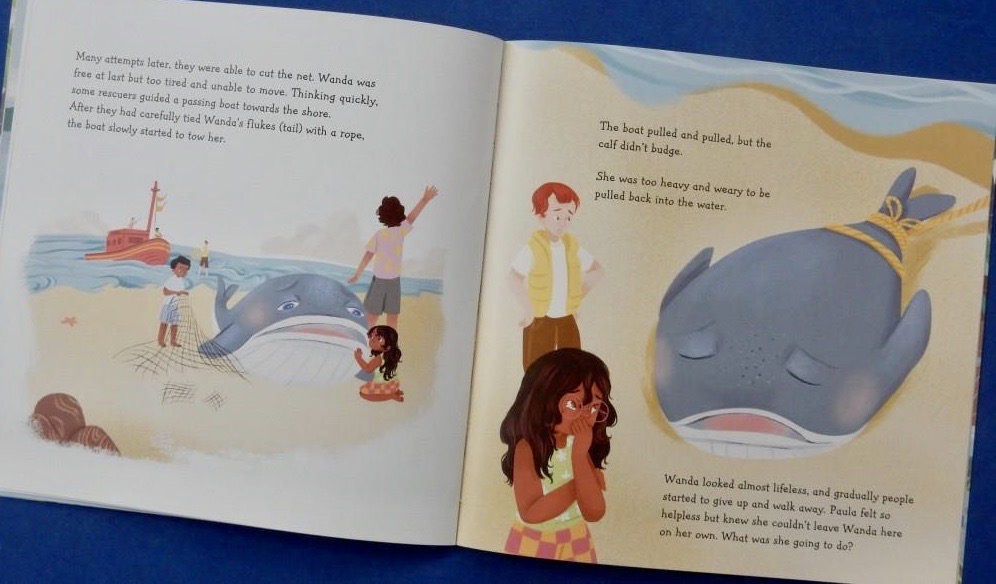
“Intombi mayizithembe mayazithe, Wanda. Be confident. Trust in yourself.” So says Wanda’s Mama in this uplifting story starring a girl with a wonderful head of hair that makes her feel anything but confident as she’s teased by unkind members of her class. Unbeknown to her Mama, who spends ages combing her daughter’s hair each morning, before she goes into her classroom Wanda usually changes her hairdo making the ‘big switch’ so that her teacher won’t call her hair a “bird’s nest”. However on this particular day she’s late and unable to make the alterations.

Mrs Stewart sends her to find an Alice band in the lost property box and this she wears throughout school time.

On the way home she sadly tells herself that maybe after all, she’s not that proud African queen with beautiful hair, ‘strong like clouds’, as her Mama tells her every morning. However on her return she’s greeted by her Grandmother who, after a distraught Wanda has shared how she feels, is able to help her swallow all that sadness, partly by giving her a scrapbook that they look at together. Therein Wanda sees pictures of African women with amazing hairstyles, each one of them beautiful and every one of them, deservedly famous;

then on the final page is her own mother. At last Wanda can truly embrace her own hair, especially with a bit of extra knowledge from her gran concerning the secret of her crown – “Water and 100% olive oil.”
Next morning,, it’s a proud, emotionally strong Wanda who waits at that bus stop.

This heartfelt look at how society can drain the positivity instilled by a loving family, is a powerful reminder that everyone has the right to feel confident to celebrate their culture and that we should all share in that celebration rather than attempt to undermine it. The broad themes of the story – self belief and kindness, with its compelling, vibrant illustrations, make this a book to share with primary classes wherever they are.

The Wild Garden

The Wild Garden
Cynthia Cliff
Prestel

Jilly lives in a village called Mirren with her Grandpa and dog, Bleu. Outside the village, as we see in the beautifully detailed illustrations, is a wonderful wild place, a mix of meadowland, woods and ponds, while within the village is a carefully cultivated shared garden wherein people grow row upon row of vegetables and ornamental plants.

It’s the wild place that Jilly, Grandpa, and Bleu, spend much of their time, in spring enjoying the birds and minibeasts and searching for edible greens to eat for supper. At the same time the community garden is a hive of activity. And so it continues through the seasons, one difference between the two locations being that Jilly never knows what their forays might yield,

whereas the results of the labours of the other villagers in their garden are much more predictable.

Then with winter comes a fierce snowstorm after which the villagers decide to enlarge their growing space: a much much bigger garden should result in more and more rows of plants. Needless to say this plan perplexes Jilly and Grandpa: what will happen to the meadows, the nut trees and all those animal habitats? They have to do something to stop the wildlife devastation. Can two people possibly show all the other village residents that a bigger garden isn’t as they think, a better garden?

Perhaps there’s a way that everybody can be satisfied …

Cynthia Cliff’s illustrations of the contrasting growing spaces show that both have much to offer while both these and her story help make youngsters aware of the beauty and vital importance of nature; and how our amazing planet isn’t owned by humans, rather we must share it with the wealth of flora and fauna, respecting and caring for their habitats.

The Journey Home

The Journey Home
Frann Preston-Gannon
Pavilion Books

The conservation message of this tenth anniversary edition of Frann’s thought-provoking picture book is even more urgent now than when it was first published.

It begins with a Polar Bear, forced to leave home when the ice has melted and there’s no longer any food. As he swims he comes upon a small boat, climbs in and sets out he knows not where. Soon he discovers a city and there on the dockside is a Panda. The Panda climbs into the boat and they sail off together. Some time later they see an Orangutan, now without any jungle and Panda invites her to join them.

Suddenly Orangutan notices an Elephant that is endeavouring to hide from tusk-stealing hunters. Then there are four packed into that tiny boat and before long a storm brews up carrying then far, far away from all their homes.

Eventually the boat approaches an island upon which stands a Dodo.

The sailors explain their plight, saying that they really want to go home. “Well of course you can go home!” comes the reply … “You can go home when the trees grow back and when the ice returns and when the cities stop getting bigger and when the hunting stops.” What choice do they really have but to stay put and as the Dodo suggests, “Let’s see what tomorrow brings.”

We adult readers know what the Dodo’s fate was, but it need not be the same for Polar Bear, Panda, Orangutan and Elephant. Yes the story, with its beautifully executed collage illustrations in a muted colour palette, is pretty bleak; and as we discover in a factual section after the narrative, all these wonderful creatures are either vulnerable, endangered or critically endangered. However all is not lost thanks to the work being done on their behalf by various organisations and individuals. To that end, the final page has ideas about what young readers and their families (or classes) can do to help the environment.

Sam Plants a Sunflower / Tilly Plants a Tree / Shelly Hen Lays Eggs

Sam Plants a Sunflower
Kate Petty and Axel Scheffler
Tilly Plants a Tree
William Petty and Axel Scheffler
Nosy Crow

Published in collaboration with the National Trust, these lift-the flap books each with a strategically placed pop-up are just right for helping young children discover the delights of growing things for themselves.

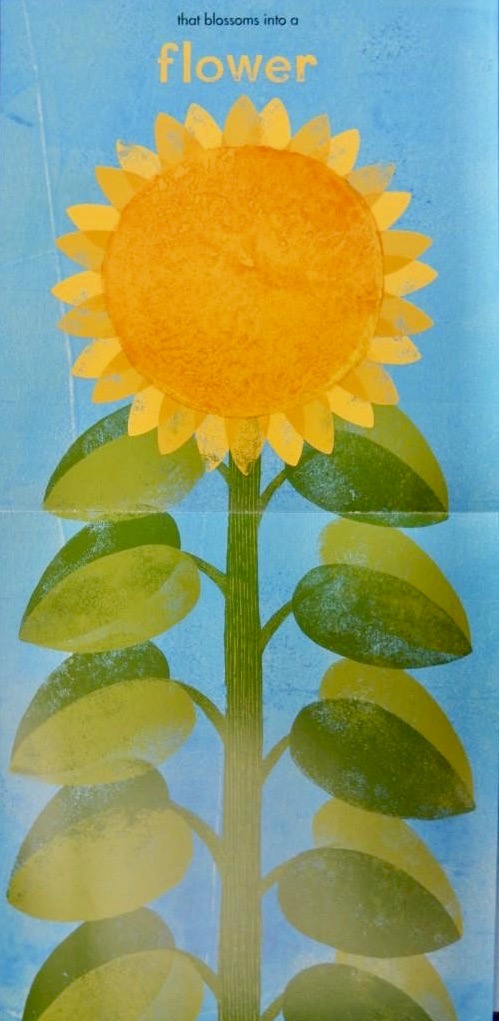
As Sam cat basks in the sunshine a passing ladybird responds to his “Why can’t the sun shine every day?”with a suggestion that he should plant sunflowers. We then follow the process as he chooses a suitable day, a suitable spot in his garden, plants and waters his seeds and waits. And waits … Beneath the soil (and a series of flaps) an earthworm watches adding comments until a few days later, Sam discovers a row of sprouting leaves. As it gets hotter Sam worries about how to help his sunflowers grow and receives advice from the ladybird. The plants continue getting ever taller until eventually buds appear but still Sam waits for his big yellow sunflowers until at last there to his delight, that of his friends and of readers, they are.

As summer ends the petals fall, the leaves wither and there again is the reassuring ladybird telling Sam to remove the seeds, share them with his pals and plant them the following spring.
If by chance, the story hasn’t made youngsters eager to plant sunflowers, there’s a final page of helpful tips.

Tilly, the main character in the second story is a squirrel. One day she rushes home from school with exciting news; everyone in her class is going to grow an oak tree. Grandma takes Tilly to a woodland full of majestic oaks and beneath Grandma’s special tree the little squirrel finds an acorn. Gran knows just what to do to get the acorn to germinate and after more than a year, with the help of ladybird and worm too, Tilly’s sapling is ready to be planted out in the wood near her Grandma’s.

With its straightforward explanatory narrative and a final page of tips I’m sure many little humans will be eagerly collecting acorns for planting this autumn.
Ideal for sharing with foundation stage children and for home use, both books have bright, expressive illustrations from Axel Scheffler that young children and readers aloud will enjoy.

Shelly Hen Lays Eggs
Deborah Chancellor and Julia Groves
Scallywag Press

This is the third in the Follow My Food picture book series aimed at helping young children understand where their food comes from. We join a little boy as he watches Shelly a free range hen as she takes a dust bath to get rid of mites, feeds on bugs in the grass and herbs she comes upon, clucks with her friends in the flock, returns to her coop at sundown, settles down in the nesting box and at dawn, lays an egg ready for the helpful little boy narrator to collect along with the other eggs later in the morning. It might even be the one he eats for his tea.
After Deborah Chancellor’s straightforward narrative accompanied by Julia Groves’ bright, cut paper illustrations comes a trail-type quiz based on the facts of the story, where youngsters match words and pictures. There are two further information pages with paragraphs on ‘Happy Hens’, ‘Tasty Eggs’ and Chatty Chickens’.
Food is a popular theme in foundation stage settings so this would be a useful book to add to school and nursery collections.

No More Peas

No More Peas
Madeleine Cook and Erika Meza
Oxford Children’s Books

Given the chance, young Oliver would restrict his meals to pizza, chips, burgers, cakes and other sweet stuff. However his father insists on giving him carrots – hard ones, broccoli (green and puffy) or a plate of roly-poly peas at dinner times. All of these Oliver donates to the dog.

Time to devise a healthy eating plan, thinks Dad.

Next day off they go into the garden where as Dad informs his son, “I grow vegetables here.” Again Oliver comes up with his usual “YUK!” response. Dad doesn’t give up that easily though and proceeds to tell the boy all about the growing process as well as the wealth of colourful vegetables it’s possible to cultivate. Now Daniel is impressed at the possibility of eating a rainbow: seems as though Dad’s plan is starting to work.

That evening Oliver helps prepare the meal:

there are lots of exciting new veggies to try but what will be the boy’s reaction? Is there at last a vegetable he really truly likes? Happily yes: it’s tiny, spherical and green. So why that title? …

Madeleine Cook’s fun, gently educative story of growing your own vegetables, healthy eating and trying new foods is deliciously illustrated in Erika Meza’s scenes that – like good picture books do – convey so much not said in the words; Oliver’s feelings about Dad’s offerings are superbly captured as are those of the other characters.

Whether or not there’s a fussy eater in your family, (or class) this is a terrific book to share with foundation stage/KS1 children for so many reasons and the classroom potential is enormous.

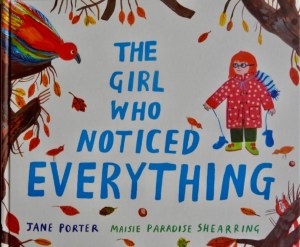
A Little Bit of Hush

A Little Bit of Hush
Paul Stewart and Jane Porter
Otter-Barry Books

Squirrel and her babies live in a big tree; so too do all sorts of noisy birds. Their cacophony is such that the baby squirrels are unable to get to sleep so their mother decides to consult Owl. Having heard her problem Owl brings out a jar containing so he says, “A Little Bit of Hush”. Squirrel is somewhat puzzled that she can’t see anything in the jar so Owl demonstrates the way in which it works and goes on to show her his special invention, a Silence Catcher.

The two of them then embark on a magical journey through the woods with Owl capturing the hush between the Blackbird’s song and its alarm call, and encourages Squirrel who finds some of his own – the hush within a hollow tree stump, a hush deep down in some fallen leaves.

Owl then captures the stillness after an acorn drops before it bounces on the forest floor and even the silence between lightning’s flash and thunder’s roll. All these Owl stows in pockets of peace and pouches of stillness and hush; then back in his workshop he uses these ingredients, creating a special mixture that he puts into a jar for Squirrel to take back to her family.

The noise outside her front door is louder than ever when she returns, but now she has her own bottle of helpful hush. Will it work its unique magic on the five squirrels?

I love this idea and tried it out on my walk after this book had arrived in the post. It certainly made me more mindful of the spaces between the natural sounds that surrounded me as I stopped and sat for five minutes just listening.

With its examples of natural sounds, though interesting in themselves, but which can sometimes becomes distracting, Paul Stewart’s story shows the importance of silence in our busy world. Like Squirrel we all need times without noise either to drift off to sleep or as a kind of sacred space into which we can retreat and be contemplative. In her collage illustrations, Jane Porter beautifully captures the noisy woodland environment of the creatures’ quest for peace and quite, amusingly portraying the various sources of the distractions.

One Tiny Dot

One Tiny Dot
Lucy Rowland and Gwen Millward
Templar Books

The transformative effect of kindness is personified and explored in this tale of what starts off as a small spherical entity and ends up in the same state; but it’s what happens in between that matters and that we discover, as we follow the blue dot for a day.

Starting its perambulations in a busy town street our titular dot encounters a boy proudly wearing a new pair of trainers. Act of kindness number one comes when the boy invites the dot to stay for a while and off they go cheerfully until …

Happily a girl sees the soaked shoes and then comes act of kindness number two accompanied by an increase in the size of our dot. All three proceed on their way together and an encounter with a distressed old gentleman leads to act of kindness number three and a huge increase in girth for the dot.

Through the fields they go, kindness flowing behind them, until there’s a veritable crowd of happy people also exuding kindness and enlarging the kindness dot to a gigantic size. They reach the town and there smiles and goodness soon pervade the entire place attracting the attention of the mayor. Much impressed at what he sees, it’s a case of “ice creams on me”. Suddenly though as they make their way to the beach, this is what they come upon …

Fortunately Kindness knows a thing or two about Anger: but can that blue Kindness dot save the day?

Carrying with it a vitally important message, Lucy Rowland’s rhyming narrative rolls along as well as her main character in this uplifting story. Helping equally to spread that message are Gwen Millward’s inspiriting child-centric scenes. May that dot just keep on rolling. Adult readers aloud, be they at home or in primary classrooms, can help maintain the theme’s momentum.

(Having read the story, teachers might try using a small blue ball in a circle time, throwing it to each child in turn who suggests their own act of kindness for the day).

Do You Love Exploring?

Do You Love Exploring?
Matt Robertson
Bloomsbury Children’s Books

In the third of this series Matt Robertson’s wildlife adventure takes readers to visit a variety of habitats all over the world.

First stop is the grasslands of Africa where on the savannah roam some grass grazing creatures including zebras, giraffes, black rhinos and elephants. However these have to keep alert as lions lurk, often with the female waiting to spring on unsuspecting prey which will act as food for herself and her family. By means of an illustrated strip we’re also introduced to grassland dwellers from other parts of the globe too. There are some less iconic creatures too including dung beetle; these almost unbelievably are said to be the strongest animals on Earth.

I was amazed to see how many animals, large and small make their home high up in mountainous regions and I’d not even heard of Blue sheep that reside in the Himalayas and other places (a weird name since the creatures are neither blue nor indeed sheep).

Other habitats, each allocated a double spread, include rainforests – one wherein gibbons communicate by singing, wonderful woodlands, islands including the Galapagos, the North and South Poles, searingly hot deserts – watch out for one of the world’s deadliest scorpions – aptly called the Deathstalker,

and a beautiful coral reef deep beneath the ocean.

The final spread presents some endangered animals and the ‘… which … can you spot?’ should send readers back to search for the nine featured thereon.

All of this should convince readers that it’s enormously exciting to meet so many creatures, albeit by means of Matt’s humorous, vibrant illustrations into which a considerable amount of factual information is set.

Sunshine at Bedtime / Let’s Go Outside

Sunshine at Bedtime
Clare Helen Welsh and Sally Soweol Han
Storyhouse Publishing

When inquisitive young Miki realises that despite being told it’s time for bed, the evening is still light and the sun shining. she’s puzzled. As her mum sees her to bed, she begins to explain and the two of them then embark on a journey of discovery that takes them soaring off into the sky far from Miki’s bedroom across land and sea and out into space.

As they travel Mummy explains how the earth spins on its axis once every 24 hours and slowly slowly orbits the sun during the four seasons that comprise a year. Miki notices Earth leaning towards the Sun giving summer to the people residing in the north and Mum fills in that in the south at this time, it’s winter and thus less sunshine and longer, darker nights.
They then watch as the north leans away from the Sun, which is then sharing its light with the south 

and after flying over all the places the sun shines, it’s time to return and for Miki to got to bed.

Told in Clare Helen Walsh’s poetic prose and shown through Sally Soweol Han’s illustrations – a mix of double page spreads, strip sequences and occasional vignettes showing views of earth and space, this story is one to share and discuss now as the days begin to draw out, for UK audiences at least. (More details about the earth and its tilt and the sun are given at the end of the story.)

Let’s Go Outside!
Ben Lerwill and Marina Ruiz
Welbeck Publishing

What joys there are waiting for those who venture outdoors suitably clad of course, no matter the weather. That’s what author Ben Lerwill and illustrator Marina Ruiz make evident in this foray through the seasons as we join the group of friends who make the most of every opportunity. There are hills to climb, forests with their wealth of wildlife to explore and if you venture close to the sea, then you’ll certainly notice the wind in your hair and face. 

It’s always great to feel the warm sun on your face, especially if like the children here you take a rest, lie back and just breathe. Minibeasts in abundance are there for the finding especially if like one or two of the nature detectives herein, you’ve remembered to take along a magnifying glass on your walk.
The gently sloping hills are great places for some roly poly romping and who can resist a chance for
dam making like these young co-operators.

I have to admit I often need to make myself go out when it’s raining hard: not so the group of friends herein. They’re quick to find lots of sploshy puddles to jump in. Whereas a snowy day means snow angels, creating snow sculptures and of course, a game of snowballs.

Whatever the season, there’s plenty to relish and most likely by the end of the day, as it is with the friends in the book who go their separate ways, a cosy home awaits.

The last two double spreads are devoted to some starting points for discussion and questions to tempt young readers, no matter where they live, to leave their screens and embrace the exciting outdoors.

The Eyebrows of Doom

The Eyebrows of Doom
Steve Smallman and Miguel Ordóñez
Little Tiger

Keep alert as you go about your daily tasks for you never know if, like the bear Dave in Steve Smallman’s rhyming story, you might be next to be attacked by the titular hairy facial features (actually slugs).
Said eyebrows once in place upon the unsuspecting ursine character, unleash in him the desire to perpetrate a series of dastardly deeds, before departing to land upon Ron a young seagull. As he takes flight, Ron poop bombs the sunbathers on the beach and then little Molly becomes the next to have a visit from the eyebrows prompting her to give her grandfather a spine-chilling shock.

Meanwhile all is calm and peaceful at the zoo until along come those evil eyebrows whereupon chaos is let loose as the dastardly duo rush hither and thither before Dave appears broom in hand and sees them. Whereupon they seek a hiding place and in their haste select the trunk of Edna Elephant. Not a wise choice for they so discombobulate her that she sneezes them out all coated in snot. Yuck!

Then with a splash they enter the sea, their bothersome behaviour over once and for all; or is it? …

Steve’s bonkers tale is a fun read aloud, which, daft though it is, offers listeners plenty to ponder upon. A perusal of Miguel Ordóñez’s zany scenes of the unfolding drama provides no clues but are likely to cause giggles aplenty. I love the way the speech bubble dialogue between the slugs serves to move the story forward.

A Best Friend for Bear

A Best Friend for Bear
Petr Horáček
Walker Books

As Black Bear wanders alone he decides a friend would cure his loneliness but finding one in a large forest is far from easy. Suddenly to his surprise he comes upon another creature: it’s Brown Bear and co-incidentally that bear too is searching for a friend. Brown Bear agrees to Black Bear’s suggestions that they look together and off they go, both commenting on the difficulty of their mission. The search is occasionally hazardous but exciting

and it’s good to have a fellow creature to help when needed.

After hunting unsuccessfully for a while, Brown Bear suggests they practise with each other by playing hide-and-seek. All goes well until Black Bear is unable to find Brown Bear until …

and then as they sit side by side, a realisation dawns …

Young listeners will delight in being in the know with the author about what’s coming in the two final spreads and equally will love the warmth and on-going humour of the story. Petr Horáček’s arresting, richly textured and coloured, scribbly visuals are truly gorgeous: I love too, the way the bears’ eyes say so much in their search for what’s right there in front of (or beside) them all along.

Bella Loves Bugs / Billy Loves Birds

Bella Loves Bugs
Billy Loves Birds

Jess French and Duncan Beedie
Happy Yak

These two narrative non-fiction picture books are written by zoologist, naturalist and vet, Jess French whose passion for wildlife shines through in both Nature Heroes titles wherein she uses the titular children as narrators.

Bella is an aspiring entomologist who shares a day in her life with readers and it’s certainly a very exciting one with lots of discoveries. Her first task is to collect garlic mustard to feed her caterpillars and then with a few useful bug hunting items she sets out to look for minibeasts and to meet up with some of her fellow nature hero friends.
By following Bella’s interactions with her friends and the additional facts this becomes a learning journey for readers who encounter social insects – ants in particular – a honey bee collecting nectar and others around their hives,

several jumping bugs and then a “fluttery butterfly” (why a non-native monarch?). Their next stop is at a pond, absolutely alive with water creatures on and below the surface; time for some pond-dipping (with an adult close by).
As they go into the forest Bella makes several discoveries – woodlice, a wolf spider with her eggs, and inside her trap she finds a stag beetle and a stag beetle grub. Down comes the rain bringing out the slugs and snails, and then it’s time to head home where something else exciting happens inside her vivarium.
Look out for the spider that makes occasional comments along the way.

Bird loving Billy (in the company of a talking tit) spends a day at forest school, sharing his observations with readers and his friends about the wealth of birds they encounter. There’s a woodpecker, a dunnock nest with several eggs including one of a different colour and there’s great excitement when Billy spies a kingfisher and comes across a beautiful feather to add to his collection.

Eventually he reaches the tit nest box located high in a tree where there are little chicks just preparing to leave the nest.

Bursting with information engagingly presented in the words and in Duncan Beedie’s amusing illustrations, both books should encourage youngsters to go outdoors to investigate and one hopes, appreciate the wonders of nature that’s all around us.

The Royal Leap-Frog

The Royal Leap-Frog
Peter Bently and Claire Powell
Bloomsbury Children’s Books

Written in perfect rhyme is Peter Bently’s very funny version of Hans Christian Andersen’s The Leaping Match fable. It tells, and shows through Claire Powell’s splendid, vibrantly coloured illustrations, what happens when a flea and a grasshopper (both convinced they’re the best) compete before the king whom they want to decide which one of them can jump the higher. Along with them to the palace goes a little green frog.
Utter chaos ensues as first flea

and then grasshopper leaps – captured with panache in Claire’s detailed scenes for which she uses a variety of layouts.

Both insects then depart the royal dining room leaving the king flat out on his sofa. However his respite is brief for up steps the frog claiming an ability to out-leap both previous contestants. What will be the outcome of his attempt?

A laugh-out-loud book that’s great to share in the classroom or at home with individuals, whether or not they’re familiar with the original fairy tale.

Human Town

Human Town
Alan Durant and Anna Doherty
Tiny Owl

Holding a mirror up to us is this story wherein elephants Junior, Lulu and their parents visit Human Town. Whereas their parents suggest it’s likely to be a boring place, the offspring consider it cool.

On arrival they first peruse the list of rules and then start wandering around, Dad warning of the potential dangers and unpredictably of humans. They pause to watch people entering shops empty- handed and coming out with bags stuffed full of ‘things’. Things, says Dad, make humans happy. The young elephants are shocked to learn that some humans eat sheep, chickens and cows. “You can’t judge them like us, … they’re wild animals,” is Dad’s comment.

The football game is a disappointment; but even worse is the stream full of rubbish and the foul-smelling air, both the results of human carelessness and hence points out Mum, one of the reasons they are dying out;

so too is the “farting car” Junior spies. The church, cinema and school are completely empty: not a human in any of them; and those outside their homes are shown fighting one another

while inside others watch a boring thing called ‘Teevee”.

Then totally unimpressed, the elephants stop for a family picnic before returning home. First though Junior asks one final question about the likelihood of humans becoming extinct. Mum’s answer along with her young one’s response on the last page are thought-provokingly alarming.

Cleverly presenting consumerism, conflict, pollution and the vital importance of the environment and protecting animals, this book is an excellent starting point for discussions with children on those themes. Yes it’s wryly humorous, but the truths of what we see and read are evident the world over: we can no longer turn our backs on what is happening on this planet that we – humans and wildlife – share.

Our Fort

Our Fort
Marie Dorléans (translated by Alyson Waters)
New York Review Children’s Collection

Not so much a fort, rather a den, is how I’d describe the ultimate destination of the three children who celebrate the arrival of spring with a visit to their camp.

The story is really more about their journey than the construction they sally forth to find. Their walk takes them past sheep in a field and through billowing grass fields that almost engulf them. After a pause to share some cookies, the sky darkens and a wind storm blows up

and the three – full of ideas about potential adventures – have to fight their way forwards until the storm eventually blows itself out. With concerns about the fate of their fort after such a violent wind, on they go to their haven, which happily has withstood the onslaught and is ready and waiting for their arrival.

As we readers follow the children out through their front door, we too feel immersed in the countryside.

It’s as though we’re also making our way onwards and upwards in Marie Dorléans’ delicately worked, realistic rural scenes of her beautifully observed celebration of children’s ability to observe with all their senses and to find delight in the natural world around them, storms and all. Oh the joy of childhood’s freedom in a rural environment – a joy many adults rediscovered during the covid lockdowns of the past couple of years.

An Artist’s Eyes

An Artist’s Eyes
Frances Tosdevin and Clémence Monnet
Frances Lincoln Children’s Books

As the story opens adult Mo and young Jo are out walking together. Readers are invited to notice their eyes – they have the same friendliness, shape and smallness but Mo’s eyes are different: she has artist’s eyes. As they walk through various different natural places Mo comments imaginatively on their surroundings: she sees the seascape as ‘a dazzling duck-egg blue, a swirl of peacocks and the inky, indigo of evening, whereas Jo says it’s “so blue!” As they continue Jo describes the forest literally as “green” whereas Mo sees “a shiny apple-green, the lime of gooseberries, and the spring zinginess of moss.”

The field of yellow flowers are “bright yellow” to Jo and Mo notices variations in shades. “Notice how light changes the colour. See the mellow yellow of melons and the pale pastel of primroses.” Jo’s response is despondent: he becomes angry and frustrated at not seeing like an artist.

Patiently, Mo encourages him to trust his own eyes and little by little Jo begins to see what they show him; and what they show him as he deploys his imaginative powers to the full are patterns, textures, shapes and more.

No, he doesn’t see as Mo sees but he does now see with artist’s eyes.

Assuredly, with Clémence Monnet’s gorgeous mixed media illustrations, and Frances Tosdevin’s empowering story, this is a book that, shared with the right adult, will encourage youngsters to accept, employ and make the most of the unique skills they have, as well as conveying the idea that everyone can see like an artist and describe imaginatively what they see.

Once Upon a Big Idea

Once Upon a Big Idea
James Carter and Margaux Carpentier
Little Tiger

What a wealth of playful language poet James Carter uses in his story of inventions large and small., all the outcomes of bright ideas generated by human brains. he tells how for example the plentiful supply of rocks and stones beneath the ground have been used to create tools, bricks and walls with which the pyramids were built.
Animals too are a rich source of materials; they provide meat for some, wool to make into clothing and much more, and their bones were also used in the fashioning of more tools.
Homes, bridges and boats often have wood in their construction but what invention has had the biggest impact on lives ever? James suggests it’s the wheel and I’d probably go along with that. I wonder how many things you can think of that include wheels in their design: if you’re a primary teacher you might try asking your class that question when you share the book.
What a wealth of creativity came as a result of sand, clay and fire … 

‘Fire we learnt, was elemental – / heating working, smelting metal.’ we read; while modern materials – rubber, concrete, nylon and plastic have changed our lives, not always for the better. 

Finally, readers are reminded of the importance of recycling and reusing in James’ text as well as through Margaux Carpentier’s arresting visuals. Don’t forget to read the concluding four-letter acrostic.
Rich in STEAM classroom potential, this is a picture book to inspire young inventors of the future.

Phyllis & Grace

Phyllis & Grace
Nigel Gray and Bethan Welby
Scallywag Press

In this moving story, a little girl Grace pays regular visits to her next door neighbour, an elderly woman who lives by herself. Whenever she visits, Grace takes Phyllis something: a slice of cake, a bowl of stew, biscuits she’s baked herself,

jelly and a drawing she’s done at school.

It’s obvious that Phyllis enjoys Grace’s visits but as she shares with her, stories about her life, it’s evident that her memory is fading – names are forgotten, things misplaced, and events confused. Nonetheless despite the huge difference in age and Phyllis’s increasing disorientation, Grace forms a strong bond with her neighbour and eventually goes regularly to visit her in an old people’s home and even meets her son who takes Grace somewhere very special.

Basing the story on the experience of his own granddaughter and her neighbour, author Nigel Gray’s story is told with great sensitivity and equally sensitively illustrated in Bethan Welby’s gentle watercolour scenes. Together words and pictures beautifully document the progression of dementia and how it might appear, from a young child’s viewpoint. A book for adults and children to share and discuss as gently as it’s presented by its creators.

One World: 24 Hours on Planet Earth

One World: 24 Hours on Planet Earth
Nicola Davies, illustrated by Jenni Desmond
Walker Books

With the clock striking midnight, a little girl and her even littler sister leave their bedroom and take a round the world trip visiting animals large and small. 

They see elephants and lions in Zambia, baby turtles on Gahirmatha Beach in Odisha, India, 

gibbons in a Chinese nature reserve, sharks in the warm waters around the Philippines, kangaroos in one of Australia’s national parks, emperor penguins on Antarctica’s Ross Island and encounter a humpback whale near a Hawaiian island. At the same time California’s Pinnacles National Park is a-buzz with bees and hummingbirds, 

owl monkeys wake up in a forest of Ecuador’s Yasuni National Park, jaguars hunt their prey in Pantanal Brazil where it’s 8pm and finally, in Southern Georgia an albatross sits huddled on her nest. 

The last stroke of midnight is the signal for the sisters to traverse land and sea while beneath them are numerous warning signs of global warming. As the first hour of Earth Day, 22nd April begins in London it’s time to reflect upon the amazing wonders the girls have seen and contemplate the multitudes of others they haven’t, in preparation to issue a rallying cry to the world; it’s time to make a difference before it’s too late. We can all help to halt climate change but the clock is ticking …

As well as celebrating our awesome planet, author Nicola and artist Jenni show the way actions of we humans are adversely affecting different ecosystems worldwide. 

Powerful words and stunning illustrations make this a must have book for families and primary school classrooms: Celebrate Earth Day 2022 by sharing it.

A Dress With Pockets

A Dress With Pockets
Lily Murray and Jenny Lovlie
Macmillan Children’s Books

Oh wow! Jenny Lovlie’s illustrations for this story are simply out of this world – every one of them is brimming with exquisite detail. Attention to detail is evident too in Lily Murray’s rhyming narrative; with its playful language it’s a brilliant read aloud.

Now without further ado let’s head over to the Fabulous Fashion Store where, on young Lucy’s birthday, she’s taken by her Aunt Augusta to choose a new dress. The shopkeeper brings out all manner of dresses: fancy ones, frilly ones, stripy ones, silly ones, sun dresses, fun dresses, blue dresses, green dresses and a host of others.
However, be they witchy, swirly-twirly-whirly, wispy-gauzy-floaty, or even twinkly, they don’t impress Lucy.

What she has in mind is something much more practical; something with places to accommodate the creepy crawlies, ‘fossils and flints and butterscotch mints,’ … with room ‘for skimming stones and mysterious bones’ and any other curious things that might take the fancy of this inquisitive child.

Can the shopkeeper come up with the dress of her dreams? He certainly has all the sales patter. Let’s just say that Aunt Agatha does make a purchase as we discover in the final reveal.

Gently whimsical and humorous, and underscored with a subtle feminist message, this is a joyous ‘read it again’ book and one that if shared with more than one child at a time, must be taken sufficiently slowly to allow for enjoying the wealth of detail and ongoing canine capers shown in every scene.

The Fairy Garden

The Fairy Garden
Georgia Buckthorn and Isabella Mazzanti
Ivy Kids

Mimi loves her garden. Every morning she tends it with great care, removing all the weeds and spraying the plants to keep bugs away, making it as near perfect as possible in the hope that a fairy will pay a visit.
Despite all her efforts, there is no sign of any fairies, so around her perfect garden she places little fairy houses: perhaps these homes might attract the visitors she so longs for. However, again Mimi is disappointed, even when she adds a welcome sign.

Is she doing something wrong?

Astute listeners to this cautionary tale will likely, by now have realised that she is. For that night as a tearful Mimi looks out at her garden she sees that she has visitors. Some fairies have finally come, but what they have to tell her surprises the little girl.

Her well intentioned perfection has led to the destruction not only of the garden’s wildlife, but the kind of environment that fairies would inhabit: a fairy-friendly garden is wild.

This environmental fable is gorgeously illustrated by Isabella Mazzanti whose fairytale landscapes and the richly detailed, verdant flora and latterly the insect life, are a delight.

Look closely too at the expressions on the faces of the three fairies as they gently chastise Mimi. How well the artist captures the ethereal nature of those visitors and the total absorption of the little girl at work in her garden. (The final two spreads detail how to grow a fairy-friendly garden and how to make a fairy house.)

An engaging way of alerting youngsters to the importance of rewilding, done with a gentle touch by author Georgia Buckthorn and artist Isabella Mazzanti, and it’s printed on 100%recycled paper.

Big Hedgehog and Little Hedgehog Take an Evening Stroll

Big Hedgehog and Little Hedgehog Take an Evening Stroll
Britta Teckentrup
Prestel

Big Hedgehog and Little Hedgehog are out for an evening stroll and as the sun sinks on their return journey, Little Hedgehog asks that they can pause and wait for the sun to set, which they do. Once it’s completely disappeared on they go, but after moving a little way further Little Hedgehog again wants to stop, this time for the moon to rise. Big Hedgehog agrees, they pause

and then with Big Hedgehog insisting it’s now late, they continue homewards.

Before long, Little Hedgehog wants to make another stop – to inhale the scent coming from the wildflowers and they stand, so doing for a long time. These stops continue, next to visit an owl family, then to look for the moon as it emerges from behind some clouds, followed by a pond pause to bid goodnight to the frogs and fish. By this time it’s decidedly chilly but that doesn’t stop Little Hedgehog from following a tiny firefly

until it reaches a host of others that together perform a beautiful dance. Surely after such a long stop, Little Hedgehog must be completely ready for some sleep: almost but first there’s one more request …

This is such a gorgeous story about the joys of slowing down to appreciate, and be awed by, the natural world with all its wonders from the immense to the minute. Brita Teckentrup has a wonderful way of capturing the natural world in her richly hued and textured collage scenes that are certain to make big humans sharing this book with little humans, also slow right down to imbibe the beauty of each one of them.

This Girl Can Do Anything / Sometimes: A Book of Feelings

This Girl Can Do Anything
Stephanie Stansbie and Hazel Quintanilla
Little Tiger

Meet young Ruby, strong-willed, knowing exactly what she wants and determined to do things her way.: in short, she’s unstoppable. Yet despite her toughness and inner-strength, there are times when she allows just a little bit of softness to seep through.

Of course not everything goes right straightaway, but with encouragement from her mum, Ruby is always prepared to have another go.

Her energy is boundless yet come the end of the day, despite what our protagonist says about not feeling tired, at bedtime, Ruby is ready for something special from her mum and dad.
For sure Ruby is a force to be reckoned with, unafraid to speak out about what she wants to do; however she does have a soft-centre that occasionally, she lets us enjoy a taste of too.
I love the way, illustrator Hazel Quintanilla uses a different colour background for each spread.
From the same author is:

Sometimes: A Book of Feelings
Stephanie Stansbie and Elisa Paganelli
Little Tiger

Stephanie Stansbie adopts a rhyming narrative to explore emotions, as we follow a sister and brother through a single day beside the seaside. It’s a day full of ups and downs: occasionally the dominant feeling is one of darkness and fear, but that can be dispelled by a brave leap; likewise disappointment and boredom can be overcome, perhaps by doing something active – dancing.

After presenting other feelings of the less desirable kind – anger, sadness 

and loneliness too, the mood turns much more upbeat as we see the boy and girl exhibiting kindness and forgiveness which dispel those bad feelings, allowing them to be replaced by a sense of peace, contentment and calm. With equanimity prevailing, brother and sister are ready to return to the family home, safe in the knowledge that once there, somebody will be waiting to show them the most important feeling of all: love.

With Elisa Paganelli’s expressive scenes of the children’s highs and lows to complement Stephanie’s words, this book offers a helpful starting point for exploring emotions with young children either at home or in a foundation stage/KS1 classroom.