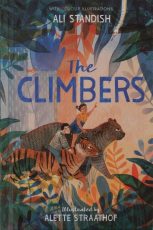
The Climbers

The Climbers
Ali Standish, illustrated by Alette Straathof
Stripes Publishing

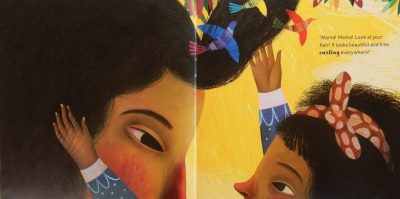
This new title in Stripes full-colour fiction books for new solo readers stars young Alma who lives with her overbearing uncle in a town bordering a forest, a forest in and beyond which young Alma longs to explore. “The forest is full of fearsome beasts. That’s why only hunters are allowed there,” her uncle insists when he discovers she’s climbed a tree. And as for the mountains beyond, they are populated by settlers as bad as the beasts.

Nevertheless Alma feels drawn to the world beyond her narrow hometown and that night she ventures out into the darkness determined to see the forest for herself.

As she walks deeper among the trees, the bird song seems to be welcoming her and suddenly, hearing a cry, she comes upon a frightened – looking bear cub. Unable to leave it alone but unable to take it home, she carries him gently to a disused shed on the edge of town; then she creeps back indoors and falls fast asleep.

Every night thereafter, Alma and the cub – she calls it Star Bear – slip out and explore the forest together.
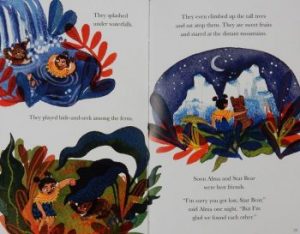
The cub as bear cubs do, grows bigger and one day rumours of a bear sighting are spreading in the town’s market square. Fears escalate: a giant sharp-toothed beast brought by the mountain settlers, they decide. Anna keeps her knowledge to herself, while the mayor decides a wall round the town is to be erected to keep outsiders from entering and a search for the ‘beast’ begun.

She takes Star Bear back into the forest, fearing that what the townsfolk are doing will shortly prevent them from meeting.

More and more trees are felled to build the stockade and lack of food in the dwindling forest results in empty-bellied townsfolk. Should Alma now reveal the truth? She does and soon finds herself on Star Bear’s back as they flee for safety into the deepest depths of the forest. Before them are the mountains. There’s only one way to go …

On the mountainside the two come upon a boy riding a tiger; the boy’s not scary or furry and introduces himself as Tully. The friendship that forms between them changes everything.
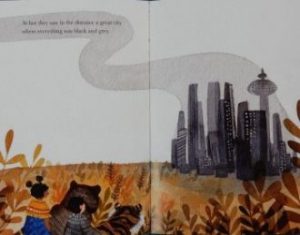
Without being a story spoiler I’ll say little more except that it’s a case of onwards and upwards, as the two children, and others they meet, (together with their animals) finally see the light: love and courage conquer and connect us all.
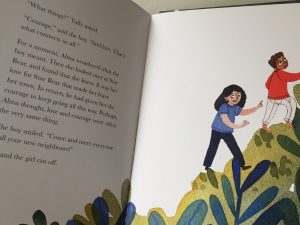
As in this powerful, moving story, so it is in our increasingly troubled times: it’s children who show the way when it comes to optimism, open minds and open hearts.

Beautifully told by Ali and dramatically illustrated by Alette Straathof, be it read alone or read aloud, this is a must read..

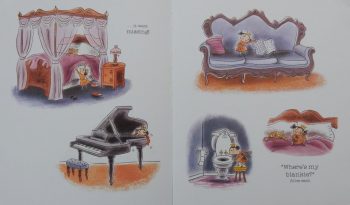
Have You Seen My Blankie?

Have You Seen My Blankie?
Lucy Rowland and Paula Metcalf
Nosy Crow

Lucy Rowland is a highly skilled rhyme writer and here she uses her verbal artistry to tell the tale of young Princess Alice and her soft, warm, snuggly blankie.
One day this exceedingly cuddlesome item goes missing. Alice hunts high and low unsuccessfully

and then heads outside to consult her brother Jack playing in his den. Jack informs her that he’d used it a while back but then a giant took it away.

Off goes Alice to find the giant. He invites her in to partake of tasty pies but tells her that yes, he’d had the item, used it to wipe his nose, whereafter a witch flew off with it. Again, the witch had made use of the object (as a cloak) until it was snatched by a dragon.
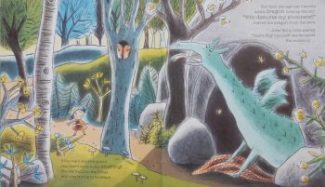
Following a snoring sound coming from the forest, Alice puts on a brave face and walks towards a cave wherein, seated at the entrance she finds …

Surprisingly however, the dragon isn’t at all ferocious and instead tells the child how much he benefits from such a soft item to protect him from the cold, rough cave floor when he sleeps.

Alice’s first thought is to establish owner’s rights, then on further consideration she comes up with an alternative plan: to help the dragon find a warm, soft, snuggly substitute.

Easy, you might be thinking but their search is far from so and both Alice and dragon become increasingly troubled

until finally they arrive back at the royal palace sans anything suitable.

Eventually up in the attic the little princess extricates the perfect item … Sleep well Alice, sleep well dragon friend.

Equally as enchanting as Lucy’s telling are Paula Metcalf’s illustrations. Her colour palette – mainly greeny, orangey, browny, bluey hues is a great choice and her characters human and animal are adorable and splendidly expressive.

A felicitous collaboration, an enormously successful mix of words and pictures: in short, a super read-aloud picture book to enjoy especially just before snuggle up time.

Oink! / Daddy Fartypants

In your face or subtle, toilet humour books are always winners with young children: here are a couple of recent, contrasting examples:

Oink!
David Elliot
Gecko Press

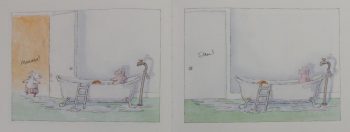
David Elliot tells this hilarious tale entirely through delicate watery scenes of a pig’s bathtime along with onomatopoeic sound effects, mostly animal but punctuated by ‘Knock! Knock! (s)

It starts with pig climbing into his, one assumes, eagerly anticipated steaming bath-tub; but he’s no sooner sat back for a relaxing soak when ‘ Knock! Knock!’ “Maaa?” a sheep clad in pink frilly skirt and clutching a toy boat enters and proceeds to climb into the tub. (Her utterance, one assumes is a polite request).

Further knocks see more unruly creatures, first a horned bovine character …

followed by an ungulate (donkey/horse?) ensconcing themselves in pig’s increasingly noisy bath.

Pig though utters not a sound but then … One tub-emptying action later


things – or actually animals – start to move …

Peace at last! Time to top up the hot water and relax. Ahhhh! Bliss.

No telling – just showing – and absolutely brilliantly done in Elliott’s subtly comic, brilliantly expressive pencil and watercolour scenes.

An absolutely smashing pre-bedtime sharing book for which your little humans will delight in supplying the various noises. If I was in an early years setting I’d set up a small world play scene complete with tub and animals for the children to act out the tale.

Daddy Fartypants
Emer Stamp and Matt Hunt
Orchard Books

Meet dad bear, farty bum extraordinaire. The trouble is no matter how clear it is that’s he’s the culprit when it comes to noxious rear end emissions, he never never owns up to his trumps and parps. Instead he blames others, no matter who, no matter where, no matter when.

Not a single apology or pardon so much as reaches his lips, no not ever.

One day when collecting his forbearing son from school, Daddy Fartypants encounters an attractive new teacher, Miss Lovelybear and as he eagerly approaches, she lets loose a gargantuan gust from her derrière. And does that teacher issue an excuse? Oh dear me, no she does not: instead she points the paw at guess who … Outrageous!

Game, set and match to Miss L. Her terrible toot triggers a realisation on Daddy F’s part. Repentant, he promises to become a changed character when it comes to rear end rumbles and so far as we know he’s been true to his word.

Totally terrific fun, Emer Stamp has come up trumps with this thoroughly moral tale, and Matt Hunt’s splendid, sonic blast, pant-ripping illustrations speak volumes – quite literally. PHOOAW! Your little ones will relish this book as did this reviewer whose partner could give Daddy Fartypants a run for his money when it comes to windy issuances – he does own up though, I hasten to add.

Brian the Brave

Brian the Brave
Paul Stewart and Jane Porter
Otter-Barry Books

Paul Stewart’s story stars a curly-horned, white woolly sheep going by the name of well, Brian.

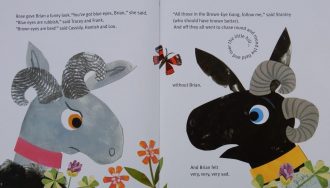
It all begins one sunny day with Brian busy nibbling in a grassy meadow when along comes curly-horned, black woolly sheep Rose. The two agree to become friends and are happily playing chase when along comes Stanley. This sheep wants only to play with Rose on account of their both being black. Hmm – you can see where this is going. Poor Brian is now excluded and he feels sad.

Two spotty sheep arrive; they share the horny characteristic with Brian and Rose leaving a fed up Stanley out of the gang.

Up trot a hornless striped trio, Cassidy, Lou and Hamish, Brian suggests they all become friends but the three snub his invitation.

Enough is finally enough for Brian: He tells them ” We are all sheep, … We should all play together!” It looks as though things might just work out well for all but suddenly things kick off again leaving blue-eyed Brian exceedingly downcast and isolated.

Off he walks, looks at his reflection in a lake, continues his stroll up a hill, through a forest and there comes face to face with …

He dashes away, hotly pursued by the hungry lupine creature, to warn his fellow sheep. The situation is grave: somebody has to do something and fast.

Good old Brian steps in as operation attack-wolf co-ordinator and happily his fellow sheep co-operate until their joint biffing (the curly horners’ contribution) and butting (by the noses of the hornless ones) sees off their would-be guzzler once and for all.

There are SO many ways you can interpret this book in our increasingly troubled, B–X-T times but however you do – and it might be different on different days – it’s definitely a biffing, butting, cracking celebration of courage, self-belief, acceptance, co-operation, difference and friendship.

Jane Porter’s various sheep characters are splendidly portrayed in her dramatic, often funny, colourful collage scenes of the ups and downs of life ovine style.

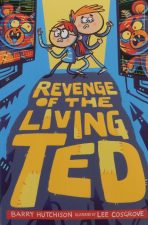
Revenge of the Living Ted

Revenge of the Living Ted
Barry Hutchinson, illustrated by Lee Cosgrove
Stripes Publishing

This is the sequel to Night of the Living Ted and it’s every bit as good a tale.

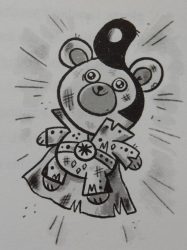
Early on in the story we meet  Bearvis, Dad’s birthday gift styled on his favourite singer who plays a significant role later on.

A little while after, Lisa Marie and Vernon are just leaving Drake’s house having discovered that he remembers nothing – so he says – of their previous teddy bear filled adventure, when two pairs of rough furry hands throw bags over their heads and bundle them into the back of a car.

The next thing they know is that they’re sitting chained up in what looks like from the clues they spot, the boardroom of a successful business establishment.

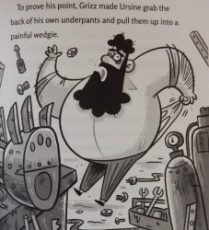
Suddenly in bursts a strangely shaped man who introduces himself as Ursine Kodiak. Said character boasts that he’s the genius responsible for building the machine that brought monstrous teddy bears to life and then was able to eradicate the events surrounding them from the memories of those involved.

Then he takes the two children into his bear-filled factory and starts blabbing on about Mummy Bear (from the Goldilocks story which he misremembers), artificial intelligence and other alarming things. Furthermore he wants to enlist Lisa Marie’s help with his future plans for saving the world and things really seem dangerous. Should she become his Executive Senior Assistant?

Let’s go no further with this smashing fast-moving, fur-filled farce, but just say that it’s sure to fire up enthusiasm with readers and listeners – it’s a terrific read aloud – and along the way might introduce youngsters to some exciting new vocabulary. To add to the enjoyment, the text is liberally sprinkled with dramatic illustrations by Lee Cosgrove.

Roll on the third adventure.

Board Book Gathering: Jump! / Hello House / Hello Garage / Meeko and the Big Red Potty

Jump!
Tatsuhide Matsuoka
Gecko Press

This is such a cool board book; it made me want to go out, find the nearest toddler, share the book and do some joyful, very noisy celebratory jumping about together.

The idea is so simple yet SO effective: a patterned text accompanies a statement going over two vertically opening spreads, starting with ‘A frog jumps. // Boing!’
It then proceeds to introduce other agile jumping creatures – a kitten, a dog, a grasshopper …

a rabbit, a snail – although that one just cannot get airborn,

a mother hen and chick, a fish and finally the small girl narrator of Tatsuhide Matsuoka’s cracking little book.

Ready to jump? Everybody ready? 1, 2, 3 … BOING!

Hello House
Hello Garage

Nicola Slater
Nosy Crow

In Hello House little Ludo is out and about in search of some friends to play with. He calls first at the home of Milly and Dylan who are busy cooking in their kitchen. Next stop is at the rabbits’ residence where he invites the bunnies to join him. Ludo and entourage then proceed to Ruby and Ned’s house and ask the pups to leave the TV and play outside.

Their final port of call is Bruno Bear’s and there they discover a sleeping friend who needs a spot of nose tickling to wake him from his slumbers. Then with all the friends assembled it’s time for some fun …

Little fingers will enjoy lifting the house-shaped flaps to assist Ludo as he rounds up his pals.

Equally enjoyable is Hello Garage and again Ludo is on the hunt for playmates only now his search takes him to the garage where he looks in various vehicles in the hope that he’ll find some not too busy animals with time to play.

With Leo, Mabel, Olaf, Daisy, George, and finally (after a tummy tickling rousing) Lucy duly invited, let playtime begin on the ‘soft, green grass’

Toddler fun through a pleasing repeat pattern text, and bright illustrations with plenty of detail to peruse and discuss.

Meeko and the Big Red Potty
Camilla Reid and Nicola Slater
Nosy Crow

Little ones just at the potty training stage will love that you can orchestrate Camilla Reid’s story by means of the strategically placed sound buttons as they hear how now a big bear, Meeko recently has graduated from nappies to big bear pants. However there are still times like this one when he just can’t manage to hold it and so does a wee, soaking his pants and the floor.
Happily next time though he remembers he needs to run to his red potty before it’s too late

and the simple story ends with a proud Meeko and equally proud parents and animal friends. Splendidly expressive illustrations from Nicola Slater make this down-to-earth board book a winner.

Hedy Lamarr’s Double Life / Dreaming in Code


Hedy Lamarr’s Double Life
Laurie Wallmark and Katy Wu
Sterling

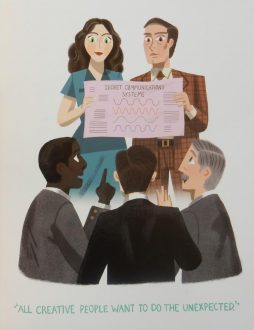
Elegant film star Hedy Lamarr’s first love wasn’t in fact for making movies – she wasn’t at all interested in glitz and glamour – rather her passion was science and technology. It’s this lesser known side of her that’s the focus of this book.

Her greatest invention was ‘frequency–hopping spread spectrum’ a wonderful technological idea developed in collaboration with musician George Antheil, that helped allow the communication devices of torpedoes to change frequency quickly cutting down the opportunities for radio signals to be altered, intercepted or blocked completely; sadly it wasn’t used by the US navy during WW2 though.

Still relevant today, their invention now helps to keep our mobile messages private and defends computers from hackers.

Hedy’s various inventions are described and each spread includes a quote from her: here’s one I particularly love.

We also learn of her childhood in Austria in the early 1920s and how her father, who also had a love of science and technology was such an encouragement to her curiosity and thirst for knowledge, and her creative ideas.

Laurie Wallmark’s engaging text is both inspiring and concise; and Katy Wu’s stylish, retro feel illustrations transport readers to the time when women’s achievements were under played and often undervalued (it took 50 years for her awesome brilliance to be fully recognised). However when Hedy and George finally received in 1997 the Pioneer Award from the Electronic Frontier Foundation for their contribution to computers, Hedy commented thus.’” It’s about time.” … “My life was full of colours, full of life … I don’t regret anything … I learned a lot.” Brilliance recognised at last.

So too will readers of this picture book, which also includes a timeline, bibliography, suggestions for further reading about women in STEM, a list of her films and an explanation of her secret communications system.

Equally inspiring, for older readers is:

Dreaming in Code
Emily Arnold McCully
Walker Books

This is a fascinating biography of Ada Lovelace, daughter of poet Lord Byron, who is celebrated for being the first computer programmer.

Ada’s childhood was anything but conventional; she never got to know her father and was brought up by her domineering mother who, despite showing little emotional warmth, provided for her daughter through private tutors, an intellectually stimulating education, a protection in part from any instincts towards developing her father’s poetic talent. Thus Ada developed a terrific thirst for mathematical and mental puzzles and scientific discovery.

At age seventeen, the young aristocrat Ada, was introduced at a party to widower and famous inventor and mathematician, Charles Babbage, who was to transform her life. We learn of their collaborative friendship and how Ada’s leap of imagination took her pioneering thinking beyond that of her friend and his ‘Analytical Engine’. This is what she wrote, ‘Many persons imagine that because the business of the engine is to give its results in numerical notation, the nature of its processes must consequently be arithmetical and numerical, rather than algebraical and analytical. This is an error. The engine can arrange and combine its numerical quantities exactly as if they were letters or any other general symbols.’

We read of her marriage to William King who admired Ada’s intellect as well as being rich and handsome; her motherhood years, her addictions and death at an early age from cancer.

Beautifully written by Caldecott-Medal winning author, Emily McCully this carefully researched, accessible portrait of Ada Lovelace is likely to inspire future groundbreakers to follow their dreams and not let anyone or anything stand in their way.

(There are also photographs from archives, illustrations, source notes, a glossary and a bibliography.)

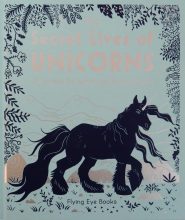
The Secret Lives of Unicorns

The Secret Lives of Unicorns
Dr Temisa Seraphini and Sophie Robin
Flying Eye Books

Most people consider those much loved unicorns, that are all the rage just now, are imaginary; Dr Temisa Seraphini, author of this book and ‘leading expert’ so she says, on unicornology, would like to persuade readers to think otherwise.

She divides her fanciful presentation into three parts: the first being “What is a Unicorn?; the second provides examples of unicorns from various parts of the world and the third looks at the relationship between humans and unicorns. Her over-arching aim in all this is to encourage those magical creatures of yore back into our technological world of today.

In her introduction to the first part we read that unicorns are herbivorous but unlike their horse cousins, have magical properties; the author places them in the order Artiodactyla that includes, giraffes and goats among other even-toed ungulate creatures, assigning them to a separate family: Unicornus.

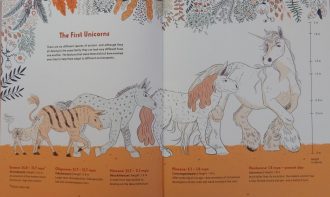
Then on the first spread we’re shown the six different species of the legendary creatures on a evolutionary timeline.

This is followed by a page detailing which parts of the unicorn’s anatomy have magical properties: Did you know that unicorn tears can apparently heal the sick and that the drinking of unicorn blood provides unimaginable strength. Hmmm!

The Horn is the next topic and there are supposedly three varieties – ridged, smooth and pearlescent; the latter so loved by some recent picture book creators; and if you believe it, in 1858 someone unearthed a skull that had once borne a unicorn’s horn. Uh-huh!

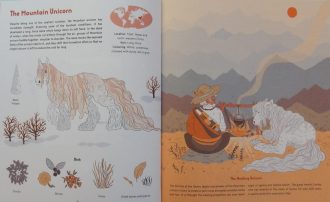
The second section takes us to six different habitats (with accompanying atlas), from the regions around Mount Everest

to the sandy African dunes and the moorlands of northern Europe. We learn  how different adaptations to climate have occurred over time  There’s an introduction to the winged variety and flight.

The final part talks of legendary unicorns; those who found their way into the annals of history or became subjects of artistic representation, as well as introducing some other unicornologists, giving guidance on tracking and communicating with the creatures.

Tongue in cheek though all this may be, it’s fun and rather enchanting. So too are Sophie Robin’s detailed illustrations that will definitely make readers smile as they peruse the pages and get lost in the spellbinding silliness.

Little Frida

Little Frida
Anthony Browne
Walker Books

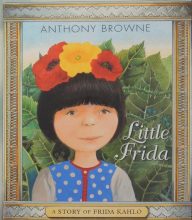
Who better than the inimitable, brilliant Anthony Browne to create a picture book about another brilliant artist, Frida Kahlo? And what a wonderful and surreal (it is Anthony Browne after all) story he tells. It was inspired by her ‘magic friendship’ and her “The Two Fridas’ self-portrait that she painted in 1939.

From the start our young narrator Frida says, her physical difference made her an outsider, often lonely but not unhappy at being ‘separate’, which she quite liked.
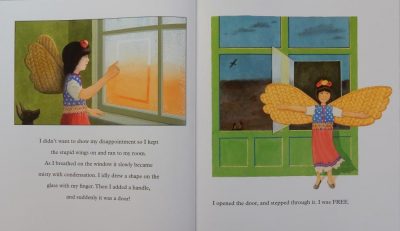
The wish to fly filled both her night-time dreams and her daydreams but her birthday dream of a toy plane is dashed when instead her parents give her a pair of wings. Rather than show her disappointment, alone in her room the young girl lets her imagination take flight.

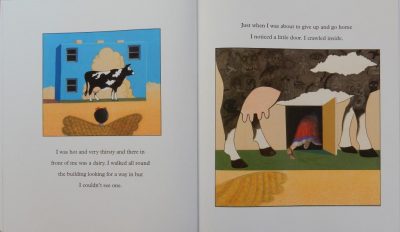
She runs and runs and when all her energy is spent she stops by a dairy. Finding no way in, she’s about to return home, another door opens,

cascading her down, down to the earth’s depths and there she meets a strange but seemingly familiar girl.

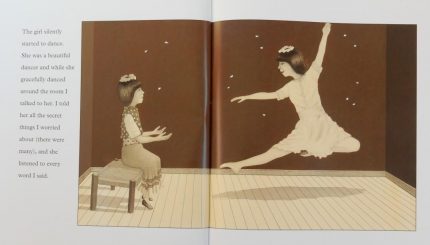
This girl then begins a magnificent dance of life and while she does so, Frida shares with her, her own secret worries

and a close friendship is forged.

All too soon the time comes for Frida to bid farewell to her friend from the dairy and return to her own reality a much happier child than before, and ready to begin her artistry with a paintbrush.

Iconic Frida truly was, so too in his own way is, Anthony Browne. Allowing the imagination to take flight and soar so you become free is what Frida did and what Anthony has done here in his magnificent magical scenes, every one of which is packed with images that will inspire in readers further flights of their own fancy.

I’d love to show every single illustration but to see the rest, you will need to get your own copy of this stunning, out-of-this-world picture book.

Yoga for Children and Young People with Autism

Yoga for Children and Young People with Autism
Michael Chissick, illustrated by Sarah Peacock
Jessica Kingsley Publishers

Highly experienced yoga teacher, Michael Chissick has created another absolutely smashing book, for those who teach yoga to youngsters, specifically those with autism, although much of what is included here would work well with neurotypical children too.

At the outset Michael states his case explaining that perfection is not on the agenda, so an adult-style class approach is inappropriate as is chanting.

A plan is vital; intuitive teaching won’t work with children on the autism spectrum: I know from experience they need a structure and that is what the book provides, whether the teaching is done in a mainstream school that includes children with autism or a special school where everyone being taught is on the autism spectrum. If the latter is the case, Chissick suggests three groups(his are named after trees) which can be fluid but are based on the degree of challenge both students and the teacher of the class face.

He then goes on to offer four different lesson plans – one being suitable for all students (universal) and three others – and each of the latter is progressive.

Much of the remainder of the book contains the differentiated tried and tested games, thirteen in all, some of which require additional resources that are flagged up at the outset. There are also sequences such as the Sun Salutation and some sequence games, followed by the postures themselves including ‘good sitting’

(illustrated by Sarah Peacock whose work will be familiar to those who know Michael’s other books such as Ladybird’s Remarkable Relaxation and Sitting on a Chicken .)

And of course, there are ideas for the vital ‘calming stage’ and final relaxation.

There’s a chapter on teaching yoga to children who have ASD in a mainstream classroom, followed by some case studies and extremely useful visual resources.

A wealth of experience has gone into this book: it’s a veritable treasure trove for anyone who teaches yoga to children, whatever the setting, but especially children with ASD.

Super Sloth / The Great Dog Bottom Swap

Two treats from Andersen Press: the first from rising star, the aptly named Robert Starling; the second an oldie but real goodie:

Super Sloth
Robert Starling
Andersen Press

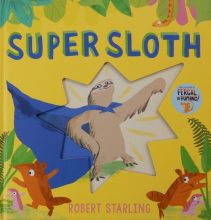
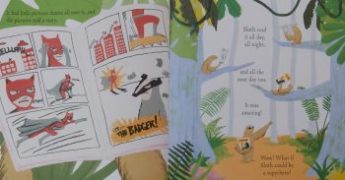
Superhero characters always go down well with little human would-be superheroes, but a Super Sloth? Could one really make the grade?
Jungle resident, Sloth is far from fast and unable to fly; but when he comes upon a picture book story of a superhero he’s totally enthralled and it gets him thinking.

He sets about assembling the necessary accoutrements: mask – tick; cape – ditto. Off he goes in search of rescue possibilities. Before long he hears Toucan’s cry for help, but arrives too late – he is a sloth after all. Nevertheless he’s determined to help find the dastardly mango-thieving Anteater.

Up the highest tree he climbs – an ideal vantage point for Anteater spotting he thinks and so it is.
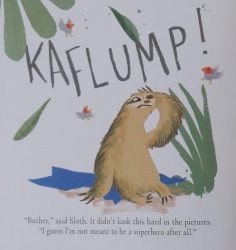
Wheee! Sloth launches himself skywards but … disaster!

Is that the end of his superhero aspirations? Not quite: when he learns of the potential starvation of the other jungle animals and hears from Bear about the need to break into Anteater’s well-guarded stronghold, it sets him thinking again and makes him extremely angry.

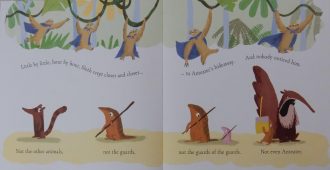
A plan forms in his mind, one that capitalises on his sloth abilities and off he goes,

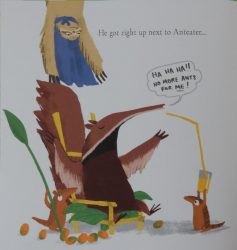
slowly, slowly making his advance towards Anteater’s garrison until he’s ready to strike …

And there we’ll have to leave him dangling for fear of spoiling the ending of this laugh-out-loud sequel to Fergal is Fumingand just borrow a bit of the old adage, ‘slow and steady … ‘

As well as presenting readers with a dramatically illustrated, delectably droll super-story, Robert provides endpapers of factual information – Sloth Facts and Super Sloth Facts. Love it!

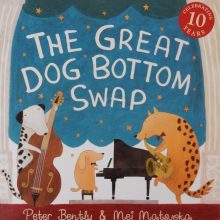
The Great Dog Bottom Swap
Peter Bently & Mei Matsuoka
Andersen Press

Thank your lucky stars this isn’t one of those scratch and sniff type books that used to be all the rage when this romp of Peter Bently’s first burst onto the scene a decade ago.

If you’ve ever wondered why dogs sniff each other’s bottoms when they meet, then this book is definitely one you MUST read; and even if you haven’t, I’d still strongly urge you to get hold of a copy. It’s brilliant, delivered in Peter’s faultless rhyme and tells what happens on the day of the Dogs’ Summer Ball.

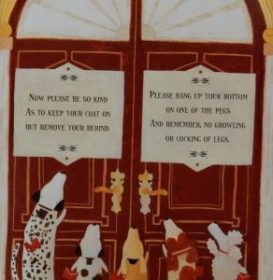
The dogs, as per instructions …

hang up their bottoms in tidy rows in the cloakroom of the venue and proceed to the table to eat, drink and make merry.

Thereafter they participate in the canine cabaret and generally have a wonderful time.

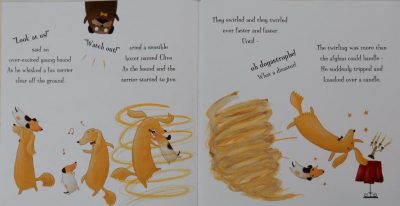
Dancing is then announced; more fun and frolics until …

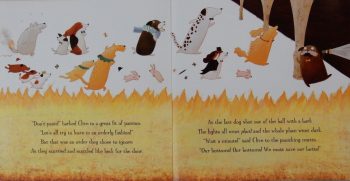
Catastrophe! Fire breaks out, engulfing much of the furniture and furnishings in flames: the dogs flee for their lives.

In their haste however, they each grab the nearest reachable bottom and dash out. That’s why when they meet in the street dogs sniff one another’s bums – in the hope of finding their own again.

Cheerful, cheeky – children roll around over it – while adults endeavour – in my case unsuccessfully – to stop themselves spluttering as Peter’s wonderful narrative trips from the tongue. In tandem with Mei Matsuoka’s hilarious illustrations of dogs of all shapes and sizes, this neo-pourquoi-tale is a rip-roaring read aloud gift for teachers and others who share stories with the young (and maybe not so young).

Superkitty

Superkitty
Hannah Whitty and Paula Bowles
Simon & Schuster

There’s a new superhero on the block – or rather as Hannah Whitty’s story opens – a would-be one. It’s the fluffy feline narrator of the story and she works at the Sensational Superhero Agency located in Big City.

Her chief role however seems to be office stooge in contrast to Cheetah, Wildebeest, Lion, Elephant, Rhino and Bear. These guys get all the crook-chasing, crime-busting fun while kitty is left behind to answer the phones.

So, when a call comes in from Dr Fossil reporting the theft of a precious bone from her most recent dinosaur discovery, kitty is determined to get in on the act of the most ‘dastardly and diabolical crime EVER’. Grabbing the appropriate gear. She quits the office and despite being told to return to her post by the six scoundrel catchers, she manages to join the action and tails the Sensational Superheroes through the streets as one by one,

they stop off to attend to their own personal whims and fancies.

Eventually the crew reach Sky Tower where it’s kitty’s turn to shine. Scaling up the side of the building she finds herself face to face with the dastardly dog burglar, Nefarious Norman and we all know what dogs love best …

Can Kitty summon up sufficient bravado, face off the thief and save the bone from the stinky breathed canine or is she destined to become a dog’s breakfast instead?

Let’s leave her there and merely add that there’s one mightily happy feline and an enormously satisfied agency customer at the conclusion to this rip-roaring saga. Never let it be said that it’s always the guys who wear the pants (and capes and masks) hereafter.

Fast-moving, funny and illustrated with aplomb by Paula Bowles, this will hold the attention of young listeners throughout; and if my experience is anything to go by, action replays will be the order of the day.

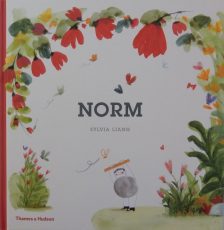
Norm

Norm
Sylvia Liang
Thames & Hudson

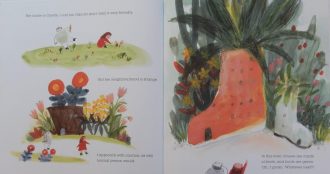
Is there such a thing as normal? The narrator – Normal or Norm for short – of Sylvia Liang’s debut picture book certainly thinks so and he epitomises that normal, he and his friends Plain and Simple. These individuals live in an extremely orderly village, made so because its residents spend much of their time measuring themselves and everything around them, and merely hiding or turning away from wrongly sized items be they animal, vegetable or mineral.

Life with this uniformity is, so we hear, pretty peachy with its set shapes, sizes and times for doing things like partaking of afternoon tea from matching crockery.

One day into this utter normality bursts a yellow bird that leads Norm to meet Odd(ette), a very friendly little lass who lives in a town of boot houses.

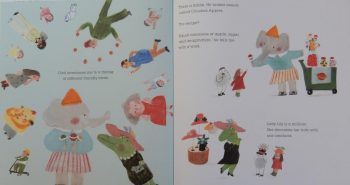
Norm’s foray into her far from normal environment is shall we say, shocking, but altogether friendly and in fact, enchanting. With such characters as Clouded Apple sweet maker Eddie with his recipe of apple, sugar and imagination in equal measures; milliner Lady Lily whose hats are adorned with marine animals

as well as Mr King, musical maths teacher and messy Professor John whose stories cause the world to melt away.

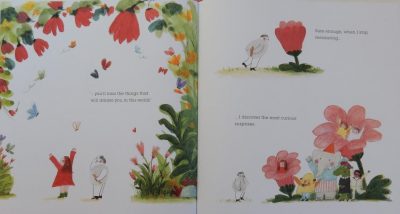
It’s young Odd though who has something important to convey to her guest: ‘ if you focus on your ruler all the time … you’ll miss the things that will amaze you in this world.’ And when Norm sets aside his ruler, he discovers to his surprise that it’s true.

But what about his friends back home? Are they open to the possibility of the new and surprising; do they too have the potential to accept the odd change?

This reviewer has always been a rule challenger/subverter, so Sylvia Long’s book really spoke to me, for who can measure the freedom one finds when one loosens the hold on the strictures rules impose.

Let’s celebrate all who find the courage to be a little freer in the way they live their lives.

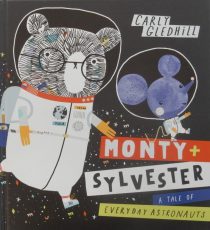
Monty + Sylvester: A Tale of Everyday Astronauts

Monty + Sylvester: A Tale of Everyday Astronauts
Carly Gledhill
Orchard Books

Space exploration picture books seem to be all the rage at present and here’s another.

We first met this terrific, best pals twosome in A Tale of Every Day Super Heroes and now they are in training to become space explorers. Really? Yes really and thus far their regime has lasted around 20 minutes – we’re allowed to watch Sylvester demonstrating his astro lunge in preparation for their mission to the depths of dark space to find an undiscovered planet and hence become famed as astronauts. Well, let’s see.

Their friends are not totally convinced of the likelihood of their space success telling them so in no uncertain terms.

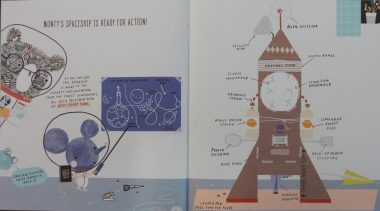
Undaunted however, the two approach the launch pad where Monty’s ship is at the ready.

Following a successful launch their rocket heads towards ‘deepest, darkest space’ with the crew keeping an eye (or four) out in case of aliens, black holes, or meteors, and hoping to spot an undiscovered planet. All seems to be going well until a black hole looms large …

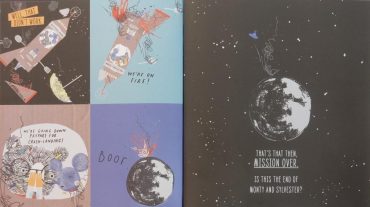
Fortunately more by luck than judgement, they manage to avoid it, only to run into a meteor shower of galactic proportions. Their meteor shield fails dismally. Could that spell the end of Monty, Sylvester and their mission?

Let’s merely mention little green aliens, leave it there and allow readers to imagine what might happen thereafter; and having done so, head off to the nearest bookshop to grab a copy of this super, silly space tale.

Like her two characters, it seems Carly’s imagination knows no bounds; her scenes of comic chaos are simply out of this world and I love the way she seamlessly integrates the visual and verbal narratives.

Bring on the next adventure says this reviewer who is heading off to grab some more little ones to share this howlingly funny book with.

B is for Baby

B is for Baby
Atinuke and Angela Brooksbank
Walker Books

Here’s an absolutely cracking circular story that’s simply bursting with love. Atinuke’s verbal narrative focuses entirely on things starting with the letter B as she takes us on a journey through a West African rural landscape.
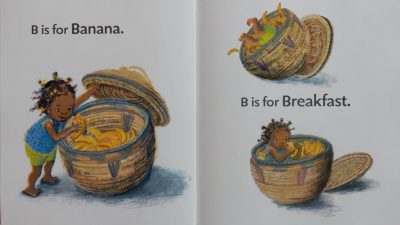
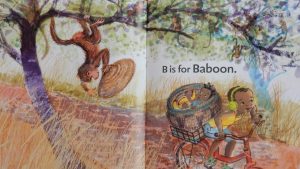
First though we meet the titular Baby; see her mother Beading her baby’s hair and Baby raiding the Banana basket, toppling in and partaking of some Breakfast.

Brother is next on the scene; in he bops and loads said basket complete with baby, on the back of his bicycle ready to go to visit Baba.

Oblivious to his stowaway passenger, he pedals along the Bumpy road towards Baba’s bungalow.

Passing beneath the Baobab – a Big one – they emerge into an area with fields either side; and a bird from the previous spread is now seen in full view with its gloriously coloured plumage – Beautiful – as is the blue butterfly that flies behind the bike, while ahead are trees filled with baboons.

As they pass under a tree a Baboon grabs the lid from the basket revealing the stowaway baby.

The journey continues with baby handing out a banana to a child leaning from the Bus window as they pause before crossing the Bridge (B is for Bridge) and before long they arrive as their destination: a Bougainvillea surrounded Bungalow outside which waits a happy-looking Baba … ‘B is for … Baba!’

That happiness increases enormously though when he opens the basket …

One shocked brother and an overjoyed Baba.

After all that there’s only one thing to do: sit down together and partake of some yummy snacks – ‘B is for Biscuit!’ as well as some bubbly bottled liquid refreshment; and I bet they polish off the whole lot.

A sensory delight if ever there was one, is this rural ride from one much loved family member to another. (The last two spreads show the return journey, which culminates back where the siblings started, and finally, a relieved-looking mama clutching tight her Baby.) Visually stunning, vibrant and infused with humour, the entire book is bursting with energy, warmth, rich colour and beauty.

A total treat to share and to pore over; an enriching must have for home, nursery or school collections and another terrific Atinuke/ Angela Brooksbank collaboration.

Bikes For Sale

Bikes For Sale
Carter Higgins and Zachariah OHora
Chronicle Books

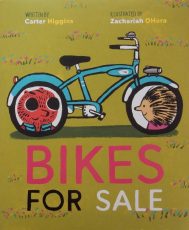
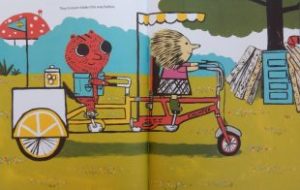
Meet Maurice, seller of lemon drinks from his mobile stall: ‘No matter where he rode, he always had customers.’

Also meet hedgehog Lotta; she owns a red bicycle that she uses to collect sticks, which she gives away for stilts, swords and limbo bars: ‘Everyone loves sticks … They’re the best thing to collect.’

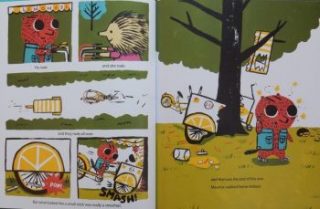
Both pedal all over town but thus far the two have never met. Then however both need to move on and all of a sudden a stick – just a small one – becomes caught in Maurice’s wheel spokes and …

Almost simultaneously Lotta’s bike skids on some petal-like peel and she too takes a tumble. That’s two ruined bikes, but the two characters are unhurt so they endeavour to make do without them, losing business all the while.

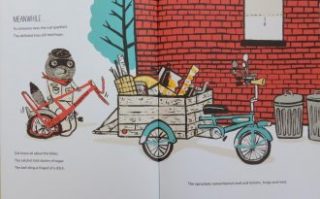
In the meantime Sid, local bike restorerer makes a find – two actually –

and before long signs appear in the town advertising his wares; signs that both Maurice and Lotta read and decide to pay a visit to Sid’s establishment.
Hip hip hurrah! Two bikes have become one – a splendiferous tandem.

Then it’s a case of four legs are better than two as the wheels of the bike go round and round, a new friendship is forged and business begins to flourish once more.

With gentle anti-consumerism messages about making do and mending, re-using and recycling, Carter Higgins’ enchanting story is a celebration of friendship, collaboration and much more. I love the alliteration and quirky poetic nature of her verbal narrative.

Equally I love OHora’s characterisation and chosen acrylic colours for his delightfully detailed, sunny scenes of the ups and downs of life animal style. Make sure you take time to look at the maps on both front and back endpapers when you share this super book.

The Pawed Piper

The Pawed Piper
Michelle Robinson and Chinlun Lee
Walker Books

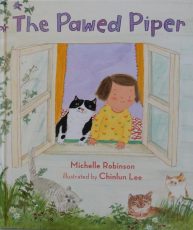
Michelle Robinson’s moggy twist on the Pied Piper legend was specially written for illustrator Chinlun Lee because her home in Taiwan has an over-abundance of cats. In addition Chinlun asked others to send pictures of their cats to her and as a consequence every feline featured herein is real.

The story begins with the small girl narrator telling us of her desire for a cat. She then relates how she goes about acquiring such a cuddlesome creature by means of kitty creature comforts along with some advice from her gran.

Preparations done, the child waits … and waits, but not even a kitten comes so she retires to bed, cuddles up with a book and falls asleep.
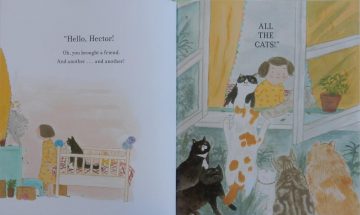
Suddenly though, something soft, warm and purry disturbs her slumbers: it’s her gran’s Hector but he’s brought some friends along with him, rather a lot of them.

Sixty seven moggies of all shapes, colours and sizes.

The next day our narrator enjoys the company of her new feline friends but on her way to return Hector to her gran, she makes a rather alarming discovery … She’s not the only one looking for a cat …

Gran’s instruction to return all her new acquisitions seems somewhat unfair but back at home the little girl makes an exciting discovery.

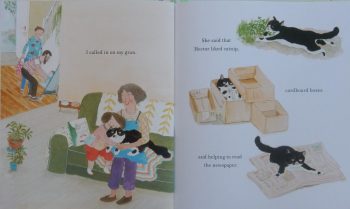
Even if like this reviewer, you’re not a feline fan, you’ll likely fall for Michelle’s furry tale that breaks into rhyme from time to time. Chinlun Lee’s cat characters are terrific – every one looks different and despite my allergy I almost felt myself reaching out to stroke some of the softest seeming, most cuddlesome-looking ones among them.

Snuggle up and share with your little ones, with or without an accompanying moggy and make sure you look at the endpapers.

Willbee the Bumblebee

Willbee the Bumblebee
Craig Smith, Maureen Thomson and Katz Cowley
Scholastic

A plug for bees and a slightly crazy story of an unravelling black and yellow jersey belonging to one particular buzzy bumblebee named Willbee are knitted together in this rhyming story endearingly portrayed by Katz Cowley.

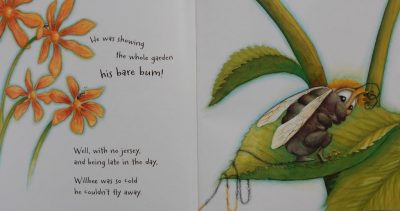
One day while out and about foraging Willbee snags his jersey on a rose thorn and as he flies away, the jersey gradually unravels until his bare bum is exposed. The now decidedly chilly little insect has to remain unprotected in the garden as he’s too cold to fly home.

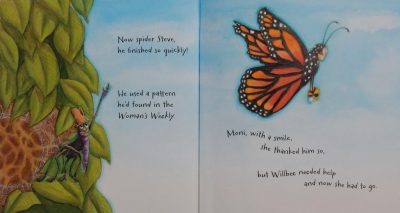
Alone and scared humless, he’s spotted by kindly butterfly, Monica who flies down to his aid. She frees the wool and takes it off to spider Steve who agrees to weave the yarn into a brand new jersey for Willbee; and so he does. Back to Willbee flies Moni with the jersey.

Donning his new garment at super fast speed, Wilbee revives, gets back his hum, rewarms his bum, gives thanks to his benefactors and buzzes off happily home to his mum.

A fun, giggle inducing read aloud to share with little ones at home or in an early years setting.

The Big Beyond

The Big Beyond
James Carter and Aaron Cushley
Caterpillar Books

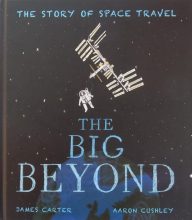
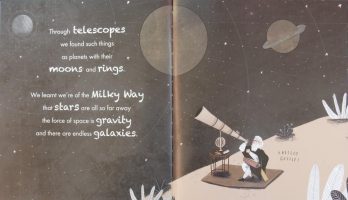
Using rhyming couplets, Poet James Carter blasts readers off in a rocket and whizzes them into deep space and backwards into history, to early stargazers and their telescopes.

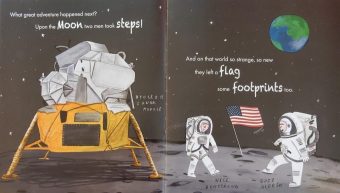
We read of early attempts at flight in kites, balloons, gliders and aeroplanes, pausing in 1957 to watch Sputnik 1 orbiting, and in 1969  to see ‘Saturn Five’ rocket blast off and the lunar module from which two men emerged onto the moon’s surface.

We’re reminded of the various roles of satellites, spacecraft (sending home information), probes (exploring Mars), and crafts to land (air testing, soil sampling and more).
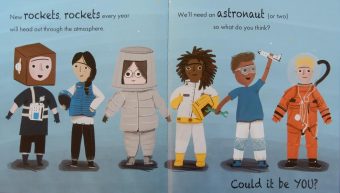
James’ final future suggestion is likely to tempt young readers’ rockets … will head through the atmosphere. We’ll need an astronaut (or two_ / so what do you think? / Could it be YOU?

In like fashion to his previous Once upon a Star the author concludes his whistle-stop historic foray with an acrostic – ROCKETS this time – that provides additional pointers for possible investigation by small space enthusiasts.

Cool endpapers and some enticing art by Aaron Cushley complete this package tour of the cosmos.

Kindness Rules! / Hide-and-Sleep

Kindness Rules!
Eunice Moyle and Sabrina Moyle
Abrams Appleseed

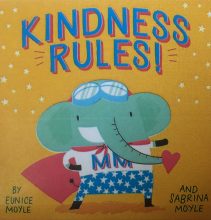
The Moyle sisters (aka Hello! Lucky), offer, courtesy of an elephant and friends, a lesson, or rather several lessons, in good manners. (Elephants are apparently ace when it comes to faultless etiquette.)

First though our magic manners advocate dons respectacles, positive pants and cape of kindness. Polite greetings, sharing, inclusivity, saying please, good listening and explaining one’s feelings, respecting the property of others, not invading another’s personal space; good table manners and knowing when to apologise are all presented as desirable and elephant ends with a summarising golden rule: ‘Treat others the way you want them to treat you!’,

Delivered mostly in rhyme, and through alluring, lively illustrations these lessons will prove invaluable when little ones start playgroup or nursery.

Hide-and-Sleep
Lizi Boyd
Chronicle Books

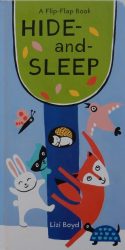
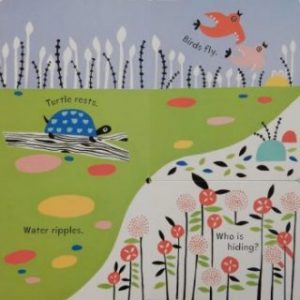
With her characteristic whimsy, Lizi Boyd has created another winner for little ones. Right from the start they’re urged to join in the play, look closely and carefully and try to discover the answer to the question, ‘Who is hiding?’ in the meadow and forest scenes.

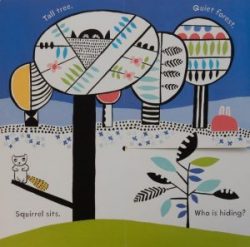
Alternate pages of this tall book are split a little more than halfway down, which encourages readers to participate in the game and search for creatures among the flowers, trees, beside the pond and as day turns to night, on the moonlit hills, among the tree branches and up in the sky.

Every turn of the page reveals more creatures – blinking fish, a sneaking racoon, a resting turtle, a leaping frog, a dashing fox,

a sitting squirrel, a swooping owl and more. Deft fingers can create three alternative double spreads from two as they enjoy the captions that engage and move the game forward in response to the “Who is hiding?’ question it the bottom corner of each recto.

Just before the animals all, or rather almost all, bed down for some shut-eye, the answer to this persistent question is revealed.

Gentle, playful and thoroughly engaging: Lizi Boyd’s richly patterned, stylised images in jewel-like colours provide delight at every turn of the page; but as for the titular ‘sleep’, well, forget it until the final pages; this is full-on energetic frolicking.

Alone Together / A Number Slumber / The Bus For Us

Alone Together
A Number Slumber
The Bus For Us
Suzanne Bloom
Boyds Mills Press

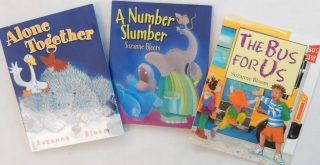
Suzanne Bloom knows just what works for beginning readers; but much more important she knows what will help foster a love of books and reading in young children as these three books demonstrate.

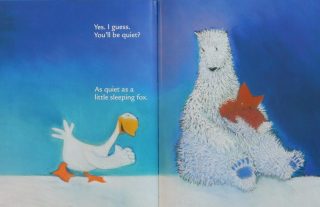
Of the three my favourite is Alone Together, a Bear, Fox and Goose story wherein Bear endeavours to have some solitude.
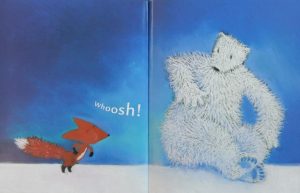
Fox however doesn’t seem to appreciate what this means as he bounces up to bear demanding to know, ‘Why are you all by yourself, bear? /Are you sad? / Are you mad? ? Are you lonely?’

The humour mounts when, following Bear’s ‘Occasionally, I like some quiet time.’ response, Fox agrees and proceeds to Hmmmmmm repeatedly, twirl and whoosh! around an increasingly agitated Bear who looks as though he’s about to tear his fur out.

But covered ears and eyes and other signs of his ursine friend’s increasing agitation have no effect on Fox, so Bear has to spell it out explaining that hush means ‘No noise! Quiet! Please.’

It now appears as though Fox might have worn himself out as open-mouthed, he topples back into Bear’s snuggly fur just before Goose reappears. With a seeming truce between Bear and Fox now in place, Goose demands to know if Bear has had sufficient alone time.
Perhaps that truce was a little short-lived after all …

A smashing piece of picture book comic theatre, this delightful tale unravels rather like a silent movie.

A Number Slumber is a lovely count down to bedtime animal style that begins by asking readers, ‘What do you do to get ready for bed?’

It goes on to posit a series of likely pre-bed activities – tooth brushing, listening to a story and more before turning the focus to other sleepyhead creatures.
There follows a series of lovely alliterative examples as ‘Ten terribly tired tigers tiptoe to their beds. Nine normally nimble newts rest their sleepy heads.’ And so on …

until ‘One really weary wombat yawns …’ and the final page shows a sleeping bundle … ‘just like you.’ Now who might that be?

Readers will have to turn back to the title page to confirm if their guess is correct.

You can count on this soporific delight to help send your little humans off into slumberland, thanks to Suzanne Bloom’s soft focus scenes rendered in gorgeous dreamy colours that accompany her rhyming text.

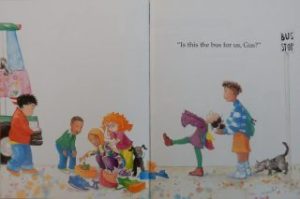
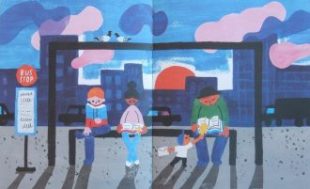
For vehicle enthusiasts especially is The Bus For Us that introduces a variety of vehicles. By means of a question and answer text and accompanying sightings of the traffic that passes the bus-stop at which a brother Gus, and his questioning sister Tess wait. (Watch that bus-stop as you turn the pages).

There’s much more to it than that though: plenty of action, involving both humans and animals, takes place as the queue for the bus increases …

until at last a yellow school bus arrives to pick up all the waiting passengers.

My City / In The City


My City
Joanne Liu
Prestel Children’s Books

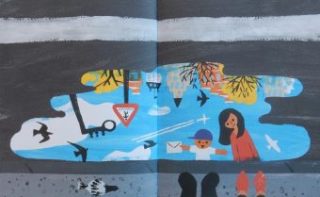
A small boy, Max, is given the job of posting a letter and sets off to the post box.
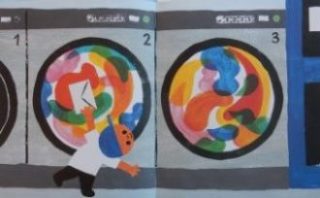
His route through the city takes him past a launderette where he stops to watch the swirling whirling clothes in the machines;

then he stops at a crossing to look in a puddle (in stark contrast to the other people many of whom have their eyes on their phones)

and has an encounter with a rubbish collector and his truck. He chases after a leaf as it’s whooshed by the wind, catches it and eventually presents it to a man on a bench.

Each of these small happenings is followed by a shift in perspective that puts the reader as it were, behind the boy’s head as he meanders, ever watchful through the bustling city and through the day, all the while open-armed as though embracing each and every new experience until finally, he arrives back home to his watchful mother, and the mail box right by their house.

Almost wordless, Joanne Liu allows her vibrant, textured paintings to tell the story while allowing readers to create their own too, perhaps about the spotty dog that appears in several scenes.

A visual delight to explore and re-explore making new discoveries on each reading.

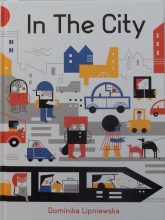
In The City
Dominika Lipniewska
Button Books

Dominika Lipniewska takes readers on an exploratory journey from the stirrings of early morning through twenty-four hours back to another sunrise.

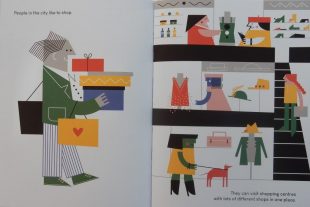
Her graphical style urban landscapes have the playful appearance of a construction block city, comprising Lego-type figures, buildings and vehicles.

The streets and railway are full of hustle and bustle as commuters hurry on their way to work or perhaps take a more leisurely walk with a dog.

Noise is at times overwhelming, but not everywhere is so frenetic; there are green leafy spaces where wild life abounds, and quieter spots to pause and partake of some rest and repast.

Different as people may be, they share much in common including a love of ice-cream and engaging in fun activities as well as shopping – be that in a shopping centre

or smaller shops on the street, as well as the market, a great location for buying fresh produce.

Like most cities this one has other places of interest: a large variety of eating places, museums and art galleries, a zoo and more; and it’s both ever-changing and never still for some people work through the night to provide essential services.

Every spread offers enormous potential for observing and talking; in fact the whole book is visually appealing and immersive.

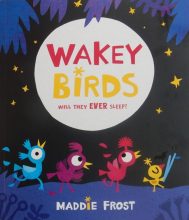
Wakey Birds

Wakey Birds
Maddie Frost
Templar Books

A host of insomniac birdies feature in this story set in the jungle, an exotic location wherein reside all manner of interesting creatures including the titular avians.

To facilitate their sleep with soporific sounds though, are other feathered friends, notably the Soothing Shushers and the Go-To Sleep leapers. Such sounds appears to have worked wonders on this particular night except for the very Littlest Wakey Bird who seems full of life and raring to go.

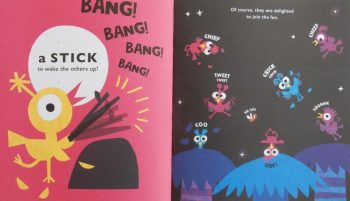
Eager for some fun and games she sets about some noisy wake-up sounds to rouse her fellow Wakeys. And the cacophony works a treat;

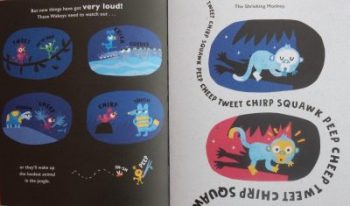
in fact the noise escalates rousing the very noisiest of all the jungle dwellers, the Shrieking Monkey. Big mistake!

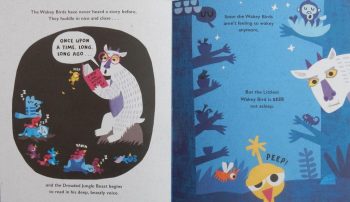
The din disturbs that which should ‘never, ever be disturbed -the Dreaded Jungle Beast fast asleep in his cave and he is NOT amused.

Out he comes confronting the Littlest Wakey Bird who, fearing for her life, speaks out. Guess what: she doesn’t become his next snack but soon she and the other Wakeys are entranced by a wonderful story read in the dulcet tones of the dreaded beast;

and it’s effect is to bring on a wonderfully satisfying finale …

Maddy Frost’s book is bedtime reading of the first order, but equally, fun in the daytime. The nocturnal frolics of the jungle inhabitants will delight youngsters at any time; be prepared for a very noisy story session when you share this one.

Tomorrow Most Likely

Tomorrow Most Likely
Dave Eggers and Lane Smith
Chronicle Books

Dave Eggers has penned rhyming ponderings upon the possibilities of what tomorrow might have in store. None of us knows what the next day will bring but Eggers’ likelihoods are safe, reassuring, sometimes weird like this something that won’t rhyme

and sometimes totally delightful: ‘Tomorrow most likely / there will be a sky / And chances are it will be blue.’ … ‘Tomorrow most likely / you’ll smell the good smell / of an unseen flower you can’t quite name.’ … ‘Tomorrow most likely / you’ll pick up a stone / striped like a spiderweb or maybe a brain.’

In this bedtime story, his laid back languorous, rhythmic textual repetition provides both comfort and cheer –seemingly spoken by the mother from the title page bidding her child goodnight and in so doing looking forward.

Lane Smith holds up a two-way mirror to Egger’s contemplations with his mixed media images of a boy heading out through the door to wander around his urban environment encountering such oddities as a troubled big-eyed bug missing his friend named Stu; or that curved-beaked creature sporting a paper-hat, as well as envisaging eccentricities like eating the cloud-cone as he pauses in a flower-filled patch of green and then, clutching the cone, sings atop a rocky tower;

and closing with the boy now sleeping, dreaming of tomorrow, happy in the belief that because he’s in it, it will be ‘a great day.’

Touches of whimsy abound in this detailed urban landscape especially for those who know how to look for the extraordinary in the seemingly ordinary.

Meet the Penguins

Meet the Penguins
Mike Brownlow
Oxford University Press Children’s Books

The penguin duo are eager to play; but their ‘Please can we play?’ overtures are turned down by in turn an elephant intent on riding his bike; a fox in a ball pool;

a paint daubing hippo; a giraffe building with blocks, a tortoise out riding, a pair of noughts and crosses players, a puzzling primate, a racing rabbit

and a cat fishing, each of which proffers so s/he thinks a pertinent reason why not – well all except the cat and she merely gives an unequivocal ‘No’.

As two despondent penguins sit pondering on their next move, they’re approached by a little bear asking if she can play.

Their loud affirmative response precipitates a truly astonishing display of balancing and juggling as the penguins open their bags and showcase their playful talents aided and abetted by their new playmate.

Pretty soon the three have an audience and guess what they want to do …

With superbly ironic rejoinders from the animals the penguins want to play with, Mike Brownlow’s narrative reminds us how easy it is to push people (or penguins) away and make them feel unwelcome whether or not it’s intentional.

Its vital message about welcoming newcomers and all they have to offer, especially those who might seem different, is timely and pertinent, and this is a great book for opening up discussion.

And of course, youngsters will be unable to stop themselves from joining in with the oft repeated ‘Please can we play’ request.

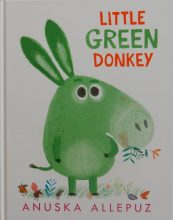
Little Green Donkey

Little Green Donkey
Anuska Allepuz
Walker Books

This is another absolutely delicious story from Anuska Allepuz. It’s narrated by Little Donkey who is, shall we say, a rather picky eater.

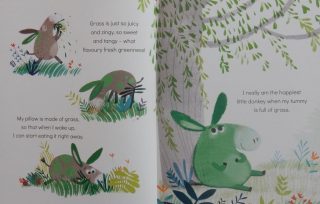
When we first meet him, his food obsession is grass: grass first thing in the morning, – he starts by eating his grassy pillow – grass all day, every day by all accounts.

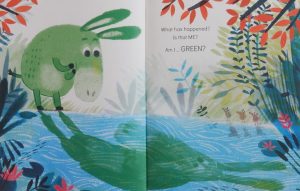
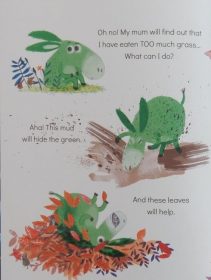
On this particular day though our little grey ungulate friend hasn’t noticed the effects all this grass consumption is having upon him (observant readers doubtless will immediately do so) and as he heads off cheerfully for some refreshing water to quench his grass-induced thirst, he’s in for a shock.
What he beholds in the water certainly brings him up short and his immediate concern is what his mother’s reaction will be.

Some hasty disguise art takes place …

before Little Donkey heads home; but his Mum isn’t fooled at all. “It’s really time to try and eat some new food,” she urges.

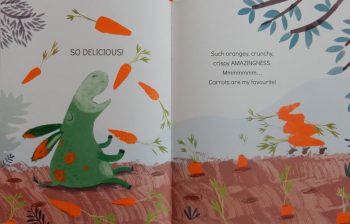
Her son’s response is to sample several different coloured items – oranges ‘too juicy’; watermelon- too seedy; broccoli too green – really? Apples are just too yucky; grapes are instantly ejected, but what about crunchy carrots? Now they are …

Uh oh! we know what’s coming …

Little ones, as well as this reviewer, will eagerly anticipate the finale as well as giggling helplessly at upbeat Little Donkey, his antics and his foodie fads as portrayed by Anuska. Adults will relish the opportunity to plead their case after sharing this tasty neo-cautionary tale with their own picky eaters.

A laugh-out-loud delight through and through – grey, green, orange or any other colour!

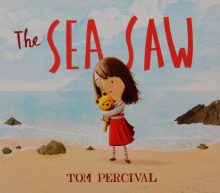
The Sea Saw


The Sea Saw
Tom Percival
Simon & Schuster

Tom Percival always hits the sweet spot with his picture books and with this one he’s truly aced it – again.

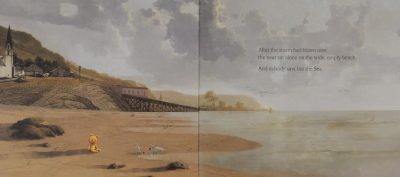
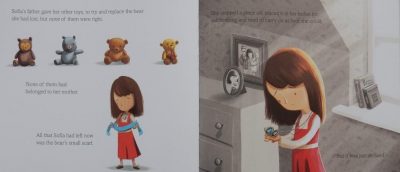
When Sofia, on a visit to the seaside with her dad, loses her beloved teddy bear she’s totally distraught. The old, tatty object has been passed from her grandfather to her mother (whom one presumes is dead) and then to little Sofia and she’d thought of it more as a friend than a soft toy. In their dash out of the rainstorm said bear falls from an open bag and is left alone on the beach, unseen except by the Sea.

The Sea takes on the role of guardian of the bear, and the search for Sofia begins.

Meanwhile at home, Sofia’s father makes exhaustive enquiries and the two of them return to the beach but all to no avail; all that remains of Sofia’s precious bear apart from memories, is his blue scarf from which she snips a tiny piece to keep in her locket.

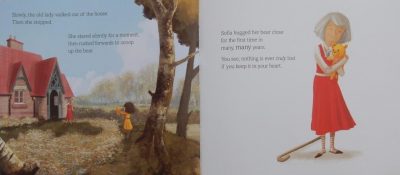
Back with the Sea, the hunt continues in earnest with Bear being borne through the water with the aid of marine creatures, surviving hazardous conditions and enjoying more restful periods too. All this takes years and eventually the bear is carried along rivers and a stream,

where it’s spied floating along by a young girl; a young girl who turns out to be Sofia’s granddaughter.

Finally a joyful reunion takes place and as Tom tells us almost at the close, ‘nothing is ever truly lost if you keep it in your heart.’

I doubt many readers will be able to finish this book without having tears in their eyes, a lump in their throat and a happy smile; it’s so moving and SO beautifully constructed. What a wonderful, heart-warming way to think about loss while never completely losing sight of the possibility of reunion.

Such sublime illustrations; every one is to linger over and return to; some send shivers down your spine. Absolutely awesome: another must have book from local-to-me, author/artist, Tom.

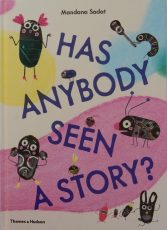
Has Anybody Seen A Story?

Has Anybody Seen a Story?
Mandana Sadat
Thames & Hudson

‘Once upon a time, there were three Thingummies called Sadie, Spike and Smudge. They lived in the middle of Nowhere in a place called Floatyfish, surrounded by soft fluffy clouds. The Thingummies had everything they needed – plenty of water, plenty of fresh air, and plenty of flutterberries, a delicious kind of flying fruit that you catch with a net.’

So begins Mandana Sadat’s wonderfully quirky meta-fictive picture book wherein we join the Thingummies in their search for adventure.
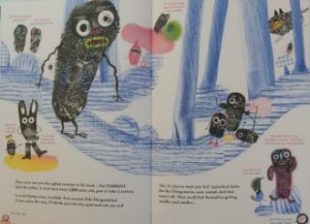
Three days of walking leads the threesome to a crossorads and they choose first to follow the Fairytale Trail. This foray finds them coming face to face with the exceedingly ugly, very old and mighty frightening ZOMBEAST.

Its threat to erase them entirely sends the friends fleeing for their lives back to the crossroads.

Next they select The Future Freeway, a bright shiny, ‘whizzy and busy and bright’ sort of place where a friendly-seeming robot makes them feel welcome and refreshed but not for long. When the mechanical monster starts unloading its own woes, the three Ss decide to beat a hasty retreat before it’s too late.

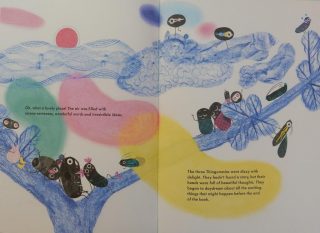
The Poetry Path sounds entirely promising so off they go again, discovering a place, the air of which is enriched by beautiful thoughts and wonderful words: Now who wouldn’t want to spend time there imbibing such delights.

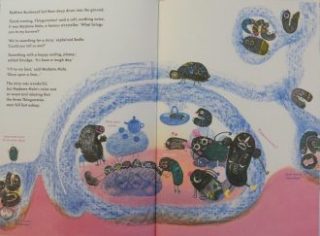
Alluring though this location is, Spike decides they should try the final road, so having returned to the crossroads they proceed deep below ground to Bedtime Boulevard. Therein resides famous storyteller, Madame Mole and she’s happy to help the story searchers. So soothing is her voice that it has a soporific effect on the three seekers and they soon drop off to sleep,

only to find themselves next morning back at the crossroads.

There they make a startling discovery when they come upon a signpost they’d not seen previously. It’s a discovery that relates to the true nature of story, those ‘what ifs’ and the power of the imagination. That however is not quite the end of their tale for the three decide to follow the road into the Maze of Mumblings and … and … and … ultimately they do discover a story that is worth the telling …

Let the celebratory party begin!

Absolutely bursting with diverting details (verbal and visual) to relish, Mandana’s story quest world is likely to entrap readers for a considerable time, and having escaped once, they’ll find themselves drawn back for further flights of fanciful fun and new revelations.

Matisse’s Magical Trail

Matisse’s Magical Trail
Tim Hopgood and Sam Boughton
Oxford University Press Children’s Books

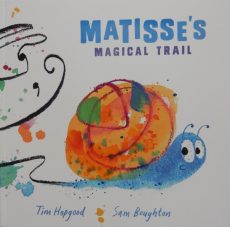
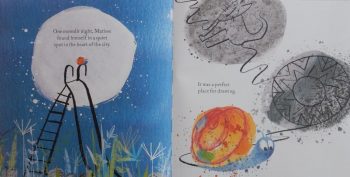
Matisse the snail confines his creative endeavours to the night-time when there’s nobody about; but during the day the world feels scary and much of his time is given over to preventing himself from being squashed by walkers.

One night in the middle of the city Matisse discovers the ideal place for some drawing and sets to work …

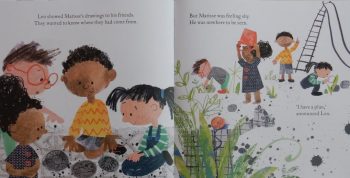
Come morning one of his creations is discovered by a little boy, Leo who adds his own marks to the design on the stone and showing it to Matisse, he introduces himself. Leo’s friends are impressed and eager to learn who the artist is; Matisse though has now disappeared.

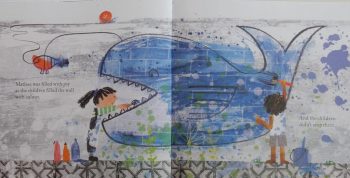
Off go the children, returning later with many more items for Matisse to work his creative magic upon, and by the next morning our artistic snail has created a trail; a trail that leads to their school wall.

When their teacher sees what the children are looking at, it sparks a wonderful idea in her. Before you can say, ‘art’ the children are hard at work transforming the wall with their own creative endeavours

and they don’t stop at just a single wall. The school becomes a truly wonderful sight attracting great attention from passers by.

That night Matisse however, realises that his work in this particular place is done; it’s time to move elsewhere; first though he has one final piece of art to create for Leo and his fellow pupils. Teachers and other adults will be able to guess what that is.

Look out for snail magic on walls wherever you go; you might not find Matisse but it’s likely you’ll discover some snail magic.

A super story, beautifully told by Tim and illustrated by an exciting newcomer to the picture book scene, Sam Boughton, this book has SO much to offer. It demonstrates to children the importance of looking carefully and noticing small things – things that can lead to big changes. It also shows the importance of creativity and self-expression and is a smashing starting point for art at home or in schools. For imaginative teachers this could prove inspirational.

Big Cat

Big Cat
Emma Lazell
Pavilion

The small girl narrator and her gran’s search in the back garden for Grandma’s missing specs yield not the glasses but a ginormous moggy.

It isn’t Ruby, Gertrude, Hufflystink or Twinklywhiskers so Grandma decides a closer look is necessary. She’s mightily impressed by what she sees …

but there is no way they can keep the cat and so they ask their neighbours if it belongs to any of them.

The answer is a big fat no and so Big Cat becomes a resident with Grandma and her other feline friends; but as she says herself, she really does need to locate her specs.

The newcomer proves enormous fun and extremely useful. The only trouble is, the supplies of cat food dwindle very quickly no matter how many times they’re replaced. It’s not just the cat food that is vanishing though, it’s the human’s food too.

One day the doorbell rings: who could it be? Not Gran’s replacement glasses as they’re due to be ready tomorrow.

There on the doorstep stand two strangers, one clutching some specs and asking if they happen to belong to Grandma.

They do, and to show her gratitude, she asks them in (somewhat unwisely you might be thinking) for tea.

Fortunately however, the visitors are very well-mannered and a friendship is forged between them and the narrator.

As for Grandma, she has invested in lots of spare specs but even then, there are things she misses; but that’s a whole other story…

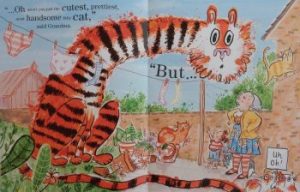
With visual references to Judith Kerr’s classic The Tiger Who Came to Tea, Emma Lazell’s debut picture book is funny and somewhat surreal. Observant readers will notice the whereabouts of the missing glasses on the very first spread and will in addition, delight in other visual ‘clues’ as to what is going on throughout as the chaos increases.

A feline frolic of the first order.

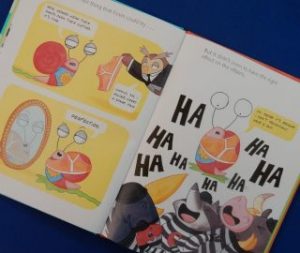
Super Snail

Super Snail
Elys Dolan
Hodder Children’s Books

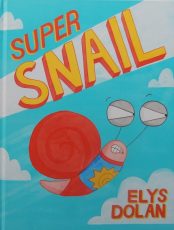
Virtually without need to prove themselves, human superheroes are absolute winners with youngsters, but a super snail? That might take a little more demonstration of worth and that is exactly what Kevin (actually a normal slug) sets out to do in this super story.

Slug though he might be, come nightfall, Kevin dons a hard coiled mollusc coat and becomes transformed: fearless, invincible – an exceedingly slimy gastropod.

Now Kevin already has all that a superhero should have – a secret subterranean hideout complete with trusty butler, as well as a range of brilliant gadgets; but in spite of everything he’s yet to convince himself that he’s the real deal.

Time to consult the brave and comely League of Heroes.

Proof possibilities are posited and then all that Kevin needs is to receive the appropriate Snail Signal and he’s off on a mission, sadly at a snail’s pace, not super fast.

Once on the disaster scene, despite his best efforts Kevin is less than helpful; he resorts to last ditch efforts but even that merely renders him the butt of the villains’ jokes.

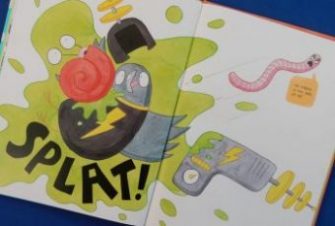
I should head home, thinks our would-be hero but then quite suddenly Kev. hears something alarming concerning one, Laser Pigeon, and he observes what looks like the ideal opportunity finally to exercise his slippery-slimy superpower and save his would-be dinner date, the ‘dynamic’ career worm Susan …

Super-author/illustrator Elys has out-supered herself with this one. With each new book, I think to myself, she won’t better this but then she does; and so it is with Kevin’s stupendously silly saga. It’s out of this world brilliant. Just get hold of a copy and see.

Who is Afraid of Little Wolf? / Marley Bear at the farm / Ottie Elephant in the town

Who is Afraid of Little Wolf?
Yayo Kawamura
Prestel Publishing

A bored little wolf is eager to find a playmate but he’s rebuffed in turn by little squirrel, little rabbit and little fox each saying that their mother doesn’t allow them to play with wolves.

Feeling rejected and sad, the little wolf hears a voice inviting him to play. It’s little bee, who is definitely not afraid of him and wants to play hide and seek.

So much fun do they have that the forest resounds with their playfulness.

All of a sudden, first squirrel and then a host of other animals want to join the game …

It’s never too early to demonstrate to the very youngest the importance of friendship and of not prejudging others; Yayo Kawamura’s delightful little book with its endearing characters does both of those without a hint of preachiness.

Marley Bear at the farm
Ottie Elephant in the town

Melissa Crowton
Nosy Crow

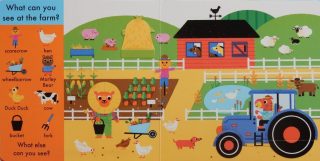
Part novelty lift-the-flap, part seek-and-find, these tactile board books, the first two of a new series, involve little ones from the outset.

Marley Bear stars in the first book and we join him on a farm visit. There’s plenty to discover as he’s greeted by Gus Lion,

encounters some noisy farm animals including a pig family, a soft, fluffy sheep (very strokable) and then looks at more farm animals, the farmhouse and a truck before jumping into his car to drive home. Highly interactive, with some subtle positional vocabulary learning (in front/behind).

It’s a busy day when Ottie Elephant makes a trip to town; the place is bustling with shoppers and full of noise;

there are many colourful sights to enjoy, and as well as counting Ottie’s flowers, little ones can explore her shopping basket before she sets off home for some welcome refreshments.

Little Duck Duck hides in plain sight in every spread adding to the enjoyment of both books.

Lots of inherent learning, but most important, lots of fun to share with tinies.


Crabbit the Parrot / Bluster and Snide

Crabbit the Parrot
Bluster and Snide

Steve Blakesley and Natalie Griffiths
LDA

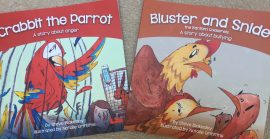
Ex primary teacher, Steve Blakesley has penned two rhyming lessons showing undesirable and then desirable behaviour animal style.

Crabbit the Parrot is a self-centred bird, beautiful to look at but not to listen to. It’s always a case of ‘me’, me first’, mine’ or other self-serving words and he just can’t cope when he doesn’t get his way immediately.

He’s the last to be sold from Mrs Jollies Pet Shop but when eventually a family chooses him and he gets a new home, Crabbit  is bad tempered and demanding

and makes a reckless break for freedom.

No amount of coaxing will bring him down from his branch in the tree but then an old raven CK happens along with a warning about a marauding moggie (ignored by Crabbit) and some wise words about the need for the parrot to alter his behaviour.

This brings about a positive change in Crabbit who heeds the lesson and returns inside, a reformed character.

Bluster and Snide are a pair of bantam cockerels that bully the other farmyard birds especially the smaller, weaker ones

until one day they issue a challenge to CK (Carrion King), calling him cowardly and bragging about their gang.

Their over confidence leads to Snide daring his brother to do something reckless, the outcome of which is a badly injured, friendless and increasingly hungry Bluster.

Time to change his ways perhaps? CK certainly thinks so, advocating ‘You need to be a friend.’ But, in the face of the farmyard fox, is it too late? …

Lively ‘Story Therapy’ tales such as these two with Natalie Griffiths’ expressive illustrations, can open up individual or class discussions on their inherent themes of anger management and bullying and will prove a useful PSHE tool for primary schools.

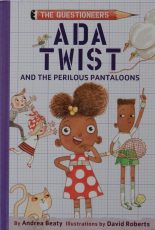
Ada Twist and the Perilous Pantaloons

Ada Twist and the Perilous Pantaloons
Andrea Beaty, illustrated by David Roberts
Amulet Books

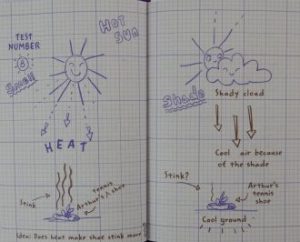
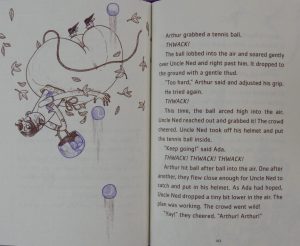
Ada Twist returns with a high-flier of STEM adventure in the second of her chapter books series. As always her head is full of questions: why does her mother’s coffee smell stronger than her father’s? Why do her brother’s tennis shoes stink so badly?

Each of her questions leads to further questions, hypotheses and experiments, one of which links her involvement in the Great Backyard Bird Count activity with working out how to rescue Rosie’s Uncle Ned who, thanks to his helium-filled pantaloons, is floating around in the sky unable to get down.

Ada combines her ‘what if’ curiosity, brainpower, and knowledge of molecules, air pressure, temperature and forces, with that of friends Rosie Revere and Iggy Peck to work out a plan to bring Uncle Ned back to earth.

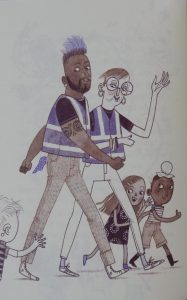
Andrea Beaty’s amusing twisting, turning narrative is irresistible and sweeps readers along like the hot air that powers those pantaloons of Uncle Ned, while David Roberts’ detailed illustrations, be they full page or smaller, are full of humour and provide a great complement to the text.

With credible inspiring characters, believable relationships, information aplenty, including, after the story concludes, reasons for studying birds and the ‘think about this’ pages on the threat posed to rainforests by palm-oil plantations, a poem even, this book is a thoroughly engaging read, a super model of scientific questioning and thinking, and a demonstration that creative problem solvers and scientists don’t always get things right first time. Terrific!

Dare

Dare
Lorna Gutierrez and Polly Noakes
Tiny Owl

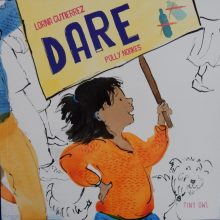
Here’s a little book that cries out to be shared with little ones wherever they are. It’s a powerful exhortation to be the very best person you can possibly be.

We see examples of young children who dare to dream big and aspire, to trust and inspire, to do what’s not been done before;

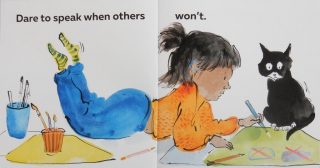
there’s a girl who won’t settle for second place and an acute observer who notices things others miss. Then comes finding the courage to speak out against wrongs;

daring to risk reaching out to others; to sing and dance, to offer a helping hand and to be a trailblazer are equally desirable when it comes to self fulfilment. Above all though be true to yourself …

… a bright star illuminating the dark.

What better message can you give to a young child?

This beautifully illustrated, diverse, empowering book would make a smashing present for a new parent or for a pre-schooler’ s naming ceremony or birthday, as well as being great to read in any early years setting. Foundation stage teachers might easily devote an entire circle time to discussing any one of the statements; the potential is terrific.

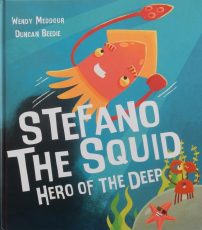
Stephano the Squid: Hero of the Deep

Stephano the Squid: Hero of the Deep
Wendy Meddour and Duncan Beedie
Little Tiger

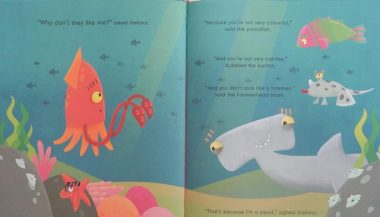
Life for Stefano squid is far from easy. Why is it that the unique characteristics of a squid go unappreciated? That is what Stefano ponders upon.

His fellow deep sea creatures offer reasons relating to his lack of colours, being unbat-like and not being shaped like a hammer …

while the dolphins suggest he should endeavour to look more intelligent; the sea dragon favours looking more leafy and the sea cucumber’s suggestion is to look more vegetable-like.

All the while Stefano is at pains to point out that being a squid makes their suggestions impossible, and when the anglerfish  asks about his weaponry, all the squid can do is to go and hide himself away in a cave.

There he receives some words of comfort from the Sea Cucumber but they are immediately negated by the comments of the limpets.

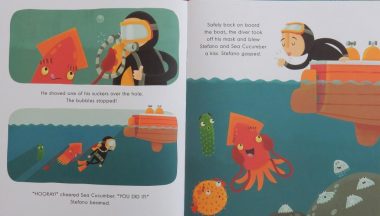
However, when Sea Cucumber points out one of the diving crew is in trouble, it’s down to Stefano to come to his aid; small and insignificant as he considers himself to be, he just can’t swim away and do nothing.

Rescue mission achieved, or rather,  the little cephalopod and his pal get the surprise of their lives – make that two surprises -when the identity of the rescued diver is revealed; but the second one comes the following day and to discover what that is, you’ll need to get your fins on a copy of this thoroughly immersive book.

Wendy’s telling is great fun but at the same time reminds us of the importance of self-worth and self-belief. Duncan’s terrific undersea scenes are splendidly expressive and comical, and I love his marine colour palette.

There are talking points aplenty once you’ve shared this super splashy story.

Catch Me / Wilfred and Olbert’s Epic Prehistoric Adventure

Catch Me
Anders Arhoj
Chronicle Books

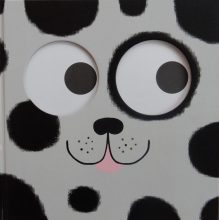
In this double-ended seek-and-find book a long-necked cat, Big Meow and a spotted dog, Little Woof hunt for one another as they dash through eleven, mostly very busy scenes, changing their colour to blend in with each one.

Begin at the front to follow Big Meow’s journey through the pages and to try to catch Little Woof, work backwards. Either way there’s a pre-chase introductory spread introducing the characters.

The search-and-find pages have no words apart from a sign with Japanese symbols in this springtime café scene …

Each one of Arhoj’s incredibly busy, bright digital scenes will likely make the reader linger long after finding Meow and Woof as they enjoy the quirky details be that in the beauty salon, the alley with its shadowy creatures …

the park, the animal show, the cloud based carnival or any of the other zany locations. Each one is rendered in a different colour palette, which ups the challenge and interest levels another notch.

Enormous fun, the entire book is totally immersive; I hate to think how long I spent poring over it. Love those clever die-cut covers, each with its pair of alluring staring eyes; young readers will too.

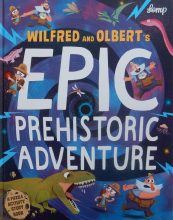
Wilfred and Olbert’s Epic Prehistoric Adventure
Lomp
Little Tiger

Following their Totally Wild Chase famous explorers Wilfred Wiseman and Olbert Oddbottom are off on another action packed adventure.
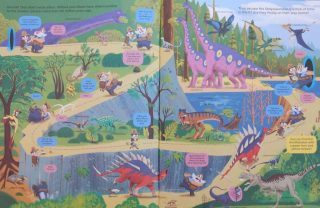
While out shopping one afternoon the friends enter a time portal and in so doing find themselves cascading through thousands of years of history and unbelievably all the way back to the beginning of the universe.

Landing in a prehistoric ocean 360 millions years ago they confront among other creatures a Dunkleosteus, and readers are asked to search and see how many trilobites they can find.

From there they make a hasty exit and land up in a swampy forest of the Carboniferous period.

Further retreats into the time portal take them not home but in turn to the Jurassic period when dinosaurs roamed and they have a narrow escape from a Stegosaurus.

Thereafter they enter the Cretaceous period and come upon even more dinosaurs, followed by the Neogene period, the Quaternary ice age where they meet a mammoth as well as encounter some human cave dwellers before leaping once more through the portal and right back home where it’s time for tea, followed they suppose by a well-deserved rest.

But then they look through the window where a big surprise awaits.

My head was certainly spinning after all that, so I’m certain the two friends needed a lot more than a cup of “Earlier Grey’ or ‘Oo-So-Long’ tea to calm them down.

Frenetic, crazy, action-packed and bursting with speech bubbles: search-and-find enthusiasts especially, will quickly be sucked through the portal along with Will and Ollie, taking a considerable time to emerge from this absorbing book. Fortunately the solutions to the puzzles are given inside the back cover along with a message from a nautilus that issues a further challenge to readers.

The Perfect Sofa

The Perfect Sofa
Fifi Kuo
Boxer Books

It’s always good to discover new author/illustrators so I was especially happy to receive a copy of The Perfect Sofa by Fifi Kuo whose bold and patterned art style instantly attracted me.

Now, let’s meet best pals, Panda and Penguin who appear to share pretty much everything, not least their sofa, clearly a well-loved and now very worn piece of furniture.

It’s had some pretty heavy use, so much so that one day Panda declares they need to replace it with a new model.

Off they go to the furniture store where there are sofas aplenty; but of course before buying, comes the trying.

Seemingly the friends are spoilt for choice but will they manage to find exactly what they’re looking for?

Could it perhaps be that they need to look elsewhere?

Wonderfully playful, this sweet story is perfect for sharing with little ones as well as being ideal for beginning readers. I love the way the lettering changes to reflect the characteristics of the sofas illustrated.

In our throwaway society, this gently humorous book will surely strike a chord; it might even help up-cycling to become more than just a passing fashion for trendies.

The Proper Way to Meet a Hedgehog

The Proper Way to Meet a Hedgehog
Selected by Paul B. Janeczko, illustrated by Richard Jones
Walker Books

Young children certainly, are innately curious, constantly sensing, observing, investigating, relating, questioning, thinking, communicating and loving. In so doing they create theories that explain how and why our world works. This propensity can sadly, start to wane as they move further up the education system.
With this collection Paul B. Janeczko  counters this fact, helping to nurture (or re-awaken) that natural curiosity in those who encounter his wonderful selection of poems.

Essentially it is a kind of instruction manual for such diverse topics as being mole-like, toasting marshmallows, distinguishing between goblins and elves, being a tree in winter, making a snow angel

and playing jacks – not a game one sees children playing much now.

The order may at first glance seem random but it certainly isn’t – far from it: great care has been taken in arranging this selection and there’s a contents page to start, which begins with Charles Ghigna’s How to Build a Poem – an observation on the power of the right words in just the right order: ‘ … words like ladders / we can climb, / with words that like / to take their time, // words that hammer, words that nail, / words that saw, / words that sail, / words that whisper, / words that wail.
A perfect opening that as the final lines say, ‘words that leave us / wanting more.’

There’s an equally perfect concluding poem too: April Halprin Wayland’s – How To Pay Attention: ‘Close this book. / Look.’

In between are some thirty other golden nuggets, mainly contemporary although a few such as Robert Louis Stevenson’s The Swing from the 19th century are also included. I recall as a young child sitting on my garden swing chanting , ‘How do you like to go up in a swing, // Up in the air so blue?’ as I kicked my legs.

It’s absolutely impossible for me to chose a favourite, I liked every one; but some of my favourites on this reading (ask me another time and it will perhaps be different) are: J. Patrick Lewis’ How to Tell a Camel (for its sheer playfulness);

How to Catch a Poem (Irene Latham);

Ralph Fletcher’s How to Make a Snow Angel : ‘Go alone or with a best friend. / Find a patch of unbroken snow. // Walk on tiptoes. Step backwards / Into your very last footprints.// Slowly sit back onto the snow. / Absolutely do not use your hands..’ … ‘Stretch. Float. Fly!’

And I was especially pleased to find Nikki Grimes’ A Lesson from the Deaf- a poem on using sign language.

I could enthuse at length about this book but in conclusion, I absolutely love its eclectic nature.

Richard Jones has done a terrific job illustrating each poem so as to leave room for the words to breathe on the page, never overwhelming them but also inviting readers to look closely at his work too with its textures and patterns and admire his carefully chosen colours.

A must have book for all poetry lovers and those who want to encourage children to become so. These are poems to read, read aloud, savour, consider, share, enthuse about and thereafter to look, look and look again.

Mira’s Curly Hair

Mira’s Curly Hair
Maryam al Serkal and Rebeca Luciani
Lantana Publishing

How many of us are satisfied with our natural hair? We often deem it too straight or too curly and spend countless hours styling it and making it look different. I for one have given up on the straighteners other than on very rare occasions but like Mira, the main protagonist in this story, would really like effortlessly straight and smooth hair.

Like Mira too I’ve tried pulling it down to get rid of the kinks and I know from my daily yoga practice that headstanding has absolutely no effect when it comes to hair straightening.

Mira even goes to the lengths of piling books on her hair but inevitably once she moves those curls spring up as if to say, we told you so.

The child covets her mother’s long, smooth straight locks but then one day while out walking with her it starts to rain heavily. They run for shelter ‘neath a palm tree but as they wait, Mira notices to her amazement, something different about her mother’s long locks. They’re straight no more; thanks to the moisture her hair is curling and curling … and Mira loves it.

Thereafter there’s only one hairstyle for both Mira and her mum; it’s natural and it’s curly.

With its theme of self-acceptance, this simple story is beautifully told by debut picture book author, Maryam al Serkal

Prize-winning Argentine illustrator Rebeca Luciani’s scenes executed in jewel-like acrylic colours and digitally worked are superb. I especially love the way items such as toy soldiers and hair styling tools are woven into one illustration,

while others feature modern and traditional Islamic style architecture, as well as richly patterned clothing both traditional and modern.

Another wonderful addition to the culturally enriching picture book list that is Lantana Publishing.

The One-Stop Story Shop

The One-Stop Story Shop
Tracey Corderoy and Tony Neal
Little Tiger

How many stories can you pack into one? A fair few it seems when Tracey Corderoy is the author and the tale is The One-Stop Story Shop.

Having discovered that the terrible dragon he intended to slay is temporarily absent taking a well-earned break, a knight finds himself sans story.

Luckily he happens upon a helpful neighbour who takes him to the perfect place named in the title where his problem might be solved, thereby placing the fearless knight on a hunt to find an appropriate story.

The shopkeeper however, has sold out of dragons and instead offers a feisty ferret.

By means of an ingenious plot said ferret then acts as foil for a series of one act dramatic misadventures – a space extravaganza, a cowboy yarn, a rumble-in-the-jungle adventure,

and a depths of the ocean journey. Along the way additional characters tag along, notably a space robot and on every occasion it’s down to feisty ferret to save the situation.

Do the knight and his entourage finally emerge safe and sound from all their adventuring?

Most certainly they do, arriving back in the ‘real’ world of the shop just in time to welcome a certain dragon back from his hols. and ready and willing to do battle.

The knight’s response to his offer demonstrates that he’s graduated from ready-made tales, and with his ferrety sidekick and friend, is more than capable of finding his own adventures.

Enormous fun, this foray into the magical world of storytelling is a great read aloud. Tracey’s text is comically illustrated by Tony Neal. Every one of his spreads is packed with giggle inducing details; and who can resist a poop joke?

An absolute winner and a smashing take on the knight vs dragon tale.

Once Upon A Unicorn Horn

Once Upon A Unicorn Horn
Beatrice Blue
Frances Lincoln Children’s Books

This simply gorgeous book – a neo pourquoi tale -is Beatrice Blue’s debut picture book and what a smasher it is.
Meet June, a small girl with a wonderful imagination and a taste for all things magical. She knows ‘the woods were full of treasures waiting to be discovered’ and one day she finds the greatest possible treasure – magic horses learning to fly.
One little horse however isn’t whizzing through the air with the others, fluttering his sparkly tail and he’s very sad about the fact. June is anxious to help him but no matter what they try, nothing gets him airborne, so she decides to try a touch of magic. This too fails leaving both girl and horse even more sad.

Back home, June’s parents are sympathetic telling her not to worry, together they can fix things.

Next morning they all think hard and together come up with a possibility: something sweet, happy and to share. Ice-cream fits the bill thinks June; and having whispered sweetening formula over the cartons, she sets out eagerly and very fast, in search of her friend.

Oops! Disaster … or is it? Look at the trajectory of that cone …

Suddenly something magical really does happen …

Billed as the first of a new picture series about how magical creatures got their special features, this story will immediately be devoured by the countless young unicorn lovers out there.

Beatrice’s story is fantastically funny, and deliciously sweet, but thanks in part to the humour, not in a sickly way. Her illustrations are enchanting, quirky and, in the appropriate places, full of joy; and June is a delightful character.

A winning addition to the First Editions titles; I (along with masses of youngsters) look forward to more, both in the series and from Beatrice.

My First Book of Birds / Birds

My First Book of Birds
Illustrated by Zoë Ingram
Walker Books

This is a smashing little book that introduces to youngsters twenty or so birds that commonly visit our UK gardens.
Such is the quality of Zoë Ingram’s illustrations that as well as taking delight in them, little ones can use them to help in avian identification.
After an opening spread explaining that the birds are presented in size order as well as talking about conservation status (this is given to each one in the ‘Bird Facts’ window) and feeding, each bird is showcased in a double spread.
The first is the tiny Goldcrest, Europe’s smallest bird, that over winters in Britain while the largest and final bird featured is the omnivorous Magpie that has a wingspan about four times larger than the Goldcrest.
In between are some real beauties including the mellifluous colourful Goldfinch;

the yellow-billed Blackbird and the glossy feathered, bold Starling,

As well as the facts window, each bird has a paragraph about such things as plumage, diet, song; plus there are egg facts and a ‘Did you know?’

Ideal for home use as well as to add to a primary school collection; it’s important that youngsters get acquainted with birds and this is a great starting point.

Birds
Carme Lemniscates
Walker Studio

Not a guide to birds, (although you will doubtless recognise most of those the artist includes but never names); rather, the words are at least in part, the thoughts of a little girl narrator as she moves around the countryside on foot, on her bike or even as a flight of fancy, on the back of a goose.
What starts out as straightforward observation, ‘Some birds are really big. // Others are tiny.’

gives way about half way through to simile and metaphor: ’A bird’s song is like the loving words of a friend. // A happy song that greets us every morning. // And our hearts sing, too, because birds are like good news coming. // Or messages of peace.’

The digitally rendered illustrations are richly coloured, enticing and immediately attractive to little ones, though I do wonder if there’s a slight mismatch between the intended audience for the book and some of the latter part of the child’s narrative.

A book to use with one child or a few, rather than a class I suggest.

I Saw a Bee

I Saw a Bee
Rob Ramsden
Scallywag Press

Having introduced himself, the small boy narrator of this largely visual story tells what happens when he opens a big box and discovers a bee.

Unsurprisingly, once the lid is lifted the bee buzzes out straight at the lad, scaring him so much that he gives chase.

The bee reciprocates, buzzing after its pursuer who leaps into the box to hide. Inevitably the insect flies off leaving other minibeasts to enter the arena.

Then however, the boy, presumably tired of being stuck inside the box,

emerges and searches for the bee; but the buzzy insect remains elusive, so much so that it’s missed by the lad.

Suddenly ‘Buzz Buzzz’ – could it be? Following the buzzing sound results in a great deal of celebratory buzzing around

and an outpouring of reciprocal love between the human character and the stripy insect he’s befriended.

Beautifully simple – it’s perfect for beginning readers, as well as young listeners, Rob Ramsden’s debut picture book (the first of a promised series that aims to encourage appreciation of the natural world in little ones), has a vital message, all the more so when we read of the decline in insect numbers in our countryside.

Told with a catchy natural rhythm, Rob’s text is highly repeatable; and in conjunction with his wonderfully patterned, screen printed illustrations of the child in the natural world, makes for a book to read, read and read again; and one which should playfully launch the ‘bees are vital’ message that will stay with the very young through their lives.

A delicious first picture book: I look forward to more.

My Tree and Me

My Tree and Me
Jo Witek and Christine Roussey
Abrams Appleseed

This latest title in team Witek and Roussey’s In My Heart series presents the seasons through the eyes of the little girl narrator as she introduces her tall, more than 100 year old friend with ‘birds in his hair’ that she calls My Tree.

It’s with this understanding, non-judgemental tree that she shares the ups and downs of her life as well as using him as a partner for singing and dancing.

We learn of how the different seasons affect how she feels and what she does in relation to her friend; ‘With My Tree, I feel like I can fly’ she says of spring …

In summer said tree is a place under which to picnic, becoming a big house for all her animal friends as well as a static participant in a game of hide-and-seek.

Bare-branched and all a-tremble in winter, My Tree is kept warm by the child’s scarf and her fast jumping upon his ‘frozen feet’ – (strangely out of seasonal sequence this).

Said tree also has magical transformational powers, bestowing some on our narrator as she mixes a potion of earthworms, mouldy chestnuts and decaying leaves.

Come autumn My Tree’s branches with their colour changing leaves, provide umbrella-like protection from the sun’s rays.

No matter the season, My Tree, we’re told, smells good: in summer it’s with fruit and honey; moss and mushrooms signify autumn, peppermint is winter’s smell and fresh lime is his springtime one.

For My Tree, it’s easy to stay rooted to the spot but when the little girl tries a yoga tree pose, she finds balancing without wobbling something of a challenge …

both of the friends though, exhibit seasonal growth.

Like previous titles in the series, this has thick die cut pages; and Christine Roussey’s characteristic adorable ink-drawn narrator as well as inky aspects of My Tree, the rest of which is portrayed in colours appropriate to the season.

Celebrating the wonders of the natural world, this is another winning combination of words and pictures from the series’ collaborators.

Perfectly Peculiar Pets

Perfectly Peculiar Pets
Elli Woollard, illustrated by Anja Boretzki
Bloomsbury Chlldren’s Books

This is an alphabet of rhyming verse wherein readers encounter twenty six of the most unlikely creatures you’d (n)ever imagine keeping as pets.

There are huge ones such as the killer whale – kept to the neighbours’ consternation, in a garden pond and the Elephant: ‘My elephant’s a perfect pet. / Nothing can improve her. / As when my room is full of junk / Her trunk’s a brilliant hoover.
With an untidy partner such as mine, this pet is one I’d certainly like to have around. And come to think of it the creature featured in R is for Rhino would come in extremely useful when it comes to finding somewhere to put all the items of clothing a certain person leaves around.

At the opposite end of the size-spectrum is S for Slugs. I definitely would not consider trying the suggestions put forward here: ‘Can you smuggle six slugs in / your sweater / And stroke all their lovely soft slime / Then juggle the slugs, and jiggle the slugs. / Maybe all six at a time? Can you snuggle six slugs in your duvet, / And lie next to them all / night through.
Now while not having anything against the little creatures other than the fact that they’re a menace in the garden, I most definitely do not ‘adore them’, would never ‘bow down before them’. And as for uttering the final ‘ewwwwwwwwwww!’, so long as they keep off my plants, there’s no need to say that.

Playful, rhythmic and often gigglishly silly, there’s sure to be a pet poem or several for every young child in this assortment of Elli’s. Her final offering is an invitation to her readers to try writing their own poem – it’s issued first in rhyme and then followed by a helpful prose explanation on how children might have a go, and some of the tools they might use in so doing.

Anja Boretzki’s inclusive black and white, textured illustrations capture the humour of the verses, adding to the fun.

Ruby’s Sword

Ruby’s Sword
Jacqueline Veissid and Paola Zakimi
Chronicle Books

However hard she tries, spirited, young Ruby always seems to get left behind when out with her two older brothers. Pausing for breath on their walk, she discovers three long sword-like sticks in the grass; and feeling ‘invincible’ she offers two of the ‘dragon-fighting swords’ to her brothers.

They however only proceed to play with each other leaving her out once again. Disappointed she storms off.

Then, she comes upon an apple tree bearing ‘a royal feast’; she spears the fruit with her sword, which she also uses to help a colony of ants ‘Loyal subjects saved’, as well as to decorate the dirt with her creative efforts.

When a storm gathers scattering swallows, Ruby lifts her sword, whipping the wild winds, swishing at the rumbling, grumbling clouds, the raindrops and, when a huge gust of wind rips a sheet from a clothesline, she catches it on the tip of her sword and uses it to construct a tented dwelling.

Inevitably this attracts the interest of her siblings who are given the cold shoulder when they offer their help.

Now it’s their turn to feel snubbed and off they march but return soon after with handfuls of peace offerings.

Then all three work together to create a ‘magnificent castle’ – the perfect place to shelter loyal subjects – noble knights as well as animal friends.

Jacqueline Veissid’s charming story of sibling squabbles and reconciliation pays tribute to the power of the imagination in her softly spoken narrative, while in her digitally worked watercolour and pencil illustrations, Paola Zakimi clearly shows the siblings changing feelings and adds some lovely details of flora and fauna, along with touches of whimsy through the activities of her playful furry creatures.

A debut story for the author; I shall look out for more from her.

Me and My Sister

Me and My Sister
Rose Robbins
Scallyway Press

Readers are not told that the sister referred to in this book’s title is differently abled or has an autism spectrum condition, in this account of the life shared by the narrator and his sibling: it’s left for us to infer through Rose Robbins’ verbal and visual narrative.

Therein we witness the highs and lows of having a much loved but differently abled younger sister who communicates through sounds and actions rather than words, actions that might be challenging or unsettling although not to understanding older family members.

The siblings attend different schools where the activities are different, although they both do a lot of learning.

There are plenty of fun times, as well as some embarrassing ones especially where strangers are concerned; and it’s frustrating to get chastised for things that aren’t your fault when it seems as though others are getting away with things.

Big bro. reassures us that no matter what, despite their obvious differences he’s an understanding and very loving brother

who is loved back by his little sister.

Told and illustrated with great sensitivity and gentle humour, in no small part because debut author/illustrator Rose Robbins teaches young people who have autism and also has a brother with autism, this is a book that should help foster empathy and understanding to share and talk about in school and at home.
Almost every class I’ve taught has included one or more children with autism and I know that their behaviour can sometimes be challenging; but more importantly, what they need is a loving, stable, structure within which to learn. That is what’s shown in Rose’s story.

(I’m writing this review having spent time today having coffee at Ruskin Mill organic café near where I live. Ruskin Mill is an educational establishment for learners with complex needs; it’s evident from observing those who work with the 16-25 year old students that sensitivity, humour, respect and understanding are part and parcel of their philosophy and approach to everything that happens there.)

Wilderness: Earth’s Amazing Habitats

Wilderness: Earth’s Amazing Habitats
Mia Cassany and Marcos Navarro
Prestel Publishing

This large size book showcases earth’s wildernesses that are the ‘habitats of rare animals and plants’.

Readers are taken to sixteen locations around the world, the planet’s wild regions such as Nioko-Koba National Park in Senegal; Kahuzi-Biéga National Park in the Democratic Republic of Congo; the Qinling Mountains of China; the Sundarban islands (an Indian national park).

There are forest regions – that of Skihote-Alin National Park in far eastern Russia being a mix of subtropical and taiga and hence contains a mix of animal species not normally found together; the tropical rainforests of Malaysia where it’s estimated that some species are more than 100 million years old – awesome! See how stunning some of its butterfly and moth species are …

The unique Madagascan tropical rainforests wherein live almost 300 species of frogs and huge numbers of geckos, are sadly we read, under enormous threat from human actions.

Happily however, the Sri Lankan Sinharaja Forest Reserve is unspoilt since it’s almost impenetrable to humans and contains numerous rare and endangered animal species including the long-nosed whip snake and the purple-faced langur.

In addition to several other rainforest locations, we visit Tortuguero National Park on the Costa Rican coast that is a mix of beach, freshwater creeks and lagoons and surrounding rainforest. In complete contrast is the boreal (taiga) forest wilderness of north Canada, Alaska and Russia and is the most northerly of the world’s nature reserves.

Each of the landscapes is stunningly illustrated by Marcos Navarro, making each spread a visual delight before one even starts to explore closely, the fauna and flora depicted; or to read Mia Cassany’s informative paragraph(s) giving geographical and biological facts on the native species.

The final pages home in on some of animals, drawing attention to their characteristics and habits in brief paragraphs of text alongside small, labelled pictures of the featured habitats.

The book’s large format serves to draw readers in to each stopping place, making one want to linger long and explore the beauty of every spread.

A Mouse Called Julian

A Mouse Called Julian
Joe Todd-Stanton
Flying Eye Books

This is the tale of a rather reclusive rodent, one Julian, a mouse who invests a considerable amount of his time dodging other tunnelling animals, avoiding the farmer and her dog, and evading the clutches of the barn owl. So much so that he’s completely unaware of the watchful beady eyes of a fox.

One particular night said fox – a particularly cunning creature – creeps up to Julian’s cosy residence and smashes through the window.

Fortunately for the little mouse however, he’s unable to reach his intended prey and gets himself well and truly stuck.

The wily devil then has the audacity to ask for Julian’s assistance in extricating himself, claiming to be just popping in for a friendly social visit.

Now Julian has no desire to be stuck with this vulpine visitor so he does his best to free the beast; but no amount of pulling and pushing makes any difference, so come dinner time, Julian decides to share his meal and some nocturnal conversation with the intruder. During this time both parties realise things of significance.

The following morning Julian succeeds in releasing the fox who disappears off into the woods once more.

Things go back to normal for Julian until on his ramblings he finds himself confronted by one of his arch enemies.

Its eyes aren’t the only pair watching our furry friend though; who should come creeping along but a certain fox and can you believe,  he swallows Julian right in front of the owl.

Is that the end for the little mouse?

Not quite for there’s a surprising twist in the tale of this cracking story, which is best summed up in the words of the fox himself – ‘Wow we ware weven.”

I’ll leave you to work that one out and to relish Joe’s delicious finale when you bag yourself a copy of this enormously satisfying saga. Full of suspense, it’s a veritable visual and verbal feast.