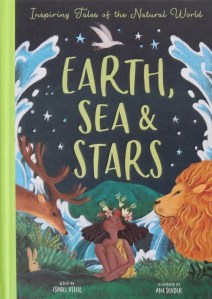
Earth, Sea & Stars

Earth, Sea & Stars
Isabel Otter, illustrated by Ana Sender
Little Tiger

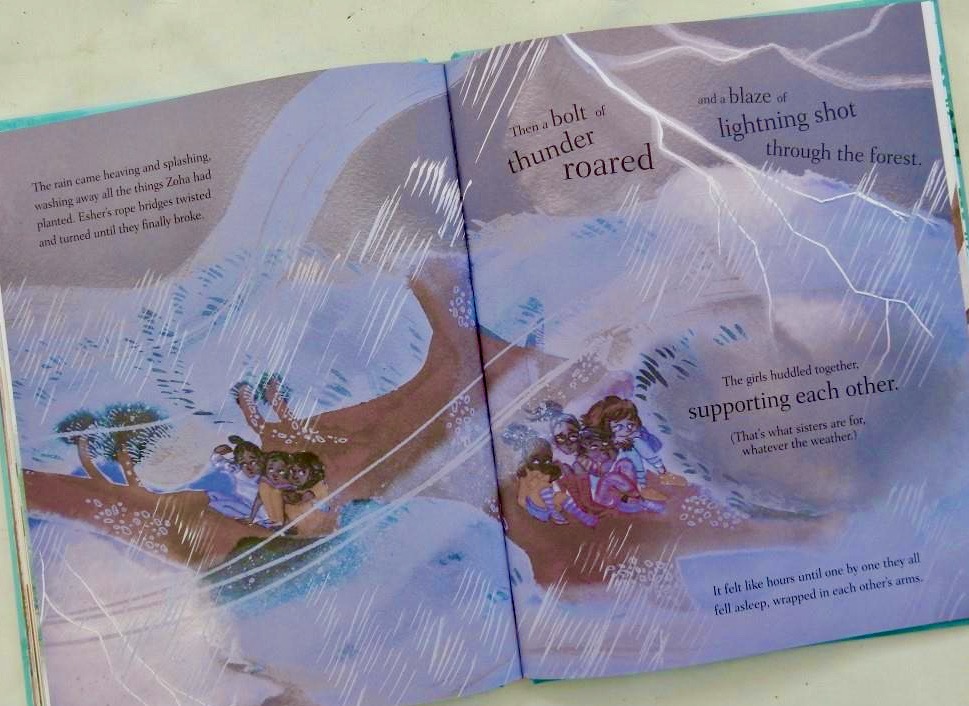
This anthology of twenty stories from ancient cultures takes readers on a journey around the world and back in time to when tales such as these would likely have been told among people sitting around a fire. A time when humankind’s respect for, and awe of, the natural world was greater than it is today.

From as far afield as Syria, Scotland and South Sudan, Nigeria and Norway to name just some of the places from which these stories have come, we encounter a life-saving baboon with a lesson to teach a farmer in a Swahili tale,

an armadillo that uses her knowledge of plants to outwit a fox in the Argentinian Pampas, an ant that comes to the aid of King Lion (from Myanmar) and discover how the people came to have light, warmth and power thanks to a spider’s ingenuity, a woodpecker’s strength and a young woman’s bravery (the Democratic Republic of Congo).

Flora feature prominently in The Flower Thief (Syria) that demonstrates the vital importance of stewardship; The Sky Garden – a Dreamtime tale; and from Tahiti comes a beautiful tale of a Banyan Tree with its amazing roots.

After the moving tellings themselves, Isabel Otter offers some background details, a spread of thought-provoking questions to consider (one per story) – great for classroom discussions, and a bibliography. Ana Sender’s stunning illustrations grace almost every spread of this collection that as well as being a joy to read and to share, is a reminder that wherever we are we should treat our precious planet and the living things thereon with the care it needs to survive and thrive.

Natural History Board Books

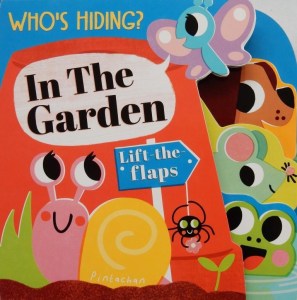
Who’s Hiding: In the Garden?
Pintachan and Amelia Hepworth
Little Tiger

Having lost her five babies, Mummy Snail needs help to find them. First she asks Frog and thanks to him, locates the first of her missing offspring. Following Mouse’s suggestion, she discovers baby number two and Puppy’s advice enables her to find the third. With two still in hiding along comes Butterfly as she approaches the strawberry plant. You can guess what’s beneath one of the juicy fruits … and that leaves just one. Now where can it be? …
With flaps for little fingers to manipulate in Pintachan’s bold, bright cut away spreads of the search, a simple narrative with speech bubbles and sounds coming from the baby snails to join in with, Amelia Hepworth’s countdown narrative provides plenty to engage little ones who participate in Mummy Snail’s hunt.

One Little Seed
Becky Davies and Charlotte Pepper
Little Tiger

It never ceases to amaze this adult reviewer how from one tiny seed, a lovely flower can grow, often indeed many, many beautiful flowers. It all depends on what kind of seed whether you get a single bloom or a multitude all blooming on one plant and we see both examples in Charlotte Pepper’s bright, alluring illustrations.
In her text for this biggish board book, Becky Davies’s engaging narrative certainly encourages young children to go outdoors with an adult, involve themselves in nature and use all their senses to investigate the flora, (along with the fauna and natural environment in general) around them,

preferably with the book to hand.
There’s a spread with information about how to grow your own flower from seed, and/or a bulb; another showing some of the delicious fruits and vegetables flowering plants produce; we visit a community garden and finally are reminded of the cycle of life in which every one of us, young and not so young can play a part. With a wealth of flaps to explore – several per spread – with further information – visual and verbal – beneath each, this book will one hopes, motivate little ones to be outdoor explorers.

The Tree Book
Hannah Alice
Nosy Crow

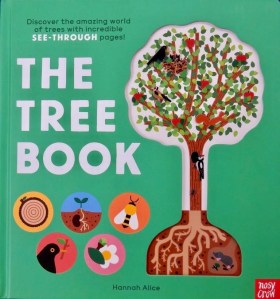
Illustrated by Hannah Alice, this large format book was produced in consultation with Simon Toomer, recently appointed Curator of Living Collections at the Royal Botanic Gardens, Kew. The sturdy, see-through pages contain a considerable amount of information written in a young child-friendly style. Interesting, fun and interactive, it introduces users to the inner workings of a tree.
The cut out, see-through pages allow you to ‘look inside’ each part of the tree – roots, trunk, branches and leaves – and see how it functions and grows. Each page presents a different tree-related topic such as new leaves, flowers and pollen, leaves and photosynthesis,

fruits and seeds, mighty minibeasts, underground roots of different types of trees.
The written narrative, with corresponding stylised but clear pictures, takes us through the four seasons and concludes with a look at the importance of caring for and perhaps planting new trees. Without these wonderful plants, none of us would have fresh oxygen to breath.
Walking in a place that has lots of trees is one of my favourite things to do, and I’d certainly suggest it’s never too early to start fostering a love of trees in children; this book could be a good place to start.

The Eyebrows of Doom

The Eyebrows of Doom
Steve Smallman and Miguel Ordóñez
Little Tiger

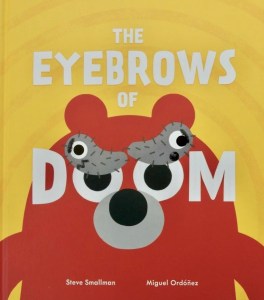
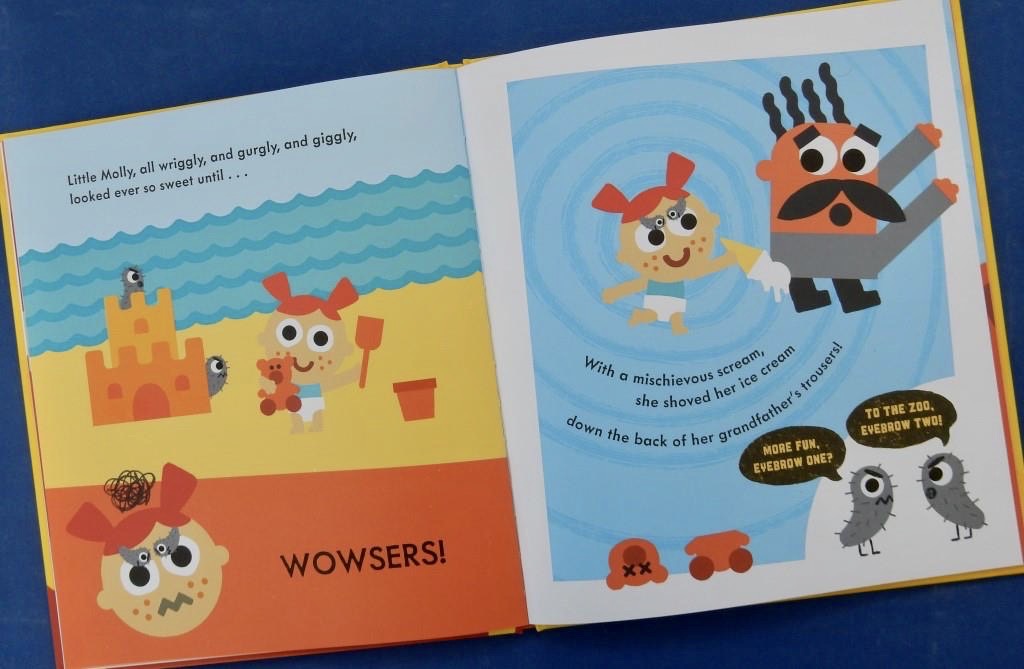
Keep alert as you go about your daily tasks for you never know if, like the bear Dave in Steve Smallman’s rhyming story, you might be next to be attacked by the titular hairy facial features (actually slugs).
Said eyebrows once in place upon the unsuspecting ursine character, unleash in him the desire to perpetrate a series of dastardly deeds, before departing to land upon Ron a young seagull. As he takes flight, Ron poop bombs the sunbathers on the beach and then little Molly becomes the next to have a visit from the eyebrows prompting her to give her grandfather a spine-chilling shock.

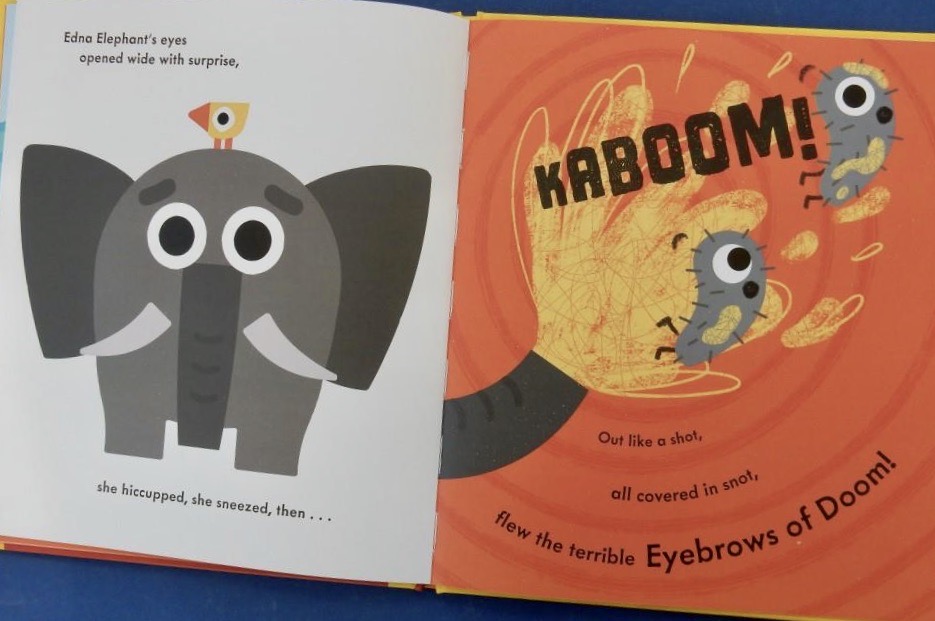
Meanwhile all is calm and peaceful at the zoo until along come those evil eyebrows whereupon chaos is let loose as the dastardly duo rush hither and thither before Dave appears broom in hand and sees them. Whereupon they seek a hiding place and in their haste select the trunk of Edna Elephant. Not a wise choice for they so discombobulate her that she sneezes them out all coated in snot. Yuck!

Then with a splash they enter the sea, their bothersome behaviour over once and for all; or is it? …

Steve’s bonkers tale is a fun read aloud, which, daft though it is, offers listeners plenty to ponder upon. A perusal of Miguel Ordóñez’s zany scenes of the unfolding drama provides no clues but are likely to cause giggles aplenty. I love the way the speech bubble dialogue between the slugs serves to move the story forward.

Coming Up For Air / Sisters of the Mist

Coming Up For Air
Lou Abercrombie
Little Tiger

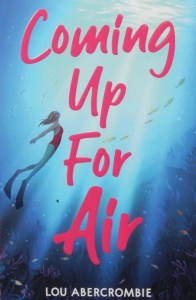
When Coco has to move to the seaside town of Piscary where her mum grew up, she’s eager to make friends and learn more about the family her mum has kept from her. What she doesn’t expect is the resentment shown by the community and her mum’s secrets are certainly deep-rooted.

Staying with her reputedly brilliant biologist Uncle Henry who is struggling with ME, Coco is an aspiring film-maker and an excellent swimmer with as she discovers, a talent for freediving.

Within Piscary are factions: the residents born and bred in the town (Fishes), those who have bought property to live in (Cuckoos), and the ‘Zombies’ who come to spend the summer enjoying what the town offers. As Coco explores the rift between her mum, her family and her hometown, making an occasional friend along the way, she becomes more and more determined to bring the town together.

But then disaster strikes when she and ace swimmer/diver Leo and new friend Shiv investigate a cave that involves diving deep and swimming along a tunnel. Will it be a case of tragic history repeating itself or can Coco finally see herself as part of a proper family?

Lou Abercrombie’s powerful, gripping coming of age story is told from the viewpoint of Coco who intersperses her narrative with filmic directions, adding an unusual element to the book.

Sisters of the Mist
Marlyn Spaaij
Flying Eye Books

Frygea Forest is ancient and mysterious; trolls lurk and mischievous changelings scuttle around. It’s also the place on the edge of which three sisters go every summer to stay with their grandmother on her farm.

Kyra and Janna have been eagerly anticipating another chance to climb trees, toast marshmallows and play some silly games in the woods with their big sister Margot who will be starting senior school after the holidays. Things are different this year however. Margot is less enthusiastic about spending all her time with her siblings. But when she’s lured into the midst of the swampy woods by the phantom-like beings in the mist – the Fog Furies – a worried Kyra is determined to help her

and that means facing the frightful Hellhound. What’s actually happening is that on account of the mysterious forces, Margot is being transformed into a young adolescent.

Marlyn Spaaij’s cleverly conceived, dramatically illustrated graphic novel combines swirlingly strange fantasy elements with Margot’s coming of age and starting her periods, both these being aided by the Furies and her understanding grandmother. It’s a good one to give girls especially those around ten before those changes of growing up start to happen, especially as it shows that facing up to scary changes doesn’t have to mean leaving behind the power of the imagination.

Once Upon a Big Idea

Once Upon a Big Idea
James Carter and Margaux Carpentier
Little Tiger

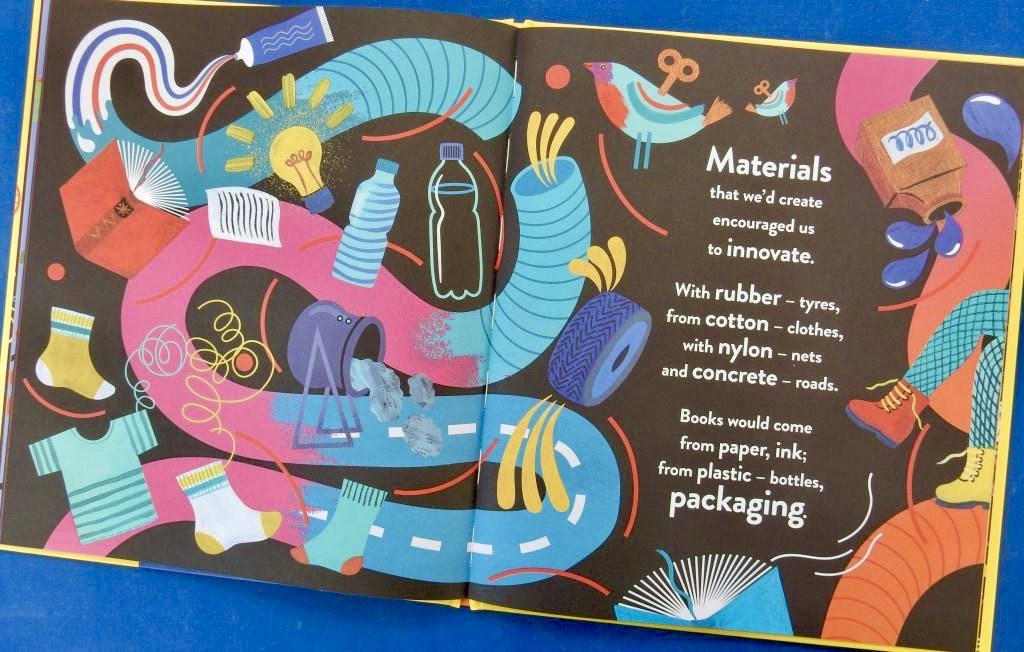
What a wealth of playful language poet James Carter uses in his story of inventions large and small., all the outcomes of bright ideas generated by human brains. he tells how for example the plentiful supply of rocks and stones beneath the ground have been used to create tools, bricks and walls with which the pyramids were built.
Animals too are a rich source of materials; they provide meat for some, wool to make into clothing and much more, and their bones were also used in the fashioning of more tools.
Homes, bridges and boats often have wood in their construction but what invention has had the biggest impact on lives ever? James suggests it’s the wheel and I’d probably go along with that. I wonder how many things you can think of that include wheels in their design: if you’re a primary teacher you might try asking your class that question when you share the book.
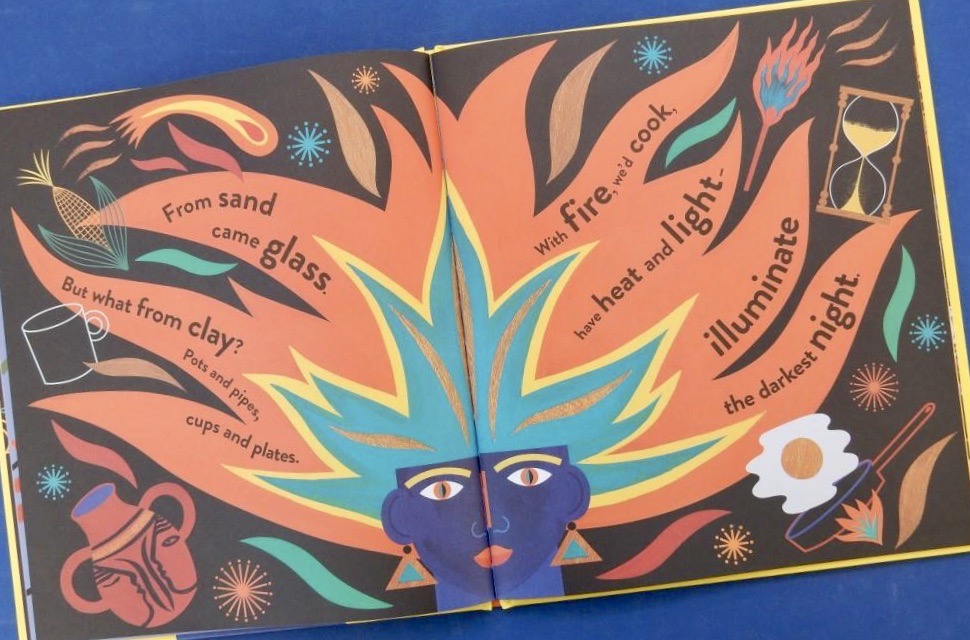
What a wealth of creativity came as a result of sand, clay and fire … 

‘Fire we learnt, was elemental – / heating working, smelting metal.’ we read; while modern materials – rubber, concrete, nylon and plastic have changed our lives, not always for the better. 

Finally, readers are reminded of the importance of recycling and reusing in James’ text as well as through Margaux Carpentier’s arresting visuals. Don’t forget to read the concluding four-letter acrostic.
Rich in STEAM classroom potential, this is a picture book to inspire young inventors of the future.

This Girl Can Do Anything / Sometimes: A Book of Feelings

This Girl Can Do Anything
Stephanie Stansbie and Hazel Quintanilla
Little Tiger

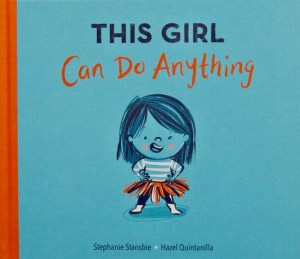
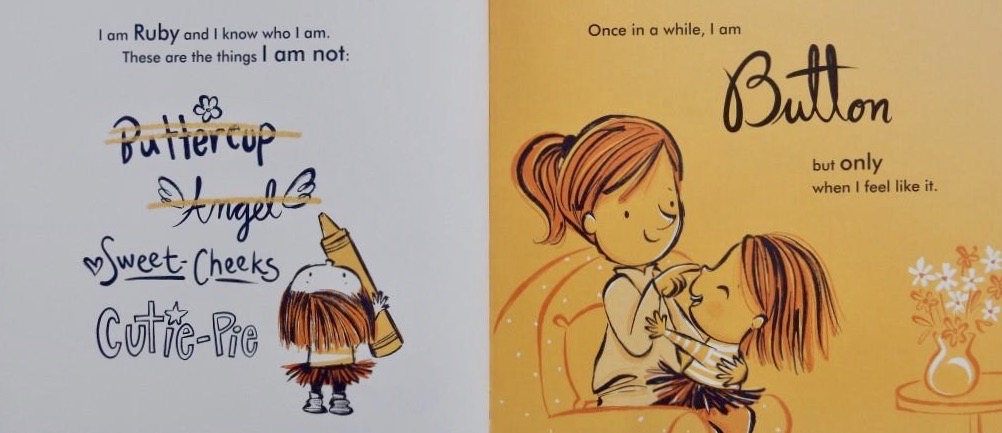
Meet young Ruby, strong-willed, knowing exactly what she wants and determined to do things her way.: in short, she’s unstoppable. Yet despite her toughness and inner-strength, there are times when she allows just a little bit of softness to seep through.

Of course not everything goes right straightaway, but with encouragement from her mum, Ruby is always prepared to have another go.

Her energy is boundless yet come the end of the day, despite what our protagonist says about not feeling tired, at bedtime, Ruby is ready for something special from her mum and dad.
For sure Ruby is a force to be reckoned with, unafraid to speak out about what she wants to do; however she does have a soft-centre that occasionally, she lets us enjoy a taste of too.
I love the way, illustrator Hazel Quintanilla uses a different colour background for each spread.
From the same author is:

Sometimes: A Book of Feelings
Stephanie Stansbie and Elisa Paganelli
Little Tiger

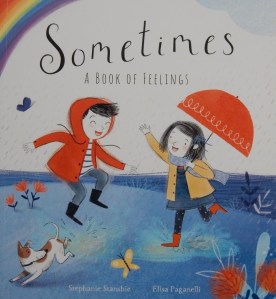
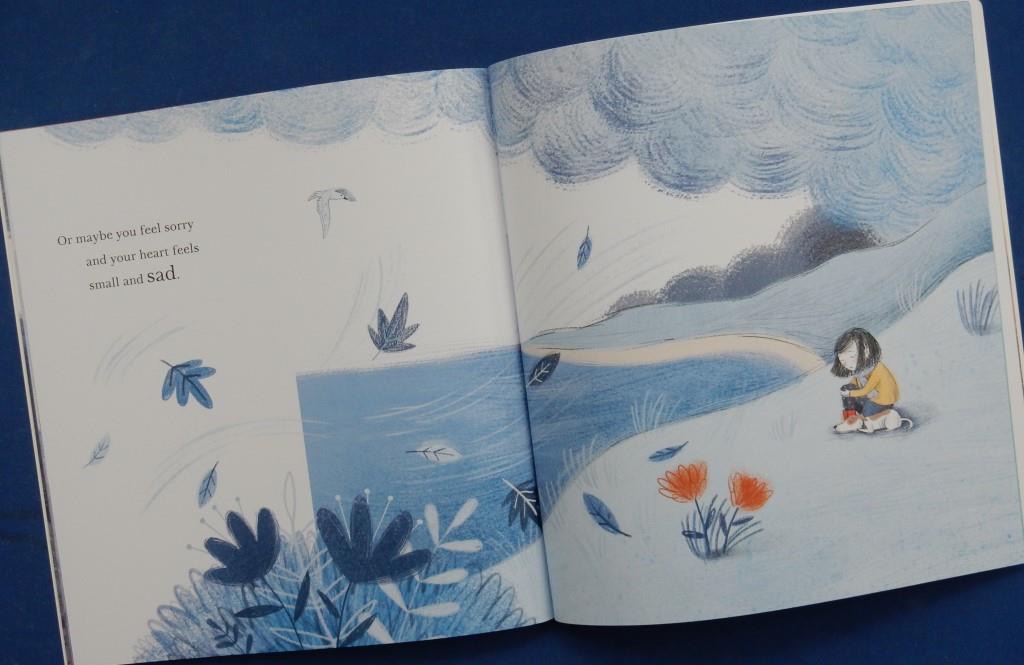
Stephanie Stansbie adopts a rhyming narrative to explore emotions, as we follow a sister and brother through a single day beside the seaside. It’s a day full of ups and downs: occasionally the dominant feeling is one of darkness and fear, but that can be dispelled by a brave leap; likewise disappointment and boredom can be overcome, perhaps by doing something active – dancing.

After presenting other feelings of the less desirable kind – anger, sadness 

and loneliness too, the mood turns much more upbeat as we see the boy and girl exhibiting kindness and forgiveness which dispel those bad feelings, allowing them to be replaced by a sense of peace, contentment and calm. With equanimity prevailing, brother and sister are ready to return to the family home, safe in the knowledge that once there, somebody will be waiting to show them the most important feeling of all: love.

With Elisa Paganelli’s expressive scenes of the children’s highs and lows to complement Stephanie’s words, this book offers a helpful starting point for exploring emotions with young children either at home or in a foundation stage/KS1 classroom.

Every Cloud / You’re Not the Boss of Me

Every Cloud
Ros Roberts
Little Tiger

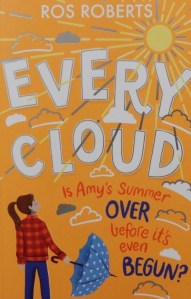
Moving from primary to secondary school is a big change for everyone, but nothing is going right for eleven year old Amy. She’s already had to move house and that means she’s no longer in the catchment area of the secondary school her best friends will be going to. Moreover with Amy’s supposed best friend Cassie being unaccountably mean and Pop’s dementia getting worse, so much so that she and her Mum are to spend the holidays on the other side of town with Pops and Gran. Things can’t really get any worse.

However, to Amy’s surprise, living across the road from her grandparents is Jay a quiet, kind boy from her primary school who is going to her designated secondary school. Pops confuses him with his erstwhile best friend Spinney whom he hasn’t seen for many years and the two of them start playing shove ha’penny together.

As a friendship develops between Jay and Amy, she discovers that friendship can mean much more than she originally realised: having somebody you’re comfortable talking to, someone who listens attentively, is just as vital, maybe more so, than any other quality.

During her stay with Gran and Pops, a lot of surprising things happen and towards the end of the holiday Amy has an important decision to make: one that will affect the next stage of her life. How will she respond?

Exploring the importance of family, friendship and growing up, this empathetic story will appeal particularly to those readers around the same age as Amy.

You’re Not the Boss of Me
Catherine Wilkins
Nosy Crow

Loud and proud, positive but far from perfect, Amy Miller truly is a force to be reckoned with.
When the lower school comedy show is announced, she signs up immediately; she can’t wait to start writing some sketches; but then their drama teacher puts Harry in charge. Initially Amy doesn’t understand why he blocks her writing submissions and is extremely unpleasant towards her. She thinks that he just doesn’t like her but then she sees other girls also being sidelined and realises it’s more than that. Harry is being sexist, her elder sister, Caz informs Amy. Moreover, Mrs Hague who appointed Harry her shadow director, won’t listen to anything Amy says about her treatment. Fortunately Caz provides Amy with the information she needs to show how unfair the planning and organising of the revue really is, preparing her to do battle to fight for her rights.

Meanwhile at home Amy’s determined efforts to make life for her entire family better, have the completely opposite effect; the same is true, when she does likewise for school friends.
On a more positive note, Amy begins to forge a new friendship with Lexi who becomes her musical collaborator for the show. Anil too (her erstwhile best friend) also steps up to the mark, but then declines to own his part in Amy’s plan.

By the end of this laugh out loud story, Amy has learned a fair bit about herself, not least concerning her misguided helpfulness both at home and with best pals Mai and Sadie; she also finds out more about Anil and gains an insight into Harry’s behaviour.

Showing that everyone has the right to demonstrate their passions in a way that feels right for them, Catherine Wilkins’ brilliantly observed tale of determination and drama in the face of sexism and misogyny, is a great one for older readers.

A Quartet of Board Books

Bumblebee Grumblebee
David Elliot
Gecko Press

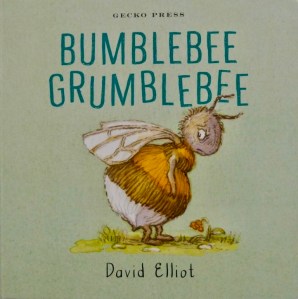
Brilliantly playful is David Elliot’s sequence of rhyming scenarios. We see, among others, an elephant donning dance gear, hence elephant balletphant; there’s a rhinoceros dropping a yummy ice cream cone and becoming crynocerus; pelican rushing to put its botty on a potty – pelican smellican; and when the bumblebee breaks its pull-along toy it becomes grumblebee. Last of all comes turtle – now what could the grinning creature be about to do …
This is just the kind of book to encourage very young children to delight in hearing and creating language and adult sharers will have fun as they read it aloud be that at home or in an early years setting.

How To Say Hello
Sophie Beer
Little Tiger

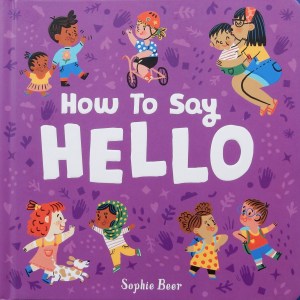
At the start of the pandemic people had to look for alternative ways to greet one another rather than with a hug or a kiss. Those are two of the ways illustrated in this board book; however some of the others – elbow bumping, smiling, fist bumping, waving would have been acceptable even before restrictions were lifted. How lovely it is to be able once again to give somebody a high five, a cuddle, to greet somebody with the offer of a snack, all of which Sophie Beer portrays in her latest inclusive book for adults to share with toddlers: there’s plenty of fun detail to enjoy in each inviting spread, while so doing.

Sing A Song Of Kindness
Becky Davies and Ciara Ni Dhuinn
Little Tiger

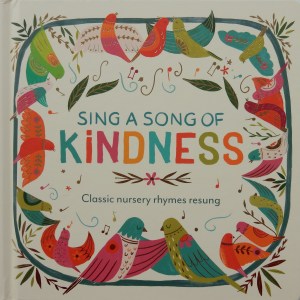
‘Sing a song of kindness, / a pocket full of joy. / Share a slice of friendship /with every girl and boy.’ That’s the first verse of the title song in this board book for which Becky Davies has adapted the words of ten favourite nursery rhymes and songs so that each one offers ideas of friendship, kindness, consideration or compassion.
Each one is illustrated by Ciara Ni Dhuinn who uses images of plants and animals to create gorgeous scenes that offer adult sharers and their little ones plenty to pause and talk about as they sing their way through this book, which is best kept until children are familiar with the originals.

Thank You, Little Rabbit
illustrated by Michelle Carlslund
Happy Yak

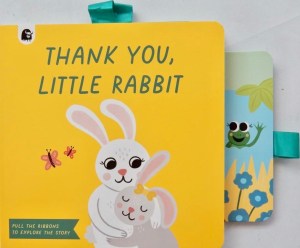
It looks as though Little Rabbit is going to have a busy day. As she wanders in the woods she notices her friend Little Squirrel is distressed. He’s hungry and unable to find food but Little Rabbit directs him to search in just the right place (little ones can assist by pulling the ribbon tab) to find a rich source of nuts. She also comes to the aid of Mama Goose and her little ones; they’re lost on their way to warmer climes for the winter. Little Frog has become separated from his friends and Little Rabbit offers a comforting hug and points them out. The result of all that helping is a lot of happy friends and a Little Rabbit who receives a big hug from a parent rabbit.

Little humans should certainly feel part of the action as they manipulate the tabs to reveal the outcomes of Little Rabbit’s helpfulness depicted in Michelle Carlslund’s empathetic illustrations as the story is read aloud.

Goodbye Bear

Goodbye Bear
Jane Chapman
Little Tiger

Beaver and Mole are heartbroken at the loss of their dear friend, Bear. They offer gentle support and comfort to one another as they experience a gamut of emotions including sadness, anger, numbness and sometimes think they can hear Bear’s voice.

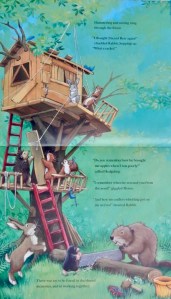
The seasons change and with Spring almost upon them, Beaver and Mole decide to pay a visit to Bear’s treehouse. “ … The woods will be full of snowdrops. Bear loved snowdrops,” Mole says as they head off through the woods.

Once outside they discover Bear’s ladder and boxes of nails and decide to put up the ladder and go inside. “Bear loved us, Mole says, “and he wouldn’t mind in the slightest.” What they discover inside makes the two decide to finish the treehouse that Bear had started and invite all their friends to come and assist with the project.

As they work, the animals take turns to share their fond memories of Bear, finding joy in so doing, as well as in their joint project.

With the task nearing completion Mouse finds finds an old painting and then finally as they sit together celebrating Bear and sharing cake they find out that their friend had been planning an awesome surprise for them. It’s one they can always treasure, just like their memories.

This is such a beautiful, sensitively written and illustrated book. Jane’s illustrations chronicles the passage of time through the changing seasons, while also showing that although some of their feelings such as anger will dissipate over the months, their fond feelings remain constant. The sharing of grief helps ease the pain of loss and makes remembering so much more joyful.  

A wonderful story to read together as a family or with a KS1 class.

The Story Shop: Blast Off! / Dirty Bertie: Poop!

These are two young fiction titles from the Stripes imprint of Little Tiger – thanks to the publisher for sending them for review

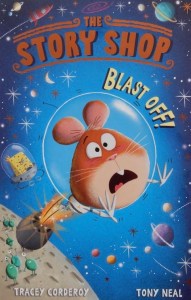
The Story Shop: Blast Off!
Tracey Corderoy, illustrated by Tony Neal

The Story Shop – now there’s an irresistible name to give a place selling stories, but if that isn’t enough to lure in customers, then surely the idea that this particular establishment run by shopkeeper Wilbur and Fred Ferret his assistant, sells stories you can actually BE in with characters you can meet, should be irresistible. Moreover they have a huge stock of plots and props just waiting for customers.
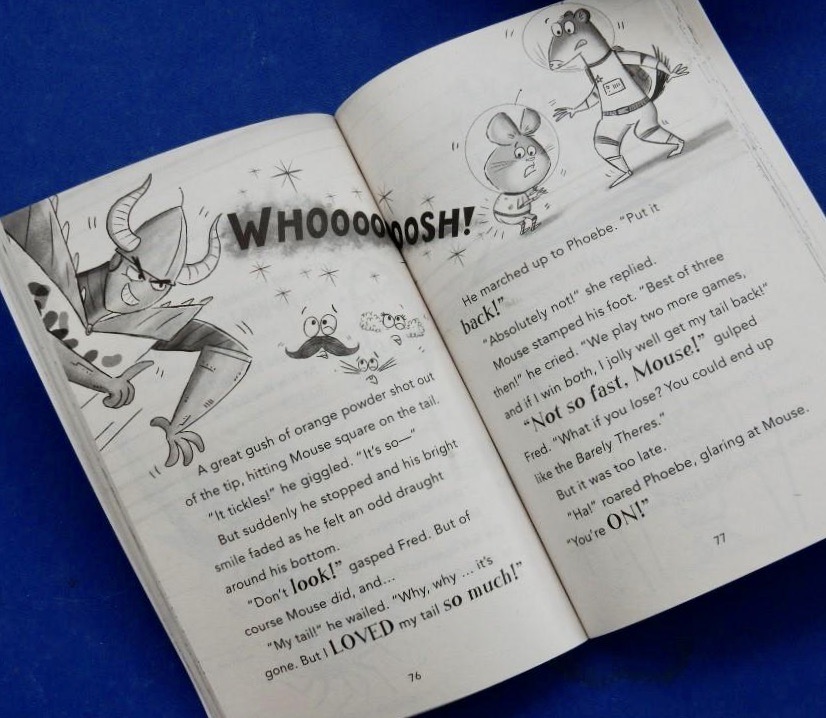
On the particular day the story starts, the first customer to enter is a rather boastful mouse. Said mouse knows just what he wants, demanding “Something out of this world”. Then it’s time for the story pot to appear, and the ingredients to be added. With that task duly done, and an important reminder given to Mouse, WHOOSH! POP! the adventure begins. In no time at all Mouse, together with Fred, find themselves on the moon, whereupon a certain rodent very quickly lands himself in a whole lot of trouble with the resident aliens in a very cheesy environment. However having managed to get away from that particular whiffy situation, largely thanks to Fred’s help, Mouse quickly discovers planets with other kinds of aliens. On the Planet of Games he recklessly bets his tail on a game of Tiddlywonks with Phoebe FairPlay as his opponent. Will he, or will he not, end up tailless.

In the third of the linked adventures complete chaos ensues when a certain Mouse lands on Planet Cog. Can order be restored and even more important will the two space adventurers manage to return safely to the Story Shop?

Bursting with fun and humour, and a wonderful celebration of the power of the imagination, this first of a new series, full of smashing illustrations, is spot on for emergent readers.

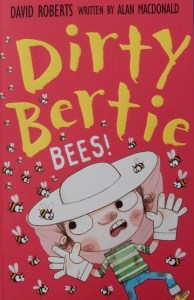
Dirty Bertie: Poop!
David Roberts, illustrated by Alan MacDonald

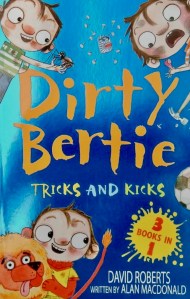
Is there no end to Dirty Bertie’s misdemeanours? Ideal for those fairly new to chapter books here are three further episodes. The first relates what happens when the zealous park-keeper, he who has recently erected new signs, bans him and Whiffler from the park on account of the pongy deposits his pooch has supposedly left on the grass. Could it perhaps be a case of mistaken identity …
In the second chapter there’s more mistaken identity only of the human variety this time. This happens when Bertie tries his level best to get his unfavourite class teacher, Miss Boot, an award for excellence in education and in so doing see her promoted out of his school.

The trouble is that the arrival of the judge pretty much coincides with that of another visitor.
Finally – well not actually finally as we know Bertie will be back – he manages to get himself on a film set in the role of an extra: what could possibly go wrong?

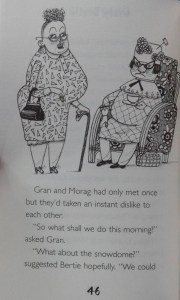
Splendid shenanigans as ever when this young lad is involved, and hilariously illustrated with Alan MacDonald’s plentiful line drawings.

Stick Boy and the Rise of the Robots

Stick Boy and the Rise of the Robots
Paul Coomey
Little Tiger

Strange things are again happening in Little Town and it’s all on account of the super new gadget given to all residents by Baron Ben. Called the HeadBox, it is according to the Baron, “a marvel of modern technology.”

Within a couple of days everybody is plugged in to their amazing techno thrills, or rather everybody except Stick Boy and that’s because the HeadBox just won’t fit over his different shaped head. So that ‘one size fits all’ claim. isn’t one hundred per cent accurate. In addition, the megalomaniac has been elected Mayor of the town, electronically of course.

Now, feeling isolated both in class and at home, the already suspicious Stick Boy gets on the case. His investigations soon see him discovering a secret underground tunnel that leads him to a cavern full of robots. Looks like a take over of the town is indicated.

However, Stick’s pals Ekam, Milo and Nick are so busy playing Battle Racers that it looks like he’s going to have to go it alone.

Then unexpectedly he comes upon somebody who shares his passion for hot chocolate and biscuits.
Can she help Stick persuade the other Mystery Mates to set aside those techno games and join them in saving their home town?

One final consideration: when is a secret library not a secret library? To discover the answer, get hold of a copy of the book.

Existing Stick Boy enthusiasts will wholeheartedly welcome his return and he and his friends should win lots more followers with this latest episode.

The Tiger Who Came For Dinner / The Littlest Elephant

The Tiger Who Came For Dinner
Steve Smallman and Joëlle Dreidemy
Little Tiger

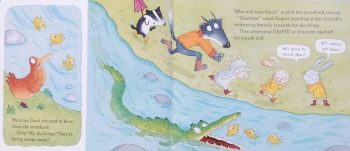
In this fourth story to feature Wolf, Hotpot the lamb and their crocodile, Omelette, the friends are playing their favourite game of fetch when instead of a stick, Omelette brings back a tiny, soggy lost tiger. Hotpot is keen to keep the little thing but Wolf shakes his head “ … little tiger’s family must live further up the river. We have to take her home,” he says.
Next day off they go and on the way they encounter other animals, all of which think the little cub is a delight.

Omelette however, is not sure and becomes even less so as their journey continues; moreover he is able to recognise crocodile tears.

The following morning the group reaches a cottage – it’s the tiger cub’s home at last – and the little cub had a tricky plan tucked in his fur all the time. Can anybody save the day?

As with previous titles in the series, the importance of friendship is key. Steve and Joelle imbue the characters with warmth and oodles of personality and those already familiar with the other books will gobble up this one; however it matters little if you start here: this witty tale still works as a smashing read aloud.

The Littlest Elephant
Kate Read
Two Hoots

Having just learned to swim, such is Ellie the littlest elephant’s enthusiasm that in her haste to demonstrate her new skill, she charges off to the pool to be first in the water. On the way though, she dislodges chameleon, frightens the frogs, disturbs the monkeys’ mangoes scattering them far and wide, upsets the minibeasts and the birds,

stamps on the tiger’s tail and almost squishes a little mouse. Only then does she stop and pay heed to their warning cries to slow down and watch where she’s going. Time for some apologies realises Ellie, and with them duly accepted, all the animals head off to the swim together, with the littlest pachyderm being mindful of the wise words her new friends have spoken, until they eventually reach the pool.

Now to make the biggest splash EVER!

Kate Read captures Ellie elephant’s excitement beautifully in her bold, bright mixed media illustrations while at the same time portraying the feelings of creatures she encounters on her charge through the jungle equally well. Her story reminds youngsters – indeed all of us – of the the need to slow down sometimes, to be mindful of others , and to show empathy, consideration and kindness towards them; important lessons delivered unobtrusively in a fun picturebook.

The Hotel For Bugs

The Hotel For Bugs
Suzy Senior and Leire Martín
Little Tiger

The excitement is huge when the brand new, absolutely fabulous Hotel for Bugs opens its doors for business. In surge the masses of mini beasts eager to sample the tasty treats on offer at the buffet and the fancy facilities such as the spa and club. Perfect for a relaxing holiday.
Then, into the lobby slides a shiny, squishy and blobby slug, leaving a trail of glittering slime in its wake and asking to book a room. More than a tad alarmed, the manager tells the prospective client that the hotel is already full and that anyway, slugs are not welcome.

Nonplussed, out glides said slug leaving a relieved manager and a crowd of onlookers that have gathered to watch the proceedings.

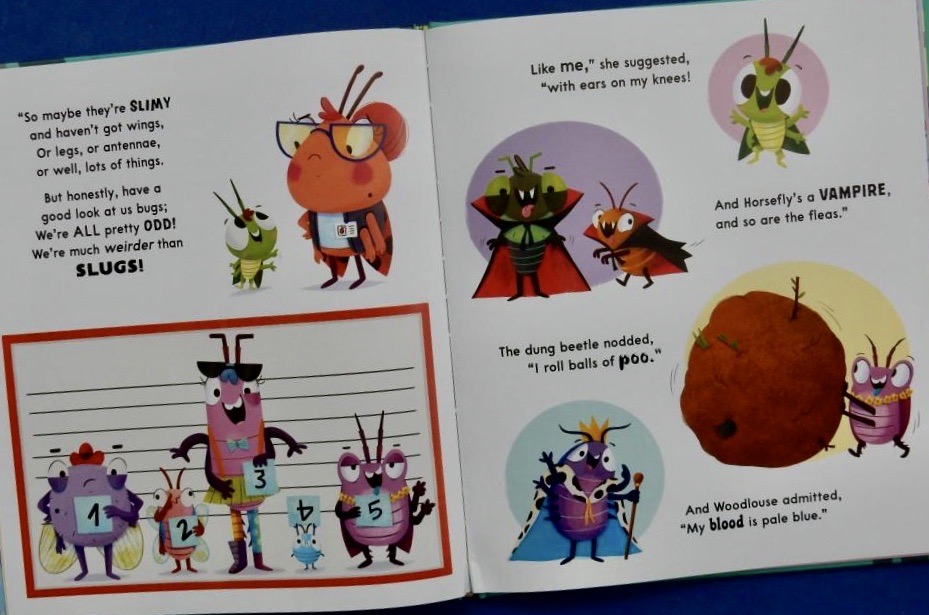
However, it takes just one tiny little bug to speak out, demanding to know why the slug has been sent away. After all, starting with herself, every single one of their number could be thought of as ‘different’ in some way; and before long, the other bugs are contributing supportive comments, each pointing out (or otherwise making known) its own distinctive features.

Has the manager made an irreparable error in her treatment of the slug, or is there a way that the situation can be fixed for every single one of the creatures that entered the portals of the establishment that day?

Suzy Senior’s jaunty rhyming text together with Leire Martín’s brightly coloured creepy crawly characters portrayed with their idiosyncratic features, show the importance of inclusivity and that difference is something to embrace and celebrate rather than fear.

How to be a Hero: A Gathering of Giants / Agent Zaiba Investigates: The Smuggler’s Secret / Solve Your Own Mystery: The Time Thief

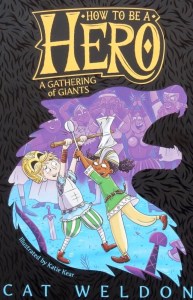
How to be a Hero: A Gathering of Giants
Cat Weldon, illustrated by Katie Kear
Macmillan Children’s Books

In the finale of Cat Weldon’s terrific trilogy, Whetstone and banished trainee Valkyrie Lotta are fugitives, now in hiding in Asgard. Whetstone is on a mission – to rescue his mum who, according to Thor, is being held, along with the second harp string, by the Frost Giants in Castle Utgard. It’s definitely time for him to work on becoming a proper hero, tough and fearless. Step forward Rhett the Bone-Breaker. But how many of Lotta’s plans is it going to take for them to succeed in outwitting Loki the trickster? They certainly won’t do it without encounters with treacherous trolls, indoctrinated Valkyries and an entire army of giants.

With Katie Kear’s illustrations helping to ramp up the drama, this fast-moving tale is full of thrills and a fair few spills too, plus a generous scattering of insults adding to the hilarity. This will keep readers on the edge of their seats right through to the cup’s final poetic offering. So gripped was I by the telling that after finishing the story late at night, I found myself back in the quest along with the heroic duo in my dream.

Readers who fancy sampling the sort of meal one of those giants might eat, should turn to the recipe adapted by Whetsone for spiced oat cakes. A tasty treat indeed.

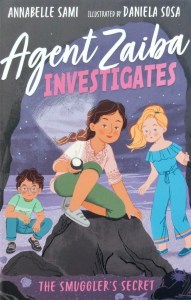
Agent Zaiba Investigates: The Smuggler’s Secret
Annabelle Sami, illustrated by Daniela Sosa
Little Tiger

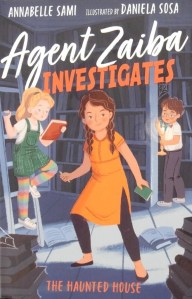
Zaiba and fellow members of the Snow Leopard Detective Agency have a new case to solve. There’s a school History Club trip to Chesil Bay involving an overnight stay. The children are told that divers have just discovered a priceless artefact from Assam among the wreckage of a ship and it’s currently in the safe-keeping of the local museum prior to being sent back to India. While there they’ll be able to witness the unveiling of the artefact and Ms Talbot challenges them to discover what it is before it’s revealed. Now that is just the kind of thing Zaiba, Poppy et al love.

No sooner are they on the train down to the coast than the intrigue starts: Zaiba notices a man replacing a magnifying glass in his briefcase and then she thinks she sees him on the boat trip out to the wreck and again leaving the theatre in the evening after the play they’re invited to watch. In fact he seems to pop up all over the place. What is he up to?

Next morning everyone is excited about the big reveal but then it’s discovered that the artefact has gone.Now Zaiba and co. really must ramp up the action. There are quite a few possible suspects and some leads to follow, but not much time to discover the culprit.

Embracing a controversial topic: the returning of precious artefacts to their countries of origin, once again Annabelle Sami keeps readers guessing right to the final pages of this story of teamwork and as with previous titles in the series, there are lively black and white illustrations by Daniela Sosa throughout.

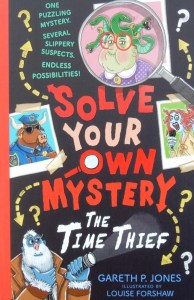
Solve Your Own Mystery: The Time Thief
Gareth P. Jones, illustrated by Louise Forshaw
Little Tiger

Choose your own adventure books have long been popular but rather went out of fashion. Now with Gareth P. Jones’ new series of which this is the second, interactive tales are back for readers who may well be offspring of the original enthusiasts.

In this instance the scene is set in the opening pages: in the town of Haventry the Museum of Magical Objects and Precious Stones (MOPS for short) is putting on a time-travelling exhibition but its key feature, the Time Sponge, an object able to stop and start time for whoever squeezes it, has gone missing. Then in the role of main character, the reader must make the first decision: two choices are presented as to what to do next: interview suspect mermaids or go to the crime scene – in the company of Klaus Solstaag the yeti detective, of course.

With a fair number of potential suspects and a multitude of paths to choose from, none leading to a dead end, you will eventually reach one of three possible endings.

A fun and intriguing read for key stage two readers especially those who like to do a bit of detecting.

The Last Tiger

The Last Tiger
Becky Davies and Jennie Poh
Little Tiger

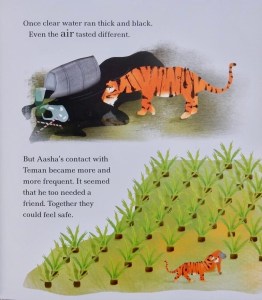
Climate change and destructive human actions are at the heart of this tale of Asha the tiger.

As the story opens, she and her family are living happily in a lush forest along with boars and other creatures. but little by little their environment changes. Sunny days become hotter and hotter and rainy ones, much wetter, so wet that the land is flooded, forcing the boars to leave the forest in search of other places to live. Tigers too disappear, and without the boars, food for the remaining tigers becomes extremely scarce.

Eventually Asha finds herself completely alone, save for the scent of humans. Yes, humans had come into the forest, bringing with them huge destructive machines that cut down all the trees.

As Asha creeps through the devastation the humans have left in their wake, she sees a flash of bright orange. Another tiger perhaps? But no, it’s an orangutan, but company at least. Can the two of them possibly find a new home somewhere else …

Tragic and poignant, this timely story looks at the plight of just one of the animal species endangered, due for the most part to human actions such as the deforestation we saw in Asha’s natural habitat.
Saving tigers from extinction means saving forests and there’s relevant information in the final pages of this book including the alarming fact that there are now less than 4,000 tigers left in the wild.

The Tower at the End of Time / Diary of an Accidental Witch: Flying High

The Tower at the End of Time
Amy Sparkes
Walker Books

Reformed pickpocket Nine, Eric the troll, wizard Flabbergast et al return for a second wonderful adventure that again mixes wit, magic, some nail-biting moments and occasional chaos.

Now the curse on the magical house has been lifted allowing the friends to travel between worlds, their first destination being The Wizarding Hopscotch Championship. It’s particularly important that Flabbergast attends the championships – he’s missed three years already and his worthiness is at stake. Moreover, the final prize for winning the event is a visit to The Tower at the End of Time, where one question can be asked!

There’s a problem though, for the house, being nervous about travelling again, is beset by an attack of the hiccups, which unsurprisingly upsets plans somewhat as with each HIC they bounce from one world to another till they finally reach those championships. More problems ensue when Flabbergast discovers that the hopscotch grid is aflame and he encounters many obstacles thereon, but negotiating it is the only way he can get the answer to his question.

In the end everything becomes a race against time, or rather gigantic sand-timers, with every contestant desperate to find an answer to their particular question. And what about Nine? She too has questions concerning who she really is and who left her that music box she treasures so much.

Hugely inventive and sparkling with excitement: primary readers with a penchant for high octane fantasy will jump at the chance to read this.

Diary of an Accidental Witch: Flying High
Perdita & Honor Cargill, illustrated by Kate Saunders
Little Tiger (Stripes Publishing)

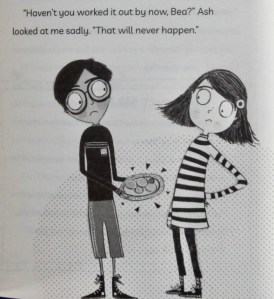
With her first diary safely hidden away and her first half term at the School of Extraordinary under her belt, Bea Black starts a new one for this second book.
At home she’s still struggling to give sufficient time to her neighbour and close friend Ash who goes to an ordinary school..

With the Winter Solstice fast approaching, the main topic of conversation after the break is the forthcoming Grand Tournament and Bea finds herself a vice-sports captain. With the Go matches coming up, it’s even more important that she polishes up her broomstick skills. And then following a to do involving buns in town, headteacher Ms Sparks announces that in the hope of improving relations between the two schools, she is inviting the pupils from the Academy to participate in the Grand Tournament and that means no magic, no flying and definitely no Go after all. Indeed the event has now been renamed Sports Day.

Can the rift between the two establishments be healed? Then what about that egg or rather Egg, that Professor Age has given her to tend at home?

Honor Cargill’s smashing illustrations are sprinkled throughout and once again this is hugely engaging and lots of fun, with all the pupils having to deal with similar concerns and issues that readers themselves are likely experiencing.

Stop the Clock! / A Walk Through Nature

Stop the Clock!
Pippa Goodhart and Maria Christania
Tiny Owl

I do so appreciate young Joe’s frustration when everything he does has to be rushed. First it’s mum with a myriad of things on her mind, telling him to hurry up before they set off for school; then the walk itself is done at a run in case they’re late. Worse still, when he gets thoroughly immersed in the art topic Mr Khan has set the class, he’s told to stop and he’s nowhere near finished.

“STOP THE CLOCK!” he cries in sheer frustration. By now everybody else has complied with the instructions, but Joe – and who can blame him – adds his crying sister to his picture, picks it up and walks out. Now this is where readers, especially adults, will have to adopt that willing suspension of disbelief mode, for Joe leaves the school premises and heads to the street where he kneels down and continues drawing.

There is so much to see from ground level: so much to interpret about what’s going on and so many wonderful details to add to that picture of his. He even finds something that his sister must have dropped in the rush to reach school on time. Finally with picture complete to his satisfaction, Joe goes back to the classroom, leaves his picture with the others and gives instructions to the clock to restart.
Come home-time, after a slight pause, four happy people walk home together.

A heartfelt look at the busy lives that most of us live, often trying to do more than one thing at a time and in danger of missing out on those quality, slow moments we all need. In the past two years, the majority of adults at least, have come to appreciate the importance of time to stop and stare. With more and more people now back working full time as well as juggling child care and more, it’s crucial that everyone, young and not so young, has time to appreciate the world around without feeling guilty about doing so.
Author Pippa Goodhart and debut illustrator Maria Christania capture this need so beautifully in this picture book – it’s a wonderful example of how some good things have come from the lockdowns we’ve been subjected to.

Also showing the importance of taking time to appreciate the wonders of the natural world is:

A Walk Through Nature
Libby Walden and Clover Robin
Little Tiger (Caterpillar Books)

Through twelve, two verse poems and beautiful collage style illustrations with some facts tucked away behind flaps and die-cuts that allow readers to glimpse (or sometimes guess) what lies beneath, author Libby Walden and artist Clover Robin take us through the countryside presenting the numerous transformations that take place throughout the year.

No matter where one looks there’s much to wonder at. We visit a field in springtime as the flowers are starting to bloom in their myriad colours; look up high where birds fly seeking nesting places in the trees; stand at the edge of a peaceful pond wherein tadpoles are hatching and baby duckling are learning to swim.

Other habitats we visit are a woodland and a beach in summertime; a forest area and a mountainside through which a river flows in autumn, and, as winter arrives, swallows taking flight to warmer climes and foxes heading to their earths and as day turns to night, the emergence of nocturnal creatures ‘neath the silvery stars.

Containing a wealth of nature-related vocabulary, both gently educative and awe inspiring, this immersive book, now in paperback is a lovely introduction to nature poetry and nature itself.

Board Books Small and Not So Small

Hello Frog
Sophie Ledesma and Isabel Otter
Caterpillar Books

Having greeted Frog as he sets out through the jungle, toddlers can then join him in saying ‘hello’ to in turn, Hummingbird, Snake, Monkey and Moth on subsequent spreads, as well as other creatures that have hidden themselves away behind flaps shaped as lily pads, flowers, leaves and fruit.
Then, come nightfall, as the little amphibian closes his eyes after an eventful day, it’s time to bid “Goodnight Frog” and, prompted by the question on the final spread, turn back to the beginning and search for the twelve labelled items.
With Sophie Ledesma’s bold, bright, patterned illustrations, lots of interactive features and a simple repetitive text, this is a board book little ones will want to return to over and over.

Where’s Mr Puffin?
Ingela P Arrhenius
Nosy Crow

In her bold bright scenes, the illustrator Ingela P Arrhenius introduces toddlers to in turn, a kingfisher, a blackbird, a swan and a puffin each of which is all but completely hidden behind a felt flap in this addition to the super hide-and-seek series published in collaboration with the National Trust. They’ll also meet a fish, a buzzy bee, a frog and a gull before the final ‘And where are you?’ spread whereon a mirror is revealed when the yacht sail is flipped down.

When You’re Fast Asleep
Peter Arrhenius and Ingela Arrhenius
Nosy Crow

Subtitled “Who Works At Night-Time’ this large format board book is a collaboration between team Arrhenius. With a largely urban setting, Ingela’s first six lively scenes show a busy bakery kitchen with a team of people hard at work making bread and biscuits; fishing boats setting out to sea;

a guard on the night shift of an art gallery; a train driver whose train is just emerging from beneath a bridge in the moonlight, a hospital doctor doing the ward rounds; a street deserted save for the half dozen hard-hatted men and women mending the road. FInally, as a new day begins the same street shows the night workers leaving their places of work and some other people whose days are just beginning while in his rhyming narrative, author Peter Arrhenius asks youngsters to “Remember all the special things the night workers have done.’

A fun, gently educational book to share just before little ones snuggle down at bedtime.

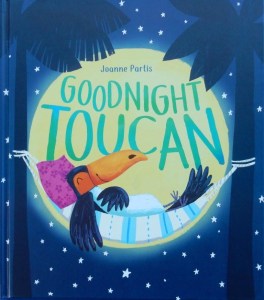
Goodnight Toucan

Goodnight Toucan
Joanne Partis
Little Tiger

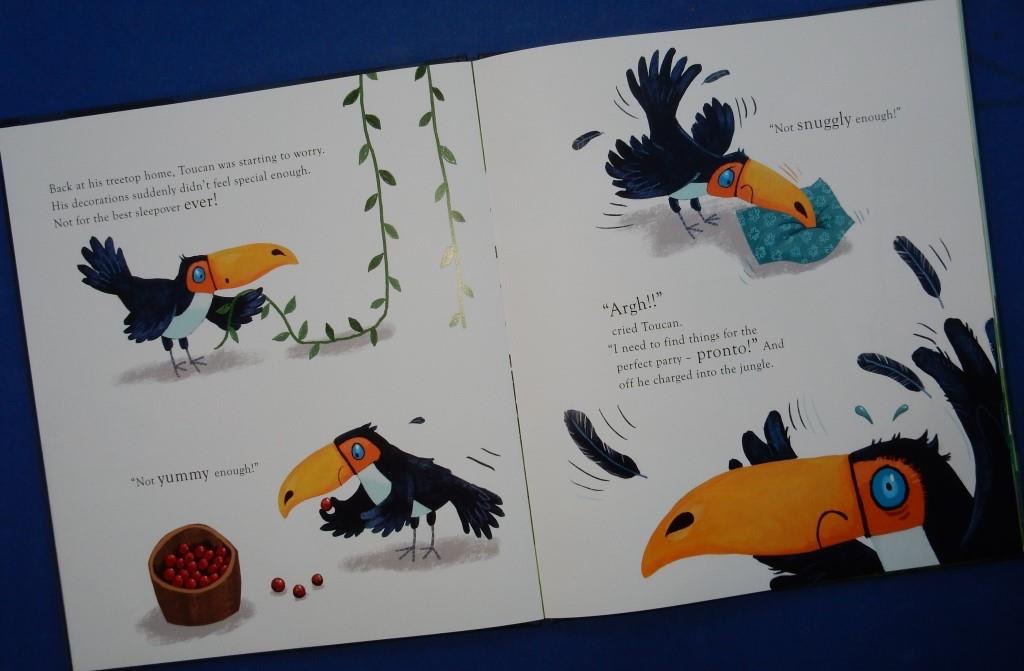
Joanna Partis’s Toucan protagonist plans a jungle sleepover inviting his friends Tiger, Sloth, Frog, and Monkey; but he’s a perfectionist so at the last minute he has a crisis of confidence. The food he thinks, is insufficiently tasty and the bedding not snuggly enough,

so off he goes in search of items to make his party go swingingly: “the best sleepover ever!’ as his pals have declared it will be.

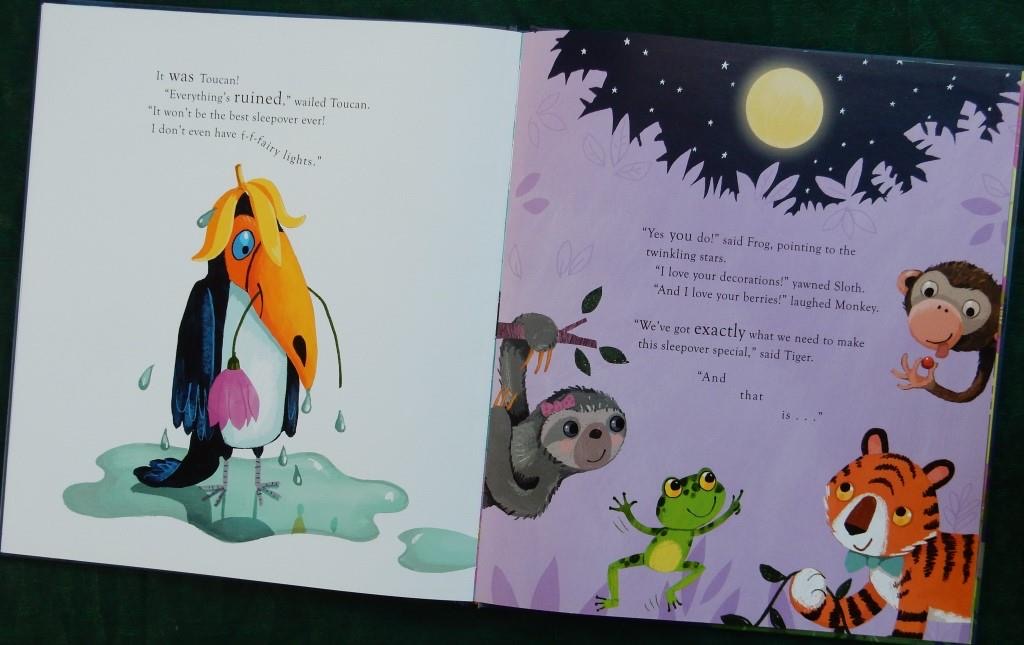
He fills his beak with fabulous flower decorations, then finds fluffy ferns for bedding and bananas for a yummy feast – hmm! As he flies back he spies fireflies that he decides will provide must-have, mood creating fairy lights. Swooping to collect them proves disastrous and Toucan dives headlong into the river below so it’s a distraught host that finally returns to the sleepover venue to own up to his failure. Fortunately though, the reactions of his friends reassure him that everything is, after all, just as it should be: friendship reigns supreme.

Assuredly this is a book that will resonate with youngsters who struggle with the impossible task of being perfect at all times. Joanne’s vibrant illustrations speak volumes about feelings providing a starting point for discussions about the importance of friends and of making mistakes.

The Night Train / The Naughtiest Unicorn in a Winter Wonderland

The Night Train
Matilda Woods and Penny Neville-Lee
Little Tiger

This is a wintry addition to the Stripes series of stories for new solo readers that have beautiful full colour illustrations at every turn of the page.

Herein readers can take up the guard’s final call and board the non-stop express train to Sleepy Town Platform ZZZ. Charles is anxious to get his special passengers in on schedule so that they don’t lose the chance to shine in their dreams.

There’s Henri, about to perform in front of the Queen, Princess May on her way to meet the family of her dragon, then comes the yeti – a regular on the train – bound for the North Pole and now accompanying Lily who longs to be a great explorer.
Then one more passenger reveals itself – a huge green furry monster that hopes it has just the thing to stop its dreamer being scared any longer.

Suddenly the train comes to a halt and the driver announces that something is blocking the way. The princess leaves the train to investigate and discovers a tree has fallen across the line. But are any of the passengers willing to help her and the guard Charles to move the obstacle and allow the train to arrive on time? Perhaps if they draw on their yet to be discovered skills, together they can save the situation and enter their dreamer’s dreams.

It must be worth a try.

Despite it’s chilly setting, Matilda Woods tells a warm-hearted tale of teamwork and determination. Penny Neville-Lee’s snowy scenes capture beautifully, the sometimes tense atmosphere of the telling and her portrayal of the characters is charming – even the monster.

A smashing snuggle up in the warm book for youngsters just taking off as independent readers.

The Naughtiest Unicorn in a Winter Wonderland
Pip Bird, illustrated by David O’Connell
Farshore

Can it really be the ninth story featuring Mira and her exuberant unicorn Dave? As he tries his hoofs at some winter sports, it’s evident that the creature hasn’t lost his burping and farting habits or his tendency to gobble up ice-cream or pretty much anything edible he can get hold of.

Then comes the announcement: Unicorn School Winter Expedition. It’s to be Red Class’s very first time and in addition to the sporting activities there’s to be a special quest: The Unicorn School Art Project inspired by the Aurora Lights.

The excitement is high though there’s talk of Snow Beasts by pupils who have been on previous winter expeditions, and it’s even higher when they reach their destination. Armed with ‘snow tools’ just in case of any unwanted encounters, the pupils start to settle in and decide on their activities.

Then comes the real fun and for Mira and Dave that begins with sledging – watch out for a ginormous snow poo-ball.

Will they really meet a yeti though?

What about that art project: will everyone be having such a great time sledging that they miss those magical Aurora Lights? And could somebody discover a use for that Abominable Snow Poo? You’ll never know … unless of course you get hold of this hilarious episode in the life of Mira, Dave and their friends both old and new.

I know a fair number of young solo readers who will gobble it up – Dave fashion – all in one go, pausing to enjoy David O’Connell’s super black and white illustrations along the way.

As Large As Life / Hide-and-Seek History: The Greeks

These are 2 non-fiction books from 360 Degrees an imprint of Little Tiger: thanks to the publishers for sending them for review

As Large As Life
Jonny Marx and Sandhya Prabhat

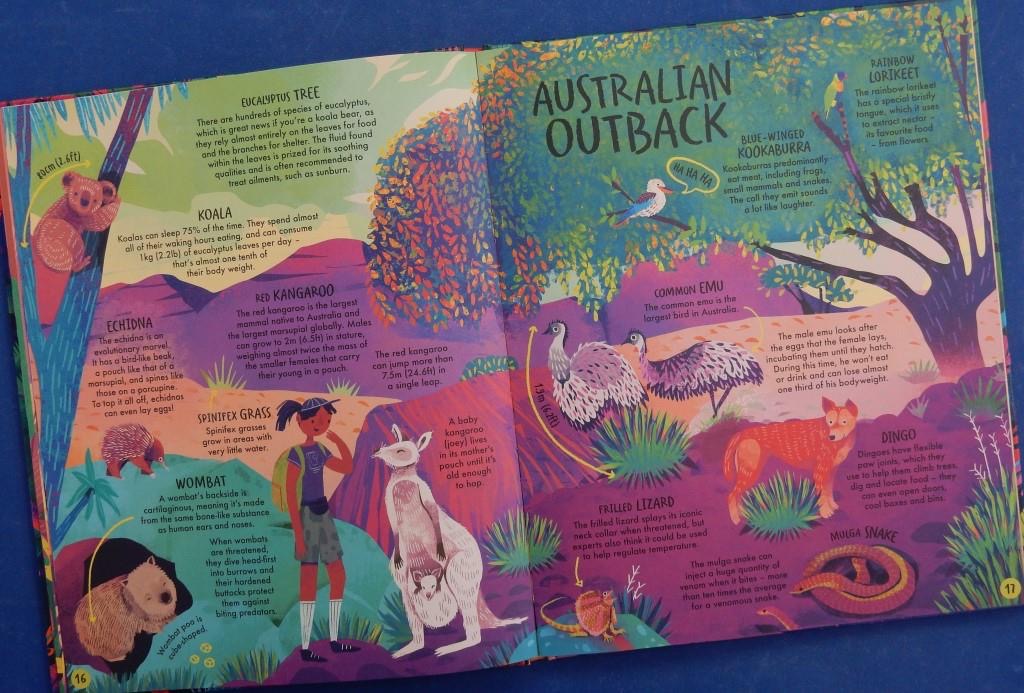
Author Jonny Marx takes readers on a somewhat capricious world journey from Peru to the north American Chiuahuan desert, the Australian outback to the Arctic and the Black Forest to the Galapagos Islands in the Pacific, visiting various habitats both aquatic and on land. We meet about 250 animals (and occasional plants) – between eight and a dozen large and small on each spread, all drawn to scale. Part and parcel of each spread too, for comparative purposes, is a human figure, part of one or a footprint.

Sandhya Prabhat’s richly coloured scenes of the creatures in their natural habitats contain recognisable images of an insect as tiny as the mosquito and as mighty as the blue whale for instance ;and scattered around the images – each of which is named – are succinct comments by Jonny Marx. Did you know for instance that an Atlas moth can have a wingspan as wide as a dinner plate; or that in the case of Australia’s largest bird, the common emu, it’s the male that looks after the eggs, incubating them until they hatch. While so doing the bird doesn’t eat for drink and might lose almost one third of its bodyweight – that’s dedication. 

Mentions of poison crop up fairly frequently and youngsters will doubtless delight in the also fairly frequent mentions of poo especially this: ‘Jackrabbits are coprophagic, which means they eat their own poo when hungry!’ (By the way the antelope jackrabbit mentioned is, we learn, actually a species of hare with ears around 20 cm. long.) This reviewer was amused to read that those wombats in the Australian outback have cartilaginous backsides and they take advantage of their ‘hardened buttocks’ when biting predators threaten, by diving into their burrows head-first. Then of course there’s the fact their wombat poo is cube shaped, which I actually did know.

Talking of being threatened, on another continent Short-horned lizards shoot jets of blood from their eyeballs when under threat from predators. 

In addition to having a better understanding of relative size, there’s certainly plenty for readers young and not so young to enjoy detail-wise; and youngsters will doubtless want to impress their peers with some of the information they’ve gleaned from this book which unfortunately lacks an index, although there is a contents page.

from the same author and illustrator is:

Hide-and-Seek History: The Greeks

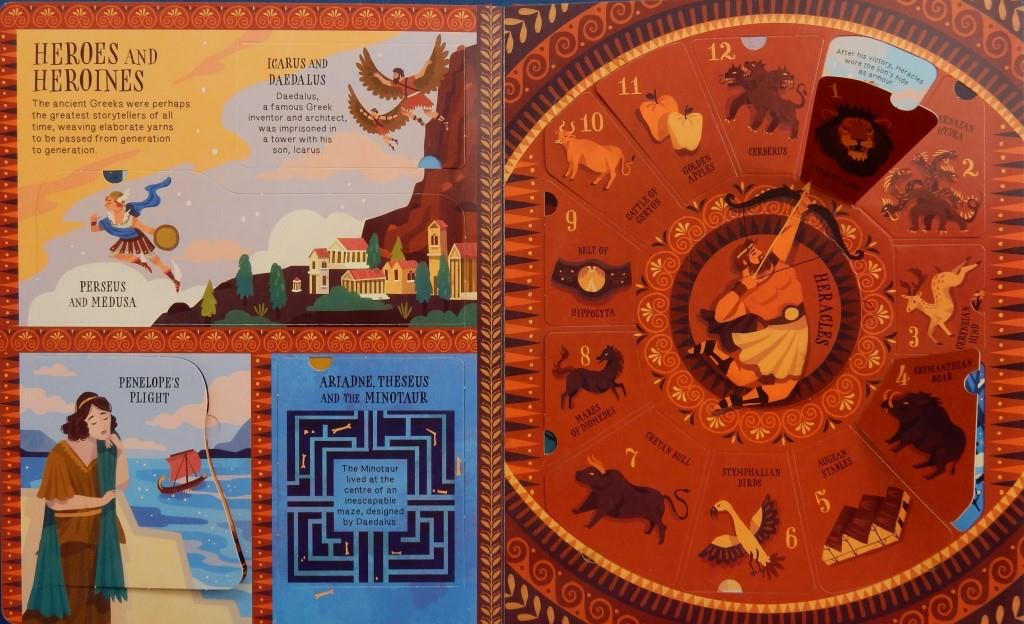
This is an addition to the Hide-and-Seek History series presented on large, thick card pages that have flaps (sometimes double ones) to explore on each of the half dozen spreads.

It starts with a visit to the Acropolis and environs to see a group of archaeologists busy at work; this acts as an introduction to Greek civilisation in general, saying that the ancient Greeks were the creators of democracy as well as great thinkers, artists and inventors.

Then come spreads on the Greek gods and goddesses; some of the heroes and heroines from their stories including Daedulus and Icarus, Ariadne and Heracles. 

we’re introduced to some of the trailblazing mathematicians, scientists, architectural pioneers and sporting greats; next is a look at war and combat, and finally, there’s a look at everyday life in ancient Greece

Vibrantly illustrated, interactive and written in an engaging style, this is a fun way to introduce fascinating facts to youngsters, one bite at a time.

Wild Animal Board Books

A Cub Story
Kristen Tracy, illustrated by Alison Farrell
Chronicle Books

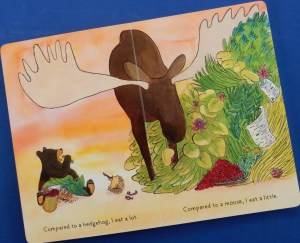
The titular bear cub acts as narrator in this board book taking us through a year of its life showing readers its features, sharing its activities – sitting still in a favourite springtime spot by a waterfall being one; rolling downhill right into blackberry bushes is the favourite summer pastime and come autumn fishing is THE thing to do and that takes him through to the winter when it’s time to snuggle with family in their den for a long sleep. As each season starts, the cub compares his attributes with those of other creatures in the location: he eats a lot compared with a hedgehog

but little compared to a moose. In the meadow he’s much slower than the elk whereas by the pond, he moves super fast leaving the snails far behind.

With Kristen Tracy’s playful text that introduces positional vocabulary and lots of words relating to the natural world and Alison Farrell’s engaging mixed media scenes that have just the right amount of gently humorous details, this is a delightful book to share with the very young.

Wake Up
Pau Morgan
Little Tiger

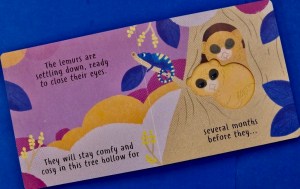
This sweet addition to the little nature series features four animals that are or have been hibernating and are now emerging from sleep ready to eat and perhaps to play. We meet dormice, a bear and her cubs, a pair of lemurs

and finally, a tortoise and there’s a final ’Do you know any other animals that hibernate?’

I really like this series with its grainy card pages, peep-holes and Pau Morgan’s beautifully coloured, textured scenes of the creatures; like others in the series, it’s great for sharing and effortlessly educative.

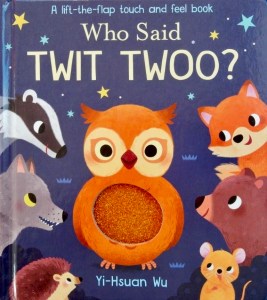
Who Said Twit Twoo?
Yi-Hsuan Wu
Little Tiger

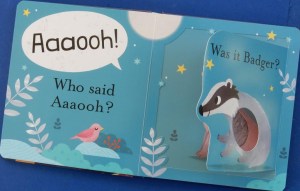
Toddlers are introduced to eleven different creatures as they turn the pages and look beneath the flaps to discover the answers to the Who said … followed by a sound – ‘Twit twoo!’ for instance, the question being asked by a sleepy squirrel who continues opposite ‘Was it Fox?’ with the correct answer, ‘No, it was Owl!’ being given beneath the flap.
The next three spreads are similarly presented with ‘Aaaooh!’, ‘Grrr!’, ‘Squeak!’ as the creature noises to identify

and the final spread has a shiny mirror opposite which some of the animals ask, ‘What do you say?’
Lots of fun learning potential herein.

The Fabulous Cakes of Zinnia Jakes: The Super Spy / Sky

These are both additions to popular, established series: thanks to the publishers for sending them for review:

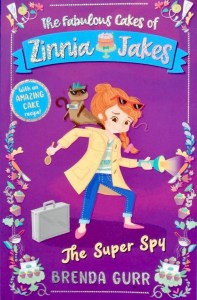
The Fabulous Cakes of Zinnia Jakes: The Super Spy
Brenda Gurr
New Frontier Publishing

With cooking programmes on TV as popular as ever, I’m sure there are many young aspiring Zinnia Jakes, aka Zoe who will relish this the third in the series about baking and the challenges it presents to nine-year-old Zoe, her best friend Addie, her Aunt Jam a musician, and Coco the seemingly magical cat that appears at specific times, some of which are exceedingly inconvenient.

In this story we find Zoe coping with the annoying shenanigans of the moggy especially when it invades lessons, the forthcoming school sleepover for Year 4 and the challenge of making a fabulous spy-themed Cake for the Parents’ Association party this coming weekend.

On receiving the cake request sent as usual to Zinnia Jakes, Zoe’s mind immediately goes into over-drive; but how will she manage delivering a cake in secret without revealing the identity of Zinna Jakes, especially as Aunt Jam will be otherwise engaged? Perhaps her dad might help as he’s going to be at home on the night of the sleepover, so he tells Zoe.

First though Zoe has to decide on a design for the cake and with suggestions from Jam, Addie, not to mention Coco, she finally settles on a combination of their ideas.

However, things begin to go downhill when she received news from her dad -he’s been delayed; and then she overhears one of the organiser’s mention of spy traps – supposed to be part of the fun but not of course for Zinnia. Is her identity after all, destined to be discovered?

Full of surprises, this tale of teamwork and friendship, determination and resilience will go down especially well with younger readers of chapter books; it would also make a good, short read-aloud for KS1 classes. Don’t miss the recipe for a ‘hidden secret cake’ at the end of the story.

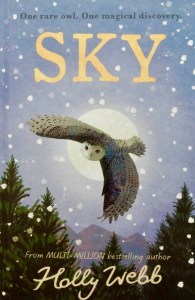
Sky
Holly Webb, illustrated by Jo Anne Davies
Little Tiger

This is the latest in the author’s Winter Animal series that have a time slip and a creature linking the two periods.

When Lara and her parents arrive in the Scottish Highlands to spend the Christmas holidays with her grandparents, she’s surprised when Grandad tells her of a snowy owl he’s seen. Then both Lara and Grandad spot her again and despite the snow that’s fallen overnight, Lara insists on going out the next day in the hope of seeing the bird again; and see Sky as she names the white bird, she does. It leads her all the way to the Big House before disappearing but Lara notices that the Christmas tree in its window has real candles burning brightly.

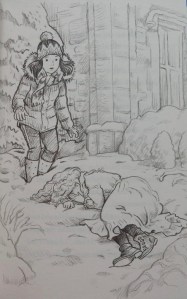
The following morning, Lara is drawn back to the house and as she approaches, there at the edge of the driveway, she comes upon a sobbing girl in a long white dress lying on the snowy ground.

A girl from another era who says her name is Amelia and is surprised that Lara is dressed in, as she calls her trousers and jacket, ‘boys’ clothes’. Lara in turn is amazed at Amelia’s ‘old-fashioned, fancy clothes’ especially her underwear that she sees when Amelia takes her into her bedroom in the big house. Now Lara is convinced that, thanks to that magical owl, she’s gone back in time.

With lots of lovely black-and-white illustrations by Jo Anne Davies, this is a gorgeous wintry tale that primary readers, especially animal lovers will adore, either around Christmas, or really, at any time.
The Wind May Blow / Someday

Here are two beautiful picture books kindly sent for review by Little Tiger

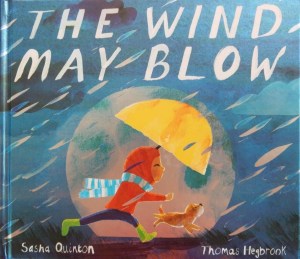
The Wind May Blow
Sasha Quinton and Thomas Hegbrook

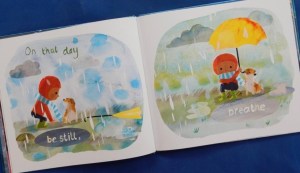
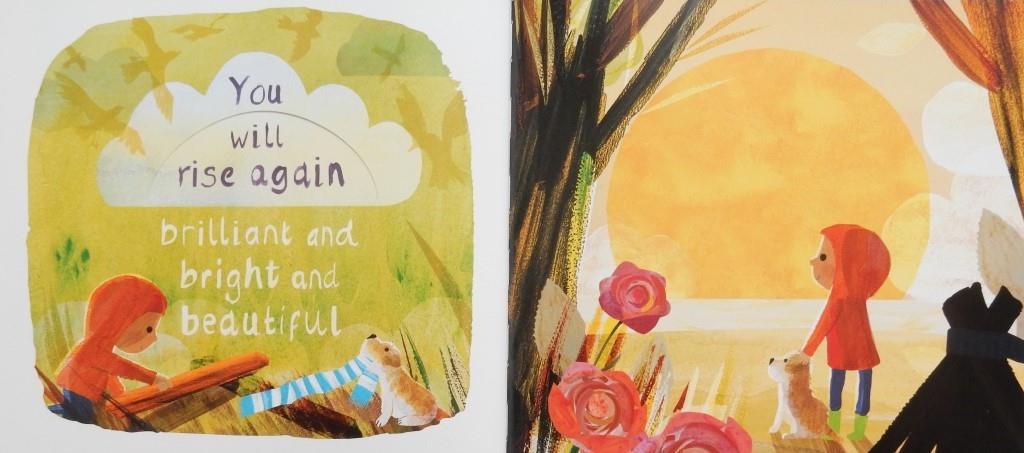
With its cut away pages and tender illustrations this is a beautiful book – both visual and verbal – for adults to share with little ones.

The voice is that of an adult speaking to a young child, “On the day you were born the sun rose brilliant and bright and beautiful,” in a place where “the sun rose and kissed your toes as warm roses bloomed in each cheek.”

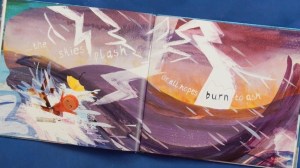
Time passes, the child grows to face a life that inevitably isn’t all filled with sun and roses: stormy times are likely to occur. 

What’s required then is to stop, pause and take time to breathe deeply 

in the knowledge that you have the inner strength, life skills and whatever is needed to face challenges, overcome adversity and emerge out of the storm. The moon will be there burning brighter down on you and when the sun rises next morning, so too will you. There’s always the possibility of a new beginning.

So goes the seemingly simple, gently affirming wise message of this cleverly designed book with its die-cuts strategically placed throughout.

Altogether a splendid amalgam of words, pictures and design that is just right for many occasions: adults will know when it’s appropriate to revisit this timely picture book after a first reading.

Someday
Stephanie Stansbie and Frances Ives

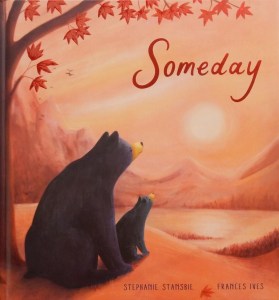
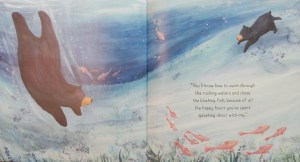
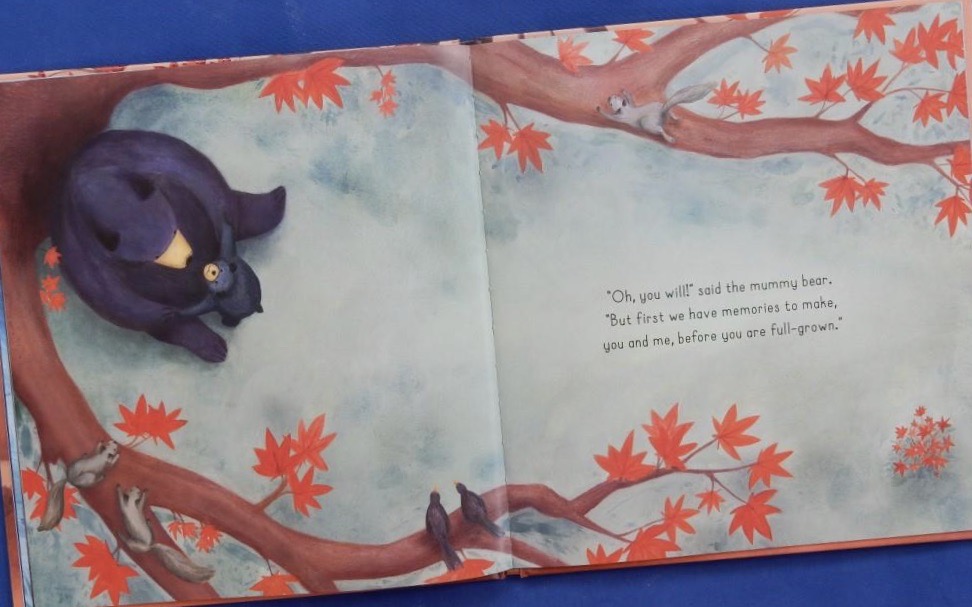
When a little bear cub tells his mother one morning that it wants to be just like her, she likens her little one to a sapling that will soon be a tree. This doesn’t quite satisfy the cub, for that so mummy says, won’t be tomorrow. First they have lots of things to do together – memories to make – of happy hours and days spent frolicking through grassland, jumping over rocks, climbing trees in search of juicy berries, splashing and swimming among fish in the fast-flowing waters.

And all the while growing stronger and learning to cope with things that might at first seem frightening.

Then will come the possibility of meeting a mate and producing a new family. As they sit beneath the branches of a spreading tree, Mummy Bear talks of the cub’s memories acting like the tree’s roots keeping it “strong as you grow and flourish and bloom.” It’s their togetherness that prompts the little cub to express happiness in the here and now, with the promise of many many wonderful tomorrows.

Frances Ives’ illustrations capture the warmth and love between ursine mother and offspring; but as it is with bears, so as this lyrical book implies can it be with human parent and little one: memories to cherish as a child grows up and finds his/her way in the world.

Jasper & Scruff: The Great Cat Cake-Off / Stink and the Hairy Scary Spider

Jasper & Scruff: The Great Cat Cake-Off
Nicola Colton
Little Tiger

In case you’ve not met the two protagonists, cat Jasper loves cooking fancy food and dining in fancy restaurants. Puppy Scruff is fond of eating with a particular penchant for salted caramel. The two run their own cafe, its speciality being the Cheese Monsieur with customers coming from near and far to sample this delicacy.

One day though, there’s a distinct lack of visitors and on investigation they discover across the way a new establishment – The Sophisticafé – is opening up with Lady Catterly as head chef. Eager to learn what the signature dish is to be, Jasper and Scruff head over and try to enter the cafe doors, only to be rebuffed without the necessary invitation.

Back they go to their own diner to find that things are in a chaotic state but even worse, the recipe page for their signature dish has been removed from the book. Looks as though it’s the work of the Sophisticats AGAIN!

Time to find out exactly what is going on … Things don’t go quite to plan however but they do encounter famous food writer, Gaspard le Skunk sampling the fare. Now he’s the one to impress, decide Scruff and Jasper but that will entail some menu amendments.

Again things don’t quite go to plan as those dastardly Sophisticats have got wind of the critic’s visit. Sabotage is their way of doing things …

but who will win this battle?

Another tasty offering in this series, and with one or more of Nicola’s humorous illustrations on every spread, it’s ideal for those readers just starting to fly solo.

Stink and the Hairy Scary Spider
Megan McDonald, illustrated by Peter H. Reynolds
Walker Books

Stink is Judy Moody’s little brother and now he’s battling with his arachnophobia, a fear of spiders having troubled him for quite a while.

Having fashioned an origami frog, he takes his creation to the backyard to test its hopping. The creature hops right out of sight but when Stink looks in the long grass there’s no sign of his frog. Instead he sees a ‘pink thingy’ or rather several and they’re attached to large hairy legs which in turn are attached to a larger hairy body and that is attached to a massive head of the hirsute kind. A head with a plethora of eyes, what’s more. YIKES! Readers will have no doubt what this thing is.

A fearful Stink dashes indoors to seek help in locating his frog from the one person he knows is actually quite fond of spiders, his sister Judy. A deal is struck but Judy goes beyond that and sets about trying to cure little brother of his phobia.

This is a fun, scientific episode in which Megan McDonald’s characters exhibit their delightful optimism and it’s brought out in Peter Reynolds’ amusing illustrations; love the spidery chapter headings. There are even instructions to make an origami jumping frog after the story.

A relatively easy read: early chapter book readers will thoroughly enjoy this spin on facing your fears.

Diary of an Accidental Witch

Diary of an Accidental Witch
Perdita & Honor Cargill, illustrated by Katie Saunders
Little Tiger

There’s a new magical school on the story map and it’s called Little Spellshire School of Extraordinary Arts. Little Spellshire is the sleepy town full of cats and magical children into which Bea Black and her weather scientist Dad have just moved; this book takes the form of eleven-year old Bea’s diary – her first ever.

But it’s a case of izzy fizzy, Dad was so busy and so dizzy that he’s gone and enrolled her not in the ordinary academy but the Extraordinary establishment in the forest intended for young local witches.

Unexpectedly Bea finds herself sitting through all kinds of strange and spellbinding lessons in the company of peculiar classmates

and tasked with homework that entails venturing into the forest in the middle of the night to find skeledrake roots for a potion – now what on earth are they?

Surely it’s not too much to remind her Dad to get her moved into the Academy ASAP.
It’s either that or dig deep and find her inner witch: with the Halloween ball fast approaching it would be useful to discover even the teeniest smidgen of a magical spark.

Then there’s the question of Excalibur

about which I’ll say no more except that the incident is just one of the many magical mishaps and untoward incidents to be found in Bea’s diary that is bound to have readers giggling and wriggling in delight.

However as well as frog minding, persevering with broomstick-riding, levitation, avoiding getting ExSPELLED, being Witch In Charge of Bat Bunting, which requires the cutting of 1200 paper bats, keeping Dad from finding out of what’s really going on, this spellbinding story is concerned with a girl trying her best to fit in at a new school, making the best of a tricky situation and trying her level best to make friends.

Full of heart, this is the first of four stories brewed by the Cargill team, aided and abetted by Katie Saunders who supplies liberal sprinklings of amusing illustrations (including a class photo and a map): an ideal concoction that simply effervesces with humour and heart. Youngsters will definitely be spellbound and eagerly anticipate diary number two; so too, this reviewer.

Ganesha’s Sweet Tooth / What’s in the Box? / Halloween

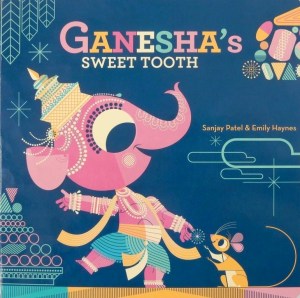
Ganesha’ Sweet Tooth
Sanjay Patel and Emily Haynes
Chronicle Books

Just in time for Ganesh Chaturthi in a few days is this lovely board book edition of a modern version of one of the most popular Hindu legends – the episode in which Ganesha got his broken tusk. It tells how when young, Ganesha liked nothing better than eating sweet things, especially the Indian confection, laddoos. This results in tragedy during Ganesha and his ‘friend’ Mr Mouse’s search for sweets when they come upon a new kind of laddoo, The Super Jumbo Jawbreaker Laddoo.

Despite warnings from Mr Mouse, Ganesha just can’t resist chomping down on the thing – “I’m invincible.” he reassures his friend – and snap! Off comes one of his tusks. Furious at being unable to repair himself, young Ganesha hurls the broken tusk at the moon.

It misses, landing at the feet of the ancient sage and poet, Vyasa who happens to have a special task for the tusk thrower and thus Ganesha lands the job of scribing the great epic of Hindu literature, the Mahabharata.

This little book is a riot of dayglo colour with Sanjay Patel’s brilliant ultra-modern visuals, some of which are reminiscent of what you might see in a temple in South India. Others are decidedly closer to some of the contemporary Pixar animations he has worked on.

By adding their own embellishments and playing slightly with the original plot, Patel and Haynes have created a wonderfully playful rendering of a classic legend that will appeal widely .

The next two are published by Little Tiger:

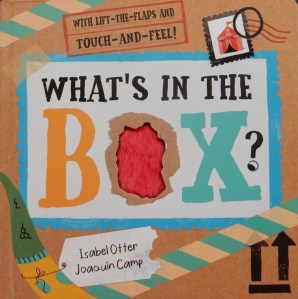
What’s in the Box?
Isabel Otter and Jaoquin Camp

How exciting: a pile of parcels has just arrived waiting to be investigated. What could be packed away inside? That’s what youngsters are invited to discover in this chunky tactile, lift-the-flap book.

Box one looks as though it’s rather fiery but what has made those scorch marks? There’s a hint in the cut-away shiny, scaly shape just visible.

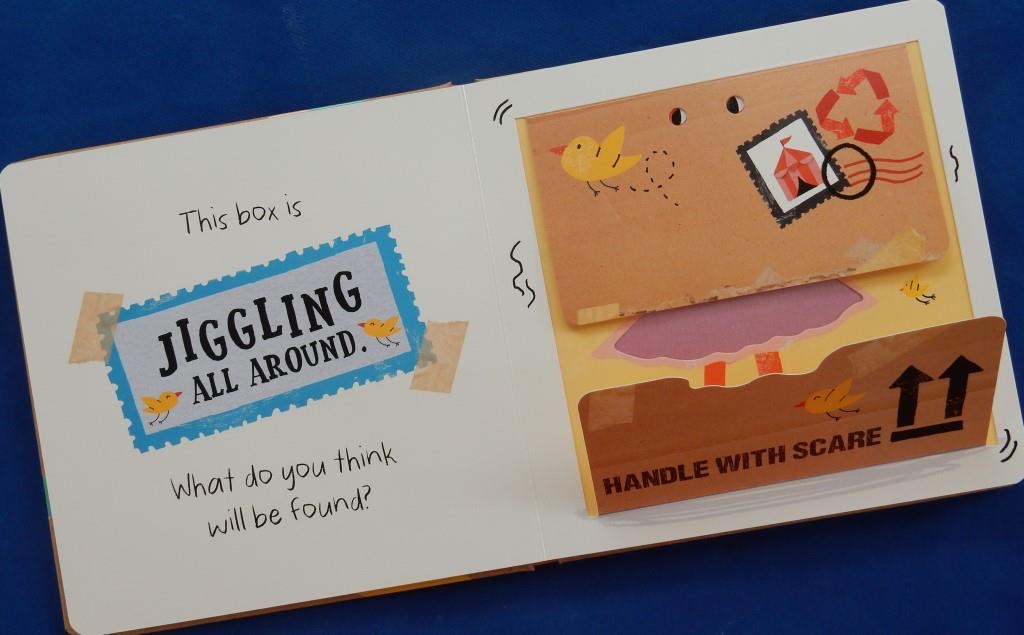
The second box seems to have the fidgets and there’s a warning on the wrapping … A tricky one this. I wonder what it holds …

Next is a beribboned container but strangely some wool has escaped from within. “Fragile” says the label on the fourth box wherein so we read, is something noisy – hmmm? 

However, the best has been kept till last – it’s a veritable treasure trove of … Can you guess what?

With Isabel Otter’s brief rhyming text andJoaquin Camp’s alluring surprise containers to explore, there’s sufficient to engage little ones during several book sharing sessions.

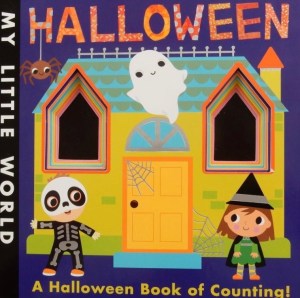
Halloween
Patricia Hegarty and Fhiona Galloway

With Halloween coming up next month (I can’t believe I’m saying that), adults might want to reinforce counting skills with this mock-scary book that introduces in turn, one little skeleton that’s found a hiding place, two slightly anxious little trick-or-treaters, three glowing jack o’lanterns, four hoppy toads, five family portraits, one about to take a tumble, six sleepy bats, seven ghosts, eight spiders of the hirsute kind, nine snoozing moggies, or rather they were before being disturbed by the ten small, appropriately attired party goers.

The rhyming text and Fhionna Galloway’s cute, colourful illustrations offer plenty for preschoolers to enjoy herein.

The Fairy Dogmother

The Fairy Dogmother
Caroline Crowe and Richard Merritt
Little Tiger

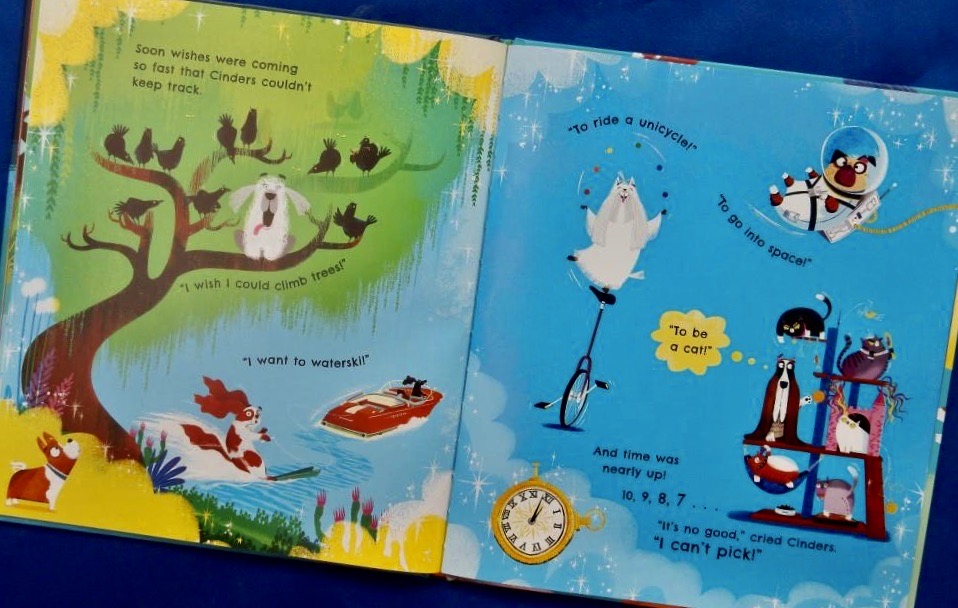
This playful modern fairy tale has its origins in Cinderella and is set in Woofington’s Dog Shelter, home to most of the characters in the book including Cinders. This resident is just contemplating lunch when suddenly one Priscilla Paws, Fairy dog mother announces herself and offers Cinders a wish – “Whatever will make you the happiest you can be,” she suggests.

Now Cinders is pretty satisfied already with his home, food and friends so he tells Priscilla, but the fairy urges him to make haste before the wish times out. Unable to come up with anything, Cinders consults his friends and every one has a different suggestion, Boris’s idea being a ball … How do you think Priscilla envisages that one?

The clock ticks on and Cinders’ time is almost up …

when suddenly Old Wally has a brilliant proposal. Kind-hearted Cinders happily makes the wish but it leaves him without any companions. Or does it? For as Priscilla’s experience tells her and she tells Cinders, “fairy tails always have a happy ending” …

Dreams sometimes do come true, perhaps even when the dreamers don’t realise what their deepest wishes are.

Be they bursting with detail and pattern or less ornate, Richard Merritt’s vibrant humorous scenes completely fill every page and along with Caroline Crowe’s positive message about Cinders’ kindness and generosity,.this is a fun book to share with youngsters, preferably once they know a traditional version of Cinderella.

How to be a Human / Museum Kittens: The Treasure Map

Two recent fiction titles from Little Tiger – thanks to the publisher for sending them for review

How to be a Human
Karen McCombie

When their home town is hit by unprecedented wild weather storms causing schools to close it seems something is badly wrong. Little Ty thinks he’s seen aliens in the sky and much to sister Kiki’s horror has even appeared on the news saying the freak weather was caused by strange beings in their spaceships. How will she face the embarrassment of such nonsensical talk when Riverside Academy reopens? Especially the taunts of Lola and the Popular Crew of which she wants to be part.

Someone else not thrilled with the school reopening is previously homeschooled newbie Wes, also in Y7 and an outsider (though the bullies have their eyes on him).

Then there is Star Boy, presently marooned on Earth about which he’s been taught some things relating to its inhabitants, as well as having taught himself some of its languages.

Both finding every day painful, Kiki and Wes start spending time together and soon realise they have things in common: they’re really struggling to settle in to the new school, they both have parents who have separated and then comes music.

Having observed their behaviour together, Star Boy decides he can learn much about human behaviour by watching and filming the duo so that once he returns to his own planet, the Master will consider him a ‘scientific hero’.

Then Wes and Kiki discover Star Boy. They start to learn things about one another but also about themselves and who they are; they learn what being human really means, about the importance of trust and of friendship. They also discover that sometimes what you really want is right there before you and that it’s possible to heal sadness.
With terrific characters Karen McCombie infuses her insightful story with warmth and gentle humour. She really seems to stand behind the heads of eleven/twelve year olds and their salient concerns.

Thoroughly recommended for those around the age of Kiki and Wes in particular.

for younger readers is

Museum Kittens: The Treasure Map
Holly Webb, illustrated by Sarah Lodge

The fourth tale of the kittens that get playful once all the visitors have left the museum begins up on the roof when Tasha declares that the cloud she’s seen in the sky is a dragon. Boris then decides it’s actually a ship which puts him in adventurous mood as he leads his fellow kittens off to see an actual ship, The Silver Lion, a four-hundred-year-old galleon in dry dock at the back of the museum.

No sooner have they gone aboard than they hear rats voices singing about treasure and they appear to have a map.

When Boris informs them that The Silver Lion was a pirate ship that once belonged to a pirate queen, his excitement rubs off on the other kittens. Grandpa Ivan gives them his blessings to follow the rats; they have to get hold of that map one way or another. But those rats are pretty tricky creatures … and is there really a treasure map, let alone any treasure?

Those familiar with the kittens and their escapades, illustrated by Sarah Lodge, will eagerly grab this; other new solo readers could start here and then likely will want to read what went before.

What a Wonderful Phrase

What a Wonderful Phrase
Nicola Edwards and Manu Montoya
Little Tiger

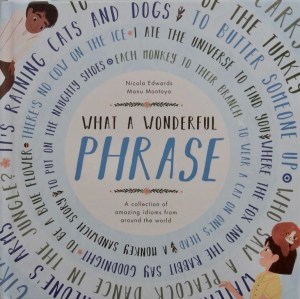
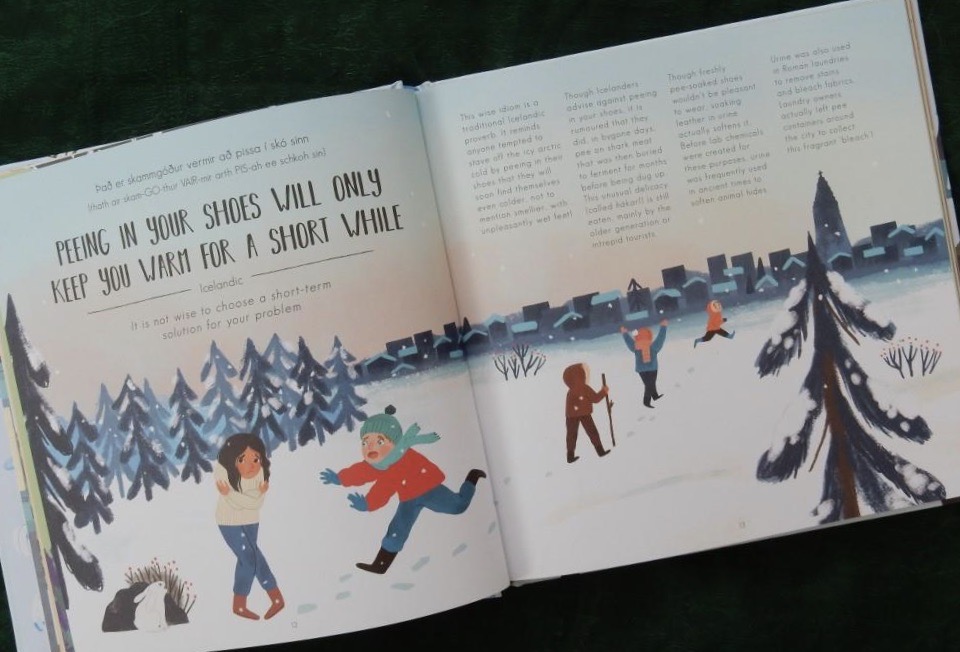
Nicola Edwards and illustrator Manu Montoya take readers on a world tour looking at idioms from far and wide, including such places as Sweden, South Africa, Korea, Nigeria and Greece. There’s even this: ‘Nuces relinquere’, Latin for ‘To Give Up Nuts’ which to the Ancient Romans meant to give up childish ways. Fascinating, as are all the other idiomatic phrases in this book, each of which is explained in a gently humorous manner in this compilation of curious utterances.

We learn the cultural and historical facts behind for instance, ‘Putting Watermelons Under Someone’s Arms’. Originating in Iran (then Persia) and also found in Azerbaijan and Turkey, it translates as ‘conning someone into doing a tiresome or stupid task for you’.

I was surprised at how many of the idioms mention food.

Can you guess the meaning of ‘To split open the crocodile’s intestine’ a phrase sometimes said by Izon speakers living around the Niger Delta. If your home language is English you’ll surely be familiar with ‘to butter someone up’ and ‘it’s raining cats and dogs’ but unless you speak Dutch you aren’t likely to have come across ‘a monkey sandwich story’.

I couldn’t help but laugh at this Icelandic one that translates as ‘peeing in your shoes will only keep you warm for a short while’. Really? However the accompanying bit about an unusual delicacy said still to be consumed by some did not appeal to my vegan sensibilities. Gross!

As well as being amusing, this delightfully illustrated book is an exploration of the diversity of language and a presentation of snippets from many different cultures that readers of all ages can enjoy sharing and discussing.

Eureka! A Big Book of Discoveries

Eureka! A Big Book of Discoveries
Jonathan Litton and Wenjia Tang
Little Tiger

If you lack an open inquiring mind, open eyes and imagination, it’s unlikely that you’ll discover anything new or shed fresh light on something that’s already known.

In this book Jonathan Litton takes a look at all kinds of amazing discoveries from both long ago and recent times, history being the first theme with dinosaur remains the first topic along with what some key palaeontologists have discovered. I was astonished to read that on account of several factors including improved technology and more trained palaeontologists, dinosaurs are ‘being discovered at a faster rate than ever … a new species per week on average.’

Ancient civilisations and some of their artefacts are presented next including a visit to some entire cities that were lost.

The second section ‘Introduction to Earth’ takes readers to both the Arctic and Antarctic regions as well as deep down into oceans

and right into the earth’s core. We read of extinct species and new ones that are recent discoveries: I’d not heard before of the psychedelic frogfish that usually walks on the ocean floor but can make itself into a ball and jet propel itself from one place and another.

Section three presents discoveries of a scientific and mathematical kind, some like penicillin, accidental, others the outcome of experimentation either simple or incredibly complicated and costly.

Perhaps your interest is space. That is Litton’s next theme, about which humans have discovered relatively little despite it being a source of fascination for well over 1000 years. It’s good to see Vera Rubin and her work on galaxy rotation getting a mention herein

and I’m pleased that the author devotes a double spread to women whose remarkable discoveries gained them scant credit at the time. This forms part of the final ‘nature of discoveries’ section that considers some philosophical questions – what makes a discovery a discovery?
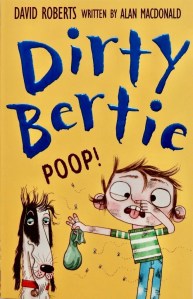
The world is a dynamic place and it’s likely in the time that I’ve taken to read this book and write these words, fresh knowledge is being uncovered. That truly is an incredible idea …

A thoroughly engrossing and inspiring book, alluringly illustrated by Wenjia Tang to add to individual and school collections.

Nothing Scares Spider!

Nothing Scares Spider!
S Marendaz and Carly Gledhill
Little Tiger

Spider is a fearless creature and is ready to set off and explore the ‘Whole Wide Garden’. First though she bids farewell to her minibeast friends and in so doing hears of their worries at being left without their protector.

Spider leaves a web thread that can be pulled to call her back but only in emergencies and then off she goes. Almost immediately however comes a tug TWANG!

and back home she dashes only to discover that her return is seemingly, unnecessary.

Away she goes again, but whenever Spider herself is unknowingly in danger there comes a tug on the thread – just in the nick of time. Back she goes on several occasions merely stopping to admonish the thread puller before she sets out once more. Now Spider is really getting irate but YANK! On her return this time she comes face to face with Frightening Frog.
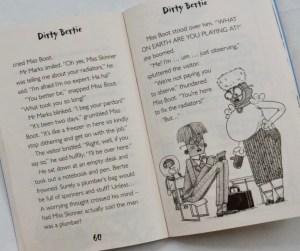
Now it just might be Spider’s turn to feel scared …

Fortunately for them all, Caterpillar offers some sage advice which is followed by some nifty work, first by Spider and then her friends. Thereafter comes a deal with their captive and an invitation from Spider.

Carly Gledhill’s vibrant illustrations show what the text doesn’t, enabling young listeners to relish being in the know along with the book’s creators in this tale of friendship and teamwork that will go down well at storytime. Youngsters will also enjoy the humorous touches such as spider’s assorted footwear and the characters’ changing expressions in Carly’s deceptively simple scenes.

ROAR! / Build

Thanks to publishers Little Tiger for sending these new board books for review

ROAR!
Amelia Hepworth and Jorge Martín

Who will be the winner of the Best Roar in Town contest? With a dapper duck as compere, the animals take turns to let loose their most fearsome roars. There’s Mouse who receives faint praise; Penguin – not overly impressive; Dog – definitely an underwhelming performance and then comes Dinosaur.

Now here’s a likely winner especially with a score of eight.

Hang on though, step forward another competitor …

With flaps to manipulate, number scores to recognise, contestants’ comments from the sidelines and the entire verbal presentation via speech bubbles, little ones will delight in the silliness of the whole thing as well as the opportunities for some roaring.

Build
Pau Morgan

The latest in this Little Nature series presents animals as constructors of their own homes. There are honey bees busily building a beeswax safe place to store food and keep their eggs. Then comes stick-collecting eagle looking for materials to build a nest, followed by web-spinning spider and finally a pair of beavers. These strong-toothed mammals collect stones and bits of trees to build a dam wherein they make a cosy lodge.

Peek-through holes provide additional interest to this one and it’s printed on 100% recycled board which gives a lovely feel to the sturdy pages.

Seven Sisters

Seven Sisters
Ayisha Malik and Erika Meza
Little Tiger

Lola, Esher, Ayla, Zoha, Zayna, Amelia and Saffah all live in the Forest of Tremendous Trees. Each of them lives in a tree and despite being sisters, they’re very different characters with very different interests. Zayna is a writer, Lola is an artist, Saffah is the musical one, shy Ayla has a technological mind, Amelia loves gymnastics, Zoha particularly enjoys the natural world and Esher is an inventor. Despite being so different, they get along well largely because they have their own spaces wherein to hone their talents.

Suddenly one day they sense change is afoot and lo and behold a large tree appears before them and continues growing becoming the most beautiful in the entire forest.

That night the girls retire to their beds each thinking of the house they could build in the new tree.

Inevitably next morning they all make their way to the tree where each of them puts forward a case for ownership.

Arguments ensue and things get chaotic until they decide the only way to solve the issue is to hold a competition with their beloved aunt as judge.

Despite her reservations the competition is scheduled for the following day but none of them had expected the storm that blows up just as they arrive. Time to take refuge … together.

Could this perhaps be the best learning opportunity that nature could offer the seven sisters?

Read solo or read aloud: there are lessons aplenty in this engaging story that celebrates individual differences, creativity and the joys of community. Having recently enjoyed Ayisha’s adult novel This Green and Pleasant Land I was pleasantly surprised to learn that she also writes for children. Erika Mesa’s mixed media illustrations are wonderfully expressive, full of life and really bring out the girls differing personalities.

Agent Llama

Agent Llama
Angela Woolfe and Duncan Beedie
Little Tiger

Let me introduce Charlie Palmer, hotshot agent, awesome spy and fluffy llama. Having saved the world the previous day, said superspy is already engaged on her next mission, when she receives an urgent call from HQ. The Prime Minster’s underpants (banana patterned) have been stolen and Charlie is required to track down the perpetrator of the crime and save the world.

After a nail biting, sorry, hoof biting, plane journey completed with a perfect landing

Charlie rocks up at a posh hotel where she soon encounters an ‘old acquaintance’ Greta Grimm wallowing in the pool and she just happens to be sporting a pair of banana printed shorts. Pant-pinching crime solved.

However, Grimm (aided and abetted by her Goons entourage) doesn’t intend handing them over to Charlie any time soon. Moreover despite our agent’s martial arts prowess, all too quickly she finds herself well and truly trapped. Is there any escape now or is it destination outer space?

Can a spot of lunch courtesy of Charlie’s bag of techno tricks save the day …

Adult readers aloud will likely appreciate the high jinks that characterise spy films while their young audiences will relish the high drama delivered through Angela Woolfe’s whacky rhyming narrative and Duncan Beedie’s bold retro, cartoonish illustrations somewhat reminiscent of 60s glam in places. Love the stylish silhouette endpapers and variety of page layouts that hype up the action.

Have Fun With Boardbooks

Splish, Splash!
Sophie Ledesma and Isobel Otter
Little Tiger
What will Little Fish discover as it swims around beneath the ocean? By manipulating the various sliding mechanisms little ones will discover sea creatures large and small before bidding goodnight to the sleepy Little Fish that has splashed its way right through to the penultimate spread where there’s a convenient place to hide itself behind. ZZZZZ … 

On the final spread all the other creatures that were encountered on the previous pages are labelled. Huge fun and great for developing fine motor skills. Sophie Ledesma’s playful illustrations are full of patterns that add to the visual impact throughout this ‘slide and seek’ book.

Ladybird Ladybird What Can You See?
Pintachan
Little Tiger
This is the latest addition to Pintachan’s brightly illustrated lift-the-flap series wherein Amelia Hepworth introduces positional words – in, behind, inside and under during the game with Ladybird and Ant wherein various other partially hidden minibeasts depicted on the flaps are revealed by lifting the flaps. Ant too is revealed saying in turn ‘It’s Butterfly!’, ‘It’s Spider!’, ‘It’s Bee!’ ‘It’s Worm!’ while the final spread has a mirror hidden under its flap. 

With its simple, repeat refrain rhyming text this is huge fun to share with the very young as well as for beginning readers to read to their younger brothers or sisters. Ant has a different fruit or portion of one on each spread so this offers lots of talk potential – what is it? Who will eat it etc.

Where’s My Puppy?
Becky Davies, illustrated by Kate McLelland
Little Tiger
The mischievous looking puppy shown on the cover of this book has almost disappeared by the first spread and little ones can enjoy following the colourful footprints through the rest of the spreads to discover his whereabouts on the final page. Before that though they encounter in turn Guinea Pig, Kitten, and Pony each of which shares a feature in common with the pup. Guinea Pig has soft fur, Kitten a fluffy tail and Pony’s tongue is rough giving youngsters a variety of tactile experiences as they join in the game to find Puppy. 

With a repeat question on each spread this offers a joining in opportunity too.

Go Go Apple
Claire Philip and Steven Wood
Sunbird Books
I’ve never really considered what happens to apple cores collected in food waste as I always throw mine into a bin that’s emptied straight onto our own compost heap. So, it was interesting to see this title in the ‘My first recycling series’ and be able to follow the journey of one core from collection by a truck to the recycling plant and thence into a large machine where it’s mixed with leaves and other waste food and shredded. Some then goes off to become compost, the rest being liquified for farm manure or made into a gas that can be used for the heat and electricity of homes and cars.

With plenty of accompanying onomatopoeic sounds to join in with, a simple narrative description and fun illustrations, this is an interactive book to share with the very young be that at home or in an early years setting.

Peekaboo Sun
Camilla Reid and Ingela P Arrhenius
Nosy Crow
Babies and toddlers love to play peekaboo especially when there’s a mirror involved so they’ll thoroughly enjoy this addition to the sliders series with its fishes, sunshine, ice cream boat, crab and other things with a seaside theme. Rhyming couplets introduce the items in Ingela P Arrhenius’s jolly, patterned illustrations.
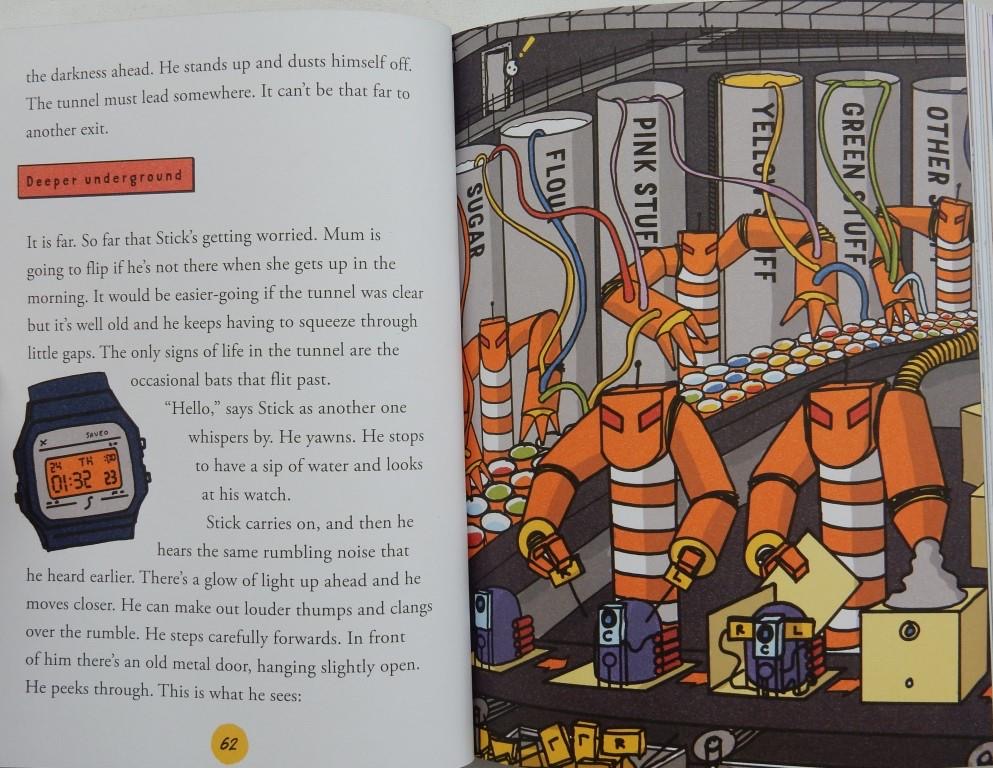
Great fun and an opportunity for little ones to develop their fine motor skills.

Dirty Bertie Tricks and Kicks / Mermaids Rock :The Emerald Maze

Here are two recent Little Tiger fiction titles for primary readers – thanks to the publisher for sending them for review

Dirty Bertie: Tricks and Kicks
Alan MacDonald illustrated by David Roberts

This bumper volume brings together three books Mascot!, Spider! and Ouch! in the Dirty Bertie series so you can expect a wealth of comic chaos for your money.

First comes Mascot! wherein there are actually three self-contained stories featuring the boy that trouble seems to seek out. For starters having entered a ‘be junior match day mascot ‘ competition, Bertie proves to be the very best mascot for Pudsley Rovers soccer club despite sporting a lion costume (against strict instructions) and scoring a goal (accidentally).
Next is Swot Camp – the Bright Sparks camp that Bertie is sent to – ‘school for swots’ he calls it, doing his upmost to be sent home in disgrace. The third tale sees Bertie manage to get himself in the team for the inter-schools Junior Science Challenge and with his incredible robot, the fierce Bootosaurus,

surprisingly wins the contest, only to shock and somewhat displease, she who was the inspiration for his design.
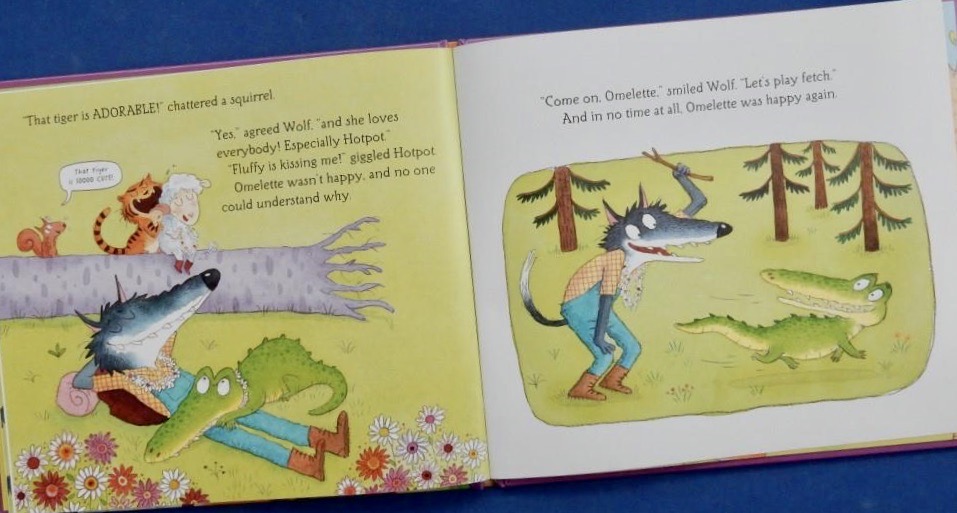
All of that only takes in the first book.

Next is Spider! where it’s a case of is it or is it not a tarantula – enough said! An oversized, very late Christmas present – a sweater knitted by Gran is the star of the show next, followed by Bertie getting involved in a spot of metal detecting.

In the third book Bertie’s over enthusiastic hammering lands a trip to A&E; then his swimming lesson is a hugely embarrassing experience thanks in no small part to some borrowed and very saggy Speedos and finally, there’s the Inter-Schools Quiz in which guess who participates, much against his will.

Illustrated with David Roberts’ distinctive, wonderfully quirky drawings, with his clear love of life in the mischievous lane, Bertie is the naughty boy everyone loves to be vicariously.

Mermaids Rock:The Emerald Maze
Linda Chapman, illustrated by Mirelle Ortega

This is the fifth story featuring Marina Silverfin and her fellow Save the Sea Creatures gang members.

Now mysteriously, the magic whirlpool is malfunctioning and there’s a ban on using it. Nevertheless, Marina can’t resist swimming very close to it, so close that her seahorse, Sami, ends up accidentally getting flipped straight in. Without stopping to think, Marina dives in after Sami but having found him, she discovers that she’s not the only one in the dark depths she doesn’t recognise. Her friend Naya suggests it might be one of the underground rivers she’s read about.

Deciding to continue exploring, the river, caves and pools they make some amazing discoveries but then suddenly the whirlpool disappears leaving them stuck, stranded in a cave with no way out. Is it to be a case of cat-astrophe or can the friends muster all their skills, save the day and get themselves safely back home?

With Michelle Ortega’s black and white illustrations, this is another exciting, engaging tale for young mermaid enthusiasts and lovers of the natural world. (The book concludes with some information about cenotes and the associated animals.)

44 Tiny Chefs

44 Tiny Chefs
Sylvia Bishop and Ashley King
Little Tiger

Nobody can be more surprised than Betsy Bow-Linnet when her Great-Aunt Agatha turns up announcing, “I’ve bought you a bakery,”. Well perhaps Bertram, but that’s because Betsy and Grandad have been selling her father’s delicious cakes to raise money to buy dad a special present for his birthday and as her aunt says, ‘selling cakes from a street-corner stall, like an uncouth ragamuffin.”

The woman can certainly get things done when she wants and now she has. With instructions to choose a name she departs and leaves the others to follow her instructions. The establishment becomes THE Half-Moon Bakery, Dad decides he wants the opening ceremony to be held on his birthday just three days away and Betsy realises it’s going to entail a great deal of work.

That’s just the start of things though for at the party, one Alexander Papparell, Royal Taster of Fine Foods for Her Majesty the Queen, mightily impressed by what he’s sampled, asks Bertram to provide the cakes for a Royal Gala that very Sunday – only two days notice. Also attending is Chief Health and Safety Inspector, Vernon Brick.

‘Not-a-panic’ sets in with the arrival of the requirements list. Is it time for Betsy to reveal something about mouse assistance to her dad, and then to press him to allow her to call upon the help of the little creatures? If he agrees, is it a risk worth taking? …

The Bow-Linnets are a delight and this is another super, action-packed story with some especially tasty ingredients, not least the chocolate cakes – well maybe not every single one of them; then there’s the fantastic support the rest of the family show to Bernard when it’s his big chance, and as always, Ashley King’s two-colour illustrations are terrific fun.

I Don’t Want to go to School / Big

I Don’t Want to go to School
Lula Bell and Brian Fitzgerald
Little Tiger

Both Mouse (teacher) and Dinosaur are suffering from first day nerves as they reluctantly get up, dress and are unable to face their respective breakfasts.

Concerns about being liked are voiced and both characters are feeling decidedly wibbly-wobbly.

School looks such a scary place full of seemingly intimidating children – until they encounter one another. Then it becomes a case of being brave together … and going on to have an absolutely terrific time. Yipee! school’s great
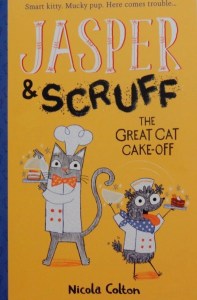
and tomorrow’s another day …

With a simple text that gets to the heart of those starting school wobbles and Brian Fitzgerald’s bright, humorous illustrations that capture so well the feelings of Mouse and Dinosaur, this is a definite winner and just right for youngsters starting school next term who will be amused to see that sometimes teachers have those apprehensive feelings too.

Big
Sav Akyüz
Oxford Children’s Books

Watching his big brother having the kind of fun that older brothers enjoy makes the small boy protagonist wish that he too could be big.

All of a sudden his wish is granted and off he goes on an awesome romp with the city as his adventure playground.

The trouble is he just keeps on increasing in size until he declares “Oh … no … I’m TOO big!’
Perhaps after all it’s better to be content with what you are and to use your imagination and say ‘what if …’.

With minimal words and arresting illustrations, debuting as author-illustrator Sav Akyüz has created a fun story that will resonate with lots of small brothers and sisters who watch their older siblings doing exciting things and think, ‘I wish … ‘

On a Building Site / How it Works: Rocket / Dinosaur Snap! The Spinosaurus

What Can You See? On a Building Site
Kate Ware and Maria Perera
Little Tiger

The building site herein is destined to become a brand new primary school. Youngsters (hard hats donned) can follow the action from the demolition of an old building to the school’s near completion. There are lots of vehicles visiting and working on site including lorries, a digger, a bulldozer, a crane and a cement mixer. It’s good to see both men and women hard at work carrying out their various roles, building, operating machinery (including a woman in a scissor lift, bricklaying, trench digging, tiling, fitting windows and solar panels and more.

In addition to the narrative describing the entire process there are questions to encourage little ones to hone their observation skills by searching for a little mouse, a white cat and other items. With die-cuts and lots of details in the illustrations this will keep your little one’s ears and eyes engaged as you share the book.

The same is true of

How It Works: Rocket
Amelia Hepworth and David Semple
Little Tiger

Get ready to zoom off into space as you read this with your toddler. It starts by explaining briefly what a rocket is and how astronauts use a service tower to get inside. David Semple’s spreads show the release of some of the rocket parts no longer required; an astronaut floating in space beside a command module; the same astronaut walking on the moon’s surface and another flying the rocket. Then come preparations for the return to earth including the ejection of everything no longer needed and finally, splashdown and the collection of the rocket and astronauts by a ship.

Simple language and illustrations to which a touch of playfulness courtesy of a tiny mouse passenger are added, provide a first introduction to the popular topic of space.

Dinosaur Snap! The Spinosaurus
Macmillan Children’s Books

A spinosaurus takes centres stage in this rhyming story inspired by the Strickland’s hugely popular Dinosaur Roar book. Said to be the scariest beast ever it lies in wait for other dinos. such as the young stegosaurus that accidentally gives it a whack with its tail. Its next encounter is with a wily oviraptor that induces an attack of dizziness in Snap before making a dash for it.
Now pretty peckish, Snap sets its sights on the compsognathus aka Dinosaur Squeak luring the little creature down to the water’s edge where a very big surprise awaits …

Created in association with the Natural History Museum this amusing sequence of events ends with a spread giving some basic information about Spinosaurus’s features and also sends young listeners back to the start of the book in a game of seek and find. Look out for further stories in the World of Dinosaur Roar.

Colours, Pretend Play, Nursery Fun and an Angry Bear

Colours
Tim Hopgood
Oxford Children’s Books

Here’s a lovely introduction to the wonderful world of colour for the very young. After presenting the primary colours with gorgeous images of the natural world, Tim Hopgood next shows the result of mixing first red and yellow, then yellow and blue, folllowed by blue and red. He then goes on to say that some things change colour during the year: a rose that’s pink in spring might fade to white in the summer, while summer’s green leaves often turn brown when autumn comes. Whereas ripening tomatoes change from green to red as the sun helps them ripen and yellow bananas, if left eventually blacken.
Best of all however is the final gatefold, opening to reveal a glorious … rainbow.

Let’s Pretend: Animal Hospital
Nicola Edwards and Thomas Elliott
Little Tiger

An animal hospital is the backdrop for young children’s role-play in this new title in the My World series. Thomas Elliott’s illustrations are a fusion of photograph and digital imagery showing the children giving a check-up to a dog, sharing the contents of a vet’s medical kit, showing the range of animals they treat and the variety of tasks they perform on pets large and small. Nicola’s narrative gives voice to the young children imagining what it might be like to be part of the team whose job is to care for the animals that visit their hospital.
This shaped-book would make a lovely addition to a role-play area in a nursery or other early years setting.

Bear & Mouse Go to Nursery
Nicola Edwards and Maria Neradova
Little Tiger

Best friends Mouse and Bear return and now they’ve started going to nursery. It’s there little humans can enjoy spending the day with them as they experiment with paint, have fun outside in the playground, share their snacks, take a nap and participate in a noisy music making session. With flaps to lift and sliders to move, this is another book of interactive fun delightfully illustrated by Maria Neradova who includes just the right amount of detail in each of her colourful spreads.

Angry Bear
Dr Naira Wilson and David Creighton-Pester
Little Tiger

Very young children, babies even, enjoy tactile books such as this one from the publisher’s Touch & Feelings series. Herein we’re introduced to Bear who on this particular morning is feeling grouchy, particularly round his middle.
perhaps keeping to his normal routine that includes some sweet tasting honey might help improve his mood unless … oops, you drop it. GRRRRR – that’s the best way to vent your anger; after which hopefully, you’ll be back to your normal calm, contented self: breathing deeply helps.
As though speaking directly to her protagonist, clinical psychologist specialising in childhood mental health, Dr Naira Wilson writes in a chatty style and the book is illustrated by David Creighton-Pester, whose pictures of the bear show the character’s range of feelings with gentle humour.

A Sliver of Moon and A Shard of Truth / Skeleton Keys: The Night of the Nobody

A Sliver of Moon and A Shard of Truth
Chitra Soundar, illustrated by Uma Krishnaswamy
Walker Books

Four linked short stories with an Indian setting feature Prince Veera and his best friend Suku. The two are invited by Raja Apoorva to spend the summer at Peetalpur where in addition to attending the festival they might have some challenges to meet and problems to solve, particularly as their uncle enjoys puzzles. Who pulled the king’s beard and moustache as he was taking his morning stroll, for instance.

There’s a trip to the seaside, a dispute over the ownership of a fig tree, a mystery of a blind sadhu – or is he? – to get to the bottom of, and finally, the strange case of the travelling astronomer and a gardener who needs some help. All that in just two weeks …

Just right for newly independent readers, these tales with themes of problem solving and fairness, combine Indian culture, folklore and storytelling, and are seasoned throughout with traditional style illustrations that break up the narrative.

Skeleton Keys: The Night of the Nobody
Guy Bass, illustrated by Pete Williamson
Little Tiger

The comic Skeleton Keys adventure series has reached its fourth tall telling and sees wildly imaginative young Flynn Twist and his baby sister Nellie living with Gran in the village of Matching Trousers. As the story opens Flynn is expressing concern about a little boy he’s just seen standing opposite, looking decidedly ’unwell’.

Over dinner Flynn admits to telling his sister a pre-bedtime tale called ‘Sir Flynnian versus the Horrible Darkness’, intending to send her off to sleep but instead she’s making a to-do upstairs. When he goes to investigate he’s faced with a shadowy shape that whispers “No-body”. But that is just the start of freakish happenings.

Soon there’s a knock at the door and who should it be but Skeleton Keys. Flynn is surprised to find that he and Gran have met before. Suddenly a strange girl appears, whom Skeleton Keys introduces as Daisy, his ‘partner-in-problem solving’. When Flynn tells them of his terrifying encounter with ‘The Nobody’, Skeleton Keys thinks it could well be a shapeless Unimaginary searching for physical form, but Gran quickly sends him packing.

Next morning Gran sends Flynn to deliver a letter to Old Mr Nash at The Windmill and as he sets out Flynn notices the boy over the road entering Gran’s house. Why would that be? And what has happened to Mr Nash?
Could there be a connection between the Horrible Darkness in the story Flynn told Nellie and the Nobody? Can Flynn possibly become that brave hero of his imagination, save Skeleton Keys and free the village from the dire danger of the Nobody? Maybe, with the help of Fur …

Crumcrinkles! The whole thing just goes to show the power of a wild imagination, no matter if it belongs to a tiny infant.

Oh my goodness – what a fun mix of terrific characters, wit and frissons of fear, as well as a large number of farts – freakish and otherwise – indeed there’s a throng of flatulent figures – an entire village population of 343 zombie-like nobodies, to be more precise, not forgetting Pete Williamson’s atmospheric black and white illustrations.

The Boys

The Boys
Lauren Ace and Jenny Lovlie
Little Tiger

From the same team as The Girls, is this, a companion book that presents the story of an enduring friendship between Tam, Rey, Nattie and Bobby who we first meet as toddlers playing together and alongside one another on the beach. Their interests differ: Tam expresses himself through art, Rey makes music, Nattie is bookish and a storyteller while Bobby likes to find out how things work and share his discoveries with the other three. In short they make a great team.

Inevitably though things change as the boys grow and develop: their interests take them in different directions and there’s even an element of competitiveness between two of them. Now it’s individuality that matters most;

but as adults having gone through successes and some of life’s milestones, that need for one another reemerges: those early bonds have been stretched but have always remained strong and become even stronger than ever.

In her narrative Lauren presents friendship from infancy to adulthood as dynamic and respective of individuality while Jenny Lovlie’s illustrations are absolutely splendid – inclusive and full of warmth.
I’d strongly recommend sharing and discussing this in primary and early years classes as well as among family members and between friends.

Thunder Down Under

Thunder Down Under
Timothy Knapman and Steve James
Little Tiger

This is a terrific laugh-out-loud story about a rear end explosion that will be a sure fire winner with youngsters. It had my partner in fits of giggles too; and neither of us were certain whether the diminutive numbat, star of the show, is actually a real animal or not until we looked it up.

The sweet smell of the air heralding the arrival of summer brings the animals outdoors for some boisterous play. So intent on their games are they that they fail to notice one small Numbat looking for food. Then, quite suddenly into that sweet scented atmosphere there erupts an exceedingly obnoxious fart that turns the air green and causes consternation among the animals as to who is responsible.

Eager to make his presence felt, the numbat says, “Ask me!” but nobody listens and the discussions continue with various suggestions being put forward as to the culprit each of which is immediately denied by the accused.

And every so often comes that “Ask me,!” from a certain tiny creature, which of course goes unheeded: only an important, large animal could have created such a stink.

All of a sudden there comes a second ear-shattering flatulus

followed by the moment of revelation … The message is clear, so too is the moral …

Steve James’ wonderfully wacky, expressive scenes of creature consternation combined with Timothy Knapman’s hilarious rhyming text result in a picture book that can’t fail to delight. I suspect an initial read will lead to cries of “again” whether you share it with an individual, group or class. It’s certainly been my experience.

The Crocodile Who Came For Dinner

The Crocodile Who Came For Dinner
Steve Smallman and Joëlle Dreidemy
Little Tiger

Best friends, Hotpot (lamb) and Wolf are out doing a stint of ‘wolfy things’ one night when they come upon a huge egg. Wolf’s first thought is making an omelette, quickly countered by Hotpot’s “No … baby bird.”
Having ascertained from the nest dwellers close by that the egg doesn’t belong to any of them, the friends decide to take it home.
Before you can say, ‘yummy omelette’ the egg cracks and what should pop out but a baby crocodile. There’s only one thing the friends can call it and after discovering that the little creature is omnivorous,

they head off for some shut eye. Guess who makes a bid for Wolf’s bed. Eventually both Wolf and Omelette spend the night snuggled up together on a chair but somehow Omelette makes it to the kitchen first next morning – with chaotic results.

Just as Hotpot and Wolf are preparing to take the newcomer out for a walk, some wolf friends arrive at the door and receive some unexpected affection of the crocish kind. Their game of chase through the woods leads them down the river where Omelette alarms the boating bunnies by diving in for a swim.

Curmudgeonly Badger takes delight in pointing out that while Omelette might be harmless right now, he will grow and grow. Sure enough he does but remains totally lovable to all but Badger.

One night a terrible storm blows up and the forest is flooded. Worse though, Omelette has gone missing but he’s left a trail of footprints that lead to where we see, some baby ducklings are in great danger.
Can they be saved? And if so, by whom? …

Steve’s text is a superb read aloud: I’m sure both listeners and adult readers aloud will find it hilarious. Equally droll are Joelle Dreidemy’s illustrations which contain a wealth of detail and a liberal scattering of speech bubbles in this tale where appearances can be deceptive .

Willow Moss and the Vanished Kingdom / Agent Zaiba Investigates: The Haunted House

These are new additions to popular series both with strong, determined female protagonists

Willow Moss and the Vanished Kingdom
Dominique Valente, illustrated by Sarah Warburton
Harper Collins Children’s Books

This is the third instalment in the Starfell series, starring young witch Willow Moss and her kobold best friend, ‘not cat’ Oswin.

Now Willow has been enrolled in school – a normal school – and it’s the very first time the Brothers of Wol, the order newly headed by none other than Silas, have allowed Starfell’s magical children to be educated alongside their non-magical peers, and her parents think it’s now the right thing. Surely there’s an ulterior motive? Willow has her suspicions from the outset.

On the very first day of term Willow meets Twist, a forthright elf girl and they soon become firm friends. Also willing to accept Willow for who she is, there’s Peg, a human boy. When she learns of the new curriculum that students will study Willow finds it pretty alarming, but Peg speaks out firmly in support of ‘magic people’ and of diversity.

Before you can say ’broomstick’; though, the three of them have escaped the confines of the classroom and are heading to Lael, the elf city made entirely of marble wherein Twist’s aunts Tuppence, Griselda and Dot reside.

All they have to do thereafter is to find the vanished elvish kingdom of Llandunia and get hold of the elf staff before it gets into the wrong hands. Not much to ask then.

Dragons, trolls (including an old friend of Willow’s) and more – even Oswin’s cousin – appear in this terrific fantasy tale, but be warned: it ends on a cliff-hanger.

Somehow, despite Sarah Warburton’s illustrations, the cover apart, being in black and white, many readers will I suspect experience parts of this enormously engaging story in colour, such is the power of Dominique Valente’s writing. Bring on the next book.

Agent Zaiba Investigates: The Haunted House
Annabelle Sami, illustrated by Daniela Sosa
Little Tiger

Zaiba has a third case to solve and it’s set in the home of her new friend Olivia. Olivia’s parents have recently bought the run-down Oakwood Manor and Olivia tells Zaiba that her mum thinks the house is haunted. With its plethora of secret passages and hidden rooms it is certainly steeped in history and some strange things have happened but ghosts? Surely not.

Olivia invites Zaiba and Poppy her pal, to come to the house-warming party the following day and then sleepover, as that offers the ideal opportunity to begin their ‘ghost’ investigation. Zaiba has an unexpected offer of assistance from her brother Ali and with her backpack of detective paraphernalia, and fellow Snow Leopard Detective Agency UK members they’re ready to investigate.

Once the party is underway, things get increasingly weird

and sometimes, a tad dangerous. There are plenty of suspects, and in true detective story style, some red-herrings; but this isn’t merely a junior who-dunnit with all suspects present at the final reveal. Zaiba’s family dynamics and the diverse cast of characters add to the reader’s enjoyment of this fast-paced mystery. So too do Daniela Sosa’s black and white illustrations sprinkled throughout and it was good to see the police treating the crime-solving children with respect rather than dismissing them as interfering.

Young would-be sleuths can also enjoy the additional content after the story.

Turtle Rescue

Turtle Rescue
Jonny Marx and Xuan Le
Little Tiger

I suspect the burgeoning of picture books telling of the plastic pollution of the oceans is indicative that the problem is on many people’s minds. Sadly though, not those who continue to throw rubbish onto the beaches or in the sea. One can but hope that Jonny Marx and Xuan Le’s Turtle Rescue will help in this hugely important environmental cause.

Flora, marine biologist and ace underwater swimmer, Fauna, inventor and turtle lover, and their child, Baby Bud, are holidaying at the seaside intending to take it easy for a while. That isn’t what happens however.

Soon they find themselves helping with a rubbish collection during which they’re told it’s hoped it will help bring back the turtles to lay their eggs on the sandy beach once more. Before long the three of them have packed supplies, chartered a boat and are sailing off to investigate the lack of turtles.

As they sail towards the reef, Bud is excited to see all the different sea animals and plants and keeps pointing out what he calls ‘jellyfish’ – the floating plastic bags he insists on counting. Eventually Flora sights a turtle

and carefully follows it until she runs out of air. Back on board the boat again, it’s obvious a storm is looming but eventually it blows itself out and there ahead is an island. Just the place to stop and let Fauna’s queasiness subside. Imagine their delight when Bud notices tracks in the sand leading right across the dunes at the end of which are …

After an eventful and hugely exciting trip, with sail duly repaired, it’s time to head home.

There’s an amazing amount of information about turtles and other marine wildlife packed between the pages of this fascinating part fact, part fiction book.

Never Mess with a Pirate Princess

Never Mess with a Pirate Princess
Holly Ryan and Siân Roberts
Little Tiger

Princess Prudence is a loving little miss who dotes on her royal bear, Little Ted, taking him absolutely everywhere with her – even the loo. Then comes the terrible day when, as she naps ‘neath a shady tree, up creeps a pirate and boldly steals her beloved Teddy right off her lap.

Distraught, Princess Prue hollers so loud that up charges a gallant knight offering to come to her aid. 

Eager to be part of the rescue effort, she pleads with Sir Frank to take her along but meets merely with scorn.

Undaunted plucky Princess Prudence decides to do things her way and off she goes upon a trusty, wait for it … goat! Having searched for most of the day to no avail, she reaches the seashore and what does she spy: somebody being forced to walk along the plank – somebody she recognises – a knight in shining armour no longer.

But our Prue isn’t one to let a gang of teddy robbing pirates get the better of her, or even Frank …

Debut picture book writer Holly Ryan’s rhyming text is a rollicking read aloud and in Princess Prudence she has created a gutsy gal to delight adventure-loving, teddy-hugging little ones. Siân Roberts’ portrayal of the princess and her adventure is terrific fun with every spread providing giggle-worthy incidents from this stirring romp.

All Manner of Board Books

Hello You!
illustrated by Stephen Barker
Campbell Books
With its die-cut cover, this is a smashing book for adults to share with their babies. Herein they can meet familiar family faces : mummy (being funny), daddy doing a wiggly dance, a snoozing grandad and a snuggly grandma.
The final spread is a gatefold guessing game that’s just right for developing early language and there is also an additional peep hole to play peek-a-boo.
Stephen Barker’s alluring captioned images stand out from the brightly coloured backgrounds.

Lizzy the Lamb
Axel Scheffler
Campbell Books
Lizzy the lamb is a lively creature. As she frolics and cavorts in the fields, she sometimes gets splashed by the geese so she shakes her fleece dry before moving on to chase the bunnies, but they’re too quick for her. It’s a tired but happy Lizzy that ends the day bleating her satisfaction, with a “Baa, baa!” to her farmyard pals.
Accompanying the rhyming narrative are Alex Scheffler’s droll illustrations – the full page ones capturing Lizzy’s joie de vivre perfectly and the vignettes that focus on some of the other animal characters. Little ones will enjoy working the sliders and wheel, joining in with the relevant animal sounds and perhaps, adding some leaping, shaking and hopping actions. In so doing they’ll be developing their fine and gross motor skills, and sound/symbol awareness.

Honeybee
illustrated by Teresa Bellon
Campbell Books
A honeybee acts as the narrator of this ‘eco-friendly’ natural history book, introducing little ones to her world through a rhyming text and labelled scenes.
The latter offer a look inside a beehive and a close up of a honeycomb while the bee describes simply, the processes of pollination, the collection and use of nectar in the making of honey, as well as how little humans can help the honeybees that live close to their homes.
Teresa Bellon’s illustrations of bees at work are engaging and playful; most have moving parts to add to the fun. Aimed at encouraging preschoolers to become nature lovers, this is one of a new “My Little Green World’ series that are sustainably made with FSC paper and printed with vegetable inks.

Goodnight Farm
Carmen Saldaña
Little Tiger
Peep-through pages enable little ones to discover a wealth of farm animals and bid them a “goodnight” as, accompanied by a collie dog, and guided by Becky Davies’ brief rhyming narrative, they visit a hillside, a grassy pasture, hen house, a pond, the stable, a flock of sheep in the field as the moon shines bright above.
In addition to the main rhyme, simple farm related facts are scattered throughout Carmen Saldaña’s starlight scenes offering simple snippets of information such as ‘Ducks can sleep right on the water.’ or ‘Pigs sleep a lot – up to 11 hours a day!’ (something even this adult reviewer didn’t know.)
Just right for sharing with sleepy humans just before bed.

Let’s Go! On a Plane
Let’s Go! On a Digger

Rosalyn Albert and Natalia Moore
Catch a Star
Whether they prefer the excitement of boarding an aeroplane and jetting off to a holiday destination in the tropics or keeping their feet firmly on the ground and watching the digger driver hard at work on a construction site, the very youngest children will find plenty to interest them in these new additions to the popular Let’s Go series.
In both books children act as narrators of Rosalyn Albert’s simple text which takes the form of rhyming couplets, while Natalia Moore’s strikingly coloured spreads fill in the detail.

The Long Way Home / Dirty Bertie: Bees!

These are 2 new Stripes Publishing books that are just right for newly independent readers: thanks to Little Tiger for sending them:

The Long Way Home
Corrinne Averiss and Kristyna Little

Baby elephant Otto likes nothing more than adventuring with Nanu and he’s thrilled when Nanu announces they are to spend a day climbing right to the top of Lion Mountain. Old she might be, but Nanu is extremely wise; she’s also brave and bold and shares Otto’s enthusiasm for exploration.

As they prepare to set out Nanu reminds the little elephant what an explorer needs to remember at all times but from the outset, Nanu seems to be having a forgetting kind of day. First she leaves the fruit out of the backpack and then she forgets the name of their destination and once they reach the top of the mountain it transpires that she’s actually left the backpack behind.

All those things are relatively easy to remedy but then as they start back down, it’s evident that Nanu has forgotten the way home and instead has been taking them into the depths of the forest.
Now it’s up to young Otto to remember everything his Nanu has taught him about being ‘a great elephant explorer’ and endeavour to get them safely back home.

Corrinne’s story is a wonderfully warm one that demonstrates pachyderm style, the importance of both family relationships and memories. A warmth that is brought out beautifully in Kristina Little’s gorgeous illustrations: who could resist falling for Otto and Nanu?

Dirty Bertie: Bees!
Alan MacDonald, illustrated by David Roberts

There’s never a dull moment when young Bertie is around and if you were to collect every one of the books regaling all his misdemeanours, they would fill an entire shelf.

This one presents three more. The first relates what happens when Bertie’s taste for the delicious honey he splurges onto his breakfast toast leads him to entertain ideas about becoming a bee keeper like his neighbour, Mr Monk with whom Bertie has previously had the odd run in. That sounds like trouble to me … and sure enough it is.

Story two sees Bertie and his Gran doing a spot of Great Aunt Morag sitting while his parents are otherwise engaged.

Surprises come thick and fast when the three of them head for the park where a nerve-wracking day unfolds.

In the third episode Bertie’s mum wins a journalism award with dinner and an overnight stay for two at a four-star hotel hotel as part of the prize. Just imagine the potential for trouble when Mum manages to bag another couple of tickets for Bertie and his sister Suzy to accompany them. But why does Bertie insist on taking his own duvet? A lively occasion really doesn’t describe it …

With its hilarious illustrations liberally scattered, new solo readers will devour this in a sitting; the episodes make fun short reads aloud too.