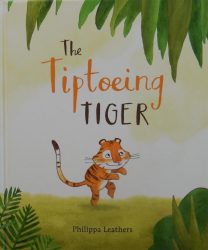
The Tiptoeing Tiger

The Tiptoeing Tiger
Philippa Leathers
Walker Books

‘Sleek, silent and totally terrifying’; a creature to avoid when it prowls through the forest; that pretty much sums up a tiger.

Not so Little Tiger though. He’s completely ignored, scares no one with his roars and is laughed at by his big brother. “I don’t think you can scare a single animal in the forest.” declares big bro. but Little Tiger is determined to prove him wrong.

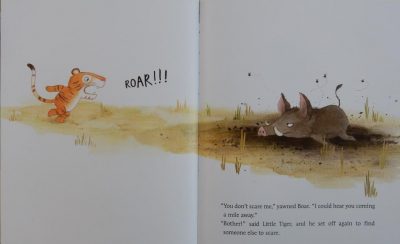
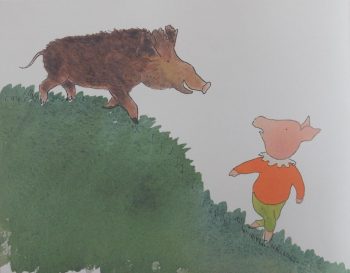
Employing a tiptoeing technique off he goes to sneak up on unsuspecting forest inhabitants, the first being Boar. “I could hear you coming a mile away” says the indolent Boar in response to Little Tiger’s “Roar!!!

He receives similar disappointing comments from Elephant and the monkeys in a tree.

It’s a sad Little Tiger that acknowledges his own shortcomings but remaining determined he heads to the pond. Surely that frog is an altogether better prospect?  Tiptoe, tiptoe, tiptoe …
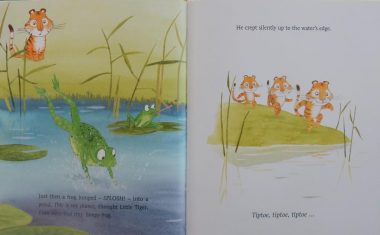
But the only creature that is in the least bit frightened is the Little Tiger looking right back at him from the water.
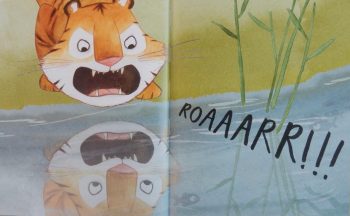
Job done! Back he goes to report on his success to that big brother of his.

The whole narrative is beautifully understated and perfectly paced; and the pen and watercolour scenes with that gentle touch of whimsy, the tiptoeing sequences in particular, are absolute delight.

Little Tiger is likely to win almost anyone’s affection from the outset but any waverers will surely be won over by his bold final admission.
Search-and-Find Bonanza – The Walkabout Orchestra, Mice in the City London and Cycle City

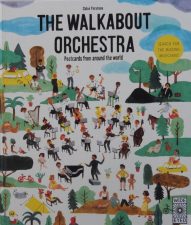
The Walkabout Orchestra
Chloé Perarnau
Wide Eyed

What has happened to the members of the orchestra? They’ve all gone missing and there’s an important concert coming up in a few days. Seemingly they’ve dispersed to locations all over the world from where they’ve sent the maestro postcards telling of their various activities. These appear in the top left-hand corner of each locale spread.
In a desperate effort to locate the musicians, the maestro, together with his side- kick, sets off in search of them. Their journey takes them to such diverse places as a fishing village in Iceland, Tokyo, a campsite in France, the pyramids of Egypt, carnival in Brazil and a football field in Abidjan.
In addition to finding the missing musicians, almost every place has a little yellow bird whose speech bubble provides something additional to search for in the lively scenes of the musicians’ sojourns.
Each one is packed with amusing details so that finding the musicians is often no easy matter. However they do all appear within a large arena ready for the concert with their maestro ready to conduct, bird atop his head.
Don’t start reading this if you are short of time, unless you are happy to cheat and look at the answers on the two final spreads.

Mice in the City London
Ami Shin
Thames & Hudson

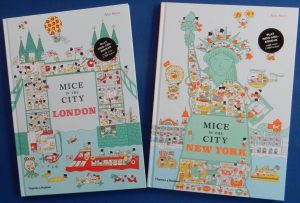
It’s a mouse takeover: London had been invaded by an army of tiny rodents; some – The Mouses of Parliament for instance, – have jobs to do, others are there to enjoy the sights and some are turning Tate Modern into complete disarray. One daring mouse has even installed herself as Queen Mouse in Buckingham Palace.
A verse introduces each location, opposite which is a detailed whole page pastel coloured illustration of the particular tourist attraction under mouse occupation: every one is full of things to delight and entertain.
The purpose of the book, in addition to enjoying what the mice are up to, is a game of ‘hide-and-squeak’ that entails finding eight things – Inspector Mouse, a stripy tailed cat, Bumble-mouse, a mouse in a bin, a teddy, a Union Jack top hat, a mouse hiding in a top hat and a balloon seller.
Happy Hunting! You’re in for some fun with Ami Shin’s mice.
In the same series is Mice in the City New York. Oh my goodness! Think of the chaos the little creatures might cause in The Strand Bookstore!

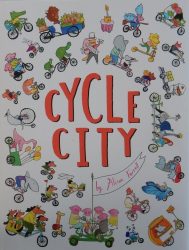
Cycle City
Alison Farrell
Chronicle Books

It’s the morning of the Starlight Parade in Cycle City but the parade committee has yet to send out the invitations so they decide to call on the assistance of Mayor Snail.
Can he get all those invites delivered in time for the evening? Perhaps, with the help of Little Ella Elephant who has come to visit one of the city’s residents, her Aunt Ellen. If so, who will play the important role of Grand Marshal at the big event?

A captivating search-and-find for slightly younger readers: this one has a clear storyline and a plethora of speech bubbles and is populated by a vast array of anthropomorphic animals. The spreads are less densely packed than some of its ilk, but have plenty of lovely details, and the endpapers are a visual glossary of all the different bicycles included.

I’ve signed the charter  

There Was An Old Lady / What Can Cats Do? and Who’s the Biggest? / How Many Kisses?

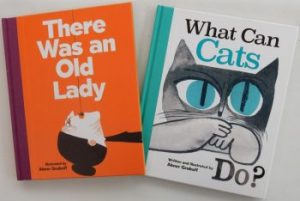
There Was An Old Lady
What Can Cats Do?

illustrated by Abner Graboff
Bodleian Children’s Books
Abner Graboff was an American artist and children’s book illustrator, popular especially in the USA in the 1950s, 60s and 70s who died in 1986 and whose work has since almost disappeared from the radar.
Now Bodleian Children’s Books brings some of this work to a new audience and decidedly quirky it is.
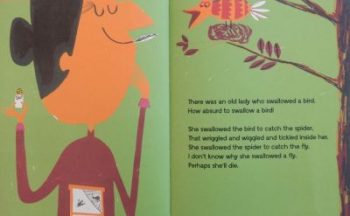
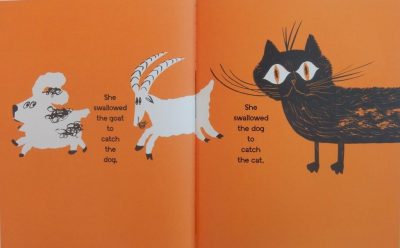
His arresting scenes of the animal guzzling old lady show a wicked sense of humour. The sight of her with a mouthful of bird, delicately holding a salt-cellar between thumb and forefinger and with a window through which we can see the contents of her stomach, is deliciously droll …

So too is this chasing scene …

Adults as much as children will enjoy this picture book version of the nonsense song and because of its cumulative nature, it’s a good one for learner readers.
What Can Cats Do? was inspired by Abner’s own cat called Tarzan and apparently his three sons collaborated with their father on the book, carefully observing the creature and reporting what they’d noticed to their dad.
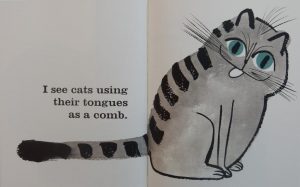
The outcome is a hilarious, first person narrative look at some of the things cats can do that children can’t – using their tongues as combs, for instance,

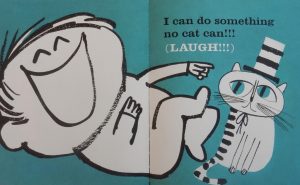
as well as a few things cats are unable to do such as shave or laugh.

Great fun for beginning readers and of interest to children’s book collectors and students of illustration.

Who’s the Biggest?
How Many Kisses?

Delphine Chedru
Thames & Hudson
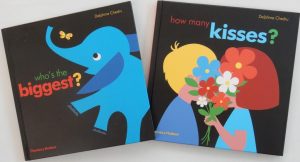
In the first title, award winning graphic designer Delphine Chedru takes a playful look at relative size in response to the title question.
The respondents claiming the size title in ways as different as a whisper to a boom, and a gurgle to a sigh, are as disparate as an elephant, a tree, a bear, a hammer, a mountain, a fishbowl, a leaf …

and the faceless human, ‘me’.
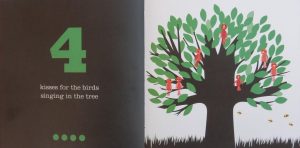
How Many Kisses? invites listeners to blow the appropriate number of kisses to who or whatever is indicated in the instruction facing the animal, human or other named objects.

The book follows the expected number sequence from 1 to 10 (with accompanying dots) and then takes seemingly random jumps to 17, 64, 823 and then to ‘millions’. I suspect it would take an exceedingly long time to give the ‘millions of kisses for all the children playing around the world’ on the final spread and the numbers beyond 10 may well be beyond the capability of young children but they’ll most probably enjoy the possibilities offered by such large numbers.
Both books are illustrated with bold bright images using dense flat blocks of contrasting colour and throughout each the text is white lettering on the black background giving an uncluttered, arresting overall appearance to every spread.

Car, Car, Truck, Jeep and Old MacDonald Had a Boat

Car, Car, Truck, Jeep
Katrina Charman and Nick Sharratt
Bloomsbury Children’s Books

Now here’s a cool idea: new author Katrina Charman has based her upbeat rhyming romp on the rhythm of ‘Baa baa black sheep’, and I’m guessing the playful notion of the strategically placed black sheep passenger on one of the trucks was Nick’s.

So let’s get going on our journey through this vehicular extravaganza, but first we need to make sure that those fuel tanks are full …

Now let the journey begin and see how many different things with wheels, not to mention rotors and sails, we can spy on our travels through the pages.
All that honking, beeping, zooming, chugga chugga choo-ing, flicka flacking, rumbling and scraping, vrooming, screeching and more is pretty tiring, especially when it’s kept up throughout the whole day.
So, come nightfall it’s more than time to head home for some shut-eye …

A terrific, rhythmic read aloud that’s packed full of wonderful sounds to let rip with, in combination with Nick Sharratt’s characteristic cartoon bright illustrations, (love that bus ad.)  this is surely any pre-schooler’s idea of picture book wonderland.

Old MacDonald Had a Boat
Steve Goetz and Eda Kaban
Chronicle Books

First we met the MacDonalds and all their animals with their truck and now they’re back in a new story, truck and all. As the story starts the truck has just drawn up near the barn and it’s pulling an old boat.
Then it’s time for Old Macdonald to set to work. Out come his tools. First it’s a buzz saw with a ‘BUZZ BUZZ here and a BUZZ BUZZ there.’
That’s followed by some hammering

though perhaps the pigs have a better aim that the farmer himself when they BANG BANG in those nails.

Gradually things take shape, then out come the blowtorches, the sanders and finally the paint rollers.

As evening falls their craft is launched and it’s time for a spot of water ski-ing.

Once you’ve had a couple of sing-alongs of Goetz’s text with the book, you’ll likely want to go back and take time over Eda Kaban’s expansive, brightly coloured spreads; of the farmyard crew enjoying themselves together and working together as a team. They’re full of detail and humorous touches.

Bird Builds a Nest

Bird Builds a Nest
Martin Jenkins and Richard Jones
Walker Books

Back in the day when I was studying physics at O-level I recall learning things about forces with no real understanding of the concepts as they were never demonstrated practically and I’m sure terms as straightforward as ‘push’ and ‘pull’ were ever used; how I passed the exam is anybody’s guess. It was only when I began teaching young children and everything was done through playful activities that I realised ‘oh so that’s what that statement I recall really means’.

Now here’s a cracking little book that introduces forces through a story about a bird building her nest.

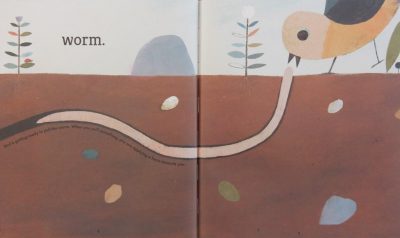
Oh joy, it’s a sunny day and the little creature needs to find a juicy worm to feast on and here she is about to apply a pulling force …

No luck with that particular worm but eventually she finds a suitable smaller, less strong one and out it comes. Yum! Yum!
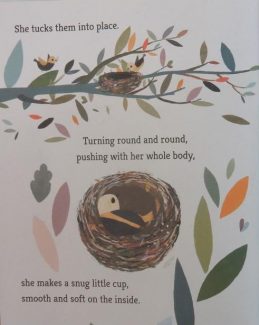
Breakfast over, she heads off in search of twigs to build her nest. Some inevitably are too heavy but Bird perseveres, pulling and lifting, to-ing and fro-ing, pulling and pushing the twigs into place, over and over until the outer construction is ready.
Then she collects softer, light things to make a cosy lining cup…

And finally the eggs are laid …

Already a big fan of this Science Storybook series of narrative science books for young children, I’m now an even bigger one. It’s so simple and yet so effectively explained both through the main narrative and in the smaller printed factual statements.
There’s an additional investigation on the forces topic using ping pong balls to try at the end.

Once again, Richard Jones has created a series of beautiful mixed media, textured illustrations in earthy tones to complement Jenkins’ text to perfection.


Splish, Splash, Ducky!

Splish, Splash, Ducky!
Lucy Cousins
Walker Books

Lucy Cousins has created a lively new addition to her array of cute characters to delight pre-schoolers.

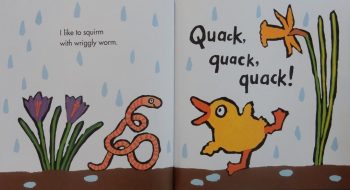
Ducky Duckling is a pluviophile and on this particular rainy day is in high spirits as with a ‘Quack, quack, quack!’ the little creature sets off in search of some friends to play with.

This refrain is a demonstration of happiness and Ducky utters it when hopping with frog, squirming with wriggly worm,

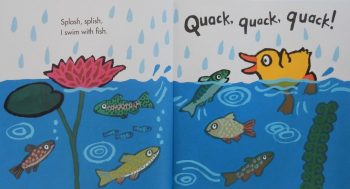
bestowing hugs on bug and slug, playing with the swans, swimming with the fish,

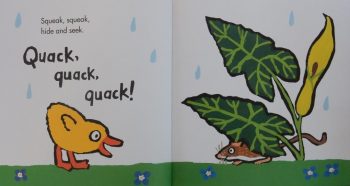
joining the birds in a spot of feather shaking and generally revelling in the feel of all those drips and drops while joining mouse in a game of hide and seek.

Observant listeners will more than likely have noticed that at every turn of the page, the rain is easing off until … ‘No more drips. No more drops.’ Suddenly Ducky feels sad and heads off to find Dad.

Fortunately for his offspring, the mallard knows just the thing for some fair weather fun – a round or two of quack, quack quacks!

With a rhyming text that offers plenty of opportunities for audience participation and a host of absolutely adorable animal characters illustrated in Lucy Cousins’ spirited style, (with more naturalistic representations of the surrounding flora) this is perfect for sharing with the very young.

Not only that but with its simple rhyming text that’s full of word play, this is perfect for those just beginning to read for themselves. Which would you rather offer a child just starting out on their journey as a reader: a deadly dull phonic early reading scheme book or this super storybook? – It’s a no brainer!

The Drum

The Drum
Ken Wilson-Max and Catell Ronca
Tiny Owl

One of the highlights of the school year in three of the primary schools I taught in before moving out of London was the annual visit of multicultural music workshop providers, Earthsong.
Storm and fellow musicians would come with their van filled with exciting musical instruments from different parts of the world – in particular, an amazing collection of drums – and give first a whole school presentation and then individual class workshops of music and dance for the children, often based on a theme that we had flagged up beforehand.
Once those drums came out and the children got their hands on them, even the most challenging of individuals became totally engaged and remained so throughout the session.

It was evident that drum circles (such as those Earthsong provided) were an opportunity for the children to feel totally connected with themselves and with one another and equally, that playing a drum was a terrific mood booster for every individual, many of whom came from less than ideal home situations.

Author Ken Wilson-Max and illustrator Catell Ronca capture those feel good experiences in their splendid little book for young children that features African drummers captivating both the players themselves and their audience

who cannot resist the invitation to follow Ken’s instructions to ‘Clap your hands … Stomp your feet … Move your shoulders from side to side

… Feel the beat in your belly … Feel the drum in your heart’

and who can ignore the appeal to ‘Shake your body and dance’. I can almost feel the beat and rhythm of the drums in Catell Ronca’s vibrant illustrations and want to start moving in concert with the children portrayed therein.

Spencer feels the beat

I can’t wait to see further titles in this new Tiny Owl series ‘Children, Music, Life’.

After The Fall

After The Fall
Dan Santat
Andersen Press

Most young children and adults are familiar with the nursery rhyme Humpty Dumpty and now author/illustrator Dan Santat has created a story telling what happened after that great fall of Humpty’s.

No he didn’t remain a splatted mess unable to be repaired.
Instead, in this self-narrated tale, the famous egg relates how he undergoes a long process of healing and recovery that begins once those king’s men have done their best with glue and bandages.

Physical recovery is one thing, but Humpty is suffering from acute vertigo, so much so that he now sleeps on the floor beside his bunk bed and his favourite breakfast cereals stored on the top shelf of the supermarket are out of reach.

Worst of all though is that Humpty is an avid ornithologist and absolutely loved that erstwhile seat of his atop the wall from where he used to watch his feathered friends.

Eventually however he settles for a ground-level view and it’s while looking upwards one day that he spies in the sky something that gives him an idea.

After considerable trials and tribulations,

Humpty eventually fashions the perfect flier of a paper plane; not quite the same as being up in the sky with the birds but ‘close enough’ he tells us. But then the plane lands up on top of a wall. ‘Accidents happen. They always do.’ says our narrator.

Absolutely terrified but full of determination, slowly but surely Humpty climbs the wall.

As someone who is terrified of heights, I really felt for him as he faced his fear, finally making it to the very top of that ladder. Once there he says triumphantly ‘I was no longer afraid.

That though is not quite how the story ends for then comes a final twist. Now the narrator has undergone an inner change that enables him to release himself once and for all; after all’s said and done, an egg doesn’t remain trapped in a shell for ever more: a right of passage must occur for something even better awaits …
This is so much more than just a ‘what comes next’ episode of a Mother Goose favourite.
Santal presents themes of fearfulness, anxiety, determination and ultimately, transcendence and transformation through the combination of his spare first person narrative and his powerful scenes, made so affecting through the changing perspectives and use of shadow.

Almost Anything

Almost Anything
Sophy Henn
Puffin Books

Sophy Henn has already created some wonderful characters; Pom Pom, Bear and Edie immediately spring to mind and now there’s another; meet George.
On this particular day, his fellow forest dwellers are all busy enjoying themselves in one way or another; not so George who sits doing nothing.
The little rabbit seems to be completely lacking in self-belief. “I can’t …” is his response to offers from his friends to join them in their activities.

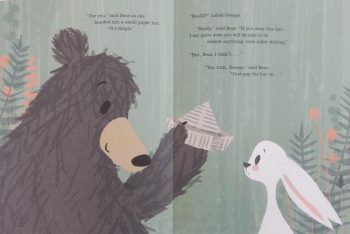
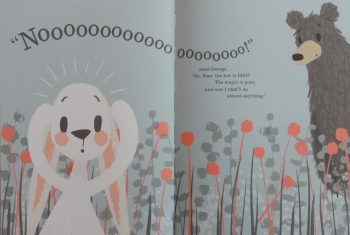
Along comes Bear, very old and very wise. She produces a newspaper from which she fashions a hat. Telling George that it has magical powers, she persuades him to give it a go and see what happens.

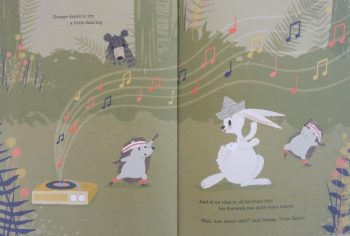
Slowly, slowly the ‘magic’ starts to take effect and it’s not too long before George is roller skating, which he follows by dancing to the beat, a bit of painting, some reading and much more besides. In short, George is a very busy bunny indeed, so busy that he fails to notice that his hat is no longer on his head. Suddenly …

Fortunately Bear is close at hand with an explanation of where the magic is really coming from …

As a teacher I’ve always told children that there’s no such word as ‘can’t’ when it comes to their learning and now here’s this wonderful new story from an author who really gets to the heart of how young children think .
Almost Anything is such an empowering book both for youngsters who lack self-belief and all those adults who do everything they can to offer encouragement and support to them when it comes to giving it a go.
Risk taking isn’t easy for everyone but this is a cracking book to help those who find it a challenge.

As always Sophy’s matt illustrations executed in a gorgeous muted colour palette, have just the right degree of gentle humour and the animals’ body language is quite brilliant. Look out for Badger, a truly stylish skittle player, and those hedgehog dancers sporting head bands and leg warmers are just adorable.

If this hasn’t convinced you that this is a must buy picture book then I’ll eat my ‘Almost Anything’ magic hat with its wrap-around instructions for making, kindly supplied by Puffin Books.

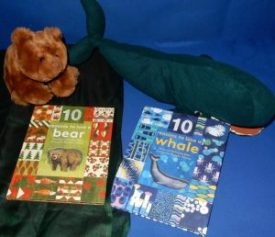
10 reasons to love a bear / 10 reasons to love a whale

10 reasons to love a bear
10 reasons to love a whale

Catherine Barr and Hanako Clulow
Lincoln Children’s Books

This engaging series of fun animal books for younger readers from Barr and Clulow, working in conjunction with the Natural History Museum, has two new titles.

The first features the eight bear species: the polar bear, the sun bear, the sloth bear, the American black bear, the brown bear, the Asian black bear, the spectacled bear and the giant panda.

Did you know that bears, with the exception of the bamboo only eating giant pandas, will consume pretty much whatever they can find be that fish, meat, berries or bark; and some honey loving bears will tear trees apart to access a bees’ nest and sometimes even lap up the bees. Ouch!

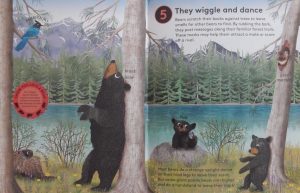
Have you ever seen a bear dance? I certainly haven’t but they rub their backs against tree trunks and do a kind of wiggle dance to leave a scent for other bears, either to attract a mate or scare off a rival.

Giant pandas so we’re told though will do a handstand to leave their mark.

Another way in which bears communicate is through sound: they might snort, growl, grunt or cough; and mother bears and their cubs hum if all is well. Panda bears on the other hand make a bleating sound.

All this ursine information and more, together with five ways humans can show they love bears, can be found in 10 reasons to love a bear.

The subject of 10 reasons to love a whale is the blue whale.
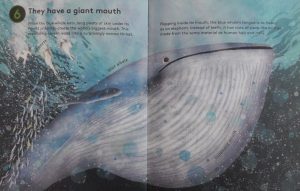
These enormous mammalian creatures are, when fully grown, around 30 times heavier than an elephant and have a heart the size of a small car. Amazing!

A blue whale’s mouth too, is gigantic, and its tongue alone weighs as much as an elephant.

Sadly these amazing animals are still a threatened species and their survival depends on we humans.

Most children, in my experience are fascinated by blue whales and so, I suspect, they’ll be eager to dive into this book.

Add these two to your primary school class collection or topic boxes.

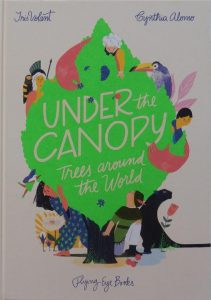
Under the Canopy

Under the Canopy
Iris Volant and Cynthia Alonso
Flying Eye Books

Often called the lungs of the world, as the largest plants on our planet, trees are vitally important to us all. Essential for life, they are the longest living species on earth and so link past, present and future.
Many of them are also incredibly beautiful whether covered in new leaves or stripped bare of all foliage.

Herein, fact and fiction are woven together in a celebration of trees of various kinds from all over the world.

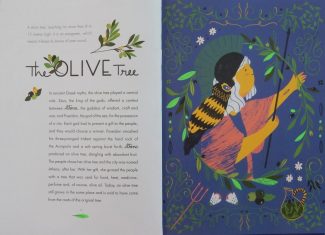
We learn how, according to the Greek myth, Athena, the goddess of wisdom’s gift of an olive tree was chosen by the people over Poseidon’s salt spring and Athens was named in her honour.

Another tree featured in the book that has an associated legend is the Willow.
In order to boost sales of the blue and white willow pattern chinaware once popular in England a number of stories were invented based on that pattern.

One such tells of young forbidden love and of the ultimate transformation of the ill-fated lovers into doves.

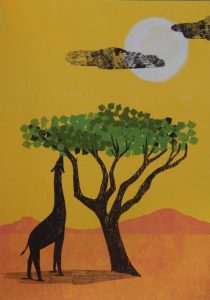
From tropical regions including Africa and Australia is the acacia. The famous whistling acacias of Zimbabwe were so called because their long pointed thorns make a whistling sound when the wind blows.
A popular food of giraffes, these trees, in response to grazing, pump their leaves with organic chemicals which force the animals to stop feeding and in addition the tree under attack can communicate to other nearby acacias to do likewise.

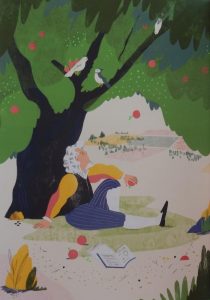
Legend has it that the English mathematician and phycisist, Isaac Newton conceived his theory of gravity when he saw an apple falling while thinking about the forces of nature.

Elegantly produced, this diverting collection, which features over twenty tree species is one to dip into, to enjoy and savour Cynthia Alonso’s stylish artwork with its textures, patterns and standout splashes of luminous green.

Just Like Mummy / Superhero Mum

Just Like Mummy
Lucy Freegard
Pavilion Books

Following on from last year’s Just Like Daddy, Lucy Freegard turns her attention to mums, especially the one featured here.

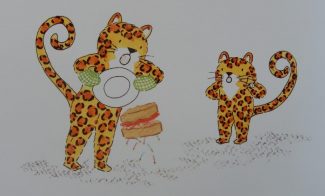
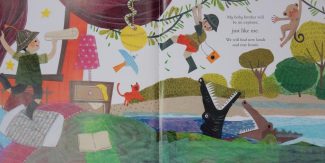
The young narrator introduces his/her special super-talented mum– full of fun, both creative and practical, ready to offer some words of wisdom at just the right time and provider of cuddles whenever they’re needed. Who wouldn’t want to have a mother like that, and perhaps, to have those qualities when they grow up? Certainly that is what the little leopard here is aiming for. (We don’t know the gender so the story works well for all.)

I suspect any youngster would wish for a mother who spends so much time with her child be that making music, gardening, exploring or whatever, and the cub really does appreciate this togetherness.

It’s important to acknowledge that things don’t always go exactly how we’d like them to; there are sad times, challenging times and inevitably, times when we make mistakes, and so it is here.

Lucy Freegard’s expressive illustrations do a great job of encompassing both the highs and lows of everyday life in a book that is perfect for sharing and discussing with pre-schoolers, and especially, it’s a lovely story for giving to a special mum on Mother’s Day.

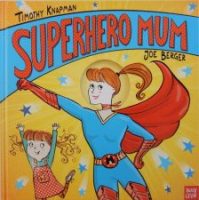
Superhero Mum
Timothy Knapman and Joe Berger
Nosy Crow

We had Superhero Dad and now Knapman and Berger even things up with a companion title about mums.

The narrative is an upbeat rhyming celebration of all the things that make them so amazing. Mums, and in particular this little girl narrator’s mum, is on the go from morning till night, whizzing around, often multi-tasking.

Whether it’s making sure we catch the bus to school,

inventing and participating in energetic playground games, administering first aid,

joining in with bath time fun, seeking out a favourite lost toy, or sharing a bedtime story, she always delivers.

In short, she’s an inspiration to every would-be super hero girl (or boy come to that.)

It takes someone special to do all these things with a smile on her face and that’s how Joe Berger’s comic book coloured, action-packed scenes portray her in every one of these seemingly ordinary, everyday activities that could be easily taken for granted.

I’ve signed the charter  

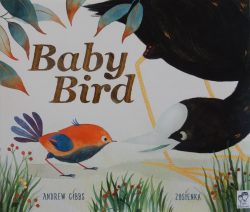
Baby Bird

Baby Bird
Andrew Gibbs and Zosienka
First Editions
First Editions is a new ‘sub-imprint’ of Lincoln Children’s Books that is entirely devoted to debuts and this book is one of its first.

‘Birds are born to fly’, thinks Baby Bird but this little bird was born with one misshapen wing that fails to develop fully and so when the other hatchlings are ready to leave the nest Baby watches them take flight but, try as s/he might, Baby’s efforts to follow them end in disaster.

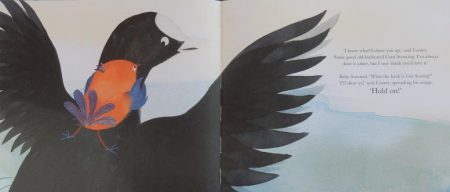
Determined to learn to swoop and soar like the others, the little creature keeps practising, refusing to give up until suddenly a monstrous face appears from the shadows and there is, not a monster but another bird calling itself Cooter.

Cooter offers to assist Baby by becoming a buddy and the two spend the afternoon endeavouring to get Baby airborne, all to no avail and although Cooter tells Baby that he’s having fun, the fledgling most definitely is not.

The friendship is further tested when Cooter tells Baby something exceedingly distressing that precipitates a fall, a rescue and a revelation.

What follows changes the entire mood; it’s something called Coot Scooting and from then on, Baby’s outlook on life and flying is altogether different.

Baby Bird embodies the spirit of determination against all the odds in this tale of friendship, self-acceptance and inclusivity.
Both author (who sadly did not live to see the book’s publication) and illustrator’s portrayal of the fledgling is uplifting and inspiring.

I’ve signed the charter  

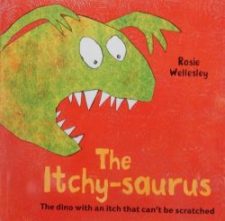
The Itchy-saurus

The Itchy-saurus
Rosie Wellesley
Pavilion Children’s Books

I’ve taught a good many young children who suffered and I mean suffered with eczema. I can recall two in particular, one 4 year old who would sit on the carpet during story times and when he got up there’d be piles of skin where he’d been sitting; eventually his parents took him to India one holiday and they found some amazing herbal creams that worked wonders. The other, during flare-ups, had to go every midday to have his bandages removed and emollient cream re-applied by the member of staff employed to look after children’s medical welfare. Both must have been in an almost constant state of agony, yet both were amazingly stoical, never complaining and almost always smiling.
Created by GP author/illustrator Rosie Wellesley, this reassuring book would have been perfect to share with those children as well as their classmates.
In fact it should be in all early years settings and in families with a child or children who have eczema or other skin disorders.

Meet T Rex whose life is suddenly made a misery by an itchy rash that appears on his skin turning him into the grumpiest, most dangerous creature in the jungle. Until that is, Doc Bill hears of his plight and despite his lack of stature, resolves to help; so off he goes.

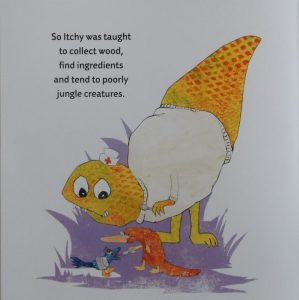
Having found a tearful ‘Itchy’ the Doc sets out some ground rules for his patient, makes a cooling bath and sets to work with his lotion-making machine.

The following morning after Itchy’s had a good night’s sleep, begins stage two of the healing process; learning some distracting actions while the cream has time to work its healing magic …

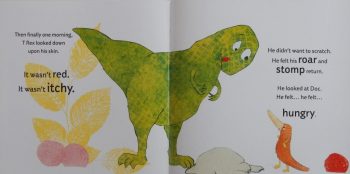
until finally when Itchy looks at his skin …

No redness, no itchiness, no need to scratch – hurrah! Time to thank the Doc.

When’s My Birthday?

When’s My Birthday?
Julia Fogliano and Christian Robinson
Walker Books

For young children, birthdays are possibly even more eagerly anticipated than any other day of the year and here we have a book that can be shared in the days running up to that special celebration.

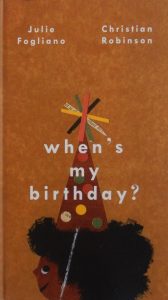
Everything about this is sheer delight. First there’s the unusual, attention grabbing shape of the book. Then come the striking but simple candle endpapers, after which begins  Fogliano’s spare chant of a text wherein she captures perfectly the voice of the child.
‘ when’s my birthday? / where’s my birthday? how many days until / my birthday? ’ asks the repeat refrain that holds the whole narrative together as the excitement builds.

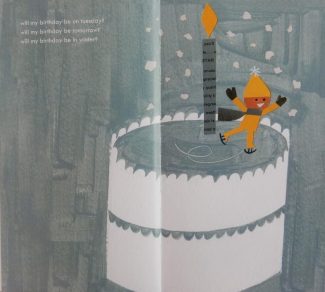
That artist Christian Robinson has a deliciously playful sense of humour is evident in the joyful collage style illustrations such as this one with its visual pun on ‘ice-skating’ …

No child’s birthday is complete without other vital ingredients including singing and dancing: ‘will we sing so happy happy? / will we dance around and round? / will we jump and jump and jump?’

Presents and cake too are contemplated: how wonderfully the artist plays with size as here …

and

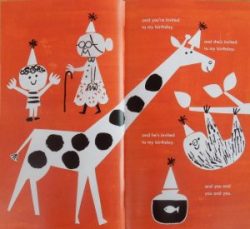
and these children know precisely what must comprise the birthday tea, but when it comes to the party, everyone is invited both human and animal and any kind of dress is acceptable.

Spirited, inclusive and the ideal gift for a small child whose birthday is fast approaching; a ‘happy, happy day’ for sure.

I’ve signed the charter  

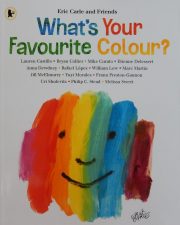
What’s Your Favourite Colour?

What‘s Your Favourite Colour?
Eric Carle and Friends
Walker Books

Herein, Eric Carle and fourteen other picture book artists, many of whom UK readers might be unfamiliar with, share and discuss their favourite colours.

Carle himself, who opens the book, favours yellow, in part because it presents him with an artistic challenge.

The reasons for the choices of others are varied and what they have to say, sometimes surprising.
Take say Jill McElmurry’s Black Garden, an imaginary place where she goes to ‘get lost in my thoughts, dance around, have a good cry, sing a song, paint a picture, or maybe eat a slice of dark chocolate cake. The Black Garden is unpredictable. The Black Garden is the garden of me.’

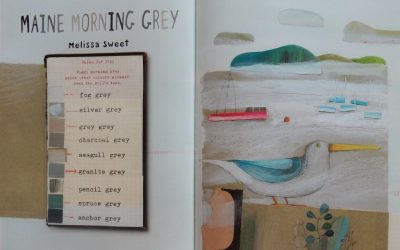
Some artists such as Philip C. Stead, Yuyi Morales and Melissa Sweet use poetry. Melissa Sweet’s Maine Morning Grey comes in many shades:

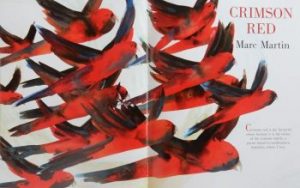
Others are more particular. Marc Martin specifies crimson red for the parrot, crimson rosella, which lives in his part of south eastern Australia.

Anna Dewdney’s choice is based on memory ‘When I was a little girl, my favourite outfit was my purple polyester trouser suit, and I wanted purple peacocks in the front garden. When I grew up, I got them.’
The final artist, Uri Shulevitz, doesn’t choose just one colour. ‘A single colour may feel lonely,’ he tells us and so paints a joyful ‘colourful party’ to include them all.
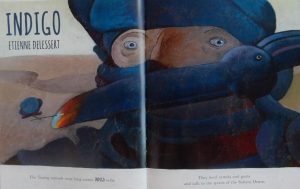
Every spread is worth lingering over and I find it well nigh impossible to choose a favourite but for its brief potency I particularly loved Etienne Delessert’s Indigo: ‘The Tuareg nomads wear long cotton indigo veils. They herd camels and goats and talk to the spirits of the Sahara Desert.’

Thumbnail pen portraits on the final spread provide additional information about each of the contributors.

Fascinating and inspiring, this visual and verbal feast offers an excellent starting point for an exploration of colour with a wide range of age groups from pre-schoolers to adults.

Swapsies / Say Sorry, Sidney!

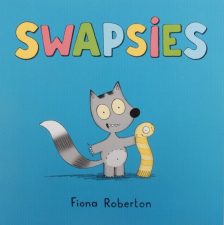
Swapsies
Fiona Roberton
Hodder Children’s Books

There’s a delightful lesson in the importance of friendship and learning to share in this latest book from talented author/illustrator Fiona Roberton whose books have all been winners with me.
Fang has a favourite toy, an amazing yellow, stripey, squeezy, thing with an aroma of bananas; he loves Sock more than anything else.
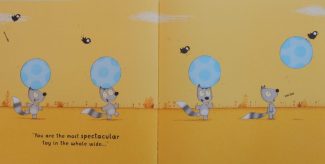
Enter Philip with his magnificent shiny red train, which looks a whole lot more exciting than Sock. Being a good sharer, Philip agrees to a swap.

A similar thing happens with the bouncy toy belonging to Simon. But then disaster strikes …

and Fang is left toyless and missing his old favourite.
Is he to be without his beloved Sock forever more or is there perhaps a way they can be re-united.
Fiona’s characters are adorable; her dialogue superb: “What happened to Ball?” asked Simon. “Ball is no longer with us,” says Fang; and the finale (which I won’t divulge) leaves room for the children’s imaginations to take over and draw their own conclusions.

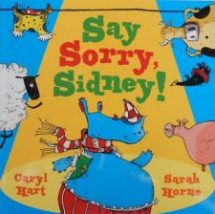
Say Sorry, Sidney!
Caryl Hart and Sarah Horne
Hodder Children’s Books

Resident of the zoo, rhino Sidney feels lonely so he decides to make a break for it and heads for the farm.
Once there, the creature starts helping himself to anything and everything that takes his fancy. First he scoffs Mr Potts lunch, then ruins all the washing on Aunt Ann’s clothes line. How wonderfully affronted she looks …

Not content with that he destroys young Emily’s den and smashes all her favourite toys. Even worse, despite their protests of innocence, everyone blames their loss on whichever farm animal happens to be on the scene at the time.
Rhino? What Rhino? / That cannot be true. / There’s only one rhino / and he’s in the zoo.” Is what the accusers all say to the accused.
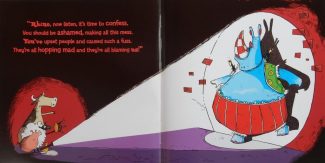
Come the evening, those farm animals have had enough; time to confront that rhino and teach him a lesson they decide.

Will Sidney finally see the error of his ways, learn some manners and become a valued member of the farm community, or will it be back to the zoo for him?
With its join-in-able repeat refrain, the jaunty rhyme bounces along nicely and Sarah Horne’s wonderfully quirky characters, both animal and human, are quite splendid.

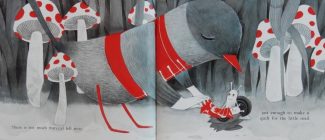
Ash Dresses Her Friends

Ash Dresses Her Friends
Fu Wenzheng
New Frontier Publishing

I’m always interested to discover new illustrators and authors and thanks to New Frontier Publishing I’m meeting Chinese author/illustrator Fu Wenzheng for the first time.
Having grown up in a temple in China she draws on her childhood experiences in her illustrative style employing an, Ink Wash Painting technique (known also as literati) using just three colours to create her multi-layered images.

Her story is simply told and features a shy, lonely, azure-winged magpie named Ash.

One day Ash finds herself face to face with a sad looking elephant. The reason for his sadness is that he wants a new shirt.

Ash decides to help and from a length of red material she fashions him a wonderfully patterned one.

Before long the news of her skill and generosity has spread and one by one, a whole host of other animals come calling hoping for something colourful from Ash’s material, and she’s happy to oblige.
She’s even willing to use her last tiny piece to create a cosy quilt for a baby snail.

Once the cloth has gone, so too seemingly, have all her friends and Ash is alone once more.
Surely that is no way to treat such a kind-hearted creature? Absolutely not; it’s now time for the animals to acknowledge her generosity …

Symbolising good luck, happiness and joy, red is an auspicious colour in Chinese culture and here the predominance of red in Fu Wenzheng’s illustrations emphasises Ash’s friendship and kindness in sharing what she has with others, as well as creating striking images throughout.

The Adventures of Egg Box Dragon

The Adventures of Egg Box Dragon
Richard Adams and Alex T. Smith
Hodder Children’s Books

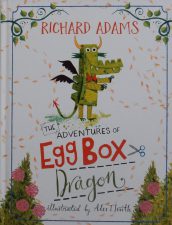
Here’s the result of an inspired bit of decision making from someone at Hodder: the teaming of Richard Adams (now no longer with us) and wonderful illustrator of the Claude series, Alex T.Smith. It’s the first and only picture book from Watership Down author and the last ever book Adams wrote.

Like a good many other children, Emma loved to make things out of egg boxes, not the awful plastic things but the pukka cardboard ones. One day she fashions a fantastic dragon from those egg boxes with the addition of bits of card, scraps cut from bin liners, wire, shiny bike reflectors and paint.

This amazing construction is hugely admired when Emma brings it home and one person not usually given to speaking out declares the “critter’s got magic.”

Doing as she’s bid, Emma puts the dragon to sleep under the moon and waits.
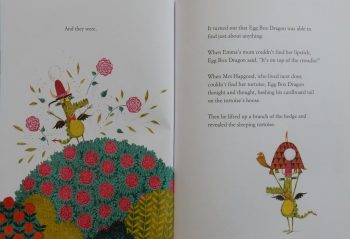
Sure enough the old man is right, the dragon comes to life and yes, he’s a fiery thing but this mischievous beastie has an amazing talent: he’s able to locate the whereabouts of almost anything that’s been lost – Dad’s specs for instance and the neighbour’s tortoise.

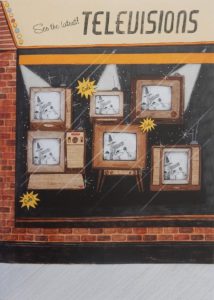
Pretty soon the whole neighbourhood has heard of this extraordinary gift and the TV news gets hold of the story.

Then comes a surprise call:

her majesty enlists his help and the Egg Box Dragon finds himself going to the palace to assist her in finding a missing diamond from her crown.

A thoroughly enjoyable tale, full of splendid characters in its own right, but with amazing artistry from Alex that’s simply brimming over with wonderfully imagined details, the whole thing moves to a whole new level of deliciousness.

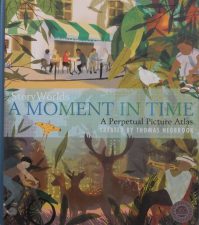
Story Worlds: A Moment in Time

Story Worlds: A Moment in Time
Thomas Hegbrook
360 degrees

Through this Perpetual Picture Atlas, Thomas Hegbrook takes readers on an amazing global trip that enables us to see, through a series of freeze frame images, what is happening all over the world – in thirty nine time zones – at precisely the same instant in July.

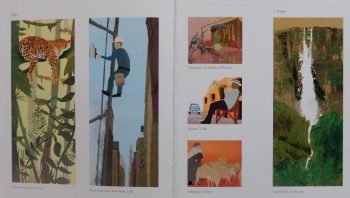
The first spread is a world map that shows and explains these zones and we can then begin our exploration at 6am on two minor outlying islands of the US with curlews taking flight, or perhaps join some children on their walk to school in Honolulu where it’s 8am. Alternatively by moving on a few spreads we find ourselves in the Amazonian rainforest in Brazil where it’s 2pm as it is in Havana, Cuba, in New York and at Angel Falls, Venezuela.

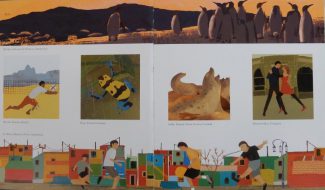
Start at the back and we pay a visit to a Delhi market place still busy at 11.30pm, or watch two boys play a board game in Bangladesh. In Samoa however, it’s 7am and we can share a family’s breakfast or watch children feeding the hens in Tonga. Meanwhile in London it’s 7pm and people are hurrying home from work, whereas across the channel in France it’s 8pm and some Parisians are relaxing with a drink.

The enormous variety of life both human and animal is amazing.

You can also choose to open the book right out and this provides opportunities for comparing and contrasting various parts of the world at a single glance, savouring being in the moment in up to a dozen locations simultaneously.

This fascinating volume (from a Little Tiger imprint) offers learning opportunities aplenty. I envisage groups of children lying flat out on a classroom floor, or sitting around a table with the book standing up, exploring, storying and excitedly discussing each of Hegbrook’s wonderful painterly spreads, all of which offer exciting viewpoints and different layouts. There is also a pictorial index giving a little additional information about the pictures.

Ingenious and absorbing, this is high quality non-fiction with a difference and deserves a place in every classroom collection and on family bookshelves.

I’ve signed the charter  

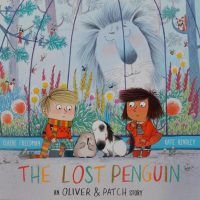
The Lost Penguin

The Lost Penguin (An Oliver & Patch Story)
Claire Freedman and Kate Hindley
Simon & Schuster Children’s Books

Oliver made two new friends in Oliver and Patch, one canine and one human.
In this sequel, the three of them are pretty much inseparable during the day time although in the evenings Oliver and Patch return to Oliver’s flat and Ruby to her house.
Their favourite place to spend time together is the city zoo and it’s there that they see Peep.
Peep, so Sandy the zookeeper tells them is a newly arrived rescue penguin. The friends put his sad look down to the fact that he misses his old home.
The following day when they return to see Peep again, he’s nowhere in sight. Quickly they inform the zookeeper and a search begins.

Children will enjoy spotting the little penguin’s resting places in various locations that Ruby and Oliver fail to notice.
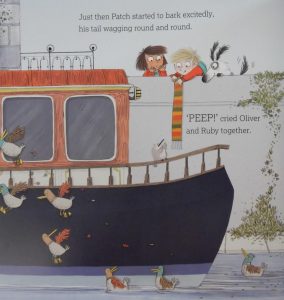
Eventually the friends discover the little creature’s whereabouts aboard a canal boat;

but on arrival back at the zoo, discover it’s closed for the night.
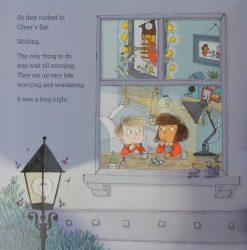
A squabble ensues over who is to look after Peep overnight, after which Ruby and Oliver realise that both Peep and Patch have gone missing.
Where can they be? There’s a long night’s wait ahead but will they find the two missing animals again next morning?

The ups and downs of friendship and the difficulties of settling into a new environment are explored in this reassuring tale.
Kate Hindley provides plenty of amusing details to linger over in every spread so this definitely isn’t a book to hurry through despite the urge to discover what has happened to the missing Peep.

I’ve signed the charter  

We’re All Works of Art

We’re All Works of Art
Mark Sperring and Rose Blake
Pavilion Children’s Books

In a cleverly constructed rhyming narrative, Mark Sperring introduces young readers and listeners to a whole host of different styles of art while at the same time celebrating human diversity and the uniqueness of every human being.

Highly accessible and beautifully illustrated by Rose Blake who provides a series of bold illustrations clearly inspired by famous artists and works of art from prehistoric times through to Fauvism, Cubism and on to Pop art and Contemporary art.

Look out for Magritte,

Matisse …

and Indian miniatures

and Peter Blake; no matter what you like there should be something to please here and if it doesn’t make you want to visit one of our many wonderful art galleries, then I’d be surprised.

Equally, it should inspire readers to experiment with various art styles for themselves.

Great fun and gently educational too. One for the family collection and for schools of all kinds.

I’ve signed the charter  

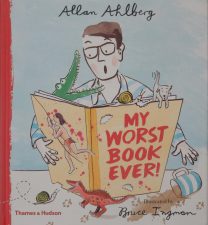
My Worst Book Ever!

My Worst Book Ever!
Allan Ahlberg and Bruce Ingman
Thames & Hudson

Whatever would make a reviewer want to open a book with the title of this one and start reading? Two other words on the cover, Ahlberg and Ingman: their collaborative efforts are always a huge treat even when there’s a squashed fly on the page before the narrative proper even begins.

Essentially this is a look at the whole publishing process from the germ of an idea in the author’s mind – that’s Allan of course – all the way through to finished book: a comparatively straightforward operation surely?

It all begins well in Allan’s writing shed at the bottom of his garden. The author has the essential brain fuelling mug of coffee, a pencil and pad, and his ‘Crocodile Snap’ story, just waiting to be written and off he goes.

Then real life intervenes. First it’s the small drama of the cat: this though is but a minor distraction.
Next comes a family seaside holiday (completely forgotten by the author), which interrupts the schedule for a whole week; but there’s that good old shed ready and waiting on his return.

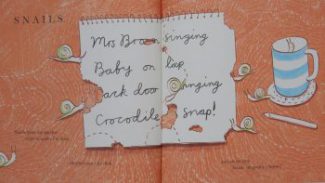
However, it seems as though there have been some hungry visitors during Allan’s absence. (Now I can verify that this is perfectly possible – the same fate met my courier note taped to the front door and I caught the pesky molluscs in action having a nibble.)

Fortunately, this setback doesn’t appear to interfere with the author’s narrative flow and, displacement activities notwithstanding, by the end of the day the story is finished. ‘The End’: time for a celebratory hunk of cake.

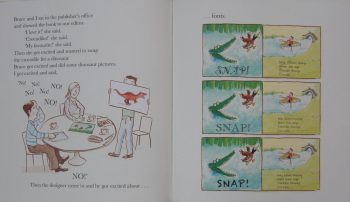
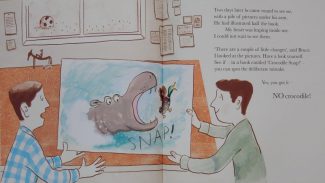
The end for the writing maybe, but it’s only the beginning for stage two: enter illustrator Bruce. The guy appears to be pretty taken with the story, claims crocodiles are his favourite protagonists and …

So why is it that a couple of days later, that croc. has been kicked right out of the water so to speak and there’s another creature hogging the show?

Nevertheless, the changes are only temporary and a few days later the co-creators visit the publisher’s office where the editor throws in her own ideas or rather tries to, as does the designer,

and the agreed version of the book then goes off to the printer. End of story …

Not quite, but if you want to find out what comes off the press and is duly delivered to the bookshops, then you’ll have to get your own copy of the book: after all we don’t want yet another story spoiler …

Another winning collaboration between Ahlberg and Ingman no matter what we’re led to believe herein.

Utterly hilarious from cover to cover, this catastrophic account will have you chortling at every turn of the page. It’s a longish read and one you might not choose to share with a group of budding authors just before a story writing session, although; on second thoughts, mistakes are a vital part of the learning process.

Birdy & Bou / A Recipe for Playtime

Birdy & Bou: The Floating Library
Mandy Stanley and David Bedford
Simon & Schuster Children’s Books

I’m always on the lookout for stories that promote book loving and library use to very young children and here’s a great little book that does both of those things.
Bou is a red-eared panda and Birdy is, well, a bird.
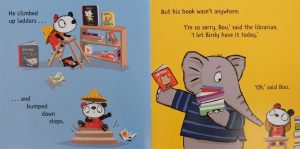
Bou is an avid reader and when the floating library makes its regular stop at the village, he cannot wait to get his paws on his favourite book again.

Once aboard, he searches high and low but no matter where he looks, Bou cannot find his beloved book. Someone else has got there before him.

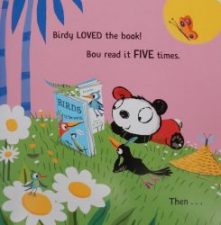
Off goes the little panda to track down the borrower, which he does eventually, although its borrower, Birdy, hasn’t quite grasped how to read it. Time for a demonstration and a spot of book-sharing.

So absorbed are the new friends that by the time they reach the river again, the library boat has departed. How can they return the book now?

With its bold, bright artwork, simple storyline and lovely surprise ending, this book with its toddler friendly wipe-clean pages, from the duo that created Roo the dinosaur, have another winner in Bou.

A Recipe for Playtime
Peter Bently and Sarah Massini
Hodder Children’s Books

Following on from their A Recipe for Bedtime, Bently and Massini have created a celebration of play. The toddler herein finds delight in block building, painting, constructing and imaginary play indoors,

before heading outside where there’s a slide, a sandpit, swings and lots of places to hide in when it’s time for a game of hide-and-seek with the toys.

Back indoors once again, it’s time to tidy away before snuggling up for a goodnight story – the perfect way to end the day.

Peter’s jaunty rhyme together with Sarah’s scenes of the fun and games, really do capture the joyful exuberance of the very young at play.

I’ve signed the charter  

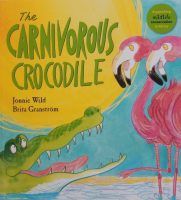
The Carnivorous Crocodile

The Carnivorous Crocodile
Jonnie Wild and Brita Granström
Otter-Barry Books

What would you do if you were a thirsty creature desperate for a cooling drink from the waterhole, but the animals warned you of a carnivorous crocodile lurking within and claiming ownership of its waters? Probably you’d stay safely on the bank, but that is not what the five flamingos do.
We’re not frightened of a silly old croc,” is their response on hearing about the likelihood of being crunched by said croc. as they sally forth into the water.

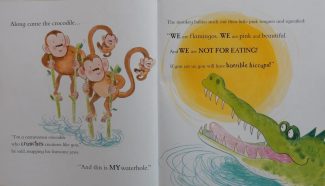
As expected the resident crocodile happens along, jaws agaping and threatening, “I’m a carnivorous crocodile who crunches creatures like you. And this is MY waterhole.
Did those flamingos flinch or show any other signs of fear? Oh no; instead they responded thus: “We are flamingos. WE are pink and beautiful. And WE are NOT FOR EATING! If you eat us, you will have horrible hiccups!
This possibility does not appeal to the crocodile and off it swims.

Heartened by this display of bravado, and encouragement to “Be brave”, three giraffes gingerly enter the water. Before you can say ‘snap’ who should be there repeating his threat but that crocodile, only to be greeted by the same “We are flamingos …” mantra and amazingly off swims the jaw snapper.
Next comes a family of monkeys and off we go again.

This time though the crocodile is a tad suspicious but he swims off nonetheless.

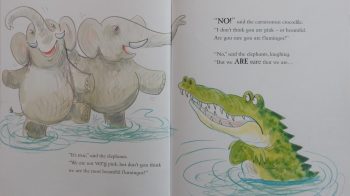
Two eager elephants march confidently forwards and they too claim to be flamingos – pink and beautiful.
The crocodile may not fall for this subterfuge again but he’s certainly in for a surprise, for elephants have other, shall we say, more weighty characteristics …

This learning to share story certainly appeals to children’s (and adults’) sense of the ridiculous; and readers aloud will relish the opportunity to ham it up – certainly this reviewer did. Debut author Jonnie Wild, is passionate about environmental issues and is donating his royalties to charities supporting African wildlife conservation.

Brita Granström’s scenes of the various animals shape-shifting attempting to emulate the flamingo pose and take on the flamingo characteristics are highly inventive and delightfully droll; even the elephants make a brave attempt.

A highly successful collaboration and a great book to share; don’t forget to check out the information on some of the animals and conservation on the final page.

Emmanuelle engrossed in the antics of the animals

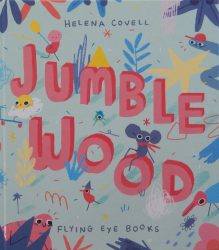
Jumble Wood

Jumble Wood
Helena Covell
Flying Eye Books

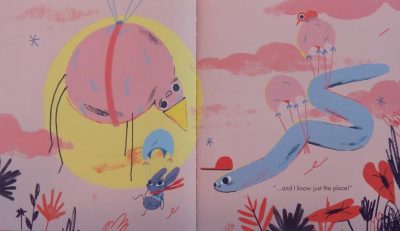
Jumble Wood is populated with a motley assortment of wild creatures. They have one thing in common though: each of them has a special thing that makes them happy; all of them with one exception that is. Pod has no happy thing and thus feels very alone.

Summoning her courage, she decides to search for that elusive happiness thing in all the most unlikely hiding places.
Her search takes her to the swamp where she discovers Peach who offers to help,

but no ‘hard-to-find’ thing do they discover, even at the top of the mountain where Peach takes them; there though they encounter Worm.

Worm suggests digging down but there’s nothing in the tunnel other than darkness and each other.

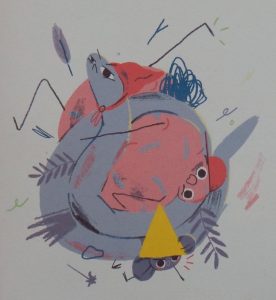
Finally they re-emerge into the daylight and that’s when Pod sees things clearly in more ways than one …

With its endearingly offbeat characters – amorphous creatures executed in pastel shades – Helen Covell’s quirky debut picture book, with its child-like rendered backgrounds, makes audiences think about friendship and its importance from a different perspective.

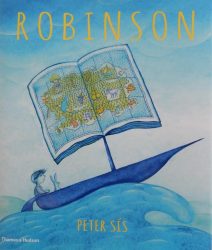
Robinson

Robinson
Peter Sis
Thames & Hudson

Drawing on an episode from his childhood as well as the Robinson Crusoe story that he loved as a boy, award-winning author/illustrator, Peter Sis has created an absolute dream of a picture book.

The narrator and his pals’ favourite game is pirates so when their school announces a costume party it seems as though everyone will go in pirate gear. Until that is, Peter’s mum suggests he should go as Robinson Crusoe and he does.

His excitement as he walks to school is quickly shattered when his classmates make fun of him for having the confidence to be different. (Presumably they aren’t familiar with the Crusoe story.)

Peter’s mum takes him home, tucks him up in bed and at this point in a feverish state, Peter’s imagination takes over.

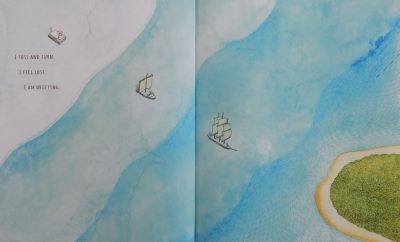
There follows a dream-like sequence where, in stages, his bed is transformed into a three-masted sailing ship heading towards an island.

On the next spread Sis seems to be paying homage to Sendak’s Where the Wild Things Are when he says, ‘I float in and out of hours, or maybe days, until I am cast upon an island.

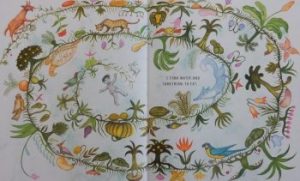
On this island, Peter encounters verdant tropical landscapes, one a maze comprising amazing flora and fauna.

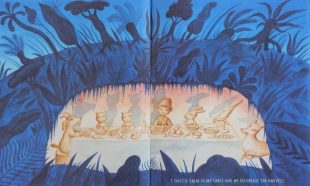
He builds himself a protective shelter, makes his own clothes, finds food and becomes friends with the resident animals;

and all the while the lad is growing in self-confidence, though he still keeps his eyes open for pirates.

Finally, with new-found fortitude, the boy does connect once more with his friends and the story ends in a wonderfully satisfying way.

Sis experiments with several artistic styles in his pen, ink and watercolour illustrations and this serves to intensify the fantastic quality of his island landscapes and his whole journey, both inner and outer.

Thoroughly immersive: this is a book to linger over, read and re-read, and a wonderful demonstration of the power of literature to shape and expand the imagination.

The New Baby and Me!

The New Baby and Me!
Christine Kidney and Hoda Haddadi
Tiny Owl

Five brothers speculate upon the arrival of their new baby brother.
Each of them puts forward his idea as to what the infant will be like, bestowing on it a characteristic similar to his own so they can share adventures.

The first sees them as fellow explorers discovering new lands and rare creatures.

The second gives the babe the qualities to be a scientist.

Brother number three declares that his baby brother will share his artistic talent and join him in enhancing the world with their creative endeavours.

A treasure-seeking pirate is brother number four’s prediction, whereas the remaining sibling, a dreamer, sees his little brother joining him in finding wonder in the world.

What a surprise they have when the new baby finally appears.

Let’s just say, this new family member has elements of all the brothers but is very much an individual …
Each of us is different; our aspirations should not be limited according to our gender. No matter whether we are a boy or a girl the world’s opportunities should be open to all of us. This is the message that comes through in this unusual take on the ‘new sibling in the family’ story by debut author Christine Kidney.

Hoda Haddadi’s spirited collage illustrations are a wonderful embodiment of children’s boundless imaginations and bring a joyful sense of eager anticipation to each spread until the baby appears.
Her collage technique is one that children will likely be inspired to try for themselves.

I’ve signed the charter 

The Pirates of Scurvy Sands

The Pirates of Scurvy Sands
Jonny Duddle
Templar Publishing

Just when you were thinking there couldn’t possibly be room on the high seas for another pirate, along comes young Matilda, friend of pirate boy Jim Lad. But can she really cut the mustard as a true pirate or is she the land-lubbing pretender that the other Scurvy Sanders suspect her to be when she goes a holidaying with the Jolley-Rogers?

Excited to be allowed to accompany her pirate pals on a visit to Scurvy Sands, Matilda bids her parents goodbye and three days later, is greeted by Cap’n Ollie Day at the pirate resort who tells them of lost gold buried long long ago by one Mad Jack McMuddle..

The pirate kids are highly doubtful about her pirate credentials, as are the adults,

all of whom are just waiting to expose the girl with her neat clothes, clean teeth, perfect table manners and lack of unwashed odours, wherever she goes and whatever she does.

Take the pirate test” is the command.

What can she do to prove herself?

Suddenly, inspired by a portrait of Mad Jack, Matilda has an idea. All she needs is Jack’s map, a compass and her own excellent sense of direction; oh and a spade carried by her pal Jim Lad.

You’ll certainly need your best array of pirate voices when you share this rollicking sequel to The Pirates Next Door, but don’t worry. I suspect your audience will be focussed on the filmic illustrations, which are absolutely brimming over with larger than life, roguish-looking characters and piratical paraphernalia. Do take a look at the superbly detailed end-papers too.
Whether or not children will on first hearing, notice the underlying theme concerning those who appear different having to prove themselves worthy to gain acceptance, I doubt, they’ll most likely just be carried along by the action.

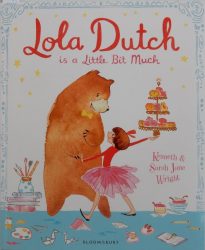
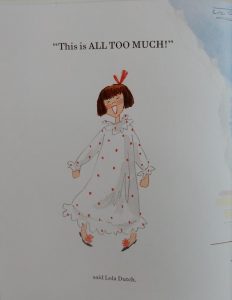
Lola Dutch is a Little Bit Much

Lola Dutch is a Little Bit Much
Kenneth & Sarah Jane Wright
Bloomsbury Children’s Books

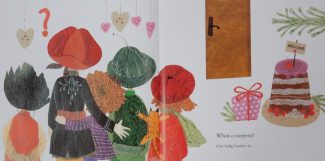
Lola Dutch has big ideas; no, make that, grand ideas. They’re the kind of ideas that sometimes, just sometimes, her friends Bear, Croc, Pig and Crane think are ‘a bit much’. There’s one particular day that she’s set on making the very best ever.
Take breakfast for instance …

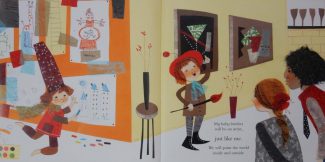
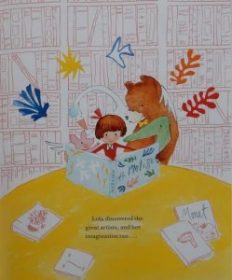
Or the trip to the library for ‘a little light reading’, an excursion which leads to the discovery of books about famous artists that send young Lola’s imagination into overdrive.

Before you can say ‘creativity’ the young miss has adorned not only the walls, but also the ceilings, with her very own works of art. And even then her creative juices are still flowing; Lola decides their sleeping arrangements need some alterations.
This last project though, isn’t quite as successful as her previous ones. Exhausted by the day’s frenetic activities, her friends quickly fall fast asleep; but somehow, sleep eludes young Lola.

That’s when nothing other than a big hug from Bear will do.
Lola is one of those characters you immediately warm to; she’s bursting with creative ideas, full of energy and her enthusiasm seems limitless. One imagines she could well be a bit of a nightmare to live with, but the kind of child you’d love to have in your class.
Sarah Jane Wright’s watercolour and gouache illustrations really do capture Lola’s spirit of joie de vie while her flirtation with ‘the great artists’ including the likes of Van Gogh, Picasso, Klint and Monet reflected in her own creations will be of interest to both adult readers aloud and young listeners.

I’ve signed the charter  

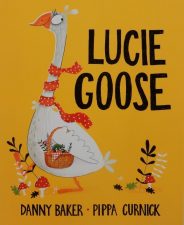
Lucie Goose

Lucie Goose
Danny Baker and Pippa Curnick
Hodder Children’s Books

Lucie Goose is, by all accounts, a reclusive creature residing on the edge of a wood. One day while she’s keeping herself to herself and doing a spot of gardening, out from the shadows creeps a wolf. His “Rraaaarrrrrr”s fail utterly to ruffle her feathers …

and she invites the creature, whom she likens to a woolly sausage, in for a cuppa and a slice of cake, an offer the wolf declines.

Next on the scene is a huge ursine character whose roaring is but a mere brief interruption to her strawberry picking. He too fails to alarm and declines the tea invitation.

Then comes Lion and also roaring, but Lucie has flowers to pick and the ‘fat old carpet’ is singularly unalarming in her eyes and is quickly dispatched leaving the goose pondering upon the notion of scaring and being scared.

Enter another goose, Bruce by name. He doesn’t roar but merely explains the unlikelihood of anybody being scared of a goose.
Polite as she is, Lucie suggests tea and cake and home they go together.

However, there’s a surprise – or should that be three or err – awaiting the geese at Lucie’s house.

This is comedy writer, journalist and radio presenter Danny Baker’s first foray into picture books. I hope it isn’t his last. With its splendid similies and other absurd dialogue his narrative is really funny and I suspect you’ll find it impossible to read it aloud without wanting to break into fits of giggles.
Moreover, the showing, not telling finale and the guests’ final comments leave the audience free to use their own imaginations.
Equally humorous are rising star Pippa Curnick’s illustrations. Her sequences showing the interactions between Lucie and each of the other characters are picture book theatre of the first order.

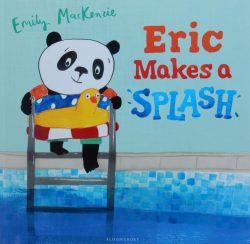
Eric Makes a Splash

Eric Makes a Splash
Emily Mackenzie
Bloomsbury Children’s Books

When it comes to trying new things, Eric is a real worrier. His best friend Flora on the other hand is virtually fearless and loves to help Eric to feel as brave as she does.
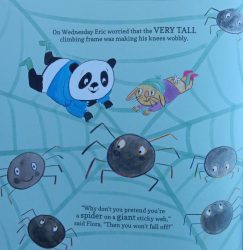
She helps him with his fear of getting his wellies dirty; with his worries about trying a new sandwich filling, and comes to his assistance on the tall climbing frame.

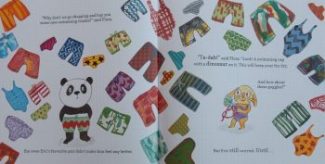
When Eric receives an invitation to a swimming party his mind is a whirl of worries: supposing his fur got wet or water went in his eyes; but even worse, what if he sank to the bottom of the pool?

Flora thinks the purchase of new swimming togs might allay his fears but even with his new attire, Eric worries.

Eventually though he’s suitably prepared and off they go to ‘Soggy Towel Swimming Pool’.

Soon all Eric’s friends are having a wonderful time splashing around but Eric is reluctant even to get his toes wet.

Thank goodness Flora is soon by his side offering some timely words of encouragement and finally one very proud panda is in the water…

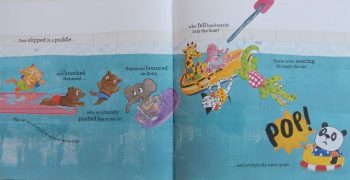
That isn’t quite the end of the story though. A mishap on the diving board precipitates a disastrous chain of events:

Eric is left without any support other than that supplied by the water itself, and is about to make some very surprising discoveries …
As always, Emily Mackenzie’s illustrations are full of fun and feelings. Her two main characters are totally endearing and complement each other perfectly. We could all do with a Flora in our lives when we’re about to make a somewhat scary leap into the unknown.

I Love You, Bunny

I Love You, Bunny
Alina Surnaite
Lincoln Children’s Books

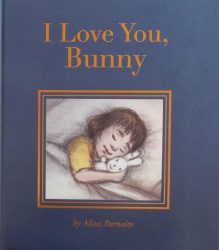
A warm glow emanates from the cover of this debut picture book and stays with you all the way through the story.

Mum has just tucked Suzy up for the night with her comfort Bunny. Suzy however is concerned about the possibility of monsters coming while she sleeps.

Mum assures her that Bunny will chase off any monsters and keep her safe.

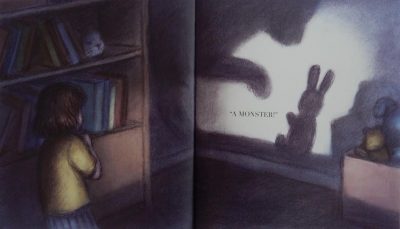
Bunny does his job as lookout through the night until dawn breaks and that is when something dark comes creeping into Suzy’s room reaching out for her sleeping form, or so it seems, and then disappearing again.

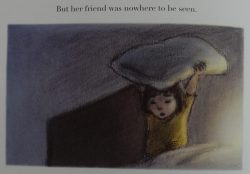
That’s when Suzy stirs and realises that Bunny is no longer by her side: he’s completely disappeared.

Putting on a show of bravery she gets up to search for her toy but there comes a sound from behind her. She turns and sees …

“A MONSTER!”

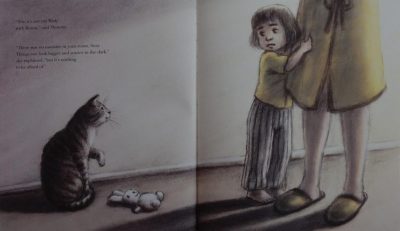
Then dashing in fright from her room the child runs straight into the waiting arms of her mother. “A monster ate Bunny!” she sobs.
Shortly after the cause of Bunny’s disappearance is revealed, Suzy is reassured that there is no monster after all

and returns to bed for a little while longer.

Many young children have phases of being scared in the dark, particularly those with powerful imaginations.
Alina Surnaite uses pastels to create her soft focus, crepuscular scenes of familiar domesticity, casting a mood of gentle reassurance, which should help assuage such nocturnal fears.

Ella Bella Ballerina and The Magic Toyshop

Ella Bella Ballerina and The Magic Toyshop
James Mayhew
Orchard Books

Alongside his books focussing on famous artists and their work, James Mayhew has created the Ella Bella Ballerina series to introduce children to famous ballets and this is his latest.

When young Ella enters her ballet class and steps onto the stage, her teacher invites the children to dance with the toys placed around the magical music box.

Staying behind after the lesson to help, Ella replays the music, starts to dance and finds herself outside an enchanted toyshop.

Therein she discovers an amazing world of dancing dolls and other fantastic objects all cared for by a kindly toymaker and his apprentice.

Particularly exciting is a pair of can-can dancing dolls that are in love.

But when two families come into the shop, both demanding to buy them, it seems as though the pair will be separated.
They’re heartbroken at the thought: could there perhaps be a way that Ella can help them to stay together forever?

Mayhew’s introduction to the classic ballet ‘La Boutique Fantasque’ is utterly enchanting. His vibrant scenes will captivate all who love ballet, young and not so young; and for those who want to know a little more, the final page provides information about the origins of the ballet, first performed in London in 1919 by the Ballet Russe.

The Mouse Who Wasn’t Scared

The Mouse Who Wasn’t Scared
Petr Horàček
Walker Books

From the cover illustration of Little Mouse clad in stripy boots, gloves and tail warmer, we know we’re in for a treat with Petr Horàček’s latest picture book.

Despite her size, Little Mouse is a fearless creature. That, at least, is what she assures Rabbit in response to his warning about the woods being full of large scary animals.

Off she goes to explore.

Deep in the woods she comes upon something large and grey under the branches of a tree …

and this is what she says, “You don’t scare me … Do you want to play?

Receiving no response from the wolf, Little Mouse continues on her way.

In the shadows sits a very large bear, which Little Mouse addresses in similar fashion. Again no reply is forthcoming.

The moose also remains silent in response to her invitation to play,

so Little Mouse proceeds cheerily and confidently onwards until she spies a little house.

The creature waiting behind the door certainly isn’t big and is more than willing to play with Little Mouse; but …

By means of the textual pattern and atmospheric mixed media illustrations, Horàček builds tension slowly, controlling the pacing perfectly until Little Mouse reaches the house.
When readers turn the cut-down page to open the cottage door, they’re already eagerly anticipating something unexpected though perhaps not what is revealed waiting within.

A great read aloud be that with a nursery group or with individuals.

Friends for a Day

Friends for a Day
Neal Layton
Hodder Children’s Books

Oh, oh, this is achingly adorable, a real treasure of a book that is both poignant and joyful by the absolute master of sublime, scribbly artwork, Neal Layton who is a self confessed lover of bears. As I started to read it I thought hey, this is a bit familiar and then realised it is actually a reincarnation of Bartholomew and the Bug published almost fifteen years ago. Nevertheless, those children I shared it with back then are all grown up now and it’s exciting to think it’s once again available to a whole new generation of listeners.

Bartholomew is a laid back bear who lives an undemanding existence atop a mountain although occasionally contemplating the world down in the valley with its twinkling lights: maybe one day, he thinks to himself.

However that day comes a lot sooner than he’d anticipated: enter Bug. This tiny creature is in urgent need of Bartholomew’s assistance. Whatever the reason for the hurry, it’s pretty clear that Bug cannot go it alone and so the bear and bug set off together for the bright lights.

What a truly epic adventure this turns out to be (117 miles of travelling)

and all the while Bartholomew’s tiny pal seems to grow ever more eager to reach their destination.

The two finally arrive at the big city in record-breaking time and it truly is a surprising sight but where are all those lights?

Before long Bartholomew discovers just what all the hurry was for as thousand upon thousand of wonderful bugs of all shapes and sizes wing their way into the neon lights that come on only when darkness falls.

An awesome time is had by all but then comes the moment –it’s full of poignancy – when Bartholomew realises that his job is done and it’s time to bid farewell to his tiny pal.

Yes, some days are never forgotten and some books likewise. This is one of those, and like all special stories, it leaves plenty of gaps for child audiences to fill.

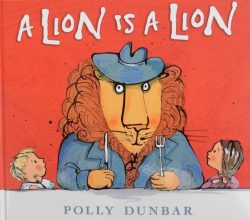
A Lion Is A Lion

A Lion Is A Lion
Polly Dunbar
Walker Books

The Tiger Who Came to Tea has been enchanting young and old alike for half a century. Now there’s a new feline visitor on the block, one with a large shaggy mane.

But, when is a lion not a lion, or does it remain a lion even if it sports a dapper jacket and matching hat, carries an umbrella and skips along the road singing a jolly “Hoobie-doobie-doo” song?

Supposing said creature invites himself into your home, introduces himself and asks you to dance.

Then, what if he decides to stay for lunch and not only consumes all his veggies but the plate as well; and then politely, looking you right in the eye, requests some pudding? Uh-oh!

Could that be when he begins to show his true nature with those gaping jaws and very sharp gnashers and you realise that this particular ‘guest’ is not welcome in your house, oh no most definitely not.

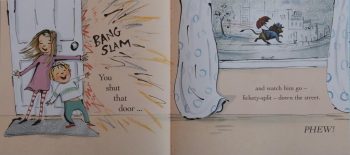
That’s the time to show that beastie who is boss and send him packing out of the door and down the street before you can say LION,

for the crucial thing to remember, no matter what is ‘A LION IS ALWAYS A LION!’

There’s always a joyful exuberance about Polly Dunbar’s books and so it is with this one too, which breaks into rhyme from time to time. Her characters, both feline and human, are totally beguiling with the children showing remarkable insouciance in the first instance; and the whole thing is a lesson in assertiveness and not to be deceived by appearances: after all you never know …

Simon Sock

Simon Sock
Sue Hendra, Paul Linnet and Nick East
Hodder Children’s Books

Simon lives in the sock drawer with all the other socks; it’s a cosy place but he feels lonely and unloved. All the other inhabitants go out on adventures and Simon longs to find the perfect friend to roller skate, bounce and hula hoop with; but, as Spotty tells him, Simon is odd.

Then Ted offers his help and thus begins Simon’s search for a stripy matching pair. He meets all manner of possible partners,

he certainly learns a lot and finally discovers Simone.

It turns out though, that his matching pair does not share his thirst for the great outdoors.

Poor Simon; is he doomed to a life without a partner or …

With Nick East’s captivating sock scenarios, this is funny story, about friendship, difference and preconceptions that will make listeners laugh and think; and the ending – yes it is a happy one – will bring delight and a definite feel good factor.
It might even work as a book to give to a significant other on February 14th.

I’ve signed the charter  

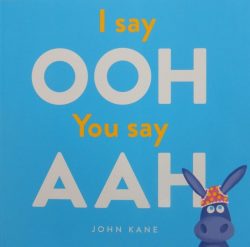
I Say Ooh You Say Aah

I Say Ooh, You Say Aah
John Kane
Templar Publishing

Ooh, aah, you’re really going to have some fun with this one; it’s a very bossy book – John Kane’s first – that keeps on telling you to do things. Daft things like saying ‘aah’ when you hear an ‘ooh’; patting your head when you see red, or saying ‘underpants’ at the sight of an ant (and then proceeding to admonish you for so doing). I ask you.

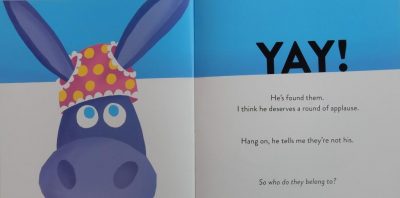
And there’s this daft donkey in the book, (apparently he belongs to the author) and he’s called, can you believe, ‘Ooh’.
(Did I hear you just say ‘Aah’?)

The stupid creature insists on prancing about with a pair of spotty bloomers on his head; now why would that be?
Apparently they’re the property of someone else, so he says. The creature really ought to know better.

There’s no real story here, nor is it intended for self solo reading: essentially it’s a kind of crazy pantomime of a book that only works if the listener or listeners play along and throw themselves wholeheartedly into the performance.
Thus far, all mine have done so with enormous enthusiasm, and demanded immediate reruns.

I’ve signed the charter  

Look Out, It’s a Dragon!

Look Out, It’s a Dragon!
Jonny Lambert
Little Tiger Press

It’s always a pleasure to open a package and discover a new Jonny Lambert picture book. This, his latest, is something of a departure in that it stars a mythical, rather than a ‘real’ animal although there are plenty of the latter herein too.

Without further ado let me introduce Saffi. She’s an atypical dragon who isn’t interested in capturing princesses, nor in crushing castles, and she’s had quite enough of bottom-bruising rocky mountains. So off she flies in search of a more hospitable environment in which to live.

That is just what she thinks she’s found when she lands rather ungracefully in a sunny woodland. The forest animals however, think otherwise and start fleeing for their lives.

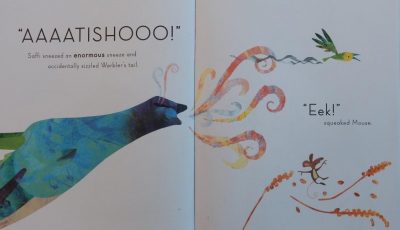
Suddenly Saffi hears a squeaky “Oi! Knobbly knickers! You can’t stay here!” from behind her. It’s Mouse expressing an opinion held by all the forest inhabitants on account of her fiery dragon nature. The dragon does her best to persuade the little creature otherwise and has almost won him over when disaster strikes in the form of a twitchy nose that ends in a very forceful sneeze that scares Mouse …
and damages Warbler’s plumage.

Saffi sets off in pursuit only wreaking more havoc …

until the animals have had enough and the poor well-intentioned dragon is sent packing in no uncertain terms.

Later though, something happens that puts the forest animals and their habitat in real peril.

Who can save them now?

A drama that embodies themes of prejudice, friendship, the dangers of stereotyping and bravery.

Gentle humour pervades the dragon-dominated, mixed media illustrations although even the very tiny participants make their presence felt strongly in the unfolding drama. As always in Lambert’s books, body language is superbly done throughout.

Your heart really does go out to Saffi in her attempts to find a new home so you will be happy to learn that there’s a dragon template that can be used for children to create their very own Saffi character. I’d suggest making a whole diorama and suspending the dragon somewhere therein.

I’ve signed the charter  

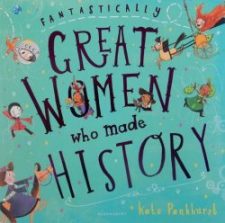
Fantastically Great Women Who Made History

Fantastically Great Women Who Made History
Kate Pankhurst
Bloomsbury Children’s Books

Perhaps 2018 is going to be the year of women. So often children are presented with books about what men have achieved in the past; now it’s time to redress the balance and hear it for the women.

Kate Pankhurst celebrates fourteen, managing to provide a great deal of information about them in this slim volume.

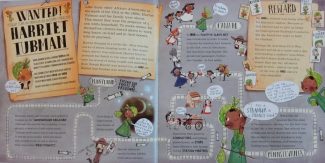
We start with Harriet Tubman whose double spread features a plethora of ‘Wanted’ posters displayed around the ‘Underground Railroad’ tracks. This, like all the other spreads, is illustrated with a wealth of delightfully humorous details.

Next come warrior queen, Boudicca, followed by Flora Drummond the Manchester suffragette who joined and became a leading light in the Women’s Social and Political Union (SPU). Not only did she breach Downing Street security, but also led Scotland’s first march in the name of women’s rights.

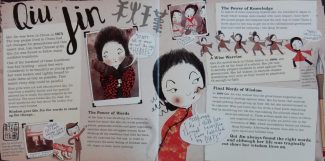
There’s Qiu Jin, who during her short life, campaigned against the tradition of foot binding in China and wrote powerful poems and articles that continue to inspire today.

Also fighting injustice was Sayyida al-Hurra who came from a Muslim family living in 15th century Granada. They were forced by Spanish rulers to flee to Morocco where she married a sultan and after his death became allies with the fearsome pirate Barbarossa of Algiers. In her determination to get her own back on Spain, Sayyida’s rule as pirate queen lasted more than three decades.

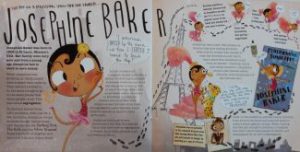
Others included are Noor Inayat Khan, the first WW2 female radio operator in Nazi-occupied France whose codename. Madeleine, was taken from a character in the book of traditional Indian children’s stories she wrote; Dr Elizabeth Blackwell, the first woman ever to gain a degree in medicine; Pocahontas; Valentina Tereshkova, the first woman in space; Ada Lovelace who made a great contribution to computer science; Josephine Baker, the amazing dancer who fought against segregation,

and writers Mary Wollstonecraft and her daughter, Mary Shelley of Frankenstein fame.

Kate Pankhurst does all these women proud.

The book concludes with a “Bookshelf of Brilliance’ and a ‘Great Words’ glossary.
In a word, it’s inspirational; in another, uplifting; in a few more – every primary classroom should have a copy and every child should read this.

I’ve signed the charter 

Read the Book, Lemmings!

Read the Book, Lemmings!
Ame Dyckman and Zachariah OHora
Andersen Press

Having seen it in the catalogue, I eagerly awaited the arrival of a copy of this latest comedic offering from Dyckman and OHora, creators of the wonderful Wolfie the Bunny and Horrible Bear! It more than lives up to its promise.

The book features three lemmings of the particularly impressionable kind, a whale that doubles up as a container ship, S.S.Cliff , its polar bear captain, PB by name, and first mate Foxy.
The story actually starts on the front endpaper where a sign floating on an iceberg informs, ‘ lemmings: small fuzzy, illiterate rodents who share the icy North with arctic foxes and polar bears. People used to think lemmings jumped off cliffs. Now we know they don’t.’

Close to the iceberg is a cliff and guess what: a lemming jumps proclaiming at the same time “Wonder what that says.” “Me too,” replies a second lemming. “Ditto!” says a third.
The trio lands up aboard S.S. Cliff whereon Foxy has just settled down with his book entitled ‘Everything About Lemmings’. “Huh!” he announces, “Says here, lemmings don’t jump off cliffs.” The lemmings hear just a single word: a four-lettered one beginning with j and …

Foxy requests the use of PB’s bucket and fishes the creatures out, bestowing upon them hats and names – Jumper, Me Too and Ditto, and urging them to “Read the book,” before settling down once more with said text.

A few further foolhardy leaps follow, each one increasingly reckless … “Sinking! Sinking fast!” / “Me too!” / “Glub!

until Foxy’s “WHY didn’t you read the book, lemmings?!” finally gets to the crux of the matter: the lemmings can’t read.

Time for some reading lessons …

After which, er that’s for you to discover when you ‘Read the book!’ (And, be sure to check out the final endpapers.)

Ame Dykman’s brilliantly mischievous text is an absolute treat for readers aloud and listeners alike; and the deadpan humour of OHora’s illustrations with their fun details and supremely expressive faces and body language, is the perfect counterpart for this madcap romp. I love the colour palette.

If this isn’t a superb demonstration of the importance and delights of reading, then one reviewer at least will jump off the nearest cliff.

Spyder

Spyder
Matt Carr
Scholastic Children’s Books

Meet Spyder, reputedly the world’s smallest secret agent and penthouse flat resident at No. 7 Fleming Road wherein a special birthday is about to be celebrated.

Suddenly, as the agent has just settled down for a spot of reading she receives an urgent call from HQ.

Instantly, or almost so – it takes a little time to get those feet readjusted to work mode, and then to pack her spy-kit – she’s off on a mission to save Tom’s birthday cake from a disastrous attack by a dastardly buzzing insect going under the code name of Bluebottle.

It’s a hazardous chase with some pretty perilous moments. Not least this one …

There follow, clever moves on the part of Bluebottle, some wily thinking from Spyder and the occasional moment of fun for the agent;

but will it be enough to save the day and the cake?

And who actually gets the last laugh?

All this and more in a totally daft tale that’s a wonderful follow up to Matt’s debut Superbat.

There are some groan worthy puns, plenty of action of the comical kind, some splendidly silly speech bubbles, a show-stopping colour palette and endpapers packed with spy stuff. Another cracking read aloud from Carr who even adds a strategically placed word (or several) on the back cover warning about the folly of trying any of Spyder’s stunts – they’re for trained professionals only.

Fiona’s Little Accident

Fiona’s Little Accident
Rosemary Wells
Walker Books

Years ago I was enchanted by Rosemary Wells’ Max and Ruby: more recently she has introduced another equally enchanting pair of characters, Fiona and her much quieter friend, Felix.

The guinea pig friends are eagerly anticipating demonstrating their volcano in show and tell. Fiona is so excited that she doesn’t go to the loo before leaving for school; nor does she visit the bathroom before going into class.

Show and tell begins and Fiona starts feeling rather desperate but now the bathroom is occupied. Fiona hears their turn being announced. She dashes back and she and Felix start the demonstration.

Suddenly disaster strikes. Fiona cannot hold on any longer: in full view of the class she wets herself. ‘Fiona knew everyone saw. She wanted never, ever to be seen again.’

Her teacher quickly deals with Fiona’s discomposure …

and Felix reassures her that everyone has accidents, even royalty and that within fifty seconds the whole thing will be forgotten.

Wells presents this embarrassing scenario with an empathetic understanding that must surely help children see that accidents such as Fiona’s are quickly forgotten, as well as being something pretty much universal.

One to include in KS1 classroom collections methinks.

Ten Fat Sausages

Ten Fat Sausages
Michelle Robinson and Tor Freeman
Andersen Press

Come into the kitchen. There a delicious drama is about to unfold.

Atop the cooker, sizzling in a frying pan sit the ten fat sausages of the title.

All of a sudden one explodes with a ‘POP’ and another, alarmed at the event vows not to meet the same fate, and hops out and across the worktop. At first all is ticketty boo but then disaster strikes …

On goes the rhyming tale with the total of sausages rapidly diminishing two by two thanks to some reckless testing of a liquidiser switch, a flying leap onto a ceiling fan, an encounter with the resident moggy who proves to be in hungry mood,

and some foolhardy cavorting that leads the final succulent pair, (with high hopes of their escape plan,)

into a hiding place within “a squishy thing.”

Michelle Robinson’s yummy story based on the much-loved counting down rhyme is sure to become a firm favourite with early years listeners. The irresistible join-in-ability of the text with its oft repeated “HANG on a minute! … Well, I won’t go BANG and I won’t go POP.” and ‘And Sausage Number Two, (Four,Six or Eight) went hop. hop, hop.’ will ensure a supremely noisy story session wherever this is shared with young audiences.

Tor Freeman’s visuals of the whole sorry saga are a visual treat: how she managed to impart such deliciously gigglesome expressions on those bangers is a wonder in itself: every spread is a flavourful slice of comedy.

It certainly had me in fits of giggles; but then, I’m a vegetarian.

Chalk Eagle

Chalk Eagle
Nazli Tahvili
Tiny Owl

The power of the imagination is crucial for so many reasons. I’ve spoken and written about its importance in education in many places and on numerous occasions, including from time to time, on this blog. Sadly however, the education policy writers in our government seem not to place much value upon it.

However, one never gives up on something so vital and it is wonderful to have Tiny Owl’s on-going championing of wordless books as one means of promoting the education of the imagination. Equally it was exciting to hear on a recent The Life Scientific programme, a woman mathematician, Eugenia Cheng, speaking about the importance of the imagination in maths.

This wordless picture book by Iranian artist Nazli Tahvili is the perfect vehicle to get the imagination soaring and for me the eagle in flight is a wonderful symbol of creativity unleashed.
A rooftop vantage point is just the place to broaden one’s horizons and make free with chalk on tiles, which is what the young protagonist does herein having watched an eagle flying overhead.

Boy and eagle join forces

and soar over town and country, sea and mountain in his imagination and in Nazli Tahvili’s screen-print illustrations.

The colours she has used are, so we’re told, influenced by the blue skies, and green rice fields that surround her northern Iranian home.

A book to open up and let your mind go free with child and eagle: in particular, I’d like to give it to a group of teachers or teachers in training and see where their discussions/imaginations fly.

Animals with Tiny Cat / 15 things NOT to do with a Puppy

Animals with Tiny Cat
Viviane Schwarz
Walker Books

Viviane Schwarz’a Tiny Cat of There Are Cats in This Book and There Are No Cats in This Book fame is back and as always, is in a playful mood.

With the aid of a few simple props, our feline friend transforms first into a mouse, then an elephant, followed by a …

a horse, a porcupine …

a snake and a spider.

Suddenly though, the pile of discarded items takes on a life of its own …

Is there anything Tiny Cat can become that will send that fearsome beastie packing? …

Viviane Schawarz’s wonderfully playful imagination has, once again, produced a seemingly effortless performance for her moggy star.

Be ready for enthusiastic squeaking, tooting, neighing, hissing and more when you share this one.
Then, I’d suggest leaving the book in a suitable spot in your early years setting together with a few well-chosen items and see what your listeners turn themselves into.

15 things NOT to do with a Puppy
Margaret McAllister and Holly Sterling
Frances Lincoln Children’s Books

This is the latest in Margaret McAllister and Holly Sterling’s instruction manual series. Herein the topic is canine care and the two toddler presenters pretty much have the whole thing worked out. Presumably they speak from experience and if you’ve recently added a puppy to your household, then this book has some sound advice.

Hang-gliding, tuba lessons (as if), and getting its paws on the remote control are definite no-nos. So too are taking the pup to some of the children’s favourite places; and gardening is completely out of the question.

Football matches and the library are also definite no-go areas and for safety’s sake keep the animal from the driving seat of the car …

and well away from the sink too. Cafes are off limits as are shopping expeditions.

On the other hand, the dos are relatively straightforward: in a nutshell, love, play, food, drink and sleep work wonders.

The main characters, both human and canine are full of youthful exuberance as are the humorous possibilities of the scenarios presented in Holly Sterling’s illustrations of same.

I’ve singed the charter  

Beyond the Fence

Beyond the Fence
Maria Gulemetova
Child’s Play

Thomas and Piggy live together in a large country house. Thomas always takes the lead when it comes to decision making, no matter what ‘He just knew.’

When Thomas’s cousin visits, the boy is preoccupied with her and that’s when Piggy decides to venture outside the confines of the house.

On his walk he encounters Wild Pig.

Wild Pig asks Piggy some thought-provoking questions about his way of life and Piggy returns home.

Thereafter he makes frequent visits to the great outdoors in the hope of seeing his new friend but he never appears.

One evening however, there he is full of apologies and an explanation. He invites Piggy to accompany him into the forest. Piggy declines on account of it being out of bounds although he promises to meet with Wild Pig the following evening.

Thomas’s cousin goes home the next day and the boy is surprised and scornful when he discovers that Piggy has chosen his own way of playing …

Not for long though, for Thomas soon has the upper hand (or trotter) once again.

Will Piggy ever make that decisive break for true freedom? I wonder …

Watch young children playing. There are lots of Thomases but happily there are also plenty of Piggys and that’s what makes life so fascinating.

Maria Gulemetova’s picture book is softly spoken but embodies strong messages about being your own person, standing up for yourself, and what true friendship really means. Her watercolour illustrations (which put me in mind somewhat of the work of Ron Brooks) echo the sparseness of her text and that is what makes the impact of the whole so strong.
It’s a lovely one to share and discuss with people of all ages.

My Green Day

My Green Day
Melanie Walsh
Walker Books

The messages contained in this book are as relevant today as when it was first published in 2010. Yes, almost all of us use our own bags when we go shopping …

but the amount of plastic that often goes into our shopping bags still needs to be dealt with. The home baking advocated by the little girl narrator is one way of dealing with that; however, much more needs to be done by the major supermarkets.

Essentially we share the girl’s day and she talks us through the green things that are her way of helping the environment. Each of her ten green actions is printed in large type and then two or sometimes more double spreads are allocated to illustrating and adding to her narration so for instance we have ‘At lunch … ‘I eat up all my pasta.’ and in small print ‘We throw away one third of all the food we buy. If we bought only the food we actually needed to eat, we wouldn’t have to grow or transport so much food, which saves lots of energy.’ This additional information can be left out if the audience is very young but children are never too young to start thinking about the all important messages herein.

Other suggestions include: adding an extra layer rather than using the central heating, avoiding the use of tumble dryers, composting and re-using materials to make gifts.

Melanie Walsh’s bright collage illustrations, albeit without the die-cuts and cutaway pages, are as fresh and contemporary looking as they were in the original edition.

What Do Animals Do All Day? / Rainforest

What Do Animals Do All Day?
Wendy Hunt and Muti
Wide Eyed Editions

This is a follow-up and in some ways, a companion volume to What Do Grown-ups Do All Day? The author and illustrator take us to fourteen different habitats – every spread has lots to look at – and for each, on the following spread, introduces us to eight residents, every one of which briefs us on its role in that particular ecosystem.

Some of the job descriptions will make young children laugh. The Decorator Crab that resides on coral reefs and sticks pieces of sponge onto its shell as camouflage describes itself as a ‘fashion designer’ …

while the Large-eared Horseshoe Bat calls itself a ‘sound engineer’ since it makes use of sound waves and echoes to locate moths in the dark.

I certainly have no desire to encounter the Striped Skunk, a forest resident that sprays stinky ‘perfume’ lasting several days. and describes its role as ‘perfumier’.
Another forest dweller the North American Porcupine tells readers its an ‘acupuncturist’.

I particularly liked the Death Stalker Scorpion’s description of itself s ‘brain surgeon’s assistant’. (Researchers are using its venom in a cure for brain tumours.)

If you were to visit the wetland reed beds in Somerset you might come across animals who describe themselves as ‘sleigh-rider, ‘aerobatic flyer’, ‘camper’, ‘trapeze artist’, ‘sun-seeker’, ‘submariner’, ‘opera singer’ and ‘synchronised swimmer’. Can you think what their common names might be?

An attractive, somewhat quirky book that provides plenty for children to talk about.

Rainforest
Julia Groves
Child’s Play

The focus here is on the visual, with fifteen animals being featured in Julia Groves’ first picture book. (Sixteen if you count the butterfly on the title page) None is named until the final spread where detailed information about each of them is given in tiny print.

A single line of text accompanies each illustration that evokes the nature of the particular creature, so for instance, ‘Fleeting ripples trace the runner’ accompanies the picture of the Plumed Basilisk Lizard; ‘Slowly stalking, majestic and silent.’ is the Jaguar and …

‘ Flickering tongues sense the air’

The rainforest is, as the book’s blurb tells us, a ‘precious and endangered habitat’; Julia Groves imaginative presentation of some of its inhabitants offers young readers an opportunity to enjoy what most of us will never see in the wild.