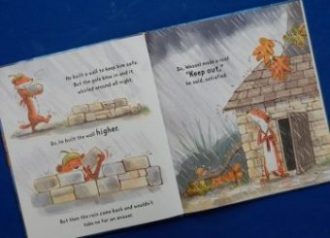
The Skies Above My Eyes

The Skies Above My Eyes
Charlotte Guillain and Yuval Zommer
Words & Pictures

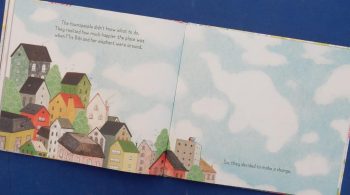
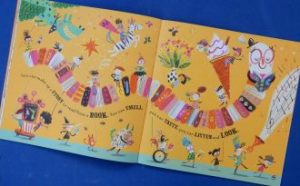
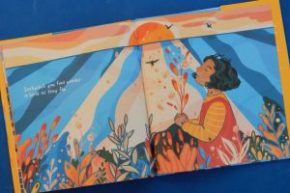
This follow-up to The Street Beneath My Feet uses the same double-sided format unfolding to 2.5 metres only now we’re directed to look at what’s above the Earth’s surface.

Standing alongside the child at the bottom of Zuval Zommer’s continuous concertina illustration readers are taken on an exciting journey from ground level, billions of kilometres up and right out to the farthest reaches of the solar system and back again.

We travel past high-rise buildings, through the layers of the atmosphere to the imaginary Karman line to where 400 kilometres above the Earth is the International Space Station and thence to the Moon and out into the Solar System where the planets are found.

Beyond Neptune lies the Kuiper Belt that includes Pluto and even further out beyond the Solar System we can see hundreds of billions of star-filled galaxies.


After a period of stargazing, it’s time to travel back earthwards. We might spy comets, meteoroids, the Aurora Borealis and lower down, migrating birds on the wing;

and if we look very carefully, ballooning spiders drifting parachute-like a few metres above Earth as well as, rather more easy to spot, mountain sheep on a rocky escarpment.

Our long, long journey comes to an end on a grassy hillock where alongside the little girl we saw as the start, we can relax and enjoy nature’s bounties that surround us.

Charlotte’s narrative is certainly fascinating and informative as her enthusiasm sweeps us up and away. However it’s Yuval’s richly detailed art that ensures that the reader is not only informed but filled with awe and wonder about so many aspects of the mind-stretching, The Skies Above My Eyes.

Why not step outside with your children and see that you can spy in the sky …

(I missed this super book when it first came out but thank you to the publisher for sending it out now.)
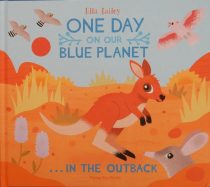
One Day On Our Blue Planet … In the Outback

One Day on Our Blue Planet … In the Outback
Ella Bailey
Flying Eye Books

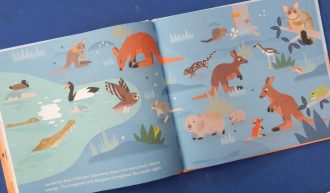
Wow! I was absolutely astonished at the wealth of creatures large and small that have their homes on the great Australian outback, the location of Ella Bailey’s latest visit in her One Day on Our Blue Planet series.

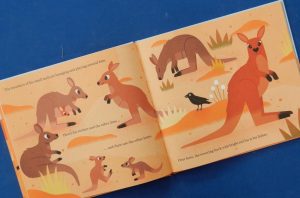
Readers are invited to spend twenty four hours viewing the diurnal and nocturnal activities of, in particular, one of the little red kangaroos.

These animals seem to be on the go from sunrise till well into the night and like other marsupials, the does have a particular role in caring for and protecting their offspring in the dusty desert terrain especially when little ones become a tad too adventurous.

As we follow these fascinating animals, learning something of their habits, through the day and across the spreads to the billabong for a much needed drink, they encounter a huge variety of birds, reptiles and mammals.

(The endpapers show and name all the animals depicted as the gentle narrative unfolds).

Like previous titles, with its engaging illustrations and chatty narrative style, this is a super way to introduce youngsters to a location most of them are unlikely to visit for real; it will surely engender that feeling of awe and respect for the wildlife that inhabits the vast, remote interior part of Australia.

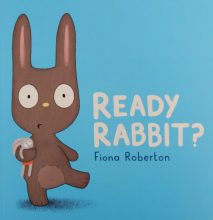
Ready Rabbit?

Ready Rabbit?
Fiona Roberton
Hodder Children’s Books

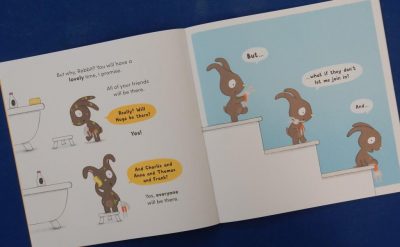
Why is Rabbit hiding away inside a big box instead of getting ready to go to the party?

Seemingly the poor little creature is anything but keen on going; in fact he’s flatly refusing.

What’s needed is some gentle mind-changing persuasion and reassurance with regard to loud noise, the possibility of strange beasties lurking, as well as that no meanies will be present.

Best to focus on the exciting things that will be part and parcel of the party; things like friends,

yummy cake, games, dancing, balloons, presents and most important Rabbit’s favourite food.

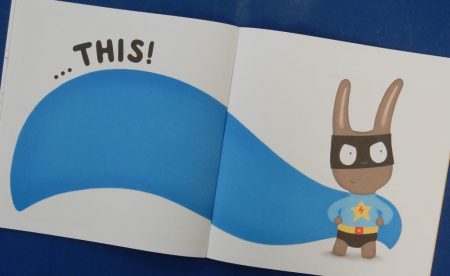
Mind changed, now little Rabbit just needs to decide on what to wear and then outfit chosen,

off he goes.
The party proves to be all his encouraging adult (off scene) promised but now it appears that there’s another guest in need of a bit of encouragement …

Beautifully observed and portrayed, Fiona’s sweet story is delightful. It should go a long way towards showing anxious little ones how their big worries can disappear if like Rabbit, they practice positive thinking.

A winner for sure in every way.

You Can’t Count On Dinosaurs!

You Can’t Count On Dinosaurs!
Philip Ardagh and Elissa Elwick
Walker Books

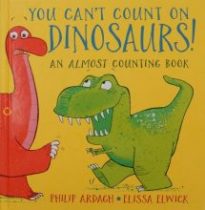
Subtitled An Almost Counting Book this zany story begins with Rex. a mischievous little T-Rex. He’s quickly joined by Patty and the two play a game of chase. Onto the scene appears Brian, a cute-looking little fellow; hold on though, he’s vanished. That surely isn’t the reason Rex is burping, or is it?

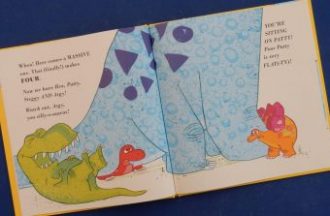
Okay, on with the count: enter stage right, Steggy closely followed by Argy. Hurrah we’re up to four, though maybe splatted Patty doesn’t count.

Seemingly she does and the four decide a bit of aquatic amusement would be in order, courtesy of good old Argy.

While so engaged a pretender appears on the scene. Rumbled! Pterosaurs are not dinosaurs, but Terry has some news for his dino. pals concerning a certain Rex. Apparently this dinosaur is able to fly …

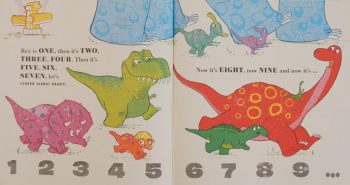
Hang on, I thought this was a counting book and this reviewer’s lost count so needs to follow the instruction here …

However no matter how hard you try and how good your one to one correspondence is, by the time you reach the final spread, you won’t get ten dinosaurs (unless of course you want to count in the one in a certain Rex’s enormous belly. No wonder the author chose to call his stomping romp You Can’t Count on Dinosaurs.

All this madness and mayhem is shown vividly portrayed in Elissa Elwick’s arrestingly coloured scenes of this prehistoric perambulation that offers fun, and sometimes tricky, lessons in counting and conversation for your little humans.

The more scientifically minded among them can try getting their tongues around the real identities of the frolickers captioned on the endpapers.

Planet SOS

Planet SOS
Marie G. Rohde
What on Earth Books

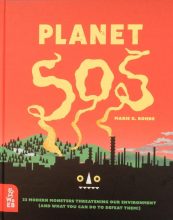
Our planet is under serious threat, most of us would acknowledge that and in her cleverly conceived book Marie Rohde presents 22 different aspects of this alarming crisis in a novel manner giving each a distinct persona – monsters inspired by mythology, fairy tale, folklore and popular culture, making the whole enterprise accessible as well as unique.

So let’s now hear from some of these dastardly creatures that speak directly to us.

The depletion of the ozone layer is the work of the Ozone Serpent chomping its way through earth’s protective gaseous layer.

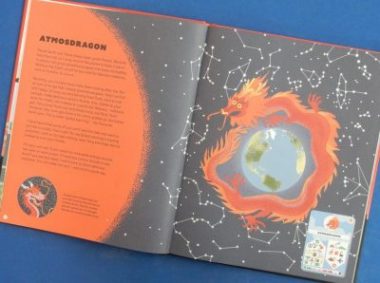
Atmosdragon is a bragging beast that talks of human actions causing the release of greenhouse gases and global warming. Like all the others this speaker has relied on a close alliance with we humans, and is starting to fear for its continuing existence. Like all the others too, Atmosdragon is accompanied by an identity card ‘with a host of symbols (there’s a key for interpretation), icons showing the activities that can halt, or hinder further environmental harm.

Deforestation is the world of the Logre. This destructive beastie lays waste forests for agriculture, timber production and development, boasting that human efforts to halt its damage are futile. We must prove Logre wrong, for the absorption of carbon dioxide is crucial.

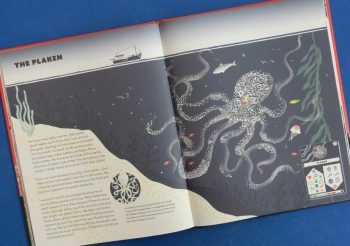
Monsters lurk in the water too; take the Plaken with its all-invading tentacles formed from thousands of tonnes of plastic debris – a massive threat to marine life and birds.

The illustrations are truly arresting and we’re also shown a small vignette of each mythical being that was the inspiration for the particular menacing monster sprawling across much of its double spread.

The three final spreads give a world map marking the locations of the various monsters with a time line indicating when the particular ecological threats were first recognised, a glossary and a card index of all the beasties and how they might be defeated.

There is a huge amount of information packed between the covers of this book that will surely galvanise young eco-warriors. It’s rich in potential for cross-curricular exploration in school too.

Superkitty Versus Mousezilla

Superkitty Versus Mousezilla
Hannah Whitty and Paula Bowles
Simon & Schuster Children’s Books

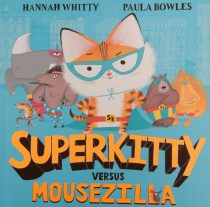
Superkitty is back in a new adventure – hurrah! In case you’ve not met this particular superhero before, she heads up a team of assorted animals collectively called the Sensational Superheroes.

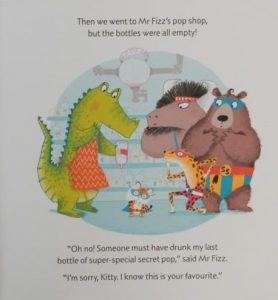
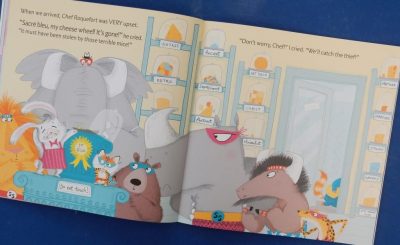
Now Kitty (our narrator) has called the crew together in the office to give them the day off to join in the Big City’s Picnic Party. Of course, they can’t go without stocking up on some goodies. Their first stop is Mr Fudge’s sweet shop. Horror of horrors! All the sweets have disappeared; similarly all the bottles in Mr Fizz’s pop shop have been drained

and the bakery has mere crumbs to offer. The owner Mrs Appleton says she has it on the mayor’s authority that mice are responsible.

Superkitty has her doubts; however her team is quickly on the case searching the city starting at the cheese shop.

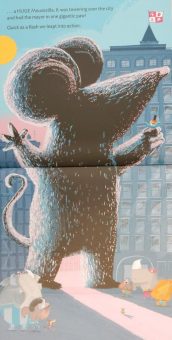
Suddenly a booming sound fills the air and shortly after, the investigators come upon a massive Mousezilla clutching something or someone.

It looks as though Kitty may have been right in not jumping to conclusions.

Hannah’s Kitty is indeed a wise and determined character; this humorous tale warns against not accepting things at face value – the notion of fake news raises its head too. Add to the mix Paula’s terrific, detailed illustrations that little ones will adore and some, especially the particularly playful scene in the cheese shop, will give adult sharers a good giggle too.

All though will enjoy pondering upon the possibilities that arise with the new additions to Superkitty’s team; she’ll most certainly have her paws full.

Elephant In My Kitchen!

Elephant In My Kitchen!
Smriti Halls and Ella Okstad
Egmont

‘There’s an elephant in my kitchen’ informs the child narrator of Smriti’s rhyming story but that’s not all. There’s been a veritable invasion of the house by wild animals and they’re doing such annoying things as bouncing on the bed and playing badminton;

but much worse – one has taken the liberty of having a dump when our narrator is absolutely bursting for a wee.

As for the food stores, they’re getting depleted by the second as polar bears, penguins, a wolf and a chimpanzee make short work of all the goodies they can lay their paws and beaks on; not to mention the din created when a chorus of frogs decides to strike up and one of their number flattens the boy’s favourite cuddly. Time to discover what exactly is the cause of all this mayhem and marauding.

Oh dear me! Turns out it’s the result of thoughtless and selfish behaviour on the part of we humans, doing things with no thought for the consequences of our actions upon the wildlife that shares our planet.

An urgent plan is crucial. We need to change our ways and everyone has a part to play otherwise who knows what might happen …

With lots of detail to explore and giggle over, Ella Okstad’s zany illustrations are a great complement to Smriti’s zippy cautionary tale. Humour is an important vehicle when it comes to vital messages: it certainly works here.

Mrs Bibi’s Elephant

Mrs Bibi’s Elephant
Reza Dalvand
Flying Eye Books

Mrs Bibi has a rather unusual and very large pet, an elephant.

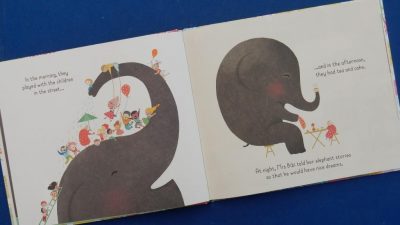
The town’s children have enormous fun creating a pachyderm playground every morning in the street

but the rest of the townsfolk are anything but enthusiastic about the enormous creature Mrs Bibi takes for a daily walk.

Too big, too noisy and a traffic hazard is their opinion; the woman’s time would be better spent on sensible activities such as reading the paper, checking the stock market and keeping up to date with economics.

Mrs Bibi however would rather have afternoon tea and cakes with her pet elephant, tell him tales to ensure he has pleasant dreams and laugh about the past.

Then comes an edict from the town judge: the elephant is to be taken to the zoo the following morning.

What can Mrs Bibi do?

Having followed her usual bedtime routine with her beloved pet, sadly for readers and indeed for the townsfolk, Mrs B. disappears next morning determined to stop the terrible event.
Only then do the close-minded, materialistic, townsfolk gradually come to understand what really matters in life …

Reza Dalvand’s gentle fable is verification of the importance of companionship and love. His illustrations are an absolute delight. With elaborate patterns adorning clothing, furnishings, and townscapes, every spread offers a wealth of detail to feast the eyes on. Artwork done with love for a tale of love and a tale to love.

I See, I See

I See, I See
R. Henderson
Allen & Unwin

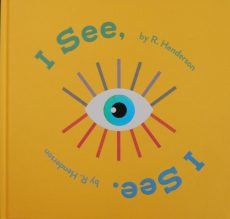
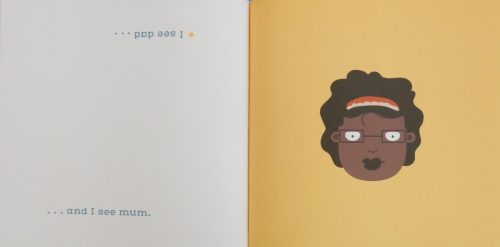
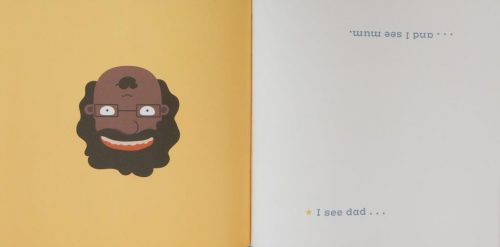
This seemingly simple, playfully clever book is a great way to introduce the idea of perspective/different points of view to youngsters. Two readers need to sit facing one another, one either side of the book and take turns to read aloud the rhyming text, in a ‘call and response’ type activity.

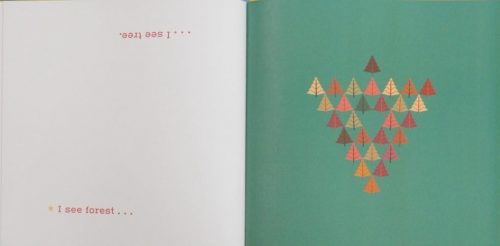
Each of the pictogram style images offers two interpretations – there’s no right or wrong: a curved mouth is a smile from one direction and a frown from the other; the face belongs to dad or mum depending from which side it’s viewed;

you can see a whole forest or a single tree – both are possible.

In his presentation of the notion of looking at things from another’s viewpoint, debut picture book creator Robert Henderson (with gentle echoes of Hervé Tullet) offers a starting point for conversations on important, possibly controversial, topics,

I look forward to seeing what comes next.

How Billy Hippo Learned His Colours / Molly’s Circus

Two new picture books from Little Door Books, kindly sent for review

How Billy Hippo Learned his Colours
Vivian French and Hannah Foley

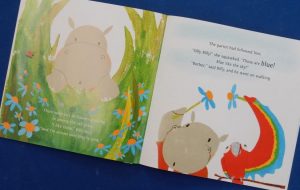
Billy Hippo has learned swimming but he now needs to learn his colours because he wants to give his dad a special birthday present – something pink as his siblings suggest.

The trouble is Billy has yet to learn his colours.

Nevertheless he sets out looking for pink flowers along the path beside the river.

There are flowers aplenty, of a variety of colours, as the parrot he meets is quick to tell him.

Gradually though with the bird’s help, by a process of elimination Billy does come to know what the colour pink looks like;

but does he succeed in finding the right colour flowers for his dad? I wonder …

Children learn their colours through a variety of experiences, just like Billy and Vivian French ’s story will help in that learning process. So too will Hannah Foley’s bold bright illustrations, made all the more fun by the presence of a pair of mischievous-looking frogs that follow Billy in his search, one clutching a pink flower.

You can download a free audio-book of the story along with some songs from the publisher’s website.

Molly’s Circus
Esther Kent

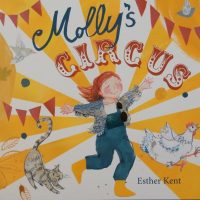
A little girl (the narrator) dons her boots and goes off out to play, followed by her harassed-looking mum.
Once in the garden the child views her surrounding and then lets her imagination soar as she announces, ‘There’s a CIRCUS in my garden.’
The washing line becomes a high wire; there are clowns, trick cyclists and a ‘trapeze in the trees.’

A troupe of acrobats performs under the direction of the ringmaster extraordinaire – Molly – who gets a little bit carried away …

Happily though, mum is on hand to provide exactly what’s needed.
Debut picture book creator Esther Kent’s exuberant, detailed artwork fizzes with energy and glows with warmth; every spread is a wonderful reminder of how children are able to transform the mundane into something magical.
You can find Molly’s Circus song from the publisher’s website.

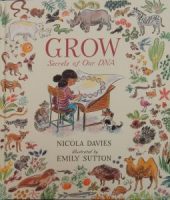
Grow

Grow
Nicola Davies and Emily Sutton
Walker Books

Nicola Davies has a rare skill when it comes to explaining sometimes quite tricky concepts to young readers and Emily Sutton’s illustrations are always superb.

With the opening statement ‘All living things grow’, award-winning team Emily and Emma then explore for young readers, the mysteries of DNA, the genetic code that determines the characteristics of every plant and every animal including we humans.

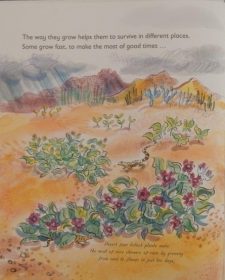
First are examples of different speeds of growth ranging from the desert four o’clock plants that grow from seed to flower in ten days

to the guahog clams found in the chilly depths of the Arctic Ocean that take 500 years to grow to the size of the palm of a child’s hand. WOW!

The importance of how much things grow is considered next followed by another aspect of growth, that of change,

and that leads neatly into DNA.

We find out about its four bases and how they can be combined in different ways creating a genetic code pattern, comprising for we humans, 20,000 genes.

Everyone has a unique genetic code half of which comes from their biological father and half from the biological mother (identical twins however share a genetic code).

There’s follows a spread showing the relative closeness of the human genetic code to various plants and animals; another points out that thanks to DNA all living things are connected. DNA also provides a connection that can be traced right back to the beginning of life on Earth – awesome – and all on account of the fact that as Nicola concludes ‘all life has always been written in one language’.

This is just the kind of book I would have relished as a child; it will surely inspire as well as educate youngsters.

Buy for home and for KS2 primary classrooms.

Hey, Water!

Hey, Water!
Antoinette Portis
Scallywag Press

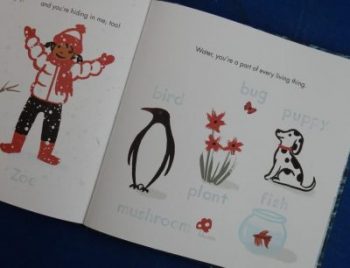
In the company of young narrator Zoe, who speaks directly to water, young children can embark on a playful exploration of the element that can exist in different states.

She begins with introducing the variety of ways we might encounter this essential element in its liquid state – via the hose and its sprinkler, the shower, a stream, a river,

the sea, an ocean.

Then there’s a lake, a swimming pool, and much smaller but equally fun, puddles. Smaller still come dewdrops, tears and raindrops.
Water however isn’t straightforward for as she says, ‘Water, even when you try to fool me, I know you. You can blast and huff. You whistle and puff. You hide in the air and drift. You drift in the air and hide the world’

Then there’s that frozen form –ice cubes, icebergs, an ice rink and soft, frozen, feather-like snowflakes.

Indeed water is an essential part of every single living thing,

there to quench our thirst and help us keep ourselves clean; and for all that we need to be thankful.

It’s a kind of hide-and-seek game we’re involved in here, in Portis’ celebration of water that concludes with more in-depth explanation of water forms, ways to conserve water, a diagram of the water cycle and some simple experiments.

The author’s own illustrations accompany her chatty narrative making this a very useful book for parents and preschool teachers to introduce tricky science concepts to the very young. (alongside real experiences of course).

The Weed

The Weed
Quentin Blake
Tate Publishing

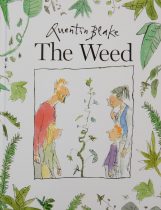
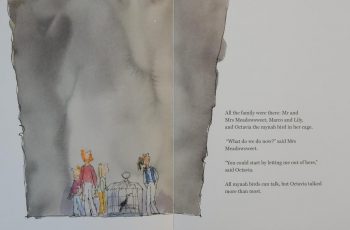
When the Meadowsweet family find themselves at the bottom of a huge crack that’s formed in the earth they decide to set free their mynah bird Octavia.

This proves to be a wise move for it’s not long before she’s back with a seed.

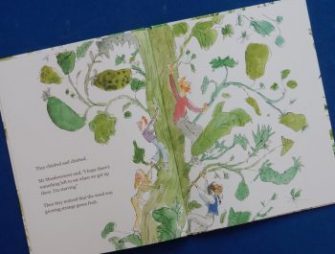
This seed becomes their means of escape from a very tricky situation as little by little then ever more rapidly it grows towards the earth’s surface eventually bursting through.

Up, up, up climb the Meadowsweets through the increasingly lush foliage working up an appetite in so doing. “I hope there’s something left to eat when we get up there. I’m starving,” comments Mr Meadowsweet.

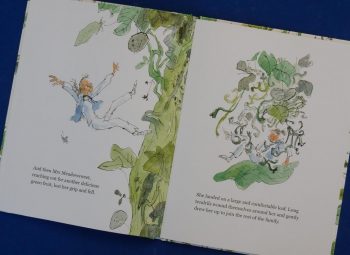
Happily though, they don’t have to wait that long, for the profligate plant puts forth fruits aplenty, as well as foliage, as Mrs Meadowsweet discovers tucking in enthusiastically; but in her eagerness she slips and falls.

Fortuitously, a large comfy leaf cushions her fall and the tendrils of the remarkable plant reunite her with the rest of her family.

The journey of people and plant to the surface is finally accomplished and at the surface the luxuriant and verdant world of a garden of Eden surrounds them after their Jack and the Beanstalk style climb.

We probably all feel like we’re at the bottom of a deep hole just now and we are all looking forward to those green shoots of recovery. So, this fable could be read as a message of hope during these difficult times. Remarkable as its creator Quentin Blake is though, he is not an oracle and one suspects he was merely creating a fun and fantastical story for us all to enjoy.

What the Ladybird Heard at the Seaside

What the Ladybird Heard at the Seaside
Julia Donaldson and Lydia Monks
Macmillan Children’s Books

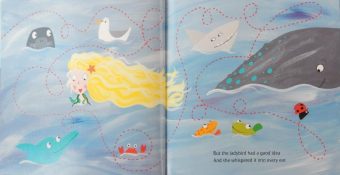
When the ladybird takes a trip to the seaside, one July day, the sea lion roars, a seagull shrieks, a crab snaps, a shark gnashes and a whale’s tail splashes; but what the observant ladybird hears and sees are the dastardly duo Hefty Hugh and Lanky Len and they have a despicable plan.

They have designs on the mermaid’s beautiful fair hair, which they plan to cut off at midnight and fashion into a wig to sell to ‘a famous star’ and make a fortune in so doing. This isn’t to be a one off attack though, for once her hair has regrown, they’ll cut it again … and again … and again – ad infinitum.

The ladybird passes on the information she’s gleaned to the sea animals and they resolve to come to her aid.

They devise a clever ruse to foil the plan of the wicked two.

When they take the plunge at 12 o’clock could it be that Hugh and Len are about to attempt to chop off more than they can actually hack with their snip, snip, snipping scissors?

With the combination of Julia’s faultless rhyming narrative and Lydia’s sparkle-scattered scenes of the sea and its swimmers, this is another adventure of our silent Ladybird that’s sure to make a terrific SPLASH with both young listeners and adult readers aloud.

Paolo Emperor of Rome

Paolo Emperor of Rome
Mac Barnett and Claire Keane
Abrams Books for Young Readers

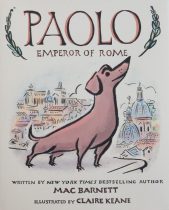
One of the only ways we’re going to be able to visit Rome in the near future is through stories, so it’s particularly welcome to be transported there thanks to Mac Barnett and Claire Keane’s tale of dachshund Paolo, resident of that beautiful city.

Poor Paolo however is forced to spend most of his time stuck inside Signora Pianostrada’s busy hairdressing salon staring out through the shop door with little if anything to enjoy other than the occasional whiff of the great outdoors.

By night and most of the day Paolo would dream of escape.

Then one day an old lady leaves the shop door open and that’s when Paolo seizes his chance to break free.

Once in the wild streets he soon discovers a world of beauty, excitement and yes, danger, first in the form of a hostile feline among the ruins. His attitude to the moggy though is, ’The biggest among you has scratched my cheek, and I did not flinch. Will any other cat challenge me?’

They don’t, but then he encounters a pack of dogs as he searches for food. Antagonistic at first, they soon make him their leader and together they enjoy the city by night.

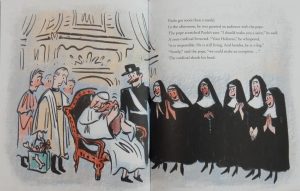
Next morning Paolo becomes a hero, saving six nuns from the Trevi Fountain. I can’t imagine how they managed to fall in, but the pooch becomes a hero.

Most important though with his indomitable spirit, he has succeeded in conquering the city.

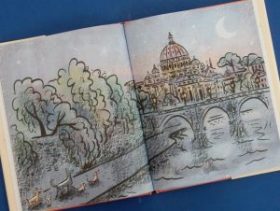
I’ve not visited Rome for real for many years, but Mac’s narrative, together with Claire’s illustrations truly do evoke the sights, sounds and smells of this ancient city absolutely brilliantly: I love the brio of the telling, the textures of the scenes, and the portrayal of characters both animal and human, is sublime.

Somewhat reminiscent of the likes of Ludwig Bemelmans, this book has all the makings of a classic.

My Mama

My Mama
Annemarie van Haeringen
Gecko Press

‘I’ve known my mama for a long time. For my whole life, actually.’ So says the little elephant narrator, going on to tell us of all the ways his mama cares for him, playing, gently guiding and on the very rare occasion when she’s cross, taking care to explain why.

I’m sure she wasn’t too impressed by her offspring’s creativity in this dress prettifying incident …

Annemarie’s adorable illustrations and little elephant’s words however, don’t always quite marry up: “When the weather’s good, we go on the swings. Who can go the highest? Of course I help mama a bit, otherwise she’d never win.’ …

The same is true here: is  baby elephant or Mama really in charge as they go ‘CLIPPITY-CLOP, CLIPPITY-CLOP!’

Who can fail to laugh at the plant watering incident where little elephant describes his enthusiasm for so doing commenting ‘ I like watering the plants. The funny thing is when I do, it always starts to rain’.

Equally a good giggle must surely come too over the way he helps carrying things and ‘tidying up things’ on the way back from their shopping trip. To discover what he does though, you’ll need to get hold of a copy of this lovely book for yourself.

Let me just finish by saying, that I love Mama’s positive assertion, ‘you can do anything if you really want to.’ and despite that applying to her letting go at bedtime, we see our narrator safely tucked in to bed on the final spread, stargazing.

Gently humorous and super sweet, but never sentimental, this is perfect for sharing with little humans.

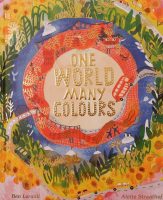
One World Many Colours

One World Many Colours
Ben Lerwill and Alette Straathof
Words & Pictures

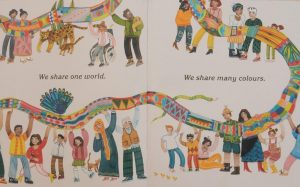
Award winning travel writer Ben Lerwill takes readers on a journey to celebrate the wonderful colours to be discovered all over the world, demonstrating his opening line ‘We share one world. We share many colours.’

We travel from the desert of Oman with its white Arabian oryx, to icy white Antarctica whose ‘frozen land furls out forever’ and the Sydney Opera House glowing in the morning light,

all the way to the pyramids of Egypt glowing at the day’s end as the final rays of the sun bathe the ancient stones in a beautiful red light.

In between, the journey takes us to see the soft pink blossoms of the cherry trees in Japan and the lakes of Kenya with their pink hued flamingos.

Yellow stands out glowing and gleaming in a football stadium in Brazil, on the New York streets with their numerous taxi cabs and in the sunflower fields of Spain – silent save only for the wind’s whisper.

Blue is found not only in the deepest oceans and in the sky above Mount Everest but also on the beautiful feathers of the Canadian blue jay.

The wilds of South Africa, the countryside of Vietnam with its ripening rice fields and the Amazon Rainforest all glow with their gorgeous greens.

Chinese New Year celebrations in Hong Kong are alive with red but equally bright is the London double-decker bus driving over Westminster Bridge during the rush hour.

Our magical journey shows that the same vibrant colours are found in nature, in culture and in our cities. Both Lerwill and illustrator Alette Straathof will surely open the eyes of young readers to the wonders of our world while also linking us all together through a shared colour spectrum. Connectivity indeed.

Alette’s colour palette is rich and vibrant; Ben’s writing lyrical and a breath of fresh air; together they’ve created a captivating book that is uplifting, and gently educational.

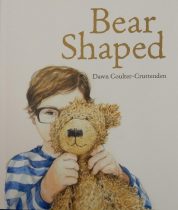
Bear Shaped

Bear Shaped
Dawn Coulter-Cruttenden
Oxford Children’s Books

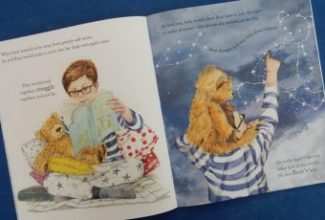
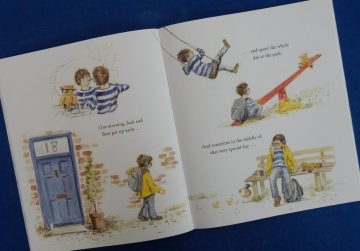
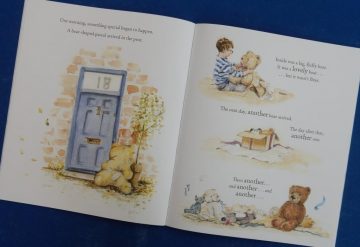
Most young children develop a strong attachment to a special soft toy and so it is for Jack; the two are inseparable. Bear has been Jack’s constant companion,

comforting him and giving him the confidence he needs to try new things.

One day however while out in the park Jack diverts his attention towards a passing drake and shortly after discovers that Bear has gone missing.

It feels as though an enormous Bear-shaped hole has opened up inside him, Jack misses him SO much.

His family try their very best to track down the missing bear but to no avail and Jack himself makes posters that he puts up everywhere.

Nobody returns Bear. but something else quite wonderful starts to happen;

something that precipitates a gradual change in Jack. Little by little, kindness – other people’s and Jack’s own – enables his smile to return and he’s able to find a very special way to cope with that bear-shaped hole in his life.

Based on a true story, this beautiful tale of friendship, loss, precious memories and altruism is a real heartstring tugger; and the detailed, true-to-life illustrations show just how closely the author/illustrator worked with the actual ‘Jack’, a boy who happens to be on the autism spectrum.

The Crow and the Peacock

The Crow and the Peacock
Jo Fernihough
Oxford Children’s Books

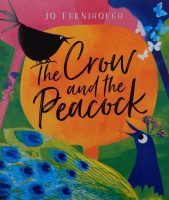
Crow lives a happy and contented life until he hears the gentle cooing of a dove in the woods one day. This encounter engenders a feeling of dissatisfaction in him and off he flies on a journey to find out where true happiness lies.

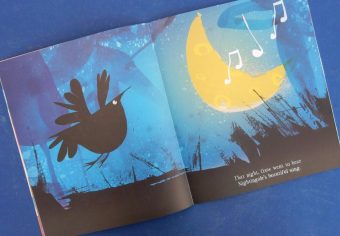
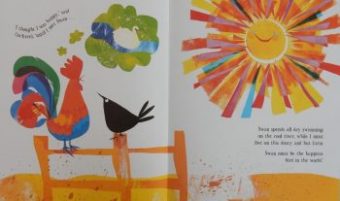
The trouble is each bird he talks with – Dove, Nightingale,

Cockerel, Swan

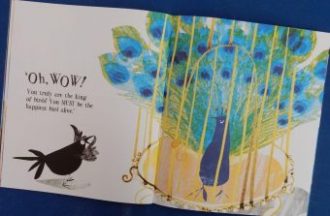
and even the stunningly beautiful king Peacock stuck in a cage,  says that for one reason or another, real happiness eludes it.

Peacock says something else to Crow too and the story comes full circle.

With its themes of true happiness, and freedom, this story is a reworking of an old fable, that will surely, now especially when we’re all feeling confined and having to practice physical distancing, make listeners and readers pause and think about what is truly important in life.

Debut picture book author/illustrator Jo Fernihough’s vibrant, mixed media illustrations sing their own song as we follow Crow through the pages on his journey of discovery.

Follow Me, Flo!

Follow Me, Flo!
Jarvis
Walker Books

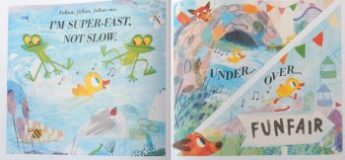
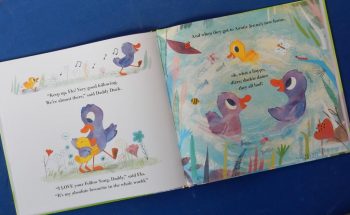
Anything but a follower of the rules, young ducky Flo prefers to do things in her own divergent way and so it is when she and Daddy Duck set out to pay a visit to Auntie Jenna’s new nest.

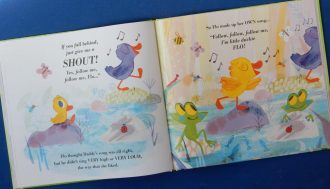
Daddy lays down some ground rules from the start – ‘FOLLOW ME all the way. No chasing or hiding’ and then off they go with Daddy inventing a song to help keep his little one on the straight and narrow: “We’re off to somewhere new./ So stick to me like glue.// FOLLOW ME, FLO!/ Come on, let’s go!/ We’re sure to be there soon.// Follow me UP… . // Follow me DOWN… . / Look straight ahead and NOT AROUND!”

Inevitably it isn’t long before Flo begins to feel this song isn’t right for her.

Instead she invents her own much more exciting version and so pleased with same does she become that she fails to realise that she’s strayed right into the path of a certain Roxy Fox with other things on her mind than singing.

Fortunately however, Jarvis’ ducky ditty takes an unexpected turn for Flo remembers in the nick of time, the words of her Daddy’s song and is back on the right track, even managing to earn some praise from her pa and all ends happily.

It’s all in the eyes with Jarvis’ delectable images of young Flo’s recalcitrant romp that young humans will relish, especially those with a streak of rebellion, and that’s pretty much all of them; they might even learn an important lesson along the way too.

Adult sharers will love to give voice to this rollicking read aloud with its liberal sprinkling of accompanying minibeasts adding to the delights.

An Artist’s Alphabet

An Artist’s Alphabet
Norman Messenger
Walker Studio

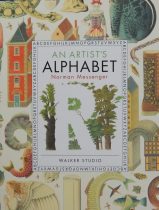
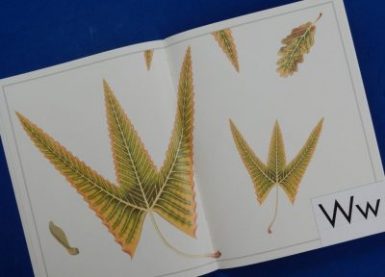
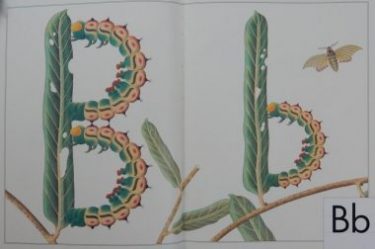
This is really way beyond a mere alphabet book: it’s a stunningly beautiful art book, extraordinarily clever, playful, sophisticated and nigh on irreverent where the ABC is concerned, being based more on the shape and form of letters than their sound quality.

There are some surreal offerings, letters inspired by works of art such as Hokusai’s The Great Wave off Kanagawa. (C for curves maybe); mythology,

botany,

zoology,

landscape features including clouds and mountains, tools; but every single one of Messenger’s pages is itself a work of art. Some of them might challenge you: it took me some while to appreciate his use of negative space in R; but once you see it you think, how come I didn’t see it immediately, especially as it’s obvious on the cover.

I’d love to share every single letter with you but rather, I urge you to get your own copy of this book if you have an interest in art, design, and / or language and its components,

An absolute treasure to behold, to pore over and to spark the imagination: I see it being enjoyed by individuals of all ages, used in art and design courses in schools and colleges, and much more.

Mr Brown’s Bad Day / Bunnies on the Bus

Mr Brown’s Bad Day
Lou Peacock and Alison Friend
Nosy Crow

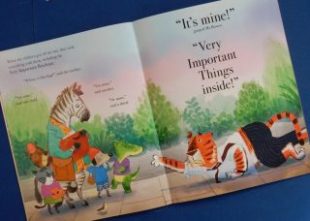
Mr Brown is a Very Important Businessman with a Very  Important Briefcase that he takes to his Very Important Office where he spends his time signing Very Important Letters and attending Very Important Meetings.

Every lunchtime clutching his Very Important Briefcase he leaves his office to eat his lunch in the park.

One Tuesday however, a baby elephant snatches the briefcase while Mr B is busy thinking important thoughts.

There follows a frantic chase on foot and by tricycle as said briefcase is passed relay style onto the back of an ice-cream trolley and then in the possession of a group of children, onto the fairground’s big wheel, and the bus back through the town to school.

Mr Brown finally catches up with it when the bus stops to disgorge the passengers.

Eventually with darkness falling it’s a very weary tiger that heads home clutching his briefcase. Once there he checks to make sure the contents are safe before heading up to bed for a well-earned rest and some more ‘Very Important Business’ …

But what was inside that briefcase? Now that would be telling and I’m no story spoiler.

Great fun with a wonderful final surprise revelation. Alison Friend’s illustrations are a treat too with plenty of detail and action to engage your little ones as they listen to Lou Peacock’s tongue-in-cheek tale.

Bunnies on the Bus
Philip Ardagh and Ben Mantle
Walker Books

TOOT! TOOT HONK! HONK! Madness and mayhem abound as the bunnies take to the bus one summer’s day in Sunny Town, so the rest of us drivers and pedestrians had better steer well clear as the bunny driver has clearly gone rogue, careering past the bus stops narrowly avoiding the other animals going about their daily business.

The bunnies meanwhile are having a ball aboard FLUFF 1, cavorting down the aisle; there’s even one up on the roof.
Where is this vehicle bound for you may well be wondering as it suddenly leaves the road completely.

No matter, for at the next stop, those bunny passengers instantly set their sights on another mode of transport as they make their exit and err … where one journey ends another begins so to speak …

Anarchic fun for your bouncy little ones created by the terrific Ardagh/ Mantle team whose combination of energetic rhyme (Philip) and cracking illustrations jam-packed with gigglesome details (Ben) is perfect cheering up material.

Once Upon An Atom

Once Upon an Atom
James Carter, illustrated by William Santiago
Little Tiger

James Carter successfully wears several hats: he’s a much loved, award-winning poet, a musician and a non-fiction writer; how he manages to fit in all his performances at schools and festivals too, is pretty amazing.

In this latest book, James fuses his poetry and non-fiction writing, this time to explore some of the really BIG questions that fascinate both children and adults alike; and they’re all of a scientific nature.

Starting with a mention of the Big Bang and tiny atoms, the poet wonders, ‘WHY do leaves turn red and gold? / WHY do fireworks explode. // WHAT are whizzes, bangs expansions? / They’re all CHEMICAL REACTIONS!’
That assertion certainly makes chemistry begin to sound exciting.

Next on the scientific agenda are electricity, followed by gravity,

both aspects of physics – for as we hear, ‘We live on one great universe / and PHYSICS tells us how that works.’

Evolution, medicine come next, followed by my favourite of the sciences – botany, all of which are aspects of BIOLOGY.

The final stanzas talk of the work of scientists, their experimenting and inventing, ending with the exciting thoughts: ‘Now WHO knows what / the FUTURE is? // Find out … / become a SCIENTIST!’ Now there’s a possibility.

On the last spread is one of James’ acrostics entitled It’s all a question of SCIENCE.

A fizzingly, zinging addition to James’ non-fiction poetry series, this one is a clever fusion of playful entertainment and STEM information. With each spread being embellished with William Santiago’s arresting, zippy art, the book becomes a STEAM title that is great to share in the classroom or at home.

There’s a Lion in the Library!

There’s a Lion in the Library!
Dave Skinner and Aurélie Guillerey
Orchard Books

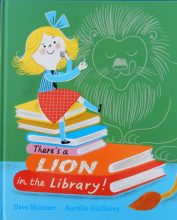
Here’s a simply delicious reworking of The Boy Who Cried Wolf fable starring a little girl named Lucy Lupin. Lucy might appear a little sweetie but in fact she’s a holy terror whose favourite thing is to tell lies – absolute whoppers!

It all begins one Monday morning when this young miss makes the titular announcement to the librarian, claiming the creature is chomping through the history books.

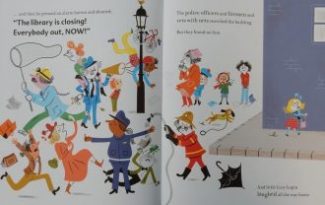
An emergency is declared and the library evacuated while a search takes place.

A similar thing happens on the Tuesday when our mischief-maker informs the caretaker that the lion is devouring books in the romance section. Then come Wednesday the announcement is made to the coffee shop manager who insists all library visitors run for their lives.

For the third time the search for said creature proves fruitless.

The three library workers have a meeting to consider this mysterious visiting creature. Could it perhaps be that when it comes to sweet-looking little girls, appearances can be deceptive?

A day or two later, young Lucy Lupin returns to the library. On this particular day however, things go a little differently …

I’m a terrific enthusiast when it comes to fractured fairy tales and fables, and this one is a cracker to read aloud. Aurélie Guillerey’s illustrations have a slightly retro look reminiscent of Roger Duvoisin and her characters both human and leonine are splendid.

The Extraordinary Gardener / The Five of Us / Incredible You

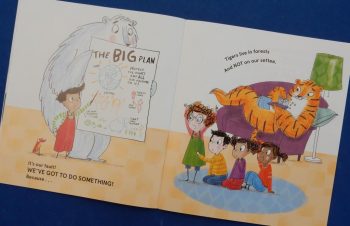
Celebrating the paperback editions of 3 Tate Publishing titles:somehow they all speak a similar message to us in this current crisis:

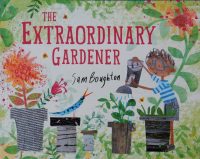
The Extraordinary Gardener
Sam Boughton

Wildly imaginative, Joe lives in an ordinary apartment in an ordinary city but in his inner world, plants flourish growing taller than skyscrapers and wondrous animals abound.
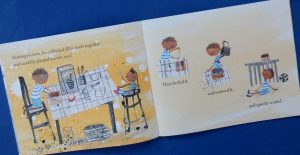
Then thanks to reading one night in bed, a seed of an idea is planted in his mind; it’s colourful, aromatic and joyful sounding. The following morning he sets about transforming that idea into reality, starting with an apple seed and some basic tools.

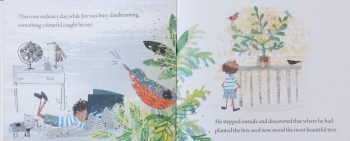
His idea seems to take ages and ages, almost forever; so much so that Joe forgets his seed and returns to imagining colour into his grey existence. But then one daydreaming day Joe spies something outside, colourful and REAL!

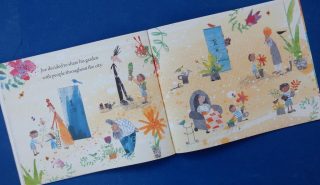
Tender care and new seedlings turn that single tree into a stunningly beautiful garden; a garden admired by his neighbours and that ignites his imagination once again.

More seed gathering ensues and gradually the entire neighbourhood is totally transformed into a riot of colour. Just the kind of awesome moment we all need in our lives just now, and the message too about reaching out to neighbours and strangers.

The more you look at this book, the more you see – the detail is awesome; and Sam Broughton’s way of using greyness and gradually bringing more and more colour into her scenes is wonderful, culminating in a glorious fold-out.

Time to get yourself some seeds, go into your garden (or failing that grab some containers), and begin growing something amazing …

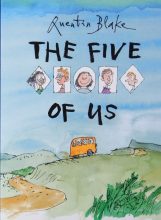
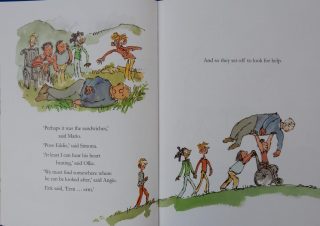
The Five of Us
Quentin Blake

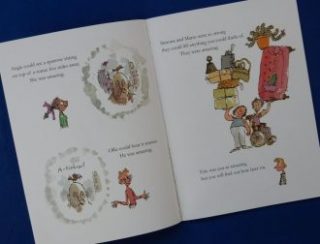
This is an enormously powerful story about how five friends, set out for a picnic into the countryside, in a big yellow bus driven by Big Eddie. Now what we’re told about the five is that each of them has a special, amazing ability: Angie can see things miles away; Ollie’s hearing is supersensitive; Simona and Mario are extraordinarily strong and as for Eric – he’s not yet aware of his superpower, but of that  … more later.

During the picnic Eddie starts feeling “ a bit peculiar’ and suddenly the children have an emergency on their hands. Now more than ever they need to work together

but which of them is going to end up saving the day – or will it be a wonderful collective problem-solving effort.

Quentin Blake’s genius shines forth in every way in this book; his characters are wonderfully portrayed and he leaves plenty of space for readers to bring their own interpretations to the story, though one thing is absolutely clear: do whatever you can – a crisis situation can bring out the most awesome talents in every single one of us.
Written 6 years ago, this is just as timely now – or perhaps even more so.

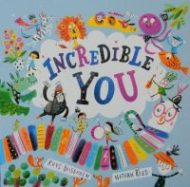
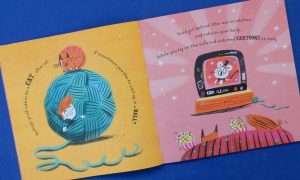
Incredible You
Rhys Brisenden and Nathan Reed

We all have a bad day from time to time and perhaps like the boy protagonist in this book, on especially bad ones, we might wish to be someone or something else.

This boy however, having run through the gamut of ordinary

and less ordinary animals and the possibilities offered by so being, comes back round to the senses that he himself possesses and the wonderful wealth of possibilities these can generate.

In short everyone is uniquely AMAZING!

Amazing too is the combination of Rhys Brisenden’s rhyming text and Nathan Reed’s colourful scenes of upbeat characters, animal and human, demonstrating the multitude of ways of being yourself.

Hours of visual stimulus and an abundance of potential talk herein.

Only a Tree Knows How To Be a Tree/ We’re Going on a Bear Hunt: Let’s Discover Changing Seasons

Only a Tree Knows How to Be a Tree
Mary Murphy
Otter-Barry Books

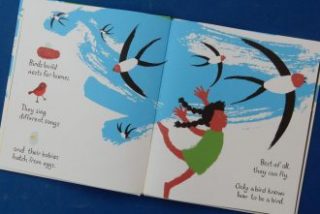
There are SO many things about a tree to appreciate and take delight in. First and foremost is its inherent and unique beauty, but it also provides shelter for all manner of insects, birds,

and other small animals, for as the author says ‘Only a Tree knows / how to be a tree.’

In similar enthusiastic fashion, Mary talks of and celebrates other things in the natural world – birds, dogs, water with its plethora of fish,

Earth whereon all the things mentioned have their homes, but also for its turning that brings both night and day, and the seasons; and there’s the universe with its multitude of planets … “But Earth is our home / and only Earth knows how to be Earth.’

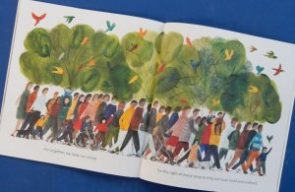
There are people too of all kinds to celebrate every one special and different: these are represented by a host of joyful children

playing, talking, pretending, one even meditates. Indeed children feature in all but one spread. I love Mary’s inclusive, brightly hued, detailed pictures of them all. These alone offer plenty to look at, enjoy and talk about.

Nothing is too insignificant to celebrate here from the tiniest creature to the entire universe. Share, pause, reflect and feel awe.

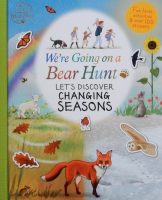
We’re Going on a Bear Hunt: Let’s Discover Changing Seasons
illustrations by Max Williams/ Bear Hunt Films Ltd. Susanna Chapman
Walker Entertainment

No matter the weather or the season, youngsters will find something of interest in this interactive seasonal guide. There are a number of weather related investigations some of which can be done at home, others will involve going out doors. You might make your own rain gauge; or perhaps find a good spot for some cloud spotting.

On a clear wintry night, what about some moon spotting or looking at the stars? Or on a fine spring day, why not take the opportunity to get outside and look for signs of new life – there might be baby animals around.

Then once back indoors you can adorn a field with spring flowers using some of the stickers provided at the back of the book.

There are also seasonal recipes, crafts and I particularly like the idea of ‘Go green lucky dip’ where you can use the discs provided but also add you own counters.

With plenty of fun, learning opportunities, certainly this is a sticker activity book and much more.

Patricia’s Vision / Hosea Plays On

Here are a couple of books about enormously inspiring people from Sterling Books

Patricia’s Vision
Michelle Lord and Alleanna Harris
Sterling Children’s Books

Here’s a super STEM picture book biography by Michelle Lord, of an inspiring African American woman, Dr. Patricia Bath, who followed both her passion and her vision to become a doctor and change other people’s lives by restoring their eyesight by means of tools that she herself had invented, tools that included lasers to remove cataracts.

From her childhood, (as a young child having seen a blind man begging on the street in Harlem in the 1940s, and pondered on how and why it could have happened), Patricia was a girl with a great and growing curiosity. After qualifying as a doctor, she “decided to get the training, education, skills set so I could achieve miracles” and that is precisely what she did, believing that “eye sight is a basic human right”.

She always looked for possibilities where others saw only insurmountable walls, and through her tenacity and determination managed to do what had never been done before often against her naysaying fellow doctors who hadn’t the imagination she possessed to look beyond the information given.

Through her entire life, even in retirement, this awesome woman kept her goal firmly in her sights and when climbing Mount Kilimanjaro, she visited a school classroom wherein blind children received their education in a classroom without braille books. On her return home she sent computers to that Tanzanian school so that the pupils could use their fingertips to read braille computer keyboards; this she called “Computer Vision”.

What an incredible woman and what an awe-inspiring book, made all the more so by the inclusion of direct quotations from Dr Bath and animated illustrations that show both emotion and scientific details. A terrific tribute, and a splendid way to introduce young readers from all over the globe, to this medical hero who died last year.
(There’s also a timeline, a note from the author, a further page about Dr Bath and a bibliography.)
Hosea Plays On
Kathleen M. Blasi and Shane W. Evans
Sterling Children’s Books

Both author Kathleen Blasi and illustrator Shane Evans celebrate the street musician Hosea Missouri Taylor Jr. in their fictional homage of a story of a day in his life, when he boards the bus and goes to his favourite spot, Rochester Public Market.
There he would take out his saxophone and play amid the hustle and bustle. On this particular day we see him passing a boy raking leaves who pauses in his work to pretend play using his rake.

Once in the market passers by are entranced by his music and some drop money into his saxophone case; one girl is moved to dance,

their harmonious double act continuing until the rain comes down when she and the watchers, head for cover leaving Hosea to play alone.

At the end of the day, Hosea is thrilled to discover he has earned ‘enough money’ which we understand is the means to buy another instrument – a trumpet –

and in so doing, spread the love by donating it to the lad Nate, he’d spoken to in the morning. Then they play a lovely surprise finale duet.

The vibrant artwork is wonderfully uplifting: Hosea’s passion for music and its power shines out and the story is enormously, joyously heart-warming.

An author’s note explains how the musician’s goal was to keep the neighbourhood children in positive ways. To this end he bought instruments for youngsters and offered them free music lessons: a true advocate for learning through music.

Recommended for all who want to share, or inspire others with the joys of music and of giving.

Every Child a Song / Like the Moon Loves the Sky

Every Child a Song
Nicola Davies and Marc Martin
Wren & Rook

This book was written in celebration of the 30th anniversary of the United Nations Convention on the Rights of the Child.
Sensitive and thought-provokingly Nicola Davies uses the idea of every child having a song to explore some of the things contained in the 54 rights that all children should have.

Easily understood, her beautiful words highlight the right to freedom of thought and expression, the right to an education; the right to relax, play and participate in a wide range of cultural and artistic activities indoors and out, to be both an individual and part of a loving community.

Nicola’s is a song of love indeed and a vitally important one that reminds us all that there are still children whose access to these rights is limited by the chaos of hatred and war

yet still they are able to sing and to have their songs heard by people the entire world over.

Marc Martin’s illustrations don’t shy away from the darkness but the bright light of hope prevails as the final spreads show how by raising our collective voices we can make sure that ALL children, wherever they are, can sing their own song; a song that starts from the day they are born – a song of love, of joy and of freedom ‘–unique and tiny. Fragile. But never quite alone.’

Truly an inspiration to children everywhere.

Just now in the present difficult situation that are all share, think about what you can do at home with this book as your starting point.

Like the Moon Loves the Sky
Hena Khan and Saffa Khan
Chronicle Books

‘Inshallah you are all/ that is gentle and good // Inshallah you feel safe, / like all children should.’
These are the opening lines of Hena Khan’s lyrical text (each verse being based on a verse of the Quran) expressing new parents’ hopes for their tiny child to show gentleness, be safe, kind, reflective, to seek knowledge,
to stand strong, to embrace change and much more, prefacing each one with the “Inshallah” (in Arabic – if God wills it).
Debut illustrator Saffa Khan has created exquisite ink textured, digitally rendered scenes in rich, vibrant hues for every spread. I particularly like her carefully considered, inclusive one for ‘Inshallah you travel / to thrilling new places.’

Throughout, not only does she imbue the book with a sense of security, contentment and happiness, but also with hope and kindness, and feelings of awe and wonder,

perfectly complementing and extending the author’s over-arching tender, peaceful message of unconditional love.

This is a book that will resonate with people of all faiths and none, for as the author reminds us ‘Inshallah is used … to reflect the idea of a greater force or power beyond ourselves’.
Gorgeous!

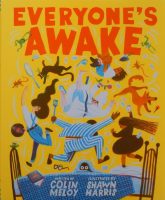
Everyone’s Awake

Everyone’s Awake
Colin Meloy and Shawn Harris
Chronicle Children’s Books

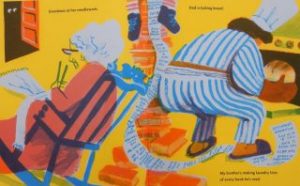
Wide awake, a child narrator lying in bed regales readers with the night-time activities of various members of the household, not one of whom is actually in bed despite it being almost midnight. Speaking in rhyme he tells of the relatively normal activities ‘Grandma’s at her needlework. / Dad is baking bread. / My brother’s making laundry lists / of every book he’s read’;

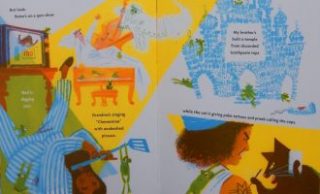
and the much more unlikely “My brother’s now reciting every line from Condorman while my sister is trapezing from the kitchen ceiling fan. / Dad just rolled the motorbike into the living room and is practicing Sinatra with the handle of the broom.’

Why oh why, when they have a busy day planned for tomorrow would Mum decide to go up on the roof and start fixing broken slates, or brother spend time using toothpaste tops to build a temple – totally bizarre behaviour. Even the family pets have got involved in the action: the cat’s been taking lessons in bad language from ‘my brother’ and then goes on to engage in a spot of tattooing.

Will these frenzied activities ever cease?

Eventually our narrator just has to go down.

The retro feel illustrations rendered in ink, charcoal and pencil with added colour absolutely capture all the frenzied nocturnal activity as the clock ticks on towards the morning. With a satisfying finale, the entire thing is absolutely and defiantly crazy – insomnia guaranteed – so best not shared as a bedtime tale.

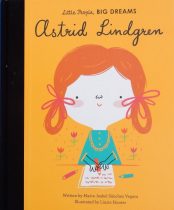
Little People, Big Dreams: Astrid Lindgren

Little People, Big Dreams: Astrid Lindgren
Ma. Isabel Sánchez Vegara, illustrated by Linzie Hunter
Frances Lincoln Children’s Books

In the latest of this splendid biography series for youngsters Ma. Isabel Sánchez Vegara celebrates one of the world’s most favourite children’s authors, Astrid Lindgren, the creator of much loved character Pippi Longstocking.

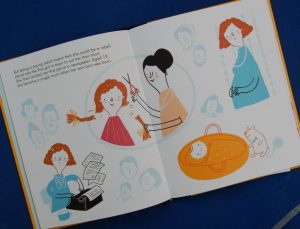
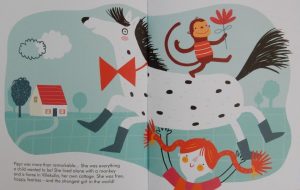
Pippi Longstocking was the name given by Astrid’s daughter Karin who, when sick in bed asked her mother for a get-better story about a character whose name she had just thought up and those adventures are now children’s book classics that all readers should immerse themselves in.

Back now to Astrid: she had a happy childhood living on her parents’ farm in Vimmerby, Sweden and at a young age developed an insatiable appetite for books and reading, quickly working her way through the library’s entire collection.

She had a rather rebellious nature that became more evident as she began to grow up, getting her first job on a newspaper, and at age nineteen she became a single mother to her son, Lars.

Later she married and had another child, Karin. Always playful, Astrid frequently invented stories. As a 10th birthday present for Karin she put all the Pippi stories down on paper and before long the wise, wild character was famous the world over with Pippi being translated into over 100 languages and becoming a TV star too.

Astrid went on to create other popular characters including Lotta and Emil and was awarded two Hans Christian Andersen medals in recognition for her contribution to the book world.

There was even a planet – Planet 3204 – named in her honour by a Russian astronomer. Awesome! A legend indeed and now her stories live on inspiring new generations of young readers.

A time line and further information conclude this cracking book.

Linzie Hunter really captures the spirit of both Astrid and Pippi in her delightful, slightly wacky illustrations.

Where’s Baby?

Where’s Baby?
Anne Hunter
Walker Books

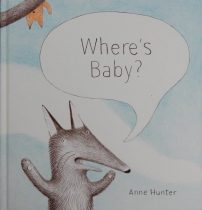
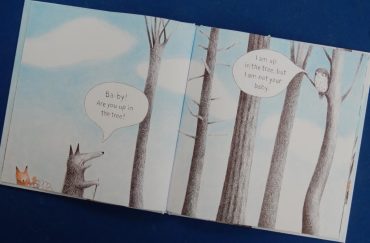
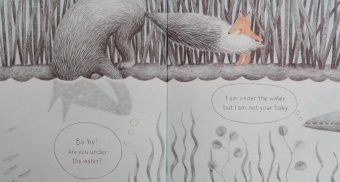
In this delightfully playful book whose story really begins on the front endpapers, Papa Fox searches for his little one. “Have you seen Baby, Mama Fox?” he asks on the first page and the response, “Why, Baby must be somewhere, Papa Fox” leads the male parent off, walking stick in paw, searching high and low in the countryside – up in the tree, inside a log, over the hill, down a hole, under the water and around the bend.

In each location he comes upon a decidedly un-foxy animal. Some respond politely to his question “ Ba-by! Are you … up in the tree?” for instance …

Whereas others such as a grumpy skunk with its “I am inside the log, but I am not your baby. Go away!” are rather rude and on occasion Papa Fox gets the shock of his life.

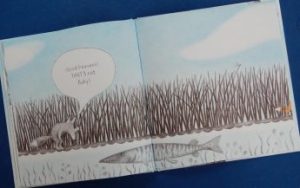
Totally at a loss, back goes Papa Fox empty pawed; and by this time if your audience hasn’t already yelled out, “Behind you” at the top of their voices they certainly will when he reaches Mama Fox again. Once reunited, it’s down to Baby to utter a final throwaway line …

Inevitably this will lead to cries of ‘Read it again” and you – like that Papa Fox, will happily oblige.

There’s so much to love about this hide-and-seek book: the dramatic irony of the whole tale; the entirely speech bubble text with its question and answer format; Anne Hunter’s superb, finely drawn pen and pencil, cross-hatched illustrations with that limited colour palette that grace every spread, the fact that youngsters will perceive that Mama Fox is playing along with her offspring and the unobtrusive lesson in prepositions.

Simple literary entertainment of the first order, methinks.

Just In Case You Want To Fly / Read to Your Toddler Every Day

Just In Case You Want To Fly
Julie Fogliano and Christian Robinson
Walker Books

All parents and carers want to do their best to ensure that their little ones have what they need in any eventuality and so it is here in author Julie Fogliano and illustrator Christian Robinson’s second collaboration.

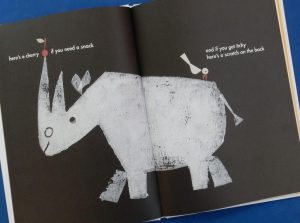
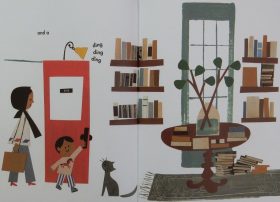
It begins ‘just in case you want to fly, here’s some wind / and here’s the sky’ going on in rhythmic rhyme to provide such uplifting words about potential needs as ‘here’s a cherry if you need a snack/ and if you get itchy / here’s a scratch on the back’

as readers and participants move through the day perhaps pausing and ‘just in case you want to sing / here’s a la la la’ and to pick up a book or two …

getting ever closer to bedtime,

while in the bedroom there awaits ‘a pillow, a song and a tissue’. Before that though come a warm bath and  a honey-sweetened drink.

Christian Robinson’s final collage and paint, bedtime tuck-in spread shows the young child safely snuggled beneath a cover patterned with most of the items mentioned in the text.

With its reassuring messages that no matter where you journey, or what you try to do, something or somebody will be there for you, this is a tale to share with youngsters at bedtime or any other time of the day,

Also just right for sharing with that same young audience is:

Read to Your Toddler Every Day
Lucy Brownridge and Chloe Giordano
Frances Lincoln Children’s Books

Following on from their nursery rhyme book Read to Your Baby Every Day, the same team have collaborated on a collection of twenty folk and fairy tales and fable retellings from around the world – from Scandinavia to Syria

and Cambodia to China to read to slightly older children.

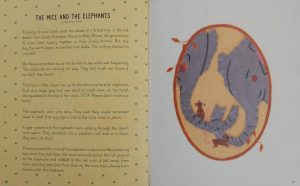
Once again Chloe Giordano has created gorgeous hand-embroidered illustrations and there’s at least one for every story. You’ll find animals of all kinds, shapes and sizes including mice and elephants from India,

Anansi the spider and a turtle from the Caribbean, as well as humans such as the couple whose snow girl came to life in the Russian “Snowflake, the Snow Child’, and the Stonecutter named Haru from Japan.

Each of Lucy Brownridge’s retellings is just the right length for bedtime reading providing an enriching way to end the day with your little one (s).

Welcome to Your World

Welcome to Your World
Smriti Halls and Jaime Kim
Walker Books

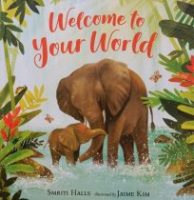
Strangely enough this gorgeous book arrived in the same week as my nephew’s wife had a new baby girl so it was particularly timely. I can already imagine her seven-year-old sister reading Smriti’s, lyrical, almost prayerful text to her and showing her the beautiful scenes of the natural world. That though will have to wait until the next time I see them.

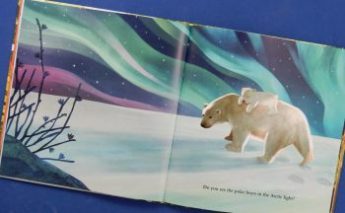
‘Welcome, little baby, / round your mother curled. / Welcome, little baby. / Welcome to your world.’ begins the exhortation to the infant to use every sense to experience the delights of nature from morning to nightfall: the warm rays of the sun; the flora and fauna of the forests, the splashing ocean with its fish and turtles; the sound of the eagles as they soar and swoop; the wondrous sight of the Arctic light;

to feel the water from the rain and the waterfall as the elephants do. There are juicy berries waiting to be tasted (though not just yet and not without adult say so) as well as sweet-smelling blossoms and many other wonderful experiences.
When the sky darkens there are twinkly stars far out and closer, the moon to shine upon your lovely face.
The mother concludes by repeating ‘Welcome to your world’ continuing – ‘it loves you through and through. / Welcome to your world … // will you love it too?’

Just beautiful!

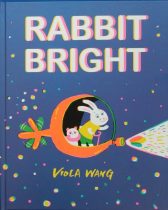
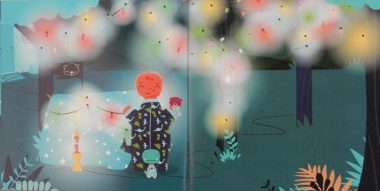
Rabbit Bright

Rabbit Bright
Viola Wang
Hodder Children’s Books

You might want to have your sunglasses ready when you read Rabbit Bright with its dazzling day-glow colour palette.

Rabbit Bright has finally summoned up the courage to turn off his night light. But thinking about so doing, sets the little fellow wondering, “ … where does the light go when it’s dark?”

Instead of sleeping, it’s helmet on, panda clinging on behind and off he goes on his bicycle out into the blue-black night with this thought in mind: “If there’s dark, there must be light.”
And light there surely is; for first he sees a sky lit up by fireworks.

Then, having left his cycle, he boards an underground train with its glowing headlamps.

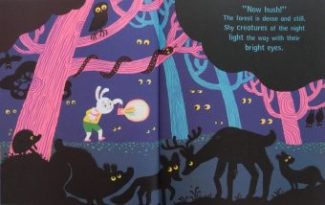
In the forest too he encounters light, in the form of bright-eyed nocturnal creatures.

Boarding a boat, he paddles off to a cave where the darkness is punctuated by the flashes of fireflies.

His journey of discovery continues in a sub-oceanic craft and our little explorer is almost dazzled by the sea creatures shining as they swim.

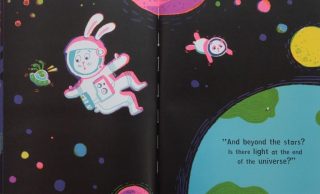
Having next, climbed a hill for a spot of star-gazing, Rabbit and panda float off into space.

Then mysteriously, that bicycle reappears, for the two to set off homewards where a cosy bed awaits. Sweet dreams Rabbit Bright; sweet dreams little panda.

If you have, or know a little one who has anxieties about the dark, then this is the perfect book to share with them. Not only is it an exciting story, beautifully and arrestingly illustrated, it should help to assuage those fearful feelings about turning off the light and being alone in the darkness.

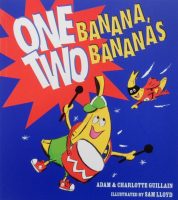
One Banana, Two Bananas

One Banana, Two Bananas
Adam & Charlotte Guillain and Sam Lloyd
Egmont

A yummy banana feast is in store for readers of this high octane rhyming, read aloud romp.
Without further ado let’s meet the banana crew with ‘One banana, two bananas, three bananas, four, snoozing in the garden’ (in hammocks) when their slumbers are disturbed by a ringing at the door.

There appear bananas five, six, seven and eight in party mood announcing that bedtime is postponed for a pyjama-clad shin-dig. And the eight are just in the act of inverting themselves when through the window they spy …

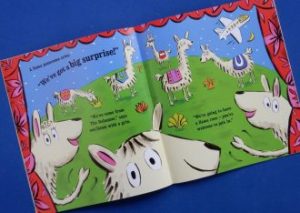
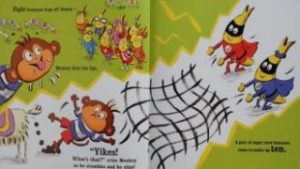
The llamas hailing from the Bahamas invite the fruity friends to join in their ‘llama race’. Now that’s an offer, eight PJ clad bananas just cannot resist and off they go. Oh no! They’ve been spotted by a monkey and you can guess what he has in mind as he gives chase.

Happily though something causes him to stumble-trip,

just as a couple of new bananas come speeding up – in the nick of time.

This hungry Monkey isn’t one to be deterred by a mere tumble though, certainly not when his tummy’s a-rumble.

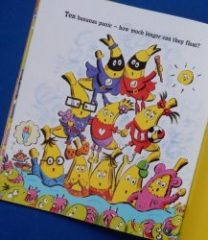
Next thing we see is ‘Ten bananas in pyjamas’ dog-paddling – make that banana-paddling – to save their skins, pursued by the same number of pointy-toothed piranhas. Even if they manage to escape those, that Monkey is still close on their tails. But, can they manage to stay afloat long enough? That is the crucial question as we leave them bobbing up and down on the water …

Splendid silliness, both verbal (Adam & Charlotte) and visual (Sam), to tickle your taste buds and tempt you into performing this to your audience of book-hungry little ones. I wouldn’t mind betting, you’ll relish it as much as they will even if, like me, this reviewer, you don’t even like bananas.

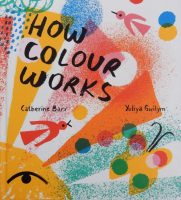
How Colour Works

How Colour Works
Catherine Barr and Yuliya Gwilym
Red Shed (Egmont)

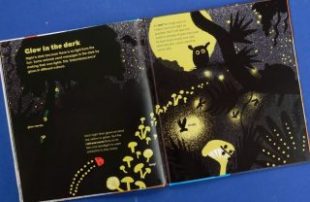
Right from its arresting endpapers, this book that investigates the science of colour and how we see it, simply explodes into a rainbow of bright hues.

Perhaps you’ve wondered how our eyes work, or why some things glow in the dark.

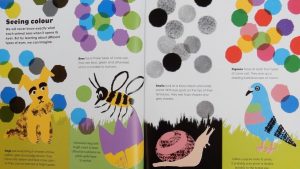
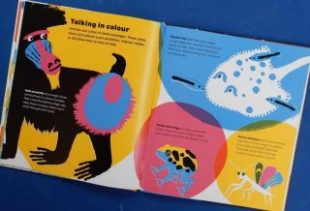
Or maybe you’re curious about how animals see colour – do they see what we see?

and how do they use colour?

Why is grass green, blood red, the sky sometimes blue, and why does the snow look white? The answers are herein.

This surely is a visual treat – Yuliya Gwillym’s dramatic illustrations arrest the eye at every page turn; but author Catherine Barr provides plenty of facts too, facts that will likely have readers wanting to go beyond the information given to learn even more.

Successfully combining science and art to present a veritable STEAM kaleidoscope, this is a book that offers something to youngsters from nursery age upward. What about awe and wonder? Yes, it definitely fits that bill too.

Egg

Egg
Sue Hendra and Paul Linnett
Macmillan Children’s Books

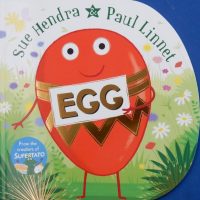
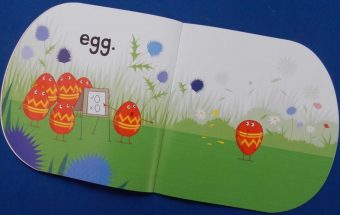
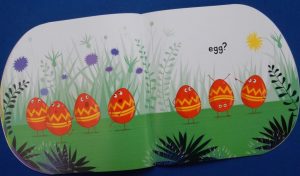
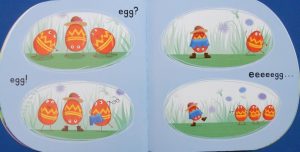
Team Hendra and Linnet (of Supertato fame) have created something delightfully different with their terrific tale of an upside down egg. And, they tell this tale with but a single 3-letter word and a sequence of delEGGtable illustrations.

Here’s what takes place. Into a group of pointy topped, bulging bottomed ‘normal’ eggs, comes our upside downer. The group members are at pains to point out how an egg ‘ought’ to look …

but undaunted, the newcomer proceeds to demonstrate its skills with some clever moves.

These seem to impress the others, so they decide to adorn it …

But this new look turns out to be merely temporary: our upside-downer has something else on its mind here and it looks like a lot of fun. Hopefully not of the shell-shattering sort, however.

Hang on though – might that mean that it’s fine to be an ‘invert’? Acceptance at last? Maybe; but that’s not quite the end of the story …

Accepting and celebrating difference are at the yolk of this Eggstraordinary book that will have you cracking up with laughter.

If you want an Easter offering that will last and last, way beyond the bank holiday, then Egg is the perfect treat. I’m certainly going to be giving a few.

Go Get ‘Em, Tiger! / As Big as the Sky

Go Get ‘Em, Tiger!
Sabrina Moyle and Eunice Moyle
Abrams Appleseed

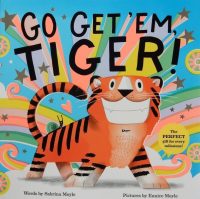
Believe in yourself, is the message that grins, growls, giggles and positively shines out from the Moyle sisters’ latest offering.

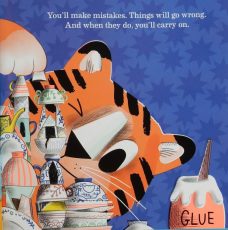
Throughout Sabrina’s rhythmic, rhyming text that switches between the distinctly upbeat – No matter who you choose/ to be, you’ll be/ TERRR-IFIC./ Wait and see!’ – softer spoken exhortations – ‘ be humble’ and gentle warning – ‘You’ll make mistakes./ Things will go wrong./ And when they do,/ you’ll carry on.’

The emphasis is on resilience, finding your inner strength, and focussing on the possible; on kindness, ( You will see creatures who are stuck, / feeling lost, down on their luck. / To these new friends, you’ll lend a hand … ), consideration (‘use your strength to shine a light / on what is wrong and what is RIGHT ) and thoughtfulness.

Optimism rules.
The same is true in Eunice’s bright (with fluorescent touches), exuberant scenes of little Tiger and its community: they’re expressive and an effective complement to the words.

Perhaps the characters in the next book were inspired by the advice to that Tiger

As Big as the Sky
Carolyn Rose and Elizabeth Zunon
Sterling Children’s Books

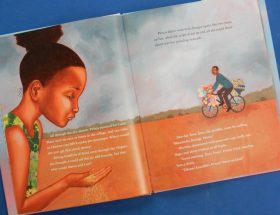
Inspired by a real life meeting of the author and Caleb’s parents and sister, this story is of two at one time inseparable siblings, Prisca and her big brother Caleb.

He carries a bucket of water when the load is too heavy for her; and when Caleb gets malaria she brings sweet tea and nsima (a Malawian cornmeal dish) to his sick bed, and makes him laugh by chastising the mosquitos. But Caleb has set his sights on a better education than the village school can provide, so he goes to live with Grandma in Chimwe, a considerable distance away.

Eager to see him but lacking the wherewithal to pay the transport fares, she begins some entrepreneurial endeavours,

creating various items that the kindly peddler, Tewa Tewa, tries to sell on her behalf but without any luck. Still though, the man always receives a warm welcome from the child. The rains come putting paid to her creations,; again there’s no chance to get to Chimwe. But then one bright, dry day Tewa Tewa returns with nothing to sell on his bike.

Prisca asks him if he could possibly carry both her mother and herself all the way to Chimwe. After a little consideration on his part, all three set off on the long bumpy road

and finally, after many hours and absolutely exhausted, the wonderful man manages to reach their destination. There a joyful sibling reunion takes place.

Carolyn Rose’s uplifting story pays homage to the resourcefulness of children who have little in the way of money, but are full of love, kindness and ingenuity. It’s also a window into some of the hardships village-living families face in parts of Africa including Malawi.

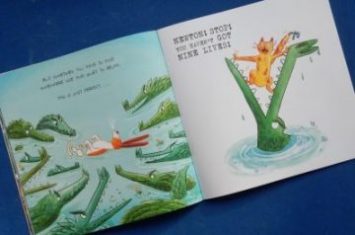
Nine Lives Newton

Nine Lives Newton
Alice McKinley
Simon & Schuster

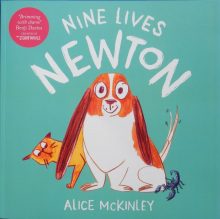
A dog with nine lives – now that is something different. It’s the case, so we hear, with long-eared Newton the narrator of this story. He’s just discovered the fact … so he thinks, and having shared same with his feline friend, off he goes to do all his favourite things as he lives life in the fast lane.

The moggy meanwhile (along with we readers and listeners), knows what Newton doesn’t, and sets off to pass on the information. Newton has another problem too: close attention to detail is definitely not one of his fortes and therein might lie his possible demise.

High drama aplenty is found in Alice McKinley’s debut picture book. With its wealth of lessons in visual literacy, she’s created a real winner here. Youngsters will love being in the know with the author and the moggy character when they watch Newton coming within inches of his life as he attempts to get the biggest bones; poo wherever he pleases;

select playmates freely; perfect his barking technique and more; as well as taking the occasional break for some R and R.

Now what could happen, if and when that cat succeeds in getting the crazy canine to listen? He may accept that he doesn’t after all, quite have nine lives, but Newton doesn’t look like the kind of dog to let something like that stand in his way of excitement …

Assuredly, excitement and hilarity are what you’ll get with Nine Lives Newton.

Don’t Mess With Duck! / The Monkey with a Bright Blue Bottom

Here are two treats from Little Tiger


Don’t Mess With Duck!
Becky Davies and Emma Levey
Little Tiger

Duck is an exceedingly grumpy creature, the grumpiest in his particular pond. Rather than leaving him to enjoy some peace and quiet the other residents create a terrible row and splash infuriatingly. Consequently, case in wing, Duck ups and leaves seeking somewhere quiet.

His search yields several promising ponds but each proves unsatisfactory in one way or anther so he goes to the city where he’s equally unsuccessful,

so too is the cave.

Finally though, he comes upon just what he’s looking for, except that all of a sudden he hears another voice and finds himself face to face with a grumpy frog that’s as cross about seeing Duck as Duck is to discover another occupant. “Clear off!’ they both order.

A brief argument ensues followed by a truce when each agrees to keep out of the other’s way. Peace at last.

But then after a few days a loud cry disturbs this peace.
Are Duck and Frog now ready to accept that perhaps friendship is more important that seclusion? …

Themes of acceptance, inclusion and friendship are at the heart of Becky Davies’ funny tale of self-exploration and compromise. Plenty to think about there, for sure and with Emma Levey’s superbly expressive animal illustrations (I certainly wouldn’t dream of messing with that duck), this is a smashing book to share and discuss with youngsters either in school or at home.

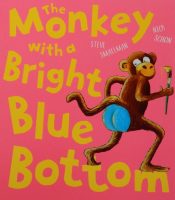
The Monkey with a Bright Blue Bottom
Steve Smallman and Nick Schon
Little Tiger

Just when we, certainly I, am feeling in need of a bit of brightness in what feels like especially grey times, this book with its brand new dazzling, celebratory ‘becoming a teenager’ cover arrives in my post.

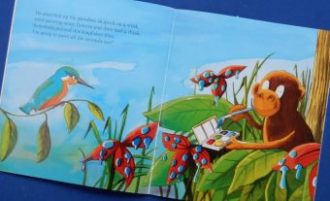
It’s a neo pourquoi tale delivered in jaunty rhyme that certainly packs a punch. It tells how long ago a monkey, inspired by the rainbow colours of the birds, takes up the paintbox he happens upon beside the stream, along with a couple of brushes, and feeling an upsurge in his creative juices, sets to work to make his world a brighter place.

Waiting until the animals are having their early afternoon snooze, he gets busy daubing some reptiles and then decides to give the leopard a bright yellow coat. In so doing however, he causes it to stir. Monkey dashes up a tree and splodges of black paint rain down upon the creature.

Impressed with what he sees, Monkey lets his artistry loose upon a giraffe, a zebra, a lemur and a skunk. Bear receives a pair of white specs. but he’s roused from his slumbers and demands to know what Monkey is up to.

Then instead of venting his wrath upon the fearful primate, Bear takes up the paintbrush and it’s payback time … and the rest as you know is natural history …

I’m certain author Steve and artist Nick Schon had as much fun creating this book as Monkey did creating all those animal designs. It’s terrific fun, reads aloud superbly and will have young audiences laughing their heads off as well as wriggling on their ‘not blue’ bottoms in glee.

The Paper Bag Princess

The Paper Bag Princess
Robert Munsch and Michael Martchenko
Annick Press

I remember my excitement on discovering this feminist fairy tale in my early days of teaching and became even more excited whenever I shared and discussed it with classes. This will become a classic I thought and so it has.

Now Annick Press celebrates its 40th anniversary with a new edition for which Chelsea Clinton has written an introductory note. There’s also a piece entitled Stand Up to Dragons from writer Francesca Segal in which she says, “it was the most important book I ever read.” Wow! It definitely was one I read to and talked about with every single class of 4s to 11s.

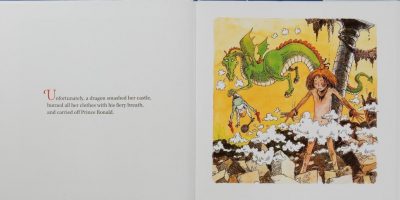
Just in case you don’t know the story, it tells of an about to be married, princess Elizabeth, whose dream wedding is sabotaged when a dragon attacks the kingdom, smashes down her castle, burns all her fine clothes and carries off Prince Ronald.

Elizabeth dons a large paper bag and goes off in pursuit of the dragon.

Now the dragon might claim to be the smartest of his kind in the world, but the princess is even smarter. She tracks him down, persists in getting him to pay attention to what she has to say and well and truly outwits the creature. Talk about flattering to deceive.

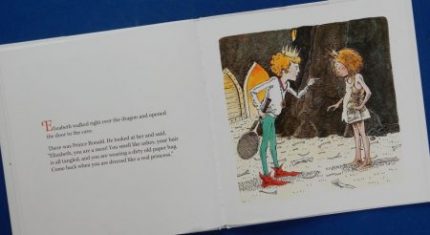
She then proceeds to save the prince but his reaction quickly demonstrates that, despite his princely appearance he’s no prince;

as she says, “you are a real bum.” No nuptials after all!

The times of my enthusiastic sharing of the story predate the #MeToo aware world. Now, this new anniversary ‘refreshed’ edition is all the more pertinent for both girls and boys.

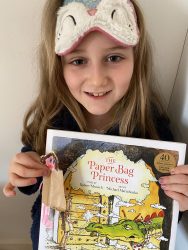
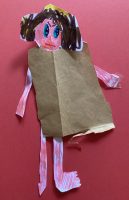
Emmanuelle (7) seized on my copy eagerly saying, “Oh this is such a great book,” and proceeded to read it laughing at the prince getting his come-uppance, and commenting, “Just what he deserved, to be called a bum!’ She then went on to create her own Paperbag Princess.

All Around Bustletown: Summer / All Around Bustletown: Autumn

All Around Bustletown: Summer
All Around Bustletown: Autumn

Rotraut Susanne Berner
Prestel Publishing

Completing the seasonal visits to Bustletown are these two seek-and-find books from Hans Christian Andersen award winner, Rotraut Susanne Berner.

The only words in the books apart from the plethora of signs, shop names etc. in the seven scenes of each, are found on the back cover. Nevertheless children will enjoy look, look, looking, over and over, inventing their own tales about the characters they meet on the pages; or instead, taking one particular scene and making up a story about what’s happening thereon.

For instance, there is a woman who is celebrating her birthday and has invited all her friends to a party in the park. Or why not follow Martha the penguin-loving nun who delightedly adds a penguin balloon to the fan she’s carrying only to have it blown away in a sudden squally downpour? Does she manage to retrieve it? You can find out on the final party spread.

Then there’s bookseller Wyatt, another party invitee: I’m sure Cara will be happy with his surprise gifts, not to mention the love element between the red-helmeted guy and the woman in checked-cut-off trousers. Do they make it to the party or head off elsewhere?

Oh! There’s also a mouse hiding in plain sight on every spread too: he needs to watch out for Tom the cat.

Autumn is the time when Bustletown holds a special festival and everyone is busy preparing. There’s an abundance of pumpkins large and small ready to be carved in the competition and the kindergarten we saw being built in the Summer book is now celebrating its opening with a lantern parade: so look out for children carrying all kinds of wonderful lanterns on every spread.

Martha the nun is there with her penguin too as well as, when she reaches the café on the final page, a funky ladybird lantern.

Oh my goodness: George and Anne’s huge pumpkin looks so heavy they can hardly manage to lift it up the steps and into the cultural centre where the carving is to take place.

Once again, there’s an absolute wealth of stories told and more waiting for readers to invent: just so many ways youngsters to let their imaginations soar here. The sturdy board book build of these two means that they should stand up to the enthusiastic use I envisage they’ll get if you add them to your collection.

What’s in the Egg? & Funny Birds / In the Butterfly Garden

What’s in the Egg?
Maike Biederstädt
Prestel Publishing

Taking readers to a variety of locations – the branches of a tree, the South Pole, a sandy beach, a coral reef, a tropical riverbank and finally, a milkweed plant, a paragraph of text explores the titular question.

Thus, we see life emerging into view as in turn, a hungry blackbird chick breaks out of its shell; baby penguins emerge from their eggs; tiny newly hatched turtles start their journey from eggshell to sea as dusk falls; a male clownfish keeps watch over babies in their transparent eggs; using her gaping mouth, a mother crocodile carries her newborn baby crocodiles to the river

and on the last spread the entire life-cycle of a monarch butterfly is shown.

The elaborate paper-engineering that Maike Biederstädt uses to make her boldy hued, detailed scenes explode into life is amazing.

Youngsters will learn some interesting facts about each of the animals and their habitats as they enjoy the superb visuals. For instance they’ll be fascinated to discover that a father penguin carries an egg on his feet and uses his feathers to keep it warm.

More superb paper-engineering is the essence of these two books also from Prestel that I missed when they were first published:

Funny Birds / In the Butterfly Garden
Philippe Ug

Philippe’s incredible cut-out illustrations carry most of the story as we follow, in the first title, a group of exotic ‘funny birds’ and the hatching of their new babies. High up in a tree, a nest holds eggs safely hidden from view until the fledglings are ready to emerge and explore their external environment on that first day.
Using rich colours Ug has created eight awesomely intricate 3D scenes of birds of various shapes and sizes

for us to feast our eyes upon.

In the Butterfly Garden little ones can follow the story of a caterpillar’s metamorphosis into chrysalis from whence emerges a beautiful butterfly.

There are other tiny insects hiding in the garden’s foliage too, including ladybirds, ants, a dragonfly; there’s even a praying mantis just poised ready to snatch a snack. Then as day gives way to night, it’s time for the moth to take to the wing.

Again in Ug’s eight scenes there’s considerable attention to detail and a rich colour palette.

Tiny T. Rex and the Very Dark Dark

Tiny T. Rex and the Very Very Dark
Jonathan Stutzman and Jay Fleck
Chronicle Books

Tiny T. Rex and his buddy Pointy are spending their very first night under the stars, and the adorable dinosaur narrator, all the while clutching tight his squishy bear Bob, regales us with their nocturnal experiences. When outside, we hear, ‘the dark is VERY dark’ and with no ‘nighty-lights to turn on’ there may very well be Grumbles and Nom-bies at large.

Mum assures her little one that even in the dark, there will always be a light shining somewhere. He though is far from convinced. He and Pointy however, have a secret being brave plan. This means building a hiding fort

to contain snacks and themselves but even then, feeling hidden isn’t what happens. So, brain-protecting helmets are necessary although a proper fit is a requisite

as are the lamps from indoors and the strings of coloured lights with which they deck the trees and their tent. At last everything is ready; now let those Crawly creeps and Nom-bies come …

That brightness however, lasts only briefly for a fuse blows and they’re plunged into total ‘very dark dark’ blackness.

Now what can they do: everyone is scared but can they summon up all their courage, open their eyes and look hard – very, very hard …

There’s plenty to see and delight in here in this reassuring tale, not least what those Grumbles and Nom-bies actually are.

What’s needed for dark-fearful little ones is a super story bedtime tale such as this one, then a big hug, followed by lights out and imaginations temporarily switched off. Most definitely, it’s another winner from the Stutzman and Fleck team.

Dear Earth

Dear Earth
Isabel Otter and Clara Anganuzzi
Caterpillar Books

A little girl and her Grandpa pay homage to the Earth in this beautiful book that highlights the fragility of our planet’s precious natural places and their wild life.

As the two walk together on the beach Grandpa regales the child with his adventures and the wondrous sights he’s seen as an explorer. So vivid are his descriptions that Tessa can see pictures in her mind.

Inspired, with the sound of the sea roaring in the distance, she decides to write a special letter to the Earth, letting her imagination flow as Grandpa suggests.

She writes of becoming an explorer, addressing first the water, then the lands. Those parts whereon animals stampede with their thundering hooves;

the places where dwell creatures both great and small; the meadowlands where butterflies flit. She mentions floating in lagoons and splashing beneath waterfalls – what joy that is.
Cold, icy regions, some with mountains and other parts too such as the rainforest canopy are addressed.

Finally Tessa’s mind travels bring her back to reality with thoughts of Earth’s desperate need for love and care from humans, not least those who have already caused damage.

Having signed off ‘Love from Tessa’, she takes her Grandpa’s hand and together they head back to the beach discussing how realisation might bring people to keep safe all that we treasure on our planet. “Perhaps if enough of us share the message, we can still save our dear Earth.” Grandpa’s concluding remark is an incentive to us all, young and not so young to do all within our power to do just that.

Successfully combining exploration and the wonders of nature with a crucial message about environmental issues, this beautifully illustrated book with Clara Anganuzzi’s fine, detailed and sometimes dramatic, scenes of the natural world shown from a variety of viewpoints as well as the different landscapes, is a must for families and primary classrooms.

The Seedling that didn’t want to grow

The Seedling that didn’t want to grow
Britta Teckentrup
Prestel

The riches of spring are all around us now so there’s no better time to enjoy Britta Teckentrup’s story of a seedling that grows in its own time eventually flourishing into a wonderful plant.

Through her softly spoken text and gorgeous collage-style illustrations we follow along with her characters Ant and Ladybird, the reluctant to germinate seed, as it eventually shows signs of life, growing from a delicate, fragile little seedling in the meadow, and creeping through the undergrowth towards the sun.

Under the watchful supervision of the two insects, together with other friends – Cricket to guard her roots, Mouse to search for the most suitable paths, Butterfly accompanying Ladybird flying above to locate the perfect spot – it gradually changes as it weaves and twines through dense foliage to emerge at last to feel the warmth of the summer sun’s rays on her leaves.

The perfect location to continue her life story.

Now in the hot sunshine she is ‘the happiest plant there could be’ as all manner of creatures live in her foliage so she is ‘full of love and life.’

With the coming of autumn and shorter days comes further changes as the plant ‘s leaves turn a golden colour, eventually wilting as she sets seed ready for the wind to liberate a host of white fluffy parachutes scattering them far and wide before the winter comes and the plant is ready to die away.

That though isn’t the end, for with the melting of the snow, those seeds will start to flourish as the cycle of life begins anew.

This is one of my favourites to date of Britta’s books: her richly textured, detailed art reflects in her choice of colour palette, the changing seasons; while thanks to her changing depth of focus, we are made truly to appreciate the beauty of the incredibly diverse natural world. We appreciate too that just as diversity is key in the natural world, so it is with humans: each of us is unique and with careful nurturing, can find and fulfil our own path in life.

Supermouse and the Big Cheese Robbery

Supermouse and the Big Cheese Robbery
M.N. Tahl and Mark Chambers
Little Tiger

If you want a book whiffing over with exceedingly cheesily pungent puns and other word plays, not to mention a number of wheyward characters, gratinate or otherwise, then this will certainly be to your taste.

Without further odour let’s head over to Mouseopolis where everyone is eagerly anticipating the grand unveiling of the city’s ‘most magnificent morsel’, the Big Cheese.

Disaster is revealed as soon as the mayor pulls back the curtain. All that’s on view is a holey communication from the dastardly thief.

News of the robbery has everyone puzzling and a list of suspects is published in the Daily Mouse, along with an article on the possible cheese saviour.

Before you can say Stilton, Supermouse aka Peter Parmesan, is on the trail searching out every suspicious pong be it high or low.

Little does he know however, that a trap has been set by the roguish robbing rodents. Perhaps all is not lost though for the ground whereon their cutter stands, starts to shake.

Here’s what then ensues …

but can Supermouse manage to caerphilly secure that scrumptious delicacy he seeks, enable justice to be served and return a hero?

Despite the occasional challenge to my vegan sensibilities, this reviewer positively relished this morsel of literary madness cooked up by cheese-loving author M.N. Tahl and scrumptiously layered with Mark Chambers’ tongue-tingling illustrative treats, liberally peppered with speech bubbles, logos and signs. With its flaps, peep-through and sometimes unfolding, pages, not to mention the action-packed plot, adventure-loving audiences will devour this and demand seconds.

I Am Brown

I Am Brown
Ashok Banker and Sandhya Prabhat
Lantana Publishing

Internationally acclaimed author but debuting as picture book writer Ashok Banker, and illustrator/animator Sandhya Prabhat have together created a wonderful celebration of loving the skin you’re in – brown skin, that is.

Merely reading the title of their book took me back to a time when I was visiting the Ranakpur Jain Temple in Rajasthan. Standing at the bottom of the steps leading up to it I was stopped by three young women wanting to take photos. One put her arm against mine and commented “You are so beautiful with your light skin and fair hair.” I was extremely embarrassed when another of them said, “Yes white skin beautiful, brown skin not beautiful.” She then invited me to her wedding soon to be celebrated. I hastened to say to these stunning girls that they were beautiful but I felt I hadn’t convinced them when we parted. If only somebody had given them a book that turns the whole skin colour question on its head like I Am Brown  when they were younger.

After its terrific front endpaper, the book begins with one lively child announcing ‘I am brown / I am beautiful / I am perfect’, then showing herself as the epitome of love, friendship and happiness.

We see a wide variety of occupations from astronaut to actor, writer to doctor and more, as well as …

The question of diversity is addressed in a multitude of ways – country of origin by a group of children around a globe with continents named (every one except Antarctica); that nineteen different languages are spoken – several Indian ones as well as Urdu, Turkish, German, English, Portuguese, Russian, Arabic, Chinese, French, Spanish, Swahili and Japanese. We see a wide variety of clothing,

food – tacos, noodles, vindaloo, places where ‘I pray’ including everywhere and nowhere.

Fizzing high spirits and happiness prevail in a book that makes readers feel good about themselves, concluding ‘I am brown / I am amazing/ I am YOU’.

What better way to end this thoroughly uplifting, cover to cover, ode – verbal and visual – to being brown, of being you, and of being whatever you want to be.

An absolute MUST for early years setting and classrooms everywhere.

That’s Good, That’s Bad

That’s Good, That’s Bad
Joan M. Lexau and Aliki
Prestel

Prestel have brought back a vintage classic published first in 1963 with splendid reproductions of Aliki’s superb illustrations. Here’s what happens:

A boy sitting on a rock in the jungle is confronted by a tiger. The tiger politely tells the lad to run away. “… I will run after you. And I will catch you. And I will eat you, Boy, so run from me” it says.

Boy however is too tired, Tiger asks why and hoping to avoid his fate, the boy begins to tell the tiger his tale.

It’s a thrilling one with frights, falls, fun and a bit of flight that involves encounters with a rhino

and a crocodile

that’s sure to enthral youngsters, just as it does the hungry tiger. I know though, that it’s the former who will end up having a jolly good laugh at the satisfying ending.

There’s a lot to like about this book: the way the boy character demonstrates the power of storytelling; Joan Lexau’s own skill at telling what is essentially a tale-within –a-tale – and a real page turner it is too.

Then there’s Aliki’s visual storytelling: I love the way she places the story-telling Boy and Tiger on opposing pages as though viewing the action from the sidelines, with Boy’s own narrative unfolding on the verso and Tiger’s comments “That’s good”,

“That’s bad” or variations of same, being made on the recto each time. The subtle changes to the facial expressions of these characters are wonderful, really bringing to life the double drama.

Clever and deliciously droll.

A Little Bit Worried

A Little Bit Worried
Ciara Gavin and Tim Warnes
Little Tiger

Do you embrace the challenges life throws at you or shut yourself away, fearful of what might happen? Here’s a story that offers a look at life from both viewpoints, through the eyes of Weasel – he’s the fearful one, and Mole, the upbeat character.

It’s the changes in the weather that cause Weasel concern: first a sudden downpour, followed by hail and strong winds. So much so that he builds a safe place and shuts himself away inside.

Time passes and he’s just getting used to his solitary state when up pops Mole demanding to know where he is. Weasel says it’s a fortress and invites Mole to help him guard it. Mole however, is having none of it, insisting it’s a home and making himself comfortable. He then proceeds to act his upbeat self,

countering every one of Weasel’s downbeat remarks about the storm raging outside with fun alternative suggestions, insisting that storms can provide opportunities to build a snowman, make you feel ticklishly joyful,

or create the perfect puddles for a good splash-about with some wonderfully warming soup.

After their discussion Weasel asks Mole the all-important question, “What do you do when you feel afraid to face something?”

What happens thereafter will make you smile; it certainly made both the characters of Ciara Gavin’s story do just that – for not one, but two reasons.

Perhaps there’s a little bit of Weasel and a little bit of Mole in us all; what’s important however is to understand our feelings and responses to those challenging situations. In that way can we show empathy to others who respond differently.

Tim Warnes’ gently humorous illustrations show so well the two very different characters and how it’s possible to complement one’s self-protectiveness with another’s joie de vivre.