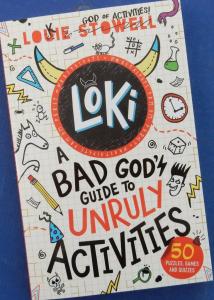
Loki: A Bad God’s Guide to Unruly Activities / Bunny vs Monkey The Whopping World of Puzzles

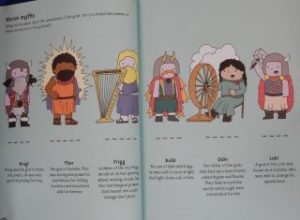
Loki’s fifth diary is rather different from his previous ones. and that’s on account of his having played too many pranks of the poo-related kind around the house. As a consequence Hemdall has challenged Loki to find ways to keep himself entertained and sent him off to his room so to do. These ways must definitely not be of the messy ie poo variety. Tedious or what? It shouldn’t be very hard though as Loki is a clever god and aided and abetted by his pals, he amasses a fun assortment of puzzles, quizzes, games and drawing activities.
There is for instance an Insult Generator with which to enjoy insulting your nearest and dearest, and Thor’s non-violent means of winning a fight to contemplate and possibly test at a later date- it’s a bum thundertron.

It’s true to say that there are activities for anyone and everyone and you don’t even need to have read the other Loki diaries to enjoy this one.

More fun and games of the interactive puzzling kind in
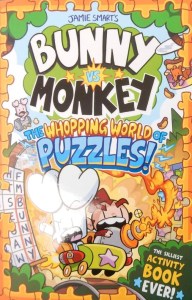
Herein Bunny, Monkey et al visit a secret theme park deep in their woods and human puzzlers join them as they discover this lost location. Once there they will enjoy all sorts of tricky mazes, word searches, crosswords of the cross words kind, or even try their hand or paw at creating squared paper on which to ‘embiggen’ a character like Pig.

Just the thing for a rainy day or with holidays approaching, a book to take on a long car journey to stimulate your little grey cells instead of constantly fiddling with your phone.

100 Ways to Save the Planet

Engaging readers from the outset with his ‘superhero footprint’ suggestion, Tom Jordan provides a wealth of ways children can reduce their carbon footprint. starting with cutting out meat from their diet or if that’s too big a leap then reducing the amount eaten with fewer meat-consuming days per week and encouraging other family members to do likewise. To that end, related topics are suggested on later spreads; for instance growing your own vegetables.

I wonder how many people don’t ensure they’ve turned the taps off properly after showering or bathing, or brush their teeth with the water running: saving water isn’t hard, it just needs a bit of thought. Some of that bathwater you do use can then be used to give your ‘pet dragon’ a drink, (ie a Dracaena houseplant) – another cleverly linked suggestion.

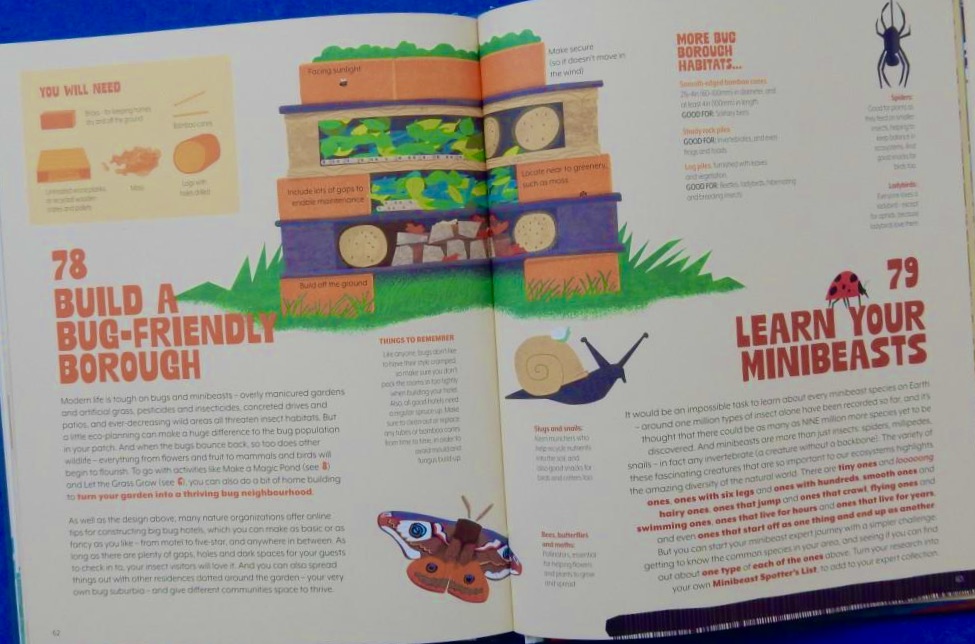
I’ve noticed many primary schools and children’s playgrounds have already constructed bug-friendly ‘hotels’ with the help of youngsters, but there’s still a way to go. Why not take the ‘Build a bug-friendly borough’ suggestion literally and with adult assistance, encourage all schools in your area to do likewise.

Reduce, repair, recycle, reuse: these are key practical words for anybody looking to tread more lightly on our planet. There are plenty of ideas to implement these actions and it matters not whether children can actually read the book for themselves. With its enticing, clear illustrations by Joshua Rice and interesting facts, this is an invaluable handbook for any family, primary or even secondary classroom: think of all the environmental superheroes it could inspire.

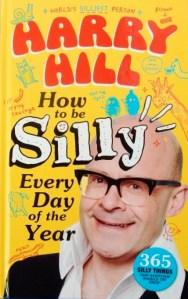
How to be Silly Every Day of the Year

Once upon a time Harry Hill was a doctor but he gave up practising medicine and became a comedian instead. If you are looking for reasons for being silly then you can blame this guy for compiling a book that encourages readers to be silly for a whole 365 days. Alternatively if you fancy a short spell of silliness you can dip in and see what takes your fancy just for a few days at a time. Assuredly you will find some hilarious suggestions among the activities.

Want to impress your parents? How about turning yourself into a human hoover. to do so you will need several rolls of double-sided sticky tape to wrap around yourself. Then all you have to do is lie down on the carpet or a rug and roll around picking up whatever fluff and rubbishy bits are there.

Maybe you’d like to adopt a conker. If so, ask an adult to make a hole through it so you can thread it onto a string and then off you go for walks together. (One of my young relations adopted a pine cone of the longer kind. She named it Violet and wrote stories about it. I don’t think her intention was to be silly however.) And in case you find you’re forgetting to be silly then try creating a SILLY acrostic that you can stick in a strategic spot as a reminder.

With facts of the silly sort and lots of doodle drawings to jazz up its appearance, this is a book to brighten up those days of doom and gloom especially. “Being silly is a serious art,” I heard someone say on the radio recently: what do you think?

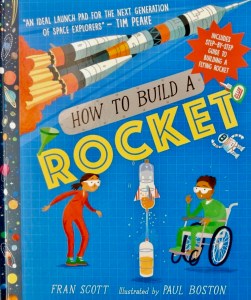
How To Build a Rocket

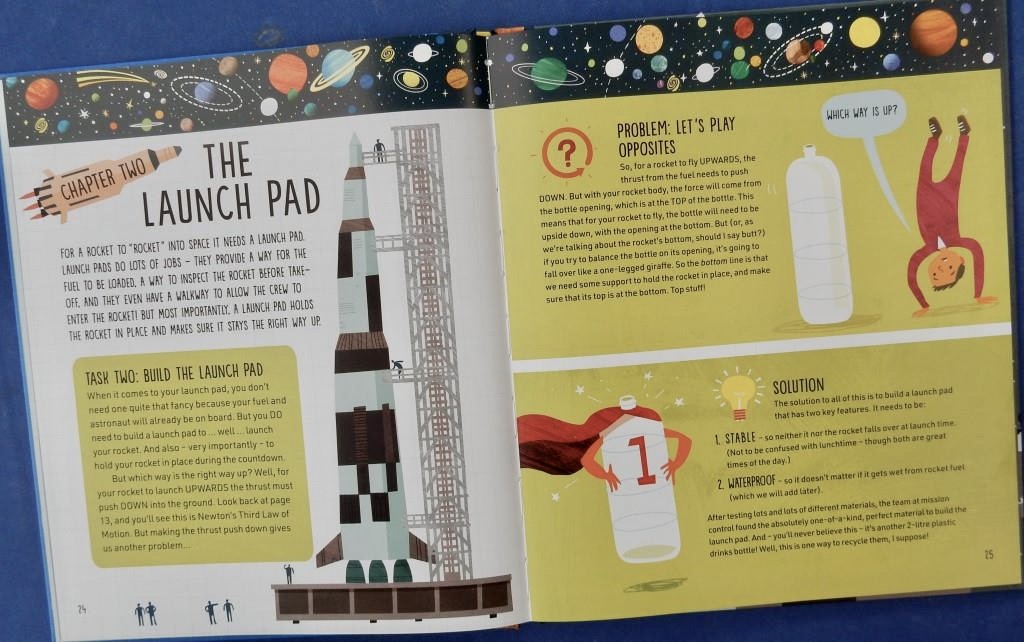
Following How to Build a Racing Car comes another step-by-step guide, to building a rocket, this time. However, this book is much more than a series of instructions; there’s a wealth of information about space-related topics such as an introduction to Isaac Newton and his laws of motion. This is followed by spreads wherein readers meet the various people who work on a rocket and at its launch base. These people then have a related chapter, the first being The Rocket Body wherein both the science behind a real rocket and the making of the model’s body are clearly presented in prose and graphics. Included too is an ’ask an adult’ directive.

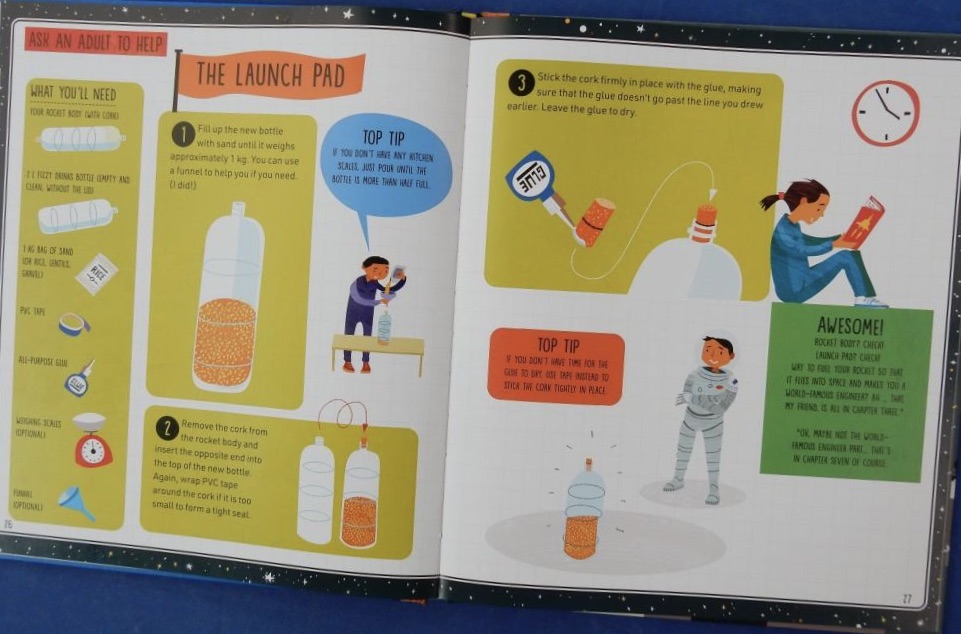
Chapter two entitled The Launch Pad is similarly structured and includes some helpful tips.

The next stage is choosing The Fuel (that needed for the model is a mixture of bicarbonate of soda and vinegar). Once the fuel is prepared, it’s time to don your gear, including eye protection, grab an adult head outside to a clear space and prepare for Countdown to launch. Hopefully this is a success but as an integral part of any engineering process, it’s now the Testing and Tweaking should be done. Maybe the addition of fins would make for a better launch; or could an alteration to the weight of your machine improve its flight? Then of course, Personalisation will ensure your rocket is unique. Some designs are offered but why not try creating your own. After all this get ready for the final Blast Off1
What a terrific way to spend time during the summer break and what an amazing amount children who embark on this project will learn.

Outdoor Science

If you are looking for a resource of nature-related activities and crafts, to encourage children to develop their curiosity about the science of nature and natural phenomena, this could well fit the bill. The majority of materials they will need to do the thirty STEM projects herein are likely to be in your home already, or they can be found in close proximity to it.

Illustrated with photographs of a diverse group of child investigators, and with step-by-step instructions, the practical projects all begin with a needs list and conclude with a ‘science made simple’ explanation.
As a foundation stage/ primary teacher, most of the activities are not new to me but might be to parents of under elevens. I know from experience that youngsters are fascinated by shadow art and in this book Laura and Tia offer two ways of using shadows to create art.

Equally, most young children love watching tiny creatures so making an ant farm would appeal particularly for those who have more interest in fauna than flora. It’s a great way to encourage children to be observologists from an early age.

A wide variety of interesting, enjoyable activities to get youngsters interacting with the environment are presented from ‘Bubble Science’ to ‘Fractal Prints’ and ‘Scrap Vegetables’ (growing new veggies from leftovers) to a ‘Solar Still’.

This is a book for family collections, one to encourage children to set their screens aside and enjoy the outdoors especially now the longer days are here.

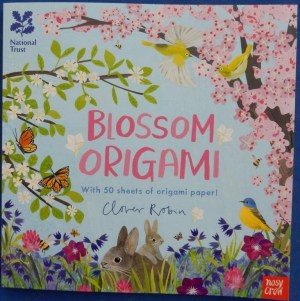
Blossom Origami

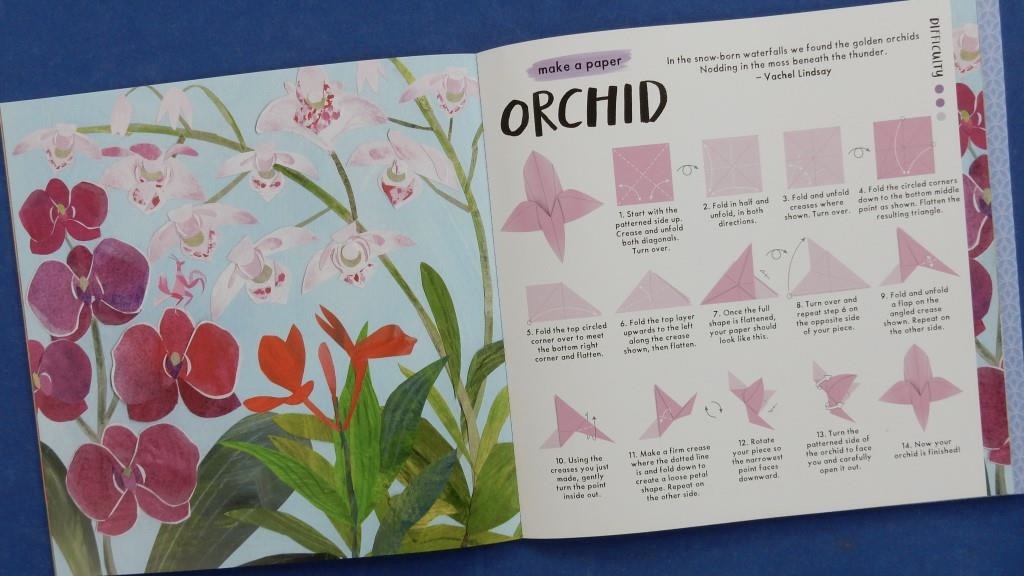
Clover Robin, surface pattern designer, illustrator and nature lover has created thirteen stunningly beautiful cut paper illustrations to accompany step-by-step instructions on how to use origami to make paper flowers, trees or parts thereof, and there’s also a cactus and a clover leaf. Each whole page illustration includes fauna as well as the flora that is to be made. So for instance, on one of the lily flowers is a hummingbird; a deer and a squirrel are visible in the bluebell filled beech wood and if you look carefully you’ll spot the insect atop one of the orchid flowers.

Alongside the instructions to make each of the origami flora is a related short poem, one or two being haiku and some well known poets including Christina Rossetti, Rachel Lindsay, W.H. Davies and William Shakespeare are there too.

There are 3 difficulty levels, so the book will suit complete beginners as well as more experienced origami enthusiasts, and on the index page is a QR code link to ‘how-to’ videos that beginners will find especially useful. Clover also designed the gorgeously coloured tear-out sheets of origami paper, one side of each being patterned, the other plain.

Published in collaboration with the National Trust, this would make a smashing present for a patient child, or an older craft enthusiast with an interest in the natural world.

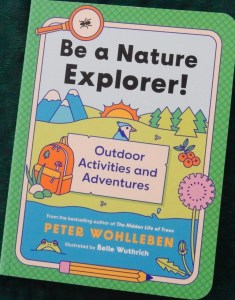
Be a Nature Explorer!

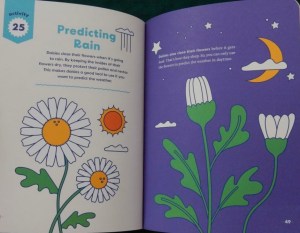
The author, once a forester and now running a forest academy in Germany, introduces over fifty activities that will help and encourage children to leave their screens and discover the delights of being in the great outdoors. It doesn’t matter the time of year or where they are – city, town, countryside or their own back gardens, youngsters will find something that will get them interacting with the natural world.
First though, one needs to be prepared and the two opening spreads are devoted to what to take when venturing out and some words of encouragement from the author.

As a foundation stage/ primary teacher who has been involved with regular forest school pursuits, many of the ideas are not new to me; however that will not be the case with lots of parents.

Did you know that there are more life forms in a handful of earth than there are people on earth? Wow! Most of these are so small they can’t be seen with the naked eye but why not collect a few handfuls of soil and leaf litter and investigate the different creatures therein? It’s likely there’ll be beetles, worms, slugs, snails, ants, woodlice for starters.

Identifying trees can be tricky – looking at the bark, fruits and leaves will provide useful clues for young investigators and the book contains helpful photographs of some deciduous trees and conifer as well as descriptions of what to look for.

There’s a wealth of fun learning between the covers of this book – something different for every week of the year.

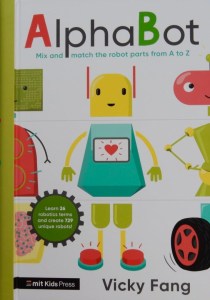
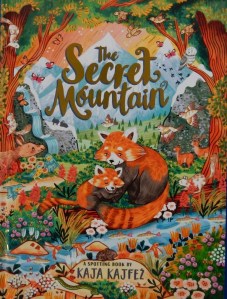
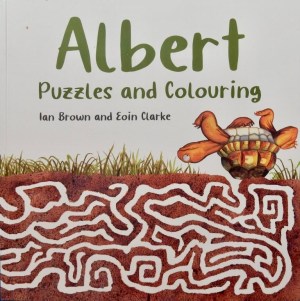
AlphaBot / The Secret Mountain / Albert Puzzles and Colouring

This interactive, non-fiction book published under Walker Books mitKidsPress imprint is sure to be a winner with children. On the first page comes the invitation: ‘Mix and match the AlphaBot parts! / What kind of robot will you build?’ Subsequent pages are split into three parts with scientific terms in alphabetical order defined on the verso sections and robot related illustrations are on each recto section.

The split pages make the book huge fun allowing the reader to design numerous different robots.. Its sturdy construction with a spiral binding will enable it to stand up to the heavy handling it is sure to get in a classroom or at home, as eager youngsters delightedly flip the sections back and forth, playfully learning a considerable amount while so doing. I met a couple of terms I’d not encountered before.

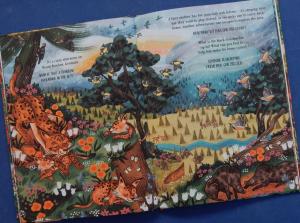
This book takes children on a long, long journey from Mount Everest all the way to Iceland. They will travel via Scotland’s Ben Nevis, then in turn the highest peak in the Andes, the Rocky Mountains, the Urals dividing Europe and Asia, Mount Broken in Germany, the Dolomites, the Heavenly Mountains of central Asia’s Tian Shan, California’s Mount Whitney, Mount Fuji and finally as night falls, Iceland’s Kirkjufell mountain.

As the sun rises over the Himalayas youngsters will see in the foreground of the illustration, a young snow leopard and her cubs heading off to hunt for food. Also out hunting is a bear and readers are asked, ‘What might he be searching for?’

In each of the following illustrations, every one of which is bursting with wildlife, there’s a mother animal of some kind and her young. So across the day you’ll also spot golden eagles, llamas, moose, brown bears, lynx

and more; some are foraging, others in flight or perhaps playing.

Each spread has a search and find element, another of the interactive elements of this immersive, creature-filled compilation for adults and children to share. Additional facts about eleven animals – one per stopping place – are provided in the three final spreads.

Albert the Tortoise loves to play games with his garden dwelling pals and now in this book he invites young readers to join him and participate in some playful activities at home. There are pages of silhouettes to identity, mazes to negotiate, a search and find, as well as several spreads to colour, others for playing spot the difference, and young children can hone their fine motor skills with dot to dots (those can be coloured in too).

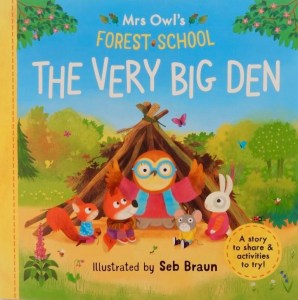
Mrs Owl’s Forest School: The Very Big Den / Getting Ready for Autumn

You never know what you will find, if you go down to the woods today, perhaps a forest school in progress.
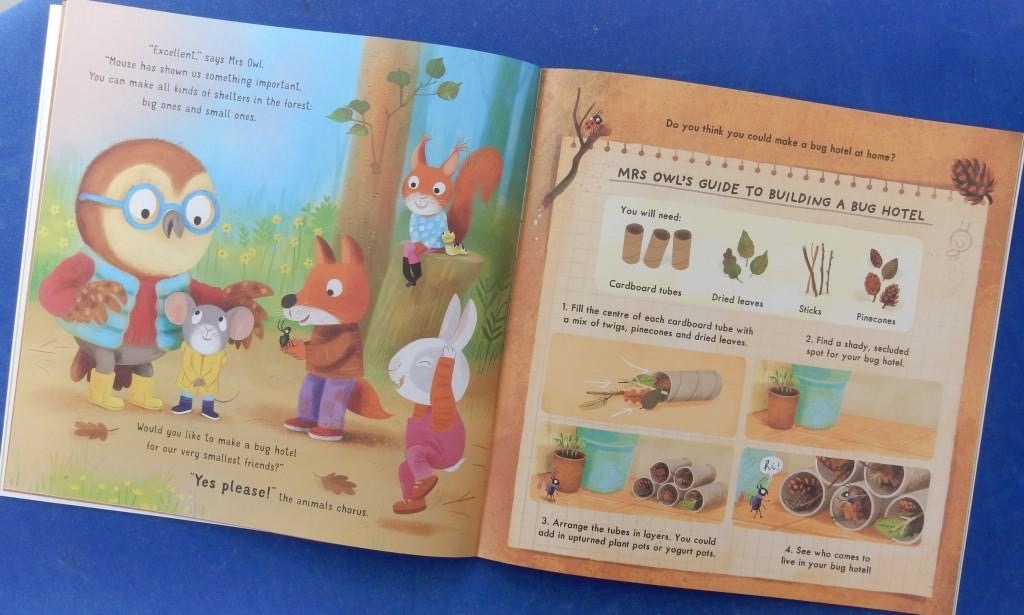
Herein we join Mouse, Squirrel, Fox and Rabbit in a woodland setting beneath the trees where Mrs Owl holds her forest school. During the process of den building the animals use all their senses to learn about wildlife, both flora and fauna of the surrounding environment, as well as learning an important lesson about friendship and inclusivity. In addition they gain some useful skills such as how to tie knots and how to build a bug hotel. 

Written in consultation with Lizzie Noble, a forest childcare provider with a wealth of experience in running creative, play-based forest school sessions for families, this is a book that may well inspire youngsters to get out into the wild, wonderful world of nature. Seb Braun’s inviting, detailed, richly hued scenes help underscore some of the instructions woven into the narrative and should encourage young children to find and explore their local woodland places and perhaps try their hand at den-building. In my experience, children need little encouragement when it comes to the building of dens.

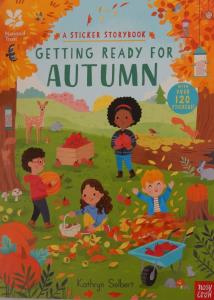
This seasonal sticker storybook is published in collaboration with the National Trust. Herein readers join a family and friends as they enjoy a range of early autumnal activities. Mum, Dad and two children walk in the woods where the trees now have their rich golden, orange foliage, and they keep their eyes open for woodland creatures such as deer, squirrels and birds. They also spend a fun afternoon apple picking in preparation for some baking and take advantage of windy days to fly kites. 

With the new term about to begin there are the inevitable getting ready activities as the siblings are starting school. On their first day, Grandma comes to meet them and they visit the park to hunt for conkers. As the chillier days arrive, it’s time to put up some bird feeders and with the approach of Halloween, some ripe pumpkins are ready and waiting to be picked. The book concludes with some Halloween activities.

After the narrative come two ‘can you spot’ pages that will send children back to each spread to find the items shown; there are also several pages containing 120+ stickers to add to the relevant spreads.
A useful, book to have to hand as summer ends, especially on a rainy day.

Counting in Green / Bee Activity Book

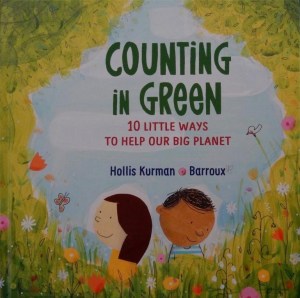
Counting in Green
Hollis Kurman and Barroux
Otter-Barry Books

So much more than a mere counting book: this collaboration between Hollis Kurman, a climate activist and Barroux, an award winning illustrator presents as the subtitle says, ’10 little ways to help our big planet’. Little ways they may be; but if everyone followed all ten or even most of them, what a BIG difference that would make to our precious Mother Earth.

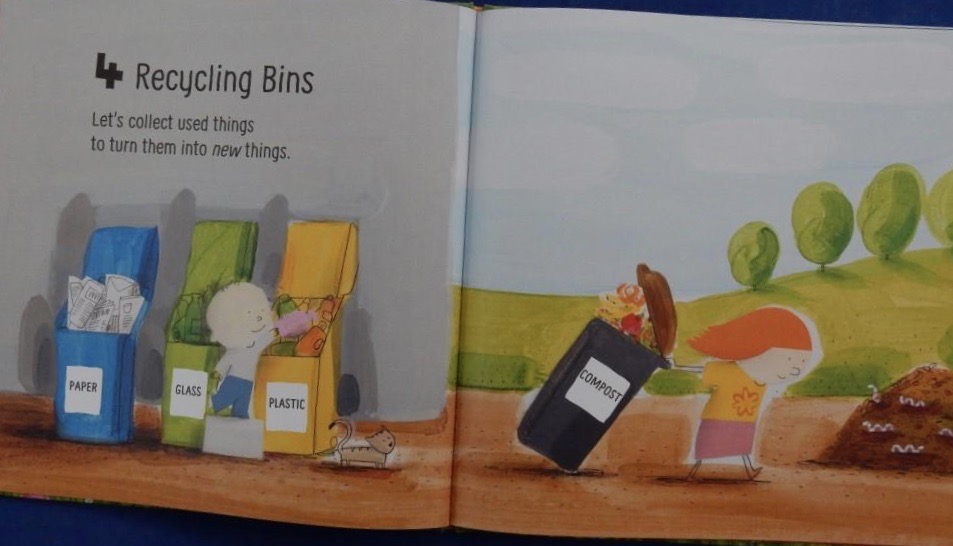
The actions include planting a new tree, eating meat free meals, recycling and reusing, 

taking our own bags when we go shopping so as to avoid plastic, getting involved in a beach clean-up, 

cultivating a garden that encourages bees and butterflies.

Barroux’s gently humorous illustrations are inclusive and work well with the straightforward text; and the final spread concludes with this challenge to young readers: How many ways can you think of to go green? That would make an excellent starting point to get a class of primary children thinking about this vital topic.

The final endpapers offer some relevant websites as well as a paragraph about the interconnectedness of everything on earth, which’s why getting involved is so vital.

Bee Activity Book
Patricia Hegarty and Britta Teckentrup
Little Tiger

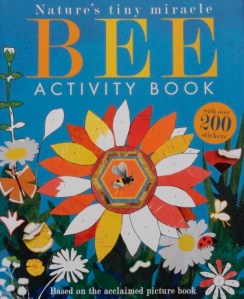
This activity book is based on Patricia Hegarty’s text and Britta Teckentrup’s illustrations for the buzz-ingly bee-utiful original picture book Bee:Nature’s tiny miracle published a few years back.

Herein several settings are used – a meadow full of wild flowers, a pond, a riverside, a woodland clearing – as backdrops for the wealth of bee-related activities. You will find word searches, bee parts to label, mazes, spot the difference, things to count, scenes to colour, and others to complete using the stickers at the back of the book, as well as mosaics that also require colouring and the placing of stickers.

There’s a wealth of fun learning between this book’s covers – an ideal way for youngsters to enjoy some nature-related, screen-free time.

Celebrate With Me!

Celebrate With Me!
ed. Laura Gladwin, illustrated by Dawn M. Cardona
Magic Cat

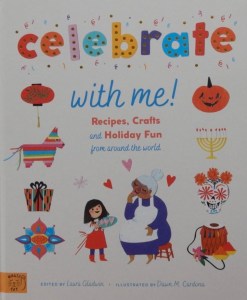
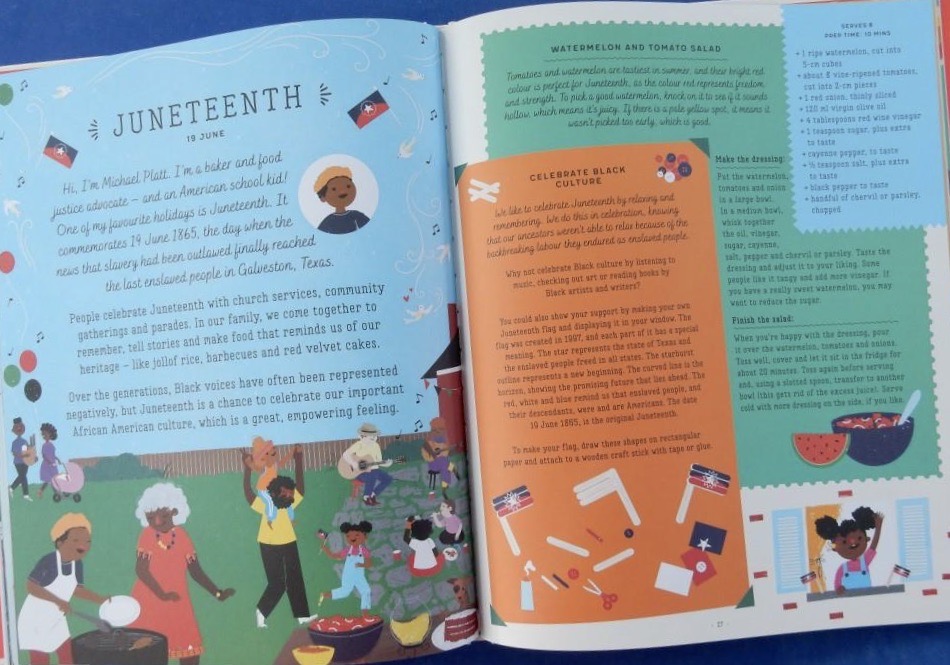
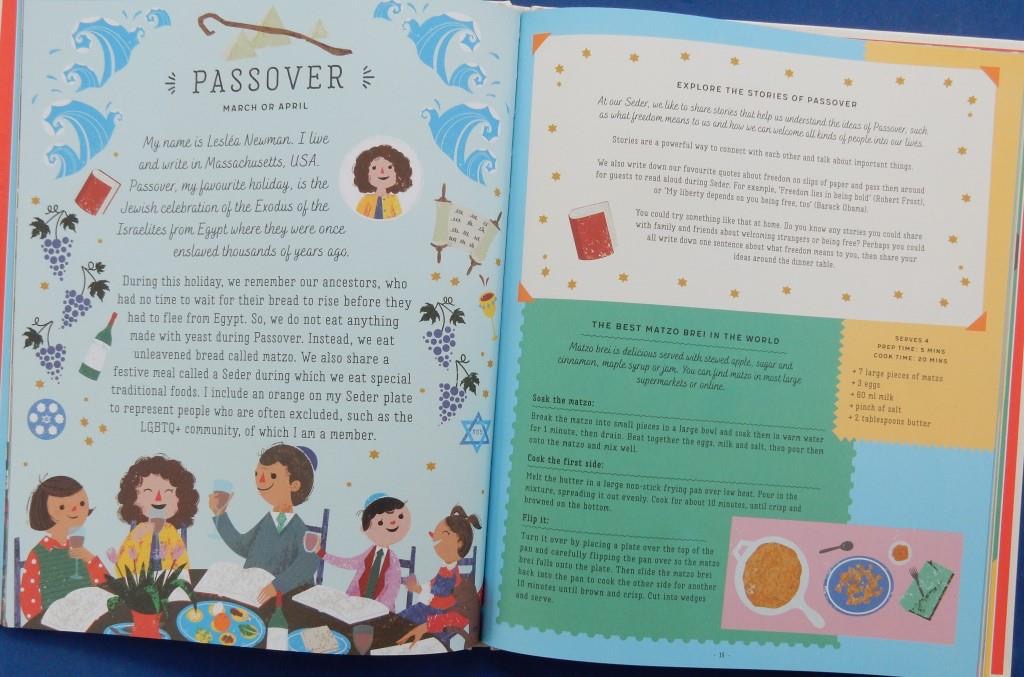
Twenty five creative people including chefs, artists, storytellers and designers from various parts of the world, have a double spread in which to present their favourite festival. Each person provides an introduction telling what makes their chosen festival special for them. Some festivals have a fixed date and others vary each year and the book starts with New Year’s Day and closes with New Year’s Eve. It introduces readers to some of the less frequently mentioned festivals and celebrations as well as presenting some that are well-known including Diwali, Eid-Al-Fitr and Easter. I had not come across Juneteenth before reading baker and food justice advocate, Michael Platt’s spread on the celebration.

Since food is such an important festival component, every one includes a recipe (to be used under adult supervision) – some are sweet, others savoury – as well as an art/craft activity, a story, song, game or something else that for each presenter, is part and parcel of their personal way of celebrating.

The book concludes with a look at some birthday traditions around the world and a spread suggesting readers ask those they know some festival related questions.

Diversity is key in this invitingly illustrated book. It’s a great way to learn about a variety of cultures and to help readers feel connected to the cycle of the year and to other people.

The Big Book of 100 STEM Activities

The Big Book of 100 STEM Activities
Laura Minter & Tia Williams
Button Books

There’s fun learning aplenty in this latest offering from team Laura and Tia. Comprising one hundred STEM activities divided into nine sections, each one is clearly set out with step-by-step instructions and photos to act as a helpful guide. First though, essential reading is an introductory spread that includes a paragraph about safety, one listing craft essentials and another, food items.

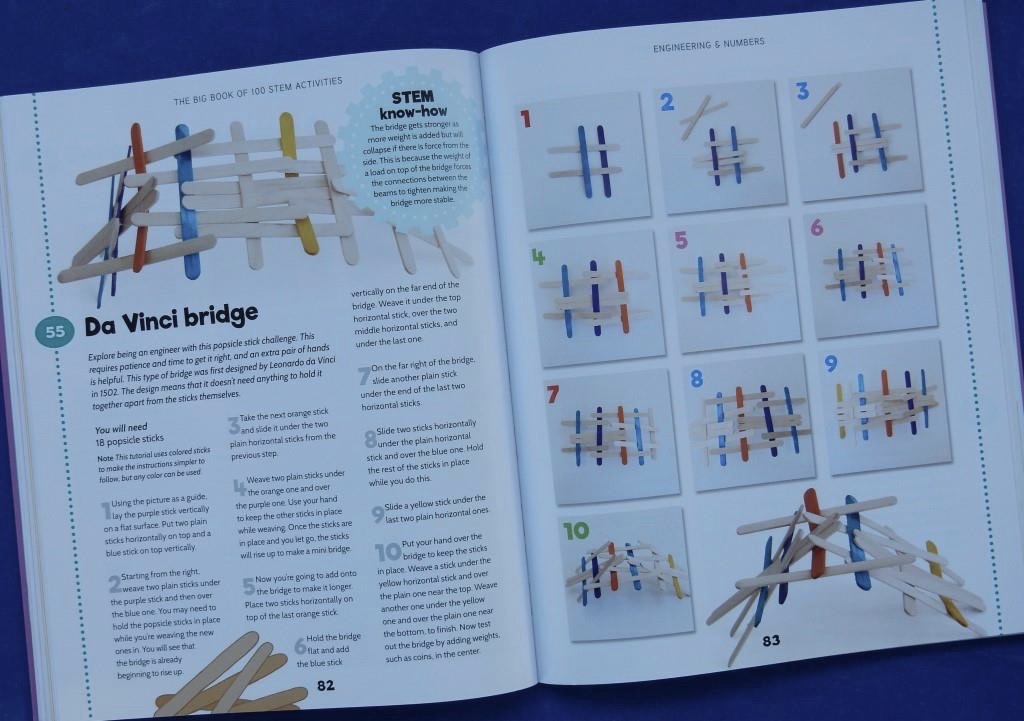
Most of the activities (or variations of them) are familiar to me as a primary teacher of many years experience and having worked with all ages from 4 to 11, but there are some I’ve not come across before. One such is the Da Vinci bridge construction from the ‘Engineering & Numbers’ section: this requires nothing more than 18 lolly sticks of the same size, some manual dexterity and patience.

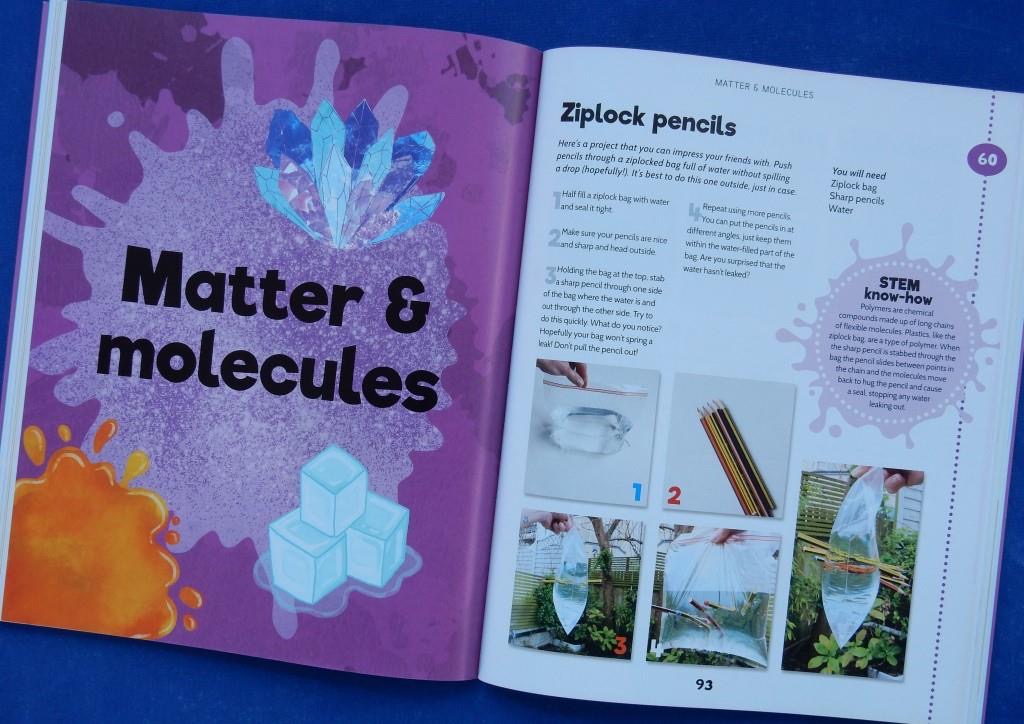
Another from the ‘Matter & Molecules’ section – Ziplock pencils – is best done outdoors for obvious reasons.


Did you know you can make a rocket from a paper straw and find out something about propulsion and air resistance while so doing? This is an activity that might be even more enjoyable if done with a friend or sibling as with two people they could add a competitive element and see who can send their rocket further each time. You’ll find it in the ‘Motion’ section.

With Christmas holidays on the horizon this could be a boon for restless children; it will keep them gainfully engaged away from their screens for a considerable time.

Kitchen Science

Kitchen Science
Laura Minter and Tia Williams
Button Books

This latest book by team Laura and Tia is a collection of science themed activities for children to do that will surely make them think of the kitchen in a different way: the place where a great deal of science happens every time some basic ingredients are mixed together, then baked or cooked in some other way.

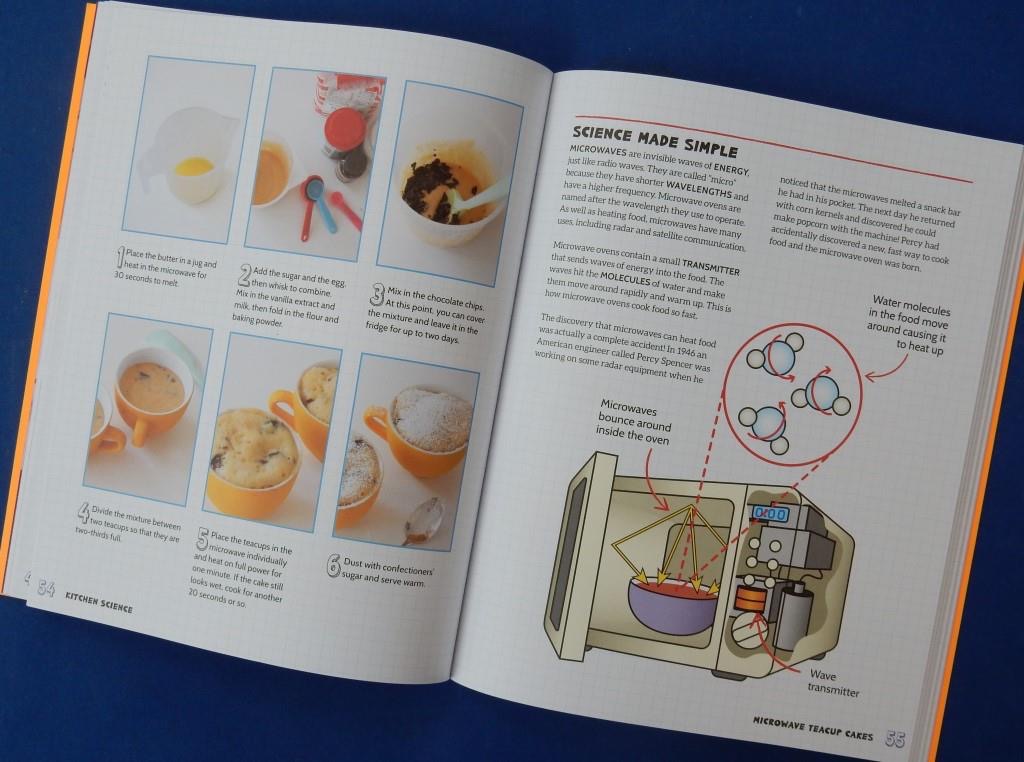
The authors present thirty kitchen based STEM activities for youngsters to do, (under adult supervision if they require use of an oven or hob). Safety, as well as the basics needed are covered in the ‘Getting Started pages before the activities, each of which is clearly and concisely set out in illustrated steps, together with a list of ingredients required (most kitchen cupboards will already have the majority) and followed by a paragraph explaining the science involved. There’s also a final glossary of the scientific terms the experiments encompass.

How many children will have thought about generating electricity to light a bulb by means of four lemons, some copper wire and a few crocodile clips? That’s a possibility if you discover you’ve run out of battery power.

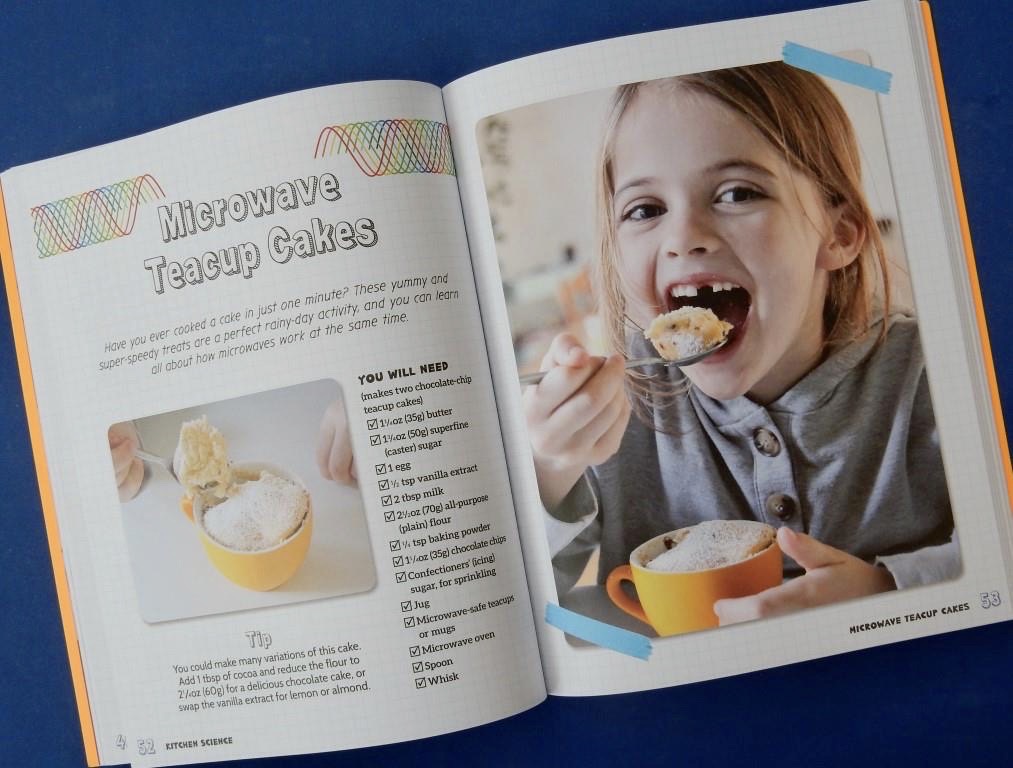
Have they tried making a cup cake in a single minute – using a microwave and a tea cup? One of my favourite cafes in Udaipur Rajasthan used to make chocolate ones for us when they’d run out of their other delicious cakes.

Like the previous titles from Laura and Tia, I strongly recommend this one: it’s huge fun as well as gently educational.

Make This Book Wild

Make This Book Wild
Jo Schofield & Fiona Danks, illustrated by Anna Ivanir
Wide Eyed Editions

If you know a child who is fond of sketching, drawing – observational or otherwise, writing and who enjoys being in the great outdoors, then this is for them. With some sixty nature-themed activities it’s a great way to gently encourage children to observe the natural world, to have fun and be creative, the idea being to make the book look as wild as possible. That of course means that when they go out, the book needs to go too (along with some drawing materials and probably some of the other items listed on the ‘how to use this book’ page).

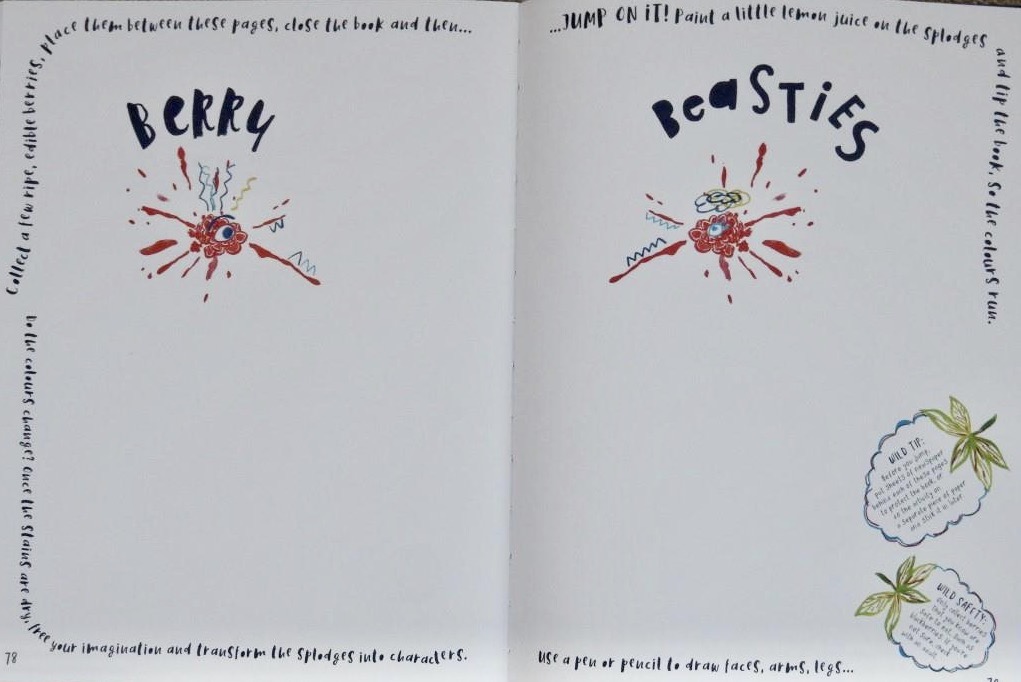
Before sallying forth however, the user must be made aware of the safety precautions in the front, as well as remembering the five points of the ‘protect nature’ code. Thereafter there’s freedom to make the book dirty, stick in items, draw or paint on the pages, possibly using natural tools like feathers or pine needles collected -and perhaps with some of the mud, the berry or leaf juice you’ve extracted. I like the idea of making ‘berry beasties’ by collecting a few ripe edible berries, placing them between the relevant pages, closing the book, jumping on it and following the rest of the instructions (I’d go for using separate paper and sticking in the results.)

If writing’s more your child’s thing then there are opportunities for list making (from observations), poem and story writing and more; you can even write about your ‘dragon hunt’. Science and imagination comes together in this fun-filled book and it’s all about encouraging youngsters to observe nature closely and enjoy so doing. I know a lot of children who would love to get their hands (and feet) on a copy of this.

Let’s Tell a Story!: Pirate Adventure / Jungle Adventure and I’m the Bus Driver / I’m the Tractor Driver

Let’s Tell a Story!: Pirate Adventure
Lily Murray illustrated by Stef Murphy
Let’s Tell a Story!: Jungle Adventure
Lily Murray illustrated by Essi Kimpimaki
Wide Eyed Editions

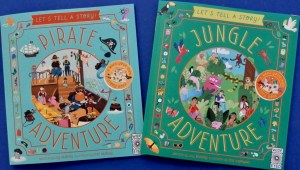
These books offer a way into those choose-your-own-adventure fiction series for solo readers as well as story making. They would have been especially useful during the periods of lockdown and school closures in the past couple of years when youngsters were stuck indoors much of the time and adults often struggled with home schooling. However they can act as fun prompts for story telling or writing at any time.
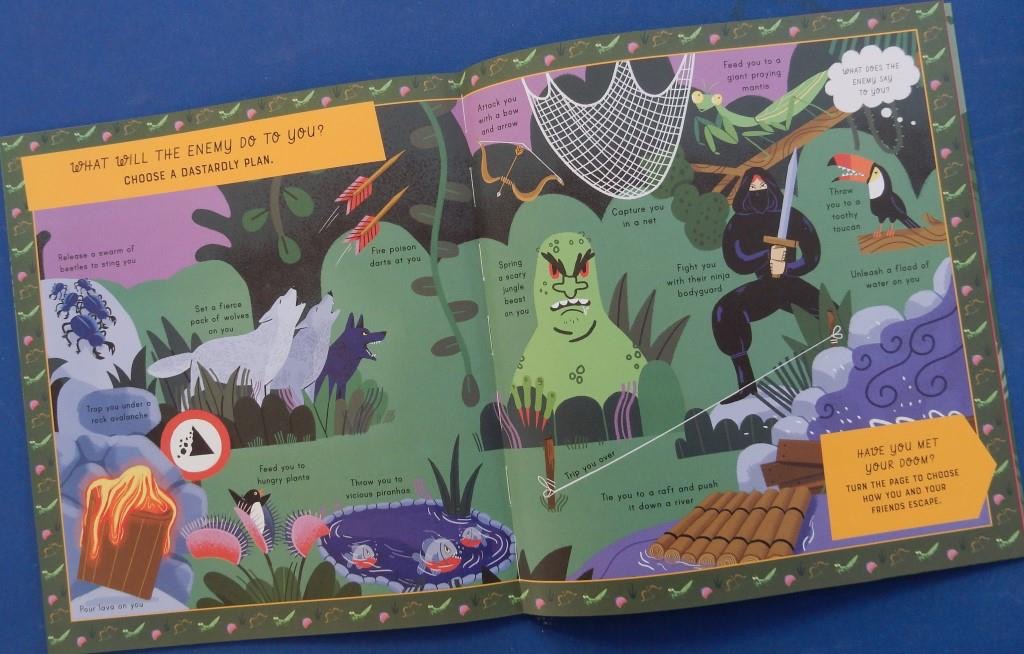
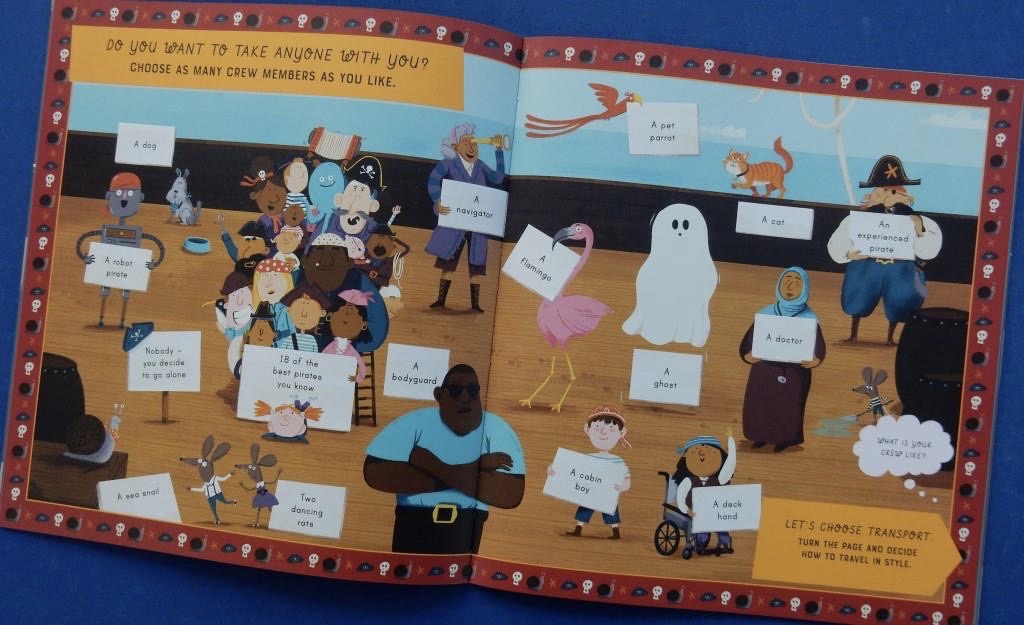
Each has an introductory spread telling how the book works and then follow fourteen pictorial spreads each one offering lots of options such as: Which hero will you be?; Which clothes will you dress in? What will be your destination? Why are you going? Who will accompany you? How will you get there? What will you take? There are potential disasters in the form of enemies who appear with ‘dastardly’ plans,

and finally, ways to end your chosen story. And, there’s a penguin that keeps appearing in both books adding a search and find element.
It’s possible to have fun creating hundreds of different stories though I suspect in the pirate adventure, some children (as well as this adult reviewer) would find the female characters somewhat stereotypical. On the other hand a hijabi doctor is a welcome possibility: indeed the crew members choice spread is definitely inclusive.

There’s a wealth of learning potential in these imagination sparkers be that at home or in the classroom.

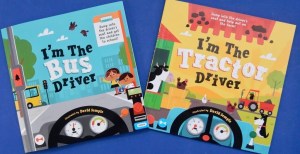
I’m The Bus Driver
I’m The Tractor Driver

David Semple and Kate Woolley
Oxford Children’s Books

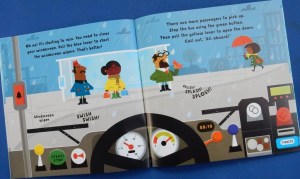
If you watch youngsters playing you might well catch sight of a child pretending to be a bus driver among them. Now with the first of these books they’ve got the opportunity to sit behind the wheel of bus number 4 on its 8am morning journey that takes among others children going to school and other passengers off to work or the shops.

In the second title, little ones can try their hand at driving a tractor down on the farm. It’s definitely an eventful day in the driver’s cab with Scally the sheepdog for company: the cows need their breakfast, there are empty barrels to collect from the barn, as well as a hay baler that has got stuck in the mud and needs assistance.
The bright stylised illustrations provide opportunities for colour and shape recognition, and simple counting in these interactive books for the very young.

How To Be An Explorer

How To Be An Explorer
Tiger Cox
Button Books

Tiger Cox, is a paragliding instructor and lover of outdoor actives. To encourage youngsters to acquire the know-how and the confidence to become adventurers in the great outdoors, he has written this, his debut book.

His introductory spreads focus on thinking like an explorer, what a basic explorer kit comprises, how to read a map and how to create one.
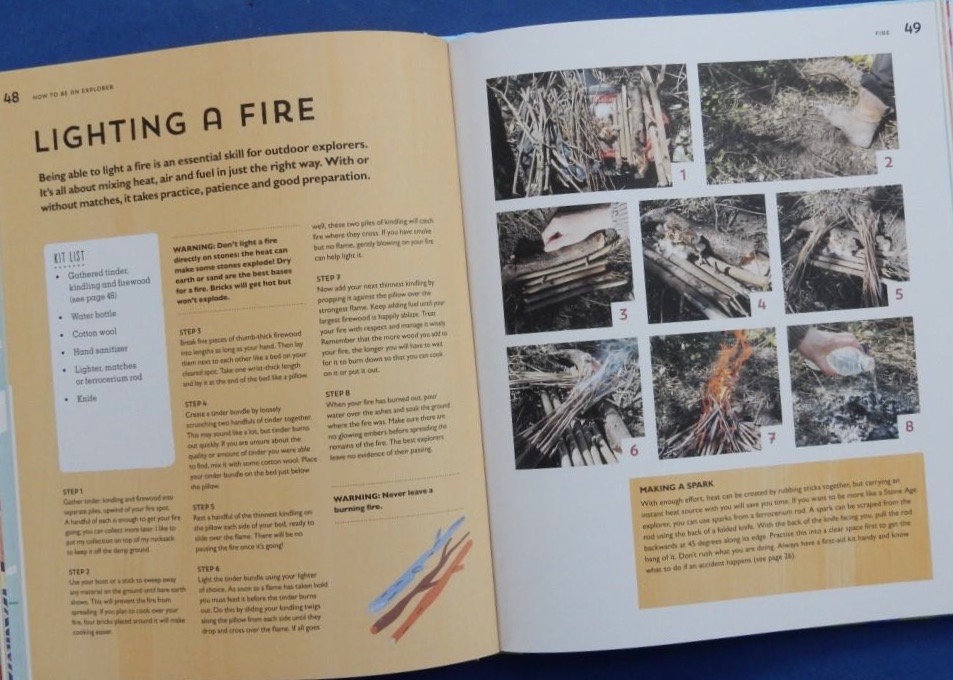
There are seven other parts: risk, skills (how to make cordage, knots to learn, using a knife and whittling a peg; how to light a fire,

cook on it, how to make a paper boiler and a couple of campfire recipes. The foraging section looks at edible insects, edible plants and those not to eat because they are poisonous; then comes a section on creating shelter followed by one on aspects of water and another on weather.

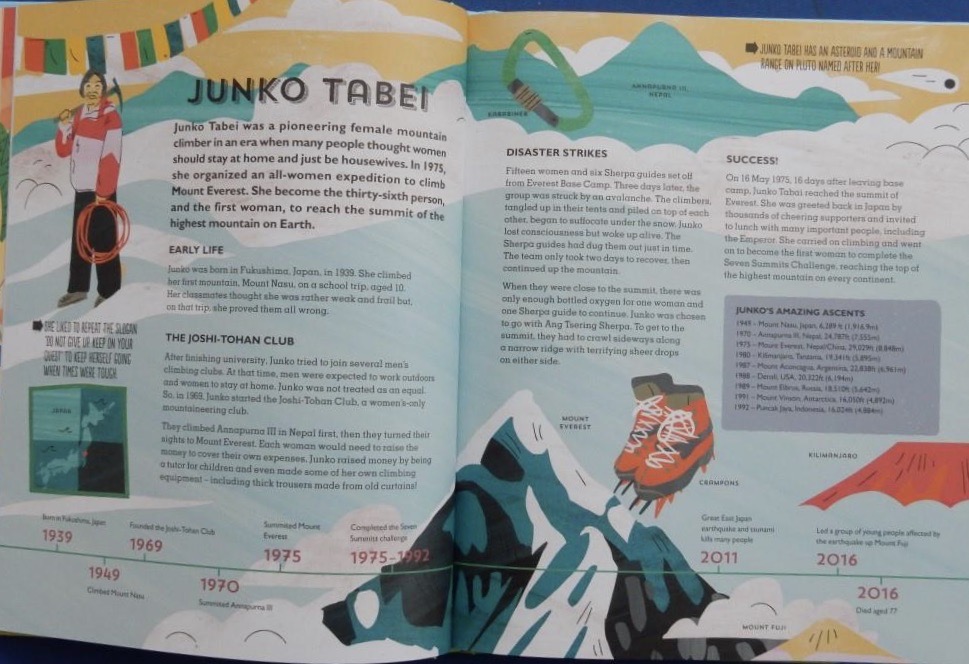
Also included in each chapter is information about a real-life explorer: map maker Muhammad al-Idrisi, female mountaineer Junko Tabei,

Matthew Henson (the first person to reach the North Pole), seafarer Bungaree, Jeanne Baret who disguised herself as a man which enabled her to become the first woman to circumnavigate the globe, and aviator Amelia Earhart each have a spread. In addition, the author includes some anecdotal snippets from his own expeditions.

Colour photographs help guide readers through the 25 activities step-by-step, whereas artistic impressions are used for the explorers’ biographies.

With the author’s enthusiasm for his subject shining through in his writing, this is a super book to encourage children away from their screens and outdoors for some adventuring.

Christmas Craft Book

Christmas Craft Book
Laura Minter & Tia Williams
GMC Books

If you’re looking for inspiration for some festive projects to do with children then this could well be a boon. It’s a veritable treasure trove of thirty ideas that look impressive and are easy to make, mostly from household items, that will keep youngsters entertained in the next couple of weeks as the excitement rises.

Laura and Tia, award-winning bloggers and creators of several other craft books begin by giving an introductory page to get users in the crafting mood, followed by some words on materials, tools, tips and safety: then come the seasonal activities themselves. There’s plenty of cutting and sticking as well as printing, painting, and some sewing.

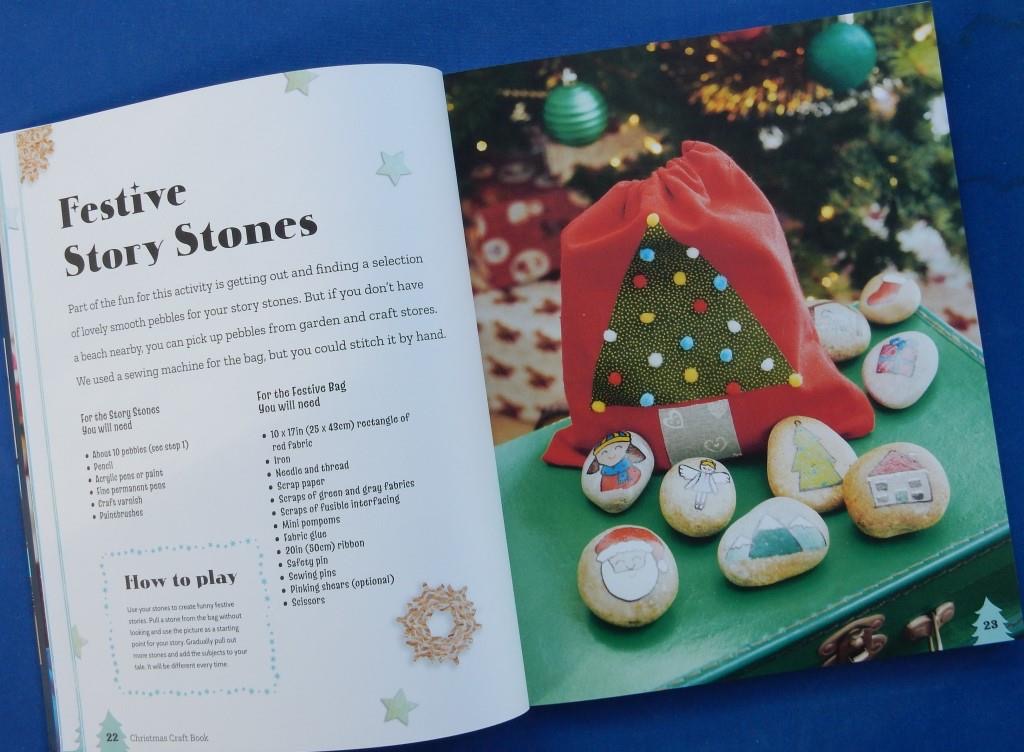
One activity I particularly like that requires the latter two is the Festive Story Stones with their own bag.

(You could easily adapt this one for other festivals such as Easter or Diwali, which gives it an extra bonus.)

Another one I was drawn to straightaway was the Elf and Fairy Peg Dolls. These would look great adorning your Christmas tree if you take up the suggestion to add a small length of ribbon to each one, but there are other ways you might use these: what about adapting them as winter puppets which could then be used in some fairyland dramas.

Young children are usually very eager to try and catch sight of Santa so what better use could they put a pair of Santa-spotter Binoculars than to have them ready for Christmas Eve. They could also leave ready for him some of the Tasty Treats (there are instructions for making Christmas cake truffles, Pinwheel Cookies and Crunchy Snowmen on the last few pages).
Every activity is clearly set out with step-by-step instructions and colour photos, and the book ends with some templates. Ready, steady … let’s get crafting.

Sunday Funday

Sunday Funday
Katherine Halligan and Jesús Verona
Nosy Crow

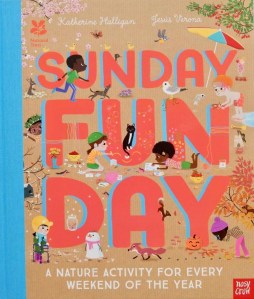
Subtitled A Nature Activity for Every Weekend of the Year and created in collaboration with the National Trust, this bumper book, written by Katherine Halligan and organised by season offers a smashing way (or rather fifty two ways) to encourage youngsters to make the most of what the natural world has to offer.

As a seasoned teacher of primary children, many of the activities are familiar but no matter, they probably won’t be to families using the book for whom in addition to the main part of the book, there are four ‘key kits’ lists (craft materials, kitchen equipment, adventure items and garden bits and pieces), as well as a list of safety tips; and, the yoga teacher part of me was delighted to find the ‘Be a Tree’ spread.

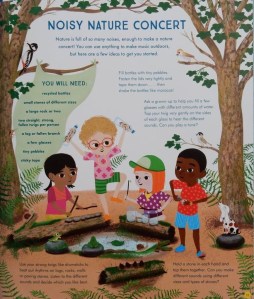
There are recipes, gardening projects for both indoors and out, and much more. In the spring section I particularly liked the ‘Noisy Nature Concert’

and the idea of a Mad Hatter’s Tea Party in summer sounds lots of fun, especially the suggestion of using old sun hats to create small hanging gardens.

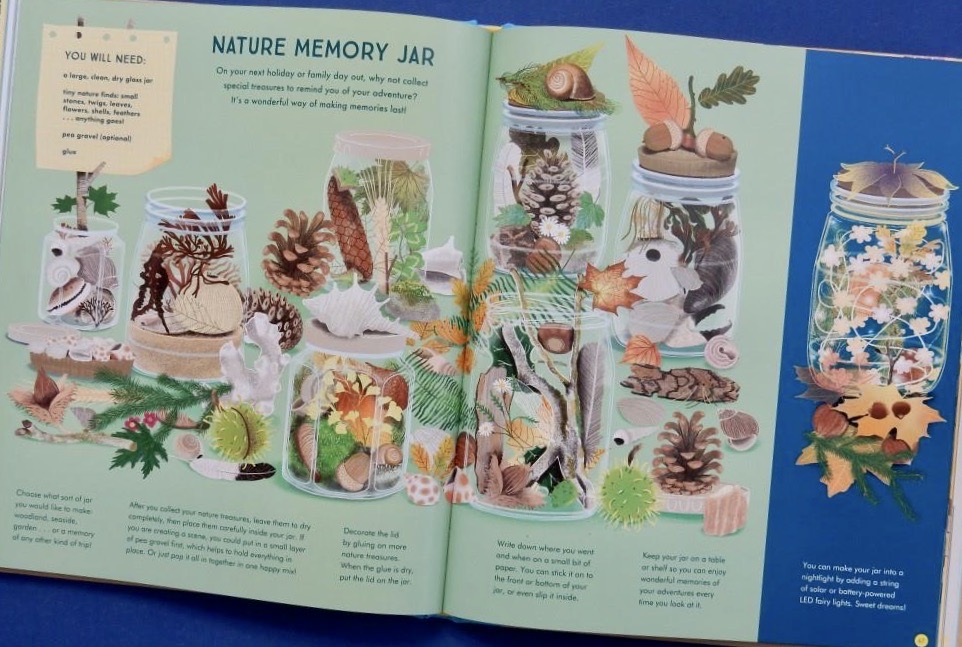
Lots of people take photos of walks they’ve enjoyed to act as reminders: the ‘Nature memory Jar’ suggestion in the Autumn section is a great way to make a different sort of memory of a enjoyable day out

and I’m definitely going to try making the ‘Gorgeous Granola’ using the recipe in the same section. It’s good to see the rangoli design idea for the festival of Diwali using such items as leaves as well as the more traditional materials.

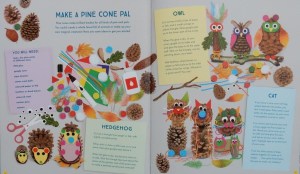
Although I’m not really ready to think about winter just yet, I will start collecting fir cones when out walking in preparation for making some ‘Pine Cone Pals’ with youngsters when winter arrives.

Each activity is colourfully and alluringly illustrated by Jesús Verona. Be it rain or shine, you’ll find something to tempt you in this book that will last not just one but several years.

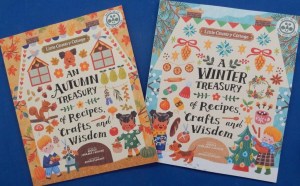
An Autumn Treasury of Recipes, Crafts and Wisdom /A Winter Treasury of Recipes, Crafts and Wisdom

An Autumn Treasury of Recipes, Crafts and Wisdom
A Winter Treasury of Recipes, Crafts and Wisdom

Angela Ferraro-Fanning and AnneliesDraws
Ivy Kids

With the seasons seemingly accelerated and all overlapping this year, (we’ve been picking blackberries for several weeks already and as I write we’re barely starting September) it’s good to have a pair of nature-centred books that point out to readers the best that each season offers.

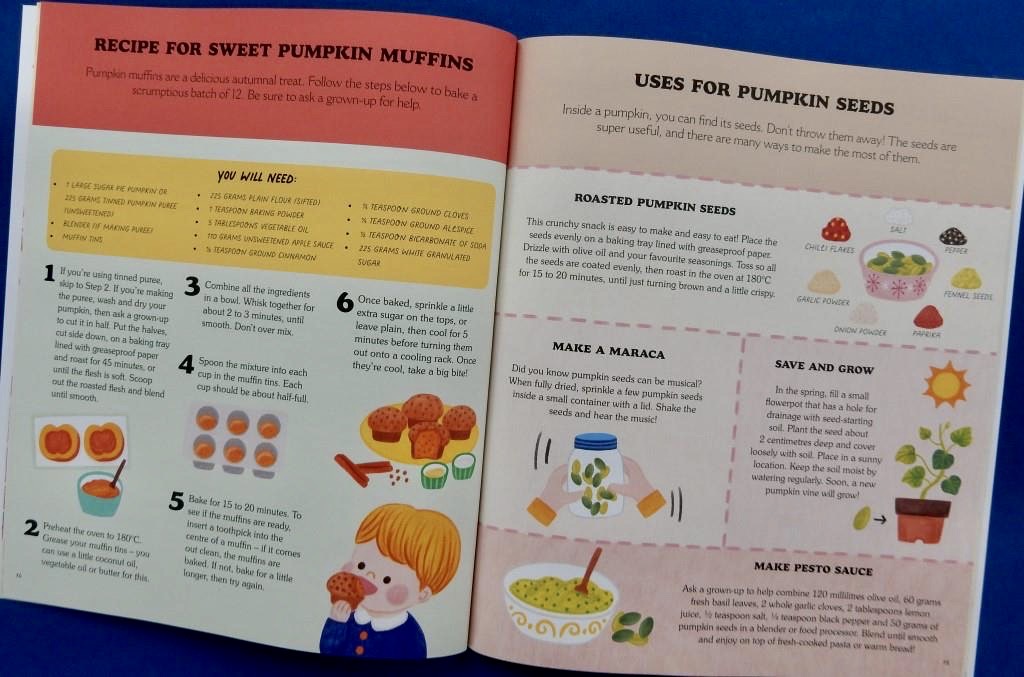
The first reminds us that when it comes to harvesting autumn’s bounties, there are edible riches galore – various varieties of apples, pears, pumpkins and corncobs are traditional autumnal offerings. These can be enjoyed not only by we humans, but animals and birds too. It’s good to see youngsters being introduced to the idea of seasonal eating with recipes for such yummy things as pumpkin muffins, as well as apple chips, alongside that of zero-waste. (There’s a spread on using apple/pear cores and peelings, and another on uses for pumpkin seeds.)

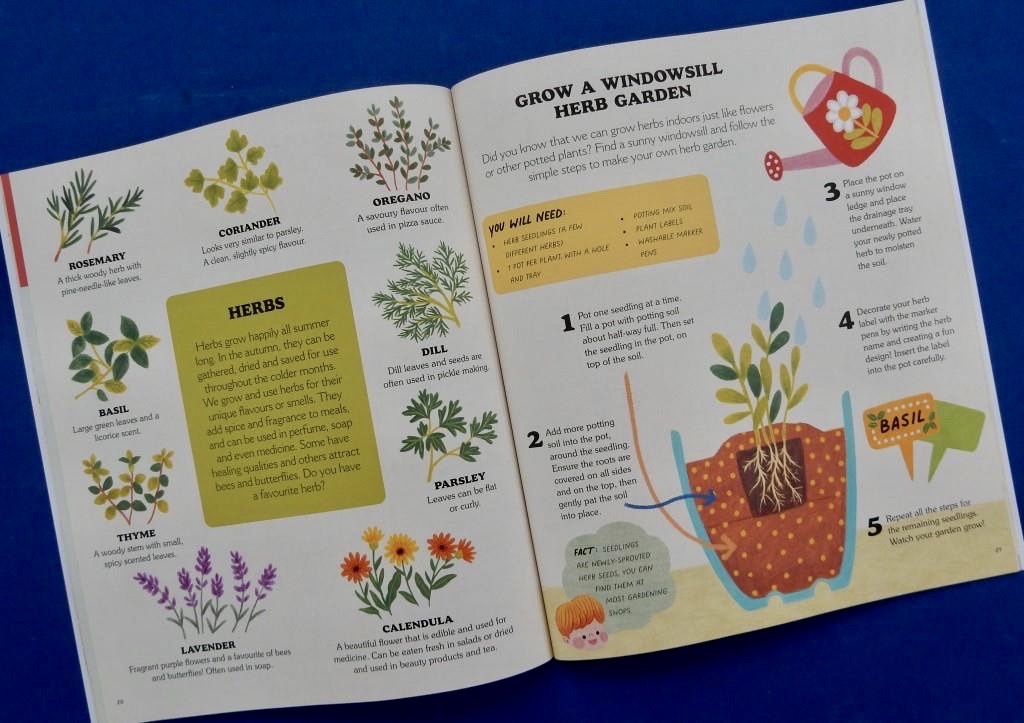
It’s great to get children outdoors no matter the time of year so those seasonal gardening and growing projects are one way to encourage that. However those herein can be done even without a garden: herbs for instance, can be grown on a windowsill in city or town.

Crafts too are included: those acorn cap candles reminded me of tiny floating divas; then what about making your own lip balm, or a gratitude tree? Step by step instructions are provided. So too are snippets of seasonal information and there’s a wealth of autumnal illustrations executed in colour pencils by AnneliesDraws. A fun, eco-friendly compilation.

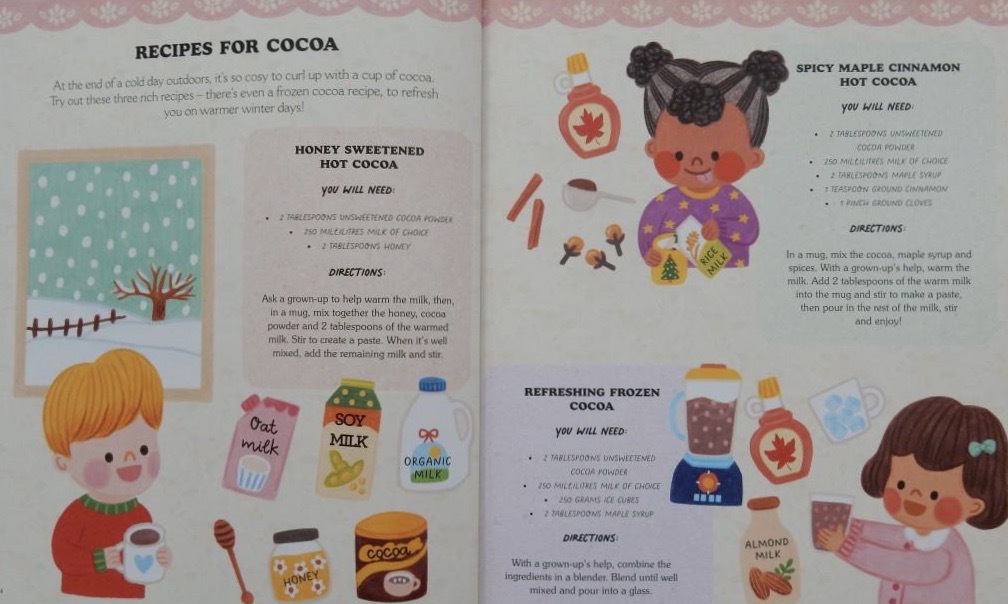
As is A Winter Treasury of Recipes, Crafts and Wisdom. It’s good to see kale featured as one of winter’s veggies and interestingly I’ve not really considered that citrus fruits are a winter crop, though the author offers plenty of recipes for making edible treats using them, as well as some crafts. More to my taste are the bread making recipe (love the idea of adding spinach juice to the mix) and the three cocoa recipes – now there’s a thought (step-by-step instructions given).

Like the autumn book, woven into the activities are snippets of factual information including an entire spread on wildlife. With darkness coming so early in the day, Winter is my least favourite season: this book certainly suggests a wealth of ways to make the most of what it has to offer.

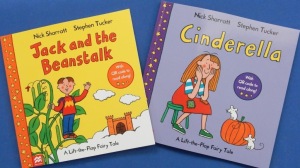
Jack and the Beanstalk & Cinderella / Vocabulary Ninja Workbooks

Jack and the Beanstalk
Cinderella

Stephen Tucker and Nick Sharratt
Macmillan Children’s Books

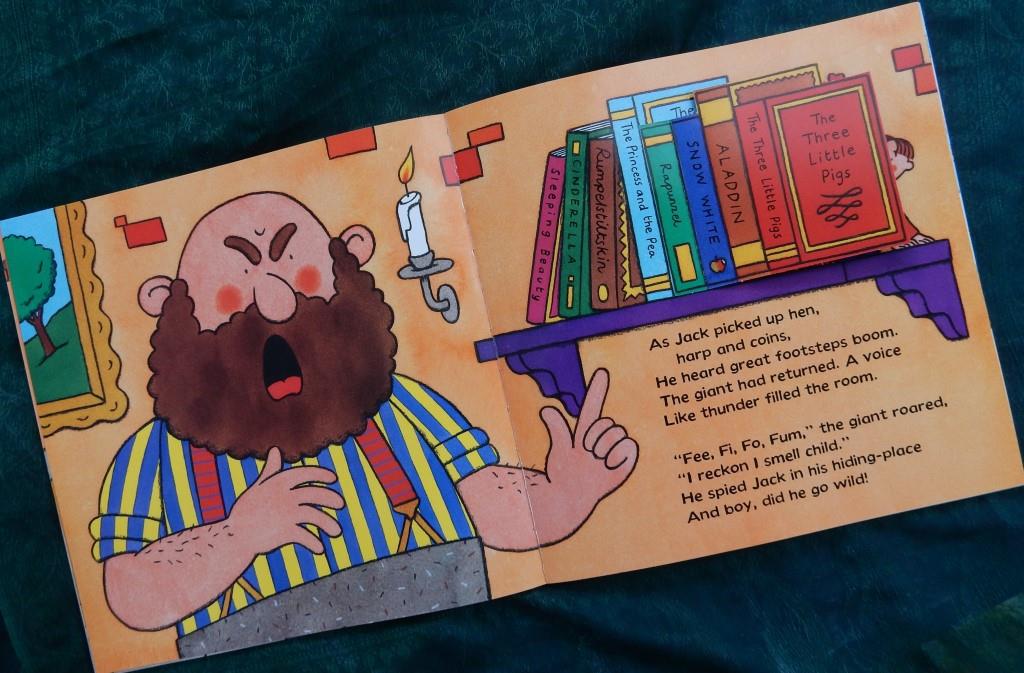
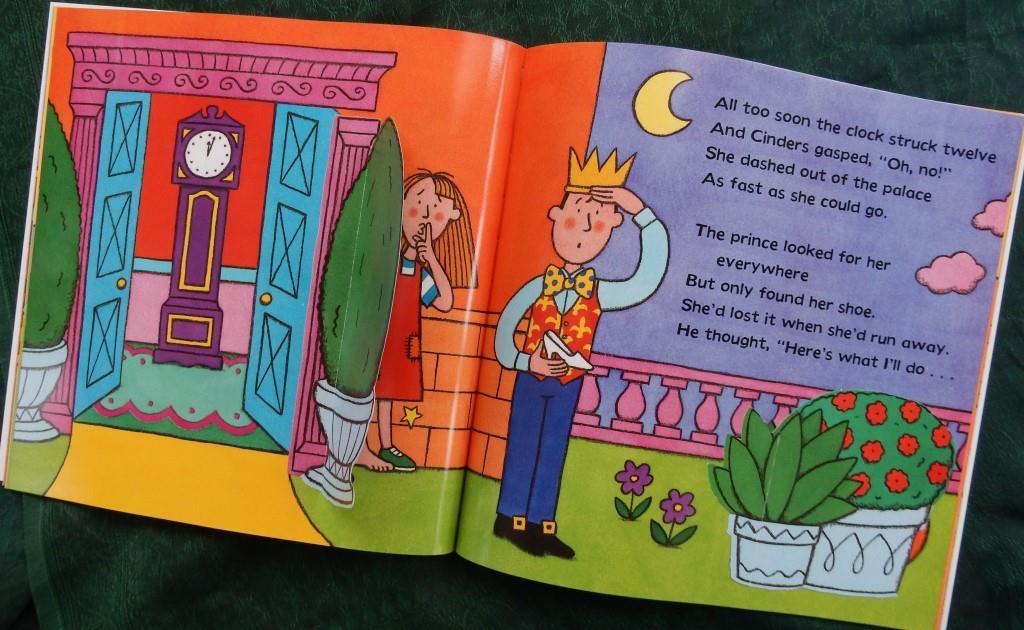
When I was a KS1 class teacher these lift-the-flap fairy tales were very popular with children just taking off as readers. The fact that youngsters were in the main already familiar with the stories, their rhyming texts, and Nick’s trademark cartoon bright, bold humorous illustrations made them ideal choices for confidence building as well as entertainment and getting across the vital reading is fun message.

Now with new editions that include a QR code to scan to access audio versions read by actor Anna Chancellor, the playful, witty tellings will be sure fire winners with a new generation of learner readers and listeners in school or at home.

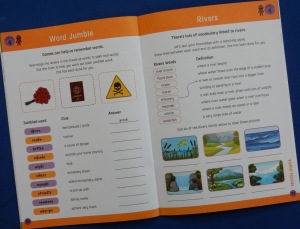
Vocabulary Ninja Workbooks
Andrew Jennings
Bloomsbury Education

This series of six vocabulary books is intended to support home learning. There is one for each year group from Y1 through to Y6 ie covering both KS1 and KS2 and providing the vocabulary likely to be needed in the National Curriculum topics such as geography, history and science.

With most children missing a lot of school over the past eighteen months these books are likely to be a boon for parents struggling to help their youngsters and not knowing where to turn.

Aiming to extend vocabulary and literacy skills in general in a fun, imaginative way, the activities on the pages of each book are grouped into levels: grasshopper, shin obi, warrior, samurai, assassin and grand master. In his introduction, the author (a teacher) suggests that a child should attempt to do the first two levels as independently as possible while from level three and beyond, he recommends some adult support to ensure full understanding. However those of us who are teachers or work in education will know that a great deal of differentiation may be required within a class, so parents will have to be guided by their own judgement and assuredly children will enjoy some adult interaction.

With their colourful graphics, straightforward instructions and activities that never overwhelm,

these books offer engaging and much-needed support and empowerment for learning at home, especially at present.

Kids Fight Climate Change / So you want to be an Owl / My RSPB Sticker Activity Book: Rainforest

There are 3 recent Walker Books publications about various aspects of the environment – thanks to the publishers for sending them for review:

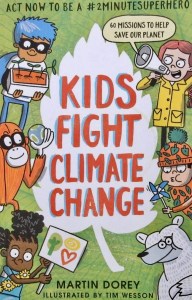
Kids Fight Climate Change
Martin Dorey, illustrated by Tim Wesson

Following on from Kids Fight Plastic, from the same team comes a second book containing sixty six ways in which children can become two minute superheroes.

There are sixteen major missions focussed on helping to save the planet and in particular on climate change, starting with powerful facts about global warming and the hugely harmful effects it’s having on ecosystems both large and small. 

Many people will have heard about the terrible effects of the Canadian heatwave that has killed hundreds of people in the west of the country. There have also been huge numbers of wildfires putting both humans and wild life in danger in Australia especially. The latter as well as the other effects of climate change are presented around a world map early in this little book.

Then comes the first of the main missions, how to count your carbon footprint, that includes a bitesize ‘2 minute mission’ to compare inside and outside temperatures on a sunny day, as well as finding one small action you could do tomorrow to reduce your carbon footprint.

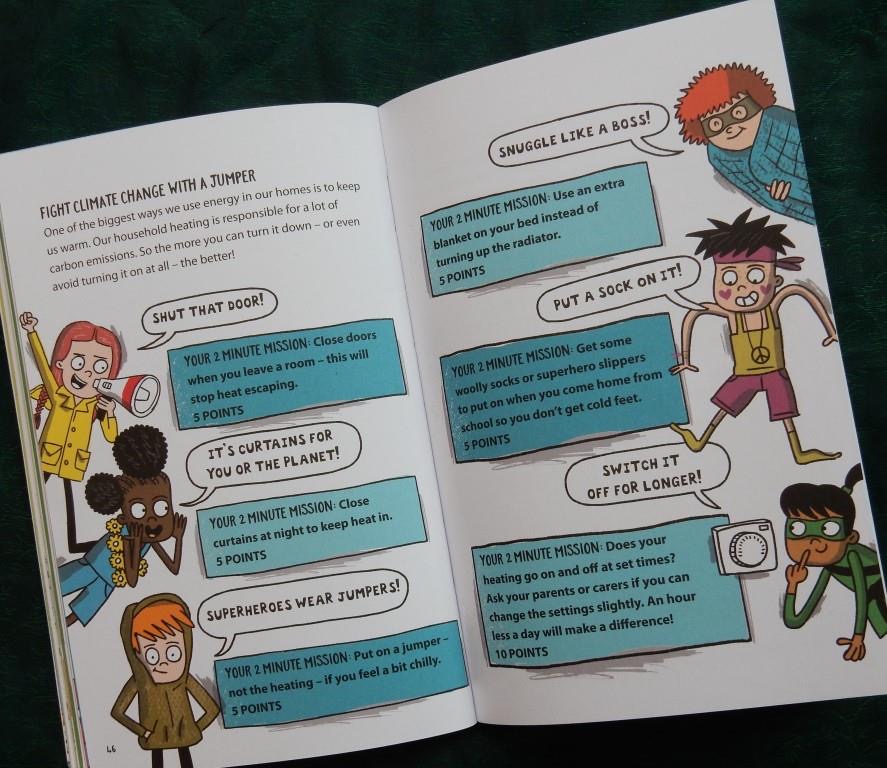
With the added interest of collecting points along the way youngsters must complete such challenges as using ‘an extra blanket on your bed instead of turning up the radiator’,

making a bee hotel in your garden or a reusable face mask from an old cotton T-shirt or persuading parents to let you use an airer or washing line for drying the wash rather than an electric drier.

This is a smashing, highly readable little book with lots of funky illustrations from Tim Wesson. It gives young eco-warriors plenty of information, incentive and inspiration to be active in their homes/gardens, schools and local community. Very much a book of our time and young followers of Greta Thunberg (I know a fair few of those) will love it. An empowering read likely to produce lots of young activists.

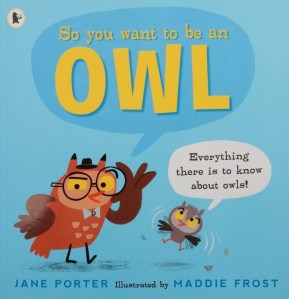
So you want to be an Owl
Jane Porter and Maddie Frost

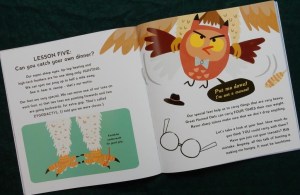
Author Jane Porter places Professor Olaf Owl in the classroom to deliver a sequence of nine lessons and an initial assessment should readers (despite being a fair bit larger than the featured creatures.) want to consider the possibility of becoming an owl alongside the trainees.

There’s a strict code to live by: ‘Be alert! Be watchful! Be silent!’ Then come the questions that start each lesson: Can you fly? Can you merge into the background environment? What about seeing in the dark. What’s your hearing like? and so on before giving her assessment to each class member and whoo hoo! they’ve all gained a certificate.

Skillfully engaging readers by the aforementioned questions and others about hunting and feeding, 

hooting, tree dwelling and chick rearing, Jane Porter imparts key facts to young readers with gentle, playful humour while Maddie Frost’s inviting and endearing illustrations further enhance that humour and the scientific information.

My RSPB Sticker Activity Book: Rainforest
Stephanie Fizer Coleman

With scenes of several rainforest locations in different parts of the world, youngsters can encounter some of the fauna and flora of these steamy habitats as they search for hidden animals, help a chimpanzee find her way to her friend, match up pairs of gorgeously patterned South American butterflies, add colours to some birds of paradise and to Amazon rainforest snakes. They can also use the 100 or more stickers to further adorn the various spreads and learn some amazing facts along the way.

Sophia Valdez’s Big Project Book for Awesome Activists

Sophia Valdez’s Big Project Book for Awesome Activists
Andrea Beaty, illustrated by David Roberts
Abrams Books for Young Readers

As the author says on the title page, ‘It’s a big world with lots of problems to solve. Just remember: No one can do everything. Everyone can do something.’ That’s very much the spirit of this project book from Sophia Valdez, the newest member of The Questioneers.

It begins with an introductory story about Sophia and how she was the inspiring spark behind the creation of a new park for the people of Blue River Creek.

Thereafter are a series of over forty activities, some related to that, all aimed to inspire even quite young children, suggesting how they can make a difference in their own communities through supporting causes close to their hearts, writing to local officials, and finding out how democracy and government are supposed to work.

There are puzzles, word searches, drawing and a wealth of other ideas connected to activism, some related to an imagined new town on planet Glorg, others to real world problems.

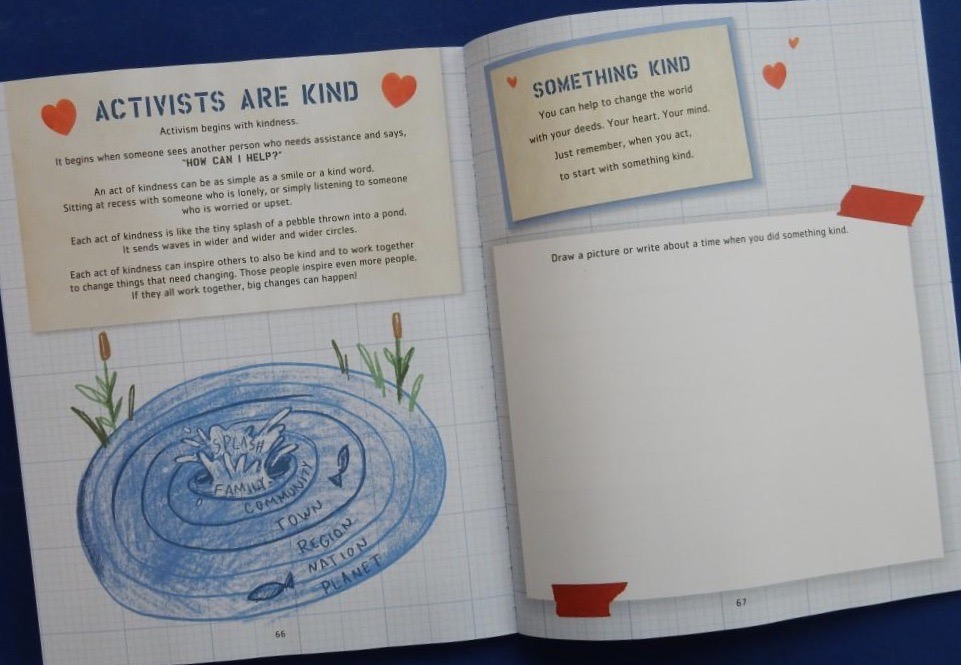
‘Activism begins with kindness’. I like that: it’s the introduction to one of the activities herein.

Indeed all the attributes that an activist needs are elucidated in this empowering, highly practical look at campaigning and activism.

Whether their cause is education for all, plastic pollution, affordable homes in your locality, or something else, this book could be a starting point for one of tomorrow’s leaders.

Science School / Out and About Minibeast Explorer

Science School
Laura Minter & Tia Williams
Button Books

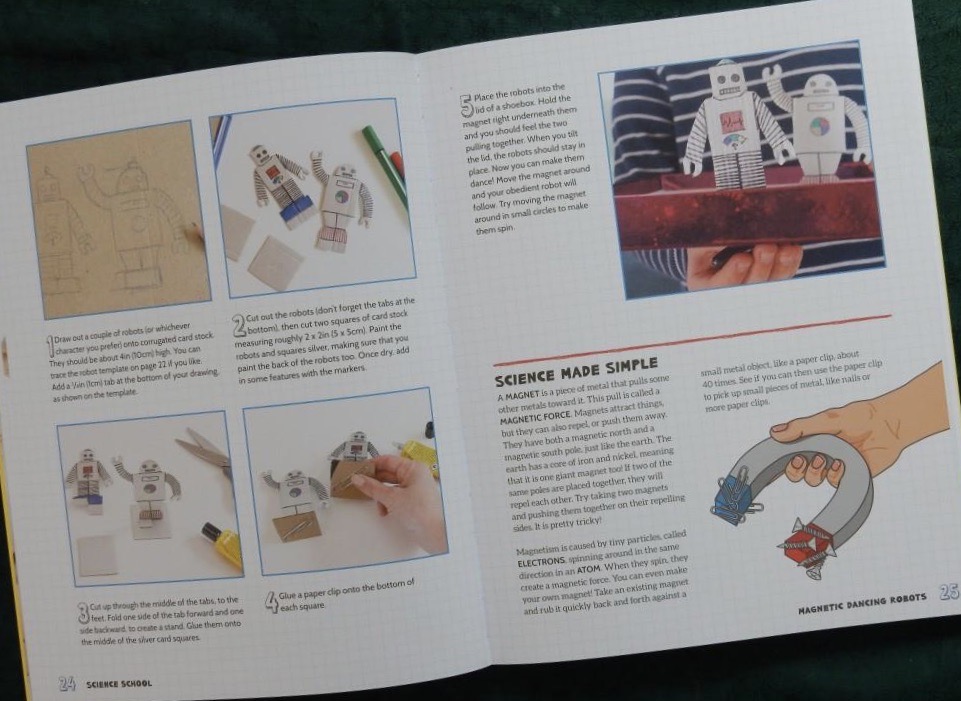
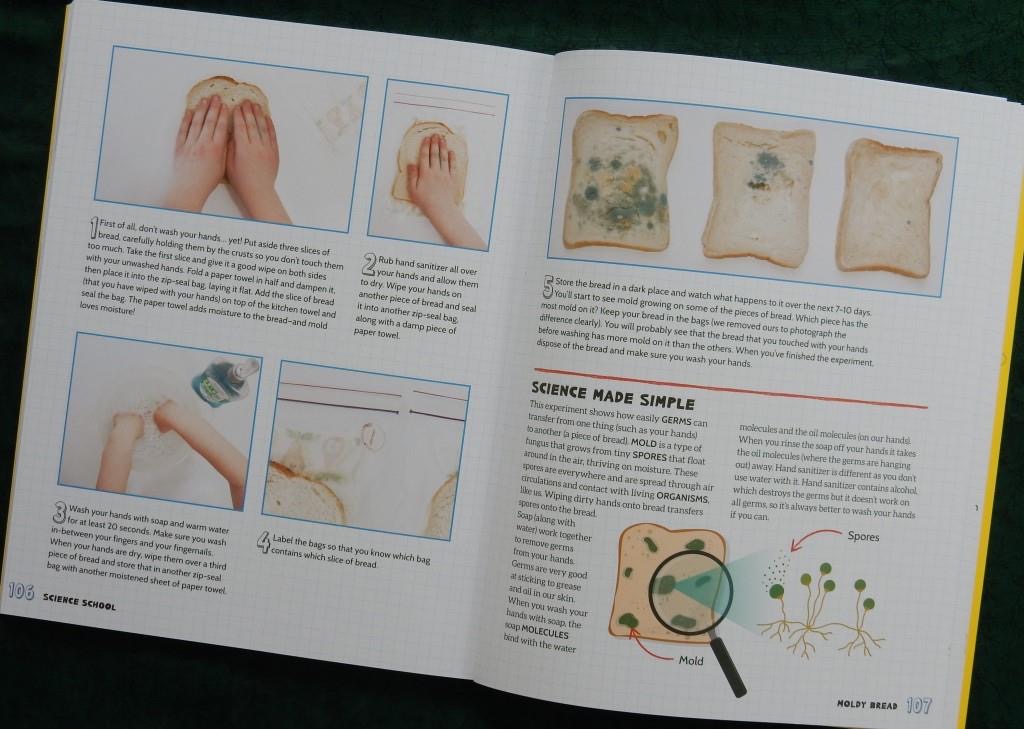
Covering such topics as magnetism, gravity, change of state, oxidation, the growth of fungus and much more – all relating to basic scientific principles, the latest collaboration from Laura Minter and Tia Williams offers thirty STEM experiments, some crafty, for youngsters to try at home.

None of the activities require sophisticated equipment; rather they can be done at home with everyday materials you’re already likely to have knocking around somewhere. A list of what’s needed is given at the start of each project and there are photographs showing what to do, beneath each of which are step-by-step instructions, and, the science behind the experiment is concisely explained in the final ‘Science Made Simple’ paragraph(s) that often takes the science a bit further too.

My experimenters especially enjoyed making the “Magnetic Dancing Robots’ and other characters. 

Important at all times, but even more so as COVID is still with us, is the experiment showing the difference after around 10 days to three slices of bread: the first wiped all over with unwashed hands; the second wiped with sanitised hands and the third with hands that have been thoroughly washed with warm soapy water for 20+ seconds, completely dried and then wiped on slice number 3 (make sure the bag into which each is placed is labelled before putting it in a dark place.)

Providing hours of fun learning, this book is particularly useful for homeschooling.

Out and About Minibeast Explorer
Robyn Swift, illustrated by Hannah Alice
Nosy Crow

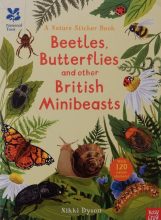
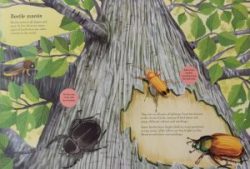
Published in collaboration with the National Trust, this handy guide for youngsters features more than sixty minibeasts about which Robyn Swift presents a wealth of information related to identification, lifecycles, habitats, anatomy and more. Did you know that a decapitated cockroach is able to live for up to nine days; that the blood of slugs is green, or that seagull sized dragonflies lived before dinosaurs roamed the earth?

The importance of minibeasts is explained and also included are some pages of activities, a classification chart and a quiz.

Hannah Alice’s illustrations of the creatures are clear and easily recognisable making this a super little book to tuck into a backpack when you go out and about no matter if it be in town, countryside or the garden.

Wild Days: Outdoor Play for Young Adventurers / The Gruffalo and Friends Outdoor Activity Book

Wild Days: Outdoor Play for Young Adventurers
Richard Irvine
GMC Publications

The author of this super book runs Forest School training for new leaders as well as Forest School programmes so most certainly knows what he’s talking about. I was convinced of this as I read in the book’s introduction, ‘To be safe in the world, young people need to be allowed to take risks.’ In fact, wearing my teacher’s hat, I’d say that risk taking is key in any real learning, not only that which takes place outdoors.

There are three main sections ‘Making’, ‘Games and stories’ and ‘Exploring’; but before plunging into these it’s important to read the pages on responsible behaviour (Leave no trace being key), being prepared before setting out, suggestions for tools you might want to take along and what you might do with them.

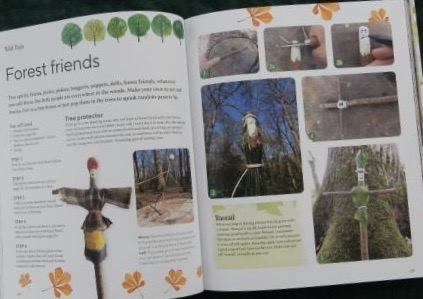
The Making activities vary from den building and campfire cooking to painting with natural materials. I loved the Forest friends spread, even more so the later suggestion that the characters created could be used in Storytelling, one of the ideas in the Games and Stories section.

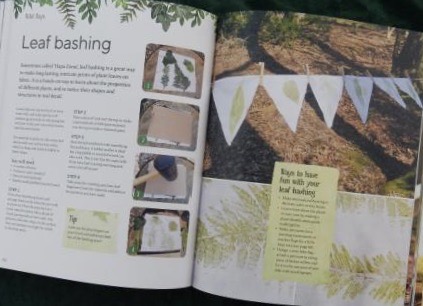
Another idea that I can’t wait to try with some youngsters is Leaf Bashing aka Hapa Zome – a method of making leaf prints that works well on old sheets or similar cotton material and of course, the bashing part is a great way of letting off steam and a terrific lockdown antidote.

A great group activity in the second section is a ‘Finding things’ Treasure hunt and with younger children especially, the author’s suggestion to stay in pairs is advisable.

Much of the third Exploring part is concerned with identification, be that of plants, birds and their songs, butterflies or invertebrates, but a gentle word of warning: it’s important not to get too obsessed with mere naming to the exclusion of observing and relishing the beauty of nature’s flora and fauna.

I could go on extolling the virtues of this cracking book but instead I’ll suggest that as well as families, all education settings add a copy to their collections, and start putting some of Richard Irvine’s ideas into action whatever the weather. Each one of them has a list of what you’ll need and step-by-step instructions as well as colour photographs. What better way to get youngsters of all ages outdoors learning through and about nature; in fact it covers pretty much every area of the curriculum.

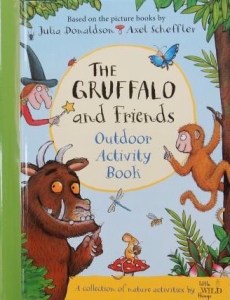
The Gruffalo and Friends Outdoor Activity Book
Julia Donaldson and Axel Scheffler
Macmillan Children’s Books

The twenty four activities in this spirally bound book have been created by Forest School specialists, Little Wild Things and are based on Julia and Axel’s The Gruffalo, Monkey Puzzle, Room on the Broom and Charlie Cook’s Favourite Book.

Each section has a context setting spread with a quote from the relevant book ‘A mouse took a stroll through the deep dark wood. / A fox saw the mouse and the mouse looked good.’ and every activity has a list of what’s needed, numbered ‘What to do’ instructions, hints and tips and some extension suggestions.

Whether used with a group or by an individual, there’s lots of fun learning across the curriculum herein.

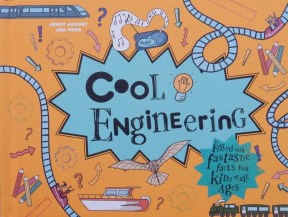
Cool Engineering

Cool Engineering
Jenny Jacoby and Jim Venn
Pavilion Books

This latest in the Cool series looks at the various branches of engineering, provides short pertinent biographies of key engineers through the centuries including Isambard Kingdom Brunel, Frank Whittle, Hedy Lamar and Tim Berners-Lee, as well as the history of engineering from the invention of the wheel right up to today’s technology as used in such things as clean energy. 

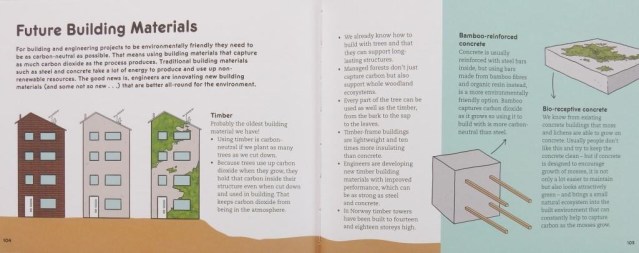
There’s even a look at some future projects including innovative new building materials – whoever would have thought that encouraging mosses to grow on concrete (bio-receptive concrete) would become a good thing to do.

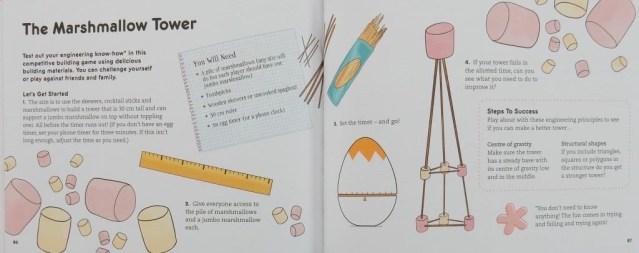
There are plenty of interesting experiments to try at home or school – the marshmallow tower is a fun example and can include an element of competition.

There’s so much to like about this engaging little book including the clear layout, ‘Cool facts’ boxes, quotes from the engineers featured, a timeline and alluring contents page, glossary and Jem Venn’s slightly quirky illustrations. It’s especially good in a STEM book such as this to see importance given to the sketching of ideas.

If you want children to think like engineers, then include this book in your classroom or family collection – it’s a good place to start.

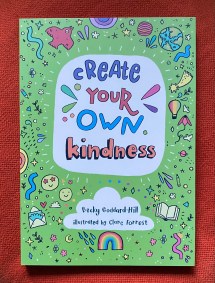
Create Your Own Kindness

Create Your Own Kindness
Becky Goddard-Hill, illustrated by Clare Forrest
Harper Collins Children’s Books

Kindness – especially towards other people, is something that we’ve all focussed on during this past pandemic year and I’m sure that with so much time spent away from school and friends it’s taken a toll on the mental health of many youngsters. Indeed, it’s likely that all children could benefit from knowing ways to be kind to themselves, in particular.

As well as being a well-being and lifestyle blogger and writer, the author of this book is a children’s therapist and mother, so she definitely knows the importance of children’s emotional well being.

This the third title in the Create Your Own series is absolutely bursting with practical ideas that will help youngsters to develop the life skills necessary to be kind to others, to the planet and crucially, to themselves.

The activities are wide-ranging and presented in an engaging style, the first section being devoted to self kindness. Herein readers can find out about such things as how to use the breath to calm the mind, how to make a kindness cake and I especially liked the idea of creating an emotional first aid box. Each of these would work equally well if used by children in the classroom or individuals at home. This is true of the ideas in the other sections and there’s even a great suggestion relating to World Kindness Day (13th November) and how it can be celebrated by schools as a whole.

If we want children to be resilient especially after all they’ve been through this last twelve months, then this book, invitingly illustrated by Clare Forrest, is well worth putting their way.

I am a Fish / Birch Trees, Bluebells and other British Plants

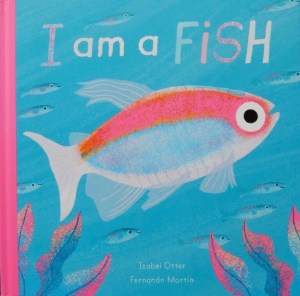
I am a Fish
Isabel Otter and Fernando Martin
Little Tiger

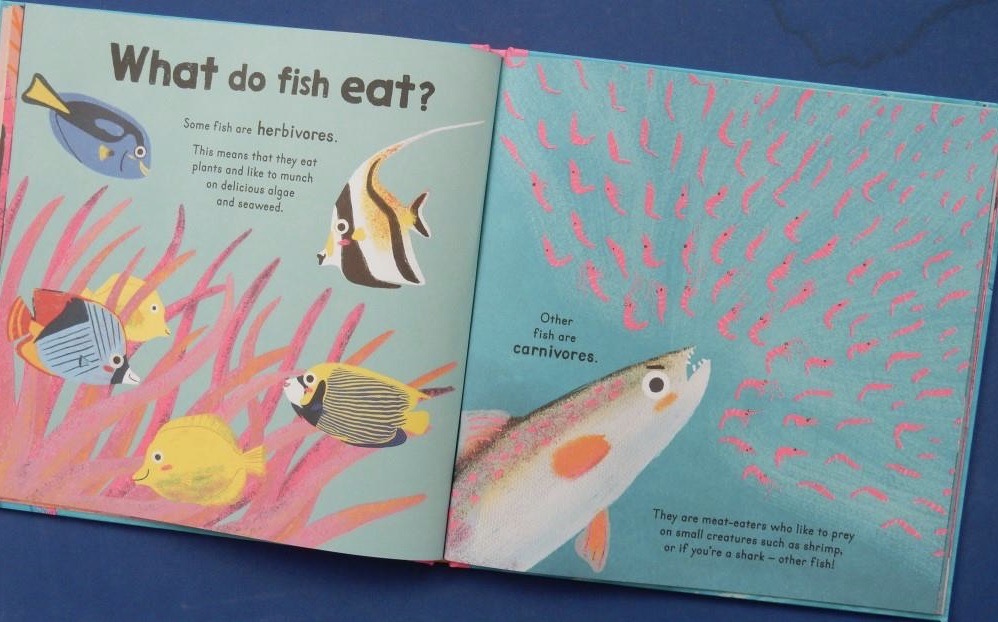
This is a companion volume to I am a Bird from the same team. Using an un-named fish, youngsters are introduced to the general characteristics of a fish and then dive underwater to discover a variety of aquatic habitats and learn something of fishes’ habits (we meet both herbivores and carnivores),

shapes, size and distinguishing features. Mention is made that ‘rays don’t have bones’ but that they and the sharks illustrated alongside, are cartilaginous fish is not stated.
If you’ve ever wondered whether or not fish sleep, this subject is discussed on another of the vibrant spreads while another spread introduces seahorses, which some little ones might be surprised to discover are actually classed as fish.
The chatty narrative and arresting subaquatic scenes make this a book for early years audiences and foundation stage topic boxes.

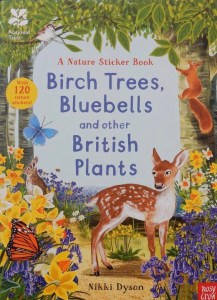
Birch Trees, Bluebells and other British Plants
Nikki Dyson
Nosy Crow

Here’s a gorgeous ‘Nature Sticker Books’ to lift the spirits. Published in collaboration with the National Trust, it contains eleven beautiful scenes by Nikki Dyson that are brimming over with the bounties of nature whatever the season.

It starts with spring and its gorgeous insect-attracting blossom and wild flowers aplenty. Summer scenes show gardens are full of bright flowers and butterflies, as well as meadows of poppies, daisies and other composites. Summer’s a good time to visit a pond or perhaps the coast: those locations too, have a wealth of beautiful wild plants and birds. Come autumn ripening berries are waiting to be gathered and the deciduous trees take on their yellow, orange and red hues while in gardens and allotments there are vegetables aplenty as well as herbs to pick and you’re likely to come across lots of minibeasts that also like to have a nibble.
Finally winter comes around when there is much less colour but there are still wonderful flora and fauna to discover when you brave those chills.

Each spread has a couple of introductory factual paragraphs as well as suggestions for adding some of the relevant stickers provided in the centre of the book. There’s also a checklist of the plants in the book so young naturalists can enjoy an additional I-spy element.

Eco Craft Book / The Extraordinary Book That Eats Itself

Eco Craft Book
Laura Minter and Tia Williams
GMC Publications

In their latest book, Laura and Tia offer some cool ideas for using bits and pieces that might otherwise end up being thrown away.

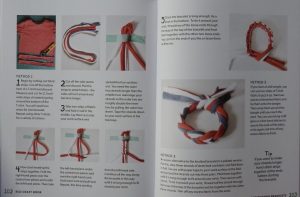
Instead of consigning that old T-shirt or other no longer worn garments to the rubbish or recycling bin, why not suggest your children try a project like the T-shirt friendship bracelets here.

Alternatively, if the T-shirt is white, it can be dyed using a natural plant dye and refashioned into a ‘no-sew tie-dye bag’. Those are just two of the fabric projects.

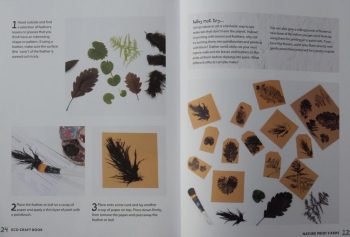
Getting even closer to nature, youngsters can make a collection of interesting shaped leaves, grasses or perhaps feathers and use them to make some printed cards (or perhaps wrapping paper)

and if you want to attract more wildlife into your garden, there are instructions for creating a bug hotel using for example, old tin cans.

Each mini project is succinctly explained with step-by-step guidance and clearly illustrated with colour photos. In addition there are spreads that talk about climate change, what youngsters can do to help protect the environment and why it is important to immerse children in nature.

This book would be a boon to parents who are coping with home schooling, but all of us who work with children have a duty to nurture their creativity and to encourage them to think about the impact on the environment of all they do.

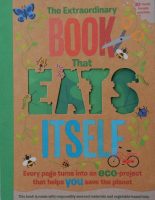
The Extraordinary Book That Eats Itself
Susan Hayes & Penny Arlon, illustrated by Pintachan
Red Shed ((Egmont)

If you’re looking to engage a child or children in some environmental projects here’s a book to try. It’s packed with eco-projects – thirty in all – and each page (as well as the cover) is cleverly designed to be used in an activity – hence the title.

It’s amazing just how much difference simple everyday actions such as turning off the lights when you leave a room, and at night can make, not only for the safety of animals but to reduce electricity consumption. Ditto, saving water by turning off the tap while brushing your teeth or using your bath water to ‘feed’ your plants (of course that takes a bit of effort but every drip and drop counts). There’s a Make a Difference in your home’ page with additional suggestions .

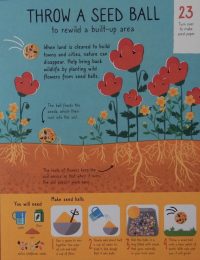
One of my favourite projects is Throw a seed ball to rewild a built-up area, something I’ve never tried, although I have scattered plenty of packets of wild flower seeds. This is really clever though and all that’s needed in addition to wild flower seeds are water, flour and soil to make your mixture. Can’t wait to have a go at this.

(The reverse side suggests making seed paper for writing a message on – another clever idea.)

Whether or not home schooling continues, this is certainly worth getting hold of.

Curious EnCOUNTers / I Spy ABC: Totally Crazy Letters! & I Spy 123: Totally Crazy Numbers!

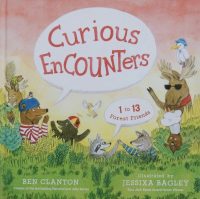
Curious EnCOUNTers
Ben Clanton and Jessixa Bagley
Little Bigfoot

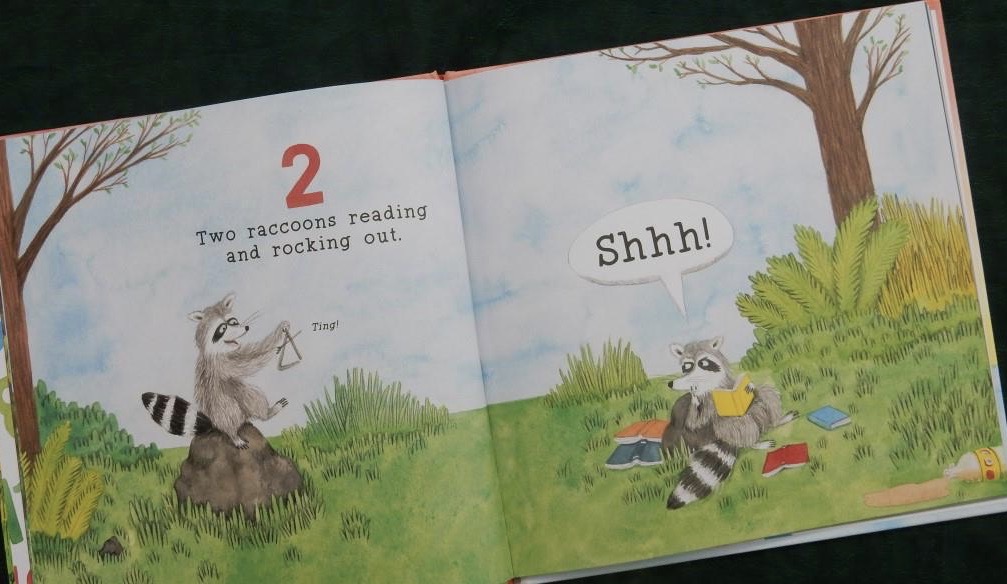
A child shares with readers the sights, sounds and smells she encounters on a hike through the woody countryside. Setting off, who knows what might be there to observe or ‘where the trail will lead’. Pretty soon though it’s clear that this is not to be a calm peaceful appreciation of nature. Rather, it’s a series of tallies from 1 to 13 of somewhat crazy outdoor antics, each leading on from the previous one, and each being described through an alliterative sentence – ‘2 Raccoons reading and rocking out,

Six squirrels sporting sweaters through to ‘13 Thirteen seagulls soaring and searching’ and a final invitation to join the frolicking friends for a fabulous feast whereat not all the animals are forest dwellers. The story eventually comes full circle as the final page shows the child, now sitting hidden behind an abundance of foliage, and seemingly sketching the animals.
Throughout there are playful, punny conversations between the creatures featured, “I overheard you were c-lamb-ering for wool.”; “It was wool-y great of ewe to give us all this wool!”; “What a wonderful way to unwind.” “Shear is!”

A comical counting book and an adventure too that provides both fun and plenty of learning possibilities.

I Spy ABC: Totally Crazy Letters!
I Spy 123: Totally Crazy Numbers!

Manuela Ancutici and Ruth Prenting
Firefly Books

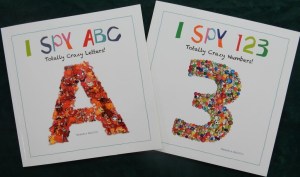
Make no mistake, these two visually incredible, stimulating books are not intended for little ones who are just learning the alphabet or to recognise numerals/numbers and to count. It’s the ‘I Spy’ part of the title that is key, for what the letters and numerals are doing is to act as templates onto which themed items are arranged and to which the text directs users to look for various objects relating to that theme. Each page or spread is introduced by the words, ‘Can you see what I can see?’ immediately engaging users young and not so young.

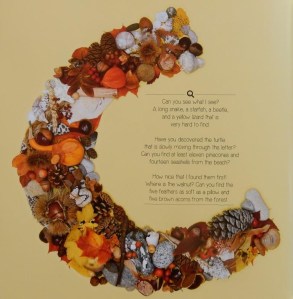
On the gorgeously autumnal coloured C we’re to search for ‘a long snake, a starfish, a beetle, and yellow lizard (tricky to locate); then there’s a turtle supposedly on the move along the letter, as well as eleven or so pinecones, fourteen shells, a walnut, five soft feathers and finally, five acorns. Phew!

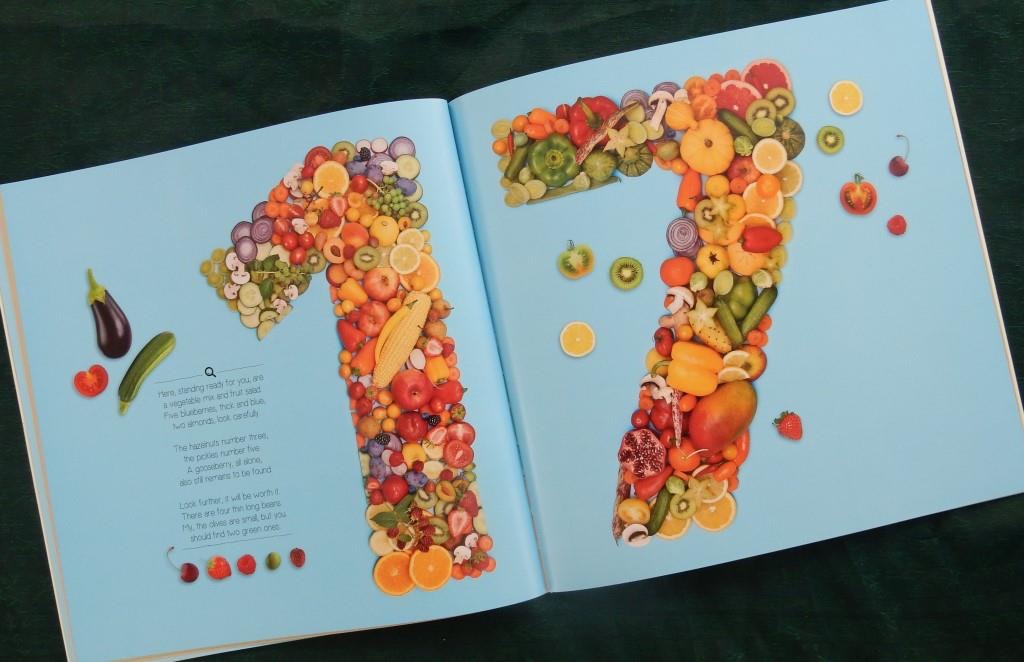
Among the thematic materials used (sourced largely from flea markets) are toy vehicles, gorgeously coloured flowers, beads, food, art materials, nesting dolls and sewing. In no way does the text cover the wealth of items included for each letter or number and that leaves the way open for adult and child to play their own games of I-Spy thus adding to the countless hours of enjoyment and potential for visual development offered by the books.
With the numbers book, after 10, the double-digit numbers featured get a double spread each rather than a single page,

while the ABC allocates a single page for each letter.

There’s a wealth of learning opportunities between the covers of both the ABC and 123 and each offers countless hours of fun too. And just in case you’re stuck on any of the searches, the final pages provide solutions.
Great for both home and school use.

A Clutch of Activity Books

Here’s a selection of activity books kindly sent for review by GMC distributors

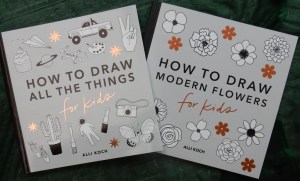
How to Draw All the Things for kids
How to Draw Modern Flowers for kids

Alli Koch
Blue Star Press
All young children are creative but as they get older they become inhibited and want things to ‘look right’, no matter what we teachers say in their early years.
Now here are two books by Alli Koch that will help them to draw confidently. The first is a general one with items such as vehicles, items of clothing, animals such as a hedgehog, cat or dog, a whale and a turtle, a dragon even.
The second features flowers from lavender to lotus, and marigold to magnolia. (I like the way each flower is assigned a meaning – a marigold is ‘the flower of creativity’, lotus the flower of patience, anemone the flower of ‘being true’, for instance. There are separate spreads for leaves, houseplants and more. Each of the featured items is drawn in eight, easy to follow steps and make the learning process both achievable and fun.

For younger children are:

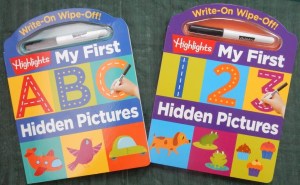
Write-on Wipe Off My First ABC Hidden Pictures
Write-on Wipe Off My First 123 Hidden Pictures

Highlights
These two sturdily built board books come with marker pens so that little ones can develop their letter and number writing skills on the wipe-clean pages as well as have fun with solving the various puzzles, finding the hidden items in a scene or adorning items such as a cake. There are mazes, matching games and looking for items starting with a specific letter sound in the ABC book. Both uppercase and lowercase letters are presented with directional arrows above the humorous illustration on each page.
The numbers book has a double spread allocated to ‘let’s learn’ and ‘let’s find’ from 0 to 10 so for instance a child has to trace and write the number 4, count and circle 4 oranges and 4 bananas on the verso and locate the 4 cats, find and circle the four illustrated items within the big picture as well as searching for other groups of 4 therein. They’ll surely enhance both fine motor skills and observational skills with these two playful books.

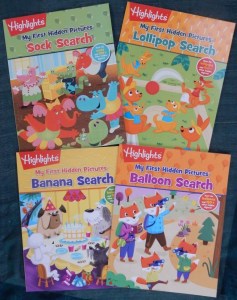
Balloon Search, Banana Search, Sock Search, Lollipop Search
My First Hidden Pictures series

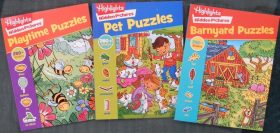
Playtime Puzzles, Barnyard Puzzles, Pet Puzzles
Hidden Pictures series
Highlights
Ideal for filling the odd few minutes, either on a journey, on holiday or on a dark, chilly evening are these search-and -find books.
The first series My First Hidden Pictures for the youngest age children have in addition to the thematic hidden objects to find, simple word games, drawing activities, dot-to-dots, colouring and drawing, matching and more.
The Hidden Pictures series includes pages of stickers that relate to the pages indicated and each has more than fifty hidden picture puzzles and a total of 500 objects hiding in plain sight in the themed pages that includes such funky spreads as Frosty Farm with sledging animals, Fiddling Frogs and a Community Garden among the Barnyard Puzzles. Pet Puzzles offers such zany activities as a host of felines in a beauty salon all desirous of ‘Purr-fect Nails’ (no social distancing or mask wearing here!) to colour and adorn with stickers. Meanwhile in Playtime Puzzles you can find a pair of octopuses playing table tennis with several bats, each inviting users ‘Let’s Play’ whereas ‘Catch of the Day’ has a comical coloured scene of two turtles fishing from a rowing boat bordered by small pictures of items to search the scene for.
There are hours of immersive screen-free fun between the covers of each book.

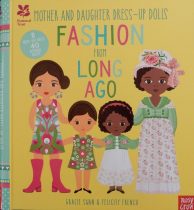
Mother and Daughter Dress-Up Dolls: Fashion from Long Ago / How to Speak Astromech with BB-8

These two books present opportunities to learn something new and have great fun in so doing.

Mother and Daughter Dress-Up Dolls: Fashion from Long Ago
Gracie Swan and Felicity French
Nosy Crow (in collaboration with the National Trust)

With this hardback book, children can press out eight dolls – four large and four small – mothers and daughters – dress them and learn lots about fashion from Medieval, Tudor, Georgian and Victorian times, as well as the Twenties, the Thirties and every other decade through to the 1970s.

Isabella and her mother Beatrice don their finest attire to attend a medieval banquet anticipating tasty food, loud music and acrobats to entertain them.

Margery and daughter Alice will head to the market once they’ve put on their warm woollen dresses, shawls and bonnets hoping to sell all their homemade bread.

Turn each of the press-out garments around and there’s an alternative story with two different characters, each time – a clever idea that provides a whole set of new opportunities.

Children will love discovering what their older relations wore and those before them, when they reach the twentieth century characters and their geometric mini-dresses, those jump suits, bell bottoms-trousers, maxi dresses and more. It’s amazing how everything comes around again!

In addition to the main items of clothing there’s a page of accessories and shoes to complete every one of the forty outfits. What more can aspiring fashionistas ask? Perhaps for a timeline – but there’s even one of those on the back inside cover.

Hours of fun learning to be had from this fascinating activity book.

How to Speak Astromech with BB-8
I.M. Rollin, illustrated by JAKe
Chronicle Children’s Books

Star Wars enthusiasts will love this sound book- a communication manual – that celebrates the enormously popular, adorably quirky droid character BB-8 that appeared in several of the films.

Included are ten built-in droidspeak audio clips, with translations and conversation tips, and funny illustrated scenarios that will help readers understand and get the best out of their own droid companion in a galaxy far, far away.

Astromech qualities such as playfulness, resourcefulness, determination, trustworthiness and bravery, demonstrated by means of BB-8’s adventures, are recognised herein. Fans will lap up the insider jokes too.

A fun and handy guide indeed, that fans young, and not so young, will delight in.

The Singing Mermaid Make and Do Book / Jumbo Pad of My First Puzzles, Jumbo Pad of Brain Teasers, 501 Dinosaur Joke-Tivities

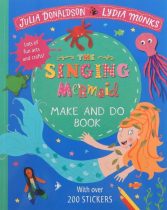
The Singing Mermaid Make and Do Book
Julia Donaldson and Lydia Monks
Macmillan Children’s Books

Here’s an activity book based on the popular The Singing Mermaid picture book from a few years back that’s especially apt for fans of the story and those who enjoy creating.

There are more than a dozen art/craft activities many of which are mermaid related such as the seaweed crown and tail patterns. For their simplicity I particularly like the ‘Mermaid Tail Footprints’ that can be turned into merpeople

and the sea creatures made from shells and pipe cleaners .
Having made the circus performers, those who want something more sophisticated, can go on to create a circus tent theatre and even put on a show.

Most projects have a lead-in quote from the story, and all have a list of items required, clear step-by-step instructions, some ‘tips, tricks and twists’ and funky illustrations by Lydia Monks. There are also 200+ stickers and some templates should youngsters feel the need to use them.

With school now over for the holidays, this book provides hours of crafty fun.

Jumbo Pad of My First Puzzles
Jumbo Pad of Brain Teasers
501 Dinosaur Joke-Tivities
Highlights for Children

Hours and hours of puzzling for youngsters can be found between the covers of these three.

My First Puzzles is aimed at under 6s and the Brain Teasers are for those age 6+, while both age groups will find plenty of things to enjoy in Dinosaur Joke-Tivities.

Younger puzzlers can hunt for hidden items in a variety of scenes, or search for things that are the same and different, or begin with a given letter sound to look for matching pairs, there are mazes, pictures to colour and to adorn with some of the 150 stickers provided, and a wealth of ‘silly things’ to find.

There are over 125 Brain Teasers some of which are of a mathematical nature. Others offer thematic words to unscramble, puzzles that require logical thinking to solve, words to find that rhyme with a given one, quizzes, riddles and much more. (all solutions provided).

With cartoons, tongue twisters, riddles and of course, jokes, there’s silliness galore in 501 Dinosaur Joke-Tivities as well as plenty to exercise the little grey cells of users. There’s even a story to finish. Here’s one of the jokes: ‘What dinosaur loved playing with blocks?’ – answer, Lego-saurus.

With long holidays now upon us, these offer indoor, screen-free fun aplenty.

Animal Scramble / Space Puzzles

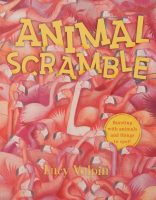
Animal Scramble
Lucy Volpin
Templar Publishing

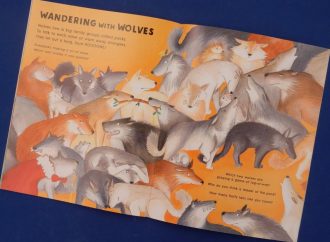
Whether it’s counting the curly haired among the crowd of camels in the camp, or searching for the five different fruits in the clutches of the acrobatic apes, youngsters will surely enjoy honing their observation skills as they peruse each and every one of Lucy Volpin’s, wonderfully droll, enormously engaging animal scenes created with coloured pencils.

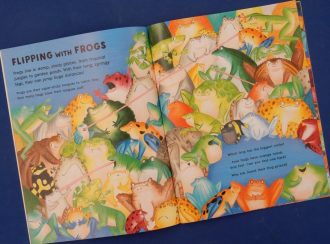
Each of the spreads has an alliterative title and presents an immersive display of animals, (either large or small) that provides such fun possibilities as ‘Playing with Penguins’, ‘Building with Beetles’ ‘Flipping with Frogs’ – my favourite I think,

or, ‘Swimming with Sharks’ – perhaps not!

There’s an introductory factual paragraph and on the opposite page some thought-provoking questions that invite readers to search for objects – a square fish for instance, count, or perhaps ponder upon their own opinions in relation to say ‘which hairstyle would you like?’ on the ‘Acrobatics with Apes’ spread; or “Who do you think is leader of the pack?’ from this one …

Playfulness abounds throughout and the book concludes with a handful of additional questions to consider.

Assuredly a spotting book that merits revisiting over and over, and one that offers an absolute wealth of language potential if a small group of children look at it together.

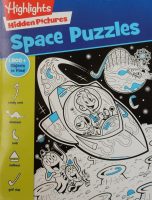
Space Puzzles
Highlights for Children

In this bumper book of more than 100 cosmological settings, children have to search for over 1800 objects hidden in scenes ranging from a space race to an alien encounter, and a trip on a space scooter to a classroom in orbit.

Each puzzle page contains all manner of likely and unlikely items hidden in plain sight for the eagle-eyed to find, each of which has a visual prompt in the surrounding border. (Answers supplied at the back of the book in case you’re stuck.)

In these black and white puzzles there are moonstruck bears, aliens visiting a drive-in restaurant, a host of animal star gazers and a stellar souvenir shop to stop off at in the space museum to name just a few.

Hours of immersive enjoyment, especially for space lovers (that’s an awful lot of children) who will have fun sharpening their observation skills as well as their concentration: just what’s needed during holidays when you can’t get outdoors.

A Trio of Activity Books

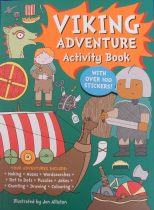
Viking Adventure Activity Book
illustrated by Jen Alliston
Button Books

The latest in the series of Button Books unobtrusively educational, history activity books, illustrated by Jen Alliston, has a Viking theme.  If you have a child in the lower part of KS2 this may be part of their history curriculum. Whether or not this is so, books such as this are a particular boon in these days when many youngsters are not at school full time, if at all; and the activities and illustrations in this particular book are more appropriate for a younger (under 8) audience anyway.

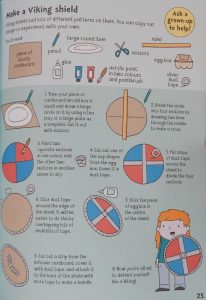
It’s packed with a wide range of over 70 Viking related, fun things to do such as making a Viking helmet, beard and shield,

baking some cupcakes to decorate with Viking runes, and using maths to work out your Viking name. There are plenty of puzzles, mazes, counting, matching, anagrams, codes, jokes and more.

Also included are four pages of stickers.

All in all this will engage and entertain youngsters who, along with some Viking learning, will also hone their observational and fine motor skills.

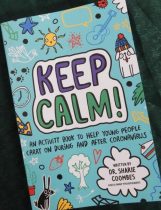
Keep Calm!
Studio Press
Dr. Sharie Coombes, illustrated by Katie Abey & Ellie O’Shea

Aimed at primary age children, this is an activity book written by Sharie Coombes an educationalist and psychotherapy expert, that aims to help youngsters stay calm and cope with uncertainty during, and following, the Covid-19 pandemic.

There are a variety of creative ideas to help with the emotional roller-coaster we’re all sharing, including drawing, writing, and crafty activities.

There’s also mindfulness, calming breathing techniques and yoga (I know from experience they work).

The final few pages comprise tips for parents and carers on self-care and managing children’s emotions.
This little book could well be a boon during these tricky times.

For the same age range, to help combat boredom, especially if your child is stuck indoors, is:

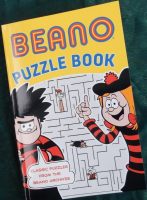
Beano Puzzle Book
Studio Press

Dennis, Gnasher and Minnie the Minx have dug into the 1990-1994 Beano archives and unearthed a host of fun things such as word searches and other word games, mazes, drawing, comics and maths challenges that will help turn young users into word WHIZZ-ARDS and number GNASH-ERS.

Nothing required other than a pencil (or 2) and a switched on brain.

Only a Tree Knows How To Be a Tree/ We’re Going on a Bear Hunt: Let’s Discover Changing Seasons

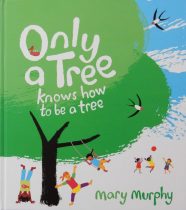
Only a Tree Knows How to Be a Tree
Mary Murphy
Otter-Barry Books

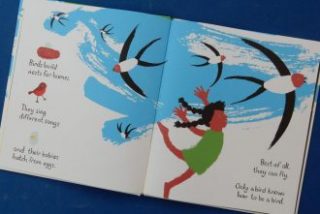
There are SO many things about a tree to appreciate and take delight in. First and foremost is its inherent and unique beauty, but it also provides shelter for all manner of insects, birds,

and other small animals, for as the author says ‘Only a Tree knows / how to be a tree.’

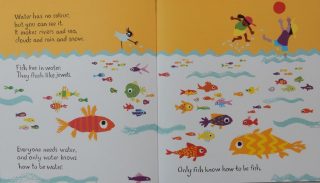
In similar enthusiastic fashion, Mary talks of and celebrates other things in the natural world – birds, dogs, water with its plethora of fish,

Earth whereon all the things mentioned have their homes, but also for its turning that brings both night and day, and the seasons; and there’s the universe with its multitude of planets … “But Earth is our home / and only Earth knows how to be Earth.’

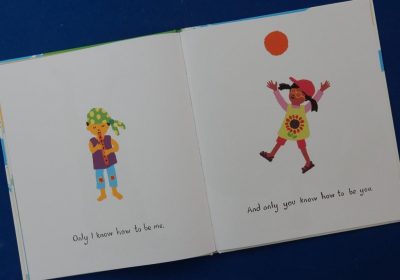
There are people too of all kinds to celebrate every one special and different: these are represented by a host of joyful children

playing, talking, pretending, one even meditates. Indeed children feature in all but one spread. I love Mary’s inclusive, brightly hued, detailed pictures of them all. These alone offer plenty to look at, enjoy and talk about.

Nothing is too insignificant to celebrate here from the tiniest creature to the entire universe. Share, pause, reflect and feel awe.

We’re Going on a Bear Hunt: Let’s Discover Changing Seasons
illustrations by Max Williams/ Bear Hunt Films Ltd. Susanna Chapman
Walker Entertainment

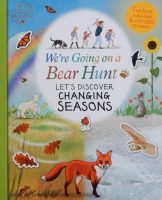
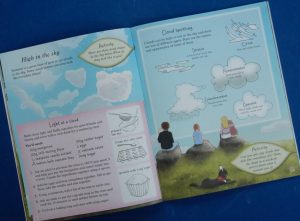
No matter the weather or the season, youngsters will find something of interest in this interactive seasonal guide. There are a number of weather related investigations some of which can be done at home, others will involve going out doors. You might make your own rain gauge; or perhaps find a good spot for some cloud spotting.

On a clear wintry night, what about some moon spotting or looking at the stars? Or on a fine spring day, why not take the opportunity to get outside and look for signs of new life – there might be baby animals around.

Then once back indoors you can adorn a field with spring flowers using some of the stickers provided at the back of the book.

There are also seasonal recipes, crafts and I particularly like the idea of ‘Go green lucky dip’ where you can use the discs provided but also add you own counters.

With plenty of fun, learning opportunities, certainly this is a sticker activity book and much more.

Getting Ready for Spring / Make and Bake

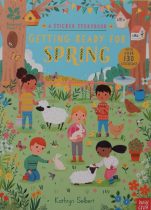
Getting Ready for Spring
Kathryn Selbert
Nosy Crow

I’ve no doubt that we’re all looking forward to the arrival of spring. I’ve already seen snowdrops and the occasional primrose but have yet to spot any baby deer like those shown in this sticker storybook created in collaboration with the National Trust; and, inevitably already as I write, the supermarket shelves are stacked with hot cross buns and other Easter fare.

Herein we see a family picnicking beside a lake, children decorating Easter eggs, birds being fed in a garden, spring cleaning on a rainy April day.

There are more preparations for Easter, a family visit to a farm, the children bake Easter treats with Grandma and when the festival day arrives there’s an egg hunt and an Easter parade.

The final pages comprise a ‘Can you spot?’ feature with over 30 items to find in the preceding spreads, and 3 pages of stickers to add to the named pages.

Seasonal fun to engage little ones and there’s plenty of interest to discuss on each of Kathryn Selbert’s main spreads.

If your opportunities to get outside with youngsters are limited in this unpredictable weather, then this book will help them anticipate the delights of what is to come in the next two or three months.

Also useful on days when the weather tends to keep youngsters inside is:

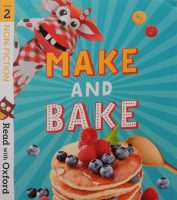
Make and Bake
illustrated by various artists
Oxford University Press

This is part of the OUP ‘Read with Oxford’ series that uses ‘step-by-step’ stages and is phonic based. Many readers of my blog will know that I’m anything but a fan of the approach to reading that underlies this way of learning to read. However, this non-fiction title offers six fun activities for those in the early stages of becoming readers.

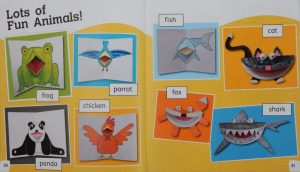
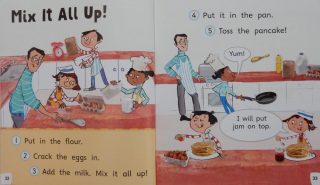
Young children can, guided by the six sections make frog cards (and paper plate animals that could become puppets – children can think up their own animals too);

enjoy some pancake making (with an adult); create a sock goblin hand puppet; find out something about growing foods you might eat on a picnic; discover how to grow strawberries and eventually make ‘Strawberry Mess’ and enjoy eating same; the final part, ‘Snack Attack’ is about what constitutes a healthy snack. Readers follow two characters who visit a market and on their return, make the snacks using what they bought.

Also included are simple activities such as matching animal pictures with their names; sequencing instructions, sorting, unjumbling letter sequences to make food words and a word search. A mix of photographs and illustrations by various artists

help make everything clear.

Puzzles and More

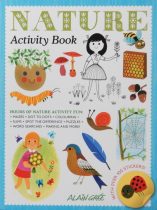
Nature Activity Book
Alain Grée
Button Books

The natural world is Alain Grée’s theme for his latest activity book suitable for those from about 5. There’s also a seasonal element: the things to do relate to spring, summer, autumn and winter.

With mazes, dot-to-dots, spot the difference, jokes, scrambled word puzzles, things to count and match, simple maths, things to colour, life cycles and more, there are hours of fun learning to be had from this compilation. Another thing – most little ones love using stickers and there are 4 pages of them included that are part and parcel of some of the activities.

There’s fun learning aplenty here. If you can’t get outdoors into the real natural world on these dark days then try this in the meantime.

For slightly older users are these two:

Jumbo Pad of Word Puzzles
Highlights

Youngsters from around 6/7 can have lots of fun and exercise their brains with the 120 plus puzzles in this bumper pad.

Contained therein are crosswords, codes, word searches, hidden words to discover, riddle Sudoku and mixed-up hidden pictures. Answers to all the puzzles are supplied on the back of the pages, which, with the pad’s tablet format, are easily removed.

Guaranteed hours of screen free fun from this and not just for the owner: family and friends can join in the puzzling too.

Word Search Puzzles for Your Backpack
Eric Berlin
Sterling

From camping to crafts, and summer time to sweet things, there’s a word search and more to suit the interest of any young reader among the 58 included in New York Times crossword compiler, Eric Berlin’s new puzzle book.
Some of the puzzles aren’t entirely straightforward however: the compiler has thrown in what he calls some ‘curve balls’ such as ‘Opposite Day’ where the words to find are the opposites of those given in the list below the puzzle.
That’s not all though: for every search there’s a hidden message related to its theme that is made from the letters not circled.
There’s some pretty funky stuff between the covers of this little book. It’s just right for tucking into your bag or snuggling under a blanket on the sofa with – with your favourite hot drink and of course, a pencil to hand.

The Magical Underwater Activity Book / Roman Adventure Activity Book

The Magical Underwater Activity Book
Mia Underwood
Button Books

Following on from her Secret Woodland Activity Book, Mia Underwood has created another exciting volume that combines fantasy and reality – merpeople and microplastics. It starts with an invitation from the sea creatures to become an ‘ocean hero’ and help save the planet.

On the reality front, there are such diverse activities as meeting microscopic creatures like phytoplankton and zooplankton (their roles are explained),

and finding out some things to do that will help our planet.

There’s a challenge to design an ocean-cleaning gadget; maths and language challenges; ideas for lunch box snacks to prepare, crafty things to make, ideas for getting creative with pens or crayons and scissors, and much more.

There are also four pages of stickers to use in some of the scenes.

Guaranteed hours of engagement of the enjoyable and gently educational kind; just the thing for some screen free, dark evenings.

Roman Adventure Activity Book
illustrated by Jen Alliston
Button Books

Youngsters can find out about the world of Ancient Rome as they engage in the wealth of fun activities between the covers of this book. There are such diverse ideas as making a Roman bracelet (not the solid gold kind popular in Roman times)

and discovering some of the remedies ancient Romans used for common ailments: I reckon consuming raw egg yolks would increase my digestive problems rather than curing an upset tummy; and imagine being told to kiss the nose of a mule to cure a cold. No way!

Puzzles – both word and maths, codes, mazes, spot the difference pages, colouring, search and find, and crafty things to make such as a gladiator shield. You can even, with adult help, bake some libum (a special bread made as an offering to the household gods).

Skills of several kinds are developed while engaging in these activities and there are pages of stickers to use along the way. Almost without exception, the Romans depicted in Jen Alliston’s illustrations look like children but I guess that’s part of the allure for young users.

Draw Here

Draw Here
Hervé Tullet
Chronicle Books

Full on fun as only Tullet can offer comes in the form of this brilliantly dotty activity book.

On the inside front cover is a flap of die-cut holes of various sizes folded over onto a set of patterns. This is followed by around 140 pages to adorn as per the author’s instructions; but let me make it clear, there’s plenty of scope for interpretation and creativity.

The two opening spreads are blank and thereafter users are presented with some pages littered with dots, some have relatively few or a single dot, while others have squiggly shapes, circles or a mix of dots and other shapes in Tullet’s signature primary colours.

The user is then invited to add more dots, adorn the dots in various ways,

colour carefully inside lines, add dots to loops, loop around dots, complete circles, connect dots related by colour, find a path across an entire spread without touching a single dot. Then what about creating some fruit, fish, cars, trees, flowers or people using dots as starting points.

Both fine motor skills and imaginations are stretched during the course of the pages and I can see a child getting carried away with this. All that’s needed is a few pens, pencils or crayons and a young mind ready for hours of creative pleasure.

Perfect for screen free entertainment, especially on rainy days or during holidays.

A Clutch of Activity and Craft Books

Scratch and Learn: Space
illustrated by Victoria Fernández
Scratch and Learn: Animals
illustrated by Natasha Durley
Wide Eyed Editions

These are new additions to the series, both of which have seven interactive spreads and an attached stylus for young readers to do the scratching.

Each spread explores a different theme and in the Space title, these start with the Big Bang and the scratching reveals 10 galaxies. Then come a look at the solar system, the Moon, ‘Spacecraft’, which has the Space Shuttle as a featured image, a peep at life on board the International Space Station, an account of the life cycle of a star, and finally, a constellation map.

Spencer investigating the map

There are 10 ‘scratch and discover’ shapes to investigate with the stylus on every spread as well as a lead-in, easy to understand, factual paragraph (or two), clearly labelled objects and an additional ‘fact’ most in speech bubble form, for example ‘The light from the closest star still takes 4 years to reach us.’

The Animals featured in the second book come from different habitats around the world and as in the previous title, Lucy Brownridge supplies the succinct text.

Ten animals have ‘hidden’ themselves in each of Natasha Durley’s alluringly illustrated locations: the Amazon rainforest, the Great Barrier Reef, the Sundarbans Mangrove forest, (between India and Bangladesh), the grasslands of the African Savannah, a coniferous forest of northern Canada, the arid Gobi Desert and Antarctica.

Both titles are appealing early interactive books that can be brought out anywhere especially on a journey or a rainy day.

The Mermaid Craft Book
Laura Minter and Tia Williams
GMC Publications

Prolific craft book creators, Laura and Tia have added a new title to their series, this time with a mermaid theme.
It’s filled with ideas for making things to use, things to wear and tasty things to eat.

Having provided a list of what is needed, the authors give step-by-step instructions for such diverse projects as creating a seashore garden, making aquarium puppets and a theatre to use with them,

and you can even bake a mermaid cake or throw an ‘under-the-sea’ party serving only sea themed food and serve up that cake then. Young merpeople will love it.

Youngsters will also be enthusiastic about the book as a whole though they’ll require adult support with several of the activities.

Ancient Egypt Adventure Activity Book
illustrated by Jen Alliston
Button Books

Historical fun aplenty Ancient Egyptian style is found in this activity book.

Little ones can immerse themselves in the world of mummies, pyramids, pharaohs, hieroglyphics and ancient gods as they engage in mask making, maze manoeuvring, maths, message decoding, crafty creations, unscramble muddled up words and more. There are more than 100 activities in all as well as 4 pages of stickers to use to complete some of the scenes.

While engaging in these activities youngsters will likely learn some Ancient Egypt related language and facts too, as well as developing their fine motor and observational skills.

Jen Alliston has provided the illustrations and where relevant, answers are provided at the back of the book.

A Handful of Activity Books

My RSPB Sticker Activity Book: Seaside
Stephanie Fizer Coleman
Walker Books

If you pay a visit to the seaside, no matter where you look there are fascinating flora and fauna to discover, be that in rock pools, in the grassy dunes that are a-buzz with insects, down on the shore, beneath the ocean waves or on the cliffs where seabirds nest. If you look in the shallows you might spy a seahorse or perhaps you’ll be lucky enough to spot a seal resting on a rock or a dolphin leaping from the waves.

All these and more are part and parcel of this activity book that includes items to colour, dot-to-dots, things to spot, matching, drawing and several pages for adding stickers to. Stephanie Fizer Coleman has created ten inviting, textured scenes for little ones to adorn as well as the four central pages of colourful stickers.

Before heading for the coast with a young child, this would make a worthwhile, enjoyable book to introduce some of the things they might look out for.

My First Amazing Animal Mazes
Various illustrators
Highlights

For the youngest of puzzlers, this book contains over 35 mazes with such diverse settings as a farm, a bamboo forest, an ocean and a safari waterhole. There are different kinds of mazes including one composed of letters called Jellyfish Jumble; another is a downhill slalom. There are also string mazes, pattern mazes and traditional mazes to keep your little ones engaged at odd moments or times when they can’t venture outside, or need something to quieten them down.

A greater variety of puzzles is to be found in

Jumbo Pad of Picture Puzzles
Various illustrators
Highlights

This one will keep young puzzlers busy for a fair few hours as they use their hands, eyes and mind to spot differences, locate objects hidden in scenes such as a gymnasium populated by cats and a park full of children playing, search for matching pairs, engage in word puzzles, try memory challenges, choose missing puzzle pieces, solve mazes and more.
The large variety of illustrative styles and things to do should guarantee boredom doesn’t set in; and just in case youngsters are unable to solve a puzzle, all the solutions are provided.
A boon on a dull day as is …

Ultimate Puzzle Challenge!
Highlights

This one is bursting with word searches, codes to solve, Sudoku, busy scenes with items hiding in plain sight to locate, a plethora of word puzzles such as rhyming pairs, spiral word puzzles, crisscrosses, logic puzzles, find the differences, tricky mazes and more.
If this large book of 125+ puzzles doesn’t engage and absorb young puzzlers, then they don’t deserve to call themselves such.

So, pencils ready, set, puzzle …

Claude: Anyone for Strawberries? / Claude:Ever-So-Summery Sticker Book

Claude: Anyone for Strawberries?
Alex T.Smith
Hodder Children’s Books

This is another is the delectably funny Claude stories spawned by the Claude TV Show and it’s perfect summer reading.

It’s a Tuesday in Pawhaven, but one that starts badly for our friends Claude and Sir Bobblysock who have been eagerly anticipating “Strawberries-for-Breakfast day”.

Off they dash to Denzel’s fruit-and-veg van, but disaster! When they arrive Denzel informs them that on account to the Pawhaven Tennis Championships, all the strawberries are already sold.

The friends head to the park, and as they arrive a tennis ball hurtles out of the sky directly towards Sir Bobblysock.

In a flash Claude leaps skyward, catching the ball in his beret, mightily impressing his pal.

Meanwhile the semi-final has ground to a halt. Movie star, Errol Heart-Throb, is refusing to continue without his lucky ball.
Needless to say he’s thrilled to have it handed back by Claude. Before you can say “strawberries’ Claude has landed himself a job as official match ball boy.

You can guess where Sir B. heads off to, hardly able to contain his excitement at the prospect. However, once again his anticipated strawberry feast is thwarted.

In the meantime, Errol has been declared the winner of the semi-final but it appears that vanity will stop the now ruffled-looking victor from playing in the final.

Claude is to take his place and is more than willing when he learns what the prize is …

There’s a slight snag though – the other finalist is Kimberley and she has a somewhat over-sized racket.

It’s a tense match, but who will be the winner? I wonder …

As with all the Claude stories, this is a smasher.

Game, set and match to Alex T.Smith and the TV series for another winning episode served up with bowls full of summery deliciousness. Hard luck if you happen like this reviewer, to be allergic to those small fruity berries Claude and Sir Bobblysock love so much. In which case, just get the book and pass on the strawberries.

If that’s not enough for your young Claude enthusiasts then also based on the Sixteen South TV show is:

Claude: Ever-So-Summery Sticker Book
Hodder Children’s Books

Set on Pawhaven beach it’s full of seasonal silliness, Claude and Sir Bobblysock style.
There are lots of activities to test your little ones’ visual skills, pages to adorn with sandcastles (and some of the 250 stickers that make up the centre pages); a maze to navigate; a picnic to share with the two favourite characters and more.

Gilly the Giraffe Self-Esteem Activity Book

Gilly the Giraffe Self-Esteem Activity Book
Dr Karen Treisman, illustrated by Sarah Peacock
Jessica Kingsley Publishers

This large format paperback is both a therapeutic story and a creative activity book for primary aged children, developed by specialist clinical psychologist, Dr Karen Treisman.

It begins with a story about Gilly the Giraffe to be shared with children. Gilly has much in her world to be happy about but she struggles with self-confidence on account of her height, her long black tongue and her colourful mosaic patches; and worse, some of the other animals make unkind remarks about these aspects of her appearance.

However, thanks to kindly Loren the lioness pointing out that being different makes Gilly exciting, beautiful and cool;

it’s all a matter of how you look at something. “We’re all precious and deserve to be appreciated.” So says Loren and thereafter not only Gilly but her classmates start to become more appreciative about one another.

A great confidence-boosting tale after which might come discussions on some of the story’s key themes.

Thereafter the book offers a wealth of creative ideas through which these themes can be further explored. These are divided into two parts, the first being ‘fun activities and crafts with Gilly’ and comprises such things as mindful colouring, a word search, a quiz, questions to consider, a ‘make your own Gilly the Giraffe, a wonderful positivity wordlist, a positivity acronym using a person’s name(s) and more.

Part 2 contains over 25 further suggestions (that can be used in school or at home) for boosting self-esteem, confidence, positive thinking and self-belief,

each of which is clearly explained and where appropriate, space is provided in the book for writing, drawing or whatever is apt by way of a response.

With its integrated approach, this book is ideal for using in PSHE sessions and concludes with an excellent explanatory guide for adults; much of what is said herein, especially in the ‘practical strategies, tips and ways of being for building self-esteem’ should be read and acted upon by all who have dealings with children in whatever context.

Wearing my teacher/consultant hat, I whole-heartedly recommend this book.

What On Earth? Birds / Do Sharks Glow in the Dark?/ Do Tigers Stay Up Late?


What On Earth? Birds

Mike Unwin and Pau Morgan
QED

Natural history writer Mike Unwin and illustrator Pau Morgan turn their attention to birds for the latest book in this excellent What On Earth? series.

In its usual way it’s packed with information and practical ideas that include things to make and do including the occasional experiment, all presented in a highly visual manner with every spread using the space alluringly in a manner somewhat akin to a comic.

As well as bird facts there are poems (Tennyson’s The Eagle and Lear’s There was an old man with a beard’) along with an invitation to readers to write a bird poem of their own. On the literary side too is ‘The king of the birds’ a story based on an old Celtic folk tale, which might also inspire story writing by readers.

You may want to try dancing like a bird;

or perhaps get outdoors and listen to some birdsong, even catching the dawn chorus if you’re up early enough.

The book is divided into four sections: What is a bird?; Bird food; Bird life and behaviour and Enjoying birds, and very page turn brings something to excite, or fascinate young readers.

Offering a great way to discover things avian in all kinds of interesting ways, the book concludes with a glossary and an index.

Do Sharks Glow in the Dark?
Do Tigers Stay Up Late?

Mary Kay Carson
Sterling

Splendid photographs and sequences of facts in response to a series of introductory questions – one per page (or occasionally spread) – present the essentials relating to two very different, but both predatory, animals.

No, sharks do not have bones; their skeletons are cartilaginous (a fact I remember well from my early days of studying zoology); and they have both skin and scales. Did you know people once used dried sharkskin as sandpaper? Or that adult sharks ‘don’t do the parenting thing’? Rather shark pups look after themselves.

And contrary to popular belief, only around six humans are killed by sharks in a year.

So it is with tigers: these creatures tend to avoid humans, their towns and farms, although it’s humans that are responsible for tigers being endangered with less than 4,000 roaming wild now, more than half their number being found in India.

I was fascinated to read that no two tigers have identical skin stripes, that a tiger’s skin is striped as well as its fur, and that tigers can swim for miles.

Unsurprisingly tigers don’t purr, growling, grunting and roaring are their ways of communicating.

Both books offer a fun and easy way to get to know something about two of the world’s most iconic creatures; and each has as part of the back matter, information about helping to protect the animals in question, some useful related vocabulary and an index.

The Unworry Book

The Unworry Book
Alice James and Stephen Montcrieff
Usborne

Enormously reassuring and full of practical ideas for managing stress is this alluringly presented book written by Alice James, with expert advice from clinical psychologist, Dr Angharad Ridkin, and designed and illustrated by Stephen Montcrieff.

Having explained that we all worry from time to time and why, the book devotes the next few spreads to working out how you really feel – worried, excited, or nervous perhaps? It’s really beneficial to become emotionally aware (an emotional map is included to help) and know the kinds of things you can do to alleviate your worries.

Next comes the wealth of coping suggestions, many of which are designed to develop mindfulness. Most require nothing more than a pencil or pen like those on ‘Peaceful pencils’ which takes a multi-sensory approach -listen to the sounds of the writing implement brushing across the paper; ‘notice the glistening wet ink … or grain of the paper as your pencil draws across it’; smell – the book’s pages, the wood of your pencil or ink of your pen; feel the pencil’s ridges, or barrel of the pen; feel the textures of the page and how it seems?

What about making a decorated worry box – an example is included here – I love the idea of it being a creature that can eat up worries.

It’s impossible in the space of a fairly short review to include all the excellent strategies offered so I’ll just mention a few. There are pages highlighting the importance of breathing and laughing (both are yoga techniques) to help cope with excess adrenalin, as well as a spread with an amorphous creature demonstrating a sun salutation.

A couple of ‘arty’ ones are tearing up paper (preferably rubbish) and using it to be creative; creating peaceful patterns being mindful of the shapes and how the space is filled. And doodling is a great stress reliever – how many of us doodle our way through stressful meetings I wonder?
It’s well accepted now that being physically active is good for our mental well-being; it releases those mood-boosting, feel good endorphins so get moving.

There’s a focus on language too – some starting lines for limericks (great fun) an instant giggle inducer I think; a focus on the physicality of writing various words in different ways; a (behind the door) story starter; as well as a host of brain puzzles.

Another smashing idea is a ‘fiddle star’ – the making of which is a worry distractor,

as is the finished article.

Getting off to sleep tips form the final pages; while in conclusion are a ‘helping hand’ and a ‘who to/where to go’ for times when worries become overwhelming (including a link to the publisher’s website).

Stress among children – even very young ones is on the increase – I refrain from elaborating on the negative effects of the current ‘numbers before children’ education system, though it is a huge stress-inducing factor. There are others of course and a veritable gold mine such as this book is invaluable for both youngsters and those who live or work with children.

Beetles, Butterflies and other British Minibeasts / Look and Say: What You See at the Seaside / Queen Victoria

Beetles, Butterflies and other British Minibeasts
Nikki Dyson
Nosy Crow & the National Trust

In all my time teaching under 7s, I’ve probably never come across a child, however lively or challenging who, when outside (or sometimes in) failed to become engrossed in watching such minibeasts as woodlice, ants, ladybird larva or caterpillars.

This beautifully illustrated Nature Sticker book takes users to several locations where minibeasts are likely to abound: the vegetable patch – several, but not all of the minibeasts therein are likely to be pests.

Anything but pests are bees, hugely important garden visitors that have a vital role in pollination, as do some butterflies like the beauties shown herein.

The shed is a likely place to find spiders and their webs in abundance as well as daddy-long-legs and perhaps other less desirable kinds of flies.
You’ll probably hear grasshoppers and crickets before you see them as they’re often camouflaged in the long grass they like to frequent.
Tree trunks like this one are good spots for discovering and observing beetles.

What better time that now to get outside, look for small creatures and then come back and enjoy hours of learning and fun with this beautifully illustrated book?

Look and Say: What You See at the Seaside
Sebastien Braun
Nosy Crow & the National Trust

Whether you’re building sandcastles at the water’s edge, swimming in the sea, looking at the boats in the harbour, walking on the cliffs, rock-pooling, fishing, exploring the estuary, strolling on the sand-dunes, or perhaps diving down beneath the waves, there’s always plenty of interesting things to see. when you visit the seaside.

This is what Sebastien Braun shows in his engaging scenes of the various locations, each of which has an introductory sentence and another pointing out a particular feature of note. At the bottom of each spread is a row of named objects to find in the large illustration and say together, if sharing the book as intended with an adult (or older child).

A fun way to develop vocabulary and observational skills with little ones.

Queen Victoria
Illustrated by Nina Cosford
Puffin / V&A

Readers with an interest in the past will enjoy this mini-hardback book that looks at the life of Victoria and her legacy.
It tells how, when the young Victoria became queen she was determined to break free from the controlling influences of her mother and her courtiers and rule Britain on her own, even if she didn’t always get things right. It was against royal protocol for her cousin Albert, with whom she fell in love, to propose marriage to her; instead she did the honours and was accepted.

As well as information about the Queen, there are spreads about the industrial revolution; the Great Exhibition at the Crystal Palace, the royal couple’s work in support of the arts and science,

their interest in the latest technological developments as well as Albert’s popularising of the Christmas tree and Victoria’s golden and diamond jubilees.

Illustrated with a mix of photographs and finely detailed illustrations by Nina Cosford this is one to add to primary school classroom shelves, or for young readers wanting an introduction to a fascinating period of great change.

Non-Fiction Miscellany: Ambulance Ambulance / Weird Animals / Castle Adventure Activity Book

Ambulance Ambulance
Sally Sutton and Brian Lovelock
Walker Books

An ambulance crew responds to an emergency call out: a boy has come off his bike and ‘Nee nar nee nar nee nar nee nar …’ off goes the ambulance to the scene of the accident.

On arrival the paramedics make the necessary checks, put a splint on the child’s broken leg and carefully lift him onto a stretcher and into the ambulance.

Then with horn honking and lights flashing, off they go racing to the hospital, “Quick, quick quick. ‘Nee nar nee nar nee nar nee nar … ‘

Once the boy is safely inside and the hand-over complete, the crew are ready for a rest, but it’s not long before another emergency call comes and so off they go again …

Team Sally and Brian are already well known for their previous picture books such as Roadworks and Construction. Non-fiction loving little ones delight in these books and will doubtless relish this one with its bright illustrations, especially since its rhyming text comes with opportunities for joining in all those ‘Nee nar’ sounds. Share at home or in a nursery setting and watch the response …

Weird Animals
Mary Kay Carson
Sterling Children’s Books

The world of nature is full of strange and wonderful creatures, large and small, a dozen or so of which are featured in Mary May Carson’s Weird Animals. The author specialises in writing non-fiction for children and those with an insatiable appetite for the fantastically weird will enjoy her latest book.

It explains the whys and wherefores of some amazing adaptations, those odd characteristics that help these creatures survive and thrive.

Take for example the Pink Fairy armadillo with its oversized feet and fluffy underside that helps keep the creature warm through cold desert nights.

The frightening-looking fauna from different parts of the world include insects, reptiles, birds, fish, mammals, with explanations for their appearance. Weird and wonderful they surely are.

Castle Adventure Activity Book
Jen Alliston
Button Books

Children should find lots to explore in this engaging historical activity book. There are mazes, matching games, word searches, colouring pages that include things to spot of a medieval kind. Observation skills are also required for matching games, determining the winner of a joust, searching for rats in the castle kitchen and more.

There are medieval scenes to complete by drawing and adding stickers as well as a number of crafty projects. Some, such as making a sword or a conical hat for a princess, require additional items – paper, card, scissors etc. and may also need adult assistance.

Some simple maths, words to unscramble and a scattering of jokes are also part and parcel of this themed compilation that’s a fun alternative to constant screen use.

The Secret Woodland Activity Book

The Secret Woodland Activity Book
Mia Underwood
Button Books

A wealth of activities await those who foray into the magical world created by Mia Underwood.

Creatures of all shapes and sizes inhabit this Scandinavian-style woodland: numbering among them are Stardust (snail), Hopper (a bird) and Nisse (a bearded sprite). There are also a forest spirit (an invisible magical being with a protective role), trolls, minibeasts, owls, bears, foxes, an occasional baby dragon; you might even come upon a unicorn or a yeti.

These feature in such activities as mazes, story writing, maths, word searches,

mobile making; there’s also a recipe to make bird feed balls and lots of opportunities for imaginative thinking.

Wonderfully quirky and engaging, this 64-page book includes a plethora of stickers to add to some of the woodland scenes.

With the darker nights upon us, and holidays fast approaching, it’s a super way to distract youngsters from their screens for a while.

DIY Circus Lab for kids

DIY Circus Lab for kids
Jackie Leigh Davis
Quarry Books

Did you know that this year is the 250th anniversary of circus in the UK; I certainly didn’t although I live in an area of Gloucestershire that regularly hosts the wonderful Giffords Circus.

This book is written by mime artist, educator, teacher and founding member of the American Youth Circus Organisation, Jackie Leigh Davis, who provides an absolute wealth of circus skills for children; and she makes it clear in her preface that circus sees all colours, all kinds of bodies: it’s inclusive, it’s for everyone. I like that.
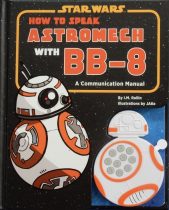
Readers are given an overview of the various circus skills: Acrobatics, acrobalance and pyramids, Aerial arts, (for safety reasons, this are not covered in the book), Balance arts, Clowning, Gyroscopic juggling and Toss juggling.

This is followed by a ‘What’s in this book?’ spread that begins with the words, ‘This book empowers you to take your first steps in circus.’ I like that too. Herein are included some wise words on safety, a crucial element, and it also includes a ‘Proceed at your own risk’ disclaimer.

Next come the individual units wherein as well as instructions for learning the skills, Poi for instance,

readers are invited to make their own circus props such as hoops, juggling sticks and balls, poi, stilts and clown hats and nose; T-shirts even.

The instructions are always easy to follow and there are photos to help.

While the particular skill under discussion might at a beginners level, the author also includes fascinating historical references,

the positive impact of each skill learned and, where appropriate links to on-line tutorials.

The section entitled Partner Acrobatics and Human pyramids took me to Udaipur, Rajasthan where on Janmasthami, I regularly see some terrifying-looking human pyramids at a cross roads near a famous temple. I was recently interested to read that this year, a high court in Mumbai has banned those under 18 years old participating in this ‘Dahi Handi’ festival as well as banning pyramids above 20 feet high.
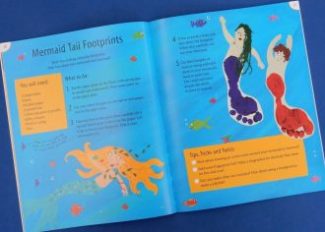
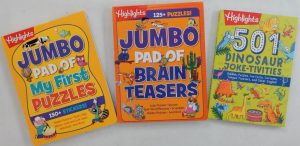
Back to the book, the pyramids taught herein are of an altogether safer type and include vital words on warming up and, crucially, safety, as well as the concise instructions for several pyramid styles. (There’s a whole language of pyramids: I didn’t know that!)

Putting on a show is addressed too and in the final pages are information on additional resources, recommendations for further study and more.

Intended to engender and foster a child’s enthusiasm for circus arts, but in addition think how important skills of balance and co-ordination are for adults as we grow older.

I can even envisage some of the activities being tried with an old folks group.

All in all, this is an excellent book, comprehensive and done superbly: it’s well worth investing in for families, schools and other groups that have an interest in exploring and fostering the circus arts and their potential.

Get Arty: My selfie with Mona Lisa / The Impressionists Japan from Monet to Van Gogh/ Gustav Klimt

My selfie with Mona Lisa
The Impressionists’ Japan from Monet to Van Gogh
Gustav Klimt
Catherine de Duve
Happy Museum

What a fantastic trio of Kate’Art Editions new titles to inspire young potential art enthusiasts all from Catherine de Duve. Herein she provides wonderful opportunities to find out something about famous artists and their awesome creations.

In My selfie with Mona Lisa, Catherine transports readers to the Louvre in Paris, and using a narrative explores what is one of the world’s most famous paintings by Leonardo da Vinci, cleverly interweaving the current obsession with selfies into her story. Filippo Farneti’s illustrations are absolutely amazing and the presentation as a whole superb.

The Impressionists’ Japan looks at the impressionist artists’ fascination with Japanese culture, crafts and art, brought about in part by the opening up once more of the trading links between Japan and Europe. Readers are shown how famous European artists such as Monet, Renoir and Vincent Van Gogh were influenced in their work not only by the culture of Japan, but also by wonderful Japanese artists like Hokusai. Children will most certainly enjoy both finding out about these art styles and famous paintings, and using their own pens or pencils to colour in the black and white outlines of some famous works of art.

Gustav Klimt provides opportunities for youngsters to explore some of Klint’s wonderful works – nine in all exhibited in galleries from different parts of the world – and then to add their own colours to outlines of those iconic paintings.
(The one on p.14 contains nudity, just in case there are parents unsure about their children viewing this.)

Three super, enormously engaging books for your children be it holiday time or not.