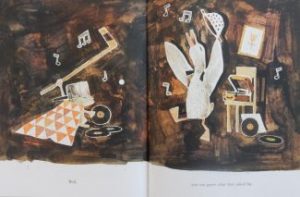
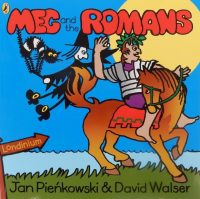
You Can Do Anything (Hip and Hop)

You Can Do Anything (Hip and Hop)
Akala and Sav Akyüz
Oxford University Press

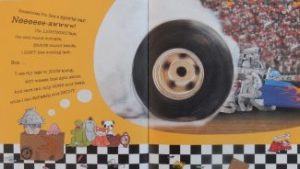
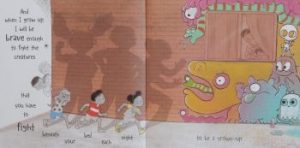
Rhythm, rhyme and repetition, the 3 Rs of reading come together in a book with an important theme from award winning hip hop artist Akala and illustrator Sav Akyüz.
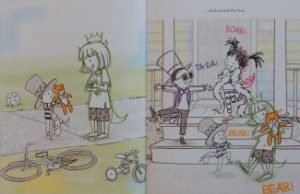
It features in particular pals, Hip the wise, top hat sporting, rapping hippo and his friend, Hop.
Everyone is preparing for the Blueberry Hill bike race.

For Hip and the Cheeky Monkeys, bike riding is a piece of cake; not so for Hop.
You can do anything if you try,
You can do anything, ride or fly.
Don’t let anybody tell you no.
Focus on your dreams and go!

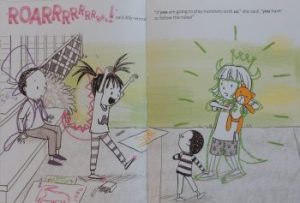
Hip encourages him and Hop desperately wants to learn to ride his bike but can’t stay upright.

Riding a bike is all about balance. / Letting go of your fear is the greatest challenge.” is the advice from the Cheeky Monkeys. But despite all these encouraging words, Hop still keeps falling off. His morale is at rock bottom.
Time for a story from Hip.

Will this be enough to convince his feathered friend that practice, perseverance and determination will eventually pay dividends?
Can Hop become proficient in time for the event and who will emerge as the final winner? What do you think?
Definitely a winning formula from Akala – love his positivity mantra – and Akyüz, whose funky illustrations add street cred to a powerful self-belief message for all young learners.
Let friendship and inner confidence rule. Just focus on your dreams and go.

I’ve signed the charter  

Dino (A pet unlike any other)

Dino (A pet unlike any other)
Diego Vaisberg
Templar Publishing

Recently there’s been a spate of picture books featuring large and unlikely animals as pets.
What makes this one stand out though, is that it’s screen-printed solely in striking red and blue Pantone colours. The author/artist is graphic designer, Diego Vaisberg whose superbly inventive debut picture book this is.
It begins with the arrival of an egg, albeit a pretty large one, about the size to encase a giant canary, a big lizard or even a huge tortoise; but no: out hatches …

Who wouldn’t want to keep such a cute looking little creature?
The trouble though is that the thing doesn’t stay little for long: it keeps on growing and growing and before long, Dino (a pet unlike any other) has become …

Owning a pet of Dino’s dimensions certainly isn’t without challenges whether inside –
or out. He’s certainly a voracious eater …

So be warned, it might be best to steer clear of any other eggs you may come across.
An ultra-stylish offering from Vaisberg, – an exciting illustrator to watch with interest; and a high quality production from Templar.

I’ve signed the charter  

Big Brown Bear’s Cave

Big Brown Bear’s Cave
Yuval Zommer
Templar Publishing

What is more important to you: friends or ‘stuff’? I know which I’d prefer any day.
Could it be though that Yuval Zommer secretly visited our home before writing this story: I certainly wish Big Brown Bear, star of his latest picture book would drop in on our human cave (garage): he’d have a field day surrounded by stuff, stuff and more stuff; and he’d be able to fill his new abode with all manner of goodies.
The ursine collector definitely goes overboard on acquiring creature comforts for his empty cave, so much so that its fame spreads far and wide, attracting the attention of all his pals who are eager to see inside his residence.

Lack of room prevents their entry however, and off they go leaving Big Brown Bear to continue filling the space.
Alone with his boxes, Bear begins to be overwhelmed by lack of wiggle room, so much so that when his three friends return with an invitation, he’s well and truly hemmed in …

Then there’s only one thing to do and our hero does it: wise move, Big Brown Bear.
Zommer’s portrayal of the acquisitive trait, and the accumulative chaos it can cause, is a rib-tickling treat. There’s Bear pondering over the sheer variety of ‘stuff’; and his obvious delight over the selection of his favourites – ‘stuff that came with wheels, stuff that came with handles and stuff that came in boxes.’ He almost looks as though he’s dancing with joy despite the precarious balancing act required to carry that stack of boxes.

This is very much a fable of our time and will, I suspect strike a chord with readers of all ages.

I’ve signed the charter  

Pink Lion

Pink Lion
Jane Porter
Walker Books

Arnold has a dilemma: does he belong down at the waterhole with the flamingos – he’s the same colour and they’ve always made him feel like one of the family; or should be go with the lion pride? He certainly resembles the other lions albeit with a different colour fur, and they insist he should join them in their activities.

He decides to throw in his lot with the lions but quickly discovers that hunting, roaring and other leonine predilections really aren’t his thing. “I’m not a proper lion,” he tells them, “I think I’ll go back to my own family now.
But, a nasty surprise awaits him back home at the waterhole. A crocodile has taken up residence and it doesn’t want to share. That’s when Arnold suddenly summons up his inner roar.

Such is its might that the other lions are soon on the scene and in no time, their combined roars have seen off the intruder once and for all.
Let peachy life resume; in fact it’s even better than ever with some new cousins to share in the fun.

With themes of belonging, family, identity, being yourself and finding your voice, this zappy tale with its superbly expressive, predominantly candyfloss pink and yellow animal images standing out starkly against a white background, offers plenty to enjoy, to ponder upon and to discuss.

I’ve signed the charter  

I am Actually a Penguin

I am Actually a Penguin
Sean Taylor and Kasia Matyjaszek
Templar Publishing

I once had a little girl in one of my reception classes who insisted for the first week that she was a dog, crawling around the place, drinking her milk on all fours, clutching the carton in her ‘paws’ and barking at her classmates. We all played along and soon the novelty wore off.
The small girl narrator of this book is equally cute and equally determined; but having received a penguin suit from her Uncle Pat in Patagonia, she goes into full on, ‘actually a penguin’ mode right away.
This involves all sorts of crazy activities such as festooning the living room with loo paper to create snow in which to keep cool.

Such behaviour definitely doesn’t go down well with a certain older brother although he does approve of the additional penguin at a family wedding …

and is willing to play along at meal times, especially when fish fingers are involved.

All good things do have to come to an end however. Apart from anything else there’s the question of school, not to mention as Dad rightly says, “Your penguin suit needs a wash.
Time for a change perhaps …
Sean Taylor’s zany sense of humour shines through in this narrative providing Kasia Matyjaszek with a hilarious sequence of events to wield her illustrative magic on and she does it brilliantly making every spread a small piece of theatre.

I’ve signed the charter  

Look, Look and Look Again

Where’s the Baby?
Britta Teckentrup
Big Picture Press
Baby animals are the objects of the search in Britta Teckentrup’s latest ‘spotting’ book, which, once again is intended to develop visual perception in the very young.
A rhyming text accompanies each digitally composed spread and the challenge is satisfyingly demanding for youngsters: I had to search for a while to locate the gosling on the pond.
With their matt colours and wallpaper style patterns, the artist’s visuals really demand that you look closely savouring the pleasing design of each one be it the vibrant parrots,

the farmyard hens, the kangaroos, the zebras or the seahorses to name just some of the fourteen creatures featured.
The final challenge in the book is different asking, ‘can you see the mother/ whose babies are TWINS?’
Alluring, absorbing and enjoyable.

Have You Seen My Lunch Box?
Steve Light
Walker Books
Morning chaos reigns as a small boy gets ready for school: the clock is ticking but he wants help locating all the things he needs: his socks, his pencil case, a crayon, his book,

a ball, marbles and particularly important, his lunch box. Mum and Dad are on hand to hunt but essentially it’s down to the reader to save the day and ensure he boards the bus on time.
The text, delivered as a first person narrative, appears on each verso, set against the same colour as the missing item to be located on the recto among the plethora of items inked in detail against a predominantly white background. This pattern continues throughout until the last object is safely in the hands of its owner. The final page shows all eight things.
Essentially this is a game for adult and toddler to play together: there’s plenty to talk about in addition to those misplaced items, and that’s in the hands of the adult sharer; in fact every spread is a possible starting point for some adult/child storying.

Double Take!
Susan Hood and Jay Fleck,
Walker Books
We’re in the company of a little boy, his cat and a friendly elephant being asked not to take things at first sight. Assuredly, we’re told, some opposites – in/out, asleep/ awake for instance, are pretty straightforward, albeit orchestrated herein; but others are totally dependent on one’s frame of reference.

Subtitled ‘A New Look at Opposites’ and published under the imprint Walker Studio, this rhyming invitation certainly demands that readers think about opposites with regard to perspective.

I’ve signed the charter  

I Love You / The Chalk Rainbow

I Love You
Xiao Mao and Tang Yun
New Frontier Publishing
The complete title of this warm-hearted picture book is Ti amo, Ich liebe dich, Wo ai ni, Te quiero, Je t’aime. It tells how a pupil in Ms Giraffe’s class learns her teacher’s favourite words. Ms Giraffe writes them on the whiteboard one morning and asks her pupils what they might mean.

Little Badger’s response is just what she was hoping for: “when you say it out loud, the most wonderful things can happen,” she tells her.
Like all enthusiastic learners, Little Badger practises her new vocabulary, addressing the school, plants,

the weather, a bird, her home and practically everything in it, even a new pair of pants, and most importantly, her Mum and Dad.
It’s a wonderful way of showing young children how much pleasure they can get from showing and sharing love, and by appreciating what they have. Little Badger is one cute character and she gets this straightaway, as well as the fact that to make new words your own you need to use them often. All this is shown in Tang Yun’s wonderfully whimsical scenes wherein perspective is employed to great effect.

The Chalk Rainbow
Deborah Kelly and Gwynneth Jones
EK Books
Teachers and other professionals who work with children who have ASD constantly have to think outside the box. So it is here with Zane’s elder sister.
Young Zane isn’t like other children. So says the girl narrator of this story: he has a made-up language, likes to line things up and really hates the colour black. You’ve probably guessed by now that Zane is on the autism spectrum.
His family find life can be challenging, especially because Ollie won’t walk across anything black: that means the pedestrian crossing and the family’s driveway. His parents, in particular Dad, are seemingly unaware of the cause of Ollie’s differences and the result is Ollie goes into melt down.

His sister however is more understanding and comes up with a wonderfully imaginative way of helping her younger brother. She starts by drawing a chalk rainbow on the front steps and with his help, extends it right down the drive. The chalk runs out but his sister comes up with a clever way to extend their creative bridge building …

wherever it’s needed and before long ‘there are rainbows everywhere.’

One hopes this story with its themes of accepting difference, trust and unconditional love, will help readers and listeners to try and see things from behind the head of a child with ASD.

I’ve signed the charter  

Cat In A Box

Cat in a Box
Jo Williamson
Scholastic

The joys of being a family cat are chronicled through the eyes and voice of one particular black and white moggy.
She starts by waking the household – a gentle walk over the twins, a more vigorous pushing and miaowing for the grownups.
As the family day unfolds, our narrator pretty much pleases herself despite assertions that she’s indispensible.
Jo Williamson shows her sitting about, chasing a ball of wool, clawing the curtains,

fishing with her pals, climbing and hunting outside …

and in.
She has to be in on the action no matter what or where; and all, or almost all, in the name of necessity. Who’s kidding whom?
There are one or two activities that don’t offer such delights even if they are self-induced …

but that’s the penalty for wanting to be a part of everything, no matter what!
Who wouldn’t fall under the charms of such a creature: even this cat-phobic reviewer was totally beguiled; but then Jo Williamson’s portrayal of this particular feline’s antics are so delectably insouciant and the feline narration so wonderfully tongue-in-cheek.

I’ve signed the charter  

There Is No Dragon In This Story

There Is No Dragon In This Story
Lou Carter and Deborah Allwright
Bloomsbury Children’s Books

There’s nothing better than a good dragon story, but what about one whose narrator insists it doesn’t have one when it’s patently obvious it does. The would-be (anti) hero of this particular story is fed up with the dragon stereotype: cave dwelling, fire breathing, princess devouring monster waiting to be vanquished by a brave knight. He yearns to be a real hero and has plenty of ideas of how he could help out in fairy tales for instance: save the Gingerbread Man from the fox or the Three Little Pigs from the big bad wolf, Goldilocks might appreciate a helping paw, or Hansel and Gretel directions. His approaches though are met with the same response, “There is NO DRAGON in this story.
Red Riding Hood …

and Jack are similarly dismissive: not so the giant atop the beanstalk though …

and this leads to unexpected consequences …

and a total blackout in fairy tale land.
Can Dragon have accidentally stumbled into the opportunity he’s been waiting for? Could our hero in waiting rescue the situation despite his crisis of confidence?
Lou Carter’s tongue-in-cheek metafictive romp has much to tickle the fancy of listeners who will delight in the craziness of the storyline, empathise with the anti-hero, and enjoy encountering some of their favourite nursery characters, especially when they’re misbehaving in Deborah Allwright’s hilarious spreads of giant-induced darkness. In fact every spread is worth lingering over, not least for the antics of that dragon, a captivating creature.

I’ve signed the charter  

Baby Goes to Market

Baby Goes To Market
Atinuke and Angela Brooksbank
Walker Books

I love a good market and this one, located somewhere in West Africa, absolutely exudes atmosphere immersing readers in a multi-sensory experience so you can almost feel the heat and dust, smell the roasting sweetcorn and taste the juicy tomatoes.
We accompany a totally adorable baby and his mother as they wander through the hustle and bustle with Baby charming every stallholder they stop by. So much so that none can resist giving the lively little chap something.
From Mrs Ade it’s six bananas: one goes in Baby’s mouth, five in Mama’s large basket along with the yam she purchased.

Mr Femi offers juicy oranges: one Baby sucks on; four go into the basket. And so it goes on and all the while the cheerful little fellow is receiving bounties from the vendors: four biscuits, three roasted sweetcorn and two pieces of coconut.
Purchases complete, Mama hails a taxi; after all, she thinks, Baby must be a tad hungry after all that shopping. Putting down her basket to wait, she gets a very big surprise …

Then, reassured by the traders, Mama gets on the taxi and away it goes: Baby slumbering replete with goodies. “Poor Baby!” says Mama. “He’s not had a single thing to eat!

Essentially Atinuke’s zingy, patterned text is a shared joke between author and audience. The latter will relish the antics of Baby and savour Mama’s total unawareness of what is going on behind her back.
Angela Brooksbank captures all the vibrancy and excitement of a crowded tropical market: the rich, bright colours and patterns, the dusty byways, the goods for sale and those wonderfully observed characters.

I’ve signed the charter  

I Dare You

I Dare You
Reece Wykes
Andersen Press

This book is certainly not for the faint hearted. It’s Reece Wykes’ debut picture book and assuredly, he has a very wicked sense of humour.
The story – a extremely short one – revolves around two bored gorillas lounging languidly in the forest.

They dare one another in turn to consume something that happens to be in close proximity.
With each dare the item to be swallowed gets larger – a bug, a bird,

a huge rock;

but how long can the crazy game continue before one or other of the contestants disgorges the entire contents of its stomach?
Actually that’s not what happens: it’s something entirely other and totally unexpected, certainly for one of the participants involved in this dog eat dog contest.
With every spread, Wykes offers at least one laugh-out-loud moment (the expressions and body language of the gorillas are priceless), although the penultimate one stops you dead in your tracks.
Deliciously, anarchically ridiculous, but choose your audience with care …

I’ve signed the charter  

Have You Seen My Giraffe?

Have You Seen My Giraffe?
Michelle Robinson and Claire Powell
Simon & Schuster
Did you know that large animals have replaced goldfish as fairground prizes? No? Me neither, but it’s so according to the purveyor of this tall tale, so it’s definitely worth being forewarned– just in case you too happen to win a giraffe.
The crux of the matter is keeping one’s parents on board; but if you can’t manage that, you’ll just have to hide the thing – somehow or other.
So, let’s consider the possibilities: a forest would be ideal but since that’s not going to grow up overnight, a temporary expedient will be needed; or camouflage perhaps.

If you are to keep this giraffe, then a name is desirable – even if it is one that’s acquired in less than favourable circumstances …

Could it be however that there might be a solution that would make everyone happy, after all forests can prove pretty hospitable environments for both humans and a certain species of African even-toed ungulates to reside in and they’re great places for the occasional game of hide and seek too.

Gloriously silly scenes of consternation, chaos, catastrophe and clever thinking show just how preposterous the whole idea is: but then, that’s what makes it such a rib-tickler.

I’ve signed the charter  

Lift-the-flap and Colour: Forest & African Animals / Drawing in Space

Lift-the-flap and Colour: Forest
Lift-the-flap and Colour: African Animals

Alice Bowsher
Frances Lincoln Children’s Books
Pens and crayons ready? Alice Bowsher has added two new habitats to her activity books series, which are published in collaboration with the Natural History Museum.
In Forest we meet deer, squirrels busy collecting nuts, a family of dormice, owls and even howling grey wolves.
On the African savannah – elephants and their calves soak up the sun, springboks graze, lion cubs leap, a cheetah chases some ostriches, giraffes graze and as the sun sets, zebras stroll down to the waterhole …

Each book has five playful spreads to colour; and there’s a final information paragraph that gives some additional facts about each habitat.
Fun, interactive learning that might inspire children to go on to create their own natural world dioramas.
For slightly older readers is:

Drawing in Space
Harriet Russell
Princeton Architectural Press
Part activity book, part information book, this stylish and engaging offering takes readers through the solar system.
It begins, appropriately, with the Big Bang and proceeds to the planets, the moon, stars, galaxies and beyond, telling readers, ‘… there are many other solar systems besides our own.’
There’s a wide range of activities, (over thirty in all) one of my favourites being in part, a humorous dialogue between two stars, one round, the other with five points.
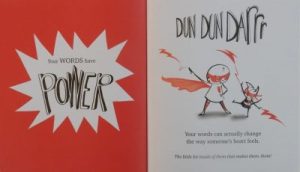
Equally amusing is an unhappy Pluto speech explaining how its status was downgraded from planet to dwarf planet; and then meeting with another dwarf planet and discovering it’s one of five known dwarves.
Other possibilities include games, puzzles and lots of drawing, including drawing a galaxy based on star-shaped objects – some examples are given …

and it might be fun to go out searching for suitable items, or perhaps, creating some in 3D.
Fun, educational in the broadest sense, and a jumping off point for further exploration of the topic.

I’ve signed the charter  

Mummy! / First Words & 123

Mummy!
Lerryn Korda
Nosy Crow
What a cool idea: a lift-the-flap board book with an ancient Egyptian setting published in association with The British Museum.
A small girl has been separated from her mummy and is searching for her: “Where’s my mummy?” she asks repeatedly as she looks in various likely locations: the market, the lotus pool,

by the enormous sphinx, among the foliage by the river and in the temple.
Finally, she reaches her own home and …

With nine visual references to artefacts belonging to the British Museum, (each with an associated hieroglyph to discover), this is such a fun way to introduce very young children to history. (The final spread is devoted to photographs of these and there’s a QR code to scan for more information about the objects shown.)
Equally, with such engaging illustrations and simple repeat pattern narrative it’s also great as a beginning to read picture book.

Some interesting reissued board books are:

Alison Jay’s 123
Alison Jay’s First Words

Templar Publishing
In 123, Alison Jay uses a fairytale landscape for counting as a girl dreams that she travels upon a golden goose to different fairytale scenes.  Each new spread features a number from 1 to 10, and then counts back down to 1 again.  Observant readers will notice that on every spread, the artist includes other sets of the number featured.  She also leaves a visual clue that suggests the next spread and perhaps beyond.

First Words begins with a grandfather clock face surrounded by decorative images that point to the four seasons and to what is to follow on subsequent pages. There are visual allusions to nursery rhymes in addition to the opening Hickory Dickory Dock (yes there’s a mouse atop the clock); we see Jack and Jill climbing up the ‘hill’; while for instance, ‘hat’ and ‘fish’ allude to ‘12345 once I caught a fish alive’

The book spans a whole day, but moves through the seasons too. Featuring seemingly random objects, Jay also uses foreshadowing in this book – an added talking point for children and adults; and each page having just a single word leaves readers free to make up their own stories.
In fact I see both these not so much as concept books but as starting points for promoting talk and visual literacy.

I’ve signed the charter  

Dreamweaver

Dreamweaver
Claire Freedman and Carrie May
Templar Publishing

Claire Freedman (of Aliens Love Underpants fame) has created a lilting lullaby telling how as night falls the flowing-haired weaver of dreams spreads her wings, fashions from nature and stows in her sack magical fantasies for soon to be slumbering young creatures.

For her first recipient, Little Bear …

it’s mountain flowers and snowflakes that will create a dream of playful mountain slope sliding with snow bears as companions.
Upon Little Tiger she bestows a dream of flying in space; Little Monkey’s dream is woven from: ‘Grains of sand on a distant shore/ Pink pearly shells from the ocean floor./ Long-lost treasure, a mermaid’s kiss, The shimmering scales from a rainbow fish.’ and will take him to swim with dolphins and dance to the tune of a mermaid’s song.

Her final dream is soft, white and full of love: this will be for the young child just on the edge of sleep; the child who has shared in the magical experiences of the baby jungle animals and is now, lulled by the sibilance of the rhyming text, ready for his or her own nocturnal adventure.
Debut artist Carrie May conjures up a lush nocturnal forest setting for the ethereal dreamweaver to scatter her dreams. The star-spangled dream scenes have for the most part, a somewhat softer palette of predominantly pinks, corals, turquoise, aquamarine, lemon yellow and white.
Just right for bedtime sharing or for other times when a spell of calm is required.

I’ve signed the charter  

Play

Play
Jez Alborough
Walker Books
The adorable Bobo is back and he’s in defiant mood. Mummy chimp declares it’s bedtime and the little chimp is far from ready to settle down for the night. The sun’s still bright, his friends are still up and ready to play; and play is exactly what Bobo wants to do.

Being Bobo he does …

Until Mummy discovers what he’s up to, and back into bed goes Bobo. Not for long however: there’s plenty of go in the young chimp yet and Turtle is on hand for some watery fun. But as the sun sinks over the hill, Turtle decides it’s time to sleep, which leaves Bobo alone and facing …

He does what most infants would in that situation: hollers ‘Mummy’ for all he’s worth.
Fortunately another of his pals is still around and willing to deliver the little chimp safely home to an extremely anxious parent. There’s no argument about ‘bed time’ now. In fact it’s Bobo himself who says the words and in no time at all they’re both snuggled up for the night.
Next morning at sunrise, who should be ready and waiting for another day’s fun and games but all his jungle pals..
Following on from Hug, Tall and Yes, Jez Alborough has created a celebration of play and friendship. Once again, with very few words, he fashions a wonderful drama that will not only be a winner with existing Bobo fans, but will gain him a host of new would-be playmates.
Brilliant for developing visual literacy, encouraging talk, and perfect for beginning readers; but most important, it’s enormous fun.

I’ve signed the charter  

Swish & Squeak’s Noisy Day / Take Ted Instead

Swish & Squeak’s Noisy Day
Birgitta Sif
Andersen Press
Swish is a mouse with super-efficient ears that she puts into action from those first waking moments of the cacophonous day described in Birgitta’s Sif’s sweet tale.
The CRUNCH CRUNCH sounds she hears coming from downstairs aren’t as she first thinks, a crocodile consuming the kitchen table; rather it’s Squeak, her younger sibling, enthusiastically munching breakfast cereal. And so it goes on with some gentle noises of preparations for school and some not so gentle …

The walk to school and lessons therein are equally full of eeeeks, munches, squeaks, toots, pump ums and bah bas – it’s small wonder Swish’s head is in a spin …

but those ears really come into their own in the melee of the playground at home time.
All this invitingly join-in-able onomatopoeia (great for developing sound/symbol relationships) and more, forms an integral part of Sif’s captivatingly whimsical scenes of sibling affection executed in predominantly soft pinks, rose, purple and teal hues.
A lovely celebration of the sibling bond and incidentally …

of the peace and quiet of libraries.

Take Ted Instead
Cassandra Webb and Amanda Francey
New Frontier Publishing
The 3Rs of reading – rhyme, rhythm and repetition – rule in this tale of a mother trying to coax her reluctant toddler up to bed. The little lad tries putting forward a host of alternatives: the dog, the baby his cat, his older brother, a toy robot, a neighbour and even his goldfish (each has a name rhyming with ‘sleepy head’) …

but Mum is having none of it. In fact she uses Ted and a spot of reverse psychology to get the resister where she wants him.
A fun read aloud for adult and child to share at bedtime. Equally, with the key ingredients for beginning reading integral to the story, and playful illustrations that work with the text, this is an ideal book for children just starting out as readers to try for themselves.

I’ve signed the charter  

The Prince and the Pee

The Prince and the Pee
Greg Gormley and Chris Mould
Nosy Crow

Deeds of derring-do really cannot be done if you’re crossing your legs.
When you’ve got to go, you’ve just gotta go – right? Not so in this hilarious tale of holding on against the odds.
Prince Freddie is summoned from his holiday by his trusty steed, Sir Rushington. Crumbly Castle is under attack from a dragon and there’s no time to lose.
Off they go and before long, Freddie gets that tingly “I need to pee” feeling which is made decidedly worse by the rhythmic ‘Up and down’ motion of the horse’s gait. Distractions fail to distract from the constant urge and suddenly, down comes the rain

and inevitably its plinkety plink serves to exacerbate the need.
Several stops later, all abortive on account of an ogre, then a princess in a tower and finally a long queue at the loo …

they reach their destination with the prince now absolutely desperate.
There before him stands a very large, very fearsome dragon; but there’s no stopping the young prince who charges forward completely surprising the dragon, over the drawbridge, through the castle gates to find the privy.

His long-delayed micturition not only brings relief to the prince, but saves the day by extinguishing an unexpected conflagration.
Gormley’s deliciously suspenseful telling is guaranteed to have audiences in fits of laughter and Chris Mould’s illustrations are utterly brilliant. He captures to perfection the diminutive prince’s journey and his ever-increasing discomfiture.
There’s the sight and sound of water, the up and down motion in the saddle while riding Sir Rushington and the false hopes of some relief every time he thinks he’s found a likely spot to go; all ratchet up the pressure on the poor prince’s bladder.
Priceless!

I’ve signed the charter  

Mr Tweed and the Band in Need / The Case of the Stinky Stench

Mr Tweed and the Band in Need
Jim Stoten
Flying Eye Books
Prepare for a musical magical mystery tour.
The dapper dog with the super tall top hat returns to carry out further public-spirited acts. Now it’s the members of a band – the very one Mr T. has come to the zoo to hear perform – that have, so their leader Wollo walrus informs him, dispersed around the gardens.
The two begin their search with Pinky Jackson, the guitar playing flamingo; not an easy task on account to the large number of the species; but that of course is where readers come in. Once he’s been located, Pinky …

is more than willing to join the hunt and has an idea where trumpet player, toucan Jimmy Toots might be.

He in turn suggests a possible location for sax. player Mary Lou Lemur; so off they go to the Lost Forest. And so it goes on until Otis O’Rangutan trombonist, iguana, Cool Jules drummer and only reptile (he’s pretty tricky to spot), banjo strummer Jellyfish Jack and four other musicians have been found – just in time for the show. The location of the final missing performer happens conveniently, to be in the busy gift shop, which is also the space wherein the stage is set for the concert.
There the entire ensemble comes together to entertain the crowd and thereafter to bid Mr Tweed a rousing farewell.
There’s an interesting mix of human and animal visitors to the zoo, some scenes of which are presented in a kaleidoscope of psychedelic colours absolutely bursting with activity, while others, such as the arctic pool, are rather more restful on the eye, although equally intricate. Every one though, is absolutely brimming over with talk potential and storytelling material.

The Case of the Stinky Stench
Josh Funk and Brendan Kearney
Sterling
Hold your noses; something malodorous is emanating from a certain fridge, but worry not; Lady Pancake and Sir French Toast have been called back while holidaying on Marshmallow Coast at the request of Inspector Croissant, Sir French Toast’s nephew. They’re on the case right away searching for what it is that’s causing shelves of food to turn bad and pong alarmingly.
Following clues, the three of them set about searching the fridge’s inner landscape: across Salsa Ravine, around smoggy Mount Everbean and through Applesauce River, but still all they discover are false alarms and red herrings. Will they ever get to the bottom of the mysterious stench: perhaps Casserole Cliff might yield the answer …

and if so, how will Inspector Croissant deal with the culprit?

Replete with a culinary vocabulary and served up in a saucy rhyming text and deliciously funny foody scenes, this tale of stinky sleuthing is satisfyingly silly, not least in its final resolution. There’s even a foldout map of the whole search at the end to feast your eyes on.

I’ve signed the charter  

How To Look After Your Dinosaur / Caring For Your Lion

How To Look After Your Dinosaur
Jason Cockroft
Nosy Crow
The outsized creature herein simply bursts into the life of a small boy when the postman makes a special delivery one day.
Just in case the same thing happens to you, it’s advisable to be in the know. Best then to take it from one who’s learnt from experience: get it right and you’ve got a friend for life.
The day needs to get off to a good start so a nutritional breakfast will give your new pet the energy required for the day: through trial and error you’ll find out what appeals.
Next on the agenda should be a spot of outdoor exercise. The park is a suitable place to head for and inevitably, the animal will need to take a dump at some time so it’s best to take a large container.

Dressing for the occasion, the rules of friendship, regular meals and knowing when to head for home are other important considerations.
Once back indoors, establishing a proper bedtime routine from the outset will make life a lot easier and after a good scrub you can settle down with your pet for a soothing bedtime story …

Essentially this is a giant leg-pull of a book that works on the witty interplay between words and pictures.

More on unusual pet care in:

Caring For Your Lion
Tammi Sauer and Troy Cummings
Sterling
It’s the big day; the day a boy’s kitten will finally arrive. Apparently however, the company ran out of kittens and so have sent a lion instead. ‘Luckily, a lion is practically the same thing!’ says the label on the crate and ‘caring for your lion is easy.’ All one has to do is to follow the step-by-step instructions set out in the handy guide provided. Step 1 is to open the crate to reveal the new pet and Step 2, to locate the enclosed feather (to be kept for emergencies) – such as the one referred to in Steps 4 and 5.

Back to Step 3 though lest we get ahead of ourselves; this urges the owner to avoid looking like a zebra, a gazelle or a bunny for obvious reasons. This is where the feather might come in handy; ditto if the ravenous creature accidentally consumes the deliveryman, along with the assorted pizzas you’ve ordered.
Potty Training (with the help of the enclosed deluxe lion potty pack), setting up an appropriate play space, sleeping arrangements, rewards for good behaviour, the bath time ritual …

and the bedtime routine are all covered. And naturally after all this the final ‘purrrrr-fect pet’ step will speak for itself.
Completely antithetical to Tammi Sauer’s deadpan ‘how to’ style’ text are Troy Cummings’ laugh out loud artistic interpretations of the instructions: an altogether uproarious combination.

I’ve signed the charter  

My Magnificent Jelly Bean Tree / Ollie’s Treasure

My Magnificent Jelly Bean Tree
Maura Finn and Aura Parker
New Frontier Publishing
Get ready for a spot of taste bud tingling when you read this enchanting tale.
It’s told by a young boy narrator who ponders the mouth-watering possibilities of planting and nurturing a single jelly bean till it grows into a fine fruit-bearing tree. Not possible say some, but this lad knows better.

Such care does he lavish on his tiny bean that not only does he have a ‘slurping, dribbly goo’ inducing crop of plump juicy beans, but the tree is sufficiently strong to bear the weight of a tree house built in its branches; one with a twisty twirling slide for rapid descent.

All kinds of creatures, both feathered and furry, will naturally be attracted to the fruits of his labours, but the lad can deal with those and then crown himself jelly Bean King: a sovereign who can dance naked in the rain,

shampoo himself with bean juice and even find time to invite family members to come and visit.
Having the imagination to entertain possibilities, a strong determination to succeed and a caring nature are the requirements for making the bean dream come true: so it is with one small child.
Those are some of the dispositions we need to foster in all children. This mouth-watering debut picture book from Finn and Parker can help spark that imagination. Rhyming text and whimsical, patterned illustrations together weave a lovely read aloud.

Ollie’s Treasure
Lynn Jenkins and Kirrili Lonergan
EKBooks
Young Ollie loves treasure hunts, something his grandma is well aware of, so she sends him a map. Thrilled to bits, Ollie embarks on discovering what the treasure might be. He follows each of the instructions ‘… Skip to the tree with the biggest green leaves … wriggle your toes and feel the grass under your feet … ‘ and so on.

When he reaches the end of the trail he’s more than a little disappointed to discover not the truck or the game he’d eagerly anticipated but a piece of card.

He tosses the card away but as it falls he sees the side he’d not bothered to read. It reminds him of his senses and ends by asking ‘How did you feel?’
Only then does Ollie stop to reflect on the sensory delights of the rose’s fragrance, the tickliness of the grass and more; and in so doing, realises that within himself is the capacity for happiness.
Wise gran: she’s enabled her grandson to begin to appreciate that there’s more to life than material rewards.
Essentially this is mindfulness for young children, the book’s author Lynn Jenkins, being a clinical psychologist. Illustrator Kirrili Lonergan characterises Ollie – a young mouse – as full of energy and thoroughly enjoying his engagement with the natural world. Yes, with its focus on attention, attitude and gratitude, it is a touch didactic but as part of a programme for young children’s mental health and well-being, it offers a good starting point for reflection and discussion.

I’ve signed the charter  

Old Hat

Old Hat
Emily Gravett
Two Hoots
There’s certainly nothing old hat about Emily Gravett: her latest offering simply brims over with that droll sense of humour she has.
Are you a slavish follower of fashion, no matter whether or not the latest styles are right for you? Do you use clothes to express your personality or are they a means of hiding that true self? This is the question explored herein.
Harbet has a practical hat, a warm cosy, much loved one, knitted by his Nana; but teased by his so-called friends, he discards what they tell him is ‘OLD HAT’ and sets about becoming a follower of fashion.
The problem so splendidly examined has him sporting ever more outrageous styles of titfer. There are some absolutely amazing styles to feast your eyes on: the vitamin-loaded, high fibre fruity kinds are most tasteful …

and the intricately drawn, elaborate nautical styles are truly mind blowing.

The trouble is once he’s left the hat shop, his particular model is already so OLD HAT!

What is a chap to do? There’s only one thing for it: Harbet must eschew all forms of headwear and set his own trend.
Hats off to Harbet for learning a crucial lesson about celebrating one’s own uniqueness rather than trying to be like others, a dedicated follower of fashion.
This is one that will be appreciated by adults as much as young readers, and might well spark off some millinery manipulation in the nursery or classroom.

I’ve signed the charter  

What the Ladybird Heard on Holiday

What the Ladybird Heard on Holiday
Julia Donaldson and Lydia Monks
Macmillan Children’s Books
The ladybird is holidaying in London and doing a spot of sightseeing, visiting the usual tourist destinations. One place of particular interest is the zoo which is full of noisy animals, and it’s as well the little creature isn’t giving her sense organs a holiday for there, she spies two familiar faces, those of Lanky Len and Hefty Hugh. As usual they’re up to no good: she overhears their conversation about kidnapping Monkey Joe and then using him to scale the palace wall and steal the royal crown while the Queen is fast asleep.

The other animals are informed of the dastardly plot and are fearful of the safety of their monkey friend.
Before you can say up and away, the ladybird has done just that and flown off to communicate her idea to Willow and Holly, the Queen’s two corgis.

Come nightfall, Hefty Hugh and Lanky Len put their plan into action: they release Monkey, give him a swag bag and lead him to carry out the robbery.

Little do they know though, that another plan has already been set in motion: a plan hatched between the ladybird and the two corgis; a plan involving a very large number of bones from the royal coffers …
The winning Donaldson/Monks team does it again: like its predecessors, the ladybird’s third adventure is certain to be a crowd pleaser. Donaldson’s sure-footed rhyming narrative in combination with Monks’ sparkle-spangled spreads is a recipe for success. The dastardly twosome, Len and Hugh, look about as wonderfully un-roguish as ever they could in her bold, engaging collage-style scenes.

I’ve signed the charter  

The Night Box

The Night Box
Louise Greig and Ashling Lindsay
Egmont Publishing
With his own special key, young Max is custodian of the night and having watched the sleepy day departing and bid his mother goodnight, he approaches The Night Box. It’s right there among his toys waiting for him to turn the key, lift the lid and let day slip inside. In its place comes darkness, tumbling, dancing and whirling around his room. It’s full of mischief as it chases all the colours out from every corner and away.

Then for a time all that’s left is the sounds: a plink, a tap, a tinkle and a purr, each one exaggerated by the darkness. After which Max becomes aware of the enormity of the night and all it holds.

Night is many things: the keeper of the stars that guide a lone swan to her home; the gentle protection of the sleeping fawn beside its mother; the caller out to play of the woodland creatures: badger, mole, owl and fox. It’s also the bestower of gifts: a moon to the pond, a mole to a goose; a fox to the rose; milk to the kitten; for the branch there’s an owl; for the wall a tree and for Max, a cosy bed and a bear to snuggle by.
Benevolent night remains but that too needs rest, so once it’s fast asleep it’s time for Max to wake, open the box once more and allow another exchange to happen …

What a beautiful evocation of the coming of night, its magical effects and its dawn departure, poet and debut picture book author Louise Greig and illustrator Ashling Lindsay have together created. Text and pictures work in perfect harmony. That Louise is a poet is clear from the way she weaves words together, creating cadences that are a delight to read aloud at any time; but as a bedtime story, have a gently soporific lilt. The unusual and shifting perspectives of Ashling Lindsay add to the allure of her scenes.

I’ve signed the charter  

Sir Ned and the Nasties

Sir Ned and the Nasties
Brett and David McKee
Andersen Press
Who or what are the Nasties? Their screeching, howling sounds emanating from the deep dark wood are driving the King in his castle crazy and making the village houses shake. The King sends for the bravest of his knights, one Sir Ned the Noble who sets off into the woods in search of whatever it is that’s making his highness ill and scaring the daylights out of the villagers. Before long he encounters a troll who offers to act as his guide; so the two proceed together.
Encounter number two happens soon after …

The witch too offers her assistance in the search for those Nasties. They cross a bridge and come upon Wolf. Now there are four in the search and Wolf leads the way … towards a cleverly concealed cave entrance. “Enter here, if you be brave!” says the sign.
Then Sir Ned gets a nasty surprise for the Nasties are none other than …

But luckily for him, Ned has a song in his head and a plan up his sleeve: a plan that will change the lives of all concerned; and for the better …

That though, is not quite the end of this rhyming tale penned by Brett, the illustrator’s son …
That Ned is completely oblivious to the dangers posed by his fellow seekers is sure to have your audience wriggling with anticipatory delight. David McKee’s mock-scary Nasties are deliciously funny: who can take seriously that hairy, trainer-wearing troll with his pink braces and striped cut-offs or a wolf sporting cravat and purple pants?

I’ve signed the charter  

Jabari Jumps

Jabari Jumps
Gaia Cornwall
Walker Books
It’s the day for Jabari to jump off the diving board, so he tells his dad when they reach the swimming pool. “I’m a great jumper, so I’m not scared,” he says.
Looks easy”, he continues as he stands and watches others launch themselves from the edge of the board.

But then, at the bottom of the long ladder, the delaying tactics begin: he allows another child to go in front of him in the queue; he needs to think about the “kind of special jump” he’ll do. Dad is empathetic suggesting a “tiny rest” before the ascent after which, Jabari remembers his stretching regime and again Dad endorses his idea. Then it seems as though the whole thing is going to be postponed until another day; but then Dad’s timely “It’s OK to feel a little scared,” and further words of wisdom finally give him that much needed confidence boost. After a deep breath, Jabari begins to climb up and up and up and up.
He walks right to the edge of the board and curls his toes around the edge …

Here as he surveys the scene before him, we really feel as though we’re right with the little lad inside his head and heart and then … Mission accomplished!

The variety of perspectives Gaia Cornwall provides in this, her debut picture book, right from the clothes changing sequence on the title page …

to the joyous after the jump, family celebration in the pool are wonderfully observed and her narrative is pitch perfect. Look closely at the beautifully patterned illustrations and you’ll find other small stories to enjoy too: there’s a boy in the queue, with a ladybird on his arm; another having sunscreen applied by an adult and looking none too happy about it; the ball game in the pool below Jabari.
This gently humorous, ‘building up the courage to embrace your fear’ book is sure to resonate with both children and adults alike: most of us have been there with Jabari’s dad, either as parent or teacher, as a child takes that plunge into the unknown: the idea of treating it as a ‘surprise’ is superb and will definitely ensure that wherever this is shared, it will create a pretty big SPLASH!.

I’ve signed the charter  

The Great Big Body Book

The Great Big Body Book
Mary Hoffman and Ros Asquith
Frances Lincoln Children’s Books
Everybody has a body and every body is different: this fact is acknowledged and celebrated in the latest Great Big book from the Hoffman/Asquith team.
Starting from those of babies, they introduce young readers to the bodies of new- borns …

toddlers, children, teenagers and adults, young, middle aged and old.
Spreads focus on such topics as gender in ‘Boy or Girl’ wherein it’s good to see ‘… a few don’t feel completely comfortable in the body they were born in and not everybody fits neatly into a “boy” or “girl” box. That’s OK – just be yourself!’
No matter which of the seventeen spreads one explores, we encounter both visual and verbal examples of the overarching premise that ‘bodies are both similar and different:’ We are all more alike than different’ one speech bubble reminds us: moreover we all develop at different rates and some are better at doing one thing than others;

but we all learn an amazing amount throughout our lives.

Emotions, as well as the physical aspects of bodies without and within, are considered and there’s a feline intruder that appears in every spread comparing and contrasting humans and cats.
Ros Asquith’s cartoon style illustrations are amusing, empathetic and all encompassing.
You really couldn’t get more inclusive than this book when it comes to the topic of bodies. It’s just right for sharing and discussing at home or in school.

I’ve signed the charter  

Little Red

Little Red
David Roberts and Lynn Roberts-Maloney
Pavilion
The Roberts siblings have well and truly fractured the Little Red Riding Hood tale with their version that puts a male (aka Thomas) as the chief protagonist and yes he does sport a red coat and go visiting his Grandma. She isn’t poorly though: he pays her a visit with a basket of tasty treats and a week’s supply of her favourite tipple, ginger beer.. I should mention here that Little Red’s parents are the owners of an inn with ginger beer its speciality.
As he sets out on his weekly visit he receives the customary warning about staying on the path for fear of encountering the hungry wolf that lurks in the forest.
Completely oblivious to the lip-licking lupine lurking in the shadows, Little Red stops, removes his coat and sets about picking some rosy apples to add to Grandma’s basket of goodies, happening to utter his intentions out loud: two mistakes that give the wolf an advantage and off he bounds to Granny’s house.
Clad in the red coat, he gains entrance and in an instant gulps Granny down, bloomers, belle of the ball dress and all;

then, suitably attired waits for the arrival of his “dessert”.
The usual exchange follows about the size of eyes and ears, but when teeth are mentioned, it’s time for Little Red to do some quick thinking: and the wolf some quick drinking …

I say no more …
Setting this bubblesome tale in what looks like late 18th century America, but could equally be France at around the same time, gives David Roberts scope to include such period detail as heavily made-up faces, enormous wigs and beauty spots in his ink and watercolour illustrations.
Certainly not a first Little Red Riding Hood; rather it’s a deliciously quirky one to add to a collection or study of the favourite fairy tale.

I’ve signed the charter  

Woolf

Woolf
Alex Latimer and Patrick Latimer
Pavilion Children’s Books
The trials and tribulations of pretending to be something you aren’t are sensitively and humorously explored in this collaboration between Alex Latimer and his illustrator brother, Patrick.
Part wolf, part sheep, Woolf is the offspring of an unlikely and much frowned upon marriage between a sheep and a she-wolf.

Woolf has both sheep and wolfish characteristics but as he grows older, he experiences an identity crisis. Out exploring one day, he encounters a pack of wolves and as a result decides to rid himself of his woolly coat.
Thus the pretence begins; but inevitably as the wool starts sprouting again, maintaining the disguise becomes tedious and Woolf leaves for pastures new.

Over the hill he comes upon a flock of sheep: again Woolf isn’t true to himself, lying about his wolfish characteristics and then adopting a new ovine look …

Once again, pretence proves unsatisfactory for Woolf and his stay with the flock short-lived.
Convinced he doesn’t belong anywhere, the little creature is distraught and that’s when his parents step in with some timely words of wisdom, pointing out that trying to be something other than your real self can never make you truly happy. Much better to accept and celebrate all that makes you truly special and unique.
Patrick Latimer’s illustrations executed in an unusual colour palette of black, greys, browns, greens, teal, cream and biscuit with occasional pops of purple, blue and pink are delectably droll.
Like me you may well find yourself howling with laughter at Woolf’s attempts to fit in but there is a serious and important life-lesson at the heart of the book: true friends accept and love you for being you.

I’ve signed the charter  

Sun

Sun
Sam Usher
Templar Publishing
First came Snow, then Rain and now we have the third of Sam Usher’s enchanting days with Grandad and small boy narrator. Herein, what starts out as a fairly normal day, albeit the hottest of the year: “hotter than broccoli soup“, hotter even than “the surface of the sun“, Grandad deems it perfect for an adventure; and so having collected the necessary items for their foray, the two venture forth in search of the perfect spot for a picnic.
The sun blazes down and pretty soon, Grandad needs a rest, while his designated ‘lookout’ does just that …

You can almost feel the sun scorching them as they trudge on and pause for another rest. Shade becomes the second ‘must’ for their picnic spot, which is hardly surprising, as the landscape has now become incandescent.

Grandpa has added a cool breeze to his list of requirements by the time they reach what looks a likely place.
However, it appears that their perfect picnic spot is already in use.

So it’s a case of all hands on deck; let’s share resources and party …
Once again Sam Usher captures to perfection the closeness of the bond between Grandad and boy, while at the same time portraying the spirit of adventure and utter exhilaration that is brought on by being in the great outdoors, even on such a scorching day.
A sure-fire winner this.

I’ve signed the charter  

Everybody’s Welcome

Everybody’s Welcome
Patricia Hegarty and Greg Abbott
Caterpillar Books
In our increasingly troubled times, picture books such as this, with its strong inclusivity message, are more important than ever.
It came about as the result of a strong desire on the part of Tom Truong of Caterpillar Books in reaction to the shattering news that the UK had voted to leave the EU, to produce a book for parents like himself to share with young children that embodied ‘ideals of refuge, inclusivity and friendship’.
Currently living in Stroud, a town that since the Syrian crisis, has adopted the catchphrase ‘Everyone welcome in Stroud’ I felt immediately drawn to this poignant, political tale of empathy, acceptance and collaboration.
We start the story with mouse standing in a forest clearing, dreaming of building ‘a great big happy house’.

It’s not long before mouse is joined by a frog who has lost his pond and has nowhere to go. Together they start constructing and before long are joined by some runaway rabbits fleeing from an eagle; they are only too willing to help with the project. Next to come is a misunderstood brown bear; he has much to offer the enterprise and is welcomed with open arms.

Building continues apace with more and more animals coming to join in and a spirit of co-operation rules throughout.
What this allegorical rhyming story shows so clearly is that despite superficial differences, we all have much to offer one another. With open arms, open minds and open hearts we can embrace our fellow humans in a spirit of co-operation and unity.

Greg Abbott’s animal illustrations, with his use of cut down pages, really do bring out both the woefulness of the displaced animals, and the spirit of collaborative bonhomie as each one is welcomed, accepted and a new open community is formed.

A thoughtful Emmanuelle whose final comment on Everybody’s Welcome was  “We all need to be kind.”

I’ve signed the charter  

Rapunzel

Rapunzel
Bethan Woollvin
Two Hoots
The witch in Bethan Woollvin’s alternative version of Rapunzel has a good little business going: she snips off lengths of the girl’s golden tresses and sells them.

Keeping Rapunzel locked up in the high tower she threatens her with a curse should she dare to attempt an escape.
With Rapunzel however, the evil woman has more than met her match. Far from being fazed by such threats she’s positively emboldened.
If the witch can ascend using her captive’s hair, then the girl can descend by the same means; and so she does.
Once free Rapunzel explores the forest, forms a friendship and hatches a plan.

No it isn’t with a handsome prince: this wily young miss is more than capable of managing her own fate. She’s determined to get the better of the old hag. Thus it’s Rapunzel, not the witch who wields the tonsorial scissors and sacrifices her flowing locks ridding herself of her jailor once and for all.

Then with the aid of her forest friend, she embarks upon her very own witch hunt.
Again Bethan Woollvin uses a limited colour palette – black, grey and yellow on an expansive white background to dramatic effect for her fairy tale rendition. Her assured lines and minimalist shapes are rendered in gouache and she injects subtle humour into every scene: the flies bothering the frog, the abandoned sock on the floor, and more darkly, her subversive heroine continuing to show no fear in the face of her captor’s threats, standing meekly before her with her intended weapon of witch destruction hidden behind her back.
Make sure you check out the endpapers too: the hunted of the front ones becomes the hunter at the back.

I’ve signed the charter  

Leaf

Leaf
Sandra Dieckmann
Flying Eye Books
Sandra Dieckmann’s love of the natural world shines right out at you from the arresting cover of her debut picture book.
It opens with a ‘strange white creature’ on an ice floe drifting shoreward upon dark and brooding waters, watched by a large black crow. Once ashore, the polar bear makes its home in a deserted hillside cave: an outsider watched and distrusted by the forest animals. It forages for leaves, watchful, wary; and the residents bestow upon it the name Leaf on account of its strange behaviour, but equally because they want rid of him. They all talk about Leaf but none dares talk to him.

And so it goes on until one day leaf- clad, the bear charges through the forest astonishing all that see, and launches himself, from the hillside and plunges into the lake below.
While the soaking creature hides once more in his cave, the other animals meet to discuss what to do. Conflicting opinions emerge, (only the crows speak for him) with the result that they do nothing.
Leaf meanwhile renews his determination to take flight, this time from a cliff …

and once he’s safely back on shore, the crows – intelligent beings that they are – finally allow him to speak. And speak he does – to them all – about melting ice and his desire to return to his family.
As conveyors of mood and movement, Sandra Dieckmann’s illustrations are impressive.

Executed in black, white, greys, blues and teals with occasional stand out splashes of red, orange, rust, yellow and the greens of the patterned leaves and flowering plants, the landscape portrayed is at once beautiful and at times, hostile.
It’s said in folklore that crows are harbingers of change: I’d like to think that those in Leaf’s story might act as symbols of a positive change in the way outsiders are viewed by too many of us. With themes that include global warming, outsiders, prejudice, loneliness and reaching out to others, this poignantly beautiful book is both topical and timely.

I’ve signed the charter  

Very Little Rapunzel / Big Little Hippo

Very Little Rapunzel
Teresa Heapy and Sue Heap
Picture Corgi
Meet Very Little Rapunzel, star of the fourth of the Very Little fairy tale series. She is, so her mum insists in need of a haircut but refuses to visit the hairdresser’s. New hairstyles are tried but none can curb the abundance of her unruly tresses and in a paddy, the little miss hurls her Big Box of Hair Things out of the tower right down to where a Very Little Prince happens to be standing.
Rapunzel lowers her hair at his request and up climbs the prince to play with her. Before you can say itch, both Prince and Rapunzel are scratching furiously and are discovered to have nits.
Treatment ensues with lots and lots … of combing …

complaining, washing and sploshing …

until a certain Very Little miss wilful has a change of heart. She grabs the scissors and …

which leaves her playmate rather stranded, but not for too long. Thanks to some imaginative hair styling, an escape route and more is fashioned by the teasy weezy trio culminating in fun and games for all.
With that disarming smile and spirit of independence, Very Little Rapunzel is set to charm her way into the affections of a whole host of very little listeners.

Big Little Hippo
Valeri Gorbachev
Sterling
The smallest of his family and much smaller than big old Crocodile, very tall Giraffe and giant Elephant,

Little Hippo is far from happy with his lack of stature. His mother’s assurances that he’ll eventually be big like his parents offer no comfort as he wanders among huge trees and tall grasses feeling like the smallest creature in the entire world. Until that is he comes upon a tiny beetle struggling to turn itself the right way up. Little Hippo rescues the creature …

and the words of thanks from its family, “Thank you, Big Hippo!” truly make his day and more importantly change the way he sees himself. “I’m big now!” he announces as he rushes, full of new-found confidence, to tell his mother, passing on the way, all those animals whose largeness had previously made him feel so insignificant.
Proud of his deed of kindness, she renames him “Big Little Hippo”, which is just perfect.
Perspective and scale are effectively and playfully used in Gorbachev’s ink and watercolour scenes of Little Hippo and the other jungle animals in this sweet tale of finding where you fit in the world.

I’ve signed the charter  

Barkus / Lulu Gets a Cat

Barkus
Patricia Maclachlan and Marc Boutavant
Chronicle Books
Meet large brown dog, Barkus, “Smartest dog in the whole world.” So says globetrotting Uncle Everton when he arrives on the doorstep one day with what he calls “a present” for the young narrator, his niece Nicky. Nicky is reassured to learn that Barkus doesn’t bite and thus begins a beautiful friendship.
Over the next four short chapters we learn how Barkus follows Nicky to school and is adopted as the class dog; celebrates his birthday in a very noisy manner;

discovers a kitten and is allowed to keep it, naming it Baby; and finally, camps out for the night and enjoys an autobiographical story by torchlight.

The five amusing episodes are linked but the separate events provide suitable stopping points for readers just embarking on early chapter books.
Marc Boutavant provides appropriately cheery, retro style illustrations that range from full page to vignette.
All in all an upbeat, engaging read about family, friendship and the benefits of having a winningly positive attitude to life and its possibilities.

Lulu Gets a Cat
Anna McQuinn and Rosalind Beardshaw
Alanna Books
In her latest story Lulu wants a cat and sets about showing her mum that she’s ready to have one by doing some research on their care and putting in some practice on her cat toy. Eventually Mum is persuaded and off they go together to the cat shelter.

There, Lulu doesn’t so much choose a cat, but is chosen by one of those she’s shown.
Cat shelter worker, Jeremy provides some helpful advice; they go home and make preparations; and return next day to collect the new pet. Lulu gives her cat the beautiful name, of Makeda, which means African Queen and after a period of adjustment, it’s not long before Makeda is well and truly settled into her new home.

Lulu never fails to delight: this new story, endorsed by the National Cats Adoption Centre, ticks all the boxes for showing the very young that becoming a pet owner involves considerable responsibility, as well as introducing the basics of adopting a cat.

I’ve signed the charter  

The Three Little Pugs and the Big Bad Cat / Happily Ever After: Little Red Riding Hood

The Three Little Pugs and the Big Bad Cat
Becky Davies and Caroline Attia
Little Tiger Press
Move over Big Bad Wolf, you have a rival. A favourite traditional tale is given a contemporary spin with the pigs being replaced by pugs and the big bad wolf by a much less threatening creature, unless of course you are a member of the canine species; in which case it’s your arch enemy, a Big Bad Cat.
The young pugs go by the names of Bubbles, Bandit and Beauty and when the space in the kennel they share with Mother Pug becomes a tad inadequate, they’re dispatched into the big wide world and there to build homes of their own. Their mother fills their rucksacks with snacks, warns them to watch out for the rampaging cat; ensure their houses are sufficiently strong to withstand any moggy onslaughts; and off they go.
It’s not long before Bubbles has stopped, built a flimsy straw house and had it whirred and whooshed to the ground by a certain feline character.
Bandit too builds an insubstantial house: his stick construction soon meets a fate similar to that of his brother. This time however, the weapon of house destruction is, wait for it … a leaf blower.
That leaves Beauty, who has the sense to engage a team to assist in her house construction …

and it’s completed just as her brothers appear warning of the imminent arrival of the fearsome Big Bad Cat.
Unperturbed, Beauty decides it’s time to put plan B into action …
What happens thereafter sees the frustrated house destroyer finally gain entry to Beauty’s brick house …

only to have her victory turn sour in more ways than one. It’s great to see female Pug, Beauty with the brains to be the saviour of her brothers despite her silly pink attire.
Caroline Attia sprinkles her mixed media scenes with much that will make readers smile: photographed pugs digitally adorned with bows, bags, bandanas and blouses populate an animation world of mischief and mayhem.

Happily Ever After: Little Red Riding Hood
Celeste Hulme
New Frontier Publishing
Illustrator Celeste Hulme gives the classic fairy tale a modern twist in her rendition of a favourite tale. Herein Little Red Riding Hood cycles to the shops with her mother and wears her little red coat to school to keep her warm: a coat that she’s been sent as a birthday present by her Grandma. The little girl doesn’t ride her bike through the woods to visit her sick grandma though; she walks alone, meets the wolf and willingly reveals to him her destination. The wolf duly runs to Grandma’s, gains entry, pushes the old lady into a cupboard …

and takes her place in bed.
The traditional exchange about big eyes, big ears and big teeth takes place with the addition of ‘what big arms’ and ‘what big legs you have’ and it’s with those that the wolf leaps from his sick bed intending to dig his claws into the child. Red Riding Hood however is too quick for the beast; she crawls under the bed, dashes to the cupboard and releases her grandmother. In so doing she releases so we’re told, ‘the avalanche’.

This particular lupine creature is something of a coward for he howls, turns tail and beats a hasty retreat, never to be seen again.
If this sounds totally un-scary – there’s certainly no gobbling of gran, nor the need for a woodcutter – some of the illustrations show the wolf as a huge menacing beast, particularly this one of his shadow looming threateningly as he enters Grandma’s house…

In fact lupine shadows are used to great effect in several scenes; there’s one in the woods where Red Riding Hood is completely overshadowed by the beast.
Certainly a book to add to a Red Riding Hood collection in the primary school, as well as one to share at home.

I’ve signed the charter  

The Bad Bunnies’ Magic Show

The Bad Bunnies’ Magic Show
Mini Grey
Simon & Schuster Children’s Books
The lengths performers will go to in order to be in the limelight is beautifully played out in Mini Grey’s latest extravaganza. It stars – or rather should have starred, the Great Hypno himself but he is currently unavailable, so we learn. A new act has taken his place featuring two mischievous rabbits, Mr Abra and Mr Cadabra. Be warned though, this act is full of dangerous sleights of paw and wand-waving, not to mention outrageously difficult knife-throwing.

Oh and there’s a spot of saw-wielding too …

but those bunnies are not the only ones up to a spot of trickery.
The lovely Brenda is now free, and her upper portion is presently performing a feat of padlock-picking while the roguish rabbits are otherwise engaged attempting to persuade their audience to part with their precious items.

So fixated on their grand finale are the pair that they fail to notice that the show’s rightful star is now on the loose, ready to step in and ensure that the show comes to a conclusion with an ear-splitting BOOM! Although that’s not quite the end of the story …
As always, Mini Grey delivers a top class, show-stopping performance, full of surprises, larger-than-life characters and laugh-inducing scenes. Her comic timing is supreme, herein aided and abetted by strategically placed flaps, cutaway pages and a fold-out.

I’ve signed the charter  

The Cow Who Fell to Earth

The Cow Who Fell to Earth
Nadia Shireen
Jonathan Cape
If you happen to be a sheep, you might want to watch out for stars and other falling objects.
It’s night; sheep huddle together beneath the stars when suddenly a mysterious body plummets earthwards, landing with a resounding BOOM!
What the sheep are confronted with is something altogether unexpected: a jetpack and a small cow. It’s communication skills are apparently restricted to a single utterance: “WOOO” is the response the sheep receive to their ministrations and their questions about its name and place of origin. Indeed that’s the manner in which the cow transmits its entire story …

a story none of the sheep understands. Nevertheless they decide to call their visitor Dave.
Dave is faced with a communication problem: surely someone must be able to understand her: Bertha the cow perhaps? But no. The other animals are equally mystified.
Poor Dave is distraught; how on earth is she to get back from whence she came?

Could it be that the chickens are going to save the day? And if so, how?

All IS finally revealed in this splendidly silly book but you’ll need to get yourself a copy to discover how the bonkers finale unfolds.
Nadia Shireen’s beautifully bulky beasts are a hoot; and to share this crazy tale is to invite a whole lot of noisy participation of the “wooo” kind.
It was extremely difficult prising my copy back from one three year old I shared it with, who declared, ‘I really, really LOVE that book’ and I had to promise that like Dave, it would be returned to her at a later date.

I’ve signed the charter  

I Wrote You A Note / Mr Darcy

I Wrote You A Note
Lizi Boyd
Chronicle Books
Herein we follow the journey of a note written by a little girl sitting beside a stream, as it travels from her hands until it finally finds its way to the intended recipient.
During its journey the note becomes briefly, a sail for Turtle’s raft; a resting place for some baby ducklings; a bridge for Spider.

Bird then uses it as nesting material; it’s discovered by a restless squirrel; Snail mistakes it for a house; Mouse fashions it into a sunhat;

Rabbit makes a basket from it; Dragonfly rests beneath it; Goat – well he can’t read so abandons it in favour of grass.
Finally the wind whisks the paper skywards dropping it in just the right place for a friend to find. But what does the note say? Aah! You’ll need to get hold of a copy of this enchanting book to discover that.
This is a lovely, rhythmic read aloud with some natural sounding repetition and gentle humour throughout. Lizi Boyd’s gouache illustrations are enchanting. They, along with the stream, seem to flow across the pages as the note makes it journey; and the sender is, all the while, exploring and interacting with the natural world around her. It’s absolute delight from cover to cover, with text and illustrations working so perfectly together.

Mr Darcy
Alex Field and Peter Carnavas
New Frontier Publishing
Meet Mr Darcy, a genteel, refined and shy character living alone on the edge of Pemberley Park. One day he receives an invitation to tea from Lizzy and her sisters who live in an ordinary park. Seemingly considering himself a cut above such creatures, Mr D. tosses the invitation aside

and goes on his way, cutting short the sisters as he passes by.
The following day, Mr Darcy embarrasses himself by crashing right into a tree while endeavouring to ignore Lizzy, and then suffers another disaster of a very messy kind.

Once again its Lizzy together with several others, including Mr Bingley who, despite Mr Darcy’s rudeness, come to his aid.
Grateful for his assistance, Mr Darcy decides after all to accept the invitation to tea and once there, he feels ‘quite loved and not alone at all.’
If any of this sounds familiar, then it’s because the author, a Jane Austen lover, chose to create this rather softer character in her reimagined Pride and Prejudice for young children with its basic plot, main characters and settings remaining intact. Alex Field’s charming tale about shyness, encouragement and the joys of friendship, demonstrates beautifully how easy it is for shyness to come across as rudeness. It’s made all the more enjoyable by Peter Carnavas’s gently humorous, painterly portrayal of the characters.

I’ve signed the charter  

Daisy Doodles / Ella Who?

Daisy Doodles
Michelle Robinson, Irene Dickson & Tom Weller
Oxford University Press
Get ready to go doodle crazy with Daisy.
One rainy day the little girl is stuck indoors and almost before she can say ‘Pipsqueak’ her drawing has upped off the page and is helping the child adorn the entire house with doodles of all shapes and sizes.
The rain stops but that is not the end of the adventure; in fact it’s the beginning of a whole exciting experience,

as dragons and dragonflies, castles and carousels, mermaids and much more are conjured into being, which culminates in the claw-wielding, jaw-snapping Battle of Crayon Creek.
All good things have to end though and end they do when the tickly octopus chases everyone back home and mum appears on the scene …

although that is not quite the end of the story …
In this lovely celebration of children’s creativity and imagination, the book’s creators cleverly use the device of a mirror to transport the little girl and her companion into their fantasy world of make-believe and back again: a world created by a variety of doodle-appropriate media.
With all the exciting visuals, it would be easy to overlook Michelle’s manner of telling, which, with its sprinklings of alliteration, and interjections of dialogue, is also a delight and allows plenty of space for Irene Dickson’s illustrations to create their magic.

Ella Who?
Linda Ashman and Sara Sanchez
Sterling
There’s a touch or two of the Not Now Bernard’s about this story of a family moving day. The parents of the young narrator are far too busy to take notice of their daughter’s talk of the presence of an elephant in the living room of the home they’re moving in to.
While mum, dad …

and grandma are engaged in getting their new abode into some kind of order, the little girl, having ensured that her baby brother is soundly asleep, engages in some elephant-shared activities, first in her new bedroom and then, outside in the garden. And that is where our narrator notices a man coming to the front door: a man inquiring about a missing baby elephant going by the name of Fiona and having – so it says in the flier he leaves – a particular penchant for apples, . Surely it couldn’t be … could it?

Much of the humour of this book is in the interplay of words and pictures: It’s the little elephant that hands dad a tool as he struggles to fix the shower – a fact he’s completely oblivious to as he utters the story’s “Ella WHO?” catch phrase. As are the other family members, throughout the book: even on the penultimate spread, having told her mum she’s just been bidding the elephant farewell, she gets this same “Ella WHO?” response from her dad.
An extended joke that works well enough to engage young children who will be amused at the adults who don’t listen and delight in joining in with the repeat question.

I’ve signed the charter  

Origami, Poems and Pictures

Origami, Poems and Pictures
Nosy Crow
This truly beautiful book is published in collaboration with the British Museum and its publication coincides with the Museum’s Hokusai exhibition, Beyond the Great Wave. That picture is just one of the thirteen (all belonging to The British Museum) featured in this celebration of three Japanese arts and crafts: origami, haiku poetry and painting (all but one are woodblock prints) and with it the delights begin. Making the paper boat (after reading the associated haiku and pondering upon The Great Wave picture, I’d suggest) is one of the easier (1st level) projects. I already knew how to make that so passed on to something else at the same level to get my hand in: I chose the frog …

really because I already love the accompanying Bashō haiku:
the old pond,
a frog jumps in –
the sound of water.

before proceeding to something challenging. For my origami frog I used ordinary paper cut to a square and on the thick side;

but included at the back of the book is a pad of 50 sheets patterned on one side, plain on the other, which are the ideal size and weight for the projects.
Each of the projects is graded and there is a mix of each of the three levels of difficulty, the third level requiring considerable dexterity, not to mention patience. I absolutely loved the graceful crane and the dragonfly.
You’re guaranteed many hours of pleasure from this absorbing and stunning book; and should you require some further instruction with the origami, there’s a QR code on the index page which provides a link to step-by-step ‘How to’ videos.

I’ve signed the charter  

Sam and Jump

Sam and Jump
Jennifer K.Mann
Walker Books
Many young children form a special bond with one of their soft toys. Sam’s very best friend is Jump, his soft toy rabbit; they’re pretty much inseparable.
One day they go to the beach where they meet Thomas. Sam and Thomas spend the whole day playing together …

and have such a great time that Sam leaves Jump behind, forgotten on the beach.
When he reaches home, Sam realises Jump isn’t with him. It’s too late to go back but his mum promises they’ll go and search for him the following morning. Sam passes a miserable evening and a worried night and early next day, Mum drives him back. But there’s no sign of Jump anywhere. Nothing is fun without him. But then suddenly, standing right there on the beach is …

A gentle tale of abandonment, loss, friendship and love is simply and tenderly told and illustrated with great sensitivity in watercolour and pencil. By leaving plenty of white space around her images, Mann focuses the audience’s attention on the interactions between characters, and on the feelings of each individual; and the use of blue-grey backgrounds after Jump is left behind underline Sam’s feelings of distress.

A small book that offers much to think about and discuss.

I’ve signed the charter  

Daddy Long Legs

Daddy Long Legs
Nadine Brun-Cosme and Aurélie Guillerey
Two Hoots
Matty’s Dad drives him to nursery; that’s what he always does; but on this particular morning their old green car has had starting problems. So, when Dad drops the boy off, young Matty is more than a little troubled. “What if the car doesn’t start again?” he wants to know. Dad’s response is that he’ll borrow their neighbour’s red tractor. Now most youngsters would, I suspect, be thrilled at this idea but not Matty. He comes back with another what if … ? Seems this little guy is something of a worrier; either that or he enjoys exploring ‘what if’ possibilities for pretty soon, Dad has had his alternative modes of transport – a ride on the back of Matty’s old teddy; an airlift by the garden birds; a sailing boat with water supplied by a neighbour’s garden hose …

hopping rabbits under his feet and a dragon flight all countered by further ‘what ifs’ on his son’s part.
Matty seems determined to have the last words. Has his Dad finally run out of ideas?

Is he stuck at nursery trying to reassure his child until it’s time to go home? Or is there perhaps one particular personal attribute that he can always depend on, and thus finally allay Matty’s fears.
With its echoes of Hush Little Baby (the Mocking Bird Song) this reassuring tale is perfect for sharing with young children, particularly those of an anxious disposition. Having taught both nursery and reception age classes I am aware that there are always fears lurking in the minds of a few individuals; so this is a book to have on hand in any early years setting to allay any doubts that niggle: no matter what, Dad, (or Mum, or another special person) will always come for them.
All children will enjoy the give and take with its escalating chain of fanciful notions; and be amused by Guillerey’s wonderful retro illustrations of Dad’s responses.
A good one to give Dads on their special day.

I’ve signed the charter  

Ellie and Lump’s Very Busy Day / Monster Party

Ellie and Lump’s Very Busy Day
Dorothy Clark and Becky Palmer
Walker Books
Exuberant is the word that immediately came to mind as I read this action-packed story.
Two young elephants, Ellie and Lump instantly spring to life  on receiving Mum’s wake-up call.

Then it’s a dash downstairs to receive a pile of parcels from the postman. This is followed by a ‘Split splat!’ eggs-cracking, toast soldiers-dipping breakfast. After which it’s jackets zipped and off into town, there to buy decorations, balloons and most important, cake.
They take a quick stop to gaze in the pet shop window before heading home to get busy decorating the room and donning fancy dress costumes.

PHEW! Just in time for the arrival of the guests. But what is all this rushing around and secrecy in aid of? Shhh!
In walks the special birthday guest himself – Dad; and then it’s party time.

The whole joyful thing effervesces and sparkles with joie de vie: Lump and Ellie are an adorable duo especially in their party gear.
Dorothy Clark’s text takes the form of a running commentary from the young pachyderms as they dash through their day; and is full of delicious noises and action words for young listeners to join in with. They’ll surely love ‘split splat’ting, ‘dip’, dipping, ‘rustle’ rustling, ‘zzzzip’ zzzipping, popping, crunching, wriggling, stomping, skipping, puffing and such like along with you as you read. All this and more is illustrated in Becky Palmer’s scenes of those frenzied preparations for dad’s surprise party. Every one of them is full of wonderful details that will delight toddlers; and many will cause adults with young children to smile in recognition.

Monster Party!
Annie Bach
Sterling
Young monster is excited to receive an invitation to a party, so much so that he even spends time selecting his most jazzy underpants. Once at the party, its full on fun with disco dancing, games, scrummy pizza. Then it’s time for a spot of candle blowing out which precipitates the toppling of a cupcake tower resulting in pink goo adhering to all the guests.
No matter; it tastes good and birthday monster is thrilled with all his presents. Less so, our main character who kicks off when it’s time for him to leave; never mind though; there’ll be another exciting event soon …
A brief rhyming text accompanies Anne Bach’s animated scenes of young monsters partying; despite the shaggy appearance of the guests, their actions bear a striking resemblance to young children engaged in the same activity. A high energy board book; best not shared at bedtime though, I’d suggest.

I’ve signed the charter 

The Big Bad Mood / Everyone …

The Big Bad Mood
Tom Jamieson and Olga Demidova
Bloomsbury Children’s Books
Beware the Big Bad Mood; he’s always lurking somewhere around on the off-chance that you’ll be having one of those days when everything in the world seems to be conspiring to ruffle your feathers and make you feel thoroughly bad tempered. It’s such a day for young George – total tantrums are the order of his day. “There’s a big bad mood hanging around you today” says his mum.
George isn’t convinced: he can’t see the thing anywhere, which only makes him feel …

Then, seemingly out of nowhere there appears right before him a large blobby being announcing itself as “the Big Bad Mood”. His sole purpose, he informs George is to make everyone just like him – big, bad and moody; and he wants the boy’s help.
Off they go on their mischief-making mission and before long rather a lot of people are in big bad moods, including a fair number of George’s friends.
All this behaviour is pretty exhausting though, and after a while, George at least is starting to think constant big bad moodiness is not his thing; it’s silly, noisy, and upsetting for his friends.

Consequently, he bids farewell to his erstwhile companion who stomps off to find another partner in crime. And George? Maybe you can imagine what he did thereafter; let’s just say that he does apologise to all concerned; and he’s changed – somewhat!
A cleverly constructed, fun story to share and open up discussions about bad moods and anger-related feelings. Olga Demidova’s scenes of domestic moodiness, and the mayhem George causes out and about, will bring on giggles aplenty.

Everyone
Christopher Silas Neal
Walker Books
Emotions are at the heart of Christopher Silas Neal’s debut as author/illustrator. I’m familiar with his wonderful artwork in Over and Under the Pond and this is somewhat sparer, or rather, for this feelings-centred book, the artist has chosen to use a restricted colour palette.
Herein, by means of a small boy character he explores the power of human emotions, demonstrating that they are perfectly normal. All of us experience them: all of us need to accept them for their universality. Neal’s focus is on the way in which as humans, our emotions are drawn into a relationship with the natural world – the birds, the sky, flowers.

His prose is simple, yet lyrical; his voice authentic sounding. “Sometimes, you just need to cry, and that’s OK,” he says as the boy’s tears become birds flying into the grey sky.

With Personal, Social and Emotional Development being one of the prime areas in the EYFS, books such as this one are just right for encouraging young children to talk about how they and others show their feelings.

I’ve signed the charter  

Edward and the Great Discovery / Diggersaurs

Edward and the Great Discovery
Rebecca McRitchie and Celeste Hulme
New Frontier Publishing
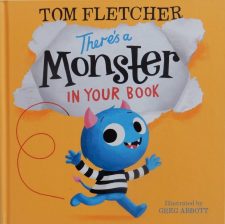
Young Edward comes from a long line of archaeologists but, despite determined efforts, is yet to make his first discovery. Then one wet night, the lad unearths, or rather falls over something that looks promising; it’s a strange egg.
Edward takes it indoors for investigation and a spot of TLC …

When the egg eventually hatches, Edward is more than a little disappointed to discover that it’s nothing more exciting than a bird; albeit a very helpful, loving one. Disappointment number two comes when Edward realises his bird is unable to fly.

To cheer himself up, the boy takes himself off to his favourite place, The Museum of Ancient Things and it’s there he learns that after all, his find is indeed a momentous one– a Dodo no less.

Now Edward has, not one but two great finds: an extraordinary friend and companion and a rarity from ancient times. He has also earned himself a place on the wall of fame alongside the other esteemed members of his family.
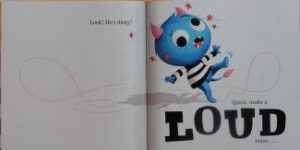
With its scientific underpinning, this is an unusual and enormously engaging tale of friendship and self-discovery. The gentle humour of the text is brought out beautifully in Celeste Hulme’s avant-garde, detailed illustrations: every turn of the page brings visual delight and much to chuckle over.

Diggersaurs
Michael Whaite
Puffin Books
If you want a book for pre-schoolers that rhymes, is full of delicious words for developing sound/symbol awareness, is great fun to use for a noisy movement session and is characterised by creatures that are a fusion of two things young children most love, then Diggersaurs is for you.
A dozen of the mechanical beasts are to be found strutting their stuff between the covers of animator Whaite’s debut picture book; and what’s more they’re all working together in a enormous construction enterprise.

In addition to the huge monsters, there are some hard-hat wearing humans; but you’ll need to look closely to discover exactly what they’re doing and saying. That site certainly appears to be something of a hazardous place to be working alongside those earth-shaking, smashing, crashing, crunching and munching …

pushing and shoving, stacking, spinning, deep hole drilling, moving, sweeping mechanised giants.

I’ve signed the charter  

Me and My Dad

Me and My Dad
Robin Shaw
Hodder Children’s Books
It’s small wonder that the little girl narrator of this wonderful book has such a powerful imagination: it’s due in no small measure to the fact that, ‘the best bit’s at the end’ Not the end of the book although that is also true; the end referred to in the story is at the end of the road, the end of their journey; the place where a father and daughter are heading when they set out together. That though is getting ahead of the story.
To reach their destination, they walk through an alleyway with a puddle that might well have crocodiles in; then continue beneath the brick viaduct carrying the railway line with its rumbling, roaring trains; past the castle-like house wherein dwells a sleeping princess just waiting for her prince to come.

Mrs Pot’s plant shop causes the walkers to halt briefly for a sneaky peep inside …

and then come the pet shop and the ironmongers with its old metal bins on sale – perfect for blasting off into space … In fact every single place father and daughter pass sends the little girl off on another flight of fancy until at last, the end IS in sight – Buntings Bookshop and Café awaits. Hurray! Now it’s time for a delicious hot chocolate and a snuggle-up read together: what better way to end a walk.

With it’s irresistible join in phrase this is an utterly enchanting read and one of the very best father and child books I’ve seen in a long time. Animator, Robin Shaw’s detailed scenes have a soft luminescence about them, which is perfect for the fusion of the real and the imagined he conjures up.

I’ve signed the charter  

Paws Off My Book

Paws Off My Book
Fabi Santiago
Scholastic
Giraffe, Olaf is something of a bibliophile and so is delighted to discover a new book. Enter Wilbur, (who appears to be a Rockhopper penguin,) all of a bluster and determined to demonstrate the ‘right’ way to read.
He however, is not the only one who thinks they have the monopoly on the right way to read; for he’s closely followed by first, Matilda, then Vincent – he knows ‘ALL about reading’ – really?
Then come Felicia flamingo,, and finally, banana- wielding Eduardo. His demonstration results in a resounding …

After which, the long suffering Olaf has had enough and trots off for a spot of reading alone … “Do not follow me. Do not even think about it.” he warns his would-be teachers.
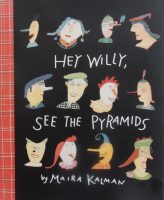
Before long though, apologies have been made, and accepted and Olaf has a splendid idea concerning the best way to read.
Now if you’ve looked at the title page of this wonderful book, you might guess the nature of the punch line that is concealed beneath the flap in the right hand corner here …

We all have our favourite places to read and favourite ways of being when we read; comfort being an essential element and of course, a book worth reading. What Fabi Santiago so amusingly shows is that there is no one right way: what feels right for a giraffe will not feel right for say, a kangaroo or a crocodile or a monkey, let alone a flamingo. They all bring different things to the reading experience and each is so busy being right that the importance of the book itself is lost. And so it is with humans..
I come to this book with particularly strong feelings about the way in which children are now being taught to read with a narrow, one size fits all approach from the outset. And what they are being offered by way of early reading material quite frankly appals me. Consequently this is the message I’m finding in Fabi’s hilarious, luminously coloured tale. Other readers will likely make something completely different from it. However I’m sure everybody will agree that the final scene showing the enjoyment of a shared reading experience, with or without its final throwaway line, is what we should all be striving for.

I’ve signed the charter  

Tiny Dinosaurs / Dance Is for Everyone

Tiny Dinosaurs
Joel Stewart
Oxford University Press
Daisy is dinosaur mad: so says Rex, the canine narrator of this enchanting picture book. Such is her passion that Rex has to endure all kinds of adornments …

and engage in all manner of dinosaur-like behaviour.

Daisy’s mind is filled with dinosaurs: wherever she and Rex go they keep their eyes peeled for the creatures until one day, right in their very own garden they discover … dinosaurs.
These dinosaurs, Rex informs us, are not large but perfect Daisy-sized creatures. The trouble is, they seem to be all that Daisy is interested in and so …

Everywhere he goes, reminds Rex of his pal: but Daisy won’t even notice I’m missing, thinks Rex.
To say what happens thereafter would be to reveal too much; let me just say that the story reminds me of the opening lines of a song, a Dutch teacher friend of mine once taught one of my nursery classes: ‘Make new friends but keep the old/ Some are silver but the others are gold.’

Dance Is for Everyone
Andrea Zuill
Sterling
There’s a new member in Mrs Iraina’s ballet class: a rather large one with a very long tail. Language is an issue, but she’s a hard worker and able to follow the others so she’s allowed to stay. She does have a tail issue too,

though that is less easy to cope with, on account of that language issue; and the class members are wary of upsetting the newcomer.
Teacher and class together come up with a plan: they create and learn a new dance called “The Legend of the Swamp Queen” starring Tanya, as she’s now called: a role that requires a spot of cummerbund wrapping to keep that errant tail in check …

The audience are enchanted; but the following day, the star is nowhere to be seen …
After some time however, the class receive an invitation to a very special performance …
Droll visuals and a deadpan text combine to make a delicious demonstration of the ‘no holds barred’ idiom.

I’ve signed the charter  

Rainbow & Opposites / Little Mouse’s Big Secret

Rainbow
Opposites

Jane Cabrera
Templar Publishing
Pleasing design and adorable illustrations are the hallmark of Jane Cabrera’s books for the very young. Her two latest offerings have both those qualities.
Rainbow has die-cut arched pages that build up to form a rainbow.
It’s a fun board book to enjoy together and each colour spread, with its named items …

could make a great starting point for adult and child to participate in some shared storying.
Opposites uses flaps and while young children acquire concepts such as slow/fast and wet/dry from real life experiences, books such as these can facilitate this development in an interactive, playful way, helping to reinforce the vocabulary.

Here you can play a game with your child or children by asking them to guess what is hidden behind each interesting shaped flap before being allowed to open it. This game also introduces the idea of predicting as an important reading strategy.

Little Mouse’s Big Secret
Éric Battut
Sterling
Little Mouse finds a yummy red apple on the ground and decides to keep it a secret. He buries it. Shhhh! Don’t tell. Friends pass by and each wants to know what Mouse is hiding. “It’s my secret, and I’ll never tell,” is Mouse’s reply to Bird, Turtle, Hedgehog,

Rabbit and Frog.
Nature takes its course and eventually, Mouse’s secret’s out – well and truly. Mouse takes a big decision; he shares and all his friends reap the rewards.

The spare, repetitive text and cute yet subtle illustrations make this best for sharing one-to-one or with a very small group of pre-school children. Equally, it’s ideal for beginning readers who are likely to be sufficiently savvy to realise what mouse doesn’t: that right behind his back, a tree is growing …

I’ve signed the charter