Whisper on the Wind / Iceberg

These are two picture books from Allen & Unwin – thanks to the publishers for sending them for review.

Whisper on the Wind
Claire Saxby and Jess Racklyeft

A gorgeous, lyrical cumulative tale celebrating the ocean and its wonders with equally gorgeous watercolour illustrations that perfectly capture the words and spirit of Claire’s writing.
Young Ren lies asleep dreaming in her lighthouse bedroom: ‘This is the whisper / in Ren’s dream’ we read, as the wind captures that whisper whisking it across a moonbeam lit dreamscape filled with playful fish and dolphins diving in the swirling sea.

It reaches a small sailing boat whereon a sailor with a net catches the whisper, fathoms its message and knows just where she must go. And so she does in good time for a perfect start to the day for two people, for love has a special power of its own.

Childhood magic is encapsulated in both Claire Saxby’s multi-layered text and Jess Racklyeft’s powerfully evocative illustrations that together gently pull you into the ocean’s depths and back to safety on land once more.

By the same creators, and now in paperback is

Iceberg
Claire Saxby and Jess Racklyeft

In a poetic text sophisticated and yet accessible, Claire presents the life story of an iceberg through the changing seasons of its Antarctic location. To read it aloud is music to the ear; to gaze at each richly layered illustration is to immerse oneself in the natural beauty of an awe-inspiring landscape. To experience the two together is artistic richness indeed.

As you open the first page prepare to be taken on a journey above and below the ocean: you will see penguin tracks, orcas’ shadowy shapes and spy seals and seabirds – terns and cormorants – and a multitude of other life forms that are all part and parcel of an environment that is at the same time seemingly endless, full of life, capable of renewing itself, yet frighteningly fragile.

Such a brilliant gatefold illustration

This stunning book draws our attention to the melting Antarctic snows, suggesting subtly during the journey and asking much more strongly in an afterword, that we humans do everything within our power to address the effects climate change is having and will increasingly have, and thus protect and preserve the fauna and flora of an environment that is unlike any other.

It’s the Journey not the Destination

It’s the Journey not the Destination
Carl Honoré, illustrated by Kevin & Kristen Howdeshell
Magic Cat

The author of this book urges readers who undertake any of forty adventures here to take their time. That’s the only way to discover what makes each place special and worth a visit. I’ll never forget one time I was staying in Jaipur when a group of tourists from the USA rolled up to the hotel and one of them said, “Hey, what country are we in now?” Their whistle-stop tour to several parts of the world certainly wasn’t about the amazing people, the sights, sounds and smells – the real things that makes each place special, which they were going to miss out on with this attitude. It’s a pity they’d not been able to read what Carl Honoré has to say before setting out.

The book has four main sections: Journeys on Foot, Journeys by Bike, Journeys by Boat and Journeys by Train. These slower modes of transport have been deliberately chosen by the author as being most suitable for those who want to savour the sights, sounds and smells both of the places they stop at and what they pass as they travel. Every section starts with a world map locating each journey.
No matter which of the Journeys on Foot you choose, doing it with mindfulness will make all the difference. Otherwise you’ll likely miss the possibility of seeing a sloth hanging upside down or even better, swimming in the blue waters of Costa Rica’s Tenorio Volcano Park, a dazzling tropical rainforest. And you’ll most certainly not feel the ancient spiritual power of the enormous Uluru stone monolith or notice how its colour changes with the angle of the sun.
I have visited India’s Rajasthan state almost every year for at least two decades doing a lot of exploring on foot but cycling from Jodhpur to Udaipur (my favourite of the three cities mentioned) to Jaipur is too great a challenge for me though I’ve met people who have done just that.

Each of the cities and environs offers an astonishing mix of ancient and modern; a sensory cornucopia for sure.

Another of my favourite cities, Amsterdam, is included in the Journeys by Boat section. Here you can explore the wonderful canals and elegant architecture, perhaps in a pedalo, savouring every moment of the experience.

When readers turn to the final section, in particular the ‘Hail the Highlanders on the Jacobite Steam Train’ spread they may well recognise the Glenfinnan Viaduct illustrated; that’s because the Hogwarts Express travels over it in the Harry Potter films. However the entire journey offers a visual feast with those amazing mountains and valleys.

No matter which of the journeys you put on your ‘to do’ list, make sure to read carefully the author’s 12 ways to travel ‘Slow’; it could make all the difference to your experiences. Till then you can become a world traveller without leaving your sofa by slowly reading this beautifully illustrated book; but think of what you’re missing.

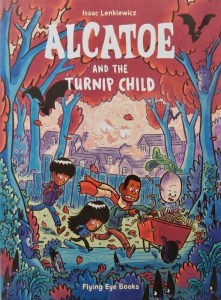
Alcatoe and the Turnip Child

Alcatoe and the Turnip Child
Isaac Lenkiewicz
Flying Eye Books

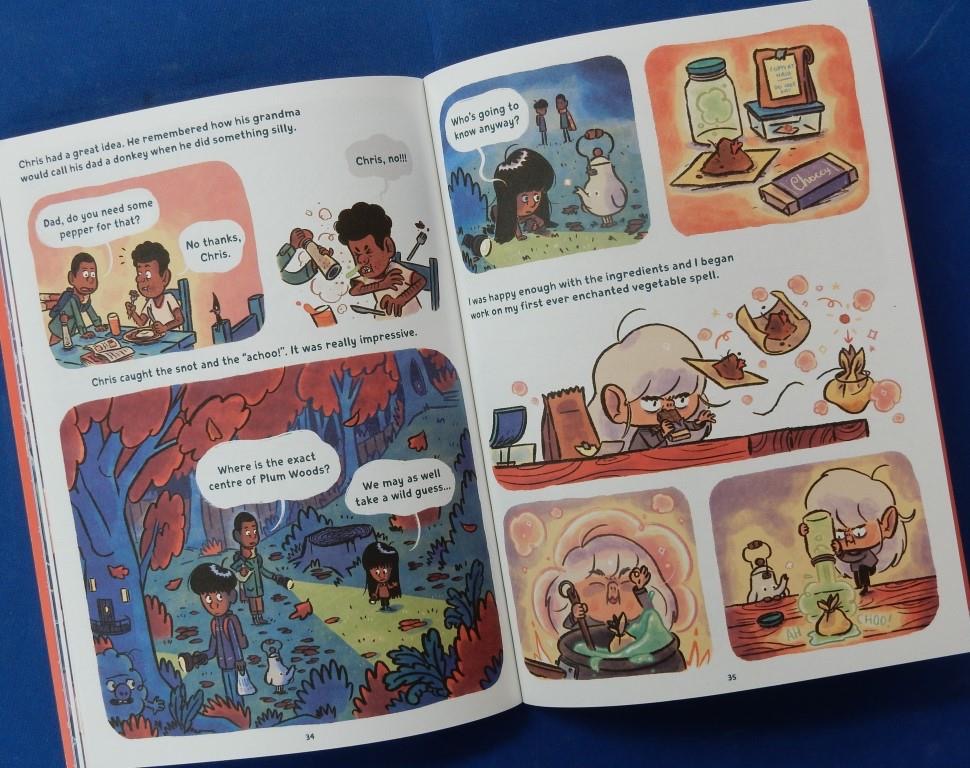
I am a huge fan of vegetables but those grown underground are just not my thing. Nonetheless, I immediately found myself rooting for the Turnip Child in Isaac Lenkiewicz’s magical story told in comic format.

The setting is Plum Woods where spells come alive and witches gather for the Annual Harvest Festival to celebrate the season. Therein among others, resides reclusive Alcatoe the witch who acts as narrator for the tale. There’s also the grumpy Mr Pokeweed, reputedly half goblin who has his eyes firmly set on the main prize at the harvest festival pageant and the local children, three in particular – Emma, Chris and Holly – who are determined to beat him.

Fortunately for them, they come upon a hat belonging to Alcatoe on their way to school and that gives them a perfect reason to visit the witch and enlist her help in growing a prize-winning turnip.

Happily Alcatoe knows just the right ingredients to make magic happen and she wants to get her own back on the one in charge of the pageant; but the three children must gather the items for themselves. Off they go in search of the tail hair of a copycat, the sneeze of a donkey and a chocolate bar.

However, operation champion turnip works just a little too well, astonishingly so for the children.
Can disaster be averted? Perhaps, but only if Alcatoe comes to the rescue – again!

Start with a large amount of creative talent, add several spoonfuls of magic, umpteen vegetables, sprinklings from the condiment containers, drams of determination and the result is one cute character, a fair bit of mayhem and a wonderfully funny, tremendously tasty tale.

All the Animals Were Sleeping / Amazing Animal Treasury

All the Animals Were Sleeping
Clare Helen Welsh and Jenny Lovlie
Nosy Crow

Author Clare and illustrator Jenny transport readers to the dry, grassy plains of the Serengeti where a little mongoose makes his way back to his burrow. As he scurries beneath the darkening sky he encounters in turn giraffes, vervet monkeys, zebras, a herd of elephants – ‘The Elephants’ ears draped like sails. Their trunks muzzled in the dry, dusty ground.’ 

storks, a monitor lizard near the riverbank, 

spotted butterflies and a cheetah family, all of which are sleeping, each in their own way. Finally under a star-filled sky, the little mongoose reaches the burrow where he joins his sisters and brothers curled up with a parent and then he too closes his eyes and at last it truly is a case of All the Animals Were Sleeping.

Lyrically written and strikingly illustrated with gorgeous details of the featured fauna and background flora, this is a gorgeous book to share at bedtime or indeed any time. (After the main narrative are three pages with information about each the animals featured in the story and about the Serengeti itself.)
Add to KS1 topic boxes and family bookshelves.

Amazing Animal Treasury
Chris Packham, illustrated by Jason Cockroft
Red Shed

This large volume brings together all three of Chris Packham and Jason Cockcroft’s titles: Amazing Animal Babies, Amazing Animal Homes and Amazing Animal Journeys.
Chris uses a simple, direct and clear writing style appropriate for the intended young audience and there’s an absolute wealth of information here as readers join a group of explorers who travel the world observing various creatures and in particular their young. There are froglets, baby Komodo dragons, albatross chicks as well as baby earthworms, tiger cubs and meerkat pups and we learn something of how they feed and attempt to stay alive.

Just like we humans, animals need somewhere secure and safe to be a family, a place that is home.
It might be in a building already constructed, it could be underground, in or near water, in a tree but some creatures – banded snails for instance – have ready-made homes. 

Certain animals live in colonies, African termites are one example but others have to work hard to create a safe place just for one (a Bark spider, say). There is so much to discover about Animal Homes and this is a great place to start.

With just the right amount of detail as before, Journeys explains why animals migrate and presents some of those that do including the ‘masters of migration’ – leatherback turtles, red crabs, wildebeest, free-tailed bats, the monarch butterfly and blackcap birds as well as others that make much shorter, but vital, journeys.

For young animal enthusiasts and school collections; it’s ideal for the foundation stage and just beyond.

My First Baking Book / Kids Can Cook Vegetarian

My First Baking Book
David Atherton, illustrated by Harry Woodgate
Walker Books

Great British Bake Off winner David Atherton has a new cookery book for young cooks and it’s bursting with exciting recipes, each with a healthy twist. It’s divided into five sections – breads, cakes, sweet biscuits and bites, pastries and finally, some extra special ‘showstoppers’ but first of all David offers users some helpful tips, ‘tricks’, a few facts and an equipment list.

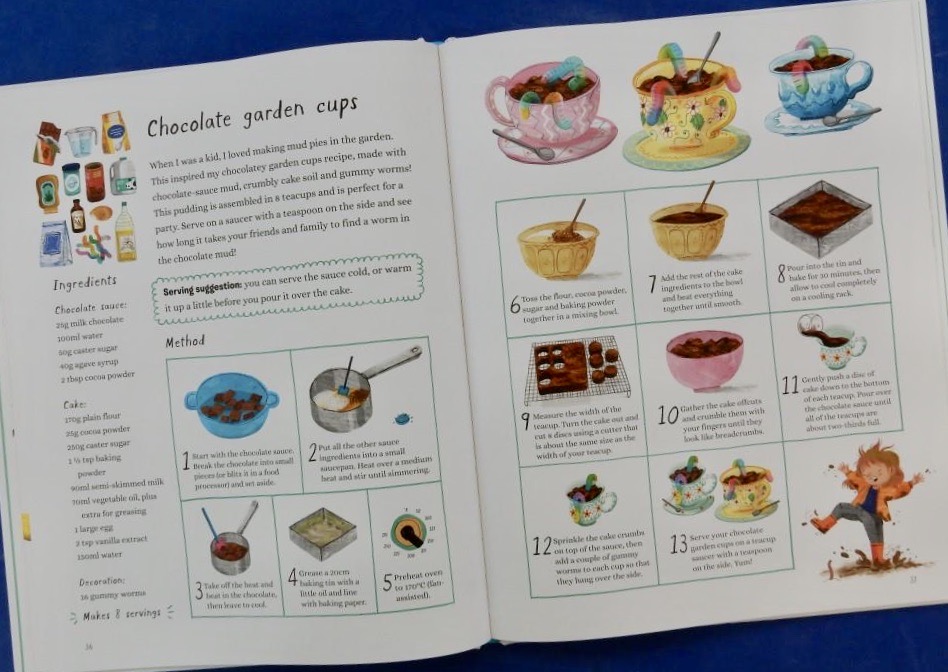
I’ve certainly never thought of baking a loaf in a flowerpot but this is one of the ideas in the bread section and it was interesting to find chocolate chip buns in the same section – a recipe to try when I have young relations staying; that’s if I can tempt them way from all the alluring cakes in this book. The chocolate garden cups remind me of when we visit Udaipur, Rajasthan where the owner of our favourite cafe would quickly rustle up chocolate cup cakes (sans gummy worms) for us when they’d run out of the pre-baked ones. I think those were cooked actually in the cups rather than a baking tin like they are in David’s recipe.

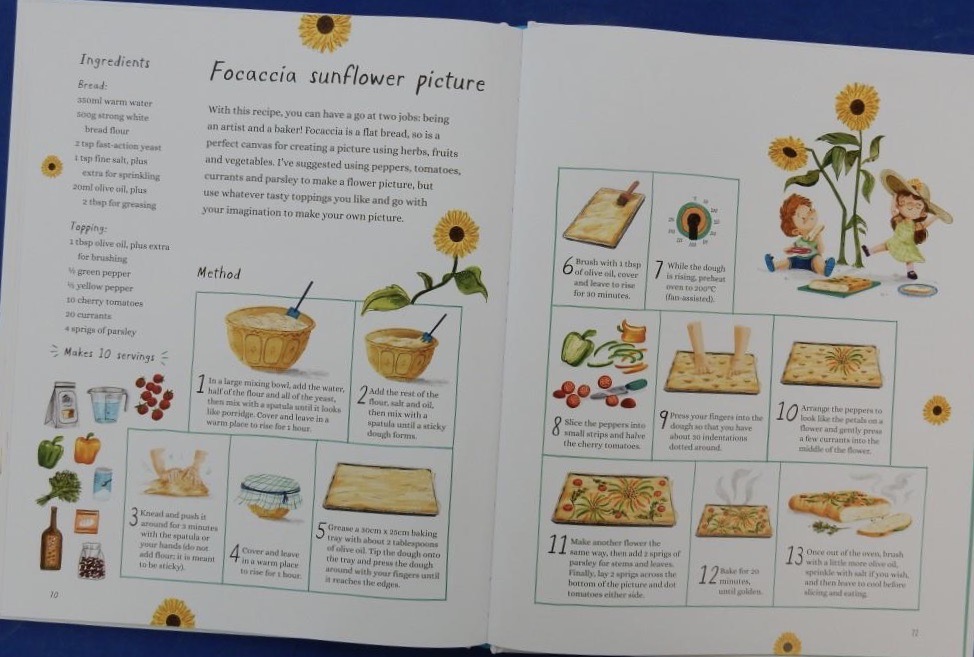
My very favourite idea is the show stopping focaccia sunflower picture. This is actually a flatbread that looks like a work of art in Harry Woodgate’s illustrations. It’s the perfect thing to offer any Ukranian guests you might be hosting, or to bake with a primary school class where there are Ukranian children.
As with his previous books David puts exciting, creative twists on baked goodies that might otherwise seem relatively ordinary and there are plenty of those in this book, each one clearly and alluringly illustrated by Harry Woodgate.

Kids Can Cook Vegetarian
illustrated by Esther Coombs
Button Books

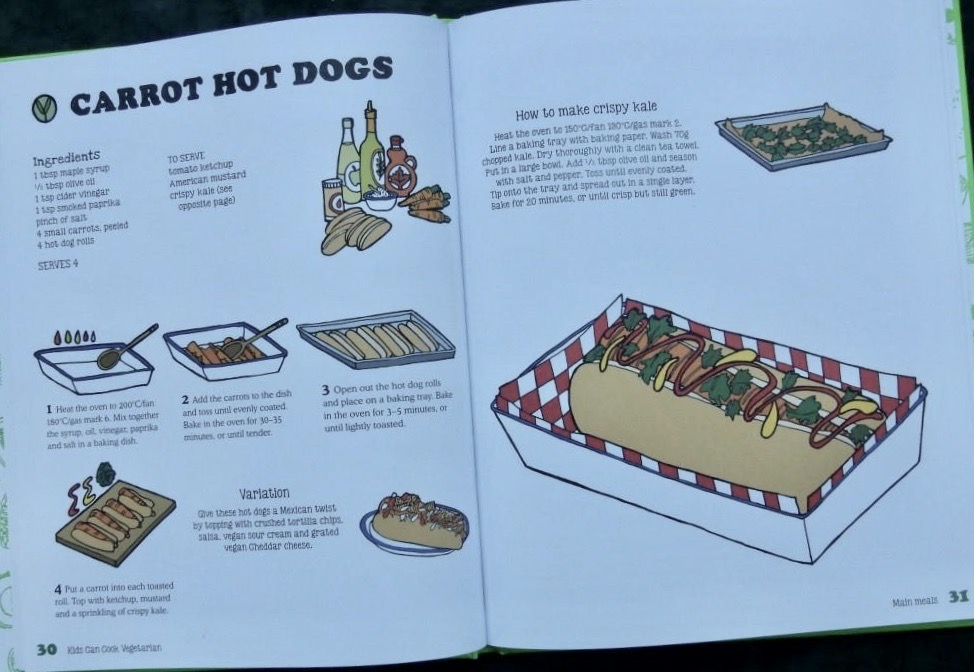
Comprising an introduction giving information on safety, equipment and basic techniques and more than thirty recipes divided into three sections, this is for a vegan like myself, a very welcome addition to the Kids Can cooking series.

First come the ‘snacks and sides’ – savoury treats and three dips. Main meals is the largest part and includes breakfast burritos, falafels – my mouth is already watering at the prospect of making these, a yummy sounding roasted vegetable bowl, bean burgers and carrot hot dogs – now there’s another great idea. 

For those with a penchant for pasta, several of the recipes in this section include some kind of pasta, though I rather like the thought of courgetti, which looks like a noodle dish but uses long thin strips of courgette. This is definitely going on my list to try.

There are six ‘sweet treats’, two of which are for pancakes (blueberry and banana) but the recipe that is top of my must make treat list is the courgette brownies.

With easy to follow, step by step instructions for each recipe, illustrated by Esther Coombs, this book offers hours of fun in the kitchen (under the watchful eye of an adult) and an assortment of goodies to look forward to consuming. Wash those hands, put on your apron and off you go.

I Remember

I Remember
Jeanne Willis and Raquel Catalina
Nosy Crow

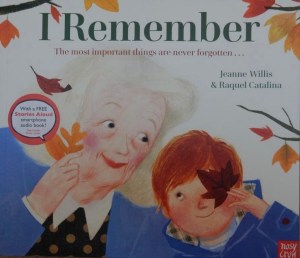
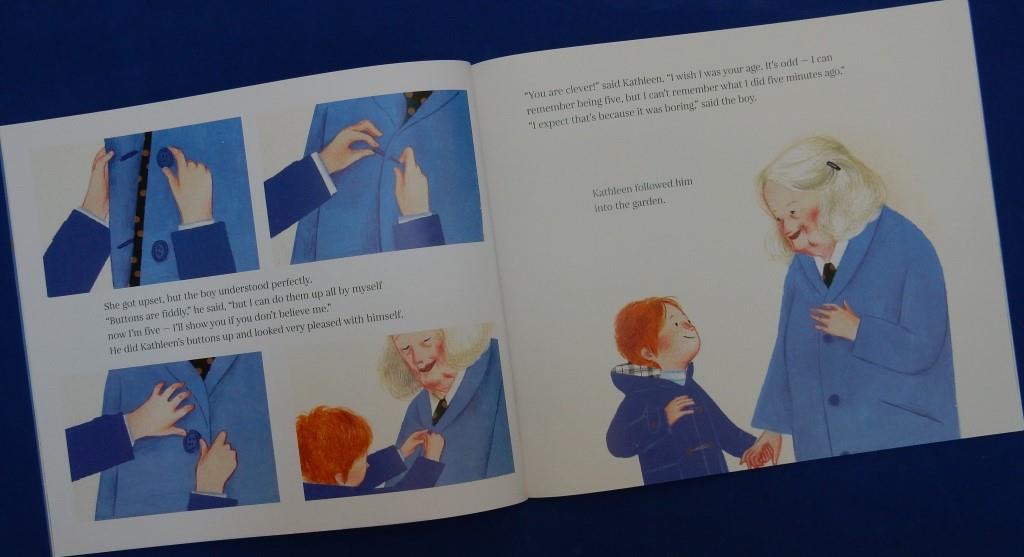
George’s grandma, Kathleen, is having trouble remembering things, even recognising her grandson. When he visits her one afternoon she’s forgotten that the last time he called was just the previous day. George however, is full of love and acceptance of his grandma’s forgetfulness and they share a wonderful time together as they eat a chocolate biscuit between them and go to play outside in the garden wearing their blue coats. Kathleen has a problem with her buttons

and then as they walk out together she explains how she is able to recall being five but is unable to remember what she did just five minutes earlier.

In the garden George involves his gran in some pretend play with her as an astronaut, himself as pilot of their spaceship (the garden bench) and the pigeons as aliens. When George climbs a tree, Kathleen suddenly becomes anxious but he quickly comes to her rescue and they go in together. There’s further confusion and George reminds her who he is as they look at a photo of when they were both younger.

After shedding a few tears, Kathleen joins her grandson in a song and dance until they’re both in need of a rest.

All ends happily with George knowing that even though her mind might forget, her heart never does: that shared love will always be there transcending all else

This is an important and beautifully told story of the effects of dementia, memory loss and confusion ,, the effects of which some children may well recognise in people they know and love. George’s way of dealing with how Kathleen is affected will reassure youngsters and Raquel Catalina’s brilliantly expressive illustrations portray the intergenerational love between the two characters perfectly. A real treasure for sharing at home or in school.

The Odd Fish / How to Spot a Dinosaur

Introducing two recent Farshore picture books – thanks to the publishers for sending them for review.

The Odd Fish
Naomi Jones and James Jones

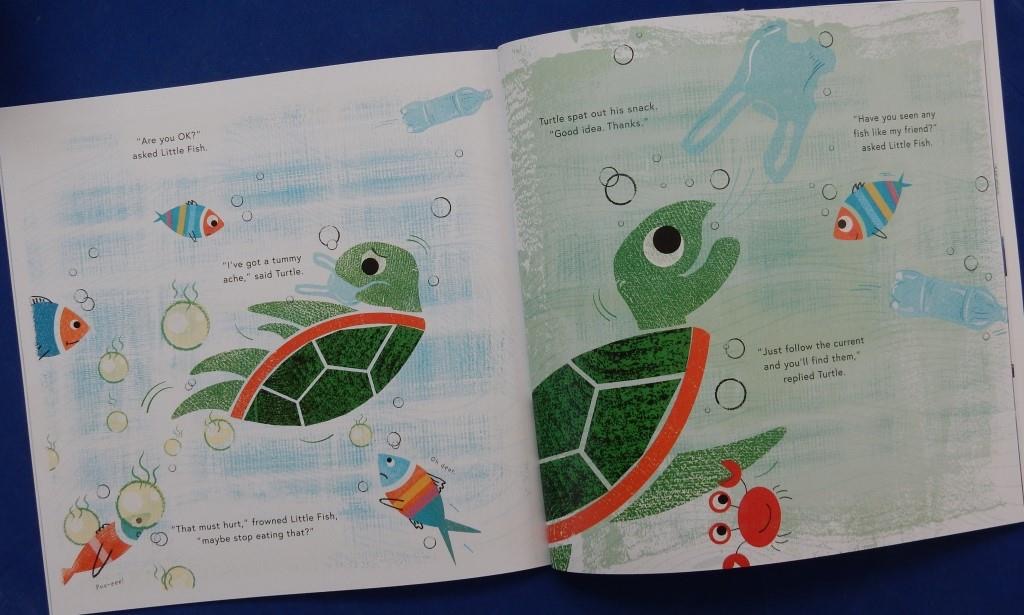
The inspiration for this eco-tale came from the author and illustrator’s then two year old son watching Blue Planet 11 and being unable to differentiate between the real fish and the plastic floating in the ocean. Equally unable to do so is the helpful Little Fish out swimming with her family who comes upon Odd Fish bob, bobbing along alone and assumes that he’s become separated from his family and must be lonely. She suggests she and her shoal help find them and while searching they come upon a seashorse who says that if they follow the current they will find others like Odd Fish. They swim on and come upon and untangle Octopus caught up in a fishing net, have a narrow escape, come to the aid of a turtle endeavouring to eat a plastic bag

and finally there in front of Little Fish is a whole school of odd fish of various shapes, sizes and colours: ‘There’s too many odd fish to count! Where did they all come from?’

The placing of text and images ensures this gentle story flows along beautifully and it’s impossible to avoid the fact that sadly we humans have to take responsibility for what Little Fish encounters – a huge mass of plastic that is a constant danger to the creatures of our oceans. Naomi reminds readers of this on a final spread stating that around 12,000,000 tonnes of plastic finds its way into the ocean every year and asks everyone at home and in school to help reduce this terrible, potentially deadly, pollution.

How to Spot a Dinosaur
Suzy Senior and Dan Taylor

In Suzy Senior’s bouncy rhyming tale of dinosaur hunting in the park we join two dino-enthusiasts, a sister, and her brother who acts as narrator,. Armed with a book of dino-facts and binoculars, the siblings are sure they’re going to find a fair few of these stomping, roarsome creatures. However after several incidences of mistaken identity,

their enthusiasm turns to disappointment and despair; but then the snack man suggests another location to try. Off they go again until they reach a huge building and lo and behold …

Suddenly a fearsome “ROAAAARRRR!” sends them fleeing for their lives, so they think, but perhaps this too is a case of mistaken identity that can only be relieved by slices of cake and cold drinks. Perhaps then the siblings could be persuaded to take another look inside that large building they dashed from.
After an exciting day it’s time to head for home, safe in the knowledge that there’s no need to bother looking out for dinosaurs as they died out long, long ago …

There’s a gentle nod to We’re Going on a Bear Hunt in this lively quest for prehistoric reptiles that continue to be many young children’s favourite storybook creatures. Such dino-fans will definitely love the various misidentifications shown in Dan Taylor’s humorous scenes of the determined dinosaur seekers.

More Board Book Fun

These are recent board books from Gecko Press and Nosy Crow – thanks to the publishers for sending them for review

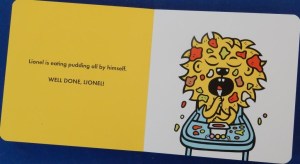
Lionel Eats All By Himself
Lionel Poops
Éric Veillé

Lionel is a lively little lion and in the first story he’s endeavouring to become an independent eater cheered on by a paternal voice as he consumes his peas, his pumpkin, a slice of cake, a banana and some kind of pudding, using either his paws or a spoon. After each food, although most of it has gone into Lionel’s mouth some has splattered onto his mane making it increasingly blobby 

until it’s almost entirely covered. Then after a hearty roaring burp that sends the blobs on his mane flying every which way, the little creature makes it known he wants to get down and as he walks away from his high chair we see a trail of food.
Doubtless little humans will enjoy seeing Lionel’s increasingly messy mane as he receives repeated praise for his eating.

In the second book Lionel is trying to get to grips with pooping in the appropriate place but as he bounces on his trampoline the urge comes upon him and he contemplates dumping elsewhere: on some passing cows, a pair of wild cats, tennis balls, a couple of polar bears, a bus, even the Eiffel Tower and the sun. However with each passing possibility he receives a loud ‘NO, LIONEL, NO!’ aside and it’s that which causes him to seek another possible place on which to poop. Eventually our infant lion bounces right onto his potty and there, not only does he drop his pile of poo but he also has a wee – hurrah! A rousing cheer comes from all the animals and landmarks Lionel very nearly pooped upon. 

Veilllé’s vibrant scenes of the mischievous Lionel in combination with the simple texts with their repeat refrains will delight young humans and will surely make adults laugh too.

Who’s Hiding?
Satoru Onishi

Those who play the Who’s Hiding? game with this book will meet eighteen different animals. For each of the double spreads Onishi uses alternately white or a brightly coloured background. On each of the coloured spreads readers are asked to work out the answer to the titular question with the missing animal(s) merging with the background, although the black and white facial features – eyes, nose and mouth – are still visible.
After the first, which introduces the named characters, on all the spreads with white backgrounds, a creature (or more than one) is in turn, crying, 

angry, with horns, facing backwards, sleeping, facing backwards (the answer is different this time). Finally out go the lights: this spread is black save for eighteen pairs of eyes and the question is “Who’s who?’
An engaging and entertaining alternative to the usual seek-and-find books through which little ones can sharpen their observation skills, for attention to detail is vital and memory is also important. Why does zebra appear to be suffering from the grumps on every spread, one wonders. Is that its normal nature or has something upset this particular animal?

National Trust: Big Outdoors for Little Explorers: Woods
Anne-Kathrin Behl
Nosy Crow

Young children will meet a multitude of creatures in the woodland habitat visited in this book. There’s a woodpecker that creates a loud tap, tap sound as it pecks at the tree trunk with its sharp beak (the slider really demonstrates this well), while among the trees lurks a fallow deer and a hedgehog scuttles by. Minibeasts aplenty are there too – munching caterpillars, ladybirds and a beautiful blue butterfly. Turn the page and a couple of moles have popped up from their tunnels and rabbits hop hither and thither.

Night has come on the final spread bringing out some foxes from their dens and owls are a hunting.

A lovely introduction to some of the fauna, and indeed flora, of a wood.

Greek Heroes: Top Ten Myths and Legends

Greek Heroes: Top Ten Myths and Legends
Marcia Williams
Walker Books

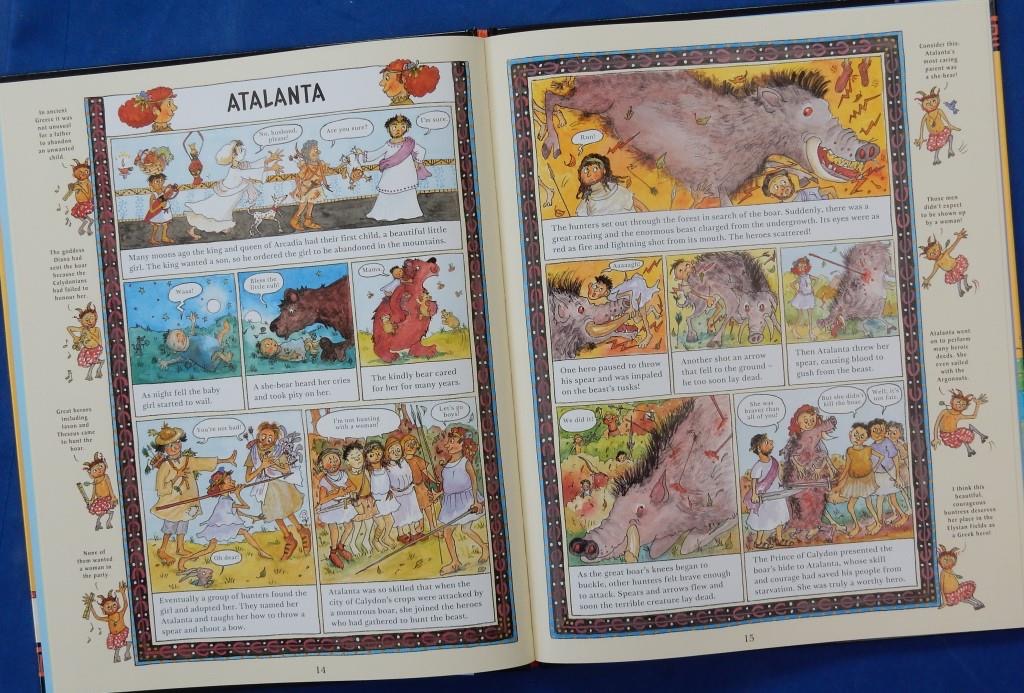
Well-known for her adaptations of classic tales into comic strip format for younger readers, Marcia Williams has chosen ten heroes almost all of whom are male to present in this collection and all having the requisite characteristics – strength, looks, charm and brains. Marcia lists ten heroic essentials on the opening spread then goes on to introduce the gods of Olympus, they who hold in their hands the fate of every would-be hero, most importantly those we meet in this book.

I love the way a cheeky Pan puts down his musical pipes and moves around the beautiful borders augmenting Marcia’s comic strips with his interjections, as readers meet first Perseus, slayer of the gorgon Medusa; Bellerophon destroyer of the Chimera, who loses his winged horse Pegasus in so-doing, and then Atlanta – she who uses her spear to kill a monstrous boar.

The remaining encounters are with Jason, Achilles – he of the vulnerable heel; daring Heracles who spent ten years undertaking the ten labours set by King Eurystheus; Theseus, the stunningly beautiful Psyche, tragic lovers Orpheus and Eurydice and finally, Odysseus of Trojan horse fame who blinds the Cyclops, resists the song of the Sirens is captured and kept for seven years by a nymph, Calypso and finally returns home to his wife Penelope who has trouble recognising him after so long apart.

This is enormous fun for individual readers and a terrific primary classroom resource.

Dead Good Detectives / The Lizzie and Belle Mysteries: Drama and Danger

These are exciting detective stories recently published by Farshore – thanks to the publisher for sending them for review.

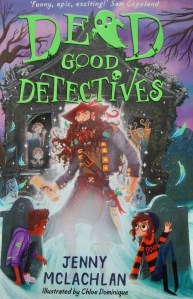
Dead Good Detectives
Jenny McLachlan, illustrated by Chloe Dominique

Here is something completely different from the author of the fabulous ROAR series and it’s way more than ‘dead good’, this is dead fantastic. It features twelve year old Sid Jones who lives with her dad who runs the miniatures museum in the the town of Fathom. Sid has a terrific imagination, a liking for maps and spends a lot of time hanging out in the graveyard with her best friend, the clever, eccentric Zen. Sometimes though she gets embarrassed by his behaviour and slowly starts to avoid his company particularly when she accidentally calls forth a 300-year-old pirate ghost, Bones, by means of a Crunchie bar and a red gel pen as her town prepares for its annual Pirate Day extravaganza.

Bones starts to follow her around, calling her magical for releasing him from his imprisonment in Halfway House, and irritatingly talking of his lost treasure. The peculiar establishment is full of lost souls in limbo trapped by landlord Old Scratch, a truly menacing character and now Sid’s help is required to assist Bones in his search for the treasure, thus allowing him to leave the world of the living at long last.
Time is running out: can Sid and Zen help Ezekiel ‘Bones’ Kittow before it’s too late.

A super piratical adventure – in the words of Bones, ‘a rollicking caper’ it certainly is, but it’s also a tale of being strong enough to be your true self as you grow up, however unconventional that may be. The dead good news is that there’s more to come of the DGD soon, meanwhile chips with curry sauce are the order of the day.

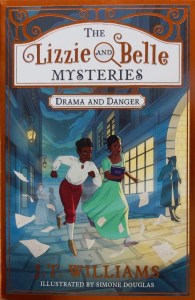
The Lizzie and Belle Mysteries: Drama and Danger
J.T.Williams, illustrated by Simone Douglas

Set in London towards the end of the eighteenth century, this is a riveting tale from author J.T. Williams who is new to me,. It’s particularly unusual as the two main protagonists are black girls, Lizzie Sancho, age twelve, and her new friend from an aristocratic family, Dido Belle. We follow the girls as they try to discover who attempted to murder Lizzie’s father, Ignatius, as he was about to make his debut as Othello at the Theatre Royal, Drury Lane. (Both Dido Belle and Ignatius Sancho were real people.)

There’s high drama indeed as people they know start disappearing; it’s difficult for the girls to know who to trust but they do know there’s a tall shadowy figure lurking and watching them. There are surprises for Lizzie when she discovers things about some of her own family members she wasn’t previously aware of.

Through these enormously likeable, determined people we learn something of the experiences of Black British people in the 18th century, the British slave trade and how some people were striving towards the total emancipation of people of African descent.

A vivid, superbly told historical adventure that is fast paced, unpredictable and filled with genuine peril. With super black and white illustrations by Simone Douglas, I definitely recommend it for older primary readers and beyond. At the end of the book something happens that sets the scene for Lizzie and Belle’s next adventure: I look forward to it eagerly.

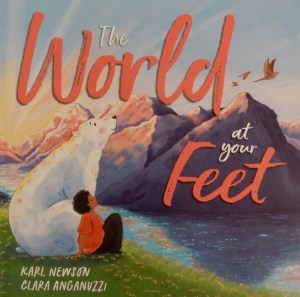
The World at your Feet

The World at your Feet
Karl Newson and Clara Anganuzzi
Studio Press

What a wonderful title for this book, the theme of which is hugely important for children in these times of increasing uncertainty about so many things in a world that I know for some of them, feels scary and out of control.

On the first spread we see a small child standing alongside a group of friendly-looking animals accompanied by Karl’s words that open the dialogue, ‘Who? What? Where? Why? I don’t really know but I’ll give it a try.’
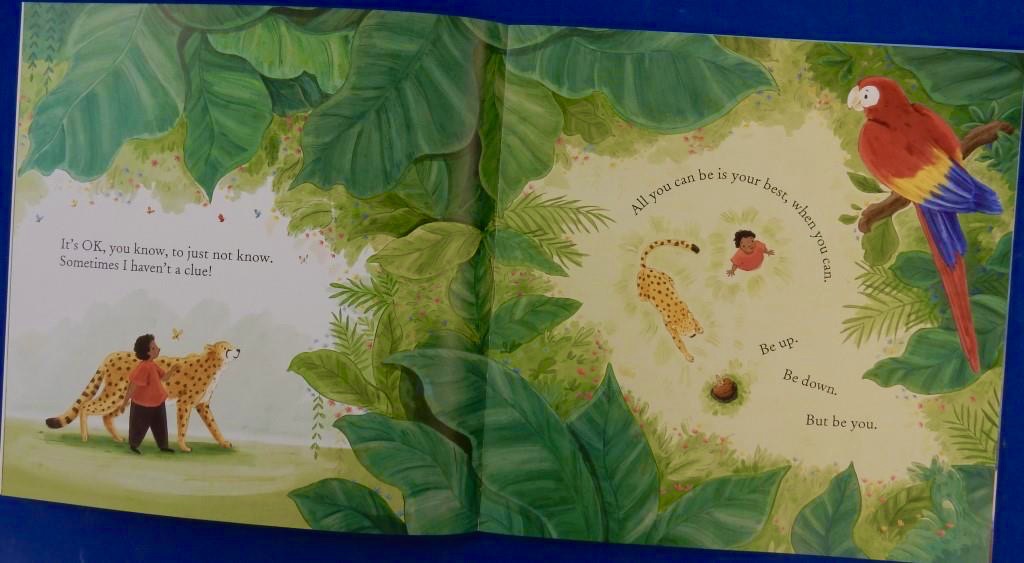
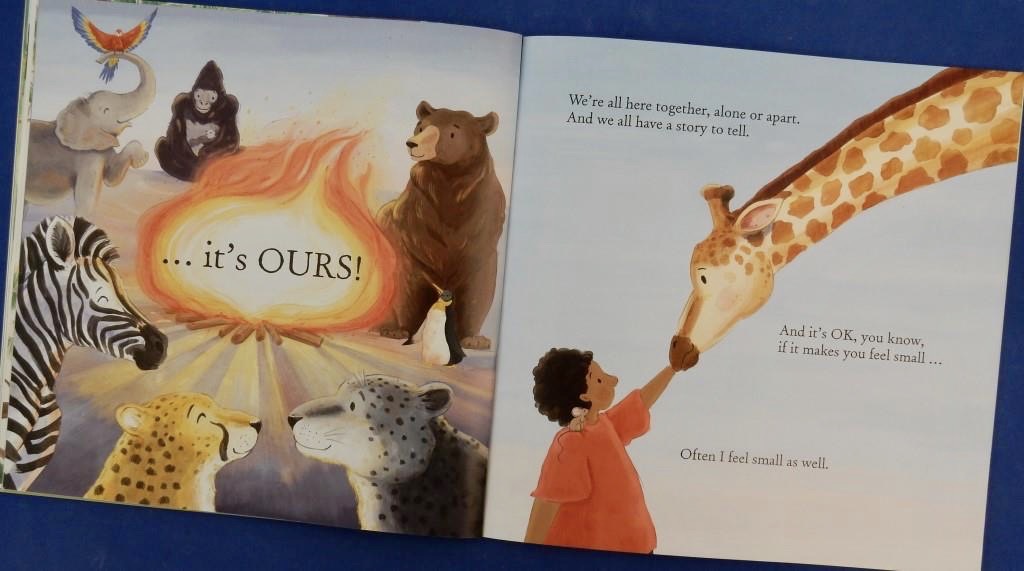
The child/creature conversation continues throughout the book assuring youngsters that it’s okay if you don’t always have the answers. 

What is important is to try your best, be your best self and yes there will be things that don’t work out; there will be things and people that you’ll leave behind or, perhaps lose, although their memories remain, ready to be triggered, sometimes unexpectedly.

There’s a big wide world out there waiting to be shared, to be explored and to be appreciated for its beauty and its diversity. 

All this and much more are conveyed both through Karl’s empowering rhyming narrative and Clara’s stunningly beautiful scenes of the child exploring that world with those animal friends we met on the opening spread.

A superb combination of words and pictures that gently encourage youngsters to go out, discover their potential and to be creators of their own story. A gorgeous uplifting book to share with the children in your life be that at home, in school or anywhere else you can.

A Flash of Fireflies / Space Blasters: Suzie Saves the Universe

Two recent fiction titles from Farshore – thank you to the publisher for sending them for review.

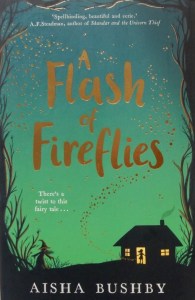
A Flash of Fireflies
Aisha Bushby

We join twelve year old Hazel Al-Otaibi as she travels from Kuwait to England to stay with her great aunt (Grant as she calls her) in her fairy tale cottage in a village until her parents join her. She also has to attend summer school three days a week. Adjusting to her new, strange-seeming life triggers the return of Hazel’s fireflies that had constantly troubled her with demands and challenges when she was younger, leading her once again into compulsive, repetitive behaviours.

At summer school the project is fairytales and the teacher talks of the themes and typical tropes that go along with these popular tales and Hazel and her friend Ruby start their research into the deep dark forests, curses and enchantments contained therein. Hazel feels herself drawn into a frightening adventure of her own where she needs to fulfil increasingly challenging tasks and quests.

Adult readers see that this is the author’s brilliant and sensitive way of presenting what it’s like to live with the despair and compulsions of OCD, while younger readers are given the space to interpret what they are ready for as Hazel’s real and fantasy worlds intertwine. Hazel herself has support from Ruby, her teacher and Grant, who has ways of her own to deal with similar challenges.

By delving into the fairy tale world and exploring its tropes and patterns through new lenses, Hazel feels able to begin to take control and change her narrative: finding the inner strength to share her own story with Ruby and Grant is a vital step to challenging the hold the fireflies have on her.

Thought-provoking, magical, totally original and utterly compelling.

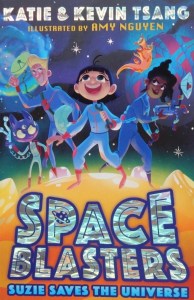
Space Blasters: Suzie Saves the Universe
Katie & Kevin Tsang, illustrated by Amy Nguyen

Meet young Suzie Wen with her head absolutely bursting with amazing ideas but feeling down because her best friend has recently moved right away and with a ban or supposed ban on building any new inventions, she is certainly not enjoying the school holidays. To liven things up she starts watching Space Blasters, her favourite TV series but before you can say ‘Super 3-D TV Gizmo’ she finds herself actually in the series aboard an actual spacecraft, TUBS. A surprise for Suzie but equally for the crew, Captain Jane, Spaceman Jack and Five-Eyed Frank the green alien. However they welcome her, with the exception of Frank who seems put out by the unexpected arrival of a small human, calling her a spy.

Before long though Suzie is feeling part of that crew and on an exciting mission, for it transpires that three moons have gone missing. This enables her to visit three planets, each with weird inhabitants. Then a situation occurs that means Suzie has to step up as Jack and Jane are unavailable for action, perhaps now she can win over Frank at last and play a vital part in finding those moons and saving the universe.

As the story concludes Suzie receives an invitation to remain aboard the spaceship for one more universe saving mission, which nicely sets us up for the next book.

Emphasising Suzie’s inventive talents, this is a fun story sprinkled with Amy Nguyen otherworldly black and white illustrations and with fact boxes of science information to spark readers’ interest.

Kitsy Bitsy’s Noisy Neighbours / Blue Badger and the Big Breakfast

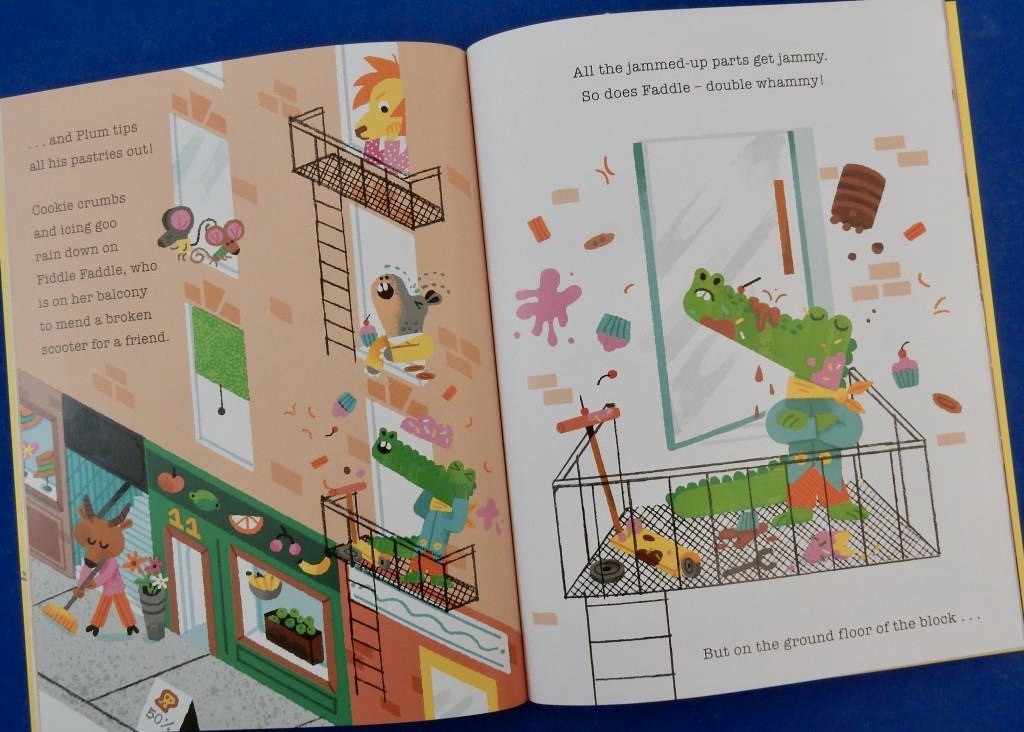
Kitsy Bitsy’s Noisy Neighbours
Polly Faber and Melissa Crowton
Nosy Crow

Life is peaceful in Park View Rise until that is, the sounds of diva Honky Tonk practising her scales and weight lifter Hunky Dory’s exercise regime travels downwards to awaken Tippy Toes’ baby from a much-needed nap, whose wailing upsets Smart Alec hard at work on his latest book. He then resorts to a spot of cacophonous DIY instead and so on until there’s total chaos with flying cakes and other sweet confections.

However just as a fight is breaking out, ground floor resident, Kitsy Bitsy, senses something is amiss and up the stairs she goes to act as peacemaker and guide in how to move forward after the issues her fellow residents have unwittingly caused.

The combination of Polly Faber’s roll off the tongue rhyming text and Melissa Crowton’s comical scenes of the ever increasing chaos and its solution, make this a smashing read aloud to share at home or with a class. Listeners will love the funny names of the characters and their activities, as well as exploring the wealth of detailed illustrations in this celebration of community and high-rise living. 

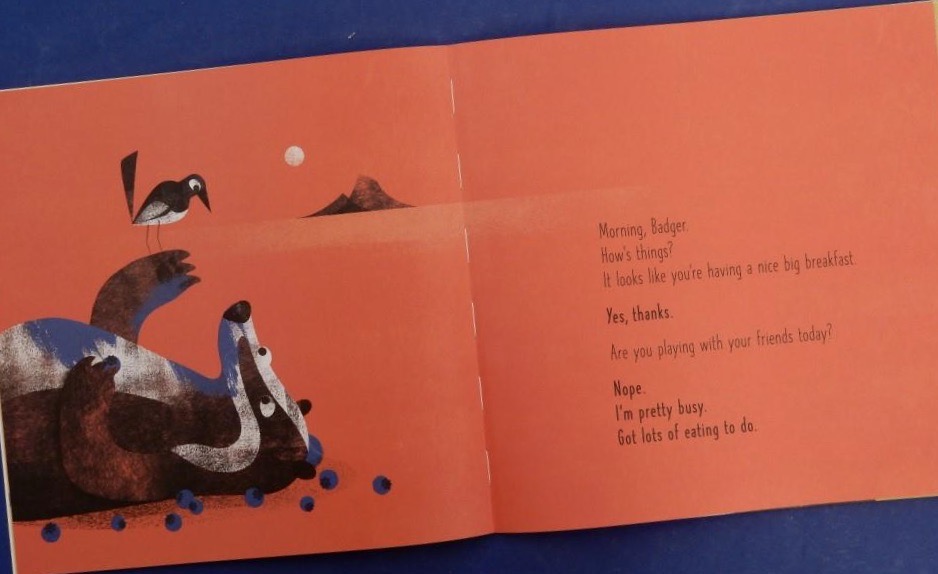
Blue Badger and the Big Breakfast
Huw Lewis Jones and Ben Sanders
Happy Yak

In this second story, despite a blue tinge around his rear Badger no longer feels blue; how could he when he has a delicious breakfast of blue berries to feast upon. 

His best pal Dog however is decidedly sad on account of his lost ball; but even when he discovers this, Badger continues consuming his berries. Has he though unknowingly consumed Dog’s ball too? Owl’s remark certainly makes him think it’s a possibility so Badger goes off and offers to play with Dog. Will he do anything else besides?

With a witty finale, this tale of friendship and putting right what you may however unintentionally have done wrong, will with its deadpan humour both verbal and visual, make child audiences and those who share it with them laugh. The observant among them will also long to shout out to Badger what they’ve noticed but he obviously hasn’t, so busy sating his appetite is he.

The Worry Jar

The Worry Jar
Lou John and Jenny Bloomfield
Oxford Children’s Books

Frida is an inveterate worrier; she worries about big things and little things. She also collects pebbles and the weight of her worries feels as heavy as that of the pebbles; indeed she picks up one for every worry. It might be the weather, what she should wear to walk to school, has she packed everything in her school bag. When she arrives, she worries about where to sit in class and what to do at playtime. All these things leave her rather left out of things and weighed down with pebbles. Then at playtime she comes upon a shiny black pebble on the ground and puts it in her pocket. Still she worries though, about having tea with a friend and at bedtime, about a lost toy, Rabbit. Instead of her usual cuddly companion, she takes her new pebble to bed; it’s warm and smooth. Could it work as a substitute for Rabbit perhaps.

The worries continue all week; then on Sunday, Frida’s favourite day her beloved Granny comes to visit. Granny senses her anxiety and as the two make jam together, she tells Frida that everybody has worries, even herself, and worrying only makes things worse.

Perhaps Granny’s large empty jar might help as a collector of Frida’s worry pebbles? It’s definitely worth a try, so in go all the pebbles save her special black one. Several days pass: has Frida finally been able to put that black pebble in the jar with the others? What do you think?

Perceptive and empathetic: Lou John’s telling with Jenny Bloomfield’s carefully observed illustrations that are full of sensitivity and beautifully capture Frida’s emotions throughout, show young children that it is possible to manage those anxious feelings that beset us all from time to time.

Everything Changes / When You Joined Our Family

Everything Changes
Clare Helen Welsh and Åsa Gilland
Little Tiger

A parental break up is never easy for a young child and it’s certainly challenging for the young narrator of this picture book.

Clare Helen Welsh is a perceptive and skilled writer who handles difficult topics with great sensitivity, always keeping in mind that she’s creating a compelling story that is also a source of acknowledgement, guidance, and comfort. Through her sensitive words and Åsa Gilland’s exquisite illustrations we see and feel the emotional upheaval of the child from the time Mummy and Daddy announce one summer’s day against the backdrop of the seashore, that they can no longer live together.

The parents in this story both clearly very much love their child and using the natural world against which to have this story unfold is, like The Perfect Shelter, inspired. Herein we see the changing seasons as we follow the changes in the life of the three characters through the eyes of the child. Autumn brings a new house for dad, a garden with trees that shed their leaves forming a ‘blanket of red and orange’ and strong wind that causes the little one to wonder, ‘Was it my fault?’ Dad’s reassuring explanation in response calms his daughter’s inner turbulence however and her worries dissipate.

Winter brings snowy days and discussions with both mum and dad, further reassurance of their love for the narrator for ‘ it isn’t about hoping that the storm will pass … it’s about learning to dance in the raindrops!’

The story ends with a celebratory sixth birthday gathering of adults and children and the uplifting narrative conclusion, that change can bring good things and once you know that, everything changes. Åsa Gilland uses a changing colour palette for her striking illustrations that capture superbly the gamut of emotions and the different seasons of the text.

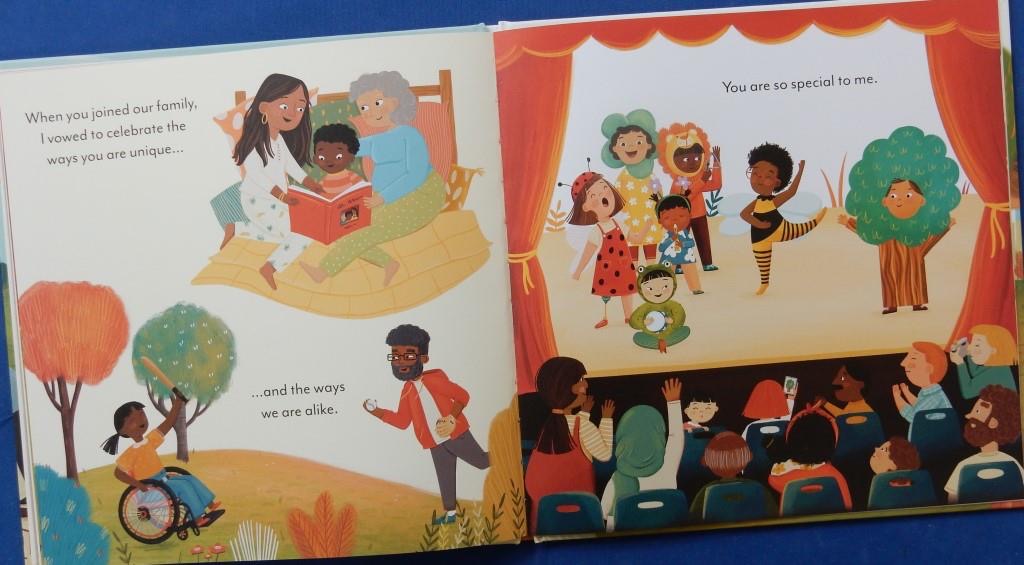
When You Joined Our Family
Harriet Evans and Nia Tudor
Little Tiger

This is a wonderfully warm look at the experience of adoption and a celebration belonging in a family, seen through the eyes of several adopters. Love is the key element that unites a family and love is what shines out from Nia Tudor’s illustrations on every spread.

The children adopted might look different from their new parent(s), be differently abled, tiny babies or of school age, it matters not. In this book we share in the entire adoption experience from those very first meetings to feeling a part of something unique and special:

there’s excitement, strangeness, reassurances, pride, unconditional love, a sharing of stories, sometimes the meeting of a new brother or sister and the beginning of new family traditions. All this is presented through a straightforward, affirmative text and Nia Tudor’s beautifully patterned, details illustrations that underscore the positive nature of Harriet’s words.

Both books are musts for primary school collections. I’d also recommend any family experiencing a break up to get hold of Everything Changes, and any new adoptive parents to have a copy of When You Joined Our Family to share.

Alice Eclair Spy Extraordinaire!: A Recipe for Trouble / Mouse Heart

These are two gripping adventures set in the past – thanks to Nosy Crow the publisher for sending them for review.

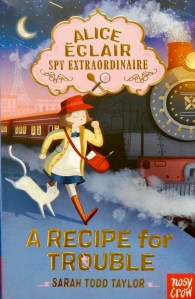
Alice Eclair Spy Extraordinaire!: A Recipe for Trouble
Sarah Todd Taylor

This adventure story is set in 1930s France and stars thirteen year old Alice Éclair who despite her young age, is a highly skilled cake maker and decorator at Paris’s famous pâtisserie, Vive Comme L’Éclair run by her widowed mother. During the day Alice creates scrumptious masterpieces, cakes and pastries for her mother’s fortunate customers. However this girl, aka Little Phantom, also has a burgeoning talent: for several months, she has been leading a double life training as a secret agent. Who the spymaster is, she doesn’t know, but she has her suspicions. 

Then comes the possibility of an exciting mission and Alice truly wants to undertake it for her country. A spy will be travelling on France’s most glamorous train, The Sapphire Express but she of course cannot be a passenger, instead she uses her powers of persuasion and her baking talent to obtain a job as pâtissière aboard the express, Monte Carlo bound. All she has to do now is satisfy the maître d’ and keep her eyes wide open so she can spot the spy L’Anguille without arousing any suspicions. No easy task, in fact it’s a series of challenges especially as the passengers all appear to have secrets; can she trust anybody at all?

The plot – in cake mix style – thickens as she narrowly escapes discovery, putting her very life in danger in a culinary, code-cracking extravaganza confected by Sarah Todd Taylor that makes truly enthralling reading. Grab yourself a chunk of cake, a mug of coffee (iced, if this weather continues) and be prepared for thrills and spills aplenty: satisfaction guaranteed, especially as its finale paves the way for further treats and a new mission for Alice.

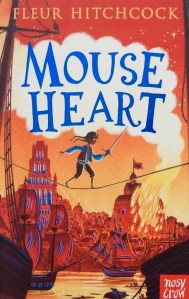
Mouse Heart
Fleur Hitchcock

This thrilling tale is set in the reign of Queen Ann 11 and stars thirteen year old Mouse. Mouse by name but anything but by nature, this foundling lives contentedly with the Hawkins family in the Moth Theatre beside the river in Bristol, along with other actors – Walter, Ambrose and Valentina. The Hawkins have two children, Eve who continually makes trouble for Mouse and her kinder brother.

One day a blood-spattered Walter rushes into the theatre saying he’s seen a murdered woman; he tries unsuccessfully to hide himself but is then arrested for the murder and taken off to prison. Certain that her friend Walter is no killer, Mouse determines to find out who did murder Lady Grey. In the meantime she takes food to Walter every night, cooked by Kwadwo a runaway who is hiding in the theatre, mending and cooking for the residents.

However, as further killings take place, the stakes are raised as the plot twists and turns, with Mouse unsure who she can trust but having a strong feeling that Valentina who is behaving very strangely, is the likely murderer. If so, how can she unmask her? Her investigation leads her into some extremely dangerous situations, but it’s not only her own life that is threatened by this mysterious cold-blooded killer. Mouse must be cunning, swift and fearless if she’s to keep those she loves safe!

Another breathtaking thriller from Fleur Hitchcock: full of period atmosphere and theatrical detail, this gripping drama will certainly have readers on the edge of their seats until the curtain finally falls – or perhaps it doesn’t …

Together With You

Together With You
Patricia Toht and Jarvis
Walker Books

No matter the weather or the season, the small child in this absolutely gorgeous book enjoys every moment with his beloved grandmother. In spring suitably clad and wearing wellies, a sudden
shower doesn’t wet the two as they dash side by side beneath a large umbrella.

Summer is a time for shorts, sprinkler hosing and sucking sweet ice-lollies together then cooling down under a shady tree. Come autumn it’s time for warmer clothes – a sweater and cosy hat for gran and a fleece and snuggly scarf for the boy narrator as they take advantage of the strong winds for some kite flying fun.

Winter’s chilly days are for wrapping up in soft thick quilts, pulling on furry slippers and sharing a story together especially when it’s followed by delicious hot drinks – peppermint tea for gran and cocoa topped with marshmallows for her grandson. It’s definitely a cuddle right up close season.
Having said all that, it matters not what the weather is, as Patricia Toht’s rhyming narrative confirms, ‘every day spent with you is the very best thing.’ Memories are created from the everyday events they turn into adventures.

Come rain or shine, sweltering heat or frost and snow, Jarvis’ illustrations exude warmth and love at every turn of the page. The jewel-like colours are simply beautiful and the details in every scene, sheer delight.

Grandmothers in particular will love spending time sharing this treasure of a book with their young grandchildren over and over again.

Monster Hunting for Beginners

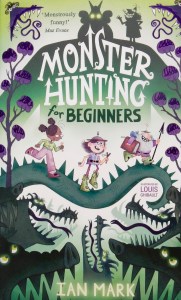
Monster Hunting for Beginners
Ian Mark, illustrated by Louis Ghibault
Farshore

Monster hunting is far from easy, so says Jack and he’s in a position to know, for a scary green ogre has appeared in his garden intent on eating his Aunt Prudence. Jack is no fan of this mean woman who has turned up telling the lad that his highly protective dad has gone off on a round-the-world voyage and asked her to look after him till he returns. Very suspicious and entirely out of character for his risk-averse dad. Hmm. However, Jack seemingly kills said ogre and then looking down as instructed by a sudden voice, finds it belongs to a tiny bearded man who introduces himself as Stoop, a monster hunter of two hundred years standing. This grumpy man hands him a strange book thus making Jack his apprentice, which is far from what Jack wants; he needs to find his father not go hunting monsters. 

Nonetheless he accepts the role, is kitted out and before you can say ‘King’s Nooze’ he’s off to Cornwall where there’s a ‘Category Four ‘ emergency. Now all he has to help is that Monster Hunting for Beginners book, his wits and his catapult. Is he the hero they’re all eagerly waiting for? Perhaps young Nancy can help and Humbert the bear – he may or may not have a magic harp.

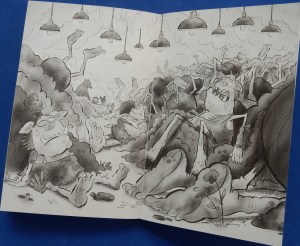
With a fair amount of burping, flatulence and delicious silliness, author Ian Mark’s debut novel is packed with danger, mayhem, marvellous beasties such as crusted hairy snot nibblers, ogres galore, wonderful characters especially Jack who is essentially just a normal kid, plus its sprinkling of traditional fairytale twists, surprises too, and Louis Ghibault’s suitably outlandish illustrations, it’s not since Terry Pratchett’s Discworld novels starring Tiffany Aching that I have loved a fantasy story so much. Book two can’t come soon enough.

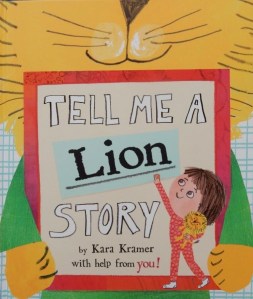
Tell Me a Lion Story

Tell Me a Lion Story
Kara Kramer
Walker Books

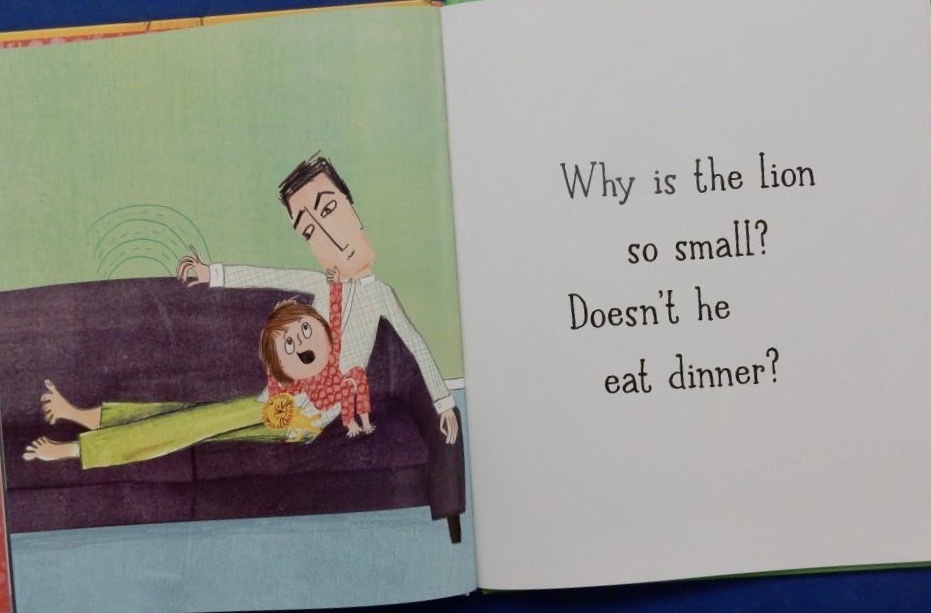
Gently opening one of his eyes, a little girl wakes her snoozing dad and demands he tells her a story – not one of the familiar ‘Once upon a time’ kind but a NEW story about a lion. However it matters not what dad says or how exciting it sounds, the little girl isn’t happy with what’s said: the lion need not be bigger than the sofa, nor smaller than a button 

and that ‘not-so-big-not-so-little lion’ is definitely not called Fred. 

Somewhat nonplussed by his daughter’s constant naysaying Dad suggests they compose the story together with him providing the structural elements and the girl filling in the gaps with details of her choosing (this is where the reader of the book comes in with their own ideas.) Where the lion lives ‘The buildings are made of ——-, gardens that grow singing ——— , shops that sell ———-, and fountains filled with delicious ————- .’ The lion invents a flying ———- . ‘ ROAR! Off he flies into space

destination an unknown planet that he names ———– and sets out to explore.
Inevitably all this is tiring work and eventually the hero returns home, dons his pyjamas and thus the book turns into a bedtime tale. Y-A-W-N.

Kara Kramer’s mixed media illustrations are huge fun and observant readers/listeners will notice details such as the headlines on Dad’s newspaper and that his daughter’s toy lion morphs into the protagonist of the story they co-create. Hugely (dare I say it without fear of interruption from a little girl) imaginative and full of interactive possibilities: a great book to share with one child, several or perhaps even a class.

Puppy Club / Kitten Love

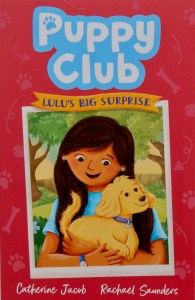
Puppy Club
Catherine Jacob, illustrated by Rachael Saunders
Little Tiger

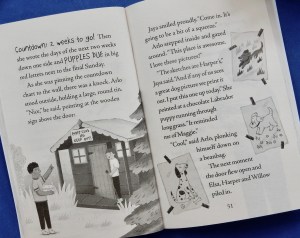
The Puppy Club comprises four fanatical puppy loving friends, Jaya, Elsa, Harper and Willow. They’re all thrilled to learn that Lulu, a relatively new arrival at Underdogs rescue centre owned by Jaya’s Auntie Ashani, and where they help out, is expecting puppies. They’d love a pup each but can they persuade their respective families to adopt one? It doesn’t seem very likely, so to that end they set about ‘Operation PAWfect Puppy. First though they need to decide whether Puppy Club can accommodate two new dog-loving members, Daniel and Arlo, who both appear to have something to offer. 

Oh ‘my woofy word’, the answer is yes. Now all that’s left is to get all those parents on board with the idea of a puppy for each family; it’s certainly going to take a lot of coaxing and convincing but the children are very determined …

With likeable characters, and the seamless embedding of a fair few puppy facts, particularly with regard to adopting a pup, into her narrative, Catherine Jacobs’ story, which cleverly sets readers up for a sequel, is just right for those just starting out on chapter books. Delightful illustrations by Rachael Saunders help break up the text and there’s even a cookie recipe courtesy of Arlo and a dog breed quiz from Daniel and Arlo at the end.

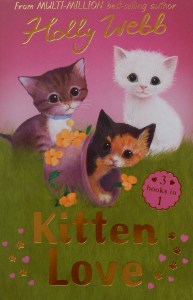
Kitten Love
Holly Webb, illustrated by Sophy Williams
Little Tiger

This bind up of three kitten stories is excellent value for young solo readers who haven’t read the individual books, Lost in the StormThe Curious Kitten and The Homeless Kitten.
Lost in the Storm is young Ella’s kitten Fluff. One snowy day while exploring outside during a snowstorm Fluff can’t find the way home because the snow makes everything familiar look different. She takes refuge in an abandoned house where she discovers a distressed tiny white kitty and the two spend the night together. Meanwhile Ella is distraught as her Fluff isn’t there when she returns from school. Over the weekend Ella searches; she and her pet are eventually reunited but what is Fluff trying to tell Ella? When she too discovers the white furry ball clearly weak and barely breathing, the family must decide if there’s room in that cat basket for one more kitten, if it survives.

The Curious Kitten, Cleo, belongs to Amber. One day her curiosity leads her into a builder’s van when some work is being done across the road and its owner drives off without noticing. The kitten escapes to find herself in a strange new place. Will she ever find her way back to Amber? Perhaps with the help of another kitten lover, George.

Lily has come to love her family’s rescue dog Hugo but what she wants more than anything is a kitten so she’s thrilled to bits when Hugo sniffs out three tiny abandoned kittens in an old sofa while out on his walk in the woods with Lily and her Dad. Even better for Lily is when she hears that the animal shelter has no room for the kittens and as a consequence her parents reluctantly agree to give them a temporary home. Despite all the hard work involved Lily absolutely loves caring for the kittens, especially the little white one she names Stanley. She knows this is only a temporary home for them, though she has a plan to persuade her parents to let her keep Stanley but then things go wrong. Will Stanley become a permanent part of his new family or will he have to go elsewhere? Let’s say there’s an unexpected final twist to The Homeless Kitten

Summer holiday indulgence for cat-loving readers.

Snakes on the Job / Ebb and Flo and the Greedy Gulls

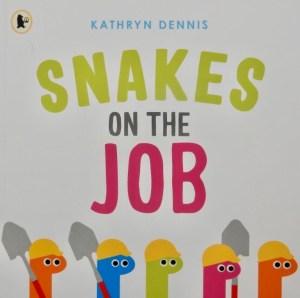
Snakes on the Job
Kathryn Dennis
Walker Books

The Snakes on a Train have become construction vehicle operators in charge of a variety of vehicles – bulldozers, diggers, dump trucks, loaders, cranes and more. ‘They slide into trucks and roll out slow. Hisssssssssssss goes the sound of the brakes.’

Midway through the operation, up rolls a food truck to provide lunch for the workers then it’s back to work once again.
The fruits of their labours is a wonderful surprise revealed just before the end of the story and it looks such a terrific endeavour that some friendly hamsters want to join the fun. What will the response of the snakes be? …
With that repeat sibilant sound and other wordplay, this is an enjoyable read aloud for little ones. They’ll love the bright digital art and the simple tale wherein teamwork is paramount. One to add to your nursery collection or home shelves if you have very young children,

Ebb and Flo and the Greedy Gulls
Jane Simmons
Graffeg

Jane Simmons is a brilliant illustrator and it’s really good to see Graffeg gradually bringing this series with its hugely likeable Ebb and Flo characters back into print. As always there are small disasters – in this instance Ebb gets wrongly blamed for consuming all the sandwiches during the beach picnic. Inevitably the dog is upset and goes off to sulk in her favourite place. Eventually Mum and Flo realise who the real sandwich snatchers are but by this time Ebb has drifted out to sea in the boat. Sulking certainly hasn’t paid off, but will Ebb reach the shore safely? Let’s just say, all’s well that ends well: three characters have learned a lesson but not so the marauding picnic pinchers.

Molly and the Dolphins / I See the Sea

Molly and the Dolphins
Malachi Doyle and Andrew Whitson
Graffeg

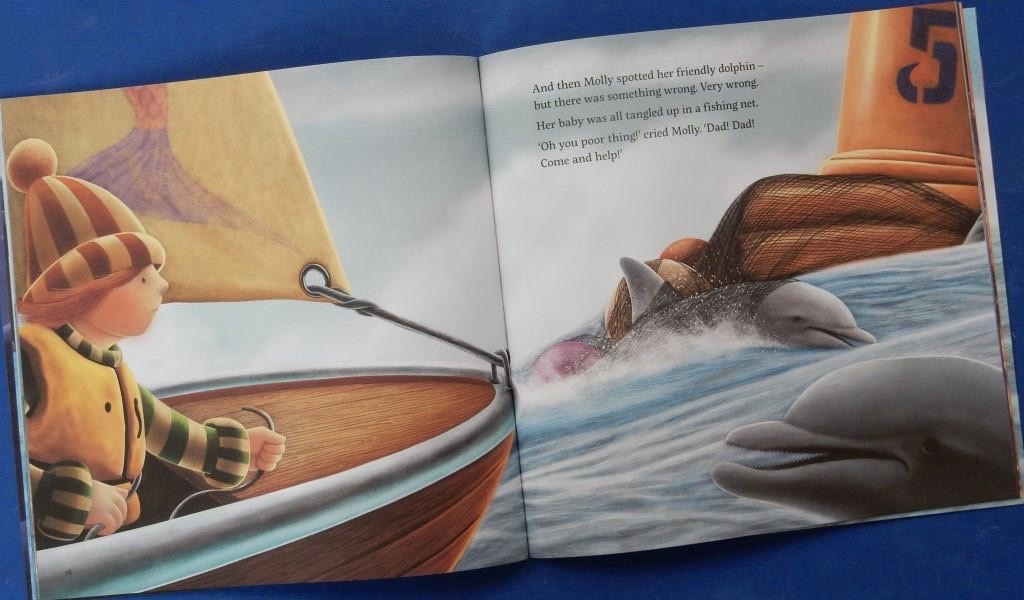
In Molly’s sixth adventure she receives a very special present from her father: a lovely little dinghy that she names The Mermaid. Every morning the two set out in it and Molly learns how to read the wind, trim the sails and ride the waves; however her father begs that she doesn’t try sailing solo until he’s sure she’s ready. One day when out together Molly spies a pod of dolphins and they surround their boat. One dolphin Molly names Dot swims with them every day. Later on though, she’s joined by a tiny dolphin: Dot has a baby.

Eventually Molly’s father declares that she’s ready to sail solo and under his watchful eye off she sets, just her, her boat and the birds under the sky. Suddenly she notices that something untoward has happened to her dolphin friend: the baby is caught up in a fishing net.

Fortunately Molly’s father is able to free it, then throughout the summer Molly shows her human friends Dylan and Amina how to sail while the dolphins play around their boat. A wonderful season passes all too soon and then come the darker, shorter days and Molly realises there are no dolphins.

Suddenly the wind changes direction taking girl and boat far from home. Now Molly is in need of help: how will she find her way back to the safety of the harbour?

With dramatic illustrations and an important ecological message, this is another treat from team Doyle and Whitson.

I See the Sea
Julia Groves
Child’s Play

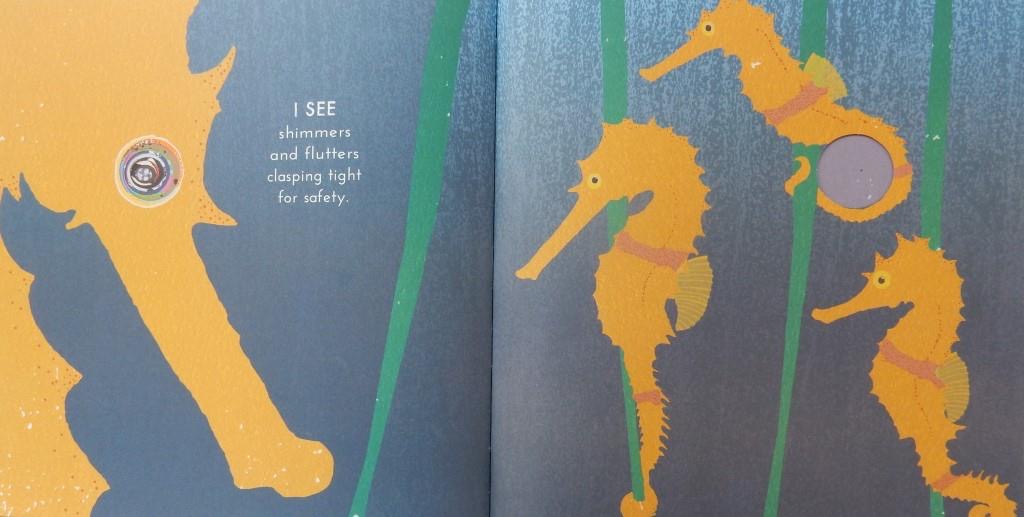
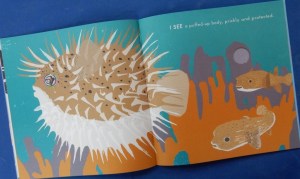
The eye staring out from the front cover of this book is repeated by use of a die-cut connecting hole, which builds up creating concentric circles that form a part of different sea creatures when the pages are turned as readers participate in a game of aquatic I spy discovering in turn a whale, dolphins, an octopus, rays, a turtle, lobsters – nocturnal hunters they, squid, shimmering seahorses,

more fish and finally plankton silently drifting. There is so much to see and enjoy in Julia’s illustrations for this ocean foray that truly captures its awesomeness and majesty while her lyrical narrative beginning ‘I SEE’ on each spread evokes the wonders of the diverse marine life and flows beautifully from one spread to the next throughout.

Backmatter comprises further information about each of the creatures depicted and about environmental threats to our oceans and many of the species completes this strikingly beautiful picture book. It’s surely one that will both capture the imaginations of child readers and at the same time, inspire them to find out more about the astonishing life beneath the waves.

Maths is Weird! / The Periodic Table is Weird!

These are new additions to Little Tiger’s Smash Facts series: thanks to the publisher for sending them for review.

Maths is Weird!
The Periodic Table is Weird!

Noodle Fuel, illustrated by Luke Newell
Little Tiger

The creators of these two funky books employ the assistance of a robot and an alien respectively to present the wealth of information contained therein.


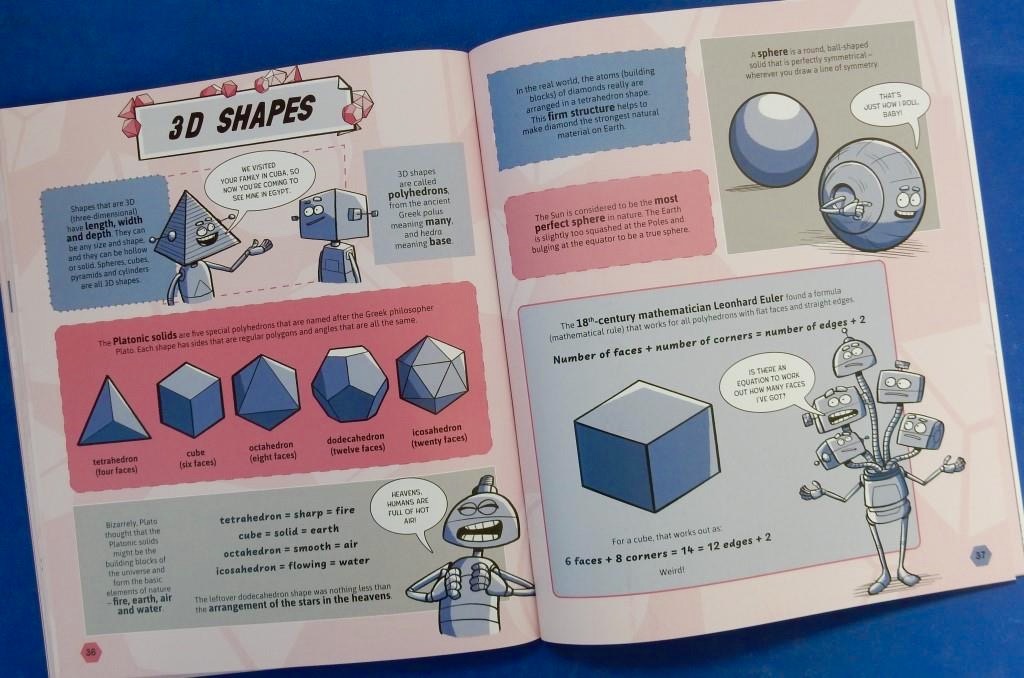
The droids at GigaSmartZ BrainBot Academy, the super-weirdest school in the entire universe guide human students through a mathematical maze, stopping to discuss a wealth of vital topics relating to numbers, number operations, numerical patterns and connections(this includes prime numbers); fractions, decimals, percentages and how to work them out, ratios, probability: did you realise that in a group of 75 people, it’s a 99.9% chance two of them will have the same birthday? There’s a look at both the metric and imperial systems of measuring. Recently there was talk of reverting to the imperial system in the UK – perish the thought!
Geometry is the next theme but clearly without being able to do number operations, much of this would be impossible. Both 2D and 3D shapes are covered

and we’re introduced to some of the ancient philosophers and mathematicians who made vital contributions to mathematics. and there are also ten very weird maths facts and finally some activities to try.

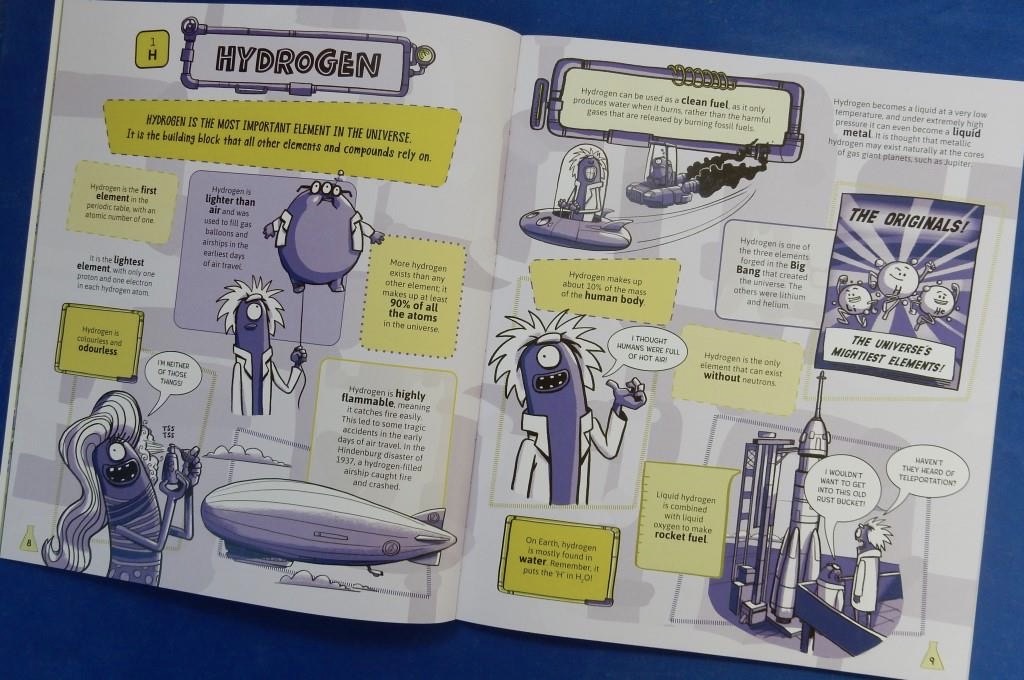
If you want to understand more chemistry, especially about the periodic table, then it’s worth enrolling at Floortlesnazz Grobblesnot Intergalactic Scientific Institute. I’m certain that had my A-level chemistry lessons at school been a fraction as interesting as this whacky book, I wouldn’t have spent a fair bit of my time throwing a netball across the back of the lab to a friend, instead of paying attention to what was being said. In The Periodic Table Is Weird! every element from actinide to zirconium is covered, starting with hydrogen,

which is pretty amazing as to date that means 118 in total and the way the table itself is explained on the opening spread makes a whole lot more sense than ever it did when the periodic table was just a large chart on the wall occasionally referred to in the lessons I attended. And, I’m pretty sure that one had 10 fewer elements than the present one.
Both books are zanily illustrated by Luke Newell: this is light-hearted learning that readers are unlikely to forget.

The Last Monster / Dennis & Gnasher: Super Slime Spectacular

The Last Monster
Dan Walker
uclan publishing

When it comes to fighting monsters there are none better than the Light Hunters’ young Squad Juno. Lux, who is the Squad’s healer has stopped using his light-hunter powers to heal his teammates in case he accidentally hurts someone again with his strange purple light, a terrible twilight energy that comes from within.

When the team is sent on a new mission to gather information from a professor who is a former light-hunter, they are drawn into a dangerous adventure that is crucial for the fate of the entire world. If killing Monsters is the wrong approach to these creatures, it might mean that the war against them can end. However, their mission is under a terrible threat from Demios who has his own destructive ideas that are in total conflict with those of Luke and the squad. Fortunately though the Light Hunters make new allies as they strive to unearth an ancient secret that might be the key to stopping further monster attacks. So, can they succeed? And what of Luke’s power: after the journey he goes on – physical and mental -will be heal again?

It’s great to return to the Light Hunters’ world for this second adventure. Like the first, the story unfolds at a fast pace with lots of twists and turns, tension aplenty, great danger, dilemmas too; but the emphasis is on friendship, teamwork and trust.

Dennis & Gnasher: Super Slime Spectacular
I.P. Daley, Craig Graham and Mike Sterling, illustrated by Nigel Parkinson
Farshore

Little does class 3C’s teacher Miss Mistry realise just what she is about to unleash when she announces on the Thursday before the end of term that her pupils haven’t done their science module and consequently must do so on a science-related school trip the very next day,

On said outing Dennis and his partner Khadija, aka Sketch, decide to make their slime recipe one thousand times better than everybody else’s. What in the name of science experimentation could possibly go wrong?

The very next day sludgy slimy goop is ‘pranking’ the whole of Beanotown and in Dennis’s own words . ’at the same time it’s making endless fart noises. It’s like the Attack of the Fifty-Foot Whoopee Cushion!’ But is this all the doing of Dennis et al or could the town’s mayor Wilbur Brown have anything to do with mucous mayhem.

Delicious daftness in novel form that fans of the comic will relish as will chapter book readers who have a fondness for crazy capers.

The Blue-footed Booby

The Blue-footed Booby
Rob Biddulph
Harper Collins Children’s Books

A laugh-out-loud rhyming tale from Rob Biddulph: what more can a picture book lover ask? This one is all about boobies – the red-footed variety – all of which are at heart, bakers creating fantastic delicacies like those of Desmond whose speciality is frangipani tarts. His latest creation however has vanished but of the culprit there is no sign save a trail of large blue footprints. Immediately Desmond is in hot pursuit ‘Left footprint … right footprint … dash through the snow!’ First stop is Maureen’s establishment but there’s no time to partake of her delectable doughnuts, there are footprints to follow and now two boobies are following them. They have to eschew Rod’s black forest gateau next but he’s willing to join the hunt, as are others until there are ten boobies dashing down the street on their bright red feet.

The trail stops outside a house with a small blue door, 

which is opened by a booby but not seemingly of the red-footed sort; this booby’s feet are – you’ve guessed it – bright blue. Apparently this bird consumes only vegetables of the green kind, is he telling the truth though? Desmond isn’t sure but then he notices a new clue in the form of tart crumbs so it’s now a case of look smart and follow the crumb trail all the way back in the direction they’ve come. Where though are all the other yummy, cake treats? 

Eventually the trail leads the ten to a clearing in the woods from whence there comes a tell tale sound of munching …

Maybe it’s time to apologise for jumping to false conclusions Des, and to make amends for so doing … But that’s not quite the end of this crazy tale. Cakes anybody? Or would you prefer some green veggies?

With the occasional red herring and a handful of additional objects to search for during the story, this is Biddulph at his priceless and silliest best.

The Perfect Present / Tofu Takes Time

The Perfect Present
Petr Horáček
Otter-Barry Books

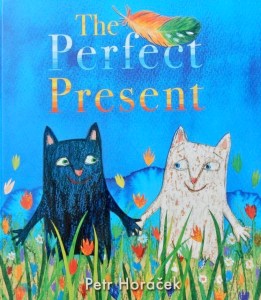
Mot and Tom are the best of friends; they also share a birthday on which they exchange gifts. Tom gives Mot a multi-coloured feather which his friend imagines might be from the world’s most spectacular bird. Mot gives Tom a marble, also multi-coloured; could that perhaps be the universe’s smallest planet. Tom would love to give his friend an entire ocean alive with creatures large and small, perhaps even a monster

and a host of wild animals like lions, monkeys and an elephant. Mot’s choices to give Tom are hills, rivers, forests and mountains, the sun too.

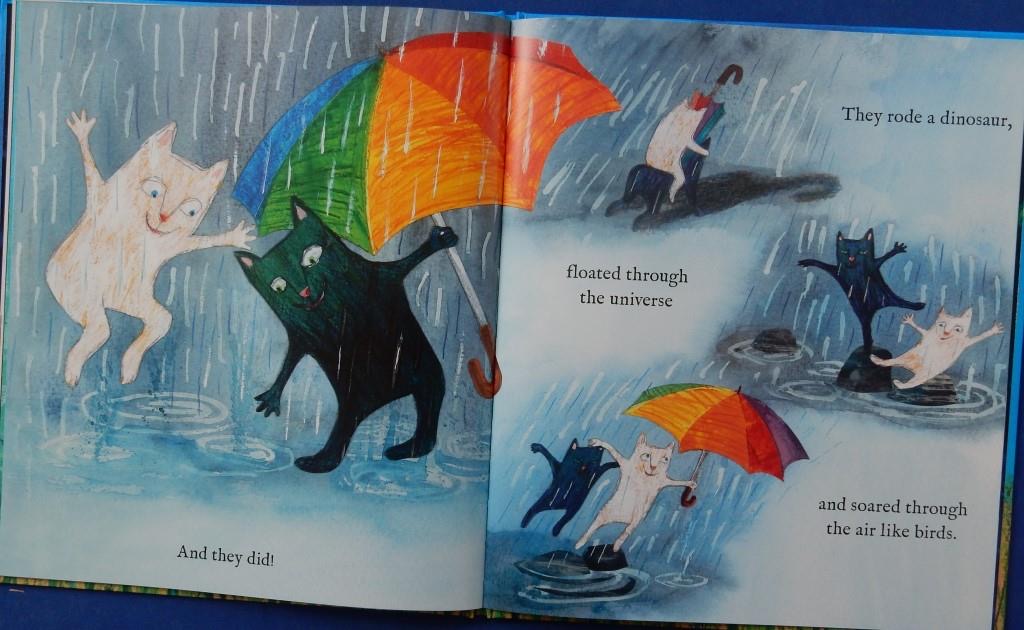
Having spent a long time in all these imaginings the two friends go outdoors to play in the rain

and then back indoors after a bath together they share a scrumptious birthday tea. I wonder what Tom and Mot decided was the best present of all as they snuggled down ready for sleep.

Petr Horáček’s vibrant mixed media illustrations radiate the warmth these two moggy pals share in this gorgeous celebration of friendship and the power of the imagination that’s perfect for giving and sharing with young humans on any day but perhaps birthdays especially.

Also showing the importance of spending time together is

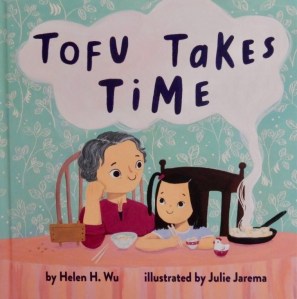
Tofu Takes Time
Helen H. Wu and Julia Jarema
Beaming Books

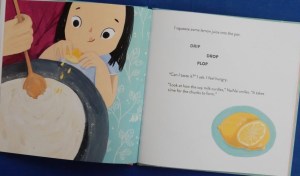
Instead of popping to the supermarket to buy readymade tofu, it’s a case of PLINK PLANK PLUNK followed by CLICK CLACK WHIRRRR as Lin’s grandmother, NaiNai begins making tofu from scratch, watched by the little girl who is impatient to see the finished product. But all good things take time and patience, and that is what NaiNai tells Lin from the outset as she gradually involves her in some of the tofu-making tasks including straining the soy milk, lemon squeezing

and squishing and moulding the curds into shape.

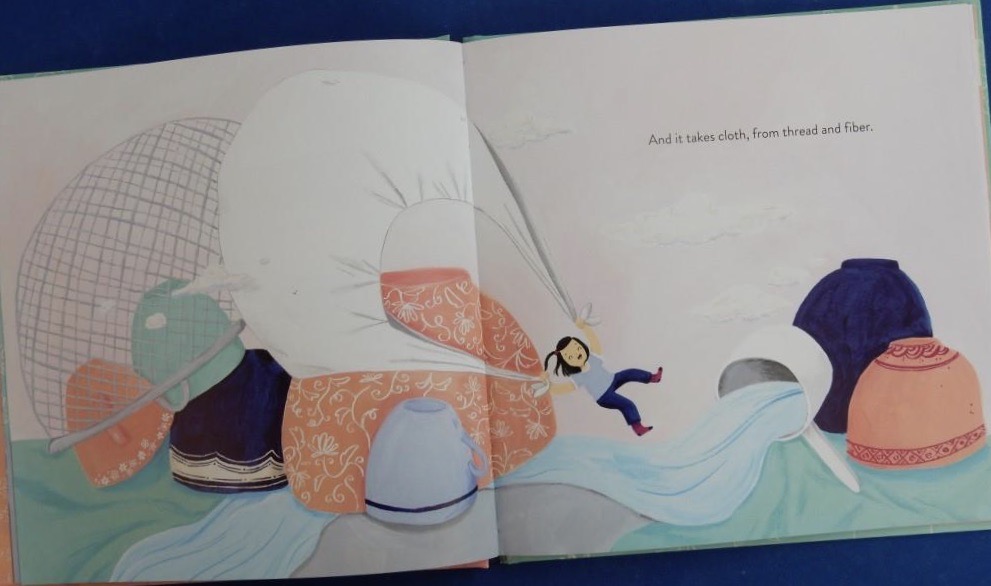
However, as Lin gradually learns, the tofu making process not only takes time, it takes the whole universe too. It takes the seed from soil and sunshine, the cloth from thread and fibre,

weight and space, stories and pictures from books: and most of all, it takes spending precious time with her much-loved grandmother.

Julia Jarema’s illustrations have a feeling of gentleness, as they alternate between details of the tofu-making and Lin’s imaginings in Helen Wu’s tasty tale of patience and delayed gratification. Her inclusion of playful, onomatopoeic language and NaiNai’s repeat phrase add to the fun for young listeners; and her ‘more about tofu’ and author’s note will interest both adults and youngsters with an interest in cooking.

The Feeling Good Club: Smash Your Worries, Bella / Diary of an Accidental Witch: Ghostly Getaway

These are two Little Tiger books both written in diary form: thanks to the publisher for sending them for review

The Feeling Good Club: Smash Your Worries Bella!
Kelly McKain, illustrated by Jenny Latham

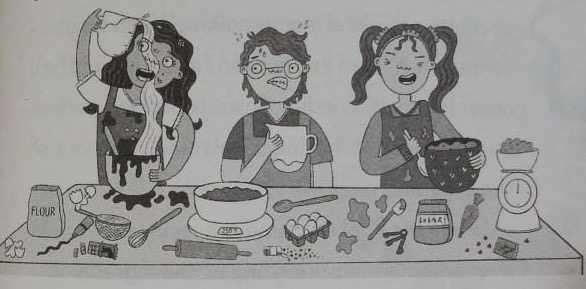
This is the first of a new series, told through the journal of Bella, a Y5 pupil at Cavendish Juniors. As the book opens she’s feeling particularly down as her best friend Rohisha has just moved and to make matters worse, Bella has a Big Worry: she has to give a talk to her class in a few days. Her parents are trying their best to make her feel better but with no success: how is she going to make it through the next six weeks to the summer holidays when Rosh is coming to stay? Their Zoom calls make her feel worse still; her friend only talks about her new situation leaving Bella no opportunity to get a word in edgeways.

However, after a disastrous presentation to her class, during what’s supposed to be Feeling Good Week, Bella begins to bond with two empathetic classmates, Shazmin and Archie and little by little Bella’s confidence grows and she thinks she might even give that talk another go. Then comes a special Feeling Good session from Kris, a parent who is a mindfulness teacher. This is especially useful in helping Bella feel differently about how she reacts to situations and provides some activities to help cope with worries. After all this Bella, Archie and Shazim decide to form the Feeling Good Club.

Now things are definitely looking up but can Bella find the confidence to let Rohisha know how she feels on those Zoom calls and most important can she finally send those worries packing once and for all?

Kelly McKain’s writing shows clearly how well she understands children and their emotions; Bella’s voice is one teachers and parents will recognise, so real does she sound. Equally readers around Bella’s age will understand exactly how she feels as she faces and comes to terms with the challenges presented in this story. It’s one that celebrates everybody’s uniqueness and the power of friendship. The book ends with some mindfulness activities for children. I look forward to hearing more of Bella and her friends.
Diary of an Accidental Witch: Ghostly Getaway
Perdita & Honor Cargill, illustrated by Katie Saunders

Living in Little Spellshire with her weather scientist dad, Bea Black, through whose third diary we share her latest experiences and thoughts, is just into her second term at witch school. She’s mega-excited about the residential school trip and when it’s announced that their destination is Cadabra Castle in the middle of nowhere, Bea is a tad worried about the possibility that it might be haunted. When they arrive there’s a scramble for rooms and Bea, Amara and Winnie end up in a slightly spooky room with a ginormous four-poster bed big enough for three.

The time table they’re given looks very interesting with challenges, quizzes and picnics one of which is followed by a scavenger hunt. Can they succeed in keeping their magic a secret especially when there’s a group of ‘ordinaries’ out hiking who have a special interest in the possibility of a ruined castle. Another challenge is the team building of a shelter – who will win that?

In the final challenge Bea is paired up with Blair – somebody she doesn’t get on with at all – and that in itself is a challenge. However, Bea’s biggest challenge of all is to stop her Dad from finishing his book about Little Spellshire’s micro climate thus preventing the two of them from moving away from the area and the school she loves so much.

This is another winning witchy tale from team Cargill and Saunders. It’s fuelled by cake – a lot of it, friendship, the need for teamwork and the possibility of a ghost: will they actually discover one? You’ll need to get a copy of the book to find out.

PESTS: Battle to the End / The Ape Star

PESTS: Battle to the End
Emer Stamp
Hodder Children’s Books

It’s now the summer term for P.E.S.T.S and when Dr Krapotkin announces the sports night competition, no pupil could be more surprised than Stix when his hyper-cautious Grandma signs the chit allowing him to participate, which means going Outside into the garden. Our favourite mouse is super-excited. Their opponents are to be local arch-rivals and sister school V.E.R.M.I.N and the teams will be vying for the Mexico World Cup 86 trophy (actually an old chipped mug).

Some rigorous training takes place before the big event, the result of which doesn’t leave the PESTS bursting with the confidence Dr Krapotkin had hoped, though she still remains confident her team will win. Perhaps sone positive affirmations might help.

On competition day the PESTS head off to the venue and meet their streetwise opponents and their waspish headteacher Sir Sting-a-lot. After two events the VERMIN have zoomed into the lead and a despondent Stix briefly considers quitting but decides against it and the PESTS pull back to make it 2:2. A tie-breaker is the order of the day. Then suddenly something feels very wrong. Surely it couldn’t have anything to do with the dastardly Professor Armageddon, could it? Perhaps now it’s time for co-operation rather than competition.

With creepy cockroaches, a few smatterings of poo (of various shapes and sizes), an injured Batz, and a singing toy phone, it’s going to be a close call in more ways than one. Never mind the trophy, there’s a very big surprise for Stix when he finally reports back to Grandma.

I found myself laughing out load frequently as I read this hilarious, third PESTS romp and I’m sure the target audience of primary school age readers will do likewise. Love the mischief, love the characters – most of them – and love the droll drawings.

The Ape Star
Frida Nilsson
Gecko Press

Originating in Sweden, this is a story about love of an unconventional kind and being an outsider. It begins with a group of children, freshly washed and adorned, lining up in an orphanage in the hope that one of them will be chosen to be adopted and move to a home of their own. Who though is the visitor that arrives? It’s not a caring mother, nor a rich, charitable person; rather it’s a gorilla standing before the children and the one chosen to accompany the adopter is the narrator, nine year old Jonna who has always dreamed of being part of a loving family.

Now she has to go with this huge creature and goodness knows what might happen, for her adopter lives in a junkyard; but the papers are duly signed and so Jonna has no choice but to climb into the old Volvo with the gorilla whose head is like an overgrown pear.

At the gorilla’s residence Jonna is given a hammock to sleep in and Gorilla sits in her battered armchair reading Dickens. Seemingly the two have more in common than you might imagine; a bond forms between them. Just when the two are getting along just fine a man from the council turns up threatening to send Jonna back to the orphanage.

There’s near heart-break and a surprising discovery but can the combination of Jonna’s courage, perseverance and empathy combined with Gorilla’s compassion, and teamwork prevail over prejudice, greed and dishonesty? Long live books and the power of love.

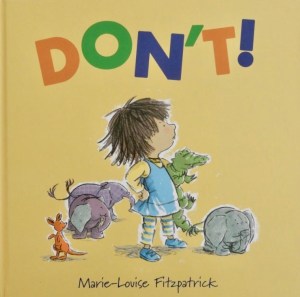
Don’t!

Don’t!
Marie-Louise Fitzpatrick
Otter-Barry Books

Geraldine has a new baby brother and she’s experiencing the turbulent feelings that many elder siblings go through when it’s no longer the case of ‘there was Daddy and Mummy and me.’

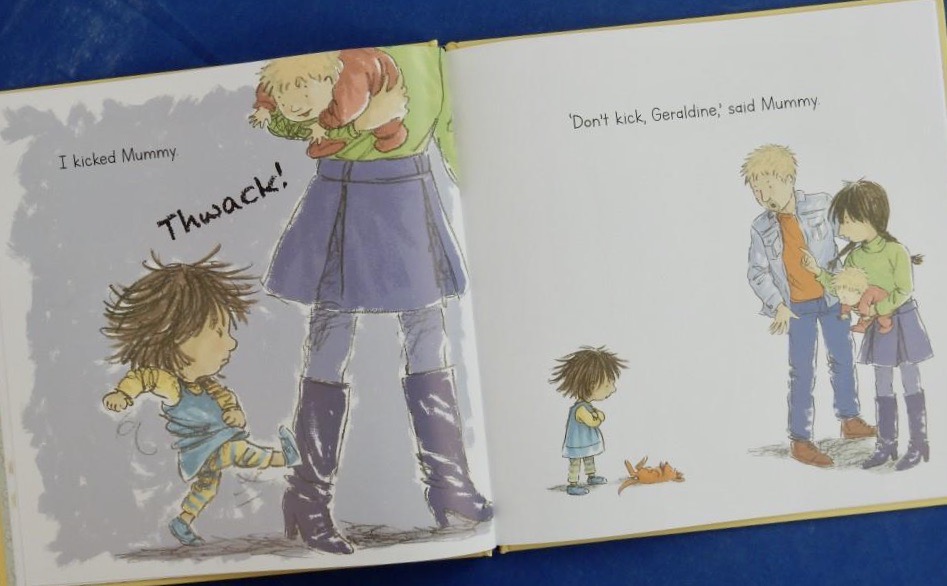
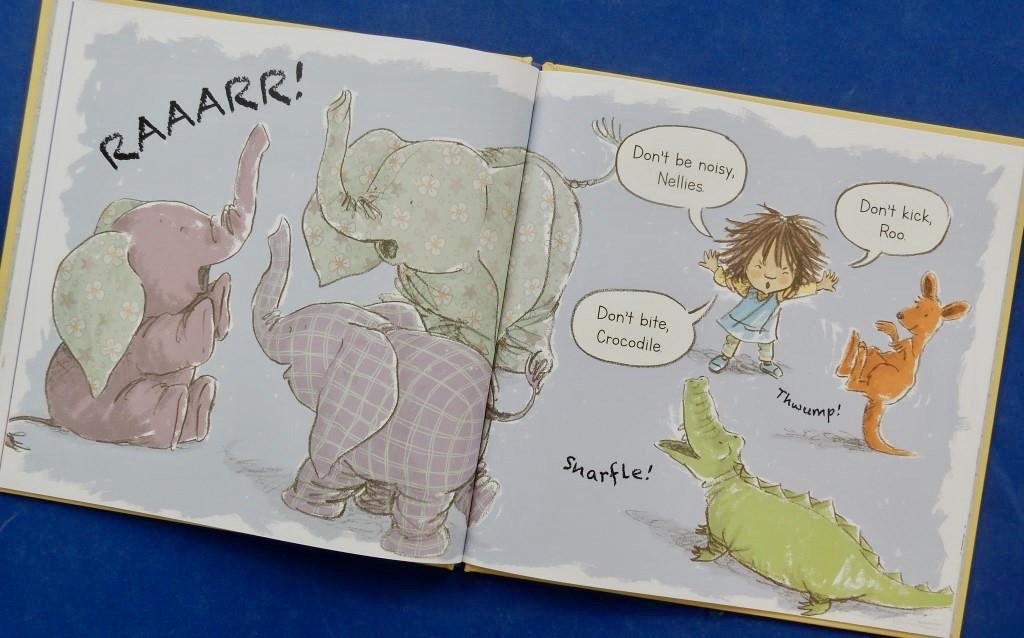
Baby Boo is, let’s say, demanding and forceful; he can roar, he can kick and he can bite. Now Geraldine can do all these things too and she’s certainly not going to be overlooked. Consequently she roars at her toys – very loudly, she demonstrates her kicking skills with Mummy instead of a football

and she bites her Daddy on the leg. Her parents are not pleased; only her toys appear empathetic towards young Geraldine

and soon there’s a tearful huddle of little girl and three cuddly elephants, a crocodile and a kangaroo.

Then suddenly baby Boo cries too and this changes things completely: “Don’t cry baby Boo,” says big sister reaching out to him. Now there is Daddy and Mummy, Geraldine and Boo, a happy family and they all love each other.

Sensitively written and illustrated, Marie-Louise beautifully captures the feelings of a young child adapting to a new baby in the family. I’d strongly recommend families in a similar situation to the family in the story to get hold of a copy of this lovely book and share it with the big brother or sister. It’s a good one to add to foundation stage collections too.

Brave Dave

Brave Dave
Giles Andreae and Guy Parker-Rees
Orchard Books

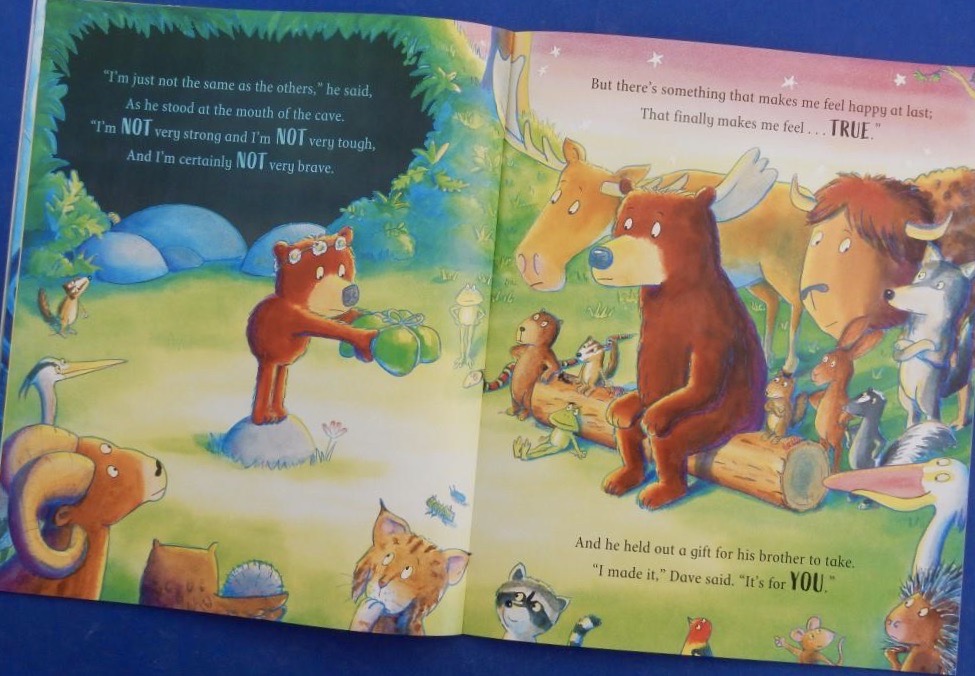
Reading Giles and Guy’s fantabulous book made me want to get up and dance around the room in delight: it’s absolutely brilliant and maybe for me even outshines Giraffes Can’t Dance.

It’s the story of little bear Dave who reveres and is awed by his braver, stronger older brother, Clarence. he even tries to emulate his big bro. until one day this little bear who much prefers gentle creative pastimes, decides he’s no match for Clarence. Sad and lonely off he goes for a solo walk
but on the way home something catches his eye that lifts up his heart and soul.

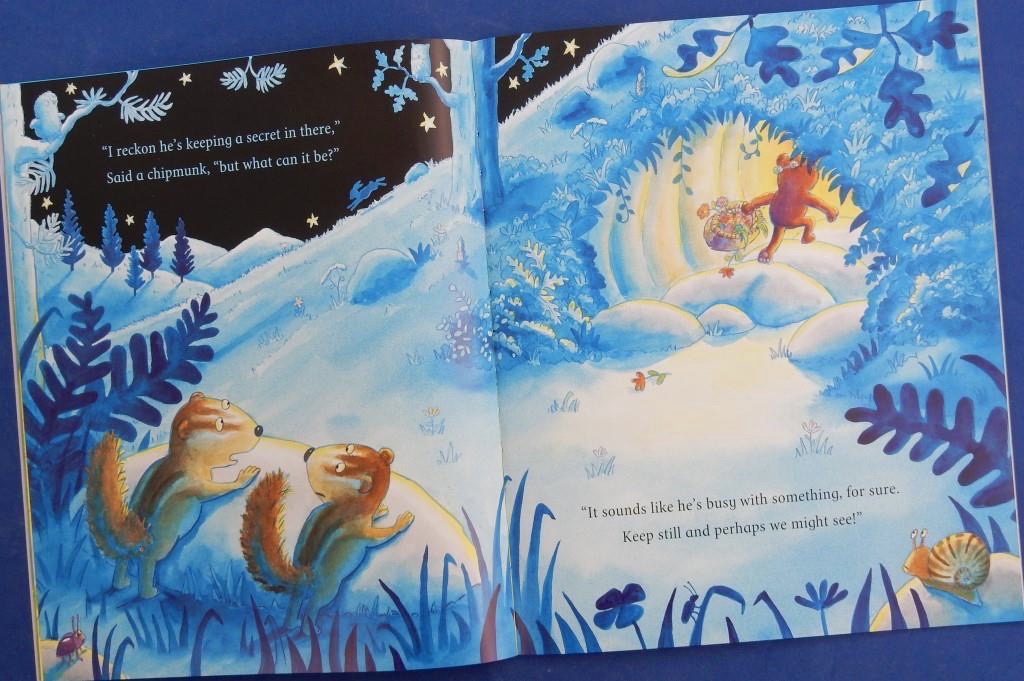
Next day he starts collecting beautiful things but fearing ridicule, off he goes to hide himself away each night. Little does he realise that others are watching him however.

One day when he’s summoned up sufficient courage he calls all the animals to his den and then gives something to his brother

before going on to reveal how he’s been spending his time.

Be brave enough to be yourself and celebrate your uniqueness: what a terrific life-affirming lesson for little Dave and there’s an important life lesson for his fellow animals too: accept people for what they are and celebrate difference.

Giles’ rhyming narrative is a joy to read aloud and what a fabulous finale. Guy’s illustrations are out of this world gorgeously uplifting. I can’t wait to share this far and wide; it’s a must have for classrooms and family bookshelves.

Batpig: When Pigs Fly

Batpig: When Pigs Fly
Rob Harrell
Walker Books

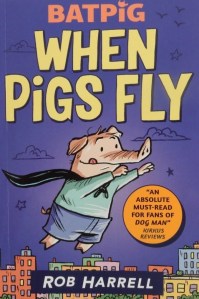
Look skywards and what do you see? It’s porcine hero Batpig hurtling by. Back in the day he was Gary Yorkshire – just a borin’ old pink pig living with his parents in an apartment in Big City, USA who spent his time chomping through tasty sandwiches, reading comics, playing video games and playing cards with his pals. Brooklyn the bat and Carl the fish.

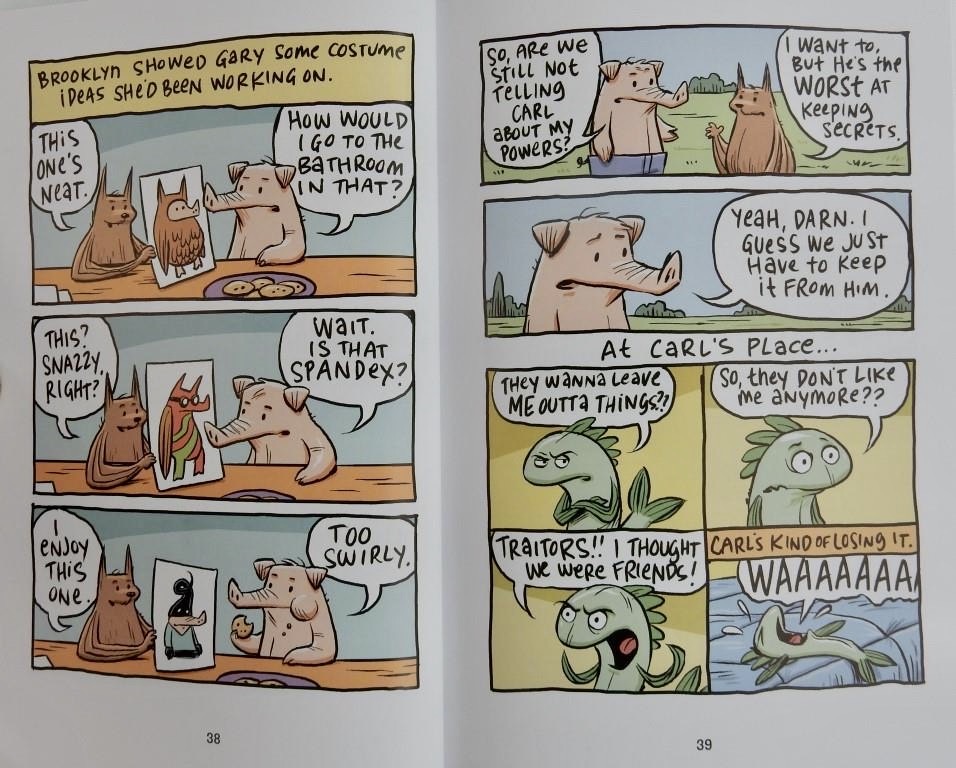
Having been accidentally bitten on the snout by Brooklyn, Gary develops super hunger, super sight, and strength, and the ability to float. Unbeknown to Gary, his friend the bat was radioactive at the time, something he only fesses up to when questioned by the pig. That night comes a revelation, with his superhero powers Gary is now Batpig. Gary tells Brooklyn of this development but keeps it from Carl who soon gets the feeling that his friends are hiding something.

Gary meanwhile is receiving flying lessons from Brooklyn who remains firmly on the ground.

Although Carl realises the current situation could well be on account of his inability to keep a secret, understandably his hurt feelings develop into anger and he decides to become the super-villain of the saga. Will he prove to be the instrument of Batpig’s undoing as the superhero goes about apprehending litter scatterers and preventing robberies? Or maybe Carl and Brooklyn could agree to work together and save the day for our superhero and that includes finding a means of covering up the ‘pimple’ on Gary’s rear end. All this is revealed through a superb blend of narration with puns aplenty, dialogue, illustrations, comic asides, and flash-backs – that’s the rocket part.

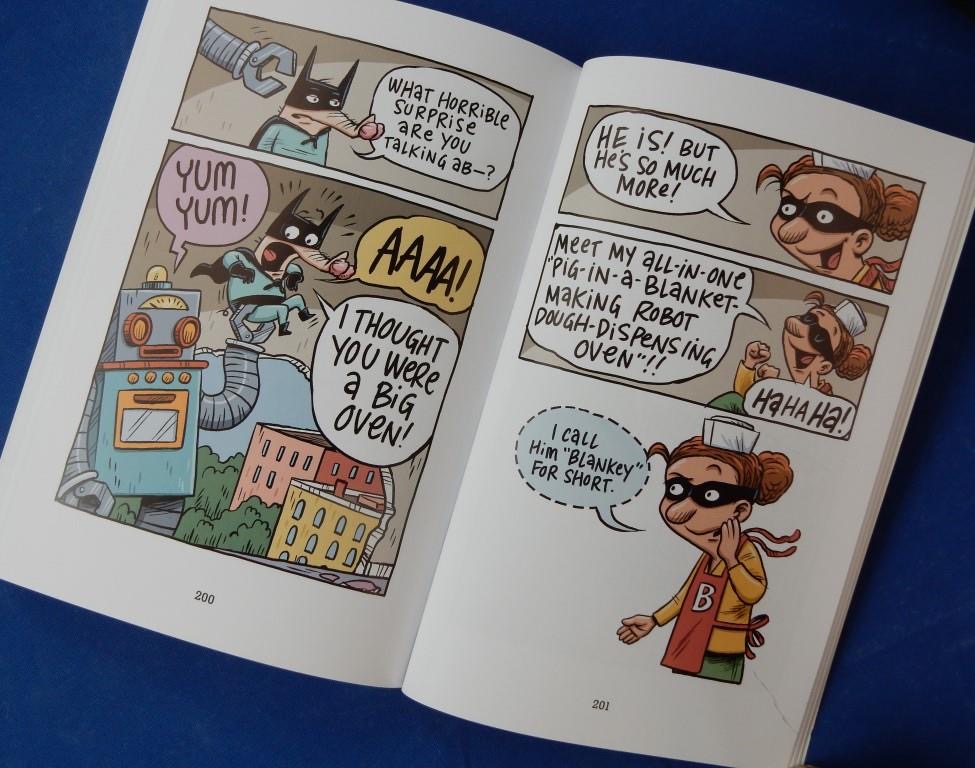
In the second episode the friends face off against a heinous human foe, the Butcher, a woman who is determined to use the power of the world’s meat for her own ends and has a robotic dough-dispensing machine that makes pigs in blankets.

Yes this might all seem totally silly but there are themes of the importance of maintaining your own identity, friendship and the issues of three-way camaraderie; and all three characters are relatable to human readers. If you know readers who enjoy graphic novels such as The Investigators, they’ll love this, as will all those who prefer stories with the emphasis on the visual.

How to Catch a Rainbow

It’s exciting to be part of the blog tour for this uplifting book – thank you to the publishers for inviting me.

How To Catch a Rainbow
Naomi Jones and Ana Gomez
Oxford Children’s Books

Meet the adorable Freya, a rainbow lover: she delights in its bright colours and its curved shape. In fact her greatest wish is to have a rainbow of her very own..After searching everywhere she turns to science to make one herself; however she has no success. Refusing to give up on her dream, she comes up with another idea. Clad in her rainbow-hunting attire, clutching a net and with a rucksack of equipment off she goes to collect items of the constituent colours. This task is not without its challenges 

but resilience is key and mindfulness helpful; eventually Freya has gathered something for each of the seven colours.

Inspecting her rainbow colours back at home, Freya is disappointed.

Will she ever get that longed-for rainbow? Can she find yet another way to obtain her heart’s desire? Perhaps, with the support of an understanding Dad.

Try your upmost to follow your dream but equally, be ready to adapt and widen your horizons are key messages in this enchanting story of an imaginative girl who will surely capture your heart as she uses her creativity and determination to fulfil her wish. Ana Gomez’s portrayal of the spirited Freya truly captures the ups and downs of her rainbow quest. Listeners will love her attire and relish the opportunity to go on a rainbow hunt through the book’s pages once they’ve heard the story.

Before sharing the book I asked for some suggestions for the colour I was representing and these are the responses:
A bunch of lavender from the fields of Provence.
Violets collected from a forest. I’d put the petals in an airtight container and they could last up to a month.’
I would go out and find red berries and blueberries on the bushes, squeeze them together over something to catch the juice, then add water if the colour is too dark.
A scabious flower from the common.
A huge thistle flower.’

I Hate Borsch!

I Hate Borsch!
Yevgenia Nayberg
Eerdmans Books for Young Readers

The young narrator of this picture book loathes her family’s and fellow Ukranians’ favourite food, borsch; despite it being considered a national delicacy . In a cleverly bringing together of the ingredients 

and the process of making this supposed culinary treat, the girl puts her case for being anti-borsch. The stuff even invades her imaginings giving her daydreams of being marooned on a deserted island of sour cream in a red sea of borsch whereon dill floats wherever she looks. Sunflowers too grow profusely in Ukraine, so why not instead have sunflower borsch she pleads, only to receive a resounding NO! 

Every single grandma in Kiev, we read, has the one ‘true’ borsch recipe so inevitably when the girl narrator and her family move to America, you can imagine what she receives as a farewell present from each grandmother. Once in the new country however she finds this dreaded foodstuff has gone there before her – although both its name spelling and taste are different – further reasons to detest this red sludgy stuff. Or maybe not entirely. 

For after a surfeit of American cuisine and the passing of time our narrator – having rediscovered the old family recipes – finds an old friend: borsch. Anybody fancy a bowl of the Ukrainian staple?

Yes this tale, based on the author’s own experiences might at first appear to be about hating a specific food as a child; however beneath the surface are themes of how food is embedded in cultural expression, holding on to one’s cultural identity as an immigrant, and better appreciating the past as you grow up. The bold, mixed media illustrations are both arresting and imbued with a sense of nostalgia and there’s even a borsch recipe at the end of the story.

With the on-going Russian invasion of Ukraine forcing so many Ukrainians from their homeland to safety in other countries including the UK, this book will be especially welcome in schools, both to celebrate the Ukranian culture and the enduring strength of Ukranian people.

Our Tower

Our Tower
Joesph Coelho and Richard Johnson
Frances Lincoln Children’s Books

This is Joseph Coelho’s first book as Children’s Laureate and what a truly magical one it is. Inspired by Joseph’s childhood growing up with his sister in a tower block on an estate in Roehampton, close to Richmond Park it is deeply personal and exquisitely told. The story – a modern fable – follows three children who live in a high-rise block, ‘Boring, hard and grey.’ but with a view to greenness beyond the drab grey, as they venture away from the suburban streets in search of a special tree with big leafy brows.

Having found what they were seeking,

the children tumble through a gap in its trunk into a magical world deep down where all kinds of creatures lurk.

There too on a throne sits an old tree-grown green man with bushy brows and he holds out something to the three. It’s a circular stone with a hole in the middle; this he gives the children and it’s as though he’s given them a new lens through which to view the world. For when they peer through the hole ‘the world goes upside-a-diddle’ and they suddenly see their own tower in a completely new light. It’s full of the love and laughter that they’d really been seeking all along: a place where everyday magic can happen once you know how to look.

Looking is assuredly what the artist Richard Johnson has done for his powerfully atmospheric, evocative illustrations. It’s so brilliant how his colour palette changes as the children move between their mundane urban home environment, the fantasy world and the natural one; this adds to the feeling of poetry in motion in Jospeh’s lyrical words. Richard includes details of architecture and sculpture (a version of Lynn Chadwick’s The Watchers) that make several links for this reviewer as well as the author.

Full of hope and enchantment, this timely story is a glorious fusion of words and pictures that blends the mundane and the dark with the magical and the triumphant, the urban and the countryside: nature and magic are everywhere if you know how to look. Unmissable this.

The Story Shop Anchors Away! / There’s a Dog in my Brain: Dog Show Disaster

The Story Shop Anchors Away!
Tracey Corderoy, illustrated by Tony Neal
Little Tiger

I loved the idea of The Story Shop, the place selling real adventures that its customers can actually be in, when it blasted off during the spring this year. So it’s a delight to be back in the company of shopkeeper Wilbur and Fred Ferret his assistant, with their plethora of props and plot possibilities for three more episodes.

The first begins when explorer Pearl practically tumbles in just when Wilbur and Fred are about to shut for the day demanding they find her an adventure she’s not experienced before. Thus this fearless woman becomes Captain Pearl and after a bit of persuasion, she agrees to take Fred aboard her ship as her pirate assistant, along with pirate, Edie. But what are scarf knitting pirates and other crafters doing already below deck when she wants a PROPER piratical adventure? Yo Ho Ho! Let operation retrieve their priceless black pearl commence.

Having bobbed about in barrels for ages after their successful mission, Pearl and Fred wash up on shore only to be confronted by a bunch of scary-looking pirates led by Long Jane Silver who is convinced the two are spies sent by Blunderbuss Bob, her rival in the up-coming annual raft race.
Stinky Socks!

Can the two come up with a placatory plan to help their captor win the entire event?

The third episode finds Pearl and Fred sans ship, knocking on the door of a guesthouse belonging to Meg O’Cuttlefish. Once within, they accept an attic room and soon find themselves swapping pirating stories with Meg before bedtime. However something decidedly ghostly disturbs their slumbers; what could be the cause of that mysterious wailing sound?

Full of swashbuckling fun, a scattering of puns and Tony Neal’s comical illustrations, this is a treat for story lovers of the land-lubbing kind taking their early voyages as independent readers.

There’s a Dog in my Brain: Dog Show Disaster
Caroline Green, illustrated by Rikin Parekh
Walker Books

Here’s a crazy chaotic canine caper if ever there was one: actually it’s the second canine body switch episode. It all begins when Dudley the dog consumes almost every single one of the cakes Danny’s dad has so lovingly baked and Mum decides there’s no other choice but to send the pooch to Doggy Boot Camp. Needless to say ten-year old Danny is horrified but shortly after he realises that he’s swapped bodies with Dudley, something his parents fail to notice even though the ill-fated creature is absolutely useless at being a human.

However after the incident at the fancy farm shop that ends up costing in excess of four hundred pounds, the hose escapade

and Danny’s feats at canine classes, there’s no option but to reveal to the parents that a body swap has taken place again. But that means Danny as his alter-ego Dudley has to perform at the dog show and take on dog trainer Rex Power’s perfect pooch, Princess Fenella. nothing can possibly go wrong, surely.

Those with a penchant for pooches, slapstick and perhaps cake will relish Caroline Green’s romp, that’s if it doesn’t render them barking mad. Rikin Parekh’s black and white illustrations add to
the hilarity

Paper Boat, Paper Bird

Paper Boat, Paper Bird
David Almond, illustrated by Kirsti Beautyman
Hodder Children’s Books

Mina – a character from Skellig and its prequel My Name is Mina is now visiting Japan with her mother, experiencing the culture and learning a great deal. While travelling on a bus in Kyoto she watches a woman folding a piece of paper that becomes an origami boat; this she gives to Mina and soon after, a paper bird and when she leaves the bus, some origami paper. Watching the woman fashion these almost magical things from squares of paper captures Mina’s imagination.

As she travels to the temple at Kinkaku-ji, she holds onto her delight in the origami

and in the garden surrounding the temple Mina creates a boat and bird herself. She places the bird in the boat and gently puts it into one of the streams. Later it’s discovered by Mikaya who is with his dad; the boy notices the name on each one and when they stop, he writes his name on the bird and launches it into the air: communication and kindness are passed through origami,

and eventually Mina and Mikaya meet one another.

Powerfully beautiful – the power being in the simplicity of the telling and also in Kirsti Beautyman’s illustrations that have an airy, almost ethereal quality to them. David’s story is based on a real life happening when he was in Tokyo with his young daughter. He uses his awesome art of creating a story out of brief experiences and as always with his stories, this one with its quiet, contemplative gentleness resonates long after you’ve put the book down.

Pick A Story / The Book that Kibo Wrote

Pick A Story
Sarah Coyle and Adam Walker-Parker
Farshore

Involving younger readers in the decision making in stories is a great way to get them interested in reading and to keep that interest, but whereas there are plenty of interactive choose your own adventure stories for the over eights, there are relatively few pick a path picture books. The creators of this Pirate + Alien + Jungle adventure put the reader firmly in the navigator’s seat in their picture book starring Vincent and his dog, appropriately named Trouble.

It all begins in the park where the two are enjoying a stroll when all of a sudden Trouble disappears; where has she gone? Now Vincent needs the help of the reader to help him find his pooch: there are three possibilities in the first instance. The first will lead Tom to a stinky pirate galleon; the second will send him to the depths of the jungle and if he chooses the third option, he’ll find himself on board an alien spaceship. The problem is none of these actually help in the search for the missing Trouble.
With judging a talent show,

exploding asteroids, sea monsters and whirlpools to contend with, not to mention a dozen pirates brandishing swords and the possibility of a pursuing zombie, 

Vincent has a tough time of it, but will he find the trophy and more importantly will he and the elusive Trouble ever be reunited?

Sarah Coyle plunges her protagonist and the reader headlong into an adventure with an abundance of possibilities shown in Adam Walker-Parker’s energetic, comic illustrations with their plethora of funny characters and decisions to be made on every spread.

The Book that Kibo Wrote
Mariana Ruiz Johnson
Eerdmans Books for Young Readers

This book contains the story of a story that begins one evening under the setting sun of a warm savannah with Kibo a rhino who wants to capture the beauty of his surroundings. Before he knows it, Rhino has written a whole book under the watchful eye of Naki the crane who has read every word. She uses her beak to sew the written pages between two strong covers making a sturdy book.

Next morning, bidding farewell to Kibo, off she flies over land and sea, eventually dropping the book in a city. 

There it’s discovered by Camilo the lion and reading the book gives him a strong nostalgic longing for his savannah birthplace. Camilo passes the yellow book on to a friend and it passes from friend to friend until Kibo’s story of the African savanna has travelled all the way to the Arctic and into the paws of a resident polar bear. 

As night descends on the North Pole, polar bear Nanuk feels warmed by the savannah heat as he completes his reading of the book from a distant land.

The open-ended nature of the narrative encourages readers to become participants in the story and I love the use of patterning in the vivid illustrations, which creates a folklorish feeling about the tale. (translated by Lawrence Schimel).

The Magic of Magnolia Moon / Aziza’s Secret Fairy Door and the Mermaid’s Treasure

The Magic of Magnolia Moon
Edwina Wyatt, illustrated by Katherine Quinn
Walker Books

If you take time you will find magic in the everyday things of life – that’s how it is for ten year old Magnolia Moon who returns in this her second book. Her kind of magic is found in many different places – in puddles and boots, in umbrellas and hats, bubbles and fairytale books, even in a tree. It’s that rare, quiet sort that’s easily missed if you don’t know how to look and more important, where. I’ve not read the previous one The Secrets of Magnolia Moon but it made no difference to my enjoyment of this story.
Magnolia faces many challenges in this year of being ten: she has a new teacher – could she be a witch, Miss Mackerel has a broom and a black cat? She has to come to terms with the fact that her best friend Imogen May, who has now moved, will form new friendships as will Magnolia herself, but how many best friends can you have? However there’s still plenty of magic for Magnolia – she’s creative, independent and imaginative, she’s quirky, kind and lots of fun; a very special girl, the person you’d love as your best friend.

Cleverly structured – each chapter presents its own scenario that seques neatly into the next and into the whole narrative, with Magnolia always keeping her eyes and ears open to magical possibilities be they mind magic, green magic or perhaps most important of all, the magic that could help her friend Reuben smile again after his parents’ divorce. True magic is found in kindness, bravery, second chances and real love. Creativity, imagination, and magic of course, have power, and this book is a wonderful celebration of all these. I love too the talking grandfather clock – or is it? The author leaves it to the reader to decide about that, and whether Magnolia’s magic is real or imagined – another wonderful feature of the book. 

Add to all this the scattering of Katherine Quinn’s gorgeous black and white illustrations and you have an enchanting, immersive story that invites readers to look at the world around them in a different way and to be open to possibilities at any time.

Aziza’s Secret Fairy Door and the Mermaid’s Treasure
Lola Morayo, illustrated by Cory Reid
Macmillan Children’s Books

This is the fourth in the magical series of adventures inspired by world mythology and it begins as Aziza and her family are preparing for a camping holiday but the weather conditions are let’s say disappointing. As Aziza half-heartedly finishes her packing she notices tiny seashells guiding her towards something: her fairy door is shining again – it’s time to return to Shimmerton.

Almost the next moment Aziza finds herself on the crowded sandy beach where amidst the masses she sees first the Gigglers creating a drama as always, then at the edge of the shore Peri and Tiko and sitting close by on the rocks, a mermaid. The mermaid introduces herself as Sirena and Aziza is hugely impressed when she hears of some of Sirena’s adventures. Suddenly as they chat the ground begins to shake; Aziza fears it’s an earthquake but her new friend assures her it’s a shell-walker sneezing in its sleep deep underground. But when ice-creams and picnic baskets start flying around, the possibility is that the creature is not asleep but about to emerge, grow huge and endanger the whole of Shimmerton. Fortunately Sirena knows of a magic conch shell that plays a song which could just be the answer to their problem.
With no time to lose and with Sirena’s help, the friends embark on an underwater adventure. 

It’s one filled with challenges for Aziza but with her reassuring, empowering friends, can she and they avert disaster?

There are new mythological creatures (details of their origins in folklore are given after the adventure) in this exciting, inclusive, summery seaside story that is perfect for young fantasy lovers just taking off as independent readers.

A Perfect Wonderful Day with Friends / Wooolf!

A Perfect Wonderful Day with Friends
Philip Waechter
Gecko Press

Alone in his house, Racoon decides that baking an apple cake will alleviate his boredom, but then he discovers he has no eggs. Oh bother! Maybe his chicken-owning friend Fox can help out, so off he pops to see her, only to find her precariously balanced and attempting unsucessfully to mend a leaky roof as the hole’s out of reach. The two set out to Badger’s in the hope he might have a ladder. Badger too needs help with a crossword and Fox suggests asking Bear to solve the clue. On route to Bear’s home the friends pause for a blackberry picnic but on arrival they discover Bear is not at home. Happily Crow can assist and leads them down to the river bank where eventually they find Bear fishing.
Unfortunately though the fish aren’t biting… not even a nibble.

Not wanting to waste a moment the five pals decide to dive into the river and have fun together. It feels great to cool off on such a hot day and equally pleasurable to dry off in the warm sun. They also solve the crossword clues, then as evening approaches they head off home

pausing whenever appropriate to complete each of the other tasks in turn, finally reaching Racoon’s residence. Once indoors, Raccoon bakes not one but TWO CAKES: one to be shared by Fox, Badger, Crow. and himself. Fortunate Bear however has a cake all for himself. I wonder why that could be …

Willingness to embrace new and unexpected situations, and whole-hearted participation therein, is key to a happy life, as are friends and teamwork. Philip Waechter’s intricately detailed illustrations of bucolic contentment brought about by these elements work harmoniously with his heartwarming story; it’s one children will definitely warm to as they share in the day’s events of the five friends.

Wooolf!
Stephanie Blake
Gecko Press

Stephanie Blake’s little rabbit, Simon, certainly gets his come uppance in this fun take on the cry wolf classic as he plays the wolf card at home and school in order to get his own way. Eventually though he tries it one time too many, the occasion being the use – or not – of his potty.

Has he learned his lesson once and for all though? What do you think? …
With its funny final twist and illustrations that leap off the page little rabbit style, this will certainly amuse little humans and might just deter them from emulating a certain little leporine creature.

Thanks to Gecko Press for sending copies of these books for review.

Free Kid to Good Home

Free Kid to Good Home
Hiroshi Ito
Gecko Press

A new baby brother Daichan who looks like a potato, who cries the whole time and who demands a mother’s undivided attention does not impress our narrator sister. Far from it. She decides to run away and find a new home and a family who love and appreciate her and only her.

Coming upon a cardboard box gives her an idea: she writes Free Kid on the side, climbs in and waits for those perfect parents, contemplating her wonderful new life as people come and go. Her effort to attract attention don’t provide what she seeks so she continues her wait.

Soon along comes a dog; it joins her in the box as in turn does a cat,; both for reasons of their own are seeking new homes.

Shifting their pitch to the outside of the railway station they each put on their best face and wait. Up comes a turtle and that too joins the waiting home-seekers. One by one the animals are taken until only the little girl remains.

After what feels like a very long time along come two people searching for a ‘perfect sister for – guess who …

An absolute delight: the deadpan humour works really well and I suspect many older siblings will relate to the narrator’s situation. The author’s slightly quirky line drawings with pops of red complement the telling well: the facial expressions of the characters – human and animal – are splendid and those of the narrator really convey her mounting frustration as she waits.

This is a great read aloud story but equally, it’s ideal for new solo readers.

I Want the Moon

I Want The Moon
Frann Preston-Gannon
Templar Books

As a child, the protagonist in Frann Preston-Gannon’s new book is so over-indulged by his parents that he’s unable to make even a single friend. Instead the result of them trying to engineer a friendship between their son and the boy next door results in the two becoming enemies.

Suddenly one night after a particularly ferocious fury his parents offer to buy him anything he wants. But money can’t buy the moon.

As a grown man, the same character is rich, important and lives the life of royalty, but that childhood longing for the moon remains. He summons all his team members and together they draw up plans for a ‘Get Moon’ machine. Hard toil on behalf of his workers results in the mindless destruction of vital elements of the local community

and the construction of a towering machine that just keeps on growing up and up. Rampant capitalism is at large here.

Then one night the moon is almost within his grasp: he stretches out his hands and …

An inevitable tug of war ensues and I expect you can guess the outcome of that.

Can the townsfolk’s children perhaps do anything to fix this disastrous situation?

This clever parable that is highly relevant today, shows the foolishness of greed and the importance of understanding where true happiness can be found: it certainly isn’t where this moon-grabber was looking. Do your child listeners think he finally learned the error of his ways, I wonder?

With her characteristic large variety of textures and wealth of small details, Frann’s boldly coloured illustrations will definitely hold the interest of young readers and encourage them to revisit the story over and over. If you share the book with a group or class, make sure you build in time to allow your audience to explore every spread.

The Secret Unicorn Club

The Secret Unicorn Club
Emma Roberts, illustrated by Rae Ritchie & Tomislav Tomic
Magic Cat

Do you believe in unicorns? Whether or not you do, there are countless children who are obsessed with these mythical creatures. I’m sure many of them would be interested in becoming members of the Secret Unicorn Club whose role it is to search for and look after unicorns in the wild; and this is where Emma Roberts’ book comes in. It will help readers to become experts and thus eligible for club membership; and during their learning journey they will collect ten badges.

Having followed the instruction on the very first page and thus earned the first ‘Friend’ badge, readers are introduced to a mother and baby unicorn. These two stand ready to impart some information about themselves and fellow unicorns including how their poop aroma is affected by the weather conditions at the time it’s deposited; what their tears do and why they are precious; there is also a paragraph about unicorn horns and another about tails and manes. Absorbing all that earns the reader a unicorn knowledge badge.

Subsequent double spreads are devoted to the care of unicorns – interestingly they have a penchant for the Easter Bunny’s prize carrots (cooked three ways);

and next, unicorns in the wild – the wilder the better if you want to find one. We then meet a special team with natural magic that help make the various kinds of weather, for instance a burp from one of these unicorns results in lightning.

Talking of magic, that’s the topic for the next spread; with my messy partner I could certainly do with brewing up some of the tidying up spell. Most magical of all though, is the special nature event, the ‘aurora’.

It’s great to see the next spread devoted to nature conservation for there are, we read, relatives of the unicorn that need protection today – the narwhal, and the rhinoceros.

Now here is something truly astonishing: the Montgolfier brothers had a secret passenger aboard when they took their first ever flight: apparently stowed away in the balloon’s basket was a unicorn that assisted the brothers by controlling the wind with its magical breath. Really? That’s part of the final historical spread whereon readers earn a history badge and thereby become eligible for that membership and the unlocking of a surprise hidden handbook inside the back cover, wherein there’s further precious knowledge that will appeal especially to horse lovers.

With its intricately detailed, whimsical illustrations and beautiful borders,.youngsters with a fondness for mythic fantasy will lap this up

I am Cat!

I am Cat!
Peter Bently and Chris Chatterton
Macmillan Children’s Books

It’s pretty clear who rules the roost in this story: it’s the moggy narrator and very cleverly, said creature is able to talk in rhyme as it presents a day in the life of itself.

Whether it’s causing damage to the furniture, demanding to be fed, alarming intruders – really? 

or any other of its vital cat pursuits, our narrator does it with gusto and indeed panache – well maybe not when it comes to encountering the large hound next door. 

Imaginative play is our cat’s forte as it takes on the personas of in turn Tiger, Leopard – “ I am Cat. Bird I see. / Leopard, leopard up the tree. / Bird up. Cat up./ Bird Up. Cat. // Bird. Cat. Now I’ll catch you! Drat.” and Lion before running out of steam and seeking a temporary respite before the next mealtime.

Team Bently and Chatterton have created another highly amusing read aloud tale with lots of fun action that young children will love to follow in Chris’s hilarious scenes and Peter’s catchy, highly join-in-able, rhythmic text. Even this cat fur allergic reviewer was captivated by their feline protagonist.

Board Book World

Who’s Tickling Tilly?
Rob Jones
Pavilion Children’s Books

Following on from a search for Brian’s Bottom, Rob Jones’ second concertina fold-out book features some prehistoric creatures, one very lengthy one in particular.

In the forest Tilly dinosaur is being tickled, but who is the tickler and where can they be? It’s certainly making her laugh but her enormously long body makes discovering the perpetrator of those fidgetty-inducing feelings very tricky. It’s not Valerie – she’s busy with her cup of tea; Terry is otherwise engaged enjoying his book beside the volcano; 

Al (in the swamp) has already had his fill; Steve, hidden in the long grass can’t help; but is there anything in the cave that could be the culprit? A-ha! Lo and behold something has emerged there and is eager to say hello to very long Tilly. 

Like many stories, there are two sides to this one: the first has the questions and answers text concerning the hunt for the tickler; opening it the opposite way reveals the nocturnal happenings: 

Tilly busy with her new arrivals while her prehistoric pals enjoy either some play or slumber blissfully under the stars.

Unfolding to a whole two metres of double-sided fun, the combination of playful visual storytelling and clever design add up to a hugely enjoyable experience for the very young and those who share it with them.

Animal Families: River
Jane Ormes
Nosy Crow

Young children are introduced to four animal families whose habitat is the river and its environs in this beautifully illustrated board book. There’s a drake, a hen and their ducklings, the father otter – a boar, a mummy – a sow and their offspring – pups. My favourites, the king and queen dragonfly and their nymphs come next 

and finally the father swan, called a cob, the mother, a pen and their four cygnets. The final double fold-out reveals all four families – a paddling of ducks, a flight of dragonflies, a raft of otters and a bevy of swans.

Lots of new vocabulary learning potential, counting opportunities and lift-the-flap fun in this chunky book to share at home or in a nursery setting. Adults especially will appreciate all the lovely textures and patterns in Jane Ormes’ illustrations.

Rosa Explores Life Cycles
Jessica Spanyol
Child’s Play

Using the dialogue between Rosa and her friends, this book, which is part of a new STEM series for the very young, is both fun and educative. The four children, Rosa, Jiyoon, Noah and Joshua are excited to discover frogspawn in their pond. They go on to learn about metamorphosis by careful observations of the growth and changes the frogspawn undergoes until they have some baby frogs. So excited are they that Joshua’s suggestions that they create another pond in the hope that other frogs will lay their eggs therein is enthusiastically received and the friends set to work right away. The four have clearly already absorbed a fair amount of basic information and are able to explain what they know and to make connections.

Jessica Spanyol’s signature style art – bold, bright colours, exciting images and diverse characters – work well to illustrate the concepts.

Almost all nurseries and foundation stage educators include change and life-cycles as part of the curriculum and this little book is definitely one to add to any collection for young children.
Ocean
Sarah Dellow
Child’s Play

Little ones will enjoy exploring the wealth of patterns Sarah Dellow has created with spots, stripes, hexagons, ovals and more as they discover the seven named ocean creatures in this board book with its peep-through die cut pages and exciting images. This little book offers lots of potential for language development and playful experimenting with creative materials.

What Can You See? In Space
Maria Perera and Kate Ware
Little Tiger

Making use of cut out pages with different shaped holes cleverly positioned, illustrator Maria Perera gradually reveals various basic space facts starting when a rocket blasts off skywards, launched by people in Mission Control Centre. Young children are introduced to the astronauts and discover what it’s like to be inside a spacecraft; learn a little about the moon and what can be seen on and from its surface. There’s a look at the solar system, a spread about the sun and nebulas, and the final one shows the Milky Way and mentions other galaxies too. With the factual text supplied by Kate Ware, this sturdily built space themed board book is a good starting point for the very youngest.

This Book Will Save the Planet

This Book Will Save the Planet
Dany Sigwalt, illustrated by Aurélia Durand
Frances Lincoln Children’s Books

As I sit reading my copy of this book, (it’s part of the Empower the Future series), much of the UK swelters in temperatures of 40 degrees C, wild fires are raging in various parts of the world and people are dying as a result of the heat: it’s clear our planet is in crisis. So Dany Sigwalt’s thought-provoking look at climate change couldn’t be more timely.

Herein she shows how it’s the marginalised communities across the world over that are most affected, stating that it’s those of us among the more privileged who need to use whatever privileges we have to help less fortunate and hence, less powerful people.

All is not quite lost. There is still just enough time for every single one of us to make a difference; by pulling together – mutual support and aid is paramount – and by using Dany’s framework we can all further the cause of climate justice. In order for this to succeed, people must come before profit.
Our precious planet will be protected if all its inhabitants are protected; the people will be protected if the planet is protected.

The vibrant illustrations by Aurélia Durand add to the impact of this hugely pertinent, powerfully presented book. Read it, make sure you do the activities at the end of each chapter and act – NOW! Make that crucial difference.

ACHOO!

Achoo!
Simon Philip and Nathan Reed
Bloomsbury Children’s Books

As a hay fever sufferer I frequently find myself reaching for a tissue or if absolutely necessary, using my hand to catch my sneezes. However, Sid, the protagonist in this hilarious book does neither. This hitherto ordinary boy’s first sneeze causes an elephant to fly from his nose and even more crazy, the huge creature’s in a canoe. Yes really. Moreover said canoe can also accommodate Sid so on he hops, grabs the spare paddle and away they go. 

The trouble is that almost immediately he lets forth another ACHOO! thus precipitating the canoe over a waterfall towards a ravine. From there things just keep getting weirder and weirder as Sid comes upon a pirate ship. 

He assists the pirates in their treasure hunt and while so doing, with yet another sneeze he ejects a circus performer, followed shortly after as he participates in the performance, by a panda and her cubs. This story can’t possibly get any sillier you might be thinking but you’re wrong. 

And dare I say it, sneezes can be very catching …

With its brilliant finale, this is a super read aloud of the totally daft kind. maybe not totally daft actually, for the message about remembering to cover your nose when you feel a sneeze coming on is an important one, especially in these covid times. Listeners will love Simon’s rollicking rhyming narrative and relish Nathan’s increasingly high octane scenes, every one of which exudes (A)tissues full of humour. A rip-roaring read indeed.

The Mermaid Call

The Mermaid Call
Alex Cotter
Nosy Crow

This tale of acceptance and bravery, and a multitude of mysteries, offers an entirely new take on mermaids, and with folklore seamlessly woven into the plot, it’s utterly compelling. The voice is that of Vivien; she lives with her grandmother Mimi, who runs a tourist shop, Enchanted Tails, that pays homage to the legend of the Mermaid of the Lake. Other places also rely on the legend of Lake Splendour: Vivien’s friend Eleni’s family owns the chip shop and another friend, Erik’s Dad works in the tourist office, both of which count on tourists for extra trade. Then there’s the traditional Mermaid Crown competition and costume parade soon to be held unless MPs get their way.

Vivien hopes her mum will arrive in time to see her race in the lake; she’s not been home for three years but she’s in for a disappointment when her mother cancels unaccountably, making her daughter’s level of self confidence plummet. Add to that her best friend’s developing friendship with member of the cool crowd, Hero, and the fact that Vivien now feels she falls well short of her glamorous mum’s idea of beauty, she couldn’t feel much lower. It’s only in the water she feels mermaid-like.

So when Vivien meets Alice de Lacey from the big house it feels as though she’s been thrown a life-line, especially as she starts falling out with her old friends Eleni and Erik. But Alice draws Vivien into a very risky adventure and they discover way more than they ever imagined.

At the heart of this wonderful, thought-provoking story is the importance of being true to oneself, standing up for what you believe in, what real friendship means and being kind not only to those around you, but essentially, to yourself –something that’s vital for good mental health. Dive deep the author urges us, don’t rely on shallow superficiality be it related to gender, history or your essential self.

Another unmissable, unputdownable winner from Alex Cotter.

Valentine’s Guest House / We Are the Shapes

Valentine’s Guest House
Sam Sharland
Child’s Play

With its first rate service, Valentine’s guest house is a popular place to stay. When the owner’s daughter opens a storeroom and discovers a large tiger with a big smile inside asking for accommodation she is astonished. However despite her mum Valentine saying they don’t have a spare room, Elsie is determined to help. She offers to share her room with Emmet and she and her mum rearrange things in preparation for the new guest. 

Sadly however, the other guests are far less accommodating and leave as fast as they can.

As his hosts put up a ‘Vacancies’ sign, a grateful Emmet gets busy messaging all his friends and acquaintances about Valentine’s 

and after a long wait, the guest house is once again thriving, albeit with a different clientele. Then follow some imaginative modifications to the building: a lift is installed, the door is enlarged when a huge guest arrives, a rooftop hole provides a room with a wonderful view, there’s a cool spot for a pair that like to chill and underground spaces are created for those accustomed to a subterranean lifestyle.

Harmonious living is the way to go as is shown in Sam Sharland’s gently humorous scenes of the guests’ comings and goings and further comings; but there’s one guest who isn’t going anywhere: you can guess which one that is.

A delightful picture book debut with vital messages about acceptance, inclusivity and empowerment.

We Are the Shapes
Kevin Jenner
Happy Yak

There are the squares – honest, supportive even, and reliable, dislikers of difference; there are also the triangles – creative, edgy, odd and happy to be different. Triangles consider squares boring.
These two groups do not get on at all, in fact they have diametrically opposing views on everything and are positively hostile towards one another. 

Then there are circles: they know the issues existing between squares and triangles but believe that if they were prepared to ‘roll with their differences’, the two parties could get along.

Can they rectify things between these opposing factions? It’s worth a try: consider this equation – triangles + squares = rocket to the moon. So maybe … but then just when things seemed to be going well, a row breaks out. 
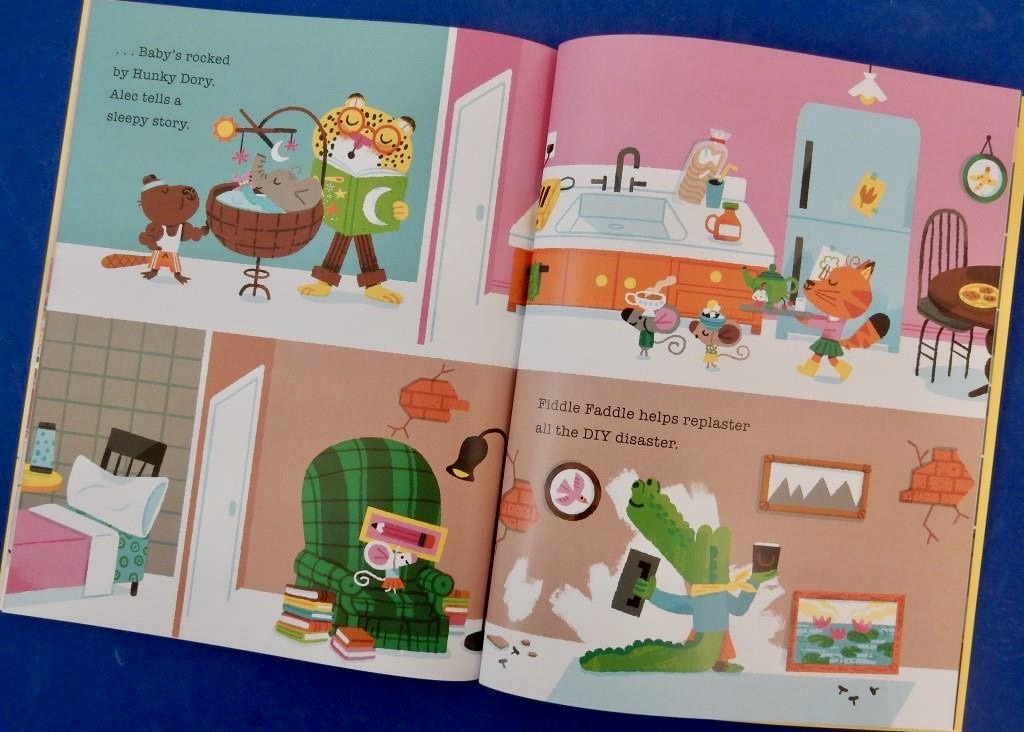
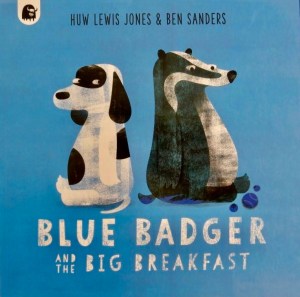
Is circle able to turn this situation around? Perhaps with a bit of creative thinking and a new and tasty notion.

How much better it is to accept and celebrate difference. Learning to get along with those who seem – superficially at least – to be different from ourselves is an important life lesson all young children need to learn, (though perhaps it’s their parents for whom difference is an issue not the youngsters themselves). So it’s appropriate to share this easy to relate to book with its satisfying solution at home as well as in the classroom. With its easy-to-read text, it’s also a book that KS1 readers might well be able to enjoy reading for themselves.

Britannica’s Word of the Day

Britannica’s Word of the Day
Patrick & Renee Kelly, Sue Macy, illustrated by Josy Bloggs, Emily Cox, James Gibbs, Liz Kay
Britannica Books

If you want to become a word pundit or turn your child into a logophile, then this book should definitely be on your shelves, or better still, near at hand every day. It features a veritable menagerie of animals large and small, each amusingly portrayed and ready and waiting to introduce the word of the day, over 366 days. So in a single year it’s possible to boost your vocabulary by a sufficient amount to impress your family and friends and have fun so doing. Each word has been carefully chosen by the Britannica team and every one is certainly worth having in your vocabulary.

Along with the word of the day is a pronunciation guide, a definition, what part of speech it is, a sentence incorporating the selected word, and some trivia about its usage or etymology.

Each month concludes with a delightfully daft ‘story of the month’ that includes all the new vocabulary learned.

Be prepared to be surprised and delighted: what a great way to learn and to acquire some trivial information too. Did you know for instance that Rolling Stones guitarist Keith Richards ‘defenestrated a TV during a stay in Hollywood in 1972; or that ‘chartreuse’ is named after a green drink created by a 16th century alchemist who claimed those who drank it would have long and healthy lives. And I’m pretty sure I have ‘pareidolia’ – the tendency to see a meaningful image in a random visual pattern –

though I wasn’t familiar with the word until I came upon it in this book.

Lands of Belonging

Lands of Belonging
Donna & Vikesh Amey Bhatt and Salini Perera
Nosy Crow

This splendid book written by Donna and Vikesh Amey Bhatt, with input from Dr Rajbir Hazelwood, historian of South Asia and Modern Britain, is published for the 75th anniversary in August 2022 of the Partition of India. Its reference frame is that there are many ways to tell a story, depending on your viewpoint and experiences. I visit India at least once a year, once spent six months teaching and doing social work in Rajasthan, have made many close friends there and in other parts of the country, – people who have taken me into their homes and their hearts – and was born in Pakistan to British parents, so it is of particular interest to me. Indeed author Vikesh in posing the questions, What Makes You, You? and Where Are You Really From? at the start of the book really made me stop and think and essentially I go along with ‘you are the experiences you’ve had throughout your life’ as what’s made me what I am.

The book’s subtitle is ‘A History of India, Pakistan, Bangladesh and Britain, and this itself indicates that this is a complicated subject. It takes readers on a journey – cultural and historical – through India of the past (that includes today’s Pakistan and Bangladesh) showing how this ancient land was one of big thinkers, inventors and skilled craftspeople and traders, many religions, many kings, rulers and empires.

Next comes a topic that makes me feel uncomfortable – that of India under the English East India Company and the way in which the British gradually took over the entire land and how the British Raj treated those who called it their home. Then come Independence and Partition that resulted without due consideration of the long term effects, in the dividing of a nation and its people that still has repercussions today.

There’s also a look at the global impact of India/Pakistan/Bangladesh both on recent times and today, and at the contributions of some South Asians of today and yesteryear.

One of the things that strikes me anew every time I visit India is its cultural richness, its multitude of cuisines, traditions, (I learned to do and to teach yoga there), its languages, festivals, dance styles, music,

sports and the friendliness of its people. These topics too are covered, and all are vibrantly illustrated by Salini Perera whose art makes me want to jump on a plane, Mumbai- bound tomorrow.

An absolute must have book that makes a complex topic fascinating and approachable: it deserves a place in every school library in the UK.