Who Will Kiss The Crocodile?

Who Will Kiss The Crocodile?
Suzy Senior and Claire Powell
Little Tiger

Suzy Senior puts a hilarious spin on a favourite fairytale in her snappy rhyming take on Sleeping Beauty. It starts on Princess Liss’s first birthday when her family hold a big fancy ball for all the town’s residents, or rather, all but one. With the party in full swing there’s a sudden chill as in sweeps a furious fairy who proceeds to shout, “… In fifteen years, she’ll bump her knee.And then the princess DIES!” and with a wave of her wand she turns the infant into a baby crocodile. All is not quite lost though thanks to a life-saving pixie who informs the princess’s distraught parents that instead of dying, their daughter will sleep `til woken with a kiss. But who would be willing to kiss a crocodile, especially one with increasingly long claws?

On her sixteenth birthday the princess injures her knee while swimming in the lake and takes to her bed for what turns out to be a snooze lasting around a century, during which numerous princes have shown up at the castle only to flee when they realise what slumbers within the increasingly crumbling castle.

Eventually the neighbours decide to call upon the services of the Handy-Grans to carry out some urgent work on the thorny hedge surrounding the castle. This they do and after a day’s slog they discover the slumbering crocodile within.

Rather than running for their lives, they run back to their van for some knee soothing salve…
Surely there couldn’t be a happily ever after to this story – or could there?

Claire Powell’s comical scenes are simply bursting with bright colour, her cast of characters is inclusive and Suzy’s text is a delight to read aloud. If you like fractured fairy tales, don’t miss this one.

An Invitation to the Ballet Theatre

An Invitation to the Ballet Theatre
Charlotte Guillain, illustrated by Helen Shoesmith
Welbeck Editions

At this time of year especially, an invitation to participate in a special VIP tour of the world of the ballet theatre, particularly when it culminates in watching a performance of Swan Lake on stage is very enticing. This invitation enables the reader to go on a virtual outing to the world of ballet that begins with an empty auditorium capable of seating over two thousand people. Next comes a look at what happens in the costume department where, beneath a gate-fold, there’s a designer fashioning a ball gown for the dancer who is to play the part of Cinderella in an up-coming show, as well as other people hard at work. 

I never before realised that there is a ballet-shoe manager responsible for checking that every dancer’s pointe shoes fit properly and that the right ones are always available. We explore the crucial warm-up routines, the clothes worn for training, see the various ballet positions and movements being practised in a morning class and then watch what happens in the rehearsal studio where the dancers spend a fair part of the day. 

Those of us who just go and enjoy a ballet performance don’t stop to think about the considerable amount of stress, both physical and mental, that dancers are under, nor about the importance of a dancer’s diet. These aspects require expert support to ensure the performers stay healthy in mind and body. To that end there is a healthcare suite wherein we see dancers working with weights, gyrotonic equipment for stretching and toning, doing Pilates exercises and consulting the experts available.

We also visit the orchestra pit, and the make-up room: I was surprised to find that most ballerinas apply their own make-up prior to going on stage; this involves accentuating features to make sure they are seen clearly under the bright stage light no matter where members of the audience are sitting.

Produced in consultation with English National Ballet’s Ballet Futures programme, this terrific, highly informative, beautifully illustrated book, is one to include in classroom collections, to give to youngsters who aspire to be become dance performers, or indeed to any child who is going to a visit to the theatre to watch a ballet.

My First lift-the-flap Nursery Rhymes / Bizzy Bear My First Memory Game: Things That Go

Hours of fun guaranteed from these two Nosy Crow board books – thanks to the publisher for sending them for review.

My First lift-the-flap Nursery Rhymes
illustrated by Ingela P Arrhenius

In this sturdily built, large format nursery rhyme board book Ingela P Arrhenius illustrates fourteen popular nursery rhymes and songs, each with a flap to lift. Her beautifully patterned, striking scenes playfully hide either key elements of each rhyme, or sometimes, additional characters. From Sing a Song of Sixpence to Incy Wincy Spider and Little Miss Muffet

to Twinkle, Twinkle, Little Star, it’s never too early to introduce little ones to the delights of nursery rhymes, the bedrock of playful language, though sadly many children start preschool knowing none at all, or only one or two. On the back cover is a QR code to scan enabling adults and little ones to listen to and sing along to the rhymes as they turn the pages of what I suspect will quickly become a favourite book that parents and carers will enjoy sharing over and over.
The same is true of

Bizzy Bear My First Memory Game: Things That Go
Benji Davies

Containing four scenes with lots of action going on – the construction site, the city, the airport and outer space – each venue offers three games to develop memory skills and enhance the vocabulary of little humans. To play hide-and-seek the sliders all start closed and a little hand should open them one at a time and then search the full page scene opposite for the vehicle revealed. Matching pairs requires players to remember the positions of the vehicles beneath the sliders and the search and find game has three questions, the answers being found in the relevant large illustration.

Bizzy Bear has a special role to play at the building site: he drives a large yellow bulldozer clearing the site for the other team members to begin their work. The city scene shows a railway line as well as things that go up in the sky and on the road. In this illustration, Bizzy Bear is a passenger on the train rather than a worker.

He’s taken on a new role as a pilot of the jumbo jet in the airport scene and finally, in the space scene Bizzy is an astronaut. His rocket has just landed on a green planet far from earth where there are aliens waiting to greet him – let’s hope they are friendly ones. Benji Davies’ Bizzy Bear character is already popular with young children: I suspect he’ll win even more fans with this book.

Illumibugs

Illumibugs
Carnovsky and Barbara Taylor
Wide Eyed Editions

With an engaging text written by Barbara Taylor, who was at one time Science Editor at the Natural History Museum in London, and art from the same design duo as Illuminature and Illumisaurus comes another fascinating look at the natural world. Readers will be able to discover 180 minibeasts from various parts of the world using the magic three colour lens. The red lens shows insects, through the green you see plants and the blue shows (rather less clearly) other creepy crawlies.

There are seven regional sections, first North America, followed by Europe, Asia, Australasia, Central and South America, Africa and the Arctic. These are followed by a look at underwater bugs and finally, prehistoric bugs. I was surprised to read that there are 18, 000 butterfly species but even more astonished to learn that there are 12.000 species of millipedes in the world.

Each of the main sections is presented in a similar fashion – first a spread that includes the important environmental and survival information and a fact box relating to the region, an observation deck showing the minibeasts among vegetation waiting to be revealed,

View through red lens

– and lastly, a black and white double spread giving diagrams of insect species and other creepy crawlies (with a brief paragraph about each). This includes a search and find element that sends you back to the ‘observation deck’ to spot the minibeasts through the appropriate coloured lens. Purists will note that the insects depicted on the ‘observation deck’ are not drawn to scale.
Just in case you forget to replace the viewing lens in the front cover pocket, there’s a QR code at the back of the book that enables you to access the same feature on your phone.

This large format book offers hours of immersive enjoyment for readers of all ages from KS1 up, especially those with an interest in nature.

The Arctic Railway Assassin / Solve Your Own Mystery: The Missing Magic

The Arctic Railway Assassin
M.G. Leonard & Sam Sedgman, illustrated by Elisa Paganelli
Macmillan Children’s Books

Hal flies off to Sweden where he is to meet Uncle Nat. From Stockholm the following day they will take a Christmas trip aboard the sleeper train bound for the Aurora Sky Station to see the Northern Lights. Uncle Nat announces that his friend Morti, who has just won the Nobel Prize, is to accompany them, but then she suddenly changes her plan. After the announcement of her prize she’s been scared by some inexplicable events with things of hers disappearing and now Hal and Nat are to travel without her.

While waiting to board the train Hal sketches a group of musicians,

then as they leave Stockholm, he and his uncle think they are being followed, and Nat tells the boy that one of the people in his drawing is an assassin from his past, supposedly long dead. Something doesn’t quite add up with this picture of Hal’s. And what about the sudden appearance of Hal’s mum on board too?

Full of suspense, and with some great new characters, this truly is a gripping page turner with some really perilous episodes when readers will find themselves fearing for the lives of some of the characters. Hal’s drawing skills really come to the fore in this adventure, considerably helping to solve the mystery of what the assassins are after and where it is. Elisa Paganelli’s illustrations do a wonderful job bringing his sketches to life and adding to the reader’s involvement in solving the mystery.

My only regret is that this is the final book in the brilliant Adventures on Trains series.

Solve Your Own Mystery: The Missing Magic
Gareth P. Jones, illustrated by Louise Forshaw
Little Tiger

In the third interactive adventure from Gareth P. Jones there’s another puzzling mystery waiting for readers to solve. Like previous titles it’s set in the town of Haventry, a place where with its unusual population almost anything can happen at any time. Now it’s the opening day of Magicon, the world’s biggest magic convention and everyone is gathering for the great event when suddenly disaster strikes: all the magic in the town disappears. Who is responsible for this catastrophe?

It’s up to readers to don their detective hats, find out, and get it back in time for the opening ceremony. Could the thief perhaps be Evil Enid; or maybe Nigel Rigmarole whose business is magical energy? These are just two of the possible suspects that detective you, along with boss Klaus Solstaag (a yeti) need to consider. There are also the likes of meditative unicorn Moondance (too good to be true maybe)

and powerful Magic Circle head, Grandmaster Dimbleby.

There’s not a minute to lose: time to make the sparks fly – unless you want to shoulder the responsibility of allowing an ancient monster to waken from a century-long sleep beneath the town.

With a multitude of possible routes to take, this is terrific fun and with Louise Forshaw’s splendid portrayal of the weird and wonderful characters, this diverting read will delight primary age readers who like fantastical tales.

The Perfect Gift

The Perfect Gift
Alan Durant and Marjan Vafaeian
Tiny Owl

Rabbit is a much-loved creature, always ready to help and share with friends and neighbours. One day Meerkat knocks on her door with news: the birth of a royal baby is announced and the queen is having a celebratory party in the palace. Meerkat urges Rabbit to come along but in her paws she’s holding a gift. Rabbit doesn’t have a gift and she turns down her friend’s offer to share. Back indoors she searches high and low but can find nothing she deems suitable for the new baby.

Then ostrich calls and she too make the same offer as Meerkat, but is also turned down and told to go ahead. Other creatures also stop by, each bearing a gift.

By now the sun has almost gone for the day but still Rabbit won’t join them. As the sun sets she decides the only answer is to go to the party sans gift and ask the Queen’s forgiveness.

With her lamp in her paws, she makes her way to the palace and is surprised on arrival to find the place in darkness. Holding up her lamp, Rabbit approaches her majesty. Imagine Rabbit’s surprise when she’s greeted with the words, “And you’ve brought the perfect gift.” What can she mean by those words?

With themes of selflessness, kindness and friendship Alan Durant’s tale accompanied by Marjan Vafaeian’s delightfully quirky, detailed illustrations (love Ostrich’s knobbly knees) leave you with a wonderfully warm feeling inside. A thought provoking book to share both at home and in the classroom.

Anyone But Bear / Albert in the Air

Anyone But Bear
Suzy Senior and Dubravka Kolanovic
Scamp Publishing

Fox is excitedly making plans to host a moonlight party. He starts compiling his invitation list – Deer? – tick, Squirrel?- tick. Bear? Definitely not. Off trots Fox still planning in his head when suddenly rocks cascade down the mountainside, some of which smash straight into the party planner.

Fox is left flat out on the path-side unable to move. Several hours later, along comes Deer: help at last thinks Fox now awake and all too aware of his injuries. However, with a look of disgust, Deer turns away and takes an alternative route to avoid passing the injured creature. As snowflakes begin to fall along scampers Squirrel carrying nuts but he too decides not to stop. Seemingly the safety of his nuts is more important than that of a fellow forest creature.

Fox begins to despair but then round the corner comes someone massive, someone with large paws and a hairy scary face. Oh no! Soon though, Fox’s fear dissipates as he sees not the scary countenance he first thought but a kindly caring one. So kind and caring that he takes Fox all the way back home to his den; not only that but Bear brings him sustenance and takes care of the little fox cubs and their parent all through the night. This selfless act is one that Fox will remember always.

Based on the parable of the Good Samaritan, Suzy’s story, with Dubravka Kolanovic’s splendidly expressive illustrations will certainly make youngsters think about the meaning of real friendship.

Albert in the Air
Ian Brown and Eoin Clarke
Graffeg

Albert the tortoise’s latest adventure sees him first wishing to emulate his winged friends and then, tunnelling his way beneath the garden fence into the next door garden and wandering out into the hubbub of the territory beyond. It’s there, while foraging among the piles of trash that he unintentionally finds that his wish is actually being fulfilled. The wind lifts a balloon entangled Albert skywards and he gets a tortoise-eye view of the sprawling urban landscape beneath him.

Meanwhile back on home territory, the other creatures are missing their friend and enlist the help of the birds to search for Albert. Will they return him safe and sound? 

The answer is yes, with the timely assistance of a bee and he makes his return felt in a rather noisy manner.

An amusing demonstration that the grass most definitely is not always greener and perhaps home is the best place to be. With its humorous ending and stand out illustrations, Albert’s new story is sure to please his numerous fans and will likely win him some more followers too. Don’t forget to peruse the information spread at the back of the book.

Creeping Beauty: Fairy Tales Gone Bad

Creeping Beauty: Fairy Tales Gone Bad
Joseph Coelho, illustrated by Freya Hartas
Walker Books

We’re back in the Library of Fairy Tales Gone Bad for the third and sadly, final tale in this cracking series, where the Librarian has found a really frightening treat. Prepare to meet Eshe, the youngest of thirteen sisters, which makes her a tredecimalet. Eshe, like her sisters, is a fairy godmother with the ability to bestow amazing gifts, and thus invited to every christening party in the land. However Eshe has a rather different ability: she is able to to see into the future.

One day she foresees something truly terrible – ‘a world blanketed in thorns!’ endlessly growing vines that defy the sharpest of axes, shears, and even weedkiller. At the centre of all this is a beautiful girl, Princess Rose. It’s to her christening party that the sisters have just received an invitation and whereas her siblings are focussing on suitable gifts for the baby, Eshe’s head is filled with thoughts of the terrible future. She must attend the christening and she absolutely must try to prevent the very worst. This however will required, deep and very powerful magic and the use of her alchemistical Eye of Grimm.

Moreover she will require the help of others …

Dreadfully dark and brilliantly subversive, Joseph’s decidedly prickly twisted take on Sleeping Beauty is, like Zombierella and Frankenstiltskin, absolutely awesome. Long live the power of love and friendship. Freya Hartas’ wonderful black and white illustrations are in turn eerily eye-catching or cleverly comical.

I Really Want To Share!

I Really Want To Share!
Simon Philip and Lucia Gaggiotti
Templar Books

Sharing is a challenge for many young children and so it is for the young narrator protagonist in this the fourth in the I Really Want To series, who is faced with a new sibling in her family. Not only will she have to share her parents but lots of other things too. However sharing does not come at all easily even to a determined character like the one here.

On the day the baby is due to arrive, soon to be big sister is sent to stay with her grandparents, and her grandfather quickly sees that something is wrong. When he’s told the problem, he explains that sharing has been tricky for him ever since he married her grandma, it’s something they have gradually learned to do. Then his granddaughter reveals that her biggest fear is that she will lose the affection of her parents.

When baby brother is born there are up times and down times for everyone,

but will there come a time when big sister can honestly say that four in our family makes me glad; will she truly say, “I really love to share”? I wonder …

Lucia Gaggiotti’s wonderfully funny illustrations in a bold colour palette really capture the protagonist’s emotional roller coaster and the spirit of Simon Philip’s text. Together they make a book that is just right for sharing with young children who are soon to be, or have just become, a big sister or brother.

Crimson Twill: Witch in the City / Midnight Magic: Witch Trap

Crimson Twill: Witch in the City
Kallie George, illustrated by Birgitta Sif
Walker Books

Crimson Twill is anything but your typical witch. Instead she wears a hat to match her name, giggles rather than cackling and she’s a dreamer. She can hardly wait to pay her very first visit to the world’s biggest department store, Broomingdale’s in New Wart City. There she will spend her hard earned money, but what will she buy? After some deliberation, she heads off to the Cat floor and yes there are plenty of cats, but what interests Crimson most is actually a puppy; this she rescues from a highly disapproving saleswitch, Ms Whiskers.

It’s not until she reaches the hat floor that the quirky little witch finds something she likes, a hat completely different from all the pointy ones: this one has a huge bouncy bow but there is only one of them and just as she’s about to make a purchase, Crimson encounters another witchling whom she learns has been saving up for this very hat for weeks. What will Crimson choose: the hat for herself or happiness for her fellow witchling? 

This turns out to be only one of the opportunities Crimson has to demonstrate her compassionate nature and in the end she realises that not only is it okay to be different, but also that there is something more valuable than any purchase she might have made – friends.

With its theme of being true to yourself, full of witchy whimsicalness and gentle humour – I love the fun word plays – this is the first of Kallie George’s chapter book series. Birgitta Sif’s black and white illustrations are a delight, depicting an inclusive city community.

Midnight Magic: Witch Trap
Michelle Harrison and Elissa Elwick
Little Tiger

This is the third in the rhyming series starring black cat Midnight and her human friend Trixie. It’s October half term and the two are building a den in the garden (‘their own top-secret lair’), while Nan plants bulbs and Dad sweeps up leaves. With his magic, Midnight creates a leaf dragon and the friends are so excited they fail to notice that somebody is watching them. That somebody is a witch called Wendy who is especially interested in Midnight’s special powers and tries to buy her. Trixie gives her a flat refusal and the witch flies off with a worrying glint in her eye, leaving Trixie a tad concerned.

That night into the room where Midnight and Trixie are fast asleep creeps Wendy, who takes the cat away in a cage. The following morning Trixie discovers a clue to the identity of the catnapper 

and off she goes on a rescue mission, accompanied by Dad and Nan. Readers meanwhile discover why Wendy has taken Midnight and the cat in turn learns that her family is coming to her rescue. All ends happily with further revelations, a promise, understanding, kindness and more.

Huge fun for reading aloud or reading solo, this sparkling story has an autumnal feel thanks to Elissa Elwick’s choice of orange to predominate in her bold illustrations of the action.

India Incredible India

India Incredible India
Jasbinder Bilan, illustrated by Nina Chakrabarti
Walker Books

As a frequent visitor to India I know that to be there is an onslaught on the senses. You almost experience that when you read Jasbinder Bilan and Nina Chakrabarti’s book and as the author implies in her ‘welcome’ introduction, to visit any of the states is like visiting a different country. I totally agree when she says this vast country has a ‘huge welcoming heart’. Indeed it has many, for I have formed some very close friendships over the years with people in various states from Rajasthan to Kerala.

The book is narrated by Thara whose nanijee has a very special old trunk full of precious objects collected over the years as mementos of her travels all over the country. Every Friday night the two sit together and nanijee takes out one object and tells her granddaughter all about it – the state of its origin, what makes it unique and why it’s so special to her.

The first item is a book entitled Ganga and we learn the story of the goddess Ganga and the origin of the holy river Ganges that starts its journey in the Himalayas in the state of Uttarakhand. I was excited to see that second object was an envelope with a stamp showing sculptures from a place I once visited – Chandigarh’s sculpture garden – where everything is made from recycled waste.

As the journey continues, readers will discover something of the history of Delhi, where ancient and modern sit side by side; see some of India’s amazing and diverse wildlife, be astonished by the beauty of some of the architecture, notably the Taj Mahal, the Golden Temple in Amritsar – the holiest city for members of the Sikh religion and Udaipur’s Lake Palace. Rajasthan and in particular Udaipur is like my second home.

If you take a trip on a boat along Kerala’s backwaters, you may well encounter elephants taking their morning bath.

But no matter where you go, there will be markets, some selling good things to eat, others, richly patterned clothing, wonderfully crafted jewellery or perhaps dhokra (metal statues like those in Odisha and West Bengal.)

I could continue enthusing about the multitude of wonders India has to offer, and this book with its splendid illustrations, gives a real taste of those wonders, so I suggest you get a copy, read it and start planning your visit.

Goodbye Hobbs

Goodbye Hobbs
Emma Bettridge and Josephine Birch
Graffeg

Based on real life events of love, loss and grieving, the author offers a dog’s eye view of losing a very dear friend. It’s with great reluctance, that Merlin eventually follows his owner out of the house for a walk to the shops. It’s hard for him to do so without Hobbs, his gentle black Labrador best friend.

As they walk, Merlin catches the scent of something on the wind and following his nose he detects a message asking ‘ … How are you today?’ but the message is incomplete. Merlin sniffs again and again as they continue walking and he finally stops beneath a weeping willow tree beside the river. ‘I just wanted to tell you that I am OK. It was time for me to go away. I love you. If you need me …’ Again the message stops mid-sentence.

On the two go, Merlin sniffing and gathering pace as he and his human head through the woods, back towards the village, bound for home.

Still sniffing and alert to any message, Merlin finally receives the words he needs so much. Words that will help him cope with those feelings of near despair as little by little he accepts that although his belloved Hobbs is no longer present in a physical form, he remains in the form of memories of the wonderful times the two have shared over the years together.

Josephine Birch’s painterly illustrations of the walk capture the complex emotions of Merlin. Her initial sombre colour palette changes to one of warm autumnal shades, and her subdued brush strokes become more exuberant as his mood lifts with each new discovery of his friend’s scented messages.

A helpful book for any parents or educators wanting something to help explain the feelings surrounding the loss of a loved one.

The Search for the Giant Arctic Jellyfish

The Search for the Giant Arctic Jellyfish
Chloe Savage
Walker Books

Dr Morley is passionate about jellyfish; she’s even more passionate about finding the giant Arctic jellyfish, a creature nobody has ever seen. Having spent years researching and planning with the aid of her dedicated crew, she’s ready to start out on an adventure, bound for the icy waters of the Arctic Circle.

Their first animal sighting is of narwhals; perhaps they can lead the ship to that elusive jellyfish: or could it be the scientific data and samples members of her team collect as they dive hopefully into the chill beneath the ice? Days pass, blizzards howl but still the search continues. The days turn to weeks and then months but even then that hope remains strong. Eventually crew members start to think of home: maybe that giant Arctic jellyfish doesn’t really exist.

However, driven by their loyalty to their leader they don’t give up. At last thanks to the sunshine, comes hope in the form of a massive patch of algae. Convinced this is the opportunity she’s been waiting for, Dr Morley dives down.

Can you imagine how she feels on seeing nothing? Time to head home, she decides.

The words tell the story of the expedition from Dr Morley and the crews’ point of view but Chloe Savage’s stunning, action-packed illustrations documenting the search show that the creature is never far away but always, tantalisingly, just out of sight of the exploring party; or is it?

Eight Nights, Eight Lights

Eight Nights, Eight Lights
Natalie Barnes and Andrea Stegmaier
Little Tiger

Presented from the viewpoint of children Max and Lara who lives opposite, this is a lovely introduction to the Jewish festival of lights, Chanukah. It begins in a bustling city just before the festival itself when Max is excitedly hurrying home telling his grandpa that he’s going to light the first candle on the family’s menorah that night. This he does in the company of his grandparents and mother. Meanwhile across the road Lara and her family are doing likewise. As the story progresses we see other festivities taking place in other homes – the candle lighting, the preparation and sharing of special foods

including latkes and cookies decorated with Jewish stars, the playing of dreidel

and the welcoming of visitors. There’s an exchange of gifts and one young couple are spending their first night in a new home together. On the eighth night there’s a party at the synagogue and the rabbi tells the story of the festival’s origins – how the oil in the menorah lasted not one but eight nights. Finally back home once more, having lit all eight candles Max and his mother look out onto the street where ‘fireworks burst overhead’ and windows are bright with light. A joyous way to end the festival.

Beautifully illustrated, this is a smashing book to introduce younger primary age children to the Chanukah festival, which begins on December 18th this year.

Britannica’s Baby Encyclopedia / Night-Night Animals

Britannica’s Baby Encyclopedia
Sally Symes, illustrated by Hanako Clulow
Britannica Books

With just over seventy pages in all, this board book first encyclopaedia is divided into sections: our world, animals, plants, body, food, machines, art & music, shapes and numbers, every one of which is beautifully illustrated in bold colours. Each section begins and ends with a full page picture and the accompanying suitably simple text is thoughtfully worded to read like an opening and finale. 

For example Our World starts thus: ‘Our world is a place called Earth. In the morning, the sun comes up and the day begins.’ and concludes, ‘At the end of the day, the moon and stars light up the night sky.’ So, it would work well if an adult and child shared the book, one section per sitting. Little ones will love joining in with all the ‘sound’ words: this section has ‘Plip-plop!’ ‘Flitter! Flutter!’, ‘Gurgle! Burble!, ‘Crash! Smash!’ and several farm animal noises. 

Just the right amount of information is included in each section to engage small children, while also enhancing their vocabulary and knowledge.(A consultant Dr Amanda Gummer was used to this end.) It’s good to see that care has been taken to include a diverse range of humans in every topic presented.
A book to add to family collections if there is a very young child.

Night-Night Animals
Patricia Hegarty and Thomas Elliott
Little Tiger

This ‘pull the sliders, change the picture’ title takes little ones to various natural locations where it’s time for the fauna to go to sleep. First visit is the forest wherein there are rabbits, deer, a fox, a mouse and a nesting bird. Which one is nocturnal and needs waking with the help of the slider?
The savannah animals all seem to have shut their eyes already except for one; he needs help to get to sleep. The deep sea has lots of sleepy creatures large and small but one with eight limbs needs the reader’s help. After helping whichever of the rainforest animals is wide awake, it’s the turn of little humans including one very bouncy person who has to stop all those boings.

A fun, interactive bedtime book for the very youngest children who will enjoy assisting the animals before nodding off themselves.

Cat Problems

Cat Problems
Jory John and Lane Smith
Walker Books

Following a Giraffe and a Penguin with problems, this is the third hilarious title in the Animal Problems series. It features a perturbed moggy who shares its inner feelings about a far from purr-fect existence as a confined creature that’s not been outside for eight whole years.

First it’s “I’m awake, and I only got nineteen hours of sleep.” Then it’s a meagre dry meal, followed by another (ginger) cat that insists on curling up exactly where Cat wants to curl. Oh my goodness, now there’s monster.

Further tirades ensue and eventually a slightly sanctimonious squirrel that has been watching the continuous grumbling through the window holds forth with a powerful lecture on being thankful – most certainly it’s food for thought for our moaning moggy – in more ways than one. Will our grumbler ever cease from grumbling?
Using a muted colour palette Lane Smith brings out the hilarity of the protagonist’s tirade

and the design of every spread further amplifies the visual impact of the book. Providing plenty of food for thought, this droll offering is definitely one young listeners will lap up and likely ask for second helpings.

Fletcher and the Stars / The Winter Dragon

Fletcher and the Stars
Julia Rawlinson and Tiphanie Beeke
Graffeg

The fourth Fletcher story in the Four Seasons series is a wonderful wintry one.

One chilly night as Fletcher sits at the entrance to his den gazing up at the glittering stars, they begin to disappear. Concerned, he calls to tell his Mum but she assures him that they are just covered by cloud. However, he remains worried and can’t sleep. Instead he creeps out, determined to save the stars and before long he hears a snuffling sound. It’s a badger cub that says she’s afraid of the dark and is hiding till the stars return. Encouraged by Fletcher, Badger climbs onto his shoulders and twiggy branch in paw begins swish sweeping across the sky, but of shining stars there is no sign.
Next they try from up among the branches of a tree. That only succeeds in waking sleeping Squirrel; Squirrel offers to use his tail but to no avail. Can Owl sweep away those clouds?

The others wait snuggled up in a hollow in Owl’s tree and eventually fall asleep. When Owl returns having tried her best, Fletcher is down hearted at her news. But then at least Badger has some good news: she’s no longer afraid of the dark. Fletcher and Badger then tuck Owl into her tree once more and depart in the hope that by the time she wakes, their mission to reveal those stars again will have been successful.

Up the windy hill they climb and begin to puff. I wonder what will happen …

It’s a delight to be back in the company of Fletcher with his determination, consideration for his friends and passion for the natural world. Tiphanie Beeke’s gorgeous illustrations, glow even brighter than ever in this story as they evoke so well the icy winter’s night and the feelings of the animal friends. What a perfect match for Julia Rawlinson’s equally evocative, poetic text. Snuggle up and share this with young children at home or in school.

The Winter Dragon
Caroline Pitcher and Sophy Williams
Graffeg

Young Rory hates the long dark winter nights imagining them to be the time when hidden demons lurking in the shadows come creeping out. But Rory has recently made a model dragon from his craft materials and one night as he cowers beneath the bedcovers he hears a strange growling sound.
Peeping out cautiously he finds his dragon glowing like a nightlight, keeping away the dark and using its hot breath to warm his bed and his slippers and his bathwater.

Each night the dragon returns to warm him with tales of bravery with blazing fires, jewels hidden beneath the earth, elf kings, knights and dragons. With every visit Rory and the Winter Dragon together ‘banish the demons of the dark’ enabling the boy, his heart filled with the dragon’s stories, to sleep soundly, unafraid.

With the coming of Spring, Rory knows in his heart that it’s time for him and his dragon to bid one another farewell and one night safe in the knowledge that his friend will always be there should Rory need him, he watches the dragon leave, bound once again for his own world again.

With a gentle sprinkling of fantasy, Caroline Pitcher ’s lyrical telling combined with Sophy Williams’ soft focus, realistic illustrations highlight one little boy’s battle with his fears and his growing courage.

My Rhinoceros

My Rhinoceros
Jon Agee
Scallywag Press

The boy narrator in this droll tale becomes the owner of a rhinoceros when he visits an exotic pet store. Said creature, despite its size is no trouble: he’s shy, quiet, remains in the garden and keeps himself to himself. Deadly dull in other words, for this new acquisition doesn’t participate in any of the usual pet things: no ball chasing or indeed any other thrown object retrieval; no rolling over; in short, it does nothing.

The rhinoceros expert tells the lad that his pet, like other rhinos, should only do two things: pop balloons and poke holes in kites. Time for a trial run in the park: but does the rhinoceros perform those two tasks? Oh no it doesn’t; seemingly this particular creature is, despite all the playful activities taking place around it, a total let down. Maybe he should swap the rhino for a hippopotamus, the boy thinks.

On the way home though two airborne robbers, one in an air balloon, the other suspended beneath a kite, are attempting to flee the scene of their crime Now unexpectedly the rhinoceros steps up to the mark, follows the instructions given 

and proves itself not merely a rhino but a superhero. Furthermore, popping balloons and poking holes in kites are not the only abilities our super-rhino possesses.

Jon Agee’s poker-faced telling, in combination with his ink and watercolour illustrations of the unfolding comical capers, work perfectly together highlighting the daftness of a story that will go down very well with young listeners, and readers of all ages.

The Adventures of Team Pom: The Last Dodo / War of the Wind

The Adventures of Team Pom: The Last Dodo
Isabel Roxas
Flying Eye Books

It’s the summer break in Shadyside and Team Pom comprising Roberta, Ruby and Agnes have decided to spend it at the Natural History Museum where Ruby’s aunt Dr Octavia – a de-extinction biologist in training is currently working. There she is mighty proud to show the junior naturalist group a very precious specimen, a fossilised dodo foot. Who should be lurking in the background masquerading as cleaners though, but that ratty pair of the dastardly Steve’s minions, Mister Gilbert and Monsieur Georges. The next thing Dr Octavia et al know is that the dodo specimen has gone missing. Quickly Team Pom is on the trail but they are going to have to foil Steve’s wicked plan to turn all the humans to dodos if they’re to save the city.

If only they can find an ‘antidote’ and get the dodo-humans to consume it; otherwise it will be a case of “The dodos shall inherit the earth.”

With both inventiveness and action galore, this second off-the wall adventure, presented in Isabel Roxas’s whimsical graphic novel style, will delight those who met Team Pom in their previous adventure as well as winning them plenty of new fans.

War of the Wind
Victoria Williamson
Neem Tree Press

On a remote Scottish island lives fourteen year old Max with his parents and baby sister. As the story opens Max is struggling to come to terms with his hearing loss that happened after an accident on board his dad’s fishing boat. Up until then Max had been a popular boy – one of the crowd – but now he’s become one of the zoomers, those with additional needs whom he and his friends had previously laughed at. In addition Max feels that his parents have replaced him with perfect baby sister Sally. He doesn’t understand why his Dad can’t be bothered to communicate with him in writing and is irritated that his mum always seems too tired to sign accurately.
Max’s village is not on the internet, nor indeed is a mobile phone network available. But then, setting aside the noise pollution in exchange for the promise of wi-fi for everyone and a power source, the islanders vote to allow huge wind turbines to be installed in the bay just off the coast.

We follow Max’s developing relationships with three children who have been ‘different’ all their lives: David, uses a wheelchair, Beanie, who has Down’s Syndrome and lives with her granny, and Erin, who was born deaf; his gradual acceptance into this community being somewhat bumpy. Almost as soon as the wind farm appears it’s evident that the animals and islanders are acting oddly. In a few short weeks they become irritable, bad tempered and unpredictable. The strange behaviour spreads to the children and acts of violence threaten to tear the community apart.

On account of his hearing loss, Max, unaffected by the changes, discovers that a sinister scientist, Doctor Ashwood, and the government are using the wind turbines to test a new sound wave weapon on the island population. Using their strengths, can Max and his three new friends find a way to shut down the wind farm’s signals and halt Doctor Ashwood’s plan before the experiment has tragic consequences?

Not only is this a gripping thriller but it’s also an empathetic portrayal of children with additional needs, showing how all too often, they can be underestimated.

Goldilocks and the Three Crocodiles

Goldilocks and the Three Crocodiles
Michael Rosen and David Melling
Harper Collins Children’s Books

It would appear that Goldilocks hasn’t learned from her adventure with the three bears and now she has acquired a dog named Tiddles. Tiddles has a special liking for walking and it’s at his suggestion one sunny morning that they set out to rediscover that particular house in the woods – the one with the chairs, bowls and beds.

Off they go through the deep dark wood and suddenly in the distance comes the sound of the sea, seemingly calling to them with its ‘Pershooo, persheee, pershooo, persheee’. Arriving on a sandy beach, they soon discover a cave – a deep cave – and of course, in they go.

Yes they do find three chairs, three bowls

and even three beds, and Goldilocks and Tiddles do fall fast asleep. Moreover, their slumbers are disturbed by the sound of voices demanding to know , “Who’s been sitting on my …” – well you know how it goes. The cave owners are back …

I’m a huge fan of playful takes on fairy tales and this one is terrific fun. You’d expect no less from expert storyteller Michael Rosen and fantastic illustrator David Melling who, with his delectable details, highlights the humour of the telling. With slight echoes of ‘We’re Going on a Bear Hunt’, this is a brilliant read aloud, be that at home or in a classroom: both adults and children will delight in its language and the mock-scariness of the story.

Every Word Tells A Story

Every Word Tells A Story
Tom Read Wilson, illustrated by Ian Morris
Words & Pictures

This is one of those books about which you think, right I’ll just give it a bit of time, sufficient to write a review, only to find that it’s drawn you right in and a couple of hours have passed.

There are four words for each letter of the alphabet, each letter having for the first of the four, a funny, short, rhyming story, followed by a definition, information about its origin, meaning and its etymology, together with a humorous illustration by Ian Morris, the lead ones occupying most of the spread.
Did you know that a rhinoceros can produce as much as twenty five kg of poo every day?

Or that the word rhino is Ancient Greek for nose, and furthermore dung comes from the Danish dynga meaning heap? I certainly didn’t but I did however know that the word rupee comes from the Sanskrit meaning ‘beautiful form”; I have a considerable number of these coins tucked away in various purses on account of my frequent trips to India.

Whether it’s fun anecdotal stories or fascinating facts that you are interested in, you are certain to find plenty of both in this exploration of everyday words that shows how the English language evolved (and indeed still is). Equally it’s likely to encourage children to enjoy words and language for their own sakes. Supplying additional humour, illustrator, Ian Morris brings every entry to life with his dynamic pen and watercolour illustrations.

Maybe You Might

Maybe You Might
Imogen Foxell and Anna Cunha
Lantana Publishing

Is it possible for one person to change the world? With the hope and determination shown herein, it certainly is.
In an arid country where it was supposed the land was beyond repair, one little girl discovers a single seed. With a strong conviction that something might come of it, she digs a hole and places it in. Then lovingly she tends to it, bringing water from the well each day and making a shelter against the blistering heat and strong winds until … 

Within the abundant fruits are seeds; the girl plants one from each fruit. Meanwhile beneath the ground things are also happening. Eventually down comes the rain and creates a river once more: the land is flourishing and does so for years.
But then a storm destroys the trees and the girl feels as though her heart is broken too. Nothing can ever be right again … or can it? Could it be worth planting another seed? Yes and when at last there are many fruit bearing trees once more, there’s food enough for the birds and animals, and the human community too.

Inherent in Imogen Foxell’s beautiful, optimistic rhyming story is a basic description of the water cycle, showing youngsters how, over time, an abundance of trees in an area can produce a river where once there was only arid soil. it shows too how a single, small action really can help to make a difference. Anna Cunha’s stunning mixed media illustrations are a perfect compliment for the text, changing from the virtually monochrome portrayal of the desert-like environment where the protagonist dressed in a beige dress, finds that first seed, to scenes where shades of green and blues predominate as the trees thrive and the land is renewed.

My Dog, Hen / Ruffles and the Cosy, Cosy Bed

My Dog, Hen
David Mackintosh
Prestel

Owning any dog brings big responsibilities but adopting one from a rescue centre, even one as adorable looking as Hen, is likely to bring challenges. However as the child narrator of this story says, ‘why should we get a brand new dog when Hen is as good as new to us?’ So back he goes to his new family.

Although family members provide everything they think Hen needs in the way of food, water, a cosy bed and plenty of toys to keep him amused, such is Hen’s appetite that not only does he consume all his food but goes on to eat his bowl, items of furnishings and more.

Let’s say he’s a tad destructive, even gobbling up a supposedly indestructible dog toy. Enough is enough say the child’s parents.

But then Gran comes to visit bringing something with her. Could this perhaps help headstrong Hen relax?

David Mackintosh mainly uses solid blocks of red, beige, blue and black etched with white lines and patterning to create his stylish and striking illustrations that are full of playful touches. I love the spread of socks that Gran has adorned with cross-stitch darning that help to underscore the make-do-and-mend environmental message.

Ruffles and the Cosy, Cosy Bed
David Melling
Nosy Crow

The adorably playful Ruffles returns as lively as ever, but with something new to dislike – loud noises. These make him all jumpy and jittery and his instinct is to run away. However loud noises at night are far worse especially if they are the thundery kind that bring flashes, bangs and crashes. Time to hide, thinks Ruffles but where?

It must be a quiet place that’s also safe and snuggly. Hmmm… suddenly the little dog thinks of the perfect place and it’s ready and waiting for him. Now where could that be? Assuredly it’s the ideal place to wait until the storm has abated.

Sometimes set against a vibrant colour, sometimes only black and white, it’s amazing how much David Melling manages to convey through his seemingly simple humorous illustrations of this little pup, especially in those sequential strips of Ruffles responding to the scary sounds when his body language and facial expressions speak far more that the accompanying words.

Cress Watercress

Cress Watercress
Gregory Maguire, illustrated by David Litchfield
Walker Books

As the story begins young rabbit Cress, her mother and baby brother Kip are grieving the loss of Papa Watercress, who ‘went out and didn’t come back’; (though Cress still has hopes of him being alive). Mama Rabbit has decided to move her family from the warren to new digs: the one-room basement of an ‘apartment tree’ – a dead hollow oak known as the Broken Arms. Its landlord is Mr Titus Pillowby Owl and he takes payment for rent in moths. Failure to pay could result in eviction or if he changes his diet, the loss of their lives. Other residents include a noisy squirrel family with a doctor father, rent collector Manny and wife Sophie mouse and two songbirds. The birds are always on the lookout for dangers ,particularly in the form of the legendary snake ‘The Final Drainpipe’ and Monsieur Reynard the fox.
We’re treated to a mix of adventures, domestic detail, growing pains (Cress), clever crafting (Mum rabbit weaves tapestries) and great danger. Examples of this are when Cress and squirrel Finian are swept over a waterfall on a raft;

Cress confronts and enchants Tunk the Honeybear, but then she and Finny are held captive for a short while by pompous skunk, Lady Cabbage – she who has designs on Cress as a housemaid.
Full of heart, with some sadness, essentially this is a charming story of moving on, growing up, forming friendships and learning to love, becoming part of a new community and flourishing.

Or as Cress tells Fricassee the hen, “today might not be good. But it might be good enough.” In his glowing illustrations David Litchfield captures both the wry humour of the tale and its unforgettable cast of characters.

Read aloud or read alone, animal lovers especially will be utterly enchanted by both words and pictures..

Happy Stories for Nature Lovers

Happy Stories for Nature Lovers
Dawn Casey and Domenique Serfontein
Ivy Kids

Watching the Earth Prom on TV today I heard Chris Packham say this: “Now is the time to ask what we need to do for wildlife. We know we are on the brink, … but there is still hope … we can stop the loss of millions of species but we have to understand the need to change what we do, to accept and celebrate that change – we need to do it together with tolerance and kindness, because ultimately we are one species on one very special planet with one very big problem and one last chance to sort it out. Now is the time for ALL of us to make a difference.”
Author Dawn Casey writes in her introduction to this book of an environmentalist, Joanna Macy, who talks of the fact that more and more people are indeed taking action in response to nature’s needs, calling this shift ‘The Great Turning’.

The eight narrative non-fiction stories herein are examples telling how individuals and conservation bodies have made a difference to wild life in various parts of the world. We read of young Anna who, on account of her love of trees, was responsible for the founding of the Children’s Forest movement by passing on her passion to her pupils. 

A grandpa talking to his grandson outlines how the Humpback whales were rescued from the brink of extinction. In the 1930s only 440 were left but with the banning of hunting and killing of whales for commercial gain in 1986, their numbers have grown to 25,000.

Intensive farming methods with their use of pesticides and the destruction of hedges and trees have created green deserts in many parts of the world. However in Nature’s Plenty we learn how a farming couple in Normandy, Charles and Perrine followed their dream of growing healthy food for their family. Starting small, they bought a field and without the use of machinery, by feeding the soil only natural things, replanting hedges and planting crops for their mutual benefit, developed over the years a rich ecosystem of pastures, pools, orchards and hedges. This aroused the interest of scientists who came to see and were vastly impressed to discover the amount of food the farm grew on so small an area of land. Now the couple help others learn to farm in a similar low impact manner.

These and the other five examples, stylishly illustrated by Domenique Serfontein, should give young readers cause for hope and will surely inspire them to take action in whatever ways they can. The final spread offers some suggestions of how we might all walk more gently upon the earth.

Where in the World Are You?

Where in the World are You?
Marie G. Rohde
What on Earth Books

In her cleverly designed, playful exploration of our world and our place therein, Marie G. Rohde places a cat centre stage.

We first see said creature sitting beneath a table, a wobbly table, which stands on a blue rug. The viewpoint gradually zooms further and further out and readers join the cat on a journey of discovery as it ventures through the green door, out of the flat and into the big wide world,

until eventually we are out in the expanding universe of which the Milky Way is a part; so too are we humans, each and every one of us and we are all connected.

This is a book that arose out of the Covid-19 lockdowns and people’s feelings all over the world of being stuck inside, but its invitation to youngsters to be outward looking and to think about their place in the world is important at any time.

The simple question and answer text and bold, bright scenes that effectively put into perspective the vastness of our world, is a great starting point for discussions with young children either at home or in the classroom, especially as the final spread sets the scene in its concluding, “Now, where are YOU?’ Young readers will also enjoy searching for the black cat in almost every scene; its whereabouts is not always easy to find.

Autumn Moonbeam: Spooky Sleepover / Pages & Co: The Treehouse Library

Teamwork is a key ingredient of both these magical fantasies.

Autumn Moonbeam: Spooky Sleepover
Emma Finlayson-Palmer and Heidi Cannon
uclan publishing

In this second story where the world of witches meets the world of dance, it’s the first day at Sparkledale Dance Academy for dance and gymnastics-lover, Autumn. With a mixture of apprehension in case she isn’t up to it and excitement at being in the Black Cats dance team, she meets her best friend Batty at the door. As their teacher Verity welcomes the newcomers and announces the warm up, one of the team is still to arrive. Suddenly there she is at the door, Severina Bloodworth, Autumn’s conceited neighbour, showing off her new hairstyle.

As the session gets under way Verity announces a special team bonding sleepover in two weeks time. She also sends Severina to the store cupboard to find something to tie back her hair. On her return strange things start happening, but are they Severina’s doing or is something or someone else responsible for the trouble?

The following Monday back in their normal classroom Autumn comes upon a book with a paragraph about pixies. What she reads has an uncanny match with events at the dance academy the previous week. Perhaps it’s worth trying out the anti-pixie mischief remedies suggested.

Excitement mounts on the day of the sleepover and Autumn takes the opportunity to accuse Severina of being behind the weird happenings that occur whenever they dance. Her response is something of a surprise to her accuser but a relief to the accused. Perhaps if everyone remembers what Verity always says, “Teamwork makes dreamwork” they can work together to find a way out of the trouble once and for all.

Pages & Co: The Treehouse Library
Anna James, illustrated by Marco Guadalupi
Harper Collins Children’s Books

At last, it’s time for Milo to take centre stage as driver of the Quip in this the penultimate book of what has been an amazing series. Now accompanied by Alessia (the Alchemist’s daughter), is he ready to be a hero? Having been poisoned, his Uncle Horatio is currently lying unconscious in the care of the Pages family, and it appears that the only way to cure him is with a recipe in Alessia’s notebook. Together Milo and Alessia set out, bound for Northumberland in the hope of finding the Botanist, the only person who might be able to help them.

Having grown up on a train and never before left it, Milo is surprised to discover the sense of peace he feels close to trees.; a peace that is disturbed by a human voice. It’s that of the Botanist, aka Rosa, who lives and works in the Treehouse Library of the title; she who is the sworn enemy of the the Alchemist. From her Milo learns that his grandmother is also there and willing to see him. That’s two new and interesting characters who both readers and Milo encounter for the first time and happily for Milo, Rosa makes a decent mug of hot chocolate.

Time is of the essence as they hunt for ingredients for the cure, searching in The Secret Garden, sailing in a pea-green boat, 

repelling the terrifying Jabberwock and challenging Robin Hood as to whether he’s truly all about helping the poor.

With the ruthless Alchemist prepared to do anything it takes to get hold of The Book of Books and discover its secrets, the entire realm of the imagination is in danger: a thrilling struggle for book wandering’s destiny unfolds, and Milo, Tilly, Oskar, Alessia and Rosa have to put all their skills together to find that book first. An awesome read and I can hardly wait for the final story.

The Big Amazing Poetry Book

The Big Amazing Poetry Book
chosen by Gaby Morgan, illustrated by Chris Riddell
Macmillan Children’s Books

What a gargantuan task Gaby Morgan gave herself in selecting the seven poems to represent each of the fifty two poets from Dom Conlon, Paul Cookson and Charles Causley to Lewis Carroll, and Liz Brownlee to Carol Ann Duffy, included here in what is called in the foreword an ‘annualogy’. Even listing all 52 poets in a short review such as this one would be a big ask but let me just say that thirty are men and twenty two are women. Of the total, forty three are still alive and writing.

Most definitely there is something, or rather several things, for every mood and as many ways or more to enjoy the book, as there are poets included in this glorious ‘galaxy’ – the word Roger McGough uses to describe the poems in his introduction. Surely poetry lovers wouldn’t want to restrict themselves to just one per day; this is a book to lose yourself in, whether or not that is your intention when you open it. You’ll find a variety of poetry styles including haiku, shape poems, ballads, tongue-twisters, raps, sonnets and more on such diverse topics as wildlife, school, magical things, special days, the weather, war and love.

On account of something I heard said by Vogue editor Edward Enninful, reading from his recent autobiography, A Visible Man and mentioning a demeaning comment somebody had said to him, on the day of writing this review, two poems absolutely shouted out to me. One was Paul Cookson’s Let No One Steal Your Dreams, the final verse of which is ‘Set your sights and keep them fixed / Set your sights on high / Let no one steal your dreams / Your only limit is the sky.’

The other was Matt Goodfellow’s Start Now that begins and ends thus, ‘ be the change / you want to see / / walk the walk / stand with me’.

Bibilophile that I am, I just have to mention our current Children’s Laureate, Joseph Coelho’s Books Have Helped Me, that concludes ‘When I thumb through a book / their pages whisper to me / that I’ll be all right.’

Each of these in its own way is empowering and empowered is the way the pages of The Big Amazing Poetry Book make me feel. To add to the delights, Chris Riddell’s intricate black and white illustrations placed over, under, through and around the poems are quite simply, brilliant.

Invertebrates Are Cool! / Slow Down and Be Here Now

Invertebrates Are Cool!
Nicola Davies and Abbie Cameron
Graffeg

In author Nicola Davies’s latest Animal Surprises book, she takes us in the company of a young naturalist, on an exploration of the world of bugs, mini-beasts and some sea creatures too. In case you are wondering what all these might have in common, it’s that every one of the animals featured lacks a backbone. First of all we get close up to some earthworms, find out how to make a simple wormery and watch the clever tunnellers at work. Next come the slitherers with slimy undersides – snails and slugs.

It’s strange to realise that these are cousins to cuttlefish, squid, nautilus and even more astonishingly, the octopus.

Beetles are the next focus; did you know there are more than 400, 000 different kinds? Some such as ladybirds will be familiar, but readers may not have encountered chafer beetles or the devil’s coach horse, both of which are featured in Nicola’s rhyming narrative and Abbie Cameron’s illustrations. The latter are sufficiently detailed to enable identification of the creatures and on some spreads readers are able to get right up close to the featured animal.

There’s a final ‘match the animal to its home’ puzzle. A book that’s likely to nurture children’s interest in the natural world and whet their appetites to get outdoors and explore.

Slow Down and Be Here Now
Laura Brand, illustrated by Freya Hartas
Magic Cat Publishing

The author presents twenty awe inspiring events that take place in the natural world, each of which is a captivating reason to do as the title says, to slow right down and to be fully in the present, immersed in an amazing wild life happening. It’s as though time has been suspended as she presents each of these ‘moments’ in its allocated double spread, including a harvest mouse building a nest, a snail retracting into its shell when threatened by a predator, a goldfinch extracting seeds from a dry teasel head

and a frog sating its hunger by catching and swallowing a fly. Thus the reader is able to watch each occasion when they so choose, as they savour the words and study carefully Freya Hartas’s delicately detailed, sequential illustrations, which include occasional gently humorous anthropomorphic enhancements.


The text itself comprises a mix of easily digestible paragraphs of information, an on-going narrative and captions to the illustrations.

Not all the nature moments could be observed at first hand but anyone who follows the suggestions on the ‘Come Into the Here and Now’ pages, will likely encounter some of these wonders or indeed, chance upon opportunities of their own to observe moments of joy, awe and wonder.

Grimwood: Let the Fur Fly

Grimwood: Let the Fur Fly!
Nadia Shireen
Simon & Schuster

Absolutely brimming over with bonkersness is this second story in the Grimwood series. Fox siblings Nancy and Ted are happily settled in Grimwood enjoying life with their new friends, although they do still wonder about their parents. As Ted is wandering along one day he is suddenly accosted by a mysterious stranger, a grown-up Fox, whom it is suggested by Sharon the party crow, is from Twinklenuts. Further investigations reveal this fox to be the ultra cool Sebastian Silver who introduces himself as Mayor of Twinklenuts Forest. 

Beguiling as he might seem, said fox is a dastardly schemer and he wants to take over Grimwood for his own purposes.

With the future of the home they’ve come to love at stake, Nancy, Ted and their friends must summon up all their courage, speed, strength and teamwork skills. A challenge is issued: there’s to be a treebonk showdown: Grimwood vs Twinklenuts. Nancy decides they need to learn as much as they can about their opponents if team Grimwood is to stand a chance. Time for a bit of spying: step forward the glamorous duck Ingrid, an erstwhile spy so she says.

Already shocked at discoveries on the way, when eventually the Grimwood spies reach their destination they are more than a little surprised at what they see (and I don’t mean Ingrid falling head over heels in love at first ’quack’ and swanning off – make that ducking off – into the sunset).

Surely that isn’t the last we see of her; and what about that all important contest? Things are not looking good, especially with Grimwood’s star player missing as the match time draws ever nearer.
Prepare yourself for further revelations, glitter galore and a surprise ending: like woodlouse Eric Dynamite, I certainly didn’t see that coming.

Gloriously anarchic, made all the more so by Nadia Shireen’s totally brilliant illustrations. I can hardly wait for the next visit to Grimwood.

Grimms’ Fairy Tales / Lore of the Land

Grimms’ Fairy Tales
retold by Elli Woollard, illustrated by Marta Altés
Macmillan Children’s Books

Having read Elli Woollard’s splendid rhyming renditions of some of Aesop’s Fables I was eagerly anticipating these new rhyming fairy tales. Elli has chosen five well known ones on which to weave her rhyme magic and the result is again brilliant.
First to get the touch of her wand is Little Red Cap who is off to visit her grandma with a freshly baked cake and some elderflower wine. I love the way that wolf meets his demise. Next is The Elves and the Shoemaker, followed by Hansel and Gretel, The Musicians of Bremen and finally Cinderella, each story being deftly retold in a way that makes them a sheer pleasure to read aloud.

Marta Altés gorgeous illustrations too, help bring each telling to life and contain some really fun detail. The spread showing the stepsisters’ preparations for the Fancy Fantabulous Right Royal Ball is hilarious.

Enormous fun for young readers and listeners as well as adult readers aloud, and a cracking book from cover to cover.

Lore of the Land
Claire Cock-Starkey and Samantha Dolan
Wide Eyed Editions

Folktales about landscapes the world over, along with secrets from the natural world are unearthed in this stylishly illustrated book.

There are six parts, each presenting the folklore of a different landscape: forests, seas and oceans, mountains, hills and valleys, rivers and lakes and finally, wetlands. Each part begins with a folk story, the first being a Czech tale Betushka and the Wood Maiden telling how a girl and her mother’s fortunes are forever transformed by the daughter’s acceptance of an invitation to dance with a stranger instead of working at her spinning when she takes her goats into the forest to graze.
The next spread has synopses of creation myths associated with the forest. (Each of the other landscapes also has a creation stories spread.)

There’s an abundance of ancient wisdom associated with such things as sprites, spirits and other mythical creatures, plants, and more. You can discover why the massive volcanic mountain, Mount Tararnaki stands alone on the edge of New Zealand’s North Island as well as why Ancient Greeks thought there was a forge beneath Mount Etna and what was made there. This and much more is arrestingly illustrated in folk style artworks that grace every spread. There’s plenty to engage young lovers of nature, especially those with an interest in fictive possibilities.

Let’s Chase Stars Together / Courage in a Poem / And Everything Will Be Glad To See You

Let’s Chase Stars Together
Matt Goodfellow
Bloomsbury Education

Matt Goodfellow’s is a relatively recent voice in poetry for youngsters but his is one you won’t want to miss. Included here in this new book is something for many occasions and almost every mood.
There’s a good balance between reflections and celebrations of everyday school life and friendship, and presentations of deep personal issues such as divorce in the family. The latter is discussed in A Thousand Hours (spent with Dad) when on the occasion of a walk with ups and downs, ‘he tells me/ it wasn’t meant to be like this / we were supposed to be a family / a proper family / but somehow, y’know, things got in the way’. This concludes on a more upbeat note thus: ‘… right then / it doesn’t feel like he’s a dad / I’m only allowed to borrow …’
On a more humorous note is I Hope It Rains Today set in a classroom where the teacher on duty makes the decision to announce a ‘wet play’ thus allowing one member of the class at least to enjoy the opportunity to head to the school library and therein find space to read.

Courage in a Poem
Little Tiger

Courage in a poem? How is that possible? In a multitude of different ways as you will discover if you read this wonderfully empowering collection that includes work from two dozen word weavers.
Courage is most assuredly found as Elizabeth Avevedo says, when leaving the place you call home and after emigrating ‘attempt to bloom and blossom / and brighten a new place. … unfurl to the possibilities / of the new place you call home.’
On the other hand it might be that by sticking ‘kind words’ onto ourselves, ‘like pollen to the knee of a bee’ we might cover ourselves with the same kindness ‘nectar’ as poet Matt Goodfellow. Or perhaps as Rachel Plummer suggests, by emulating the beech tree she so wonderfully describes being fully itself in its own shape; that is the way to be ‘nothing but myself’ safe in the knowledge ‘I am. I will grow.’ 

Another way of finding that inner courage is through movement as the dancer in Mandy Coe’s The Cancan tells us, ‘Because when I dance I can, can do anything / when I dance.’

Equally it might be as Sophia Thakur tells us in Mother’s Eyes to see ourselves as a mother does
and with such certainty as hers to love ourselves with the same strong belief. 

To immerse yourself in this book is to be inspired and delighted, awed and perhaps mesmerised, by the powerfully uplifting messages and accompanying illustrations

And Everything Will be Glad To See You
selected by Ella Risbridger, illustrated by Anna Shepeta
Nosy Crow

This bumper volume contains more than one hundred poems and is a wonderful celebration of women writers of poetry. (There are also a few anonymous works) Taking a stand for equality now and in the future, Ella Risbridger’s main reason for this book is that historically men have been paid ‘lots more attention’ and ‘that’s not fair’! Consider this, in the UK our Poet Laureate list numbers just one woman (Carol Ann Duffy) among twenty men.

Herein you’ll likely find work by familiar writers but you’ll also be excited to make lots of new discoveries. As an erstwhile compiler of poetry anthologies I came upon a fair few I too have included in collections but rediscovering these poems in a different context brings fresh delight: one such is Beatrice Schenk de Regniers’ Keep a Poem in Your Pocket, another is Eleanor Farjeon’s Cats.

On the day of writing this I was drawn to works by Carol Ann Duffy, in particular Don’t Be Scared which opens thus, “The dark is only a blanket / for the moon to put on her bed. / … The ark is the wooden hole / behind the string of happy guitars.’

Sheer delight too is the very first poem, Nikita Gill’s brilliantly inclusive, 93 Percent Stardust, the final lines of which are ‘with souls made of flames, / we are all just stars / that have people names.’
Being unfamiliar with the work of Joy Harjo it was a wonderful surprise to come upon her exhortation to Remember

as I certainly shall this poem, It’s one I shall return to over and over.

Anna Shepeta has done an awesome job illustrating every spread. Her mesmerising artwork thoughtfully compliments the poem or poems found at every turn of the page. Beautifully presented, this is a truly inspiring book to own, to share and to give.

You certainly won’t regret adding any, or all of these books to your poetry shelf.

The Season of the Giraffes / Wild Animals of the World

The Season of Giraffes
Nicola Davies and Emily Sutton
Walker Books

This the first of the publishers new Protecting the Planet series looks at the effects of climate change on the much loved giraffes of Niger; its inspiration was the work of climate activist and film maker, Kisilu Musya.

Once some time back giraffes were very much a part of everyday life in Niger: and considered a blessing in the same way as the birds, the trees and the rain. The children saw them browsing the trees on their morning walk to school or when they brought home the cattle at night; the giraffes had a strange fighting regime and communicated in a language of grunts and snorts.

However the number of these graceful animals sadly started to decline as more and more buildings, roads and farms filled the land and then on account of climate change the rains began to fail too. The result was terrible droughts that parched the land causing much suffering to both animals and humans.

Soon very few giraffes were left in Africa but in the country of Niger, there was still time to save the few that remained. The humans stopped hunting, protected the trees giraffes fed on as well as the creatures’ favoured places and gradually, then more rapidly, the giraffe population increased. So much so that some have been transported by truck to other parts where they live under the watchful eye and care of wildlife rangers and scientists. The hope is that one day these beautiful animals might be able to return to the places they once roamed.

Nicola’s story of optimism shows how with resolve, we humans can change things for the better; it’s gorgeously illustrated by Emily Sutton who captures both the grace of the animals and their homeland, and the lifestyle of some of the people of Niger.
(There’s additional information about giraffes, climate change and what we can all do to help both causes.)

Wild Animals of the World
Dieter Braun
Flying Eye Books

This sumptuous volume brings together Braun’s Wild Animals of the North and Wild Animals of the South taking us on a world tour that begins in North America, moving in turn to South America, Europe, Africa, Asia, Australia and finally, Antarctica.

Magnificent art takes the forefront in an awe-inspiring introduction to an array of creatures great

and small of the land, sea and air. Sadly some – the Asian elephant, the Emperor penguin for instance – are on the endangered list, others are threatened, though this isn’t stated in the book.

Dieter Braun manages to encapsulate the very essence and spirit of every one of the hundred and thirty plus animals portrayed. Some have an accompanying factual paragraph, others leave the labelled illustration to speak for itself. (Both scientific and common names are given.) A great gift for young wildlife lovers.

Mind Your Manners, Dinosaurs! / One Little Bug

These are two recent board books from Little Tiger – thanks to the publisher for sending them for review.

Mind Your Manners, Dinosaurs!
Danielle McLean and Gareth Williams

A fun book with cutaway pages that introduces toddlers to some basic table manners as one by one five little dinosaurs assemble around the table for their dinner. On the recto of each, one of the five dinos is introduced and beneath a flap, which is an integral part of the illustration, is a sentence that moves the action forward. Turn over and on the verso that same dinosaur is now seated and showing how to ask politely for something, while on the recto we meet dinosaur number two. This same pattern continues until all five little dinosaurs are sitting ready to eat and Mother Dinosaur reminds them all of a few additional basic manners and wishes them ‘Bon Apétit’.

Cleverly constructed, cheerily illustrated and with a simple upbeat text that praises the little ones appropriately, this offers interactive learning for the very young.

One Little Bug
Becky Davies and Jacob Souva

This lift-the-flap board book offers a good way to introduce very young children to minibeasts, along with of course, seeing the real things in the wild. Little ones will discover the best places to look for bugs and how to collect some for observation. There’s information about the amazing homes some bugs construct, for instance, black garden ants build nests with different chambers for different purposes, as well as a look at how humans can build a bug hotel – a safe insect habitat to be used for living or hibernation purposes. Readers also find out about the abilities of some of our back garden dwellers: did you know for example that a cockroach is able to live without a head for up to a week and also survive under water for more than half an hour?

There’s plenty to explore on every spread as a lot of additional information is hidden beneath the flaps and adults will need to help them digest some of the text, so this is definitely not a book to hurry through.
Altogether a beautiful introduction both visual and verbal, to the natural world.

My Family and Other Families / Some Daddies

My Family and Other Families
Richard and Lewis Edwards-Middleton, illustrated by Andy Passchier
DK

In this story we follow Liam and his family on their visit to the funfair. Leo is super-excited at the prospect of riding on the big wheel, but with his ticket tucked into his pocket, we wonder if he’ll ever get to the wheel on time. There are so many other families there who all want to stop and chat – families that don’t necessarily look like his own but who all show loving care to their children just like his own. Suddenly Liam realises that his ticket is no longer in his pocket and he frantically retraces his steps asking the other visitors if they’ve seen it. 

Nobody has but everybody offers to join in the ticket search and eventually Liam has a ticket clasped tightly in his hand and he heads over to where a man is making that last call for riders to board the wheel. Now there’s one final opportunity for kindness so that all the children are able to have a ride.
The final sentence in the book, ‘A family is people who care about you’ sums up the authors’ crucial message of diversity and nicely rounds off the story.

Shown inside the front cover and hiding in plain sight in vibrant illustrations are thirteen hidden surprises that young children can search for during the telling. A book to add to collections in early years settings.

Some Daddies
Carol Gordon Ekster and Javiera Mac-lean Álvarez
Beaming Books

“Every daddy is different!” So goes the repeat refrain in this celebration of fathers of all kinds and their styles of parenting. Some are early risers, while others take a while to get going in the morning. Some drink coffee, some drink tea, some prefer a smoothie or water. Some wear suits, some don uniforms, and some work from home in their pyjamas! Some daddies are arty, some like growing things, some love to read. 

Daddies might be good cooks or they might rely on take-aways; some will bid you goodnight with a song, others with a bedtime story. Some are yours from the moment of your birth, others are not a biological relation and choose you later on, some share you with a mum, others with another dad. Yes there are many, many different ways that daddies can look, eat, work, play, and be; however there’s one thing all daddies have in common: daddies are special people who love their little ones.

Brightly coloured, slightly quirky illustrations support the upbeat text with its key message about similarities and differences.

The Great Cake Race / Sindhu and Jeet’s Missing Star Mystery / Time Travel at Puddle Lane

These are three additions to the Bloomsbury Readers series – thanks to the publisher for sending them for review.

The Great Cake Race
Teresa Heapy, illustrated by Erica Salcedo
Sindhu and Jeet’s Missing Star Mystery
Chitra Soundar, illustrated by Amber Huq
Time Travel at Puddle Lane
Emma Shevah, illustrated by Laura Catalán
Bloomsbury Education

In the first story Jamila sees a note announcing The Great Cake Race ‘fastest cake wins’ she reads. Now she knows that she’s a fast runner but something of a novice at cake making. However she resolves to create a cake like no other and to do so in honour of her beloved Nani. With her name on the list of entrants all that remains is to learn how to bake. With her dad to help and memories of what her Nani used to say, off she goes but her initial attempts are pretty disastrous. Maybe that box containing Nani’s baking books might just be what she needs. With Nani in her mind, can Jamila create something truly spectacular and beat the person who has won the title for several years in a row?
An unlikely story but one that with its determined little girl as main character is great fun especially for those readers just starting to fly solo. Erica Salcedo’s black and white illustrations are a delight.

Rather more challenging is the second set of adventures of detective duo Sindhu and Jeet. The first of the three mysteries involves working out which of two wills of a deceased neighbour is the valid one. The outcome can make a big difference to one human and a lot of rescue dogs.
The second story involves a missing film star, Ranjith Kumar who disappears on the day he is supposed to make a TV appearance. Where has he gone and why has he vanished? Readers may well be surprised when they find out.
In the third story a precious emerald ring is missing on the day of the wedding although the bride-to-be swears she put it safely away in a wooden box the previous evening. Can the children discover what has happened to it so that the wedding can go ahead as scheduled?
Readers will find out something about South Indian traditions as they read these three enjoyable episodes.

Time Travel at Puddle Lane refers to what two friends, Ariella and Yusef, suspect their school librarian is doing when they notice the sooty state of her clothes and her filthy fingernails on several occasions. They decide to investigate using the same means as that they suspect Miss Riche uses – by taking an artefact from the school’s collection kept in a cabinet in the library and going through a door that’s always kept locked. The soap dish the children use transports them to early 19th century London where they have an exciting adventure, are helped by some very kind people, meet their school’s founder when she was just a child and discover things about slavery. An unusual tale that will likely leave KS2 readers hoping for further time travelling adventures of the friends, perhaps in the company of their school librarian.

Something About A Bear

Something About A Bear
Jackie Morris
Otter-Barry Books

This is a new large-format edition of Jackie Morris’s ode to bears. It begins with a large brown bear nose to nose with a teddy bear and the words, ‘Let me tell you something, something about a bear.’ Readers are then introduced to eight kinds of bears through stunning watercolour illustrations and a poetic text.

Each turn of the page takes us to the natural environment of one sort of bear or another starting with Brown Bear watching salmon in a river. On a mountainside in China, a Panda is shown nurturing its child ‘Born as soft and small as peaches.’ Next we see a Sloth Bear carrying her cubs on her back set against ancient Mughal architecture; a Spectacled Bear with cubs high up in the canopy of a South American jungle;

from her nest an enormous Asian Moon Bear waits and watches, all set to go a-hunting. Now you might be surprised to learn that Polar bears are not white – their fur is ‘hollow’, their skin, black. Nor is the American Black bear always black; it could be cinnamon or honey coloured and even, rarely, white.

The very essence of each one of the magnificent ursine creatures is captured in Jackie Morris’s awesome paintings and it’s incredible to see the range of browns she uses. A considerable amount of information is included in the main narrative, which eventually comes full circle to the two we met on the first spread, closing with the words, ‘the very best bear of all is YOUR bear. Two further spreads give additional notes on each bear featured. A terrific gift book for bear lovers of all ages.

The Curse of the Tomb Robbers

The Curse of the Tomb Robbers
Andy Seed and James Weston Lewis
Nosy Crow

In this puzzling adventure set in ancient Egypt 1422 BCE readers are asked to assist apprentice scribe Nub and his friend Iteti to stop a gang of robbers intent of stealing items from the tomb of Queen Neith.
To do so the two friends need to discover the exact location of the burial place and halt the robbers before a terrible curse is unleashed. 

When they try to find Iteti’s father the vizier to let him know of the robbers, they are told he’s away, so leaving a message with a trusted servant telling him to go with soldiers to Queen Neith’s tomb. they decide to go ahead and follow the robber gang to the pyramids.

There’s a hieroglyph puzzle to solve on most spreads and lots of ‘Did You Know’ information bubbles as the story proceeds, as well as the possibility of whether or not there really was a curse to ponder upon. If you find yourself stuck over any of the puzzles all the solutions are at the back of the book as is a glossary, a codebreaking guide, hieroglyph charts and a list of 70 Egyptian words with their English translations.

Written in collaboration with The British Museum, readers will learn a lot as they participate in this adventure and James Weston Lewis’s stylish illustrations do an excellent job of capturing life in Ancient Egypt. KS2 readers, especially those with an interest in history will enjoy this and it’s a good one to add to primary school libraries too.

Always, Clementine

Always, Clementine
Carlie Sorosiak
Nosy Crow

Clementine is a mouse, an extraordinary one. On account of her altered DNA, from the day of her birth she’s been thinking about prime numbers, sometimes uses Latin and is able to sign to her friend. This amazing book is made up of imaginary letters written from this mega-intelligent mouse to her much-loved chimpanzee friend, Rosie, left behind when she escapes from a research lab. This is thanks to a research assistant who feeling guilty about her treatment, smuggles her and another mouse out of the lab, depositing them in a nearby mailbox. Clementine’s series of reports to Rosie, tell of the wonders of the outside world.

She’s discovered by the kindly Pops and his grandson Gus who on hearing of the large reward being offered for the return of the mice, resolve to keep their whereabouts a secret. This is particularly difficult when they receive a visit from the lab, on account of Clementine’s raspberry aroma. Having considered possible options, Pops decides in an unlikely consultation with Clementine that the best plan is to teach the mouse to play chess and then televise a match, with the intention of creating a public outcry against the lab. A few days later Clementine defeats not one, but five human players simultaneously. Is she now safe?

Clearly interwoven with the main storyline are other issues. The other mouse escapee, Hamlet, also has an amazing talent that is slower to reveal itself than Clementine’s; however it turns out he’s an amazing architect and using wood chips constructs a model of Notre Dame. Thus another issue to ponder is that of alternative kinds of intelligence. So too is why Pops, an erstwhile chess champion, hasn’t played for many years. We discover the reason is a personal one as we do that Clementine too has an image issue.

Friendship and love are key in this poignant, sometimes gently humorous book, as are the importance of social justice and what true goodness really means. Be prepared to lose your heart to Clementine as she bares her soul in her letters. The book ends on an optimistic note and a realisation that each of us must work out our own definition of goodness. Truly awesome writing.

Granny Pip Grows Fruit / 2023 Nature Month-By-Month / The Earth Book

Granny Pip Grows Fruit
Deborah Chancellor and Julia Groves
Scallywag Press

The focus for this fourth title in Deborah and Julia’s ‘Follow My Food’ series is fruit. It features a grandmother who grows various fruits in her garden, and the granddaughter who assists her. There’s lots of work all year round and we start in the autumn with composting the soil and planting – first raspberry plants and then a gooseberry bush.
Winter is the time to cut back apple tree branches and prune the pear tree. When spring arrives bringing showers and sunshine, there’s weeding to be done to create space for planting strawberry seedlings. Once in bloom these will need to be protected by netting to prevent marauding birds spoiling the fruits as they begin to form.

Watering the soil is vital in the hot summer or the plants will wilt and the crops be lost. Because various fruits ripen at different times, Granny keeps a watchful eye so she knows the perfect time to harvest each kind. Summer’s end is when the apples and pears are ripe and even the windfalls are delicious.
What a rich bounty and as well as consuming lots of fruits almost as soon as they’re picked, there’s plenty either to cook or use for jam-making.
The book concludes with a matching words to pictures spread and a final one with information about the importance of watering, a paragraph on sustainable eating and another on choosing the best place for planting.
With just the right amount of detail and Julia’s simple, bright, bold illustrations this is an ideal narrative non-fiction book to share with younger primary children around harvest festival time or as part of a food topic.

2023 Nature Month-By-Month
Anna Wilson and Elly Jahnz
Nosy Crow

Published in collaboration with The National Trust, this backpack sized almanac is written by nature lover Anna Wilson and illustrated in bold colours by Elly Jahnz. With something to do on every day of the year, it’s bursting with exciting outdoor and indoor creative activities,

games, cooking and crafts, recipes, gardening ideas, wildlife to hunt for in various habitats, with relevant facts, and information on special events, festivals, celebrations and anniversaries.
Great for those youngsters already interested in the natural world as well as those you want to encourage to develop a connection with nature. For the latter, this fifth edition is a good place to start.

The Earth Book
Jonathan Litton and Thomas Hegbrook
Little Tiger

In his conversational, accessible style narrative, author Jonathan Litton takes readers on an extensive tour of our planet presenting topics such as how the earth was formed and its physical makeup; he examines forms of life tiny and enormous, both extinct and present now; investigates various ecosystems including rainforests, oceans, deserts and islands; and finally, looks at the impact humans have had and are still having on the planet through a focus on populations and migration.
Thomas Hegbrook’s soft-textured illustrations encourage readers to pause and marvel at Earth’s many wonders, an Earth that is way more fragile than many would acknowledge, let alone work to protect, for much too long. Whether you dip in and out or read it in its entirety, this is a book to add to home and school collections.

When the Storks Came Home

When the Storks Came Home
Isabella Tree and Alexandra Finkeldey
Ivy Kids

This is a charming, fictionalized retelling of the successful reintroduction of the white stork at the Knepp Estate in West Sussex, a UK native bird that has been brought back from extinction.

Herein we meet eight year old Beanie, a bird lover, who when she has a new baby brother, is curious to see on some of the baby cards, a bird that she’s never seen before. This bird is the white stork and encouraged by her mother, Beanie asks her friend Andy who works at the nature reserve to tell her about the storks. He tells her about their unfortunate disappearance from the UK on account of them being hunted for food.

Upset and angry, Beanie becomes passionate about encouraging the White Storks back. She does some research, makes a discovery and then with the dedicated help of lots of the village people who help with fundraising,

she eventually succeeds in her mission to provide a new home for some storks from Poland.

That’s not quite the end of this lovely story, but it does end happily and shows how one determined girl can really make a difference. Alexandra Finkeldey’s colour pencil artwork is superb and helps to highlight Beanie’s love of and engagement with the natural world. The book ends with a factual account of the White Stork Project.

Beyond the Frozen Horizon

Beyond the Frozen Horizon
Nicola Penfold
Little Tiger

Prepare to be chilled to the bone and not just on account of the setting of this gripping story.
The setting being a hopeful 2030 when humans have taken huge leaps to avoid climate disaster, passing Universal Climate Laws and creating Wilderness Zones to save wildlife and absorb carbon. However, the recovery is still all too fragile. Rory, who is finding life at home and school difficult, accompanies her environmental geologist mother, to the Arctic Wilderness Zone to approve Greenlight’s plans to extract from there, the rare earth metals which will be used for ‘clean’ transport and technology. So she believes when she accepts this once in a lifetime opportunity for herself and Rory, who will be able to see those northern animals she’s dreamed of.

The local people in the town of Pyramiden, who live in harmony with the beautiful, harsh and dangerous environment are becoming increasingly suspicious of Greenlight’s activities and Rory struggles to try and fit in with them. However eventually after experiencing some supernatural happenings, she makes friends with one local boy, Mikkal, and together they strive to discover the truth about what is really happening and pass it on to Rory’s increasingly stressed mother before it’s too late. Perhaps in so doing they will be able to bring peace to the ghosts of the past.

This is such a powerful environmental story, full of atmosphere, a build up of tension you can almost feel, with some dangerous events and some totally credible characters. Most important, it’s a brilliant portrayal of corporate greed and ‘greenwashing’ that is surely a wake-up call to all of us: the precious environment must be protected and we must change our ways before it’s too late. Anyone who cares about the Arctic and the environment in general will want to read this, but then pass it on to those who have yet to wake up to the crisis.

A Practical Present for Philippa Pheasant

A Practical Present for Philippa Pheasant
Briony May Smith
Walker Books

Philippa Pheasant lives in the forest close to Fairhurst village. Whenever she tries to cross the Old Oak Road in search of juicy blackberries, she’s almost knocked ‘pancake-flat’ by the cars that speed past seemingly out of nowhere. One day she decides that enough is enough; her friend hedgehog suggests writing to the Mayor, which Philippa does but her letter receives no reply.

The following day as she wanders along the lane near the school Philippa notices something that interests her greatly. A woman wearing a bright yellow uniform is standing in the middle of the road stopping the traffic so that the children can cross safely outside their school. This gives Philippa an idea; right away she sets about making something

and the next morning there’s a large gathering of woodland creatures waiting to hear what their pheasant friend has to say. Why is she wearing that strange attire?

Suddenly Philippa is thrust into the local limelight.

And the rest, shall we say, is full of surprises.

With her wonderful portrayal of rural life by day and by night, and a brave, determined avian protagonist, Briony May Smith has created another winner. I love the autumnal tones of the scenes, the wealth of amusing and interesting details, and the way Briony has used light and shadow to give her illustrations extra depth, all of which make the story even more of a delight.

Agent Llama Alpaca Attack!

Agent Llama Alpaca Attack!
Angela Woolfe and Duncan Beedie
Little Tiger

It’s good to see llama super-spy Charlie Palmer in action again with a new mission. Somebody is intent on world destruction using can you believe – a ‘Pasta-Splat Machine’. Already spaghetti-filled streets are being reported as far afield as Delhi and Dublin, schools are shut and the streets awash with sauce.

Grabbing her gadgets from their subterranean hiding place, Charlie revs up her turbo engine and off she zooms, on mission halt that pasta doom, destination a popular beach resort that is currently under attack.

Almost immediately on arrival so too is she, from above and below, but our Charlie is not one to give up as she starts to perform some show-stopping feats.

However, having scaled the heights our agent gets the surprise of her life: I instantly thought of a drama currently showing on BBC tv wherein a politician has his identity stolen, for that is what appears to have happened to our intrepid Charlie Palmer.

There before her, once his disguise is removed, stands none other than one time agent, rogue alpaca Harley Hacker. What Charlie learns next is potentially catastrophic. Can she crack that vital code, halt one billion drones and thus save the solar system’s central star?

Full on drama indeed and I have no doubt young listeners will absolutely love it. Angela Woolfe’s high octane rhyming text trips nicely off the tongue and Duncan Beedie’s comic style illustrations are just brilliant.

Little People, Big Dreams: Marcus Rashford / Little People, Big Dreams: Laverne Cox

Little People, Big Dreams: Marcus Rashford
illustrated by Guilherme Karsten
Little People, Big Dreams: Laverne Cox
illustrated by Olivia Daisy Coles
both written by Maria Isabel Sánchez Vegara
Frances Lincoln Children’s Books

World famous soccer player and campaigner against child poverty, Marcus Rashford is a truly inspiring person. Coming from a loving family in Manchester he spent much of his childhood practising with his football. His mother did everything within her power to ensure her children had enough to eat, though the family still had to rely on free school meals supplemented by food charities. Supported by his mother he followed his soccer dreams, was scouted and joined the academy at Manchester United where he worked hard to become a great forward, eventually becoming at just eighteen years old, the youngest player to score for his country in his debut match.

However, every single time he played he believed he was doing it not just for himself but for everyone who had shared his dream; and he never forgot where he came from. During the 2020 school closures on account of the Coronavirus pandemic children no longer had free school meals and Marcus’s social conscience led him to start a nationwide campaign so that no child would go hungry.

With powerful illustrations a timeline and additional information, this is an inspiring addition to the series.

One of twins, Laverne Cox experienced considerable bullying as she came to terms with her gender identity. She received no support from her mother, turning to dance to find some joy in her life.
Eventually she gained a scholarship to Alabama Academy of Fine Arts where youngsters were encouraged to be true to themselves. At last Laverne was able to express herself as she was and to make real friends. While studying ballet in New York she was offered a role in a play, discovered a love for acting, went into film and supported by friends who had already made the journey, developed sufficient confidence to start her gender transition.

A very useful book for younger primary age children to learn about the importance of acceptance and respect for others as well as being true to oneself.

Narwhal’s School of Awesomeness / The Lola Bee Bop / The Snotty Dribbler

Narwhal’s School of Awesomeness
Ben Clanton
Farshore

School has never been so much fun as it is when having followed the fishy pupils (love their names) of the Aquatic Academy to their place of learning, Narwhal and Jelly find that lessons are cancelled on account of staff sickness and volunteer to become substitute educators – Narwhal as Professor Knowell and Jelly as his ‘sort of super teacher’.

The first subject the best friends offer is Wafflematics – a tasty way of learning about basic addition if you’re a fish

(and a splendid incidental vocabulary lesson for readers of this sixth Jelly and Narwhal book). Next up is a spot of science, which takes the form of a fact-finding scavenger hunt with the class split into two teams and a yummy surprise for the winners.

Break is spent playing a game of Tag and then, when it’s a toss up between Jelly’s art and Narwhal’s writing as the next lesson, what better way to settle their difference of opinion than with a comic, co-created by teachers and class members – a new episode of the Super Waffle and Strawberry Sidekick Comic series involving a teacher-eating mucus monster. Everybody has so much fun that the day whizzes by in the flash of a fin: assuredly the teaching is unconventional (something that often works well if you happen to be doing a bit of supply in an unknown school); and of course, each lesson is taught with Jelly and Narwhal’s own brand of humour and positivity (further requisites of supply teaching, I suggest). I wonder what grade Narwhal receives from his teacher – that you’ll have to find out from this fun-packed, fact-filled book.

Some of the fun comes from the way that when one fish says something, each of the others responds with a synonym or variation on the word – incidental learning of the memorable kind for young readers. A gigglesome delight from start to FIN!

The Lola Bee Bop
John Dougherty, illustrated by Pauline Gregory
The Snotty Dribbler
Effua Gleed, illustrated by Kamala Nair
Bloomsbury Education

These are additions to the Bloomsbury Young Readers series.
Told in rhyme the engaging jaunty The Lola Bee Bop tells of Lola, a bee that just can’t resist waggling her bottom in bee bop time as she works hard among the flowers. When distaster strikes in the form of their favourite flowers being mown, at the queen’s behest Lola joins her fellow bees in search of more blooms from which to collect nectar and pollen. Eventually they find just the ideal field, collect the necessary and return to the hive. But how will they ever find the way back to those flowers again?

Could this be where Lola’s waggling really comes into its own?

Lots of fun, some gentle scientific learning and splendidly expressive illustrations by Pauline Gregory.

The Snotty Dribbler is seven year old Blay’s name for his baby sister who at fifteen months old frequently annoys her brother intensely especially with her snot, dribbles and fits of crying just when it’s his TV watching time. Oh how Blay wishes for some time apart from this little person. But then when something happens causing baby Bethany to need to spend the night in hospital with his mother, he really starts to miss her; clearly he doesn’t mind her as much as he’d first thought.

A new sibling story, sweetly and simply related with Blay’s emotions evident throughout, made all the more so through Kamala Nair’s bold illustrations.

That’s Nice Love / Dare We Be Dragons?

That’s Nice, Love
Owen Gent
Book Island

We’ve all seen it many times and probably on occasion been guilty of what the adult in this book does when she accompanies her small child to the park. So distracted is the parent by her mobile that she fails to take a single scrap of notice of anything the excited child says about climbing the big tree.
As the boy ascends he has the most amazing adventures – or perhaps flights of fancy. First a multitude of butterflies dance before him as he gazes skywards; then comes an orchestral recital by a group of squirrels,

followed by a scary moment with snakes. To compensate for that though, a troop of monkeys crowns him king, he helps a super-sleek leopard and becomes its friend and finally, he flies with a bird. As he excitedly informs his parent of each event the child receives merely the response, ‘That’s nice, love.’

On the way home, the boy tells the parent that he sometimes feels distant despite their physical closeness and when the two eventually reach home, the child seems to have got through to the adult by revealing a few items he’s collected.
He’s then invited to regale the entire adventure again. Will that parent do what is promised on future excursions; I hope so …

Portable screens may seem amazing but are no match for the richness of a child’s imagination, stimulated by the wonders of the natural world that may be found in the branches of a single tree.
Owen Gent gives his imagination full rein in a series of sublime sequences that explore and expand the spare verbal narrative.

Also celebrating the imagination is

Dare We Be Dragons?
Barry Falls
Farshore

As a father prepares to bid his daughter goodnight, he embarks on an exciting sequence of flights of fancy, each of which arises out of seemingly ordinary everyday things or events. For when these two go adventuring together even such things as a grassy hill walk becomes a huge erupting volcano, tree trunks morph into giants’ legs and a playground swing is the means for launching them on a moon flight and a sandy shore becomes a place whereon lions play.

There’s a sequence of spreads where Barry Falls splits each one into two : the verso shows the everyday reality and the recto, a show-stoppingly imagined fantasy that occupies the entire page drawing the reader right into the adventure.

Along with a wealth of wonderful worlds to explore so vividly shown, there is a more understated portrayal of the loving bond between parent and child. For this is a playful, supportive father who promises always to be there through the years that constitute that wonderful adventure called life; and so he says in the rhyming narrative that complements those splendidly spirited illustrations.

Darwin & Hooker

Darwin & Hooker
Alexandra Stewart, illustrated by Joe Todd-Stanton
Bloomsbury Children’s Books

This biography of two friends who became two of the most eminent naturalists of the 19th century is a fascinating exploration of their discoveries and of the birth of science as we know it.
Most people know something about Charles Darwin, his theory of evolution and his seminal work On the Origin of Species but I suspect far fewer know more than the name Joseph Hooker. This book published jointly with the Royal Botanic Gardens, Kew, tells the story of Charles and Joseph (who was once Kew’s Director), linking Darwin with Kew.

Divided into four parts, the book takes us on a journey through the early lives of Charles and Joseph, their adventures on their respective voyages, the start and progression of their close friendship, and the amazing legacies they left behind. Little did either of them know that when an erstwhile shipmate of Charles introduced him to his companion in London one day as the latter was preparing to depart for Antarctica, this meeting would gradually evolve into one of the most important ever friendships for science.

It’s incredible to read that very soon after Joseph’s return from his voyage of what turned out to be four years, he received his first letter from Charles – a congratulatory one but in it he also asked the botanist to examine his Galapagos plants and over the next forty years 1,400 letters went backwards and forwards between the two.

A fascinating, compelling read that shows young readers the importance of curiosity, determination and teamwork in scientific endeavour. Joe Todd-Stanton’s enticing illustrations break up and illuminate the text, helping to make it accessible to older primary school readers.

Nibbles: The Bedtime Book

Nibbles: The Bedtime Book
Emma Yarlett
Little Tiger

‘Once upon a bedtime, / it was getting very late, / And a book monster called Nibbles / Was sleeping in his crate …’ So begins this latest adventure of our favourite book devouring monster but anybody who knows Nibbles will immediately realise that sleeping will not be what he’s doing. Instead he’s off in search of favourite tales to chomp through.

The first to receive the toothy treatment is The Ugly Duckling (retold by an anagrammatic alias of Nibbles’ author). Having made waves in that

he proceeds to try his luck with a certain fairytale glass slipper try on and ends up showing his rear end to the newly weds as he exits their ceremony.

Thank goodness then for the next volume he discovers – a book of lullabies.

Can those starry wonders up above the world so high, prevent Nibbles from sinking his gnashers into every single planet in the solar system and sated by their galactic singing, transport him back into bed in time for young readers to bestow upon him one goodnight kiss before he finally drifts off to dreamland? Or maybe some other place … you never know with Nibbles.
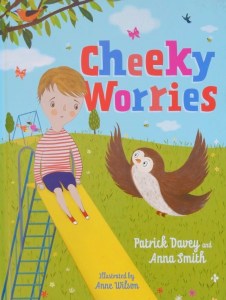
A wonderful bedtime read, but equally enjoyable whatever time you choose to share it with young children. Adult readers aloud will have fun identifying their favourite childhood stories among those on the shelves in the book-filled room.

Lord of the Forest

Lord of the Forest
Caroline Pitcher and Jackie Morris
Graffeg

‘Tiger was born fluffy and small, with his eyes tight shut.” So begins this gloriously lyrical fable about a tiger cub that doesn’t fully appreciate until he reaches maturity the meaning of his mother’s words, “The Lord of the Forest is …”.

Roaming the forest where all is new and exciting, or playing with his brothers, the little tiger’s focus is the sounds around: the sap rising in the trees, the slither of snakes, the Monkey’s whooping; he’s even aware of the curling of Chameleon’s tongue and little Gekko’s gulps, the flip of fish and Water-snake sliding down from the logs. His mother says, “When you don’t hear them, when silence burns and time stands still, then my son, be ready.” It’s then he’ll know the Lord of the Forest is present.

As he walks alone, grown considerably now, the tiger still listens and waits for the coming of the Lord of the Forest; but who is he? 

He asks the other forest creatures about this Lord, and the beautiful peacock, the rhinoceros and the enormous elephant all arrogantly claim the title belongs to them. However, Tiger understands that screeching, bellowing, roaring beasts such as these, couldn’t possibly be the one that his mother has readied him to meet. 

He continues searching but it’s not until he’s fully grown, with a mate and cubs of his own, that he discovers the identity of the beast he’s been seeking.

Elegance and humility reign both in Caroline Pitcher’s lyrical telling and Jackie Morris’s awesome art.
Jackie’s stunning watercolours immediately breath life into the creatures she portrays: the dignity and grace of the tiger in particular is palpable, while Caroline Pitcher’s poetic narrative truly transports us to the forest habitat with its magnificent sights and mellifluous sounds.

This enlarged edition of a book first published 18 years ago seems even more beautiful than the original. Sheer joy to read aloud, it’s one to add to family bookshelves and classroom collections.