Heidi

Heidi
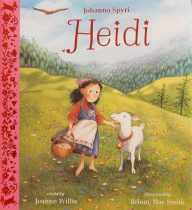
Retold by Jeanne Willis, illustrated by Briony May Smith
Nosy Crow

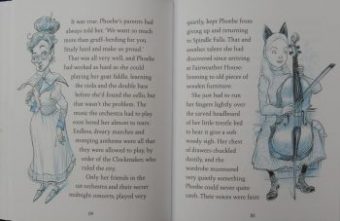
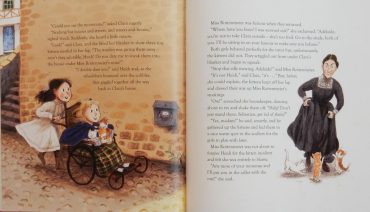
Jeanne Willis retells the Johanna Spyri classic tale for a slightly younger audience than the original book. I remember totally loving the story of the orphan Heidi as a child and was fascinated to learn of this new version.

It’s a beautiful gift edition in Nosy Crow’s Classics series and both author and illustrator have done a cracking job making the story more accessible while retaining the spirit of the original.

When her Aunt Dete takes her to live with her grandfather, the spirited Heidi quickly makes friends with Peter the goat boy, and soon softens her Grandpa’s heart – Grandpa Alps as he’s known by the villagers.

She spends a happy two years in his mountain home; but then comes the devastating news. Heidi is to go to Frankfurt to act as companion to little Clara, the sickly daughter of a rich man there. So says her aunt Dete who turns up one day and whisks her away insisting it’s “the chance of a lifetime.”

Miss Rottenmeier is a veritable dragon of a woman and Heidi finds it hard living so far from her beloved mountain home, despite getting on well with Clara,

so much so that she starts sleepwalking.

After a while the doctor suggests that the only cure for her is to let her return to her Grandpa. But what will happen to her new friend, Clara; will they ever meet again?

If you’re looking for a book for a developing reader and want to introduce them to the delights of Heidi, Jeanne Willis’ splendid telling really brings the characters to life and Bryony’s finely detailed illustrations are absolutely gorgeous.

You’re Strong With Me

You’re Strong With Me
Chitra Soundar and Poonam Mistry
Lantana Publishing

For her third ‘With Me’ book Chitra Soundar sets her story on the scorched African grasslands and features a pair or giraffes – a mother one and her baby – taking for her repeat refrain ‘You’re strong with me’; and as with her previous titles, Chitra has done her background research.

Gently and reassuringly, the adult giraffe offers encouragement, advice and information as her little one begins to explore the world around.

There is so much to learn: the little one is unaware of the special symbiotic relationship between oxpeckers and giraffes and so attempts to shoo away the oxpecker that has landed on his mother’s back.

Mother giraffe explains its role (eating ‘itchy insects’ and cleaning her fur) and saying that what hurts her baby’s skin now will feel a mere tickle once her skin thickens. “Until then you’re strong with me” she comments.

The dangers of fire and its role in renewal are also explored,

as is the importance of being acutely aware of any sounds around; that way is to be forewarned of other animals be they foe or otherwise.

Further lessons follow as sunset comes and baby giraffe needs help reaching the water to quench her thirst

and then soon it’s time to stop for the night.

As always, intricately patterned composition and colour palette are key in Poonam’s illustrations. For You’re Strong With Me a multitude of brown and golden hues predominate, strongly evoking the arid landscapes of the setting (I have some curtains from India in a pattern and colour very similar to the endpapers.) and when appropriate she adds teal shades for the creek wherein the little giraffe encounters baby fish and is instructed how to quench her thirst, doing so safely under her mother’s watchful eyes.

The Chitra/Poonam partnership goes from strength to strength: whither next? I can’t wait to see.

The Hike / What John Marco Saw

The Hike
Alison Farrell
Chronicle Books

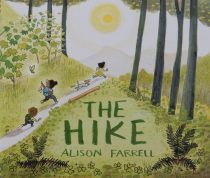
In this smashing book we share an outdoor adventure with three lively young human protagonists and dog Bean whose favourite thing is hiking.

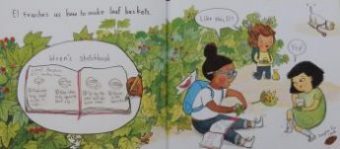
With Wren seemingly, acting as narrator, we see them setting off together up Buck Mountain running ‘like maniacs’ through the forest until a patch of ripe berries slows them down and having gorged themselves, El teaches the others how to make leaf baskets.

Continuing on up a steep narrow trail, they get lost. But thanks to Hattie’s map- reading skills, they find the way back onto the trail.

Taking delight in the fauna and flora they pass – the tiny snail, the fleetingly-there deer, the birds, the fish, the wild flowers (each one labelled) – eventually the girls reach the summit.
There, under a beautiful yellowish-pink sky they celebrate by waving a flag (Wren), reading a poem (El) and releasing feathers into the wind (Hattie).

Celebration over, they head back home beneath a starry sky.
There’s SO much to love about this uplifting story: the children’s determination and perseverance, their camaraderie and above all, their joie-de-vivre and the pleasure each in her own way, takes in the natural world.

Within the pleasingly designed gouache, ink and pencil spreads the hikers share with readers, comments via speech bubbles, additional details courtesy of Wren’s sketchbook and after the story eight further pages of illustrated, more detailed notes from the sketchbook.

Immersive, exciting, and hopes this reviewer, a book that will motivate youngsters to get outside and enjoy the beauty of nature whatever the weather.

What John Marco Saw
Annie Barrows and Nancy Lemon
Chronicle Books

In contrast to his family and neighbours who are preoccupied with their own private worlds, young John Marco notices the world around him.

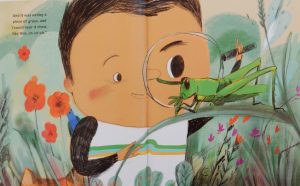
But nobody’s interested in the big green grasshopper with black bulging eyes chewing grass,

the worms or the fossil in the rock, not even the big old orange cat with her stomach ‘almost dragging on the ground she was so fat’ that went ‘prr-rrup’ when he sat close by.

Surely though when he reports that there’s a tree falling down in the front yard – albeit slowly – somebody will pay attention. But despite Mum’s ‘Trees don’t just fall down” – yes, she does finally come and look – fall it does just like he’d said several times before.

Could this event herald the start of John Marco receiving what he and the things he reports on, deserve – the attention of everyone around. Maybe, just maybe …

An unusual, wryly observed demonstration that it’s wise to listen to what children have to say, and a reminder to us all to slow down and take note of the small things in life.

The Golden Cage

The Golden Cage
Anna Castagnoli and Carll Cneut
Book Island

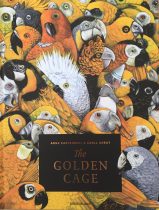
Dark, disturbing and enigmatic are the words that immediately sprang to mind after I read this fairy tale from Europe, which is a collaboration between French-Italian author, Anna Castagnolii and the Belgian illustrator of Witchfairy, Carll Cneut.

It tells of the Emperor’s daughter, an incredibly indulged girl who, despite having everything she desires, is not happy.

Her particular penchant is for birds of which she has a vast number but her greed drives her to want still more. Her demands become increasingly hard to meet: ‘a bird with glass wings!’ … ‘a bird that spurts water like a fountain’ …

Many, many servants lose their heads as they try in vain to fulfil her outrageous requests

till finally with her newest cage, a golden one, yet to be filled, Valentina has a dream.

In this dream she meets a talking bird

and knows that this is what she must have to complete her collection.

Off go the servants to search but again their offerings do not fit the bill and CHOP! off come their heads. It’s conversation, not mimicry she desires in her parrot.

Time passes, the palace gradually becomes a ruin and the cage remains empty.

Then one day a young servant boy, new to Valentina with ‘eyes as cunning as arrows’ approaches her eliciting a promise from her in exchange for the bird she yearns for.

Rather than a bird, the boy returns months later with an egg, telling her that from it will hatch a talking bird.

Happy, at last, the princess waits and waits and …

But this isn’t a happily ever after ending and readers must decide for themselves the finale to this multi-layered story, as indeed they must put their own interpretation on the whole.

Caril Cneut’s illustrations – sumptuous paintings and drawings that sometimes cover an entire spread, and the child-like drawing epitomising all that Valentina yearns for, are totally arresting. The former are rich in detail, truly snaring the attention but so does the latter, which in its own way also says so much.

Not a book for young children but it’s brimming over with potential if offered to older audiences including students of literature and art.

Under the Same Sky / Little Puggle’s Song

Under the Same Sky
Robert Vescio and Nicky Johnston
New Frontier Publishing

Two young children living on opposite sides of the world yearn for friendship.
The boy resides in a city, the girl in a rural area yet it’s he who uses metaphors of the natural world to express his longing – “We are like the sky and sea … always apart. Never touching.’

As he stares out through the window one night, there’s a pigeon sitting on the ledge and that gives him an idea.

Creativity takes over as, with its help the lad finds a way to bridge that seemingly impossible distance and light up the world of the little girl.

The gentle, softly spoken words of the boy demonstrate how with imagination and determination true friendship can endure against the odds and across the miles. Not only does he touch the heart of the one he reaches out to but also that of the reader. The inherent tenderness of the text is reflected in Nicky Johnston’s gorgeous watercolours, which provide a perfect complement to Robert Vescio’s narrative.

Little Puggle’s Song
Vikki Conley and Hélène Magisson
New Frontier Publishing

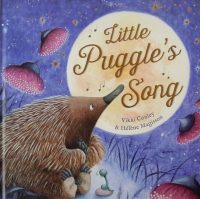
Puggle the echidna longs to sing but no matter how he tries there’s only silence. Deep down he knows that echidnas can’t sing, nor even make a sound;

but is there perhaps a way he can become a part of the bush choir that has been asked to sing a welcome song for the emu chicks that are soon to hatch.

As the days pass Puggle can merely look on as the other animals under the leadership of Brown Feather, practise their rendition.

Then on the night before the special performance he hears the news – Brown Feather is sick. Can he possibly save the day?

Lyrically told, Vikki Conley’s heartfelt story of determination and fulfilling your dreams reads aloud well and with Hélène Magisson’s beautifully painted scenes of the fauna and flora of the Australian bush, this picture book will introduce Australian wildlife to youngsters outside the antipodes.

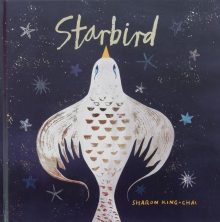
Starbird

Starbird
Sharon King-Chai
Two Hoots

When the Moon King has a daughter, he determines to give her the most wonderful gift in the world, the beautiful Starbird whose singing weaves magical dreams.

He captures the creature and puts it in a cage so the girl can hear its enchanting song.

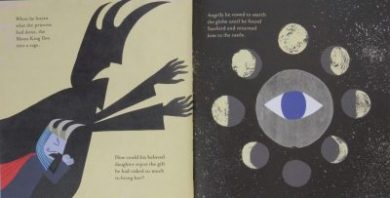
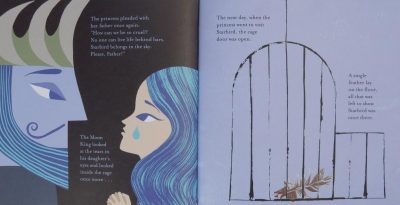
For the princess though, the joy of hearing Starbird’s sweet evening song is short- lived for she soon sees how captivity is affecting the creature. She opens the cage and lets it fly away thus incurring the wrath of her father.

He sets off in search of the bird that is only on the wing by day while the Moon King sleeps.

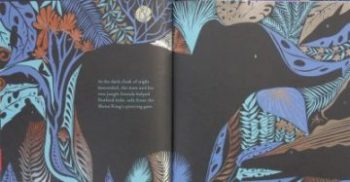
Starbird’s travels to find home once more take him to the jungle,

the ocean, desert lands and the mountains; but although the creatures of each are kind and caring, none of their homes is home to Starbird. The mountain creatures though tell of a faraway place that just sounds right for him.

But the Moon King grabs Starbird as he takes flight before the stars are hidden, and once more he is put in the cage; this time with terrible consequences.

Happily though it isn’t too late to save the prisoner, for the Moon King’s daughter finally makes her father understand.

Told in rich language, this lyrical fable of love and freedom has a timeless quality that will enthral and delight readers and listeners of all ages. Sharon King-Chai’s illustrations play with light using shadows, silhouette and reflection as well as colour to stunning effect.

Exquisite and powerful as they are though, they never detract from her telling; rather the entire work becomes one seamless magical enriching experience that is woven together rather like the Songbird’s song itself.

Totally FAB-U-LOUS!

Kindness Grows / Get Up, Stand Up

Kindness Grows
Britta Teckentrup
Caterpillar Books

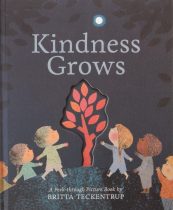
Within her signature style collage scenes, Britta Teckentrup cleverly uses the growing die-cut image to represent on the verso spreads an ever widening crack or rift caused by bad feelings towards others or unkindness of some sort, while on the recto the same shape grows to become something positive – a beautiful tree nurtured by acts of loving kindness towards others be they words spoken or actions such as sharing, forging a new friendship, working or playing together.

Little by little though, as the rhyming narrative says, from a small beginning – a simple seed of kindness like a smile or reaching out …

even a seemingly enormous rift can be repaired.
If only …

Get Up, Stand Up
Cedella Marley and John Jay Cabuay
Chronicle Books

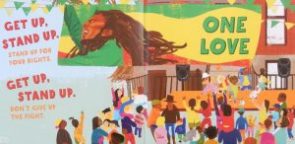
The daughter of reggae artist and social activist Bob Marley has taken one of her father’s most popular songs and used it to create a powerful picture book message for young readers and listeners.

That message is clear and unequivocal – don’t let anyone bully you or other people – and we’re witness, thanks to Cabuay’s bold, bright scenes rendered in pencil and digitally, to a school day wherein when such bullying happens, the other children don’t just stand by and watch. Instead, they stand up and rally round be it in the playground,

at the bus stop, on the school bus, in the street or the park.

The final spreads show the youngsters hoisting a huge flag depicting Bob Marley and his anthem One Love above the stage whereon they then dance and sing for all they’re worth.

This is a book to have in primary classrooms to open up discussion on themes such as standing up for yourself and others in the face of injustice, no matter what that may be. Certainly in the UK right now, it’s a message that needs saying over and over. Of course it isn’t always easy to do but it’s never too early to start learning the appropriate ways to respond to discrimination, abuse, inequality, prejudice or any kind of wrong doing.

Poems To Fall In Love with

Poems To Fall In Love With
chosen and illustrated by Chris Riddell
Macmillan Children’s Books

I’d already fallen in love with a good number of the poems Chris Riddell has included in this superb collection, but finding them here is still as much a joy as discovering the unfamiliar ones he’s chosen.

One of the latter in the first section Love and Friendship is Neil Gaiman’s Locks, inspired by the story of the Three Bears. It begins and ends, ‘We owe it to each other to tell stories.’ Powerful and very moving it was written by Gaiman for his then very young daughter.

Another new one to delight me was A.F.Harrold’s Postcards From The Hedgehog. The prickly writer is Simon and in his second card he writes this: ‘Dear Mum, / Lovely weather today. / I saw a really pretty girl. / Not sure how to approach her. / She makes me really shy / but just all warm inside. / I rolled up into a ball. / Wish you were here. / love Simon.‘

Two cards later we hear how Simon made his approach and what happened. It’s wonderfully droll and really made me laugh.

Another long time favourite of mine, Shakespeare’s Sonnet 116, is included in the section Let’s Stick Together; I think no collection of poems of love poetry is complete without this one that begins ‘Let me not to the marriage of true minds / Admit impediment. Love is not love / Which alters when it alteration finds, / Or bends with the remover to remove:’

This is followed by the less likely The Owl and the Pussy Cat that I’ve adored since my father first started reading to me from a collection of Lear’s nonsense verse even before I started school.

This is a wonderfully eclectic collection of old and new: you’ll find John Donne, Emily Bronte, Blake, Betjeman, Grace Nichols, Roger McGough, Carol Ann Duffy, Sylvia Plath, Derek Walcott, even the compiler himself .

Jan Dean’s Tomorrow when you will not wake left me with a huge lump in my throat; Christina Rossetti’s Remember, also in the final section, always has the same effect.

I could continue talking of the delights herein but instead will conclude by mentioning another of my all time favourites, E.E. Cummings’ i carry your heart with me that’s part of Valentine

(Wendy Cope’s poem of that name opens this section).

There’s passion, joy and heartbreak: you’ll shed tears of joy and tears of sadness and you cannot but be wowed by Riddell’s awesome black and white illustrations that make you see anew every single poem, however familiar.

Offering something for all moods, it’s a treasure of a book: I’ve certainly fallen for it.

Two for Me, One for You / Otto Goes North / Cornelia and the Jungle Machine

Here are three recent picture books from Gecko Press each of which has friendship at its heart
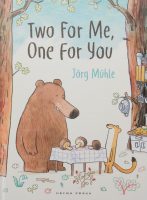
Two for Me, One for You
Jörg Mühle
Gecko Press

In this fable-like tale two hungry friends, Bear and Weasel find themselves disagreeing over how to share the three mushrooms the former discovers on her way home through the forest.

Weasel cooks them for dinner
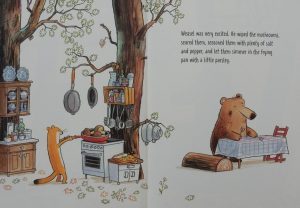
but at the table, Bear lays claim to the extra one on account of her bulk; Weasel counters that with a demand for mushroom number three saying, “I’m small, and I still have to grow”

From that small beginning grows a fully-blown fight: Bear found the mushrooms, Weasel cooked them perfectly; it was Bear’s recipe but Weasel’s favourite food and his tummy is rumbling; Bear’s stomach is bigger and with it her hunger; Weasel mentioned a rumbly tummy first; Bear wanted the extra mushroom first, she says and insults start flying. This prompts Weasel to procure mushroom number three and wave it aloft just as a fox happens to be passing by with its eye on the tasty tidbit.
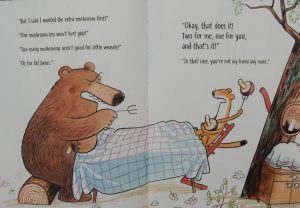
Shared shock horror on the part of Bear and Weasel after which the two wish one another ‘bon appetit’ and tuck in.
Then comes dessert – uh-oh!

Comic timing combined with droll mixed media scenes of the escalating situation (I love the forest setting with the kitchen set-up) make for a fun way to introduce youngsters to the notion of sharing: how might they solve the ‘afters’ issue?
Otto Goes North
Ulrika Kestere
Gecko Press

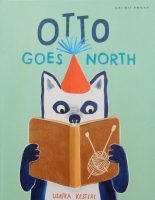
Otto is a lemur friend of Lisa the lynx and Nils, a little bear. He has cycled many months, years perhaps, to visit the two northerners and to paint the famous northern lights to hang on his wall back home in the south.

But when he sallies forth with paints and brushes he quickly discovers that it’s so freezing cold that painting anything but zigzags is well nigh impossible. His friends are surprised since he like them is covered with fur, but they take him to the sauna along with a bowl of warming soup, instructing him to spend the night there.

Lisa and Nils consult their books – all two of them – and as luck would have it one is about wool. Even more fortunate is that the book is illustrated, for Lisa has forgotten how to read. The two make use of the pictures, together with initiative and set about combing their own fur, spinning it into wool, using vegetable leftovers to dye it and knitting a wonderful sweater – a true work of art. (Followers of a certain Scandi detective series will know of the Scandinavian predilection for fancy sweaters).

When Otto eventually emerges, somewhat recovered, from the sauna, they present him with the splendid gift.
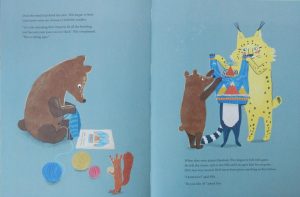
Then, snugly clad in same, he is able to spend several hours painting outside.

The three then pass many contented days together before their visitor sets off home with happy memories and a wonderful item to add to the arty pieces already hanging on his wall.

A wonderfully heart warming story portraying the spirit of friendship that goes the extra mile, some amusing banter between the main characters and whimsical illustrations of the chilly Nordic setting (love the green roof) make for a satisfying book to share.
Cornelia and the Jungle Machine
Nora Brech
Gecko Press

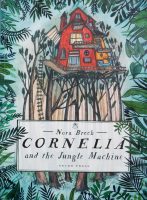
Cornelia dislikes the large, gloomy home she’s moved into. There’s nobody to play with and since it’s clear she’s not going to help unpack, her parents send her outside to look around.

She sallies forth into the surrounding forest accompanied by her scruffy-looking dog and thus begins an incredible adventure.
Up, up, up a ladder that descends from one of the trees she climbs and encounters a boy named Fredrik who invites her into his treetop abode to view his many inventions, in particular his jungle machine.

Wheels are turned and buttons pressed whereupon tropical plants appear from what look like vintage gramophone horns and morph into a fully-fledged tropical jungle wherein lush fruits abound. A huge bird descends to take the children flying before dropping them beside a winding river where a sailing boat awaits.
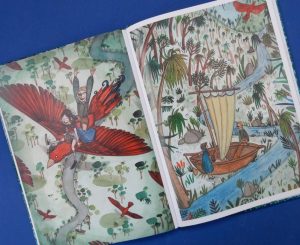
After an incredible adventure, Cornelia bids her new friend farewell, knowing that henceforward, she’ll have any number of further rendezvous to look forward to.

This gothic style fantasy unfolds in little over a hundred words of dialogue and intricately detailed sequences of Edward Gorey-like illustrated spreads showing Cornelia’s magical mystery experiences that will draw in readers, helping to ensure that like the girl, they will be eager to immerse themselves in the make believe world of the imagination. The vertical orientation of the pages heightens the aerial nature of the tree top story.
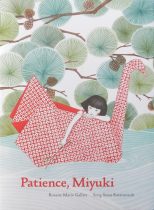
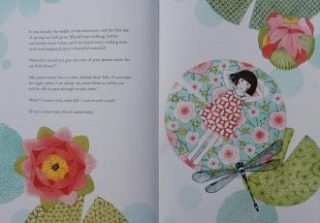
Pick a Pumpkin

Pick a Pumpkin
Patricia Toht and Jarvis
Walker Books

Bursting with mellow fruitfulness is this second offering from Patricia Toht and Jarvis.

We join a family as they go to the pumpkin patch to take their pick from the plethora of orange, white and speckled green fruits of the vine.

Then after a pause for some seasonal treats en route they return home with a loaded van ready to start carving.

And so they do, amassing the appropriate tools just in time for the arrival of a whole ‘pumpkin carving crew’ who are ready and willing to join in the fun.

It truly is a hands on, tactile experience as, once the tops are removed, hands are plunged inside to grab the innards as they pull at ‘Lumpy chunks. Sticky strings. Clumpy seeds. Guts and things.’

Then comes the really artful part; carving the faces for a wonderful array of creations with their frowns, grins, smirks and snarls, eerie, or angry or forming a kiss.

After that it’s time for decorations, donning costumes, taking those carved faces outside and with adult help lighting the lights that transform mere pumpkins to grinning, glowing jack-o-lanterns ready to stand guard as you venture forth to join in the fun.

With its easy on the ear, rhyming narrative and Jarvis’ scenes all a-glow with rich autumnal colours, what better way to kick off those Halloween celebrations than with a reading of this magical book with youngsters?

I Am Love / The Golden Rule

I Am Love
Susan Verde and Peter H. Reynolds
Abrams Books for Young Readers

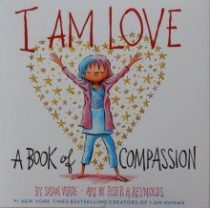
Showing love and compassion towards others is one of the most powerful things we can do for our fellow human beings.

What’s more it doesn’t cost us anything; we just need open hearts and the willingness to give some of our time.

That is what the child narrator in Susan Verde and Peter Reynold’s latest ‘I Am … ‘ book demonstrates.

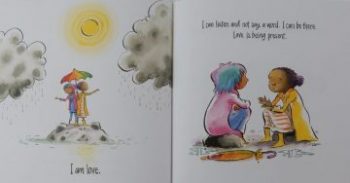
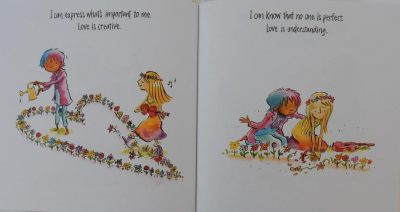
When we discover somebody is going through a tough time, perhaps something has happened to make them feel hurt, sad or angry, something unfair maybe; if a person is fearful and it seems as though darkness is all around, a listening ear may be all that is required … or a loving hug and some softly spoken, reassuring words like “Everything will be alright.”

Love is also gratitude: being thankful for what we have; it’s taking care of our minds and bodies.

Understanding is key and on occasion love is expressed creatively and takes effort.

Remembering is another way of showing love – remembering those who have died or are no longer with us for other reasons, perhaps a friend has moved away but they still need our love.

Small gestures can mean so much; they’re a way of demonstrating our connectedness to every living thing in the world, no matter what life brings.

The book concludes with an author’s note, a few heart-opening yoga poses and a final heart meditation.

Add this to your foundation stage PSHE class collection.

The Golden Rule
Ilene Cooper and Gabi Swiatkowska
Abrams Books for Young Readers

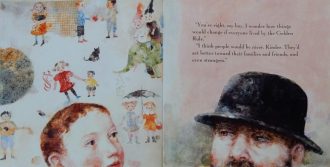
In a city street a boy and his grandfather stand together looking at a sign that says, “Do unto others as you would have them do unto you.’ The boy asks what it says. Grandpa reads and explains that the world over it’s called the Golden Rule.

As they walk further they talk about its meaning and for whom it’s applicable. Grandpa says it’s for “Everyone, everywhere”.

No matter the religion, the same basic tenet – essentially the cross cultural, universal reciprocity principle – is found in the holy book of the six examples he cites – Christianity, Judaism, Islam, Hinduism, Buddhism and the Shawnee tribe.

On a park bench the discussion turns both more realistic and philosophical, as the old man asks the boy to imagine himself in certain situations and asking how he would react. It then moves on to embrace countries as well as individuals – … “maybe there wouldn’t be wars,” comments the lad

before coming right back to the notion that, as Grandpa states in conclusion, you can’t make others practice the Golden Rule, … “It begins with you.”

Somewhat didactic yes, but the message also holds good for those of no religious faith such as this reviewer and Ilene Cooper’s text offers a good starting point for discussion with primary school children.

Incorporating both traditional religious symbolism and floral, avian and animal imagery Gabi Swiatkowska’s richly pattered, painterly illustrations, have an old fashioned look about them that feels just right for the book.

Reading Beauty

Reading Beauty
Deborah Underwood and Meg Hunt
Chronicle Books

If, like this reviewer, you enjoy fractured fairy tales of the feminist kind, then this latest one from the Interstellar Cinderella team, Deborah Underwood, who supplies the pacey rhyming narrative and Meg Hunt, the illustrator, will surely appeal.

Princess Lex, along with the majority of inhabitants of the planetoid, is a bibliophile. Lex’s room is bursting with books and she reads at every hour of the day and night. She’s even trained Prince her puppy to acquire reading material for her.

On her fifteenth birthday however, she wakes to discover all her books have disappeared.

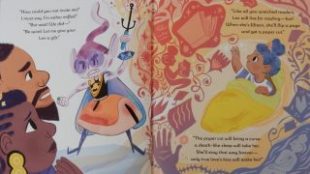
Her parents explain that when she was born there was a birthday celebration but one fairy was convinced she’d not been invited. Furious: she’d uttered a curse to take effect on Lex’s fifteenth birthday;

the princess would get a paper cut causing her to fall into a death-like sleep.

A life without books? It doesn’t bear thinking about so Lex resolves to find the fairy and make her lift the curse.

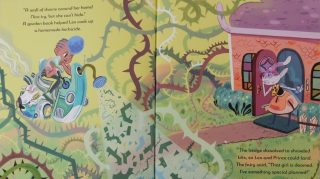
With the assistance of Prince and a bot, she acquires and reads appropriate books to help her find the fairy’s lair, and another to be able to land. But that fairy isn’t finished yet: she’s determined to have one more try.

Happily though Lex outsmarts the fairy but the plot takes a surprise twist or two before reaching its satisfying ’happily ever after’ that will especially please book lovers. So too will Meg Hunt’s lively, futuristic, patterned, mixed media illustrations – love those end papers.

A good one to add to any primary class fairy tale collection.

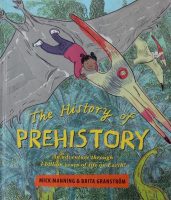
The History of Prehistory

The History of Prehistory
Mick Manning and Brita Granström
Otter-Barry Books

Team Manning and Granström present another first-rate non-fiction book for young readers.

We join their two child protagonists as they set off on an incredible adventure that takes them back 4 billion years to the time when Earth was volcanic and still way too hot to support life.

To travel from those fiery beginnings of Earth and Moon right through to the Bronze Age (5.300 to 3,200 year ago) is an awesome journey that encompasses a stop to investigate the explosion of life during the Cambrian period,

followed by a canoe trip to view the giant fungi of the late Silurian Period.

From then animal life proliferates and the time travellers encounter an incredible array of creatures including giant dragonflies, the first completely land-based reptiles; and even more awesome they get to fly on the backs of Pterosaurs above such dinosaurs as Diplodocuses.

Having investigated the Periods when dinosaurs ruled, they pause to spend a while with tree-dwelling mammals before they join the clever apes of the Miocene Epoch as they swing above the forest floor and on to the Pliocene Epoch to meet our earliest two-legged human ancestors.

With a lively narrative that respects young readers by using the correct terminology and splendid, gently humorous scenes of the various creatures, as well as a glossary and timeline game, this exciting book will be avidly read by individuals fascinated with past times as well as being welcomed by teachers using it to support the primary curriculum.

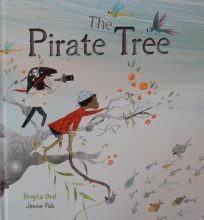
The Pirate Tree

The Pirate Tree
Brigita Orel and Jennie Poh
Lantana Publishing

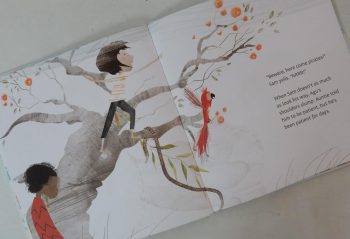
Inspired by a weathered tree in which she sits, young captain Sam sails the high seas on her pirate ship.
Suddenly though, she’s approached by another ‘sailor’ who asks to play.

“I don’t know you. You’re not from my street” comes her reply and she carries on sailing her ship solo and talking of plundering ships;

she mentions ‘diamonds from Nigeria’. At this Agu feels bound to correct her, for it’s his home country and he tells her so, talking of sailing on a ship too.

Sam then invites the newcomer aboard, albeit somewhat hesitantly but she discovers that her co-sailor knows a fair bit about how to sail and together they voyage to a deserted island and defeat pirates from a rival boat.

When Sam’s Dad calls ‘dinner time!’

it’s a rather more reluctant buccaneer who leaves her companion, having first asked his name and invited him to become her fellow crew member again.

Agu’s longing for a friend is palpable in this story and I have to say that Sam’s initial treatment of the newcomer shocked me. Happily though, the time spent together has shown Sam that friendship is the way to go, just as Agu had hoped.

Jennie Poh’s mixed media and natural textures were digitally combined and her illustrations seem to have a deliberate static feel until such time as Sam invites Agu aboard her ship, after which there’s a satisfying flow about them.

Brigita Orel’s story shows children how it’s important to be open to new friendships that can be mutually rewarding, enriching our own life and those of others.

The Last Tiger

The Last Tiger
Petr Horáček
Otter-Barry Books

Animal freedom and conservation are the themes underlying Petr Horáček’s stunningly illustrated, ominously titled new book that begins in the jungle where there dwells a fearless tiger, the strongest, most powerful creature of all.

When a group of hunters come to the jungle, the other animals are alarmed and flee into hiding, urging the tiger to do likewise.

Undaunted the tiger ignores their warning and he’s spotted by the men who are determined to capture the beautiful creature.

Back to the city they go only to return with more men and a plan.
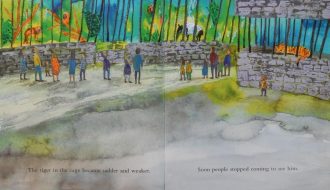
Luring the tiger into a net, they catch him, and he’s taken away and put in a cage for all to see.

In captivity, the unhappy tiger dreams only of running free in the jungle and gradually wastes away. The humans lose interest in him

and one night he’s able to slip between the bars of his cage.

Free once more, the tiger regains his strength and stature while always remembering that what he values most is being free.

Very much a modern fable, this thought provoking book with its vibrant, richly patterned art invites readers of all ages to consider the fragility of freedom itself.

Waiting for Wolf

Waiting for Wolf
Sandra Dieckmann
Hodder Children’s

Have a box of tissues at the ready when you read this new Sandra Dieckmann picture book.

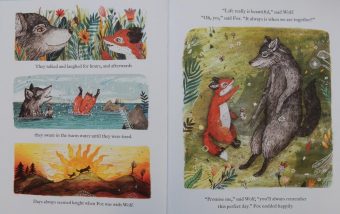
Good friends Fox and Wolf pass their time happily by the lake, talking, laughing and sometimes taking a dip.

One day as they sit together, Wolf entreats his friend “promise you’ll always remember this perfect day.”

As night falls, Wolf tenderly embraces Fox telling him quietly, “Tomorrow I will be starlight.” Content, but unsure what he means, Fox lets it be.

The following morning she goes out in the hope of finding her friend sparkling like a star but of Wolf there is no sign.

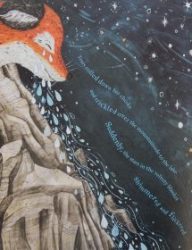
That evening Fox goes to their favourite lakeside place, still waiting and hoping to see Wolf. Could he be up in the sky, wonders Fox as she gazes at the twinkling stars.

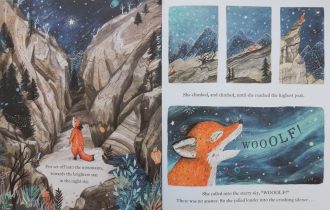
She decides to climb up the mountain towards the brightest star in the firmament and on reaching the top calls out her friend’s name but all around is silence.

Reaching up Fox takes hold of the blanket of stars and enfolds herself within. Once more, in a soft whisper now, she asks, “Wolf are you there?”

Now deep inside knowing that her friend has gone, she lets her tears flow;

but then she sees something amazing in the darkness and she recalls Wolf’s words on their final day together. Back comes a stream of happy memories and as Fox replaces the star blanket, a feeling of peace takes its place, and with it an understanding of her friend’s talk of starlight.

Sandra Diekmann’s deeply affecting story of love and loss is stunningly illustrated. With exquisite details of the flora and fauna, every spread is breath-takingly beautiful. The sight of Fox enveloping herself in the starry blanket left me with a lump in my throat; her sense of loss is truly palpable.

What better book than this to open discussion about bereavement and coming to terms with it?

On Sleepy Hill / I Love You Brighter than the Stars

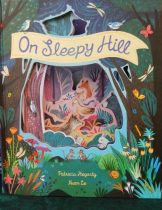
On Sleepy Hill
Patricia Hegarty and Xuan Le
Caterpillar Books

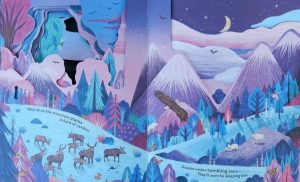
Layered scenes of the natural world as the day draws to a close and accompanying rhyming couplets give sleepy humans the opportunity to view and bid goodnight to the inhabitants of first a woodland where baby rabbits return to their burrows and a little wolf peers from a hollow. Then, the bank of a mountain stream whereon a black bear watches his cubs while otters take a last look at the evening and a mother duck gathers up her ducklings.

Further up, in a mountain clearing, deer and foxes make for home and the geese fly back to their nest, and even higher while caribou and boars are almost ready for sleep,

the owl swoops, watching and waiting.

The soporific narrative and cutaway pages of the fauna and flora of Sleepy Hill should work their magic on little humans when they too are almost ready for their slumbers.

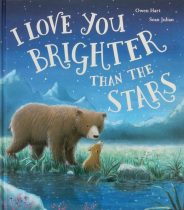
I Love You Brighter than the Stars
Owen Hart and Sean Julian
Little Tiger

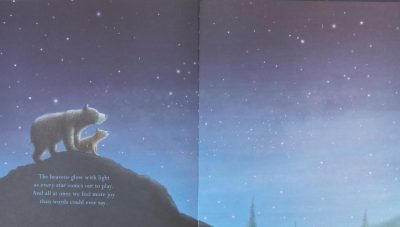
Books that celebrate the forever love between parent and child seem, like the sentiment they express, never ending. Indeed this is the second from Owen Hart and Sean Julian and rather than polar bears this one features a brown bear and its cub.

While they walk together as the evening sun gives way to moonlight and stars, the adult’s gentle heartfelt words to the cub promise lifelong guidance, companionship, support and the kind of love that is there no matter what, no matter where.

As they climb the hill, the two pause to gaze at the wonders of the natural world and at the star-filled sky

before taking a moonlit dip in the mountain stream.

Then it’s time to head home and sleep, the cub safe in the knowledge that as the wind sings a gentle lullaby it is loved ‘more than all the stars that sparkle through the night.’ Who could wish for more than that?

Soft spoken, rhyming reassurance and beautiful land- and sky-scapes make for a book that is ideal bedtime sharing for adults and their little ones.

Mr Gumpy’s Rhino

My Gumpy’s Rhino
John Burningham
Jonathan Cape

John Burningham died at the beginning of this year and the subject of this final book was one that deeply concerned him. There’s the old Burningham humour in the story but underlying it is a serious message about animal conservation, in particular the plight of the rhinos in Africa.

Last seen driving his motor car in the early 1970s Mr Gumpy is on his travels in Africa when he finds something distressing: a baby rhinoceros that has been left parentless on account of poachers taking their horns.

Knowing the young animal needs milk the kindly protagonist gives it what he has

and buys what he can from the Bedouins but it’s not sufficient for the growing rhino that he calls Charlie.

There’s plenty of milk available once they board a boat, as well as greenery

but once on dry land back home, Mr Gumpy struggles to get sufficient food for the rapidly growing Charlie.

Children at the local primary school suggest the animal might work for the council, keeping the grass and wayside verges under control, an idea that Mr Gumpy wholeheartedly endorses.
Consequently Charlie is given a high vis vest and special road sign, both of which please him considerably.

To show his appreciation, when the children’s school trip is threatened Charlie charges over land and even into the sea to enable them to catch the already departed boat. Hurrah!

This, with its mix of wonderful grainy coloured images and line drawings is vintage Burningham brilliance. Only he could make the baby rhino so appealing a character: who wouldn’t be moved by the sight of him shedding tears over the loss of his parents.

Destined to join the other Mr Gumpy stories as a modern classic, this is a wonderful way to introduce the very young to the topics of endangered creatures and animal conservation.

Three Cheers for Kid McGear! / Crane Truck’s Opposites

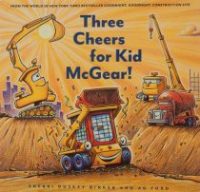
Three Cheers for Kid McGear!
Sherri Duskey Rinker and AG Ford
Chronicle Books

There’s a new addition to the ‘Goodnight, Goodnight Construction Site’ crew; she’s small and a lot younger than the other five trucks, clean and shiny in fact and sporting ‘cool attachments’.

The rest of the trucks are concerned about her lack of size but she’s willing to learn and ready and eager to prove her worth as a team member.

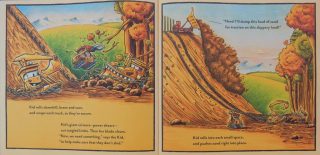
First though, at their suggestion, she waits and watches as the big trucks work on clearing the ground. Suddenly however, she receives a call for help as Excavator and Bulldozer find themselves trapped at the bottom of a steep hill.

Now it’s the time for the fast moving little Kid McGear to act

and so she does, masterminding a solution and directing operations so that the rescue becomes a team effort facilitated in no small way by her quick-thinking and agility.

Toot! Toot! Hurrah! A female truck in the team and already she’s shown her worth, demonstrating that, in this rhyming rendition with its golden glowing AG Ford illustrations of the familiar construction yard inhabitants, size doesn’t matter that much.

Crane Truck’s Opposites
Sherri Duskey and Ethan Long
Chronicle Books

Crane Truck is hard at work at the construction site and with Excavator’s help he not only spends a busy day lifting and shifting, but in so doing introduces little humans to a host of opposites. In/out, fast/slow, above/below, near/far, lifts/lowers, heavy/light, dull/bright, big/small, tall/short, clean/dirty, day/night and finally open/closed are all woven into the short narrative that takes us through from sunrise to darkness.

Gently educational rhyming fun made all the more so by Ethan Long’s friendly vehicles from Goodnight, Goodnight Construction Site.

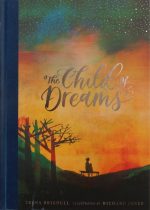
The Child of Dreams

The Child of Dreams
Irena Brignull and Richard Jones
Walker Studio

A little girl lives happily with her mother until she realises that unlike the other creatures she observes, she doesn’t have a father.

The answer her mother supplies doesn’t satisfy her and so the girl resolves to find out for herself about her origins.

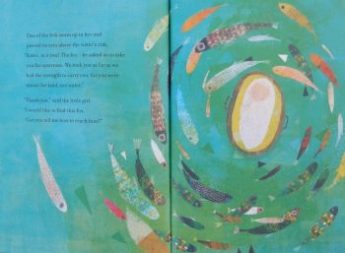
Her quest takes her into the woods where she encounters first a stork and then squirrels, a salmon

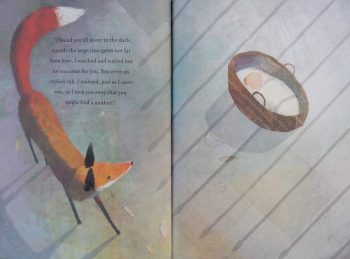
and a fox.

Each one provides a part of her story, which eventually leads her to the source – the place where fox had found her.

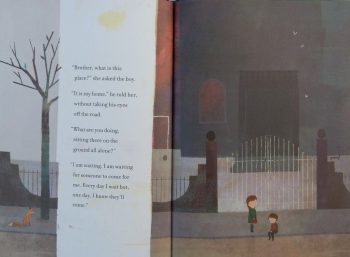
There she comes upon a boy sitting alone staring at the road behind which is a tall building. He tells her that he’s waiting for someone to come for him.

As they talk together, the girl realises that what is truly important to her is what she already has.

Unlike the boy who is still waiting to discover where he’s going, that is something which, thanks to her mother’s love; a love ‘stronger than the rocks on the mountain peak, softer than the petals of the meadow flowers, fuller than the harvest moon’, she already knows.

There’s a fairy tale feel to this magical story that is essentially one celebrating the love between a parent and child – that sense of belonging that everyone yearns for.

Richard Jones’s awesome mixed media illustrations add to the power of this story of growing up and finding how you fit into the world.

Atlas of Amazing Birds

Atlas of Amazing Birds
Matt Sewell
Pavilion Books

Well-known wildlife author/artist Matt Sewell has selected some incredible birds – more than 120 – from all over the world for his latest book.

In his introduction he talks of ‘my personal selection of the most amazing birds in the world—the most beautiful, strange, scary, speedy, and enchanting.’ He also points out that his illustrations – full colour stylised watercolours labelled with both the bird’s common and scientific names – are not to scale (although dimensions of each are provided).

Using the continents as the organisational device, he begins in Europe with 22 birds, which are listed together with a map that labels the countries and an introductory couple of paragraphs. This same format is provided for each of the other six continents.

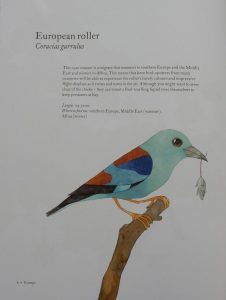
The accompanying text certainly doesn’t talk down to readers; its conversational style is engaging, humorous on occasion and he’s chosen his words for maximum impact. For example of the European roller he says, ‘impressive flight displays as it twists and turns in the air’; and of the chicks “they can vomit a foul-smelling liquid over themselves to keep predators at bay.’

Also included is information about whether the bird is migratory.

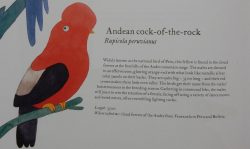
I particularly liked this description of the Andean cock-of-the-rock, ‘The males are dressed in an effervescent, glowing orange-red with what looks like metallic silver solar panels on their backs.’

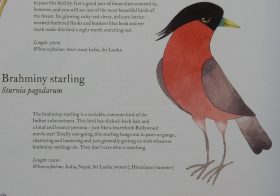
And this one really made me smile: “brahiminy starling … has slicked-back hair and a loud and bouncy persona – just like a heartthrob Bollywood movie star.’ That bird is one I recognise from frequent visits to India as are several of the other beauties from the Asia section.

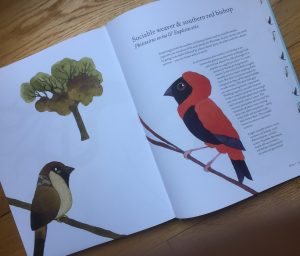
It’s hard to believe but these two African birds come from the same family for as we read ‘one could be going to the ballet, followed by a fancy dinner-party, the other could be a desert sparrow.’

All in all an alluring volume for a wide age range, show-casing some of the avian wonders of the world.

Tiny and Teeny

Tiny and Teeny
Chris Judge
Walker Books

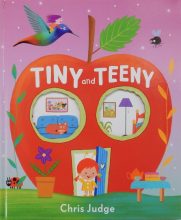
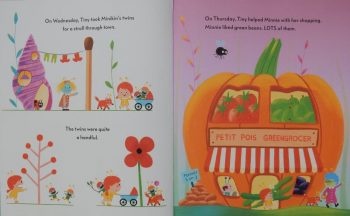
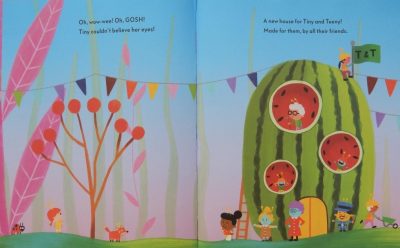
On the outskirts of the bustling buzzing Glengadget, in a shiny red apple lives Tiny with her pet Teeny.

Tiny spends the weekdays helping others

and by this particular Friday evening, she’s so tired that before she even gets indoors she falls fast asleep dreaming of flying through space.

As she slumbers disaster strikes her home, squishing it absolutely flat.

Despite being given a room in the Grand Hotel, Tiny misses her old home.

Now though it’s payback time: the following week all Tiny’s friends rally round and come Friday a truly wonderful surprise awaits …

which all goes to show that by working together a small community can make a big difference.

Simply bursting with love, is this itty-bitty story, with its enchanting spreads packed with quirky details and antennaed characters doesn’t bring a huge smile to your face then I’ll eat a whole watermelon (and they’re one of my most unfavourite fruits).

Grown-ups Never Do That / What’s Going On Here?

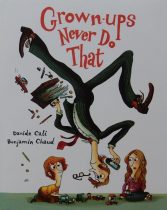
Grown-ups Never Do That
Davide Cali and Benjamin Chaud
Chronicle Books

‘Adults never misbehave.’ So says the opening line of well-known collaborators Cali and Chaud’s latest offering.
But there’s a team of young sleuths at work who might just disprove the veracity of that statement and we then accompany them through the book.

Of course, they’re absolute paragons of virtue these mature people. So much so that following Cali’s tongue-in-cheek ‘Adults are always good’ on the penultimate spread he concludes with the sound advice, ‘So you really should be just like them.’

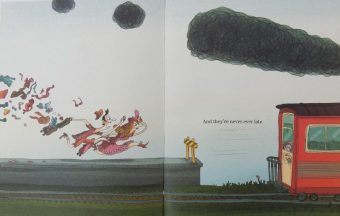
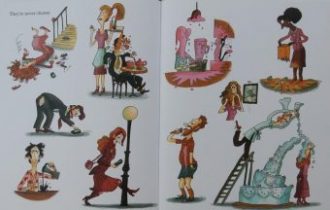
However those youngsters who have been spying on the yelling, bad temperedness, cheating, sulking, messiness, lateness,

bad manners, time wasting and the other grown-up behaviours they’ve witnessed, may well think otherwise.

The brevity of Cali’s ironic narrative is countered by Chaud’s detailed comical visuals

making for a diverting book that will please readers young and not so young.

What’s Going On Here?
Olivier Tallec
Chronicle Books

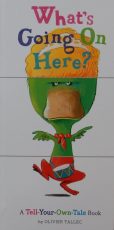
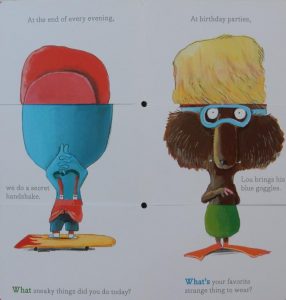
This is a mix-and-match book wherein Tallec, in his typical skittish manner, invites readers to engage in storying with a weird and wonderful cast of characters – animal and a couple of human ones – all of which are sporting rather ridiculous headwear.
You can smile at the attire of each, as you read the related plot piece and ponder the question posed before flipping to and fro to try the plethora of possible permutations that the split pages offer.

I’ve used similarly designed books (three-way split pages) with under-confident readers of all ages needing a morale boost, and I’d do the same with this somewhat more sophisticated one.

Draw Here

Draw Here
Hervé Tullet
Chronicle Books

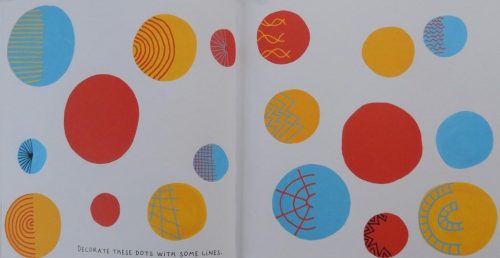
Full on fun as only Tullet can offer comes in the form of this brilliantly dotty activity book.

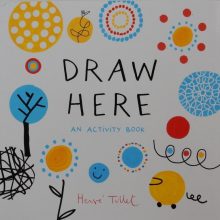
On the inside front cover is a flap of die-cut holes of various sizes folded over onto a set of patterns. This is followed by around 140 pages to adorn as per the author’s instructions; but let me make it clear, there’s plenty of scope for interpretation and creativity.

The two opening spreads are blank and thereafter users are presented with some pages littered with dots, some have relatively few or a single dot, while others have squiggly shapes, circles or a mix of dots and other shapes in Tullet’s signature primary colours.

The user is then invited to add more dots, adorn the dots in various ways,

colour carefully inside lines, add dots to loops, loop around dots, complete circles, connect dots related by colour, find a path across an entire spread without touching a single dot. Then what about creating some fruit, fish, cars, trees, flowers or people using dots as starting points.

Both fine motor skills and imaginations are stretched during the course of the pages and I can see a child getting carried away with this. All that’s needed is a few pens, pencils or crayons and a young mind ready for hours of creative pleasure.

Perfect for screen free entertainment, especially on rainy days or during holidays.

Bedtime for Albie / What Will You Dream of Tonight?

Bedtime for Albie
Sophie Ambrose
Walker Books

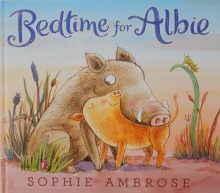
Little Albie warthog is one of those annoying creatures that are still full of surplus energy when it’s time for bed.
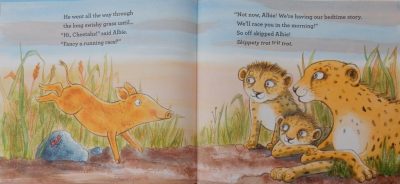
To delay the inevitable he bounds off in search of other animals to join him in some further frolicking before he succumbs to snuggle time. But the cheetahs,

elephants, and meercats have already begun their sleep-time routines and have no immediate interest in the racing, splish-splashing and digging Albie suggests, so play by himself. he must.

Dusk falls bringing with it all sorts of unfamiliar sounds and then as the stars begin to twinkle, Albie accepts Owl’s “Shouldn’t you be in bed?’ and it’s his ‘mummy’ not playmates that he wants.
Happily the hippos are ready to assist him home just in time for the best part of his bedtime ritual; and suddenly all the others want to join in the fun.

Sophie Ambrose’s wide-eyed animals are absolutely adorable: this is a bedtime book that could easily become part of a fair few little humans’ pre-sleep rituals so I suggest you emulate Albie and ‘skippety trot trit trot’ off to get hold of a copy to share.

What Will You Dream of Tonight?
Frances Stickley and Anuska Allepuz
Nosy Crow

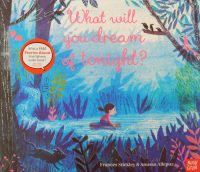
A lilting, almost hypnotic rhyming narrative that talks straight to the young child at bedtime offers all kinds of wondrous dream possibilities.

An ocean dream might have you sailing atop a whale’s tail; on the beach there’s a wrecked ship to explore. Or what about a rocket trip to outer space and the chance to catch your very own star.

Maybe the chance to visit the jungle; take a ride on a polar bear’s back under the sparkling Arctic lights or fly your very own plane above the desert plains would be more fun.

You’d need to be brave and very quiet to enter the lair where a sleeping dragon guards his treasure so perhaps the opportunity to float gently down a woodland stream would be more appealing.

No matter what or where, there’s nothing to fear when you’re tucked safely in bed – so says the mother as she kisses goodnight her daughter.

With gorgeous spreads of each scenario by Anuska Allepuz, this is just right for sending little ones off into the land of nod. Sweet dreams!

The Stolen Spear / Buttercup Sunshine and the House on Hangman’s Hill

Here are two recent additions to Maverick Publishing’s junior fiction list

The Stolen Spear
Saviour Pirotta, illustrated by Davide Ortu
Maverick Publishing

The first in a new series set in the Late Neolithic period, on an island in the Orkneys, this is exciting historical fiction for primary age readers.

The focus is on the narrator, young Wolf, and his endeavours to discover who is really responsible for the disappearance of the sacred spear that is stolen from a burial mound during the midsummer celebrations.

And after a journey that takes him far from his village and community, from one island to another, discover the thief he does with the help of his trusty dog Shadow and friends he makes along the way.

By the time he reaches home once more, not only has Wolf secured the spear, but he’s also discovered his path in life. Tough and strong he may not be, but he’s destined to become a very special person in his community,

With illustrations by Davide Ortu adding to the atmosphere, there’s trickery, plenty of thrills, friendship, hope and determination aplenty in this twisting, turning Stone-Age tale for which the author draws on real historic links and places about which he talks in a note at the end of the book.

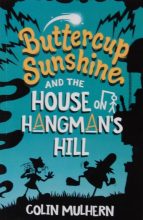
Buttercup Sunshine and the House on Hangman’s Hill
Colin Mulhern
Maverick Publishing

Colin Mulhern tells a tale that blends together comic horror and the classic story of Frankenstein that sees the return of Buttercup Sunshine.

As the story begins there’s been a zombie invasion of Buttercup’s locality (even her gran has been zombified) and she’s on her way to inform the town’s powers that be, when she meets a postman who begs her instead to go first to Hangman’s Hill to deliver a package to a house that has suddenly appeared as if from nowhere.

What follows is a bizarre encounter with the extremely weird and seemingly totally mad scientist calling himself Dr Frankenstein and what’s more he has a monster and a storeroom full of jars containing human brains.

Buttercup is desperate to find a cure for the zombies but as she discovers, the doc. has other plans of the world destroying kind. So when he sends her to fetch one of those brains – a very particular one – from the store, she knows she has to do something or she might even find herself becoming part of his very unearthly experiment.

I’ll say no more other that the words ‘bunny rabbit’ and the hope that she succeeds.

Totally crazy but enormous fun and ‘a bit carroty’ in its final moments.

Taxi Ride with Victor

Red Reading Hub is excited to participate in the blog tour for this wacky book:

Taxi Ride With Victor
Sara Trofa and Elsa Klever
Prestel

Victor’s main aim in life was always to be a taxi driver, the greatest the galaxy has ever had. He’s already achieved the first part of his wish but as for the second, there’s a slight snag: Victor has a dreadful sense of direction; he doesn’t even seem to know his left from his right.

So, should you ask him, as does Monday’s passenger, to take you to the hairdressers you may well find yourself like the old lady, whizzing to the lunar park instead.

That is the desired destination of his Tuesday ride (who happens to be the old lady’s grandson) but instead he ends up being dropped off at the library.

As chief librarian, Wednesday’s passenger actually wants to go to the library. He has the odd doubt about hiring Victor but doesn’t want to be late so off they go to …

which by the look of him, isn’t such a bad idea.

And so it goes on throughout the week with Victor whizzing left, right, straight ahead, even up and down, visiting all manner of unexpected locations with a weird and wonderful bunch of characters until come Sunday he picks up our little alien narrator.

This creature appears not to have a clue where he wants to go; but then, having taken a very circuitous route, delivers the biggest surprise ever. Victor’s internal satnav may not be the best but when it comes to bringing happiness to others by taking them to exactly the wrong place at the right time, he certainly comes out tops and now it’s his turn to be in exactly the right place at exactly the right time.

This crazy cosmic adventure that takes place over a week is well and truly out of this world. Its cleverly constructed narrative will surely fire up the imaginations of young listeners while Elsa Klever’s unearthly scenes are wacky in the extreme.
In a classroom setting, or perhaps at home, Victor’s misadventures could prove inspirational for children’s own creativity.

Just think what they might do if provided with some malleable modelling materials and a plethora of unusual junk items – pots, packets, paper and card, plus plenty of pens and pencils. Who knows what new galaxies await to satisfy Victor’s final enquiry ‘Where to?’ …


Wild Lives

Wild Lives
Ben Lerwill, illustrated by Sarah Walsh
Nosy Crow

Subtitled 50 Extraordinary Animals that Made History, this large book celebrates animals large and small that deserve to be remembered for all time.

They are grouped together under category headings: Rescue & Protect, Adventure & Explore, Change & Solve, Discover & Pioneer and Inspire & Influence.

I’m ashamed to say that many of these amazing animals and their feats have passed me by. Not though, thanks to Michael Morpurgo’s book Running Wild based on their escape, Ning Nong the elephant that saved the life of a little girl staying in Phuket in the 2004 tsunami.

The first creature in the same opening section is Cher Ami a homing pigeon that towards the end of the First World War managed to withstand bullet injuries to her breast, leg and eye to deliver a crucial message about a battalion of American soldiers who were unknowingly being attacked by their own men. In the same section is Wojtek, an ursine member of the Polish army during WW2 when, standing on his hind legs he carried onto the battlefield vital heavy boxes of bullets and bombs.

Many people know about Laika the space dog but how many know of Montauciel the sheep that also took flight, in a hot-air balloon no less? I certainly didn’t.

Because of Dianne Hofmeyr’s picture book Zeraffa Giraffa, I was familiar with the story of Zaraffa the giraffe that was sent from Egypt in the early C19th to Paris as a gift for the King of France. These animals are remembered in the Adventure & Explore section.

Again on account of a picture book, My Name is Bob, by James Bowen whose life was changed by the stray feline that befriended him, I knew of Streetcat Bob, celebrated in the Change & Solve section. It’s thanks to this fascinating section too that I learnt about another dog that changed a life forever. Endal, became an assistance dog to a wounded naval officer, Allen, and subsequently won a gold medal for bravery when Allen was hit by a car and knocked out of his wheelchair. The dog was able to move him to a safe position, run to a hotel close by and raise the alarm. Incredible.

Other animals whose stories are part of this fascinating book have had an influence on how we relate to the natural world, or have enhanced our understanding of social interaction and behaviour. Some including the dog Hackiko, Keiko the orca whale (Free Willy), Elsa the Lioness and Seabiscuit the champion racehorse have become film stars.

Every spread includes Sarah Walsh’s empathetic illustrations along with archive photos and sometimes, relevant documents; and each has a  quotation from a person, a press cutting or perhaps a TV programme.

The book ends with a world map showing where each of the fifty animals was born, annotated with a postage stamp size portrait  and a glossary.

Engrossing and enlightening Ben Lerwill’s first book for children will delight animal lovers of all ages.

Noodle Bear

Noodle Bear
Mark Gravas
Walker Books

When spring arrives the animals celebrate with a party but there’s a notable absentee, Bear. Fox, the party organiser goes off in search of her friend, taking with her an offering of snacks only to find Bear asleep having spent all winter bingeing on his favourite noodles and watching Noodle Knockout on TV.

So obsessed with noodles is he that instead of consuming the treat he’s been left, all he can think of is yet more noodles.
None of his friends can supply the necessary

and eventually Bear decides to travel to the big city and take part in his favourite game show.

Unsurprisingly, he has no trouble securing the Grand Noodle Champion’s crown

and quickly becomes a celebrity with his own show.

Satisfying though all this fame and unlimited noodles might be, before long, Bear realises that there are other more important things in life – his friends and all the fun things they did together. Only these can really fill the emptiness he feels deep inside. So it’s a long journey back to the forest where awaits a celebratory party thrown by his best pal, Fox; guess who supplies the noodles.

There’s a comic, cartoony feel to this cautionary tale of having too much of a good thing that will surely lure screen-obsessed little humans away from their digital devices for a while.

A Gallery of Cats

A Gallery of Cats
Ruth Brown
Scallywag Press

Tom who is visiting an art gallery with his granny wanders off into a side room where something quite amazing happens.

As he stands reading a label beside the Jackson exhibit, out of the painting leaps a cat. Tom follows it.

Seemingly there’s been a feline invasion for from almost a dozen works of art that closely resemble famous masterpieces, there appear in turn as Tom pauses to read the labels to his guide Jackson, cats named Gustav, Piet, Frida, René, Vincent, Maukie & Cornelis, Kats,

Henri, Edvard,

William and Samuel.

Eventually with a bevy of assorted cats at his feet Tom turns a corner and there before him is the famous Rousseau-like tiger.

At the sight of this the other felines turn tail and dash back to their own paintings; not Jackson though; he at least waits to bid farewell to the boy while his gran looks at the notice announcing a new exhibition; no prizes for guessing what the topic is.

Cleverly conceived and superbly executed in her own painterly style, Ruth Brown presents a playful introduction to the work of thirteen world famous artists. Cat lovers and primary teachers in particular will love this novel way of bringing their work to life for children who have yet to see the real pictures.

Give Me Back My Bones!

Give Me Back My Bones!
Kim Norman and Bob Kolar
Walker Books

‘A stormy night has passed here /and toppled every mast here./The ocean flowing fast here,/has scattered all my bones!’ But from who or what is this making this claim on the opening spread, readers will wonder.

A page turn reveals a skull and thereafter Kim Norman’s spirited rhyming narrative cleverly introduces each vertebra from the skeleton using both the scientific name and an everyday one: ‘Give me back my breastbone,/ the centre of my chest bone, / the hold-my-ribs-the-best bone – / return my sturdy sternum.’

As the story progresses we realise  it’s a pirate skeleton that, with our help, is putting himself back together piece by piece from among the marine flora and fauna Bob Kolar has scattered collage-style on the ocean bed.

Love the generous sprinkling of alliteration – ‘I claim my clavicle

… that armpit-of-alarm bone – I hanker for my humerus’ , … I miss my metatarsals’, as well as the other playful language that’s part and parcel of this bone-rattling reclamation, which finally sees the reconstructed skeleton proudly standing before all that have helped complete him …

Don’t miss the endpapers – the front shows all the disparate skeleton components, the end ones display the cutlass waving salt.

Anatomy with a mock scary twist:  Avast me hearties, go grab yourselves a copy of this rattling good book. ARRRR!

Scoop McLaren Detective Editor / Isadora Moon Puts on a Show

Scoop McLaren Detective Editor
Helen Castles
New Frontier Publishing

This is the first of a proposed series featuring thirteen year old Scoop McLaren, editor of Click, an online newspaper. She resides in Higgedy Harbour a place where quite suddenly strange things start happening. Alarming for sure, but even more so is the fact that a brand new rival newspaper, The Dark Times, is reporting these events at exactly one minute past midnight every night.

Could its editor Sonny Fink be connected with all the disasters – the plague of frogs, the torrential rain that hits the town causing a flood, buildings being burned down, to mention just a few?
Scoop, along with her friend Evie, is determined to get to the bottom of things and restore peace and harmony to their hometown; the mayor seems totally disinterested and so it’s down to the two girls.

But just who is this mysterious and unscrupulous Sonny Fink character and is anyone else in town to be trusted to help them discover his identity?

Mixing straightforward narrative, news articles and text messages, this is an amusing, pacey tale that will definitely keep readers guessing as the plot twists and turns its way to the final exposé.

Isadora Moon Puts on a Show
Harriet Muncaster
Oxford University Press

In case you’ve yet to meet young Isadora Moon let me just say that her dad is a vampire and her mum a fairy. That makes Isadora unique – a vampire-fairy no less.

This story starts with the family getting excited about the annual vampire ball, even Isadora who is now old enough to attend. This year it’s going to be super special as it’s being held on the night of a blood moon and all the vampire children are to take part in a talent show. Isadora decides to do some ballet dancing and she has just two weeks to perfect her routine. “It’s going to be an amazing show!’ she tells Pink Rabbit as they snuggle up under the duvet that night.

But then she has a crisis of confidence, changes her mind about dancing and decides to go along with Dad’s tonsorial suggestion. Or does she?

When they get dressed for the ball, Isadora chooses to wear her tutu under her vampire cape. On arrival though she decides to pull out altogether: not going on stage at all. But then she sees a sad-looking little vampire girl who appears a bit different from the others and she in turn notices Isadora’s tutu.

The two begin to talk and Araminta, as the girl is called, reveals something about herself that makes them bond immediately.

An hour later the show is about to begin so Isadora goes to sit with the rest of her family. Will she stay there or could something amazing happen after all …

Let’s just say there’s a glittering surprise in store especially for mum who has told the organisers to delete her daughter’s name from the list of contestants.

As delightful as the black, white and pink illustrations, is the story’s denouement in the latest episode in the life of this zippy character. Her fans will love it! Sparkle with an injection of zesty pizzazz.

Fiddle Dee Dee!

Fiddle Dee Dee!
Dianne Hofmeyr and Piet Grobler
Otter-Barry Books

This trickster tale featuring a clever monkey had its origins in a collection of South African folktales but for her retelling, Dianne Hofmeyr has changed the villainous wolf for a hyena.

Monkey comes upon a strange-looking object while digging around beneath a tree. As he plucks it out comes a sound, “Fiddle dee dee! Look what I see! / A musical bow. / Lucky monkey! Lucky me! / Luckiest monkey in the whole country,” he sings.

Along comes Hyena claiming the bow to be his and threateningly accusing Monkey of stealing it.

To solve their dispute,Tortoise advises them to consult Lion and off they go to find him.

Lion however, is not the fair and just creature he’s reputed to be and demands the bow for himself.

Monkey begs to be given a final chance to play the instrument and Lion accedes.

The music he plays enchants the other animals, including Lion and they start to dance. Monkey plays faster, the creatures dance faster and faster

and eventually as night falls, they’re all completely exhausted.

Taking advantage of the situation Monkey makes another request and finally secures the bow once and for all.

In her usual animated fashion with plenty of dialogue, Dianne Hofmeyr has refashioned this folk tale from the African continent that is a lively read aloud. Grobler’s scratchy characters are a mix of endearing humour and downright scariness. They certainly snare the attention and whether one is alarmed or amused, each scene offers a wealth of quirky detail to pore over.

Love You Always / Mama’s Work Shoes

Love You Always
Frances Stickley and Migy Blanco
Nosy Crow

There’s a definite autumnal feel to this book portraying the loving bond between a mother hedgehog and her son Hoglet but despite the little hedgehog’s occasional shivers as the two creatures wander home through the woods, this is a warm-hearted tale.

Hoglet notices the season changing and his mother explains that … change makes nature lovlier with every passing day.’ Hoglet then asks, “Mummy … / would you love me more…if I changed?”

As they encounter other mother-child animals – dashing squirrels, fluttering dragonflies, bouncing frogs, fluffy rabbits,

Hoglet asks his question again and on each occasion gets the same response ’I couldn’t love you more’.

Just before they reach home, Hoglet raises the all important “But, Mummy… will love always last forever, / even if I change just like the seasons or the weather?” And as little humans will be eagerly anticipating, her “Always” promise of unchanging love acts as sufficient reassurance to allow her offspring to curl up and having repeated her final ‘Always’ to fall fast asleep.

With its combination of Frances Stickley’s soft-spoken, pleasingly constructed rhyming narrative that mostly works, and Migy Blanco’s richly hued scenes of the autumnal countryside, this is a lovely bedtime story for parent humans and their little ones to snuggle up together with and share just before bedtime.

Mama’s Work Shoes
Caron Lewis and Vanessa Brantley-Newton
Abrams Books for Young Readers

Little Perry’s mum has a plethora of shoes, a pair for every occasion and Perry knows them well: the ‘swish-swush’ ones for indoors, the ‘zip-zup’ ones for running and skipping, ‘flip-flop’ ones for sunny days and those that go ‘pat put’ in puddles.

One morning Mum puts on a new pair of shoes that go ‘click-clack, click-clack’. They sound interesting but what could they be for, wonders Perry.
When she discovers they signal the start of a new routine that means she and her Mum are to spend time away from one another, Perry is not happy.

Left with her Nan, the child lets her feelings out with a tantrum.

Eventually of course, Mum comes to collect her and back home they go where eventually Mum’s explanation finally reassures her little one that yes those clickity-clack shoe sounds will take her to work but they’ll always bring her back as fast as ever she can.

With Vanessa Brantley-Newton’s bright mixed media illustrations capturing Perry’s changing emotions, Caron Levis’ story will reassure the very young who like little Perry are faced with a parent returning to work.

Boom! Bellow! Bleat!

Boom! Bellow! Bleat!
Georgia Heard and Aaron DeWitt
Wordsong

This unusual book contains thirteen poems intended to be read aloud by two or more people and each features a sound or sounds, made by animals – reptiles, birds, fish, insects or mammals and all ‘heard’ by the author.

Maybe you thought frogs (and even toads) said ‘ribbit’ but here we experience their true voices as they ‘quonk, waa, jug-orum, beeee, peep, twang, errrgh, growl, trill, yeeeeeoooow’ and in springtime others ‘peep’ in threes.

All the poems are great fun to perform capitalising on the fact the children enjoy making animal noises, and some, including Flight of the Honey Bees

and Rattlesnake Warning have relatively easy sounds to make. The different colours of print act as orchestration indicators. (The performance key is explained on the contents page)

The last offering, Forest Orchestra, draws together a choir of mammals, insects and birds for a grand cacophonous finale.

An enthusiastic teacher (or other adult) and class could have enormous and very noisy fun experimenting with this book, and learning a great deal along the way; though I suspect only the former will read the author’s Nature’s Notes on each of the poetic offerings.

DeWitt’s digital illustrations are realistic and sometimes, splendidly dramatic. Watch out for those gaping jaws of the Rattlesnake.

Campsite Revelations: Fergal in a Fix! / Koala is Not a Bear

Fergal in a Fix!
Robert Starling
Andersen Press

Fergal (with fiery temper pretty well under control now) returns in a new story.
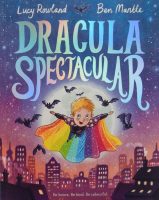
He’s off to Dragon Day-Camp for the first time and despite assurances from his parents, he’s feeling anxious about it.

Eager to be popular he decides to try and outshine the other dragons at all the activities on offer. But his ‘being the best’ involves behaviour that doesn’t please his fellow campers; he even resorts to cheating.

By lunchtime Fergal is shunned by the other young dragons.
Fortunately the camp leader notices he’s alone and has some wise words to offer, words about being his best self rather than the best at things.

Come the evening Fergal is a much happier little dragon with a lot of new dragon friends.

With a gentle lesson about being yourself and the best version of yourself you can, this second Fergal tale should win the little dragon plenty of new little human friends too.

Koala is Not a Bear
Kristin L. Gray and Rachel McAlister
Sterling

Koala has been eagerly anticipating camp but as it’s her first time away from family and home, she pops a few reminders into her backpack – just in case she feels homesick.

On arrival she searches for her cabin but there seems to be a problem. Just as Grizzly is welcoming her to Bear Cabin, there comes a protest from Kangaroo. “A bit of a know-it-all” is how Grizzly describes the naysayer.

Eager to find a place to rest, Koala tries to prove her ‘bearness’ but Kangaroo is having none of it. Yes she does have sharp teeth and claws but so do crocodiles; lemurs share her ability to climb trees; tigers too can growl. She might be able to perform a reasonable bear crawl but she lacks a tail.

Despite Grizzly’s continued support, Kangaroo continues his assertions when the animals sit down to eat until at last Koala thinks Bear Cabin and even perhaps the entire camp is not for her.

Seeking comfort, out of her pouch comes a photo of a relation – a creature that Kangaroo recognises as his great aunt too.

A few questions from Kangaroo are all that’s needed: it turns out that Koala and Kangaroo are cousins. Hurrah!

The author raises important points about inclusion, similarities and differences during the course of her amusing narrative while at the same time providing a fair sprinkling of marsupial-related facts along the way. Rachel McAlister’s expressive, digitally rendered wide-eyed animal characters will appeal to little ones as they follow Koala’s search for a place to belong.
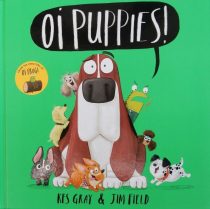
Oh No, Bear!

Oh No, Bear!
Joanna Partis
Little Tiger

One autumnal morning a hungry bear wakes knowing he has an important task ahead. But as he walks through the forest his hunger distracts him causing him to follow the delicious smell that assails his nostrils. It leads him to a vegetable bed where Rabbit and friends have dug up a huge pile of carrots. Bear accepts Rabbit’s offer to try one and before you can say ‘chomp’ Bear has consumed the entire barrowful.

But then he smells another delicious aroma and instead of making amends to the rabbits, nose in the air, he’s off on the trail,

which leads him to a group of squirrels engaged in picking acorns. A similar thing happens: it’s Bear’s tummy not the baskets that he fills with acorns.  After a brief apology Bear’s off again hot on the trail of another tempting smell. And oops!

Soon, Beaver’s freshly caught fish ends up in the same place as the previous items he was supposed to taste and unsurprisingly by now, Bear’s tummy is rather larger that it was at the start of the day. As he sits ruminating upon his greed he starts to feel concerned that his friends might have to go hungry all winter.
Back to his cave he heads intent on thinking of a way to put things right. But when he reaches his door another problem awaits.

Is he to remain in that sorry state all winter? Happily not, thanks to his friends, not to mention his inadvertent clumsiness during his pre-hibernation perambulations.

Funny, thought-provoking and engagingly illustrated, with its ‘OH NO BEAR!’ refrain this is an enjoyable autumn term read for foundation stage audiences especially.

Binky’s Time to Fly!

Binky’s Time to Fly!
Sharmila Collins and Carolina Rabei
Otter-Barry Books

Binky has always wanted to be a beautiful butterfly but when his big day finally comes, he discovers to his dismay that instead of powerful wings, despite their shape, his are fragile, holey things, so wispy they won’t lift him up. Dreams in tatters, he creeps away to hide.

Some time later, two other butterflies that had emerged at the same time discover him and offer to help.

Seeking the assistance of the silkworms, the spiders and the bees, the team work away until at last Binky’s wings are transformed.

They look amazing but will they allow him to take off ?

Acknowledging his inherent difference but thankful and full of hope, Binky watches as his friends flutter above and then responding to their call, “It’s time to fly!’ he carefully unfurls his wings and at last …

Incorporating themes of inclusion and empathy, this movingly told and illustrated story demonstrates the power of co-operation and determination.

As Sharmila, the author says in a final note, this is a book about hope and freedom. Her eldest daughter, the inspiration for the story, has the fragile skin condition epidermis bullosa and to aid the finding of a cure, Sharmila founded the charity Cure EB to which her royalties will be donated.

Rich in pattern and texture Carolina Rabei’s expressive mixed media illustrations are reflective of the softly spoken, uplifting narrative.

Small in the City

Small in the City
Sydney Smith
Walker Books

I’ve loved Sydney Smith’s work ever since I saw his illustrations for Footpath Flowers so was super-excited to learn of his first picture book as both author and illustrator. It’s a stunner.

The story begins with two wordless spreads showing a child on a tram, the first four blurred views through the tram’s misted window from the boy’s seat,

the second looking into and within the vehicle.

Then, warmly wrapped against the cold, the lad (our narrator) rings the bell, gets off the tram and starts walking. ‘I know what it’s like to be small in the city,” he comments as he crosses the road, continuing to talk of the hustle and bustle around.

As he negotiates crowds and traffic we sense that it’s not the reader he’s addressing, rather it’s a special someone known to him; and instead of being scared, he begins to give advice, …’don’t go down this alley. It’s too dark.’ … ‘There are lots of good places to hide, like under this mulberry bush. Or up the black walnut tree.’

Gradually, even before the boy begins to put up posters, readers understand that he isn’t talking to a human at all. As he enters the park, snow swirling all around, he stops to put up another of his posters; then we see …

and in the dwindling daylight we fully appreciate his, ‘Your bowl is full and your blanket is warm. If you want you could just come back.’

There’s a final twist in the narrative that leaves readers with fast beating hearts, awed by Smith’s brilliance in capturing emotions, and by his use of light, shadows and reflections; and with new knowledge, a desire to turn back to the beginning and start the story over again.

Kitty and the Moonlight Rescue & Kitty and the Tiger Treasure

Kitty and the Moonlight Rescue
Kitty and the Tiger Treasure

Paula Harrison, illustrated by Jenny Lovlie
Oxford University Press

These are the first two of a proposed new six book series starring Kitty, a young superhero in training. Kitty’s mum is gifted with cat-like superpowers and Kitty longs to be just like her; the trouble is she’s frightened of the dark.

Her opportunity to try out her own powers comes sooner than Kitty anticipated in Kitty and the Moonlight Rescue.
One night when she’s wearing her superhero outfit there comes a scratching at her bedroom window. It’s Figaro the cat requesting her mother’s help and because of her attire, he’s convinced Kitty too is a superhero.

When there’s an emergency what can she do but remember her mother’s words “Don’t let fear hold you back. You’re braver than you think,” and follow him across the rooftops to the clock tower from where very strange sounds are coming.

An exciting moonlit rescue ensues and Kitty ends up with a brand new tiny feline friend and family member.

In the second story, Kitty is eagerly anticipating tomorrow’s trip to the museum to view the priceless Golden Tiger Statue reputed to have the power to grant wishes, but cats are not allowed and Pumpkin is keen to go see it too. There’s only one thing to do, thinks Kitty as she and the kitten snuggle up together at bedtime and so begins their second moonlit adventure.

Off into town they go but before you can say ‘precious’ Kitty finds herself accused of being a criminal. So when she sees through the museum window a canine thief at work, paws on the Golden Tiger, it’s down to her and her feline friends to give chase, find the culprit, rescue the treasure and return it to the museum before its absence is discovered.

No easy task. Kitty can use her super powers that are growing stronger day by day but it seems the spaniel isn’t working alone. Can she find out who else is involved and put things right before midnight strikes?

These absorbing stories with their young female protagonist plus  several feline characters, and a wealth of smashing illustrations,  are just right for new solo readers. My tester read each book in a single sitting …

and was inspired to ponder on the possibility of having her own super power –

“My superpower would be that if people are fighting or at war I could make them become friends’.       Emmanuelle age 6

Nibbles: The Monster Hunt

Nibbles: The Monster Hunt
Emma Yarlett
Little Tiger Press

Uh-oh! Emma Yarlett’s Nibbles, the monster is on the loose again and he’s managed to find his way into a little boy’s bedroom where quite clearly, he’s been indulging himself with the furnishings and his favourite fodder, books. Not just any books however but the boy’s very favourite information book.

Time to get on his trail before he destroys the whole thing completely and creates mayhem in so doing.

What follows is a breathless chase that has boy and monster hurtling through space,

dashing past dogs and cats, gallivanting into the realms of artistry, cascading into colour mixing,

diving into a counting book, where thanks to some quick thinking on Nibbles’ part, the boy and the monster narrowly escape the flaming jaws of the dragon that has been in hot pursuit since Nibbles inadvertently set him free in the art section.

So much for preventing hayhem!

Full of fascinating snippets of information, jokes, speech bubbles, flaps and holes – of course, holes – readers will relish this latest adventure of the monster with a wicked grin and voracious appetite. There’s surely something to satisfy all tastes and a wide age range in this one.

AstroNuts

AstroNuts
Jon Scieszka and Steven Weinberg
Chronicle Books

In this, the first book of what is to be a series, our narrator is planet Earth, yes that’s right Earth and it starts by taking readers back thirty one years to 1988 when, so we hear, in a secret lab. within Mount Rushmore two scientists working for NNASA (Not the National Aeronautics and Space Administration) built four super-powered animal astronauts designed to become activated should humans ever come near to destroying their home planet. Their role would be to travel through outer space in search of a new ‘Goldilocks Planet’ (not too hot, not too cold, but just right for human habitation).

That catastrophic time now has come, so let’s meet the AstroNuts – fearless leader AlphaWolf, along with SmartHawk the super-organised planner, electromagnetic LaserShark – protector and food finder, and StinkBug -as they blast off in their secret craft.

Having travelled 39 light-years in less than 3½ hours they crash land their rocket on Plant Planet.

This place certainly does have a super-abundance of lush vegetation. But it turns out that these plants aren’t the mindless flora the AstroNuts first thought. And yes, there’s food aplenty; shelter building potential – well maybe,

but a balanced ecosystem? Seemingly not. But are those inhabitants actually friend or foe? Don’t miss the fold-out feature.

This is a clever mix of science and laugh-out loud bonkerness.

What better way to put across the climate change message and along the way impart a considerable amount of biological and chemical information, than with this heady concoction of Scieszka’s irresistible verbal playfulness and Weinberg’s clever digital collages constructed in part from images from the Rijksmuseum in Amsterdam.

The Wonder Machine

The Wonder Machine
Barry Timms and Laura Brenlla
Little Tiger

Something of a reclusive character, Wolf is an inventor, the world’s greatest so we’re told.

One day she decides to make a machine that will be a world changer and with that in mind she consults a large nameless book wherein she finds these words, ‘The wonder machine! / The wonder machine! / A gadget like nothing that / you’ve ever seen! From mittens to music, / from cushions to cakes, / The thing you most need / is the thing that it makes!’
Her search for the components required to construct such a marvel take her for the first time ever, away from her home and across onto the mainland.

Once there, she encounters, and helps in turn Squirrel,

Owl and a family of foxes. For each kind deed she receives a gift of thanks. First a garden rake, then a fishing reel and finally, a silver spoon: the very items she needs to complete her Wonder Machine.

Back at home she sets to work next morning, toiling all day until her creation is ready. Although from it there comes wonderful music, Wolf doesn’t feel the satisfaction she’d eagerly anticipated. But then as she sits downheartedly

there comes a realisation and a wonderful surprise …

All of which shows that stepping outside your comfort zone, paying it forward and sharing your talent are enormously rewarding.

Barry Timms’ tipping, tapping text flows along nicely sweeping readers along with it, eager to find out everything about Wolf’s invention, while on the way they’ll enjoy her exchanges with the other characters and empathise with her highs and lows as the story builds to its satisfying musical finale. All this is appealingly shown in Laura Brenlla’s rural scenes with their peepholes, flaps and foldouts.

There are Bugs Everywhere

There are Bugs Everywhere
Lily Murray and Britta Teckentrup
Big Picture Press

The title of this book proved all too true for this reviewer – an elephant hawk moth caterpillar crawled past my foot as I sat outside my favourite café this morning. This insect …

is one of over 100 ‘bugs’ Britta Teckentrup has illustrated in this colourful and fascinating book.

The term bugs is here used as a catchall to include six legged insects, eight legged arachnids and multi legged myriapods and collectively there are, we’re told, millions of different species.
With spreads devoted to bug anatomy,

feeding habits, survival techniques, social insects, the life cycle of the Madagascan Sunset moth and much more, there is a mine of information for the curious reader.

Did you know that Chan’s megastick which inhabits the Borneo rainforest is the largest bug in the world, growing up to 56cm.

There’s even a ‘can you find?’ challenge posed on the final end paper to track down the golden tortoise beetle from North America hidden somewhere in the book. This will surely encourage further close perusal of every one of Britta’s already inviting spreads.

Rabbit and the Motorbike

Rabbit and the Motorbike
Kate Hoefler and Sarah Jacoby
Chronicle Books

Rabbit lives in a field and dreams of leaving his safe haven one day, but this home-lover gets his adventures vicariously thanks to his friend Dog, an erstwhile motorcycle enthusiast who has spent much of his life riding his cycle all over the countryside.

One day though, Dog is gone and with it Rabbit’s daily adventure.

Dog has bequeathed his vehicle to his friend and it lies for many days abandoned in the field.

Then one night Rabbit decides to bring the bike inside and in the absence of a story, they listen to the sounds of the highway.

Summer comes bringing with it not only new blooms but also for rabbit, a newfound courage that allows him to admit to his fears and to suggest to the bike, “Just down the road.” But as we know, and Rabbit discovers, roads have a way of going on and on and …

It’s an independent, greatly enriched Rabbit that eventually returns to his field, with his head full of memories and stories, ready for new friends and with a feel for the pull of the open road.

Lyrically told by Kate Hoefler and gorgeously illustrated in pastels and watercolour by Sarah Jacoby, whose delicate scenes bring out Rabbit’s changing emotions while also capturing the power of the profound silences surrounding his loss, and the contrasting roar of the bike when he finally takes to the road.

An exhilarating tale of friendship, loss and finding the courage to step outside your comfort zone.

A Forest’s Seasons / Apple / Who’s Hiding on Safari? & Who’s Hiding in the Jungle?

A Forest’s Seasons
Ingela P. Arrhenius
Chronicle Books

This tiny, chunky board book comprises just six pages, each differently shaped, showing the seasonal changes in a forest. ‘Spring brings babies and blooms’ we read, whereas summer is alive with different greens; in autumn we see fungi and a predominance of orange and browns while in winter the landscape is blanketed in white.

A delight for small hands and a lovely introduction to the idea that nature is cyclic.

Apple
Nikki McClure
Abrams Appleseed

Essentially what is the life cycle of an apple but interspersed with human interaction is presented in just fourteen words, – a single one per spread – opposite one of McClure’s signature style black and white cut outs. The apple being the only red, in each composition makes it stand out.

In autumn an apple falls from the tree; it’s collected and put into a sack with others.

Back at home, a little girl watches her mother cutting the apples and seizing her chance takes one (SNEAK) and pops it into the school bag and off she goes to school. Intending to consume it later she begins playing and the apple lies forgotten.

Eventually it rots, is composted and finally in spring we see it’s sprouting into a new tree.

There’s a final explanatory page reminding readers that ‘apple seeds rarely grow into trees that make tasty apples.’ Nonetheless this book is an effective and simple lesson and one whose outstanding art offers much to enjoy and discuss with little ones.

Who’s Hiding on Safari?
Who’s Hiding in the Jungle?

Katharine McEwen
Nosy Crow

By means of her alluring colourful collage spreads, Katherine McEwen takes little ones to two locations to spend a day playing animal hide and seek either in Africa or the South American rainforest.

On Safari, from early morning the grasslands are an exciting place to watch wild animals be they nesting, napping, digging, playing, having a cooling afternoon swim in the river or basking in the warm sun. Come evening you can spot hungry giraffes grazing on the trees and perhaps spy a monkey or two nibbling; and when it’s dark it’s the turn of the bats and foxes to appear while their fellow creatures sleep.

There are also lots of lively animals around Hiding in the Jungle amidst the lush flora and in the overhead canopy.

Little ones can also search for others hiding along the steamy riverbank, beneath the surface of the river and, in the cool of the evening, look among the foliage for creeping, crawling creatures.

Night brings sleep for most, but lifting the flaps will reveal some surprises.

Both books contain simple factual snippets and every spread has several flaps to investigate, where there is information about the hidden animals.

Strange Happenings with Winnie and Wilbur: The Bug Safari / Ghoulia and the Mysterious Visitor

Winnie and Wilbur: The Bug Safari
Valerie Thomas and Korky Paul
Oxford Children’s Books

As Winnie and Wilbur picnic in the garden their dropped crumbs are collected by ants.

Winnie is fascinated and wants a closer look. Out comes her wand and with a wave and a shout, witch and cat are transformed into tiny, tiny beings. Wilbur is not impressed, especially when a bird lands in the grass in search of some lunch and even less so when the postman’s boots nearly squash both him and Winnie flat.

The obvious thing would be to make an enlarging spell but Winnie’s wand is stuck in a bush out of reach and anyway it’s now far too big for her to wave.

Are the two of them destined to stay forever tiny?

The countless fans of this series will be fascinated by the scaled down world in which its star characters find themselves and especially enjoy the garish-looking minibeasts that appear to dwarf Winnie and Wilbur.

Ghoulia and the Mysterious Visitor
Barbara Cantini
Amulet

If you’ve not yet encountered Ghoulia, let me introduce her: she’s a zombie girl who lives in Crumbling Manor along with Auntie Departed, Tragedy (dog) and other rather weird residents.

One rainy evening when the young zombie is feeling particularly bored, partly because her aunt has been totally absorbed with gardening and in particular tending her Chatterbox Ivy, an unexpected visitor arrives. He announces himself as Cousin Dilbert, (a cousin Ghoulia didn’t know existed) invited by her aunt to come on a visit.

But why invite such a fault-finding, demanding character? Off goes Ghoulia to find her aunt and ask the reason, but she is nowhere to be found.

Meanwhile another visitor arrives – one of Ghoulia’s friends thanking her for his invitation, also penned by her aunt.
More and more of her friends arrive, each holding similar invitations.

Things get ever more strange though and at one point the piano seems to be playing without a pianist and then Theresa (another of Ghoulia’s friends) disappears too.

After a search, the mystery is finally solved, thanks in no small part to her cousin and for once, everyone – even Dilbert – seems happy.

Out of this world zany, but just the right length for new solo readers who will especially enjoy Cantini’s detailed, mock-scary colour illustrations and the idea of a seemingly harmless plant turning carnivorous.

Peanut Butter and Jelly

Peanut Butter and Jelly
Ben Clanton
Egmont

I spluttered my way through this third book in Ben Clanton’s graphic novel style Narwhal and Jelly series, over my porridge breakfast – no peanut butter, jelly or even waffles in sight, I hasten to add.

Herein Jelly takes it upon himself to turn parental and persuade Narwhal to try something else instead of his relentless diet of waffles, the something else being in this instance, peanut butter. Out comes that “How do you know unless you try it?” so many youngsters will be familiar with as a result of their own parents’ coaxings to try unfamiliar foods, especially veggies.

Having ascertained there aren’t any allergen issues, a peanut butter cookie is proffered by Jelly

and accepted by Narwhal who devours the entire thing declaring it “fintastic’ and ‘yumptious’. No surprises there, but Narwhal aka Peanut Butter,

aka all manner of other names, then goes on to consume jar after jar after jar of the sticky stuff with super-silly results for both characters.

Delivered in dialogue form and garnished with groan-worthy puns, bonkers humour once again reigns in these three tales of oceanic friendship between the unlikely duo. Don’t miss the jokes and fantastic facts sandwiched between the stories.

Jazz Dog

Jazz Dog
Marie Voigt
Oxford Children’s Books

Segregation rules in a world populated by dogs and cats. Dogs play only dog music; cats only play cat music.

However there’s one dog that isn’t happy with this separatist regime; his music is different.

One night he hears a beautiful sound coming through an open window and he’s mesmerised. He’s determined to learn to play like the Jazz Cats, but the cats won’t help so he decides that he must teach himself cat music.

Borrowing instruments and books he sets about learning cat jazz and it feels right.

As he passes the theatre a sign announcing a jazz contest catches his attention. What an opportunity to show his talent; but a dog performing in a cat contest?

Shock horror.

The theatre is packed to capacity with growling dogs and hissing cats. The jazz dog has a crisis of confidence but thanks to some feline encouragement, he decides to stay and play.

Who would have believed that the actions of one determined little dog could have such amazing consequences …

Marie Voigt’s uplifting rendition gets right to the heart of individuality and is a reminder that every one of us is entitled to follow our own path, and to find the inner courage and confidence to stand up for what we know is right, for ourselves and also for others.

A must for families, and for classroom sharing and discussion.

Elmer’s Birthday

Elmer’s Birthday
David McKee
Andersen Press

After three decades it’s safe to say that Elmer the elephant has become an institution in nurseries, primary schools and families.

This story celebrates his birthday or does it?

The group of elephants he passes on his regular morning walk certainly think he has a birthday the following day and decide to play a joke on him. ‘… let’s act as if we’ve forgotten it …’ they decide intending to produce a celebratory cake at the end of the afternoon.

Off they go to inform his friends and family of their intentions.
The trouble is those elephants don’t pay heed to the responses they receive, dismissing all their ‘buts’ as insignificant.

Indeed not a single animal they speak to is impressed with their trick, but the mention of cake keeps them quiet.

Next morning when he takes his walk, Elmer’s slightly puzzled at the way his friends greet him. Throughout the day the other animals seem to be avoiding him until the end of the afternoon when he’s suddenly confronted by all his friends and family.

Yes, the trick backfires but who can resist the enormous patchwork confection that his fellow pachyderms have baked for all to share, birthday or no birthday.

“ … the cake is a winner,” concludes Elmer before they all tuck in; and a winner is what little ones will think about this shared joke of a tale. I’m pretty sure they’ll ask for second helpings too.