Today Will Be A Great Day! Slimy Oddity Wide Eyed Editions
Subtitled Slimy Oddity’s Guide to Happiness, the red blobby creature of the title takes readers on a colourful, fun journey towards mindful happiness. ‘Happiness comes from within, and it is in each and every moment of your life.’ we read on the first page. That is what Slimy (from Instagram collective Slimy Oddity) intends will become so for everyone. “Happiness is being in complete harmony with what is.” is the first of his 30 plus life lessons presented in this small format book of uplifting, useful, timeless advice to help those who travel along with him find happiness and fulfillment in their lives.
Assuredly among these seemingly simple, yet often profound messages, there is something for everyone, and each affirmation or nugget of wisdom is evoked by a bright, uplifting illustration. I especially liked seeing some of the Dalai Lama’s wisdom presented.
This is not a journey to be hurried; rather the reader needs to let the unlikely guru, Slimy, gently and slowly act as guide walking beside us on the path to well-being. It might even be that you take just one of the spreads every day and let Slimy’s words and actions become your focus (or even that of members of your class at school).
I’m The Train Driver I’m The Bin Lorry Driver David Semple and Katie Woolley Oxford Children’s Books
Young children have the opportunity to imagine themselves into the driving seat of both a passenger train and a refuse collection lorry as they share these books with an adult either at home or at nursery/preschool.
Having donned the appropriate uniform the train driver climbs into the cab, puts on a seatbelt, checks the controls, starts the engine and is responsible for taking a family to the city for some sightseeing. En route there are stations to stop at to allow more passengers to get aboard, a freight train to negotiate, a tunnel to drive through slowly and carefully,
then the level crossing gates are open so its full speed ahead until the signal controller radios to say ‘switch tracks’ and off you go to the city’s main station where the passengers are eager to get off. Finally, a train driver needs to log the train’s arrival before heading home
The driver of the bin lorry has two other team members who are also responsible for collecting the recycling from all the blue bins on their round and they start work early in the morning while it’s still dark. Having set the route, off they go, the driver taking care to stay within the speed limit. The team works hard all morning,
remembering to log each bin emptied into the hopper on the lorry’s computer screen and totalling up the final number. Then with all the blue bins duly dealt with it’s back through the now busy streets to the tip where the lorry’s contents is emptied onto the ground ready for sorting.
As with others in this series, teamwork is key in the roles presented; and there are lots of opportunities for developing vocabulary and other important early learning skills such as colour, number and shape recognition.
Martha Maps It Out Leigh Hodgkinson Oxford Children’s Books
Young Martha might be small but her thoughts are anything but: her mind full of BIG things. She absolutely loves drawing maps, creating them out of almost everything from the universe to her bedroom in the top floor flat in which she and her family live; she even makes maps of her thoughts, her questions and her dreams.
Through Martha’s cartographic creations readers share with the girl her entire world as she guides us through the pages and beginning in deepest space, we zoom inwards page by page to planet Earth with its awesome flora and fauna, her city, her street and community, her block of flats, her own home and her room.
From there we travel outwards once more through the thoughts, questions and those BIG dreams of a future where absolutely anything is possible: a life of discoveries … excitement,
adventure, wonder, not forgetting of course, love.
Leigh Hodgkinson is brilliant at presenting quirky details in her visuals and this book of Martha’s maps is absolutely alive with them. To these are added a wealth of labels that children will love to explore as they, one hopes, like Martha will share that sense of optimism and excitement about what the future might hold. Bursting with classroom (and home) potential, this splendidly upbeat, and unusual picture book is one to return to over and over wherever you are.
Curious Creatures: Working With Tools Zoë Armstrong and Anja Sušanj Flying Eye Books
I wonder how many children know that using tools for tasks we do often, daily even, is not confined to humans. There are, so we read in this enormously engaging book, animals in various parts of the world that display amazing problem-solving skills and adaptability, recognised by zoologists as tool using.
One such is the sea otter: these animals sometimes make use of kelp for several mooring purposes and also use rocks as hammer and anvil, for example to break open a clam shell or mussel to extract what’s inside for food.
Did you know, several creatures use sticks as tools: elephants in Bangladesh have been observed waving twigs or branches to ward off troublesome insects while others sometimes use a spiky stick as a back-scratcher. Indeed so Zoë Armstrong states, ‘the elephants choose the right tool for the job.’ So too we learn, do several primates: mandrills clean the dirt from beneath their nails with a small twig; gorillas sometimes take a long stick as a measuring device to gauge the depth of water they wish to cross before wading right in; and chimpanzees in Tanzania smooth a stick and use it to extract insects from a termite mound, eating them as we might a lollipop. I’d have been so excited had I been Dr Jane Goodall who first noticed and recorded this phenomenon.
I was especially interested to read though that tool use techniques among primates such as Orangutans sometimes differ according to the particular habitat in which they live.
Indeed some living near a research camp in Borneo’s Tanjung Putting National Park have been observed in a boat paddling it around with their arms – just one of several clever habits they’ve worked out. Birds too are skilled tool users and author Zoë and illustrator Anja Sušanj provide several examples of them. Crows in particular are known to forage and perform other tasks with sharpened sticks they shape in a variety of ways: indeed New Caledonian crows are among the most skilled toolmakers in the entire animal kingdom.
Altogether a fascinating tribute to creature ingenuity: children (and adults) will be surprised and awed by these clever animals in a book that conveys a wealth of STEM information. There are lots of potential cross-curricular links: I particularly like the way these animals encourage child readers to think creatively to solve problems, just like the exemplars herein have done.
Wanda The Blue Whale Beverly Jatwani and Sawyer Cloud New Frontier Publishing
The third book of seven in the Together we can change the World series is set in South America, on and near La Serena Beach (Chile). Young Paula awakens to the sound of the ocean every day and loves the view from her bedroom window. She also loves spending her time on the sandy beach, sometimes clambering over the rocks to investigate what’s there.
One morning early she is devastated to discover, lying on the beach, hardly moving, a blue whale calf. Going up close, she sees that it’s tangled in a fishing net and gently stroking the creature, names it Wanda. She knows she must find a way to release it so the whale can re-join its family.
Other people gather around and Paula begs them to help her free the calf.. Immediately everyone gets to work – teamwork is key now – until finally Wanda is no longer trapped in the net but remains some distance from the ocean. Thankfully a passing boat responds to their signals for assistance but the creature’s weight is too much for the small craft.
Or is it? The tide is very slowly coming in so perhaps it’s worth having one more attempt to tug her into the waves …
On her way back up the shore, Paula notices something in the sand; something on which is written a vitally important word. Then that evening what she sees through her windows beneath the setting sun fills her heart with joy …
The final page of this book gives information about blue whales, including the fact that they are now classified as an endangered species.
The story shows the powerful emotional and transformational connection formed between the girl protagonist and the whale, the key word being the compassion shown by Paula. It also highlights the responsibility we humans all have, or need to develop, towards Planet Earth: for sure if everybody is prepared to act in a similar way to Paula, it’s possible as the series title says, to change the world. To that end, adults can start by sharing the story with youngsters who, one hopes, will want to become activists.
How To Survive Time Travel Larry Hayes, illustrated by Katie Abey Simon & Schuster
Ten year old Eliza Lemon (it’s her journal we’re reading) and her young brother Johnnie – he of the super brains and weak left leg – discover their parents have disappeared, leaving in their place a little old oak tree with three symbols on the trunk.
Johnnie informs big sis. that the car (also missing) is in fact a time machine. Now of course she knew that really didn’t she? The two quickly realise that they and they alone, (and especially without interference from the ‘pure evil’ Sadie Snickpick) must do something to rescue them; the problem being, what?
After some dangerous activity involving a tool they certainly shouldn’t have been wielding the two manage to fell the tree and inside there is a shoe bearing a message from their parents informing them they’re stuck in 5000BCE (or is it?), providing a grid reference, asking for help and saying everything they need to solve the riddle of the sphinx is in the shed. All they have to do now is build themselves a time machine and get away within two days or face the dire consequences of what the dreaded Sadie has already set in motion. Simple! Though maybe they’ll end up having to face them anyway.
The fight is on – in more ways than one … Can Eliza keep her head? And more important can they (including dog Myrt) tolerate horrendously itchy bites by rainforest insects, get the better of the weird, dastardly Boy-God, deadly snakes,
a rainbow hued sphinx and foil the next plot to destroy the planet. As for surviving time travel to ancient Egypt – who knows? Our journalist Eliza is, in her dad’s words, the “Girl Who Never Gives Up”, so maybe, just maybe …
Laugh out loud funny, this nail-biting foray into the past, with suitably quirky black and white illustrations by Katie Abey, will keep readers on the edge of their sofas as they follow the highs and lows of Eliza and Johnnie’s time travelling exploits. A cracker this!
Lionel and Me Corinne Fenton and Tracie Grimwood New Frontier Publishing
This story of the effects Lionel, a small dachshund, has on a family is told from the viewpoint of Maverick, a golden retriever, that is already a well established and contented family member.
When he first arrives, the newcomer is no threat on account of his smallness and because he spends a lot of time asleep; he does leave stinky deposits indoors though and seemingly, whines constantly. Nor is Maverick’s exercise enjoyment intruded upon;
but gradually, Lionel becomes the centre of attention and a thorough nuisance: jealousy builds until Maverick decides enough is enough, his actions resulting in his banishment to the back garden.
Alone out in the cold, the retriever has lots of thinking time and he decides that all he needs to do is to wait patiently until the dachshund destroys his perfect pooch image. When he does it significantly and unexpectedly changes the canine relationship.
Beautifully portrayed in both Corinne’s words ( the dog characters are based on those of her own relations) and Tracie’s gently humorous illustrations this story of learning to accommodate a newcomer is relevant to many situations and is a lovely book to share with young children and talk about both at home or in the classroom.
These two books are additions to favourite series from Harper Collins – thanks to the publisher for sending them for review:
Genie and Teeny: The Wishing Well Steven Lenton
This third adventure of Grant the genie, and his best friend – the puppy, Teeny picks up where the previous one left off with Tilly’s mum coming into her daughter’s bedroom and hearing strange noises coming from Grant’s “Not-a-teapot’ now officially renamed tea-lamp. Those noises are made by a deeply sleeping Grant as he dreams of being back in Genie World with his family; inside the teapot, in diminutive form, are also Tilly and Teeny. On waking Grant feels even more homesick but he responds to Tilly’s urgent whispers about the close proximity of her mum with assurances about the plan he has – one that works only with the help of we readers.
Luckily the crisis is averted and after breakfast, plan B, Tilly announces will be to get Grant back to his world. The thing is Genie World, aka Wishaluzia, is an enormous distance away, high, high in the sky: no problem there then! Or rather, a very big one – how will he travel up through the sky. It’s not long before the Elastic Fantastic Flying Machine appears, first in Tilly’s mind, then on paper and finally, once they’ve assembled and fixed together all the items collected in the garden, there stands a rocket-shaped vehicle. Off goes Grant to grab some suitable gear to wear and once attired the countdown commences. Yes, the thing does get launched but almost immediately …
Time for some light refreshments and then a new plan; one that involves a visit to a theme park with an officious security guard and a no dogs rule.
From there on the action really ramps up and there are lots of laugh-out-loud moments (for readers not the characters) and wishes (of course).
What about that much anticipated and joyful reunion between Grant and his family way up high; will it eventually take place? That would be telling …
Another brilliant tale that, with Steven’s hilarious illustrations and magical mishaps aplenty, is great for both independent readers and reading aloud.
Clarice Bean Scram! Lauren Child
The utterly irrepressible, indomitable Clarice Bean, she with a skill for stretching the truth, returns in a summer adventure – or several, that begins on a scorchingly hot day in the first week of the holidays. Clarice is bored, saying she has nothing to do; her best friend is away on holiday for the entire break and her mum, annoyed at her daughter’s continual moaning, sends her outside into the garden. It’s there that she informs the irritating Robert Granger that her family is getting a dog. Now it’s not exactly a case of be careful what you wish for as it’s her sister Marcie who really really wants a dog, but near enough for before you can say ‘bark’, this nothing day turns into anything but.
For instance there’s the episode of the tin of spaghetti (or several) for the family’s dinner purchased at Clement’s corner shop. This leads to an encounter (also several) with a dog – a dog that just refuses to go away. Clarice’s parents meanwhile have realised that they’re supposed to be attending a wedding and off they dash to catch a plane.
Now Clarice has the tricky task of keeping this pooch a secret from Grandad who is now in charge of the household, as well as her siblings. But there’s the question of food and much more, including disposing of the animal’s ‘you-know-what’, as she quickly discovers. It’s a task that proves too much for Clarice – not the poo disposal – but keeping the presence of the dog under wraps and before long Marcie discovers it.
Happily she’s eager to accept the creature and help raise money for his food and other necessities;
but nobody else must find out about Clement as they decide to name him. Errr …
Related, as only Lauren Child’s Claire Bean can, in an utterly credible manner, with her seemingly innocent, astute observations and vivacious voice, both of which are brought to life by Lauren’s scattering of deliciously quirky collage illustrations and line drawings throughout the book this is Irresistible reading for almost any child (and many adults) from early KS2 onwards.
My Granny is a Queen Madeleine Cook and Rebecca Ashdown Oxford Children’s Books
Twelve children proudly and lovingly introduce their respective grandmothers in this wonderfully warm-hearted, celebratory book. Each one is, in the eyes of her doting grandchild, a true queen even if not HRH The Queen.
The first – granny – is greeted on arriving for a visit with curtsies and a red carpet on which to walk. Then in turn we meet nana with her royal pets Lord Stinkerton and Lady Battenberg the Third, classy pooches for sure though a tad mischievous at times; nonna with her precious royal jewels; oma, who arrives in her carriage ready to take the family for a drive into town.
Bibi has a penchant for spectacular events and she’s more than happy to be accompanied by her grandchild; grandma – she of the royal wave – is frequently greeted by well-wishers when out and about; nai nai inspires her grand-daughter with encouraging speeches; gran on the other hand is a bestower of special awards for bravery. Nanny’s home is a distant castle so family news often has to be communicated via technological devices; Baba loves to relax after a busy day …
whereas nani is a terrific teller of bedtime stories and abuela has a very special crown. Apart from giving their grandchildren love and affection there’s something else all these wonderful people have in common: now what might that be? … Party anyone?
A terrific celebration of grandmothers, of differences, and the special bonds of familial love that transcend all else.
Here are two hugely readable books from Harper Collins Children’s Books: thanks to the publisher for sending them for review:
The Super-secret Diary of Holly Hopkinson: Just a touch of utter chaos Charlie P. Brooks and Katy Riddell
After the crisis with Mum almost taking a job in New York, things are once again in turmoil in the Hopkinson household, particularly where adept inventor/wielder of words, ten year old Holly is concerned. For instance she might as she says, have mentioned to her best friend Daffodil something about a New York move. Actually her mum is embarking instead on opening a farm shop/emporium.
Then her teacher Miss Blossom announces that she’s engaged to be married and that the entire class will be involved. Now while this is not good news for Holly Hopkinson (schoolgirl) and Holly Hopkinson (Band Manager Inc.) that still leaves possibilities for her Film Location and Places Inc. persona. Now she should pass on the information regarding the marriage to Aunt Electra whose establishment might just be a possibility for the wedding venue. Seemingly it’s time for Holly to make use of her magic pocket watch once again.
I loved the famous artists’ background homework episode and that of the visit to one of London’s cutting edge ‘art galleries.’ That event certainly sets some changes in motion.
As with the previous two diaries, this one is full of laugh-out-loud moments, plenty of twists and turns in the family’s fortunes, some village politics, funny food and unusual characters, including one or two unexpected ones. Like the others, Katy Riddell’s black and white illustrations provide an additional layer of humour to Charlie P. Brooks’ storytelling.
It does work as a stand-alone book but it’s probably better if readers are familiar with Holly’s previous diaries (now safely stashed in a biscuit tin) before embarking on this one.
(The Boy Who Got) Accidentally Famous David Baddiel, illustrated by Steven Lenton
This is a laugh-out-loud story starring the very ordinary eleven year old Billy who lives with his ordinary mum and dad and his ten month old sister (also ordinary). Nothing out of the ordinary has ever happened to Billy; but then one day something extraordinary takes place. A TV crew from TotalTV TV descend on Billy’s school, Bracket Wood to film for a show to be called School Daze. Many of Billy’s classmates play up for the cameras, hoping one of them will become famous. Not Billy however: he’s sure that the closest to fame he’ll ever get is reading about his favourite star Sunshine De Marto in his mum’s glossy magazines.
However, what happens thereafter only goes to show how wrong somebody can be: Almost overnight, on account of his ordinariness Billy becomes an internet sensation: #BillyTheNormo #OrdinaryBilly and the trending #Relatabill; there’s even a #Relatabill rap. Now at school too, everybody notices Billy especially when TotalTV want him to sign a contract. Moreover there’s a strong possibility that he might actually get to meet Sunshine De Marco.
However as his fame increases, Billy feels like somebody else entirely
and it’s fortunate that his best friend Bo has his back, at least to begin with. Billy has to make some choices for himself if he really is to meet Sunshine and caught up in his stardom, he makes some unwise decisions. Can true friendship save him and help the boy realise his dream?
David Baddiel’s witty take on fame and friendship is a very funny, heart-warming, highly engaging and relatable story that readers in KS2 will love. It also offers lots of opportunities for class discussion and more. Steven Lenton’s black and white illustrations really help bring the characters – ordinary or otherwise – to life. Unable to it put it down, I read the book in a single sitting.
Hazelnut Days Emmanuel Bourdier and Zaü minedition
The boy narrator sees his father just once a week, when he visits him in prison. We know not why he’s there but we do discover that it’s for a long stretch and we learn a lot about him and about the complex relationship the narrator has with his Dad or “Cave Bear” as the boy and his mother call him in their conversations. Conversations with school friends are tricky for the boy who never reveals that his Dad is in prison. Instead he tells them, “He’s a ‘cloud sculptor, a mole tamer, an inventor of dirty words.”
During his son’s visits Dad smells of cigarettes along with peppermint or hazelnut on account of the two bottles of cologne Grandma once gave him. He has a gold tooth, a short temper, a good sense of humour, he’s strong and likes to copy bird sounds and imitate people. The boy blames his Dad for the anguish and sadness – the ‘fog – in his Mum’s eyes, hating him for that,
and fearing his fury over the lad’s school reports.
However, when visiting time is over and Dad cries, the narrator’s love is reawakened and he leaves with thoughts of retaining that special Dad smell till the following week, as well as bringing him a supply of hazelnuts.
This is a powerful evocation of a situation seldom presented in picture books. Both words (elegantly translated from Bourdier’s original French) and Zaü’s (André Langevin) charcoal, sepia-toned illustrations are empathetic and full of emotion, working perfectly together to produce an unforgettable book for older picture book audiences.
Nature is an Artist Jennifer Lavallee and Natalia Colombo Greystone Kids
Nature has many awesome qualities not least of which is its incomparable artistry – its beauty and its incredible variety: that is what this book explores and celebrates.
There is complete harmony between author Jennifer Lavallee’s rhyming text and Natalia Colombo’s striking illustrations of nature – both its manifestations and the green being that leads a group of five children on an exploratory journey through various beautiful natural landscapes showing them the sunrise over some hills; a field alive with buzzing bees and daisies growing in abundance around the trees; the rich colours of summer flowers in full bloom as they begin to scatter the petals.
Next, resting on a rock at the water’s edge, nature shows itself as sculptor extraordinaire, carving and moulding rocks and clay. Then hidden deep beneath the ground lies evidence of nature’s etchings – those fossil impressions making patterns we all so love to find;
while with rain and sun together, high up in the sky, nature creates a rainbow: a kaleidoscope of gorgeous colours, a prism up above.
As the children witness each stunning landscape one of their number with nature now as teacher/mentor is inspired to recreate what they’ve seen in art of their own making: one by finger painting, another making a colour paper collage, one sculpts towers in sand; fossil etchings are done by stamping various shapes on a large sheet
and a rainbow is formed from torn tissue paper pasted on a glass jar and a lighted tealight within to provide the glow.
Whether used in a classroom or at home, those with whom this book is shared should not only develop a deeper appreciation of the natural world but also be motivated to try some of the art techniques the book includes.
Granny Came Here on the Empire Windrush Patrice Lawrence, illustrated by Camilla Sucre Nosy Crow
This wonderfully warm book follows Ava and her Granny as together they search Granny’s trunk one Sunday for a costume suitable for Ava to wear at her school dressing up event to represent someone she admires. Rummaging through the various items of clothing, jewellery and other objects Granny is reminded first of Winifred Atwell on account of the sparkling bead necklace, then Mary Seacole who sometimes wore a red scarf just like that in the trunk, a jacket makes her think of Rosa Parks. In each instance Ava’s grandmother tells her a little bit about each of the women mentioned: the glamorous pianist, the nurse who tended the wounded during the Crimean War, the brave woman who refused to give up her seat on the bus.
Then, hidden under all the clothes, Ava unearths something she’s not seen before: it’s a small cardboard grip in which Granny had carried presents she was given when she left her home in Trinidad and came to England on the Empire Windrush.
As she pieces together a story using the objects – a smooth grey pebble, an empty jar, a small blue hat and a pair of lacy gloves, we learn of the intense feelings of homesickness and loneliness her grandmother experienced; and how she built a life for herself in a new, chilly country, meeting and marrying the man who was to become Ava’s grandad. This woman – her own beloved Granny – is Ava’s real hero, the one she chooses to dress as.
With Patrice Lawrence’s perfectly paced telling and Camilla Sucre’s richly hued, vibrant art, this is a truly moving story that celebrates both the Windrush generation and their achievements, and the bond between Ava and her grandmother.
A superb book to share and discuss with young listeners at home and with primary children both in KS1 and KS2.
George the Brave Eva Papoušková and Galina Miklínová Graffeg
It’s off to Australia for this tale of a little wombat called George. I learned something about wombats like George before reading the story book for there’s an information page at the start. Did you know that in addition to being protected by law on account of their rareness, wombats are able to protect themselves by thrusting their rear ends at an enemy.
Let’s meet our protagonist George, and his friends. Fred the Kangaroo, Annie the Goose and Lizzie the Mouse invite George to join them in some games one day. Having got permission from his parents and a warning to be on the lookout for possible dangers in the form of hungry predators, he demonstrates his life-saving moves and off he goes to the dark woods to meet his pals. Their first game is hide and seek and when it’s George’s turn to be the seeker, he hides his eyes and starts singing a little song. However upon uncovering them he finds himself face to face with Wilma the Fox. Eek!
Now Wilma is a sly creature with her mind on her next tasty meal. To that end she invites George to show her his home and when he wants to know why, she’s gets angry. After all an entire wombat family is much more satisfying that one little one.
George is suspicious and sensing danger, flees as fast as he can. The trouble is, Wilma too has fast paws and is hot on his trail. Now is the time for George to be truly brave and use that strong, bony bottom of his.
Is it enough to do the necessary? Let’s say that Wilma loses more than just a tasty meal on account of his bum-thrusting stance.
And George? He’s learned an important life lesson about facing one’s fears – kind of!
Young children will relish George’s new story with its embedded wombat fact. With that big surprise, superb cross-hatched illustrations and dryly humorous text, it’s both lots of fun and informative. It also offers a good starting point for a circle time discussion about standing up for yourself.
Otters vs Badgers Anya Glazer Oxford Children’s Books
Here’s a tale about difference and happily, divergent thinking; and it has a vital lesson for people of all ages, so long as they’re willing to learn from Otters and Badgers.
In this story, said creatures reside on opposite sides of the divide – a river – that they find impossible to share without resorting to pawicuffs over territorial rights. As a consequence to avoid further inflaming the situation, their two leaders decide that no badgers and no otters must EVER cross the river.
Now here’s where the divergent thinker comes in: she’s an otter and her name is Francie. A tad shy by nature, she’s the best baker of cakes anywhere along the river, so say her fellow otters anyhow. Certainly her cake creations are delectable and she loves to invent spectacular new treats too. One day while out hunting for the perfect ingredient for her next batch of baking, so wrapped up in her task is she that she strays into enemy territory.
She’s spotted so doing but fortunately her fast feet carry her out of harm’s way. However it’s not long before there’s a confrontation on otter territory with the badgers demanding to see the marauding otter. While the heated talks continue Francie is busy doing what she always does, emergency or not.
What will be the outcome of her labours now? Could it finally be time to call a truce?
In these increasingly troubled times of ours, it’s easy to draw parallels between this story and the real world. Drawing attention to the futility of conflict, Anya Glazer’s amusing telling in combination with her droll, delightfully detailed illustrations, show that compromise, finding what we have in common and learning to live peacefully side-by-side with others however different they may at first seem, is so much better that hostility.
Don’t miss the recipe for baking yummy chocolate chip cookies at the end of the story.
Kitchen Science Laura Minter and Tia Williams Button Books
This latest book by team Laura and Tia is a collection of science themed activities for children to do that will surely make them think of the kitchen in a different way: the place where a great deal of science happens every time some basic ingredients are mixed together, then baked or cooked in some other way.
The authors present thirty kitchen based STEM activities for youngsters to do, (under adult supervision if they require use of an oven or hob). Safety, as well as the basics needed are covered in the ‘Getting Started pages before the activities, each of which is clearly and concisely set out in illustrated steps, together with a list of ingredients required (most kitchen cupboards will already have the majority) and followed by a paragraph explaining the science involved. There’s also a final glossary of the scientific terms the experiments encompass.
How many children will have thought about generating electricity to light a bulb by means of four lemons, some copper wire and a few crocodile clips? That’s a possibility if you discover you’ve run out of battery power.
Have they tried making a cup cake in a single minute – using a microwave and a tea cup? One of my favourite cafes in Udaipur Rajasthan used to make chocolate ones for us when they’d run out of their other delicious cakes.
Like the previous titles from Laura and Tia, I strongly recommend this one: it’s huge fun as well as gently educational.
Maya’s Walk Moira Butterfield and Kim Geyer Oxford Children’s Books
Maya and her father love to walk together and no matter where they go, they make full use of all their senses so that they get the very best out of their time. With their eyes they might discover a wealth of ‘tiny secrets’ be they insects on the move or plants just beginning to sprout. They run their fingers over different surfaces experiencing different sensations as they do so.
If their feet take them through a town they listen out for the gamut of sound that surrounds them: singing birds, ringing bells, barking dogs and the constant chatter of humans. Then once out of the hustle and bustle it’s fun to be more energetic both on the way to the park and inside it where, once again, there’s an abundance of sounds and movements to emulate.
Whatever the weather – be it rain or shine – there’s always plenty to bring delight, especially if by chance a rainbow appears and Maya and Dad can focus on finding and matching all its colours with things in nature and then using their other senses too, to fully appreciate what they see. Then perhaps some of those wonderful things will become the subject of her dreams.
How fortunate is Maya to have a parent who makes every walk an adventure and who helps to make sure she finds that all important awe and wonder as she experiences the world around her.
A beautiful book to share with young children be they at home, nursery or school, preferably, with heightened awareness, just before going out walking.
This is another unmissable, wise, heartwarming story from Cath Howe; a tale of friendship, family and insecurity. It revolves around close friends Callie, Ted, Zara and Nico who are almost like family to one another, as well as Billy, with the action being narrated by Callie, Ted and Billy, three very different characters. Callie’s mum is child-minder to her three friends until to cut back on expenses for his own mother, Ted declares he no longer needs a child-minder, little realising how much he’ll miss his pals. Then he’s humiliated during their class assembly by the very annoying Billy and becomes even more distant from the others, feeling and holding onto the pain of the torment in his mind long afterwards.
After school, an envious Ted now looks on from his hiding place next door, Callie finds a gap under the fence in her back garden leading through to the school playground and he watches as she and some of the others squeeze through to investigate, and see a light in the building. That light has been switched on by Billy whose mother is away for a few days holiday and who, having received a less than warm welcome from his father’s new family, in particular his bullying step-sister, has decided to camp out in school to await his mum’s return. When Callie discovers she can get into the school building and finds Billy hiding out, she is drawn into keeping his secret. Can she keep it until his mother is back and if not what will happen?
Ted, now overwhelmed by jealousy definitely makes matters worse by acting in a very unkind manner: with all these changes having taken place, friendships are being tested to their utmost limits.
It feels as though Cath Howe can get right inside the heads of her characters, so empathetic is her writing. As it says on the cover of this unputdownable book, “Sometimes keeping things inside is dangerous’; so many misunderstandings and misinterpretations could have been avoided or sorted out through talking.
Highly recommended for older primary readers either individually or as a class read. If the latter, there’s a wealth of creative potential offered by this superb book.
On My Papa’s Shoulders Niki Daly Otter-Barry Books
The little boy narrator in Niki Daly’s compelling picture book has just started school. He’s fortunate to have members of his extended family to take turns to walk with him through the busy town to the school gate.
Mama is a quick walker and so they always arrive in plenty of time for goodbye kisses before the bell rings. Gogo likes to leave early so the two of them can avoid the busy road and along the quiet way they find lots of look at and chat about, and perhaps even pause over.
Gogo is full of wise words, talking to her grandson about how he should be gentle with his friends.
Rainy days are reserved for Tata who is fond of puddle splashing, though his more easily tired legs mean he prefers the shortcuts and needs to pause for a rest en route – the perfect opportunity for a spot of whistling. In addition to whistling, hugs are Tata’s speciality.
“But the days I love the best are when Papa takes me to school.” That’s what our narrator tells us from his vantage point on Papa’s shoulders: it’s a place where he’d like to stay for ever but knows that when they reach the school gate that “I love you” exchange is coming and their parting will only be while Papa goes off to work on a building job while the little one joins his friends in the classroom for a spot of building of his own – make sure you look at his finished construction.
Yes this gorgeous, gently humorous book truly does celebrate that father/son bond, but it also celebrates the bond between the boy and the various other members of his family – each one offering something different.
One I’d strongly recommend adding to foundation stage collections and to family bookshelves, especially if there’s a child around the school starting age. Why not start by sharing it on Father’s Day this June.
Tickle! Amelia Hepworth and Jorge Martín Little Tiger
Little ones will need their fingers at the ready to help the creatures in this lift-the-flap board book wherein Moose has set himself up as the cookie to crack in a tickling contest. An assortment of animals – teams and individuals – try their luck at making the antlered animal laugh using their paws, (team Beaver), an array of tail feathers – that’s the proud peacock, then in turn, gorilla, octopus with an abundance of tickling potential
and finally, in the nick of time, a small child. Now maybe he can find Moose’s weak spot … There’s so much to enjoy in this story told through Jorge Martįn’s droll visuals, the humorous speech bubbles, the sign (watch carefully what happens to that as the contest proceeds) and the surprise sound hidden beneath the final flap. A hoot from start to finish this.
This is the first in a fun-filled lift-the-flap board book series with a repeat pattern narrative written by Camilla Reid and striking collage illustrations, each with a decorative foil highlight element, by Clare Youngs. In turn Camilla introduces Clip Clop Zebra, Ooo Ooo Monkey,
Munch Munch Hippo and the titular Lion. Hidden behind four of the five felt flaps are mini beasts of which the text asks, ‘But can you see the … ?’ while the final spread recaps the creatures’ sounds and then asks ‘But what do YOU say?’ and when the flap is lowered a surprise, shiny mirror is revealed into which tinies will love to make their very own sound. Interactive fun and offering just the kind of experiences to help develop that all important books are fun message in the very youngest.
100 First Nature Words Edward Underwood Nosy Crow
In the same series as 100 First Words and 100 First Words: City, this large format board book has two large flaps to explore on each double spread.The first has a Garden theme, the second shows Seaside themed objects large and small; in the third little ones visit the Countryside,
the fourth has a Forest setting. Next comes a Jungle spread, followed by one rather oddly entitled ‘Cold’ and the final pages are devoted to the Seasons, two per page. Tinies will certainly have fun looking at each one, naming all the items in Edward Underwood’s bold, bright pictures, revealing the characters – human, animal or plant – hidden behind the shaped flaps. Highly engaging, lots of fun and with great learning potential, this is a super book for developing vocabulary and getting little ones talking about the natural world.
Mermaid Kenzie Charlotte Watson Sherman and Geneva Bowers Boyds Mills Press
Mermaid Kenzie as she prefers to be called, is a lover of everything sea-related. She creates sea scenes in her bedroom and goes onto the beach whenever she can. “Mermaids don’t clean up,” she insists when her Mama tells her to tidy her imaginary sea world away before venturing out. “Then this mermaid don’t go to the beach,” she retaliates. Mother and child visit the seashore by day and by night, digging for treasure, building sandcastles, venturing into echoing caves and rowing out on the ocean to look for marine wildlife.
Mermaid Kenzie loves to don her mermaid tail when they take their boat out and sometimes wearing her mask and snorkel, she dives beneath the waves playing with her seal pal named Cocoa. On one occasion, she’s horrified to discover the plastic bags causing pollution to the ocean’s ecosystem.
Mama tells her that during her own childhood, the ocean was alive with ‘squishy, squashy sea creatures’ – a veritable underwater zoo. Now is definitely time to revise her “Mermaids don’t clean up” rule. “This mermaid cleans up for my sea pals,” she announces.
Back on the shore she begins the task, urging friends to join her and so they do at the behest of “Mermaid Kenzie, Protector of the Deeps.”
Author Charlotte Watson Sherman’s narrative effectively mixes rich lyrical description – ‘Mist silver the water, / briny taste on our tongue. / Seaweed perfume the air. / Grey, the heron, drift past, / wing almost blocking the sun.’ – and dialogue. ending her story on an upbeat note that will surely inspire youngsters to take similar action for the ocean-protecting cause. Geneva Bowers digital illustrations rendered predominantly in blue, yellow and green hues present some vivid underwater scenes with a swimming Kenzie’s hair floating out behind her, adding to her ‘mermaid-ness’.
When I Was a Pirate Tom Silson and Ewa Poklewska-Koziello Flying Eye Books
Here is a story that radiates the warmth of intergenerational love.
As a grandfather playfully interacts with his grandchildren, he reminisces about his life as a pirate back in the day and in so doing unearths his sense of adventure and wonder. Remembering sailing upon the high seas, he recalls the sounds of whale songs, those searches for treasure maps, stormy waters withstood thanks to a sturdy ship, and of course, discovering buried treasure as a swashbuckling salt.
With a sprinkling of magic and a sackful of heart in both words and pictures, the story richly imagined through Tom Silson’s rhyming text and Ewa Poklewska-Koziello’s richly patterned, detailed scenes is one that grandads in particular will absolutely love to share with little ones. “When I was a pirate, we watched night waves shimmer, / As stars reflected on dark seas below. / We cruised cosmic currents, a Milky Way swimmer. / When I was a pirate and the world was aglow.”
Who knows what wonderful memories so doing might conjure up for said grandparents, while for young children, there’s a wealth of creative potential to be unleashed after a shared reading of this.
Home Is Where the Hive Is Claire Winslow and Vivian Mineker Sunbird Books
This story told from the viewpoint of Beatrice or ‘Flower-Finding Scout Bee #7394’ is one I’d strongly recommend sharing with KS1 children.
Beatrice lives with her 50,000 sisters in Big Tree Hive a place that with its wealth of tasty flowers close by and plenty of room for storing honey, has been a home for bees for ages and ages. Now however the neighbourhood is undergoing changes: the flower patch has been paved over, the stream is being polluted and tall buildings obstruct the light from the area of the hive.
When the queen bee announces that it’s time for all the hive residents to find a new home, Beatrice is determined to find a place that is the equal of Big Tree Hive and off she flies. There’s plenty of danger and she feels scared, but Beatrice isn’t one to give up easily so she keeps on searching. Will her adventure be a success; will she have sad or good news to impart when she flies back to her old home; and what will be the reaction of her sister bees?
With its themes of urban development and the loss of green spaces, Claire Winslow writes from the heart about a topic she clearly finds important to share with youngsters. In support of bees and other pollinating creatures, after the story she provides information and suggestions to help readers, their families and teachers make a difference.
With Vivian Mineker’s vibrant illustrations, this is definitely a book for KS1 class collections and for family shelves.
Princess Minna: The Enchanted Forest Kirsty Applebaum, illustrated by Sahar Haghgoo Nosy Crow
Ideal for solo readers just making their first forays into chapter books, this is one of a new series giving a new, fresh twist to traditional fairy tales. Each spread is enticingly laid out with Sahar Haghgoo’s bold, bright artwork taking at least half of the space.
Residing in Castle Tall-Towers with the King and Queen and a wizard named Raymond, Princess Minna is a confident, determined and capable young girl, always up for a challenge. In this story it comes in the form of preventing a curse taking effect. Said curse was laid by a bad fairy upon Prince Welling-Tunboot on the day of his birth to come into play on his tenth birthday, the day the King and Queen receive urgent pleas for help from the prince’s parents.
Off she goes aback her best friend, dragon Lorenzo, walloooping towards Tunboot Palace in the centre of the Enchanted Forest, pausing en route to come to the aid of various other characters that also come aboard the dragon.
All the while the clock ticks ever closer to the sundown hour by which time the sleeping prince must be awoken or remain asleep for ever more.
With its girl-power element, this very funny subversion of the Sleeping Beauty story will assuredly enchant newly independent readers and leave them eagerly awaiting further episodes in the life of this spectacle-wearing little princess.
The Allotmenteers Theo Moore, illustrated by Sarah Van Dongen Ragged Bears
This small gem is full of life lessons for youngsters, especially those just starting out on chapter books. It features the Brown family. Changes are afoot in the family with young Tim about to start ‘big school’ thus enabling Mum to return to her old job at the library. Yes, that means more money but the downside is she’ll no longer have any time to spare for looking after their allotment, something the older children Tom and Sally are very upset about.
Determined not to let it happen they persuade their mum to let them take charge of the allotment and thus they become The Allotmenteers of the title, their first job being to replant the herb garden. Very soon, the children are able to offer some of the veggies grown to their neighbours thereby changing the diet of at least one of them. Each of the three further chapters tells a different story though they all mesh well together, as more members of the local community are brought into the unfolding events and Tom and Sally become adept problem solvers as well as gardeners.
With recipes and tips on growing, this slim book is full of warmth, charm and community spirit, made all the more so by Sarah Van Dongen’s illustrations.
This in Not a Dinosaur! Barry Timms and Ged Adamson Nosy Crow
The NOT dinosaur that the small boy in this story meets is definitely a versatile creature. Said large green, possibly prehistoric being that appears in the playground offers all manner of exciting, special and useful possibilities as a playmate. It can become pretty much anything and everything from a sign-osaur to a soccer star supersonic-kick-osaur; it might morph into a tonsorial wonder-worker trimming and skilfully styling your tresses,
or a fearsome freebooter sailing upon the ocean deep. One thing is certain: should you decide to befriend this beastie, there are fun adventures aplenty in store; you might even find yourself scaling a mountain, flying through the air
or tip-toeing into a creepy haunted house.
With its wealth of wordplay, Barry Timms’ rhyming text combined with Ged Adamson’s funny, action-packed scenes of a burgeoning friendship add up to a super story to share with young humans, definitely NOT dinosaurs around the age of the un-tailed protagonist, be that at home or in school. I’ve no doubt if you read this with a Foundation Stage or KS1 class, they will imagine themselves into many more playful NOT dinosaur situations. The classroom potential this book offers is huge.
Drawing Outdoors Jairo Buitrago, (translated by Elisa Amado) and Rafael Yockteng Greystone Kids
Between two lush green mountains, beside a pure blue river in the middle of nowhere stands a small school. Education is far from dull for its pupils however. Through a girl narrator we hear about one particular day when their teacher greets them with the news that their learning will be done outside and she leads them off with notebooks and drawing equipment at the ready. ‘We are explorers” says the narrator. Even the twins who have already walked a long way to reach school leave their reluctance at the door, motivated by the prospect of an adventure day out.
First into view as they reach the river bank, among the lush vegetation stands a Brontosaurus!
Then, there’s a Triceratops,a Stegosaurus, Pterodactyls, a roaring Tyrannosaurus Rex. Finally, the group sit to eat their snacks on a branch “as big as an Ankylosaurus”.
Then with a wealth of drawings it’s back to that school with ‘almost nothing. A blackboard, some chairs. And … a teacher, and a Brontosaurus that’s as big as a mountain.’
With Jairo Buitrago’s spare, matter of fact text, it’s left to listeners and readers to decide whether the dinosaurs we see in Rafael Yockteng’s landscapes are real or not. Their book pays homage to the imaginative teachers who truly value creativity one wishes all children will meet in their time at school. I’m sure re-reads will the requested after a sharing of this story with young children.
The Secret Wild Alex Evelyn, illustrated by George Ermos Walker Books
How super to have an adventure that revolves around plants.
Ten year old Fern Featherstone is, according to her father, an overly curious child. She has spent most of her time travelling the world with her botanist parents and has accrued a fair bit of information about plants, many of which she talks to, but her father disapproves of non-theoretical knowledge. As the story begins, Fern and her parents are in the Amazonian rainforest; but after a mishap her parents decide to send her to London to live with Uncle Ned: after all she’s never had a friend or been to school like other children her age. This is something about which Fern is far from happy; but then on the plane, she finds herself unexpectedly in possession of a strange small plant – one that can understand her – her very first friend.
Once at Uncle Ned’s, she learns of strange happenings in London’s public places: a spate of unusual plants appearing from nobody knows where, growing destructively large, disrupting people’s lives and even causing seismic tremors. The following morning, feeling uprooted Fern wanders into the city, meets neighbour and plant phobic Woody. But when her plant – she’s named it Special – starts getting weaker, she only has this strange boy to ask for help to locate the botanist woman from whom she acquired it.
It’s not long before Fern discovers that this woman – Oleander, as she tells Fern to call her – has nightmarish plans and that her so called ‘green revolution’ must be stopped before time runs out.
There are so many things to love about this debut novel: the main protagonist who lives life on her terms, her lovable author Uncle Ned whose main skill apart from writing is toast-making; Fern’s friend in need, jigsaw-puzzle loving Woody, the way in which both scientific knowledge and London landmarks are woven into the story, the use of plant names for many of the characters, not forgetting that botanist turned villain and the whole thing is sprinkled with humour. With a fab. cover by George Ermos whose plant drawings grow around each new chapter page, it’s a book that will wind its tendrils around you and not unfurl them until you reach the end.
New Baby Sarah Shaffi & Isabel Otter, illustrated by Lucy Farfort Little Tiger
Young, lively twins, Bilal and Sofia eagerly anticipate the arrival of what Bilal calls a “bean in her tummy” and his sister “an apple pip”. Bilal talks of sharing his favourite animals while Sofia says she’ll show the babe how to make rockets. By winter, the Ammi’s tummy has grown considerably and she tires easily so although Baba urges gentleness the children find it hard to understand why there’s a need for her frequent snoozes. Teamwork is crucial at this time is the response from Baba.
The following morning he greets the twins with the news that the birth is imminent so their parents are off to the hospital and reassures them that Grandma and Grandpa will look after them in their absence.
Now the twins focus is on whether the new sibling will be a boy or a girl though Grandpa insists that is not an important issue. Next day the twins meet their new baby brother, Farhan, whose name their mother says means happiness and laughter.
Inevitably things at home change, for the twins now have to share their Ammi and Baba with another person and sharing is more difficult than they’d expected. Most days have their ups and downs
and reminders of teamwork are made. Then the twins put their heads together and come up with an idea: I wonder what they’re planning to do …
What a smashing family both authors and illustrator have created in this warm, reassuring and affirming story: they present so well the gamut of emotions, from elation to exhaustion, various members of the family experience both before and after the birth of the baby. A lovely book to share, especially with young children in a situation similar to that of the twins.
A Quokka For the Queen Huw Lewis Jones and Fred Blunt Happy Yak
Having read this madcap rhyming royal romp it’s difficult to decide who had more fun, author Huw Lewis Jones creating his alliterative animal gifts – 40+ possibilities, though only 21 in her majesty’s summing up list, or Fred Blunt illustrating same in his splendiferous playful pictures.
It’s her royal highness’s birthday and she’s already received a vast number of presents when one more is duly delivered, having come all the way from Australia. Imagine her surprise when from the parcel leaps a Quokka, a creature unfamiliar to her highness; but she quickly takes a shine to the animal, deciding that this particular birthday will be different. She and her new furry friend will be the givers of presents.
Now being who she is, the Queen has a lot of people whom she deems must be the receivers of their gifts, from the butler and the baker to soldiers and sailors, and from a poet to the prime minister (really?).
Fortunately for her, the Quokka is a superb suggester of suitable animals, including tarantulas for all those important teachers – hmm!
Mightily impressed by the efforts of the Quokka, she then realises that she’s forgotten about asking her helpful friend to choose something for itself. I wonder what the Quokka’s choice will be …
The perfect picture book to share in celebration of the Queen’s Platinum Jubilee and at any time thereafter.
The Secret Life of Birds Moira Butterfield and Vivian Mineker Happy Yak
Following The Secret Life of Trees and The Secret Life of Bees, the same author and illustrator bring us a book on the world of birds. Readers are in the hands or rather wings, of Speedy the swift, that acts as guide and narrator on this varied glimpse into the world of our feathered friends.
Did you know – well so Speedy says – swift chicks do press-ups on their wingtips to make themselves stronger. This is just one of the cool facts Moira includes herein, along with some stories and Vivian Mineker’s splendid illustrations that really help bring both information and folk tales to life. One of the latter comes from India and is called How the Peacock got his Colours. We read how one peacock, full of self-importance despite his plain, dull feathers was tricked into paying a visit to the sky goddess and in so doing acquired not only his stunning tail plumage, but also some kindness and humility.
There’s information relating to avian anatomy, growth and development, feathers and their functions, survival, a close up on beaks;
we meet some nocturnal hunters, find out about bird calls and bird song, visit a variety of nests – swifts return to the same one each year repairing it if necessary, look at the stages in the development of a chick from egg to fledgling, there’s a spread on journeys on the wing, are introduced to some record breakers and discover sadly, that all over the world there are endangered birds and finally are some tips on how to help the birds that live close to our homes.
There’s something for everybody here; it’s a good introduction to the topic and a book to add to family shelves and primary classroom collections.
The Wondrous Prune Ellie Clements Bloomsbury Children’s Books
This is a terrific, heartwarming story of family love, finding your inner strength and remaining positive against the odds.
Eleven year old Prune, a talented artist, her mum and older brother Jesse, have recently moved into the house Prune’s mum inherited from her parents. It’s on the other side of town and so the siblings are facing the challenge of new schools and a new location. Jesse though, is still hanging out with his friend Bryce, a very bad influence on him- a friendship her mother was hoping would be severed by the move. Prune really misses her best friend Corinne and at her new school are a group of bullies – the Vile-let girls. The sadness and anxiety Prune feels on account of these things act as catalyst for the fantasy element of the story: every time she’s beset by one of these feelings vivid colours swirl inexplicably before her eyes. Moreover if she focuses on her feelings as she draws, her images come to life. Seemingly this girl has an unlikely superpower and sometimes it lands her in trouble; in school for instance and it certainly alarms her mum when she finds out, demanding that her daughter keep it under wraps.
Meanwhile saving Prune from complete misery is the kindness shown by classmate, Doug, a previous victim of the Vile-lets’ bullying. Then there’s that legend of the Delmere Magic. It’s not long however, before Prune discovers that her brother is getting into deeper trouble on account of Bryce and she realises that she just can’t keep her power hidden. Perhaps if she can learnt to harness it, she might be able to save her brother from an increasingly toxic relationship, deal with those bullying her and restore harmony at home.
Ellie Clements’ wonderful blend of fantasy and realism has at its heart the healing power of creativity and will keep readers turning the pages as they root for the Wondrous Prune. I suspect they will also be intrigued by the boy on the bus Prune notices near the end of the book.
Orla and the Magpie’s Kiss C.J. Haslam Walker Books
Here’s another eco-themed adventure following on from Orla and the Serpent’s Curse. Orla Perry, her Jack Russell dog Dave and her two brothers Tom and Richard are holidaying in Norfolk, staying with their eccentric Great Uncle Valentine. “We’re going to die of boredom,” is Tom’s prediction when they arrive at his place of residence but he couldn’t have been more wrong. Orla has recently discovered her witchy powers but it’s been agreed, no magical witchy stuff from her: this will be a normal holiday; nonetheless, Orla has taken her gwelen along.
Although not on the lookout for trouble, Orla soon learns that the beautiful ancient Anna’s Wood is about to be bulldozed for shale gas by a company called GasFrac.
Despite warnings from her uncle not to venture anywhere near, early next morning she just has to investigate; and she certainly doesn’t like what she finds. Impossible as it might be, the natural magic of the wood has disappeared: seemingly something sinister is afoot. Moreover, Orla rescues a magpie from a trap receiving a nasty gash on her face in the process.
Back at Uncle Valentine’s, she’s told that a magpie’s ‘kiss’ will show what fate has in store and then she dreams of GasFrac’s destruction of the wood’s animals. However all the local people seem convinced that the energy company’s promises of a new shopping centre and country park, either that or sheer indifference. It seems everyone has sold their souls to GasFrac, including the postmistress and local witch. But why the change of heart on the part of the erstwhile protesters? As she starts investigating, Orla soon finds distrust and even dislike for herself and Uncle Valentine. Digging deeper, she begins to suspect there’s dark magic involved here. Then she meets the person behind GasFrac and discovers the truth about his evil intentions …
With magic and mayhem, witches, wizards, ravens and a key role played by Dave, not to mention a ‘not buried’ dead cat, and liberal sprinklings of wry humour, this increasingly fast-paced book will grip readers , right to the final page.
These are two picture books that celebrate the natural world: thanks to Scallywag Press and Little Tiger for sending them for review
Eye Spy Ruth Brown Scallywag Press
With her stunningly beautiful scenes and playful rhyming, riddling text, Ruth Brown provides readers and listeners with an altogether different I spy experience that begins at sunrise and ends at sundown with the appearance of the moon in the dark night sky. In all there are a dozen riddles to solve and the same number of objects from the natural world to find hidden in plain sight on the full page illustration on each recto.
Every nature scene is a delight – a veritable visual feast at every turn of the page -and some of the hidden things are much more tricky to find than others, such is the wealth of detail and clever use of colour in each one, be it the wheat field, the verdant meadow,
the stone wall, the autumnal bracken or the close up view of the base of a tree, to name just some of the sights we’re treated to.
No matter though, for the answer to each riddle is given on the following page. This is a book to treasure and return to time and again: even when you can find all the hidden items there is SO much to see and be awed by in Ruth’s wonderful works of art.
Bugs Patricia Hegarty and Britta Teckentrup Little Tiger
In a rhyming narrative Patricia Hegarty takes readers and listeners through the year focussing on happenings in the natural world. These are shown in Britta’s bold, scenes that take us close up to a wealth of minibeasts and the greenery on which they land, rest, crawl and sometimes nibble We see an abundance of new life in the springtime, be it day or night; then come the summer, changes are afoot: the caterpillar pupates and we see a chrysalis hanging from a tree branch.
Turn the page and it’s revealed what has emerged among the richly hued flowers that have burst forth. Now in the sun Ladybird needs to be extra alert for fear of becoming a tasty tidbit for a hungry bird whereas summer nights are all aglow with fireflies flitting to and fro.
Autumn brings dew and plenty of bees are still busy collecting pollen while grasshoppers chirp and leap among the turning leaves and grasses. As the days grow ever colder heralding winter, it’s huddling and hibernation time until once again nature bursts forth once more and the cycle repeats itself.
Peeking through the holes in the die-cut pages allows youngsters to experience more fully the wealth of natural colours, greens especially, that Britta has used throughout her alluring artwork.
The sibilant sounds of the hissing train and slithering snakes takes little ones and their readers aloud on a playful railway journey with a group of scaly reptiles. Having handed over their tickets and boarded the train, with the safety checks duly completed, the passengers find themselves encountering such things as a runaway pig on the track, a dark tunnel, a high hill, and a tall bridge before finally reaching their destination just before it’s time to find their dens and have some shuteye.
A fun sharing book illustrated in simple concrete colours and silhouette shapes: tinies will love hissing along to those snakes and that sound of the train.
Maisy Goes on a Nature Walk Lucy Cousins Walker Books
With her bag duly packed, Maisy meets her friends Tallulah , Charley, Cyril and Eddie for a nature walk in the park. There’s lots to see such as dragonflies flitting above and in which tadpoles and fish swim; woodland animals peeping out from between the trees, many of which are filled with noisy birds. Maisy gets close to the earth to hunt for minibeasts …
before they all stop beside the hives all abuzz with bees in the wildflower garden where Cyril gets out his magnifying glass for a closer look at those little creatures that live around the flowers. Finally comes what all children love to do – build a den together and then have a picnic lunch.
Another bright episode in the life of every small child’s favourite mouse character that’s just right for sharing with the very young.
Who Jumped into the Bed? Joe Rhatigan and Julia Seal Sunbird Books
On Julia Seal’s serene wordless opening spread we see, side by side, two adults slumbering peacefully. Then first a small girl, then her brother, followed by a cat, a drooling dog, a slithering snake,
a host of feathered fliers and a creature with an extremely long neck all make their way into the sleeping accommodation designed for two. Finally, bump! Out falls Dad and with bleary eyes makes his way to the kitchen where he sets to work preparing a delicious-looking breakfast. Guess what: when the hoards hear that this is on offer, every single one – be they bed jumper, snucker, wanderer, bounder, slitherer, flier or neck stretcher want to partake of the feast there and then.
I’m sure many parents will recognise at least the child invasion, in Joe Rhatigan’s rhyming narrative whereas young listeners will delight in joining in with the ‘Who —- into the bed? and be amused at the growing number of intruders that so innocently worm their way under the covers.
The Best Bed for Me Gaia Cornwall Walker Books
It’s bedtime for Sweet Pea – so says mama – but seemingly this little one wants to delay sleeping. Making imaginative demands of the animal kind – a koala high up in a tree, a puffin tucked into a burrow,
a bat that dangles from a branch for instance – the child attempts, in between Mama’s efforts with the bedcovers, to emulate the creatures named.
Having gone through a fair number of creature possibilities together with their ways of sleeping, Sweet Pea eventually comes to the conclusion that a “big-kid bed, with a soft pillow and a fluffy blanket … is the best bed for me.” At last it’s time to bid goodnight to a patient, understanding Mama and snuggle down for the night.
In her pencil and watercolour, digitally finished illustrations, Gaia Cornwall shows another female caregiver with a baby affectionately watching Sweet Pea’s stalling tactics.
There’s a gentle soporific feel to both Gaia’s visuals and telling, along with gentle humour, making this a playful, tender bedtime tale with added animal antics.
One More Try Naomi Jones and James Jones Oxford Children’s Books
Mightily impressed with the tall tower the squares and hexagons are building during a play session, that Circle invites triangle and diamond friends to co-construct a tower of their own. They soon discover that easy as edifice erecting might appear, it’s nothing of the sort; indeed it’s fraught with problems of the balancing kind.
However circle, diamond and triangle aren’t giving up that easily; they decide to undertake a training regime to build up their strength. Now although this additional strength helps a bit, a tumbling tower soon results. Perseverance is the name of the game where Circle is concerned, so can a bit of studying improve things? It does, but the tower still wobbles much more than that of the squares and hexagons.
Down but definitely not out, Circle takes time out to give himself a new angle on the challenge.
While so doing, he receives a message from above and although it takes a bit of re-enthusing all the others, they agree to give it one final try working with Circle’s plan. Will success be the reward for refusing to abandon their aim?
In a manner similar to The Perfect Fit, the Jones partnership cleverly combine themes of problem-solving, determination, imagination and mental toughness with mathematical concepts relating to shape. Naomi’s amusing narrative with its plethora of speech bubbles, mainly of the uplifting kind, together with James’s shape characters that while appearing two-dimensional on the page, prove themselves to be anything but, work in perfect harmony: it can’t be easy to give simple shapes personalities but this illustrator has certainly found a way.
Rumaysa Ever After Radiya Hafiza, illustrated by Rhaida El Touny Macmillan Children’s Books
This is the bewitching sequel to Rumaysa: A Fairytale. Kidnapped by witch, Cordelia, when she was a baby and kept prisoner in a tower for twelve years, Rumaysa has escaped and is using the power of her purple onyx necklace to lead her to “the one most in need” hoping all the while that it will eventually take her to her long lost parents.
During her travels far and wide, she comes across a boy in need of her assistance. He introduces himself as Prince Aydin and tells her he was fighting off the Winged Beast of Bishnara. Rumaysa soon finds herself heading to the apple-themed home he shares with his sister Saira White
and discovers that the two are the stepchildren of a notorious wicked witch. She discovers much more too including that not everything or everyone is as they seem.
Now Rumaysa is plunged into another dark and magical adventure, this time with talking animals, strange beasts and a magic mirror, to help yet somebody else in desperate need.
Will she eventually make it to the home of her parents and be reunited? Happily yes, for Rumaysa is a brave, smart Asian girl, determined to be in charge of her own destiny: she’ll not let anything or anyone get in the way of achieving her goals. She certainly deserves her happily ever after. (I just hope this isn’t the last we see of her.)
Along with the fairytale elements, Radiya Hafiza has worked with a splendidly light touch, aspects of her own Muslim culture – clothes, food, colour, buildings, prayer and more, into this fantastic once upon a time tale. Adding to the impact are Rhaida El Touny’s black and white illustrations throughout the story.
It’s so good to see authors spinning stories like this that enable so many more children to see themselves as powerful female heroes.
When Shadows Fall Sita Brahmachari, illustrated by Natalie Sirett Little Tiger
Massive in impact, – I often read right through a book I’m loving but I had to pause and set this aside and do some deep breathing several times as I read this intensely powerful work, so raw inside did the writing make me feel – and towards the end when I read what unfolded on 18th December I found myself unable to hold back my tears.
Using a combination of very powerful first person recounts, journal extracts, narrative verse (including that of a pair of ravens) Sita’s lyrical tale of love, loss, grief, forging connections is told from several viewpoints, but chiefly that of Kai. We also hear from Orla – she, like Kai lives in the high rise flats, Zak (from the big house on the other side of the wilderness), and later in the book, from Omid (Om). Om is a gifted artist and having gone through loss and trauma himself develops a special understanding of Kai who, by the time Om comes on the scene, has lost his much-loved baby sister Sula causing his family to fall apart. I can’t speak too highly of Natalie Sirett’s hauntingly evocative illustrations that are also interwoven into the story.
Kai, Orla and Zak grow up near an abandoned piece of wild ground, the Rec. where they unearth and restore a bothy. This is a kind of paradise when they’re young but it later becomes the place of Kai’s corruption; but not only that: it’s also the backdrop to incredible creativity by Om and Kai: a place that must be protected and saved from developers by the Greenlands Guardians.
Further adding to the amazing sense of place are Sula’s memorial tree, the nearby Tower, with its resident ravens and the school, with its protective railings.
Is it possible for Kai, who has left behind his childhood innocence and now seems on a path to self-destruction, to be pulled out of his Slough of Despond?
Ultimately those bonds of friendship, forged both in their childhood and later with the coming of Om, prove the more powerful and along with the creativity that Om sparks, lead to Kai’s salvation.
Including several sensitive topics – infant death, attempted suicide, drug abuse and gang culture – the author emphasises the importance of understanding the reasons for the choices made. With its wealth of life lessons, this is surely destined to become a modern classic. I’ll finish by quoting these wonderful words from the epilogue: ‘I take my pen back out of my pocket … to write the new beginning. As I do I’m blasted by the bright, sweet voice of a song thrush. I close my eyes, picturing the words that flow now from my pen as they sing through me.’
Sita Brahmachari’s storytelling has certainly sung through this reviewer; Natalie Sirett’s art too has sung through me. Awesome.
I Love Me! Marvyn Harrison and Diane Ewen Macmillan Children’s Books
Narrated by two small children, this enormously empowering book of positive affirmations came about as a result of the author Marvyn’s own child-rearing experience.
Starting on a Monday, it takes us through the week giving examples to back up the powerful statement. So, Monday’s declaration, ‘I am brave’ is demonstrated by using the big slide, superhero play, facing up to monsters and showing courage in new situations.
Tuesday is brain boosting day with showing one’s skill at maths, reading, dressing and potion brewing. And so it continues through the week as in turn the focus word is brave, kind,
happy, loving and on Sunday, ‘We are beautiful!’ Those though aren’t the only uplifting statements the book contains, as is revealed beneath the fold-out page that comes before the author’s notes for parents and carers.
This book, with Diane Ewen’s bold, eye-catching mixed media illustrations of the affirmations in practice might have originated with black parents/carers and their offspring in mind, but the powerful feelings of self-worth it will engender in children are crucial to developing confidence in every single youngster no matter who they are, making it an important book for all family and classroom collections.
We Are the Rainbow! Claire Winslow and Riley Samels Sunbird Books
One colour at a time, this lovely little rainbow of a board book explores the LGBTQIA+ flag, its symbolism and history. The first eight spreads each use a colour to highlight a particular attribute: purple is for spirit, a reminder to listen to your heart, you are unique. Blue is for harmony, ‘Together our voices can change the world.’ Yellow is sunlight – ‘Happiness grows when you let your light shine.’ These important heartfelt messages are for everyone so the next colour, brown, is for inclusivity and this is followed by black for diversity.
Having presented each of the colours of the rainbow plus black and brown,
we see a joyful rainbow spread: ‘The rainbow is for PRIDE. Pride means being glad to be who you are’. The final spread is devoted to a short history of how the Pride flag developed since it was first created in 1973.
Yes, this is a board book but its messages of acceptance, empathy, kindness, inclusivity and celebrating who you are, are vital for everyone; it can easily be used with older children, perhaps in a circle time or assembly.
Pearly and Pig and the Great Hairy Beast Sue Whiting Walker Books
Ten year old Pearly Woe is an inveterate worrier; her chief worry being that she’ll never be brave enough or sufficiently clear thinking to become a member of The Adventurologists’ Guild, a group of stealth adventurers founded by her Grandpa. However she does have talents: she’s a multi-linguist and can even speak animal languages, most importantly with her unlikely pet, Pig.
Quite suddenly she finds herself with very big worries: her parents have gone missing and Pig is pig-napped. After an encounter with villainous Ms Emmeline Woods, Pearly becomes a stowaway on an icebreaker bound for Antarctica, transporting readers along too on a dangerous rescue mission: but then she discovers Ms Woods is actually in charge of the Might Muncher. She also discovers that her parents are not as she first thought, on the ship.
Fortunately for the girl, numbered among his skills, Pig has a finely-tuned snout that can sniff out all forms of trouble; he’s also bold, brave and helps to keep Pearly relatively calm and focussed on the task in hand – and trotter. What a great, albeit unlikely, team they make.
What exactly is Ms Woods’ purpose in undertaking this trip; what is her interest in finding the Great Hairy Beast?
With danger at every turn – next in the form of an Antarctic blizzard – Pearly must muster every possible bit of courage, bravery and initiative if she’s to have any chance of saving the Great Hairy Beast, her parents and a displaced animal.
I shivered my way through every twist and turn of this thrilling, pig-pun scattered, adventure – the first of a new series – with its engaging protagonist and splendidly quirky sidekick – unable to pause until I reached the rules, guidelines, survival tips and ways to survive a sticky situation for Young Adventurologists at the end of the story.
The Giant’s Necklace Michael Morpurgo, illustrated by Briony May-Smith Walker Books
This is a small masterpiece, a ghost story and an adventure about eleven year old Cherry, on holiday with her family. During her time away, Cherry has been collecting cowrie seashells to make a necklace fit for a giant; the trouble is giants’ necks are very large and an awful lot of shells are required. Now it’s the final day of the holiday and despite her mother urging her to leave her creation as it is, (5,325 shells in all) Cherry is determined to add more before they leave the following morning.
With her mum’s permission, off she goes to the beach to continue her search. So engrossed does she become though that she fails to notice the huge black clouds rolling in and the increasing size of the waves. Now the tale becomes much darker, for Cherry becomes cut off from the cove and at the mercy of the violent Atlantic waves. Her only way of escaping to safety is to climb the steep rock face: can she do that and what of the shells she’s risked life and limb to collect? Then she remembers the mine tunnels her father had spoken of – definitely worth a try. Increasing eeriness now pervades the events as Cherry encounters spirit people and then comes the final shocking twist …
Thrilling and tense with powerful word images and an important message about safety beside the sea; and beautifully illustrated by Briony May Smith who captures the tension perfectly,
readers cannot help but root for Cherry all the way, hoping for the best but perhaps, fearing the worst.
Thanks to Walker Books for sending these smashing books for review.
Thank you to Bloomsbury Children’s Books for inviting me to participate in the blog tour for this hilarious book
You Can’t let an Elephant drive a Racing Car Patricia Cleveland-Peck and David Tazzyman Bloomsbury Children’s Books
In their latest crazy collaboration wherein animals’ antics result in madness and mayhem as they try their paws, snouts, tails, trunks, beaks and other parts of their anatomy at activities normally the province of humans, team Cleveland-Peck and Tazzyman present an unlikely assortment of creatures competing in sporting contests. Starting with the titular elephant sabotaging his chances before the race even begins, among others there’s a junior alligator trying her luck as a figure skater, a kangaroo unable to keep control of the bat in a cricket game, an unaware walrus in a bicycle race – an international one moreover, a wombat that gets the wibble-wobbles in a weight-lifting event
and an entire team of agile monkeys attempting to steal the show at the gym display.
In case you’re wondering if any of these entries end in a medal or a cup, let’s merely say participation is what matters and trying one’s best, and there’s nothing better at the end of the day than a communal frothy immersion to ease those fatigued muscles.
I‘m sure Patricia and David’s well-intentioned contenders will have readers falling off their seats in giggles at the absurdities presented herein and likely trying to imagine some further sporting scenarios for their own animal olympics. I now hand over to author Patricia to tell you about how she works:
A DAY IN THE LIFE OF A WRITER
I am lucky enough to live in the country surrounded by fields and woodlands and it is no exaggeration to say that on most days I wake up to the sound of birdsong. I usually spend an hour or so having breakfast and pottering around the kitchen before heading to my writing room. I always feel happy entering it. I think my greatest good fortune is that I am doing something I love and something I wanted to do from about the age of ten.
No two days are the same, but it is good to have a bit of a routine. I usually have emails to answer first, this week they include one from South Africa and one from Australia. After dealing with the most urgent of them, I settle down to write. Sometimes I write articles about things which interest me: these include odd quirky people, textiles, plants and travel. I wrote one going on a dawn picnic with my children to watch the sun rise – something everyone should do once in their lives.
Often though, I am working on a children’s book. For the texts of the Elephant series, because the books are comparatively short, every single word counts. I have sometimes spent a day or more over one word. But if words are the bricks I use, rhyme, rhythm and assonance are the foundations on which I build stories. I often wander around the house crazily chanting rhymes to myself. I love doing it, but it is not as easy as you’d think.
Sometimes I go travelling far away. My writing has secured me many wonderful trips; most recently to the Arctic where I saw the Northern Lights and went dog sledding but also as far as China, Japan and Mexico. Wherever I go I find things of interest which eventually filter through my imagination into my stories.
When I am at home, I try to go for two walks. Sometimes I go along the lane, into the woods and down to a stream. I look to see which flowers are in bloom, listen for buzzards mewing like kittens overhead and keep my eyes open for the deer which live around here. Other days I stroll our own place where I can see our bees, sheep and poultry. These can inspire a story. I remember throwing some spaghetti out and the sight of the ducks with it twiddled round their beaks gave me the idea for a picture book, The Queen’s Spaghetti. Wherever I am there are stories not far away.
Sometimes I write in the afternoon, sometimes I go out and about – but I always spend the last couple of hours of the day looking over what I have written earlier. As a writer you are never completely off duty. I have a notebook and pen next to my bed because sometimes a great rhyme or a great idea will come to me after I’ve put out the light. As I don’t always put on my glasses it can be a challenge to decipher them by the light of day! I have learned the hard way that I never remember these gems if I don’t scribble them down. There are plenty of ideas out there, it’s just a question of catching them as they fly past.
Smile Out Loud Joseph Coelho and Daniel Gray-Barnett Wide Eyed Editions
I’m sure that like me, many others have in the past couple of years of mandatory mask wearing in so many places, wondered how to show somebody that we are giving them a smile. Perhaps if I’d had a copy of Smile Out Loud then I could have performed one of Joseph’s 25 ‘happy poems’ poems in a shop or elsewhere. I wonder what the reaction would have been to The Dinosaur way of walking funny, which is to Pull your trousers up / as far as they will go, / stick your bottom out / and walk like a chicken / … But instead of clucking – / … let yourself roar! / Like a dinosaur, / … a roar dinosaur! Then there’s The Ballerina way that involves a turn, a spin, a leap followed by Plié! Plié! Petit / Jeté / flutter and glide / the day away.
I’m always plugging the power of the imagination so I really like Imagination Running Free where the instructions are to tell the audience for a read aloud of this poem to close their eyes and imagine the scenarios presented by Imagine your legs / are two conker trees! Imagination running free. // Imagine your knees / are stripy like bees! / Imagination running free. // Imagine you’re running with / toes wet / legs wooden / knees stripy! I love too how Daniel Gray-Barnett has clearly let his imagination run free for this accompanying illustration.
There are poems to read and act out in a group, one or two to inspire readers to create poems of their own, a funny one that uses spoonerisms and lots more besides. Certainly you should find something to help cheer up not only yourself but those who hear the tongue-twisters, riddles and giggle inducers. So, get a copy for home or school and spread a little sunshine thanks to Joseph’s words and Daniel’s lively, inclusive illustrations.
Marshmallow Clouds Ted Kooser and Connie Wanek, illustrated by Richard Jones Walker Books
Subtitled ‘Poems Inspired by Nature’, this is a dreamlike, often pensive collection of thirty poems, each a beautiful word picture placed under one of four elemental section headings: Fire, Water, Air, Earth and all intended, as Kooser says in his afterword, to “encourage you to run with your own imagination, to enjoy what you come up with.”
Being a tree person I was immediately drawn to Trees, the final four lines of which are: They don’t ask for much, a good rain now and then, and what they like most are the sweet smells of the others, and the warm touch of the light, and to join the soft singing that goes on and on. Beautiful words and equally beautiful art by Richard Jones, whose illustration here reminded me so much of one of the places where I pause to sit on my walk and look up at the surrounding understory.
Tadpole too is a poem I found great delight in reading, having recently watched a pool full /of swimming tadpoles, / the liveliest of all punctuation.
No matter where you open the book though, you will find something that’s a joy to read aloud again, and again; something thoughtful and thought-provoking, something likely to make you look at things around you differently. What more can one ask?
A Little Bit of Respect Claire Alexander Happy Yak
In this episode the Ploofers land their rainbow cloud on an island they’ve not visited before and start getting to know its residents. Initially things go well and all is amiable between visitors and residents but then one of the latter singles out Little One making him the centre of attention, which he finds very upsetting and demeaning.
Being called ‘cutie pie’ and told he looks ‘a bit peeky, weeky’ is the last straw; feeling frustrated and insignificant, Little One’s temper gets the better of him.
But then thankfully, he finds support and empowerment from an unexpected source with whom he shares how he’s feeling.
“Well, I don’t like it when you call me cute. It makes me feel small. I may be small but I still need a little bit of respect,” he tells the islander who caused his discomfiture. What will be the outcome of his new found assertiveness? Having stood up for himself, will Little One receive an apology?
With a surprise just before the end, Claire Alexander’s heartwarming tale of self-respect, respecting others and finding a friend to share your problem with, offers another important life lesson to young children, as well as lots of starting points for Foundation Stage circle-time discussion. I love the cutaway rainbow lettering on the front cover and the way Claire captures the feelings of Little One throughout.
This is a ghost story with a difference, or rather several differences. It’s set in a grim dystopian future London beneath Battersea Power Station, twelve year old Luke and numerous other kidnapped children spend their miserable lives shovelling coal, working for the iniquitous Tabitha Margate.
After two years, Luke is eager to escape and return to his family, believing his only means of so doing is to gain one of the much coveted amber tickets to freedom. Luke is not without friends in this dark place: there’s Ravi and then Jess, an optimist and plumber in the making. There’s also ghost-girl Alma, who Luke saves, another terrific character; it’s she who shows him what it is to be a ghost cloud.
It’s one crisis after another in a prodigious adventure as Luke and Jess, aided by Alma ,attempt to free themselves from the clutches of the evil Tabitha and return to their homes – something that’s even more crucial once Luke has discovered the truth of what the heinous villain is up to. Is it possible? Perhaps with some assistance from the Ghost Council Alma talks of.
Superbly plotted, full of suspense and darkness but also powerful friendships, plenty of problem-solving, hope, determination and humour. Can one ask for more? Perhaps some moments of quiet, but Michael Mann provides those too in this brilliantly inventive debut novel. I can’t wait for the follow up.
Another adventure much of which takes place below ground is:
The Treasure Under the Jam Factory Chrissie Sains, illustrated by Jenny Taylor Walker Books
Having dealt with An Alien in the Jam Factory, McLay’s jam factory now faces a new challenge.
With his hyperactive brain a-fizz as always, differently abled Scooter McLay (he has cerebral palsy) can barely contain his excitement at the prospect of the Grand Re-opening with all that jam-themed food ready to be served. However, horror of horrors, all of a sudden something happens that nearly freezes young Scooter’s blood: the door unexpectedly opens and there before him and his parents, stands their hostile adversary, Daffy Dodgy clutching closely Boris, her guinea pig, come to claim what she insists still belongs to her. Surely all can’t be lost at this crucial moment. Time to call on the contents of tiny alien, Fizzbee’s, suitcase perhaps. Either that or find enough money to pay off Daffy once and for all. Enter resourceful Cat Pincher and she has some more horrifying news for Scooter, news that increases the urgency to find treasure. Is she to be trusted? They’ll have to take a chance on that.
All manner of weird shenanigans take place deep underground when they find themselves face to face once more with Daffy. A deal is struck but it’s not long before Scooter, Cat and Fizzbee find themselves in the stickiest of situations imaginable on account of Cat’s jam-hating Uncle Perry who is intent on sabotaging the factory. Can Scooter’s knowledge of jam possibly extricate them from this? Cat certainly thinks so …
With fun illustrations by Jenny Taylor …
this really is a yummy sequel and one likely to leave Scooter fans licking their lips at the possibility of further encounters. Meanwhile they could always try baking some of the jammy biscuits using the recipe at the back of the book.
Flooded Mariajo Ilustrajo Frances Lincoln Children’s Books (First Editions)
Full of water, wit and a little one’s bit of wisdom is this debut picture book from Mariajo Ilustrajo, about a city inhabited solely by animals. It happens one summer beginning on a day just like all the others except that the entire place is rather wet. Initially all the residents except one are happy to use the excess of water as a chance to splash about in wellies and carry on with life as normal, merely making it a topic of conversation and a source of fun.
As the water level keeps on rising there remains a lone voice that shows increasing concern as most others become further involved in their own issues, until that is, some of the smaller animals start having problems.
Eventually a small volume of water has become an enormous problem, impossible for anyone to ignore; but is there anybody that knows what should be done? Happily yes and at last that little creature is able to voice a simple (and we readers would think, obvious), solution. With the entire population working as a team …
the plug is extracted and the drowning of the city is finally halted. Yes, new problems arise and have to be dealt with, but happily now community collaboration rules and solves …
This tale of pulling together in times of need is wonderfully illustrated by an exciting newcomer using ink and graphite and digitally coloured. The text is kept to a minimum allowing the wealth of funny details in each scene to do much of the storytelling.
Amazing Activists Who are Changing Our World Rebecca Schiller and Sophie Beer Walker Books
Having explained on the opening pages what activism is essentially about and the wide-ranging causes people devote themselves to, author Rebecca Schiller has selected twenty awesome activists, some familiar some less well-known, to present to younger readers. She chooses widely going back as far as the 18th century – William Wilberforce, and including several contemporary figures from various parts of the world, allocating a double spread to each one. Thereon is essential biographical information along with some words about their beliefs, the reasons they acted as they did and why each one remains important today. Included for each activist is a quote that acts as a subtitle to the spread and an activity for readers and a specially nice touch is three words describing the person’s activist powers; for Emmanuel Ofosu Yeboah, a cyclist with a disability these are ‘optimistic, tough, active.
For environmentalist, Aditya Mukarji, whose focus is reducing plastic pollution and who has prevented more than 26 million plastic straws being added to environmental waste, the words are ‘persuasive, responsible, methodical’
and attributed to biologist Wangari Maathai, creator (along with a team of helpers) of a tree planting project, The Green Belt Movement are ‘expert, hopeful, organiser’.
Visually alluring and with Sophie Beer’s striking illustrations, children will meet individuals who opposed racism, slavery, stood up for human rights, women’s rights, female empowerment, disability rights, LGBT+ rights, environmental causes, wildlife and freedom of speech. Offering a wealth of possible starting points for discussion as well as the ideas themselves, the book ends by asking its audience to think about the things they feel strongly about and to identify their own powers.
Leilong’s Too Long! Julia Liu and Bei Lynn Gecko Press
The endearing brontosaurus Leilong is acting as school bus for Max, Maggie, Mo and their friends, taking care where he puts his massive feet and sometimes pausing to fill up on grass cakes on the way. Despite him always looking out for those he might help
too many accidents are happening on account of his enormousness and with them, numerous complaints and even fines. Consequently the school has to drop the dino-bus and poor Leilong is devastated. He goes off and hides away. Or so he thinks. Not for long though; perhaps with the help and kindness of his little human friends, there’s a new role for Leilong just waiting to be discovered. Julia Liu’s text (translated by Helen Wang) and Bei Lynn’s child-like, cartoon style illustrations work in perfect harmony. The details in every spread are a delight – wonderfully expressive and playful. Whether or not you’ve encountered Leilong before, I’m sure he’ll win your heart.
Albert Supersize Ian Brown and Eoin Clarke Graffeg
Tortoise, Albert has big dreams – massive ones sometimes like the time he dreamt he came to the aid of roaring dinosaurs threatened by erupting volcanic action (no, not the type Albert is prone to emit from his rear end). On this occasion though, when he’s aroused from dreamland by his minibeast friends, Albert discovers he must come to their aid too: the roof of their flowerpot shelter is damaged and in need of repair. Drawing upon his dream, slowly and carefully Albert does the necessary, making his friends very happy.
“You might have BIG dreams, Albert, but you’re just the right size to help us,” a worm comments. Full of gentle humour, kindness and creatures, this latest Albert episode told in Ian Brown’s dramatic style and with Eoin Clarke’s hilarious illustrations is every bit as entertaining as ever.
If you’ve yet to meet Albert, I recommend you do so; at the back of the book you can even find out about the real Albert that inspired the author to tell these stories.
Rita wants a Genie Máire Zeph and Mr Ando Graffeg
Young Rita’s at it again with those big ideas of hers. Now she wants a being that will, unquestioningly, carry out her every command. Uh-oh! Having contemplated all the possibilities that having a genie at her beck and call would bring, she realises that her latest flight of fancy might not be her wisest after all. For isn’t it so that a genie must obey the wishes of whomsoever rubs the lamp where it lives? … Andrew Whitson aka Mr Ando transports readers along with Rita to a magical eastern land of golden palaces, peacocks, lush fruits and swirling sand in his scenes for this latest story in the series he co-creates with author Máire Zeph. It’s an important learning journey for the small protagonist and another fun fantasy to share with those around Rita’s age.
Skandar and the Unicorn Thief A.F. Steadman Simon & Schuster Children’s Books
Thirteen year old Skandar Smith, a modest boy, longs to become a unicorn rider. This would allow him to get away from his grieving father and school bullies; indeed so his dad tells him, his now dead mother once promised him a unicorn.
Forget any previous unicorn notions you might have: the unicorns in this story are either bloodthirsty and wild or, hatched by specially called 13 year olds and then joined together with a magical elemental bond either air, earth, fire or water. Skandar has always yearned to hatch and then bond to a unicorn and now it’s just weeks away from the Hatchery exam that could offer him the opportunity to do just that. c
However on the day of testing, his hopes are dashed when inexplicably, he’s told he cannot take the exam. Back at home in bed that same night, there’s a knock on the door. It’s a woman come to take Skandar secretly to the island Hatchery so he can try to open the door behind which are the unicorn eggs. With barely time for his sister to wrap their mother’s special black scarf around Skandar’s neck and a quick ‘Be better” farewell to his Dad, the boy and woman are off aback a white unicorn. This woman – Agatha – also warns Skandar about an evil being, the Weaver.
Tension builds as Skandar endeavours to work out the Weaver’s plan; he’s troubled when the group of children who see his unicorn hatchling, notice the mark of the deadly forbidden fifth spirit element, which is wielded by the Weaver. Now Skandar must learn to trust his new group, all of whom must keep his dangerous secret.
Prepare yourself for enormous challenges, shocks and betrayal in this gripping, suspenseful story that will keep you on the edge of your seat right to the very end of Annabel Steadman’s terrific debut novel.
How Rude! How Selfish How Messy! Clare Helen Welsh and Olivier Tallec Happy Yak
How superb! are both Clare’s words and Olivier Tallec’s pictures for the books in this series, each being told mainly through Dot and Duck’s dialogue. In How Rude! Duck arrives at Dot’s for a tea party. From the start his thoughtless behaviour sabotages Dot’s every effort as he complains about the food and the drink, while Dot does her upmost to keep calm: one can see her frustration mount as her cheeks grow redder and redder until she decides to retaliate.
However, after apologies from both sides, all ends happily with smiles and evidence of an important lesson learned.
Another vital life-lesson for young children is brilliantly delivered in How Selfish! and now it’s Dot who starts off behaving in a problematic manner. First she destroys the flowers Duck is holding. Then claiming it’s her sword, she snatches the stick Duck has found, hopefully for a flag,. A squabble ensues with yellings of “Flag” and “Sword” and grabbings of said stick. Duck then tries a spot of negotiating: “Swap the flag for a rabbit?” to which Dot responds “That’s MY toy!” Duck then suggests sharing: but clearly Dot’s notion of sharing doesn’t quite fit Duck’s bill.
Is there a way out of this stand-off? Yes there is, for Duck now delivers the most devastatingly powerful of childhood intentions, “I’m telling on you …” There’s a rapid acquiescence from Dot that means Duck then has all the toys. Dot though has the stick/ flag but that’s not quite the end of this selfish, crazy contretemps. There are grumps on both sides and pretty soon, boredom. A compromise perhaps? … Definitely one to provoke in depth discussion this.
What to do when one person’s messiness is another person’s creativity: that dilemma is at the heart of How Messy! Now Duck and Dot are at the seaside and after a pancake breakfast, sally forth onto the beach to play. While Dot is carefully crafting, placing each item with the utmost precision, Duck gathers flotsam and jetsam and proceeds to make an octopus, which he proudly shows Dot. Totally unimpressed, she tells Duck he’s messy.
“ … It’s not mess …it’s art! I made it for you!” he tells her about his next piece of work and this looks as though it might just win Dot over until …
Now things are indeed pretty messy. Time for a think … followed by a clever piece of collaborative work.
But the best laid creations of Dot and Duck cannot compete with the forces of nature. Could a dip save the day for them both …
Vive la difference! say I.
With oodles of empathy and delightful humour, these books are pitch perfect for foundation stage settings, nurseries and families with young siblings. They’re absolutely certain to result in giggles aplenty and reflections on best how to treat other people.
How to Teach Grown-Ups about Pluto Dean Regas, illustrated by Aaron Blecha Britannica Books
If you’ve ever wondered why Pluto lost its status as a planet over fifteen years ago, then here’s a book for you. It’s written in an amusing child-friendly style by astronomer, TV presenter and more, Dean Regas, and illustrated with suitably funky, blue tinged, cartoon style art by Aaron Blecha. Having briefly introduced himself and the work of an astronomer, in his tongue in cheek style, the author explores the contentious case of Pluto and its demotion from being one of the nine primary planets in our solar system, thus losing its status as a full-blown ‘planet’. This was something even he initially found hard to accept.
Before that though we read of Tombaugh’s discovery of Pluto; how an eleven year old girl came to name it. But then comes it’s downfall – not literally of course. ‘so small, so far away, so alone, so off-kilter and so cold’ was it that ‘people rallied to defend Pluto against anyone who wanted to take away its planethood, … Never before had the public embraced such an inanimate space object as their underdog’, says Regas.
He then ingeniously goes on to explain how the constantly developing nature of space science means that many youngsters’ knowledge of our solar system is likely to be more accurate than that of lots of grown-ups. Having read this book such youngsters will be able to tell any doubting adults that Pluto is a Kuiper Belt Object (KBO) and one of five dwarf planets. They’ll be able to introduce them to Sedna too, as Regas does to readers herein.
So cool and utterly brilliant. If this book doesn’t get youngsters interested in astronomy then I might have to eat my own copy, timeline and all.
Red Reading Hub is thrilled to be part of the blog tour for this new Uncle Pete and Tiny Mouse book.
Uncle Pete and the Forest of Lost Things David C. Flanagan, illustrated by Will Hughes Little Door Books
Barely giving themselves time to recover from their magical blanket delivery – but time enough to consume a fair amount of their favourite foods – Uncle Pete and his indomitable sidekick, TM, are off again. Now they want to track down their plane, abandoned when it ran out of stardust; surely it couldn’t have ended up in the Forest of Lost Things could it? And what’s more the two couldn’t really be thinking of entering this alarming-sounding place where it’s recommended nobody sets foot, to search for it could they?
Of course they could, even when squirrel leader, Shona, is horrified at the notion. Nonetheless she does make sure the adventurers are equipped to the best of her ability before they sally forth, aided and abetted by the Squirrelcoaster. Their journey takes them over land and into peril deep, deep beneath the sea – bother those cans of beans – but thank the universe for those emergency underpants of Uncle Pete’s, one of the more sensible items he stuffed into that rucksack of his. Finally the two, by different means, reach the forest, but then they need to locate one another.
Uncle Pete has an encounter with an owl that’s far from happy about the present state of the forest, an erstwhile peaceful, magical place and now far too full of rubbish.
Said owl also talks of giant cats, incredibly grumpy ones; the same felines that TM has already met and happily not been consumed by on account of her extreme smallness. Happily too, Uncle Pete and TM are soon reunited and the search for the plane continues. However, there’s also the pressing problem of tidying and decluttering the forest and recycling as much as possible, that the former raises. Recycling though is getting a bit ahead of things as the lost plane must be located for that to happen. On the lost theme too is a little polar bear, Berg, that they come upon and invite to join their adventure.
An adventure about which I’ll say no more, other than that there are further twists and turns, thousands of fireflies, a multi-stage plan fuelled by the thought of feasting on favourite foods- again! – a terrific squash and a squeeze; plus a finale that leads neatly into Uncle Pete and TM’s next adventure.
Hurrah! say all the readers of and listeners to, this terrific tale with its important environmental theme, as well as the thrills and spills, kindness and consideration one has come to expect from the fearless friends. Not forgetting the quirky drawings by Will Hughes that help to make this an ideal read for those fairly new to chapter books.
Make sure you check out the other stops on this blog tour too.
Do Lions Hate Haircuts? Bethany Walker and Stephanie Laberis Walker Books
Leonard might be leader of his pride and king of beasts but when it comes to haircuts, he’s just a big baby that hates even the prospect of a trim. Consequently he searches everywhere in his kingdom for an expert barber until eventually he meets Marvin mouse. Sceptical about the possibility of such a tiny creature being a hairdresser, Leonard finally decides to give him a chance. The result is a tonsorial work of art that delights the lion so much that he allows Marvin to try out all manner of funky styles and soon the two become best friends.
All is serene in the kingdom until one day Leonard detects a familiar aroma drifting on the air and his nose leads him, to horror of horrors, his best pal working his magic on another animal. Consequently Leonard decides to let his hair grow and grow, vowing never again to get it cut. But with the increasing growth of his hair comes increasing sadness as Leonard misses his friend. Wiser than their parent, Leonard’s cubs suggest finding Marvin and apologising for the jealous behaviour Leonard has shown but he refuses so to do.
Suddenly Leonard hears a protracted yet familiar sound
and off he dashes to the rescue only to trip and take a precipitous tumble. Happily however, despite some mild injuries Leonard saves Marvin and in so doing finally sees the error of his ways, apologising profusely to the mouse. That isn’t quite the end of the story though for Marvin’s response generates a clever idea in Leonard’s mind and results in an exciting new enterprise. Even that however isn’t quite the end for there’s a clever and fun final twist yet to come …
Hair-raising indeed is Bethany Walker’s comic story of an unlikely friendship with its themes of learning to say sorry and to share. Hilarious illustrations by Stephanie Laberis are full of dramatic moments and laugh-out-loud twists and turns. A story-time favourite in the making methinks.

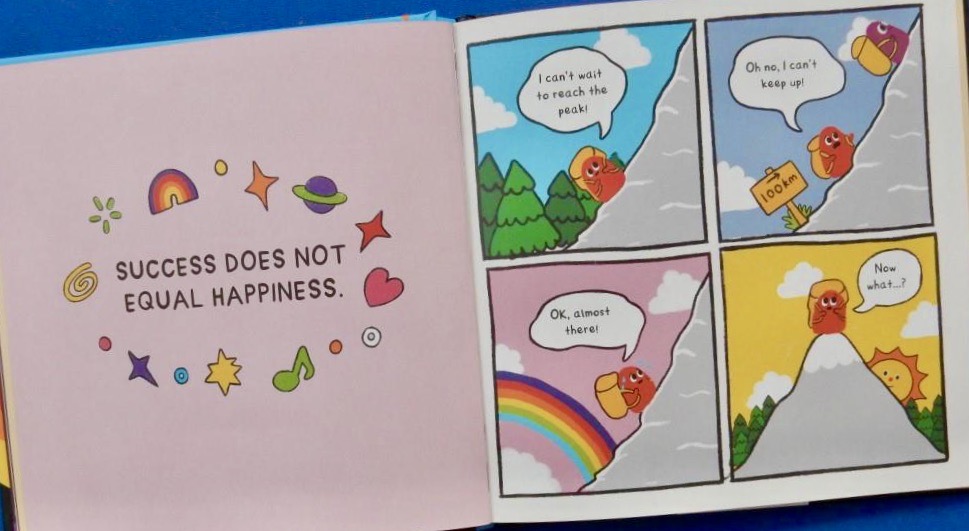
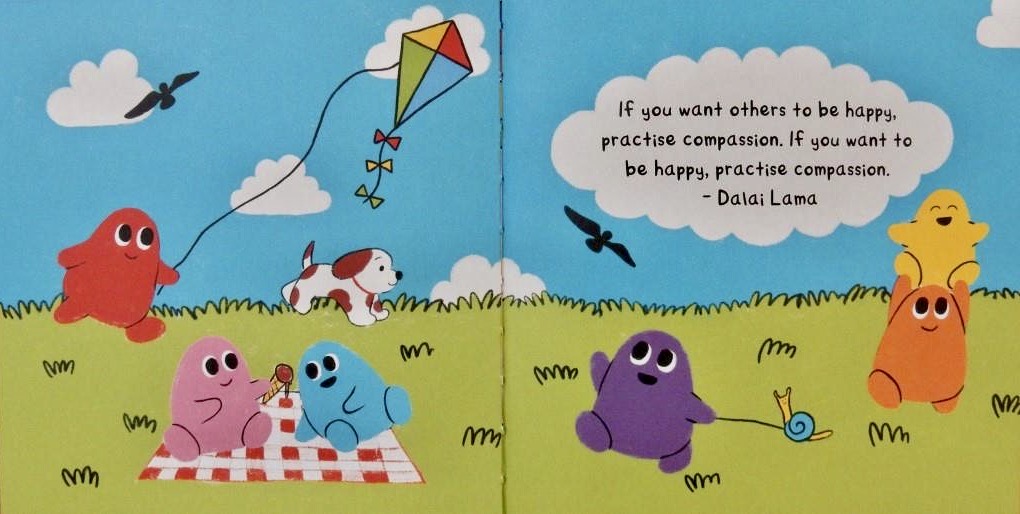
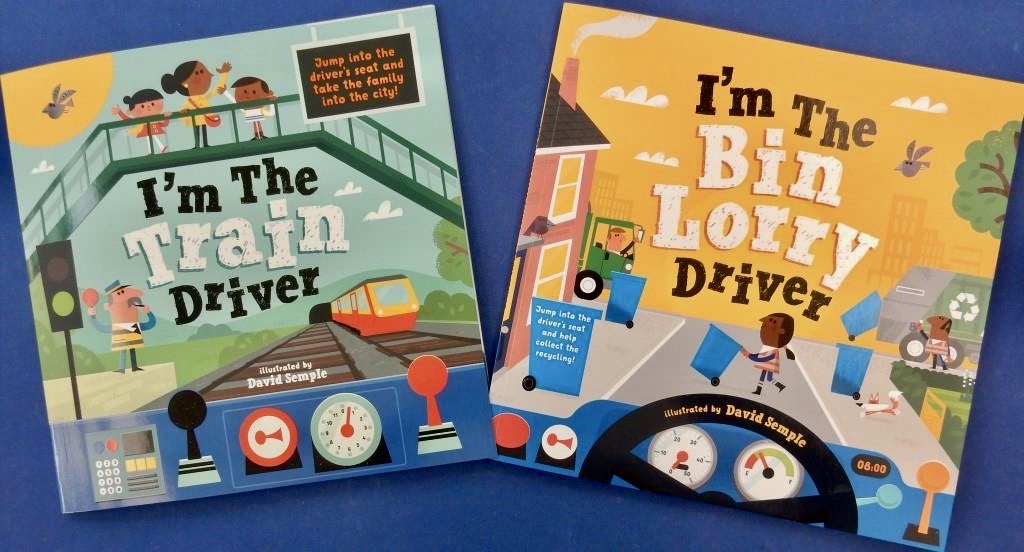


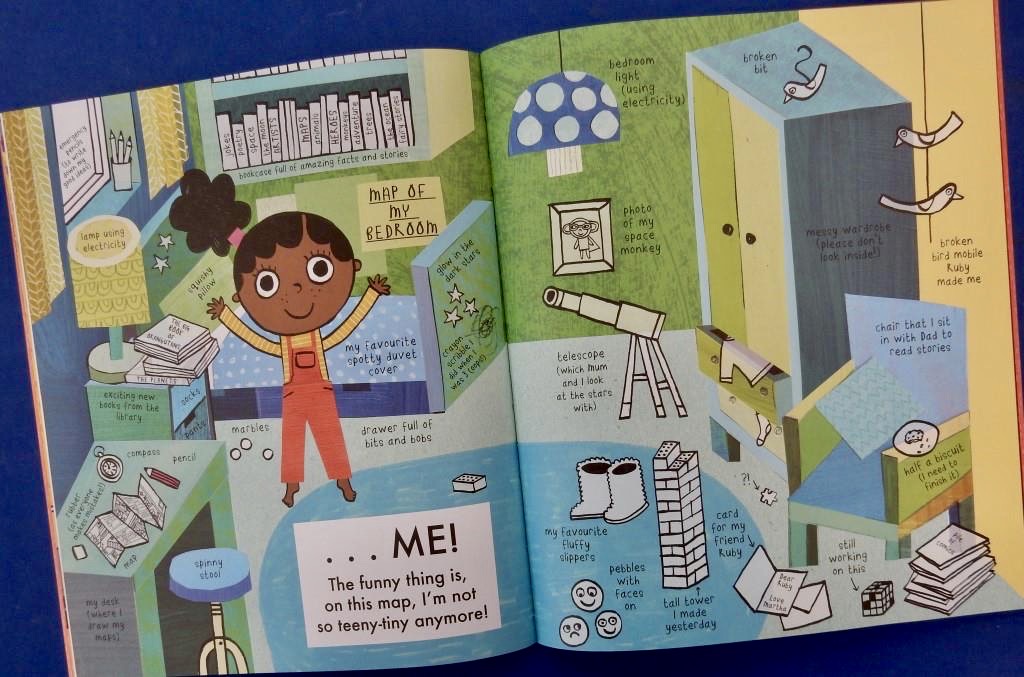


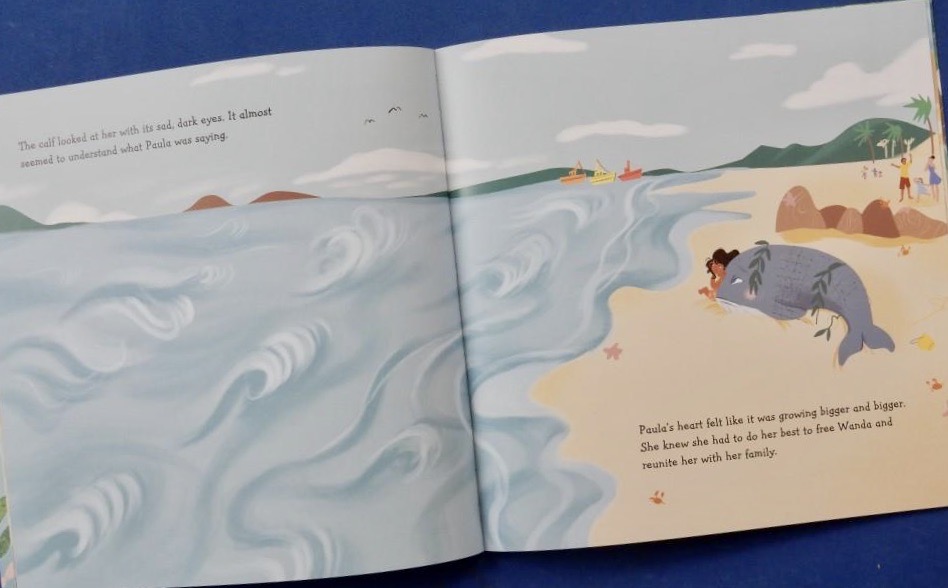
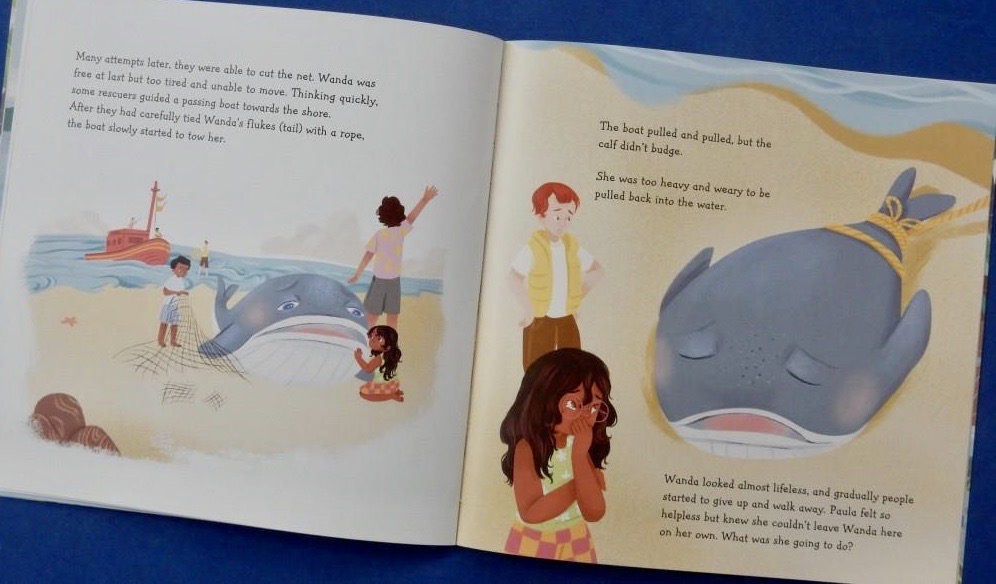


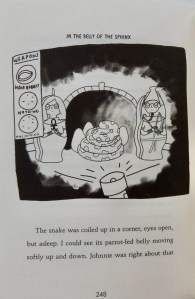
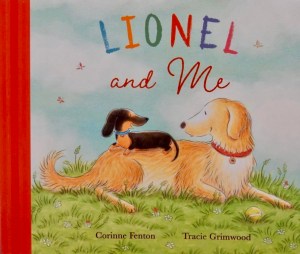
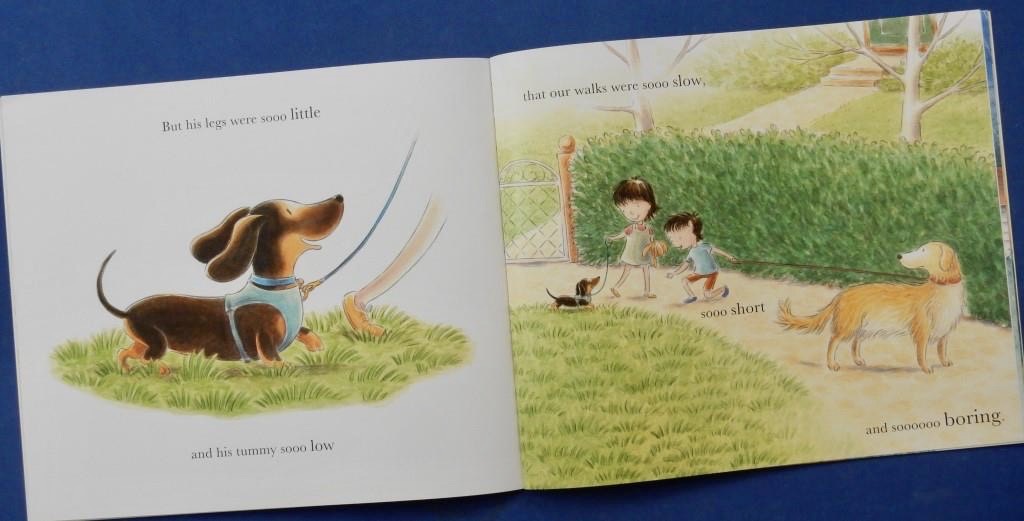
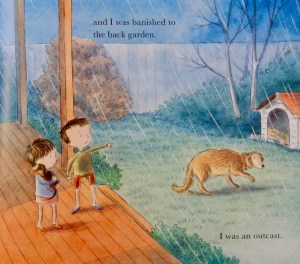

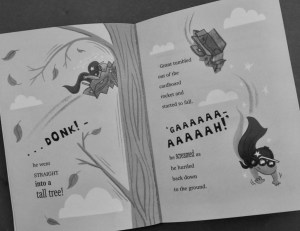


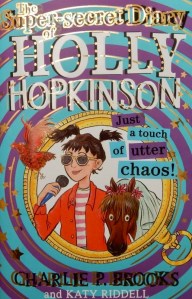

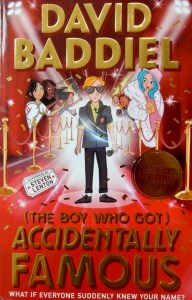
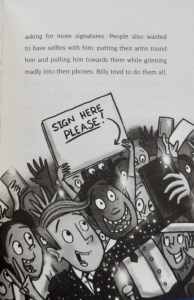
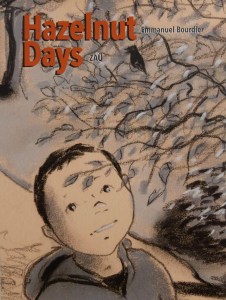
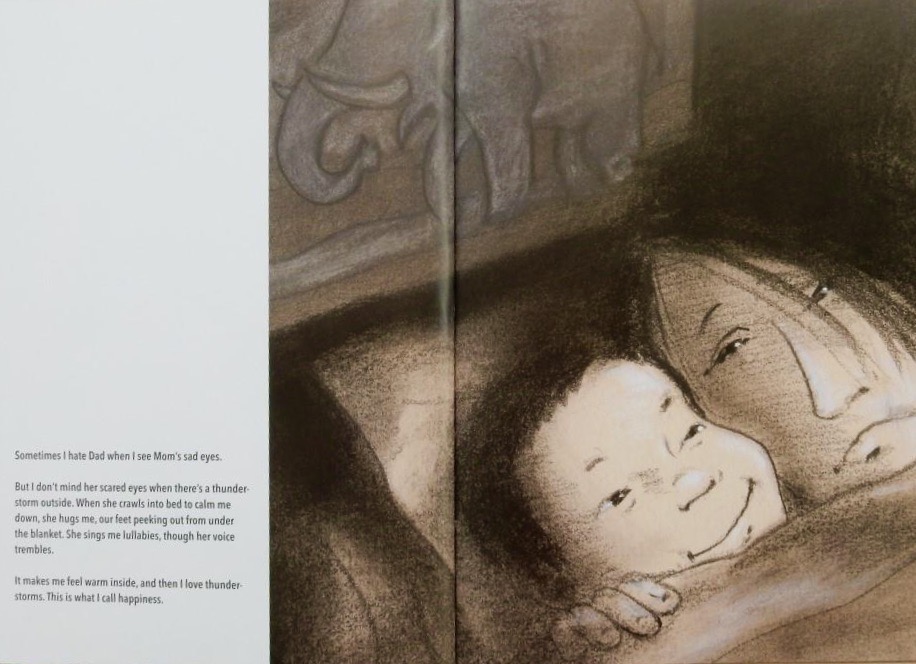
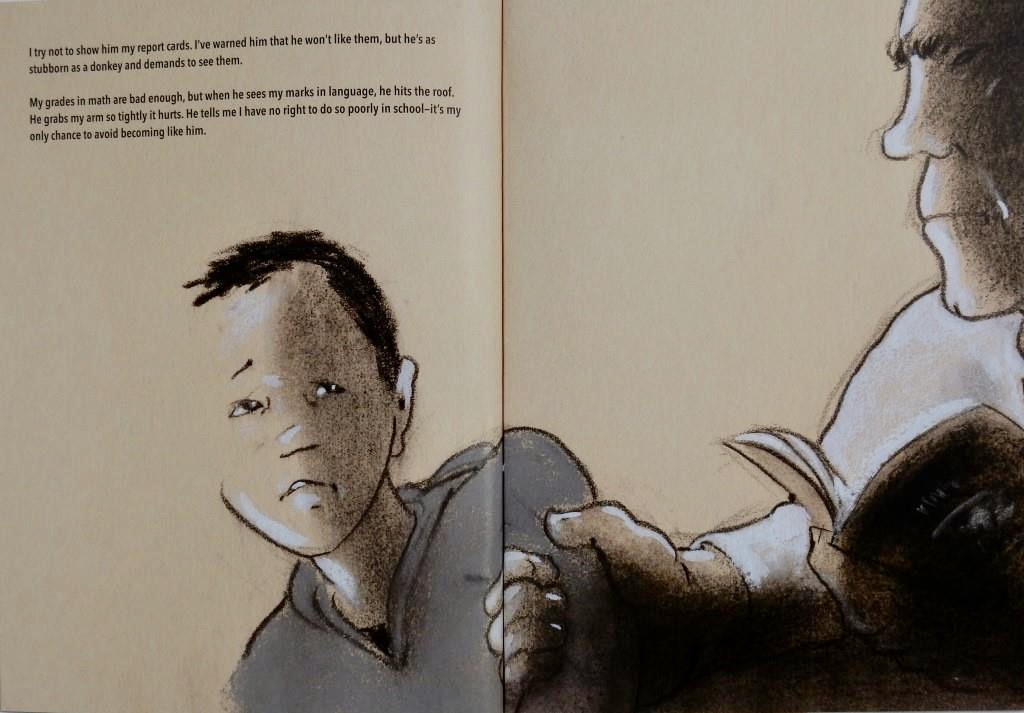
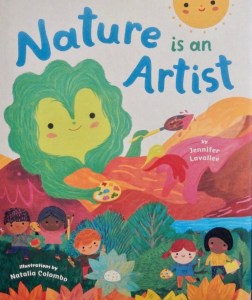
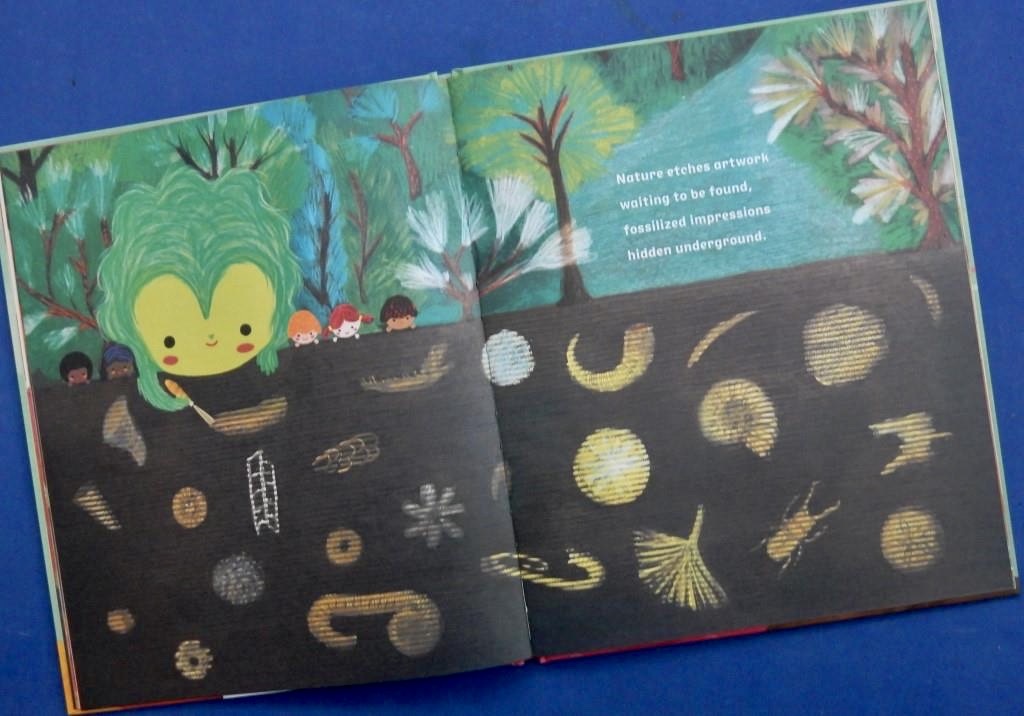
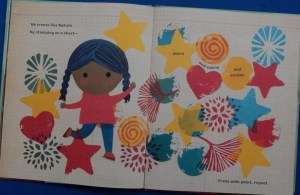
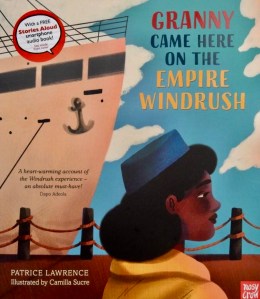
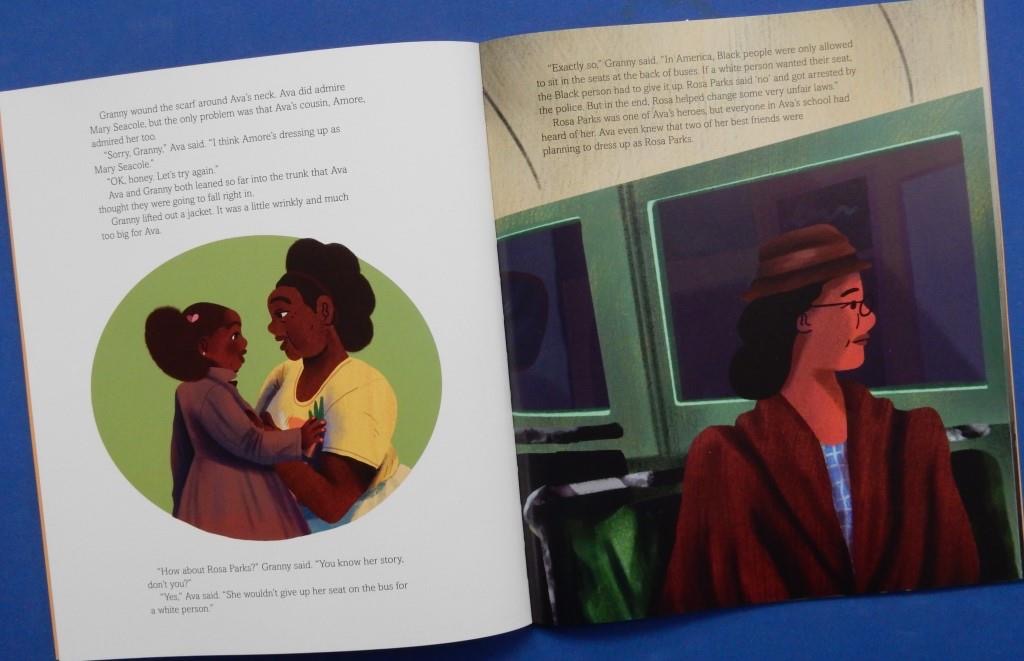


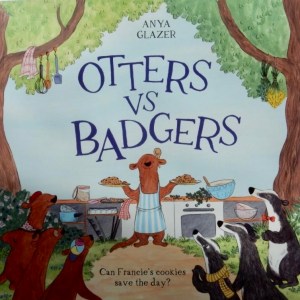


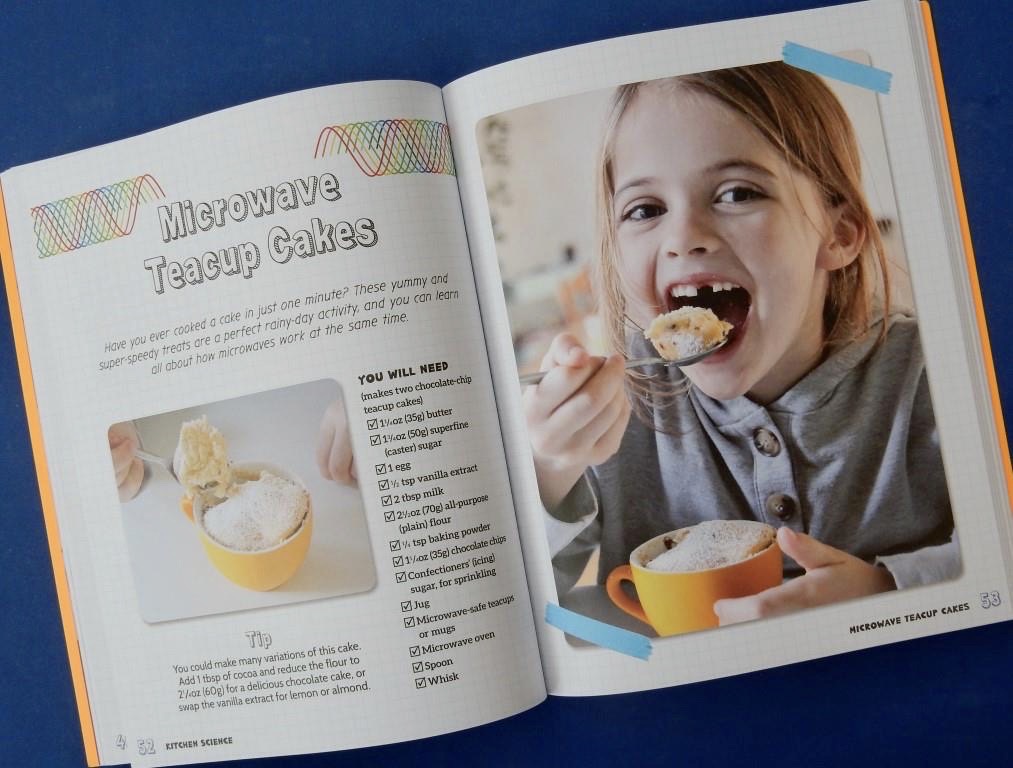
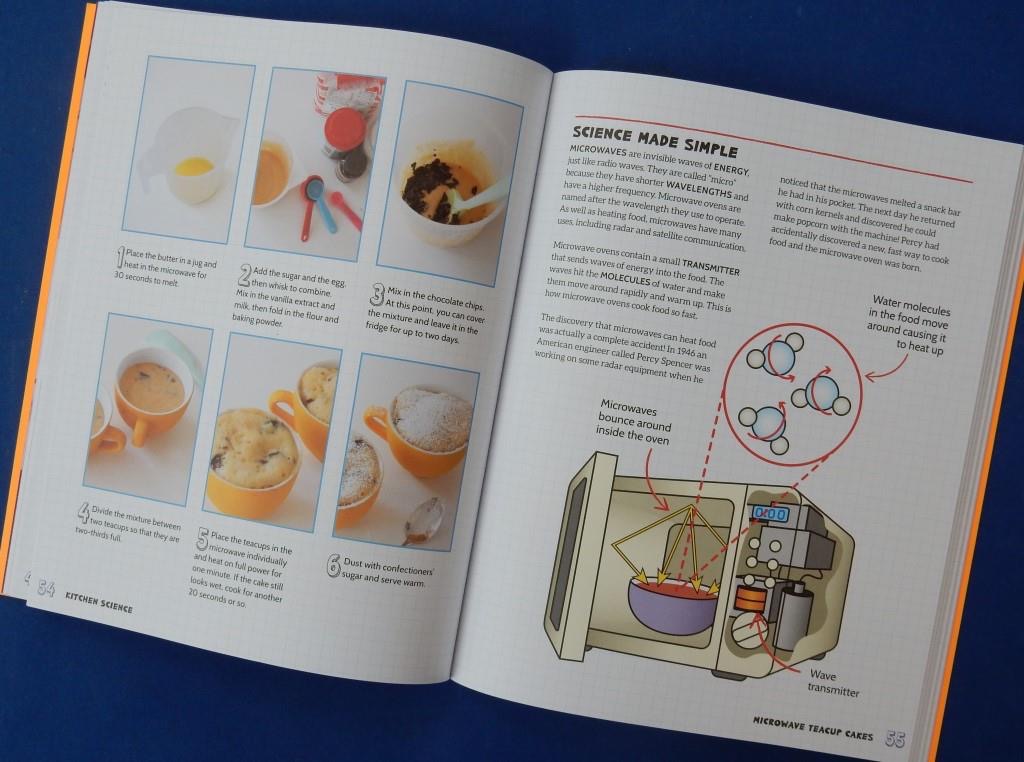
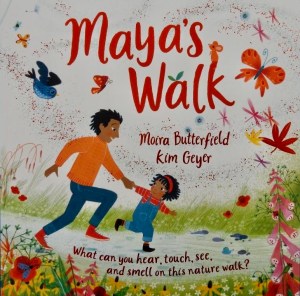

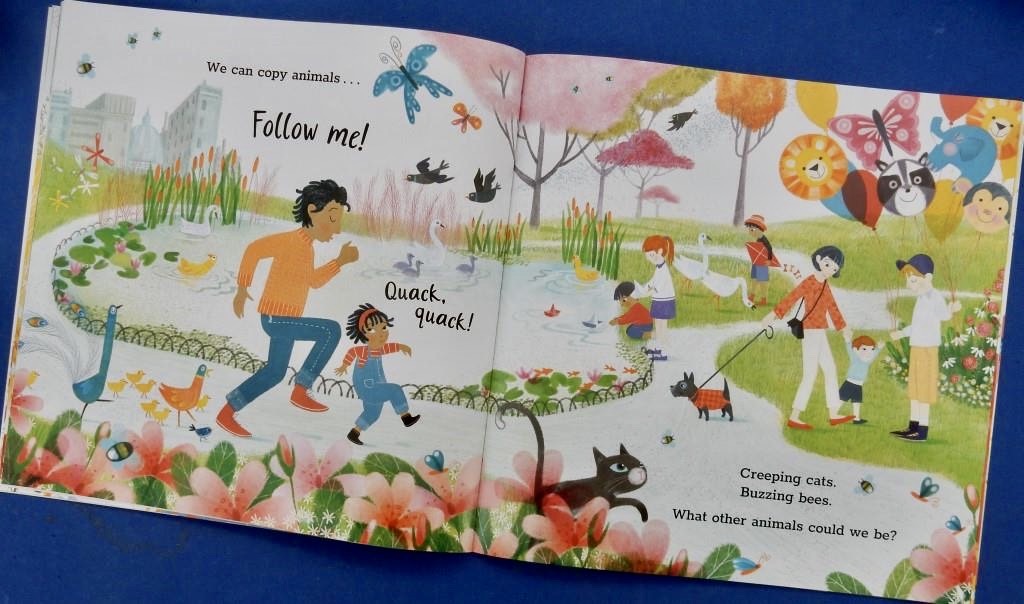

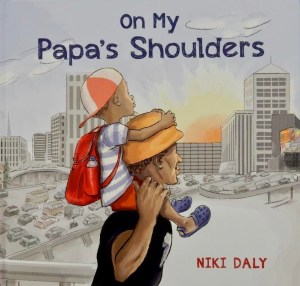
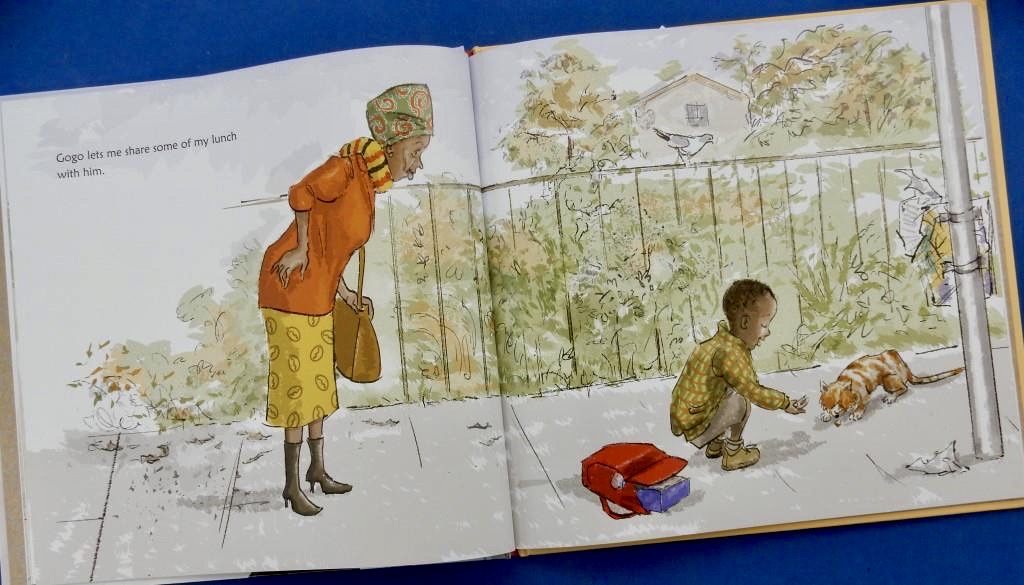
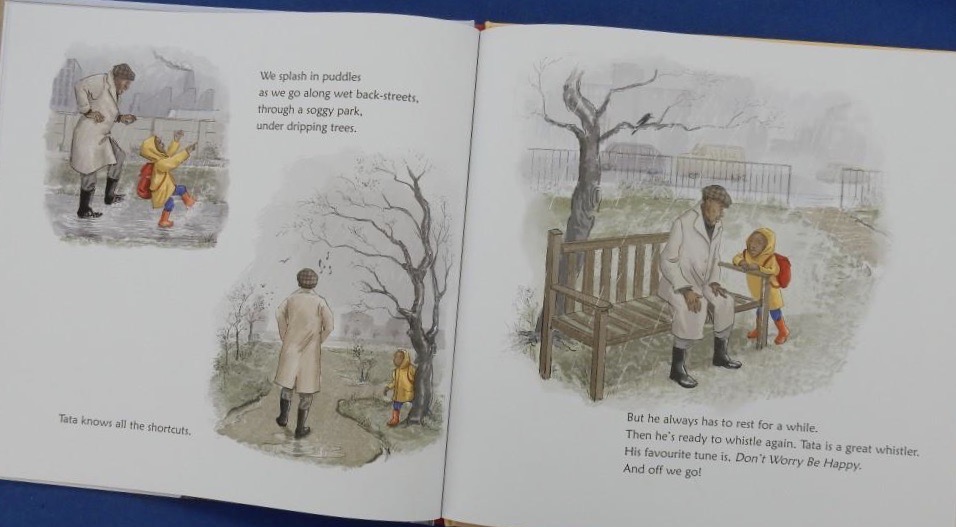
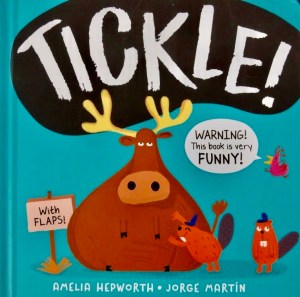
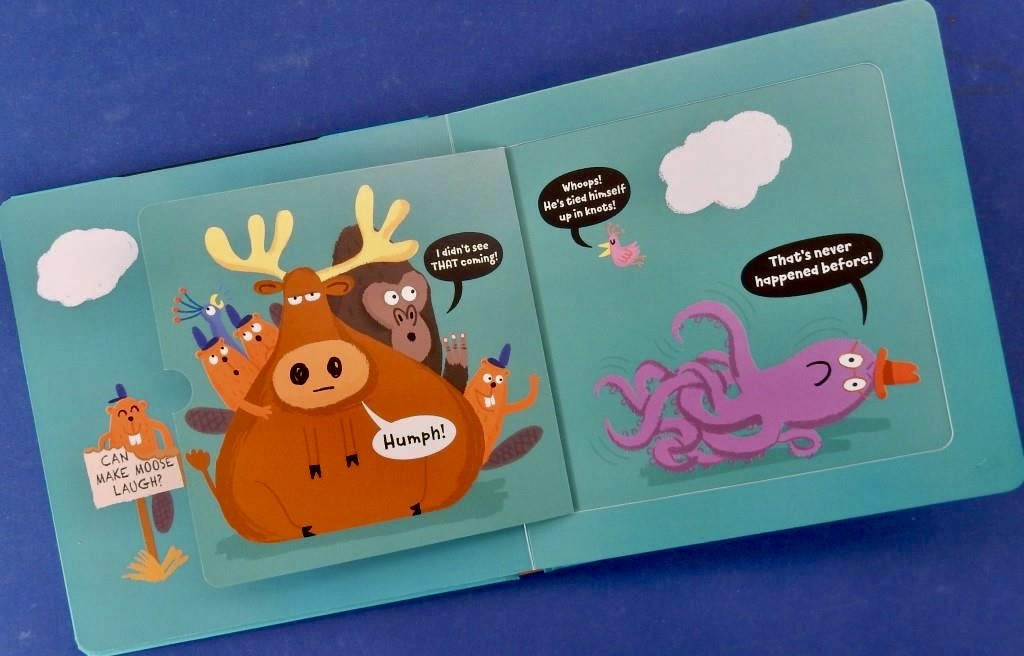
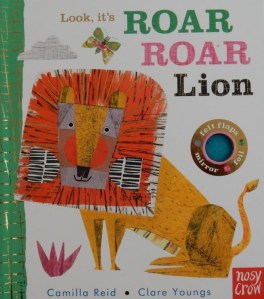
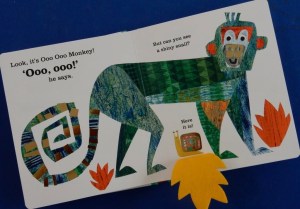
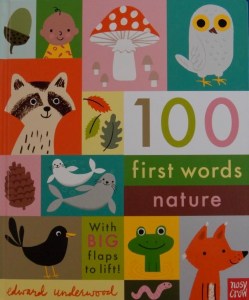
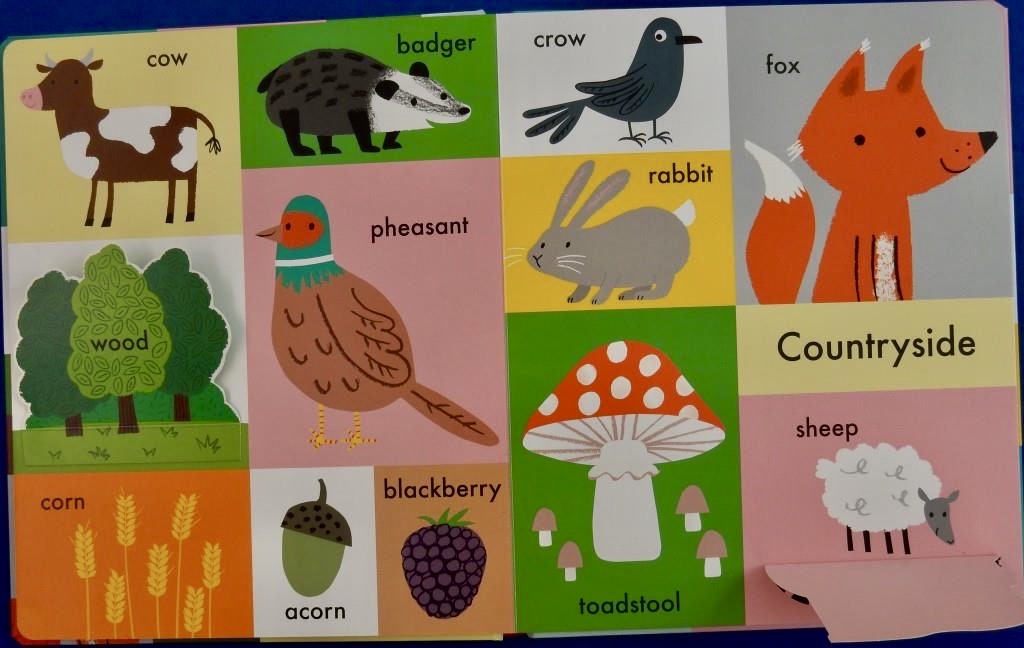
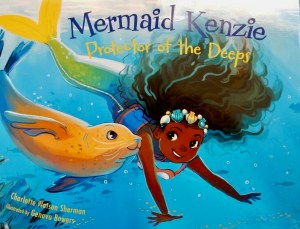


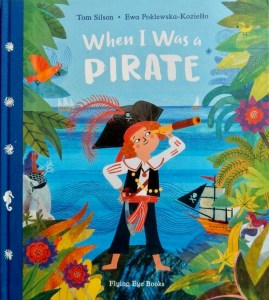
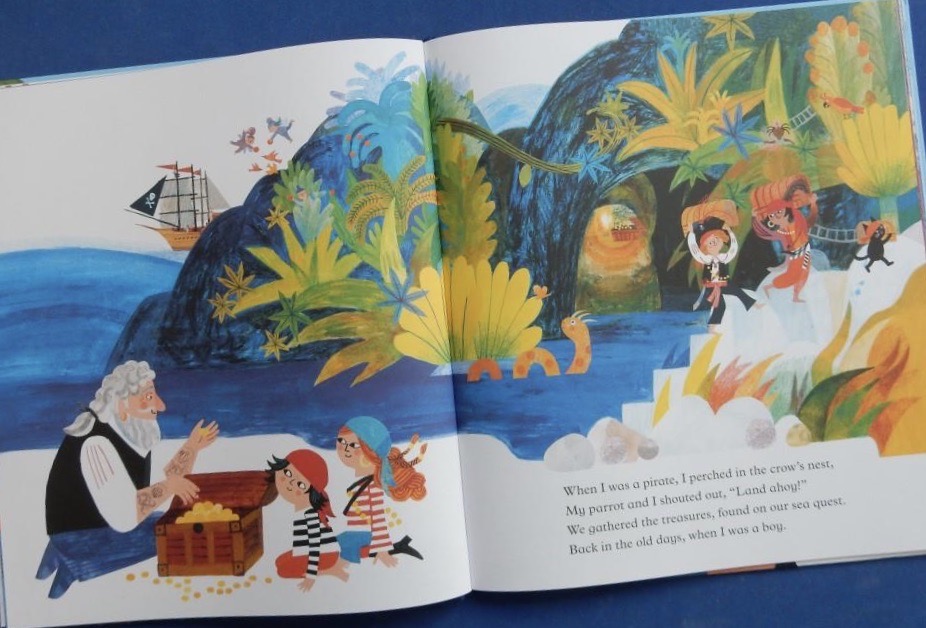
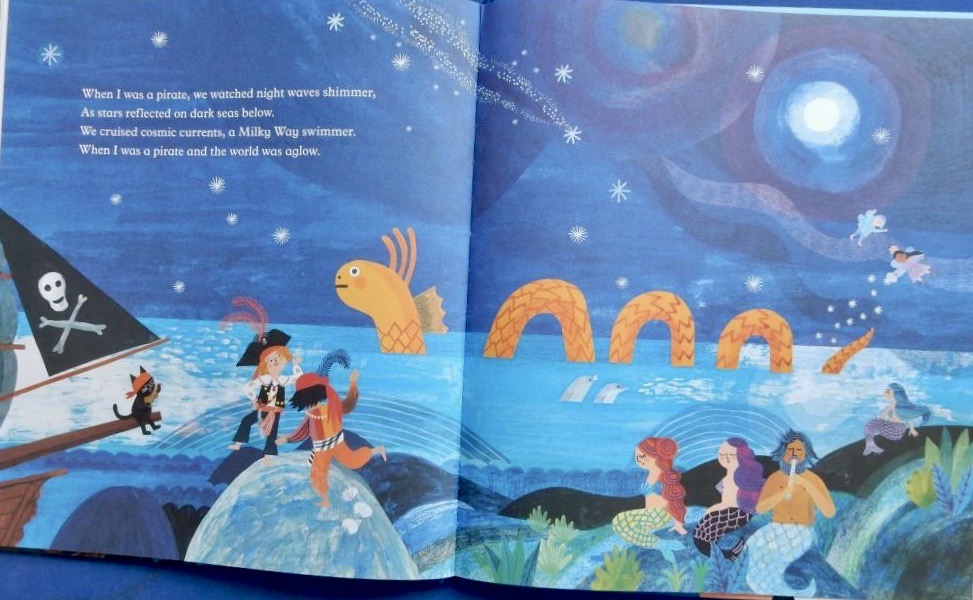
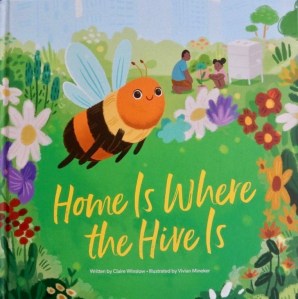
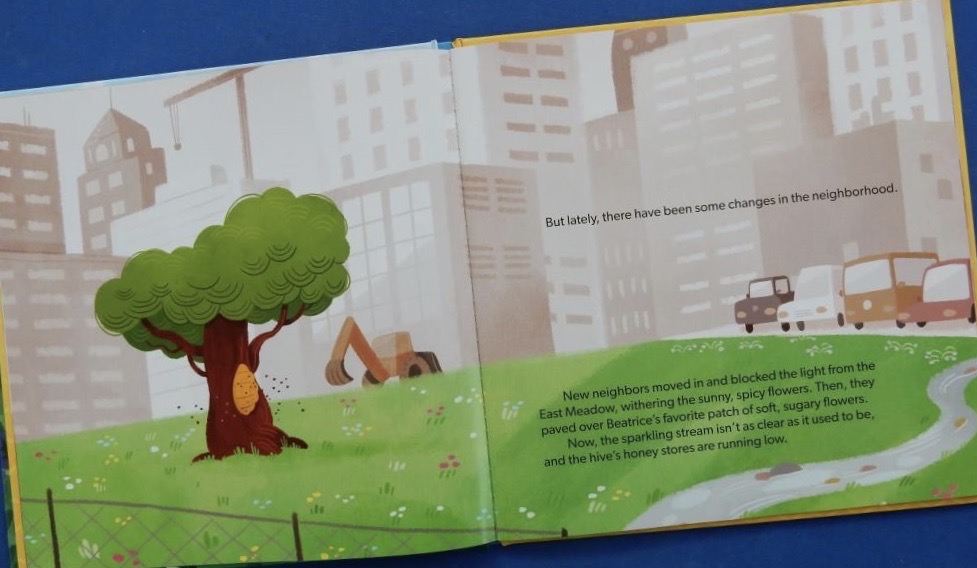
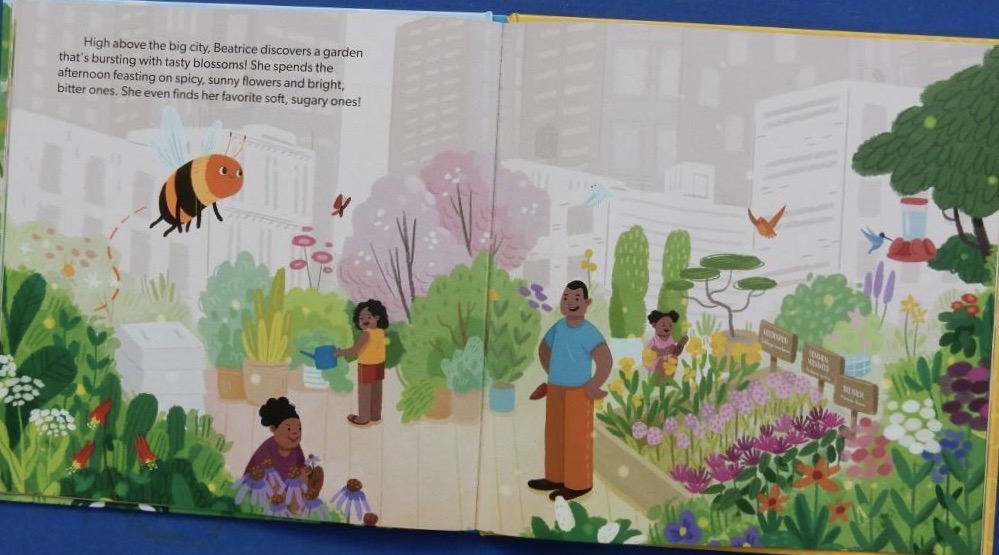


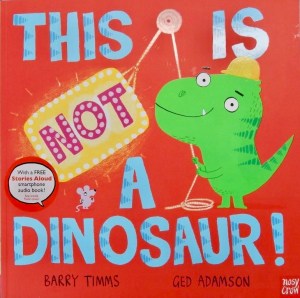
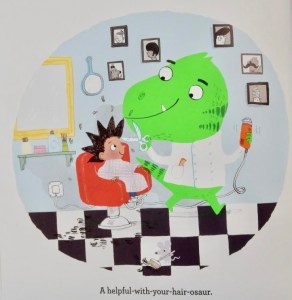
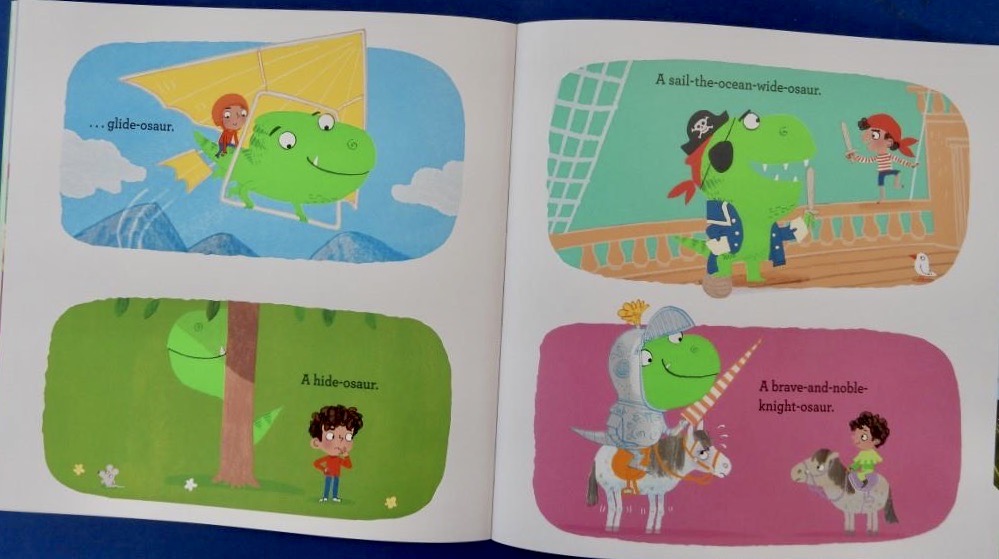
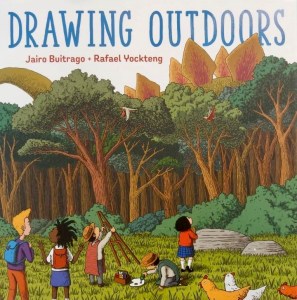
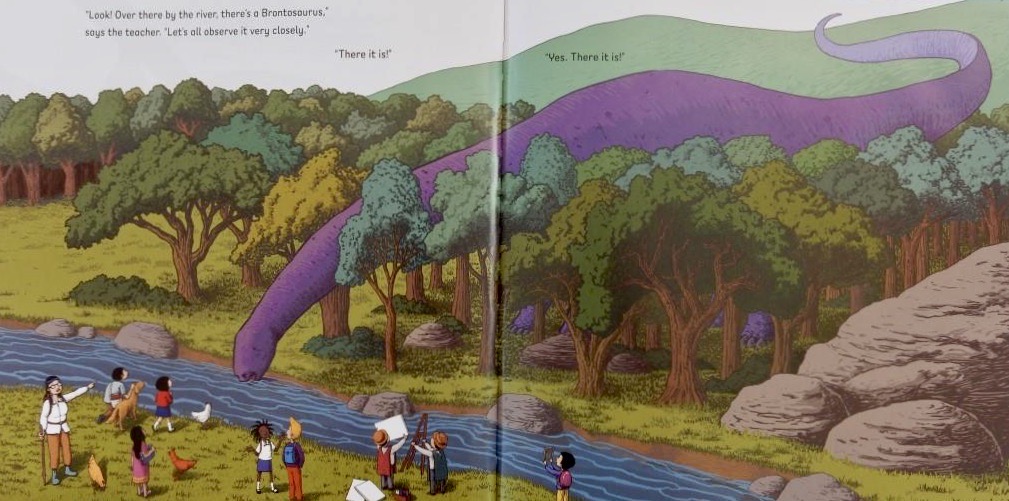
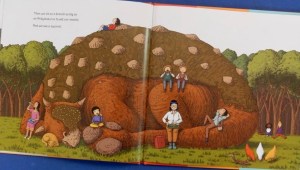
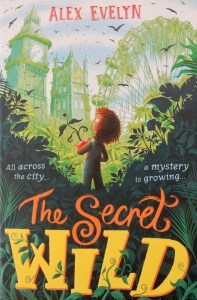

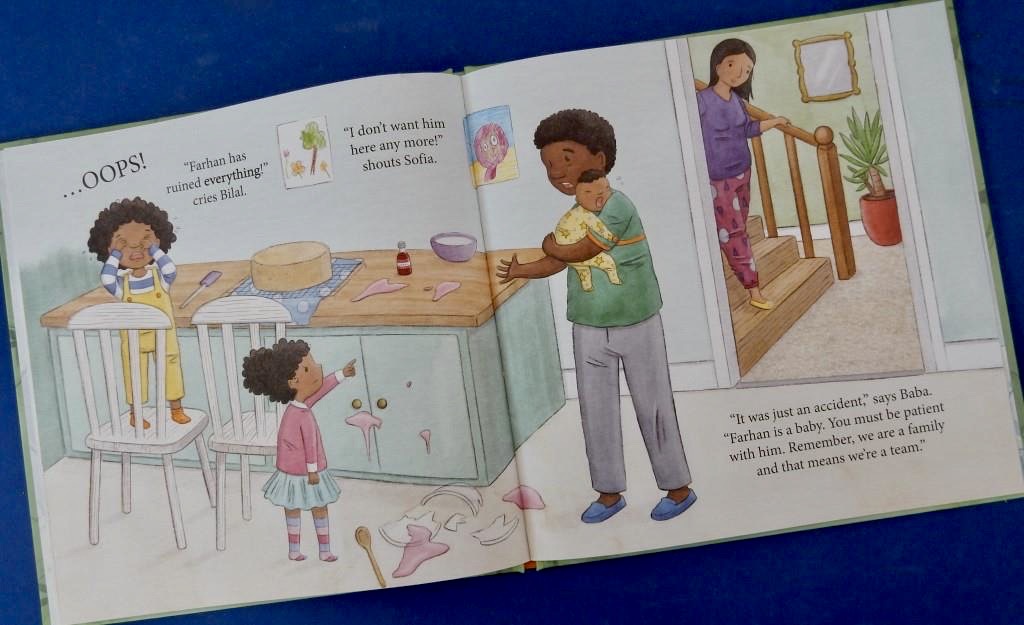
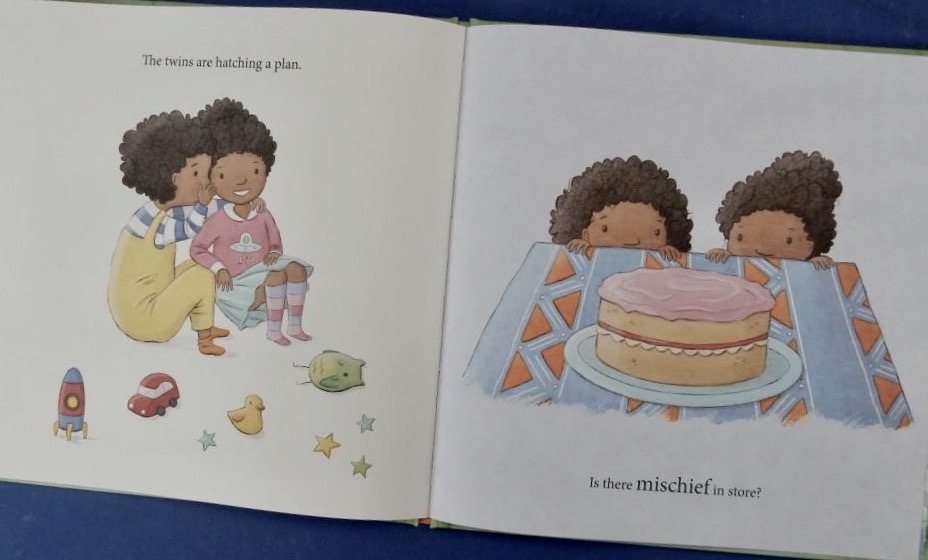
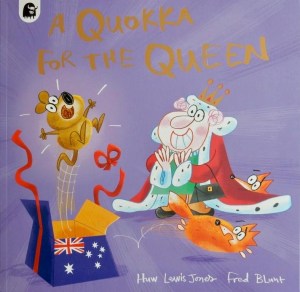
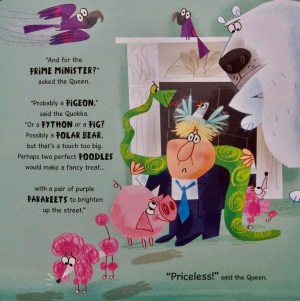
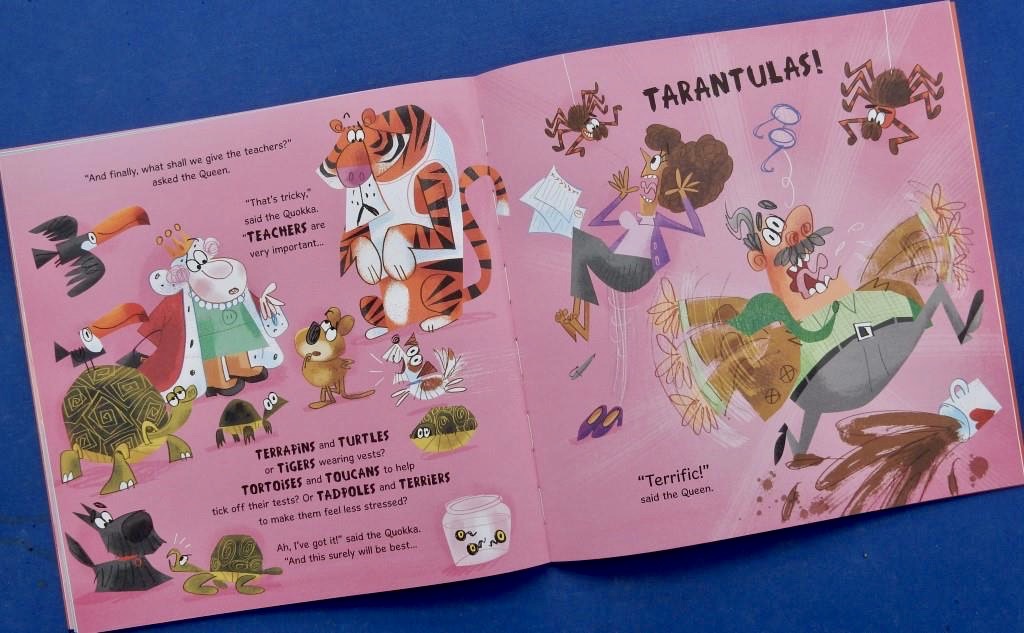
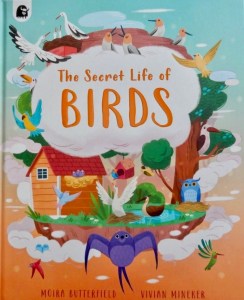
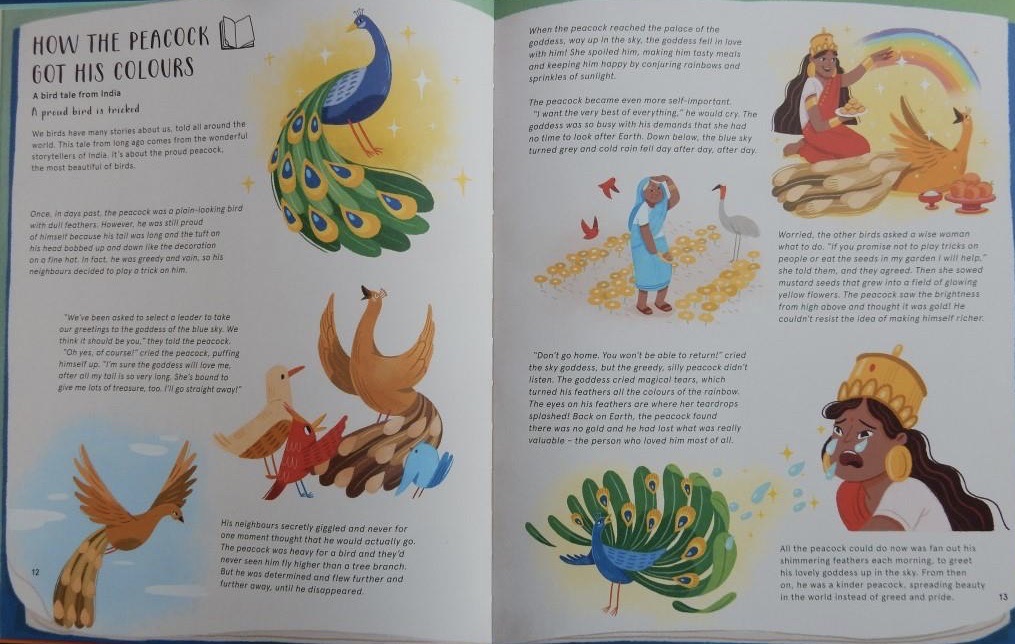
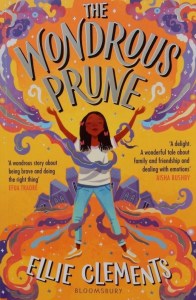

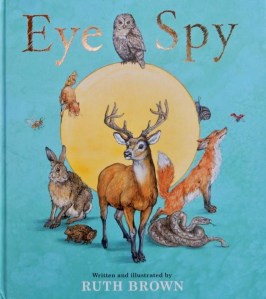
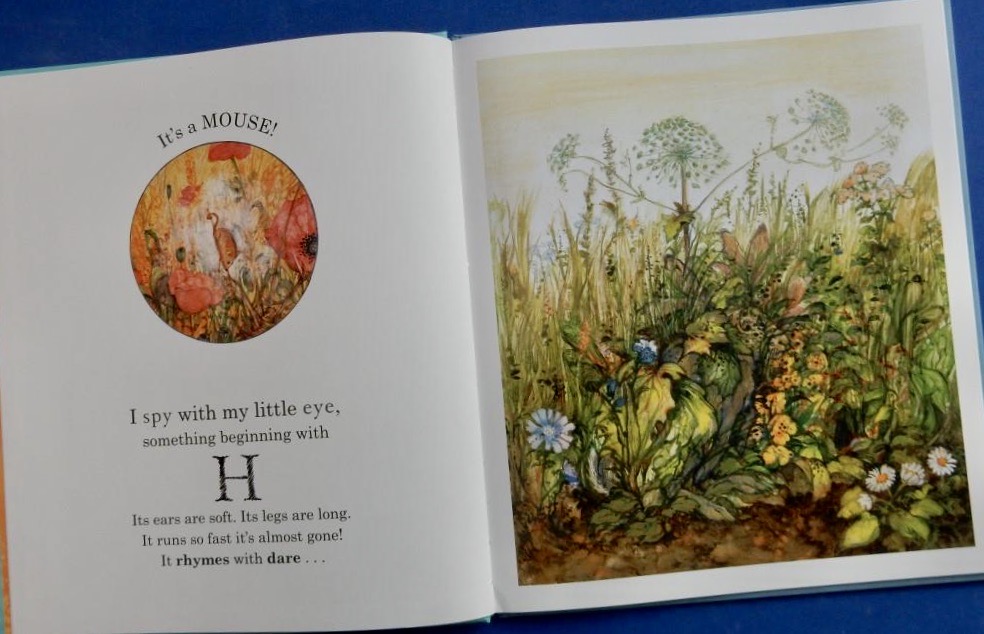
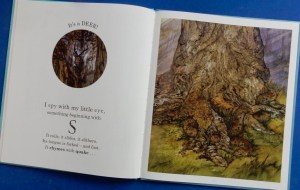
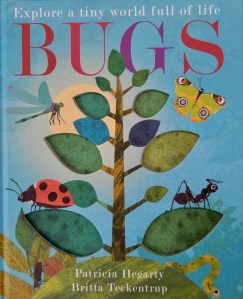
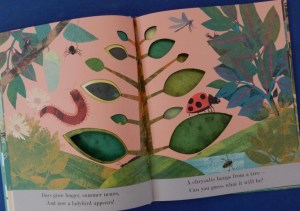
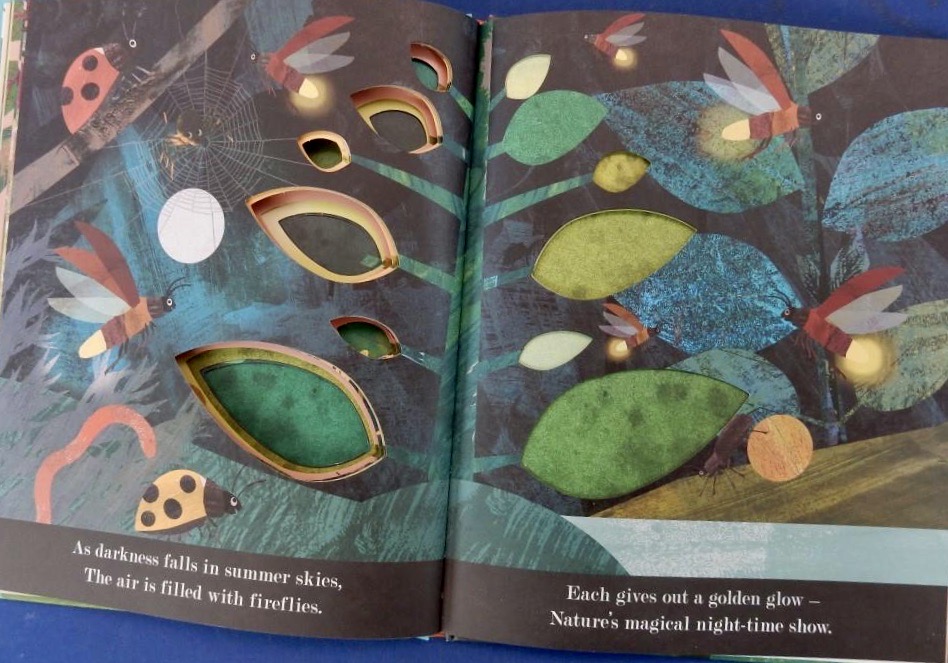
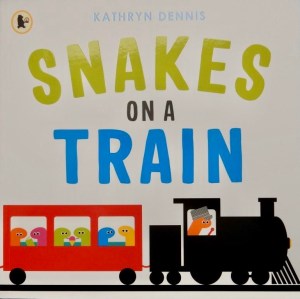
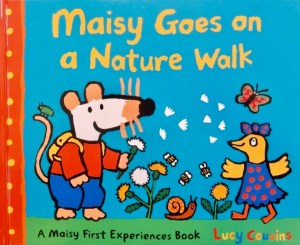
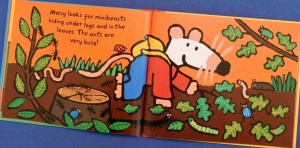
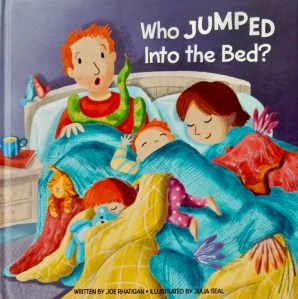
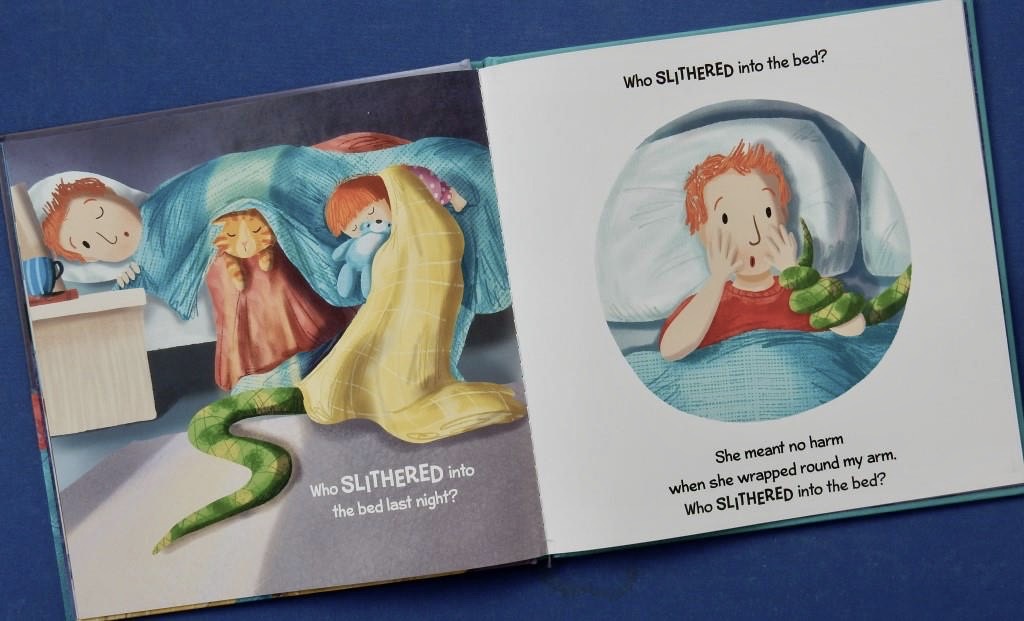
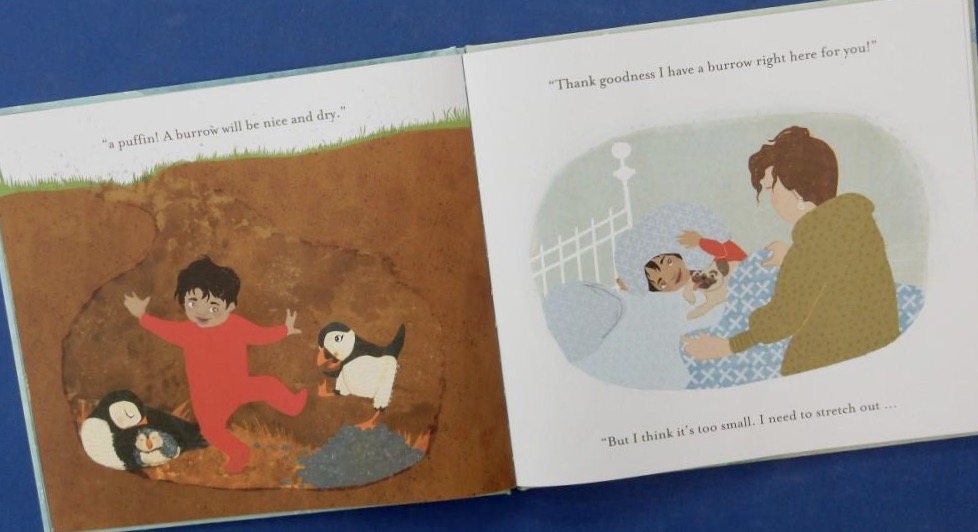
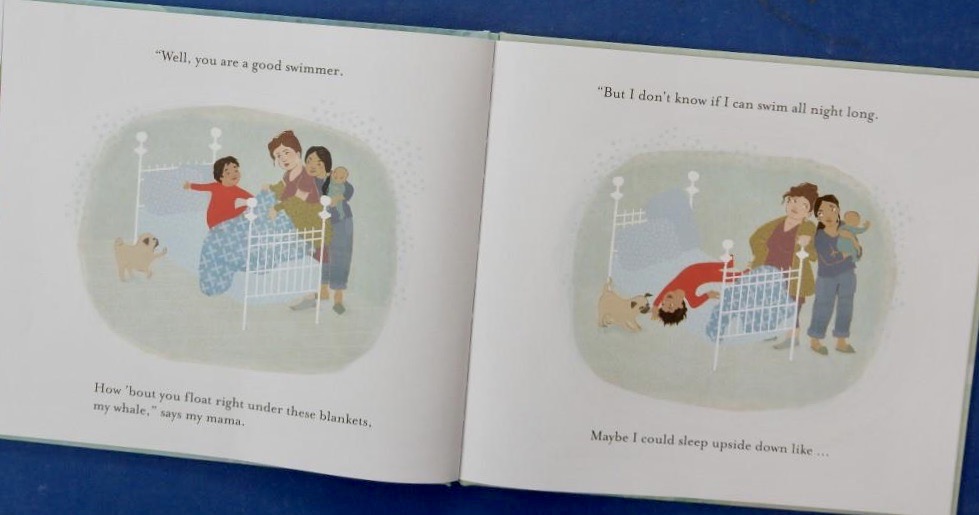


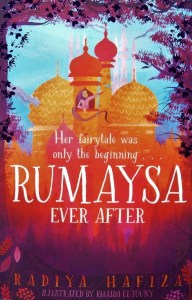


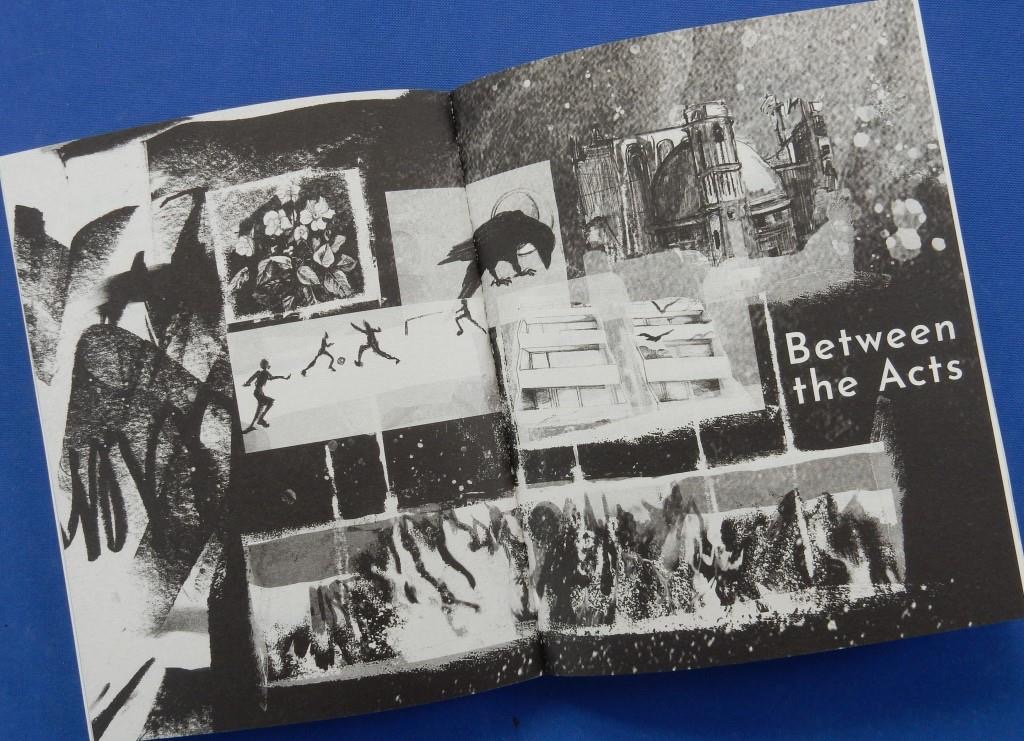

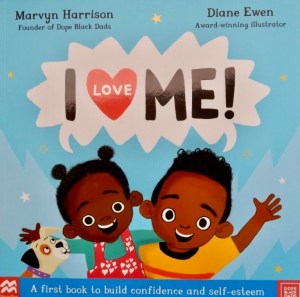
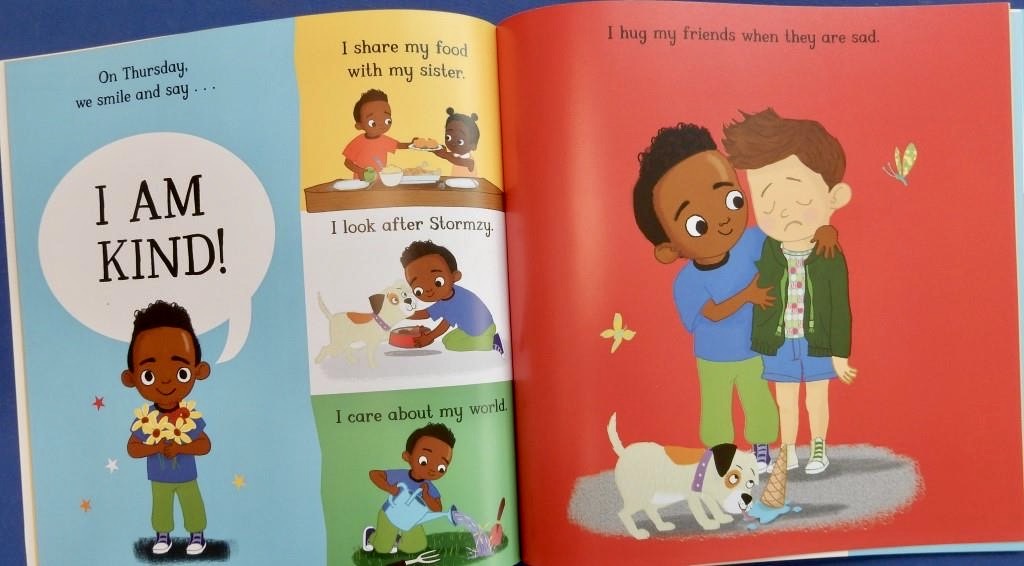
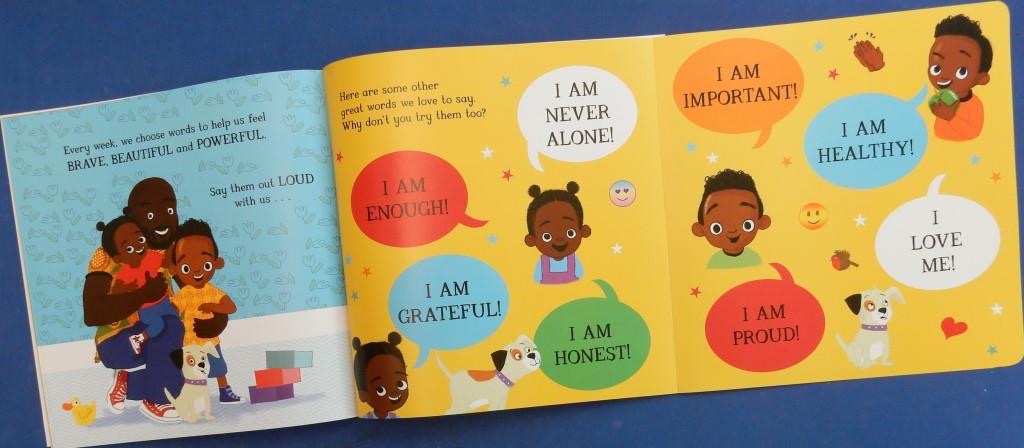
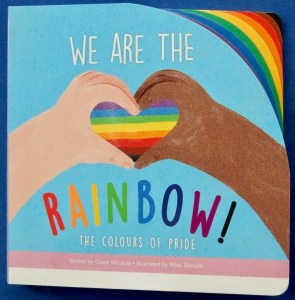
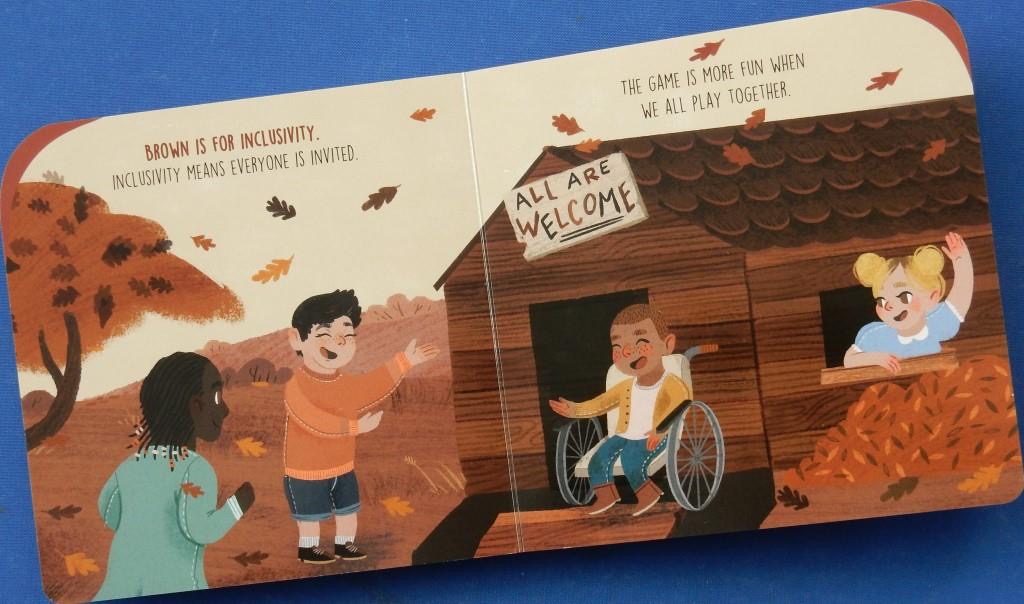

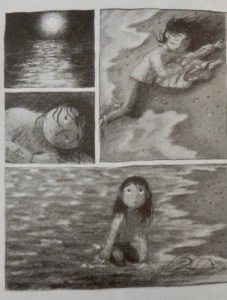


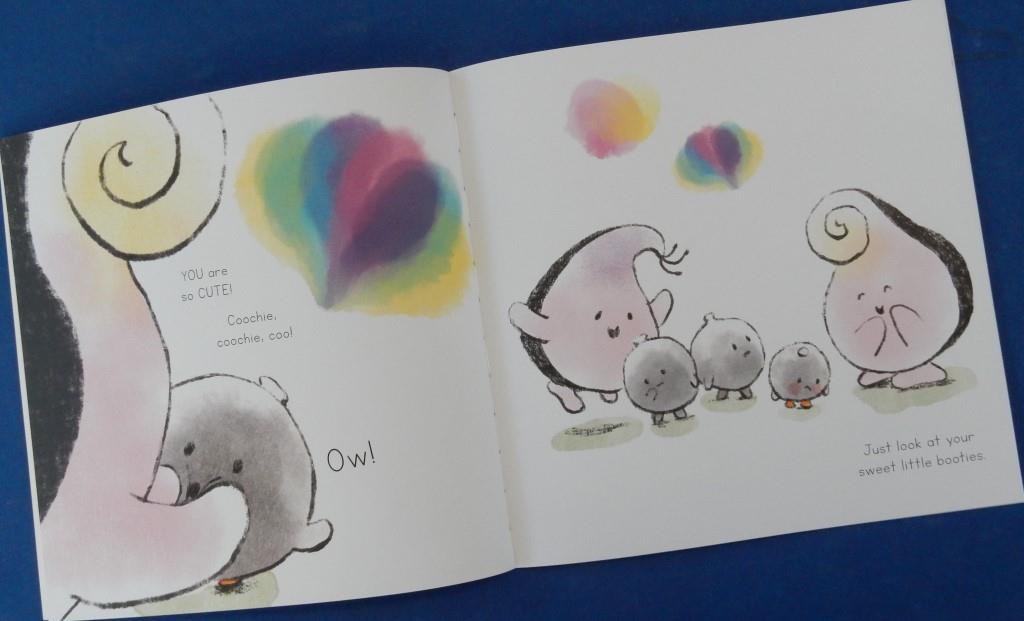
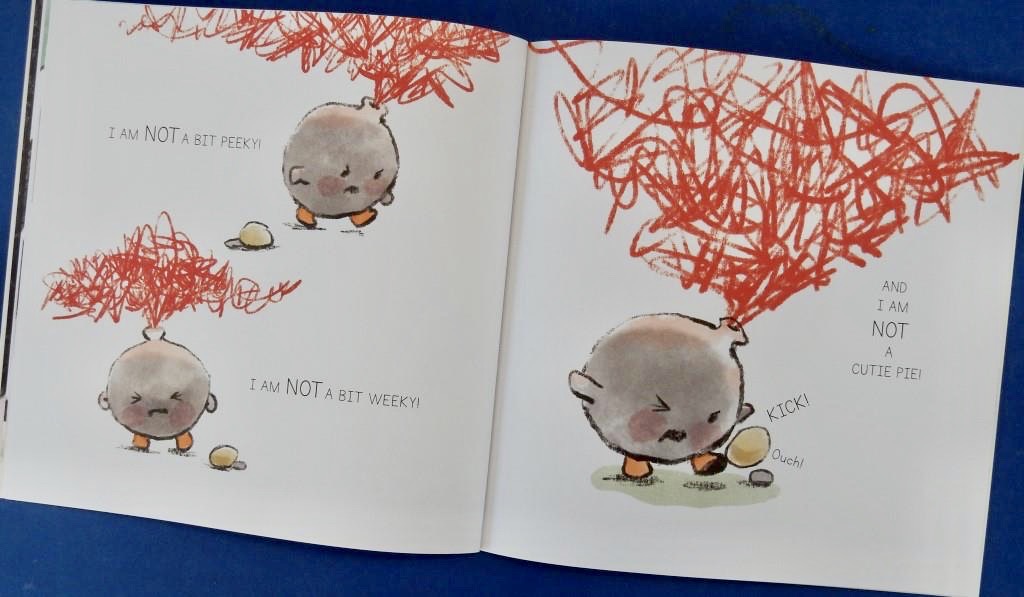
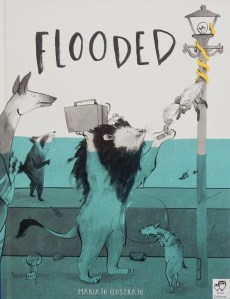

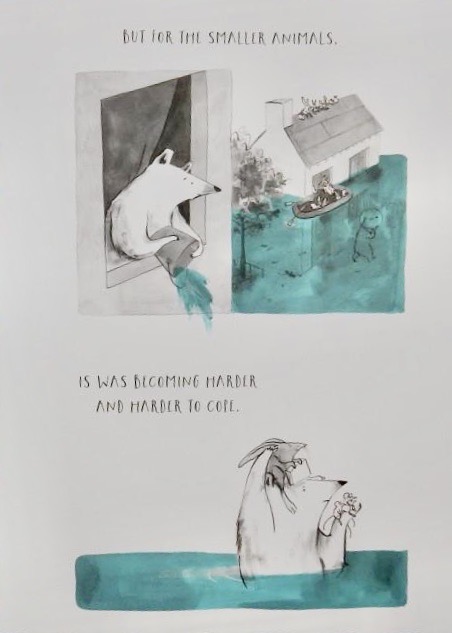
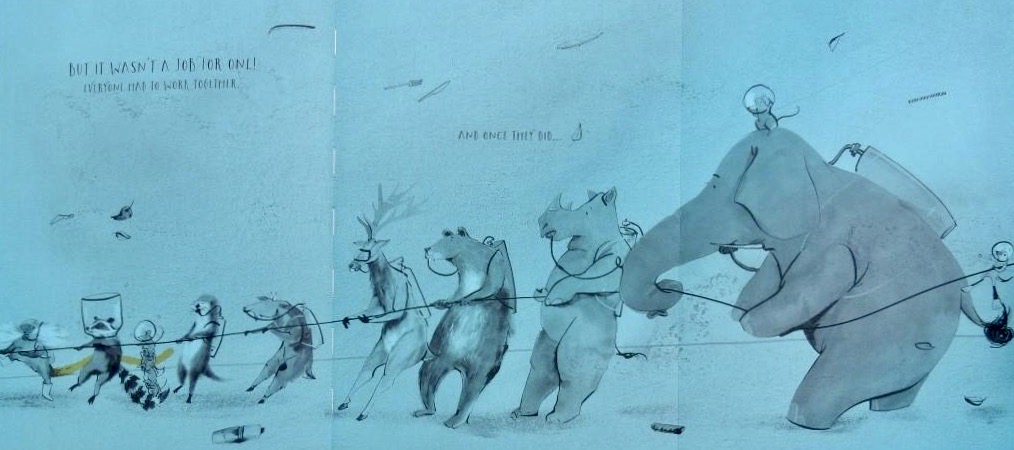


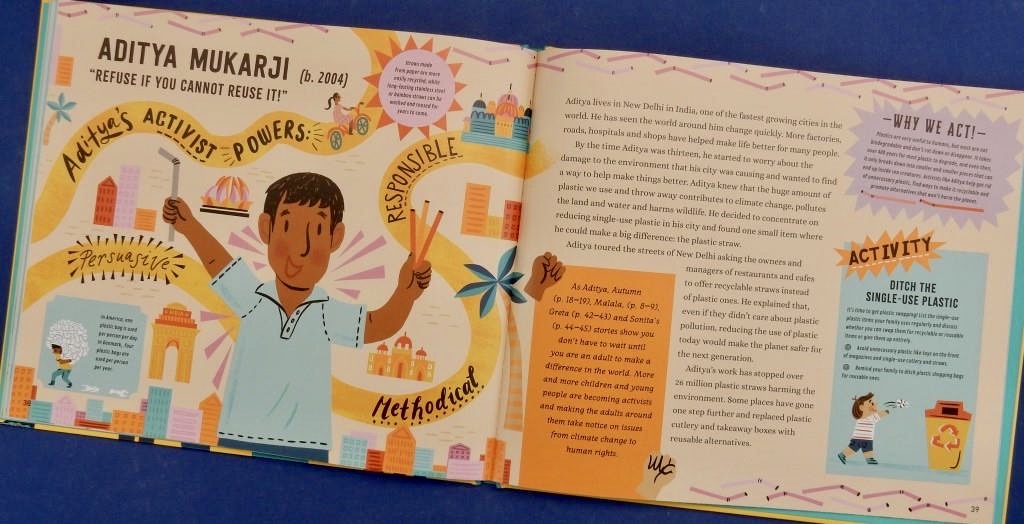


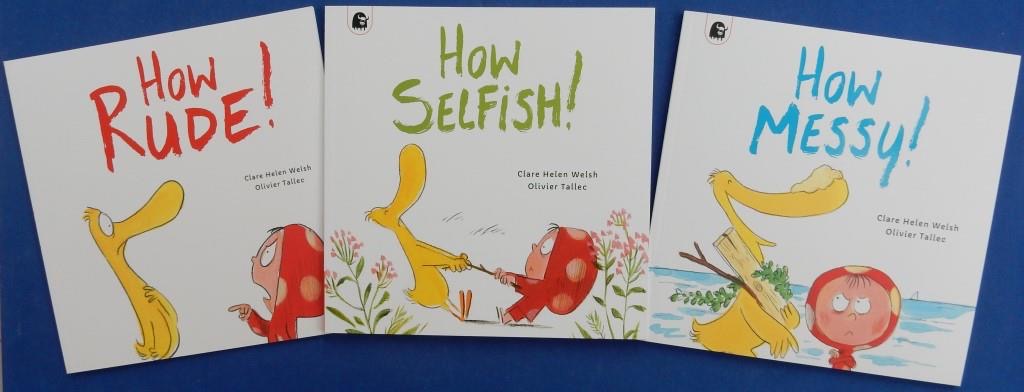
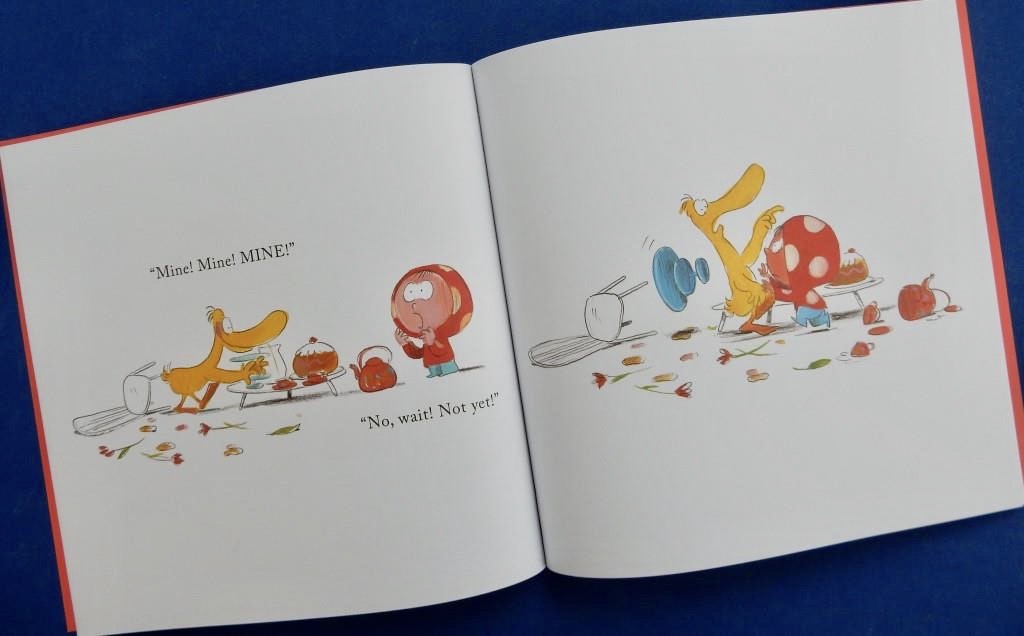
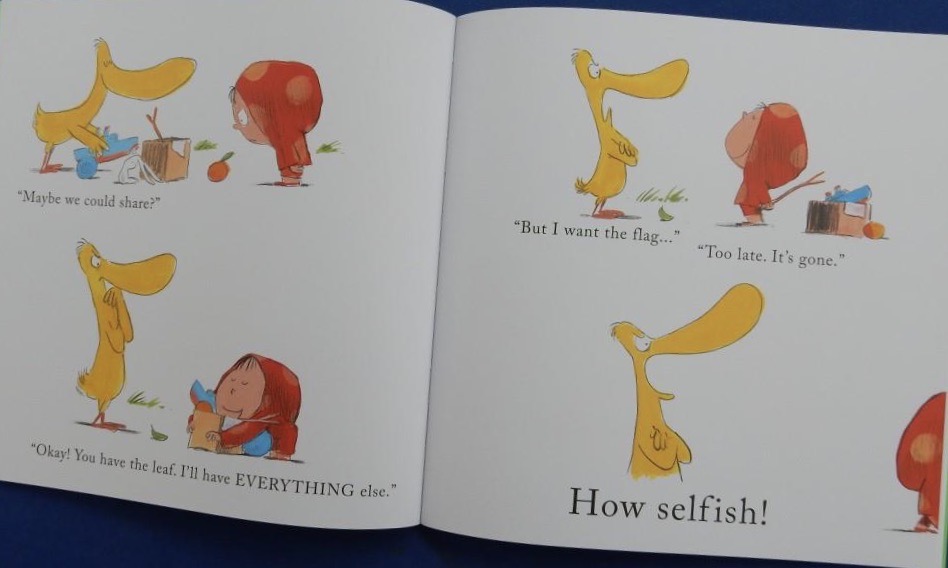
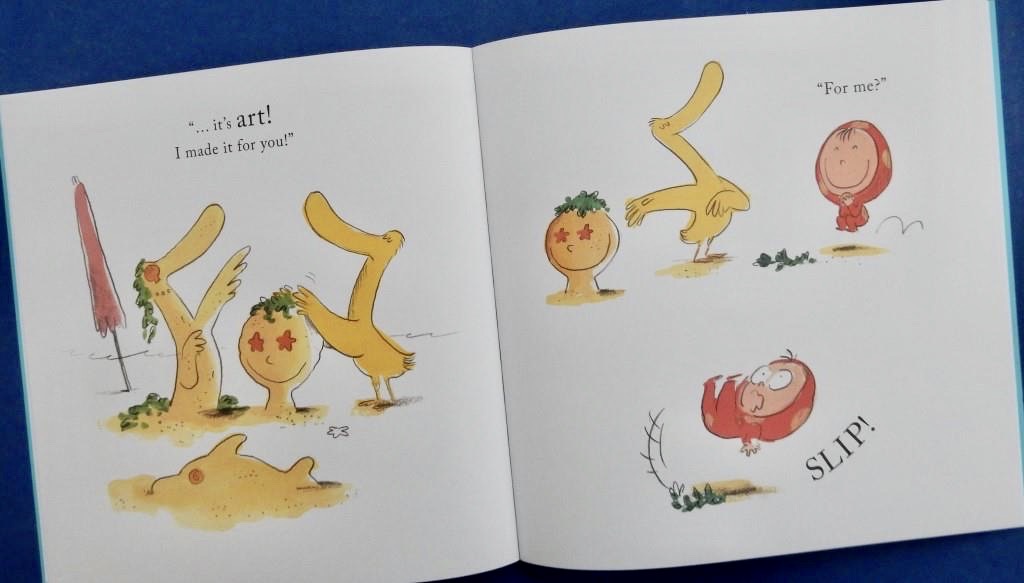


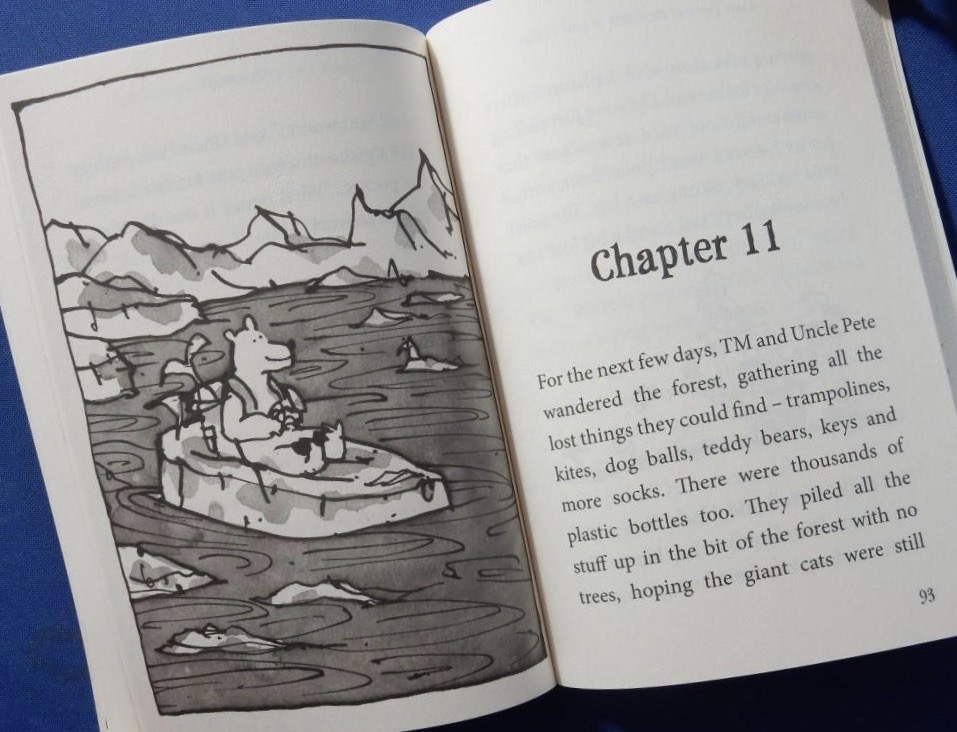


 Red Reading Hub - Jillrbennett's Reviews of Children's Books