Together With You

Together With You
Patricia Toht and Jarvis
Walker Books

No matter the weather or the season, the small child in this absolutely gorgeous book enjoys every moment with his beloved grandmother. In spring suitably clad and wearing wellies, a sudden
shower doesn’t wet the two as they dash side by side beneath a large umbrella.

Summer is a time for shorts, sprinkler hosing and sucking sweet ice-lollies together then cooling down under a shady tree. Come autumn it’s time for warmer clothes – a sweater and cosy hat for gran and a fleece and snuggly scarf for the boy narrator as they take advantage of the strong winds for some kite flying fun.

Winter’s chilly days are for wrapping up in soft thick quilts, pulling on furry slippers and sharing a story together especially when it’s followed by delicious hot drinks – peppermint tea for gran and cocoa topped with marshmallows for her grandson. It’s definitely a cuddle right up close season.
Having said all that, it matters not what the weather is, as Patricia Toht’s rhyming narrative confirms, ‘every day spent with you is the very best thing.’ Memories are created from the everyday events they turn into adventures.

Come rain or shine, sweltering heat or frost and snow, Jarvis’ illustrations exude warmth and love at every turn of the page. The jewel-like colours are simply beautiful and the details in every scene, sheer delight.

Grandmothers in particular will love spending time sharing this treasure of a book with their young grandchildren over and over again.

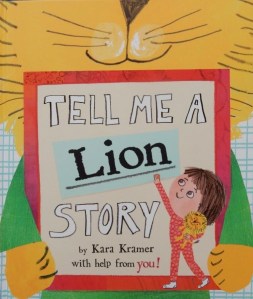
Tell Me a Lion Story

Tell Me a Lion Story
Kara Kramer
Walker Books

Gently opening one of his eyes, a little girl wakes her snoozing dad and demands he tells her a story – not one of the familiar ‘Once upon a time’ kind but a NEW story about a lion. However it matters not what dad says or how exciting it sounds, the little girl isn’t happy with what’s said: the lion need not be bigger than the sofa, nor smaller than a button 

and that ‘not-so-big-not-so-little lion’ is definitely not called Fred. 

Somewhat nonplussed by his daughter’s constant naysaying Dad suggests they compose the story together with him providing the structural elements and the girl filling in the gaps with details of her choosing (this is where the reader of the book comes in with their own ideas.) Where the lion lives ‘The buildings are made of ——-, gardens that grow singing ——— , shops that sell ———-, and fountains filled with delicious ————- .’ The lion invents a flying ———- . ‘ ROAR! Off he flies into space

destination an unknown planet that he names ———– and sets out to explore.
Inevitably all this is tiring work and eventually the hero returns home, dons his pyjamas and thus the book turns into a bedtime tale. Y-A-W-N.

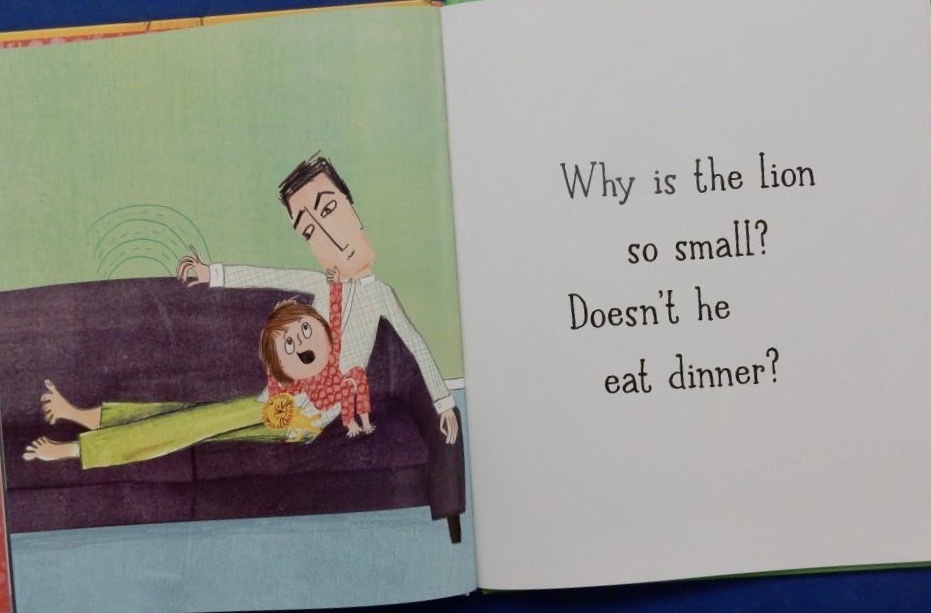
Kara Kramer’s mixed media illustrations are huge fun and observant readers/listeners will notice details such as the headlines on Dad’s newspaper and that his daughter’s toy lion morphs into the protagonist of the story they co-create. Hugely (dare I say it without fear of interruption from a little girl) imaginative and full of interactive possibilities: a great book to share with one child, several or perhaps even a class.

Snakes on the Job / Ebb and Flo and the Greedy Gulls

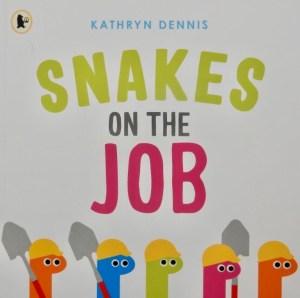
Snakes on the Job
Kathryn Dennis
Walker Books

The Snakes on a Train have become construction vehicle operators in charge of a variety of vehicles – bulldozers, diggers, dump trucks, loaders, cranes and more. ‘They slide into trucks and roll out slow. Hisssssssssssss goes the sound of the brakes.’

Midway through the operation, up rolls a food truck to provide lunch for the workers then it’s back to work once again.
The fruits of their labours is a wonderful surprise revealed just before the end of the story and it looks such a terrific endeavour that some friendly hamsters want to join the fun. What will the response of the snakes be? …
With that repeat sibilant sound and other wordplay, this is an enjoyable read aloud for little ones. They’ll love the bright digital art and the simple tale wherein teamwork is paramount. One to add to your nursery collection or home shelves if you have very young children,

Ebb and Flo and the Greedy Gulls
Jane Simmons
Graffeg

Jane Simmons is a brilliant illustrator and it’s really good to see Graffeg gradually bringing this series with its hugely likeable Ebb and Flo characters back into print. As always there are small disasters – in this instance Ebb gets wrongly blamed for consuming all the sandwiches during the beach picnic. Inevitably the dog is upset and goes off to sulk in her favourite place. Eventually Mum and Flo realise who the real sandwich snatchers are but by this time Ebb has drifted out to sea in the boat. Sulking certainly hasn’t paid off, but will Ebb reach the shore safely? Let’s just say, all’s well that ends well: three characters have learned a lesson but not so the marauding picnic pinchers.

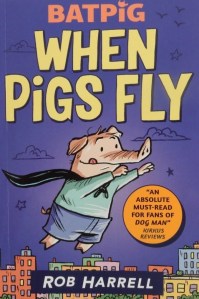
Batpig: When Pigs Fly

Batpig: When Pigs Fly
Rob Harrell
Walker Books

Look skywards and what do you see? It’s porcine hero Batpig hurtling by. Back in the day he was Gary Yorkshire – just a borin’ old pink pig living with his parents in an apartment in Big City, USA who spent his time chomping through tasty sandwiches, reading comics, playing video games and playing cards with his pals. Brooklyn the bat and Carl the fish.

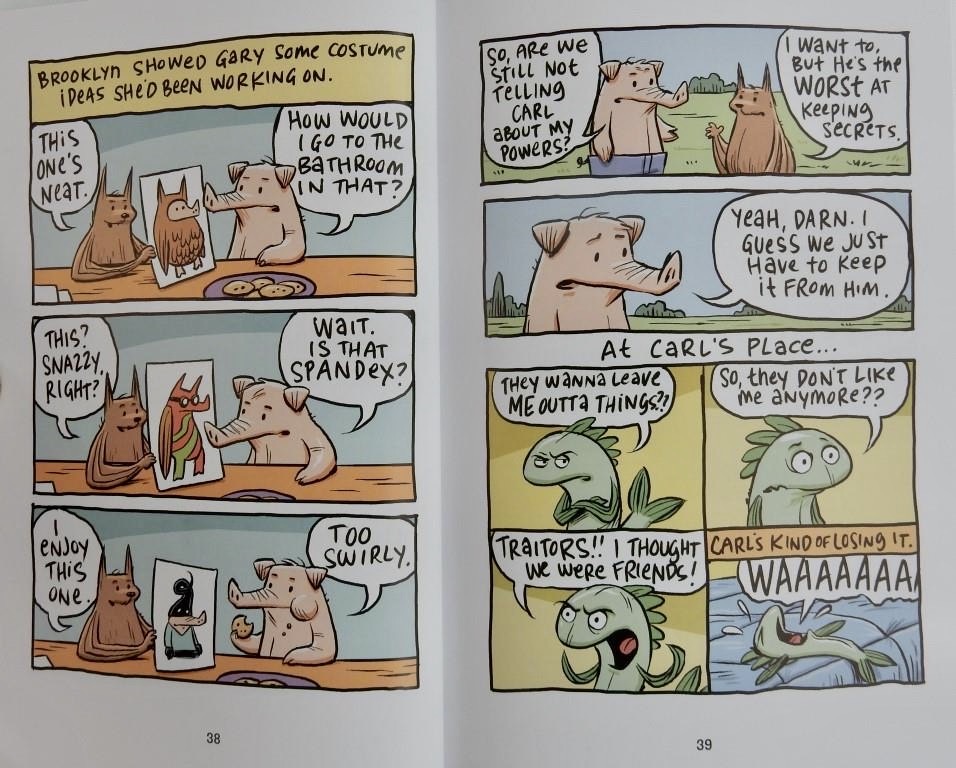
Having been accidentally bitten on the snout by Brooklyn, Gary develops super hunger, super sight, and strength, and the ability to float. Unbeknown to Gary, his friend the bat was radioactive at the time, something he only fesses up to when questioned by the pig. That night comes a revelation, with his superhero powers Gary is now Batpig. Gary tells Brooklyn of this development but keeps it from Carl who soon gets the feeling that his friends are hiding something.

Gary meanwhile is receiving flying lessons from Brooklyn who remains firmly on the ground.

Although Carl realises the current situation could well be on account of his inability to keep a secret, understandably his hurt feelings develop into anger and he decides to become the super-villain of the saga. Will he prove to be the instrument of Batpig’s undoing as the superhero goes about apprehending litter scatterers and preventing robberies? Or maybe Carl and Brooklyn could agree to work together and save the day for our superhero and that includes finding a means of covering up the ‘pimple’ on Gary’s rear end. All this is revealed through a superb blend of narration with puns aplenty, dialogue, illustrations, comic asides, and flash-backs – that’s the rocket part.

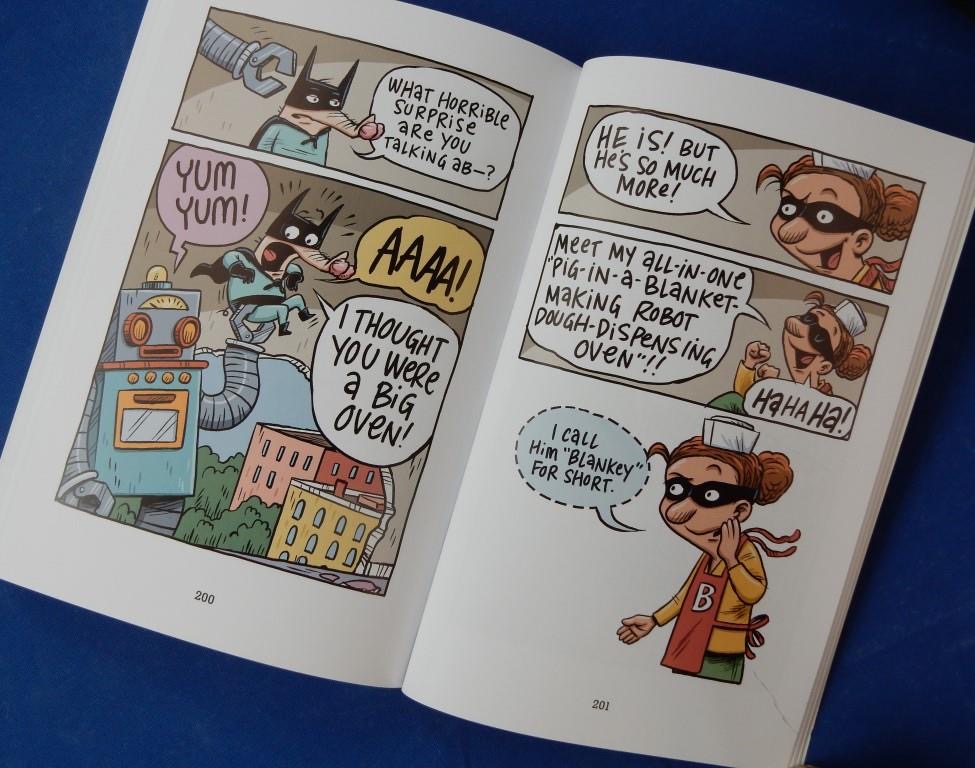
In the second episode the friends face off against a heinous human foe, the Butcher, a woman who is determined to use the power of the world’s meat for her own ends and has a robotic dough-dispensing machine that makes pigs in blankets.

Yes this might all seem totally silly but there are themes of the importance of maintaining your own identity, friendship and the issues of three-way camaraderie; and all three characters are relatable to human readers. If you know readers who enjoy graphic novels such as The Investigators, they’ll love this, as will all those who prefer stories with the emphasis on the visual.

The Story Shop Anchors Away! / There’s a Dog in my Brain: Dog Show Disaster

The Story Shop Anchors Away!
Tracey Corderoy, illustrated by Tony Neal
Little Tiger

I loved the idea of The Story Shop, the place selling real adventures that its customers can actually be in, when it blasted off during the spring this year. So it’s a delight to be back in the company of shopkeeper Wilbur and Fred Ferret his assistant, with their plethora of props and plot possibilities for three more episodes.

The first begins when explorer Pearl practically tumbles in just when Wilbur and Fred are about to shut for the day demanding they find her an adventure she’s not experienced before. Thus this fearless woman becomes Captain Pearl and after a bit of persuasion, she agrees to take Fred aboard her ship as her pirate assistant, along with pirate, Edie. But what are scarf knitting pirates and other crafters doing already below deck when she wants a PROPER piratical adventure? Yo Ho Ho! Let operation retrieve their priceless black pearl commence.

Having bobbed about in barrels for ages after their successful mission, Pearl and Fred wash up on shore only to be confronted by a bunch of scary-looking pirates led by Long Jane Silver who is convinced the two are spies sent by Blunderbuss Bob, her rival in the up-coming annual raft race.
Stinky Socks!

Can the two come up with a placatory plan to help their captor win the entire event?

The third episode finds Pearl and Fred sans ship, knocking on the door of a guesthouse belonging to Meg O’Cuttlefish. Once within, they accept an attic room and soon find themselves swapping pirating stories with Meg before bedtime. However something decidedly ghostly disturbs their slumbers; what could be the cause of that mysterious wailing sound?

Full of swashbuckling fun, a scattering of puns and Tony Neal’s comical illustrations, this is a treat for story lovers of the land-lubbing kind taking their early voyages as independent readers.

There’s a Dog in my Brain: Dog Show Disaster
Caroline Green, illustrated by Rikin Parekh
Walker Books

Here’s a crazy chaotic canine caper if ever there was one: actually it’s the second canine body switch episode. It all begins when Dudley the dog consumes almost every single one of the cakes Danny’s dad has so lovingly baked and Mum decides there’s no other choice but to send the pooch to Doggy Boot Camp. Needless to say ten-year old Danny is horrified but shortly after he realises that he’s swapped bodies with Dudley, something his parents fail to notice even though the ill-fated creature is absolutely useless at being a human.

However after the incident at the fancy farm shop that ends up costing in excess of four hundred pounds, the hose escapade

and Danny’s feats at canine classes, there’s no option but to reveal to the parents that a body swap has taken place again. But that means Danny as his alter-ego Dudley has to perform at the dog show and take on dog trainer Rex Power’s perfect pooch, Princess Fenella. nothing can possibly go wrong, surely.

Those with a penchant for pooches, slapstick and perhaps cake will relish Caroline Green’s romp, that’s if it doesn’t render them barking mad. Rikin Parekh’s black and white illustrations add to
the hilarity

The Magic of Magnolia Moon / Aziza’s Secret Fairy Door and the Mermaid’s Treasure

The Magic of Magnolia Moon
Edwina Wyatt, illustrated by Katherine Quinn
Walker Books

If you take time you will find magic in the everyday things of life – that’s how it is for ten year old Magnolia Moon who returns in this her second book. Her kind of magic is found in many different places – in puddles and boots, in umbrellas and hats, bubbles and fairytale books, even in a tree. It’s that rare, quiet sort that’s easily missed if you don’t know how to look and more important, where. I’ve not read the previous one The Secrets of Magnolia Moon but it made no difference to my enjoyment of this story.
Magnolia faces many challenges in this year of being ten: she has a new teacher – could she be a witch, Miss Mackerel has a broom and a black cat? She has to come to terms with the fact that her best friend Imogen May, who has now moved, will form new friendships as will Magnolia herself, but how many best friends can you have? However there’s still plenty of magic for Magnolia – she’s creative, independent and imaginative, she’s quirky, kind and lots of fun; a very special girl, the person you’d love as your best friend.

Cleverly structured – each chapter presents its own scenario that seques neatly into the next and into the whole narrative, with Magnolia always keeping her eyes and ears open to magical possibilities be they mind magic, green magic or perhaps most important of all, the magic that could help her friend Reuben smile again after his parents’ divorce. True magic is found in kindness, bravery, second chances and real love. Creativity, imagination, and magic of course, have power, and this book is a wonderful celebration of all these. I love too the talking grandfather clock – or is it? The author leaves it to the reader to decide about that, and whether Magnolia’s magic is real or imagined – another wonderful feature of the book. 

Add to all this the scattering of Katherine Quinn’s gorgeous black and white illustrations and you have an enchanting, immersive story that invites readers to look at the world around them in a different way and to be open to possibilities at any time.

Aziza’s Secret Fairy Door and the Mermaid’s Treasure
Lola Morayo, illustrated by Cory Reid
Macmillan Children’s Books

This is the fourth in the magical series of adventures inspired by world mythology and it begins as Aziza and her family are preparing for a camping holiday but the weather conditions are let’s say disappointing. As Aziza half-heartedly finishes her packing she notices tiny seashells guiding her towards something: her fairy door is shining again – it’s time to return to Shimmerton.

Almost the next moment Aziza finds herself on the crowded sandy beach where amidst the masses she sees first the Gigglers creating a drama as always, then at the edge of the shore Peri and Tiko and sitting close by on the rocks, a mermaid. The mermaid introduces herself as Sirena and Aziza is hugely impressed when she hears of some of Sirena’s adventures. Suddenly as they chat the ground begins to shake; Aziza fears it’s an earthquake but her new friend assures her it’s a shell-walker sneezing in its sleep deep underground. But when ice-creams and picnic baskets start flying around, the possibility is that the creature is not asleep but about to emerge, grow huge and endanger the whole of Shimmerton. Fortunately Sirena knows of a magic conch shell that plays a song which could just be the answer to their problem.
With no time to lose and with Sirena’s help, the friends embark on an underwater adventure. 

It’s one filled with challenges for Aziza but with her reassuring, empowering friends, can she and they avert disaster?

There are new mythological creatures (details of their origins in folklore are given after the adventure) in this exciting, inclusive, summery seaside story that is perfect for young fantasy lovers just taking off as independent readers.

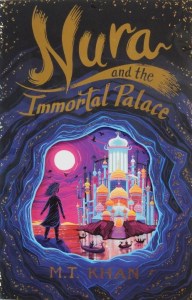
Nura and the Immortal Palace

Nura and the Immortal Palace
M.T.Khan
Walker Books

Clever, ambitious Nura lives in the fictional Pakistan town of Meerabagh. Since her father died she has worked mining mica to help support her family – her mother, her three younger siblings and herself. In the mine too, toils her best friend Faisal, often teased for his stutter by other child workers. Nura’s mother dreams of sending her to school, but Nura is more interested in treating herself to gulab jamun from her wages and more important saving up to send her younger siblings to school so they can break free of the family’s cycle of poverty. She also wants to find the legendary Demon’s Tongue buried deep within the mines; so doing would certainly solve all the family’s money issues.

When a terrible accident happens burying among others Faisal, Nura goes to the rescue and in so doing she digs too deep causing the earth to collapse over her friend. Digging even deeper, even further to save him, lands Nula in the realm of the jinn, at the opulent Sijj Palace, a jinn hotel. There she finds Faisal, and the two face trickery from the evil jinn, who offer luxuries untold and attempt to manipulate human children into labouring for the hotel; indeed nothing is as it seems. Can Nura outsmart the jinn, thus saving herself and her friends?

Into her wonderful storyworld building, in addition to friendship and magic the author skilfully weaves observations on child labour and poverty, and systems that maintain inequality that are relevant today. The narrative is fast paced and full of action, and with a wealth of lyrical imagery, this superb fantasy shines like the mica glistening in the sunlight that Nura mentions as the story starts. The cover illustration by Hazem Asif is fabulous too. I can’t wait to see what this debut author writes next.

(In her note at the end of the thought-provoking book, she talks of both child poverty in today’s world and of the importance of education as a way of escape from poverty, discrimination and war.)

Too Small Tola Gets Tough / The Princess in Black and the Mermaid Princess

Popular characters return in two early chapter books for new solo readers: thanks to Walker Books for sending them for review.

Too Small Tola Gets Tough
Atinuke, illustrated by Onyinye Iwu

These three stories of the wonderful Tola, who lives with her siblings and Grandmummy in a flat in Lagos, show her as more determined than ever. 

In the first she makes an exciting mathematical discovery and this in turn leads her to a realisation about life itself. However her excitement about these is quickly overtaken by news of a virus and the word ‘lockdown’ is spoken in the family residence. But it’s only in places like London where that happens surely. However the following day comes an announcement: Lagos is in lockdown. Now important decisions have to be made: will Lola’s family stay together or will her studious sister Moji, and brother Dapo now employed mending cars, go their separate ways?

In the second episode the question of lack of money becomes a huge issue: food is scare and Tola and Grandmummy, like countless other folk, keep going on one meal a day. Even Tola’s Papa, earning money far away driving his taxi is unable to help as his business too is out of action. Then comes a chance for Lola to contribute some much needed cash; reluctantly she decides to take it 

finding herself working for a super-rich family. 

However she soon discovers that rich people too now have problems, especially when they’re being cheated. Hurrah for Tola’s mathematical skills, and of course her kindness, cleverness, resourcefulness and mighty determination.

If you’ve not met Lola before, this third book offers a wonderful chance to introduce her to new solo readers. Those already familiar with her will welcome this new book with its lively drawings by Onyinye Iwu.

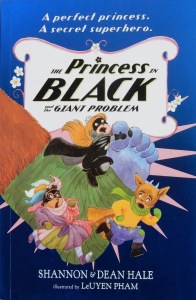
The Princess in Black and the Mermaid Princess
Shannon & Dean Hale, illustrated by LeUyen Pham

Now in her ninth adventure, the ever popular young Princess in Black is plunged into an underwater mission involving a mermaid princess (along with of course those elements her fans love: heroes in disguise, hungry monsters, imperiled goats, and ninja skills). 

As the story begins the three heroes are sailing in Princess Sneezewort’s ship. The Princess in Blankets wants to battle sea monsters, whereas the Princess in Black hopes to see a mermaid. It’s the Princess in Black who gets her wish for they soon encounter the beautiful mermaid Princess Posy and the creatures of her realm.

The three offer to help her protect the capricorns from the hungry kraken. However they quickly realise that monster-fighting moves aren’t much use underwater. 

The Princess in Black sends her new friend a message about assertiveness and helping others. Perhaps Princess Posy knows some new ninja moves that will help.

With appealing new characters, a totally different setting, teamwork, the wonders of the power of the imagination, links with previous episodes and a wealth of lively undersea filmic style scenes by LeUyen Pham, this is certain to be winner.

Princesses Break Free

Princesses Break Free
Timothy Knapman and Jenny Lovlie
Walker Books

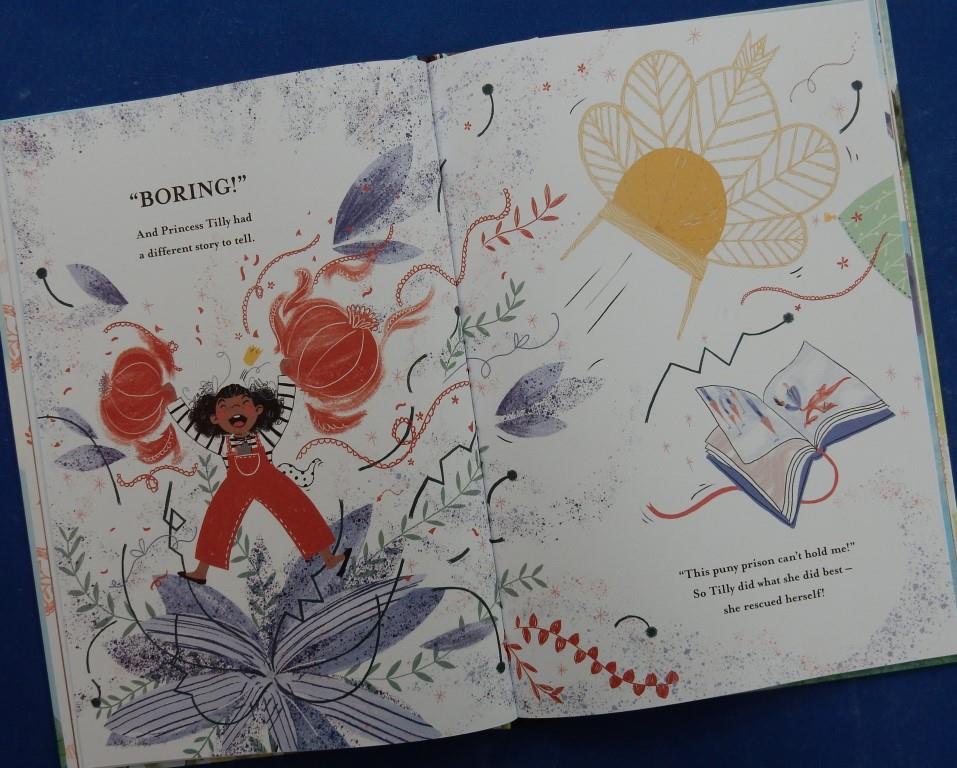
Timothy Knapman does a splendid job of stirring things up when it comes to princesses. Princess Tilly in this wonderful story – or rather the second part of same – not only challenges the stereotypical inactive damsel in distress ‘wait for a handsome prince to come and rescue me, then we’ll both live happily ever after’ princess image, but knocks it clean out of the court.

When this young princess is seized by a dragon she rescues herself by the creative use of some rather large knickers. But then she’s apprehended by her Fairy Godmother who admonishes Tilly and puts her in Princess Prison to learn proper princessy behaviour. That of course, Tilly is not prepared to tolerate and once again she rescues herself.

This mightily impresses another princess, one of the waiting to be rescued kind, or make that formerly of that kind. For, empowered by Tilly she makes a break for it and the two flap to freedom courtesy of two passing swans.

Before long new princess stories are spreading across the kingdom featuring mountain climbing princesses, jungle explorers and those who sailed the seven seas – the very things they’d always wanted to do. Left with nothing else to do all the dragons, witches and evil queens find alternative ways of occupying themselves and to their surprise have fun so doing, so much so that the now redundant princess-rescuing princes join them.

Indeed nothing is as before in this particular fairytale realm but taking one’s fate into one’s own hands doesn’t preclude the possibility of a ‘happily ever after’ ending, rather it does the complete opposite. Really truly it does.

With its deliciously divergent Princess Tilly showing the way, Timothy’s tale is a real winner in my book, Equally winning are Jenny Lovlie’s action-packed scenes of fairytale characters coming into their own as they decide to follow Tilly’s example and think outside their various boxes.

Wishes Come in Threes

Wishes Come in Threes
Andy Jones
Walker Books

Phyll has recently moved from London to the coast with her mum, which Dad hopes, will help with Mum find her Happy again as our soon to be twelve year old narrator tells us. Mum is a writer and has been suffering from depression for a while and so is unable to provide the emotional support her daughter needs at this challenging time.

Now Phyll has just started attending summer camp near her new home and Camp Sunshine is providing yet another challenge in the form of Hilda and her two pals, who Phyll thinks of as Hilda and the Horribles. On the positive side though, at the camp too is a friendly boy, Clark, with a seashell bracelet and he says he is going to the same high school as Phyll come the autumn.

When rain curtails outside activities, the camp leader offers the opportunity to visit an old folks home, which both Phyll and Clark accept. There she meets the rather mysterious Mr Djinn who talks of pirates, loves to play cribbage, tells her that magic is real and that he’s a genie – an idea she decides to go along with. Phyll also sets up a free dog walking service, helps a woman with a lost dog, longs for a dog of her own and is instrumental in the arrest of a dog-napper.

A lot more happens too but I urge you to get your own copy to discover what. I have to admit to having tears in my eyes as I finished this wonderful story of friendship, self belief, wishes and the possibility of magic. The characterisation is superb: Mr Djinn especially has some powerful things to say, in relation for instance, to the slave trade – ‘the greed of men is a terrible evil.’

My wish having put the book aside is that Andy Jones writes another story as beautiful and moving as this, his first for children.

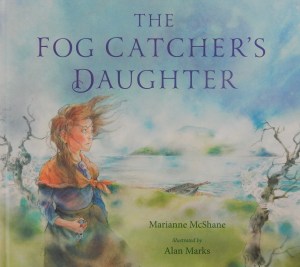
The Fog Catcher’s Daughter

The Fog Catcher’s Daughter
Marianne McShane and Alan Marks
Walker Books

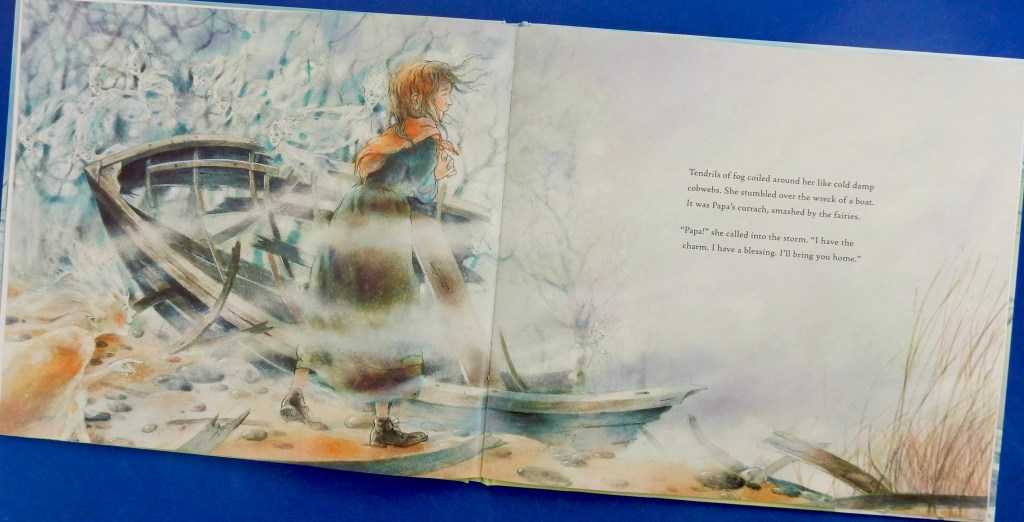
Somewhere on the Irish coast (three fields away from the sea to be precise) near the enchanted isle of Lisnashee where the Good People, or fairy folk, dwell, live young Eily and her fog catcher father.
The villagers stay well away from the island, fearing the consequences, should they anger the sinister sprites known for spoiling livestock, wrecking ships, and stealing people away in the night.
However members of Eily’s family have for generations, journeyed to the island once a year in their role as fog-catchers. Their task is to collect magical beads of mist that will help grow herbs Annie uses for protection charms, and to make potions, and healing ointments in her apothecary.

With the fairy wind on the rise, Eily knows that this year her father faces a treacherous crossing to Lisnashee. So she heads down to Annie’s apothecary to choose him a journey treasure and when she leaves Annie gives the child a blessing, “A smooth way before you, child.”

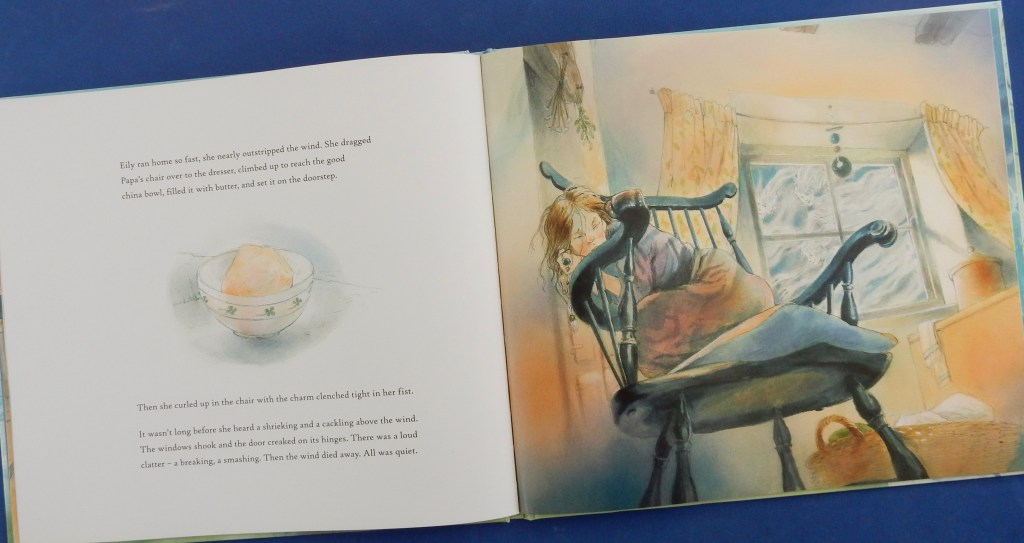
By the time she reaches the shore her Papa has already loaded his boat so she bids him a safe journey, gives him a farewell hug and puts the stone into his hand. Returning home she discovers that Papa’s charm has been snatched from his grasp by the fairy wind and fears for his safety. She does as she’s bid, leaves butter on the doorstep and curls up holding the charm.

However soon after, what she finds on the doorstep prompts her to undertake a perilous journey in Lapwing, rowing out on the storm tossed sea to rescue her beloved Papa.

Suffused with folklore of the Emerald Isle, Marianne McShane’s elegantly told, powerfully atmospheric story is both haunting and timeless, made all the more so by Alan Marks’ delicate, almost ethereal, watercolour scenes. How perfectly he captures the white-capped, rolling waves, the ghostly, menacing faeries, and the determination of Eily.

Child listeners and anybody with an interest in folklore will surely love this magical tale. In a final note, the author explains what inspired her to write it.

Jigsaw: A Puzzle in the Post

Jigsaw: A Puzzle in the Post
Bob Graham
Walker Books

Such is the excitement at the arrival of a parcel containing a jigsaw puzzle of a beautiful African sunrise that the entire Kelly family is eager to get started on it right away. Dad declares, “I’ve got time on my hands …” and setting his watch to Late Autumn, they begin sorting the pieces. Unbeknown to them however is the fact that in Dad’s haste to get out all the pieces, he’s sent one flying;. it’s landed on the dog’s back and … 

As Winter comes, with Kitty and Katie’s help (and perhaps a bit from Lucy the dog), they finished the edges. Through Spring and Summer Dad is the only person working on the jigsaw: the girls preferring to play outside, but come the approach of Autumn, Dad makes an announcement: “The hippo’s swim shorts …” Disaster that piece is missing.

A thorough search ensues and then Mum has an idea about what might have happened to the vital piece. Unwilling to give up, off they go to the rubbish tip … 

where a near exhaustive search yields all kinds of interesting items but not that which they seek and eventually they make a wish and sadly return home.

That though is not quite the end of this wonderful story, but story spoiler I won’t be; it’s well worth getting hold of a copy of any book that Bob Graham creates in his signature style and this one demonstrating the power of positive thinking is absolutely enchanting.

Me, My Brother and the Monster Meltdown / Dirty Bertie: A Collection of Chaos

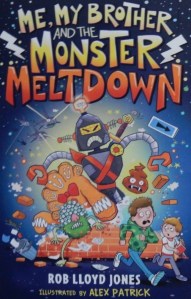
Me, My Brother and the Monster Meltdown
Rob Lloyd Jones, illustrated by Alex Patrick
Walker Books

The author of this crazy, laugh-out-loud book was aided and abetted by his two sons who came up with the initial idea and some of the bonkers situations in the story. The setting is the unassuming Sussex coastal town of Rottingdean that has a lot of supermarkets and nothing else much apart from a library and a ‘Home for Ancient People’. The key characters are Otis (the narrator), his younger brother Jago (a doodler of weird images) and their four pals, Daisy, Suzie (she who attempts to burp the entire alphabet), Hardeep and Ben. Chaos reigns pretty much sums up this adventure.

When the story opens the local Tesco has just been under attack from a six-headed gingerbread man with a vicious grin or rather several. But there have been other supermarket onslaughts too and because of all this Otis and Jago’s Dad has turned the basement of their home into a survival bunker, such is his panic at the monstrous situation. Even the prime minster is involved, (not panicking in his bunker and giving daily speeches of the (un)reassuring kind); he’s amassed a team of elite scientists called the Bureau of Investigation of Giant Beasts and Unexplained Monsters. Said group have put posters around the town proclaiming DON’T PANIC! and EVERYTHING IS FINE!

Suddenly the penny drops: the Tesco trasher bears an uncanny resemblance to what Jago had drawn two days earlier on his bed frame using his clicker pen of many colours. Strangely enough some of the other giant monsters look familiar too, but none of the grown ups wants to listen to what Otis tries to tell them

so now it’s left to him and his friends to sort out this monstrous mess. On the more serious side, I love the dig at the government about libraries being shut down.

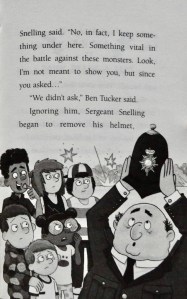
With a fair phew rear end explosions and a liberal scattering of suitably silly illustrations by Alex Patrick (shame Mr Khan appears to be wearing a Sikh pagri), this is a madcap romp if ever there was one.

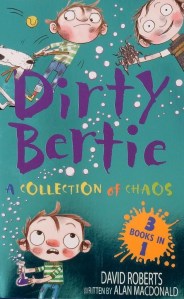
Dirty Bertie: A Collection of Chaos
Alan MacDonald and David Roberts
Little Tiger

Young readers who have missed the redoubtable Dirty Bertie in his three separate books Worms!, Fetch! and Trouble! will be pleased to know that they can now find them in one bumper volume of mischief.

Any small boy who wants to avoid going to a ‘wear something pink’ party might be tempted to emulate Bertie in the first episode when he receives an invitation from the adoring Angela. Then comes the occasion when Bertie tries – unsuccessfully as you might expect – to be polite for a whole day.
Next we join Bertie as he accidentally adds his mum’s floral arrangement to the rubbish for collection; after all they did look practically dead. Serious trouble looms large so perhaps a substitute entry for the competition could save the day …

In Fetch! Bertie has a robot dog, Tiny, in tow, poor Whiffer’s status is relegated and both end up getting into all kinds of scrapes as a result. You’d expect nothing less. Then there comes an invitation to attend a garden party hosted by none other than Her Majesty the Queen. Now Bertie has to be on his very best behaviour but guess who the dogs that he offers to give their daily walks belongs to: it definitely isn’t the maid. After such an exclusive outing he’s sure to be on form for his cousin’s wedding where he’s to be a pageboy and even worse, wear a kilt …

Finally Trouble! – there’s a plethora of that for sure. First Bertie forgets he has a maths test and tries using a magic potion to make Miss Boot forget all about it; this of course doesn’t quite go to plan. Next he goes to a sleepover at Know-All Nick’s home: he’d rather sleep in a cave with vampire bats but nonetheless he is made to go. Is there perhaps a way Bertie could make this work for both boys? Finally in this hilarious collection, Bertie manages to teach Masher the school bully a lesson.

Scrapes galore, bad habits – of course – and emotions that all children will relate to; plus plethora of pricelessly funny illustrations: what more can a fun loving reader of a certain age possibly want?

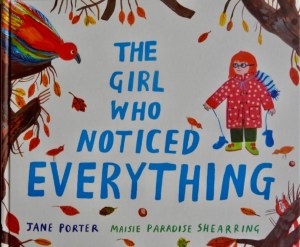
The Girl Who Noticed Everything

The Girl Who Noticed Everything
Jane Porter and Maisie Paradise Shearring
Walker Books

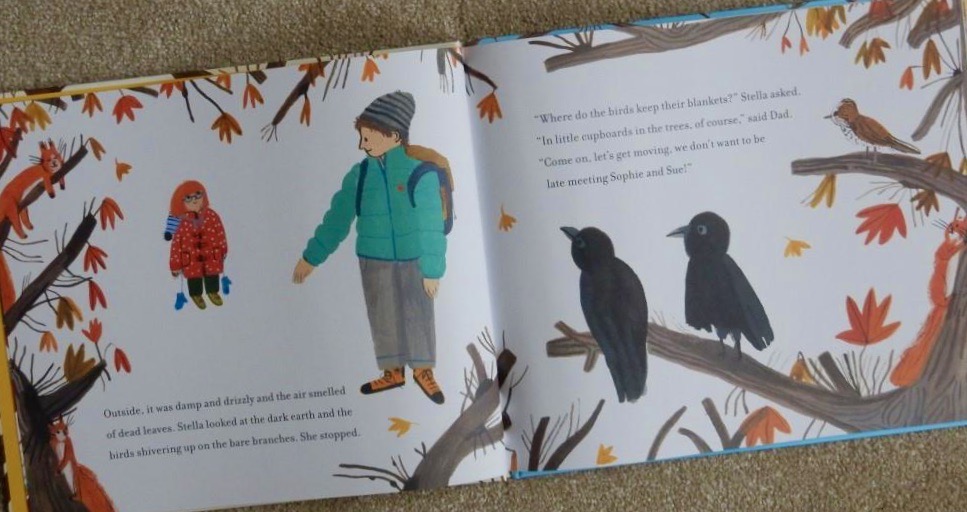
Little Stella is a wonderfully imaginative child who notices everything around her – clouds shaped like horses, a lonely glove waving from some railings, dustbins with faces, birds so cold they need blankets to keep them warm,

a man with upside down hair and another wearing a cat on his head. She excitedly shares her observations about all of these with her Dad as they walk to the park to meet their friends. He though is concerned that Stella’s forthright comments might hurt people’s feelings, so after a while she stops talking about what she sees.

However once they reach the park, she just has to draw her Dad’s attention to the colourfully dressed but sad looking woman walking very slowly calling, “Frankie! Frankie! Frankie?” His response is that they should play not noticing things for a while but that doesn’t stop Stella spotting a beautiful blue feather, which she picks up and tucks in her pocket.

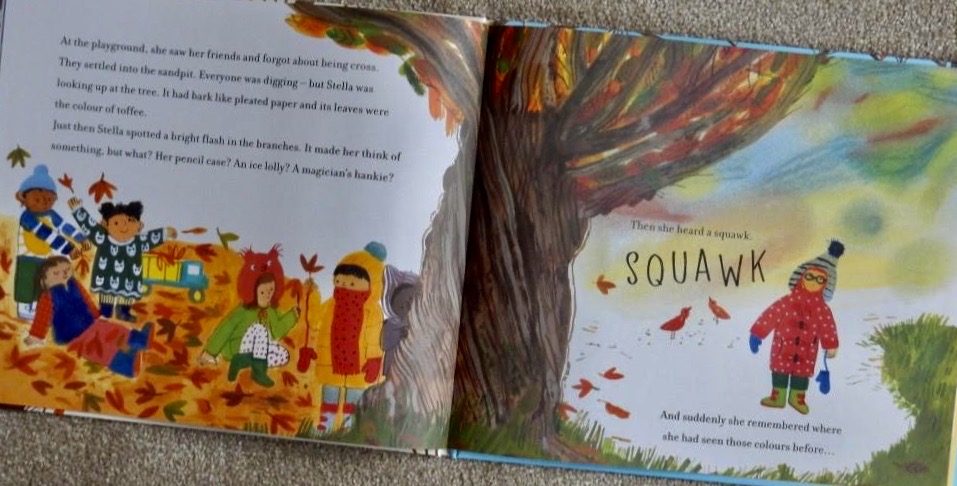
Once at the park, Stella’s cross feelings disappear as she joins her friends in the sandpit. Even there though her eyes are busy looking everywhere especially at the nearby tree with its ‘pleated paper’ bark and toffee coloured leaves. Suddenly she spies a bright flash among the branches and shortly after comes a squawk. It’s this sound that makes her recall where she’d seen those bright colours before.

Now she knows that she really needs to speak out. What she says results in a joyful reunion, followed by a walk home during which both Dad and Stella both notice all manner of exciting things and Stella gives Dad a very special present. What he says in return should ensure that his daughter continues to speak out, and to use her observation skills and her imagination wherever she goes.

Jane Porter’s wonderfully empowering story is a must to share with young children at home and in nursery or school. Maisie Paradise Shearring’s brightly coloured scenes, expand the telling with a wealth of detail, not spoken of – small animals, birds, flowers, patterns, textures, and more. Having read the story in its entirety first, I’d like to think an adult and young child would spend ages looking at and discussing each spread.

Lifesize: Baby Animals / My First Book of Minibeasts

Lifesize: Baby Animals
Sophy Henn
Farshore

This is the third of Sophy Henn’s ingenious Lifesize series and right from the cover image, this slightly oversize book draws you in. The focus is on some of the world’s most amazing baby animals. We start by staring right into the eye of a baby blue whale, the world’s biggest baby, that when born is astonishingly about the same size as an ambulance and grows to be as long as two buses.

That’s just one of the wow moments Sophy provides along with the interesting facts and fun questions. Here’s an example relating to the baby flamingo: “What colour would you be if you turned the same colour as your favourite food?’ (not that humans are born grey like baby flamingoes)

Such questions are one of the interactive features of the book.

I had to look twice to spot the baby zebra seashores that at first glance looked like musical notes emanating from the adult’s pouch. Did you know it’s the male seahorses that give birth and there can be as many as 2000 born at one time. Alongside a wealth of other marine fauna including green turtles, these creatures live on Australia’s coral reefs.

An adorable-looking baby black bear stares straight at readers from another spread. Imagine a human baby growing to three times its birth size in three months – that’s something to consider. These bears are mostly found in the mountain forests of North America, a terrain they occupy along with wolves and raccoons.

Readers will also meet red panda cubs with their super-long tails, clouded leopards, golden snub-nosed monkey babies and then when they open a double spread showing an African waterhole and turn the book through 90% they’ll meet a baby African elephant that is likely to be taller than some younger child readers.

The final interactive element involves measurement: you can see, when measured in Lifesize books how large some of the babies are at birth and when fully grown. Readers are then invited to do the same kind of measurement with their own family members.

Cleverly designed, with stunning images at every page turn, this is a book to read and delight in over and over.

My First Book of Minibeasts
illustrated by Zoë Ingram
Walker Books


This new addition to the My First Book of series is, like its predecessors, a great place to start exploring the topic. Herein Zoē Ingram strikingly portrays twenty minibeasts, one per double spread. Each illustration is accompanied by a fact box containing its scientific name, lifespan, diet and habitat, another presents its size in silhouette form and in millimetres; there’s also a ‘did you know’ feature and a main paragraph giving basic facts.

Youngsters will meet the shade-loving garden snail and the gorgeous glow worm – did you know it’s only the females that have bioluminescent tail lights? There are among others, bluebottles, black garden ants that live in colonies,

the emperor dragonfly and the Red-tailed bumblebee. (0nce called a dumbledore, interestingly.)

An ideal book to share with young children before going out exploring be that in the garden, the park or further afield.

Blobfish

Blobfish
Olaf Falafel
Walker Books

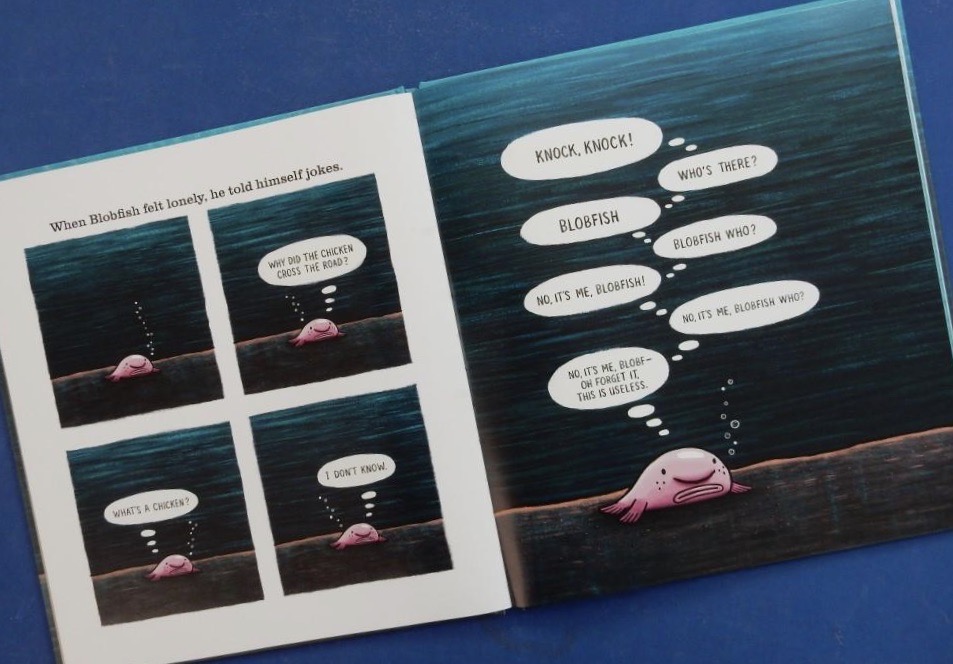
Way, way, way down at the bottom of the sea lives sad, lonely Blobfish. Without any friends, he tells jokes to himself and when he’s not doing that he searches for somebody to play with.

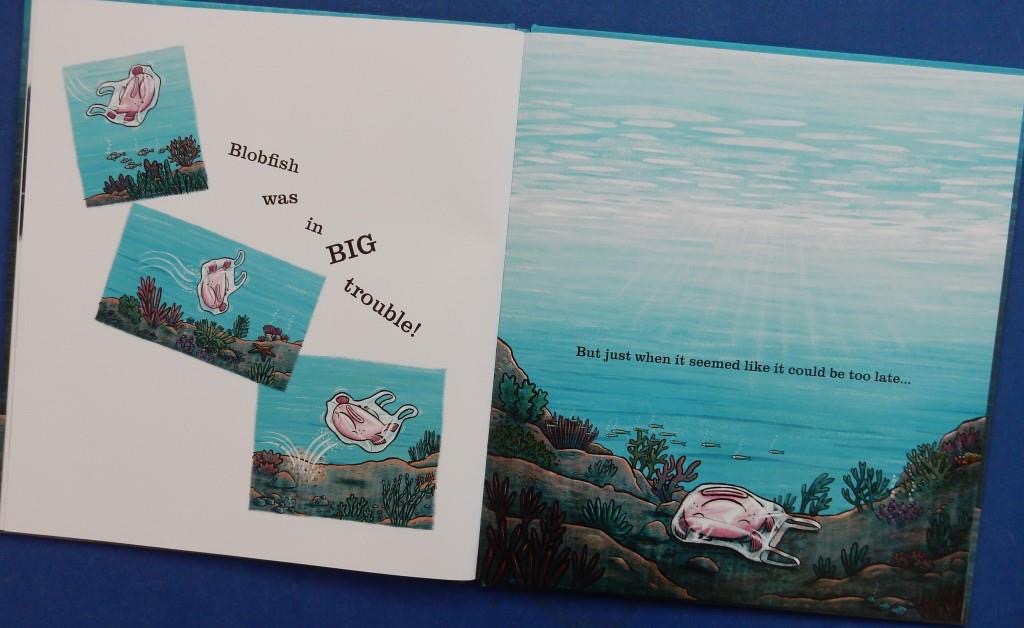
One day. while humans are busy enjoying themselves on land, and Blobfish is in the depths of despair, a carelessly discarded plastic bag comes sailing through the air, splashes down on the sea’s surface and starts to sink. It catches the eye of Blobfish. Oh Joy! Finally a friend for Blobfish.

Things starts well, albeit sans conversation but then – disaster.

Could this lead to the tragic demise of our blobby pal? Happily not thanks to the human rubbish collectors: and what about a friend for Blobfish? Well, it’s a ‘blobbily ever after’ ending, so you decide.

With plenty of fun dialogue in the form of speech and thinks bubbles, this highly amusing, occasionally ridiculous, strikingly illustrated story about looking for friendship has at its heart a vitally important message about plastic pollution and its impact on ocean life.

Share with little humans at home and in school. They will love it; so will you.

The Wizards’ Banquet

The Wizards’ Banquet
Vivian French, illustrated by Marta Kissi
Walker Books

Readers will delight in the abundance of magic and mayhem in this latest of Vivian French’s fantasies; there’s a degree of mischief and wickedness too. From her opening paragraph, we know we’ll be swept away, unable to stop reading until the final page.

One morning early, Pippin Potts is told in no uncertain terms by his aunt, to leave and not return until he’s found a job. Determined to succeed he heads off towards town eventually coming upon a gate from which hangs a sign on which is written ‘Helpful Boy Wanted! Must be good with puzzles! Green door, top of Grabbling Hill.’

He duly arrives at the green-doored cottage and is welcomed by ancient wizard (second level) Abacus Peridot. Almost immediately the lad discovers that said wizard is both an amazing cook and exceedingly forgetful. The wizard wants Pippin to help him get to the Wizards’ Banquet where he hopes to win the centenary golden trophy and prize that goes with it. He definitely wants to avoid being the 99th arrival.

Pippin quickly realises that the task he faces will be challenging. On the journey they (that includes the talking cooking pot, Ms Latterly).

encounter the dastardly wizard Boldways Grime accompanied by half elf half girl, Kitty Scarper. With their eyes on the main prize, they are secretly plotting against Abacus.

Pippin however is a determined boy; but can he discover the way over the Nine Hen Hills, across the Rambling Rocks and through the Neverending Forest to reach the competition venue first? He’ll likely have to outsmart the equally determined Kitty. Perhaps Mavis the bat can help.

Put together Vivian French’s wonderful way with words, and wizardry at world building and character creating

and Marta Kissi’s enchanting black and white illustrations: the result is sheer enchantment.

Rex: Dinosaur in Disguise

Rex: Dinosaur in Disguise
Elys Dolan
Walker Books

Elys Dolan triumphs again, this time in the form of Rex, an out-of-time dinosaur. By that I mean
that one moment, King of the dinosaurs, he’s happily roaming the swamps of yore and then along comes the Ice Age, he becomes frozen in an ice block, which eventually defrosts and there he is 65 million years later, in New York City, with humans very much in charge. Even worse is the dinosaur exhibition at the museum he comes upon. How on earth will a T.Rex cope?

With considerable difficulty, though fortunately a yeti, Bigfoot, finds him and takes him back to his abode. Bigfoot, who has found his own way to blend in, starts teaching Rex all he needs to know to survive in this world; there are a few basic rules he has to get his head around and most importantly, he needs to find a job. He’s also introduced to Bigfoot’s friends including Nessy and the only remaining dodo family. Nessy is now a lifeguard and the Dodo is “a very successful local businessman.”

With an interfering nine-year-old neighbour to cope with,

and the constant risk of discovery, Rex has a number of near misses before, thanks to some help from a couple of eagle-eyed children, he lands the perfect job.

Crazy, thoughtful comedy reigns. Elys’ writing is brilliantly funny, full of absurd situations and Rex is a captivating character; oh! there’s a super subplot too. The story also has subtle messages about tolerance, letting people live how they wish, and the vital importance of thinking for yourself. Full of giggle worthy details, the subtly coloured cartoon style illustrations are hilarious and there are occasional plans, maps and speech bubbles to keep readers engaged, further adding to the humour.
KS2 readers will devour this.

Where Seagulls Dare / Agent Asha: Operation Cyber Chop

Where Seagulls Dare
Anthony Horowitz, illustrated by Mark Beech
Walker Books

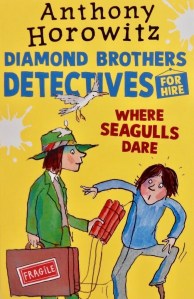
Private Investigators Nick and his older brother Tim, the world’s worst private investigator are without clients, the last case having been some three months ago. All they have for breakfast is a mini box of cornflakes between them so when a rather unusual-looking woman walks into their establishment, introducing herself as Jane Nightingale, leaving them a large bundle of fifty pound notes in advance for finding her missing father, supposedly a writer, they can’t believe their luck.

They start by paying a visit to what they think is the man, writer Alistair Nightingale’s home in Bath and that’s when things start to turn very weird and in fact, downright dangerous with shots being fired in their direction and threatening messages being left in unexpected places.

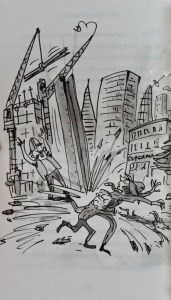
The danger really ramps up with steel girders plummeting towards the two, 

out of control computers and much more, including a meeting with an old acquaintance, Mr Waverly. He talks of his final operation involving the sinister far-right White Crusaders and the kidnapping of a certain Alistair Nightingale – the very case that the brothers unbeknownst to themselves, are looking at.
The well-organised Crusader group is led by one, Neville Fairfax who not only wants to be in charge of a smallish island but of the entire UK. To that end he plans to break into GCHQ, access their computers and … Now the brothers have a choice: cooperate with Waverly or face a month locked up, till the case is over. Looks like they’re in over their heads.

With a superabundance of thrills and spills, jokes on virtually every page and Mark Beech’s droll, disarming illustrations, this latest Diamond Brothers story will have readers hooting with laughter from start to finish.

Agent Asha: Operation Cyber Chop
Sophie Deen, illustrated by Priyanka Sachdev
Walker Books

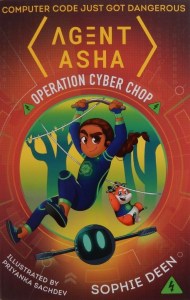
The second spy story blending STEM subjects with deadly adventure sees Asha and her robo-hamster sidekick Tumble on a mission to protect her favourite Wembley Park from the evil teenage trillionaire Shelly Belly who plans to chop down all its existing natural trees and replace them with new electronic Cyber Oaks that can monitor what people are doing all the time. Said trees are supposed to be able to reverse climate change – if you believe the hype, that is. Definitely don’t fall for the anti-real tree propaganda being put about by the pro-fellers on social media platform FaceSpace. Now if there’s one thing Asha knows about the world’s youngest CEO Shelly Belly, it’s that she’s very, very bad; she’s even gulled Asha’s elder sister Nush into believing her disinformation.

Could this be Asha’s big chance to crack this case, ultimately save the planet and become a fully-fledged member of the CSA, even if it means facing robot security parrots, taking on an iffy internship and visiting Shelly’s secret test site in Orkney, Scotland.

Wittily written, with high tech devices, coding and critical thinking, diagrams, charts, plus fart fun aplenty, and Priyanka Sachdev’s cyber-style illustrations, this is a great read for young eco-warriors, fans of gadgets, in fact anyone who enjoys a good crime caper.

Narwhal The Arctic Unicorn

Narwhal the Arctic Unicorn
Justin Anderson and Jo Weaver
Walker Books

Stunning illustrations by Jo Weaver grace every page of this awe inspiring narrative information book written by Planet Earth 11 producer Justin Anderson who, with the help of his team, captured the first aerial footage of narwhal migration for the Nature’s Great Events documentary.

The book takes readers to the frozen Arctic inviting them to dive down deep into the icy waters and follow some narwhals aka ‘toothed whales’, relations of killer whales and dolphins. I was previously unaware that it’s mostly males that grow the characteristic long, sensitive tusk suggesting their possible use as a display tool for attracting females.

In the murky waters we see right up close one narwhal that has reached its half century, chasing a massive flatfish for food.

We also follow the entire pod as the journey north continues for hundreds of miles and are shown the incredible jousting behaviour, that it’s been suggested might be to determine which male is in charge.

For the females, it’s time many miles further on, to pause their journey and having carried their babies inside for a whole year, to give birth. The calves then spend between two and three years with their mothers, after which time the young males grow a small tusk; one that will eventually grow more than two metres long; the occasional one perhaps becoming a ‘double tusker’ a phenomenon new to me.

Eventually the pod reaches its High Arctic Island destination where the sun has warmed the sea and melted most of the ice. That’s where a calf will grow rapidly, thanks to its mother’s milk. Sometimes however predatory killer whales may have tracked a pod and guided by that old narwhal, they have to escape to a safe hiding place. September heralds the end of summer when once again it’s time to move and the pod’s long journey south begins.

After the narrative is a page giving facts about the future of these wonderful animals, now sadly threatened by climate change and humans encroaching on their habitat. Other backmatter gives some websites giving more information on how to help secure narwhals a safe future as well as an index.

A must have for anyone who cares about the ‘Arctic unicorns’.

Ready for Spaghetti

Ready for Spaghetti
Michael Rosen, illustrated by Polly Dunbar
Walker Books

Michael Rosen’s consummate skill at creating rhymes that small children and indeed grown ups find irresistible, is legendary. He knows so well the importance of rhyme, rhythm and repetition in crafting playful compositions as demonstrated in every one of the thirty plus rhymes in this terrific book, joyfully illustrated by Polly Dunbar.

It takes youngsters through the day as they embrace those commonplace routines turning them into opportunities for spontaneous creativity and imaginative play. Whether its looking at a reflection in the mirror, rushily brushily cleaning teeth and whoosh, whoosh, whooshing and sploshy sploosh-ing in the bathroom, breakfasting on an eggy with a plate of bready soldiers, dancing with delight ( sporting a rather over-size pair of shoes), or with a pal perhaps; taking a break to talk to the sun or address a balloon, the delight – mostly – of the child participant is evident in Polly’s picture of same.

These small children, (like those I’ve taught over the years) love to converse with tiny creatures as they do in Bumblebee and Butterfly and Snail. The bumblebee one, the first verse of which is : ‘Bumblebee rumble, / Bumblebee tumble, / Buzzy Bee bumble … / Give me apple crumble!’ takes me back to Russian poet Kornei Chukovsky’s words in his seminal work, From Two to Five wherein he called young children linguistic geniuses.

No matter where you open this book you’ll find words and pictures you will love to share, be that with a class, or at home, at any time and preferably as many times as possible through the day. Don’t miss out on the opportunity: get a copy of this beautiful book. Later on those same children will pick it up and they will delight in reading it aloud to you. They’ll likely want to invent their own songs, and create word pictures and colourful drawings as well.

The Secret Wild

The Secret Wild
Alex Evelyn, illustrated by George Ermos
Walker Books

How super to have an adventure that revolves around plants.

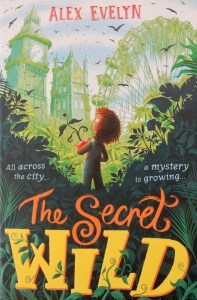
Ten year old Fern Featherstone is, according to her father, an overly curious child. She has spent most of her time travelling the world with her botanist parents and has accrued a fair bit of information about plants, many of which she talks to, but her father disapproves of non-theoretical knowledge. As the story begins, Fern and her parents are in the Amazonian rainforest; but after a mishap her parents decide to send her to London to live with Uncle Ned: after all she’s never had a friend or been to school like other children her age. This is something about which Fern is far from happy; but then on the plane, she finds herself unexpectedly in possession of a strange small plant – one that can understand her – her very first friend.

Once at Uncle Ned’s, she learns of strange happenings in London’s public places: a spate of unusual plants appearing from nobody knows where, growing destructively large, disrupting people’s lives and even causing seismic tremors. The following morning, feeling uprooted Fern wanders into the city, meets neighbour and plant phobic Woody. But when her plant – she’s named it Special – starts getting weaker, she only has this strange boy to ask for help to locate the botanist woman from whom she acquired it.

It’s not long before Fern discovers that this woman – Oleander, as she tells Fern to call her – has nightmarish plans and that her so called ‘green revolution’ must be stopped before time runs out.

There are so many things to love about this debut novel: the main protagonist who lives life on her terms, her lovable author Uncle Ned whose main skill apart from writing is toast-making; Fern’s friend in need, jigsaw-puzzle loving Woody, the way in which both scientific knowledge and London landmarks are woven into the story, the use of plant names for many of the characters, not forgetting that botanist turned villain and the whole thing is sprinkled with humour. With a fab. cover by George Ermos whose plant drawings grow around each new chapter page, it’s a book that will wind its tendrils around you and not unfurl them until you reach the end.

The Wondrous Prune / Orla and the Magpie’s Kiss

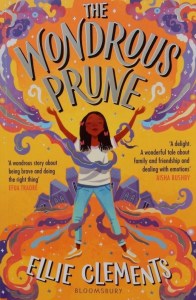
The Wondrous Prune
Ellie Clements
Bloomsbury Children’s Books

This is a terrific, heartwarming story of family love, finding your inner strength and remaining positive against the odds.

Eleven year old Prune, a talented artist, her mum and older brother Jesse, have recently moved into the house Prune’s mum inherited from her parents. It’s on the other side of town and so the siblings are facing the challenge of new schools and a new location. Jesse though, is still hanging out with his friend Bryce, a very bad influence on him- a friendship her mother was hoping would be severed by the move.
Prune really misses her best friend Corinne and at her new school are a group of bullies – the Vile-let girls. The sadness and anxiety Prune feels on account of these things act as catalyst for the fantasy element of the story: every time she’s beset by one of these feelings vivid colours swirl inexplicably before her eyes. Moreover if she focuses on her feelings as she draws, her images come to life. Seemingly this girl has an unlikely superpower and sometimes it lands her in trouble; in school for instance and it certainly alarms her mum when she finds out, demanding that her daughter keep it under wraps.

Meanwhile saving Prune from complete misery is the kindness shown by classmate, Doug, a previous victim of the Vile-lets’ bullying. Then there’s that legend of the Delmere Magic. It’s not long however, before Prune discovers that her brother is getting into deeper trouble on account of Bryce and she realises that she just can’t keep her power hidden. Perhaps if she can learnt to harness it, she might be able to save her brother from an increasingly toxic relationship, deal with those bullying her and restore harmony at home.

Ellie Clements’ wonderful blend of fantasy and realism has at its heart the healing power of creativity and will keep readers turning the pages as they root for the Wondrous Prune. I suspect they will also be intrigued by the boy on the bus Prune notices near the end of the book.

Orla and the Magpie’s Kiss
C.J. Haslam
Walker Books

Here’s another eco-themed adventure following on from Orla and the Serpent’s Curse.
Orla Perry, her Jack Russell dog Dave and her two brothers Tom and Richard are holidaying in Norfolk, staying with their eccentric Great Uncle Valentine. “We’re going to die of boredom,” is Tom’s prediction when they arrive at his place of residence but he couldn’t have been more wrong. Orla has recently discovered her witchy powers but it’s been agreed, no magical witchy stuff from her: this will be a normal holiday; nonetheless, Orla has taken her gwelen along.

Although not on the lookout for trouble, Orla soon learns that the beautiful ancient Anna’s Wood is about to be bulldozed for shale gas by a company called GasFrac.

Despite warnings from her uncle not to venture anywhere near, early next morning she just has to investigate; and she certainly doesn’t like what she finds. Impossible as it might be, the natural magic of the wood has disappeared: seemingly something sinister is afoot. Moreover, Orla rescues a magpie from a trap receiving a nasty gash on her face in the process.

Back at Uncle Valentine’s, she’s told that a magpie’s ‘kiss’ will show what fate has in store and then she dreams of GasFrac’s destruction of the wood’s animals. However all the local people seem convinced that the energy company’s promises of a new shopping centre and country park, either that or sheer indifference. It seems everyone has sold their souls to GasFrac, including the postmistress and local witch. But why the change of heart on the part of the erstwhile protesters? As she starts investigating, Orla soon finds distrust and even dislike for herself and Uncle Valentine. Digging deeper, she begins to suspect there’s dark magic involved here. Then she meets the person behind GasFrac and discovers the truth about his evil intentions …

With magic and mayhem, witches, wizards, ravens and a key role played by Dave, not to mention a ‘not buried’ dead cat, and liberal sprinklings of wry humour, this increasingly fast-paced book will grip readers , right to the final page.
Snakes on a Train / Maisy Goes on a Nature Walk

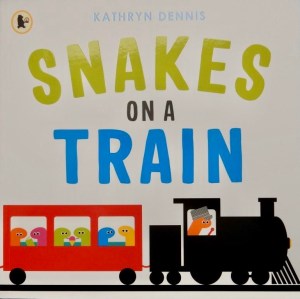
Snakes on a Train
Kathryn Dennis
Walker Books

The sibilant sounds of the hissing train and slithering snakes takes little ones and their readers aloud on a playful railway journey with a group of scaly reptiles. Having handed over their tickets and boarded the train, with the safety checks duly completed, the passengers find themselves encountering such things as a runaway pig on the track, a dark tunnel, a high hill, and a tall bridge before finally reaching their destination just before it’s time to find their dens and have some shuteye.

A fun sharing book illustrated in simple concrete colours and silhouette shapes: tinies will love hissing along to those snakes and that sound of the train.

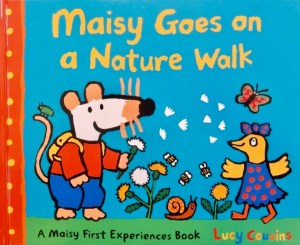
Maisy Goes on a Nature Walk
Lucy Cousins
Walker Books

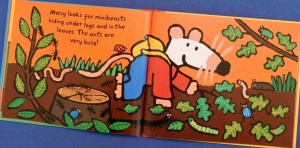
With her bag duly packed, Maisy meets her friends Tallulah , Charley, Cyril and Eddie for a nature walk in the park. There’s lots to see such as dragonflies flitting above and in which tadpoles and fish swim; woodland animals peeping out from between the trees, many of which are filled with noisy birds. Maisy gets close to the earth to hunt for minibeasts …

before they all stop beside the hives all abuzz with bees in the wildflower garden where Cyril gets out his magnifying glass for a closer look at those little creatures that live around the flowers. Finally comes what all children love to do – build a den together and then have a picnic lunch.

Another bright episode in the life of every small child’s favourite mouse character that’s just right for sharing with the very young.

Who Jumped into the Bed? / The Best Bed for Me

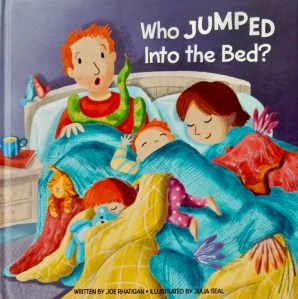
Who Jumped into the Bed?
Joe Rhatigan and Julia Seal
Sunbird Books

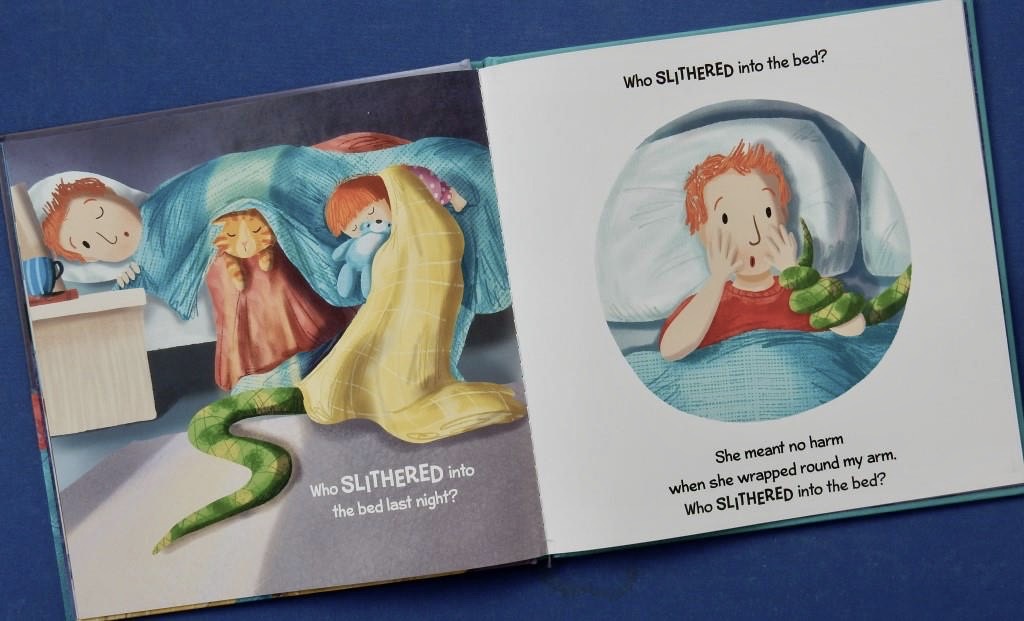
On Julia Seal’s serene wordless opening spread we see, side by side, two adults slumbering peacefully. Then first a small girl, then her brother, followed by a cat, a drooling dog, a slithering snake, 

a host of feathered fliers and a creature with an extremely long neck all make their way into the sleeping accommodation designed for two. Finally, bump! Out falls Dad and with bleary eyes makes his way to the kitchen where he sets to work preparing a delicious-looking breakfast. Guess what: when the hoards hear that this is on offer, every single one – be they bed jumper, snucker, wanderer, bounder, slitherer, flier or neck stretcher want to partake of the feast there and then.

I’m sure many parents will recognise at least the child invasion, in Joe Rhatigan’s rhyming narrative whereas young listeners will delight in joining in with the ‘Who —- into the bed? and be amused at the growing number of intruders that so innocently worm their way under the covers.

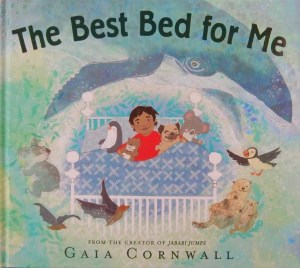
The Best Bed for Me
Gaia Cornwall
Walker Books

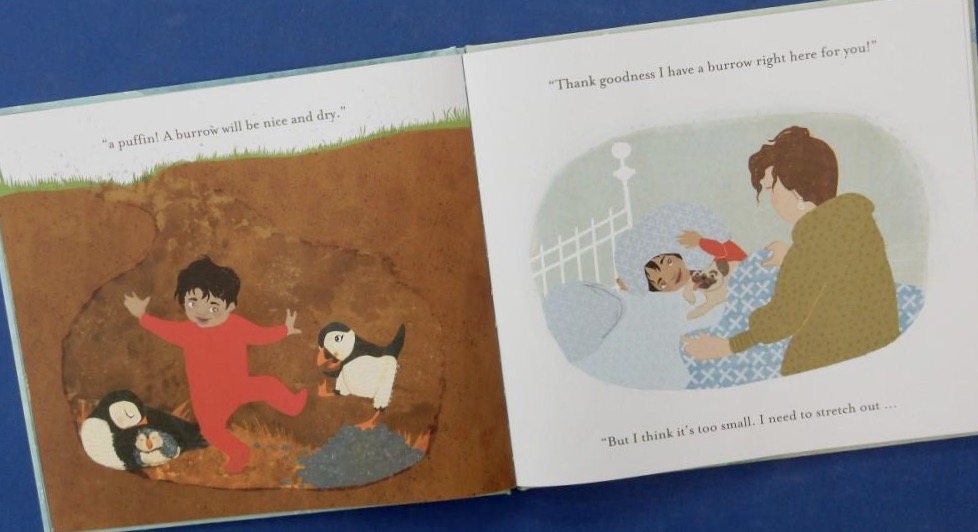
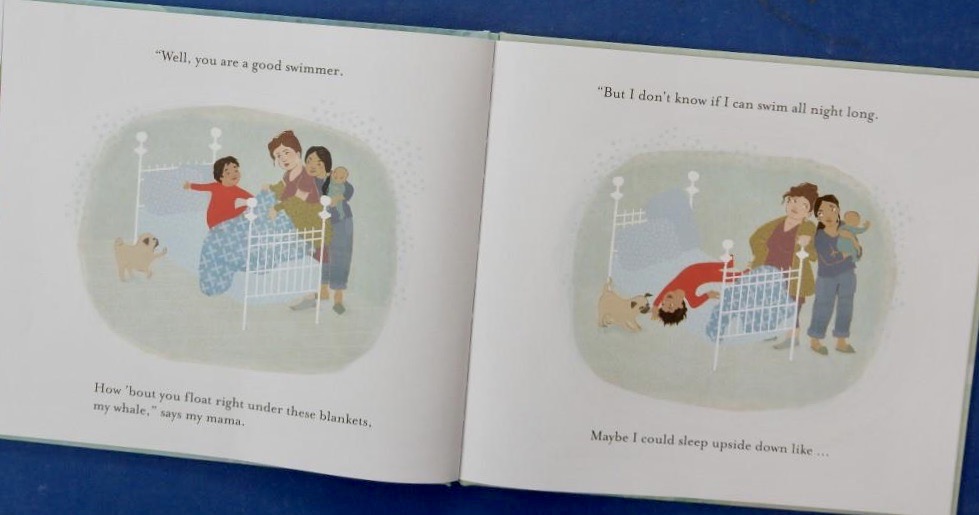
It’s bedtime for Sweet Pea – so says mama – but seemingly this little one wants to delay sleeping. Making imaginative demands of the animal kind – a koala high up in a tree, a puffin tucked into a burrow, 

a bat that dangles from a branch for instance – the child attempts, in between Mama’s efforts with the bedcovers, to emulate the creatures named.

Having gone through a fair number of creature possibilities together with their ways of sleeping, Sweet Pea eventually comes to the conclusion that a “big-kid bed, with a soft pillow and a fluffy blanket … is the best bed for me.” At last it’s time to bid goodnight to a patient, understanding Mama and snuggle down for the night.

In her pencil and watercolour, digitally finished illustrations, Gaia Cornwall shows another female caregiver with a baby affectionately watching Sweet Pea’s stalling tactics. 

There’s a gentle soporific feel to both Gaia’s visuals and telling, along with gentle humour, making this a playful, tender bedtime tale with added animal antics.

Pearly and Pig and the Great Hairy Beast / The Giant’s Necklace

Pearly and Pig and the Great Hairy Beast
Sue Whiting
Walker Books

Ten year old Pearly Woe is an inveterate worrier; her chief worry being that she’ll never be brave enough or sufficiently clear thinking to become a member of The Adventurologists’ Guild, a group of stealth adventurers founded by her Grandpa. However she does have talents: she’s a multi-linguist and can even speak animal languages, most importantly with her unlikely pet, Pig.

Quite suddenly she finds herself with very big worries: her parents have gone missing and Pig is pig-napped. After an encounter with villainous Ms Emmeline Woods, Pearly becomes a stowaway on an icebreaker bound for Antarctica, transporting readers along too on a dangerous rescue mission: but then she discovers Ms Woods is actually in charge of the Might Muncher. She also discovers that her parents are not as she first thought, on the ship.

Fortunately for the girl, numbered among his skills, Pig has a finely-tuned snout that can sniff out all forms of trouble; he’s also bold, brave and helps to keep Pearly relatively calm and focussed on the task in hand – and trotter. What a great, albeit unlikely, team they make.

What exactly is Ms Woods’ purpose in undertaking this trip; what is her interest in finding the Great Hairy Beast?

With danger at every turn – next in the form of an Antarctic blizzard – Pearly must muster every possible bit of courage, bravery and initiative if she’s to have any chance of saving the Great Hairy Beast, her parents and a displaced animal.

I shivered my way through every twist and turn of this thrilling, pig-pun scattered, adventure – the first of a new series – with its engaging protagonist and splendidly quirky sidekick – unable to pause until I reached the rules, guidelines, survival tips and ways to survive a sticky situation for Young Adventurologists at the end of the story.

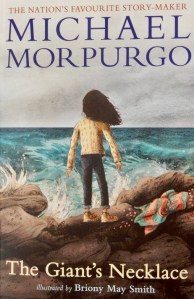
The Giant’s Necklace
Michael Morpurgo, illustrated by Briony May-Smith
Walker Books

This is a small masterpiece, a ghost story and an adventure about eleven year old Cherry, on holiday with her family. During her time away, Cherry has been collecting cowrie seashells to make a necklace fit for a giant; the trouble is giants’ necks are very large and an awful lot of shells are required. Now it’s the final day of the holiday and despite her mother urging her to leave her creation as it is, (5,325 shells in all) Cherry is determined to add more before they leave the following morning. 

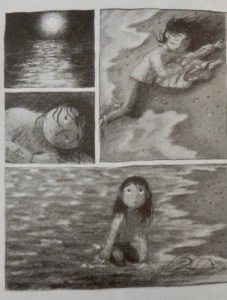
With her mum’s permission, off she goes to the beach to continue her search. So engrossed does she become though that she fails to notice the huge black clouds rolling in and the increasing size of the waves. Now the tale becomes much darker, for Cherry becomes cut off from the cove and at the mercy of the violent Atlantic waves. Her only way of escaping to safety is to climb the steep rock face: can she do that and what of the shells she’s risked life and limb to collect? Then she remembers the mine tunnels her father had spoken of – definitely worth a try. Increasing eeriness now pervades the events as Cherry encounters spirit people and then comes the final shocking twist …

Thrilling and tense with powerful word images and an important message about safety beside the sea; and beautifully illustrated by Briony May Smith who captures the tension perfectly, 

readers cannot help but root for Cherry all the way, hoping for the best but perhaps, fearing the worst.

Thanks to Walker Books for sending these smashing books for review.

Smile Out Loud / Marshmallow Clouds

Smile Out Loud
Joseph Coelho and Daniel Gray-Barnett
Wide Eyed Editions

I’m sure that like me, many others have in the past couple of years of mandatory mask wearing in so many places, wondered how to show somebody that we are giving them a smile. Perhaps if I’d had a copy of Smile Out Loud then I could have performed one of Joseph’s 25 ‘happy poems’ poems in a shop or elsewhere. I wonder what the reaction would have been to The Dinosaur way of walking funny, which is to Pull your trousers up / as far as they will go, / stick your bottom out / and walk like a chicken / … But instead of clucking – / … let yourself roar! / Like a dinosaur, / … a roar dinosaur! Then there’s The Ballerina way that involves a turn, a spin, a leap followed by Plié! Plié! Petit / Jeté / flutter and glide / the day away.

I’m always plugging the power of the imagination so I really like Imagination Running Free where the instructions are to tell the audience for a read aloud of this poem to close their eyes and imagine the scenarios presented by Imagine your legs / are two conker trees! Imagination running free. // Imagine your knees / are stripy like bees! / Imagination running free. // Imagine you’re running with / toes wet / legs wooden / knees stripy! I love too how Daniel Gray-Barnett has clearly let his imagination run free for this accompanying illustration. 

There are poems to read and act out in a group, one or two to inspire readers to create poems of their own, a funny one that uses spoonerisms and lots more besides. Certainly you should find something to help cheer up not only yourself but those who hear the tongue-twisters, riddles and giggle inducers. So, get a copy for home or school and spread a little sunshine thanks to Joseph’s words and Daniel’s lively, inclusive illustrations.

Marshmallow Clouds
Ted Kooser and Connie Wanek, illustrated by Richard Jones
Walker Books

Subtitled ‘Poems Inspired by Nature’, this is a dreamlike, often pensive collection of thirty poems, each a beautiful word picture placed under one of four elemental section headings: Fire, Water, Air, Earth and all intended, as Kooser says in his afterword, to “encourage you to run with your own imagination, to enjoy what you come up with.”

Being a tree person I was immediately drawn to Trees, the final four lines of which are:
They don’t ask for much, a good rain now and then,
and what they like most are the sweet smells
of the others, and the warm touch of the light,
and to join the soft singing that goes on and on
.
Beautiful words and equally beautiful art by Richard Jones, whose illustration here reminded me so much of one of the places where I pause to sit on my walk and look up at the surrounding understory.

Tadpole too is a poem I found great delight in reading, having recently watched a pool full /of swimming tadpoles, / the liveliest of all punctuation.

No matter where you open the book though, you will find something that’s a joy to read aloud again, and again; something thoughtful and thought-provoking, something likely to make you look at things around you differently. What more can one ask?

Ghostcloud / The Treasure Under the Jam Factory

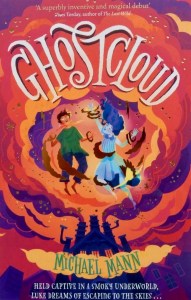
Ghostcloud
Michael Mann
Hodder Children’s Books

This is a ghost story with a difference, or rather several differences. It’s set in a grim dystopian future London beneath Battersea Power Station, twelve year old Luke and numerous other kidnapped children spend their miserable lives shovelling coal, working for the iniquitous Tabitha Margate.

After two years, Luke is eager to escape and return to his family, believing his only means of so doing is to gain one of the much coveted amber tickets to freedom. Luke is not without friends in this dark place: there’s Ravi and then Jess, an optimist and plumber in the making. There’s also ghost-girl Alma, who Luke saves, another terrific character; it’s she who shows him what it is to be a ghost cloud.

It’s one crisis after another in a prodigious adventure as Luke and Jess, aided by Alma ,attempt to free themselves from the clutches of the evil Tabitha and return to their homes – something that’s even more crucial once Luke has discovered the truth of what the heinous villain is up to. Is it possible? Perhaps with some assistance from the Ghost Council Alma talks of.

Superbly plotted, full of suspense and darkness but also powerful friendships, plenty of problem-solving, hope, determination and humour. Can one ask for more? Perhaps some moments of quiet, but Michael Mann provides those too in this brilliantly inventive debut novel. I can’t wait for the follow up.

Another adventure much of which takes place below ground is:

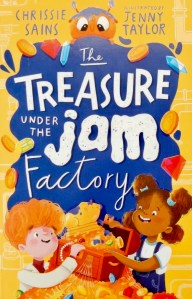
The Treasure Under the Jam Factory
Chrissie Sains, illustrated by Jenny Taylor
Walker Books

Having dealt with An Alien in the Jam Factory, McLay’s jam factory now faces a new challenge.

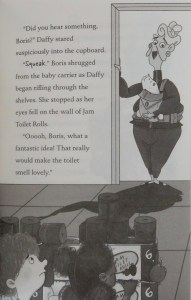
With his hyperactive brain a-fizz as always, differently abled Scooter McLay (he has cerebral palsy) can barely contain his excitement at the prospect of the Grand Re-opening with all that jam-themed food ready to be served. However, horror of horrors, all of a sudden something happens that nearly freezes young Scooter’s blood: the door unexpectedly opens and there before him and his parents, stands their hostile adversary, Daffy Dodgy clutching closely Boris, her guinea pig, come to claim what she insists still belongs to her. Surely all can’t be lost at this crucial moment. Time to call on the contents of tiny alien, Fizzbee’s, suitcase perhaps. Either that or find enough money to pay off Daffy once and for all.
Enter resourceful Cat Pincher and she has some more horrifying news for Scooter, news that increases the urgency to find treasure. Is she to be trusted? They’ll have to take a chance on that.

All manner of weird shenanigans take place deep underground when they find themselves face to face once more with Daffy. A deal is struck but it’s not long before Scooter, Cat and Fizzbee find themselves in the stickiest of situations imaginable on account of Cat’s jam-hating Uncle Perry who is intent on sabotaging the factory. Can Scooter’s knowledge of jam possibly extricate them from this? Cat certainly thinks so …

With fun illustrations by Jenny Taylor …

this really is a yummy sequel and one likely to leave Scooter fans licking their lips at the possibility of further encounters. Meanwhile they could always try baking some of the jammy biscuits using the recipe at the back of the book.

Do Lions Hate Haircuts?

Do Lions Hate Haircuts?
Bethany Walker and Stephanie Laberis
Walker Books

Leonard might be leader of his pride and king of beasts but when it comes to haircuts, he’s just a big baby that hates even the prospect of a trim. Consequently he searches everywhere in his kingdom for an expert barber until eventually he meets Marvin mouse. Sceptical about the possibility of such a tiny creature being a hairdresser, Leonard finally decides to give him a chance. The result is a
tonsorial work of art that delights the lion so much that he allows Marvin to try out all manner of funky styles and soon the two become best friends.

All is serene in the kingdom until one day Leonard detects a familiar aroma drifting on the air and
his nose leads him, to horror of horrors, his best pal working his magic on another animal. Consequently Leonard decides to let his hair grow and grow, vowing never again to get it cut. But with the increasing growth of his hair comes increasing sadness as Leonard misses his friend. Wiser than their parent, Leonard’s cubs suggest finding Marvin and apologising for the jealous behaviour Leonard has shown but he refuses so to do.

Suddenly Leonard hears a protracted yet familiar sound

and off he dashes to the rescue only to trip and take a precipitous tumble. Happily however, despite some mild injuries Leonard saves Marvin and in so doing finally sees the error of his ways, apologising profusely to the mouse. That isn’t quite the end of the story though for Marvin’s response generates a clever idea in Leonard’s mind and results in an exciting new enterprise. Even that however isn’t quite the end for there’s a clever and fun final twist yet to come …

Hair-raising indeed is Bethany Walker’s comic story of an unlikely friendship with its themes of learning to say sorry and to share. Hilarious illustrations by Stephanie Laberis are full of dramatic moments and laugh-out-loud twists and turns. A story-time favourite in the making methinks.

A Best Friend for Bear

A Best Friend for Bear
Petr Horáček
Walker Books

As Black Bear wanders alone he decides a friend would cure his loneliness but finding one in a large forest is far from easy. Suddenly to his surprise he comes upon another creature: it’s Brown Bear and co-incidentally that bear too is searching for a friend. Brown Bear agrees to Black Bear’s suggestions that they look together and off they go, both commenting on the difficulty of their mission. The search is occasionally hazardous but exciting

and it’s good to have a fellow creature to help when needed.

After hunting unsuccessfully for a while, Brown Bear suggests they practise with each other by playing hide-and-seek. All goes well until Black Bear is unable to find Brown Bear until …

and then as they sit side by side, a realisation dawns …

Young listeners will delight in being in the know with the author about what’s coming in the two final spreads and equally will love the warmth and on-going humour of the story. Petr Horáček’s arresting, richly textured and coloured, scribbly visuals are truly gorgeous: I love too, the way the bears’ eyes say so much in their search for what’s right there in front of (or beside) them all along.

One World: 24 Hours on Planet Earth

One World: 24 Hours on Planet Earth
Nicola Davies, illustrated by Jenni Desmond
Walker Books

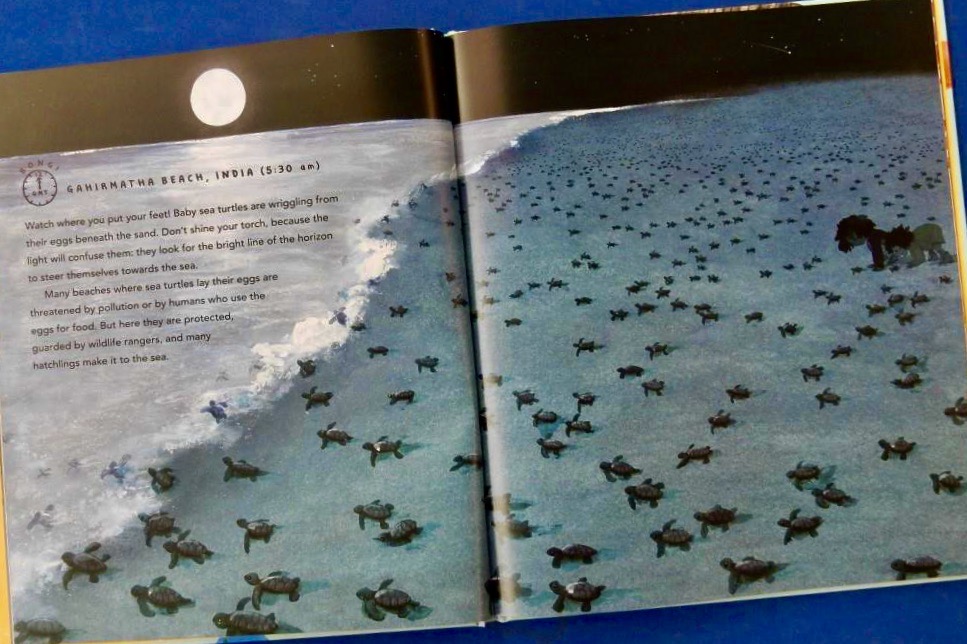
With the clock striking midnight, a little girl and her even littler sister leave their bedroom and take a round the world trip visiting animals large and small. 

They see elephants and lions in Zambia, baby turtles on Gahirmatha Beach in Odisha, India, 

gibbons in a Chinese nature reserve, sharks in the warm waters around the Philippines, kangaroos in one of Australia’s national parks, emperor penguins on Antarctica’s Ross Island and encounter a humpback whale near a Hawaiian island. At the same time California’s Pinnacles National Park is a-buzz with bees and hummingbirds, 

owl monkeys wake up in a forest of Ecuador’s Yasuni National Park, jaguars hunt their prey in Pantanal Brazil where it’s 8pm and finally, in Southern Georgia an albatross sits huddled on her nest. 

The last stroke of midnight is the signal for the sisters to traverse land and sea while beneath them are numerous warning signs of global warming. As the first hour of Earth Day, 22nd April begins in London it’s time to reflect upon the amazing wonders the girls have seen and contemplate the multitudes of others they haven’t, in preparation to issue a rallying cry to the world; it’s time to make a difference before it’s too late. We can all help to halt climate change but the clock is ticking …

As well as celebrating our awesome planet, author Nicola and artist Jenni show the way actions of we humans are adversely affecting different ecosystems worldwide. 

Powerful words and stunning illustrations make this a must have book for families and primary school classrooms: Celebrate Earth Day 2022 by sharing it.

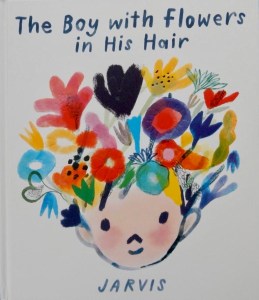
The Boy with Flowers in his Hair

The Boy with Flowers in his Hair
Jarvis
Walker Books

Whimsical, wonderful and full of heart is this latest offering from Jarvis. The narrator is a little boy who is best friends with David the boy with flowers adorning his hair. Both boys are members of a happy class with a caring teacher, Mrs Jones, and nobody show the least concern about David’s unusual hairdo, not even Mrs Jones who gets hay fever; and not even when it attracts bees or a family of birds settles there for a while. 

‘But one day something happened.’ We know not what except that a petal comes off into his friend’s hand as he waters David’s hair. David becomes quiet and uninterested in playing.

The following morning David comes to school wearing for the first time ever, a hat and he’s uncharacteristically quiet. Having removed outdoor garments as Mrs Jones’ instructs, David reveals a ‘twiggy, spiky and brittle’ head sans the remaining petals that fall once his hat is taken off.

Initially David’s classmates are somewhat unnerved and steer clear of the boy, not so his best pal however who remains close not concerned by occasional scratches. He has an idea – a very creative one

– and before long everyone else in the class is involved in project restore David’s colour.

Little by little David regains his joie de vivre and eventually his original flowers too, although his best friend keeps his box of bits and pieces just in case they’re needed ‘Because he’s my best friend, and I am his.’

In Jarvis’s painterly illustrations he shows so beautifully the changing emotions of David and his best friend as well as other members of the class. With themes of acceptance and the power of friendship, his story is a touching demonstration of kindness and supportiveness just when it’s needed. Full of messages adults will want to pass on to youngsters, this book is perfect for sharing and discussing with foundation stage classes, and with young children at home too.

Piano Fingers

Piano Fingers
Caroline Magerl
Walker Books

Adorably quirky and absolutely magical is this latest Caroline Magerl picture book.

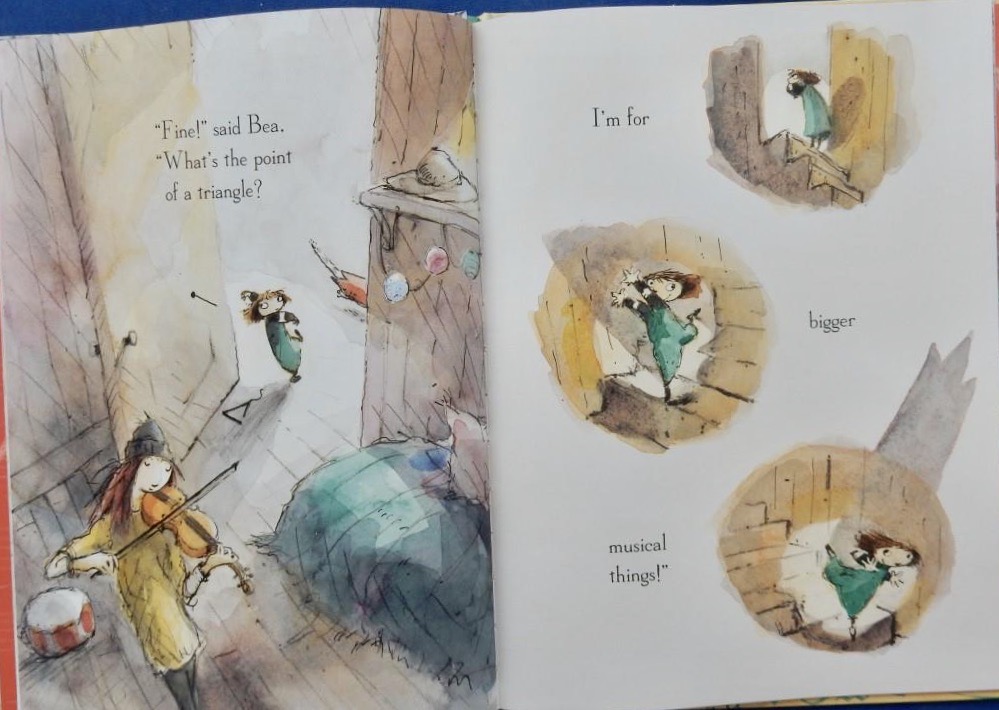
Little Bea comes from a musical family. Her self-confident and a trifle bossy big sister, Isla, creates beautiful music on her violin (her honey fog machine) while Bea, dissatisfied with the bink, bink, bink sound she makes with her triangle, casts it aside and goes to search for something with more potential on which to express her latent talent.

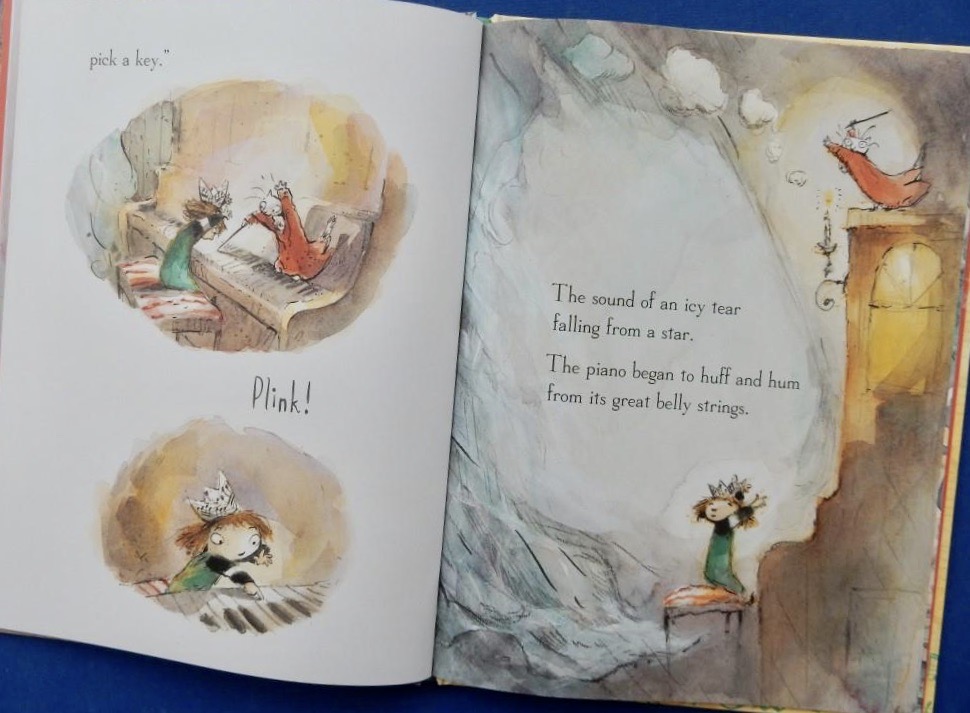
What she discovers is a piano, but despite being ‘a baby mountain’ it doesn’t play the sweet music that Bea yearns for. “The world is not ready for my genius” she declares. However, up steps the encouraging Maestro Gus with his, “There are whole symphonies up those sleeves. All you have to do is …pick a key. And with a plink there comes ‘the sound of an icy tear falling from a star.”

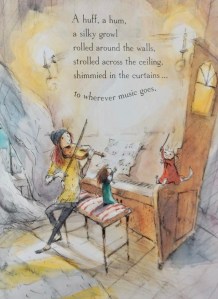
The music swirls forth as ‘A song of winter trees spinning barley sugar clouds for springtime.’ – what a wonderfully sparkling debut. But while Maestro Gus may have helped Bea discover her talent, she subsequently sends him packing outside into the rain in the ‘moth foggy dark’.

Eventually, back indoors, the three music makers, Isla, Bea and Maestro Gus come together before the Maestro retires for the night.

Their music making will assuredly enchant young listeners to this lyrical story from a hugely talented picture book creator, whose words embody musicality and when read aloud, are as mellifluous as the sounds one imagines emanating from the sisters’ instruments.

A subtle exploration of finding one’s own talent that should act as an encouragement to children to persevere, work hard and follow their passions.

Arabic Folktales: The Three Princes of Serendip & Other Stories

Arabic Folktales: The Three Princes of Serendip & Other Stories
retold by Rodaan Al Galidi (trans. Laura Watkinson), illustrated by Geertje Aalders
Walker Books

This is a collection of stories Rodaan Al Galidi has garnered from his childhood, from history and from literature, universal stories that belong to everyone, rewritten in his own style. Through tales such as these we find the commonalities among humankind.

Having said that, it’s probably true to say that there’s something for all interests in this gorgeously illustrated offering of twenty short tales. Some feature animals: an ant and a cockroach debate whether hard work and preparation are more important than doing things that make you happy;

a group of turtles endeavour to get a visiting partridge to change his lifestyle and remain on their island always; and an arrogant rooster learns that he’s not as indispensable as he’d always thought; and, a lion, a wolf and a fox discover that they have different views about sharing their hunting spoils.

Humans too have much to learn, not least regarding perceptions: upset as a result of boys calling her ugly, a beautiful girl retreats inside her grandmother’s home. In response her grandmother tells her of a father, his son, and a donkey travelling to Baghdad. The man rode, the son walked, and people thought it was disgraceful that the father was not more caring for the boy. Hearing their comments father and son change places before reaching the next village. I’m sure you can already imagine where this story is going …
There’s a tale about finding a way to eat with a spoon three feet long (one I’ve used in school assemblies from time to time) that demonstrates the difference between merely having love on your lips and having love in your heart too.

The title page of each story has a gorgeous cut paper design surround and further beautiful illustrations, some exquisitely detailed, are woven into the fabric of every tale by the hand of Geertje Aalders. These help readers and listeners conjure up ideas of the setting the author uses for each of his tellings although in his introduction is this: ‘Feel free to change the names or to choose other flowers, waters, windows or doors. … stories are the best migrants and the finest travellers. Let these stories become your own.’ Assisting readers of English to do exactly that is Laura Watkinson the translator, who like the illustrator, lives in the Netherlands.

Ancient though folktales may be, they contain much that is relevant in today’s world and I’d wholeheartedly recommend adding this book to your shelves at home or at school.

A Good Place

A Good Place
Lucy Cousins
Walker Books

Insect friends Bee, Ladybird, Beetle and Dragonfly all set out in search of a good place to live but they all want different things. Bee desires flowers, Ladybird loves leaves, it’s dead wood for Beetle and Dragonfly wants a pond.

In turn each of them finds what seems to be the ideal place,

but all have danger or unpleasantness lurking ready to strike at any moment. 

Hungry, sick and exhausted, the friends are in despair; but then a beautiful butterfly appears and asks what is wrong. When she hears the problem, she offers to help. Might it perhaps be that what their new friend shows them could be the perfect place – somewhere that fulfils all their hopes?

What a gorgeous book: a cleverly crafted text with repetition that youngsters will love to join in with; using a vivid colour palette and bold patterns, Lucy’s portrayal of the intrepid insects will surely evoke sympathy from young readers and one hopes, inspire their own efforts to create ‘A Good Place’ for minibeasts to inhabit.

Perfect for story time sessions and for beginning readers. Definitely my favourite Lucy Cousins book for many a long day.

Chirp! / Five Little Chicks

Chirp!
Mary Murphy
Walker Books

As a new day begins, each bird adds its voice to the dawn chorus. The Thrush warbles, Blackbird whistles ‘Tooraloo’ and then in turn we hear a sequence of onomatopoeic contributions from the Wren, the Lark, the Finch,

the Robin, the Swallow, followed by Wagtails, a Starling, Magpies, the farmyard Goose, Duck and Hen, the Pigeon and the Cockerel.

Suddenly into the crescendo of early morning sound, from a tiny blue unnamed bird that’s been watching and waiting patiently, comes a “Hush! It’s my turn to sing.” It then adds a zippy-zippy-zippeeeeee that serves as a reminder that. ‘ … We all have something to say. / We all get to shout / for a brand new / day!’

As it is with our feathered friends, so it should be for humans: everyone deserves a chance to get his or her voice heard.
With its wealth of sounds that cry out to be echoed by little humans, this is a fun story with an important message at its heart. And what an abundance of sound/symbol associations to be enjoyed.

Five Little Chicks
Lily Murray and Holly Surplice
Templar Publishing

In Lily Murray’s version of the nursery song Five Little Ducks, she’s replaced the ducks with chicks and a Mama Hen and makes the entire text more interactive by asking after every foray over the hills, ‘Now how many chicks / can you see?’, as well as offering some seemingly irresistible bait to her offspring. It certainly has the desired effect and there’s a lovely final surprise for Mama Chick provided by her little ones.

Holly Surplice has included lots of other baby animals and their parents in her springtime illustrations of the chickens and their adventure that takes them through a flower-filled meadow, a bluebell wood, a field of gambolling lambs, a farmyard and beside the stream.

Every one of the scenes is absolutely bursting with bold images and bright colour; and ramping up the interactive nature of the book are the numerous flaps to explore on every spread.

Little humans will definitely enjoy sharing this with their own mother figures, particularly around Mother’s Day and Easter, though this is a book that youngsters will want to go back to time and again. With it’s predictable text it’s also a good one for those in the early stages of reading to try for themselves.

Mindi and the Goose No One Else Could See

Mindi and the Goose No One Else Could See
Sam McBratney and Linda Ólafsdóttir
Walker Books

Young Mindi has a night time problem; it appears in her bedroom, ‘quietly as a thought comes into your head,’ in the form of a large shadowy goose, staying as long as it wants. Neither of her parents can see it but do their best to dispel her fears.

“Well, you’ll just have to close your eyes and make it not real,” says her mother.

Concerned, her father goes off to consult a wise farmer, Austen, who lives up on the hill. He suggests that both Mindi and her dad come up to visit his farm, and when they do so, he introduces the girl to his animals, including two geese before taking her inside for a drink. Suddenly, into the kitchen strolls a young goat to which Mindi takes a great liking, naming her Black-and-Whitey. On the way home however, Mindi admits she likes the Shelling Hill geese but still insists that BIG goose isn’t nice.

About a week later, who should come to visit on a wet day but Austen, plus the goat Mindi liked.

Austen says he will give her the goat but must have something in exchange. Could that perhaps be Big Goose …
What a superbly understanding character is farmer Austen who shows such empathy towards Mindi, making her become part of the solution to dispelling her fears.

Sam McBratney’s story – a longer text than many of his other titles – is one that many young children will relate to and the ending is hugely satisfying. Linda Ólafsdóttir’s mixed media illustrations – both large and small are simply gorgeous. How well she captures the warmth of Mindi’s loving family and the rural setting of the book. Read aloud or read solo, this has much to offer young audiences.

John Agard’s Windrush Child

John Agard’s Windrush Child
John Agard and Sophie Bass
Walker Books

With a final embrace from his Gran, Windrush child waves farewell to his Caribbean home, and with his parents, boards a ship to sail across the ocean to Britain and a new life. As the blue waters roll past, the boy’s parents remember ‘story time yard and mango mornings’ as they anticipate fresh beginnings in the hope that everything will turn out all right. 

The child recalls his grandmother’s parting entreaty to remember to write as she bestows that last fond hug.

On dry land at last, as the family walk away from the ship, they feel unsure on their feet. Then once ensconced in a new home, Windrush child keeps his word, telling his grandmother in a letter about ‘stepping into history, bringing your Caribbean eye to another horizon’ her words but now winging their way back.

Meanwhile the new arrivals have much to learn about this place where so much is different and where so many challenges await. For as poet John Agard writes in his author’s note, those from the Empire Windrush and many other ships brought with them ‘Caribbean culture’ that ‘had such a powerful and positive impact on British culture’ making Britain a much better place because of them.

The author’s hugely moving, lyrical and haunting evocation of the journey families of the Windrush generation made is rendered all the more powerful by Sophie Bass’ vibrant illustrations – a vibrancy that truly reflects the richness of the contribution made by those who came.

An important book that needs to be shared as widely as possible in homes and primary schools.

Not That Pet!

Not That Pet!
Smriti Halls and Rosalind Beardshaw
Walker Books

Mabel is super excited: her family is getting a pet and she’s allowed to choose it from the pet shop she visits along with her mum and little brother. Her choice is – wait for it – an elephant! He’s a splendid hugger, gives terrific rides, makes a super slide and is really useful when it comes to watering the plants and pulling up weeds. However, he also tramples on all the family’s fruit and worst of all, sits on Mabel’s mum. “Not that pet!” comes the cry, “Choose something smaller!” And Mabel obligingly does so.

The elephant is replaced by ants, lots of them and they march through the house eventually finding their way into Dad’s underpants – yikes! You can guess what his instant reaction is, followed by instructions to choose something they can all see.

And so it continues with a skunk, a snake, a spider,

worms and several others. Poor pet shop Pete: will he ever deliver something that satisfies everyone. Eventually, close to giving up Mabel has a good think and what she thinks is ‘I just need to pick something furry and sweet … something friendly that everyone likes.’ Now what could that possibly be? It’s definitely not what you’d expect.

The final reveal will surely come as a surprise to readers and listeners. I love a fun final twist and this book certainly has that and much more. Smriti’s rhyming narrative reads aloud well and is huge fun and Rosalind Beardshaw’s illustrations are full of details to explore and giggle over, not least the bathroom scene and that of the visitors to Dad’s underpants, Make sure you watch the antics of Mabel’s little brother too: he’s a real cutie. Altogether a smashing storytime winner methinks, and one sure to get children talking.

News Hounds: The Dinosaur Discovery / The Princess in Black and the Giant Problem

News Hounds: The Dinosaur Discovery
Laura James, illustrated by Charlie Alder
Bloomsbury Children’s Books

From the author of the fabulous Pug and Fabio series comes new star, Bob. Bob belongs to Colin, the stationmaster at Puddle Station, and in addition to ensuring the trains run to time, he acts as a reporter for the Daily Bark, the town’s one and only newspaper for dogs. Now there’s a new dog in town; her name is Diamond and Bob thinks he’d like to become her friend, so one morning he heads off to the park where he’s been told she’s taken for a daily walk by her owner Mr Marcus who runs the Curiosity Shop. In order to open the friendship he decides to give her a present and having come upon a pile of bones – the biggest he’s ever seen – under the bandstand floor, thinks a large bone the ideal gift. However it takes so long to dig it out, that he misses his chance.

Temporarily diverted from his Diamond friendship forging, Bob dashes back to the newspaper office to report ‘the most amazing story Puddle has ever known.’ It could just be the scoop of the century. However, it’s not only News Hounds who are interested in the bone.
Diamond – yes she does eventually get her present – is amazed at its size and thanks to a book in her owner’s establishment is able to tell Bob when he finally meets her, what she’s discovered therein.
The trouble is Mr Marcus is more than a tad interested in the skeleton find too. The race is on … It’s definitely time to enlist the help of the entire canine population of Puddle.

Another highly engaging story from Laura and with Charlie Alder’s frequent coloured illustrations that help ramp up the drama, this book will appeal to new solo readers and work as a read aloud.

The Princess in Black and the Giant Problem
Shannon & Dean Hale, illustrated by LeUyen Pham
Walker Books

Readers will really need to have read some of the previous titles in the series (this is the eighth) to fully appreciate this one. It’s set on a chilly winter’s day and sees the Princess in Black, the Goat Avenger and the Princess in Blankets with a giant problem – literally. While they’re engaged in building snow monsters, with a shout of “Squashy!” a massive foot flattens their latest creation. Said foot belongs to a giant and it continues to shout and flatten everything in its path. The race is on to prevent the total destruction of the village. It’s a task beyond just three but with the help of some superhero friends, it might just be possible.

There’s a lovely twist to this story, wherein teamwork is important but to reveal what would spoil things so I’ll leave you to guess what it might be. Sure to be a hit with established fans of the princess with an alter ego. With a bright illustration by LeUyen Pham at every page turn, it’s ideal for newly independent readers.

Hat Cat

Hat Cat
Troy Wilson and Eve Coy
Walker Books

The old man in this story has a daily ritual: he puts peanuts in the crease on the top of his hat, goes outside, and sits, ‘as still and welcoming as a grand old tree.’ Then he waits for the squirrels to come. One day he’s delighted to find a cat emerges as he lifts up his hat and unsurprisingly he names him Hat.

Taking the creature inside, he allows Hat to do whatever he wants other than going out. “If I let you outside, you might leave me. Or you might chase the squirrels … or worse.” So whenever he goes for his daily outdoor sit, the old man closes the back door behind him leaving a mewing cat inside watching from within.

Then one day the old man isn’t there:Hat is alone for days until other people come and feed, rub and talk to him.

Times passes and one day Hat notices that the door has been left open. Seizing the opportunity, out he goes straight onto the decking. Now what will he do?

Nothing is said about why the old man is absent and we surmise that he’s been ill. Happily though there is a happy ending for Hat and for the old man and the other humans who have stepped in.

Troy Wilson’s words and Eve Coy’s soft, warm watercolour pictures work beautifully together showing the deep affection between Hat and his old man in this warm-hearted tale wherein
companionship, trust and love are key.

Apple and Magnolia

Apple and Magnolia
Laura Gehl and Patricia Metola
Walker Books

Britta insists that her two favourite trees Apple and Magnolia are best friends; this she knows deep down inside herself and there’s no swaying her. She visits the trees every day and watches how they communicate with one another. Some members of her family tell her that trees cannot have friendships – her father speaking kindly, her elder sister Bronwyn forcibly; her Nan in contrast says, ‘unusual friendships can be the most powerful of all’.

One night Britta notices that Magnolia’s branches have started drooping. While her father and sister tell her the tree won’t survive the winter, Nana asks about a plan. This galvanises her into action. 

Aided and abetted by her pets she makes a telephone using cups connected by string for the trees to use, knits an enormous scarf and wraps it around them so they can share one another’s warmth during the chilly winter months and hangs a string of lights between Apple and Magnolia so they can always see each other.

Time passes and one morning Britta thinks that the trees have become closer together. She measures the distance between them and continues to do so every morning, getting the usual responses from family members. The arrival of spring sees pink blossom on Apple’s branches whereas Magnolia doesn’t flower, although Britta’s measurements decrease and you can’t argue with scientific data. 

Eventually the first blossom appears on Magnolia sending Britta’s hopes soaring. Soon it’s time for a celebration.

The repetition of the comments, be they negative or positive heightens, the impact of the telling of this delightfully fanciful story. Not entirely fanciful however; author Laura Gehl includes this in an introductory note, ‘Scientists are just at the beginning of understanding how trees are able to communicate with and support other trees.’ Equally delightful are Patricia Metola’s whimsical illustrations of the characters, both human and arboreal.

Saving the Butterfly

Saving the Butterfly
Helen Cooper and Gill Smith
Walker Books

This is a timely and very moving story about trauma, the way different people respond to it, empathy and the possibility of recovery.

Two children, a big sister and her small brother are rescued from a boat adrift on the dark sea; they’ve lost everything. The younger one remembers little of his ordeal whereas his sister appears more resourceful, talking to rescuers and being instrumental in finding them shelter in a broken house.

However, while she remains inside dwelling on what’s gone before, her little brother ventures outdoors and begins to make friends.

Feeling greatly concerned about what to do to help shift that ‘dark in her mind’ the boy, keen to coax his sister outside, catches a beautiful butterfly and brings in back to their refuge.

The girl upsets him by telling him to release the tiny thing that begins hitting its wings against the walls. It needs space and it needs time, she tells the boy. The boy goes out again; his sister counts the colours of the butterfly’s wings to calm her breathing. Eventually the girl opens the door; the butterfly settles on her hand. She steps out and blows the tiny thing. Can she now find the courage to follow the butterfly as it takes flight towards the sun where it belongs?

Helen Cooper’s heartfelt telling shows how, in their own ways, the siblings help one another to begin to move forward after such a life-changing ordeal. To me the blackness of the sea at the start represents their loss and the butterfly symbolises transcendence of that dark fearful state. Equally poignant, Gill Smith’s stunningly beautiful illustrations perfectly capture the feelings of the siblings in those early stages of rebuilding their lives.

Every primary school classroom needs a copy of this one.

I am NOT an Octopus

I Am Not an Octopus
Eoin McLaughlin and Marc Boutavant
Walker Books

As he pushes a shopping trolley loaded up with tins of tuna, eight-limbed Terry states firmly, ‘I am NOT an octopus.’ and continues to do so as he leaves the supermarket and walks to the park. Seeking to justify his pronouncement he continues that he’d be in the sea if that were the case, ‘Unless I were afraid of water (which I’m absolutely not).’

So why the panic when he finds himself showered by the sprinklers he passes?

Terry carries on talking about the potential difficulties fear of water would pose for an octopus: no meeting octopus friends and family, no outings to Super Octopus Fantasea Adventure World either. Perhaps Terry should try learning to swim: he asks readers for some advice were he to pay a visit to the swimming pool including to pee or not to pee, and he decides to take the plunge.

Then with a newly acquired skill under his trunks, there comes Terry’s big reveal. However what’s said will come as no surprise to readers.

Delectably daft, Eoin McLaughlin’s tale of facing and overcoming your fears, octopus style, is one that children will relate to while relishing its silliness: silliness made all the more engaging by Marc Boutavant’s zany scenes of the protagonist narrator and his antics.

Toddler Take-Along: Nature / Hello, Bee / Jeppo Finds His Friends

It’s never too early to start introducing little ones to the delights of nature and the first two books from Little Tiger should help do just that. Thanks to the publishers for sending them for review

Toddler Take-Along: Nature
Ana Zaja Petrak and Becky Davies

Bold images on bright backgrounds with peep through die-cuts and a simple question per spread, invite toddlers to look all around and with the help of the labels, name what they see, be it on the ground, up in the sky, or on and around the pond.
As suggested in the title, a handy carrying handle makes this one ideal for taking out on walks.

Also bursting with mini beasts is:

Hello, Bee
Sophie Ledesma

A buzzy bee leads the way through the pages of this touchy-feely, lift the flap book wherein we meet small creatures that fly, crawl, slither and walk; there’s an odd surprise too. Sophie Ledesma’s multicoloured images are gently humorous yet recognisable, and in combination with the brief chatty text and hidden animals element and the final ‘What did you spot on the way?’ spread showing an assortment of natural objects that were passed on bee’s flight, make for an interactive experience that little humans will enjoy sharing with an adult or perhaps an older sibling.

Another interactive board book is:

Jeppo Finds His Friends
Ingela P Arrhenius
Walker Books

Tiger Jeppo can’t wait to meet up with all his friends but although he soon finds Larry Lamb and Flora Fox, of Odd the owl there’s no sign. So off the others go to look for him. After several misidentifications, disappointed, they’re on the point of giving up but there’s one last place to check. Perhaps they might be lucky this time …
Toddlers will have fun lifting the various flaps as they join in the search for Odd the owl in Ingela Arrhenius’ bold, bright playful spreads.

The Tower at the End of Time / Diary of an Accidental Witch: Flying High

The Tower at the End of Time
Amy Sparkes
Walker Books

Reformed pickpocket Nine, Eric the troll, wizard Flabbergast et al return for a second wonderful adventure that again mixes wit, magic, some nail-biting moments and occasional chaos.

Now the curse on the magical house has been lifted allowing the friends to travel between worlds, their first destination being The Wizarding Hopscotch Championship. It’s particularly important that Flabbergast attends the championships – he’s missed three years already and his worthiness is at stake. Moreover, the final prize for winning the event is a visit to The Tower at the End of Time, where one question can be asked!

There’s a problem though, for the house, being nervous about travelling again, is beset by an attack of the hiccups, which unsurprisingly upsets plans somewhat as with each HIC they bounce from one world to another till they finally reach those championships. More problems ensue when Flabbergast discovers that the hopscotch grid is aflame and he encounters many obstacles thereon, but negotiating it is the only way he can get the answer to his question.

In the end everything becomes a race against time, or rather gigantic sand-timers, with every contestant desperate to find an answer to their particular question. And what about Nine? She too has questions concerning who she really is and who left her that music box she treasures so much.

Hugely inventive and sparkling with excitement: primary readers with a penchant for high octane fantasy will jump at the chance to read this.

Diary of an Accidental Witch: Flying High
Perdita & Honor Cargill, illustrated by Kate Saunders
Little Tiger (Stripes Publishing)

With her first diary safely hidden away and her first half term at the School of Extraordinary under her belt, Bea Black starts a new one for this second book.
At home she’s still struggling to give sufficient time to her neighbour and close friend Ash who goes to an ordinary school..

With the Winter Solstice fast approaching, the main topic of conversation after the break is the forthcoming Grand Tournament and Bea finds herself a vice-sports captain. With the Go matches coming up, it’s even more important that she polishes up her broomstick skills. And then following a to do involving buns in town, headteacher Ms Sparks announces that in the hope of improving relations between the two schools, she is inviting the pupils from the Academy to participate in the Grand Tournament and that means no magic, no flying and definitely no Go after all. Indeed the event has now been renamed Sports Day.

Can the rift between the two establishments be healed? Then what about that egg or rather Egg, that Professor Age has given her to tend at home?

Honor Cargill’s smashing illustrations are sprinkled throughout and once again this is hugely engaging and lots of fun, with all the pupils having to deal with similar concerns and issues that readers themselves are likely experiencing.

The Midnight Fair

The Midnight Fair
Gideon Sterer and Mariachiara Di Giorgio
Walker Books

Oh WOW! This is such a superb wordess book ( wordless save for the occasional fairground signs) – definitely one of the very best I’ve seen and way too good to restrict to a particular audience.

As the book opens, forest creatures – bears, squirrels, deer, a stoat, racoons, a badger, a fox, rabbits, mice, a wolf – watch from beyond the fence as the fair unloads. From the edge of the woodlands they see the fairground filling up with humans large and small who spend the entire day enjoying the thrills, leaving only as night descends. The keeper switches off the lights.

From the shadows the animals emerge – it’s their turn now for some of that fun. In they come eyes aglow, through a gap in the fence, two racoons reactivate the power and the place becomes theirs. We also feel it’s ours, so immersive are the illustrations. As well as revelling in the rides and other attractions the animals take on the roles of the stall holders using various natural objects – acorns, pinecones, shells, leaves, fungi and wild flowers – as payment and we can almost inhale the scents of popcorn and candy floss.

At daybreak, the keeper wakes; it’s time for the animals to leave. Tired but very happy and a tad messy, they clear up the entire place and hurry away in the nick of time,

leaving only some of their currency on the ticket counter. But, their business is not quite done yet: as the others bed down, wolf carrying the goldfish won at the hoop-la stall, heads down to the lake and releases it into the water.

With clever use of both dark and light, and the natural world and the human one, Mariachiara Di Giorgio’s mixed media spreads, both detailed frames and expansive double page scenes, are a satisfying mix of the whimsical and the wondrous. This is one of those books that the more you read it, the more emerges.

Owls Are Cool

Owls Are Cool
Timothy Knapman and Jason Cockroft
Walker Books

Meet Oscar, a burrowing owl and narrator of this story; he’s a cool creature he tells us, because of his inability to fly. He has no desire to emulate the flying owl species that soar and swoop in the sky. Instead he much prefers to spend his time burrowing and running and ZOOOOOOOOMing around the grassy terrain.

One day he issues a challenge to a watching snowy owl that comes swooping down to watch him strut his stuff. As expected the challenge is accepted and Oscar watches unimpressed at what he calls “showing off”. 

But then disaster: the snowy owl smashes right into a tree and crash lands nearby, injuring both wings. The creature introduces himself as Reggie and Oscar then has a change of heart. Offering his burrow as a temporary haven to Reggie, he discovers that the need for friendship is what really matters.

This is a sweet story showing how friendship can transcend differences and being different is ‘cool’.
I’ve never come across a burrowing owl in the wild; I don’t think they are resident in the UK and it was good to meet this one in Timothy’s tale. Jason Cockcroft captures both the long-legged strigine and the snowy one beautifully in his gently humorous scenes of the countryside shown from a variety of viewpoints.

The Little Things / Maisy’s Chinese New Year

The Little Things
Emma Dodd
Templar Publishing

Snuggled up with her little cub, a mother panda explains the importance of the little things in life and how they are what really matter: ‘It’s the little things that matter./ It’s the little things that count. / It’s not the biggest or the best / or the largest amount.’
She goes on to give examples of the things she’s referring to: morning kisses, time spent together perhaps watching passing clouds, apologising, saying “well done”, hugging a friend or smiling at a stranger; acts of kindness and more.
Through a simple rhyming text and adorable scenes of the actions she writes of (many with copper foil embellishment), Emma Dodd conveys parental devotion and love showing how the ‘little things’ add up to something really big: a contented, happy life with a caregiver.
A small, heartwarming book for adults and their little ones to cuddle up with and enjoy together at any time of day.

Maisy’s Chinese New Year
Lucy Cousins
Walker Books

We join Maisy and her friends as they prepare for the Chinese New Year. The day before the festival Maisy prepares by sweeping her house; we see her visiting the market to buy food, decorations and something red to wear, and generally getting ready for the festivities.
On the day itself, she’s joined by first Tiger, (bringing presents and decorations to wish everybody luck and happiness), shortly followed by Tallulah, Charley and Cyril. After they’ve finished feasting who should come a-visiting bearing lucky red money envelopes but Ostrich and Penguin. They all gather around Tiger to listen to the story of the Chinese Zodiac

and then come midnight they welcome in the new year by watching a firework display.
Next morning everybody participates in a colourful parade and then Maisy leads all her friends in a good luck dragon dance.
The story is followed by a ‘can you find?’ page.
With Lucy Cousins’ bold, bright illustrations containing lots of Chinese touches such as paper lanterns, a blossom branch and a blue and white vase, this is a lovely way to introduce very young children to the traditions associated with the Chinese New Year.
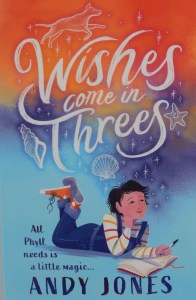
Under the Sea 1,2,3 / Jelly-Boy

These are two picture books with an undersea setting: thanks to the publisher Walker Books for sending them for review

Under the Sea 1,2,3
Frané Lessac

Vibrant illustrations, a counting element, fun fascinating facts and an environmental message are combined in this picture book that takes readers beneath the ocean to meet some of the animal inhabitants living in and around the coral reef.
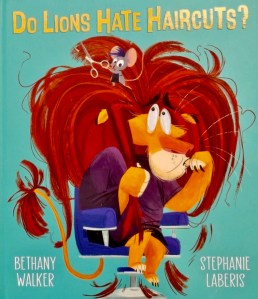
First we encounter one giant whale shark and discover that some of their kind can grow as long as a bus. Then, in a double spread each, come two dugongs, three playful clownfish … parrotfish (7) which young children will love to discover, use their sharp teeth to ‘crunch up coral’ and later ‘poop out the chomped-up coral as sand.’

After twelve tired seahorses, comes a final scene showing the reef along with a gentle message about their important role in keeping the sea and ultimately the planet, healthy. There’s also a visual summary of all the creatures we’ve met alongside the relevant numerals that may well send little ones back to the beginning to start over again.
A gentle way to learn some marine biology facts relating to habitat and habits of the creatures selected.

Jelly-Boy
Nicole Godwin and Christoper Nielsen

A highly important topical issue lies at the heart of this seemingly simple eco-themed love story.
Assuming that the object of her affections is another jellyfish, Nicole Godwin’s jelly-girl narrator – against the advice of other family members – falls in love with a plastic bag. ‘ “We’ve seen his type before.” “He’s highly dangerous.” ‘ they warn. Nonetheless, the attraction is so strong that she follows the object of her affections into wild and dangerous waters as little by little the dreadful realisation dawns …

You can almost feel the pull both of the narrator’s love and the ocean waters as the narrative moves across the spreads taking readers to the final farewell.

Mixed media illustrations and an unusual telling combine to deliver the crucial message about the pollution of our oceans and its devastating effects in a picture book that will make a different starting point for primary classroom discussions about, and more important action concerning, single use plastics and caring for the environment in general.