50 Words About Nature: Animals, 50 Words About Nature: Bugs / I Want To Be A Lion, I Want To Be A Monkey

These are all books for very young children, – thanks to the publisher Oxford Children’s Books for sending them for review.

50 Words About Nature: Animals
50 Words About Nature: Bugs

Lily Holland and Debbie Powell

As an advocate for using the correct scientific terminology with young children I was excited to see this pair of books – the first two in the new series 50 Words About Nature – doing just that.
Animals takes a look at the whole of the animal kingdom – mammals, fish, reptiles, amphibians, birds, insects and molluscs giving examples of each including a tiger, alligator, dolphin, frog, beetle and octopus, in the process defining such words as carnivoreherbivore, vertebrates, invertebrates, primates, habitat, zoologists and extinct.

In similar fashion Bugs explores first insects, then arachnids and next returning to insects, focuses on several different beetles, including some like fireflies that are nocturnal. There’s a spread featuring nocturnal moths, another looking at pollinatorsand the final one introduces entomologists. Terms used include exoskeleton, antennae, proboscis, metamorphosis, arthropods,

elytra, carapace and telson. I don’t think I met those last three until I started studying biology at secondary school. However in my experience, small children love big words, will assimilate these in context herein and enjoy impressing adults by using such terms as bioluminescence and pollinators.

Integrated into the text, Debbie Powell’s illustrations are both arresting and realistic.

I Want To Be A Lion
I Want To Be A Monkey

Pintachan and Katie Woolley

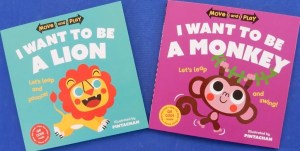
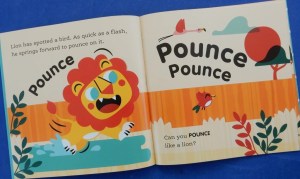
It’s time to move with two additions to Pintachan and Katie Woolley’s Move and Play series for the very young. Get your little ones, be they at home or in an early years setting, pouncing, 

creeping, rolling, running, hiding away and yawning like a lion. If you’re at home cut out the mask, add string and your child will be even more lion-like especially if they also start with a few very loud roars.

Alternatively they might prefer to emulate a monkey; in which case the starting sound is ‘Ooo-ooo-ah! after which comes the more active scampering, rolling scratching, munching (bananas of course), climbing , swinging, leaping all of which can be combined into a lively monkey dance. What are you waiting for? …

Stuck for ideas? Scan the QR code inside the front covers. Pintachan’s bright art work and the engaging texts support the development of children’s imagination and their physical development, but above all they are fun.

The Selfish Crab

The Selfish Crab
Anya Glazer
Oxford Children’s Books

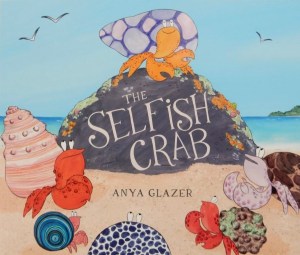
Claude is a hermit crab and he’s exceedingly proud of his shell, justifiably so as it’s the most beautiful of all the hermit crab shells on the beach where he lives. However, hermit crabs don’t keep their shells forever; when they outgrow them, they have to search the seashore for empty replacements. What this particular group of hermit crabs do is that when a suitable one is found, the crabs all come together, line themselves up in order of size and one by one move along and into the next biggest shell. 

However, Claude decides he’s not going to participate in the exchange line up and flatly refuses so to do. 

His fellow crabs muddle along but life remains peachy for inconsiderate Claude with that special shell of his although it does start to feel a tad on the tight side, whereas Alphonso, a tiny crab has to put up with a shell that is way too large.
But then as the two chat about things, Claude mentions birds 

and before you can say, beware! the two crabs are seized and find themselves in circumstances they wouldn’t wish on any fellow crustacean, let alone a supposed friend. Could this perhaps be an opportunity for Claude to let go of his selfish ways and start thinking of the other hermit crabs?

This story is based on real hermit crab behaviour (details on the final spread). Anya Glazer uses speech bubbles to add further humour to her telling and the illustrations, which are a mix of the naturalistic and comical, will induce lots of giggles from children.

Mirabelle and the Magical Mayhem / Magic Keepers: Spirit Surprise

Mirabelle and the Magical Mayhem
Harriet Muncaster
Oxford Children’s Books

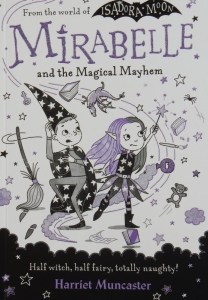
Cousin of Isadora Moon, Mirabelle, has a witch mother and her dad is a fairy. What anybody who has encountered Mirabelle in her previous stories will know and others quickly discover, is that she seems to create mischief wherever she goes. Here she and her brother Wilbur visit their fairy grandparents for a sleepover. With Mirabelle goes her little pet dragon, Violet. No magic without the supervision of the grandparents is the promise the children make to their parents.

After just one night at Granny and Grandpa’s both Mirabelle and Wilbur have broken that promise and the result is messy and mucky. 

Surprisingly Granny, who inevitably finds out about the disasters they’ve created, isn’t furious. Instead she is thoroughly understanding and helps her grandchildren put things back in order before Grandpa wakes from his nap. ‘Mirabelle you must never try and hide who you are just to fit in with who you think other people might want you to be,’ she tells her granddaughter. Wise words indeed. Moreover she doesn’t let on what has happened when Mum and Dad come to pick up their offspring.

Another sparkling story that Mirabelle fans will absolutely love and newcomers to the series will enjoy too and likely want to go back and read all her other books.

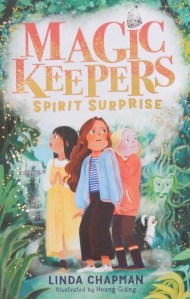
Magic Keepers: Spirit Surprise
Linda Chapman, illustrated by Hoang Giang
Little Tiger

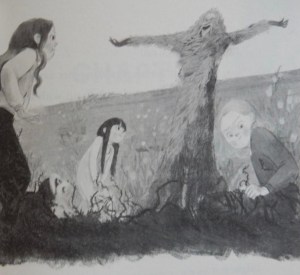
Life has changed since Ava and her mother moved into Curio House, the large Victorian villa left to them by Great Aunt Eva, Ava and her friends Sarah and Lily have discovered a magical world that surrounds the curios left in the house and are determined to keep it secret from the world at large. At the start of this story the three friends are exploring the magical energy of the crystals – the first magical things Ava found in her new home.

Outside the house and in the surrounding town, strange things start to happen. Despite it being late autumn, pollen has become so prolific that Ava’s mum is suffering badly from unseasonal hay-fever and plants are growing amazingly fast with vines shooting up everywhere.

Could the girls have accidentally unleashed some kind of nature spirit during their crystal investigations that is causing all this? 

If so, with Sarah’s mum far from happy about the influence the other two girls are having on her daughter, can they set things to rights before any of their parents or the townsfolk discover the cause of the out of control flora?

A second engaging episode for new solo readers with just the right amount of suspense.

Rudy and the Secret Sleepskater / Isadora Moon and the New Girl

These are additions to popular Oxford Children’s series : thanks to the publisher for sending them for review

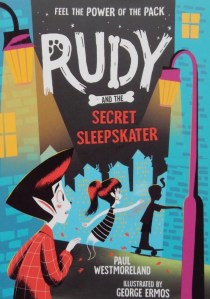
Rudy and the Secret Sleepskater
Paul Westmoreland, illustrated by George Ermos

Rudy is a wolf boy; his good friends are ghost girl Edie and Femi the mummy and they love to skateboard together. In this story, Rudy and Edie are invited to Femi’s home for a sleepover, something Rudy is eagerly anticipating until he’s told he must leave his beloved pet wolf cub Wolfie behind.

When he gets there, Rudy finds the food, let’s say, somewhat unusual and certainly not to his taste; but then one of Femi’s older sisters divulges something even more unusual about their young brother: he’s a secret sleepwalker. 

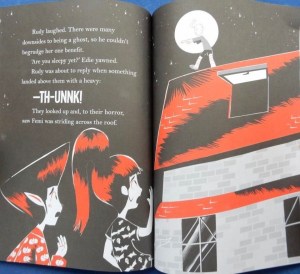
At bedtime, unable to sleep on account of Femi’s grandmother’s snoring, he climbs out through the skylight and howls to his Wolfie; he then embarks on a game of hide-and-seek with Edie. However Rudy has failed to close the window and not long after, the two of them notice Femi sleepwalking on the roof. 

Not only does he sleep-walk though: a fall lands the young mummy on his skateboard and off he goes at considerable speed. Can Rudy and Edie steer Femi back safely from a nightmarish situation? Perhaps, with a bit of assistance from a certain wolf cub. Moreover can the friendship between the three transcend the differences that make themselves apparent during the sleepover?

I’ve not met these characters in their previous adventures but certainly found this one, with its important messages and splendid illustrations by George Ermos, a fun, snappy read.. The series is ideal for bridging the gap between picture books and solo reading of longer chapter books and I have no doubt Rudy et al will find a place in the hearts of younger newly independent readers. The power of Rudy’s pack clearly extends well beyond his family.

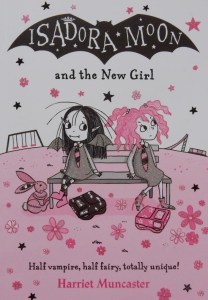
Isadora Moon and the New Girl
Harriet Muncaster

Isadora doesn’t take to Ava, the new girl who joins her class wearing snazzy, sparkling boots, thinking her standoffish and mean. Nevertheless, at the insistence of her Mum and Dad Isadora agrees to make an invitation for Ava along with all her friends for the party she’s going to host for her beloved Pink Rabbit.

The following day she hands out almost all the invites but somehow can’t find the right time to give Ava hers and in fact Ava’s behaviour seems even meaner so she keeps her invitation in her bag.

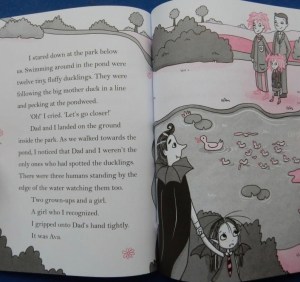
Back at home she eventually confesses to her Dad saying she feels really mean about the way she’s acted. He suggests two things: first that Isadora gives Ava the invitation the next morning and second that they take a pre evening breakfast fly to help his daughter clear her head. As they swoop over the park, Isadora spots some ducklings; so have other people – Ava and her parents are watching them too. 

Suddenly Isadora spots something else, something small that Ava has just taken from her pocket. From that moment the little vampire fairy starts to change the way she treats the new girl.

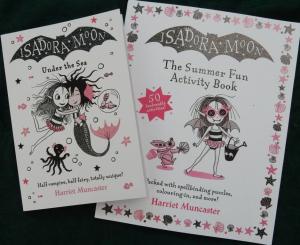
Don’t make judgements about people too quickly; get to know them first is the message that emerges from the latest Isadora Moon story. As always, it’s an Isa-delight to be in the company of the Moon family, but young solo readers new to the series might want to start with the first book, Isadora Moon Goes to School.

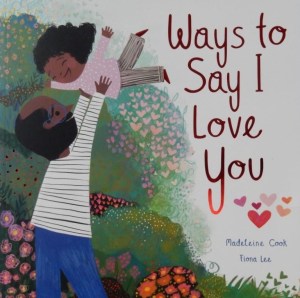
Ways to Say I Love You

Ways to Say I Love You
Madeleine Cook and Fiona Lee
Oxford Children’s Books

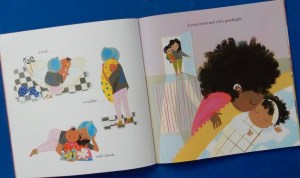
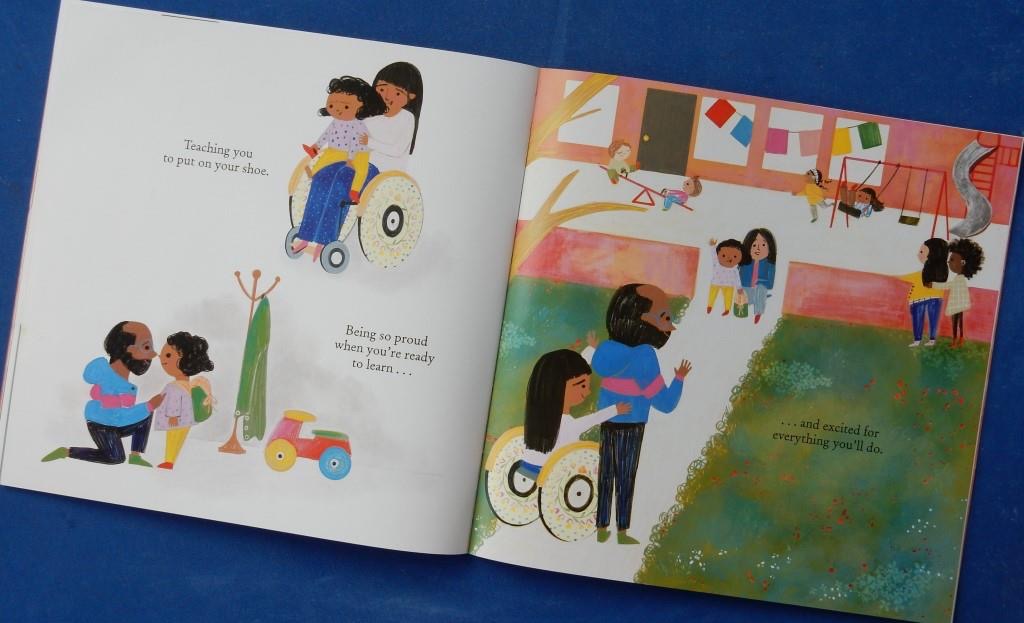
The opening lines of Elizabeth Barrett Browning’s sonnet 43 How Do I Love Thee? sprang to mind as I read this picture book, which is a celebration of love, and in particular familial love. Madeleine Cook explores some of the multitude of ways love is expressed: it might be the tender, gentle way in which a parent holds a baby or tiny child; perhaps it’s a caress; a shared experience of the natural world when out for a walk. Sometimes it’s being there with a hug when a child is upset, or a playful tickle at feeding time and a book shared at bedtime.

Being shown love helps a small child to develop self belief and the confidence to forge a path in life. Those things come when love is shown by a listening ear and a readiness to talk things over; also through helping a youngster to learn basic life skills, as well as being supportive when a child takes an important big step such as starting nursery or school.

Those who are shown love from the outset are most likely to be loving towards others as they become more independent; love is a choice and a decision. But one thing is certain, love is conveyed differently by countless different people and that is portrayed so well in Fiona Lee’s diverse characters.

Could it possibly be that love has the potential to bind us all together – if only …

This hug of a book is a delight to share.

Hop on Top, Mouse! / Too Heavy Elephant!

Hop on Top, Mouse!
Too Heavy Elephant!

Tony Neal
Oxford Children’s Books

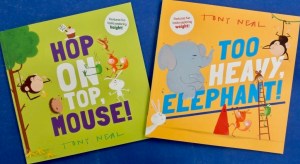
The ideal way for young children to develop mathematical concepts about weight, height etc is through practical experience. Fun books such as these two help the process too, especially when there’s a simple story with vital vocabulary, and funny pictures by Tony Neal to enjoy with a supportive adult.

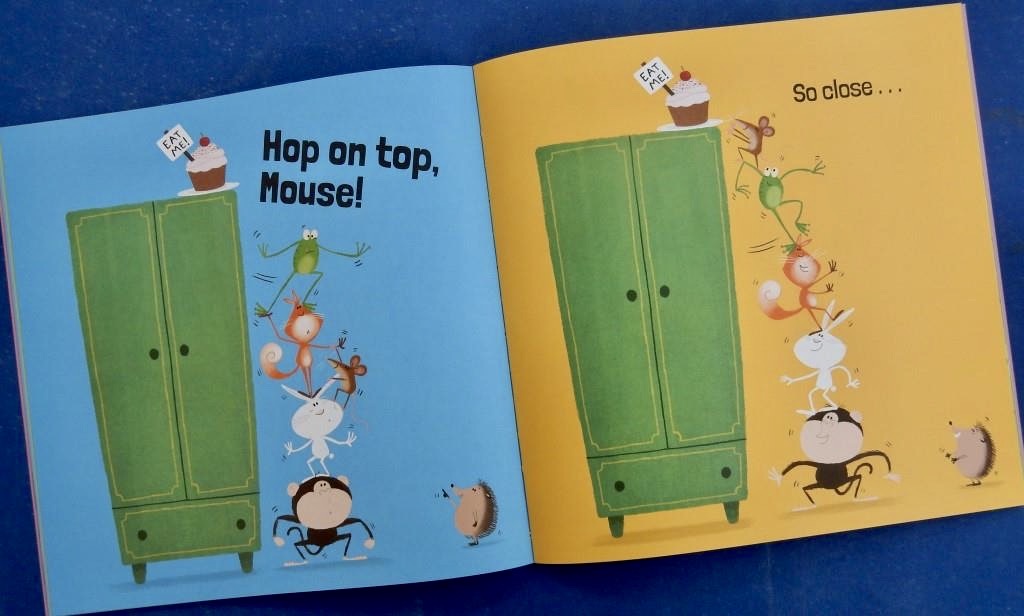
Hop on Top, Mouse! starts with a cupcake atop a tall cupboard and a tiny mouse looking longingly up at the object of its desire. Too high! says the text. (presumably the mouse’s frustrated comment). he calls on Monkey for help but the cupboard is too slippery for Monkey to climb. They call Rabbit to assist; his hopping skills are pretty good but even so all three are just ‘too short’. So what about a bit of co-operation. First one on top of another, but the cake is still too far away.

Happily though several other creatures are ready and willing to assist in operation cupcake. What will be the outcome – disaster or satisfaction all round?

The episode is followed by some activities for children to try both at home and out walking, and some basic key vocabulary.

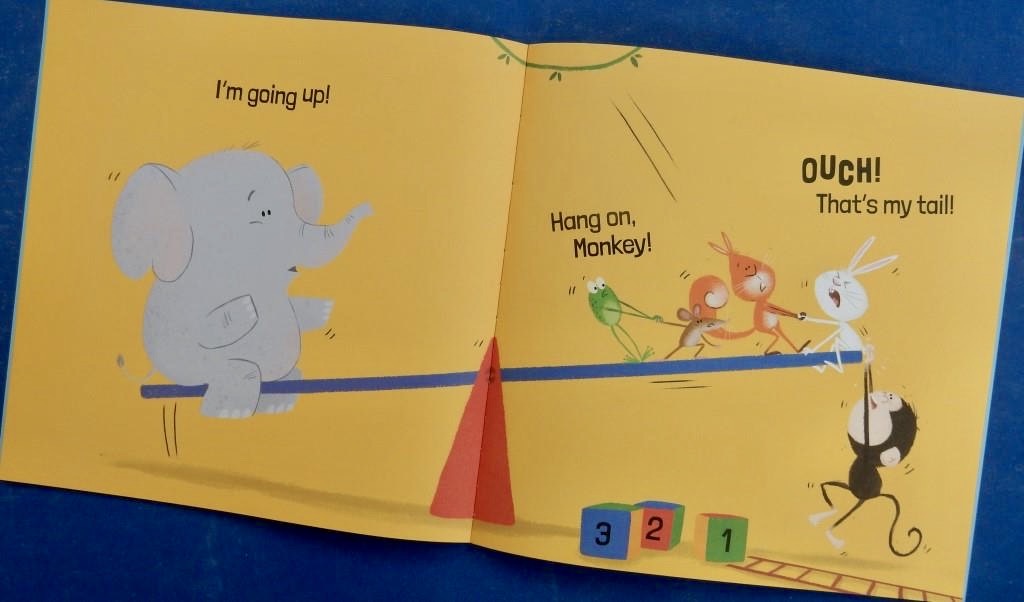
The same cast of characters participate in Too Heavy Elephant! along with the titular pachyderm. Mouse and Elephant are keen to play together on a seesaw but inevitably the latter is too heavy but Mouse isn’t giving up that easily; he’s finding another way to get onto the plank but even then he’s just too light and elephant too heavy to operate said seesaw. I wonder how many of Mouse’s animal friends it will take to find the balance …

Co-operation reigns … The friends haven’t reckoned on the appearance of Daddy Elephant however …

Again the funny story is followed by some ‘heavy and light’, and weight comparing activities, and some basic vocabulary.

A thoroughly enjoyable way to support mathematical learning at home or in an early years setting.

Winnie And Wilbur:Winnie’s Best Friend / Barkus:The Most Fun

Favourite characters return in these two books:

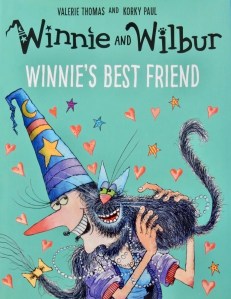
Winnie and Wilbur: Winnie’s Best Friend
Valerie Thomas and Korky Paul
Oxford Children’s Books

After more than thirty years during which witch Winnie ’s original fans have likely introduced her to a new generation, we have a story that takes us right back to the time when she met her constant and faithful black moggy companion, Wilbur.

But even that’s getting a bit ahead of this story that starts with the newly qualified witch living in that black house with which we’re now so familiar, but she’s all alone until that is, she decides to invite her three sisters to come and stay to help. They certainly alleviate her loneliness but it’s not long before sisterly squabbles begin, soon followed by cat fights. Enough is enough for Winnie so off they go but then she’s lonely once again.

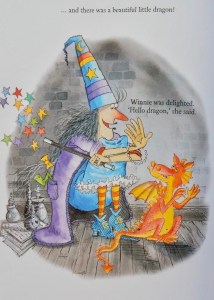
A wave of her wand results in a parrot but that’s a short-lived visitor and her next attempt brings forth a little dragon though obviously with it comes danger of the fiery kind.

Will Winnie ever find an ideal companion to share her home and her life? No prizes for guessing the answer to that one …

Delivered with their characteristic verve and humour, team Thomas and Paul have conjured forth another magical Winnie and Wilbur story that will delight readers young and not so young.

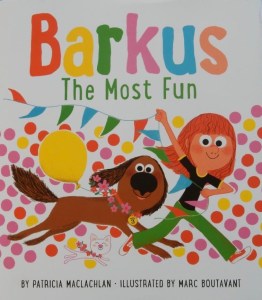
Barkus: The Most Fun
Patricia MacLachlan, illustrated by Marc Boutavant
Chronicle Books

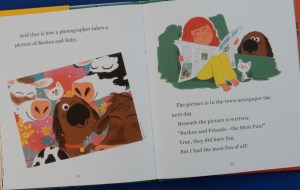
The lively, lovable dog, Barkus, is back in a third sequence of four lively, entertaining episodes, along with his human family – the child narrator, her mum and dad plus little moggy, Baby.

In the first story, the family set off for a camping trip leaving Baby in the safe care of Miss Daley, or so they think. However, on arrival at the camp site it’s revealed that Barkus has been harbouring a secret – a tiny feline one – and to the surprise of the rest of the family, the stowaway appears to enjoy camping just as much as all the others.

The second episode – a springtime one – sees the entire family visiting grandfather Jess on his farm. Barkus seems drawn to the cows and they to him and is especially happy when a baby calf is born to Dora.

Autumn is a special time for Barkus on account of the fun he can have with the fallen leaves; he also steals the show at the annual parade.

The final adventure has a chilly, wintry feel as the family take a trip to their cabin for some skiing but a big storm keeps them snuggled up indoors enjoying some storytelling.

With its mix of humorous colour illustrations and engaging text this is just right for readers just starting to fly solo.

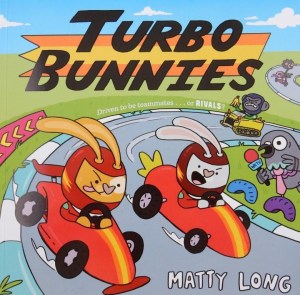
Turbo Bunnies

Turbo Bunnies
Matty Long
Oxford Children’s Books

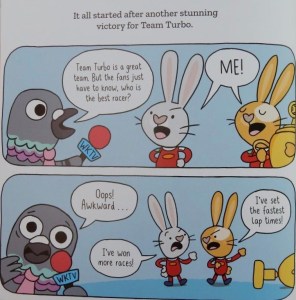
Another dose of super fun from Matty Long this time courtesy of drivers Bunny and Bonnie, Rory and Enzo (mechanics) and Camille (kart designer) aka whizz kart racers Team Turbo. Team Turbo ace the races but then after an interview rivalry sets in between Bunny and Bonnie, with both wanting to be best racer.

Things soon spiral out of control with both bunnies attempting to sabotage the other’s chances resulting in the quitting of the rest of their team.

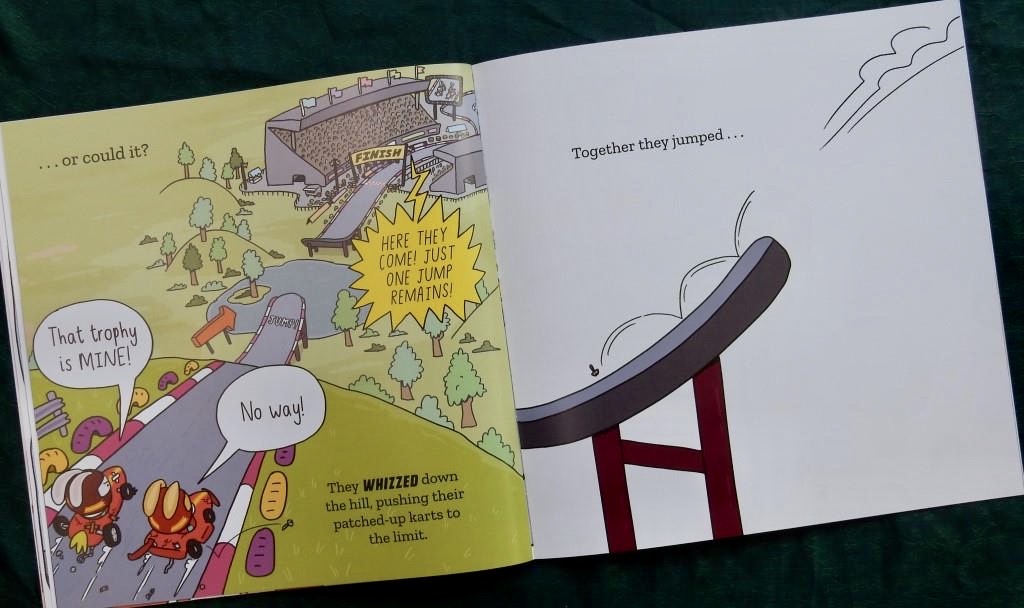
Come the next race the bunnies have to go it alone and that entails fixing their own karts first with the result that they wake up late and the race is already under way when they arrive. Nonetheless, off they speed but will it be a

case of individuality reigns or teamwork …

Will those two bunnies ever see the error of their ways and get back on track working as a twosome? What do you think? …

Full on drama this story assuredly is; with its message about the importance of team work it will appeal especially to young listeners with a taste for speed, thrills and spills: Matty Long’s illustrations certainly take us right up close to the action in this book.

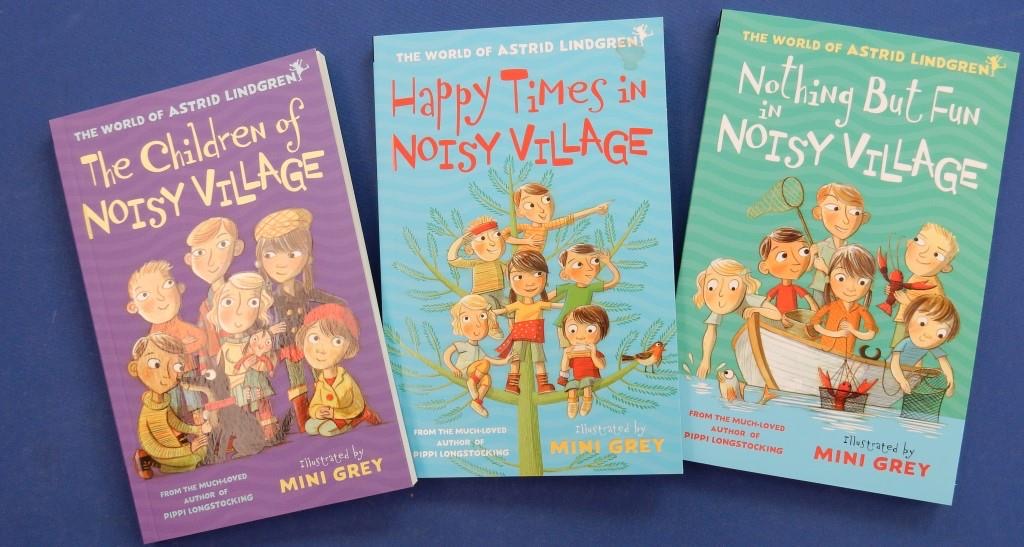
Let’s pay a visit to Noisy Village

The Children of Noisy Village
Happy Times in Noisy Village
Nothing But Fun in Noisy Village

Astrid Lindgren, illustrated by Mini Grey
Oxford Children’s Books


I was intrigued to learn of this series written many decades ago and now newly illustrated by Mini Grey who brings the village and its inhabitants to life for a new generation of readers. I seem to recall the first book from childhood but didn’t realise there were others.

The stories are narrated by one of the young characters, soon to be eight, Lisa and the first book introduces us to the village that comprises three farms side-by-side, set in the middle of the countryside. The village got its name on account of the six children who are exceedingly noisy: There’s Lisa and her two brothers Bosse and Lasse, from Middle Farmhouse, Ollie lives in South farmhouse and the third, North Farm is home to two sisters Anna and Britta. We share their adventures told in brief chapters, including Lisa’s birthday celebrations; being caught barefoot in a hail and thunderstorm resulting in frozen feet, a visit to an old lady named Kristin and a kitten a-piece for each of the three farmhouses.

The children’s Happy Times include Lasse skating close to a hole in the frozen lake and ending up falling backwards right in though happily not being ‘drownded’; a search for a water spirit and hunting for treasure.

By the third book Lisa is nine and the children are still having Nothing But Fun. Fun such s taking a lamb to school (that’s Lisa’s idea); the extraction of Ollie’s tooth; and the capture of a supposed prehistoric ox, and an adventure involving crayfish and the possibility of trolls.

The books are full of high-spirited fun, fuelled sometimes by some rather ridiculous ideas on behalf of one or other of the children, and just right for either solo reading or story sharing sessions.

I Don’t Want to go to School / Big

I Don’t Want to go to School
Lula Bell and Brian Fitzgerald
Little Tiger

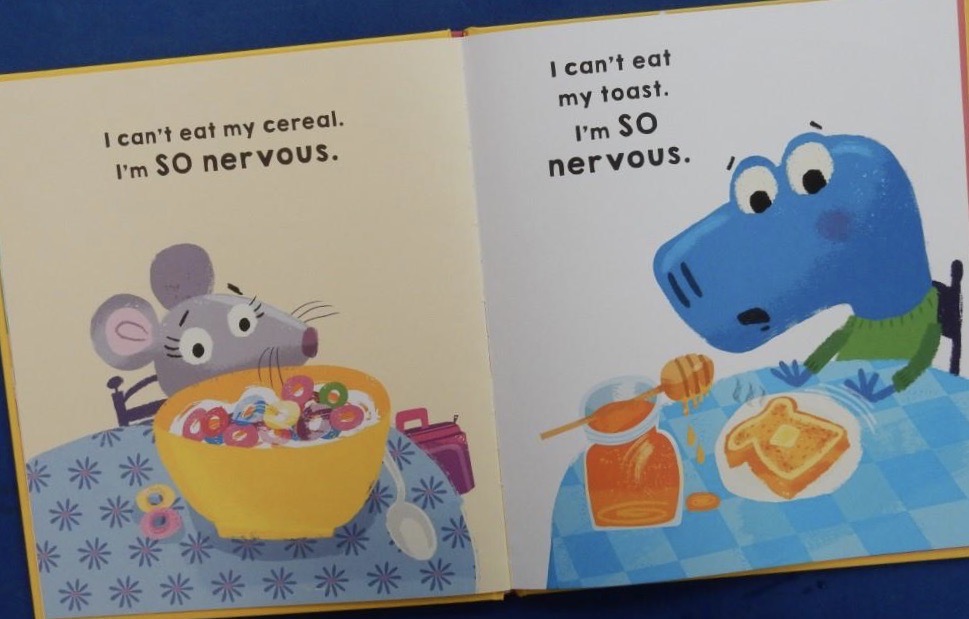
Both Mouse (teacher) and Dinosaur are suffering from first day nerves as they reluctantly get up, dress and are unable to face their respective breakfasts.

Concerns about being liked are voiced and both characters are feeling decidedly wibbly-wobbly.

School looks such a scary place full of seemingly intimidating children – until they encounter one another. Then it becomes a case of being brave together … and going on to have an absolutely terrific time. Yipee! school’s great

and tomorrow’s another day …

With a simple text that gets to the heart of those starting school wobbles and Brian Fitzgerald’s bright, humorous illustrations that capture so well the feelings of Mouse and Dinosaur, this is a definite winner and just right for youngsters starting school next term who will be amused to see that sometimes teachers have those apprehensive feelings too.

Big
Sav Akyüz
Oxford Children’s Books

Watching his big brother having the kind of fun that older brothers enjoy makes the small boy protagonist wish that he too could be big.

All of a sudden his wish is granted and off he goes on an awesome romp with the city as his adventure playground.

The trouble is he just keeps on increasing in size until he declares “Oh … no … I’m TOO big!’
Perhaps after all it’s better to be content with what you are and to use your imagination and say ‘what if …’.

With minimal words and arresting illustrations, debuting as author-illustrator Sav Akyüz has created a fun story that will resonate with lots of small brothers and sisters who watch their older siblings doing exciting things and think, ‘I wish … ‘

Stella and the Seagull

Stella and the Seagull
Georgina Stevens and Izzy Burton
Oxford Children’s Books

Young Stella (5¾) lives with her Granny Maggie in a flat beside the sea where a little seagull visits them frequently, often bringing a small gift. Lately though, rather than such things as shells and pebbles all her gifts are plastic rubbish of one kind or another, including a wrapper from Stella’s favourite chocolate bar.

Then one day, the little seagull fails to visit and concerned about her absence, Stella and her Gran go down to the beach and look for her. What they see is troubling: the poor bird looks sick.

Off they go to the vets right away where the vet takes an x-ray of the seagull and tells Stella that the bird has consumed a lot of plastic and shows her the alarming picture.

Leaving the seagull in the care of the vet, Stella realises that the beach must be where the bird found the plastic and so she and her Granny start picking up the litter, soon admitting that there’s far too much for them alone to collect. Then a poster gives Stella a great idea – “a Beach Clean Party” and as soon as they get home they set to work poster making. Before long, notices about the beach clean are all over the town.

Back home Stella spots the address of the chocolate company on a wrapper and decides to write to them, mentioning what has happened to the seagull and inviting them to the beach clean up party.

When she and her Gran go to post the letter it’s evident that lots of other people are also concerned about the seagull and many of the shops have stopped selling plastic items. But will they join the beach clean up and what about the Delicious Chocolate Company?

Let’s just say that one small passionate girl has galvanised not only her community but a manufacturing company to take action and make a BIG difference.

Written by sustainability advisor and campaigner, Georgina Stevens and wonderfully illustrated by Izzy Burton whose use of vignettes, single, and double page spreads make readers feel fully immersed in the story, this is a lovely demonstration of community power in action that will surely inspire young listeners to get involved in making change happen, especially with regard to single use plastic.

Definitely one to add to family bookshelves and classroom collections.

Colours, Pretend Play, Nursery Fun and an Angry Bear

Colours
Tim Hopgood
Oxford Children’s Books

Here’s a lovely introduction to the wonderful world of colour for the very young. After presenting the primary colours with gorgeous images of the natural world, Tim Hopgood next shows the result of mixing first red and yellow, then yellow and blue, folllowed by blue and red. He then goes on to say that some things change colour during the year: a rose that’s pink in spring might fade to white in the summer, while summer’s green leaves often turn brown when autumn comes. Whereas ripening tomatoes change from green to red as the sun helps them ripen and yellow bananas, if left eventually blacken.
Best of all however is the final gatefold, opening to reveal a glorious … rainbow.

Let’s Pretend: Animal Hospital
Nicola Edwards and Thomas Elliott
Little Tiger

An animal hospital is the backdrop for young children’s role-play in this new title in the My World series. Thomas Elliott’s illustrations are a fusion of photograph and digital imagery showing the children giving a check-up to a dog, sharing the contents of a vet’s medical kit, showing the range of animals they treat and the variety of tasks they perform on pets large and small. Nicola’s narrative gives voice to the young children imagining what it might be like to be part of the team whose job is to care for the animals that visit their hospital.
This shaped-book would make a lovely addition to a role-play area in a nursery or other early years setting.

Bear & Mouse Go to Nursery
Nicola Edwards and Maria Neradova
Little Tiger

Best friends Mouse and Bear return and now they’ve started going to nursery. It’s there little humans can enjoy spending the day with them as they experiment with paint, have fun outside in the playground, share their snacks, take a nap and participate in a noisy music making session. With flaps to lift and sliders to move, this is another book of interactive fun delightfully illustrated by Maria Neradova who includes just the right amount of detail in each of her colourful spreads.

Angry Bear
Dr Naira Wilson and David Creighton-Pester
Little Tiger

Very young children, babies even, enjoy tactile books such as this one from the publisher’s Touch & Feelings series. Herein we’re introduced to Bear who on this particular morning is feeling grouchy, particularly round his middle.
perhaps keeping to his normal routine that includes some sweet tasting honey might help improve his mood unless … oops, you drop it. GRRRRR – that’s the best way to vent your anger; after which hopefully, you’ll be back to your normal calm, contented self: breathing deeply helps.
As though speaking directly to her protagonist, clinical psychologist specialising in childhood mental health, Dr Naira Wilson writes in a chatty style and the book is illustrated by David Creighton-Pester, whose pictures of the bear show the character’s range of feelings with gentle humour.

Emmy Levels Up / Amber Under Cover

These are two immersive stories for older readers – thanks to Oxford Children’s Books for sending them for review

Emmy Levels Up
Helen Harvey

With a back drop of gaming and a school setting, this is a superb story that focuses on bullying, mostly of the spiteful verbal kind that includes name-calling and other covert psychological nastiness which can make a person feel utterly worthless.

Emmy is on the receiving end of this terrible treatment but finds solace in gaming and the gamer community wherein she feels confident. So we actually have an interweaving of two narrative threads: online Emmentine – confident and highly skilled, and real world Emmy – ridiculed by some of her class for not having the ‘right’ trainers and other gear that her family can’t afford.

The biggest bully is sly vicious Vanessa and it’s she who makes Emmy’s life a misery at school. Her home life too is far from harmonious, in part due her older brother Ryan’s aversion to mum’s boyfriend , Paul.

What Emmy needs to do is apply some of what she’s learned through gaming to her school adversaries, find a real life supportive tribe of her own and in so doing feel able to tap into her inner resilience and speak out against those whose desire is to humiliate her.

Helen Harvey explores the issue of bullying with enormous sensitivity and empathy in her debut novel that I have no doubt many youngsters will relate to.

Another terrific read is

Amber Under Cover
Em Norry

Meet Amber, in her early teens, bookish, under confident and able to keep her cool, in contrast to her best friend Vi who loves to be in the limelight but apt to panic under stress. Amber is shocked to learn that she’s to become a big sister but that’s only the start of her troubles; she then discovers that she’s been under surveillance by a mysterious spy agency – specialists in global espionage. This organisation were watching her performance in a supposed virtual reality game and she’s been selected to train as a teenage spy.

So clever is this agency that they successfully dupe Amber’s somewhat preoccupied parents into believing her week’s residential training is part of an inter-school programme in recognition of her superior STEM skills.
Staying in an underground bunker, Amber is plunged into a secret world where she has to undergo training in self-defence and surveillance, about which she mustn’t tell a soul: not her parents, not Vi (who would love the stylishness of the place) or anybody who isn’t ‘authorised personnel’. What has she got herself into, Amber asks herself.

However, at the end of the weekend she’s deemed ready for her first mission. What will she say to Vi having to let her down again?

Before long it’s destination Sankt Hallvard Manor an exclusive Norwegian boarding school suspected to be harbouring members of CHAOS an organisation intent on destroying the existing world order. Is she up to the task of fitting in while spying in this world of the super-rich?

Seemingly it will have to be ‘Fake it till you make it.’ in this gently humorous, tense, fast paced story at the heart of which is a girl growing up and finding her place in the modern world.

Tisha and the Blossom

Tisha and the Blossom
Wendy Meddour and Daniel Egnéus
Oxford Children’s Books

What is this life if, full of care,
We have no time to stand and stare.

To me, these opening lines of the WH Davies poem I learned in primary school lie at the heart of this latest collaboration between Wendy Meddour and Daniel Egnéus.

Like most of us, young Tisha and her family lead busy lives and wherever she goes, whatever she does, the little girl is constantly being told by adults to “Hurry up”. It happens in the morning as she enjoys watching the blossom fall, as she leaves for school and all the way through the school day.

So when her mum arrives to pick her up and urges her to hurry for the bus, it’s the last straw.

Fortunately Tisha’s request that they slow down results in mother and daughter walking home and enjoying a special game to help them do just that.

Then when they reach home Dad is there to join in with the welcome change of pace.

We all need to make time to be still and mindful in our hectic world; if nothing else the last twelve months has made us realise the importance of paying attention to the pleasure offered by small things. Wendy’s engaging story with Daniel Egnéus’ scenes – especially the blossom-filled ones, are a truly gorgeous affirmation of this.

Howard the Average Gecko

Howard the Average Gecko
Wendy Meddour and Carmen Saldaña
Oxford Children’s Books

Howard apparently has a very high opinion of himself and a seeming disregard for his fellow rainforest dwellers. So intent on bragging about his camouflage skills is he,

that he fails to notice that same ability in a number of the other creatures, that is until he encounters a stick insect. Stick insect’s “The rainforest is full of camouflaged creatures”

is let’s say, an ego deflater, even more so is its “You’re average”. and Howard has a crisis of confidence about his lovableness.

Suddenly out of the foliage comes a stunning creature

and despite what the stick insect thinks of her, Howard declares the wobbly-eyed reptile “magnificent”. This other gecko introduces herself as Dolores. The instantly smitten Howard invites her to watch the sunset with him and together these two ‘average geckos’ climb up a tree onto …

With its surprise finale, this is a fun story that introduces animal camouflage (look out for the creatures Carmen Saldaña has hidden away in her leafy scenes) while being a smashing book to show all young children that they’re just right as they are. Endless comparisons with others do nothing to foster self-esteem: it’s having people who love you that counts – to them you are in your own unique way, very special.

No More Babies!

No More Babies!
Madeleine Cook and Erika Meza
Oxford Children’s Books

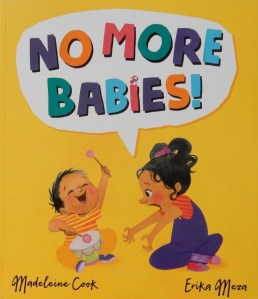
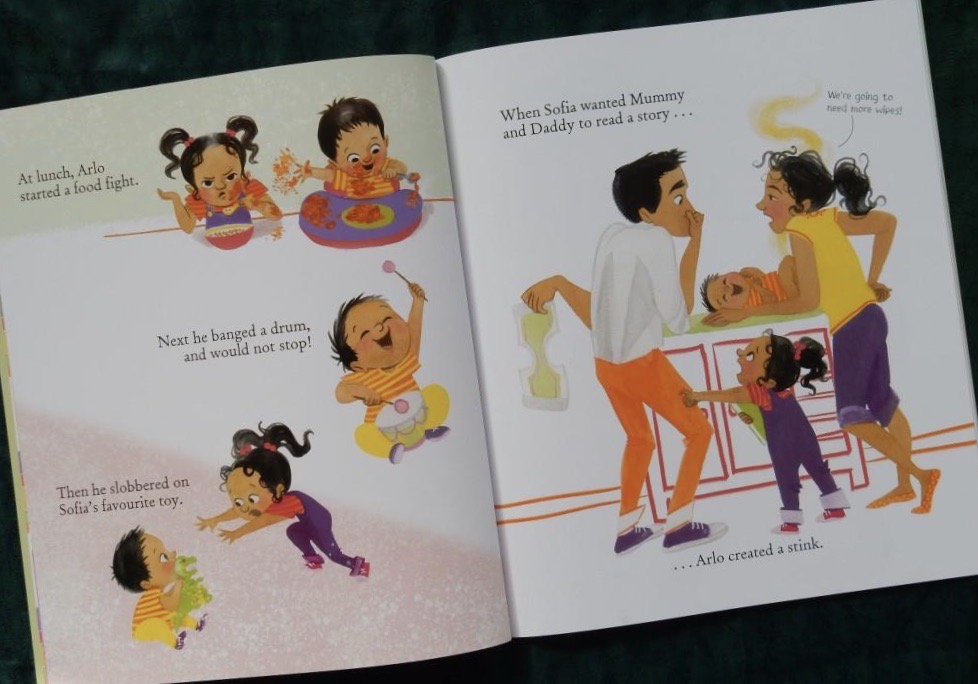
Sofia finds her baby brother exceedingly annoying. On this particular day he smashes down her amazing brick construction, starts a food fight, makes a terrible din on a drum and just when mum and dad are ready to read her a story, he diverts their attention by needing a nappy change.

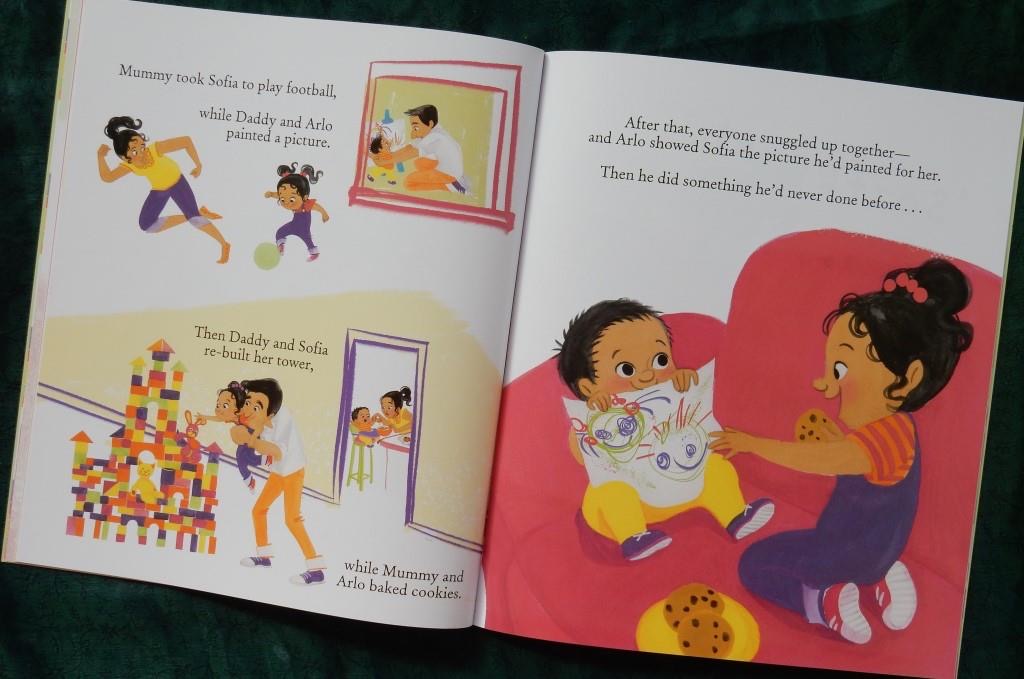
After all this, her parents’ news that she’s going to be a big sister again, doesn’t go down at all well. “No more babies!” she yells at her bemused mum and dad who now offer a sympathetic ear. Sofia’s account of the morning follows and then cuddles and lots of special attention for the little girl.

Suddenly Arlo surprises his sister and after that she begins to feel much more positive about him. Despite his continuing messiness, smelliness and slobbering, Sofia decides she loves him very much, telling her parents at bedtime, “Okay, you can have one more baby,” …

There’s a throwaway line surprise finale that will surely make both adults and young listeners laugh when they read this funny book.

With Erika Mesa’s wonderfully expressive illustrations it’s one for families to share when a new sibling is on the way, as well as a good foundation stage storytime read aloud especially if somebody in the group is in a situation similar to Sofia’s; or as part of a family theme.

Kitty and the Twilight Trouble / Mirabelle Breaks the Rules

Oxford Children’s books do some cracking series for new solo readers: here are the latest books in two of those – thanks to OUP for sending for review: 

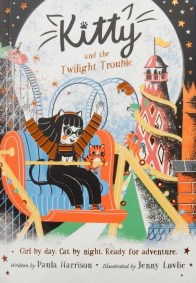
Kitty and the Twilight Trouble
Paula Harrison, illustrated by Jenny Lovlie

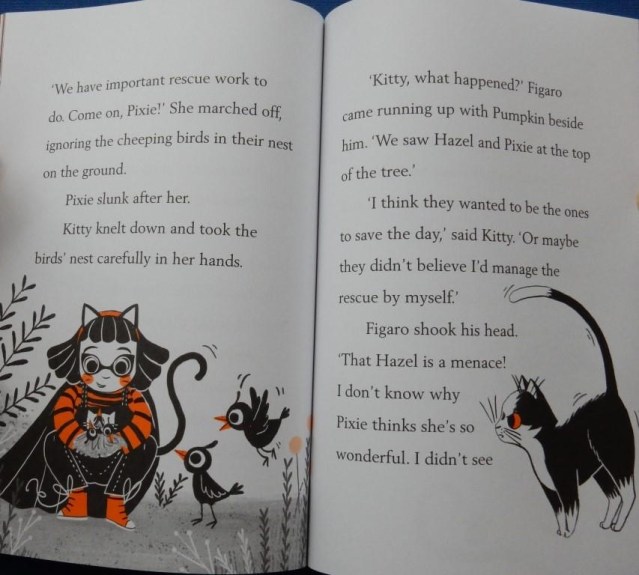
This is young Kitty’s sixth adventure and as the story opens she’s super excited at the thought of visiting the funfair with her cat crew. One of the crew, Pixie is super excited too for she has a cat new friend, Hazel. An introduction is arranged with Kitty for that night but it’s Figaro that turns up with a message from Pixie and Hazel, the latter claiming that she’s a Cat Superhero with her own special powers and important work to do.

It’s a rather dispirited Kitty who looks through her bedroom window into the velvety, moonlit sky contemplating the funfair. Suddenly into view come two cats skipping across the rooftop sporting matching scarves, and Kitty’s encounter with them leaves her feeling even less upbeat.

The following afternoon though, her parents keep their promise and take her to the funfair but once there, what should she see but Pixie and Hazel. As she watches them Kitty sees not superhero behaviour but feline foolishness and nastiness. Suddenly however, Kitty has other important things to attend to. Figaro reports that he’s seen a nest of baby birds that are in great danger. Guess who almost sabotages the entire rescue effort?

But that isn’t all, for back in bed that night Kitty receives another urgent message from Figaro. The supposed feline superheroes are stranded. Now it’s up to Kitty to use her own superpowers.

Yet another magical nocturnal story from team Paula and Jenny that will enthral young new solo readers. There are a considerable number on my radar who eagerly await each new Kitty story.

The same is true of another young character, Mirabelle who is also delightfully different and stars in …

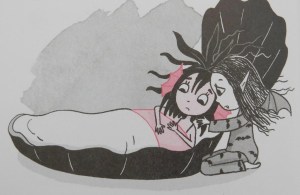
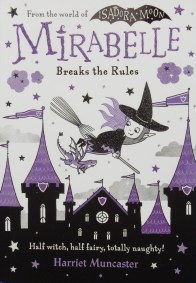
Mirabelle Breaks the Rules
Harriet Muncaster

Mirabelle, cousin to Isadora Moon, is half witch and half fairy. and as a new term starts at Miss Spindlewick’s witch school, her parents are hoping to receive better reports than before.

Mirabelle’s best friend, Carlotta has brought her a present from her holiday abroad – a bottle of shimmery multi-coloured magic dust which Mirabelle puts into her pocket. The snag is that its label is printed in a different language.

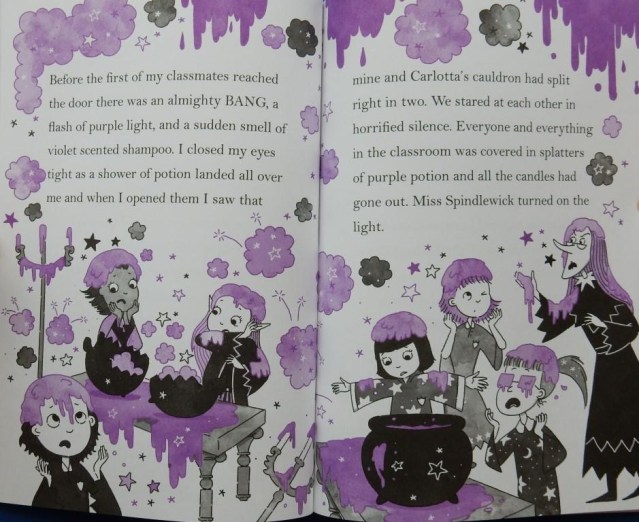
As the first lesson gets under way, Mirabelle volunteers to collect the ingredients for a colour changing potion from the store cupboard; most of these too she puts into her pocket. The potion mixing gets under way but before long something very untoward starts happening in the cauldron the two friends are sharing. Pretty soon the entire room is in chaos. Uh-oh! trouble again for Mirabelle.

She does her upmost to stay on the right side of Miss Spindlewick right up to the last lesson of the day with happens to be some loop the loop practice in the forest. Looping the loop is one of Mirabelle’s favourite things to do and she can’t resist flying over, rather than under the trees per the rule. Could she be heading straight for another disaster …

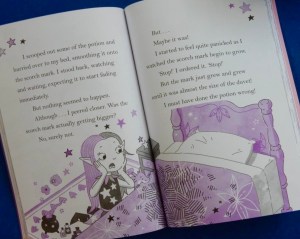
Mirabelle is a character whose mischief is the result of her struggle with rule keeping, rather than wrong intentions. Her first person narration endears her to readers right from the start and Harriet’s portrayal of her in those purple and black illustrations ensures that she looks every bit as enchanting as she sounds.