Robin and Pip

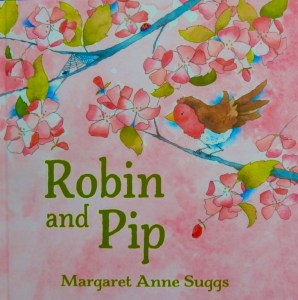
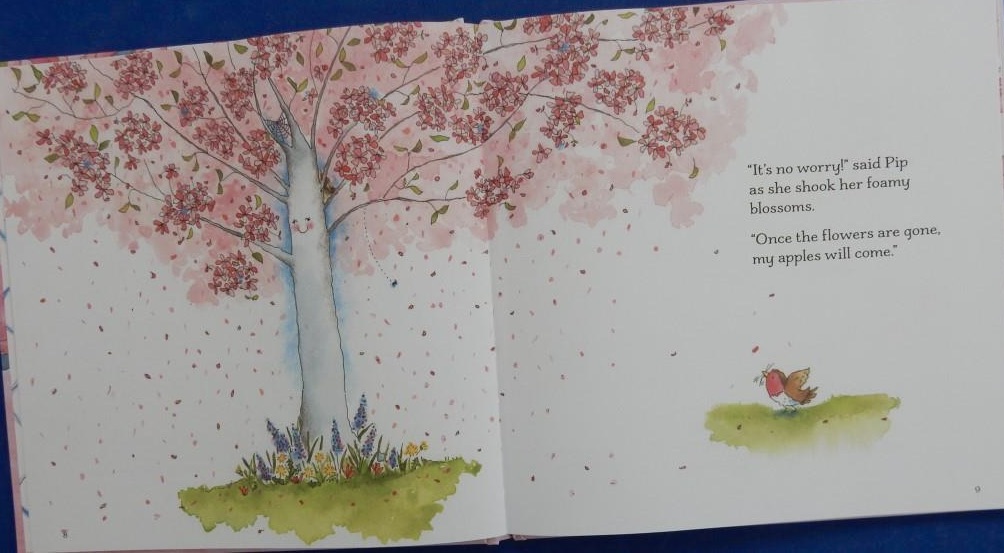
A touching tale about a Robin that worries. To ease those worries the little bird asks his patient pal, Pip the apple tree, lots of questions; first about the blossom. Does she miss the flowers when they float away? Now as Pip, a mature tree already knows of her naturally occurring life cycle she is fully aware of the series of stages she’ll undergo each year. Through Robin’s continuing questioning and Pip’s responses, readers share these natural changes.

The little bird and young listeners learn that the tree is able to provide stability through her roots and strength and flexibility through her branches to grow and hold up the fruits until they’re ready to fall or are harvested. Finally Robin nestles into Pip’s welcoming.comforting branches and reassured, the bird’s questioning ceases.

A gentle blend of story and information, this is a book to share and talk about with early years children who will be helped to understand that it’s okay to feel worried about things, but by far the best way to cope with their worries is to find someone to talk with. The author’s pen and watercolour illustrations are a delight and really bring out the feelings of the little worrier and the reassurer, while also including some amusing details of seasonal happenings and minibeasts.

Paper Dragons: The Rise of the Sand Spirits / Treasure Hunt

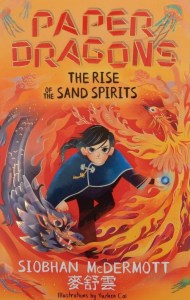
The second in this gripping series sees Zhi Ging continuing her journey in the magical underwater school Hok Woh. Now she undertakes a highly dangerous mission to rescue her friends and the villagers of all six provinces in the realm from attack. Accompanied by now-phoenix Malo she has to face dangerous sand spirits, enemies hungry for power and awesome lightning breathing dragons if she’s to save both her new home in the world of the immortals and her friends. However as secrets are uncovered, Zhi Ging must work out not only who she can trust but vitally, how she can survive.

With the author’s wonderfully imagined world-building and vivid, lyrical descriptions that include communicating jellyfish, readers will soon find themselves fully immersed in the twisting turning, fast moving plot. However, Zhi Ging’s journey is not only physical but it’s also one of self-discovery and personal development. She gains a considerable amount of wisdom concerning compassion and the power of words. With its blend of Chinese folklore, this is spellbinding indeed. Wither next, one wonders.

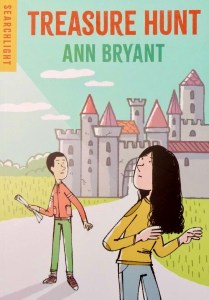
This book continues the tale begun in The Rock. The twins, Finola and Zane are at a traditional country fete in Cafner where they enter a treasure hunt that they hope might lead them towards their father. A local girl named Sylvie helps them understand the meaning of the clues but it’s not long before Zane catches sight of Nick Robinson whom he believes is somebody dangerous.. Should they abort the hunt and hurry to safety or continue following the clues to the end; clues in which their Dad has left messages for them. They really need to apply those lessons from Mum about Earth’s culture as well as the analytical thinking that Dad has advocated. And what about Nick Robinson – friend or foe?

The exciting story ends on a cliffhanger leaving readers eager to know if the family will ever be reunited.

The Old Watering Can

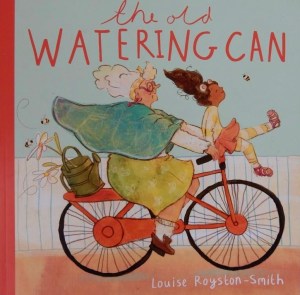
Grandma has two watering cans, one she’s had a long time that is leaky, the other is new and somewhat ornate. Every spring and summer day she carries them both to her greenhouse at the end of the garden to water the plants. First though she goes to the tap to fill them but by the time she’s walked to the greenhouse, half the water from the old watering can has leaked out. The proud new one however is still full and likely to splash over the rim.

As a consequence only one and a half cans of water reach her greenhouse and this makes the old can feel the need to apologise for its leak. However Grandma is quick to point out the array of flowers growing on the old can’s side of the garden but not on that of the new can. She explains that she was aware of the leak, so had planted seeds only on the old can’s side and as they walked to the greenhouse they got watered. She tells her old can that she’s been able to share these flowers and make her friends and neighbours and of course, its owner. happy.

A story about accepting and celebrating your imperfections from a debut author/illustrator whose illustrations are infused with a playful energy and their charming details will bring a smile to the face of readers. Grandma is the only character mentioned in the words but there’s also a little girl, a lively dog and a bird that appear on many of the spreads – plenty of storying there.

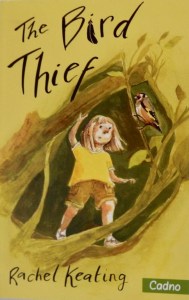
The Bird Thief

Twelve year old Erin has OCD with symptoms including continually checking things and counting. Her mother is depressed and has been since her much loved sister, Erin’s aunt Sophie, died in an accident some years ago.

Now it’s the summer holiday and Erin, her parents and younger sister, Lena, are staying in a static caravan in the Welsh countryside near to a spot that was special to Erin’s mum and Aunty Sophie and near to where Bampi (the girls’ grandad) lives.
Before long strange things begin to happen: first Erin sees a girl lying face down beneath the caravan next door and then later that day the woman staying in the same caravan is screaming in alarm about there being snakes in her son’s bedroom.

The following day Erin has a through the fence encounter with the girl she’d seen under the caravan, only this time she’s telling Erin not to feed bread to the ducks. The girl introduces herself as Bess, says that she’s thirteen and offers to show her a nest with chicks in. Despite Bess’s somewhat unkind behaviour Erin feels drawn to her and with Lena, ends up going through a hole in the fence surrounding the caravan park and into the woods beyond. Several times she goes and eventually Bess tells her the truth about the ‘snake’ episode. Later she takes them to the Goldfinch nest. Erin climbs up to get a closer look and ends up falling to the ground. It’s then her bird experiences begin: not only do the goldfinches heal Erin, they pass on some if their avian nature. Erin finds she’s able to fly, to slow down time and to communicate with one of the goldfinches, calling it Fable as it reminds her of her soft toy comforter.
Over the next few days Fable and Bess (despite some misunderstandings) lead Erin to realise that there’s something threatening the goldfinches and they find themselves caught up in a very dangerous situation when a forest fire breaks out.

Can Erin save herself, her friends and family, with or without her special powers?
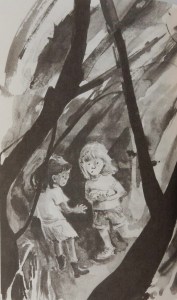
Erin is a fascinating character and the author draws on her own childhood experiences both for her protagonist and her magical tale wherein mental health, the natural world and friendship are explored. There are occasional strategically placed black and white illustrations by Naomi Bennet that add to the emotional power of the telling.

Off they Go!

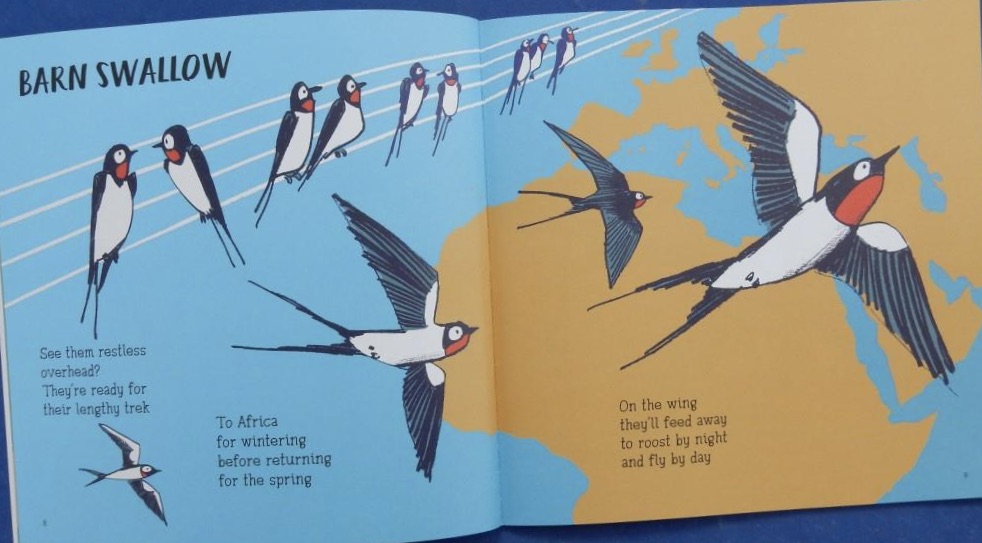
Poet / writer James Carter and illustrator James Munro have again joined forces on a natural history book, this time on the topic of animal migrations.

Through the former’s rhyming narrative and the latter’s bold, bright illustrations readers are introduced to nine migrating species. First though, there is an introduction to the concept that all creatures may undertake migration.

Whether they travel over land, through water or the sky, the selected animals undertake long, often difficult journeys. From Barn Swallows

to Monarch Butterflies, salmon to humpback whales or Christmas Island Red Crabs to humans, we learn more about the different animals and the reasons for their migrating.

Did you know that the globe skimmer dragonfly can journey up to 6,000 kilometres, travelling from India to Africa, island hopping en route to lay eggs and their offspring making the return journey? Some feat.

Included in the final narrative section, is information about animal navigations and unusual migrations making this an ideal introduction to the whole topic.

Animal Encounters

These three board books from Graffeg: thanks to the publisher for sending them for review.

‘One fox called Fletcher’ and his friends are clearly enjoying themselves as we see two grey seals swimming in the sea … four friendly frogs hopping in the pond …five busy squirrels scampering after sunbeams and so on taking us through to ten twinkling stars shining in the sky. Charming, richly coloured illustrations showing the actions referred to in each single sentence, above which is a large numeral. I particularly like the author’s use of alliterative phrases in many of these.
A delight from start to finish.

In his garden home, Albert the tortoise – the one and only – has lots of friends too. Little ones will enjoy counting their way through to ten as they meet ‘two butterflies with their colourful wings’, three birds about to fly off, four flowerpots that are homes for woodlice, seven snails with shiny shells … and when all are assembled, there are ten friends enjoying some fun. The number word begins each descriptive sentence and the respective numeral is printed large on the opposite side of the double spread. A fun, gently educative way for small children to be introduced to a popular reptilian character.

In a snow-covered garden stands a tree. Attached to the tree is a swing; not far away is a bird table and between the two is an upturned red wheelbarrow. As yet there are no footprints in the snow but the text suggests that by walking their fingers from the tree to the bird table, a small child can create some. This action is watched from behind the tree by a little rabbit who is keen to join the fun of making a snowman. Following a sequence of instructions, Rabbit and child participant build a large snowman which Rabbit then gives a hat and scarf. A mouth and eyes are added but something is missing. What does Rabbit have behind her back … How will this brief interactive story finish: with a tasty lunch for Rabbit or a nose for the snowman?
This collaboration between sisters, author Jemma and illustrator Tiphanie offers seasonal fun for sharing with very young children on wintry days.

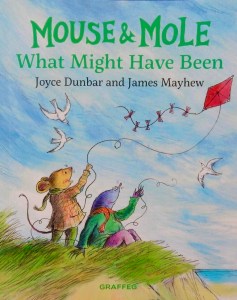
Mouse & Mole: What Might Have Been

This book contains three more episodes in the life of the endearing friends Mouse and Mole.

In the first, A Rainy Day, rain makes its presence felt in no uncertain terms and the two creatures decide to try and stop the increasingly irritating precipitation but end up enjoying themselves to much they fail to notice the change in the weather.

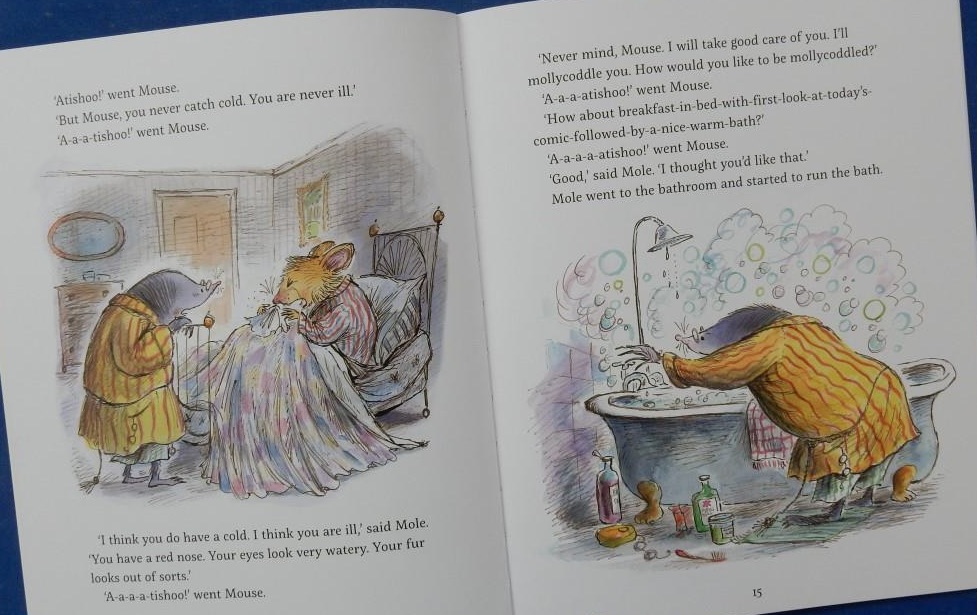
Atishoo! goes Mouse, over and over until Mole declares that his friend needs mollycoddling and offers to make him breakfast in bed and generally fuss over him.

But will Mole’s favourite breakfast be right for Mouse? And what about the hot bath he’s promised and the comic? There’s only one way to find out …and then what?

The final tale sees Mouse and Mole considering What might have beens as they attempt to fly their kite one very blustery morning: will they ever succeed in getting it airborne though? Could all the ‘what ifs’ they’ve pondered upon eventually help matters when it comes to kite flying.

Full of warmth and gentle humour that shines through both Joyce’s text and James’ charming watercolour illustrations. If you’ve never tried any Mouse and Mole books, you are missing a real treat.

Zac and Jac

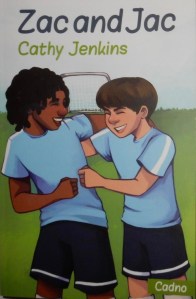
Early in the school year, nine year old Jac’s teacher asked the class to write about their real-life heroes and Jac had chosen his dad, a lorry driver. That though is before Jac is asked to join the soccer team his good friend Zac belongs to. Thereafter things at home start getting uncomfortable.

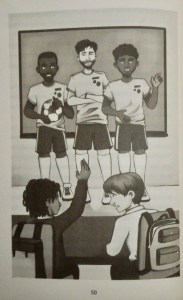
Then comes the news from class teacher, Miss Parker: three professional footballers are coming to talk to the class the following day. They are members of an organisation and what they talk about is racism. As he listens, Jac feels extremely uncomfortable as he starts to realise that the dad he previously thought a hero is in fact, a racist, and that his best friend Zac and his father David, have been the subjects of some of Dad’s racist remarks.

Now with a heightened awareness of racism and how such prejudice is usually passed down from one generation to the next, Jac (from whose viewpoint the story s told) becomes determined to help make change happen in society, starting with his own family. His mum admits she’d been aware of his dad’s attitudes but hadn’t challenged them. Can he with the help and support of his friends and Mum show his Dad that people should not be judged simply by what he thinks they are?

Using football (a children’s local team) as a backdrop, Cathy Jenkins has created a powerful story, sensitively showing what an evil racism is and encouraging youngsters to challenge it whenever it raises its ugly head. That way lines a better future for everyone.

Colours of Home

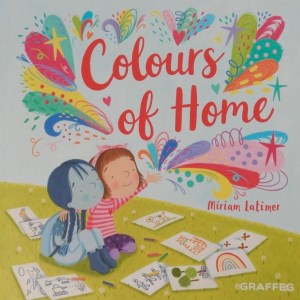
Told in rhyme and narrated by a young girl, this is a story of welcoming refugees, young children’s capacity for kindness and communication through play and pictures, and making strangers feel welcome and at home.

The child narrator tells how she does her best to dispel the obvious sadness that the newcomer feels as only after some time, she unpacks her few things onto the floor. These include some pens and paper, and this starts a pictorial exchange between the two children relating to their homes, families and other personal things. From one drawn by the refugee child it’s evident why she feels so sad.

Little by little through small acts of kindness – meeting her host’s friends at school, learning words from each other’s home language and a video chat with the newcomer’s family – she starts to feel better.

The narrator realises that she can’t make everything seem right but by standing beside her new friend at all times and showing empathy, she will feel upbeat for longer periods. Then another child, new to the country, joins their class looking very worried as he stands watching the other children enjoying themselves: you can guess who asks the boy to join her in play, someone who radiates colours -‘ Colours of life, that unite and restore.’

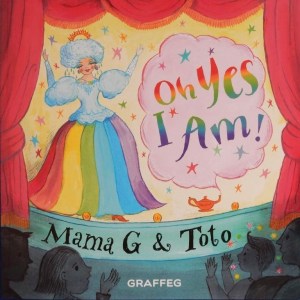
Oh Yes I Am!

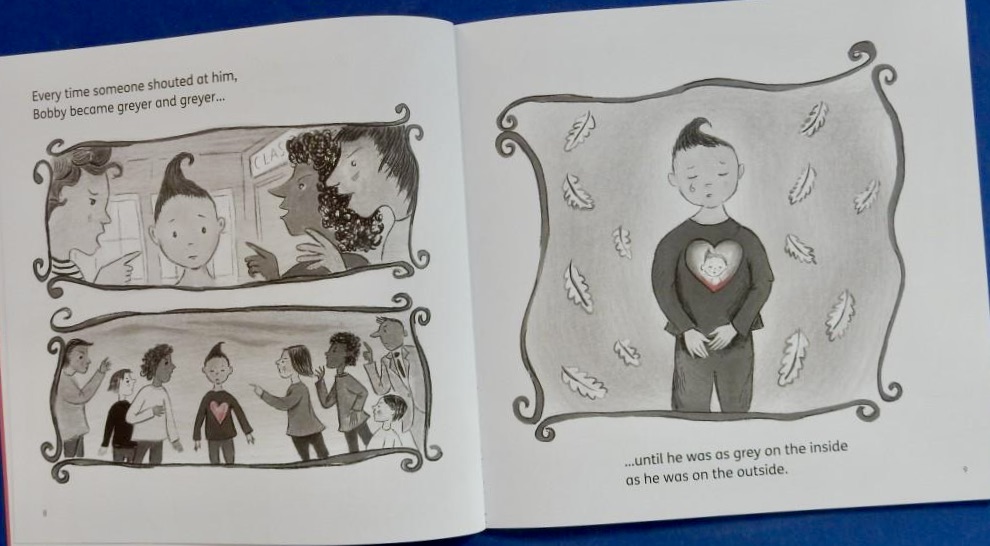
Bobby’s world is one of grey – grey people going about their grey lives. Bobby appears grey too, on the outside at least, but inside he’s full of colour and sparkles. Occasionally he would forget himself and let his sparkly colours shine forth but naysayers who saw always shouted at him making Bobby lose his inner colour.

Desperate to show his true self he seeks help from his mum and she responds by taking Bobby to see a pantomime. This sparkling show makes the boy start feeling bright once more, particularly when he watches the pantomime dame getting the better of the baddy denying her colourfulness to the extent that the audience shout out in support. Suddenly it’s transformation time: the dame’s dress becomes a wonderful rainbow causing Bobby to ponder upon her power.

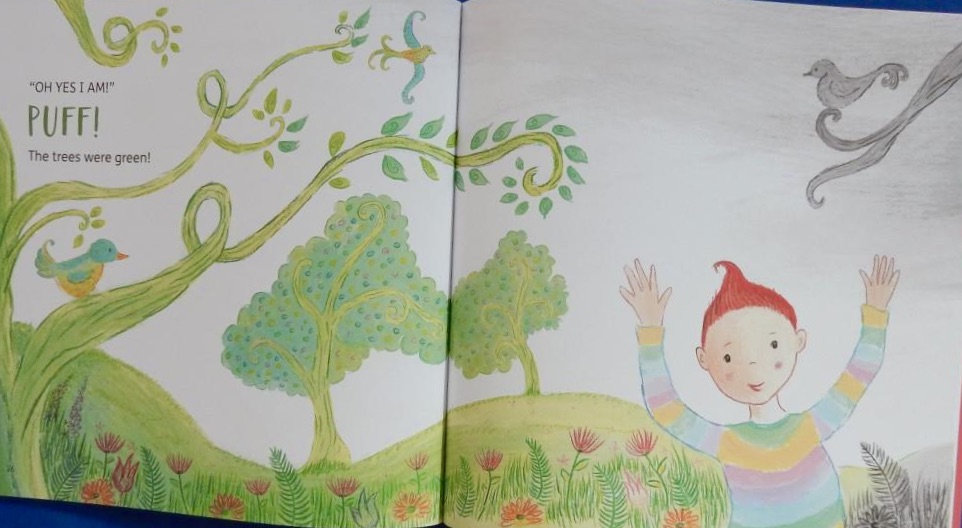
Back home he takes a towel, fashions it into a turban and to his delight, it appears that he’s discovered the source of the panto. dame’s magic. Can he now spread his own magic and revolutionise the world around him? Oh yes he can!

Drawing on pantomime memes, Mama G has created a magical story of self-belief, discovering and using your inner resources and having the courage to initiate change. A perfect match for the text are Toto’s scenes of the events that start almost entirely in greys and then burst forth into rainbow hues once Bobby has made his life-changing discovery.

Frog in a Fog

Frog is in high spirits at the start of this rhyming tale as he boogies on a log along with three bhangra-loving bumblebees; seemingly he hasn’t a care in the world. However that quickly changes as a large lorry starts up emitting foul fumes. Frog then has to make his way through piles of litter of the plastic kind. Then in the fen he continues dancing with Wren and Snipe until foul fluids gush from a rusty pipe flooding the pool and further fumes make the air murky.

Come the evening Frog and a friend rhumba under the stars but what they’re dancing on is a massive pile of trash and suddenly Frog’s leg becomes stuck on a wrapper and the froggy twosome tumble into the mire.

Things deteriorate further still when Grayling flaps her fishy tail and the shimmying pair hit the ground finding themselves too close for comfort to a blazing fire left burning beside the lake. As the froggy friends sit huddled together they ponder upon the horrific pollution they’ve encountered during the day. Happily though Grayling then surfaces once more and tells them the good news concerning a special location; it’s a nature reserve and it’s free from all detritus.

Led by Grayling, they make their way to the reserve. Frog starts to spread the word and to this unpolluted paradise come all manner of creatures where nightly they perform their celebratory dances while in the bog frogspawn floats and glistens in the moonlight.

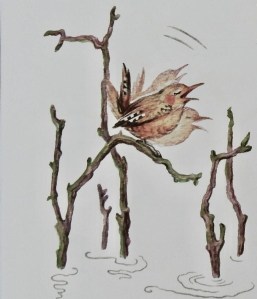
The message about pollution comes across loud and clear in Marielle Bayliss’s dramatic story. Mariela Malova’s quirky illustrations are full of movement starkly contrasting the delights of dancing with the desolation of the polluted landscapes. I particularly like the portrayal of the wren vibrating with song.

One word of warning for adult readers aloud: you may need a bit of practice to do justice to the rhythm of the rhyming narrative.

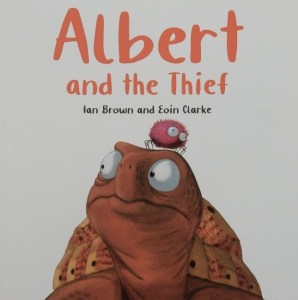
Albert and the Thief / Molly and the Pirate Cave

These are both additions to popular Graffeg series: thanks to the publisher for sending them for review

Things are going missing in Albert’s garden, so the ants report at a special meeting. Accusations are made and dismissed and squabbles break out. Albert suggests the animals search for the missing items and as he’s doing so a voice calls softly to him. It’s a squirrel asking for his help. It’s said squirrel that has apparently been doing the stealing and now regrets so doing. Albert tells him to return each of the items, and apologise to everyone he’s stolen from.

Albert’s friends are somewhat surprised when they see how much stuff Squirrel has amassed

and some of them offer ideas as to how the reformed character can get them all back where he’d found them without anybody knowing. A view of the garden shows that its animal residents are going to have their work cut out to do so.

I especially love the catapult contraption worked by the ant brigade and the horrified expressions on the faces of Albert and his garden friends as they discover the enormity of the task they are about to undertake as the story concludes.

In this seventh story starring Molly and her island community, She goes against everything her parents have told her when her much loved dog, Gus goes missing. After a sleepless night when the dog still hasn’t been found, she goes into the dangerous Pirate Cave, from where she’s heard a noise. In the pitch dark, she discovers little Bo who was also searching but now is too frightened to move. As she’s giving her friend a reassuring hug, there comes the sound of muffled barking and there in a very narrow part is Gus. Why does the dog refuse to move though? His sense of hearing is more acute than Molly’s and he’s heard the sound of the sea. It’s coming right into the cave. Following Gus’s lead the children scramble up onto a ledge

and then Molly realises that there’s another way out. It’s a place her father once talked about. If they make sufficient noice, there’s a possibility somebody will hear and so as loudly as they can, the three howl at the moon shining away, way above them …

Andrew Whitson’s expressive illustrations capture so well the children’s fear as they attempt to clamber up so the water can’t reach them. There’s an important lesson in the story, one that young listeners will learn along with Molly as they root for her to get safely out of the cave.

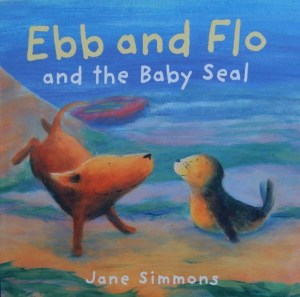
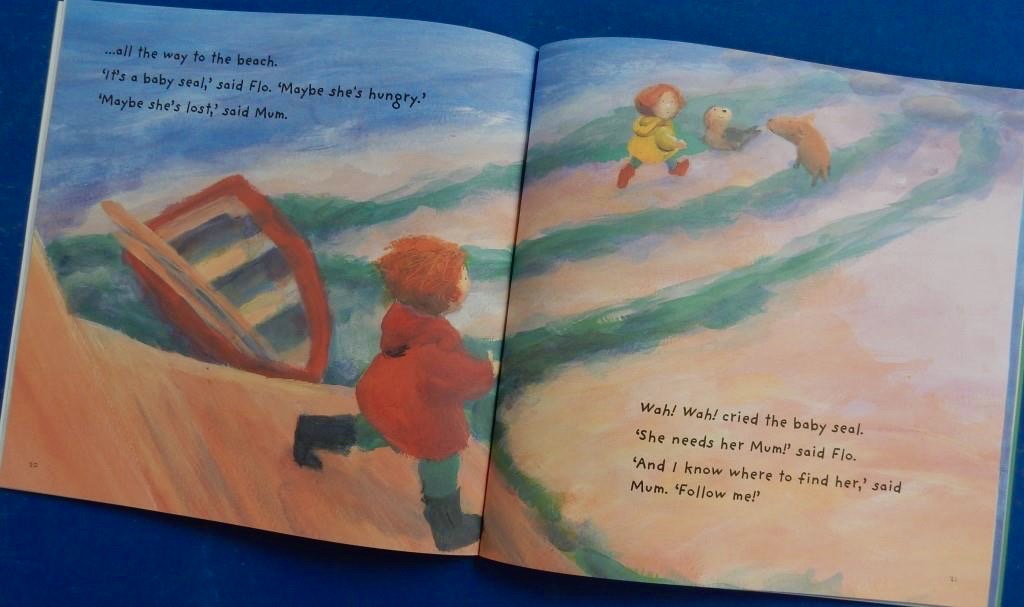
Ebb and Flo and the New Boat / Ebb and Flo: A Blowy Day

In the first story, despite it being early in the morning Bird cannot wait to tell Ebb about what she’s found so she sets off beeping enthusiastically to tell Ebb about the discovery even though Ebb dislikes being disturbed at such an hour. Bird’s excitement is on account of the new boat bedecked with greenery that has arrived at the jetty.. So, Bird sallies forth alone and when she hasn’t returned some while later Ebb starts feeling concerned.

The reason for her absence is that she’s made a new friend on board the new boat. Ebb discovers this with help from Flo who approaches the owner of the new boat asking for Bird. The conversation is confusing as the lady speaks German; however Flo, Ebb and Mum go aboard and in the cabin sure enough there is Bird and also a little canary named Zoot, so the boat owner tells the visitors.

Almost inevitably Ebb feels a tad jealous of Zoot, especially as Bird plays with this new friend all day. Ebb considers Zoot to be akin to Mum’s yellow feather duster. Even Flo’s reassurance at bedtime that it’s possible to have more than one friend doesn’t reassure the pooch. However, the following morning the visiting boat has gone and with it Bird’s new friend. Now it’s her turn to feel upset. Can Ebb and Flo find a way to help Bird return to her usual happy self?

In A Blowy Day, the strong wind causes Mum to feel concern for Granny so she, accompanied by Ebb, Flo and Bird, row across to pay her a visit. Granny is taking advantage of the strong wind and is busy hanging out her washing when they arrive. Her mention of a kite prompts Flo to ask about making a new one there and then so she and Granny set to work. Before long they’re ready to go out and test the kite but it gets caught up with the line of washing and Bird flies to the rescue. Then a sudden extra strong gust sees Granny’s clothes flying way up and out to sea. Time for operation rescue …

Both books, based on Jane Simmons’ original characters are part of an animated TV series: with their simple stories, they work well too as read alouds to share with young children (Both titles have notes for adults that include activities and discussion possibilities at the back.)

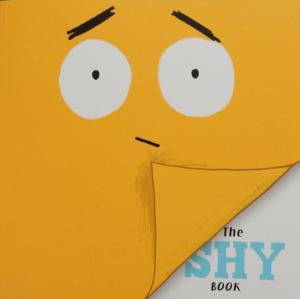
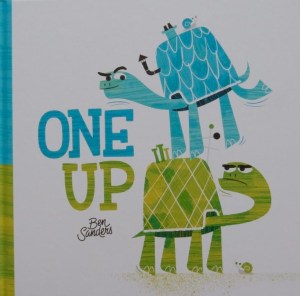
The Shy Book / One Up

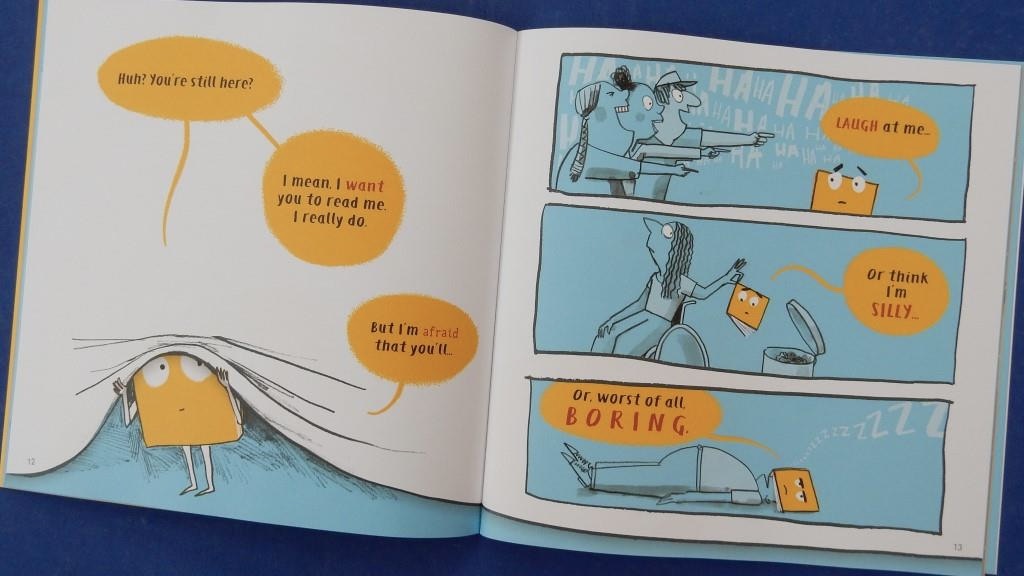
This interactive picture book is a novel way of introducing young children, particularly those about to start nursery or school, to a way of coping with their fears about meeting new people and coping with new situations. Its narrator is the titular book and it really does want to be read despite its extreme nervousness. It’s worried, sometimes to the point of dizziness, in case a reader finds it laughable, silly or much worse, boring …

‘go ahead … pick a different book’ it suggests. But what if instead a reader keeps turning the pages? Could they come upon the narrator’s suggestion and gently discover a non-threatening way to feel brave, despite feeling shy as the book does, especially at the outset?

Howard Pearlstein’s clever idea is simply presented, and brought to life by James Munro’s droll illustrations. Empowering and amusing.

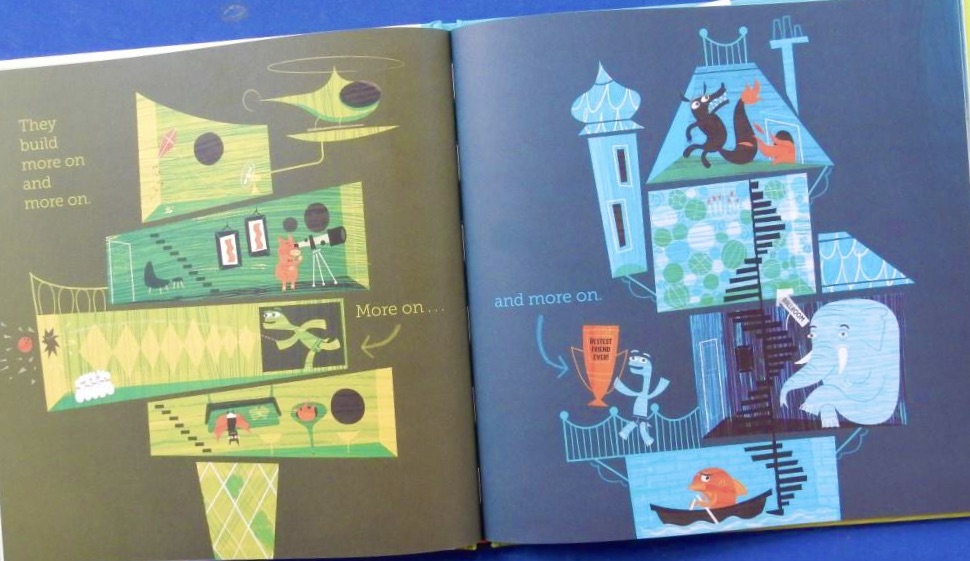
Blue and Green are tortoises and they’re best friends. But which is the bestest? That is a cause for competitiveness as each tortoise adds to his shell, making it bigger and bigger, until things get more than a bit out of hand, not to mention out of shell. Both Blue and green are way, way up in the sky

whereas their places of residence remain on the ground and the who is best issue is still unresolved.
For a reason unknown to both characters, Blue and Green start craving gelato. But they might have to wait a long while before that desire is satisfied. What in sky’s name can they do? And will they remain best friends?

With inventive, increasingly detailed illustrations of the competitive craziness resorted to by Green and Blue, plus the fun final twist, this is an amusing read aloud that shows the inventiveness of the characters (and the book’s author/artist). With an abundance of visual humour, both children and adult sharers will find themselves laughing as things get progressively precarious.

The Dandelion’s Tale

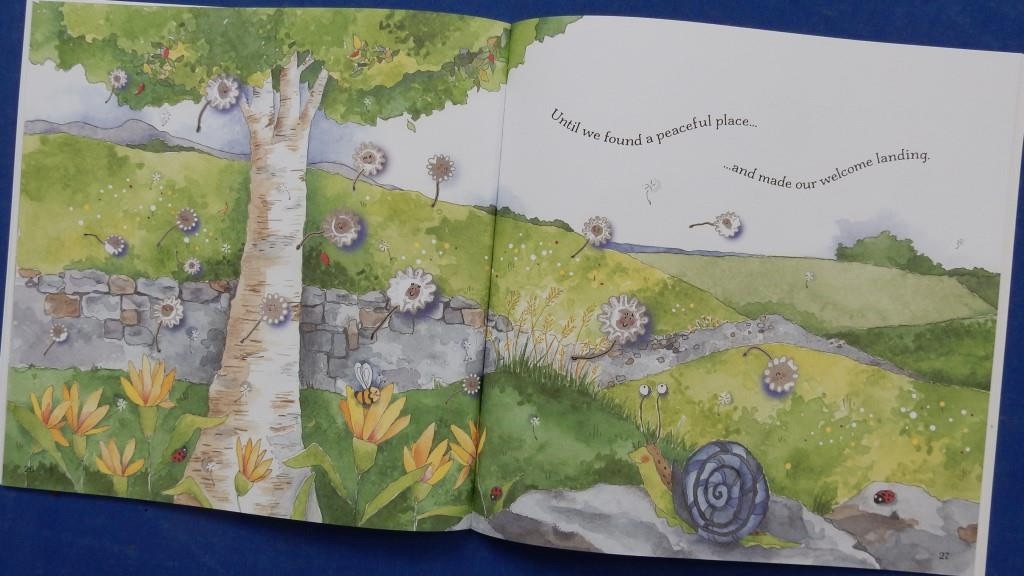
In this allegorical tale about migration, a group of once happy dandelions is forced to move in the face of tools, machines and weed-killing chemicals.

With their spirits low, they hear the words of a calling breeze that gives them the courage to move from the persecution of their homeland field and float upwards. They drift over the walls, fields, meadows of the countryside, higher over city rooftops, up, up traversing mountains, cliffs and seemingly endless seas of blue.

Finally they find a peaceful place and with hope renewed, land in a green grassy environment to begin life anew;

a tranquil place where the bees and other minibeasts make them feel welcome and where in time, they will become a part of a thriving community of wildlife once more.

The watercolour illustrations are touched by whimsy whenever a minibeast is depicted, helping to keep the fable light in tone throughout the book. The penultimate page gives factual information about dandelion plants – their importance and various uses.

A seemingly simple story about seed dispersal that offers a good starting point for talking with very young children about humans who, in times of crisis, see no option but to flee their homes and seek sanctuary in another country.

Betsy Buglove and the Brave Butterfly / Watch Them Grow!

Nature lover Betsy Buglove, she who saved the bees, returns for a new adventure. It begins as she and her best friend Stan are in the garden and a bee buzzes along with an urgent message about a butterfly that needs their help. They follow the bee next door and there discover the juice cups they left on the grass earlier and inside one a butterfly is trapped in the sticky dregs.

Having successfully extricated the butterfly, its wings soon dry and off it flies.

Shortly after a cry comes from Betsy’s dad. The leaves of his vegetables and flowers have been badly nibbled. Off goes Dad to get his bug spray leaving Betsy examining a thistle plant in the grass. Thereon, with the aid of her magnifying glass, she sees lots of caterpillars munching away its leaves. Caterpillars she and Stan soon find out, belong to the butterfly they’d rescued earlier on.

Can they persuade Betsy’s dad to leave a patch of thistle and other weeds for the caterpillars? Fortunately they can; but what happens thereafter?

Will it be another case of mission accomplished for team Betsy and Stan?

With Catherine’s jaunty rhythmic text where the rhyme doesn’t falter and Lucy’s scenes containing an abundance of flora and minibeasts, this is a book that’s just right for sharing with young nature enthusiasts, as well as to encourage those less keen (happily I’ve only ever encountered a few,) to find out what they’re missing. Everyone can do their bit to help insects.
At both ends of the book are fact pages about butterflies.

Author James Carter and artist James Munro have joined forces to present the life cycles of nine different animals starting with the Emperor Dragonfly and concluding with a human. Before these is an introductory poem inviting readers to ‘Watch them grow!’. Following the featured animals are a spread about baby animals names – young children will be amused to learn that it’s not only cows whose babies are called calves: so too are those of six other animals. And, the term hatchling can be applied to baby crocodiles, turtles, tadpoles and newts in addition to baby birds.
Then comes some straightforward information about axolotls; (these, unlike other amphibians never become adult; instead they retain their gills and remain in the water); and a paragraph explaining that male seahorses give birth to babies (fries, hundreds of them)

as well as some facts about parenting in emperor penguins, Australian marsupials and others.
All this James Munro has captured in his playful illustrations, each of which is a combination of reality and fun.

Gloria Goes For Gold / Albert and the Flood

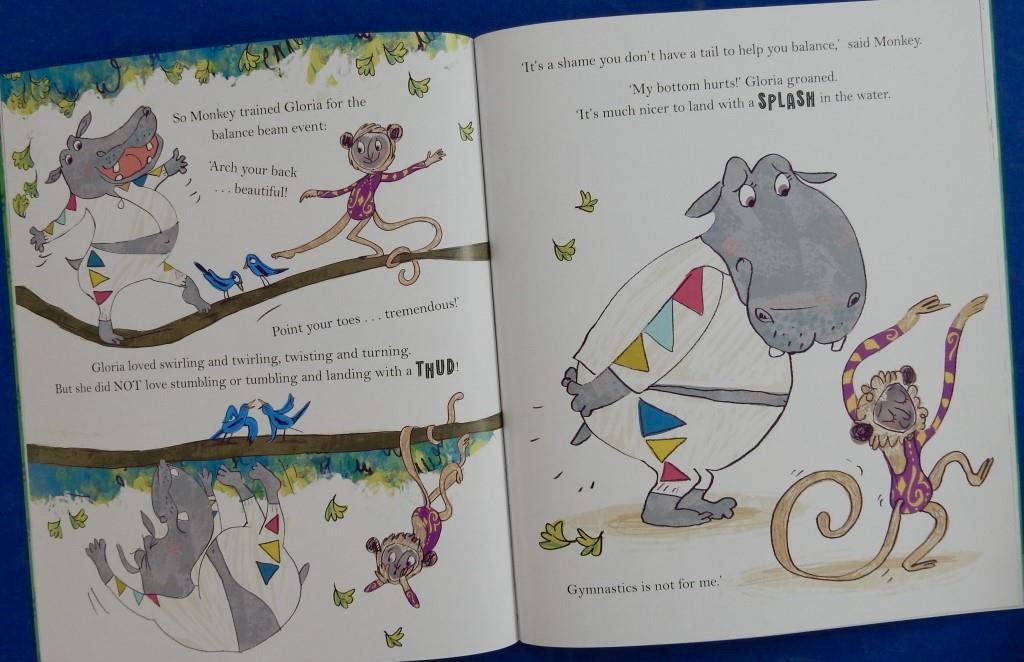
Of all the unlikely animals to be called graceful it’s Gloria the hippo and her family members, a champion- winning team of synchronised swimmers that always comes away with gold at the Artistic Swimming Championships. However Gloria is not as happy as the others about this: she longs for a prize she doesn’t have to share. Then comes a letter about the upcoming Savannah Games and Gloria decides to find a sport she can win solo. Off she goes leaving the other hippos to practise their routine and before long bumps right into sprinter Cheetah going so speedily she fails to see Gloria. The hippo decides she’d like to try sprinting and Cheetah offers to coach her. Pretty soon Gloria realises that this sport isn’t for her and as she sits beneath a tree contemplating what next, down swings Monkey. He makes gymnastics appear great fun but Gloria quickly discovers that she’s not cut out for being a gymnast.

Nor does she take to distance swimming. In fact she decides that after all, she’d rather be part of the family team; but feels too ashamed to ask.

The next day sees the start of the Savanna Games and Gloria tucks herself away among those watching the artistic swimming.

While so doing she overhears something her brother says to their cousin. Is there a situation that needs saving? If so, what should she do?

Priceless pictures by Annabel Tempest are for me the real winners in this book. No matters whether one aspires to be a solo winner or part of a winning team, it’s important for children to see that it’s participation and doing one’s best that really count the most and Marina Firth’s telling shows this in a fun, non-didactic way.

It’s a truly eventful day for Albert and his friends despite the sporting event Games Day being rained off. Actually that’s an understatement for it’s a thunder storm that is responsible for rescheduling of the Games, despite what the ant commander says as the rain starts. However the steady rain rapidly turns to a torrential downpour that causes severe flooding of many of the creatures’ homes. Fortunately Albert quickly starts leading a rescue mission, aided and abetted by Frog, a group of ants and some spiders.
Before long, Albert’s shell was packed with minibeasts, while others of the rescued found safety elsewhere.

Then suddenly the rain eases off and the storm clouds pass to reveal a glorious sight in the sky.
The ant commander makes an announcement that pleases most of the creatures; and then Albert too makes an announcement. Can you guess what he said: it concerned something of vital importance.

This is Albert’s seventh adventure created by team Ian and Eoin and it’s one that contains an important life lesson for young children. Eoin’s illustrations are very amusing and both adult readers aloud and their audiences will laugh at many of the scenes.

Christopher’s Caterpillars / Maisy Goes for an Eye Test

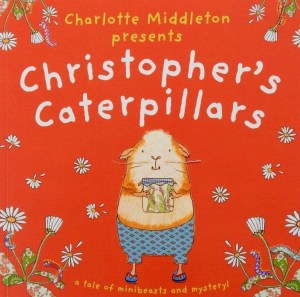
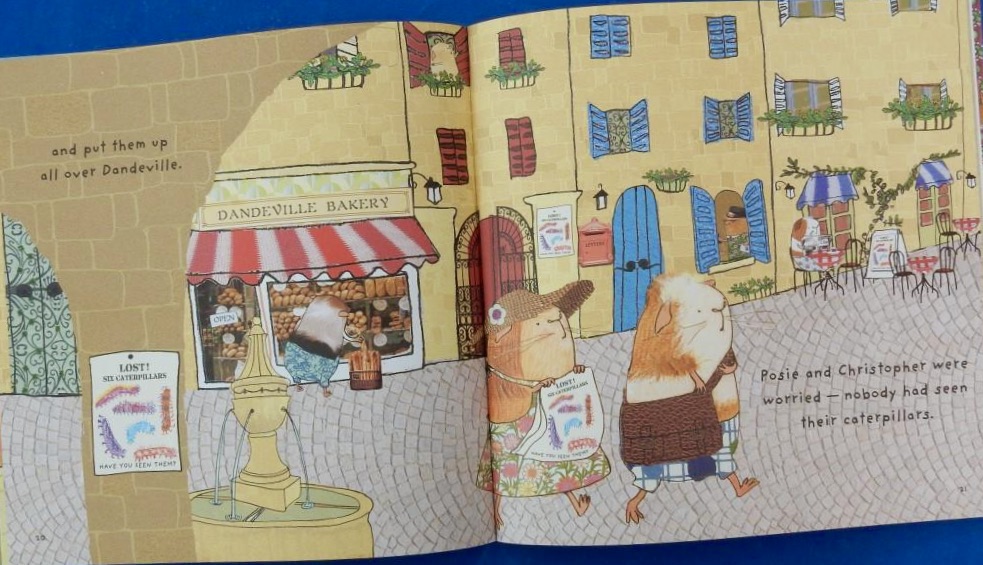
While working in the garden with Posie, his best friend and fellow football lover, Christopher Nibble hears a strange munching crunching sound coming from his dandelions. It’s six hairy caterpillars feasting on his prize plants. What should he do? Certainly not let them continue eating his plants. Posie suggests they keep them as pets.They compile a list of possible needs and off they go to visit Mr Rosetti at his café. He amends the list and gives them some caterpillar keeping advice. The caterpillars munch and grow bigger and bigger until they’re no longer in their container.

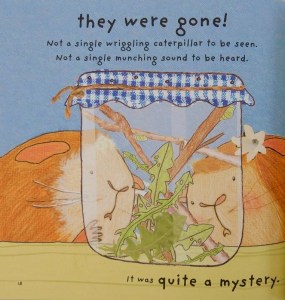
The friends make some “LOST! ‘ posters and paste them all over Dandeville but nobody has seen the caterpillars. Then comes an email from Mr Rosetti, telling them to bring the jars that had housed the caterpillars to his cafe for inspection.

What do you think they discovered in those jars? Is it time to make some new celebratory posters.

With some lovely descriptions, this delightful story captures the wonder of nature and a life cycle especially well. Children who have already experienced the joys of keeping caterpillars may wonder why Christopher and Posie failed to notice the chrysalises in their jars.

The book concludes with two spreads of relevant information – Caterpillar Facts and How to Care for Caterpillars. If you missed it the first time around, (or if your original copy has been read to pieces) this book with its funky mixed media illustrations is one for sharing with young children either at home or in a foundation stage setting.

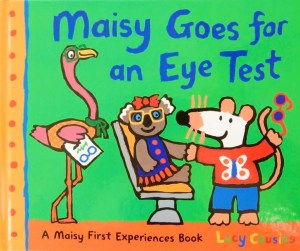
In this 23rd Maisy First Experiences story, young children join Maisy and her friend Ella when they attend the opticians to have their eyes tested for the first time. The reason for the visit is that Ella has trouble reading the number symbols written on the nursery blackboard. On arrival they sit in the waiting room until Flamingo, the optometrist is ready: Maisy goes first and is able to see everything whichever eye she uses. Not so Ella though; the optometrist uses her special machine to look right inside Ella’s eyes and promises to make some specs that will be just right for her eyes. Then with Maisy’s help Ella chooses some frames, the lenses are inserted, and she’s given a case to keep them in. Maisy selects a pair of sunglasses to wear in bright sunshine and with a promise to return for a check-up in a year, off they go , both sporting their new glasses.
This upbeat, reassuring story will help prepare little ones for their first visit to the optician.

The Magic Garden Frog

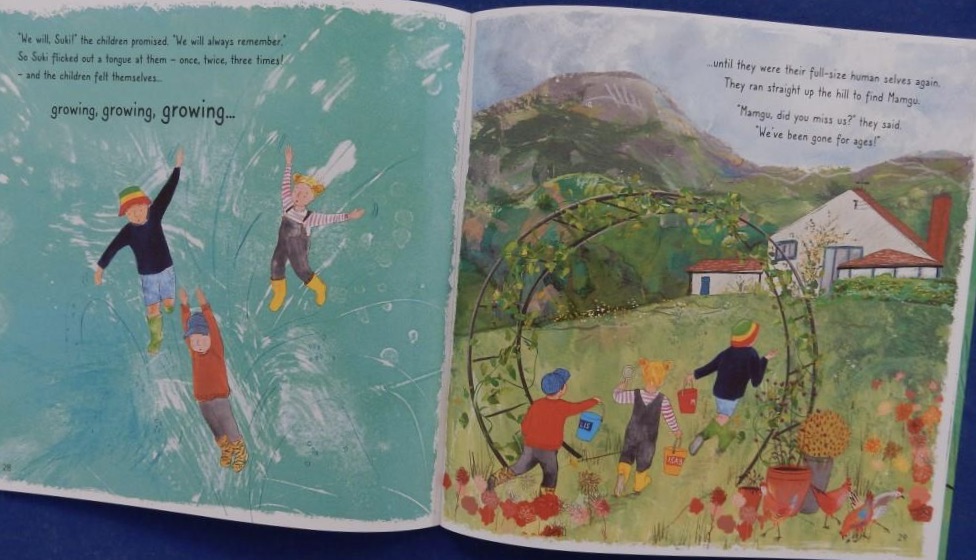
Mamgu has a Magic Garden that she tends carefully. It’s a place her three grandchildren, Isabella, Elis and Macsen love to visit, especially enjoying all the different things that are round shaped.

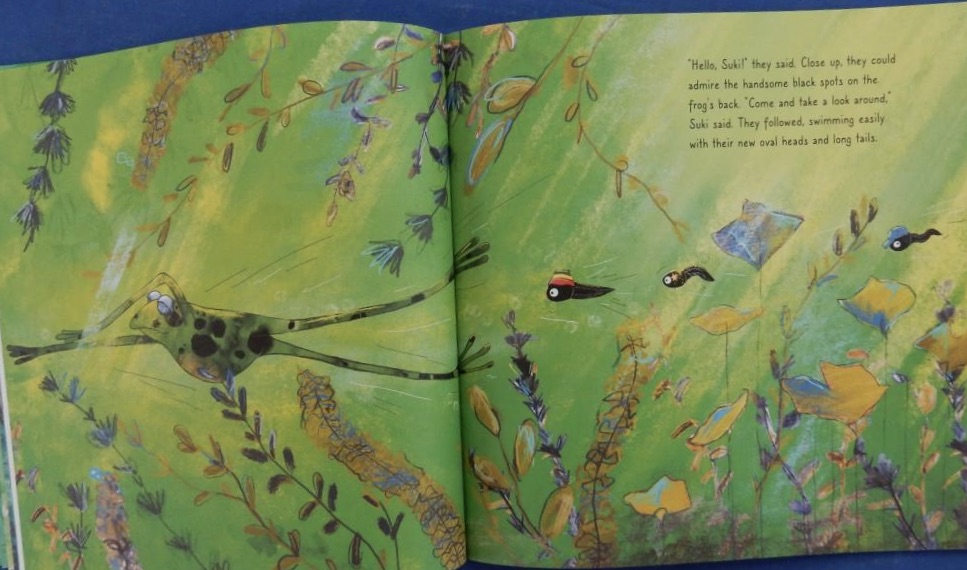
One day while exploring, they find something new in the fountain; it’s a frog they name Suki. As the children watch her, the frog suddenly sticks out her long tongue and flicks it three times making something unexpected happen. The three children shrink and fall into the pond with a splash. The next thing they know is that they’ve become wiggly tadpoles, able to breathe under the water.

So begins a magical adventure during which as a seeming metamorphosis takes place, they learn lots of interesting facts about frogs, their lifecycle and their habitat, and sadly that frog numbers are declining.
After the story is a spread encouraging children to go outside and look carefully at the nature that is all around and perhaps create their own ‘Magic Garden’. It’s never too soon to start introducing young children to the wonders of the great outdoors and this story offers a good starting point.

Both the author and illustrator feel the book is a very personal project. The Magic Garden author Shann Jones writes about, is based on her own garden in Wales and the grandchildren characters are based on her own grandchildren, whose names she used for the story. Illustrator Hannah Rounding visited Shann’s garden and met the real Isabella, Elis and Macsen several times while creating her beautiful mixed media, layered artwork for the book.

Let’s hope their timely tale, seen in part from a frog’s perspective, encourages youngsters to become environmental activists in whatever way feels right for them.
(A proportion of the royalties from sales of the book will be given to the charity Froglife.)

Hugg ’n’ Bugg: The Surprise

In this third Himalayan tale starring yeti, Hugg, and his fur dwelling flea, Bugg, the former is preparing for his birthday, determined to look his best. However it’s not long before he starts feeling furious at what he sees. All the other creatures are sporting new, ornate hairstyles and Hugg is certain that rather than him being in the limelight, they’ll put him in the shade.

Little does the shaggy creature know, but the reason for all the funky tonsorial touches is a surprise party in his honour. A party with all manner of fancy food, some of it looking far from delectable having been whipped up by the guests

and then modified somewhat in transit.

With Hugg and Bugg’s friendship repaired, everyone gathers round the table to tuck in and start filling their tummies, but there’s another surprise awaiting Hugg. What will be the host’s reaction?

Diverting daftness delivered in Ian’s rhyming text and Eoin’s splendid scenes of the animals’ antics.
Fans of the duo will gobble this up but if you’ve yet to meet them, I suggest you start with Hugg ’n’ Bugg: Finding Home and discover how they got together, and then move on to the new one.

Tourmaline and the Museum of Marvels / The Rock

Since falling into the Source of all magic on the island of Elsewhere during a mission to rescue her mother, Tourmaline has developed magical powers that are almost uncontrollable, the result being chaos. Her powers are virtually impossible to hide from others though her loyal buddies George and Maia are well aware of her plight.

When Tourmaline unexpectedly receives a postcard addressed to her, offering answers she heads off by airship, despite her friends’ reservations, to the market rendezvous mentioned on the card – the Dark Market – so the Living Archive informs her. She’s accompanied by Mai, her Mum Persephone and George, who stows away..

So begins a mysterious new adventure for Tourmaline, one wherein she finds it hard to know whom to trust, that sees her visiting incredible places where she receives further postcards, has some surprising and unexpected encounters, takes huge risks and makes astounding discoveries.
The final chapter of this thrilling fantasy neatly sets things up for the next book in the series due to be published early in 2025. I eagerly anticipate it.

Twins, twelve year old Finola and Zane and their mum from planet Sevent, have crash-landed on Earth. Eager to be reunited with Dad, they have begun to search but after several months they’ve heard nothing other than the telepathic message Mum received when first they arrived. The twins know they have to keep themselves out of sight from prying eyes. Mum has found a job in hospitality, and now the twins’ desire to stop hiding from everyone is becoming overwhelming, especially when Zane reveals that he’s received two cryptic messages – pictures of a rock – from Dad. On hearing what the children want to do, Mum says they must sleep on it, but that night on the news is an announcement from a scientific research company offering the ‘alien family’ 250,000 euros to participate in their ‘research programme’ and the same sum to anyone with information about the whereabouts of the ‘aliens’.

Next morning, an anxious Mum gives her blessing to the twins, now disguised, to teleport themselves to Albrigart, a rocky place with a conservation park. No matter what they do or where they go, it seems that eyes are on their every move. Can anybody at all be trusted?

Eventually Zane decides they should to go back to the flat but they become separated. With her energy depleted Finola finds herself alone, left to her own devices to return to Mum and Zane. Once reunited, the three talk and conclude that thus far, as Finola puts it, they only have one truth: “We want to find Dad and he wants to find us.”

As the book ends they know nothing of what the future holds but are sure that no matter what, they’ll undertake things as a team. This cliffhanger leaves the way open for the search to continue.
I suspect that like myself, child readers will be eager to discover if the family is finally reunited.

What the Worm Saw / Christopher Nibble

Meet Earthworm,’ long, pink and wriggly’ is how it describes itself (earthworms are hermaphrodites) and in common with fellow earthworms is an important part of a garden ecosystem, helping to create and maintain healthy garden soil; and thus performing a vital role in the natural world. Talking directly to an intended young audience, the narrator Earthworm explains that it spends most of the time deep down in the soil, sometimes surfacing to nibble at old fallen leaves and petals from plants, It’s not always safe to do so however as a hungry hedgehog

or bird on the lookout for it’s next meal might want to slurp it up in a similar way that an earthworm consumes soil, pooping out what it doesn’t need; or maybe, a human foot might tread on it and squash the Earthworm.

This fun narrative way of informing young children about the vital role earthworms play works well, especially with Hannah Peck’s engaging illustrations. There’s a final page giving some earthworm facts and the book is published in collaboration with the Royal Horticultural Society (RHS). It’s one to share with young children at home or in an educational setting.

Along with numerous other guinea pigs resident in Dandeville, Christopher Nibble loves dandelion leaves; indeed his favourite activity is munching them. Then one day the joyful sound of munching starts to wane indicating that these leaves are in short supply. Those which are available are being sold online at an extortionate price so instead, the guinea pigs have to make do with cabbage leaves. Dandeville is suddenly a much less happy place.

One day there’s just a single dandelion left in the town and as it’s growing right outside his bedroom window, Christopher Nibble is the only one that knows about it. Oh how his mouth waters but he knows he must resist the temptation to gobble it up and he must ensure than nobody else does so. Resolving to find a way to restore the town’s favourite snack, Christopher Nibble heads to the library where he finds a large book that could be just what he needs. Having read it carefully from cover to cover, can he use his new found knowledge to make Dandeville the cheerful community it once was?

With his patterned shorts Christopher Nibble is a delightful character and a green hero at that. Young children will be rooting for him as he endeavours to turn a crisis into a cultivating craft.

A tale with a timely message about caring for the natural world that is even more pertinent than it was when the original book was published around fifteen years back.

Mouse & Mole: Boo to the Who

We’re back in the company of the delightful Mouse and Mole for three further episodes.
Here and There starts with Mouse announcing that he’s going for a walk. Mole decides to accompany him despite not knowing the destination. Before long they reach a kissing gate; Mouse is interested in how it works, Mole asks, “Are we there yet?” On they go till they get to a bridge. Mouse pauses to enjoy the water; Mole merely says, “But are we there yet?”
A grassy meadow,

a stile, a windmill, a cornfield with haystacks all offer brief stopping points but Mole still grumbles. Time to return home. Mouse tells his pal it was a very good walk. Mole remains troubled about the location of ‘there’. They consult the map and Mouse points out all their stopping places. A realisation dawns on Mole …

In Boo to the Who the two decide on a cosy night indoors but very soon Mole is troubled by a pair of staring eyes – they belong to the WHO that comes creeping in the night, he tells Mouse. According to hearsay it can squash the breath right out of you. After some discussion, they go out into the darkness to investigate, suitably disguised so as to ‘show this WHO who’s who.’ A strange encounter takes place that ends with pie sharing.


A Sad Moment sees Mole in a state of perplexity. Mouse gives him a bowl of his favourite pea soup to eat with his favourite spoon but instead of tucking in, Mole opens the door and goes outside in the cold, to heighten the pleasure of eating his soup, so he says. Starting to consume his soup, he tells Mouse that it’s the happiest moment in his life; but then he gives a loud sob of sadness. Mouse is somewhat confused. There follows a philosophical discussion, essentially on the topic of savouring the moment as Mole relishes his repast.

It’s all wonderfully droll with Mouse not batting an eyelid over his friend’s overthinking of so many things. James’ witty illustrations capture so well the quirkiness of the relationship between the friends.

Peter the Cat’s Little Book of Big Words / Get Off Bear!

Do you want to help your child become a logophile or a philomath, or perhaps both? Then try sharing a copy of this compilation by Peter, feline ‘Pawthor’ of this lexicon and a character from the Gaspard the Fox series. Said moggy shares his passion with readers, providing one or more big words for most letters of the alphabet. Each word is accompanied by its meaning and the way it is said on one page and opposite is a full page illustration by James, almost all from the Gaspard series.

Peter’s book is logically arranged in alphabetical order starting with ‘Acclivitous’, meaning rising steeply and going through to ‘Voluminous’ where it ends. Several letters aren’t featured – H, J, K, O, Q, R, T, U although there’s a proliferation of Ps, Cs and Ss.
In my experience, young children love to impress grown-ups by using big words so this book should definitely hit the spot.

The forces push and pull are explored in this simple, fun story. Bear turns down his animal friends’ invitation to join them in building a snowman, saying he wants to go sledging instead. However being on flat ground means that the sledge won’t move. Frog offers to push but Bear is far too heavy and he doesn’t seem aware that the sledge needs to go in a downward direction, which means getting up the hill first.

Even with all the other animals’ combined assistance, their pulling and pushing results in a snapped tow rope and a return to the place from where the co-operative effort began. Is there a way that Bear and all his friends can enjoy a sledge ride even if some of their number need to hone their steering skills?
As always in this series, Tony Neal’s illustrations are bursting with humour.
The final spread offers some force-related activities for adults and little ones to try together.

Butterfly Skies / Fletcher and the Seasons

Readers can enjoy creating their own 3D butterflies – twenty in all – using the thick cardboard press-outs at the front of this book, which is published in collaboration with the National Trust.
The second section contains beautifully illustrated spreads of in turn, the Orange-tip, the Camberwell Beauty, the Clouded Yellow, the Comma with those wonderful patterns on the upper surface of its wings,. Then come the Swallowtail, the Peacock with its startling eyed wings, the Chalkhill Blue, (one of my favourite butterflies)

the Purple Emperor, the Pearl-bordered Fritillary and the Green Hairstreak. All these are European species, some being rarer than others, the Green Hairstreak, the UK’s only green butterfly, for instance.

The caterpillars of each species are also included in Kate Reid’s illustrations, as well as the flora – often the food plant – on which they are frequently found.

My only slight criticism of the art is the use of ‘googly eyes’ for the butterflies and caterpillars.
Give this to a child and you may well spark a life long interest in butterflies.

As little fox Fletcher journeys through the four seasons accompanied by his friends, he enjoys what each one has to offer and what makes it different from the other seasons. Spring brings woods with blossom on the trees; summer is warm and a great opportunity to play in the sun; autumn is the time when the leaves come fluttering down from the trees and winter often brings snow and ‘cosy lights aglow’.

With Tiphanie Beeke’s softly glowing illustrations evoking each different time of year and featuring the characters from the Fletcher picture books, and a brief accompanying text, this board book offers a good opportunity to introduce them to younger children, as well as to talk about what they enjoy about each season.

AlphaBot / The Secret Mountain / Albert Puzzles and Colouring

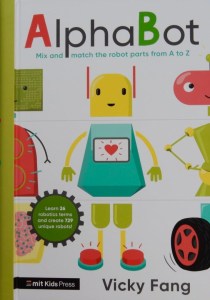
This interactive, non-fiction book published under Walker Books mitKidsPress imprint is sure to be a winner with children. On the first page comes the invitation: ‘Mix and match the AlphaBot parts! / What kind of robot will you build?’ Subsequent pages are split into three parts with scientific terms in alphabetical order defined on the verso sections and robot related illustrations are on each recto section.

The split pages make the book huge fun allowing the reader to design numerous different robots.. Its sturdy construction with a spiral binding will enable it to stand up to the heavy handling it is sure to get in a classroom or at home, as eager youngsters delightedly flip the sections back and forth, playfully learning a considerable amount while so doing. I met a couple of terms I’d not encountered before.

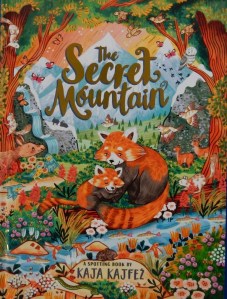
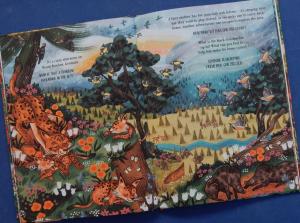
This book takes children on a long, long journey from Mount Everest all the way to Iceland. They will travel via Scotland’s Ben Nevis, then in turn the highest peak in the Andes, the Rocky Mountains, the Urals dividing Europe and Asia, Mount Broken in Germany, the Dolomites, the Heavenly Mountains of central Asia’s Tian Shan, California’s Mount Whitney, Mount Fuji and finally as night falls, Iceland’s Kirkjufell mountain.

As the sun rises over the Himalayas youngsters will see in the foreground of the illustration, a young snow leopard and her cubs heading off to hunt for food. Also out hunting is a bear and readers are asked, ‘What might he be searching for?’

In each of the following illustrations, every one of which is bursting with wildlife, there’s a mother animal of some kind and her young. So across the day you’ll also spot golden eagles, llamas, moose, brown bears, lynx

and more; some are foraging, others in flight or perhaps playing.

Each spread has a search and find element, another of the interactive elements of this immersive, creature-filled compilation for adults and children to share. Additional facts about eleven animals – one per stopping place – are provided in the three final spreads.

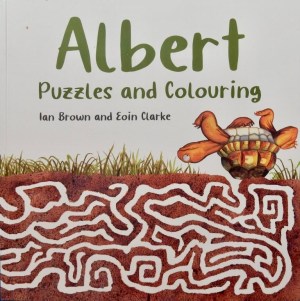
Albert the Tortoise loves to play games with his garden dwelling pals and now in this book he invites young readers to join him and participate in some playful activities at home. There are pages of silhouettes to identity, mazes to negotiate, a search and find, as well as several spreads to colour, others for playing spot the difference, and young children can hone their fine motor skills with dot to dots (those can be coloured in too).

Albert and his Friends / Spooky Little Halloween / That’s How Much I Love You

Albert the Tortoise has already established himself as a popular character among children from around three and their adult sharers. Now he wants to introduce himself and his minibeast friends to the very youngest children. In this little book, with its simple text and close-up images, they will meet in turn, Butterfly with its gorgeous wings, then a pair of woodlice, wiggly worm pops its head up through the soil, Buzzy Bee alights on a flower just in time to say hello, Snail slithers up with its shiny shell, Ladybird gives a wave with one of its front legs, Spider proudly shows a newly spun web 

and the ants demonstrate their teamwork. On the final spread, Albert’s multitude of friends return the compliment, telling the tortoise what a good friend he is to all of them.
Just right for the under threes.

Not really very spooky as the eight characters that almost leap from the pages of this vibrant ‘Finger Wiggle’ book are all smiling in a friendly manner. First comes a little witch riding her broom, arms outstretched; she’s followed by a little wolf singing to the moon, a spider wiggling its eight hairy feet, a little ghost, a rotund pumpkin, an upside down bat, a black cat and finally a little monster proudly showing his first tooth – albeit a very sharp one. On each spread that introduces Nick Sharratt’s endearing characters, Sally Symes’ simple rhyming text provides a ‘wiggle wiggle’ and a fun, sometimes onomatopoeic phrase to join in with.

One cannot help but bring to mind Sam McBratney’s Guess How Much I Love You when reading this first person rhyming tale wherein an adult racoon tells its cub just how much it is loved. The rhyme reads well aloud presenting in turn pairings such as a sock and a shoe, the sun and the moon, a bowl and a spoon; but it’s Tiphanie Beeke’s richly hued illustrations painted on textured paper showing the two racoons that steal the show, especially the final one wherein paw in paw, adult and cub walk in a woodland setting at sundown.
A gentle bedtime wind-down book to share with toddlers.

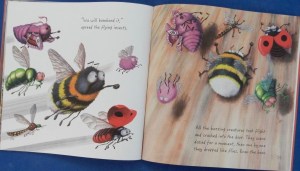
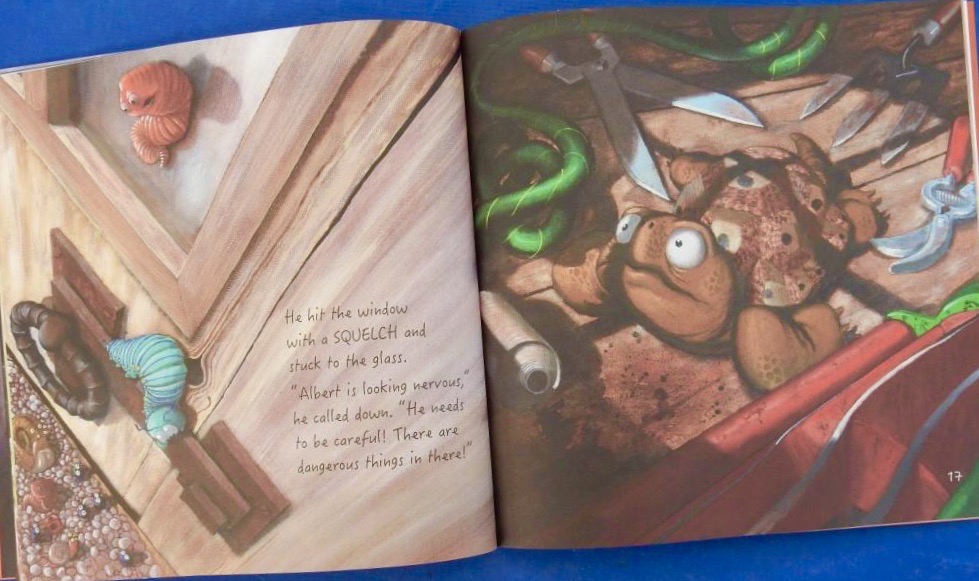
Albert and the Shed

While a thunderstorm rages, Albert decides to take refuge in a garden shed, but as he looks for a cosy place to settle the wind blows the door shut so the tortoise resorts to taking a snooze. When he’s woken by sun however, the door is still shut and he’s not happy. Suddenly he hears the voice of the ant commander telling him how untidy the place is and promising to get help with the door.

It’s not long before a rescue party arrives and with no real plan, a little worm finds itself flying up towards the window, which is also firmly closed. However, he does see Albert looking decidedly nervous on account of all the dangerous objects littering the floor. Meanwhile the ant commander decides he and his fellow ants should come under the door and attempt to open it from the inside: that is not a good idea.

Outside, other door-opening attempts including bombardment are being made,

albeit unsuccessfully; however, what none of the would-be rescuers know is that all the while a little caterpillar has been creeping up the door towards the latch.

Will Albert be free at last? And what about the ant brigade, still stuck fast, and they’re not the only things that remain stuck.

With some hilarious moments – from the reader’s viewpoint, though not the characters herein, this latest Albert story will delight, with its dramatic telling and arresting illustrations.

April’s Garden

April’s Garden
Isla McGuckin and Catalina Echeverri
Graffeg

It is evident from the lack of bright colour in Catalina Echeverri’s first three spreads, that April is feeling downcast, living with her mum in a room in temporary accommodation. There is a garden – something Mum refers to as contributing to the ‘silver lining’ she keeps talking about, but it always seems to be raining, making her daughter feel even more confined.

When Mamma suggests drawing the garden of her dreams, April creates a colourful scene.
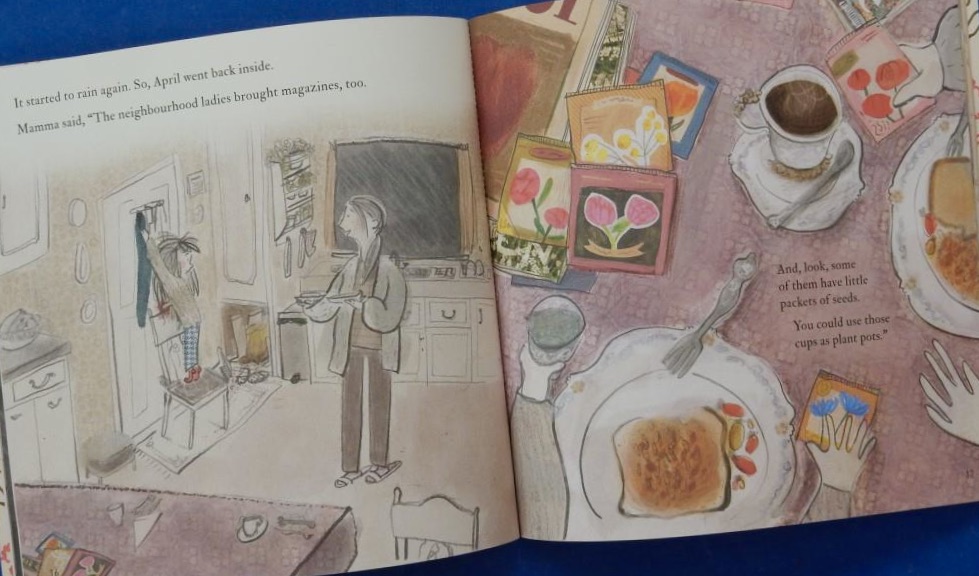
Eventually the rain stops and April heads outside for some fresh air, but it’s not long before down comes more rain so in she goes, to learn that attached to the magazines the neighbour ladies have given them. are some packets of seeds.

Despite the rain, April heads back outside with the seed packets and some cups. She plants the seeds and goes back inside. Then comes a long, long wait during which April, despite Mum’s words of wisdom – “Lovely things are just around the corner,” – feels more and more dejected. She rushes out into the garden to give vent to her emotions, after which she feels slightly less angry.

Some months later, it’s time for the two of them to move to their new home, With them they take all the cups with the seeds April had planted and joy of joys, she notices in them something is starting to sprout.

Finally, after several weeks, beautiful flowers are blooming in every cup: at last April is filled with happiness.

Hope is key in this moving, superbly and sensitively told and illustrated story of the healing power of nature, finding solace in the seeds and renewal.

Lilly & Myles: The Torch

Lilly & Myles: The Torch
Jon Roberts and Hannah Rounding
Graffeg

Set during the summer holidays, this story features Lilly and Myles, her assistance dog. The two are staying with Lilly’s Grandma who lives at the seaside. Lilly has autism and experiences the world differently; she often finds it hard to communicate too.

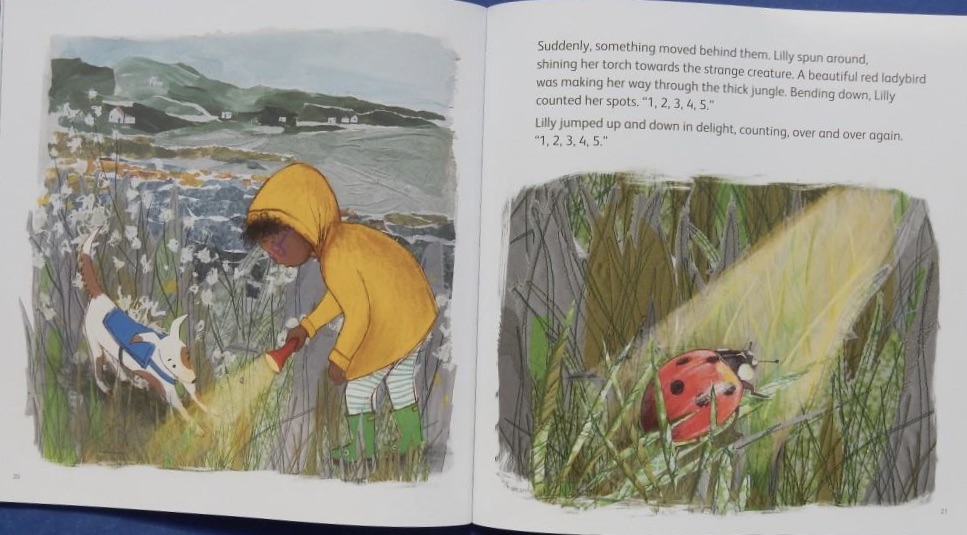
One night she finds a torch and while enjoying exploring the clicking sounds it can make, discovers her Grandma standing there. Together the two of them embark on an adventure that takes her to the seashore. Lilly’s acute sense of hearing makes the sounds of frogs in the pond especially exciting; she also enjoys the feel of the long grass as she runs seaward, and counting the spots on the ladybird.

In her excitement, when Lilly reaches the mouth of a cave Grandma had mentioned in stories, she decides to explore, failing to notice some other children petting Myles. Venturing further inside the cave, she accidentally drops her torch and is beset by fear. The sound of dripping water is just too much and having regained her braver feeling, and retrieved the torch, Lilly moves on, all the while imagining monsters lurking and waiting to catch her.

Happily the only thing waiting for Lilly is Myles, ready to calm her and guide her back to her gran’s house.

Throughout this heartwarming story, both Jon Roberts the author who has a child with autism, and Hannah Rounding, whose mixed media art is rich in detail, gently and beautifully convey the emotions children with sensory challenges might face, while highlighting the importance of friendship and showing the vital role played by assistance dogs in giving support and comfort. (Their role with those with autism is new to me.)
Both the book’s creators show how vital it is that in our wonderfully diverse world, we all, adults and children, accept and understand that every neurodivergent person is different, and celebrate that neurodiversity. A copy of this insightful book should be in every primary classroom.

(10% of royalties go to Dogs for Good and 10% to Dogs for Autism).

Fly, Butterfly, Fly!

Fly, Butterfly, Fly!
Dom Conlon and Anastasia Izlesou
Graffeg

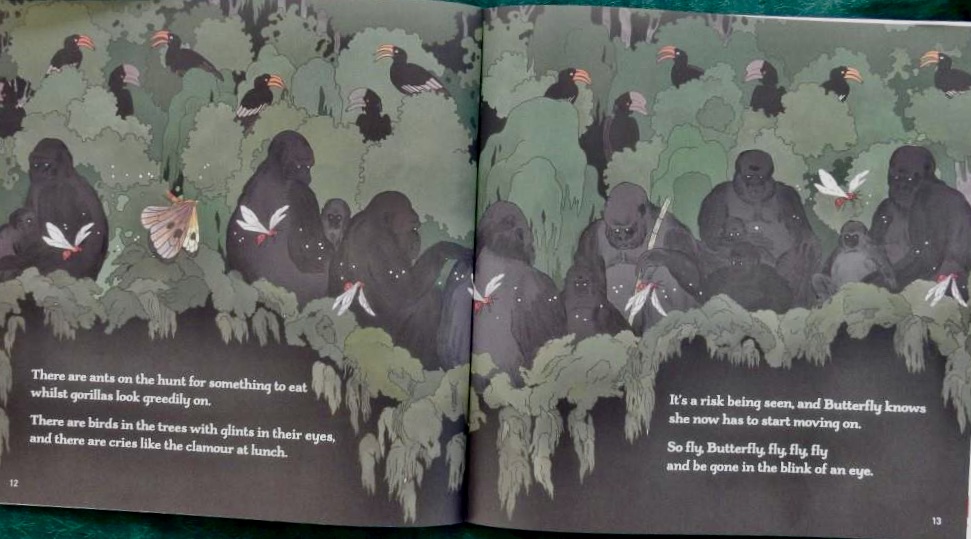
The butterfly addressed in the title is a Cabbage White. As she flits about with the other butterflies in the meadow, she considers herself too plain in comparison with the surrounding flora and her more colourful butterfly companions, the likes of Small Tortoiseshells and Chalk Hill Blues. Consequently it’s a case of ‘Fly, Butterfly, Fly, as she embarks on a journey to butterfly habitats across the world.

First stop is the Amazon rainforest burgeoning with richly hued fauna and flora. However, Butterfly is aware that attractiveness can cause danger due to those on the lookout for something tasty to eat,

so she takes flight again, next stop Mexico. There, along with the humans, the Monarch butterflies are celebrating the Mexican Day of the Dead. There are less of this species now though, as their vital food plants are being killed.

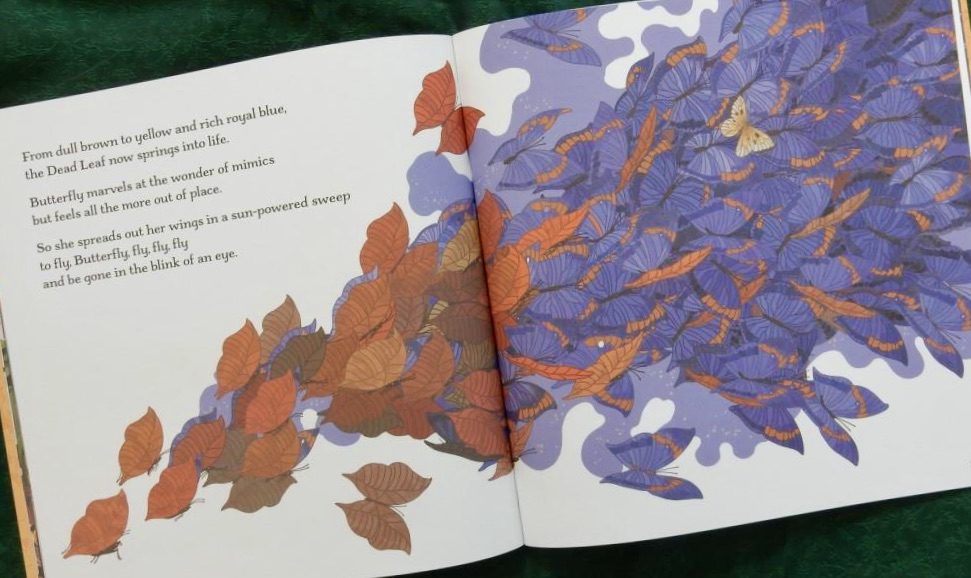
Off goes our Butterfly once more – to the tropical forests of India. There she’s in for a colourful surprise, for out of what appears to be the leaf covering on the ground, rises a host of Dead Leaf butterflies.

Over then to Papua New Guinea’s Mount Lamington volcano, home of the world’s largest butterfly, the Queen Alexander where the hues of the caterpillars make Butterfly think of her home, far away.

Off she goes heading homewards but her journey isn’t yet done; she stops over in the USA, where as in many other parts of the world, butterfly numbers are on the wane. Our common or garden Cabbage White has vital pollination work to do before she finally reaches the place from whence she started; the place where in fact, her colour is exactly right and where, satisfied among her own, she must now lay her eggs in readiness to say, “crawl, Caterpillar, crawl.’

Through Butterfly’s travelog, comprising Dom Conlon’s poetic narrative together with Anastasia Izlesou’s show-stopping illustrations, readers are made aware of the desperate plight of all too many of the world’s precious butterfly species.
An important addition to the Wild Wanderers series and let’s hope, a wake-up call to us all to do whatever we can to stop further decline in butterfly numbers wherever we are.

A Zoo In My Shoe

A Zoo In My Shoe
Jason Korsner and Max Low
Graffeg

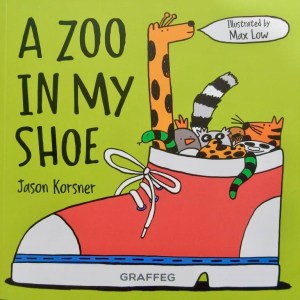
As you’ll see on the front cover of this book, Jason Korsner has selected seven different wild animals to place in his trainer – sorry, shoe, or it’ll be a no brainer because the first set of rhymes won’t work.

The structure is similar to that used in I Like to Put Food in My Welly and it’s equally, hilariously silly.

Zoo is the first word and everything starts sensibly with ‘Lots of wild animals live in the zoo. / Before a long trip you should sit on the loo. / My feet are so long, they poke out of my shoe.’ for which Max Low offers three cartoony illustrations – one per sentence.
Turn the page and the daftness takes over and we have, ‘ Lots of wild animals live in the loo. / Before a long trip you should sit on my shoe. / My feet are so long, they poke out of the zoo.’ Opposite this is an equally zany three line rhyme with more of Max Low’s illustrations, which are becoming increasingly surreal.

The other animals featured on the verso pages are in turn, Tiger, Giraffe, Penguins, Sea Lion, Lemur, 

Leopard and Elephant, each of which has a double spread of playful permutations of the original sensible (ish) three rhyming lines.

A splendidly funny read aloud that will quickly have young children in fits of laughter at the assemblage of wordplay and likely wanting to try and invent some of their own; there are plenty more zoo animals to play the language game with.

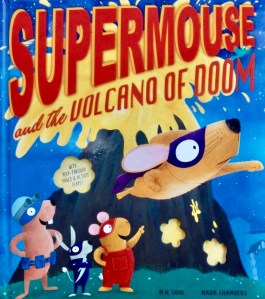
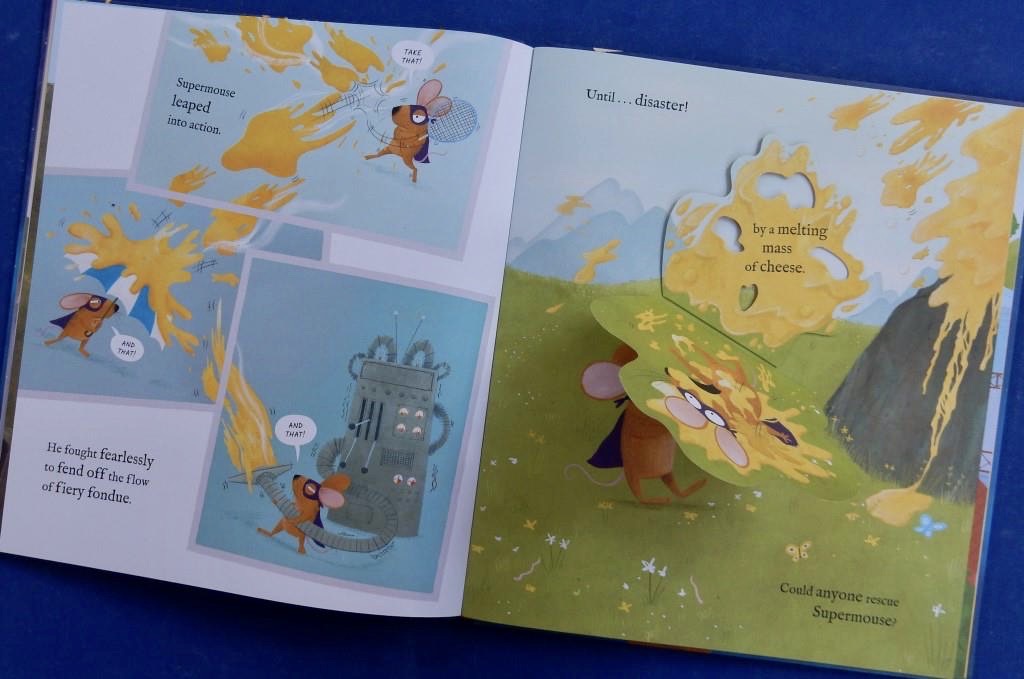
Albert and the Pond / Supertato: Mean Green Time Machine

These are new stories about favourite characters – thanks to Graffeg and Simon & Schuster for sending them for review.

Albert and the Pond
Ian Brown and Eoin Clarke
Graffeg

There’s a new pond in the garden where Albert tortoise lives, quite a deep one, so he knows not to venture in. Suddenly as he stares into the water, he notices a pair of eyes staring straight at him, but they blink and disappear. Albert tells all his friends, who take a look too, but the creature merely blinks and swims away.

No matter the weather, Albert visits the pond to check on his new pal every day but one day there’s no sign of the little creature and even though his garden friends try to cheer him up, Albert still misses his newest friend.
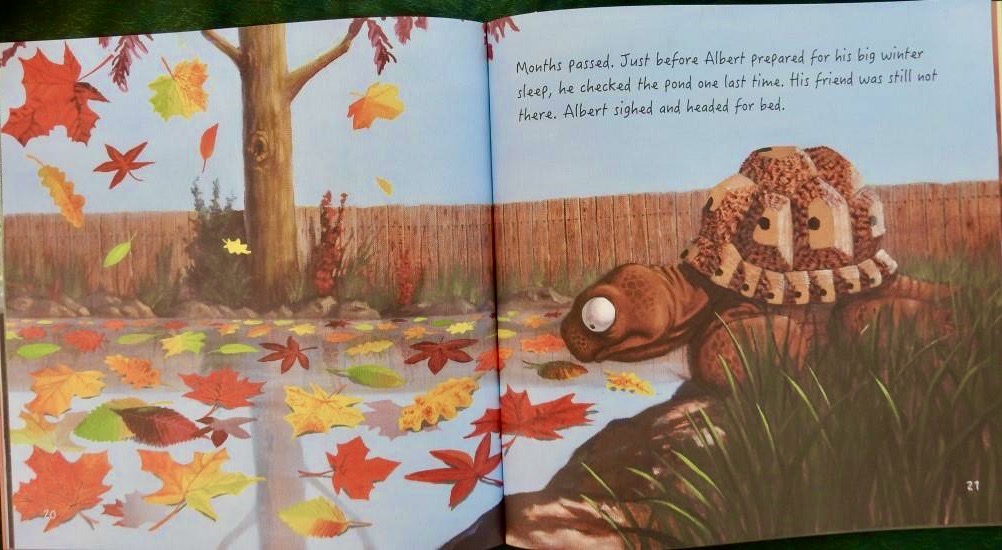
Autumn arrives and Albert makes a final visit to the pond before hibernating but of his friend there is no sign, not even a bubble.

The following spring you can guess where Albert heads when he emerges from his sleep and he gets the surprise of his life. Not one pair of eyes but many, many similar pairs are now staring straight up through the water at the tortoise.

Suddenly Albert hears a voice and is astonished to learn that he already knows its owner. How could that possibly be? Appearances can be deceptive …

Young children will love being in the know before Albert and be highly amused to see the efforts of the garden creatures as they attempt to play a game altogether with their amphibian friend.

With Eoin’s wonderful stand out, almost realistic illustrations, so brilliantly expressive and beautifully textured and Ian’s gently humorous and educative text, Albert’s numerous fans will delight in this latest tale. (Those new to this particular character can find out about the real Albert in the back matter after the story.

Supertato: Mean Green Time Machine
Sue Hendra and Paul Linnett
Simon & Schuster

One night in the supermarket Supertato and the veggies are holding in their giggles as they look at Supertato’s baby photos. Carrot’s comment that Supertato looks ‘super cute’ in one picture prompts the spud to say that he hasn’t always been super. Guess who is listening in: of course it’s Evil Pea, who wishes he’d eliminated Supertato before he’d acquired those super powers.

A pineapple’s remark about a Time Machine prompts Evil Pea to start building exactly that. Having collected all the ingredients from various shelves plus some snippings from Supertato’s slippers, he stirs the mixture and hey presto! Three time crystals: one for the backward journey, one to come back and a spare – just in case.

Then with the clock set, wheee!

Baby Carrot is somewhat confused when the pea demands to be taken to see Supertato but she does know a potato and before long right there in front of the pea are all the veggie babies eager to play his game. Having dealt, so he thinks, with all except Baby Potato, Evil Pea approaches him threateningly. The little spud retreats

and you’ll never believe what happened next, although it really, really did.

Super silly and super fun, but that’s what readers have come to expect when they’re in the company of Supertato et al. This one is super exciting too, especially when the revelation about Evil Pea is shared with all the veggies.

Super Small / The Versatile Reptile

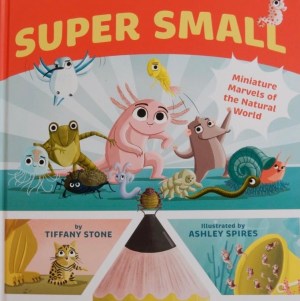
Super Small
Tiffany Stone and Ashley Spires
Greystone Kids

You may be surprised to learn that some of the world’s smallest creatures have awesome superpowers.

The minute oribatid mite can lift more than 1,000 times its own weight. The pygmy seahorses are so good at camouflage that scientists only discovered them accidentally when they brought some coral into a lab to study; then there’s the bee hummingbird that’s able to fly backwards and upside-down – clever stuff!

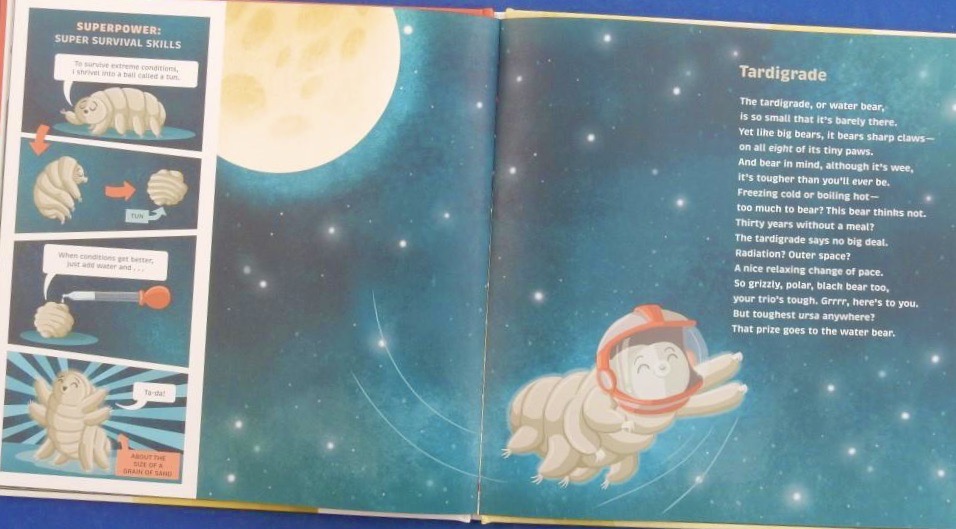
Did you know that wood frogs are able to survive harsh winter conditions as ‘frogsicles’ – they stop breathing, their hearts stop beating and their bodies make a kind of protective antifreeze and as for those teeny tiny tardigrades, here’s what author Tiffany Stone has to say about them: ‘The tardigrade, or water bear, / is so small that its barely there. / … And bear in mind, although it’s wee, / it’s tougher that you’ll ever be. / Freezing cold or boiling hot— / too much to bear? This bear thinks not.’

Ashley Spires uses her artistic superpower to illustrate each featured creature, making every miniature marvel appear super-confident; and to accompany her poetic descriptions Tiffany Stone provides some side-notes in the form of animal monologues (or dialogue) presented in comic strip style side panels. This is a book that will appeal to animal enthusiasts especially.

So will:

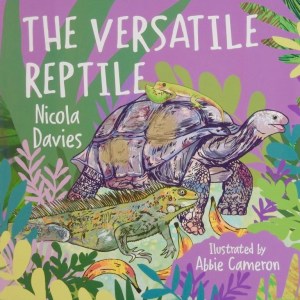
The Versatile Reptile
Nicola Davies and Abbie Cameron
Graffeg

In this addition to the rhyming series in which Nicola Davies presents a look at various animal types, we meet some reptiles.

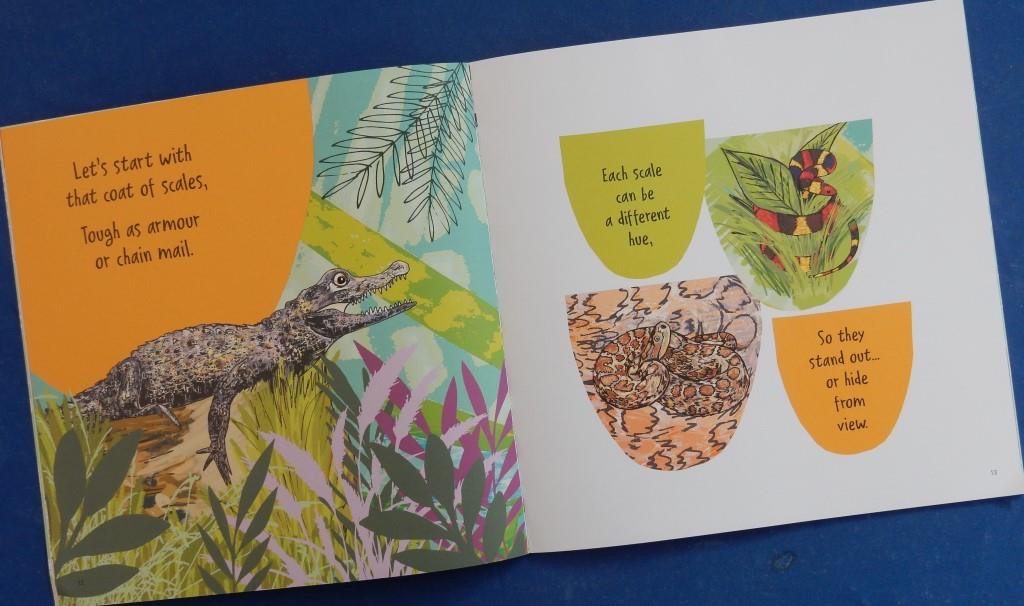
Reptiles are found in many different parts of the world as the young adventurer in this book discovers in her search. These scaly creatures might be jungle dwellers, live in desert places or swim in the seas among the seaweed, and can vary in size from massive to minute and from endearing to downright grim and ghastly. 

One thing the entire reptile group can claim though, is versatility. 

Abbie Cameron’s accurately detailed, close-up illustrations really drive that point home to readers who will one hopes enjoy coming face to face with such fascinating creatures. This reviewer certainly did.

Perfectly pitched for KS1 readers.

Frog’s Bog / Hugg ’n’ Bugg: The Comb

These are two recent picture books kindly sent for review by the publishers, Graffeg 

Frog’s Bog
Marielle Bayliss and Mariela Malova

It’s a fine sunny morning and all Frog feels like doing is relaxing on a log in the boggy pond. It’s not to be though, for first of all Fox gives him a soaking – albeit unintentionally. Then as he sits waiting for a bug to consume, along comes Dragonfly diving right at him – goodbye tasty treat.

Next Frog tries a boat in a moat, surely nothing can disturb him there. Err, he hadn’t factored in a visit from Kingfisher. Next thing he knows, Frog’s boat is upturned and as for peace and quiet, the day is fast disappearing and poor Frog still hasn’t found any of that.

Come sunset, Frog is in a brook and is ready to join the blackbirds in their evening rendition, never mind all he can manage is a raspy croaking croon. Suddenly this is brought to a conclusion thanks to a woodpecker sending down a shower of wood chippings making Frog depart hastily to the stream to contemplate his disaster of a day. As he speaks aloud of his discontent, he’s heard by the bees. They buzz off to have a few words on Froggy’s behalf with the animals that live nearby.

Can teamwork provide a means of making Frog’s Bog the very best place to be?

Mariela Malova’s scenes of Frog’s frightful day as he tries to find a peaceful piece of water are hilarious 

and make Marielle Bayliss’s rhyming account of his day even more deliciously droll and dramatic.

Hugg ’n’ Bugg: The Comb
Ian Brown and Eoin Clarke

The unlikely duo messy yeti Hugg, and Bugg, a flea that doesn’t like the cold, return in a new tale set as before in the Himalayas. While out wandering lower down the mountain they discover something small and pink on the snowy ground and suddenly encounter a frightened man who on seeing them, dashes away in fright leaving behind the comb.

Hugg picks up the pink object and tests it in a lock of his hair, moving on to his thicker fur. He likes the feeling and is soon bragging about his new handsome appearance, dubbing himself ‘the most stylish Mummy Nubble Snowman’. Bugg meanwhile is not enjoying the combing and a squabble ensues with Hugg going so far as suggesting the two part company.

Bugg is horrified that a new comb could result in him having to find a new home and proceeds to remind Hugg of what he will miss should they go their separate ways. But then a run-in with some very rude leopards, 

followed by an alarming threat to their home, help Hugg ‘n Bugg see sense, value their togetherness; and as for the comb, it’s still safe among Hugg’s treasures.

Whimsical and whacky illustrations by Eoin Clarke combined with Ian Brown’s fun rhyming text will entertain young listeners at home or in the classroom, and adult readers aloud will enjoy giving a hair-raising performance of the drama.Categories: Picture Books Tags: Eoin ClarkeFrog’s BogGraffegHuggnBugg: The CombIan BrownMariela MalovaMarielle Bayliss

Gaspard’s Christmas

Gaspard’s Christmas
Zeb Soanes and James Mayhew
Graffeg

The enormously popular fox Gaspard returns in his fourth adventure, the proceeds from which will go to St. Martin-in-the-Fields Charity that helps the homeless.

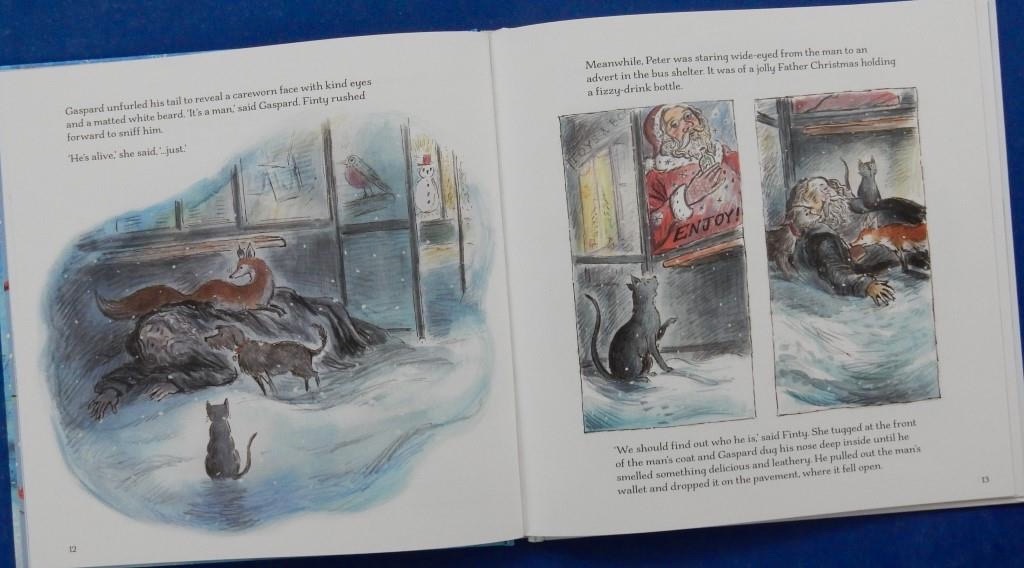
When out hunting for food one bitterly cold night near to Christmas, Gaspard comes upon what he thinks is a bulky black bag in a bus shelter. On investigation he discovers an old man with a white beard wearing a black overcoat who is obviously freezing. He quickly realises that the man needs help and goes off in search of assistance, calling on his friends Flinty the dog and Peter the cat before returning and attempting to warm the man whose condition has clearly deteriorated.

The savvy creatures investigate and find that the old man’s name is Nikolas and off rushes Flinty to find her person. Then together Honey and Flinty struggle through the streets back to Nikolas and the other animals.

Eventually back in the church, the old man is given a meal, clean clothes and a warm shower, and later a special temporary role at the shelter party.

Despite being given a small reward each, Peter, Flinty and Gaspard understand that their true reward is the knowledge that their kind and speedy actions have saved someone’s life.

Such a vital message about selflessness and a thought-provoking story about the importance of showing kindness to those less well off than ourselves. I love James Mayhew’s painterly, detailed illustrations that, as always in this series, are infused with loving concern.

Hugg ‘n’ Bugg Finding Home

Hugg ’n’ Bugg Finding Home
Ian Brown and Eoin Clarke
Graffeg

High in the Himalayas lives Bugg, a mountain flea. Unlike most of the other creatures living in this chilly location, Bugg does not like the freezing climatic conditions and so decides to search for somewhere warm to shelter. The sight of him bobble-hatted and carrying a load on his back is hilarious. First a lost sock and then a stinky boot, offer temporary accommodation and then he quickly rejects the bat-filled cave. Eventually, after a series of other unsuitable stops, Bugg takes a huge leap, landing somewhere promising at last – in the fur of the Abominable Snowman, aka Hugg. This huge creature introduces itself as “Bummy Nubble Snowman” going on to explain that on account of his looks he keeps himself hidden on the highest ground. Bugg offers to look after the Yeti in return for a home in his warm hair and a deal is done.

A deal that leads to the most unlikely of friendships and some tonsorial treats for Hugg.

Totally crazy and hugely entertaining is this latest Brown/ Clarke collaboration, the first of a new series with a theme of mutual friendship, it offers some vital lessons to young audiences. Ian Brown’s terrific talent for story-telling in combination with Eoin Clarke’s comical illustrations make this a read aloud, which despite its chilly setting, leaves a warm feeling within.

Anyone But Bear / Albert in the Air

Anyone But Bear
Suzy Senior and Dubravka Kolanovic
Scamp Publishing

Fox is excitedly making plans to host a moonlight party. He starts compiling his invitation list – Deer? – tick, Squirrel?- tick. Bear? Definitely not. Off trots Fox still planning in his head when suddenly rocks cascade down the mountainside, some of which smash straight into the party planner.

Fox is left flat out on the path-side unable to move. Several hours later, along comes Deer: help at last thinks Fox now awake and all too aware of his injuries. However, with a look of disgust, Deer turns away and takes an alternative route to avoid passing the injured creature. As snowflakes begin to fall along scampers Squirrel carrying nuts but he too decides not to stop. Seemingly the safety of his nuts is more important than that of a fellow forest creature.

Fox begins to despair but then round the corner comes someone massive, someone with large paws and a hairy scary face. Oh no! Soon though, Fox’s fear dissipates as he sees not the scary countenance he first thought but a kindly caring one. So kind and caring that he takes Fox all the way back home to his den; not only that but Bear brings him sustenance and takes care of the little fox cubs and their parent all through the night. This selfless act is one that Fox will remember always.

Based on the parable of the Good Samaritan, Suzy’s story, with Dubravka Kolanovic’s splendidly expressive illustrations will certainly make youngsters think about the meaning of real friendship.

Albert in the Air
Ian Brown and Eoin Clarke
Graffeg

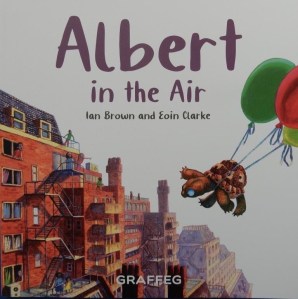
Albert the tortoise’s latest adventure sees him first wishing to emulate his winged friends and then, tunnelling his way beneath the garden fence into the next door garden and wandering out into the hubbub of the territory beyond. It’s there, while foraging among the piles of trash that he unintentionally finds that his wish is actually being fulfilled. The wind lifts a balloon entangled Albert skywards and he gets a tortoise-eye view of the sprawling urban landscape beneath him.

Meanwhile back on home territory, the other creatures are missing their friend and enlist the help of the birds to search for Albert. Will they return him safe and sound? 

The answer is yes, with the timely assistance of a bee and he makes his return felt in a rather noisy manner.

An amusing demonstration that the grass most definitely is not always greener and perhaps home is the best place to be. With its humorous ending and stand out illustrations, Albert’s new story is sure to please his numerous fans and will likely win him some more followers too. Don’t forget to peruse the information spread at the back of the book.

Goodbye Hobbs

Goodbye Hobbs
Emma Bettridge and Josephine Birch
Graffeg

Based on real life events of love, loss and grieving, the author offers a dog’s eye view of losing a very dear friend. It’s with great reluctance, that Merlin eventually follows his owner out of the house for a walk to the shops. It’s hard for him to do so without Hobbs, his gentle black Labrador best friend.

As they walk, Merlin catches the scent of something on the wind and following his nose he detects a message asking ‘ … How are you today?’ but the message is incomplete. Merlin sniffs again and again as they continue walking and he finally stops beneath a weeping willow tree beside the river. ‘I just wanted to tell you that I am OK. It was time for me to go away. I love you. If you need me …’ Again the message stops mid-sentence.

On the two go, Merlin sniffing and gathering pace as he and his human head through the woods, back towards the village, bound for home.

Still sniffing and alert to any message, Merlin finally receives the words he needs so much. Words that will help him cope with those feelings of near despair as little by little he accepts that although his belloved Hobbs is no longer present in a physical form, he remains in the form of memories of the wonderful times the two have shared over the years together.

Josephine Birch’s painterly illustrations of the walk capture the complex emotions of Merlin. Her initial sombre colour palette changes to one of warm autumnal shades, and her subdued brush strokes become more exuberant as his mood lifts with each new discovery of his friend’s scented messages.

A helpful book for any parents or educators wanting something to help explain the feelings surrounding the loss of a loved one.

Fletcher and the Stars / The Winter Dragon

Fletcher and the Stars
Julia Rawlinson and Tiphanie Beeke
Graffeg

The fourth Fletcher story in the Four Seasons series is a wonderful wintry one.

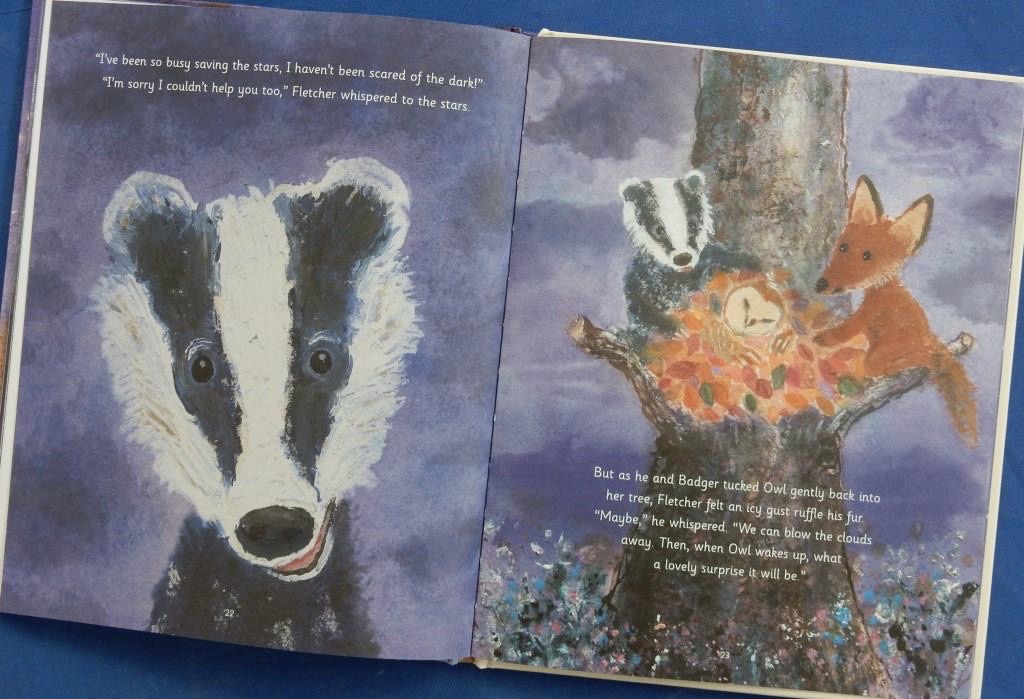
One chilly night as Fletcher sits at the entrance to his den gazing up at the glittering stars, they begin to disappear. Concerned, he calls to tell his Mum but she assures him that they are just covered by cloud. However, he remains worried and can’t sleep. Instead he creeps out, determined to save the stars and before long he hears a snuffling sound. It’s a badger cub that says she’s afraid of the dark and is hiding till the stars return. Encouraged by Fletcher, Badger climbs onto his shoulders and twiggy branch in paw begins swish sweeping across the sky, but of shining stars there is no sign.
Next they try from up among the branches of a tree. That only succeeds in waking sleeping Squirrel; Squirrel offers to use his tail but to no avail. Can Owl sweep away those clouds?

The others wait snuggled up in a hollow in Owl’s tree and eventually fall asleep. When Owl returns having tried her best, Fletcher is down hearted at her news. But then at least Badger has some good news: she’s no longer afraid of the dark. Fletcher and Badger then tuck Owl into her tree once more and depart in the hope that by the time she wakes, their mission to reveal those stars again will have been successful.

Up the windy hill they climb and begin to puff. I wonder what will happen …

It’s a delight to be back in the company of Fletcher with his determination, consideration for his friends and passion for the natural world. Tiphanie Beeke’s gorgeous illustrations, glow even brighter than ever in this story as they evoke so well the icy winter’s night and the feelings of the animal friends. What a perfect match for Julia Rawlinson’s equally evocative, poetic text. Snuggle up and share this with young children at home or in school.

The Winter Dragon
Caroline Pitcher and Sophy Williams
Graffeg

Young Rory hates the long dark winter nights imagining them to be the time when hidden demons lurking in the shadows come creeping out. But Rory has recently made a model dragon from his craft materials and one night as he cowers beneath the bedcovers he hears a strange growling sound.
Peeping out cautiously he finds his dragon glowing like a nightlight, keeping away the dark and using its hot breath to warm his bed and his slippers and his bathwater.

Each night the dragon returns to warm him with tales of bravery with blazing fires, jewels hidden beneath the earth, elf kings, knights and dragons. With every visit Rory and the Winter Dragon together ‘banish the demons of the dark’ enabling the boy, his heart filled with the dragon’s stories, to sleep soundly, unafraid.

With the coming of Spring, Rory knows in his heart that it’s time for him and his dragon to bid one another farewell and one night safe in the knowledge that his friend will always be there should Rory need him, he watches the dragon leave, bound once again for his own world again.

With a gentle sprinkling of fantasy, Caroline Pitcher ’s lyrical telling combined with Sophy Williams’ soft focus, realistic illustrations highlight one little boy’s battle with his fears and his growing courage.

Invertebrates Are Cool! / Slow Down and Be Here Now

Invertebrates Are Cool!
Nicola Davies and Abbie Cameron
Graffeg

In author Nicola Davies’s latest Animal Surprises book, she takes us in the company of a young naturalist, on an exploration of the world of bugs, mini-beasts and some sea creatures too. In case you are wondering what all these might have in common, it’s that every one of the animals featured lacks a backbone. First of all we get close up to some earthworms, find out how to make a simple wormery and watch the clever tunnellers at work. Next come the slitherers with slimy undersides – snails and slugs.

It’s strange to realise that these are cousins to cuttlefish, squid, nautilus and even more astonishingly, the octopus.

Beetles are the next focus; did you know there are more than 400, 000 different kinds? Some such as ladybirds will be familiar, but readers may not have encountered chafer beetles or the devil’s coach horse, both of which are featured in Nicola’s rhyming narrative and Abbie Cameron’s illustrations. The latter are sufficiently detailed to enable identification of the creatures and on some spreads readers are able to get right up close to the featured animal.

There’s a final ‘match the animal to its home’ puzzle. A book that’s likely to nurture children’s interest in the natural world and whet their appetites to get outdoors and explore.

Slow Down and Be Here Now
Laura Brand, illustrated by Freya Hartas
Magic Cat Publishing

The author presents twenty awe inspiring events that take place in the natural world, each of which is a captivating reason to do as the title says, to slow right down and to be fully in the present, immersed in an amazing wild life happening. It’s as though time has been suspended as she presents each of these ‘moments’ in its allocated double spread, including a harvest mouse building a nest, a snail retracting into its shell when threatened by a predator, a goldfinch extracting seeds from a dry teasel head

and a frog sating its hunger by catching and swallowing a fly. Thus the reader is able to watch each occasion when they so choose, as they savour the words and study carefully Freya Hartas’s delicately detailed, sequential illustrations, which include occasional gently humorous anthropomorphic enhancements.


The text itself comprises a mix of easily digestible paragraphs of information, an on-going narrative and captions to the illustrations.

Not all the nature moments could be observed at first hand but anyone who follows the suggestions on the ‘Come Into the Here and Now’ pages, will likely encounter some of these wonders or indeed, chance upon opportunities of their own to observe moments of joy, awe and wonder.

Lord of the Forest

Lord of the Forest
Caroline Pitcher and Jackie Morris
Graffeg

‘Tiger was born fluffy and small, with his eyes tight shut.” So begins this gloriously lyrical fable about a tiger cub that doesn’t fully appreciate until he reaches maturity the meaning of his mother’s words, “The Lord of the Forest is …”.

Roaming the forest where all is new and exciting, or playing with his brothers, the little tiger’s focus is the sounds around: the sap rising in the trees, the slither of snakes, the Monkey’s whooping; he’s even aware of the curling of Chameleon’s tongue and little Gekko’s gulps, the flip of fish and Water-snake sliding down from the logs. His mother says, “When you don’t hear them, when silence burns and time stands still, then my son, be ready.” It’s then he’ll know the Lord of the Forest is present.

As he walks alone, grown considerably now, the tiger still listens and waits for the coming of the Lord of the Forest; but who is he? 

He asks the other forest creatures about this Lord, and the beautiful peacock, the rhinoceros and the enormous elephant all arrogantly claim the title belongs to them. However, Tiger understands that screeching, bellowing, roaring beasts such as these, couldn’t possibly be the one that his mother has readied him to meet. 

He continues searching but it’s not until he’s fully grown, with a mate and cubs of his own, that he discovers the identity of the beast he’s been seeking.

Elegance and humility reign both in Caroline Pitcher’s lyrical telling and Jackie Morris’s awesome art.
Jackie’s stunning watercolours immediately breath life into the creatures she portrays: the dignity and grace of the tiger in particular is palpable, while Caroline Pitcher’s poetic narrative truly transports us to the forest habitat with its magnificent sights and mellifluous sounds.

This enlarged edition of a book first published 18 years ago seems even more beautiful than the original. Sheer joy to read aloud, it’s one to add to family bookshelves and classroom collections.

Mouse & Mole Clink, Clank, Clunk!

Mouse & Mole Clink, Clank, Clunk!
Joyce Dunbar and James Mayhew
Graffeg

It’s always a pleasure to be in the company of Mouse and Mole and this book contains three brand new stories. In the first, Clink, Clank, Clunk, Mouse, relaxing in his hammock with a book suddenly hears a horrible noise coming from the direction of the shed. There he finds Mole tinkering with their motorbike. Informing his friend that one is supposed to do this from time to time, Mole proceeds to dismantle the entire machine and try as they might, the two just can’t put it back together. Along comes Fox who offers to take it off their hands giving them instead a balloon each. Is that the last the friends will see of that motorbike though?

Next, Mole is very troubled about the possibility of Something on the Roof, talking of sleepwalking, a bird nesting in the chimney and others of his thoughts. Can a ripe rosy apple help such notions to disappear?

In A Frisky Fluttery Ghost Mouse has to wait a very long time to share the crispy buttery toast he’s made for breakfast and so while his friend continues to slumber, he hangs out some washing. Once again Mole lets his thinking turn into worrying when he eventually wakes up, looks out of the window and even causes Mouse get an attack of the frights.

Just the thing to share with young children as well as for those beginning to read independently to try as a solo read. Either way, James Mayhew’s superbly expressive illustrations capture the ups and downs of the characters’ everyday life together just perfectly. A delight for both children and adults.

Finger Sports / Spin to Survive: Frozen Mountain

Finger Sports
Anna Bruder
Graffeg

Fun and creativity at your fingertips is on offer in Anna Bruder’s second set of interactive and inventive activities inspired by a range of sports. I suspect with the success of The Lionesses in the European Championships that many youngsters will turn first to finger football; or enthused by the Commonwealth Games in Birmingham, perhaps finger athletics might be the first go to sport of the eight included. Make sure whichever one your participants engage in they remember to do some finger warm ups first as instructed by Anna.

Whoever thought that fingers could become so competitive – although that need not be the case; a challenge could be to make an activity co-operative if played with a friend or sibling. I wonder how that might work with the dog assault course. No matter what, a player’s dexterity is likely to be enhanced after participating in these playful sports be that at home or even in a school break. Anyone feel like an aerobics session?
A super little book to explore and share with and between youngsters.

Spin to Survive: Frozen Mountain
Emily Hawkins and R. Fresson
Wide Eyed Editions

This is a large format interactive game book wherein the reader embarks on a survival adventure story that unfolds after an emergency landing high in a remote Alpine mountain region and thence must make a series of life and death decisions to make it home.
The location is fraught with dangers of all kinds: you have to deal with blizzards, altitude sickness, an avalanche, frostbite, a bear attack, raging torrents, cross a glacier and that’s not all. There’s the necessity to find food and water, and navigating so you don’t become even more lost.

The text is full of survival information such as making a snow hole shelter where you can be safe and keep warm during a blizzard, how to judge distances and what to do when hiking in bear country. 

Then there’s the inbuilt lesson on the risk/luck relationship and the vital importance of making good decisions when in a mountain region with life threatening situations to face. Having made your choice when faced with each threat, your decision is further tested by using the pop-out spinner provided, which acts as a pointer to the idea that there is always an element of chance in dangerous situations.

As well as Fresson’s Hergé-like illustrations showing the drama of the journey, each spread contains diagrams and there are insets of newspaper clippings featuring real-life survivors too. 

Very engaging, lots of fun and with a large amount of factual information, this book provides a great way to spend time away from screens.

Snakes on the Job / Ebb and Flo and the Greedy Gulls

Snakes on the Job
Kathryn Dennis
Walker Books

The Snakes on a Train have become construction vehicle operators in charge of a variety of vehicles – bulldozers, diggers, dump trucks, loaders, cranes and more. ‘They slide into trucks and roll out slow. Hisssssssssssss goes the sound of the brakes.’

Midway through the operation, up rolls a food truck to provide lunch for the workers then it’s back to work once again.
The fruits of their labours is a wonderful surprise revealed just before the end of the story and it looks such a terrific endeavour that some friendly hamsters want to join the fun. What will the response of the snakes be? …
With that repeat sibilant sound and other wordplay, this is an enjoyable read aloud for little ones. They’ll love the bright digital art and the simple tale wherein teamwork is paramount. One to add to your nursery collection or home shelves if you have very young children,

Ebb and Flo and the Greedy Gulls
Jane Simmons
Graffeg

Jane Simmons is a brilliant illustrator and it’s really good to see Graffeg gradually bringing this series with its hugely likeable Ebb and Flo characters back into print. As always there are small disasters – in this instance Ebb gets wrongly blamed for consuming all the sandwiches during the beach picnic. Inevitably the dog is upset and goes off to sulk in her favourite place. Eventually Mum and Flo realise who the real sandwich snatchers are but by this time Ebb has drifted out to sea in the boat. Sulking certainly hasn’t paid off, but will Ebb reach the shore safely? Let’s just say, all’s well that ends well: three characters have learned a lesson but not so the marauding picnic pinchers.

Molly and the Dolphins / I See the Sea

Molly and the Dolphins
Malachi Doyle and Andrew Whitson
Graffeg

In Molly’s sixth adventure she receives a very special present from her father: a lovely little dinghy that she names The Mermaid. Every morning the two set out in it and Molly learns how to read the wind, trim the sails and ride the waves; however her father begs that she doesn’t try sailing solo until he’s sure she’s ready. One day when out together Molly spies a pod of dolphins and they surround their boat. One dolphin Molly names Dot swims with them every day. Later on though, she’s joined by a tiny dolphin: Dot has a baby.

Eventually Molly’s father declares that she’s ready to sail solo and under his watchful eye off she sets, just her, her boat and the birds under the sky. Suddenly she notices that something untoward has happened to her dolphin friend: the baby is caught up in a fishing net.

Fortunately Molly’s father is able to free it, then throughout the summer Molly shows her human friends Dylan and Amina how to sail while the dolphins play around their boat. A wonderful season passes all too soon and then come the darker, shorter days and Molly realises there are no dolphins.

Suddenly the wind changes direction taking girl and boat far from home. Now Molly is in need of help: how will she find her way back to the safety of the harbour?

With dramatic illustrations and an important ecological message, this is another treat from team Doyle and Whitson.

I See the Sea
Julia Groves
Child’s Play

The eye staring out from the front cover of this book is repeated by use of a die-cut connecting hole, which builds up creating concentric circles that form a part of different sea creatures when the pages are turned as readers participate in a game of aquatic I spy discovering in turn a whale, dolphins, an octopus, rays, a turtle, lobsters – nocturnal hunters they, squid, shimmering seahorses,

more fish and finally plankton silently drifting. There is so much to see and enjoy in Julia’s illustrations for this ocean foray that truly captures its awesomeness and majesty while her lyrical narrative beginning ‘I SEE’ on each spread evokes the wonders of the diverse marine life and flows beautifully from one spread to the next throughout.

Backmatter comprises further information about each of the creatures depicted and about environmental threats to our oceans and many of the species completes this strikingly beautiful picture book. It’s surely one that will both capture the imaginations of child readers and at the same time, inspire them to find out more about the astonishing life beneath the waves.

Imagine Eating Lemons / Sometimes I’m a Baby Bear Sometimes I’m a Snail

Imagine Eating Lemons
Jason Rhodes and Richard Dearing
Graffeg

In recent years there has been increased concern about the mental well-being of youngsters and what can be done to help reduce their anxieties. As a yoga teacher I know well how mindfulness techniques can have a positive effect on both mental and physical health, so with this in mind it’s time to introduce Chester Chestnut.

In his decidedly mucky dungarees, cheerful little chap Chester Chestnut stands at the ready to guide young children through an introduction to mindfulness. He’s a character they’ll find easy to relate to and now he’s starting school – the only one doing so – he’s feeling anxious. Supposing he’s too shy to play and so won’t make any friends? Following a tumble, Chester picks himself up sits down and begins to breathe slowly and deeply, focussing on the various feelings as he scans his body, and paying attention to the sounds he can hear. 

‘Imagine eating lemons and your mouth will think it’s real.” Now he feels much calmer, he can think about lots of positive and playful ideas.

The weeks pass; a new worry arises as he plays with his friends. Suppose when he’s participating in that talent show something goes wrong? Time to remember those calming techniques Chester. In his rhythmic, rhyming text, Jason Rhodes now describes the sounds of the trees, the bees and the birdsong and gives a reminder about those lemons,

so that in addition to Chester, readers/listeners will know what to do to conquer those fears, and why to do it, then and throughout the rest of the story. Richard Dearing’s illustrations give the story a slightly whimsical feel almost as though it’s set in a world of faerie.

The final page gives half a dozen things to remember about feelings and the practice of mindfulness. You try imagining eating a lemon and see what happens.

A book that is well worth having for home and school use.

Sometimes I’m a Baby Bear, Sometimes I’m a Snail
Moira Butterfield and Gwen Millward
Welbeck Editions

Embracing an entire gamut of childhood emotions, author Moira Butterfield uses different animals to explore and help little ones understand their feelings.

Whether it’s a bouncy puppy full of fun and wanting to play with others; a snail inside its shell ‘I’d rather be quiet and on my own. / I’m fine playing games alone.’ (I love that);

or perhaps a hug-loving baby bear, or no-hug bird, a blowfish blowing kisses instead of giving hugs; even a fearless lion expressing itself through a roar, it’s absolutely fine,

as are those scared, tiny mouse feelings about trying something tricky.
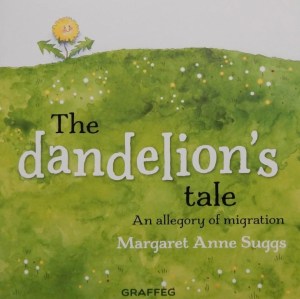
We all experience different emotions at times and it’s perfectly OK to feel that way: you can turn down a hug till another day, or feel happy in some solo play, as might some of your friends or siblings, so assures Moira in her appealing rhyming narrative. All these feelings are illustrated in Gwen Millward’s brightly coloured, equally appealing art showing the humans and animals with similar expressions and body language.
There’s a final spread giving advice to adults suggesting ways to use the book and providing helpful information about teaching children to identify, name and understand their feelings. This book developed with the support of a child psychologist is one to use in the foundation stage and with little ones at home.

Supermouse and the Volcano of Doom / Ebb and Flo and the Baby Seal

Supermouse and the Volcano of Doom
M.N. Tahl and Mark Chambers
Little Tiger

In case you didn’t make the acquaintance of Supermouse in his previous adventure, Peter Parmesan is no ordinary mouse. When disaster strikes, Peter morphs into Supermouse ready to save the day.
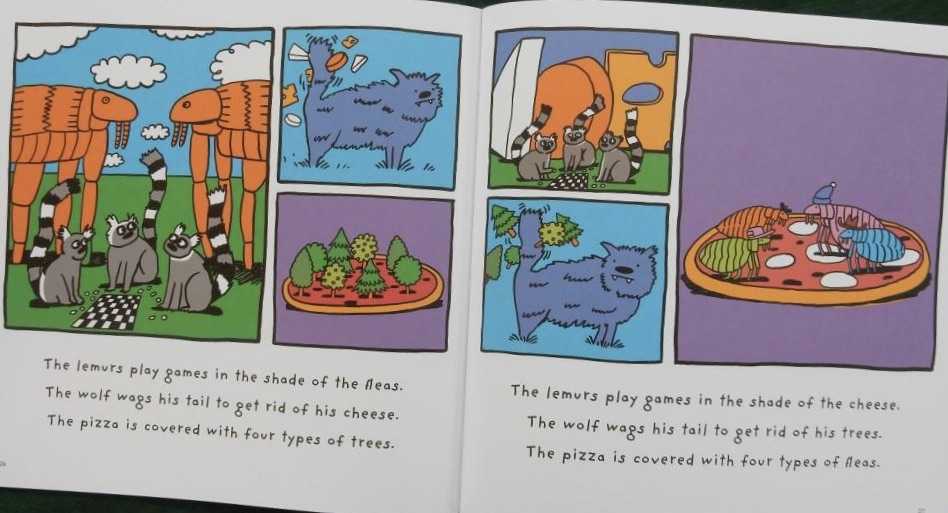
Now along with the regular news of crooks creating chaos comes news of the imminent eruption of Mount Fondue, way too big a task for our hero to handle entirely alone. So, he decides to hold auditions for ‘The League of Remarkable Rodents’ but none of the many that show up for the audition are sufficiently remarkable. Supermouse must face the volcano of doom alone.
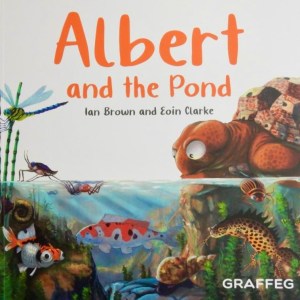
As he starts to investigate this hot, hot mountain, there’s a sudden SPLAT that sends our hero skywards. However, refusing to be overcome he fights with all his might to fend off the fiery onslaught until disaster strikes in the form of hot molten cheese.

Is there anyone that could help rescue Supermouse and in so doing save the city? You never know: assistance sometimes comes from an unlikely source.

With its plethora of flaps to explore, speech bubbles, peep-through pages aplenty, wealth of wordplay and rodents of several kinds, this madcap superhero romp will go down well with young would-be superhero humans. They’ll absolutely relish Mark Chambers’ zany action-packed illustrations, that’s for sure.

Ebb and Flo and the Baby Seal
Jane Simmons
Graffeg

As Ebb sits listening to the pitter patter of the rain she hears a ‘Wah! Wah!’ coming from the direction of the beach. Off she dashes and there she discovers a baby seal – a playmate at last.After a day romping on the beach and in the waves, a hungry Ebb decides to head home; the little seal tries to follow. Ebb realises that it needs help, seeks the assistance of Mum and Flo

and eventually together they find a way to reunite the baby with its mother.

Jane Simmons’ misty watercolour illustrations evoke the seaside setting beautifully in this third reissue in a wonderful series that, with themes of kindness and teamwork, is as relevant now as twenty years back when the book was originally published.

The Invention

The Invention
Julia Hubery and James Munro
Graffeg

How do you get all the seemingly exceedingly busy people who live in the same block of flats as you do to take time to interact with one another? That’s what Fili, who lives in said flats with her caretaker Dad wonders as she watches their comings and goings with barely a ‘hello’ being spoken day in day out.

However young Fili isn’t one to feel sad and do nothing about the situation; instead she thinks further, talks with her Dad and then sets to work, making … an Invention, As yet she’s unable to explain how it works, nor what it does 

but what is evident is that it keeps getting larger and larger and everybody is interested in Fili’s mysterious creation. Eventually someone asks, ‘ … how will you know when it’s finished?’ Fili responds that she’ll need everyone’s help with that.

One day she delivers invitations to all the residents of their block, thus arousing further curiosity on their part. Needless to say the Invention party is well attended although at first the attendees are somewhat nonplussed at the Invention’s lack of action. 

Now Fili’s plan moves up a gear, “Will you help to start it?’ she asks. Immediately everybody begins twiddling and fiddling, and more importantly, giggling and chatting until finally …
There we have it: one little girl, one idea, one supportive parent, a lot of determination to build, not just her invention but a collaborative community.

James Munro’s superbly quirky illustrations are perfect for Julia Hubery’s straightforward droll telling about a child with a good idea, ingenuity and lots of determination, and the bringing together of people to form a real community.

Grow, Tree, Grow!

Grow, Tree, Grow!
Dom Conlon and Anastasia Izlesou
Graffeg

The fifth in the Wild Wanderers series is every bit as good as the previous titles; in fact as trees are my number one thing in nature, this, with an Oak tree as its main focus is my favourite so far.

In his wonderful lyrical text Dom describes how in the forest as winter departs, an oak sapling is slowly growing to become Tree. All around minibeasts, rabbits and larger creatures are hunting for food to survive.

Many years later we see Tree has become a safe haven – ‘a canopy-guarder / a sanctuary for all to share.’ All being squirrels, woodpeckers, birds, bats, spiders and badgers. 

Growing in the forest too are other trees – chestnut, ash and beech, each helping to keep the atmosphere clean, … ‘and branch is to sky / as root is to earth so // grow, Tree, grow!’ urges the narrative.

Seasons come and go bringing changes in the form of acorns within each of which lies another potential oak, but squirrels have designs on these goodies so Tree must make more and yet more till they’re ready to fall. The ground though is shared with acorn-loving pigs but they are not the biggest danger: that is the people who chop down the precious trees to make room for towns full of houses, shops and traffic.

Is it possible that a thousand years have passed since Tree’s tiny sapling started to grow; it surely is, but nothing in nature lasts for ever. Even an oak as majestic, as awesome as Tree must eventually die and now its time has come so, ‘rest Tree, rest.’ while all around new life springs forth and the wondrous cycles of nature continue – each to each returns its need and life goes on.

The web of life that is harboured during the lifetime of an oak tree is brilliantly caught in Anastasia Izlesou’s intricate tracery of lines and shades of russets and greens. Simply gorgeous!