Supersaurus: Total Tricera-Flop! Angela Woolfe and Mark Chambers Little Tiger
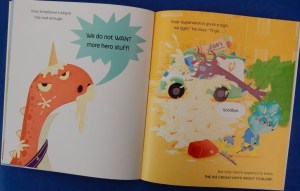
Supersaurus is something of a disaster when it comes to saving the day. Smalltown’s ice cream seller, Dan’s residence catches fire during the jamboree and with the assistance of his sidekick, Hatch, Supersaurus hurls the fossil-flinger at the roof extinguishing the flames but wrecking the roof. The duo then notice moggy, Mr Tiddles stuck in a tree. Chaos ensues as they rescue the cat but flatten Dan’s ice-cream van, leaving its contents wide open to thievery in the form of Burglar Gran.
Supersauarus attacks the burglar with his T.rex trap causing cake to fly every which way and ice cream from Dan’s van to squirt forth all over the place super speedily. Just as Supersaurus is about to clear up the mess with his Bronto-Broom, the town’s mayor calls a halt and sends the duo packing. Only Hatch is aware of the impending fate of Dan’s van but he’s caught in a torrent of ice cream.
Can Supersaurus finally save this whole sorry situation once and for all?
Totally daft, Angela Woolfe’s funny rhyming saga of a muddlesome dinosaur and his disasters, is illustrated in suitably silly scenes of the inept superhero at large in the community. With its combination of two of young children’s favourite topics – superheroes and dinosaurs – team Woolfe and Chambers are surely onto a winner with this one.
Until You Find The Sun Maryam Hassan and Anna Wilson Hodder Children’s Books
Debut author Maryam Hassan was inspired by her own experience and children she has taught to write this poignant, affecting story.
Aminah’s life is a happy one, made especially so by the evenings she spends with her grandfather, Da, who while snuggled together on his charpai, tells her tales of adventurers who visited new lands and made exciting discoveries. Then one day her parents tell her that they too are going to set off on an adventure. At first Aminah is excited but then Da tells her that he isn’t going with them. Saying goodbye to her beloved grandfather, brings Aminah to the brink of tears as she urges him again to join then. “I am always with you. You will find sunshine wherever you go,” he tells his granddaughter.
When their plane lands at their destination though, there’s no brightness, only grey skies and rain. The next few days continue to be sunless, bitterly cold and despite wrapping in several layers, Aminah still feels numb both inside and out. She feels out of place in her new school too
and despite her parents’ best efforts to cheer her up, the only warmth she feels is when talking to Da on the phone. How she longs to go back. Understanding Da reminds his granddaughter that her adventure is just beginning and promises to light her way until she finds some sun once more.
That seems more unlikely than ever as the days grow even colder, but then as she trudges along clutching her Mama’s hand, she suddenly spots something bright mango yellow that reminds her of home. Mama and Aminah go and make a special purchase, one that brightens up the day considerably.
The following morning Aminah opens her curtains onto a sight that seems to herald that adventure Da had promised her. Outside in the snow she meets a new friend and at last the cold doesn’t have that same dismalness. When next she talks with Da on the phone, he knows that Aminah has at last found her sunshine once more.
Having spend most of my teaching life in schools close to Heathrow Airport, this beautiful story resonates powerfully with me. The author captures perfectly those feelings of overwhelming grey so many children are beset by when they first arrive from parts of the world so different from the UK. Anna Wilson’s scenes in the early part of the book radiate warmth – interpersonal and climatic – as well as portraying the contrasting grey dreariness of Aminah’s new environment where she’s never experienced such cold. An important story to share with KS1 classes especially.
The Magic Garden Frog Shann Jones and Hannah Rounding Graffeg
Mamgu has a Magic Garden that she tends carefully. It’s a place her three grandchildren, Isabella, Elis and Macsen love to visit, especially enjoying all the different things that are round shaped.
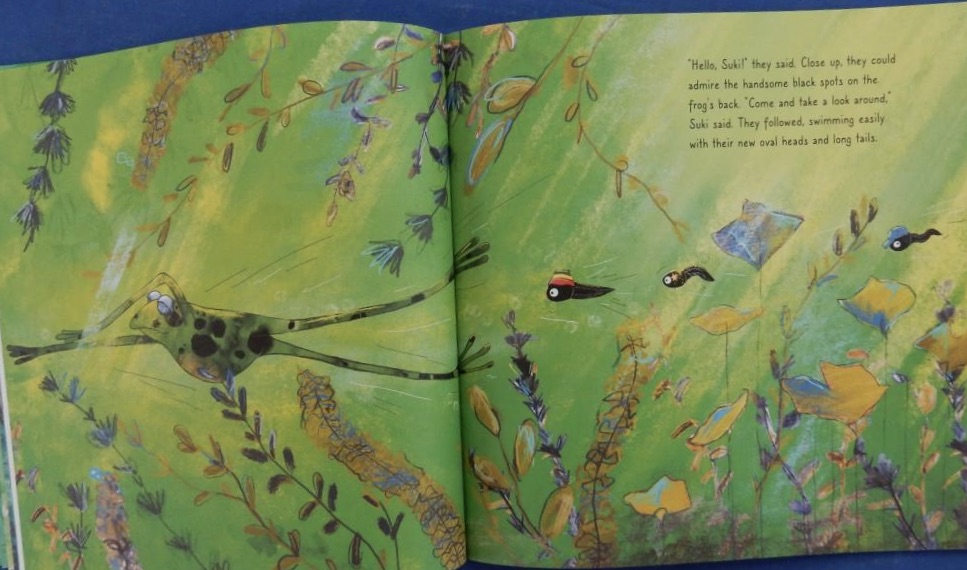
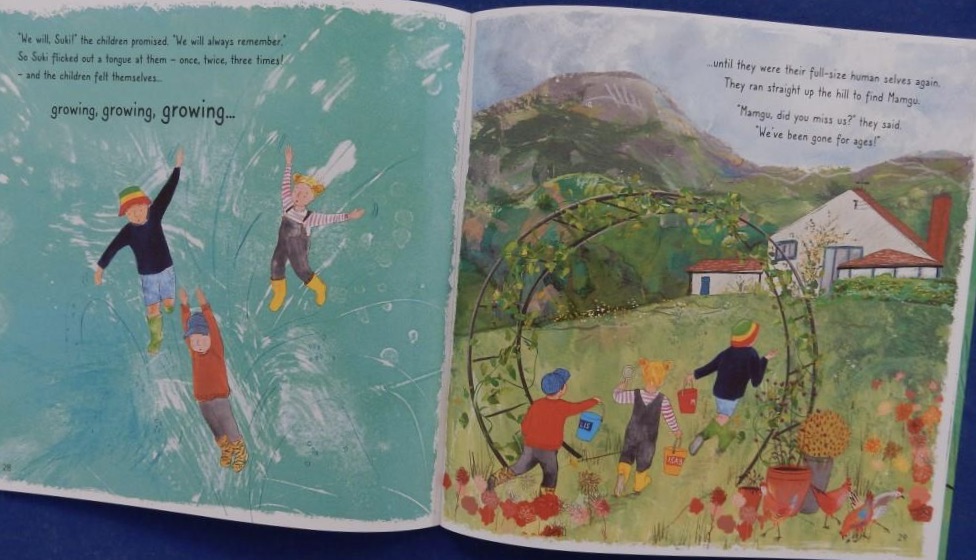
One day while exploring, they find something new in the fountain; it’s a frog they name Suki. As the children watch her, the frog suddenly sticks out her long tongue and flicks it three times making something unexpected happen. The three children shrink and fall into the pond with a splash. The next thing they know is that they’ve become wiggly tadpoles, able to breathe under the water.
So begins a magical adventure during which as a seeming metamorphosis takes place, they learn lots of interesting facts about frogs, their lifecycle and their habitat, and sadly that frog numbers are declining. After the story is a spread encouraging children to go outside and look carefully at the nature that is all around and perhaps create their own ‘Magic Garden’. It’s never too soon to start introducing young children to the wonders of the great outdoors and this story offers a good starting point.
Both the author and illustrator feel the book is a very personal project. The Magic Garden author Shann Jones writes about, is based on her own garden in Wales and the grandchildren characters are based on her own grandchildren, whose names she used for the story. Illustrator Hannah Rounding visited Shann’s garden and met the real Isabella, Elis and Macsen several times while creating her beautiful mixed media, layered artwork for the book.
Let’s hope their timely tale, seen in part from a frog’s perspective, encourages youngsters to become environmental activists in whatever way feels right for them. (A proportion of the royalties from sales of the book will be given to the charity Froglife.)
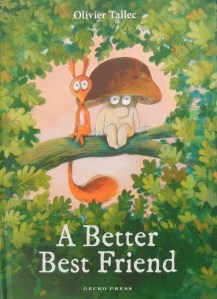
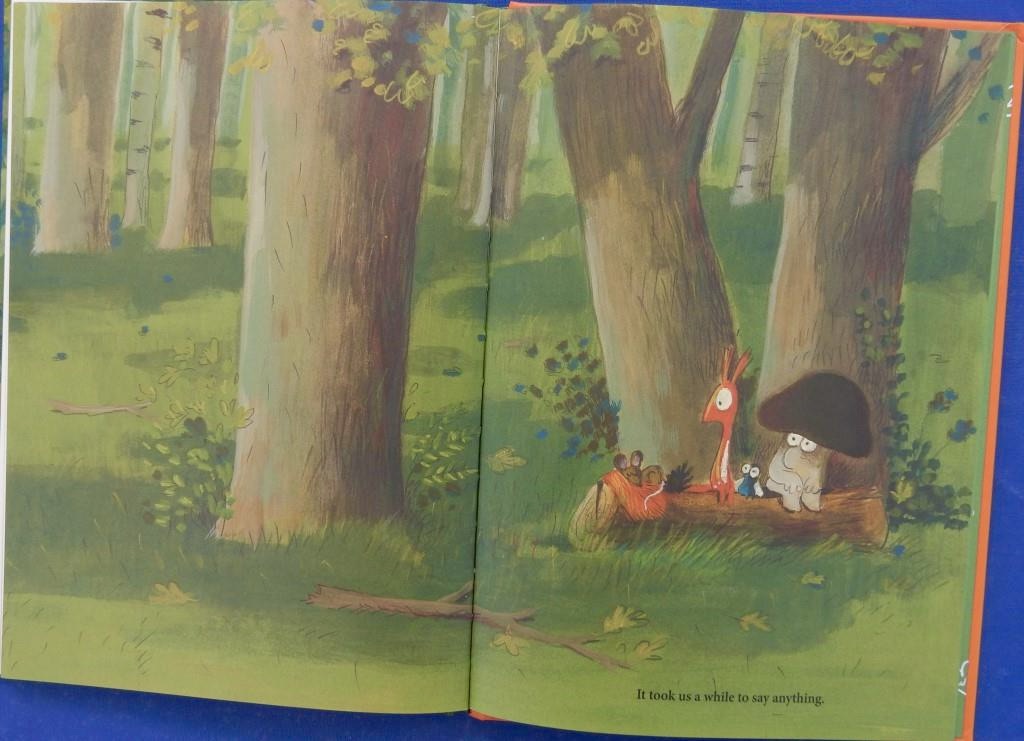
A red squirrel is thrilled to find a best friend while out for a walk in the woods one morning; it’s a mushroom named Pock and has a ‘real best friend face’. Despite not saying much, said mushroom seems willing to comply with the squirrel narrator’s desire to show him “things you wouldn’t show anyone except a best friend” : things such as puddles reflecting the sunlight and clearings with tall grass. Autumn and winter pass and the two stay close to one another doing seasonal things, but with the spring comes Moo.
Moo is a fly, a fly that knows some even better parts of the forest and now the three spend their time together, with Squirrel wondering whether perhaps Moo is a better best friend than Pock. Now Squirrel has a dilemma. ‘I want ONE best friend. Not two!’ he declares. Then one morning along with the sun, Gunther (a mouse) appears. Again it’s a while before much is said.
I’m pretty sure a lot of thinking is going on though, especially by Squirrel before the declaration of ‘The (Better) End’ – I wonder: what do you think? It certainly works for playing cards as the final page shows but for a bestie? Hmm.
Translated from the French by Anthony Shugaar, Tallec’s playful, slightly surreal quirkiness, is evident in his scenes of the characters in this tale which is likely to leave many readers, including this reviewer pondering upon its open-ended nature – or perhaps that’s the creator’s intention.
Frida the Rock-and-Roll Moth Kim Hillyard Ladybird Books
Frida is a moth: with her prowess at playing loud music on her purple guitar and her pointy boots she exudes funkiness. Despite constant encouragement from Auntie Edna, her number one fan, there comes a day when Frida feels anything but shiny. She even begins to think of giving up playing her purple guitar,
then suddenly there appears a big bright light and she sees a host of rock-and-roll moths that are dancing, singing and rocking. Eager to join them, Frida begins to approach them but as she gets closer, she starts to feel smaller. They all seem so much sparklier than her. Why can’t I be more like them, she thinks to herself.
Back in her room, Frida decides change is needed: boots, songs and purple guitar are all replaced. The following night at the Big Bright Light, Frida moves forwards again, but the same feelings start to worry her until she hears Auntie Edna’s words, “Go, Frida! You can do it! Your best self is always inside you!” So, she begins to play but to no avail: still nothing feels right. Alone again in the dark, she feels inadequate once more.
Returning to her bedroom, she is determined to change again and gives several possibilities careful consideration. Along comes Auntie Edna with a hug and some vital words of wisdom. Are those what is needed to empower Frida next time she visits the Big Bright Light?
With it’s delightfully quirky illustrations that show so well Frida’s feelings, and vital message about believing in yourself, Kim Hillyard’s tale will surely encourage young children to find their inner light and let it shine forth no matter what challenges they face: self belief is key.
Rarely I think, has so much artistry gone into a book of opposites as this one. From the cover, onto the title page and throughout the other spreads are show stopping portraits of primates. ‘What’s the opposite of old? asks the first sentence; turn over and there is the one word answer, ‘Young’ opposite which is a very small, pinkish coloured, thumb sucking infant gorilla. Sad, followed by happy are illustrated on the next two spreads, happy being portrayed by a blissful looking chimp holding a single flower. Then come heavy and its opposite, light, alone and together (observant readers will spot several intruders in the crowd.),
and BIG and small.
The next question is more tricky asking, ‘What’s the opposite of opposite?’ ’The same!’ comes the response with its illustration of a somewhat puzzled primate.
With a touch of the illustrator’s trademark surrealism, this is wonderful celebration of primates of all kinds, some of which followers of Anthony Browne might perhaps recognise from previous books of his. Exquisite illustrations of such wonders as orangutans and chimpanzees, not to mention the odd gorilla will delight readers of all ages.
Earnest Sandpiper’s Great Ascent Timothy Basil Ering Walker Books
In this deeply heartfelt story we meet three young members of the Sandpiper family on the day they are, so their parents expect, going to learn to fly for the first time. Spur and Rouse are full of confidence; not so Earnest. Under their parents’ tutelage: “BREATHE… TRY… JUMP… FLY!” Earnest’s siblings take to the air; Earnest however baulks at the edge of the dune. “I think my feathers are too heavy for me,” he tells his mother as he looks for a second time over the edge.
Using her wing tip, Mum draws a heart shape in the sand, adding the promise that “soon your heart will glow like the morning clouds. It will shine with desire and belief. ” This magical glow, she assures him, is a sign that magical things are going to happen. Other family members further encourage Earnest and then leave him wondering if he’ll ever feel the glow. He climbs carefully up a piece of wood, breathes in and tries a jump but … lands flat on his back. From his supine position, he spies a yellow balloon floating above him with that same heart decoration his mum drew. Earnest follows the balloon across the beach till it lands in the sea and he follows his curiosity into the water but as the tide comes in, he finds himself entangled in the balloon’s ribbon and thoroughly afraid.
Happily, his family returns just in time, and their loving concern triggers that magical glow his Mum had spoken of, as well as Earnest’s self-belief. With those basic instructions in his head and a powerful SNAP! Earnest takes flight.
The author’s naturalistic paintings are superb, brilliantly expressive, making that plastic-looking balloon stand out against the natural environment, a meaningful message indeed, helping to make this a cautionary tale about the dangers posed to wildlife by balloons floating free, as well as a powerful story of believing in oneself.
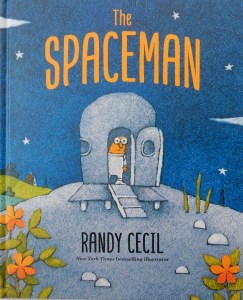
When the diminutive spaceman steps out of his spaceship on a mission to collect soil samples, his first impression is that the planet he’s landed on is pretty ordinary. That quickly proves otherwise however when he catches sight of a large red bloom. WOW! While he gazes at it, his spacecraft is stolen by a ‘thief that sprouted wings from its feathery sides’ (a bird). He gives chase but to no avail: he’s stranded alone and frightened on planet Earth, especially when he finds himself face to face with ‘a hideous beast’ as he stops to admire the next wonderful floral specimen. Off goes our explorer as fast as his feet will go until unable to flee further, he stops and sits atop a rock to ponder on his problematic situation.
In frustration at not being able to think of a solution, he stands up on the rock and is about to yell at the stars when he notices the night has ended, and with the coming of the daylight, the rich and diverse beauty of earth’s flora and fauna is revealed. Hitching a ride with a butterfly, the spaceman is totally enthralled by what he sees
but then he loses his hold and drops down into a pond where he floats gazing skywards. Along comes the ‘hideous beast’ causing the spaceman to realise that appearances in this instance were deceptive; he now describes his new canine friend as ‘a little unrefined perhaps, but charming nonetheless.’
Then as the two snuggle up together, the spaceman thinks of his responsibilities. A dilemma faces him: should he retrieve his spacecraft and return to his old life or make it impossible so to do?
A clever, rather formal, first person narration together with gently humorous, hatched illustrations that provide perspective, enriching the text, make this a book that when shared with children, will give and keep on giving. Initially they might merely enjoy it as a fun adventure for the little spaceman and then later come to appreciate the elation the traveller eventually feels at finding somewhere he feels he truly belongs.
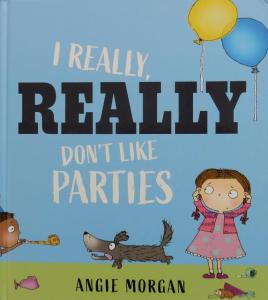
I Really, Really Don’t Like Parties Angie Morgan Otter-Barry Books
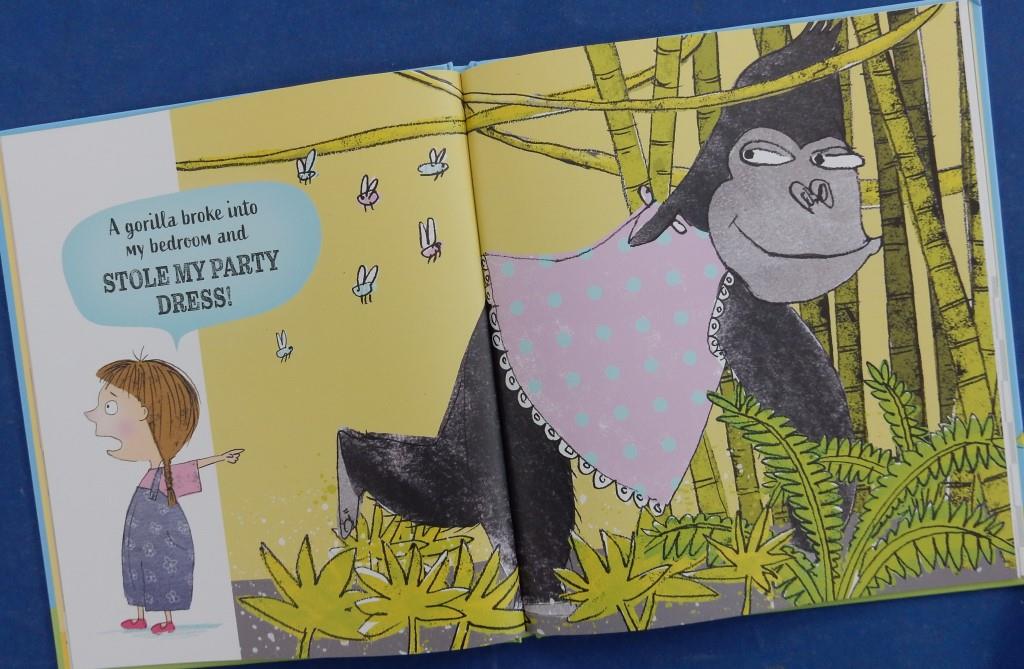
When Dora discovers an envelope containing an invitation to Rashid’s birthday party at the bottom of her book bag, her heart sinks: she does not like parties at all. Mum insists it will be fun but Dora is creative thinking up all kinds of reasons why she can’t possibly go, even if her friends will all be there.
Mum is having no nonsense though and packs her off to the party.
Dora is right about it being a very noisy affair but does her best to participate in some of the games. Then comes the teatime announcement. Dora dives under the table and there to her surprise finds she’s not alone. Tom is already there and he’s tucking in to a plate of food which he shares with Dora: that’s two party haters and two new friends having a great time together.
Some time later Dora receives another party invitation. I wonder what her reaction will be to this one. As a young child I would have been a Dora, though I probably wouldn’t have invented such wonderful excuses nor gone under the table and I know a number of children who feel the same about hectic noisy parties now.
Angie Morgan’s illustrations of Dora’s excuse sequence are both hilarious and heartfelt. She cleverly uses humour – visual and verbal – to convey a very important message: we are all different in our response to loud, busy situations and Dora’s feelings about them are perfectly valid.
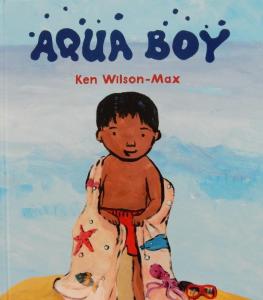
Islander Aaron lives by the sea with his parents and elder sister, Angel. Mum and Dad are ocean guardians, volunteers performing a vital role in trying to keep the beach clean. His sister is at home in the water as well as on land and loving to plunge into the waves, she calls herself Coral Girl. Aaron would dearly love to do the same but he’s frightened of going under water. When he shares his fear with his Mum, she tells him that it will happen one day, “when you least expect it.” Dad is equally reassuring when Aaron joins him in the boat as they head out to check on the sea creatures.
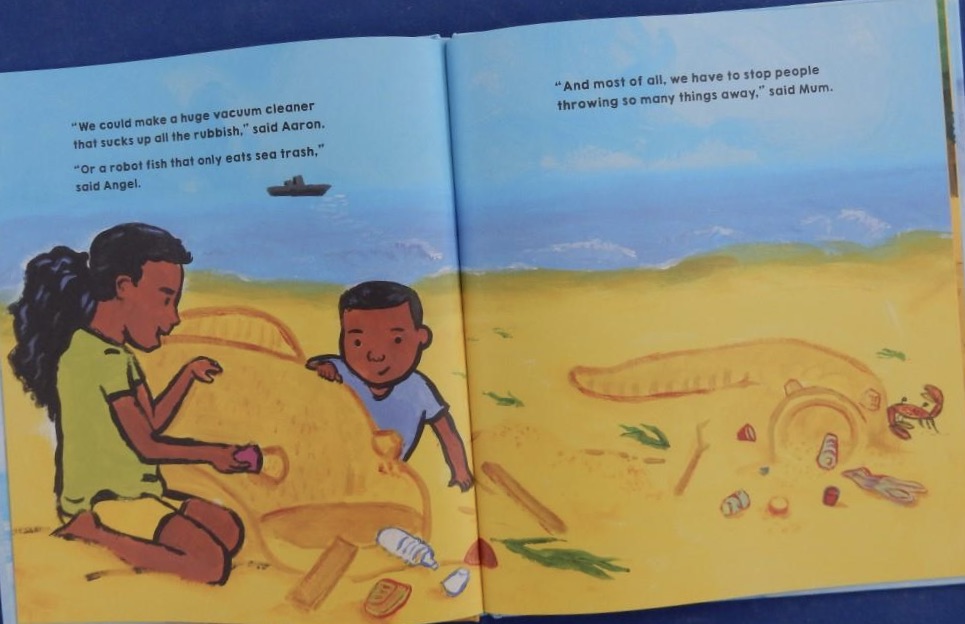
That night a huge storm blows up and the following morning the beach is littered with rubbish. The ocean guardians set to work clearing it up, Aaron and Angel imagining ways they might ‘clean up the ocean for good.’
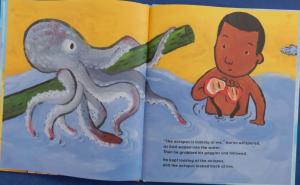
All of a sudden, Aaron spots an octopus, stranded, so Dad says, on the sandy shore. Dad entices it with a length of wood. The children watch as gradually the creature wraps itself around the stick and Dad wades out into the sea. Grabbing his goggles, Aaron follows looking right at the octopus, the creature looking directly at him as it slowly releases its hold on the wood
and swims free below the surface.
The boy then puts on his goggles, breathes deeply and immerses himself, watching the movements of the octopus. Once his friend has swum away Aaron stands up and there, fear finally gone, he is really happy and ready to embrace a new way of being an ocean guardian. He learns about the creatures he sees underwater, helps care for them and never stops hoping his octopus friend will return.
This timely, gentle tale of environmental guardianship with Ken Wilson-Max’s vibrant scenes that portray both family love and the vital role ocean guardians play, will one hopes, highlight to young children the importance of caring for marine life and ensuring that they play their part by taking their rubbish home as well as helping to keep beaches clean. A final spread gives some octopus facts and underscores the outcomes of ocean pollution.
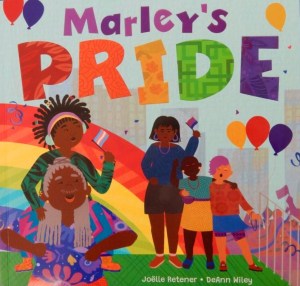
Marley’s Pride Joëlle Retener and DeAnn Wiley Barefoot Books
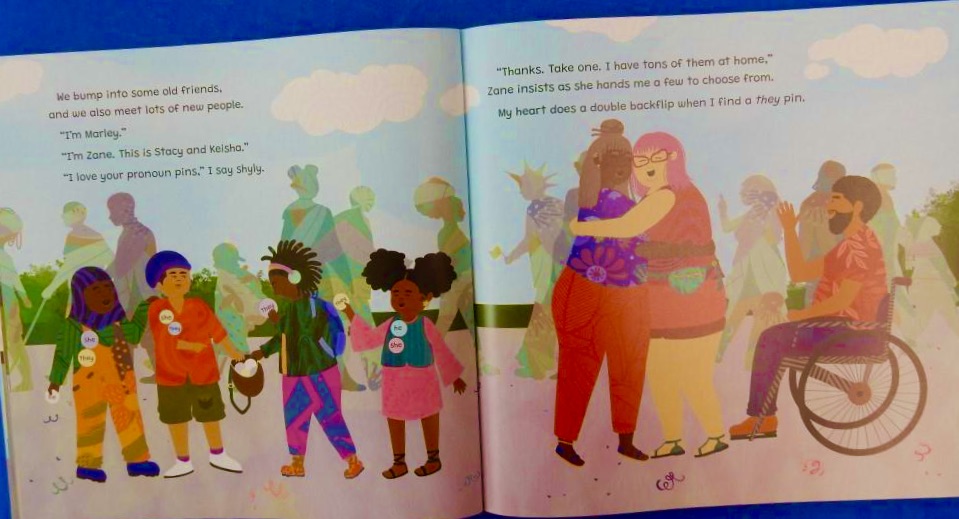
It’s June and for Marley and for Marley’s grandparent Zaza, that means Pride month with its parades and other celebratory activities. Marley really wants to join Zaza at the festivities when they’re to receive an award for transgender advocacy, but with sensory sensitivities noise and crowds making the child tense up at the very thought, it’s a no go for the young narrator. Come the morning of the parade, the child decides to give it a go after all. Into a bag go noise-cancelling headphones a fidget spinner and favourite lavender bunny and off go Zaza and Marley, the latter feeling very uncertain. At the venue, just as things threaten to overwhelm Marley, Zaza’s reminder, “Pride isn’t just a big ole party. It’s about celebrating who we are, about community, and love” gives the child a boost of courage to go among the crowds. By the end of the day, Marley feels a part of that community with new friends
and a personal delight at belonging.
Author, Joëlle Retener’s telling is a celebration of Pride’s communal spirit brought wonderfully to life with DeAnn Wiley’s inclusive, splendidly textured, bold digital illustrations. Backmatter comprises double spreads entitled the History of Pride, that includes paragraphs about sensory sensitivities, the other, with lots of definitions and explanations is called More About Marley’s Pride. An invaluable resource for primary schools especially.
You Are Brave Margaret O’Hair, Sophia Sanchez and Sofia Cardoso Scholastic
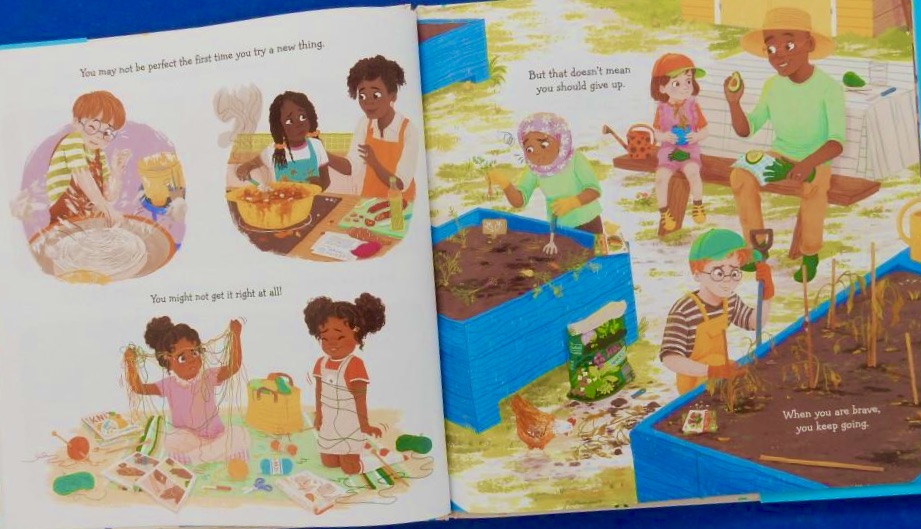
‘Being brave does not mean you are not afraid. It means you are afraid, but you do the scary thing anyway.’ Inspired by Sofia Sanchez, a young actress and model who happens to have Down syndrome, that is the vital life lesson contained in this book.
‘Every day, says author Margaret O’Hair, we meet people who inspire us – people who are amazing at the things they do.’ Sofia Cardoso illustrates a guitarist, a vet, a pilot, a baker, a gardener and several others. Before they became amazing though, they had to make the ‘tough decision’ to try something new, which likely meant they had to be brave. This is something that needs to be learned like everything else and no matter what ‘being brave means doing something you want to try.’ Of course, success seldom comes at the first try, but that’s no reason to give up;
Inclusive and optimistic in tone, this is surely an encouraging invitation to challenge yourself, have a go and try something new. With its important messages, this is a book to share and discuss in primary classrooms.
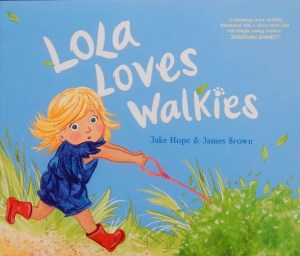
Lola Loves Walkies Jake Hope and James Brown UCLAN Publishing
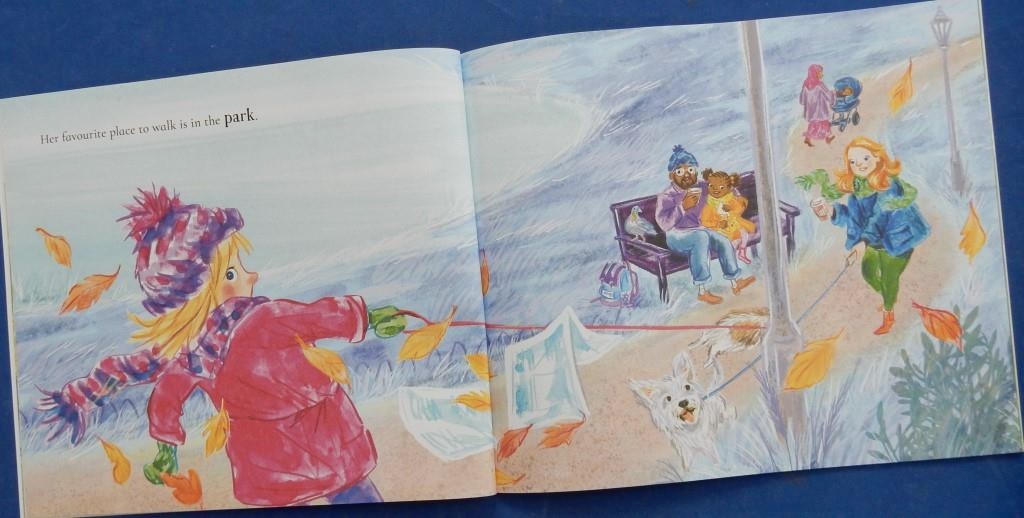
Meet Lola, a furry creature with many loves, so author Jake Hope tells us: she loves kisses and cuddles, having fun with friends, snoozing in sunny places and her favourite of all, walkies, especially when her human takes her to the park.
She has a particular predilection for hide and seek. Paddling along beside the pond is another of her favoured activities and on reaching the bench, she hides to watch the ducks waddling past. Like pretty well, all pooches, Lula enjoys chasing and retrieving objects but thus far, we readers have yet to see Lola in her entirety.
This is revealed in a fun final twist that will amuse adult sharers (who may have guessed what’s afoot) as well as the children they read the story with. Illustrator James Brown has done a splendid job creating thirteen richly hued scenes of the lively main character enjoying herself without giving the game away about her identity until the final spread.
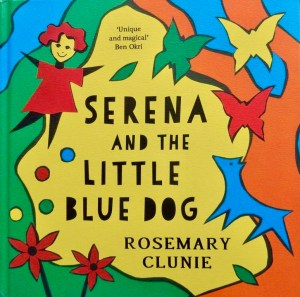
Serena and the Little Blue Dog Rosemary Clunie Zephyr Books
‘Once upon a time a little girl called Serena lived in a cottage in the woods. She was friends with all the birds and animals of the forest. … But what she really wanted was a special friend of her own.’ : so begins a magic modern fairy tale. One day as she’s wandering in the woods surrounding her home, there suddenly appears a little blue dog. Not knowing at the time, that he’s magic, Serena names him Haiku. She takes him home with her and they become the best of friends. Haiku grows and grows until one day he’s grown too big for her house. Seeing her sadness, he asks what’s wrong. Surprised he’s able to talk, Serena tells the blue dog what is wrong and together they embark on an adventure that takes them over a mountain eastwards, over plains, into valleys and between fields to a distant castle to consult the wise woman. On the way Serena is given three stones – a green one from the mountain bird, a red one from a snake and a yellow one from a golden fish. These, as per the sweet-voiced woman’s instructions, she places into her crown. What the woman tells her comes as a surprise,
but does it help Serena with Haiku and the size problem?
With its friendship theme Rosemary Clunie has created with striking illustrations and a longish text, a kind of modern fairy tale that can be enjoyed by solo readers as well as shared with young listeners, perhaps as a bedtime story read over several nights.
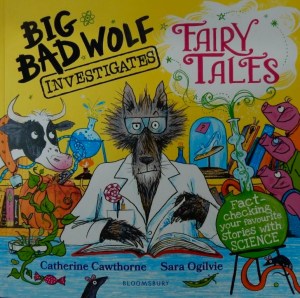
Big Bad Wolf Investigates Fairy Tales Catherine Cawthorne and Sara Ogilvie Bloomsbury Children’s Books
Behind every fairy tale is a ‘what if ?‘. Behind all scientific discoveries also lies a ‘what if ?’. Bring the two together as author Catherine Cawthorne does here and the result is a really fun debunking of six of the most popular fairy tales by none other that the lupine villain of several of them.
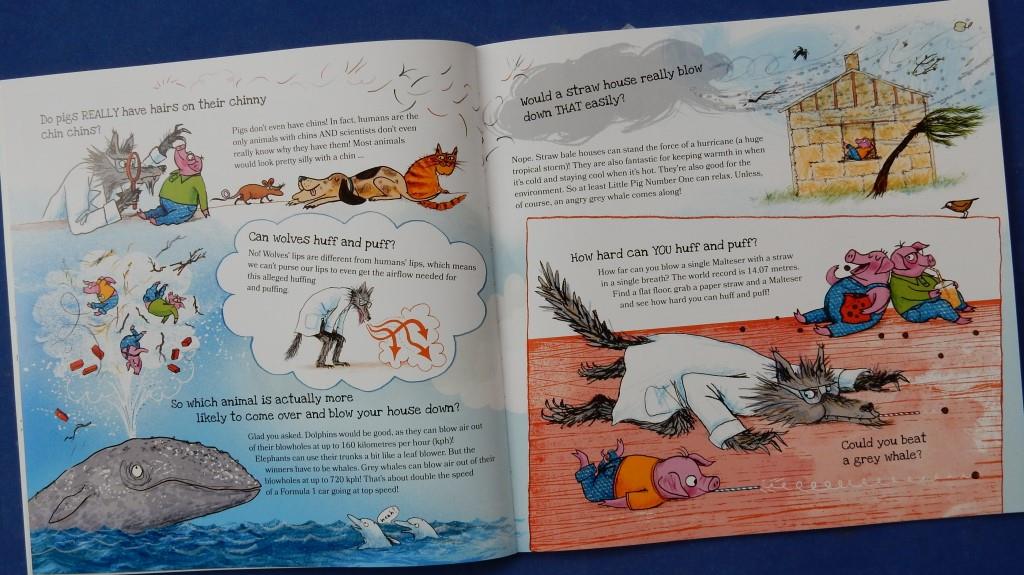
First to come under his scrutiny is The Three Little Pigs and here, as with the others, he presents the story first and then on the next spread, proceeds to ask some somewhat crazy science questions. All this is illustrated in hilarious cartoon strip style by Sara Ogilvie. Readers learn that in fact, let alone not having hair on their chin chin chins, pigs don’t even have chins; it’s only we humans that actually have chins. As for a wolf huffing and puffing to blow down a house, even one made of straw: no chance there on account of having the wrong kind of lips. A whale would certainly do way better but then what would one of those be doing on land in the first place? Should little humans wish to test their own huffing and puffing, there’s a suggestion using a paper straw and a Malteser.
What about a gingerbread house: have you ever pondered upon what would happen to a gingerbread house in the rain? Probably not but courtesy of our scientifically minded wolf, you can try the gingerbread collapsibility test and find out.
As for that cunning pea test in The Princess and the Pea, the Queen devises to determine who is a real princess – it’s totally nonsensical: nobody could feel a single pea through all those mattresses. All you need to confirm this is a small Lego head (or a dried pea), all the pairs of pants you can find (don’t raid the dirty washing basket though) and a wooden chair. What fun – a Princess Bottom Pants Sensitivity Test.
Brilliantly quirky is the way Catherine and Sara have created this STEAM book that children will absolutely delight in. There are hours of investigative fun as well as hilarious retellings energetically illustrated by Sara.. Some of my family members tried out the huffing and puffing test and had great fun but came nowhere near the world record mentioned in the text.
A Sprinkle of Happiness Lucy Rowland and David Litchfield Scholastic
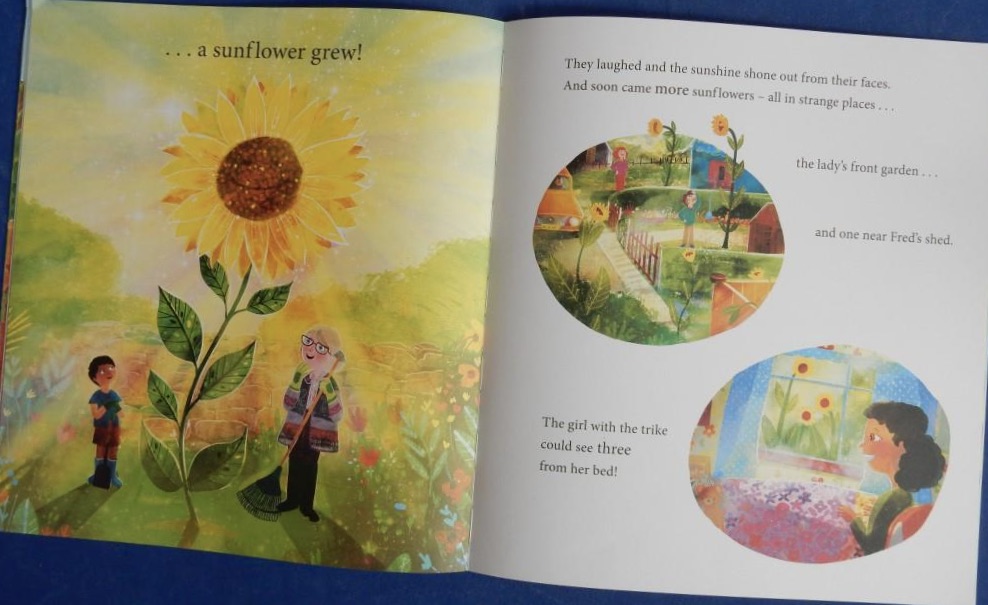
Told in rhyme by Lucy Rowland and pictures by David Litchfield, this story starts with a seed (nothing special at all) and a boy, kind, brave and smart. What should he do about such a seed, the lad wonders. A sprinkle of happiness, a pot together with ‘Some soil and some water. A bit. not a lot.’ That’s what he tells the seed and his Grandma, who is in agreement, so they do the necessary. Then each day they sit happily outside and before long, the seed grows a short stalk: ‘ … the best stalk I’ve seen.” Grandma says. As if encouraged by these words, the stalk continues to grow taller … and taller until it’s taller than the wall over which the boy and Gran see people walking miserably by. It’s clear, “A sprinkle of happiness. / That’s what they need!”
That happiness comes first to a lady who notices the stalk and sits down enjoying the boy’s smile and the view. Then, atop the stalk grows a bud. Kind words from Grandma and the boy make an old man and a little girl cheer up and so the two continue in this way. As a result the people and the seed grow happier, day by day until wow! That tiny seed has become a stunning sunflower.
A storm comes one night, snapping the sunflower stalk and scattering the petals far away. But seeds too have been scattered, all over town. Wise Grandma knows just what to say to cheer up the boy; but can happiness also grow anew? It surely can
and slowly, slowly sunflowers start to flourish everywhere in the town. Sunflowers that have grown ‘ … as a little reminder/ of how life can be when we’re all a little kinder. ’
A truly beautiful book to share at home and in classrooms, as well as any place where a little bit of happiness is needed.
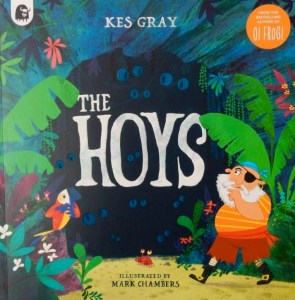
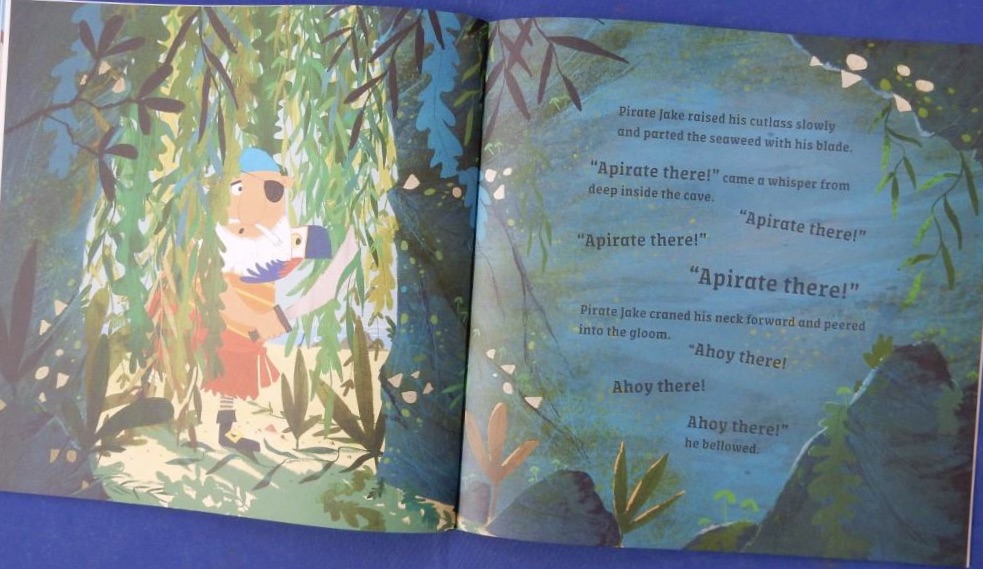
ARRR! Me hearties! How many of you have ever wondered what a hoy is? No? Well, you are about to find out in this zany piratical tale.
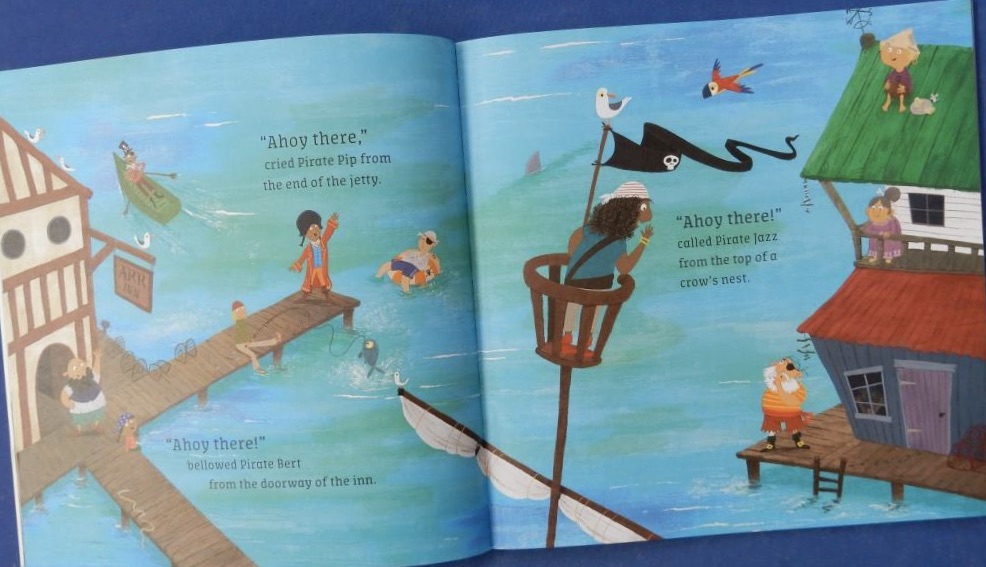
When his friends call out ‘Ahoy There’ Pirate Jake is confused – what are these hoys and where can he find them?
His hoy hunt around the harbour proves unsuccessful so Pirate Jake goes on a very long and very miserable walk along the beach during which he argues with his parrot and having run out of beach, ends up at the bottom of a tall cliff. There, in the sand, he discovers a trail of strange- shaped footprints …
Now where might they lead, the two wonder and who do they belong to? They decide to follow them and see.
‘Ahoy there!” he calls on entering a well-concealed cave. Could this place contain the answer to Pirate Jake’s puzzlement; will he perhaps end up feeling like a true pirate at last? Ho! Ho! Ho! To reveal the ending would make me a story-spoiler.
Mark Chambers’ bold bright art, some scenes bursting with fun piratical details, is perfect for Kes Gray’s crazy telling, which contains some smashing descriptive phrases. A thoroughly enjoyable read aloud and one to re-read come ‘talk like a pirate day’ this year’s being on 19th September.
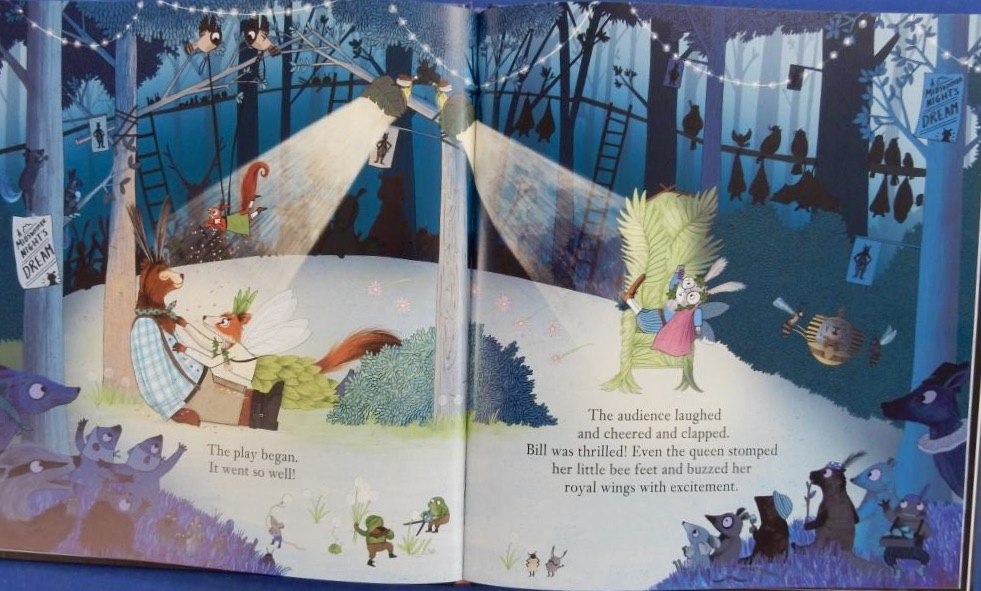
A Midsummer Night’s Drama Louie Stowell and Isobel Lundie Little Tiger
The whole story is presented in three acts and includes a performance of Shakespeare’s A Midsummer Night’s Dream unlike anything you’ve experienced before. It’s penned, so we’re led to believe by a clever bear, Bill, residing in a treehouse with his friends Sir Bun Bun, Foxy and Lady Bushytail. The friends love to act plays at their theatre, The Glade and these attract large audiences from all over the kingdom.
There’s great excitement as Bill and his pals are performing a brand new play. Its entire cast comprises a fairy queen, a fairy king, Puck the cheeky sprite and Bottom. Various insects perform the duties of stage manager, set designer, understudy, and one looks after lighting and another is responsible for props. Its opening night constitutes Act 1. It’s a wild success,
which leaves Bill thrilled but over-excited.
Act 11 shows he is just that, unable to sleep in his cosy bed, his brain all a-fizz with ideas. Up he leaps and against his friends’ advice, begins working on another play until that is, in buzzes Queen Bee who speaks thus, “I COMMAND you to zzzzzzzsleep!” and buzzes out again leaving the acting troupe to offer sleeping advice.
Act 111 opens with Bill trying out some of the ideas proffered, the first being to dance, but to no avail.
Perhaps Sir Bun Bun’s suggestion will induce that much-needed slumber …
With appropriately dramatic illustrations by Isobel Lundie and Louie Stowell’s clever word usage both hinting at the story’s Shakespearean origins and background, this is a pre bedtime treat. Equally it’s enormous fun to share with a class and you can enjoy investigating the book’s final spread that presents some information about the bard himself, William Shakespeare, and his work. Make sure you look closely at the front endpapers too. I wonder what Bill Bear et al would do with Twelfth Night, my favourite Shakespeare play.
Bun on the Run Smriti Halls and Chris Jevons Scholastic
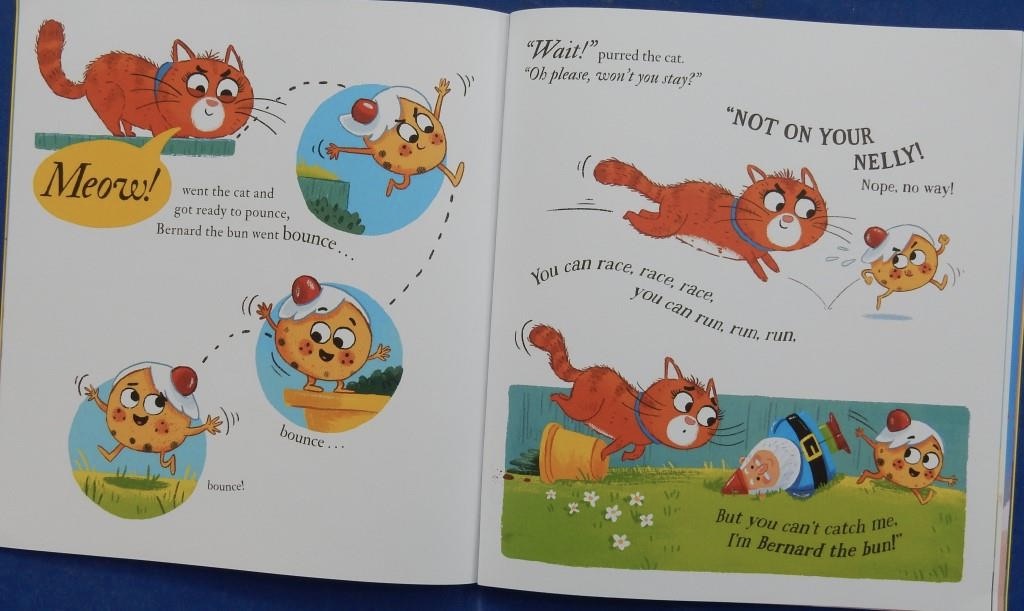
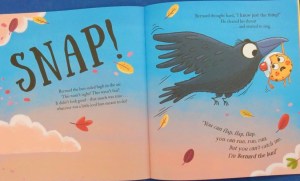
Starring Bernard the Bun, this is a delectably funny take on the traditional tale The Gingerbread Man. As the tale opens Bernard sits atop a display in the baker’s shop, a perfect confection of its kind. The thing is that Bernard has a yen to see life beyond the bakery and so down he jumps and off he sets only to be confronted with a drooling dog. Our quick thinking Bernard turns down the dog’s offer to tarry awhile with “You can chase, chase, chase, / you can run, run, run. / But you can’t catch me. / I’m Bernard the bun!” and dashes away. Almost immediately a moggy appears pondering on the possibility of a bun for tea.
As it pounces, Bernard dashes over the gate and into a sunny meadow repeating that same refrain. His next potential consumers – two feathered creatures – receive similar treatment. Even when our adventurer is in terrible danger, he uses his wits to outsmart the black one,
lands safely and keeps running and running … and the story ends with a tasty final twist.
Child listeners to Smriti’s rhyming text will soon be rooting for Bernard and joining in with his repeat refrain as he hastens across the pages on his marathon dash. Chris Jevon’s use of a bright colour palette for the illustrations, together with the various background hues indicate the time of day as the tale progresses and readers will come to realise that our bun has been on the run for a whole day from early morning till sundown.
Guess Who’s Getting Dressed Guess Who’s Going to Sleep Smriti Halls and Marta Altés Walker Books
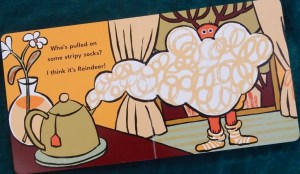
Hugely engaging, and tremendous fun are these two interactive lift-the-flap board books written in rhyme by Smriti Halls and zestily illustrated by Marta Altés. On the first four spreads in Guess Who’s Getting Dressed little humans are invited to respond to a question and given a possible answer (not the right one). Parts of an animal are visible from behind the flap on each recto, sporting the article of clothing the question mentions. For instance the suggestion is that Reindeer is wearing some stripy socks: not so, but the rhyme offers a clue …
The final spread presents the entire animal cast and a ‘Who else?’ to guess. Guess Who’s Going to Sleep follows the same pattern but with a different animal cast and a slumber time theme. Playful delight both.
Not a board book but also for the very young:
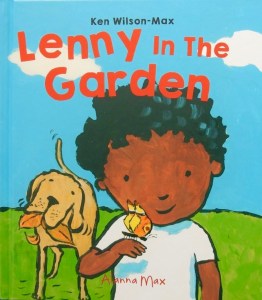
Lenny in the Garden Ken Wilson-Max Alanna Max
Lenny, his mum and Wilbur their dog are in the garden. On the lookout for new things, Lenny starts exploring, while mum gets busy digging. Before long Lenny draws attention to some ants walking in a line, so he says. Higher up a spider spins its web, round and round. Then as Lenny enjoys the tactile pleasures of toe wiggling in the grass, Wilbur makes friends with a wiggly worm that’s just popped up from underground. Mum finishes digging and begins watering, offering to water Lenny too but he’s too engaged with the nose tickling butterfly, the caterpillar and the dotty, spotty ladybird on a leaf.
Next he follows a snail slithering along leaving a trail behind; a grasshopper leaps hither and thither and Lenny attempts to emulate its bouncing until finally digging and watering done, mum calls to Lenny; he comes and the two sing a finger song ‘Tommy Thumb’ together before going indoors for lunch.
A simple, thoroughly captivating delight that is just right to share with the very youngest children. One hopes that having heard this story with its brightly coloured illustrations, listeners will become as observant as young Lenny in their own gardens or nearby outdoor spaces.
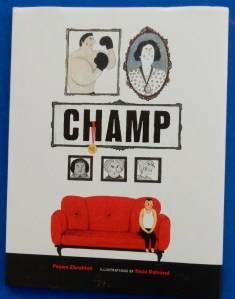
Champ Payam Ebrahimi and Reza Dalvand Greystone Kids
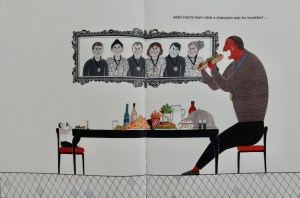
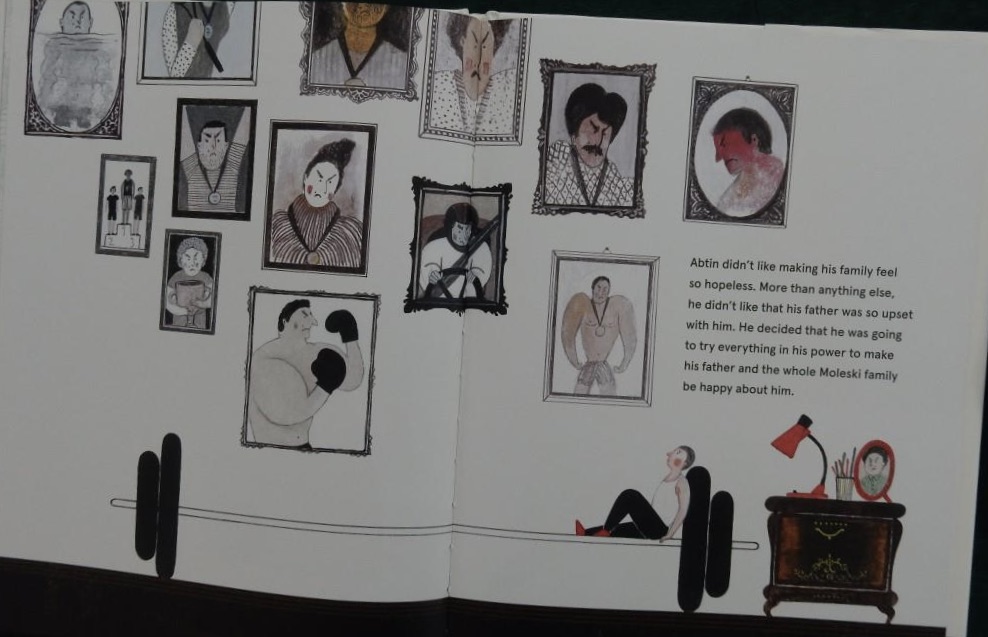
Abtin Moleski was born into a family of champion athletes but no good at sports and without the slightest urge to win, he doesn’t feel he really belongs. Despite everything his family has done to help him become a champion,
he has no interest in being a sporting hero. Abtin’s passion is for art and upset at being a huge disappointment to others in the family, he resolves to do whatever it takes to make his father, indeed the entire family, proud. To this end he works and works until at last he has what he thinks is a solution.
What he does is revealed in an amusing and clever visual twist. How will his family respond?
With its themes of individuality, self-acceptance and understanding, family pressure, resistance and resilience, this is a book to share and discuss with children across a wide age range. It’s written and illustrated by two Iranians, whose creative wisdom is evident throughout the story. Caroline Croskery has translated the story into English.
High Top Sole Mates Tom Lacey Little Tiger
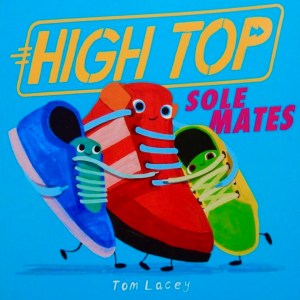
High Top is everyone’s friend and loves to show it in all possible ways: from smoochies to surprises, cuddles to cosy knitted gifts, the sneaker does everything to transmit his loving feelings to his fellow footwear. Then one day he decides to ramp up the level of his love-in; to this end he collects all manner of bits and pieces which he takes to the top of a big hill and there, fashions a brand new mega love sign. However things don’t go entirely as he hopes, leaving a devastated High Top tottering back to his box.
It appears that he’s had some visitors in his absence though. Have they left a message telling him to get knotted or is there something there that will brighten up his life of loving.
Laced with gentle humour, polished with puns and brushed with bright colours, this second episode in the life of a lovable item of footwear will perhaps fit many sizes.
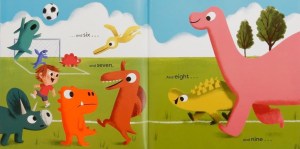
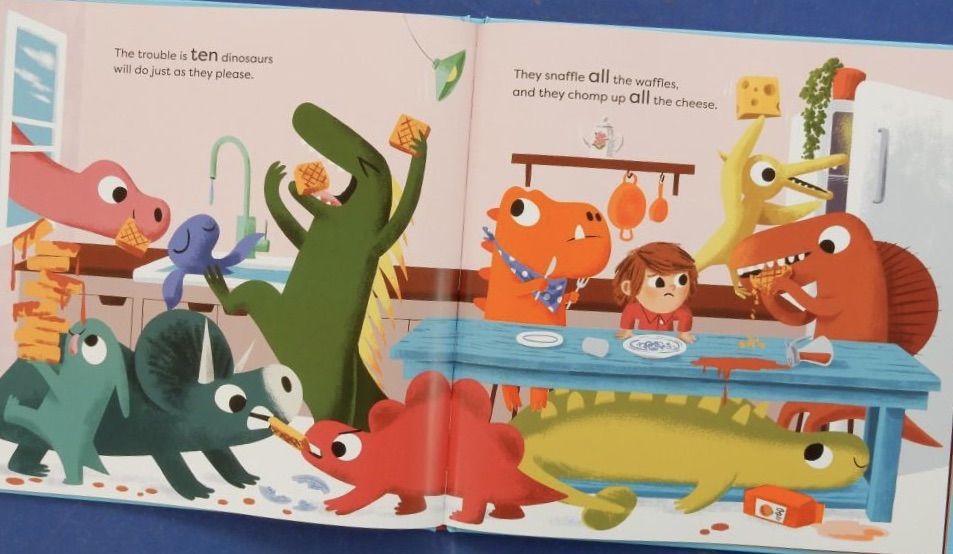
How Many Dinosaurs Is Too Many? Lou Peacock and Nicola Slater Nosy Crow
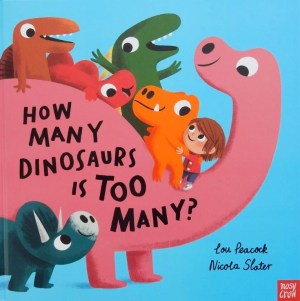
One day a child, (our narrator) gets a dinosaur and what fun the two have. However another dinosaur would surely mean more fun and so right on cue, a second one appears. And so it goes on until the blissfully happy child has amassed ten different dinosaurs, a veritable soccer team.
Of course, there is a price to pay for all these new, very energetic and hungry companions that do pretty much whatever they want, causing chaos at mealtimes,
bath times and bedtimes too. Enough is enough, indeed way too many and out goes the entire dino. crew. But is our young narrator happy now? No, despondency rules (we have a scene of sadness on the see-saw) but only briefly for a singular surprise awaits offering the ideal solution.
Nicola Slater’s vibrant illustrations tracking the growing dinosaur contingent and the child’s reactions to same, capture the energy and humour of the events as the narrator begins to see that it’s actually a case of ‘be careful what you wish for’. Highly engaging, Lou Peacock’s interactive rhyming story offers so much more than just counting fun. Little ones can play ‘spot the latest addition to the dinosaur entourage’ as each page is turned until all ten have assembled. They’ll also love Nicola’s funny details, especially in the meal scene. Share at home or in an educational setting: youngsters can never so it seems, have too many dinosaur tales.
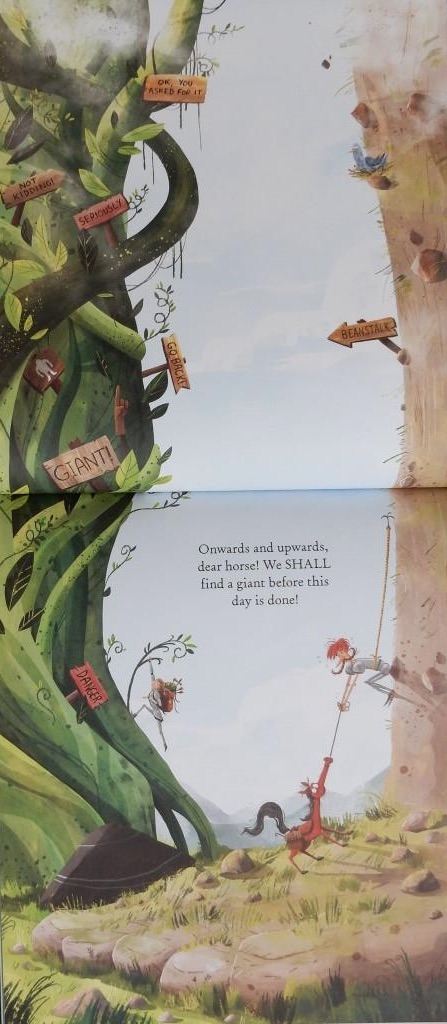
Here Be Giants Susannah Lloyd and Paddy Donnelly Frances Lincoln Children’s Books
This sequel to Here Be Dragons is every bit as comically entertaining as its predecessor.
We join the same hapless knight as he sallies forth with his trusty steed, on a new and perilous quest, determined to prove to the other knights that he’s no fool. Having paused to consult his Giant Spotting Book, he starts looking out for LARGE things as per its instructions, measuring various normal sized objects, significantly an armour clad damsel. However, he fails to notice something that alert readers will have spotted.
Despite various clues fairly liberally scattered over the ground, our knight manages to miss every one and instead decides to find a spot higher up that offers a better view.
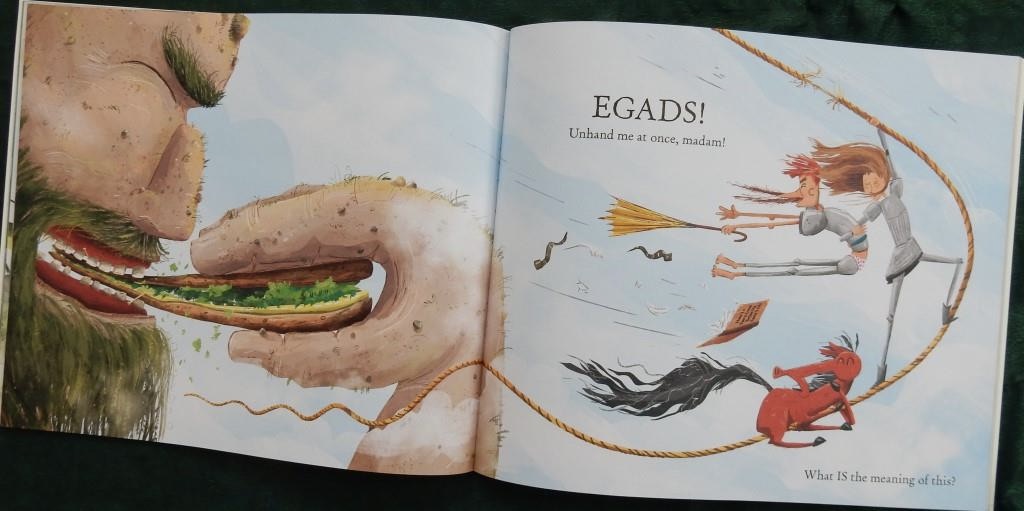
Having secured himself further from the ground it’s time to follow step two: beware of the ‘cursed sound of giant tummy rumbling’. That thunder the knight hears signifies a storm on its way, he thinks; but what is that ‘damsel’ on about; it certainly can’t be heard above the thundering sound. Better take shelter till the storm has passed and while so doing check out step three in the manual. Even with the dastardly giant’s drool dripping on him from above, our hapless knight fails to recognise the clue and starts faffing about with his brolly.
Turns out, it’s just as well he’s brought that along on his quest: verily a poke from its tip provides a timely twist and demonstrates several things, not least of which is that females are frequently more savvy than males.
Paddy Donnelly provides one hilarious scene after another as the saga unfolds. That they are completely at odds with the knight’s (ie Susannah Lloyd’s) verbal narrative makes this book, with its knightly language, a story adventure-loving listeners will want read aloud multiple times as they relish being in on the joke from the outset.
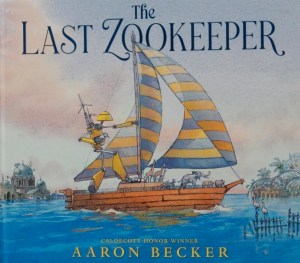
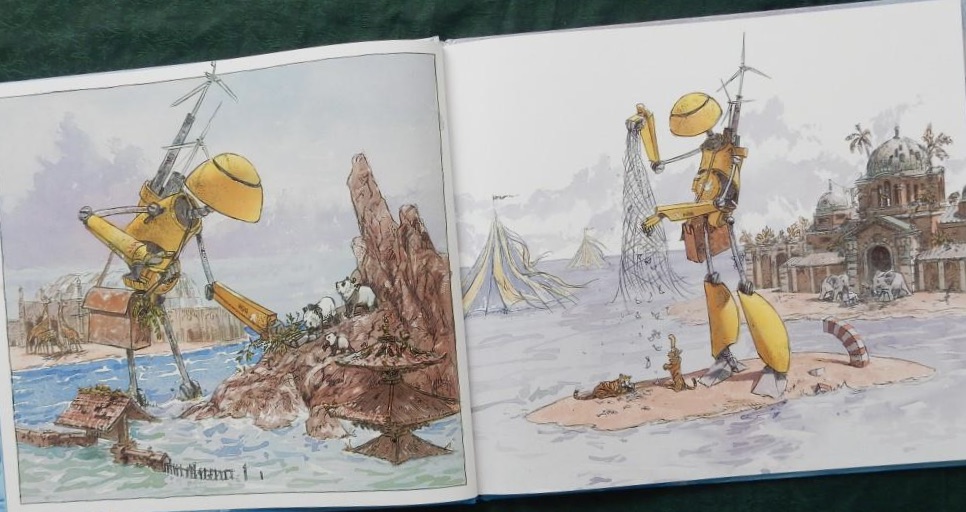
This is an ark story of an altogether different kind. Set in a post apocalyptic world, it has no text, only a series of amazingly detailed wordless spreads and there’s not a single human in sight. Instead, AI in the form of a ginormous, towering robot with the letters NOA on its arm and wind turbines to power it on its back, steps onto a flooded landscape with its incredible architecture.
It appears that he’s stumbled upon a ruined zoological garden where half a dozen or so iconic species are stranded. He feeds them but as the waters rise ever higher, he sets about designing and building a sail boat big enough to accommodate the remnants of survivors of the deluge – giraffes, pandas, tigers, rhinos, flamingoes, elephants, zebras.
They set sail but their craft is caught in a terrible storm and shipwrecked on a low lying archipelago.
All seems lost but then from the sky there descends help in the form of another robot piloting a hot air balloon . There’s hope after all …
A brilliantly imagined, bleak and thought-provoking parable showing what the future may hold for life on Earth if humans fail to turn back the tide of global warming. Becker’s minutely detailed watercolour and pen-and-ink illustrations provide many hours of immersive meditation.
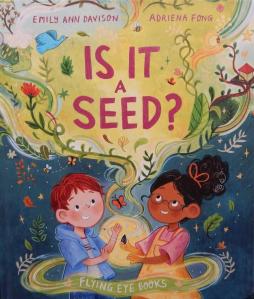
Is It A Seed? Emily Ann Davison and Adriena Fong Flying Eye Books
When a young girl discovers an unusual-looking seed, she and her brother start pondering upon what it might become. The only way to find out though is to plant it and that’s what they do, but it takes time for a plant to grow so the maybes continue. Could it be a single flower or something incredible?
The seed takes root and further possibilities are put forward: what about a large tree in which to build a treehouse, or even more fun, an entire treehouse town. Maybe it will become a gigantic beanstalk atop which is a fantastical kingdom and suppose a giant descends or an entire giant army intent on world domination. On the other hand, said giants might be of the friendly variety.
Eventually to the excitement of the entire family, a tiny shoot appears in the planter but this doesn’t stop the children’s inventive ideas from running wild as they joyfully measure the seedling’s growth.
I love stories that celebrate the power of young children’s imagination, which this playful book with Adriena Fong’s lush scenes, does beautifully, alongside documenting the growth of a seed and presenting ways in which the child characters’ connection with the natural world is forged and further fuelled.
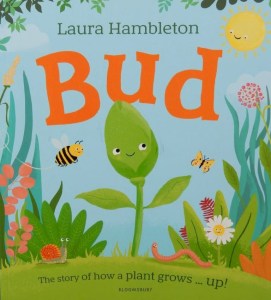
Tucked up tight in a snug red plant pot in a cosy greenhouse is Bud. Each morning Bud is warmed by the sun and come the evenings, the Moon arrives to tell fascinating tales of the Big Outside. Then one day it’s time for Bud to be replanted in the great wide world beyond the greenhouse. Placed between the nettles and tree roots, Bud’s roots reach down into the cold soil and the stem grows upwards. However, the Big Outside is not at all like Bud has imagined: it’s chillsome and scary and full of unfamiliar things, some of which make weird noises.
No matter where Bud looks there’s more danger – howling winds, flying footballs, pecking birds and nibbling insects. Missing the safety of the greenhouse, Bud cries out asking to go home but there’s no answer.
Then along flies Buzz: Buzz snuggles beneath Bud’s leaves, the two fall asleep and thus a friendship is forged. Henceforward, no matter the weather be it heavy rain, crashing storms, wild winds or freezing frost Bud continues to grow, the two have each other as comfort
and before long Bud makes other insect friends too. Perhaps life in the Big Outside isn’t really so bad after all, Bud decides.
One day Bud wakes to discover yet another new friend: now side by side stand two fully blooming roses – Bud and Rose.
Gently educational, this story of plant growth, illustrated with a gentle humour, is a charmer to share with young children especially prior to planting seeds. With themes of anxiety and fear of new situations, it’s also a reassuring book to discuss as children move from a nursery setting into a reception class, for instance.
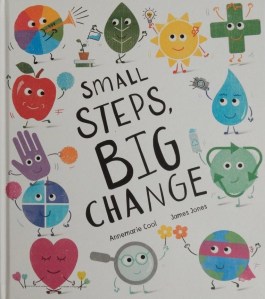
Small Steps, Big Change Annemarie Cool and James Jones Little Tiger
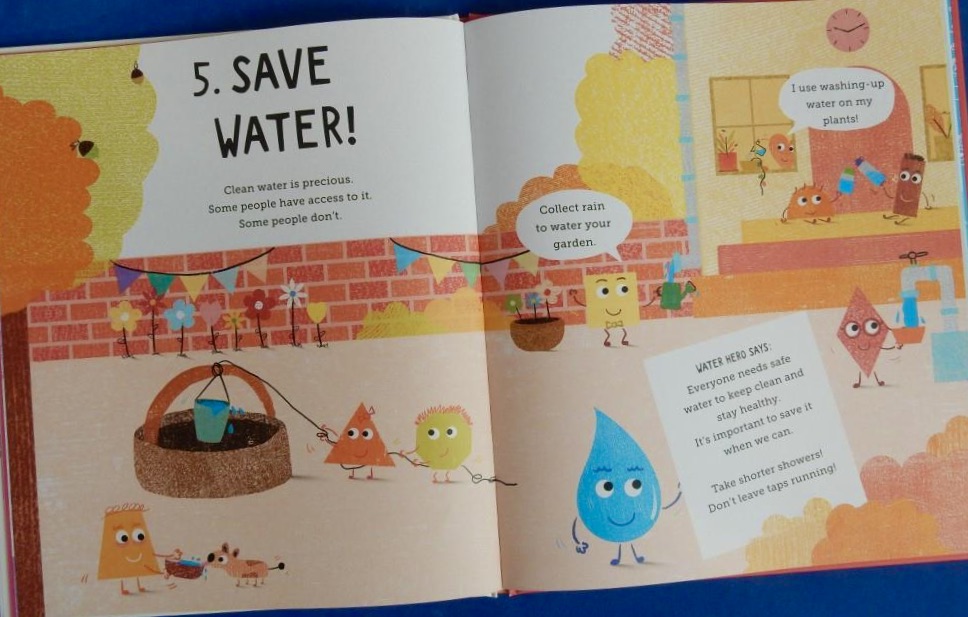
Containing fourteen suggestions, this book talks children through the United Nations Sustainable Development Goals in a straightforward manner. These everyday goals are presented in an upbeat style by iconic emoji-like heroes and are the kind of things even young children can do to make a difference to our world such as switching to meat free veggie meals, reducing the amount of plastic (think of all those rubbishy plastic toys that are attached to comics as come-ons to make little ones spend their pocket money on them), remembering to turn off taps and collecting rain to water the garden.
Each one is illustrated by James Jones whose scenes are alluring and playful.
Bursting with great ideas, a copy of this needs to be in every primary classroom and adults could do well to read it too. It’s all too easy for busy people to forget some of the simplest things – turning out lights, unplugging mobiles when charged – that can contribute to making better tomorrows for everybody.
These are both paperback picture books from Ivy Kids: thank you to the publishers for sending them for review.
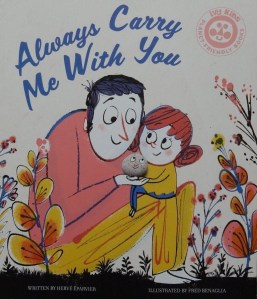
Always Carry Me With You Hervé Eparvier and Fred Bengalia
Despite the hard, often cold exterior of the book’s inanimate character, this story is full of love and heart. The love is that shown by a father towards his young daughter, conveyed through something one can hold in the hand – a pebble. He talks to her of its durable nature and longevity, mentioning some of its myriad uses and possibilities.
Without actually saying the words, this father is letting his child know that he will always be there for her no matter what, offering comfort, safe keeping and reassurance that she’ll never be alone. Dads/ caregivers suggest you keep a pebble in your pocket and show it to your child before you share this treasure of a book that reads like a love letter to a little one. Both author Hervé Eparvier with his warm words and illustrator Fred Bengalia with his mixed media art, have done a sterling job capturing the marvel of an unassuming stone.
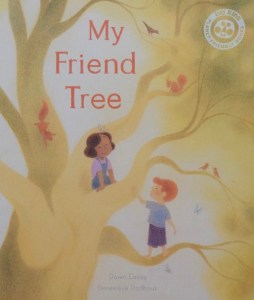
My Friend Tree Dawn Casey and Geneviève Godbout
Two children grow up with a constant companion, an old oak tree. They play on it, beneath it and around it and sometimes watch it act as a food source for visiting birds and small animals. The oak provides shade and shelter, warmth and appears to understand the feelings of the girl and boy. When the oak drops seeds, these fuel dreams of a forest and the children gather them, plant them in pots and place them in sunny places.
They tend the growing seedlings and once sufficiently grown, they plant the saplings around their Tree friend and continue to care for them.
Over time along with the trees, the friends grow, eventually forming a romantic relationship and having children of their own and now the oak is a family tree in more than one sense of the words. It flourishes in the forest and so does the loving family.
Whether the tree’s growth is taken as a metaphor for human growth and change or an example of plant growth and changes, this book with its minimal rhyming text and softly hued, glowing pastel and pencil illustrations, offers a view of the natural world embedded in a story that will likely ignite young children’s interest in growing things and offers plenty of potential in the way of discussion be that at home or school.
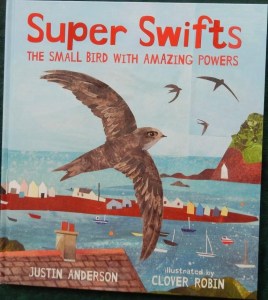
Super Swifts Justin Anderson and Clover Robin Walker Books
Astonishingly, swifts (champions of the bird world) are able to fly faster and higher than any other birds; even more astonishing is that they might stay airborne for as much as four years, flying up to seventy miles per hour.
Author, Justin Anderson begins this swift story in central Africa’s Congo region in early April and tells of the journey undertaken by one female in particular who with a group, flies from their place of overwintering, towards Europe and their destination in the UK.
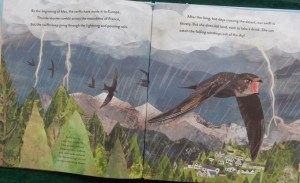
A month long journey that takes them over the world’s largest desert, across vast oceans, through thunderstorms to the place where our female will look for her mate, a bird she’s not seen for a whole year.
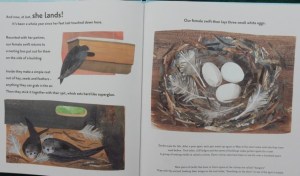
Clover Robin’s mixed media close ups of the pair show them making a nest in which the female lays three eggs each of which hatches into a hungry chick.
I love the author’s description of the pair sticking ‘their nest together with their spit, which sets hard like superglue.’ Come July, it’s time for the mother to make her return journey to Africa; she and the other super swifts will once more take to the skies.
On each spread, there’s a main narrative, alongside which is further information printed in smaller type. An inset box gives fascinating details of swift lice that nestle in young birds’ feathers and breed when the swifts nest again. A final author’s note contains information about some of the swift species and gives ways in which readers can help prevent swifts nesting in the UK from dying prematurely. I’m looking forward to hearing their screeching cries as they fly over our house this summer.
Also on the subject of birds is a book wherein fact and fiction come together.
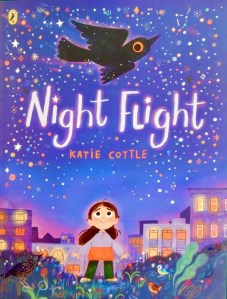
Night Flight Katie Cottle Puffin Books
When young Ellie moves from her country home to a big bustling city on account of her Mum’s new job, the girl notices that many of the bird varieties she loved watching aren’t there. Mum gives her a bird feeder but no birds come a-visiting, so at her mum’s suggestion, Ellie takes a walk around but all she sees are pigeons, no blackbirds, sparrows or moorhens; and empty skies as she makes her way to school each morning. Then one night there’s a tapping at her window; it’s a glossy-feathered starling, a very large one that asks for her help and Ellie agrees.
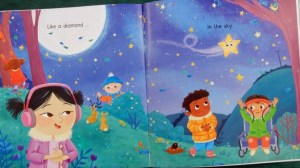
Off they soar with the child sitting on the starling’s back until they come to a hill whereon they land. When Ellie comments on the glow emanating from the city, the bird tells her that it’s light pollution. As she looks skyward, in this spot far from the city, there are hundreds and hundreds of glittering stars, stars being something else that Ellie has barely seen since the move to the city. On account of not being able to see the stars because they’re dimmed by the light pollution, the birds are unsure where they should fly: can Ellie find a way to help them find the way back home?
She sets to work with the help of her Mum, but she needs to find the confidence to speak out about the birds’ plight. Will she be successful in saving the birds? Happily yes and before long, the city has become much more like home to both Ellie and the avians. Author/illustrator Katie Cottle’s timely story has an important message about not allowing unnecessary artificial lighting to interfere with the natural world, especially birds. It’s one that needs to be shared and its message heeded by humans especially those who live and work in cities.
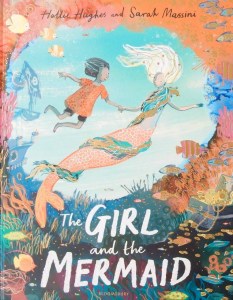
The Girl and the Mermaid Hollie Hughes and Sarah Cassini Bloomsbury Children’s Books
Readers follow the touching and uplifting story of Alina and her granny, residents of a lighthouse. Every evening the two share tales of mermaids woven by Granny as she sips her tea but now these wondrous stories have become faded and forgotten, gone from her memory. Broken hearted at the pain this causes her granny, Alina’s greatest desire is to bring back those stories.
Then one day as she gazes out to sea, she’s surprised to see a mermaid dive from the nearby rocks. The mermaid calls to her urging, “Swim with me … through swirling, whirling ideas to where your granny’s stories are, and many more besides.” Knowing for certain now that Granny’s tales were true, the girl plunges into the waves and follows the mermaid. She discovers wondrous sights such as coral reefs, sunken treasure, shoals of shining fish and other wonders of the deep.
She also encounters other merfolk and receives something special to take back home.
Back at the lighthouse once again, Alina knows it’s now her task to ensure that the tales are kept alive and help them fly far and wide. She’s now Alina the Lightkeeper who will keep Granny’s stories brightly burning.
What a wondrous book to share with children at home or school. The portrayal of the relationship between the two generations is superbly portrayed in both Hollie’s lyrical rhyming text and Sarah’s watercolour scenes that will surely tug gently at the heartstrings of adult readers aloud.
The Magic Callaloo Trish Cooke and Sophie Bass Walker Books
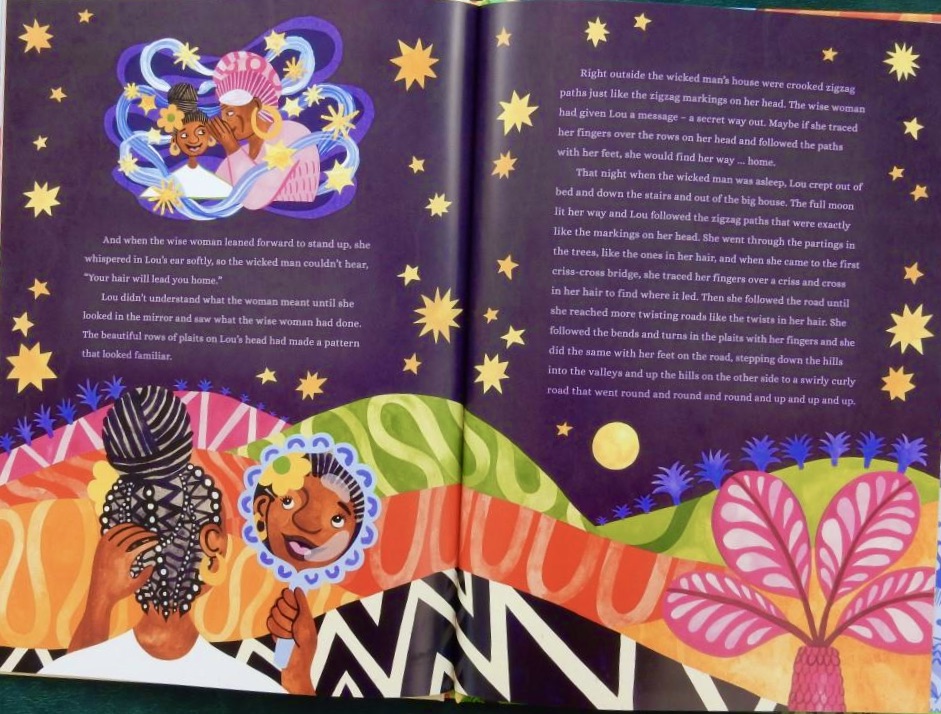
Inspired by stories of enslaved Africans who made patterns in their cornrowed hair, using them as maps to help them escape to freedom, Trish Cooke’s neo-folktale has its origins in Rapunzel, made popular by the brothers Grimm
It begins in a small village, long ago and far off where there grows a magical callaloo plant that would grant the wish of any villager who ate one of its leaves. Thus all the villagers had everything they needed; but one of those living in the village was selfish and greedy. One night this greedy man creeps into he square, uproots the plant and makes a wish: to have the plant for himself. He then proceeds to eat more and more leaves, making wishes for more and more things until he had so much he could barely move. His laziness of course, has an adverse effect on the callaloo: it shrinks until just one leaf remains.
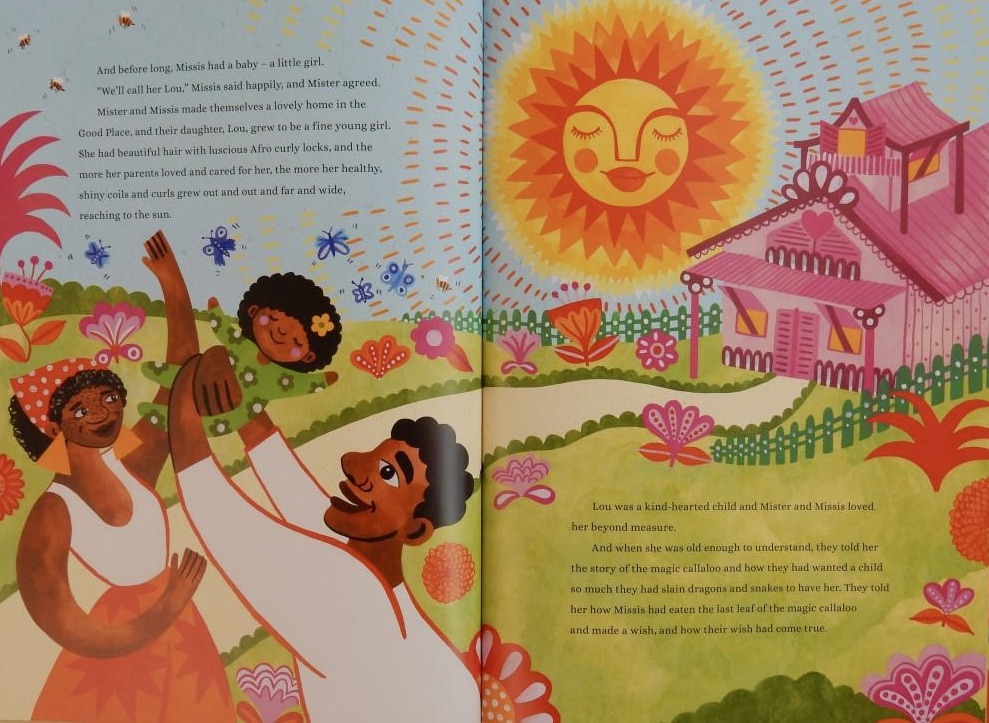
Back in the village, a couple hoping desperately for a child, are greatly distressed at the disappearance of the plant as their hope was that it could provide them with their dearest wish. Then one evening a wise woman tells them where the last leaf is and with renewed hope they begin to search, eventually locating the plant. The Missis eats the final leaf and both she and Mister wish for a child. Before long, to their joy, a baby is born and they call her Lou.
The girl grows into a kind, beautiful curly-haired girl and her parents tell her the story of the magic leaf. Lou makes up a magic callaloo song but her singing bothers her father in case someone overhears its words. Sure enough, the plant thief happens to pass through: he hears her song and snatches her away to his home where he keeps her prisoner, making her do all his work.
Both Lou and her parents grow ever more miserable, missing each other all the time, till years later who should come along again but the wise woman. Lou tells her of the cause of her sadness and the woman formulates a clever plan using the girl’s tresses which she twists into plaited patterns, quietly telling Lou, “Your hair will lead you home.”
However something else also returns with her.
With themes of longing, captivity and escape, Trish Cooke’s wonderfully woven tale is impressively embroidered with Sophie Bass’s art, which includes a wealth of flora and fauna in kaleidoscopic colours making every turn of the page a visual feast. This longish story will enchant readers across a wide age range.
Who could possibly blame the young knight narrator of this story for falling in love with the little green grotti he comes upon in a hollow while carrying out his knightly duties one day. For a start the little thing is clingy and puts on such a sad expression that despite explaining about his calling, the knight feels unable to leave Grotti behind, so the two start travelling together. Then comes the need for a ‘difficult decision’ by the knight: an exchange is made that means the two can travel much more quickly, surviving on berries and bugs
until the knight is faced with another decision in order to enhance what they dine on. A third difficult decision is caused by a sudden snowfall and the need to keep Grotti warm.
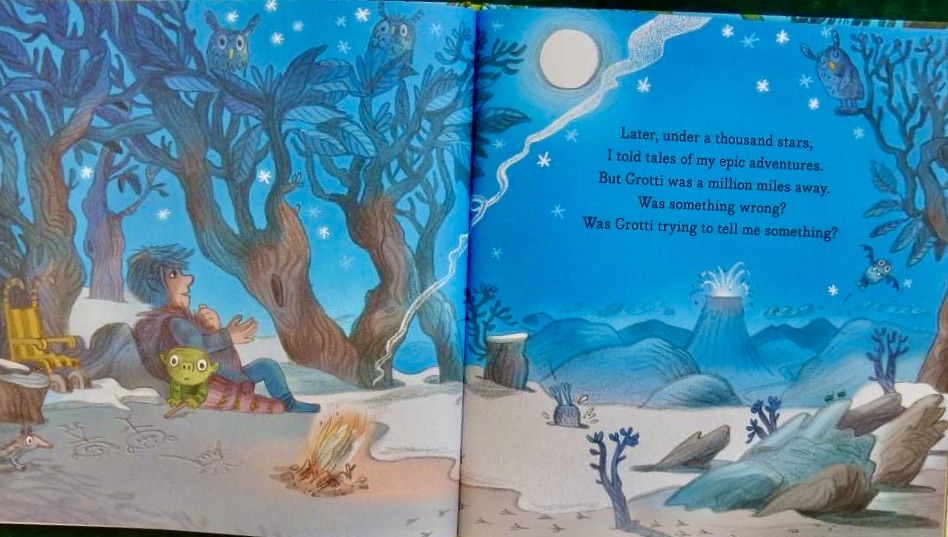
As the two snuggle down under the stars one night, the knight tells tales of his adventures but soon surmises that all is not well with Grotti who seems distracted.
Next morning the knight is faced with an exceedingly snotty Grotti and the realisation of what the little thing has been trying to communicate by means of a stick. Off they go with Grotti leading the way until they reach a house atop a volcanic rock pile. There, his task complete, the knight leaves Grotti with his family and departs to continue his beast battling and other work; but he knows in his heart that something is missing. Will he and the little green Grotti ever see one another again?
Despite his snottiness, Grotti is an adorable character that will endear himself to young listeners; he certainly had that effect on this reviewer. I suspect that this tale with its themes of friendship, family and love, will quickly become a story time favourite with children both in the classroom and at home.
Terrible Horses Raymond Antrobus and Ken Wilson-Max Walker Books
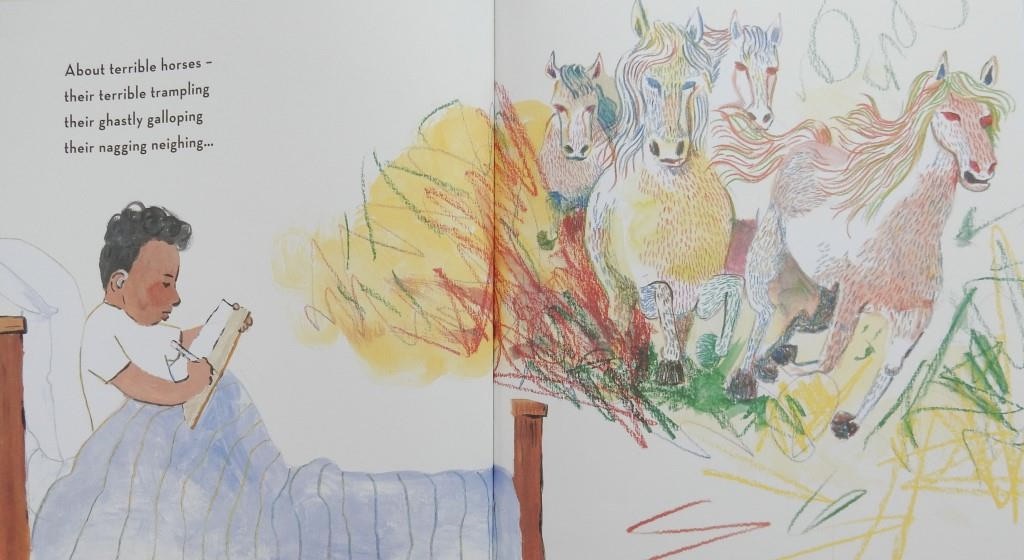
Narrated by the younger of two siblings, a small boy talks of how he feels about his sister, the ways they react to one another and to sharing their things. From the boy’s viewpoint, big sister is a cool character but she causes the pair to fight one another physically, rather than verbally. To release the tension within himself, the boy goes to his room and writes stories featuring terrible horses, with himself as a lonely pony.
Then there’s another fight on account of the narrator taking things belonging to his sister without asking her permission, which triggers further actions that fuel the aggression. Once again the boy retreats into his bedroom, fashions a horse story that includes showing himself as the pony neither able to speak or sleep. Surprisingly though sleep he does and when he wakes the terrible horses book is missing. Who do you think has it now and what will be the outcome?
Raymond Antrobus has penned a seemingly simple tale of sibling rivalry, but it’s one that conveys feelings relating to discord and empathy, both of which Ken Wilson-Max captures so adeptly in his illustrations of humans and of horses.
Another feelings centred picture book is
When I Feel Brave Britta Teckentrup Prestel
Having presented a girl’s feelings about being angry in When I See Red, Britta Teckentrup examines equally thoughtfully, a girl’s fear and what it means to be brave. By means of the author/artist’s rhyming narrative and evocative collage style illustrations, readers follow a child wandering through a forest who is startled by a huge bear that is initially terrifying, but as she continues her journey, becomes first companion
and by the time they emerge into the light, friend. ‘I can finally see … / that courage and fear / are both part of me’ the child concludes. An important insight indeed and a book that offers child readers and listeners a way of understanding one of their own basic emotions and how bravery allows them to take charge of this emotion. Try using this first person story as a starting point for a circle time discussion.
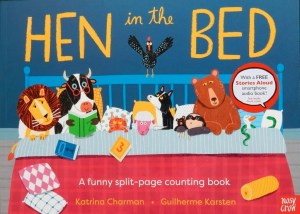
Hen in the Bed Katrina Chapman and Guilherme Karsten Nosy Crow
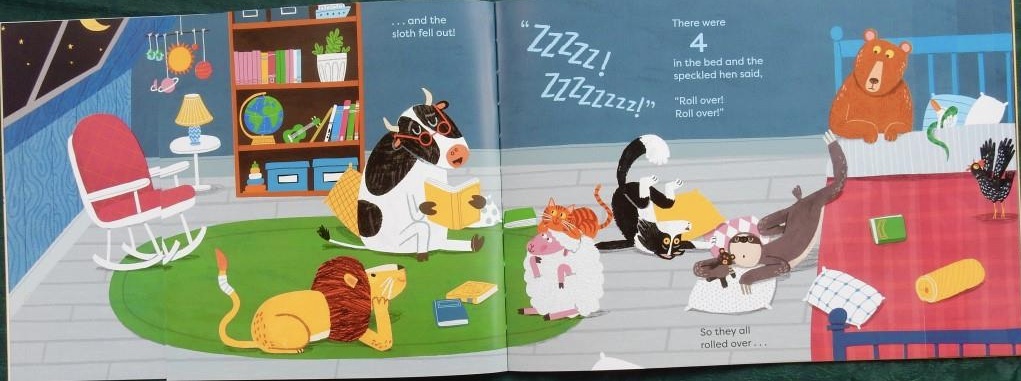
In this version of the popular nursery counting song it’s Hen who orchestrates the rolling over as in turn various animals roll, tumble and fall from bed to floor. Each one makes its characteristic sound : lion roars, cow moos, cat meows, sheep baas, dog woofs, bear growls and so on,
until the speckled hen realises that she misses cosying up with the other creatures and begs them to return, which they do. Once they’re all snuggled up together, it’s a “Cluck! Cluck” from Hen and some shut-eye time for everyone.
Its opening sequence of progressively cut down pages cleverly shows the entire animal entourage in bed. Each turn of the page tumbles one animal after another onto the mat or thereabouts.
Playful counting down practice made into an entertaining pre slumber time tale for young children, or alternatively a fun picture book to share with little ones in a nursery setting.
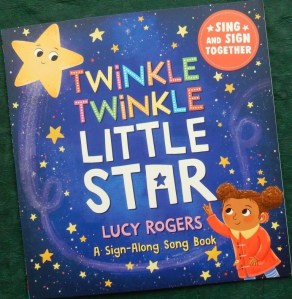
Twinkle Twinkle Little Star Lucy Rogers Scholastic
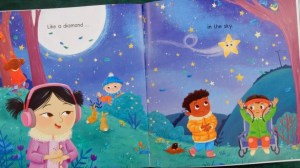
It’s good to see this favourite nursery rhyme in an inclusive sign-along songbook version by Lucy Rogers, herself deaf, who grew up not seeing any deaf characters in the books she read. The song is introduced with two double spreads whereon characters using British sign language (BSL) demonstrate how to do the sign for each phrase, thus enabling everyone to join in with signing the entire song.
Many children come to school or nursery knowing no other nursery rhymes so this vibrantly illustrated picture book is one I’d strongly recommend putting in all early years settings as it should enable any child to participate in a visual, gestural rendition. Twinkle, twinkle was always the first song my nursery classes sang accompanied by the appropriate Makaton signs and they loved so doing.
These are both new titles featuring popular characters from previous stories: thanks to the publishers Walker Books for sending them for review.
Molly, Olive and Dexter: You Can’t Catch Me! Catherine Rayner
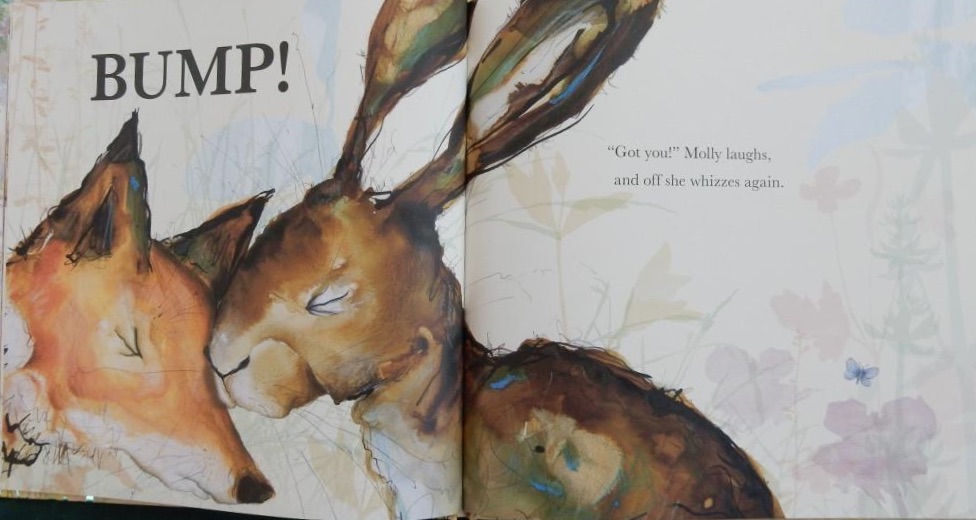
In this third episode in the lives of a trio of residents of a garden oak tree, Molly the hare, Olive the owl and Dexter, the fox, Dexter asks his friends to participate in a game of chase. First to be ‘it’ is Olive but she’s super speedy and soon catches Molly. When she’s the chaser, Molly finds her fast feet and before long she’s got Dexter, well and truly.
The bump leaves the fox feeling all dizzy and after a bit of chasing in a tired tizzy too. Determined to do something to show his vulpine prowess, he does something that perplexes his pals and in so doing proves he too is a worthy participant in the game of catch.
And the winner? What do you think? …
As always, Catherine’s watercolour scenes are superb; every spread makes the reader want to slow right down and linger over it. Young listeners too will appreciate the artistry as well as enjoying the playfulness of the chase.
Dance with Oti: The Turtle Tango Oti Mabuse and Samara Hardy
Having learned to dance the Bird Jive, the Lion Samba and the Penguin Waltz, Mrs Oti’s pupils have a new challenge.
Prior to their performance at the grand opening of the aquarium, Mrs Oti takes the members of her dance class to see the marine creatures that are kept in its watery world. They enjoy watching the rainbow fish, wobbly jellyfish, scuttling crabs, the enormous shark and the turtle family. One of the class, Poppy, is concerned about the baby turtle and it’s the turtles that give their teacher an idea for the performance.
Back at the dance studio, the children enjoy emulating the fin flapping fish, the wobbly wobbly jellyfish and hear some sound advice from Mrs Oti. Advice that proves to be particularly important come the big day on stage when there’s a mishap just before the titular Turtle Tango grand finale.
After the show, along with congratulation from their teacher, each of the performers receives a special surprise thank you present.
After enjoying the vibrantly illustrated story, listeners too can learn the finale dance by following the step by step instructions on the last double spread..
We Are The Wibbly! Sarah Tagholm and Jane McGuinness Bloomsbury Children’s Books
I found myself smiling all the way through this. It’s narrated by a member of the Wibbly community and as the book begins they’re all floating gently along in a relaxed manner encased in their protective jelly coating. But then, ‘OH MY CRIKEYS!’ the narrator’s eggy pals start breaking out of the wibbly and undergoing rapid changes, something our storyteller isn’t keen on doing but feels obliged so to do in order to keep up with the others.
Before long, they’ve all grown tails and become tadpoles, water-flying everywhere. No more relaxing henceforward. Instead there’s this water-flying to become skilled at
and a sudden sprouting forth of new limbs, first back ones and then front ones with which to grab tasty tidbits, after which comes tail shrinkage. Yikes! There are some dangerous furry hungry monsters lurking at the ready on land; this requires some swift water-flying to safety.
Finally – whoopee! Every wibbly is now a frog. Such a hilarious, heartfelt tale of the narrator’s epic journey from frogspawn to frog, at the heart of which is being ready for change and a fear of feeling left behind
With a bubblesome underwater setting Jane McGuinness’s humorous illustrations are just right: a perfect complement for Sarah Tagholm’s wacky words. Together they offer a wonderfully engaging and memorable rendition of an aspect of springtime zoological ontogeny for the very young.
The Most Amazing Thing Ian Hayward Robinson and Matt Shanks Allen & Unwin
Henry is stuck indoors on account of the rain, the other members of his family are at home too: mum is busy working on her novel, his sister Greta is doing an experiment, his father is cleaning his telescope lens and brother Simon is meditating. But Henry with nothing to do, is bored, so he consults his mum who suggests he might draw the most amazing thing. What could that be though? Henry has no idea so he decides to ask his family. Each has a different answer: telling her brother to look down her microscope, Greta says life is the most amazing thing; to Henry, the mind is the most amazing thing, whereas Dad’s response is the universe.
Mum, finally free for a short while, surprises her son with her answer. Both words and pictures take us through the various parts of the house where Henry goes for inspiration; it’s evident that he learns a considerable amount in his quest for an answer, some of it about himself. Matt Shanks’ watercolour, pencil and gouache illustrations of the images that might be forming in Henry’s brain as he talks to each of his family are full of fascinating details.
A thought-provoking story showing that with an abundance of wonderful things in the universe and a great many different ways to find that wonder, it’s unlikely that two people will have exactly the same view: we all see the world through different lenses. Try asking the children in your class or members of your own family: who or what will they decide is THE most amazing?.
Footprint Phil Cummings and Sally Soweol Han Allen & Unwin
There’s a line in a Native American poem wherein the author prays to the Great Spirit of Life to give him the wisdom ‘to walk softly on the earth’ acknowledging that it is the responsibility of each of us to care for our planet and its natural environment.
In this book, author Phil Cummings and illustrator Sally Soweol Han remind us of the wonders all around us and that we should walk carefully leaving only good behind us. The author’s lyrical rhyming text invites readers to join the children in various parts of the world as they wander out into the morning, looking and listening, but also taking time to pause, ponder upon what they see and hear and to breathe in the beauty,
be that of the deserts, mountains, valleys or wherever they find themselves. Each of the environments – a tropical forest with a river flowing through, the (melting) polar ice, the sandy desert, the smoky city and more – is depicted in Sally Soweol Han’s soft pastel and coloured pencil scenes, each of which shows how we can all, like the children depicted, look after our precious planet. Only that way can the young have the rich futures they hope for and deserve.
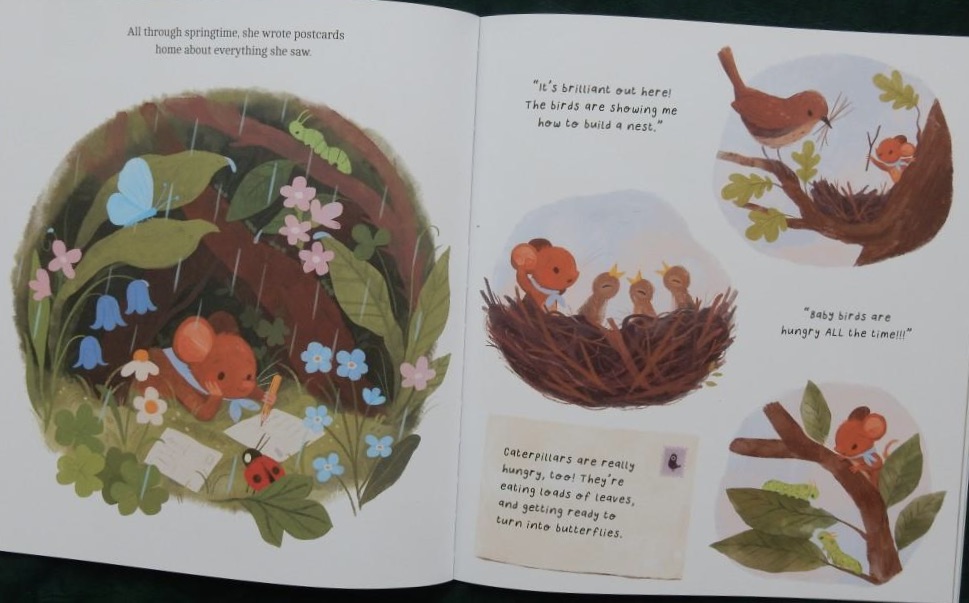
When Flora, the littlest dormouse stirs from the long winter sleep, she’s raring to go with a head full of questions, unlike her friends; they just want to sleep. She though is ready to explore the big wide world to try and find answers to ‘Why are bees so busy?’, ‘What do caterpillars eat?’ and ‘How do birds build nests?’ for instance. Ignoring the call to nap with her companions, Flora storms out and immediately encounters a duck. She tells him of her urge to see the world; he offers her a lift to the pond and off they soar together. At the pond Flora is intrigued by the wiggly things, which she learns are tadpoles and the duck talks of recently hatched ducklings.
Flora spends the spring learning new things and writing postcards home about what she observes. She follows the development of new baby birds and caterpillars
and watches the bees through the seasons as well as seeing the autumnal pursuits of spiders, squirrels and migrating geese, and despite missing her friends, she doesn’t go home.
Snow falls and Flora starts feeling drowsy. Time for a little nap,she decides, snuggling down among the tree roots where she’s happy to find something fluffy to curl up on. ZZZZZ! Little does she know that her comfy bed is a fox’s tail. Along comes a beetle that immediately realises he needs to get help for Flora before the fox wakes.
Will Flora be rescued or will she become a tasty meal for the fox?
The story has a lovely final twist to it that is sure to make young children and adult readers aloud smile and Flora shares some of the entries from her nature diary, after the tale ends.
Raahat Kaduji neatly weaves facts about the natural world into her story and her illustrations are a delightful mix of the real and the whimsical.
Hugg ’n’ Bugg: The Surprise Ian Brown and Eoin Clarke Graffeg
In this third Himalayan tale starring yeti, Hugg, and his fur dwelling flea, Bugg, the former is preparing for his birthday, determined to look his best. However it’s not long before he starts feeling furious at what he sees. All the other creatures are sporting new, ornate hairstyles and Hugg is certain that rather than him being in the limelight, they’ll put him in the shade.
Little does the shaggy creature know, but the reason for all the funky tonsorial touches is a surprise party in his honour. A party with all manner of fancy food, some of it looking far from delectable having been whipped up by the guests
and then modified somewhat in transit.
With Hugg and Bugg’s friendship repaired, everyone gathers round the table to tuck in and start filling their tummies, but there’s another surprise awaiting Hugg. What will be the host’s reaction?
Diverting daftness delivered in Ian’s rhyming text and Eoin’s splendid scenes of the animals’ antics. Fans of the duo will gobble this up but if you’ve yet to meet them, I suggest you start with Hugg ’n’ Bugg: Finding Home and discover how they got together, and then move on to the new one.
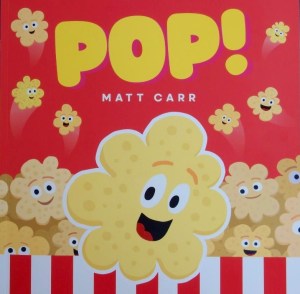
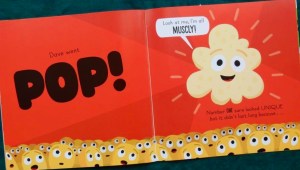
If you’re looking for a wacky way to encourage small children to practise counting to ten then get your hands on this rhyming story that begins to explode one rainy afternoon when the contents of a packet of popcorn is sent tumbling into a pan atop the stove. On goes the lid and happy to be out of the bag, the corn pieces are in party mood despite the rising temperature. Suddenly there comes a POP! It’s Dave delighted at his muscly new shape.
There’s no time to brag about being unique though, for almost immediately comes POP! number two; Monique has joined Dave making a ‘pair of superhero corn’. Small explosions continue as Shaun, Clare, Dean, Debbie, Ben, Sue, Wendy and Brian. joined the pair in rapid succession. A hip-hop popping party if ever there was one.
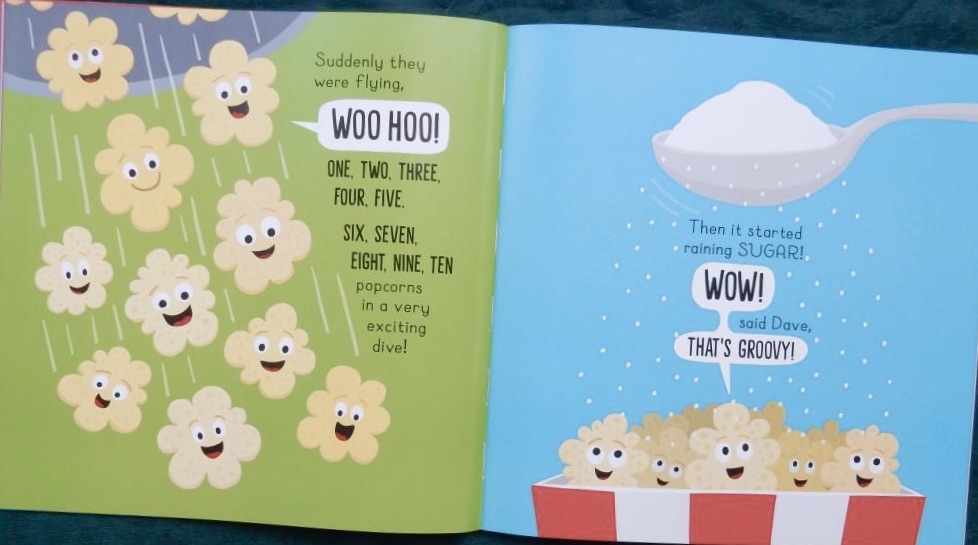
Eventually those pops stop and onto the popcorn pals there comes a shower of sugar.
Then from their new resting place the crew settles down to watch – wait for it, a movie. The kind of movie will perhaps make adult sharers cringe at it’s punny nature.
Ridiculous, irresistible fun: this book is sure to become hugely POP-ular with little humans who will want to hear it over and over as they eagerly join in with all the popping.
My Baby Sister is a Diplodocus Aurore Petit (translated by Daniel Hahn) Gecko Press
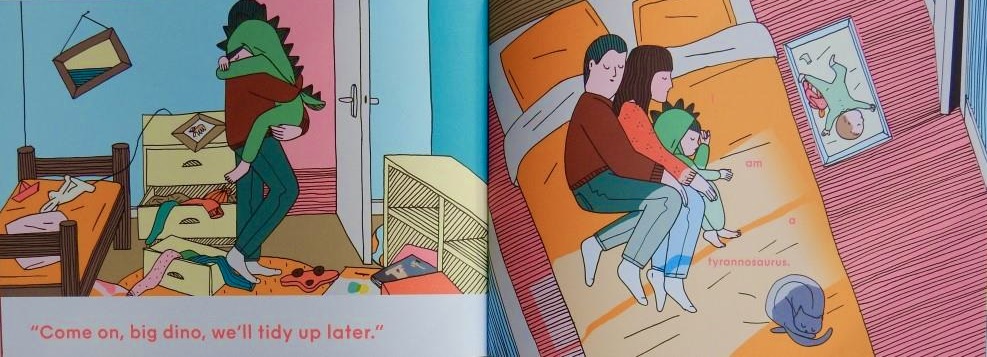
Adapting from being an only child to having a sibling is seldom easy as we see in this book. It begins with a visit to the hospital to collect Mum and the new arrival. Once home the small boy narrator eagerly dangles his soft toy elephant over his baby sister, he plays her guitar music and then shows her around the house. However, before long his initial enthusiasm starts to wane, partly on account of his being told “No!” frequently and when Mum asks, “So, do you like being a big brother?” he replies firmly, “No!” and storms off to his bedroom where he dons his T-Rex pyjamas and proceeds to turn the room upside down.
Warm-hearted Dad comes in, picks up ‘big dino’ and carries him to the parental bedroom (there’s a caption informing us that big brother is a tyrannosaurus) where, snuggled up with Mum and Dad he falls asleep.
‘My baby sister is a diplodocus’ we read on the next spread, presumably feeling somewhat empowered as a much bigger T-Rex. On waking. big brother sees his new sibling in a different, much more accepting light; the two have much in common after all, he now realises.
Concisely written and illustrated with simple images in bright hues that go well with the sympathetic, engaging telling, this is a book to share with a young child in a similar situation to the child narrator.
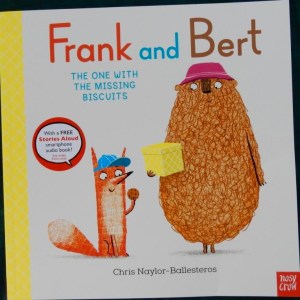
Frank and Bert: The One With the Missing Biscuits Chris Naylor-Ballesteros Nosy Crow
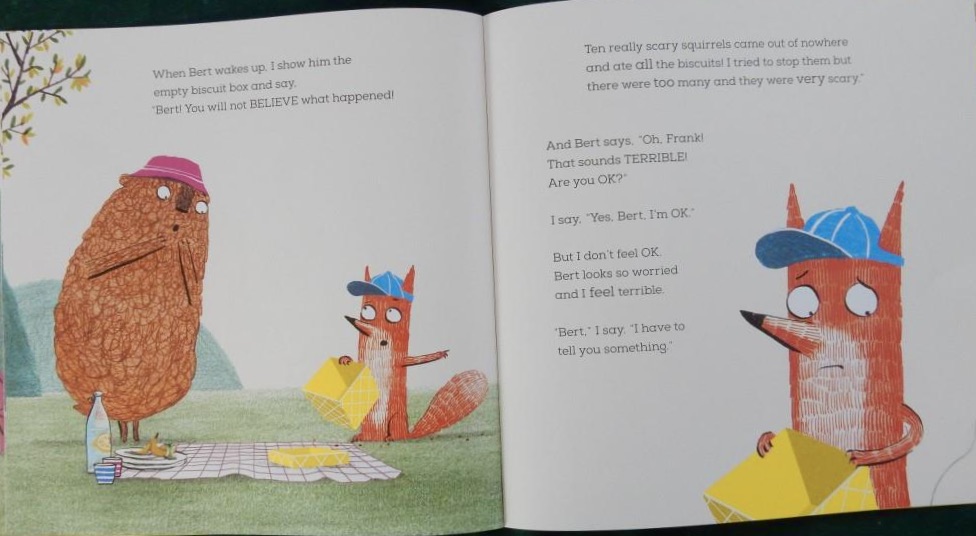
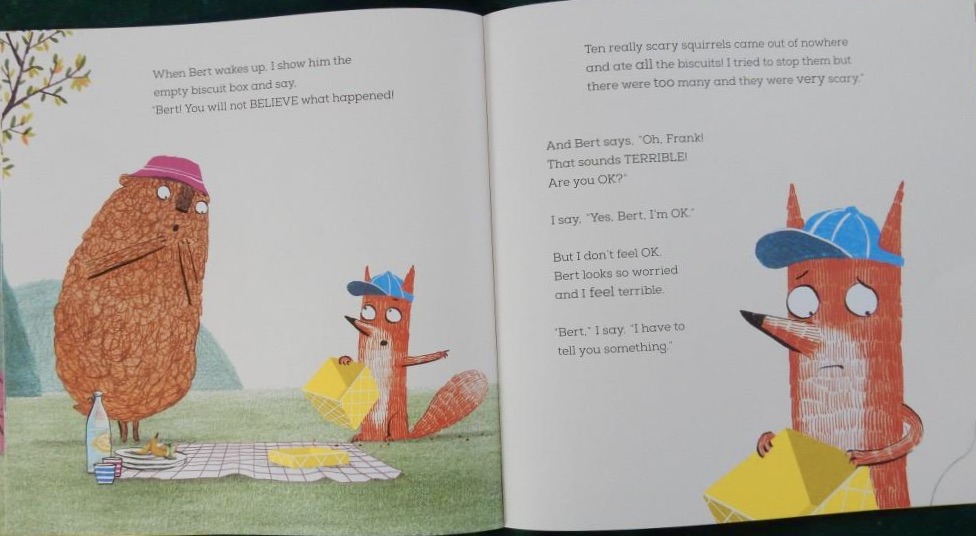
Best friends Bert the bear and his foxy pal Frank (our narrator) are off for a picnic in the countryside, something they love to do but all too frequently something goes wrong. On this occasion Bert has brought a special tasty surprise and Frank is eager to find out what it is but his friend tells him he must wait a while. Having consumed their picnic, Bert settles down for a postprandial nap. Frank decides that there’s no harm in taking a quick peep inside the box and whopee!
Bert has cooked his friend’s very favourite biscuits. It won’t matter if I eat just one, Frank tells himself; but they are so yummy that – well you can guess what he does. What will Bert’s reaction be when he wakes up? Frank thinks up a less than honest explanation for the empty box; but having lied he feels guilty, especially when Bert is so concerned for him.
There’s only one way to sort out this mess: Frank owns up and promises that the next time they go on a picnic he will make up for his wrongdoing; but the best laid plans …
This double act is a deliciously diverting delight and this tale of friendship and forgiveness is sure to make young listeners ask for more.
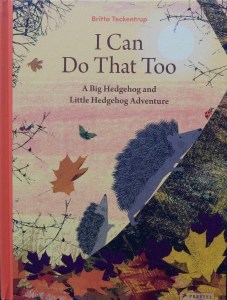
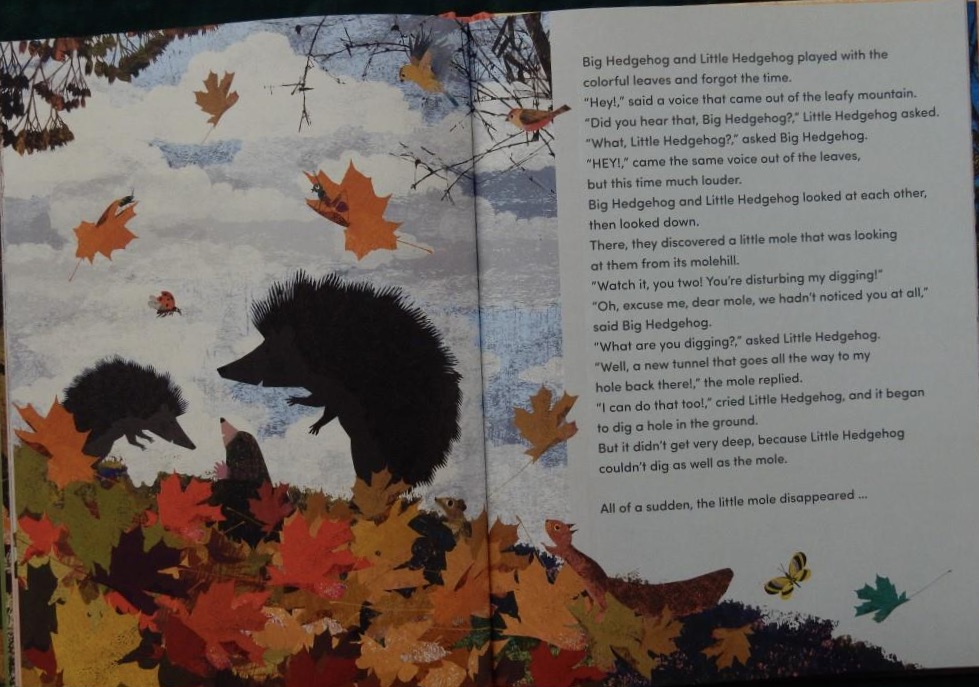
The delightful Hedgehog duo return in a new story. Eager to do everything Big Hedgehog does, Little Hedgehog enthusiastically helps gather all the fallen leaves. Having collected a huge pile there’s just one leaf remaining and that’s on a high branch of a tree. Unable to reach it by leaping, Big Hedgehog decides to climb up the trunk. “I can do that too!” cries Little Hedgehog. However Big Hedgehog is back on the ground with the leaf by the time Little Hedgehog reaches the top branch. Thereon is a ladybird and of course Little Hedgehog unable to resist copying the insect’s actions launches itself skywards.
This is only the first of the animal actions Little Hedgehog tries and before long a whole host of animal friends starting with a mole,
have been shown what the little prickly creature can do, including swimming in the lake. That’s where during an afternoon of fun, Little Hedgehog learns that not all animals have the same set of skills and abilities. Come nightfall, it’s fortunate that the turtles are willing to offer a lift all the way home to the Hedgehogs’ residence where an owl’s hoots send Little Hedgehog off to sleep but not before a final “I can do that too!”. Beautiful, textured scenes in Britta’s characteristic style and a gentle tale show little humans that it’s good to be eager to embrace new things but equally, it’s fine to discover that you’re not quite ready to accomplish all you try.
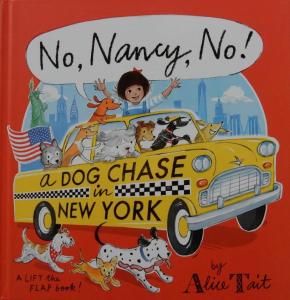
No, Nancy, No! a Dog Chase in New York Alice Tait Walker Books
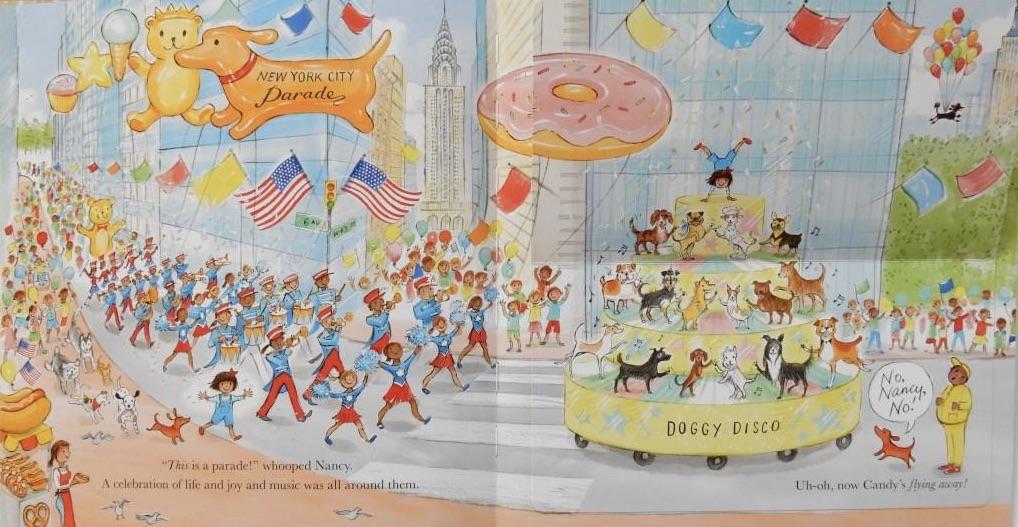
Nancy and her canine best pal Roger are in New York ready to head off to the theatre to see Dogs! The Musical. On arrival Nancy spots Candy the star of the show on a lead outside and in her enthusiasm she accidentally unravels the lead and off goes Candy … through the city and into a cab destination Central Park. Nancy and Roger chase after her but Nancy can’t resist stopping several times as they pursue her into the zoo, past a parade and downtown to the Hudson River where Candy has been blown attached to a bunch of balloons. Eventually she ends up dangling from the Statue of Liberty.
As ever more of the dogs of the city join the chase young followers of the story will enjoy adding their voices to that of the long-suffering Roger with “No, Nancy, No!”
and amused to discover the total chaos Nancy has caused by her thoughtless action. Can she possibly succeed in scaling the heights, rescuing Candy and getting her back in time for the show? Happily with lots of assistance, she can and that night Candy (stage fright overcome) isn’t the only one in the spotlight. With a final fold out map, lots of famous landmarks, a surprise pop-up, a plethora of flaps and a wealth of detail in the busy scenes, there’s plenty for youngsters to explore in this interactive travellers’ tale.
Help! We Need a Story James Harris and Mariajo Ilustrajo Little Tiger
The jungle animals are, so they say, bored, very bored; much too bored to take much notice of what Artie the macaque is drawing with his crayons
until eventually after hearing so many complaints, he starts creating anew, giving full rein to his imagination.
With his work almost complete, he writes two final words and then announces to his friends, “Guess what? You’re in a book.” The initial reactions to the title are less than enthusiastic; but then June Baboon starts reading; reading about dragons, a magic bear and much more – robot sharks and zombie hens even and guess who is fighting all these baddies. It’s none other than Captain Artie and his mighty mates. By the time the story is concluded, the other animals are enraptured and truly thankful. From Artie they receive a knowing smile and an anticipation that next morning more magical tales will start to unfold and all because the listeners will start to look at their world in a totally different way.
A splendid story told in rhyme wherein words and pictures show the power and vital importance of the imagination and creativity. It’s one I strongly recommend foundation stage and KS1 teachers share with their classes as well as a book parents and children read and talk about together. Make sure there are pens, crayons and paper to hand for children to use for their own story making.
The Boy Who Loves to Lick The Wind Fiona Carswell and Yu Rong Otter-Barry Books
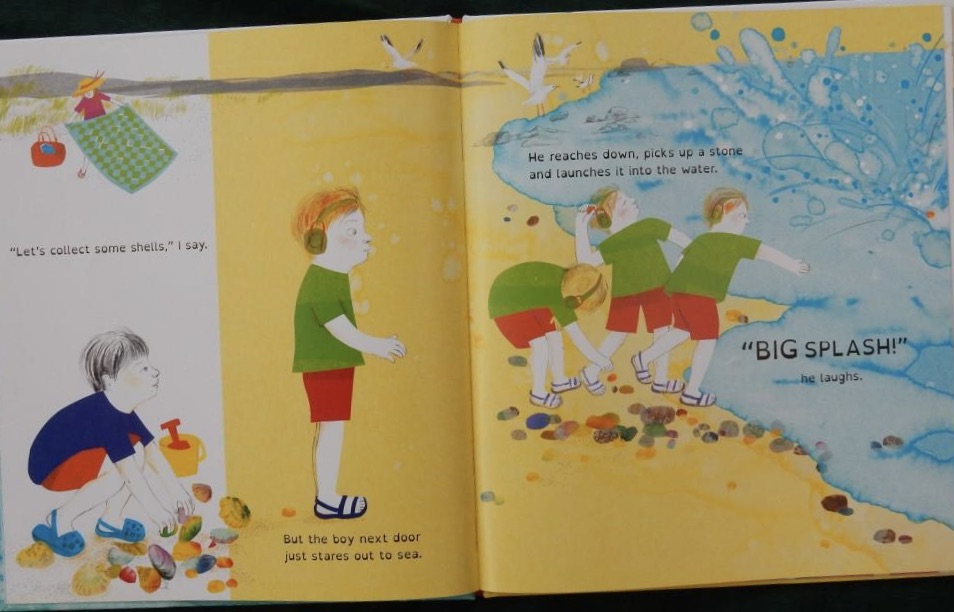
This story features two boys – the narrator who is dark haired, and his blonde neighbour. Puzzled by the blonde boy’s behaviour, the narrator speaks to the boy’s mother who responds thus, “He’s licking the wind. You should try it.” She goes on to invite the inquirer to join them on a visit to the beach, the place where the best winds can be found. Off they go with ‘the boy next door showing his excitement by his actions and the sounds he makes. Once at the beach he dashes onto the sand stands still and begins his licking ritual, ignoring an invitation to collect shells, Instead he picks up a stone and tosses it into the water.
The two boys then spend time throwing stones until mum calls them for lunch. The boy bites into his sandwich, tosses it away and shows distress, which his mum deals with calmly.
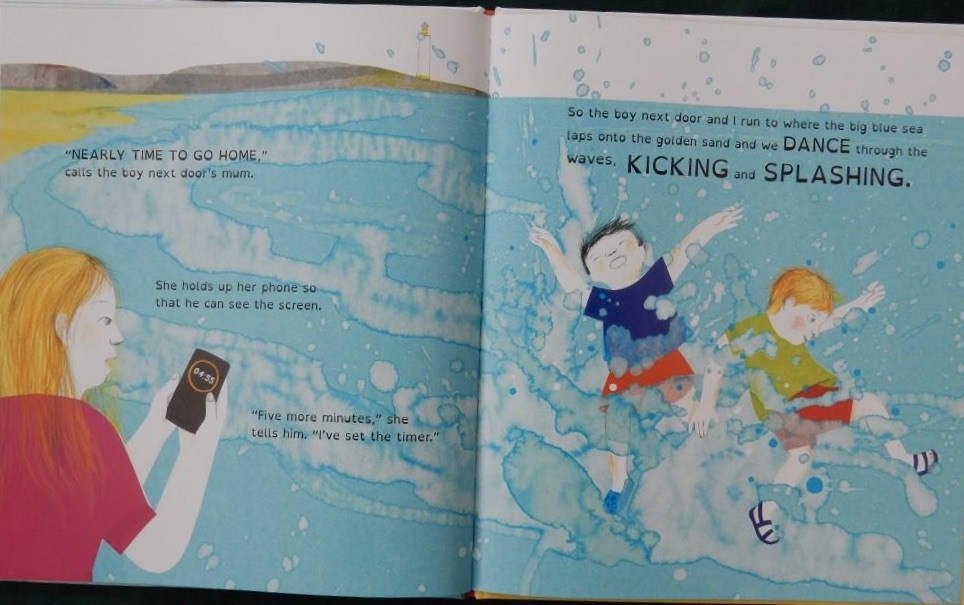
Meanwhile the narrator starts collecting smooth stones and using them to make a castle. Just as he finishes the boy next door runs up, grabs the top stone and hurls it into the sea. The boys then take turns dismantling the castle splash by splash till nothing remains. They jump, spin and yell into the wind till Mum calls to give her son a five minute warning before it’s time to return home. This prompts both boys to dash into the sea and dance around.
The beeper sounds indicating it’s time to leave, which causes the boy to cover his ears and cry. Again Mum is empathetic and they head towards the car but before they reach it, both boys give one final tongue swirling lick of the wind. How wonderful it feels.
The following day in school the narrator tells his class during a circle time session about their day at the beach; his friend demonstrates and then they all lick the wind together.
Some child listeners and adult readers aloud will understand from the outset that the narrator’s new friend is neurodivergent. That means that his brain works in such a way that he experiences and interacts with the world differently from neurotypical people. The story, related and illustrated with great empathy, is an ideal way to introduce neurodivergence to primary school children.
Come Out, Come Out, Chameleon! Jonty Howley Happy Yak
“I have a pet chameleon,” announces the white-haired man standing outside his home on the first spread. Beside him is his dog whose gaze is directed towards a rooftop weathervane whereon, as observant readers/listeners will see, is said chameleon. Turn over and the chameleon’s owner tells us, “The only thing is … I’ve never actually seen him.” Surely this guy needs new specs.
He continues sharing with us his possible sightings, each of which he immediately dismisses: “I thought I caught a glimpse of him among the flowers. But it must have been a trick of the light.” All the while the chameleon is hiding in plain sight: the dog can see it, so too can we readers. On one spread the creature is sitting in the fruit bowl disguised as a banana;
turn the page and he’s lurking among the socks strewn across the bedroom floor.
Audiences will delight in both the playful way the pastel illustrations contradict the words and the dog’s attempts to help the man spot his chameleon: canine body language and facial expressions speak volumes. Eventually the owner succumbs to the possibility that his chameleon doesn’t actually exist. This prompts the dog to come up with a way to solve the chameleon conundrum and hurrah! it works – for a while at least.
Brilliant interactive fun for the very young and their adult story sharers. The simple text also makes this a good book to offer children in the early stages of their reading journey
Fluffy the dog, narrator of this story tells how every day s/he walks through the city to the park with best friend Lilly and her Mum. Each morning they walk past Andy, another dog but Fluffy is never allowed to stop and play with him.
One day though, Fluffy chases a ball out of the park and gets completely lost in the city. In all the hustle and bustle Fluffy’s cries for help are drowned; but then Andy comes along with his Dad. Realising that the little dog is lost, Andy’s Dad takes Fluffy in his arms and they walk to a quiet place for a sing song that eventually lulls them all off to sleep.
Next morning they start searching for Lilly and having spent the whole day so doing as night descends on the city, Andy’s Dad spots a ‘Missing’ sign giving Fluffy’s address tacked to a lamp post.
So they head straight there and a joyful reunion takes place. Sadly Andy is not asked in to play and as Fluffy and Lilly snuggle together in bed it’s clear to Lilly that something is still upsetting the dog. Fluffy tries to explain but is unsure Lilly’s understood. However, the following morning on their way to the park something special happens …
Emma Chinnery’s poignant story will surely make readers aloud especially, think deeply about how they view homeless people. Non-judgemental child listeners I suspect, will be more intent on rooting for Fluffy, hoping for a reunion with Lilly and later with new friend, Andy. Emma’s watercolour scenes of everyday life in the busy city capture so well what is never said about how people perceive the homeless.
Be My Sunflower Kathryn Simmonds and Rosalind Beardshaw Walker Books
Vernon is a sunflower seed, one of many in the packet Miss Okoro has for the children in her class to plant. All Vernon’s fellow seeds are excited about being released into the world, a world Vernon knows a considerable amount about – scary things like birds, slugs and stormy weather – and thus he feels apprehensive.
Come the next morning a little girl named Carla is given Vernon. Her enthusiastic response , “Be my sunflower” makes the seed feel somewhat more relaxed. Time passes; Carla waters Vernon, the sun shines, warming him and it’s so snug and safe in the soil. Meanwhile the other seeds have begun to germinate
and they encourage him to do likewise, extolling the delights of the stars. Their enthusiasm makes Vernon curious: perhaps he could just have a teeny peep. The stars glitter in the night sky but just as Vernon is reconsidering his opinion of the big wide world, something large swoops by, scooping him up and then dropping him way way down into a sandpit. There the frightened seed stays all night. In the morning a little boy picks him up and hands him to Carla. Carla immediately recognises Vernon and puts him back in his pot.
By the end of the week, Vernon is the only seed that hasn’t sprouted. Carla feels devastated and cries lots of tears right over his flowerpot. The ungerminated Vernon knows that he must act: he spends the night pushing through the soil. Is he brave enough when morning comes to remain exposed? For Carla, yes he is and she is overjoyed. So begins a new way of being in the garden: Vernon grows and flowers and yes, he still knows about the scary things, but now he also knows about some of the wonderful things the world offers, the most important of all being a very caring little girl.
What a lovely story about finding the courage to emerge from your comfort zone and take on the world. Its warmth and reassurance shine through like the sun that sends its rays down to Vernon. Young children will be amused at the seeds having names and the way they talk to one another; will certainly empathise with Vernon and be rooting for him to emerge and reach for the sky. Rosalind Beardshaw’s mixed media, digitally worked illustrations of the personified plants are such fun.
Counting Sheep Michelle Robinson and Nikki Dyson Walker Books
Sheepdog Sam has had a tiring day and he’s more than ready for sleep. Not so the sheep; they’re still way too lively. Sam suggests they should try counting sheep ie themselves to make them nod off. He starts “One, Two …”; the sheep try to continue but clearly need lots more practice, so Sam notices as he dashes off towards other wakeful animals. He gives the horses the same ‘count yourselves’ instruction, which results in Sam feeling more drowsy and the horses uttering letters of the alphabet.
It soon transpires that all the farm animals are still wide awake even the cows and Sam leads them into the barn urging them to demonstrate the sleep-inducing counting to the entire farmyard contingent.
The result is only a lot of mooing: it’s time to visit the hen house to seek an answer to the wakefulness epidemic. It’s there that Sam finally discovers the insomnia explanation; it’s also another counting opportunity for the other animals.
Michelle Robinson’s comical bedtime story and counting book with a difference, in combination with Nikki Dyson’s wonderfully expressive illustrations of the farm animals, will surely make wide awake young children giggle. It also offers lots of counting occasions – albeit sometimes slightly chaotic ones – on almost every spread.
My Mother’s Tongues Uma Menon and Rahele Jomepour Bell Walker Books
Sumi’s mother speaks two languages, Malayalam because she grew up in Kerala and English because she learned it at school and having emigrated to the USA ten years back, continues doing so now sometimes using both when she talks to her daughter. Sumi the narrator was born in the United States, uses Malayalam at home with her family and as a result of listening carefully to others at school and around the neighbourhood, describes herself as having two tongues like her mother. She goes on to say that when she visits Kerala with her family each summer she uses Malayalam with her relations and her ability to understand and speak it is improving.
She explains that as her family tell her, if she stops using a language she might forget it. I know that to be true with my speaking of Hindi. The more languages a person learns and speaks, the more people s/he is able to converse with: Sumi’s aunt for example is able to use Malayalam, English, Hindi and Spanish.
But imagine how many opportunities a person might have who is multilingual: that’s what Sumi aspires to. I love that she concludes by saying ‘Having a tapestry of tongues will be my superpower.’
This celebration of learning and using new languages is superb, showing how it helps overcome differences and borders of all kinds as we connect with people from all over the world.
Using canvas backgrounds and quilted textures, Jomepour Bell emphasizes the weaving theme of Uma Menon’s lyrical text in this illuminating book. Everybody should read this especially those who say such things as ‘English is spoken all over the world, so why bother to learn another language.’
Thank you to Alan and Little Door Books for inviting Red Reading Hub to be part of the blog tour for this picture book:
Kevin the Orange Alan Windram and Olla Meyzinger Little Door Books
One day Kevin the orange’s best fruity friend Brian the pear – a wise bibliophile by nature – discovers that Kevin is having a colour crisis. Fed up with a life that seemingly lacks fun, he’s decided to turn blue. But how? Brian suggests that by visiting the North Pole and immersing himself in the snow for some time, he will become blue. Suitcase in hand, off goes Kevin.
On arrival he selects a suitable spot, sits in the snow and waits. BRRR! Yes he turns a blue hue but quickly realises it’s not for him. Back he goes, seeks out Brian and asks his advice once more. Now red is his must-be colour. You can probably guess what he’s told to consume to make him sufficiently hot for that to happen. And oh my goodness! it certainly has a powerful effect but not a pleasant one.
Kevin continues consulting his friend and trying other colours
until eventually after a series of further mishaps, he realises there’s really only one colour that’s right for him.
Being true to yourself and the best version of that self you possibly can is an important life lesson for children to learn. Alan’s funny story together with Olla Meyzinger’s zany, exuberant scenes of Kevin’s colourful capers will induce giggles aplenty when you share this with young children. Four year old Faith with whom I shared the book (several times at her request), was particularly tickled at the sight of a pink Kevin sporting his swimming trunks and arm bands as he pedals off to join the jolly grapes in their swimming pool.
Be sure to check out the other posts in the blog tour.
Puck , the smallest of Mamma Duck’s brood has trouble keeping up with the others as they make their way to the lily pond. By the time they reach the boating lake Puck is way, way behind so Mamma calls, “Keep up, Duck!” Puck looks around at the boats and being an astute little thing, comes up with a solution that sees him hopping and plopping to rejoin the rest of his family.
However he soon falls behind again and again he responds to the titular “Keep up, Duck1” from Mamma by hop, hopping onto a skateboard, then a child’s seat on an adult’s cycle and plopping back with his siblings. But then barking dogs cause another distraction
so Puck hop hitches a ride from one dog then another until with a final plop! he reaches the lily pond at last. And guess what: despite being smaller than all his siblings, diminutive duckling Puck has become the speediest.
Told using a repeat pattern text with a wealth of onomatopoeia and splendidly expressive watercolour and pen scenes of the adorable ducklings and their journey, this problem-solving tale is a delight to read aloud to young children. I suspect it will become a storytime favourite with foundation stage listeners. It would also be a great book for early readers to try for themselves.