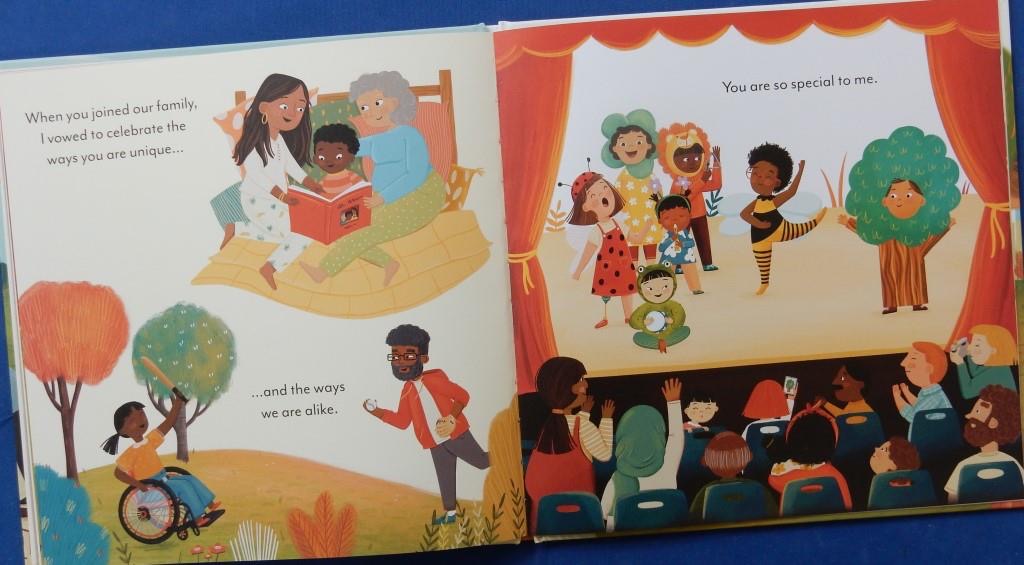
Gotcha!: A Funny Fairy Tale Hide-and-Seek

Gotcha!: A Funny Fairy Tale Hide-and-Seek
Clotilde Perrin (translated by Daniel Hahn)
Gecko Press

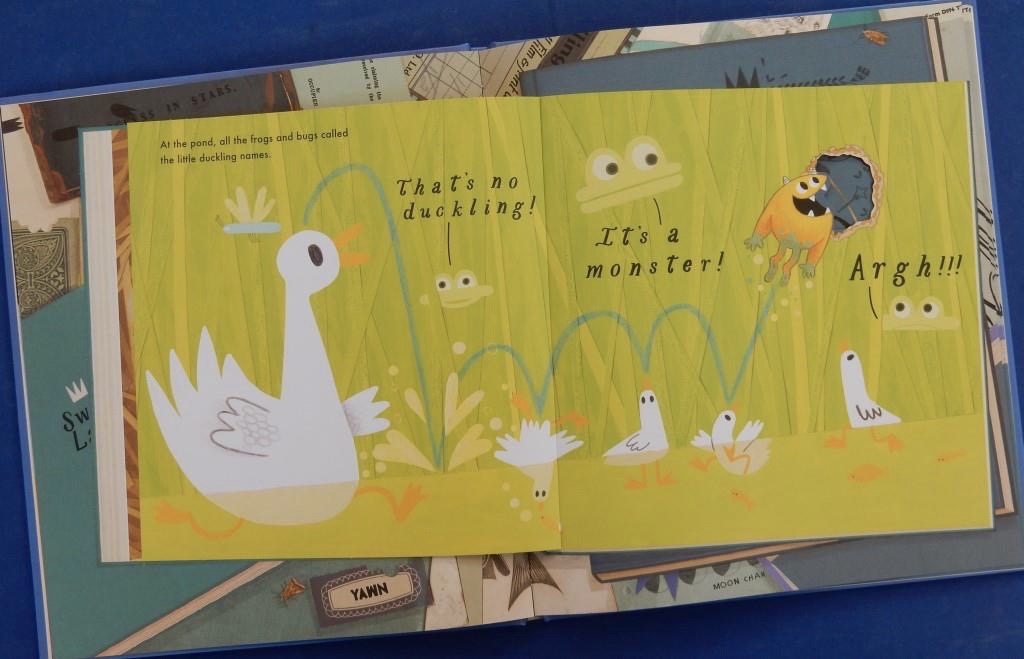
Between the covers of this large format book are three mock-scary monsters just waiting to give you the creeps and to catch the small character from the title page. First there’s a big yellow and decidedly nasty ‘hairball’. Fear not though, there is safety if you seek refuge within the brick house cleverly constructed by the third little pig and so our porcine pal says, this residence is built to withstand monsters.

He’s waiting within, cooking up something delicious and is willing to share it with little human visitors who want to hide from hairballs and the like.

Also on the prowl is the ‘fizzling stinkwort’; this monster uses its gaseous emanations to render you senseless and then consume you, unless you flee forthwith. Where better to hide than what looks like a deliciously welcoming abode with walls of gingerbread covered with confections of all kinds? Therein you will find the self-sufficient children, Hansel and Gretel – kind hosts who can help keep you safe once you’re within those walls.

Having recently consumed its breakfast, the tired-eyed creeper has its mind on the next meal and to ensure staying safe, it’s necessary to fight a way through the creepers covering the walls of Sleeping Beauty’s castle wherein lie sleeping fairytale characters.

However the three nasties don’t give up that easily so don’t think it’s safe just yet …
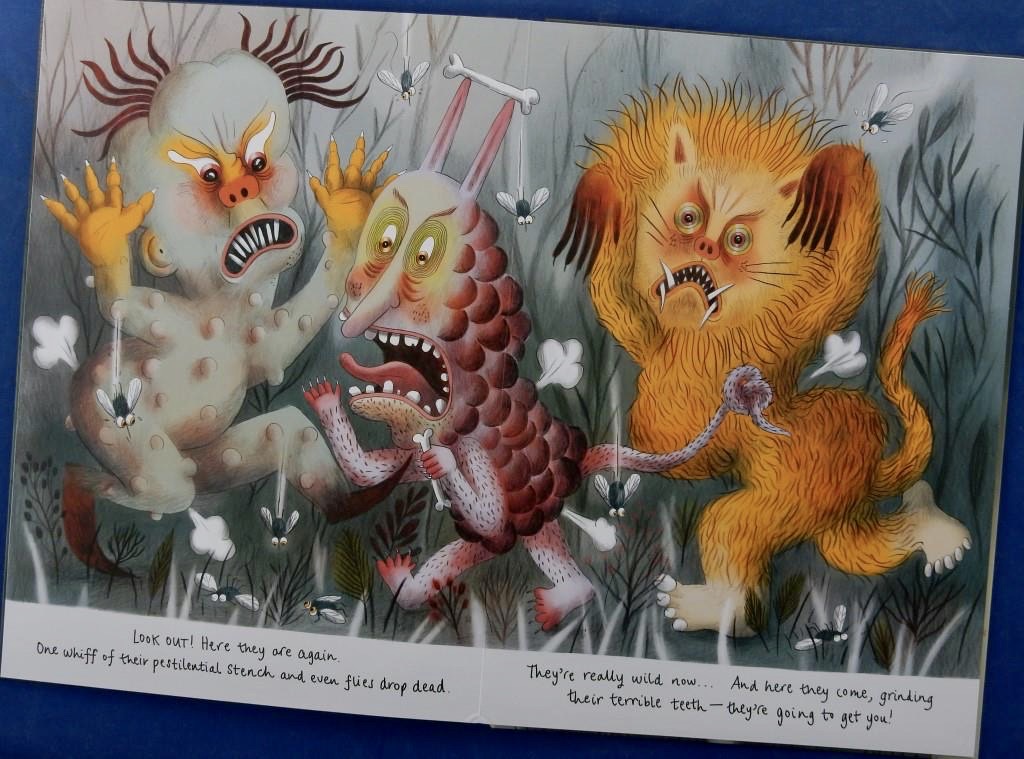
With the three residences full of amusing references to the stories they come from (and others), as well as flaps to explore and the satisfying disposal of the nasty monsters, this will keep youngsters entertained for ages, and returning for further forays into those favourite fairytale abodes.
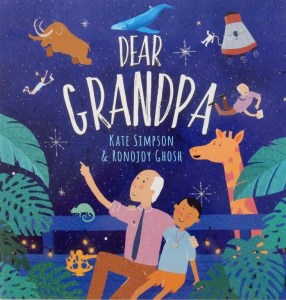
Dear Grandpa / Where?

These are two recent titles from Allen & Unwin Children’s Books: thanks to the publisher for sending them for review

Dear Grandpa
Kate Simpson and Ronojoy Ghosh

Separated by a huge distance, a little boy Henry and his grandpa sustain a very special relationship through their letter writing that begins when the child moves to a new apartment in the big city 2003 km from his grandpa’s house. The first letters are factual and Henry talks of things in the city that he hopes just might encourage Grandpa to come and visit (ice-cream shops, cinemas and me). As their exchange proceeds, the two become imaginative, inventing and deflating one another’s way out visiting plans – riding on a whale, 

catching a shooting star – and readers are presented with a series of facts that the letter writers share while coming to terms with the physical distance between them.
I love the way the author brings us full circle with Grandpa’s closing letter mirroring Henry’s opening one with talk of that needle and magnet to point the way to one another’s abodes.
A gorgeous demonstration of how it’s possible for a loving human connection to transcend distance, with Ronojoy Ghosh’s imaginative illustrations being quirky visual representations of each of the letters. A smashing book for a grandparent and grandchild to share.

Where?
Jordan Collins and Phil Lesnie

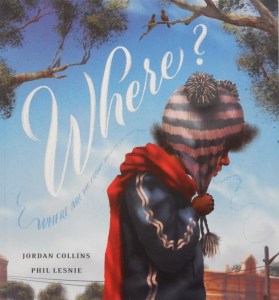
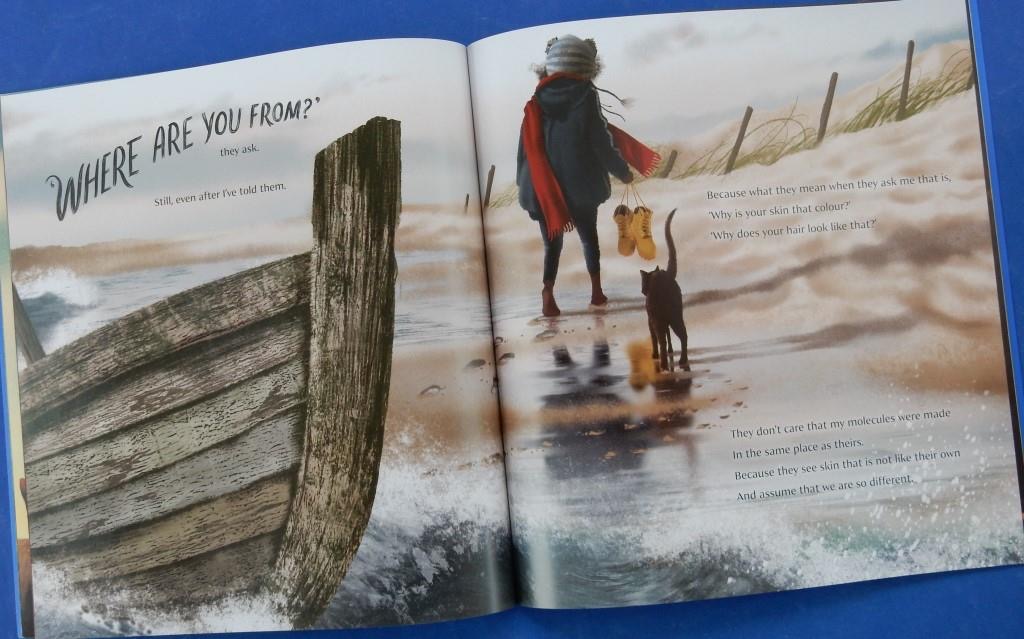
Where? is an enormously powerful, heartfelt slam poem by Jordan Collins written when the author was in his teens, in response to the ‘where are you from’ question. Thoughtless racist comments such as that can be incredibly hurtful yet still some people continue to ask such things. Here the author makes a plea to be seen in the same way as everybody else (everybody with white skin that is) as opposed to somebody entirely ‘other’. Readers cannot help but feel for the young narrator, and by implication, every other person who is being judged not by who s/he is, but on account of their skin colour, type of hair, way of speaking, from where they’ve come. 

lllustrator Phil Lesnie has taken Jordan’s words and brought them to life in a stunning way that expands on those words which quite rightly, (and optimistically), end thus ‘I’m from the same place that you are. // So no need to ask again.’ Every spread is one to ponder over and think deeply about and one can but hope that the book finds its way into all primary school classrooms wherever they are. For sure, we all need to celebrate our common origins and shared humanity.

Well Done, Mummy Penguin

Well Done, Mummy Penguin
Chris Haughton
Walker Books

I’m a big fan of Chris Haughton’s animal picture books and immediately fell for the penguin family, especially Little Penguin.

As the story opens Daddy Penguin is explaining that Mummy is off searching for yummy fishy dinner for them all in the chilly waters of the Southern Ocean. She needs to swim very fast and dart at great speed – swoosh swish swoosh

and while she is so doing Little Penguin seeks reassurance that she will return safely. And so she does but to do so she has to jump, climb a slippery slope – cu-crunch cu-crunch cu-crunch and then tip-toe carefully past some slumbering seals – shh! – in case she wakes them.

Little Penguin is concerned to see that Mummy Penguin finds herself face to face with one now wide awake seal

and as a result has to perform an amazing leap. Fear not though for Mummy is unstoppable and Woo-hoo! she lands safe and sound with a tasty offering for her little one. Can you guess what he says having consumed his dinner with relish?

With beautiful Antarctic landscapes, this is a gorgeous celebration of mothers, be they penguins or other; I’m sure little humans will love following Mummy’s progress and joining in with the onomatopoeic words sprinkled throughout the telling.

The Very Hard Book

The Very Hard Book
Ian Ben-Barak and Philip Bunting
Allen & Unwin

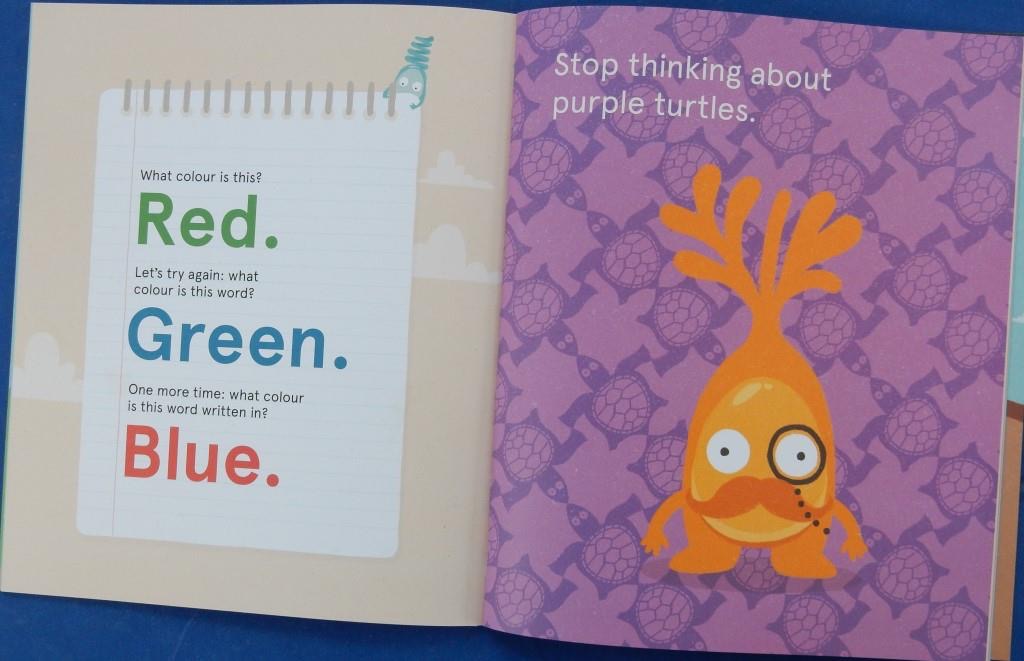
In this zany book readers are asked to try some very challenging things and it’s all in the name of helping us to become aware of our thought processes (metacognition). Are you up for the challenge of some open-ended thinking? Right … ‘Sit in an empty room.’ ‘Drop something by accident.’ ‘Dig half a hole.’

Each page (almost) gives a different instruction or asks a different question and by the time you’re half way through you’ll be giggling (partly thanks to Philip Bunting’s quirky creatures) and your brain will be going into overdrive with the creators’ comical ideas. Certainly however you will be more conscious of the limitations of your own mind.

You might even be prepared to have a look at The Very Hard Gallery at the back of the book. Here you will find a more detailed exploration of the paradoxes presented: you’ll see some interesting sounding names such as the Stroop Effect (your mind having to process two conflicting messages; in the example given, they are meaning and colour); then there’s Panta rhei. You will need to find out what this means for yourself, which means getting hold of a copy of the book (no cheating by using google).

Try putting this in a KS1 classroom; as well as introducing them to some surrealism, it will surely get everyone’s little grey cells working hard as they embark on a fun-filled thinking journey.

The Woman Who Turned Children Into Birds

The Woman Who Turned Children Into Birds
David Almond and Laura Carlin,
Walker Studio

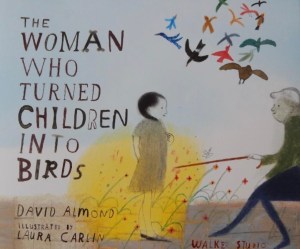
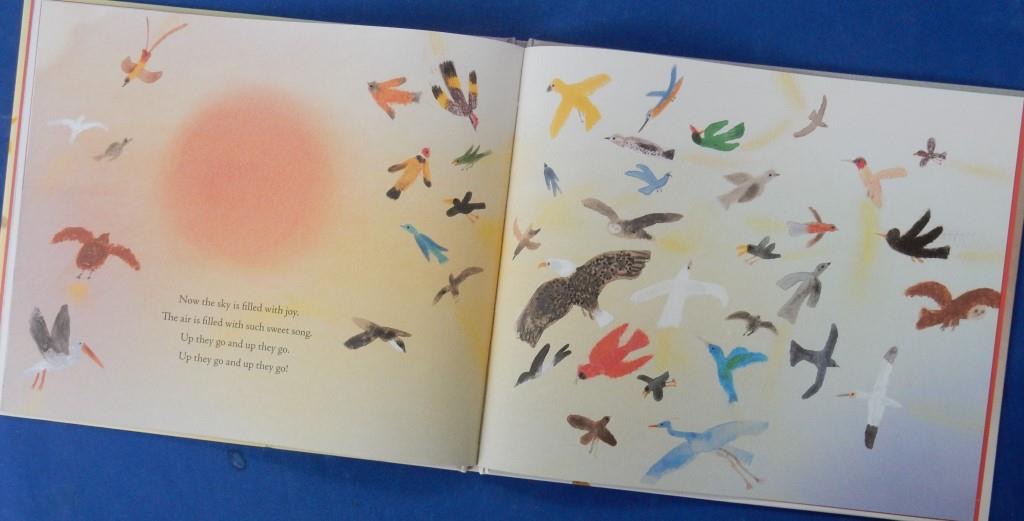
When a woman, Nancy Solo by name, arrives in town claiming to be able to turn children into birds, the adults warn the youngsters to stay away, scoffing, calling it piffle and balderdash. The children however think differently. First to approach Nancy on the bench is Dorothy Carr. Nancy whispers into her ear and off flies the girl, a swallow ‘swooping up into the blue’, but only briefly.

Before long another child, Colin Fox steps forward

and takes to the air – as a sparrow. Very soon the sky is full with a goldfinch, a rook and a host of other children transformed into birds. With more and more children enjoying their flight, Nancy asks the adults, “But what on earth are you afraid of?” Twice she asks the question and on the second occasion one of the grown ups starts to soar, thoroughly enjoying so doing; and it’s not long before the sky is filled with joyful song and soaring birds.

Nancy’s work here is done; everyone has become a risk taker, overcoming that fear of flying, and it’s time for her to move on to another town and work her magic.

Full of playful language, there’s a fable like feel to David Almond’s tale and Laura Carlin’s wonderful mixed media illustrations show an aura of light surrounding each transformation as it occurs. A story to revisit over and over with the possibility of new meaning emerging with each reading.

Planet Football

Planet Football
Michelle Robinson and Chris Mould
Walker Books

Jackson is football mad; everywhere he goes and everything he does involves football: he lives and breathes it.

One dull wet day he decides to play outdoors no matter the thunder, and making a run up to his ball he wonders just how high he can kick it. WHAM! Off it soars skywards, narrowly missing a plane and a space vehicle. This stupendous kick catches the attention of a passing reporter and the following day a huge crowd awaits Jackson all demanding he attempts even more. What follows is a tour of cities and towns the world over and each time his massive kick sends a ball sailing up but it never returns to earth.

Where can all those balls have gone? The answer is, they’re all up on the moon where the moon-folk are becoming football crazy. However the lack of a single ball on Planet Earth means disaster: the world Cup is cancelled. Now what?

Jackson knows he must fix things forthwith but can he do it? Perhaps with the help of all his pals: let operation moon mission commence.

This totally bonkers tale is told in Michelle’s rollicking rhyming narrative and Chris Mould’s highly comical, inclusive scenes of soccer mania. With the countless young soccer fans out there I have no doubt this will be a resounding success

The Mouse Who Carried A House On His Back

The Mouse Who Carried A House On His Back
Jonathan Stutzman and Isabelle Arsenault
Walker Books

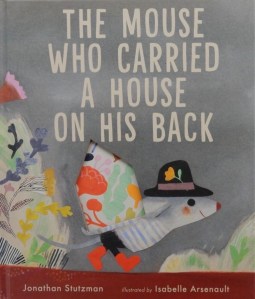
Vincent is a mouse ‘with boots on his feet, a hat on his head, and a house in his back.’ He also has an enormous heart and a special skill of knowing just where to stop and put down his house. Said house is no ordinary house however: it expands to accommodate whomsoever needs shelter. On this occasion he puts it down upon a hill and almost immediately along comes a weary bullfrog. Straightway Vincent offers him a roof over his head and in goes the frog, surprised that he can fit within. It’s not long before the house has expanded to welcome in also a hungry cat, a family of wet hedgehogs, a fox, badgers and a herd of deer and Vincent serves them all with dinner.

Just as they’re all seated around the table an enormous bear knocks saying he’s lost. The other animals are terrified. insisting, “there is no room for a bear.”

Vincent however thinks otherwise. “This is my house … all animals are welcome, “ he insists. And so it is on that night all the animals sleep safely and comfortably, ‘full of honeycomb and warm milk under a sky that stretched for miles.”

Jonathan Stutzman adopts a formal tone for his telling using repetition to good effect in this fable-like story of unconditional acceptance and inclusion. Isabelle Arsenault’s playful gouache, ink and cut-paper illustrations bring these themes to life: on the opening spread, she shows Vincent’s house as a simple cut-out pentagon and each time a new visitor appears at Vincent’s doorstep, a new house in a different style appears on the hillside adjacent to the pentagon, gradually creating a conglomeration of homes; then a gatefold spread captures the final proliferation.

A timely message of open hearts making for open doors in these troubled times of ours.

Who Will Kiss The Crocodile?

Who Will Kiss The Crocodile?
Suzy Senior and Claire Powell
Little Tiger

Suzy Senior puts a hilarious spin on a favourite fairytale in her snappy rhyming take on Sleeping Beauty. It starts on Princess Liss’s first birthday when her family hold a big fancy ball for all the town’s residents, or rather, all but one. With the party in full swing there’s a sudden chill as in sweeps a furious fairy who proceeds to shout, “… In fifteen years, she’ll bump her knee.And then the princess DIES!” and with a wave of her wand she turns the infant into a baby crocodile. All is not quite lost though thanks to a life-saving pixie who informs the princess’s distraught parents that instead of dying, their daughter will sleep `til woken with a kiss. But who would be willing to kiss a crocodile, especially one with increasingly long claws?

On her sixteenth birthday the princess injures her knee while swimming in the lake and takes to her bed for what turns out to be a snooze lasting around a century, during which numerous princes have shown up at the castle only to flee when they realise what slumbers within the increasingly crumbling castle.

Eventually the neighbours decide to call upon the services of the Handy-Grans to carry out some urgent work on the thorny hedge surrounding the castle. This they do and after a day’s slog they discover the slumbering crocodile within.

Rather than running for their lives, they run back to their van for some knee soothing salve…
Surely there couldn’t be a happily ever after to this story – or could there?

Claire Powell’s comical scenes are simply bursting with bright colour, her cast of characters is inclusive and Suzy’s text is a delight to read aloud. If you like fractured fairy tales, don’t miss this one.

An Invitation to the Ballet Theatre

An Invitation to the Ballet Theatre
Charlotte Guillain, illustrated by Helen Shoesmith
Welbeck Editions

At this time of year especially, an invitation to participate in a special VIP tour of the world of the ballet theatre, particularly when it culminates in watching a performance of Swan Lake on stage is very enticing. This invitation enables the reader to go on a virtual outing to the world of ballet that begins with an empty auditorium capable of seating over two thousand people. Next comes a look at what happens in the costume department where, beneath a gate-fold, there’s a designer fashioning a ball gown for the dancer who is to play the part of Cinderella in an up-coming show, as well as other people hard at work. 

I never before realised that there is a ballet-shoe manager responsible for checking that every dancer’s pointe shoes fit properly and that the right ones are always available. We explore the crucial warm-up routines, the clothes worn for training, see the various ballet positions and movements being practised in a morning class and then watch what happens in the rehearsal studio where the dancers spend a fair part of the day. 

Those of us who just go and enjoy a ballet performance don’t stop to think about the considerable amount of stress, both physical and mental, that dancers are under, nor about the importance of a dancer’s diet. These aspects require expert support to ensure the performers stay healthy in mind and body. To that end there is a healthcare suite wherein we see dancers working with weights, gyrotonic equipment for stretching and toning, doing Pilates exercises and consulting the experts available.

We also visit the orchestra pit, and the make-up room: I was surprised to find that most ballerinas apply their own make-up prior to going on stage; this involves accentuating features to make sure they are seen clearly under the bright stage light no matter where members of the audience are sitting.

Produced in consultation with English National Ballet’s Ballet Futures programme, this terrific, highly informative, beautifully illustrated book, is one to include in classroom collections, to give to youngsters who aspire to be become dance performers, or indeed to any child who is going to a visit to the theatre to watch a ballet.

The Perfect Gift

The Perfect Gift
Alan Durant and Marjan Vafaeian
Tiny Owl

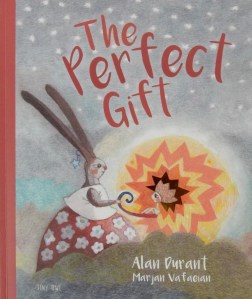
Rabbit is a much-loved creature, always ready to help and share with friends and neighbours. One day Meerkat knocks on her door with news: the birth of a royal baby is announced and the queen is having a celebratory party in the palace. Meerkat urges Rabbit to come along but in her paws she’s holding a gift. Rabbit doesn’t have a gift and she turns down her friend’s offer to share. Back indoors she searches high and low but can find nothing she deems suitable for the new baby.

Then ostrich calls and she too make the same offer as Meerkat, but is also turned down and told to go ahead. Other creatures also stop by, each bearing a gift.

By now the sun has almost gone for the day but still Rabbit won’t join them. As the sun sets she decides the only answer is to go to the party sans gift and ask the Queen’s forgiveness.

With her lamp in her paws, she makes her way to the palace and is surprised on arrival to find the place in darkness. Holding up her lamp, Rabbit approaches her majesty. Imagine Rabbit’s surprise when she’s greeted with the words, “And you’ve brought the perfect gift.” What can she mean by those words?

With themes of selflessness, kindness and friendship Alan Durant’s tale accompanied by Marjan Vafaeian’s delightfully quirky, detailed illustrations (love Ostrich’s knobbly knees) leave you with a wonderfully warm feeling inside. A thought provoking book to share both at home and in the classroom.

Anyone But Bear / Albert in the Air

Anyone But Bear
Suzy Senior and Dubravka Kolanovic
Scamp Publishing

Fox is excitedly making plans to host a moonlight party. He starts compiling his invitation list – Deer? – tick, Squirrel?- tick. Bear? Definitely not. Off trots Fox still planning in his head when suddenly rocks cascade down the mountainside, some of which smash straight into the party planner.

Fox is left flat out on the path-side unable to move. Several hours later, along comes Deer: help at last thinks Fox now awake and all too aware of his injuries. However, with a look of disgust, Deer turns away and takes an alternative route to avoid passing the injured creature. As snowflakes begin to fall along scampers Squirrel carrying nuts but he too decides not to stop. Seemingly the safety of his nuts is more important than that of a fellow forest creature.

Fox begins to despair but then round the corner comes someone massive, someone with large paws and a hairy scary face. Oh no! Soon though, Fox’s fear dissipates as he sees not the scary countenance he first thought but a kindly caring one. So kind and caring that he takes Fox all the way back home to his den; not only that but Bear brings him sustenance and takes care of the little fox cubs and their parent all through the night. This selfless act is one that Fox will remember always.

Based on the parable of the Good Samaritan, Suzy’s story, with Dubravka Kolanovic’s splendidly expressive illustrations will certainly make youngsters think about the meaning of real friendship.

Albert in the Air
Ian Brown and Eoin Clarke
Graffeg

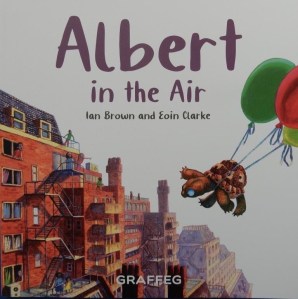
Albert the tortoise’s latest adventure sees him first wishing to emulate his winged friends and then, tunnelling his way beneath the garden fence into the next door garden and wandering out into the hubbub of the territory beyond. It’s there, while foraging among the piles of trash that he unintentionally finds that his wish is actually being fulfilled. The wind lifts a balloon entangled Albert skywards and he gets a tortoise-eye view of the sprawling urban landscape beneath him.

Meanwhile back on home territory, the other creatures are missing their friend and enlist the help of the birds to search for Albert. Will they return him safe and sound? 

The answer is yes, with the timely assistance of a bee and he makes his return felt in a rather noisy manner.

An amusing demonstration that the grass most definitely is not always greener and perhaps home is the best place to be. With its humorous ending and stand out illustrations, Albert’s new story is sure to please his numerous fans and will likely win him some more followers too. Don’t forget to peruse the information spread at the back of the book.

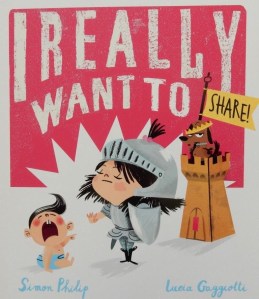
I Really Want To Share!

I Really Want To Share!
Simon Philip and Lucia Gaggiotti
Templar Books

Sharing is a challenge for many young children and so it is for the young narrator protagonist in this the fourth in the I Really Want To series, who is faced with a new sibling in her family. Not only will she have to share her parents but lots of other things too. However sharing does not come at all easily even to a determined character like the one here.

On the day the baby is due to arrive, soon to be big sister is sent to stay with her grandparents, and her grandfather quickly sees that something is wrong. When he’s told the problem, he explains that sharing has been tricky for him ever since he married her grandma, it’s something they have gradually learned to do. Then his granddaughter reveals that her biggest fear is that she will lose the affection of her parents.

When baby brother is born there are up times and down times for everyone,

but will there come a time when big sister can honestly say that four in our family makes me glad; will she truly say, “I really love to share”? I wonder …

Lucia Gaggiotti’s wonderfully funny illustrations in a bold colour palette really capture the protagonist’s emotional roller coaster and the spirit of Simon Philip’s text. Together they make a book that is just right for sharing with young children who are soon to be, or have just become, a big sister or brother.

Goodbye Hobbs

Goodbye Hobbs
Emma Bettridge and Josephine Birch
Graffeg

Based on real life events of love, loss and grieving, the author offers a dog’s eye view of losing a very dear friend. It’s with great reluctance, that Merlin eventually follows his owner out of the house for a walk to the shops. It’s hard for him to do so without Hobbs, his gentle black Labrador best friend.

As they walk, Merlin catches the scent of something on the wind and following his nose he detects a message asking ‘ … How are you today?’ but the message is incomplete. Merlin sniffs again and again as they continue walking and he finally stops beneath a weeping willow tree beside the river. ‘I just wanted to tell you that I am OK. It was time for me to go away. I love you. If you need me …’ Again the message stops mid-sentence.

On the two go, Merlin sniffing and gathering pace as he and his human head through the woods, back towards the village, bound for home.

Still sniffing and alert to any message, Merlin finally receives the words he needs so much. Words that will help him cope with those feelings of near despair as little by little he accepts that although his belloved Hobbs is no longer present in a physical form, he remains in the form of memories of the wonderful times the two have shared over the years together.

Josephine Birch’s painterly illustrations of the walk capture the complex emotions of Merlin. Her initial sombre colour palette changes to one of warm autumnal shades, and her subdued brush strokes become more exuberant as his mood lifts with each new discovery of his friend’s scented messages.

A helpful book for any parents or educators wanting something to help explain the feelings surrounding the loss of a loved one.

The Search for the Giant Arctic Jellyfish

The Search for the Giant Arctic Jellyfish
Chloe Savage
Walker Books

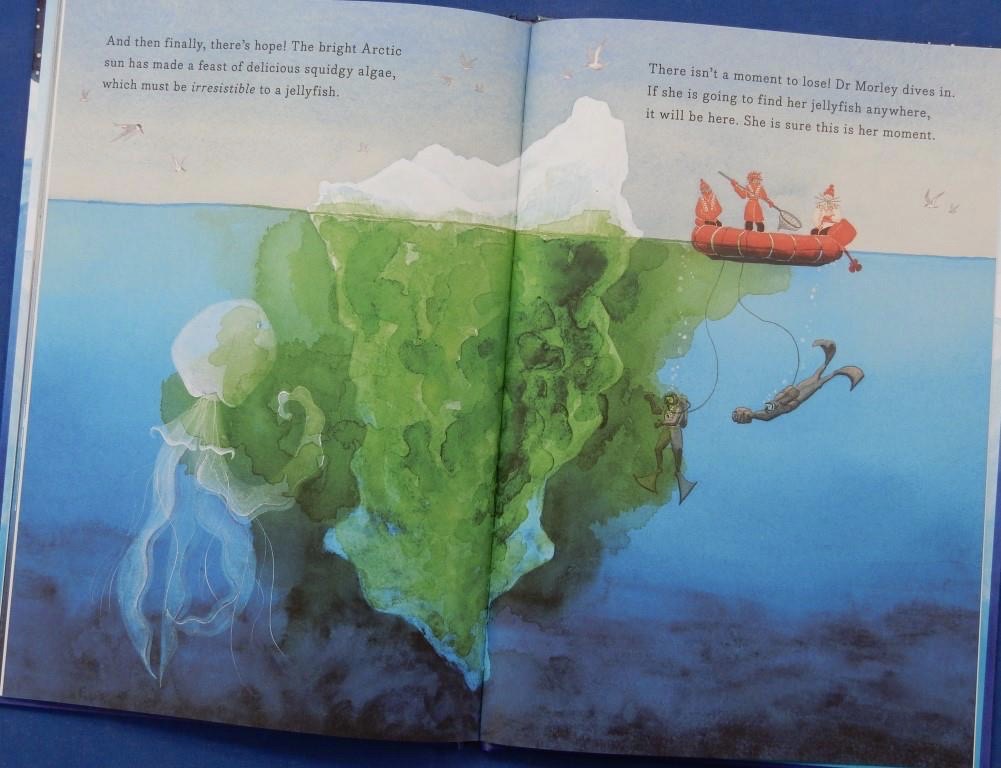
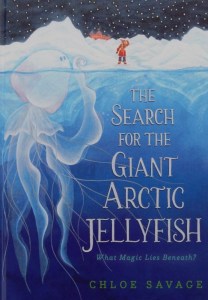
Dr Morley is passionate about jellyfish; she’s even more passionate about finding the giant Arctic jellyfish, a creature nobody has ever seen. Having spent years researching and planning with the aid of her dedicated crew, she’s ready to start out on an adventure, bound for the icy waters of the Arctic Circle.

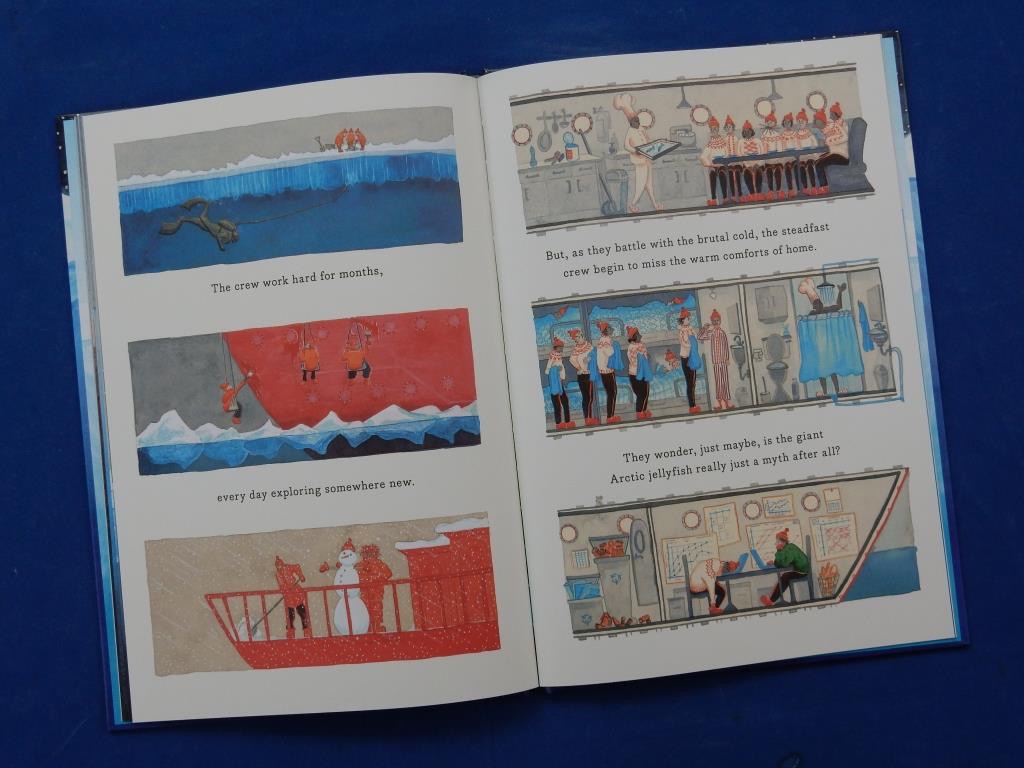
Their first animal sighting is of narwhals; perhaps they can lead the ship to that elusive jellyfish: or could it be the scientific data and samples members of her team collect as they dive hopefully into the chill beneath the ice? Days pass, blizzards howl but still the search continues. The days turn to weeks and then months but even then that hope remains strong. Eventually crew members start to think of home: maybe that giant Arctic jellyfish doesn’t really exist.

However, driven by their loyalty to their leader they don’t give up. At last thanks to the sunshine, comes hope in the form of a massive patch of algae. Convinced this is the opportunity she’s been waiting for, Dr Morley dives down.

Can you imagine how she feels on seeing nothing? Time to head home, she decides.

The words tell the story of the expedition from Dr Morley and the crews’ point of view but Chloe Savage’s stunning, action-packed illustrations documenting the search show that the creature is never far away but always, tantalisingly, just out of sight of the exploring party; or is it?

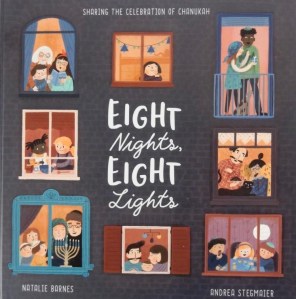
Eight Nights, Eight Lights

Eight Nights, Eight Lights
Natalie Barnes and Andrea Stegmaier
Little Tiger

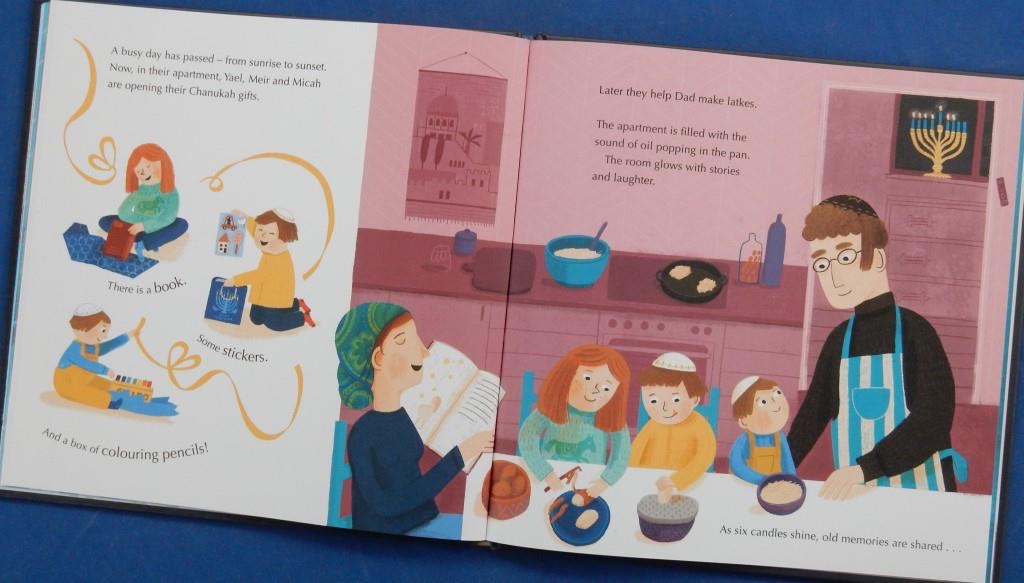
Presented from the viewpoint of children Max and Lara who lives opposite, this is a lovely introduction to the Jewish festival of lights, Chanukah. It begins in a bustling city just before the festival itself when Max is excitedly hurrying home telling his grandpa that he’s going to light the first candle on the family’s menorah that night. This he does in the company of his grandparents and mother. Meanwhile across the road Lara and her family are doing likewise. As the story progresses we see other festivities taking place in other homes – the candle lighting, the preparation and sharing of special foods

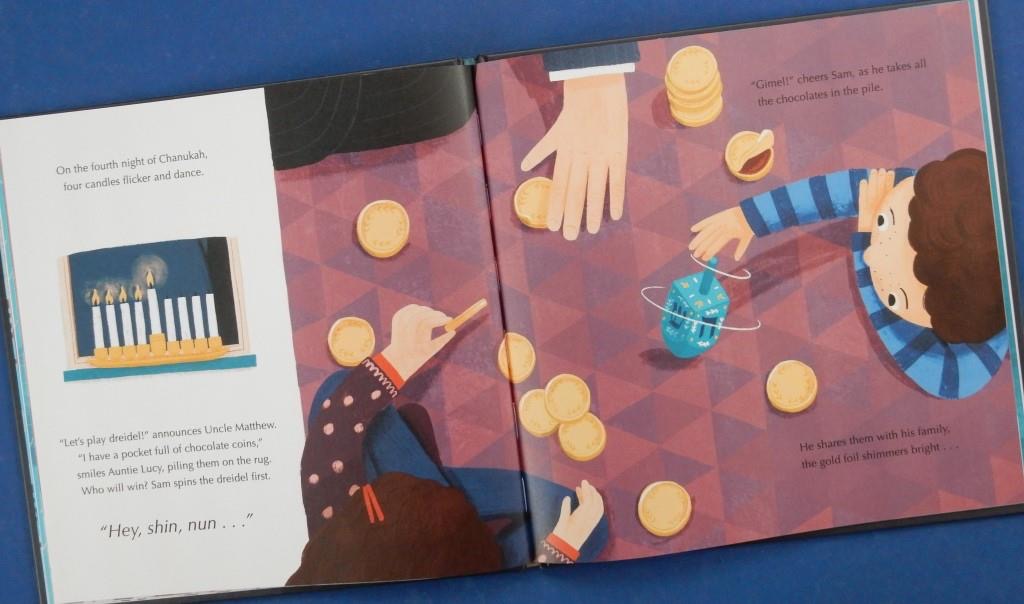
including latkes and cookies decorated with Jewish stars, the playing of dreidel

and the welcoming of visitors. There’s an exchange of gifts and one young couple are spending their first night in a new home together. On the eighth night there’s a party at the synagogue and the rabbi tells the story of the festival’s origins – how the oil in the menorah lasted not one but eight nights. Finally back home once more, having lit all eight candles Max and his mother look out onto the street where ‘fireworks burst overhead’ and windows are bright with light. A joyous way to end the festival.

Beautifully illustrated, this is a smashing book to introduce younger primary age children to the Chanukah festival, which begins on December 18th this year.

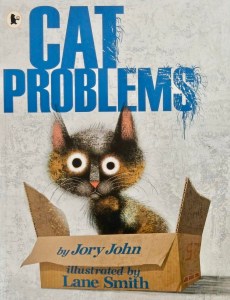
Cat Problems

Cat Problems
Jory John and Lane Smith
Walker Books

Following a Giraffe and a Penguin with problems, this is the third hilarious title in the Animal Problems series. It features a perturbed moggy who shares its inner feelings about a far from purr-fect existence as a confined creature that’s not been outside for eight whole years.
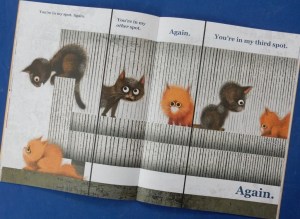
First it’s “I’m awake, and I only got nineteen hours of sleep.” Then it’s a meagre dry meal, followed by another (ginger) cat that insists on curling up exactly where Cat wants to curl. Oh my goodness, now there’s monster.
Further tirades ensue and eventually a slightly sanctimonious squirrel that has been watching the continuous grumbling through the window holds forth with a powerful lecture on being thankful – most certainly it’s food for thought for our moaning moggy – in more ways than one. Will our grumbler ever cease from grumbling?
Using a muted colour palette Lane Smith brings out the hilarity of the protagonist’s tirade

and the design of every spread further amplifies the visual impact of the book. Providing plenty of food for thought, this droll offering is definitely one young listeners will lap up and likely ask for second helpings.

Fletcher and the Stars / The Winter Dragon

Fletcher and the Stars
Julia Rawlinson and Tiphanie Beeke
Graffeg

The fourth Fletcher story in the Four Seasons series is a wonderful wintry one.

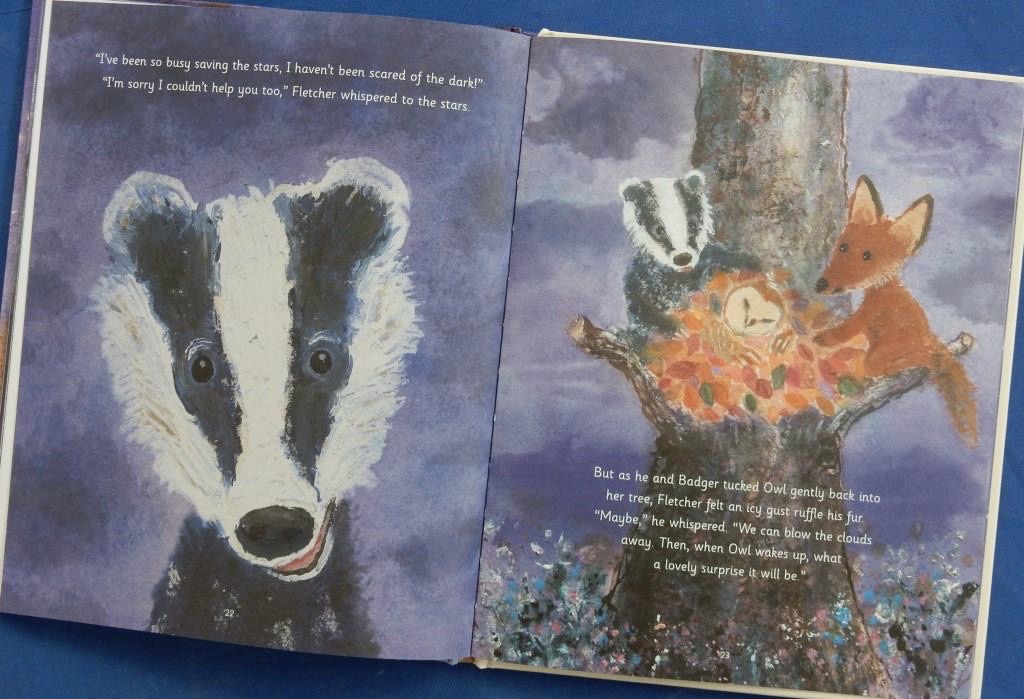
One chilly night as Fletcher sits at the entrance to his den gazing up at the glittering stars, they begin to disappear. Concerned, he calls to tell his Mum but she assures him that they are just covered by cloud. However, he remains worried and can’t sleep. Instead he creeps out, determined to save the stars and before long he hears a snuffling sound. It’s a badger cub that says she’s afraid of the dark and is hiding till the stars return. Encouraged by Fletcher, Badger climbs onto his shoulders and twiggy branch in paw begins swish sweeping across the sky, but of shining stars there is no sign.
Next they try from up among the branches of a tree. That only succeeds in waking sleeping Squirrel; Squirrel offers to use his tail but to no avail. Can Owl sweep away those clouds?

The others wait snuggled up in a hollow in Owl’s tree and eventually fall asleep. When Owl returns having tried her best, Fletcher is down hearted at her news. But then at least Badger has some good news: she’s no longer afraid of the dark. Fletcher and Badger then tuck Owl into her tree once more and depart in the hope that by the time she wakes, their mission to reveal those stars again will have been successful.

Up the windy hill they climb and begin to puff. I wonder what will happen …

It’s a delight to be back in the company of Fletcher with his determination, consideration for his friends and passion for the natural world. Tiphanie Beeke’s gorgeous illustrations, glow even brighter than ever in this story as they evoke so well the icy winter’s night and the feelings of the animal friends. What a perfect match for Julia Rawlinson’s equally evocative, poetic text. Snuggle up and share this with young children at home or in school.

The Winter Dragon
Caroline Pitcher and Sophy Williams
Graffeg

Young Rory hates the long dark winter nights imagining them to be the time when hidden demons lurking in the shadows come creeping out. But Rory has recently made a model dragon from his craft materials and one night as he cowers beneath the bedcovers he hears a strange growling sound.
Peeping out cautiously he finds his dragon glowing like a nightlight, keeping away the dark and using its hot breath to warm his bed and his slippers and his bathwater.

Each night the dragon returns to warm him with tales of bravery with blazing fires, jewels hidden beneath the earth, elf kings, knights and dragons. With every visit Rory and the Winter Dragon together ‘banish the demons of the dark’ enabling the boy, his heart filled with the dragon’s stories, to sleep soundly, unafraid.

With the coming of Spring, Rory knows in his heart that it’s time for him and his dragon to bid one another farewell and one night safe in the knowledge that his friend will always be there should Rory need him, he watches the dragon leave, bound once again for his own world again.

With a gentle sprinkling of fantasy, Caroline Pitcher ’s lyrical telling combined with Sophy Williams’ soft focus, realistic illustrations highlight one little boy’s battle with his fears and his growing courage.

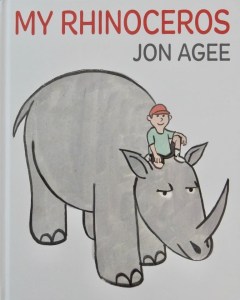
My Rhinoceros

My Rhinoceros
Jon Agee
Scallywag Press

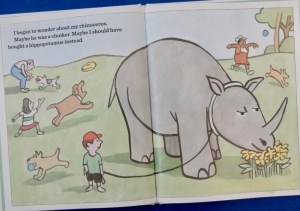
The boy narrator in this droll tale becomes the owner of a rhinoceros when he visits an exotic pet store. Said creature, despite its size is no trouble: he’s shy, quiet, remains in the garden and keeps himself to himself. Deadly dull in other words, for this new acquisition doesn’t participate in any of the usual pet things: no ball chasing or indeed any other thrown object retrieval; no rolling over; in short, it does nothing.

The rhinoceros expert tells the lad that his pet, like other rhinos, should only do two things: pop balloons and poke holes in kites. Time for a trial run in the park: but does the rhinoceros perform those two tasks? Oh no it doesn’t; seemingly this particular creature is, despite all the playful activities taking place around it, a total let down. Maybe he should swap the rhino for a hippopotamus, the boy thinks.

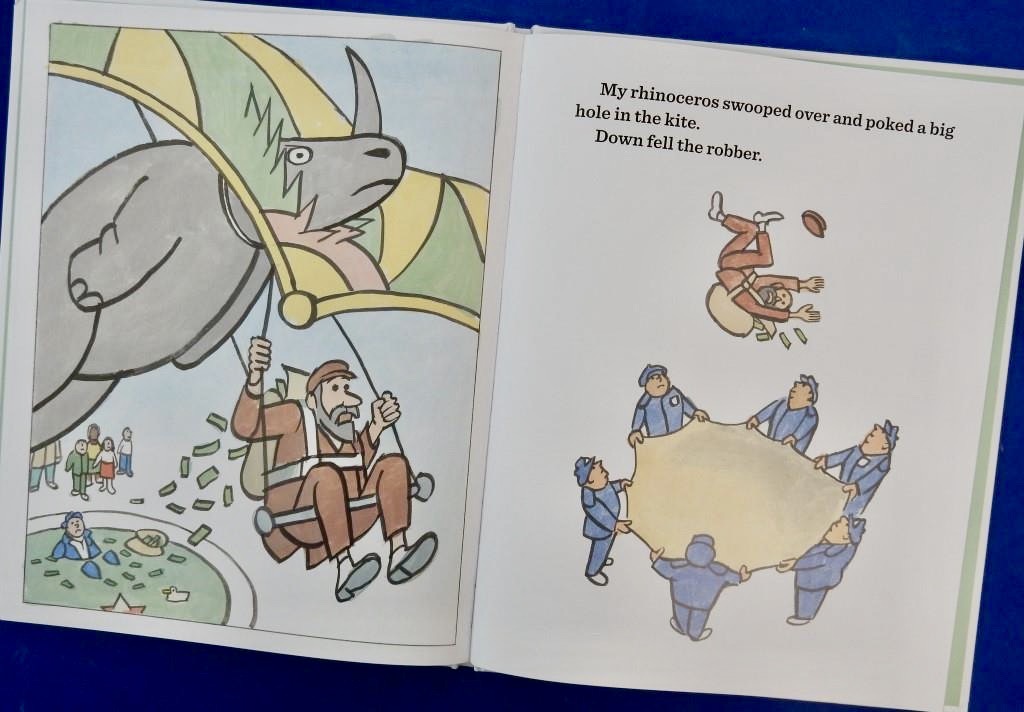
On the way home though two airborne robbers, one in an air balloon, the other suspended beneath a kite, are attempting to flee the scene of their crime Now unexpectedly the rhinoceros steps up to the mark, follows the instructions given 

and proves itself not merely a rhino but a superhero. Furthermore, popping balloons and poking holes in kites are not the only abilities our super-rhino possesses.

Jon Agee’s poker-faced telling, in combination with his ink and watercolour illustrations of the unfolding comical capers, work perfectly together highlighting the daftness of a story that will go down very well with young listeners, and readers of all ages.

Goldilocks and the Three Crocodiles

Goldilocks and the Three Crocodiles
Michael Rosen and David Melling
Harper Collins Children’s Books

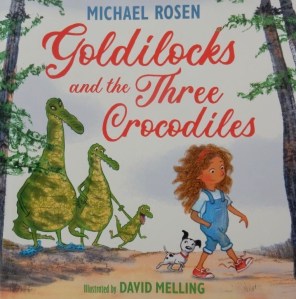
It would appear that Goldilocks hasn’t learned from her adventure with the three bears and now she has acquired a dog named Tiddles. Tiddles has a special liking for walking and it’s at his suggestion one sunny morning that they set out to rediscover that particular house in the woods – the one with the chairs, bowls and beds.

Off they go through the deep dark wood and suddenly in the distance comes the sound of the sea, seemingly calling to them with its ‘Pershooo, persheee, pershooo, persheee’. Arriving on a sandy beach, they soon discover a cave – a deep cave – and of course, in they go.

Yes they do find three chairs, three bowls

and even three beds, and Goldilocks and Tiddles do fall fast asleep. Moreover, their slumbers are disturbed by the sound of voices demanding to know , “Who’s been sitting on my …” – well you know how it goes. The cave owners are back …

I’m a huge fan of playful takes on fairy tales and this one is terrific fun. You’d expect no less from expert storyteller Michael Rosen and fantastic illustrator David Melling who, with his delectable details, highlights the humour of the telling. With slight echoes of ‘We’re Going on a Bear Hunt’, this is a brilliant read aloud, be that at home or in a classroom: both adults and children will delight in its language and the mock-scariness of the story.

Maybe You Might

Maybe You Might
Imogen Foxell and Anna Cunha
Lantana Publishing

Is it possible for one person to change the world? With the hope and determination shown herein, it certainly is.
In an arid country where it was supposed the land was beyond repair, one little girl discovers a single seed. With a strong conviction that something might come of it, she digs a hole and places it in. Then lovingly she tends to it, bringing water from the well each day and making a shelter against the blistering heat and strong winds until … 

Within the abundant fruits are seeds; the girl plants one from each fruit. Meanwhile beneath the ground things are also happening. Eventually down comes the rain and creates a river once more: the land is flourishing and does so for years.
But then a storm destroys the trees and the girl feels as though her heart is broken too. Nothing can ever be right again … or can it? Could it be worth planting another seed? Yes and when at last there are many fruit bearing trees once more, there’s food enough for the birds and animals, and the human community too.

Inherent in Imogen Foxell’s beautiful, optimistic rhyming story is a basic description of the water cycle, showing youngsters how, over time, an abundance of trees in an area can produce a river where once there was only arid soil. it shows too how a single, small action really can help to make a difference. Anna Cunha’s stunning mixed media illustrations are a perfect compliment for the text, changing from the virtually monochrome portrayal of the desert-like environment where the protagonist dressed in a beige dress, finds that first seed, to scenes where shades of green and blues predominate as the trees thrive and the land is renewed.

My Dog, Hen / Ruffles and the Cosy, Cosy Bed

My Dog, Hen
David Mackintosh
Prestel

Owning any dog brings big responsibilities but adopting one from a rescue centre, even one as adorable looking as Hen, is likely to bring challenges. However as the child narrator of this story says, ‘why should we get a brand new dog when Hen is as good as new to us?’ So back he goes to his new family.

Although family members provide everything they think Hen needs in the way of food, water, a cosy bed and plenty of toys to keep him amused, such is Hen’s appetite that not only does he consume all his food but goes on to eat his bowl, items of furnishings and more.

Let’s say he’s a tad destructive, even gobbling up a supposedly indestructible dog toy. Enough is enough say the child’s parents.

But then Gran comes to visit bringing something with her. Could this perhaps help headstrong Hen relax?

David Mackintosh mainly uses solid blocks of red, beige, blue and black etched with white lines and patterning to create his stylish and striking illustrations that are full of playful touches. I love the spread of socks that Gran has adorned with cross-stitch darning that help to underscore the make-do-and-mend environmental message.

Ruffles and the Cosy, Cosy Bed
David Melling
Nosy Crow

The adorably playful Ruffles returns as lively as ever, but with something new to dislike – loud noises. These make him all jumpy and jittery and his instinct is to run away. However loud noises at night are far worse especially if they are the thundery kind that bring flashes, bangs and crashes. Time to hide, thinks Ruffles but where?

It must be a quiet place that’s also safe and snuggly. Hmmm… suddenly the little dog thinks of the perfect place and it’s ready and waiting for him. Now where could that be? Assuredly it’s the ideal place to wait until the storm has abated.

Sometimes set against a vibrant colour, sometimes only black and white, it’s amazing how much David Melling manages to convey through his seemingly simple humorous illustrations of this little pup, especially in those sequential strips of Ruffles responding to the scary sounds when his body language and facial expressions speak far more that the accompanying words.

Where in the World Are You?

Where in the World are You?
Marie G. Rohde
What on Earth Books

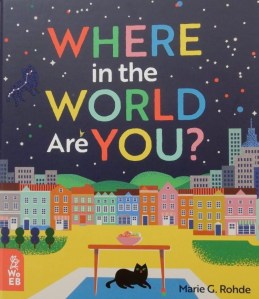
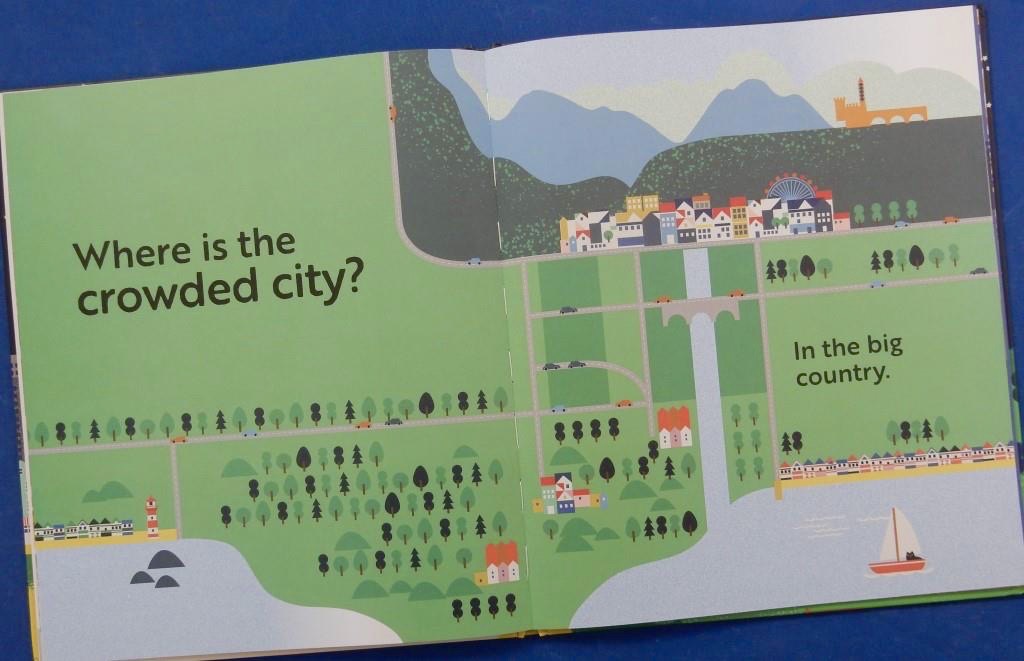
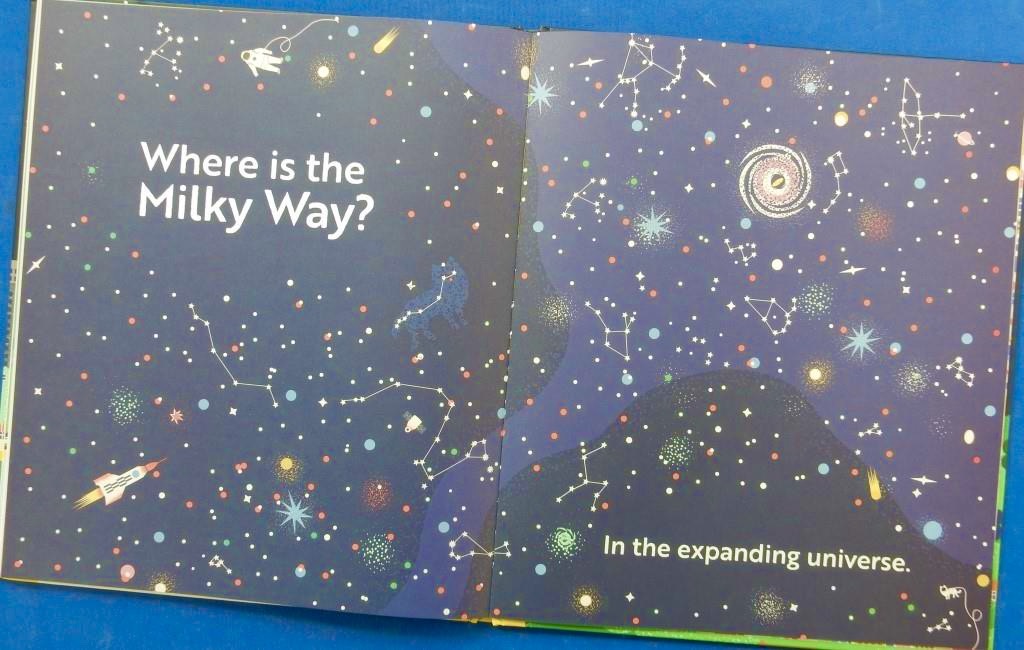
In her cleverly designed, playful exploration of our world and our place therein, Marie G. Rohde places a cat centre stage.

We first see said creature sitting beneath a table, a wobbly table, which stands on a blue rug. The viewpoint gradually zooms further and further out and readers join the cat on a journey of discovery as it ventures through the green door, out of the flat and into the big wide world,

until eventually we are out in the expanding universe of which the Milky Way is a part; so too are we humans, each and every one of us and we are all connected.

This is a book that arose out of the Covid-19 lockdowns and people’s feelings all over the world of being stuck inside, but its invitation to youngsters to be outward looking and to think about their place in the world is important at any time.

The simple question and answer text and bold, bright scenes that effectively put into perspective the vastness of our world, is a great starting point for discussions with young children either at home or in the classroom, especially as the final spread sets the scene in its concluding, “Now, where are YOU?’ Young readers will also enjoy searching for the black cat in almost every scene; its whereabouts is not always easy to find.

The Season of the Giraffes / Wild Animals of the World

The Season of Giraffes
Nicola Davies and Emily Sutton
Walker Books

This the first of the publishers new Protecting the Planet series looks at the effects of climate change on the much loved giraffes of Niger; its inspiration was the work of climate activist and film maker, Kisilu Musya.

Once some time back giraffes were very much a part of everyday life in Niger: and considered a blessing in the same way as the birds, the trees and the rain. The children saw them browsing the trees on their morning walk to school or when they brought home the cattle at night; the giraffes had a strange fighting regime and communicated in a language of grunts and snorts.

However the number of these graceful animals sadly started to decline as more and more buildings, roads and farms filled the land and then on account of climate change the rains began to fail too. The result was terrible droughts that parched the land causing much suffering to both animals and humans.

Soon very few giraffes were left in Africa but in the country of Niger, there was still time to save the few that remained. The humans stopped hunting, protected the trees giraffes fed on as well as the creatures’ favoured places and gradually, then more rapidly, the giraffe population increased. So much so that some have been transported by truck to other parts where they live under the watchful eye and care of wildlife rangers and scientists. The hope is that one day these beautiful animals might be able to return to the places they once roamed.

Nicola’s story of optimism shows how with resolve, we humans can change things for the better; it’s gorgeously illustrated by Emily Sutton who captures both the grace of the animals and their homeland, and the lifestyle of some of the people of Niger.
(There’s additional information about giraffes, climate change and what we can all do to help both causes.)

Wild Animals of the World
Dieter Braun
Flying Eye Books

This sumptuous volume brings together Braun’s Wild Animals of the North and Wild Animals of the South taking us on a world tour that begins in North America, moving in turn to South America, Europe, Africa, Asia, Australia and finally, Antarctica.

Magnificent art takes the forefront in an awe-inspiring introduction to an array of creatures great

and small of the land, sea and air. Sadly some – the Asian elephant, the Emperor penguin for instance – are on the endangered list, others are threatened, though this isn’t stated in the book.

Dieter Braun manages to encapsulate the very essence and spirit of every one of the hundred and thirty plus animals portrayed. Some have an accompanying factual paragraph, others leave the labelled illustration to speak for itself. (Both scientific and common names are given.) A great gift for young wildlife lovers.

My Family and Other Families / Some Daddies

My Family and Other Families
Richard and Lewis Edwards-Middleton, illustrated by Andy Passchier
DK

In this story we follow Liam and his family on their visit to the funfair. Leo is super-excited at the prospect of riding on the big wheel, but with his ticket tucked into his pocket, we wonder if he’ll ever get to the wheel on time. There are so many other families there who all want to stop and chat – families that don’t necessarily look like his own but who all show loving care to their children just like his own. Suddenly Liam realises that his ticket is no longer in his pocket and he frantically retraces his steps asking the other visitors if they’ve seen it. 

Nobody has but everybody offers to join in the ticket search and eventually Liam has a ticket clasped tightly in his hand and he heads over to where a man is making that last call for riders to board the wheel. Now there’s one final opportunity for kindness so that all the children are able to have a ride.
The final sentence in the book, ‘A family is people who care about you’ sums up the authors’ crucial message of diversity and nicely rounds off the story.

Shown inside the front cover and hiding in plain sight in vibrant illustrations are thirteen hidden surprises that young children can search for during the telling. A book to add to collections in early years settings.

Some Daddies
Carol Gordon Ekster and Javiera Mac-lean Álvarez
Beaming Books

“Every daddy is different!” So goes the repeat refrain in this celebration of fathers of all kinds and their styles of parenting. Some are early risers, while others take a while to get going in the morning. Some drink coffee, some drink tea, some prefer a smoothie or water. Some wear suits, some don uniforms, and some work from home in their pyjamas! Some daddies are arty, some like growing things, some love to read. 

Daddies might be good cooks or they might rely on take-aways; some will bid you goodnight with a song, others with a bedtime story. Some are yours from the moment of your birth, others are not a biological relation and choose you later on, some share you with a mum, others with another dad. Yes there are many, many different ways that daddies can look, eat, work, play, and be; however there’s one thing all daddies have in common: daddies are special people who love their little ones.

Brightly coloured, slightly quirky illustrations support the upbeat text with its key message about similarities and differences.

Something About A Bear

Something About A Bear
Jackie Morris
Otter-Barry Books

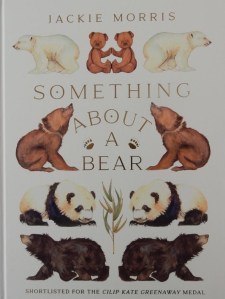
This is a new large-format edition of Jackie Morris’s ode to bears. It begins with a large brown bear nose to nose with a teddy bear and the words, ‘Let me tell you something, something about a bear.’ Readers are then introduced to eight kinds of bears through stunning watercolour illustrations and a poetic text.

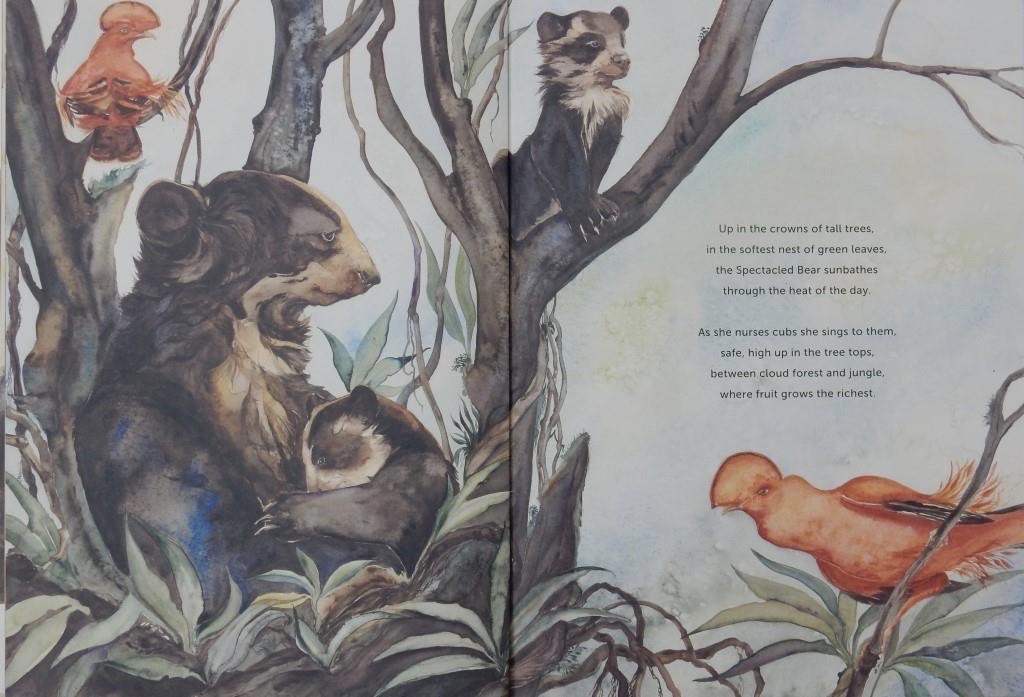
Each turn of the page takes us to the natural environment of one sort of bear or another starting with Brown Bear watching salmon in a river. On a mountainside in China, a Panda is shown nurturing its child ‘Born as soft and small as peaches.’ Next we see a Sloth Bear carrying her cubs on her back set against ancient Mughal architecture; a Spectacled Bear with cubs high up in the canopy of a South American jungle;

from her nest an enormous Asian Moon Bear waits and watches, all set to go a-hunting. Now you might be surprised to learn that Polar bears are not white – their fur is ‘hollow’, their skin, black. Nor is the American Black bear always black; it could be cinnamon or honey coloured and even, rarely, white.

The very essence of each one of the magnificent ursine creatures is captured in Jackie Morris’s awesome paintings and it’s incredible to see the range of browns she uses. A considerable amount of information is included in the main narrative, which eventually comes full circle to the two we met on the first spread, closing with the words, ‘the very best bear of all is YOUR bear. Two further spreads give additional notes on each bear featured. A terrific gift book for bear lovers of all ages.

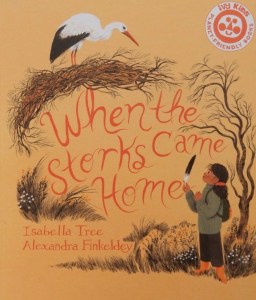
When the Storks Came Home

When the Storks Came Home
Isabella Tree and Alexandra Finkeldey
Ivy Kids

This is a charming, fictionalized retelling of the successful reintroduction of the white stork at the Knepp Estate in West Sussex, a UK native bird that has been brought back from extinction.

Herein we meet eight year old Beanie, a bird lover, who when she has a new baby brother, is curious to see on some of the baby cards, a bird that she’s never seen before. This bird is the white stork and encouraged by her mother, Beanie asks her friend Andy who works at the nature reserve to tell her about the storks. He tells her about their unfortunate disappearance from the UK on account of them being hunted for food.

Upset and angry, Beanie becomes passionate about encouraging the White Storks back. She does some research, makes a discovery and then with the dedicated help of lots of the village people who help with fundraising,

she eventually succeeds in her mission to provide a new home for some storks from Poland.

That’s not quite the end of this lovely story, but it does end happily and shows how one determined girl can really make a difference. Alexandra Finkeldey’s colour pencil artwork is superb and helps to highlight Beanie’s love of and engagement with the natural world. The book ends with a factual account of the White Stork Project.

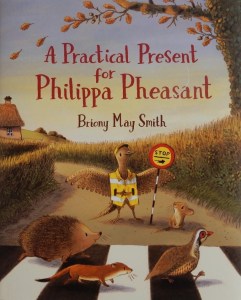
A Practical Present for Philippa Pheasant

A Practical Present for Philippa Pheasant
Briony May Smith
Walker Books

Philippa Pheasant lives in the forest close to Fairhurst village. Whenever she tries to cross the Old Oak Road in search of juicy blackberries, she’s almost knocked ‘pancake-flat’ by the cars that speed past seemingly out of nowhere. One day she decides that enough is enough; her friend hedgehog suggests writing to the Mayor, which Philippa does but her letter receives no reply.

The following day as she wanders along the lane near the school Philippa notices something that interests her greatly. A woman wearing a bright yellow uniform is standing in the middle of the road stopping the traffic so that the children can cross safely outside their school. This gives Philippa an idea; right away she sets about making something

and the next morning there’s a large gathering of woodland creatures waiting to hear what their pheasant friend has to say. Why is she wearing that strange attire?

Suddenly Philippa is thrust into the local limelight.

And the rest, shall we say, is full of surprises.

With her wonderful portrayal of rural life by day and by night, and a brave, determined avian protagonist, Briony May Smith has created another winner. I love the autumnal tones of the scenes, the wealth of amusing and interesting details, and the way Briony has used light and shadow to give her illustrations extra depth, all of which make the story even more of a delight.

Agent Llama Alpaca Attack!

Agent Llama Alpaca Attack!
Angela Woolfe and Duncan Beedie
Little Tiger

It’s good to see llama super-spy Charlie Palmer in action again with a new mission. Somebody is intent on world destruction using can you believe – a ‘Pasta-Splat Machine’. Already spaghetti-filled streets are being reported as far afield as Delhi and Dublin, schools are shut and the streets awash with sauce.

Grabbing her gadgets from their subterranean hiding place, Charlie revs up her turbo engine and off she zooms, on mission halt that pasta doom, destination a popular beach resort that is currently under attack.

Almost immediately on arrival so too is she, from above and below, but our Charlie is not one to give up as she starts to perform some show-stopping feats.

However, having scaled the heights our agent gets the surprise of her life: I instantly thought of a drama currently showing on BBC tv wherein a politician has his identity stolen, for that is what appears to have happened to our intrepid Charlie Palmer.

There before her, once his disguise is removed, stands none other than one time agent, rogue alpaca Harley Hacker. What Charlie learns next is potentially catastrophic. Can she crack that vital code, halt one billion drones and thus save the solar system’s central star?

Full on drama indeed and I have no doubt young listeners will absolutely love it. Angela Woolfe’s high octane rhyming text trips nicely off the tongue and Duncan Beedie’s comic style illustrations are just brilliant.

That’s Nice Love / Dare We Be Dragons?

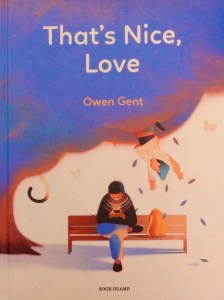
That’s Nice, Love
Owen Gent
Book Island

We’ve all seen it many times and probably on occasion been guilty of what the adult in this book does when she accompanies her small child to the park. So distracted is the parent by her mobile that she fails to take a single scrap of notice of anything the excited child says about climbing the big tree.
As the boy ascends he has the most amazing adventures – or perhaps flights of fancy. First a multitude of butterflies dance before him as he gazes skywards; then comes an orchestral recital by a group of squirrels,

followed by a scary moment with snakes. To compensate for that though, a troop of monkeys crowns him king, he helps a super-sleek leopard and becomes its friend and finally, he flies with a bird. As he excitedly informs his parent of each event the child receives merely the response, ‘That’s nice, love.’

On the way home, the boy tells the parent that he sometimes feels distant despite their physical closeness and when the two eventually reach home, the child seems to have got through to the adult by revealing a few items he’s collected.
He’s then invited to regale the entire adventure again. Will that parent do what is promised on future excursions; I hope so …

Portable screens may seem amazing but are no match for the richness of a child’s imagination, stimulated by the wonders of the natural world that may be found in the branches of a single tree.
Owen Gent gives his imagination full rein in a series of sublime sequences that explore and expand the spare verbal narrative.

Also celebrating the imagination is

Dare We Be Dragons?
Barry Falls
Farshore

As a father prepares to bid his daughter goodnight, he embarks on an exciting sequence of flights of fancy, each of which arises out of seemingly ordinary everyday things or events. For when these two go adventuring together even such things as a grassy hill walk becomes a huge erupting volcano, tree trunks morph into giants’ legs and a playground swing is the means for launching them on a moon flight and a sandy shore becomes a place whereon lions play.

There’s a sequence of spreads where Barry Falls splits each one into two : the verso shows the everyday reality and the recto, a show-stoppingly imagined fantasy that occupies the entire page drawing the reader right into the adventure.

Along with a wealth of wonderful worlds to explore so vividly shown, there is a more understated portrayal of the loving bond between parent and child. For this is a playful, supportive father who promises always to be there through the years that constitute that wonderful adventure called life; and so he says in the rhyming narrative that complements those splendidly spirited illustrations.

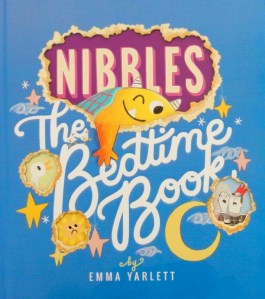
Nibbles: The Bedtime Book

Nibbles: The Bedtime Book
Emma Yarlett
Little Tiger

‘Once upon a bedtime, / it was getting very late, / And a book monster called Nibbles / Was sleeping in his crate …’ So begins this latest adventure of our favourite book devouring monster but anybody who knows Nibbles will immediately realise that sleeping will not be what he’s doing. Instead he’s off in search of favourite tales to chomp through.

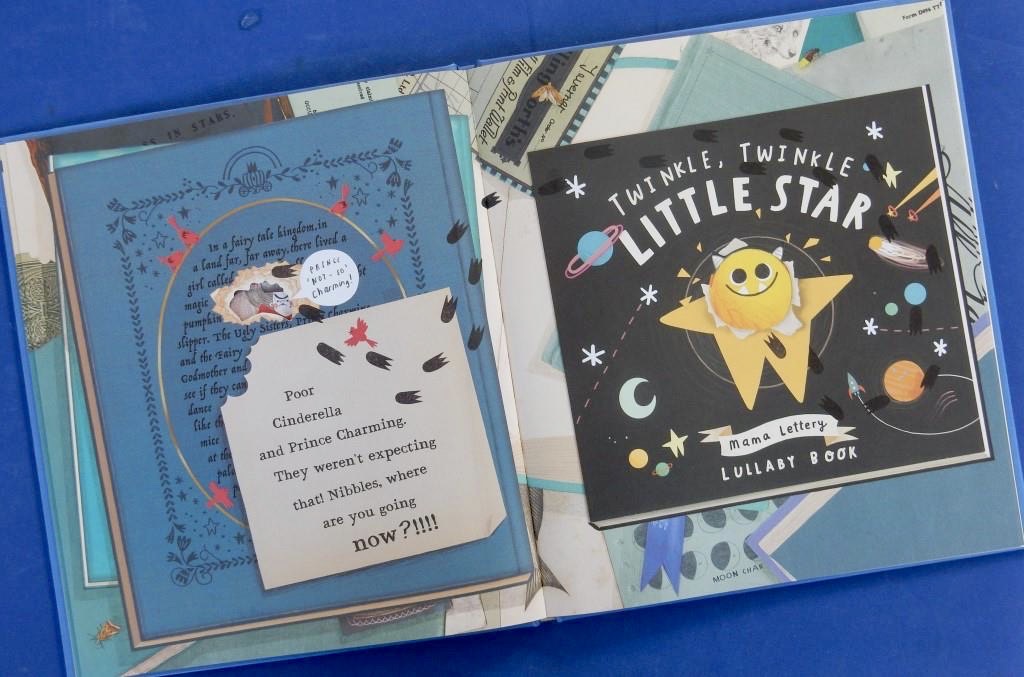
The first to receive the toothy treatment is The Ugly Duckling (retold by an anagrammatic alias of Nibbles’ author). Having made waves in that

he proceeds to try his luck with a certain fairytale glass slipper try on and ends up showing his rear end to the newly weds as he exits their ceremony.

Thank goodness then for the next volume he discovers – a book of lullabies.

Can those starry wonders up above the world so high, prevent Nibbles from sinking his gnashers into every single planet in the solar system and sated by their galactic singing, transport him back into bed in time for young readers to bestow upon him one goodnight kiss before he finally drifts off to dreamland? Or maybe some other place … you never know with Nibbles.

A wonderful bedtime read, but equally enjoyable whatever time you choose to share it with young children. Adult readers aloud will have fun identifying their favourite childhood stories among those on the shelves in the book-filled room.

Lord of the Forest

Lord of the Forest
Caroline Pitcher and Jackie Morris
Graffeg

‘Tiger was born fluffy and small, with his eyes tight shut.” So begins this gloriously lyrical fable about a tiger cub that doesn’t fully appreciate until he reaches maturity the meaning of his mother’s words, “The Lord of the Forest is …”.

Roaming the forest where all is new and exciting, or playing with his brothers, the little tiger’s focus is the sounds around: the sap rising in the trees, the slither of snakes, the Monkey’s whooping; he’s even aware of the curling of Chameleon’s tongue and little Gekko’s gulps, the flip of fish and Water-snake sliding down from the logs. His mother says, “When you don’t hear them, when silence burns and time stands still, then my son, be ready.” It’s then he’ll know the Lord of the Forest is present.

As he walks alone, grown considerably now, the tiger still listens and waits for the coming of the Lord of the Forest; but who is he? 

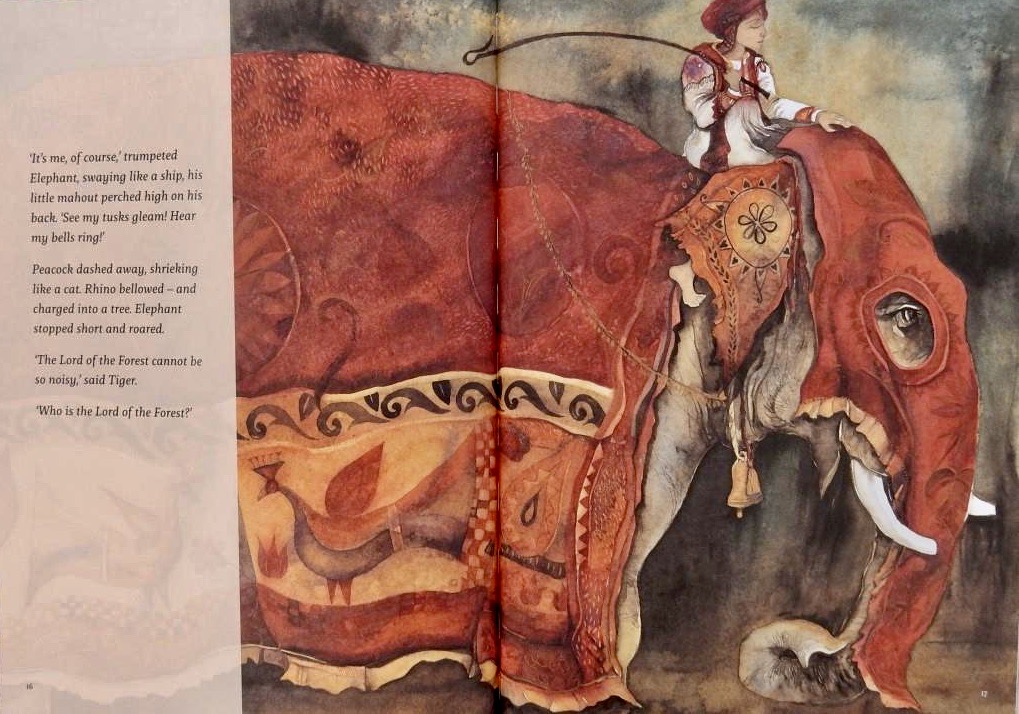
He asks the other forest creatures about this Lord, and the beautiful peacock, the rhinoceros and the enormous elephant all arrogantly claim the title belongs to them. However, Tiger understands that screeching, bellowing, roaring beasts such as these, couldn’t possibly be the one that his mother has readied him to meet. 

He continues searching but it’s not until he’s fully grown, with a mate and cubs of his own, that he discovers the identity of the beast he’s been seeking.

Elegance and humility reign both in Caroline Pitcher’s lyrical telling and Jackie Morris’s awesome art.
Jackie’s stunning watercolours immediately breath life into the creatures she portrays: the dignity and grace of the tiger in particular is palpable, while Caroline Pitcher’s poetic narrative truly transports us to the forest habitat with its magnificent sights and mellifluous sounds.

This enlarged edition of a book first published 18 years ago seems even more beautiful than the original. Sheer joy to read aloud, it’s one to add to family bookshelves and classroom collections.

An Unexpected Thing / Hello Autumn

An Unexpected Thing
Ashling Lindsay
Frances Lincoln Children’s Books

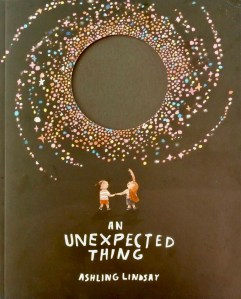
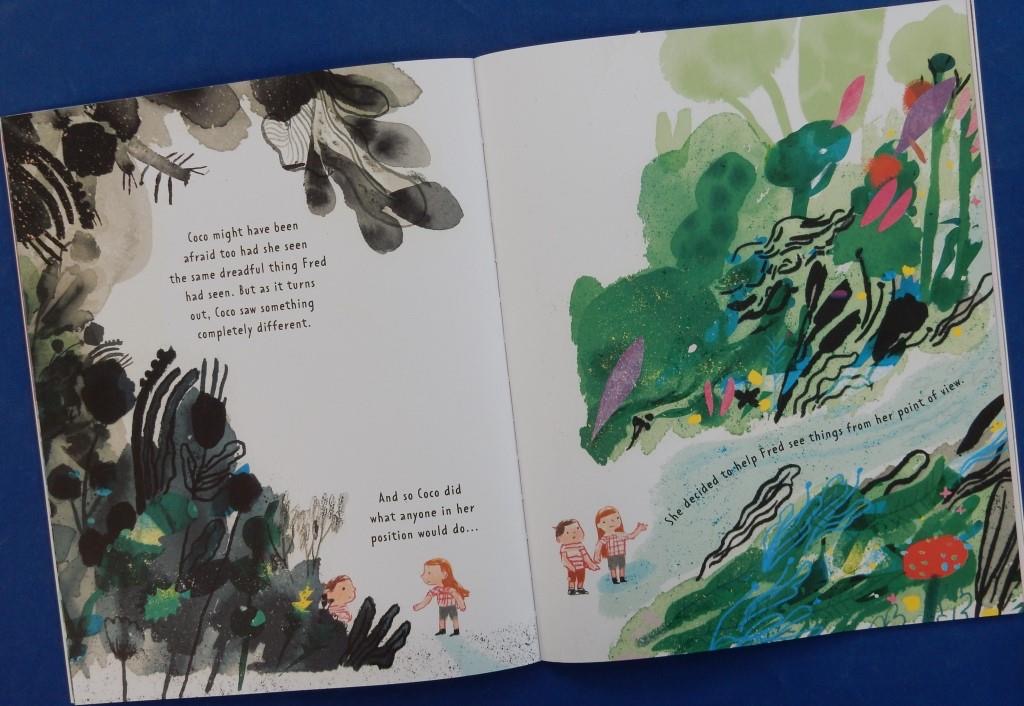
Little Fred is a fearful child. Unlike most of us who feel frightened from time to time, Fred is fearful almost always, so he spends his days and nights in fear of such things as unexpected loud noises and shadowy shapes
Surprisingly one day a spot appears and unsurprisingly Fred hides himself away, too afraid to look directly at it. Coco also sees the same spot when standing close by in the garden, but her reaction is quite different for what she sees is totally different.

She decides that she can help Fred by trying to get him to see things from her viewpoint. For instance if Fred sees a moon blasted from its orbit whereas Coco sees it as a wind born bubble bobbing along: Fred sees a catastrophic comet, Coco a balloon bearing a birthday wish. Eventually after some discussion, fearful Fred and fearless Coco agree that the spherical object could have been anything.

As a result Fred now feels ready to face his fear.
When something else unknown comes along Fred is able to do something he’d never have done without Coco’s support: he joins her in a voyage of discovery. A friend can make all the difference when it comes to facing things that make us feel unsure or frightened.

This smashing story about finding the courage to go out and explore the world is touching and empowering. Ashling’s use of different perspectives for her beautiful scenes underscores the different viewpoints of the two characters.

On a similar theme is

Hello Autumn
Jo Lindley
Farshore

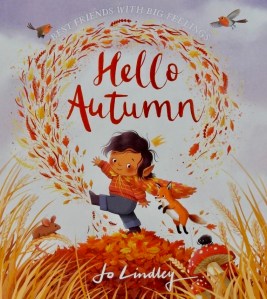
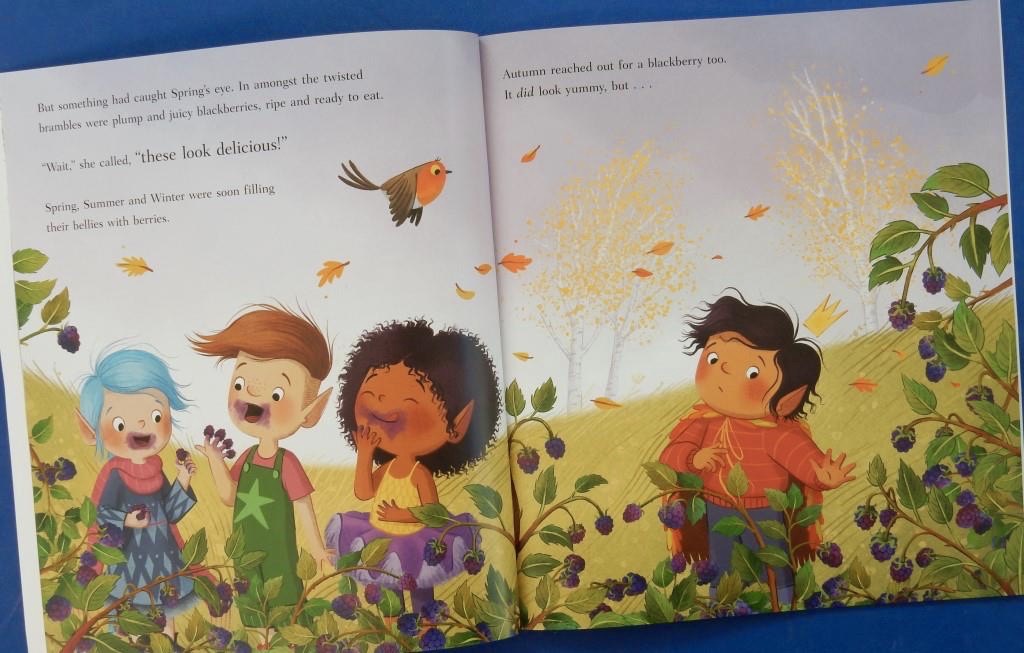
This story (the second in a sequence) features four friends – the Little Seasons – Spring, Summer, Autumn and Winter in human form. As the book opens they realise that Summer must hand the weather crown to Autumn so the new season can begin. Doing so triggers changes such as the appearance of a chill mist and the heavens turning from green to golden yellow; the friends feel the call of adventure.
Some fun games ensue on the way to the Tick Tock Tree for a leaf romp but the sighting of ripe juicy blackberries causes them to pause and three friends start feasting. Not so Autumn: he worries about such possibilities as pricking a finger, or becoming entangled in the brambles.

A similar thing happens each time one of the others suggests trying something new: what his friends see as fun games, Autumn sees as worrying situations. His weather crown weighs heavy.
When the four reach the Tick Tock Tree with its abundance of fallen leaves, Autumn’s fear mounts even higher as a cascade of terrifying ‘what-ifs’ invade his thoughts. Suddenly there’s a cry for help. Summer is stuck on a branch. What happens after that involves teamwork, resulting in a jumbled tumble and a fear-releasing realisation for Autumn. What a relief; now he’s ready to face the world.

Vibrantly coloured scenes accompany an important message about facing your fears with the support of friends. A cute story and also some gentle learning about seasonal change that’s just right for sharing with foundation stage children.

SuperDaisy

SuperDaisy
Rebecca Smith and Zoe Waring
Harper Collins Children’s Books

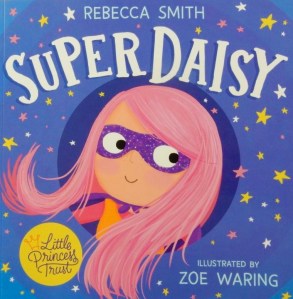
Young Daisy is an aspiring princess and really feels like a fairy princess when she dons the pink gown and crown from her dressing up box. This make-believe helps Daisy to forget about the less happy parts of her life, for this little girl has cancer and often needs to go and stay in a hospital far from her home to have medicine that makes her feel sick and weak. Worse though is that the medicine causes her hair to fall out.

Then back at home she rediscovers that forgotten pink sparkly wig and when she puts it on, Daisy is transformed into Daisy the Superhero complete with flowing cape and matching shimmery mask. Wearing this amazing attire Daisy transports herself to the town zoo where she comes to the aid of some lemurs being cruelly frightened by a boy.

She goes on to rescue a bear trapped beneath a fallen tree in the forest and to help a little girl at the seaside who has dropped her ice-cream in fright when a seagull came too close. Now when she’s back in that ward for treatment Daisy wears her pink hair, bolstered by the knowledge that her kindness power has made her a superhero able to face anything.

Eventually Daisy’s hair grows back: the wig has done its job and more.

This inspiring, uplifting rhyming book based on a true story is published in support of the Little Princess Trust, which supplies wigs for children with cancer. With its plethora of pink touches as well as that wig in Zoe Waring’s illustrations, this is definitely one to share with youngsters like Daisy undergoing cancer treatment (or perhaps sick with another serious illness).

Leila The Perfect Witch / Winnie and Wilbur: The Festival of Witches

Leila The Perfect Witch
Flavia Z.Drago
Walker Books

Young Leila is a multi-talented little witch with awards for fast flying, cunning conjuring, sneaky shape-shifting and crafty carving. However, there’s one trophy she longs to add to the display cabinet – her dream is to win the Magnificent Witchy Cake-Off. Leila comes from a long line of baking experts and this year she’s at last old enough to enter the contest and has high hopes of claiming the prize. Then comes a big shock: in contrast to her other endeavours, Leila finds that the requisite skills for becoming an expert in the Dark Arts of Patisserie elude her. Not so her determination however. She eschews having fun with her siblings and devotes her time to creating that perfect recipe – with disheartening results. What will her family think? It’s not what she anticipated.

Instead, her sisters offer to help. Leila accepts, learns a lot and thoroughly enjoys the time they spend together.

When the night of the event arrives, she overcomes her nerves and does her best.
Leila doesn’t win that trophy but she does learn something very important: there’s more than one way to feel like a winner and sharing an experience and being supported by a loving family are wins for her.

Take one little witch, a supportive family, a froggy friend, a bowlful of whimsy, lashings of visual humour, spoon in a visitor from another picture book, mix them all together and the result is a very sweet, satisfying story with an agreeable message.

Winnie and Wilbur: The Festival of Witches
Valerie Thomas and Korky Paul
Oxford Children’s Books

Winnie and Wilbur have been enchanting children for about thirty-five years and still the magic holds good. Now it’s time for the two of them to have a holiday – a very special one on an island in the middle of the ocean. So, with suitcase packed off they fly to the Festival of Witches. It’s an amazing event attended by witches from all over the world and a considerable number of cats too.

There are opportunities to learn new spells, dance, sing, eat lots and generally have a great time. When she’s about to depart, Winnie receives lots of invitations from other witches to come and pay them a visit; these Winnie stashes in her suitcase. Now this had happened on previous occasions but Winnie had never responded to any such invitations. However after a few days in her own home, Winnie begins to miss the company of the other witches. Out come those invitations and she goes through them.

Selecting four places to visit, Winnie and Wilbur go first to a tree house, then to a mountain top residence, a seashore castle owned by three witches and finally, a lighthouse.

Once again though, the peace and quiet of home on their return is a tad underwhelming; but then …

Korky Paul’s vibrant, richly detailed illustrations of the diverse witch community and their interactions will keep youngsters entertained for hours, long after they’ve heard this thoroughly enjoyable story read aloud.

The Island / Sarah Rising

These are two picture books that deal with current political events and issues.

The Island
Armin Greder
Allen & Unwin

This is probably even more pertinent today than when it was first published in the UK around fifteen years ago.

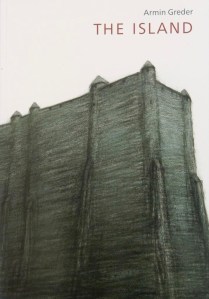
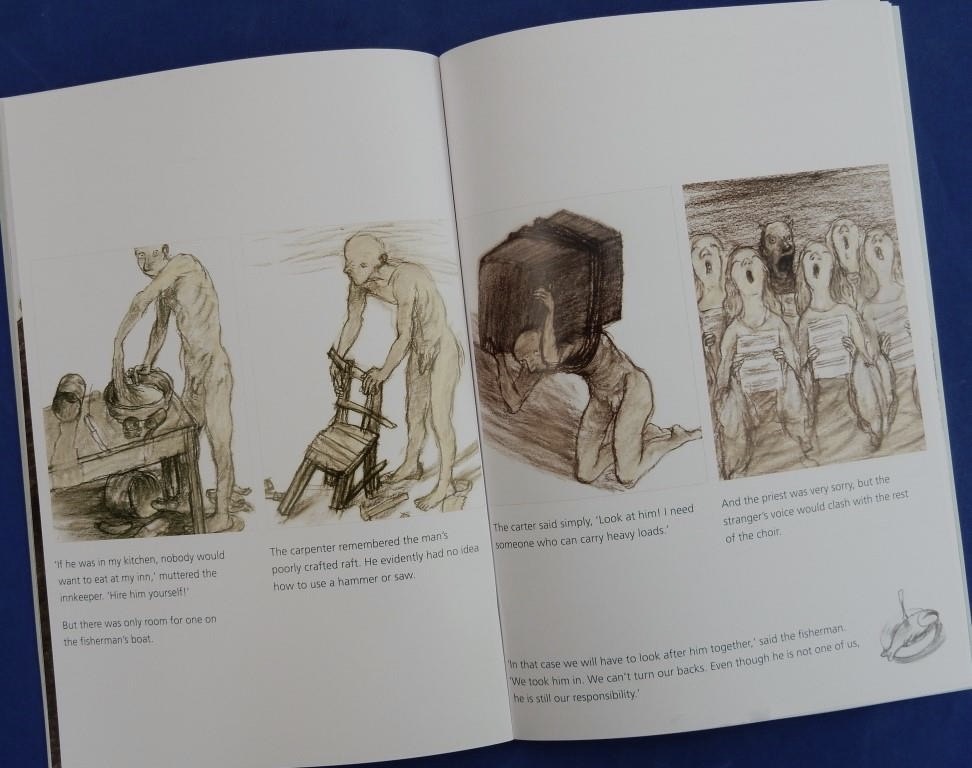
Washed ashore on his inadequate raft is a man, different from the islanders, which causes them to fear him, but a fisherman persuades the others to take him in. Reluctantly they do so but immediately send him to a deserted part of the island, locking him in a goat pen and leaving him alone. One morning though, the man appears in the town and again is met with hostility except from the fisherman who suggests the possibility of finding a job for the stranger. Excuses pour forth

and the man is returned to the pen but the islanders are increasingly hostile and eventually they reject him completely, savagely driving him with their farming implements, back into the sea.

They turn on the fisherman too, setting fire to his boat and fuelled by their fear, they erect a huge wall around their island to deter further newcomers.

With his brilliant combination of words and deliberately ugly unforgettable images, it feels to me as though Greder is holding up a mirror to the all too many people – including some in positions of power – who are unashamedly hostile towards refugees and asylum seekers. They are the ones who really need to read this book with its themes of prejudice, racism, xenophobia and human rights. With those intensely disturbing scenes of viciousness to another member of the human race, it’s impossible not to feel disgust and shame at such attitudes.

Sarah Rising
Ty Chapman and DeAnn Wiley
Beaming Books

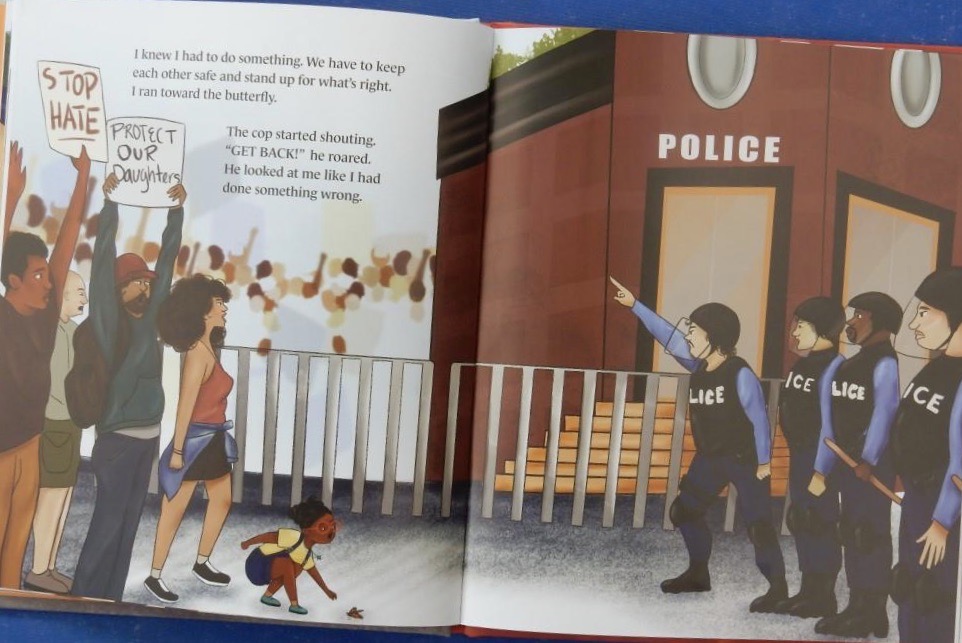
This first person narrative is presented by young Sarah whose day starts in the usual way having breakfast, feeding her insect pets and packing her things in her school bag. But then her Dad gives her some news that changes things completely: he tells her that the police have ‘killed another Black person.’ “They’re supposed to serve and protect us … but they hurt us instead.” ‘ He takes his daughter along to a protest; she joins the throng demanding justice and in so doing she sees for herself the cruel way a police officer attacks a harmless butterfly. Sarah rescues the butterfly left lying on the ground

and rejoins the marching crowd but suddenly realises that in so doing she’s lost her Dad. However with the help of a kindly woman who sees her distress, together with her own inner strength, she gradually overcomes her fear and is eventually reunited with her Dad. A scary experience for first time activist Sarah but one that will surely be the first of many demonstrations of dissent designed to make a crucial difference.

Vividly illustrated by DeAnn Wiley whose scenes include one showing murals of George Floyd and Breonna Taylor, both of whom were brutally killed by the US police – a vivid reminder of these terrible events. If a girl like Sarah can make a difference so can youngsters everywhere: backmatter includes some suggestions of ways to create change in a community.

Where Have You Been, Little Cat?

Where Have You Been, Little Cat?
Richard Jones
Simon & Schuster

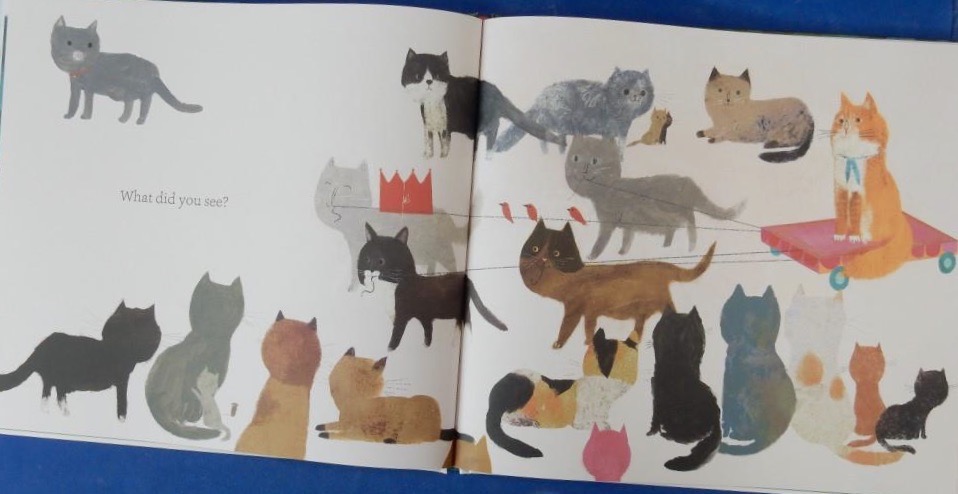
On returning after a day outside, a little cat’s owner is eager to learn what the moggy has been doing. ‘Where did you go?’ she asks, going on to pose a series of further questions. These comprise almost all of the simple straightforward text. What we’re shown in Richard Jones’ storytelling sequence of illustrations offers one possible way of filling in the gaps left by his words. It involves a coming together of cats,

a crown, a special event suddenly interrupted by the arrival of a canine intruder, a confrontation,

a resolution and finally, a return home with a very warm welcome.

Young readers and listeners pouring over the playful pictures still have room to imagine their own interpretation of the events or indeed, invent their own stories. They will surely notice the bit part players – three small red birds and a tiny mouse.
Rich in possibilities, this is a story that children will enjoy returning to over and over again.

Eco Girl

Eco Girl
Ken Max-Wilson
Otter-Barry Books

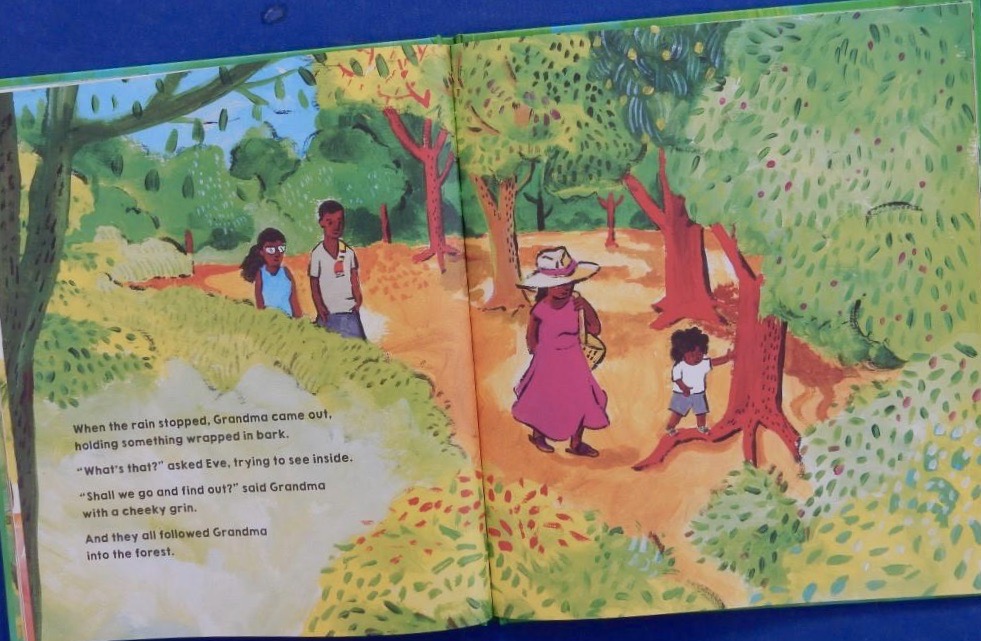
Eve loves the forest beside her home; she loves the animals and birds, but most of all she loves the trees, her favourite being the Baobab tree. Do those trees talk to one another, she wonders wishing that she could be a Baobab and hence talk to the other trees. To be a tree is to be patient her mother tells her and later her father says that each tree plays its own special role in caring for the living things in the world.
Soon after, on a pre birthday visit to her Grandma deep in the forest, after remembering to be patient on their long walk, Eve asks her grandmother, “Would you talk to me if I was a Baobab tree?” Delighted by the response and Grandma’s mention of the next day being a special day, Eve can hardly wait.

Next morning, she gets a magical surprise. Carrying something, Grandma leads her into the forest.

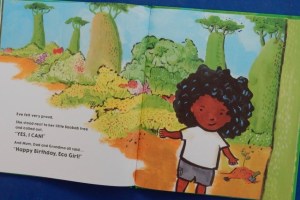
What could it be? It’s something very special that Eve must plant, love and take care of, something that will connect her for ever with the forest she so delights in. That, she proudly assures her Grandma, is something she definitely can do. Many happy returns of the day, Eco Girl.

Heart-warming and inspiring, this is a lovely demonstration of the importance of planting and nurturing trees wherever you live in the world. I love the vibrant colours of the illustrations, especially the variety of greens in the forest landscape.

(After the story are some tree facts including a mention of Wangari Maathai who started the Green Belt Movement in Kenya.)

The Huddle

The Huddle
Sean Julian
Oxford Children’s Books

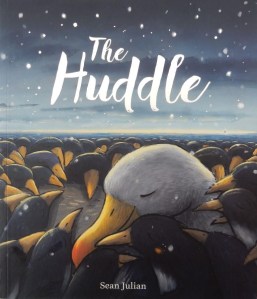
When albatross chick, Alba, feels the time is right she spreads her wings and taking advantage of the wind, takes to the air. Her flight takes her away from everything familiar and as she searches the sea beneath for food, she fails to notice the huge wave coming up behind. Crash! Alba lands up on a rocky shore but her wing is damaged to that it won’t move. Exhausted and in pain, Alba falls asleep.
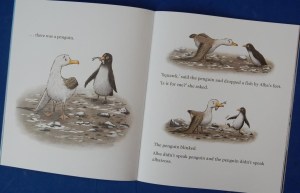
When she wakes, she sees a penguin close by. The penguin drops a fish beside her.

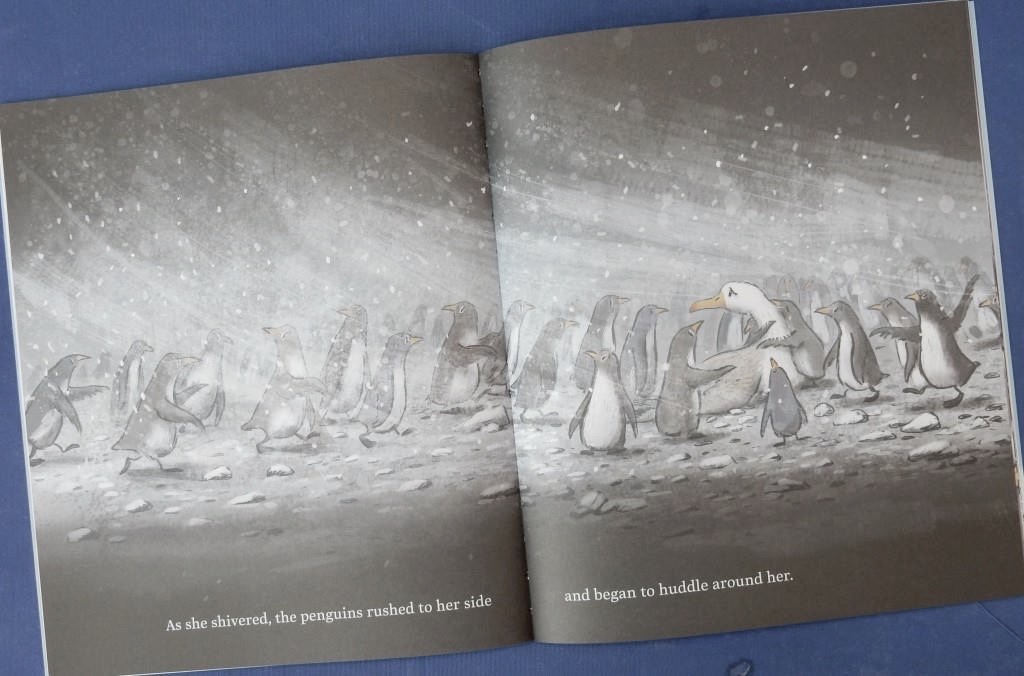
Over the days and weeks, more friendly penguins come sometimes bringing her fish, but always making Alba feel cared for and safe from potential harm. Alba loves the playful penguins and little by little she forgets about flying through the sky. Then one day at sundown she notices that her friends look troubled. Dark storm clouds are brewing and there’s a chill wind. The penguins huddle protectively around her

and eventually she falls asleep encircled in their love. After many days the storm abates and Alba wakes to see lots of excited penguin activity as the sun begins to come up on the horizon. Her friends stretch out their wings expectantly, not to fly but to feel its rays. For Alba though, with her wing now mended, it is departure time. Difficult though it is, she stretches out her wings and lifts off to the sound of cheering penguins. Penguins that she will never forget; she’ll cherish those memories and use that love she felt in their company as a model for raising her very own little chick.

The care and concern shown by that penguin colony is a wonderful example of how a simple act of kindness can make all the difference to a struggling individual. Despite its Antarctic setting, this story leaves you with a wonderful warm feeling inside. Sean Julian’s illustrations convey so well both the chill of the landscape and the compassion of the penguins.

When Mino Took the Bus

When Mino Took the Bus
Simon Ciraolo
Flying Eye Books

When he turns eight weeks old, young chipmunk, Mino must bid his mother farewell and set out into the world alone. With the instructions he’s been given running through his mind and his ticket at the ready, Mino excitedly boards the bus to the very last stop. He can hardly wait to reach his destination where he will find his future home, plant his seeds and watch them grow. To help pass the time Mino chats to the driver, shows him his leaf collection and asks, “How can you spend all day waiting to arrive?’ Guido responds thus, “ I often think the journey is just as important as the destination.”

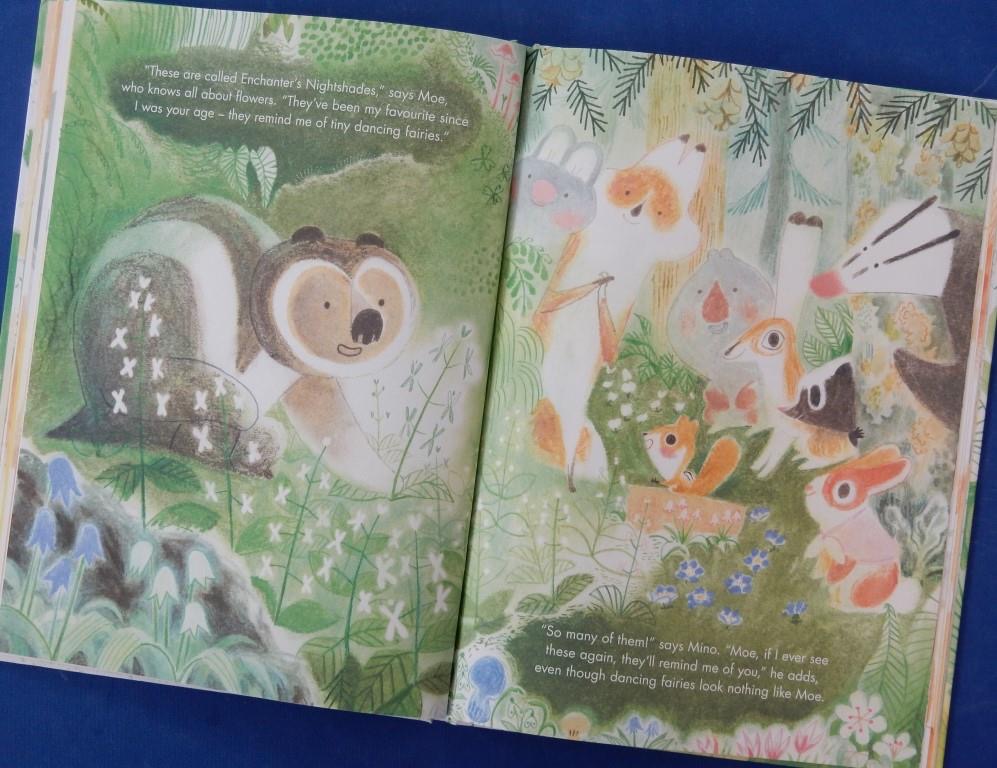
As the journey continues other passengers come on board. First there’s Béatrice who shares her snacks with Milo and receives one of his seeds in return; then others who treat Milo with varying degrees of friendliness. Sometimes the bus stops to allow the passengers to have a little walk and perhaps find something of interest to show each other and especially Milo.

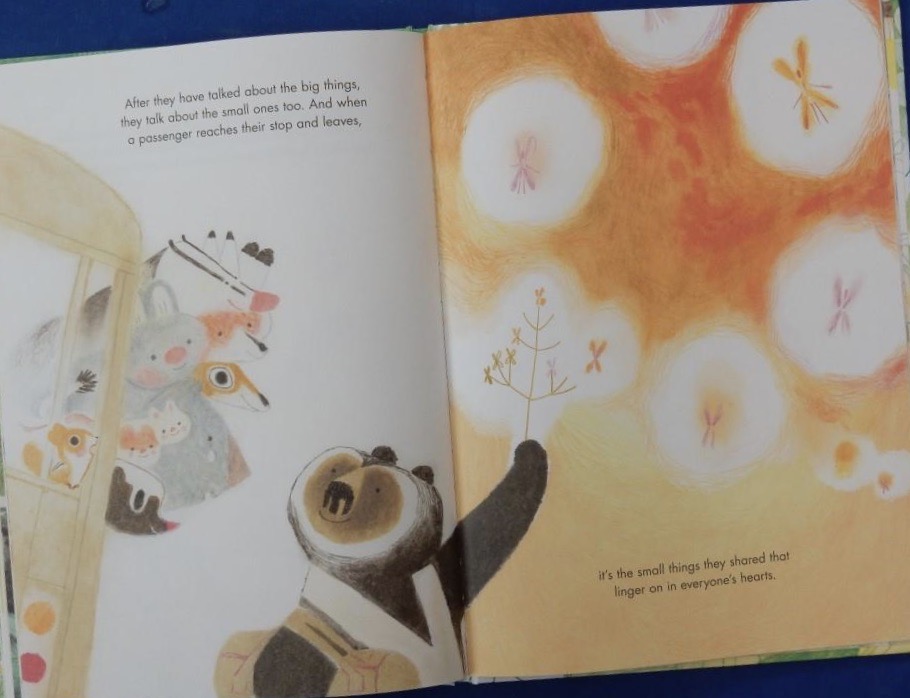
The hours aboard the bus pass almost without notice as Milo is surrounded by his new friends and he decides to collect the memories they share with him. Some passengers depart

and eventually the bus comes to its last stop. None of the remaining passengers hurry to get out and embrace the future but eventually each one leaves and having had to retrace his steps and give the driver something, Mino sets off to find that new home.

What matters most in Simona’s uplifting story so enchantingly illustrated, are the small moments the friends have shared, those are the ones they will remember and cherish.

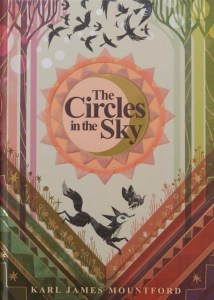
The Circles in the Sky

The Circles in the Sky
Karl James Mountford
Walker Books

After reading this intensely powerful fable-like picture book I needed to sit quietly and just be for a while.

Having spent a night hunting, Fox is reluctant to leave his den, despite the disturbing chorus of birds outside; but follow the sound he must so strange and different does it sound. He follows the birds across the rushing river, past the forgotten house and through the old woodlands to a place where many kinds of flowers grow: an entirely new place for Fox. He also misses the birds huddled in a circle on the ground till they suddenly take to the air, but one is left there, lying quite still. Nothing Fox tries can make this broken Bird move but unbeknown to him his attempts have been watched by Moth.

Moth starts to talk to Fox; she talks of the moon reflecting the sun’s rays, even long after sundown. Fox remains puzzled until Moth explains that the bird is dead. “I was trying to be kind,” she tells Fox. “Sad things are hard to hear. They are pretty hard to say, too. They should be told in little pieces. Bird isn’t here any more … because … Bird is dead.” As the realisation dawns for Fox, Moth offers him comfort and the two sit and share their sadness for a while. Further understanding follows for Fox – like the moon always remembering the sun, he can remember Bird.

Yes, death is a confusing time for those left, as Mountford shows, but equally he offers through Moth a model of being there for the grievers, a simple ritual for saying goodbye and most important of all, hope.

Using earthy hues of the natural world that starkly contrast with the black of sinewy Fox, Moth and Bird, geometric shapes including circles aplenty, straight lines and angles, James’ art captures so wonderfully both the stillness of things gone and the movement of living things.

Not a single hint of talking down to children is there in this awesome book, just a beautiful message beautifully presented.

You need To Chill! / I Believe in Me

You Need to Chill!
Juno Dawson and Laura Hughes
Farshore

The narrator of this upbeat rhyming picture book has an older brother, Bill; but her friends haven’t seen him for a while and want to know what has happened: where is he? They put forward all manner of possibilities that could account for his absence but from our narrator come denials that all end “And, hun you need to chill.”

However these friends are persistent, caring and determined, till finally comes the revelation, “… The truth is that my brother Bill … is now my sister Lily.’ Yes it may have been something of a shock initially but despite her new name and looks, much remains the same: she’s still as kind, funny and clever as ever; her family all love her.

Both Juno Dawson’s words and Laura Hughes’ pictures are full of warmth and a gentle humour: with its themes of identity, kinship and acceptance this inclusive story beautifully conveys its message in a manner that allows young children to take what they need and ask questions if they want further explanations. Fiction books such as this one are a very good way of opening discussion with primary children in PSHE sessions: such discussions help children learn that differences make the world a much more interesting place.

I Believe In Me
Emma Dodd
Templar Books

In conversation as the two swim together through the swampy landscape, a little crocodile speaks of the self belief the Mother crocodile has instilled in her offspring. Knowing one can do anything if only you try; the importance of never giving up if something goes wrong, as well as telling yourself that those dark days are always followed by brighter ones if you keep reaching for the sky, are key for little humans as well as little crocodiles. That way keeps the entire world open for you to forge your path through life, optimistic and confident in yourself. So says this inspiring little book through Emma’s simple rhyming text and bold digital illustrations, some with gold foil, that perfectly capture the little croc’s sentiments. 

Whisper on the Wind / Iceberg

These are two picture books from Allen & Unwin – thanks to the publishers for sending them for review.

Whisper on the Wind
Claire Saxby and Jess Racklyeft

A gorgeous, lyrical cumulative tale celebrating the ocean and its wonders with equally gorgeous watercolour illustrations that perfectly capture the words and spirit of Claire’s writing.
Young Ren lies asleep dreaming in her lighthouse bedroom: ‘This is the whisper / in Ren’s dream’ we read, as the wind captures that whisper whisking it across a moonbeam lit dreamscape filled with playful fish and dolphins diving in the swirling sea.

It reaches a small sailing boat whereon a sailor with a net catches the whisper, fathoms its message and knows just where she must go. And so she does in good time for a perfect start to the day for two people, for love has a special power of its own.

Childhood magic is encapsulated in both Claire Saxby’s multi-layered text and Jess Racklyeft’s powerfully evocative illustrations that together gently pull you into the ocean’s depths and back to safety on land once more.

By the same creators, and now in paperback is

Iceberg
Claire Saxby and Jess Racklyeft

In a poetic text sophisticated and yet accessible, Claire presents the life story of an iceberg through the changing seasons of its Antarctic location. To read it aloud is music to the ear; to gaze at each richly layered illustration is to immerse oneself in the natural beauty of an awe-inspiring landscape. To experience the two together is artistic richness indeed.

As you open the first page prepare to be taken on a journey above and below the ocean: you will see penguin tracks, orcas’ shadowy shapes and spy seals and seabirds – terns and cormorants – and a multitude of other life forms that are all part and parcel of an environment that is at the same time seemingly endless, full of life, capable of renewing itself, yet frighteningly fragile.

Such a brilliant gatefold illustration

This stunning book draws our attention to the melting Antarctic snows, suggesting subtly during the journey and asking much more strongly in an afterword, that we humans do everything within our power to address the effects climate change is having and will increasingly have, and thus protect and preserve the fauna and flora of an environment that is unlike any other.

All the Animals Were Sleeping / Amazing Animal Treasury

All the Animals Were Sleeping
Clare Helen Welsh and Jenny Lovlie
Nosy Crow

Author Clare and illustrator Jenny transport readers to the dry, grassy plains of the Serengeti where a little mongoose makes his way back to his burrow. As he scurries beneath the darkening sky he encounters in turn giraffes, vervet monkeys, zebras, a herd of elephants – ‘The Elephants’ ears draped like sails. Their trunks muzzled in the dry, dusty ground.’ 

storks, a monitor lizard near the riverbank, 

spotted butterflies and a cheetah family, all of which are sleeping, each in their own way. Finally under a star-filled sky, the little mongoose reaches the burrow where he joins his sisters and brothers curled up with a parent and then he too closes his eyes and at last it truly is a case of All the Animals Were Sleeping.

Lyrically written and strikingly illustrated with gorgeous details of the featured fauna and background flora, this is a gorgeous book to share at bedtime or indeed any time. (After the main narrative are three pages with information about each the animals featured in the story and about the Serengeti itself.)
Add to KS1 topic boxes and family bookshelves.

Amazing Animal Treasury
Chris Packham, illustrated by Jason Cockroft
Red Shed

This large volume brings together all three of Chris Packham and Jason Cockcroft’s titles: Amazing Animal Babies, Amazing Animal Homes and Amazing Animal Journeys.
Chris uses a simple, direct and clear writing style appropriate for the intended young audience and there’s an absolute wealth of information here as readers join a group of explorers who travel the world observing various creatures and in particular their young. There are froglets, baby Komodo dragons, albatross chicks as well as baby earthworms, tiger cubs and meerkat pups and we learn something of how they feed and attempt to stay alive.

Just like we humans, animals need somewhere secure and safe to be a family, a place that is home.
It might be in a building already constructed, it could be underground, in or near water, in a tree but some creatures – banded snails for instance – have ready-made homes. 

Certain animals live in colonies, African termites are one example but others have to work hard to create a safe place just for one (a Bark spider, say). There is so much to discover about Animal Homes and this is a great place to start.

With just the right amount of detail as before, Journeys explains why animals migrate and presents some of those that do including the ‘masters of migration’ – leatherback turtles, red crabs, wildebeest, free-tailed bats, the monarch butterfly and blackcap birds as well as others that make much shorter, but vital, journeys.

For young animal enthusiasts and school collections; it’s ideal for the foundation stage and just beyond.

I Remember

I Remember
Jeanne Willis and Raquel Catalina
Nosy Crow

George’s grandma, Kathleen, is having trouble remembering things, even recognising her grandson. When he visits her one afternoon she’s forgotten that the last time he called was just the previous day. George however, is full of love and acceptance of his grandma’s forgetfulness and they share a wonderful time together as they eat a chocolate biscuit between them and go to play outside in the garden wearing their blue coats. Kathleen has a problem with her buttons

and then as they walk out together she explains how she is able to recall being five but is unable to remember what she did just five minutes earlier.

In the garden George involves his gran in some pretend play with her as an astronaut, himself as pilot of their spaceship (the garden bench) and the pigeons as aliens. When George climbs a tree, Kathleen suddenly becomes anxious but he quickly comes to her rescue and they go in together. There’s further confusion and George reminds her who he is as they look at a photo of when they were both younger.

After shedding a few tears, Kathleen joins her grandson in a song and dance until they’re both in need of a rest.

All ends happily with George knowing that even though her mind might forget, her heart never does: that shared love will always be there transcending all else

This is an important and beautifully told story of the effects of dementia, memory loss and confusion ,, the effects of which some children may well recognise in people they know and love. George’s way of dealing with how Kathleen is affected will reassure youngsters and Raquel Catalina’s brilliantly expressive illustrations portray the intergenerational love between the two characters perfectly. A real treasure for sharing at home or in school.

The Odd Fish / How to Spot a Dinosaur

Introducing two recent Farshore picture books – thanks to the publishers for sending them for review.

The Odd Fish
Naomi Jones and James Jones

The inspiration for this eco-tale came from the author and illustrator’s then two year old son watching Blue Planet 11 and being unable to differentiate between the real fish and the plastic floating in the ocean. Equally unable to do so is the helpful Little Fish out swimming with her family who comes upon Odd Fish bob, bobbing along alone and assumes that he’s become separated from his family and must be lonely. She suggests she and her shoal help find them and while searching they come upon a seashorse who says that if they follow the current they will find others like Odd Fish. They swim on and come upon and untangle Octopus caught up in a fishing net, have a narrow escape, come to the aid of a turtle endeavouring to eat a plastic bag

and finally there in front of Little Fish is a whole school of odd fish of various shapes, sizes and colours: ‘There’s too many odd fish to count! Where did they all come from?’

The placing of text and images ensures this gentle story flows along beautifully and it’s impossible to avoid the fact that sadly we humans have to take responsibility for what Little Fish encounters – a huge mass of plastic that is a constant danger to the creatures of our oceans. Naomi reminds readers of this on a final spread stating that around 12,000,000 tonnes of plastic finds its way into the ocean every year and asks everyone at home and in school to help reduce this terrible, potentially deadly, pollution.

How to Spot a Dinosaur
Suzy Senior and Dan Taylor

In Suzy Senior’s bouncy rhyming tale of dinosaur hunting in the park we join two dino-enthusiasts, a sister, and her brother who acts as narrator,. Armed with a book of dino-facts and binoculars, the siblings are sure they’re going to find a fair few of these stomping, roarsome creatures. However after several incidences of mistaken identity,

their enthusiasm turns to disappointment and despair; but then the snack man suggests another location to try. Off they go again until they reach a huge building and lo and behold …

Suddenly a fearsome “ROAAAARRRR!” sends them fleeing for their lives, so they think, but perhaps this too is a case of mistaken identity that can only be relieved by slices of cake and cold drinks. Perhaps then the siblings could be persuaded to take another look inside that large building they dashed from.
After an exciting day it’s time to head for home, safe in the knowledge that there’s no need to bother looking out for dinosaurs as they died out long, long ago …

There’s a gentle nod to We’re Going on a Bear Hunt in this lively quest for prehistoric reptiles that continue to be many young children’s favourite storybook creatures. Such dino-fans will definitely love the various misidentifications shown in Dan Taylor’s humorous scenes of the determined dinosaur seekers.

Greek Heroes: Top Ten Myths and Legends

Greek Heroes: Top Ten Myths and Legends
Marcia Williams
Walker Books

Well-known for her adaptations of classic tales into comic strip format for younger readers, Marcia Williams has chosen ten heroes almost all of whom are male to present in this collection and all having the requisite characteristics – strength, looks, charm and brains. Marcia lists ten heroic essentials on the opening spread then goes on to introduce the gods of Olympus, they who hold in their hands the fate of every would-be hero, most importantly those we meet in this book.

I love the way a cheeky Pan puts down his musical pipes and moves around the beautiful borders augmenting Marcia’s comic strips with his interjections, as readers meet first Perseus, slayer of the gorgon Medusa; Bellerophon destroyer of the Chimera, who loses his winged horse Pegasus in so-doing, and then Atlanta – she who uses her spear to kill a monstrous boar.

The remaining encounters are with Jason, Achilles – he of the vulnerable heel; daring Heracles who spent ten years undertaking the ten labours set by King Eurystheus; Theseus, the stunningly beautiful Psyche, tragic lovers Orpheus and Eurydice and finally, Odysseus of Trojan horse fame who blinds the Cyclops, resists the song of the Sirens is captured and kept for seven years by a nymph, Calypso and finally returns home to his wife Penelope who has trouble recognising him after so long apart.

This is enormous fun for individual readers and a terrific primary classroom resource.

The World at your Feet

The World at your Feet
Karl Newson and Clara Anganuzzi
Studio Press

What a wonderful title for this book, the theme of which is hugely important for children in these times of increasing uncertainty about so many things in a world that I know for some of them, feels scary and out of control.

On the first spread we see a small child standing alongside a group of friendly-looking animals accompanied by Karl’s words that open the dialogue, ‘Who? What? Where? Why? I don’t really know but I’ll give it a try.’
The child/creature conversation continues throughout the book assuring youngsters that it’s okay if you don’t always have the answers. 

What is important is to try your best, be your best self and yes there will be things that don’t work out; there will be things and people that you’ll leave behind or, perhaps lose, although their memories remain, ready to be triggered, sometimes unexpectedly.

There’s a big wide world out there waiting to be shared, to be explored and to be appreciated for its beauty and its diversity. 

All this and much more are conveyed both through Karl’s empowering rhyming narrative and Clara’s stunningly beautiful scenes of the child exploring that world with those animal friends we met on the opening spread.

A superb combination of words and pictures that gently encourage youngsters to go out, discover their potential and to be creators of their own story. A gorgeous uplifting book to share with the children in your life be that at home, in school or anywhere else you can.

Kitsy Bitsy’s Noisy Neighbours / Blue Badger and the Big Breakfast

Kitsy Bitsy’s Noisy Neighbours
Polly Faber and Melissa Crowton
Nosy Crow

Life is peaceful in Park View Rise until that is, the sounds of diva Honky Tonk practising her scales and weight lifter Hunky Dory’s exercise regime travels downwards to awaken Tippy Toes’ baby from a much-needed nap, whose wailing upsets Smart Alec hard at work on his latest book. He then resorts to a spot of cacophonous DIY instead and so on until there’s total chaos with flying cakes and other sweet confections.

However just as a fight is breaking out, ground floor resident, Kitsy Bitsy, senses something is amiss and up the stairs she goes to act as peacemaker and guide in how to move forward after the issues her fellow residents have unwittingly caused.

The combination of Polly Faber’s roll off the tongue rhyming text and Melissa Crowton’s comical scenes of the ever increasing chaos and its solution, make this a smashing read aloud to share at home or with a class. Listeners will love the funny names of the characters and their activities, as well as exploring the wealth of detailed illustrations in this celebration of community and high-rise living. 

Blue Badger and the Big Breakfast
Huw Lewis Jones and Ben Sanders
Happy Yak

In this second story, despite a blue tinge around his rear Badger no longer feels blue; how could he when he has a delicious breakfast of blue berries to feast upon. 

His best pal Dog however is decidedly sad on account of his lost ball; but even when he discovers this, Badger continues consuming his berries. Has he though unknowingly consumed Dog’s ball too? Owl’s remark certainly makes him think it’s a possibility so Badger goes off and offers to play with Dog. Will he do anything else besides?

With a witty finale, this tale of friendship and putting right what you may however unintentionally have done wrong, will with its deadpan humour both verbal and visual, make child audiences and those who share it with them laugh. The observant among them will also long to shout out to Badger what they’ve noticed but he obviously hasn’t, so busy sating his appetite is he.

The Worry Jar

The Worry Jar
Lou John and Jenny Bloomfield
Oxford Children’s Books

Frida is an inveterate worrier; she worries about big things and little things. She also collects pebbles and the weight of her worries feels as heavy as that of the pebbles; indeed she picks up one for every worry. It might be the weather, what she should wear to walk to school, has she packed everything in her school bag. When she arrives, she worries about where to sit in class and what to do at playtime. All these things leave her rather left out of things and weighed down with pebbles. Then at playtime she comes upon a shiny black pebble on the ground and puts it in her pocket. Still she worries though, about having tea with a friend and at bedtime, about a lost toy, Rabbit. Instead of her usual cuddly companion, she takes her new pebble to bed; it’s warm and smooth. Could it work as a substitute for Rabbit perhaps.

The worries continue all week; then on Sunday, Frida’s favourite day her beloved Granny comes to visit. Granny senses her anxiety and as the two make jam together, she tells Frida that everybody has worries, even herself, and worrying only makes things worse.

Perhaps Granny’s large empty jar might help as a collector of Frida’s worry pebbles? It’s definitely worth a try, so in go all the pebbles save her special black one. Several days pass: has Frida finally been able to put that black pebble in the jar with the others? What do you think?

Perceptive and empathetic: Lou John’s telling with Jenny Bloomfield’s carefully observed illustrations that are full of sensitivity and beautifully capture Frida’s emotions throughout, show young children that it is possible to manage those anxious feelings that beset us all from time to time.

Everything Changes / When You Joined Our Family

Everything Changes
Clare Helen Welsh and Åsa Gilland
Little Tiger

A parental break up is never easy for a young child and it’s certainly challenging for the young narrator of this picture book.

Clare Helen Welsh is a perceptive and skilled writer who handles difficult topics with great sensitivity, always keeping in mind that she’s creating a compelling story that is also a source of acknowledgement, guidance, and comfort. Through her sensitive words and Åsa Gilland’s exquisite illustrations we see and feel the emotional upheaval of the child from the time Mummy and Daddy announce one summer’s day against the backdrop of the seashore, that they can no longer live together.

The parents in this story both clearly very much love their child and using the natural world against which to have this story unfold is, like The Perfect Shelter, inspired. Herein we see the changing seasons as we follow the changes in the life of the three characters through the eyes of the child. Autumn brings a new house for dad, a garden with trees that shed their leaves forming a ‘blanket of red and orange’ and strong wind that causes the little one to wonder, ‘Was it my fault?’ Dad’s reassuring explanation in response calms his daughter’s inner turbulence however and her worries dissipate.

Winter brings snowy days and discussions with both mum and dad, further reassurance of their love for the narrator for ‘ it isn’t about hoping that the storm will pass … it’s about learning to dance in the raindrops!’

The story ends with a celebratory sixth birthday gathering of adults and children and the uplifting narrative conclusion, that change can bring good things and once you know that, everything changes. Åsa Gilland uses a changing colour palette for her striking illustrations that capture superbly the gamut of emotions and the different seasons of the text.

When You Joined Our Family
Harriet Evans and Nia Tudor
Little Tiger

This is a wonderfully warm look at the experience of adoption and a celebration belonging in a family, seen through the eyes of several adopters. Love is the key element that unites a family and love is what shines out from Nia Tudor’s illustrations on every spread.

The children adopted might look different from their new parent(s), be differently abled, tiny babies or of school age, it matters not. In this book we share in the entire adoption experience from those very first meetings to feeling a part of something unique and special:

there’s excitement, strangeness, reassurances, pride, unconditional love, a sharing of stories, sometimes the meeting of a new brother or sister and the beginning of new family traditions. All this is presented through a straightforward, affirmative text and Nia Tudor’s beautifully patterned, details illustrations that underscore the positive nature of Harriet’s words.

Both books are musts for primary school collections. I’d also recommend any family experiencing a break up to get hold of Everything Changes, and any new adoptive parents to have a copy of When You Joined Our Family to share.