Stuck Inside

Stuck Inside
Sally Anne Garland
Sunbird Books

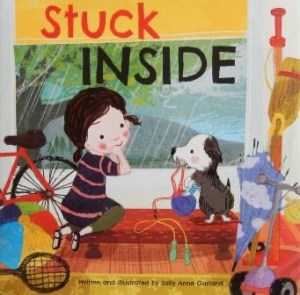
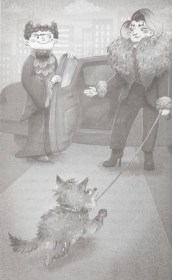
I suspect we can all relate to the title of this story, though perhaps not for the reasons that Tilly and her dog Toby are faced with. The latter has an injured paw so his usual walks have temporarily stopped; Tilly is staying in on account of the rain storm and both girl and dog are feeling hemmed in.

Cooped up together with no adults around, what can they do? Then Toby brings something that belongs outdoors and puts it at Tilly’s feet. This gives her an idea and together they start to explore their large home in search of outdoor items.

Somewhat apprehensively they look behind ‘doors that had always seemed closed’,

inspect beneath beds, open drawers and scour shelves uncovering ‘dusty things long forgotten.’ There they find hitherto unnoticed and interesting things – toys, old walking sticks, broken brollies, roller skates and other items with wheels, a deflated paddling pool even.

Having spent some time tweaking and twiddling these long lost treasures, remembering places visited and creating imaginative adventures, they proudly contemplate their astonishing machine …


Sally Anne Garland’s carefully chosen words in combination with her richly patterned and textured illustrations with their rural setting, effectively demonstrate that boredom can be the best possible stimulus for children’s creativity.

Tisha and the Blossom

Tisha and the Blossom
Wendy Meddour and Daniel Egnéus
Oxford Children’s Books

What is this life if, full of care,
We have no time to stand and stare.

To me, these opening lines of the WH Davies poem I learned in primary school lie at the heart of this latest collaboration between Wendy Meddour and Daniel Egnéus.

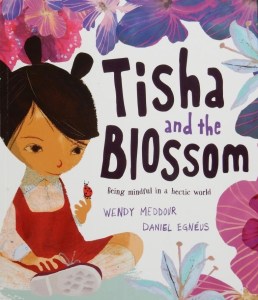
Like most of us, young Tisha and her family lead busy lives and wherever she goes, whatever she does, the little girl is constantly being told by adults to “Hurry up”. It happens in the morning as she enjoys watching the blossom fall, as she leaves for school and all the way through the school day.

So when her mum arrives to pick her up and urges her to hurry for the bus, it’s the last straw.

Fortunately Tisha’s request that they slow down results in mother and daughter walking home and enjoying a special game to help them do just that.

Then when they reach home Dad is there to join in with the welcome change of pace.

We all need to make time to be still and mindful in our hectic world; if nothing else the last twelve months has made us realise the importance of paying attention to the pleasure offered by small things. Wendy’s engaging story with Daniel Egnéus’ scenes – especially the blossom-filled ones, are a truly gorgeous affirmation of this.

Bees, Trees and Planet Earth

Bees
Trees

illustrated by Carmen Saldaña
Please Help Planet Earth!
illustrated by Paulina Morgan
Ladybird Books

It’s never too soon to introduce young children to the environment protection cause and these sturdy books offer a good starting point.

Devoting each of its six spreads to a different aspect of Bees, young children are introduced to the vital role these little insects play in keeping the planet healthy; explains the role of bees in pollination; takes readers inside a honeybee hive; looks at honey and beekeepers; explains why the number of bees is in decline and finally suggests some ways in which everyone can help save these important little creatures.

Trees is similar in structure. First is an explanation if their importance to all life on earth. Second is a simple look at the various parts of a tree and their interconnectedness. There’s a spread on seasonal changes; another presenting some of the thousands of different kinds of tree and deforestation and its consequences is briefly discussed while the final spread is again ‘How can you help?’. Carmen Saldana’s illustrations are child-friendly and in both books there are flaps to explore on every page.

In Paulina Morgan’s diverse, alluring scenes Planet Earth itself takes the narrative role in the third book, issuing an earnest plea for help to protect its various ecosystems and their flora and fauna by making small but crucial changes to the way we live.

In keeping with their ‘protecting our planet!’ theme, all three books are made from recycled board and printed with plant-based inks.

How to Change the World / Climate Rebels

How to Change the World
Rashmi Sirdeshpande, illustrated by Annabel Tempest
Puffin Books

In her follow up to How to be Extraordinary, Rashmi Sirdeshpande presents a companion book in which she shows what a large impact can be made by people working together. There are fifteen stories of teamwork that start way back in sixth century BCE Athens with the origins of the very first democracy and is followed by a look at the incredible human engineering collaboration involved in the building of the Great Pyramid in the desert of ancient Egypt.

Then come the campaigns for change – well known and less so – in various parts of the world. Thus among environmental campaigners we have not only the universally known Greenpeace and the Montreal Protocol banning CFCs, but also the Treeplanters of Piplantri that I know of only because a friend took me to visit the village in Rajasthan a few years back. (Every time a girl is born 111 trees are planted in honour of the chief’s daughter who died during a drought around fifteen years ago).

Then, as well as the Montgomery Bus Boycott triggered by Rosa Parks’ action, there is the Singing Revolution in Estonia where people used song to tell the world that this small country had always been a free nation.

Following the spread about the abolition of slavery campaign in the British Empire is one about the 1965 Freedom Ride campaigning for justice for the indigenous people of Australia.

Alluringly illustrated by Annabel Tempest and attractively laid out, each spread with its well-written text offers an example of high quality narrative non-fiction for primary readers.

The same is true of

Climate Rebels
Ben Lerwill
Puffin Books

‘The greatest threat to our planet is the belief that someone else will save it’. Robert Swan’s quote at the beginning of this book is a powerful reminder that the terrible effects of climate change can only be arrested through our individual and collective actions.

Award winning writer Ben Lerwill presents twenty five inspiring and fascinating stories of individuals (and some groups) who have worked tirelessly and continue to do so for the causes in which they believe so passionately.

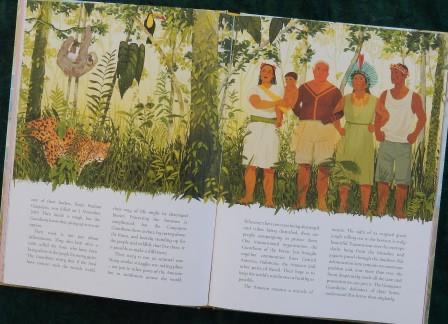
Among those featured are Dr Jane Goodall (who wrote the book’s introduction), Sir David Attenborough, the Greenpeace founders, Rachel Carson and Greta Thunberg. Alongside those are accounts of less famous names – The Guajajara Guardians –

who often risk their lives while working to protect the Amazon Rainforest; and William Kamkwamba who built a windmill in a small village in Malawi and went on to build more that pump water to the crops in the fields, thus improving the life of his entire community through renewable energy.

Not only is this book a powerful call to action; it’s also a reminder that we need to stand together – there might just be time to make those crucial changes to the climate change story.

Compellingly written in a lively style and illustrated by Masha Ukhova, Stephanie Son, Chellie Carroll, Hannah Peck and Iratxe Lopez de Munain, this book is strongly recommended for home and school reading.

Shu Lin’s Grandpa

Shu Lin’s Grandpa
Matt Goodfellow and Yu Rong
Otter-Barry Books

Shu Lin has recently come from China and with very little English, is struggling to fit in at her new school.

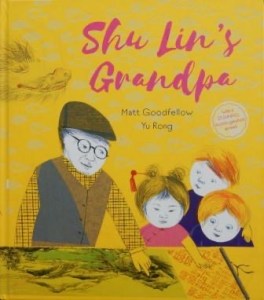
At lunchtime the other children are fascinated as they watch her tuck in to her little boxes of food. On the way home, one of her classmates recalls when he too was a newcomer but it’s not until Shu Lin’s grandpa visits the class with his Chinese paintings that anything really changes.

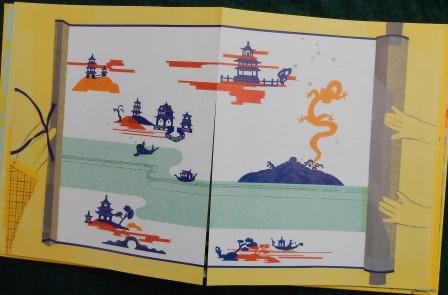
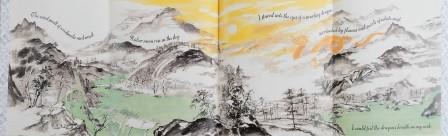
No words are needed as the children look in awe at his scrolls with their amazing scenes.

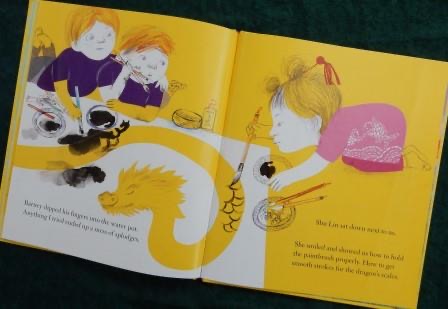
Then as silently as he arrived, Shu Lin’s grandpa leaves the classroom. That afternoon, the class teacher gives the children the opportunity to try painting their own pictures in response to what they’ve seen.

Matt Goodfellow’s text is presented through the narration of one of Shu Lin’s classmates and this is highly effective in that the boy relates his own experience to that of the newcomer showing understanding throughout the book, while Yu Rong’s illustrations, including a gate-fold that opens to reveal a remarkable Chinese scene, are absolutely superb.

That art is a hugely effective way of helping to develop empathy with other cultures comes across with a quiet power in this story that celebrates the imagination while demonstrating the importance of reaching out to others.

An important book to include in primary school class collections.

Willow Wildthing and the Shooting Star / Leo’s Map of Monsters: The Spitfang Lizard

These are new titles in two smashing series for young solo readers – thanks to Oxford Children’s Books for sending them for review

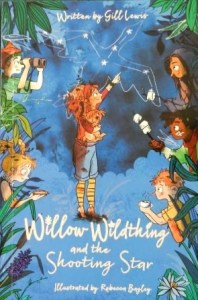
Willow Wildthing and the Shooting Star
Gill Lewis, illustrated by Rebecca Bagley

Gill Lewis enchants once again with her third adventure of Willow and her dog Sniff, often a key player in her Wilderness exploits with the other Wild Things.

As the book starts, Willow’s little brother Freddie needs to go to hospital again and Nana is coming to keep an eye on her granddaughter.
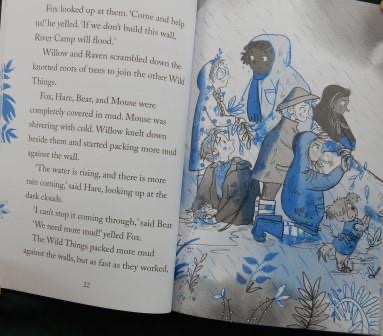
A knock at the door brings not the anticipated Nana but fellow Wild Thing, Raven announcing the imminent destruction of their River Camp on account of flooding after several days of incessant rain. “You have to come,” Raven urges. “We’re going to lose everything.”

Happily, Willow is able to accompany Raven on the understanding that she’s to stay the night with her friend and they meet up with the others.

Only able to rescue some of their paraphernalia, the friends watch as the rest of their camp is washed away. Eventually the rain does stop and Raven suggests they all camp in her back garden from where they can watch the meteor shower that night.

It’s a night that turns out to be truly magical, for three shooting stars fall. Willow is convinced the one she wished on has landed in the Wilderness and she’s determined to find it …

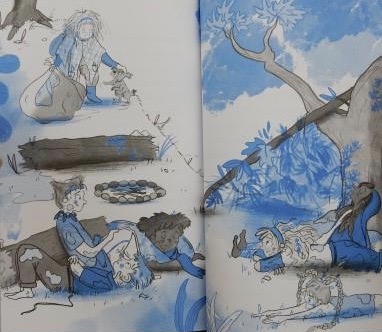
There is SO much to love about the story, not least the way Gill Lewis celebrates children’s creativity and the imagination. These children thrive on a lifestyle that allows them freedom to explore the natural world, make camps, light fires, get thoroughly covered in mud and generally relish being part of the great outdoors. The love of family and the importance of friends – in this book ‘the witch’ (a reclusive writer) plays an important role – are also fundamental.

Each of these elements is captured so wonderfully in Rebecca Bagley’s illustrations which aptly, have a blue theme herein. Another great thing about these stories is their appeal to both girls and boys, those just gaining confidence as independent readers especially.

This is also true of

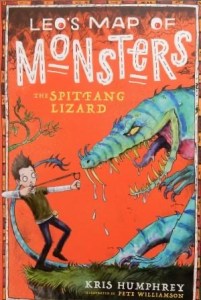
Leo’s Map of Monsters: The Spitfang Lizard
Kris Humphrey, illustrated by Pete Willliamson

Leo Wilder is apprentice to the Guardian and his job is to keep the village safe from monsters that hide in the eerie forest all around.

In his second adventure, Henrik has summoned Leo to inform him that having left their home along the White River, two deadly Spitfangs have left their riverside home and are getting alarmingly close. His “Whatever you do boy, don’t get spat on.” is pretty troubling as Leo’s already overheard the village chief’s comment to Henrik about the possibility of the lad being eaten.

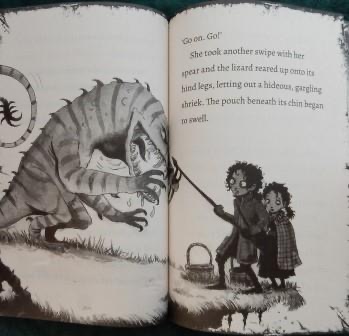
Nonetheless, off to the forest with the pouch of stones Leo goes. Almost immediately he hears beating wings and there is Starla announcing that she’s come to help. Shortly after two girls appear carrying baskets. “Not friendly. Not friendly at all,” Starla says of them.

A brief conversation ensues and they disappear leaving Leo to continue his search. Suddenly he slips and almost the next thing he knows is that his legs are encased in a grungy cocoon of Spitfire spit. Yikes!

With some enigmatic characters,

this is a highly engaging story for young solo readers: the problem-solving element and smashing illustrations by Pete Williamson contribute significantly to the enjoyment.

The Lost Child of Chernobyl

The Lost Child of Chernobyl
Helen Bate
Otter-Barry Books

With their highly visual format, graphic novels are a highly effective medium when it comes to presenting complicated ideas and issues to young readers, especially those who may struggle with long texts, and Helen Bates has already shown herself adept at so doing with Me and Mrs Moon and Peter in Peril.

Now she does it again: through this book, inspired by the events of 26th April 1986, the Chernobyl nuclear explosion that caused horrendous environmental damage globally, we experience the disaster close up, and then in this fictional account, see its aftermath through the eyes of two women, Klara and Anna.

After the explosion, animals run wild causing a road accident from which a child flees into the surrounding forest. Villagers around the fire station notice strange things happening and as the radioactive cloud spreads, they’re told to evacuate their homes but the two women refuse to leave.

Nine years later a wild child appears at their door. This little girl has been living with the wolves in the forbidden zone; the women take her in and care for her,

knowing that eventually they will have to give her up to the authorities and perhaps find some of her family. Is that even possible after such a long time?

Powerfully affecting and highly relevant to the present and future dilemmas facing us all, with its themes of survival and healing, this is definitely a book to introduce to older KS2 readers and beyond, either as part of a modern history topic and how it informs future actions, or as part of an exploration of the environmental issues impacting upon our planet.

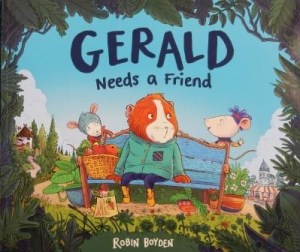
Gerald Needs a Friend

Gerald Needs a Friend
Robin Boyden
Frances Lincoln Children’s Books

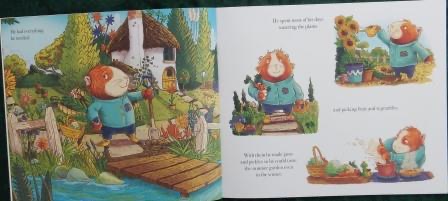
Guinea pig Gerald is a loner and fanatical about his routine. His entire world is his garden wherein he spends most of his days nurturing his flowers, fruit and vegetables.

Come 5 o’clock he goes indoors and has tea, reads twenty pages of his book and at 7pm he retires to bed: a risk-taker he most certainly is not.

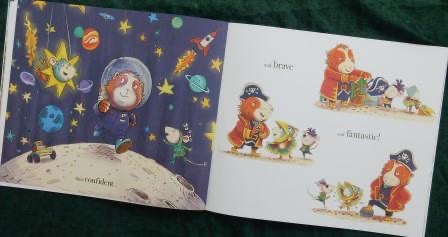
One morning he heads off into town with his shopping bags and is surprised to discover a new stall run by two lively mice. The mice introduce themselves and for the rest of the day, after some initial hesitancy, Gerald experiences lots of fun exciting things

and thanks to Marcy and Marcel, has the time of his life until …

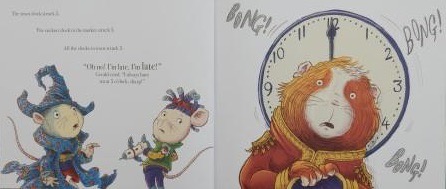
That night he lies awake in bed contemplating the day and next morning …

Robin Boyden’s Gerald most certainly discovered that by stepping out of the comfort zone of his hitherto fulfilling life, the world had a lot more to offer, the most important thing being friendship.

The illustrations are terrific – hugely expressive and full of amusing details to pore over. A book to share with KS1 classes (make sure you allow time to explore each spread), as well as individuals and small groups.

Once Upon A Mermaid’s Tail

Once Upon A Mermaid’s Tail
Beatrice Blue
Frances Lincoln Children’s Books

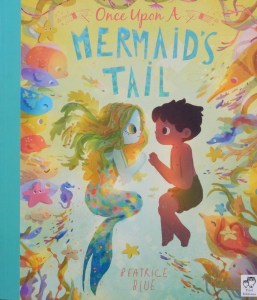
Beatrice Blue’s new story in her series of ‘Once Upon A … ‘ neo pourquoi tales makes an urgent environmental plea on behalf of the planet’s wildlife.

Herein we meet young Theodore, a passionate fish collector who loves nothing better than to go out once a week in his little boat searching for new fish to add to his aquaria. On one such expedition he nets something amazingly beautiful: a tiny creature encased in a clear shell. No sooner does he start handling it than a voice booms a warning, “Leave her, Theodore! She belongs to the ocean.”

Disregarding the voice he takes her home ignoring the same voice urging him to return the creature to the ocean. Convincing himself he can take great care of the tiny thing, he names it Oceanne and places her into a tank.

As the days go by, instead of thriving the little creature becomes weaker and weaker. Now Theodore is alarmed. What is wrong? The return of that booming voice makes him realise that he must return the creature to the lagoon; but will he be in time to save Oceanne?

Beautifully illustrated and skilfully told, this timely book is another reminder of the fragility of nature and the importance of doing our part in its preservation. It offers a starting point for discussion that young children will find easy to relate to.

Nano: The Spectacular Science of the Very (Very) Small

Nano: The Spectacular Science of the Very (Very) Small
Dr Jess Wade and Melissa Castrillón
Walker Books

Talking to nine year olds about nano particles? Surely not, you might at first think. However the author of this book knows just how to do it.

This is a totally captivating look at materials and the uses scientists make of them by physicist Dr Jess Wade from Imperial College, London and illustrator, Melissa Castrillón.

Right from the opening spread containing the words, “Look around your home. Everything is made of something … “ readers are drawn in, all the more so as the text then goes on to use the book itself as an exemplar to remind us of some basic descriptions of materials as well as introducing the importance of microscopy. 

That leads neatly in to a spread on atoms – those building blocks from which ‘every single thing on this planet is made …’ and molecules.

A great thing about this book is that every new term that’s introduced – elements for instance- is immediately then related to something familiar to its target audience:. So we’re told, the human body comprises eleven different elements including carbon. This element is part of the make up of every living thing, but sometimes existing solely as layers of carbon atoms; graphite (the lead in pencils) is given as an example.

By moving on to graphene (created by removing a single layer of carbon atoms from graphite) the author takes us into unfamiliar territory with a new material: or rather, a ‘nanomaterial’ that has taken countless experiments and many years to make.

Graphene, we’re told, already has many uses in technology but because nanotechnology is a dynamic field of study, there are further possibilities, some not perhaps even dreamt of yet. Neatly bringing the narrative full circle to the reader, the author concludes ‘There are so many secrets left for scientists to unlock, And who knows the key person might just be … YOU.’

A hugely inspiring combination of superb science and awesome art.

Do You Love Dinosaurs?

Do You Love Dinosaurs?
Matt Robertson
Bloomsbury Children’s Books

Ask a group of children the title question and almost certainly the vast majority will answer in the affirmative, so this book, brimming over with awesome, roarsome dinos is set to be a winner.

Accompanied by some young palaeontologists, Matt Robertson takes readers way way back in time to meet these incredible creatures large and small. First though come ten ‘must obey’ dinosaur rules to help ensure that youngsters get the maximum from their experience.

It’s then time to introduce in turn, the theropods – meat eating, terrifying two-legged beasts; then the sauropods (gigantic vegetarian, gentle creatures) among which were the diplodocuses.

Prepare to hide, for Tyrannosaurus rex comes next – AAARRRHH! those gaping jaws. Much less alarming are the herbivores including several new to me, as are some of the omnivores with which they share a double spread.

Horns and spikes were great protectors and the armoured dinosaurs also show their skills and how they used their incredible armour; and last we meet the deadly bird-like raptors.

The final spreads look at dinosaur fossils, development from egg to adult, there’s a dino sports event, a look at some other prehistoric creatures and last of all, annotated portraits of extra special dinos in a hall of fame.

The author takes a light-hearted approach and his illustrations are huge fun, while there’s a considerable amount of information packed into each spread.

Howard the Average Gecko

Howard the Average Gecko
Wendy Meddour and Carmen Saldaña
Oxford Children’s Books

Howard apparently has a very high opinion of himself and a seeming disregard for his fellow rainforest dwellers. So intent on bragging about his camouflage skills is he,

that he fails to notice that same ability in a number of the other creatures, that is until he encounters a stick insect. Stick insect’s “The rainforest is full of camouflaged creatures”

is let’s say, an ego deflater, even more so is its “You’re average”. and Howard has a crisis of confidence about his lovableness.

Suddenly out of the foliage comes a stunning creature

and despite what the stick insect thinks of her, Howard declares the wobbly-eyed reptile “magnificent”. This other gecko introduces herself as Dolores. The instantly smitten Howard invites her to watch the sunset with him and together these two ‘average geckos’ climb up a tree onto …

With its surprise finale, this is a fun story that introduces animal camouflage (look out for the creatures Carmen Saldaña has hidden away in her leafy scenes) while being a smashing book to show all young children that they’re just right as they are. Endless comparisons with others do nothing to foster self-esteem: it’s having people who love you that counts – to them you are in your own unique way, very special.

Ten Little Dogs / Ten Little Yoga Frogs

Ten Little Dogs
Ruth Brown
Scallywag Press

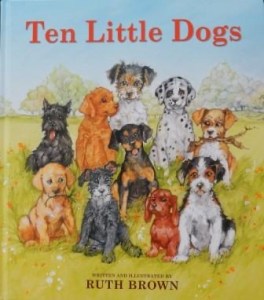
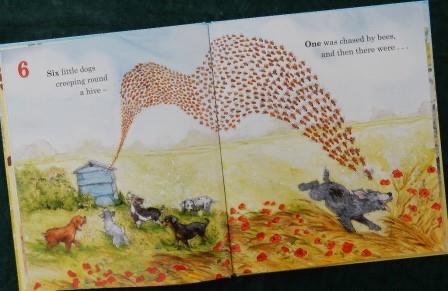
Who can fail to delight in this rhyming countdown by well-loved and respected author/illustrator Ruth Brown. Her array of pooches look such engaging creatures as they romp energetically in all kinds of settings indoors and out with their number diminishing on each double spread

until just one remains. But not for long because being alone is not nearly as much fun as dashing off to rejoin your nine friends cavorting and barking loudly in the park.

Yes there’s some simple maths herein but it’s the spirited illustrations that count for much of the pleasure to be discovered between the covers of this book. Every double spread is a visual feast with detailed, realistic images of adorable canines in beautiful surroundings, accompanied by a four line text with perfectly calculated page turns.
A treat for dog lovers of all ages, this.

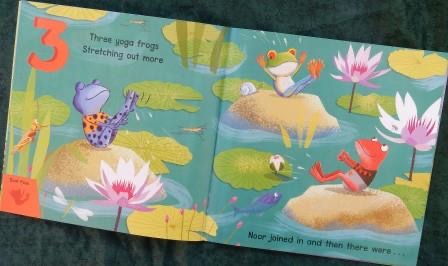
Ten Little Yoga Frogs
Hilary Robinson and Mandy Stanley
Catch a Star

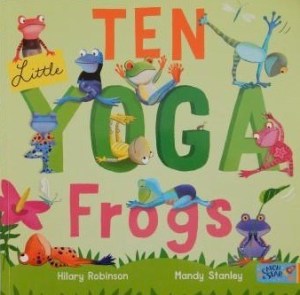
This is a fun way to engage in some counting practice while at the same time trying some basic yoga poses along with the snazzily attired yogi frogs.

Wearing both my foundation stage teacher hat and my yoga teacher hat simultaneously, I absolutely love this rhyming counting book. It’s great to see that not all the participants are experts at doing the poses: take a look at these three.

And who wouldn’t want to respond with a resounding yes to the invitation on the final spread …

With its predictable text and hilarious illustrations (each spread has a small box in the corner showing the specific yoga asana the frogs are doing) this book would make a smashing addition to any early years setting or foundation stage classroom, as well as being one to add to family collections where there are young children.

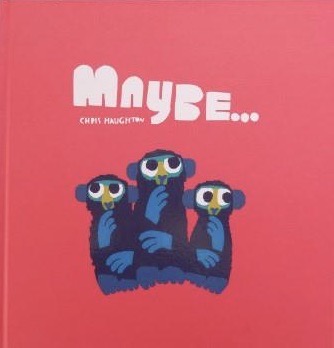
Maybe …

Maybe …
Chris Haughton
Walker Books

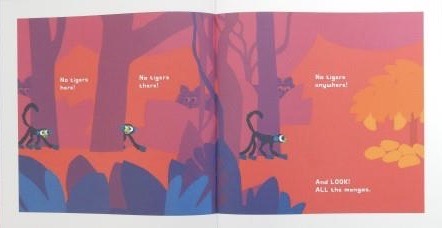
“Whatever you do, do NOT go down to the mango tree. There are tigers down there.” So says the departing adult monkey to the three little monkeys. An invitation to do just that, if ever there was one and as you might expect, after due consideration and a quick scan below, the trio start descending through the canopy lured by an irresistibly delicious sight.

After another quick scan for tigers (your audience will have spotted something but not the eager threesome), they dash down, secure a yummy fruit and consume same. But is just one sufficient? Of course not, so the monkeys climb right the way down to the ground.

As they sit feasting on some succulent spoils, the monkeys become aware that this latest step was perhaps one too many, for there follows a dramatic case of tiger confrontation and a splendidly scary, suspenseful dash for their lives that listeners will relish. But what about the monkeys?

To discover that, and how the story ends, you’ll need to creep out to a nearby bookshop and get a copy of your own.

Maybe, just maybe this is my favourite of Chris’s books so far, but then I love boundary pushing risk-takers. That chase over four double spreads is absolutely superb; in fact the whole book is simply brilliant.

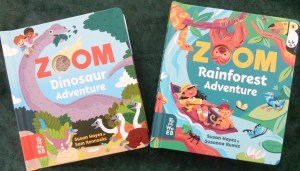
Zoom: Dinosaur Adventure / Rainforest Adventure & Grow

Zoom: Dinosaur Adventure
Susan Hayes and Sam Rennocks
Zoom: Rainforest Adventure
Susan Hayes and Susanna Rumiz
What on Earth Books

Both stories take young children on amazing journeys, the first involving best friends Jasmine and Jamie, the second, Lin.

Jasmine and Jamie use their time machine to take them back to when dinosaurs roamed the earth. Their first encounter is with a hungry Alamosaurus that they observe by climbing high into the treetops. They also meet a Maiasaura, Triceratops, Beelzebufo (a prehistoric frog), a whole pack of Velociraptors, a flying pterosaur

and many others including Jamie’s favourite – a Triceratops – make that two – there’s a mother and baby. Their adventure concludes when they sight an asterdoid heading their way so they make for the time machine and escape – just.

Lin uses a more conventional mode of transport for her Rainforest Adventure; she canoes off down the Amazon accompanied by her pet monkey. Having tied up the canoe, Lin then starts her trek through the lush forest wherein she meets around thirty different inhabitants including hyacinth macaws, several different snakes, hummingbirds, a poison dart frog, three-toed sloths and a procession of leaf cutter ants. She misses sighting a tarantula and an armadillo as they pass her tent while she sleeps. Next morning she spies some tapirs drinking but they’re suddenly alarmed by the sight of a jaguar. After a bit of raft-building

and an unexpected plunge into the river, Lin realises her rucksack is gone. How will she get back? Surprisingly she sees a hot air balloon and up and off she goes …

Both books begin and end in the children’s own rooms and young listeners will realise that therein are many of the components of the imaginary adventures. There’s a penultimate pop-out spread in both stories as well as lots of die-cuts on every spread to add to the interactive enjoyment of the vicarious experiences.

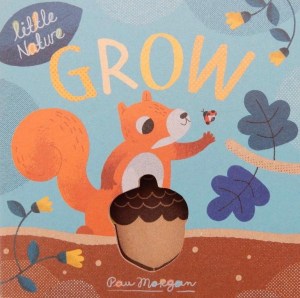
Grow (Little Nature)
illustrated by Pau Morgan
Caterpillar Books

In this book little ones can discover the changes that occur between seed and plant using the examples of an acorn, seeds from various flowers, a dropped blackberry and an apple tree. Die-cut peep holes add to the enjoyment of the four, two-page sequences of planting, the animals involved, and the outcomes. The alluring illustrations by Pau Morgan have an earthiness about them thanks to being printed on recycled board.

Chickenology / Milly Cow Gives Milk

Chickenology
Barbara Sandri and Francesco Giubbilini, illustrated by Camilla Pintonato
Princeton Architectural Press

This introductory book contains everything you ever wanted to know about chickens and probably a lot more too. There are five sections (listed on contents page but not mentioned thereafter) into which is packed an incredible amount of information presented in a highly readable manner with well-designed, stylishly illustrated spreads, every one of which has just the right amount of text so that at no time does the reader feel overwhelmed.

It starts with pages on identification; how to tell the difference between a hen and a rooster, courtship and mating, a spread on shape and size – astonishingly a Jersey Giant is almost the height of a three year old child. Communication is given a double spread; feathers have two and the Leghorn spread presents a dozen different varieties of the same breed, something I didn’t know.

Last in the first section is an exploration of the question ‘Can chickens fly?’

The next part begins with a look at the anatomy – internal and external and then comes a section comprising an egg-sploration of eggs.

My favourite section is ‘Chickens and Humans’ that encompasses some history, symbolism, folktales and more.

And last of all is a presentation of just some of the estimated 300 different breeds.

There’s likely something of interest to readers of all kinds here.

For a younger audience is:

Milly Cow Gives Milk
Deborah Chancellor and Julia Groves
Scallywag Press

Ask a group of young children where milk comes from and if my experience is anything to go by, some of them will name a supermarket. Now here’s a simple picture book (endorsed by the Royal Association of British Dairy Farmers), the first of a series, that goes right back to grass roots, to Farmer McBean’s farm to be precise.

There, in the company of a child, we meet Milly, one of a well cared for, ’happy herd’ and learn the basic facts about her daily life as she grazes on tasty grass in summer and is fed lots of hay to see her through the winter. Molly has to chew and chew what she eats to help its passage through her system, as well as drinking large amounts of fresh water, inevitably making lots of cow pats in the process.

Readers get right up close to her swollen udder as it bulges with milk and watch her being led to the milking parlour (which happens at sunrise and sundown). I was astonished to learn that Molly’s daily yield is around sixty pints and that along with the milk from the rest of the herd, is made ready for drinking and eventually once packed, it does reach the shelves of supermarkets and other outlets.

The final pages gives some further, basic facts about cows, milk and dairy farming. Julia Groves’ clean, bold illustrations and Deborah Chancellor’s straightforward account show that milk production involves a lot of hard work and for many people, it’s a vital item in their daily diet, unless like me they happen to be vegan.

For foundation stage and KS1 topic boxes.

Amira’s Suitcase / Dandy & Dazza

Recent hardcover publications from New Frontier Publishing – thanks for sending them for review

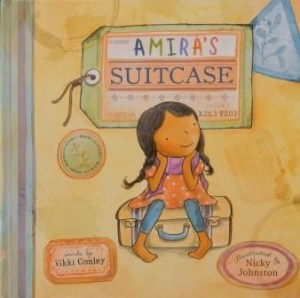
Amira’s Suitcase
Vikki Conley and Nicky Johnston

Set in what looks like a shanty town, this is a lovely story about what happens when a little girl makes an unlikely and unexpected discovery.

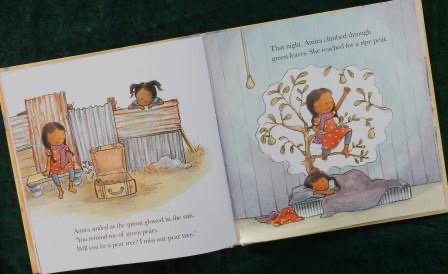
What is poking out from the corner of an old suitcase? Amira is intrigued to find a tiny seedling while searching for a hiding place. She makes friends with the little plant, tending it carefully: ‘Amira smiled at the sprout. She felt something blossom deep inside her.’

She takes the suitcase outside into the sunlight and is reminded of a pear tree she misses. The following day she takes her friend Nala to see the sprout and for her too, a memory is triggered.

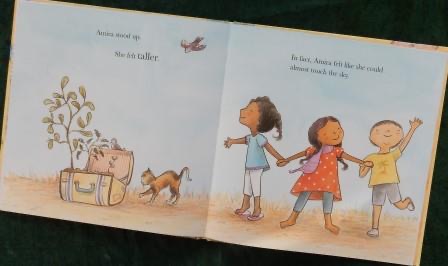
When she comes on a subsequent visit Nala brings something with her, something tiny that she drops into the suitcase. News of the enterprise spreads among the other children and they too add seeds to the case.

These thrive on the children’s tender care and a small green world is the result. Eventually the plants grow too big for their container and then it’s time to find them a new home.
Sensitively told and beautifully illustrated (each spread reflects the inherent warmth of the text), this hopeful tale of kindness and friendship is just right for sharing with foundation stage listeners.

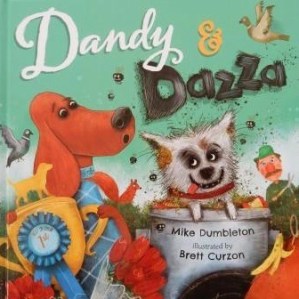
Dandy & Dazza
Mike Dumbleton and Brett Curzon

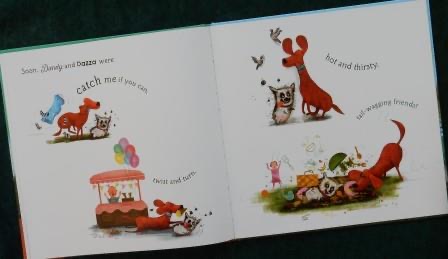
Meet dogs Dandy and Dazza. Dandy is well-behaved – a pampered pooch no less while Dazza is a mongrel – a rule-breaking, go crazy mongrel that can barely wait to get off his lead. One day they encounter one another at the park and despite their differences, a friendship is forged. To his pal’s surprise, Dandy discovers the fun in being a little bit crazy from time to time, while Dazza learns to keep his super-abundance of energy under control – sometimes at least.

With high energy illustrations that bring out the contrasting personalities of the two creatures this is an entertaining book about friendship and difference canine style.

Wild Days: Outdoor Play for Young Adventurers / The Gruffalo and Friends Outdoor Activity Book

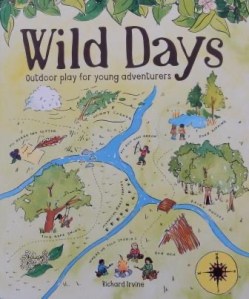
Wild Days: Outdoor Play for Young Adventurers
Richard Irvine
GMC Publications

The author of this super book runs Forest School training for new leaders as well as Forest School programmes so most certainly knows what he’s talking about. I was convinced of this as I read in the book’s introduction, ‘To be safe in the world, young people need to be allowed to take risks.’ In fact, wearing my teacher’s hat, I’d say that risk taking is key in any real learning, not only that which takes place outdoors.

There are three main sections ‘Making’, ‘Games and stories’ and ‘Exploring’; but before plunging into these it’s important to read the pages on responsible behaviour (Leave no trace being key), being prepared before setting out, suggestions for tools you might want to take along and what you might do with them.

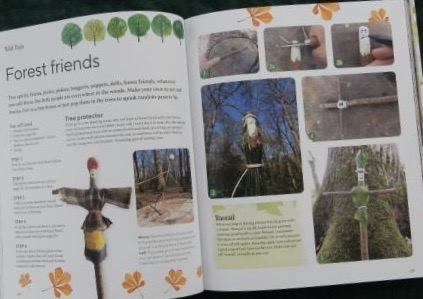
The Making activities vary from den building and campfire cooking to painting with natural materials. I loved the Forest friends spread, even more so the later suggestion that the characters created could be used in Storytelling, one of the ideas in the Games and Stories section.

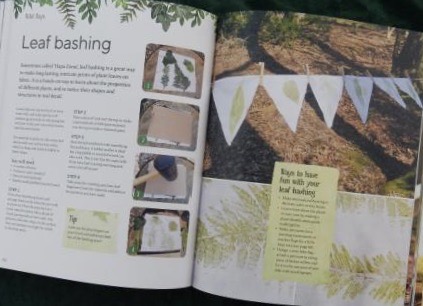
Another idea that I can’t wait to try with some youngsters is Leaf Bashing aka Hapa Zome – a method of making leaf prints that works well on old sheets or similar cotton material and of course, the bashing part is a great way of letting off steam and a terrific lockdown antidote.

A great group activity in the second section is a ‘Finding things’ Treasure hunt and with younger children especially, the author’s suggestion to stay in pairs is advisable.

Much of the third Exploring part is concerned with identification, be that of plants, birds and their songs, butterflies or invertebrates, but a gentle word of warning: it’s important not to get too obsessed with mere naming to the exclusion of observing and relishing the beauty of nature’s flora and fauna.

I could go on extolling the virtues of this cracking book but instead I’ll suggest that as well as families, all education settings add a copy to their collections, and start putting some of Richard Irvine’s ideas into action whatever the weather. Each one of them has a list of what you’ll need and step-by-step instructions as well as colour photographs. What better way to get youngsters of all ages outdoors learning through and about nature; in fact it covers pretty much every area of the curriculum.

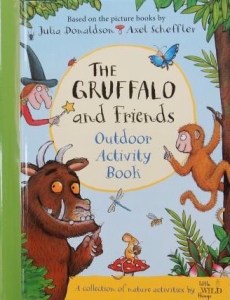
The Gruffalo and Friends Outdoor Activity Book
Julia Donaldson and Axel Scheffler
Macmillan Children’s Books

The twenty four activities in this spirally bound book have been created by Forest School specialists, Little Wild Things and are based on Julia and Axel’s The Gruffalo, Monkey Puzzle, Room on the Broom and Charlie Cook’s Favourite Book.

Each section has a context setting spread with a quote from the relevant book ‘A mouse took a stroll through the deep dark wood. / A fox saw the mouse and the mouse looked good.’ and every activity has a list of what’s needed, numbered ‘What to do’ instructions, hints and tips and some extension suggestions.

Whether used with a group or by an individual, there’s lots of fun learning across the curriculum herein.

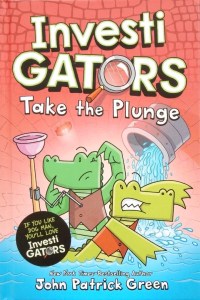
Investigators Take the Plunge

Investigators Take the Plunge
John Patrick Green
Macmillan Children’s Books

Top agents and crime busting alligator duo Mango and Brash have a new mission involving a rocket containing stolen code that can turn any machine into a combitron (a device able to stick any two things together). They are able to stop the rocket from causing total destruction in the city; but by inadvertently pressing the wrong button, they transmit the code and it falls into the wrong hands – those of a robot. YIKES! – a robot they most definitely have to track down.

There’s another problem though: also hunting for this bot is their arch enemy Crackerdile, ex SUIT agent and presently in a fragile, easily dissolvable state. This creature intends using the combitron to merge himself with something that would make him a while lot stronger and thus better placed to get revenge on the Investigators.

Then another wrong move while down in the sewers results in a flooded city and demotion for Mango and Brash who are replaced by the B-team (badgers).

Meanwhile some weird combinations have occurred:, a scientist now has banana hands and a plumber and an anaconda have combined. However, the A-team aren’t ready to give up that easily. Who will crack this increasingly crazy case: Team A or Team B or might a spot of collaboration work? …

Delivered in zany, graphic novel style, this is assuredly another fast moving instalment of mayhem and madness that’s brimming over with ridiculous names, puns and other rib-tickling wordplay. Moreover, it ends with an indication of more to come and that’s sure to be welcomed by fans.

Best Test

Best Test
Pippa Goodhart and Anna Doherty
Tiny Owl

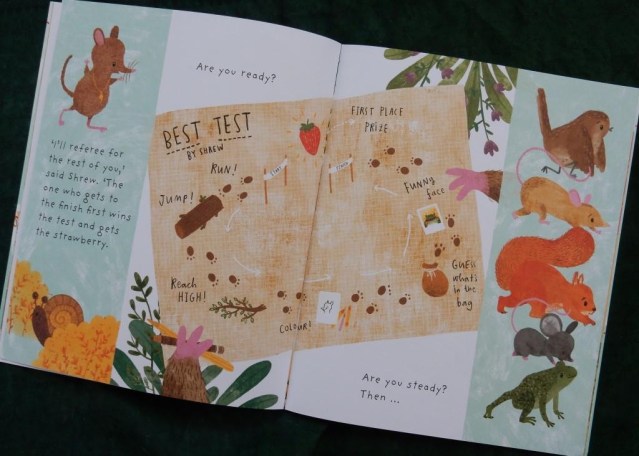
What does being best really mean? It’s the topic under dispute in this follow up to Pippa and Anna’s Fair Shares.

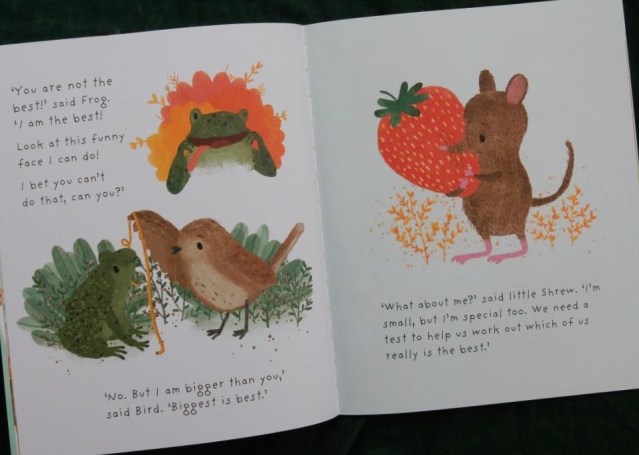
Bird finds a delicious-looking juicy strawberry just right for pecking, but other creatures have designs on it too. Frog is the first but Bird insists being ‘the best’ is entitlement to the entire thing and for the feathery one, “Biggest is best.’ Frog thinks best is all about pulling a funny face while little Shrew says that he too is special and a test will help them all decide which of them IS best.

After further discussion and negotiation as to what the the test will comprise, Shrew volunteers to act as referee and watched by an onlooker, Rat, Frog, Bird and Squirrel take their places at the starting line ready for the off.

During the test though, something unexpected happens: the animals start helping each other 

and they finish the Best Test race all together. So what about that prize strawberry?

Seemingly another animal has already crossed the finishing line ahead of all the others and is tucking into the much-wanted fruit. Despite protests, Shrew declares the winner to be Snail. Snail however, has something far more important to say on the definition of ‘best’.

Pippa’s thought-provoking story demonstrates that no matter who or what we are, just like the animals herein, each of us has our own particular aptitude. That’s life lesson number one, but equally, there are messages about collaboration and teamwork.

Anna’s illustrations are wonderfully playful: who can fail to smile at the sight of frog’s silly face demonstrations for instance, and the looks of consternation on the other competitors’ faces when the additional participant is discovered.

This book is full of potential for early years/ KS1 teachers but most important, it’s a smashing story to share with youngsters either at home or school.

Where the World Ends

Where the World Ends
Davide Cali and Maria Dek
Princeton Architectural Press

With nothing better to do on a sultry summer’s day but lie around watching and discussing the clouds, why not go on a quest to discover where the world ends. That’s just what three friends Zip, Trik and Flip decide to do in this quirky story, having first packed plenty of peanuts and other essential items such as skis, binoculars, pencils and paper.

En route they stop several times asking for directions and receive a number of less than helpful answers -“Why would you want to go there?”

… “not here for sure”, “You can’t … nobody has ever been there. I forbid you to cross here!” … “at the peak of a nearby mountain” for instance. One more considerate boatman does take them across a lake though, and others are a tad more obliging in their comments.

On trudge the three, meandering, like Cali’s narrative, hither and thither, over hill and down dale,

up mountains and down, through a forest until finally driven by the logic of children at play they find that which they seek …

It’s only by turning to the final endpapers that we see a child-like map of the route the friends have taken.
Yes, the ending is somewhat strange and some may not find it satisfying, although the adventurers certainly did.

Executed in watercolours, Maria Dek’s sunny scenes are delightfully whimsical making every one a place to pause and enjoy its inventiveness.

The Crocodile Who Came For Dinner

The Crocodile Who Came For Dinner
Steve Smallman and Joëlle Dreidemy
Little Tiger

Best friends, Hotpot (lamb) and Wolf are out doing a stint of ‘wolfy things’ one night when they come upon a huge egg. Wolf’s first thought is making an omelette, quickly countered by Hotpot’s “No … baby bird.”
Having ascertained from the nest dwellers close by that the egg doesn’t belong to any of them, the friends decide to take it home.
Before you can say, ‘yummy omelette’ the egg cracks and what should pop out but a baby crocodile. There’s only one thing the friends can call it and after discovering that the little creature is omnivorous,

they head off for some shut eye. Guess who makes a bid for Wolf’s bed. Eventually both Wolf and Omelette spend the night snuggled up together on a chair but somehow Omelette makes it to the kitchen first next morning – with chaotic results.

Just as Hotpot and Wolf are preparing to take the newcomer out for a walk, some wolf friends arrive at the door and receive some unexpected affection of the crocish kind. Their game of chase through the woods leads them down the river where Omelette alarms the boating bunnies by diving in for a swim.

Curmudgeonly Badger takes delight in pointing out that while Omelette might be harmless right now, he will grow and grow. Sure enough he does but remains totally lovable to all but Badger.

One night a terrible storm blows up and the forest is flooded. Worse though, Omelette has gone missing but he’s left a trail of footprints that lead to where we see, some baby ducklings are in great danger.
Can they be saved? And if so, by whom? …

Steve’s text is a superb read aloud: I’m sure both listeners and adult readers aloud will find it hilarious. Equally droll are Joelle Dreidemy’s illustrations which contain a wealth of detail and a liberal scattering of speech bubbles in this tale where appearances can be deceptive .

Molly and the Lockdown

Molly and the Lockdown
Malachy Doyle and Andrew Whitson
Graffeg

Molly and her mum and dad are island dwellers only now Dad is stuck on the mainland because the island – like many other parts of the world – is in lockdown. Inevitably Molly misses her dad who is staying with her Uncle Ed, though she talks to him on the phone and promises to do everything she can to help her mum.

Despite all the precautions taken, the virus reaches the island making a few people so sick they have to be taken to the mainland hospital.

With her mum assisting Nurse Ellen, there’s plenty to keep Molly busy. She does almost all the jobs around the house, cares for the dog and the hens, and makes masks for the islanders.

The lockdown drags on. School is closed so Molly chats with her friends on the phone, reads and rereads her books, does her jigsaws super fast, improves her fiddle playing and hears her Uncle Ed’s bagpipes in the background whenever her Dad rings.

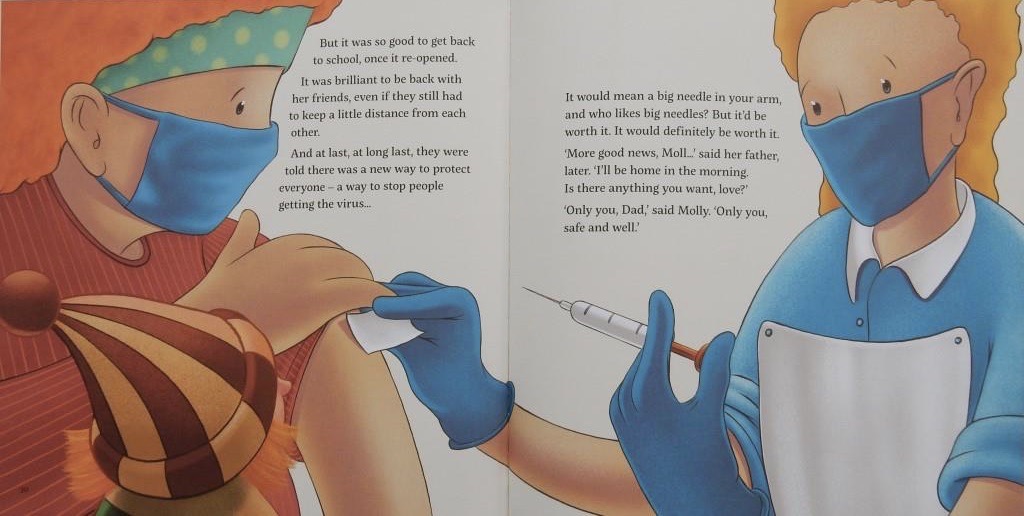
Eventually school reopens, albeit with precautionary measures in place, they hear good news about a vaccine

and finally, everybody goes down to the harbour to welcome home Molly’s father – hurrah!

Most of us have experienced a spirit of community during the last year: this is encapsulated in Malachy Doyle’s story of the lockdown, COVID 19 and the affects on a particular family and their small community. Molly’s anxiousness and concern – feelings that so many children have suffered – comes across clearly in Andrew Whitson’s, richly patterned illustrations. So too does the wonderful warmth of the islanders coping as best they can with the crisis.

An ideal book for sharing with children as we begin to emerge from the restrictions; it offers a great opportunity for them to talk of their own experiences and to share future hopes.

Esme’s Rock

Esme’s Rock
Simon Philip and Magda Brol
Oxford Children’s Books

Esme is a little cave girl with a lot of energy and curiosity and, a very powerful voice. That’s very useful if you want to ward off scary big creatures but definitely not so when it comes to keeping things secret. One thing she intends to do her utmost to keep her voice down about is the birthday surprise she’s organising for her best pal Morris the mammoth’s birthday.

Having wished him many happy returns, the transport arranged turns up to whisk Morris away for some pampering and she’s able to get on with carrying out the plans for the rest of the surprise. For this she has enlisted the help of her fellow cave people and they’re horrified at what the task entails in so short a time.

Come lunchtime it seems as though the painters are way behind schedule and Esme can’t keep her voice down any longer. What she yells echoes far and wide. Then, just when the painters are on the point of giving up their mammoth task, a party of strangers arrive armed with the necessary tools and it’s all systems go once more.

Finally it’s time for Esme to use that booming voice to summon Morris to his surprise celebration …
At last Esme’s voice comes into its own …

With Magda Brol’s exuberant illustrations, Simon Philip’s celebration of community spirit is a fun read aloud demonstrating that everybody has a special something to offer, albeit with a bit of channeling sometimes.

Jonathan! / The Best Mum

These are two recent paperback from New Frontier Publishing – thanks to the publishers for sending them for review

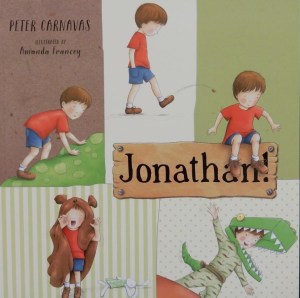
Jonathan!
Peter Carnavas and Amanda Francey

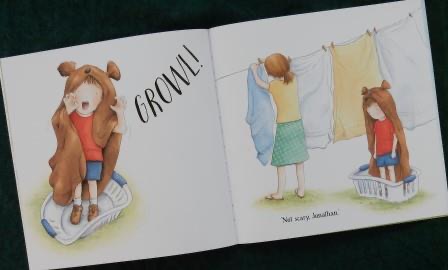
Jonathan has great fun dressing up in different costumes and scaring other members of his family when they least expect it. No matter what he wears the response from in turn his dad, sister and mum is “Not scary, Jonathan.’

Disheartened he walks away and soon discovers that he’s climbing a lumpy, bumpy hill. After a conversation boy and beast head back towards the house. Seemingly he’s now found the ideal scary trick.

Peter Carnavas’ simple rhyming story accompanied by Amanda Francey’s expressive watercolour and pencil illustrations make for a fun read aloud with a twist in its tail.

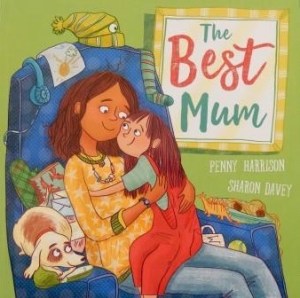
The Best Mum
Penny Harrison and Sharon Davey

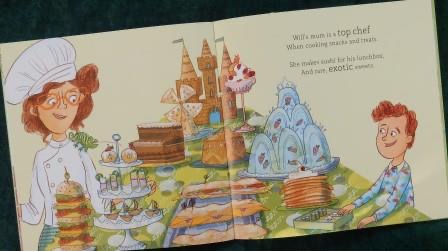
The little girl narrator of this rhyming story compares her mum to lots of others she knows, recounting the many ways her friends’ mums are better skilled than hers. But is there ever a perfect mum? Would she be the one who can make incredible costumes for dressing up days, or the one who roller skates gracefully, the disco dancer and pop song singer; is she the one who’s always on time or the baker of delicious treats?

Despite all her own mum’s shortcomings and embarrassing acts, at the end of the day she’s still THE best mum who gives the best cuddles. Who would have expected any other conclusion?

Lots of fun and a great conversation opener, and hilariously illustrated by Sharon Davey whose daft details are sure to make you laugh.

Fossils From Lost Worlds

Fossils From Lost Worlds

Fossils From Lost Worlds
Hélène Rajcak and Damien Laverdunt
Gecko Press

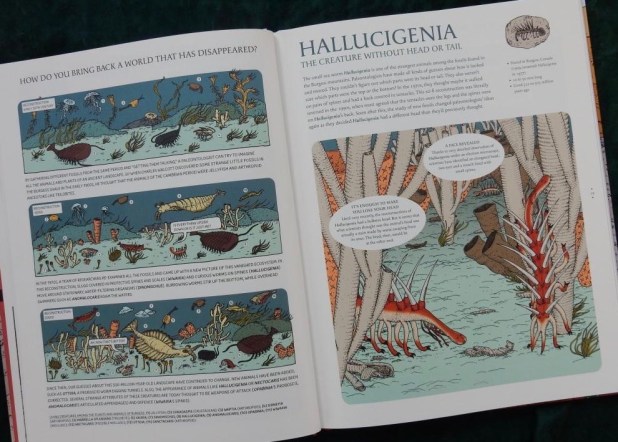
Immerse yourself in the world of palaentology with this large format book that provides youngsters with an accessible way to learn about fossils and geological periods.

The first spread is devoted to the diagrammatic representation of the geological periods after which readers travel through time from the very beginnings of animal life looking at the likely first organisms with each spread featuring a different prehistoric creature selected for its special contribution to scientists’ learning of palaeontology.

Yes, there are some of the expected familiar favourites including Archaeopteryx the oldest bird, Diplodocus, Stegosaurus and the iconic Tyrannosaurus; but many of the less well-known species are new to me and probably many other readers. There’s the invertebrate Anomalocaris: since 1978 palaeontologists agree on what it looked like, but its behaviour is still the subject of discussion.
Another creature – Hallucigenia – has been the topic of much dispute in particular which end was the tail and which the head 

and there was also confusion as to what were tentacles and what were legs. Happily now thanks to electron microscopy these mysteries have been resolved.

The fossilised footprints found in Thuringia (Germany) were a mystery to scientists for over 130 years and it’s since the 1960s that it was decided that these were made by the reptilian Ticinosuchus. 

The last animal we encounter is possibly the largest ever land mammal Paraceratherium, the hornless cousin of the rhino thought to have a flexible upper lip which it used to pluck leaves and grass in similar fashion to rhinos of today.

Every one of the animals represented is allocated either one full page depiction or a full page illustration opposite which is a sequence of smaller panels adding to the overall visual appeal of the book. Each is also accompanied by a written description as well as helpful bullet points setting out where the fossil remains were found, crucially, its size and when it lived.

Alongside the animals, we also meet some of the associated palaeontologists including Georges Cuvier, Othniel Charles Marsh, Clive Forster-Cooper and the person whose name is familiar to most readers, Mary Anning, each of whom is introduced in amusing graphic style comic strip format.

The final two double spreads comprise a time line of palaeontology from the 5th century to 2017.

Most young children are dinosaur and prehistoric animal mad; this book will take those with an abiding interest in the topic, deeper in and further back in time.

Wigglesbottom Primary: Dino Chick / Wulfie: Beast in Show

Wigglesbottom Primary: Dino Chick
Pamela Butchart, illustrated by Becka Moor
Nosy Crow

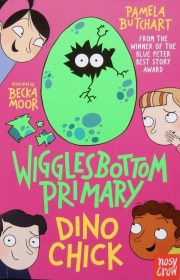
This contains three more episodes in the life of Class Two R and once again they’re in high spirits. At least that’s so in the first story when they learn from Miss Riley that she’s installed an incubator within which are four chicken eggs. They’re less excited to hear that the eggs will take several days to hatch especially when later in the day it comes to their notice that one egg has mysteriously changed colour. Miss Riley sits them down and tells everyone not to touch any of the eggs. Megan decides that the purple and green egg must contain a dinosaur. What a terrifying thought. Several days later three of the eggs have hatched and three fluffy chicks are in the incubator. Suddenly egg number four starts to crack … YIKES! what will emerge?

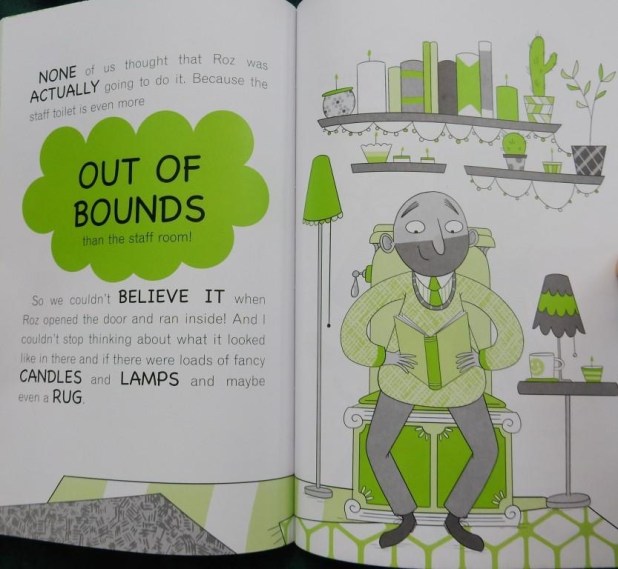
In the second story there’s a new girl in the class. Individuals take turns to show her parts of the school, including some that are strictly out of bounds. 

It’s an unlikely way to make somebody feel welcome but who gets the biggest surprise of all?

The final tale starts with the discovery that the school library is to close due to lack of funds. Can 2R come up with a plan to save it and keep Mr Hope in his job?

Another three wonderfully silly stories for new solo readers (or to read aloud) that show how easily children’s vivid imaginations can spiral into comedic craziness, a craziness that is echoed in Becka Moor’s lively illustrations.

Wulfie: Beast in Show
Lindsay J. Sedgwick, illustrated by Josephine Wolff
Little Island Books

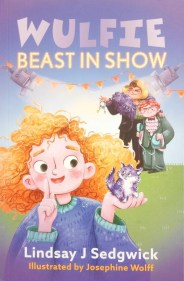
Libby and her beloved purple fluffy best friend, Wulfie (Wolfgang Amadeus Rachmaninoff the Third) return in a second adventure. Libby’s unpleasant stepmother announces the imminent arrival of her older sister, Aunt Ilda. A fanatical dog breeder, she’s determined to win the SNOB prize in the forthcoming dog show to be shown live on TV. Concluding that her failure to win on previous occasions is due to not having a child assistant, she wants to enlist Libby’s awful, spoilt step-brother Rex.

Libby knows she must try to ensure that with Wulfie being so dog-like in appearance, he stays out of sight during the visit. No mean task as the wulfen’s behaviour is, let’s say, somewhat unpredictable and he can sometimes change size at the most inopportune times. 

Times such as his emergence from the washing machine right in front of Aunt Ilda who immediately decides that Wulfie must be her entry in the dog show. And if taking Libby as well as Wulfie and Rex away with her is what it takes, then so be it. 

What she doesn’t know however, is that in addition to his size changing and talking, Wulfie’s sneezes freeze time.

When Libby hears the words, “Your creature belongs to me now, runt, and he is going to make me more famous than any other famous person ever in the whole world.” she knows that Wulfie desperately needs to be rescued. 

But perhaps not before he’s had the chance to make Aunt Ilda look a complete fool on television.

Another fun, action-packed drama with some rather unpleasant characters, as well as the determined, lovable Libby and her equally lovable bestie, all splendidly illustrated by Josephine Wolff.

The Great Barrier Reef

The Great Barrier Reef
Helen Scales and Lisk Feng
Flying Eye Books

Located off the coast of Australia, the Great Barrier Reef, the subject of this large format book, truly is one the world’s natural wonders. We read first about how the reef was formed and are introduced to the different types of coral, their structures, and how corals can multiply and spread. In order to discover the reef close up though, it’s necessary to be a qualified diver and scientists now have sophisticated equipment allowing them to spend longer and to go down deeper than ever, as is explained in one of the early spreads.

The second of its five sections is entitled Reef Dwellers and therein readers are introduced to the inhabitants both fauna and flora – of the reef and its environs. 

It’s truly amazing just how many fascinating species live on and around the reef from small molluscs to mammals such as whales, some of them in symbiotic partnerships; one tiny reef island, Michaelmas Cay is home to thousands of birds. I was surprised to discover that night is often the most active time on the reef when a wonderful array of nocturnal creatures are hunting.

It’s not only the reef ’s natural history we learn of though. There’s also information about the culture and traditions of the Aborigines and Torres Straight islands.

Unfortunately however the reef is under threat, due largely to climate change as a result of the burning of fossil fuels : an increase in ocean temperatures and acidification endanger its very survival and that of the marine life that depends on it. The book ends with a look at what has already happened and what can be done to save the reef.

Throughout, the author, marine biologist Dr Helen Scales shares her knowledge and enthusiasm writing in an accessible style that will enthral primary age readers. Arresting illustrations by Lisk Feng showcase the awesome array of life of this remarkable World Heritage Site, while the entire design of the book is of the exemplary quality one associates with Flying Eye publications.

Willow Moss and the Vanished Kingdom / Agent Zaiba Investigates: The Haunted House

These are new additions to popular series both with strong, determined female protagonists

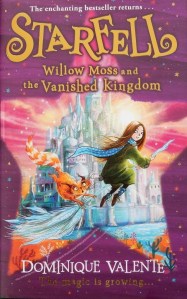
Willow Moss and the Vanished Kingdom
Dominique Valente, illustrated by Sarah Warburton
Harper Collins Children’s Books

This is the third instalment in the Starfell series, starring young witch Willow Moss and her kobold best friend, ‘not cat’ Oswin.

Now Willow has been enrolled in school – a normal school – and it’s the very first time the Brothers of Wol, the order newly headed by none other than Silas, have allowed Starfell’s magical children to be educated alongside their non-magical peers, and her parents think it’s now the right thing. Surely there’s an ulterior motive? Willow has her suspicions from the outset.

On the very first day of term Willow meets Twist, a forthright elf girl and they soon become firm friends. Also willing to accept Willow for who she is, there’s Peg, a human boy. When she learns of the new curriculum that students will study Willow finds it pretty alarming, but Peg speaks out firmly in support of ‘magic people’ and of diversity.

Before you can say ’broomstick’; though, the three of them have escaped the confines of the classroom and are heading to Lael, the elf city made entirely of marble wherein Twist’s aunts Tuppence, Griselda and Dot reside.

All they have to do thereafter is to find the vanished elvish kingdom of Llandunia and get hold of the elf staff before it gets into the wrong hands. Not much to ask then.

Dragons, trolls (including an old friend of Willow’s) and more – even Oswin’s cousin – appear in this terrific fantasy tale, but be warned: it ends on a cliff-hanger.

Somehow, despite Sarah Warburton’s illustrations, the cover apart, being in black and white, many readers will I suspect experience parts of this enormously engaging story in colour, such is the power of Dominique Valente’s writing. Bring on the next book.

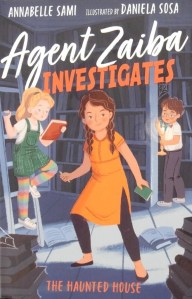
Agent Zaiba Investigates: The Haunted House
Annabelle Sami, illustrated by Daniela Sosa
Little Tiger

Zaiba has a third case to solve and it’s set in the home of her new friend Olivia. Olivia’s parents have recently bought the run-down Oakwood Manor and Olivia tells Zaiba that her mum thinks the house is haunted. With its plethora of secret passages and hidden rooms it is certainly steeped in history and some strange things have happened but ghosts? Surely not.

Olivia invites Zaiba and Poppy her pal, to come to the house-warming party the following day and then sleepover, as that offers the ideal opportunity to begin their ‘ghost’ investigation. Zaiba has an unexpected offer of assistance from her brother Ali and with her backpack of detective paraphernalia, and fellow Snow Leopard Detective Agency UK members they’re ready to investigate.

Once the party is underway, things get increasingly weird

and sometimes, a tad dangerous. There are plenty of suspects, and in true detective story style, some red-herrings; but this isn’t merely a junior who-dunnit with all suspects present at the final reveal. Zaiba’s family dynamics and the diverse cast of characters add to the reader’s enjoyment of this fast-paced mystery. So too do Daniela Sosa’s black and white illustrations sprinkled throughout and it was good to see the police treating the crime-solving children with respect rather than dismissing them as interfering.

Young would-be sleuths can also enjoy the additional content after the story.

Turtle Rescue

Turtle Rescue
Jonny Marx and Xuan Le
Little Tiger

I suspect the burgeoning of picture books telling of the plastic pollution of the oceans is indicative that the problem is on many people’s minds. Sadly though, not those who continue to throw rubbish onto the beaches or in the sea. One can but hope that Jonny Marx and Xuan Le’s Turtle Rescue will help in this hugely important environmental cause.

Flora, marine biologist and ace underwater swimmer, Fauna, inventor and turtle lover, and their child, Baby Bud, are holidaying at the seaside intending to take it easy for a while. That isn’t what happens however.

Soon they find themselves helping with a rubbish collection during which they’re told it’s hoped it will help bring back the turtles to lay their eggs on the sandy beach once more. Before long the three of them have packed supplies, chartered a boat and are sailing off to investigate the lack of turtles.

As they sail towards the reef, Bud is excited to see all the different sea animals and plants and keeps pointing out what he calls ‘jellyfish’ – the floating plastic bags he insists on counting. Eventually Flora sights a turtle

and carefully follows it until she runs out of air. Back on board the boat again, it’s obvious a storm is looming but eventually it blows itself out and there ahead is an island. Just the place to stop and let Fauna’s queasiness subside. Imagine their delight when Bud notices tracks in the sand leading right across the dunes at the end of which are …

After an eventful and hugely exciting trip, with sail duly repaired, it’s time to head home.

There’s an amazing amount of information about turtles and other marine wildlife packed between the pages of this fascinating part fact, part fiction book.

Science and Me

Science and Me
Ali Winter and Mickaël El Fathi
Lantana Publishing

Following their Creators of Peace, author Ali Winter and illustrator Mickaël El Fathi present profiles of thirteen more Nobel Prize winners, this time for their work in medicine, physics and chemistry.

Coming from all over the world and starting with Marie Curie (1903) and concluding with Donna Strickland (2018 winner for laser technology), each of the laureates is given just one double spread so there’s only space for a brief biography that focuses as much on the dedication and challenges overcome as the individual’s discoveries / achievements and the social impacts thereof. For example, it took decades for the discovery of Subrahmanyan Chandrasekhar relating to ‘black holes’ to be recognised.

Michaël El Fathi takes a key moment or element from each featured life as the basis for each collage illustration: for Youyou Tu it was the ancient book mentioning ‘Qinghao’, the Chinese name for herbs in the Artemisia family. From these could be extracted Artemesinin, the drug that has subsequently prevented over two hundred million people worldwide dying from malaria.

I particularly like the way in which the author involves readers in considering what science contributes to making the world a better place for us all; she does so both through the title lead in to each of the scientists as well as through the summation on the final spread, the last line of which asks “What does science mean to you?

Never Mess with a Pirate Princess

Never Mess with a Pirate Princess
Holly Ryan and Siân Roberts
Little Tiger

Princess Prudence is a loving little miss who dotes on her royal bear, Little Ted, taking him absolutely everywhere with her – even the loo. Then comes the terrible day when, as she naps ‘neath a shady tree, up creeps a pirate and boldly steals her beloved Teddy right off her lap.

Distraught, Princess Prue hollers so loud that up charges a gallant knight offering to come to her aid. 

Eager to be part of the rescue effort, she pleads with Sir Frank to take her along but meets merely with scorn.

Undaunted plucky Princess Prudence decides to do things her way and off she goes upon a trusty, wait for it … goat! Having searched for most of the day to no avail, she reaches the seashore and what does she spy: somebody being forced to walk along the plank – somebody she recognises – a knight in shining armour no longer.

But our Prue isn’t one to let a gang of teddy robbing pirates get the better of her, or even Frank …

Debut picture book writer Holly Ryan’s rhyming text is a rollicking read aloud and in Princess Prudence she has created a gutsy gal to delight adventure-loving, teddy-hugging little ones. Siân Roberts’ portrayal of the princess and her adventure is terrific fun with every spread providing giggle-worthy incidents from this stirring romp.

No More Babies!

No More Babies!
Madeleine Cook and Erika Meza
Oxford Children’s Books

Sofia finds her baby brother exceedingly annoying. On this particular day he smashes down her amazing brick construction, starts a food fight, makes a terrible din on a drum and just when mum and dad are ready to read her a story, he diverts their attention by needing a nappy change.

After all this, her parents’ news that she’s going to be a big sister again, doesn’t go down at all well. “No more babies!” she yells at her bemused mum and dad who now offer a sympathetic ear. Sofia’s account of the morning follows and then cuddles and lots of special attention for the little girl.

Suddenly Arlo surprises his sister and after that she begins to feel much more positive about him. Despite his continuing messiness, smelliness and slobbering, Sofia decides she loves him very much, telling her parents at bedtime, “Okay, you can have one more baby,” …

There’s a throwaway line surprise finale that will surely make both adults and young listeners laugh when they read this funny book.

With Erika Mesa’s wonderfully expressive illustrations it’s one for families to share when a new sibling is on the way, as well as a good foundation stage storytime read aloud especially if somebody in the group is in a situation similar to Sofia’s; or as part of a family theme.

Old Mother Hubbard’s Dog Takes Up Sport / Old Mother Hubbard’s Dog Learns to Play

Old Mother Hubbard’s Dog Takes Up Sport
Old Mother Hubbard’s Dog Learns to Play

John Yeoman and Quentin Blake
Walker Books

The laugh-out-loud antics of Old Mother Hubbard’s Dog take the form of a variety of playful activities in these two paperbacks.

In the first, Old Mother Hubbard is unhappy at the sight of her canine companion merely lazing around all day and suggests he get up out of his chair, set aside his book and do something more active. And so he does. First it’s tennis (over her full washing line), followed by a spot of pole vaulting, then soccer – with very muddy results.
Having had a bath beside the fire the daft creature heads outside again and further athletic mayhem ensues including putting the shot using live projectiles.

Eventually, unable to stand any more, Old Mother Hubbard orders Dog inside and suggests a much more sober activity.

The second episode begins with Dog in his favourite chair reading once more. Old Mother Hubbard expresses a wish that he “learn how to play.” Before you can turn around she hears a raucous rendition on a flute, closely followed by various other musical instruments. 

Greatly regretting her ill-chosen words, Old Mother Hubbard is at a temporary loss to know what to do, but is ready to try anything including some drupe diversion tactics …

Brilliant nonsense both in John Yeoman’s rhyming narrative and Quentin Blake’s exuberant portrayal of the canine capers; adults and children will love this craziness. Don’t miss the back endpapers.

Beatrix and her Bunnies

Beatrix and her Bunnies
Rebecca Colby and Caroline Bonne-Müller
Nosy Crow

For many adults, myself included, Beatrix Potter’s animal stories and nursery rhyme books were part and parcel of childhood. Indeed I had the entire set. How many though, are aware that Benjamin Bunny and Peter Rabbit were real live creatures that the author befriended as she was growing up. That’s getting rather ahead though, for this pictorial biography of Beatrix starts with her childhood when she lived a rather lonely existence in a large London house. Even then she was an animal lover and had lots of small creatures as pets, but nonetheless she longed for a ‘special friend’ with whom she could play.

Rebecca Colby writes of how on family visits to the countryside, Beatrix would search for wild rabbits to play with but none would stay. None that is until Benjamin. A friend at last and one that would allow his carer make lots of sketches of him, honing her drawing skills in so doing. Inevitably though, Benjamin eventually dies and once more, Beatrix feels lonely. She uses drawing and painting to lift her spirits but, it’s only when she visits the countryside that Beatrix’s drawing really flourishes.

Some time later, another rabbit enters her life, it’s Peter, a truly playful and engaging creature, much loved by visiting children.

This gives Beatrix an idea. Perhaps she can write and illustrate a story about her much-loved bunnies so that children everywhere could read about them, and so she does.

Getting Peter’s adventures published is challenging but eventually she succeeds and the book becomes a huge success, allowing her to move to the countryside where she creates lots more stories.

A lovely book for young enthusiasts of her books and of the environment about which Beatrix cared so much. The elements of Beatrix’s life are beautifully interwoven by the author, who also provides an additional final note explaining Beatrix’s connection with the National Trust (who are collaborators in its publishing) – and equally beautifully illustrated by Caroline Bonne-Miller.

Frog vs Toad

Frog vs Toad
Ben Mantle
Walker Books
Seeing beyond our differences lies at the heart of Ben Mantle’s splendidly silly fable.

It begins when an unassuming fly is zapped by the tongue of Frog, followed shortly after by a second attack from the opposite side, this time by Toad. A nightmare situation for sure but what the fly says …

precipitates a set to between the two amphibians both of which feel grossly insulted by the fly’s remark. A tirade of verbal insults are hurled and the squabbling continues

until they reach the swamp where things get even more heated when Frog issues a final threat followed shortly after by some mud slinging of the physical kind, triggering a free for all with everybody joining in.

Both sides are so busy SLIP! SPLAT! SPLOTCHING and SQUELCHING that they fail to notice the approach of a large grumpy reptile displeased at being aroused from its slumbers. Quick to jump to their own defence Frogs and Toads blame one another but the jagged-toothed creature tells them something that comes as a huge surprise.

Both Frog and Toad are ready to accept one another as family members and apologies ensue, followed by some words of thanks to their informer. But that’s not quite the end of the story …

This is the first picture book for which Ben Mantle has written his own words. Being both a cracking storytime read aloud, and with an abundance of droll details – small and large – in every scene it’s a definite winner with me.

Look What I Found in the Woods

Look What I Found in the Woods
Moira Butterfield and Jesús Verona
Nosy Crow

‘Follow me. I know the way. / We’re walking in the woods today.’ So says the child narrator of this book.
The woods are my favourite place to walk and during the pandemic I’ve spent a lot of time so doing in woodlands close to my home, always returning home feeling considerably uplifted. Consequently I was more than happy to take up the invitation to participate in this woodland foray with the three child adventurers shown on the first spread.

Readers are immediately engaged by means of an insert in the bottom right-hand corner that asks us to find one signpost, two butterflies and three bright yellow flowers.
The second spread shows the children making observations while the text provides facts about the trees and a sidebar showing labelled tree shapes.

The subsequent spreads alternate between these two styles of layout

as readers learn about leaves, bark,

fruits and seeds, fir cones and shells while the children continue their exploration discovering exciting ‘treasure’ throughout their walk; treasure that they present on the final spread once back indoors.

This highly engaging nature book published in collaboration with the National Trust, successfully mixes story, non-fiction and search-and-find. Jesús Verona’s illustrations are an absolute delight. Each one offers an immersive scene to linger over and wonder at the fine detail included; and the final endpaper shows the children’s creative efforts with some of their findings.

Beyond the Burrow

Beyond the Burrow
Jessica Meserve
Macmillan Children’s Books

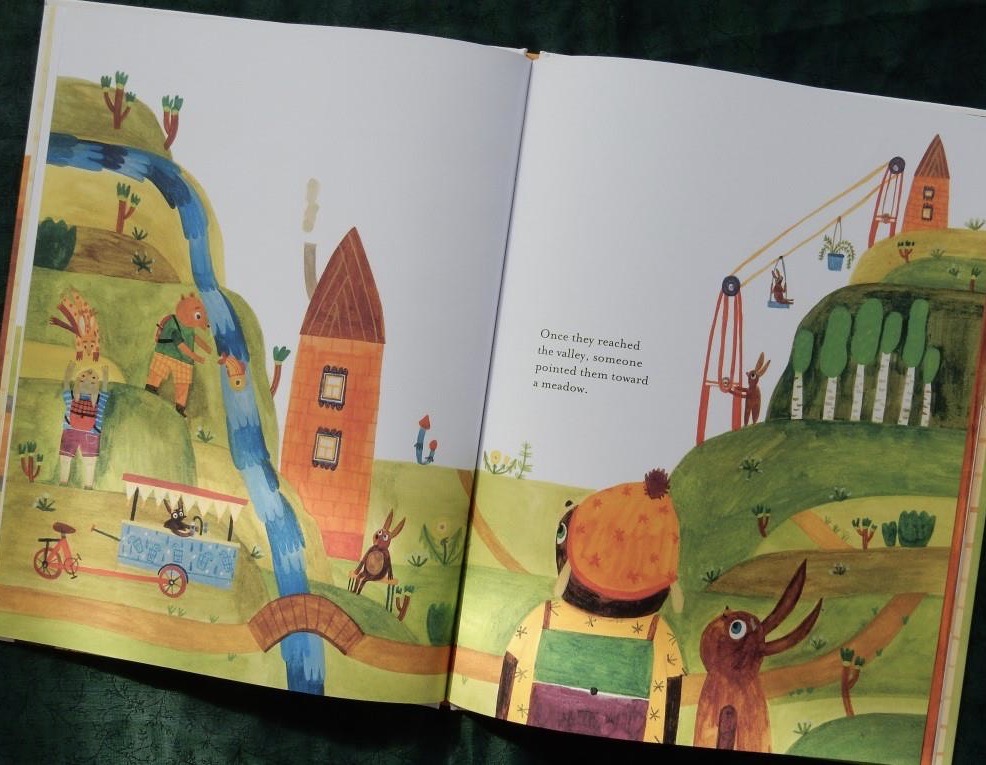
Rabbits prefer to stay close to their cosy burrows with other rabbits for company and juicy carrots for sustenance. When it comes to other creatures, particularly large hairy ones with claws, they’re considered terrifying, avoid at all costs, beasties.

When the Rabbit protagonist in this story discovers what looks like the most delectable breakfast carrot, little does she know that it’s about to change her life.

In attempting to reach said carrot, she takes a tumble and finds herself entering the wrong hole. Not only that but when she emerges it’s to feel herself plunging into the depths of a river. Happily she surfaces and is able to cling tight to a passing log but she’s far from her burrow. But then comes a face-to-face encounter with a not-rabbit that has all the alarming features Rabbit most fears.

Time to make a rabbity leap for safety and dig for all you’re worth.

Is this the end for our long-eared friend? She fears it might be so. Instead however, the not-rabbit pushes something towards her and such is Rabbit’s hunger that she risks a tiny bite.

Then follows an entirely new, brave idea that results in her climbing way up out of her comfort zone until she sees …

Despite claws and hairiness, the giant not-rabbit turns out to be ‘no so very scary’. Likewise the other not-rabbits that have gathered up in the treetops. Mutual acts of kindness ensue and Rabbit decides that falling can sometimes be fun.

That night though, she stays awake thinking about home and come morning, she spies a familiar sight far away. Time to try to reach it, but with friends in tow everything feels less scary

and eventually her burrow is in hopping distance …

Can things get any better? Perhaps, but to find out, you’ll need to get hold of a copy of Jessica’s book …

With plenty of dramatic moments, and full of warmth and humour, the story is huge fun to read aloud. Jessica’s depictions of ‘NOT very rabbity’ behaviour and indeed the antics of the treetop dwelling menagerie are highly entertaining. So too are the plethora of signs scattered strategically in various places throughout Rabbit’s adventure.

Toddler Bookshelf

The Great Big Egg Hunt
Ekaterina Trukhan
Nosy Crow
It’s a special egg hunting day with Rabbit and her friends. Having collected her basket, Rabbit and readers start the search. First Chick joins in and they search the bathroom where they discover Duck but no eggs. The search continues in the kitchen then moves out into the garden where eventually, after a few false starts, the five friends have an egg each. Hurrah!
With its simple, predictable text, plenty of flaps to explore and cute illustrations, little ones will enjoy participating in this seasonal search-and-find game.

Not quite a board book but sturdily made is:

Pip and Posy: The Friendly Snail
Axel Scheffler and Camilla Reid
Nosy Crow
Best friends Pip and Posy are spending time together outdoors in the garden. Pip is enjoying a spot of peaceful gardening but Posy is in a noisy mood banging and bouncing around. Suddenly Pip discovers a friendly snail while Posy continues with her noisy play, even frightening the snail back inside its shell. Enough is enough: Pip tells Posy to go away and upset, she disappears somewhere leaving Pip to continue with his work. So engaged is he that he fails to notice another creature getting ever closer to the snail. Happily Posy has been watching and now has the ideal reason to make a lot of noise …
An engaging tale illustrated in Alex’s trademark style, demonstrating an important life lesson: differences should be valued if friendships are to flourish.

Sleep, Cat, Sleep
Antje Damm
Prestel
The cat in this little board book is not happy; he’s trying hard to sleep but the fact that somebody has opened the first page has roused him from his slumbers. He tries hiding and pleading, which seem to do the trick, but then the page is turned again and those delightful dreams disappear. However the sleepy creature perceives that the destroyer of his dreams is now also rather in need of some shut-eye – maybe it’s time to turn the tables …
Simple, playful, interactive fun for pre-bedtime sharing with sleepy little humans.

A Little Snail Book: Hide-and-Seek
Shasha Lv
Chronicle Books
Bear is playing hide-and-seek with his friends, Little Mouse, Little Turtle, Little Cat, Little Duck, Little Pig and Little Snail. Despite their best efforts he successfully finds all but Little Snail. The other animals are amused at the fact that the tiny creature is hiding in plain sight and little humans will have a good giggle at the fact that the smallest animal can outwit the seeker. It’s he that acts as narrator sharing his search in a simple first person narrative throughout the game.
Silly but lots of fun; Shasha Lv uses a limited colour palette effectively in her amusing scenes of the animals’ game.

Brookie and Her Lamb / Fish For Supper

Many years ago I was fortunate to meet M.B. Goffstein in The Children’s Bookstore in Brookline Village near Boston and she signed copies of two of her books – My Noah’s Ark and Natural History both of which I have treasured ever since.

So, I was excited to see that The New York Review Children’s Collection are bringing back into print two of her picture books first published over 45 years ago

Brookie and Her Lamb
Fish for Supper

M.B. Goffstein
The New York Review Children’s Collection

Brookie and her Lamb is a classic tale of a little girl’s unconditional love for her lamb. No matter what she tries to teach him – be that to sing or to read, even to sing songs from a music book, the only sound that emanates from the creature is ‘Baa, baa, baa.’ Nonetheless, despite being a little disheartened, she takes him for a walk to the park, which lifts her spirits. Back at home, she also goes to great lengths to show her appreciation of her friend, providing him a special spot with all the creature comforts a lamb might need,

and a great deal of tenderness too. Sweet and enchanting.

Subtle and utterly delightful in its quirkiness is the story of a grandmother’s daily routine, Fish for Supper. (A Caldecott Honor book 1977).
Of the narrator’s grandmother, we learn that she rises early, makes herself some breakfast, washes up, dons her sunhat and heads off to the water. There, with her simple fruit lunch and fishing gear, she gets into a rowing boat and spends the day fishing on the lake.
Come the evening she heads home carrying her catch in a can. She cleans the fishes then, fries them,

consumes them with care, washes up and goes to bed. Next morning she does the same … .
The characteristic spare line drawings herein are examples of perfect simplicity.

I suspect these little books will probably be of most interest to those studying children’s literature and or, art.

Fletcher and the Caterpillar

Fletcher and the Caterpillar
Julia Rawlinson and Tiphanie Beeke
Graffeg

For those, like this reviewer, meeting the main protagonist for the first time, Fletcher is an inquisitive little fox, and a bit of a worrier. His new story starts in the spring with the observant vulpine noticing that while everything else in the wood is growing, there’s one green leaf that is actually getting smaller. On investigation, he discovers a tiny caterpillar having a nibble. Friendly as always Fletcher, with the aid of his other animal friends, tries to involve the caterpillar in such activities as racing, boating

and hide and seek, but all the caterpillar is interested in, is munching.

One day though, the munching stops; the little creature is still and silent. Fletcher’s Mum reassures him that it’s normal caterpillar behaviour

but the cub is still concerned for its well-being, watching over it until he falls fast asleep.

Overnight a change occurs mystifying Fletcher but again his Mum tells him it’s what caterpillars do and soon he’ll have a wonderful surprise.

After a long, long wait, sure enough he does.

With Julia Rawlinson’s sweet, gentle nature narrative she paints a picture of friendship and of spring; a picture that is echoed in Tiphanie Beeke’s soft, textured, sun-infused art, which shows so well the colours and joys of its seasonal setting and one of nature’s wonderful mysteries.

Not In That Dress, Princess!

Not In That Dress, Princess!
Wendy Meddour and Cindy Wume
Otter-Barry Books

Full of spirit and exuding energy from cover to cover, this is the story of how a strong-minded young Princess Bess tosses aside gender stereotyping norms – “There are things we DON’T DO in a dress!” …

“a princess must always impress” and does exactly what she wants to do, proving that dress notwithstanding, there is absolutely nothing, this determined female can’t do.

Her brothers, the princes More and Less, along with a host of animals large and small, watch in awe as she scales tall buildings, hikes, skis through a storm, goes on safari,

cavorts with a wizard and much more.

Eventually the queen, her highness Gloriana Stephaness, realises that it’s a case of no holds barred: her daughter’s behaviour IS truly impressive. She even decides to make a public announcement concerning dress code; moreover it’s not long before other, unlikely royals, are also sporting dresses.

Wendy Weddour’s jaunty rhyming narrative will have young listeners joining in with the oft repeated “in my dress” as they relish the sight of Bess (Cindy Wume shows her in a different dress for every activity) having the most incredibly exciting time beyond the confines of the palace.

I’ve always had a soft spot for children – real or in stories – who push the boundaries, challenge and subvert pointless rules and are ready to break out of their narrow confines: Bess joins their number

A Poem for Every Spring Day / The Best Ever Book of Funny Poems

Here are two recent poetry collections from Macmillan Children’s Books – thanks to the publishers for sending them for review

A Poem for Every Spring Day
ed. Allie Esiri

This is the third in the seasonal series – almost every one of which is taken from Allie Esiri’s A Poem for Every Day of the Year and A Poem for Every Night of the Year and once again it’s brimming over with poetry to lift your spirits.
Among the offerings herein you’ll certainly find many old favourites – lots took me right back to my days in primary school and even before that when my dad read A.A. Milne and Lewis Carroll aloud to me, as well as unearthing some new treasures.
As with the Autumn and Winter books, there are two poems for each day from 1st March through to the end of May and again Allie provides an introductory paragraph for each of her selections. Most of us associate spring with new life and yes, there are plenty of entries reflecting that aspect of the season but it’s more than just longer days, birdsong and buds opening and A Poem for Every Spring Day reflects this. There are poems commemorating specific occasions such as Rachel Rooney’s First Word (After Helen Keller) where she writes of Helen feeling water flowing from a pump with one hand while the letters for ‘water’ were spelt on her other palm. That moment took place on April 5th.
Another one that is hugely moving and also new to me is Duranka Perera’s Bitter State. The poet is also a doctor living in the UK and native of Sri Lanka where horrendous terrorist attacks took place on 30th March. It begins thus: ‘I was angry when it happened. / I was angry when the numbers continued to rise. / I was angry when bitter tongues lashed old wounds. / I was angry when a dying monument drew more /money than / The dying themselves.’
From John Agard to William Wordsworth, whatever your taste in poetry, there will be plenty to savour in this collection.

The Best Ever Book of Funny Poems
chosen by Brian Moses

Poet Brian Moses has chosen an assortment of splendidly silly poems for this compilation of over a hundred giggle inducers.
The selection has ten sections, each named with a line from or title of, one of the poems included. Thus for example we have ‘The red ear blows its nose’ from Robert Schechter’s What’s Mine for the first – Silly and Even Sillier Poems.
The teacher part of me wanted to turn next to the Headmaster’s Welcome where among the thirteen I totally loved Brian’s own The School Goalie’s Reasons
The writer/reviewer part of me just had to turn next to the Fantasy and Fairy Tales offerings where there are some terrific four liners including Rachel Rooney’s Epitaph for Humpty Dumpty: ‘ Beneath this wall there lies the shell / Of someone who had talents. / But (as you can probably tell) / One of them wasn’t balance.’ What a great starting point for a bit of epitaph writing in the classroom using a nursery rhyme theme. On the subject of the classroom, in the Funny Poems About Poems section is Joshua Seigal’s terrific I Don’t Like Poetry that offers a smashing lesson on similes, metaphors, alliteration, onomatopoeia and repetition. An invitation to youngsters to play around with words for sure.
Should your taste be more for pets, dinosaurs, family, space or things spooky, never fear: you’ll find all these covered too.
We all need something to cheer us up at the moment so why not start with this collection: it will long outlast the current pandemic however.

The Tale of the Whale

The Tale of the Whale
Karen Swann and Padmacandra
Scallywag Press

Karen Swann’s lyrical story begins with a child on a lighthouse spying a whale out at sea, a whale whose sweet-sounding song calls the child to climb aboard its back and join it on an amazing marine adventure.

An adventure through marine waters that turns from the utter heartfelt joy at seeing the incredible life under the ocean – the stunning colours, the octopus,

turtles, rays, dolphins and more to shock horror and understanding when the whale opens wide its mouth to eat.

This is followed by sadness and, once back on land, a determination to tell others and an earnest plea from the young storyteller to be part of the change. It’s a plea that will surely galvanise youngsters and adults alike to work together on this crucial environmental problem caused by plastic pollution.

Padmacandra’s illustrations are truly gorgeous capturing both the friendship between child and majestic animal, and the richness and vibrancy of the oceans’ fauna. This is the debut picture book for both author and illustrator and it’s one where words and pictures work in perfect harmony. The observant among readers and listeners will spot the point in the story when plastic starts to be included in the subaquatic scenes.

Loud!

Loud!
Rose Robbins
Scallywag Press

Rose Robbins’ latest picture book celebrates another cognitive difference that comes under the neurodiversity umbrella. Abigail has ADHD and she’s having one of those tricky days in class where her restless frustration leads her to do things that displease and disrupt others.

As a result she’s taken to the ‘calming down’ room for a while which makes her late for her next lesson. It’s music – a new activity for Abigail and despite her lateness, she receives a friendly welcome from the teacher, Miss Butler.

The other class members all seem to have a musical talent of one kind or another but Abigail struggles to find a way to join in successfully. Out of sheer frustration she lets out an enormous SCREAM! that causes cool, calm Miss Butler to approach her. Abigail expects to be sent back to the ‘calming down room’ but instead, her accepting teacher praises her voice, speaking of its singing potential. A transformation begins and with support Abigail finds a role, becoming the group’s totally cool singer-songwriter …

Sometimes a serious topic is best approached through humour: it’s certainly very successful here with Rose Robbins’ quirky illustrative style.

An important inclusive book for all youngsters and their teachers in early years and KS1 classes, as well as for sharing at home.

Storm Dragon

Storm Dragon
Dianne Hofmeyr and Carol Thompson
Otter-Barry Books

Faced with the furious wind and rain buffeting their tiny seaside cottage, Grandpa suggests it’s the ideal time to go on a storm dragon hunt. Armed with shield and spy glass off they go TRIP! TRAP! STOMP! STAMP! down the rickety walkway and onto the beach.

Following the dragon footprints, Grandpa is in playful mood as he stops to collect dragon’s paws and claws.

Then on they stamp through the ‘dragon’s jewels’ skittering, scattering, clattering and splattering until again Grandpa stops. Now he’s found a ‘dragon baby’, which can mean only one thing – the close proximity of its mother. They can both smell her as she puffs towards them. There’s only one thing to do: climb into that pirate ship and continue the dragon watch from on board.

She’s definitely there and coming ever closer … leaving the adventurers no choice but (with a nod to We’re Going on a Bear Hunt) to retrace their path …

all the way back home.

With Carol Thompson’s splendidly spirited illustrations accentuating the intergenerational relationship and the power of imaginative play, and a smashing read aloud text, this is a MUST to share with foundation stage listeners. They will delight in joining in, first with the wonderfully alliterative sounds and then, on a second or third reading acting out the trip-trapping, stomp stamping, harrumphing and galumphing, jumping, tramping, climbing into the boat, raising the spyglass and then finally clatter and splatter, running all the way back, pushing open the door and hiding from …

Busy Spring: Nature Wakes Up

Busy Spring: Nature Wakes Up
Sean Taylor , Alex Morss and Cinyee Chiu
Words & Pictures

If you live in the northern hemisphere, like me you have probably been noticing beautiful wild flowers – snowdrops, daisies, celandines and primroses springing up, an abundance of catkins, blossom starting to open on trees, pussy willow buds bursting; as well as the occasional bee and butterfly. We even saw frogspawn a couple of times last week (the end of February). Definitely spring, with its promise of so much, is my favourite season and this year it seems even more important than ever to celebrate its arrival.

That is exactly what the two children in this beautiful book (written by children’s author Sean Taylor and ecologist Alex Morss) are doing. The older girl acting as narrator, tells us how what starts out as a hunt for Dad’s fork so he can plant some carrots turns into an exploration of the family’s garden. ’Everything smelled like wet earth and sunshine.”

“The spring sunlight is nature’s alarm clock,” Dad says, taking the opportunity to mention pollination.
Both girls are observant, asking lots of questions and noticing signs of new life all around – tadpoles,

a bird building its nest and a wealth of minibeasts – ants, woodlice, worms and beetles and several species of butterfly, as well as playfully emulating some of the creatures they discover.
Throughout, Dad subtly provides snippets of relevant information concerning life cycles, habitats

and what causes the seasons; and throughout the children’s sense of excitement is palpable.

Cinyee Chiu’s illustrations are absolutely gorgeous, beautifully composed and carefully observed.

At the back of the book are several pages of more detailed information about spring and how it affects the flora and fauna, as well as some suggestions for ways children can get involved in helping nature in its struggle against climate change.

A must have book for families with young children, as well as foundation stage settings and KS1 classrooms.

Noa and the Little Elephant

Noa and the Little Elephant
Michael Foreman
Harper Collins Children’s Books

Michael Foreman takes up the cause of wildlife protection in this lovely little book published in association with TUSK a charity that helps protect African wildlife, in support of which Ugandan ranger and wildlife authority, Julius Obwona, has written a forward.

Young Noa’s favourite animals are the elephants he watches every day after school as he returns home in the little boat built for him by his father. One day though, they aren’t in their favourite wallowing place in the river so a concerned Noa decides to follow their tracks into the jungle.

When he emerges on the far side he sees what he first thinks is a new game the little elephant is playing with his mother. On closer inspection though – horror of horrors – this is no game. The mother elephant is lying dead and her tusks have been removed.

After a while the baby elephant overcomes his fear and allows Noa to approach and comfort the creature. The boy makes a decision: he resolves to take the little tusker home and care for him in his village.

Back at home, his father tells Noa about the cruel poachers that shoot elephants for their valuable tusks and how the villages have grouped together to try and prevent such cruelty. Noa’s sister, Eva names the elephant Tembo and it’s not long before he’s part and parcel of village life. 

One night at the start of the rainy season a terrific storm arrives causing the river to overflow its banks so Noa rushes down to the water to secure his boat and in so doing is caught in the wild roaring current and is swept away. 

Fortunately however ‘something solid ‘is in the water that enables him to haul himself to safety.

Thereafter a beautiful rainbow appears over the village and a thankful Noa resolves that when he’s older, he’ll join his fellow villagers in protecting the elephants: “We are all one family living under the same sky and sharing the same world” he tells Tembo.

Superbly illustrated, and simply and movingly told, this tale of love and survival is most definitely a book for young animal lovers be they solo readers or listeners.

Cool Engineering

Cool Engineering
Jenny Jacoby and Jim Venn
Pavilion Books

This latest in the Cool series looks at the various branches of engineering, provides short pertinent biographies of key engineers through the centuries including Isambard Kingdom Brunel, Frank Whittle, Hedy Lamar and Tim Berners-Lee, as well as the history of engineering from the invention of the wheel right up to today’s technology as used in such things as clean energy. 

There’s even a look at some future projects including innovative new building materials – whoever would have thought that encouraging mosses to grow on concrete (bio-receptive concrete) would become a good thing to do.

There are plenty of interesting experiments to try at home or school – the marshmallow tower is a fun example and can include an element of competition.

There’s so much to like about this engaging little book including the clear layout, ‘Cool facts’ boxes, quotes from the engineers featured, a timeline and alluring contents page, glossary and Jem Venn’s slightly quirky illustrations. It’s especially good in a STEM book such as this to see importance given to the sketching of ideas.

If you want children to think like engineers, then include this book in your classroom or family collection – it’s a good place to start.

Anita and the Dragons

Anita and the Dragons
Hannah Carmona and Anna Cunha
Lantana Publishing

As the story opens, young Anita watches the dragons high above the rooftop where she sits in a village in the Dominican Republic imagining she’s a ‘valiant princesa’. She’s done so for years and never lets the huge beasts scare her.

Today is different though: she must say goodbye to some special, much loved people including her Abuela

and actually meet one of these dragons. Indeed she must go inside the body of a massive beast for she and her immediate family are to be carried far, far away from their beautiful Caribbean homeland to a distant place where they’ll start a new life. Her Mama has talked of learning English, plenty of accessible hot water and electricity that’s reliable.

However such promises cannot stop the mounting anxiety she feels – “What if I’m lonely? What if I get scared?” – as she is confronted by the gigantic dragon; but she’s not alone in knowing that she will miss her island home, her parents and siblings are also filled with apprehension.

Now Anita must be that brave princesa again: with chin held high once more, she bids farewell to her home, promising to return one day, and then steps boldly forward into the unknown.

Anna Cunha’s captivating, soft focus illustrations work in perfect harmony with Hannah Carmona’s lyrical first person narrative in this sensitive exploration of emigration.