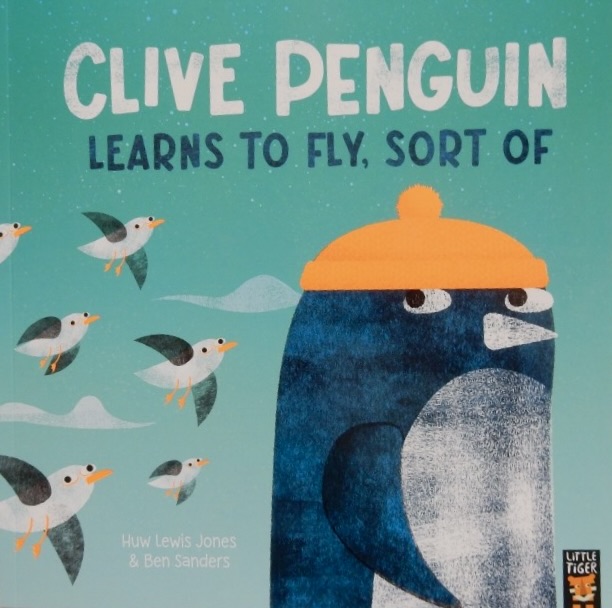
Clive Penguin Learns To Fly, Sort Of
Huw Lewis Jones and Ben Sanders
Little Tiger
This second story sees Clive Penguin dreaming of soaring through the sky like the ‘majestic’ gulls that reside in the same frozen parts as penguins. However, Clive doesn’t really want to admit how he feels, calling their ability to fly around as ‘Just showing off ’ Nevertheless he decides that being brave and adventurous, and certainly not afraid of heights, he will take flight and soar through the sky. So … after a number of crazy schemes, he launches himself and … yes he does become airborne.
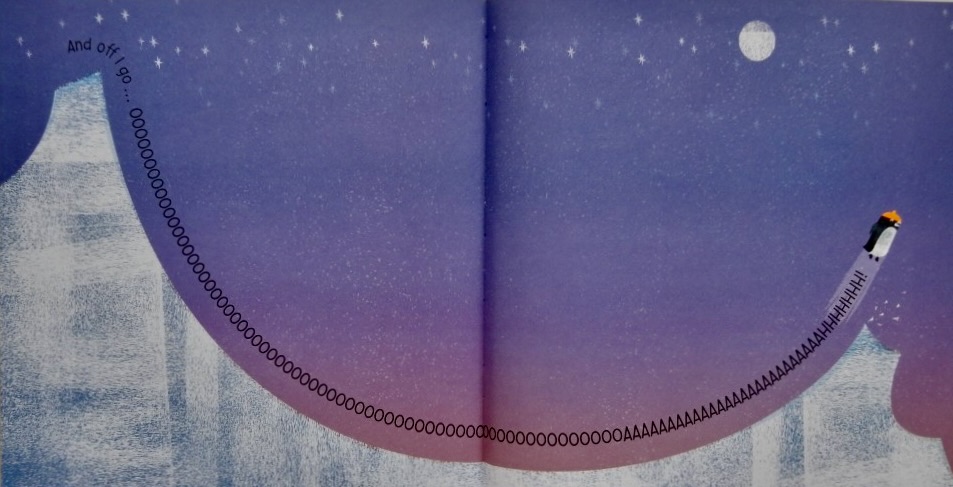
Young listeners/ readers will of course be rooting for the penguin, particularly as he involves them in discussion about which are better, seagulls or penguins.
One thing you can say about Clive is that he’s a determined character and I love the dead-pan dialogue employed by the author in this quirky story. Equally enjoyable is Ben Sanders’ visual portrayal of the character with that fluorescent orange bobble hat, which is part and parcel of his unorthodox personality.
Immediately engaging and delightfully droll.
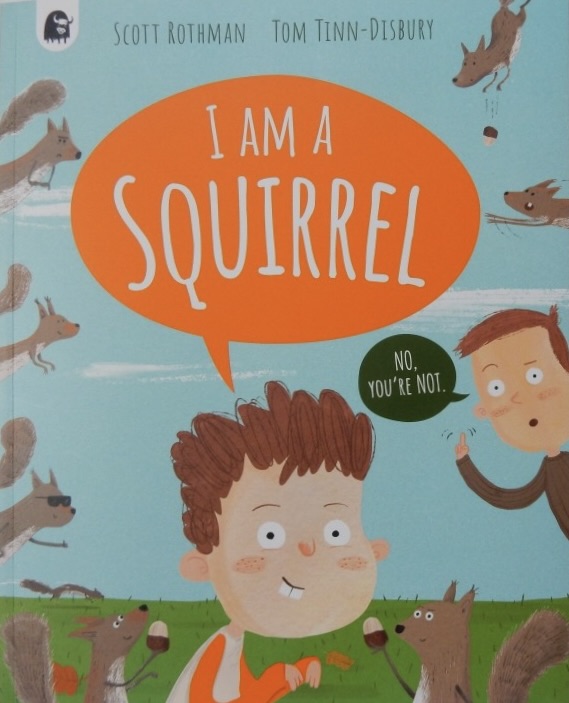
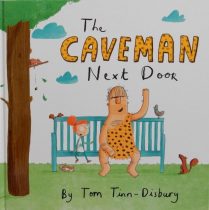
I Am A Squirrel
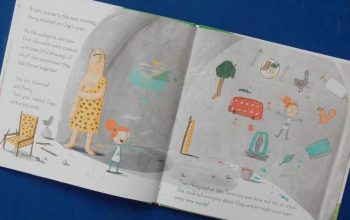
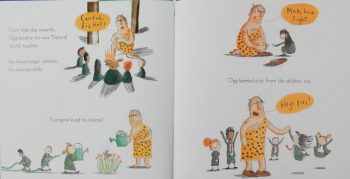
Scott Rothman and Tom Tinn-Disbury
Happy Yak
The young boy narrator of this story insists that he’s a squirrel that loves to run, jump, climb trees and have squirrel friends to play with. He also enjoys playing with his family but his elder brother won’t join in because he doesn’t believe his sibling is a squirrel. “Why don’t you eat acorns, sleep outside in a tree, feel afraid of dogs?” he wants to know. All of these questions are answered, some with ‘unsquirrel’ responses. However the dog question prompts the younger boy to admit in no uncertain terms, “I DO NOT CARE for HAWKS, a view I share with my other squirrel friends. Hawks are one of our most fearsome enemies.”
Determined to curtail his brother’s pretending once and for all, big brother tells him, Fine. If you’re a squirrel, then … “I AM A HAWK!”
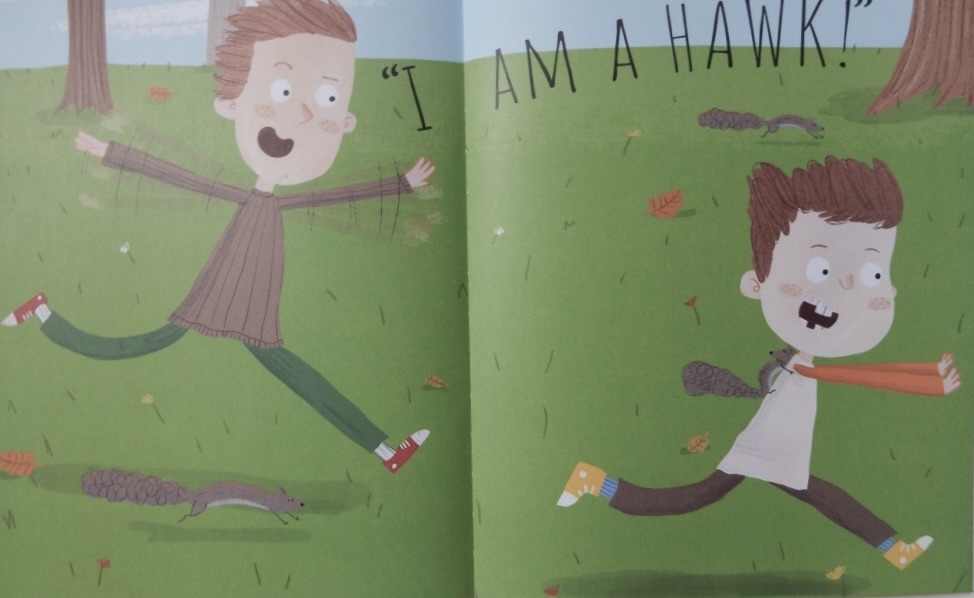
He continues by talking of his hawk features, including a predatory characteristic that might just put pay to all the squirrel imaginary play of his younger brother. How though will this story conclude?
This ode to imaginary play, is a hilarious read aloud, cleverly told by author Scott Rothman and equally playfully illustrated by Tom Tinn-Disbury who has clearly enjoyed sprinkling his scenes with squirrels of the real sort.