Pricklepaper’s Letter Magic

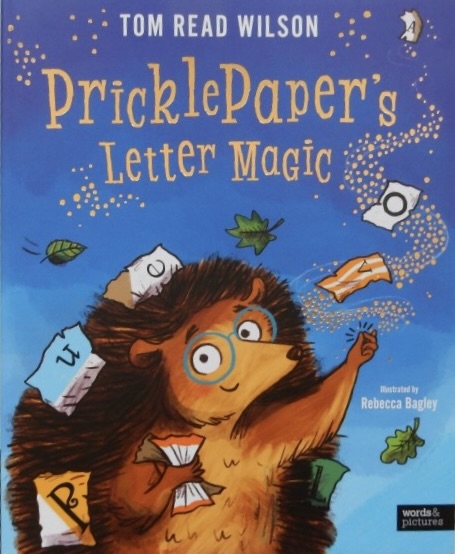
From his cover portrait Pricklepaper the hedgehog is an immediately endearing character. His home is in London’s Regent’s Park where he enjoys collecting scraps of paper. He doesn’t immediately consign these scraps to the rubbish bin as you might expect; rather he uses the letters thereon to make whole words. However, his special talent is to use his letters to alter existing words.

One day when out for a walk he makes the word ‘pullover’ and ends up with a cosy garment that is just right for the hedgehog’s warm personality. As a result he becomes known as the park’s ‘pullover’ friend. In the evening as Pricklepaper strolls near the water’s edge he hears a voice say, “I really am awfully tired of this boat!” What he sees is a lion rowing the boat round in circles having lost one of his oars overboard. The kind-hearted hedgehog comes to the rescue and gives Lion the letter R from one of his quills.

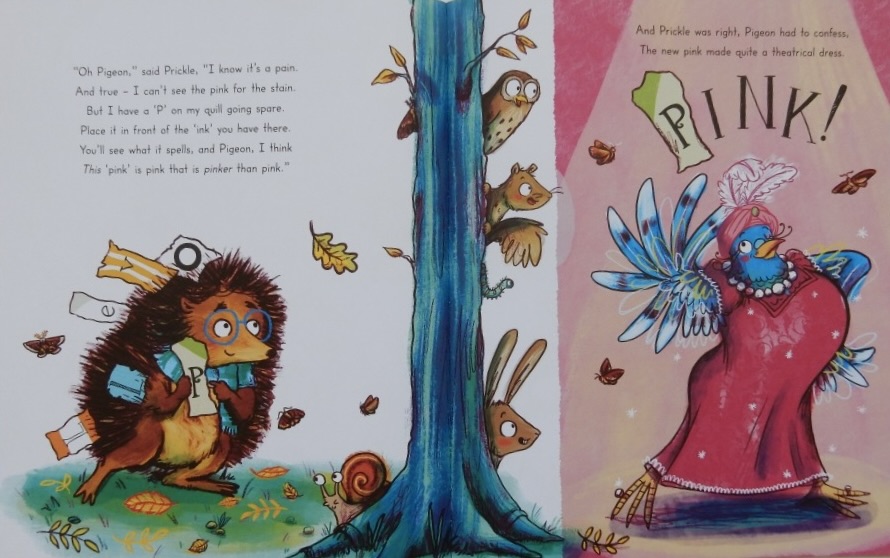
Pricklepaper continues in similar fashion giving letters to in turn, the fountain of Triton in Queen Mary’s Garden and a performing pigeon despairing that she’ll have to cancel her concert.
When he reaches Regent’s Park Cafe, he stops by the rubbish bin to hear Rat’s problem and once again he comes up trumps.

By now the hedgehog is weary and home he goes where he discovers that just four letters are remaining on his quills. They were letters that once were a part of pullover. Can you guess what word he made?

With its heartwarming final spread, this story is surely a winner. A word of warning though: it’s written in rhyme and you will need to read it through carefully before sharing it with a class or group to ensure you get the phrasing right. Ensure too that you allow plenty of time for children to look closely at Rebecca Bagley’s illustrations. They are full of fun details such as the frog in the origami boat and various minibeasts in playful mood throughout the story.

Wonderful Words That Tell A Tale

Presented by word wizard Tom Read Wilson, this is another collection, alphabetically organised, of fascinating facts and anecdotal stories related to everyday words. There are four words for every letter of the alphabet and each starts with an amusing ‘star word’ poem/story after which come a definition, information about its origin, meaning and etymology.

Did you know for example that astronauts wore nappies during take off and space walks as it’s impossible to go to the loo, so instead they use what are called MAGs (Maximum Absorbency Garments).

What about those jeans you love to wear: the word denim is a contraction of ‘serge of Nimes’( a French city), serge being a heavy fabric from which lumberjacks’ workwear was made. I loved discovering this palindromic phrase – palindromes need not be single words, we’re told – is made up of seven words – ‘Murder for a jar of red rum’.

Assuredly a book to encourage children to enjoy language and words for their own sake as well as showing how the English language has evolved and continues to do so. Have a copy in your classroom collection: youngsters can have fun reading it, enjoy the humour in Ian Morris’s illustrations, then go home and impress their parents and siblings with what they’ve discovered.

Every Word Tells A Story

Every Word Tells A Story
Tom Read Wilson, illustrated by Ian Morris
Words & Pictures

This is one of those books about which you think, right I’ll just give it a bit of time, sufficient to write a review, only to find that it’s drawn you right in and a couple of hours have passed.

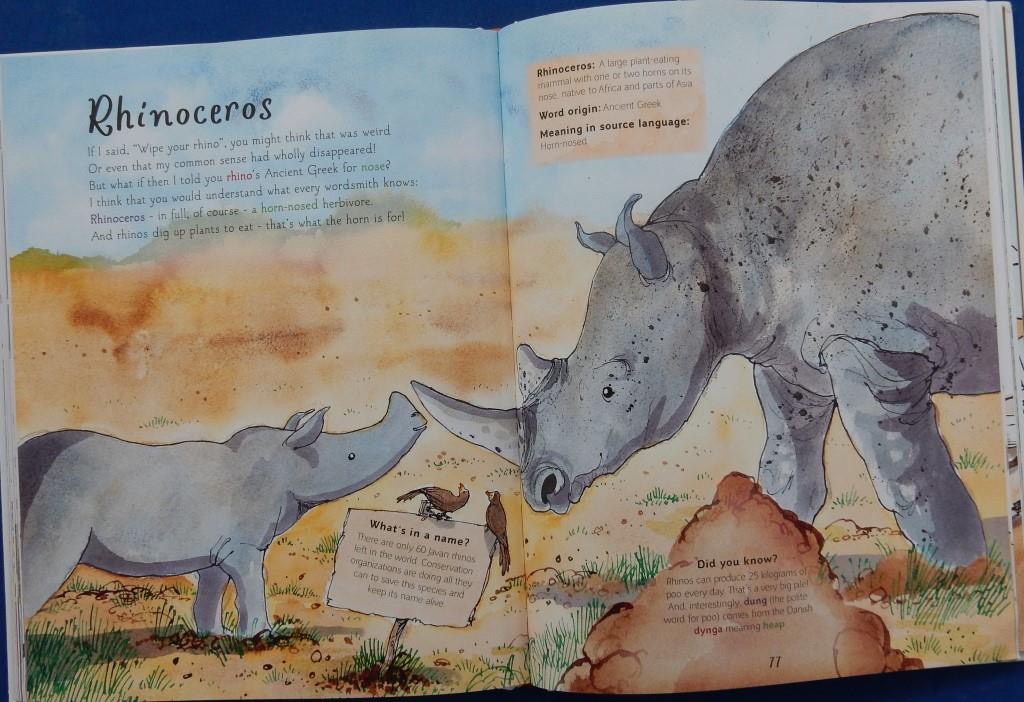
There are four words for each letter of the alphabet, each letter having for the first of the four, a funny, short, rhyming story, followed by a definition, information about its origin, meaning and its etymology, together with a humorous illustration by Ian Morris, the lead ones occupying most of the spread.
Did you know that a rhinoceros can produce as much as twenty five kg of poo every day?

Or that the word rhino is Ancient Greek for nose, and furthermore dung comes from the Danish dynga meaning heap? I certainly didn’t but I did however know that the word rupee comes from the Sanskrit meaning ‘beautiful form”; I have a considerable number of these coins tucked away in various purses on account of my frequent trips to India.

Whether it’s fun anecdotal stories or fascinating facts that you are interested in, you are certain to find plenty of both in this exploration of everyday words that shows how the English language evolved (and indeed still is). Equally it’s likely to encourage children to enjoy words and language for their own sakes. Supplying additional humour, illustrator, Ian Morris brings every entry to life with his dynamic pen and watercolour illustrations.