Your Planet Needs You

After an exceptionally hot summer like the one we’ve been experiencing in the UK, few can deny our climate is changing. News about extreme weather conditions and temperatures that have reached highs like never before sound alarming. This we read, is largely due to the increase of carbon dioxide into the atmosphere thanks to the burning of fossil fuels and deforestation throughout the world.

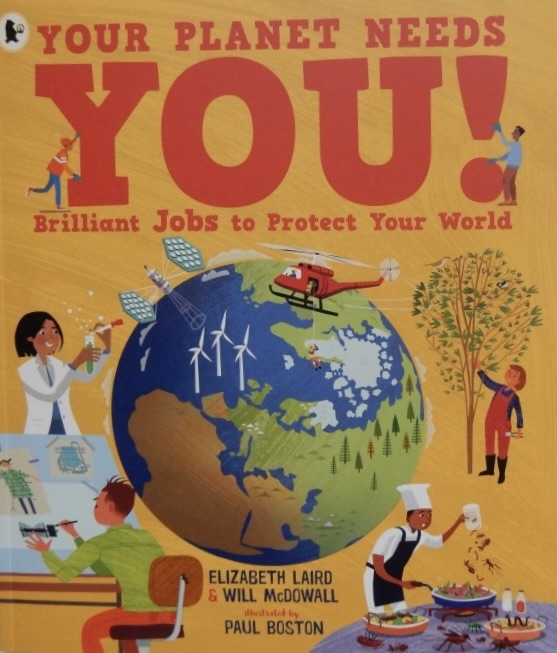
However, despite the huge challenges we humans face, people the world over are inventing real-world solutions to help deal with the problems and children can find out about many of these from this book that presents a broad range of green careers.
Several of these involve the use of wind power, which is clean as carbon is not released into the air. If you are specially interested in engineering you could perhaps become a wind turbine engineer or a turbine service engineer; you’ll need a head for heights to undertake the latter as to repair a wind turbine entails being dropped from a helicopter on top of the turbine in question and then climbing down inside to fix the problem. Alternatively, a driving expert could be employed to transport the massive turbine blades to hilltops. There are even roles such as captaining a ship taking turbines out to set them up in the sea.

Other areas offer roles in looking after nature, including marine conservation, creative fashion design,
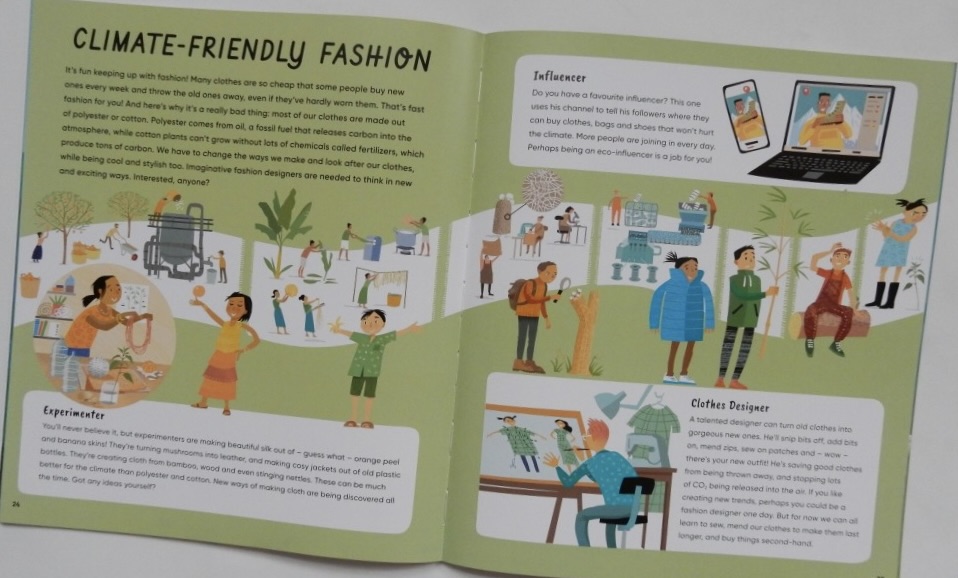
sustainable farming and more.

I suspect there will be jobs nobody’s ever thought of as yet, but this inspiring book offers an engaging, accessible way to open up discussions around climate change and how anyone and everyone can help. It’s pitch perfect for KS2 classes, especially to support the area of environmental education.
How To Build a Rocket

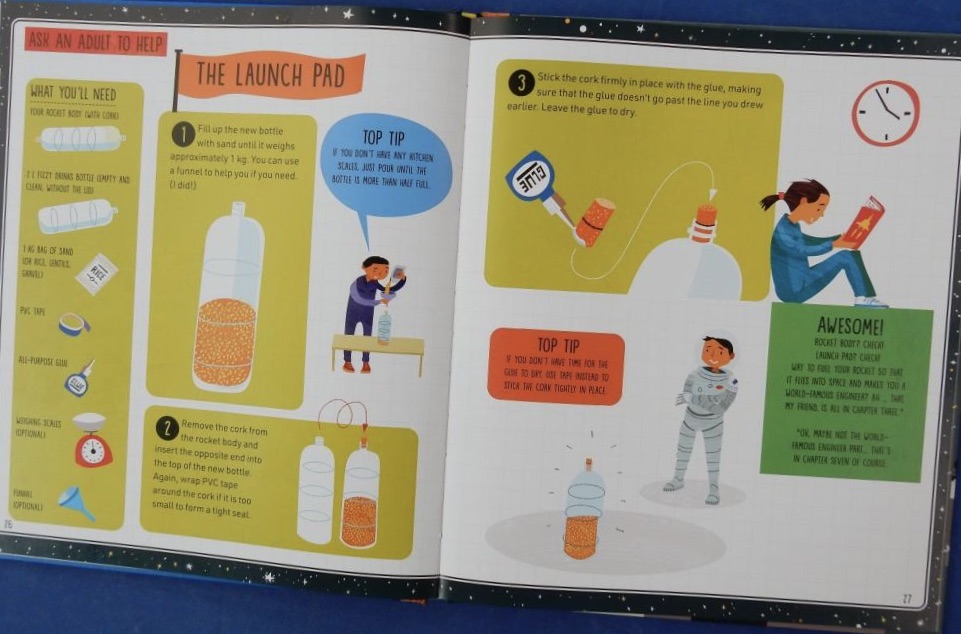
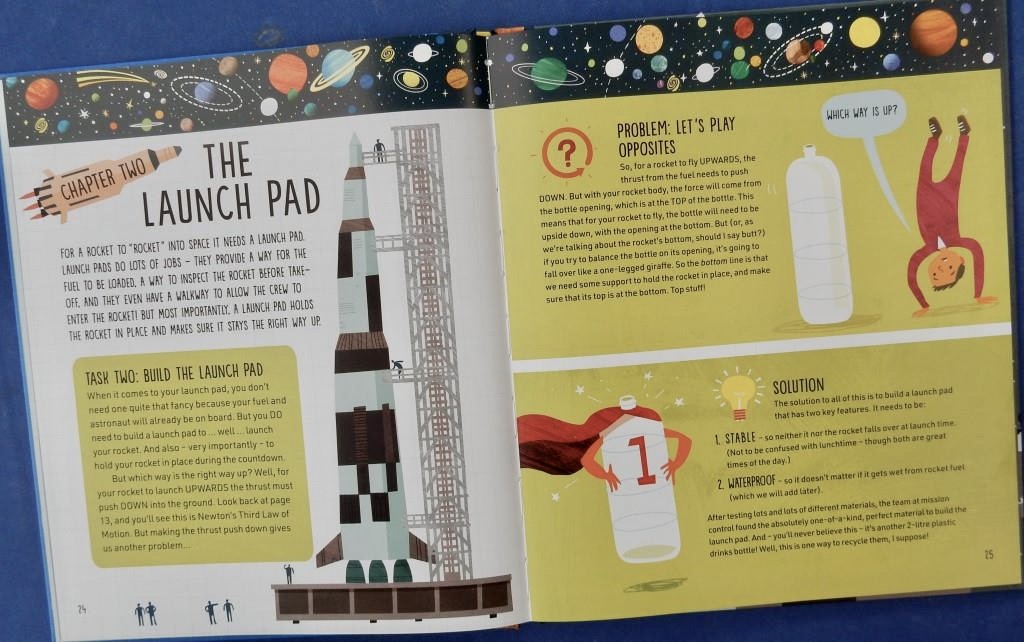
Following How to Build a Racing Car comes another step-by-step guide, to building a rocket, this time. However, this book is much more than a series of instructions; there’s a wealth of information about space-related topics such as an introduction to Isaac Newton and his laws of motion. This is followed by spreads wherein readers meet the various people who work on a rocket and at its launch base. These people then have a related chapter, the first being The Rocket Body wherein both the science behind a real rocket and the making of the model’s body are clearly presented in prose and graphics. Included too is an ’ask an adult’ directive.

Chapter two entitled The Launch Pad is similarly structured and includes some helpful tips.

The next stage is choosing The Fuel (that needed for the model is a mixture of bicarbonate of soda and vinegar). Once the fuel is prepared, it’s time to don your gear, including eye protection, grab an adult head outside to a clear space and prepare for Countdown to launch. Hopefully this is a success but as an integral part of any engineering process, it’s now the Testing and Tweaking should be done. Maybe the addition of fins would make for a better launch; or could an alteration to the weight of your machine improve its flight? Then of course, Personalisation will ensure your rocket is unique. Some designs are offered but why not try creating your own. After all this get ready for the final Blast Off1

What a terrific way to spend time during the summer break and what an amazing amount children who embark on this project will learn.

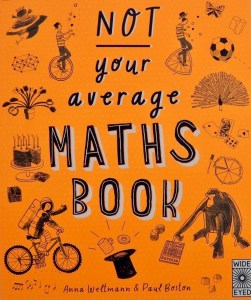
Not Your Average Maths Book

Not Your Average Maths Book
Anna Weltman and Paul Boston
Wide Eyed Editions

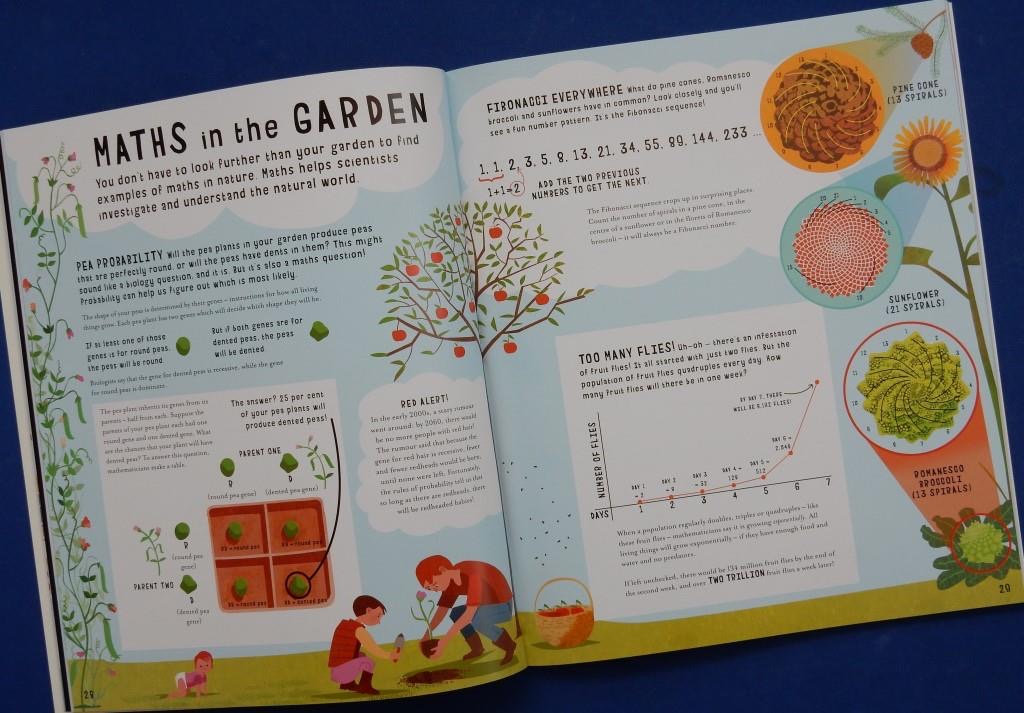
Wherever we go, wherever we live, maths is a part of our lives: just look around, we’re surrounded by it. It’s in our homes and gardens.

Yet at school it tends to be a love it or hate it subject and I have to admit that although I didn’t actually hate it, maths was one of my least favourite subjects. Now perhaps had I owned this book back then I might have felt rather differently.

Have you ever wondered why bubbles are always round – or rather spherical; why planets are never cube-shaped, , if and how animals use maths, or thought about where the plus, minus and equals signs came from. You’ll find the answers herein, along with a wealth of other fascinating mathematical facts and insights into numbers and their origins, shapes, patterns and much more. There’s a spread on mathematicians who made important breakthroughs in their fields, with thirteen men and women making up the Mathematician Hall of Fame.

We’re shown some of the many, many ways in which maths is useful in everyday life – in sports,

in the computer algorithms used to calculate plane ticket prices, the algorithms used by meteorologists in predicting the weather, the wealth of mathematical measurements needed in the erection of a building. There’s a brief history of maths going way, way back to the very first written numbers 43,000 years ago in Africa and taking us all the way to today’s unsolved problems still waiting for somebody to find solutions.

You might find you start looking at the world through different lenses if you read Anna’s book, it’s illustrated by Paul Boston whose visuals make the subject all the more inviting and accessible.