Croaky: Escape From Crow Castle / Adventuremice: Mousehole to the Centre of the Earth

Croaky Hopper is different from other frogs; he loves having wild adventures and when he isn’t actually having one, he dreams of so doing. Becoming a member of the Woggle Scouts has unexpectedly helped him find these adventures and as he’s wondering what’s next, Winston reveals that their next trip is to Crow Castle. This super-creepy former home of Count Von Crow, is a place where his ghost still wanders searching for people to scare.

As he, Sheena and Winston discuss this, who should appear but Morag, the Grand Woggler and she insists on joining them on the visit to the castle. Indeed Winston’s leadership of the patrol is at stake and Croaky can’t allow that to happen. The task they face won’t be easy as they must keep under wraps their wild adventuring and act like regular scouts.

Then Croaky presses a crow-shaped mark on the wall and suddenly finds he’s in a secret passage with Morag. The passage leads them to a room with its walls covered in pictures of crows and a message is written beneath one of them. With puzzles not Croaky’s strength, how can they find their way back their friends? And if they do, then what?

With a murder of meddling crows, it turns out that this is an unforgettable adventure in more ways than one. It will certainly entertain readers who will enjoy the ghostly goings on and the change of heart by one of the cast of characters, and of course Matty Long’s colour illustrations are terrific fun.

The seventh adventure of Pedro et al begins when their breakfast is disturbed by the arrival of Uncle Bernie (aka Professor Quatermouse) with his new invention, the Mechanical Mole, a machine that will enable the Adventuremice to go exploring underground. After a discussion as to whether or not they should try out the invention, they take the Mechanical Mole for a test drive and with Juniper in the pilot’s seat off they go down and down, rather fast, burrowing through the rock far beneath the Mouse Islands.

Eventually they arrive in a cave and begin to look around. Almost at once they discover some very large footprints. Could they belong to a supposedly extinct Hamstersaurus? Then they hear a loud RAWR! and there before them is a very live Hamstersausus rex. However it’s quickly distracted by a small mouse with a bow and arrow firing at it. This friendly mouse invites Pedro and friends to follow her and she takes them to the treehouse of the other cavemice that live in fear of the Hamstersaurus.

Can the Adventuremice step in and save the day? Perhaps with imagination, creativity and especially vital, teamwork they can make not only the cavemice happy, but also the creature they fear.

Interestingly Pedro and friends are able to consider both viewpoints, an ability that is important for young readers to develop too.

Team Philip and Sarah have created another smashing story with lots to offer both verbally and visually.

Grimogen Darkstar: Bat-Cat-Tastrophe / Marv and the Funfare Fright

Young Grimogen Darkstar or Immi as she prefers to be called, desperately wants a pet, even more so when the team from Howler’s Rescue Centre bring animals into her school for a special day. “Maybe I’ll meet my future first pet,” she says. First though she has to prove to her parents that she is sufficiently responsible to care for one. So, when her class is called to the hall, she’s more than delighted to see all manner of magical creatures and she can hardly wait to feed some of them, declaring herself “ a bit of an expert at feeding animals.”

Pretty soon though things start to go wrong: Immi is certain she’s seen a bat-cat outside the window and refuses to accept the explanation that what she saw was just a bat. Almost immediately after, her classmates are running around as bats swoop in and get stuck in people’s hair. Fortunately for her though, things are quickly sorted out and an open day at Rescue Centre is announced, to be held the next day. Helping out offers another opportunity for Immi to prove she’s ready for her own pet. Can she do so without causing a catastrophe?

Impetuous, curious, brave and kind-hearted, Immi is a delight and young readers/listeners, especially animal-lovers, will enjoy meeting her. in this first story with its sprinkling of whimsical black and white illustrations.

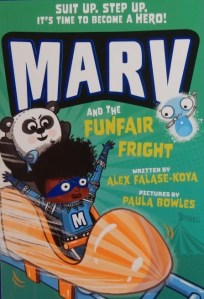
Marv is excited when he hears that from the funfair has arrived at the local park for its annual visit and super-excited when he finds that he’s now tall enough to go on the Head Spinner roller coaster (rather him than me). Off he goes with his super-suit and sidekick, Pixel, in his backpack and Grandad at his side. It’s extremely crowded and noisy but it’s not long before while riding on the Spinning Teacups, Marv detects a supervillain – The Conjuror – with whom he’d had an unpleasant encounter before.

Time for Marv to don his super-suit and track down that Conjuror: assuredly she’ll be up to no good. And so she is. First a zombie is on the loose and then shortly after, there are seven cuddly toy pandas running riot in the Hall of Mirrors. Marv gives chase but his rocket boosters fail and the pandas escape causing chaos all around the funfair.

Can Marv put a stop to the panic and panda-monium and not only save his friends but all the other fair visitors. He’ll most certainly need to use every means at his disposal. Maybe he can change that Conjuror into an superhero instead of a supervillain too, or is that asking too much …

Dramatically illustrated by Paula Bowles, Marv’s ninth adventure – ideal for the upcoming spooky season – is every bit as exciting as his previous ones: established fans will love it and I’m sure he’ll gain plenty of new followers too.

Harry and the Heron

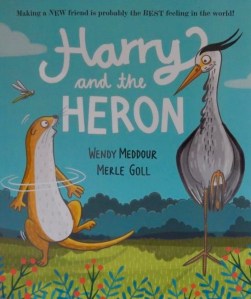
Elsie, Clive and Harry are otters and we first meet the playmates as they practise keeping still by pretending to be logs. This is easy for Elsie and Clive but Harry, no matter how hard he tries, just can’t. Just as he’s about to have one more try he spies something in the reeds and asks the others what it is. ‘Just a heron,” Elsie replies urging Harry to lie down again. As you probably anticipate, Harry keeps fidgeting and staring at the static heron.
The heron, Ray, meanwhile stares at the water wondering why he never gets to play with the otters. Feeling left out, he hunches over and lifts one leg out of the water deciding that ‘Feeling a bit left out is probably the worst feeling in the world!”

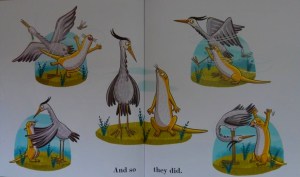
Along comes Harry waving and calling hello to Ray. He tells the heron his name and how he loves the way he stays so still. Ray in return says he loves how Harry moves so much. They decide to teach one another their respective skills.

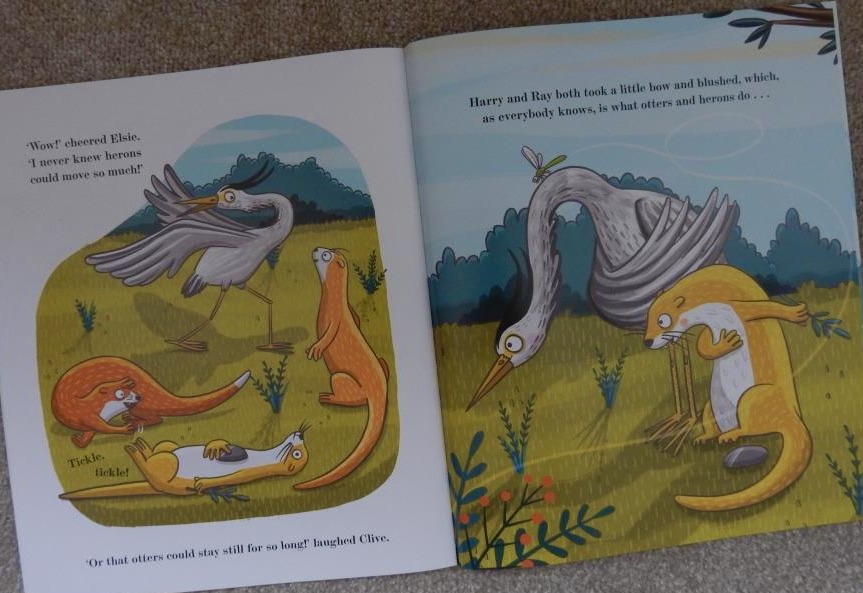
Meanwhile Harry’s otter pals rouse themselves and notice Harry with the heron. The tell the bird to leave Harry and drag their friend away, unaware of the effects it will have on Ray. A dejected Ray goes into miserable mode and Harry begs the other otters let Ray play with them. As Clive gives what he thinks is a good reason for refusing, Harry points out something about Ray, something that the other otters can’t argue with and it changes the way all four creatures feel.

A fun story about including everyone in a group activity. I love the wry humour of Wendy Meddour’s telling and Merle Goll superbly expressive illustrations of characters with their similarities and differences. Definitely a book to share and discuss with younger primary readers and in families.

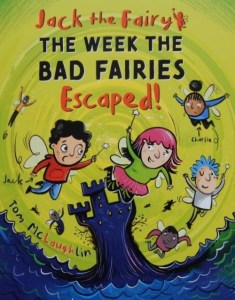
Jack the Fairy: The Week the Bad Fairies Escaped / Toby and the Pixies: Pixie Pandemonium

As a member of the magical world, ten year old Jack is not a role model. Indeed he’s broken a couple of rules – taking his wand to school and even worse, letting Charlie, his best friend, know that he’s a fairy. However, when he accidentally magics Charlie through an inter dimensional portal to a sinister place – Lonely Island – home to creatures who hate humans, he has to inform his Mum and Uncle Dave what has happened. His Mum is furious: Uncle Dave says an emergency plan must be put into action. Off they go on operation rescue but they’ll have to contend with snot-firing Bonzo the Bogeyman and the evil Twinkle and her gang who want to take over control of the world.

Can they possibly rescue Charlie? Maybe, with assistance from Father Christmas, the Easter Bunny, the monstrous Nessy and an elf who insists that Charlie’s memory must be wiped.

Liberally scattered with Tom’s black and white illustrations, the whole thing is utterly crazy but huge fun. Ideally you should have read Jack’s previous two adventures before this one, so if you haven’t and you enjoy magical shenanigans, with occasional flatulence, then get hold of all three books and start with The Day the Unicorns Stopped Farting.

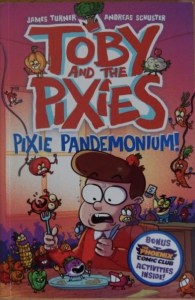
There are also plenty of crazy happenings in:

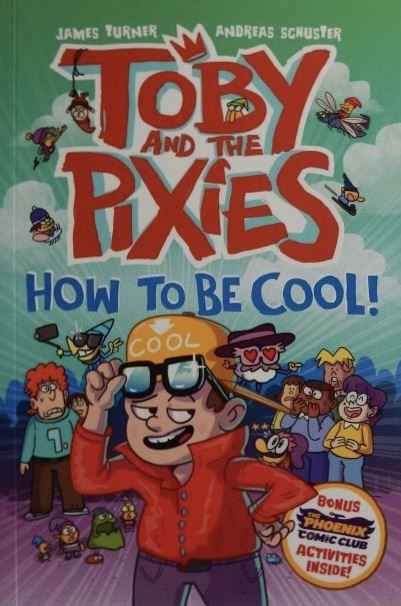
If you don’t know Toby, he is just a normal boy except that he’s accidentally become King of a magical pixie realm hidden at the bottom of his garden. Events herein include a visit to the dentist accompanied by his father, a cooking lesson catastrophe and a dose of a brain power-increasing potion – or is it?
This is chaotic madcap magic and some: you’ll likely end up with aching ribs from laughing as you follow the events herein.

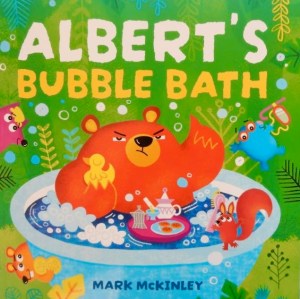
Albert’s Bubble Bath / Bert and the Bubble

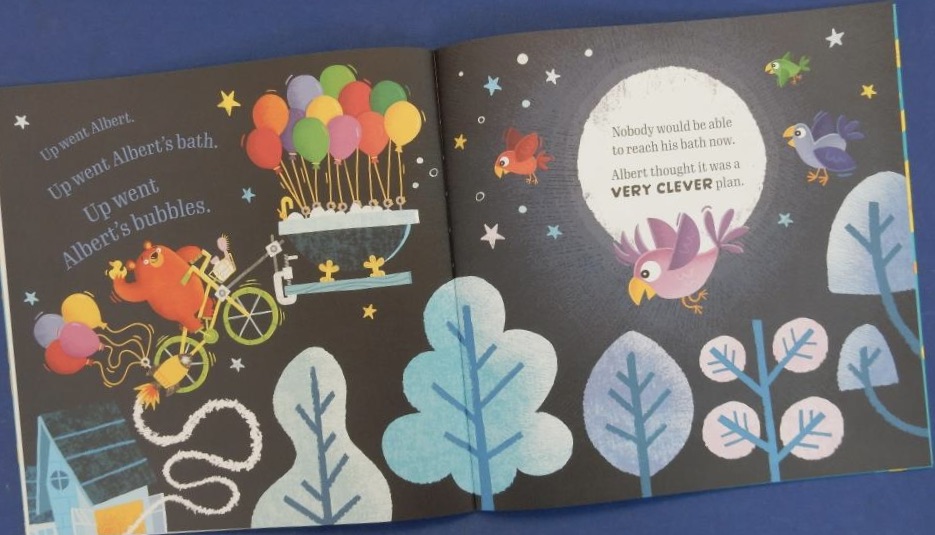
Albert the bear is a grumpy character but there’s one thing that makes him feel good. No it’s not picnics, nor fishing, and definitely not singing around a campfire: it’s relaxing in a bubble bath. However, Albert’s bubble bath is the envy of the forest creatures and they’re keen to try it too. Albert though, is certainly not going to allow this and makes it quite clear with the signs he puts up around his home. When they have no effect he hires top security, again with no effect. The subterranean relocation of the bath fails too. Time to don those thinking specs Albert. After much hard thinking he has an idea of the constructive kind: surely this must work.

Oops! He hadn’t factored in sharp-beaked birds. POP! Albert plus his beloved bath tumble earthwards but the bath gets stuck before reaching the ground. Reluctantly Albert asks for ideas and up steps a beaver. Maybe he and his family can help … Seemingly they do so in more than one way.
With it’s fun finale this is a dramatic story with plenty of giggle-inducing moments that ensure that the learning to share message is imparted lightly.
It makes a satisfying read aloud and should definitely go down well with foundation stage/ KS1 children.

Also about sharing is:

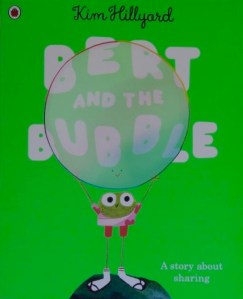
When Bert the frog finds a beautiful shiny bubble he shows it excitedly to his friend, Sandra. Sandra is eager to hold the bubble; Ben agrees but asks she treat it carefully. Pop! That’s the end of the bubble: clearly Sandra wasn’t careful enough. The following day Bert finds another bubble, a bouncy one that Norman wants to play with. ‘Yes”, Bert says, “But please bring it back.” But Norman fails to do so. Poor Bert is starting to think his bubble luck has run out when down floats the biggest bubble in the world.

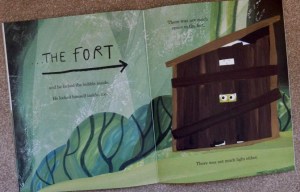
So eager is Bert to keep this one safe that he goes to great lengths to protect it. Determined not to share this time, he builds a fort and locks himself and the bubble inside. It’s a tight squeeze but Ben remains shut away pondering upon the terrible consequences should he come out.

Suddenly there’s a tapping on the door accompanied by voices calling him to come out, apologising and promising to be more careful in future: it’s his friends. Out comes Bert and out comes the bubble looking bigger than ever. The three frogs have great fun playing with it all afternoon and just as Bert is thinking he’s having the best time ever …

However now Bert’s reaction is somewhat different. He’s clearly learned that when it comes to friendship and bubbles, one is definitely way more important than the other.
An amusing, learning to share story with funny froggy scenes at every turn of the page.

Perfect Pedro

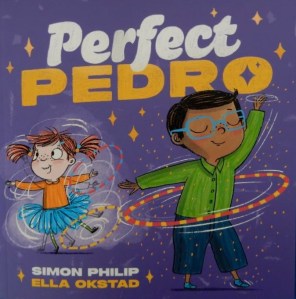
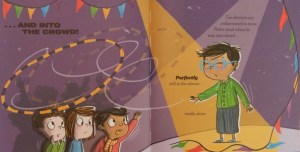
Meet Pedro, he’s a perfectionist. His toys are always perfectly organised, his name perfectly spelled, he plays only perfect dings on his triangle and performs perfect somersaults. However despite all this, there’s something lacking in his almost perfect life. He doesn’t have the perfect friend and he really needs one soon as the school talent show is imminent and for that he wants a perfect partner.

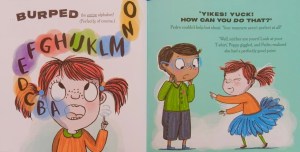
Step forward Poppy one playtime. At first everything she does is perfect and then Pedro is invited to play at Poppy’s home after school one day. All starts perfectly but soon things deteriorate. Poppy’s chip eating disgusts Pedro and despite being too polite to comment at first, eventually he shouts out, “Your manners aren’t perfect at all!”. Poppy retaliates pointing out that his are equally imperfect.

Nevertheless the pair have a show to rehearse and this they are determined, will be performed to perfection.. Errr! looks as though this might not be the case. PIC Pedro decides that they should each do their own routine and Poppy stomps off in a huff.

Back at home Pedro practises into the night and as a consequence is tired and edgy the following day. Up steps Poppy to do her routine; it’s not perfect but a crowd-pleaser nonetheless. Then comes Pedro, starting perfectly but then OOPS!

Now what? Can Poppy perhaps save the day? Possibly, so long as Pedro can finally embrace imperfection …

Ella Okstad’s characters are a joy and the inherent message in Simon Philip’s pitch perfect text is an important one. Every child deserves a friend as perfectly imperfect as Poppy. After all no-one is perfect and too many children from far too young an age worry about their imperfections, which after all, are part of what makes everyone unique.

A perfectly delightful story to share and discuss at home and in EYFS/KS1 classrooms.

Frank is a Butterfly

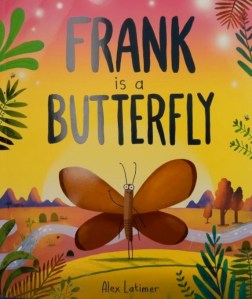
The story starts with ten caterpillars of various shapes and sizes all munching on a leaf for breakfast. There are caterpillars small, caterpillars large, caterpillars short, caterpillars long, hairy caterpillars and hairless ones and nine have a spotty and stripy pattern of some kind. The tenth one, Frank is brown and bears no distinctive marks. In between nibbles the nine talk of the kind of butterfly they will morph into. One says ‘magnificent’, another ‘handsome’, a third the prettiest … on Earth’, the fourth ‘fabulous’ and so on. Frank, in contrast says nothing; he’s ‘happy to be a plain, medium-sized caterpillar on a leaf in the sunshine.’it’s not long before the caterpillars turn into chrysalises to await their transformation.
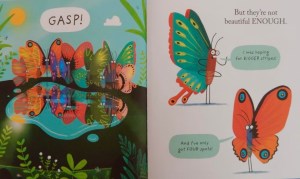
When they emerge from their chrysalises, despite looking gorgeous, nine of the butterflies are thoroughly dissatisfied with their appearance: they definitely do not live up to their expectations.

Finally Frank appears and he’s elated with his plain strong brown wings that will enable him to take to the air: he anticipates a world of flowers.

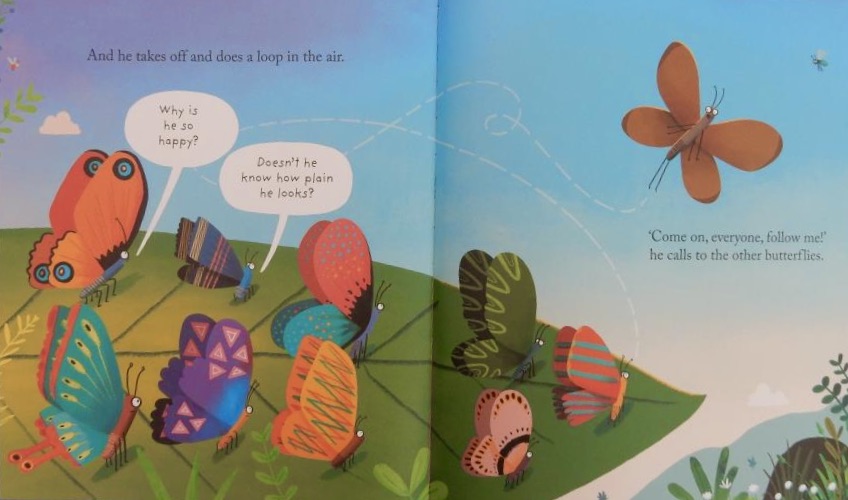
After some time, thanks to Frank’s positive example,

the other butterflies realise that what is more important than appearance is being free to explore the beauty around them without that nagging feeling that you’re not enough.

Alex’s richly hued scenes have a gentle humour about them that ensures that the important messages about self-acceptance and self-possession in his words don’t weigh heavy.
(After the story there’s a page showing Frank’s life cycle from egg to butterfly.)

A book for family bookshelves and KS1 class collections.

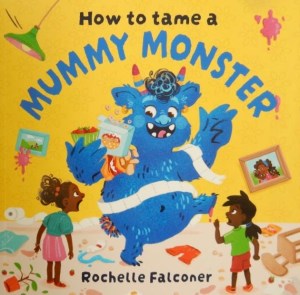
How to Tame a Mummy Monster

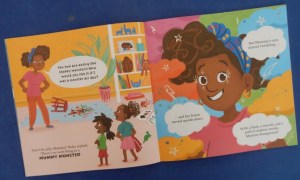
Siblings Ruby and Junie are perpetual bickerers. They argue over breakfast, they pick a fight over a pencil (albeit a special one) and come to blows over clothes. “You two are acting like cheeky monsters! How would you like it if I was a monster all day?” their Mum says. The bickerers dismiss this as an impossibility.

However, they are so sure of this that they don’t notice that their Mummy has indeed morphed into a huffing, fluffy-tailed, horned being, one that gobbles up their favourite snacks.

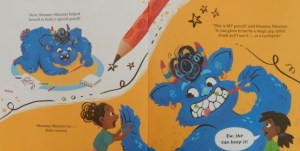
Not only that but Mummy Monster starts using Ruby’s special pencil,

trying on the sisters’ clothes and generally creating havoc: a taste of their own medicine indeed and enough is enough. They really need to turn Mummy Monster back into nice Mummy and as soon as they possibly can. Of course, to do this they’ll need to set aside their own silly squabbles and find their affable selves again.

Rochelle Falconer’s debut picture book is imbued with humour, engaging and shows the ups and downs of family life. Young children will love the drama and the story’s denouement.

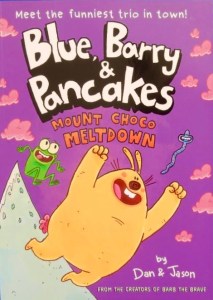
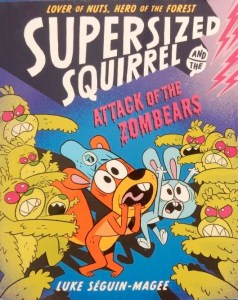
Blue, Barry & Pancakes: Mount Choco Meltdown / Supersize Squirrel and the Attack of the Zombears

In this third instalment featuring three best friends, worm, Blue, is excited to show Barry (frog) and Pancake (rabbit) a poster about an ice-cream sundae contest. They take some persuading but eventually agree to participate but they have just one hour to create the sundae and win the much coveted trophy – something to put in Barry’s empty trophy room. He decides that the way to win is to get a tub of chocolate ice-cream from Mount Choco. The trouble is its location is closely guarded by a giant, razor-toothed yeti.

There are obstacles in their way – the Sea of Sea Sickness to cross, sunglasses to extricate from a very tricky place, not to mention performing some funky dance moves to impress the yeti and each of the three friends is key in overcoming an obstacle. But will they make it back in time to present their creation to be judged and if so what will the outcome be?

Absolutely absurd but young fans of graphic novels will gobble it up and enjoy the ingredients that comprise the back matter.

Despite being billed as a supersized hero of the forest and starring in two previous books, this is my first literary encounter with Sonny aka Supersized Squirrel and his sidekick Blaze Bunny.

Their third mission is full of action and we see the two facing a very spooky zombear mystery in the middle of a storm in the dark dark woods: surely their most chilling challenge ever. Squirrel calls it the Zombi-pocalypse. Scary as it is after an unexpected encounter, he insists they plus their old enemies the F.A.R.T. ‘march into this challenge with our weird superpowers and our heads held high.’

Can they together get rid of the poisonous pollution unthinkingly dumped into Bear Pond that’s at the heart of the trouble, restore the zombears to ordinary bears and put everything back to normal? And what of that movie in the Warren: can they catch the ending?

Silly, satisfying and fast moving with friendship and super-heroic feats at its core..

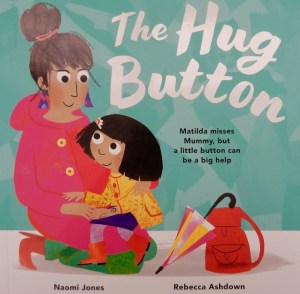
The Hug Button

On Matilda’s first day at The Meadows she wakes up excited at the prospect of starting school and her upbeat mood continues all the way to the school door as she and her Mummy sing together, jump over bubbles and count birds. However when they arrive Matilda’s tummy feels ‘all squirmy’. Her mum gives her a reassuring hug but Matilda finds saying goodbye very difficult. Moreover, she’s at a loss to decide what to play when her teacher, Miss Cartwright, asks. Eventually she plays with small world dinosaurs with Ana and draws pictures beside Leo but nothing stops her missing her mum.

The following day Matilda is anything but excited as she leaves home to walk to the Meadows and clutches her mum’s hand tightly at the door. When asked what is wrong, she tells her mum that she doesn’t like saying goodbye and misses her when she’s in school. Her understanding mum finds a pen in her bag, draws something on Matilda’s wrist and the same image on her own. “This is a hug button,” she tells her daughter and explains how they work. This helps her feel better as she goes into class. There are times during the day when she needs to use her special button and it definitely helps with her tummy wobbles. She even forgets the button as she has a fun time at the water tray

but then needs it at story time only to discover that it’s washed off. Tears start welling up but Matilda remembers that her mum had said that love is always there, even if the person you miss isn’t. Can she send her Mummy hugs without that button and will her mum know? And will that help button continue to work its magic until it’s no longer needed. When a new boy starts and Matilda sees him clinging to his dad at the gate, what do you think she does?

Starting nursery or school is often a tricky, anxious time for young children and the idea of a special hug button is definitely worth trying. The story is one that will help a beginner feel confident as they take those first big steps

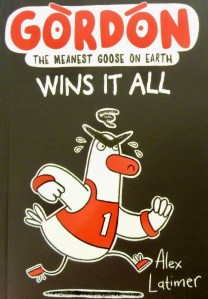
Gordon Wins It All

Another honker of a tale about a goose – the meanest goose on earth – who continues with his endeavours to be a good goose. The trouble is he starts to fantasise about being so good that he becomes Mayor of Grover Gardens. As a result it only takes a kind deed by Mrs Elephant, followed by the unexpected appearance of one of his old cronies from the Meaneest Goose Society to make him start to regress. He organises the first ever Grand Tournament for Grover Gardens residents, planning to win every single event and maybe, just maybe, helped by Anthony’s training schedule, if things go as he hopes, he’ll soon have that mayoral chain of office round his neck. The trouble is the other contestants in the events are rather better at their respective sports than Gordon anticipated.

Has the goose got the prowess at long jump, sprinting and javelin throwing to win, or will he fall victim to temptation and cheat his way success?

With a vital message about honesty, this is a very funny story with Alex Latimer’s superb illustrations adding greatly to the humour: Gordon’s facial expressions and laugh-out loud eyebrows are simply splendid.

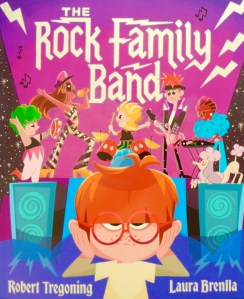
The Rock Family Band

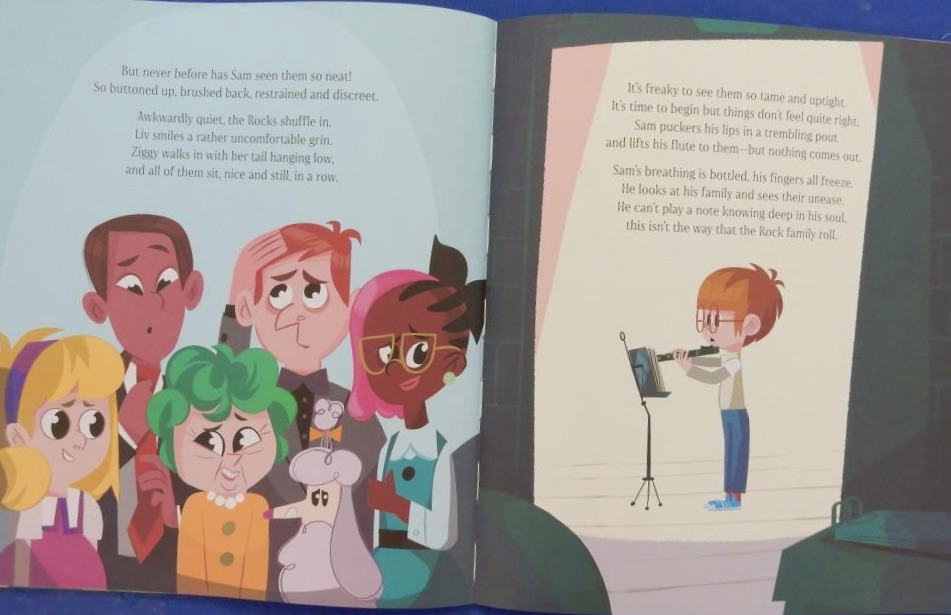
Using an appropriately jaunty rhythm Robert Tregoning tells readers of the Rock family. There’s Dad, a rock guitarist, Pops the singer, young Liv the drummer and Bo the keyboard player and writer of hit lyrics, not forgetting Nana who play the tambourine, and poodle Ziggy with her canine cacophony. With those platform boots, funky hair and more, it’s certainly a glam-rock family. There’s also the youngest of all, Sam, a flautist who loves peace and quiet and classical music; he feels he doesn’t really fit in.

With the school concert just a couple of days away, Sam is desperate to find a peaceful spot where he can practise but wherever he goes his family’s loud playing disturbs him.

On the concert morning he pleads with his family to stay still and quiet and listen o what he has to say just for three minutes but even that is too much. In a temper, Sam storms off to school feeling just a tad guilty about his outburst.

When it’s his turn to perform, Sam has an attack of stage fright.

Could it possibly be that at the vital moment his jamming, jiving grooving family is exactly what he now needs?

A celebration of individuality, family love and feeling validated – amore and amina at last. Laura Brenlla’s visual portrayal is brimming over with energy and funky style.

Kerfuffle Bird

Meet the Hushlings, they’re quiet, polite and always keep their feelings under control. It suits them to be thus, all except Maeve.. She really wants to let some of her Big Feelings out but does her utmost to keep them tamed.

One day there appears a large blue egg that. after three days, cracks open and there emerges a flamboyant and very noisy Kerfuffle Bird that shatters the peace of the Hushlings sending them dashing for cover. Not so Maeve however; she accepts the bird’s offer and they take to the air in party mood, coming to land in front of Maeve’s parents. Shock horror! The bird flies right into their abode, gobbles the food on the table

and proceeds to test the patience of Hushville’s residents to the limits. They said nothing until one night the bird’s powerful snoring releases something in them and it’s only Maeve who understands. So alarmed is the Kerfuffle Bird (what a terrific name) that it decides to leave Hushville.

Can any of the Hushlings do or say anything to make the bird change its mind? Seemingly it’s now not only Maeve that appreciates the importance of expressing one’s feelings: so can they all find a way to live harmoniously together?

A lively fun story about expressing your true feelings, acceptance and learning to live together. Gwen Millward captures so well the chaos that ensues with arrival of Hushville’s lively endearing avian in her energetic scenes.

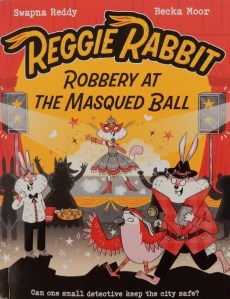
Reggie Rabbit: Robbery at the Masqued Ball

A warm welcome back to a young detective duo intent on keeping their city safe. Young detectives Reggie Rabbit and partner Pipsqueak are in attendance at a very special event and that’s because Auntie Hibiscus has been asked to do the catering. The event is the Masque family’s Masqued Ball – the grandest event in all of Bearburgh – and Reggie and Pipsqueak are to be waiters despite Reggie’s parents not being keen on the idea. However with famous pop star KITTY QITA set to perform, it’s too good an opportunity to miss.

Suddenly though, in the middle of Kitty Qita’s act, the lights go out and a jewel heist takes place.
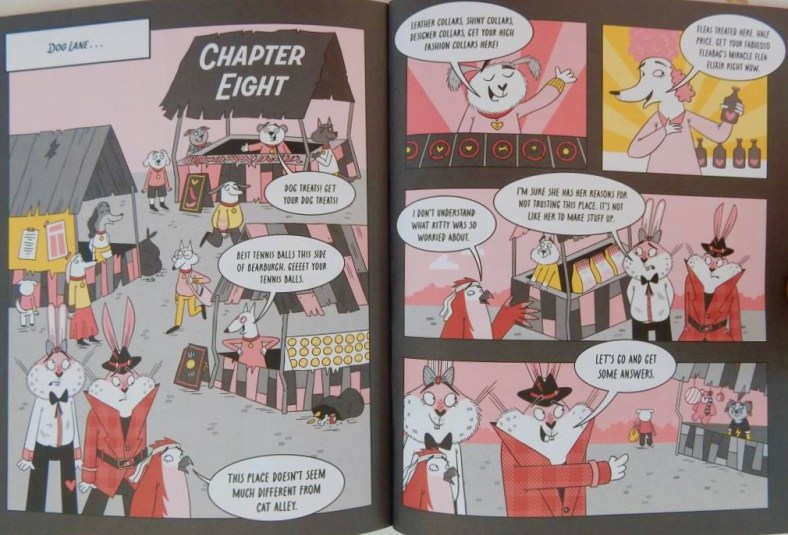
Despite Kitty telling Reggie and Pipsqueak that the case is a lost cause, they’re ready for action right away. Kitty directs them towards Dog Lane (the meanest, most dangerous place on earth) and leaves them to it.

However it’s easy to jump to conclusions and the solution to this puzzling mystery may well come as a surprise.

With its madcap adventures and warm friendships, this charming series is a delightful blend of graphic novel and fiction and Reggie’s third case will surely be a winner with younger solo readers.

Marv and the Duck of Doom / Kitty and the Clifftop Peril

These are both additions to popular series for new solo readers: thank you to Oxford Children’s Books for sending them for review.

Marvin and his Grandad (plus Marvin’s high-tech side-kick Pixel) are visiting Adventure Zone. They’re going to meet Grandad’s best friend Steve (once Professor Feather, a powerful supervillain, but now a reformed character as Grandad explains before Steve arrives). With Steve is a girl around Marvin’s age so he thinks; her name is Izzy. After some rounds at the bowling alley Pixel picks up a supervillain signal and warns Marvin and later after spending more time with Izzy, during which she shows him her grandfather’s Duck of Doom, Marvin feels very uneasy about her.

The following week as Marvin and his Grandad are enjoying a picnic in the park, there comes a loud scream and the boy sees people running from something: it’s a gigantic robotic duck – the Duck of Doom. Time for Marvin to don his super-suit and morph into Marv. That way he can use the suit’s special facilities; he makes himself invisible and gets closer to the monstrous duck. Sure enough, who should be sitting on its back controlling the thing but Izzy, calling herself Professor Feather and issuing a challenge – superhero versus supervillain. Then suddenly it’s not just one gigantic robot duck but a whole army of robotic ducklings too. Can Marv and Pixel discover their weakness? Maybe the answer is in the elements … but even if they can see off the ducklings what about that Duck of Doom? And the Professor?

With themes of determination, friendship and forgiveness, some interesting new characters and gentle humour, this latest story leaves the door open for a new direction. Add to that Paula Bowles’ lively illustrations and we have another cracker for readers in years 1-3 and for home collections.

Another series featuring a superhero (in training) is

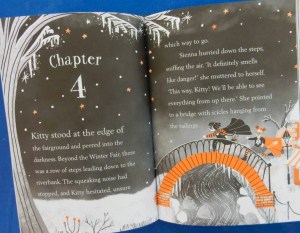
This is Kitty’s sixteenth adventure and she and her family are holidaying in the sleepy seaside town of Pebblecove, so Kitty’s not anticipating using her feline superpowers. As the book begins they’re visiting a seal rescue centre. Just before they have lunch Kitty encounters young Lee who tells her he’s helping his father by feeding the seals. It’s when she rejoins her parents that the trouble starts.

First crates of fish intended for the rescue centre seals are scattered everywhere, then stands of things from the shop fall over and the cafe menus are ripped. It must all be due to a mysterious creature rather than Kitty’s friend Cutlass the pirate cat. Now Kitty must put on her superhero cape, go in search of the culprit.and find out why they are causing such chaos. Could they be looking for something and if so, what?
A gentle story but one where Kitty has to be especially brave as she’s not in familiar territory. Jenny Lovlie’s black and orange illustrations throughout, heighten the drama.

Moon Girl

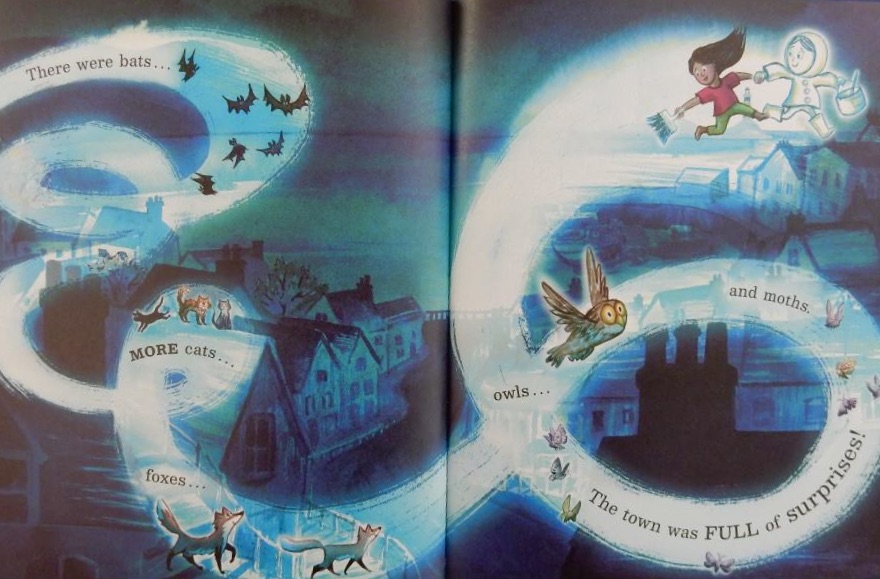
Leila loves bright colours and uses them in her painting; however she has a fear of the dark. One night as she looks out from her bedroom window at the moon in the dark sky, Leila sees what she thinks is a girl’s face peering down at her. The moon girl waves and so she waves back. Suddenly, as if by magic the bright-faced lunar girl descends earthwards landing on Leila’s windowsill. In her hand is a paintbrush. With this she starts to paint the world in a shimmering light and so begins a friendship.

Together the two friends embark on a midnight adventure as the paintbrush held by the moon girl lights up the darkness, gradually enabling Leila to let go her fears of the dark and replace them with a sense of wonder at each new thing she discovers.

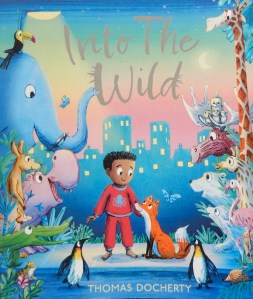
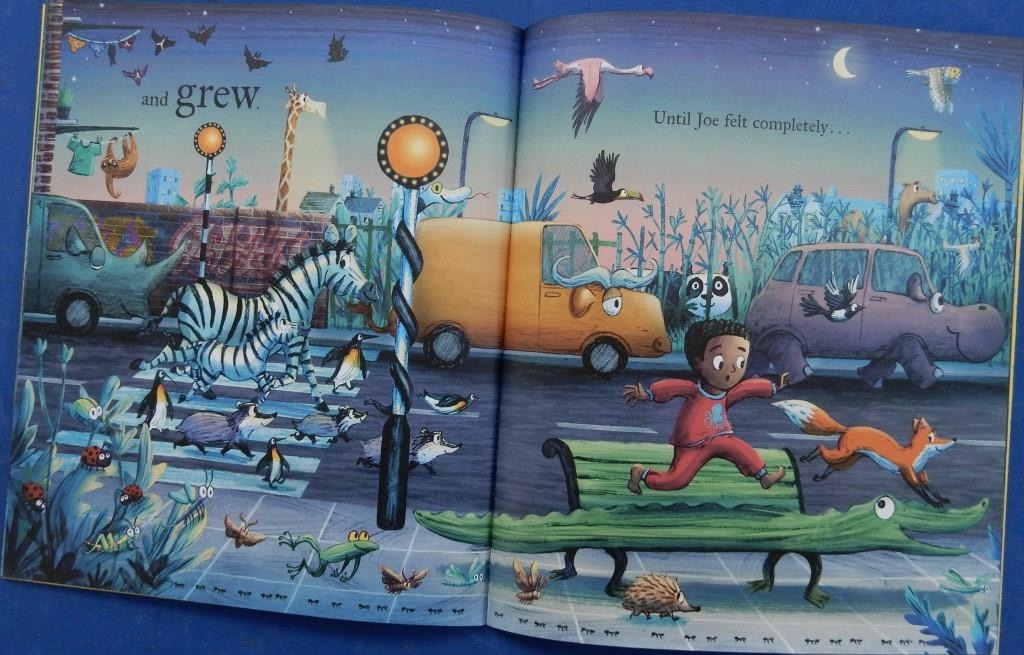
Thomas Docherty’s reassuring story conveys both verbally and visually how Leila’s friendship enables her to overcome her fears and see things with a different perspective, that of awe and wonder. Young listeners will delight in the inviting, magical atmosphere created in the beautiful illustrations of a tale that is a must for those who have their own fears of the night.

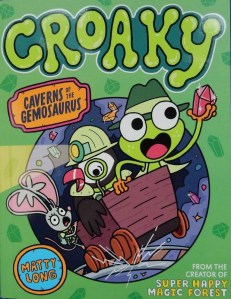
Croaky: Caverns of the Gemosaurus

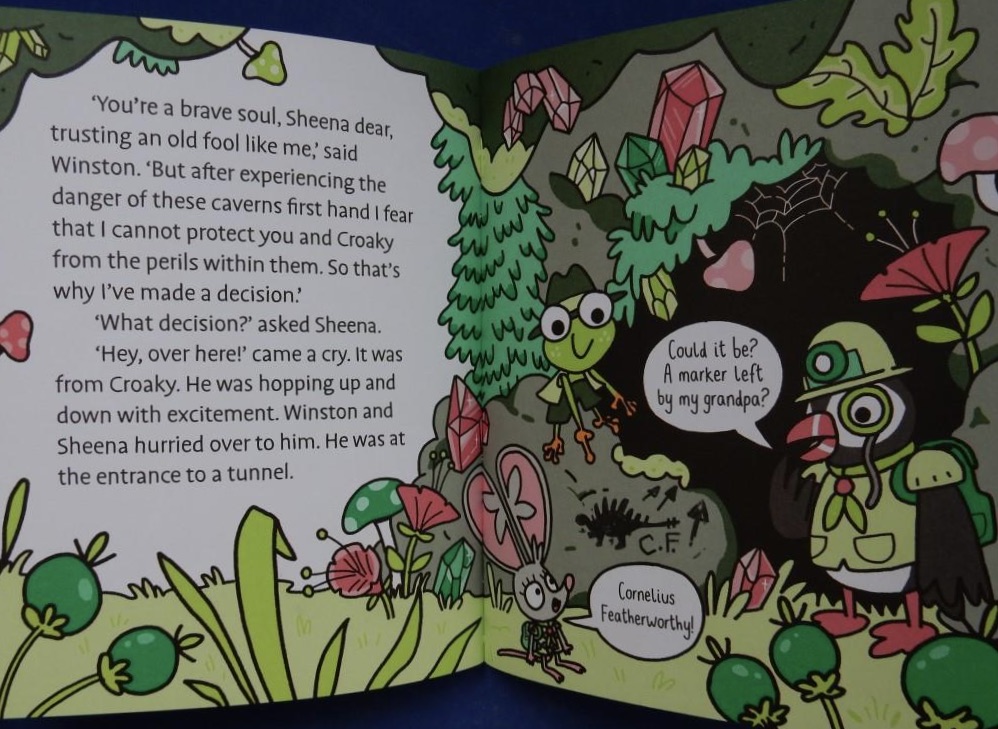
Book three in Matty Long’s Croaky series starring as the introduction reminds us, Croaky Hopper (excitable, enthusiastic, full of energy and leaps before he looks) and fellow Wogglescouts, Winston leader of the 7th Patrol, and bright, willing badge collector Sheena, is every bit as funny as the first one.

In their latest expedition the three embark on a mission to locate the Gemosaurus, a creature reputed to live deep underground in the Crystal Caverns, supposedly seen by Winston’s Grandpa back in the day. Now with an article published calling him a fraud, when Croaky suggests an expedition to find the Gemosaurus, it’s all systems go. After all Winston possesses proof in the form of a special gemstone given to said Grandpa by the creature.

Full of gemstones is what the caves certainly are and Croaky takes one and puts it under his hat for safe keeping. There follow a fair few misinterpretations as they encounter carnivorous flora, sticky situations, a parting of company,

an unexpected taxi ride and have an awful lots of stairs to climb. Is it mission accomplished though?

To find out, you’ll need to read the book but rest assured, with mayhem aplenty, this is a sparkling adventure (pardon the pun) for newly confident readers, particularly fans of madcap tales.

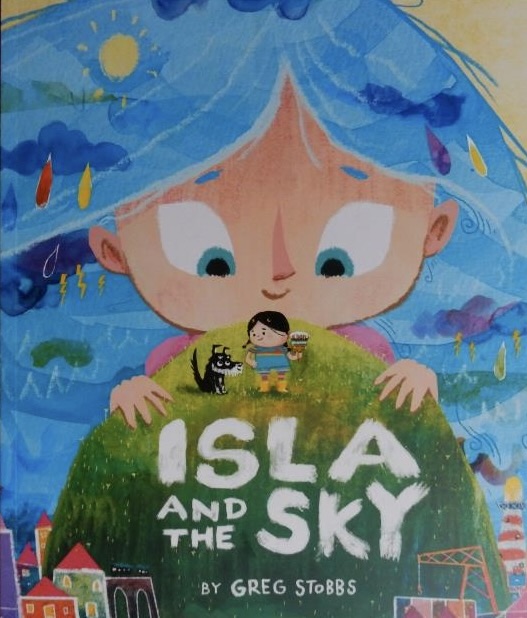
Cloud Boy

No matter how hard he tries, Bobby’s attention keeps wandering and he finds it hard to stay still. When he becomes distracted, he starts floating upwards and the more his imagination takes over, the higher he goes. His friends, his mum and his teacher try to help but there are so many things that draw his attention away from the everyday things – the colour of a bird’s song and the idea that the moon might get lonely – for instance. Bobby really does want to concentrate like his friends Jess and Nelson, to be organised like his Mum and focused like teacher, Mr Brian, but it only works very, very briefly and makes the boy very tired. His friends and family devise a plan.

However, this restraint makes him feel empty, devoid of imagination and so he cuts himself free. The result is immediately uplifting, leaving friends and family pondering upon how to get the boy down. Perhaps they should try looking at things from Bobby’s viewpoint …

This uplifting story shows the importance of understanding and valuing neurodivergence: it appears that Bobby has ADHD and author/illustrator Greg Stobbs, has drawn on his personal experience in creating the book. I love his use of pink neon to represent Bobby’s imagination.

An important story to share and discuss.

The Colour of the Sky

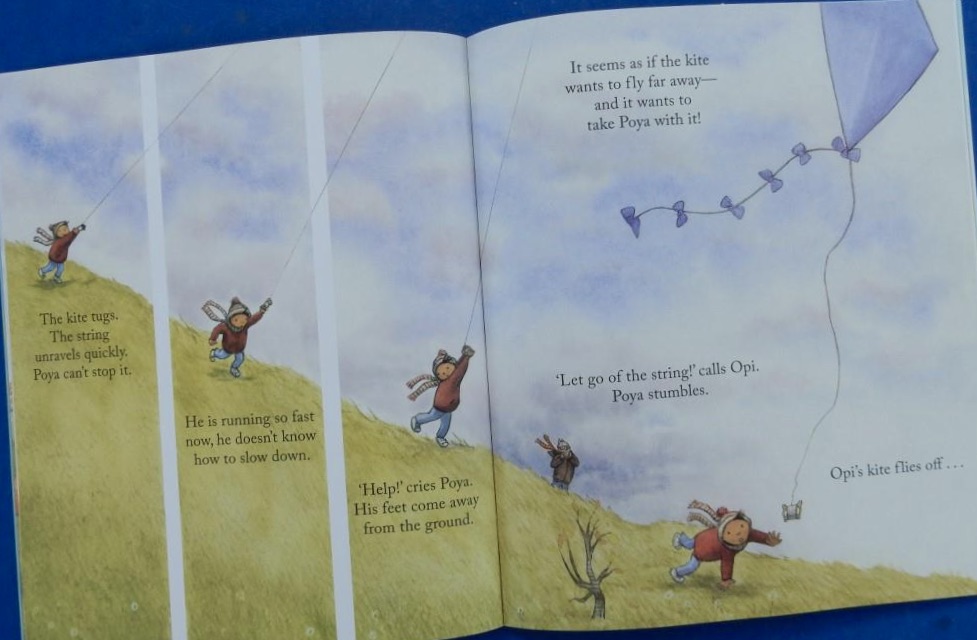
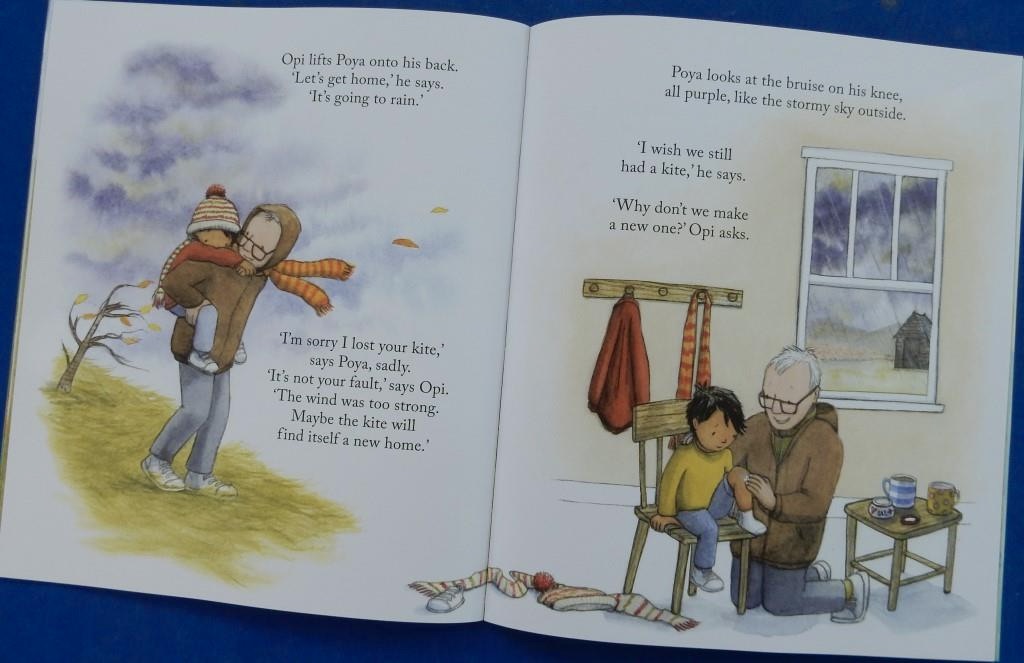
This story of a boy and his grandfather begins with the boy, Poya and his fascination with the many colours of the sky When the lad expresses a wish to reach the very top of the sky, his grandfather, Opi responds by showing Poya an old kite that he’d made with his own grandpa. They’d painted it blue to match the sky on a sunny day and it gave Opi the feeling he could react the sky whenever he flew it. Having heard that, Poya begs to try the kite and Opi agrees.

They climb to the top of a nearby hill where there’s plenty of wind. Following his grandpa’s instructions, the boy is thrilled when the kite takes flight and he starts running faster and faster, the kite soaring higher and higher. Suddenly Poya loses his footing

and Opi tells him to let go the kite string and the kite disappears into the blue leaving the boy feeling miserable. A sympathetic Opi takes his grandson home and to cheer him up, suggests they make a new kite together. Poya decides it should be painted the colour of the sky: I wonder what it will look like.

A lovely story that celebrates the special bond between a grandfather and grandchild and the beauty of nature. On the final page, the author gives instructions for making a mini kite from easily found materials. With autumnal, gusty days on their way, this is a book to share with foundation stage children. You can almost feel the wind blowing through the pages of this atmospheric exploration of autumn days and intergenerational love.

Patrick and Flippa

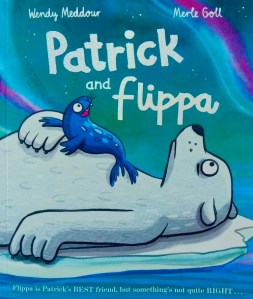
Best friends Patrick, a polar bear, and Flippa, a seal, love to watch the clouds together. Each day Flippa dives into the ice cold sea to catch juicy fish for Patrick to fill his tummy. However, despite having a full tummy, Patrick is suffering from an empty-bear feeling, so he tells Flippa. The trouble is that he thinks Flippa is overly dominating: why should she always be the one in charge never allowing Patrick to make his own decisions?

Following some disagreeable words between the two, Patrick stomps off, but to his surprise he feels no better. A snow fox comes along, stops and offers some wise words to the polar bear. Patrick decides to follow the fox’s advice; he plunges into the sea and for the very first time, catches his own fishy meal.

Unbeknown to the polar bear, Flippa has been watching and admits that she was already aware that Patrick could fish, going on to explain her reason for being so over-bearing. Of course being besties, the two talk things over, make up and all ends happily.

With themes of friendship and boundary setting, Wendy Meddour’s gently humorous story in combination with Merle Goll’s equally humorous scenes that convey the changing feelings of the two characters, make a read aloud tale that offers a good starting point for discussion with young children.

The Twirly Wiggly Dance

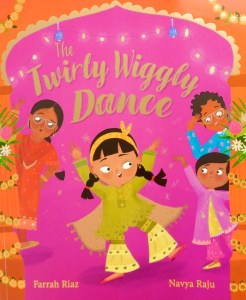
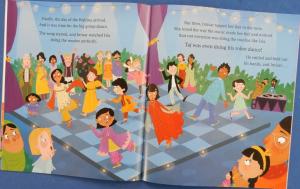
Little Intisar is super excited to be invited to her Auntie Mahira’s wedding and thrilled to be asked to perform in the big group dance, the Walima, at the end of the festivities..As she practises the moves, Intisar discovers one that’s particularly tricky and she just cannot get it right. Instead she invents her own move instead – her twirly wiggly one is much more fun.
On the eve of the first party – the Mehndi, Intisar is allowed to have henna put on her hands and while it dries she watches her older cousin, Isla, practise the dance and then later, they practise together. However, when it comes to the tricky part, Intisar finds herself getting in a tangle once more so she does her own twirly wiggly dance instead. Isla is far from impressed at her efforts telling her young cousin that she’ll disappoint Auntie Mahira.

This leaves Intisar doubting her ability to participate despite her big brother Taj’s encouragement.
What will happen on the big day? Will Intisar do the group dance the same way as other guests

or will she use her own moves and if so, what will the reaction be?

This charming story celebrates individuality and the importance of being able to embrace your uniqueness. Little Intisar is a delightful character that any child should be able to relate to, whether or not they are familiar with South Asian weddings, particularly as celebrated by Muslim families.
For those who aren’t, both Navya Raju’s vibrant, energetic illustrations and the two pages after the story explaining the various elements will enhance their enjoyment of this lovely tale.

When a Dragon Isn’t Well / Wrong Hat Rabbit!

These are both additions to popular series for very young children:

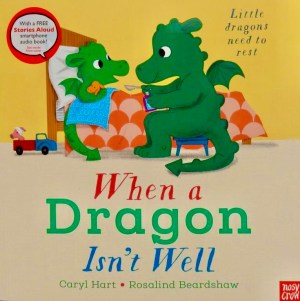
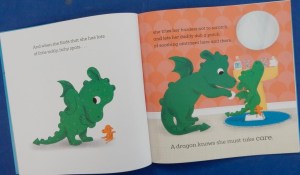
When Little Dragon is poorly and aching all over, she doesn’t stamp and stomp or cry so loudly she wakes the baby. No of course not. Rather she gently calls Daddy dragon who manages to get her off to sleep. Come the morning though, she’s covered all over with itchy spots and instead of scratching frantically, she allows Daddy dragon to apply some soothing ointment.

She accepts being told she cannot go and join her friends who call inviting her to play. She also accepts that she needs to stay indoors and do some more restful activities like drawing and sharing a book with Mummy dragon. Indeed Little Dragon complies with whatever her parents want her to do, – eating lunch, snoozing and enjoying some imaginative play of the gentle kind. Of course, once she’s recovered from her spotty sickness it’s a different matter and Little Dragon resumes her lively activities with gusto: what about her tiny sibling though? …
A delightful addition to team Hart and Beardshaw’s When a Dragon series that young humans will relate to and enjoy whether or not they have had lots of itchy spots that make them feel poorly like Little Dragon.

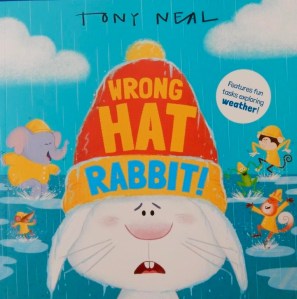
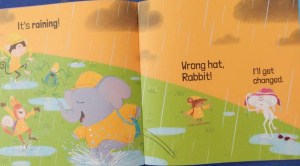
Rabbit wants to spend a day playing at the park with his friends so he dresses in what he hopes is the right gear. However, the weather proves to be very changeable and so no matter how many changes he makes to his attire, he seems to be wearing the wrong outfit. After in turn, being too hot, getting a soaking

and feeling too chilly, his pals decide to step in and help until all appears to be well; but then they start having a snowball fight …
An entertaining, simple introduction to some of the vocabulary associated with weather for very young children. The final spread offers activities for a child and adult to do together.
Altogether an enjoyable way to support learning at home or perhaps in an early years setting.

The Boy Who Painted the World

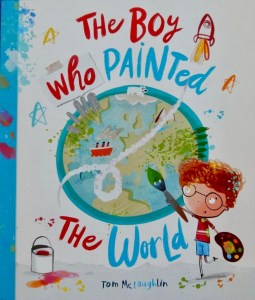
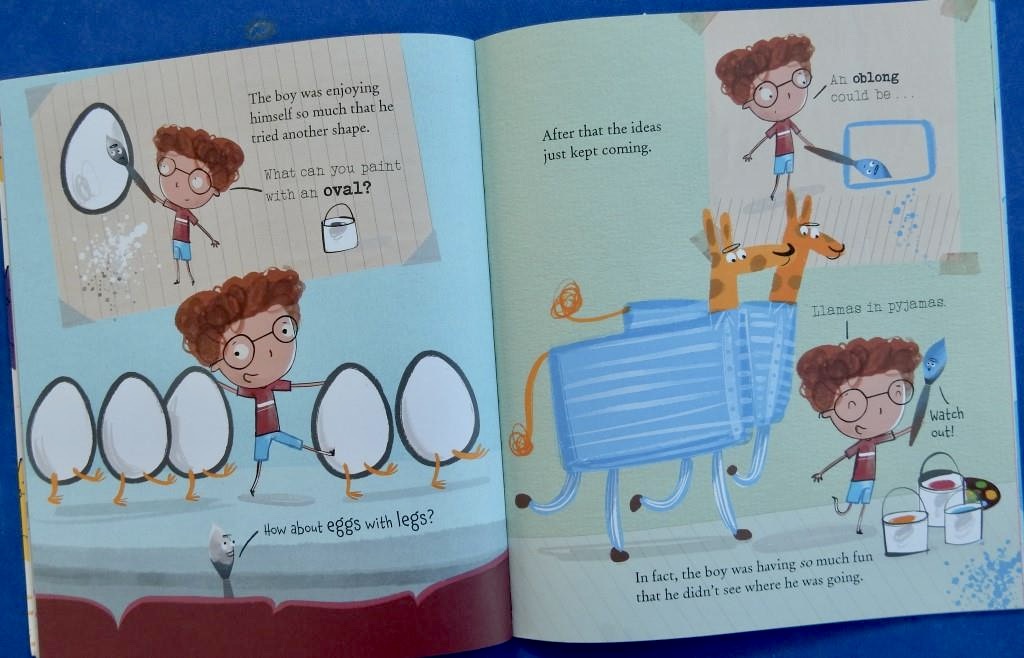
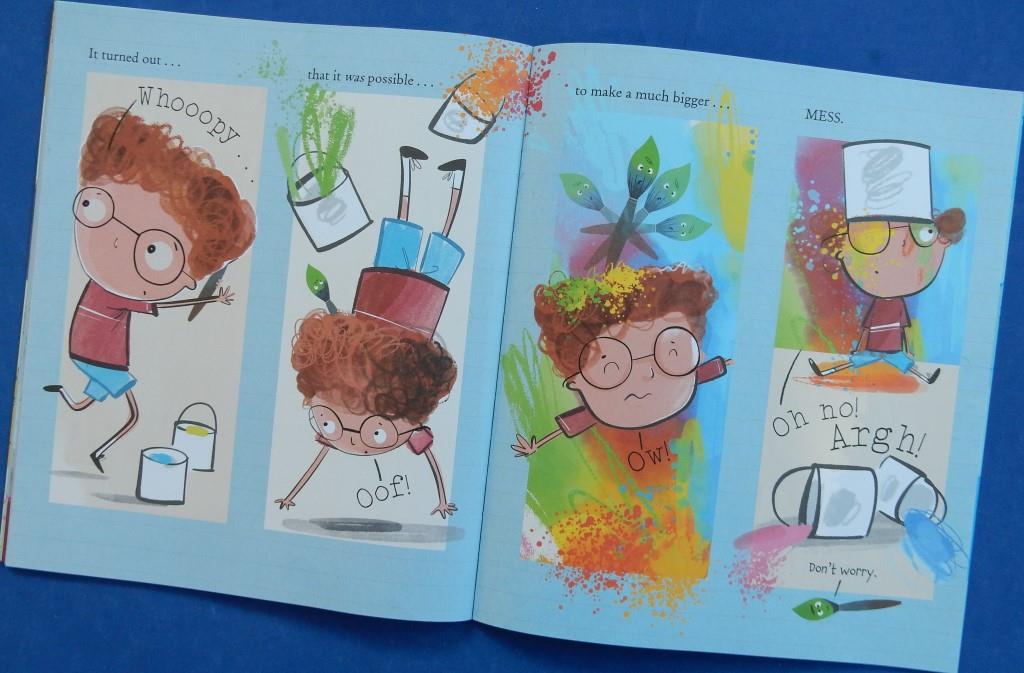
When a boy steps into a book he’s under the impression it’s empty but he’s wrong. So intent is he at looking around that he upends three cans of paint sending their contents everywhere. When he apologises for the mess he’s made, he’s told by a brush that the spilt paint is not mess, rather it’s an opportunity and soon the green splurge is transformed into a ‘messy-a-saurus’. The brush then suggests the boy should try painting, something the boy says he cannot do. Nevertheless he dips the brush into the pot of blue paint and nervously makes a square shape, albeit a wobbly one.. With further encouragement from the brush he proceeds to produce all manner of things with wobbly shapes.

This so excites the brush that he tells the user that he’s made art. Further playfulness with the brush and paint in various hues results in such things as a pink lemonade ocean, llamas sporting pyjamas and a brown bear until finally they’ve got all the colours of the rainbow. After a bit of rainbow sliding, paint splashes and splurges are everywhere. As you will by now probably expect, these are rapidly transformed, becoming creatures, friendly and not so friendly, and a way more enormous mess.

By this time, the boy needs no encouragement: a realisation dawns and whoppee! There’s no stopping our young paint brush wielder.

What a wonderfully joyful, effervescent celebration of creativity unleashed and an important demonstration that if you accept your mistakes with a positive attitude you can turn them into imaginative opportunities. Young children aren’t inhibited by not being able to draw/paint, rather they just enjoy being creative. However all too soon those negative, “I can’t paint” notions take over and their confidence in themselves as artists wanes. Share this story; it could, one hopes, help keep that creative spark from being extinguished as they get older.

Godfrey is a Frog

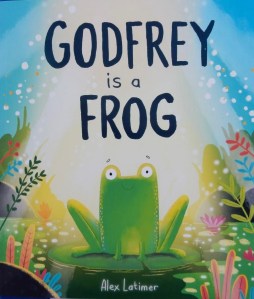
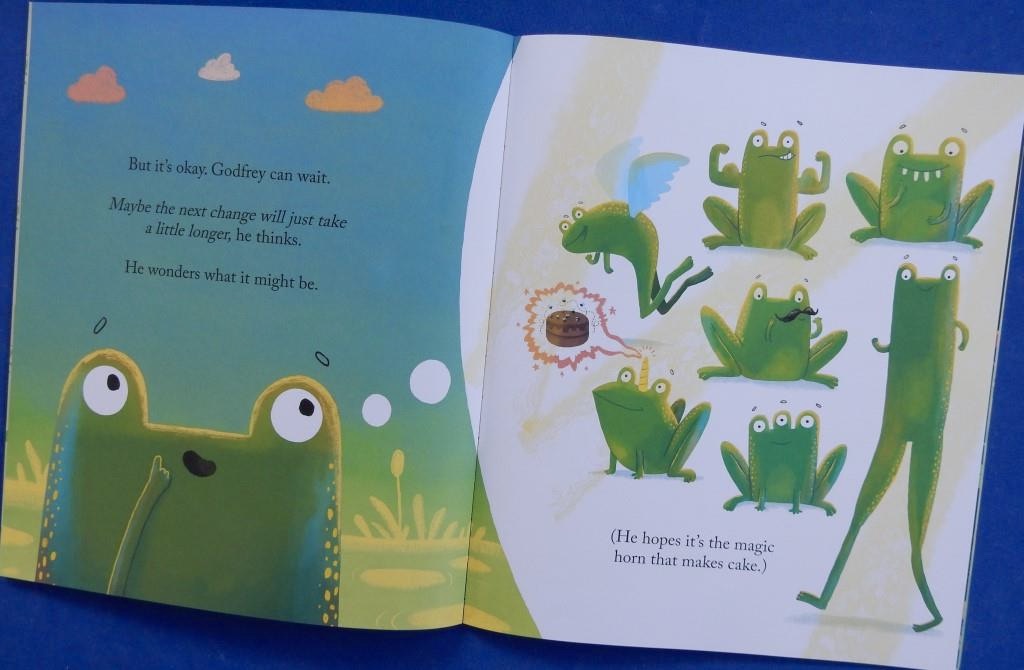
After undergoing the usual changes from tiny egg floating in a pond, Godfrey has become a frog. He sits atop a lily pad eagerly anticipating the next change but weeks pass, then months and he’s still the same two armed, two legged, long, sticky tongued frog.

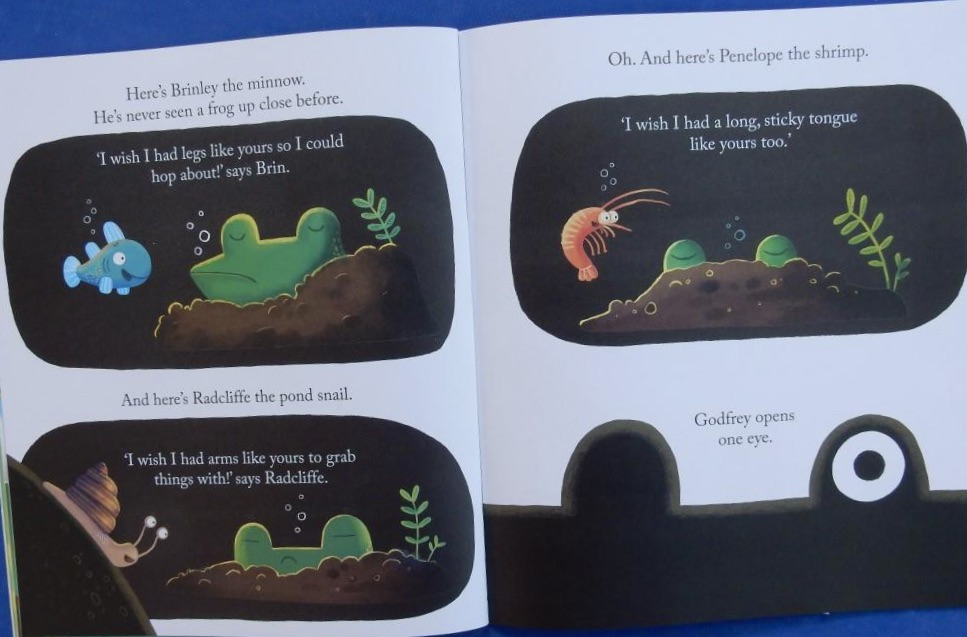
As he looks around at the other creatures he decides they’re all way more exciting than he is. Then having made a final inspection in the hope he might have missed a new development. Godfrey plunges into the pond, right to the bottom, where he immerses himself in the mud. Up swims minnow, Brinley. “I wish I had legs like yours so I could hop about!” says the fish. Other pond creatures also express a wish to possess features like Godfrey’s.

The frog ponders upon their words for a while. Maybe now something else is changing – something within. Is Godfrey finally ready to accept and appreciate himself and his fabulous frogginess.

Alex Latimer’s fabulously funky portrayal of Godfrey will ensure he endears himself to young audiences who will love being in the know about a frog’s life cycle. (Just in case any have yet to learn this, there’s a pictorial spread showing how it happens after the story).

Listeners will love the alliterative phrases in the text and Alex’s playful scenes, especially those showing Godfrey’s protruding tongue and imaginings about possible changes.

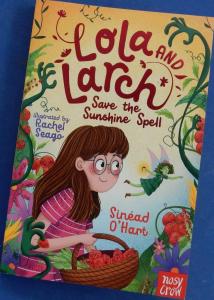
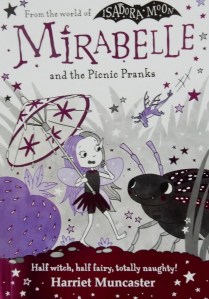
Lola and Larch Save the Sunshine Spell / Mirabelle and the Picnic Pranks

Despite her grandma’s excitement about the size her marrows have grown to overnight, Lola suspects something isn’t right and then Larch is sure she’s seen a plant from the wheelbarrow waving at her. Lola’s convinced something weird is afoot, especially when Grandma’s polytunnel smells decidedly odd, tomatoes grow so much they explode and the veggies start leaping about.

Lola and Larch decide to make a foray into the forest to investigate. Shock horror: the fairy kingdom is almost completely overgrown; Their encounter with King Ash (the fairy king) leads to a suggestion that the dastardly Euphorbia Spurge is behind what’s happened; furthermore he insists that Larch remains rather than return to the human world with Lola.
It’s a tearful Lola who sets off back to her Grandma’s but on the way a tiny fairy, Con, gives her a special leaf that will enable her to talk to Larch without being able to see her so long as Larch too is holding a similar leaf.

That night Lola is awoken by Larch’s voice coming from the special linden leaf and before you can say ‘Sunshine Spell’ she’s up and out to a forest rendezvous with Larch.

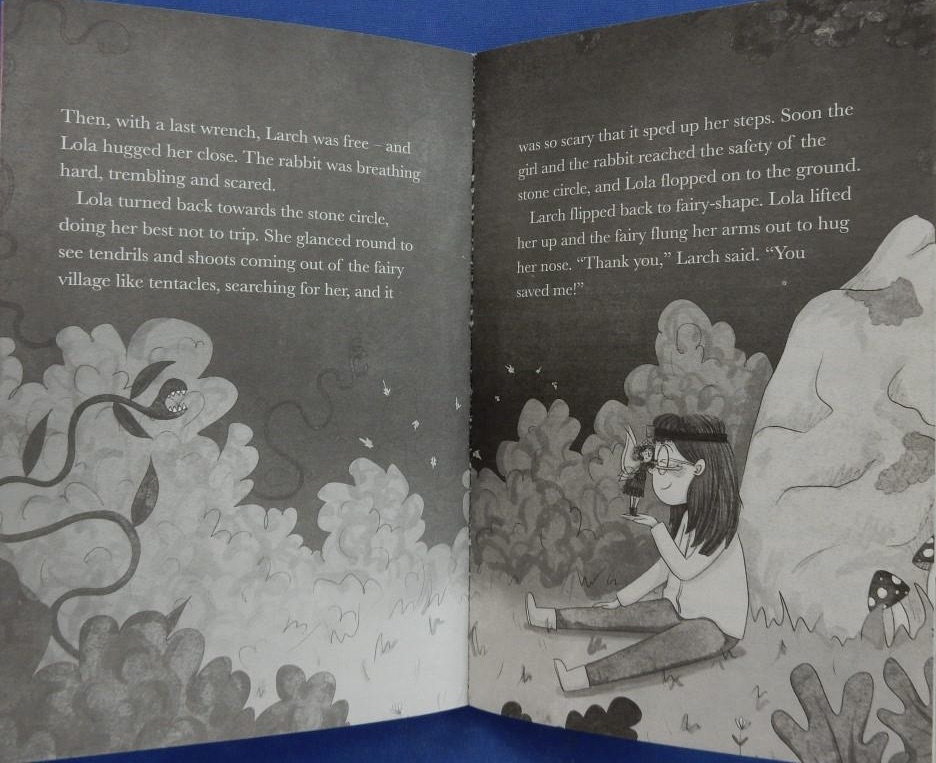
Then with Euphorbia’s purple magic swirling around them, the two friends head for her house. A difficult journey for Lola, but they must get there and retrieve the distilled sunlight that’s a vital ingredient for the all important Sunshine Spell that will break Euphorbia’s magic. Can they save the day once more?

Another mix of enchantment and friendship that will delight fans of the first story in the series, again with Rachel Seago’s black and white illustrations that bring out the humour throughout this second adventure.

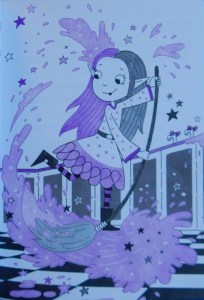
Mirabelle has promised her Mum that she’ll be on her best behaviour when their new neighbours, Fredrick, Felice and their son Oswald come for a barbecue. So how come her brother Wilbur discovers frogspawn in his drink when they all sit down for the feast? Not only that but the kitchen floor is awash after Mirabelle’s mopping.

When Mum comes in with a pile of dirty crockery she goes flying, dropping what she’s carrying and smashing it to smithereens. The result is that Mirabelle is sent up to her bedroom. From there she watches as her brother and Oswald head for the sprinkler. Longing to join them but realising she’d be spotted, Mirabelle finds a sneaky plan has come into her mind; one she just can’t ignore. Out comes her potion bottle necklace, her swimming costume and her special fairy wings, off comes the lid of her shrinking potion bottle and …

Having eventually succeeded in descending to the garden, Mirabelle starts to wish she’d stayed in her bedroom. Indeed before long she realises that the whole escapade is a big mistake. Then she hears her distressed-sounding mum shouting that her daughter isn’t in her bedroom. Can Mirabelle restore herself to her normal size and if so, what will her parents and the visitors have to say? Let’s just say that one of the latter surprises everyone at her reaction.

This sixth story starring the mischievous Mirabelle will delight her countless young fans who will be rooting for her throughout. Anyone for trifle?

The Legend of the Wild West Twins

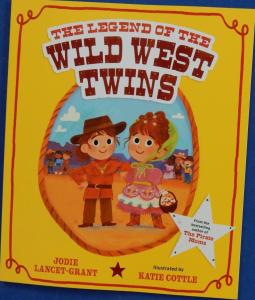
Imagine a Wild West where every one of the inhabitants is a child. That’s the setting for this cleverly written adventure starring twin sisters Buffalo Lil and Buffalo Jill. The former is said to be the hardest ridin’ … fastest knickerbocker glory-guzzlin’ gal in town; her sister, she of the sweetest smile is the sewer of the frilliest frocks and baker of the tastiest iced buns in the vicinity of Lone Ridge.

Lone Ridge’s claim to fame was its hosting of the wildest cowboy contest in the West: the Rip- Roarin’ Rumble and for the first time, Lil has decided to enter. What will happen when she comes up against Lone Town’s hero Yee-Haw Jack, he with a reputation for long distance lasso-ing feats, acrobatics in the saddle and bucking bronco saddle sitting that’s almost unbelievably long lasting?

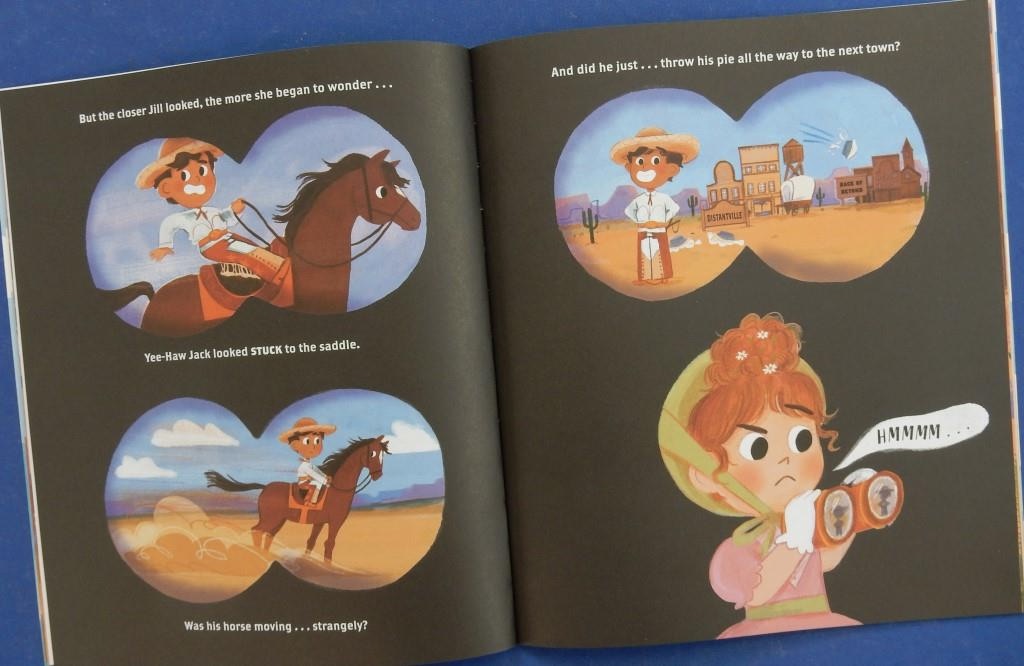
Into town rides the young guy certain he’s about to win the Rumble once again but Lil isn’t going to let him do so without giving it her all. Moreover, Jill has her back and keeps her beady eyes on Jack from the off. Pretty soon her suspicions start to arise.

Come nightfall she goes out to investigate and it’s evident that Jack is no hero, he’s a ‘low-down cheatin’ rattlsnake.’

Is it possible that by co-operating, the twins can expose Jack and his dastardly ways.

High octane humour with a plot that twists hither and thither, celebrates difference and demonstrates that honesty and being true to yourself are what matters most, whomsoever you are. Katie Cottle’s pictures have a potency all of their own and provide the perfect complement to the text.

Bear vs Dragon

This is a rib-tickling tale of a stand off on a bridge, a very rickety bridge over a rapidly moving river. The two animals involved are both large and both are determined to be the first to cross to the other side. From the moment both Bear and Dragon are standing on the bridge, children (and adult sharers of the book) will notice the creaking and cracking sounds coming from the wooden construction indicating disaster for the foolhardy pair.

As their self-aggrandising dialogue proceeds, Mark Chambers’ splendidly droll illustrations capture to perfection the body language of the speakers until eventually, following a barrage of verbal insults,

the inevitable happens sending the protagonists hurtling downwards into the ravine and they SPLASH into the rushing water.

Happily they are not swept away; rather what follows is a highly precarious ascent to safety

and the forging of a powerful bond of friendship.

Young listeners will painlessly absorb the important messages about seeing something from another’s perspective and the power of co-operating.

A cracker of a book to read aloud and discuss in Foundation stage and KS1 classrooms and at home.

Wanna See A Llama? / We’re Going on an Egg Hunt

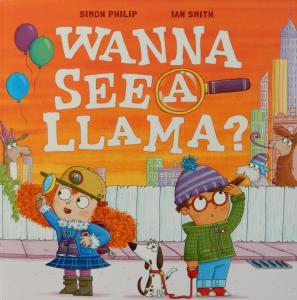
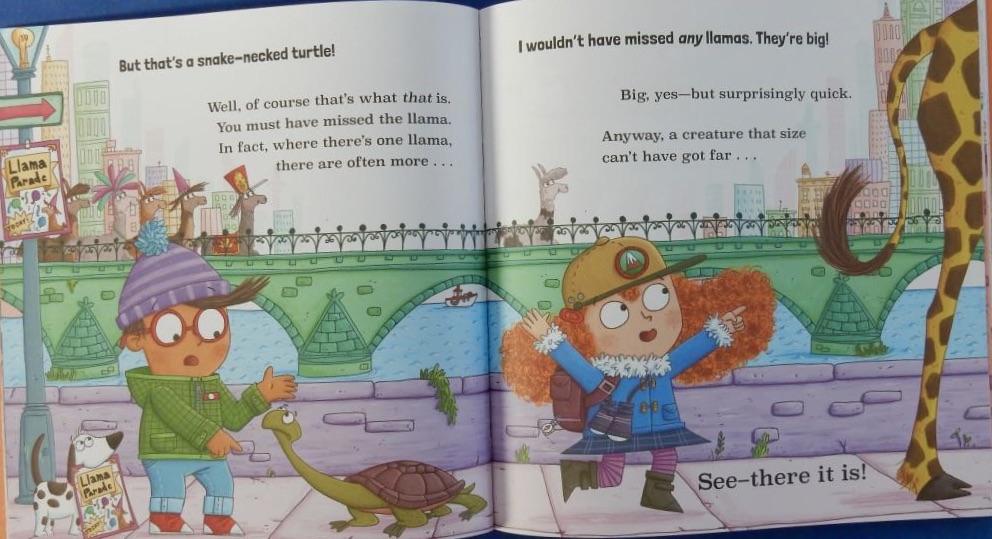
In this equally entertaining sequel to Wanna See A Penguin? the same young animal expert, so she says, now includes llamas in her field of expertise. She invites her friend to accompany her on a llama-spotting expedition around the city. As they walk, they encounter all manner of creatures – humped, scaly, furry with spots, shelled,

very long-necked, soft and woolly, but a llama? Not around here declares our self-dubbed expert who evidently hasn’t noticed any of the posters advertising a parade as she leads her long suffering friend who identifies each animal, on a wild-llama chase.
Asserting on the penultimate spread, ‘There can’t be any llamas round here’ our leader heads homewards.

Young listeners will delight in the final spread whereon Ian shows a Llama Parade just behind the two children. Those same listeners will also have enjoyed spotting a llama (or two) in the background of every other double page illustration.

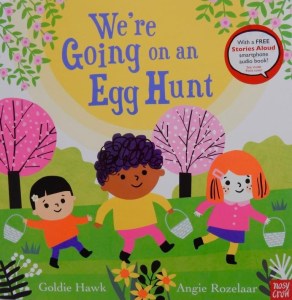
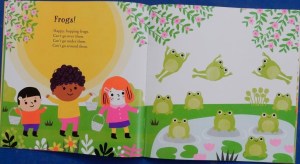
Unashamedly using the nursery favourite ‘We’re Going on a Bear Hunt’ as the basis, Goldie Hawk sends her three young child protagonists, springing into action in search of eggs, baskets in hand. As they walk, the children encounter pecking, clucking hens, munching-crunching bunny rabbits, hopping frogs,

rustling-swishing plants until eventually – yippee! They discover ten eggs. Having loaded their baskets, it’s time to make the return journey back the way they came, arriving just in time to take part in a joyful Easter parade.

Angie Rozelaar’s vibrant scenes with splashes of day-gio pink and luminous green convey the freshness and joy of springtime and of the search. Just right for sharing with very young children as spring and Easter approach. I suggest buying to give instead of an Easter egg; its pleasures will last SO much longer.

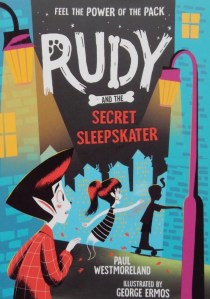
Rudy and the Ghastly Gathering / Press Start: Super Rabbit Boy Blasts Off!

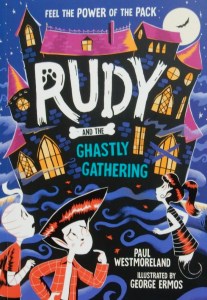
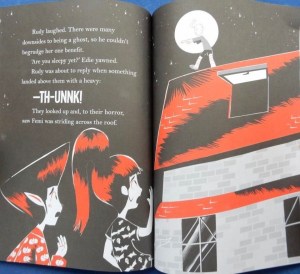
When Rudy and Femi are invited to Edie’s birthday party they are warned that ghost parties are ‘a little different’. It’s in a haunted house after all, but why has Edie been keeping the event under wraps? Nevertheless the two are determined to make it her best birthday so far. Come Saturday the friends skate their way to Edie’s home taking with them her special present, a present they decide won’t compete with the super bike her dad conjures up. As expected Edie wants to try it out at the Skateway immediately, so off they go, with Edie’s little spirit-sister Holly tagging along.

Once there Holly straightway starts drawing attention to herself pretending to vanish and it becomes difficult to tell which disappearances are pretence and which real. It’s down to the friends to work out what’s what and find Holly before she’s washed away by raging river water. Can they do so and what about Edie’s birthday party? Will a spookily special celebration be shared by all?

This latest exciting adventure wherein friendship and teamwork are vital will be eagerly seized by fans of the series. Those who have yet to discover the joys of Paul Westmoreland’s gothic-inspired early readers, powerfully illustrated by George Ermos, would be better to read the first story Rudy and the Wolf Cub beforehand.

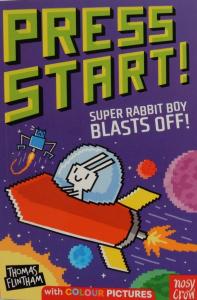
I know many Super Rabbit enthusiasts who will want to join Sunny and Super Rabbit Boy on another adventure. As the book opens a party is under way in Animal Town in celebration of the dastardly King Viking having gone away for ever, destination outer space. But suddenly in the middle of town a rocket lands from which disembarks a green alien calling itself Glob Glorp. The message is that King Viking and his army of robots is causing a lot of trouble in outer space. The alien lends Super Rabbit Boy his Level 1 rocket and off zooms the rabbit to deal with things.

Tasks entail overcoming mega Rocket Robots and their bosses and saving lots of aliens including Flobs and Roo-Roos, in order to upgrade his rocket to higher levels, till he has a Level 10 rocket, but he still hasn’t found the evil King Viking. Eventually with a Level 11 rocket, Super Rabbit Boy lands and comes face to face with the being he thinks is the one he seeks. But could it be somebody else? If so, then what?

This fifth episode moves at a rapid pace that will please young video game enthusiasts as well as fans of the series. It’s also a good one to offer older reluctant readers.

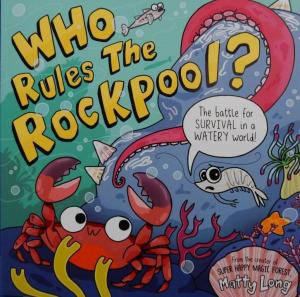
Who Rules the Rockpool?

Who rules the rockpool is the subject of strong disagreement between the book’s narrator, Crab, and Prawn, so the former sets out to explain his thinking to his friend. There’s his courage and strength and that makes him rule supreme. Toughness is not sufficient to ensure one’s survival, insists Prawn; one needs to be smart and not take unnecessary risks as well.

All of a sudden an enormous wave washes the two pals into a much deeper pool where Crab, who naturally wants to rule this new abode, cannot resist challenging the creatures residing therein to a show of strength. To Crab’s surprise, not a single one of the animals is the least interested in a fight. Rather in turn, they give him clues about the rockpool ruler’s identity.

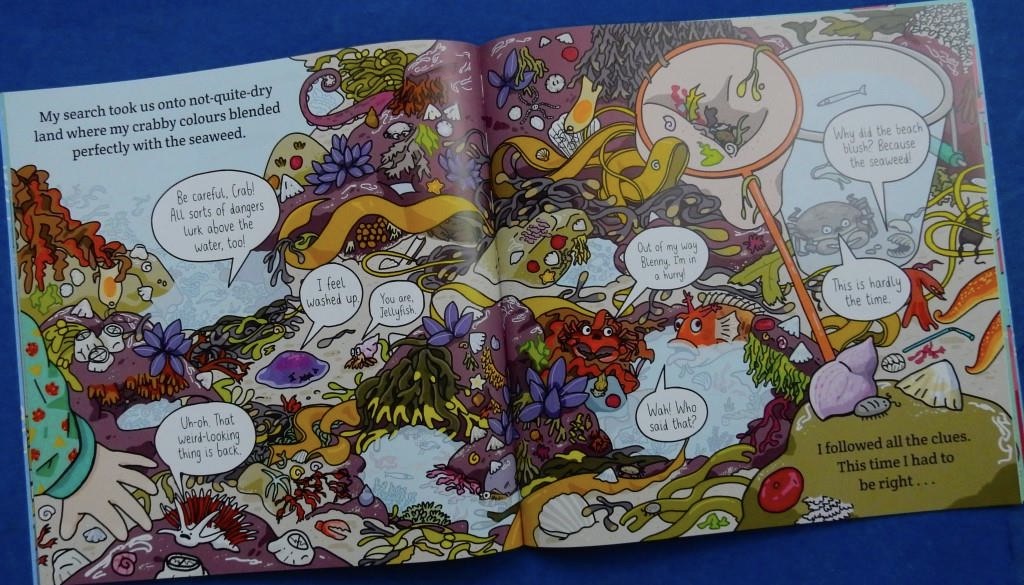
It is many limbed, has the ability to move both in the water and on land, and is brilliant at camouflage. During his search for the ruler Crab becomes absolutely convinced it’s him they’re talking of and because of that, he places himself in a life-threatening situation. Will he survive to tell the tale? And what about that titular question now?

With Matty Long’s characteristic comical, cartoonish art, witty speech bubbles, jokes and splendidly silly scenarios, this subaquatic story will keep young readers entertained for a considerable while. Its three final pages provide some fun facts and an illustrated list of ‘colourful critters’ to send readers searching back through the book as well as onto the seashore to investigate rockpools. 

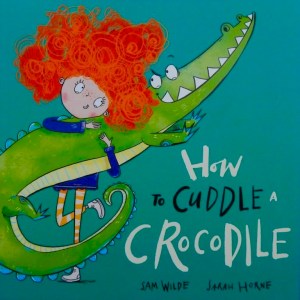
How to Cuddle a Crocodile

This image has an empty alt attribute; its file name is dscn9963-1.jpg

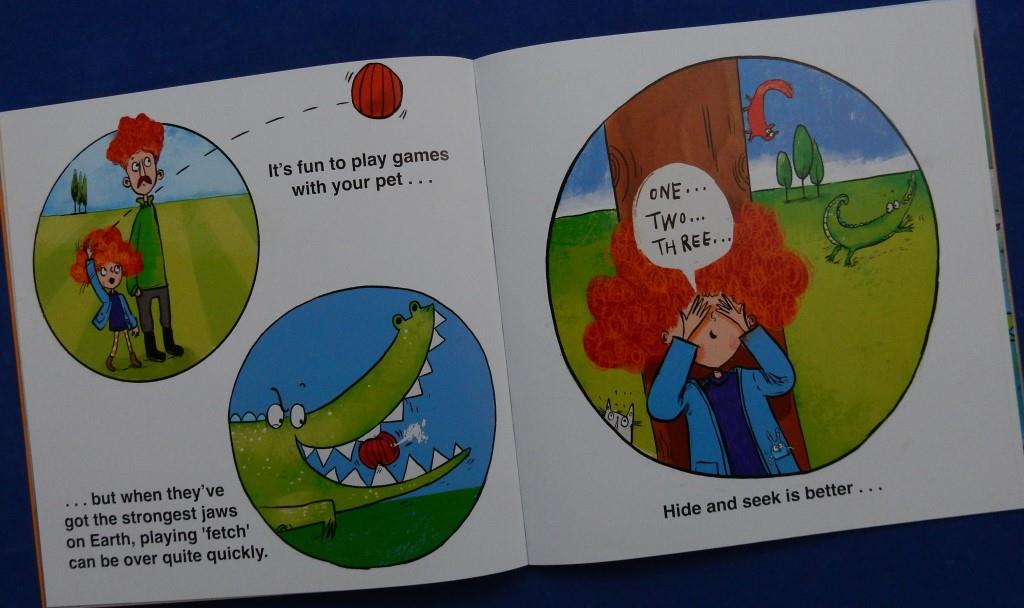
When choosing a pet, a crocodile wouldn’t be at the top of most people’s list but after careful consideration and taking into account that her dad has allergic reactions to many creatures, our young narrator makes the decision and advertises for a croc. Before long, it’s enter one large scaly, snaggle-toothed reptile with a large grin. Now the carer of such a pet has a lot to learn: it needs regular exercise – that’s challenge number one. Game playing comes next but best avoid ball games,

This image has an empty alt attribute; its file name is dscn9964-1.jpg

and hide-and-seek might prove a tad too protracted, not to mention alarming for others in the vicinity.


Pre bedtime tooth cleaning requires assistance from avians and fortunately this particular crocodile (in common with many of her kind) likes to sleep a great deal. Is she a keeper though, or might it be better to bid one another farewell – by mutual consent of course – and hope something more suitable turns up? Err …


This silly story is followed by a spread of crocodile facts, some of which might come as a surprise to young listeners and adult sharers. Wildly imaginative and sure to bring on some giggles, this is a fun-filled follow up to Sam and Sarah’s How to Feed an Elephant.

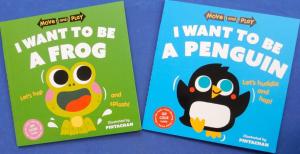
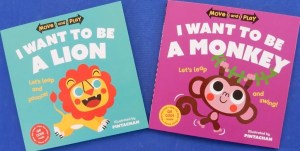
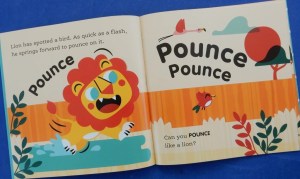
For fans of the Move and Play series, illustrated by Pintachan there are two new titles this month:


This image has an empty alt attribute; its file name is dscn9959-1.jpg

I Want to be a Frog and I Want to be a Penguin. These are certain to get your little humans hopping, splashing, huddling and sliding, complete with their masks made from the cut outs provided inside the front covers`.

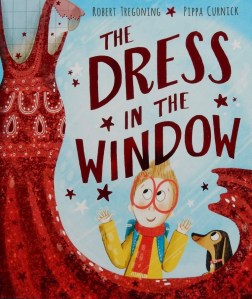
The Dress in the Window

One day when walking through town with his mum, a boy spots a sparkling red dress in the window of a second-hand shop. Dazzling and flowing, the dress seems to be asking the boy to stop and take notice, so he does. He imagines who might have owned the dress previously but the lad knows how amazing it would make him feel.

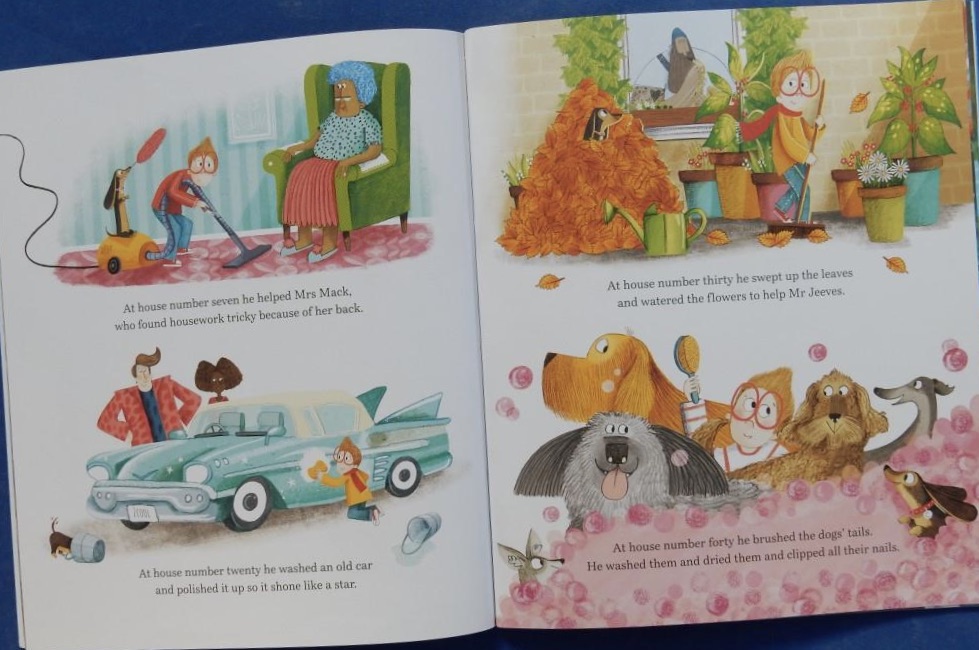
Rather than offering to buy it for her son, Mum suggests he earns some money by doing chores for other people so he can pay for it himself. This he does by washing cars, helping with housework, tending a neighbour’s garden and doing a bit of pet care.

Gradually the money mounts up till the boy has sufficient to buy the dress.

Next day is his birthday and after school, the boy can hardly wait to return to the secondhand shop and make his longed for purchase. Horror or horrors! The dress has gone from the window. Mum pacifies her son with talk of presents waiting at home and when they get there, it’s not just presents waiting for him. All the neighbours are there too and they have a tea party.

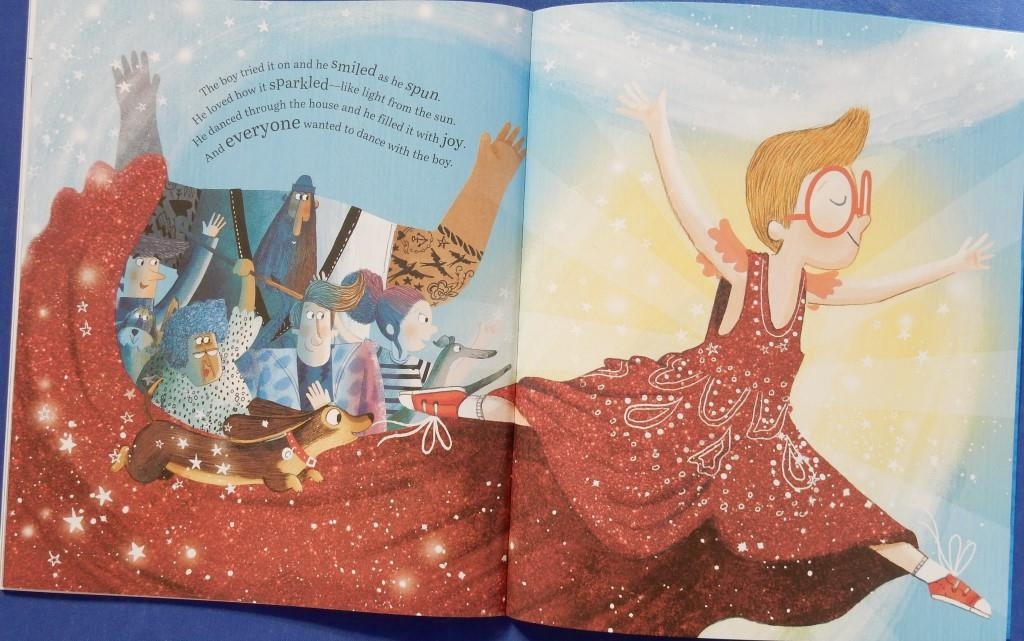
Then comes present-opening time. Joy of joys, when he opens the present from Mum, there is the shimmering, glimmering dress. How he smiles, how he sparkles as he dances with delight – right out of the house and into the street.


What a splendidly joyous celebration of being true to yourself. With its themes of unconditional love and acceptance, this lovely story is a demonstration of just how amazing life can be when you have the support to be true to yourself. The combination of Robert Tregoning’s rhyming text that is a treat to read aloud and Pippa Curnick’s gorgeous illustrations make this a very special book to share with young listeners at home or in the classroom.

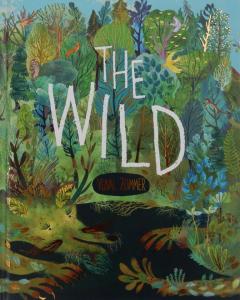
The Wild

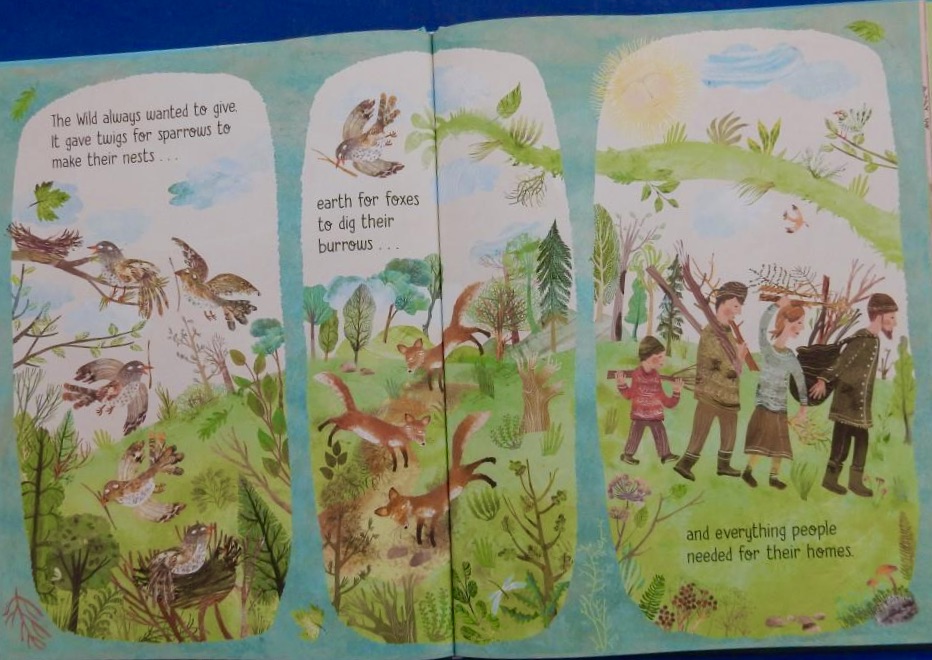
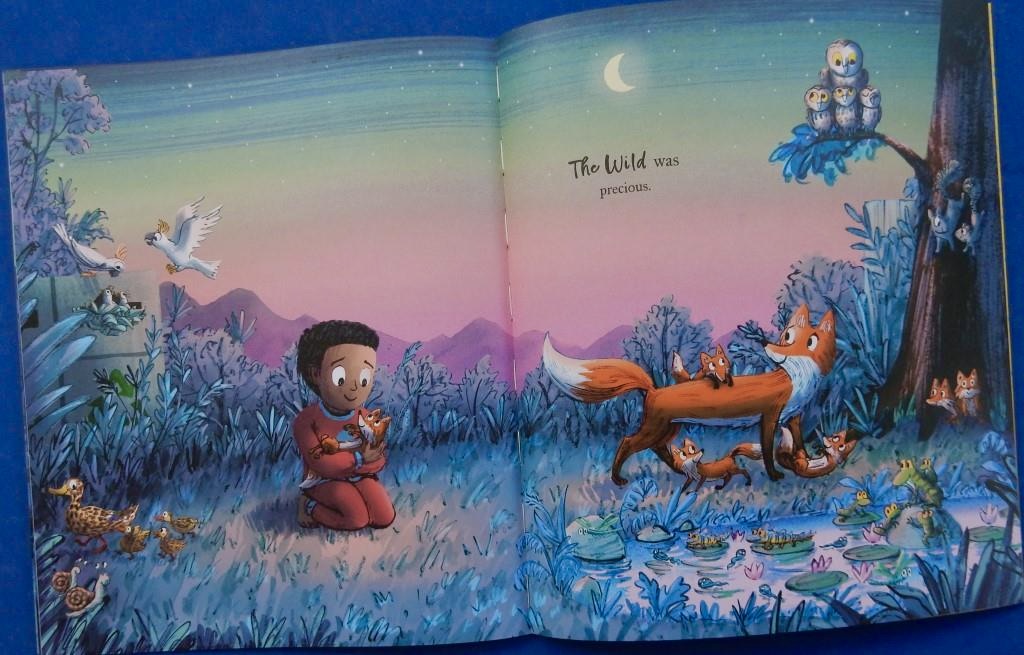
There is a line in a Native American poem where the author asks the Great Spirit of Life to give him the wisdom “to walk softly on the earth”.  This ancient metaphor recognises our human responsibility to take care of the natural environment on which we live and depend for our existence. So it was in the Wild at the start of Yuval’s new fable of our times. The Wild here was a vast place, a place where season followed season and the animals responded to the changes, either by moving or by being still and sleeping. Every living being, be they human, or creatures furred or feathered had all they needed: they lived lightly in the Wild, caring for it and receiving its care in return.

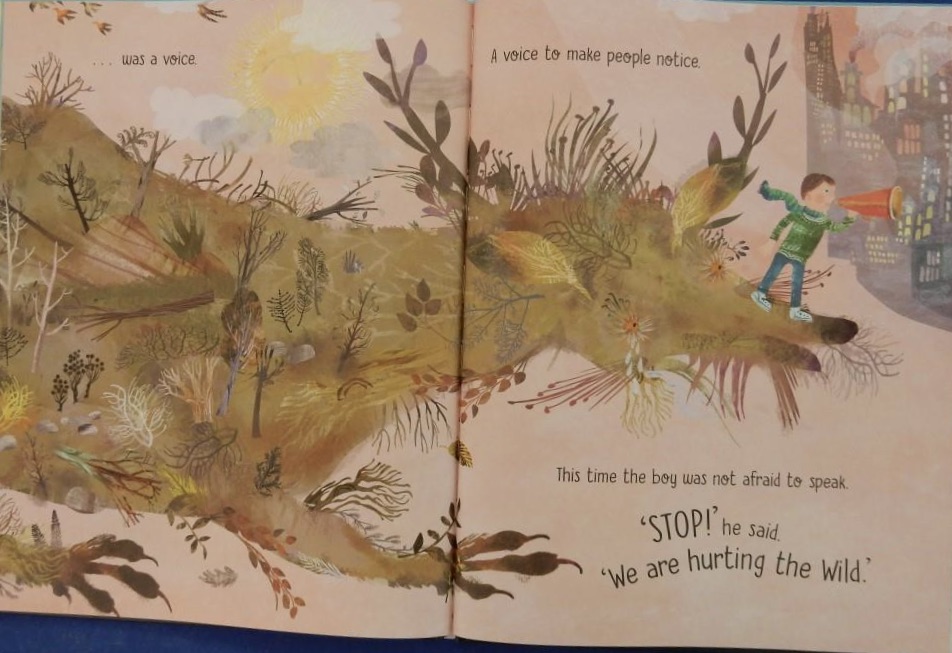
But those humans envisaged that the Wild would always be able to provide what they needed so with the passing years, they became increasingly careless, taking too much as they mined, ploughed, burned and built. They paid no heed to the devastation their actions caused until one day a child looks out of the window and notices a change. “Why does the Wild seem so weak?” he asks but his question goes unheeded. The child continues to worry and question but to no avail until eventually the Wild is unable to give.
Now it’s time for the boy to speak louder and without fear. And so he does: “STOP!’ he cries, “We are hurting the wild.”

Finally others hear his urgent call and they too take up the cry. Not only do they call, but they also change their behaviour. Little by little, with renewed hope , the Wild begins to recover because no human took without also giving something back.

Yuval’s message is also delivered with stark urgency and his collage like illustrations are full of superb textures and details in the realistic, rich colours of the natural world.
A must to read, share, discuss and act upon.

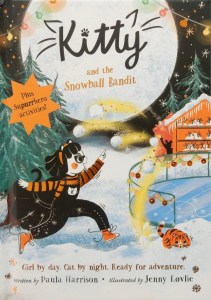
Kitty and the Snowball Bandit / Rudy and the Forbidden Lake

There’s a decidedly chilly feel to Kitty’s thirteenth adventure when she wakes one morning to find that snow has fallen overnight. That evening she, her Mum, Dad and her little brother, Max, head to the Winter Fair and while Kitty and her Mum are enjoying themselves on the ice rink, a snowball suddenly hits Kitty and another woman. Soon an announcement is made warning everyone to take care as a Snow Bandit is in the fairground so as it’s late they decide to return home.

At bedtime Kitty is pondering upon the evening’s events when Pixie the cat appears looking very soggy and sad. She too has been hit, seemingly by the Snow Bandit. Kitty gets dressed again, then donning her superhero cape and mask off she goes onto the roof and heads to the park. Before long she’s hit by another snowball and then spies a figure in an orange cloak – the Snow Bandit.

Eventually Kitty finds herself facing her adversary, also wearing superhero gear and learns that she’s Sienna, the fox girl.

Suddenly there’s a squeaking sound; it’s three baby rabbits adrift in the middle of the river, caught by the current and heading towards some jagged rocks. Kitty is determined to save them, but can she do so? Maybe if the two combine their super powers and collaborate in a rescue effort. Who knows it might even be the beginning of a new friendship …

Pacey, full of action, cat characters and snowballs, with plenty of Jenny Lovlie’s dramatic, beautifully detailed illustrations, Paula Harrison once again has penned an exciting nocturnal adventure for young readers

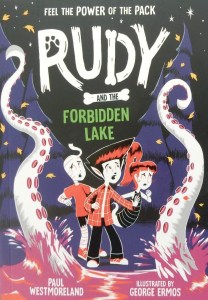
It’s the middle of winter and excitement is high in Cobble Cross on the eve of celebrations for the Winter Solstice. Then as the final preparations are being made a terrible storm hits the town. The following morning Rudi’s Dad notices his silver candlestick is missing, then when he goes out to meet his friends, he learns that other things have gone missing. Is it the the result of the strong winds or is there a thief at large.

When Femi’s skateboard disappears too, Rudy and his friends start searching in Gnarlybark Forest and suddenly they hear a POP! followed by several other strange sounds. Bubbles start bursting through the surface of the forbidden lake followed by a strange domed entity. Their instinct is to run away but that won’t solve the problem of the missing things. Instead they creep back together to confront whatever it is in the lake. Tentacles start emerging from the water, one of which wraps around Femi. Eventually the tentacled creature drags itself ashore and little by little, this Squibby thing offers an explanation for its behaviour.

What will happen when Squiggly attempts to apologise to all the townsfolk? Will the ensuing chaos subside in time for the celebrations to go ahead after all?

It’s not easy to find books that appeal to both boy and girl newly independent readers but this series featuring young werewolf, Rudy and his skateboarding pals does just that. So, it’s good to see the gang back in this their fifth book. It’s full of dramatic incidents and as always George Ermos’ stylish energetic illustrations capture the changing mood of the telling, adding additional humour where appropriate.

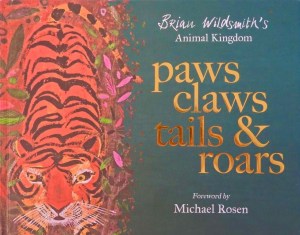
Paws, Claws, Tails & Roars

Like Michael Rosen in his foreword to this sumptuous book, I recall that my first encounter with the work of Brian Wildsmith was in the Oxford Book of Children’s Poetry, which I still treasure to this day. His image for Blake’s The Tyger immediately springs to my mind when I close my eyes and visualise.
Wildsmith’s awe inspiring art was very much part of my early years as a teacher. Picture books were at the heart of my classroom practice as a foundation stage teacher and Wild Animals, Birds and Fish were among the first titles included in my book collection to share with the children as part of their visual education and to foster a love of books. One wishes that exposure to such beauty was possible for all young children.

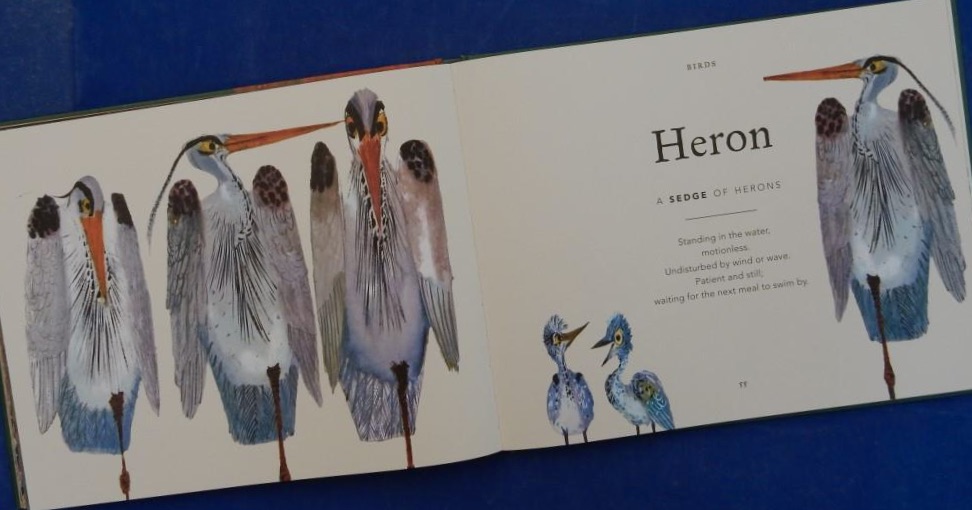
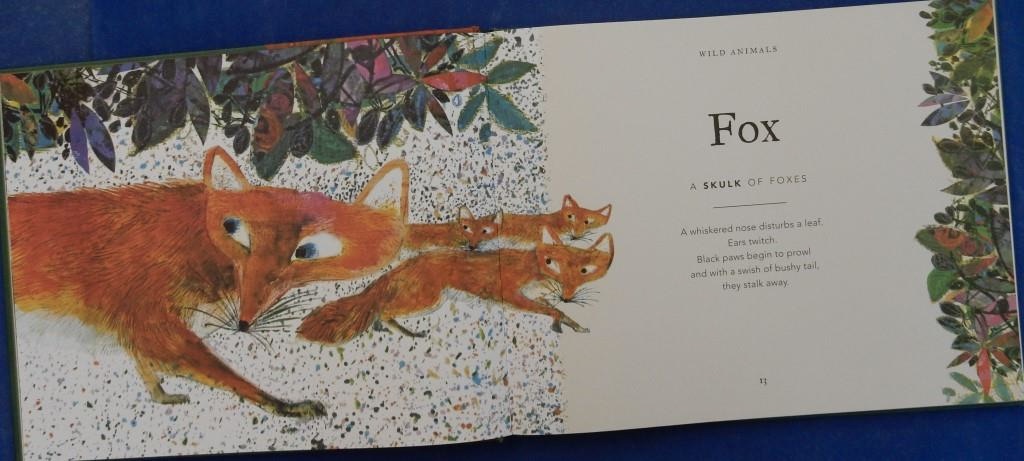
Seemingly those early titles are no longer in print, so it’s wonderful to see this compilation that brings together the art from the three titles aforementioned. A double page spread is devoted to each animal and includes the collective noun for each .

The images are accompanied by Deborah Sims’ poetic descriptions of each of the forty plus creatures illustrated.
This is a book I’d like to see in every classroom from the foundation stage upwards as well as on family bookshelves. And, what a wonderful present it would make.

Kevin the Vampire / Victoria Stitch Dark and Sparkling

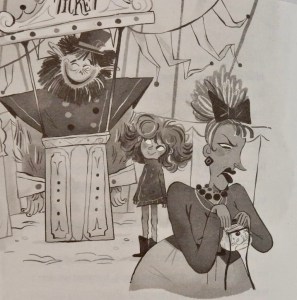
Having enjoyed the proof I couldn’t wait to see the published book with all the wonderfully entertaining illustrations by Flavia.
Star of this fangciful story is ten year old Kevin Aurelius, not quite the same as other boys his age for he has fangs and being a vampire he’s immortal. Kevin belongs to a family of travelling performers and as the tale begins they are supposed to be en route to Monstros city for the Festival of Fear but instead have wound up in Lower Drudging in the middle of Nowhere. Batnav failure maybe? With them are an assortment of other eccentric monster characters.

Nowhere is human territory and none of Kevin’s family has seen a human. However, a suggestion is made to put on a performance in Lower Drudging – an impromptu one in the hope of earning some gold that will enable them to get back on track to their original destination.

Also in Lower Drudging, suddenly awoken from her slumbers is a young human, Susie Cabbage who lives with two unpleasant aunts. She is eager to know the cause of her rude awakening so out she goes to investigate. Inevitably Kevin and Susie meet and a friendship develops between them.

Meanwhile shock horror: – the mayor and his council members have noticed the sign put up about the performance to be held that very evening. This is horrifying because nothing fun has happened in Lower Drudging for seventy five years on account of the ‘You-Know-What’ that lives inside Cold Mountain. Is this something that Kevin and Susie can investigate and discover the truth about? It might just save the town …

With its wealth of wordplay, this is a really funny start to a new series with some serious underlying themes about acceptance, friendship and not judging others by their looks. Add to all that a number of monster fact cards strategically placed throughout and a final monster themed alphabet and the result is a cracker. Bring on book two.

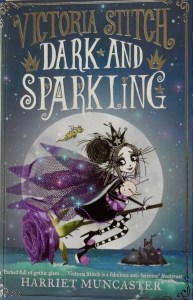
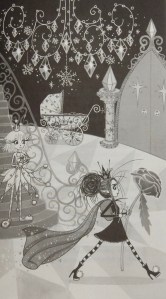
Heavily laced with gothic glamour, is this third in the series starring the unstoppable young Victoria Stitch recently made co-Queen of Wiskling Wood along with her twin sister Celestine. As the story opens there’s also news of a soon to be born new royal baby. Fast forward eleven months and Princess Minnie Stitch, next in line to the throne, bursts forth from her crystal and in the blink of an eye is making Victoria Stitch’s heart glow.

With Wiskmas approaching, Victoria Stitch takes a trip to Spellbrooke where she encounters a pair of Sapphire Society members who are clearly far from pleased to see her. She then learns that the group meets regularly and being Victoria Stitch, she just can’t stop herself using some invisibility dust and going to listen in on their next get together. What she hears makes her think a plot is afoot.

Shortly afterwards Princess Minnie disappears, followed fairly soon by news of a prison breakout. That means two of Victoria Stitch’s greatest enemies are at large again and it’s likely that the two events are connected. Moreover, their destination is the human world. The police tell her to remain in the safety of the palace but feeling as though she’s inflicted a terrible wound upon herself, Victoria Stitch certainly has no intention of so doing.
With her sister’s blessing, off she goes over the magic boundary wall on operation rescue Princess Minnie and recover the stolen Book of Wiskling. The following morning she and her human friend, Naomi, set out, destination Pinks Rock. Can she pull off a very difficult task, or even two?

Another absolute delight despite the setbacks; Victoria’s character continues to develop interestingly the more challenges she faces and as always, the book explodes with magical images.
I know a lot of children will be jumping for joy at the chance to read this.

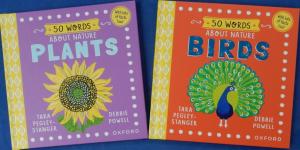
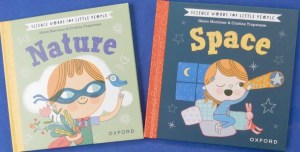
50 Words About Nature: Plants / Birds & Science Words for Little People: Nature / Space

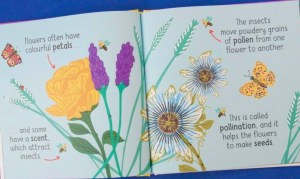
These are additions to the series wherein author, Tara Pegley-Stanger doesn’t believe in talking down to young children, instead she uses the correct scientific terms for processes such as photosynthesis, pollination and germinates as well as, in the first book, other plant-related words as she provides a look at the diversity of Earth’s plant life. I totally endorse this approach: children do assimilate ‘big’ words in context and love to impress grown-ups with their ever-growing vocabulary.

Young children sharing Plants with an adult will learn basic facts relating to flowers, seeds, fruits and growth as well as visiting various habitats including a tropical rainforest, a desert, an aquatic location, meeting a botanist at work and more.
Birds takes a similar approach introducing basic bird features, some specialisations such as those of waterfowl, the bee humming bird, the Asian peacock and raptors. There are examples of a migratory bird, flightless birds and there’s a spread about an ornithologist.
Both books are illustrated in a realistic style by Debbie Powell, whose images are carefully integrated with the text.

Engagingly written and visually attractive, both of these titles in a new series are worth adding to home bookshelves and early years collections.
Nature presents life cycles of an apple tree and a frog, as well as spreads on growing, senses, habitats, behaviour, rocks and soil and care of the natural world.
Space is introduced by the child characters who have become astronomers having a sleepover in their observatory. Subsequent spreads see them using a telescope, pretending to be astronauts, using fruits to make a solar system, discussing Earth’s rotation, introducing the phases of the moon, a space mission, star gazing, space probes and imagine alien possibilities.
Aimed at adult sharers, the final spread of each provides ten ideas for getting the most from the book.

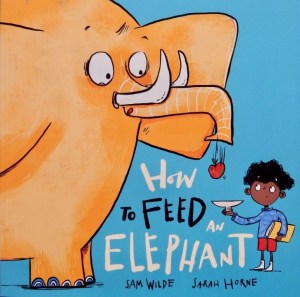
How To Feed An Elephant

How To Feed An Elephant
Sam Wilde and Sarah Horne
Oxford Children’s Books

In the unlikely event that an elephant should be able to read and thus, respond to a wanted poster in the same way as the one in this story did, then you will definitely need to be able to provide the creature with an appropriate diet and know how to take care of it too. With regard to food, both quality and quantity are important

and since elephants are thirsty creatures, you will need access to at least 200 litres of water daily and that doesn’t include that required for washing your pet unless it insists on having mud baths.

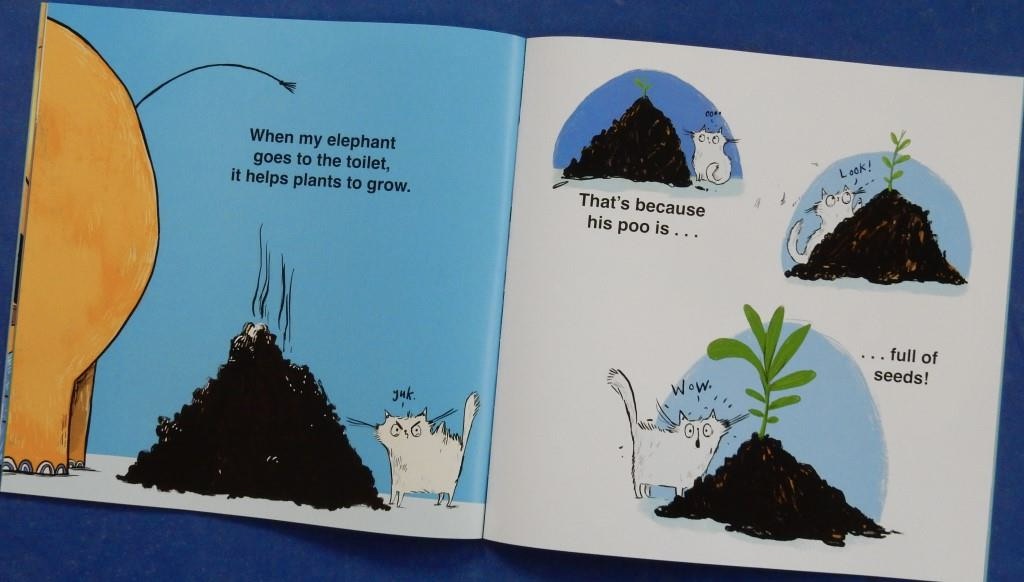
Poo, as you might expect, will be plentiful but it won’t go to waste as it helps to add vegetation to your garden.

Comfortable sleeping quarters are another important consideration, and despite elephants only sleeping for a couple of hours per night, you really don’t want your neighbours complaining about a lack of sleep on their part on account of its noise.

It’s more than likely however, that having given it a go, you and your family will decide that despite the affectionate bond you’ve formed with your colossal pet pachyderm, it would be better off living back home with its own family; and who knows, a more suitable pet could turn up at any time …

Totally silly but enormous fun, especially with that final farewell spread, Sam Wilde’s straightforward text and Sarah Horne’s hilarious illustrations, many of the latter including the silent bit part playing resident moggie, work really well together.

After the story is a ‘top elephant facts!’ spread. This might result in some children having even more fun envisaging a few of these facts using the characters from the story. Furthermore, did you know that elephants can be either right- or left-tusked, I certainly didn’t.

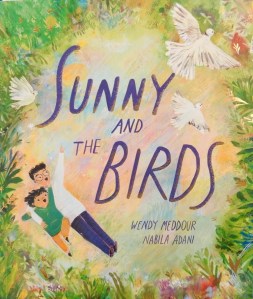
Sunny and the Birds

This image has an empty alt attribute; its file name is dscn9572-2.jpg


Sunny and his family have only recently moved to a new country. Almost inevitably there are things his dad misses. Every evening when they watch the birds through the window and Danny’s father asks him if he can name them, Dad’s response refers to similar ones “back home”. His son’s reply is “But this is our home!”

This image has an empty alt attribute; its file name is dscn9573-2.jpg

It’s evident that Dad doesn’t yet feel at home where he now is. In the middle of the night both Sunny and his Dad are wide awake and the boy acknowledges his father’s sad feelings.


This image has an empty alt attribute; its file name is dscn9574-2.jpg

After school the following day, Sunny’s Nanna meets him and the boy asks if they can go and buy Dad a present – a surprise. Can his bird-related plan help his father begin to feel at home in this new country?


As always Wendy Meddour’s story is written with great sensitivity. Presenting what for many immigrant families is a challenging time, she shows how with love, support, kindness and nature’s healing power, the process of adjustment to a different life can begin.


The richness and beauty of the natural world – real and remembered – is elegantly captured in Nabila Adani’s misty illustrations and you can read the changing emotions in her portrayal of the two main characters.


With more and more schools having immigrants as part of their community, this book would help children understand how newcomers might be feeling. Share at home, share in the classroom and invite listeners to participate in discussion, whatever the setting.

Ray

Ray
Alex Latimer
Oxford Children’s Books

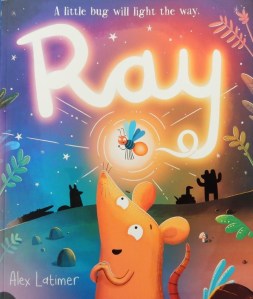
Such were the delights of Mouse’s walk that the little rodent failed to notice the lateness of the day.
After the sun has disappeared he sits alone frightened at the prospect of going home in the dark. Then from within a flower, there comes a glow and from it emerges a firefly; she introduces herself as Ray and offers to light Mouse’s way home. A grateful Mouse accepts but denies being afraid of the dark and off they go.

Mouse follows his guiding light but suddenly stops at the sight of a shadowy shape – ‘a snake’ coiled ready to strike, he thinks. Fortunately he’s mistaken and Meerkat, also not afraid of the dark, joins the travellers. After a while there’s a cry of “A bear! We’re done for!’ Ray investigates and informs her followers, it’s a pair of hens roosting . As you might expect said hens are not afraid of the dark either and off they go again, Mouse, Meerkat and two hens led by Ray until …


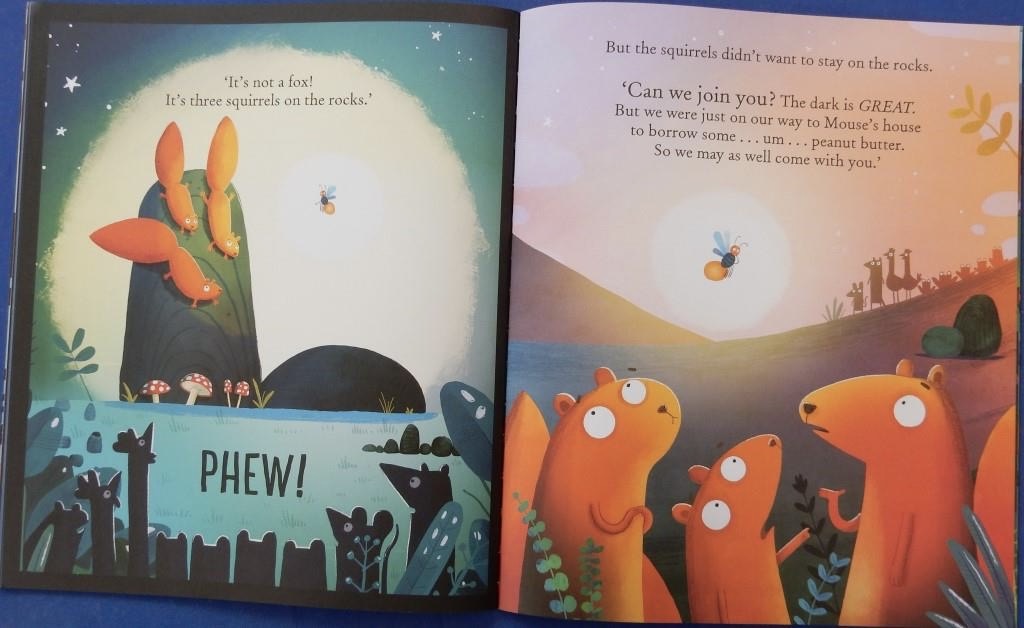
The journey continues with the addition of five green frogs and three squirrels, all of which have ‘reasons’ for joining the entourage, and each being welcomed by the words “Of course, … I’m Ray and I’ll light your way.’

Eventually in front of them a lion shadow looms large. Now Mouse, well used to being bamboozled by shadow shapes says, “ … that’s not a lion at all! That’s my home.’ He tells Ray to illuminate the shape, which she does.

Here our story takes a sudden dramatic turn … confessions re the dark are forthcoming and then a certain firefly proffers her oft repeated promise once more.

Deliciously tongue-in-cheek, Alex Latimer’s travellers’ tale will de-light young listeners, as well as adult readers aloud who will be amused at the excuses given by various animals for wanting to be led by Ray’s light. I have no doubt Alex Latimer had great fun creating his shadow shapes and he might well inspire children to experiment with a black crayon, paint, oil pastel or even play around cutting black paper.

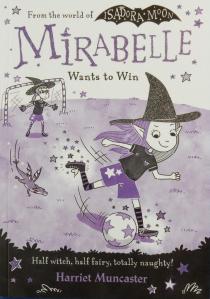
Marv and the Killer Plants / Mirabelle Wants to Win

These are new titles in series popular with new solo readers: thanks to Oxford Children’s Books for sending them for review

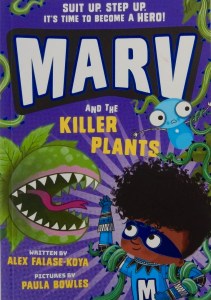
Marv and the Killer Plants
Alex Falase-Koya, illustrated by Paula Bowles

When Marvin and his classmates take part in a competition to design a new garden for the school grounds, he’s eager to win, and to give him some ideas his Grandad takes him to the botanical gardens. There he sees some Venus flytraps in the hothouse and makes a drawing of one. Later on he encounters one of his class friends, Eva. She has come to get some ideas for her design too. But when the competition winner is announced and it’s Eva, he wonders if she has copied his design and he later accuses her of so doing.

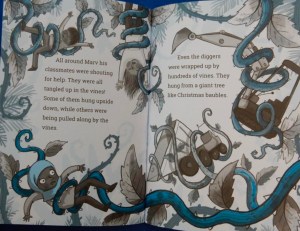
It’s not long before that is the least of Marv’s worries: the partly completed school garden has become a jungle thick with creeping vines and it appears that the school too, not to mention the whole town, could be overrun with writhing tendrils.

Time for Marv to don that superhero suit

Suddenly atop a thick vine, Marv spies a figure calling herself Violet Vine, a supervillain, so Marv’s side-kick robot Pixel, tells him. Moreover when a gigantic Venus flytrap shoots up out of the ground right before his eyes there’s a strong likelihood that for Marv, it’s a case of be careful what you wish for.
His first task though, is to rescue his friend, Joe, who is entangled upside down in a thick vine. With this done, he has a second rescue to attempt – this time from the mouth of the gigantic Venus flytrap. Having succeeded in task two, Marv’s work is far from finished. Assisted by his super-suit accoutrements, can he finally outsmart the wicked Violet Vine and rid the school of her killer plants?

Fast paced, fun and with a lesson about jealousy, this fifth of Marv’s challenging adventures shows him at his invincible marvellous best (almost all of the time). Paula Bowles has done a fantastic job with her dramatic illustrations.

Another favourite series continues with drama of a different kind in

Mirabelle Wants to Win
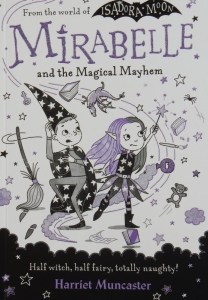
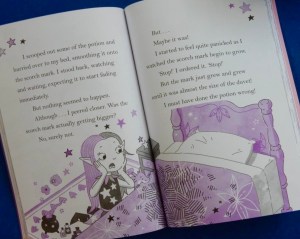
Harriet Muncaster

Mirabelle is excited to hear one morning that famous footballer, Chrissy Gold, an ex pupil of her school, is coming to watch the students play football. First though, Mirabelle et al have to learn how to play human football, which means strictly no magic. Mirabelle is extra happy when she learns that Chrissy is only half witch, just like she is.

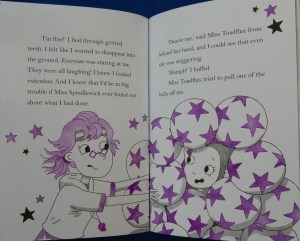
PE teacher Miss Toadflax assembles all the pupils on the field and explains the rules and basics of the game. Then the practice session gets under way and Mirabelle quickly discovers that human football is more difficult than witchball. Could a teeny tiny touch of magic help her play well and thus impress Chrissy Gold; maybe her side could even win the all important game.

Needless to say, where Mirabelle and magic are concerned, things don’t go smoothly.

Mirabelle ends the session soaking wet but still wanting to win that glittering trophy that’s been promised. She’s even more eager, having met Chrissy, so much so that she forgets to check her kit before going onto the field for the crucial match.

By the end of what proves to be a highly eventful game, refreshments and some very sound advice, from Chrissy, our little half witch, half fairy has learned a very important lesson.

With sprinklings of mischief and a large dollop of mayhem, this latest instalment starring Isadora Moon’s cousin is as sparkling as ever and will have Mirabelle’s fans cheering from the touch sidelines.

Into The Wild

Into The Wild
Thomas Docherty
Oxford Children’s Books

As night falls a small boy gives full rein to his imagination.

Joe lives in a city flat where, so he thinks, there isn’t any wild. However as he looks out from his bedroom window, he quickly realises that there is a whole lot more than he first thought. Then some of the outside starts coming into his very own room and this leads him to venture out into the wild city. By careful, close looking he discovers wildlife up in the branches of the trees, between the cracks in the pavement and hiding away beneath the bushes. Moreover, the more Joe looks, the more the wild proliferates

and eventually it’s everywhere, stunning in its beauty and full of surprises but most importantly, it is home to everything and every one, very precious and needs to be treated as such.

The wild has assuredly invaded Joe’s mind and his dreams, but not only that, it’s in his heart too.

Richly imagined too are Thomas Docherty’s illustrations for this magical story. Young children (and adults) will love poring over the multitude of gently humorous details in every scene.

The final page invites readers to go outside and search for the wild things in their own city or town; let’s hope they take up the challenge.

Isadora Moon Under the Sea / The Feeling Good Club: Say How You Feel, Archie!

Isadora Moon Under the Sea
Harriet Muncaster
Oxford Children’s Books

The endearing little half-vampire, half-fairy, Isadora Moon ’s latest adventure begins when she receives an invitation to a sleepover with her mermaid friends. The prospect of spending the night away from her parents that takes her beneath the sea makes her a bit anxious but having been reassured by her parents, she accepts Marina’s invitation and as the time draws nearer she gets really excited. This excitement continues once she gets to Marina’s home and she finds herself becoming friends with another of the guests, Marina’s step sister Emerald who is rather standoffish and Isadora thinks it could be because she’s unhappy.

Later on, lying in the adjacent clamshell bed, Isadora hears what sounds like Emerald crying and knows she must go and see what’s troubling her.

What she learns results in a late night swim to the home of Emerald’s Dad. (Her parents are separated) and eventually everything is put right.

Beautifully heartwarming, this adventure touches on the subject of living in more than one home and the problems this might lead to for a child; but it’s lightly done and the most important themes are listening to one another, friendship and acceptance.
With its mix of the alluringly different and comfortingly familiar, this magical story is perfect for its intended audience of new solo readers and includes the usual offering of activities at the back of the book.

There are further Isadora things to do in Isadora Moon: Summer Fun Activity Book. Therein are lots of activities based on the world of Isadora and of course, Pink Rabbit.

The Feeling Good Club: Say How You Feel, Archie!
Kelly McCain, illustrated by Jenny Latham
Little Tiger

In this the second in the Feeling Good Club series, it’s Archie’s turn to share his journal with readers. Archie’s family consists of his mum, a marine biologist and so often away for extended periods, his dad who seems to have little or no time for his oldest child what with his work and looking after the six year old twin brothers who are a bit of a handful.

As the journal opens, it’s a Tuesday. Archie is preparing his exhibit for the school Science Fair; it’s on his favourite topic, space, about which he is passionate and he’s really looking forward to Dad hearing his talk about it at the event the following day. But when he fails to turn up Archie is understandably pretty upset; how could he have forgotten? However Archie tries pretending it’s okay, but of course it isn’t and his real feelings come out in a torrent of fury at the next Feeling Good Club meeting as the friends are working on creating a clubhouse. Archie is hugely embarrassed and storms off in a huff.

Clearly this is a time when club members need to help Archie find a way to spend sufficient time with his Dad to talk about the way he is feeling. So begins operation Surprise Camping Trip. There are many ons and offs and it seems the expedition just isn’t going to happen

but eventually Shaman and Bella come up with a plan that turns things upside down and the trip is on again. The three friends practise some of their mindfulness techniques and on Saturday it’s a camping they will go …

To discover more about that camping trip and to learn about the mindfulness activities the clubbers use, you will have to read more of Archie’s journal in a copy of the book. It’s a thoroughly enjoyable exploration of feelings, facing your worries and the importance of sharing how you feel with trusted friends, with smashing illustrations by Jenny Latham.

50 Words About Nature: Animals, 50 Words About Nature: Bugs / I Want To Be A Lion, I Want To Be A Monkey

These are all books for very young children, – thanks to the publisher Oxford Children’s Books for sending them for review.

50 Words About Nature: Animals
50 Words About Nature: Bugs

Lily Holland and Debbie Powell

As an advocate for using the correct scientific terminology with young children I was excited to see this pair of books – the first two in the new series 50 Words About Nature – doing just that.
Animals takes a look at the whole of the animal kingdom – mammals, fish, reptiles, amphibians, birds, insects and molluscs giving examples of each including a tiger, alligator, dolphin, frog, beetle and octopus, in the process defining such words as carnivoreherbivore, vertebrates, invertebrates, primates, habitat, zoologists and extinct.

In similar fashion Bugs explores first insects, then arachnids and next returning to insects, focuses on several different beetles, including some like fireflies that are nocturnal. There’s a spread featuring nocturnal moths, another looking at pollinatorsand the final one introduces entomologists. Terms used include exoskeleton, antennae, proboscis, metamorphosis, arthropods,

elytra, carapace and telson. I don’t think I met those last three until I started studying biology at secondary school. However in my experience, small children love big words, will assimilate these in context herein and enjoy impressing adults by using such terms as bioluminescence and pollinators.

Integrated into the text, Debbie Powell’s illustrations are both arresting and realistic.

I Want To Be A Lion
I Want To Be A Monkey

Pintachan and Katie Woolley

It’s time to move with two additions to Pintachan and Katie Woolley’s Move and Play series for the very young. Get your little ones, be they at home or in an early years setting, pouncing, 

creeping, rolling, running, hiding away and yawning like a lion. If you’re at home cut out the mask, add string and your child will be even more lion-like especially if they also start with a few very loud roars.

Alternatively they might prefer to emulate a monkey; in which case the starting sound is ‘Ooo-ooo-ah! after which comes the more active scampering, rolling scratching, munching (bananas of course), climbing , swinging, leaping all of which can be combined into a lively monkey dance. What are you waiting for? …

Stuck for ideas? Scan the QR code inside the front covers. Pintachan’s bright art work and the engaging texts support the development of children’s imagination and their physical development, but above all they are fun.

The Selfish Crab

The Selfish Crab
Anya Glazer
Oxford Children’s Books

Claude is a hermit crab and he’s exceedingly proud of his shell, justifiably so as it’s the most beautiful of all the hermit crab shells on the beach where he lives. However, hermit crabs don’t keep their shells forever; when they outgrow them, they have to search the seashore for empty replacements. What this particular group of hermit crabs do is that when a suitable one is found, the crabs all come together, line themselves up in order of size and one by one move along and into the next biggest shell. 

However, Claude decides he’s not going to participate in the exchange line up and flatly refuses so to do. 

His fellow crabs muddle along but life remains peachy for inconsiderate Claude with that special shell of his although it does start to feel a tad on the tight side, whereas Alphonso, a tiny crab has to put up with a shell that is way too large.
But then as the two chat about things, Claude mentions birds 

and before you can say, beware! the two crabs are seized and find themselves in circumstances they wouldn’t wish on any fellow crustacean, let alone a supposed friend. Could this perhaps be an opportunity for Claude to let go of his selfish ways and start thinking of the other hermit crabs?

This story is based on real hermit crab behaviour (details on the final spread). Anya Glazer uses speech bubbles to add further humour to her telling and the illustrations, which are a mix of the naturalistic and comical, will induce lots of giggles from children.

Mirabelle and the Magical Mayhem / Magic Keepers: Spirit Surprise

Mirabelle and the Magical Mayhem
Harriet Muncaster
Oxford Children’s Books

Cousin of Isadora Moon, Mirabelle, has a witch mother and her dad is a fairy. What anybody who has encountered Mirabelle in her previous stories will know and others quickly discover, is that she seems to create mischief wherever she goes. Here she and her brother Wilbur visit their fairy grandparents for a sleepover. With Mirabelle goes her little pet dragon, Violet. No magic without the supervision of the grandparents is the promise the children make to their parents.

After just one night at Granny and Grandpa’s both Mirabelle and Wilbur have broken that promise and the result is messy and mucky. 

Surprisingly Granny, who inevitably finds out about the disasters they’ve created, isn’t furious. Instead she is thoroughly understanding and helps her grandchildren put things back in order before Grandpa wakes from his nap. ‘Mirabelle you must never try and hide who you are just to fit in with who you think other people might want you to be,’ she tells her granddaughter. Wise words indeed. Moreover she doesn’t let on what has happened when Mum and Dad come to pick up their offspring.

Another sparkling story that Mirabelle fans will absolutely love and newcomers to the series will enjoy too and likely want to go back and read all her other books.

Magic Keepers: Spirit Surprise
Linda Chapman, illustrated by Hoang Giang
Little Tiger

Life has changed since Ava and her mother moved into Curio House, the large Victorian villa left to them by Great Aunt Eva, Ava and her friends Sarah and Lily have discovered a magical world that surrounds the curios left in the house and are determined to keep it secret from the world at large. At the start of this story the three friends are exploring the magical energy of the crystals – the first magical things Ava found in her new home.

Outside the house and in the surrounding town, strange things start to happen. Despite it being late autumn, pollen has become so prolific that Ava’s mum is suffering badly from unseasonal hay-fever and plants are growing amazingly fast with vines shooting up everywhere.

Could the girls have accidentally unleashed some kind of nature spirit during their crystal investigations that is causing all this? 

If so, with Sarah’s mum far from happy about the influence the other two girls are having on her daughter, can they set things to rights before any of their parents or the townsfolk discover the cause of the out of control flora?

A second engaging episode for new solo readers with just the right amount of suspense.

Rudy and the Secret Sleepskater / Isadora Moon and the New Girl

These are additions to popular Oxford Children’s series : thanks to the publisher for sending them for review

Rudy and the Secret Sleepskater
Paul Westmoreland, illustrated by George Ermos

Rudy is a wolf boy; his good friends are ghost girl Edie and Femi the mummy and they love to skateboard together. In this story, Rudy and Edie are invited to Femi’s home for a sleepover, something Rudy is eagerly anticipating until he’s told he must leave his beloved pet wolf cub Wolfie behind.

When he gets there, Rudy finds the food, let’s say, somewhat unusual and certainly not to his taste; but then one of Femi’s older sisters divulges something even more unusual about their young brother: he’s a secret sleepwalker. 

At bedtime, unable to sleep on account of Femi’s grandmother’s snoring, he climbs out through the skylight and howls to his Wolfie; he then embarks on a game of hide-and-seek with Edie. However Rudy has failed to close the window and not long after, the two of them notice Femi sleepwalking on the roof. 

Not only does he sleep-walk though: a fall lands the young mummy on his skateboard and off he goes at considerable speed. Can Rudy and Edie steer Femi back safely from a nightmarish situation? Perhaps, with a bit of assistance from a certain wolf cub. Moreover can the friendship between the three transcend the differences that make themselves apparent during the sleepover?

I’ve not met these characters in their previous adventures but certainly found this one, with its important messages and splendid illustrations by George Ermos, a fun, snappy read.. The series is ideal for bridging the gap between picture books and solo reading of longer chapter books and I have no doubt Rudy et al will find a place in the hearts of younger newly independent readers. The power of Rudy’s pack clearly extends well beyond his family.

Isadora Moon and the New Girl
Harriet Muncaster

Isadora doesn’t take to Ava, the new girl who joins her class wearing snazzy, sparkling boots, thinking her standoffish and mean. Nevertheless, at the insistence of her Mum and Dad Isadora agrees to make an invitation for Ava along with all her friends for the party she’s going to host for her beloved Pink Rabbit.

The following day she hands out almost all the invites but somehow can’t find the right time to give Ava hers and in fact Ava’s behaviour seems even meaner so she keeps her invitation in her bag.

Back at home she eventually confesses to her Dad saying she feels really mean about the way she’s acted. He suggests two things: first that Isadora gives Ava the invitation the next morning and second that they take a pre evening breakfast fly to help his daughter clear her head. As they swoop over the park, Isadora spots some ducklings; so have other people – Ava and her parents are watching them too. 

Suddenly Isadora spots something else, something small that Ava has just taken from her pocket. From that moment the little vampire fairy starts to change the way she treats the new girl.

Don’t make judgements about people too quickly; get to know them first is the message that emerges from the latest Isadora Moon story. As always, it’s an Isa-delight to be in the company of the Moon family, but young solo readers new to the series might want to start with the first book, Isadora Moon Goes to School.

Ways to Say I Love You

Ways to Say I Love You
Madeleine Cook and Fiona Lee
Oxford Children’s Books

The opening lines of Elizabeth Barrett Browning’s sonnet 43 How Do I Love Thee? sprang to mind as I read this picture book, which is a celebration of love, and in particular familial love. Madeleine Cook explores some of the multitude of ways love is expressed: it might be the tender, gentle way in which a parent holds a baby or tiny child; perhaps it’s a caress; a shared experience of the natural world when out for a walk. Sometimes it’s being there with a hug when a child is upset, or a playful tickle at feeding time and a book shared at bedtime.

Being shown love helps a small child to develop self belief and the confidence to forge a path in life. Those things come when love is shown by a listening ear and a readiness to talk things over; also through helping a youngster to learn basic life skills, as well as being supportive when a child takes an important big step such as starting nursery or school.

Those who are shown love from the outset are most likely to be loving towards others as they become more independent; love is a choice and a decision. But one thing is certain, love is conveyed differently by countless different people and that is portrayed so well in Fiona Lee’s diverse characters.

Could it possibly be that love has the potential to bind us all together – if only …

This hug of a book is a delight to share.

Hop on Top, Mouse! / Too Heavy Elephant!

Hop on Top, Mouse!
Too Heavy Elephant!

Tony Neal
Oxford Children’s Books

The ideal way for young children to develop mathematical concepts about weight, height etc is through practical experience. Fun books such as these two help the process too, especially when there’s a simple story with vital vocabulary, and funny pictures by Tony Neal to enjoy with a supportive adult.

Hop on Top, Mouse! starts with a cupcake atop a tall cupboard and a tiny mouse looking longingly up at the object of its desire. Too high! says the text. (presumably the mouse’s frustrated comment). he calls on Monkey for help but the cupboard is too slippery for Monkey to climb. They call Rabbit to assist; his hopping skills are pretty good but even so all three are just ‘too short’. So what about a bit of co-operation. First one on top of another, but the cake is still too far away.

Happily though several other creatures are ready and willing to assist in operation cupcake. What will be the outcome – disaster or satisfaction all round?

The episode is followed by some activities for children to try both at home and out walking, and some basic key vocabulary.

The same cast of characters participate in Too Heavy Elephant! along with the titular pachyderm. Mouse and Elephant are keen to play together on a seesaw but inevitably the latter is too heavy but Mouse isn’t giving up that easily; he’s finding another way to get onto the plank but even then he’s just too light and elephant too heavy to operate said seesaw. I wonder how many of Mouse’s animal friends it will take to find the balance …

Co-operation reigns … The friends haven’t reckoned on the appearance of Daddy Elephant however …

Again the funny story is followed by some ‘heavy and light’, and weight comparing activities, and some basic vocabulary.

A thoroughly enjoyable way to support mathematical learning at home or in an early years setting.

Winnie And Wilbur:Winnie’s Best Friend / Barkus:The Most Fun

Favourite characters return in these two books:

Winnie and Wilbur: Winnie’s Best Friend
Valerie Thomas and Korky Paul
Oxford Children’s Books

After more than thirty years during which witch Winnie ’s original fans have likely introduced her to a new generation, we have a story that takes us right back to the time when she met her constant and faithful black moggy companion, Wilbur.

But even that’s getting a bit ahead of this story that starts with the newly qualified witch living in that black house with which we’re now so familiar, but she’s all alone until that is, she decides to invite her three sisters to come and stay to help. They certainly alleviate her loneliness but it’s not long before sisterly squabbles begin, soon followed by cat fights. Enough is enough for Winnie so off they go but then she’s lonely once again.

A wave of her wand results in a parrot but that’s a short-lived visitor and her next attempt brings forth a little dragon though obviously with it comes danger of the fiery kind.

Will Winnie ever find an ideal companion to share her home and her life? No prizes for guessing the answer to that one …

Delivered with their characteristic verve and humour, team Thomas and Paul have conjured forth another magical Winnie and Wilbur story that will delight readers young and not so young.

Barkus: The Most Fun
Patricia MacLachlan, illustrated by Marc Boutavant
Chronicle Books

The lively, lovable dog, Barkus, is back in a third sequence of four lively, entertaining episodes, along with his human family – the child narrator, her mum and dad plus little moggy, Baby.

In the first story, the family set off for a camping trip leaving Baby in the safe care of Miss Daley, or so they think. However, on arrival at the camp site it’s revealed that Barkus has been harbouring a secret – a tiny feline one – and to the surprise of the rest of the family, the stowaway appears to enjoy camping just as much as all the others.

The second episode – a springtime one – sees the entire family visiting grandfather Jess on his farm. Barkus seems drawn to the cows and they to him and is especially happy when a baby calf is born to Dora.

Autumn is a special time for Barkus on account of the fun he can have with the fallen leaves; he also steals the show at the annual parade.

The final adventure has a chilly, wintry feel as the family take a trip to their cabin for some skiing but a big storm keeps them snuggled up indoors enjoying some storytelling.

With its mix of humorous colour illustrations and engaging text this is just right for readers just starting to fly solo.