Bear’s Wash Day / Hide and Seek with the Baby Animals

These board books are Little Tiger Books – thanks to the publisher for sending them for review

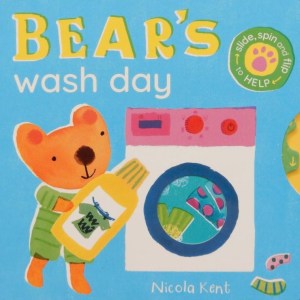
As a result of Bear and Croc’s smoothie making, Bear’s clothes are covered in spatters of juice so the two decide to do some washing. They collect all the dirty clothes, load up the washing machine, add the washing liquid and press the on button. Round and round go the clothes and once the machine has done its cycle, it’s tine to go out into the garden and hang everything on the line to dry in the sun. As soon as Bear’s dungarees are ready to wear once more, he puts them back on and the friends finally drink their smoothies.
With a spinner and flaps to help develop their fine motor skills, little ones can enjoy this simple domestic episode and have fun making the various sounds that accompany the action.

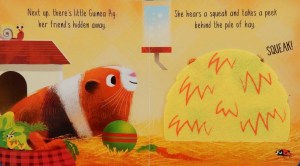
A game of hide and seek offers an opportunity to meet the baby animals that are playing the game on the five spreads herein. Each one has a different shaped felt flap behind which lurks a noisy little creature. Toddlers can join in the play and try to guess the baby animal that went WOOF!, the chirping bird in the birdcage, the squeaker behind the heap of hay,

and meet the bubble blower that’s giving his location away before finally meeting the winner of the game.
Touchy feely fun with dayglo bright scenes by Gareth Lucas in which various minibeasts appear on every spread, adding to the playful experience.

Dirty Bertie: Pets and Pests / The Determined Kitten

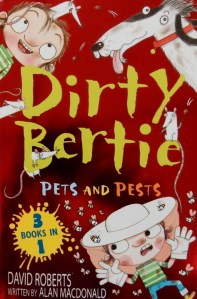
This is a bind up of three previously published Dirty Bertie books: Fleas!, Rats! and Bees! each of which contains three episodes in the life of the lad with a magnetic attraction to mischief-making possibilities. He’s involved in such escapades as flea catching (thanks to Whiffer, the house is infested with the things); Bertie and Gran take the pooch to the vets where as you’d expect, chaos soon ensues. In another episode, having locked the supply teacher in a cupboard, Bertie learns what it’s like to be a teacher, under the watchful eye of a slightly bemused school inspector.

He also participates in a cross country run with his classmates that results in a too close for comfort encounter with cows, sets a mouse loose in the classroom (accidentally of course) and decides to try his hand at being a bee-keeper courtesy of Mr Monk’s bees. All this and more besides.

Adult readers aloud, youngsters just starting to fly solo, and listeners at home or in the classroom will find it impossible not to come under the Bertie charm especially with the wealth of comical black and white illustrations.

While out walking the dog in the park with her Dad, Rosie comes upon a box containing five ginger kittens, evidently they’ve been abandoned by someone. There appears to be something wrong with one of the kittens but nevertheless Rosie manages to persuade her Dad to take them home. Once Mum sees them, she insists they must be taken to the local animal shelter. To Rosie’s surprise, Sam the cat fosterer lives in an ordinary house and is willing to take them on and help them find new homes. She tells Rosie that she’s welcome to come and visit the kittens at the weekend but also mentions the possibility that little Bill has something called cerebellar hypoplasia, also called wobbly cat syndrome. Rosie continues visiting and helping Sam but it’s not long before all the kittens except Bill have gone to new homes.
Rosie is determined to persuade her parents to let her adopt Bill but Mum is quick to remind her of what her teacher has said about her struggling to concentrate in lessons. The reason for this however, is because she’s being bullied but Rosie doesn’t say so at that point.
How will the bullying problem be resolved and where will kitten Bill eventually find a home?

Just right for animal loving readers around Rosie’s age, especially those who have a penchant for cats.

Alice Éclair Spy Extraordinaire: A Dash of Daring / The Summer Dolphin

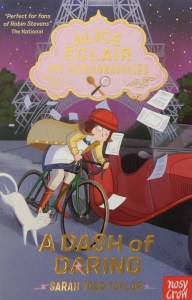
This is the fourth and sadly, final story in the delicious series starring creative, kind, resourceful Alice Eclair.
Alice and her mum are anticipating a relaxing week in the mountains when they arrive at Hotel Anise. It’s not long though before Alice starts feeling disappointed: the atmosphere is far from exciting and she isn’t getting the opportunity to enjoy the hotel’s facilities. However Claude’s appearance on the scene, talking of a complex, ingenious cipher machine that can convert messages into unreadable code in seconds soon dispels her frustration. The problem is the machine has gone missing, along with its maker, Claude’s inventor friend, Jan.

Before long Alice is drawn into a mystery. Then her dastardly Uncle Robert appears on the scene: what is he doing in the hotel? Meanwhile, iJan’s daughter who is staying at the Olympic training camp on the outskirts of the city with her brother, has been receiving unpleasant messages as she prepares to compete in the cycling events to be held in Berlin.

Having persuaded her mother to let her go to the training camp, Alice begins working undercover while at the same time tackling the tricky issue of creating healthy but tasty desserts in the Olympic kitchens. Then to her surprise and delight, her friend Sophie, France’s most talented engineer appears and she offers to introduce Alice to the cyclist Adele and her brother, Hugo. Hugo in turn introduces her to his carrier pigeon. Determined to solve this case, Alice faces many challenges as she follows the numerous clues, some of which as you might expect, are red herrings, sets about working out who she can trust and cracking lots of codes along the way.

A tasty conclusion to the tale and the series: Alice emerges with some new friends including Hugo who happens to use a wheelchair. The author took advice from a fellow author and friend in her sensitive portrayal of this character.

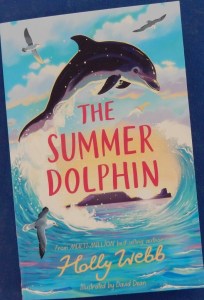
Lillie and her family are having a fortnight’s holiday in the Gower, Wales, staying in Gran and Grandpa’s new home. Things get off to a disappointing start for Lillie who discovers that she’ll have to sleep on the attic floor between the beds of her older sister, Frankie and their cousin Lara.
Almost immediately the older girls gang up and Lillie is made to feel a baby, excluded from their activities but no one else appears to notice she’s lonely and upset.

Then during a boat trip around the harbour, the crew mate Alice, mentions a tidal island that’s a wild bird reserve during the summer months where they might see dolphins as well as seals and birds. Suddenly there in the water they spy a flicking tail, then more; it’s dolphins swimming alongside the boat. One of them in particular, it seems to Lillie, is happy and this makes her feel happy too. Surely that dolphin smiled at me, she thinks to herself.

Later, Frankie and Lara flatly refuse to let Lillie accompany them on a rock-pooling expedition. Instead she decides to go off by herself in the hopes of seeing the dolphins, especially the calf, again, something that when her parents discover where she is, troubles them considerably. However it doesn’t stop Lillie going off exploring alone again after Lara is particularly horrible to her. There’s a problem though, for Lillie doesn’t understand the tide at all and she’s lost track of time. Worse, is that with water up to her chest, she can’t remember any of the special ways to keep safe she’d been told of in school. Then she catches sight of a dolphin; could it be trying to help her?

Whether read by newly confident solo readers or aloud to a class, this mix of sister dynamics and adventure is a story that will be enjoyed by animal lovers especially. David Dean’s black and white illustrations underscore the characters’ feelings throughout the book.

Bertha & Blink: Rumble in the Jungle

As a result of her BESTest friend, a fellow inventor, stealing the design for her latest invention when he was supposedly giving her feedback, Bertha has packed up and moved far away from her city home.
She now lives in a workshop hidden high up among the trees. It’s there she happily works away at new inventions especially the Garb-o-Guise, her current project, which is near to completion. As she is adding the finishing touches there comes loud THWACKing, BOOMing, THUDDING sounds. So distracting are the sounds that she goes outside to investigate but she can’t find anything out of the ordinary. Back she goes but almost immediately there comes a RUMBLE in the jungle that scatters the contents of her workshop every which way. Determined to put a stop to the hullabaloo once and for all, she gets out an invention she’d previously been working on. Then out on her terrace its beam picks out strange but unidentifiable shapes.

Suddenly in front of her there lands a bird who introduces herself as Mona the post bird before whizzing off on her rounds. This give Bertha a brainwave. She sets to work and creates a mechanical bird that she names Blink. Blink is highly excitable but also very biddable. Away whizzes Blink, thrilled to be out in the jungle. When she returns, more rattling sounds start and that prompts Bertha to summon up all her courage and sally forth with Blink.

Can Agents Bertha and Blink finally find out where that noise is coming from? If so, what then…
The final spreads neatly set the scene for their next adventure.

With speech bubbles aplenty and lots of noises off as the story unfolds, readers just starting to fly solo, will delight in the amalgam of words and pictures Nicola Colton (author/illustrator of the Jasper and Fluff books) has created in this series opener.

Can You Share Little Whale? / Zeki Eats Out

Little Whale doesn’t want to share: her place at the front of the pod has been taken despite Mum saying she can be the leader; then it seems that noisy gannets are taking all the silvery fish and leaving none for her to feed on. “It’s not fair!” complains Little Whale but then up swims her friend Blue offering to share a snack with her. This pleases her and she decides to search for something delicious to share with Blue. Down she swims towards to coral reef but is concerned in case she isn’t able to find a special something: suppose there isn’t sufficient, she worries. Happily though, Turtle helps her discover a reef burgeoning with treats aplenty,

more than enough for everyone and thanks to the reef’s inhabitants Little Whale is able to return to her pod with a juicy treat to share with Blue.

Again, however, Little Whale is upset for she finds Blue swimming alongside HER mum! “That’s my mum!” says Little Whale pushing her friend away. Mum scolds her, and reminds her offspring that “it’s always good to share.” Little Whale turns to Blue, confirming that there’s enough room for them both and together, they swim forward as friends.

It’s great to see Mum whale using gentle guidance rather than chastisement to help her little one learn the vital lesson about sharing. Jonny’s beautiful, detailed scenes of the coral reef are a particular delight and he captures so well the movement and textures of the whales and other marine fauna.
The life lesson Little Whale learns is an essential one for little humans to learn too: this story is an enjoyable way to make sure they realise that sharing is both important and brings mutual pleasure to those involved.

For slightly younger children:

The adorable Zeki, is going out to have lunch at a restaurant with Daddy and Nana-G. Accompanying them is Zeki’s Mr Seahorse so the little boy gives him some tips on appropriate restaurant behaviour before they set out.
Having greeted Nana-G outside the venue, in they all go and Bruno their waiter is there to serve them. The three consult the menu and make their choices of what to eat and then Dad and Zeki head to the washroom to wash their hands before the food arrives. Clearly an enjoyable time is had by all.

Equally an enjoyable time will be had by adults and the little ones with whom they share this latest episode in the life of my favourite story book toddler. It’s simply told in Anna’s straightforward prose which leaves Ruth’s spreads to portray the warmth of the love between Zeki and his family members.

Waiting for the Stars

Mouse is super excited: she’s staying up late to see the stars for the very first time. Fortunately, for the wait feels very long, her friends Owl, Firefly, and Squirrel are there too. To help pass the time Owl offers to tell them a story but she nods off leaving her exceedingly lengthy tale unfinished. No matter, Mouse has spotted a star, or rather, she hasn’t but the excitement has made her need a wee

and soon after, very sleepy, until hurrah! At last! There are the stars filling the sky with sparkles; but only briefly.

Along come thick clouds causing tears to start falling from Mouse’s eyes.
Happily however Firefly knows a way to fill the sky with magical sparkles once more …

Young listeners will surely recognise that eager anticipation felt by Mouse during the story, a story from which friendship shines forth throughout.

As always Jonny Lambert’s scenes provide visual delight at every turn of the page. The rich colours of the creatures and the surrounding vegetation really stand out against the night sky. A charming tale to share with young children at bedtime but also one to read aloud and talk about in a foundation stage setting.

The Bravest Word / The Feeling Good Club: Believe in Yourself, Bella!

A powerful story of trust and love between a boy and a dog that addresses depression in youngsters, it will surely help readers who are struggling to recognise the symptoms in themselves. It will also reassure those readers that they aren’t alone and however confused and scared they might feel, there are ways to cope, so long as they seek help from somebody.

Eleven year old Matt, a soccer star is suddenly beset with thoughts of “I can’t do this” especially when it comes to playing his favourite game and he feels tired all the time. He’s way too scared to talk to his mum who clearly cares but puts his troubles down to hormones, and he won’t say anything to his dad for fear of upsetting him

Then, as he’s out walking with his dad, they come across an abandoned dog that has clearly been very badly treated. Matt is determined to save the creature and decides to call him Cliff after his grandad. He also finds a scrap of paper with the words UGLY, SAD DOG. HE’S YOURS close by. Off they go to the emergency vet and having followed the required procedures, and persuaded Mum, Cliff finally goes to live with the Brown family.

As Matt cares for the newcomer, we see that boy and dog exhibit similar emotions: Cliff recovers physically but remains withdrawn and anxious while Matt remains determined to restore the pooch’s faith in human beings as well as restoring his own zest for life. It’s an arduous slow process, the highs and lows of which Matt shares with his new canine buddy.

In doing so, Matt perceives his own situation with increasing clarity. Bit by bit, the boy begins to open up, sharing, his despair, his sickness, his hopes, through Cliff’s social media presence, which soon becomes viral. There’s enormous on-line support for the dog and by association Matt, from virtual strangers, which finally forces the boy to find the courage to ask for help. “I think I might be depressed,” he tells his Dad. Dad’s response is enormously understanding; he’s clearly proud of his son and feels great empathy towards him. Matt then discovers that he’s not the only person who has problems with their mental health. Then surrounded by love and support, he is allowed to rest and begin to heal.

A hugely important, beautifully written, honest book that shows children they are not alone in their struggles, and that as Matt’s Dad tells his son, asking for help is the bravest thing.

Bella, Archie and Shazmin are three friends who set up a mindfulness club to help them understand and handle their feelings. This has really boosted Bella’s self-confidence, until the three decide to enter the Muddy Assault Course Challenge in the hope of winning £50, which they intend donating to WaterWorks (a charity). They call themselves Ace Team but they’re one person short. Billy, a rather loud, over-confident boy offers not only to join their team but also to coach them. Training begins in earnest that weekend and after one session Bella wants to pull out of the event.

Things go from bad to terrible when the team hold a training session in Bella’s garden and end up wrecking Mum’s favourite plant pots and making a whacking great hole in Dad’s new fence panel and the only one who doesn’t straightway apologise to Bella’s parents is Billy.
Somehow Bella needs to find the courage to talk with Archie and Shazmin, Billy too, about how she really feels. Can she do so and set Ace Team back on the road to enjoying preparing for and participating in, that challenge?
She’s fortunate to have Jess, her older sister, to discuss everything with; among other things that really helps her get her feelings about Billy out in the open, though as events unfold she ends up with a much greater understanding of why he behaves in ways she doesn’t like and ends up calling him a friend.

This is Bella’s second turn of sharing her diary with readers: I wonder who will be next in this very enjoyable series. Make sure you check out the mindfulness activities at the end of the book.

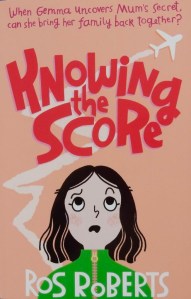
Knowing the Score

Gemma knows very little about her family members other than her mum with whom she has lived for as long as she can remember. However despite their closeness, Gemma is keen to find out about the others – Gran and Uncle Jo(e) – whom she has included in her special people mind map drawn during the year six residential from which she’s just returned. She’s aware that following her return from the USA, Mum fell out with Gran and since then they seldom see one another. She also has hazy memories of visiting Gran’s house and her Uncle’s disastrous wedding, after which all contact stopped.

Then Mum is invited to join Terry and two other friends on a month long, adults only Caribbean cruise. With some persuasion, she agrees to let Gemma stay with Gran, something the girl sees as an opportunity to start healing the family rift. At the last minute though comes news that Gran has fallen and broken her hip. Mum’s initial reaction is to cancel her plans but finally she allows her daughter to stay with Uncle Joe instead.

It’s evident to his niece from the start that he’s friendly, fun and generous, clearly with much more money that Gemma’s mum, though it’s his qualities not his wealth that Gemma values. When she learns that Uncle Joe has work commitments during the first part of her stay and that he has enrolled her in a tennis camp, she’s more than a little worried, but agrees to give it a try. It’s thanks to the camp that Gemma eventually discovers a vital secret about her mum; she also finds that she’s a quick learner when it comes to tennis and has a lot of potential as a player. Now all she needs to do is to bring her fractured family back together. Can she do that without upsetting anyone?

Embracing some of the harsher realities of life, this sensitively written story of a complex family
with its themes of forgiveness, new beginnings, healing and risk taking will be especially enjoyed by older KS2 readers.

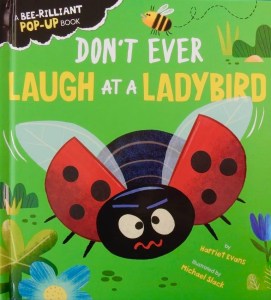
How It Works: Shark / Don’t Ever Laugh at a Ladybird

These are two new novelty board books from Little Tiger: thanks to the publisher for sending them for review.

Cleverly designed with strategically placed peep through parts of every page, this serves well as an introduction to sharks for preschoolers. They will be fascinated to learn that these powerful predators have super-strong tails that enable them to swim faster than a motorboat can move. They may well be surprised to hear that sharks were around before dinosaurs existed. I’m sure humans young and not so young are pleased not to have 300 teeth to clean, the number some sharks possess and having learned that, in contrast to humans, sharks very seldom sleep, young children might try that as an excuse not to go to bed at the proper time.
Playful, fun learning in bite-sized portions, with clearly labelled body parts and “Did you know? interjections from a deep-sea diving mouse that swims up on every spread.

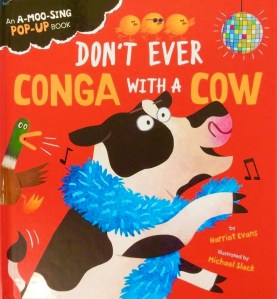
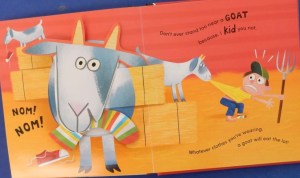
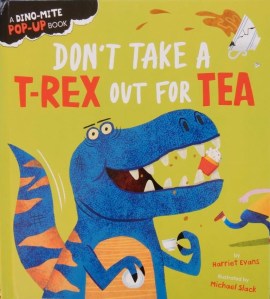
You will probably decide to heed the titular warning of the furious faced ladybird, as well as the rhyming ones concerning the other four irate minibeast kinds that fly, spin forth, leap or slither from the pop-ups on Michael Slack’s wacky brightly coloured spreads. If not, you might easily end up in a honey covered mess after baking with a bee, dizzy from trying to out dance a disco crazy spider, lose your voice while endeavouring to emulate a ribbiting frog, or smothered in slime should you hug a shell-loving snail.
Minibeast madness to read aloud with the very young

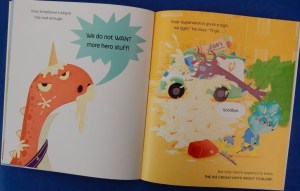
Supersaurus: Total Tricera-Flop!

Supersaurus is something of a disaster when it comes to saving the day. Smalltown’s ice cream seller, Dan’s residence catches fire during the jamboree and with the assistance of his sidekick, Hatch, Supersaurus hurls the fossil-flinger at the roof extinguishing the flames but wrecking the roof. The duo then notice moggy, Mr Tiddles stuck in a tree. Chaos ensues as they rescue the cat but flatten Dan’s ice-cream van, leaving its contents wide open to thievery in the form of Burglar Gran.

Supersauarus attacks the burglar with his T.rex trap causing cake to fly every which way and ice cream from Dan’s van to squirt forth all over the place super speedily. Just as Supersaurus is about to clear up the mess with his Bronto-Broom, the town’s mayor calls a halt and sends the duo packing. Only Hatch is aware of the impending fate of Dan’s van but he’s caught in a torrent of ice cream.

Can Supersaurus finally save this whole sorry situation once and for all?

Totally daft, Angela Woolfe’s funny rhyming saga of a muddlesome dinosaur and his disasters, is illustrated in suitably silly scenes of the inept superhero at large in the community. With its combination of two of young children’s favourite topics – superheroes and dinosaurs – team Woolfe and Chambers are surely onto a winner with this one.

Bad United: Just For Kicks

Delivered in graphic novel form, this must surely be soccer at its silliest. It’s also great fun.
Meet Hoof the unicorn who desperately wants to be part of a team, but his previous club, unable to appreciate his talents, has just kicked him out. Wither next he wonders, and then he spots a notice for BAD UNITED. Off he trots in the hope of being given an opportunity to show his prowess to mermaid manager cum coach, Serena Winmer and become part of the squad.

Having been accepted, it’s time to meet his new teammates: captain Bones, a skeleton who isn’t always able to keep her head on, ROARsome Rex, dino. defender, striker Bolt the cheetah who brings the thunder and lightning, Tinkerball the definitely not sweet fairy with her dazzling moves, and Annette the super-large arachnid goalie. All these, so their previous teams have deemed, are sub-standard soccer players.

After some pretty intensive training, team Bad United enter their first tournament. They’re up against The Blazing Dragons – a formidable bunch with some very nifty moves.

But can the newbies sporting brand new kits, with their combination of strength, speed and skill. not to mention some aromatic assistance, remember coach’s spirit lifting words, get their act together, surprise the commentators and emerge victorious, even when they’re 0-5 down at half time?

An enjoyable read, especially for those who prefer stories where the visuals are dominant.

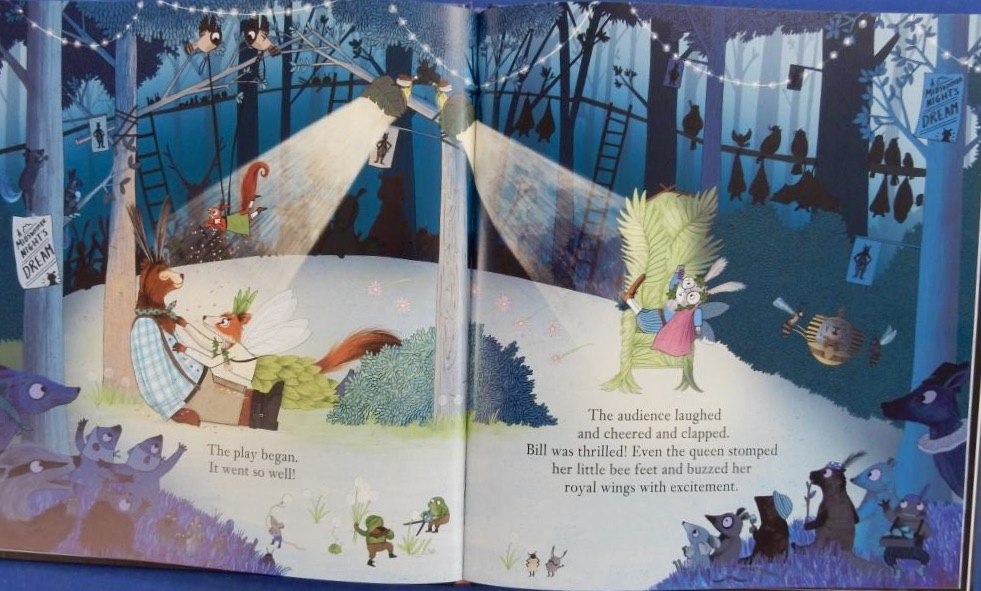
A Midsummer Night’s Drama

The whole story is presented in three acts and includes a performance of Shakespeare’s A Midsummer Night’s Dream unlike anything you’ve experienced before. It’s penned, so we’re led to believe by a clever bear, Bill, residing in a treehouse with his friends Sir Bun Bun, Foxy and Lady Bushytail. The friends love to act plays at their theatre, The Glade and these attract large audiences from all over the kingdom.

There’s great excitement as Bill and his pals are performing a brand new play. Its entire cast comprises a fairy queen, a fairy king, Puck the cheeky sprite and Bottom. Various insects perform the duties of stage manager, set designer, understudy, and one looks after lighting and another is responsible for props. Its opening night constitutes Act 1. It’s a wild success,

which leaves Bill thrilled but over-excited.

Act 11 shows he is just that, unable to sleep in his cosy bed, his brain all a-fizz with ideas. Up he leaps and against his friends’ advice, begins working on another play until that is, in buzzes Queen Bee who speaks thus, “I COMMAND you to zzzzzzzsleep!” and buzzes out again leaving the acting troupe to offer sleeping advice.

Act 111 opens with Bill trying out some of the ideas proffered, the first being to dance, but to no avail.

Perhaps Sir Bun Bun’s suggestion will induce that much-needed slumber …

With appropriately dramatic illustrations by Isobel Lundie and Louie Stowell’s clever word usage both hinting at the story’s Shakespearean origins and background, this is a pre bedtime treat. Equally it’s enormous fun to share with a class and you can enjoy investigating the book’s final spread that presents some information about the bard himself, William Shakespeare, and his work. Make sure you look closely at the front endpapers too. I wonder what Bill Bear et al would do with Twelfth Night, my favourite Shakespeare play.

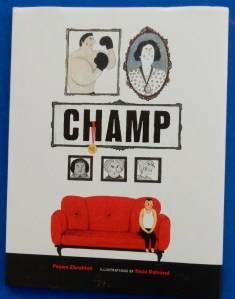
Champ / High Top Sole Mates

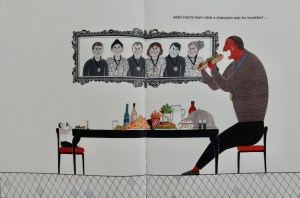
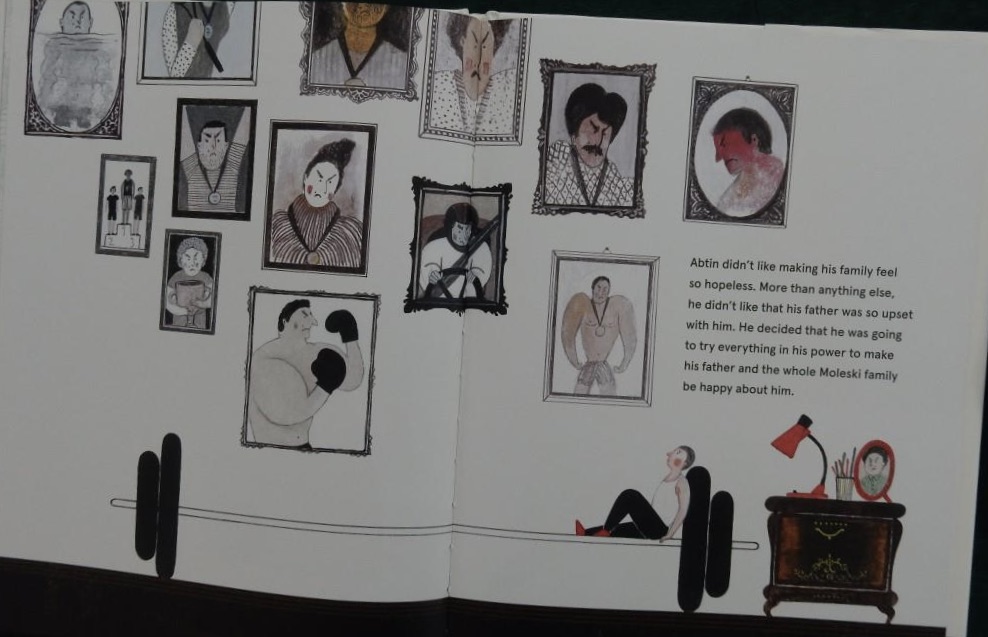
Abtin Moleski was born into a family of champion athletes but no good at sports and without the slightest urge to win, he doesn’t feel he really belongs. Despite everything his family has done to help him become a champion,

he has no interest in being a sporting hero. Abtin’s passion is for art and upset at being a huge disappointment to others in the family, he resolves to do whatever it takes to make his father, indeed the entire family, proud. To this end he works and works until at last he has what he thinks is a solution.

What he does is revealed in an amusing and clever visual twist. How will his family respond?

With its themes of individuality, self-acceptance and understanding, family pressure, resistance and resilience, this is a book to share and discuss with children across a wide age range. It’s written and illustrated by two Iranians, whose creative wisdom is evident throughout the story. Caroline Croskery has translated the story into English.

High Top is everyone’s friend and loves to show it in all possible ways: from smoochies to surprises, cuddles to cosy knitted gifts, the sneaker does everything to transmit his loving feelings to his fellow footwear. Then one day he decides to ramp up the level of his love-in; to this end he collects all manner of bits and pieces which he takes to the top of a big hill and there, fashions a brand new mega love sign. However things don’t go entirely as he hopes, leaving a devastated High Top tottering back to his box.

It appears that he’s had some visitors in his absence though. Have they left a message telling him to get knotted or is there something there that will brighten up his life of loving.
Laced with gentle humour, polished with puns and brushed with bright colours, this second episode in the life of a lovable item of footwear will perhaps fit many sizes.

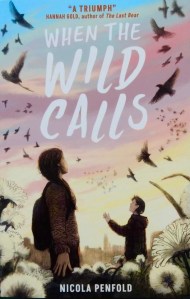
When the Wild Calls

In this powerful sequel to Nicola Penfold’s Where the World Turns Wild we join Juniper and her brother Bear in a raw and incredibly thought-provoking dystopian adventure that sees them (against their father’s wishes), returning from their new home in Ennerdale where they live with their Dad, his new partner, Willow, and their baby, Fern, to the city. They feel driven by the thought that
their beloved grandmother, Annie-Rose, and friend, Etienne, are still in the city where disease is fast spreading.

Juniper is determined to rescue them and bring them to safety, and at the same time, bring hope to the ever more barren city, a place where there are signs that the iron-fisted control of ruthless leader, President Steel, is starting to weaken. However, the possibility of insurgence by a group called the Polecats has made the authorities more aggressive. Determined to fight for freedom, Etienne who has participated in the disease trial, finds himself in extreme peril and in need of rescue from more than the city itself.

The story unfolds through the increasingly anxious voices of Juniper and Etienne who speak in alternating chapters enabling readers to see what is happening both in the Wild and in the city alongside each other. Both show enormous courage and strength of character as they give their all to what they believe in, and fight for those they love.

The threat of disease, vaccine trials, restrictions on normal life and fear of strangers will remind many readers of our own recent pandemic though Nicola tells us that her story was written prior to COVID. It’s a story from which the author’s love of the natural world shines out as she describes vast landscapes and the minutiae thereof; a story that holds powerful messages about the vital importance of caring for nature. A wonderful read and a call on us all to play our part in helping our precious natural world.

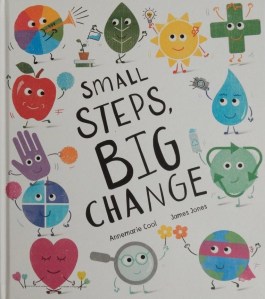
Small Steps, Big Change

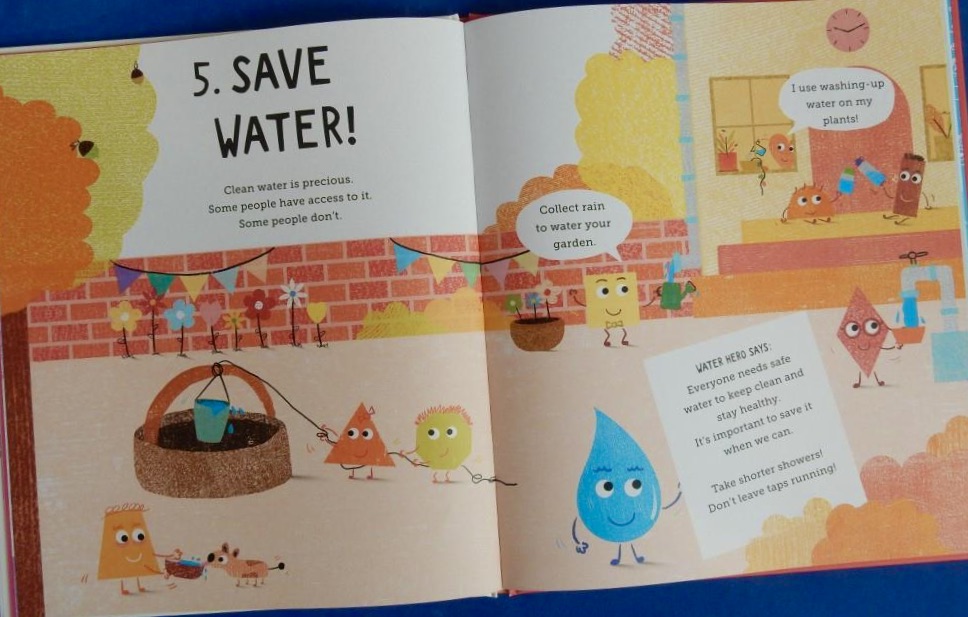
Containing fourteen suggestions, this book talks children through the United Nations Sustainable Development Goals in a straightforward manner. These everyday goals are presented in an upbeat style by iconic emoji-like heroes and are the kind of things even young children can do to make a difference to our world such as switching to meat free veggie meals, reducing the amount of plastic (think of all those rubbishy plastic toys that are attached to comics as come-ons to make little ones spend their pocket money on them), remembering to turn off taps and collecting rain to water the garden.

Each one is illustrated by James Jones whose scenes are alluring and playful.

Bursting with great ideas, a copy of this needs to be in every primary classroom and adults could do well to read it too. It’s all too easy for busy people to forget some of the simplest things – turning out lights, unplugging mobiles when charged – that can contribute to making better tomorrows for everybody.

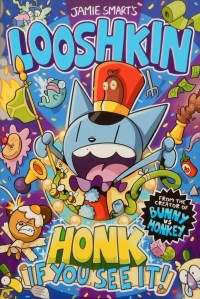
Looshkin: Honk If You See It! / Agent Harrier: This Book Will Self Destruct

Billed at the outset as ‘Looshkin – A Comprehensive Catalogue of His Rise to Fame, this is the third volume of delectably daft doings of the craziest cat in the world, created by maestro of madness Jamie Smart in his characteristic frenetic fashion.

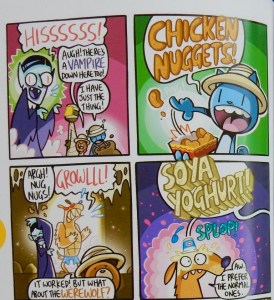
Readers will delight in such doings as the blue moggy character tormenting the grey suited, bowler-hatted Mr Johnson, as well as a clown who thinks a good gimmick is to bring a large box of crabs to a children’s party and let the little nippers loose among the guests. Then there’s the episode of the lost fish finger that answers to the name of Sharon, the accidental morphing of Looshkin into a duck – well maybe and the proper ducks were certainly less than impressed. And just in case anybody you know is undergoing a vampire attack, they might well take a leaf out of our feline friend’s book and bombard it with chicken nuggets.

Stupidly brilliant or brilliantly stupid, whichever way you want to put it, youngsters will relish it. Adults? Well, they may want to take heed of this aroma alert: beware, there are a considerable number of farts between the covers of this book,

some even delivered straight to a certain person’s doorstep in a large cardboard box.

Danger alert: with the book set to self-destruct in just five minutes, thanks to a bomb planted within its pages, Agent Harrier must follow the red wire to defuse it before it’s too late and everyone is blasted to smithereens. The clock is ticking and it seems he’s started chasing a red herring.

Though maybe that could turn out not to be such a terrible idea after all. Want to know who was responsible for planting the bomb? Then you’ll need to get your paws on a copy of the book super fast.
With zany daftness visual and verbal, from cover to cover, this punny spy caper with a twist or two, presented graphic novel style, is just right for newly independent readers.

The Pinchers and the Diamond Heist / Magic Keepers: Mysterious Mishaps

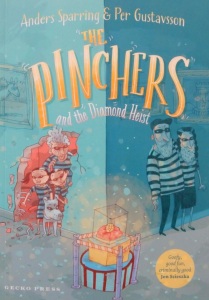
The opening chapter in this story for new solo readers reveals that only one of the Pincher family is honest; that’s Theo. His mum, dad and sister are thieves and lie all the time: the first names of the entire family are puns based on thieving: Theo’s parents are Nic and Rob, his sister is Criminellen (Ellen for short), Gran is Stola (she’s in prison) Before the story proper begins we learn a bit about each person – what they like to steal, tools they use and their personal motto. Next door to the Pinchers lives Paul Essman, a police officer, something Theo aspires to be.

When a diamond exhibition at the Royal Palace is announced in the newspaper Theo’s parents start planning their next crime. Then with bag duly packed, they leave the children and head off. Come bedtime Theo’s story reading prowess isn’t up to scratch so accompanied by his sister, he goes next door to ask Paul to read Ellen her bedtime story. He also divulges where their parents have gone and that’s where officer Paul immediately heads, leaving the children sans adult once again.

To satisfy Ellen’s need for adult company they head next to prison to visit Grandma. Once inside, all manner of crazy shenanigans ensue: there’s a break out, an encounter with policeman Paul, and the escapees plus Theo and Ellen head to the exhibition where more high drama takes place. Theo then devises a plan to get everyone home, there’s a surprise reveal, romance in the offing and through all this, apart from one time on purpose, Theo has remained a truth teller.

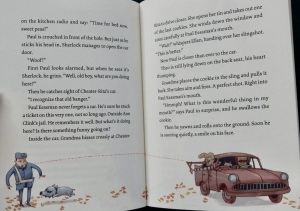
Zany illustrations of the crazy antics of members of the cast appear on almost every spread and are sure to illicit lots of giggles from young readers. If you want to discover your inner Pincher, the tongue-in-cheek back matter that follows the light-hearted story might prove useful.

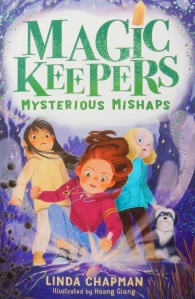
Strange things start to happen following a visit from Jo, one of Ava’s mum’s book club friends who has come to take photos for a poster she’s designing. It transpires that she’s photographed one of the magical curios – a golden chalice left by Ava’s great aunt. Since then their home town has been struck by a stream of accidents including a tree crashing into Jo’s front garden wall blocking the road and Jo jumping to avoid a lorry and ending up with a sprained wrist.

This object is a the Cup of Savnoch, a ’curse cup’ and best friends Ava, Sarah and Lily set about translating the writing they find on the front to find out what kind of curse it contains. This they do over the weekend and having cracked the code and read the writing, work out that there are only a couple of days of the five mentioned remaining in which to break the curse. Can they do what’s needed?

With plenty of black and white illustrations by Hoang Giang, this is another exciting story in the magical series, and one wherein Ava learns that her difficulty with spelling, written grammar and punctuation indicate she’s most likely to have dyslexia, which makes her feel so much better about herself.

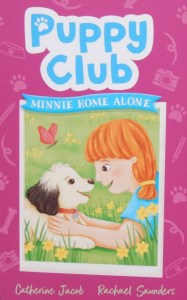
Dirty Bertie Wild! / Puppy Club: Minnie Home Alone

These are both additions to series popular with new solo readers: thanks to the publisher Little Tiger for sending them for review.

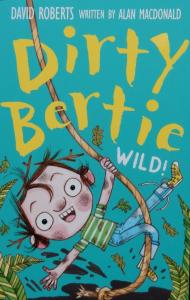
The small boy with some disgusting habits returns for three more crazy escapades. The first, from which the book takes its name is an account of a class visit to Go Wild, a trip Bertie anticipates will be the best school outing ever, especially as the children are allowed to get muddy. However his spirits fall considerably when he learns that he’s been assigned to timid Mr Weakly’s group, the worst possible person to have as leader. There’s absolutely no chance that his group will win the prize for the best group – or is there?
Vroom! sees Bertie’s Gran deciding to start driving lessons so she can take her test in her brand new sporty red Mini. A recipe for disaster surely especially with Bertie and dog Whiffler in the car while she’s being instructed and can you believe when she takes her test. Never mind if she fails – there are always alternative ways of travelling.
Finally in Grounded, Bertie goes to great lengths to join his friends Darren and Eugene when they go skateboarding in the park.

Harper is really looking forward to her first school residential trip – four days away from home. However she’s very concerned about how her puppy Minnie will cope with being left alone when her parents are both at work and with his business taking off, Dad too is quite likely to be out of the house. The last time he’d left Minnie by herself she chewed through the cable of his laptop. She begins to think that perhaps she should pull out of the trip.
Harper and her friends do some research and learn that separation anxiety is a common problem with puppies. So begins ‘Operation Home Alone’ as they call it, with just two weeks to go until that school trip. As Harper tells Dad when they’re out for an early morning walk with Minnie, the business of ‘having a puppy is a learning experience for all of us.’ How true that is: it seems to be one step forward and then several back whenever Minnie is left alone.Then Dad drops a bombshell: he’s going to be on a business trip that coincides with Harper’s time away.
Her fellow Puppy Clubbers rally round doing everything they can, but will it be enough to ensure Minne is okay in Harper’s absence?
Another wonderfully warm story of camaraderie for young KS2 readers especially those who love dogs.

Tourmaline and the Museum of Marvels / The Rock

Since falling into the Source of all magic on the island of Elsewhere during a mission to rescue her mother, Tourmaline has developed magical powers that are almost uncontrollable, the result being chaos. Her powers are virtually impossible to hide from others though her loyal buddies George and Maia are well aware of her plight.

When Tourmaline unexpectedly receives a postcard addressed to her, offering answers she heads off by airship, despite her friends’ reservations, to the market rendezvous mentioned on the card – the Dark Market – so the Living Archive informs her. She’s accompanied by Mai, her Mum Persephone and George, who stows away..

So begins a mysterious new adventure for Tourmaline, one wherein she finds it hard to know whom to trust, that sees her visiting incredible places where she receives further postcards, has some surprising and unexpected encounters, takes huge risks and makes astounding discoveries.
The final chapter of this thrilling fantasy neatly sets things up for the next book in the series due to be published early in 2025. I eagerly anticipate it.

Twins, twelve year old Finola and Zane and their mum from planet Sevent, have crash-landed on Earth. Eager to be reunited with Dad, they have begun to search but after several months they’ve heard nothing other than the telepathic message Mum received when first they arrived. The twins know they have to keep themselves out of sight from prying eyes. Mum has found a job in hospitality, and now the twins’ desire to stop hiding from everyone is becoming overwhelming, especially when Zane reveals that he’s received two cryptic messages – pictures of a rock – from Dad. On hearing what the children want to do, Mum says they must sleep on it, but that night on the news is an announcement from a scientific research company offering the ‘alien family’ 250,000 euros to participate in their ‘research programme’ and the same sum to anyone with information about the whereabouts of the ‘aliens’.

Next morning, an anxious Mum gives her blessing to the twins, now disguised, to teleport themselves to Albrigart, a rocky place with a conservation park. No matter what they do or where they go, it seems that eyes are on their every move. Can anybody at all be trusted?

Eventually Zane decides they should to go back to the flat but they become separated. With her energy depleted Finola finds herself alone, left to her own devices to return to Mum and Zane. Once reunited, the three talk and conclude that thus far, as Finola puts it, they only have one truth: “We want to find Dad and he wants to find us.”

As the book ends they know nothing of what the future holds but are sure that no matter what, they’ll undertake things as a team. This cliffhanger leaves the way open for the search to continue.
I suspect that like myself, child readers will be eager to discover if the family is finally reunited.

Help! We Need a Story

The jungle animals are, so they say, bored, very bored; much too bored to take much notice of what Artie the macaque is drawing with his crayons

until eventually after hearing so many complaints, he starts creating anew, giving full rein to his imagination.

With his work almost complete, he writes two final words and then announces to his friends, “Guess what? You’re in a book.” The initial reactions to the title are less than enthusiastic; but then June Baboon starts reading; reading about dragons, a magic bear and much more – robot sharks and zombie hens even and guess who is fighting all these baddies. It’s none other than Captain Artie and his mighty mates. By the time the story is concluded, the other animals are enraptured and truly thankful. From Artie they receive a knowing smile and an anticipation that next morning more magical tales will start to unfold and all because the listeners will start to look at their world in a totally different way.

A splendid story told in rhyme wherein words and pictures show the power and vital importance of the imagination and creativity. It’s one I strongly recommend foundation stage and KS1 teachers share with their classes as well as a book parents and children read and talk about together. Make sure there are pens, crayons and paper to hand for children to use for their own story making.

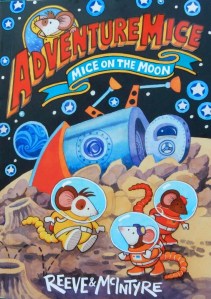
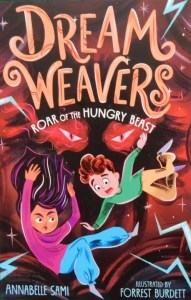
Adventuremice: Mice on the Moon / Dream Weavers: Roar of the Hungry Beast

Strap yourselves in ready to blast off into space for another Adventuremice experience.
It begins one spring night as Pedro et al are sitting on deck watching the moon rise when suddenly a beetle arrives with an important message from Millie’s uncle, Professor Bernard Quartermouse summoning the Adventuremice to his laboratory right away. Off they go to Scrabble Island and almost before you can say, ‘space capsule’ Pedro, Millie and Fledermaus are in a rocket shooting into the sky, destination the moon. Supposedly, but that’s not quite what happens.

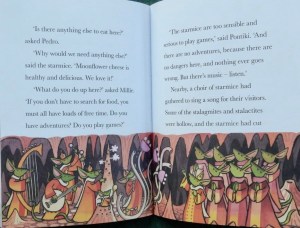
Instead they crash land on what they learn from Pontiki, another mouse who crash landed months earlier, is the minimoon, and was helped by those she calls starmice. These mice are welcoming; unlike Earthmice, they have green fur and pointy ears and offer their visitors a delicacy they call moonflower cheese as well as singing to them.

However, this place does not appeal at all to the Adventuremice who soon despair of ever seeing their homeland again. Then a realisation dawns: perhaps there is a way back after all … Time to make contact with Ground Control and inform them of their possible return to Earth. Will they make it safely back to Mousebase?

Another immersive addition to a super-silly series characterised by not too dangerous, pacy adventure told with gentle humour by Philip Reeve and delicious colour illustrations by Sarah McIntyre.
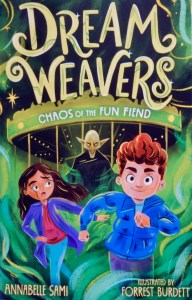
Tito and Neena are now firm friends and Tito loves to spend nights dreamweaving with Neena. He enjoys seeing how his dreams come to life – they seem so real. But now something isn’t right. The teachers at their school are acting strangely and are uncharacteristically cranky. Could this be anything to do with that dastardly Bhoot. Should the friends enter the dreams of a teacher to find out why school is becoming nightmarish? Yes they decide and first it’s to be Ms Branberry’s dream – and it’s not a good one, as they find out; neither is that of headteacher Mr Tulley. In both there’s a very loud growling and the appearance of a huge, wolf-like beast.

After Tito’s encounter with the beast and his head injury, it seems to him that the veil between the dream world and the waking world has started to break down, which is exactly what the Darkweavers want. Nevertheless Tito knows that it’s up to him to face up to the beast and make sure it goes back from whence it came? Can he do so? Possibly, with the help of Neena and her cousin in Pakistan, a portal could be created.

This dramatic tale ends on a cliff-hanger indicating that Tito and Leena will be back to continue the fight against the Bhoot.

My Friend Andy

Fluffy the dog, narrator of this story tells how every day s/he walks through the city to the park with best friend Lilly and her Mum. Each morning they walk past Andy, another dog but Fluffy is never allowed to stop and play with him.

One day though, Fluffy chases a ball out of the park and gets completely lost in the city. In all the hustle and bustle Fluffy’s cries for help are drowned; but then Andy comes along with his Dad. Realising that the little dog is lost, Andy’s Dad takes Fluffy in his arms and they walk to a quiet place for a sing song that eventually lulls them all off to sleep.

Next morning they start searching for Lilly and having spent the whole day so doing as night descends on the city, Andy’s Dad spots a ‘Missing’ sign giving Fluffy’s address tacked to a lamp post.

So they head straight there and a joyful reunion takes place. Sadly Andy is not asked in to play and as Fluffy and Lilly snuggle together in bed it’s clear to Lilly that something is still upsetting the dog. Fluffy tries to explain but is unsure Lilly’s understood. However, the following morning on their way to the park something special happens …

Emma Chinnery’s poignant story will surely make readers aloud especially, think deeply about how they view homeless people. Non-judgemental child listeners I suspect, will be more intent on rooting for Fluffy, hoping for a reunion with Lilly and later with new friend, Andy. Emma’s watercolour scenes of everyday life in the busy city capture so well what is never said about how people perceive the homeless.

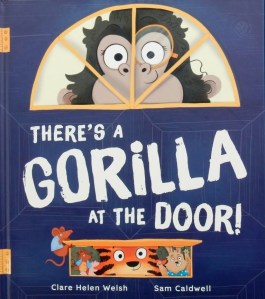
There’s A Gorilla At The Door!

Daphne and her Mum have just moved in with Anthony; Daphne really misses her friends and so the grown-ups decide to have a family party. Daphne has initial concerns about being bored but is even more concerned at the attire she is expected to wear. to meet the “ wacky bunch1” Anthony calls them, insisting that her help is required.

First to rock up is Aunt Gertrude with a troupe of lively little cousins that Daphne gets on with immediately. These are followed by in turn a bouncy marsupial with a pouch full of popcorn, a fair few flying mammals led by Grandpa Bruce,

a pachyderm on roller skates and a veritable menagerie of family members large and small, feathered, furry and smooth skinned. Things get rather out of hand

and despairing, Daphne cries in alarm, “Can’t we get along? … This doesn’t feel like a happy family party!”

Anthony responds with an idea: will it solve the situation or will it further ferment the family fiasco?
With language play aplenty, the spirited text presents a recently blended family with a host of totally unlikely relations whose antics are sure to amuse young listeners. So too are Sam Caldwell’s scenes of the creatures’ crazy capers.

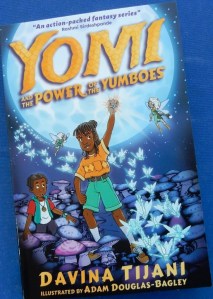
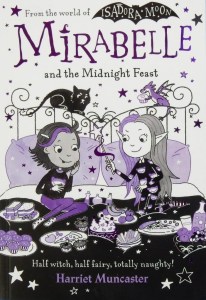
Yomi and the Power of the Yumboes / Mirabelle and the Midnight Feast

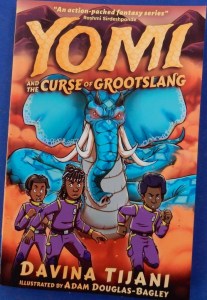
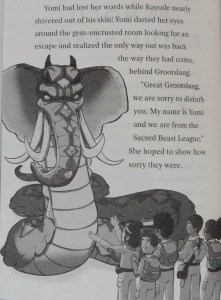
Starring Yomi and her younger brother, Kayode, this is the second in an exciting series that is based on African mythology. The siblings, now in Senegal, are officially members of the Sacred Beast League and Yomi is getting bored with sorting her uncle’s paperwork; what she wants to be doing is having another adventure, one that involves finding a Yumboe, the most powerful of African fairies so Uncle Olu’s Beast Atlas says. When she asks her uncle about them he tells the siblings that although the SLB has been looking for these fairies for years none have been found although the Beast Hunters are always on the watch for them.

That night Yomi is woken by a sound coming from the kitchen. Down she goes to investigate and there before her is a Yumboe sampling the contents of the fridge. The little fairy has a damaged wing. She introduces herself as Safari and tells Yomi that she’s been looking for her and needs Yomi’s help in protecting the Yumboes’ secret city from the destructive Beast Hunters.She also says she’s on a mission to find the Yumboes’ most treasured possession, a moonstone, and that nobody else knows she’s asking humans for help.This is just the kind of adventure Yomi has been waiting for so she promises that she and Kay will do their utmost to help. And so they do. But can they possibly outsmart the Beast Hunters? They’ll most definitely need to make use of all their skills, not to mention some special silver energy from that wonderful silver star.

Having faced perils aplenty, this thrilling, fast paced quest with Adam Douglas-Bagley’s powerful illustrations, ends in a way that sets things up for Yomi and Kay’s next mission: South Africa here they come. Bring on some more fascinating African folklore.
For slightly younger readers is

In this story starring the young narrator with a witch mum and a dad who is a fairy, Mirabelle, is excited that she’s going to be spending time in a witchy environment when she goes for a sleepover, and hopefully a midnight feast, at her best friend Carlotta’s home on the other side of town. The friends have been given strict instructions to stay out of Carlotta’s big sister Edith’s bedroom, not to use any magic and under no circumstances to touch Edith’s new Witch-Twitch-Supreme potion kit. However big sister has gone out for the evening and surely it wouldn’t hurt to sneak into her bedroom and have a look around, so long as they stay well away from that special potion kit. But Mirabelle just can’t resist the allure of Edith’s crystal ball and disaster strikes when it slips out of her fingers, through the window and ends up in pieces on the patio.

Despite their best efforts at repairs, they don’t fool Edith, but it’s Carlotta who gets blamed for the breakage. Will Mirabelle find the courage to own up and if so, then what?

I know a great many followers of this enchanting series whose eyes will be all sparkly when they get their fingers on the tenth book wherein friendship, sibling solutions and the importance of owning up are key elements.

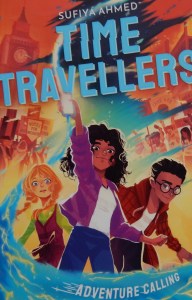
Keisha Jones is a Force of Nature / Time Travellers: Adventure Calling

This image has an empty alt attribute; its file name is dscn0007-1.jpg

The story’s narrator, young activist, eight year old Keisha Jones truly is a force to be reckoned with.  In this book she extends her force field to a second cause, one inspired by her great-aunt Bee and her fight to keep a green space popular with the local community, out of the hands of a property developer. When she learns of the vital importance of trees to life itself (VITs as they become following a talk with teacher, Mr Logan,) she is immediately fired up.

Even more so when she hears of the mayor’s plan to have all the trees in Olive Meadows felled and the land turned into a car park for the mall. Keisha has less than three weeks to formulate a plan. Of course she needs to enlist the other members of the Bee Squad as well as Grandpa Joe, and reporter Rosie Parker, especially when Operation VIT isn’t quite going according to plan. For a start Mayor Branch won’t answer any of Keisha’s phone calls and she’s running up an enormous mobile bill causing Mum to revoke her phone privileges as well as treats. HMM!


Next move a protest at the site on Timber Teardown day. What will happen there: success or failure? And then … As Grandpa Joe says on World Environment Day, “ There’s something inside you, Keisha. A light. It makes the world a better and brighter place!”

Another winner for author Natalie Denny and illustrator Chanté Timothy: readers around Keisha’s age will be rooting for her and her cause right from the outset. Hopefully they too will be inspired to do some tree planting in their own local area.

Suhana, Ayaan and Mia are among the short-listed pupils in an art competition and as a consequence, along with children from other schools, have been invited to visit the Houses of Parliament. Having been given a tour by Mike, one of the guides, they are given worksheets to do in threes on the associated history and the winners will receive book tokens. Suhana, Mia and Ayaan quickly become fascinated by what they discover and unexpectedly Suhana’s mobile phone mysteriously transports them to 1911!

Almost straightaway they are confronted by a police officer demanding to know what they’re up to and talking of a coronation. The children know they have just a few hours to explore so they need to make the most of the situation. Soon they find themselves in what Ayaan thinks is a suffragette march that includes to Suhanna’s surprise, some Indian women. One of them tells her that they are actually not suffragettes but suffragists, explaining the difference: suffragists believe in non-violent action. This was Lolita Roy, one of a group of South Asian women living in the UK at that time who played an important role in getting women the right to vote.

Having started this adventure considering herself something of an outsider, by the end, Suhana feels that she is part of a team with two new friends: the Time Travellers.

As well as a dramatic adventure, this enormously readable book offers a great introduction to how politics works and the role MPs are supposed to play in society. I strongly recommend it for KS 2 readers and look forward to the next adventure of those Time Travellers.

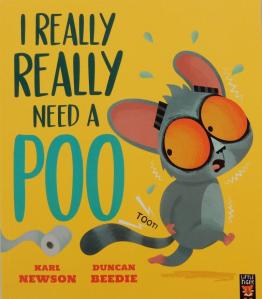
I Really Really Need A Poo

The adorable Bush Baby created by Karl and Duncan is back with another piece of toilet humour.

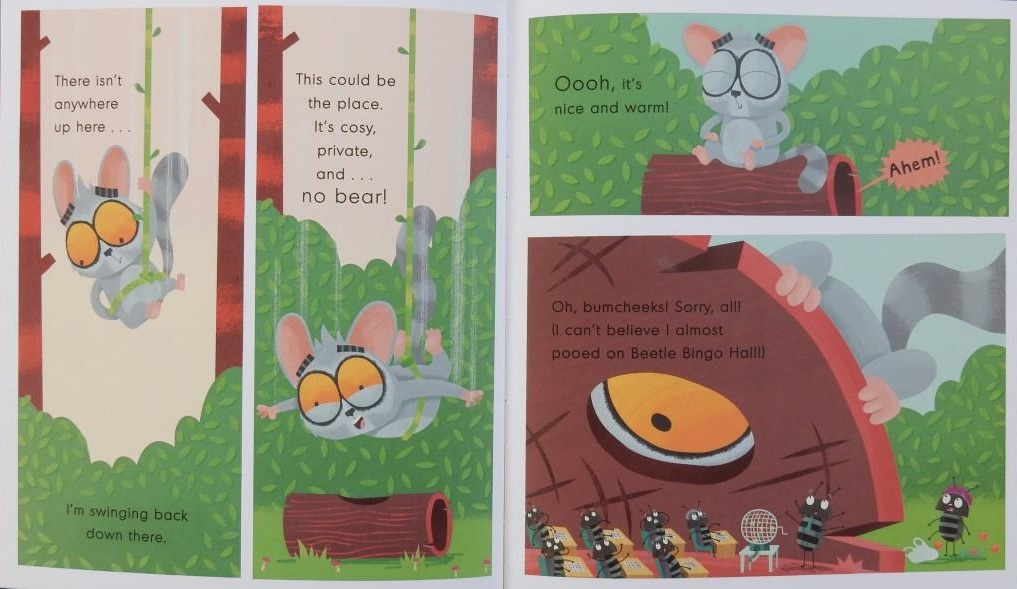
The trouble here is that a poo really needs to be done in private and the little animal is having a great deal of trouble finding a suitable place to do her dumping. She hunts high and low, has several near messy mishaps

and produces a fair few farts until eventually she wiggle walks her way to a truly palatial building consisting of what appear to be purpose built creature compartments.

Joy of joys, one of them is vacant so in goes Bush Baby.

Yes, the toilet is rather on the large size for so small a user as our furry narrator but nonetheless she gets busy. While seated however, she spies beneath the door a pair of furry feet; but Bush Baby needs to finish her business before she makes an exit.

Having relieved herself at long last, she opens the door and there before her is a very large ursine character who is desperate to use his personalised facility. So desperate that he ignores Bush Baby’s warning and heads right inside … PHOAH! Anyone have any air freshener?

Karl’s increasingly tense rhyming text together with Duncan’s hilarious illustrations of the ever more anxious Bush Baby are certain to induce plenty of giggles when adults share this with little ones be that at home or in the nursery or classroom.

The Armadillo Who Came For Dinner

The latest creature to win the affection of Hotpot in this sixth book featuring the unlikely friends, Wolf, Hotpot and Omelette rolls up one summer’s afternoon when the three are enjoying a relaxing picnic. Having sent the rest of their food flying every which way, what appears to be a boulder crashes into a tree. Surprised at hearing what she thinks is inanimate, crying “Ouch!”, Hotpot goes over to investigate and offer a sympathetic hug. Somewhat disgruntled at having been addressed as Mr Boulder, the thing tells Hotpot that it’s an armadillo – a tough one at that. The tough armadillo’s response to Hotpot’s ‘What’s your name?” is a rather wobbly “I’m … Dizzy.” This prompts Wolf to invite ‘Dizzy’ home with them for dinner and some TLC.

The following morning Dizzy is much better; not so Wolf’s house; that’s a real mess on account of Dizzy’s roly-poly sleeping. Once again Hotpot offers a hug but Dizzy turns her down saying, “I don’t need hugs!” Instead they head outside for a game of football. Dizzy proves surprisingly adept at soccer but having kicked the ball with considerable force,

it goes missing and instead the friends head off to the fair, accompanied by a very enthusiastic Dizzy. So excited is the armadillo that he wrecks the fair and receives a good telling off from Badger. Suddenly Dizzy’s exuberance is gone and off he goes towards some trees.

Is that the last the others will see of the armadillo or will he, as Wolf reassures Hotpot, come back? And if so, what of that oft-refused hug?

Joëlle’s illustrations be they panels, double spread scenes or vignettes exude warmth and gentle humour making every turn of the page a delight and the ideal accompaniment to Steve’s text wherein he makes clever use of alliteration. Those familiar with previous titles in this series will welcome the return of Wolf et al. but equally, anyone new to the threesome will thoroughly enjoy their armadillo adventure.

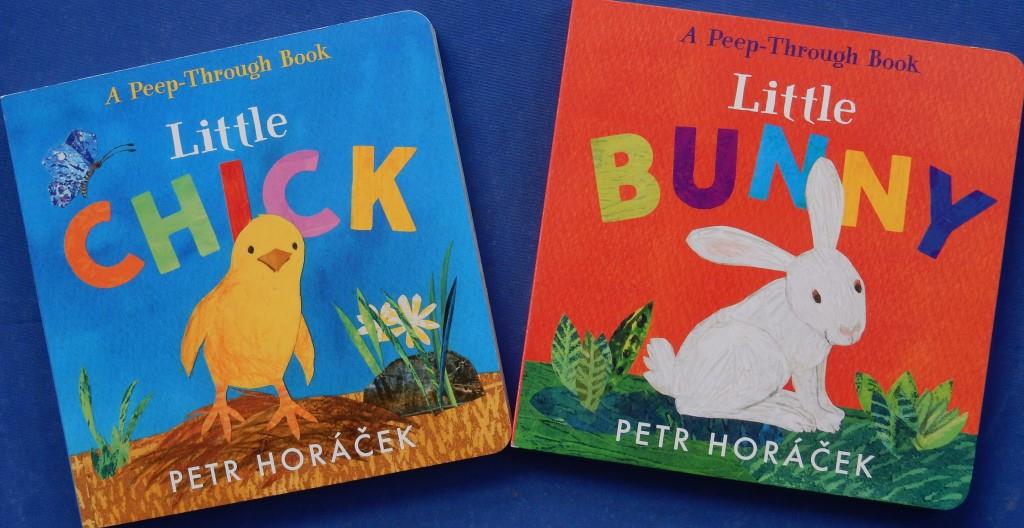
Little Chick / Little Bunny / One Little Tadpole

Vibrant artwork with cutaway pages and cleverly placed die-cuts, together with simple question and answer texts, will captivate little humans as they follow the titular animals through their simple stories.
The setting for Little Chick is the farm where she encounters in turn, a pig, a smily cat, a large cow and a tiny mouse, before suddenly emerging onto unfamiliar ground where a friendly horse assists the feathered infant in finding its mother, a mother that is also looking for her little one.


Little Bunny’s adventure takes place in the woods. There are lots of birds to spot as well as a friendly brown bear, but in the bushes lurks a red fox that scares the little leporine. Happily though a kindly owl leads the way to the safety of Mummy rabbit’s outstretched paws.

With his trademark glowing colours, Petr Horáček’s interactive ‘peep-through’ books will be enjoyed by adult sharers and the very youngest listeners. No child is too young for books such as these.

For an older audience is

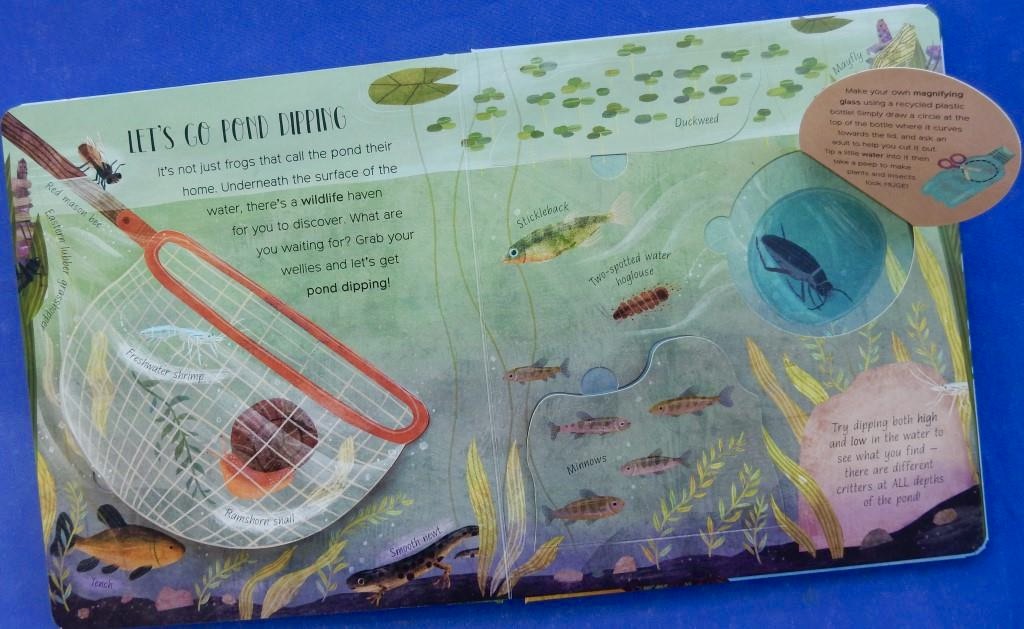
With more than thirty flaps there is plenty of exploring to be done between the covers of this large board book. Besides the life cycle of the frog there is information about the birds, insects, fish, mammals and the flora likely to be encountered in or around a pond. However, not all the creatures – for instance the two frog species illustrated on ‘The Circle of Life’ spread’ – are ones that UK readers would come across. Nonetheless this is a book that encourages children to use all their senses when exploring in the real world and to this end includes a spread on pond dipping.

It’s also good to see, on the final spread, the suggestion that readers create a miniature pond of their own as a way of helping nature to thrive.

Some of the illustrations give only an impression of the animal rather than an accurate means of identification so, having sparked a child’s interest, one would need to refer to a field guide rather than rely on this book’s visuals.

Can I Sit in the Middle? / Can You Catch the Bunny?

This image has an empty alt attribute; its file name is dscn9949-3.jpg

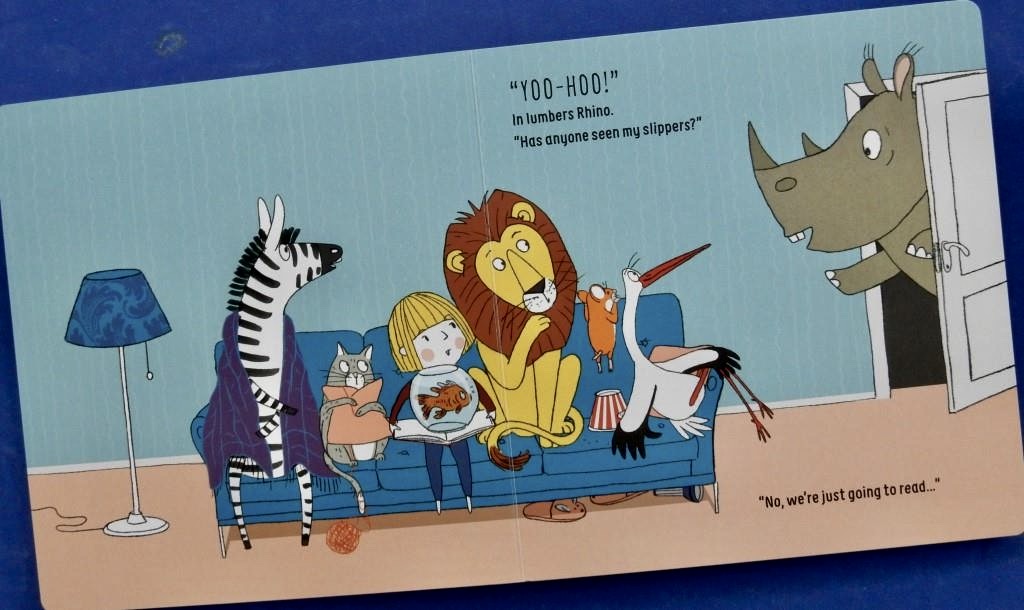
A child sits on the sofa to read with Hamster. The enthusiastic creature alerts the other animals – zebra, cat and lion – to join them. Just before the story starts Stork arrives, but then Cat decides to try and take possession of the cushion and Hamster gets up, fetches Fish and hurrah! Let the story begin. Or maybe not: some rearrangement of listeners is demanded and then the patient story reader can share the book. Oh! I spoke too soon for Rhino has mislaid a pair of slippers.

This image has an empty alt attribute; its file name is dscn9950-3.jpg

The large pachyderm upends the sofa to retrieve said slippers and OOPS! They all tumble into a heap. Does that mean no story? Happily thanks to a deft rearrangement of furniture and something else that Cat had found under the sofa, a perfect book sharing situation is created and finally, whoopee! it’s story time at long last.


As this drama unfolds small children will enjoy watching the chain of events, delighting in the details in the gently humorous illustrations and wondering who next is coming through that door to be part of the audience on the sofa.

This image has an empty alt attribute; its file name is dscn0001-1.jpg

Addressing the target audience of very young children directly, the author asks that they assist little Bunny in finding his way first through the vegetable patch and then out into the forest and from there around the garden and the orchard until finally he reaches the safety of the burrow wherein the rest of his family are waiting. With a wealth of treasures collected on his adventure, little Bunny is more than ready to share his spoils with his fellow rabbits.


Little humans will certainly hone their fine motor skills as they use a finger to touch and trace the trail on each spread as well as develop their powers of observation when with the help of an adult sharer, they look at the details – vegetables, other small creatures, fungi, flowers, mammals, and lots more besides, in each of Linda Tordoff’s scenes.

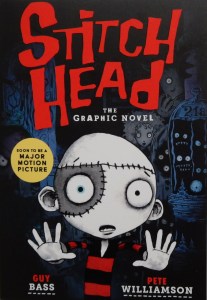
Stitch Head: the graphic novel

This image has an empty alt attribute; its file name is dscn0003.jpg

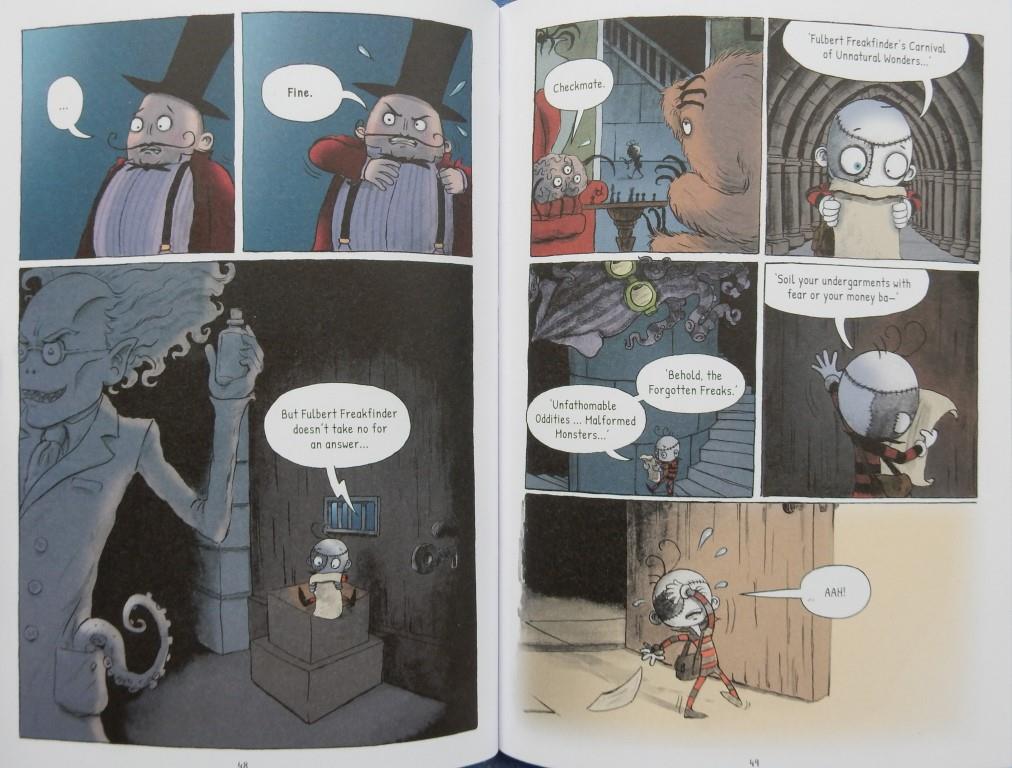
Stitch Head is a not quite human, long forgotten lonely little creation made by a mad professor in the sinister Castle Groteskew. Stitch Head stays around the castle endeavouring to ensure his master’s other creations be they with multiple limbs or missing eyes, don’t go wild in the nearby town and bring punishment down on his eccentric master.

After years of working behind the scenes, Stitch Head’s life is upended when Fulbert Freakfinder’s Travelling Circus rolls into his home town of Grubbers Nubbin and the owner and ringmaster demands entry. He’s on the lookout for further freaks to join his show and says he will make Stitch Head a star.

This image has an empty alt attribute; its file name is dscn0005-1.jpg

What will be the response from Stitch Head? Will he venture beyond the castle walls or not?


Darkly monstrous fun and sometimes a tad gruesome, bursting with weird beings this spooky graphic novel version will appeal to those who prefer stories presented in a highly visual format. Many children are predominantly visual learners and so the new form will likely attract a different audience from the original book although I suspect established fans of Stitch Head will also enjoy this. Pete Williamson has done an absolutely amazing job with the art.

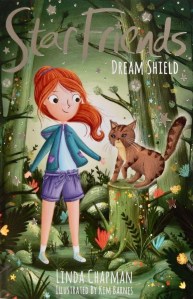
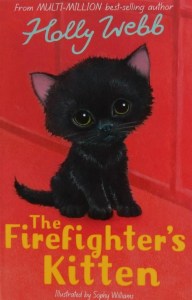
Star Friends: Dream Shield / The Firefighter’s Kitten

These are additions to popular series for younger readers: thanks to the publishers Little Tiger for sending them for review.

In case you’ve not met the Star Friends, Maia, Lottie, Sita and Ionie before, they share a special secret – they have magical animal friends – Star Animals – who help them learn magic and fight evil!

There’s excitement in Westcombe: the village is hosting a scarecrow competition and the Star Friends, along with lots of other residents are participating. Strangely though soon after, lots of people in the village start feeling very sleepy and completely lacking energy. Could it be some kind of weird bug that’s doing the rounds: the friends think otherwise. It’s down to dark magic, is what they think. They really need to do something to stop it but that’s going to be a challenge on account of their own sleepiness. It’s something to do with Shades, but where are they hiding?

Can the girls solve the Shade mystery and make things right again? The story ends on a cliff hanger, which will leave readers eagerly waiting the next episode in this deservedly popular series.

Lola’s mum has a new job as crew manager of a team of firefighters. This means that the family has moved to a new town where Lola doesn’t have any friends and must start at a new school. On the positive side their house has a garden and her parents have agreed that once they’ve settled in, they will get a cat.

As Lola walks to school on her first day accompanied by her dad, a boy calls to her, introduces himself as Noah and tells Lola that they will be in the same class. Noah has three cats and that prompts Lola to tell Noah about her cat hopes. Next day as they walk to school the two children see a tiny kitten huddled high up in a tree. On their way home, the kitten is still there and so too are a crowd of people, a fire-engine and to Lola’s surprise, her mum.

Eventually Lola’s mum rescues the creature but nobody knows where it belongs and the animal shelter is completely full. It appears that there’s only one place the kitten can go that night … Lola quickly develops an attachment to the newcomer but will he stay?

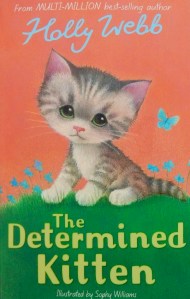
With themes that children will immediately relate to: moving house, making new friends and having a new pet, this latest in the prolific author’s animal stories, although slightly predictable will appeal to readers from around six who will love Sophy Williams’ visual portrayal of the kitten.

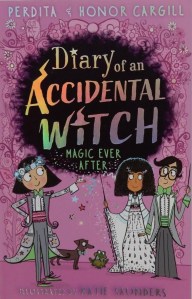
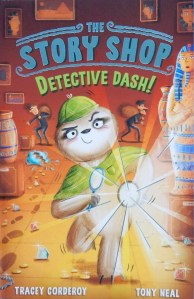
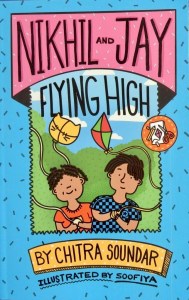
Diary of an Accidental Witch: Magic Ever After / The Story Shop: Detective Dash / Nikhil and Jay Flying High

This image has an empty alt attribute; its file name is dscn9922-1.jpg

The Easter holidays are fast approaching for Bea Black. First though she needs to discover what is wrong with her Dad. In addition there’s the upcoming annual Eggastraordinary Eggy Day and Bea is still working on improving her spelling. To keep her sweet, Bea is helping at Taffy’s teashop and being paid in cakes. You may be surprised to learn that Bea’s Dad is also working obsessively on his spells, which makes his daughter suspect that something is up.


When Taffy takes Bea into her confidence things become clearer but she’s charged with keeping Taffy’s proposal plan a secret, which is far from easy. Why, Dad wants to know, can’t he wear his favourite scruffy jumper to the venue; after all it is supposed to be a newt-watching trip..


Despite near disaster, the couple agree to get married and then there’s just the matter of a wedding and all that entails, to focus on. Bea is definitely going to need lots of help from friends and family.
Without giving too much away, let’s just say that Bea’s final diary entry in this book starts ‘BEST.NIGHT.OF.MY.LIFE’.


You can’t ask for more and readers will certainly be more than satisfied. Team Cargill and Saunders have again created a winner.

This image has an empty alt attribute; its file name is dscn9918-1.jpg

When shopkeeper Wilbur and his assistant, Fred Ferret arrive in their shop early one morning they’re puzzled to hear a strange sound. It turns out that a ferret has fallen asleep and is snoring. Once awake she introduces herself as Snoozy Suzy saying she’s eager for an adventure.

Suzy elects to be a detective, Fred adds some ingredients to the Story Pot, stirs the mix, and POP! the two of them find themselves in The Museum of Wonder where they learn, a robbery has taken place. Suzy informs the strange man, Ivar Plan busy with a display of lamps, that they’re there to solve the case of the cursed teeth. It turns out that Ivar is actually a robber and the lamps are part of his clever plan to steal priceless articles from the museum. Can Suzy and Fred save the day?


In episode two I S-Pie Trouble!, the pair are at the seaside where one of the posh hotels is in uproar due to the disappearance of Chef Humble who is supposed to be presenting his delicious new creation, the ‘Whatever You Wish For Pie’ at a banquet that coming Friday. After a night’s sleep Fred and Suzy peruse the clues they’d found the previous day and are about to have breakfast when they learn that a new chef has turned up offering to step in and save the banquet – at a price. Things seem decidedly fishy to the detective duo. Will they find the real chef in time for the Friday night banquet?


The riverside village of Watery Bottom is where the third episode is set. Here Suzy and Fred are tasked with discovering the truth about the Demon Duck of Doom. To do so they need to participate in a Doomseeker Expedition led by young April Button. But what is she up to and why?


Full of surprises, this fourth Story Shop book with its wealth of fun illustrations is again just right for younger readers.

This image has an empty alt attribute; its file name is dscn9938-1.jpg

The fourth book in the charming series for new solo readers starts one rainy day when Appa goes out to the shed to retrieve to board so the boys can play Dayan but the cat distracts him, he takes a tumble and injures his ankle. Can several rounds of the game, together with a cup of tea and a packed of frozen peas on his foot make him feel better?


Three further stories about the everyday life of Nikil, Jay and their parents follow. They participate, somewhat reluctantly at first, in the local Clean and Green Club at the neighbourhood park and then decide it’s a more enjoyable way to spend a Saturday than they’d anticipated.
Next comes a day of kite flying though they unexpectedly have to make the kites themselves as those that had been ordered aren’t delivered in time and finally, Jay gets himself in a stew about tidying up and soon discovers that doing things without his brother is far less enjoyable than doing them together.


As always bold, cheerful black and white illustrations by Soofiya complement Chitra’s telling of these tales, which are based on her own upbringing.

Find Peace in a poem

Twenty poets and four illustrators have contributed to the latest Little Tiger collection, this one being a celebration of mindfulness. Mindfulness I see as the state of being wholly in the present, completely awake and aware of each moment, fully engaged in one’s surroundings and accepting that experience without judgement.

The range of poets here is contemporary and interesting, and included are new poems and some previously published ones. such as Michael Rosen’s The Rhythm of Life and, Zero Weil’s Hide and Seek. Therein she describes looking for quiet and after going to the woods and the sea, concludes ‘I found quiet / it must have been hiding / the whole time / inside my words / inside of me’.

I’ve loved that one since discovering it in Cherry Moon.

Each poet in their own way takes an everyday object or occurrence and transforms it into something memorable and in so doing is asking the reader to look anew at the world. Two poets call on readers to put pen to paper, to preserve (Carter) or let go of (Wakeling) their thoughts. In James Carter’s How Easily, he reminds us how special ’moments disappear like sand.’ Moments such as the sight of raindrops sparkling on a lake and ‘The night / you tried to count the stars.’

Kate Wakeling suggests if you’re feeling down or troubled by your thoughts, settling wherever you are, taking a pen and without stopping or thinking, allowing it to explore, in words or pictures, squiggles even. In so doing you may well find ‘some bright new / thoughts begin to / grow.’ It’s certainly worth trying The Ink Cure next time you feel your brain knotting up.

So too is Nikita Gill’s A Lesson from the Trees. Offering not words or thoughts but a reassurance ‘they will listen to you too, / and show you that the answer / to all life’s storms / is to be patient / and stand strong.’

Each double spread is beautifully presented and the four illustrators have been mindful of not overwhelming the words with their images.

Add to your poetry collection be that at home or in the classroom.

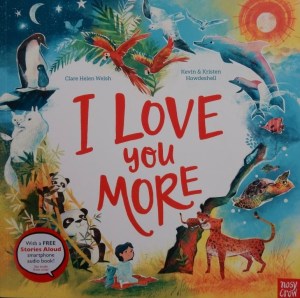
I Love You More / Love is in the Little Things / I Turtley Love You

Parental love and the wonders and beauty of the natural world come together one bedtime when Rae’s Mum attempts to tell her daughter just how much she loves her. Clare’s lyrical text in combination with team Howdeshell, the illustrators, convey the heartfelt message effectively, showing that such love is unconditional and life long.

Herein we encounter among other creatures, waddling penguins and snoozy seal pups atop the ice, gliding eagles, desert dwelling camels and lizards, various marine creatures ,

majestic big cats and pandas as well as celestial bodies – ‘sparkly planets shining brightly in the night’ and more. As the two finish counting the stars in the sky, Rae realises the enormity of her Mum’s love, .
a love that even then Mum feels she’s not expressed sufficiently strongly- and we see the two snuggled lovingly together.

The mixed media illustrations of the animals in their home environs suggest that the way is left open for Rae to change as she too explores beyond her immediate home and surroundings.

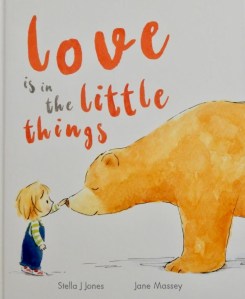
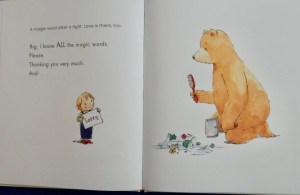
Small – a human child and Big – a large bear love one another very much, but how do they show that love? Stella Jones’s first person text and Jane Massey’s heart-warming watercolour illustrations show that essentially as Big says, ‘ love is made from the little things’ – every day things such as holding hands, making and taking tea together, a goodnight kiss, hugs, saying sorry,

extending a helping paw or hand. As Little realises as they look skywards, “Love is made of ALL the little things. Just like the trillions of tiny twinkly stars make the forever of the deep blue sky.’
Gentle, reassuring, and sometimes exciting like those ‘tingletastic, tummy jumbling, giant-enormous glorious fireworks and starbursts.’

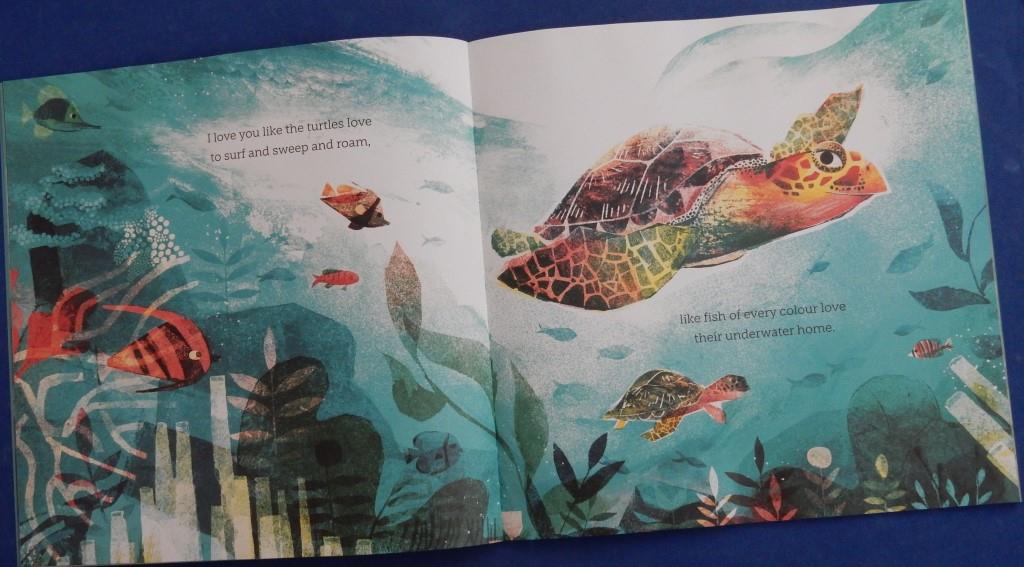
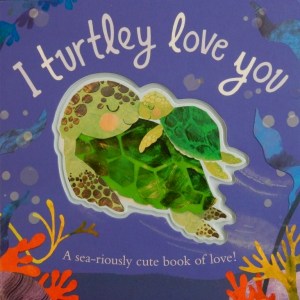
This board book takes readers beneath the ocean waves where, through Harriet’s gentle rhymes and Bryony’s engaging illustrations they will encounter several ocean creatures and their little ones. There are turtles, seahorses, clownfish, jellyfish and more either playing or snuggled up together. The emphasis on each spread is the love the adult gives to the little one.
With cut-outs and stand-outs on each spread, little humans will enjoy the tactile opportunities offered by interesting watery, collage style visuals. Some adults might find the words slightly too sugary.

The Duck Who Came For Dinner

It’s the turn of a fluffy little duck to become the guest in team Steve and Joëlle’s fifth in their series featuring animals who came for dinner. This story begins one windy day when Wolf, Hotpot and their crocodile, Omelette are chasing washing that has been blown off the line. Instead of a garment, Wolf catches a duck who now has a wonky wing and a bumped head. The latter has resulted in memory loss, so Hotpot decides that because she fell from a tree, they’ll call the little duck Apple. They invite her so spend the night with them on account of her wibbly wobbliness and after Wolf has given some first aid to Apple’s wing, they all dine on vegetable soup.

Next morning Apple decides to start flying practice, which proves pretty hair-raising and Wolf suggests that a trip to the river might be a better idea than more flying. Determined to show her independent spirit, Apple waddles boldly up the hill

but in her excitement, she fails to stop at the top and ends up dashing right over and splashing into the river, followed almost immediately by Omelette who proves to be the inferior swimmer.

As the days pass, Apple’s wing becomes stronger but to her distress she still can’t fly very far. Then comes another sudden gust of wind whisking away the washing once again. The mention of the word kite gives Apple an idea.

Next day it’s still windy but it’s Hotpot that is whisked away. Who will come to the rescue? And what will this lead to? …

Existing fans of Wolf and Hotpot’s adventures will love this new one; but whether young children are already familiar with their previous stories matters not: with its unconventional little duck, this is an absolute delight.

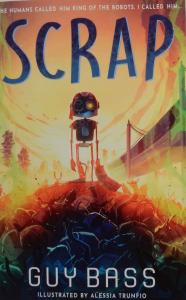
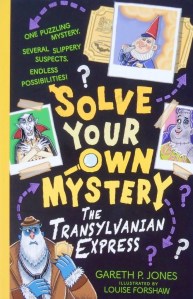
Scrap / Solve Your Own Mystery: The Transylvanian Express

These are two recently published adventures from Little Tiger – thanks to the publisher for sending them for review.

This is a sc-fi, action-packed adventure that will intrigue you from the outset. It stars loyal robot and former king Scrap, and the only humans left on the planet, two young sisters Paige and Gnat who are struggling to survive against the odds. The setting in the future is Somewhere 513, where the robots intended to prepare the way for human habitation, decided to keep it for themselves. A battle was the result and the other robots fled leaving King, who sided with the humans.

Fast forward a decade and a mangy robot is living a solitary existence on the Pile – an area of abandoned junk – where he has carefully constructed himself a home in which to see out his days. As he reflects upon how desperate he is to belong to his surroundings his thoughts are interrupted by the appearance of two figures, their faces hidden beneath their clothes. He tells them to get lost, but convinced that this robot is the one they’ve been searching for, the girls tell the robot that their mother had told them to find him. At least Gnat believes it’s King, but Paige is far from certain.

When the robot refuses to reveal his name, Gnat decides he is to be called Scrap. Paige is quick thinking, slow to trust Scrap on account of his appearance mainly, but very loving towards Gnat. Gnat in contrast is open-minded and her manner of speaking is delightful.

Scrap really wants nothing to do with the girls but his conscience won’t let him abandon them to the Hunters who are searching for them and despite his grumpiness he proves to be full of heart, loyal and caring towards them.

We also meet Mayor Harmony Highshine, full of evil plans, and Morten Prometheus, playing a role he doesn’t like; indeed new characters keep on appearing as the plot twists and turns with Scrap, Paige and Gnat facing various enemies, escaping and then finding themselves in further danger.

All this makes for a thrilling and thought-provoking adventure, not least on account of the upgrading issue. There’s humour too though, partly thanks to Gunner whose phrases that aren’t quite right; “charm down”, “hazard a guest” and “I’m folding all the cards” will surely make you smile and there’s a wealth of other wordplay too. Then we have Alessia Trunfio’s superb illustrations.
Bring on the second adventure of Scrap, Paige and Gnat.

Want to be a detective? Then try this the fourth of this series that puts the reader in charge of the direction in which the mystery story goes. Like the previous ones, it features characters from the town of Haventry.

You and your yeti boss, Klaus Solstaag are seven days into a railway journey aboard the Transylvanian Express, destination Castel Ursprung, home of the vampire Count Fledermaus. However, before you get there, a mystery needs .solving: Night Mayor Franklefink has vanished from the train. Somebody aboard must have played a role in his disappearance, but who has the strongest motive?

There are several possibles. Could it be Franklefink’s archnemesis Bramwell Stoker? Or is Sandra Rigmarole, elf District Governor and colleague of the Night Mayor, a more likely suspect? Maybe Franklefink’s monster wife has turned against him? You dear reader, decide!

By following the prompts and choosing what route to take, you will be lead down various paths and be offered a number of clues to assist you in solving the crime. One thing I can assure readers is that this trip will be anything but boring and that eventually the perpetrator of the crime will be unmasked.

With a wealth of mock scary illustrations by Louise Forshaw to add to the fun, this will be especially welcome for readers who enjoy problem solving.

Star Friends: Enchanted Mist / Magic Keepers Tunnel Trouble

We’re back with the Star Friends, they who have a special secret in the form of magical animal friends – a young fox, a fallow deer, a red squirrel and a wildcat who help them learn magic and fight evil.
This group – Maia, Ionie, Sita and Lottie and their animals is being watched by four other forest creatures in need of their help.The following morning after a dream Maia senses that something is wrong; could something bad be about to happen?

Then at school, a classmate Maddie who has only recently joined and doesn’t really have any friends, approaches Maia and asks if they could team up for the Super Science Week, one of the exciting events being planned for the end of term and Maia agrees. Super Science is being organised by new teacher, Miss Amadi and the class have a session that involves using essential oils and making perfumes.
After this session, all of a sudden everyone wants to be friends with Maddie. Why is this? The Star Friends have a feeling that it’s something to do with magic. But from where is it coming? Maddie, or somebody else? They are determined to find out.

Cleverly mixing magic elements with real life issues about primary school relationships that readers will relate to, this is an addition to a series that continues to feel fresh and fun, made even more so by Kim Barnes’ illustrations.

Determined to learn all they can about the curios left by Ava’s Great Aunt Enid, she and her friends want to ensure that chaos-causing magic doesn’t break free again. They’re distracted at home by younger siblings, but then on the way to school Ava’s little sister, Mai, mentions seeing a monster at her window the previous night. Shortly after, Mai takes a tumble on the ice and as Lily goes to help her up, Ava notices movement in the undergrowth. An animal or something else?

Then again Mai speaks of a monster visiting her and their Tibetan terrier, Pepper is also acting anxiously. Little by little Ava becomes more convinced that something magic is going on. Can any of the crystals help her understand? It transpires that a stone gargoyle has apparently come to life and has been visiting the Curio Room and now a crystal has been taken.

Not long after, something much more important is taken by the gargoyle, which disappears with its catch into some underground tunnels. Readers will likely feel frissons of fear when this happens. The mystery deepens and the friends really must use all their resources to get to the bottom of what exactly is going on and why.

An intriguing tale of camaraderie and the importance of sibling bonds that established followers of the Magic Keepers will love; those new to the series would do better to read the previous two books first.

The Tree Next Door / A Happy Place

These are two new picture books from Little Tiger – thank you to the publisher for sending them for review.

At the bottom of a long garden a tree stands proud. Both garden and tree are loved, especially by their owner, an old woman. She gets companionship and rewards aplenty from her garden and it keeps her busy.
One day as winter is giving way to spring, a new neighbour arrives and catches sight of the tree next door. From then on she visits the garden whatever the weather, or the season, talks with the owner and asks questions of her.

A year passes and throughout that time the girl has found much joy in the old woman’s garden but as the chilly wintry days come, the garden gradually fades.

The old woman no longer visits her garden; this the girl notices and soon begins to worry. Will she be lonely? Or will she know that her young friend and others around still think of her. She decides to do something for the woman and asks all the other neighbours to participate in her plan. Every one works together until finally …

A sweet story of friendship and community spirit, all watched over by a very special tree.

Clever use of peek-through die-cuts and cutaway gorgeously illustrated pages work in tandem with a straightforward poetic text telling of a small child’s moonlit walk, guided by a star, in order to find his happy place. In so doing the intention is that the child then falls fast asleep.

Dream or not, the scenes of the natural world – the moonlit river all a-sparkle and dotted with wading herons,

the forest with dancing squirrels and foxes, stoats and hares, work their magic and finally, watched over by the star shining brightly through the bedroom, we see the child finally slumbering peacefully.

A beautiful bedtime story to share with little ones, especially those who, like the protagonist have trouble dropping off to sleep.

Heavy Metal Badger

Badger has music – rock music – deep within and it’s bursting to come out. So much so that he can hold it no longer; it simply explodes as does Badger right out of his sett. Grabbing two sticks he strikes at the trees, disturbing Woodpecker who is not impressed.

Thinking perhaps he needs some music lessons, off he goes , first stop Mrs Smythe’s class but he discovers that the recorder definitely is not the instrument for him. Back in the woods he spies a band of ants marching in line and in rhythm to their own playing.

However, things don’t go as well as Badger was hoping: the result is far from satisfactory for the ants, and the luckless Badger is forced to beat a hasty retreat.

So what about the possibility of joining the church choir; disaster strikes, though the choirmaster is encouraging, but off Badger goes feeling more than a little dispirited. Suddenly he sees a flyer advertising for a lead singer. Organised chaos seems to have been following Badger but could he finally have found the tribe he’s been searching for?

With a plethora of rock-themed puns, both verbal and visual, Duncan’s rhyming tale will have listeners wriggling on their seats in glee at the splendid silliness and cleverness of this Beedie offering, which essentially is a search for one’s true identity and a celebration of finding a way to express oneself.

Don’t Take a T-Rex Out For Tea / My Big Playbook / Polly Put the Kettle On

The five dinosaurs lurking between the covers of this large format board book practically leap off the pages as you turn them. In turn young children will delightedly encounter a stegosaurus – a decidedly bad sport that can’t bear to lose, a pterodactyl, not a creature to challenge for a race, then comes a diplodocus, an unsuitable dino. to try to hide in your bedroom on account of its colossal size, a triceratops that will put paid to any musical activities you might engage in, and finally be warned: T-Rex is always on the lookout for a tasty treat, so don’t even contemplate inviting one out for tea.
A rhyming text accompanies the prehistoric pop-outs depicted in Michael Stack’s splendidly silly scenes.

A large format board book, with a die-cut and felt flap to explore on every page. There’s a double spread devoted to numbers 1-5, with other pages of things that go, things you would see outside, shapes, weather-related words. things to find at home, colours, animal sounds and finally, bedtime, which includes a surprise hidden mirror.
Ingela P Arrhenius’ bright, enticing illustrations show either separate items each set against its own coloured background, or a whole scene.
Interactive fun learning for the very youngest to enjoy at home or in a nursery setting.

The local cafe is the setting for this version of a favourite nursery rhyme, its customers being a variety of anthropomorphic animals and Polly is a panda. Once the tea has been duly served, it’s down to pooch, Sukey to remove it from the stove. Off go all the tea drinkers and cake consumers waved on their way by Polly.
One of the ‘Sing along with me!’ series that has a sliding mechanism to add to the enjoyment on every spread and a QR code on the back cover to scan, which enables you to listen to the song. With ever fewer young children starting nursery knowing any nursery rhymes, this is a good place to start.

Imperfectly Perfect

Maria’s day starts badly; she accidentally damages her brother’s favourite book as she’s turning the pages a tad too fast. Robbie is far from pleased, accusing his little sister of ruining the book and stomping off. Needless to say, Maria is upset and in comes a family friend, Bea, with a timely hug. This she follows with a story about the day a bowl she’d given to Maria’s mum broke and was repaired with love and golden glue, making it imperfectly perfect.
Maria remains upset so Bea suggests a cheering up walk. During their saunter Maria looks for other imperfectly perfect things around and about,

and by the time a thunder storm breaks, she’s starting to feel better. As well as seeing beauty in the stormy sky, she has an idea about her brother’s book.

Back at home, Maria and Bea then work together carefully making repairs to Robbie’s precious book.

How do you think he will react when Maria goes to his room with an apology and the book?

A sweet and important story about accepting and embracing imperfections, and making amends, engagingly told and illustrated. Hoang Giang’s illustrations underscore the author’s empowering message about discovering beauty in all manner of unexpected places.

Dream Weavers: Night of the Scary Fairies

The night before going into Year 5 Tito starts having strange dreams. He’s on a clifftop in his Spiderman pyjamas to see a field full of strange tiny beings flitting about, one of which seems to take a chomp at his big toe.

The following morning, Tito’s teacher asks him to look after a new pupil, Neena, from Pakistan. Trying his best to engage her in conversation, Tito gets virtually nothing from her the entire day, though other members of his class start acting strangely At home he feels he’s failed in his task and researches the Chitral region of Pakistan, Neena’s erstwhile home, discovering that it’s rich in folklore.

Next day in school he tells Neena about his peculiar dreams and this gets her talking. She tells him about the jinn of her hometown – the paris – and on hearing this Tito says he’s seen something similar in his dreams. Neena asks him to draw whatever symbol comes into his head, first on paper and then before he goes to bed, on his hand. That night the two meet in Tito’s dream wherein he’s told they are both Dreamweavers.
For the next few nights Tito and Neena meet in their dreams, but during the day, Tito is tired and although his friends Tiffany and Murray begin to get friendly towards the new girl, he doesn’t
take much notice of what’s happening to them until he talks further with Neena. She suggests they try going into Tiffany and Murray’s dreams to find out what is wrong and so be able to help them.

Before long, the Dream Team as they call themselves, discover that the paris are playing tricks on Tiffany and Murray, changing their personalities.

At school they see that the rest of the pupils also have new identities. How is this possible?

In their dream travels, the two children encounter a scary man: Neena’s uncle, whom she says is a Dark Weaver, a power-hungry Dreamweaver gone rogue. Now a new plan is needed, first to undo the spell put on the paris, so they revert to their benevolent ways and then to return things to normal in the waking world.

The story ends with Neena introducing Tito to her family members, and a pact is made to put paid to the activities of Dark Weavers. That though, must wait for the next book.

Annabelle Sami certainly transports the reader to other worlds in this tale and despite some scary moments, she keeps things light so child readers are unlikely so have nightmares. I love the way Neena and Tito’s friendship develops and Forrest Burdett’s illustrations provide further details, especially of the characters’ feelings.

Sona Sharma: Wish Me Luck / The Feeling Good Club: Be Kind, Shazmin!

With its Tamil Nadu setting, the Sona Sharma series is one of my very favourites for younger readers. In this fourth story, Sona’s much-loved teacher is getting married and the entire class has been invited. This she learns on the last day before a mid-term break. So far so good, but then Sona sees on the invitation that Miss Rao’s husband to be comes from a place called Vijayawada that’s several hours away by train and by tradition the bride moves to live in her husband’s city. Definitely not good and Sona and her friends want to try and stop this happening so they start making a ‘lucky’ plan to keep Miss Rao as their teacher.

With this in mind, despite her list of things to do during the break, Sona is preoccupied with the possibility of having to bid farewell to her teacher. So. aided and abetted by Elephant, she begins to search for lucky charms . The night when her Amma hears about all of this, her response is, “Fortune favours the brave, Sona. … If you want something, go and make it happen.”

Sona’s way of doing so is to write a petition, get all her friends to sign it, as well as others at the wedding and then after the ceremony, hand it to their teacher. She puts a great deal of effort into this project; but what will be the outcome?

With its theme of embracing change, this enchanting story exudes warmth and family love throughout and as always, Chitra has woven several South Indian Hindu customs into her narrative including some details of the Kanyadaanam ceremony at the wedding

and Paatti’s story about Rudraksha beads, prompted by the seeds Sona’s friend Renu adds to their collection of lucky charms. Whether read aloud or alone, Jen Khatun’s illustrations add to the delights of the book.

‘Sometimes I miss the old Charita so much it actually makes my stomach hurt.’ So writes her younger sister, Shazmin in her journal at the start of this third episode in the series wherein Bella, Archie and Shazmin help one another to face and cope with the things that worry them by means of supportive friendship and mindfulness activities.

Shazmin is upset that her elder sister, Charita, now a teenager, no longer wants to hang out with her. In a desperate attempt to impress Charita, she persuades Bella and Archie to participate in the making of a video with her, but she keeps the real reason for so doing to herself.

The three friends start working on the video but things keep going wrong, there are misunderstandings and squabbles and the project seems to be heading for the scrap heap.


Is there any way that what started out as a potential prize-winning video, can be rescued, even if that means it taking a rather different direction. And can harmonious relations be restored both in Shaman’s family and with her two Feeling Good Club buddies? Perhaps, but it will take some mindfulness by all concerned.

Children’s well-being has really come into focus since covid and Kelly McKain’s series of highly accessible stories with personable characters openly sharing their emotional ups and downs in situations that children can relate to, provides gently humorous, warm much-needed mentoring in book form.

Gina Kaminski Saves the Wolf

If you are a teacher, you are likely to realise from the start that Craig Barr-Green’s delightful protagonist and narrator, Gina Kaminstki is neurodivergent.

One morning in school, Gina is finding things a bit ‘rubbish’ and so her TA, Anya, takes her to the peace and quiet of the reading room, says she will read to Gina offering the choice of two books, Little Red Riding Hood or The Big Book of Wolves. Gina picks the former, Anya reads the story. Afterwards our narrator disagrees completely with the tale, declaring, “That girl and the wolf make three big mistakes,” These she decides to fix by paying a visit to fairy tale land.

Duly prepared with a backpack containing breadsticks, her cap and her teddybear, off she goes.into the fairytale. First stop is the home of the mum who duly produces a yummy-looking cake, which she tells Gina to deliver to Granny, giving an excess of information to the child. Then comes ‘Mistake One’ but that is easily rectified: what would you do with a cake? Avoiding making mistake two, she proceeds through the woods, followed by a scary-looking wolf. That’s when the breadsticks come in handy, allowing our protagonist to reach granny’s house, confirm her identity and give her three pieces of information before the lupine arrives on the scene.

When the creature does arrive, Gina tells him of her plan; the wolf acts as per instructions and before you can say, ‘here’s the woodcutter’, off goes Gina, back to the reading room

and thence her classroom. Then it’s a happy ending both for Gina and a certain wolf.

I absolutely loved this; both words and pictures are wonderful. The matter-of-fact telling works SO well – it’s really great for reading aloud – and Francis Martin’s illustrations perfectly capture Gina’s feelings throughout the book, showing so well her spirit of inquiry and propensity for gentle rebelliousness.

Apart from being a splendid story, the classroom potential is massive.

One Little Leaf / All the Things a Tree Can Be / The Odd One Out

Trees are my favourite thing in nature and I think it’s never too early to introduce young children to their delights. This chunky, large format board book does just that, starting with a spread showing fifteen named leaves from different trees.Four are depicted on flaps, which when lifted reveal a brief paragraph of information about the respective trees on which they grow

Other spreads are devoted to in turn, sensory exploration of the surroundings, 

the growth of a tree, the tree as habitat for other wildlife, some of the uses of tree parts, seasonal changes of a tree and finally, on ‘Happily Ever After’ readers are encouraged to plant a new tree and to explore the themes included further.

A chatty, engaging narrative runs through the whole book, comprising on each page an introductory paragraph and a suggestion encouraging children to become actively involved with the natural world.
With clear, naturalistic illustrations this is a good starting point on things arboreal, to share with children in their early years.

Presenting the wonderful things about trees is difficult in just six double spreads, but author James Carter includes the essentials in this little book. I love the description on the opening page, ‘Trees are ground-hugging / sky-nudging wonders!’ Indeed they are ,be they of the deciduous or evergreen kind, both of which are depicted in Nathalia Takeyama’s first illustration that also includes some woodland birds and animals, and humans.
Deciduous trees change with the seasons and this is the theme of the next spread, which has two flaps for little hands to lift and reveal simple sentences and a different visual.
The third spread takes us to visit a tropical rainforest, rich in both flora and fauna.

‘They are like nature’s tallest hotels!’ so we read on the spread depicting some of the animals that make their homes in trees, some of which benefit the trees in return. Continuing this idea, the final pages present some ways trees are vital to all manner of Earth’s life forms in that they provide food, shelter, warmth, wood, shade and most importantly, they clean the air that we all breathe.
With its integral moving parts, this is a simple introduction to a vast subject for adults and little ones to share.

This book offers a great opportunity for young children to develop their observation skills as they peruse the pages of this ‘spotting book’. The first fourteen spreads present all kinds of interesting animals, a different kind on each, including camels, bats, seals, tortoises, ostriches, pandas, monkeys, rhinos, flamingos, fish, lemurs, penguins and butterflies. In addition a pair of rhyming verses invite the reader to spot the difference on each spread, for example among the camel train, one of their number has a single hump, whereas all the others have two. Another spread asks, ‘Who gets the first fish? Can you spot the winner?’ and depicts a pod of hungry seals, ‘calling out for their dinner’, one of which depicted in the print-like pattern already has a fish in its mouth. 

Some of the puzzles are much harder to spot than others; this reviewer found herself going cross-eyed trying to find the cross-eyed lemur looking at its own nose. Young children will certainly be challenged and entertained by most of the spreads.

On the final spread, a new animal is hidden among the melee comprising several representatives from each of the previous spreads.

Keisha Jones Takes On The World / Stink: Superhero Superfan

Having learned of her Great Aunt-Bee, a lawyer and activist, from her Grandpa Joe while he was hiding away to avoid the celebrations for his 70th birthday, Keisha decides that she too will become an activist, standing up for equal opportunities, striving to fight against injustice and making the world a better place; and she’ll do so in memory of her aunt.

To help her in her endeavours, she shares her plan with her best friends Paisley and KD and together they form the Bee Squad in honour of Aunt Bee. She also asks the advice of her teacher who suggests she look for an issue of concern in the town and go from there.

Now being a spirited girl with a big heart, Keisha can’t wait to get started. So, after school when she accompanies her Dad to Manny’s pet shop and sees that the cost to buying a male rabbit is double that of a female, she realises that she has found the Bee Squad’s first cause. She dismisses the owner’s reason for this disparity and spends the next week working on a Rabbits’ Rights plan.

With a promise not to cause any more trouble in the pet shop, she enlists the help of her Aunt Marie who, not knowing what’s about to happen, takes her fellow activists and her younger brother back to Manny’s Pet Shop and carries out her rather outlandish stratagem.

A fair bit of mayhem ensues. But that’s not quite the end of this story, though I will add that our young hero’s indomitable spirit results in her declaring, “ justice for female rabbits was served.”

It’s great to have empowering characters like Natalie Denny’s Keisha in stories for young readers and with Chanté Timothy’s zesty illustrations to bring the world of Keisha to life, this is a book to encourage primary children to stand up for what they believe in.

In this thirteenth story Stink is super-excited when he learns that the next topic for his Saturday Science Club is superhero science. Immediately he starts imagining himself in a cape with the titular words emblazoned across it.

Returning home full of enthusiasm, he finds his family sorting things to put in their yard sale and he adds some of his own items.

Next day at the sale, Stink discovers a box full of old comic books about Super Gecko, a superhero he’s never heard of: What could be more fantastic – GROOL in fact – than a part-man, part-lizard with superpowers? Moreover, said superhero has a sidekick, Gecko Girl.

Then Stink hears that there are real geckos in his vicinity and he and his pals decide to go and investigate the creatures that very evening. The hunt yields no geckos but they do find a note supposedly from Super Gecko – hmmm, mysterious.

Could it mean that Super Gecko is set to make a comeback? There is certainly a brand new Super Gecko comic book due to be published the very next Saturday. How will Stink manage his next Science Club meeting and getting to the bookstore to buy a copy before they run out, even if he can raise the money he needs for his purchase? Seemingly the boy faces much that will test his own deductive super powers; can he manage everything? Possibly, with the help of family and friends.

I love the gentle humour, the endearing characters and the mix of sleuthing and science; so too will young solo readers and listeners whether or not they have already met Stink et al.

Our Earth is a poem

Our Earth is a poem
Little Tiger

Another exciting collection of poetry in the publisher’s highly illustrated series, this time one that celebrates nature’s bounties through the work of twenty poets from different parts of the world, mini biographies of each being given at the end of the book, along with those of the four illustrators. Some of the work is familiar but it’s like encountering them anew, for each poem asks the reader to look at the familiar in a different way. Diana Hendry’s What Is the Pond Doing? (illustrated by Masha Manapov) particularly caught my attention having just returned from a walk that took me past a very large millpond surrounded by trees and vegetation. Here’s how her poem starts: ‘Wobbling like a jelly / Being a bucket for the rain / Sending flash-backs to the sun / Cheeking the sky . Giving the moon a bath , Letting swans, ducks and winter leaves ride on its back/ Licking the lollipop reeds’ …

Another poem – almost a prayer to nature – that I found particularly captivating today is Nature Nurtures by Jay Hulme. Here is the opening verse: Let me walk in forests, / and climb up all the trees; let me walk in fields, / and lean into the breeze.’ and the final one, “Let me make my promises / to stone and dirt and tree, / to give myself to all these things / that made humanity.’ Just beautiful. And what immersive and captivating colours Nabila Adani has used to illustrate this.

I have chosen to mention these two poems on this particular day but there isn’t a single poem that I wouldn’t gladly turn to and enjoy either for myself or share with a class of children; and each illustration too is deserving of close attention. With its kaleidoscope of colours used in the illustrations and verbal imagery that makes the reader ponder upon each subject, this is definitely an absolute must to add to home and class collections, to be visited and revisited.

Diary of an Accidental Witch: Stage Fright / Emerald and the Sea Sprites

Eleven year old Bea Black, resident of Little Spellshire returns for a fifth sharing of her journal.

Her Dad is now totally smitten with Taffy so home life is somewhat different.
Excitement is high in Bea’s class at the School of Extraordinary Arts when Teacher Madam Binx, an ex actor – famous so she says – announces that the pupils are to put on a play and they have just a few weeks to prepare. The decision is that they’ll perform a very special version of Hansel and Gretel in front of the entire school, adapted and directed by Winnie.

After what seems like an age Winnie has finally finished writing the play and then come auditions for the various roles and every single member of Bea’s class wants to try out for a part. However acting is only one element of a performance; there is also the matter of a song and dance coordinator, stunt coordinator and assistant and a set designer. With all these tasks duly assigned and the cast chosen, it’s a case of work, work and more work. Some pupils will have to hone their ‘behaving like animals’ skills and Bea’s Dad is chuffed to be asked to make all the costumes.

How much spell making of the transformation kind is going to be involved in all of this? And with anywhere inside the school out of bounds following an unfortunate incident, whereabouts will this dramatic enterprise actually take place?

With Bea’s ever more endearingly earnest writing style and Katie Saunders’ even funnier illustrations, this is sheer delight from start to finish.

Emerald, a princess since her mum’s recent marriage to King Auster, is now spending half her time living in the palace and the other at her dad’s house on the other side of Scallop City. 

As this second story starts, she’s reading quietly when suddenly into the room bursts her stepsister, Delphina, wanting to play. It’s not long before Delphina has persuaded Emerald to go with her on an adventure to search for sea sprites, something that means sneaking out of the palace which is strictly against the rules. None the less, with backpack stuffed with the necessities for their mission, Emerald swims out of the palace, meets up with her stepsister and off they go into the deep open sea to a coral reef where they pause for a snack. It quickly becomes evident that sea sprites are just as fond of sea biscuits as the little mermaids.

After a playful encounter, Emerald realises it’s time to head back but the sea sprites start to follow them. 

Eventually, back in the palace, the little visitors settle into Emerald’s doll’s house where they spend the remainder of the evening all playing together. 

However, the following morning, the sea sprites look decidedly sickly and the little mermaids realise it was wrong to take them from their habitat. They must return them to the coral reef, but can they reach there in time to save the sprites? And if so, will they ever be able to see them again?

An enchanting story about letting creatures stay in their habitats, stepsisters bonding, and having the courage to do what’s right and kindness, that young solo readers, especially those who enjoy Harriet’s other series, will love plunging into. (I’d not read the Emerald and the Ocean Parade but it didn’t affect my enjoyment of this story.)

Doggy Dance Off

Doggy Dance Off
Steve Smallman and Robert Starling
Little Tiger

There’s plenty going on should you care to join the cool canines and pay a visit to the Doggy Dance Off. However, despite the flea-ridden Superstar DJ Patch who’ll immediately get you a’scratching, all disco dancers are having the time of their lives.

There’s golden retriever, Eva, the dance floor diva, Dynamite Doug, the body popping pug

and Duke Doggy Doo a punk rocker cockapoo bounding up and down kangaroo style. The newbie Lenny Labrador is so super-excited he leaves a puddle on the floor so beware should you feel like kicking your shoes off and joining the masked dancer that just can’t wait to perform the boogie woogie and several other show-stopping dances,

unaware of where she was putting her paws. However, despite her prowess, this masked marvel isn’t all she seems as a sudden slip sends her mask flying skywards, likewise her hat, and a splendid surprise awaits both readers and the movers and shakers at the Doggy Dance Off. Moreover should you subsequently pay this venue another visit, you’ll find it’s been renamed.

Steve’s rhyming text goes with a real swing when you read it aloud and coupled with Robert Starling’s funky disco dance scenes of the pooches strutting their stuff, you’re guaranteed a fun-packed time if you venture between the covers of this full-on canine caper.

Huxley and Flapjack: Race to the Rescue

Koala bear, Huxley, who finds possibility in each new day, and his best friend, Flapjack, a penguin that worries rather a lot, share a tree house on the edge of the woods.

One morning a delivery from the postwoman includes notice of a new store opening in the town so they decide to go and pay a visit to this Jolly Goods establishment. It’s an enormous place and things are a tad confusing for the pals but Huxley quickly gets into his stride and enjoys trying out or trying on lots of the gear on sale. While the koala is deliberating what to spend his pocket money on, somebody on a skateboard whizzes past the pair.

The bear eventually decides on an outfit that makes him look just like a superhero. Unfortunately though back comes the skateboarder wearing a mask just like the one Huxley has just bought, there’s a collision causing watches and jewellery to spill from his sack, and the skateboarder retrieves the goods, snatches away Huxley’s purchase and off he zooms.

There’s a case of mistaken identity by the store manager who thinks Huxley is a thief. Off pedal the two friends in pursuit of the person they’ve decided is the real thief, with the manager scooting behind.

A chase ensues through the town and eventually the pals are apprehended by the manger who takes them back to his office. Eventually a plan is devised to catch that actual skateboard thief but can Huxley and Flapjack outwit Fast Fingers Frankie and arrive home in time for tea?

A fast-moving fun story, ideal for new solo readers with zany, dynamic full colour illustrations by Francesca Gambatesa on every spread. I suspect this duo will gain lots of young followers who will eagerly anticipate their further adventures.