I Am Going To Jump This Log

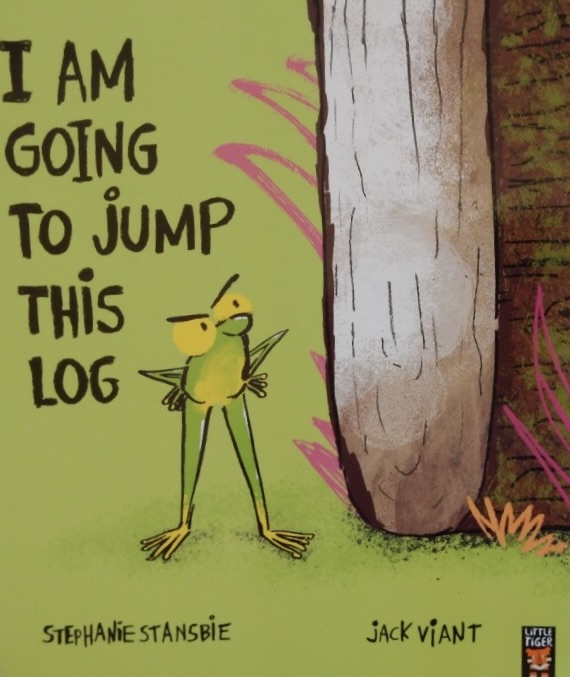
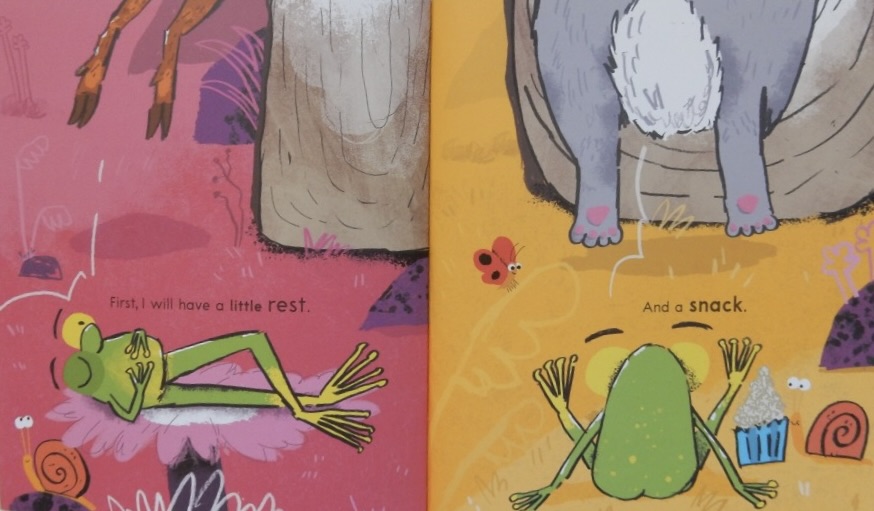
Frog has decided that he’s going to jump over the log. It’s going to be easy and he will sail over brilliantly. However, things don’t exactly go to plan. No matter how much he procrastinates, day dreaming, snacking and limbering up, (I love those leg warmers Frog wears) and how frustrated he becomes, he remains on the wrong side of that log until finally he accomplishes his goal, albeit with a little assistance from a passing avian. But then what should await him but … Yes! Another challenge…
This fantastically funny story told from the frog’s viewpoint has so much to offer. I love Jack Viant’s bold, bright, expressive illustrations. Readers will need to peruse the scenes carefully to discover all the hilarious details

and if the book, with Stephanie Stansbie’s aptly minimal text, is shared with a class or group, plenty of time will be needed for visual exploration as well as discussion of the text.

I think it’s one of those books that children will demand is read over and over and over. It would also work well as a book for those beginning to gain confidence as readers, to try for themselves.

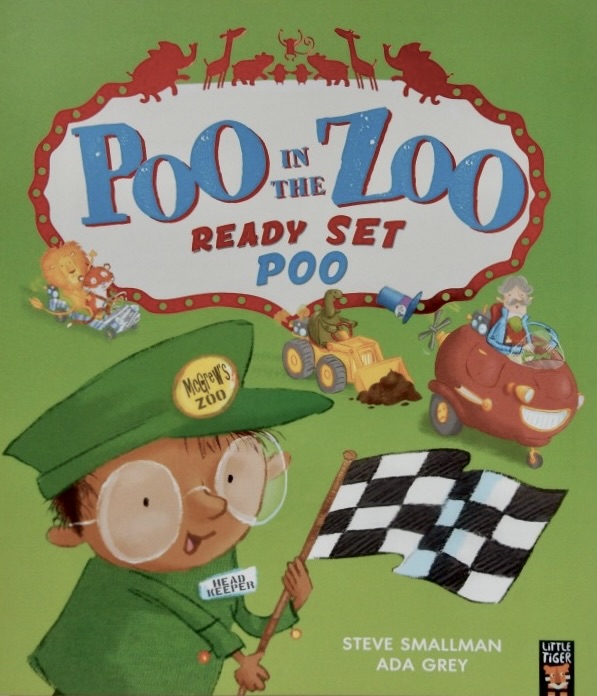
Poo in the Zoo: Ready Set Poo

We return to the zoo of little Bob McGrew for the latest poo story, or rather, that’s where it begins. But then in dashes Hector Gloop sporting his top hat and tails and excitedly announcing a forthcoming race, of which he is sure to be the winner. He like all the other contestants will have to drive a vehicle powered solely by poop and the prize will be a golden poo. Just as Bob is wondering how such power is even possible up rides one Arabella Slater, aka a Poo Investigator and in her hand she’s holding a flask containing poo-fuel, made from poop. Eagerly she explains how she went about making said fuel and right after, off dashes Hector to start building himself a car. Arabella meanwhile sets about making more poo-poo fuel. Encouraged by Bob, the other zoo animals decide to make race cars too.

Come race day a range of fast-looking poop-powered vehicles are driven to the starting line, including one driven by Ebenezer Gloop, twin brother of Hector who confidently announces to his sibling, “ In any kind of test, I was always second best, / But now, dear Hector, I’ll be first and you’ll be number two!”

The race begins and Ebenezer starts well, from his viewpoint though not that of several of the other drivers as they head into the snowy mountains. Poor Arabella is treated to a small avalanche thanks to a gigantic trump that emanates from Ebenezer’s exhaust. He continues with his cheating ways throughout the jungle where another disaster happens and Ebenezer zooms off to claim his prize, so he says, until he hears just four pleading words. Who has called and what will Ebenezer decide to do thereafter? And who will be the winner of the race?

To find out, readers will need to get a copy of the book for themselves. For sure they’ll find plenty to laugh about both in Steve Smallman’s rhyming text and Ada Grey’s wacky illustrations. It’s a great read aloud.

Board Books are Fun

Below are 4 recent board books from Little Tiger: thanks to the publisher for sending them for review.

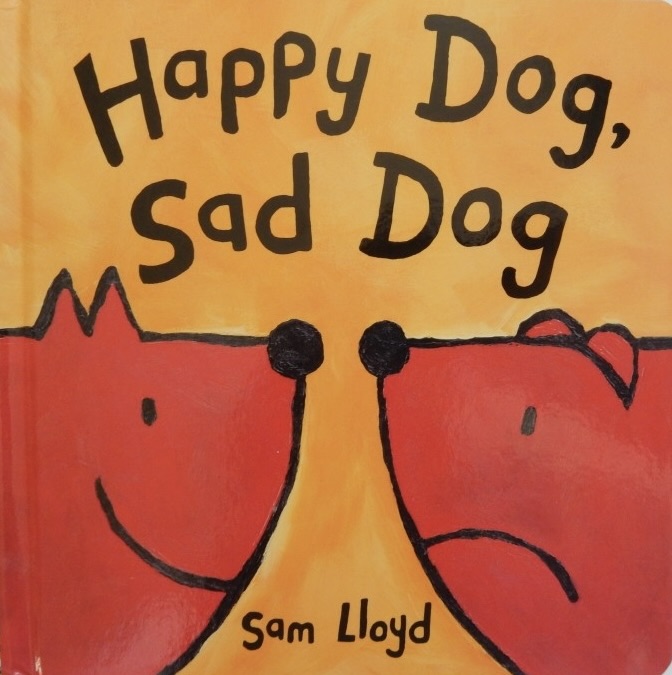
Using dogs of various colours in turn, little humans are introduced to a series of opposites: big and little, clean and dirty, happy and sad, hot and cold, hairy and bald, awake and asleep and the final spread has no dog on the verso and lots of dogs on the recto. Bold bright colours and Sam Lloyd’s alluring canine images will help very young children become familiar with simple words.

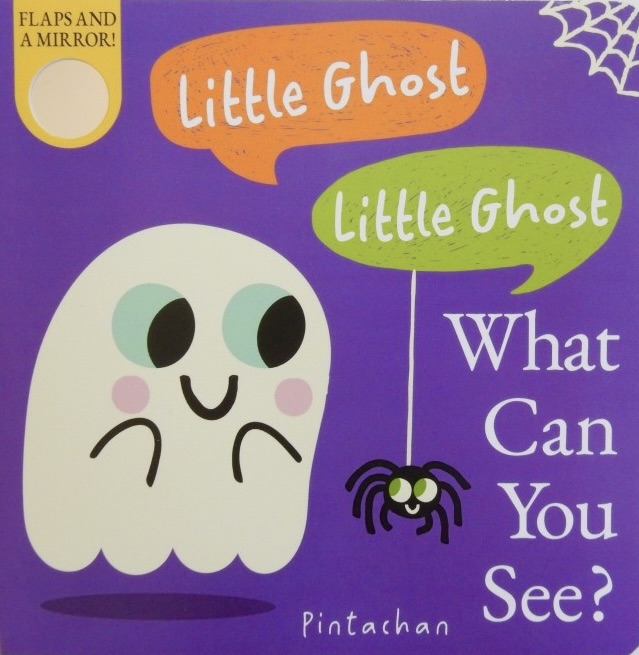
Little humans can assist the little ghost to discover what is hidden beneath the flaps on which are depicted in turn a purple witch’s hat, a sturdy-looking wooden door, a pumpkin-shaped basket, a cauldron and finally, a pumpkin patch beside a gate. A friendly-looking spider acts as the little ghost’s interrogator on each double spread.
With its repeat refrain, at every turn of the page, young children will soon be joining in with the text and after several readings aloud some may start reading it for themselves.

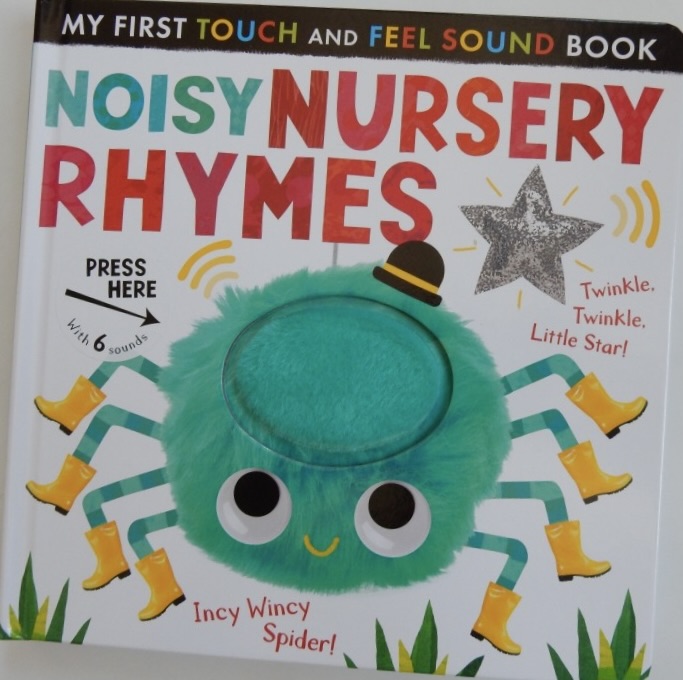
Five popular nursery rhymes (one per double spread) are presented herein. They are in order: Incy Wincy Spider, The wheels on the bus, Old Macdonald had a farm, Row, row row your boat, Mary had a little lamb and Twinkle, twinkle, little star. There’s a tactile patch embedded into an image on each spread, which when pressed plays the tune of each rhyme.
A fun way for small children to learn/reinforce the words of the songs as well as develop their fine motor skills.

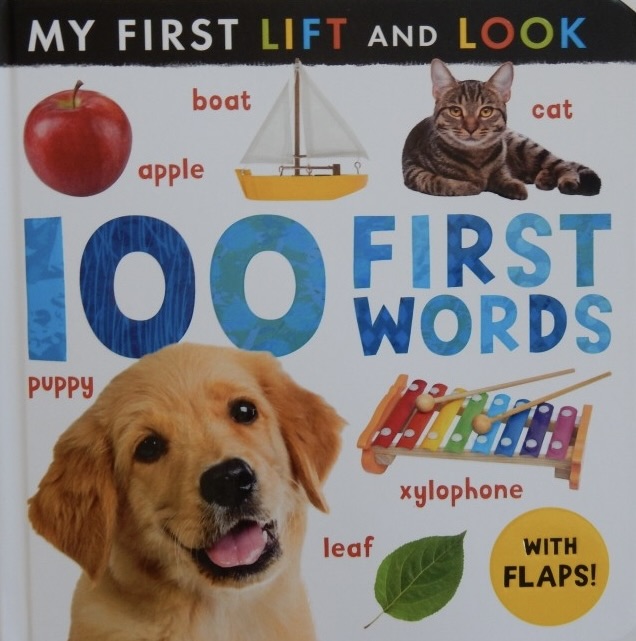
One of the ‘My First Lift and Look’ series introduces a hundred words. Each double spread has a theme – colours, wild animals from hot and cold places, 2D shapes, ‘things that go’ – modes of transport on land, in the air and through the water, favourite foods – savoury and sweet, clothes for indoors and outside, animals that live on a farm, things to play with, things to see outside come rain or shine and finally, items found in the home.
There’s a flap on each recto with a question and the answer to each is found by lifting the flap.
A playful way to help little ones extend their vocabulary.

And Now We Run

During a Year 7 outward bound school residential trip to a woodland area of West Yorkshire two children, Jelly, who is not at all keen on being on the trip and the much more enthusiastic Lincoln, who has visited the region before with his brothers, find themselves separated from the rest of the group. It is from their viewpoints that the story is told. Interwoven with their narratives is the occasional voice of a red kite that circles above them watching the disaster unfold.

Extreme weather conditions result in a reservoir bursting its banks and the dam in danger of collapse. The subsequent flooding leaves the pair stranded; but the power of nature and their own safety isn’t the only issue they have to contend with.

As always, Nicola Penfold’s descriptions of the natural world – its awesomeness and its dangers – are superb in this latest fast-paced story. With themes of global warming, friendship, courageousness it’s one that will have readers gripped from the outset: I read it in a single sitting.

A must have for upper primary class collections and individual readers from lower KS3 and would make an excellent book to share with a year 5 or year 6 class. It’s sure to generate lots of discussion.

If ever there was a timely reminder of why we should all do out upmost to protect our natural world, this is it.

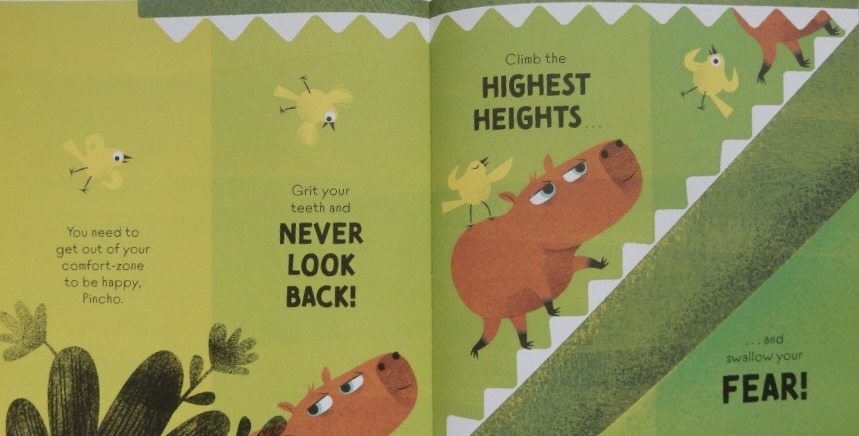
Pincho Nothing IS Possible

Pincho is a capybara (in case you’ve never met one, they look very similar to over-sized guinea pigs and come from South America). These creatures spend most of their time doing absolutely nothing and they are always happy.

This story, so we’re told by the bird narrator, is about ‘the chill-est, happiest capybara ever and his name is Pincho. However, the bird believes that to be happy Pincho’s never worries, never hurries lifestyle needs changing; he should be busy from first thing in the morning and to that end has made him a list of things to do.

Today though is destined to be a seize the day kind of day full of exciting action such as kicking goals of the winning sort, climbing the highest heights and swallowing his fear.

What about escaping from the jaws of danger though – possible or not? I wonder.

Make sure you read the title of this book carefully; it’s key to the crucial lesson that Pincho is about to teach not only the yellow bird, but all of us, that rest and relaxation need to be vital elements in everyone’s life, ie Nothing IS possible.

Ben Sanders’ modern parable is splendidly illustrated and told in a wonderfully droll, slightly tongue-in-cheek style. A book to share, talk about and act upon (or not) with KS1 children.


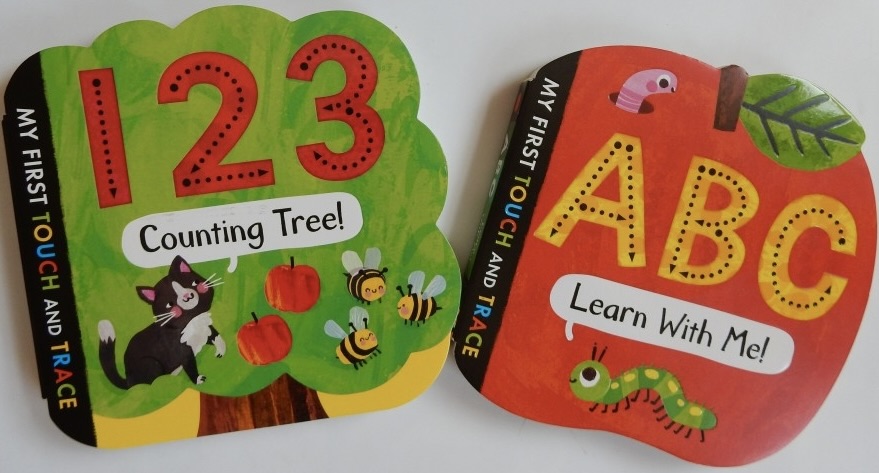
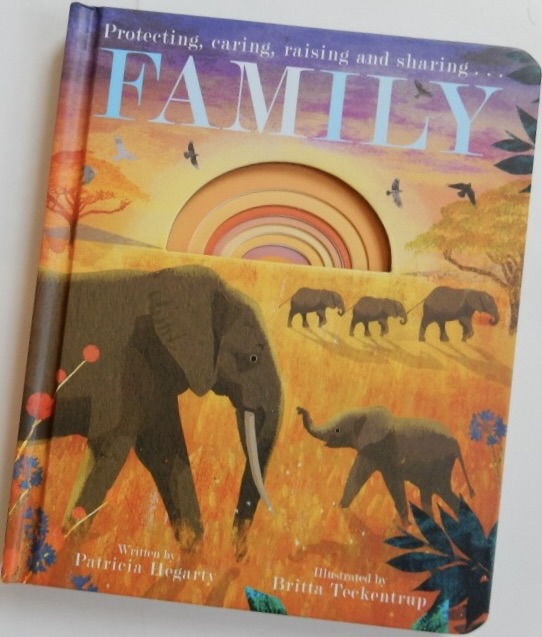
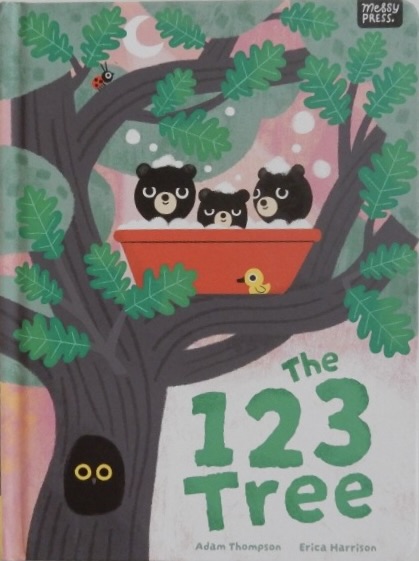
123 Counting Tree! / ABC Learn With Me! / Family

Here are some new board books from Little Tiger – thanks to the publisher for sending them for review.

These are both titles in the My First Touch and Trace series. The counting one follows a pattern: on the verso is a numeral beside which is an arrow to show the direction in which the child’s finger should move to make the symbol and beneath the numeral is a simple two word caption such as eight bees, together with the appropriate amount to dots. There are two counting practice pages the first from 1 to 5, the second from 6 to 10 and the final spread invites little ones to count the brightly coloured butterflies depicted.

The ABC book allocates a single page to each letter of the alphabet showing how to write both the capital and lower case letters and there’s a fun illustration by Laura Silveira, the subject of which begins with the relevant letter for example, B b is for bus.
Gentle, playful learning for very young children.

From gorillas grooming to magnificent manatees and diving dolphins, little humans can find out about the unusual habits of creature parents and their families.
Patricia Hegarty’s lyrical rhyming text evokes calm and Britta Teckentrup’s gorgeous scenes of the creatures in their natural habitats bring to life the multitude of ways that animals nurture, support and protect one another.

There are die-cuts that allow young humans to peep through the board pages, and each turn of the page reveals a different landscape be it snowy, watery, forest or savanna, somewhere in the world.

If you’ve ever wondered what ‘family’ means to polar bears, this board book is for you and your young child. With Patricia’s gentle narrative this is ideal to share at bedtime.

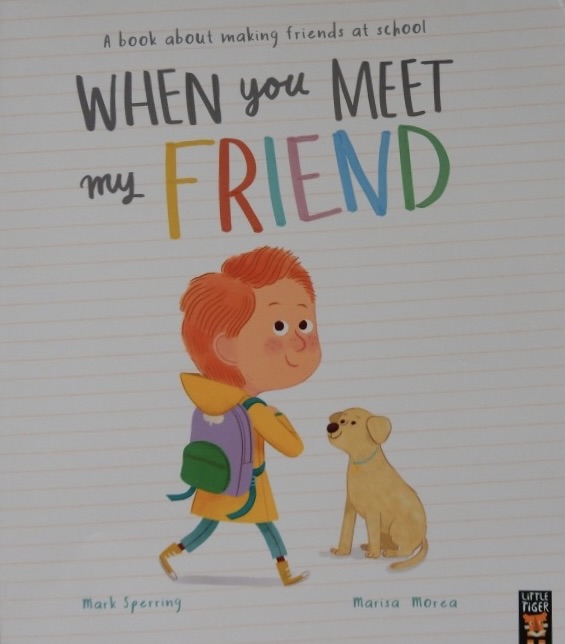
When You Meet My Friend

This is a story about being a new member of a school community and a kind narrator who does their utmost to ensure the newcomer feels at home.

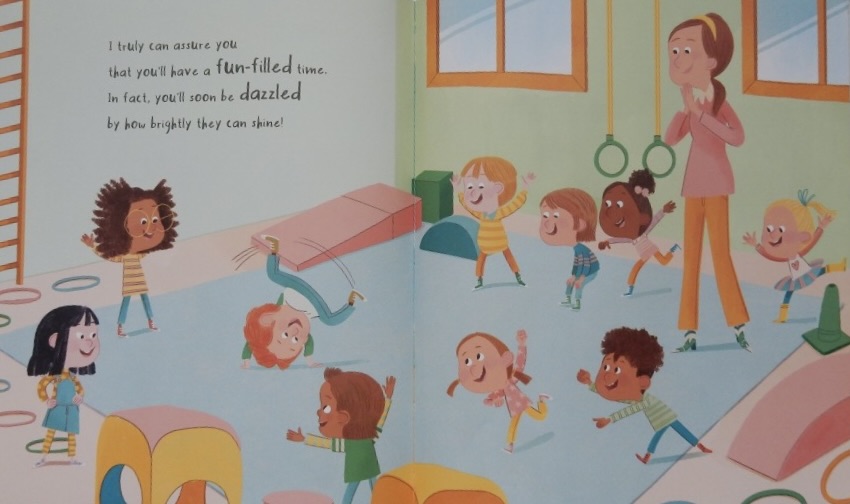
First off that newcomer needs to know where to hang their coat and having done that, find a place to sit with the other children for a carpet time learning session. Come snack time it could feel uncomfortable to sit with strangers: a friend is what’s needed – somebody to encourage that new special friend to feel part of things such as art, music, the lunch session and the playground games that follow. Maybe by the afternoon that new friend is ready to demonstrate their prowess at some PE skills.

They are sure to appreciate the budding friendship you are nurturing and after enjoying story-time just prior to going home, your brand-new pal would like to hear how much they will be missed as they run through the school gates to meet the waiting parent who is accompanied by a four-legged friend.

With its amusing final twist, Mark Sperring’s text reads aloud well and together with Marisa Morea’s playful scenes showing the ripple effect of friendship on that first day, this book is sure to make young children in a similar situation feel reassured about what’s to come.

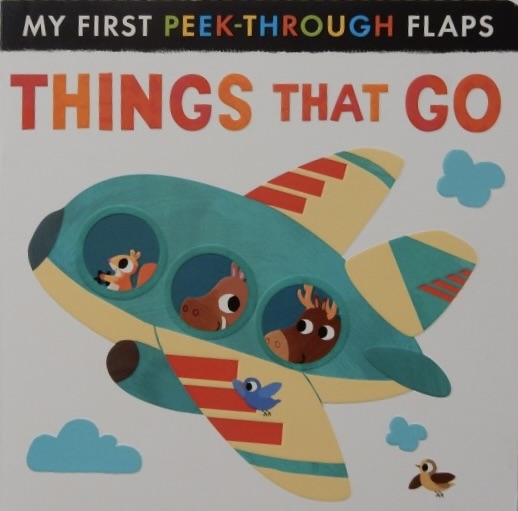
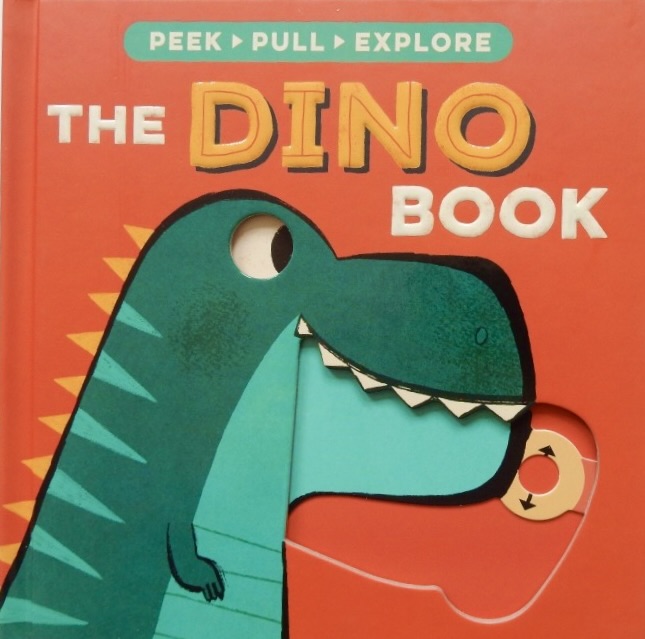
Things That Go / The Dino Book

Tinies can discover all manner of ways to move around as they explore the three settings presented in this book. First they join the animals travelling Around Town by means of various things with wheels from a scooter to a truck. Out at Sea introduces animal passengers enjoying a trip in a lifeboat, a rowing boat, a huge ship, a windsurf board, sailing boats and a motorboat. In the two final spreads we’re Up in the Air gliding, soaring or hang gliding.

With peep-through holes, flaps and cutaway pages as well as basic questions to answer, by exploring the relevant pages, this is one to help develop fine motor skills and encourage plenty of parent/child interaction.

Here’s a board book on the ever popular topic of dinosaurs. The Dino Book offers a fun interactive feature on every spread: there are tabs to pull, cutaways, flaps, textures to feel and more, as little ones encounter several different dinosaurs. They can also enjoy emulating those dinos by roaring, stomping, snuggling, champing, swooshing, thwacking and more as an adult reads the lively text.

Bored Bill / Three Horrid Pigs

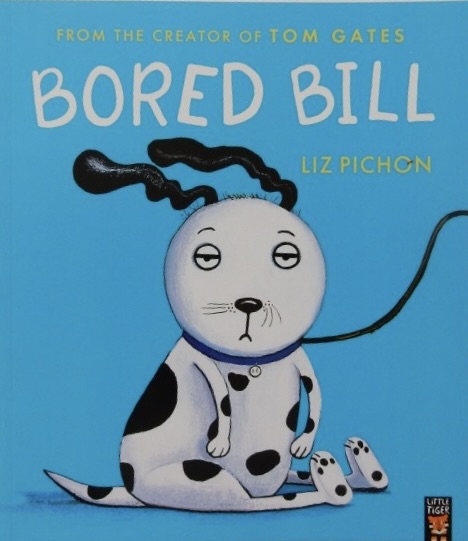
Bill is feeling bored, exceedingly so. unlike his owner Mrs Pickle who likes to keep herself busy all day: the activities she enjoys – reading, gardening, cooking, kung fu and cleaning, are all very boring to Bill. When Mrs Pickle suggests a long walk, you can imagine her floppy-eared pooch’s response and he refuses to move. Mrs Pickle gets her way however and drags him out of the house and into the chilly, windy weather, Bill still grumbling.

All of a sudden a great gust of wind lifts them both skywards and Mrs P. vanishes leaving Bill attempting unsuccessfully to hold onto a tree branch. Instead he whizzes off into space and he lands on a purple planet inhabited by aliens. His thinking that he’s in for an exciting adventure is soon replaced by, you’ve guessed it – boredom. The aliens consider exploring boring and Bill hates their food; in fact now Bill is more bored than ever before and he yearns for Mrs Pickle and her yummy food. He decides to try and engage the aliens in some fun by cooking them a tasty meal like those his owner creates; he shows them some of her kung fu moves and they play some games. No more boredom but Bill wants Mrs Pickle and home. Fortunately he’s offered a ride on the aliens’ spacecraft and on landing he discovers he is now famous, but Bill is a changed dog.

We never get to see Mrs Pickle’s face in Liz Pichon’s wonderfully whimsical scenes that complement her wacky text which carries a message about thinking carefully before complaining about being bored.

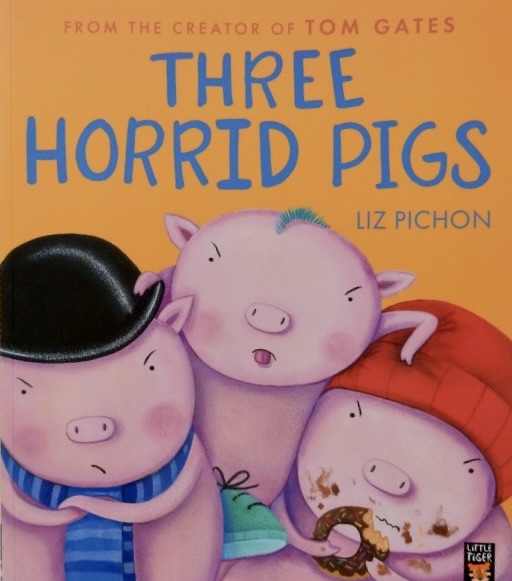
by the same creator is:

This is a fun twist on the favourite traditional tale. Herein the Mother Pig is so fed up with the terrible behaviour of her offspring that she packs three bags and send them out to fend for themselves. The first little pig helps himself to some of the cows’ straw and builds himself a house; the second takes twigs from the nest-building birds, and as for pig number three, he’s so lazy he just moves into a chicken coop, forcing some of the residents to vacate their home. Each time a little pig finds himself sans a sturdy residence, along comes the kindly wolf, a builder no less, to offer assistance and each time he’s sent packing.

It’s not long before the little pigs’ homes are destroyed, the materials being reclaimed by their original owners, so come nightfall, the three invade the wolf’s house via the chimney. The wolf hears them and puts a big pot on to boil …Is that the end of the horrid pigs or will they finally see the error of their ways and cease all their huffing and puffing threats?

Witty details abound in the visuals and with their message about kindness and cooperation, the words are great to read aloud to little humans.

Marcie and Giraffe

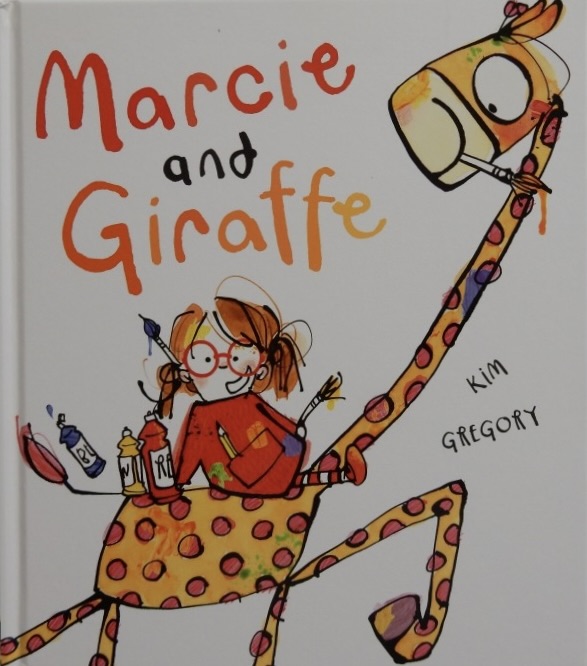
Both Marcie and Giraffe each create a representation of the other, using paints and large sheets of paper. Initially Marcie feels proud of her painting of Giraffe; but then she sees Giraffe’s painting of her being happy. However, it doesn’t make the girl feel happy at all. She stamps all over it , rips it in half and tosses it aside saying, “Your art is better than mine,” Giraffe remains patient merely commenting, “My art doesn’t look like you any more, so it can’t be all that good.”

Marcie goes on to create a series of four pictures – her brain, stomach, legs and face – each portraying the emotional turmoil that she’s in. Giraffe understands how she feels, pointing out that she doesn’t usually look that way though he does like what she’s done.
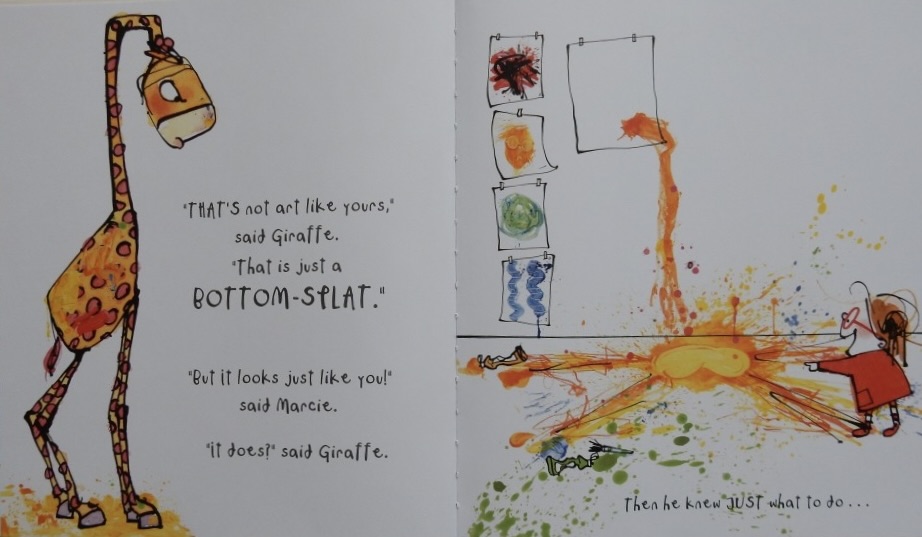
Then in turn, Giraffe tries making a fierce scribbly picture but ends up planting his rear end in the paint

and the result bears a striking resemblance to himself, sans his head. This is then added, splat mode, and both Marcie and Giraffe are delighted. So much so that they both joyously make more art and more importantly, they love it.

A story about both creativity and emotions. Importantly it shows (not tells) that art is a means of expressing oneself and that it’s not appropriate to compare one individual’s work with that of another person ).

I love the messy appearance of the art room at the end of the story where it’s clear that both characters have had an enjoyable experience.

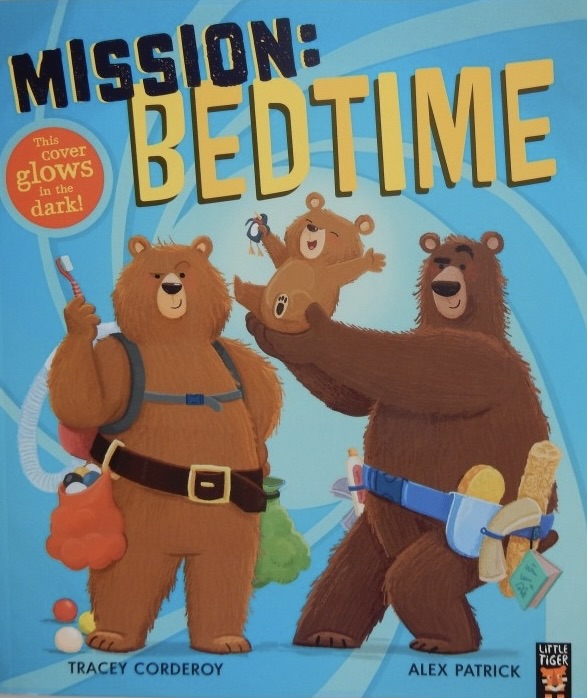
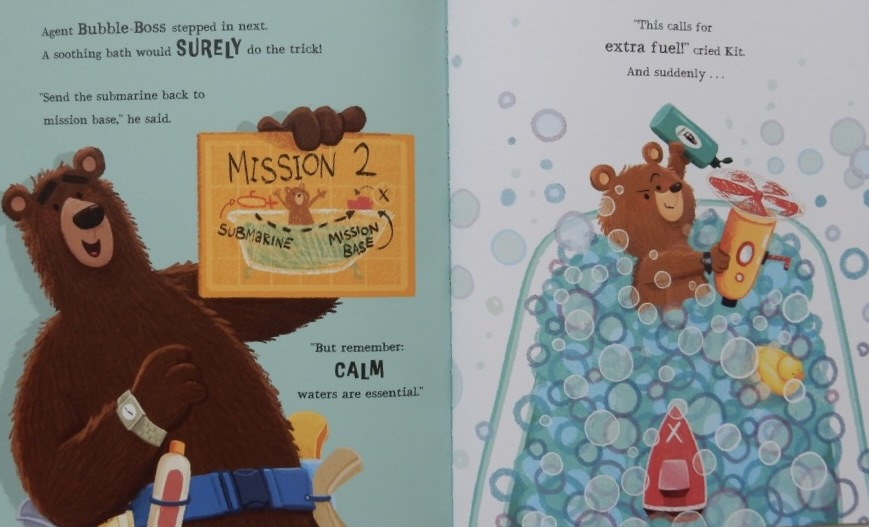
Mission: Bedtime

It’s bedtime in the bear household. All the adults are tired out but not so little Kit. She is wide awake, bursting with energy and eager to watch Agent Penguin on TV.

Grandpa may be feeling sleepy but not so much that it prevents him from having a clever idea. Off he goes into his shed to make some items for secret agents to use. He then turns the adult bears into a team of secret agents – there’s Agent Exhauster, Agent Bubble-Boss and Agent Gadget – and allocates each a special mission for Kit to undertake. Will any of them have the desired effect, calm the little bear down and send her on the way to slumberland, mission accomplished;

or will it be three cases of mission impossible? If so can Grandpa come up with an extra special bonus mission that can do the trick?

Little humans will laugh at Kit’s high-spirited behaviour probably enjoying her missions as much as the small protagonist, whereas adults who are accustomed to bedtime procrastination will recognise Kit’s delaying tactics with a smile and one hopes, employ that bonus mission like Grandpa did.

Assuredly a book for young and old to enjoy together savouring the wealth of detail in Alex Patrick’s scenes of the ursine family as they share Tracey Corderoy’s comical bedtime caper.

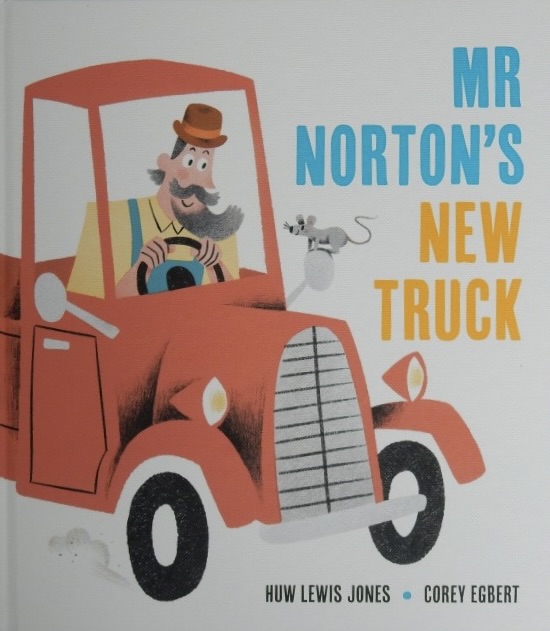
Mr Norton’s New Truck

One Monday morning Mr Norton is about to set off for work when he discovers that a bear has been using his bicycle and has left a note to that effect. However, both wheels are now wonky and there’s honey dripping from the basket of the bike. Not one to make a todo, he does his best wobbling all the way but it takes a long time. On Tuesday Mr Norton tries to catch the bus but it’s jam-packed with all manner of creatures and so he walks the entire way in the rain with a few passengers hitching a ride.
Riding a scooter on Wednesday, with even more passengers, or should we say hangers on, he’s late for work ‘because the scooter was small, the bus was too busy, and the bear had been on his bicycle.’
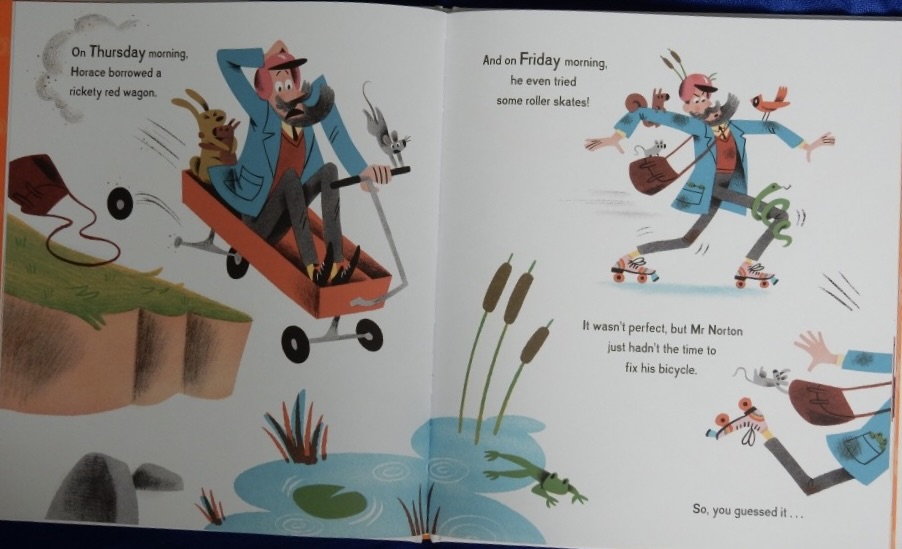
Thursday’s option is a rickety wagon and Friday’s, a pair of roller skates but unsurprisingly he’s late again.

Come Saturday, Horace Norton doesn’t have to go to work and while having a relaxing soak in the bath he has a great idea. Outside in the barn is his grandfather’s old truck where it’s been for a fair few years. The truck has plenty of room for passengers but it’s not in any state to be driven. So on Sunday, he sets to work to make it roadworthy. By evening, he’s exhausted and the truck still isn’t working so he closes his eyes for a quick nap.

During his time of shut-eye, some friends carrying tools, Bear included, creep into the barn and get busy ‘bashing and buffing, welding and waxing, stitching and scrubbing’ throughout the night. Horace Norton is something of an avuncular character and come Monday morning his forbearance has resulted in him being gently woken with a welcome cuppa and a wonderful surprise.

A cracking, crazy cumulative story with repetition children will love to join in with, and dramatic, splendidly expressive, giggle-inducing illustrations. Likely to become a story time favourite in foundation stage/KS1 settings.

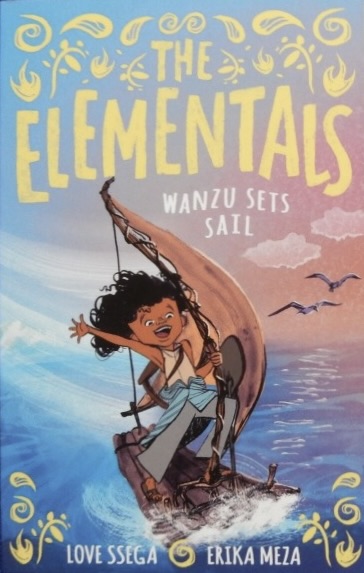
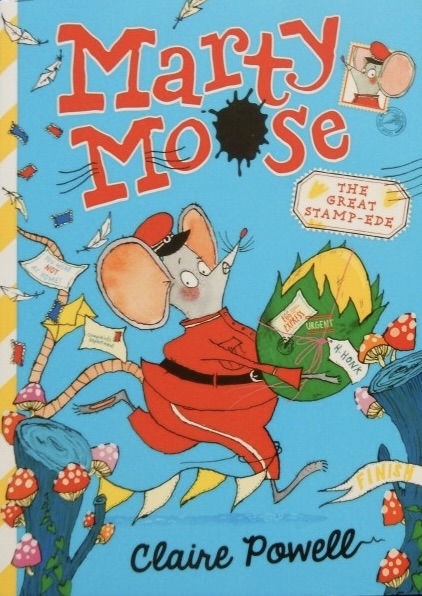
The Elementals: Wanzu Sets Sail / Marty Moose: The Great Stamp-ede

Eight year old Wanzu lives on Sealand with his wise grandma, Jjajja. Every child on this island is linked to one of the elements: air, earth, fire, water but whereas all his friends have found their powers, Wanzu hasn’t. Then one day he notices that his grandma is worried. It’s on account of the unsettled weather and unusually high tides. Out on his raft he starts playing his harp and singing, when a dolphin appears. Mr Dolphin has a message for Wanzu’s Jjajja about the rising waters and an impending storm. The dolphin adds that Wanzu has an important role to play.

It’s not long before he finds himself leading a perilous rescue mission, travelling by sea, that takes him and his friends on a hazardous journey away from the island. They travel to such magical places as Taiaroa Heights where they meet some helpful albatrosses and Beaver Island where they learn useful things, all the while working (and sometimes singing) together to solve the problems they encounter. Can they find a way to prevent the water from rising? Will Wanzu discover his element during the adventure and if so what is it?

Teamwork is key in this unusual story and there’s an important environmental message about managing the waterways, not only for the present but also for future generations. Recommended for readers around Wanzu’s age who are taking off as solo readers.

This is a very funny follow-up, or should we say chase-up to First Class Mischief starring a Postmouse and his sidekick Nibbles. On any normal day Marty would be setting off on his round but today is not a normal day. It’s the annual Fastest Feathers Race, a strictly birds only event. Little Ditch’s post office is closed. Excitement is extra high as the prize this year is a golden egg, with Betty Beaker the absolute favourite.

With a large number of Little Ditchers gathered on the sidelines, Hurricane Honk official race judge, approaches Marty in a bit of a bother. He hasn’t received the golden egg (apparently he’d gone for a quick quiff and missed the delivery. He asks Marty to retrieve the prize and get it back to the finishing line before the end of the race. ‘Panicking postbags’ thinks the mouse but agrees to go.

Off he sets with loyal Nibbles on a madcap chase that entails navigating a dangerously shaking tree – THUNK, TWACK, negotiating a foggy forest, a set to with a pair of dastardly ducks that aren’t really ducks at all but ferret bandits, hitching a ride on Tank the bull and a surprising prize for the winner.…

A ridiculous romp that races along (in places) with highly dramatic illustrations; it will have readers wriggling on their rears.

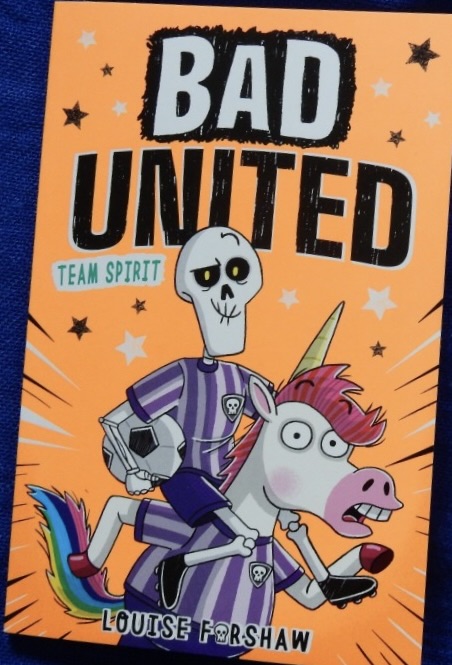
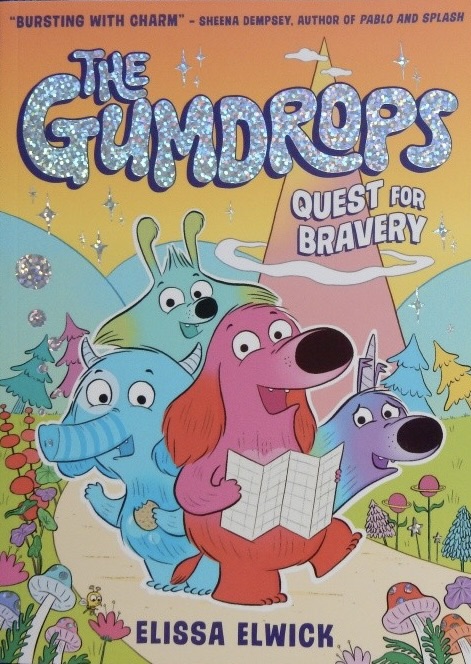
Bad United: Team Spirit / The Gumdrops: Quest for Bravery

These are both recent graphic novel style books from Little Tiger – thanks to the publisher for sending them for review.

Such are the skills of Bad United that after a series of wins they get some exciting news: Uni-Horn Roamers – a pro league team have invited them to play a friendly match. As you’d expect Bad United are thrilled to bits though manager Serena is not available to coach them; instead she leaves Bones, the captain, in charge of getting them ready for the event. Everyone is enthusiastic until they realise that their captain seems to be taking things rather more seriously than other members of the team, criticising almost their every move. “Up your game” and “Try harder” they’re told.

Tensions rise … and rise as match day approaches. Then when the big day dawns, back comes Serena. Can the team hold it together and make her proud or has exhaustion wrecked their chances. After things have gone badly, come half time Bones makes a revelation and Serena reminds them what matters most in a game. Could this be the turning point of the match and who will win in the end?
The fourth book in the super silly graphic novel series is every bit as fun as the previous ones and will certainly have fans cheering for Bad United.

Meet the Gumdrops – Hope, Bubbles, Sparky and Rainbow – guardians of magical Yummy Gummy Land. One day they receive a letter from seven year old Daisy; she’s just moved to a new town and needs an imaginary friend to play with so she feels less shy. The Gumdrops head off to the library where they create a recipe to make her ideal companion. After some investigation they decide on a heap of kindness, a dash of silliness, a pinch of patience and a sprinkle of bravery.

However when they go to the Imaginary Friend Factory to look for the ingredients, they discover a note written by Evilee informing them that she’s destroyed all the Bravery. Intent on helping Daisy, the Gumdrops set off on a quest to find more Bravery, a quest that takes them to the top of the tallest mountain in Yummy Gummy Land.

With its delightful characters (mostly), this brightly illustrated story where interaction is encouraged by the narrator, with readers being asked to do such things as, blowing the page, inverting it, thinking of passwords and shaking the Gumdrops dry after they fall into the Story Swamp, celebrates friendship, determination and creativity.

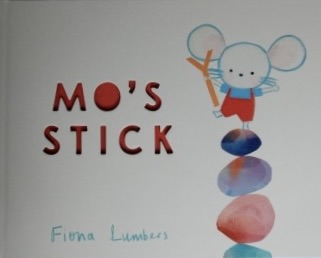
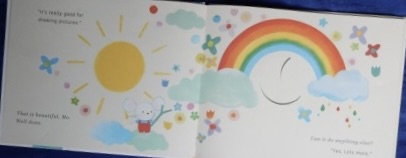
Mo’s Stick

Mo had a stick, a very special stick, but then it was lost. Without that favourite stick Mouse will be unable to draw very good pictures, fly high in the sky, he won’t have a mast for his sailing boat, no fishing rod, and no implement for poking dragons: in fact nothing amazing at all. Poor Mo feels very sad, certain that no other stick could possibly be its equal.
But Mouse is a creature with a big imagination and uses it in creative play and that is what he’s been using that lost stick to do.

I have often I seen a young child picking up a stick and doing just what Mouse was doing, but though it’s the vital element in their creative activities, it’s the ideas they have, sparked by the stick that open up that wealth of possibilities.

Mo is a very endearing little character and it’s lovely to see how the external narrator gently supports the creature’s ideas so that eventually he’s able to see that it’s him, not a particular stick that is key.

This superbly crafted, uplifting child-centred story needs to be shared in every nursery/preschool setting and in families with young children: it’s simply splendid.

Whack A Moley / Follow The Leader

These are both recent books from Little Tiger – thanks to the publisher for sending them for review.

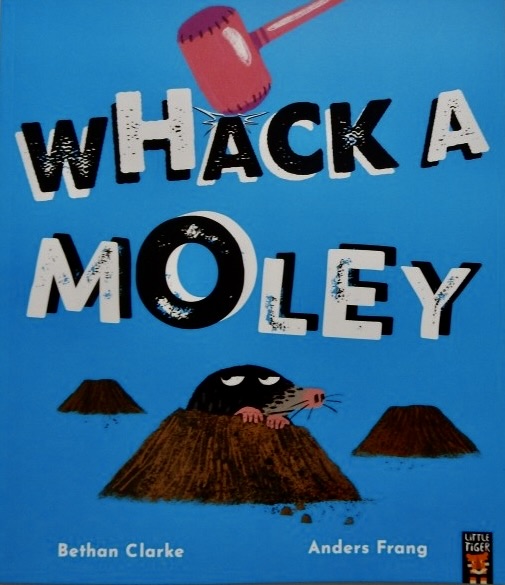
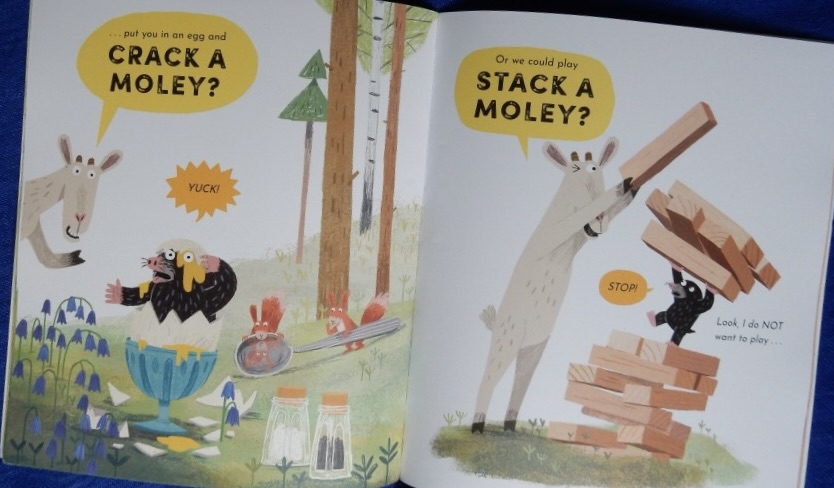
This is a laugh-out-loud sequel to Holey Moley that features Mavis Mole and Gus Goat. The two are an unlikely pair of friends: Gus exudes energy whereas Mavis only likes static activities. So, when Gus asks if they can play a game Mavis chooses tiddlywinks – her favourite. Gus wants something much more bold and active – ouch-inducing Whack A Moley. That or various alternatives that sound not dissimilar such as ‘quack a moley’, ‘snack a moley’ and stack a moley.

A wonderfully crazy comedic concatenation of suggestions that rely on wordplay and rhyme combined with the deadpan humour of Anders Frang’s splendidly stylish, deliciously dramatic scenes of the fun and games.

With a final twist, Bethan and Anders’ nonsensical, giggle inducing book is just the thing to show children that language is fun. Definitely one that will be enjoyed over and over.

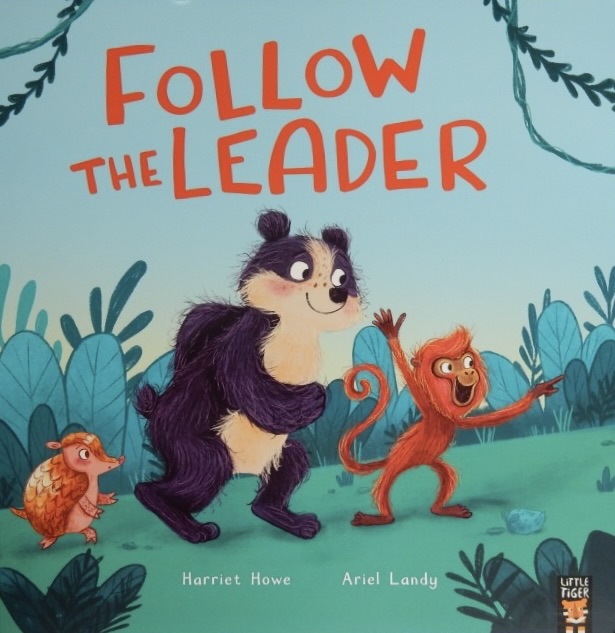
It’s a sizzling hot morning in the jungle so Bear, Monkey and Armadillo decide to take a trip to the lake to cool off. The three enthuse about their destination and as it was Monkey’s suggestion, he insists on leading the way. This results in a bit of squabbling but after a while the other two fall in line, especially as Monkey has the map. Then though, a mishap occurs that ends up with Panda becoming leader and some time later, the map is ruined. Further disagreements occur, and three very sweaty animals eventually reach their destination where they finally come to understand about the importance of teamwork.

This rhyming tale is full of energy and fun and the illustrations of the animals and their somewhat hazardous journey ramp up the drama.

RT

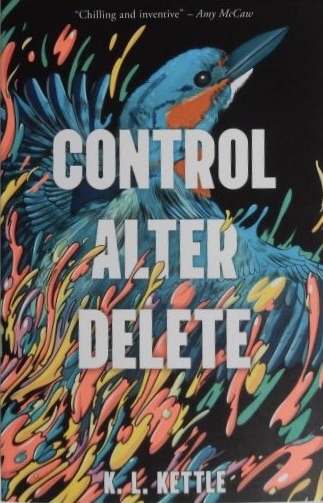
The Call / Control Alter Delete

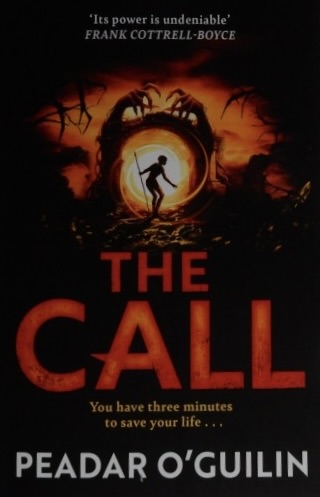
Vanessa Doherty (Nessa) is fourteen and attends Boyle Survival College, an Irish institute the main purpose of which is to teach its attendees how to survive The Call of the Sidhe. Young humans start training to survive The Call from age ten. Long, long ago the Sidhe were banished from Ireland to live in a hellish underworld and in their quest to win back Ireland from the humans, have placed a magical seal around the whole island.

To get revenge the Sidhe use The Call to kidnap Ireland’s young and transport them to a horrendous underworld. However, if a pupil can evade the faerie Sidhe for a whole day (three minutes in the human world), their life is saved, though they may well be sent back badly maimed.

Nessa, a fiercely determined, quick-witted, brave hero, permanently disabled from polio who does her training using crutches, and wants to be treated like her fellow students is less likely than most to survive the ordeal but she’s spent all her life preparing, so maybe … It’s from her viewpoint that much of the story is told. But will she or will she not survive The Call. And will the Nation survive?
Well paced, with credible characters and excellent world building, this is a truly gritty tale that blurs the boundaries between Irish mythology, fantasy, science fiction and horror, and will appeal to readers around Nessa’s age.

Thanks to tech genius Francis Knox and the pioneering work done by her company, Halcyon Green (Hal) lives in the seemingly perfect World 2.0 and is fully engrossed therein, having pretty much everything she wants apart from her family. There’s one thing remains that Hal really desires though, to win the hugely competitive Knox Cup; however she lacks to funds to enter. Then, unexpectedly, her guardian challenges Hal to prove herself and arranges for her to compete.

If she manages to win, she will meet Frances Knox and then there’s a possibility that her real wishes might come true. As she moves through the competition rounds, Hal finds some thoroughly unpleasant things buried deep beneath the world’s seemingly perfect facade. As a result she must decide what it is that she truly wants.

A hugely thought-provoking, timely Young Adult story, superbly crafted, with great world-building that really draws you in, and a wonderful protagonist who finds herself in a complex situation.

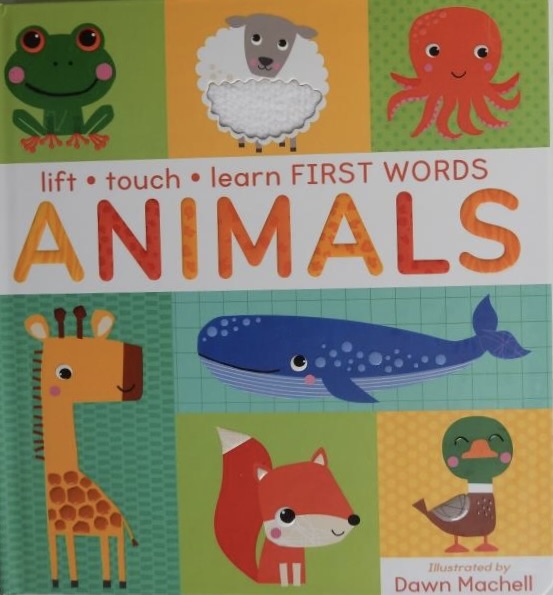
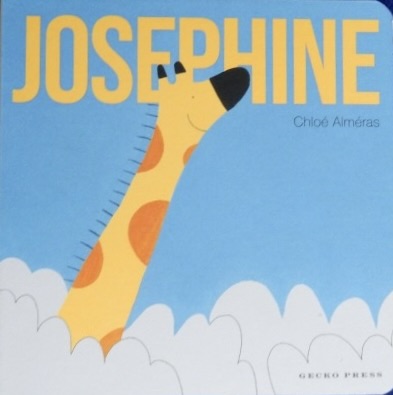
Animals / Josephine

The very youngest children can enjoy meeting all the creatures in this slightly larger than usual board book. Seven spreads in turn introduce animals from different habitats entitled In the Jungle, Into the wild, Wonderful Woodlands, Farmyard Friends, Watery Worlds, Perfect Pets and In the Mountains. Each animal is clearly labelled, occasional animals have a speech bubble (tiger says, ‘I can run very fast’), and there are flaps to lift and touchy feely features on every spread as well as on the cover.

The final spread shows fourteen of the featured animals and asks, “Can you remember their names?’

In addition to becoming familiar with the animal names, little ones can develop their manipulative skills. Playful, interactive fun learning for tinies.

Josephine the giraffe is an optimist and with her nose in the blue sky and her hooves in the green grass, always makes the most of what she experiences in her daily life. She finds new friends in a ‘peculiar’ tree, plays games with the clouds and makes rings in the water. The choppy waves and rippling bushes are places wherein to lose herself, treetops provide something to nibble when she’s hungry and she’s ‘curious about the world down below’ so sticks her nose into a burrow to watch a family of creatures. Josephine is awed by a tall mountain and enjoys counting small ones. She’s never lonely for long, finds wonder in both autumn and spring and becomes playful on snowy winter days and in the ocean’s bubbles when summer comes. In fact, not a day goes by that isn’t a source of awe and delight.

With stylised ink illustrations, this is mindfulness for toddlers. Sharing the book with a small group may encourage them to think about and talk about the everyday things they love to experience.

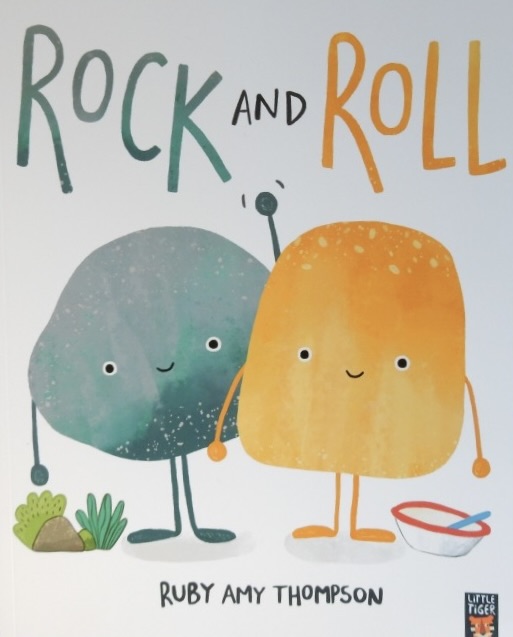
Rock and Roll

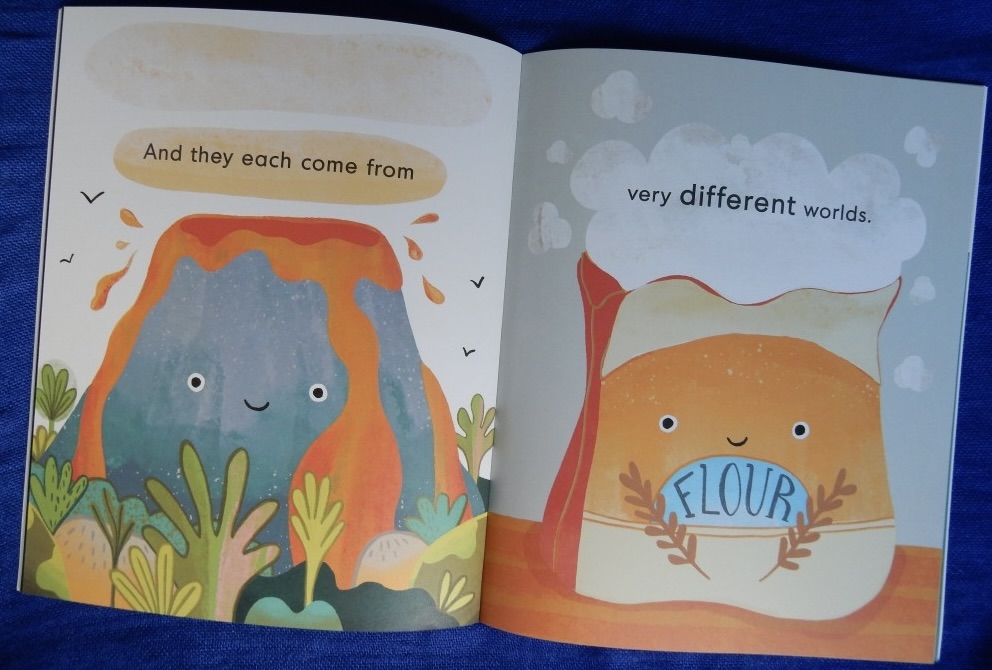
Meet Rock and Roll. Rock is grey and hard; he also hates attention. Roll is a golden yellow colour, squashy and loves attention. They always appear on opposite pages – Rock on the verso, Roll on the recto. They don’t seem to have much in common but wait. Despite coming from very different worlds,

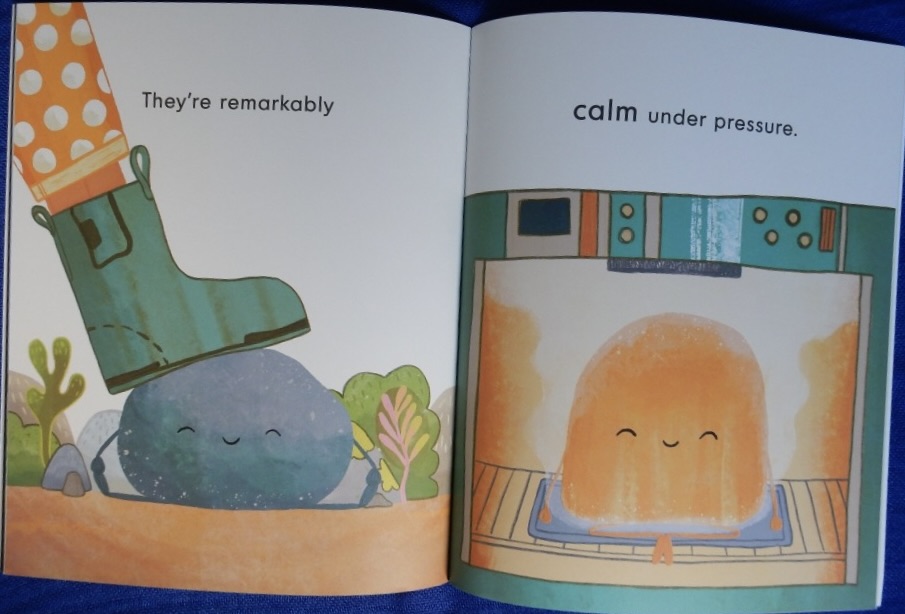
they are both great team players; they both look fabulous in green; both love fancy dress and both remain calm when under pressure

Yes they’re always on different pages but though strong as a rule, sometimes Rock is soft, Roll, on the other hand has the strength to give comfort. It appears that this is a friendship that can rock and roll. Assuredly, these two have found common ground.

With its seemingly simple text, and clever layout, this is a picture book that’s bursting with heart and can initiate deep thinking on the part of listeners. Wise and wonderful is what I’d call the creator’s debut picture book.

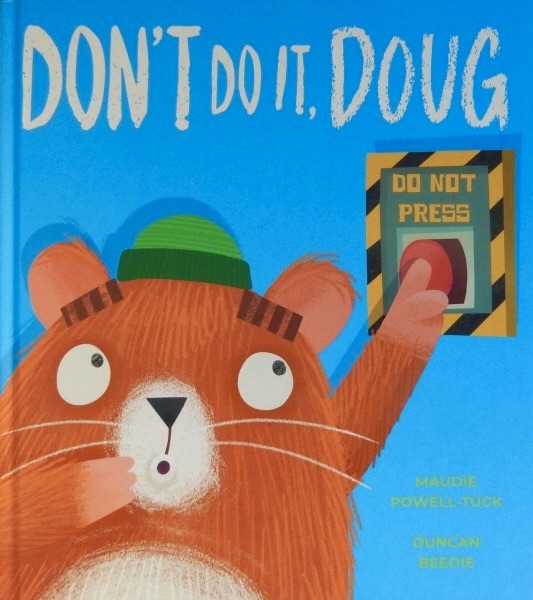
Don’t Do It, Doug

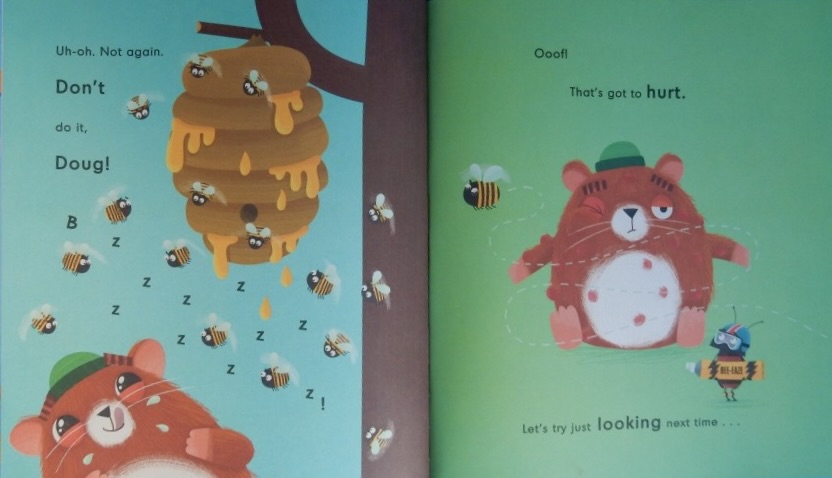
Doug is a hamster with insatiable curiosity. Nothing wrong with that you might think, but with Doug, the result always seems to land him in trouble. Lacking self control, he does things such as shaking cans of fizzy drink, disturbing a nest of bees – ouch!

and touching a tall pyramid of canned beans, causing an avalanche. (I seem to remember my partner being similarly tempted by a tall stack of bean bag seats in Habitat with similar catastrophic results, causing the floor staff considerable angst.)

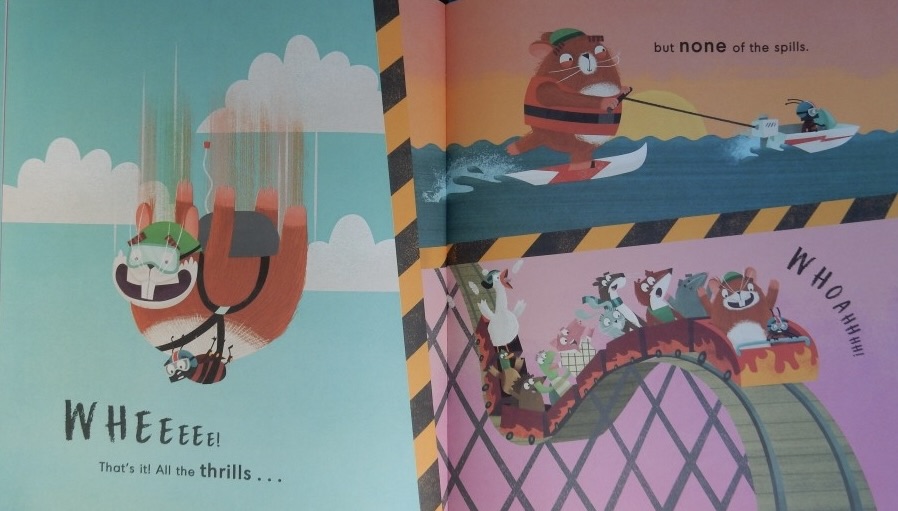
Having pressed the lever on a reclining chair that his insect friend has taken him to for relaxation purposes, he ends up flat as a pancake, between the halves so his pal takes him skydiving, followed by wakeboarding and lastly, roller-coaster riding.

After these experiences, Doug appears to have gained control of his impulses. He slurps his drinks, ignores red buttons and handles the tiny saucepan with surprising care. His friends even award him a rosette.

Could it be a case of no more temptations for Doug? Errr! What do you think? The last we see of him he’s wielding a stick …

Duncan Beedie’s illustrations are absolutely bursting with humour and are an ideal complement to Maudie Powell-Tuck’s to the point narrative. Young listeners will delight in admonishing Doug by repeating, ‘Don’t do it, Doug!’ when an adult shares the book.

Clem Fatale Has Been Upstaged

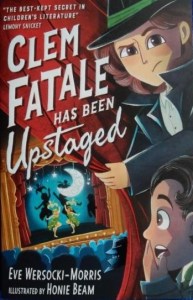
This story is set in London in the summer of 1951. Twelve year old Clem Fatale, the city’s youngest crook, and her best friend, Gilbert, eleven, now at an upmarket boarding school, are excited as they’re going to see their favourite singers Betty and Judy Wade in their first UK performance at the London Palladium. But then suddenly the two friends are ‘picked up’ and told that Betty, one of the sisters has gone missing. Clem and Gilbert are hired to find Betty.

This proves to be much more problematic than Clem first thought. It’s almost impossible to know who can be trusted as their investigation sees them encountering the dark side of the theatre scene, crossing paths with some very dodgy actors, visiting all manner of establishments from The Ritz with its ‘cream of London society’ clientele to the decrepit abandoned warehouse building bearing the sign Rumple’s Red Tomato Sauce. Add to that a motorbike chase courtesy of Konrad who is like an older brother to Clem and drives them there.

I don’t know about Clem and Gilbert but my head was spinning by the time I got to that point; however with less than twenty four hours to go before the curtain goes up on the sisters’ show, the two friends are absolutely determined to get to the bottom of what is going on. Can they do so and perform an astonishing rescue before a terrible accident takes place?

With humour aplenty, and a fair sprinkling of dramatic black and white illustrations by Honie Beam, this is a cracking, fast paced tale crammed with action and heart, wherein the bond of friendship between Clem and Gilbert grows even stronger. I can’t wait to see what they get involved in next.

Time Travel is NOT My Superpower / The Appletree Animal Agency Collie Chaos

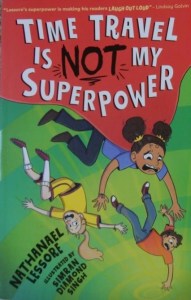
Sara, the young narrator of the second story set in the town of Walsham where special powers are part of everyday life, is working on improving her recently discovered superpower – teleporting. Thus far she is able to teleport herself but is unable to take any objects with her. However trouble starts when she accidentally teleports not only herself but her best friends, Georgie and Javier, as well as Jock her arch enemy, back in time to 2002. It’s crucial that they don’t interact with anybody, so nothing in the future is changed. However how is that possible when you find you’re at someone’s birthday party, a boy called Herman, someone that you don’t know. They eventually get away though, back to the present day, or is it? If it is, then why is Sara’s Mum wearing flip-flops and her Dad dressed in a parking warden’s uniform? They’re supposed to be superheroes. And as for being fed Brussels sprouts – don’t even mention the F__T word.

Something definitely is wrong, so how will Sara get herself and her companions in this muddle back into their proper universe.

With giggles aplenty both verbal and visual, this will go down well with KS2 readers who enjoy crazy adventures.

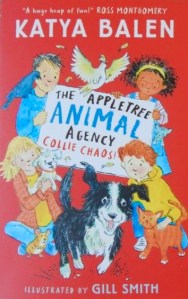
It’s winter and we’re back in the village of Mossdale where Appletree Agency have three new clients on their list – Algernon, a ten year old terrapin, Crumpet, a cat that’s something of a diva, and Domino, a dog with three legs. Domino is allocated to Mrs MacDonald but it’s not long before he escapes. The team load up with pet supplies, a compass, snacks and other useful equipment and off they set into the snow: Appletree Agency on the case.

They decide to follow a trail of threepaw prints and thanks to Luca, eventually track Domino down in a field belonging to the curmudgeonly farmer they’d already had a run it with. The dog makes it clear that the children should follow him and he leads them to discover a boy they’d seen earlier but now he’s injured.

Eventually having taken him to safety, the Appletree team learn that the boy, Finn, is staying with his grandpa, the very farmer they’d upset. Moreover he’s an animal lover. Finn was eager for a pet of his own and with Domino forming a bond with him it felt almost like he had one. Then the Appletree Agency members have an idea, an idea that will make everybody happy. But that’s not quite the end of this story …

A wonderfully heart-warming adventure that is perfect for pet lovers who like a touch of humour as well as passion in their stories.

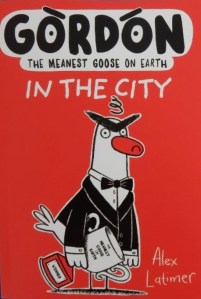
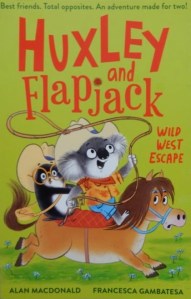
Gordon in the City / Huxley and Flapjack Wild West Escape

Gordon the erstwhile ‘meanest Goose on Earth’ is now, thanks to Anthony the Piglet, a reformed character. Indeed it’s been almost twelve months since he started trying to be good.
One day as he walks home feeling happy with his new self, he sees a letter pinned to his door. It’s an invitation to present the trophy for the Meanest Goose on Earth to this year’s winner. Hmm!
Being the great friend that he is, Anthony says he’ll disguise himself as a goose and accompany Gordon to the City for the presentation.

This he does and the two arrive expecting one of the four previous runners-up to receive the award. That however, is not what happens. Big surprise or rather, shock horror for Gordon when he discovers the winner. Moreover he and Anthony are invited to stay with her. Not a good idea at all as Gordon rapidly discovers.

Next morning Anthony has disappeared and Gordon starts reverting to his old wicked ways under his host’s influence. Fortunately he comes to his senses and having been told that something dangerous has happened to his friend, Gordon knows he must save him. Is there anyone or any goose, he can call upon to help and if so, what will be the outcome?

I know lots of young solo readers who will be honking their loudest for Gordon and Anthony in this their 4th adventure and looking forward to the next one.

Best friends Huxley the koala and Flapjack the penguin return in a third story and what an adventure they have when they sign up for a job as cowhands at Daisy Bank Farm. This is because Huxley wants a new guitar and has spent all his money. He even goes so far as to tell Dolly the farmer that they can horse ride but on their very first day things start going wrong. However they make it through to sundown when the cows are returned to their pen at Daisy Bank, safely behind a shut gate, so Huxley assures his friend.

Next morning, shock horror! The cattle pen is empty and after looking all over the farm, off they set to search further afield. Eventually they reach Bull Bottom Farm owned by Big Bull. The curmudgeonly fellow insists that all the cows on his land belong to him and are marked with a letter B. But is he telling the truth and if not can Huxley and Flapjack work out which are Dolly’s and get them back to their rightful owner? Could music be the solution?

With an abundance of daftness, this foray into the world of cattle farming is full of action, a bit of guitar strumming and Francesca Gambatesa’s fun colour illustrations. It’s just right for those ready for first fiction books.

The Mushroom of Doom

This story begins with a horrified-looking button mushroom hurtling down into a blender whirring on a work surface: certain death looks more than likely.
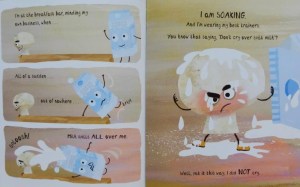
Prior to that said Mushroom was an optimistic fungus anticipating becoming the star ingredient on the evening’s pizza. That’s not what happens however: Pineapple is chosen for the topping not Mushroom, after which the day gets progressively worse. Milk accidentally spills all over him and his best trainers;

then down comes a big boot – somebody has stepped on him. After all this our protagonist is unceremoniously dumped into the compost bin where a closer look reveals hundreds of other mushrooms.

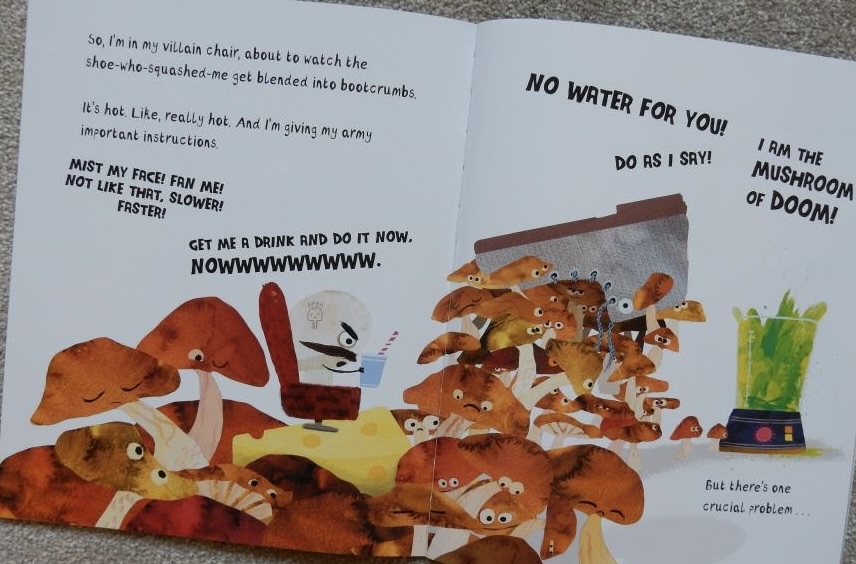
Time for revenge: designating himself the Mushroom of Doom, he assembles a mushroom army to take revenge – little do they know what they’re in for under the tyrannical leader that even refuses them any water.

But a dehydrated army is unable to fight at all. Worse is to follow for the Mushroom but just when it seems the end is nigh an erstwhile fridge sharer steps in and .… Surely now our Mushroom narrator will finally become a reformed character. Errr!

Thomas Elliott’s dramatic illustrations work superbly with Becky Davies’ pun-laden text in this anarchic story, the ending of which may come as a surprise.

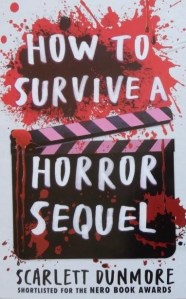
Dead Yard : Seeds of Doom / How to Survive a Horror Sequel

These are both new titles from Little Tiger – thank you to the publisher for sending them for review.

P.J.Kilburn’s debut novel celebrates Caribbean culture and folklore.

Jermaine’s wish is to be a movie director and he’s spending the Easter holidays shooting an entry for a junior film making competition. However he has to attend his great great uncle’s Dead Yard (a service for the deceased lasting all night) and he’s instructed not to eat any of the food until after midnight. But the sight of a plate of delicious- looking patties proves irresistible and chomp! he starts biting into one. A big mistake.

Suddenly he’s in his own horrific adventure bound-up with Uncle Carl’s ghost and boy, is he bad-tempered. Moreover, there’s a malevolent-looking man searching for a bag of cursed cassava seeds and an outbreak of an epidemic that makes the local children dangerously ill. All that plus the unanticipated arrival to of a woman claiming to be an old flame of Carl’s.

Can Jermaine possibly work with his uncle Carl, sort out this complex chaotic situation and save those they care about, before it’s too late?

Imbued with humour and creepiness, this fun, shortish horror mystery, is set not in the Caribbean but in a modern day London’s Shepherd’s Bush community. Taste it and see …

More creepiness in:

This sequel to How to Survive a Horror Movie begins towards the end of October with protagonist Charley trying to rebuild her life after attempts to kill her at her boarding school. As the story opens Charley is with her mother who is driving the car northwards through the darkness of the Scottish countryside to the town where they hope to make a new start. When they stop for petrol and some supplies, Charley is certain she sees a ghost nearby though she doesn’t say anything. But then the car stops and won’t restart alongside a road sign telling them they have reached Glendale, (a village also known as the Devil’s Punchbowl) and they have to go back to the garage on foot to seek help. The bad news is that the car will take some considerable time to mend, the good news is that someone offers them a temporary dwelling – a run-down, rather creepy house.

Charley has little choice but to stay and she begins investigating her new environment. Soon she becomes aware of both ghosts and disappearances. It transpires that Glendale has a long-standing association with witches, but worse than that Charley convinces herself that the Harrogate Killer is on her trail. As Halloween draws ever closer, she’s determined to discover just what is happening at Glendale.

Can she possibly do so when she’s not sure who among its residents an be trusted. Full of horror movie tropes, some new characters to enjoy, and imbued with a dry wit, plus a dramatic finale, this will grip readers all the way to its final question.

Play and Learn with Board Books

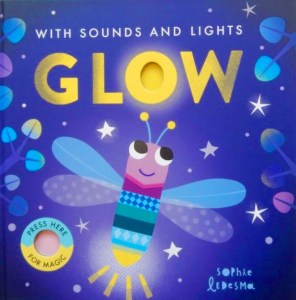
This is a sturdily designed, wordless book with a cover that acts as a container for the free-standing pages that fold in and out accordion style and it’s intended to be used with a baby lying on its front.
There’s a mirror, followed by illustrations, mainly black and white with splashes of colour that show a wide variety of items such as geometric shapes, faces and animals. Little ones can develop their fine motor skills by tracing trails, as well as developing their language, especially if an older person is using the images as starting points for talk.

This is the fourth story in the interactive Busy Chores for Little Paws series.
Lion’s neighbour, Bear, is coming to pay him a visit so Lion decides some tidying up is required. There are art materials scattered on the rug that need to go back on the shelf, crockery in the sink waiting to be washed up and put away, a dirty worktop to wipe and floors in need of a run over with the vacuum cleaner. Lion, with the assistance of little humans who use the slippers, flaps and wheel, get the work done just before there comes a knock on the door. Hurrah! Lion can welcome his friend to a spotless home.
Ideal for developing fine motor skills and beginning sound/symbol awareness by joining in the splish splash … chink … spray… whoosh and knock! knock! sounds.
There’s more interactive fun in:

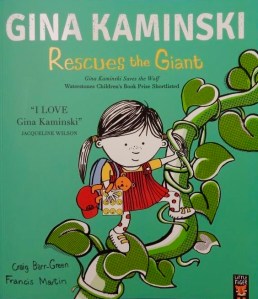
Gina Kaminski Rescues the Giant

Gina Kaminski, the book’s narrator, is a wonderful character and she’s back sorting out the errors in another fairy tale.

She and her classmates are on a school trip to a large art gallery, one Gina deems is rubbish as it’s too big, too brightly lit and lacks an obvious place for her to eat her lunch. On the first spread readers will notice she’s carrying a card with emojis and is accompanied by her helper, Anya. Realising Gina is stressed Anya takes her to the reading room, and selects two books asking the girl to choose but this is also stressful and so Anya decides on Jack and the Beanstalk.

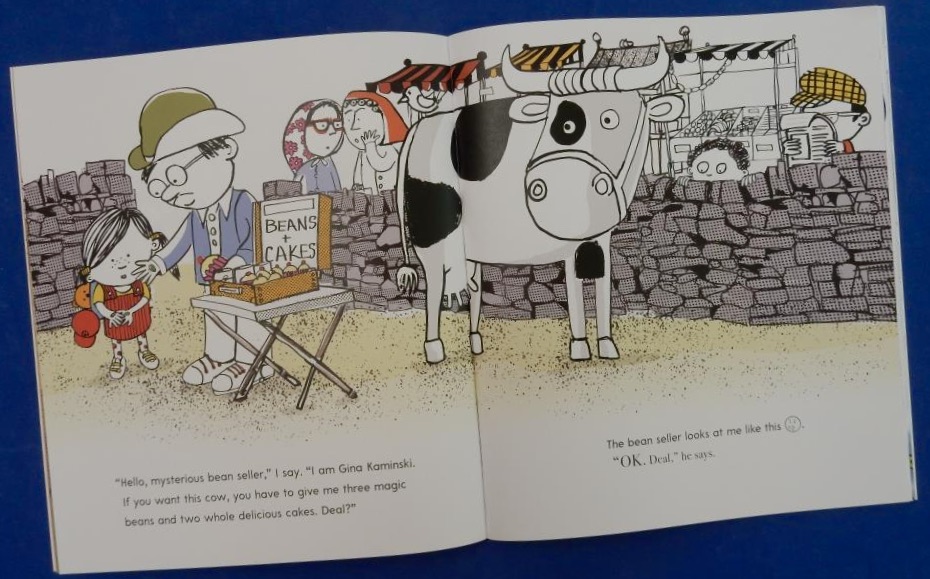
Straightaway, Gina’s analytical mind gets working and she points out that the book has ‘three massive mistakes’. She picks up her teddy, Lady Wiggles, puts it in her backpack and off they set to fairy land to sort out the mistakes. First comes getting a better deal in exchange for the cow: Gina negotiates two cakes in addition to the three magic beans.

Second, why actually plant the beans – that will put paid to any beanstalk. However, as she sits eating her cake a beanstalk grows, seemingly by itself.

Gina gets going on plan B: she warns the giant, confronts the villagers making them drop his harp and most special hen, deals with the beanstalk and bids farewell to the giant. 

She then returns to the Reading Room – job done, Gina informs Anya. Meanwhile Anya has found a map of the gallery which they use to find the place to have their lunch before taking Gina to an exhibit of everyday giant items that meet with her approval as well as causing her to reconsider her initial judgement of the school trip.

Practical, inventive and a hugely engaging hero – that’s Gina Kaminski; she’s also neurodivergent and looks at things in her own way as readers who have read her previous story will know, and others will likely have worked out.

Craig Barr-Green has carefully chosen his words for Gina so as to present her as someone who feels safer in an orderly, rational environment. Illustrator, Frances Martin’s illustrations ensure that in the busy opening scene, we readers share Gina’s unease, which continues until she gets to the reading room, then gradually become more relaxed as she takes control of the events.

Altogether a smashing book to share with KS1 children especially; they will love the protagonist and her alternative version of a favourite fairy tale.

First Friends: Colours, First Friends: Opposites / Don’t Ever Mess with a Monkey

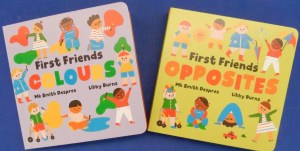
Colours begins with the nursery children and their teachers heading outside to play. The instruction is, ‘Look high, look low. / Look all around!// So many colours/ to be found.’ There are black ants marching across the sand, pink worms wiggling on two children’s hands, a red slide, a blue swing and a purple bar to swing along, as well as a wonderfully messy opportunity to use mud and leaves to create mudpie faces. Meanwhile at the water tray a floating and sinking activity has yellow, orange and white objects to test. Then just before snack time everybody blows bubbles with rainbow colours. The final spread encourages interactive learning with a ‘can you find’ showing all the coloured items featured throughout the book.
In Opposites, we join the children preparing for a rest time with some winding down movements that involve stretching high and low, then yawning, mouths open and sleepy eyes closed. When everyone wakes up, some are smiling, others frowning as they stack the mats up and take down the toys.
During the remainder of the session the narrative builds in other opposites – empty/full, small/big, behind/ in front and the final spread asks listeners to act out eight pairs of opposites.
Both books have bright, inclusive illustrations that show a diverse cast of characters.

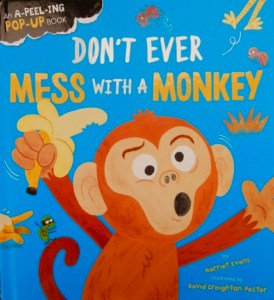
The latest in the Don’t Ever pop-up series features five wild animals that live in the savannah region. Readers/listeners are warned against riding a zebra, boxing with hyenas, question the decision of rhino, rob an ostrich or give a monkey food that isn’t to its taste. For sure, the results will be far from pleasant for anyone who ignores the warning on each spread.
Harriet’s rhyming text accompanies David Creighton-Pester’s dramatic scenes, each of which includes one or more bit part players that young children will enjoy spotting

No More Mr. Mice Guy

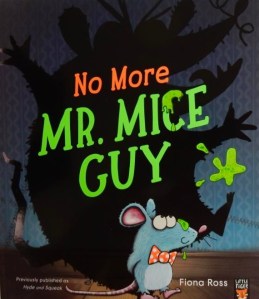
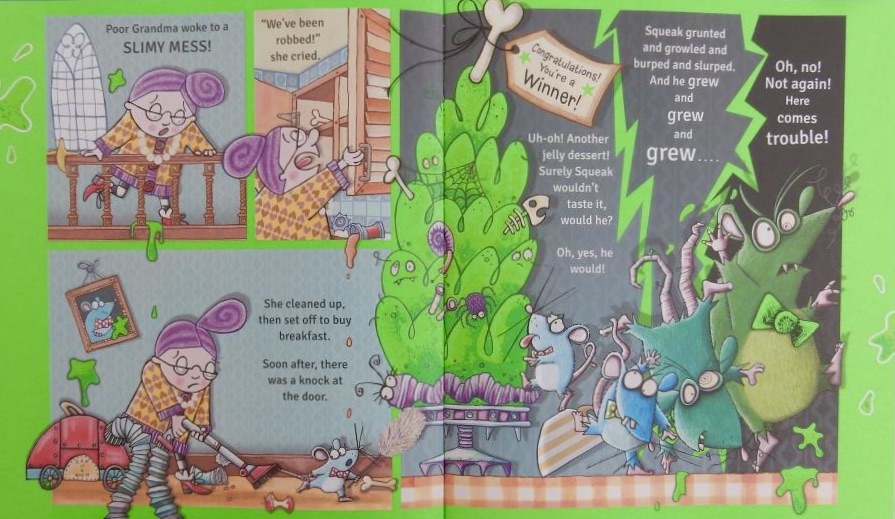
This was originally published almost a decade ago as Hyde and Squeak, which may give today’s readers a clue as to the story it’s based on. This book features a young mouse, Squeak, that lives with Grandma and loves to enter competitions. We first meet them as Squeak has won another competition, the first prize being a rather large wobbly jelly, with so we read , ‘a whiff of something monstrous.’ Disgusted by it Grandma throws it in the bin straightaway but that doesn’t prevent Squeak from thinking about his slimy prize.

That night once Grandma is fast asleep, he creeps downstairs and tastes the squidgy thing. Big mistake! He grows and grows transforming into Hyde, a horrifying monster mouse. Said mouse consumes everything it can lay its paws on, clearing out the fridge and cupboards completely. Desperate for more food Hyde storms into the town and as he grabs a string of sausages his stomach starts aching and POOF! Hyde reverts to Squeak.

Grandma meanwhile wakes to find no food in the house and just as she’s setting out to buy something for breakfast another jelly desert prize is delivered.

The process starts over again but now as there’s no food Hyde decides to make a Mega Munch Machine that will turn everyday objects into food. Back comes Grandma to a find a slimy mess and nothing much else besides a sleeping Squeak who remembers nothing. The police are called but it’s Grandma who saves the day by means of a very large fruit. To say what happens would make me a story-spoiler so I‘ll say no more.

Presented in comic book style, there’s tension and craziness in both words and pictures making this a fun read, but beware, you’ll never again want to eat green jelly.

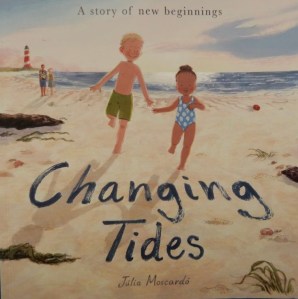
Changing Tides

Lula and her dad are going on holiday to the seaside, Lula’s favourite place, but for the first time Theo and his mum, Simone, are coming too. Lula isn’t at all sure about this; even though her dad reassures her that they are now part of the family. Having a big brother is something new for Lula.and she’s far from pleased when Theo gets her bucket and spade and puts them in the car.

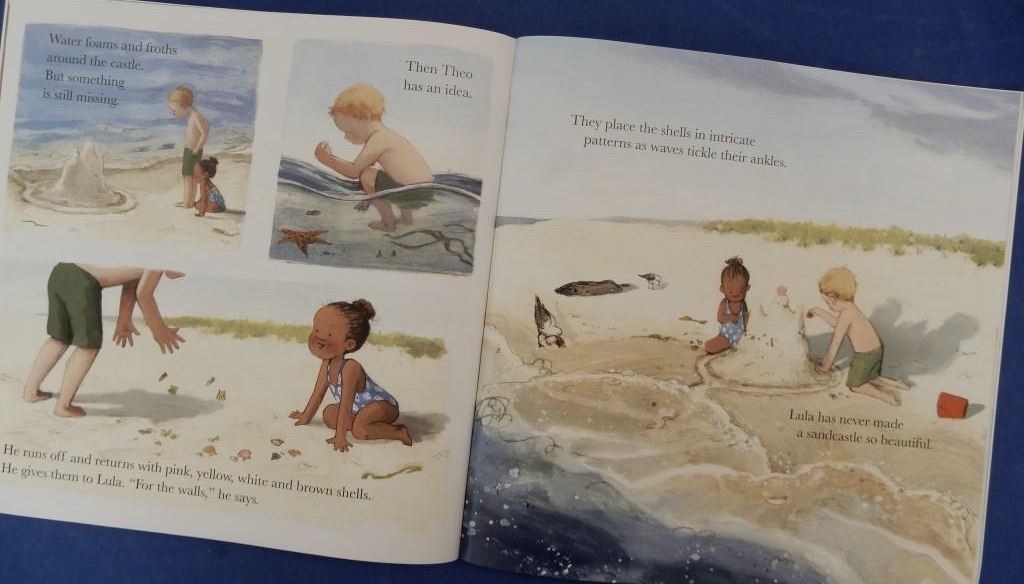
Once they reach the seaside, Lula dashes straight down onto the shore but Theo is reluctant to go near the water. Simone suggests the two children make a sandcastle together and as they do so, they begin to bond

and by the end of the day, having co-created a wonderful sandcastle, they are good friends despite the stormy water destroying the castle. As they walk back to the caravan together, the children are already making plans for the next day.

So realistic are Júlia Moscardó’s soft illustrations you can almost feel the sand between your toes, smell the salty sea and hear the waves breaking on the shore as the two children – full of life and enthusiasm – go about their play.

With its theme of adapting to change, and particularly relevant to blended families, this is a lovely book to share with young children at home or in the classroom.

Every BOTTY Burps

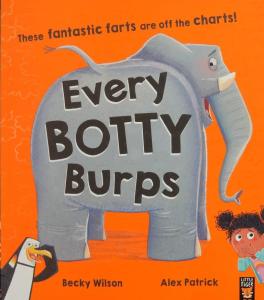
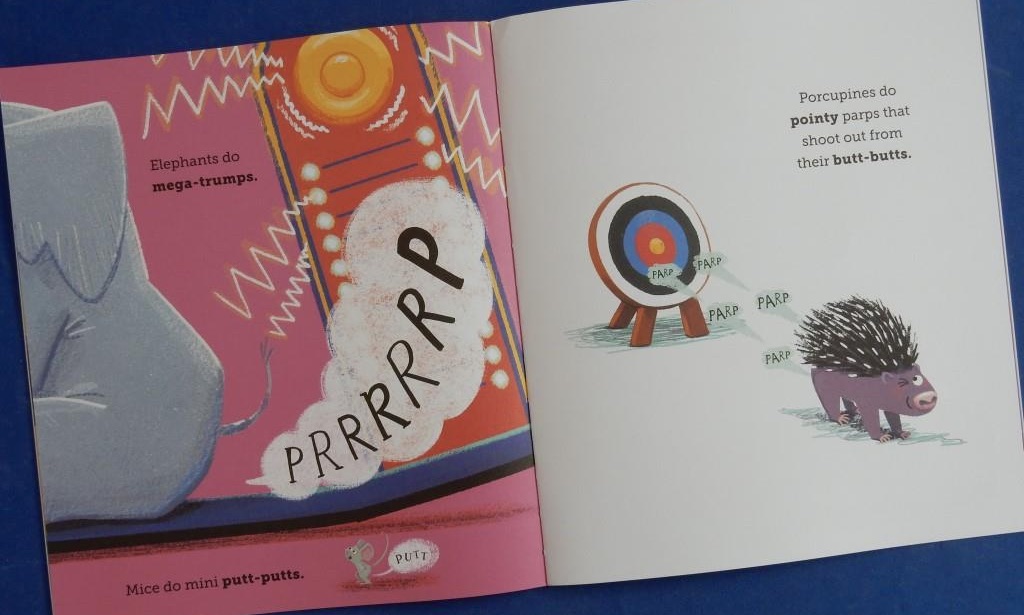
A fantastically silly but reassuring book about those rear end fizzling flatulences that tend to trump forth, often at the most embarrassing times. As the author reassures readers, ‘It’s just what bottoms do!’ We all break wind …” and she then proceeds in rhyme to give a host of examples from penguins’ popping parps to sharks’ silent but sometimes violent whooshing poots and elephants’ mega-trumps to the mini put-putts of mice; and if you can believe it, the pointy parps that shoot forth from the butt-butts of porcupines.

I could go on but then who wants to spoil the fun for anyone wanting to get their hands on a copy of the book.

Alex Patrick has certainly illustrated each of these examples and the others with an abundance of humour and should I say enthusiasm (he probably had some kind of air freshener to hand as he worked).
As for enthusiasm, this topic is one that seems to get young children thoroughly enthused whenever it crops up in a picture book and I’m sure Becky and Alex’s presentation will do so. I foresee cries for repeat renditions when you share this comical collaboration with an individual, group or class.

Bad United Fast As Lightning / Guardians of the New Moon: The Year of the Ox

These are both additions to popular series from Little Tiger – thanks to the publisher for sending then for review.

Having achieved two wins, Bad United are starting to attract a fair bit of attention, so much so that Hoof the unicorn declares ‘We’re famous’.
When manager, Serena Winter announces a visit to the spa, it’s no surprise that one team member is far from enthusiastic: Bolt (cheetah) considers yogic breathing a complete waste of time; he’s the best striker so why bother, he thinks. But whether the experience has had the desired effect of bringing the whole team back together ready for anything as Hoof hopes, we’ve yet to find out when they begin training for the next match, which is against Storm. Pretty soon though, it appears that it’s not the case with Bolt.

On match day Serena reminds them all to focus on their happy places but with all the other players waiting on the pitch, team Storm hasn’t shown up. What happens thereafter is I suspect, the strangest ever match that commentators, Waffle and Cyclops have ever witnessed, so much so that Serena immediately asks for a rematch. Will Bad United emerge victorious, this time? And has Bolt finally learned about team play? If so, fans will be cheering extra loud.

Shocked that his son Xiao Nioh has been wasting his time working on a dance he was going to perform to usher in the Year of the Ox, Lord Chiyou is finding it very difficult to understand his son’s creative performance involving a sword and a long coloured ribbon. Frivolities is what he calls it and in an effort to make his son brave, at the suggestion of the Jade Emperor sends Xiao Nioh off on a quest accompanied by the Guardians of the New Moon, Ming and Miaow. They must deliver a message about farming techniques and one more matter – the crops and the whole valley must be protected from the nian, a fierce magical one-horned beast with a massive appetite. With the help of the Guardians, can Xiao Nioh prove himself without having to abandon his dancing dreams, or will the Year of the Ox be a huge let down?

With plenty of action and humour too, this third book in the series is as exciting as the previous Guardians stories.

Shoot For the Stars

Both empowering and full of information, this is written by double Paralympic gold medallist and five times world champion in archery, Danielle Brown MBE. She hopes to encourage girls from around twelve years old on to keep participating in sport instead of dropping out of physical activities, which often coincides with the onset of puberty when among other things, girls start menstruating and they sometimes see this as a barrier to sporting activity.

This and other perceived barriers are discussed in a matter of fact manner, be it feelings of discomfort in school PE kit, ideas of body image or worries about controlling one’s temper when one’s performance is adversely affected by hormones. It’s particularly good to see the spread featuring Chinese swimmer, Fu Yuanhui, who openly discussed the impact of starting her period on her performance at the 2016 Rio Olympics.

The dress code of bikini bottoms for women’s beach volleyball was not altered until 2021 when he Norwegian team took action by wearing shorts instead. They were fined for so doing but public outrage precipitated the change. It was not until 2023 that the all whites rules for underwear for women players at the Wimbledon Tennis Championships was changed.

A stand was also taken by Kulsoom Abdullah, a weightlifter. She was invited to compete in the national championships, but against her religious beliefs, wasn’t allowed to cover her limbs or to wear a hijab, so she didn’t participate. However she did take her story to the media with them behind her to the International Weightlifting Federation. The outcome was that the rule was changed and so Kulsoom represented Pakistan that year at the World Championships.

Accepting feedback and applying what you’ve been told is vital for making progress and improving in any sport, and indeed other aspects of life and a chapter is devoted that topic: all those who brief biographies are included must certainly have done that.

I was listening to a discussion on the radio this morning about the increased number of people who are over weight and how this can lead to ill-health. Food was the subject under discussion but I couldn’t help thinking that being physically active is equally important and Danielle’s book encourages readers to do just that whether or not they end up going further and becoming sporting competitors.

Illustrations by Jayde Perkin and Filigrana de Ideas and colour photos of renowned women sports stars add to the enjoyment of the book.

Board Book Trio

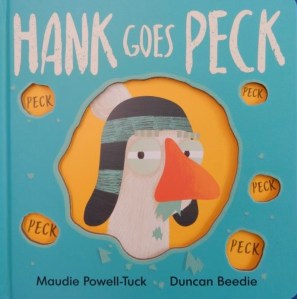
If you’ve read anything about Hank, then you’ll already know that he likes to make trouble for others. Now he’s not honking but pecking and at the request of a small rodent, little humans are immediately involved in the story by keeping an eye – preferably both – on what he gets up to on the farm. Oh dear! The first thing he does is to stick his beak into the trampoline on which the chicks are bouncing. What a pesky creature. As you might expect though he just cannot keep that beak to himself: next he sticks it right into the limo holding a trio of pigs. Surely that’s enough sticking his beak where it’s not wanted so he’ll leave the old sheep in peace to get on with her knitting. Oh NO! spoke too soon, but Mouse has said he must take time out and consider the error of his ways. Apparently temptation gets the better of him however as he struts past the bull without heeding Mouse’s warning. Has he learned his lesson at long last? I wonder …

Hank’s preposterous behaviour is wryly depicted by Duncan Beedie and Maudie Powell-Tuck’s text offers plenty of opportunities for sound making and action from young listeners who will enjoy emulating Hank’s pecking and the sounds made by the animals he upsets.

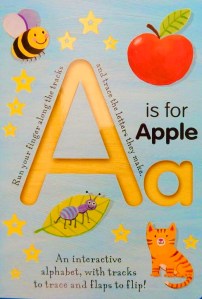
With flaps to lift and tracks to finger trace, this alphabet book clearly illustrated will immediately get little learners involved. They can trace the capital letters with the help of the arrows and then lift the flap on each page and discover something else starting with the same letter, this time written with a lower case starting letter. Better still, children can try to guess what is hidden before opening the flaps. Simple, playful interactive learning and on the back cover are some hints for parents/carers.

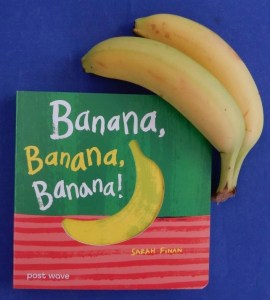
This is the second in a series of board books encouraging healthy eating from new publisher Post Wave.
Sturdily built to stand up to numerous readings, it’s told through a simple, jaunty rhyme and bold, bright illustrations with a clever die-cut on each double spread. The small children we meet in the book love to eat bananas in various situations and forms including as a smoothie slurped through a straw, sliced up for breakfast or lunch, to fill a hungry tum during a car journey or as a pre-bedtime snack. It’s good to see that even such young children know that the skin from a banana needs to be disposed of properly – in the bin, not tossed aside onto the pavement as a potential slip-hazard.

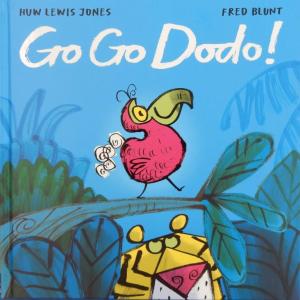
Go Go Dodo!

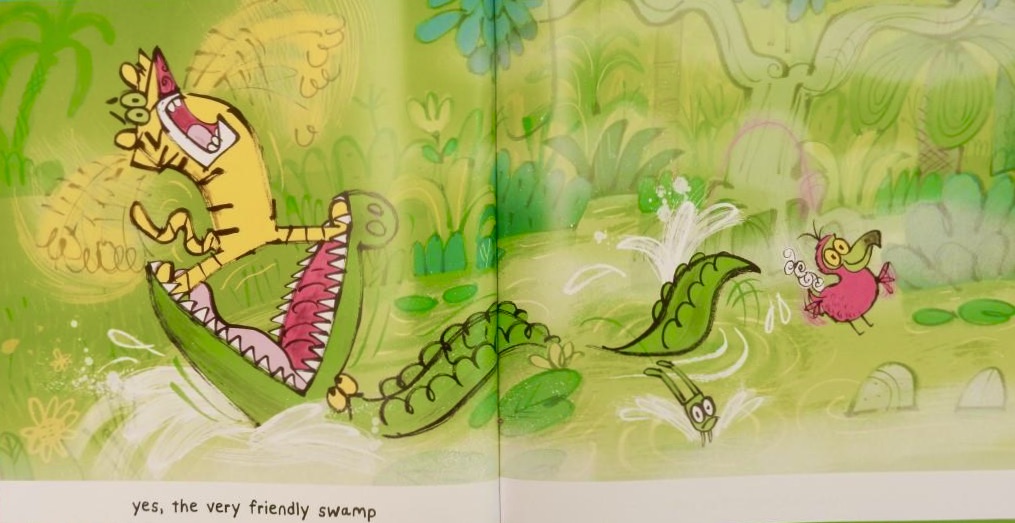
This is one of those “look out he’s behind you’ stories and I can almost hear children’s voices shouting out from the moment Dodo decides to take that evening stroll through the ‘gentle jungle’ with a big cat hot on his trail. His perambulations take the bird across the ‘friendly swamp’ tip toe, tip toe,

then up the ‘peaceful hill’ and right down to the ‘soothing sea’, from where having been suitably soothed by its waves, Dodo proceeds into the lovely long fairly dangerous grass. Therein he suddenly becomes aware of the presence of a human with a net and a pith helmet – very dangerous for sure. That’s when realisation dawns

and our Dodo decides to beat a hasty retreat and then make his way back home to the safe haven of his bed. “Absolutely nothing to worry about.” we read on the penultimate page but there comes a delicious final twist …

The interplay of words and pictures as the drama unfolds is what makes this book such a winner.
Not only is it a terrific, suspenseful read aloud but with its short, patterned text, it’s also ideal for beginner readers to try for themselves, once they’ve heard it read aloud of course.

Toddler Treats To Share

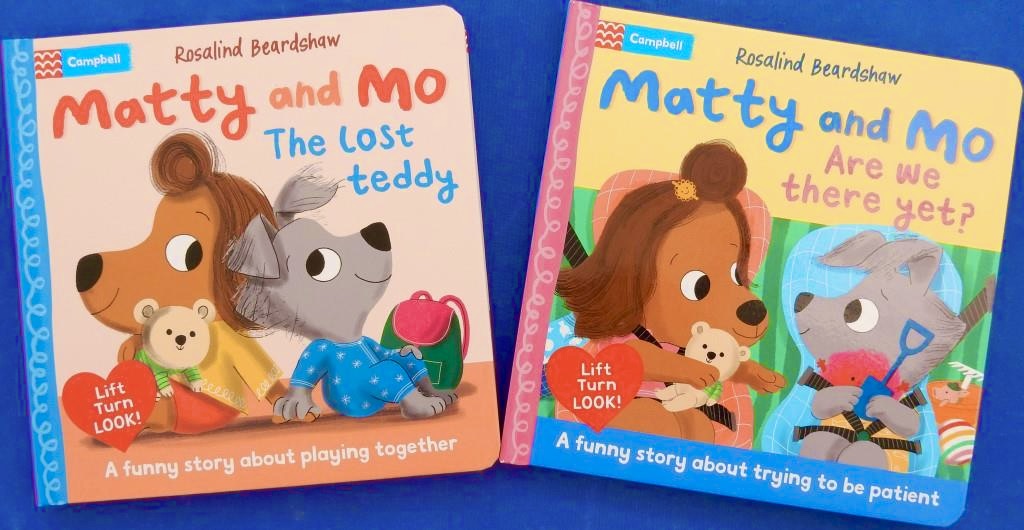
When you’re little there are SO many life lessons to be learned. So it is with the pups in this new series.
Matty and Mo are sibling puppies, Matty being the elder of the two. We meet them on a rainy day playing inside picnics together.. Matty notices that Ted is missing and Mo, of course wants to help find him. They search in the likely places – the bed, a cupboard and in their liege toy pile but there’s no sign of Ted. This upsets Matty and Mo attempts to cheer him up and suddenly Matty notices something sticking out of Mo’s ‘new useful bag’. What could it be? Mo, so it appears can sometimes be a little silly
In the second book Matty and Mo are off to the beach in the car with Mum. It’s quite a distance so patience is needed. In her excitement Matty gobbles all her snacks in one go and then inevitably, one of the pups needs a wee. It’s Mo. (Matty went before they set off.) Inevitably too, boredom sets in and Matty gets busy with her sticker book … Mum must have a lot of patience as she drives and at last the beach is in sight, but the puppies can’t see it until they wake up.
Trying to be patient has tired them out – only for a short time though.
Little humans will have a giggle at the puppies as they earn to deal with what to them are challenging experiences. They will also enjoy using the moving parts – flaps, a wheel and the final fold-out heart in both books that were inspired by real-life family experiences..

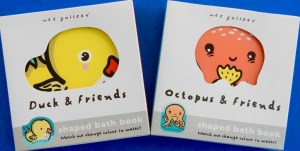
Wee Gallery are a husband and wife team who create books to help babies and very young children develop through visual learning.
Both of these take the shape of the titular character and little ones will love joining in as both Duck and Octopus look for their friends in these splash splash bath books wherein each black and white creature magically comes to life in full colour when wet. Duck will meet the likes of frog, dragonfly and swan whereas Octopus’s friends include a large fish, jellyfish and a crab..
Splishy, sploshy, squishy, squashy tactile bath time fun for tinies.

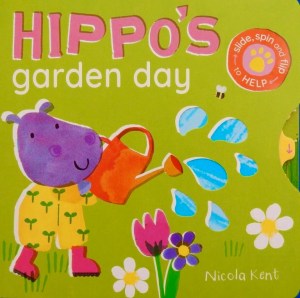
Lion and Hippo have very different gardens. Lion’s is neat and nothing looks out of place. In contrast Hippo’s is overgrown. I assume it’s not been left to grow wild deliberately. Hippo decides he needs to do some serious work on his grade. Having collected tools from his shed he sets about mowing, trimming, watering and in due season, harvesting fruit to share with his friend, Lion.
With some onomatopoeic language for small children to join in with as Hippo works, flaps to explore, a slider and wheels integral to the bold bright illustrations, this is a fun introduction to a task some adults thoroughly enjoy, some do under sufferance and others – those in favour of rewilding – don’t do at all. Toddlers however, will love the opportunity to assist Hippo in his work.

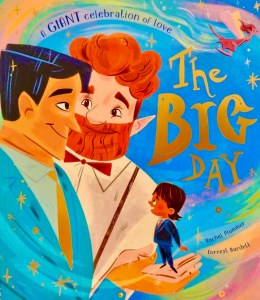
The Big Day

The child narrator of this story receives a very large envelope containing an invitation to the wedding of two giants.. “ I fashioned a pen from / the trunk of a tree// and used it to / write a HUGE RSVP.” A detailed one asking about means of transport to the celebration and listing such possibilities as ‘travelling on the omnigrobbliwobblibus’ .

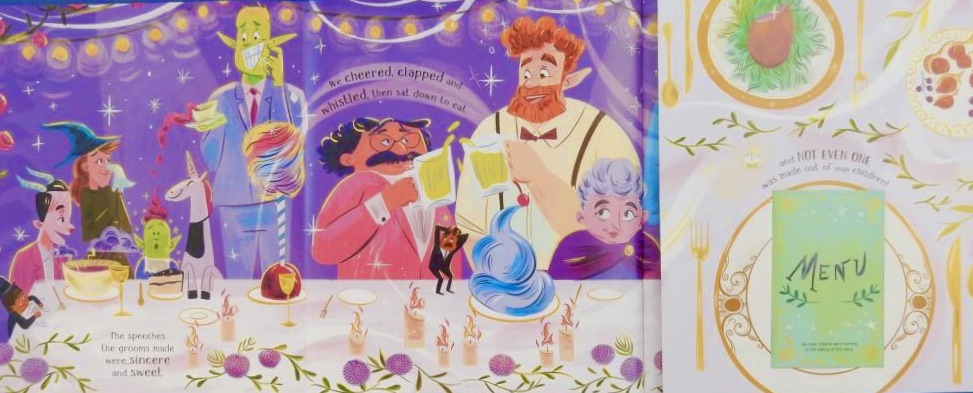
Come the big day, off sets the child in a smart new outfit feeling not particularly brave and keeping the destination secret from Mum. The church is full of enormous wedding guests of the fantastical kind such as witches, monsters and goblins and Giant Aunt Clara wearing her ten-ton tiara. The organ starts up and in come the two male giants (one carrying ‘fresh morning dew from the dawn’ (something new); the other holding ‘sky that bright stars wandered through.’ (something blue). They say their vows before a official,

everyone sits for the grooms’ speeches and the feasting commences.

Why was I invited wonders the small human narrator and groom two reveals the reason: there’s a message to go back with “love is just love, whether GIANT or small.”

A joyful, life-affirming demonstration that everyone matters and love is love delivered in Rachel Plummer’s rhyming text with lots of playful language and Forrest Burdett,’s illustrations in suitably vivid hues on pages that will excite with their flaps, die-cuts, and gate folds.

Stitch Head: The Pirate’s Eye / Donut Squad Take Over the World! / Toby and the Pixies: Best Frenemies!

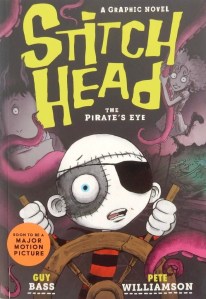
For those not yet acquainted with Stitch Head, he’s the first creation of the mad Professor Erasmus and resides in Castle Grotteskew along with various other weird creatures.
Then there’s a recent one of the Prof’s creations, an Octopus, and as ever Stitch Head has to use one of his potions to turn the creature into a kindly one. We also meet Arabella Guff from the village, she who fears nothing. Arabella tells Stitch Head as they read a diary together that he’s part pirate because he has a blue eye that once belonged to its writer, Captain Dash Flashpowder. Could that really be so?
Stitch Head recruits a crew and as he prepares for a life of derring-do on the high seas, some decidedly suspicious business closer to home threatens to put a stop to his harum-scarum swashbuckling plans…
Fans of Stitch Head, as well as others who love gothic tales, wacky adventures, mystery with the occasional scary character will love this graphic novel presentation of the original book.

The next two are both David Fickling Books graphic novels:

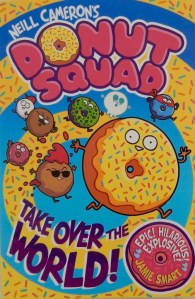
Herein you’ll find a lot of daft doings by the Donut Squad who have decided to take over the entire world. The squad comprises Sprinkles (their leader) Jammyboi, Chalky (tho ghost one), Justice Donut, Anxiety Donut, Caramel Jack (a tad salty) Daunt and Li’l Timmy, and Spronky.
The trouble is though they have some serious opposition in the form of the Bagels – arch nemeses of the Donuts that abready have plans of their own including a (w)hole lot of new merchandise.
Uh-oh1 Seems that those Donuts are also launching a lot of new merchandise – they’re definitely endeavouring to out-MERCH the Bagels..
Now I have to say that both sides are wasting their time as this reviewer strongly dislikes both Donuts and Bagels – I wouldn’t eat either of these foods. Nevertheless I found myself having a really good giggle at the utterly daft shenanigans of both torus teams in their fight for world domination.

More giggles assured when you read:

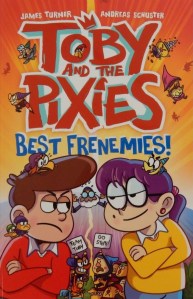
With Toby having accidentally become king of the Pixies that reside at the bottom of his garden he discovers that misunderstandings are all too common with those little folk. Now though Steph, Toby’s nemesis at school has learned of his regal status and contrary to Toby’s expectations, rather than teasing and insulting him about it, she thinks it’s cool. She even becomes, along with his best pal Mo, a part of Toby’s adventures. Rather we should say misadventures, for whenever those Pixies get involved something is absolutely certain to go wrong. There’s the school disco for instance and much, much more.
At the end Steph makes a surprise revelation and it’s one that lets Toby know how she really feels. Zany chaos abounds but importantly there’s a heartwarming message about acceptance and friendship. (If you’ve now taken to Toby’s erstwhile enemy, there are a couple of ‘How to draw Steph spreads at the end of the book).

Clem Fatale Has Been Betrayed

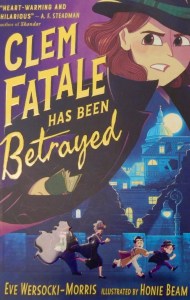
This story of gangsters, hoodlums and heists is set in London in the early 1950s. Herein we meet fearless young crook twelve year old Clem Fatale as she embarks on the night’s robbery to be led by her dad at Lord Weatherdale’s North London abode. Things don’t quite go to plan however as said dad, Jimmy Fatale leader of the Spider Gang and notorious jewel thief, seems to have gone missing along with the Fool’s Canary, a rare yellow diamond cut in the shape of the bird. However, Clem and her mates appear to have got themselves a young prisoner.

The outcome is that Clem along with her captive Gilbert, the terribly polite, unadventurous son of Lord Weatherdale for company, follow a trail of clues that take them on hair-raising adventures in greasy spoon cafes, nightclubs, safe houses and through London’s back alleys where rival gang leaders, fences and henchmen all operate. Aided and abetted by the son of Clem’s parents’ Polish cook, Konrad, and Winnie, a cab driver from the West Indies Clem learns that her Dad’s criminal operation has a secret side.

Will she find her father safe and sound or will the most dastardly villain of all prevent her so doing? That is the leading question as the plot turns this way and that. Clem is a great character, determined and resourceful; to her surprise, so too is Gilbert who sticks with her through everything. The dialogue between them is superb. There are lots of other superbly imagined characters including cranky crooks and dizzy dames, some will make you laugh, others hold your breath in horror. Many of these are depicted in Honie Beam’s black and white illustrations

The story’s ending sets the scene for Clem’s next adventure: this reviewer and I have no doubt, countless KS2 readers will await it with bated breath.

Zizzi Moonbeam

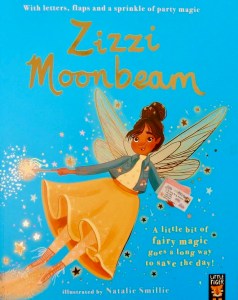
It’s Zizzi Moonbeam’s first day as an official party planner at Fairy HQ and she’s fizzing with excitement!. Having made her way to the Party Planners floor, she’s greeted by chief party planner Elvina Glass who hands her the day’s assignments.

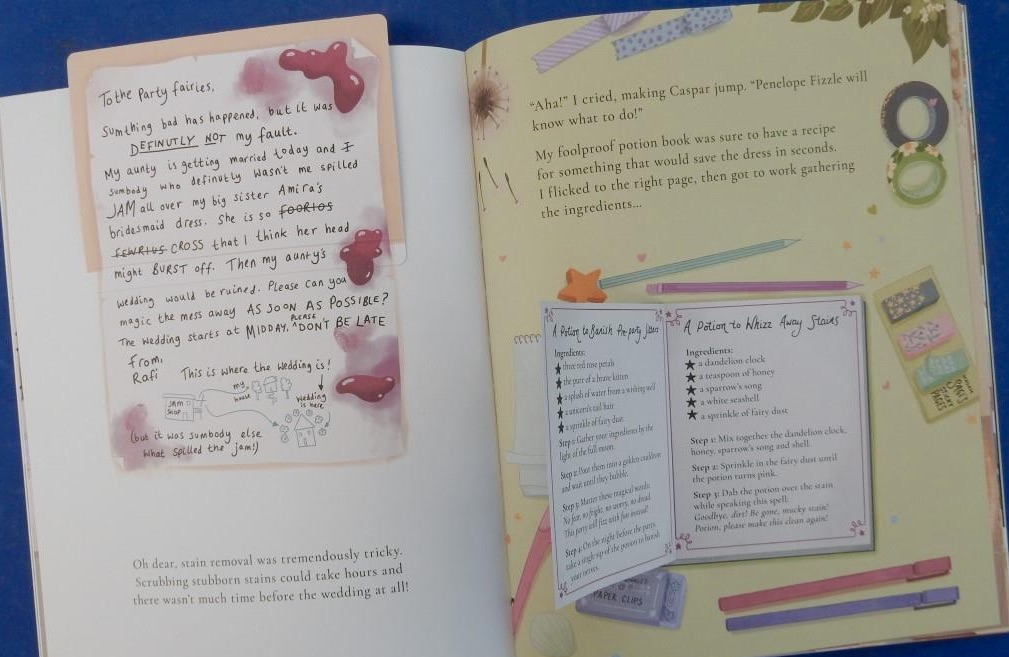
Anxious to impress, Zizzi turns down the offer of help from Caspar who is seated next to her and sets to work by herself. She wizzes to the rescue to make sure every party is successful despite there being in turn, rain on the day of a garden party, a bridesmaid’s dress spattered all over with jam

and an ice-cream shop whose owner has forgotten to send out the invitations to its grand opening.

Seemingly no problem is unsolvable when it comes to Zizzi; but just before she’s due to go home she discovers another letter. How could she have overlooked it? There’s definitely not sufficient time to solve this party problem alone. Finally Zizzi realises she needs to act on Elvira’s advice and see if one of her new friends can come to her aid and save the day. Perhaps teamwork will become dreamwork of a very special kind.

Young listeners, party fans in particular, will love Emily Hibbs’ enchanting story and Natalie Smilie’s richly detailed scenes with their letters to open, books to consult, as well as the spreads showing the outcomes of Zizzi’s magical interventions.

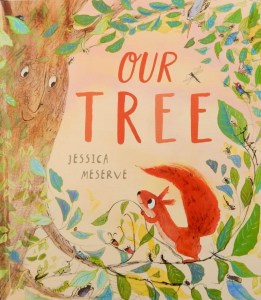
Our Tree

When Little Red the squirrel scampers up the trunk of the titular tree uttering, “This tree is all for me” he receives some surprises and several lessons.

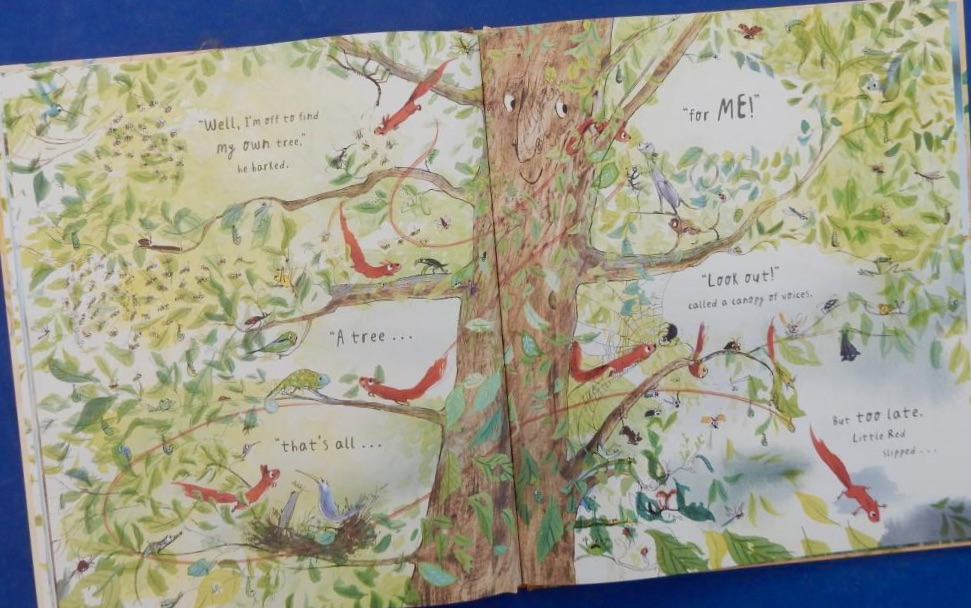
Before long the squirrel realises that he is not on his own: animals of all shapes and sizes spend time on or around the tree. They use its branches to rest upon, they nibble its leaves, use it as a place to congregate; Elephant even enjoys using it as a back scratcher but none of these trouble Tree; rather it makes them feel welcome. Little Red has no intention of sharing however and decides to seek a tree of his very own, but in his haste, he slips,

tumbles and lands on something soft.

What follows is a somewhat perilous encounter with a leopard and thereafter a change of heart from Little Red. He finally realises that to be surrounded by friends who are ready to cover your back is extremely valuable. Will his host allow him to stay? Indeed yes and Tree even introduces Little Red to a special new playmate. Undoubtedly, life is better together: community is the way to go.

This message comes across loud and clear from Jessica Meserve’s treasure of a tale with her delicately detailed illustrations. It’s one that shows young humans how important it is to learn to accept others and to share.

Solving Crimes Is Not My Superpower

Everybody living in the town of Walsham has a superpower, everybody except Sara (narrator) whose parents are members of the IPA (Incredible Protection Agency). Her mum can control the wind and her dad has super strength. Her best friend, Georgie can smell fear and is a football fanatic as well as captain of the school team; the mayor emits multicoloured farts and an old lady can levitate squirrels (albeit waist high only). Although she’s great at cracking really funny jokes, Sara is still waiting for her power to appear (she’s around the age it usually happens).

So when their school’s all important soccer trophy is stolen just four days from the final match, Sara has no choice but to solve the crime using only her powers of deduction. As well as a notebook in which to jot down clues and suspects, she has her two pals Georgie and Javier close at hand to help investigate.

Sara is especially determined as Walsham’s school team has never lost to Ramsdale in eighty years due to the power of the soccer trophy.

During their investigation the three uncover some town secrets but will they recover the all-important trophy and will Sara discover her superpower. (I love what Sara’s dad says to her early in the story, “And remember: the only TRUE powers are … a lovng heart, a helping hand and the courage to do what’s right.”)

This funny story is witty and warm and the dialogue is great: it will have young readers laughing frequently as they whizz through the story perhaps solving the mystery before the threesome.
It’s the first in a new series and has lots of lively drawings by Simran Diamond Singh. I look forward to the next adventure, Time Travel Is Not My Superpower.

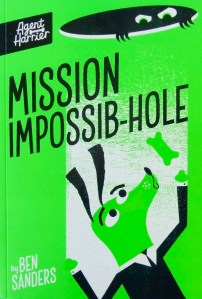
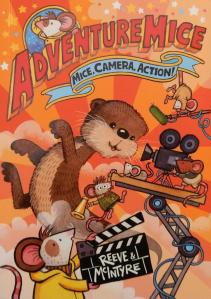
Agent Harrier Mission Impossib-Hole/ Adventuremice: Mice, Camera, Action!

These are both additions to popular series: thanks to Little Tiger and David Fickling Books for sending them for review.

Agent Harrier is back for his third mission of the secret spy kind. However before he can even get going, the bottom falls out of his world – literally – and having plunged downwards, he finds himself face to face with his trusty friend, Mr Mole. Mole informs him of a new case : the case of the Mysterious Holes and our agent is not happy. Holes in his precious book, holes that transport him to different dimensions starting with a strange fairy tale where a princess dances till the clock strikes twelve. Then comes a kind of detective story where he meets a dragon and lastly, a scary sc-fi adventure in outer space.

Time is running out for Agent Harrier: if he can’t uncover the offending hole-maker very soon, not a single one of his books will make any sense and it’s curtains for the entire series. With Mole looking decidedly untrustworthy, – the villain maybe – to whom can Harri look for assistance?
With punny daftness and word play in abundance, this is a hilarious dose of meta-fictive madness that Agent Harrier’s fans will love. If you’ve not met this particular detective before, I suggest starting with This Book Will Self Destruct.

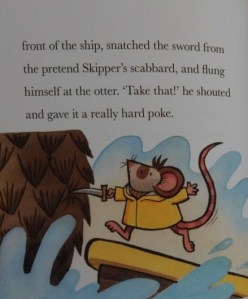
The Adventuremice series gets progressively crazier and this one definitely takes the biscuit – enough said about biscuits.

The Adventuremice are super excited to receive an invitation to Hollybush, reputed to be the most glamorous place in all of the Mice Islands, the place where all the big mouse movies are made. Needless to say, Pedro isn’t too thrilled about this but that’s Pedro for you. Skipper too is unenthusiastic about going, but in the end they all board the Daring Dormouse, Hollybush bound. Apparently however, despite it being called the Adventuremice movie, the team won’t actually be acting; rather they’ve been invited to visit the studio and watch the making of the movie .

On arrival they’re greeted by Scoot McHairy, Mr Cheezeburger’s assistant. The film set is certainly a glitzy place but Pedro is confused by all the fakery including an exceedingly large mechanical otter

and it’s not long before he ruins a scene making Mr Cheezeburger furious that his precious film will never be finished in time to be shown at the film festival. Can the Adventuremice team come to the rescue and save not only the movie but a real live baby creature too?

Established Adventuremice fans will certainly be cheering them on and the team will likely gain lots more followers too.

Early Years Bookshelf: Little Dino Boo-Boos! / Bear

The little dinosaurs are a very lively lot and inevitably accidents happen: Triceratops gets a graze, Spinosaurus gets a soaking, followed by a cold, Velociraptor take tumble and bumps his paw and so on, so it’s important to know what to do when one gets hurt or doesn’t feel too good.

Through this delightful interactive board book, with its first aid kit containing a set of reusable stickers in the form of a fold-out inside the back cover, very young children can begin to learn about first aid and care in a playful way. On a first reading you may just want to point out each item and name it, but this is a book you can share over and over so your little one can learn more about each item as appropriate in addition to enjoying Jannie Ho’s humorous scenes.

A story about learning to share – maybe.
Bear is very happy with his ursine life: he loves his cookie, his book and his balloon; and he loves to sit by himself on his bench. As he sits comfortably contemplating, up comes Fox wanting to sit beside him on the bench. Wolf too wants something belonging to Bear – a delicious cookie; Rabbit wants a look at his book and Elephant asks for the balloon. Bear’s problem is that he doesn’t know how to say no to their requests

and consequently ends up with nothing. Now our ursine friend isn’t happy, he’s very, very unhappy as he sits thinking. Some while later along comes Duck with a cookie. Now we know Bear loves cookies so he requests a bite of Duck’s. I wonder how Duck will respond.

It’s important to know when to say no to others and this seemingly simple story with its wonderfully expressive, smudgy illustrations created with watercolour crayons and acrylic paints offers a good starting point for discussion with little humans.

The Tortosaurus

It’s Dot’s first day at her new school; she wants to fit in and make friends; but maybe she’ll start joining in tomorrow, she decides. Dot as you’ve likely realised already, is a person who likes taking things slowly, something her pet tortoise Monty truly understands.

In class during a discussion about pets, Jude tells everyone that he has a tortoise and Dot is on the point of saying something when Jess makes the disparaging comment that tortoises are old and slow. As a result Dot puts her hand down but is spotted by her teacher and so she announces that she has a Tortosaurus and will bring it for show and tell.

Fortunately Dot is a creative child and so she sets to work on Monty transforming him into an amazing creature that awes her classmates. Very quickly Monty becomes something of a ‘shell-ebrity’ which is not at all what he wants. Indeed he finds being in the limelight is really hard but he doesn’t want to let Dot down. After a while Monty is awarded a certificate of reptilian excellence and the stage lights make him feel all hot and bothered so he wriggles around until he’s removed every bit of his costume.

Initially Dot is angry; she grabs Monty and makes a dash for home but once there she calms down and on realising she’s forced the creature to be something he’s not, she apologises profusely.

Thereafter Dot decides it’s time to start being true to herself; gradually she comes out of her shell and makes friends with fellow tortoise owner, Jude.

This is a celebration of being one’s true self, allowing others to do likewise: and valuing them for what they are: that way real friendships based on honesty are formed and sustained. Katie Cottle’s illustrations speak volumes as we see Dot’s changing emotions throughout the story. Read at home and read in the classroom. I can imagine a lively circle time discussion resulting from a sharing with KS1 children.

Mr Norton’s New Hat

Horace Norton is a kind character so when he discovers one Monday morning that a mouse has taken up residence in his hat, he leaves it there and cycles off to work. On Tuesday he notices some birds have made a nest in his bicycle basket but he pedals off obligingly with both lots of tenants.. Come Wednesday there’s a squirrel asleep in one of his shoes. What does he do? The same as on the previous two days. Subsequently he decides to leave undisturbed the stoats in his satchel, and the cats curled up in his coat. By the weekend it’s evident that Horace needs some time to relax. It’s not to be, for the animals are clearly taking advantage of his good nature. Having realised a wash is out of the question, he decides to return to his bed but …

Mr Norton’s increasing frustration with his ever growing menagerie builds to a response which surprises the man himself: “Enough is Enough!’ he shouts causing the animals to scamper away. Is this the response he longed for though? Not so, for he realises how very lonely an empty silence in one’s home can be.

When the next Monday comes around, Horace finds a surprise parcel at his front door; it’s a gift from the animals and one that results in a welcome solution to his solitude.

Young listeners will love Huw Lewis Jones’ zany cumulative tale with its wealth of alliteration, as well as lots of repetition to join in with. They’ll love too Corey Egbert’s scenes of the mischief-making animals and the growing mayhem they cause for their host. A smashing amalgam of words and pictures; it’s sure to be a story time winner.

The Bookshop Dog

Scamper absolutely loves his home with Paige at The Happy Tails Bookshop and can’t imagine a better place to live in the whole world. Everybody in the neighbourhood has made him feel welcome and he loves them all, Paige especially. To show his appreciation, the pooch decides to follow her example and he selects some books he thinks his friends might enjoy reading. This proves very successful: Scamper has helped all his friends

but is there a book that can put a smile on the face of the person who seems to have read every one already? His search of his friends’ abodes yields nothing suitable and it’s a down-hearted Scamper that returns to the bookshop but joy of joys …

What a delightful character is Scamper, especially in the way his observations enable him to find the right book for each person, even though it’s unlikely to be what they themselves would have chosen.
I love that reading and books are celebrated both verbally and visually at every turn of the page: listeners and readers aloud will love the wordplay and clever book titles – Mansfield Bark and Doggy Deeds of Derring Do – for instance. Claire Shorrock’s illustrations have lots of details that offer starting points for discussion and I absolutely love the exchange between Paige and Scamper near the end: “Reading takes us all on incredible journeys.” (Paige) and ‘reading is a way of coming home.’ (Scamper). So true, both.

Tourmaline and the City of Nowhere

Tourmaline’s magical ability is no longer a secret so it’s no surprise that lots of people want something from her, including her power-hungry father who is on the loose again.

As the story starts bits of Pellavere University are collapsing, indeed the whole place is in crisis. It seems as though Tourmaline, together with her best friends Mai and George must embark on another adventure just days after their last one. They’re off in an airship to the Midnight Islands to find her father and they hope, save Pellavere. However if the magical City of Nowhere doesn’t hold the solution they seek, it is likely to give Tourmaline’s father what he hungers for.

Ruth Lauren has you on the edge of your seat from the minute Tourmaline embarks on her mission to save her beloved home, a mission which culminates in her finding a new adventure of a completely different kind. Absolutely brilliant. I can’t recommend it enough, but you need to have read books 1 and 2 first: those who haven’t can look forward to a triple treat. I’ve absolutely loved this trilogy especially watching the growth of the main protagonist and the development of the bond between her and her two special friends.

Yomi and the Clash of the Abadas

Based on African mythology, this is the fourth adventure for Yomi, Kay and Uncle Olu. After receiving a call for help from their Uncle’s best friend, Daba, they’ve recently arrived in the Democratic Republic of Congo. He is troubled at the disappearance of very large numbers of the Abadas from the national park managed by the Sacred Beast League and wants to know why this is happening.
Arriving at Uncle Daba’s camp, they find the place completely deserted and it seems the place has been attacked by something or someone. Uncle Olu’s reaction is to head back to Kindu, not so Yomi and Kay; but while they’re discussing what they should do a herd of enormous Jagura come hurtling in their direction. All three quickly climb trees.
The next thing they know is that Uncle Olu has disappeared, captured by Beast Hunters.

Now the siblings are on their own and need to hide; but soon they find themselves lost in an unknown place.
Then they encounter a group of young Abadas, but with disquiet among the various herds, can Yomi and Kay persuade the creatures to set aside their disagreements to save their friends and put a stop to the Beast Hunters’ activities in the DRC.

Followers of Yomi and Kayode will be on tenterhooks as they read what I think is the dramatic conclusion to this series. I’ve loved every one of their adventures, each of which is enhanced by Adam Douglas-Bagley’s illustrations.

Just One More Story

Pip and Bun are bunnies with very different predilections. Pip loves to read; Bun considers books boring and enjoys lively play. So when Pip invites Bun to read with her, he flatly refuses causing Pip to close her book with the comment, “You wouldn’t like this book anyway. It’s not for little bunnies.” Cross at being called ‘little’, Bun decides to read Pip’s book for himself so he takes it from the shelf and looks inside.

He’s astonished to discover the main character is a penguin that rides a motorbike. “Penelope Penguin, super spy!” Pip informs him. With Bun’s interest sparked, Pip starts reading more with the listener very actively engaged. After the story, Bun selects a book about a pirate princess and with Pip reading the words, Bun becomes a swashbuckling freebooter.

They spend the entire day reading stories together until there are no more books on the shelf. Pip suggests they make up their own story; this leads to a squabble with Pip remarking angrily, “Books aren’t for little bunnies.” Bun is left alone feeling very, very small, but Pip too feels. Soon they realise there’s only one way to get themselves out of this impasse: reading books together the way they were, is too good to stop because of a silly squabble.

The characters are endearingly portrayed in Sean Julian’s scenes of the furry, floral frolics. It’s good to see an acknowledgement that there are different ways to enjoy sharing a book, some of which involve being physically actively: so it was for the young bunnies, so it is for their human counterparts.