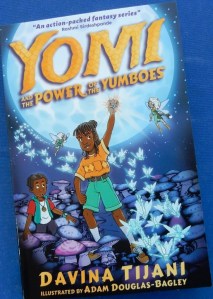
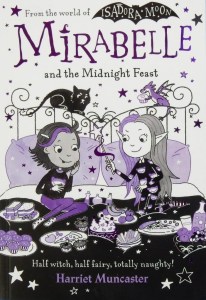
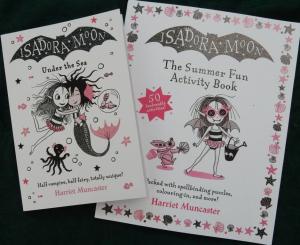
Yomi and the Power of the Yumboes / Mirabelle and the Midnight Feast

Starring Yomi and her younger brother, Kayode, this is the second in an exciting series that is based on African mythology. The siblings, now in Senegal, are officially members of the Sacred Beast League and Yomi is getting bored with sorting her uncle’s paperwork; what she wants to be doing is having another adventure, one that involves finding a Yumboe, the most powerful of African fairies so Uncle Olu’s Beast Atlas says. When she asks her uncle about them he tells the siblings that although the SLB has been looking for these fairies for years none have been found although the Beast Hunters are always on the watch for them.

That night Yomi is woken by a sound coming from the kitchen. Down she goes to investigate and there before her is a Yumboe sampling the contents of the fridge. The little fairy has a damaged wing. She introduces herself as Safari and tells Yomi that she’s been looking for her and needs Yomi’s help in protecting the Yumboes’ secret city from the destructive Beast Hunters.She also says she’s on a mission to find the Yumboes’ most treasured possession, a moonstone, and that nobody else knows she’s asking humans for help.This is just the kind of adventure Yomi has been waiting for so she promises that she and Kay will do their utmost to help. And so they do. But can they possibly outsmart the Beast Hunters? They’ll most definitely need to make use of all their skills, not to mention some special silver energy from that wonderful silver star.

Having faced perils aplenty, this thrilling, fast paced quest with Adam Douglas-Bagley’s powerful illustrations, ends in a way that sets things up for Yomi and Kay’s next mission: South Africa here they come. Bring on some more fascinating African folklore.
For slightly younger readers is

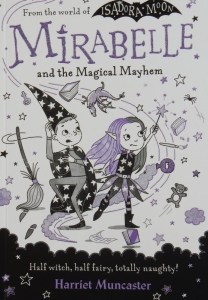
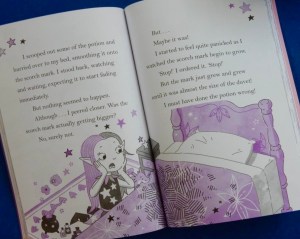
In this story starring the young narrator with a witch mum and a dad who is a fairy, Mirabelle, is excited that she’s going to be spending time in a witchy environment when she goes for a sleepover, and hopefully a midnight feast, at her best friend Carlotta’s home on the other side of town. The friends have been given strict instructions to stay out of Carlotta’s big sister Edith’s bedroom, not to use any magic and under no circumstances to touch Edith’s new Witch-Twitch-Supreme potion kit. However big sister has gone out for the evening and surely it wouldn’t hurt to sneak into her bedroom and have a look around, so long as they stay well away from that special potion kit. But Mirabelle just can’t resist the allure of Edith’s crystal ball and disaster strikes when it slips out of her fingers, through the window and ends up in pieces on the patio.

Despite their best efforts at repairs, they don’t fool Edith, but it’s Carlotta who gets blamed for the breakage. Will Mirabelle find the courage to own up and if so, then what?

I know a great many followers of this enchanting series whose eyes will be all sparkly when they get their fingers on the tenth book wherein friendship, sibling solutions and the importance of owning up are key elements.

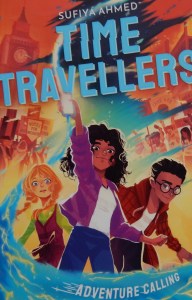
Keisha Jones is a Force of Nature / Time Travellers: Adventure Calling

This image has an empty alt attribute; its file name is dscn0007-1.jpg

The story’s narrator, young activist, eight year old Keisha Jones truly is a force to be reckoned with.  In this book she extends her force field to a second cause, one inspired by her great-aunt Bee and her fight to keep a green space popular with the local community, out of the hands of a property developer. When she learns of the vital importance of trees to life itself (VITs as they become following a talk with teacher, Mr Logan,) she is immediately fired up.

Even more so when she hears of the mayor’s plan to have all the trees in Olive Meadows felled and the land turned into a car park for the mall. Keisha has less than three weeks to formulate a plan. Of course she needs to enlist the other members of the Bee Squad as well as Grandpa Joe, and reporter Rosie Parker, especially when Operation VIT isn’t quite going according to plan. For a start Mayor Branch won’t answer any of Keisha’s phone calls and she’s running up an enormous mobile bill causing Mum to revoke her phone privileges as well as treats. HMM!


Next move a protest at the site on Timber Teardown day. What will happen there: success or failure? And then … As Grandpa Joe says on World Environment Day, “ There’s something inside you, Keisha. A light. It makes the world a better and brighter place!”

Another winner for author Natalie Denny and illustrator Chanté Timothy: readers around Keisha’s age will be rooting for her and her cause right from the outset. Hopefully they too will be inspired to do some tree planting in their own local area.

Suhana, Ayaan and Mia are among the short-listed pupils in an art competition and as a consequence, along with children from other schools, have been invited to visit the Houses of Parliament. Having been given a tour by Mike, one of the guides, they are given worksheets to do in threes on the associated history and the winners will receive book tokens. Suhana, Mia and Ayaan quickly become fascinated by what they discover and unexpectedly Suhana’s mobile phone mysteriously transports them to 1911!

Almost straightaway they are confronted by a police officer demanding to know what they’re up to and talking of a coronation. The children know they have just a few hours to explore so they need to make the most of the situation. Soon they find themselves in what Ayaan thinks is a suffragette march that includes to Suhanna’s surprise, some Indian women. One of them tells her that they are actually not suffragettes but suffragists, explaining the difference: suffragists believe in non-violent action. This was Lolita Roy, one of a group of South Asian women living in the UK at that time who played an important role in getting women the right to vote.

Having started this adventure considering herself something of an outsider, by the end, Suhana feels that she is part of a team with two new friends: the Time Travellers.

As well as a dramatic adventure, this enormously readable book offers a great introduction to how politics works and the role MPs are supposed to play in society. I strongly recommend it for KS 2 readers and look forward to the next adventure of those Time Travellers.

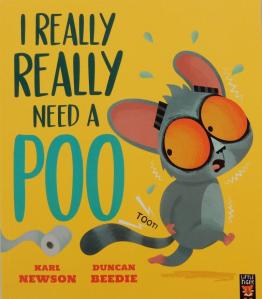
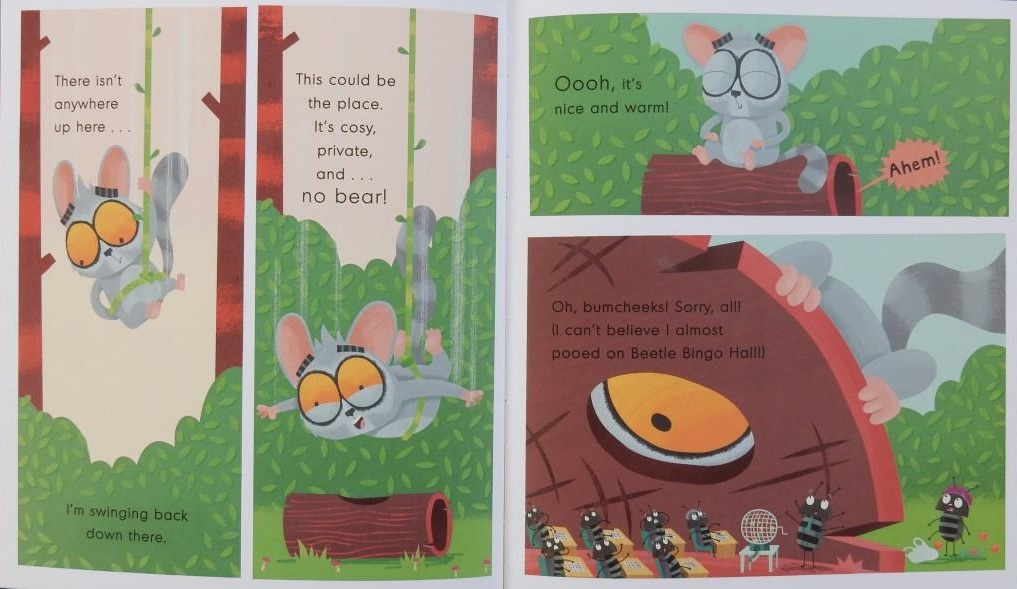
I Really Really Need A Poo

The adorable Bush Baby created by Karl and Duncan is back with another piece of toilet humour.

The trouble here is that a poo really needs to be done in private and the little animal is having a great deal of trouble finding a suitable place to do her dumping. She hunts high and low, has several near messy mishaps

and produces a fair few farts until eventually she wiggle walks her way to a truly palatial building consisting of what appear to be purpose built creature compartments.

Joy of joys, one of them is vacant so in goes Bush Baby.

Yes, the toilet is rather on the large size for so small a user as our furry narrator but nonetheless she gets busy. While seated however, she spies beneath the door a pair of furry feet; but Bush Baby needs to finish her business before she makes an exit.

Having relieved herself at long last, she opens the door and there before her is a very large ursine character who is desperate to use his personalised facility. So desperate that he ignores Bush Baby’s warning and heads right inside … PHOAH! Anyone have any air freshener?

Karl’s increasingly tense rhyming text together with Duncan’s hilarious illustrations of the ever more anxious Bush Baby are certain to induce plenty of giggles when adults share this with little ones be that at home or in the nursery or classroom.

The Armadillo Who Came For Dinner

The latest creature to win the affection of Hotpot in this sixth book featuring the unlikely friends, Wolf, Hotpot and Omelette rolls up one summer’s afternoon when the three are enjoying a relaxing picnic. Having sent the rest of their food flying every which way, what appears to be a boulder crashes into a tree. Surprised at hearing what she thinks is inanimate, crying “Ouch!”, Hotpot goes over to investigate and offer a sympathetic hug. Somewhat disgruntled at having been addressed as Mr Boulder, the thing tells Hotpot that it’s an armadillo – a tough one at that. The tough armadillo’s response to Hotpot’s ‘What’s your name?” is a rather wobbly “I’m … Dizzy.” This prompts Wolf to invite ‘Dizzy’ home with them for dinner and some TLC.

The following morning Dizzy is much better; not so Wolf’s house; that’s a real mess on account of Dizzy’s roly-poly sleeping. Once again Hotpot offers a hug but Dizzy turns her down saying, “I don’t need hugs!” Instead they head outside for a game of football. Dizzy proves surprisingly adept at soccer but having kicked the ball with considerable force,

it goes missing and instead the friends head off to the fair, accompanied by a very enthusiastic Dizzy. So excited is the armadillo that he wrecks the fair and receives a good telling off from Badger. Suddenly Dizzy’s exuberance is gone and off he goes towards some trees.

Is that the last the others will see of the armadillo or will he, as Wolf reassures Hotpot, come back? And if so, what of that oft-refused hug?

Joëlle’s illustrations be they panels, double spread scenes or vignettes exude warmth and gentle humour making every turn of the page a delight and the ideal accompaniment to Steve’s text wherein he makes clever use of alliteration. Those familiar with previous titles in this series will welcome the return of Wolf et al. but equally, anyone new to the threesome will thoroughly enjoy their armadillo adventure.

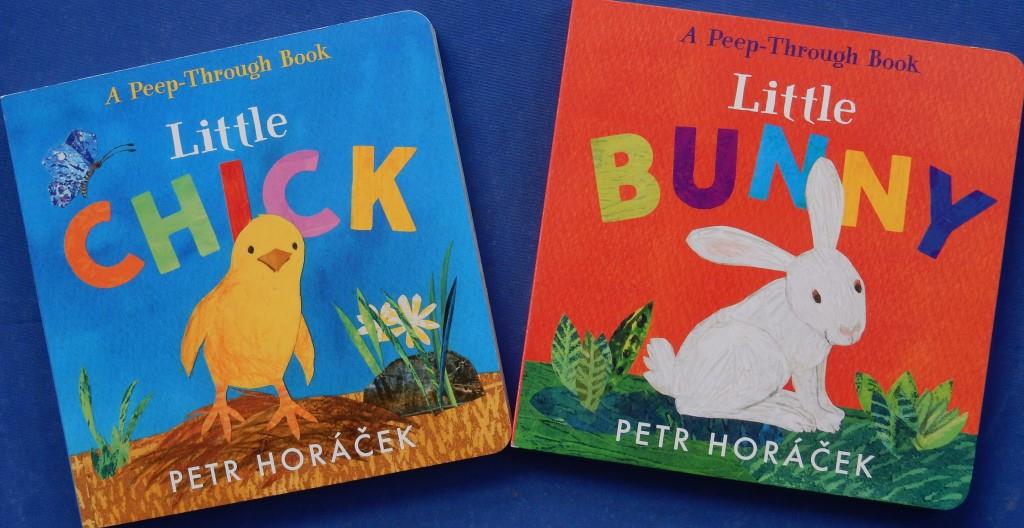
Little Chick / Little Bunny / One Little Tadpole

Vibrant artwork with cutaway pages and cleverly placed die-cuts, together with simple question and answer texts, will captivate little humans as they follow the titular animals through their simple stories.
The setting for Little Chick is the farm where she encounters in turn, a pig, a smily cat, a large cow and a tiny mouse, before suddenly emerging onto unfamiliar ground where a friendly horse assists the feathered infant in finding its mother, a mother that is also looking for her little one.


Little Bunny’s adventure takes place in the woods. There are lots of birds to spot as well as a friendly brown bear, but in the bushes lurks a red fox that scares the little leporine. Happily though a kindly owl leads the way to the safety of Mummy rabbit’s outstretched paws.

With his trademark glowing colours, Petr Horáček’s interactive ‘peep-through’ books will be enjoyed by adult sharers and the very youngest listeners. No child is too young for books such as these.

For an older audience is

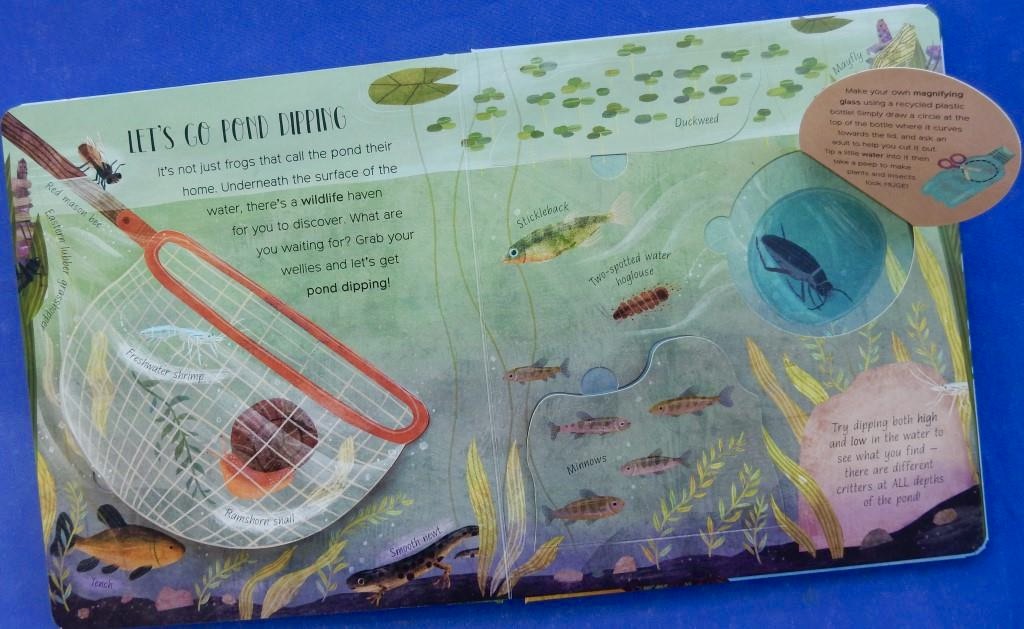
With more than thirty flaps there is plenty of exploring to be done between the covers of this large board book. Besides the life cycle of the frog there is information about the birds, insects, fish, mammals and the flora likely to be encountered in or around a pond. However, not all the creatures – for instance the two frog species illustrated on ‘The Circle of Life’ spread’ – are ones that UK readers would come across. Nonetheless this is a book that encourages children to use all their senses when exploring in the real world and to this end includes a spread on pond dipping.

It’s also good to see, on the final spread, the suggestion that readers create a miniature pond of their own as a way of helping nature to thrive.

Some of the illustrations give only an impression of the animal rather than an accurate means of identification so, having sparked a child’s interest, one would need to refer to a field guide rather than rely on this book’s visuals.

Can I Sit in the Middle? / Can You Catch the Bunny?

This image has an empty alt attribute; its file name is dscn9949-3.jpg

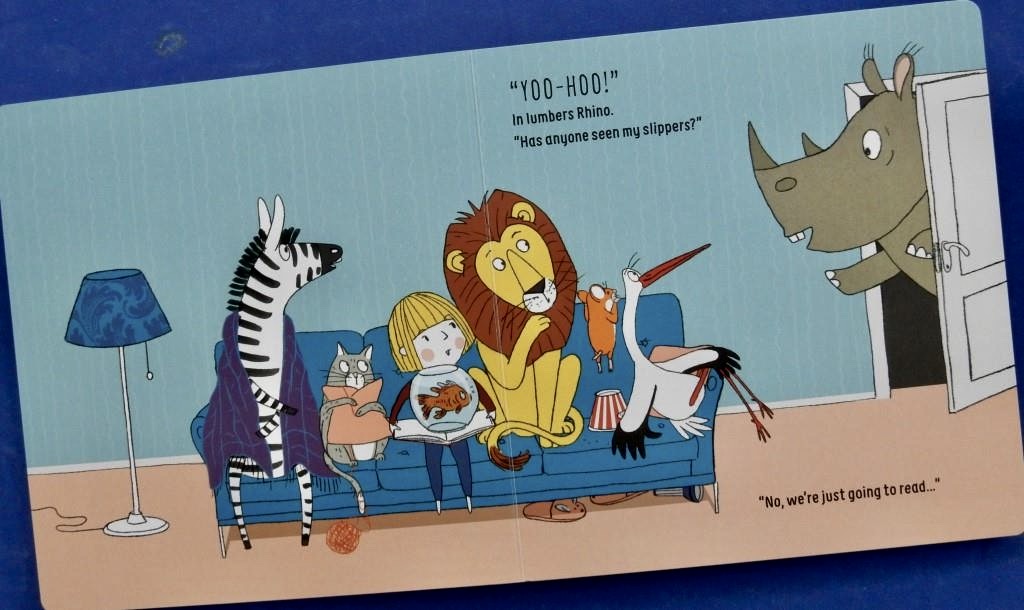
A child sits on the sofa to read with Hamster. The enthusiastic creature alerts the other animals – zebra, cat and lion – to join them. Just before the story starts Stork arrives, but then Cat decides to try and take possession of the cushion and Hamster gets up, fetches Fish and hurrah! Let the story begin. Or maybe not: some rearrangement of listeners is demanded and then the patient story reader can share the book. Oh! I spoke too soon for Rhino has mislaid a pair of slippers.

This image has an empty alt attribute; its file name is dscn9950-3.jpg

The large pachyderm upends the sofa to retrieve said slippers and OOPS! They all tumble into a heap. Does that mean no story? Happily thanks to a deft rearrangement of furniture and something else that Cat had found under the sofa, a perfect book sharing situation is created and finally, whoopee! it’s story time at long last.


As this drama unfolds small children will enjoy watching the chain of events, delighting in the details in the gently humorous illustrations and wondering who next is coming through that door to be part of the audience on the sofa.

This image has an empty alt attribute; its file name is dscn0001-1.jpg

Addressing the target audience of very young children directly, the author asks that they assist little Bunny in finding his way first through the vegetable patch and then out into the forest and from there around the garden and the orchard until finally he reaches the safety of the burrow wherein the rest of his family are waiting. With a wealth of treasures collected on his adventure, little Bunny is more than ready to share his spoils with his fellow rabbits.


Little humans will certainly hone their fine motor skills as they use a finger to touch and trace the trail on each spread as well as develop their powers of observation when with the help of an adult sharer, they look at the details – vegetables, other small creatures, fungi, flowers, mammals, and lots more besides, in each of Linda Tordoff’s scenes.

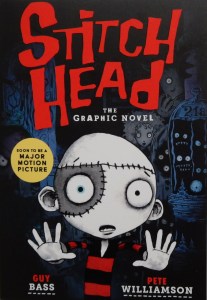
Stitch Head: the graphic novel

This image has an empty alt attribute; its file name is dscn0003.jpg

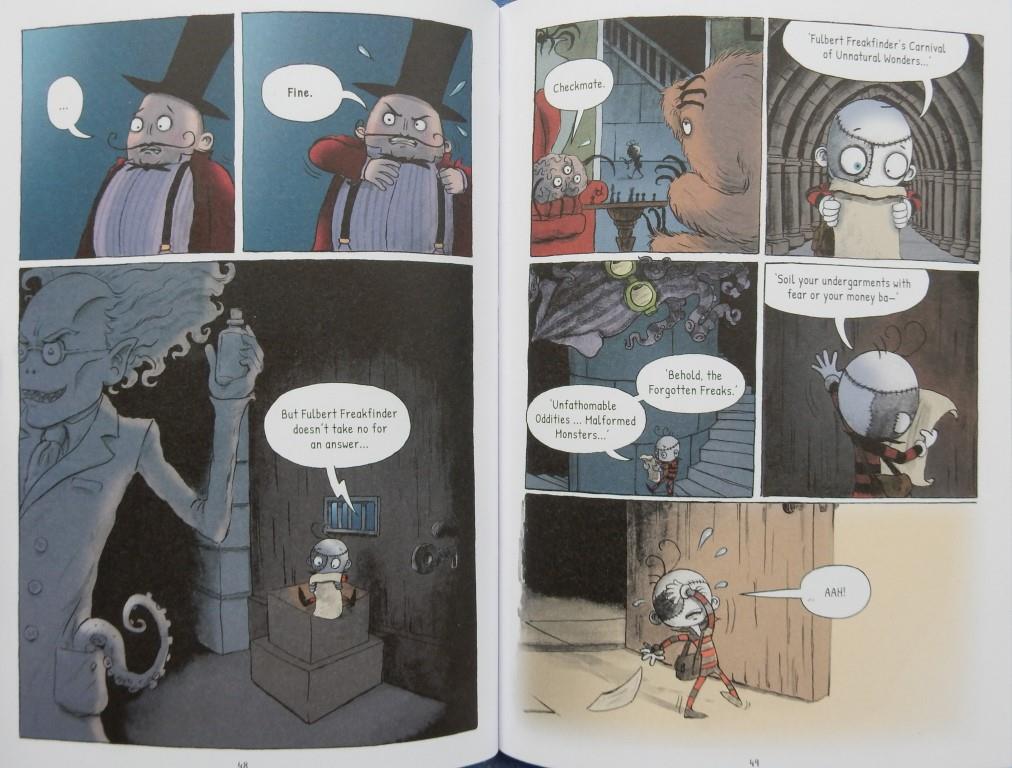
Stitch Head is a not quite human, long forgotten lonely little creation made by a mad professor in the sinister Castle Groteskew. Stitch Head stays around the castle endeavouring to ensure his master’s other creations be they with multiple limbs or missing eyes, don’t go wild in the nearby town and bring punishment down on his eccentric master.

After years of working behind the scenes, Stitch Head’s life is upended when Fulbert Freakfinder’s Travelling Circus rolls into his home town of Grubbers Nubbin and the owner and ringmaster demands entry. He’s on the lookout for further freaks to join his show and says he will make Stitch Head a star.

This image has an empty alt attribute; its file name is dscn0005-1.jpg

What will be the response from Stitch Head? Will he venture beyond the castle walls or not?


Darkly monstrous fun and sometimes a tad gruesome, bursting with weird beings this spooky graphic novel version will appeal to those who prefer stories presented in a highly visual format. Many children are predominantly visual learners and so the new form will likely attract a different audience from the original book although I suspect established fans of Stitch Head will also enjoy this. Pete Williamson has done an absolutely amazing job with the art.

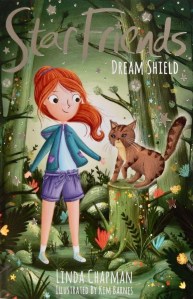
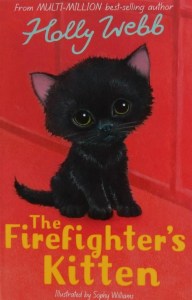
Star Friends: Dream Shield / The Firefighter’s Kitten

These are additions to popular series for younger readers: thanks to the publishers Little Tiger for sending them for review.

In case you’ve not met the Star Friends, Maia, Lottie, Sita and Ionie before, they share a special secret – they have magical animal friends – Star Animals – who help them learn magic and fight evil!

There’s excitement in Westcombe: the village is hosting a scarecrow competition and the Star Friends, along with lots of other residents are participating. Strangely though soon after, lots of people in the village start feeling very sleepy and completely lacking energy. Could it be some kind of weird bug that’s doing the rounds: the friends think otherwise. It’s down to dark magic, is what they think. They really need to do something to stop it but that’s going to be a challenge on account of their own sleepiness. It’s something to do with Shades, but where are they hiding?

Can the girls solve the Shade mystery and make things right again? The story ends on a cliff hanger, which will leave readers eagerly waiting the next episode in this deservedly popular series.

Lola’s mum has a new job as crew manager of a team of firefighters. This means that the family has moved to a new town where Lola doesn’t have any friends and must start at a new school. On the positive side their house has a garden and her parents have agreed that once they’ve settled in, they will get a cat.

As Lola walks to school on her first day accompanied by her dad, a boy calls to her, introduces himself as Noah and tells Lola that they will be in the same class. Noah has three cats and that prompts Lola to tell Noah about her cat hopes. Next day as they walk to school the two children see a tiny kitten huddled high up in a tree. On their way home, the kitten is still there and so too are a crowd of people, a fire-engine and to Lola’s surprise, her mum.

Eventually Lola’s mum rescues the creature but nobody knows where it belongs and the animal shelter is completely full. It appears that there’s only one place the kitten can go that night … Lola quickly develops an attachment to the newcomer but will he stay?

With themes that children will immediately relate to: moving house, making new friends and having a new pet, this latest in the prolific author’s animal stories, although slightly predictable will appeal to readers from around six who will love Sophy Williams’ visual portrayal of the kitten.

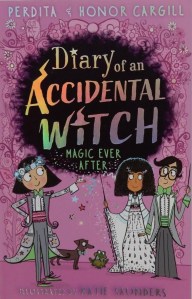
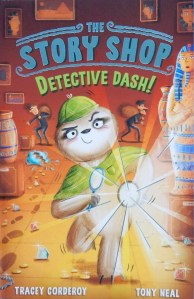
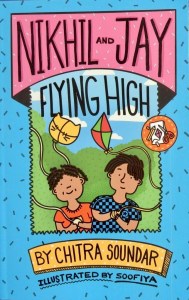
Diary of an Accidental Witch: Magic Ever After / The Story Shop: Detective Dash / Nikhil and Jay Flying High

This image has an empty alt attribute; its file name is dscn9922-1.jpg

The Easter holidays are fast approaching for Bea Black. First though she needs to discover what is wrong with her Dad. In addition there’s the upcoming annual Eggastraordinary Eggy Day and Bea is still working on improving her spelling. To keep her sweet, Bea is helping at Taffy’s teashop and being paid in cakes. You may be surprised to learn that Bea’s Dad is also working obsessively on his spells, which makes his daughter suspect that something is up.


When Taffy takes Bea into her confidence things become clearer but she’s charged with keeping Taffy’s proposal plan a secret, which is far from easy. Why, Dad wants to know, can’t he wear his favourite scruffy jumper to the venue; after all it is supposed to be a newt-watching trip..


Despite near disaster, the couple agree to get married and then there’s just the matter of a wedding and all that entails, to focus on. Bea is definitely going to need lots of help from friends and family.
Without giving too much away, let’s just say that Bea’s final diary entry in this book starts ‘BEST.NIGHT.OF.MY.LIFE’.


You can’t ask for more and readers will certainly be more than satisfied. Team Cargill and Saunders have again created a winner.

This image has an empty alt attribute; its file name is dscn9918-1.jpg

When shopkeeper Wilbur and his assistant, Fred Ferret arrive in their shop early one morning they’re puzzled to hear a strange sound. It turns out that a ferret has fallen asleep and is snoring. Once awake she introduces herself as Snoozy Suzy saying she’s eager for an adventure.

Suzy elects to be a detective, Fred adds some ingredients to the Story Pot, stirs the mix, and POP! the two of them find themselves in The Museum of Wonder where they learn, a robbery has taken place. Suzy informs the strange man, Ivar Plan busy with a display of lamps, that they’re there to solve the case of the cursed teeth. It turns out that Ivar is actually a robber and the lamps are part of his clever plan to steal priceless articles from the museum. Can Suzy and Fred save the day?


In episode two I S-Pie Trouble!, the pair are at the seaside where one of the posh hotels is in uproar due to the disappearance of Chef Humble who is supposed to be presenting his delicious new creation, the ‘Whatever You Wish For Pie’ at a banquet that coming Friday. After a night’s sleep Fred and Suzy peruse the clues they’d found the previous day and are about to have breakfast when they learn that a new chef has turned up offering to step in and save the banquet – at a price. Things seem decidedly fishy to the detective duo. Will they find the real chef in time for the Friday night banquet?


The riverside village of Watery Bottom is where the third episode is set. Here Suzy and Fred are tasked with discovering the truth about the Demon Duck of Doom. To do so they need to participate in a Doomseeker Expedition led by young April Button. But what is she up to and why?


Full of surprises, this fourth Story Shop book with its wealth of fun illustrations is again just right for younger readers.

This image has an empty alt attribute; its file name is dscn9938-1.jpg

The fourth book in the charming series for new solo readers starts one rainy day when Appa goes out to the shed to retrieve to board so the boys can play Dayan but the cat distracts him, he takes a tumble and injures his ankle. Can several rounds of the game, together with a cup of tea and a packed of frozen peas on his foot make him feel better?


Three further stories about the everyday life of Nikil, Jay and their parents follow. They participate, somewhat reluctantly at first, in the local Clean and Green Club at the neighbourhood park and then decide it’s a more enjoyable way to spend a Saturday than they’d anticipated.
Next comes a day of kite flying though they unexpectedly have to make the kites themselves as those that had been ordered aren’t delivered in time and finally, Jay gets himself in a stew about tidying up and soon discovers that doing things without his brother is far less enjoyable than doing them together.


As always bold, cheerful black and white illustrations by Soofiya complement Chitra’s telling of these tales, which are based on her own upbringing.

Find Peace in a poem

Twenty poets and four illustrators have contributed to the latest Little Tiger collection, this one being a celebration of mindfulness. Mindfulness I see as the state of being wholly in the present, completely awake and aware of each moment, fully engaged in one’s surroundings and accepting that experience without judgement.

The range of poets here is contemporary and interesting, and included are new poems and some previously published ones. such as Michael Rosen’s The Rhythm of Life and, Zero Weil’s Hide and Seek. Therein she describes looking for quiet and after going to the woods and the sea, concludes ‘I found quiet / it must have been hiding / the whole time / inside my words / inside of me’.

I’ve loved that one since discovering it in Cherry Moon.

Each poet in their own way takes an everyday object or occurrence and transforms it into something memorable and in so doing is asking the reader to look anew at the world. Two poets call on readers to put pen to paper, to preserve (Carter) or let go of (Wakeling) their thoughts. In James Carter’s How Easily, he reminds us how special ’moments disappear like sand.’ Moments such as the sight of raindrops sparkling on a lake and ‘The night / you tried to count the stars.’

Kate Wakeling suggests if you’re feeling down or troubled by your thoughts, settling wherever you are, taking a pen and without stopping or thinking, allowing it to explore, in words or pictures, squiggles even. In so doing you may well find ‘some bright new / thoughts begin to / grow.’ It’s certainly worth trying The Ink Cure next time you feel your brain knotting up.

So too is Nikita Gill’s A Lesson from the Trees. Offering not words or thoughts but a reassurance ‘they will listen to you too, / and show you that the answer / to all life’s storms / is to be patient / and stand strong.’

Each double spread is beautifully presented and the four illustrators have been mindful of not overwhelming the words with their images.

Add to your poetry collection be that at home or in the classroom.

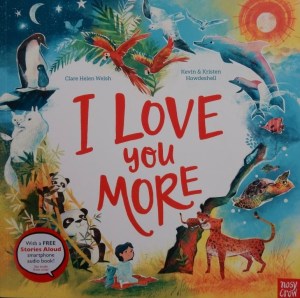
I Love You More / Love is in the Little Things / I Turtley Love You

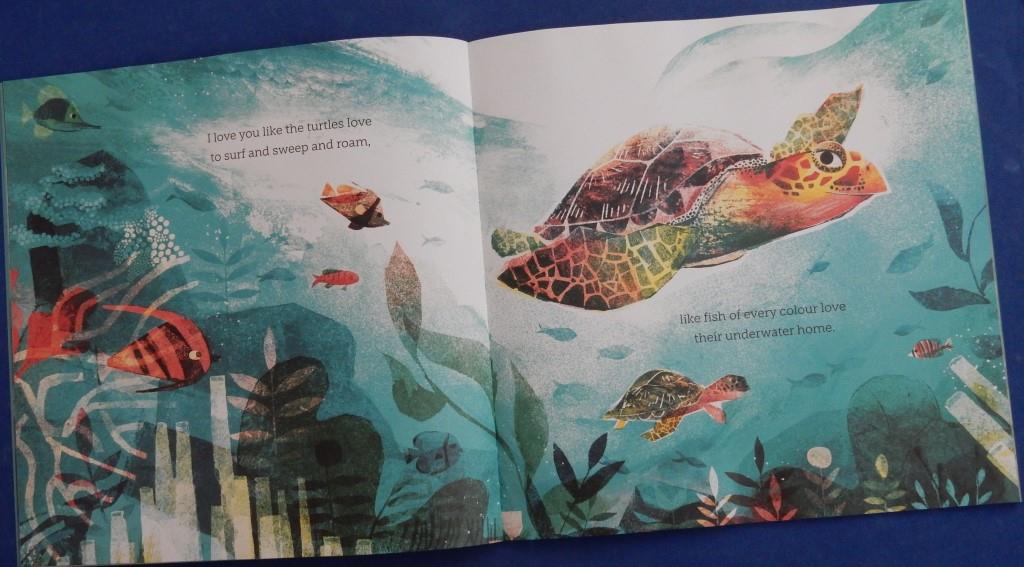
Parental love and the wonders and beauty of the natural world come together one bedtime when Rae’s Mum attempts to tell her daughter just how much she loves her. Clare’s lyrical text in combination with team Howdeshell, the illustrators, convey the heartfelt message effectively, showing that such love is unconditional and life long.

Herein we encounter among other creatures, waddling penguins and snoozy seal pups atop the ice, gliding eagles, desert dwelling camels and lizards, various marine creatures ,

majestic big cats and pandas as well as celestial bodies – ‘sparkly planets shining brightly in the night’ and more. As the two finish counting the stars in the sky, Rae realises the enormity of her Mum’s love, .
a love that even then Mum feels she’s not expressed sufficiently strongly- and we see the two snuggled lovingly together.

The mixed media illustrations of the animals in their home environs suggest that the way is left open for Rae to change as she too explores beyond her immediate home and surroundings.

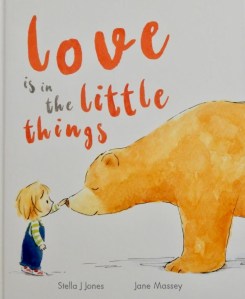
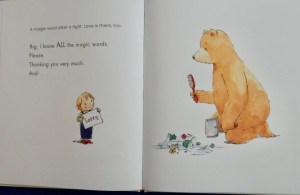
Small – a human child and Big – a large bear love one another very much, but how do they show that love? Stella Jones’s first person text and Jane Massey’s heart-warming watercolour illustrations show that essentially as Big says, ‘ love is made from the little things’ – every day things such as holding hands, making and taking tea together, a goodnight kiss, hugs, saying sorry,

extending a helping paw or hand. As Little realises as they look skywards, “Love is made of ALL the little things. Just like the trillions of tiny twinkly stars make the forever of the deep blue sky.’
Gentle, reassuring, and sometimes exciting like those ‘tingletastic, tummy jumbling, giant-enormous glorious fireworks and starbursts.’

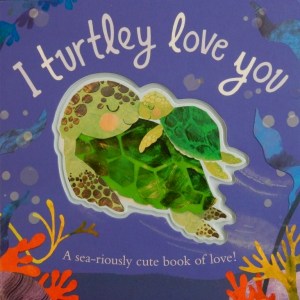
This board book takes readers beneath the ocean waves where, through Harriet’s gentle rhymes and Bryony’s engaging illustrations they will encounter several ocean creatures and their little ones. There are turtles, seahorses, clownfish, jellyfish and more either playing or snuggled up together. The emphasis on each spread is the love the adult gives to the little one.
With cut-outs and stand-outs on each spread, little humans will enjoy the tactile opportunities offered by interesting watery, collage style visuals. Some adults might find the words slightly too sugary.

The Duck Who Came For Dinner

It’s the turn of a fluffy little duck to become the guest in team Steve and Joëlle’s fifth in their series featuring animals who came for dinner. This story begins one windy day when Wolf, Hotpot and their crocodile, Omelette are chasing washing that has been blown off the line. Instead of a garment, Wolf catches a duck who now has a wonky wing and a bumped head. The latter has resulted in memory loss, so Hotpot decides that because she fell from a tree, they’ll call the little duck Apple. They invite her so spend the night with them on account of her wibbly wobbliness and after Wolf has given some first aid to Apple’s wing, they all dine on vegetable soup.

Next morning Apple decides to start flying practice, which proves pretty hair-raising and Wolf suggests that a trip to the river might be a better idea than more flying. Determined to show her independent spirit, Apple waddles boldly up the hill

but in her excitement, she fails to stop at the top and ends up dashing right over and splashing into the river, followed almost immediately by Omelette who proves to be the inferior swimmer.

As the days pass, Apple’s wing becomes stronger but to her distress she still can’t fly very far. Then comes another sudden gust of wind whisking away the washing once again. The mention of the word kite gives Apple an idea.

Next day it’s still windy but it’s Hotpot that is whisked away. Who will come to the rescue? And what will this lead to? …

Existing fans of Wolf and Hotpot’s adventures will love this new one; but whether young children are already familiar with their previous stories matters not: with its unconventional little duck, this is an absolute delight.

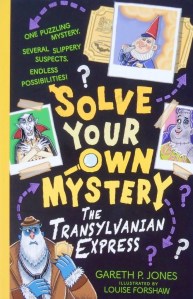
Scrap / Solve Your Own Mystery: The Transylvanian Express

These are two recently published adventures from Little Tiger – thanks to the publisher for sending them for review.

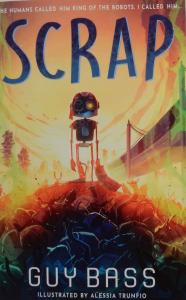
This is a sc-fi, action-packed adventure that will intrigue you from the outset. It stars loyal robot and former king Scrap, and the only humans left on the planet, two young sisters Paige and Gnat who are struggling to survive against the odds. The setting in the future is Somewhere 513, where the robots intended to prepare the way for human habitation, decided to keep it for themselves. A battle was the result and the other robots fled leaving King, who sided with the humans.

Fast forward a decade and a mangy robot is living a solitary existence on the Pile – an area of abandoned junk – where he has carefully constructed himself a home in which to see out his days. As he reflects upon how desperate he is to belong to his surroundings his thoughts are interrupted by the appearance of two figures, their faces hidden beneath their clothes. He tells them to get lost, but convinced that this robot is the one they’ve been searching for, the girls tell the robot that their mother had told them to find him. At least Gnat believes it’s King, but Paige is far from certain.

When the robot refuses to reveal his name, Gnat decides he is to be called Scrap. Paige is quick thinking, slow to trust Scrap on account of his appearance mainly, but very loving towards Gnat. Gnat in contrast is open-minded and her manner of speaking is delightful.

Scrap really wants nothing to do with the girls but his conscience won’t let him abandon them to the Hunters who are searching for them and despite his grumpiness he proves to be full of heart, loyal and caring towards them.

We also meet Mayor Harmony Highshine, full of evil plans, and Morten Prometheus, playing a role he doesn’t like; indeed new characters keep on appearing as the plot twists and turns with Scrap, Paige and Gnat facing various enemies, escaping and then finding themselves in further danger.

All this makes for a thrilling and thought-provoking adventure, not least on account of the upgrading issue. There’s humour too though, partly thanks to Gunner whose phrases that aren’t quite right; “charm down”, “hazard a guest” and “I’m folding all the cards” will surely make you smile and there’s a wealth of other wordplay too. Then we have Alessia Trunfio’s superb illustrations.
Bring on the second adventure of Scrap, Paige and Gnat.

Want to be a detective? Then try this the fourth of this series that puts the reader in charge of the direction in which the mystery story goes. Like the previous ones, it features characters from the town of Haventry.

You and your yeti boss, Klaus Solstaag are seven days into a railway journey aboard the Transylvanian Express, destination Castel Ursprung, home of the vampire Count Fledermaus. However, before you get there, a mystery needs .solving: Night Mayor Franklefink has vanished from the train. Somebody aboard must have played a role in his disappearance, but who has the strongest motive?

There are several possibles. Could it be Franklefink’s archnemesis Bramwell Stoker? Or is Sandra Rigmarole, elf District Governor and colleague of the Night Mayor, a more likely suspect? Maybe Franklefink’s monster wife has turned against him? You dear reader, decide!

By following the prompts and choosing what route to take, you will be lead down various paths and be offered a number of clues to assist you in solving the crime. One thing I can assure readers is that this trip will be anything but boring and that eventually the perpetrator of the crime will be unmasked.

With a wealth of mock scary illustrations by Louise Forshaw to add to the fun, this will be especially welcome for readers who enjoy problem solving.
Star Friends: Enchanted Mist / Magic Keepers Tunnel Trouble

We’re back with the Star Friends, they who have a special secret in the form of magical animal friends – a young fox, a fallow deer, a red squirrel and a wildcat who help them learn magic and fight evil.
This group – Maia, Ionie, Sita and Lottie and their animals is being watched by four other forest creatures in need of their help.The following morning after a dream Maia senses that something is wrong; could something bad be about to happen?

Then at school, a classmate Maddie who has only recently joined and doesn’t really have any friends, approaches Maia and asks if they could team up for the Super Science Week, one of the exciting events being planned for the end of term and Maia agrees. Super Science is being organised by new teacher, Miss Amadi and the class have a session that involves using essential oils and making perfumes.
After this session, all of a sudden everyone wants to be friends with Maddie. Why is this? The Star Friends have a feeling that it’s something to do with magic. But from where is it coming? Maddie, or somebody else? They are determined to find out.

Cleverly mixing magic elements with real life issues about primary school relationships that readers will relate to, this is an addition to a series that continues to feel fresh and fun, made even more so by Kim Barnes’ illustrations.

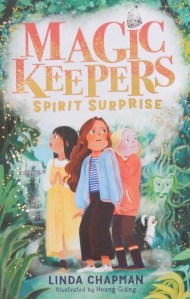
Determined to learn all they can about the curios left by Ava’s Great Aunt Enid, she and her friends want to ensure that chaos-causing magic doesn’t break free again. They’re distracted at home by younger siblings, but then on the way to school Ava’s little sister, Mai, mentions seeing a monster at her window the previous night. Shortly after, Mai takes a tumble on the ice and as Lily goes to help her up, Ava notices movement in the undergrowth. An animal or something else?

Then again Mai speaks of a monster visiting her and their Tibetan terrier, Pepper is also acting anxiously. Little by little Ava becomes more convinced that something magic is going on. Can any of the crystals help her understand? It transpires that a stone gargoyle has apparently come to life and has been visiting the Curio Room and now a crystal has been taken.

Not long after, something much more important is taken by the gargoyle, which disappears with its catch into some underground tunnels. Readers will likely feel frissons of fear when this happens. The mystery deepens and the friends really must use all their resources to get to the bottom of what exactly is going on and why.

An intriguing tale of camaraderie and the importance of sibling bonds that established followers of the Magic Keepers will love; those new to the series would do better to read the previous two books first.

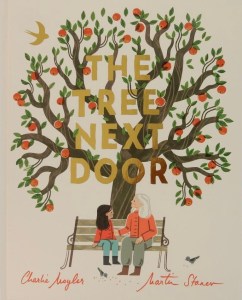
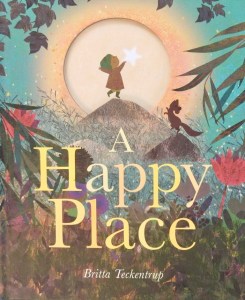
The Tree Next Door / A Happy Place

These are two new picture books from Little Tiger – thank you to the publisher for sending them for review.

At the bottom of a long garden a tree stands proud. Both garden and tree are loved, especially by their owner, an old woman. She gets companionship and rewards aplenty from her garden and it keeps her busy.
One day as winter is giving way to spring, a new neighbour arrives and catches sight of the tree next door. From then on she visits the garden whatever the weather, or the season, talks with the owner and asks questions of her.

A year passes and throughout that time the girl has found much joy in the old woman’s garden but as the chilly wintry days come, the garden gradually fades.

The old woman no longer visits her garden; this the girl notices and soon begins to worry. Will she be lonely? Or will she know that her young friend and others around still think of her. She decides to do something for the woman and asks all the other neighbours to participate in her plan. Every one works together until finally …

A sweet story of friendship and community spirit, all watched over by a very special tree.

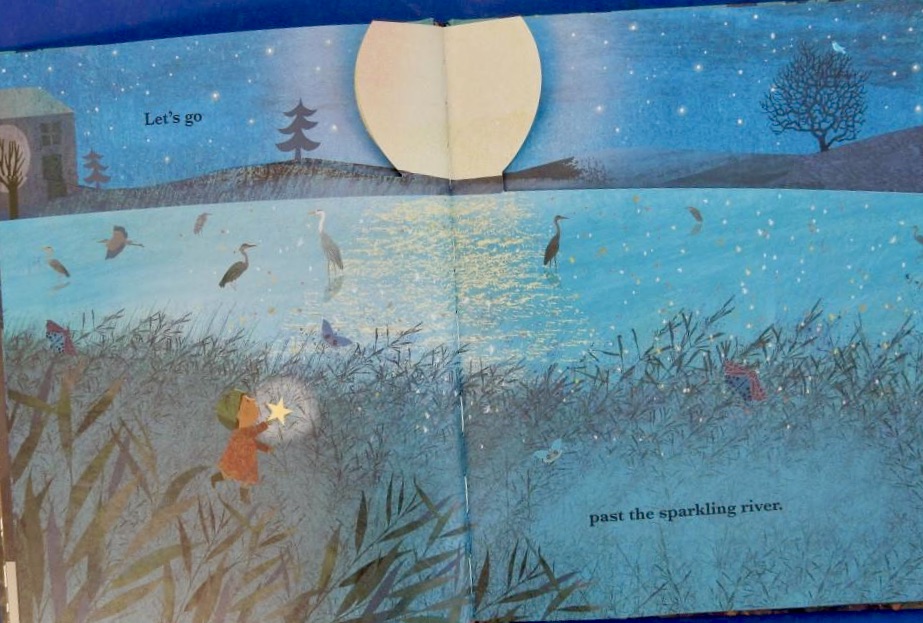
Clever use of peek-through die-cuts and cutaway gorgeously illustrated pages work in tandem with a straightforward poetic text telling of a small child’s moonlit walk, guided by a star, in order to find his happy place. In so doing the intention is that the child then falls fast asleep.

Dream or not, the scenes of the natural world – the moonlit river all a-sparkle and dotted with wading herons,

the forest with dancing squirrels and foxes, stoats and hares, work their magic and finally, watched over by the star shining brightly through the bedroom, we see the child finally slumbering peacefully.

A beautiful bedtime story to share with little ones, especially those who, like the protagonist have trouble dropping off to sleep.

Heavy Metal Badger

Badger has music – rock music – deep within and it’s bursting to come out. So much so that he can hold it no longer; it simply explodes as does Badger right out of his sett. Grabbing two sticks he strikes at the trees, disturbing Woodpecker who is not impressed.

Thinking perhaps he needs some music lessons, off he goes , first stop Mrs Smythe’s class but he discovers that the recorder definitely is not the instrument for him. Back in the woods he spies a band of ants marching in line and in rhythm to their own playing.

However, things don’t go as well as Badger was hoping: the result is far from satisfactory for the ants, and the luckless Badger is forced to beat a hasty retreat.

So what about the possibility of joining the church choir; disaster strikes, though the choirmaster is encouraging, but off Badger goes feeling more than a little dispirited. Suddenly he sees a flyer advertising for a lead singer. Organised chaos seems to have been following Badger but could he finally have found the tribe he’s been searching for?

With a plethora of rock-themed puns, both verbal and visual, Duncan’s rhyming tale will have listeners wriggling on their seats in glee at the splendid silliness and cleverness of this Beedie offering, which essentially is a search for one’s true identity and a celebration of finding a way to express oneself.

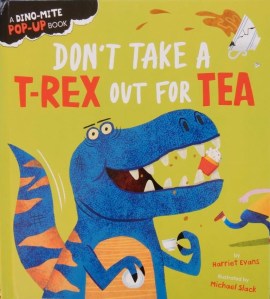
Don’t Take a T-Rex Out For Tea / My Big Playbook / Polly Put the Kettle On

The five dinosaurs lurking between the covers of this large format board book practically leap off the pages as you turn them. In turn young children will delightedly encounter a stegosaurus – a decidedly bad sport that can’t bear to lose, a pterodactyl, not a creature to challenge for a race, then comes a diplodocus, an unsuitable dino. to try to hide in your bedroom on account of its colossal size, a triceratops that will put paid to any musical activities you might engage in, and finally be warned: T-Rex is always on the lookout for a tasty treat, so don’t even contemplate inviting one out for tea.
A rhyming text accompanies the prehistoric pop-outs depicted in Michael Stack’s splendidly silly scenes.

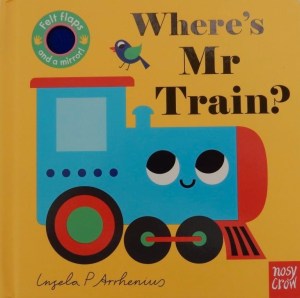
A large format board book, with a die-cut and felt flap to explore on every page. There’s a double spread devoted to numbers 1-5, with other pages of things that go, things you would see outside, shapes, weather-related words. things to find at home, colours, animal sounds and finally, bedtime, which includes a surprise hidden mirror.
Ingela P Arrhenius’ bright, enticing illustrations show either separate items each set against its own coloured background, or a whole scene.
Interactive fun learning for the very youngest to enjoy at home or in a nursery setting.

The local cafe is the setting for this version of a favourite nursery rhyme, its customers being a variety of anthropomorphic animals and Polly is a panda. Once the tea has been duly served, it’s down to pooch, Sukey to remove it from the stove. Off go all the tea drinkers and cake consumers waved on their way by Polly.
One of the ‘Sing along with me!’ series that has a sliding mechanism to add to the enjoyment on every spread and a QR code on the back cover to scan, which enables you to listen to the song. With ever fewer young children starting nursery knowing any nursery rhymes, this is a good place to start.
Imperfectly Perfect

Maria’s day starts badly; she accidentally damages her brother’s favourite book as she’s turning the pages a tad too fast. Robbie is far from pleased, accusing his little sister of ruining the book and stomping off. Needless to say, Maria is upset and in comes a family friend, Bea, with a timely hug. This she follows with a story about the day a bowl she’d given to Maria’s mum broke and was repaired with love and golden glue, making it imperfectly perfect.
Maria remains upset so Bea suggests a cheering up walk. During their saunter Maria looks for other imperfectly perfect things around and about,

and by the time a thunder storm breaks, she’s starting to feel better. As well as seeing beauty in the stormy sky, she has an idea about her brother’s book.

Back at home, Maria and Bea then work together carefully making repairs to Robbie’s precious book.

How do you think he will react when Maria goes to his room with an apology and the book?

A sweet and important story about accepting and embracing imperfections, and making amends, engagingly told and illustrated. Hoang Giang’s illustrations underscore the author’s empowering message about discovering beauty in all manner of unexpected places.

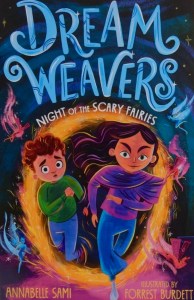
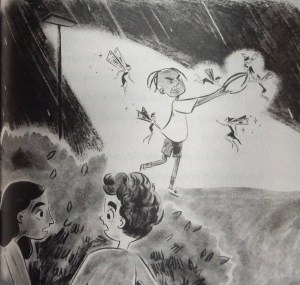
Dream Weavers: Night of the Scary Fairies

The night before going into Year 5 Tito starts having strange dreams. He’s on a clifftop in his Spiderman pyjamas to see a field full of strange tiny beings flitting about, one of which seems to take a chomp at his big toe.

The following morning, Tito’s teacher asks him to look after a new pupil, Neena, from Pakistan. Trying his best to engage her in conversation, Tito gets virtually nothing from her the entire day, though other members of his class start acting strangely At home he feels he’s failed in his task and researches the Chitral region of Pakistan, Neena’s erstwhile home, discovering that it’s rich in folklore.

Next day in school he tells Neena about his peculiar dreams and this gets her talking. She tells him about the jinn of her hometown – the paris – and on hearing this Tito says he’s seen something similar in his dreams. Neena asks him to draw whatever symbol comes into his head, first on paper and then before he goes to bed, on his hand. That night the two meet in Tito’s dream wherein he’s told they are both Dreamweavers.
For the next few nights Tito and Neena meet in their dreams, but during the day, Tito is tired and although his friends Tiffany and Murray begin to get friendly towards the new girl, he doesn’t
take much notice of what’s happening to them until he talks further with Neena. She suggests they try going into Tiffany and Murray’s dreams to find out what is wrong and so be able to help them.

Before long, the Dream Team as they call themselves, discover that the paris are playing tricks on Tiffany and Murray, changing their personalities.

At school they see that the rest of the pupils also have new identities. How is this possible?

In their dream travels, the two children encounter a scary man: Neena’s uncle, whom she says is a Dark Weaver, a power-hungry Dreamweaver gone rogue. Now a new plan is needed, first to undo the spell put on the paris, so they revert to their benevolent ways and then to return things to normal in the waking world.

The story ends with Neena introducing Tito to her family members, and a pact is made to put paid to the activities of Dark Weavers. That though, must wait for the next book.

Annabelle Sami certainly transports the reader to other worlds in this tale and despite some scary moments, she keeps things light so child readers are unlikely so have nightmares. I love the way Neena and Tito’s friendship develops and Forrest Burdett’s illustrations provide further details, especially of the characters’ feelings.

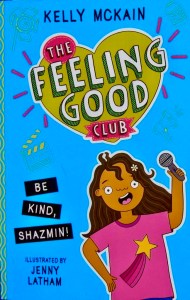
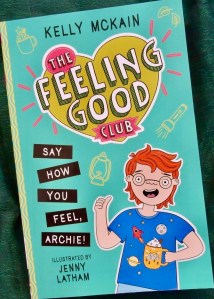
Sona Sharma: Wish Me Luck / The Feeling Good Club: Be Kind, Shazmin!

With its Tamil Nadu setting, the Sona Sharma series is one of my very favourites for younger readers. In this fourth story, Sona’s much-loved teacher is getting married and the entire class has been invited. This she learns on the last day before a mid-term break. So far so good, but then Sona sees on the invitation that Miss Rao’s husband to be comes from a place called Vijayawada that’s several hours away by train and by tradition the bride moves to live in her husband’s city. Definitely not good and Sona and her friends want to try and stop this happening so they start making a ‘lucky’ plan to keep Miss Rao as their teacher.

With this in mind, despite her list of things to do during the break, Sona is preoccupied with the possibility of having to bid farewell to her teacher. So. aided and abetted by Elephant, she begins to search for lucky charms . The night when her Amma hears about all of this, her response is, “Fortune favours the brave, Sona. … If you want something, go and make it happen.”

Sona’s way of doing so is to write a petition, get all her friends to sign it, as well as others at the wedding and then after the ceremony, hand it to their teacher. She puts a great deal of effort into this project; but what will be the outcome?

With its theme of embracing change, this enchanting story exudes warmth and family love throughout and as always, Chitra has woven several South Indian Hindu customs into her narrative including some details of the Kanyadaanam ceremony at the wedding

and Paatti’s story about Rudraksha beads, prompted by the seeds Sona’s friend Renu adds to their collection of lucky charms. Whether read aloud or alone, Jen Khatun’s illustrations add to the delights of the book.

‘Sometimes I miss the old Charita so much it actually makes my stomach hurt.’ So writes her younger sister, Shazmin in her journal at the start of this third episode in the series wherein Bella, Archie and Shazmin help one another to face and cope with the things that worry them by means of supportive friendship and mindfulness activities.

Shazmin is upset that her elder sister, Charita, now a teenager, no longer wants to hang out with her. In a desperate attempt to impress Charita, she persuades Bella and Archie to participate in the making of a video with her, but she keeps the real reason for so doing to herself.

The three friends start working on the video but things keep going wrong, there are misunderstandings and squabbles and the project seems to be heading for the scrap heap.


Is there any way that what started out as a potential prize-winning video, can be rescued, even if that means it taking a rather different direction. And can harmonious relations be restored both in Shaman’s family and with her two Feeling Good Club buddies? Perhaps, but it will take some mindfulness by all concerned.

Children’s well-being has really come into focus since covid and Kelly McKain’s series of highly accessible stories with personable characters openly sharing their emotional ups and downs in situations that children can relate to, provides gently humorous, warm much-needed mentoring in book form.

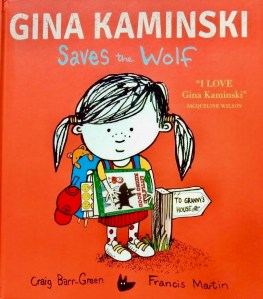
Gina Kaminski Saves the Wolf

If you are a teacher, you are likely to realise from the start that Craig Barr-Green’s delightful protagonist and narrator, Gina Kaminstki is neurodivergent.

One morning in school, Gina is finding things a bit ‘rubbish’ and so her TA, Anya, takes her to the peace and quiet of the reading room, says she will read to Gina offering the choice of two books, Little Red Riding Hood or The Big Book of Wolves. Gina picks the former, Anya reads the story. Afterwards our narrator disagrees completely with the tale, declaring, “That girl and the wolf make three big mistakes,” These she decides to fix by paying a visit to fairy tale land.

Duly prepared with a backpack containing breadsticks, her cap and her teddybear, off she goes.into the fairytale. First stop is the home of the mum who duly produces a yummy-looking cake, which she tells Gina to deliver to Granny, giving an excess of information to the child. Then comes ‘Mistake One’ but that is easily rectified: what would you do with a cake? Avoiding making mistake two, she proceeds through the woods, followed by a scary-looking wolf. That’s when the breadsticks come in handy, allowing our protagonist to reach granny’s house, confirm her identity and give her three pieces of information before the lupine arrives on the scene.

When the creature does arrive, Gina tells him of her plan; the wolf acts as per instructions and before you can say, ‘here’s the woodcutter’, off goes Gina, back to the reading room

and thence her classroom. Then it’s a happy ending both for Gina and a certain wolf.

I absolutely loved this; both words and pictures are wonderful. The matter-of-fact telling works SO well – it’s really great for reading aloud – and Francis Martin’s illustrations perfectly capture Gina’s feelings throughout the book, showing so well her spirit of inquiry and propensity for gentle rebelliousness.

Apart from being a splendid story, the classroom potential is massive.

One Little Leaf / All the Things a Tree Can Be / The Odd One Out

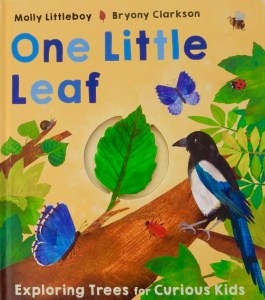
Trees are my favourite thing in nature and I think it’s never too early to introduce young children to their delights. This chunky, large format board book does just that, starting with a spread showing fifteen named leaves from different trees.Four are depicted on flaps, which when lifted reveal a brief paragraph of information about the respective trees on which they grow

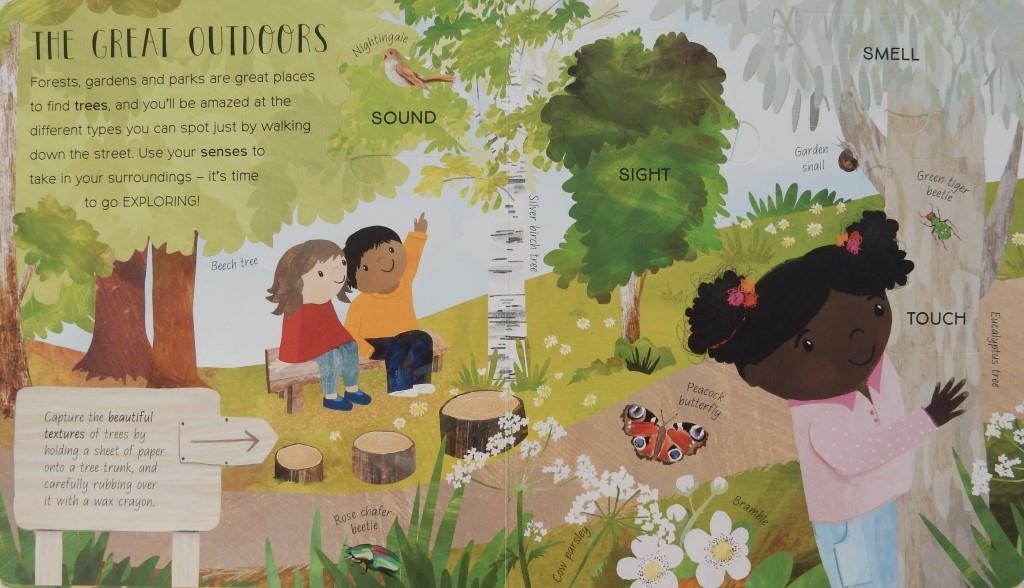
Other spreads are devoted to in turn, sensory exploration of the surroundings, 

the growth of a tree, the tree as habitat for other wildlife, some of the uses of tree parts, seasonal changes of a tree and finally, on ‘Happily Ever After’ readers are encouraged to plant a new tree and to explore the themes included further.

A chatty, engaging narrative runs through the whole book, comprising on each page an introductory paragraph and a suggestion encouraging children to become actively involved with the natural world.
With clear, naturalistic illustrations this is a good starting point on things arboreal, to share with children in their early years.

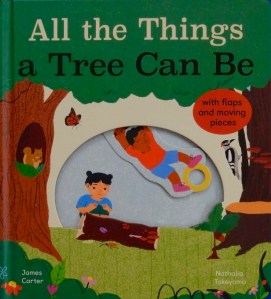
Presenting the wonderful things about trees is difficult in just six double spreads, but author James Carter includes the essentials in this little book. I love the description on the opening page, ‘Trees are ground-hugging / sky-nudging wonders!’ Indeed they are ,be they of the deciduous or evergreen kind, both of which are depicted in Nathalia Takeyama’s first illustration that also includes some woodland birds and animals, and humans.
Deciduous trees change with the seasons and this is the theme of the next spread, which has two flaps for little hands to lift and reveal simple sentences and a different visual.
The third spread takes us to visit a tropical rainforest, rich in both flora and fauna.

‘They are like nature’s tallest hotels!’ so we read on the spread depicting some of the animals that make their homes in trees, some of which benefit the trees in return. Continuing this idea, the final pages present some ways trees are vital to all manner of Earth’s life forms in that they provide food, shelter, warmth, wood, shade and most importantly, they clean the air that we all breathe.
With its integral moving parts, this is a simple introduction to a vast subject for adults and little ones to share.

This book offers a great opportunity for young children to develop their observation skills as they peruse the pages of this ‘spotting book’. The first fourteen spreads present all kinds of interesting animals, a different kind on each, including camels, bats, seals, tortoises, ostriches, pandas, monkeys, rhinos, flamingos, fish, lemurs, penguins and butterflies. In addition a pair of rhyming verses invite the reader to spot the difference on each spread, for example among the camel train, one of their number has a single hump, whereas all the others have two. Another spread asks, ‘Who gets the first fish? Can you spot the winner?’ and depicts a pod of hungry seals, ‘calling out for their dinner’, one of which depicted in the print-like pattern already has a fish in its mouth. 

Some of the puzzles are much harder to spot than others; this reviewer found herself going cross-eyed trying to find the cross-eyed lemur looking at its own nose. Young children will certainly be challenged and entertained by most of the spreads.

On the final spread, a new animal is hidden among the melee comprising several representatives from each of the previous spreads.

Keisha Jones Takes On The World / Stink: Superhero Superfan

Having learned of her Great Aunt-Bee, a lawyer and activist, from her Grandpa Joe while he was hiding away to avoid the celebrations for his 70th birthday, Keisha decides that she too will become an activist, standing up for equal opportunities, striving to fight against injustice and making the world a better place; and she’ll do so in memory of her aunt.

To help her in her endeavours, she shares her plan with her best friends Paisley and KD and together they form the Bee Squad in honour of Aunt Bee. She also asks the advice of her teacher who suggests she look for an issue of concern in the town and go from there.

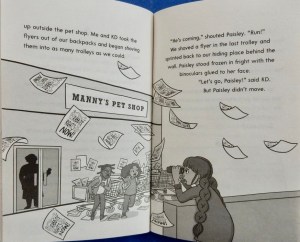
Now being a spirited girl with a big heart, Keisha can’t wait to get started. So, after school when she accompanies her Dad to Manny’s pet shop and sees that the cost to buying a male rabbit is double that of a female, she realises that she has found the Bee Squad’s first cause. She dismisses the owner’s reason for this disparity and spends the next week working on a Rabbits’ Rights plan.

With a promise not to cause any more trouble in the pet shop, she enlists the help of her Aunt Marie who, not knowing what’s about to happen, takes her fellow activists and her younger brother back to Manny’s Pet Shop and carries out her rather outlandish stratagem.

A fair bit of mayhem ensues. But that’s not quite the end of this story, though I will add that our young hero’s indomitable spirit results in her declaring, “ justice for female rabbits was served.”

It’s great to have empowering characters like Natalie Denny’s Keisha in stories for young readers and with Chanté Timothy’s zesty illustrations to bring the world of Keisha to life, this is a book to encourage primary children to stand up for what they believe in.

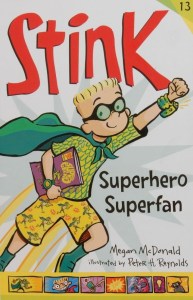
In this thirteenth story Stink is super-excited when he learns that the next topic for his Saturday Science Club is superhero science. Immediately he starts imagining himself in a cape with the titular words emblazoned across it.

Returning home full of enthusiasm, he finds his family sorting things to put in their yard sale and he adds some of his own items.

Next day at the sale, Stink discovers a box full of old comic books about Super Gecko, a superhero he’s never heard of: What could be more fantastic – GROOL in fact – than a part-man, part-lizard with superpowers? Moreover, said superhero has a sidekick, Gecko Girl.

Then Stink hears that there are real geckos in his vicinity and he and his pals decide to go and investigate the creatures that very evening. The hunt yields no geckos but they do find a note supposedly from Super Gecko – hmmm, mysterious.
Could it mean that Super Gecko is set to make a comeback? There is certainly a brand new Super Gecko comic book due to be published the very next Saturday. How will Stink manage his next Science Club meeting and getting to the bookstore to buy a copy before they run out, even if he can raise the money he needs for his purchase? Seemingly the boy faces much that will test his own deductive super powers; can he manage everything? Possibly, with the help of family and friends.

I love the gentle humour, the endearing characters and the mix of sleuthing and science; so too will young solo readers and listeners whether or not they have already met Stink et al.

Our Earth is a poem

Our Earth is a poem
Little Tiger

Another exciting collection of poetry in the publisher’s highly illustrated series, this time one that celebrates nature’s bounties through the work of twenty poets from different parts of the world, mini biographies of each being given at the end of the book, along with those of the four illustrators. Some of the work is familiar but it’s like encountering them anew, for each poem asks the reader to look at the familiar in a different way. Diana Hendry’s What Is the Pond Doing? (illustrated by Masha Manapov) particularly caught my attention having just returned from a walk that took me past a very large millpond surrounded by trees and vegetation. Here’s how her poem starts: ‘Wobbling like a jelly / Being a bucket for the rain / Sending flash-backs to the sun / Cheeking the sky . Giving the moon a bath , Letting swans, ducks and winter leaves ride on its back/ Licking the lollipop reeds’ …

Another poem – almost a prayer to nature – that I found particularly captivating today is Nature Nurtures by Jay Hulme. Here is the opening verse: Let me walk in forests, / and climb up all the trees; let me walk in fields, / and lean into the breeze.’ and the final one, “Let me make my promises / to stone and dirt and tree, / to give myself to all these things / that made humanity.’ Just beautiful. And what immersive and captivating colours Nabila Adani has used to illustrate this.

I have chosen to mention these two poems on this particular day but there isn’t a single poem that I wouldn’t gladly turn to and enjoy either for myself or share with a class of children; and each illustration too is deserving of close attention. With its kaleidoscope of colours used in the illustrations and verbal imagery that makes the reader ponder upon each subject, this is definitely an absolute must to add to home and class collections, to be visited and revisited.

Diary of an Accidental Witch: Stage Fright / Emerald and the Sea Sprites

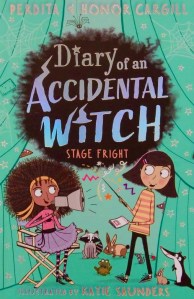
Eleven year old Bea Black, resident of Little Spellshire returns for a fifth sharing of her journal.

Her Dad is now totally smitten with Taffy so home life is somewhat different.
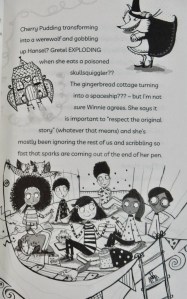
Excitement is high in Bea’s class at the School of Extraordinary Arts when Teacher Madam Binx, an ex actor – famous so she says – announces that the pupils are to put on a play and they have just a few weeks to prepare. The decision is that they’ll perform a very special version of Hansel and Gretel in front of the entire school, adapted and directed by Winnie.

After what seems like an age Winnie has finally finished writing the play and then come auditions for the various roles and every single member of Bea’s class wants to try out for a part. However acting is only one element of a performance; there is also the matter of a song and dance coordinator, stunt coordinator and assistant and a set designer. With all these tasks duly assigned and the cast chosen, it’s a case of work, work and more work. Some pupils will have to hone their ‘behaving like animals’ skills and Bea’s Dad is chuffed to be asked to make all the costumes.

How much spell making of the transformation kind is going to be involved in all of this? And with anywhere inside the school out of bounds following an unfortunate incident, whereabouts will this dramatic enterprise actually take place?

With Bea’s ever more endearingly earnest writing style and Katie Saunders’ even funnier illustrations, this is sheer delight from start to finish.

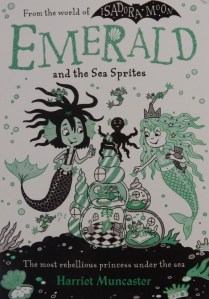
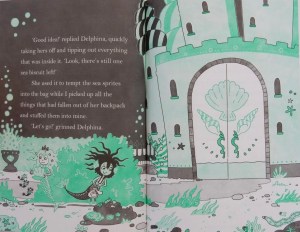
Emerald, a princess since her mum’s recent marriage to King Auster, is now spending half her time living in the palace and the other at her dad’s house on the other side of Scallop City. 

As this second story starts, she’s reading quietly when suddenly into the room bursts her stepsister, Delphina, wanting to play. It’s not long before Delphina has persuaded Emerald to go with her on an adventure to search for sea sprites, something that means sneaking out of the palace which is strictly against the rules. None the less, with backpack stuffed with the necessities for their mission, Emerald swims out of the palace, meets up with her stepsister and off they go into the deep open sea to a coral reef where they pause for a snack. It quickly becomes evident that sea sprites are just as fond of sea biscuits as the little mermaids.

After a playful encounter, Emerald realises it’s time to head back but the sea sprites start to follow them. 

Eventually, back in the palace, the little visitors settle into Emerald’s doll’s house where they spend the remainder of the evening all playing together. 

However, the following morning, the sea sprites look decidedly sickly and the little mermaids realise it was wrong to take them from their habitat. They must return them to the coral reef, but can they reach there in time to save the sprites? And if so, will they ever be able to see them again?

An enchanting story about letting creatures stay in their habitats, stepsisters bonding, and having the courage to do what’s right and kindness, that young solo readers, especially those who enjoy Harriet’s other series, will love plunging into. (I’d not read the Emerald and the Ocean Parade but it didn’t affect my enjoyment of this story.)

Doggy Dance Off

Doggy Dance Off
Steve Smallman and Robert Starling
Little Tiger

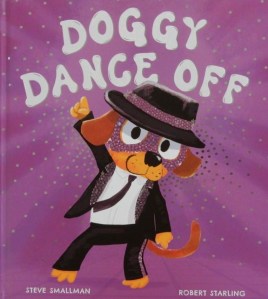
There’s plenty going on should you care to join the cool canines and pay a visit to the Doggy Dance Off. However, despite the flea-ridden Superstar DJ Patch who’ll immediately get you a’scratching, all disco dancers are having the time of their lives.

There’s golden retriever, Eva, the dance floor diva, Dynamite Doug, the body popping pug

and Duke Doggy Doo a punk rocker cockapoo bounding up and down kangaroo style. The newbie Lenny Labrador is so super-excited he leaves a puddle on the floor so beware should you feel like kicking your shoes off and joining the masked dancer that just can’t wait to perform the boogie woogie and several other show-stopping dances,

unaware of where she was putting her paws. However, despite her prowess, this masked marvel isn’t all she seems as a sudden slip sends her mask flying skywards, likewise her hat, and a splendid surprise awaits both readers and the movers and shakers at the Doggy Dance Off. Moreover should you subsequently pay this venue another visit, you’ll find it’s been renamed.

Steve’s rhyming text goes with a real swing when you read it aloud and coupled with Robert Starling’s funky disco dance scenes of the pooches strutting their stuff, you’re guaranteed a fun-packed time if you venture between the covers of this full-on canine caper.

Huxley and Flapjack: Race to the Rescue

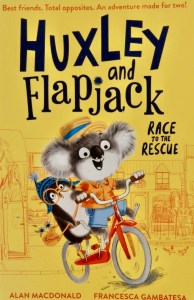
Koala bear, Huxley, who finds possibility in each new day, and his best friend, Flapjack, a penguin that worries rather a lot, share a tree house on the edge of the woods.

One morning a delivery from the postwoman includes notice of a new store opening in the town so they decide to go and pay a visit to this Jolly Goods establishment. It’s an enormous place and things are a tad confusing for the pals but Huxley quickly gets into his stride and enjoys trying out or trying on lots of the gear on sale. While the koala is deliberating what to spend his pocket money on, somebody on a skateboard whizzes past the pair.

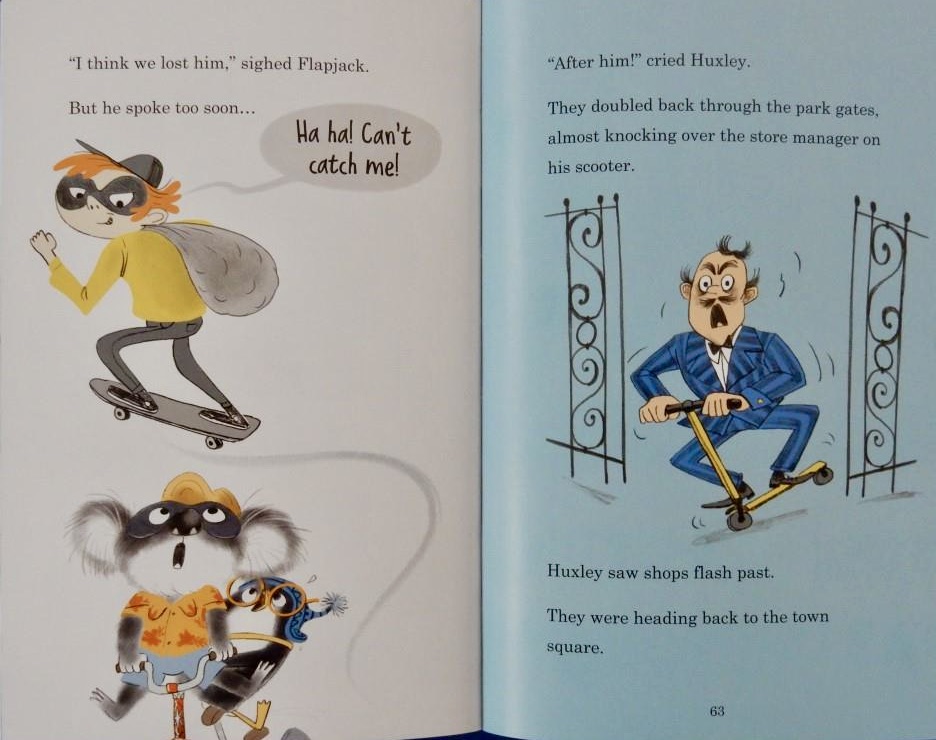
The bear eventually decides on an outfit that makes him look just like a superhero. Unfortunately though back comes the skateboarder wearing a mask just like the one Huxley has just bought, there’s a collision causing watches and jewellery to spill from his sack, and the skateboarder retrieves the goods, snatches away Huxley’s purchase and off he zooms.

There’s a case of mistaken identity by the store manager who thinks Huxley is a thief. Off pedal the two friends in pursuit of the person they’ve decided is the real thief, with the manager scooting behind.

A chase ensues through the town and eventually the pals are apprehended by the manger who takes them back to his office. Eventually a plan is devised to catch that actual skateboard thief but can Huxley and Flapjack outwit Fast Fingers Frankie and arrive home in time for tea?

A fast-moving fun story, ideal for new solo readers with zany, dynamic full colour illustrations by Francesca Gambatesa on every spread. I suspect this duo will gain lots of young followers who will eagerly anticipate their further adventures.

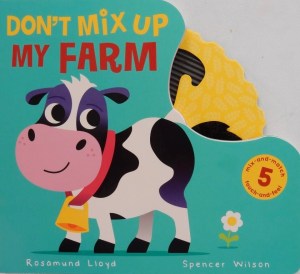
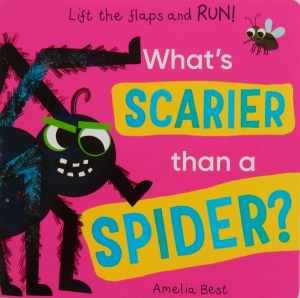
Don’t Mix Up My Farm / What’s Scarier than a Spider? / I’m Not Scared, You Are!

These are three brand new board books from Little Tiger – thanks to the publisher for sending them for review.

Don’t Mix Up My Farm
Rosamund Lloyd and Spencer Wilson

Five farm animals – a sheep, a donkey, a cockerel, a pig and a duck offer tactile fun in this matching game of a book. Little ones will enjoy creating strange-looking creatures by mismatching one of their features using the wheel. Although none of the creatures will be impressed to be given wrong horn, beak, tail or comb, so they should make sure they also match each with the small pictures on the back cover; otherwise a lot of braying, bleating, crowing, grunting and quacking might break out down on the farm.

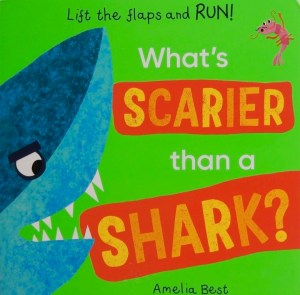
What’s Scarier than a Spider?
Amelia Best and Becky Davies

The scorpion, wasp, cockroach, mosquito, and spider more than meet their match in this altogether different peekaboo game. The aforementioned creatures are anticipating in turn, dinner, a fight, a tasty treat, being the boss

and upsetting something or someone. However as the fly on each spread delights in announcing, each one has an unexpected confrontation of the alarming kind.
There’s some delicious alliteration – ‘massive mantis’ and ‘biting beetle’ for little ones to try getting their tongues around, along with the delightfully shocking creepy crawly surprises revealed by lifting the flaps, especially the final extra large one to revel in. Amelia Best has portrayed some terrifying minibeasts in her arresting illustrations.

I’m Not Scared, You Are!
Patricia Hegarty and Thomas Elliott

With a plethora of scary sounds waiting to spook your little ones at the press of a button, we join two child characters on a foray out into the night. Their journey takes them deep into a forest wherein bats and owls are ready to alarm with their flaps and yowls. They board a passing ghost train that drops them off outside a cottage wherein a witch is busy stirring something that’s bubbling in her enormous cauldron. Hearts thumping, on they go over the bridge, under which lurk not one but three growling, grunting trolls, as they head towards a huge haunted house. Inside they are met by rattling skeletal sounds, followed by clangs and clanks sending them hurtling towards the door once more. After a frantic dash our adventurers arrive back home safely and of course, they confirm “No, we’re not afraid!’ But are they? …
Patricia Hegarty’s rhyming text reads aloud really well offering lots of opportunities for action as well as noise making and Elliott’s scenes are jocular rather than of the shivers-down-the-spine- sending scary.

Hello Me!

Hello Me!
Dr Naira Wilson and Elisa Paganelli
Little Tiger

Positivity is key in this gentle book wherein the author, a child psychologist, presents a young boy narrator explaining and showing how he gradually learns self-care and self-acceptance.
He begins thus: ‘Sometimes I think my mind is like a house. Just like a house, I need to treat my mind with love and care.’

Like all of us, this child has flaws and makes mistakes, but just like us all too, he acknowledges those mistakes using them as a powerful learning tool.

When jealousy rears its head, our narrator accepts that nobody is perfect and everyone is different. The important thing is to be flexible in your attitude to routines, make the best of what you have and not to be afraid to ask for help when it’s needed. Friends and their love are key but so too is learning to love yourself for who and what you are.

The final spread breaks down the key points in the narrative, augmenting them with vignettes taken from Elisa Paganelli’s beautiful larger illustrations.

Accessible and easy for young children to relate to, this would be a good book to open up a classroom circle time discussion on looking after and loving oneself.

Yomi and the Fury of Ninki Nanka / Fairytale Ninjas: The Magic Crown 

This image has an empty alt attribute; its file name is dscn9658-4.jpg


Yomi (soon to go into her final year in primary school) and her brother Kayode, two years younger, are supposed to be on the trip of a lifetime visiting The Gambia with their Uncle Olu. But thus far their holiday has been boring, boring, boring, and involved something to do with their uncle’s research.

However after despairing there will be anything like an adventure, or the sight of any Nkara, Yomi’s sleep is disturbed by a terrible roaring and she witnesses Ninki Nanka, the Dragon King being kidnapped from the sky. From then on, things become a whole lot more exciting. Determined to rescue him, the siblings encounter magnificent beasts, unearth a number of secrets, meet a reckless boy hunter

This image has an empty alt attribute; its file name is dscn9659-4.jpg

and face dangers aplenty. Yomi and Kayode are highly motivated and resilient, but can they save Ninki Nanka?

Vividly told, by an author who clearly has a great depth of understanding for, and love of, African mythology, this fast-paced West African-inspired fantasy adventure is the first of a new series – The Nkara Chronicles – and with Adam Douglas-Bagley’s striking illustrations, deserves to be a winner with primary readers. I thoroughly enjoyed it.


This image has an empty alt attribute; its file name is dscn9649-2.jpg

This second story set in the kingdom of Waybeyond begins with Red wishing for another adventure with new magical creatures when suddenly a fireball drops from the sky and becomes a fiery little golden bird, followed not long after by a large ice dragon. Now there’s no need to go seeking adventures, instead one has found Red, Snow and Goldie (aka the Fairytale Ninjas). In fact pretty soon the entire town is full of frost fairies too.

With trouble afoot, it’s time for a visit to Redrock Canyon, dwelling place of sand dragons and firebirds declares Snow. Having, with the help of their gingerbread supplies, persuaded a unicorn to take them, they’re off at a gallop only stopping at the edge of a cliff beneath which goblins and rats are busy digging holes in the rock with saucepans and spoons. Why? They don’t stop long enough to find out though and instead continue to the icy mountains region, but now clad in their ninja suits to blend in.

This image has an empty alt attribute; its file name is dscn9645-3.jpg

This allows them to overhear a conversation about a wooden box hidden by an old king the contents of which will make their master the most powerful person in the entire kingdom. They must be working for Sir Scallion surely? But an untimely sneeze results in the three being discovered and they have to dash for their unicorn, stopping briefly to rescue a tiny ice dragon. Whither now? Goldie has an idea and they soon find themselves in a mysterious library. I’ll leave them there and merely say ‘Rumpelstiltskin’ and recommend you get a copy of the book and find out how the magical tale ends.

With its wealth of illustrations by Mónica de Rivas, emergent readers will devour this twisted fairytale, along with some gingerbread.

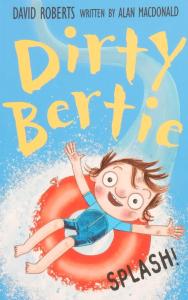
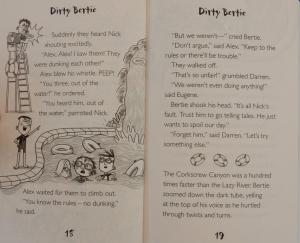
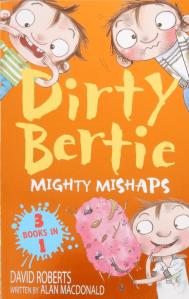
Dirty Bertie: Splash! / Dirty Bertie: Mighty Mishaps / The Trapped Puppy

These are additions to popular young fiction series – thanks to publishers Little Tiger for sending them for review.

Dirty Bertie: Splash!
David Roberts, illustrated by Alan MacDonald

This is Bertie’s 35th set of escapades and some people will be surprised that he’s still as full of crazy ideas as ever. In the first Bertie and pals, Darren and Eugene are finally being treated by Bertie’s mum to a visit to Splash City, the new waterpark. However they hadn’t reckoned on arch enemy Know-All Nick also being there and worse still, Nick’s cousin, Alex is one of the lifeguards. Alex is quick to point out the set of rules that must be obeyed or serious consequences would result.

Can the three friends still have the fun time they’d anticipated, that is the vital question.

Moggy! sees the three friends, aided and abetted by Whiffer, searching high and low for neighbour, Angela Nicely’s missing moggy, Pusskins, with a reward of £50 on offer to the finder. Eventually they find what Bertie is sure is Angela’s cat but it turns out to be a case of mistaken identity. Somebody else has found Pusskins; but who and what happens to the promised reward?

In Breakdance! Miss Boot announces that to celebrate the school’s seventy-fifth anniversary, Class 3 will dance for the parents – and rehearsals get under way immediately. Bertie is determined not to participate and comes up with a clever plan. It turns out there’s more than one way of Breakdancing: game, set and match to Miss Boot.
Ridiculous as ever, but that’s what makes these stories such fun.

If readers have missed previous high jinks of the Bertie kind, the publishers have recently released another single volume bind-up Dirty Bertie: Mighty Mishaps: containing Yuck!, Loo! and Toothy!

The first contains episodes wherein Bertie turns green at the fair, causes mayhem while dressed in his costume for Victorian Day and teaches a toddler her very first word, “Bum”.
Loo! presents a toilet emergency on the way back from a school outing; a sandcastle competition that is nothing but a damp squib; and the possibility of a house move, something Bertie will do his utmost to prevent.
Toothy! has Bertie suffering from severe dentist-itis; jetting off on holiday and having loo queue trouble during the flight and finally, some ice-cream issues of the worrying kind.
Bertie is one of those characters who, despite everything he does, is a real charmer.and all the books are great promoters of the vital ‘reading is fun’ message.

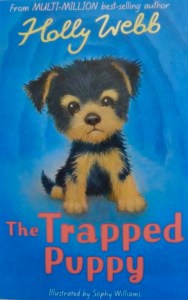
The Trapped Puppy
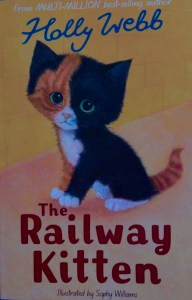
Holly Webb, illustrated by Sophy Williams

Amelia, her parents and older brother are out walking on the rocky hillside with their dogs, Mickey and Poppet. Amelia throws a stick for Poppet to retrieve, slips over and is a bit dazed. Coming too she realises that Poppet has disappeared but nobody noticed what happened to the puppy. They spend some time looking but with dusk descending they return home hoping to discover Poppet waiting for them. However, the puppy has fallen down an abandoned mineshaft and is unable to get out.

The following morning the search resumes, with the aid, later on of some Mountain Rescue volunteers. Eventually they hear scuffling sounds from underground. Now all they need is to work out a way of extricating little Poppet safely.

The narrative switches between the view point of the rescuers and that of Poppet, which keeps readers on tenterhooks and there are some tense moments – Sophy Williams captures several in her illustrations, but the rescue team are determined. Will Amelia go home with her beloved puppy?

An exciting addition to Holly Webb’s hugely popular puppy series.

The Ocean Gardener

The Ocean Gardener
Clara Anganuzzi
Little Tiger

The author/illustrator of this book was raised in the Seychelles where this tale is set.
Ayla and her mum’s beautiful island home is surrounded by a coral reef and one morning while out swimming with her mum, Ayla notices that as she goes further out, something is wrong: the colours of the coral are faded and the fish are disappearing.

The girl is upset and asks her mum why these things are happening. Surely it can’t be too late to save this wonderful part of the ocean’s eco-system.

Fortunately, Mum, a marine biologist, has a plan and the very next day she and Ayla start working bringing tiny pieces of coral from the sea into their home and so begins operation coral reef rescue. It’s a lengthy process and eventually after some time Mum decides the coral growths are ready to return to the ocean and they create their ocean garden.

That place is Ayla’s destination each day for what feels like forever; she tends to the coral and awaits the return of the fish until at last …

Clara Anganuzzi’s gorgeous illustrations capture so well the beauty of the coral reef and at the same time present the highly complex issue of global warming in a positive manner that will appeal to young readers, while also offering hope that the work of marine biologists such as Chloé Pozas, whom we meet after the story in a spread giving more information about coral nurseries, can restore these precious parts of our oceans’ ecosystems.

What Can You See? At the Zoo / Word Museum / Where’s Mr Train?

What Can You See? At the Zoo
Katie Ware and Maria Pereira
Little Tiger

Maria Pereira’s cutaway scenes of a zoo park present an absolute wealth of animals, large and small. Reptiles and insects share the first spread, along with several frogs. Turn over to see lots of brightly coloured birds and a pair of slumbering owls; then it’s off to a more arid part of the park where meerkats await. On the last three spreads there are tigers and monkeys; a watery area with penguins, seals and sharks and finally, hippos keeping cool, rhinos, elephants, zebras and giraffes – two of each creature as well as a couple of wading water birds.
At each location there’s a ‘can you spot … ?’ question and some snippets of information. Plenty to engage little human visitors to this particular zoo.

Word Museum
Sophie Ledesma and Isabel Otter
Little Tiger

Along with Oriel ostrich and her students, little human learners can explore the word museum in this interactive book that introduces them to learning topics – museums and words. The tour starts in the ancient pottery arcade, proceeds to the animal gallery and thence, the furniture hall, after which it’s time for a quick snack break at the rooftop cafe. Next comes an exploration of gadget corridor with lots of different devices on view and the tour concludes outside in the fashion courtyard.
Sophie Ledesma’s lively, patterned illustrations and Isabel Otter’s engaging text will set young children on the road to becoming culture vultures as they explore the exhibits, peek through die-cuts, lift the gatefold on each spread and answer the questions posed, while learning lots of new words along the way. Fun learning, quality board book style that’s just right to share with toddlers

Where’s Mr Train?
Ingela P Arrhenius
Nosy Crow

The latest in this felt-flap hide-and-seek series introduces toddlers to four different means of travelling: a tram, a ferry boat, a bus and a train. Each except the completely hidden bus has a small part slightly visible before the flap is opened and the final spread shows all four in their entirety and there’s a mirror behind the flap.
With simple bright illustrations and a simple question and answer text, this is ideal for the very youngest children.

The Horse who Came Home / The Lost Bear Cub

The Horse who Came Home
Olivia Tuffin
Nosy Crow

Hannah and her elder sister, Millie live at Heartwood, a pony farm and stables. Their dad, an ex-showjumping champion, trains and sells on only the most exclusive ponies; though in reality this means he leaves much of the day to day business to a young man, Ashley, who Hannah increasingly distrusts, despite him being the son of the highly trustworthy old Johno.

Already we see that this is no run-of-the mill pony book merely about winning rosettes and cups at gymkhanas and championships – although that is part and parcel of the story. So too is the fact that film makers, Horsetalk, want to make a six-part documentary about Heartwood.

Then Hannah rescues a dirty, thin pony, Bella, which seems to recognise their stableyard and she suspects her father recognises the pony although he denies it. However nobody appears to want to help care for the pony so Hannah decides to do so herself. She’s supported in her endeavour by her pal, ace photographer, Freddie and riding friend, Gaby.

Unlike pony books back in the day when the young me loved reading them, the internet, mobiles and social media play an important part in this one. There’s a fair bit of wheeling and dealing as Hannah discovers the further she digs into Bella’s history and she realises that Heartwood stables is not the perfect place she had always believed it to be. Can she unscramble what is going on and if so, where will her loyalties lie – with her family or with the horses she loves?

A gripping read, that includes a rescue, some heart-breaking revelations for Hannah and Millie, and an optimistic ending for the sisters.

The Lost Bear Cub
Holly Webb, illustrated by David Dean
Little Tiger

Lucy is thrilled to be spending her summer holiday in Canada, staying with cousins and her Uncle Pete and Auntie Cass. She’s fearful though, at the possibility of encountering bears, cougars, coyotes and eagles on their first hike and even more so when she goes camping with her relations, but without her parents.

Wandering along the waterside alone at the campsite looking for pebbles, Lucy suddenly has the feeling that she’s being watched. There just a few metres away, she sees a small black bear and thinks it’s most likely a cub that’s got separated from its mother.

That same evening after a pretty wet end to their camping expedition, Lucy looks through an upstairs window of her cousin’s house and there she spies a bear trying to drink from the water feature in the grounds – a small bear that looks familiar. Now it’s definitely the bear she feels frightened for, not herself. The trouble is, nobody else believes her.

The following day, after an exchange of feelings between Lucy and her cousin Kitty, the girls have a narrow escape from a cougar after which the girls see a very angry adult black bear that starts taking swipes at the big cat. Some very scary moments follow but there’s not just one, but two happy reunions, one human and one ursine.

With several nail-biting episodes, some of which are shown in David Dean’s black and white illustrations, Holly Webb’s latest story offers something rather different from her cat and dog books. Confident new solo readers will enjoy Lucy’s adventures on the wild side..

Me and the Robbersons : Bandit Karaoke

Me and the Robbersons : Bandit Karaoke
Siri Kolu
Little Tiger

Wonderfully anarchic, this is a story translated from the original Finnish by Ruth Urbom.

Maisie has been sent to music camp for the summer but determined not to stay there, she sends an SOS to friends she made the previous summer, a bandit family, the Robbersons.

Before you can say ‘sweets’, Maisie is whisked away and embarking on her second summer of heists and much more. “Now that Maisie’s back with us, the sky’s the limit!’ declares Wild Karl as the bandit van roars on its way, kidnap successfully carried out.

Maisie quickly becomes an integral part of the Robberson’s robbing, acting as a damsel in distress standing in the road having supposedly missed the bus home. However the family’s main focus and thus Maisie’s, is the Summer Shindig at the end of which a new Supreme Bandit is to be elected, the aim being that it’s Wild Karl who takes the crown. Let the tough training regime begin.

It appears that the Robbersons have already decided which event Maisie should enter – the Fib-Off, and she’ll face some extremely tough opponents. Yes, lying is part and parcel of this, but there’s a fair bit of dishonesty in other events, by various bandit clans.

So, who will end up with the highest total score and thus participate in the Bandit Karaoke? Who will become Supreme Bandit for the next decade and whose face will it be on that special Orkola liquorice coin – a last minute prize offered by the Farnaby family?

This second title featuring Maisie and the Robbersons is a twisting, turning action-packed romp with an exciting cast of characters that will make a splendid escapist read this summer.

Everybody’s Equal

Everybody’s Equal
Patricia Hegarty and Greg Abbott
Little Tiger

This is a follow-up to Everybody’s Welcome by the same author and illustrator team.

Mouse is standing in the forest clearing near his home when he hears a lot of banging and crashing. It’s Stoat building a tall sturdy fence designed to keep Mouse out -“because you don’t belong” he tells the little creature.

Mouse doesn’t just accept this; he responds “Everybody’s equal, / I’m sure you will agree. / I’m as good as you / and you’re as good as me.” – a verse he repeats several times during the story.

He calls all his friends together to try and form a plan to make Stoat change his mind. This causes a squabble about electing a leader but Mouse knows just what to say to move things forward. Then suddenly as Stoat puts the finishing touches to his fence, he hears a cry for help. The house in which Mouse and his pals live, having built it together, has caught fire and the animals desperately need water.

However Stoat’s fence is blocking access to the river. Will he do the right thing so the other animals can get to the water that can put out the flames?

Happily yes; seemingly Stoat has seen the error of his ways and realised that as Mouse has been saying all along, everybody’s equal.

Patricia’s rhyming text reads aloud well and together with Greg Abbot’s woodland scenes in muted hues that use split pages to build up layers of the story, and that crucial die-cut , show that life is much more enjoyable when everybody is included in the fun.

Adult readers aloud will likely see some parallels with current events that are happening in the UK and other parts of the world. Young listeners will understand the importance of Mouse’s words about equality and inclusivity and one hopes apply them to their own lives.

Friends, Shapes and Scares Board Book Style

These are recent board books from Little Tiger – thanks to the publisher for sending them for review

Let’s Make Friends
Leah Osakwe and Becky Paige

This is a simple exploration and celebration of friends and friendship for the very young. The author uses similes to liken friends to a wide variety of things – a yummy breakfast to give you a good start to the day; a bouncy trampoline that’s ‘there for you through all your ups and downs’, a soft snuggly blanket that wraps you in warmth and love, a guide on an adventure helping you follow your dreams. On gloomy days, just like the calming glow of lamplight, they bring brightness and cheer; they’ll always make space for you. Friends help you blossom into whoever you are meant to be, just like a garden where flowers bloom and so much more. I love the concluding spread that likens friends to sets of unmatched socks.
This is one to share and talk about with nursery friends.

Nibbles Shapes
Emma Yarlett

Nibbles the book-eating monster is so ravenous he’s started sinking his teeth into shapes. He gobbles circles, chomps at squares, takes small bites from a star then moves on to attacking triangles, diamonds, rectangles, even arrows. He’s saved his favourite till last; it’s a large pink heart ‘for me and you’ so it’s said, but before we can catch him to say thank you he’s made a hasty exit right through the back cover of this, now very holey, little book. Small humans will enjoy following the shape devourer through the pages.

What’s Scarier than a Shark?
Amelia Best

Not for the faint hearted is this sequence of mock scary marine creature confrontations. First to go on the attack is crab but not for long for a biting beastie more often found in fresh waters is on the look out for something to gobble.. Next is a killer whale but according to our shrimp narrator, that too has made, not a catch but a mistake. What about the swordfish – predatory it might be, but has it met its match with that enormous octopus? Angler fish look terrifying but what is lurking nearby? Something with a tail that is more than a tad terrifying though the angler doesn’t yet know that. Finally along comes a shark intent on devouring our narrator but there’s a surprise in store and it’s lurking behind a double flap.
Peek-a-boo with a difference assuredly; little ones will enjoy the fun of discovering what is revealed when they lift the flap on each of Amelia Best’s brightly coloured spreads..

Cake!

Cake!
Ellie Patterson and Gabriela Gil
Little Tiger

This tasty offering will surely set the taste buds of young humans tingling as they follow the events of this birthday cake whodunnit. Bunny and seven brothers are all missing their birthday cakes but who has eaten them? Was it Tiger? Not according to the large striped cat who tells the bunnies it was Rhino and indicates the cliff edge across which is a tightrope. Over teeter the bunnies plus Tiger and despite the rope snapping, they find themselves right beside Rhino who certainly looks somewhat sticky.

She though shifts the blame to Flamingo and the animals all head to the lake where they spy another pretty obvious cake gobbler among the flamingo flamboyance.

Suddenly the bunnies realise they’re the only ones in the lake so they decide to wend their way home sans cakes.

However, there’s a surprise waiting for them: the culprits have made amends and tasty treats await the home comers. But there’s one final surprise in the form of a large chunk that’s missing from one bunny’s cake. Who is the culprit this time?

With an important message about owning up to your wrong-doings, and showing you are sorry, this engaging story, deliciously illustrated by debut illustrator Gabriela Gil will delight young listeners either at home or in a pre-school setting.

Bees & Beetles / Not Just Another Book about Farm Animals / Not Just Another Book about Things That Mooove

Bees & Beetles
Nia Gould and Molly Littleboy
Little Tiger

A surprising amount of information about bugs, in easily digestible portions, is found on the pages of this sturdy, split page ‘flip-flap’ book, the second in a series for the very young.

Children will enjoy being able to change the scenes by flipping the cut portions of the alternate pages to create a different but related scene for first ants, the second showing the inside of a nest; 

then spiders – the start and finish of a web. Following this, youngsters will encounter several different creepy crawlies – dragonflies, grasshoppers, beetles, fireflies and ladybirds on and among flowers in a meadow; transforming the habitat they’ll discover snails and slugs, earwigs, centipedes and below ground level, wriggling earthworms. Bees come next and finally various caterpillars and butterflies.

A useful book to support a minibeasts theme; one that is frequently explored by foundation stage learners.

Presenting information to young children in an entirely different, but equally effective way are

Not Just Another Book about Farm Animals
Not Just Another Book about Things That Mooove

Noodle Juice, illustrated by Jake McDonald
Noodle Juice

In the first the author offers facts in mouth- watering morsels about farms, and their livestock in a humorous style, with contributions from the animal residents along the way. There are spreads featuring hens, pigs, horses, sheep, cows, turkeys, ducks, geese, goats and even llamas. Did you know that you can tell whether a turkey is male or female by examining its poo?

Jokes abound – these are as likely to appeal to adults as the intended young audience and Jake McDonald’s illustrations are suitably comical.

The same is true in the second book that begins by giving a simple definition of transport and goes on to present spreads on myriad modes of moving from place to place. The information is presented by a cow narrator that seems to have a penchant for puns. Here’s an example. 

Readers will encounter feet (as in walking), boats, cycles, trains, cars, buses, trucks, planes, helicopters and rockets all of which have bovine drivers or pilots.

The busy final spread of both books asks ‘Can you find …’ In the farm book, readers have to try and spot the farmer; in the transport book there’s an elephant to locate.

Wacky fun for fact fanatics.

Isadora Moon Under the Sea / The Feeling Good Club: Say How You Feel, Archie!

Isadora Moon Under the Sea
Harriet Muncaster
Oxford Children’s Books

The endearing little half-vampire, half-fairy, Isadora Moon ’s latest adventure begins when she receives an invitation to a sleepover with her mermaid friends. The prospect of spending the night away from her parents that takes her beneath the sea makes her a bit anxious but having been reassured by her parents, she accepts Marina’s invitation and as the time draws nearer she gets really excited. This excitement continues once she gets to Marina’s home and she finds herself becoming friends with another of the guests, Marina’s step sister Emerald who is rather standoffish and Isadora thinks it could be because she’s unhappy.

Later on, lying in the adjacent clamshell bed, Isadora hears what sounds like Emerald crying and knows she must go and see what’s troubling her.

What she learns results in a late night swim to the home of Emerald’s Dad. (Her parents are separated) and eventually everything is put right.

Beautifully heartwarming, this adventure touches on the subject of living in more than one home and the problems this might lead to for a child; but it’s lightly done and the most important themes are listening to one another, friendship and acceptance.
With its mix of the alluringly different and comfortingly familiar, this magical story is perfect for its intended audience of new solo readers and includes the usual offering of activities at the back of the book.

There are further Isadora things to do in Isadora Moon: Summer Fun Activity Book. Therein are lots of activities based on the world of Isadora and of course, Pink Rabbit.

The Feeling Good Club: Say How You Feel, Archie!
Kelly McCain, illustrated by Jenny Latham
Little Tiger

In this the second in the Feeling Good Club series, it’s Archie’s turn to share his journal with readers. Archie’s family consists of his mum, a marine biologist and so often away for extended periods, his dad who seems to have little or no time for his oldest child what with his work and looking after the six year old twin brothers who are a bit of a handful.

As the journal opens, it’s a Tuesday. Archie is preparing his exhibit for the school Science Fair; it’s on his favourite topic, space, about which he is passionate and he’s really looking forward to Dad hearing his talk about it at the event the following day. But when he fails to turn up Archie is understandably pretty upset; how could he have forgotten? However Archie tries pretending it’s okay, but of course it isn’t and his real feelings come out in a torrent of fury at the next Feeling Good Club meeting as the friends are working on creating a clubhouse. Archie is hugely embarrassed and storms off in a huff.

Clearly this is a time when club members need to help Archie find a way to spend sufficient time with his Dad to talk about the way he is feeling. So begins operation Surprise Camping Trip. There are many ons and offs and it seems the expedition just isn’t going to happen

but eventually Shaman and Bella come up with a plan that turns things upside down and the trip is on again. The three friends practise some of their mindfulness techniques and on Saturday it’s a camping they will go …

To discover more about that camping trip and to learn about the mindfulness activities the clubbers use, you will have to read more of Archie’s journal in a copy of the book. It’s a thoroughly enjoyable exploration of feelings, facing your worries and the importance of sharing how you feel with trusted friends, with smashing illustrations by Jenny Latham.

This Girl Can Be A Bit Shy / I Just Ate My Friend

This Girl Can Be A Bit Shy
Stephanie Stansbie and Hazel Quintanilla
Little Tiger

Narrated by little Ruby, ‘I am brilliant. I’m also a little bit shy.’ we learn of her different days: some when she feels brave, bouncy and full of chat, and others when she wants to go it alone, not playing with anybody, not talking to others just hiding herself away in one of her favourite hiding places where no-one can look at her and she doesn’t have to join in with things her friends are doing.

Her Dad understands exactly and wisely suggests, “Tell people kindly if you’re feeling shy.’

No matter what though, there is one thing Ruby is never too shy to say: can you guess what that is?

This is the second book wherein we meet the delightful Ruby as main protagonist and it’s a pleasure to be back in her company, empowering others with her thoughts, energy and actions now that she’s turning six, as we see in some of Hazel Quintanilla’s enchanting illustrations.

I Just Ate My Friend
Heidi McKinnon
Allen & Unwin

Darkly humorous is this tale of a monster that eats its friend and spends almost the rest of the book searching for a new one – to no avail. Those asked, ‘Hello! Would you be my friend?’ find the impulsive protagonist in turn, too big, too small, too scary, too slow

and then there’s just a flat refusal sans reason. Just when it seems he’ll remain lonely evermore, what should come along but another potential candidate for friendship with alluring eyes and a beguiling smile …

This simple story with its patterned text is perfect for those in the early stages of learning to read and they will likely delight in the unexpected twist with which the story ends.

Playing and Learning with Board Books

Little Bear Where Are You?
Little Dog Where Are You?

Ekaterina Trukhan
Nosy Crow

It’s true to say that babies enjoy playing with mirrors and this new Where Are You? series has a mirror on every spread.
Taking inspiration from the hugely popular Family Finger rhyme, Little Bear introduces in turn little frog, little deer, little rabbit and little bear by means of a text with a repeat pattern: ‘Little —— , / Little —— , / where are you? // On the opposite page, comes the reply, ‘Here I am! Here I am! / Where are you?’ When the animal’s face is flipped down we see the words, “There you are!’, and a mirror is revealed for little humans to see their faces.
The final spread shows all four animals and beneath the fold, the titular character addresses the baby whose face is reflected in the mirror.
The large card flaps are easy to manipulate and sufficiently sturdy to stand up to the frequent use the books are likely to have.
Using the same structure, in Little Dog, illustrator Ekaterina Trukhan portrays first little hamster, followed by little bird, little cat and lastly, little dog (sporting a bobble hat).

Peekaboo Lion
Camilla Reid and Ingela P Arrhenius
Nosy Crow

This latest in the novelty series with sliders and a final mirror, features wild animals, although they look deceptively friendly in Ingela’s vibrant, patterned illustrations. The playful rhyming text comprises two words per page and introduces animals large and small; and there are opportunities to meet both adult animals and their young on some spreads.
A fun way to develop tinies’ language and manipulative skills together with a surprise finale.

Don’t Mix Up My Puppy
Rosamund Lloyd and Spencer Wilson
Little Tiger

Little humans will enjoy getting their paws on this mix-and-match doggie delight, with its five different puppies depicted, one per spread, in Spencer Wilson’s bold illustrations.

First we meet a Dalmatian with a spotty, dotty tail, then a velvety tailed dachshund, next comes a sly terrier whose tail is fancy and flowy; the white poodle’s tail matches his cute, curly self and finally there’s an Irish setter with a fluffy, furry tail.

Toddlers can have fun turning the wheel, finding each pup’s tail and feeling the respective tactile rear end appendages. Just right for developing hand-eye coordination too.

Holey Moley

Holey Moley
Bethan Clarke and Anders Frang
Little Tiger

Gus the Goat must surely be in the majority when, on encountering a mole who introduces herself as Mavis, he guesses that she lives in a hole. ‘A mole in a hole. / A moley in a holey / A holey moley!’ Not so however; and there follows a hilarious exchange between the two characters with Gus suggesting various other places where Mavis must live and the mole naysaying each one. It’s certainly not on a pole, nor in a sausage roll, 

or any of the increasingly outlandish places he puts forward.

Mavis remains cool, calm and collected as Gus gets carried away with his anarchic silliness, eventually showing the goat her home. 

That’s not quite the end of the story though but to see how the story concludes you will have to get yourself a copy of this super book.

Deadpan humour abounds in Anders Fang’s illustrations, several of which include other silent bit-part players enjoying the duo’s conversation. I absolutely love the hole-arious rhyming narrative from debut author Bethan Clarke who really has done herself proud here with her guess obsessed, rhyme obsessed Gus and long-suffering Mavis. And what a gift she offers KS1 teachers who will not only have their children laughing aloud from the outset, but also wanting to join in with Gus’s rhyming guessing, relishing the tale’s final twist and perhaps adding some of their own ideas – once the story is finished. Anyone who wants to get across the ‘language is fun’ message to young children needs to share this, though I anticipate cries of ‘Read it again’ when you do.

All Change! / Colour Gallery

Here are two new board books from Little Tiger – thanks to the publisher for sending them for review.

All Change!
Harriet Evans and Linda Tordoff

Transformations in the natural world is the theme of this board book with its clever, enticing cover picture.
By means of the flaps integral to each of Linda Tordoff’s illustrations, we see changes brought about by the seasons, through life-cycles of insects and frogs, the weather, danger, the lunar cycle, the need to catch food, for safety and more. Executed in soft, soothing colours, each scene is pleasing to the eye and the simple text offers a starting point for discussion with very young children.

Colour Gallery
Sophie Ledesma and Isabel Otter

Ready and waiting to take the animal visitors, and readers, on a learning tour around the art gallery is Gigi the giraffe. First stop is the Red Mosaic Hall, followed by the Blue Portrait Gallery, the Green Sculpture Park and the Yellow Landscape Room. This art establishment certainly makes effective use of all its space for there’s a corridor devoted to still life paintings

and the cafe displays abstract art on its walls.
As well as reinforcing the concept of colour in an unusual manner, Isabel Otter’s interactive text, the book’s design with its shaped pages and gatefolds and Sophie Ledesma’s bright illustrations (with a tiny mouse lurking on every spread), provide a fun introduction to the world of art for the very youngest children.

Mirabelle and the Magical Mayhem / Magic Keepers: Spirit Surprise

Mirabelle and the Magical Mayhem
Harriet Muncaster
Oxford Children’s Books

Cousin of Isadora Moon, Mirabelle, has a witch mother and her dad is a fairy. What anybody who has encountered Mirabelle in her previous stories will know and others quickly discover, is that she seems to create mischief wherever she goes. Here she and her brother Wilbur visit their fairy grandparents for a sleepover. With Mirabelle goes her little pet dragon, Violet. No magic without the supervision of the grandparents is the promise the children make to their parents.

After just one night at Granny and Grandpa’s both Mirabelle and Wilbur have broken that promise and the result is messy and mucky. 

Surprisingly Granny, who inevitably finds out about the disasters they’ve created, isn’t furious. Instead she is thoroughly understanding and helps her grandchildren put things back in order before Grandpa wakes from his nap. ‘Mirabelle you must never try and hide who you are just to fit in with who you think other people might want you to be,’ she tells her granddaughter. Wise words indeed. Moreover she doesn’t let on what has happened when Mum and Dad come to pick up their offspring.

Another sparkling story that Mirabelle fans will absolutely love and newcomers to the series will enjoy too and likely want to go back and read all her other books.

Magic Keepers: Spirit Surprise
Linda Chapman, illustrated by Hoang Giang
Little Tiger

Life has changed since Ava and her mother moved into Curio House, the large Victorian villa left to them by Great Aunt Eva, Ava and her friends Sarah and Lily have discovered a magical world that surrounds the curios left in the house and are determined to keep it secret from the world at large. At the start of this story the three friends are exploring the magical energy of the crystals – the first magical things Ava found in her new home.

Outside the house and in the surrounding town, strange things start to happen. Despite it being late autumn, pollen has become so prolific that Ava’s mum is suffering badly from unseasonal hay-fever and plants are growing amazingly fast with vines shooting up everywhere.

Could the girls have accidentally unleashed some kind of nature spirit during their crystal investigations that is causing all this? 

If so, with Sarah’s mum far from happy about the influence the other two girls are having on her daughter, can they set things to rights before any of their parents or the townsfolk discover the cause of the out of control flora?

A second engaging episode for new solo readers with just the right amount of suspense.

Wanna See A Penguin? / The Lost Leopard

Wanna See A Penguin?
Simon Philip and Ian Smith
Oxford Children’s Books

A self-declared penguin expert and friend search the city for penguins; they see all kinds of black and white creatures striped ones, furry ones,

animals with fins, horned ones, ones with hooves, four-legged animals and others but none of the eight fit all the penguin criteria. Is there actually a penguin anywhere around?

Yes indeed and that is what makes this book such fun. Hiding in plain sight in every scene is the animal the friends seek. Young listeners will love searching the pages to find its whereabouts as well as guessing the identity of the partially shown animal on each spread and laughing at the misidentifications of the so called penguin pundit.

The author’s manner of telling is gently humorous – the ending a hoot – and Ian Smith’s delightfully droll illustrations include lots of amusing details.
There’s a fact file after the story presenting a paragraph each on the zebra, puffin, duck-billed platypus, monkey, orca, goat and dog that appear in the story.,

The Lost Leopard
Jonny Marx and Xuan Le
Little Tiger

We join Flora and Fauna (dubbed the ‘world’s greatest explorers) and their baby, Bud, on their search for the elusive clouded leopard.

Their journey takes them to various habitats along a river,

over foothills and up the Himalayan mountains, through forests and jungles and a rainforest; even down into caves. Needless to say there’s an awful lot of mud and not everywhere is accessible by road so their quest involves a lot of walking; walking through rain and snow, strong swirly winds and scorching heat until they finally arrive at a tropical forest location.

During their travels they encounter a wealth of amazing wildlife including yaks, langur monkeys, Bengal tigers,Indian elephants,

a King cobra, all labelled. Truly an epic journey but do they find what they have been searching for? Baby Bud has certainly learned a lot and so will youngsters who explore this exciting book.

Xuan Le’s vibrant detailed illustrations, which include lift the flap sections, cutaway pages, die cut surprises and a gate fold, extend Jonny Marx’s engaging, informative text making this a book that is probably best shared with an individual child or small group as there is so much to explore on every spread. Individual, more confident young solo readers will also love embarking on the adventure with Flora, Fauna and little Bud.

Who Owns the Woods? / Above and Below: Sea and Shore

Here are two recent picture books about the natural world from Little Tiger – thanks to the publishers for sending them for review.

Who Owns the Woods?
Emily Hibbs and Jess Mason

A boy and his grandma go exploring in the woods and as they walk, the child asks ‘who owns’ various natural things. Could it be one of the tiny animals they stop to observe – the spiders spinning their webs perhaps, or the butterflies with their beautifully patterned wings. 

Perhaps the woods belong to the magnificent stag, a fox or … maybe the boy himself is the owner of all those magnificent trees.

Not so, says his wise grandma; nobody can claim ownership of this particular area of woodland forest with its wealth of awe-inspiring flora and fauna; it is there for the enjoyment of every single person and moreover, as the boy himself confirms, it needs to be shown respect and treated with care.

What is needed is stewardship not ownership; that is the key message in this book beautifully illustrated by Jess Mason. Her scenes truly evoke the magic and tranquility of these special places. I really like the way the branches of the trees speak to readers serving to re-inforce the all important theme of Emily’s Hibb’s text.

Above and Below: Sea and Shore
Harriet Evans and Hannah Bailey

Now published in paperback, this is one of an excellent spilt page, lift-the-flap natural history series; it explores ocean habitats below and above the waves taking readers to such locations as the coastline, a sub-aquatic kelp forest, polar oceans and an estuary. There’s a visit to a tropical shore, a coral reef, a mangrove swamp and more.

The information comes in bite-sized portions making it accessible to EYFS and KS1 audiences. Children will be fascinated to discover that for instance, a lobster tastes with its legs and has teeth in its stomach and that in the forests of a mangrove swamp is a grey-headed flying fox with a wingspan of 1.5 metres, making it one of the world’s largest bat species.

The spilt pages work well providing as the title indicates, above and below views of the locations featured, each being beautifully illustrated with lots of detail: there’s so much to see.

This is a book that celebrates the natural world and gives a real sense of the sheer diversity of life in our oceans and rivers and on our shores.

Bear and Bird: The Picnic and Other Stories / A Rabbit Called Clover / The Railway Kitten

Bear and Bird: The Picnic and Other Stories
Jarvis
Walker Books

Bear and Bird are best friends and like most close pals they have their ups and downs:there are jealousies, misunderstandings and some tetchy words but fundamentally each of them wants to make the other happy. Consequently their friendship is strong enough to withstand the downs and focus on enjoying each other’s company. 

In four short stories with Jarvis’ super-cute digital illustrations, readers learn of a rather unfortunate misunderstanding with a talking flower that results from a toppling Bird; a picnic, the preparations for which Bear isn’t completely honest about, the result being the outing doesn’t quite go as intended; an afternoon of painting when Bird feels his talent isn’t quite up to the standard of Bear when it comes to representing a tree,

and finally, a warm, snuggly, fluffy blanket that is very hard to stir from under.
A lovely book for bedtime (especially curled up under a cosy blanket), for foundation stage classroom sharing and discussion; and it’s ideal for those just starting to gain confidence as independent readers.

With a rather more challenging text::

A Rabbit Called Clover
Helen Peters, illustrated by Ellie Snowdon
Nosy Crow

It’s the start of the Easter holidays and Jasmine, daughter of a vet mother and farmer father is anticipating spending lots of time looking after animals, especially keeping things trouble free. But early one evening Jasmine spies two pet rabbits and so begins ‘operation rabbit, the aim being to catch and return the two creatures, which she and her little brother name Clover and Dandelion, safely back to their owner. Not such an easy task as Jasmine first thought but with a bit of help from her best friend, Tom, it might just be possible at least to get them safely into a cage and home to Oak Tree Farm.

It becomes evident that Clover is ace at escaping and they only manage to catch Dandelion, so the hunt is on for the elusive Clover. Moreover, finding the person who is responsible for looking after the pair is only part of the battle.

Delightful, gentle storytelling once again by Helen Peters whose writing is supported by Ellie Snowdon’s plentiful black and white illustrations.

The Railway Kitten
Holly Webb, illustrated by Sophy Williams
Little Tiger

Cat lovers especially will enjoy this heartfelt tale of Scarlett and her friends. On the way to school they notice a kitten at the railway station and are so enchanted by Whiskers as they name her, that when she gets run over, they decide to do everything in their power to save her. 

They take her to the vets and are told that an expensive operation is needed to mend Whiskers’ shattered leg. Her owners can’t possibly afford the vets’ bill but Scarlett and her friends are not going to give up easily. Is there a chance they can raise the money needed to prevent Whiskers from being put down? If so what will happen to her afterwards.

Determination and friendship are key in this gentle story of a Tortoiseshell kitten for younger primary readers. Occasional black and white illustrations by Sophy Williams show just how those involved with Whiskers are feeling.

Tourmaline and the Island of Elsewhere

Tourmaline and the Island of Elsewhere
Ruth Lauren
Little Tiger

Twelve year old Tourmaline lives with her archaeologist mother at the Pellavere University and as the story opens she overhears a conversation and discovers that her mother, Persephone, has gone missing on an expedition. Quickly realising that despite reassurances, not one of the university staff is interested in finding her, Tourmaline decides to take matters into her own hands and launch her own rescue mission. For support she has her best friend, George (son of the Dean), and a new friend of his, Mai who she is yet to trust, but whose mother has recently joined the faculty.

With clues left in her mother’s lab and hastily written warning notes, the three set off on what turns out to be an absolutely incredible adventure to find the Island of Elsewhere, the place Tourmaline thinks her mother is trapped. It involves ‘borrowing’ a motorbike; they encounter fierce female pirates – Captain Violet and her crew, a floating island that disappears, with a maze of mirrors, talking trees and enormous spiders; add to that magical artefacts, trickery and memories that start to diminish.

There are certainly challenges aplenty for the three youngsters each of whom brings their own strengths – Mai’s limitless determination, George’s reliability and loyalty as a friend and Tourmaline’s boldness, bravery and single-minded focus – to a quest that tests their friendship to its utmost. But somehow their belief in each other and in themselves is a key part of this exhilarating story. I love too, Ruth Lauren’s crafting of the relationship between Tourmaline and Persephone – Tourmaline’s hunt for her mother is as much about finding her again in her heart as it is about seeing her again in the flesh. That, and the children’s discovery that yes, there is real magic in the world, though not everyone wants to use it responsibly.

The cliffhanger ending ties up the vital threads of the story but offers further Tourmaline excitement to come. Fresh, funny and gripping this will wrap you in its enchantment sweep you away, unable to stop until you reach the final page, but then, having savoured every word, you really don’t want to it end.

Mr Leopard’s Bookshop / All the Wonderful Ways to Read

Mr Leopard’s Bookshop
Alexa Brown and Julia Christians
Scholastic

Sophie needs to buy a present for her very best pal, her pug puppy Boss but it’s rather late in the day so the shops are shutting. However there’s one that looks as though customers would still be welcome so she tries the door. Wow! She can hardly believe her eyes at the sight of shelves and stacks of books everywhere she looks. Then suddenly the shop’s manager emerges; it’s the great Mr Leopard. The surprise causes Sophie’s mum to fall flat, but Mr Leopard is a kindly soul and offers to help the girl immediately.

He starts piling up books and bringing them for Sophie to peruse but she’s disappointed: nothing has that special sparkle she wants for a present for Boss.

Undaunted, Mr Leopard draws back a curtain to reveal something very unexpected

When Sophie has got over her initial shock sufficiently to listen to the characters that address her, she spies a rug on which is a dog holding a pen: surely it can’t be, but yes …

It can only be in a magical place such as Mr Leopard’s Bookshop where such amazing things can happen; but that isn’t the end of the amazing events, for the very next day Sophie throws a birthday party for Boss but she finds herself playing host to rather more guests than she’d anticipated.

Providing surprise after surprise, Alexa Brown’s jolly rhyming text bounces along merrily making the book an enjoyable read aloud and Julia Christians’s wonderful scenes of Mr Leopard’s establishment are a bibliophiles delight – once they’ve got over seeing the kind of characters it attracts.

All the Wonderful Ways to Read
Laura Baker and Sandra de la Prada
Little Tiger

‘Each reader is different – each one unique!’ So says author Laura Baker early on in this rhyming exploration of reading styles and celebration of the power of books. A power that takes readers on journeys to places far and near and perhaps to fantastic new worlds. It’s possible to go anywhere at all so long as you have the right book to read. Books can empower the reader, help them solve a problem, help them find meaning in their own experiences or those of others: reading can completely transform a person’s life, Reading develops the imagination and connects us; and I suspect anyone reading this picture book would find examples of ways of connecting.

Some may even become authors and/or illustrators, like those we meet in Sandra de la Prada’s scene of a group of people creating pictures and that showing a queue of eager readers waiting for an author to sign copies of her book.

The crucial thing that emerges from Laura’s text is that what’s important isn’t so much what you read, where or how you read, or how fast or slowly you read, but that you DO read. There are books out there waiting for everyone to discover and love: this fun one included.