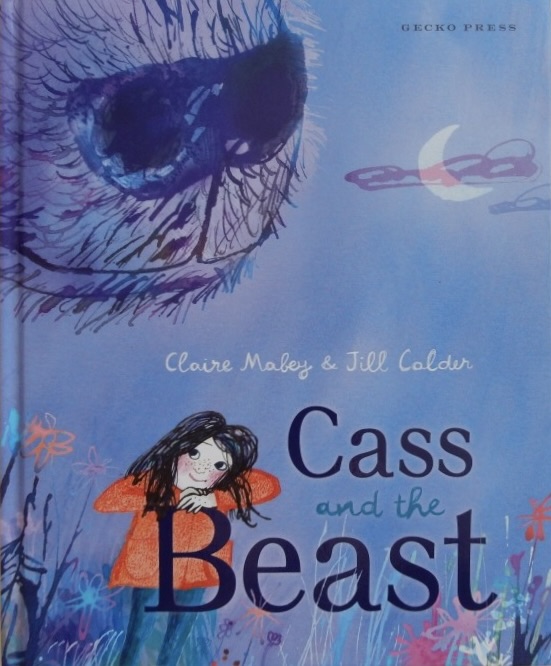
Cass and the Beast
Claire Mabey and Jill Calder
Gecko Press
Something ‘other’ has arrived in town and the townsfolk, not knowing what it is, call it Beast. Their fear causes them to think it is likely to catch anyone who tried hunting it and munch them whole. Young Cass doesn’t believe this however; she’s seldom scared and if ever she is, it’s people who frighten her, not beasts.
One night, she watches through the window and sees the beast moving among the trees; with its rumbling belly she thinks perhaps it’s in desperate need of food. Once everybody else is in bed, she creeps out in her thin coat clutching a piece of bread and calls out “Hello. Are you hungry?” The beast turns and Cass offers the bread, which the beast takes. Suddenly she feels herself being lifted onto the beast’s back.
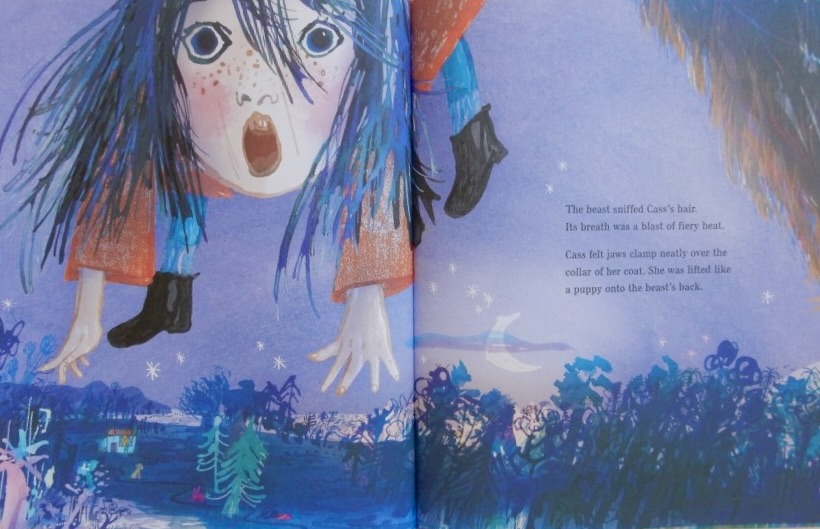
So begins a magical journey that takes her far from the town and into a meadow. There the beast sates its hunger and the two curl up and sleep till the following morning when they return from whence they came, with the townsfolk watching Cass and the beast bidding one another farewell. The townspeople give Cass a new name and the beast finds its true name, which readers/listeners will learn on the final page, though I suspect many will be ready and waiting to call it out, if the adult reader aloud pauses on the penultimate spread.
Difference and how people react to it is a key theme in Claire Mabey’s somewhat surreal, magical story of a risk-taking child; it’s complemented by Jill Calder’s powerfully atmospheric, detailed scenes of Cass’s journey with the beast. Would the young children you share this with be brave enough to undertake a similar journey?