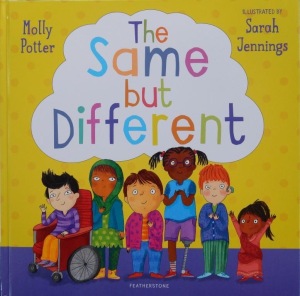
The Same but Different

The Same but Different
Molly Potter and Sarah Jennings
Featherstone

This is the latest in the excellent series written by Molly Potter and illustrated by Sarah Jennings that are used by so many teachers to stimulate thought and discussion.

Herein youngsters are invited to recognise, explore and celebrate both the things we have in common with other people and those that make us different. After all, every single one of us is a unique human being and our differences need to be acknowledged, respected and celebrated. Imagine a world wherein we are all identical in every way: how dull and boring life would be.

Sarah Jennings’ splendid illustrations portray a diverse mix of children (and some adults) and Molly’s narrative focuses largely on differences including how people look – skin colour, hair styles and colours, eye colour, whether or not we wear glasses, height and clothing styles.
There’s a page on talents and skills, another explores preferences such as foods, favoured times of day and another on personality.

That everyone is entitled to have his or her own opinions and beliefs is acknowledged and these should be respected (provided that nobody is harmed, that is.) The concept of family and that of a home are both presented and some of the ways families and homes can be different, mentioned.
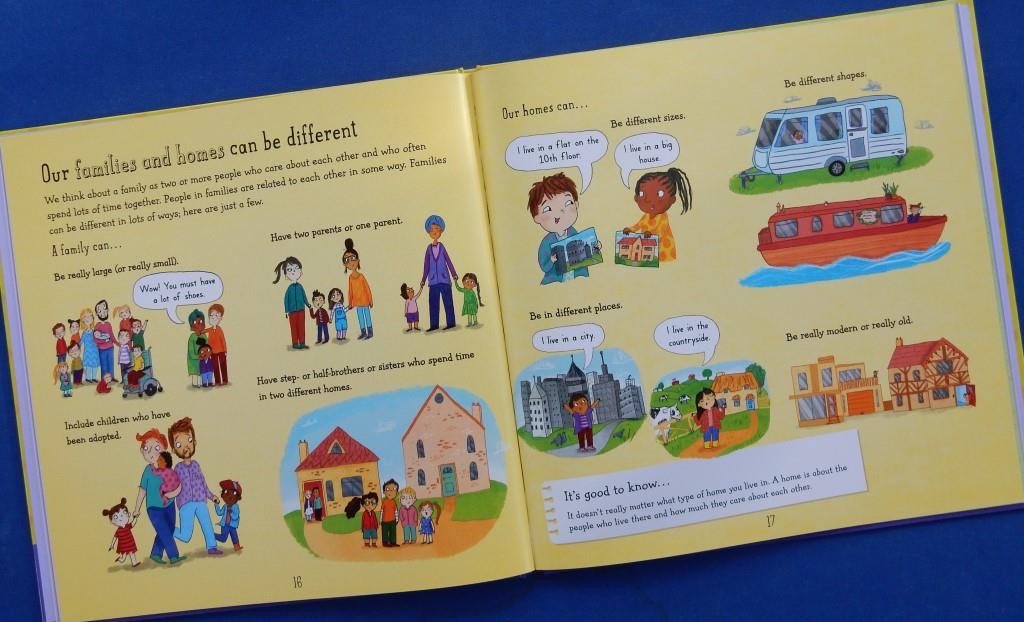

However, in addition to the differences, there are spreads that look at some things that are likely to be same or nearly the same as other people –

things that are part of our shared humanity such as the need to eat, a desire to be loved, a felt discomfort at excessive cold or heat, a brain that enables decision making and an imagination.

The book concludes with some helpful tips for adults sharing it with children to help in their understanding of various forms of diversity and the celebration of difference. There’s also a final glossary. All in all a very useful starting point for discussions on inclusion both at home and in the classroom.
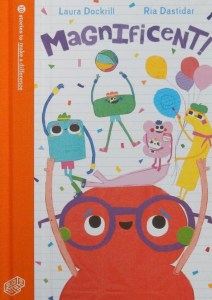
Magnificent! / In Her Element

These are two of the titles in the Pop Up Projects CIC 10 Stories To Make a Difference collection, each one inspired by the theme of difference.

Magnificent!
Laura Dockrill and Ria Dastidar

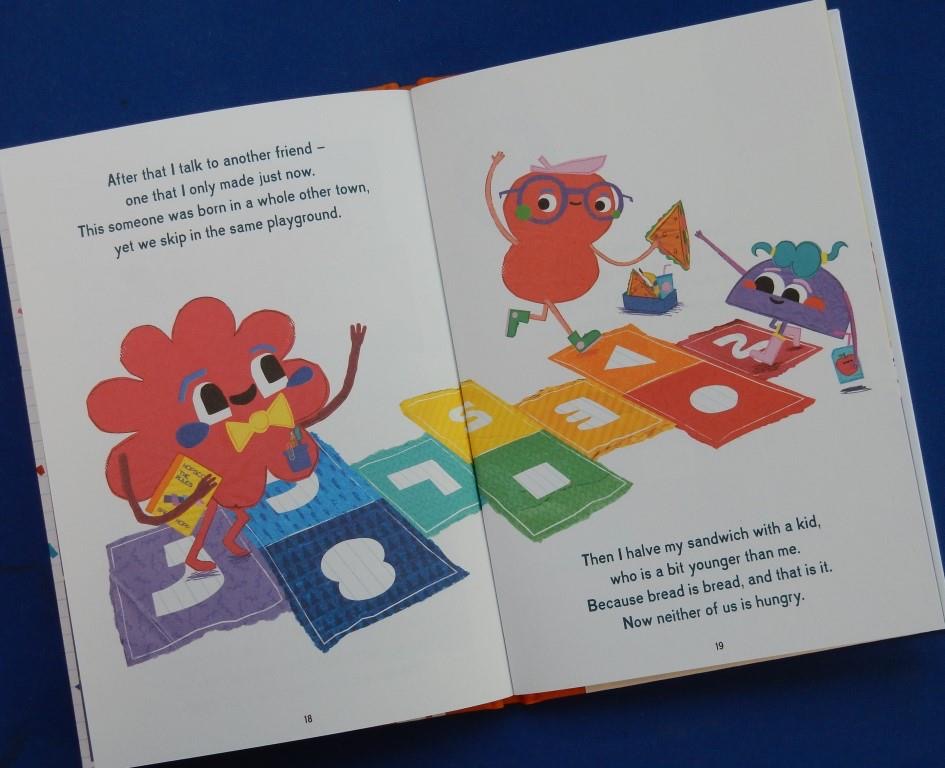
At the start of Laura’s poem, Magnificent! the chief protagonist is trying to cover up individuality, acting like others and trying like mad to blend in – a familiar scenario I suggest. In graphic detail Roa Dastidar shows the trials and tribulations this causes, covering up one’s true feelings and trying to fit in. Social inadequacy, as we see in the playground scenes certainly brings no comfort: overthinking and overcompensating are unrewarding.

Later though, we see a difference – ‘a flip of the coin today’ – it’s time to toss aside boring, cheating sameness and start celebrating differences, no matter what they might be. Quirks are part of what makes us who we are, we’re all different – be that where we come from, how we communicate or how we look.

So long as we remember to reach out to others, especially those who might be struggling, our world can be one of joy where uniqueness rocks.
A smashing book to share and discuss, especially as part of a PSED session.

In Her Element
Jamila Gavin and Jacinta Read

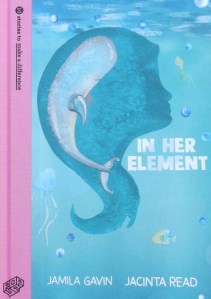
That Jamila Gavin is a superb crafter of tales is evident from the very start of this moving sharing of events in young Sophie’s life, In Her Element. Sophie has cerebral palsy, communicates through her beautiful expressive eyes and a screen, and has a carer, Martin with whom she has a special bond. She loves to be taken swimming , has a special connection with the ocean and dreams of swimming with whales: “Water is my element” she tells Martin, imagining herself as an aquatic creature. Indeed the watery world acts as a metaphor for all the thoughts Sophie cannot give voice to.

Now there’s to be a change in her life: Sophie’s parents tell her that a special residential school they’d previously visited has offered her a place to start the next term. Tears stream down her face as she informs Martin what’s to happen, although she remains calm showing no anger. He in turn is hugely reassuring, reminding her of her ambitions and the importance of becoming as independent as possible.

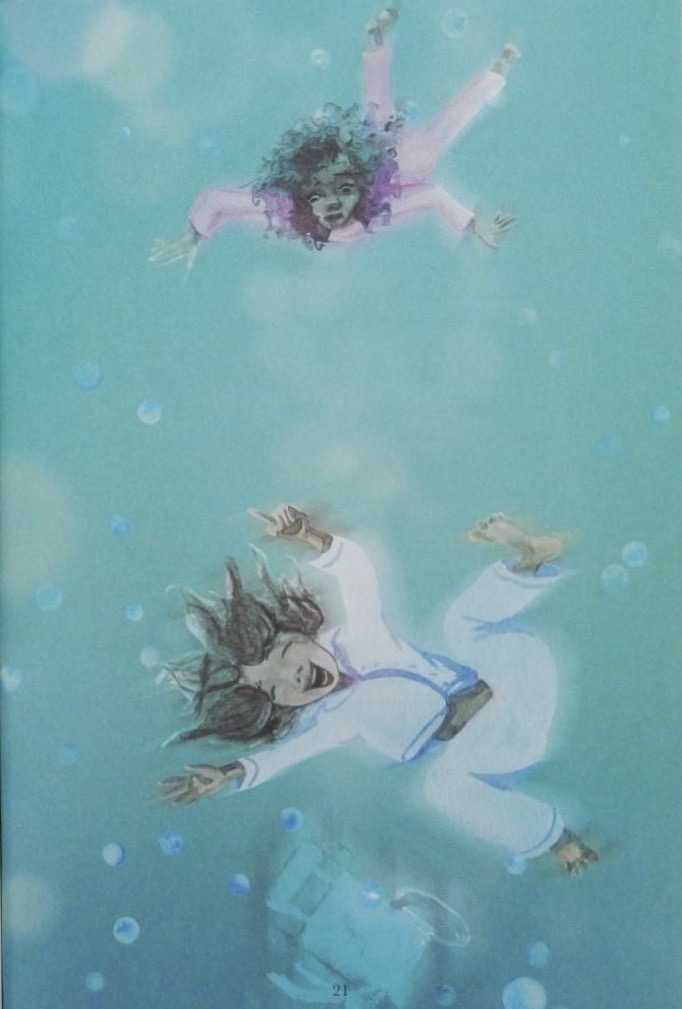
Almost inevitably, life at school is challenging, especially as Sophie has to share a room with the far from welcoming Amber, an ace swimmer who has been severely injured and now wants nothing to do with the sport or water. So she says, but then one night, Sophie’s actions cause Amber to show what her element truly is. Jacinta Read’s final two watercolour illustrations portray this brilliantly.

What a powerful story with such an uplifting ending. Jamila Gavin paints a picture of an enormously positive main character whose imagination is a key part of her life.

If the rest of the series is as good as these two I’d strongly recommend primary schools get all ten.

See What I Can Do!

See What I Can Do!
Jon Roberts and Hannah Rounding
Graffeg

Everybody is different: we all have our individual strengths and weaknesses and that’s part of what makes our world such an exciting place.

Here’s a picture book that embraces difference in an entirely positive way showing how, as one of the characters, Molly, says on the first spread, ”being different doesn’t mean you can’t do anything you want!”

The author goes on to introduce three children with autism who communicate in a variety of ways including in one case, by using Makaton; and then two boys who have dyslexia who explain how this affects them.

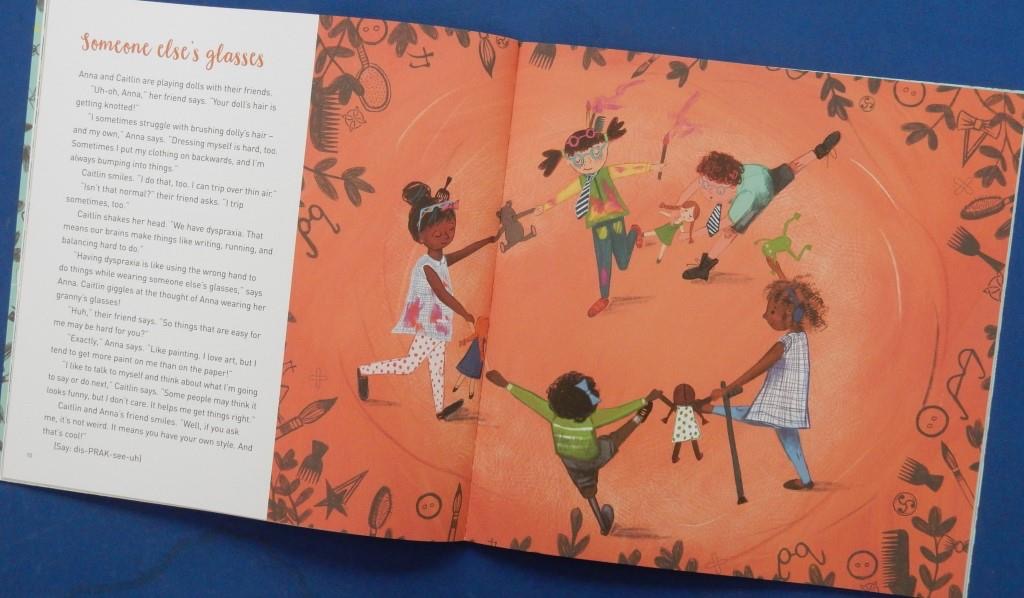
I loved what Caitlin and Anna’s friend says in response to the two girls telling her they have dyspraxia and what this means to each one them: “ Well if you ask me, it’s not weird. It means you have your own style. And that’s cool!”

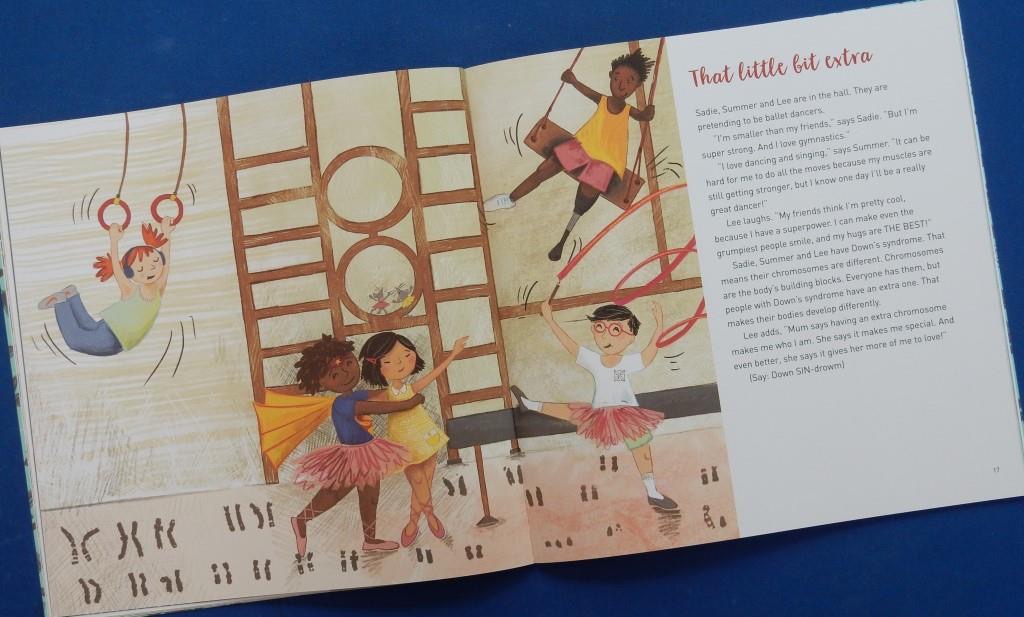
We also hear accounts from children with dyscalculia, ADHD, Down’s syndrome,

Cystic fibrosis, muscular dystrophy, cerebral palsy; others have hearing loss, low vision, spina bifida, epilepsy, brittle bone disease or asthma.

One thing they all have in common is a ‘can do’ approach to life that while acknowledging they face some challenges, emphasises what they have achieved and hope to do in the future.

Inclusive and inspiring, this beautifully illustrated picture book ought to be in every primary classroom and on family bookshelves.

The Same But Different Too / Goodnight World

The Same But Different Too
Karl Newson and Kate Hindley
Nosy Crow

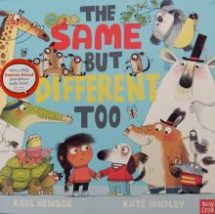
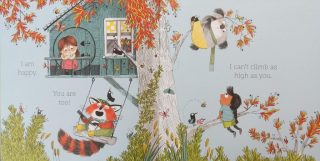
Similarities and differences are highlighted and celebrated in this joyful and engaging rhyming book that uses both human and animal characters to demonstrate examples throughout a busy, fun-filled day from breakfast time to bedtime.

In between come a look at differing heights, climbing skills,

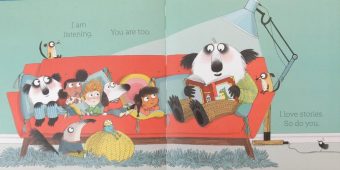
play activity preferences, age, dentition, position, speed and much more; and it’s particularly heartening to find that everyone shares the love of a story session.

Karl’s upbeat words in combination with Kate’s vibrant, zany artwork create a great picture book that’s perfect for family sharing and for foundation stage settings.

With the emphasis on embracing differences it’s a super book to open up discussions about such issues as inclusivity and acceptance. Every spread offers much to talk about and enjoy, helping to highlight how our differences make each and every one of us special and unique.

Goodnight World
Nicola Edwards and Hannah Tolson
Caterpillar Books

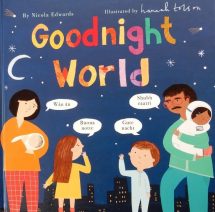
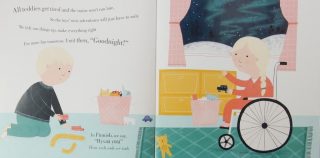
Ideal for bedtime sharing is this presentation of the ways of saying “Goodnight” in a dozen languages as well as in English.
Nicola Edwards rhyming narrative takes us through the bedtime rituals of different families as the little ones are hugged, have a bath, brush their teeth, tidy up toys,

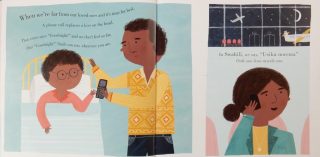
perhaps listen to a phone message from a loved one far away,

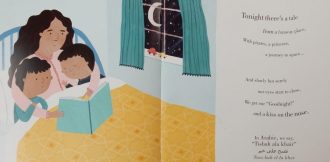
and share a bedtime story …

Some tinies are just so tired they need carrying up to bed already fast asleep, while others bid each other “Goodnight’ or in German “Gute nacht”.

Others will have trouble falling asleep and need to count sheep before dreams come.

No matter what though, come nightfall, little ones everywhere go to bed having said “Goodnight” or perhaps used the Mandarin “Wān an”, the Russian “Spokoynoy nochi”; the Italian “Buona note”; the Finnish “Hyvää yötä”; or maybe they said “Usiku mwema” (Shahili); “Buenas noches” (Spanish), the Arabic “Tisbah ala khair”; the Hindi “Shubh raatri” or the French “Bonne nuit”.

Safe in their beds under shared moon and stars, everyone finally falls asleep.

In her bold naïve style, inclusive illustrations Hannah Tolson shows all these different bedtime scenarios as they unfold in various places.

Happy / As We Grow / We Are Together

Here’s a trio of books from Caterpillar Books one of the Little Tiger Group imprints that I was excited by on my return  home after three weeks away in India.

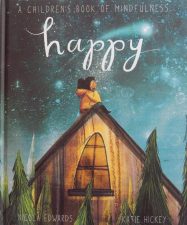
Happy
Nicola Edwards and Katie Hickey
Caterpillar Books

Mindfulness is a popular theme at present and we’ve had several books on the subject for children in recent months, possibly as a response to the growing concern about the pressures even very young children are under in their everyday lives both in school and at home.

I know from experience that offering youngsters a brief period of quiet, calm time each day when they can be in the here and now away from the stresses and strains of life leads to a happier, more relaxed classroom or home atmosphere.

This beautiful book encourages children to become mindful, offering them some ways to be in the moment, to explore their emotions by tuning in to their senses in a meditative manner. They can listen to the natural sounds around them; or tune in to and focus on their feelings. Tension can be released not only from our minds but also our bodies in a manner similar to that at the end of a yoga session when participants are encouraged to tense and relax the muscles in their bodies one by one until the whole body is completely relaxed.

How many of us really pay attention to what we eat, to savour every mouthful noticing the texture and flavour as we chew: it’s a really great way of being mindful and perhaps more appreciative of our food.

Touch too is a way of connecting and calming, particularly when outdoors in natural surroundings; looking with awareness too works to calm and connect as do smelling and deep slow breathing.

The gorgeous illustrations and gentle, rhyming text herein will surely encourage children to slow down and become mindful, to discover that place of peace that’s deep within us all.

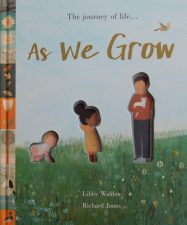
As We Grow
Libby Walden and Richard Jones
Caterpillar Books

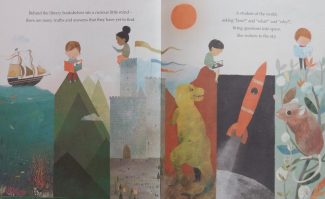
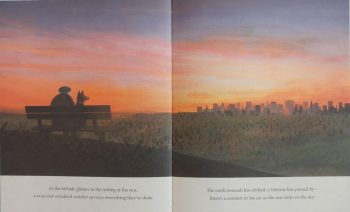
This Walden/Jones collaboration is a great way to look at life as a journey full of changes, challenges and joy, that begins as a very tiny babe totally unaware of what is to come as we grow and travel through the years. What we can be sure of though, is that each stage will be different, full of excitement and new adventures. There’s that toddling stage that opens up a myriad of new experiences and quickly gives way to the more assured young child full of imaginative ideas, when language develops rapidly and words are a toy and a tool. Fuelled (one hopes) by mind-opening books a plenty that help with those ‘hows’, whys’ and whats’.

The transformation into a teen is a dramatic one when times are unsettled, restless and confusing, a time of self-discovery prior to adulthood; in the early stages of which independence and challenge go hand in hand before perhaps settling down and maybe even becoming the parent of a new little one.

Like life, this entire book is full of beautiful, memorable stopping points

richly portrayed in Richard Jones gorgeous scenes and Libby Walden’s lyrical text.

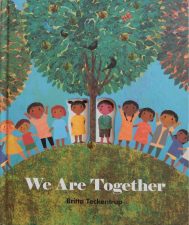
We Are Together
Britta Teckentrup
Caterpillar Books

Britta Teckentrup celebrates human diversity through a rhyming text and her inimitable vibrant style illustrations with their peep through cut out pages.

What better way to encourage young children to value togetherness than these opening lines: ‘On our own we’re special, / and we can chase our dream, / But when we join up, hand in hand, / together, we’re a team.’

Readers are then presented with a sequence of gorgeous scenes of children out together in the natural world that will surely encourage positive feelings in youngsters both about themselves and others.

Perfect for sharing in foundation stage settings and a great starting point for a circle time discussion.

Where Happiness Lives / One Day So Many Ways

Where Happiness Lives
Barry Timms and Greg Abbott
Little Tiger

What is your idea of a perfect house; perhaps it’s similar to one of the three we visit courtesy of their mouse owners each of which thinks they have the perfect home, to begin with that is.

First off we visit Grey Mouse’s residence: it’s just the right size for him and his family and it’s built in the shade of a wonderful oak tree. In short, it’s just perfect.


But then out walking one day, he comes upon an impressive-looking residence with a balcony belonging to White Mouse. What more could any mouse want, thinks Grey Mouse. But he’s soon to find out, for his new acquaintance too has his sights set on a bigger, better residence.

Together the two set off to climb the mountain whereon this amazing place is to be found. Herein lives Brown Mouse who is quick to invite her visitors in for a guided tour of her luxurious home.

A surprise is in store though, for Brown Mouse has a telescope and what she shows her visitors through its lens causes them to stop and rethink the whole notion of home and contentment.

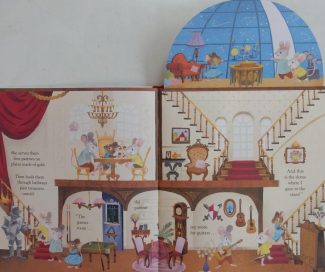
Greg Abbott’s mice are truly enchanting and there’s a plethora of cutaways and flaps to explore and delight little ones in the splendid illustrations that accompany Barry Timms’ engaging, gentle rhyming narrative.

One Day So Many Ways
Laura Hall and Loris Lora
Lincoln Children’s Books

None of us adults spends their day in exactly the same way and so it is with children and the latter is the focus of Laura Hall and Loris Lora’s splendidly diverse close up on the lives of some 40 children from different parts of the world over 24 hours. Readers will be able to compare and contrast as they follow the youngsters as they wake up in their various homes, have breakfast and go to school.

We watch them as they learn, play, get together with friends, enjoy quiet times;

eat lunch, engage in sports, participate in creative activities and more.

After school there’s the inevitable homework for many; but there’s also time to spend with the family; time to read, to sleep and to dream.

Every spread in this lightning world tour focuses on a different aspect of the day with bright engaging artwork and brief descriptions. It’s a great book for opening up discussion among primary children and enormous fun to pore over particularly with another person.
Good to have on a family bookshelf or in your classroom library; either way it’s engaging and delivered with style.

Mixed

Mixed
Arree Chung
Macmillan Children’s Books

In the beginning there were three colours: Reds – the loud ones; Yellows – the bright ones and Blues – the laid-back ones, and they lived in harmony.
One afternoon though, the Reds took it upon themselves to declare that they were the best colour and that was the start of disharmony

resulting in the erection of fences, tall brick walls and separatism. Does that sound familiar?
However, one day a Yellow and a Blue notice one another and realise that their distinctive characteristics are of mutual benefit:

in short they become best buddies and more, to the alarm of the others of the three hues.
Love prevails, the two MIX and it’s not long before they’ve created a new colour they name Green. She has elements of both parents but is unique and, all the others love her.
So much so that they too begin to mix … and mix …

gradually transforming the entire neighbourhood into a harmonious, multi-coloured environment.
My immediate response to this straightforward story was ‘If only it were that simple.‘ That said the book contains powerful messages about the importance of diversity, acceptance and respect for others, as well as celebrating how  people’s differences can be tools for transformation.

Here We Are

Here We Are
Oliver Jeffers
Harper Collins Children’s Books

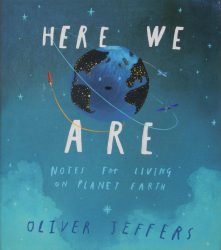
Oliver Jeffers is one of my favourite author/illustrators and Here We Are, his latest book, is simply exquisite.

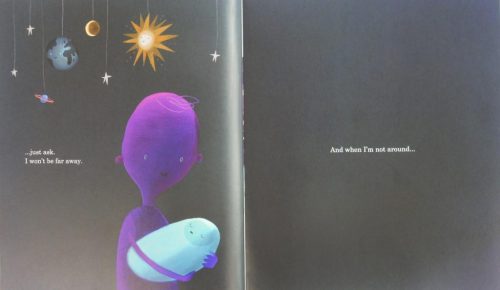
Created for his new baby son and suffused with parental love and a gentle humour, Oliver speaks, seemingly directly, to the infant.

He talks of the intriguing, bewildering and fascinating wonders of Planet Earth and all that’s on it and above it – the land, the sea, the sky, space, humans, animals, day and night.

Much needed, perfectly timed, and pared back to the essentials, his message is one that resonates: kindness, tolerance and respect not only for our planet – ‘Make sure you look after it, as it’s all we’ve got.’; but for one another whoever we are, wherever we are, ‘People come in many shapes, sizes and colours. We may all look different, act different and sound different … but don’t be fooled, we are all people. … there are lots of us here so be kind. There is enough for everyone.

That’s what really matters. It matters for us here and it matters for people right across the globe especially now when so many countries are in turmoil of one or another kind.

This is a vital picture book, awesomely illustrated in Oliver’s inimitable witty way – a classic–to-be, for every family, early years setting, school collection and library. And it’s an absolutely perfect gift for any baby who has recently arrived on our bewilderingly marvellous planet.

Bonkers About Beetroot / Pony in the City

Bonkers About Beetroot
Cath Jones and Chris Jevons
Maverick Arts Publishing

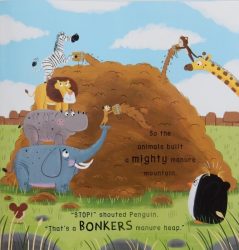
Sunset Safari Park is in danger of being closed down due to a distinct lack of visitors. Zebra calls a meeting of its inmates in the hope they might have suggestions as to how to save their home. Despite Penguin’s discouraging “Nobody comes because we’re boring” comment, Zebra remains determined to do something to attract the crowds. Beetroot is his plan: the biggest in the world and the animals are to grow it. “BONKERS!” is pessimistic Penguin’s response to this idea and to pretty much every stage in the growth of the vegetable from manure heap planting ground …

to the large beet that soon attracts the crowds.
So successful is the vegetable that it just goes on growing and growing until there’s no longer room for visitors.

Penguin’s solution is a pretty drastic one but will it have the effect he hopes? Can the safari park be saved after all?

Really, there’s no other way to describe this story that to borrow Penguin’s much used word, ‘BONKERS’.
The contrasting characters: optimistic Zebra and pessimist, Penguin complement one another well, making for a lively and quirky story time read aloud that invites audience participation.
Chris Jevons’ vivid illustrations of zoo residents, the zoo’s human visitors and of course, the beetroot itself, provide plenty to giggle over.

Pony in the City
Wendy Wahman
Sterling

Otis, a pony at the Pony Paddock gets on well with the children who visit his home; in fact he’s ‘saddled with questions’ about them. Do they gallop and kick? Do they ever walk on all fours? Do they graze on grass and daisies? The older ponies ignore his constant questioning so Otis sets out to find some answers for himself.
He visits the city park where hiding himself away, he observes and discovers their movements and sounds are not very different from his. Next stop is their homes; ‘such big barns’, he decides.
Otis discovers many more similarities …

but then suddenly comes the scary realisation that he’s far from home, alone in the big city and it’s way past time to sleep.

Next morning he hears a familiar clippity cloppity sound; could it be one of his fellow ponies coming to look for him?
No it isn’t; but his finders are equally surprised to see the little pony so far from his home and more than willing to take him back home where, inevitably, he has lots of questions to answer …
This gentle adventure with witty collage style illustrations of a children’s world interpreted through the limited experiences of a pony, offers food for thought about judgements and diversity.

Stardust / In My Room

Stardust
Jeanne Willis and Briony May-Smith
Nosy Crow

For the little girl narrator of the story, it’s deeply upsetting being the sister of someone who always seems to be the star of the show where family members are concerned, other than Grandad, that is.
Then one night after losing the Fancy Dress Competition to her big sister,

Grandad finds our narrator outside gazing up at the starlit sky. Her wish to be a star prompts him to tell her a story: the story of how the universe came into being.

A story that explains the connectedness of everything and everyone: “Everything and everyone is made of stardust,” he tells her. “… Your sister isn’t the only star in the universe… you all shine in different ways.
And, inspired by his words, shine she does – in the most amazing way.

Such wise words; words that the little girl never forgets but equally, words that every child needs telling, sometimes over and over.
Briony May-Smith’s stunningly beautiful illustrations really do celebrate connectedness, diversity and individuality; they’re every bit as empowering as Jeanne Willis’ text.
Strongly recommended for families and early years settings to share and discuss.

In My Room
Jo Witek and Christine Roussey
Abrams Appleseed

The fifth of the ‘Growing Hearts’ series of novelty books starring a little girl protagonist is essentially a celebration of creativity and imaginative play.
The thick pages are cut so that when the book is turned through 90 degrees, they form together a variegated pencil crayon with which the girl conjures up a series of playful scenarios.
All I need is paper, crayons, chalk … and my imagination!” she tells readers.
First she’s an explorer, then a dancing princess; she becomes a speed racer, a teacher, a writer,

a sailor, a swimmer, a bride, a vet and finally, a funky rock star; all without leaving her room other than in her head

and courtesy of her art materials. Not a sign of any technology anywhere – hurrah!
Yes, there are already plenty of picture books that celebrate the power of the imagination; what makes this one different is the format.
Long live creativity!

I’ve signed the charter  

Minnie & Max are OK! / Florence Frizzball

Minnie & Max are OK!
Chris Calland, Nicky Hutchinson and Emmi Smid
Jessica Kingsley Publishers

Minnie has had a bad day at school having been teased and shunned by two girls, and now she wishes she looked more like them.
When her grandma meets her at the end of the day, she notices than Minnie is upset and decides that a trip to the park might help. On the way both Minnie and her dog Max peer at their reflections in a shop window and soon both of them are full of doubts about their appearance.
As they sit together in the café, Minnie tells her gran how she feels and Gran’ responds calmly, lovingly and reassuringly. “I love you just the way you are!” she says, “I think it’s wonderful that we all look so different … Just look around us.” And Minnie does …

Max sees a great variety of dogs too and before long both child and dog are playing happily with friends.

With its gentle humour, and Emmi Smid’s captivating ilustrations, this is a good book to read with any young child struggling with self-esteem be it related to body image or any other perceived ‘difference’. Equally if shared with a class or group, it should make potential negative commenters stop and think about how much better our world is for its rich diversity.
There is a final spread aimed at adults wherein the authors, both education consultants, offer ideas for discussion on the themes of teasing, self-image and diversity.
All in all, a valuable tool in the fight for embracing and celebrating difference and diversity.

Florence Frizzball
Claire Freedman and Jane Massey
Simon & Schuster Children’s Books

Florence the small girl narrator of this story has hair issues; her curly frizz is thick and unruly. Her little brother’s sleek, flat hair is altogether more preferable, so she thinks. It doesn’t tickle or prickle …

or obscure anyone’s view on windy days, nor when watching television; and no one else in the family is similarly troubled other than the dog, Scuff.
Can a visit to the hairdressers be the answer perhaps?

It certainly results in a transformation; but is straight hair really so desirable …
With its cute characters, this sweet rhyming tale presents themes of individuality, self-image and self-acceptance in an accessible story for the very young.

Surprise! Surprise!

Surprise! Surprise!
Niki Daly
Otter-Barry Books
Mr and Mrs Tati live together in a little yellow house, but one thing is missing from their otherwise happy life: Mrs Tati longs for a “sweet little baby”.
Mr T. visits the Baby Shop asking for a “fat, happy baby” for his wife but all they can offer are all the things that, without a baby, she has no use for at all. On his way home however, he encounters a man offering baby pigs for sale. Could one of those be the answer to Mrs Tati’s dreams?

For a while the Tatis are blissfully happy with the new addition to their family and eventually Potter is old enough to start school and that is when the trouble starts …

Potter’s parents decide their attempts to turn him into a little boy were a mistake and he’s allowed to be messy with mud and sleep outdoors instead of going to school.

Weekends though are inside times; and it’s on one such occasion that Mrs Tati makes another wish. A wish that leads to a whole chain of further wishes culminating in Mr Tata’s wish upon a falling star. “I wish, I wish, I wish, that when we wake up in the morning … we will all look the same.” …
Do you think his wish came true?
This corker – or should it be porker? – twist-in-the-tail story is an absolute delight. With themes of family love, acceptance and diversity, this is perfect for sharing both at home or school. Niki Daly imbues every illustration, large or small, with his wonderful wit and joie de vivre.

I’ve signed the charter 

We Are Family

                              I’m excited to be part of Caterpillar Books blog tour for We Are Family.

dscn9902

We Are Family
Patricia Hegarty and Ryan Wheatcroft
Caterpillar Books
This all-inclusive rhyming celebration of family life really does offer each and every child the possibility of seeing him or herself in a picture book: Ryan Wheacroft’s multitude of vignettes ensure that.
Whoever we are and whatever we do, / Our families hold us together like glue.
These opening words of Patricia’s text caused me to reflect on my concept of family and I concluded that it means many things and includes many more people than those I’m related to by blood.
Our family comes / From round the world: / Our hair is straight / Our hair is curled, / Our eyes are brown, / Our eyes are blue, / Our skins are different/
Colours too.

So begins a poem by Mary Anne Hoberman that I included in my compilation, Family Album published some 20 years ago and it resonates with my own view of family. At that time, I’d been given a six-month sabbatical from my job as deputy head of an outer London Primary School. I was to look at primary education in India in order to try and understand why the parental expectations of the majority of families from the Indian subcontinent whose children were attending the school I worked in, and others in the borough, were so very different from those of our teachers.
I stayed in Udaipur, Rajasthan in a small hotel – owned and run by a Rajput Indian family I very soon felt I had become a part of. At the time there were two brothers – one managing the hotel, the other a tour guide, both residing in the haveli (large family home) with their parents and downstairs, grandparents as well as various other people employed to help with the latter.
From the outset, the grandmother would send to my room at suppertime, dishes she thought I’d enjoy. Soon though, I was invited to share evening meals in the haveli: “You’re family now” I was told.

%0a

During those months I went to Navratri celebratory Garba Dandiya dances with female members of the family and shared in the family celebrations of Diwali.
That was the start of a family bond that has deepened, although altered (the grandparents and father are dead now) over the subsequent 24 years. Both brothers, (one of whom, Ajay, now truly is like my blood brother), have children of their own, two apiece. I hesitate to say they have their own families as, like many Indian families, they tend to grow into a larger extended family, rather that separate ones. And that’s due in part the to the fact that they still live in the same complex.
I also feel very close to Anu. Ajay’s wife and in particular, their two daughters, whom I’ve watched grow up. I saw both of them as tiny babies and one is now at university and the other at school and training, she hopes, to become part of the Indian shooting team for the next Olympics.

%0a

We visit them at least once a year, usually during the Christmas holidays; it’s more tricky during the summer now as even the two girls’ holidays don’t coincide, let alone Indian school holidays and English ones. They have stayed with us in the UK several times too.
During that same period of time I became involved with another Indian family too, more by chance this time. It started with a visit to an art gallery run by one member of an artist family, also in Udaipur. This family too took me into their home and hearts and the bond is still very strong. I visit the galleries of both brothers frequently when staying in the city as well as sharing meals and much more. For instance, I tie a raki around the wrist of the brothers at the festival of Raksha Bandhan (a festival of brothers and sisters), as well as being a source of books for both Shariq and Shahid’s children.
Sometimes we go on holidays or happy fun days out,
Doing things together is what families are about.

%0a
img_20161218_170229_hdr

Both brothers have stayed at our home in the UK several times for recreation and more. One visit that sticks in my mind is when Shahid, (who was to have some of his paintings exhibited in the UK) his wife and young son came one Christmas time and we had frost and a scattering of snow. Their little boy was around 4 (he’s now 17) and had never experienced such cold. Stepping outside he said, “Papa, I’m smoking” as the freezing breath came from his mouth.
In addition to being an artist, Shariq, who while visiting us in UK, did some art workshops in my own school and several others I was connected with, is also a musician and has invented and crafted, an amazing instrument

20170104_144136-2 4-5

and his two young sons are pretty awesome tabla players.
One thing that struck me almost immediately is the great respect accorded to older generations of a family in the Indian culture. Both Ajay’s and Shahid’s families found it strange that our parents did not live with us though my partner’s mother had her own house just ten minutes drive away. She invited them to tea and she shared meals with them at our home. On subsequent visits it was always obligatory for them to meet Marjorie to pay their respects. When, in her 80s, she accepted an invitation to Udaipur, she was treated like royalty with a party in her honour at Ajay’s hotel and requests to go for lunch, dinner and, in order to fit them all in, even breakfast at the homes of members of a cricket team Ajay had previously brought to play in the UK. All this very much echoes Patricia Hegarty’s final words of We Are Family:

Each family is different, it may be large or small.
We may look like each other – or not alike at all.
Money doesn’t matter, nor colour, creed, nor name –
In each and every family, the love we feel’s the same.