Let’s Save Antarctica

Let’s Save Antarctica: Why We Must Protect Our Planet
Catherine Barr and Jean Claude
Walker Books

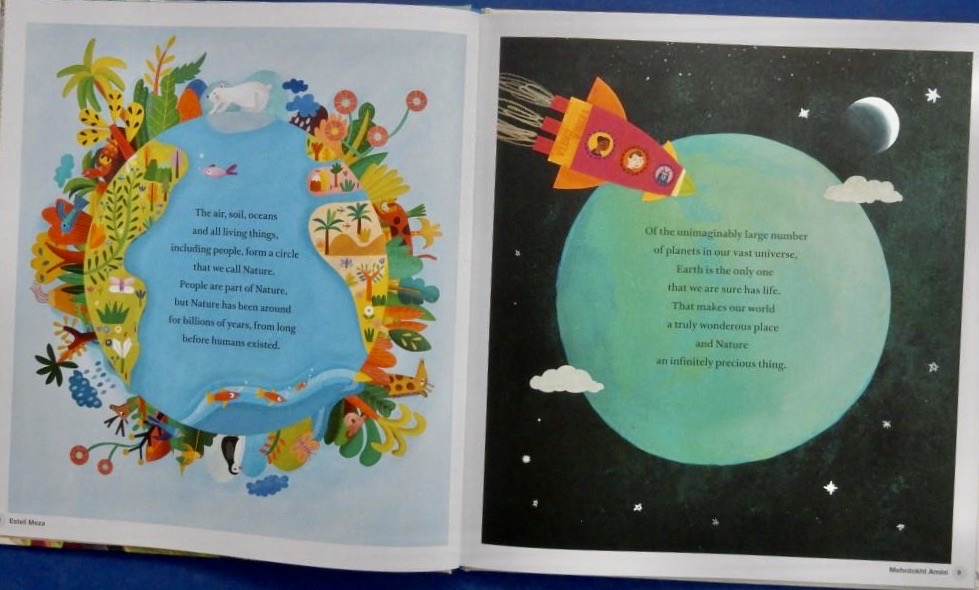
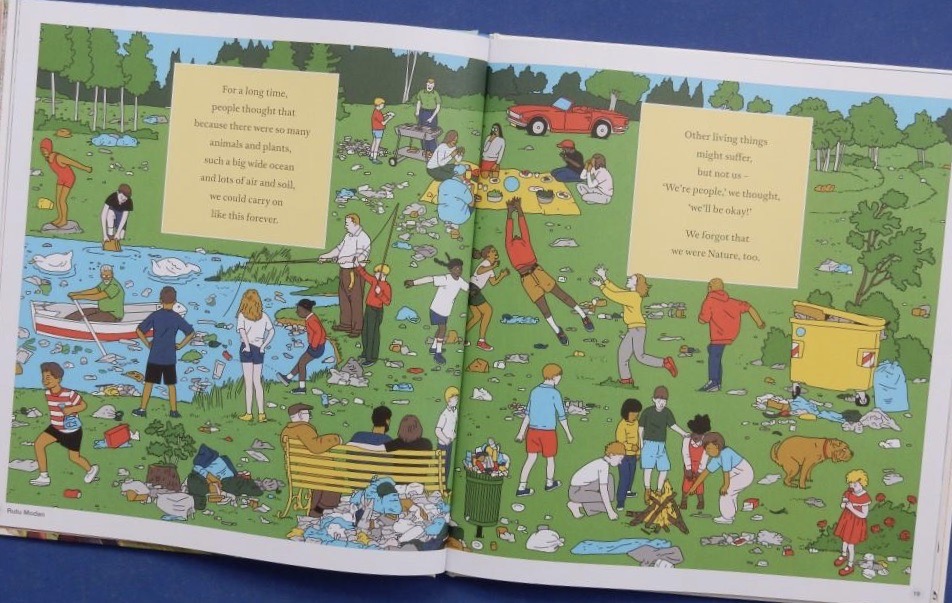
This book is an urgent plea from author Catherine Barr and illustrator Jean Claude for readers and listeners to help in the vital task of protecting our precious planet, in particular Antarctica from climate change and plastic pollution, and all that means.

That vast white continent covering the South Pole – the most extreme environment on earth – is home to millions of Emperor penguins as well as safe waters for the enormous whales that live in the depths of the surrounding Southern Ocean. Losing these, thus far tough survivors just doesn’t bear thinking about, but think about it we must.

Penguins though are just some of the awesome inhabitants of the vast icy wilderness, for eons ago it was home to dinosaurs, and fossils, footprints, teeth and ginormous bones have been discovered by scientists investigating the ancient volcanic ash of the Antarctic sea floor.

Other scientists have and still are investigating what Antarctica can reveal about how earth’s climate – the temperatures and wind patterns – have changed over hundreds and thousands of years.

But what are the secrets to the survival of the flora and fauna of this extreme environment? Yes they are all protected in this our last great wilderness.

However, it’s something biologists are studying while others are looking at what allows deep sea life to survive.

So too is the crucial work that scientists are doing to monitor the effects and speed of climate change, Antarctica’s greatest risk of all, and something that will also have a huge impact on all of our lives.

You don’t have to be a scientist to contribute to the saving of Antarctica and the final spread comprises things that we can all do to stop plastic pollution in the ocean and help slow down climate change. What Catherine has written will surely spark action to protect this incredible place; it’s up to us …

The Dragon with the Blazing Bottom

The Dragon With the Blazing Bottom
Beach
Simon & Schuster Children’s Books

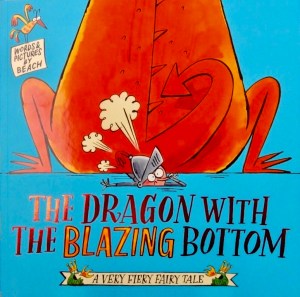
Back in the days of yore, disaster has struck: Sir Wayne’s dragon has lost his fearsome flame. Not a flash or a flicker can he raise no matter how hard he huffs and puffs. Sir Wayne’s alternative ideas go down like a damp squib;

only a flaming breath will do.

So what is causing this lack of fire? Could it be those spotless teeth or is his tongue too pink? The trouble must be down to diet, the knight suggests, but no need to worry. Sir Wayne has a dietary plan so sizzlingly hot it just can’t fail.

A single hot dinner comprising electric eels, half a dozen sacks of coal, an unspecified amount of oil, a couple hundred fireflies, a blazing log fire, a barbed wire-wrapped cactus, a heat-seeking rocket, a burning bush, sparklers and fireworks so long as they ‘WHOOSH!’ and finally and most disgustingly, a small piece of cheese – “Almost as green as the snot from a sneeze.”

It most definitely looks astonishing. Foolproof surely? Erm … The proof of the dinner is in the eating …

Beach has certainly created a sure fire winner of the whiffy kind with this, which apparently is the start of a series. The rhyming text reads aloud splendidly and with comical incidents aplenty, the illustrations are suitably hilarious. I can’t imagine a single child failing to respond with spluttering delight. Bring on the next episode say I.

Daisy’s Dragons / Green

Daisy’s Dragons
Frances Stickley and Annabel Tempest
Studio Press

Here’s a picture book that encompasses dealing with your feelings, owning a pet (or several) and even perhaps coping with pandemic reds, greens and silvers, and sometimes blues, pinks, and purples too. These colours refer to the pet dragons that young Daisy has and only she knows they’re there, each playing its own particular role. That is until one day when everything goes haywire on a visit to the ice-cream shop

and the result is that three of Daisy’s dragon friends go missing, and Daisy herself gives vent to her own emotions as she becomes scared, angry and sad, sending the others away.

In an attempt to bring back the absent Happy dragon feelings, the little girl plays with her toys and as she does so she realises that it’s actually very important to have the entire range of emotions: “None of you are bad,” she says, confirming what an apologetic Sad has already articulated with “But all of us are part of you … and none of us are bad.”

Told in Frances Stickley’s rhyming narrative and with Annabel Tempest’s splendidly portrayed dragons, this is an engaging story that opens up opportunities to talk about the all important topic of emotions with young children. I suspect that by the time the story’s told, both adult sharers and young listeners will have developed a fondness for all six special dragons.

Green
Louise Greig and Hannah Peck
Farshore

There’s always a slight quirkiness to Louise Greig’s books that I love, and so it is with this one.
Ed becomes downhearted when he’s no longer the owner of the best sled of the slopes. Back to his shed he goes to build an outstanding one, spending many a wintry day and night to that end. Despite knowing that he’s missing out on lots of fun he just can’t bring himself to go out and join his friends who are eager to see him.

Unbeknown to the boy, during the time he’s been working away, the days have been growing longer and warmer, and when he finally emerges he fails to hear the song of the blackbird and see the blue flowers peeping through. Then unexpectedly after a shower, everything turns green, speckled with white daisies. Now what will he do with a sled, even if it is THE best?

Suddenly he hears his name being called: it’s his friends saying how much they’ve missed him. Now at last Ed feels the sun’s warmth and he’s filled with joy but feels somewhat foolish as he explains what he’s been doing. Soon he realises that he’s missed so much: the companionship and exhilaration he now experiences are the things that really matter; they’re way more important than having something biggest and best.

Told in Louise Greig’s poetic text with Hannah Peck’s scenes that perfectly capture the feelings of the characters and their movement, this is a thought-provoking story about emotions, showing how envy negates the pleasures of the here and now.

The More the Merrier

The More the Merrier
David Martin and Raissa Figueroa
Walker Books

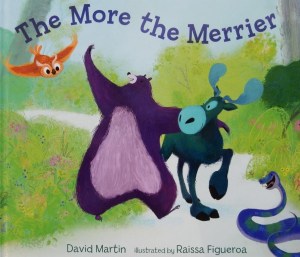
Bursting with delicious movement words – stepping, galumphing, slipping and sliding, and wiggling, leaping, swooping and flying, skipping, even flappity-flipping – go the creatures in this book as we meet in turn Bear with kicking feet and bending knees, Moose going high, low, fast and slow,

Snake doing what it can, beat-loving Deer and round-eyed Owl.

Then come cute Baby Mouse drawn to the action as are Mouse’s friends with their “Hey diddle, diddle”. Round they cavort singing at the tops of their voices until sleep finally overcomes them and zzzzzzz.

Who could resist the call to action to head over to that forest and join Bear in following the infectious beat of the rhyming telling. Inspired by the dancing animals shown in Raissa Figueroa’s dynamic scenes, young listeners will probably also want to offer their own unique dance moves performed with similar abandon to the animal cavorters that grace the pages accompanied by David Martin’s joyfully upbeat, cleverly patterned text with its almost irresistible beat.

By the way, it’s also a great book for developing sound/symbol awareness. The foundation stage classroom potential is huge but more important, it’s a super story that supports the all-important message that playing with language is fun..

The Fairy Dogmother

The Fairy Dogmother
Caroline Crowe and Richard Merritt
Little Tiger

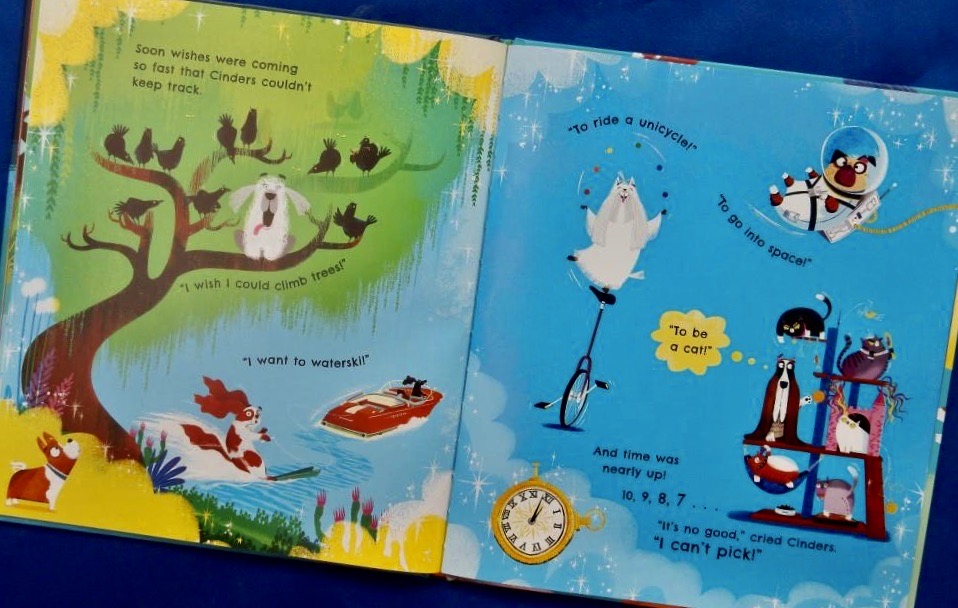
This playful modern fairy tale has its origins in Cinderella and is set in Woofington’s Dog Shelter, home to most of the characters in the book including Cinders. This resident is just contemplating lunch when suddenly one Priscilla Paws, Fairy dog mother announces herself and offers Cinders a wish – “Whatever will make you the happiest you can be,” she suggests.

Now Cinders is pretty satisfied already with his home, food and friends so he tells Priscilla, but the fairy urges him to make haste before the wish times out. Unable to come up with anything, Cinders consults his friends and every one has a different suggestion, Boris’s idea being a ball … How do you think Priscilla envisages that one?

The clock ticks on and Cinders’ time is almost up …

when suddenly Old Wally has a brilliant proposal. Kind-hearted Cinders happily makes the wish but it leaves him without any companions. Or does it? For as Priscilla’s experience tells her and she tells Cinders, “fairy tails always have a happy ending” …

Dreams sometimes do come true, perhaps even when the dreamers don’t realise what their deepest wishes are.

Be they bursting with detail and pattern or less ornate, Richard Merritt’s vibrant humorous scenes completely fill every page and along with Caroline Crowe’s positive message about Cinders’ kindness and generosity,.this is a fun book to share with youngsters, preferably once they know a traditional version of Cinderella.

Nook

Nook
Sally Anne Garland
Sunbird Books

This is a gentle, sweet tale that shows the empowering quality of the kindness of others.

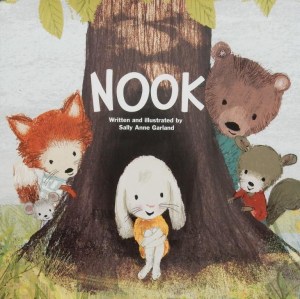
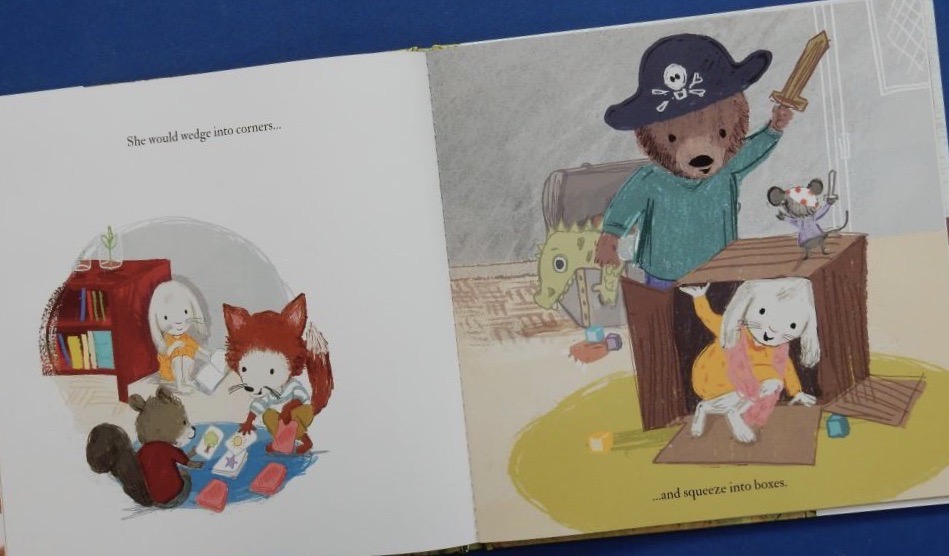
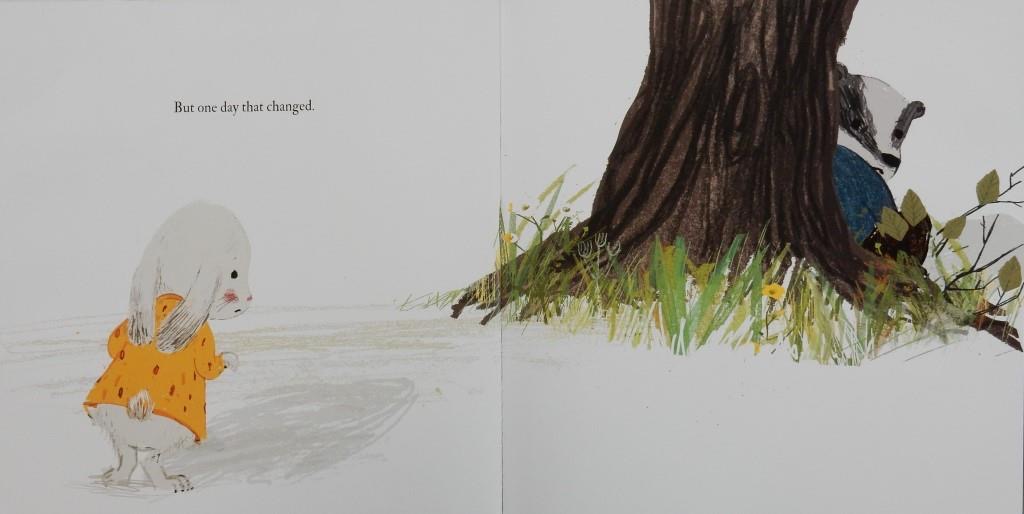
Nook is a small, shy rabbit; she speaks little and prefers to stay in quiet spots with somewhere against which to press her back so she feels safe.

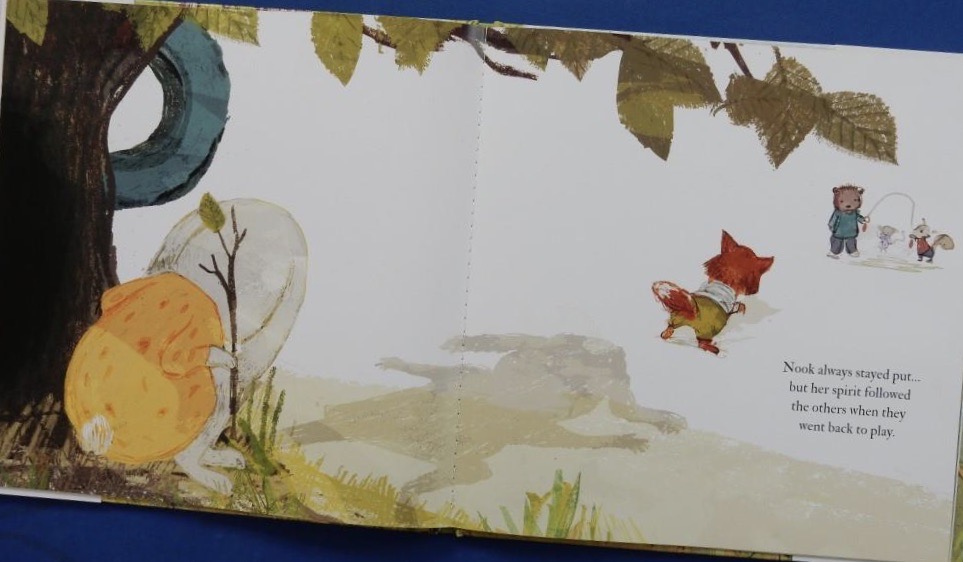
Her most favourite place of all is the deep hollow in an old elm tree, the ideal place from which to watch the other animals play. Try as they might to entice her out to join them, Nook prefers to keep her body feeling safe in her nook, but in spirit she’d be a participant in their games.

‘Nook’s place’ is what the hollow becomes known as, a place where other creatures know not to sit. Or rather, not quite all of them, for one day filling the hollow she finds …

The surly creature claims the space as his own, leaving Nook with welling tears and panic stricken.

Not for long however for her fear gives ways to surprise when the other animals stand behind her and speak out in her support. As they edge forward, the little rabbit feels protected and encouraged so that at last she feels confident enough to let them lead her away and play …

Do you think she continued so to do? You bet.

As it is with little animals so it is with young humans; some are outgoing and happy to be one of the crowd from the start, others – the introverts – need empathetic understanding and encouragement so they don’t stay forever on the sidelines.

Sally Anne Garland uses bold brush and coloured pencil strokes to imbue her animal characters with kindliness and humanity while also including in her outdoor scenes, lovely details from the natural world – a ladybird, seed heads, small flowers, for instance.

Definitely a book to share with foundation stage children, and individuals at home.

Big Dance / Bea by the Sea / The Roller-Coaster Ride

There are three recent releases from Child’s Play – thanks to the publisher for sending them for review

Big Dance
Aoife Greenham

As the Big Dance draws near, everyone seems excited about their moves, except young Pippa. Despite what her Poppa says she doesn’t think she has a dance inside. To prove his point, he decides to show her what Kit, Hip, Skip and Whizz and the others can do.

However, Pippa remains unconvinced about her own ability so Poppa then demonstrates his dance. “I’m not anything like that. I’m just a ME” muses Pippa but nonetheless she finds herself trying just a little dance and initially things look as though they’re going well but then she decides it’s no go nonsense. Her pals concede that it may be so, but add that it’s also fun – and inclusive. “It’s all of us … where we are all the same and all different … we can all be ourselves together. It’s where we all belong.” How aptly they put it but is it sufficient to encourage the one that’s still missing? What do you think?
Reassuring, all encompassing and a reminder of the importance of having the freedom to be yourself (something not everybody has) as well as a delightful demonstration of the joy of joining in. There’s plenty to talk about be that at home or in a school setting, when this quirky delight is shared with youngsters.

Bea by the Sea
Jo Byatt

Young Bea is a lion expert, thinking about the creatures all day long. When her mum suggests a day at the beach Bea would much prefer to stay at home playing lions especially as she doesn’t like the gritty, scratchy sand at all. Nonetheless she packs her lion paraphernalia, puts on her wellies and decides the best way is to pretend she too is a lion. Off they go with Bea concentrating on hopping from rock to rock rather than noticing the awesome lion sculptures her mum points out.
Suddenly she trips and falls flat on her face scattering her lion things all over the place.

As she brushes herself off a loud voice introduces itself as Sand Lion, suggests she leave her boots off and leads the way towards the sea. Gradually Bea sees as they play together, that sand can be great fun and they spend the entire day enjoying its possibilities, the Sand Lion also making a discovery.
The following day Bea returns eagerly to the beach but the tide has changed everything. No Sand Lion to be seen but Bea knows the best thing to do …
Bea is a delightful character and Jo Byatt’s portrayal of her is superb: I love the resemblance between the Lion’s mane and her hairstyle as well as the way she captures movement in her illustrations.
When you share this lovely book make sure you allow time to explore the factual endpapers.

The Roller-Coaster Ride
David Broadbent

As Vincent and his grandma journey in the purple bus towards the beach they talk of the exciting rides, especially Vincent’s favourite roller coaster, the boy eagerly anticipating and imagining its many interesting possibilities. However when they reach their Funland destination there’s a sign saying it’s closed for repairs. You can imagine Vincent’s disappointment, but Grandma offers encouragement and alternatives in the form of splendiferous ice-cream

and a play park, not to mention an unusual way of getting back to the bus stop.
I was quite surprised to see how accommodating Vincent is and impressed by his flexibility and positivity in not letting unforeseen circumstances completely ruin his day out: a great example to little ones. It’s good to see the author/illustrator’s inclusivity in his lively, brightly coloured scenes -I wonder how many of them will notice Vincent is differently abled on a first reading. The environmental positives include that the bus is electric, the charging points available, the cycle track, wetlands and wild life reserve all shown on the endpapers’ maps.

Max + Xam / I’m Not a Mouse!/ Best Friends, Busy Friends / New Shoes, Red Shoes

Thanks to Child’s Play for sending these ‘catch-up’ books for review

Max + Xam
Ariane Hofmann-Maniyar
Meet next-door neighbours and long-time friends Xam and Max. They live alongside one another spending much of their time together until comes a day when an amicable teatime turns nasty bringing to a halt their sharing of pleasurable encounters.
Max gets to work on a plan fashioning his own set of friends from bits and pieces; Xam does a similar thing

but creates even more inanimate friends than Max. Pretty soon both of them learn two things: firstly that such friends offer no fun at all; secondly that they miss one another very much.
Time for reparations. Gifts in the form of edible and floral treats are exchanged and after a bit of a mishap, amicability and happiness resume.
A lively, playful tale of the highs and lows of friendship presented through a straightforward text and enchantingly detailed illustrations. Perceptive youngsters will enjoy the nominative wordplay, likely relish the explosive falling out and the occasional surprises in this feel-good look at enduring friendship.

I’m Not a Mouse!
Evgenia Golubeva

Parents can sometimes really irritate their offspring by inventing and insisting on using pet names and so it is for the young narrator of this book. Her mum annoyingly calls her Mouse all the time the effect being that the little girl morphs into a mouse whenever she’s so called. Thus far this has caused at best inconvenient, at worst, extremely dangerous situations. There was the birthday incident, the occasion of the soccer match,

the time the two were out roller-skating and the life-threatening occasion in front of the family cat.
Enough is enough decides our protagonist, refusing to respond to the next “Mouse!” calls that greet her after school the following day. It’s not until she uses “Olivia” instead that the little girl is happy and reacts accordingly.
But then it turns out that she’s not the only one whose parents or adult relations use embarrassing nicknames creating similar problems.
Highly entertaining, with splendidly exuberant illustrations this is a fun story to share and a playful reminder to adults that not all children are happy to be called anything other than their given name. There’s more visual pleasure to be had by exploring the endpapers – the front ones showing Mouse, the back ones an assortment of pet names none of which I suspect, would be happily received.

Best Friends, Busy Friends
Susan Rollings and Nichola Cowdery

Interestingly during a walk I was having a discussion with a young relation about the various things her friendships offer and got home to find this book among those that had arrived for review.
Essentially it’s an inclusive rhyming observation by what look to be twins, of their friends that takes us through their school day from wake-up time to a final celebration. We meet among others, friends fast and slow, tall and small, messy and tidy, kind and caring, not so kind; some are funny, other silly, those who enjoy sharing a story. Some might be sad, some happy, there are even feathered ones needing a feed and fluffy ones that can be over-playful.
This inclusive presentation of friendship with its simple text and Nichola Cowdery’s bold, lively, illustrations of young children and their care-givers offers lots of possibilities for discussions with toddlers and preschoolers.

New Shoes, Red Shoes
Susan Rollings and Becky Baur

Here’s a simple story of a child going with his mother to buy new shoes. Their journey to the shop is an opportunity to observe all manner of shoes being worn in Becky Baur’s scenes – by people at the bus stop, on the bus, in the park, in the street at a friend’s and in the market.
When they finally reach the shoe shop there are so many possibilities: which ones will they buy and for what special occasion are they getting them?
With a simple rhythmic text and inclusive illustrations, in particular that the family comprises two mothers and a child, this is a good one for beginning readers and young listeners.

Mo and Crow

Mo and Crow
Jo Kasch and Jonathan Bentley
Allen & Unwin

‘No man is an island’ wrote poet John Donne more than 400 years ago but Mo wants it so to be.

Mo is a loner and that’s the way he likes it. He’s built a sturdy house surrounded by a protective wall to deter intruders be that elemental, animal or human kind. Privacy is vital so he thinks.

Then from behind the wall he hears tap tap tap over and over. Mo’s various ways to block out the infuriating sound invading his silence prove futile and it’s not long before the continual tapping causes the displacement of a stone and there is a beak belonging to Crow.

Mo pushes back the stone but the next day Crow pushes out another one and another …

Furious, Mo tries begging, yelling and shouting but to no avail. The invader doesn’t go. The size of the hole increases and eventually Mo seizes the biggest stone he can find and hurls it at Crow. The creature remains. The two sit watching one another; Mo within his house Crow from his perch on the broken wall.

This goes on all day and eventually Mo goes to bed and sleeps. Next morning no Crow. Mo prepares,,,, materials to repair his wall and then as he looks up there’s space, clouds in the sky and hills: a whole world has been opened up.

But where is Crow?

Debut picture book author Jo Kasch and illustrator Jonathan Bentley present two contrasting characters – one a seeker of company, one who eschews it, in this tale of diversity, acceptance, the breaking down of barriers and the importance of friendship. With the economic text occasionally breaking into rhyme and lots of repetition providing joining in possibilities, and Jonathan Bentley’s boldly coloured scenes of the unfolding drama to feast their eyes on, youngsters will certainly have their attention held throughout this thought-provoking allegory.

Flip Flap Zoo / Where’s Mr Fire Engine?

These are recent additions to popular, playful series from Nosy Crow – thanks to the publishers for sending them for review

Axel Scheffler’s Flip Flap Zoo

The zoo is the latest location for Axel Scheffler’s split page animal extravaganza and happily there’s not a cage in sight for the dozen creatures that offer rhyming verses on themselves.
What fun you can have generating your own crazy conglomerates – 121 possibilities according to the frog on the back cover.

What would you get by crossing a lemur with an ostrich?

In case you didn’t guess – it’s a lemich. Then what about a jaguar and a hippopotamus? Roar! Roar! Growl! Growl! that one’s a jagotamus.

Full of zany names, noises aplenty to exercise the vocal cords and all those creature combinations to giggle over, this book will give preschool joiners-in, and Foundation Stage/KS1 children hours of pleasure both visual and verbal.

Where’s Mr Fire Engine?
Ingela P Arrhenius

Four potentially very noisy vehicles lurk beneath the variously shaped felt flaps in the latest of this series that ends with a surprise mirror (or maybe not such a surprise if your little one is familiar with previous titles). Nonetheless the very youngest will enjoy guessing what’s hidden, exploring the bright stylised scenes and joining in with the ‘Here s/he is!’ as the police car, ambulance, helicopter and fire engine are revealed.

Fletcher and the Rainbow

Fletcher and the Rainbow
Julia Rawlinson and Tiphanie Beeke
Graffeg

The latest in this series featuring Fletcher and his animal friends is again a delight. Young listeners will be swept along with the little fox in his determined effort to find the rainbow before it disappears, gone in the rainy autumn mist. He hopes that if he’s able to find it he could help it shine forever rather than as his mum had said, “soon be gone”.

Through the dripping wood he goes soon coming upon birds giving themselves a final feed before setting off to fly south. They tell him that the rainbow’s end is at Hedgehog’s nest and Fletcher hastens on his way.

His search takes him next to Squirrel, also preparing for winter; then as he tumbles into the stream where Squirrel has helpfully sent him, Goose. She’s doubtful when Fletcher tells her that the rainbow has fallen in the stream but helps him look nonetheless. They do see a reflection but it’s a learning experience for Fletcher.

Finally as he hurries past the rabbits the little fox sees …

but even then the rainbow eludes him.

Stopping now, Fletcher reflects on his search and how the rainbow’s led him through the woods and he decides he can at least create a rainbow memorial …

All his friends are happy to assist and together they create the most gorgeous autumn rainbow …

Whether you want a story to introduce to young children the scientific ideas connected with rainbows or the natural world in autumn, hope and determination, or creative problem solving, this is a lovely starting point. Most important though, it’s a sweet, uplifting book for sharing and pausing to delight in the captivating, richly hued scenes of Fletcher’s journey. and that sparkling finale spread.

Scaredy Bat

Thanks to Little Door Books for inviting me to join the blog tour for:

Scaredy Bat
Jonathan Meres and Anders Frang
Little Door Books

Absolutely bat-tastic sums up my response to this book. It had me hooked from the opening lines, so poetically describing the coming of morning to the Dark, Dark Wood. A wood where, in an old oak, dangle Big Bat, Middle Bat and Little Bat, snuggled up and ready for rest and perhaps some inverted dreams.

However, bothered by the buzzing, humming and drumming that fills the air, Little Bat just can’t get to sleep. The others tease him and so he decides to prove to them that he’s not in the slightest bit scared of the light. Off he goes with a ‘Wheeeee!’,

their warnings about the BOGEY BAT and bothersome bumps echoing in his ears. ‘Scaredy Bat! Scaredy Bat! Ner, ner, ner, ner, ner!” was their mocking cry.

As Little Bat fizzes and whizzes around in and out of the branches his confidence grows and he feels like he’s king of the wood. But then a strange feeling comes upon him – a feeling he’s no longer alone.

Surely it couldn’t be that bogey bat after all, could it?

Quickening his pace has no effect: wherever he goes that dark creature goes too until a sudden realisation dawns … But then he really knew all the time didn’t he?

Time to head back home to the others, both now a bit bothered by his prolonged absence.

Could there be another fright in store? …

Jonathan Meres’ dramatic rhyming narrative reads aloud like a dream (not of the upside down kind) and adult sharers will enjoy performing the tale probably as much as little humans will enjoy being entertained, both by the words and Anders Frang’s equally theatrical scenes. I love the way he uses the bats’ eyes to show their various feelings, and the cuddly toy rabbit.

Sing Like a Whale

Sing Like a Whale
Moira Butterfield and Gwen Millward
Welbeck Publishing

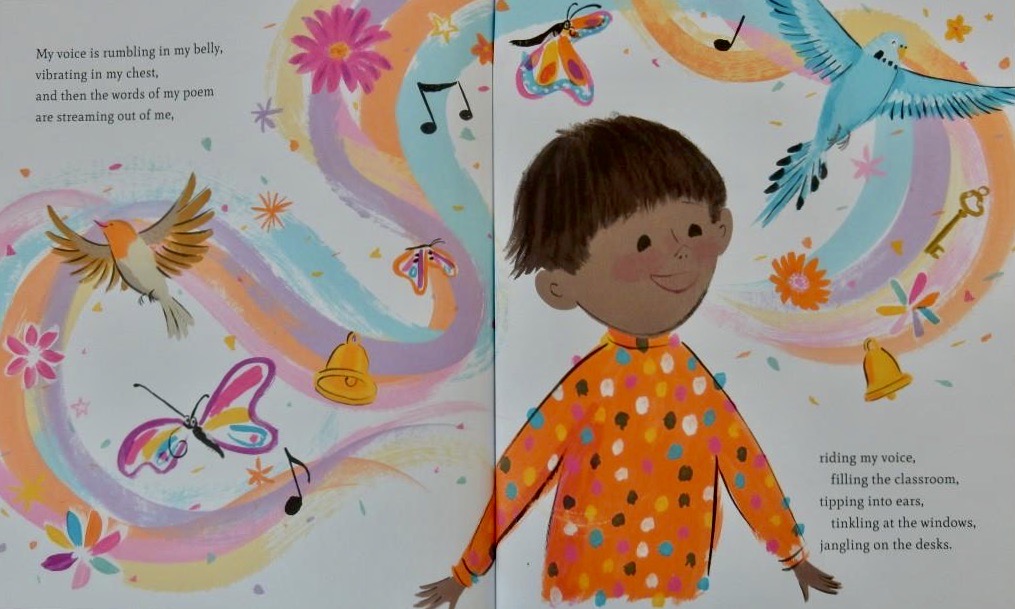
Previously Moira Butterfield invited youngsters to lessons that would help them Dance Like a Flamingo. Now in this spirited book their voices are the focus as they take delight in joining in with this exploration of the variety of sounds made by creatures large and small.

First to perform its song is the male humpback whale as he swims through the ocean with a long low Hoooooooo Hoooooooo.

Back on land we meet shaggy maned father lion ready and waiting to make his loudest Roar! Roar! – the ideal sound for little ones to stand proud and tall ready to give vent to their feelings.

Next to use its vocal organ is an owl Hoot, hoot! it goes as it perches on a branch. Make sure youngsters are ready to emulate its turning head movements as well as its hooting before spreading their wings and gliding off.

Also enjoying a moonlit singing session are a pack of wolves, each one A-woooooooo-ing and waiting for little humans to creep, sit and create an echoing A-woo! A-woo!

A further eight creatures, some feathered, others furry and one scaly are all eager to give renditions and encourage children to copy them

and then it’s the turn to the children to issue an invitation to “Sing with me!”

Whether you share this book with one, several or an entire foundation stage class prepare yourself for a very noisy and thoroughly enjoyable story/movement session. Make sure you allow time to let your audience see Gwen Millward’s humorous illustrations of the various animals, and the animated child mimickers clearly enjoying themselves.

Bird’s Eye View

Bird’s Eye View
Frann Preston-Gannon
Templar Books

Little Bird is curious about what lies beyond the treetops wherein she nests with her mother. Mama tells her that beyond the forest live people though she knows not what people actually are other than that her own mother has told her to avoid them. However, once her wings are sufficiently strong, Little Bird tells her Mama that she’s ready to leave the nest and see the world. Off she flies enjoying the freedom as she observes the world from above and it’s not long before she spies what she thinks must be people.

As she flies further, Little Bird becomes increasingly confused: some people are quiet and slow, others frantically hurrying around. There are happy, colourful people sharing what they have and singing lovely songs.

But then she sees something that leads her to believe that not everybody values freedom, they put birds in cages, spoil the environment with rubbish and burning fossil fuels. Other people in contrast are cleaning up the mess.
Her journey takes her over land and sea until eventually Little Bird needs to pause for rest; that’s when she has a narrow escape.

Now hurt and doubting whether she’ll ever see her mama again, Little Bird feels gentle hands. Hands that rescue and nurture her until she’s strong enough to take flight once again.

Finally back home, Little Bird has much to tell her Mama, the most important relating to acts of kindness.

Cleverly using a bird’s eye view, Frann weaves powerful themes relating to the impact humans have on the world into both her verbal and her visual storytelling. There are ‘people on the move. “Migrating like birds”,

black smoke billowing into the sky and those who share whatever they can, all acting as powerful reminders of the importance of having a sense of responsibility and showing kindness. Therein ultimately lies freedom.

Share this beautiful story at home with little humans especially those just starting to spread their wings; share it in the classroom as an inspiration to help make the world a better place.

The Hundred Decker Bus / The Hundred Decker Rocket

The Hundred Decker Bus
The Hundred Decker Rocket

Mike Smith
Macmillan Children’s Books

New to me but a reissue of his debut picture book is Mike Smith’s The Hundred Decker Bus. Tired of his usual routine, the bus driver takes inspiration from a passing hot air balloon and decides to take a new route that he’s never before noticed. Imagine being on that bus: what would your reaction be to a diversion to nobody knows where? That of the passengers (whose numbers increase en route), is one of happy abandon, as after a day’s driving the bus reaches …

But that is only a small part of their adventure about which I’ll say no more other than the sky’s the limit … or maybe it’s not.

This fantastical story with its awesome fold-out page will grip youngsters as they explore not only that spread but every one of Mike Smith’s humorous, highly detailed scenes be they large or small.

Share this uplifting picture book reissue either with one child, a group or a whole class. It has huge potential in the classroom.

So too does The Hundred Decker Rocket. This begins in Ivy’s bedroom where she’s just finished creating a massive telescope through which she sees a strange and beautiful ‘something’ glimmering in the sky far off. An adventure beckons Ivy and her trusty dog Eddie, but that will require another round of constructing.

Several days later the two are blasting off skywards in their rocket, landing unceremoniously, after what seems an incredibly long journey. on a planet entirely covered in rubbish.

Eddie learns from the resident environmentally un-savvy aliens that they’ve messed up their home and now want to leave and find a new place to live – if Ivy and Eddie help them build a spaceship that is. The construction continues apace as more and more aliens appear and yet more rubbish accumulates and is used, leaving the planet much cleaner.

With a hundred decks duly built, they deem the rocket ready for boarding and blast off takes place that night.

Eventually the aliens agree on what they feel is a suitable new planet and down they go … but there’s a strange familiarity about it …

With a great final twist, incredibly detailed, zany scenes that youngsters will pore over for hours revelling in the wealth of humorous touches, including speech bubbles and onomatopoeic noises off, and its fold-out page, this is a cracking book. Highly relevant is the vital environmental message about the importance of caring for our planet.

If you’re after a fun story or a super starting point for an ecological discussion that will galvanise children to take care what they throw out and where/how they dispose of it, this is it.

Look, Puppy!

Look Puppy!
Mary Murphy and Victoria Ball
Walker Books

A little girl has long awaited the arrival of her new puppy and now, hurrah! At last the nameless creature has arrived and she is eager to introduce the newcomer, first to the immediate surroundings and then the world at large. The latter entails a walk around the neighbourhood to see the various houses and their inhabitants both human and canine,

most of whom are very welcoming and offer to help choose Puppy a name. But then disaster! The creature disappears.

Where is Puppy?

A frantic search begins, followed by a pause for some reflection,

a joyful reunion and a return home.

Will the little girl ever settle on a name for her puppy though. Yes of course, but what will it be?

With endearing, finely detailed illustrations by Victoria Ball, Mary Murphy’s is a warm, gentle tale that will especially appeal to youngsters with a dog in the family. The little human protagonist herein shows such understanding and love in her dealings with her puppy offering a great example to young readers.

Ruffles and the Teeny, Tiny Kittens / I am Dog!

Ruffles and the Teeny, Tiny Kittens
David Melling
Nosy Crow

Puppy Ruffles is in many ways similar to a little human as he learns about the world – its ups and downs. There’s much he enjoys but if there’s one thing he particularly dislikes it’s teeny tiny kittens. So you can imagine his feelings when five lively kittens of the teeny tiny kind come to stay. He is far from happy about their high-spirited actions, their noises and their poo. They follow him wherever he goes and try to do whatever anti-sharer Ruffles does. Worst of all is that they want to enjoy the delights of his Big Blue Blankie.

When a tug of war over this special object occurs the kittens’ game results in catastrophe.

Can these frolicking felines perhaps help Ruffles learn one of life’s important lessons – that sharing is the best way to make friends and have fun.
Once again David’s observations are spot on and this funny follow up to Ruffles and the Red, Red Coat is sure to be another winner with youngsters of the human kind. With its text closely matching the terrific illustrations this is also an ideal book for young learner readers.

I am Dog!
Peter Bently and Chris Chatterton
Macmillan Children’s Books

We meet another playful pooch herein, this time acting as the book’s narrator and telling of a day in its life from its very own doggy viewpoint. And what a clever creature to speak in clipped canine rhyme about liking such things as ‘beggy-beggy trick’ and ‘fetchy-fetchy stick’.
This canine can’t resist a watery chase,

a race or ‘feeling wind in face’, not to mention rolling in strongly ponging foxy droppings.

However, like the majority of canines, our narrator has a great aversion to the moggy residing next door.

Much more enjoyable are cosy cuddles, ‘lap-lap-lappy puddles’, sniffing the rear ends of fellow dogs and the ‘sniff-sniff’ aromas emanating from the tasty meal laid out on the table. But therein lies both disaster and satisfaction:

now what does the little human residing in the same home think of all this? …

Chris’s action-packed scenes portraying the predilections and pranks of Dog are hilarious and provide the perfect complement to Peter’s bouncy, splendidly onomatopoeic text.

I Am Am Artist

I Am Am Artist
Kertu Sillaste (translated by Adam Cullen)
Graffeg

Who or what is an artist? That lies at the heart of this picture book by illustrator/art teacher Kertu Sillaste. My experience of teaching young children indicates that it’s not until they reach about seven that they start saying such things as “I can’t draw” when what they mean is more like “I can’t create what I consider an accurate representation of this or that” – a tiger is the exemplar this book’s creator uses – but art is so much more.
This is what the young artist main character and narrator discusses and demonstrates herein.

First, with reference to a self-portrait, he presents the variety of processes that an artist might use, ‘An artist thinks and draws and paints and glues and sketches and moulds and photographs and films and considers and constructs and assembles.’ Most important at the outset is ‘a good idea’ and this can be generated in different ways including using one’s imagination, looking at art, taking out your paints and paper or perhaps you don’t even know what sparked it but you feel so inspired that you just have to get to work right away.

I love the playful ways the boy creates memorials for his grandparents 

and others, as well as his creative putting together of found objects. 

At other times art might be story-telling through pictures, and these pictures can perhaps be about worrying events or people, or in contrast reveal what makes that particular artist happy.

Not all creative ideas reach fruition though – some remain as ideas while others might be possibilities for another day. Indeed some days can go particularly unsatisfactorily with nothing at all working out; 

but still the creative spark is re-ignited the following morning.

There’s also the consideration of revealing what you’ve done to others – what will the reaction be? … ‘An artist really needs praise’ says John. Over-ridingly though the narrator loves to make art; that is what the author hopes he’ll put across to young readers of this book and in so doing, expand their boundaries of art and being an artist. Thinking outside the box is what we want to encourage.

Undoubtedly Kertu Sillaste succeeds in her mission and I suggest this is a book to share and discuss with KS1 children especially, ‘before that “I can’t draw’ notion takes root.

This Book is Pants

This Book is Pants
John Kane
Templar Books

John Kane seems to have something of a penchant for a certain type of undergarment: I well remember groups of children enthusiastically chorusing, ‘underpants, underpants’ whenever I’ve shared his I Say OOH You Say AAH.

There’s certainly a plethora of pants in this interactive, intergalactic adventure starring a boy narrator and his alien pal, Buzzly, that he meets on the moon.

By donning the appropriate pants – courtesy of the reader aloud who has to wear them – the boy launches his rocket moonwards and having landed, encounters Buzzly who wants to visit planet Earth. Pants alert!

But what pants do you need to beat a hasty retreat,

climb a tree, escape from a dark scary place, warm an increasingly chilly rear,

or sate your hunger? And what are the very BEST PANTS EVER?
That, you’ll need to discover for yourself …

All you need to do is bag yourself a copy of the book, wear the appropriate snazzy pants as required and prepare for action: pantalicious fun assured. I forgot to mention that for the best results you’ll also need an audience of one or preferably quite a few, young listeners. Think of the fun you could have with a class creating their own pants stories using appropriately chuddies shaped books.

Tiptoe Tiger

Tiptoe Tiger
Jane Clarke and Britta Teckentrup
Nosy Crow

Tara is a little tiger cub – a lively one – and so, despite it being sundown in the jungle, she’s not ready for bed just yet.

But who can she find to play with? Could it be the fluttering Butterfly and her spotty-winged friends, the strutting peacock with his beautiful tail, or maybe those hooting owls sitting on the branch?

She’ll surely need to tread warily along the river bank on account of the scary-looking crocodile lurking in the water. I doubt if even Tara’s bouncing and pouncing will scare that away even if it frightens off all the other potential playmates.

This is another of Jane and Britta’s smashing interactive neon bright picture books that will delight little humans at bedtime (or any time). They’ll love delaying their own shut eye as they follow Tara on her nocturnal search helping her on her way with whispers of “Tiptoe, tiger,” spotting the animals lurking part-hidden in Britta’s neon bright, vibrant illustrations, fluttering their arms, stretching them wide, ‘Raaaaar-ing’ and finally, when the cub does settle down for the night, joining in with her yawn and bidding her, ‘Night, night, little tiger. Sleep tight!’

1,2,3, Do the Shark / The Horse that Jumped

These are two picture books ideal for bedtime sharing kindly sent for review from Farshore

1,2,3, Do the Shark
Michelle Robinson and Rosalind Beardshaw

Get ready for a bit of funky action deep beneath the ocean where Bess’s fishy pals are somewhat disturbed by a storm. Not so Bess though; clad in her shark attire, she urges them all to join her in a bit of boogieing. “Copy me and do the shark!” she says performing the appropriate moves

until all the sea creatures are joining in with the stretching, fin waving, tail swishing and generally strutting their stuff.

That achieved, it’s time to take a dive down deeper, right to the ocean bed where something rather scary is peering out from the mouth of a cave.

Crab gives a Shark alert. Time to take evasive action suggests Bess and so they do.

But perhaps that shark isn’t as scary as they first thought? Has he another reason for watching them so closely perhaps …

With a lovely switch from imagined to real, the story has a perfect ending 1,2,3 zzzzz.
An ideal pre bedtime book for those around little Bess’s age told in Michelle’s splendidly readable rhyming text and through Rosalind’s delightful mainly subaquatic, scenes.

The Horse that Jumped
Thomas Docherty

This is a thoroughly enchanting tale of a little girl and a horse that jumps and keeps on jumping. It jumps over a flower, over a rock, over a fence, out of its field, across a steam, over a bench and through an open window right into the girl’s bedroom.

On jumps said girl and off they go right out into the world, galloping and then jumping through a series of richly illustrated scenes of mountains, sea

and skyscapes

until the girl falls fast asleep, is transported back to her own bed and thence into dreamland.

With mounting excitement, so evident in the eyes of girl and horse, as the journey moves from location to location, Thomas Docherty, tells this exhilarating story of freedom and friendship using relatively few well chosen words, leaving his gorgeous illustrations of a fabulous flight of fancy to do most of the talking. It’s impossible not to feel that joyful freeing sense of movement be you listener or reader aloud: what a splendid celebration of the power of the imagination.

Nothing Scares Spider!

Nothing Scares Spider!
S Marendaz and Carly Gledhill
Little Tiger

Spider is a fearless creature and is ready to set off and explore the ‘Whole Wide Garden’. First though she bids farewell to her minibeast friends and in so doing hears of their worries at being left without their protector.

Spider leaves a web thread that can be pulled to call her back but only in emergencies and then off she goes. Almost immediately however comes a tug TWANG!

and back home she dashes only to discover that her return is seemingly, unnecessary.

Away she goes again, but whenever Spider herself is unknowingly in danger there comes a tug on the thread – just in the nick of time. Back she goes on several occasions merely stopping to admonish the thread puller before she sets out once more. Now Spider is really getting irate but YANK! On her return this time she comes face to face with Frightening Frog.

Now it just might be Spider’s turn to feel scared …

Fortunately for them all, Caterpillar offers some sage advice which is followed by some nifty work, first by Spider and then her friends. Thereafter comes a deal with their captive and an invitation from Spider.

Carly Gledhill’s vibrant illustrations show what the text doesn’t, enabling young listeners to relish being in the know along with the book’s creators in this tale of friendship and teamwork that will go down well at storytime. Youngsters will also enjoy the humorous touches such as spider’s assorted footwear and the characters’ changing expressions in Carly’s deceptively simple scenes.

It Could Be Worse

It Could Be Worse
Einat Tsarfati
Walker Books

Are you an optimist or a pessimist? In this story we meet one of each – Albertini is the latter, always placing a negative slant on a situation; his fellow sailor, George is an optimist, remaining cheerful no matter what.

Stranded out on the open sea on what’s left of their ship after a disaster that took place prior to the start of the story, we see them facing a series of incidents that get progressively unlikely. First comes a cloudburst with the rain falling only on the two sailors, followed almost immediately by a torrent of excreta from a school of flying fish suffering from diarrhoea, that strangely amuses George (perhaps none fell on him).

Their disparate viewpoints continue as they encounter half a dozen crooning mermaids whose song lodges itself in lamenting Albertini’s brain; then while George renders the mermaids’ tune on his harmonica, a ghost ship of pirates suddenly appears, closely followed by an ark brimming over with animals – very hungry ones on account of being food deprived for forty days.

Their adventure then takes a subaquatic turn as the tentacles of a massive sea anemone pull them to the ocean floor

where George’s oft repeated “It could be worse” starts to wobble somewhat as they’re surrounded by jellyfish, engulfed (albeit briefly) by a whale

before landing unceremoniously on a rather smelly island where they bed down for the night. Or attempt to before they get the surprise of their lives …

Now how on earth (or in water)? did that happen?

Comical illustrations of the unlikely scenarios and George’s oft-repeated refrain will likely keep young listeners anticipating the possibilities of the next unlikely happening, while causing lots of giggles along the way.

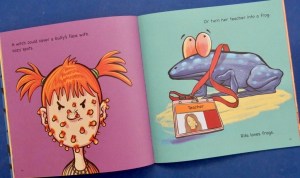
Ten Delicious Teachers

Ten Delicious Teachers
Ross Montgomery and Sarah Warburton
Walker Books

In all my time as a teacher I’ve heard teachers called many thing but never ‘delicious’. Get hold of this yummy counting down rhyme though and you’ll immediately see the reason for the adjective.

Many youngsters have recently bid farewell to their teachers but here you’ll not see a single child for as the book begins what we have is those ten teachers, tired and weary coming out en masse only to discover that they’ve missed the last bus home: no cars parked in a car park- what a ‘green’ lot they are.

Maybe though, I should use green in another way, for following Mr Smith’s suggestion to take the shortcut, they head off into the Dark Forest wherein lurks a hungry horde of hirsute beasties of all shapes, sizes and hues, ready and waiting for that next tidbit.

One by one, the easily distracted teachers are gulped down by the waiting monsters

until just one, Miss Hunter the nursery teacher remains.

Then comes a brilliant twist to Ross’s jaunty rhyming tale: who will have the last laugh though? Surely that will be the youngsters who savour this number narrative so dramatically illustrated by Sarah Warburton whose mock-scary monsters are hilarious. I love all her witty details too.

10 Silly Children

10 Silly Children
Jon Lander
Pavilion Books

Here’s an altogether new and huge fun take on the customary counting book by debuting picture book author/illustrator Jon Lander.

It begins with ‘1 sensible child / sitting quietly’ but not for long though for behind her back she has something hidden – something with which to make a great deal of noise. You discover what by lifting the flap.

And so it goes on with every sentence on the verso being a great whopping lie: there are for instance ‘3 sensible children drawing quietly’, or not …

‘4 sensible children / helping with the washing’ as they do …

(or rather, don’t).

Actually I told a lie earlier (as did the author) – it’s related to the 5 sensible children – good on them, but I won’t reveal why I say so.

Keep going and you’ll discover 8 children brushing their teeth

and more …

This hugely entertaining, tongue in cheek book will delight young listeners (and one hopes their adult sharers) with its inherent silliness and repeat phrases. I love his ‘Dear reader’ introduction and finale too. Jon Lander’s seemingly laid back illustrative style is just right for the children portrayed in both their sensible and exuberant modes.

I shall watch Lander with interest.

Jack and the Beanstalk & Cinderella / Vocabulary Ninja Workbooks

Jack and the Beanstalk
Cinderella

Stephen Tucker and Nick Sharratt
Macmillan Children’s Books

When I was a KS1 class teacher these lift-the-flap fairy tales were very popular with children just taking off as readers. The fact that youngsters were in the main already familiar with the stories, their rhyming texts, and Nick’s trademark cartoon bright, bold humorous illustrations made them ideal choices for confidence building as well as entertainment and getting across the vital reading is fun message.

Now with new editions that include a QR code to scan to access audio versions read by actor Anna Chancellor, the playful, witty tellings will be sure fire winners with a new generation of learner readers and listeners in school or at home.

Vocabulary Ninja Workbooks
Andrew Jennings
Bloomsbury Education

This series of six vocabulary books is intended to support home learning. There is one for each year group from Y1 through to Y6 ie covering both KS1 and KS2 and providing the vocabulary likely to be needed in the National Curriculum topics such as geography, history and science.

With most children missing a lot of school over the past eighteen months these books are likely to be a boon for parents struggling to help their youngsters and not knowing where to turn.

Aiming to extend vocabulary and literacy skills in general in a fun, imaginative way, the activities on the pages of each book are grouped into levels: grasshopper, shin obi, warrior, samurai, assassin and grand master. In his introduction, the author (a teacher) suggests that a child should attempt to do the first two levels as independently as possible while from level three and beyond, he recommends some adult support to ensure full understanding. However those of us who are teachers or work in education will know that a great deal of differentiation may be required within a class, so parents will have to be guided by their own judgement and assuredly children will enjoy some adult interaction.

With their colourful graphics, straightforward instructions and activities that never overwhelm,

these books offer engaging and much-needed support and empowerment for learning at home, especially at present.

A Cat Called Waverley

A Cat Called Waverley
Debi Gliori
Otter-Barry Books

Born in a park in Edinburgh, moggy Waverley has learned much about life, not least being how to make friends, his very best friend being Donald with whom he has supper every night for years.

Then one day Donald packs his bag and leaves his place of residence instructing Waverley to stay behind. One after another, all the cat’s other friends vanish from his life and unbeknownst to Donald who is at war,

his house is demolished.

What next for Waverley?

Off he goes to the railways station to wait for Donald. He waits and waits and it’s not long before people notice him, take photos and even bring him food, though he allows nobody to pick him up.

But despite the kindnesses shown by the station staff, nothing assuages his loneliness. Indeed Waverley misses his best pal more and more over the years.

Then one day as he makes his way down onto the platform, the cat hears, “Spare change. Spare a few pence for the homeless.” Surely that familiar voice belongs to his beloved Donald?

Debi’s story is written and illustrated with such empathy and sensitivity, it will surely bring a tear to your eye as you turn the pages of this book. Perhaps even more so when you read at the end that it’s about a real homeless war veteran for whom she wrote the book (as well as for all the countless other homeless people who share our world.)

When I Was a Fairy

When I Was a Fairy
Tom Silson and Ewa Poklewska-Koziello
Flying Eye Books

A grandmother shares reminiscences with her grandchild about the days back when she was a youngster. “When I was a fairy, I lived in an ancient willow, / Inside a homely hollow with a round red door. / When I was a fairy I slept on dandelion pillows. / Back when I was a fairy, do you want to hear more?” 

She goes on to talk of summers spent leaping over lily pads,

meandering through meadows, gathering blackberries, meeting up with all the other fairies to share letters from children. Then in winter, skating on snowflakes and painting holly berries. 

Those were times when everything was possible and days were for exploration.

And so it can be once more, only now it will be in the company of her grandchild for whom as yet, untold adventures await. 

So, invites gran, “Let me show you … clap your hands, flap your wings and come fly with me.”

With magical creatures aplenty adorning the pages so richly illustrated by Ewa Poklewska-Koziello, this rhyming tale of intergenerational love, memories and delighting in the natural world is a lovely one to share especially between grandmothers and their young grandchildren, particularly those who like stories with a touch of whimsy and enchantment.

Let’s Get Ready for School

Let’s Get Ready for School
Jane Porter and Carolina Rabei
Walker Books

Meet Marley, Maya, Theo, Akiko, Ella and Zakir. These young children are about to experience one of the most important days of their lives: they’re starting school. Yes it may well feel exciting but that feeling is perhaps tinged with nervousness too.

The little ones share with readers, not only their feelings but their actions as they make themselves as ready as possible, trying to do such things as putting on their own coats and shoes and opening their lunch containers.
Then come two questions: ‘why do I have to go to school? and how will I get there?, both of which are answered with a spread for each.

Safely at school, there are lots of new faces.

We see them meeting their teacher and getting to know what happens in the classroom; how best to become a member of a largish group – working in a team, taking turns, how carpet times operate and more.

One of the most important lessons is a social one: accepting and understanding difference among your classmates and always being kind no matter what.

Then there are routines that help the day go smoothly: snack time, lunch time and playtime.

Not every single day will be the same however – sometimes there are special occasions to look forward to, but before you know it, the entire first day will have whizzed by and it’s home-time. Your grown ups will be waiting, having wondered about how you’ve got on and you may well be bubbling over to tell them all about it, or perhaps you aren’t ready to share your experiences just yet: it’s up to you.

With Jane Porter’s reassuring narrative (including a ‘worry page’), the plethora of speech bubbles and Carolina Rabei’s realistic illustrations of classroom life (why no story time, I wonder), this book will certainly be one to share in those days leading up to that big step, especially as due to the pandemic, youngsters may not have had those taster sessions normally offered before a child starts school.

Beep Beep!

Beep Beep!
Max Low
Otter-Barry Books

Prepare yourself for a very noisy book session when you share this with little ones.

Not only will they relish beeping along with driver Big Bobby’s yellow bus – punctual as always, but there’s also Friendly Fern’s fire engine NEE NAWing its way to the rescue, Tremendous Tracy’s tractor

and Little Lemmy’s extremely lengthy limousine driven in a novel way by the owner. Then who could resist the offer of a spin in that sports car belonging to Super Speedy Susan – once she gets through those traffic lights, of course; or perhaps a ride on board Trudy’s spotty train. If you reach the sea, there’s always the enormous parp parp-ing ship with Captain Cool at the helm.

However if your preference is for flight, then why not accompany Harold in his helium balloon, RWAAAR! off with Jennifer in her jumbo jet (along with a host of feathered friends), or maybe if you hear that WUM WUM of Zappy Zurgle’s spacecraft you’d like to join the alien in a spin around the galaxy.

Hey! They’re all offering a lift so if you could only pick one, what it might be. Think I’d stick with that moggy character on the final page: now what would that entail?

With Max Low’s characteristic playfully quirky illustrations and all those sound making opportunities there’s plenty to entertain young audiences here.

Ergo

Ergo
Alexis Deacon and Viviane Schwarz
Walker Books

For me there’s nothing worse than feeling trapped between the walls of my home however safe and secure it might be. And I suspect most of us have experienced some claustrophobic feelings during the last sixteen or so months, though I’m lucky to be living at present in the countryside surrounded by green spaces that I’ve taken advantage of no matter the weather. Hurrah for the big wide world waiting outside your immediate cosy environs, both physical and mental.

So let’s now meet the aptly named Ergo, a cute baby chick that’s just woken up to her own physicality. She decides to explore the world: first she finds her toes, ‘wiggle, wiggle ‘ now that’s a GREAT START and it’s followed by wings, beak and legs. Now that’s a small world: AM I THE WORLD though?

Ergo concludes that she is. Until she notices the wall surrounding her – a roly poly world then.

Suddenly into this hitherto perfect world intrudes a sound – BUMP and it’s closely followed by a realisation. Time to embark on a journey of discovery perhaps …but it’s going to take some pluck to reach out. Can Ergo make that vital truth searching move? …

What Alexis Deacon and Viviane Schwarz have so cleverly created here is a philosophical demonstration of freeing oneself, of going beyond the information given and of reaching out to others. Seemingly simple perhaps, but this is a highly thought-provoking and a smashing starting point for a philosophy for children discussion in the primary classroom.

Caterpillar Cake

Caterpillar Cake
Matt Goodfellow, illustrated by Krina Patel-Sage
Otter-Barry Books

This is performance poet Matt Goodfellow’s second poetry book and it’s aimed at younger children. Embracing a wide range of topics in his sixteen poems – playing on the beach, space, wild animals, play, movement,

school related things – a visit from the school photographer, a classroom carpet session for instance, as well as things related to the natural world. Here are the opening verse and the final one of My Shell: ‘there is a shell / alone on a beach / over the sand-dunes / out of my reach // we’ll sing of the sun / and the salt and the sea / together forever / just my shell and me’.

Perfect for reading aloud to young children and once they’re familiar, perhaps those in KS1 could read some to one another. Which ever you do, take time not just to enjoy Matt’s writing but also debuting illustrator Krina Patel-Sage’s inclusive, vibrant digitally created illustrations. So, if your taste is for pebble skimming, a slice of chocolate caterpillar cake, the smashing word play of Kitty Cat, or a gentle River Lullaby at the end of the day, you’ll find it herein.

If you want to engender a love of language, this is definitely one to add to early years settings, KS1 classrooms, and family bookshelves (if you have little ones).

The Viking Who Liked Icing

The Viking Who Liked Icing
Lu Fraser and Mark McKinley
Bloomsbury Children’s Books

Here’s a story set long, long ago and far, far away.

When it comes to the traditional Viking skills or indeed anything else that requires some kind of sporting finesse, Nut, in contrast to his big sister Leaf, falls well short of the mark. Indeed whenever he picks up his bow and arrow, everyone else takes cover. He’s not entirely without talents however: he’s passionate about baking cakes and does so with lashings of creativity, dreaming about so doing at night too.

There’s one day in the Viking calendar that young Nut dreads more than any other: Viking Sports Day has him shaking in his boots. Nonetheless off he goes, cake in hand to the venue, a reluctant participant if ever there was one.

Things go pretty disastrously

and then comes the Great Horn-Throwing Race …

Is there any way Nut might redeem himself?

With its combination of Lu Fraser’s dramatic rhyming narrative and Mark McKinley’s hilarious scenes of Nut’s sporting ineptitude as well as his mouth-watering confections, and the other characters’ reactions to both, this is a fun demonstration of the fact that everybody has a talent that will win through if nurtured. That way lies happiness.

This will surely be a hit with young listeners at school or at home.

Tilda Tries Again

Tilda Tries Again
Tom Percival
Bloomsbury Children’s Books

Tom Percival’s latest addition to the Big Bright Feelings series is yet again spot on: herein he uses his empathetic understanding of young children’s emotions to present Tilda.

We first meet this little girl as a bright happy child but then suddenly something happens to turn her world upside down, leaving her feeling utterly downcast. Now things that had once seemed easy, feel the absolute opposite: she doesn’t want to meet her friends; indeed everything feels a struggle.

What does she decide to do? Absolutely nothing at all.

One day she notices a tiny ladybird stuck on its back. Immediate recognition but there’s a difference: the ladybird is doing its upmost to put itself right whereas thus far Tilda has suffered complete inertia. Then suddenly the little creature flips itself over and flies away leaving Tilda alone with her thoughts.

Time for a change of perspective she decides, and calling forth that ‘can-do’ attitude, little by little she starts to persevere with things and the more she tries, the more she can do. But can she summon up the courage to join her friends in their play?

You bet!

An enormously uplifting story of patience, perseverance, resilience and self-belief that youngsters (and their adults – be they parents, teachers or carers) will relate to.

Tom’s change of palette from bright colours to predominantly grey shows the stark changes in Tilda’s emotional journey; and with everything that youngsters have been through during these last 18 months, this book could not be more apposite.

A must have for family bookshelves and classroom collections.

The Rainbow Connection / The Happy Mask

Here are two stories very much of our COVID times both kindly sent for review by Little Steps Publishing.

The Rainbow Connection
Vanessa Parsons and Angela Perrini

During the first lockdown in particular, rainbows were an uplifting symbol of hope and a means of saying thank you to the countless key workers who have bravely continued doing their jobs throughout the pandemic. Vanessa Parsons’ story, though set in Australia, is one that youngsters everywhere will relate to. It’s narrator is a little girl who shares with readers her year’s experiences, mostly rainbow related.

Her elder sister creates a lovely chalk rainbow across the family driveway; she spots rainbow drawings in the windows of houses when she walks James, the family dog; her Grandma wears a rainbow badge during a video call. 

Then their new neighbours leave a rainbow hued thank you card. This prompts the narrator to respond with a box of chalks to the newcomers. And so it goes on with more and more people finding innovative, creative ways to use rainbows as a means of communicating positivity. 

The narrator’s family celebrate her little brother’s fourth birthday with a rainbow cake; there’s even rainbow bread in the bakery. And an old lady who lives nearby really surprises everyone with her funky new hair colours.

As the lockdown weeks turn to months, everyone takes advantage of the small things we’d normally take for granted, like being able to go for walks, but most of all they look forward to the return of normal life.

With a recipe for rainbow cake and a promise of 10 per cent of author royalties going to NHS Charities Together, this is a lovely story to share both now, as well as later as a post pandemic memory, be that at home or in nursery/ KS1 classrooms.


The Happy Mask
Aimee Chan and Angela Perrini

Maggie is bored and grumpy about staying indoors during a lockdown but the answer is in her own hands: she can do as her dad says, put on her mask and they can go for a walk to the shops. Eventually after a bad tempered explosion aimed at her dad she changes her mind, puts on what she terms her itchy mask and out she goes into the front garden to wait for Dad to join her. 

She peers over the fence into the next door garden and waves to Holly and baby Tommy but rather than smiling, he starts crying. Who is this strange-looking person peering at him?

But then a game of peek-a-boo reassures the little boy and by this time Dad is ready to leave. Maggie tells her dad about what just happened, complaining about her mask again and commenting, “And masks make people look mean.”

Dad has an idea and goes indoors again returning with a mirror and some marker pens and before long Maggie’s mask is transformed, her mood too. 

Comments from others on their walk lead to more masks being personalised by their owners. One such belonged to a friendly old lady sitting waiting for a bus who tells Maggie she’s trying to remain upbeat despite having not seen her grandchildren for ages. The girl’s suggestion excites the old lady and she gets to work using Maggie’s markers and mirror. 

What do you think her Dad might draw on his mask when they arrive back home after their walk?

Certainly this should bring a smile not only to young listeners but also their adult sharers: both are likely to have felt very much like Maggie and her Dad during lockdowns. This makes the story a great conversation starter as it gives both the child’s perspective and that of a parent.

Illustrator Angela Perrini uses a lot of different perspectives in her urban environment, showing effectively how social distancing is maintained between Maggie and her neighbours. Then in interactions with others outside her immediate family, there’s mention of hand sanitiser being used.

Delightfully Different Dilly

Delightfully Different Dilly
Elizabeth Dale and Liam Darcy
Happy Yak.

Meet Dilly the adorable baby penguin that’s born with a difference: she has only one leg and so doesn’t do things quite the same way as the other little penguins. Instead of waddling she hops and revels in so doing, impressing the other little ones who try to emulate her with only a modicum of success. However they all have fun together

and Dilly’s difference is totally accepted by the young penguin generation as well as her parents.

Not so the other parents however: set in their ways and with a narrow view of life, they upset Dilly by thoughtlessly telling her to stop being different.

Then Dilly gets an opportunity to demonstrate to all the adult penguins just how awesome her difference makes her: indeed she becomes a superhero and in so doing shows the entire colony how much diversity should be valued.

Despite its chilly setting, with its theme of acceptance, Elizabeth Dale’s is a warm-hearted story to share and discuss with little humans. Liam Darcy’s illustrations are splendidly expressive and gently humorous perfectly complementing the text.

Harriet’s Expanding Heart

Harriet’s Expanding Heart
Rachel Brace and Angela Perrini
Little Steps Publishing

Harriet’s mum and dad are separated and for the little girl that means that in addition to two parents, she has two homes, two different bedrooms, one school and a cat Ginger. Moving between the two homes also means she has to cope with two different sets of rules and routines. No matter what though, she always feels both much loved and safe.

Then one day on a visit to her dad’s, he shares some news: he and his new partner Emily are going to move in together. ‘We’re going to be a step family,’ he tells his daughter. For Harriet this also means a new little stepbrother, Cooper. This announcement leaves her feeling apprehensive and anxious. There follow explanations about what this all means that only leave Harriet with a whole lot of worries whizzing around in her head: what if Dad chooses Emily and Cooper over me? being just one.

After the move some things change, others remain the same for Harriet who experiences feelings being an outsider and sometimes even anger.

It’s going to take time to get used to living with a grown up who isn’t either your mum or dad.

However, little by little with sympathetic understanding and reassurances from her Dad, Harriet begins to feel much less anxious and as her mum explains, ‘there is no right or wrong way to feel’ but no matter what, both her parents will continue to love her very much. She in turn gradually sees that being a member of a stepfamily doesn’t change how much she loves her mum or her dad; it’s more that her heart, along with her family has grown a little bit bigger.

Written by a family psychologist, Rachel’s story, with its straightforward easy to understand language, is especially apposite for new stepfamilies where there are young children. (The author also gives some helpful tips for parents and stepparents.) Angela Perrini really captures the gamut of emotions Harriet experiences during the upheaval in her life.

Wild Child

Wild Child
Dara McAnulty and Barry Falls
Macmillan Children’s Books

This is such a beautiful book written by award-winning author of Diary Of A Young Naturalist and gorgeously illustrated by rising star, Barry Falls.

With his distinctive voice, Dara McAnulty invites readers to take a close look at the world around, journeying into and exploring with all your senses, the five different locations that he describes both poetically and scientifically.

First off is a look through the window, after which we go outside into the garden, wander in the woods, saunter up onto heathlands and meander along the riverbank. At each location we pause while Dara provides a lyrical introduction to the habitat followed by a wealth of factual information about the wildlife – both flora and fauna – to be found there.

This includes a discovery spread where in turn, you can learn the collective nouns for eleven different birds,

take a look at classification, find out how various trees propagate

and about migration and metamorphosis.

An activity to do once you get home concludes most sections: make a bird feeder, make a terrarium, create a journey stick (I love that).

Assuredly this will help any reader, young or not so young, connect more deeply with the joys and wonders of the natural world, and find their inner wild child.

The author finishes with some sage words about the fragility of nature and caring for the countryside, plus a glossary.

Altogether a smashing book for families and schools.

The Moose Fairy

The Moose Fairy
Steve Smallman
Happy Yak

Moose has always yearned to be a fairy so he’s over the moon when he spots a sign advertising for new members of the Secret Fairy Club.

Having put together what he thinks is the most suitable gear and donned same, he feels totally fabulous. Until that is, he arrives at the venue and realises that he dwarfs all the other potential members, some of which are anything but welcoming. Not so however the head fairy who invites him to do the tests along with the other would-be joiners.

With admission to the club gained Moose needs to use the secret knock to open the door of the clubhouse but although he succeeds in so doing, the door is so tiny, he can’t fit through and the others merely shun him.

Poor Moose walks sadly away and takes a dip in the river, hoping to shrink himself. There he encounters Fox with whom he shares his problem and rather too much other information.

Back inside the clubhouse, some of the other creatures are now seeing the error of their ways when suddenly an unwanted intruder arrives and just manages to squeeze himself through the door.

Perhaps now Moose has an opportunity to show he’s a true fairy no matter his size. A fairy that lives up to the oath: ‘Fairies are kind to all creatures, / Fairies are not mean or bitter, / Fairies help others in trouble or need …’

With its mix of humour, hope and determination, Steve’s heartwarming story about being yourself and accepting others unconditionally no matter their appearance is a delight to share. Moose is a smashing character splendidly portrayed by the author whose quirky, vibrant illustrations are a mix of suitable silliness and sparkling enchantment. And I absolutely love Steve’s wise words in the dedication to his grandchildren.

The Bookshop Cat

The Bookshop Cat
Cindy Wume
Macmillan Children’s Books

In rising star Cindy Wume’s new book we meet a bibliophile black cat.

One day, while out exploring the city, said young moggy lands his dream job at the children’s bookshop thus acquiring his titular name too. He’s certainly an ideal assistant and before long proves himself both to his family who had despaired at his insistence on putting reading before achieving, and to the shop’s young customers for each of whom he manages to find just the right book.

Then one morning, disaster strikes: torrential rain causes the pipes to burst and a flood in the bookshop; outside is also under water. The result is that for several days nobody at all comes to the shop: both young Violet the owner’s grandaughter and the Bookshop Cat are thoroughly downcast.

Back at home, the Bookshop Cat’s family decide to pitch in and help. Happily Violet comes up with a wonderful idea:

if the children don’t come to the bookshop, the bookshop must go out to them. Indeed the entire city is transformed into a library and not only that, the workers find a way to get the customers back into the shop. Hurrah!

It’s an absolute delight with superb detailed illustrations; and what a wonderful demonstration of the power of reading, of books and bookshops, as well as an affirmation of the Bookshop Cat’s words early on in the story, “With a book, I can go anywhere and be anything.”

The World Awaits

The World Awaits
Tomos Roberts and Nomoco
Farshore

I received my review copy of this book on what is supposed to be ‘freedom day’ here in England at least. Assuredly this follow-up to The Great Realisation, is a book of our time. Herein poet Tomos Roberts offers a welcome rallying call to action to readers young and not so young asking us to embrace the challenges we still face and to do whatever we can individually and collectively to face the future with positivity and hope.

We see, and hear the voice of an adult rousing a child from slumbers and going on to try and persuade that reluctant young friend to accept the enormous potential within,

to do good spending time doing the things that make life better for others and ultimately perhaps, oneself. It might be planting a tree, calling grandparents for a chat, helping a creature in distress or smiling at a stranger – acts such as these will prevent apathy and negativity taking hold – something that’s all to easy to do, especially if one listens to the news every day or reads a daily paper.

This book with Nomoco’s gentle watercolour illustrations will surely resonate with us all: seize the day: help the world get better step by step, action by action …


Everybody Has Feelings / Respect / I’m the Fire Engine Driver

These are recent titles from Oxford Children’s Books – thanks to the publishers for sending them for review

Everybody Has Feelings
Jon Burgerman

Through his exuberant style illustrations depicting colourful characters of all shapes and sizes in a play park setting, together with a narrative of rhyming couplets, Jon Burgerman presents over twenty feelings that youngsters (as well as zany blobby beings) are likely to experience.

In so doing he acknowledges that it’s perfectly normal to feel say anxious, disappointed,

embarrassed, frustrated, sad or scared as well as confident, calm, proud, and joyful and offers the vocabulary for young children to open up and discuss their emotions as well as listen to others talking about how they feel.

With lots of starting points for circle time sessions, this is just right to share in foundation stage settings especially.

Respect
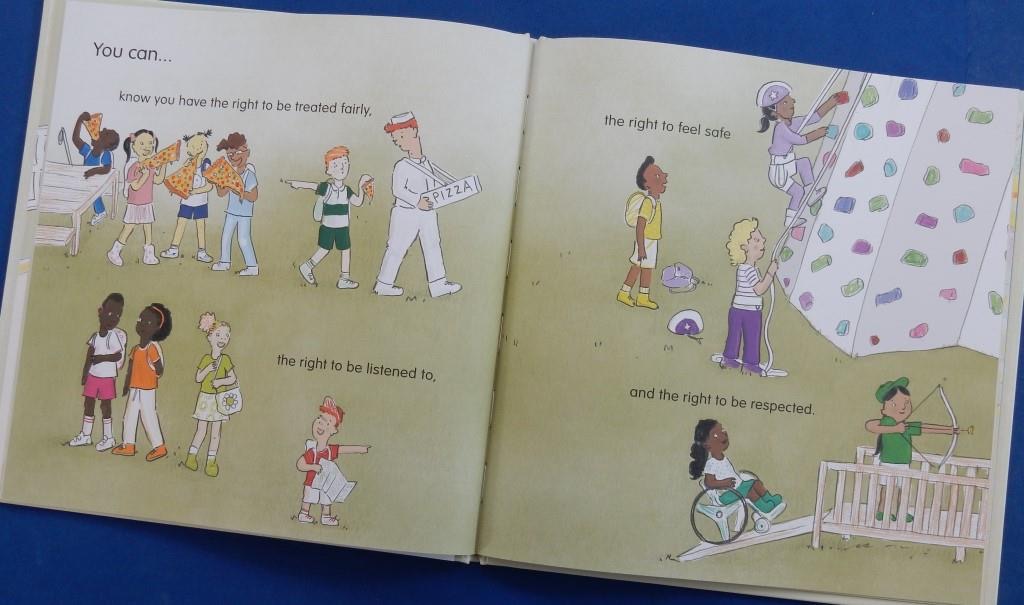
Helen Mortimer and Cristina Trapanese

This new title in the Big Words for Little People series shows the importance of acknowledging and accepting individual differences and respecting them. It gives examples demonstrating that all lives matter no matter what people look like or believe: that means showing kindness, politeness and abiding by rules. Everybody should feel safe to speak out about their feelings and their lives in general.

Cristina Trapanese illustrates each of the key ideas enacted by a lively cast of characters and Helen Mortimer concludes by suggesting ten things adult sharers can do to get the most from this little book, be that at home or in an education setting.

Add to early years collections.

I’m the Fire Engine Driver
illustrated by David Semple

Here’s a book that allows little ones to switch to imagination mode and step into the shoes of a firefighter, donning the rest of the protective gear, meeting your crew and with siren sounding and flashing lights turned on, driving the fire engine to the scene of the fire in the bakery kitchen.

Part and parcel of the narrative are opportunities for number recognition and counting, joining in with sounds, vocabulary building, following instructions, describing a scene and more.

Through David Semple’s bright, stylistic illustrations and a narrative that makes youngsters feel as though they’re in control, this is a fun book to share either one to one or in a group.

The Mighty Lions & the Big Match

The Mighty Lions & the Big Match
Tom Chapman and Chris Dickason
Welbeck Publishing

I’ve seen first hand both as a teacher and when taking young relations to compete in tennis tournaments, the enormous pressure that some parents put on their youngsters; it’s almost as though the entire thing is about them and winning/success, rather than supporting and giving encouragement to their children. So I think a book such as this debut picture book, written by Tom Chapman (founder of The Lions Barber Collective, a charity for suicide prevention and awareness focussing on the mental health of boys and men) is as important for adults as for young readers/listeners.

The story focuses on young Abel and Drake, soccer players and members of the Mighty Lions team and their cup final match against the Tigers, Abel being the player suffering from acute anxiety even before stepping onto the pitch.

It’s a tense, close match

but the pressure Abel feels from his team members, coach and parents militates against him performing at his best, let alone enjoying the game; and in the end Tigers are victorious.

However, once the brothers explain, their parents are understanding and apologetic, “ … you played your best and that’s all that matters,” Mum says. Dad in turn offers some wise words, “ … Either way, we love you – not the result of the game.”

Chris Dickason’s bright illustrations convey the feelings of all the characters, especially the two brothers, as well showing the on field drama of the match.

The Nervous Knight

The Nervous Knight
Anthony Lloyd Jones
Jessica Kingsley Publishers

Here’s a story that looks at the disabling effects of anxiety on youngsters and in particular one knight in training who lives in a peaceful kingdom.

Said knight wears his full armour all the time, never taking it off even in bed, because one always needs to be prepared for the worst eventualities. However armour notwithstanding, this particular trainee who is totally lacking in self confidence remains an onlooker while classmates joust or even go out to eat ice creams. All those ‘what if … ‘ worries just keep on getting in the way of participation.

Such things as breathing become difficult and nervousness tends to make you need to use the loo.

Then one day an older girl in class notices the knight’s lack of action and asks, “What aren’t you joining in?”A series of “what ifs” is the response so the girl decides to take things in hand, gently encouraging the nervous knight onto horseback.

Inevitably with new learning an easy ride is not what follows, but neither do any of those much dreaded giggles from fellow students. Instead, some admit to feeling scared on occasion, while others offer encouragement and coping strategies and gradually our nervous knight begins to shed some armour, show their true self, gain some self confidence and open up to friendship and the pleasures life offers.

Quirkily illustrated in a child-like manner, this is a story many youngsters will identify with and offers a good starting point for discussion, particularly with the growing numbers of children with anxiety issues that have surfaced during the pandemic. The book concludes with a guide for parents/carers by a consultant trainer in children’s and young people’s mental health issues, Ian Macdonald.

The Wide, Wide Sea

The Wide, Wide Sea
Anna Wilson and Jenny Lovlie
Nosy Crow

Skilfully woven together are wild swimmer and author Anna Wilson’s lyrical narrative and Jenny Lovlie’s gorgeous detailed illustrations in this picture book with a vitally important message about plastic pollution.

Gran and the child narrator love to visit the sea together, spending time exploring the flora and fauna along the shoreline and seeing what treasures the waves have thrown up. Most exciting though is their sighting of a seal: the child imagines being a seal too

and when it disappears, sits watching the sea birds until a violent storm blows in and Gran says it’s time to head home.

Next morning the beach looks awful – ‘Wild, Broken. Messy.’ and strewn with litter. The sky ‘sulky dove-grey’ and the air ‘quiet and frowning.’ Who or what has created this havoc? And can it be fixed? …

Happily yes in this story; but what really needs to happen is every one of us must accept their responsibility for plastic pollution and, for the sake of the environment, sea creatures such as the seal especially, take their rubbish home.

Published in collaboration with The National Trust who protect over 700 miles of wild coastline in the UK this is a must have book for primary classes to share, discuss and act upon its message.

Turbo Bunnies

Turbo Bunnies
Matty Long
Oxford Children’s Books

Another dose of super fun from Matty Long this time courtesy of drivers Bunny and Bonnie, Rory and Enzo (mechanics) and Camille (kart designer) aka whizz kart racers Team Turbo. Team Turbo ace the races but then after an interview rivalry sets in between Bunny and Bonnie, with both wanting to be best racer.

Things soon spiral out of control with both bunnies attempting to sabotage the other’s chances resulting in the quitting of the rest of their team.

Come the next race the bunnies have to go it alone and that entails fixing their own karts first with the result that they wake up late and the race is already under way when they arrive. Nonetheless, off they speed but will it be a

case of individuality reigns or teamwork …

Will those two bunnies ever see the error of their ways and get back on track working as a twosome? What do you think? …

Full on drama this story assuredly is; with its message about the importance of team work it will appeal especially to young listeners with a taste for speed, thrills and spills: Matty Long’s illustrations certainly take us right up close to the action in this book.

Story Soup

Story Soup
Abie Longstaff and Nila Aye
Templar Publishing

As the story starts Ollie is in the process of mixing a story and it’s to be about skateboards – only skateboards. Well, that was his intention but he hadn’t reckoned on the intervention of his sister Susie. She just can’t resist adding some ingredients to the pot and it becomes so Susie says, “OUR story”. A twisting turning story of a skateboarding princess and a reluctantly bad, somewhat silly pirate named Barnacle who develops a taste for ‘yellow sausages’.


All of a sudden things start getting out of control with various things falling into the mixture,

Ollie claiming his story is spoiled and Susie tossing all kinds of random items into the pot over which they start to tussle causing terrible turmoil among the soup ingredients.

Can the brother and sister possibly save the situation if they change their tactics and start to co-operate … You never know: will there or will there not be a ‘happily ever after’ ending? I wonder …

If ever there was an incentive for youngsters to start creating their own stories it’s this zany picture book. There’s even a recipe on the final page to set those brain cells imagining. Think what fun you could have in the classroom if you provide a large container and a large spoon, sit the children in a circle and invite them to co-create an adventure.

Seemingly both author and illustrator had lots of fun concocting their action-packed tale of a tale – embedded narrative gone mad! I love the way Nila’s illustrations of the brother and sister segue from their actions to their story narrative and back during the course of Abie’s telling.

I Am Angry

I Am Angry
Michael Rosen and Robert Starling
Walker Books

This book has its origins in Michael’s experience of watching his youngest child having a temper tantrum. He then decided to write a poem about anger that was included in A Great Big Cuddle and now based on that poem we have the first in a new series by the poet and illustrator Robert Starling.

The big bad mood presented here is the kind that comes from nowhere in particular, causing huge noise making –

thrashing and bashing, bodily contortions – rolling on the ground and knocking down trees actions, raging and rampaging, squashing the moon

and terrifying the sun sort of angry, which then vanishes just as rapidly as it arrived.. All this from what appears to be a cuddlesome creature.

Parents and indeed teachers of young children will immediately recognise such scenarios and welcome this smashing book with its reassuring message that however overpowering such anger might feel, it’s soon over, often leaving the once angry person feeling tired out.

Robert Starling has already demonstrated his skill at portraying anger with Fergal is Fuming and now in combination with Michael’s superb rhyming text has created a terrific read aloud picture book for sharing with little ones in an early years setting or at home.

Find Tom in Time: Ancient Greece

Find Tom in Time: Ancient Greece
Fatti Burke
Nosy Crow

Published in collaboration with The British Museum, this latest time travelling adventure of Tom’s sees him back in Ancient Greece after handling his archaeologist Granny Bea’s ancient amphora, decorated with battle scenes.

As usual, Tom’s not only lost in time but he’s also lost his mischievous cat, Digby and readers need to help him find the creature as well as all the other items mentioned in the ‘Can You Spot’ boxes, that are hiding in plain sight as Tom dashes across the pages in pursuit of the elusive Digby.

During his search he visits the Acropolis, a bustling market place – the agora where a philosopher can often be heard giving a speech

and nearby, the cylindrical tholos wherein the council (all male) would meet to debate important issues.

Other locations he visits include a pottery workshop, the school (wealthy boys only attended that), a doctor’s surgery, a street of houses, a gymnasium

and a theatre before heading out of town to the fields as farmers finish their day’s work. Then it’s on towards the port before finally discovering the whereabouts of both Granny Bea and Digby and then being transported back to the present.

As with previous books in the series, this one is superbly interactive and packed with fascinating facts. Each of Fatti Burke’s alluring, highly detailed scenes offers much to pore over including an athlete who has dropped a javelin, another who’s fallen over and a sleeping member of the theatre audience.

The Seed of Doubt

The Seed of Doubt
Irena Brignull and Richard Jones
Walker Books

The boy in this story has big dreams far beyond his immediate horizons. “You know you can do anything, … as long as you believe it,” his father would say in encouragement.

One day while the boy is walking in the fields a bird calls to him and in so doing drops something from its beak.

Catching it, the boy feels the seed is significant. He plants it and after a few weeks it sprouts, becoming a sapling and eventually a tree.

The tree grows, the boy grows too, but his dreams get smaller and self doubt begins to take root. Now the tree seems to signify fear rather than its original joy and the boy no longer feels capable of climbing it.

His evening chats with his father are no longer of dreams but every day farm-related matters. However the change doesn’t go unnoticed by his father who reminds his son of those words from long back, “You can do anything … “
That triggers a change and slowly, slowly the lad begins his ascent of the tree, until eventually, with lots of encouraging words …

he reaches the very top.

Once more his dreams are visible: “I can see everything,” he tells his proud parent.

Movingly told is this beautiful story of a boy’s journey back to self-belief, equally movingly illustrated by Richard Jones. His variety of page layouts and perspectives make the narrative even more powerful, and I love the patterning.

It’s all too easy to let those small seeds of self-doubt take root and this book is a lovely starting point for talking about faith in oneself, determination and positiveness either at home or in the classroom.