Fearless Mirabelle

Fearless Mirabelle
Katie Haworth and Nila Aye
Templar Publishing

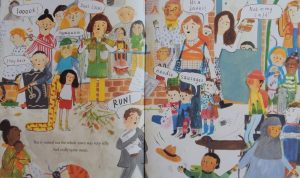
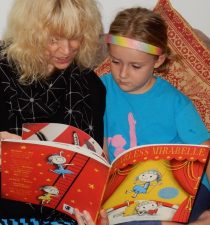
Daughters of famous circus acrobats, Meg and Mirabelle are identical twins; but though they look alike, they are completely different. Much to her parents’ delight, Mirabelle shows signs of following in their footsteps right from the start as she balances, climbs and jumps.

Meg in contrast merely makes an enormous amount of noise. And so it continues as the girls grew older, although their propensities for dare devil moves and incessant talking are now in full flower.
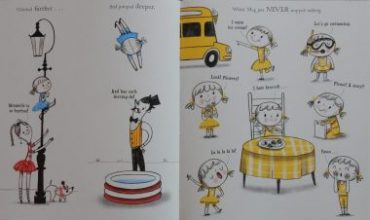
One day the parent Moffats decide to take their twins to work. Once in the circus tent three family members perform amazing acrobatic feats.

Then comes Meg’s turn and with it, as she slowly ascends the ladder and stands on the platform all a-tremble, comes the Moffats’ realisation that this daughter suffers from acrophobia. (Me too).

Once she’s safely back on the ground, her parents offer sympathy and alternative possibilities but nothing really fits the bill so far as Meg is concerned.
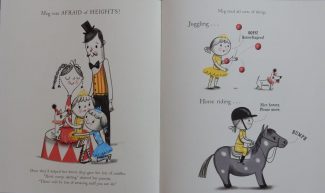
Off she goes to sit alone in the caravan; refusing even to come out and see Mirabelle’s debut performance.

The act commences and is an enormous success but then Mirabelle is faced with the inevitable cameras and mikes being thrust at her. That’s the price of success; but the poor child is no longer fearless, she’s positively petrified.
Sisterly love prevails though as Meg steps forward to offer a helping hand and an enormous voice.
Could she finally have discovered her calling?

What a terrific celebration of difference, finding your own purpose in life, and sisterly love Katie Haworth’s story is. You certainly don’t have to be a twin to appreciate its messages, nor to revel in Nila Ali’s spirited scenes of the circus sisters and their parents.
A book that will surely have encore performances demanded after every reading.
Raise the Flag

Raise the Flag
Clive Gifford and Tim Bradford
QED

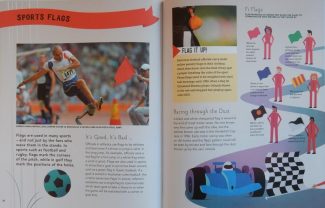
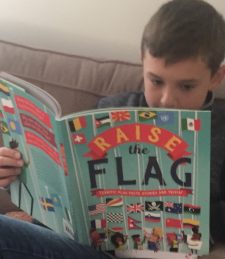
Traveller Clive Gifford and nature enthusiast Tim Bradford have created a fascinating books absolutely jam-packed with information, stories and other tidbits.

Herein you can find out about the history of flags including their use in heraldry.

Then comes a look at the national flag of every country in the world.
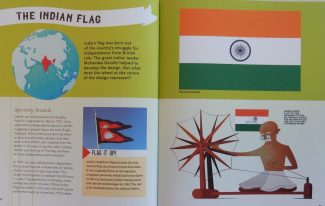
These are grouped under regions, first the Americas and Canada, then a glance at local and regional ones. Thereafter it’s on to Asia, the continent with the largest human population, where we find out about frags from Afghanistan, Bangladesh and Bhutan to Uzbekistan, Vietnam and Yemen. Some countries such as India, have a whole spread devoted to its flag.

There’s a look at flag usage – in sport,

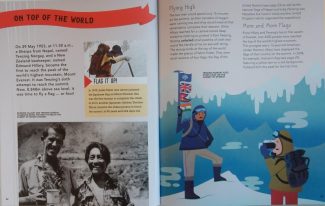
to commemorate amazing feats such as the conquest of Everest,

the Apollo moon landing, pirate flags, flags in semaphore and much more.

In total 268 flags are explored including that of New Guinea, designed by a 15 year old schoolgirl; at one time, and until it was discovered at the Olympic Games of 1936, two countries Liechtenstein and Haiti, had exactly the same flag design. Now Monaco and Indonesia share a design; these fascinating facts I learned from the book.

Comprehensive and totally absorbing; I certainly never imagined that vexillology could be so interesting. My only issue is that I’d have liked to see the ‘Union Jack’ called the Union Flag.

This book is very well written and the visual presentation excellent; no spread looks like another and none will overwhelm primary age readers. There’s even a quiz and a final glossary and index.

Well worth adding to a school or family bookshelves.

The Great Zoo Hullabaloo! / Scaredy Cat

The Great Zoo Hullabaloo!
Mark Carthew and Anil Tortop
New Frontier Publishing

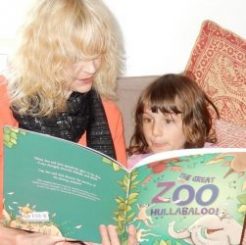
An unusual and unexpected silence greets zoo-keepers Jess and Jack when they open the zoo gates one morning. But where, oh where are all the animals?

The observant young keepers spot all sorts of evidence of their recent presence and realise that the animals have left a trail of feathers, footprints and ‘scats’ (poo).

They decide to split up and Jess’s parting words to Jack as he starts scooping up the poops are to ‘keep an eye out for that rascally rat.’ That’s a wonderful ‘Look – he’s behind you’ opportunity for listeners.

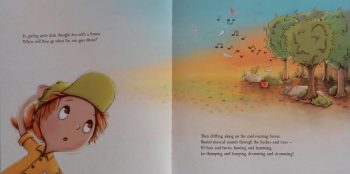
As the sun starts to sink, Jess is still searching when she hears drifting on the breeze, all kinds of musical sounds.

Then comes a FLASH in the sky as a flare goes off, (She’s also instructed Jack to send up a flare should he find himself in trouble – so is he?)

Jess follows the floating feathers towards the light, which as she draws near, she sees is coming from a forest up ahead.

Suddenly from the bushes, Jack emerges and he leads her to where sitting around a fire making music are all the missing animals. They’re having a whale of a time hopping, bopping, tooting, hooting, whistling, and kangaroo plays a didgeridoo – what a hullabaloo. (Wonderful language play in the form of onomatopoeia and alliteration is dropped into the rhyming text here)
What’s it all in aid of though?

Drawing in closer, they see, curled up cosily in a zookeeper’s shoe is a baby roo: – ‘Softly she slept in the warm furry bed, / flamingo feathers tucked under her head.’

Right up beside her however is a coiled snake holding aloft a celebratory offering. Time to waken the sleeper from her slumbers …

Then all that’s left to do is sing a special song before wending their way home by the light of the moon.

With a wonderful assortment of creatures and musical instruments portrayed by Anil Tortop in his effervescent scenes of the animals’ antics absolutely bursting with sound, (that rat manages to get itself into many of them) and Mark Carthew’s splendid read aloud text, the book is a superb amalgam of the visual and verbal. A gift for listeners and readers aloud too: get out those instruments, bring on the HULLABALOO!

More inspired Anil Tortop illustrations can be found in:

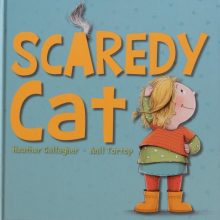
Scaredy Cat
Heather Gallagher and Anil Tortop
New Frontier Publishing

A little girl has lost her pet: ‘Have you seen my Scaredy Cat? /He’s afraid of this and afraid of that!’ she tells us as she searches high and low.
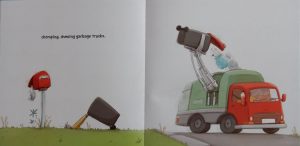
Bees, towering trees, Granny’s sneeze – a super duper kind – noises, certain toys, climbing, sprawling, brawling boys, hoses, noses, muck, ducks and garbage trucks,

all these things and more have him running scared: but where has he chosen to hide?

Could it be among the books or hooks? His owner can deal with those (love her attitude)

as well as the crooks, so where has he gone, this hissing, erm … moggie, that object of her affections?
The combination of Heather Gallagher’s frolicsome, bouncy rhyme and Tortop’s funny scenes (love all the varying viewpoints) is a delightfully entertaining romp of friendship and tease.

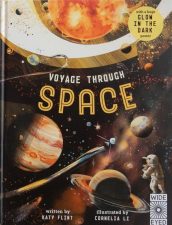
Voyage Through Space

Voyage Through Space
Katy Flint and Cornelia Li
Wide Eyed Editions

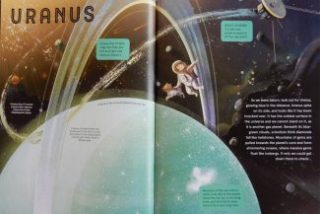
In the company of a little astronaut and her dog, readers are taken on a journey of adventure in space starting at the Sun, the centre of our solar system.

So it’s space suits and helmets on and off we go exploring the planets, our first stop being Mercury, closest to the Sun and the smallest planet in our solar system. We learn that its surface is covered in craters on account of the meteors that have crashed into it over millions of years; we discover that its temperature varies dramatically; it’s ‘blisteringly hot’ by day and very cold at night. Did you know that on Mercury a year is a mere 88 days long?

Venus is next closest where temperatures can go as high as 460 ℃ – OUCH! This is the hottest planet, has no moon and is impossible to explore.

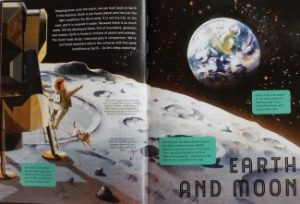
Next stopping place is the moon, whereon American astronauts Armstrong and Aldrin were the first to land, a good place from which to observe Earth.

The red planet, Mars is the next stop; a place prone to fierce dust storms . A sol (Martian day) is approximately 39 minutes longer than an Earth day.

Passing through the asteroid belt takes the explorers to the largest planet in our solar system and fifth from the sun. NASA’s Juno spacecraft is currently studying Jupiter with its liquid surface and clouds of toxic gases.

The ringed planet, Saturn is the next destination. There strong hurricanes rage and the surface is mostly liquids and swirling gases. I was amazed to learn that a year on Saturn is more than 29 Earth years.

Uranus glows blue when seen in the distance from Saturn. That’s the next place viewed. Its surface is the coldest in the universe and the explorers are unable to stand thereon as its surface is gaseous, although beneath the blue-green gas clouds, scientists believe enormous gems are to be found. If only …

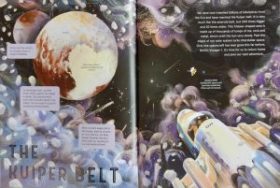
The final planet on the journey is Neptune, even windier than Jupiter and the furthest from the Sun. Voyager 2 took a whole two years to reach Neptune from Earth. Thereafter the adventurers reach the ‘frisbee-shaped Kuiper belt … Time to head home.

All this information is provided in easily digestible bite size chunks scattered on the relevant spread, most of which is taken up with Cornelia Li’s powerful and intriguing illustration. You can almost feel the intense heat coming from some of the pages and taste with swirling gases from others.
In addition there’s a glow-in-the-dark, fold-out poster at the back of the book to further excite young readers.

Spike The Hedgehog Who Lost His Prickles

Spike The Hedgehog Who Lost His Prickles
Jeanne Willis & Jarvis
Nosy Crow

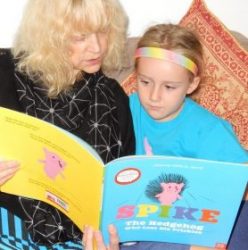
Suddenly finding yourself without your defences isn’t something anybody would want to happen, but it’s the fate of hedgehog Spike who awakes one morning to discover that all his prickles have fallen out overnight. The unfortunate fellow is spineless, completely bare no less. “I’m in the nude. How rude!’ he says. “What will the neighbours think?’ And off he goes in search of something to wear that will cover his embarrassment.

He dons a paper lampshade and sallies forth only to have rain render it useless

and expose his nether regions to the amusement of all around.
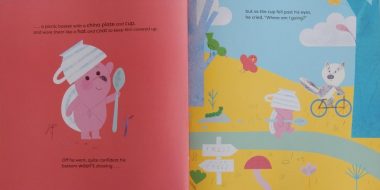
Having fled to the woods he comes upon, of all unlikely things, a china cup and plate – the latter being a perfect bottom cover. But then the cup/hat tips and the poor creature trips; you can imagine the fate of his new outfit.

Badger has things to say about his lack of spikes next, but before long Spike finds a sock, albeit a rather whiffy one, but it serves as a smock. Little does he know however, that as he wanders merrily on his way, the thing is slowly unravelling and yet again he’s the butt of some unwelcome comments.

Blushing, our spikeless pal dashes on until he spies a bunch of balloons of all hues. Now he’s the object of the other animals’ admiration as he floats off skywards.

The sun sinks, the moon rises and Spike drifts until he’s made two circles of the world.

Suddenly he sees his home once more below, he waves and …

Now why might that be? It certainly looks as though it’s time to celebrate …

This book is an absolute treat to read aloud; not only does Jeanne Willis’ rhyme flow without a single spike, but Jarvis portrays the entire journey in his own inimitable brilliant way and there are SO many wonderful details to linger over. The colour palette is splendidly summery but this is a tale to share at any time; and its finale is an absolute hoot.

A winner through and through.

Three Cheers For Women!

Three Cheers for Women!
Marcia Williams
Walker Books

Richly detailed, funny illustrations and accompanying information on seventy remarkable women from all over the world is presented in comic strip format in Marcia Williams’ (Dot) signature style.

The amazing achievements of these women are diverse and presented, with their stories, chronologically. We start in ancient times with Cleopatra V11 Queen of Egypt and warrior queen Boudicca, ending with the 2014 Nobel Peace Prize winner, Malala Yousafzai, children’s and women’s rights activist.

Along the way we are introduced to among others, Mary Wollstonecraft (radical feminist and writer),

Marie Curie, human rights activist Eleanor Roosevelt, Amelia Earhart,

artist Frida Kahlo,

environmentalist and peace activist Wangari Maathai, Mae C. Jemison the first African-American woman in space, and Olympic athlete Cathy Freeman.

Look out for the wonderful tiny animal and bird characters that drift around the margins of the spreads along with narrator Dot and her friend Abe, adding to the fun and biographical information given in the main frames – love that narrative device.

There are also three final spreads – ‘Leaders and World-Changers’, ‘Sportswomen & Creatives’, and ‘Scientists, Pioneers & Adventurers’, containing paragraphs on around sixty other amazing women.

Memorable, inspirational, accessible and enormously enjoyable.
Children reading this, in addition to celebrating these awesome women, will surely come to know that where world changing achievements are concerned, there are, if you have a passion and self-belief, and think beyond the limits, no holds barred.

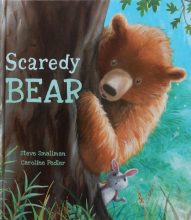
Scaredy Bear

Scaredy Bear
Steve Smallman and Caroline Pedler
Little Tiger Press

What’s BIG and HAIRY and cause for alarm in the deep, dark forest? According to Little Bob’s mother (rabbit) one bedtime, it’s a terrible creature with a roar like thunder, huge scary teeth and long, equally scary, claws.

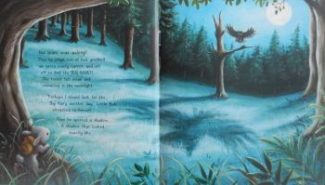
Little Bob however, wants to find out about this creature for himself and so waiting until his mum is fast asleep, he arms himself with an extra pointy carrot and creeps out into the forest: a forest that in the moonlight looks considerably more scary than it does by day.

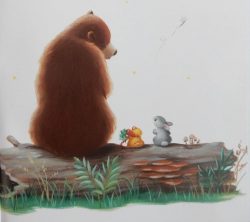
Having narrowly dodged a hunting owl, he dives into a huge bush only to discover it isn’t a bush at all but an enormous ursine creature. He tells the creature about the BIG HAIRY; they introduce themselves to one another and having decided to become friends, the two Bobs Big and Little, continue the search together.

When Bear, now hungry, asks about Little Bob’s carrot, he’s told it isn’t for sharing but instead the little rabbit intends sticking it up the Big Hairy’s nose. Ouch!

This prompts Big Bob to comment on Little Bob’s unexpected bravery. “How can you be so brave when you are so small?” he wants to know. ‘Because,” comes the whispered response, “I’m big on the inside.” He also tells Big Bob that he too must have a big bear hiding within if only he could let it out.
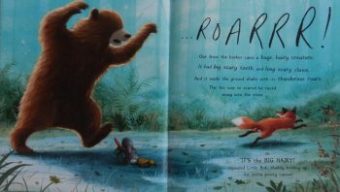
By this time Little Bob too is feeling hunger pangs so his pal goes off in search of food. Suddenly from behind leaps a very hungry fox.

Now Big Bob needs to find that inner big bear in time to save his friend from becoming fox’s supper. He lets out an enormous …

and that gives the game away well and truly.

When Little Bob finally realises who his saviour is, can the two of them sort things out between them without the little rabbit having recourse to that carrot of his? Or could there perhaps be a better use for it …

Steve Smallman’s lovely story about finding your inner strength and making a special friend is a great reminder that we can all be brave no matter our shape or size so long as we have the confidence to draw on our inner resources.
Caroline Pedler’s moonlit woodland scenes are aglow with tension and she captures the animals’ changing feelings wonderfully.

Nature & Around the World / Look, a Butterfly! / Little Boat

Nature
Around the World

Nosy Crow

These are the two latest additions to the wonderful board book series produced in collaboration with The British Museum, each presenting and celebrating cultures the world over, and inspired by the enormous British Museum collection.
Nature celebrates both the flora and fauna of the world and the elements, from a shell to the sun; the squirrel to the sunflower and the butterfly to blossom.

It’s absolutely gorgeous and certain to engender curiosity about the natural world.
In Around the World fourteen cultures are represented through items from near and far: Egypt, France, Britain, America, Germany, Japan, New Zealand, Korea, Mexico, Greece, China, Kenya and India each have a spread or page devoted to items including clothing,

musical instruments, buildings, jewellery, and much more.

Both are, like the rest of the series absolutely superb for developing language as well as being a brilliant way to introduce history and culture to your little ones, especially if you can combine it with a museum visit too.
If you can’t, worry not: each has an index as well as QR codes linking to additional information about each object featured.

Enormously worthwhile to add to bookshelves at home, or in an early years setting.

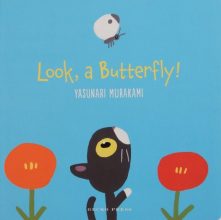
Look, a Butterfly!
Yasunari Murakami
Gecko Press

This lovely little board book is by award-winning Japanese artist/designer/author, Yasunari Murakami who is also an environmentalist and lover of wild-life. It begins with an irresistible invitation to notice, and then follow the journey of a butterfly as it explores what a flower garden has to offer.

We see the flower buds pop open and burst into a host of colours;

watch the little creature pause for a drink of nectar and revived, flit and flutter again before coming to rest upon a playful kitten.

This of course precipitates a game of flap and tease before the butterfly finally flies away.

Beautifully simple and attractively illustrated, it gives you an injection of joie-de-vivre and is perfectly honed  to be just right for sharing with tinies. Catch hold of this one before the butterflies disappear for the season.

Little Boat
Taro Gomi
Chronicle Books

Life lessons Little Boat style will delight fans of Taro Gomi’s previous Little Truck especially.

Here we follow Little Boat as he determinedly manoeuvres his way through bigger boats including a snarling one, braves the rough seas and stormy weather

until after his testing adventures, he finally meets his parent boat once more in calm waters.

Short and sweet: splendid entertainment for little ones and a great demonstration of remaining positive no matter what.

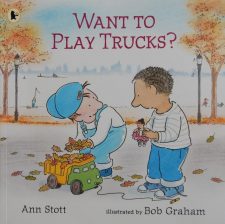
Want To Play Trucks?

Want To Play Trucks?
Ann Stott and Bob Graham
Walker Books

It’s autumn: Alex and Jack meet at the playground sandpit nearly every morning.
Alex enjoys playing with dolls of the pink sparkly clothed variety; Jack enjoys playing with trucks, especially the wrecking kind.

So what happens when Jack invites Alex to play trucks? A compromise ensues as Alex suggests, “Let’s play dolls that drive trucks.”

While their carers – parents one presumes- sit chatting, the boys play amicably together until Jack’s “You can’t wear a tutu and drive a crane,” announcement, halts things.Tempers flare briefly

but fizzle out when Alex realises that all that’s required is a quick outfit change for the truck driver.

The wonderful details in Bob Graham’s watercolour scenes that pan in and out of the play action, add much to Ann Stott’s light, spare telling. The latter relies on the story’s premise resting on what, one hopes, is a completely out-dated sexist viewpoint about who should play with what.

Be sure to take time over the interaction between the two seated adults; there’s much to wonder about there too,

in addition to thinking about what’s going on between the two main characters, the denouement of which is based on their shared passion for large, dribblesome ice-cream cones.

With messages concerning the importance of allowing children free rein in their imaginative play, compromise and inclusivity, this is a book to share and discuss either at home or in an early years classroom.

Need more suggestions for your children’s reading? Try Toppsta’s Summer Reading Guide

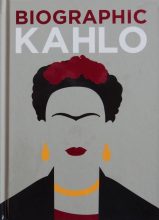
Biographic: Kahlo

Biographic: Kahlo
Sophie Collins
Ammonite Press

I’ve long been a fan of Frida Kahlo – her art and her spirit – so was thrilled to receive this new addition to the Biographic series for review.
It takes us first, through her life. Born in 1907 and growing up in Mexico, Frida caught polio when she was six, leaving her with a limp in her right leg; then at eighteen she was in a terrible bus accident that left her with many broken bones and in constant pain for the rest of her sadly short life.

During her recovery period, so the first part of her timeline informs us, Frida started to paint.

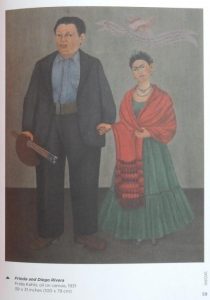
Three years after the accident she met Mexican artist Diego Rivera and in 1929, (a year after Frida joined the Communist party), they married for the first time.

Several operations, three failed pregnancies and a couple of affairs later, in 1935, Frida and Rivera separated: “A marriage between an elephant and a dove” is a what Frida’s mother is reputed to have said about the couple and she was certainly dwarfed by him bodily though certainly not in spirit or artistic talent.

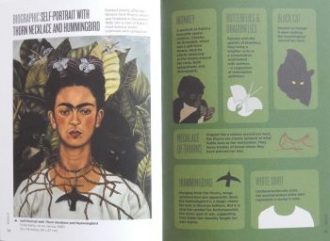
Her first exhibition was held in 1938 and much of her work was intensely personal reflecting what was happening to her and how she felt at the time. She painted in oils, often using pastels and coloured inks for sketching. One of her most famous works, is the heavily symbolic ‘Self-portrait with Thorn Necklace and Hummingbird’.

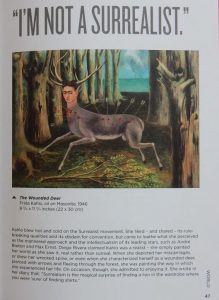
Another is  ‘The Wounded Deer’:

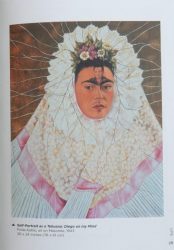
Frida’s clothes were always distinctive as this self-portrait shows:

This, and others in the series that includes Biographic: Hendrix, and Biographic: Sherlock, all of which include maps,flowcharts and bubble-diagrams, are examples of infographics at their best.

See the V&A exhibition (a collection of personal possessions – clothing and artefacts) and buy this book. They can work in tandem.

Treasure Hunt House

Treasure Hunt House
Kate Davies and Becca Stadtlander
Lincoln Children’s Books

When a brother and sister receive a letter from their Great Aunt Martha inviting them to go and stay at her incredible house their mother urges them to accept.
They pack a weekend bag and off they go only to discover on arrival that their aunt isn’t there. She’s been unexpectedly called away but in her stead is her kindly looking housekeeper who introduces herself as Jo. She informs the children that their aunt has planned a treasure hunt to occupy their time until her return.

We join them in the hallway as they attempt to solve the first clue, ‘I have a heart of stone. And a head of stone, too’ and lifting the various flaps on the spread will reveal the solution along with further instructions, as well as cultural and historical information about some of the objects therein.

Thereafter we follow them around as, accompanied by Jo, they visit the rest of the rooms: the kitchen; the bedroom, where we read of the making of the first denim jeans;

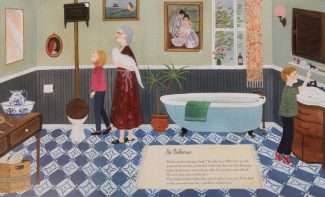
the bathroom (this has a trickier riddle and a famous painting reproduction on the wall);

the living room – the cat introduces itself there); the library with its floor to ceiling bookshelves (Aunt Martha is evidently a Shakespeare enthusiast); the olde-worlde dining room; the sub-tropical  conservatory wherein butterflies flittered around the flowers;

the enormously fascinating Cabinet of curiosities packed with biological specimens including a velociraptor skeleton and a shelf of corals; a wonderful art gallery; a hall of inventions (Aunt Martha is an avid collector of incredible inventions, we learn); a music room packed with instruments of all kinds; and finally, a child’s paradise of a toy room. Therein too the final clue is solved and the secret of Jo’s real identity revealed.

Each room is exciting, packed with history and in all there are over 50 flaps to explore.

This is a fascinating and magical book that is likely to engender an interest in both history and art; it’s perfect for all who enjoy playing with or collecting doll’s houses, or have an interest in old houses, and would make a super present.

Caged

Caged
Duncan Annand
Tiny Owl

Wordless books say so much without uttering a single syllable. They challenge us, move us – sometimes to tears, make us laugh or make us feel joyful; they offer us a different way of looking at the world; sometimes they make us feel hurt or anger.

Duncan Annand’s picture book does all these, certainly for me.

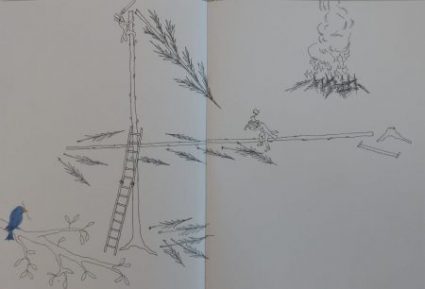
Herein we see, simultaneously two threads of interwoven visual narrative, one constructive, the other, in its way destructive, although a construction project is under way. The latter is the work of two eccentric-looking architects.

As the story opens we see the two men busy in the process of destroying what looks like virtually the last remaining tree; a bonfire is ablaze close by and on a branch, a bluebird perches with a twig.

While the men work at bringing cages of brightly coloured parrots and using them to build a circular-based edifice, the bird flies hither and thither building a nest of twigs.

As the construction takes shape its architects perform some perilous climbing and precarious dangling feats to secure the cages in place.

All the while the bird keeps a watchful eye on the process.

By the time the dome is atop the enormous aviary – for that is what is being built – the bird has laid her eggs.
Job done all round. The men certainly appear to think so as they enter their edifice.

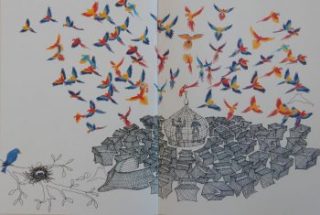
Not so the bird however; she has one final act to perform and it’s one of both liberation and entrapment …

Like the architects in his story, Duncan Annand has set the bar incredibly high for his debut picture book that tells a cleverly constructed, enormously satisfying story of environmental vandalism, just desserts and freedom.

This is most definitely a book for all ages and all people in all places. Like those parrots on the final spread, it’s one to make both hearts and imaginations take flight, particularly, the final denouement.

Priceless!

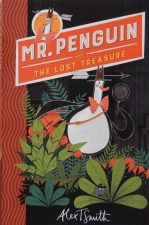
Mr Penguin and the Lost Treasure

Mr Penguin and the Lost Treasure
Alex T. Smith
Hodder Children’s Books

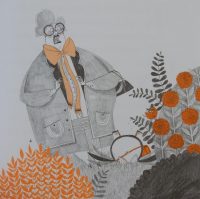
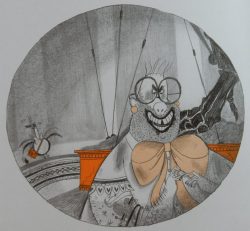
The creator of the wonderful Claude books does it again with this the first of another adventure series. It stars Mr Penguin of Cityville (think Indiana Jones crossed with Sherlock Holmes or even Wallace and Gromit) who has just set himself up as a professional adventurer. He has all the gear: a dashing hat, large magnifying glass, a somewhat battered satchel and a smart-looking office complete with revolving chair. Like others of his ilk, he also has a sidekick, Colin the kung-fu-kicking spider.

Mr P. sits in his office, with a decidedly reduced bank balance and a distinct lack of clients, despairing that he’ll ever be asked to solve a mystery.

Happily he gets a call from a frantic-sounding Boudicca Boones, owner of the Museum of Extraordinary Objects. She wants to hire him to find some lost treasure buried long ago by a relative.

An adventure at last; but can this oddly matched pair manage to follow a map and solve clues let alone locate the whereabouts of that missing treasure?

Their search, which ends up involving more than just Mr P. and Colin, sends them down into the depths to a subterranean jungle under the museum itself.

What a cracking, fast moving adventure it turns out to be with a host of cliff-hangers,

surprises and delicious characters, not to mention brushes with the criminal fraternity, the odd alligator and more, that will keep readers on the edge of their seats as well as chortling at the wonderful dialogue.

As one would expect of Alex Smith, the entire tale is imbued with the absurd, both verbal and visual; and be sure not to miss those press excerpts before and after the beginning and end of the book.

Readers will be thrilled to learn, as I was, that this is the first of a new wacky adventure series. Bring on the next one …

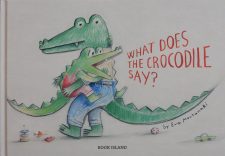
What Does the Crocodile Say?

What Does the Crocodile Say?
Eva Montanari
Book Island

A really smashing ‘starting nursery’ book is this one from author/illustrator, Eva Montanari starring a little crocodile on his very first day at nursery.

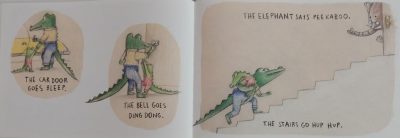
Mama wakes him, baths him, dresses him; they eat breakfast together and off they go.

At the door, teacher elephant greets parent and son

and they enter the noisy room where other animals are playing. Little croc. is very reluctant to bid his mum farewell.

Then comes story time

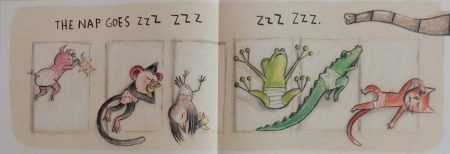
followed by a music session and then it’s time for lunch and thereafter a nap.

When the little ones are awake their teacher entertains them with bubble blowing and after the final POP comes a KNOCK KNOCK on the door.
Mama has arrived to collect little croc who couldn’t be happier to see her. MWAH MWAH …

And will he return tomorrow? It certainly looks that way.

Short and sweet assuredly: I can almost hear adult ‘AWW’s of empathy as they share this one and as for soon-to-start nursery little ones, they’ll most certainly enjoy joining in with the cacophonous sequence of sounds -accompanying the gorgeous illustrations as we follow the little reptile through his day.

An absolute winner this.

What Do You Do if Your House is a Zoo?

What Do You Do if Your House is a Zoo?
John Kelly and Steph Laberis
Little Tiger Press
My immediate answer to the title question would be, ‘move out straighaway’. That is precisely what the human characters in this funny story do eventually, but that is getting way ahead of the action.

The whole sorry saga begins one Sunday when the boy narrator’s parents finally agree to their son becoming a pet owner. He’s overjoyed but undecided as to what kind to choose.

Monday morning sees him dashing off an ad. to go in the local paper.

Come Tuesday the responses start arriving, and by Wednesday the lad is inundated.

Dizzying confusion reigns.

On Thursday an animal invasion begins … which very quickly becomes a total take over and that’s despite Dad’s heartfelt “No more animals!” order.

Eventually in desperation the family decamps to the garden: surely that must be a haven of peace and tranquillity? ….

Now it’s Mum’s turn to insist: They’ve all got to go!” That does the trick: women rule OK!

Feeling a little sad at the animals’ hasty departure, the would-be pet owner admits that perhaps none of the applicants was quite the right pet for him. But then he comes across one letter that he’d previously over-looked, albeit a rather whiffy affair. Could this finally be THE one? Its writer certainly does appear to have a winning way with words.

A hilarious tale that will delight those with a penchant for pets especially; but those less keen on sharing their home with a feathered or furry friend will equally be tickled by the pet problems encountered by this particular family, as so amusingly related by John Kelly and visually documented in Steph Laberis’s zany scenes of mischief and mayhem animal style. The animals’ letters in particular, are a real hoot.

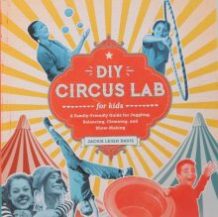
DIY Circus Lab for kids

DIY Circus Lab for kids
Jackie Leigh Davis
Quarry Books

Did you know that this year is the 250th anniversary of circus in the UK; I certainly didn’t although I live in an area of Gloucestershire that regularly hosts the wonderful Giffords Circus.

This book is written by mime artist, educator, teacher and founding member of the American Youth Circus Organisation, Jackie Leigh Davis, who provides an absolute wealth of circus skills for children; and she makes it clear in her preface that circus sees all colours, all kinds of bodies: it’s inclusive, it’s for everyone. I like that.

Readers are given an overview of the various circus skills: Acrobatics, acrobalance and pyramids, Aerial arts, (for safety reasons, this are not covered in the book), Balance arts, Clowning, Gyroscopic juggling and Toss juggling.

This is followed by a ‘What’s in this book?’ spread that begins with the words, ‘This book empowers you to take your first steps in circus.’ I like that too. Herein are included some wise words on safety, a crucial element, and it also includes a ‘Proceed at your own risk’ disclaimer.

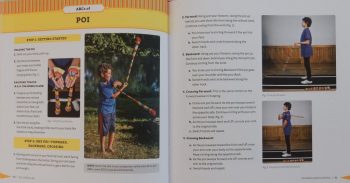
Next come the individual units wherein as well as instructions for learning the skills, Poi for instance,

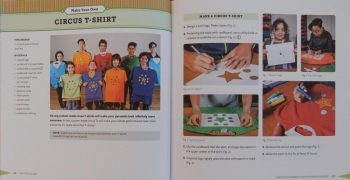
readers are invited to make their own circus props such as hoops, juggling sticks and balls, poi, stilts and clown hats and nose; T-shirts even.

The instructions are always easy to follow and there are photos to help.

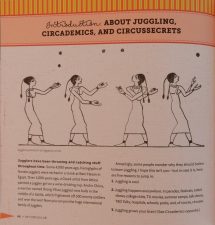
While the particular skill under discussion might at a beginners level, the author also includes fascinating historical references,

the positive impact of each skill learned and, where appropriate links to on-line tutorials.

The section entitled Partner Acrobatics and Human pyramids took me to Udaipur, Rajasthan where on Janmasthami, I regularly see some terrifying-looking human pyramids at a cross roads near a famous temple. I was recently interested to read that this year, a high court in Mumbai has banned those under 18 years old participating in this ‘Dahi Handi’ festival as well as banning pyramids above 20 feet high.

Back to the book, the pyramids taught herein are of an altogether safer type and include vital words on warming up and, crucially, safety, as well as the concise instructions for several pyramid styles. (There’s a whole language of pyramids: I didn’t know that!)

Putting on a show is addressed too and in the final pages are information on additional resources, recommendations for further study and more.

Intended to engender and foster a child’s enthusiasm for circus arts, but in addition think how important skills of balance and co-ordination are for adults as we grow older.

I can even envisage some of the activities being tried with an old folks group.

All in all, this is an excellent book, comprehensive and done superbly: it’s well worth investing in for families, schools and other groups that have an interest in exploring and fostering the circus arts and their potential.

Mind Your Manners

Mind Your Manners
Nicola Edwards and Feronia Parker-Thomas
Caterpillar Books

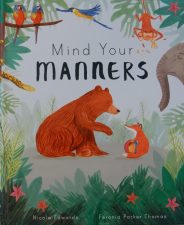
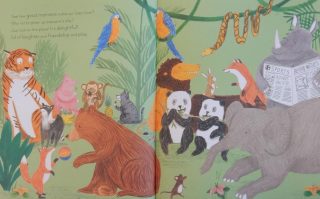
The creatures in this junglee tale need a lesson or two in minding their Ps and Qs and that is exactly what they get in Nicola Edwards’ rhyming advocacy for politeness and good manners. After all, if they’re all to live together in peace and harmony they need to listen to the wise words of advice offered herein.
Snatching pandas need to say a polite “please” while ungrateful tigers should always offer a pleasant “thank you” when they receive a gift or an act of kindness.
“Excuse me” is required vocabulary for stomping, clomping pachyderms, whereas ‘sorry’ is thus far lacking in the snake’s speech.

Not invading another’s space is also strongly advised, especially when that space happens to be a quiet reading spot.

Merely parroting another’s words is a definite no, no, as is dropping rubbish and thus upsetting the balance of nature. Oh my goodness these animals DO have a lot to learn.
Selfishness is thoroughly undesirable, as are disgusting food consuming habits,

as well as careless words that might hurt another’s feelings: sweet words are much, much better.

So too is knowing when it’s okay to be noisy and when quiet is the order of the day, while grouchiness and unkindness need to be replaced with warmth and sharing.

Look how much more desirable that jungle home is now that the animals are finally putting all that sound advice into practice.

Spirited scenes of animal behaviour good and bad (including that of the artist’s favourites, bears), executed in watercolour and pen, along with Nicola Edwards’ wise words delivered in rhyme; you have to get the rhythm right to share it effectively so I’d suggest a practice run first. There’s some fun alliteration concerning that silly snake and the  messy monkey to get your tongue around too.

More bears (along with foxes) grace the lovely endpapers – the front ones showing undesirable actions; the back ones, good  behaviour.

Is It The Way You Giggle?

Is It The Way You Giggle?
Nicola Connelly and Annie White
New Frontier Publishing

What a wonderful celebration of children, difference and the way the former demonstrate their individuality.

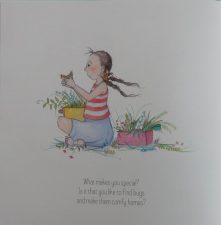
Using a series of questions that centre on four children in a family, Nicola Connelly draws attention to the myriad possibilities that could make each one of us unique: be that eye colour, skin colour, freckles, chin or nose shape; might it be the size of our ears or feet, or our front teeth?

Perhaps it’s our way of jumping super high, our love of dance or singing;

a beaming smile; a particular giggle or wiggle.

We might be good at maths, have an artistic bent, a storytelling prowess,

a particular penchant for some kind of sport,

perform amazing athletic moves, have a bibliographic trait,

exude creativity, or enjoy quiet moments with mini-beasts

No matter what, the author’s bouncing words coupled with Annie White’s exuberant, joyful, slightly whimsical watercolours, are enormously upbeat.

This book cannot fail to make you smile; is a great read aloud and has wonderful performance possibilities.

Let’s hear it for individual specialness.

The People Awards

The People Awards
Lily Murray and Ana Albero
Lincoln Children’s Books

Here’s yet another book celebrating people whose achievements have made a significant contribution towards making the world a better place. This one however, unlike many of the other recent titles, includes both women and men.

It contains a lot of information served up in digestible portions about a wide variety of people from all over the globe and through history, from Sappho (a creativity award winner) to Malala Yousafzai, Pakastani human rights activist and youngest Nobel Prize winner (2014).

In total there are 50 awardees, twenty-nine winners who have been allocated an individual award and who each have a double spread devoted to them. These include Trischa Zorn, blind, Paralympic swimmer who won seven gold medals; she gets the Amazing Athlete Award;

Olaudah Equiano from Nigeria who wins The Kidnapped Hero Award;

David Bowie gets The Express Yourself Award; Frida Kahlo has The Painting Through Pain Award, my all time hero, Nelson Mandela wins The Fight For Freedom Award, creator of the world wide web, Tim Berners-Lee has ‘The Dot Com Award and – as a teacher/ educator, I have to mention Maria Montessori, who promoted learning through play and gets The Children’s Champion Award.

Then there are a further five awards categories: The Trailblazer Awards given to four people;

The Brilliant Ideas Award has four winners; The Creativity Awards: these go to a further four – Mozart, Gaudi, Sappho and Hans Christian Andersen; Bravery Awards are made to Antónia Rodrigues, Rigoberta Menchú, Muhammad Ali, Simón Bolivar and Rosa Parks; Inspiration Award winners are Ana Nzinga, Donald Bradman, Eva Perón and Joan of Arc.

There is SO much to like about Lily Murray (author) and Ana Albero, (illustrator)’s collaboration – the range of winners, the imaginative presentation, the names of the awards, the final Lap of Honour time line whereon all the winners take a bow; and I absolutely love the illustrative style and Ana Alberos’ chosen colour palette.

Mr Pegg’s Post

Mr Pegg’s Post
Elena Topouzoglou
New Frontier Publishing

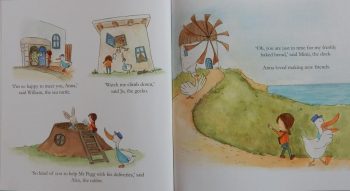
This is a really sweet story about a lonely girl who lives with her parents in a lighthouse just a little out to sea.
The only other ‘person’ she sees is Mr Pegg the postie pelican when he drops off her parents’ mail.
One day a terrible storm blows up and with it comes a loud THUMP! at the door Anna is safely behind. It’s poor Mr Pegg with a wing injured in the storm.
Kind-hearted Anna, tends his wound, makes him tea and as they chat, an offer: using her rowing boat she’ll help him deliver the mail.

Anna is a wonderful worker and Mr Pegg asks her to help until his wing heals.

During the course of her work Anna makes lots of new friends and that makes her feel happy;

but this happiness quickly starts to dissipate when Mr Pegg announces that his wing is healed sufficiently for him to deliver the post on his own again.

Back home, she feels more lonely than ever, but one morning not long after, a loud THUMP at the door announces Mr Pegg and with him two wonderful surprise deliveries both of which restore her feelings of happiness.

I love the way young Anna is instrumental in elevating her own sense of self worth, as well as the way the story gently reminds readers of the importance of face-to-face contact and real letters in this age of e-mails and social media. Elena Topouzoglou’s digitally finished watercolour and ink scenes really capture the inherent warmth and friendship of her story.

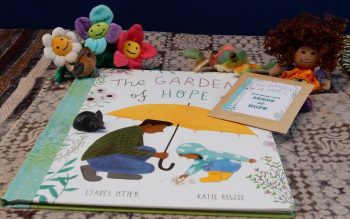
The Garden of Hope

The Garden of Hope
Isabel Otter and Katie Rewse
Caterpillar Books

Isabel Otter and Katie Rewse have created a touchingly beautiful picture book story of loss, love, sadness, hope, transformation and beauty.

Maya’s mum is no longer on the scene (we’re not told if she has died or absent from the family home). Those remaining though – Dad, Maya and dog Pip are feeling bad and seem surrounded by desolation; that’s certainly so in the now overgrown garden.

Dad struggles to keep things going; Maya’s loneliness is in part compensated by Pip’s company but still she feels the loss, despite Dad’s stories.

One day when Maya feels particularly sad he tells her a story about Mum, relating how her remedy for down days was to go outside, plant seeds and wait for them to grow, by which time her worries would be replaced by something of beauty.

On the table are some packets of seeds.

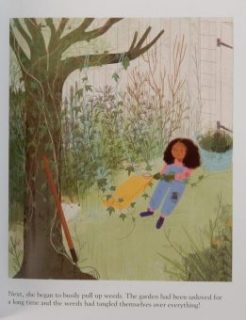
A decision is made: it’s time to transform that neglected garden.

Little by little Maya prepares the ground for planting, her first seeds being Mum’s favourite sunflowers. Gradually along with the burgeoning plants, gardening releases something in Maya, allowing calming thoughts to grow.

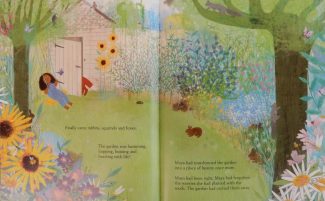
From time to time, Dad too takes comfort in gardening alongside his little girl. Lightness grows and with it some happiness. The flowers bloom attracting tiny creatures,

then larger ones until the entire garden is alive with hums, buzzes, flutters, flowers and, the first bursting of transcendent hope and … joy.

In a similar way Mum’s absence has left gaps in the family’s life, the author leaves gaps in the story for readers to fill. Her heart-stirring telling has a quiet power that is echoed in Katie Rewse’s graceful scenes.

Poignant, powerful: an understated gem.

Anatomy for Babies / Botany for Babies

Anatomy for Babies
Botany for Babies

Jonathan Litton and Thomas Elliott
Caterpillar Books

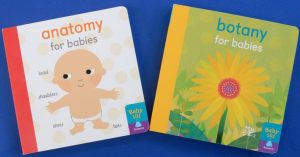
Here are two absolutely lovely board books that are part of the Baby 101 Science series.

Anatomy for Babies starts by introducing basic body parts such as head, hair and foot.
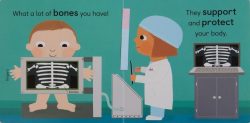
It then takes little ones inside to look at bones

and muscles, and back out to see the skin.

Next comes the brain, followed by the lungs and the heart.
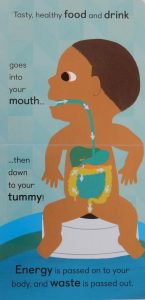
The alimentary canal comes next with a quick look at digestion.

Thereafter we move to the outside again for a focus on the five senses. Each part introduced has a sentence describing its function.
The final spread celebrates the notion of growth and has a lift-up flap.
And don’t miss the opportunity to do the action song ‘Head, shoulders, knees and toes’ when you look together at the front cover.

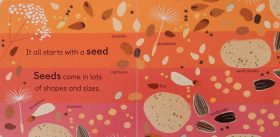
Botany for Babies explores the world of flora starting, after a general celebratory introduction, with seeds of various kinds.

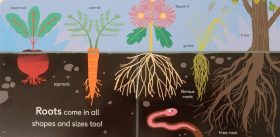
Roots and shoots and their respective functions come next and then an opportunity for some height comparison using a daffodil, a sunflower and a deciduous tree.
The following spread is devoted to root systems including some mouth-watering vegetables: it’s never too soon to introduce the idea of eating healthy veggies to little ones.

The focus then moves to trees of both the deciduous and coniferous kind, after which comes the role of leaves in photosynthesis (no that term isn’t used!).

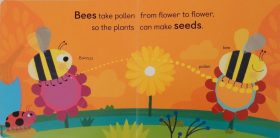
Bees buzz merrily on the next spread where their role in pollination is mentioned.

A fruiting apple tree is shown bearing juicy red fruits and there’s also a cross section where you can see the seeds, which takes readers full circle back to seed dispersal on the final spread. There too is a flap to lift with a surprise beneath.
Adding to the enjoyment, insects and other small creatures form part of the illustration on almost every spread.

Both books have terrific STEM potential as well as being wonderful for language development; it all depends on the adult mediator.  Thoroughly recommended.

Get Arty: My selfie with Mona Lisa / The Impressionists Japan from Monet to Van Gogh/ Gustav Klimt

My selfie with Mona Lisa
The Impressionists’ Japan from Monet to Van Gogh
Gustav Klimt
Catherine de Duve
Happy Museum

What a fantastic trio of Kate’Art Editions new titles to inspire young potential art enthusiasts all from Catherine de Duve. Herein she provides wonderful opportunities to find out something about famous artists and their awesome creations.

In My selfie with Mona Lisa, Catherine transports readers to the Louvre in Paris, and using a narrative explores what is one of the world’s most famous paintings by Leonardo da Vinci, cleverly interweaving the current obsession with selfies into her story. Filippo Farneti’s illustrations are absolutely amazing and the presentation as a whole superb.

The Impressionists’ Japan looks at the impressionist artists’ fascination with Japanese culture, crafts and art, brought about in part by the opening up once more of the trading links between Japan and Europe. Readers are shown how famous European artists such as Monet, Renoir and Vincent Van Gogh were influenced in their work not only by the culture of Japan, but also by wonderful Japanese artists like Hokusai. Children will most certainly enjoy both finding out about these art styles and famous paintings, and using their own pens or pencils to colour in the black and white outlines of some famous works of art.

Gustav Klimt provides opportunities for youngsters to explore some of Klint’s wonderful works – nine in all exhibited in galleries from different parts of the world – and then to add their own colours to outlines of those iconic paintings.
(The one on p.14 contains nudity, just in case there are parents unsure about their children viewing this.)

Three super, enormously engaging books for your children be it holiday time or not.

100 Screen Free Ways to beat Boredom! / Let’s Make Comics!

100 Screen Free Ways to beat Boredom!
Kris Hirschmann, illustrated by Elisa Paganelli
QED

What a great collection of creative ideas Hirschmann and Paganelli have put together for keeping your children actively engaged, enjoying themselves and free from tablets, phones, computer games and the like.

There are activities that can be enjoyed at home, outdoors and on the move, the first section offering the most ideas.

Nearly all can be done using things you already have knocking around somewhere, without having to rush out and buy bits and pieces, although this might depend on how craft-minded your youngsters have already become.

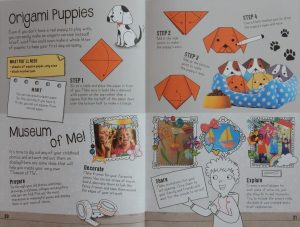
A few, but not many of the activities need some adult supervision, while with most you can just leave your littles free to have fun be that indoors or out. Each one is explained via a mix of colour photos, snazzy graphics and brief paragraphs of step-by-step instructions and a list of materials you’ll need.

This book might just save your sanity be you parent or grandparent, or perhaps holiday supervisor, in the remaining part of this weather-crazy holiday and any holidays that are to come; whatever the weather it’s thoroughly recommended and well worth investing in.

Equally worth getting hold of especially for those shorter days or when going outside isn’t possible, is:

Let’s Make Comics!
Jess Smart Smiley
Watson-Guptill

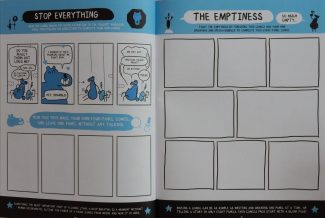
Here’s a great book for budding young comic-makers from cartoonist and comic-making instructor Jess Smart Smiley who, aided and abetted by Peanut the turtle and bear Bramble, provides over 60 splendid hands-on projects.

Each one encompasses a number of important skills such as drawing, character design, writing or storytelling and ends up with a new comic. What’s not to like?

Packed full of learning potential and guaranteed hours of absorbed child activity; not only is this crammed full of comic-making ideas, it also gives an insight into how some picture book artists work.

A thoroughly enjoyable and totally brilliant activity book: I envisage fights ensuing over my copy!

My Book about Brains, Change and Dementia

My Book about Brains, Change and Dementia
Lynda Moore and George Haddon
Jessica Kingsley Publishers

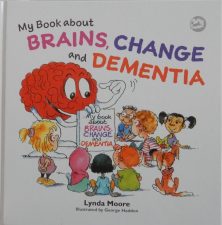
In picture book form, author Lynda Moore (a family counsellor who works with children impacted by dementia in Australia) and illustrator/cartoonist George Haddon, deliver an explanation in straightforward terms that will help young children understand something of the sensitive subject of dementia.

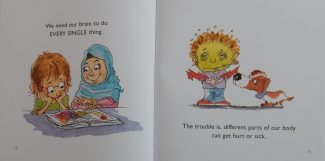
Starting generally, there’s an explanation of brain function; how it is a vital organ involved in everything we do.

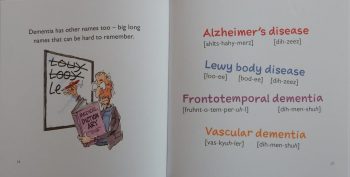
The author then moves on to say that like other parts of the body, a person’s brain can also get sick and we generally call the disease dementia.

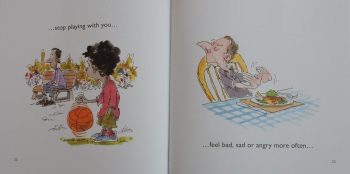
Youngsters are reassured that the changes that may happen to someone with dementia, (a relative perhaps)

are not their fault or indeed that of anybody else.
The importance of care and kindness are stated, as is the fact that dementia is incurable.

Readers/listeners are then given the option to skip the next few pages, which explain that ultimately, dementia can end in death.

Finally and also reassuringly, the book concludes by saying that if you know someone with dementia it is acceptable to feel happy, sad, scared or angry (mad) but it’s important and helpful to share your feelings.

Concise, compassionate and young-child friendly, with amusing illustrations, this is an excellent book that should be in  all early years settings, every school, nursing home and when appropriate, a family library.

Board Book Beauties: I am Little Fish! / Wiggly Wiggly

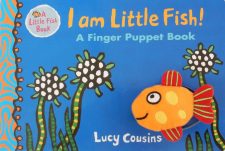
I am Little Fish!
Lucy Cousins
Walker Books

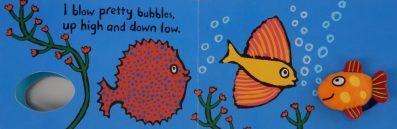
I cannot imagine any little tot resisting Little Fish’s invitation to join him and play,  on the first page of this wigglesome, rhyming, finger puppet delight.

In addition to a whole lot of tail wiggling -at varying speeds – there’s bubble blowing,

as well as showing off his shimmying, twirling and whirling moves.

Then Little Fish introduces his fishy pals who’ve come to join him in a dipping down diving game of peek-a-boo.

And finally, up swims Mum for a spot of kissing.  Just perfect!

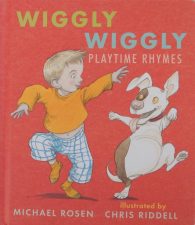
Wiggly Wiggly
Michael Rosen and Chris Riddell
Walker Books

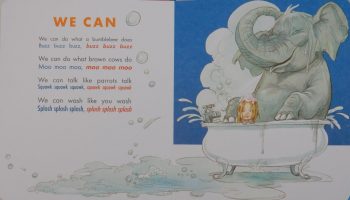
Here’s a selection of the most join-in-able playful Rosen rhymes from the original A Great Big Cuddle, illustrated by Chris Riddell in super-energetic style.

It’s absolutely certain to get your little ones ‘Tippy-Tappy’ ing, ‘Boing! Boing’ing squash, squishing, ‘wiggly wiggly’ing, ‘buzz buzz buzz’-ing, ‘moo moo, moo’ing, ‘squawk squawk squawk’ing ‘splosh, splash, splosh’-ing, ( doesn’t Chris Riddell draw elephants awesomely,

not to mention finger walking, waving, talking, tiring, flattening, buttering, spreading and ‘bed’ding down.
There’s also plenty of munching and crunching as you lunch with a crocodile.

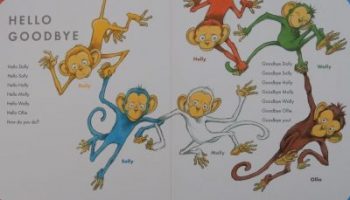
We meet sad-looking Mo being cuddled following a fall in a puddle and then it’s time for monkey business with half a dozen of the cheeky little animals.

After which, I have absolutely no doubt your toddler(s) will demand that you turn back and start all over again.

If this brilliant board book doesn’t give the vital ‘language is fun’ message to both children and adults, then ‘I never writ nor no (wo)man ever loved’ Apologies to the bard. No, not the author!

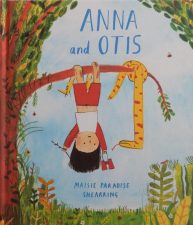
Anna and Otis

Anna and Otis
Maisie Paradise Shearring
Two Hoots

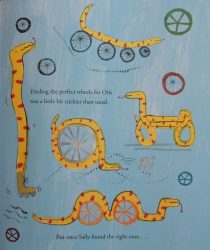
Imagine befriending a snake. Not keen probably, but snake, Otis is the unlikely best friend of young Anna and the two spend happy, adventurous days together safe in the confines of the garden.

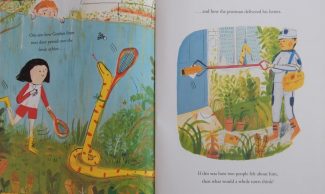
One day though, Anna announces to Otis that tomorrow they ought to go exploring the town, a suggestion that leaves Otis lost for words. After all neighbours and delivery people tended to tread very cautiously when they spied the reptile, so an entire town, Hmmm!

Nevertheless, next day, Anna having attempted to allay Otis’ concerns, the two sally forth.

Anna’s words however are very soon proved wrong: seemingly everyone in the town gives the impression of being as she’d put it earlier, ‘very silly mean’ people.

Inevitably, Otis is sad; Anna angry, though she tries to be reassuring. Bravery and direct approaches are her suggestions, first stop being Silvio’s hairdressing salon. The visit proves a success and word starts to spread.

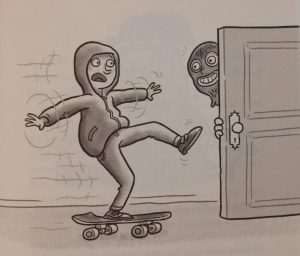
Emboldened Anna purchases a skateboard for herself and a set of wheels for Otis.

Pretty soon, people at the skate-park are impressed at his wheelie prowess; the bush telegraph springs into action again and come lunch time it’s more of a party than a meal for two.

By the time the day’s over the friends are very tired. Anna invites Otis to spend the night and thereafter the friendship continues apace, sometimes just the two of them but on other days it’s a trip into town to visit all their wonderful new and very welcoming pals.

In her funny tale of overcoming fears and gaining acceptance, with gently humorous illustrations full of wonderful details to delight and linger over, the author portrays an unusual friendship that should, if not endear readers to Squamata such as Otis, at least help overcome their angst about them.

Stuck for more summer reading for your children? Try Toppsta’s Summer Reading Guide

Where’s the Mermaid? / Crossword Puzzles for Vacation & Word Search Puzzles for Vacation

Where’s the Mermaid?
Chuck Whelon
Pop Press
Meria mermaid and her 10, finned friends, no make that 9 since one’s a ball, visit sixteen different locations, some I’d say highly unsuitable for aquatic beings but the mad characters have gone and hidden themselves in such crazy places as a hair salon, a circus big top (they need help to escape from here) and a pop concert, as well as some rather more fitting ones including the Mer King’s sub-aquatic palace where a special celebratory parade is taking place;
under the Arctic ice of at the North Pole where they engage in a plastic pollution clean up and a lido-type thing at beach Hotel Bliss.

It is, according to the PR from Penguin Random House, the year of the mermaid. Really? I must have missed something, somewhere. No matter, I know quite a few young mermaid fans (some are also unicorn enthusiasts) who will be delighted to lay hands/fins on a copy of this search-and-find adventure book.

The entire book is pretty crazy but lots of fun. It’s likely to challenge even the most practised spotters as they search each scene for Meria and her entourage frolicking among the crowds.

Hours of fin-some fun assured for those that take the plunge into the colourful spreads and become caught up in cartoonist Chuck Whelon’s funny scenarios. Oh, I forgot to say, the Mer King’s precious golden mer-treasures are rumoured to have been stolen and tracking them down will entail another round of searching and puzzling: there are more than 30 golden objects as well as over 30 suspects. It’s as well that all the answers are provided on the final spreads.

Crossword Puzzles for Vacation
Trip Payne
Word Search Puzzles for Vacation

Mark Danna
Puzzle Wright Junior

The first title contains 40 crossword puzzles for young solvers from 8ish to enjoy. Most of the content is likely to be within the knowledge range of youngsters though the odd clue here and there may well need some adult or older sibling/friend in-put.
And just in case everyone is completely flummoxed, the answers are all given at the end of the book.

The 58 word searches in the second book are thematic with topics ranging from things made of glass –‘Looking (for) Glass’ to ‘Seuss on the Loose’ – I particularly like that one. To add to the fun, the word searches are a variety of interesting shapes appropriate to the particular puzzle theme; so for instance ‘Just Say No’ wherein every word contains the letters NO, the puzzle is shaped thus …

whereas ‘Tree-mendous’ is a tree-shaped puzzle. (Note: the spelling of some words is American)
There are also puzzles within puzzles too, and every one contains a hidden message; it might be a silly saying, a riddle or perhaps a pun.

Hours of fun sans screens guaranteed with these two pocket sized paperbacks and they’re just right to tuck into a bag for a long car journey or for holidays.

Little Owl’s First Day / This is the Way We Go to School

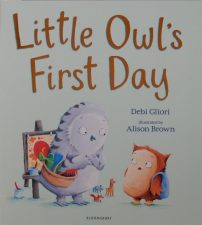
Little Owl’s First Day
Debi Gliori and Alison Brown
Bloomsbury Children’s Books

Leaving a parent to begin school or nursery for the very first time, particularly when a younger sibling is still at home, can be a bit bothersome for little ones and so it is for Little Owl.

We first met the delightful character when a new sibling arrived and now he’s facing his first day at school.

When he wakes up on the big day, he isn’t feeling full of excitement as his Mummy Owl anticipates; instead the little fellow doesn’t even want to get out of bed. “I want a small day. I want to stay at home with you and Baby Owl,” he tells her.

After a lot of cajoling, they’re all ready to sally forth but then Little Owl is reluctant to pick up his new owlbag. Eventually, with Little Owl calling the tune, he sets off pushing his baby in the pram while Mummy carries his bag.

At the school door Miss Oopik is ready with a welcoming greeting; and reassuring farewell’s over, Little Owl is gently encouraged to try his wing at painting.

His picture is Mummy and Baby Owl moonbound in a rocket, and they seem to occupy his every thought for a considerable part of the morning until snack time is announced. And then it looks as though Little Owl might just have found a friend as he and Tiny Owl share the contents of their owlbags with one another.

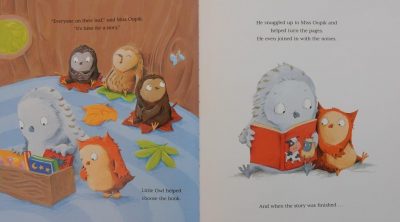
The rest of the session seems to pass in a flash before Miss Oopik calls them all together for a story.

Soon, who should be waiting outside but Mummy and Baby Owl; but Little Owl is much too sleepy to tell them all about how he spent his time.

Debi Gliori’s gently humorous tale is a real situation soother that will embrace a first timer like a warm comfort blanket, especially since it’s woven together with Alison Brown’s scenes of adorable strigine characters small and not so small.

This is the Way We Go to School
illustrated by Yu-hsuan Huang
Nosy Crow

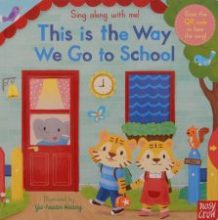
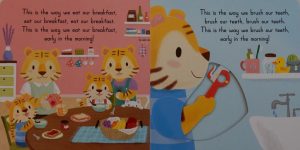
Ideal for little ones about to start, or already at nursery or playschool, is this board book version of a favourite song, complete with sliders. With these your child can help the little tigers in the early morning to get out of bed; eat their breakfast, brush their teeth

and walk to school, where they smilingly wave a farewell to their parents before rushing inside to join their friends.
In addition to the sliders that facilitate getting up, teeth brushing and waving, there’s a wheel to turn that brings into view a host of other animals all hurrying schoolwards.

Both the tigers’ home, and the journey to school spreads have plenty of interesting details for little humans to spot and discuss.

Inside the front cover, is a QR code to scan onto a phone or tablet and download that provides a sing along version of the song.

Sorrell and the Sleepover

Sorrell and the Sleepover
Corrinne Averiss and Susan Varley
Andersen Press

Have you ever kept something about yourself or family a secret from a best friend so as not to feel inferior? That’s what one  of the main characters in this lovely story decides to do.

It revolves around best friends Sage and Sorrel (squirrels). Pretty much everything about the two is the same: they like the same games, sing the same songs and say the same things at the same time. Even their tails have identical stripes.

Sorrel is thrilled when Sage invites her to stay at her house for a sleepover; rather than feeling nervous about her first night away from home, Sorrel is excited as she packs her overnight nutshell.

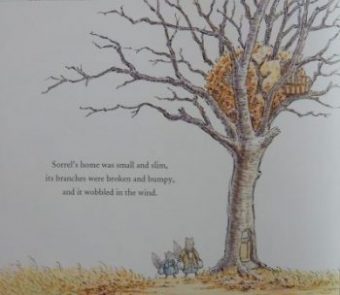
Sage’s home is impressive, a huge branching conifer that includes nests for her aunties and her cousins as well as Sage’s immediate family. But as the two friends snuggle up for the night, Sage’s comment about looking forward to a reciprocal visit causes Sorrel to worry so much about the difference between the two homes that she decides not to invite her friend back. Best friends don’t have differences, she tells herself.

Sage however is persistent and so Sorrel invents a series of excuses: a poorly mum, a burst pipe; the painting of their home resulting in the newly pink leaves being too wet for visitors to stay.

It’s this pinkness however that finally puts paid to further inventive excuses on Sorrel’s part. It also results in the truth being revealed about her home.

Sage, being a true and empathetic friend, isn’t at all concerned about their difference; to her it’s a cause for celebration.

Telling it with tenderness and understanding, Corrinne Averiss has created a story of two trees and two squirrels that will particularly resonate with under confident children who have done the same as Sorrel, but it’s a book that needs to be shared and discussed widely in schools and early years settings.

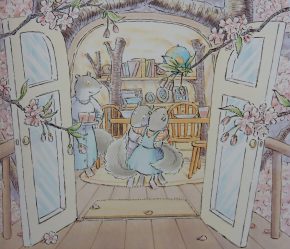
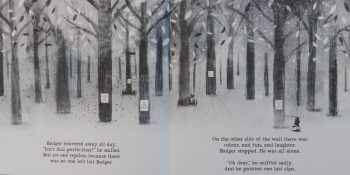
Susan Varley echoes the warmth of the telling in her beautiful illustrations. I’ve been a huge fan of her work ever since Badger’s Parting Gifts: her art never fails to delight and so it is here: delicate, detailed and utterly enchanting, every spread.

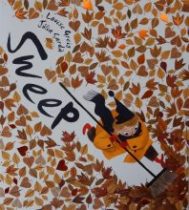
Sweep

Sweep
Louise Greig and Júlia Sardà
Egmont

We all find ourselves in a grumpy mood from time to time but for Ed it’s massive.
Ed is in a BAD mood. It had begun as a very small trip induced one but rapidly escalates until it’s blown up into a huge raging storm engulfing everything in its wake.

All the while Ed keeps his head right down, eyes to the ground where so his mood seems to say, are interesting things.

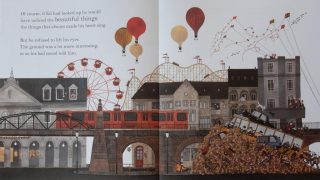
If only he’d chosen to lift his gaze he’d have felt uplifted by the sight of beautiful things, but no. Determined to proceed in this manner, on he goes, Ed and his bad mood.

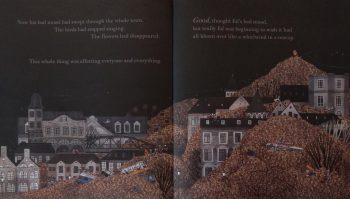
Finally it’s become so bad, the whole town is in its thrall: no birdsong, no flowers, just a huge blackness.

Now Ed is conflicted: his bad mood still wants him continue in this way but Ed begins to wish the whole thing had whirled and swirled its way into oblivion.

How much longer can he keep this up, especially as fatigue and hunger pangs begin to manifest themselves.
But has he gone just too far? Can he give up this overwhelming bad mood?
Something must change surely?

And sure enough something does. Up springs a new wind, small at first but growing and growing until the world looks different: much brighter, making Ed feel a little foolish. Was it all for naught?

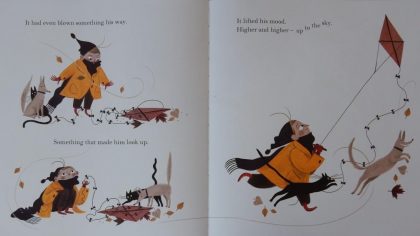
Not quite, for he suddenly spies something before him on the ground,

something that might possibly be a spirit lifter … a bad mood extinguisher that enables him to see the beauty surrounding him. Not only that, he knows he has two ways to look at life; it’s up (or down) to him …

Author Louise Greig delivers another powerful story, rather more punchy than Between Tick and Tock and The Night Box. This one, with Júlia Sardà’s dramatic, sombre hued illustrations feels altogether different, but equally absorbing and finally, uplifting.

A Different Boy

A Different Boy
Paul Jennings
Old Barn Books

Following on from the wonderful A Very Different Dog, Paul Jennings has written a second very different, equally gripping book.

Orphan Anton has recently arrived as a resident at Wolfdog Hall, a terrible place where no-one even knows his first name, lessons are miserable affairs, the teachers thoroughly unpleasant.
Pretty soon, the boy makes a break for it, and surprisingly, despite threats to the contrary, he isn’t followed. He is however without money or friends.

Hearing the horn sounding from a ship down the hill in the harbour the boy makes his way to the pier. The ocean liner has yet to leave and Anton watches people making their way up the gangplank, bound for a new land of promise, peace and plenty.

One of the passengers is Max, a rather strange-looking boy with a face resembling a porcelain doll and wearing a jumper absolutely covered with ribbons, labels and badges looking like, so Anton thinks, nothing less than a noticeboard. He’s also wearing a black arm band.
A peculiar exchange takes place between the boys after which at Max’s instigation, they exchange name labels and Max leads him aboard. Unlike Anton, the lad is accompanied by his mother.

Thus begins Anton’s new life as a stowaway.

During the voyage he gradually comes to know more about the rather strange seeming Max who has identical bald-headed boy puppets, one wearing a green jumper, the other a red one.

In tandem readers discover through text printed in italics that he once had a brother, Christopher, who died in a fire while Max was rescued.

Later in the main text Max’s mother explains that this was a recent event, and that now her son needs someone to look out for him in his twin brother’s stead. She also posits the idea that when they arrive in the ‘New Land’ Anton could live with them. A deal is made.

Shortly after, disaster strikes, there’s a rescue, a startling revelation concerning the identity of who had really died in the fire, another startling revelation, about Anton this time. And, there’s a satisfying ending; what more can you ask? Oh yes, there are occasional slightly spooky line drawings too.

Like all books by Paul Jennings, this one (based very loosely on the author’s experience of emigrating to Australia from England as a boy) draws you in immediately and grips you throughout . Like the author’s previous titles too, it’s superbly written without a wasted word. Having said that, it’s also quite unlike any of his previous titles.

Wild Violet!

Wild Violet!
Alex Latimer and Patrick Latimer
Pavilion Children’s Books

Following on from Woolf, the brothers Latimer return with their second collaboration and it’s young Violet who is star of the show. That’s not quite how others see this extremely spirited little miss however.
By all accounts she was born wild and despite predictions, has failed to outgrow this wildness on reaching four years old.

Washing isn’t on her agenda, nor is anything that might vaguely resemble good table manners; her hair is disgusting – full of all manner of undesirable bits and pieces; wall art and nocturnal shrieking are more her thing.

Imagine how tiring all this is for her parents. One day as exhaustion overwhelms them, they decide to call on her grandmother, begging for an afternoon’s respite.

Gran obliges and decides the zoo with its calming fresh air and plethora of birds is a good place. However the animals are not good role models for the little miss and by the time they reach the Monkey House gran is shattered.
So shattered, that come home time, she catches hold of the wrong hand,

delivering a rather different looking ‘Violet’ back to her parents.They too fail to notice; after all the new Violet’s habits are almost the same as those of the old.

Violet herself meanwhile is having the time of her life in her new abode, until that is, night comes and with it insomnia. Now there’s nobody to clear up her mess or read her a bedtime story; there’s no morning bath or tasty breakfast, let alone warm parental embraces.

A quick phone call by the zoo-keeper soon has the switch sorted out, but it’s a rather different little girl who greets her parents when they come to collect her.

Is Violet now a reformed character? Well yes and no. Mostly it’s the former but on the days when her mum takes her to visit her simian pals, that’s the time her wild side manifests itself.

We adults all know a Violet-type character and I’ve certainly taught a few children who could give her a good run for her money. This makes Alex Latimer’s story all the more enjoyable for readers aloud; children on the other hand will simply revel in Violet’s utter irrepressibility so wonderfully portrayed in Patrick Latimer’s scenes of mischief and mayhem.

Another winner for the Latimer partnership.

The Dodo Made Me Do It

The Dodo made Me Do It
Jo Simmons, illustrated by Sheena Dempsey
Bloomsbury Children’s Books

Instead of the usual deadly dull summer holidays, 10-year-old Danny yearns for adventure. As usual though, he’s sent off to spend six whole weeks with Granny Flora who lives in the wilds of Scotland in a farmhouse, in a village called Kinoussie. To make matters worse nothing ever happens in this outlandish environ, it receives an awful lot of rain, has a population of ‘weirdies, oldies and older weirdies’. Promising it is not, particularly as his gran is porridge obsessed and the place is over-run with midges.

There’s only one person of around Danny’s age anywhere in the vicinity and that’s science-mad Susie. ‘You can make this work, Danny!’ his mum tells him as they part. ‘There is fun to be had up here. You just have to make it happen!’
And make it happen is what Danny does.

Over breakfast – yes porridge – Danny learns of a shipwreck just off the coast a very long time ago.
Quickly the lad hatches a plan of action A & E: Adventure & Excitement, he calls it, that involves visiting the precise location of the shipwreck, finding enough treasure to make him sufficient money to buy a train ticket home and once there to spend his booty on a holiday in a sunny spot somewhere distant.

Instead what he discovers is something even more unlikely than ancient treasure, it’s can you believe, a dodo!

Thereafter, said dodo gets Danny (along with Susie who becomes a kind of sidekick) into all manner of tricky situations just trying to keep the creature safe, fed and quiet.

In addition though, he finds himself confronting a criminal who’s come to Kinoussie seeking a place to hide away. Hmmm!

Why did he ever wish for excitement?

With a liberal sprinkling of comical drawings from Sheena Dempsey, this cracking Jo Simmons’ tale is to say the least, hilarious. Perfect holiday reading.
If you need more suggestions for your children’s summer reading, you could try Toppsta’s Summer Reading Guide

Tomorrow

Tomorrow
Nadine Kaadan
Lantana Publishing

Over the past couple of years there have been several excellent picture books featuring families or individuals fleeing a war-torn home country and seeking refuge in another, often far distant land. But what of those who remain in such a place, a country such as Syria say, where war is all around?

This is the way of life for Yazan and his mother and father.

Yazan no longer sees his next door neighbour and friend, nor does he go to the park. In addition, school has stopped and surprisingly, Yazan misses it.

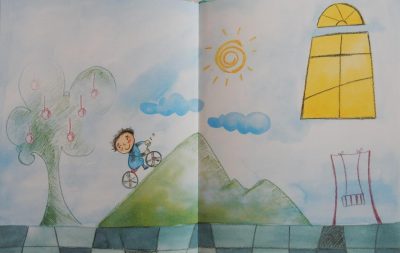
Artistically inclined, Yazan’s mother used to spend a considerable time painting, sometimes with her son watching, sometimes painting alonlgside.

It’s the news on TV that occupies much of her time and attention nowadays though, and his father is also preoccupied.

Yazan meanwhile does his best to keep busy himself; but how much doodling, pillow building and paper aeroplane making can you do before boredom sets in?

Going stir crazy he yells his ”I want to go to the park NOWWWWWWWW!!” request to his parents.
Then, ignoring his mum’s “Not today,” response, the boy ponders and then the temptation of his shiny bike is just too much.

Once outside however, nothing looks the same: no stall holder, no playmates, only alarming explosions all around. What should he do: continue his journey or return home?

Suddenly, catching sight of another person, his mind is made up. Then Yazan and his dad walk back quietly hand in hand.
Once home, what his mother does after giving him a huge hug and a warning about going out alone again, makes his heart soar. If he can’t go to the park, then at least she can bring one to him …

And that, for the foreseeable future, will have to suffice.

Over the years I have taught a good many young children who, with their parent(s), have fled conflict in various countries including Sierra Leone, Somalia, Sudan, Sri Lanka, Afghanistan and more recently, Syria; and although one never questioned them about their experiences, in time some did open up, often through their art, about what they had been through.

At that time there were no picture books such as this one for me to draw upon and it’s impossible to imagine what life for a young child must have been like.

Originally published in Arabic in 2012, Nadine Kaadan’s spare, matter of fact telling, in combination with her sometimes sombre, colour palette, create a powerful portrayal of the stark reality that expresses something of what she has witnessed. Towards the end, her watercolour and pencil scenes bring the light into the darkness of a child’s initial confusion, and one family’s near imprisonment within their loving own home.

I close by quoting the author’s final sentence in her letter to readers at the back of this moving book: ‘Today, we wait for a time when “tomorrow” can be a better day for all Syrian children.’ This is surely something we all hope for.
In the meantime, let’s share Nadine’s story as widely as possible.

Super Pooper and Whizz Kid Potty Power / CREATURE vs. TEACHER

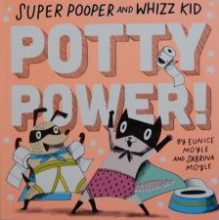
Super Pooper and Whizz Kid Potty Power
Eunice Moyle and Sabrina Moyle
Abrams Appleseed

My partner and I spluttered our way through breakfast reading this, so much so that we almost wet ourselves laughing; it’s an absolutely priceless potty training board book.

Parents needn’t worry about that potty training regime; expert help is at hand courtesy of the Moyle sisters’ team Super Pooper (female) and Whizz Kid (male).

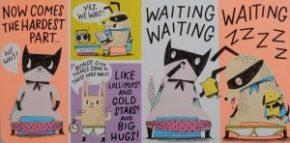
They’ve got the whole thing absolutely sorted; from # secret codes for pee and poo, bumble rumble or sprinkle tinkle alerts, the potty dash and pants clearance …

through waiting time (can be tedious),

to the final result. Phew! What relief!

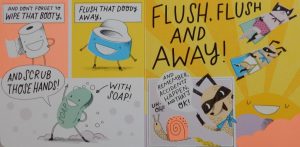
Adult pleasing superheroes pretty much guaranteed and the reward – ‘BIG BOY AND BIG GIRL UNDERPANTS!
Then all that’s left is that vitally important hygiene routine …

If this doesn’t get your little ones weeing and pooping in the right place then I’ll eat my errr? – hat!

CREATURE vs. TEACHER
T.Nat Fuller and Alex Eben Meyer
Abrams Appleseed

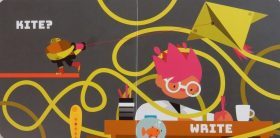
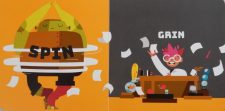
Creature (of large friendly Frankenstein appearance) and teacher (a white-coated boffin-looking kind of person) are in totally different moods. Creature feels playful while teacher’s head is full of equations, formulae and is often completely immersed in a book.

The challenge is, can creature ‘s loopy kite flying,

dance moves, spin turns

and bum wiggling efforts have the desired effect of getting teacher to lighten up and join the fun.

Fuller’s paired rhyming words accompanied by Meyer’s outstandingly bright comic-strip graphics make for a great groovy fun book that’s bound to engage and delight .

Help! I’m a Detective

Help! I’m a Detective
Jo Franklin, illustrated by Aaron Blecha
Troika

This is the 3rd story to feature middle in the family, Daniel Kendal, and his pals who are polar opposites of one another.

It starts badly with Dan being blamed for the fact that little Timmy has been wielding a stapler, and then just as he’s on the point of leaving for school, the police come knocking on the door. No, the officer hasn’t come to arrest Dan despite what his big sister says to the contrary.

However when he learns about the burglary at Miss Duffy’s residence and then tells his two best friends geeky Gordon and Freddo at school, it seems there’s nothing for it but to assume the role of detective and help the police apprehend the thieves.

Being the near victim of fratricide, a second burglary involving a stolen x-box – surely big sister Jess and boy friend Dazzer couldn’t be the thieves, or could they? Plus an almost ‘friendicide ‘with Dan on the receiving end, as well as a plethora of poo, of the pooch variety I hasten to add, will the boy detectives ever succeed in their task? Can Dan possibly emerge as a hero for once?

With hilarious dialogue, an action-packed, fast moving narrative and suitably zany illustrations from Aaron Blecha, the whole unlikely story is exceedingly silly but enormous fun.

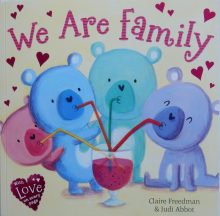
Ballet Bunnies / We Are Family

Ballet Bunnies
Lucy Freegard
Pavilion Children’s Books

Young Betty bunny aspires to be a ballerina but she’s only ever performed for her baby sister Bluebell.

At home Betty dances at every opportunity, in every room, but when it comes to dance class it’s not the same, especially with the end of term show fast approaching. Unlike her fellow dance students Betty feels clumsy and she can’t remember the right steps.
She does however, put her own interpretation on those moves and fortunately her teacher sees the best in every one of his students, providing fun rehearsals and a part for them all.

Betty works on losing her nerves but what will happen come the big day when among the audience will be her biggest fan, Bluebell?

Lucy Freegard’s cute characters and ballet scenes executed in pen and watercolour are sure to appeal particularly to budding dancers of the human kind, while her story of doing one’s best, over-coming your fears and finding confidence should resonate with all.

We Are Family
Claire Freedman and Judi Abbot
Simon & Schuster Children’s Books

A celebration of sibling love is exemplified by an array of endearing young animals small and not so small.
Be they lively lion cubs, diving ducklings, mischievous monkeys, milkshake slurping polar bears, fighting foxes, cake consuming kitties or frolicsome frogs,

brothers and sisters can be enormously irritating at times, but no matter what, even the trickiest of tasks become less bothersome with a sibling to assist.

Claire Freedman’s fluently flowing rhyming text combined with Judi Abbot’s captivating scenes of animal activities will enchant toddlers (with or without siblings) as well as their parents and carers.
We all love a little bit of mischief and there’s plenty of that herein.

The Cook and the King

The Cook and the King
Julia Donaldson and David Roberts
Macmillan Children’s Books

In this tale the king, being of a hungry disposition is desperately seeking not a handsome rich prince to wed his daughter but, a cook.

Having eliminated almost all of those who apply – supposedly the finest in the land, but serving up runny eggs, tough meat and worse, he’s left with just one pretty desperate looking fellow going by the name of Wobbly Bob. Yes, he’s dressed in cook’s gear but his name is far from promising and he’s a self-confessed wimp. Masterchef material he most definitely is not. But could he be?

The guy lacks the courage to tackle any of the tasks needed to ensure his highness gets his favourite fish and chips meal.

No prizes for guessing who does more than the lion’s share of the work.

Finally though, the two sit down to dine together, but does the meal pass muster, or must the king keep on looking for a cook?

Splendidly funny: Julia Donaldson serves up yet another winner. With its inbuilt 3Rs – rhythm, rhyme and repetition, this is a splendid read aloud, join-in story.

There’s plenty of food for thought: why are those courtiers pinning up the ‘Wanted Royal Cook’ poster? And what has happened to make the king resort to unappetising pizza deliveries? Both of these questions spring to mind in the first few pages, both scenarios being shown in David Roberts’ fine equally winning, hilarious illustrations of same.

(The story is, so we discover on the credits page, based on one the author’s son made up for his daughter– the story telling prowess is seemingly, in the genes.)

Where in the Wild

Where in the Wild
Jonny Lambert and Poppy Bishop
Little Tiger Press

Poppy Bishop gets poetical in her passion for wildlife and its protection in this visual and verbal evocation of the world’s animal habitats and how crucial it is to save these wonderful wild places from further destruction by human actions.

She takes us to meet creatures of the land and sea as we visit nine different faunal homes, the first being the river where otter speaks out.

We also spend time in the tropical rainforest alive with screeching monkeys, beautiful butterflies and other insects and a leopard introduces itself.

The hot savannah comes next, home to elephants, leopards, vultures, bats and scorpions: here a tunnelling meerkat tells of his digging prowess.

Scorpions are also found in sun-scorched desert regions, the next stopping place; home also for snakes, mice, lizards and the camel that describes its flat feet.

Next to cooler climes and a beautiful woodland inhabited by roosting jays, a bluetit sings about its home and diet,

and badgers roam both here and on grassy plains.
Thereon too reside wolves, buzzards, deer and other birds of prey.

Evergreen forests, the Arctic tundra and oceans are the three final locations, each with its own array of wonderful creatures large and small.

Strategically placed die cuts and a related question cleverly provide a link between habitats on each spread.

The last page and inside back cover are a rhyming plea for readers to act as advocates, speaking out for and doing whatever they can to save these precious places and their creatures; and short paragraphs about special adaptations, destructive human actions and a last plea to care for what we have for the sake of the animals.

Heartfelt, beautifully illustrated with Jonny Lambert’s fantastic collage style art, this is I hope, a book that will stir young readers and adults alike to play their part in the preservation of our precious planet.

More Would You Rather

More Would You Rather …
John Burningham
Jonathan Cape (Penguin Random House Children’s Books)

There’s been a recent spate of books celebrating the amazing achievements of women and men from all walks of life and from all over the world, as well as others putting forward the notion that where girls are concerned, they can do anything they set their minds to.
In his new book, John Burningham, (or rather the cheeky-looking child on the cover) invites readers to do something rather different; to ponder somewhat more unlikely possibilities posited in a series of questions. He wants us to consider the unlikely, and to make a choice about such rather disgusting sounding scenarios as having a camel being sick down your neck, an elephant emitting an extremely stinky toot, or falling flat in a field full of cows and your face landing in a pile of s— .

Pet ‘perhapses’ are – a cuddly koala, a vicious-looking vulture, a jagged-toothed alligator or a winsome woolly sheep. Hmm?

Just imagine the excuses you’d have to come up with should you be careless enough ‘to break Granny’s favourite jug’, ‘scratch the car’ or ‘spill paint all over the carpet’ – whoops!

Then, supposing if for no apparent reason you were the source of amusement to all and sundry; would that be better than having an eagle steal all your clothes? (Even worse might be the latter happening in front of that crowd.)

I’ve never got sufficiently close up to a hippo of any sort, let alone one with bad breath, and I don’t have an Aunt Zelda, but I wouldn’t relish having to cope with either of those bestowing a kiss upon me. On with the trainers and a hasty retreat, would be my response.
Think about having to spend a night under the stars – no not at a seaside campsite – but with your bed on the moon; is that preferable to nestling up with a whole lot of baby birds, or is the safety of your own bed the best option?

I wonder …
And that phrase is the key to this fabulous book. I’ve spent countless happy hours with various classes of children UUUUGGGHH! -ing and YUCK!-ing, laughing over, deliberating on, , discussing and generally having a whole lot of fun, with Burningham’s original Would You Rather so I cannot wait to share this one with all its imagination-rousing potential.

Need more ideas for your children’s holiday reading: try Toppsta’s Summer Reading Guide

The Only Way is Badger

The Only Way is Badger
Stella J Jones and Carmen Saldaña
Little Tiger Press

Which would you rather have, complete conformity or fabulous friendships? I know which I’d choose every time but not so the main character in Stella Jones’ super story. Badger is a separatist and has started posting ‘BE MORE BADGER’ type signs all over the forest causing consternation among the other woodland animals.

Supposedly to make matters easier for his so-called friends he presents a list of activities, badger-like digging being number one.
This immediately eliminates ungulate Deer, and Badger sends him packing most unceremoniously.

Requirement number two is fitting through the doorway of Badger’s sett. In go Racoon, Skunk, Squirrel and the other small creatures. Outcast, and over the wall are large bummed Bear and massive-antlered Moose.

So it continues with further ejections: those of Hedgehog, Bunny and Beaver for their badger-barking attempts.

Of the remainers Racoon and Skunk pass muster on account of their black and whiteness whereas the colourful birds, butterflies and bugs become persona non grata.

Badger is now revelling in his monotonously coloured surroundings; not so Racoon and Skunk especially as they hear  happy sounds issuing from behind that wall and spy Badger wielding a paint brush standing beside paint cans that match his colours.

By the end of the day Badger’s task is complete but as he stands solo among the trees a thought strikes him: what has he done?

There can only be one way forward here …

Hurrah for difference; long live divergence and inclusivity; oh and learning from your mistakes too as yes, Badger does finally see the error of his ways in this timely picture book.

There are just SO many ways this can be interpreted depending on what you bring to the story eloquently illustrated by Carmen Saldaña. The gentle humour of her scenes, in particular the expressions and body language of the animals speak volumes.

A book that’s absolutely perfect for a community of enquiry discussion in schools and should be shared and celebrated as widely as possible. I certainly intend to do both of those.
In addition pairs of children could co-create story boxes or dioramas using the book as a starting point; there are puppet possibilities, ditto hot-seating and MUCH more.

Professor Astro Cat’s Space Rockets

Professor Astro Cat’s Space Rockets
Dr Dominic Walliman and Ben Newman
Flying Eye Books

With Brian Cox-like charisma, Walliman and Newman’s Professor Astro Cat blasts off on a new adventure, launching us into space courtesy of the prof. It’s he that describes first, in easily comprehendible terms for young readers, the workings of rockets.

Next comes a brief (and selective) ‘History of Space Travel’ that begins in 1947 with fruit flies, and is followed by Laika (her reportedly ‘painless’ death in orbit is not mentioned), monkey Albert and then in 1961, Yuri Gagarin, the first human space traveller who managed to orbit the earth.

The huge Appollo 11 features thereafter with the famous first moon landing of two of the crew’s three astronauts in 1969.

Readers also hear of ‘Modern Space Shuttles’: Columbia, Discovery (that carried the Hubble Space telescope), Challenger that was especially memorable for carrying Sally Ride the first American woman, in space and the first African American, Guion Bluford.

Looking to the future, the final spreads are devoted to NASA’s work in progress, Orion and the Space Launch System; the possibilities of space tourism for ordinary mortals, a brief mention of star travel and on the last page, a short glossary.

In all this, the Prof. is accompanied in Ben Newman’s characteristically stylish retro looking illustrations, by his two pals, the similarly clad feline and sidekick mouse.

Sufficiently powerful to send the youngest of primary children rocketing on their way towards becoming ardent space enthusiasts, and into potential science careers I suspect.

How to Nab a Rabbit

How to Nab a Rabbit
Claire Freedman and Monika Filipina
Simon & Schuster Children’s Books

All kinds of people write books but it’s less often that one reads one penned by the Big Bad Wolf and he appears rather confident in his prowess as author of How to Nab a Rabbit. Not that I have any particular interest in so doing, but I am exceedingly interested in picture books and the fellow appears to have hired a super illustrator to aid and abet him, hence I’m sticking with it.

Despite all the bragging, said author looks to be rather less adept at carrying out his recommended ploys than he’d like readers to think, certainly if the demonstration of The Stalking Strategy is anything to go by. Obviously as he says, the first thing is to locate their lair but when it comes to the second and sly part ‘just pretend you’re passing by’, our writer is well and truly out-smarted by his prey. To make matters worse, there’s a Bear in the vicinity with a penchant for wolf pud.

Next comes The Hole-in-the-Ground Hoax and once again, ineptitude on the writer’s part means he lands himself in it – literally!

And guess who’s there ready and willing to give him a paw out …

He has an audience of the undesirable kind when he executes this one: it’s called The Love Lure and at first glance it appears pretty successful.

Notion number four is even more of a disaster: the guy can’t even have himself delivered to the correct address and gets himself well and truly stuck at the wrong one too.

By now you’re probably thinking that our wolf-writer is a total disaster and you’re not far wrong: maybe his advice about cooking up a veggie alternative is the right way to go, so long as it doesn’t give this particularly bungling wolf any fresh ideas about authorship…

What a smasher of a book this is. Absolutely luscious faultless rhyming narrative from Claire Freedman stirred in with equally appetising illustrations from Monika Filipina will have listeners – not to mention adult readers – dribbling with delight and the former salivating for immediate further helpings. So says this reviewer, who just happens to be a vegetarian!

Millie’s Missing Yawn

Millie’s Missing Yawn
You Jung Byun
Pavilion Children’s Books

We’ve probably all, in the UK at least, had trouble sleeping these past few weeks on account of the heat, so perhaps it’s one of those kind of sultry nights for young Millie. Sleep eludes her despite carrying out her usual warm bath, putting on of favourite pjs, sharing of her favourite book and the bestowal of a goodnight kiss on teddy Milo. What’s missing is her yawn, she tells her ted, and the two spring out of bed to start a search for it.

Dozy dog Barley certainly hasn’t seen it, neither have equally sleepy moggy Cucumber and pigeon Douglas.
Millie decides to look further afield, calling on Lady Liberty, the Moai Heads

and Mona Lisa. Even from the penguins her query receives a sleepy ‘’Oh no, sorry”; they’ve spent all day skiing, sledging and snowball making.

Hippo is eager to show off his own gaping yawn but hasn’t seen so much as a glimpse of Millie’s. Ditto the Great Sphinx.
If that world trip with all its yawners hasn’t got your listeners doing enormously wide AAAAAAHHHHs then nothing will. But what is Millie to do? Seemingly there is only one thing;

but her lunar voyage too proves yawnless, at least for her, although the bunnies certainly appear ready for some shut eye.

Feeling defeated, Millie decides to return home and as she lies back tucked up safely in her bed once more, contemplating the night sky and those she’s met, no doubt your audience will be able to predict what happens next …

This superbly soporific story is full of yaaaaawing characters all beautifully portrayed by the author You Jung Byun whose illustrations are full of lovely patterns and textures. Aaaahhhhh, I feel another yawn starting to engulf me …

Girls Can Do Anything

Girls Can Do Anything
Caryl Hart and Ali Pye
Scholastic
Let’s hear it for girl power!
This is a celebration of what girls can do narrated in Caryl Hart’s enormously empowering jaunty rhyme:
“I’m a GIRL! I’m FANTASTIC! I’m strong, brave and proud!” so say a huge diversity of girls in no uncertain terms as they talk about their attire – anything goes; demonstrate their unique prowess as sports participants and students favouring a huge variety of subjects – maths, writing, science, music, art and more.
The older they get, the more amazing they become: there are environmentalists, vets, zookeepers, scientists of all kinds, machine operators

and life-savers.

They can be rough and tough or soft and gentle, they can speak up for others …

and a great many help improve people’s lives.

Ali Pye’s cast of splendidly inclusive young females have enormous va-va-voom;

and the front endpapers are a gallery style presentation of possibilities for the future, while those at the back are fifteen named portraits (some more recognisable than others) of high achievers in many walks of life including Malala Yousafzai, Serena Williams, Olympic medallist LGBTQ boxer Nicola Adams, first woman-British firefighter Josephine Reynolds and author Chimamanda Ngozi Adichie.

Having read the book together with a five year old in the park after school , I spent 15 minutes exploring the endpapers with her; a woman came and sat on our bench with her phone. After a couple of minutes she put it away asking if she could listen as she thought the book ‘so brilliant’. I said ‘Be my guest’. She then called her friend over to share the experience. Five-year-old Emmanuelle instantly recognised Serena Williams but I had a fair bit of explaining to do with several of the others. Well worth the effort though.

In short, in this highly infectious adulation, it’s a case of no holds barred when it comes to girls; they’re undoubtedly a force to be reckoned with, cheered and applauded. Once again, let’s hear it for girl power!

Wizarding for Beginners!

Wizarding for Beginners!
Elys Dolan
Oxford University Press

Dave the dragon spent his last tale honing his skills as a would-be knight and now returns, along with his best pal, Albrecht; he of story-telling prowess, the glossy-coated, somewhat noxiously smelling goat.
Now they’re going undercover as wizards in order to gain entrance to the decidedly shady Wizarding Guild with the aim of freeing their friends from the evils of dastardliest of all wizards, the hair-obsessive, tantrum throwing terrible Terence: he who has ambitions to take over the entire world.

But once inside this exceedingly strange rule-bound place,

No bums on the table especially on spaghetti night.

it isn’t many hours before Albrecht has managed to get himself kidnapped and shoved into a sack (on account of his glossy coat so we later learn) and it’s down to Dave to rescue him. In this enterprise he’s ably abetted by Brian who just happens to be a female wizard – something Dave discovers when he follows Brian into the loo, the ladies loo no less. But her gender isn’t Brian’s only secret; her magic so she admits is rather reliant upon porridge – yes porridge – but that does happen to be Dave’s favourite breakfast (mine too actually).

A deal is struck: the two team up and with additional assistance from an emotional wreck of a monster named Pansy who’s large, lonely, lacks self-confidence and is all ‘owie’ on account of having fought a tiger.

While all this is going on poor Albrecht is having a pretty terrible time. Terence is making him confront the magic mirror,  a thoroughly nasty piece of work that appears to have nothing good to say about anyone or anything.
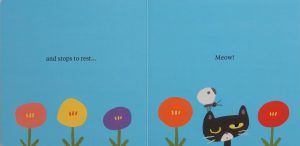
Or does it?

If all these shenanigans haven’t whetted your appetite for this splendidly silly saga, then let me just throw into the mix a brand new dessert called Squirrel Parfait, some further great reveals in the gender department, rule rubbishing galore, a reunion and errr, that would be telling!

Hurray for porridge power, for the splendid plugs for books, reading and libraries, and the plethora of jokes herein.
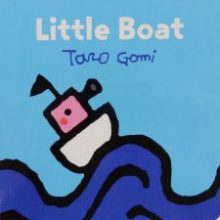
Elys Dolan’s second Dave saga is as deliciously daft and enormously enjoyable as Knighthood for Beginners. This is a great read, especially for those who like their stories liberally sprinkled with crazy illustrations of the Dolan kind.

Need more help finding summer reading for your child? Try the Toppsta Summer Reading Guide

Cyril and Pat

Cyril and Pat
Emily Gravett
Two Hoots

The super-talent that is Emily Gravett adds another book to her roster of read aloud crackers.

It stars a squirrel named Cyril, a lonely creature until that is, he meets Pat, another ‘squirrel’.
Thereafter the two spend happy times together in Lake Park inventing fun games, putting on puppet shows, skate-boarding and playing Hide-and-seek and Pigeon Sneak.

Cyril is completely oblivious to the outward differences between them despite being told time and again that his friend is not like him.

So what, I can hear you thinking; it was certainly my reaction.
Eventually though, Cyril heeds the negative comments of the other animals and he and Pat part company.

Inevitably Cyril is lonely once more: those games are no fun when played all by himself and he leaves the park putting himself in great danger.

Will he now realise his mistake and find his erstwhile friend once more?

Worry not: the author in her inimitable way provides a wonderful resolution that is altogether satisfying for both her main characters and her audience, although not for pooch, Slim, pursuer of the friends throughout most of the book.

Yes, this fine friendship story is wonderfully funny and stunningly illustrated in lush colours, but like all good stories it raises questions for readers to ponder as well as an important unspoken environmental message. (Love the Tidy rubbish bin.)

100 Dogs / Hey Duggee Sticky Stick Sticker Book

100 Dogs
Michael Whaite
Puffin Books

No this isn’t 101 Dalmations, it’s a mere one hundred pooches all packed between the pages of this romping, racing, rhymer of a book.

Herein you’ll meet dogs of every kind you can imagine and some you probably can’t: dogs big and small, bad and sad, dogs shaggy, baggy and wag-wag-waggy, fluffy ones and scruffy ones. Watch out for whiffy and sniffy ones, or those that might drool all over your best shoes.

There are dogs of the expected hues -with or without spots – but also a red one, a pink one and a yellow one.
Some look friendly (even to dog-phobic me); others appear decidedly vicious

or just downright weird.

One has even had the audacity to leave its calling card right there on the page.

Each and every one of these canine beauties has been lovingly portrayed by Michael Whaite especially for the delight of readers, canine lovers of all ages in particular.

There’s just one dog in:

Hey Duggee Sticky Stick Sticker Book
Ladybird Books (Penguin Random House Children’s Books)

Young children who are familiar with the CBeebies series featuring Duggee and his pals, and in particular his Hey Duggee Stick Song will not be surprised that sticks feature large in this activity book. It is after all a sticker book but the first activity is to greet all the members of the Squirrel Club and shout ‘Woof’. Only then can you proceed.

What follows are ten stick-related activity pages and a centre spread of stickers to use in some of the activities. These include a stick-collecting route to follow in order to build a campfire; a find two the same game; a spot the difference spread, a word search, a maze and a game of ‘sticks and ladders’.

Just right to entertain little ones over the school holidays, especially on a journey or should the warm sunny days disappear.

Can You See a Little Bear?

Can You See a Little Bear?
James Mayhew and Jackie Morris
Otter-Barry Books

Stunningly beautiful illustrations by Jackie Morris accompany James Mayhew’s sequence of rhyming statements relating to a variety of animals and a question ‘Can you see a little bear …?’ as we accompany the young polar bear on a fantasy journey.

It takes us through a medieval landscape during which he encounters hot air balloons, entertainers of various kinds, a camel train and a host of exotic creatures including an elephant, musical mice, parrots, peacocks, a walrus, zebras and a whale, beautiful moths, foxes, dolphins and geese.

Little bear engages in activities such as balancing on a ball, and head standing; he tries on items of the performers’ attire

and even participates in a performance.

Then, towards the end of the book into the array comes a big bear carrying a light to guide the little one homewards

for a bath, some tea and then, as he’s drifting into slumbers, bed.

The patterned text and questioning nature of the rhyme serves to draw the listener’s focus into the spectacular scenes, gently guiding attention towards the little bear’s named activity among the wealth of gorgeous detail on each spread. For example ‘Parrots can be green / and parrots can be red, / Can you see a little bear standing on his head?’

Full of mystery and magic and along the way introducing colours, opposites and contrasts: this book was first published over a decade ago. If you missed it then I urge you to get hold of a copy now: it’s sheer, out of this world bedtime enchantment for both child and adult sharer.