Guardians of the New Moon: Ming and Miaow’s Great Race / Guardians of the Moon: The Year of the Rat

In the first two books in the new Guardians of the New Moon series, readers are transported to a world inhabited by characters from traditional Chinese legends or based on them.
Ming and Miaow’s Great Race begins with the Jade Emperor sitting finishing breakfast and feeling bored by the predictability of his life since creating the Earth. What he longs for is excitement and as he sits staring he notices a black and white cat chasing around near a temple. This gives him an idea: he will organise a great race between all the animals of Earth and the first twelve will each be honoured by having a lunar year named after them.
Miaow, the temple cat is at first not excited by the news of the race but cannot resist participating and sets off on a journey to where the three-part event will start. The Great Race has strict rules that must be adhered to, with rule-breakers being disqualified.
Soon Miaow encounters Ming, a temperamental nine-tailed, elemental fox who is able to shape shift into a human girl and gradually they forge a strong friendship as they struggle to stay in the three day race which takes them down into a valley, across treacherous mountainous terrain and across a mighty river with various competitors falling out at each stage, not so however the wily rat Su. Will these three number among the first twelve across the finishing line? The excitement is high, the perils plentiful and teamwork powerful.

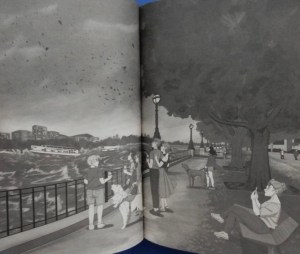
The black and white illustrations help to bring the Chinese folklore characters to life, the story ends with Ming and Miaow becoming The Guardians of the New Moon, thus setting up the next adventure which sees the two preparing for their first assignment in their new roles.

With the race duly completed Su has been honoured by having the first lunar new year named The Year of the Rat after her. The new year is just a week away and that’s when Ming and Miaow (neither having finished the race) are given a new mission: to escort Su to her temple home and liaise with its monks to prepare for the upcoming festivities. Once they arrive, squabbles soon break out and chaos follows.
What happens enrages the sea goddess, Mazu who after thinking briefly acts against the cat and rat by means of a spell.
The celebrations now look increasingly unlikely to go ahead, so can Ming help Miaow and Su see sense and put things right ahead of the new year? It’s that or the Jade Emperor’s plan to honour the twelve animals selected by the Great Race is doomed to fail before it begins.

With action aplenty and lots of dramatic illustrations these stories are just right for readers gaining confidence in lower KS2 as well as for reading aloud around the time of the Chinese New Year (it starts January 29th this year), which is celebrated in many primary schools. I look forward to further titles in the series.

Croc’s Cooking Day / Tractors Have Wings!

These are both titles from Little Tiger – thank you to the publishers for sending them for review.

This is the second in the Busy Chores for Little Paws series.
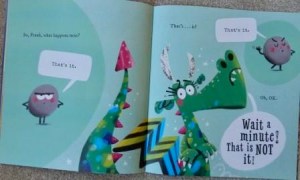
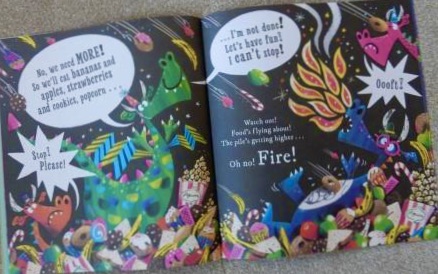
When Croc hears his pal Hippo’s tummy rumbling, he decides to make some pancakes, with some assistance from young humans that is. Once Croc has taken the equipment and ingredients needed from the cupboard and measured out the amounts required, by pulling the strategically placed tab, said assistants can pour and sprinkle flour and splash milk into a mixing bowl,

manipulate the hand mixer and once the batter is fully mixed ready to cook, try their hand at tossing the pancakes.
Croc certainly looks pleased as he approaches Hippo. The pachyderm clearly enjoyed the repast judging by the rate at which he consumes his share. Let’s hope he doesn’t end up with tummy ache!
Interactive fun and lots of opportunities for little humans to develop their fine motor skills as they use the sliders, flaps and wheel.

Eleven modes of transport in all appear in this board book, some of which are deliberately introduced with a false statement such as ‘Did you know that tractors have wings?’ and ‘ And trains run on water’ which are clearly intended to provoke correction from a savvy young listener. However, when wheels appear on the scene, things get a little tricky. Sure, lorries, unlike unicycles and bicycles must have more than one or two wheels but though the two dimensional illustration of a lorry shows the vehicle with six wheels captioned with the statement ‘And lorries have at least six wheels?!’ True enough but it would need double that number if it were not to fall over on its side. Some youngsters will likely realise this; but beneath the same lorry depicted on the spread headed ‘Thank goodness you’re here to help’ are the words ‘Lorries have six wheels.’ Is this an illustrative faux pas or a deliberate ploy to instil a questioning disposition rather than believing everything that appears in print? I wonder …

Boing!

James Carter has penned twenty four poems on the topic of bugs and minibeasts, each one bugtastiically and playfully illustrated by Neal Layton.
First come the bugs, or insects if you prefer to be more scientific. This larger section of the book comprises a few general, inclusive bug poems and then moves on to specific insects. On this occasion, two that particularly tickled my fancy are fANTastic wherein the titchy, tiny ants speak for themselves, asserting, ‘We’re stronger than / you humankind // and just as smart / we think you’ll find. // How can we lift / a giANT stick? // That’s because we’re // fANTastic!’

I have to admit that I’m a bee supporter and so was immediately was drawn to What Can It Be …? where we read of the insect bee-ing among other things, a ‘flower-lover’ , … ‘planet-aider, pollinator, super stinger, syrup-bringer’. (The super-stinger is only true of the female bees, so we read in the ‘fab fact time’ note beneath the poem.
There are also poems featuring a grasshopper, a flea (or several), a butterfly, a caterpillar, a moth, a wasp, a ladybird, a firefly; we share the details of a day in the life of a dung beetle, hear from a dragonfly, eavesdrop on a conversation between a spider and a fly, start itching as we read of bed bugs, followed by a mosquito. (Keep your insect repellant handy.)
The second section has six ‘minibeasts’poems: herein we encounter a silvery trail leaving, ‘sticky riddle’ writing snail, a millipede, a spider

and finally a ‘micro-tiny, / weeny small’ tardigrade.
A collection that’s full of fun poems, sprinkled with facts, exuberantly illustrated and well worth adding to a classroom collection or home bookshelves. I’m sure if you start reading one or two aloud, there’ll be requests for ‘MORE PLEASE!’

UNICO: Awakening

Created in Osamu Tezuka’s Japanese manga style, this is in part an exploration of good vs evil. Herein a little unicorn, Unico has been banished by the evil goddess Venus whom he has angered. (The prologue tells how Venus, threatened by Unico’s power, which was born of his friendship with the goddess Psyche, dispatches the Zephyrus, the West Wind, to get rid of him. Instead Zephryus decides to save the little unicorn, repeatedly transporting him through space and time.) The disorientated Unico is befriended by a watch-cat, Chloe. Unico cannot recall events from his past or what his real purpose was. Chloe pleads with the little unicorn to enable her to become human and he agrees to turn her into a girl once a day provided she helps their witchy Granny friend.


It’s not long before Byron, an affluent, very sinister trophy hunter has eyes on Chloe in her human form and Venus, sensing that Unico has reappeared on Earth, decides to use Byron to destroy him. When Chloe accepts Byron’s invitation to visit his abode, she soon feels uncomfortable especially with his talk of predator and prey.


The action and excitement ramp up with the book ending on a cliff-hanger as this book is to be followed by a second volume, UNICO Hunted.

Sattin was clearly inspired by Tezuka’s original manga from some fifty years ago and with Gurihiru’s jewel-coloured art, this book will appeal most strongly to those readers who prefer their stories presented mainly through high quality visuals. Backmatter includes information about Tezuka, Sattin and Gurihuri as well as some history of the Unico story.

Explodapedia: The Brain

This is the fifth in the excellent Explodapedia series by neuroscientist and writer, Ben Martynoga and illustrator/cartoonist, Moose Allain. These two are aided by a talking octopus – a creature with nine brains and a rather high opinion of itself – and a human boy, Brian who allows his brain to be removed temporarily and used as an exemplar. Brian’s brain is unique but in common with other people’s is made mostly of water and has 180 billion microscopic brain cells. In order to show how a human brain works, readers are then shown inside Brian’s where there are neurons – the information carriers – and glia which work with the neurons, thus keeping the brain going. A fully-grown brain contains around 86 billion neurons and about the same number of glia, linked it’s estimated, by 600 trillion synapses.

The next chapter introduces some of the scientists who came up with ground-breaking ideas about brain functioning starting way back with doctor and scientist, Hippocrates who lived in ancient Greece around 400 BCE. We also learn of contributions made by Galen, (Rome 170 CE), Vesalius (1540 CE), Descartes (Paris 1640 CE) famous among other things for his ‘Cogito ergo sum’ – I think, therefore I am. Moving nearer to the present time comes the mind-reading done by Dr Thomas Oxley and team who inserted a brain-computer interface (BCI) close to the motor cortex of the cerebral cortex that controls movement. This enabled a patient with motor neuron disease to operate his computer by mind control instead of his hands, which he was unable to move. How amazing is that.

Rather than discussing the remaining seven chapters I’ll just say they explore in order, What brains are for, illusion or reality wherein is an outline of an experiment that had participants plunging their hands into painfully cold iced water with some being told to swear aloud when their hands started hurting and the rest told to stay quiet. Apparently the former felt less pain because swearing can trigger the production of natural ‘painkiller’ chemicals within the brain – fascinating. Then come how brains change from infancy to old age, all the different ‘yous’ inside your head, the conundrum of consciousness and how it affects decision making. The penultimate chapter looks at differences in people’s brains and includes developmental conditions – neurodivergence, depression, anxiety disorders and addiction. The brains of other animals is the topic of the last chapter and the book concludes with a look to what 2075 might have to offer; there’s also a very useful glossary.

Once again Ben Martynoga demonstrates his brilliance at taking key concepts and making them accessible, fascinating and entertaining. Matching the author’s quirky, witty style are Moose Allain’s illustrations, making this book even more readable with a wealth of speech bubbles as well as clear diagrams. Expand your mind: join them on a journey of wonder and discovery.

All the Ways I Love You

Herein are presented a dozen scenarios where mums, dads and small children are imagined having a great time together. Some scenes are of the familiar kind – a garden, exploring in the park during the autumn,

watching through the window a bird sitting on eggs in a nest, for instance. Others – floating through the sky on a little white cloud, swinging on a vine in the jungle – are more fantastical. What they all have in common though, is the love that the adult is showing to the little child in his or her care.

Helen Docherty’s soothing rhyming text with its wealth of ‘what ifs’ and Daniela Sosa’s joyous, richly coloured illustrations, make this both reassuring and an invitation to small children to use and develop their imagination – an essential part of learning.

A book to share, ponder upon and enjoy with a young child or perhaps, to give as a gift to a family with a new baby.

The Comet

Nyla loves her home by the sea from where she can count a hundred stars and has even seen a comet; but then Dad loses his job and they have to move to a city. Nothing there feels like home to the girl: it’s a grey, frenetic place and her father has to work all the time, so they no longer have feasts together, no waves lull Nyla to sleep and just seven stars appear in the sky.

Then one night, she sees a comet falling towards earth and where it lands there sprouts a glowing, growing tree.

From this wonder, she creates something that forms a connection between the old and the new, something that is able to change their new abode into something magical, something that will make her begin to feel at home in the new place.

Told from Nyla’s viewpoint, the text is spare allowing for the exquisite, richly coloured illustrations, be they double spreads, single pages

or vignettes, to convey most of the story, and the dramatic final vertical spread brilliantly emphasises the transformation that has started and one infers, will continue.

A superb, heartfelt book to share with primary children, whether or not they are concerned about having to move themselves.

Flying Eye’s production is top class with it’s immediately engaging cover, framed pictorial endpapers relating to change and matt finish to the pages and help reflect Joe Todd-Stanton at his best as he shows how creativity and the power of the imagination can fill someone with hope and can help transform an unhappy situation into something positive.

BLITZ One Family’s War

“Wow! Someone has taken a great deal of trouble over this,” commented our postman as he handed me a parcel containing this superb book. He was referring to the illustrated wrapping paper but it most definitely applies to the entire book too.

With consummate artistry, inspired by his childhood stories, Martin Impey has created a sequence of watercolour illustrations, which together with the storytelling presented from the perspective of a brother and sister, take readers through what happens to the family living at number 2 Dane Place, Bow.

We’re really given a sense of how the lives of the East End family change from before war broke out through to when two of the children were evacuated to somewhere safer; the feeling is one of instant and direct involvement with their fears, sadness

and their hopes as they carry on their daily existence in the midst of the chaos and unpredictability of the Blitz.

In addition to the family’s history there is a double spread about the impact of the Blitz on London and the rest of the country as well as extracts from letters and contemporary documents and radio broadcasts announcing the outbreak and the call for volunteers for the Dunkirk evacuation by the ‘little ships’.

With its evocative, engrossing storytelling both verbal and visual, this is a treasure of a book for individual readers, for family sharing and with my teacher’s hat on, an absolute must have for classroom exploration. It’s rich in opportunities of all kinds as I have no doubt will be the continuation of the story, Evacuees, which I eagerly await.

Kind Little Hands

Noah, new to city life, is out walking with his Grandpa when suddenly a bee falls from the sky. Noah manages to catch the little creature and looks at it closely. It’s evident that something is wrong and his Grandpa agrees. They carefully place the insect in a discarded box and head off to their apartment. There Grandpa starts putting his plan into action: the box is opened and the bee put onto a flower, but it doesn’t move. Grandpa then mixes a sugar solution and positions it beside the bee. Noah watches closely and as he waits he tells the bee what he misses since moving to the city. Is the bee sipping the sugar-water?

Grandpa finds a book about bees and their role in nature and after a while, the bee crawls across the window ledge onto Noah’s hand and then off it flies through the window. Sensing Noah’s sadness, Grandpa suggests a walk and as they’re wandering, Noah notices some children busily working. This plants an idea in the boy’s mind and he shares it with Grandpa.

The following day, seeds in hand, the two set out scattering them as they walk. Slowly, very slowly, little by little the city bursts into bloom – an insect haven no less.

Yes, it’s been done before but you can’t have too many stories about helping our precious bees to thrive and the vital role that nature can play in urban areas. This one is engaging from the start and Sally Garland’s scenes of city life and Noah’s close encounters with the bee gently expand the words on the page.

The final three pages provide information about the importance of bees and offer some practical actions we can all do to help these important insects. A percentage of the sales from this delightful book will go to Bug Life’s conservation work, so get your copy and share it with young children.

The December Witches

This dramatic book concludes the A Month of Magic trilogy.

Finally it’s December and it doesn’t get off to a good start for Clemmie as her very first act as December witch is a mistake, so she says, having transformed Temmie, not into a falcon but a robin. However, it’s the month she celebrates her thirteenth birthday, something she’s managed to forget about until there’s cake and the present of a dress. What though can she do about the magic – carried in those countless stars that she’s absolutely bursting with, overwhelming her and even threatening her existence? She then discovers that she’s been chosen to be the One True Witch, but by whom and why? It also becomes evident that Aunt Connie is very sick and there’s nothing Clemmie’s magic can do to heal her.

Chaos ensues as Clemmie and the other young hags try their utmost to prevent the Stitch Witch carrying out her wicked plan with the creation of Avalon. Can they possibly succeed before Christmas comes? Older primary readers will certainly be rooting for the victory of good over evil.

The importance role of family bonds is a thread that runs throughout the story and Clemmie’s closing words are truly heartwarming: ‘I reach as far as I can and send the magic out. Peace, Calm, contentment. … I hope this feeling makes it in waves all over the world. Everyone needs more peace, no matter what time of year.’ So be it.

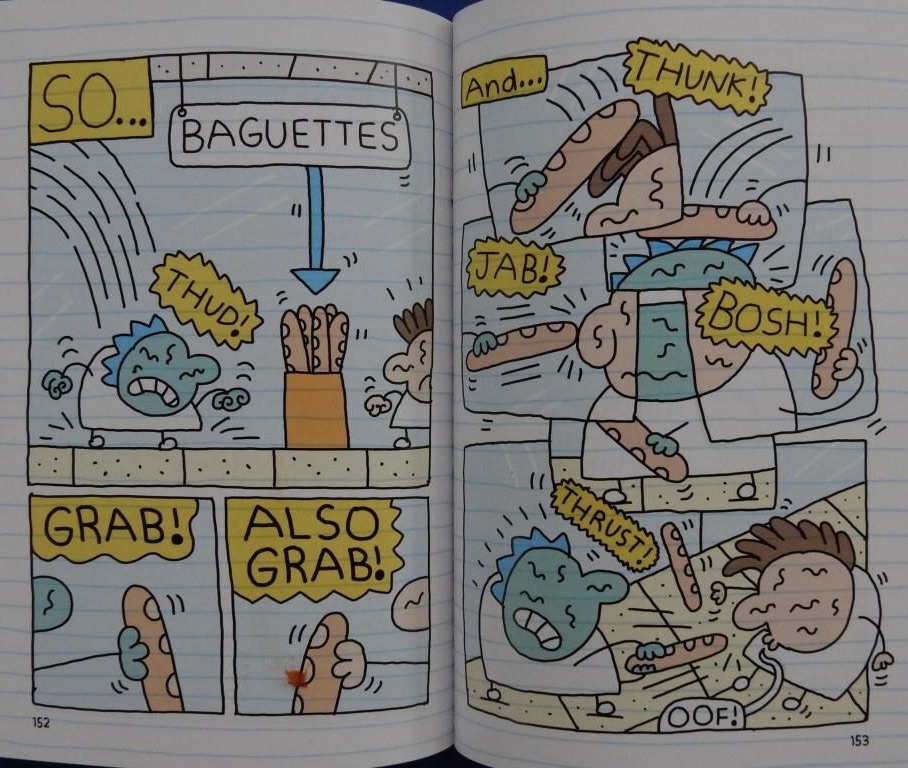
Diary of a Wimpy Kid: Hot Mess

In this 19th book of the series, Greg Heffley and his extended family are spending a summer holiday at a beach house, the very same cabin that his Mum’s family stayed in back in the day when she and her sisters were girls. The reason for this particular location is for Gramma’s seventy fifth birthday, she has requested a re-creation of a family photograph taken at their favourite holiday spot on Ruttyneck Island. As she’s head of the family, there’s no avoiding this and she certainly deserves her top of the hierarchy position on account of her incredible meatballs, the secret ingredients of which are a closely guarded secret. Now with mum determined to carry out Gramma’s wishes, there’s no getting out of it and Greg for one is of the opinion that this will be the worst holiday ever. The thought of spending so much time with his twin cousins, Malcomb and Malvin is appalling and he anticipates that as usual, whenever his Mum and her sister are in close proximity of one another there’s sure to be an argument. The ‘quality family time’ together that Mum hopes for is enough to make Greg shudder: more like the holiday is a recipe for disaster.
The accommodation itself gets things off to a terrible start. To say it’s cramped is a massive understatement and attempting to sleep on a blanket spread on the floor in front of the TV is about as far from satisfactory as Greg can get. Moreover, the so-called beach house, isn’t even on the beach, which means carrying all the gear there, carefully avoiding the part cordoned off as a protected area for nesting plovers. Then once on the beach proper, the items Mum has brought for playing with are ‘old-fashioned’ causing the diarist to write , ‘people must have been wired a little different back then, because none of this stuff was doing anything for me.’

Greg however does learn a few interesting things including some juicy family history about Mum and Cakey’s old boyfriends, as well as information about a canine social media star.
All in all a crazy, funny saga of family with surprises aplenty especially that final twist. My vegan sensibilities prevents me from offering readers a plate of Gramma’s meatballs to eat as they devour this book.
Dino Dad Ice Age

In this sequel to Dino Dad, CBeebies host Andy Day transports readers to the magical island of Dinotropolis. There, protectors of their prehistoric allies young Ruby Thumb and her Dad, both of whom are able to transform into dinosaurs, embark on a cool quest. They need to rescue a baby woolly mammoth and try to reunite it with its mum, as well as unfreeze Dinotropolis.

Their adventure is filled with witty banter, there are heartwarming moments and the narrative is sprinkled with dinosaur facts that young dino- enthusiasts will love. (This reviewer learned something from Ruby’s dino facts after the tale ).

Steven Lenton’s terrific, captivating black and white illustrations help bring the story to life on the page

for young listeners or readers just flying solo, as they join the Thumb duo in their undertaking. Then once they emerge from the tale, there are some empty drawing frames at the back of the book and an invitation to fill them.

Doubtless young audiences will be eagerly awaiting Big Dino Talent Show coming next March.

Future Vision

Herein with 12 year-old Kit and friends as guides, children are transported to the year 2070, to a world that has been transformed by sustainability, technology and global collaboration. A world wherein as the author says in her introduction, it’s hoped that ‘most countries have come together to solve some of the most pressing problems.’ A world with less poverty, better health, a greener and cleaner world with more kindness and happiness. Who wouldn’t wish that could be so?

Factors that contributed to the changes include no petrol and diesel cars, affordable public transport everywhere powered by the extremely cheap electricity and otherwise almost traffic-free cities. There’s been a great deal of re-wilding, meaning that people are able to enjoy the beauties of a thriving natural world.
Homes too are eco-friendly with plenty of house plants, bots to assist with, or carry out, many household chores – imagine having a homebot to collect up all your dirty clothes for washing and then once clean, return them to the appropriate cupboard.

And of course all energy used at home or elsewhere is clean, green energy.

Health and Wellbeing, is an important topic. On the journey, it’s evident that life has improved for all and people usually live long, healthy lives until one hundred or thereabouts. How this has been achieved is discussed; so too is the interconnectedness of health and happiness.

Other topics presented are oceans, food and nutrition, space and democracy. The author feels strongly that optimism about the future, not only about people’s own lives, but about the world as a whole is important and she talks of ‘realistic optimism’. Finally she invites readers to think about their own vision of the future. This is where I see that the imagination is vital, for no scientific discoveries could have been made without the power of the imagination. Who would have expected forty years ago what could be done with a hand-held mobile phone for instance, but it all began with somebody’s creative thought.

The Completely Chaotic Christmas of Lottie Brooks

I found my self spluttering with laughter at almost every turn of the page in this account of the events of the festive season as described in Lottie’s diary from 30th November through to New Year’s Eve. Lottie absolutely loves Christmas but is a tad disappointed to hear that it’s to be a ‘small family affair’ sans her grandparents and other relations. If you’re familiar with events in Lottie’s life you’ll anticipate that it’s unlikely to go as expected.

Before the holiday comes though, there’s her form’s Secret Santa to sort out, not to mention that her brother Toby is driving her crazy with his baa-ing at every opportunity (he’s been chosen as second sheep in his school nativity play), a very dramatic visit to the Father Christmas grotto at the garden centre, baby Bella uttering her first word (bum) and repeating it frequently,

developments in the Daniel/Antoine dilemma to deal with, an unexpected substitution when Toby’s nativity is performed in the church and a muddle that begins due to her lack of fluency in French during her WhatsApp communication with Antoine about drinking eggnog – surely she didn’t somehow invite his entire family for Christmas dinner, did she?


Add to all that an on-going ‘Elf on the Shelf issue’, a sudden change of heart by her grandparents, a fair few other unexpected arrivals and the depositing of sparkly poo … It’s not hard to see that chaotic is just what Lottie’s Christmas proves to be. I certainly wouldn’t want to be Lottie’s long-suffering mum.

With stick figure illustrations sprinkled throughout, readers around Lottie’s age (10-13) will delight in her final jottings of the year.

Amazing Asia

In this large format book, author Rashmi Sirdeshpande explores the world’s largest and with over 4.7 billion people, most populated continent, Asia.

With its powerful illustrations, excellent design and engaging and informative text, the book begins with an introduction to the continent, its countries, a map and a list of fascinating facts for each Asian country.
The massive continent is then split into five geographic regions: West Asia, South Asia, North and Central Asia, East Asia and Southeast Asia though within these each country has its own distinct identity.
For each region there is a time line, a spotlight on some change makers , superstars and other historical tidbits, a look at people and cultures, wildlife and landscapes,

spectacular sights and at the present and future possibilities.

After the regions comes a section with a large map, entitled Global Asia with a focus on indentured labour, causes of migration and the contribution of Asian immigrants to their new homelands such as Australia.
Two final spreads present ways in which Asia has influenced the world

and backmatter comprises a glossary and index.

Rashmi’s writing is sure to keep young readers interested as she includes such topics as K-pop, manga and martial arts as well as mentioning colonialism, Tibet and Taiwan as disputed territories, the Israel/Palestine and Russia/Ukraine conflicts with sensitivity. She certainly presents with aplomb the rich tapestry that is Asia. Jason Lyon’s illustrations really help bring the written content to life and with its wealth of starting points for further exploration, I’d thoroughly recommend this book both for home browsing and classroom use.

Don’t Worry, Felix

Felix is starting at a new school – ‘a BIG day’ indeed. Having rushed downstairs, hastily consumed his breakfast and donned his lucky socks, he heads out to the car. There he notices something peculiar and unexpected: floating inside the car is a red balloon. During the journey, Felix feels his heart thumping, his stomach knotting and his toes wiggling; suddenly that balloon starts getting bigger and bigger, so big in fact that he’s unable to get out of the car. A hug from Dad, does the trick and off goes Felix to his new classroom.

Come reading time, as it’s almost his turn to read out loud he gets those same thumping, twisting, wiggling feelings and that balloon grows so massive that his face is covered and he can hardly speak. At lunch time when he wants to join a soccer game, the same discomforting feelings return and the balloon prevents Felix moving.

In bed all he can think about is school and that balloon. When Dad comes to say good night he realises that all is not well with Felix who tells him about the uncomfortable feelings and the balloon blocking his actions. An understanding Dad shares his own special trick with the boy and as Felix tries it, the balloon shrinks and he falls asleep.

The next morning back comes the balloon but Dad assures him that the trick can be used at any time. Felix does the ritual three times and goes into class confident that his dad’s special trick can help alleviate his funny feelings whenever needed. He also notices another child who needs his help …

A reassuring, ultimately uplifting story about learning to cope with fear; it contains a practical routine that is worth passing on to any young child experiencing similar issues. Zoe Bennett’s illustrations show so well the changing emotions experienced by Felix and those of his empathetic Dad and are also full of fun details to enjoy.

First Friends: Numbers / First Friends: Shapes

The setting for both these board books is a nursery or pre-school where we join a group of young children.
Numbers takes the little ones through their time there from fond farewells from parents/carers right up to collection time by the same adult. In so doing the children share their play activities both indoors and out, eat lunch together, visit the loo and then rest on their mats, play again and bid each other and the teachers, goodbye before once again embracing a waiting parent/carer. The rhyming text and inclusive illustrations introduce the numbers 1 to 10 as we go through the day and there’s an interactive element in that the final ‘Can you find?’ will send little ones back searching for and counting the labelled items depicted.

Similarly presented is Shapes. Herein we join the same children as they, and those sharing the book find various 2D shapes – circles, rectangles, squares (actually cubes though they are are all shown face on), diamonds, moons and hearts, triangles. These are used to make winged insects, a rainbow arc, then ovals and stars as they play with soft toys. Come time to clear up, everyone joins in before gathering together for a circle time.
Finally there’s a spread depicting the ten shapes encountered introduced with a ‘How many can you find … ?’challenge. I wonder how many youngsters will include in their shapes counting the squares, circles on clothes and eyes etc. depicted in the bright scenes.

A fun way to reinforce basic maths alongside the all important play experiences.

Elves on Strike / Clementine’s Christmas

It’s Christmas Eve and trouble is brewing in Santa’s workshop. Tired of working their fingers off the toy-making elves decide to stage a walk out. This sets off a concatenation of walk outs from the reindeer-training elves, the gift wrappers, the present deliverers and the mailroom staff. With just one little elf remaining a note flutters into the workshop. Having read that it’s a special plea from the sister of a child who is very sad,

the elf takes it to show Santa and he calls a meeting of all the elves, promising to help them henceforward. Can teamwork and a touch of magic change things and make Christmas a happy and surprising time after all?

Nicola’s rhyming narrative together with Pauline Gregory’s detailed, flap-filled scenes of chaotic elf activities, the strike and what follows, make a seasonal story that shows what Christmas is really about.

With Clementine on the scene, things are sure to be lively as the pooch’s family members prepare to celebrate Christmas. The tree is bedecked with baubles and bobbly bits, and the presents stand wrapped and ready. Granny, who has been busily knitting stays up late to complete her garment but then discovers that her ball of purple wool has disappeared. “Clementine, have you seen it?” she asks. The two begin to search until to her delight, Granny finds the wool. They also find the jumbled mess they’ve created. A quick tidy leaves everything sorted out but the labels are no longer on the presents. Granny hastily deals with re-attaching them and off to bed she goes.

Come the morning however, when the family presents are opened something is definitely not right. Can the bemused recipients find a way to sort things out? And who was responsible for the muddle?

Another fun, rhyming story about the loveable dog illustrated in amusing watercolour and pencil illustrations by the author.

The Christmasaurus and the Night Before Christmas

A magical re-imagining of ’Twas the Night Before Christmas’ delivered in rhyme by Tom Fletcher and Shane Devries’ vibrant art. The story focuses on the well-meaning dinosaur Christmasaurus and his endeavours to assist Santa and his elves with their preparations for their most important night of the year. The trouble is everything the creature tries to do goes wrong. The elves do their best to make Christmasaurus feel wanted, even directing him to a large Christmas tree outside that needs decorating; however what he uses as adornments are anything but attractive.

Enough is enough: the dinosaur is left alone and miserable as the snow starts falling : can Christmas still come without him, he wonders.

Happily who should come along but Santa who changes everything. Rather than being forgotten, Christmasaurus emerges as a special helper, with self-esteem restored, a unique being that now knows that Christmas magic isn’t about perfection, rather it celebrates the unique talent that makes every individual sparkle.

With its important message about embracing difference, this uplifting tale is chock-full of that festive feel that will bring delight to young listeners and adult readers aloud at home and in the classroom. If shared with a class, make sure they have time to enjoy and explore the two gate-fold spreads.

Pick and Mix Poetry

Overflowing with delights is Julia Donaldson’s collection of verse on topics ranging from shoes to spiders, fish to football and dandelions to dads. Included are poets from both sides of the Atlantic from John Agard, Dorothy Aldis and Maya Angelou and a fair few anons, to Colin West – good to see his poem about libraries along with Julia’s own The Library Rap, and Benjamin Zephaniah.

To a teacher and poetry anthologist like myself, many are old favourites, some going right back to my childhood, such as Eleanor Farjeon’s The Night Will Never Stay, Edward Lear’s Calico Pie, Walker de la Mare’s Some One and Frida Wolfe’s Choosing Shoes but I found some new poems too. One such was Jean Jazz’s Lullaby:
‘The moon and the stars and the wind / All night long sing a lullaby, / While down in the ocean so dark and so deep / The silvery waves rock the fishes to sleep.’ That one had previously managed to evade me.

With a soccer-mad relation, I enjoyed re-discovering Kit Wright’s The Man Who Invented Football. I hope it will encourage him to enjoy poetry as much as he does soccer.

Assuredly there’s something for everyone and all moods in this bumper offering. It’s a smashing book to share both at home or in a primary classroom and would make a superb present. As Michael Rosen’s poem Words reminds us ‘ Words are presents / that we give to each other.’

Becky Thorns has done a great job with the illustrations which never overwhelm the words on the page; rather they draw readers in to what’s written there.

The Christmas Wish-Tastrophe

With echoes of Jane Austen, the story is set in 1812 and revolves around recently orphaned Lydia Marmalade who has been brought up in a cosy cottage, in a small village. Imagine arriving at a grand mansion house on 6th December to live with Lady Partridge at Peppomberley Manor, and being informed that you have until Christmas Day to prove that you can meet the standards expected of a proper young lady (good, modest and quiet), otherwise you will be sent away to a workhouse for poor children.

Lydia has nothing with her other than her much-loved sausage dog, Colin that she’s managed to smuggle in, and an optimistic outlook. Both of these she’ll need if she’s to cope with the challenges she faces, in particular that Lady Partridge appears anything but happy to have Lydia living in her home even if she is ‘a distant family member’. Unwelcoming too is Ronalds, the butler.

Pretty soon however, the newcomer finds allies amongst the servants, in particular Bertie the stableboy and his aunt Harriet., the cook. Then there’s Bel, an obstinate, accident-prone winter sprite that Lydia accidentally wished on, on St Nicholas’s Day, who is now bound to the girl and causes mayhem on the most inconvenient occasions.

Things don’t quite go to plan but can Lydia, with the help of her new friends, prove herself a worthy member of this Peppomberley household? Can she also discover why Lady Partridge has been keeping certain things hidden from her? There’s a jewellery theft, a Christmas tree fire and a mystery to solve in this wondrous tale of loyalty, searching for acceptance, love and belonging.

Cariad Lloyd’s characters are splendidly portrayed and her writing compelling: Whether shared with a KS2 class or read snuggled up with a hot chocolate, this is a seasonal gem spiritedly illustrated by Ma Pe.

100 Ways to Save the Planet

Engaging readers from the outset with his ‘superhero footprint’ suggestion, Tom Jordan provides a wealth of ways children can reduce their carbon footprint. starting with cutting out meat from their diet or if that’s too big a leap then reducing the amount eaten with fewer meat-consuming days per week and encouraging other family members to do likewise. To that end, related topics are suggested on later spreads; for instance growing your own vegetables.

I wonder how many people don’t ensure they’ve turned the taps off properly after showering or bathing, or brush their teeth with the water running: saving water isn’t hard, it just needs a bit of thought. Some of that bathwater you do use can then be used to give your ‘pet dragon’ a drink, (ie a Dracaena houseplant) – another cleverly linked suggestion.

I’ve noticed many primary schools and children’s playgrounds have already constructed bug-friendly ‘hotels’ with the help of youngsters, but there’s still a way to go. Why not take the ‘Build a bug-friendly borough’ suggestion literally and with adult assistance, encourage all schools in your area to do likewise.

Reduce, repair, recycle, reuse: these are key practical words for anybody looking to tread more lightly on our planet. There are plenty of ideas to implement these actions and it matters not whether children can actually read the book for themselves. With its enticing, clear illustrations by Joshua Rice and interesting facts, this is an invaluable handbook for any family, primary or even secondary classroom: think of all the environmental superheroes it could inspire.

Animal Encounters

These three board books from Graffeg: thanks to the publisher for sending them for review.

‘One fox called Fletcher’ and his friends are clearly enjoying themselves as we see two grey seals swimming in the sea … four friendly frogs hopping in the pond …five busy squirrels scampering after sunbeams and so on taking us through to ten twinkling stars shining in the sky. Charming, richly coloured illustrations showing the actions referred to in each single sentence, above which is a large numeral. I particularly like the author’s use of alliterative phrases in many of these.
A delight from start to finish.

In his garden home, Albert the tortoise – the one and only – has lots of friends too. Little ones will enjoy counting their way through to ten as they meet ‘two butterflies with their colourful wings’, three birds about to fly off, four flowerpots that are homes for woodlice, seven snails with shiny shells … and when all are assembled, there are ten friends enjoying some fun. The number word begins each descriptive sentence and the respective numeral is printed large on the opposite side of the double spread. A fun, gently educative way for small children to be introduced to a popular reptilian character.

In a snow-covered garden stands a tree. Attached to the tree is a swing; not far away is a bird table and between the two is an upturned red wheelbarrow. As yet there are no footprints in the snow but the text suggests that by walking their fingers from the tree to the bird table, a small child can create some. This action is watched from behind the tree by a little rabbit who is keen to join the fun of making a snowman. Following a sequence of instructions, Rabbit and child participant build a large snowman which Rabbit then gives a hat and scarf. A mouth and eyes are added but something is missing. What does Rabbit have behind her back … How will this brief interactive story finish: with a tasty lunch for Rabbit or a nose for the snowman?
This collaboration between sisters, author Jemma and illustrator Tiphanie offers seasonal fun for sharing with very young children on wintry days.

Ayo’s Adventure

Ayo is having difficulty falling asleep until he picks up an alphabet book that inspires a dreamy adventure across the African diaspora and in so doing he experiences a wealth of creativity from the diverse cultures whose heritage he shares.

He listens to calypso music then receives a lesson on how to play and beat on a steel band drum, tucks into some Nigerian fufu made from pounded cassava, plantain and yams,

visits a store in Ghana selling kente cloths, joins some women dancing the samba in Brazil and much more. he even travels to New York’s 1980s Bronx where hip-hop developed and tries some moves.

Alphabetically arranged, A is for Afro, B for Braids, E is for Ebony and so on with each stop having a short description and locational listing. There are also spreads at the end of the book exploring connections between the nations, cultures and traditions.

Joyful, inspiring and illuminating, vibrantly illustrated, and well worth adding to primary school collections. Ayo means ‘Great Joy in Yoruba’ the boy reminds his mother excitedly on waking. Let’s hope the book brings joy to child readers.

From the same publisher for the very young, is one of a board books series:

Democratic Republic of the Congo by Mel Nyoko and Joelle Avelino that introduces some key words as little ones follow a small child and family through ‘a day in the DR Congo’.

Mr Santa

A child wakes to discover Santa in their room delivering presents and then having ascertained it is really he, proceeds to bombard him with questions. ‘Did you read my letter? / And have you wiped your shoes?’ … ‘… want to hear me play? ? Can reindeer talk?’ …

‘Is your belly button inny or out’ (love that). Santa never gets a chance to reply so thick and fast come the questions from the inquisitive child. He agrees to a visit to his home in the North Pole, stopping en route to deliver more presents and what a magical experience that sleigh ride is. Was it real though?

What young child would’t relish such an opportunity, particularly one that offers them the chance to think up their own questions for Santa.

With his inimitable wit and whimsy, Jarvis delivers a very special seasonal gift for youngsters. They will love the dreamy nature of the ride with its open ended finale and the enchanting details such as the miniature Santa snow globe, Mrs Mouse sleeping peacefully in her hole in the skirting

and the elf guiding the reindeer to a safe landing as they reach Santa’s abode.

Imbued with the magic and warmth of Christmas, if you’re looking for a book to share with a little one, or in an early years/KS1 classroom in the last few weeks of term, this is one I’d highly recommend.

Mouse & Mole: What Might Have Been

This book contains three more episodes in the life of the endearing friends Mouse and Mole.

In the first, A Rainy Day, rain makes its presence felt in no uncertain terms and the two creatures decide to try and stop the increasingly irritating precipitation but end up enjoying themselves to much they fail to notice the change in the weather.

Atishoo! goes Mouse, over and over until Mole declares that his friend needs mollycoddling and offers to make him breakfast in bed and generally fuss over him.

But will Mole’s favourite breakfast be right for Mouse? And what about the hot bath he’s promised and the comic? There’s only one way to find out …and then what?

The final tale sees Mouse and Mole considering What might have beens as they attempt to fly their kite one very blustery morning: will they ever succeed in getting it airborne though? Could all the ‘what ifs’ they’ve pondered upon eventually help matters when it comes to kite flying.

Full of warmth and gentle humour that shines through both Joyce’s text and James’ charming watercolour illustrations. If you’ve never tried any Mouse and Mole books, you are missing a real treat.

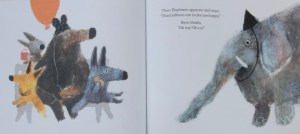
The Elephant Who Came For Dinner / I’ll Love You Till The Crocodiles Smile

The latest of this fun series starts with the three friends, Wolf, Hotpot and Omelette strolling out one starry night when suddenly beautiful music fills the air above the woods. The three follow the spellbinding sounds further into the woods where the trees and bushes have been transformed into all sorts of animal shapes: but who was the maker? Badger (something of a know-all) insists the work was done by a spotty wood-warbler. The friends accompany Badger on a search for the mystery topiarist that Hotpot calls a ‘wobbler’.

However as the evidence emerges, it isn’t at all like smarty-boots Badger has led them to believe – far from it. Despite the confidence with which he asserted his ‘facts’ it was completely false information.

A great way to show children how important it is to interrogate whatever information they receive, no matter the source. Young audiences will love discovering the identity of the creative creature responsible for the singing and the shapes, who joins Hotpot, Wolf and Omelette for a post prandial sing-song that sends the friends off to sleep in the moonlight.

A bedtime tale with a difference. Jungle animals adult and offspring – kayaking crocs, shaking snakes on zip-wires, slow-crawling sloths sporting yoga pants and chimps sneezing because of clouds of globe-trotting fleas are among those featured in the gentle rhythms of Cristaldi’s gently rhyming text and Kristina Litten’s suitably humorous, mixed-media, digitally created scenes of the creatures preparing for the night. I love the giraffes that might ‘laugh at knock-knock jokes while taking a bath / and sipping sweet tea from a carafe.’

as well as the sneezing chimps – some holding tissues – attempting to extricate the fleas from each other’s backs.

Finally, silly antics over all is peace and quite in the forest with gentle snores emanating from the slumbering animals.

Young children will delight in exploring the various silly antics the animals are engaged in be they featured in the foreground or lurking in the background unmentioned in the words. Whether the story works as a pre-bedtime read rather depends on how much time little humans spend poring over the pictures: maybe two or three slow recitations of the text will do the trick.

Shadow Creatures

Providing insights into the history of what it was like to live under the Nazi regime in Norway during the second world war, this novel was inspired by Chris Vick’s own family history. The author has drawn on oral history passed down through generations and uses memories of those who lived at the time of the occupation to bring the reader’s attention to the resilience of ordinary people whose lives were affected in various ways by the experience.

The book begins with a scene in the present when a child, Georgy who is staying with her Bestemor (grandmother) Tove and Grandtant (great-aunt) Liva meet an old woman in the woods and asks to hear about what happened to the three of them many years ago. The story is then told from the viewpoint of Tove (twelve at the time of the invasion) and her sister Liva (then just eight) who are very different characters

I asked 12 year-old Emmanuelle her views on the book: here’s what she had to say:

Chris Vick’s new book, Shadow Creatures, is an incredible story of hope and bravery set during World War 2. Life is normal for Tove, Liva, Agma and Haakon in their small Norwegian village until the Nazis come. Nothing much changes in the beginning but it slowly becomes a place of rules, regulations and fear. They have to work together to help each other and the prisoners of the Nazis.

I really enjoyed this book and I think anyone would although it is particularly perfect for fans of adventure and historical fiction. It is filled with courage, adventure and has lots of exciting moments. The story is told from the viewpoints of Liva and Tove so it is very interesting to compare how they see and tell the different scenes of the book. In summary, this book is a brilliant read with a beautiful story and I would definitely recommend it.

The Spotless Giraffe

It’s Kipekee the giraffe’s first day at school but she doesn’t know which class she should go to. Some of the other animals offer to help: Hana Hippo suggests that with a brown coat, she should join the camel class; Azar Aardvark ties a false hump onto the giraffe’s back but it comes adrift during a swim; Azar then proposes Llama Class but Kipekee lacks a woolly coat and Hana Hippo’s offering of a woolly rug flies off in the wind. So maybe Zebra Class is the one for the giraffe

but no.

This leaves only Gazelle Class and despite having no horns Kipekee heads there sporting something given by Hana – uh-oh!

Eventually, having seen the sign for Giraffe Class, Kipekee takes matters into her own – err, neck and is soon settled in there. The class sign is suitably updated and come the end of the first week, a celebration is held.

This heart-warming story of embracing our differences, uniqueness, acceptance, friendship and inclusion is based on the true story of Kipekee, the first giraffe without spots born in the USA, in a Tennessee zoo in 2023. Alison Hawkins’ entertaining scenes of the events will help young children relate to the important message of the tale.

Mallory Vayle and the Curse of Maggoty Skull

After the death of her parents in a strange accident Mallory Vayle has moved in with her Aunt Lilith who lives in the ruined Carrion Castle and by masquerading as a psychic manages to scrape together just enough to get by.. Hitherto Mallory has kept her own psychic talents under wraps, preferring to read pony stories than think about dead people. Making matters worse, her aunt’s house is haunted by the evil spirit of an old hag, Hellysh Spatzl; said spirit snatches Mallory’s parents and threatens to bestow on them endless torture if Mallory doesn’t use her talents to bring the hag back to life.

Enter Maggoty, a haunted skull with a penchant for wigs of the dashing sort who blithely reveals that Mallory is not only a psychic but a necromancer. Moreover the skull is, to Mallory’s despair, the only being able to teach her how to make use of her necromancer’s skills. This is only on condition Mallory gets him the wonderful wig he so desires and promises to break the curse he’s under.
As Mallory embraces her powers, she’s troubled by the possibility of doing harm

but she and her aunt plan a Halloween spectacular. Can she defeat Hellysh and save her parents?

This atmospheric and chilling tale is infused with humour thanks in no small part, to Maggoty’s frequent use of such words as ‘Mallsy-Ballsy-Boooo-di-Buttcrack’, ‘bumcrack’ and ‘Wee-Wee Pants’. Enormously exciting it’s way too much fun to be read only around Halloween Readers will be eagerly awaiting further spine-tingling adventures of Mallory and Maggoty – such terrific characters these wonderfully portrayed in Pete Williamson’s stylish illustrations.

Body Detective!

Written by an occupational therapist, this board book presents interoception to very young children. It’s important for little ones to be able to know and name what they are feeling: to that end author Janet Krauthamer and illustrator Christiane Engel use clear explanations, bright illustrations with flaps to lift, tabs to pull and mindful actions.

A playful, interactive, fun learning exploration of the human body’s signals: little ones will enjoy being body detectives and learning by means of descriptive language that for example, a dry, sticky mouth and lips are signals from the body that the person is thirsty and need to drink water. Chattering teeth and goosebumps on the skin are body signals indicating a person is feeling cold.

The last two spreads provide more information about interoception, and relevant body parts and describing words including discombobulated – now there’s a great word for tinies to use.

Use at home and in an early years setting for promoting health and well-being.

Lola and Larch Make a Winter Wish / Mirabelle and the Baby Dragons

It’s approaching the end of term for Lola with both characters in team Lola and Larch preparing for a special date on their respective calendars. As the two walk through the snowy forest to celebrate Turningtide with the other fairies, Lola endeavours to explain to fairy Larch (who has no experience whatsoever of the Christmas celebrations of humans) what Santa does. Lola then talks of how excited she is about her class’s Christmas concert to which Larch has been invited. However Larch doesn’t approve of the way fairies are portrayed in the performance and so turns down the invitation, causing disappointment to Lola.

So angry is Larch that she wishes for Lola to know what being a fairy is really like. An unwise thing for sure, especially as Euphorbia was watching and heard her words.

The following morning both Lola and Larch wake up feeling peculiar; they’ve swapped bodies which means that Larch has to participate in the performance she’d refused to attend. This gives Euphorbia an opportunity to gain more power – a risky one for sure – and she seizes the fairy form of Lola from the concert.

Can Larch get back in time to stop Euphorbia doing something awful with her magic? What will happen about Lola’s role? Can Larch and Lola find a way to unscramble things and return them to normality?
Magical, albeit sometimes shocking, seasonal happenings, with lots of dramatic drawings by Rachel Seago.

There’s magic aplenty too in

Mirabelle and her family are invited by Mum’s witch friend Gladys to stay at her dragon sanctuary during half term week. A dream come true for Mirabelle, so she thinks, but her notion that she’s a dragon expert is about to be put to the test.
Mirabelle’s countless fans will delight in her latest adventure with its lesson about guidance from someone who knows better when it comes to undertaking a tricky task.

It’s Time For Bed

The queue for a special bus is long, so don’t delay:don those pjs and get ready to come aboard with a host of other sleepy heads. Dreamland awaits; here come the passengers singing their yawns away on a magical journey from one stop to the next till they finally reach Slumber Land with teeth already brushed and bedtime stories read.
An enchanting combination of Karl’s lulling rhyming text with its repeat refrains and Tim Budgen’s playful scenes of the dreamy journey that’s just right for getting human toddlers ready for bed and sending them calmly off to sleep.

The fourth in the Monsters series is a really fun pre bedtime read. In Laura Baker’s rhyming text and bold bright illustrations we follow the funky, mischievous monsters through their end of day, eventually somewhat sleepy, routine. (So glad I’m not the large story sharer shown in Nina Dzyvulska’s reading scene. Even wearing my teacher’s eyes everywhere hat, I think I’d miss some of the monster mischief going on there.)
Don’t be surprised if your own little human monster wants to spend a long time poring over every spread, relishing all the mischief as well as searching for the bat monster lurking in each vibrant illustration.

Also on the bedtime theme is:

Two young children describe the transition from their mother-annoying bedtime preparations to her thoughtful ruse of asking her offspring to help improve the evening situation before it gets out of hand. The children decide the steps they need and illustrate each with a picture. The pictures are then ordered and used to create a routine comprising bath (what kind would they choose), followed in turn by toothpaste, pyjamas, bed and finally, dream – what weird wonderful one would they want.
Young listeners can, having heard the story, help create their own bedtime routine.

When the Stammer Came to Stay

This story is based on the author Maggie O’Farrell’s personal experience of living with a stammer.
Meet sisters Bea and Min who are very different from one another. Bea is neat and tidy and likes order; Min is scatty and loves to get messy; she’s also very fond of chatting. They share an attic room at the top of a tall, narrow house and complement one another extremely well.
One evening as the girls, their parents and lodgers are playing a board game, Min begins to speak but suddenly finds she can’t get the words out of her mouth.

Still struggling to speak some days later, Min sees something weird as she looks in the mirror: above her shoulder floats a creature and it’s seizing the words as they rise to her lips and cramming them into its mouth. How dare it, she wonders though cannot say those words. Now Min doesn’t even make the effort to talk at school, but at the weekend Bea notices that something is wrong with her sister. Bea then surmises that Min has a stammer

and so writes messages to her in a notebook She also realises that the grown-ups need to know. So begins a journey of discovery, Min and Bea working together to get to understand this creature and to try to find a solution, or rather a way to live peaceably with Min’s stammer, and to love their differences – all of what makes them who they are.
A powerful, beautifully told, hopeful book imaginatively and sensitively illustrated by Daniela Jaglenka Terrazzini.

A Symphony of Stories

This stunner of a book is a companion to James’ Once Upon a Tune. Herein the author/artist features works by composers from different parts of the world that will be familiar to many – Saint-Saëns, Vivaldi, Debussy, Holst and Stravinsky – and also introduces a work new to me and I suspect many other readers, a famous Chinese piece by Chen Gang and He Zhanhao . As the author says in his introduction, ‘Most of the stories are retold from the original tales that inspired the composer.’

First, readers are invited to Saint-Saëns’ The Carnival of the Animals which is cleverly imagined with a regally-attired lion cheerily introducing the show in a sequence of riddling descriptions as the various creatures participate in a procession through the streets of Paris.

Next is Vivaldi’s The Four Seasons wherein the author uses his own research into the composer’s life imagining him being inspired by living in the countryside. Third, Claude Debussy’s The Sunken Cathedral has its origins in an ancient Breton myth and plunges us into a tragic love story.

The focus of The Planets (Gustav Holst) are stories of the Roman gods and goddesses that they were named for.

Also with its roots in tragedy, a Chinese legend of thwarted love The Butterfly Lovers tells of a girl who. to fulfil her longing to be educated, disguises herself in her brother’s clothes. On her long walk to the college clad in male attire she encounters a boy who offers to show her the way. The two become ‘sworn-brothers’ undividable: the boy, Shanbo forms a very deep bond with Yintgai but can the two ever be united?

Originally written for a ballet, Stravinsky’s The Firebird is the final piece, as engagingly told as the previous stories. Having visited magical realms, readers are brought back to reality with some musical notes from the author and the book concludes with some recommended recordings of the music to stream or download.

An absolutely terrific celebration of creativity through art, music and words. A book to keep and to give.

Hilda and Twig Hide From The Rain / Sidekicks

This is in essence a prequel to previously published books starring Hilda.
‘Be back in time for dinner’ comes the call from mum as Hilda and Twig, a deer fox, set out for a walk, destination to be decided until, down comes the rain and they make a dash for the woods. Therein they come upon a cave offering shelter. Also sheltering there are a host of other creatures that are puzzled by Twig. They go on to discuss what the place actually is and buried treasure, and a giant snake are mentioned; the latter surely isn’t real decides Twig.

Nonetheless he pops back outside to check and as a result of what he sees, Twig and Hilda become separated. Now it’s up to Twig to find his brave side and protect his friend from becoming a creature’s dish of the day. Can he do so and what of the treasure that was spoken of?

It matters not whether readers have already met the main characters before as this adventure can stand alone. It’s smashing fun and definitely one to offer reluctant older readers as well as younger primary children.

Captain Amazing, defender of Metro City is feeling old and has decided that he needs a trusty sidekick. When his moggy, Manny, ran away, he was left with Roscoe the dog, Fluffy the hamster and Shifty the Chameleon as pets. Unknown to the Captain, each one is eager for the sidekick role; he’s also unaware that his pets have already begun to develop superpowers, all bar Fluffy as yet. Then back on the scene comes Manny offering to assist Fluffy with some superpower training (and at one point, a peanut as a reminder of something lesson learned).

Meanwhile the Captain’s arch nemesis Dr Havoc is planning something sinister for him. It’s time for serious teamwork from the would-be sidekicks and quickly too, for Captain Amazing’s life could be at stake. Metro City cannot be allowed to fall. Can the pets be the victors?

So cleverly constructed, hugely engaging, well paced with plenty of action and crazy capers, this book will certainly win a large number of fans.

One Snowy Christmas Eve

It all begins one snowy Christmas Eve with a man lying in his bed who suddenly has a terrific idea. Up he gets and out he goes, down the hill and into the village in his wheelchair. So thick is the snow that its wheels gets stuck and the man, push though he does with all his might, just cannot shift his wheelchair.. Out come the villagers, lamps blazing to see a man whose whiskers have turned white asking for assistance. Perhaps if they put runners on his chair, it might be able to move and this they do,

also wrapping him in a thick red coat and hat and putting boots on his feet. They also inquire what the fellow is doing and then the children notice the sack of toys on the back of his chair. A note is sent into the town, the townsfolk appear to help him on his way but hauling a sledge is NOT easy; something else in the form of reindeer – rather a lot of them – might just do the trick though. At last with an enormous whoosh, the man and his present-filled sleigh take to the air ready to spread goodwill all over the world.
What a wonderful story of a differently abled Santa is this one.

The author has cerebral palsy, and a powerful imagination that he puts to good use generously sprinkling tenderness and humour through his festive rhyming narrative. Korky Paul, whose humorous detailed style many will recognise from Winnie the Witch books has created the vibrant scenes for this festive book – the perfect complement for the words. I look forward to seeing more from this debut author.

Maisie vs Antarctica

When eleven-year-old Maisie Macleod talks herself onto her eccentric self-help book writing father’s research trip to Antarctica, she has absolutely no idea of the amazing adventure that is to unfold. Dad’s next book, How to Survive in Antarctica, sounds absorbing but Maisie, who narrates this story doesn’t envisage needing to test the survival part. Almost immediately though after she and her dad have taken off in a tiny, old, propellor plane piloted by Spanish-speaking, Guillermo, he’s slumped over the controls and her Dad (who has never piloted a plane despite having written a book on aspects of the topic) is frantically pressing controls as the aircraft plunges to certain disaster and the death of those aboard.

What happens next though is that Maisie finds herself alive on the ice, her Dad seems fine but Guillermo is wounded. Before long, the girl starts wondering if there is something seriously weird about her dad. There are unanswered questions aplenty too: how, without any flying experience could he crash land that plane on the ice? Moreover how’s it possible to send a mayday message on a non-existent radio? How could Dad build an igloo in under half an hour? Most pressing though is, if nobody knows they are there, how can they be rescued? All these keep readers gripped, eagerly turning the pages as Maisie endeavours to uncover her Dad’s secret.

Packed with action and jeopardy, there’s lots of humour, a wonderful bond between Maisie and her dad, a secret emerges (two actually) and the author has drawn on his own time working in Antarctica to include plenty of authentic detail. A cracker of a book.

Where next for Maisie and Dad? I can’t wait …

For Baby’s Bookshelf

These bath books cleverly change colour when wet.
The first introduces a little green frog on the lookout for friends to leap with: there’s a dragonfly, a duck and an otter each of which will come to life on the squishy tactile pages as an adult speaks the dozen words of the text, possibly then adding some croaky sounds.
The second is a fishy shaped sub-marine offering wherein the titular fish and friends starfish, turtle, whale and seahorse assume their colour when immersed by tiny human hands.
Both books offer splishy, splashy tactile fun learning for the very youngest humans at bath time: peekaboo with a difference.

A loving father gently prepares a little child for sleep and in so doing, introduces listeners to parent and infant creatures – bears, possums, otters, cats, giraffes and birds all safe in their respective abodes also snuggling up in readiness for slumbering. Patricia Hegarty’s soothing rhyming words and Thomas Elliot’s endearing illustrations combine to lull little ones as an adult turns the cutaway pages of this goodnight charmer that is likely to become a bedtime favourite.

There’s parental love aplenty too in

The Midnight Mitzvah

Hanina Chipmunk loves collecting nuts and sharing them with her hungry friends; she knows that helping others is a mitzvah (good deed) but not everybody welcomes her thoughtfulness. One such person is Mathilda Squirrel; she rejects a nut offering from the puzzled Hanina. Then mouse Leon explains that Mathilda was herself a champion nut gatherer but now, on account of her waning ability to move around she feels embarrassed about needing help. Yes, it’s a mitzvah to help but so too is not embarrassing somebody while so doing.

Hanina ponders on the problem and finally, at night the answer comes to her: she’ll work under cover of the dark thus accomplishing both objectives.

Aware that she’s breaking the forest rules by going out gathering at night, Hanina is much more troubled by the thought of Mathilda going hungry that the possibility of angering the nocturnal creatures.

As she gathers nuts the little chipmunk is suddenly confronted by the Great Horned Owl; this night creature, a possible chipmunk predator, questions Hanina and having heard what she has to say, ends up sympathising with her explanation, calling the little creature kind and wise: “A gift given in secret is a very great mitzvah” says the owl.

Based on one of Judaism’s central texts, the Talmud, the tale has a sweet message concerning the real meaning of charitable giving, Tzedakah, as the author’s end notes tell us.

Beanie the Bansheenie

Classic Irish folklore receives a modern twist in this wondrous tale.
‘Everybody in Ireland knows that banshees are supernatural harbingers of doom.’ Called ‘bansheenies’ when young, these little beings develop in pods that grow on the underside of a fairy bridge and when each pod becomes transparent the bansheenie will bond with the first human they see. One day though, now knowing everything about their person including when they will die, the bansheenie’s job is to appear in front of their person and ‘howl the banshee’s howl at them.’ This allows the specific person to put things right with anyone they need to and to bid loved ones farewell.

The Beanie from this story sadly has a problem; she’s knocked from her pod into the water during that vital bonding phase and thus cannot bond with Rose, her human, and absorb the information needed. Beanie does however make friends with the fish but then realises that she needs to find out more information about Rose. Months pass during which Beanie gradually forms a deep connection with the girl

but also discovers from the fish that an imminent wild storm will destroy Rose and her family’s cottage.

Can she warn her of her family’s fate and help them escape a tragic death? If so, what will be the outcome?

Steve McCarthy’s illustrations predominantly executed using a Celtic green palette, are magical in the manner in which they complement Eoin Colfer’s text and move the narrative forwards to its glorious ending.

An enthralling read for anyone from around seven or eight, adults included.

The Search for Carmella

From the author and illustrator of The Search for the Giant Arctic Jellyfish, comes a follow-up featuring a marine biologist with a passion – this time it’s Dr Rose who studies the ocean and everything in it.

Ever since she was a little girl paddling in rock pools, Dr Rose started learning that there’s joy in the very act of searching: one’s end goal is not the be all and end all, rather it’s the journey that is so amazing, indeed it becomes her way of life. In this story she seeks a sea creature rumoured to live deep in the hidden ocean depths, possibly a myth or maybe a real marine animal – Carmella.

The doctor and her team of scientists and explorers descend to the dark blue-black depths in a submersible, seeking, searching, seeing a multitude of weird and wonderful creatures in an almost pitch-black world but not ‘Carmella-y-enough’ until … it’s time to resurface.

After so many hours however, have they found Carmella?

Full of the awe and wonder of possibility and reality, and stunningly illustrated, this is a unique, almost magical take on being a marine biologist. Share with a primary class and who knows …

Jack the Fairy: The Night Bigfoot Stole My Pants!

This is the second story of Jack the Fairy. Now having recently discovered that he as well as his mum and uncle Dave are actually fairies disguised as humans, the lad probably shouldn’t have been surprised at the sight of a hairy Bigfoot in his garden pulling his favourite yellow underpants off the line. Nonetheless it’s an ideal opportunity for Jack to undertake his first solo mission. But his decision to chase said Bigfoot down the High Street is a mistake, one that breaks every fairy rule according to his mum and uncle, especially the number one rule: don’t let humans find out that magic is real.

Having landed himself in big trouble, Jack turns to Charlie, his best friend and human for assistance in sorting out the mess. They’ve done some research on the Bigfoot subject but then they find out who the Bigfoot character really is.

Moreover Jack’s pants aren’t the only pair to get stolen: golden ones belonging to a troll are nicked too.

A hilarious tale, splendidly told, with a scattering of jokes and plenty of comical illustrations along with a vital message about accepting who you are, and a smashing ending to boot – or make that to disco dance. With pants featuring large, the book is bound to be a huge hit. Bring on Jack’s next adventure – SOON!

Moon Mouse

Mouse lives all alone on the moon and over time has grown accustomed to the silence. He occupies himself growing plants, baking and looking at Earth through his telescope (his particular interest being children’s birthday parties). Mouse also builds things from bits and pieces of space junk, a rocket being his current project.

One day as he peers through his telescope at a little boy’s party, Mouse notices that the child’s special red balloon has floated away and eventually as it drifts past him, Mouse catches hold of the balloon string. Thereafter he works as fast as possible on operation balloon delivery, destination one small human’s Earth abode.

Will he succeed in his plan to return one bright red balloon to its owner?

With themes of kindness, friendship and its joys, and bravery, this charmer of a rhyming story is written by Corrinne Averiss and illustrated with details aplenty by Lorna Hill. Young children will particularly love exploring the scenes showing Mouse’s lunar abode and that of the birthday boy’s bedroom.

Santarella

Suzy Senior has created a smashing seasonal twist on the Cinderella story telling in rhyme how Cinders comes to the aid of Santa Claus who has the misfortune of a pulled muscle in his back.

One evening Cinderella sits alone in the kitchen after her sisters have departed for the ball and as she stares miserably at her phone something causes the chimney to wobble. In the living room on the floor is Santa Claus complaining about his back and in desperate need of some help. No sooner has Cinders offered to assist than they’re up and away in Santa’s sleigh delivering gifts all around the world. The job is almost done in double quick time and on the brink of midnight they land on the palace roof with one final gift. A pair of party shoes for Santa’s special helper. Down the drainpipe goes Cinderella and peers into the ballroom.

However rather than going in to join the dancers she returns to Santa and asks for a lift back to her abode. She collects all her important belongings together and sets off to see the world, stopping at various locations to give assistance where required;

she learns a lot and makes friends with some unlikely characters. No matter where she is though, Cinders returns to help Santa in the run-up to the big day and on his Christmas Eve round.

I love fractured fairy tales and Suzy Senior delivers this one with panache. Accompanied by Lucy Semple’s funny scenes – watch out for the antics of the mice, the hoarding signs and other giggle-making details, this is a story to share at home or in the classroom in the weeks before Christmas.

Politics

In the latest of this excellent series, Eduard Altarriba guides readers through what can often be a confusing topic and not only for younger readers. Questions including What is power? Who has it and how do communities govern themselves? are explained in a step-by-step manner. There’s also a look at the origins of political thought, democracy

and forms of government going right back to Ancient Greece. What is democracy, what is the best form of government and how does a government operate are also covered, as is what are the responsibilities of a government, left and right politics, majority governments and coalitions

Corruption and Populism too are discussed and the book poses a What would you do question on the final spread. Readers are asked to don the hat of mayor of a town where a multinational company wants to build a factory on land very near the river.

Clearly and concisely presented using infographics and diagrams this is an illuminating introduction to a vital topic relating to how the world works for Y6 readers and beyond, adults included. Teachers will find class discussion topics aplenty here too.

One Wise Sheep

Originally published in German, this is a hilarious retelling of the nativity story unlike any other. It’s a chapter book with occasional illustrations that are perfectly appropriate for Ulrich Hub’s wryly humorous text.
Meet seven sheep, a small flock if ever there was one; it includes one that has a plaster cast on its leg, another that wears a bobble hat, one has its wool parted on the side, there’s one that wore braces but now has a retainer (in a case), one with a snuffly nose that means it needs to sleep away from the rest, one with an eye-patch, plus one more.

One night the sheep, unable to sleep see a bright star and the one with a bobble hat tells the others how it was woken up by a voice singing “ ‘I bring you good tidings’ … ‘And suddenly a host of angels appeared in our field singing praises. I think I even heard trumpets.” Where though are the shepherds? Certainly not kidnapped by UFOs, a goat (with attitude) assures snuffly nosed sheep, going on to say, “For unto us a child is born and you shall find it wrapped in swaddling clothes – “ This sheep reports back to the others, they all assume that the newborn is a girl and set off to find the town where this special baby is said to be.

All kinds of misadventures ensue

and eventually they arrive at their destination only to be told that the baby – a boy – and its parents have departed. The sheep are of course disappointed, especially after creating their own present: a song that begins, “Si-i-lent niiiight”—a song that they speculate is sure to be a hit. `’People will still be singing it in a thousand years.” However, they return to their fields (stopping on the way to pick up litter) and there a special treat awaits.

With a plethora of anachronisms (the shepherds have backpacks containing such items as spare socks and toothbrushes, UFOs, gift cards, wolves wearing mirrored sunglasses to name a few), this is a terrific read aloud (so long as audiences know the traditional Nativity story) to share in the classroom or with a family.
Type to enter text

Zac and Jac

Early in the school year, nine year old Jac’s teacher asked the class to write about their real-life heroes and Jac had chosen his dad, a lorry driver. That though is before Jac is asked to join the soccer team his good friend Zac belongs to. Thereafter things at home start getting uncomfortable.
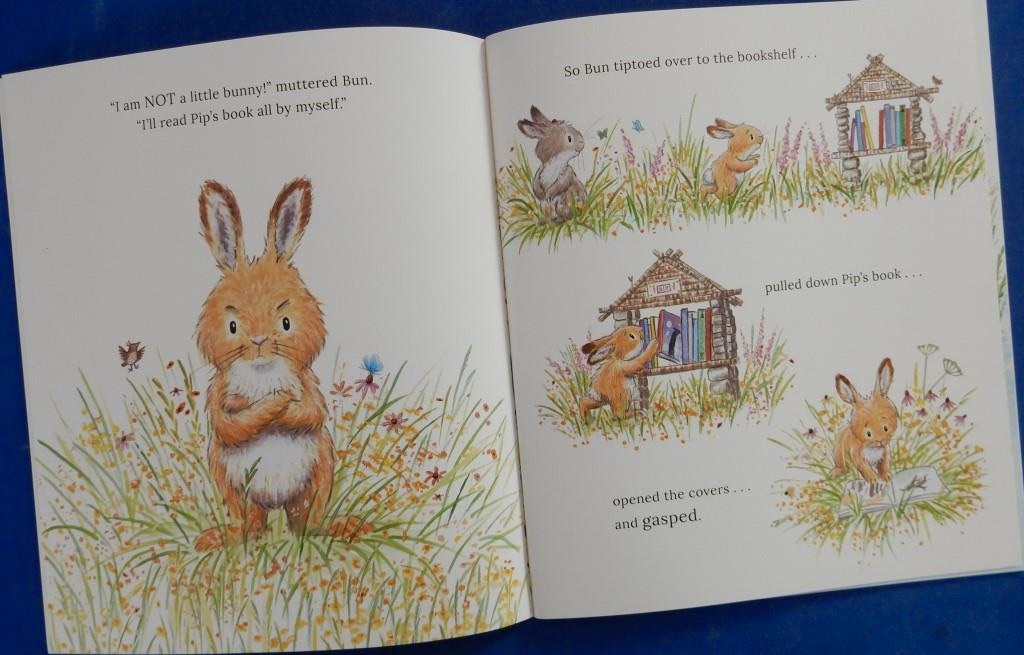
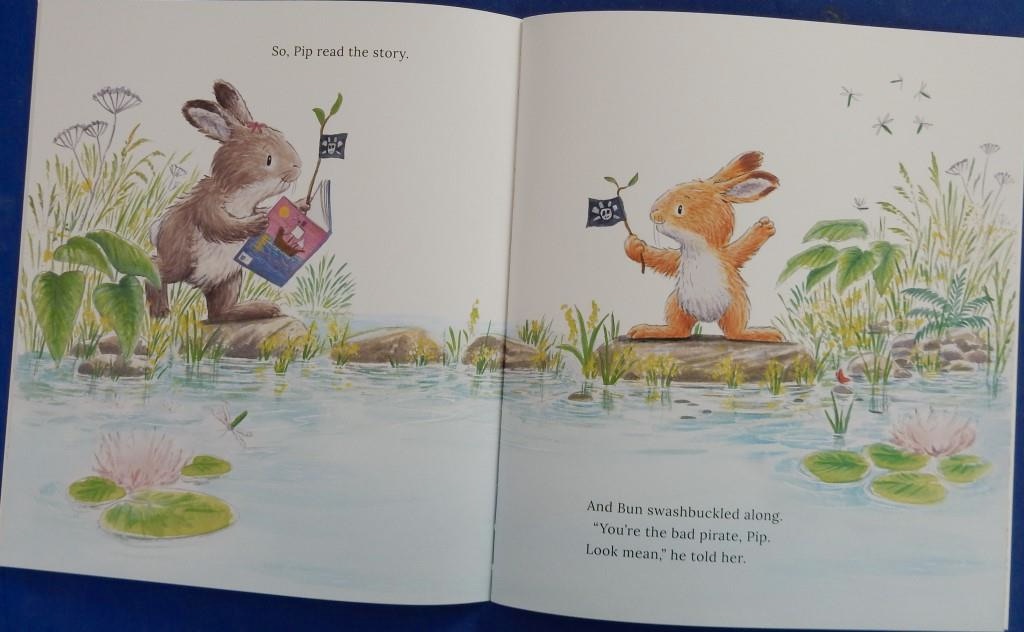
Then comes the news from class teacher, Miss Parker: three professional footballers are coming to talk to the class the following day. They are members of an organisation and what they talk about is racism. As he listens, Jac feels extremely uncomfortable as he starts to realise that the dad he previously thought a hero is in fact, a racist, and that his best friend Zac and his father David, have been the subjects of some of Dad’s racist remarks.

Now with a heightened awareness of racism and how such prejudice is usually passed down from one generation to the next, Jac (from whose viewpoint the story s told) becomes determined to help make change happen in society, starting with his own family. His mum admits she’d been aware of his dad’s attitudes but hadn’t challenged them. Can he with the help and support of his friends and Mum show his Dad that people should not be judged simply by what he thinks they are?

Using football (a children’s local team) as a backdrop, Cathy Jenkins has created a powerful story, sensitively showing what an evil racism is and encouraging youngsters to challenge it whenever it raises its ugly head. That way lines a better future for everyone.

Gordon Starts a Band / Marv and the Alien Invasion

Both these are additions to series ideal for newly independent readers – thanks to the publishers Oxford Children’s Books for sending them for review.

Gordon the goose is back and despite being dubbed the meanest goose on earth, he’s still trying to be good: that’s thanks to his now best friend, piglet Anthony. However to say Gordon is a totally reformed character is perhaps over-stating things, despite his best intentions. After a day of kind deeds Gordon cannot sleep, so when he meets up with Anthony the following morning he’s in a honkingly bad mood thanks in no small part to the terrible noise that kept him awake all night. A noise so bad Gordon feels that unless he discovers what’s making the sound and can put a stop to it, he’ll revert to his former mean self.

So he and Anthony start to follow the noise until they reach the darkest part of the forest and in a nearby clearing there is the perpetrator. It’s Edgar the Moose and what he reveals to Gordon and Anthony shocks both the friends. However the former thinks he should try to put things right but this proves much more challenging than Gordon could ever have imagined. It even involves a rendezvous with members of the Meanest Goose Society so Gordon can enlist their help in a scheme he has. With a considerable amount of thumping and banging, la-la-ing strumming and singing, all ends on a high with Gordon slightly further along the road to redemption.

Alex Latimer serves up another slice of delightful wry silliness that will have young solo readers backing Gordon all the way to the final page whereon we see a blissfully sleeping goose – err?

Marvin’s seventh adventure is set in a Space Centre that his class visits; it’s a trip involving an overnight stay. On arrival their tour guide Jessie greets the group and shows them where to leave their bags. This means that Pixel, Marvin’s tiny robot, will have to remain stashed in his backpack until all his classmates are asleep. First they go to the planet room where a display of the solar system’s planets hangs from the ceiling. Suddenly Jupiter falls from its fixing almost crashing onto Marvin’s friend Joe: was it mere accident or something else?

Next comes the rocket room wherein there stands a gigantic replica of a space rocket, alongside which is a life-sized replica of a control room. Unexpectedly the control panel lights up and starts beeping loudly -a loose connection? The final surprise before bedtime is when their guide dims the lights and projected onto the ceiling are the constellations. As they gaze upwards a potato hits Joe on the head and shortly after there appears the figure of supervillain Cosmic, and his little alien friends. Chaos ensues in the form of a food fight.

Time for Marvin to don his super-suit and morph into Marv the superhero. Out of Marvin’s bag too comes Pixel. But then Cosmic snatches up Pixel saying he’s going to take her to robot planet where she belongs and hauls her into the centre’s rocket. Can Marv do something before the rocket blasts off into space?

Another episode of MARVellous fun for those just taking off as solo readers from team Alex and Paula.

The Dinosaur Who Came to Dinner

One hot day, DING-A-LING! the intercom beeps and the little girl narrator opens the door to discover something extremely large, green and scaly asking to come in for a drink. Without waiting for a response, in marches a dinosaur promising not to overstay its welcome. Mum duly supplies a jug of lemonade and the dino. gulps down the lot, followed by tea, soup, honey and even ketchup. Then, complaining of the heat again the visitor decides to take a dip in the bathtub. Chaos ensues with bath toys flying every which way, the towel rail crashing down and bubble bath foam flying all over the bathroom.

Deciding to explore further afield, the dinosaur stomps through the block of flats right up to the top. He opens a door and there is a roof garden full of butterflies.

He then decides it’s dinner time and heads all the way back to the kitchen.

Having consumed everything, he departs with a thank you of sorts and a gigantic burp.

All this is told through Rachael Davis’s bouncy rhyming text and Mike Byrne’s zany scenes of an unexpected guest and a little girl’s ‘most amazing day’. With echoes of the classic The Tiger Who Came to Tea, this should be a satisfying story to share with young children: I envisage a second helping will be requested after the initial read.