Toddler Treats To Share

When you’re little there are SO many life lessons to be learned. So it is with the pups in this new series.
Matty and Mo are sibling puppies, Matty being the elder of the two. We meet them on a rainy day playing inside picnics together.. Matty notices that Ted is missing and Mo, of course wants to help find him. They search in the likely places – the bed, a cupboard and in their liege toy pile but there’s no sign of Ted. This upsets Matty and Mo attempts to cheer him up and suddenly Matty notices something sticking out of Mo’s ‘new useful bag’. What could it be? Mo, so it appears can sometimes be a little silly
In the second book Matty and Mo are off to the beach in the car with Mum. It’s quite a distance so patience is needed. In her excitement Matty gobbles all her snacks in one go and then inevitably, one of the pups needs a wee. It’s Mo. (Matty went before they set off.) Inevitably too, boredom sets in and Matty gets busy with her sticker book … Mum must have a lot of patience as she drives and at last the beach is in sight, but the puppies can’t see it until they wake up.
Trying to be patient has tired them out – only for a short time though.
Little humans will have a giggle at the puppies as they earn to deal with what to them are challenging experiences. They will also enjoy using the moving parts – flaps, a wheel and the final fold-out heart in both books that were inspired by real-life family experiences..

Wee Gallery are a husband and wife team who create books to help babies and very young children develop through visual learning.
Both of these take the shape of the titular character and little ones will love joining in as both Duck and Octopus look for their friends in these splash splash bath books wherein each black and white creature magically comes to life in full colour when wet. Duck will meet the likes of frog, dragonfly and swan whereas Octopus’s friends include a large fish, jellyfish and a crab..
Splishy, sploshy, squishy, squashy tactile bath time fun for tinies.

Lion and Hippo have very different gardens. Lion’s is neat and nothing looks out of place. In contrast Hippo’s is overgrown. I assume it’s not been left to grow wild deliberately. Hippo decides he needs to do some serious work on his grade. Having collected tools from his shed he sets about mowing, trimming, watering and in due season, harvesting fruit to share with his friend, Lion.
With some onomatopoeic language for small children to join in with as Hippo works, flaps to explore, a slider and wheels integral to the bold bright illustrations, this is a fun introduction to a task some adults thoroughly enjoy, some do under sufferance and others – those in favour of rewilding – don’t do at all. Toddlers however, will love the opportunity to assist Hippo in his work.

Marv and the Duck of Doom / Kitty and the Clifftop Peril

These are both additions to popular series for new solo readers: thank you to Oxford Children’s Books for sending them for review.

Marvin and his Grandad (plus Marvin’s high-tech side-kick Pixel) are visiting Adventure Zone. They’re going to meet Grandad’s best friend Steve (once Professor Feather, a powerful supervillain, but now a reformed character as Grandad explains before Steve arrives). With Steve is a girl around Marvin’s age so he thinks; her name is Izzy. After some rounds at the bowling alley Pixel picks up a supervillain signal and warns Marvin and later after spending more time with Izzy, during which she shows him her grandfather’s Duck of Doom, Marvin feels very uneasy about her.

The following week as Marvin and his Grandad are enjoying a picnic in the park, there comes a loud scream and the boy sees people running from something: it’s a gigantic robotic duck – the Duck of Doom. Time for Marvin to don his super-suit and morph into Marv. That way he can use the suit’s special facilities; he makes himself invisible and gets closer to the monstrous duck. Sure enough, who should be sitting on its back controlling the thing but Izzy, calling herself Professor Feather and issuing a challenge – superhero versus supervillain. Then suddenly it’s not just one gigantic robot duck but a whole army of robotic ducklings too. Can Marv and Pixel discover their weakness? Maybe the answer is in the elements … but even if they can see off the ducklings what about that Duck of Doom? And the Professor?

With themes of determination, friendship and forgiveness, some interesting new characters and gentle humour, this latest story leaves the door open for a new direction. Add to that Paula Bowles’ lively illustrations and we have another cracker for readers in years 1-3 and for home collections.

Another series featuring a superhero (in training) is

This is Kitty’s sixteenth adventure and she and her family are holidaying in the sleepy seaside town of Pebblecove, so Kitty’s not anticipating using her feline superpowers. As the book begins they’re visiting a seal rescue centre. Just before they have lunch Kitty encounters young Lee who tells her he’s helping his father by feeding the seals. It’s when she rejoins her parents that the trouble starts.

First crates of fish intended for the rescue centre seals are scattered everywhere, then stands of things from the shop fall over and the cafe menus are ripped. It must all be due to a mysterious creature rather than Kitty’s friend Cutlass the pirate cat. Now Kitty must put on her superhero cape, go in search of the culprit.and find out why they are causing such chaos. Could they be looking for something and if so, what?

A gentle story but one where Kitty has to be especially brave as she’s not in familiar territory. Jenny Lovlie’s black and orange illustrations throughout, heighten the drama.

The Doughnut Club

There are a fair few children’s stories about blended families these days but this is the first I’ve read about donor parents.

Ollie and Quinn have always known that they were born to their mums by sperm donation and are both comfortable with this fact.

As the book opens the family is travelling to their annual holiday destination, a hotel at the seaside and the children learn from Mum and Mama as they call their parents, about a website giving more information about their sperm donor and that they have additional siblings, something neither has thought about before. Ollie doesn’t seem especially interested whereas Quinn, who is twelve and has always felt a bit different from the rest of her action-loving family, is eager to find out more. Maybe she can find a sibling who likes to take things more slowly and enjoys arty pursuits, as she does.

Mama in particular is adamant that Quinn is too young to make contact but she quickly becomes obsessed: perhaps there will be another red head with green eyes. She’s aware that tracking them down in secret involves doing things that are wrong, taking and using Mum’s bank card to pay for website access for instance, but she’s completely driven and unable to stop herself sneaking opportunities to do more research on the website without her mums knowing. Also staying in the same holiday hotel complex is Quinn’s arch enemy, Monika who starts getting rather too close to Ollie. When Quinn hears that she too had a donor, she begins to worry that Monika might turn out to be one of her donor siblings.

Before long Quinn’s focus is not on the family she loves so much and consequently she’s late to meet Olly, who ends up getting hurt. It’s pretty clear she’s out of her depth and needs to put things right with her mums but is she brave enough to talk with them before it’s too late?
Inclusive, humorous and tender, this thought provoking book will be enjoyed by children from year 4 up and should, I think, be in every primary school collection.

I Could Be Eaten By a Shark

One day when on the beach with his grandfather, Louie sees a shark, albeit only a small one, and refuses to go back in the water. So instead his grandpa takes him to a variety of other watery places – the lake and swimming pools but they too cause the boy to see sharks. As do even paddling pools and bubble baths, indeed anywhere where there’s water. How can this problem be sorted out?

Grandpa (‘who is very wise)’ takes Louie to the library to learn about sharks. Having discovered that shark attacks are rare and been surprised to read of a shark that’s smaller than a human hand, Louie remains cautious, refusing to go right up close to relevant book. Moreover he sees potential sharks lurking in places everywhere, even the loo.

Now, rather than telling his grandson not to worry, Grandpa says something else, for he knows how Louie feels as he too was terrified of a large creature and convinced it would eat him. Maybe through ‘time – and hard work’ Louie, like his Grandpa, could learnt to live with his fear and keep it under his control. That way he wouldn’t miss out on the wealth of opportunities life has to offer …

Cleverly interweaving basic shark facts into the narrative, Marcela Ferreira offers a story that demonstrates how one’s fears can be embraced and made manageable: in tandem with Mark Chambers’ witty scenes full of amusing details, this is a book that offers reassurance and lots of discussion possibilities, especially for anxious little ones.

Finders of Silverthorn Forest: The Lost Treasures

As the story opens we meet almost simultaneously the two protagonists: a small boy, Max, and the more diminutive Tuft, who wears odd shoes. It’s partly on account of this footwear that the two meet. Tuft (a Finder) is looking for treasure and Max is a passenger in his mum’s car that almost crashes into what Max mistakes for a tea towel.

Back at Grandma’s, Max continues his mission- to help her find the time capsule she buried almost seventy years ago, before she has to move out of her home. The problem is Grandma can’t remember where she buried it; maybe it was in her garden, or perhaps in the surrounding woods, or even in a treehouse in an ancient oak tree. Off goes Max in an old faux-fur coat of Grandma’s to search the treehouse but is surprised to discover it’s occupied.

Occupied by Finder, Tuftorius Snook, the very creature that Max mistook for a tea towel. Finders are woodland creatures that ‘scavenge lost objects’ that their whiskers help them find and treat them as treasure, even keeping an inventory. “Finders keepers’ is their rule. The two start chatting over tea and a friendship begins. Suddenly a lot more Finders turn up including Tuft’s grandfather, Old Grey.

Tuft persuades his grandfather that Max means no harm and on the way back through the woods, he tells Max that the next day is Domesday. When they arrive at Grandmas’s cottage Max asks Tuft for his help and a plan is formed.

The following morning Mr Pellington, the new owner of Grandma’s cottage arrives telling her that diggers are a coming and she must be out by noon. When they discover his real reason for buying the cottage, Max becomes desperate to see Tuft despite their having said their goodbyes to each other. Can they still do something to stop the entire wood being demolished and most importantly save the oak tree with that treehouse?

Another entrancing story from Rachel (I’ve loved both her previous books) with detailed illustrations by Laura Catalán adding to the pleasure at almost every turn of the page. Woven into the tale is a vital theme about tree preservation.

The Big Day

The child narrator of this story receives a very large envelope containing an invitation to the wedding of two giants.. “ I fashioned a pen from / the trunk of a tree// and used it to / write a HUGE RSVP.” A detailed one asking about means of transport to the celebration and listing such possibilities as ‘travelling on the omnigrobbliwobblibus’ .

Come the big day, off sets the child in a smart new outfit feeling not particularly brave and keeping the destination secret from Mum. The church is full of enormous wedding guests of the fantastical kind such as witches, monsters and goblins and Giant Aunt Clara wearing her ten-ton tiara. The organ starts up and in come the two male giants (one carrying ‘fresh morning dew from the dawn’ (something new); the other holding ‘sky that bright stars wandered through.’ (something blue). They say their vows before a official,

everyone sits for the grooms’ speeches and the feasting commences.

Why was I invited wonders the small human narrator and groom two reveals the reason: there’s a message to go back with “love is just love, whether GIANT or small.”

A joyful, life-affirming demonstration that everyone matters and love is love delivered in Rachel Plummer’s rhyming text with lots of playful language and Forrest Burdett,’s illustrations in suitably vivid hues on pages that will excite with their flaps, die-cuts, and gate folds.

Wild

A child with a great affinity for the countryside moves to live in the city. Replacing the wildness, especially the bird with blue wings that sings and the earth full of stories, are grey glass buildings with ‘their fish scale sides’ that cannot be climbed, pavements that cannot show their secrets and skies without any visible stars. The city is lonely, so too is the young narrator who tells readers, “I’ve lost my wild.’

Somehow though, in response to a plea for help in this grey wilderness, the bird with blue wings appears in the dark sky calling to the child. Swooping and looping, the bird leads the protagonist through the crowded city streets to a river. a river that ‘rolls and twists and shows me the secrets hidden under its tongue.’ This is a place where herons wait to catch silvery fish and there’s an abundance of other birds.

The child carries on following the lead of the blue-winged bird and they find leaves, wild flowers and insects.

In a little forest place, the child climbs a tree and can hardly believe the abundance of wild life -: ‘A burst of parakeets colour the air green’ and then as day turns to night a fox appears and stars light up the sky. Now the child realises that there is wildness everywhere’.It’s both within and all around.

Katya Balen’s poetic narrative reads aloud well and accompanied by Gill Smith’s mixed-media scenes of the contrasting grey cityscape and the vitality of the wild places will, one hopes, encourage children to look for and appreciate their own wild areas.

Stitch Head: The Pirate’s Eye / Donut Squad Take Over the World! / Toby and the Pixies: Best Frenemies!

For those not yet acquainted with Stitch Head, he’s the first creation of the mad Professor Erasmus and resides in Castle Grotteskew along with various other weird creatures.
Then there’s a recent one of the Prof’s creations, an Octopus, and as ever Stitch Head has to use one of his potions to turn the creature into a kindly one. We also meet Arabella Guff from the village, she who fears nothing. Arabella tells Stitch Head as they read a diary together that he’s part pirate because he has a blue eye that once belonged to its writer, Captain Dash Flashpowder. Could that really be so?
Stitch Head recruits a crew and as he prepares for a life of derring-do on the high seas, some decidedly suspicious business closer to home threatens to put a stop to his harum-scarum swashbuckling plans…
Fans of Stitch Head, as well as others who love gothic tales, wacky adventures, mystery with the occasional scary character will love this graphic novel presentation of the original book.

The next two are both David Fickling Books graphic novels:

Herein you’ll find a lot of daft doings by the Donut Squad who have decided to take over the entire world. The squad comprises Sprinkles (their leader) Jammyboi, Chalky (tho ghost one), Justice Donut, Anxiety Donut, Caramel Jack (a tad salty) Daunt and Li’l Timmy, and Spronky.
The trouble is though they have some serious opposition in the form of the Bagels – arch nemeses of the Donuts that abready have plans of their own including a (w)hole lot of new merchandise.
Uh-oh1 Seems that those Donuts are also launching a lot of new merchandise – they’re definitely endeavouring to out-MERCH the Bagels..
Now I have to say that both sides are wasting their time as this reviewer strongly dislikes both Donuts and Bagels – I wouldn’t eat either of these foods. Nevertheless I found myself having a really good giggle at the utterly daft shenanigans of both torus teams in their fight for world domination.

More giggles assured when you read:

With Toby having accidentally become king of the Pixies that reside at the bottom of his garden he discovers that misunderstandings are all too common with those little folk. Now though Steph, Toby’s nemesis at school has learned of his regal status and contrary to Toby’s expectations, rather than teasing and insulting him about it, she thinks it’s cool. She even becomes, along with his best pal Mo, a part of Toby’s adventures. Rather we should say misadventures, for whenever those Pixies get involved something is absolutely certain to go wrong. There’s the school disco for instance and much, much more.
At the end Steph makes a surprise revelation and it’s one that lets Toby know how she really feels. Zany chaos abounds but importantly there’s a heartwarming message about acceptance and friendship. (If you’ve now taken to Toby’s erstwhile enemy, there are a couple of ‘How to draw Steph spreads at the end of the book).

Soni and the Life Drinkers

With just a few days to go, twelve year old Soni has her sights firmly fixed on winning first prize at the annual middle school dance competition, Vunja Mifupa. To that end even after her fellow members of the dance squad have left, she remains behind in the studio to continue practising. While so doing she hears a heartbeat that makes her blood run cold; it’s no ordinary one but that of a shiqq, an underworld monster.

As Soni leaves, her father greets her with devastating news. Her beloved mentor and teacher, the already ailing Mr Lemayian, has taken a turn for the worse. It must be the malevolent Life Drinker that is the cause. Mr Lemayian has helped Soni and the other Intasimi Warriors—Mwikali, Odwar, and Xirsi—come into their powers and defeat evil, so now these powers must be used to save their beloved teacher. Soni calls a meeting with her friends and tells them the awful news. During the meeting there’s an unexpected arrival – it’s a hybrid (part human, part shiqq ) claiming to be able to help them, saying her name is Thandiwe and that the Final Battle is nigh. Moreover Thandiwe hands Soni a brass bracelet saying, “ … it belongs to our family. It’s your Entasim.” But can Soni trust her to help find the Life Drinker that’s draining Mr Lemayian of his life force? Then Soni learns that her mum has a twin sister who has a dark secret – a key to finding the identity of the Life Drinkers perhaps?

With their mentor growing weaker all the time, surely they can’t refuse Thandiwe’s help, despite the Intasami Warriors already having been betrayed? Maybe it’s the only way to go so long as when working with others, Soni can manage to moderate her impulsive nature.

The book ends with the Final Battle yet to happen, leaving readers eagerly waiting for the next episode.

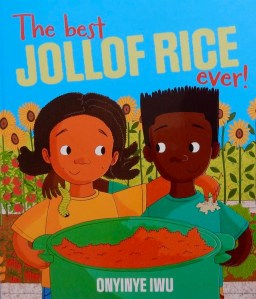
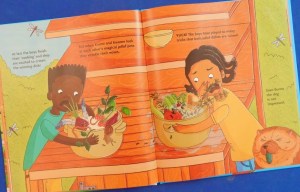
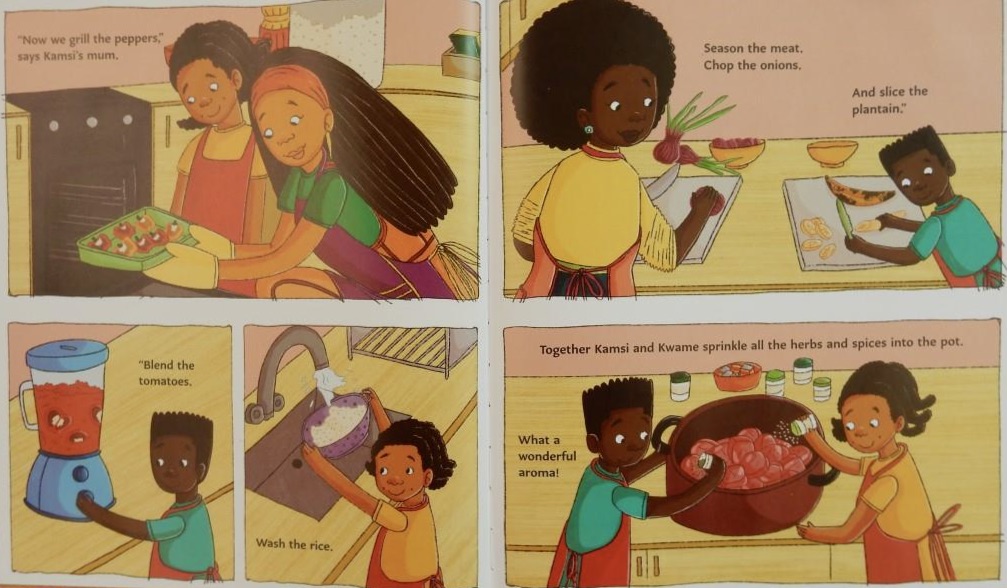
My Rice Is Best!

There’s absolutely nothing in the entire world that Shane prefers to eat than his Mum’s home cooked rice and peas. She uses a recipe passed down to her through many generations. When Mum suggests he take some for his school lunch the following day, he jumps at the chance.

Next day Shane sits beside Yinka and is surprised to learn that she considers the best rice in the whole world is Jollof rice. The two children have a loud dispute which is interrupted by Chong who insists his fried rice is undoubtedly the best. Then several others join in, each claiming their version of rice is BEST. The vocal dispute degenerates into a physical one

that ends up with the contents of Shane’s lunch box scattered all over the floor.. He’s devastated, but quickly Yinka offers her tub to him and as Shane tastes her Jollof rice, he’s surprised how tasty it is. There follows a lot of sharing between the rice eaters but one child, Tim, is confused for he has rice pudding not for lunch but for breakfast, which all the other children think must be pretty scrumptious.

I must admit I have to disagree with that however: the only time I ever got a detention at school was when lukewarm, stodgy rice pudding was served for afters. I discreetly – so I thought – opened the canteen window and threw the contents of my bowl out onto the path and the teacher on duty caught me in the act.

Selina Brown’s deliciously funny story is vibrantly illustrated by Maxwell A. Oginni whose scenes of the rice face-off are wonderfully dramatic and expressive. A super story to encourage children to try new foods, especially those from cultures other than their own.

A Mouse Just Ate My House!

The narrator of Kes Gray’s text speaks in rhyme as he relates the disaster that has befallen him, or make that sequence of disasters. There’s a mouse in his house and she has nibbled, munched and chomped her way through pretty much everything except the resident himself. First, as you might expect she sank her teeth into the skirting board but as soon as the narrator had retired to bed, she got started on the downstairs rooms and their contents.

Traps proved totally ineffective, indeed they merely served as part of the rodent’s repast before she proceeded to the bathroom, followed by the bedroom,

where not even poor Ted escaped from a severe nibbling. Other deterrents – a cricket bat, the neighbour’s cat

and pest controller and much more failed to survive. It will come as no surprise to readers that the mouse’s belly appears to have increased in size considerably after all this but there’s no sign of her suffering from indigestion or nausea. How is that possible?

This whole sorry saga is heightened by Sebastien Braun’s dramatic, hole-strewn depictions of the trail of destruction.

With an absolutely delicious throwaway final twist this one has winner stamped all over it. Listeners and readers aloud will relish it.

So Devin Wore a Skirt

Devin’s family are getting ready for Nanabapa’s Big Birthday party. Everybody in the household has already found their perfect outfit for the celebration: Jay’s new tie makes him look super stylish, Amaia’s wings give her a magical look, Mummy looks like ‘a soft, pink cloud’ as she wafts around in her lengha but Devin still can’t make up his mind what to wear. He tries all kinds of things such as his red trousers, his favourite jumper and several hats. He keeps the blue beret on and eventually decides to put on his sister’s blue and purple sparkly skirt. He likes what he sees in the mirror but then in bursts Amaia protesting “You can’t wear my SKIRT! What will Nanabapa say?”

Rather than taking off the skirt, Devin decides a disguise is needed so he selects a ninja suit and a wizard cape. Then with a feather in his hat as a finishing touch, he’s good to go. By this time the party is under way and he joins his mum in the dancing.

Having bopped and boogied for some time Devin is very hot and decides it’s time to shed a layer or two but he gets even hotter as he continues dancing. Eventually he removes the ninja suit revealing the sparkly skirt. As Devin stands nervously in front of his Nanabapa he’s worried about what his family will say especially Nanabapa. Not for long though as the response is unexpectedly positive. Soon everyone is dancing joyfully including Devin who feels as magical as the others but most importantly, he feels like himself.

Lucy Fleming’s textured illustrations capture so well Devin’s changing feelings as layer by layer he takes off his disguise and finally reveals his skirt to everyone in Shireen Lalji’s warm-hearted family story about being true to yourself.

This Letter Says I Love You

This book was inspired by the true story of ten year old Matilda Handy who, when thinking of ways to connect with her grandma and grandpa, had the idea to set up a memorial post box to send letters to loved ones who have died.

In the story, a little girl misses her grandmother and wants to be able to talk to her so she decides to write her a letter. Somewhat stuck for a beginning, Mum suggests she should, “Try to fill it with what’s in your heart.” And so she does, drawing things that she herself has done as well as those she and her gran shared, things such as baking cakes together, den building and games they played together.

Included too are some of the sad and angry occasions and how her Mum helped her cope with them.

When the letter’s done, the girl narrator and her Mum set off to post it, the former wondering how Gran will know what’s been said and how she’ll reply.

When they reach the white post box, the narrator feels a little better so she tells us, and her mum reminds her that “We’re always connected to those people we love.” and suggests the girl continues to share things. By the time they walk back home the stars are shining above and they seem to have a special message for the letter writer.

Lyrically told in Lucy Rowland’s rhyming narrative and beautifully illustrated by Sharon Rentta whose scenes of everyday events and fond memories exude warmth, tenderness and love.
(The postboxes like the one in the story are to be set up at 36 other sites across the country after Matilda’s moving tribute to her grandparents proved so popular.)

Pearl & The Fish

Many young children fear the dark and so it was with little Pearl who imagined shadowy things hiding under her bed. That however was before she had her brainwave. At bedtime she’d bake six imaginary biscuits using her toy kitchen set and put them on an invisible plate in a particularly shadowy place. Come morning the biscuits had always disappeared and the shadowy thing that consumed them had become her friend.

Then one night a rumbling sound wakes Pearl from a dream about a goldfish and ,secure in the knowledge that whatever made the sound must be friendly, out of bed she gets and discovers a huge goldfish snoring. A gentle poke causes it to release a bubble and then many more, until her room bounces with ‘bubble popping play, jubilant jumping and glorious giggles.’ The two enjoy themselves until come the dawn the fish vanishes and Pearl gets back into her bed and sleeps till morning.

Was it all a dream, she wonders but the following night, the fish is back. Introducing itself as Goldie, the fish explains how it came to be and the two of them fly to the Moon, Pearl taking delight in the shooting stars around. She even catches one and takes it back to Earth.

The next morning after a cosy sleep, she is woken by her mum talking of a special surprise for Pearl. That evening she still makes her six friendship biscuits but these have for a different purpose altogether.

Magical, reassuring, and with fantastical, luminescent illustrations, Patricia’s telling reads aloud really well: I love the playful alliteration and the way Pearl takes the initiative to control her fears.

Alex Rider Stormbreaker

This is a silver edition celebrating the very first of the Alex Rider novels. The story begins with an ordinary fourteen year old boy being woken from his slumbers by the doorbell ringing. It’s the police with the news that his only known relation, Uncle Ian has been killed in a traffic accident. However, suspicious of the explanation he’s given, Alex starts his own investigation and discovers his uncle’s car full of bullet holes. Why kill a banker, he wonders, having just missed being crushed to death himself when his uncle’s BMW is tossed into the crusher.

When Alex climbs through a window to gain access to his uncle’s office it transpires that Uncle Ian was not a banker at all but a field agent for MI6 – a spy in other words. Before long Alex finds he’s been dragged into the world of cloak and dagger intrigue and espionage Then, having undergone an intensive programme of training, he reluctantly becomes MI6 youngest ever spy. His mission revolves around one Mr Herod Sayle and Alex sets about infiltrating Sayle’s operation and the revolutionary Stormbreaker computers set to be given to schools.

To call the assignment action-packed is a complete understatement: it’s totally gripping and has spawned a series that has become something of a rite of passage for pre-teen readers.
This 25th anniversary edition includes a brand new Alex Rider short story but you’ll have to get your own copy to discover what happens therein.

Afia in the Land of Wonders

In the remote desert village of Dafra, sixteen year old twins Afia and Aya are about to become crystal merchants like their parents. On the eve of their ewende ceremony (coming of age) Afia encounters a mysterious young carver at the monthly market and he makes her an offer. Unlike her dutiful sister, Afia does not want to follow in her parents’ footsteps; instead she wants to see the world. Consequently she flees from the initiation ceremony and heads to the forest. where she joins Bakame, the carver on a journey that takes her far from her familiar homeland community. She’s intrigued by what he tells her of Queen Ukiwa and her palace in Ijábù. What he doesn’t tell her however, is that the Queen’s palace and her entire kingdom are built on the cruel, cunning ensnarment of the lives and dreams of her courtiers.

Eventually though, Afia witnesses her awful cruelty, which changes her initial impression of the Queen and she realises that she’s made a terrible mistake. Determined to leave Ijábù. she agrees to a bargain proposed by Ojike, a spirit of a boy who’s wearing a carved cat mask: He’ll help her find her way back home if she helps him overthrow the evil Queen. But is she sufficiently brave and resilient to free not only herself but those trapped by the queen’s controlling power? She’ll certainly face terrific danger, but she will discover allies willing to assist in her mission to return and make amends to her precious twin.

Celebrating curiosity, family bonds, independent thinking, friendship and compassion, this fantasy with its stunningly beautiful colour illustrations, draws both on African folklore and on elements of Alice’s Adventures in Wonderland. Older readers who have read the Lewis Carroll classic and have an interest in folklore from around the world will get the most from this fascinating story.

Higher Ground

In this highly visual story we follow the lives of a grandmother, a brother (the narrator) and sister and their pet rabbit who are stranded in their city apartment as a result of what Grandma calls The Great Flood. Everybody else left before the water came and so there was nobody to see their rooftop message pleading for help. Thus this space becomes their entire world but Grandma tells the children they must never lose hope.

Day by day she teaches them everything she knows: things about sowing and planting, making repairs, fishing, reusing and recycling, observing their changing surroundings and more. The children seize upon her teachings with enthusiasm, optimism and creativity. The seasons change but so too does Grandma: little by little her strength diminishes. With the waters continuing to rise, the children start building a raft and loading it with produce.

Grandma knows she has little time left so she encourages the children to sail away leaving her to protect their garden: ‘with each ending a new beginning unfolds’, she tells them giving her necklace to her granddaughter and saying that she’ll always be with them.

Weeks later, having been completely lost, battered by fierce stormy waters and on the point of despair, a seabird flying overhead reminds the siblings of Grandma and with lifted spirits they struggle on, eventually finding dry land and a new home among other people. Using their experiences they then show compassion towards other people who also find themselves lost, stranded.

Tull Suwannakit uses predominantly mixed media visual imagery to convey the story, skilfully blending wordless graphic novel sequences, some in black and white, beautiful softly hued landscapes

and double spread diagrams of instructions for such things as catching a fish. The result is a hugely moving account of how even under the very worst of circumstances, like those two protagonists, we should never give up on life.

Embracing such themes as home, belonging, loss, grief, refugees, self-sufficiency and the consequences of climate change, this is a book that deserves to be widely read at home and in classrooms.

A Good Night’s Sleep

Young listeners will likely know what Little Red Riding Hood did when she discovered the big bad wolf in the woods. However young Maudie uses rather different tactics. Moreover she actually has several animal intruders in addition to the hungry bear she meets lurking among the trees. Having dealt with the large hungry ursine and proceeded to the woodland house, she finds a lion in the kitchen that has designs on her as part of his late-night snack. Rather than panic, clever little Maudie makes a request of the lion and then proceeds to mix up some ingredients for a chocolate cake, which she then puts into the oven, goes off upstairs

and leaves the creature drooling. But what should be waiting in the bedroom with hungry grins upon their faces but a pair of wolves. These too she cleverly outwits,

only to come upon a crocodile in the bathroom: can she get the better of him as well?

Suddenly Maudie remembers that cake in the oven. Downstairs she goes to find the lion still drooling, plus the bear. Now you’ll have to admit that this young miss is a canny character and does something nigh on genius after she’s added icing to her cake. However, to discover what, you’ll have to get your own copy of this super fun tale. Assuredly Emma’s latest offering is a book that children will relish and want further helpings soon after.

I Am Raven

You really need to have read I Am Wolf before embarking on this sequel. Herein the main protagonist is Brann, once a member of the Raven crew but with the destruction of her construct by Dragon, she is now searching for any members of her tribe that may have survived and for answers. Desperately determined, she and members of the atypical Cub crew are intending to head northwards both to look for clues as to what happened to Raven and to find the source of the strange signal, Rieka one of the crew has been tracking. However there are more besides Reika, Brann and others aboard looking for answers and it’s not long before Cub’s crew find they’re on a mission that is of importance to other Constructs as well as themselves.
From a tiny Construct steps a stranger informing them that Brann (or Leondra) as the woman calls her) is ordered by the High Constructs to attend an interview.

Following this meeting during which they learn more about the realm wherein they all live, Cub is invited to travel with the enormous Bear and they continue moving until they reach Puma territory and there they come upon Dragon: dead. At least it looks to be Dragon but Brann insists it isn’t. The closer they get to where they believe the information they seek can be found, they will find that truths much darker than they envisioned hidden there. Brann, a very complex character not supposed to feel fear, is convinced that Raven’s fate is due to her actions and this makes her committed to track down this construct and atone for what she did.

With its themes of loyalty and friendship, readers are quickly drawn into the terrifying world of Cub and crew. I read late into the night to finish this brilliant book. It ends on an enormous cliff-hanger leaving us desperate to know what happens next.

The Best Garden in the World

When Steve the squirrel moves from the city to the forest. he’s intent on finding his wild side in the countryside. He has resolved to build the best garden in the whole world and is bursting with ‘big and very particular plans.’ His new forest dwelling neighbours are eager to help and Steve gives them clear instructions as they plant, prune, sow and sort all day. Everyone then agrees that Steve’s is the best garden they’ve ever set eyes on, despite it also being the only one.

Steve meanwhile settles down to enjoy some peace and quiet. Not for long though: very soon his new friends are busy doing their own things. Shock horror, they’re ruining the garden.

Time for some ground rules, a plethora of signs and … the disappearance of all this friends. It’s peaceful, yes

but Steve decides he should do some market research: what is it that makes for a perfect garden?

Steve is startled by his discoveries and so down come all the signs and up goes a completely different one. Manicured lawns and trimmed hedges are all very well but it’s time for a spot of rewilding that will attract his new friends and accommodate their particular requirements and ways of living.

A great story to demonstrate to young children that is everyone is different and so too are their needs.

The Bear-Shaped Hole

Loss , especially death is always difficult to deal with even when you know it’s coming. So it is with this companion book to the creators’ The Hare-Shaped Hole. Skilfully written in rhyme, poet John Dougherty tells the story of Gerda and Orlo. Orlo bear is gentle, caring, kind and fair – the most respected creature in the woods. Orlo is much loved by young Gerda and the two spend a great deal of time together walking, talking, playing and telling stories but one day Gerda notices a change in Orlo. He’s much slower and seems to have lost that zest for life. Orlo explains that he’s ill and will soon die. Gerda’s initial response is one of anger and she runs away roaring uncontrollably in her misery.

However as we read, ‘ … you can’t outrun sorrow. You can’t outrun pain’: Gerda returns tearfully to Orlo who welcomes her with a big bear hug and then goes on to validate her feelings, assuring his young friend that despite her hurt – that hole in her heart – she will feel happiness again and Orlo will live on in her heart and her head as she remembers the wonderful times they shared. Eventually, come the autumn after making more memories together through the summer,

Orlo dies. Eventually Gerda does find she’s ready to make new friends and have happy times with them.

A reassuring message and it’s stunningly illustrated by Thomas Docherty whose scenes are bright and over-flowing with love. A must have to share with children at home and in the classroom.
Minibeasts / What Can You See? In the Garden / We Love Fruit!

There are all new board books from Little Tiger – thanks to the publishers for sending them for review.

The first of a nature new series where the featured creatures almost leap out from among the plants growing in the flowerbeds. First comes a bumblebee that is busily collecting pollen from a composite flower; then there’s a ladybird that opens up its scarlet wing cases as though to take flight. Next not just one but – well maybe your little one can try counting them – the beautiful butterflies that, wings spread wide, take to the skies and flutter on the breeze. Meanwhile much closer to the ground, a shiny shelled snail climbs slowly, steadily amongst the grasses and ferns while, down by the pond darting among the lily pads, transparent wings shimmering is a dragonfly and finally, peeking from the foliage of blooming wisteria is a chirping grasshopper; but if you look very closely, there’s also one unnamed minibeast making its way along the branch.

Little ones will love watching all these small creatures as they peruse Xuan Le’s vibrant settings for Yoojin Kim’s cleverly engineered scenes.

More minibeasts appear in

At Rosamund Lloyd’s suggestion, young children take a walk in the garden and discover minibeasts in flight, follow a butterfly through its various stages of metamorphosis, watch honey bees at work, see camouflage and other ways minibeasts keep themselves save from predators. If you take time to forage in the plant litter there are woodlice, millipedes and snails to discover whilst beneath the ground earthworms burrow and ants create colonies. Little humans will delight in such facts as “some millipedes eat their own poo’ and that unlike themselves who have a backbone, insects have a skeleton on the outside called an exoskeleton .
The cutaway pages are cleverly positioned to allow readers to peep through and see what awaits.

Spring is here so share the book and then see what awaits outside your front door.

Don’t play with your tasty food. This is frequently said to little ones by parents or carers but now this book gives toddlers permission to do just that. Indeed they will love pulling out the double-sided fruit characters from the sliding tray inside the front cover and meeting the eight different fruity personalities. From these, little humans must follow the clues given on each page and choose the matching cardboard piece. Can they discover which fruit grows in bunches and when dried is called a raisin or which one might take as long as three years to grow?

A clever interactive guessing game, playfully illustrated by Ailie Busby with words by Becky Davies that offers opportunities for adult sharers of the book to talk about the importance of fruit in a healthy diet. I suspect several helpings will be desired by toddlers.

Hercules Hero to Zero

Hercules Braver returns for a third set of adventures presented in the usual diary form and taking place during the school summer holidays. With his stepdad Ken having set off on an expedition to Canada, and his pals all going for holidays abroad, Hercules is sure he and his mum are going to have a great time, but then he hears his mum say that her job as a translator is now precarious, though he’s not really sure what this means. Could it be something exciting maybe? Not so, when Mum says she’s selling the family car.: Hercules decides he must make some money to help the situation, after all it can’t be that difficult to become mega-rich.

First, aided and abetted by Hatty, Pav and Natthew, he tries a genius invention he calls VegFund, a safe for valuables but he ends up making a loss and owing money. He then ‘borrows’ the money from the sale of Mum’s car, the intention being to buy raffle tickets and win a super-duper car.

Then comes a phone call from Zooey aka Zeus; he’s furious about people writing bad things about him on the internet, Natthew in particular who is unaware of the true identity of Herc’s Dad. There follow surprise news about the raffle winner; the next money-making project (Toybay website), Mum’s announcement about the Young Explorers Camp where she’s to be a camp leader and Herc. a participant, a discovery that others besides Natthew are writing about Zeus on the internet and shock horror! Mum has been busy writing a book, one that Hercules wants to get rid of pronto.

Once at the camp Herc decides it seems ‘kind of all right’ but that’s before he and Pav cascade over a waterfall and find themselves face to face with a a prankster saying he’s been sent by Zeus. It’s Hermes and he’s looking for the self-same hard-drive that has on it both a special book and the toybay website.
All this and we’re less than halfway through August. There’s still the camp play – A Midsummer Night’s Dream, more donkey dramas than the one in the play

and lots more.
Will Mum find out that Hercules.took her £400 and what of her book? 


Loosely based on the next three labours of Hercules, this is exceedingly funny, made even more so by David O’Connell’s liberal sprinklings of illustrations.


Betty and the Yeti: Friends at First Fart / Blue, Barry & Pancakes: Escape from Balloonia

This book features Beano characters Betty and Yeti; there are four parts, one for each season of the year., all of which contain appropriate seasonal happenings. Betty is a quick thinker which is just as well; how else would she be able to keep a stray yeti in her suburban home, despite having parents who grew up in Nepal. And how on earth will she keep the presence of this Yeti (discovered by Dennis the Menace eating slops from the school bins) a secret from them? She’s also a smart talker which proves a great asset both for readers and the story characters.
It’s no surprise that it’s an exceedingly challenging task what with Yeti’s massive build and its exceedingly whiffy emanations.

Children will delight in the escapades herein and have fun trying the games and puzzles at the end of each section.

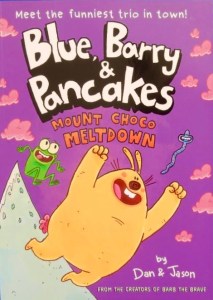
If you’ve not met them before Blue, Barry and Pancakes are a trio of tree-dwelling, fun-loving friends but their idea of fun isn’t the same. Bookworm Blue’s favourite activity is reading, frog Barry especially enjoys building models and then there’s adventurous Pancakes. Just as Blue and Barry have settled down to their peaceful pastimes in bursts Pancakes. She’s just made a balloon rocket and wants her pals to join her on a trip to Balloonia (a balloon planet). After some hair-raising situations, they find themselves in the stomach of Balloon Kong, the biggest, meanest Balloonian of all. How can they get themselves out of that?

A zany tale that explores themes of friendship and individuality; with much of the story told through the wacky artwork, it’s especially suitable for readers whose preference is for highly visual storytelling.

Ady and Me

“I have a secret that lives in my brain. / I call him Ady, that’s not his name … / Doctors told Dad it’s called ADHD. / But that’s way too boring for Ady and me.” So says young Sophie at the start of this story.
We follow Sophie through a day at school as she experiences good times and bad starting with being late and her teacher’s upsetting response.

More negative responses follow when she doodles on her book during history, talks during another lesson and despite her best intentions in science, is made to sit on a table labelled ‘naughty’. (The teacher part of me is horrified at this). Then in art Sophie accidentally knocks a pot of paint on Miss Brackley’s shoes. The response to this is almost unbelievable and Sophie is taken to the head’s office. However it’s not Sophie but Miss Brackley that gets the dressing down; moreover Headteacher Grant loves Sophie’s rainbow painting and has another surprise in store for her, Ady and for readers.

Told through a rhyming text written by partners Roxanne who brings her ADHD experience and Rich who brings his neurotypical perspective to the story and Sara Rhys’ eloquent scenes of a neurodivergent girl attempting to cope in a classroom where for the teacher, only neurotypical behaviour is acceptable.
This is an important picturebook that uses a metaphor one hopes will help children (and adults) see that ADHD should be accepted and understood.

The Floofs Reach For The Stars

Meet the Floofs: there’s Wizard, who has magical powers) Bean (an avid reader), treasure hunter Dill, Anise – the wise one that loves baking, Leaf, mushroom enthusiast, fashionista Clementine and laid back Teasel; each introduces him or herself on the second spread, as does not-Floof, Mica, There’s a map of their homeland on the first.
Having set the scene, there follow three short tales: in the first the friends endeavour to find out why the stars are missing from the sky when Wizard endeavours to cast a midnight spell.

The second story sees Leaf arriving at Dill’s door accompanied by a creature that introduces itself as Comet. Comet tells them that its spaceship crashed near a lake and the glowing orb vital to get back home is missing. The friends decide this is an adventure and off they set to the Great Lake in search of the orb.

An adventure it surely is but will they succeed in their mission?

Bean has just settled down to enjoy a quiet read when in burst the other Floofs disturbing her peace and prompting her to stomp off to be alone. However the park is anything but peaceful; but what about Dill’s suggestion, the forest? There follows another amazing adventure of the Floof kind but peace? Hmm – eventually though of the kind that pleases both Bean and adventurous Dill.

With bright, quirky illustrations, unique characters, a surreal backdrop, wisdom, working together and adventures of the magical sort, this is an absolute. delight from cover to cover.

Clem Fatale Has Been Betrayed

This story of gangsters, hoodlums and heists is set in London in the early 1950s. Herein we meet fearless young crook twelve year old Clem Fatale as she embarks on the night’s robbery to be led by her dad at Lord Weatherdale’s North London abode. Things don’t quite go to plan however as said dad, Jimmy Fatale leader of the Spider Gang and notorious jewel thief, seems to have gone missing along with the Fool’s Canary, a rare yellow diamond cut in the shape of the bird. However, Clem and her mates appear to have got themselves a young prisoner.

The outcome is that Clem along with her captive Gilbert, the terribly polite, unadventurous son of Lord Weatherdale for company, follow a trail of clues that take them on hair-raising adventures in greasy spoon cafes, nightclubs, safe houses and through London’s back alleys where rival gang leaders, fences and henchmen all operate. Aided and abetted by the son of Clem’s parents’ Polish cook, Konrad, and Winnie, a cab driver from the West Indies Clem learns that her Dad’s criminal operation has a secret side.

Will she find her father safe and sound or will the most dastardly villain of all prevent her so doing? That is the leading question as the plot turns this way and that. Clem is a great character, determined and resourceful; to her surprise, so too is Gilbert who sticks with her through everything. The dialogue between them is superb. There are lots of other superbly imagined characters including cranky crooks and dizzy dames, some will make you laugh, others hold your breath in horror. Many of these are depicted in Honie Beam’s black and white illustrations

The story’s ending sets the scene for Clem’s next adventure: this reviewer and I have no doubt, countless KS2 readers will await it with bated breath.

Twigs and Stones

Snake and Lizard live in a hole under a rock and like all friends they have their ups and downs with one another.

One day Lizard decides it would be good to collect twigs with which to put both their names above the entrance to their home. Off he goes to the river in search of sticks and mud. On his return he sets to work carefully arranging the sticks to form the letters; Snake is unable to assist on account of her bad eyesight. However Snake listens dozily to Lizard’s comments,

the task is completed and the names written large stand on the ledge until along come Tortoise.and Owl warning of the likely consequences of a desert wind. The wind comes, blowing down Snake’s name but then out of their hole comes Lizard to retrieve the fallen letters after which he returns to bed.

Next morning though, Snake emerges first and is furious to see that his friend has accidentally misspelt Snake.

Lizard’s way of dealing with things only makes his friend angrier and both have a most unsatisfactory day in silence.

That night it’s Snake’s turn to go out and check the names: now is her chance to teach Lizard a lesson. Fortunately though all ends well: the letters are removed and the friendship is restored.

There’s a gentle humour in both Joy Cowley’s telling and Gavin Bishop’s pen and ink and watercolour illustrations . The expressions on the faces of both Snake and Lizard are splendidly done heightening the drama throughout the squabbles, making this a great read aloud story with lots of potential for class discussion. It should certainly reassure children that friendships are important and silly incidents should be forgotten quickly.

Paper Dragons: The Rise of the Sand Spirits / Treasure Hunt

The second in this gripping series sees Zhi Ging continuing her journey in the magical underwater school Hok Woh. Now she undertakes a highly dangerous mission to rescue her friends and the villagers of all six provinces in the realm from attack. Accompanied by now-phoenix Malo she has to face dangerous sand spirits, enemies hungry for power and awesome lightning breathing dragons if she’s to save both her new home in the world of the immortals and her friends. However as secrets are uncovered, Zhi Ging must work out not only who she can trust but vitally, how she can survive.

With the author’s wonderfully imagined world-building and vivid, lyrical descriptions that include communicating jellyfish, readers will soon find themselves fully immersed in the twisting turning, fast moving plot. However, Zhi Ging’s journey is not only physical but it’s also one of self-discovery and personal development. She gains a considerable amount of wisdom concerning compassion and the power of words. With its blend of Chinese folklore, this is spellbinding indeed. Wither next, one wonders.

This book continues the tale begun in The Rock. The twins, Finola and Zane are at a traditional country fete in Cafner where they enter a treasure hunt that they hope might lead them towards their father. A local girl named Sylvie helps them understand the meaning of the clues but it’s not long before Zane catches sight of Nick Robinson whom he believes is somebody dangerous.. Should they abort the hunt and hurry to safety or continue following the clues to the end; clues in which their Dad has left messages for them. They really need to apply those lessons from Mum about Earth’s culture as well as the analytical thinking that Dad has advocated. And what about Nick Robinson – friend or foe?

The exciting story ends on a cliffhanger leaving readers eager to know if the family will ever be reunited.

Hupo and the Wonder Thief

This is Billy Partridge’s debut graphic novel; it’s set in a mysterious land called Yip within which is a bustling town named Yorger, the noisiest place in all of Yip. Therein resides Hupo, a dog-like creature with a longing for adventure who also makes very frequent visits to the library from which he borrows the same book every time, this being his 763rd borrowing of The Adventures of the Great Humdingo. Hupo can’t resist reading it aloud to his best friend the Aletha (a cross between bird and a serpent) as they walk along the streets but no-one else has the slightest interest in Hupo or the wild exploits he talks of in the shops he visits. Suddenly, having missed the bus home, he’s surrounded by a thick fog that descends and everything becomes weird.

“The Dark One is waiting,” one of the crows remarks. Now it appears that Hupo is finally going to get that much desired big adventure as the crows surround him and the Aletha is no longer by his side.

Hupo soon realises that real life heroism is way harder than any book has led him to think, but he’ll do anything for his friend no matter the danger involved. And danger there certainly is in the massive form of the Wallower. He, so a little creature named Choomo tells Hupo, was once none other than the great Humdingo but has become the beastly Wallower, determined to remove all traces of wonder and joy.
Use of scale makes Hupo’s encounter with the Wallower even more alarmingly dramatic,

but can his unwavering determination save the day and the town of Yorger?

A pacy tale with a vital message – ‘never be anything but yourself’ that will have young fans of graphic novels rooting for Hupo from the start.

Gargoyles: The Watcher

With the evil ghasts defeated and the Source purified, Callen is eagerly embracing his Guardian training with his gargoyle, Zariel. As a novice though, he still has a great deal to learn and when Oculus (the organisation that oversees all the magical Sources) learns that Callen has been made a Guardian, they send a Watcher to assess his skills. Callen is only too aware that if he fails, he risks losing both his new home and his gargoyle. However with ghosts prowling, a missing kelpie to find and tainted magic spreading beyond Gargoyles Rest, Callen’s courage, friendships and his resourcefulness will all be put to the test. However the Watcher has decided that Callen is worth training and stays on to help him and his friends.

Who will Callen trust and when faced with choosing between defending the Source and protecting his friends, what will he do? The choices he faces will push him to his very limits for he cannot bear to see any creature suffer. Teamwork and loyalty area key factors for Callen when it comes to finding the right path.

With it’s fast-paced action and dangers aplenty, Tamsin Mori’s wonderfully imagined, multi-layered second Gargoyles adventure is totally gripping and packed with magical realism. Don’t miss this one.

Zizzi Moonbeam

It’s Zizzi Moonbeam’s first day as an official party planner at Fairy HQ and she’s fizzing with excitement!. Having made her way to the Party Planners floor, she’s greeted by chief party planner Elvina Glass who hands her the day’s assignments.

Anxious to impress, Zizzi turns down the offer of help from Caspar who is seated next to her and sets to work by herself. She wizzes to the rescue to make sure every party is successful despite there being in turn, rain on the day of a garden party, a bridesmaid’s dress spattered all over with jam

and an ice-cream shop whose owner has forgotten to send out the invitations to its grand opening.

Seemingly no problem is unsolvable when it comes to Zizzi; but just before she’s due to go home she discovers another letter. How could she have overlooked it? There’s definitely not sufficient time to solve this party problem alone. Finally Zizzi realises she needs to act on Elvira’s advice and see if one of her new friends can come to her aid and save the day. Perhaps teamwork will become dreamwork of a very special kind.

Young listeners, party fans in particular, will love Emily Hibbs’ enchanting story and Natalie Smilie’s richly detailed scenes with their letters to open, books to consult, as well as the spreads showing the outcomes of Zizzi’s magical interventions.

Moon Girl

Leila loves bright colours and uses them in her painting; however she has a fear of the dark. One night as she looks out from her bedroom window at the moon in the dark sky, Leila sees what she thinks is a girl’s face peering down at her. The moon girl waves and so she waves back. Suddenly, as if by magic the bright-faced lunar girl descends earthwards landing on Leila’s windowsill. In her hand is a paintbrush. With this she starts to paint the world in a shimmering light and so begins a friendship.

Together the two friends embark on a midnight adventure as the paintbrush held by the moon girl lights up the darkness, gradually enabling Leila to let go her fears of the dark and replace them with a sense of wonder at each new thing she discovers.

Thomas Docherty’s reassuring story conveys both verbally and visually how Leila’s friendship enables her to overcome her fears and see things with a different perspective, that of awe and wonder. Young listeners will delight in the inviting, magical atmosphere created in the beautiful illustrations of a tale that is a must for those who have their own fears of the night.

Our Tree

When Little Red the squirrel scampers up the trunk of the titular tree uttering, “This tree is all for me” he receives some surprises and several lessons.

Before long the squirrel realises that he is not on his own: animals of all shapes and sizes spend time on or around the tree. They use its branches to rest upon, they nibble its leaves, use it as a place to congregate; Elephant even enjoys using it as a back scratcher but none of these trouble Tree; rather it makes them feel welcome. Little Red has no intention of sharing however and decides to seek a tree of his very own, but in his haste, he slips,

tumbles and lands on something soft.

What follows is a somewhat perilous encounter with a leopard and thereafter a change of heart from Little Red. He finally realises that to be surrounded by friends who are ready to cover your back is extremely valuable. Will his host allow him to stay? Indeed yes and Tree even introduces Little Red to a special new playmate. Undoubtedly, life is better together: community is the way to go.

This message comes across loud and clear from Jessica Meserve’s treasure of a tale with her delicately detailed illustrations. It’s one that shows young humans how important it is to learn to accept others and to share.

These Are My Rocks

An inveterate collector of things offers would-be collectors ie readers, a tour of collections. First comes the instruction to turn on the light which serves to illuminate the narrator’s cleverly curated collection of ‘small things’. These include an ant, a paperclip, a button and an acorn. To most of these items, Bethan Woollvin has given eyes. The same is true of those in the other collections be they big (you’ll need to pause and assist in a spot of reorganisation to prevent them spilling right off the page), pointy, or prickly (the difference is known only by expert collectors), the most exciting (rocks). After which there come stinky items,

fan mail, bananas (have a joke at the ready to amuse them), and then it’s time to stop for some lunch. Each spread offers readers an opportunity to participate: you can blow away cobwebs from the prickly assemblage, find the stinkiest item in the relevant collection, sort particularly delicate objects – ‘Gently does it!’ Whoops! the teapot’s become a potential addition to the broken things collection, then grab a straying spider. Our narrator places this in the collection of things having ‘far too many legs’.

Eventually as the objects start nodding off, it’s time to turn out the light and bid everything goodnight. The last page suggests that young readers could themselves become collectors though having enjoyed Bethan Woollvin’s chatty conversational text and offbeat illustrations, one suspects little persuasion will be needed.

Your Forest / Your Farm / Your Island

Eyes, eyes and more eyes. Every element in each of the three books has an eye, most have two and they all begin the same way. ‘This is your sun. It is coming up for you.’ Thus it positions the child reader as central to the whole.

Your Forest then gives that child suggestions to allow them to assemble a woodland scene comprising trees, a cabin, rocks, a friendly forest ghost (that only appears at night), a stream and a bridge. As the sun sets, the eyes close and the forest sleeps, all but one thing …
Sleepy time pleasure of the inimitable Klassen kind.

Like the previous book, as well as starting at sunrise, Your Farm, ends at night with the young reader receiving permission to sleep and think about the following day. Little ones then meet in turn a tree, a barn, a horse (to go in the barn) ditto some hay, a truck – in the barn too, a stool upon which to sit beneath the tree and a fence to surround everything. The sun then starts to sink, the eyes become sleepy and eventually close altogether. On the final page, it’s the moon that is wide-eyed and wide awake.

In common with the other books, little readers are given the power of creation of Your Island and it’s evident from the outset that the objects belong to the child. Item by item a palm tree, plants, a tent (to go beside the plants beneath the tree, a fire of the magic kind for it never goes out, a boat, a bird that takes to the wing from time to time comprise the island which is fully assembled come sundown. Then eyes close, the island sleeps , the reader contemplates tomorrow on the island under the watchful eyes of the moon.Another whimsical wonder to fuel the imagination and provide pre bedtime pleasure of the empowering, world-creating kind. If you have a toddler, I urge you to try all three and see … see… see.

Loki: A Bad God’s Guide to Unruly Activities / Bunny vs Monkey The Whopping World of Puzzles

Loki’s fifth diary is rather different from his previous ones. and that’s on account of his having played too many pranks of the poo-related kind around the house. As a consequence Hemdall has challenged Loki to find ways to keep himself entertained and sent him off to his room so to do. These ways must definitely not be of the messy ie poo variety. Tedious or what? It shouldn’t be very hard though as Loki is a clever god and aided and abetted by his pals, he amasses a fun assortment of puzzles, quizzes, games and drawing activities.
There is for instance an Insult Generator with which to enjoy insulting your nearest and dearest, and Thor’s non-violent means of winning a fight to contemplate and possibly test at a later date- it’s a bum thundertron.

It’s true to say that there are activities for anyone and everyone and you don’t even need to have read the other Loki diaries to enjoy this one.

More fun and games of the interactive puzzling kind in

Herein Bunny, Monkey et al visit a secret theme park deep in their woods and human puzzlers join them as they discover this lost location. Once there they will enjoy all sorts of tricky mazes, word searches, crosswords of the cross words kind, or even try their hand or paw at creating squared paper on which to ‘embiggen’ a character like Pig.

Just the thing for a rainy day or with holidays approaching, a book to take on a long car journey to stimulate your little grey cells instead of constantly fiddling with your phone.

The Seaside Sleepover

This latest addition to the Sleepover series takes place during the summer holidays. (For those who haven’t read the previous ones, Daisy’s elder sister Lily is a wheelchair user and uses Makaton to communicate.) Daisy wonders what she’ll find to do with her best friend, Emily having gone on a seaside holiday in a caravan.

Next door to Daisy’s family lives old Mr Norman and his dog, Scruff. She’s very fond of the dog but Mr Norman is standoffish and proud so resents interference from other people. However when he takes a tumble and has to go to hospital there’s really nobody else to take care of Scruff and reluctantly Mum agrees that the dog can stay with them. This makes the school holiday a rather more exciting prospect. Then Daisy starts wishing they could take Scruff to the seaside; she’s sure he’d enjoy that as much as she would.

That evening Daisy’s Uncle Gary face-times them and is very excited: he’s putting on a family friendly comedy show at the seaside. He’s staying in a posh hotel that has additional holiday homes including one he thinks would suit them. At last Daisy’s parents agree and on the Saturday, they’re off, accompanied by Scruff and Lily’s friend, Natalie who uses a support for walking.

What an eventful time they have especially being in the front row for Uncle Gary’s performance when he cross-dresses and becomes Gloriette; but there are surprises, new friends

and some difficult situations to deal with too.

There are few authors who both understand children so well and portray them so credibly in stories as Jacqueline Wilson. Rachael Dean’s light-hearted illustrations further enliven the drama.

KS2 readers will devour this and I throughly recommend it for classroom collections and home bookshelves.

The Worry Bee

Little Izzy the bee longs to fly to the flowers with the other bees in her hive but she’s beset by ‘what if?’ worries: What if her wings aren’t strong enough ? What if she fell?’ So rather than trying to get airborne, she stays behind for a while and then starts walking, This gives her the opportunity to see interesting things on her journey. But there are disadvantages too including getting tangled in spider webs and even worse, a huge river to cross. She definitely can’t walk over that. Time to try flying, thinks Izzy but soon meets with an accident that sends her crashing to the ground.

She’s on the point of walking back to her hive but there comes a strange noise nearby. A baby bird lies flat on its back at the base of a tree. When it asks Izzy to demonstrate her flying prowess, she doesn’t know what to say, but suddenly the baby bird mentions a big fluffy thing coming towards them. Izzy realises what it is and that they need to take to the air to escape it’s clutches .After a lot of flapping … they’re flying, first stop the baby bird’s nest and then Izzy flies to join the other bees in the field of flowers..

There’s gentle humour buzzing right through Nicola’s latest story both in the words and illustrations. Young listeners will love the dramatic scenes of Izzy and how she finally overcomes her fear of flying.

There’s No Such Thing As … Fairies / One Goose Two Moose Three Raccoon Four Baboon

These are both additions to popular series: thanks to Scholastic for sending them for review.

Having explored the possibilities of there being unicorns, elves, mermaids, dragons and ghosts, team Rowland and Halford turn their attention to Fairies in their latest search and find story. The young girl narrator has been told by her daddy that fairies don’t exist and she sets out to check the veracity of his assertion the very next day. First in the meadow where the family have a picnic, then the woodland stream, followed by the park, the beauty salon, the aircraft show

and the hothouse. She even checks out the dentist, the library and the theatre, after which she’s ready to agree with her dad, “There’s no such thing as fairies,” she confidently tells him, “It’s really TRUE.” Realising his little girl is upset dad lifts her up onto his shoulders and they start walking home. Suddenly a rainbow appears and …

Katy Halford’s vibrant, playful, detailed scenes wherein fairies hide in plain sight complement Lucy Rowland’s expressive, patterned rhyming narrative with its repeat refrain, making this a book that young children will find great fun and likely want to hear several times: oh how they love being in the know with the author.

Rule stickler Simon is back and once again he’s having trouble getting the animals into their proper lines. Then there’s Moose who is as eager to help as ever..
In this instance help is definitely required during an animal outing to the park for which there are three vehicles, one for the raccoons, one for the geese and the third bearing the sign Magical Moose Tours. When it’s time to reboard their respective buses is when the problem starts. There are mix-ups of raccoons and baboons, hares and bears, bees and fleas, eels and seals, a cockatoo and kangaroos; even a fox and a box – hmm!

Poor goose is going crazy with frustration and confusion. Forward steps Moose hoping to give some assistance. Can he persuade Goose that there is more than one way to do things and allow the tour to continue?

Another gigglesome delight with a wealth of possibilities for preschoolers and beyond, from author Kael and illustrator Nicola.

Solving Crimes Is Not My Superpower

Everybody living in the town of Walsham has a superpower, everybody except Sara (narrator) whose parents are members of the IPA (Incredible Protection Agency). Her mum can control the wind and her dad has super strength. Her best friend, Georgie can smell fear and is a football fanatic as well as captain of the school team; the mayor emits multicoloured farts and an old lady can levitate squirrels (albeit waist high only). Although she’s great at cracking really funny jokes, Sara is still waiting for her power to appear (she’s around the age it usually happens).

So when their school’s all important soccer trophy is stolen just four days from the final match, Sara has no choice but to solve the crime using only her powers of deduction. As well as a notebook in which to jot down clues and suspects, she has her two pals Georgie and Javier close at hand to help investigate.

Sara is especially determined as Walsham’s school team has never lost to Ramsdale in eighty years due to the power of the soccer trophy.

During their investigation the three uncover some town secrets but will they recover the all-important trophy and will Sara discover her superpower. (I love what Sara’s dad says to her early in the story, “And remember: the only TRUE powers are … a lovng heart, a helping hand and the courage to do what’s right.”)

This funny story is witty and warm and the dialogue is great: it will have young readers laughing frequently as they whizz through the story perhaps solving the mystery before the threesome.
It’s the first in a new series and has lots of lively drawings by Simran Diamond Singh. I look forward to the next adventure, Time Travel Is Not My Superpower.

Food For All

We all – humans and creatures large and small – need food of some sort in order to live. Some, including lots of humans eat other animals, some eat plants and some eat fish and other sea creatures. Interestingly, as the extraterrestrial creature that comments on various pages informs us, the largest creature on planet earth – the blue whale – eats krill, one of the tiniest. It’s not the only being that makes thought-provoking comments from time time time; so too do various animals and humans of different ages.

Almost twenty aspects of food and feeding are explored starting with growing food for both human consumption and for animals. This is followed by a look at what plants require to grow and the topic of chemicals is mentioned – their uses and the harm they cause.

There’s a spread about harvest and a look at associated festivals in various parts of India.
For me the most distressing fact is that despite there being more than enough food in the world for everyone, starvation still abounds and even in rich countries like the USA and Great Britain, there are many people who need to regularly rely on food banks. Equally shocking is that there is an awful lot of food wastage.

But, as we read, there are things that all of us can do.

Mary Hoffman’s engaging style makes a wealth of information easily digestible for primary age readers and Ros Asquith’s droll illustrations help keep the tone of the whole book light and inviting. A thought-provoking book that offers a wealth of discussion topics.

Dungeon Runners: Sky Battles

This is the powerful sequel to Hero Trial featuring team Triple Trouble: Kit, (not the most optimistic character), Sandy – the mage and more upbeat, and Thorn the vegan vampire healer. In this story they’re off to Cloudroost, a city in the clouds to participate in a competition as real Dungeon Runners.
Shortly after arriving at their destination, they’re surprised to find someone offering them sponsorship. Her name is Gilda Grubfoot and she’s the owner of a product called Troll Bogeys. (It actually makes excellent glue.) As well as the possibility of any amount this (yuck), she gives them an old steel shield on which has been sprayed the name of her product. Surprisingly Kit is quite pleased to receive this despite the words thereon.

During the introductions by commentators Jenna the Giant and Dirk the Ork, team Triple Trouble are made to feel objects of derision, but thanks to words of support from the captain of one of the other teams Kit feels slightly more positive. Then it’s time to head to the actual dungeon deep inside the mountain.

What will be their fate, a downfall thanks to ghastly threats and cheating by other teams, or, with a little help from kindly gobrots and a touch of magic from a staff courtesy of Grandpa Klot, can Triple Trouble prove they’re worthy of a place at the next level? They’ll definitely need to keep their wits about them all the time.

There’s a gripping storyline with excitement aplenty, characters familiar and new, humour and Joe Todd-Stanton’s terrific illustrations that are full of atmosphere, sprinkled with humour too, all of which make this a book that older KS1 / younger KS2 readers will love.

Puddle & Lettuce: The Treehouse

Meet best friends Puddle, a frog and Lettuce, a snail. Puddle’s little house beside the pond is perfect for a frog and Lettuce’s warm, cosy house on her back is perfect for a snail. They share each other’s special interests: Lettuce loves to listen to Puddle play his guitar and Puddle relishes the cakes Lettuce loves to bake.

One day Lettuce pays a visit to Puddle but the latter suggests they go to Puddle’s much larger house. Suddenly they have an idea: a treehouse that is big enough to accommodate them both. However in his enthusiasm to start building Puddle dashes off to collect suitable bits of timber and doesn’t hear what his friend has said regarding the drawing of plans.

So, with the job complete Puddle excitedly calls his pal to come up and join him. The problem is the treehouse is way too far up for Lettuce to reach. A sudden realisation dawns. Can they work together and create a treehouse that is just right for them both, a place wherein they can both enjoy sharing their favourite things – pancakes especially?

With an important message about seeing things from another person’s viewpoint, this story with its endearing characters, will likely make young humans think about how they treat their own friends.

Ant Party

It’s Andy the ant’s birthday so he decides to throw a party – just a small affair to which only his neighbours are invited. But the neighbours haven’t any food to contribute so they invite the farmer ants. News of the party quickly spreads throughout the ant community to the worker ants, the soldier ants and the Queen. She takes it upon herself to invite residents of other ant hills nearby

and before long there are thousands of excited ants ready for a rave. Andy finishes his preparations just as there comes a knock on his door. He can’t believe what his sees right before his eyes. In they come and immediately begin partying madly but suddenly there’s a horrifying sound that makes Andy’s house shake. It’s a gatecrasher in the form of an anteater and the ants are trapped, and terrified.

All that is except Andy who is absolutely furious. At his behest, the other ants rally round, form a conga line and the anteater gets his cum uppance. This will surely get child audiences cheering.
Having bested the intruder the ants celebrate long into the night giving Andy a terrific party, the greatest ever, despite not being exactly what the birthday ant had imagined.

Ross’s telling is thoroughly engaging and young children will adore Andy (I love his leafy apron) and the other ants, each of which Sarah Warburton manages to make different with spectacles, eyebrows, moustaches etc. Every turn of the page invites readers to linger long and enjoy all that’s going on. I’m sure this is a party children will want to go to many times over.

Oh, Carrots!

Mr Rabbit lives all alone and has grown used to so doing, occupying himself caring for his plants, keeping his place clean and reading, though at times it’s so quiet he does feel a tad lonely.

Now with the coming of spring Mr Rabbit can plant his favourite thing, carrots. It certainly keeps him busy and after 240 seeds are safely in the soil he’s more than ready for a hot drink and some relaxation. But suddenly he spots another seed in the packet. “Where were you hiding?” he asks seed 241, carefully planting it and resolving to give it a little bit of extra TLC so it doesn’t feel overlooked again. With daily watering, singing to the seeds, sunshine and loving kindness the carrots start to grow, one especially well.

One day he notices a carrot top give a wriggle. He pulls, pulls and pulls and out pops a walking, talking carrot. “Hello Mr Rabbit” it says. ”Oh, Carrots!” comes the reply and Mr Rabbit dashes off home, forgetting to close the back door.

It soon becomes evident that Carrot just wants to be Mr Rabbit’s friend but Mr Rabbit wants his visitor to leave him alone not jump on the sofa, interfere with his record collection or rummage through his books. Carrot’s lively antics irritate Mr Rabbit who is not at all used to mischief. However during the course of the day our lupine friend gradually finds that he’s enjoying himself.

So used to being a loner, he’s never considered having somebody else around. Could it he that needs a friend after all?

Mariajo’s combination of words and pictures is a winner with its striking illustrations and text both imbued with gentle humour and wisdom. A book that celebrates the joys of making new friends and a demonstration of how a close friend can help a person learn more about themselves.

The Old Watering Can

Grandma has two watering cans, one she’s had a long time that is leaky, the other is new and somewhat ornate. Every spring and summer day she carries them both to her greenhouse at the end of the garden to water the plants. First though she goes to the tap to fill them but by the time she’s walked to the greenhouse, half the water from the old watering can has leaked out. The proud new one however is still full and likely to splash over the rim.

As a consequence only one and a half cans of water reach her greenhouse and this makes the old can feel the need to apologise for its leak. However Grandma is quick to point out the array of flowers growing on the old can’s side of the garden but not on that of the new can. She explains that she was aware of the leak, so had planted seeds only on the old can’s side and as they walked to the greenhouse they got watered. She tells her old can that she’s been able to share these flowers and make her friends and neighbours and of course, its owner. happy.

A story about accepting and celebrating your imperfections from a debut author/illustrator whose illustrations are infused with a playful energy and their charming details will bring a smile to the face of readers. Grandma is the only character mentioned in the words but there’s also a little girl, a lively dog and a bird that appear on many of the spreads – plenty of storying there.

The Bird Thief

Twelve year old Erin has OCD with symptoms including continually checking things and counting. Her mother is depressed and has been since her much loved sister, Erin’s aunt Sophie, died in an accident some years ago.

Now it’s the summer holiday and Erin, her parents and younger sister, Lena, are staying in a static caravan in the Welsh countryside near to a spot that was special to Erin’s mum and Aunty Sophie and near to where Bampi (the girls’ grandad) lives.
Before long strange things begin to happen: first Erin sees a girl lying face down beneath the caravan next door and then later that day the woman staying in the same caravan is screaming in alarm about there being snakes in her son’s bedroom.

The following day Erin has a through the fence encounter with the girl she’d seen under the caravan, only this time she’s telling Erin not to feed bread to the ducks. The girl introduces herself as Bess, says that she’s thirteen and offers to show her a nest with chicks in. Despite Bess’s somewhat unkind behaviour Erin feels drawn to her and with Lena, ends up going through a hole in the fence surrounding the caravan park and into the woods beyond. Several times she goes and eventually Bess tells her the truth about the ‘snake’ episode. Later she takes them to the Goldfinch nest. Erin climbs up to get a closer look and ends up falling to the ground. It’s then her bird experiences begin: not only do the goldfinches heal Erin, they pass on some if their avian nature. Erin finds she’s able to fly, to slow down time and to communicate with one of the goldfinches, calling it Fable as it reminds her of her soft toy comforter.
Over the next few days Fable and Bess (despite some misunderstandings) lead Erin to realise that there’s something threatening the goldfinches and they find themselves caught up in a very dangerous situation when a forest fire breaks out.

Can Erin save herself, her friends and family, with or without her special powers?
Erin is a fascinating character and the author draws on her own childhood experiences both for her protagonist and her magical tale wherein mental health, the natural world and friendship are explored. There are occasional strategically placed black and white illustrations by Naomi Bennet that add to the emotional power of the telling.

Gargoyles: Guardians of the Source

When Callen and his parents move into a ramshackle country mansion in need of restoration that used to belong to his grandmother, he’s far from happy. Every ledge has gargoyles frowning down, there’s a secret tunnel and weird sounds coming from the basement, as well as locked rooms. Seemingly there are secrets nobody has told him about. Then he comes upon an old journal in one of the rooms and learns of protector gargoyles and how human guardians are able to summon all the gargoyles to their aid.

The sense of unease Callen feels about the place is proved correct when come midnight he’s awoken by what he thinks is the sound of claws: the gargoyle from his bedroom windowsill has come to life. This precipitates events that see him endeavouring to take on the family role of Guardian, the ability for which the gargoyle doubts because it takes years to train. Callen will certainly need to win the trust of said gargoyle, Zariel and find lots of courage to undertake especially with a threat of evil magic poisoning the source creating a sense of urgency.

As he meets new friends with experience of magic, Callen begins to realise his own potential.

With themes of friendship, hope and the power of dreams, and dangers aplenty, this action-packed fantasy ends with the promise of more; KS2 readers who enjoy adventures infused with magic will eagerly await the second book.

Get Dressed Belly Button! / So Tired, So Wide Awake!

Both these board books are from Gecko Press: thanks to the publisher for sending review copies.

It’s a chilly day so the toddler must be suitably dressed before heading outside into the cold. Tinies will enjoy watching as the adorable infant is clad in ‘two soft socks’, a ‘toasty t-shirt’ and a pair of jeans; but there’s a belly button still visible. What else will be needed before we’re ready to sally forth? Squeaky sneakers, a cosy warm coat, two woolly mittens, a bobble hat and a scarf and a special kiss. Hurrah! Off you go, little one.
An external narrator, presumably the parent or carer, does the talking in this cleverly designed, vertical flip-flap board book

A small bedroom drama unfolds as Hedgehog, Fox, Donkey, Pelican and Crocodile lie fast asleep in bed; but not so Seal. He apparently needs to visit the bathroom so up and out of bed he wriggles. Then in turn, his previously snoozing pals leave the bed and troop to the bathroom: Crocodile has forgotten to brush her teeth, Pelican needs a drink of water,

Donkey has itchy ears and so on, until only a scared Hedgehog remains. Up she scrambles and off she tip, tip tips to find the other animals. Where have they all gone? Somewhere where they can each receive a goodnight kiss before falling fast asleep. Unsurprisingly though, the kiss giver is still wide awake, squashed beneath the heap of slumberers.

Suddenly, a voice calls out, “What a stink! Who did that?” Thereupon, the animals rapidly return from whence they came and crash out in their own bed at last.

Little humans will enjoy watching the build up of tension before it’s revealed where the animals are all going, and delight in the whiffy solution that has them hastily retreating to their own bed. Fun to share with tinies especially as a pre-bedtime read.