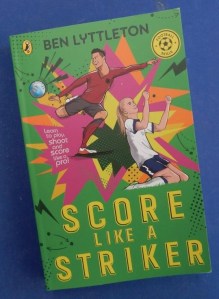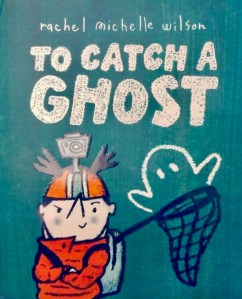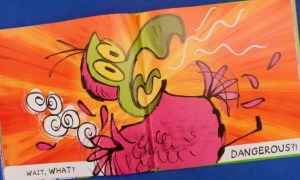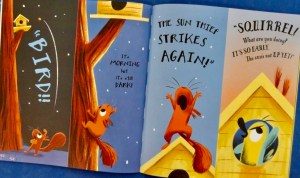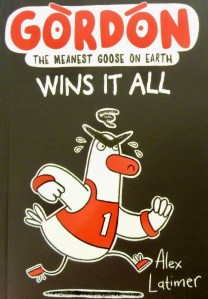
Bad United, the team that includes a skeleton captain, a dinosaur, a unicorn, a fairy and a spider goalkeeper return with some more splendid soccer silliness. In this instalment team members are celebrating their first win, albeit in a rather dis-united manner, when news comes of their next match. They’re up against Tinkerball’s old squad, The Fairy Dusters – the one from which she was given the boot – and she’s very worried about the prospect of having to perform against them. Nevertheless Hoof suggests the fairy teaches them some special moves, so Tinkerball starts on the magical moves training. A successful session is followed by some enjoyable team bonding. Come match day, the commentators remark, “Tensions will be running high”. Meanwhile Bad United are given special new magic repellant kit and onto the pitch they go. With Tinkerball’s twin sister heading up the opposition and Tinks out for revenge the sparks begin to fly. Come half time the siblings are both booked and Tinkerball is forced to relate the whole story of why the Fairy Dusters threw her out.
Bad United’s captain gives the siblings a good talking to and the second half begins. What will be the result? Is it possible that Bad United can win their second match?
Further football foolishness delivered cartoon strip style that new solo readers will revel in.
Bertha & Blink Take To The Skies Nicola Colton Little Tiger
When Bertha discovers that her erstwhile friend, now her inventor nemesis, Finnius Fink, has allowed filthy smoke to belch from the chimneys of his new factory in the jungle, she and her roommate, robo-bird Blink, are horrified. With thick smog everywhere, they need to step up their mission to save the jungle from complete destruction and that means asking some of their fellow animals to join them.
The creatures gather at Bertha’s treehouse where she shows them down to her secret workshop to see her latest invention: a plane with lots of additional features – even more once her new friends start to help. Said friends are shocked to learn that Bertha intends Finnius i to steal the invention and enter it into the Invention Competition as his own. During his absence at the competition the plan is that Bertha et al will destroy Finnius’s factory. It’s certainly a daring plan but can they possibly pull it off, get rid of the factory and set about replenishing the jungle trees and plants? Let’s just say that teamwork is dreamwork and sometimes dreams come true.
A fun, early chapter book with lots of speech bubbles and highly engaging illustrations. What will Bertha and Blink’s new mission entail, readers will be eager to discover.
Wrong Time Rooster Michael Parkin Flying Eye Books
There’s excitement down on the farm when a large crate is delivered. With the animals gathered around, Farmer Tony opens the lid to reveal a rooster. Said bird wastes no time in introducing himself as Ronnie. “No more sleeping in late,” the farmer tells them but at dinnertime that evening there comes a resounding ‘COCK-A-DOOODLE-DOOO’; but Ronnie fails to crow the following morning. As a result, the animals remain fast asleep.
After a whole week of wrongly timed crowing, much to the delight of the farmyard entourage, Farmer Tony decides that he needs to have a talk with Ronnie about his efforts.
Apologetically, the rooster explains that he’s been sacked from every job he’s ever had on account of his badly timed crowing. “But nobody ever taught me how to tell the time!” he reveals. Farmer Tony’s parting comment leaves Ronnie convinced that he’ll be re-crated and moved on yet again.
However, the silent farmyard no longer feels right to the animals, nor indeed to the farmer. Rather than sending Ronnie packing, they collaborate on something much better for them all: teamwork rules and that team includes rooster, Ronnie. No more crowing at the wrong time on the farm – or make that almost never …
With rumbustious illustrations, a main character that will endear himself to listeners, its playful narrative that reads aloud well and lots of opportunities for audience participation in the COCK-A-DOODLE-DOOs and WRONG TIME ROOSTER refrains, this is a story that young children will enjoying giggling over, time and again.
Sniff! Sniff! What’s That Whiff? :Lucy Rowland and Gareth Conway Scholastic
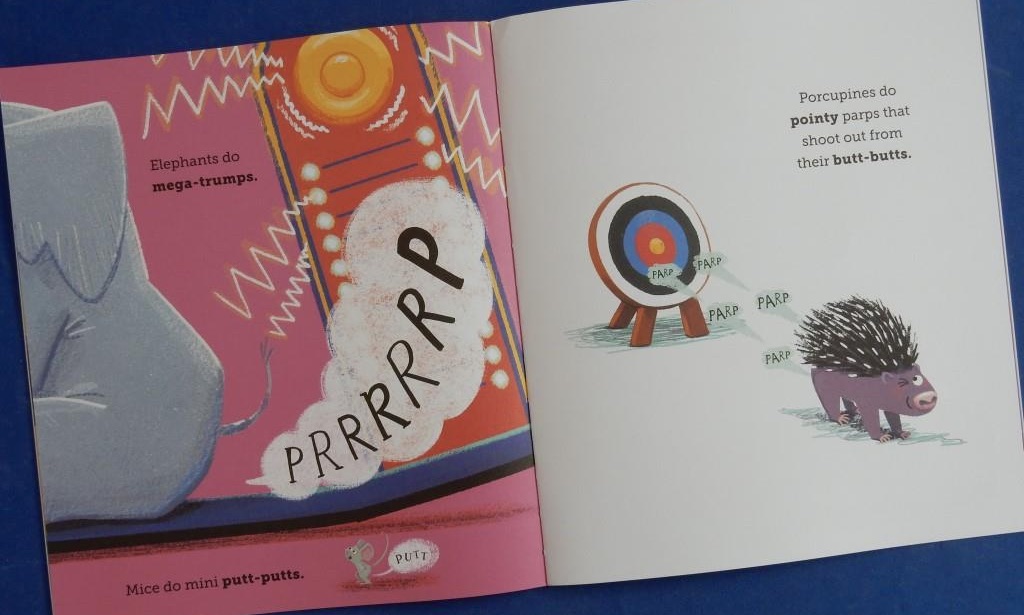
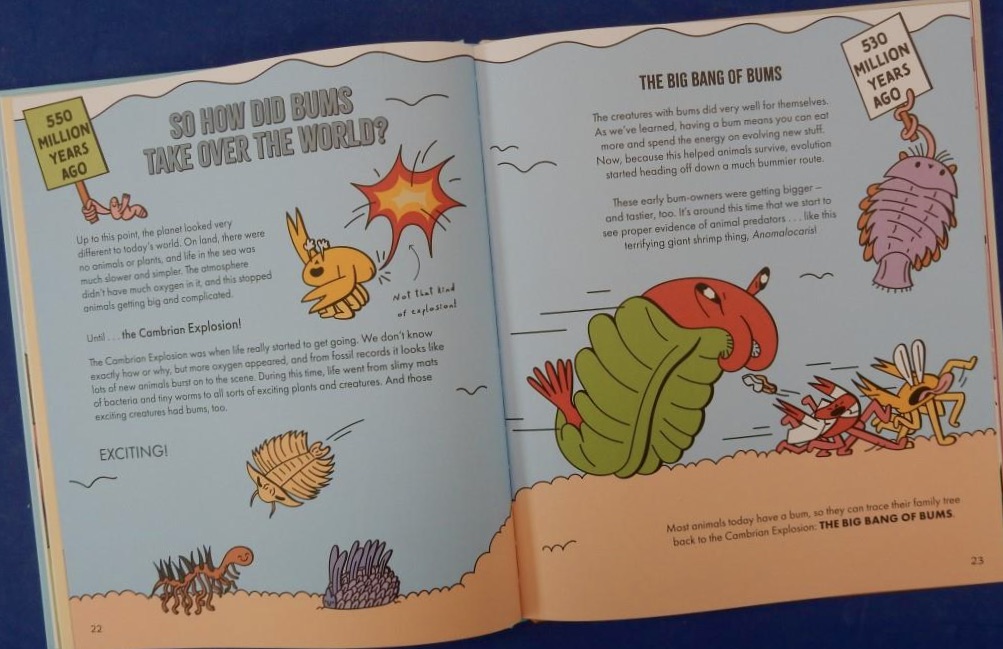
This story is told in rhyme by a dinosaur that has feasted on a large portion of berries for lunch and soon detects a terrible whiff in the air around. Determined to discover the perpetrator of the bottom-burp aroma , off it goes inviting young humans to join in the search. The first to be interrogated is Pterodactyl. She proffers proof that her toot is not the horrid one that offended our dino. narrator. Nor are those made by Dippy diplodocus, Ankylosaurus,
Triceratops, the Megalodon Shark (his is exceedingly fishy) and Steggy Stegosaurus. Then comes a very strong, meaty smell: Yikes! It’s T-Rex. T-Rex gives chase but unexpectedly stops, apparently feeling exceedingly poorly on account of the stench. Our narrator empathises but a realisation suddenly dawns. That rear end purple parp cloud eruption is coming from our very own narrator’s bum and has been responsible for saving the others from becoming T-Rex’s supper.
Time for a party when feeling de-stressed, the other dinosaurs dance, stomp and relax their bum muscles releasing …
I suspect that along with unicorns and dinosaurs, poohs and pongs are young children’s favourite topic for picture books so this one of Lucy’s and Gareth’s will be a winner on two counts.
How To Walk A Whale Sam Wilde and Sarah Horne Oxford Children’s Books
This fourth title in the Peculiar Pets series is narrated by a girl who takes her grandmother’s advice, thinks big and advertises for a whale to come and share her abode. Sure enough, what should appear outside the front door but a blue whale. It’s as well that Granny has a book on whale care to make matters easier. Providing a ‘happy’ environment means that the creature cannot spend more than a couple of hours on land. Then there’s the issue of diet: an abundance of krill is what’s needed and lots of exercise is vital;
but when it comes to accompanying your whale as it swims thousands of miles to find a mate and give birth; and communicating your love often, it becomes evident that as strong as that love is, what is even more important for the pet whale is to rejoin its family in the vast ocean. Of course there’s always the hope that he’ll come back to visit his human friends before too long.
As well as being vibrantly and humorously illustrated by Sarah Horne,, author Sam Wilde has included lots of facts about blue whales in the text. Did you know for example that they filter the krill through big bristles in their mouths. There’s also a final double page spread giving the ‘Top (10) blue whale facts.’ Yes, the book is humorous but it also contains an important message about the responsibilities one takes on when having a pet animal of any kind.
Unicorns in Uniforms: Dragon Inferno Tracy Curran, illustrated by Steve Wood UCLAN Publishing
Dragon Inferno is the first instalment in the Unicorns in Uniforms series, the uniforms team being Blaze, the firefighter, Locke, a Police Sergeant, paramedic Dash, Sunny, an air and mountain rescuer and Aquarius, responsible for sea rescue. This story is told from the viewpoint of Blaze.
There’s action aplenty, which starts when two playful young dragon friends, Flare and Glimmer accidentally set fire to Witchy Wood. Abandoning her breathing exercises, Blaze immediately leaps into operation mode. With Sunny already engaged, the firefighter boards Quench, her Flamequencher emergency vehicle and races off towards the scene of the fire. Enter young witch, Jinx pushing a strange wheeled contraption – seemingly her conjuring has gone a bit wrong. It contains Flare with a broken wing; but almost at once, Jinx’s magic mishaps get far worse and disaster ensues with the inferno heading towards the treehouse of Hex, her grandmother, which is full of powerful magical potions.
Fortunately it’s soon after that Blaze utters the words, “Nothing is impossible for Unicorns in Uniforms’.
Will they, or will they not prove to be right: can Blaze and Quench get everyone to safety before the whole of Witchy Wood is destroyed.
At just over a hundred pages, with Steve Wood’s exuberant illustrations, this is ideal for those in KS1 just starting to read chapter books. I’m sure readers will be eager to read stories told from the viewpoints of the other uniformed unicorns too.
After the story comes some information about real live fire-fighters and their equipment, and a quiz. In addition, Tracy Curran’s narrative offers opportunities for discussion about ways in which to control one’s temper and to stay calm in an emergency.
No matter how hard he tries, Bobby’s attention keeps wandering and he finds it hard to stay still. When he becomes distracted, he starts floating upwards and the more his imagination takes over, the higher he goes. His friends, his mum and his teacher try to help but there are so many things that draw his attention away from the everyday things – the colour of a bird’s song and the idea that the moon might get lonely – for instance. Bobby really does want to concentrate like his friends Jess and Nelson, to be organised like his Mum and focused like teacher, Mr Brian, but it only works very, very briefly and makes the boy very tired. His friends and family devise a plan.
However, this restraint makes him feel empty, devoid of imagination and so he cuts himself free. The result is immediately uplifting, leaving friends and family pondering upon how to get the boy down. Perhaps they should try looking at things from Bobby’s viewpoint …
This uplifting story shows the importance of understanding and valuing neurodivergence: it appears that Bobby has ADHD and author/illustrator Greg Stobbs, has drawn on his personal experience in creating the book. I love his use of pink neon to represent Bobby’s imagination.
Marty Moose: First Class Mischief Claire Powell Walker Books
This is the first instalment in an exceedingly funny new series presented in two colours by Claire Powell. First of all don’t be misled, Marty is a mouse, not a moose – that was an ink blot on his birth certificate. We meet Marty on his very first day in the his first ever job – the very important role of Postmouse of Little Ditch. He’s particularly excited as his now retired Great Aunt Ada was reputed to be one of the best at the job.
Determined to be a first-class deliverer too, off he sets to the Post Office where his first encounter is with Cyril Snorter, employee of the month twenty seven times in a row. He also meets other members of the team who appear somewhat sneery. Then with post bag duly slung over his shoulder and instructions to leave no parcel undelivered and to watch out for rotten blueberries – no idea why – he’s on his route. With several letters duly delivered, Marty is feeling upbeat but then he gets rather lost in a rabbit warren.
Fortunately however, he finds himself unexpectedly embraced by Nibbles Frizzly who is a trifle loopy but she does explain how the confusing number system works
and helps deliver the post. Before long they get stuck in what proves to be a booby-trapped garden where they’re caught between feuding toad siblings, Velma Carbuncle and her young brother. From booby trap to toady trap go Marty and Nibbles. Suddenly Marty recalls reading in an encyclopaedia of his, that toads are known to eat mice. Yikes! Surely his first day at the post office isn’t to be his last. Light bulb moment! Is star employee Cyril behind all the problems and if so what should he, Marty, do?
Really fun, this zany adventure is told brilliantly both verbally and through Claire’s red and black illustrations. Younger readers (and many adults) will love this and eagerly anticipate The Great Stamp-ede, Marty’s next adventure.
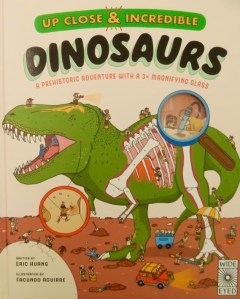
Oh No They Aren’t: Nature Eric Huang, illustrated by Sam Caldwell Words & Pictures
Playful in approach it may be, but there’s a wealth of information about the natural world to be found in this book.
Following his introduction the author adopts his tongue-in-cheek question and answer style replete with pantomime-like ‘Oh no they aren’t!,’ ‘Oh no they weren’t!’ ‘Oh no they don’t’ interjections, in the book’s six thematic sections. These are in order, Prehistoric Life, Green Planet, Under the Sea, Creepy-Crawlies, Predator and Prey and High Fliers.
In Green Planet we read, ‘Flowers are just pretty decorations … aren’t they?’ followed by the rejoinder ‘OH NO THEY AREN’T!’ and an explanation of pollination and its importance.
Then in Predator and Prey we meet several sharks – all of which are fearsome predators aren’t they? Actually no: the whale shark – the largest shark in the world – is a gentle giant. Moreover, if you thought all sharks are very big, that’s wrong too: dwarf lantern sharks are only about the size of a mobile phone. Now that I didn’t know.
Sam Caldwell’s humorous illustrations match the jaunty style of the writing and the book concludes with a useful illustrated geological timeline and a glossary. A thoroughly engaging addition to the Oh No’ series that will be lapped up by those with a preference for reading factual books rather than fiction.
King Coo: The Secret in the Woods Adam Stower David Fickling Books
Ben Pole is a a timid boy whose major worry is not the chaos-causing sink holes that have suddenly started appearing. Rather, a victim of horrible bullies, Ben’s primary concern is to get to the end of term unharmed by Monty Grabbe, son of the unprincipled mayor, and his motley gang. As he flees from them, Ben falls into one of the sink-holes and lands up in an unknown forest.
Enter King Coo, a diminutive but formidable character wielding a spear and with an exceedingly long beard. To Ben’s remark, “I’ve never seen a boy with a beard before,” comes the affronted response, “ How DARE you! I am a GIRL with a beard!” It turns out that Coo’s only company is Herbert, a wombat, obsessed with tunnels. Coo rules the forest, swinging through the canopy and living in a tree house.with ropes, slides and all manner of amazing inventions.
Ben and King Coo immediately form a friendship, but before long their kinship is disturbed by the appearance of Monty and his sidekicks. However, King Coo and Ben, are aided by the former’s ingenious devices that prove extremely useful when an attack is launched.
Who will emerge the victors? What will be the outcome, not only for Monty and gang, but for Monty’s father?
This is a terrific read for younger children mixing together the real and fantastic. Adam’s two main characters, indeed all the characters, make a splendid cast, superbly brought to life through illustrations interspersed throughout the exuberant text, and in its occasional graphic novel format.
Originally published several years ago, it’s great to see this being re-issued by David Fickling Books this month.
The Book is Full of Poop Gareth Peter and Mike Byrne Scholastic
Having given readers a book full of unicorns and a book full of elves, team Gareth and Nathan now offer a much more whiffy one. I suggest a clothes peg on the nose as you accompany the two child narrators on a poo hunt around town; it promises to be a ‘super-duper-poop-athon’ during which you will encounter creatures of all shapes and sizes, some imaginary, some extinct and others feathered, furry, thick and fibrous, or scaly. Of all shapes and sizes too, are the poos they deposit.
Did you know for instance that hippos poo while on the move
and sharks produce poo of a green colour?
Gareth’s rhyming narrative ends with a warning to beware of hidden poop piles and of course, whenever you conclude a walk around outside it’s wise to check the soles of your shoes.
Young humans will love the poo depositing shenanigans of the animals depicted in Mike’s amusing scenes; adult readers aloud might wish to have an air freshener close by as they share this offering with one or several children.
Hunt for the Golden Scarab M.G. Leonard, illustrated by Manuel Sumberac Macmillan Children’s Books
This is a superb start to what promises to be another excellent M.G.Leonard series. Herein she brings together her loves of history and music; she visited Egypt before writing this book, which is evident from the historical and geographical detail included on both modern and ancient Egypt.
Twelve year old Sim loves to play the piano and practise martial arts, the latter his mother teaches. After moving around quite a bit, her main job is to act as caretaker of the Sir John Soane’s Museum in London, which houses the collector’s archaeological and artistic treasures and objects of interest. Mum (Callidora) and son live in the caretaker’s flat and Sim currently attends the local school where he’s made a good friend, Nelson.
One night, when a pair of strangers appear in the museum after it’s closed. Sim is amazed that his mum plays a tune on a penny whistle she has with her and the tune opens a door, transporting them back to the time of Sir John. It transpires that Mum is a Time Key, able to time travel; however so too are her untrustworthy brother, Emmett and his daughter, Jeopardy, whom they meet beneath the basement of Liberty’s department store. Callidora and Emmett are considered renegade keys as they don’t follow the rules set by the Council of Keys, a society that governs movements.
Everyone is looking for the golden heart scarab of Nefertiti, said to hold the secret of eternal life, but at first no-one knows the whereabouts of her tomb. Callidora though works it out and appropriately clad, they travel back in time. Sim meets the young Tut Ankh Amun
and Jeopardy assists in laying out the body.With the council’s hunters hot on their trail, the excitement and danger mount: Callidora, Sim and Jeopardy must piece together the long-hidden clues if they are to solve the mystery of the scarab before they’re found by the Council.
There’s a satisfying ending that leaves the way open for further adventures. The author’s use of music and musical instruments as a way of opening time doors is genius: I for one, eagerly await Time Keys second instalment.
Interestingly there’s also Sim’s Time Traveller’s Diary recorded by his friend, Nelson and a ‘Key’s Guide to Ancient Egypt’ at the end of this book. Manuel Šumberac’s black and white illustrations are splendid too.
Let’s Play Rugby! Gordon D’Arcy and Paul Howard, illustrated by Ashwin Chacko Little Island
This interactive story is published to coincide with the Six Nations rugger tournament, which this year kicks off on 31st January. The aim herein is to help your team lift the trophy and once clad in your gear, like all players the first thing to do is some warming up exercises – jogging on the spot and star jumps – before the kick off. Now it’s time for you to kick that ball you have in your hands right up high and it’s game on! Wow! Some of your opponents are enormous so tackling someone with the ball can send them down really hard and win your team back that ball. Yeah! As the story proceeds we learn more about the game of rugby – the scrum,
the line out and scoring a try, while following the instructions to shout loudly, push, rotate then shake the book, weave your finger through the defenders,
find the gap and touch the book down to score a try. Now it’s up to you to kick the conversion to win that trophy. WOOOO1 Hurrah! One last thing: lift the cup high above your head to show the crowd. What a game!
Co-authored by Irish rugger Gordon D’Arcy and writer Paul Howard, and robustly and dramatically illustrated by Ashwin Chacko, this action-packed picture book captures something of the excitement of the game. One hopes it will not only inspire young children to watch the Six Nations games but also to seek out one of the many rugby clubs that cater for primary school age children with mini-rugby sessions.
Terrible True Tales: The Stone Age Terrible True Tales: Greeks Terry Deary Bloomsbury Education
These are two bind-ups, each containing four stories. The setting for the first tale in The Stone Age book, The Great Cave, is Lascaux, France 17,300 years ago and features a boy, Willow who has a twisted leg. He is however clever and careful and Flint, chief of the tribe declares he will one day make a fine chief. Instead it’s brawny Bull who becomes chief, having lied to the rest of the tribe, telling Willow to leave or be killed; but Willow’s mother has other plans for her son, taking him to a cave with its walls covered in paintings done by his father. So begins a new life with Will using artistry and his wits, but then Bull finds out where he is. What then? Can the two possibly live side by side peaceably? Set in Mesopotamia 2500 years ago, The Great Monster is a retelling of one of the earliest stories to ever have been written down. It’s told through the eyes of the cunning young Sin-leqi, a potential priest with a gift for storytelling. This he uses to avoid going hunting with his brothers in the extreme heat. Over three evenings, Sin-leqi recounts the story of Gilgamesh, determined to make it last as long as possible and thus spend his days in the cool of the temple.
The Great Storm is set on Skara Brae, Orkney, 5000 years back. There live Tuk and Storm both of whom are tired of eating fish and set out to catch a bird for a bit of red meat. On returning to the village, there’s nobody around so they head to the Great Hall where a meeting is underway and learn that their father, Orc, has been accused of theft. Can they uncover the real thief before the villagers serve up their own form of justice? In The Great Flood, we meet Jay and her family at the end of the ice-age. They live off the land catching deer and whatever else they can. One evening after Jay and Moor’s return from the hunt had involved crossing a rapidly rising river, they sit watching two bands of hunters fighting over deer. Grandfather proceeds to tell the story of Noh, Aye his wife and the building of the ark to survive the great flood. This he then relates to their own experiences of rising water levels and what they must do to survive.
Exciting tales all, wittily told by Terry Deary who uses engaging language play, each being based on historical/ archaeological evidence. Also included are lots of drawings by Tambe. There’s a fact file for each tale and some activities to extend the learning.
The same is true of the companion book, Greeks, illustrated by Helen Flook.
In the four stories herein, Terry Deary breathes new life into fables and legends, each title being an indication of his witty take on a well-known tale. We have The Tortoise and the Dare, The Lion’s Slave, The Boy Who Cried Horse and The Town Mouse and the Spartan House.
Both books deserve to be in KS2 classrooms and should help turn even those disinterested in history, into enthusiasts.
Oops, I Kidnapped a Pharaoh! Luan Goldie Walker Books
K-Pop obsessed Skylar and her best friend, Dana find themselves on a time-travelling adventure after being picked up from school by Skylar’s eccentric Nana in her tuk-tuk. One minute they’re driving back from school and the next they’re in the middle of a desert surrounded by date palms without Nana who runs a catering company and has vanished in search of ingredients for her famous ‘sweet’n’wild fig and falafel burritos’.
After their initial amazement that they’ve time travelled to Ancient Egypt, the friends start to search for Nana, adapting to the new, strange environment. On entering a large courtyard set up for a show of some kind, music begins and from behind a curtain shimmies a boy wearing a gold cloak whom they surmise is the main attraction. He proceeds to perform an amazing slick, synchronised dance routine and Skylar is inspired to join in with some K-pop style moves of her own. The crowd goes wild and the girls realise that the boy dancer is Tutankhamun aged about ten or eleven.
Having found Nana with her purchase and learned that the time travelling was a mistake, they go back to the tuk-tuk, jump in and return to their own time, only to discover that a small boy, aka Tutankhamun, has hitched a ride back to the twenty first century. What can they do about having a boy king from 1331BCE who appears to have a strange affinity with Skylar’s cat and a penchant for Nana’s burritos, to stay overnight? They put him in Skylar’s brother’s bedroom and the girls go off the Skylar’s bedroom and start chatting about their favourite K-pop stars. But there’s still the massive problem of getting the boy back to his own place and time as soon as they can. The trouble is their visitor wants some fun and when they go out, he quickly starts attracting attention at the K-Mania Food Village, so there’s not a minute to lose. It’s back into the tuk-tuk again and yes they do go to Egypt but not in ancient times, nor with the little pharaoh aboard.
With problems aplenty to resolve, the time travelling friends have encounters with Marie Curie, Shakespeare and Henry VIII, all the while making sure the tuk-tuk has the fuel to run on, in their mission to return to Ancient Egypt.
A very funny, fast-paced roller coaster of a read for older primary children or to read aloud with an upper KS2 class: I enjoyed it even more than the Headteacher story in the series.
Ten-Word Tiny Tales of Love Joseph Coelho (and 21 illustrator friends) Walker Books
This is former children’s laureate Joseph Coelho’s second Ten-Word Tiny Tales offering, this one having a unifying theme – love – and in an introduction, Joseph tells readers how the tiny tales came about. Each of the tales is moving in its own special way; you will find great sadness, tender parental and sibling love, spookiness, the fantastical, the humorous and more.
Coming from all over the world, each one of the talented artists has created an equally special, very different scene, thus making every turn of the page a verbal and a visual delight.
We see enigmatic and literal interpretations as well as ambiguity: there is love for such diverse things as a bike, baby birds and a brother,
but in every case the intention is to create a world – a space of awareness – that will spark the reader’s imagination.
To facilitate this, Joseph offers some story writing prompts in the final two spreads. Altogether a treasure trove that holds within, a wealth of possibilities for creativity both in the classroom and at home.
Coorie Doon: A Scottish Lullaby Story Jackie Kay and Jill Calder Walker Books
This debut picture book by renowned poet, Jackie Kay, has its roots in well-known folk songs. Subtitled ‘A Scottish Lullaby Story’, the author also uses some lyrical old Scots phraseology. The story begins with Shona – a ‘wee bit bairn’ listening to her daddy singing Coorie Doon, till she fell asleep under ‘the huge eye o’the moon. (Corrie Doon’, the author tells us after the story means ‘snuggle in tight, tuck in.’)
This ritual happens every night and sometimes the song a parent sang would be The Tiree Love Song; other times it would be “Goodnight, Irene, … / I’ll see you in my dreams.” As young Shona sleeps, readers too enter her dream world encountering in different places, her friends her black and white cat Flo, Marley her dog, baby Serenity and more.
Then, sixty years later it’s the turn of Shona to tuck her aged dad into bed and to sing to him, “Coorie Doon, Coorie Doon, wee Daddy” before going out the back door into the night to look at and wave to the moon.
That Shona is adopted is not referred to in the narrative but in a letter to readers at the back of the book, Jackie tells us that she imagined Shona being so, and that she too was adopted as a baby. Gorgeously illustrated by Jill Calder, her soft, warm scenes help celebrate the small, childhood rituals and how they become embedded within us, a vital part of who we are.
Opposite the title page is a QR code so readers can watch an author video, and listen to recordings by folk singers Peggy Seeger, Claire Brown and Suzanne Bonnar. A treasure of a book.
The Greedy Wolf Timothy Knapman and Jean Jullien Walker Books
Once there was a wolf (a greedy one as they often are in stories) and this one had a particular penchant for fresh young goats. So when walking past Mummy Goat’s house he heard her say to her seven offspring that she was going to get their favourite food for dinner, he was determined to make the kids his next meal. His first attempt to gain entrance was by pretending to be a post person delivering a parcel. Next (with a voice change) he told the kids that he was the ice-cream man, but again the kids kept the door firmly shut.
By now desperately hungry, the wolf resorted to pretending to be a talking rose bush with a flowerpot on his head, sent by Mummy Goat to babysit.
Finally the door started to open and the wolf, feeling particularly prickly, gained entrance, rushing inside with a roar.
Did this scare the little goats? Oh no it didn’t, they were busy cooking. Now the wolf was certain that he’d finally sate his appetite. This he did but who was the more satisfied when he departed from the goats’ abode?
Timothy Knapman’s funny updated telling of the Grimm Brothers, The Wolf and the Seven Little Kids with Jean Jullien’s illustrations of the mock-scary wolf are sure to make young audiences laugh (though the story will be most appreciated by those familiar with the original version). Serve it up in a KS1 class or at home and see how it goes down.
When Fish Finger Froze Michelle Robinson and Tom Knight Scholastic
Fish Finger has a happy family life and plenty of friends at school; but then one day there appears on his classroom wall an announcement about a school disco to be held that very night. His classmates are excited but Fish Finger starts to worry straightaway. His worries increase after Miss Bag O’Spinach tells the class that they can spend the rest of the school day working on their dance moves and everything Fish Finger attempts ends in disaster.
At home after school, his siblings, Patty and Fillet, are eagerly getting ready for the evening, rummaging in Grans trunk and doing their hair. Mum notices Fish Finger looks upset and when he tells her about his bad dancing, she encourages him with some wise words about doing his own thing. The twins too are supportive and set to work giving him some tonsorial treatment before they leave.
At school, the hall is full of lights and lively movers but Fish Finger remains frozen to the spot, his feelings all tangled in his tummy as the contest is announced. Then suddenly something amazing happens: Fish Finger thaws as he shimmers and shakes across the floor, full of zest and showing surprising confidence as he follows mum’s advice and does his own thing. He’s clearly delighted and so are his friends. When the parents arrive, Miss Bag O’Spinach realises she’s yet to present the prizes. There are a fair few including one for ‘Best Attitude’. Can you guess who gets this award?
Hearing his name called, the winner suffers a brief re-freeze but quickly warms up, thanks to his helpful classmates and a celebratory dance concludes the proceedings. Hurrah for camaraderie, empathy and especially for the character who overcame fear and bravely did his own thing.
With Michelle Robinson’s spirited rhyming text and Tom Knight’s funny illustrations that capture so well the feelings of the protagonist, this picture book is full of heart and offers a great way to get young children talking about their own feelings and emotions.
These are two Walker Books titles for very young children: thanks to the publishers for sending them for review.
The Found Things Petr Horáċek
One morning Rabbit wakes to find the sun shining brightly and decides to go for a walk. First though she needs to dress, but one of her socks is missing. The hunt all over her abode for its whereabouts sees Rabbit discovering various other items of clothing, each of which she dons,
but of the missing sock there is no sign. Rabbit decides she’ll sally forth without it, albeit looking somewhat strange. So strange in fact that when she encounters Squirrel and Mouse, they mistake her for a monster. However the two have a special surprise for their lapine friend. What could it be?
Young children will love Petr’s vibrant, mixed media illustrations with their cutaway parts and enjoy participating in the sock search. Adult sharers especially will endorse Rabbit’s parting joyful comment on the final spread. The book also offers a simple, interactive fun text for children just gaining confidence to try reading it themselves, once an adult has shared it with them.
Guess How Much I Love You: I See Me Sam McBratney and Anita Jeram
It’s a lovely spring day and Little Nutbrown Hare and Big Nutbrown Hare are out together enjoying themselves. As they explore they play a game of I-spy. Between them they spot a butterfly, a baby bird in a nest and a tadpole wriggling around in the pond. While they gaze into the water Big Nutbrown Hare asks, “What else can you see in the pond?” I wonder what Little Nutbrown Hare’s response is? (The cover is a giveaway!)
A sweet story featuring team McBratney and Jeram’s two wonderful characters that celebrate their thirtieth anniversary appearance in Guess How Much I Love You, this year. (The Nutbrown Hares have also appeared in a couple of animated TV series of the same name.) Many of the adults who share this board book delight with their little ones will likely remember meeting the characters in the now classic original tale.
Ready Eddie Go! Dressing Up Ready Eddie Go! Painting Nikki Saunders Jessica Kingsley Publishers
In the first book, young narrator Eddie is joined at home by his two friends, Akil and Nina as they explore the contents of the dressing up box full of ready-made costumes and the materials to invent others. Child users of this interactive book learn of Eddie’s sensory preferences and the difficulties he has when planning what he’ll wear, as well as being reassured that choosing not to dress up at all, or removing a costume when it gets uncomfortable, are also acceptable. Interwoven into the narrative are both tips to manage any challenges that might crop up such as scratchy labels (it’s not only neurodivergent people who find this unpleasant; I always remove them from jumpers etc.) and related practical ideas including finding a range of items to feel. Once the three friends are ready, they choose to show their costumes to friends and family
and the book ends with a recap on the whole dressing up experience. Well presented and relatable to neurodivergent youngsters, this is a very useful book.
So too in the same series is Painting. This one has a school setting and introduces children to messy play activities. Again the possibility of having an itchy label arises when the friends put on their aprons. Coming up with ideas can also be a challenge, as can dropping paint in an unintended place,
and having messy hands. There are helpful strategies including list making to help with planning and organising, and it’s particularly good to see making ‘mistakes’ presented as normal: for any child mistakes are a vital part of the learning process Another confidence building book.
Magicalia: Thief of Shadows Jennifer Bell Walker Books
Bitsy and Kosh’s second adventure begins with the best friends in a lesson at the European Conservatoire of Conjuring as part of their training to become conjurors – those able to wield magic by using a resource called farthingstone to create magicores. After the session they bump into Matteo, a friend who offers his help to get Kosh to his next session, Chrysalides. He ends up in a part of the Conservatoire he’s not seen before as does Bitsy who decided to go along too.
They are met by Chancellor Hershel and then two other members of staff and Kosh learns that he can choose his farthingstone. While there, the chrysalides are attacked by the Shadowsmith, a dangerous thief. Bitsy and Kosh work out what they are searching for and taking it with them, they escape from the chrysalides; but with the disappearance of the Shadowsmith, Kosh and Bitsy are deemed to be the thieves.
This leaves the two no option but to go on the run as they realise they must identify the real villain, bring them to justice and thus prove their own innocence. However, they’re up against a wielder of powerful, dark magic intent on a crime so heinous that it will affect not only the magical cosmodynamic community but also the cosmotypical world. Their mission takes them to various parts of the world – Barcelona, Sri Lanka and Washington and in so doing, will uncover long hidden family secrets and test Bitsy and Kosh both emotionally and physically as they face numbers obstacles and realise the vital importance of team work: can they succeed?
With the plot twisting this way and that, readers, like the protagonists, are on tenterhooks throughout the adventure. Jennifer Bell’s imagination is awesome and all those magical creatures, inspired creations.
I love the drawing by David Wyatt at the head of each chapter.
Betty Steady and the Queen’s Orb Nicky Smith-Dale, illustrated by Sarah Horne Farshore
Unlike Dave Schoolboy writer of the fan letter to author Salvador Catflap that appears in the opening chapter of this book, I haven’t read the first story. However, I have read this sequel also starring ‘Right Tough Nut’ Betty Steady, aka the Guardian of Wobbly Rock, and like Dave I laughed a lot. Diminutive in stature, twelve year old Betty is, as the story begins, having a sleepover with her besties, the Crossword Crew, and about to fall asleep when she hears a noise. Outside a figure on a horse is approaching the castle door. It’s one calling himself Andy Underarm, personal messenger of the queen of Upper Crust with a message for King Nutmeg; an invitation to the Turnip Festival, a celebration Betty has long yearned to attend.
The following morning, the delighted King Nutmeg tells Betty that her usual role as Royal Bodyguard has been changed to ‘undercover spy’.Reluctantly, she accepts the offer and off she sets upon her steed Simon Andersen clad in his tiger-print cycling shorts and two pairs of cowboy boots. After an eventful start, and a two day journey they reach their destination and what a squeaky clean place it is and as for the turnips – wow-ee! King Nutmeg receives a cordial welcome and a reminder from Queen McNiff that he’s a competitor in the Royal Turnip Tournament, something he’d forgotten all about.
On Turnip Day itself, following a night in unsatisfactory accommodation, Betty wakes in a bad mood and as she looks out at the sunrise, she notices a small sprite hovering just outside the window.
Having introduced herself as Misty Jamjar she listens to Betty’s tale of woe about the spell she’s under that’s made her so tiny. Misty invites Betty to a gathering of sprites and pixies later in the day. While there Misty offers to help her get back to her original size but can she really reverse the Toad Witch’s spell? However this offer comes at a price: Betty must steal the queen’s Orb of Ogg. Nonetheless this sounds a straightforward plan and nothing can go wrong surely?
As the tale draws to a close, Betty is given a choice: stay with the queen in Upper Crust and become her full height or return in her tiny form to Wobbly Rock with King Nutmeg. What do you think she chooses?
Turnipferous fun from start to finish with magical mayhem and bonkers behaviour, plus a generous sprinkling of comical characters illustrated in style by Sarah Horne, Nicky Smith-Dale’s second Betty Steady adventure is an absolute hoot.
Squeak! Squawk! Roar! Kate Williams, illustrated by Hannah Asen Otter-Barry Books
It’s good to see that Kate Williams, contributor to a fair few anthologies now has her first solo collection comprising fifty five poems and great fun it is too. Essentially it’s a celebration of the tremendous variety of animals that share our planet, but Kate also draws our attention to the plight of so many amazing animals on account of the selfish or thoughtless actions of humans in one way or another. Take for example Jungle Shrink that tells of the destructive effects on the animal inhabitants when tree felling machines go into action, ‘Brmmmm-thud! Brmmmm-thud!’ . And Sharp Wrecked: ‘Gentle as the sliding tide is gentle, / peaceful as the lolling waves are peaceful, rare as her forebears once were plentiful, / harmless as the jagged junk is harmful, / vulnerable as never before, / is turtle.’ No matter where you open the book, the author’s love of earth’s fauna is evident.
It’s not easy choosing just a few to draw attention to, but on the day of writing as well as the above mentioned, I was especially drawn to Dance of the Penguins, a superb portrayal of a sequence of penguin movements;
also Foal in the Field, a delightful account of one foal’s transition from a ‘lazing, dozing; bundle in the grass’ to a ‘ skipping, gliding; // dancer in a golden glow.’
and Albatross – ‘Lone ocean bird surfing the sunset’s glow – so bright, so white so graceful, so grand so calm so strong solo’
Adding to the enjoyment are Hannah Asen’s black and white illustrations of many of the featured creatures from mice to monkeys, swans to snails and cows to cobras.
Definitely recommended for solo reading and for classroom sharing. Great to dip in to as well as using as part of an animal theme (so long as you remember the fine line between ‘using’ and ‘abusing’ the poems).
Guardians of the New Moon: Ming and Miaow’s Great Race Guardians of the Moon: The Year of the Rat Eric Huang, illustrated by Phûng Nguyên Quang Little Tiger
In the first two books in the new Guardians of the New Moon series, readers are transported to a world inhabited by characters from traditional Chinese legends or based on them. Ming and Miaow’s Great Race begins with the Jade Emperor sitting finishing breakfast and feeling bored by the predictability of his life since creating the Earth. What he longs for is excitement and as he sits staring he notices a black and white cat chasing around near a temple. This gives him an idea: he will organise a great race between all the animals of Earth and the first twelve will each be honoured by having a lunar year named after them. Miaow, the temple cat is at first not excited by the news of the race but cannot resist participating and sets off on a journey to where the three-part event will start. The Great Race has strict rules that must be adhered to, with rule-breakers being disqualified. Soon Miaow encounters Ming, a temperamental nine-tailed, elemental fox who is able to shape shift into a human girl and gradually they forge a strong friendship as they struggle to stay in the three day race which takes them down into a valley, across treacherous mountainous terrain and across a mighty river with various competitors falling out at each stage, not so however the wily rat Su. Will these three number among the first twelve across the finishing line? The excitement is high, the perils plentiful and teamwork powerful.
The black and white illustrations help to bring the Chinese folklore characters to life, the story ends with Ming and Miaow becoming The Guardians of the New Moon, thus setting up the next adventure which sees the two preparing for their first assignment in their new roles.
With the race duly completed Su has been honoured by having the first lunar new year named The Year of the Rat after her. The new year is just a week away and that’s when Ming and Miaow (neither having finished the race) are given a new mission: to escort Su to her temple home and liaise with its monks to prepare for the upcoming festivities. Once they arrive, squabbles soon break out and chaos follows. What happens enrages the sea goddess, Mazu who after thinking briefly acts against the cat and rat by means of a spell. The celebrations now look increasingly unlikely to go ahead, so can Ming help Miaow and Su see sense and put things right ahead of the new year? It’s that or the Jade Emperor’s plan to honour the twelve animals selected by the Great Race is doomed to fail before it begins.
With action aplenty and lots of dramatic illustrations these stories are just right for readers gaining confidence in lower KS2 as well as for reading aloud around the time of the Chinese New Year (it starts January 29th this year), which is celebrated in many primary schools. I look forward to further titles in the series.
These are both titles from Little Tiger – thank you to the publishers for sending them for review.
Croc’s Cooking Day Nicola Kent
This is the second in the Busy Chores for Little Paws series. When Croc hears his pal Hippo’s tummy rumbling, he decides to make some pancakes, with some assistance from young humans that is. Once Croc has taken the equipment and ingredients needed from the cupboard and measured out the amounts required, by pulling the strategically placed tab, said assistants can pour and sprinkle flour and splash milk into a mixing bowl,
manipulate the hand mixer and once the batter is fully mixed ready to cook, try their hand at tossing the pancakes. Croc certainly looks pleased as he approaches Hippo. The pachyderm clearly enjoyed the repast judging by the rate at which he consumes his share. Let’s hope he doesn’t end up with tummy ache! Interactive fun and lots of opportunities for little humans to develop their fine motor skills as they use the sliders, flaps and wheel.
Tractors Have Wings! Becky Davies and Gareth Lucas
Eleven modes of transport in all appear in this board book, some of which are deliberately introduced with a false statement such as ‘Did you know that tractors have wings?’ and ‘ And trains run on water’ which are clearly intended to provoke correction from a savvy young listener. However, when wheels appear on the scene, things get a little tricky. Sure, lorries, unlike unicycles and bicycles must have more than one or two wheels but though the two dimensional illustration of a lorry shows the vehicle with six wheels captioned with the statement ‘And lorries have at least six wheels?!’ True enough but it would need double that number if it were not to fall over on its side. Some youngsters will likely realise this; but beneath the same lorry depicted on the spread headed ‘Thank goodness you’re here to help’ are the words ‘Lorries have six wheels.’ Is this an illustrative faux pas or a deliberate ploy to instil a questioning disposition rather than believing everything that appears in print? I wonder …
Boing! James Carter, illustrated by Neal Layton Otter-Barry Books
James Carter has penned twenty four poems on the topic of bugs and minibeasts, each one bugtastiically and playfully illustrated by Neal Layton. First come the bugs, or insects if you prefer to be more scientific. This larger section of the book comprises a few general, inclusive bug poems and then moves on to specific insects. On this occasion, two that particularly tickled my fancy are fANTastic wherein the titchy, tiny ants speak for themselves, asserting, ‘We’re stronger than / you humankind // and just as smart / we think you’ll find. // How can we lift / a giANT stick? // That’s because we’re // fANTastic!’
I have to admit that I’m a bee supporter and so was immediately was drawn to What Can It Be …? where we read of the insect bee-ing among other things, a ‘flower-lover’ , … ‘planet-aider, pollinator, super stinger, syrup-bringer’. (The super-stinger is only true of the female bees, so we read in the ‘fab fact time’ note beneath the poem. There are also poems featuring a grasshopper, a flea (or several), a butterfly, a caterpillar, a moth, a wasp, a ladybird, a firefly; we share the details of a day in the life of a dung beetle, hear from a dragonfly, eavesdrop on a conversation between a spider and a fly, start itching as we read of bed bugs, followed by a mosquito. (Keep your insect repellant handy.) The second section has six ‘minibeasts’poems: herein we encounter a silvery trail leaving, ‘sticky riddle’ writing snail, a millipede, a spider
and finally a ‘micro-tiny, / weeny small’ tardigrade. A collection that’s full of fun poems, sprinkled with facts, exuberantly illustrated and well worth adding to a classroom collection or home bookshelves. I’m sure if you start reading one or two aloud, there’ll be requests for ‘MORE PLEASE!’
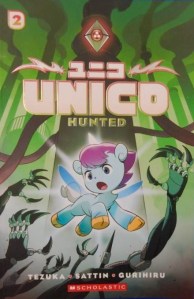
UNICO: Awakening Osamu Tezuka, Samuel Sattin, illustrated by Gurihiru Scholastic
Created in Osamu Tezuka’s Japanese manga style, this is in part an exploration of good vs evil. Herein a little unicorn, Unico has been banished by the evil goddess Venus whom he has angered. (The prologue tells how Venus, threatened by Unico’s power, which was born of his friendship with the goddess Psyche, dispatches the Zephyrus, the West Wind, to get rid of him. Instead Zephryus decides to save the little unicorn, repeatedly transporting him through space and time.) The disorientated Unico is befriended by a watch-cat, Chloe. Unico cannot recall events from his past or what his real purpose was. Chloe pleads with the little unicorn to enable her to become human and he agrees to turn her into a girl once a day provided she helps their witchy Granny friend.
It’s not long before Byron, an affluent, very sinister trophy hunter has eyes on Chloe in her human form and Venus, sensing that Unico has reappeared on Earth, decides to use Byron to destroy him. When Chloe accepts Byron’s invitation to visit his abode, she soon feels uncomfortable especially with his talk of predator and prey.
The action and excitement ramp up with the book ending on a cliff-hanger as this book is to be followed by a second volume, UNICO Hunted.
Sattin was clearly inspired by Tezuka’s original manga from some fifty years ago and with Gurihiru’s jewel-coloured art, this book will appeal most strongly to those readers who prefer their stories presented mainly through high quality visuals. Backmatter includes information about Tezuka, Sattin and Gurihuri as well as some history of the Unico story.
Explodapedia: The Brain Ben Martynoga, illustrated by Moose Allain David Fickling Books
This is the fifth in the excellent Explodapedia series by neuroscientist and writer, Ben Martynoga and illustrator/cartoonist, Moose Allain. These two are aided by a talking octopus – a creature with nine brains and a rather high opinion of itself – and a human boy, Brian who allows his brain to be removed temporarily and used as an exemplar. Brian’s brain is unique but in common with other people’s is made mostly of water and has 180 billion microscopic brain cells. In order to show how a human brain works, readers are then shown inside Brian’s where there are neurons – the information carriers – and glia which work with the neurons, thus keeping the brain going. A fully-grown brain contains around 86 billion neurons and about the same number of glia, linked it’s estimated, by 600 trillion synapses.
The next chapter introduces some of the scientists who came up with ground-breaking ideas about brain functioning starting way back with doctor and scientist, Hippocrates who lived in ancient Greece around 400 BCE. We also learn of contributions made by Galen, (Rome 170 CE), Vesalius (1540 CE), Descartes (Paris 1640 CE) famous among other things for his ‘Cogito ergo sum’ – I think, therefore I am. Moving nearer to the present time comes the mind-reading done by Dr Thomas Oxley and team who inserted a brain-computer interface (BCI) close to the motor cortex of the cerebral cortex that controls movement. This enabled a patient with motor neuron disease to operate his computer by mind control instead of his hands, which he was unable to move. How amazing is that.
Rather than discussing the remaining seven chapters I’ll just say they explore in order, What brains are for, illusion or reality wherein is an outline of an experiment that had participants plunging their hands into painfully cold iced water with some being told to swear aloud when their hands started hurting and the rest told to stay quiet. Apparently the former felt less pain because swearing can trigger the production of natural ‘painkiller’ chemicals within the brain – fascinating. Then come how brains change from infancy to old age, all the different ‘yous’ inside your head, the conundrum of consciousness and how it affects decision making. The penultimate chapter looks at differences in people’s brains and includes developmental conditions – neurodivergence, depression, anxiety disorders and addiction. The brains of other animals is the topic of the last chapter and the book concludes with a look to what 2075 might have to offer; there’s also a very useful glossary.
Once again Ben Martynoga demonstrates his brilliance at taking key concepts and making them accessible, fascinating and entertaining. Matching the author’s quirky, witty style are Moose Allain’s illustrations, making this book even more readable with a wealth of speech bubbles as well as clear diagrams. Expand your mind: join them on a journey of wonder and discovery.
All the Ways I Love You Helen Docherty and Daniela Sosa Alison Green Books
Herein are presented a dozen scenarios where mums, dads and small children are imagined having a great time together. Some scenes are of the familiar kind – a garden, exploring in the park during the autumn,
watching through the window a bird sitting on eggs in a nest, for instance. Others – floating through the sky on a little white cloud, swinging on a vine in the jungle – are more fantastical. What they all have in common though, is the love that the adult is showing to the little child in his or her care.
Helen Docherty’s soothing rhyming text with its wealth of ‘what ifs’ and Daniela Sosa’s joyous, richly coloured illustrations, make this both reassuring and an invitation to small children to use and develop their imagination – an essential part of learning.
A book to share, ponder upon and enjoy with a young child or perhaps, to give as a gift to a family with a new baby.
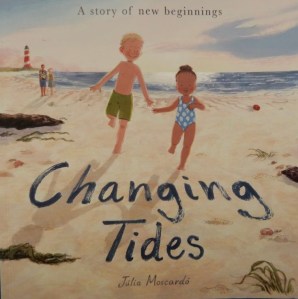
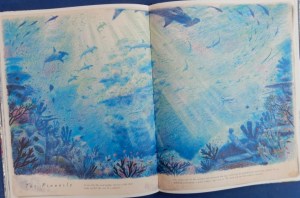
Nyla loves her home by the sea from where she can count a hundred stars and has even seen a comet; but then Dad loses his job and they have to move to a city. Nothing there feels like home to the girl: it’s a grey, frenetic place and her father has to work all the time, so they no longer have feasts together, no waves lull Nyla to sleep and just seven stars appear in the sky.
Then one night, she sees a comet falling towards earth and where it lands there sprouts a glowing, growing tree.
From this wonder, she creates something that forms a connection between the old and the new, something that is able to change their new abode into something magical, something that will make her begin to feel at home in the new place.
Told from Nyla’s viewpoint, the text is spare allowing for the exquisite, richly coloured illustrations, be they double spreads, single pages
or vignettes, to convey most of the story, and the dramatic final vertical spread brilliantly emphasises the transformation that has started and one infers, will continue.
A superb, heartfelt book to share with primary children, whether or not they are concerned about having to move themselves.
Flying Eye’s production is top class with it’s immediately engaging cover, framed pictorial endpapers relating to change and matt finish to the pages and help reflect Joe Todd-Stanton at his best as he shows how creativity and the power of the imagination can fill someone with hope and can help transform an unhappy situation into something positive.
BLITZ One Family’s War Martin Impey Harbour Moon Publishing
“Wow! Someone has taken a great deal of trouble over this,” commented our postman as he handed me a parcel containing this superb book. He was referring to the illustrated wrapping paper but it most definitely applies to the entire book too.
With consummate artistry, inspired by his childhood stories, Martin Impey has created a sequence of watercolour illustrations, which together with the storytelling presented from the perspective of a brother and sister, take readers through what happens to the family living at number 2 Dane Place, Bow.
We’re really given a sense of how the lives of the East End family change from before war broke out through to when two of the children were evacuated to somewhere safer; the feeling is one of instant and direct involvement with their fears, sadness
and their hopes as they carry on their daily existence in the midst of the chaos and unpredictability of the Blitz.
In addition to the family’s history there is a double spread about the impact of the Blitz on London and the rest of the country as well as extracts from letters and contemporary documents and radio broadcasts announcing the outbreak and the call for volunteers for the Dunkirk evacuation by the ‘little ships’.
With its evocative, engrossing storytelling both verbal and visual, this is a treasure of a book for individual readers, for family sharing and with my teacher’s hat on, an absolute must have for classroom exploration. It’s rich in opportunities of all kinds as I have no doubt will be the continuation of the story, Evacuees, which I eagerly await.
Kind Little Hands Kathy Urban and Sally Garland Little Steps Publishing
Noah, new to city life, is out walking with his Grandpa when suddenly a bee falls from the sky. Noah manages to catch the little creature and looks at it closely. It’s evident that something is wrong and his Grandpa agrees. They carefully place the insect in a discarded box and head off to their apartment. There Grandpa starts putting his plan into action: the box is opened and the bee put onto a flower, but it doesn’t move. Grandpa then mixes a sugar solution and positions it beside the bee. Noah watches closely and as he waits he tells the bee what he misses since moving to the city. Is the bee sipping the sugar-water?
Grandpa finds a book about bees and their role in nature and after a while, the bee crawls across the window ledge onto Noah’s hand and then off it flies through the window. Sensing Noah’s sadness, Grandpa suggests a walk and as they’re wandering, Noah notices some children busily working. This plants an idea in the boy’s mind and he shares it with Grandpa.
The following day, seeds in hand, the two set out scattering them as they walk. Slowly, very slowly, little by little the city bursts into bloom – an insect haven no less.
Yes, it’s been done before but you can’t have too many stories about helping our precious bees to thrive and the vital role that nature can play in urban areas. This one is engaging from the start and Sally Garland’s scenes of city life and Noah’s close encounters with the bee gently expand the words on the page.
The final three pages provide information about the importance of bees and offer some practical actions we can all do to help these important insects. A percentage of the sales from this delightful book will go to Bug Life’s conservation work, so get your copy and share it with young children.
The December Witches Jennifer Claessen UCLAN Publishing
This dramatic book concludes the A Month of Magic trilogy.
Finally it’s December and it doesn’t get off to a good start for Clemmie as her very first act as December witch is a mistake, so she says, having transformed Temmie, not into a falcon but a robin. However, it’s the month she celebrates her thirteenth birthday, something she’s managed to forget about until there’s cake and the present of a dress. What though can she do about the magic – carried in those countless stars that she’s absolutely bursting with, overwhelming her and even threatening her existence? She then discovers that she’s been chosen to be the One True Witch, but by whom and why? It also becomes evident that Aunt Connie is very sick and there’s nothing Clemmie’s magic can do to heal her.
Chaos ensues as Clemmie and the other young hags try their utmost to prevent the Stitch Witch carrying out her wicked plan with the creation of Avalon. Can they possibly succeed before Christmas comes? Older primary readers will certainly be rooting for the victory of good over evil.
The importance role of family bonds is a thread that runs throughout the story and Clemmie’s closing words are truly heartwarming: ‘I reach as far as I can and send the magic out. Peace, Calm, contentment. … I hope this feeling makes it in waves all over the world. Everyone needs more peace, no matter what time of year.’ So be it.
Diary of a Wimpy Kid: Hot Mess Jeff Kinney Puffin Books
In this 19th book of the series, Greg Heffley and his extended family are spending a summer holiday at a beach house, the very same cabin that his Mum’s family stayed in back in the day when she and her sisters were girls. The reason for this particular location is for Gramma’s seventy fifth birthday, she has requested a re-creation of a family photograph taken at their favourite holiday spot on Ruttyneck Island. As she’s head of the family, there’s no avoiding this and she certainly deserves her top of the hierarchy position on account of her incredible meatballs, the secret ingredients of which are a closely guarded secret. Now with mum determined to carry out Gramma’s wishes, there’s no getting out of it and Greg for one is of the opinion that this will be the worst holiday ever. The thought of spending so much time with his twin cousins, Malcomb and Malvin is appalling and he anticipates that as usual, whenever his Mum and her sister are in close proximity of one another there’s sure to be an argument. The ‘quality family time’ together that Mum hopes for is enough to make Greg shudder: more like the holiday is a recipe for disaster. The accommodation itself gets things off to a terrible start. To say it’s cramped is a massive understatement and attempting to sleep on a blanket spread on the floor in front of the TV is about as far from satisfactory as Greg can get. Moreover, the so-called beach house, isn’t even on the beach, which means carrying all the gear there, carefully avoiding the part cordoned off as a protected area for nesting plovers. Then once on the beach proper, the items Mum has brought for playing with are ‘old-fashioned’ causing the diarist to write , ‘people must have been wired a little different back then, because none of this stuff was doing anything for me.’
Greg however does learn a few interesting things including some juicy family history about Mum and Cakey’s old boyfriends, as well as information about a canine social media star. All in all a crazy, funny saga of family with surprises aplenty especially that final twist. My vegan sensibilities prevents me from offering readers a plate of Gramma’s meatballs to eat as they devour this book.
Dino Dad Ice Age Andy Day, illustrated by Steven Lenton Puffin Books
In this sequel to Dino Dad, CBeebies host Andy Day transports readers to the magical island of Dinotropolis. There, protectors of their prehistoric allies young Ruby Thumb and her Dad, both of whom are able to transform into dinosaurs, embark on a cool quest. They need to rescue a baby woolly mammoth and try to reunite it with its mum, as well as unfreeze Dinotropolis.
Their adventure is filled with witty banter, there are heartwarming moments and the narrative is sprinkled with dinosaur facts that young dino- enthusiasts will love. (This reviewer learned something from Ruby’s dino facts after the tale ).
Steven Lenton’s terrific, captivating black and white illustrations help bring the story to life on the page
for young listeners or readers just flying solo, as they join the Thumb duo in their undertaking. Then once they emerge from the tale, there are some empty drawing frames at the back of the book and an invitation to fill them.
Doubtless young audiences will be eagerly awaiting Big Dino Talent Show coming next March.
Future Vision Dr Cathy Rogers and Madeleine Rogers Button Books
Herein with 12 year-old Kit and friends as guides, children are transported to the year 2070, to a world that has been transformed by sustainability, technology and global collaboration. A world wherein as the author says in her introduction, it’s hoped that ‘most countries have come together to solve some of the most pressing problems.’ A world with less poverty, better health, a greener and cleaner world with more kindness and happiness. Who wouldn’t wish that could be so?
Factors that contributed to the changes include no petrol and diesel cars, affordable public transport everywhere powered by the extremely cheap electricity and otherwise almost traffic-free cities. There’s been a great deal of re-wilding, meaning that people are able to enjoy the beauties of a thriving natural world. Homes too are eco-friendly with plenty of house plants, bots to assist with, or carry out, many household chores – imagine having a homebot to collect up all your dirty clothes for washing and then once clean, return them to the appropriate cupboard.
And of course all energy used at home or elsewhere is clean, green energy.
Health and Wellbeing, is an important topic. On the journey, it’s evident that life has improved for all and people usually live long, healthy lives until one hundred or thereabouts. How this has been achieved is discussed; so too is the interconnectedness of health and happiness.
Other topics presented are oceans, food and nutrition, space and democracy. The author feels strongly that optimism about the future, not only about people’s own lives, but about the world as a whole is important and she talks of ‘realistic optimism’. Finally she invites readers to think about their own vision of the future. This is where I see that the imagination is vital, for no scientific discoveries could have been made without the power of the imagination. Who would have expected forty years ago what could be done with a hand-held mobile phone for instance, but it all began with somebody’s creative thought.
The Completely Chaotic Christmas of Lottie Brooks Katie Kirby Puffin Books
I found my self spluttering with laughter at almost every turn of the page in this account of the events of the festive season as described in Lottie’s diary from 30th November through to New Year’s Eve. Lottie absolutely loves Christmas but is a tad disappointed to hear that it’s to be a ‘small family affair’ sans her grandparents and other relations. If you’re familiar with events in Lottie’s life you’ll anticipate that it’s unlikely to go as expected.
Before the holiday comes though, there’s her form’s Secret Santa to sort out, not to mention that her brother Toby is driving her crazy with his baa-ing at every opportunity (he’s been chosen as second sheep in his school nativity play), a very dramatic visit to the Father Christmas grotto at the garden centre, baby Bella uttering her first word (bum) and repeating it frequently,
developments in the Daniel/Antoine dilemma to deal with, an unexpected substitution when Toby’s nativity is performed in the church and a muddle that begins due to her lack of fluency in French during her WhatsApp communication with Antoine about drinking eggnog – surely she didn’t somehow invite his entire family for Christmas dinner, did she?
Add to all that an on-going ‘Elf on the Shelf issue’, a sudden change of heart by her grandparents, a fair few other unexpected arrivals and the depositing of sparkly poo … It’s not hard to see that chaotic is just what Lottie’s Christmas proves to be. I certainly wouldn’t want to be Lottie’s long-suffering mum.
With stick figure illustrations sprinkled throughout, readers around Lottie’s age (10-13) will delight in her final jottings of the year.
Amazing Asia Rashmi Sirdeshpande, illustrated by Jason Lyon Wide Eyed Editions
In this large format book, author Rashmi Sirdeshpande explores the world’s largest and with over 4.7 billion people, most populated continent, Asia.
With its powerful illustrations, excellent design and engaging and informative text, the book begins with an introduction to the continent, its countries, a map and a list of fascinating facts for each Asian country. The massive continent is then split into five geographic regions: West Asia, South Asia, North and Central Asia, East Asia and Southeast Asia though within these each country has its own distinct identity. For each region there is a time line, a spotlight on some change makers , superstars and other historical tidbits, a look at people and cultures, wildlife and landscapes,
spectacular sights and at the present and future possibilities.
After the regions comes a section with a large map, entitled Global Asia with a focus on indentured labour, causes of migration and the contribution of Asian immigrants to their new homelands such as Australia. Two final spreads present ways in which Asia has influenced the world
and backmatter comprises a glossary and index.
Rashmi’s writing is sure to keep young readers interested as she includes such topics as K-pop, manga and martial arts as well as mentioning colonialism, Tibet and Taiwan as disputed territories, the Israel/Palestine and Russia/Ukraine conflicts with sensitivity. She certainly presents with aplomb the rich tapestry that is Asia. Jason Lyon’s illustrations really help bring the written content to life and with its wealth of starting points for further exploration, I’d thoroughly recommend this book both for home browsing and classroom use.
Don’t Worry, Felix Yohann Devezy and Katharine Alice, illustrated by Zoe Bennett New Frontier Publishing
Felix is starting at a new school – ‘a BIG day’ indeed. Having rushed downstairs, hastily consumed his breakfast and donned his lucky socks, he heads out to the car. There he notices something peculiar and unexpected: floating inside the car is a red balloon. During the journey, Felix feels his heart thumping, his stomach knotting and his toes wiggling; suddenly that balloon starts getting bigger and bigger, so big in fact that he’s unable to get out of the car. A hug from Dad, does the trick and off goes Felix to his new classroom.
Come reading time, as it’s almost his turn to read out loud he gets those same thumping, twisting, wiggling feelings and that balloon grows so massive that his face is covered and he can hardly speak. At lunch time when he wants to join a soccer game, the same discomforting feelings return and the balloon prevents Felix moving.
In bed all he can think about is school and that balloon. When Dad comes to say good night he realises that all is not well with Felix who tells him about the uncomfortable feelings and the balloon blocking his actions. An understanding Dad shares his own special trick with the boy and as Felix tries it, the balloon shrinks and he falls asleep.
The next morning back comes the balloon but Dad assures him that the trick can be used at any time. Felix does the ritual three times and goes into class confident that his dad’s special trick can help alleviate his funny feelings whenever needed. He also notices another child who needs his help …
A reassuring, ultimately uplifting story about learning to cope with fear; it contains a practical routine that is worth passing on to any young child experiencing similar issues. Zoe Bennett’s illustrations show so well the changing emotions experienced by Felix and those of his empathetic Dad and are also full of fun details to enjoy.
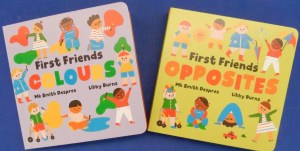
First Friends: Numbers First Friends: Shapes Mk Smith Despres and Aya Watanabe Barefoot Books
The setting for both these board books is a nursery or pre-school where we join a group of young children. Numbers takes the little ones through their time there from fond farewells from parents/carers right up to collection time by the same adult. In so doing the children share their play activities both indoors and out, eat lunch together, visit the loo and then rest on their mats, play again and bid each other and the teachers, goodbye before once again embracing a waiting parent/carer. The rhyming text and inclusive illustrations introduce the numbers 1 to 10 as we go through the day and there’s an interactive element in that the final ‘Can you find?’ will send little ones back searching for and counting the labelled items depicted.
Similarly presented is Shapes. Herein we join the same children as they, and those sharing the book find various 2D shapes – circles, rectangles, squares (actually cubes though they are are all shown face on), diamonds, moons and hearts, triangles. These are used to make winged insects, a rainbow arc, then ovals and stars as they play with soft toys. Come time to clear up, everyone joins in before gathering together for a circle time. Finally there’s a spread depicting the ten shapes encountered introduced with a ‘How many can you find … ?’challenge. I wonder how many youngsters will include in their shapes counting the squares, circles on clothes and eyes etc. depicted in the bright scenes.
A fun way to reinforce basic maths alongside the all important play experiences.
Elves on Strike Nicola Edwards and Pauline Gregory Little Tiger
It’s Christmas Eve and trouble is brewing in Santa’s workshop. Tired of working their fingers off the toy-making elves decide to stage a walk out. This sets off a concatenation of walk outs from the reindeer-training elves, the gift wrappers, the present deliverers and the mailroom staff. With just one little elf remaining a note flutters into the workshop. Having read that it’s a special plea from the sister of a child who is very sad,
the elf takes it to show Santa and he calls a meeting of all the elves, promising to help them henceforward. Can teamwork and a touch of magic change things and make Christmas a happy and surprising time after all?
Nicola’s rhyming narrative together with Pauline Gregory’s detailed, flap-filled scenes of chaotic elf activities, the strike and what follows, make a seasonal story that shows what Christmas is really about.
Clementine’s Christmas Annie White New Frontier Publishing
With Clementine on the scene, things are sure to be lively as the pooch’s family members prepare to celebrate Christmas. The tree is bedecked with baubles and bobbly bits, and the presents stand wrapped and ready. Granny, who has been busily knitting stays up late to complete her garment but then discovers that her ball of purple wool has disappeared. “Clementine, have you seen it?” she asks. The two begin to search until to her delight, Granny finds the wool. They also find the jumbled mess they’ve created. A quick tidy leaves everything sorted out but the labels are no longer on the presents. Granny hastily deals with re-attaching them and off to bed she goes.
Come the morning however, when the family presents are opened something is definitely not right. Can the bemused recipients find a way to sort things out? And who was responsible for the muddle?
Another fun, rhyming story about the loveable dog illustrated in amusing watercolour and pencil illustrations by the author.
The Christmasaurus and the Night Before Christmas Tom Fletcher and Shane Devries Puffin Books
A magical re-imagining of ’Twas the Night Before Christmas’ delivered in rhyme by Tom Fletcher and Shane Devries’ vibrant art. The story focuses on the well-meaning dinosaur Christmasaurus and his endeavours to assist Santa and his elves with their preparations for their most important night of the year. The trouble is everything the creature tries to do goes wrong. The elves do their best to make Christmasaurus feel wanted, even directing him to a large Christmas tree outside that needs decorating; however what he uses as adornments are anything but attractive.
Enough is enough: the dinosaur is left alone and miserable as the snow starts falling : can Christmas still come without him, he wonders.
Happily who should come along but Santa who changes everything. Rather than being forgotten, Christmasaurus emerges as a special helper, with self-esteem restored, a unique being that now knows that Christmas magic isn’t about perfection, rather it celebrates the unique talent that makes every individual sparkle.
With its important message about embracing difference, this uplifting tale is chock-full of that festive feel that will bring delight to young listeners and adult readers aloud at home and in the classroom. If shared with a class, make sure they have time to enjoy and explore the two gate-fold spreads.
Pick and Mix Poetry chosen by Julia Donaldson, illustrated by Becky Thorns Macmillan Children’s Books
Overflowing with delights is Julia Donaldson’s collection of verse on topics ranging from shoes to spiders, fish to football and dandelions to dads. Included are poets from both sides of the Atlantic from John Agard, Dorothy Aldis and Maya Angelou and a fair few anons, to Colin West – good to see his poem about libraries along with Julia’s own The Library Rap, and Benjamin Zephaniah.
To a teacher and poetry anthologist like myself, many are old favourites, some going right back to my childhood, such as Eleanor Farjeon’s The Night Will Never Stay, Edward Lear’s Calico Pie, Walker de la Mare’s Some One and Frida Wolfe’s Choosing Shoes but I found some new poems too. One such was Jean Jazz’s Lullaby: ‘The moon and the stars and the wind / All night long sing a lullaby, / While down in the ocean so dark and so deep / The silvery waves rock the fishes to sleep.’ That one had previously managed to evade me.
With a soccer-mad relation, I enjoyed re-discovering Kit Wright’s The Man Who Invented Football. I hope it will encourage him to enjoy poetry as much as he does soccer.
Assuredly there’s something for everyone and all moods in this bumper offering. It’s a smashing book to share both at home or in a primary classroom and would make a superb present. As Michael Rosen’s poem Words reminds us ‘ Words are presents / that we give to each other.’
Becky Thorns has done a great job with the illustrations which never overwhelm the words on the page; rather they draw readers in to what’s written there.
The Christmas Wish-Tastrophe Cariad Lloyd, illustrated Ma Pe Hodder Children’s Books
With echoes of Jane Austen, the story is set in 1812 and revolves around recently orphaned Lydia Marmalade who has been brought up in a cosy cottage, in a small village. Imagine arriving at a grand mansion house on 6th December to live with Lady Partridge at Peppomberley Manor, and being informed that you have until Christmas Day to prove that you can meet the standards expected of a proper young lady (good, modest and quiet), otherwise you will be sent away to a workhouse for poor children.
Lydia has nothing with her other than her much-loved sausage dog, Colin that she’s managed to smuggle in, and an optimistic outlook. Both of these she’ll need if she’s to cope with the challenges she faces, in particular that Lady Partridge appears anything but happy to have Lydia living in her home even if she is ‘a distant family member’. Unwelcoming too is Ronalds, the butler.
Pretty soon however, the newcomer finds allies amongst the servants, in particular Bertie the stableboy and his aunt Harriet., the cook. Then there’s Bel, an obstinate, accident-prone winter sprite that Lydia accidentally wished on, on St Nicholas’s Day, who is now bound to the girl and causes mayhem on the most inconvenient occasions.
Things don’t quite go to plan but can Lydia, with the help of her new friends, prove herself a worthy member of this Peppomberley household? Can she also discover why Lady Partridge has been keeping certain things hidden from her? There’s a jewellery theft, a Christmas tree fire and a mystery to solve in this wondrous tale of loyalty, searching for acceptance, love and belonging.
Cariad Lloyd’s characters are splendidly portrayed and her writing compelling: Whether shared with a KS2 class or read snuggled up with a hot chocolate, this is a seasonal gem spiritedly illustrated by Ma Pe.
100 Ways to Save the Planet Tom Jordan, illustrated by Joshua Rice Button Books
Engaging readers from the outset with his ‘superhero footprint’ suggestion, Tom Jordan provides a wealth of ways children can reduce their carbon footprint. starting with cutting out meat from their diet or if that’s too big a leap then reducing the amount eaten with fewer meat-consuming days per week and encouraging other family members to do likewise. To that end, related topics are suggested on later spreads; for instance growing your own vegetables.
I wonder how many people don’t ensure they’ve turned the taps off properly after showering or bathing, or brush their teeth with the water running: saving water isn’t hard, it just needs a bit of thought. Some of that bathwater you do use can then be used to give your ‘pet dragon’ a drink, (ie a Dracaena houseplant) – another cleverly linked suggestion.
I’ve noticed many primary schools and children’s playgrounds have already constructed bug-friendly ‘hotels’ with the help of youngsters, but there’s still a way to go. Why not take the ‘Build a bug-friendly borough’ suggestion literally and with adult assistance, encourage all schools in your area to do likewise.
Reduce, repair, recycle, reuse: these are key practical words for anybody looking to tread more lightly on our planet. There are plenty of ideas to implement these actions and it matters not whether children can actually read the book for themselves. With its enticing, clear illustrations by Joshua Rice and interesting facts, this is an invaluable handbook for any family, primary or even secondary classroom: think of all the environmental superheroes it could inspire.
These three board books from Graffeg: thanks to the publisher for sending them for review.
Fletcher’s Numbers Julia Rawlinson and Tiphanie Beeke
‘One fox called Fletcher’ and his friends are clearly enjoying themselves as we see two grey seals swimming in the sea … four friendly frogs hopping in the pond …five busy squirrels scampering after sunbeams and so on taking us through to ten twinkling stars shining in the sky. Charming, richly coloured illustrations showing the actions referred to in each single sentence, above which is a large numeral. I particularly like the author’s use of alliterative phrases in many of these. A delight from start to finish.
Albert 1 2 3 Ian Brown and Eoin Clarke
In his garden home, Albert the tortoise – the one and only – has lots of friends too. Little ones will enjoy counting their way through to ten as they meet ‘two butterflies with their colourful wings’, three birds about to fly off, four flowerpots that are homes for woodlice, seven snails with shiny shells … and when all are assembled, there are ten friends enjoying some fun. The number word begins each descriptive sentence and the respective numeral is printed large on the opposite side of the double spread. A fun, gently educative way for small children to be introduced to a popular reptilian character.
You and Rabbit Make a Snowman Jemma and Tiphanie Beeke
In a snow-covered garden stands a tree. Attached to the tree is a swing; not far away is a bird table and between the two is an upturned red wheelbarrow. As yet there are no footprints in the snow but the text suggests that by walking their fingers from the tree to the bird table, a small child can create some. This action is watched from behind the tree by a little rabbit who is keen to join the fun of making a snowman. Following a sequence of instructions, Rabbit and child participant build a large snowman which Rabbit then gives a hat and scarf. A mouth and eyes are added but something is missing. What does Rabbit have behind her back … How will this brief interactive story finish: with a tasty lunch for Rabbit or a nose for the snowman? This collaboration between sisters, author Jemma and illustrator Tiphanie offers seasonal fun for sharing with very young children on wintry days.
Ayo’s Adventure Ain Heath Drew and Erin K. Robinson Barefoot Books
Ayo is having difficulty falling asleep until he picks up an alphabet book that inspires a dreamy adventure across the African diaspora and in so doing he experiences a wealth of creativity from the diverse cultures whose heritage he shares.
He listens to calypso music then receives a lesson on how to play and beat on a steel band drum, tucks into some Nigerian fufu made from pounded cassava, plantain and yams,
visits a store in Ghana selling kente cloths, joins some women dancing the samba in Brazil and much more. he even travels to New York’s 1980s Bronx where hip-hop developed and tries some moves.
Alphabetically arranged, A is for Afro, B for Braids, E is for Ebony and so on with each stop having a short description and locational listing. There are also spreads at the end of the book exploring connections between the nations, cultures and traditions.
Joyful, inspiring and illuminating, vibrantly illustrated, and well worth adding to primary school collections. Ayo means ‘Great Joy in Yoruba’ the boy reminds his mother excitedly on waking. Let’s hope the book brings joy to child readers.
From the same publisher for the very young, is one of a board books series:
Democratic Republic of the Congo by Mel Nyoko and Joelle Avelino that introduces some key words as little ones follow a small child and family through ‘a day in the DR Congo’.
A child wakes to discover Santa in their room delivering presents and then having ascertained it is really he, proceeds to bombard him with questions. ‘Did you read my letter? / And have you wiped your shoes?’ … ‘… want to hear me play? ? Can reindeer talk?’ …
‘Is your belly button inny or out’ (love that). Santa never gets a chance to reply so thick and fast come the questions from the inquisitive child. He agrees to a visit to his home in the North Pole, stopping en route to deliver more presents and what a magical experience that sleigh ride is. Was it real though?
What young child would’t relish such an opportunity, particularly one that offers them the chance to think up their own questions for Santa.
With his inimitable wit and whimsy, Jarvis delivers a very special seasonal gift for youngsters. They will love the dreamy nature of the ride with its open ended finale and the enchanting details such as the miniature Santa snow globe, Mrs Mouse sleeping peacefully in her hole in the skirting
and the elf guiding the reindeer to a safe landing as they reach Santa’s abode.
Imbued with the magic and warmth of Christmas, if you’re looking for a book to share with a little one, or in an early years/KS1 classroom in the last few weeks of term, this is one I’d highly recommend.
Mouse & Mole: What Might Have Been Joyce Dunbar and James Mayhew Graffeg
This book contains three more episodes in the life of the endearing friends Mouse and Mole.
In the first, A Rainy Day, rain makes its presence felt in no uncertain terms and the two creatures decide to try and stop the increasingly irritating precipitation but end up enjoying themselves to much they fail to notice the change in the weather.
Atishoo! goes Mouse, over and over until Mole declares that his friend needs mollycoddling and offers to make him breakfast in bed and generally fuss over him.
But will Mole’s favourite breakfast be right for Mouse? And what about the hot bath he’s promised and the comic? There’s only one way to find out …and then what?
The final tale sees Mouse and Mole considering What might have beens as they attempt to fly their kite one very blustery morning: will they ever succeed in getting it airborne though? Could all the ‘what ifs’ they’ve pondered upon eventually help matters when it comes to kite flying.
Full of warmth and gentle humour that shines through both Joyce’s text and James’ charming watercolour illustrations. If you’ve never tried any Mouse and Mole books, you are missing a real treat.