Every Word Tells A Story Tom Read Wilson, illustrated by Ian Morris Words & Pictures
This is one of those books about which you think, right I’ll just give it a bit of time, sufficient to write a review, only to find that it’s drawn you right in and a couple of hours have passed.
There are four words for each letter of the alphabet, each letter having for the first of the four, a funny, short, rhyming story, followed by a definition, information about its origin, meaning and its etymology, together with a humorous illustration by Ian Morris, the lead ones occupying most of the spread. Did you know that a rhinoceros can produce as much as twenty five kg of poo every day?
Or that the word rhino is Ancient Greek for nose, and furthermore dung comes from the Danish dynga meaning heap? I certainly didn’t but I did however know that the word rupee comes from the Sanskrit meaning ‘beautiful form”; I have a considerable number of these coins tucked away in various purses on account of my frequent trips to India.
Whether it’s fun anecdotal stories or fascinating facts that you are interested in, you are certain to find plenty of both in this exploration of everyday words that shows how the English language evolved (and indeed still is). Equally it’s likely to encourage children to enjoy words and language for their own sakes. Supplying additional humour, illustrator, Ian Morris brings every entry to life with his dynamic pen and watercolour illustrations.
Maybe You Might Imogen Foxell and Anna Cunha Lantana Publishing
Is it possible for one person to change the world? With the hope and determination shown herein, it certainly is. In an arid country where it was supposed the land was beyond repair, one little girl discovers a single seed. With a strong conviction that something might come of it, she digs a hole and places it in. Then lovingly she tends to it, bringing water from the well each day and making a shelter against the blistering heat and strong winds until …
Within the abundant fruits are seeds; the girl plants one from each fruit. Meanwhile beneath the ground things are also happening. Eventually down comes the rain and creates a river once more: the land is flourishing and does so for years. But then a storm destroys the trees and the girl feels as though her heart is broken too. Nothing can ever be right again … or can it? Could it be worth planting another seed? Yes and when at last there are many fruit bearing trees once more, there’s food enough for the birds and animals, and the human community too.
Inherent in Imogen Foxell’s beautiful, optimistic rhyming story is a basic description of the water cycle, showing youngsters how, over time, an abundance of trees in an area can produce a river where once there was only arid soil. it shows too how a single, small action really can help to make a difference. Anna Cunha’s stunning mixed media illustrations are a perfect compliment for the text, changing from the virtually monochrome portrayal of the desert-like environment where the protagonist dressed in a beige dress, finds that first seed, to scenes where shades of green and blues predominate as the trees thrive and the land is renewed.
Owning any dog brings big responsibilities but adopting one from a rescue centre, even one as adorable looking as Hen, is likely to bring challenges. However as the child narrator of this story says, ‘why should we get a brand new dog when Hen is as good as new to us?’ So back he goes to his new family.
Although family members provide everything they think Hen needs in the way of food, water, a cosy bed and plenty of toys to keep him amused, such is Hen’s appetite that not only does he consume all his food but goes on to eat his bowl, items of furnishings and more.
Let’s say he’s a tad destructive, even gobbling up a supposedly indestructible dog toy. Enough is enough say the child’s parents.
But then Gran comes to visit bringing something with her. Could this perhaps help headstrong Hen relax?
David Mackintosh mainly uses solid blocks of red, beige, blue and black etched with white lines and patterning to create his stylish and striking illustrations that are full of playful touches. I love the spread of socks that Gran has adorned with cross-stitch darning that help to underscore the make-do-and-mend environmental message.
Ruffles and the Cosy, Cosy Bed David Melling Nosy Crow
The adorably playful Ruffles returns as lively as ever, but with something new to dislike – loud noises. These make him all jumpy and jittery and his instinct is to run away. However loud noises at night are far worse especially if they are the thundery kind that bring flashes, bangs and crashes. Time to hide, thinks Ruffles but where?
It must be a quiet place that’s also safe and snuggly. Hmmm… suddenly the little dog thinks of the perfect place and it’s ready and waiting for him. Now where could that be? Assuredly it’s the ideal place to wait until the storm has abated.
Sometimes set against a vibrant colour, sometimes only black and white, it’s amazing how much David Melling manages to convey through his seemingly simple humorous illustrations of this little pup, especially in those sequential strips of Ruffles responding to the scary sounds when his body language and facial expressions speak far more that the accompanying words.
Cress Watercress Gregory Maguire, illustrated by David Litchfield Walker Books
As the story begins young rabbit Cress, her mother and baby brother Kip are grieving the loss of Papa Watercress, who ‘went out and didn’t come back’; (though Cress still has hopes of him being alive). Mama Rabbit has decided to move her family from the warren to new digs: the one-room basement of an ‘apartment tree’ – a dead hollow oak known as the Broken Arms. Its landlord is Mr Titus Pillowby Owl and he takes payment for rent in moths. Failure to pay could result in eviction or if he changes his diet, the loss of their lives. Other residents include a noisy squirrel family with a doctor father, rent collector Manny and wife Sophie mouse and two songbirds. The birds are always on the lookout for dangers ,particularly in the form of the legendary snake ‘The Final Drainpipe’ and Monsieur Reynard the fox. We’re treated to a mix of adventures, domestic detail, growing pains (Cress), clever crafting (Mum rabbit weaves tapestries) and great danger. Examples of this are when Cress and squirrel Finian are swept over a waterfall on a raft;
Cress confronts and enchants Tunk the Honeybear, but then she and Finny are held captive for a short while by pompous skunk, Lady Cabbage – she who has designs on Cress as a housemaid. Full of heart, with some sadness, essentially this is a charming story of moving on, growing up, forming friendships and learning to love, becoming part of a new community and flourishing.
Or as Cress tells Fricassee the hen, “today might not be good. But it might be good enough.” In his glowing illustrations David Litchfield captures both the wry humour of the tale and its unforgettable cast of characters.
Read aloud or read alone, animal lovers especially will be utterly enchanted by both words and pictures..
Happy Stories for Nature Lovers Dawn Casey and Domenique Serfontein Ivy Kids
Watching the Earth Prom on TV today I heard Chris Packham say this: “Now is the time to ask what we need to do for wildlife. We know we are on the brink, … but there is still hope … we can stop the loss of millions of species but we have to understand the need to change what we do, to accept and celebrate that change – we need to do it together with tolerance and kindness, because ultimately we are one species on one very special planet with one very big problem and one last chance to sort it out. Now is the time for ALL of us to make a difference.” Author Dawn Casey writes in her introduction to this book of an environmentalist, Joanna Macy, who talks of the fact that more and more people are indeed taking action in response to nature’s needs, calling this shift ‘The Great Turning’.
The eight narrative non-fiction stories herein are examples telling how individuals and conservation bodies have made a difference to wild life in various parts of the world. We read of young Anna who, on account of her love of trees, was responsible for the founding of the Children’s Forest movement by passing on her passion to her pupils.
A grandpa talking to his grandson outlines how the Humpback whales were rescued from the brink of extinction. In the 1930s only 440 were left but with the banning of hunting and killing of whales for commercial gain in 1986, their numbers have grown to 25,000.
Intensive farming methods with their use of pesticides and the destruction of hedges and trees have created green deserts in many parts of the world. However in Nature’s Plenty we learn how a farming couple in Normandy, Charles and Perrine followed their dream of growing healthy food for their family. Starting small, they bought a field and without the use of machinery, by feeding the soil only natural things, replanting hedges and planting crops for their mutual benefit, developed over the years a rich ecosystem of pastures, pools, orchards and hedges. This aroused the interest of scientists who came to see and were vastly impressed to discover the amount of food the farm grew on so small an area of land. Now the couple help others learn to farm in a similar low impact manner.
These and the other five examples, stylishly illustrated by Domenique Serfontein, should give young readers cause for hope and will surely inspire them to take action in whatever ways they can. The final spread offers some suggestions of how we might all walk more gently upon the earth.
Where in the World are You? Marie G. Rohde What on Earth Books
In her cleverly designed, playful exploration of our world and our place therein, Marie G. Rohde places a cat centre stage.
We first see said creature sitting beneath a table, a wobbly table, which stands on a blue rug. The viewpoint gradually zooms further and further out and readers join the cat on a journey of discovery as it ventures through the green door, out of the flat and into the big wide world,
until eventually we are out in the expanding universe of which the Milky Way is a part; so too are we humans, each and every one of us and we are all connected.
This is a book that arose out of the Covid-19 lockdowns and people’s feelings all over the world of being stuck inside, but its invitation to youngsters to be outward looking and to think about their place in the world is important at any time.
The simple question and answer text and bold, bright scenes that effectively put into perspective the vastness of our world, is a great starting point for discussions with young children either at home or in the classroom, especially as the final spread sets the scene in its concluding, “Now, where are YOU?’ Young readers will also enjoy searching for the black cat in almost every scene; its whereabouts is not always easy to find.
Teamwork is a key ingredient of both these magical fantasies.
Autumn Moonbeam: Spooky Sleepover Emma Finlayson-Palmer and Heidi Cannon uclan publishing
In this second story where the world of witches meets the world of dance, it’s the first day at Sparkledale Dance Academy for dance and gymnastics-lover, Autumn. With a mixture of apprehension in case she isn’t up to it and excitement at being in the Black Cats dance team, she meets her best friend Batty at the door. As their teacher Verity welcomes the newcomers and announces the warm up, one of the team is still to arrive. Suddenly there she is at the door, Severina Bloodworth, Autumn’s conceited neighbour, showing off her new hairstyle.
As the session gets under way Verity announces a special team bonding sleepover in two weeks time. She also sends Severina to the store cupboard to find something to tie back her hair. On her return strange things start happening, but are they Severina’s doing or is something or someone else responsible for the trouble?
The following Monday back in their normal classroom Autumn comes upon a book with a paragraph about pixies. What she reads has an uncanny match with events at the dance academy the previous week. Perhaps it’s worth trying out the anti-pixie mischief remedies suggested.
Excitement mounts on the day of the sleepover and Autumn takes the opportunity to accuse Severina of being behind the weird happenings that occur whenever they dance. Her response is something of a surprise to her accuser but a relief to the accused. Perhaps if everyone remembers what Verity always says, “Teamwork makes dreamwork” they can work together to find a way out of the trouble once and for all.
Pages & Co: The Treehouse Library Anna James, illustrated by Marco Guadalupi Harper Collins Children’s Books
At last, it’s time for Milo to take centre stage as driver of the Quip in this the penultimate book of what has been an amazing series. Now accompanied by Alessia (the Alchemist’s daughter), is he ready to be a hero? Having been poisoned, his Uncle Horatio is currently lying unconscious in the care of the Pages family, and it appears that the only way to cure him is with a recipe in Alessia’s notebook. Together Milo and Alessia set out, bound for Northumberland in the hope of finding the Botanist, the only person who might be able to help them.
Having grown up on a train and never before left it, Milo is surprised to discover the sense of peace he feels close to trees.; a peace that is disturbed by a human voice. It’s that of the Botanist, aka Rosa, who lives and works in the Treehouse Library of the title; she who is the sworn enemy of the the Alchemist. From her Milo learns that his grandmother is also there and willing to see him. That’s two new and interesting characters who both readers and Milo encounter for the first time and happily for Milo, Rosa makes a decent mug of hot chocolate.
Time is of the essence as they hunt for ingredients for the cure, searching in The Secret Garden, sailing in a pea-green boat,
repelling the terrifying Jabberwock and challenging Robin Hood as to whether he’s truly all about helping the poor.
With the ruthless Alchemist prepared to do anything it takes to get hold of The Book of Books and discover its secrets, the entire realm of the imagination is in danger: a thrilling struggle for book wandering’s destiny unfolds, and Milo, Tilly, Oskar, Alessia and Rosa have to put all their skills together to find that book first. An awesome read and I can hardly wait for the final story.
The Big Amazing Poetry Book chosen by Gaby Morgan, illustrated by Chris Riddell Macmillan Children’s Books
What a gargantuan task Gaby Morgan gave herself in selecting the seven poems to represent each of the fifty two poets from Dom Conlon, Paul Cookson and Charles Causley to Lewis Carroll, and Liz Brownlee to Carol Ann Duffy, included here in what is called in the foreword an ‘annualogy’. Even listing all 52 poets in a short review such as this one would be a big ask but let me just say that thirty are men and twenty two are women. Of the total, forty three are still alive and writing.
Most definitely there is something, or rather several things, for every mood and as many ways or more to enjoy the book, as there are poets included in this glorious ‘galaxy’ – the word Roger McGough uses to describe the poems in his introduction. Surely poetry lovers wouldn’t want to restrict themselves to just one per day; this is a book to lose yourself in, whether or not that is your intention when you open it. You’ll find a variety of poetry styles including haiku, shape poems, ballads, tongue-twisters, raps, sonnets and more on such diverse topics as wildlife, school, magical things, special days, the weather, war and love.
On account of something I heard said by Vogue editor Edward Enninful, reading from his recent autobiography, A Visible Man and mentioning a demeaning comment somebody had said to him, on the day of writing this review, two poems absolutely shouted out to me. One was Paul Cookson’s Let No One Steal Your Dreams, the final verse of which is ‘Set your sights and keep them fixed / Set your sights on high / Let no one steal your dreams / Your only limit is the sky.’
The other was Matt Goodfellow’s Start Now that begins and ends thus, ‘ be the change / you want to see / / walk the walk / stand with me’.
Bibilophile that I am, I just have to mention our current Children’s Laureate, Joseph Coelho’s Books Have Helped Me, that concludes ‘When I thumb through a book / their pages whisper to me / that I’ll be all right.’
Each of these in its own way is empowering and empowered is the way the pages of The Big Amazing Poetry Book make me feel. To add to the delights, Chris Riddell’s intricate black and white illustrations placed over, under, through and around the poems are quite simply, brilliant.
Invertebrates Are Cool! Nicola Davies and Abbie Cameron Graffeg
In author Nicola Davies’s latest Animal Surprises book, she takes us in the company of a young naturalist, on an exploration of the world of bugs, mini-beasts and some sea creatures too. In case you are wondering what all these might have in common, it’s that every one of the animals featured lacks a backbone. First of all we get close up to some earthworms, find out how to make a simple wormery and watch the clever tunnellers at work. Next come the slitherers with slimy undersides – snails and slugs.
It’s strange to realise that these are cousins to cuttlefish, squid, nautilus and even more astonishingly, the octopus.
Beetles are the next focus; did you know there are more than 400, 000 different kinds? Some such as ladybirds will be familiar, but readers may not have encountered chafer beetles or the devil’s coach horse, both of which are featured in Nicola’s rhyming narrative and Abbie Cameron’s illustrations. The latter are sufficiently detailed to enable identification of the creatures and on some spreads readers are able to get right up close to the featured animal.
There’s a final ‘match the animal to its home’ puzzle. A book that’s likely to nurture children’s interest in the natural world and whet their appetites to get outdoors and explore.
Slow Down and Be Here Now Laura Brand, illustrated by Freya Hartas Magic Cat Publishing
The author presents twenty awe inspiring events that take place in the natural world, each of which is a captivating reason to do as the title says, to slow right down and to be fully in the present, immersed in an amazing wild life happening. It’s as though time has been suspended as she presents each of these ‘moments’ in its allocated double spread, including a harvest mouse building a nest, a snail retracting into its shell when threatened by a predator, a goldfinch extracting seeds from a dry teasel head
and a frog sating its hunger by catching and swallowing a fly. Thus the reader is able to watch each occasion when they so choose, as they savour the words and study carefully Freya Hartas’s delicately detailed, sequential illustrations, which include occasional gently humorous anthropomorphic enhancements.
The text itself comprises a mix of easily digestible paragraphs of information, an on-going narrative and captions to the illustrations.
Not all the nature moments could be observed at first hand but anyone who follows the suggestions on the ‘Come Into the Here and Now’ pages, will likely encounter some of these wonders or indeed, chance upon opportunities of their own to observe moments of joy, awe and wonder.
Grimwood: Let the Fur Fly! Nadia Shireen Simon & Schuster
Absolutely brimming over with bonkersness is this second story in the Grimwood series. Fox siblings Nancy and Ted are happily settled in Grimwood enjoying life with their new friends, although they do still wonder about their parents. As Ted is wandering along one day he is suddenly accosted by a mysterious stranger, a grown-up Fox, whom it is suggested by Sharon the party crow, is from Twinklenuts. Further investigations reveal this fox to be the ultra cool Sebastian Silver who introduces himself as Mayor of Twinklenuts Forest.
Beguiling as he might seem, said fox is a dastardly schemer and he wants to take over Grimwood for his own purposes.
With the future of the home they’ve come to love at stake, Nancy, Ted and their friends must summon up all their courage, speed, strength and teamwork skills. A challenge is issued: there’s to be a treebonk showdown: Grimwood vs Twinklenuts. Nancy decides they need to learn as much as they can about their opponents if team Grimwood is to stand a chance. Time for a bit of spying: step forward the glamorous duck Ingrid, an erstwhile spy so she says.
Already shocked at discoveries on the way, when eventually the Grimwood spies reach their destination they are more than a little surprised at what they see (and I don’t mean Ingrid falling head over heels in love at first ’quack’ and swanning off – make that ducking off – into the sunset).
Surely that isn’t the last we see of her; and what about that all important contest? Things are not looking good, especially with Grimwood’s star player missing as the match time draws ever nearer. Prepare yourself for further revelations, glitter galore and a surprise ending: like woodlouse Eric Dynamite, I certainly didn’t see that coming.
Gloriously anarchic, made all the more so by Nadia Shireen’s totally brilliant illustrations. I can hardly wait for the next visit to Grimwood.
Grimms’ Fairy Tales retold by Elli Woollard, illustrated by Marta Altés Macmillan Children’s Books
Having read Elli Woollard’s splendid rhyming renditions of some of Aesop’s Fables I was eagerly anticipating these new rhyming fairy tales. Elli has chosen five well known ones on which to weave her rhyme magic and the result is again brilliant. First to get the touch of her wand is Little Red Cap who is off to visit her grandma with a freshly baked cake and some elderflower wine. I love the way that wolf meets his demise. Next is The Elves and the Shoemaker, followed by Hansel and Gretel, The Musicians of Bremen and finally Cinderella, each story being deftly retold in a way that makes them a sheer pleasure to read aloud.
Marta Altés gorgeous illustrations too, help bring each telling to life and contain some really fun detail. The spread showing the stepsisters’ preparations for the Fancy Fantabulous Right Royal Ball is hilarious.
Enormous fun for young readers and listeners as well as adult readers aloud, and a cracking book from cover to cover.
Lore of the Land Claire Cock-Starkey and Samantha Dolan Wide Eyed Editions
Folktales about landscapes the world over, along with secrets from the natural world are unearthed in this stylishly illustrated book.
There are six parts, each presenting the folklore of a different landscape: forests, seas and oceans, mountains, hills and valleys, rivers and lakes and finally, wetlands. Each part begins with a folk story, the first being a Czech tale Betushka and the Wood Maiden telling how a girl and her mother’s fortunes are forever transformed by the daughter’s acceptance of an invitation to dance with a stranger instead of working at her spinning when she takes her goats into the forest to graze. The next spread has synopses of creation myths associated with the forest. (Each of the other landscapes also has a creation stories spread.)
There’s an abundance of ancient wisdom associated with such things as sprites, spirits and other mythical creatures, plants, and more. You can discover why the massive volcanic mountain, Mount Tararnaki stands alone on the edge of New Zealand’s North Island as well as why Ancient Greeks thought there was a forge beneath Mount Etna and what was made there. This and much more is arrestingly illustrated in folk style artworks that grace every spread. There’s plenty to engage young lovers of nature, especially those with an interest in fictive possibilities.
Let’s Chase Stars Together Matt Goodfellow Bloomsbury Education
Matt Goodfellow’s is a relatively recent voice in poetry for youngsters but his is one you won’t want to miss. Included here in this new book is something for many occasions and almost every mood. There’s a good balance between reflections and celebrations of everyday school life and friendship, and presentations of deep personal issues such as divorce in the family. The latter is discussed in A Thousand Hours (spent with Dad) when on the occasion of a walk with ups and downs, ‘he tells me/ it wasn’t meant to be like this / we were supposed to be a family / a proper family / but somehow, y’know, things got in the way’. This concludes on a more upbeat note thus: ‘… right then / it doesn’t feel like he’s a dad / I’m only allowed to borrow …’ On a more humorous note is I Hope It Rains Today set in a classroom where the teacher on duty makes the decision to announce a ‘wet play’ thus allowing one member of the class at least to enjoy the opportunity to head to the school library and therein find space to read.
Courage in a Poem Little Tiger
Courage in a poem? How is that possible? In a multitude of different ways as you will discover if you read this wonderfully empowering collection that includes work from two dozen word weavers. Courage is most assuredly found as Elizabeth Avevedo says, when leaving the place you call home and after emigrating ‘attempt to bloom and blossom / and brighten a new place. … unfurl to the possibilities / of the new place you call home.’ On the other hand it might be that by sticking ‘kind words’ onto ourselves, ‘like pollen to the knee of a bee’ we might cover ourselves with the same kindness ‘nectar’ as poet Matt Goodfellow. Or perhaps as Rachel Plummer suggests, by emulating the beech tree she so wonderfully describes being fully itself in its own shape; that is the way to be ‘nothing but myself’ safe in the knowledge ‘I am. I will grow.’
Another way of finding that inner courage is through movement as the dancer in Mandy Coe’s The Cancan tells us, ‘Because when I dance I can, can do anything / when I dance.’
Equally it might be as Sophia Thakur tells us in Mother’s Eyes to see ourselves as a mother does and with such certainty as hers to love ourselves with the same strong belief.
To immerse yourself in this book is to be inspired and delighted, awed and perhaps mesmerised, by the powerfully uplifting messages and accompanying illustrations
And Everything Will be Glad To See You selected by Ella Risbridger, illustrated by Anna Shepeta Nosy Crow
This bumper volume contains more than one hundred poems and is a wonderful celebration of women writers of poetry. (There are also a few anonymous works) Taking a stand for equality now and in the future, Ella Risbridger’s main reason for this book is that historically men have been paid ‘lots more attention’ and ‘that’s not fair’! Consider this, in the UK our Poet Laureate list numbers just one woman (Carol Ann Duffy) among twenty men.
Herein you’ll likely find work by familiar writers but you’ll also be excited to make lots of new discoveries. As an erstwhile compiler of poetry anthologies I came upon a fair few I too have included in collections but rediscovering these poems in a different context brings fresh delight: one such is Beatrice Schenk de Regniers’ Keep a Poem in Your Pocket, another is Eleanor Farjeon’s Cats.
On the day of writing this I was drawn to works by Carol Ann Duffy, in particular Don’t Be Scared which opens thus, “The dark is only a blanket / for the moon to put on her bed. / … The ark is the wooden hole / behind the string of happy guitars.’
Sheer delight too is the very first poem, Nikita Gill’s brilliantly inclusive, 93 Percent Stardust, the final lines of which are ‘with souls made of flames, / we are all just stars / that have people names.’ Being unfamiliar with the work of Joy Harjo it was a wonderful surprise to come upon her exhortation to Remember,
as I certainly shall this poem, It’s one I shall return to over and over.
Anna Shepeta has done an awesome job illustrating every spread. Her mesmerising artwork thoughtfully compliments the poem or poems found at every turn of the page. Beautifully presented, this is a truly inspiring book to own, to share and to give.
You certainly won’t regret adding any, or all of these books to your poetry shelf.
The Season of Giraffes Nicola Davies and Emily Sutton Walker Books
This the first of the publishers new Protecting the Planet series looks at the effects of climate change on the much loved giraffes of Niger; its inspiration was the work of climate activist and film maker, Kisilu Musya.
Once some time back giraffes were very much a part of everyday life in Niger: and considered a blessing in the same way as the birds, the trees and the rain. The children saw them browsing the trees on their morning walk to school or when they brought home the cattle at night; the giraffes had a strange fighting regime and communicated in a language of grunts and snorts.
However the number of these graceful animals sadly started to decline as more and more buildings, roads and farms filled the land and then on account of climate change the rains began to fail too. The result was terrible droughts that parched the land causing much suffering to both animals and humans.
Soon very few giraffes were left in Africa but in the country of Niger, there was still time to save the few that remained. The humans stopped hunting, protected the trees giraffes fed on as well as the creatures’ favoured places and gradually, then more rapidly, the giraffe population increased. So much so that some have been transported by truck to other parts where they live under the watchful eye and care of wildlife rangers and scientists. The hope is that one day these beautiful animals might be able to return to the places they once roamed.
Nicola’s story of optimism shows how with resolve, we humans can change things for the better; it’s gorgeously illustrated by Emily Sutton who captures both the grace of the animals and their homeland, and the lifestyle of some of the people of Niger. (There’s additional information about giraffes, climate change and what we can all do to help both causes.)
Wild Animals of the World Dieter Braun Flying Eye Books
This sumptuous volume brings together Braun’s Wild Animals of the North and Wild Animals of the South taking us on a world tour that begins in North America, moving in turn to South America, Europe, Africa, Asia, Australia and finally, Antarctica.
Magnificent art takes the forefront in an awe-inspiring introduction to an array of creatures great
and small of the land, sea and air. Sadly some – the Asian elephant, the Emperor penguin for instance – are on the endangered list, others are threatened, though this isn’t stated in the book.
Dieter Braun manages to encapsulate the very essence and spirit of every one of the hundred and thirty plus animals portrayed. Some have an accompanying factual paragraph, others leave the labelled illustration to speak for itself. (Both scientific and common names are given.) A great gift for young wildlife lovers.
These are two recent board books from Little Tiger – thanks to the publisher for sending them for review.
Mind Your Manners, Dinosaurs! Danielle McLean and Gareth Williams
A fun book with cutaway pages that introduces toddlers to some basic table manners as one by one five little dinosaurs assemble around the table for their dinner. On the recto of each, one of the five dinos is introduced and beneath a flap, which is an integral part of the illustration, is a sentence that moves the action forward. Turn over and on the verso that same dinosaur is now seated and showing how to ask politely for something, while on the recto we meet dinosaur number two. This same pattern continues until all five little dinosaurs are sitting ready to eat and Mother Dinosaur reminds them all of a few additional basic manners and wishes them ‘Bon Apétit’.
Cleverly constructed, cheerily illustrated and with a simple upbeat text that praises the little ones appropriately, this offers interactive learning for the very young.
One Little Bug Becky Davies and Jacob Souva
This lift-the-flap board book offers a good way to introduce very young children to minibeasts, along with of course, seeing the real things in the wild. Little ones will discover the best places to look for bugs and how to collect some for observation. There’s information about the amazing homes some bugs construct, for instance, black garden ants build nests with different chambers for different purposes, as well as a look at how humans can build a bug hotel – a safe insect habitat to be used for living or hibernation purposes. Readers also find out about the abilities of some of our back garden dwellers: did you know for example that a cockroach is able to live without a head for up to a week and also survive under water for more than half an hour?
There’s plenty to explore on every spread as a lot of additional information is hidden beneath the flaps and adults will need to help them digest some of the text, so this is definitely not a book to hurry through. Altogether a beautiful introduction both visual and verbal, to the natural world.
My Family and Other Families Richard and Lewis Edwards-Middleton, illustrated by Andy Passchier DK
In this story we follow Liam and his family on their visit to the funfair. Leo is super-excited at the prospect of riding on the big wheel, but with his ticket tucked into his pocket, we wonder if he’ll ever get to the wheel on time. There are so many other families there who all want to stop and chat – families that don’t necessarily look like his own but who all show loving care to their children just like his own. Suddenly Liam realises that his ticket is no longer in his pocket and he frantically retraces his steps asking the other visitors if they’ve seen it.
Nobody has but everybody offers to join in the ticket search and eventually Liam has a ticket clasped tightly in his hand and he heads over to where a man is making that last call for riders to board the wheel. Now there’s one final opportunity for kindness so that all the children are able to have a ride. The final sentence in the book, ‘A family is people who care about you’ sums up the authors’ crucial message of diversity and nicely rounds off the story.
Shown inside the front cover and hiding in plain sight in vibrant illustrations are thirteen hidden surprises that young children can search for during the telling. A book to add to collections in early years settings.
Some Daddies Carol Gordon Ekster and Javiera Mac-lean Álvarez Beaming Books
“Every daddy is different!” So goes the repeat refrain in this celebration of fathers of all kinds and their styles of parenting. Some are early risers, while others take a while to get going in the morning. Some drink coffee, some drink tea, some prefer a smoothie or water. Some wear suits, some don uniforms, and some work from home in their pyjamas! Some daddies are arty, some like growing things, some love to read.
Daddies might be good cooks or they might rely on take-aways; some will bid you goodnight with a song, others with a bedtime story. Some are yours from the moment of your birth, others are not a biological relation and choose you later on, some share you with a mum, others with another dad. Yes there are many, many different ways that daddies can look, eat, work, play, and be; however there’s one thing all daddies have in common: daddies are special people who love their little ones.
Brightly coloured, slightly quirky illustrations support the upbeat text with its key message about similarities and differences.
These are three additions to the Bloomsbury Readers series – thanks to the publisher for sending them for review.
The Great Cake Race Teresa Heapy, illustrated by Erica Salcedo Sindhu and Jeet’s Missing Star Mystery Chitra Soundar, illustrated by Amber Huq Time Travel at Puddle Lane Emma Shevah, illustrated by Laura Catalán Bloomsbury Education
In the first story Jamila sees a note announcing The Great Cake Race ‘fastest cake wins’ she reads. Now she knows that she’s a fast runner but something of a novice at cake making. However she resolves to create a cake like no other and to do so in honour of her beloved Nani. With her name on the list of entrants all that remains is to learn how to bake. With her dad to help and memories of what her Nani used to say, off she goes but her initial attempts are pretty disastrous. Maybe that box containing Nani’s baking books might just be what she needs. With Nani in her mind, can Jamila create something truly spectacular and beat the person who has won the title for several years in a row? An unlikely story but one that with its determined little girl as main character is great fun especially for those readers just starting to fly solo. Erica Salcedo’s black and white illustrations are a delight.
Rather more challenging is the second set of adventures of detective duo Sindhu and Jeet. The first of the three mysteries involves working out which of two wills of a deceased neighbour is the valid one. The outcome can make a big difference to one human and a lot of rescue dogs. The second story involves a missing film star, Ranjith Kumar who disappears on the day he is supposed to make a TV appearance. Where has he gone and why has he vanished? Readers may well be surprised when they find out. In the third story a precious emerald ring is missing on the day of the wedding although the bride-to-be swears she put it safely away in a wooden box the previous evening. Can the children discover what has happened to it so that the wedding can go ahead as scheduled? Readers will find out something about South Indian traditions as they read these three enjoyable episodes.
Time Travel at Puddle Lane refers to what two friends, Ariella and Yusef, suspect their school librarian is doing when they notice the sooty state of her clothes and her filthy fingernails on several occasions. They decide to investigate using the same means as that they suspect Miss Riche uses – by taking an artefact from the school’s collection kept in a cabinet in the library and going through a door that’s always kept locked. The soap dish the children use transports them to early 19th century London where they have an exciting adventure, are helped by some very kind people, meet their school’s founder when she was just a child and discover things about slavery. An unusual tale that will likely leave KS2 readers hoping for further time travelling adventures of the friends, perhaps in the company of their school librarian.
Something About A Bear Jackie Morris Otter-Barry Books
This is a new large-format edition of Jackie Morris’s ode to bears. It begins with a large brown bear nose to nose with a teddy bear and the words, ‘Let me tell you something, something about a bear.’ Readers are then introduced to eight kinds of bears through stunning watercolour illustrations and a poetic text.
Each turn of the page takes us to the natural environment of one sort of bear or another starting with Brown Bear watching salmon in a river. On a mountainside in China, a Panda is shown nurturing its child ‘Born as soft and small as peaches.’ Next we see a Sloth Bear carrying her cubs on her back set against ancient Mughal architecture; a Spectacled Bear with cubs high up in the canopy of a South American jungle;
from her nest an enormous Asian Moon Bear waits and watches, all set to go a-hunting. Now you might be surprised to learn that Polar bears are not white – their fur is ‘hollow’, their skin, black. Nor is the American Black bear always black; it could be cinnamon or honey coloured and even, rarely, white.
The very essence of each one of the magnificent ursine creatures is captured in Jackie Morris’s awesome paintings and it’s incredible to see the range of browns she uses. A considerable amount of information is included in the main narrative, which eventually comes full circle to the two we met on the first spread, closing with the words, ‘the very best bear of all is YOUR bear. Two further spreads give additional notes on each bear featured. A terrific gift book for bear lovers of all ages.
The Curse of the Tomb Robbers Andy Seed and James Weston Lewis Nosy Crow
In this puzzling adventure set in ancient Egypt 1422 BCE readers are asked to assist apprentice scribe Nub and his friend Iteti to stop a gang of robbers intent of stealing items from the tomb of Queen Neith. To do so the two friends need to discover the exact location of the burial place and halt the robbers before a terrible curse is unleashed.
When they try to find Iteti’s father the vizier to let him know of the robbers, they are told he’s away, so leaving a message with a trusted servant telling him to go with soldiers to Queen Neith’s tomb. they decide to go ahead and follow the robber gang to the pyramids.
There’s a hieroglyph puzzle to solve on most spreads and lots of ‘Did You Know’ information bubbles as the story proceeds, as well as the possibility of whether or not there really was a curse to ponder upon. If you find yourself stuck over any of the puzzles all the solutions are at the back of the book as is a glossary, a codebreaking guide, hieroglyph charts and a list of 70 Egyptian words with their English translations.
Written in collaboration with The British Museum, readers will learn a lot as they participate in this adventure and James Weston Lewis’s stylish illustrations do an excellent job of capturing life in Ancient Egypt. KS2 readers, especially those with an interest in history will enjoy this and it’s a good one to add to primary school libraries too.
Clementine is a mouse, an extraordinary one. On account of her altered DNA, from the day of her birth she’s been thinking about prime numbers, sometimes uses Latin and is able to sign to her friend. This amazing book is made up of imaginary letters written from this mega-intelligent mouse to her much-loved chimpanzee friend, Rosie, left behind when she escapes from a research lab. This is thanks to a research assistant who feeling guilty about her treatment, smuggles her and another mouse out of the lab, depositing them in a nearby mailbox. Clementine’s series of reports to Rosie, tell of the wonders of the outside world.
She’s discovered by the kindly Pops and his grandson Gus who on hearing of the large reward being offered for the return of the mice, resolve to keep their whereabouts a secret. This is particularly difficult when they receive a visit from the lab, on account of Clementine’s raspberry aroma. Having considered possible options, Pops decides in an unlikely consultation with Clementine that the best plan is to teach the mouse to play chess and then televise a match, with the intention of creating a public outcry against the lab. A few days later Clementine defeats not one, but five human players simultaneously. Is she now safe?
Clearly interwoven with the main storyline are other issues. The other mouse escapee, Hamlet, also has an amazing talent that is slower to reveal itself than Clementine’s; however it turns out he’s an amazing architect and using wood chips constructs a model of Notre Dame. Thus another issue to ponder is that of alternative kinds of intelligence. So too is why Pops, an erstwhile chess champion, hasn’t played for many years. We discover the reason is a personal one as we do that Clementine too has an image issue.
Friendship and love are key in this poignant, sometimes gently humorous book, as are the importance of social justice and what true goodness really means. Be prepared to lose your heart to Clementine as she bares her soul in her letters. The book ends on an optimistic note and a realisation that each of us must work out our own definition of goodness. Truly awesome writing.
Granny Pip Grows Fruit Deborah Chancellor and Julia Groves Scallywag Press
The focus for this fourth title in Deborah and Julia’s ‘Follow My Food’ series is fruit. It features a grandmother who grows various fruits in her garden, and the granddaughter who assists her. There’s lots of work all year round and we start in the autumn with composting the soil and planting – first raspberry plants and then a gooseberry bush. Winter is the time to cut back apple tree branches and prune the pear tree. When spring arrives bringing showers and sunshine, there’s weeding to be done to create space for planting strawberry seedlings. Once in bloom these will need to be protected by netting to prevent marauding birds spoiling the fruits as they begin to form.
Watering the soil is vital in the hot summer or the plants will wilt and the crops be lost. Because various fruits ripen at different times, Granny keeps a watchful eye so she knows the perfect time to harvest each kind. Summer’s end is when the apples and pears are ripe and even the windfalls are delicious. What a rich bounty and as well as consuming lots of fruits almost as soon as they’re picked, there’s plenty either to cook or use for jam-making. The book concludes with a matching words to pictures spread and a final one with information about the importance of watering, a paragraph on sustainable eating and another on choosing the best place for planting. With just the right amount of detail and Julia’s simple, bright, bold illustrations this is an ideal narrative non-fiction book to share with younger primary children around harvest festival time or as part of a food topic.
2023 Nature Month-By-Month Anna Wilson and Elly Jahnz Nosy Crow
Published in collaboration with The National Trust, this backpack sized almanac is written by nature lover Anna Wilson and illustrated in bold colours by Elly Jahnz. With something to do on every day of the year, it’s bursting with exciting outdoor and indoor creative activities,
games, cooking and crafts, recipes, gardening ideas, wildlife to hunt for in various habitats, with relevant facts, and information on special events, festivals, celebrations and anniversaries. Great for those youngsters already interested in the natural world as well as those you want to encourage to develop a connection with nature. For the latter, this fifth edition is a good place to start.
The Earth Book Jonathan Litton and Thomas Hegbrook Little Tiger
In his conversational, accessible style narrative, author Jonathan Litton takes readers on an extensive tour of our planet presenting topics such as how the earth was formed and its physical makeup; he examines forms of life tiny and enormous, both extinct and present now; investigates various ecosystems including rainforests, oceans, deserts and islands; and finally, looks at the impact humans have had and are still having on the planet through a focus on populations and migration. Thomas Hegbrook’s soft-textured illustrations encourage readers to pause and marvel at Earth’s many wonders, an Earth that is way more fragile than many would acknowledge, let alone work to protect, for much too long. Whether you dip in and out or read it in its entirety, this is a book to add to home and school collections.
When the Storks Came Home Isabella Tree and Alexandra Finkeldey Ivy Kids
This is a charming, fictionalized retelling of the successful reintroduction of the white stork at the Knepp Estate in West Sussex, a UK native bird that has been brought back from extinction.
Herein we meet eight year old Beanie, a bird lover, who when she has a new baby brother, is curious to see on some of the baby cards, a bird that she’s never seen before. This bird is the white stork and encouraged by her mother, Beanie asks her friend Andy who works at the nature reserve to tell her about the storks. He tells her about their unfortunate disappearance from the UK on account of them being hunted for food.
Upset and angry, Beanie becomes passionate about encouraging the White Storks back. She does some research, makes a discovery and then with the dedicated help of lots of the village people who help with fundraising,
she eventually succeeds in her mission to provide a new home for some storks from Poland.
That’s not quite the end of this lovely story, but it does end happily and shows how one determined girl can really make a difference. Alexandra Finkeldey’s colour pencil artwork is superb and helps to highlight Beanie’s love of and engagement with the natural world. The book ends with a factual account of the White Stork Project.
Beyond the Frozen Horizon Nicola Penfold Little Tiger
Prepare to be chilled to the bone and not just on account of the setting of this gripping story. The setting being a hopeful 2030 when humans have taken huge leaps to avoid climate disaster, passing Universal Climate Laws and creating Wilderness Zones to save wildlife and absorb carbon. However, the recovery is still all too fragile. Rory, who is finding life at home and school difficult, accompanies her environmental geologist mother, to the Arctic Wilderness Zone to approve Greenlight’s plans to extract from there, the rare earth metals which will be used for ‘clean’ transport and technology. So she believes when she accepts this once in a lifetime opportunity for herself and Rory, who will be able to see those northern animals she’s dreamed of.
The local people in the town of Pyramiden, who live in harmony with the beautiful, harsh and dangerous environment are becoming increasingly suspicious of Greenlight’s activities and Rory struggles to try and fit in with them. However eventually after experiencing some supernatural happenings, she makes friends with one local boy, Mikkal, and together they strive to discover the truth about what is really happening and pass it on to Rory’s increasingly stressed mother before it’s too late. Perhaps in so doing they will be able to bring peace to the ghosts of the past.
This is such a powerful environmental story, full of atmosphere, a build up of tension you can almost feel, with some dangerous events and some totally credible characters. Most important, it’s a brilliant portrayal of corporate greed and ‘greenwashing’ that is surely a wake-up call to all of us: the precious environment must be protected and we must change our ways before it’s too late. Anyone who cares about the Arctic and the environment in general will want to read this, but then pass it on to those who have yet to wake up to the crisis.
A Practical Present for Philippa Pheasant Briony May Smith Walker Books
Philippa Pheasant lives in the forest close to Fairhurst village. Whenever she tries to cross the Old Oak Road in search of juicy blackberries, she’s almost knocked ‘pancake-flat’ by the cars that speed past seemingly out of nowhere. One day she decides that enough is enough; her friend hedgehog suggests writing to the Mayor, which Philippa does but her letter receives no reply.
The following day as she wanders along the lane near the school Philippa notices something that interests her greatly. A woman wearing a bright yellow uniform is standing in the middle of the road stopping the traffic so that the children can cross safely outside their school. This gives Philippa an idea; right away she sets about making something
and the next morning there’s a large gathering of woodland creatures waiting to hear what their pheasant friend has to say. Why is she wearing that strange attire?
Suddenly Philippa is thrust into the local limelight.
And the rest, shall we say, is full of surprises.
With her wonderful portrayal of rural life by day and by night, and a brave, determined avian protagonist, Briony May Smith has created another winner. I love the autumnal tones of the scenes, the wealth of amusing and interesting details, and the way Briony has used light and shadow to give her illustrations extra depth, all of which make the story even more of a delight.
Agent Llama Alpaca Attack! Angela Woolfe and Duncan Beedie Little Tiger
It’s good to see llama super-spy Charlie Palmer in action again with a new mission. Somebody is intent on world destruction using can you believe – a ‘Pasta-Splat Machine’. Already spaghetti-filled streets are being reported as far afield as Delhi and Dublin, schools are shut and the streets awash with sauce.
Grabbing her gadgets from their subterranean hiding place, Charlie revs up her turbo engine and off she zooms, on mission halt that pasta doom, destination a popular beach resort that is currently under attack.
Almost immediately on arrival so too is she, from above and below, but our Charlie is not one to give up as she starts to perform some show-stopping feats.
However, having scaled the heights our agent gets the surprise of her life: I instantly thought of a drama currently showing on BBC tv wherein a politician has his identity stolen, for that is what appears to have happened to our intrepid Charlie Palmer.
There before her, once his disguise is removed, stands none other than one time agent, rogue alpaca Harley Hacker. What Charlie learns next is potentially catastrophic. Can she crack that vital code, halt one billion drones and thus save the solar system’s central star?
Full on drama indeed and I have no doubt young listeners will absolutely love it. Angela Woolfe’s high octane rhyming text trips nicely off the tongue and Duncan Beedie’s comic style illustrations are just brilliant.
Little People, Big Dreams: Marcus Rashford illustrated by Guilherme Karsten Little People, Big Dreams: Laverne Cox illustrated by Olivia Daisy Coles both written by Maria Isabel Sánchez Vegara Frances Lincoln Children’s Books
World famous soccer player and campaigner against child poverty, Marcus Rashford is a truly inspiring person. Coming from a loving family in Manchester he spent much of his childhood practising with his football. His mother did everything within her power to ensure her children had enough to eat, though the family still had to rely on free school meals supplemented by food charities. Supported by his mother he followed his soccer dreams, was scouted and joined the academy at Manchester United where he worked hard to become a great forward, eventually becoming at just eighteen years old, the youngest player to score for his country in his debut match.
However, every single time he played he believed he was doing it not just for himself but for everyone who had shared his dream; and he never forgot where he came from. During the 2020 school closures on account of the Coronavirus pandemic children no longer had free school meals and Marcus’s social conscience led him to start a nationwide campaign so that no child would go hungry.
With powerful illustrations a timeline and additional information, this is an inspiring addition to the series.
One of twins, Laverne Cox experienced considerable bullying as she came to terms with her gender identity. She received no support from her mother, turning to dance to find some joy in her life. Eventually she gained a scholarship to Alabama Academy of Fine Arts where youngsters were encouraged to be true to themselves. At last Laverne was able to express herself as she was and to make real friends. While studying ballet in New York she was offered a role in a play, discovered a love for acting, went into film and supported by friends who had already made the journey, developed sufficient confidence to start her gender transition.
A very useful book for younger primary age children to learn about the importance of acceptance and respect for others as well as being true to oneself.
Narwhal’s School of Awesomeness Ben Clanton Farshore
School has never been so much fun as it is when having followed the fishy pupils (love their names) of the Aquatic Academy to their place of learning, Narwhal and Jelly find that lessons are cancelled on account of staff sickness and volunteer to become substitute educators – Narwhal as Professor Knowell and Jelly as his ‘sort of super teacher’.
The first subject the best friends offer is Wafflematics – a tasty way of learning about basic addition if you’re a fish
(and a splendid incidental vocabulary lesson for readers of this sixth Jelly and Narwhal book). Next up is a spot of science, which takes the form of a fact-finding scavenger hunt with the class split into two teams and a yummy surprise for the winners.
Break is spent playing a game of Tag and then, when it’s a toss up between Jelly’s art and Narwhal’s writing as the next lesson, what better way to settle their difference of opinion than with a comic, co-created by teachers and class members – a new episode of the Super Waffle and Strawberry Sidekick Comic series involving a teacher-eating mucus monster. Everybody has so much fun that the day whizzes by in the flash of a fin: assuredly the teaching is unconventional (something that often works well if you happen to be doing a bit of supply in an unknown school); and of course, each lesson is taught with Jelly and Narwhal’s own brand of humour and positivity (further requisites of supply teaching, I suggest). I wonder what grade Narwhal receives from his teacher – that you’ll have to find out from this fun-packed, fact-filled book.
Some of the fun comes from the way that when one fish says something, each of the others responds with a synonym or variation on the word – incidental learning of the memorable kind for young readers. A gigglesome delight from start to FIN!
The Lola Bee Bop John Dougherty, illustrated by Pauline Gregory The Snotty Dribbler Effua Gleed, illustrated by Kamala Nair Bloomsbury Education
These are additions to the Bloomsbury Young Readers series. Told in rhyme the engaging jaunty The Lola Bee Bop tells of Lola, a bee that just can’t resist waggling her bottom in bee bop time as she works hard among the flowers. When distaster strikes in the form of their favourite flowers being mown, at the queen’s behest Lola joins her fellow bees in search of more blooms from which to collect nectar and pollen. Eventually they find just the ideal field, collect the necessary and return to the hive. But how will they ever find the way back to those flowers again?
Could this be where Lola’s waggling really comes into its own?
Lots of fun, some gentle scientific learning and splendidly expressive illustrations by Pauline Gregory.
The Snotty Dribbler is seven year old Blay’s name for his baby sister who at fifteen months old frequently annoys her brother intensely especially with her snot, dribbles and fits of crying just when it’s his TV watching time. Oh how Blay wishes for some time apart from this little person. But then when something happens causing baby Bethany to need to spend the night in hospital with his mother, he really starts to miss her; clearly he doesn’t mind her as much as he’d first thought.
A new sibling story, sweetly and simply related with Blay’s emotions evident throughout, made all the more so through Kamala Nair’s bold illustrations.
We’ve all seen it many times and probably on occasion been guilty of what the adult in this book does when she accompanies her small child to the park. So distracted is the parent by her mobile that she fails to take a single scrap of notice of anything the excited child says about climbing the big tree. As the boy ascends he has the most amazing adventures – or perhaps flights of fancy. First a multitude of butterflies dance before him as he gazes skywards; then comes an orchestral recital by a group of squirrels,
followed by a scary moment with snakes. To compensate for that though, a troop of monkeys crowns him king, he helps a super-sleek leopard and becomes its friend and finally, he flies with a bird. As he excitedly informs his parent of each event the child receives merely the response, ‘That’s nice, love.’
On the way home, the boy tells the parent that he sometimes feels distant despite their physical closeness and when the two eventually reach home, the child seems to have got through to the adult by revealing a few items he’s collected. He’s then invited to regale the entire adventure again. Will that parent do what is promised on future excursions; I hope so …
Portable screens may seem amazing but are no match for the richness of a child’s imagination, stimulated by the wonders of the natural world that may be found in the branches of a single tree. Owen Gent gives his imagination full rein in a series of sublime sequences that explore and expand the spare verbal narrative.
Also celebrating the imagination is
Dare We Be Dragons? Barry Falls Farshore
As a father prepares to bid his daughter goodnight, he embarks on an exciting sequence of flights of fancy, each of which arises out of seemingly ordinary everyday things or events. For when these two go adventuring together even such things as a grassy hill walk becomes a huge erupting volcano, tree trunks morph into giants’ legs and a playground swing is the means for launching them on a moon flight and a sandy shore becomes a place whereon lions play.
There’s a sequence of spreads where Barry Falls splits each one into two : the verso shows the everyday reality and the recto, a show-stoppingly imagined fantasy that occupies the entire page drawing the reader right into the adventure.
Along with a wealth of wonderful worlds to explore so vividly shown, there is a more understated portrayal of the loving bond between parent and child. For this is a playful, supportive father who promises always to be there through the years that constitute that wonderful adventure called life; and so he says in the rhyming narrative that complements those splendidly spirited illustrations.
Darwin & Hooker Alexandra Stewart, illustrated by Joe Todd-Stanton Bloomsbury Children’s Books
This biography of two friends who became two of the most eminent naturalists of the 19th century is a fascinating exploration of their discoveries and of the birth of science as we know it. Most people know something about Charles Darwin, his theory of evolution and his seminal work On the Origin of Species but I suspect far fewer know more than the name Joseph Hooker. This book published jointly with the Royal Botanic Gardens, Kew, tells the story of Charles and Joseph (who was once Kew’s Director), linking Darwin with Kew.
Divided into four parts, the book takes us on a journey through the early lives of Charles and Joseph, their adventures on their respective voyages, the start and progression of their close friendship, and the amazing legacies they left behind. Little did either of them know that when an erstwhile shipmate of Charles introduced him to his companion in London one day as the latter was preparing to depart for Antarctica, this meeting would gradually evolve into one of the most important ever friendships for science.
It’s incredible to read that very soon after Joseph’s return from his voyage of what turned out to be four years, he received his first letter from Charles – a congratulatory one but in it he also asked the botanist to examine his Galapagos plants and over the next forty years 1,400 letters went backwards and forwards between the two.
A fascinating, compelling read that shows young readers the importance of curiosity, determination and teamwork in scientific endeavour. Joe Todd-Stanton’s enticing illustrations break up and illuminate the text, helping to make it accessible to older primary school readers.
Nibbles: The Bedtime Book Emma Yarlett Little Tiger
‘Once upon a bedtime, / it was getting very late, / And a book monster called Nibbles / Was sleeping in his crate …’ So begins this latest adventure of our favourite book devouring monster but anybody who knows Nibbles will immediately realise that sleeping will not be what he’s doing. Instead he’s off in search of favourite tales to chomp through.
The first to receive the toothy treatment is The Ugly Duckling (retold by an anagrammatic alias of Nibbles’ author). Having made waves in that
he proceeds to try his luck with a certain fairytale glass slipper try on and ends up showing his rear end to the newly weds as he exits their ceremony.
Thank goodness then for the next volume he discovers – a book of lullabies.
Can those starry wonders up above the world so high, prevent Nibbles from sinking his gnashers into every single planet in the solar system and sated by their galactic singing, transport him back into bed in time for young readers to bestow upon him one goodnight kiss before he finally drifts off to dreamland? Or maybe some other place … you never know with Nibbles.
A wonderful bedtime read, but equally enjoyable whatever time you choose to share it with young children. Adult readers aloud will have fun identifying their favourite childhood stories among those on the shelves in the book-filled room.
Lord of the Forest Caroline Pitcher and Jackie Morris Graffeg
‘Tiger was born fluffy and small, with his eyes tight shut.” So begins this gloriously lyrical fable about a tiger cub that doesn’t fully appreciate until he reaches maturity the meaning of his mother’s words, “The Lord of the Forest is …”.
Roaming the forest where all is new and exciting, or playing with his brothers, the little tiger’s focus is the sounds around: the sap rising in the trees, the slither of snakes, the Monkey’s whooping; he’s even aware of the curling of Chameleon’s tongue and little Gekko’s gulps, the flip of fish and Water-snake sliding down from the logs. His mother says, “When you don’t hear them, when silence burns and time stands still, then my son, be ready.” It’s then he’ll know the Lord of the Forest is present.
As he walks alone, grown considerably now, the tiger still listens and waits for the coming of the Lord of the Forest; but who is he?
He asks the other forest creatures about this Lord, and the beautiful peacock, the rhinoceros and the enormous elephant all arrogantly claim the title belongs to them. However, Tiger understands that screeching, bellowing, roaring beasts such as these, couldn’t possibly be the one that his mother has readied him to meet.
He continues searching but it’s not until he’s fully grown, with a mate and cubs of his own, that he discovers the identity of the beast he’s been seeking.
Elegance and humility reign both in Caroline Pitcher’s lyrical telling and Jackie Morris’s awesome art. Jackie’s stunning watercolours immediately breath life into the creatures she portrays: the dignity and grace of the tiger in particular is palpable, while Caroline Pitcher’s poetic narrative truly transports us to the forest habitat with its magnificent sights and mellifluous sounds.
This enlarged edition of a book first published 18 years ago seems even more beautiful than the original. Sheer joy to read aloud, it’s one to add to family bookshelves and classroom collections.
An Unexpected Thing Ashling Lindsay Frances Lincoln Children’s Books
Little Fred is a fearful child. Unlike most of us who feel frightened from time to time, Fred is fearful almost always, so he spends his days and nights in fear of such things as unexpected loud noises and shadowy shapes Surprisingly one day a spot appears and unsurprisingly Fred hides himself away, too afraid to look directly at it. Coco also sees the same spot when standing close by in the garden, but her reaction is quite different for what she sees is totally different.
She decides that she can help Fred by trying to get him to see things from her viewpoint. For instance if Fred sees a moon blasted from its orbit whereas Coco sees it as a wind born bubble bobbing along: Fred sees a catastrophic comet, Coco a balloon bearing a birthday wish. Eventually after some discussion, fearful Fred and fearless Coco agree that the spherical object could have been anything.
As a result Fred now feels ready to face his fear. When something else unknown comes along Fred is able to do something he’d never have done without Coco’s support: he joins her in a voyage of discovery. A friend can make all the difference when it comes to facing things that make us feel unsure or frightened.
This smashing story about finding the courage to go out and explore the world is touching and empowering. Ashling’s use of different perspectives for her beautiful scenes underscores the different viewpoints of the two characters.
On a similar theme is
Hello Autumn Jo Lindley Farshore
This story (the second in a sequence) features four friends – the Little Seasons – Spring, Summer, Autumn and Winter in human form. As the book opens they realise that Summer must hand the weather crown to Autumn so the new season can begin. Doing so triggers changes such as the appearance of a chill mist and the heavens turning from green to golden yellow; the friends feel the call of adventure. Some fun games ensue on the way to the Tick Tock Tree for a leaf romp but the sighting of ripe juicy blackberries causes them to pause and three friends start feasting. Not so Autumn: he worries about such possibilities as pricking a finger, or becoming entangled in the brambles.
A similar thing happens each time one of the others suggests trying something new: what his friends see as fun games, Autumn sees as worrying situations. His weather crown weighs heavy. When the four reach the Tick Tock Tree with its abundance of fallen leaves, Autumn’s fear mounts even higher as a cascade of terrifying ‘what-ifs’ invade his thoughts. Suddenly there’s a cry for help. Summer is stuck on a branch. What happens after that involves teamwork, resulting in a jumbled tumble and a fear-releasing realisation for Autumn. What a relief; now he’s ready to face the world.
Vibrantly coloured scenes accompany an important message about facing your fears with the support of friends. A cute story and also some gentle learning about seasonal change that’s just right for sharing with foundation stage children.
There are two fiction titles for older primary age readers from Walker Books – thanks to the publisher for sending them for review.
The Mooncatcher’s Rescue Karen Lamb, illustrated by Lia Visirin
Something of a loner, River is a boy who likes going mooncatching, skimming his net over the reflections of the night sky in the Bigdeepby village pond. One night while so doing he accidentally awakens the ghost of Mona Brightly and learns that she drowned in that spot and is now searching for her lost treasure so she can go and join her erstwhile husband Raphty. She suggests River dip his net again and what does he pull out but a badger. Not the toy he first thinks it is but a real one that Mona says is an old friend of hers called Boot and that River should take it home with him.
Next morning there’s lots of talk outside class about ghosts in the pond, but then in the classroom is a new girl Kaleisha, who serves as a temporary distraction from the ghosty discussion and gives River hope that he might finally have found a friend in this new girl. Next time River meets Mona, she talks of a dastardly pirate, one Dashbuckle Fearless, also on the hunt for her treasure and the lad becomes determined to find Mona’s lost treasure before the pirate.
Absolutely full of heart, this magical, sometimes funny adventure is superbly imagined and shows that sometimes friendship can be found in the most unlikely places. Lia Visirin’s splendid black and white illustrations add an additional sprinkling of enchantment to the telling.
The View from the Very Best House in Town Meera Trehan
Sam and Asha have been best friends for years; they both have an autism diagnosis and each has a special, intense interest. Sam’s is in killing Screech-Leeches in his favourite Househaunt game, Asha’s obsession is with architecture, in particular that of Donneybrooke, the mansion that overlooks the town where she lives. Said mansion is home to Prestyn who is Asha’s arch enemy. (Asha has been banned from visiting since an incident at a party some years before).The story is told from three viewpoints, those of Sam, Asha and the mansion, Donneybrooke.
When Sam is accepted at the prestigious Castleton Academy, everything starts to fall apart between the two friends. After they work together on a school project, Prestyn appears to be befriending Sam but has she a hidden motive in inviting him to her home? Sam feels conflicted: he’s not telling his mother where he really goes instead of football and he knows he’s starting to ignore Asha, but finds Prestyn’s invitations to Donneybrooke hard to resist; she’s certainly very manipulative. It’s when her mind games put Sam in real danger that he realises there’s only one person he can really trust. That person is Asha and he calls out to her.
I felt myself growing increasingly angry at the unkind way some pupils, and adults too, treated both neurodivergent youngsters, but sadly this does reflect real life and this story – a friendship tale with a thriller element is definitely one that will make readers ponder upon what makes a true friend, as well as what is a real home. Powerful indeed.
SuperDaisy Rebecca Smith and Zoe Waring Harper Collins Children’s Books
Young Daisy is an aspiring princess and really feels like a fairy princess when she dons the pink gown and crown from her dressing up box. This make-believe helps Daisy to forget about the less happy parts of her life, for this little girl has cancer and often needs to go and stay in a hospital far from her home to have medicine that makes her feel sick and weak. Worse though is that the medicine causes her hair to fall out.
Then back at home she rediscovers that forgotten pink sparkly wig and when she puts it on, Daisy is transformed into Daisy the Superhero complete with flowing cape and matching shimmery mask. Wearing this amazing attire Daisy transports herself to the town zoo where she comes to the aid of some lemurs being cruelly frightened by a boy.
She goes on to rescue a bear trapped beneath a fallen tree in the forest and to help a little girl at the seaside who has dropped her ice-cream in fright when a seagull came too close. Now when she’s back in that ward for treatment Daisy wears her pink hair, bolstered by the knowledge that her kindness power has made her a superhero able to face anything.
Eventually Daisy’s hair grows back: the wig has done its job and more.
This inspiring, uplifting rhyming book based on a true story is published in support of the Little Princess Trust, which supplies wigs for children with cancer. With its plethora of pink touches as well as that wig in Zoe Waring’s illustrations, this is definitely one to share with youngsters like Daisy undergoing cancer treatment (or perhaps sick with another serious illness).
Rosie Raja: Churchill’s Spy Sufiya Ahmed Bloomsbury Education
Set in Word War 2 this is a thrilling read, a historical adventure that presents the oft-overlooked role of Indian people in the war and is told from the viewpoint of young Rosie, a strong-willed, brave Muslim girl who until early in 1941 lived in a palace in India, the princess daughter of an English father, a Captain in the British Indian army and an Indian mother. As the story opens her Mama has died and she’s in England with her father, unhappy about her new restricted village life and often left alone by her Papa.
So when she overhears a discussion between her Papa and his guests during which she discovers that he is about to depart for France to spy for the British government, she seizes the chance and stows away in his plane to occupied Paris. Her Papa decides not to send her back to England and Rosie finds herself surrounded by secrets, lies and spies; but Rosie is an eager, fast learner who is ready to give her all to the cause of what is right.
Vividly told, there’s action aplenty, much bravery and a betrayal. We also learn something of the Indian Independence movement including the role of women, in particular Rosie’s aunt, Rani-K, as well as the actions of those in the British Empire. An enthralling story and one that would make a wonderful class read for upper KS2 classes studying WW2.
The Secret School Invasion Pamela Butchart, illustrated by Thomas Flintham Nosy Crow
Always expect high drama when in the company of Izzy and her friends Jodi, Zach and Maisie. Now they are faced with yet another far out crisis: their school is to be amalgamated with St Balthazar’s, their ARCH-ENEMIES. Shock horror! Followed almost immediately by chaos and shortly after by the sound of marching feet and Mr Graves’ whisper of “They’re here. Save us all.”
In come the new pupils with their perfect blazers, shiny shoes huge creepy smiles. Even worse though is when our four friends enter their classroom and discover that sitting at their desks are four of the newbies. Let’s say that Miss Jones’s comment “… I know this isn’t ideal” does not go down well with Izzy et al. especially as it’s obvious that said teacher is actually freaking out at the present situation. So too are Izzy, Jodi, Maisie and Zach when they notice that four of the newcomers look pretty much identical to them. Time to call an urgent secret meeting.
But that is just the start of things: these new ‘Super Pupils’ definitely need investigating, if as it seems, they’re not just spying but planning on taking over the entire school. And that must be stopped at all costs.
As always Pamela Butchart shows to perfection the way her young characters allow their imaginations to run wild, conjuring up the most preposterous possibilities, possibilities that Thomas Flintham underscores in his zany illustrations that add another layer of crazy fun. A splendid, frequently hilarious, back-to-school read.
Leila The Perfect Witch Flavia Z.Drago Walker Books
Young Leila is a multi-talented little witch with awards for fast flying, cunning conjuring, sneaky shape-shifting and crafty carving. However, there’s one trophy she longs to add to the display cabinet – her dream is to win the Magnificent Witchy Cake-Off. Leila comes from a long line of baking experts and this year she’s at last old enough to enter the contest and has high hopes of claiming the prize. Then comes a big shock: in contrast to her other endeavours, Leila finds that the requisite skills for becoming an expert in the Dark Arts of Patisserie elude her. Not so her determination however. She eschews having fun with her siblings and devotes her time to creating that perfect recipe – with disheartening results. What will her family think? It’s not what she anticipated.
Instead, her sisters offer to help. Leila accepts, learns a lot and thoroughly enjoys the time they spend together.
When the night of the event arrives, she overcomes her nerves and does her best. Leila doesn’t win that trophy but she does learn something very important: there’s more than one way to feel like a winner and sharing an experience and being supported by a loving family are wins for her.
Take one little witch, a supportive family, a froggy friend, a bowlful of whimsy, lashings of visual humour, spoon in a visitor from another picture book, mix them all together and the result is a very sweet, satisfying story with an agreeable message.
Winnie and Wilbur: The Festival of Witches Valerie Thomas and Korky Paul Oxford Children’s Books
Winnie and Wilbur have been enchanting children for about thirty-five years and still the magic holds good. Now it’s time for the two of them to have a holiday – a very special one on an island in the middle of the ocean. So, with suitcase packed off they fly to the Festival of Witches. It’s an amazing event attended by witches from all over the world and a considerable number of cats too.
There are opportunities to learn new spells, dance, sing, eat lots and generally have a great time. When she’s about to depart, Winnie receives lots of invitations from other witches to come and pay them a visit; these Winnie stashes in her suitcase. Now this had happened on previous occasions but Winnie had never responded to any such invitations. However after a few days in her own home, Winnie begins to miss the company of the other witches. Out come those invitations and she goes through them.
Selecting four places to visit, Winnie and Wilbur go first to a tree house, then to a mountain top residence, a seashore castle owned by three witches and finally, a lighthouse.
Once again though, the peace and quiet of home on their return is a tad underwhelming; but then …
Korky Paul’s vibrant, richly detailed illustrations of the diverse witch community and their interactions will keep youngsters entertained for hours, long after they’ve heard this thoroughly enjoyable story read aloud.
Sona Sharma: A Friend Indeed Chitra Soundar, illustrated by Jen Khatun Walker Books
Sona is in a state of emotional turmoil. Her family is busy planning a first birthday celebration for her little sister Minmini causing Sona to feel left out and her class teacher has just announced an election for their class leader. Sona puts herself forward to stand as she wants to prevent Pradeep from becoming their leader but this has caused her to be at odds with both of her best friends. Joy has also put herself up as a candidate and Renu seems to be taking her side. This is one of those instances when Sona has acted before thinking things through and now she must face fighting against her best friend whom she knows would be a great class leader.
Can her beloved stuffed toy Elephant and the President (Sona’s other grandmother) help her decide what to do so that the rift between the three girls can be healed allowing them all to enjoy doing something special for Minmini’s birthday?
Set in Tamil Nadu, as always with these stories warmth, loving relationships and gentle humour are key ingredients, and readers also learn something of the traditions and foods of Sona’s Hindu family. A delightful addition to this series of illustrated chapter books for younger readers.
Barry Loser Worst School Trip Ever Jim Smith Farshore
The Barry Loser series reaches its stupendously silly ninth book with this one. Now with baby brother Desmond most decidedly ruling the household at breakfast time, Barry sets out for school anticipating a dreadfully boring visit to a museum with his classmates; the aim being to find out about the history of television.
It seems as though Barry’s worst fears about the trip will be realised unless he and his mates can pull off their plan; the intention being to sneak out of the museum and onto the set of Future Ratboy
What unfolds is not quite what Barry hopes but there’s a plethora of daft pranks, one involving a gathering of grannies in a loo queue, a grossness of egg and cress sandwiches of the minuscule kind and a large spattering of jokes about bodily functions, as well as a crazy cartoonish drawing on each page, all of which fans of the stories will love.
These are two picture books that deal with current political events and issues.
The Island Armin Greder Allen & Unwin
This is probably even more pertinent today than when it was first published in the UK around fifteen years ago.
Washed ashore on his inadequate raft is a man, different from the islanders, which causes them to fear him, but a fisherman persuades the others to take him in. Reluctantly they do so but immediately send him to a deserted part of the island, locking him in a goat pen and leaving him alone. One morning though, the man appears in the town and again is met with hostility except from the fisherman who suggests the possibility of finding a job for the stranger. Excuses pour forth
and the man is returned to the pen but the islanders are increasingly hostile and eventually they reject him completely, savagely driving him with their farming implements, back into the sea.
They turn on the fisherman too, setting fire to his boat and fuelled by their fear, they erect a huge wall around their island to deter further newcomers.
With his brilliant combination of words and deliberately ugly unforgettable images, it feels to me as though Greder is holding up a mirror to the all too many people – including some in positions of power – who are unashamedly hostile towards refugees and asylum seekers. They are the ones who really need to read this book with its themes of prejudice, racism, xenophobia and human rights. With those intensely disturbing scenes of viciousness to another member of the human race, it’s impossible not to feel disgust and shame at such attitudes.
Sarah Rising Ty Chapman and DeAnn Wiley Beaming Books
This first person narrative is presented by young Sarah whose day starts in the usual way having breakfast, feeding her insect pets and packing her things in her school bag. But then her Dad gives her some news that changes things completely: he tells her that the police have ‘killed another Black person.’ “They’re supposed to serve and protect us … but they hurt us instead.” ‘ He takes his daughter along to a protest; she joins the throng demanding justice and in so doing she sees for herself the cruel way a police officer attacks a harmless butterfly. Sarah rescues the butterfly left lying on the ground
and rejoins the marching crowd but suddenly realises that in so doing she’s lost her Dad. However with the help of a kindly woman who sees her distress, together with her own inner strength, she gradually overcomes her fear and is eventually reunited with her Dad. A scary experience for first time activist Sarah but one that will surely be the first of many demonstrations of dissent designed to make a crucial difference.
Vividly illustrated by DeAnn Wiley whose scenes include one showing murals of George Floyd and Breonna Taylor, both of whom were brutally killed by the US police – a vivid reminder of these terrible events. If a girl like Sarah can make a difference so can youngsters everywhere: backmatter includes some suggestions of ways to create change in a community.
Gross FACTopia! Paige Towler, illustrated by Andy Smith Britannica Books
Prepare to be disgusted as you delve into this compilation of foul facts, every one of which is cleverly linked to the next and every one verified by Encyclopaedia Britannica. Should you choose to start at the beginning you’ll find yourself back in 1858 beside the Thames which at that time was clogged with utterly obnoxious smelling human waste so bad Government thought about moving. Follow the smelly trail and you’ll learn that that was not even the worst smelling place on planet earth. That award goes to Seal Island, just off Cape Town and home to 75,000 Cape fur seals whose poo pongs of rotting fish. There’s a whole lot more about poo
and sewers including that back in ancient Roman times, women sometimes used crocodile poo as make-up. To be sure your olfactory lobes are going to be subjected to an onslaught of gross aromas if you let your nose lead you through the pages.
Of course there are many other ways to go depending on your taste – oops! make that interest takes you. Assuredly you’ll find lots of funny things you didn’t know previously on such topics as gastronomic goriness, what seems like sporting stupidity and much, much more, all somehow connected.
Where Have You Been, Little Cat? Richard Jones Simon & Schuster
On returning after a day outside, a little cat’s owner is eager to learn what the moggy has been doing. ‘Where did you go?’ she asks, going on to pose a series of further questions. These comprise almost all of the simple straightforward text. What we’re shown in Richard Jones’ storytelling sequence of illustrations offers one possible way of filling in the gaps left by his words. It involves a coming together of cats,
a crown, a special event suddenly interrupted by the arrival of a canine intruder, a confrontation,
a resolution and finally, a return home with a very warm welcome.
Young readers and listeners pouring over the playful pictures still have room to imagine their own interpretation of the events or indeed, invent their own stories. They will surely notice the bit part players – three small red birds and a tiny mouse.
Rich in possibilities, this is a story that children will enjoy returning to over and over again.
Eve loves the forest beside her home; she loves the animals and birds, but most of all she loves the trees, her favourite being the Baobab tree. Do those trees talk to one another, she wonders wishing that she could be a Baobab and hence talk to the other trees. To be a tree is to be patient her mother tells her and later her father says that each tree plays its own special role in caring for the living things in the world. Soon after, on a pre birthday visit to her Grandma deep in the forest, after remembering to be patient on their long walk, Eve asks her grandmother, “Would you talk to me if I was a Baobab tree?” Delighted by the response and Grandma’s mention of the next day being a special day, Eve can hardly wait.
Next morning, she gets a magical surprise. Carrying something, Grandma leads her into the forest.
What could it be? It’s something very special that Eve must plant, love and take care of, something that will connect her for ever with the forest she so delights in. That, she proudly assures her Grandma, is something she definitely can do. Many happy returns of the day, Eco Girl.
Heart-warming and inspiring, this is a lovely demonstration of the importance of planting and nurturing trees wherever you live in the world. I love the vibrant colours of the illustrations, especially the variety of greens in the forest landscape.
(After the story are some tree facts including a mention of Wangari Maathai who started the Green Belt Movement in Kenya.)
In this second book starring Amari Peters, the young magician turned thirteen and almost a year has passed since she proved that magicians can be good. Now as a Junior Agent at the Bureau of Supernatural Affairs, excited to be there for her summer internship, she has another mystery to solve. Following a time freeze that’s over in a moment, the Supernatural World Congress is trapped in time as are many of Georgia’s schools. Who can be responsible for such a terrible happening – a powerful magician? That is definitely the belief of the new temporary heads of the Bureau of Supernatural Affairs.
Turning to the secret League of Magicians in the hope of receiving help, Amari receives instead the offer of the Crown of Count Vladimir. However she doesn’t feel ready to accept the powers that come with this and so turns it down. This allows another to step forward, someone with very dangerous plans. Nevertheless, in a determined attempt to save her brother from the curse he is under and to prevent war between the League and the Bureau, she agrees to face the other challenger in the Great Game, the winner of which takes the crown. So begins the deadly competition. Fortunately for Amari, her best friend Elsie (who, she has just learned, is heading off to Oxford for a year) and some other allies are there to help her save the world again.
Combining magic and realism, B.B. Alston’s superbly crafted first person narrative is a terrific sequel, adroitly interweaving magic with real-world issues of discrimination and mis-information. Exciting and hugely satisfying, this is a truly immersive read with some wonderful characters.
When albatross chick, Alba, feels the time is right she spreads her wings and taking advantage of the wind, takes to the air. Her flight takes her away from everything familiar and as she searches the sea beneath for food, she fails to notice the huge wave coming up behind. Crash! Alba lands up on a rocky shore but her wing is damaged to that it won’t move. Exhausted and in pain, Alba falls asleep. When she wakes, she sees a penguin close by. The penguin drops a fish beside her.
Over the days and weeks, more friendly penguins come sometimes bringing her fish, but always making Alba feel cared for and safe from potential harm. Alba loves the playful penguins and little by little she forgets about flying through the sky. Then one day at sundown she notices that her friends look troubled. Dark storm clouds are brewing and there’s a chill wind. The penguins huddle protectively around her
and eventually she falls asleep encircled in their love. After many days the storm abates and Alba wakes to see lots of excited penguin activity as the sun begins to come up on the horizon. Her friends stretch out their wings expectantly, not to fly but to feel its rays. For Alba though, with her wing now mended, it is departure time. Difficult though it is, she stretches out her wings and lifts off to the sound of cheering penguins. Penguins that she will never forget; she’ll cherish those memories and use that love she felt in their company as a model for raising her very own little chick.
The care and concern shown by that penguin colony is a wonderful example of how a simple act of kindness can make all the difference to a struggling individual. Despite its Antarctic setting, this story leaves you with a wonderful warm feeling inside. Sean Julian’s illustrations convey so well both the chill of the landscape and the compassion of the penguins.
When Mino Took the Bus Simon Ciraolo Flying Eye Books
When he turns eight weeks old, young chipmunk, Mino must bid his mother farewell and set out into the world alone. With the instructions he’s been given running through his mind and his ticket at the ready, Mino excitedly boards the bus to the very last stop. He can hardly wait to reach his destination where he will find his future home, plant his seeds and watch them grow. To help pass the time Mino chats to the driver, shows him his leaf collection and asks, “How can you spend all day waiting to arrive?’ Guido responds thus, “ I often think the journey is just as important as the destination.”
As the journey continues other passengers come on board. First there’s Béatrice who shares her snacks with Milo and receives one of his seeds in return; then others who treat Milo with varying degrees of friendliness. Sometimes the bus stops to allow the passengers to have a little walk and perhaps find something of interest to show each other and especially Milo.
The hours aboard the bus pass almost without notice as Milo is surrounded by his new friends and he decides to collect the memories they share with him. Some passengers depart
and eventually the bus comes to its last stop. None of the remaining passengers hurry to get out and embrace the future but eventually each one leaves and having had to retrace his steps and give the driver something, Mino sets off to find that new home.
What matters most in Simona’s uplifting story so enchantingly illustrated, are the small moments the friends have shared, those are the ones they will remember and cherish.
Big Questions About the Universe Alex Frith and Alice James, illustrated by David J. Plant Usborne
Written in conjunction with experts from London’s Greenwich Royal Observatory this book addresses both the common and some of the less common questions children ask about outer space and the universe. Readers join two inquisitive children and a friendly robot programmed to do just that; though to answer ‘… where does gravity come from?’ help is required from Albert Einstein.
It starts with the basics: Where is space? What is in it? How far does it go? Where does it begin? Here and throughout the book, the bot is up front about the answers given, saying that it’s not always entirely possible to give a straight answer to such questions; then going on to show how to approach those that are unanswerable. To their question ‘How BIG is the universe?’ comes this opening to the response, ‘Unknown. Completely unknown.’ Further explanation follows of course including that the universe is constantly expanding. There’s a spread about telescopes of various kinds, another looking at the spherical nature, or not, of things in space, a look at how the universe began, big bang – or not?
The next chapter is devoted to the solar system. Did you know that 1300 Earths could fit inside Jupiter, or that astronomers have discovered over 200 moons in our solar system and that Jupiter has at least 80 of them? So far as we know Earth is unique in having so much water: why this is so is a tricky question and it leads on to a mention of what scientists call the Goldilocks zone – I love that name.
Stars and their secrets has a whole chapter, as does ‘People in space’ and ‘The Biggest questions’ are left to the last chapter. I like the way readers are left to answer for themselves whether or not the vast amount of money spent on space research is worth it; what the authors do is put forward the spin-offs such as air and water purifies, mobile phone cameras and instantaneous world-wide communication through satellite networks.
Though packed with information, its presentation with photos, diagrams, cartoon style illustrations, dialogue boxes and blocks of text, is never overwhelming and draws the reader in and through its pages on a fascinating journey of exploration and discovery. Perfectly pitched for upper KS2.
Mouse & Mole Clink, Clank, Clunk! Joyce Dunbar and James Mayhew Graffeg
It’s always a pleasure to be in the company of Mouse and Mole and this book contains three brand new stories. In the first, Clink, Clank, Clunk, Mouse, relaxing in his hammock with a book suddenly hears a horrible noise coming from the direction of the shed. There he finds Mole tinkering with their motorbike. Informing his friend that one is supposed to do this from time to time, Mole proceeds to dismantle the entire machine and try as they might, the two just can’t put it back together. Along comes Fox who offers to take it off their hands giving them instead a balloon each. Is that the last the friends will see of that motorbike though?
Next, Mole is very troubled about the possibility of Something on the Roof, talking of sleepwalking, a bird nesting in the chimney and others of his thoughts. Can a ripe rosy apple help such notions to disappear?
In A Frisky Fluttery Ghost Mouse has to wait a very long time to share the crispy buttery toast he’s made for breakfast and so while his friend continues to slumber, he hangs out some washing. Once again Mole lets his thinking turn into worrying when he eventually wakes up, looks out of the window and even causes Mouse get an attack of the frights.
Just the thing to share with young children as well as for those beginning to read independently to try as a solo read. Either way, James Mayhew’s superbly expressive illustrations capture the ups and downs of the characters’ everyday life together just perfectly. A delight for both children and adults.
The Circles in the Sky Karl James Mountford Walker Books
After reading this intensely powerful fable-like picture book I needed to sit quietly and just be for a while.
Having spent a night hunting, Fox is reluctant to leave his den, despite the disturbing chorus of birds outside; but follow the sound he must so strange and different does it sound. He follows the birds across the rushing river, past the forgotten house and through the old woodlands to a place where many kinds of flowers grow: an entirely new place for Fox. He also misses the birds huddled in a circle on the ground till they suddenly take to the air, but one is left there, lying quite still. Nothing Fox tries can make this broken Bird move but unbeknown to him his attempts have been watched by Moth.
Moth starts to talk to Fox; she talks of the moon reflecting the sun’s rays, even long after sundown. Fox remains puzzled until Moth explains that the bird is dead. “I was trying to be kind,” she tells Fox. “Sad things are hard to hear. They are pretty hard to say, too. They should be told in little pieces. Bird isn’t here any more … because … Bird is dead.” As the realisation dawns for Fox, Moth offers him comfort and the two sit and share their sadness for a while. Further understanding follows for Fox – like the moon always remembering the sun, he can remember Bird.
Yes, death is a confusing time for those left, as Mountford shows, but equally he offers through Moth a model of being there for the grievers, a simple ritual for saying goodbye and most important of all, hope.
Using earthy hues of the natural world that starkly contrast with the black of sinewy Fox, Moth and Bird, geometric shapes including circles aplenty, straight lines and angles, James’ art captures so wonderfully both the stillness of things gone and the movement of living things.
Not a single hint of talking down to children is there in this awesome book, just a beautiful message beautifully presented.
You Need to Chill! Juno Dawson and Laura Hughes Farshore
The narrator of this upbeat rhyming picture book has an older brother, Bill; but her friends haven’t seen him for a while and want to know what has happened: where is he? They put forward all manner of possibilities that could account for his absence but from our narrator come denials that all end “And, hun you need to chill.”
However these friends are persistent, caring and determined, till finally comes the revelation, “… The truth is that my brother Bill … is now my sister Lily.’ Yes it may have been something of a shock initially but despite her new name and looks, much remains the same: she’s still as kind, funny and clever as ever; her family all love her.
Both Juno Dawson’s words and Laura Hughes’ pictures are full of warmth and a gentle humour: with its themes of identity, kinship and acceptance this inclusive story beautifully conveys its message in a manner that allows young children to take what they need and ask questions if they want further explanations. Fiction books such as this one are a very good way of opening discussion with primary children in PSHE sessions: such discussions help children learn that differences make the world a much more interesting place.
I Believe In Me Emma Dodd Templar Books
In conversation as the two swim together through the swampy landscape, a little crocodile speaks of the self belief the Mother crocodile has instilled in her offspring. Knowing one can do anything if only you try; the importance of never giving up if something goes wrong, as well as telling yourself that those dark days are always followed by brighter ones if you keep reaching for the sky, are key for little humans as well as little crocodiles. That way keeps the entire world open for you to forge your path through life, optimistic and confident in yourself. So says this inspiring little book through Emma’s simple rhyming text and bold digital illustrations, some with gold foil, that perfectly capture the little croc’s sentiments.
Fun and creativity at your fingertips is on offer in Anna Bruder’s second set of interactive and inventive activities inspired by a range of sports. I suspect with the success of The Lionesses in the European Championships that many youngsters will turn first to finger football; or enthused by the Commonwealth Games in Birmingham, perhaps finger athletics might be the first go to sport of the eight included. Make sure whichever one your participants engage in they remember to do some finger warm ups first as instructed by Anna.
Whoever thought that fingers could become so competitive – although that need not be the case; a challenge could be to make an activity co-operative if played with a friend or sibling. I wonder how that might work with the dog assault course. No matter what, a player’s dexterity is likely to be enhanced after participating in these playful sports be that at home or even in a school break. Anyone feel like an aerobics session? A super little book to explore and share with and between youngsters.
Spin to Survive: Frozen Mountain Emily Hawkins and R. Fresson Wide Eyed Editions
This is a large format interactive game book wherein the reader embarks on a survival adventure story that unfolds after an emergency landing high in a remote Alpine mountain region and thence must make a series of life and death decisions to make it home. The location is fraught with dangers of all kinds: you have to deal with blizzards, altitude sickness, an avalanche, frostbite, a bear attack, raging torrents, cross a glacier and that’s not all. There’s the necessity to find food and water, and navigating so you don’t become even more lost.
The text is full of survival information such as making a snow hole shelter where you can be safe and keep warm during a blizzard, how to judge distances and what to do when hiking in bear country.
Then there’s the inbuilt lesson on the risk/luck relationship and the vital importance of making good decisions when in a mountain region with life threatening situations to face. Having made your choice when faced with each threat, your decision is further tested by using the pop-out spinner provided, which acts as a pointer to the idea that there is always an element of chance in dangerous situations.
As well as Fresson’s Hergé-like illustrations showing the drama of the journey, each spread contains diagrams and there are insets of newspaper clippings featuring real-life survivors too.
Very engaging, lots of fun and with a large amount of factual information, this book provides a great way to spend time away from screens.
Stories of Peace & Kindness for a Better World Elizabeth Laird, illustrated by Mehrdokht Amini Otter-Barry Books
This book contains Elizabeth Laird’s lively retellings of seven folktales from various parts of the world – Ethiopia, Sudan, Palestine, Yemen, Afghanistan, Syria and China – each of which is intended to inspire hope and reconciliation following recent conflict or war; and each of which is elegantly illustrated by Mehrdokht Amini. In view of the on-going Russian attacks on Ukraine it couldn’t be more appropriate and timely.
In the first story from Ethiopia a fight between two dogs, one small, one large quickly escalates into a battle between two clans wherein lives are lost on both sides. Can the words of a wise old man show the fighters the error of their ways?
It’s the discovery of buried treasure, and an act of forgiveness that ultimately lead to a reunion of a father and the younger of his two daughters in Allah Karim, the tale from Sudan.
A Palestinian shepherd tries and succeeds in showing a rich sultan what real kindness is; and a camel is fundamental in an ageing father’s choice of an heir to rule his kingdom in Yemen. There’s a selfish Emir ruling a great kingdom in Afghanistan: can the angel that appears in his dream cause him to change his ways and become a caring ruler? From Syria comes a tale wherein a woodcutter ventures onto an island, persuades the resident lion to allow him to take away some of the wood to sell thus saving himself and his family from starving, only to spurn the lion when he tries to join a party he’s hosting: what does that mean for the woodcutter/lion friendship? Finally in the Uighur story from China the Khan’s nine princess daughters eventually bring peace and happiness to the kingdom of Kashgar and best of all is the fact that it’s done without fighting.
Rich in pattern, the illustrations are infused with a gentle humour that subtly convey both the futility of hostility and fighting, and the joy brought about by peace.
Human Kindness John Francis and Josy Bloggs What on Earth Books
Starting with some examples from his own life, author and Planetwalker John Francis explores aspects of kindness before moving on to look at the history of kindness from the times of prehistoric humans to the present. He uses evidence from archaeological findings and ancient texts presenting a variety of versions of the ‘Golden Rule’ from different world views. One section of the book is devoted to stories of kindness from all over the world and include such people as Malala Yousafzai, Harriet Tubman, Harold Lowe (a junior officer on the Titanic), healthcare workers and healers, people who have raised money for various charities concerned with education, hunger prevention, healthcare provision and animal welfare. Did you know that there are inventions that arose out of the imaginations of individuals who saw the need for creating a means to make life better for humans, for animals or for the planet?
There’s also information on the science of kindness – how being kind and compassionate benefits our health and happiness, and some examples of ways children can be kind.
Be they large or small, acts of kindness make the world a better place so, with its warm, bright illustrations by Josy Bloggs, this is a book that I’d like to see in primary classrooms and on family bookshelves.
These are two picture books from Allen & Unwin – thanks to the publishers for sending them for review.
Whisper on the Wind Claire Saxby and Jess Racklyeft
A gorgeous, lyrical cumulative tale celebrating the ocean and its wonders with equally gorgeous watercolour illustrations that perfectly capture the words and spirit of Claire’s writing. Young Ren lies asleep dreaming in her lighthouse bedroom: ‘This is the whisper / in Ren’s dream’ we read, as the wind captures that whisper whisking it across a moonbeam lit dreamscape filled with playful fish and dolphins diving in the swirling sea.
It reaches a small sailing boat whereon a sailor with a net catches the whisper, fathoms its message and knows just where she must go. And so she does in good time for a perfect start to the day for two people, for love has a special power of its own.
Childhood magic is encapsulated in both Claire Saxby’s multi-layered text and Jess Racklyeft’s powerfully evocative illustrations that together gently pull you into the ocean’s depths and back to safety on land once more.
By the same creators, and now in paperback is
Iceberg Claire Saxby and Jess Racklyeft
In a poetic text sophisticated and yet accessible, Claire presents the life story of an iceberg through the changing seasons of its Antarctic location. To read it aloud is music to the ear; to gaze at each richly layered illustration is to immerse oneself in the natural beauty of an awe-inspiring landscape. To experience the two together is artistic richness indeed.
As you open the first page prepare to be taken on a journey above and below the ocean: you will see penguin tracks, orcas’ shadowy shapes and spy seals and seabirds – terns and cormorants – and a multitude of other life forms that are all part and parcel of an environment that is at the same time seemingly endless, full of life, capable of renewing itself, yet frighteningly fragile.
Such a brilliant gatefold illustration
This stunning book draws our attention to the melting Antarctic snows, suggesting subtly during the journey and asking much more strongly in an afterword, that we humans do everything within our power to address the effects climate change is having and will increasingly have, and thus protect and preserve the fauna and flora of an environment that is unlike any other.

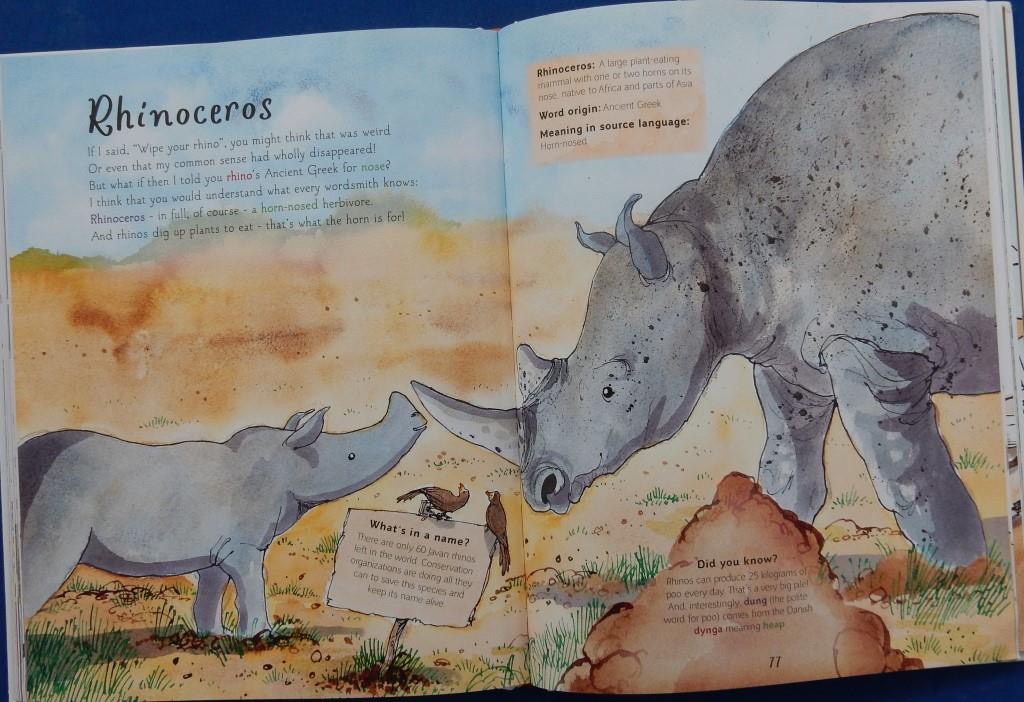


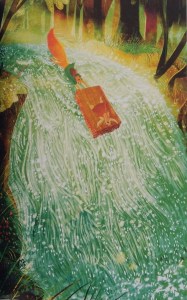


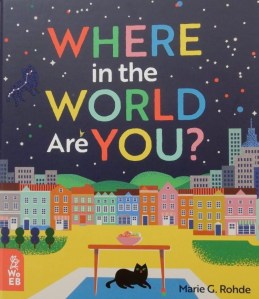
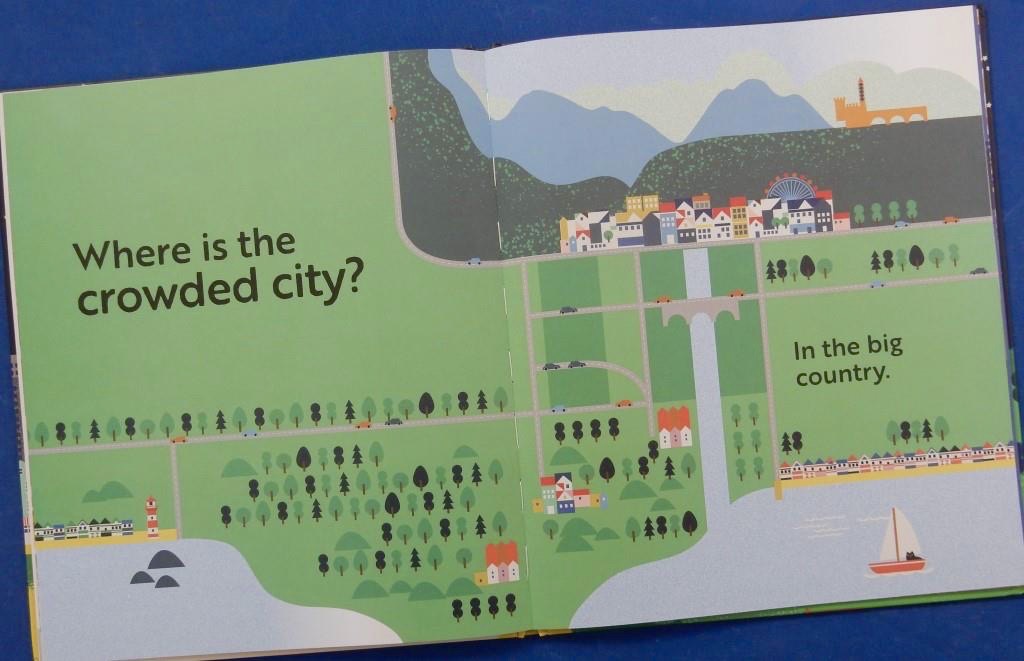
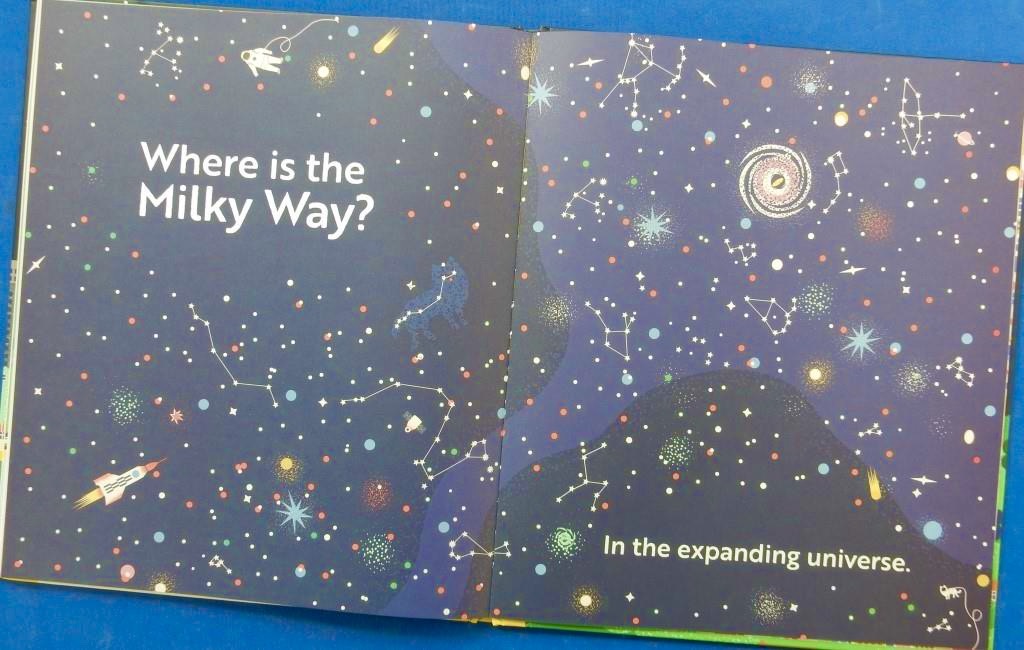
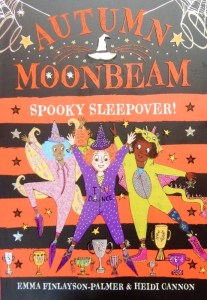
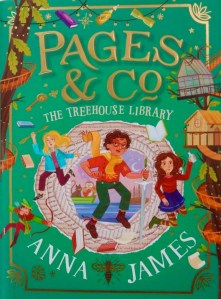
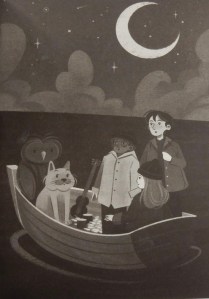


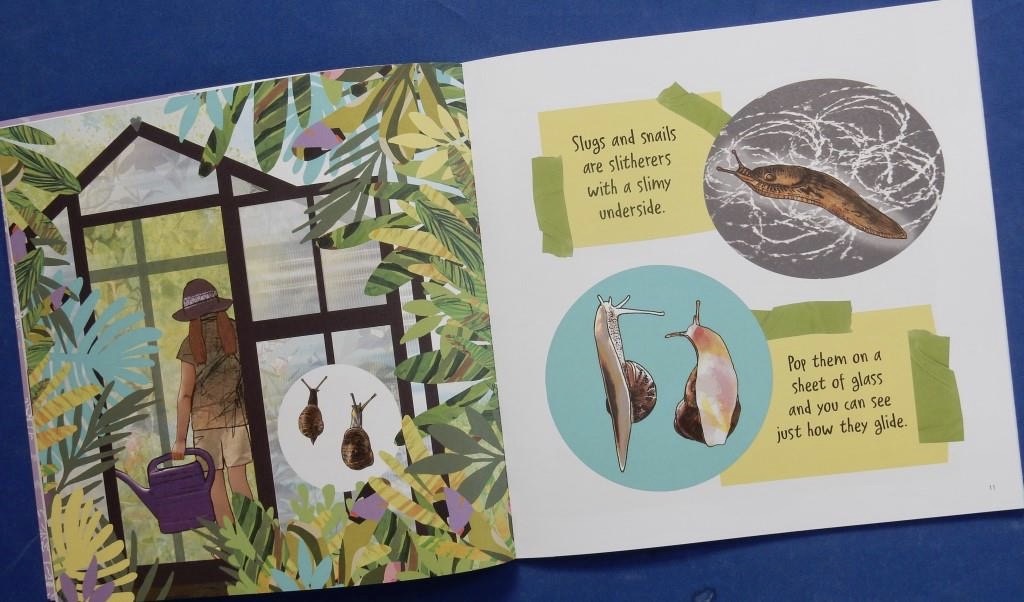


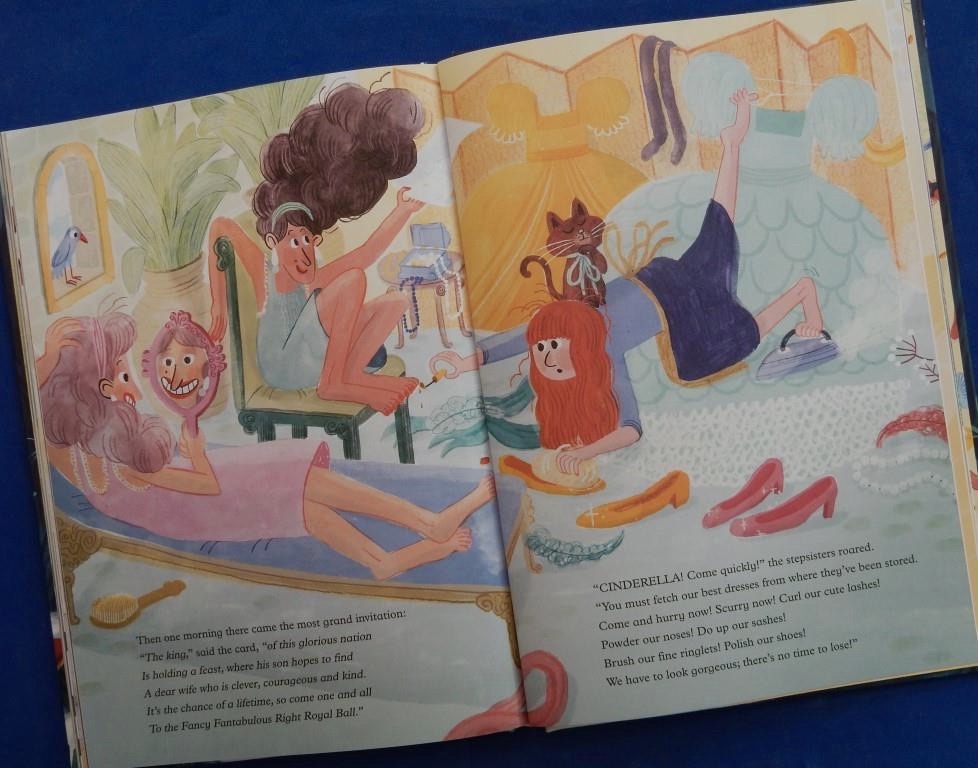
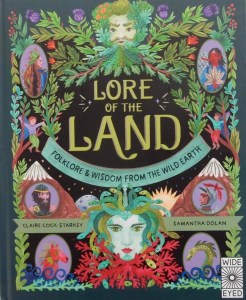
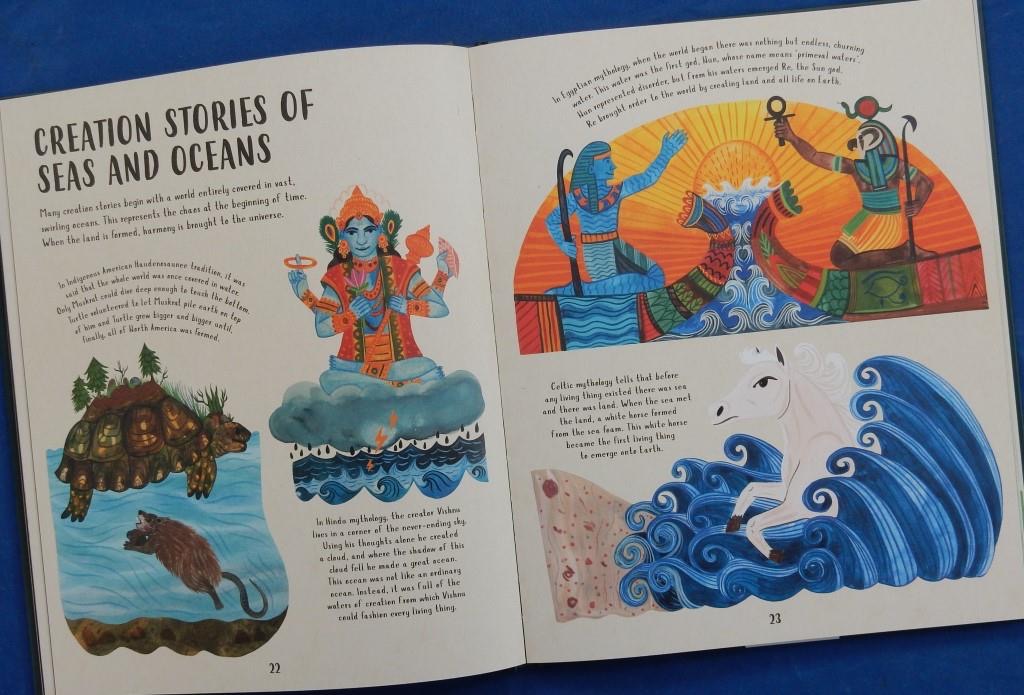




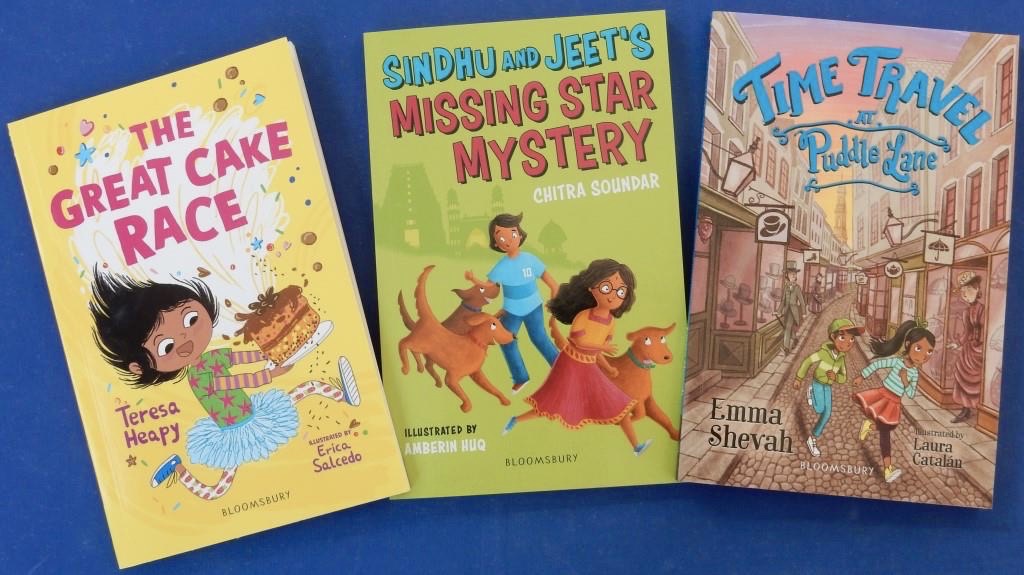
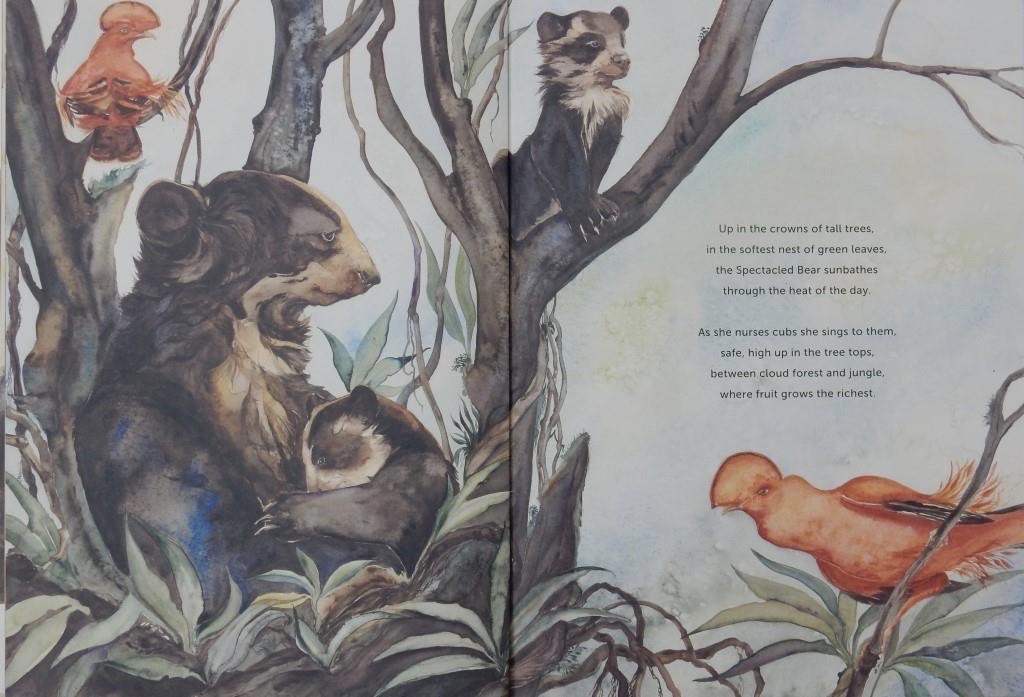

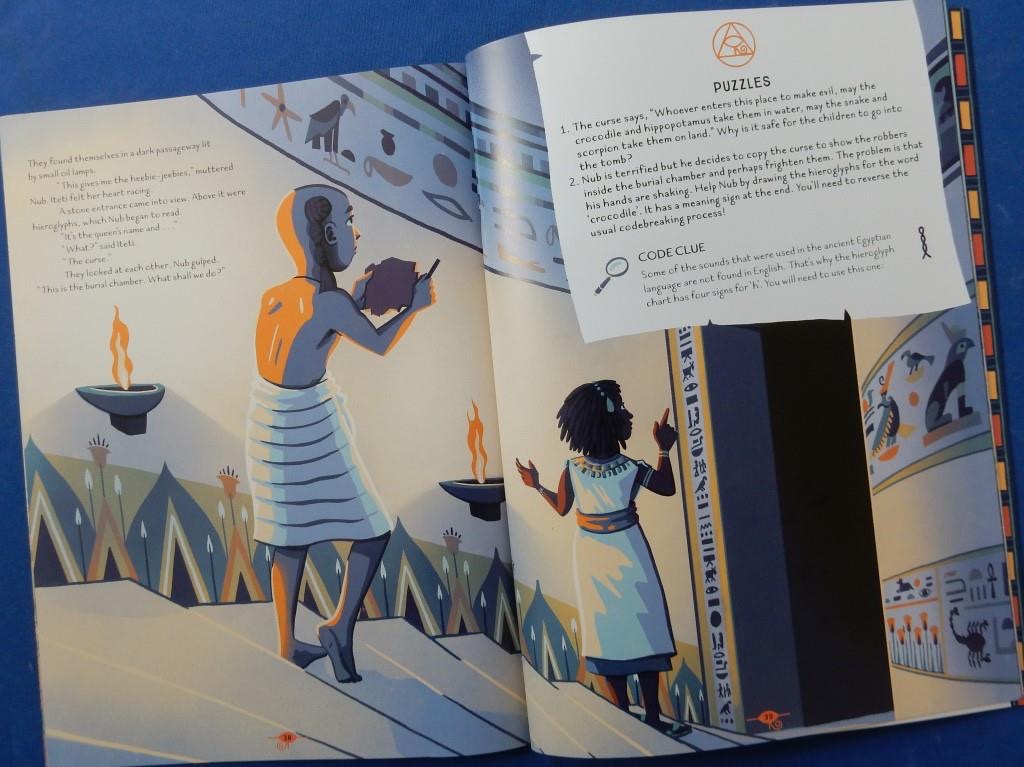
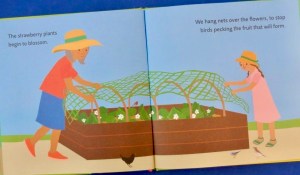
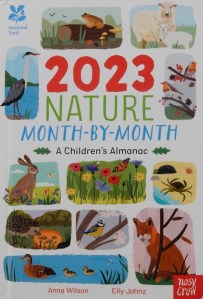
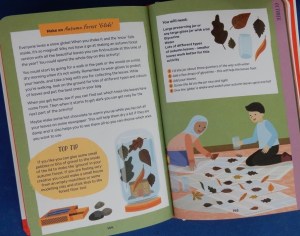
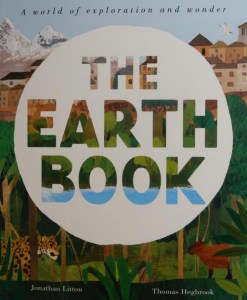
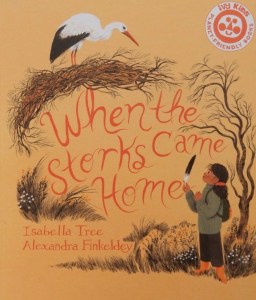


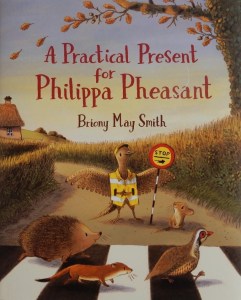


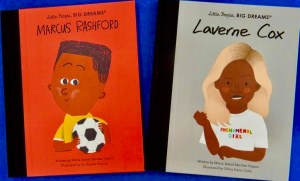


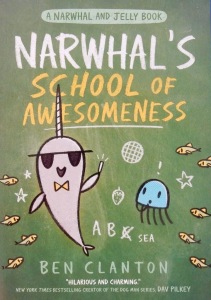


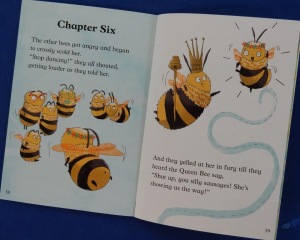
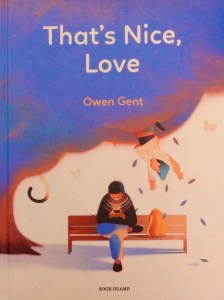


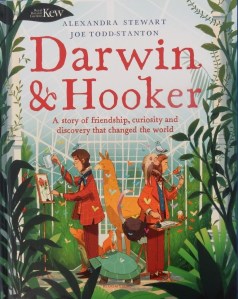
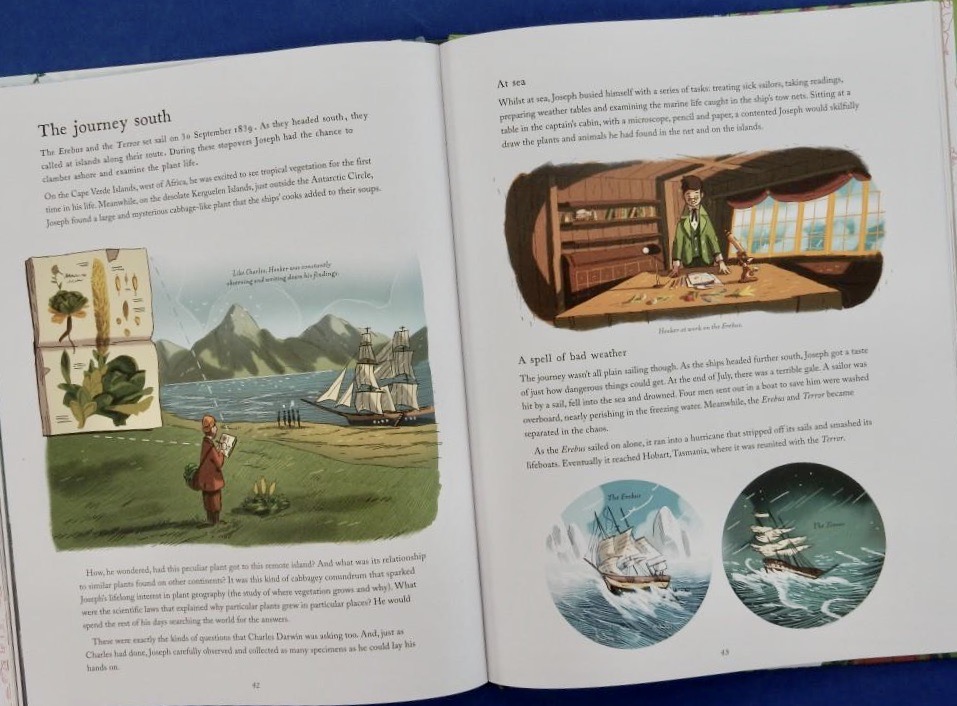
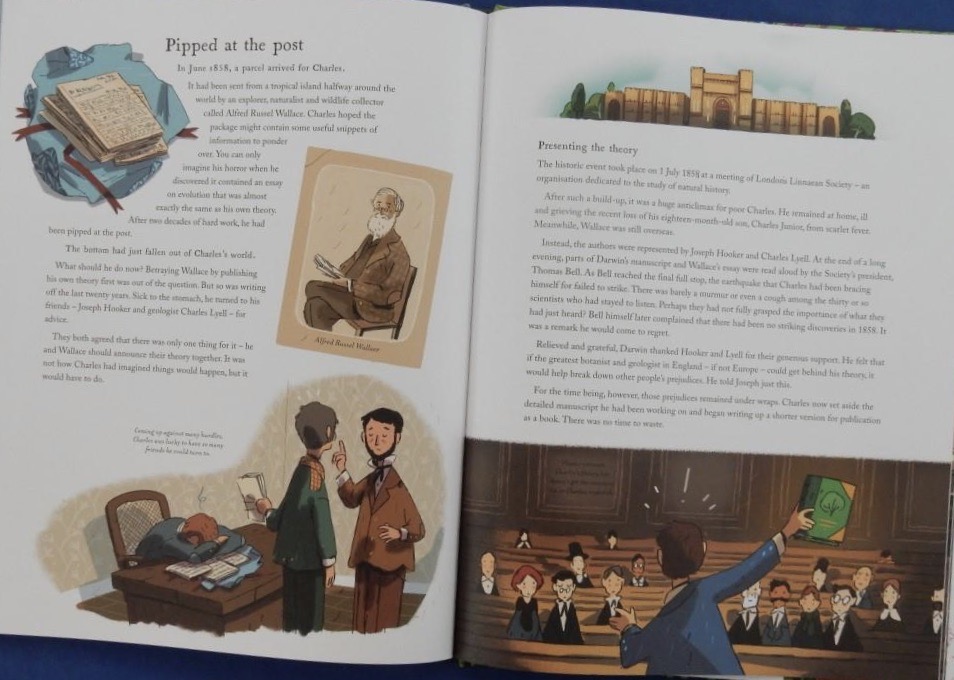
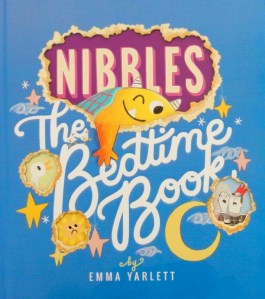
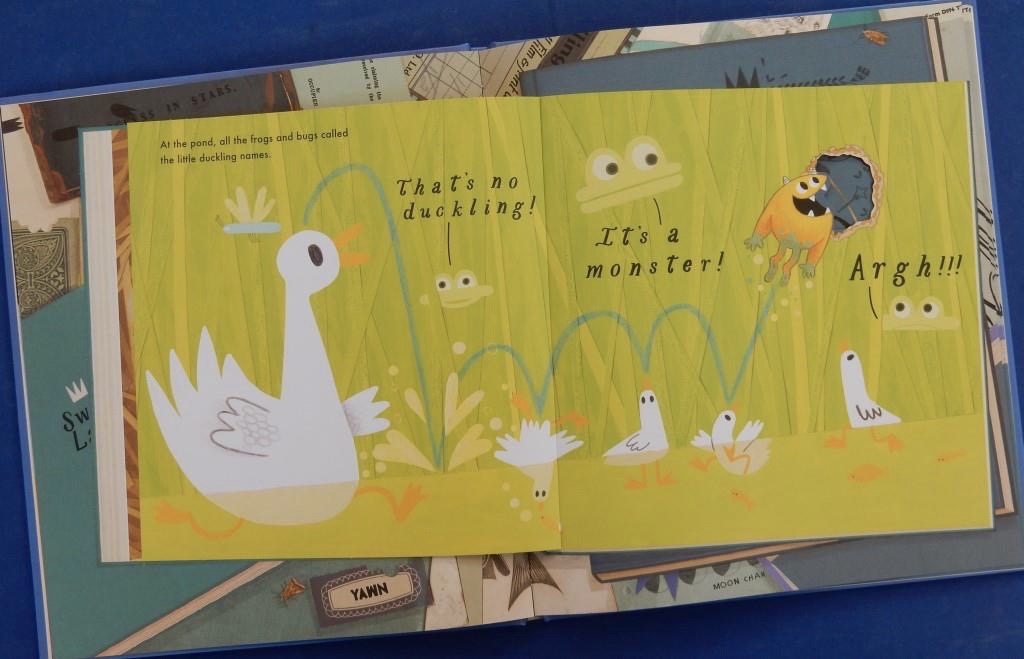
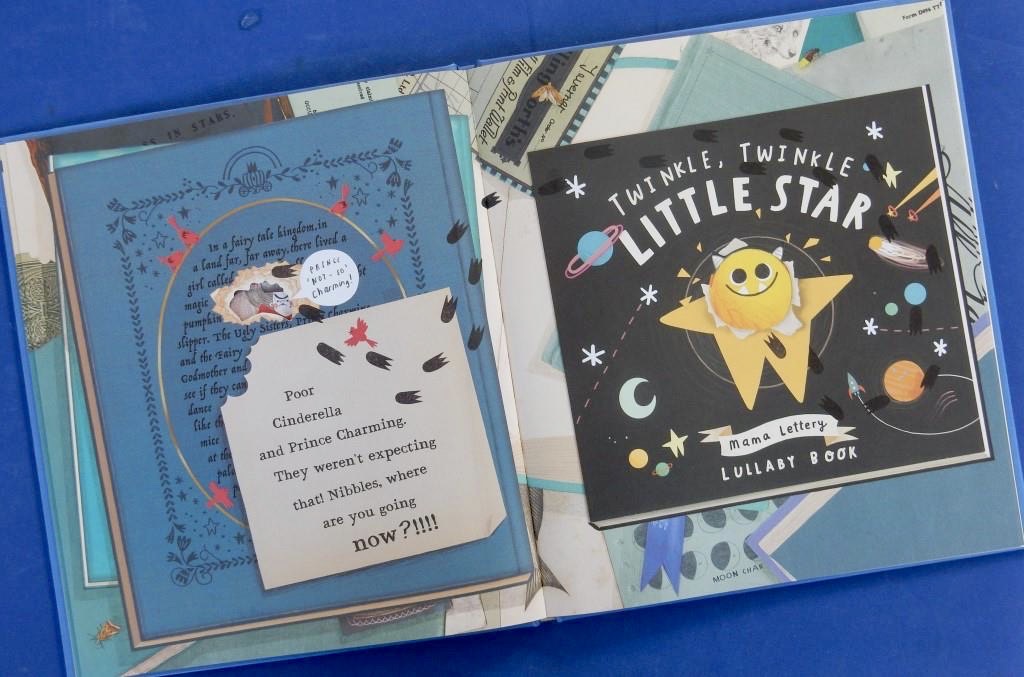


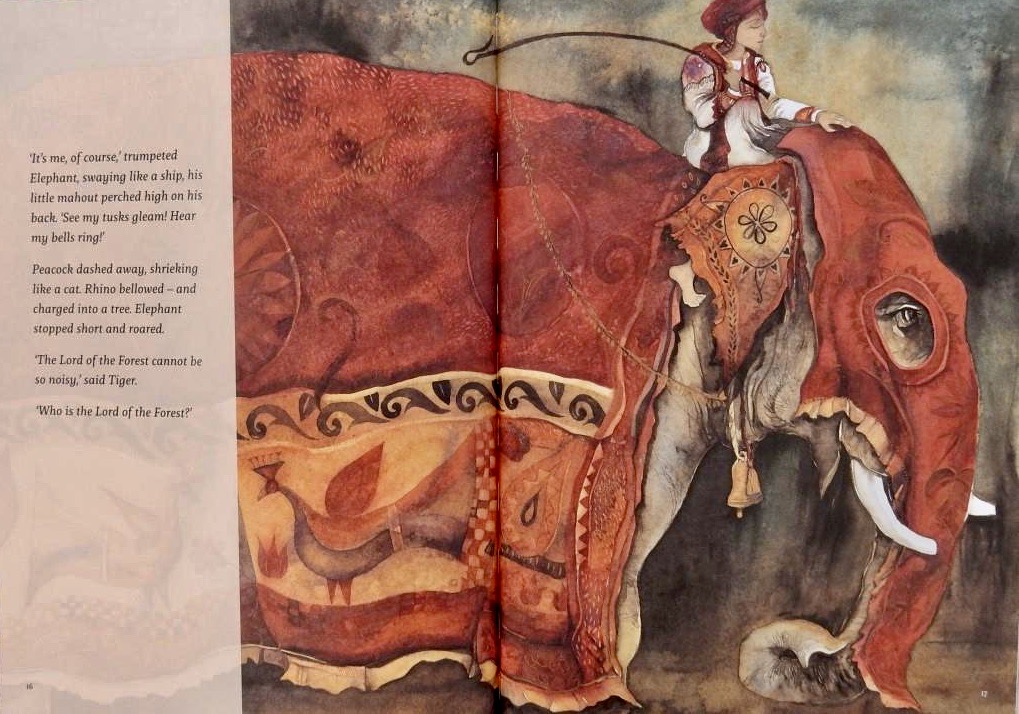
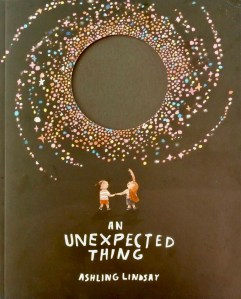
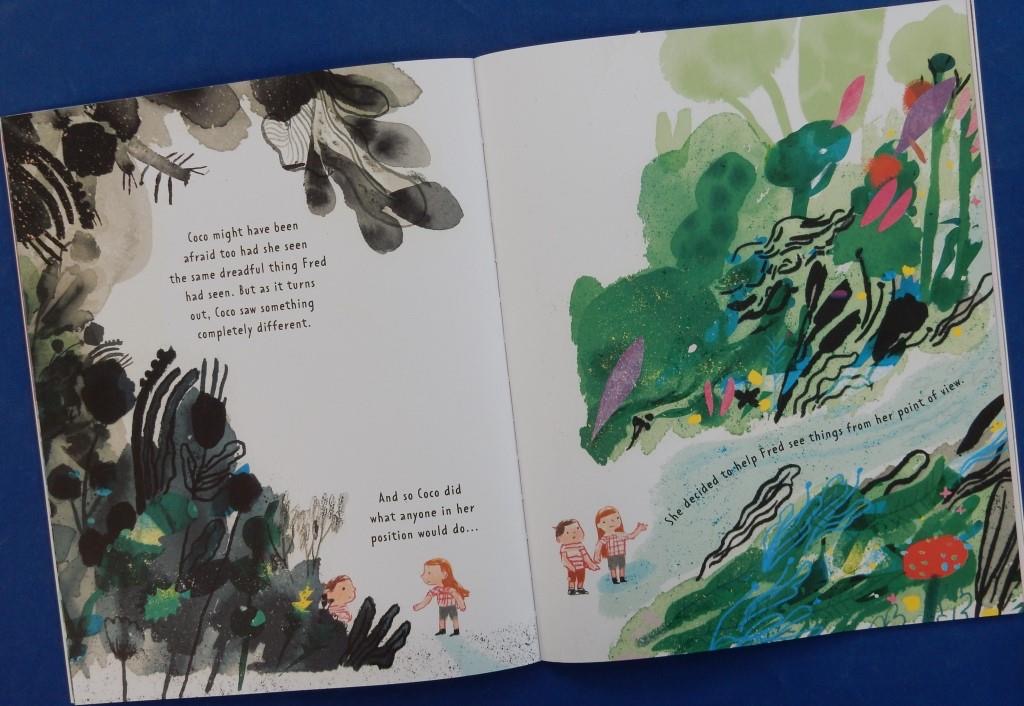
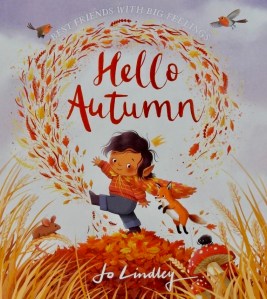
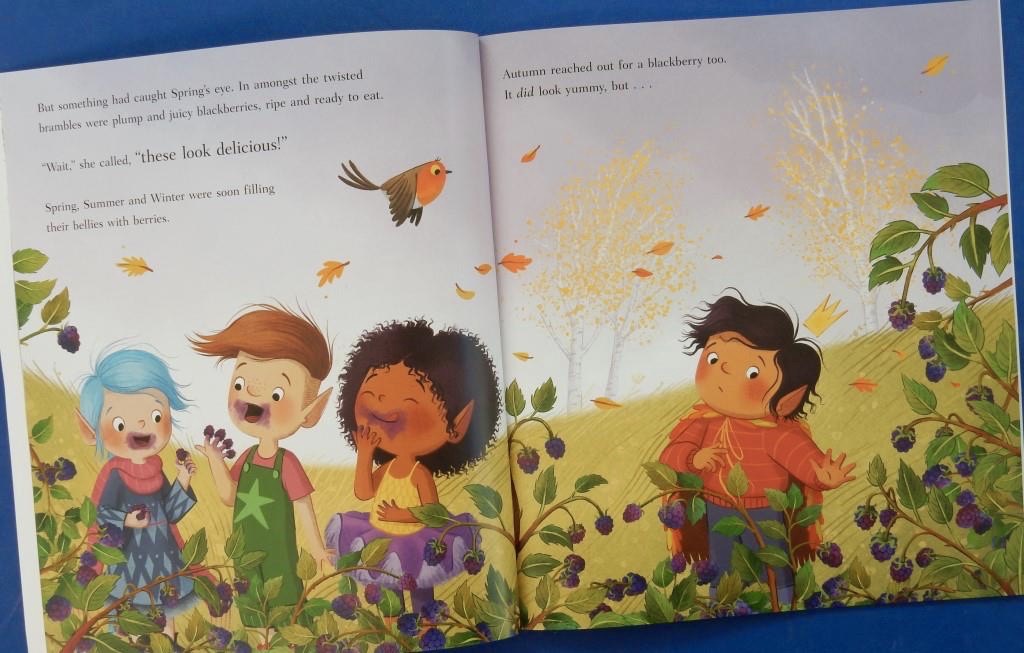
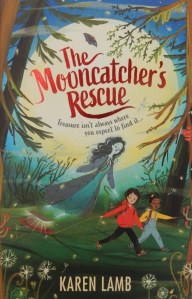
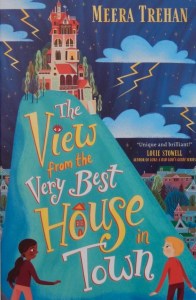
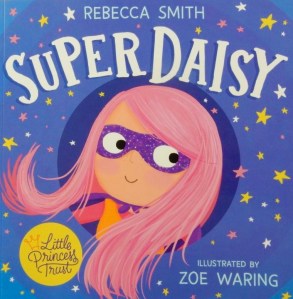


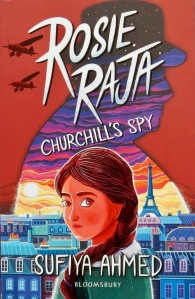
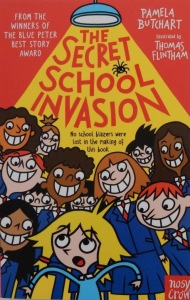


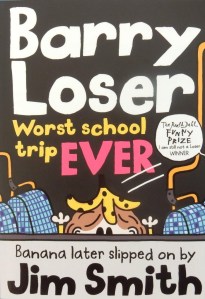




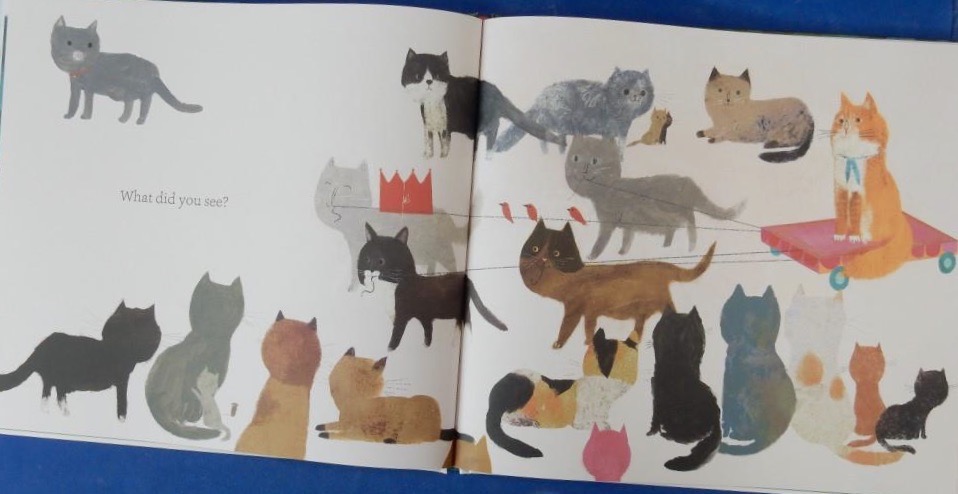

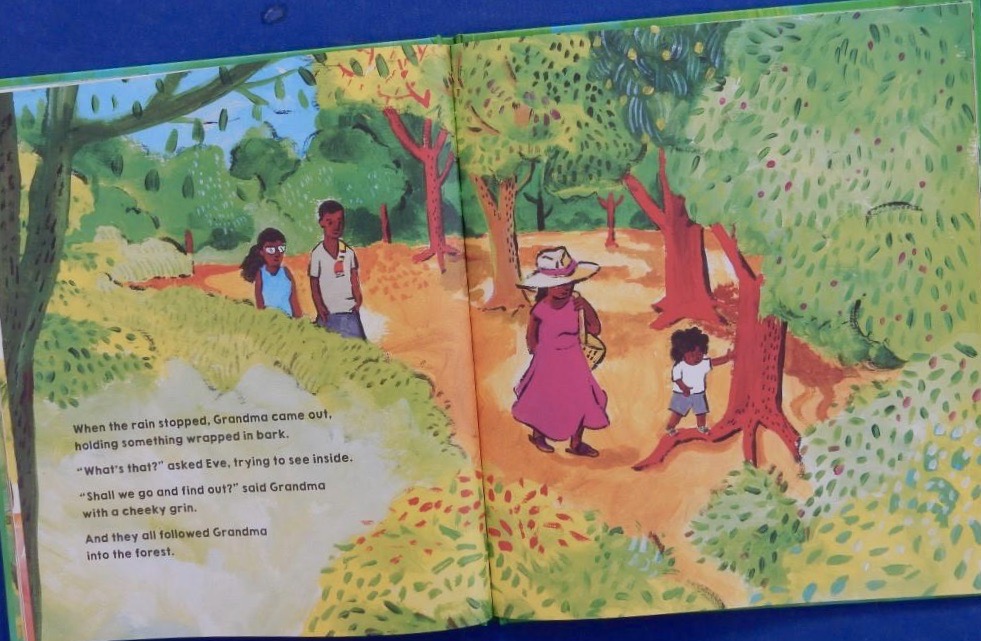

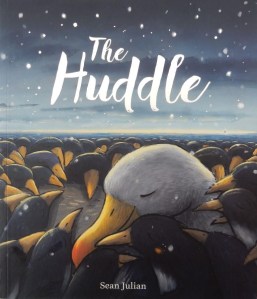
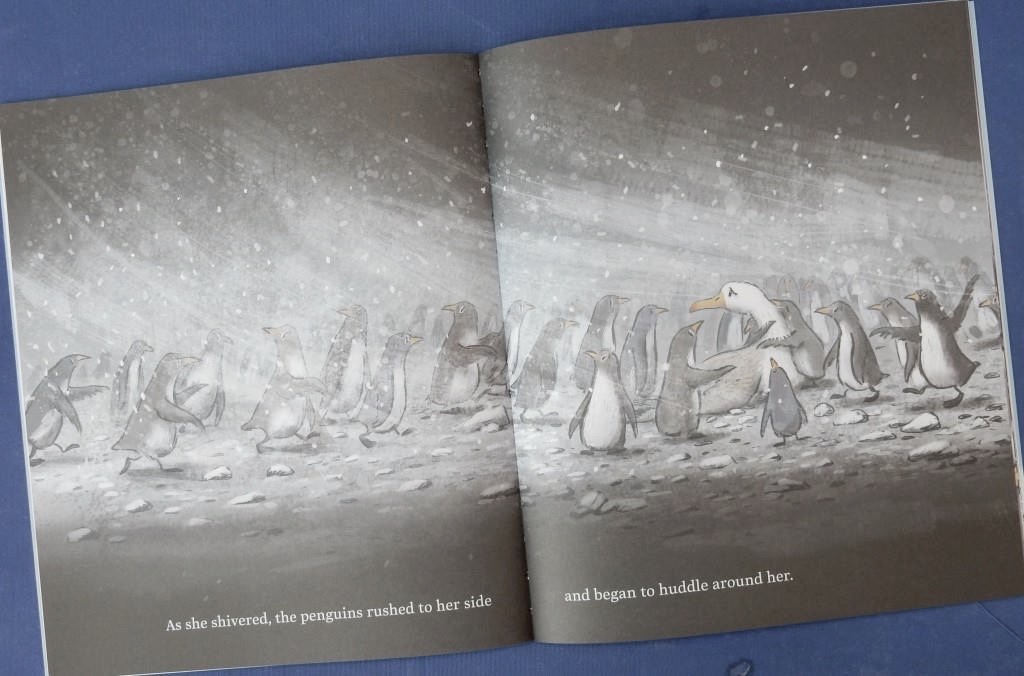
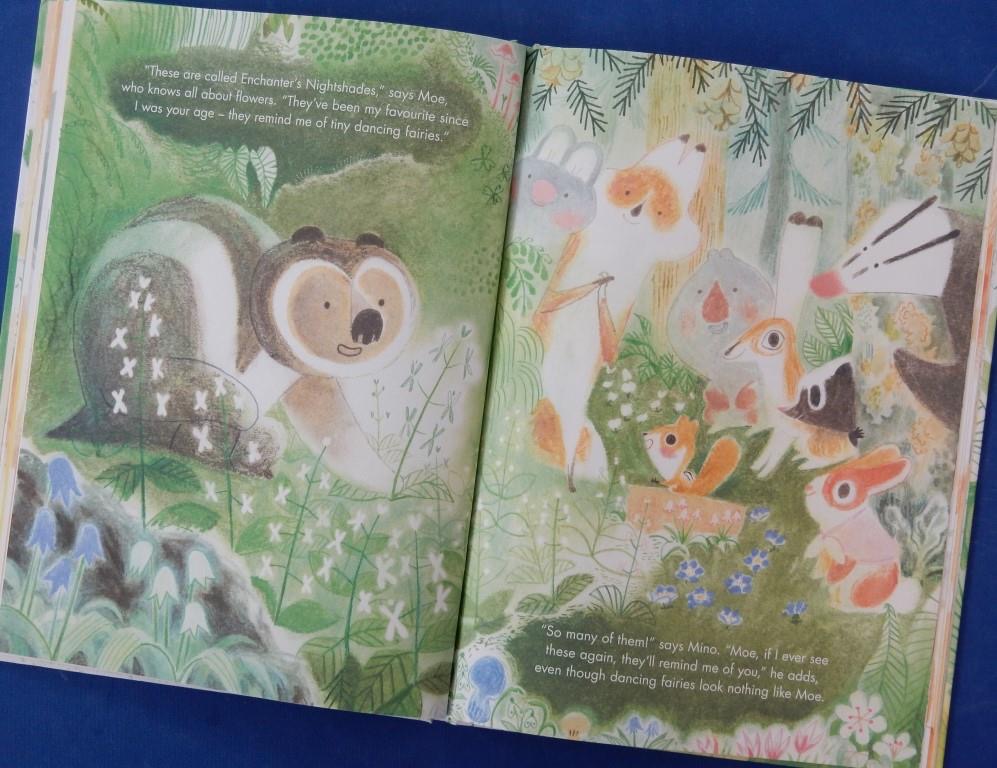
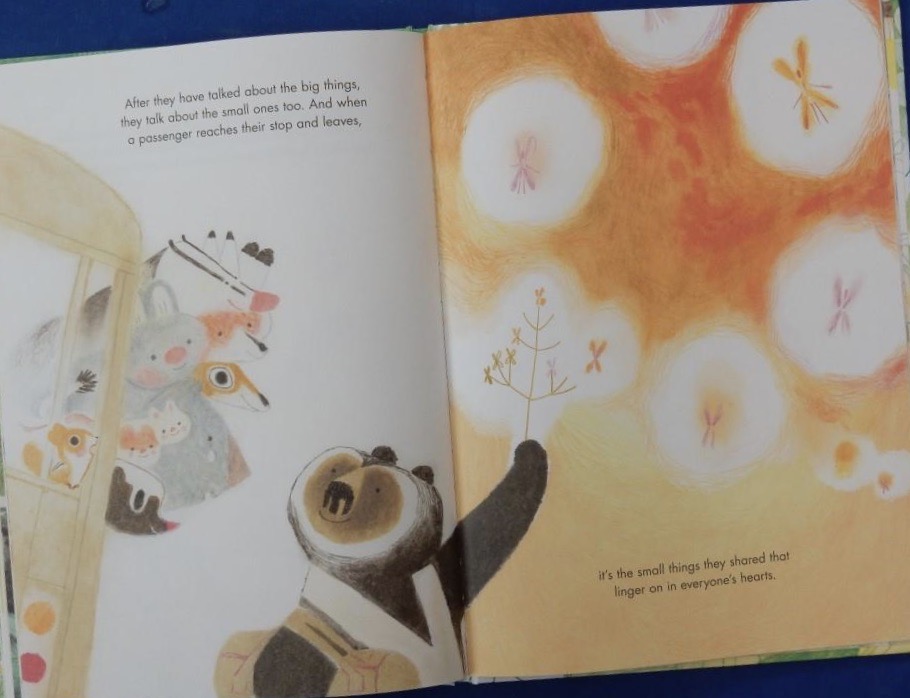
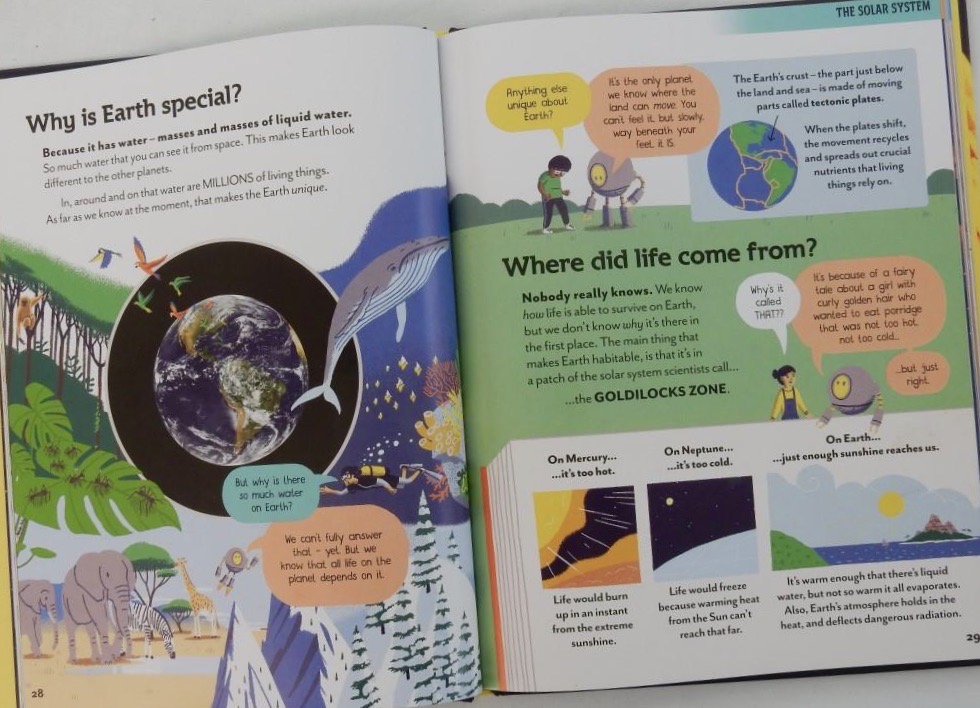
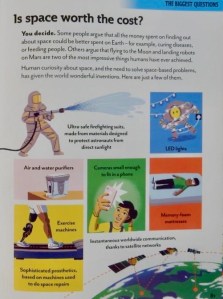


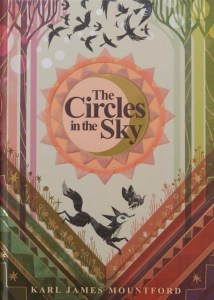


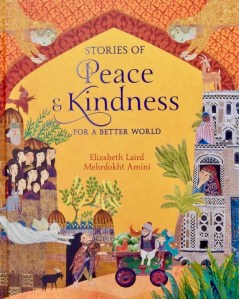
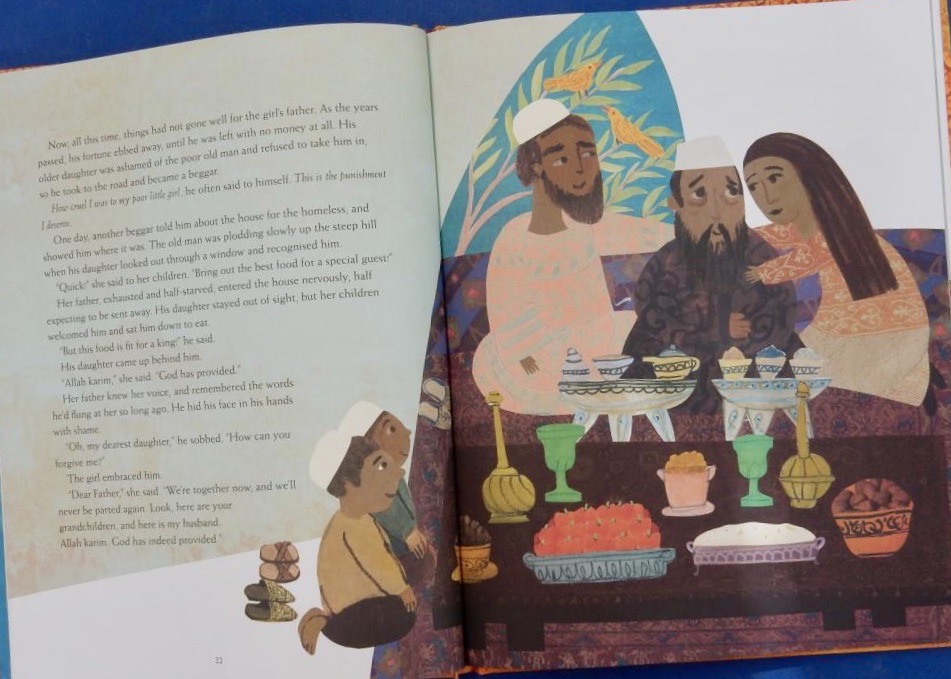
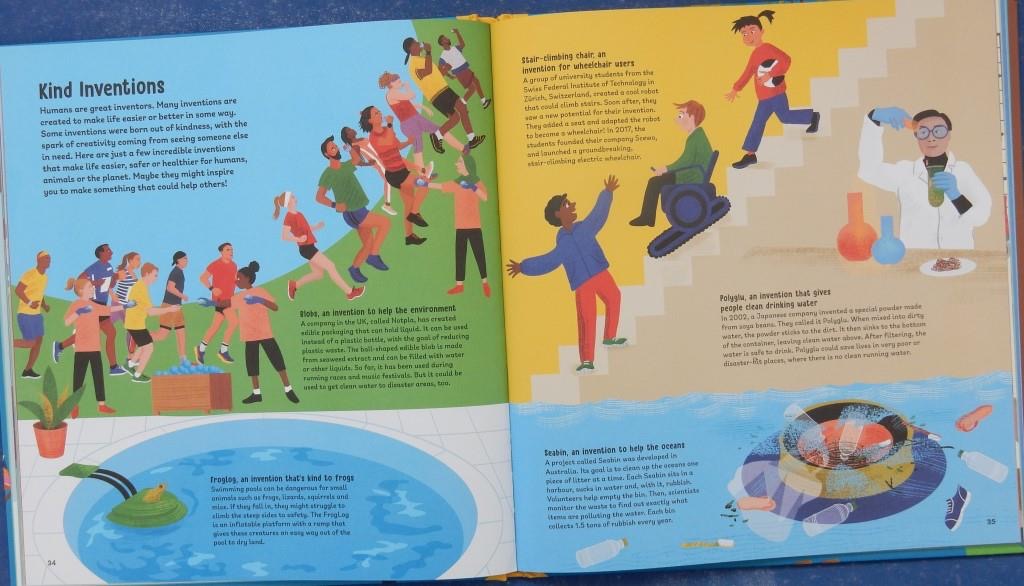


 Red Reading Hub - Jillrbennett's Reviews of Children's Books