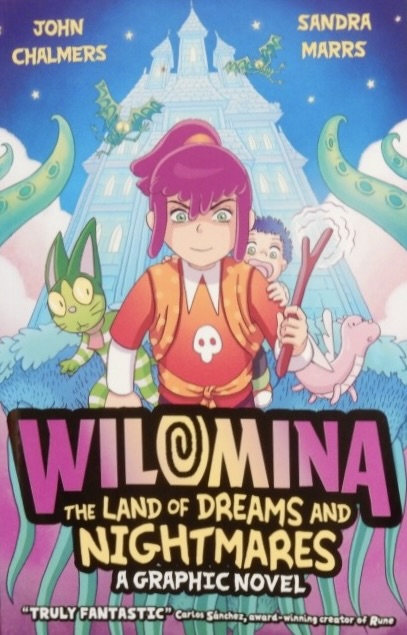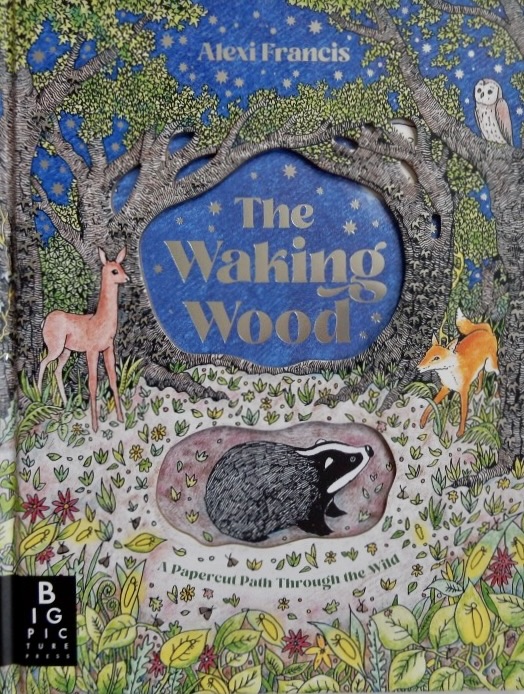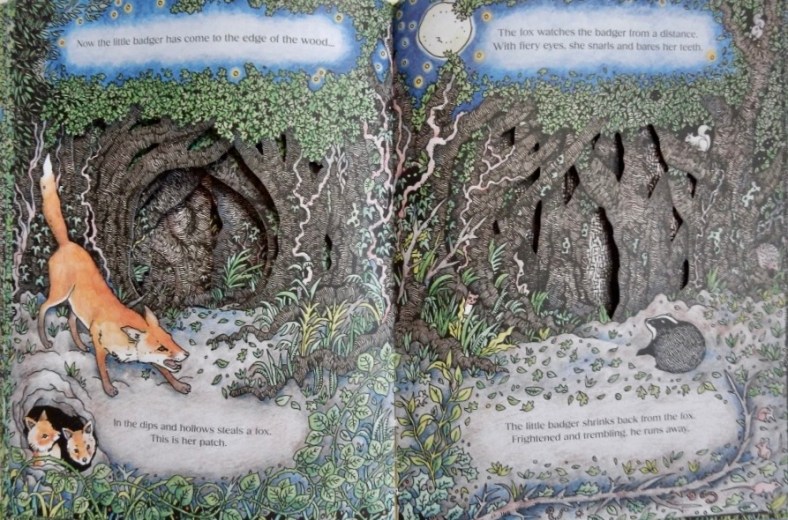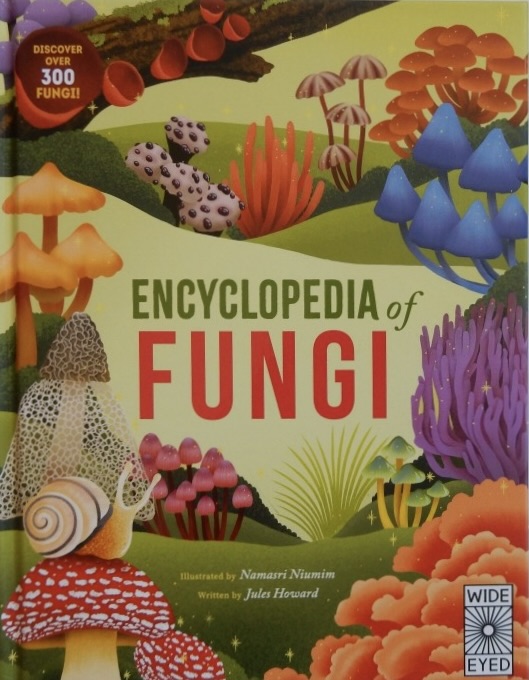
Bridget’s Bright / Slippery Cyril

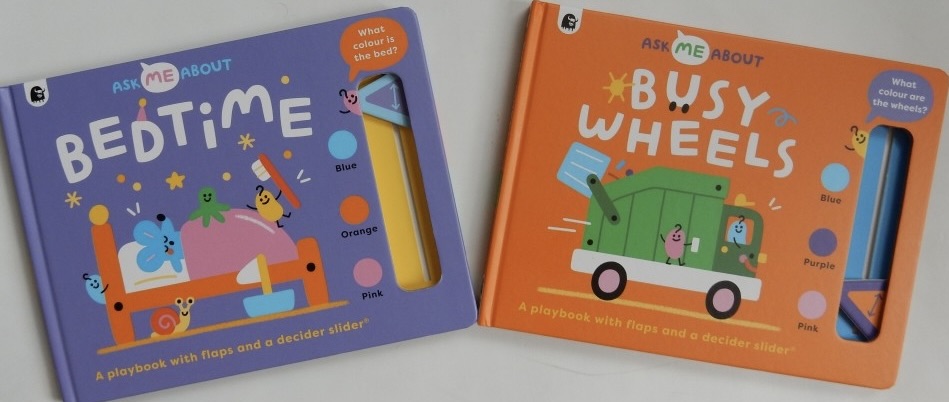
These are two new Tiny Tree books – thanks to the publisher for sending them for review.

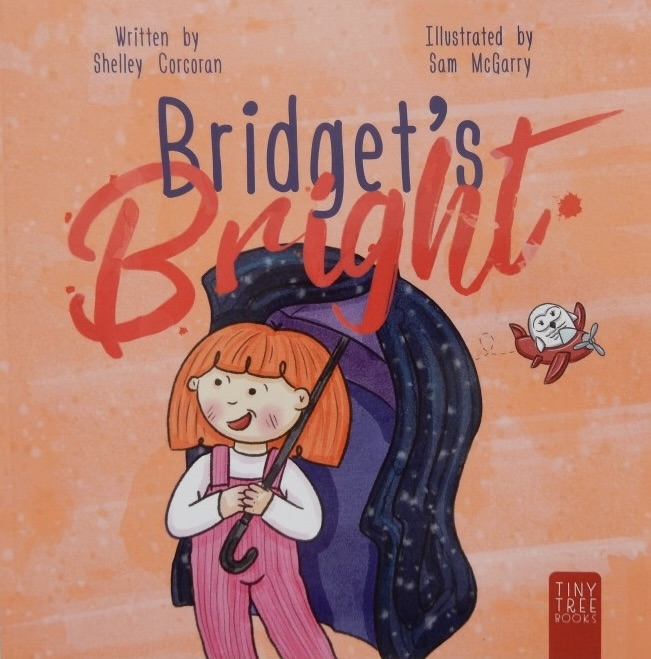
Unlike many young children, it’s not the dark that Bridget is frightened of, it’s the light or as she calls it, the bright. The dark is her comfort time, and she spends a lot of it under her bedclothes and keeps the curtains closed at all times. In school she protects herself from the bright by means of a blanket atop an umbrella. Despite being fond of art when her imagination can run wild, she never gets to see the paintings of her classmates. She also lets her imagination run wild while playing in her wigwam in the garden, dreaming of dresses fashioned from fireflies or daisies. but all her clothes are bought by her mum in bright shops that she refuses to venture into. Moreover she misses out on watching the monkeys when on a trip to the zoo and on visits to the swimming pool she remains sitting on the water’s edge dipping her feet in.

Then one day on her walk to school Bridget trips and her brolly and blanket fall off so she can see the brilliant blue sky causing her to surprise herself by saying ‘Oh how beautiful!’ Back home later on she has a talk with her mum about why she might be afraid of the bright and the following day at the park, Bridget tries something different … Has she finally overcome her fear?
An empowering story to share and talk about with young children.

Also for young listeners is

The Diary of Wiska Wildflower: The Crystal Cave

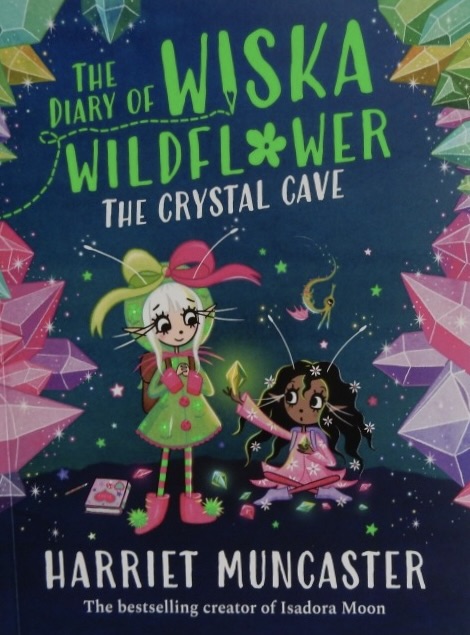
This second story of the totally adorable Wiska Wildflower sees her on her first school expedition. The three day trip is part of their Nature Studies and they will, as the letter informs carers, be learning about the rich variety of flora and fauna on Wiskling Mountain. During this time the students will have to read a map, make their own camp and find and cook their own food.
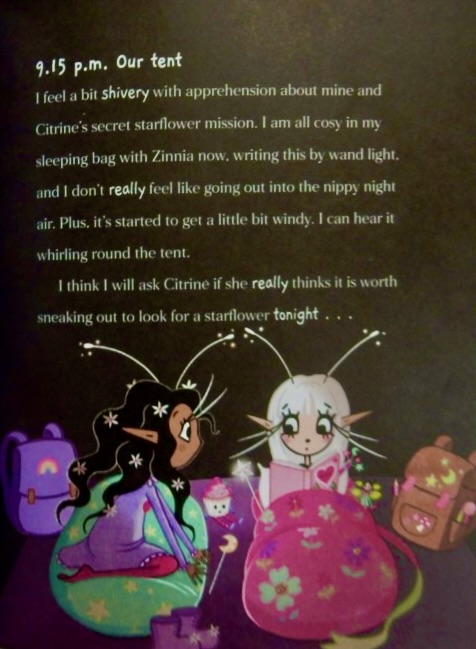
Wiska is paired with Citrine who is passionate about baking and hopes to be a famous baker one day. She thinks the Wiskling Mountain field trip offers the ideal opportunity to find a starflower, a rare plant with petals that only open at night (the time the students are meant to be asleep in their tents not going off to the reputedly dangerous Rocky Ledge). As readers can guess Citrine wants Wiska to go with her and reluctantly she agrees.

Some time after 11pm the two set off on their blooms towards Rocky Ledge but there’s a rainstorm and they land really close to the edge. Straightway Wiska wants to return to camp but lightning strikes make her feel even more scared and with Citrine refusing to go, her friend has no choice but to stay, follow her to the Starflower and get the sugar crystals from its petals for Citrine’s baking.

Disaster strikes; Citrine trips and hurts her ankle. Two hours away from the camp in a raging storm, Wiska realises she must get help. Eventually she finds her way to the Crystal Cave where a bearded wiskling named Albert is enlisted to help. They find Citrine after considerable difficulty and take her back to the warmth of the cave. After a while Wiska and Citrine have a serious talk; then Albert takes them to see more of the cave’s interior.

An amazing night ensues but what happens and whether Wiska and Citrine remain friends, readers must discover by getting their own copy of this gorgeously illustrated, magical book.

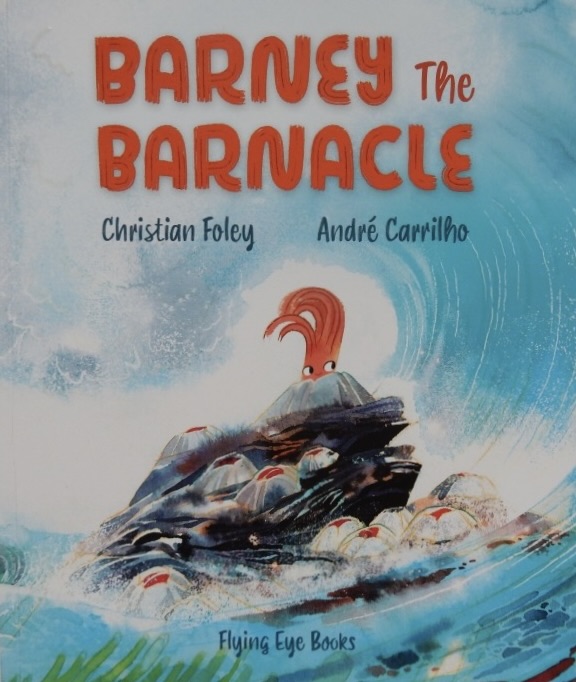
Barney the Barnacle

Living on a rock in the middle of the ocean is Barney, a barnacle; he’s totally unbothered and seemingly unmovable. To look at he’s merely a pair of googly eyes with red feathery protuberances coming through the hole in his shell. He ignores the invitations from birds and fish to leave his rock and explore; indeed he refuses to budge.

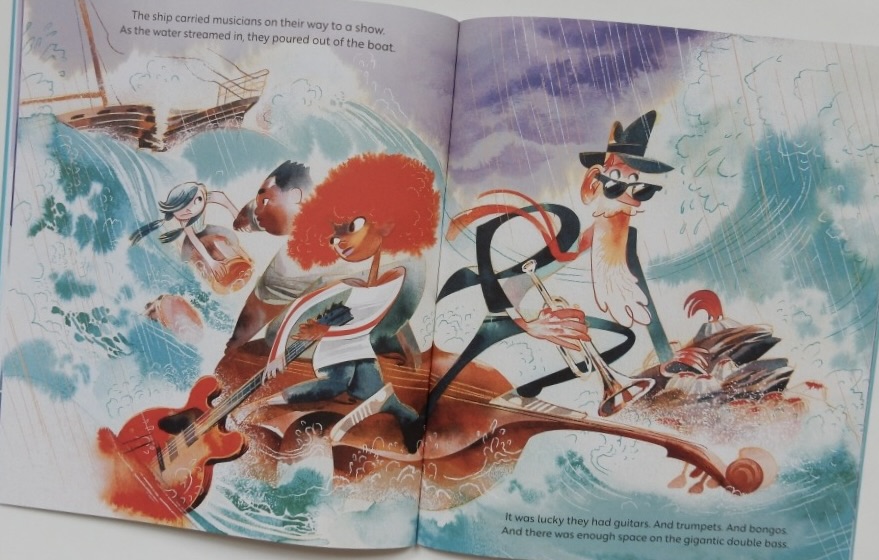
One day a fierce storm blows up and despite Barney’s rock getting bumped it stays firm, as does Barney. Suddenly however, a ship carrying a group of musicians is shattered and the musicians plus their instruments are shipwrecked on Barney’s rock.

Clutching their instruments they call out for help but are ignored by the Sea and the Sky. Barney hears their conversations and following this their music. Both Sky and Sea are soothed by the smooth music and it causes them to follow the beat of the tune together. Barney meanwhile feels something wake up in his heart as the music washes over him. Now at last, Barney the Barnacle is moved by the sounds of his ‘first rock concert’. – love that! – and up he gets to dance.

Finally rescue arrives both from the air and the ocean but as for the fate of Barney, that is left to the reader to decide.

This story celebrating the power of music, is rhythmically told by Christian Foley and with André Carrilho’s vibrant scenes awash with shades of blue, immerses readers and listeners within its swirls. You can almost hear the beat of the bongos and the booming of the double bass emanating from the pages of the book.

And Now We Run

During a Year 7 outward bound school residential trip to a woodland area of West Yorkshire two children, Jelly, who is not at all keen on being on the trip and the much more enthusiastic Lincoln, who has visited the region before with his brothers, find themselves separated from the rest of the group. It is from their viewpoints that the story is told. Interwoven with their narratives is the occasional voice of a red kite that circles above them watching the disaster unfold.

Extreme weather conditions result in a reservoir bursting its banks and the dam in danger of collapse. The subsequent flooding leaves the pair stranded; but the power of nature and their own safety isn’t the only issue they have to contend with.

As always, Nicola Penfold’s descriptions of the natural world – its awesomeness and its dangers – are superb in this latest fast-paced story. With themes of global warming, friendship, courageousness it’s one that will have readers gripped from the outset: I read it in a single sitting.

A must have for upper primary class collections and individual readers from lower KS3 and would make an excellent book to share with a year 5 or year 6 class. It’s sure to generate lots of discussion.

If ever there was a timely reminder of why we should all do out upmost to protect our natural world, this is it.

Pincho Nothing IS Possible

Pincho is a capybara (in case you’ve never met one, they look very similar to over-sized guinea pigs and come from South America). These creatures spend most of their time doing absolutely nothing and they are always happy.

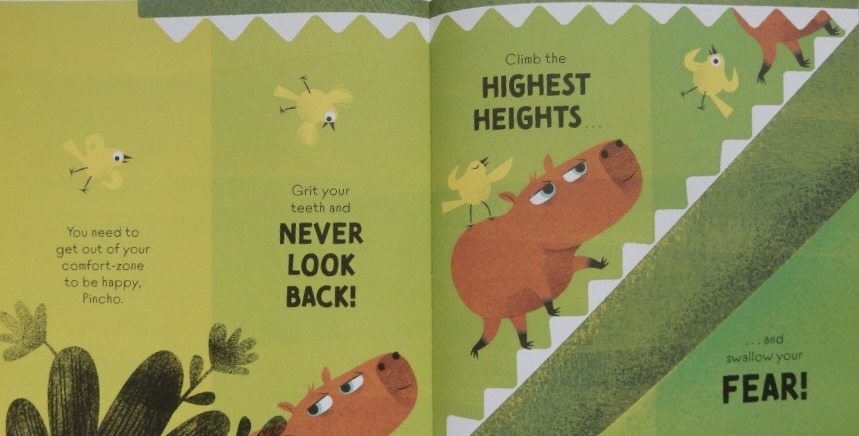
This story, so we’re told by the bird narrator, is about ‘the chill-est, happiest capybara ever and his name is Pincho. However, the bird believes that to be happy Pincho’s never worries, never hurries lifestyle needs changing; he should be busy from first thing in the morning and to that end has made him a list of things to do.

Today though is destined to be a seize the day kind of day full of exciting action such as kicking goals of the winning sort, climbing the highest heights and swallowing his fear.

What about escaping from the jaws of danger though – possible or not? I wonder.

Make sure you read the title of this book carefully; it’s key to the crucial lesson that Pincho is about to teach not only the yellow bird, but all of us, that rest and relaxation need to be vital elements in everyone’s life, ie Nothing IS possible.

Ben Sanders’ modern parable is splendidly illustrated and told in a wonderfully droll, slightly tongue-in-cheek style. A book to share, talk about and act upon (or not) with KS1 children.


The Line

The Partition of India that was drawn up by the British almost eighty years ago remains a contentious issue. Yes the country became free from imperialism but political tension and rivalry continues between India and Pakistan to this day. The battle for the disputed Kashmir, the violent formation of Bangladesh and Islamic radicalism’s roots are indicative that the 1947 legacy is not truly over.

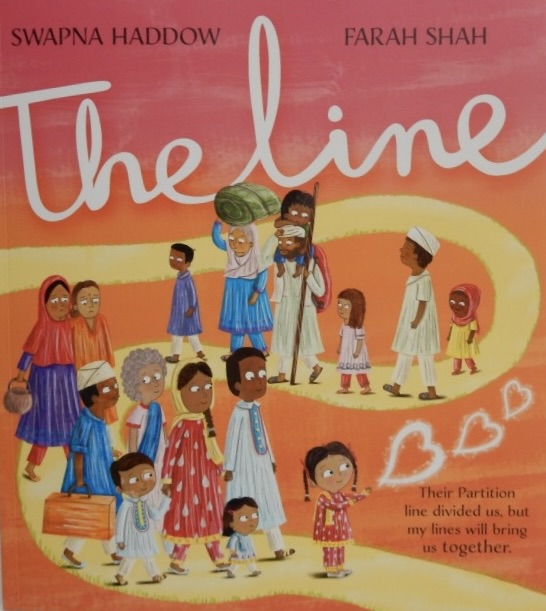
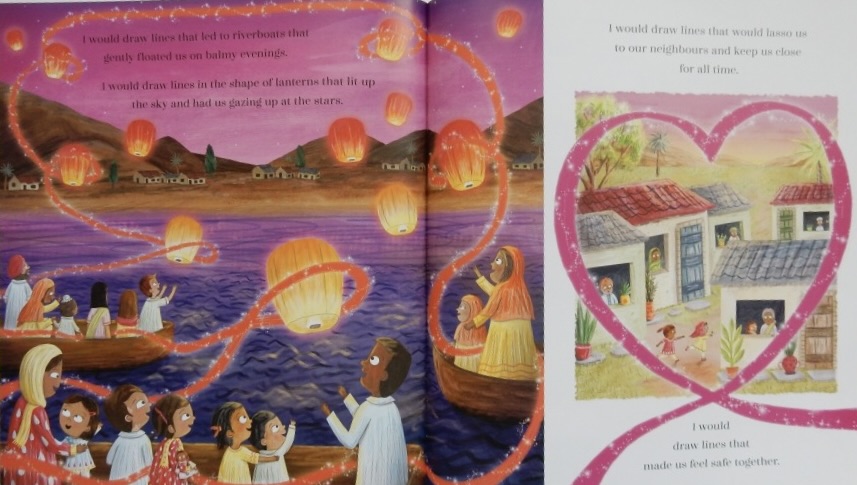
Sadly, as a frequent visitor to India I see first hand that the lines that divide still exist. I have Hindu, Sikh, Muslim and Jain friends but almost everywhere different communities live separately – a legacy of the British divide and rule policy. Would that a child such as the girl protagonist in Swapna’s story – The Line – been in charge rather than a politician. This girl was familiar with various kinds of lines from early in her life but then one day on her return from school she found that a new line had appeared, one that cut her father’s farm in half, tore her village in two and took her friends from her. Seemingly unnecessary fighting and having to join this new line meant that she and her family had to walk for many days, becoming progressively hungry, exhausted and afraid.

As she walked so the narrator tells us, she imagined what she would do, had she been in charge of a line with so much power. Any line of hers would be full of beauty and gentleness, drawing people together, feeling safe

and wanting to learn more about one another. her line was all embracing and made everyone friends.

Farah Shah’s vibrant colours immediately catch the eye and draw you in to the wealth of details in her illustrations of this powerful and ultimately hopeful story about Partition that everybody – young and not so young – should read and discuss.

They Sent a Cat to Saturn

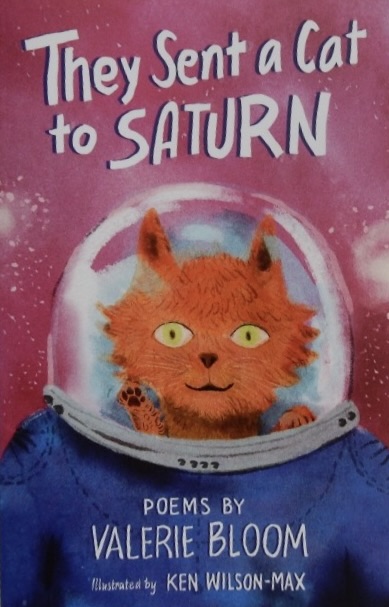
‘They sent a cat to Saturn / on a spaceship called Hooray / they put him in his cat spacesuit / and sent him on his way.’ So begins the title poem in this exciting collection that’s bursting with playfulness, wordplays and empathy. You will find in the six sections of the book haikus including a couple of Jamaican ones, poems about pets such as Spotty, which is about a destructive watch dog, another admonishing a dog that drinks the water from the loo

and even one about wanting a dinosaur more than any other creature.

The shortest section Glorious Food has Just Because that made me laugh realising as a youngster I would also have been turned out from the Kids Vegan Society for eating such things as ‘A head of cabbage’ … ‘a bowl of ladies fingers … kidney beans and artichoke hearts.’

Several of the poems in the final section Brawta are of a more serious nature. One such is the extremely moving Refuge which couldn’t be more timely; it’s concluding two verses are these:
‘No babies crying for a scrap of food / To ease the hunger pains, / None gasping for a drop of water / To quench the fire in their brains. // No hungry flames consume the town, No one lives in fear, There’s no war in this country, Can we find refuge here?’
Thought-provoking too are One, Two, Three, Four, Five and Choose.

I love Valerie Bloom’s poetry and strongly recommend you get copies of this accessible treasure of a book with black and white drawings by Ken Wilson-Max that capture the poems’ main moments: it’s ideal for KS2 class sharing and to enjoy at home.

123 Counting Tree! / ABC Learn With Me! / Family

Here are some new board books from Little Tiger – thanks to the publisher for sending them for review.

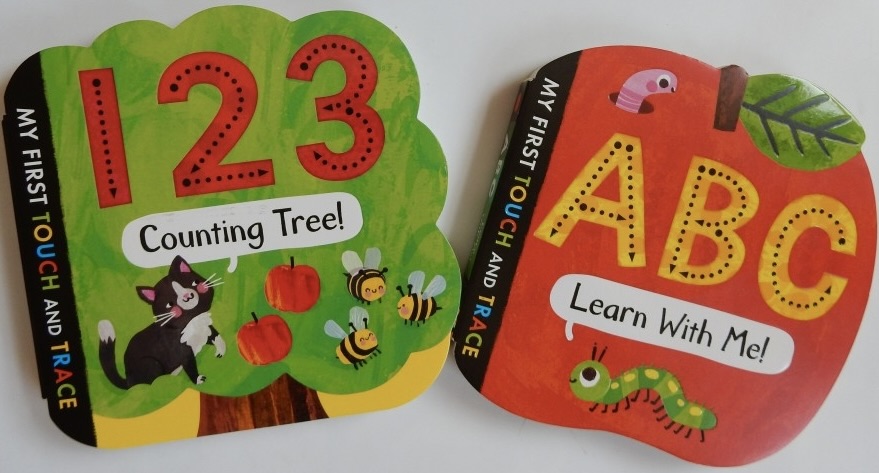
These are both titles in the My First Touch and Trace series. The counting one follows a pattern: on the verso is a numeral beside which is an arrow to show the direction in which the child’s finger should move to make the symbol and beneath the numeral is a simple two word caption such as eight bees, together with the appropriate amount to dots. There are two counting practice pages the first from 1 to 5, the second from 6 to 10 and the final spread invites little ones to count the brightly coloured butterflies depicted.

The ABC book allocates a single page to each letter of the alphabet showing how to write both the capital and lower case letters and there’s a fun illustration by Laura Silveira, the subject of which begins with the relevant letter for example, B b is for bus.
Gentle, playful learning for very young children.

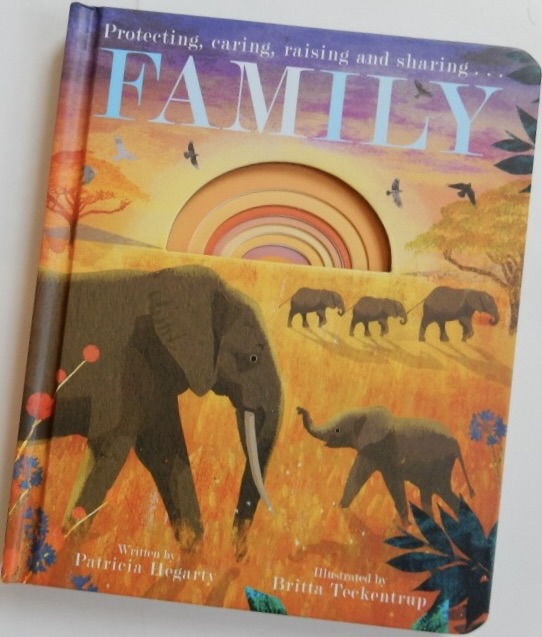
From gorillas grooming to magnificent manatees and diving dolphins, little humans can find out about the unusual habits of creature parents and their families.
Patricia Hegarty’s lyrical rhyming text evokes calm and Britta Teckentrup’s gorgeous scenes of the creatures in their natural habitats bring to life the multitude of ways that animals nurture, support and protect one another.

There are die-cuts that allow young humans to peep through the board pages, and each turn of the page reveals a different landscape be it snowy, watery, forest or savanna, somewhere in the world.

If you’ve ever wondered what ‘family’ means to polar bears, this board book is for you and your young child. With Patricia’s gentle narrative this is ideal to share at bedtime.

Goat: Greatest of All Time / The Floofs: Bring the Magic

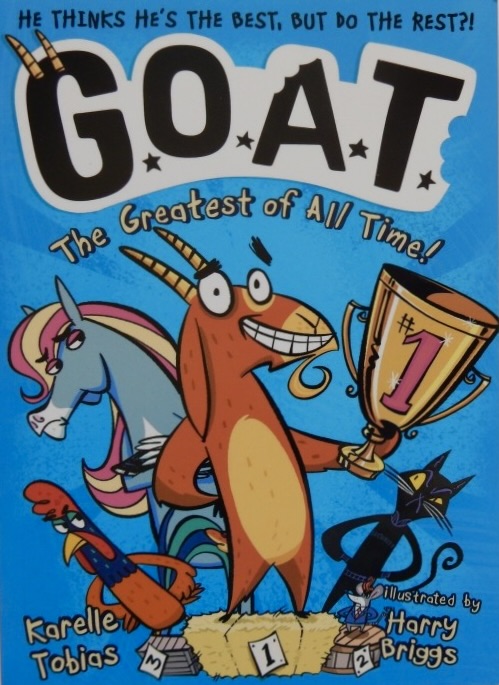
When Goat arrives at Harmony Farm calling himself the Greatest of All Time, it’s not long before his supreme self-confidence has ruffled the feathers of Rooster, and offended Horse, the best dancer in the district. There follows an epic dance battle with P-I-G controlling the music and this brings Goat’s extravagant claims under pressure; perhaps he’s not the greatest dancer after all. Maybe he’s G.O.A.T at sheep herding or acting as security G.O.A.T. Perhaps not. What about Egg Hatcher then? Soon some serious squabbling breaks out and Goat’s assistance is called for. But can harmony ever be restored at Harmony Farm? I wonder …

A crazy graphic novel that is ideal for lower KS2 class collections.

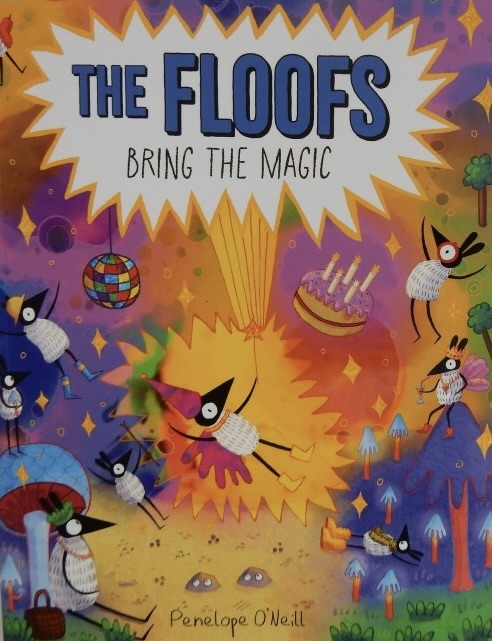
The Floofs return with three further adventures. The first finds Wizard’s house digging a hole in the sand. why might that be? Turns out that it’s nesting and suddenly the house stands over the hole and lays an egg. The egg cracks open to reveal a tiny house out of which pops a tiny wizard . Wizard is delighted at the prospect of an apprentice of his own. New he might be, but Tiny Wizard can already do spells including conjuring up an awesome sand castle. Several spells later, Wizard no longer feels that he’s the best wizard there is. Is there a way they can work together and will Wizard’s friends still love him despite his not being THE best?

The second story starts with the Floofs disappointed at the constant rain. However they decide to brave the elements, so they grab their umbrellas and sally forth to visit Teazle. Soon, sans their umbrellas snatched away by the wind, and sheltering beneath a tree, they are soaked through and on the point of going home when a door appears out of nowhere. Dill recognises it and the three enter. Wizard finds a button, presses it and a face appears calling itself The Void Support. The voice asks them what a perfect day would be like and each one tells it something completely different. Things get complicated, the room increasingly chaotic and eventually The Void is really fed up. Can those Floofs turn things round so the day ends happily for all concerned? Maybe, with some chocolate cake to help things along …

In the third adventure Leaf and Clementine set off to Fungus Forest where Leaf hopes his friend will help collect mushrooms. They enter a cave and Clementine is about to start plucking when a voice cries, “I’m Felicity the Fairy Floof and those mushrooms belong to us!” The fairy tells them that only their queen can give out mushrooms and offers to take her to see her majesty. The Queen offers Clementine a deal but should she accept? If so what would be the outcome?
Clementine learns a valuable life lesson from this experience.

What will those Floofs get up to next, their many fans will be wondering.

When You Meet My Friend

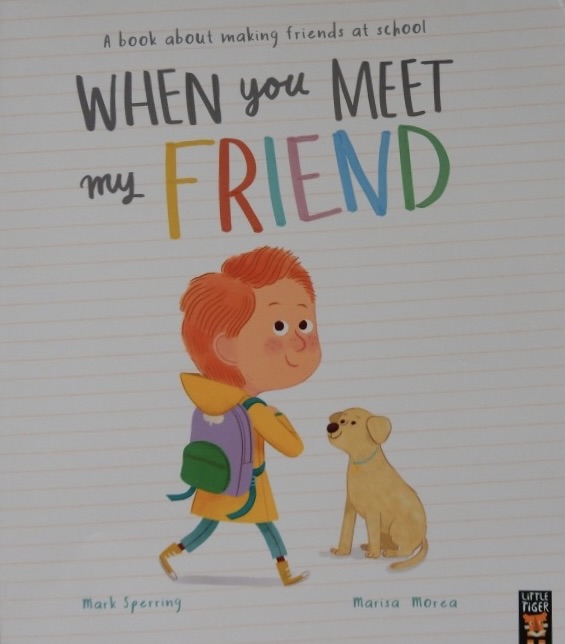
This is a story about being a new member of a school community and a kind narrator who does their utmost to ensure the newcomer feels at home.

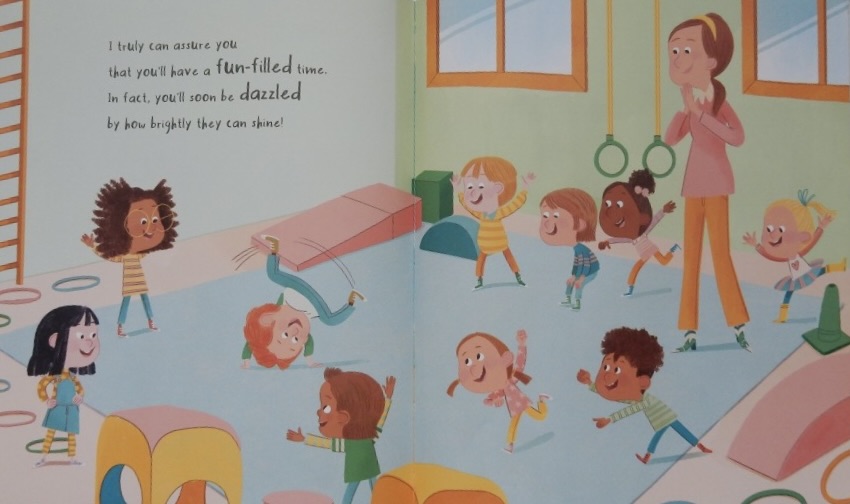
First off that newcomer needs to know where to hang their coat and having done that, find a place to sit with the other children for a carpet time learning session. Come snack time it could feel uncomfortable to sit with strangers: a friend is what’s needed – somebody to encourage that new special friend to feel part of things such as art, music, the lunch session and the playground games that follow. Maybe by the afternoon that new friend is ready to demonstrate their prowess at some PE skills.

They are sure to appreciate the budding friendship you are nurturing and after enjoying story-time just prior to going home, your brand-new pal would like to hear how much they will be missed as they run through the school gates to meet the waiting parent who is accompanied by a four-legged friend.

With its amusing final twist, Mark Sperring’s text reads aloud well and together with Marisa Morea’s playful scenes showing the ripple effect of friendship on that first day, this book is sure to make young children in a similar situation feel reassured about what’s to come.

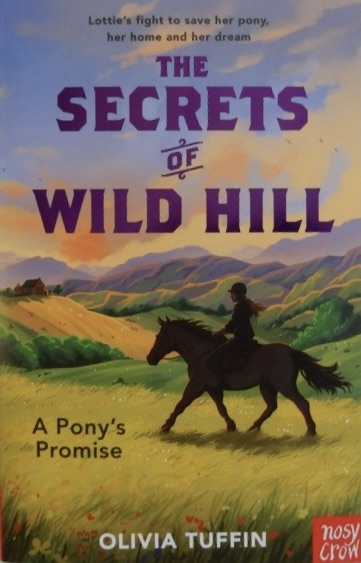
The Secrets of Wild Hill: A Pony’s Promise

This second book in the series begins in late July when the summer holidays have started. Lottie is lying on her back in a field near her home mulling over what has led to her relationship with her beloved Patch being damaged as well as that between herself and her friend Felix. The boy, so she’s discovered, has been reporting to his grandfather, the thoroughly malicious Ralph McCavendish, on her family’s plans for Wild Hill. But then Felix sends her a message requesting that the two of them meet for a talk. She agrees and when he tells her of a strange happening involving his grandfather, she decides to forgive him.

The two then focus their thoughts on training their respective ponies for the forthcoming events. However Felix continues talking about family matters to Lottie as well, and it’s evident to her that their families have in the past been more closely intertwined than either Felix or Lottie knew previously and that Lottie’s grandmother, Annie, may well know what happened.
Add to this, her worries about re-building her bond with Patch, plus the concern that her parents appear determined to sell Wild Hill: Lottie has a lot to contend with.

Fortunately for her though, Annie is always ready to offer her support and encouragement and this means that Lottie is determined to fight tooth and nail for what she has set her sights on. Can big brother Harry do anything to rescue Wild Hill?
What about the entrance exam that her Dad is eager Lottie retakes? And what is going on with Issy, another member of the riding team?

An intriguing story that immediately grips the reader, keeps you involved, rooting for Lottie and her beloved Wild Hill to the final page. I can’t wait for the next book The Lost Horse coming soon.

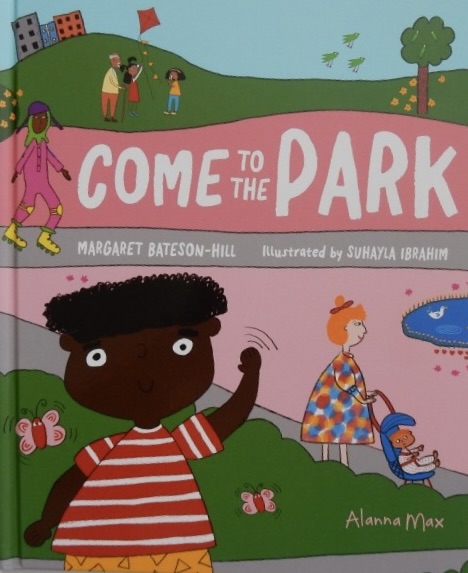
Come to the Park

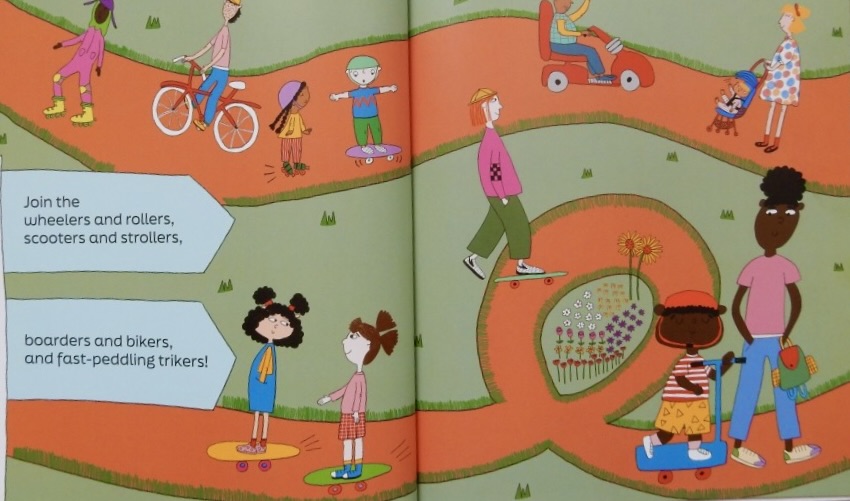
This is essentially an ode to a park, a wonderful place to spend the day. A place that is absolutely bursting with things to do and things too see. Visitors might decide to spend some time on wheels be they cycle wheels, scooter wheels skateboard wheels, roller skaters, or in a wheeled buggy.

The park makes a great outdoor gym, a place to have fun and games with bats and balls or flying a kite. There’s the playground equipment for swinging, climbing and sliding.
It matters not the kind of weather, so long as you’re dressed appropriately. Said park is a dog walkers’ haven, a place to picnic, or to relax and meet friends, a place to watch wildlife and just resting a while. It offers sensory delights for eyes, ears and noses and yes. there’s always a time to bid farewell to friends you’ve met safe in the knowledge that tomorrow your favourite park will be there to offer fresh opportunities for fun and games.

Margaret Bateson-Hill’s upbeat rhyming text together with Suhayla Ibrahim’s inclusive scenes of park visitors of all ages enjoying themselves make for a book that cries out to be shared with young children at home in a playschool, nursery or any EYFS setting.


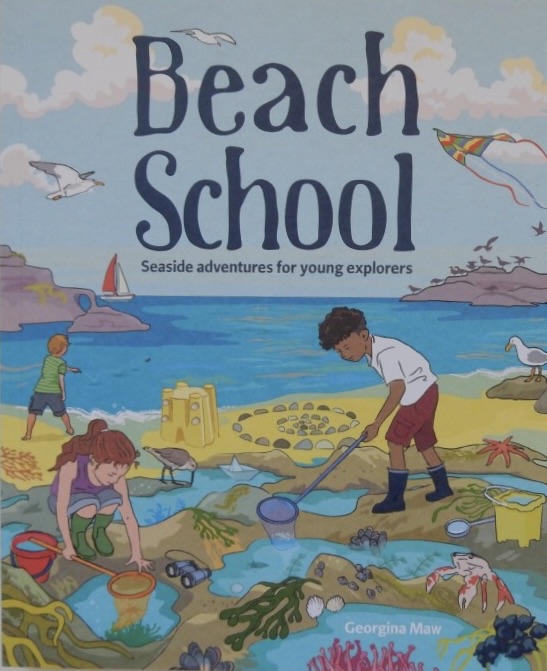
Beach School

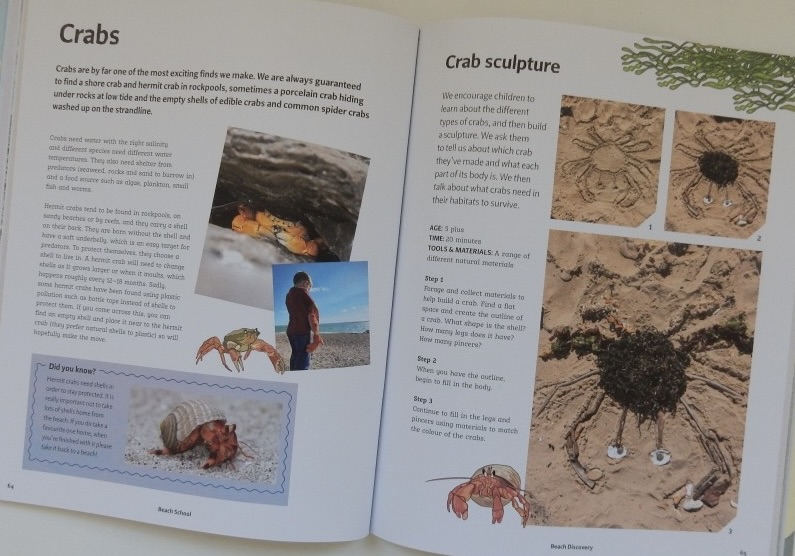
Many readers will be familiar with forest school but this book is something different and particularly timely with the summer break fast approaching. It’s a comprehensive and informative guide that is written by the Head of Education at The Final Straw, a charity dedicated to the health of the UK coastlines and hence covers pretty much everything about outdoor learning by the sea.

The book starts with explaining what beach school is, followed by the benefits of beach play, how to stay safe, how to behave responsibly and respectfully. Next comes a section entitled Beach Skills and covers tides and how to measure them, the wind, clouds, knots, building shelters, campfires and navigation, each subsection including one or more activities.
The second main section is Beach Discovery and it’s great to see that its opening spread is mindfulness. Two activities that particularly appealed to me are making journey sticks and building a crab structure.

There are also lots of games to play and a section is devoted to these.

With colour photographs and illustrations on every spread, this is a truly creative, inspiring book that highlights the benefits of being in the great outdoors, using a play-based approach to the wealth of learning opportunities it suggests, including the development of such skills as communication, concentration and problem solving as well as discovering information about the natural world.

Anybody working with primary age children should get themselves a copy of this book.

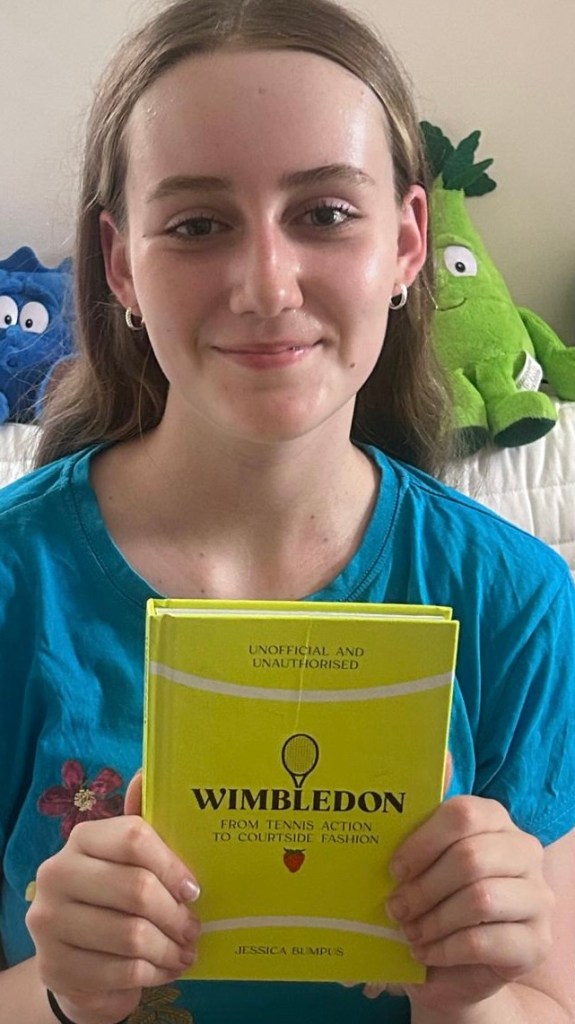
Wimbledon: From Tennis Action to Courtside Fashion

This is written by guest reviewer, Emmanuelle Bramwell who loves to read about tennis.

This new book by journalist Jessica Bumpus is, in my opinion, an essential for Wimbledon fans. The title really does sum it up: a guide on everything you need to know.

The book starts off with a history of the sporting action, describing the tournament from its early days to today, with the fiercest rivalries to the longest match ever played, to the youngest and oldest winners. Then, it moves on to one of the most crowd-anticipated topics of The Championships: who is in the Royal Box? It covers the biggest icons that have been seen over the years, what they wore, and who they sat next to. After that, there is a history of the outfits worn by players at Wimbledon, providing information on the boldest looks there have been.

Next, the section titled ‘Remember When?’ sums up the most iconic moments from The Championships over time, such as the time when Steffi Graf received a wedding proposal! Finally, there are a few pages that explain what happens to the courts at the end of the tournament.

Complete with interesting facts and pictures on every page, the book did not disappoint and I would definitely recommend!

Squid Bits! That’s A Nice Hat!

It’s great to see a new graphic novel series emerging, this being the first book. Herein readers will find brief, bizarre comic strip tales featuring all manner of creatures named the ‘Doodles’ ie Dog, Cat, Lizard, Rabbit, Mouse and Goat – a motley crew if ever there was one. This crazy lot decide that to please the Squid they should make it a hat, but what kind and will one ever be completed?

One story that particularly ticked my fancy was The Magic Narwhal wherein said narwhal is eager to play tennis but every time a potential opponent appears it ends up impaled on the narwhal’s horn. The title of this is something of a misnomer I have to say. ’Why doesn’t anyone like me or want to play tennis?’the unicorn of the sea wants to know.

There are astonishing sections such as Squid Bits Horoscopes, The Red Panda: Nature’s Jerk, The Adventurer’s Guide #51: Jobs! and Stick Insect Romance. Readers never know what’s coming next and that’s all part of the fun. At the end, Jess Bradley gives some lessons on ‘How to draw the Squid Bits Way’ so everyone can have a go at making their own crazy comic strip.

This book is especially brilliant for visual readers and I imagine if you put a copy into a KS2 classroom there will be a queue of readers waiting for their turn to read it. What more can an educator ask?

Bim Blakes’s Hot Takes: My Pencil Case Doesn’t Define Me

Written in diary style, this book is ideal for readers in upper KS2 into KS3. It’s narrative voice – Bim’s – is one they’ll relate to immediately as she talks of such topics as getting that first bra, a skirt that’s way too long, on-going struggles with maths, having a first crush and friendship dramas aplenty.

Bim lives with her dad who does his best but often seems preoccupied and is a hopeless cook, her three brothers – Dami who is away at university most of the time and twin brothers Temi and Tayo who love to tease their sister. Their mum died three years ago from cancer, something that Bim especially hasn’t really got over (this is handled with sensitively); she does have two aunts who are very loving but their strong opinions sometimes drive Bim crazy.

Key themes – self-esteem, identity and peer pressure are explored mainly through humour whereas the grief is handled more gently.

With to-do list items concluding every day, humorous line drawings by Ariyana Taylor, occasional affirmations and the ‘Besties That Slay Group Chat’ as part of the narrative, there is so much to enjoy about this one and I strongly recommend it both as an independent read or a year six class reader. The next instalment is coming in January 2027 – I can hardly wait.

Nine Times I Nearly Died

Benedict Allen had already decided to be an explorer when he was just ten year old. Since then he’s visited various parts of the world that hardly anybody has been to and at the start, so he confesses in his introduction, he knew very little about how to survive and had to rely on help from members of local communities.

Facing danger at every turn, he’s learned about distant and remote environments but as he says in his introduction, ‘one of the most important lessons I’ve learned isn’t only about the end goal; it’s also about what you discover along the way – and that includes what you learn from making mistakes or suffering setbacks.’

The first expedition sees Allen aiming to make the first known full crossing of the northern Amazon in Brazil and record what he could of the ‘pristine rainforest’. He hadn’t anticipated his canoe capsizing though. After consideration he decides to continue his journey on foot, about 105km through dense undergrowth and so he does, finally reaching a small hut and there he falls at the feet of a little man with extended arms and a reassuring smile. From there he’s taken by jeep to a hospital where he recovers from two kinds of malaria, one of which could have killed him. Readers may be astonished to learn that rather than being totally put off, Allen resolves to return to the Amazon rainforest.

Undaunted Benedict Allen undertakes eight further expeditions, none of which go entirely to plan. He visits the frozen Arctic (where he gets separated from his huskies and becomes lost in a blizzard), the Gobi Desert, endeavours to make the first crossing of Papua New Guinea’s Central Range, is shipwrecked on an island while attempting to cross the treacherous shark-infested Torres Strait between Papua New Guinea and Australia and is left without food or water.

Not put off by the events of his first Amazon expedition, Allen returns ten years later with considerably more experience and a lot more confidence. Word about him spreads and he becomes known as “El Mister” – another life or death situation occurs as it does in each of the remaining accounts. One being on a return to the Arctic and the final one being another return – to Papua New Guinea, first visited thirty years earlier, this time with malaria tablets.

Each adventure will have readers on the edge of their seats as they are gripped by the terrifying details. Whether they will be inspired to embark on their own expeditions depends to some extent on whether they are open to challenges be they close to home or in far far distant places. A book that will enthral older KS2 audiences and beyond. (There are photos, line drawings and diagrams throughout the book.)

Voice in the Flames

Mike Edwards is an author and poet from Teeside and he sets this story in north east England and unusually it includes use of the regional dialect that gives it a powerful sense of place. The main protagonist is Jack and he longs to be able to turn the clock back to when his dad was still alive and working as a Furnace Keeper at the old steelworks. Now though Dad is gone (he died around a year ago) and the works are closed down and stand silently, tower-like over the estate where Jack lives with his Mum who works at a care home and seems to do endless shifts, and Shadow the dog.

One day Jack and his friend Beans are kicking a ball outside the perimeter fence of the steelworks when it goes over into the site and determined to retrieve it, Jack squeezes through a gap and has a strange experience. He thinks he hears a voice, there’s lots of smoke and his clothes are covered in ash when he emerges. Later on he asks his mum whether his dad had ever spoken of anything strange at the works and she says that he talked of what she assumed at first was a workmate, Old Sal, but then learned that it was actually the furnace itself.

During half term Jack goes to sketch near the works and decides to investigate where the ball was lost. He comes upon the ball in the hands of a man with white candles in his hair who asks Jack to set him alight.

Beans tells Jack he is crazy but that doesn’t deter him; help the old man he will. So when his mum is once more delayed by work, off he goes with some of the takeaway that his Mum had ordered. He learns that the strange grey man knew his Dad and that makes him all the more determined so he gathers some things to create a fire and starts it in an oil drum. Sal claims to be a spirit that can bring the old works back to its former glory. He mentions his heart-stone and Jack realises what this is and promises to bring it to Sal; but later he realises where it belongs. Several surprises follow. How will this powerful, intriguing atmospheric fantasy-tinged adventure end?

The book’s conclusion reminds me of T.S.Eliot’s opening lines of Burnt Norton:
Time present and time past
 / Are both perhaps present in time future,
 / And time future contained in time past.’

Bone Head: Guardian of the Underworld

Jamie Gregory’s debut book is an absolute hoot. It takes the form of a diary written by Bone Head aka Demise, skeleton guardian whose days are spent guarding the gates to Hades’ fortress. (with amendments by supervisor Mort who tampers with the text on every page – shown in green).
Bone Head is convinced he is THE BEST and is desperate to get his hero Hades to notice him: the trouble is Hades is hardly aware that he exists.

Then Bone Head makes a terrible mistake: he zaps a ‘little blobby demon’ that retaliates fiercely with a massive blob of smouldering goo, followed by many more, right at Bone Head. The gates of the Underworld are destroyed: Bone Head and Mort are summoned to the fortress by Hades and demoted to the kennels where they will dog-sit Cerberus, his famous ferocious three-headed hell hound. This, Bone Head decides, presents an opportunity to get themselves back into Hades’ good books but Mort quickly points out that both he and Bone Head are made of bones and dogs eat bones. Can the latter keep the two of them away from Cerberus’s jaws.

Of course the hound needs to be taken for walks. Bone Head has a great idea – to use one of Mort’s arms as a fetch stick. Five days later the hound walkers decide their charge needs a change of scenery. Another great idea… resulting in two dogless exercisers. All this in just a few days and still to come are air vermin – they that peck, flap, poop, fly and CAW! dragons and all manner of other beasties.

How will this all end? I’ll guarantee there are plenty more laughs to come but story spoiler I won’t be, just in case that Cerberus gets me in his jaws; instead I urge you to get yourself a copy of this hilarious, chaotic tale as soon as possible.

Squabble and Squeak

Rana the red panda is annoyed. A noisy parakeet has moved into her tree and woken her up with his ‘squawks and chirp-chirp SCREECH!’ sounds. Before long the noises have caused Rana to spill her tea and spoil her painting. Parakeet tries explaining in his own way but Rana can’t understand. She decides to retaliate and sets off into the forest to collect as many noisy objects as she can. She discovers some scratchy, scratchy pine cones, then some bamboo sticks that make a tappety, tappety, TAP! sound;

neither is sufficiently noisy so she moves on to the river. There, are lots of clackety, clackety CLACKing pebbles that are just right. She gathers all her sound makers in her paws and sets off home to her tree.

Unbeknown however, there’s a very large, very quiet and very fierce looking tiger close behind. In her excitement, Rana fails to notice the pursuer, but on reaching her tree Parakeet starts screeching louder than ever. Slightly scoffing at the sound, Rana announces that she’s going to make way more noise. Suddenly however, she stops: something sounds strange. What is Parakeet trying to tell her. It’s the furry tiger and Rana offers it some bamboo; but bamboo is not what the tiger desires. Up her tree scrambles the little panda and now for the very first time Rana understands what Paraket is saying. They both make loud sounds and before long a host of very noisy parakeets fly into view. Now it’s the tiger’s turn to complain about the terrible noise. Off he flees into the forest leaving an elated Rana and parakeets.

Down flies Parakeet eager to learn why Rana has collected so much stuff. she tells him and goes on to suggest they work together to make a tiger scarer. Before long they’ve created a wonderful wind chime and hung it on their tree. But which is noisier, Parakeet or the wind chime? I wonder …

A warm-hearted story about finding a way to understand one another and becoming friends. With playful scenes executed in beautiful colours and so many noises for young listeners to join in with, this is a fun read aloud.

uni @scholasticuk

Pyramid Boy

This book takes us back in time to ancient Egypt and is narrated by a boy, Thomas, who time travels when he attempts to catch hold of a cat when in a museum he’s visiting with his parents. The next thing he knows is that he’s plunging down a long zigzag of stairs to a busy market in a strange hot place. In this market swapping replaces money and as he wanders around a young man calls to him, fascinated by Thomas’s glasses, which he mistakes for large eyes. The young man introduces himself as Pepi and offers to show him around.

They visit a papyrus factory, see scribes at work, go to a bakery and then deliver some papyrus bundles to Pepi’s friend. Later, walking along on the river bank Pepi takes his new friend to see how a mummy is made.

After an overnight stay with Pepi they join a long line of young people on their way to where the pyramids are being built and help with the work.
Eventually a man comes to find Thomas and the boy discovers that what seems like days has only been a few hours since he followed that cat.

A captivating combination of adventure and history, vibrantly illustrated with amazing detail and with additional information pages after the story and a smashing way to introduce Ancient Egypt to children, particularly those in KS2 who are studying the topic as an option in the history curriculum.

Superheroes In The Park

Ian Eagleton and his husband have recently become dads through adoption and Ian has based this text on their experiences of parenting a toddler. Thus, at the heart of the story is an ordinary gay family that we meet as the child narrator, his Dad and Daddy head to the park, the child super excited at the prospect of the playground. When they arrive they discover the path leading to the equipment is covered with ice. For the child this is an opportunity for some fun but the anxious parents see potential danger everywhere and this leads to the child stomping off in tears. Dad and Daddy follow and apologise, Dad whispering, “We’re sorry” and Daddy saying, “This is new for us … For all of us.” How beautifully the emotional outburst and the handling of it are captured in both words and pictures.

The young child’s sheer frustration though, leads to a wonderful idea – imaginative play that is enjoyed by all three who become pirates fighting scary monsters,

cross a swampy area of rainforest with crocodiles snapping at their feet, morph into zooming superheroes and even become dinosaurs. Reality returns with a visit to the park cafe where they sit snuggled together for hot chocolate.

Hayley Wells’ scenes of the day’s events capture the warmth, love and trust there is between the family members and are a wonderful complement for the text Altogether a must have book not only for youngsters who grow up in LGBTQIA homes but all children and their parents/carers at home and in a KS1 classroom.

Really Rubie: A Diary

Eleven year old Rubie Fox and her best friend Riley Fisher are about to go off to Camp Preview, expecting to spend the best summer ever together in the all girls’ camp. They co-create the TUCE (The Ultimate Camp Experience) TRUCE- – a list of the five things they will do together: 1) Make friendship bracelets, 2) Go water tubing, 3) Do the talent show, 4) Eat s’mores by a fire, 5) First kiss at the dance. The day before they leave though, these plans are thwarted when Riley calls to say she can’t go. She’d been trying out her mum’s high heels, fallen over and broken her ankle. Suddenly Rubie doesn’t want to go either but despite her best efforts to get out of it, go she must. However she makes a pact with Riley not to do any of the things on the TRUCE list; those will be saved for the following year. Riley gives her a sparkly item of clothing to take; it’s purpose being to don for the final dance.

Once at camp everybody seems to know everybody else and Riley’s absence is emphasised by the empty bunk bed next to Rubie’s in the Oak cabin, the one she’s to share with twins from France (and later, she discovers, also with Riley’s fashionista cousin, Kat.) Rubie decides to spend all her time in the cabin and definitely not go to the dance, but a bedtime pep-talk from Jim the Duck, her much loved stuffed chicken, inspires Rubie to set herself a ‘teeny-weeny’ goal. She should make a real friend and in so doing experience something positive.

The following day activities begin: archery, horse-riding and art for Rubie. At art she meets ‘comic girl’, fellow lover of both art and grilled cheese, who also has divorced parents and is feeling ill at ease at the camp. Her name is Eliza Sparrow, they start to co-create a comic and the two rapidly become firm friends. Soon though that TUCE TRUCE promise re-emerges, first with the gift of a friendship bracelet by Eliza and Rubie feels conflicted.

All sorts of shenanigans follow and Rubie discovers how to handle embarrassment, jealousy, being honest and being true to herself. Assuredly she feels different on her return home.

Amusingly told in diary format with black-and-white doodles on every spread, this is candid, cleverly presented and spot on for those around Rubie’s age.

Dave, Don’t Give Up!

Dave is a beetle with a very strange job. He has to roll a massive ball of dung to the top of a very steep hill. Why you might wonder, but you’ll likely receive the same response he gives to the worms that ask: “Don’t ask me why, it’s just what I do.” (Clearly they’re unaware of the specific kind of beetle that Dave is).

At least the weather is good: there’s no wind to impede him so off he sets ‘HRRRGGG!!!NNNNGGG!!!’ and the dung ball begins to move. After a while he encounters a chicken crossing the road but he passes the fowl successfully and continues upwards. By now the hill feels steeper and so his task is more difficult. Then a meerkat eating a sandwich splodges the marmalade in his path and on his head making his job ten times more tricky. Dave has had enough and decides to quit but as he’s about to return home his inner voice tells him not to give up, so off he goes onwards and upwards. Further obstacles impede his progress

but each time he announces he’s quitting that inner voice tells him to keep going until finally, he’s almost at the top. One more push is all that’s needed but disaster strikes and Dave is sent hurtling right back from whence he started. The words from within fail to come and a devastated Dave heads homewards. Then he hears two tiny voices with words of encouragement and more: it’s his offspring. The ball starts rolling yet again: will it finally make it to the summit?

There’s a hilarious comment from one of the little beetles that is sure to make both young listeners and adult sharers giggle. Poo, persistence, positive thinking and perhaps parenting are key ingredients in this one.

The Blue Tomato

Blu is on his way to a new farm shop in town but on arrival he finds that he’s not like all the other tomatoes; he’s blue and they are all red although they don’t mind about the difference. However, Blu is determined to become red like all his fellow tomatoes and so having done a considerable amount of research work, he embarks on a project.

Next morning he sets off to see Spider who helpfully offers some of his red paint

but thanks to a downpour, this paint soon washes away.

On he goes until he encounters Ladybird. The red juice he receives fails to change Blu’s colour and he’s on the point of giving up when he hears a noise. It’s a group of friends enjoying themselves at the farmer’s market and each one is different from every other one and of course they are ready to accept Blu just as he is. Finally Blu feels he belongs and loves his natural blue colour.

There’s a vital message at the heart of this story: everyone is different and uniqueness is something to embrace and to celebrate.

Despite their seeming simplicity, Amber Aú’s illustrations capture superbly the loneliness of Blu when he feels an outsider and his delight at eventually accepting himself as he is.”It’s cool to be blue!” he cries. I love the way all the red tomatoes look different from each other if readers/listeners look closely.

A good book for sharing and discussing, perhaps in a Foundation Stage/ KS1 circle time.

Things That Go / The Dino Book

Tinies can discover all manner of ways to move around as they explore the three settings presented in this book. First they join the animals travelling Around Town by means of various things with wheels from a scooter to a truck. Out at Sea introduces animal passengers enjoying a trip in a lifeboat, a rowing boat, a huge ship, a windsurf board, sailing boats and a motorboat. In the two final spreads we’re Up in the Air gliding, soaring or hang gliding.

With peep-through holes, flaps and cutaway pages as well as basic questions to answer, by exploring the relevant pages, this is one to help develop fine motor skills and encourage plenty of parent/child interaction.

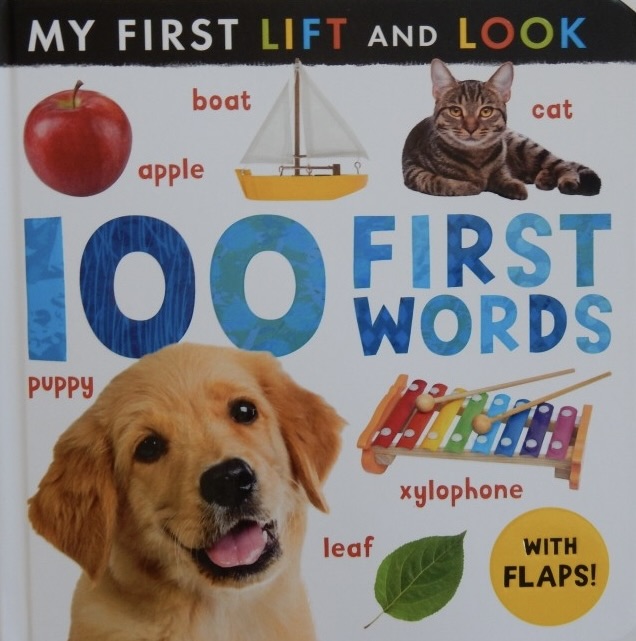
Here’s a board book on the ever popular topic of dinosaurs. The Dino Book offers a fun interactive feature on every spread: there are tabs to pull, cutaways, flaps, textures to feel and more, as little ones encounter several different dinosaurs. They can also enjoy emulating those dinos by roaring, stomping, snuggling, champing, swooshing, thwacking and more as an adult reads the lively text.

Bored Bill / Three Horrid Pigs

Bill is feeling bored, exceedingly so. unlike his owner Mrs Pickle who likes to keep herself busy all day: the activities she enjoys – reading, gardening, cooking, kung fu and cleaning, are all very boring to Bill. When Mrs Pickle suggests a long walk, you can imagine her floppy-eared pooch’s response and he refuses to move. Mrs Pickle gets her way however and drags him out of the house and into the chilly, windy weather, Bill still grumbling.

All of a sudden a great gust of wind lifts them both skywards and Mrs P. vanishes leaving Bill attempting unsuccessfully to hold onto a tree branch. Instead he whizzes off into space and he lands on a purple planet inhabited by aliens. His thinking that he’s in for an exciting adventure is soon replaced by, you’ve guessed it – boredom. The aliens consider exploring boring and Bill hates their food; in fact now Bill is more bored than ever before and he yearns for Mrs Pickle and her yummy food. He decides to try and engage the aliens in some fun by cooking them a tasty meal like those his owner creates; he shows them some of her kung fu moves and they play some games. No more boredom but Bill wants Mrs Pickle and home. Fortunately he’s offered a ride on the aliens’ spacecraft and on landing he discovers he is now famous, but Bill is a changed dog.

We never get to see Mrs Pickle’s face in Liz Pichon’s wonderfully whimsical scenes that complement her wacky text which carries a message about thinking carefully before complaining about being bored.

by the same creator is:

This is a fun twist on the favourite traditional tale. Herein the Mother Pig is so fed up with the terrible behaviour of her offspring that she packs three bags and send them out to fend for themselves. The first little pig helps himself to some of the cows’ straw and builds himself a house; the second takes twigs from the nest-building birds, and as for pig number three, he’s so lazy he just moves into a chicken coop, forcing some of the residents to vacate their home. Each time a little pig finds himself sans a sturdy residence, along comes the kindly wolf, a builder no less, to offer assistance and each time he’s sent packing.

It’s not long before the little pigs’ homes are destroyed, the materials being reclaimed by their original owners, so come nightfall, the three invade the wolf’s house via the chimney. The wolf hears them and puts a big pot on to boil …Is that the end of the horrid pigs or will they finally see the error of their ways and cease all their huffing and puffing threats?

Witty details abound in the visuals and with their message about kindness and cooperation, the words are great to read aloud to little humans.

Are You Looking At Me?

From gazing gazelles and gawping gibbons to squawking parrots and gawking storks, the creatures we encounter in this story all use their eyes to stare in one way or another, but the scariest of starers may well come as a surprise to readers and listeners.
With its plethora of alliterative examples, Philip Ardagh’s jaunty rhyming text reads aloud really well

and young listeners will delight in joining in with the repeat refrain when it comes. It’s likely though that the final decision on the scariest of starers, voted for by the animal cast we’ve met during the story, will be a big surprise to audiences.

Exuding zaniness, Enrico Lorenzi’s portrayal of the ursine starer and its rivals in staring are terrific and his frequent use of fluorescent orange makes each spread one to pause over and enjoy the delightfully daft details.

A great read aloud that will surely make this one of those ‘read it again’ books. It deserves a place in every Foundation Stage and KS1 collection. I wonder what other animals children can think of and decide how they might look at the author

Biguana (and his best friend Pinto)

Biguana and Pinto hatched from their respective eggs just two minutes apart and have been best friends ever since. However as Iguana grows in size, so does the attention he receives. He revels in this attention and starts performing all manner of acrobatic stunts to gain even more admirers. Unfortunately in so doing, he forgets all about his best friend and even turns down Pinto’s excited invitation to see his new scooter, in favour of his new friends. Imagine how lonely this makes little Pinto feel, especially with Biguana’s popularity growing day by day. It’s a sad Pinto who scoots off to do some tricks alone; or so he thinks. Suddenly a small crab starts to clap its claws, seagulls cheer his somersaults and they all splash happily into the sea.

The following morning, Biguana waits on his rock contemplating the multitude of boats that will soon arrive to watch his stunts. Yes, a lot of boats do come but the crowds of people aboard are not cheering and calling for Biguana. A sudden realisation dawns: I’ve been so foolish, he thinks to himself, poor Pinto must have felt like this when I was showing off. Time to put things right between the two of them, but despite his diminutive size, will Pinto be big-hearted enough to accept an apology from Biguana?

Fame and fortune can be short-lived and are no substitute for the lasting nature of true friendship – that’s the lesson Biguana learns in this story. Michael Parkin’s scenes of the couple’s comical capers and the flotilla of fans provide plenty to chuckle over as the story unfolds.
,

The Thing About Giants

This book, the author’s debut, is inspired by Irish legends and what a cracker it is.

The first character we meet is Corman, a young giant living in fear of the metal birds that hunt giants, on his first trip above ground with his father. They are foraging for ‘jurtear’, much-needed healing herbs for his sister; but while so doing they come under attack from the flying spears of human hunters and become separated.

Enter twelve year old Jacq Dyer, who is the daughter of giant hunters living in Fathach, a tiered city built of giants’ bones. Having been raised to believe that giants are merely raw materials for expanding the city, she often wonders what it might be like beyond its wide protective wall.

The story is told through Corman and Jacq’s alternating voices and the two characters are soon to meet for the young giant catches the girl who falls from one of the machines sending out spears during a training mission. Lost and very frightened, the two decide that the only way to survive the fierce storm that is brewing, and find the way back to their respective homes is by working together: can they do so, even if it means Jacq has to eat worms?

With its rich world building, this is an exciting, thought-provoking adventure for older KS2 readers and beyond, that promotes acceptance, empathy and friendship while rejecting violence and prejudice. What we see is that under the surface, there is way, way more that connects humans and giants so long as both kinds are prepared to look for it.

I can hardly wait for Jacq and Corman’s next adventure.

Bart Is Different

In Bart’s family are Father Spider, Mother Spider and four little spiderlets, one of which is Bart and he’s always been different. Unlike the other spiderlets, he likes to jump and run all over the place. He’s inattentive in school, daydreaming and shaping thread patterns which makes his teacher cross; and during playtimes some of his classmates laugh at him. As a result he tends to be alone in a corner of the playground, though occasionally he lets himself follow the call of the wind that says, “Have confidence, Bart. Be yourself! Be different.” Bart heeds the wind’s good advice; he shuts his eyes, clings onto his thread and lets himself be carried by the soft wind. He finds himself dancing left and right as he twirls and twists, releasing that inner artist

to make magical shapes until his web is a veritable masterpiece. Now his fellow students as well as his teacher are unable to take their eyes off the little spiderlet. Suddenly the silence is broken by a clapping sound coming first from Bart’s teacher and then his fellow students. Over the thunderous applause, Bart tells them all that he’s naming his picture ‘Happy In The Wind’. And happy is what Bart will feel henceforward and that happiness will stay with him throughout his life. for Bart is now a great artist.

Illustrated in pen and watercolour, this is a wonderfully uplifting story that celebrates creativity, and being true to one’s self and one’s talent.

Tigers Don’t Eat Jelly

Tiger has a particular penchant for jelly, unusual you might think but now she wants to tempt her taste buds with some other foods. Off she goes to visit Elephant and the pachyderm loves noodles. “They are stringy and nourishing and delicious.” is sufficient praise to tempt Tiger to try some too and so they slurp, share and savour a bowlful together. Tiger then tries a new way of enjoying her jelly – with noodles.

Next stop is the waterside where Frog and Flamingo’s reply to Tiger’s favourite food question is burritos – spicy and creamy and scrumptious – Frog says; and having tasted one, Tiger has to agree. Jelly, noodles and burritos become a new favourite for Tiger

who continues with her food tasting foray and come nightfall she has amassed a veritable feast on her table at home. It will come as no surprise to young listeners that having consumed so much food, Tiger’s tummy is extremely full and she’s very, very sleepy. Then what …


It’s good to see Tiger tasting the various foods her friends offer; I can imagine some parents/carers wishing that their little ones were as adventurous: perhaps they will find the answer with the help of friends.

A mouth-watering story with additional culinary delights to be discovered on almost every spread; it’s sure to tempt adults to share it with little ones whether or not they are fussy eaters.

A Holiday For Bear

Duncan Beedie’s adorable Bear returns in a fourth story and this time on his daily walk through the forest he responds to his friend Frog’s “What’s the matter, Bear?” by saying that despite loving the forest and his friends, everything has suddenly started to feel the same. Frog tells his ursine friend that what he needs is a holiday.

Bear ponders on the kind of holiday he’d like and decides to visit the seaside. He returns to his cave, packs an enormous trunk with the necessaries and heads off to the beach. The sight of the waves rolling onto the golden sand and the tall palm trees appear so unlike anything he’s ever seen before. He finds himself the ideal spot, unpacks his case and spreads out a picnic. As he chomps on his sandwiches, thinking to himself how much the Ladybird family would like what he’s doing, a seagull watches hungrily and then takes on Bear in a game of volley ball, not very successfully.


Bear then cools off in the sea comparing it with his pond at home. He takes a dive beneath the waves and is awed by the marine flora and fauna, but wishes his pal Frog could see their beauty.

Returning to the shore to dry Bear sees what reminds him of Frog’s pond and on seeing a pair of goggly eyes between the rock, thinks they belong to Frog until that is, he is fiercely nipped on the nose. To take his mind off the crab, Bear starts collecting things to create a sculpture. What he fashions makes him realise how much he’s missing his friends so, with case repacked off he goes back to the forest. Once there he suggests to Frog that they have a holiday together. Where do you think they go?

With wonderfully droll, expressive scenes created both visually and verbally, this is certain to delight young listeners and adult readers aloud especially as the holiday season is fast approaching.

Again! said Rabbit

Rabbit is off to spend a day on the beach with Mum and Dad Rabbit. “Time to relax,” says Dad as they arrive; little does he know.
Rabbit has brought along his bucket and spade, a kite, Ted and Elephant and a ball. First, Rabbit and Dad kick the ball; “AGAIN!” Rabbit says. Dad then suggests they fly the kite. It starts well with the kite going higher and higher but thanks to a gull, Dad ends up entangled in the string and needing of a rest. Mum steps in to help Rabbit build a ‘beautiful’ sandcastle. That’s not quite what happens however, though Rabbit has a great time

and you can guess what he says.

Then into the sea they all wade. Initially Rabbit has fun jumping the waves and judging from what they say, so too do Dad and Mum; but then comes a very large wave and a change of response from Rabbit and parents. By now, Rabbit has had enough of their previous activities so his response to a snack is enthusiastic until, having shared his favourite bun with Bird, a lot of winged friends turn up and …

How will the rabbit family’s day end: will they be happy or fed up?

With its repeat ‘Again!’ this third story in the series is every bit as fun for very young listeners as the previous two: its simple patterned text also makes it great for beginning readers to try for themselves.

The Dog Who Was (Almost) Perfect

This is the second book by author/illustrator Jack Kurland and this time it features a pooch (mainly). Meet dachshund Doris, a dog that is perfect in everything she does – skateboarding, swimming, stick fetching, squirrel chasing and lots more besides.
Each morning she wakes Bill, fetches his favourite slippers and then the two go for a walk, whatever the weather. After this Doris would do a new trick – perfectly as you might expect. But then one morning, disaster! Doris discovers she’s bitten a huge hole in one of Bill’s slippers. Panic! How will he react? Doris decides that there’s only one way to deal with this: off she dashes and hides the evidence so that nobody will ever know what she’s done. Or will they? Up comes another dog wanting to know what Doris is doing,

followed by several others all saying that they’ve done things much worse: one neighbourhood hound gobbled a large part of the sofa, another stole a string of sausages, a third caused a fire. Having heard all these confessions Doris hurries back to Bill and explains about the slipper and Bill is of course, ready to forgive her.

This engaging tale ends with a fun visual twist that will delight young listeners, and at the same time, remind them (and adult readers aloud) that we do not need to be perfect to be loved.

The Fluffy Futon

On the opening spread we see a rather rotund Grandma spreading a futon on the porch to air in the sun. Slightly closer observation reveals several animals lurking nearby: there’s a curly porcine tail, a pair of curved horns, a wing, tail feathers and two yellow claws. Almost as soon as the futon has been placed in the sun, up wanders a cat. She opens her mouth wide and ‘Yw-aahhn’, out comes a big yawn, and flat out onto the futon lies the moggy.The sight of the sleeping cat induces a great big yawn from Grandma and she immediately flops down onto the futon too. As she snoozes along come three little chicks and their mother hen;

more Yw-aahhns and ploffs as down they drop and fast asleep they go.

It’s not long before the fluffy futon is full and then flinging her arms wide, Grandma rolls over and her fellow snoozers are flung hither and yon, all except the black cat that is reluctant to move.

Yuichi Kasano’s simple scenes of the sleepers are delightfully droll and adults and young children will enjoy sharing the story, at bedtime or any other time. The latter will love joining in with the oft repeated ‘ploff’ and ‘Yw-aahhn’ sounds as the ever increasing cast of characters take advantage of the opportunity to snooze.

Cliff The Man with a Seagull on his Head

Cliff is the keeper at the old lighthouse, a lonely job until the unexpected arrival of a seagull that lands on his head and there it remains. Quite soon it feels normal to have this creature perched on his hat and wherever Cliff goes so does the seagull. All is well until the two pay a visit to the town across the water where everybody considers seagulls a bad idea and make it known in no uncertain terms how they feel.

Back at the lighthouse, the edible contents of Cliff’s cupboards are rapidly depleted (it’s been a case of Cliff’s food in exchange for a head massage from the gull.

That night the seagull decides Cliff would probably be better off without his hat attachment and off it flies. Cliff wakes to feel empty inside and can think of nothing else but his seagull friend. Away he goes to sea in a tiny rowing boat without first checking the weather forecast.. Consequently, Cliff is unprepared for the fierce storm that descends, smashing the little boat into pieces and tossing Cliff into the chilly sea, where he clung to a lump of driftwood fearing the worst. Meanwhile up in the sky the seagull searches when all of a sudden, way, way below it spies something woolly exactly the same shape as Cliff’s head. Off it swoops into the town and before you can say chips, there’s a trail of townsfolk following the gull towards the harbour, onto a boat and guided by clever pooping on the seagull’s part, they reach Cliff just in time to heave him aboard.

With Cliff and the seagull reunited, all feels right once more and hence forth, wherever Cliff’s head went, there too went the seagull, be it at sea or on land. That’s dedication for sure. And now it appears that in town, seagulls have become everybody’s crowning glory.

A warm-hearted, gently humorous tale where Alex Latimer’s comical caricatures of the avian antics show how how a normally dubbed, noisy, chip-stealing nuisance can instead become a faithful friend to a human.

Max and the Haircut

This story is narrated by Max whose hair has grown so much it resembles a lion’s mane and he’s got the roar to go with it. Nw Mum has decided that it’s time for him to go for his very first haircut, destination Wendy’s Hair Salon. This is bound to be a very big challenge as Max is neurodivergent. When they arrive he finds the salon too bright, too noisy and it’s full of sharp, spiky objects As soon as Wendy puts a cape around his neck it feels uncomfortable as he finds it too tight. Max hates the water spray too and the sharpness of the hair clips.

Then Wendy starts snipping and very soon he calls out “STOP!” Wendy does so and then she has a good idea. She removes Max’s apron and offers him a cat to cuddle and a bubble- blower to play with. This makes things much, much better, so much better that Max announces, “ I like it!” Whether he’s referring to his new haircut or the cat/bubble experience, it matters not. What does matter is that Wendy accepted that Max needed a different approach from the usual one she would use with a neurotypical child and was willing to cater for that.

Tenderly told, Samareh Azadi’s first picture book beautifully captures the first haircut experience, but in addition gives it an extra unspoken element: an aspect of Max’s neurodivergence is his sensory processing and how this affects his new experience. (I love Max’s creative thinks bubbles during the first part of his haircut.)

Marcie and Giraffe

Both Marcie and Giraffe each create a representation of the other, using paints and large sheets of paper. Initially Marcie feels proud of her painting of Giraffe; but then she sees Giraffe’s painting of her being happy. However, it doesn’t make the girl feel happy at all. She stamps all over it , rips it in half and tosses it aside saying, “Your art is better than mine,” Giraffe remains patient merely commenting, “My art doesn’t look like you any more, so it can’t be all that good.”

Marcie goes on to create a series of four pictures – her brain, stomach, legs and face – each portraying the emotional turmoil that she’s in. Giraffe understands how she feels, pointing out that she doesn’t usually look that way though he does like what she’s done.
Then in turn, Giraffe tries making a fierce scribbly picture but ends up planting his rear end in the paint

and the result bears a striking resemblance to himself, sans his head. This is then added, splat mode, and both Marcie and Giraffe are delighted. So much so that they both joyously make more art and more importantly, they love it.

A story about both creativity and emotions. Importantly it shows (not tells) that art is a means of expressing oneself and that it’s not appropriate to compare one individual’s work with that of another person ).

I love the messy appearance of the art room at the end of the story where it’s clear that both characters have had an enjoyable experience.

Mission: Bedtime

It’s bedtime in the bear household. All the adults are tired out but not so little Kit. She is wide awake, bursting with energy and eager to watch Agent Penguin on TV.

Grandpa may be feeling sleepy but not so much that it prevents him from having a clever idea. Off he goes into his shed to make some items for secret agents to use. He then turns the adult bears into a team of secret agents – there’s Agent Exhauster, Agent Bubble-Boss and Agent Gadget – and allocates each a special mission for Kit to undertake. Will any of them have the desired effect, calm the little bear down and send her on the way to slumberland, mission accomplished;

or will it be three cases of mission impossible? If so can Grandpa come up with an extra special bonus mission that can do the trick?

Little humans will laugh at Kit’s high-spirited behaviour probably enjoying her missions as much as the small protagonist, whereas adults who are accustomed to bedtime procrastination will recognise Kit’s delaying tactics with a smile and one hopes, employ that bonus mission like Grandpa did.

Assuredly a book for young and old to enjoy together savouring the wealth of detail in Alex Patrick’s scenes of the ursine family as they share Tracey Corderoy’s comical bedtime caper.

The Missing Magic of Sparrow Xia

Twelve year old Sparrow Xia lives in a world where children have magic but lose it when they become adults. Sparrow is a fire mage and is starting her first year at Zenith Academy for Magical Development, situated on the other side of the United Realms. However she feels inferior to her older brother Ainsley whose magic is far stronger than hers; he’s thriving at the Academy and is also her parents’ favourite, something she resents.

Hopeful that things might change once she settles in, Sparrow is determined to do her very best to strengthen her fire-magic, which is merely a tiny flame. Before long, she has started to form friendships with Lyndon an air mage and Orla, a nature mage, both of whom value kindness over strength.

As Sparrow endeavours to develop and master her talents, a mysterious illness starts to affect the school’s most powerful students, draining them of their magic. She and her friends take the opportunity to solve the mystery of its cause and search for a cure, and in so doing, win some respect from her brother who loves to belittle Sparrow.

With Sparrow’s unwavering endeavours to find self-worth, superb world-building, and powerful black and white illustrations at almost every turn of the page, Leia Ham has created a truly engrossing start to what promises to be a great fantasy series. I devoured it in a day and I’m sure readers around Sparrow’s age will love it too.

Where the Tide Lines Lead

Elio’s family owns a holiday resort on a Spanish island. Recently several teenagers have gone missing and as a result bookings in the town dry up and Elio’s parents decide to get rid of some of their staff. Then one day while walking on the beach, Elio unexpectedly sees a girl named Maria Riera. Despite his cries, she walks straight into the sea through its parting waves which then close over her. Expecting Maria to reappear, he waits a while but despite her being a champion swimmer, she doesn’t re-surface.

Nobody believes what he saw, other than Sam, a tourist whose sister Jess, had previously gone missing and so the two decide to investigate. That night they ‘borrow’ a boat and set off over the water and not long after, the sea starts to open just like it had for Maria and they are pulled under. They find a kind of underwater city ruled over by selkie-like beings that are in need to help from Sam and Elio, but are they to be trusted?

Just like the pull of the water, the pull of this story will quickly draw readers in to its mysterious happenings. Will Sam and Elio (and perhaps the others who are missing) be able to return to their normal lives or are they destined to remain below the sea?

With some great characters, themes of feeling alone, feeling different and learning to feel comfortable in your own skin, climate change and pollution, this is a book for those older readers who like mystery stories that blend fantasy and reality.

Edith

When Edith is born she receives, at her parents’ behest, gifts from two fairies. The first fairy, Aisha is young and gives the infant the ability to bring things to life. The second, an old fairy, bestows on the baby the gift of everlasting childhood. However, remaining ten for ever eventually becomes boring so when she reaches one hundred, but with the appearance of a child, Edith decides that change is necessary.

Bolster her dog reminds her that she’s always wanted a friend but rather than one that wouldn’t understand Edith’s eternal youth, she decides to go against what her parents had told her. She animates a lemon from the fruit bowl and names it Squirt. Squirt is a fast learner and becomes extremely helpful as well as great friends with Bolster. The two of them decide that something needs to be done and that something is to find a fairy to undo the gift so Edith can grow up in the same way as other people.

A camping trip in the forest ensues and eventually becomes a quest to find the fairy whose name begins with A (the only remaining fairy, so a kindly gnome named Dwim tells them). Edith is determined and certain that what she wants is to grow old and eventually die and she tells her friends so. They stick together over land and sea, finally arriving on dry sand. Fortunately, Aisha, the fairy they seek, lives in one of the few houses there. She greets them, and not long after with a flick of her wand …

With an important philosophical question underpinning the story, this book celebrates determination, the changes during a lifetime, aging and eventually, death. Illustrated in soft hues this will generate much thought and discussion.

Korobá: The Case of the Missing Kolo / Legacy: The Shadow Rises

This graphic novel debut is set in the coastal village of Makoko, in Lagos. That in itself makes it worth seeking out for the rarity of such a setting in a book for younger readers.

Korobá decides to become a detective when her friend’s Saidat’s treasured kolo (a wooden money box) mysteriously vanishes just before the annual harvest festival, also called Breaking Day as it’s when the childen of the village break open their kolos and spend the money on clothes and shoes for the festival.
Korobá and her friends have to handle both family responsibilities and looking for and following clues to solve the mystery of the missing Kolo.

Àlàbá Ònájín has done a great job bringing the coastal village to life and we see such things as laundry dangling on lines strung between homes built on stilts as those who live there walk on wooden walkways and canoe through the canals, as well as market stalls with vibrant umbrellas shading both both buyers and sellers.


A lively adventure story that deserves to gain a wide audience and it would definitely enrich primary school classroom collections.

for slightly older readers is:

The first of a graphic novel three part fantasy series. Herein Scarlett Thawn, heir to the city of Hightown receives the news that that her family has been attacked, she is forced to abandon all that she cares about , With dark forces already having taken hold of the city proving her lecgacy will be far from easy. Can Scarlett overcome these evil powers and take hold of what is rightfully hers? Perhaps with help from Rex Adamar, a stranger.

Great characters, help make this a hugely exciting series opener that should ensure readers will want
to follow events right through to the end of book three.

We Don’t Like Bertie

The little girl narrator of this story has recently become a big sister and now she feels totally sidelined, invisible in fact. Her mother’s time is all taken up with the baby so the girl creates Boggle, an imaginary friend. Boggle has a number of ideas that should attract mum’s attention. They sing very loud; they make breakfast for everybody; they wash the cat and get dressed all by themselves.

None of these activities have the desired effect on mum and so they help paint the nursery walls.

At last the little girl is invisible no longer; however, she’s in serious trouble with her mum. “It wasn’t me, it was Boggle!” she insists to a puzzled parent, going on to explain when Boggle came and that like herself, Boggle is invisible. Now her mum understands, assuring her daughter that she’s not invisible, rather she is mum’s BIG girl. This is followed by an offer to show how they can all play together and so they build towers with nappies, give Bertie a ‘rocket bottle’ and share a bedtime story; they even do a bit of colouring.

After all this, big sister has decided that in fact, she and Boggle quite like Bertie, though not all the time.

This story with its theme of new sibling jealousy is just right for sharing with small children in a situation similar to the book’s young narrator. The attention-seeking antics of the narrator and friend are captured in the delightfully dramatic illustrations making the book all the more fun.

Hupo and the Doom Lagoon

The intrepid Hupo returns for another exciting adventure. For those who haven’t met Hupo before, he’s a dog-rabbit and as this story begins he’s about to embark on his second fantastical undertaking, this time aboard an airship belonging to the great Humdingo. As he’s about to board the ship, he sees before him a stranger looking exactly like him and calling himself Zimmy. This creature knows about Hurtha’s powerful Gem and Humdingo invites him to join them as they set off in the great airship, destination Doom Lagoon. What though are Zimmy’s motives? Doom Lagoon is said to be a mysterious place where one’s worst fears can be trapped beneath its waters so they never have to be faced again.

It’s not long though before plans start to unravel and centuries of fear are unleashed upon Yip, then Humdingo announces that Hurtha’s Gem has been taken from the lagoon. He calls every creature of the Lagoon to board his ship and its engine bursts into life. Where though is Zimmy? Quickly Hupo goes to his rescue and the airship zips off into the gathering storm. Humdingo sends everyone below deck where Zimmy and Hupo tell stories to everyone while the Fears grow ever more terrifying. But then Hupo notices something in Zimmy’s backpack. It’s Hurtha’s Gem.

When a horrifying Fear and then more burst in, will this be of any use? It falls to Hupo and Zimmy to save everyone from the horrors of Doom Lagoon. Can they succeed?

But Will Hupo ever learn the real reason why Zimmy has the Gem and why he is on the Doom Lagoon expedition? With themes of finding your true self, jealousy and facing up to your fears and fantastic artwork, this second Hupo drama is both gripping and amusing.

Princess Pete

Let me tell you about Pete who acts as the book’s narrator. Sometimes Pete is a prince; other times Pete is a princess. Pete loves to play with the boys and sometimes with the girls. Pete has a fair few friends but is yet to have a best friend. Some days Pete dresses in ‘pink shorts. yellow tops, and blue wellies.’ Other days Pete will be seen clad in ‘green jumpers, flowery trousers and butterfly sandals.’
Pete enjoys playing beauty salon with Mum,

and also enjoys getting mucky. Sometimes Pete likes playing alone bringing imaginary worlds and dreams to life perhaps having beautiful pegacorns flying round about while hedgehogs sing.

This behaviour, confuses some people who ask if Pete is a boy, others ask if Pete’s a girl. It’s difficult for Pete to know how to respond sometimes but mum and dad tell such people that Pete is Pete.”Princess Pete!” our narrator tells us. “I may have been born a boy, but I don’t always feel like the boys. Sometimes I feel more like the girls. Sometimes I feel somewhere in between.”

Such language might very well be used by non-binary or gender-fluid children who have yet to acquire those words; it’s a good way help them explain how they feel, age- appropriately, especially if, as is shown in one of Frenci’s scenes, people are finger pointing at the protagonist. An affirming story for all.

Crow: Thief of Magic

Twelve year old Crow is a thief who barely makes a living working for the Reavers of the underworld, robbing the wealthy ruling class who live in the city. However, one day a seemingly mundane delivery takes him to a mysteriously quiet building wherein resides Viktor who says he’s a Dreamcatcher, a kind of sorcerer and he offers Crow a role as his assistant. Crow says he can’t accept but doesn’t forget the offer.

Then days later a planned heist goes horribly wrong, there’s a terrible fire and Crow is left alone, his friends gone and he’s nowhere to go except perhaps … the Dreamcatcher’s manor house. The Dreamcatcher discovers him asleep on his doorstep curled up with his cat, Nekima, takes him in and there, after drinking a herbal infusion, Crow falls asleep once more. Now Viktor is sure that this is the boy he’s been searching for, the one he wants for an apprentice.

At the start everything seems to be going well with the enigmatic Viktor who says among other things, that a Dreamcatcher has a responsibility to keep the balance between good and evil. But can this new master be trusted? Who is he really and what secrets is he hiding? What about the ghost that Crow keeps seeing. And what happens behind the door of the Nightmare Room? Then here’s the cat, Nekima, that the boy seems able to communicate with.

It’s not long before Crow learns of an ancient strain of nightmare magic that could devastate Stargard itself and everyone therein. With All Soul’s Eve fast approaching and the appearance of a new comet in the sky, Crow realises that he has to make a difficult decision: who can he really trust?

A thrilling, thought-provoking fantasy for older readers and a terrific debut novel for its author.

Alice with a WHY Return to Wonderland

It’s March 1919 and many years have passed since Alice’s adventures in Wonderland, of which this book is a kind of reimagining. The story follows Alyce, her granddaughter who, while sitting beside a pond, is hit in the face by a strange, smudged invitation that she thinks is meant for her. It’s signed ‘Your old friend’ and three sets of initials. She then falls into the garden pond and finds herself in a very strange world inhabited by the original Wonderland tale her grandmother had once explored. There, she has some weird conversations with the Dormouse, Hare and Hatter.

These eccentrics beg Alyce to search for the Time Being, said to be the only one able to halt the war between the Sun King and the Queen of the Moon. The latter being accused by the King of stealing an hour from her and the resulting celestial battle means that day and night come according to who is currently winning.

Unsure of where she’ll find the Time Being, off Alyce goes, hopeful and determined. Her journey takes her into illogical, ridiculous situations encountering on her way, other of Carroll’s characters and some new ones too.
What will the outcome be? Will Alyce succeed in her mission?

Superbly written with lots of whimsical touches (you’d expect that from Anna James, author of the Pages & Co series) and themes including courage and determination. Making it even more special are Matthew Land’s iconic, wonderfully detailed black and white illustrations that have echoes of John Tenniel.

A delight: both existing fans of the Lewis Carroll original and new readers, will enjoy this cracking book. It would make a smashing class read too.

How Many Babies? / Yummy Yummy

Those who have read Seven Babies will immediately recognise the Forest Xiao’s adorable infant depictions. However How Many Babies? goes three better and introduces, one per spread, ten tinies in playful mood (occasionally accompanied by mum or dad). We see the first one playing peek-a-boo, two high fiving each another, three in a tight squeeze, four holding on as tight to Dad as he is to them, and so on until having made a mess munching their meal, they settle down, or some do, to sleep, along with their exhausted-looking parents.
A must for the very youngest’s book collection.

So too is Yummy Yummy. Some things are certainly yummy – corn and watermelon for instance and milk. Other items prove equally yummy – if you happen to be one of the delightful babies in this board book. Take, music (not the sounds but the instrument itself), table or stool, mark-making colours, even your own tootsie; and for sure, your infant pal had better beware if within close tasting range.

Giggles galore will likely result if you read this fun offering to your own baby, maybe more from the adult than the infant though. That said, slightly older little ones will devour it and perhaps demand more.