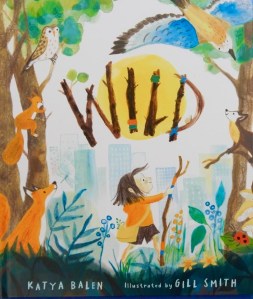
Wild
Katya Balen and Gill Smith
Walker Books
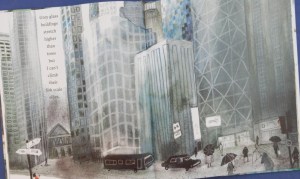
A child with a great affinity for the countryside moves to live in the city. Replacing the wildness, especially the bird with blue wings that sings and the earth full of stories, are grey glass buildings with ‘their fish scale sides’ that cannot be climbed, pavements that cannot show their secrets and skies without any visible stars. The city is lonely, so too is the young narrator who tells readers, “I’ve lost my wild.’
Somehow though, in response to a plea for help in this grey wilderness, the bird with blue wings appears in the dark sky calling to the child. Swooping and looping, the bird leads the protagonist through the crowded city streets to a river. a river that ‘rolls and twists and shows me the secrets hidden under its tongue.’ This is a place where herons wait to catch silvery fish and there’s an abundance of other birds.
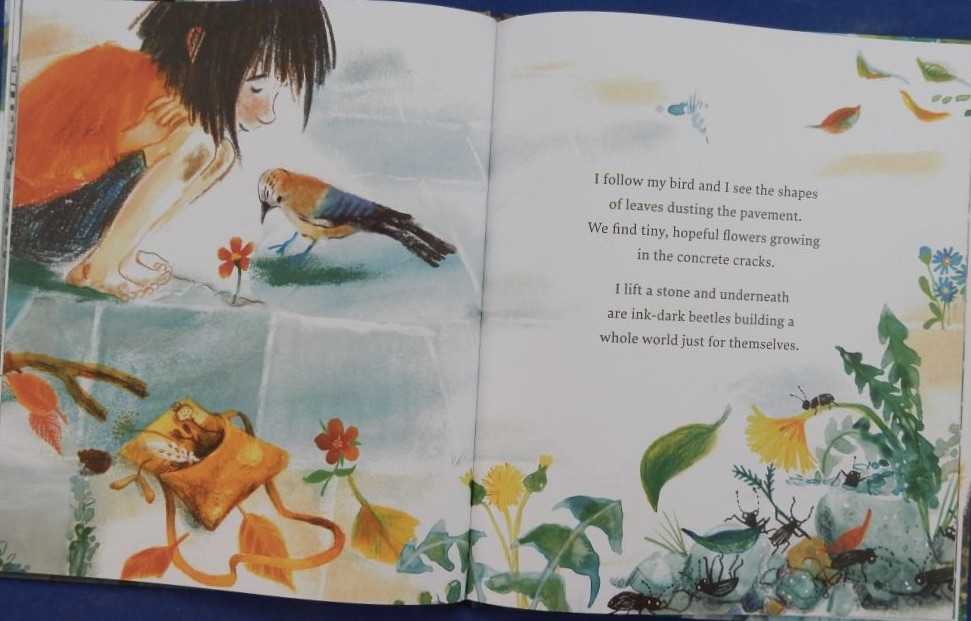
The child carries on following the lead of the blue-winged bird and they find leaves, wild flowers and insects.
In a little forest place, the child climbs a tree and can hardly believe the abundance of wild life -: ‘A burst of parakeets colour the air green’ and then as day turns to night a fox appears and stars light up the sky. Now the child realises that there is wildness everywhere’.It’s both within and all around.
Katya Balen’s poetic narrative reads aloud well and accompanied by Gill Smith’s mixed-media scenes of the contrasting grey cityscape and the vitality of the wild places will, one hopes, encourage children to look for and appreciate their own wild areas.


 Red Reading Hub - Jillrbennett's Reviews of Children's Books