Halle had a Hammer / No Pets Allowed! / Mischief on the Moors

These are new publications in the colour banded Bloomsbury readers series – thanks to the publisher for sending them for review
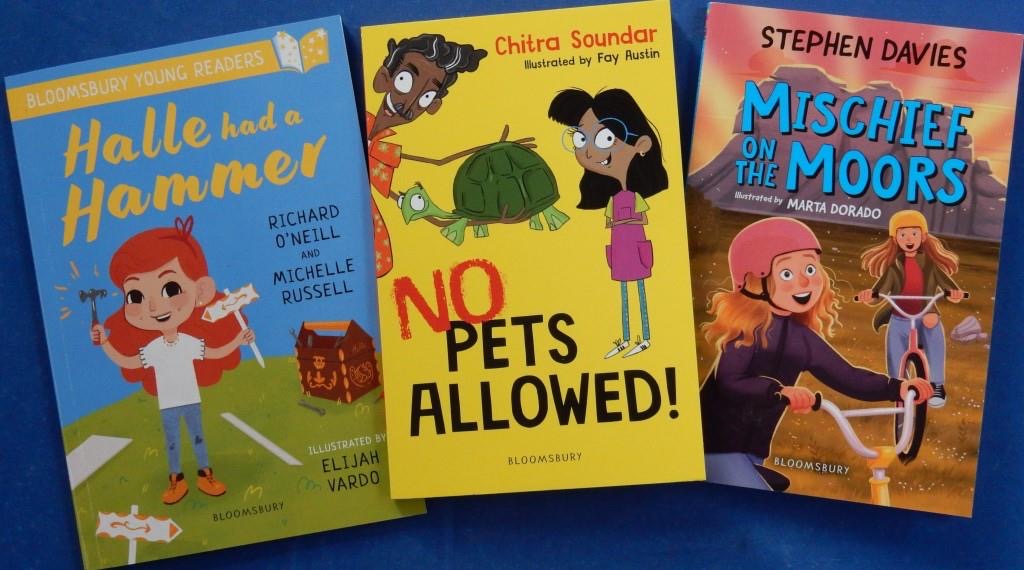
Halle had a Hammer
Richard O’Neill and Michelle Russell, illustrated by Elijah Vardo
No Pets Allowed!
Chitra Soundar, illustrated by Fay Austin
Mischief on the Moors
Stephen Davies, illustrated by Maria Dorado
Bloomsbury Education

At ‘Lime Level’ Halle had a Hammer is a story about a Romani Traveller family whose truck is specially fitted out so that as well as a home, it’s a workshop that can move to wherever they have customers. The workshop is Halle’s favourite place and she’s had instilled in her the importance of putting things back where they belong after use. Having learned how to use tools, she is now teaching Henry, her younger brother tool using skills as they make a wooden box for his toy cars.
When their work takes the family back to the village of Trindle to make some new signs for a race, Halle discovers that her hammer isn’t in her toolbox and Henry was the last person to have used it. Happily though it turns up in time for her to play her part in the sign-making and Henry redeems himself by drawing a map that turns out to be particularly useful. The race is a great success and the following day the family move on to their next assignment.
Another story that provides an insight into an all too frequently misunderstood minority group written and illustrated by storytellers and an artist who are all members of Romani families.

At the same reading level, illustrated in black and white is Chitra Soundar’s No Pets Allowed! wherein we meet Keva and her family – Mum, Grandpa and Grandpa’s pet tortoise, Altas – who live above Grandpa’s pet adoption centre. Atlas goes everywhere with Grandpa until the day Grandpa has to spend time at the hospital for a series of check-ups. The trouble is the hospital has a ban on pets. Keva is determined to change the mind of the seemingly curmudgeonly hospital manager, Mr Sallow. Can she possibly succeed in winning him over?
A funny story that demonstrates the importance of family and of pet powers with humorous black and white illustrations by Fay Austin.

Stephen Davies’ tale is set on Dartmoor and inspired by folklore. Mischief in the Moors is the result of a mysterious creature that sisters Daisy and Liberty encounter when out riding their bikes. Could it perhaps be a pixie like those in the book of local folklore that once belonged to Gran. According to this book pixies play tricks on humans but they also respond positively to kindness.
Suddenly very strange things start happening and with their entries for the local fete to be prepared, that is the last thing any of the family needs. Impish mischief or something else? That is what the sisters need to work out as soon as possible.
A magical adventure imbued with humour and illustrated by Marta Dorado that will keep readers involved as the girls try to solve the mystery. (Grey book band)

The Can Caravan

The Can Caravan
Richard O’Neill and Cindy Kang
Child’s Play

What a wonderfully uplifting and affirming contemporary story is the latest one by Romani storyteller Richard O’Neill.
Janie, an imaginative child, lives on a travellers’ site with her mother and her grandfather. Also living among them is her grandfather’s friend Mrs Tolen, whose caravan has seen better days.

At school one day Janie’s teacher announces that the class are to visit a can recycling plant and Janie is able to respond to his question about the history of recycling by relating it to what members of the travelling community have done for centuries. Back on the site, she’s eager to tell Mrs Tolen about the visit only to discover that she’s had a fall and is in hospital with a broken hip.

A couple of days later, Janie goes to see Mrs Tolen in the hospital and hears that environmental health inspectors have deemed her caravan unfit for living in. She is determined that rather than the old lady having to move out, she, her friends and other members of her community will restore her old caravan.
The visit to the can recycling plant further motivates and inspires Janie

and back home she can hardly contain herself with excitement as she tells her Mum and grandfather about her plans. The same thing happens at school next day where she receives many offers of help from her classmates on behalf of family members. The recycling plant agrees to donate recycled metal sheets and the community collect cans to raise the rest of the money needed. Then under Janie’s leadership everybody sets to work rebuilding the caravan.

Eventually Mrs Tolen has a wonderful surprise when she is able to move into her recycled trailer – her “Can Caravan” as she names it joyfully.

What this community achieves is an inspiration to us all: the loyalty, determination, resilience and ability to adapt inherent in the Traveller peoples should make those of us who are all too ready to rush out and buy new things, ashamed of such consumerist attitudes. Cindy Kang’s bright, realistic illustrations underline the community spirit and there’s a final aluminium recycling flow chart that also includes some interesting facts about this metal.

Storytime with Child’s Play Picture Books

Red Reading Hub welcomes the opportunity to catch up with some recent Child’s Play picture books

Astrid and the Sky Calf
Rosie Faragher

This is a truly magical story about a young doctor and a very unusual, special hospital. The doctor’s name is Doctor Astrid and she runs The Hospital for Magical Beasts. Thus far there’s not been a single untreatable patient or incurable illness at her hospital but that changes when a new patient suddenly arrives, a sky calf no less.

Doctor Astrid does her very best to diagnose the problem but none of her usual methods are any good at all. She’s bemused and frustrated, doubting her own skills, and her patient is far from happy. Surely there must be something she can do to restore the sky calf to her usual healthy self.

Happily there is, but it’s not sticky tape, potions or bandages: rather, the successful treatment involves showing empathy and friendship.

Full of heart, this is a sweet story beautifully illustrated by Rosie the author in a delightfully scribbly fashion. Adorable!

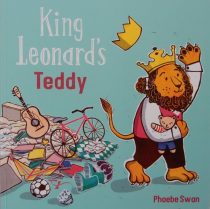
King Leonard’s Teddy
Phoebe Swan

Wealth and consumerism reign in King Lion’s world of use once and throw away; life is peachy so he thinks, merely sending his servant out to buy a replacement for anything that breaks or even gets dirty. Not once does he consider the idea of the environmental impact of his lifestyle.

But then his beloved teddy bear is broken one night. This is something irreplaceable so what can he do? The toyshop can only sell him a new one, the toy factory only manufactures brand new bears and all the repair shops have long since closed down.

Back home a further accident happens and this gives King Leonard an idea: perhaps he can fix the bear himself. It’s not an east task for sure but eventually determination wins through and what’s more the king has learned a host of new skills that he can use for the good of the whole community.

A delightful story that has a strong and very important environmental message that is never too soon for young children to hear. To that end King Lion and his trusty helper Max have compiled a final spread of ideas for reducing, reusing and recycling items to help the environment. Love the bold mixed media illustrations that really help increase the impact of the telling.

The Things
Petronela Dostalova

This is a somewhat surreal tale about  Thing. Thing has a best pal, Cactus, actually make that two best friends; the other is Moose the shadow puppet. Thing loves spending time with these two; he even talks to his prickly friend in bed.

Life ticks along well in its uneventful way until one day Thing discovers another Thing nearby. Thing 2 also has two friends Mitten and Mitten. But Thing starts to worry about the Other Thing: could it be dangerous?

Then Moose suddenly disappears and guess who suspect number one is. Nevertheless perhaps working with Thing 2 might help work out what has happened to the shadow puppet.

Young readers and listeners will definitely enjoy being in the know in this quirky tale of tolerance and friendship

The Lost Homework
Richard O’Neill and Kirsti Beautyman

This is the latest of the author’s stories set in a traveller community and features young Sonny.

Sonny loves school and usually gets his homework done on a Friday so he has the entire weekend to spend helping his family and fellow travellers with all manner of tasks.

On this particular weekend there’s to be a wedding – one of his cousin’s is getting married and there’s a huge amount of preparations even before the family leaves for the venue which is 180km away. Over the weekend Sonny uses a great many different skills that involve maths, music making, story telling, ICT and painting. Pretty well the only thing that doesn’t get done is Sonny’s homework.

Happily though despite Sonny’s fears, when he tells the class about his weekend, his teacher shows considerable insight and understanding.

A super story showing that school isn’t the only place where important learning happens; it’s illustrated by Kristi Beautyman whose artwork is truly captivating.

Milo and Monty
Roxana De Rond

Monty and Milo are two new canine additions to the McKenzie family but they’re very different dogs.

Monty is a sociable animal whereas Milo prefers being quiet and on his own. This behaviour worries the latter dog’s new family.

One Sunday afternoon some cousins pay a visit and Milo goes off to his favourite quiet place but when he gets there, it’s already occupied – by cousin Henry. It seems that Henry and Milo have much in common – both are tactile sensitive, have special toys that go everywhere with them and like a regular routine.

With new understanding, perhaps if the McKenzie family make some adjustments both Monty and Milo can be happy family members.

A sensitive, warm-hearted tale of differences and learning how to accommodate them with super equally warm-hearted illustrations by the author.

Yokki and the Parno Gry / Cool Mythology

%0A

Yokki and the Parno Gry
Richard O’Neill, Katharine Quarmby and Marieke Nelissen
Child’s Play
Yokki’s family are Travellers who live under canvas and make their money by selling – it might be horses or things that they make when there’s no other work – things like carved wooden spoons or lovely paper flowers. At other times of the year, they might be found mending pots and pans, sharpening tools or picking fruit and vegetables.

%0A

Their evenings are spent around the camp fire when stories are told; and young Yokki is a particularly good story teller whose tales are a re-mix of those he’s already heard and things he adds of his own.
One year however, with work hard to come by the family is really down on their luck and Yokki’s father is worried about how they’ll cope with the coming winter. Phuri Dai (Grandma) suggests a place where they can set up camp and when they’ve done so, Yokki decides a story is just the thing to raise their spirits.

%0A

Look at the image in the centre …

It’s a mythical tale of a powerful white flying horse – a Parno Gry – that would take him to places where life would be everything they could wish.
Can that wonderful horse fly in and save Yoki’s family at their darkest time? That is the big question and one you will have to get yourself a copy of this wonderful book to answer.
Everything about this book is exciting: most importantly that the story is a real testament to the power of children’s imaginations and the valuing of same; Marieke Nelissen’s illustrations are delightfully dream-like in places, the different viewpoints and perspectives used …

%0A

add visual interest at every turn of the page and further enhance the telling.

DSCN8158

Cool Mythology
Malcolm Croft
Pavilion Books
Prolific author Croft turns his attention to a subject popular with primary age readers, as well as a topic much studied in schools. In fact I became very interested in the whole area when studying at London University in the 80s and have continued to find the whole vast topic endlessly fascinating ever since. This book is, as it says “Filled with fantastic facts’ and encompasses the main world mythologies, Sumerian and Inca and Nubian, all of which and more are mentioned on a spread entitled Map of World Mythology.
Thereafter, logically, is a look at creation myths, the commonest forms of myths and these are broken down into five general classifications as shown here …

%0A

Examples of these are then explored in four spreads with the Greek Gaia, various sun-related myths, some fascinating African ideas and the Rainbow Serpent from the Aboriginal Dreamtime.

%0A

‘Myths and legends are a vital part of … what it means to be human’ we’re told and the author then goes on to look at the seven basic plots used in myths. There’s also an exploration of places such as Atlantis, as well as the more recent Bermuda Triangle; and the afterlife with a look at ancient Egypt; animals, monsters and part human, part animal beings, also have a place herein.
Indeed it’s amazing just how much is packed into this little book on a topic that has much to say to us, and societies the world over today. If you know a child who wants a quick but absorbing introduction to a vast subject, this is a very good starting point. It’s fun, attractively laid out and very readable.

WNDB_Button localbookshops_NameImage-2