Up Close and Incredible: Dinosaurs

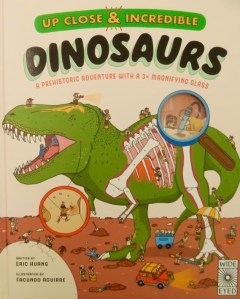
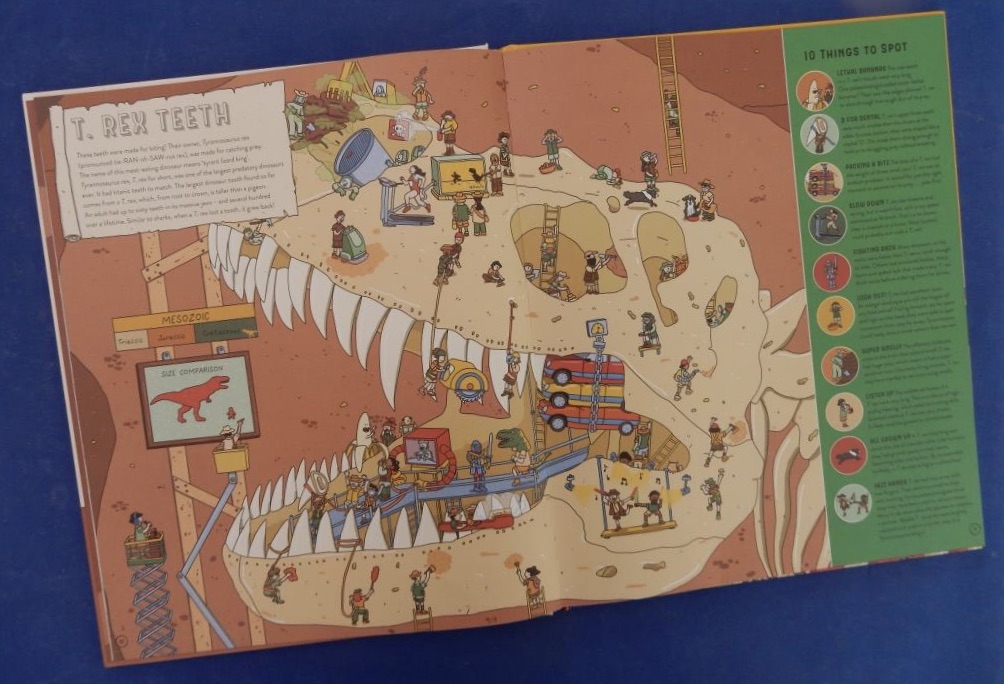
Dinosaur fans will delight in joining a team of tiny, diverse palaeontologists in this interactive investigation. First though you’ll need to release the 3x magnifying glass from the cover and grab whatever tools you think necessary – dental probes and rock hammers for instance – and you’re ready to explore an array of dinosaurs both living and fossilised. You’ll look inside and out: Huang lists the details of ten significant anatomical features to spot on each spread starting with a T.Rex’s head and jawbone. Therein you’ll find what the author calls the ‘lethal bananas’ (very long side teeth) in its mouth; just right to slice through the tough skin of its prey.

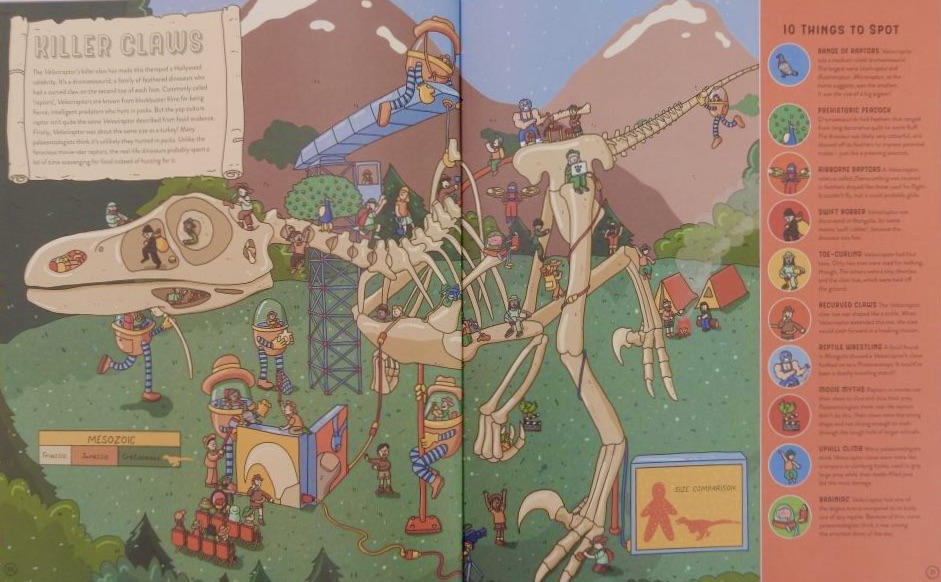
If feet are more your interest then head to the spreads with claws in the title. Thereon you’ll encounter both the claw bones – unguals to be more scientific – of Therizinosaurus; these were the longest of any animal ever. Then there are the ‘killer claws’ of Velociraptors (the second toe on each foot and they’re curved like a sickle). Look out for the other kinds of toes a velociraptor had too.

Well known dinos are of course featured, as is Archaeopteryx with its bird-like features, but unless you’re an expert you may well come across a new name. I’d never heard of Parasaurolophus, (one of the duck-billed dinosaurs) before reading this book

A scientific search-and-find adventure bursting with facts and visual jokes, gently humorous but also included are timelines, a size comparison spread and a glossary.

Aguirre’s zany illustrations are full of hilarious details that readers will want to return to over and over again

Toddler Treats To Share

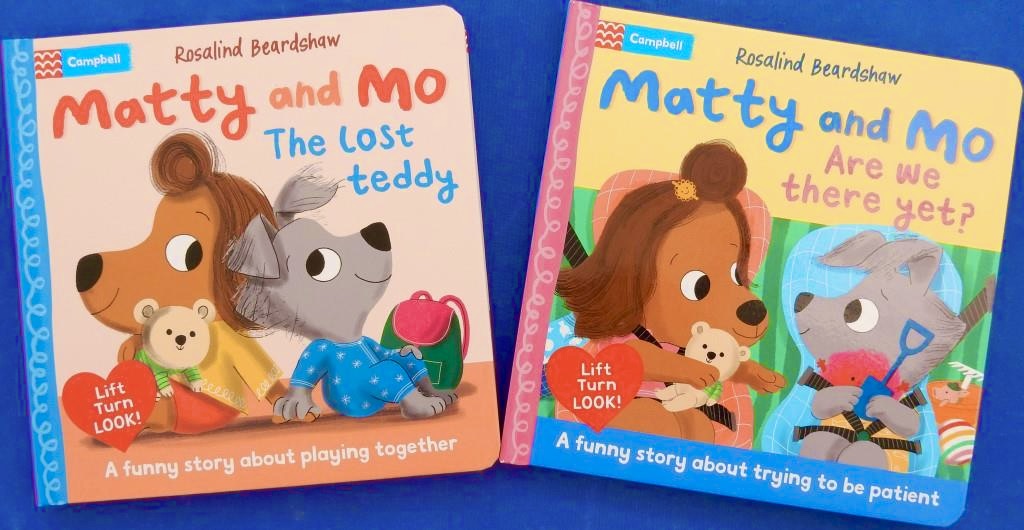
When you’re little there are SO many life lessons to be learned. So it is with the pups in this new series.
Matty and Mo are sibling puppies, Matty being the elder of the two. We meet them on a rainy day playing inside picnics together.. Matty notices that Ted is missing and Mo, of course wants to help find him. They search in the likely places – the bed, a cupboard and in their liege toy pile but there’s no sign of Ted. This upsets Matty and Mo attempts to cheer him up and suddenly Matty notices something sticking out of Mo’s ‘new useful bag’. What could it be? Mo, so it appears can sometimes be a little silly
In the second book Matty and Mo are off to the beach in the car with Mum. It’s quite a distance so patience is needed. In her excitement Matty gobbles all her snacks in one go and then inevitably, one of the pups needs a wee. It’s Mo. (Matty went before they set off.) Inevitably too, boredom sets in and Matty gets busy with her sticker book … Mum must have a lot of patience as she drives and at last the beach is in sight, but the puppies can’t see it until they wake up.
Trying to be patient has tired them out – only for a short time though.
Little humans will have a giggle at the puppies as they earn to deal with what to them are challenging experiences. They will also enjoy using the moving parts – flaps, a wheel and the final fold-out heart in both books that were inspired by real-life family experiences..

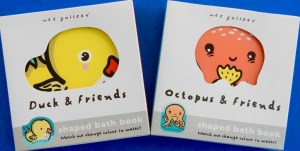
Wee Gallery are a husband and wife team who create books to help babies and very young children develop through visual learning.
Both of these take the shape of the titular character and little ones will love joining in as both Duck and Octopus look for their friends in these splash splash bath books wherein each black and white creature magically comes to life in full colour when wet. Duck will meet the likes of frog, dragonfly and swan whereas Octopus’s friends include a large fish, jellyfish and a crab..
Splishy, sploshy, squishy, squashy tactile bath time fun for tinies.

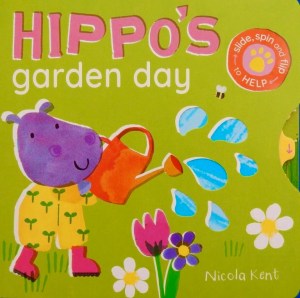
Lion and Hippo have very different gardens. Lion’s is neat and nothing looks out of place. In contrast Hippo’s is overgrown. I assume it’s not been left to grow wild deliberately. Hippo decides he needs to do some serious work on his grade. Having collected tools from his shed he sets about mowing, trimming, watering and in due season, harvesting fruit to share with his friend, Lion.
With some onomatopoeic language for small children to join in with as Hippo works, flaps to explore, a slider and wheels integral to the bold bright illustrations, this is a fun introduction to a task some adults thoroughly enjoy, some do under sufferance and others – those in favour of rewilding – don’t do at all. Toddlers however, will love the opportunity to assist Hippo in his work.

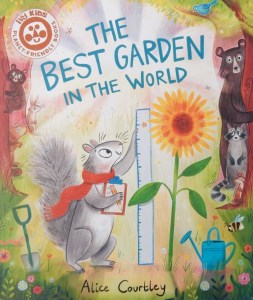
The Best Garden in the World

When Steve the squirrel moves from the city to the forest. he’s intent on finding his wild side in the countryside. He has resolved to build the best garden in the whole world and is bursting with ‘big and very particular plans.’ His new forest dwelling neighbours are eager to help and Steve gives them clear instructions as they plant, prune, sow and sort all day. Everyone then agrees that Steve’s is the best garden they’ve ever set eyes on, despite it also being the only one.

Steve meanwhile settles down to enjoy some peace and quiet. Not for long though: very soon his new friends are busy doing their own things. Shock horror, they’re ruining the garden.

Time for some ground rules, a plethora of signs and … the disappearance of all this friends. It’s peaceful, yes

but Steve decides he should do some market research: what is it that makes for a perfect garden?

Steve is startled by his discoveries and so down come all the signs and up goes a completely different one. Manicured lawns and trimmed hedges are all very well but it’s time for a spot of rewilding that will attract his new friends and accommodate their particular requirements and ways of living.

A great story to demonstrate to young children that is everyone is different and so too are their needs.

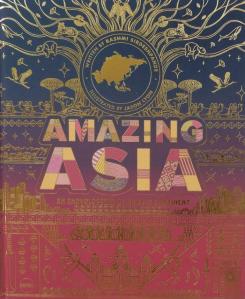
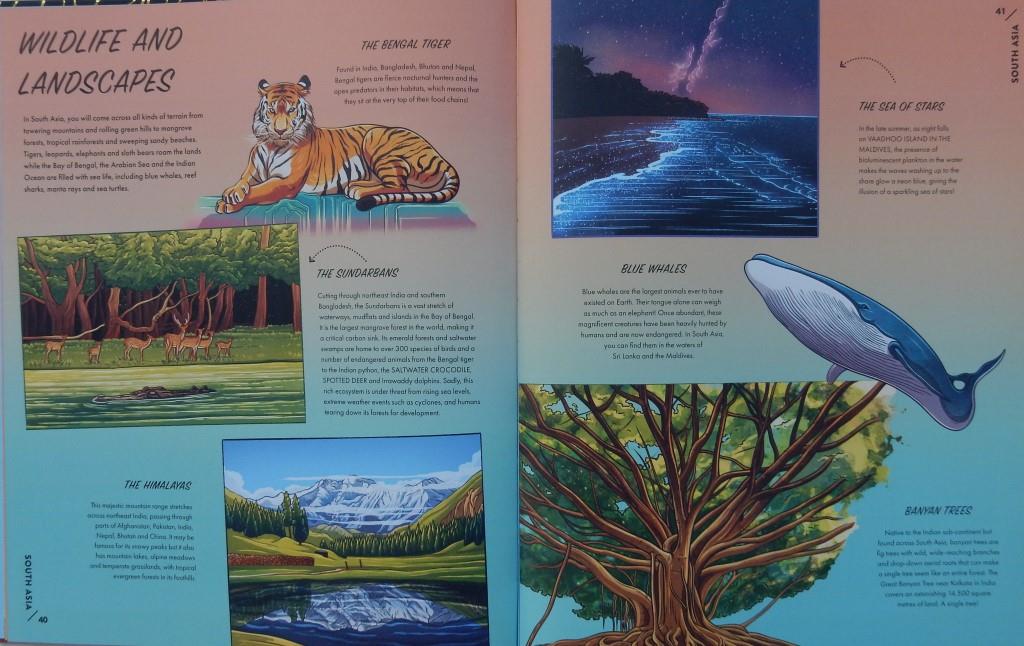
Amazing Asia

In this large format book, author Rashmi Sirdeshpande explores the world’s largest and with over 4.7 billion people, most populated continent, Asia.

With its powerful illustrations, excellent design and engaging and informative text, the book begins with an introduction to the continent, its countries, a map and a list of fascinating facts for each Asian country.
The massive continent is then split into five geographic regions: West Asia, South Asia, North and Central Asia, East Asia and Southeast Asia though within these each country has its own distinct identity.
For each region there is a time line, a spotlight on some change makers , superstars and other historical tidbits, a look at people and cultures, wildlife and landscapes,

spectacular sights and at the present and future possibilities.

After the regions comes a section with a large map, entitled Global Asia with a focus on indentured labour, causes of migration and the contribution of Asian immigrants to their new homelands such as Australia.
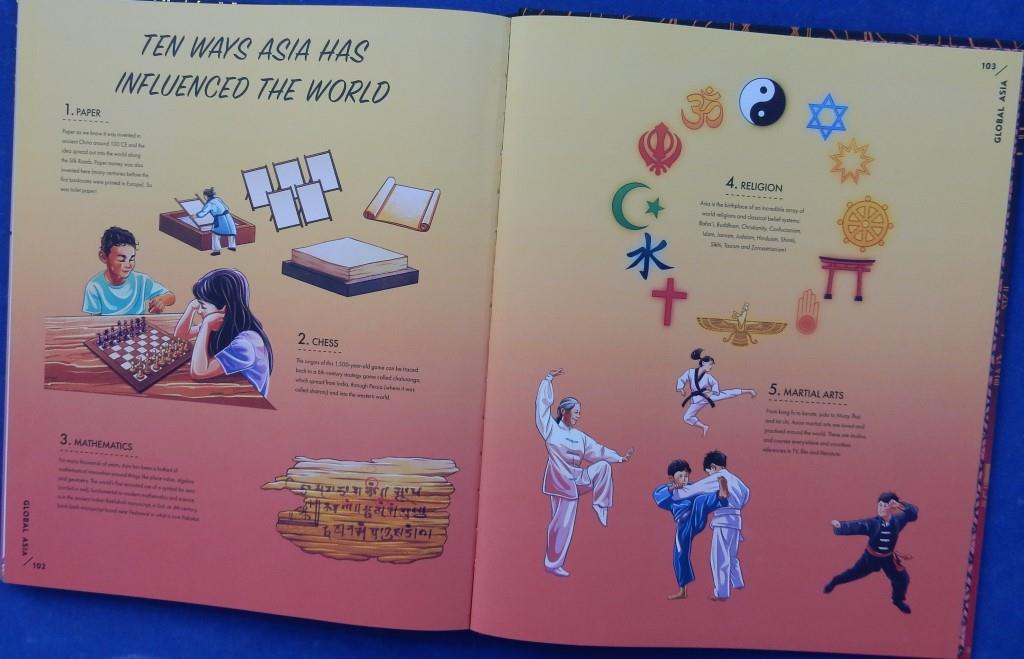
Two final spreads present ways in which Asia has influenced the world

and backmatter comprises a glossary and index.

Rashmi’s writing is sure to keep young readers interested as she includes such topics as K-pop, manga and martial arts as well as mentioning colonialism, Tibet and Taiwan as disputed territories, the Israel/Palestine and Russia/Ukraine conflicts with sensitivity. She certainly presents with aplomb the rich tapestry that is Asia. Jason Lyon’s illustrations really help bring the written content to life and with its wealth of starting points for further exploration, I’d thoroughly recommend this book both for home browsing and classroom use.

For Baby’s Bookshelf

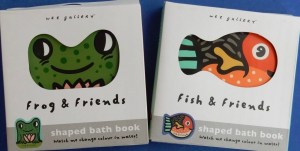
These bath books cleverly change colour when wet.
The first introduces a little green frog on the lookout for friends to leap with: there’s a dragonfly, a duck and an otter each of which will come to life on the squishy tactile pages as an adult speaks the dozen words of the text, possibly then adding some croaky sounds.
The second is a fishy shaped sub-marine offering wherein the titular fish and friends starfish, turtle, whale and seahorse assume their colour when immersed by tiny human hands.
Both books offer splishy, splashy tactile fun learning for the very youngest humans at bath time: peekaboo with a difference.

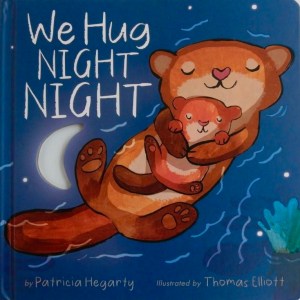
A loving father gently prepares a little child for sleep and in so doing, introduces listeners to parent and infant creatures – bears, possums, otters, cats, giraffes and birds all safe in their respective abodes also snuggling up in readiness for slumbering. Patricia Hegarty’s soothing rhyming words and Thomas Elliot’s endearing illustrations combine to lull little ones as an adult turns the cutaway pages of this goodnight charmer that is likely to become a bedtime favourite.

There’s parental love aplenty too in

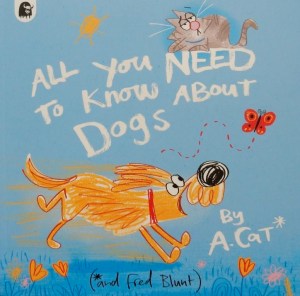
All You Need To Know About Dogs

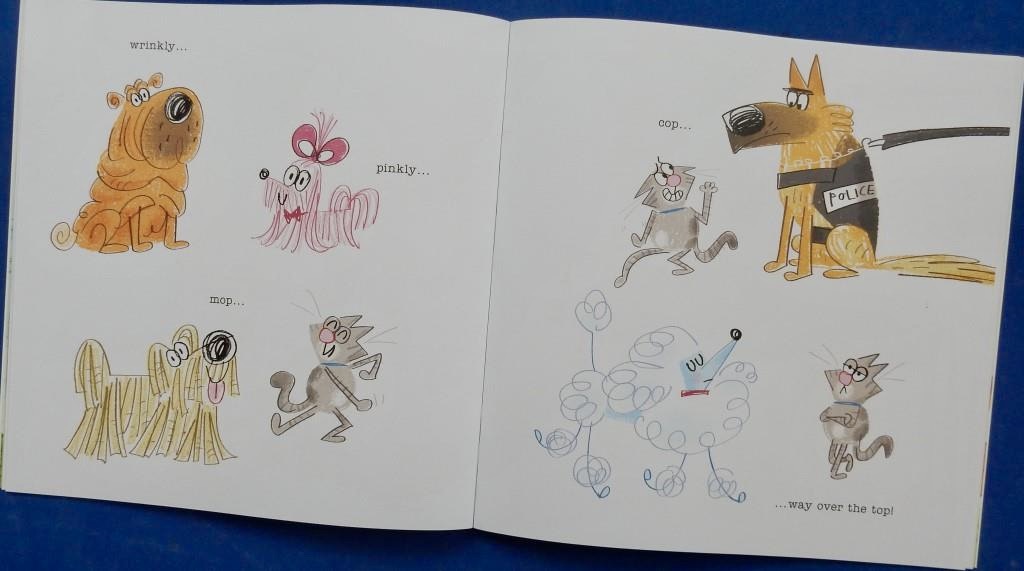
Now I’m no lover of cats, far from it – they bring me out in an itchy rash, neither am I a dog lover (having been mauled by an Alsatian as a child). However I am a fan of Fred Blunt’s picture books. which is why I read this. It’s told by a matter of fact cat and indeed there are actually two versions. The first is extremely brief, blunt you might say and is over in one spread; the second is the extended one for which our narrator employs rhyme to talk about the various breeds of dog

and to inform us of the many reasons dogs are stupid. For instance despite their having an excellent sense of smell, they use it for ridiculous activities. Then there’s what they do with their poo and as for the fur … It’s hard not to agree with all that moggy has said thus far.

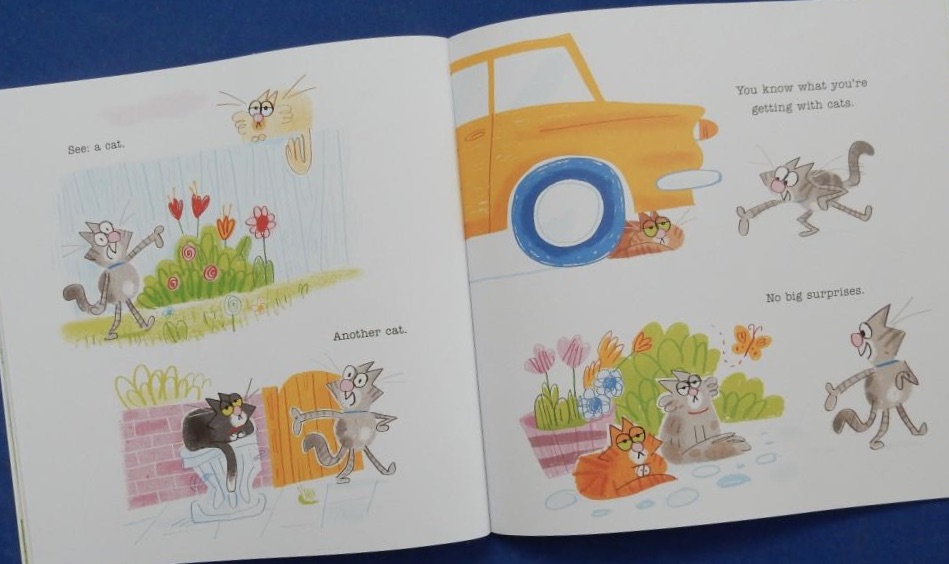
In contrast when you come to cats, they are just cats,

only with some felines you get rather more than you bargained for and when a scary moment arises dogs come into their own. It’s assuredly the case here for loyalty reigns and a dog might just turn out to be the best friend of all.

Both cat and dog lovers of all ages will lap this up; so too will those who enjoy wit and a good laugh.

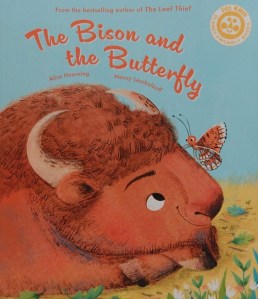
The Bison and the Butterfly

Free to roam wherever she chooses and well fed, Bison should feel happy but she doesn’t. Woodpecker suggests that she needs a friend. Woodpecker’s place is in the treetops so off sets Bison in search of that “Someone to trample through the woods with”. But why would any creature want to befriend a big hairy animal like her, she wonders. Woodpecker explains how Bison’s stripping of bark from the trees, provides access to food, a great help for a bird seeking breakfast.

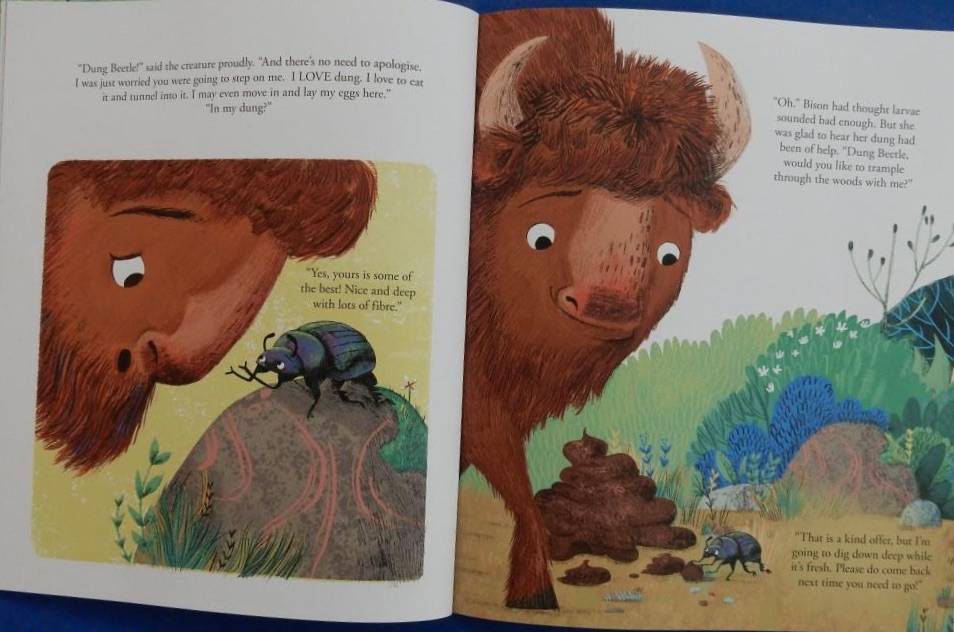
As she goes about her regular daily activities, Bison encounters some of her smaller forest neighbours – Dung Beetle,

Lizard – in particular but although both say they benefit from her actions, (Dung Beetle eats her poo and Lizard enjoys sunbathing in the bare patches of earth the large animal makes as she rolls) neither is that special friend.

Suddenly Bison hears what sounds like crying; she stops and asks, “Is everything all right?” Resisting the ‘Go away” instruction because the voice sounded so sad, Bison responds thus, “It sounds like you need a friend.” .

Now despite not wanting to trample through the woods, it turns out that this lonely butterfly is the ideal companion for woodland rambles. So begins a wonderful friendship …

Produced in collaboration with Kent Wildlife Trust, the author uses a sweet tale of searching for a friend to show how an ecosystem works. Backmatter gives information about Bison’s role as a ‘keystone species’ that helps keep nature in balance enabling key plant species to flourish, which act as a food plant for heath fritillary butterflies. Following that is an outline of The Wilder Blean Project launched two years back – an exciting success story so far.

With its expressive illustrations and narrative style writing, sharing this story containing messages about the impact we have on those around us, and the importance of kindness, empathy and friendship.with young children would provide a good starting point for learning about ecosystems.

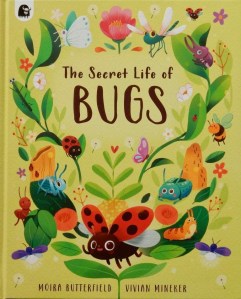
The Secret Life of Bugs

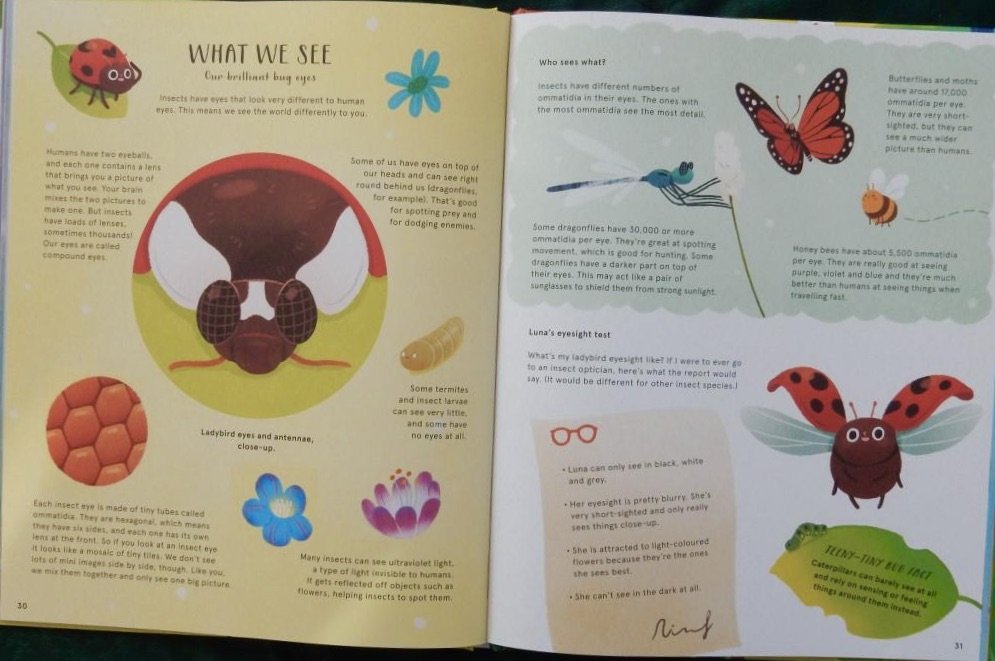
In the latest of The Secret Life series Luna the ladybird takes readers on a journey into the world of insects that includes traditional tales as well as information. She begins by presenting her own life story starting when she was one of a cluster of tiny eggs on the underside of a leaf through her metamorphosis until she became a bright red ladybird with seven black spots. I was surprised to learn that there are over 5,000 different kinds of ladybirds in the world. On the next spread, using herself as exemplar, Lily presents the body parts that are similar in all insects as well as talking about some of the differences such as mouthparts. Did you know ladybirds and many other insects smell by means of special organs on their feet?

After this is a traditional tale (one of the five included in this book) How the Butterflies Got their Colour, based on a legend told by native American People living in the Arizona desert.

Insect homes, night fliers, nesting habits are the topics of the next three spreads.

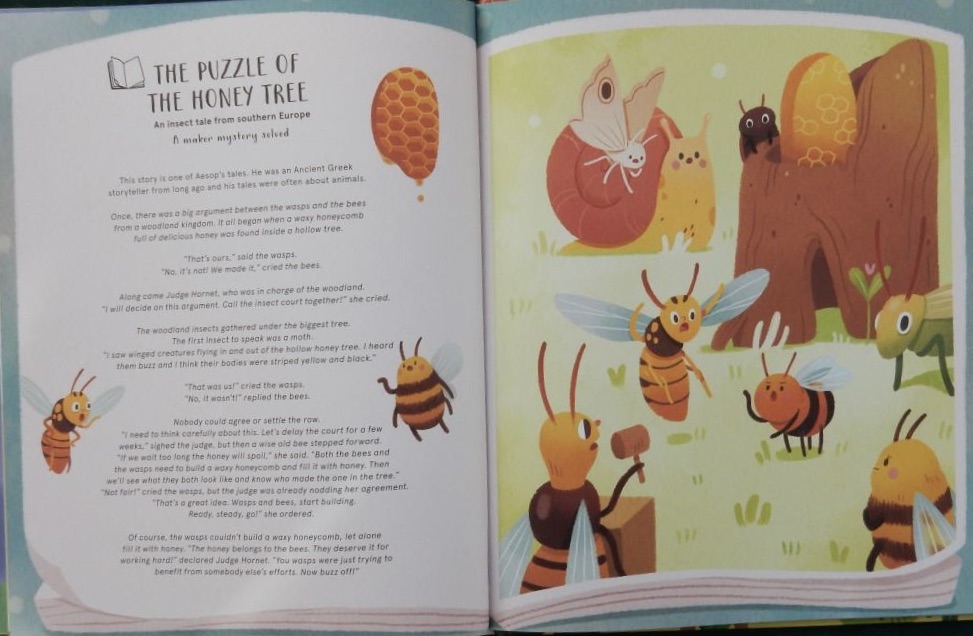
I laughed as I read The Puzzle of the Honey Tree, a traditional tale from southern Europe wherein the bees and the wasps in a woodland kingdom argue over the ownership of a honeycomb containing yummy honey. The idea of the rival factions having to go before an arbitrator really amused me.

Other spreads offer facts on swimming bugs, noisy ones, very large and very small bugs, how bugs see,

some insect ‘superpowers’ and more, concluding with pages encouraging young readers to get involved in helping insects survive so they can continue their vital work on our planet. There are also bug stories from Ancient Greece, Brazil and South America.

In my experience most young children are fascinated by insects; this book will surely further fuel their interest in and understanding of, these important creatures.

Poetry Prompts

This image has an empty alt attribute; its file name is dscn9672-4.jpg


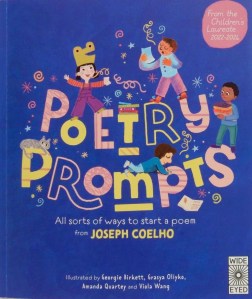
Children’s laureate, Joseph Coelho provides 41 ways for readers to ‘discover the poet within.’
His first prompt is to have a dedicated notebook of your own that you can always have to hand when an idea arises; he even demonstrates how to make such a book from a single sheet of paper.
He then proceeds to one word poems; the trick so we read, is to have a long title. If this idea works for you, you can he suggests, in his first ‘poetry power-up,’ write several on the same theme for example: ‘The Sound of Water / Splash. // The Feel of Water / Cold. // The Taste of Water / Nothing.’


There are suggestions for penning poems that use rhyme and repetition, alliteration, onomatopoeia, similes, and metaphors as well as certain poetic forms such as haiku, and more challenging, triolets.
Most of the ideas are relatively light-hearted but there are also prompts for a ‘Home Is …’ poem in relation to World Refugee Day, and another for plastic pollution.


The four illustrators portray a diverse cast of children, as well as playful images of fauna, flora and an abundance of food ,

This image has an empty alt attribute; its file name is dscn9673-4.jpg

which offer further inspiration. The message that poetry is “about having fun with words” comes through loud and clear. I envisage lots of primary age children having great fun with the ideas in this book. (If used in a classroom though, it would be advisable, I think, to include prompts for some non-Christian festivals as well as those for Christmas and Easter.)


A World of Dogs / Illuminoceans

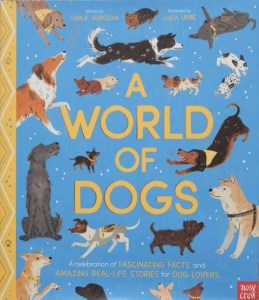
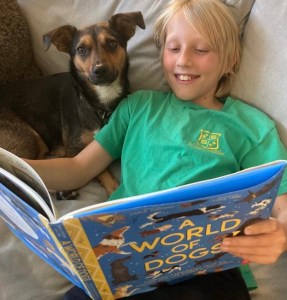
Since being attacked by an Alsatian as a five year old in the park, I have suffered from cynophobia and so I thought it best to ask a relation, ten year old Leo, who is a dog lover and owner, to read this book, which is packed with fascinating facts, historical information and real-life stories, and tell me what he thought. He absolutely loved it and has read it several times.


“My favourite parts of the book are the section about different breeds of dogs – I never knew there were so many” … “and I really enjoyed the pages telling of dogs in the war. I especially liked finding out that they could win medals for military service.”

Beautifully presented and illustrated, this is an excellent book to include in a school topic on pets, as well as a great book to give to a dog lover.

Lore of the Stars: Folklore & Wisdom From the Skies Above

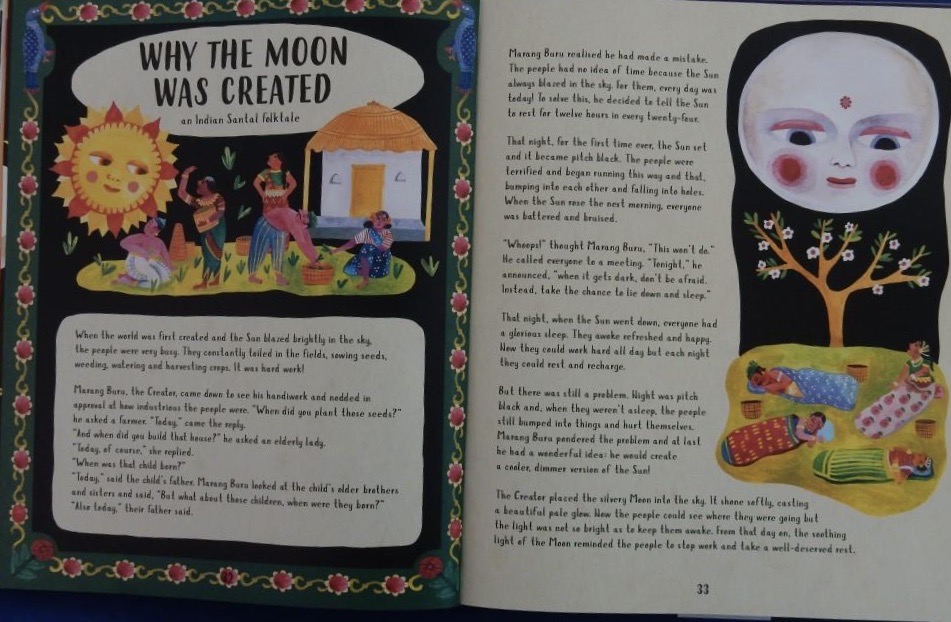
Alluringly presented, and full of fascinating tales and ancient wisdom, this latest in the Lore of series is divided into six sections: The Sky, The Sun, The Moon, The Stars, Planets, Comets and Shooting Stars and finally, The Cosmos.

Each section begins with a traditional story, the first being a Nigerian tale that attempts to account for ‘Why the Sky is So Far Away’ and the other spreads offer a mix of factual snippets and mythological paragraphs pertaining to the section’s theme such as gods and goddesses. I am familiar with the Hindi word for rainbow, Indradhanush so was interested to see Indra included on the Rainbows spread, indeed that is the only spread where I was familiar with all the mythology presented.

It’s pleasing to learn, through brief anecdotes scattered between the vibrant visual images, how different cultures viewed the same plants, animals and other natural phenomena such as sunrise and sunset,

the constellations, as well as augury and aeromancy. However my favourite part of each section is definitely its two page opening story and in this book the Greek myth, the Indian Santal folktale,

the indigenous American tale, the Masai tale and the Visayan Philippine tale were all new to me and a pleasure to read to children.

For school and home collections.

The Best Bad Day Ever

The Best Bad Day Ever
Marianna Coppo
Frances Lincoln Children’s Books

The feeling when we wake up and straightway know that it’s going to be a bad day, will be familiar to adults and perhaps to some children too. It’s certainly the case for little Wolfie, even his cuddly companion, Pepito, is in a bad mood.

Off Wolfie goes to school, through a street of happy-looking people and arrives late.

Nothing he tries turns out right and our small narrator feels nobody understands how he feels.

Then snack time comes and despite getting a fruit he dislikes, things start to look up. After a rest – not a sleep though for another little one stays awake too – the afternoon passes all too fast

and at home time, two little ones report to their respective parents, “It was the BEST BAD DAY EVER!”
Bring on tomorrow!

In just a brief text and scenes with an abundance of deadpan, gentle humour, Marianna Coppo captures that bad day feeling, going to on show how a kind action by another can change everything, making that great big frown into a beaming smile. All that’s needed is somebody who empathises and interacts, and … gone are those grumps.

Add to any preschool book collection, share it and invite the little ones to talk – to one another – in the first instance.

The Thing at 52

The Thing at 52
Ross Montgomery and Richard Johnson
Frances Lincoln Children’s Books

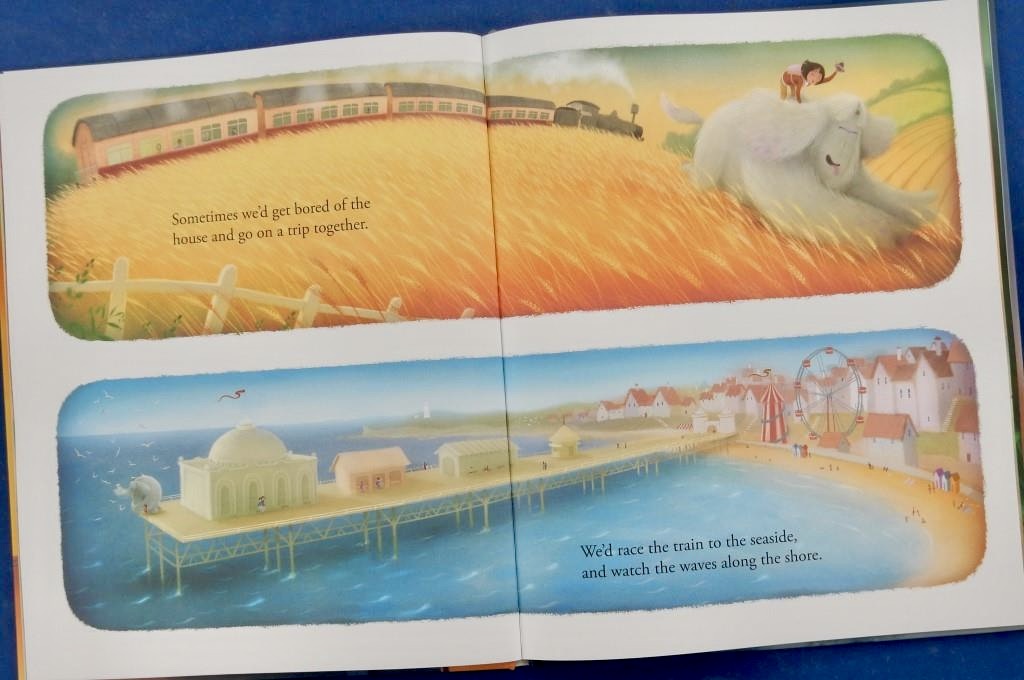
This tale is narrated by a little girl who makes friends with the large fluffy Thing that lives close to her home.

Deciding to take him a flower, she and her mother call on the creature and are invited in to what the girl thinks is a strange house with just a single chair, newspaper rugs and a fridge containing only jars of mustard – fifty of them. His response to her question about feeling lonely is answered thus, “All things are lonely sometimes.”

As their friendship blossoms, the two spend more and more time together, sometimes going on adventures,

and the child learns that there are hundreds more Things just like her friend.

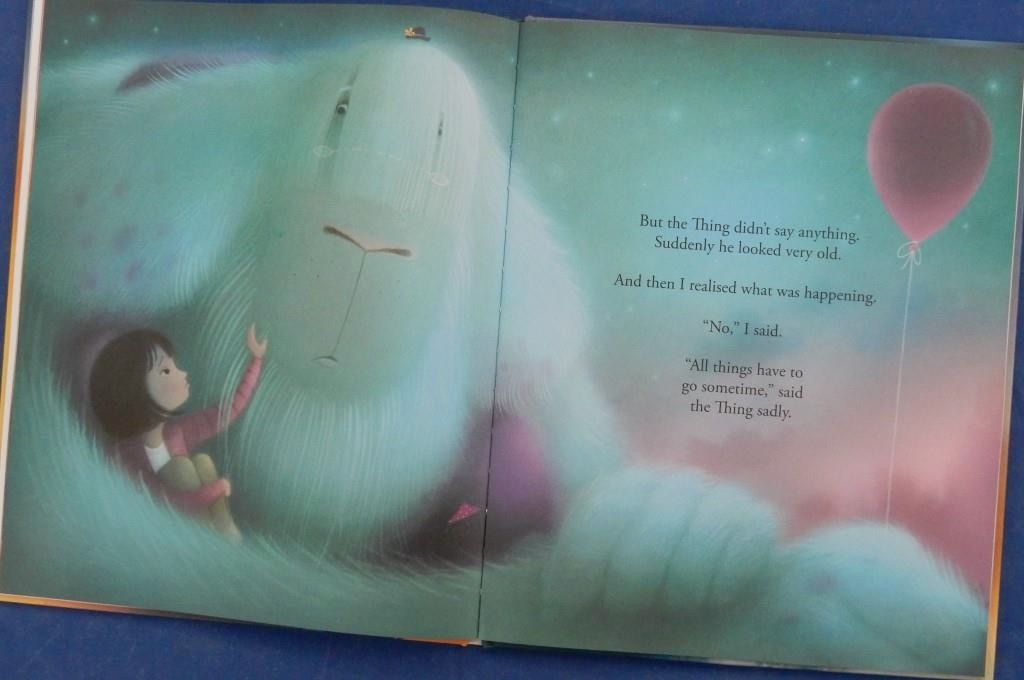
The narrator organises a wonderful party for all the Things, but then suddenly the special Thing looks very old

and the worst happens: with a hug as they watch the sunrise, the Thing disappears. All that remains are his old photos and memories of the wonderful times the two had spent together.

This tale of friendship and loss is all the more powerful on account of its gentleness. Death is never mentioned though it can be inferred from the somewhat dreamlike story. Dreamlike too are Richard Johnson’s soft-focus illustrations that have a potency of their own and are a superb complement to Ross’s words.

Unicorn Not Wanted

Unicorn Not Wanted
Fred Blunt
Happy Yak

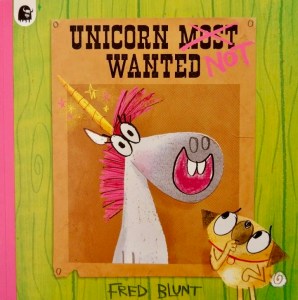
Acknowledging that there is already a plethora of unicorn picture books on the market, Fred Blunt offers something rather different: a cowboy story set of course, in the Wild West – or does he?

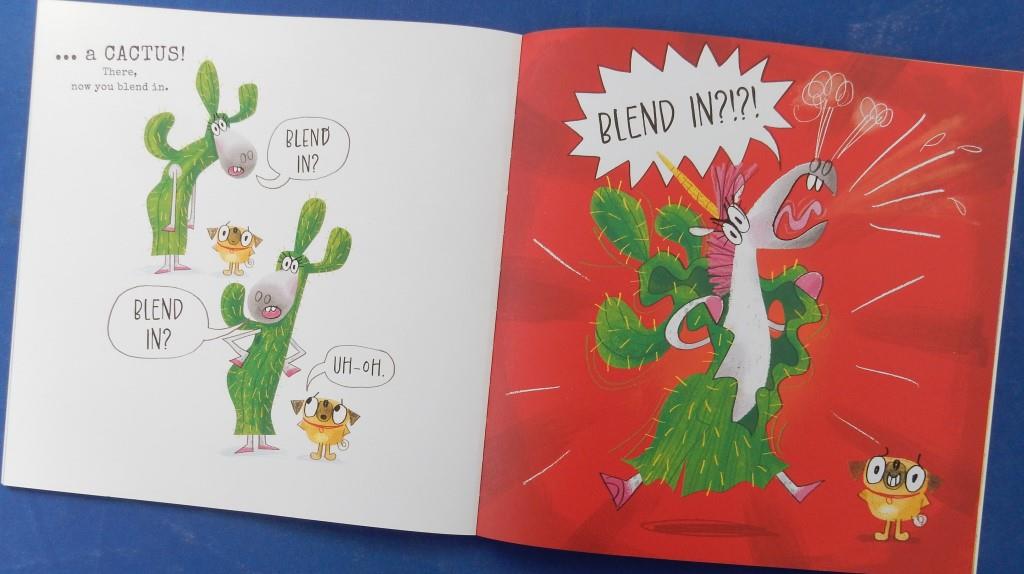
Unfortunately, despite the author having declared this book a unicorn-free zone, a one horned ungulate – a female one – and a pug in disguise have managed to sneak themselves in and once there make it their mission to find acceptance in the narrative, no matter what.

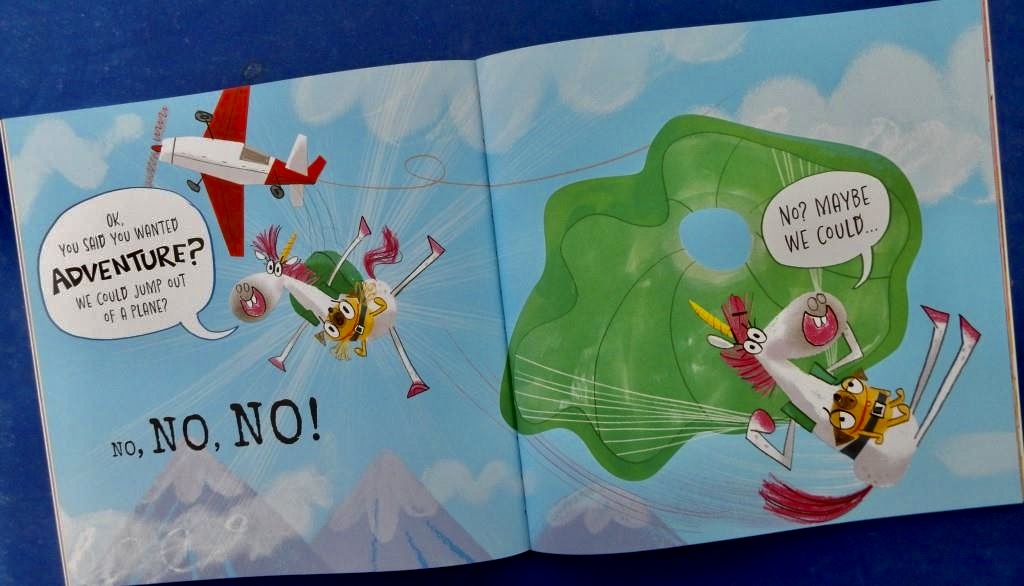
Little by little they wheedle themselves more and more into the limelight with stunts involving aerobatics,

wrestling and superhero-ing until the storyteller resorts to a costume cover-up.

But is it a success? Umm …

The main characters are an absolute hoot, their body language and facial expressions are superbly silly and brilliantly done, while the banter between the two and the narrator is highly entertaining.

All in all so much better that a run-of-the-mill unicorn story that will be enjoyed by young unicorn lovers, NOT unicorn lovers, and adult sharers, who can have enormous fun reading this aloud. This one certainly did. YEE HAW!

Monsters in Trucks / Tiny T.Rex and the Grand Ta-Da!

Monsters in Trucks
Laura Baker and Nina Dzyvulska
Happy Yak

Put together two subjects popular with young children – monsters and trucks – and you’re surely on to a winner.

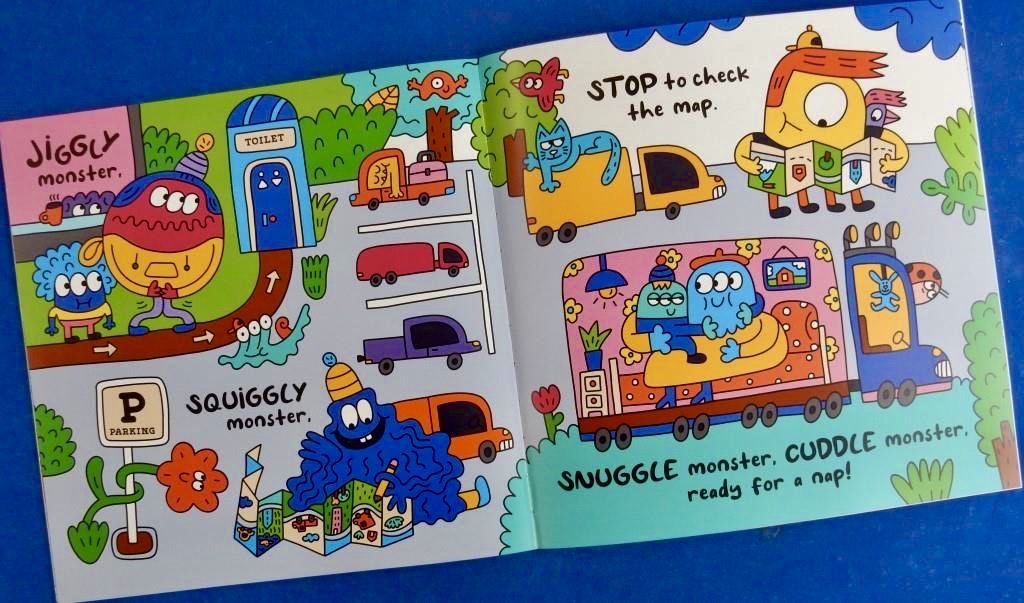
That’s what we have in this picture book that takes us to a world populated by truck-driving monsters. They come in all shapes and sizes, some happy, others downright grumpy; there are more than forty kinds in all, many in one way or another engaged in the construction of a monster city. Some however, appear to have other things in mind such as partying and there’s one among their number that’s a thief on the loose; he needs to be apprehended and fast.

Can little humans pick a favourite: it might be grump monster (so busy being grumpy that he drives right into a big hole), roar monster, prickly monster, tickle monster, or perhaps jiggly monster who is in the queue for the loo.

I loved the snuggle and cuddle monsters.

Laura Baker’s rhyming romp of a text and Nina Dzyvulska’s vividly coloured scenes work well together, the fun details of the latter offer plenty to talk about. Further fun comes in the form of a ladybird that lurks in every scene.

A sharing of this book in an early years setting may well result in an outbreak of monster creativity.

Tiny T.Rex and the Grand Ta-Da!
Jonathan Stutzman and Jay Fleck
Chronicle Books

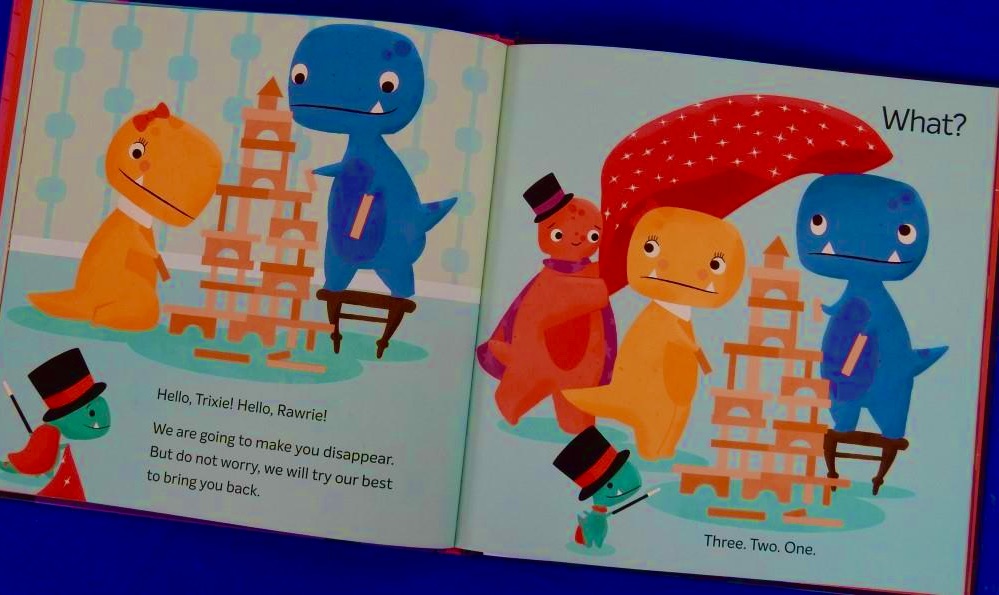
Tiny R.Rex and Pointy, the delightful dinos. are back and having seen a poster for the school talent show, have decided to enter. Tiny is fairly confident but Pointy is more than a tad apprehensive. Then inspiration comes in the form of their hero the Amazing Presto whose book they turn to. ‘Magic is meant to be shared’ they read: that means their joint skills could carry them through.

First though they need to train, so they don top hats, wield wands, appoint an assistant – Bob the teddybear – and choose their special magic word.

Magic though, especially a disappearing trick, doesn’t just happen; mistakes are part of the learning process

and their confidence starts to wane. Time to go back to the drawing board. Then after some very careful planning and a creative boost, the two are ready to step forward and face the audience – well almost. Suddenly Pointy is overwhelmed by nerves: can he summon his inner courage and make an appearance after all?

Patience, perseverance and supporting one another are key in this latest outing for Tiny and Pointy, with the former taking centre stage in terms of the narration. There’s food for thought at the show’s finale.

As always this dino. duo are charmers and are likely to win new human friends after a sharing of the vibrantly illustrated story.

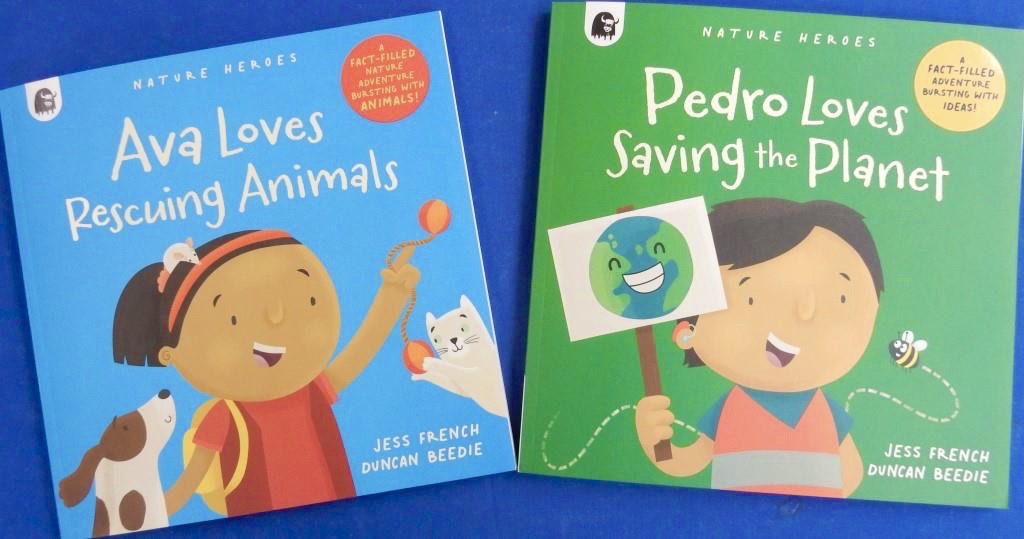
Ava Loves Rescuing Animals / Pedro Loves Saving the Planet

Ava Loves Rescuing Animals
Pedro Loves Saving the Planet

Jess French and Duncan Beedie
Happy Yak

These are additions to the Nature Heroes series where the focus is on a group of friends who love nature and being outdoors: essentially each one is a fact-filled picture book story.

In the first we meet Ava who lives with her grandparents They run an animal rescue centre that provides a temporary home for all kinds of animals, be they pets or wild creatures, large or small.
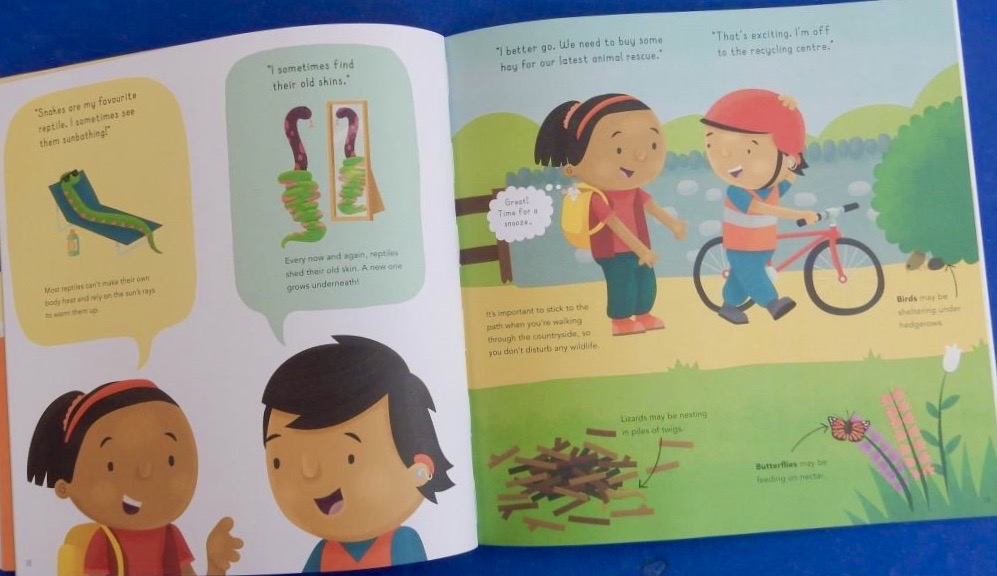
Accompanied by a tiny white mouse, Ava takes a walk around the centre and its environs as they head to the pet shop to buy hay for the animals soon to be cared for by her grandparents. On the way Ava stops at a pond containing frogs and lots of frogspawn and gives readers information on a frog’s life cycle and introduces some other amphibians.
We follow Ava on her ‘adventure’ during which she meets Pedro, the narrator of the next book,

and a lizard that narrowly escapes being run over by his cycle wheels. The entire walk turns into a fascinating learning journey for readers as they are introduced to various mammals – some of them record breakers, and find out about basic animal groups, ecosystems, habitats and more. Ava also meets another friend, Billy, who narrated Billy Loves Birds. Finally we discover the identity of the creatures that have just arrived at the rescue centre during their absence.

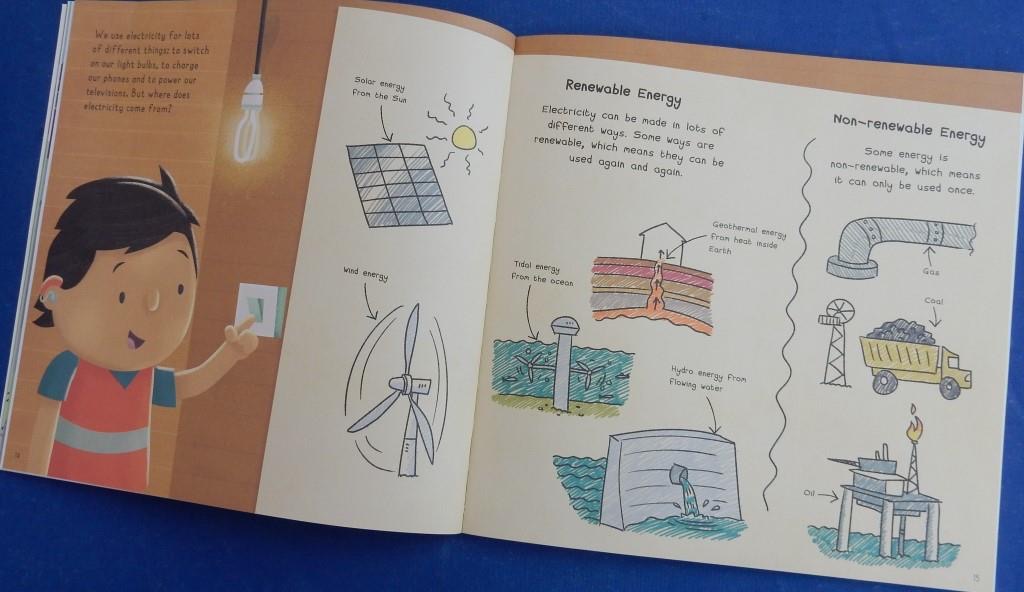
Pedro is an eco-warrior and in Pedro Loves Saving the Planet he and his older brother spend a day in the eco club’s new cabin. They choose to walk to their destination and encounter others who are using planet-friendly means of transport. Then once inside the cabin Pedro talks about renewable and non-renewable energy,

ways of saving water, points out that the cabin is built from sustainable materials, which leads on to a presentation of the 7 Rs (things that everyone should always keep in mind)) and other vital topics such as how to grow your own food, composting, the importance of trees, how to save energy at home, and the joys of being outside in green places.

Both books are illustrated by Duncan Beedie whose amusing art work underscores naturalist/vet Jess French’s informative, enjoyable texts. It’s never too early for young children to start learning about the importance of environmental care and the impact their actions have, both now and for the future. These books are spot on for foundation stage and KS1 class collections.

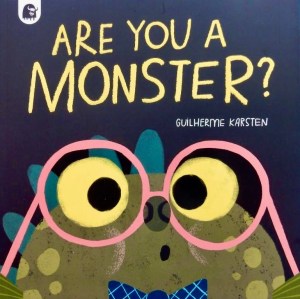
Are You A Monster?

Are You A Monster?
Guilherme Karsten
Happy Yak

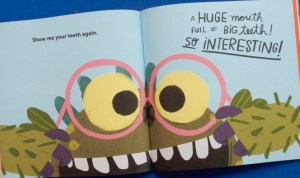
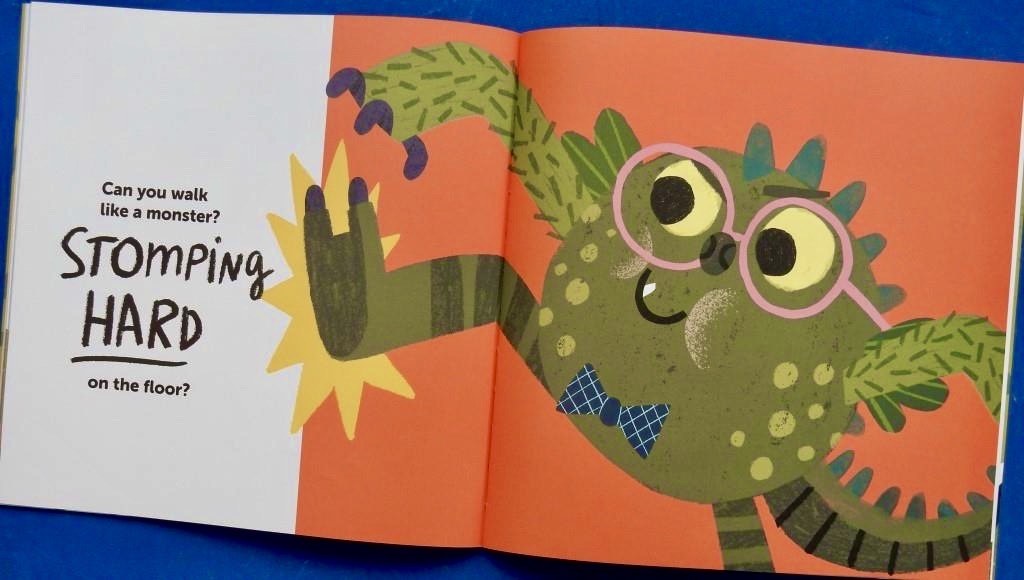
Essentially this is a fun interactive challenge wherein the ‘really bad’, bespectacled, reptilian monster protagonist speaks directly to readers informing us that this beastie wants a monster buddy to participate in doing scary things. Said monster however isn’t making things easy. It has a fair few characteristics on its necessities list for a companion and won’t tolerate anyone that doesn’t come up to the mark. End of story. What! Part way through the book? Or maybe beneath that rough skin, there lies a heart that might just be ready to change.

Little ones will love romping and stomping,

growling and galumphing to prove their worth in front of this demanding monster and they will certainly enjoy the final reveal too.

Guilherme Karsten’s illustrations are great fun as well. His monster practically leaps off the page at times and despite not trying to be, the monstrous character is highly endearing. Add to that the way the presentation of his monologue breaks into appropriately monstrous size print in places offering adult sharers a great opportunity to let rip along with their young audiences, you’re in for a lively story session when you read this one.

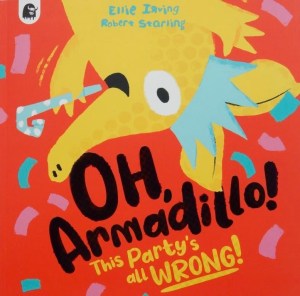
Oh, Armadillo! This Party’s All Wrong!

Oh, Armadillo! This Party’s All Wrong!
Ellie Irving and Robert Starling
Happy Yak

Kind, gentle Armadillo lives deep in the rainforest and longs to make friends: however he has a tendency to get everything wrong. One day he has an idea: perhaps if I throw a party I will make a few friends, after all everyone loves parties. Having made invitations off he goes to deliver them. The first goes to Jaguar who is hoping a large springy sponge cake will be on offer. Back home goes Armadillo, creating so he hopes, the perfect sponge cake.

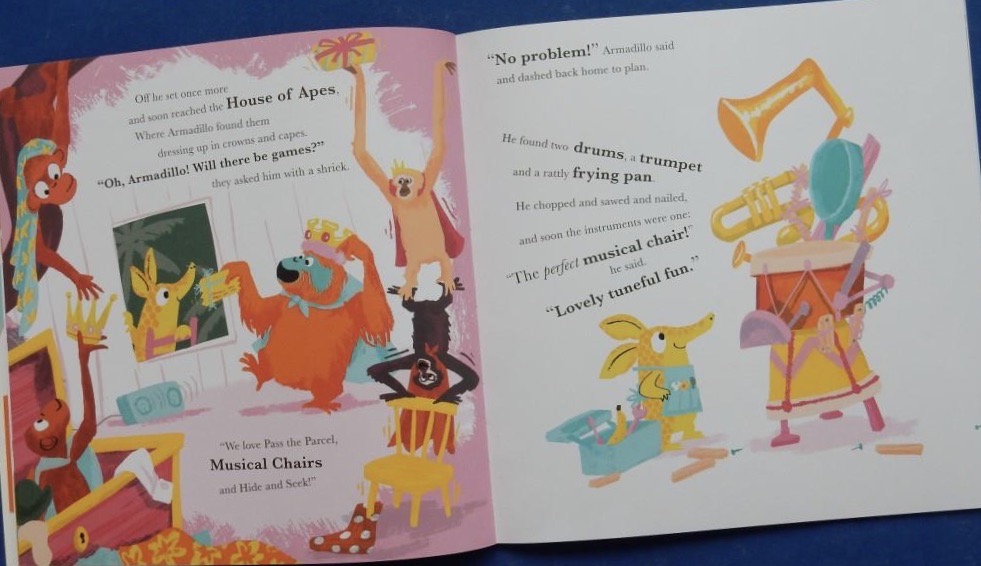
Out he goes again, next stop the Apes: they want games especially musical chairs, pass the parcel and hide and seek. Armadillo rushes home and gets to work …

Then for the balloon loving Lemurs, Armadillo fashions what he hopes is the perfect balloon, sufficiently large for lots of passengers.

On party day our host eagerly awaits his guests and having welcomed them all, announces the fun and games. Seemingly though Armadillo’s ideas are rather different from what the other animals are anticipating: shock horror! He’s devastated by their reactions, so is this the end of his party and hoped-for friendships?

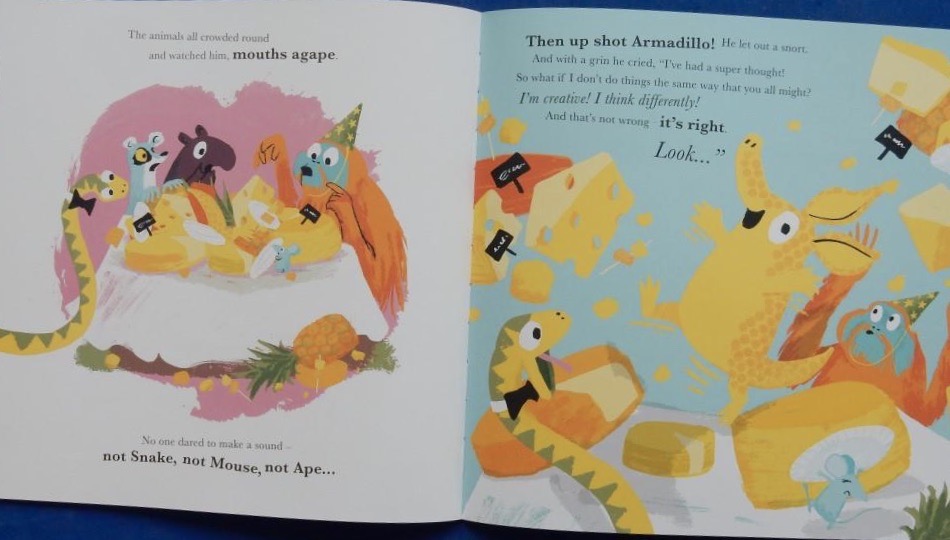
Happily not. An accidental trip that sends him hurtling onto the sponge cake and thence into the air and finally back to earth doesn’t just render the guests speechless but it makes Armadillo see things in a different light; he’s ready to acknowledge and even take pride in his divergent thinking and creativity.

Will he persuade the others to join him in some truly original ways of having fun? You bet … And as for finding friends, certainly, but Armadillo stays true to himself, muddled and different. Hurrah!

A smashing story to show children, especially those who like the protagonist think differently, that rather than a problem, it’s something to celebrate.

Beware the Blue Bagoo

Beware the Blue Bagoo
Karl Newson and Andrea Stegmaier
Happy Yak

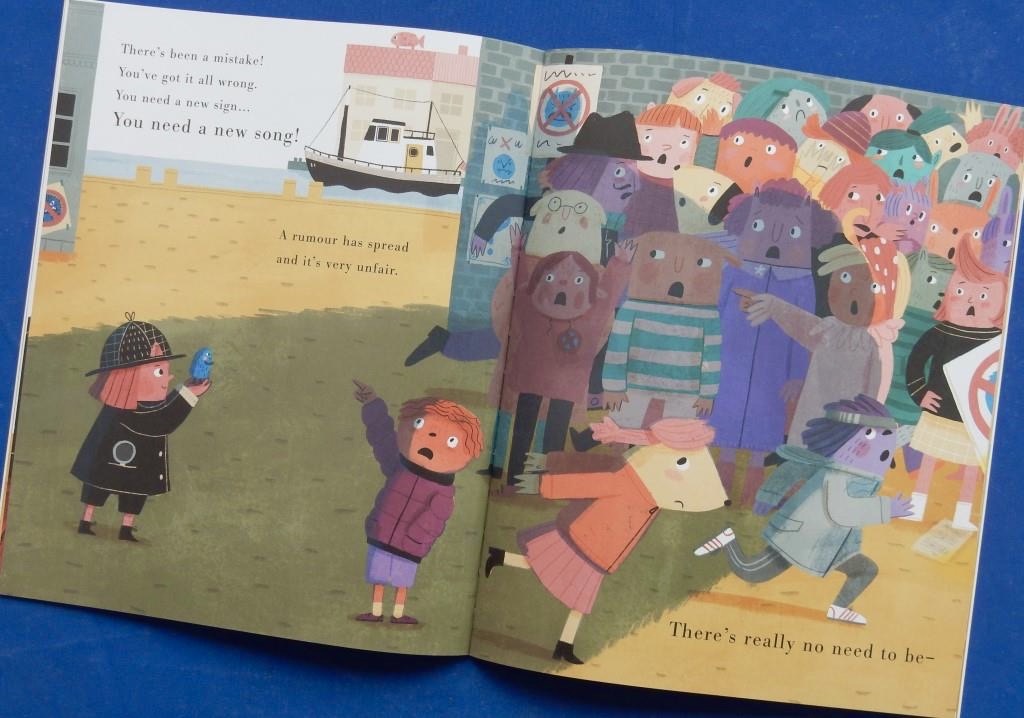
Rumours are rife about the Blue Bagoo: a mean marauding monster to be feared, that is for certain. But wait a minute: has anyone actually met or even seen this beastie that supposedly likes to dine on humans. Now there’s a young detective determined to uncover the truth. She roams the streets finding plenty of people ready to make statements about the monstrosity but what she discovers is something of a surprise.

Can she convince her fearful fellow townsfolk that they’ve got it all wrong? Or is it her that’s wrong after all …

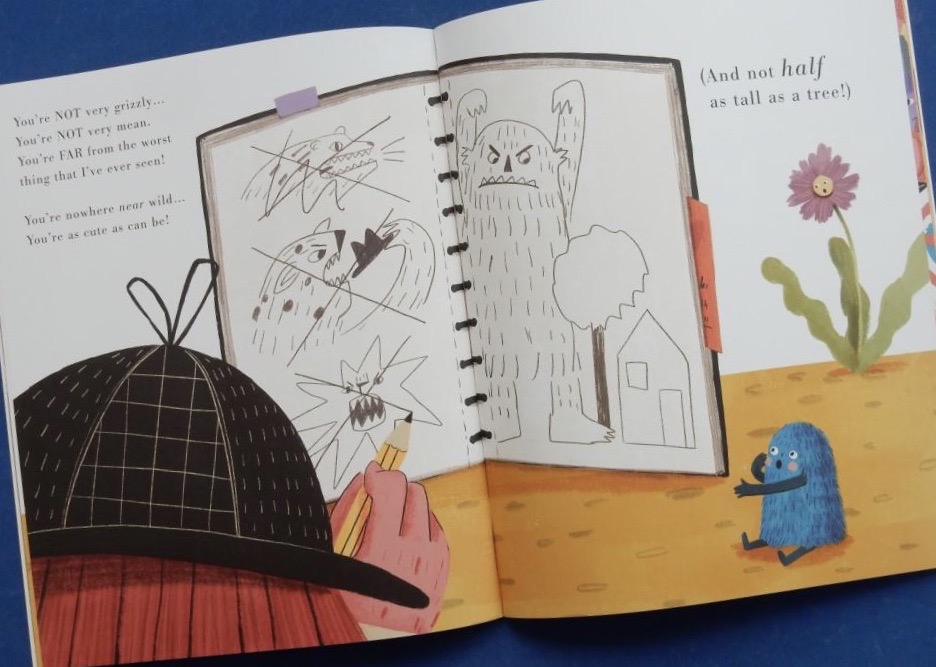
Rumours are nasty things, they spread rapidly causing people to jump to conclusions about all kinds of things rather than finding the truth for themselves. Nobody should make a judgement about another person based on hearsay or appearance. With its cleverly executed twist, Karl’s rhyming account of the escalating rumours in the seaside community of Rumourville, and one person’s resolve to find the truth, contains a crucial message for us all. It’s one that’s particularly pertinent in our troubled times of misinformation. Andrea Stegmaier’s illustrations are terrific fun

and the way she varies the layout of her spreads keeps the visual impact high; there’s a smashing portrait style close up and a fair degree of quirkiness throughout.

Add this to your list of must reads.

Lizzy and the Cloud

Lizzy and the Cloud
The Fan Brothers
Frances Lincoln Children’s Books

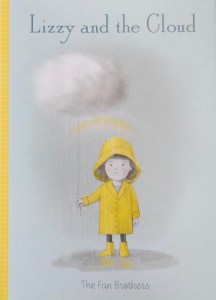
The Fan Brothers set their story in a bygone era when zeppelins hovered above the row of shops and people rode penny farthing cycles.

Every Saturday Lizzy and her parents go walking in the park. Most of the children visiting make straight for the roundabout or the puppet show but not Lizzy: despite clouds being ‘a bit out of fashion’ in those days, she makes for the Cloud Seller. From him she buys not one of the fancy animal clouds on a string, but an ordinary cloud. This she names Milo. (Naming your cloud was the first instruction in the accompanying manual.).

Lizzy takes great care of her cloud, following the instructions, watering it daily, taking it for walks and allowing it to go soaring out of her window while she held the string firmly in her hand.

Over the months, Milo grows … and grows until one day it covers the whole ceiling.

There’s no instruction in the book to help fix the growing problem, then one night there’s a thunderstorm. It’s this that steers her towards a vital realisation: Milo has outgrown her room; she can’t contain him any longer: her cloud needs a bigger sky. Lizzy must do what is best for Milo and so she sets it free.

This beautiful meditation on letting go is brilliantly imagined and by blending the ordinary everyday with the extraordinary, the Fan Brothers deliver a truly original fable. It gently shows children that sometimes one needs to allow somebody (or something) you love to move on and that in time, those raw memories will become something sweet to be cherished always.

The delicate, dreamy illustrations in soft greys and browns with muted colours, are perfect for showing the alternative reality in which the tale unfolds. Whimsical and wonderful.

History’s Biggest Show-Offs

History’s Biggest Show-Offs
Andy Seed, illustrated by Sam Caldwell
Happy Yak

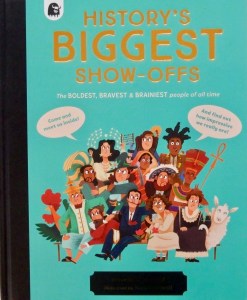
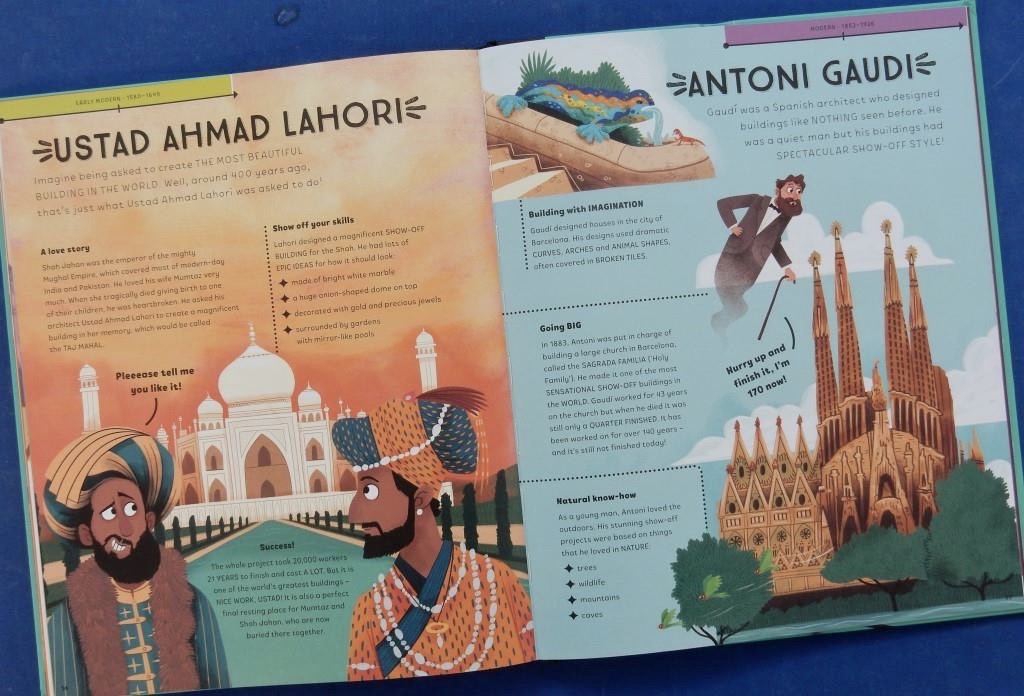
What is it about some people that makes them want to show off about their achievements? Have you ever wondered who the biggest braggers of all time might be? If so then Andy Seed has done the work for you, presenting in his lighthearted style, the flashiest boasters in the history of humankind.

The book is divided into three main parts entitled People in Charge, People Who Think Up Stuff and People Who Create Things; however if readers prefer they can look instead at different time periods: ancient (c.6000 BCE to 500 CE), post-classical (c.500-1500 CE), early modern (c1500 – 1800 CE) and modern (c. 1800 to the present).

We’re introduced to eleven rulers, five of whom were women. These include Hatshepsut, an ancient Egyptian pharaoh, Tarabai who at just twenty five, took over the leadership of the Marathas after the death of her husband and proceeded to show off her military skills to overcome the Mughals; and Christina of Sweden, she who was super-brainy and loved to read. Among the men was Mansu Musa who when on Haj, took 12, 000 servants each with a bag of gold to give away en route to Mecca.

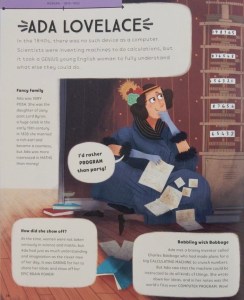
Those with a scientific or technological bent include the first ever computer programmer, Ada Lovelace

and Ynes Mexia, an intrepid plant collector from the early 20th C who discovered 500 new species and had fifty plants named after her. Having studied at Brunel University, I have to mention the ace engineer, Isambard Kingdom Brunel who, with help from his father, built the first ever tunnel beneath a river (The Thames) and who sadly died before his exceedingly costly Clifton Suspension Bridge was finished.
Finally come the creative types: Ustad Ahmad Lahori was asked by Shah Jahan to create a building in memory of his beloved wife Mumtaz and that’s how the magnificent Taj Mahal came to be. Another show-off architect Antoni Gaudi is famous for Barcelona’s still unfinished Sagrada Familia.

There’s a wealth of bling too, as Andy Seed’s humorous writing brings all these and more back to life and he’s even included some quizzes to ramp up the fun. Talking of fun, Sam Caldwell’s zany illustrations certainly add more of that in abundance: even the timeline will make readers giggle.

When the Storks Came Home

When the Storks Came Home
Isabella Tree and Alexandra Finkeldey
Ivy Kids

This is a charming, fictionalized retelling of the successful reintroduction of the white stork at the Knepp Estate in West Sussex, a UK native bird that has been brought back from extinction.

Herein we meet eight year old Beanie, a bird lover, who when she has a new baby brother, is curious to see on some of the baby cards, a bird that she’s never seen before. This bird is the white stork and encouraged by her mother, Beanie asks her friend Andy who works at the nature reserve to tell her about the storks. He tells her about their unfortunate disappearance from the UK on account of them being hunted for food.

Upset and angry, Beanie becomes passionate about encouraging the White Storks back. She does some research, makes a discovery and then with the dedicated help of lots of the village people who help with fundraising,

she eventually succeeds in her mission to provide a new home for some storks from Poland.

That’s not quite the end of this lovely story, but it does end happily and shows how one determined girl can really make a difference. Alexandra Finkeldey’s colour pencil artwork is superb and helps to highlight Beanie’s love of and engagement with the natural world. The book ends with a factual account of the White Stork Project.

Our Tower

Our Tower
Joesph Coelho and Richard Johnson
Frances Lincoln Children’s Books

This is Joseph Coelho’s first book as Children’s Laureate and what a truly magical one it is. Inspired by Joseph’s childhood growing up with his sister in a tower block on an estate in Roehampton, close to Richmond Park it is deeply personal and exquisitely told. The story – a modern fable – follows three children who live in a high-rise block, ‘Boring, hard and grey.’ but with a view to greenness beyond the drab grey, as they venture away from the suburban streets in search of a special tree with big leafy brows.

Having found what they were seeking,

the children tumble through a gap in its trunk into a magical world deep down where all kinds of creatures lurk.

There too on a throne sits an old tree-grown green man with bushy brows and he holds out something to the three. It’s a circular stone with a hole in the middle; this he gives the children and it’s as though he’s given them a new lens through which to view the world. For when they peer through the hole ‘the world goes upside-a-diddle’ and they suddenly see their own tower in a completely new light. It’s full of the love and laughter that they’d really been seeking all along: a place where everyday magic can happen once you know how to look.

Looking is assuredly what the artist Richard Johnson has done for his powerfully atmospheric, evocative illustrations. It’s so brilliant how his colour palette changes as the children move between their mundane urban home environment, the fantasy world and the natural one; this adds to the feeling of poetry in motion in Jospeh’s lyrical words. Richard includes details of architecture and sculpture (a version of Lynn Chadwick’s The Watchers) that make several links for this reviewer as well as the author.

Full of hope and enchantment, this timely story is a glorious fusion of words and pictures that blends the mundane and the dark with the magical and the triumphant, the urban and the countryside: nature and magic are everywhere if you know how to look. Unmissable this.

This Book Will Save the Planet

This Book Will Save the Planet
Dany Sigwalt, illustrated by Aurélia Durand
Frances Lincoln Children’s Books

As I sit reading my copy of this book, (it’s part of the Empower the Future series), much of the UK swelters in temperatures of 40 degrees C, wild fires are raging in various parts of the world and people are dying as a result of the heat: it’s clear our planet is in crisis. So Dany Sigwalt’s thought-provoking look at climate change couldn’t be more timely.

Herein she shows how it’s the marginalised communities across the world over that are most affected, stating that it’s those of us among the more privileged who need to use whatever privileges we have to help less fortunate and hence, less powerful people.

All is not quite lost. There is still just enough time for every single one of us to make a difference; by pulling together – mutual support and aid is paramount – and by using Dany’s framework we can all further the cause of climate justice. In order for this to succeed, people must come before profit.
Our precious planet will be protected if all its inhabitants are protected; the people will be protected if the planet is protected.

The vibrant illustrations by Aurélia Durand add to the impact of this hugely pertinent, powerfully presented book. Read it, make sure you do the activities at the end of each chapter and act – NOW! Make that crucial difference.

Valentine’s Guest House / We Are the Shapes

Valentine’s Guest House
Sam Sharland
Child’s Play

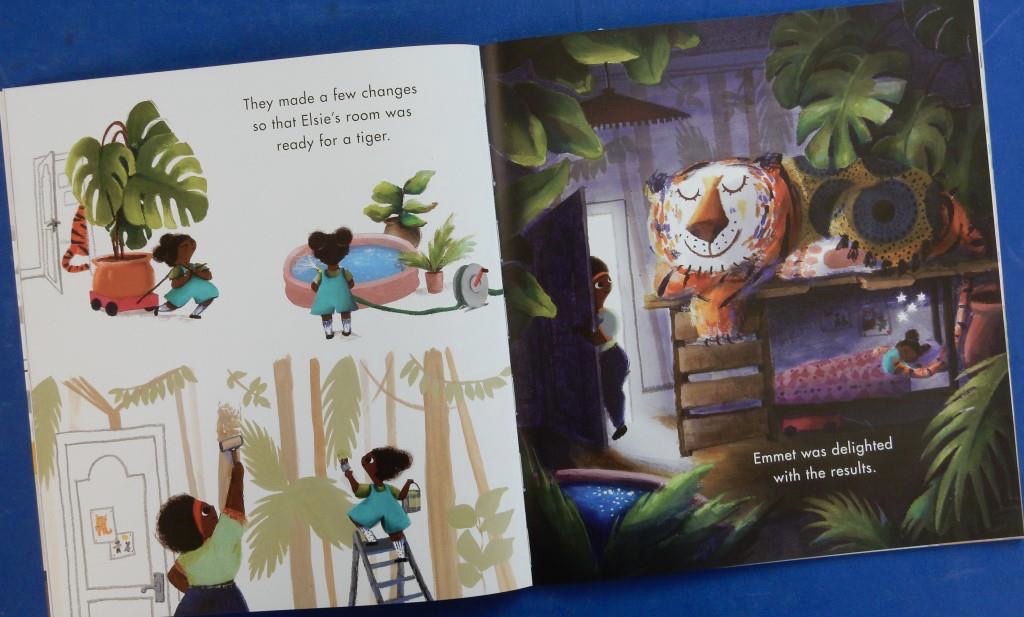
With its first rate service, Valentine’s guest house is a popular place to stay. When the owner’s daughter opens a storeroom and discovers a large tiger with a big smile inside asking for accommodation she is astonished. However despite her mum Valentine saying they don’t have a spare room, Elsie is determined to help. She offers to share her room with Emmet and she and her mum rearrange things in preparation for the new guest. 

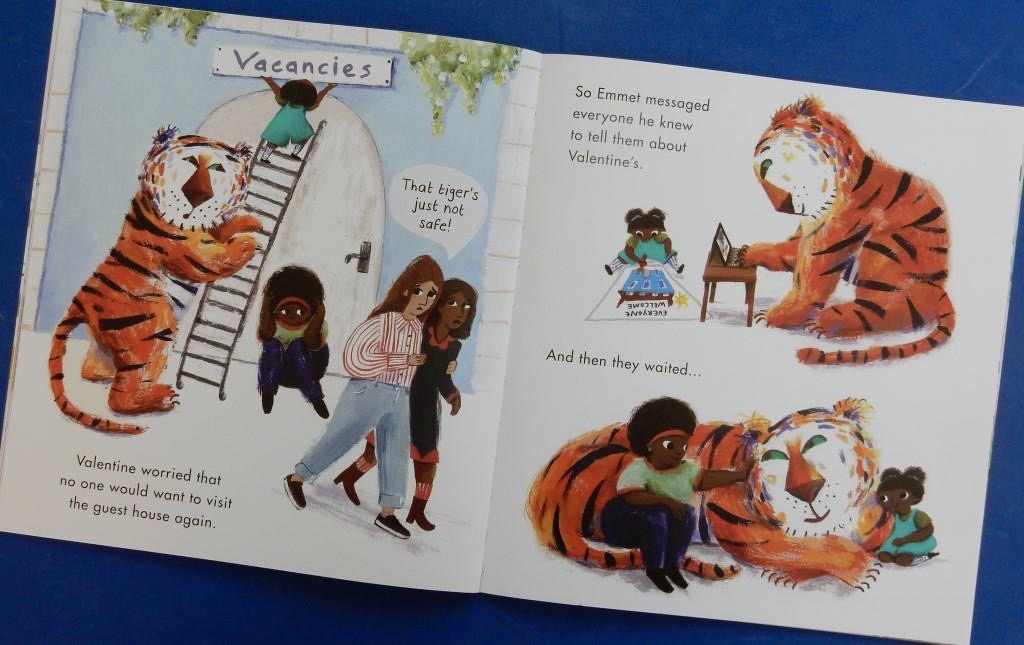
Sadly however, the other guests are far less accommodating and leave as fast as they can.

As his hosts put up a ‘Vacancies’ sign, a grateful Emmet gets busy messaging all his friends and acquaintances about Valentine’s 

and after a long wait, the guest house is once again thriving, albeit with a different clientele. Then follow some imaginative modifications to the building: a lift is installed, the door is enlarged when a huge guest arrives, a rooftop hole provides a room with a wonderful view, there’s a cool spot for a pair that like to chill and underground spaces are created for those accustomed to a subterranean lifestyle.

Harmonious living is the way to go as is shown in Sam Sharland’s gently humorous scenes of the guests’ comings and goings and further comings; but there’s one guest who isn’t going anywhere: you can guess which one that is.

A delightful picture book debut with vital messages about acceptance, inclusivity and empowerment.

We Are the Shapes
Kevin Jenner
Happy Yak

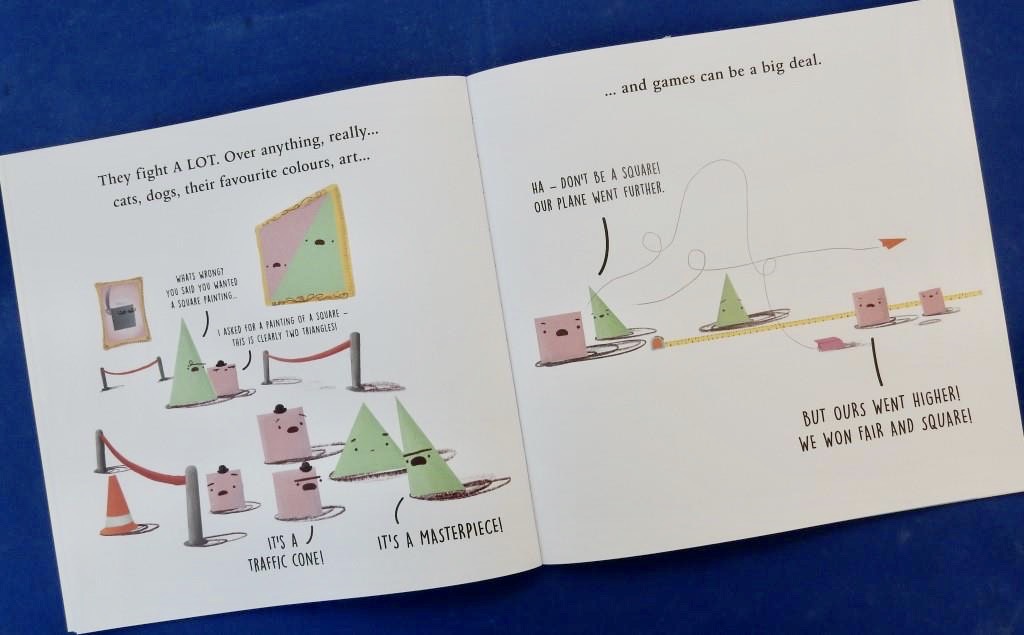
There are the squares – honest, supportive even, and reliable, dislikers of difference; there are also the triangles – creative, edgy, odd and happy to be different. Triangles consider squares boring.
These two groups do not get on at all, in fact they have diametrically opposing views on everything and are positively hostile towards one another. 

Then there are circles: they know the issues existing between squares and triangles but believe that if they were prepared to ‘roll with their differences’, the two parties could get along.

Can they rectify things between these opposing factions? It’s worth a try: consider this equation – triangles + squares = rocket to the moon. So maybe … but then just when things seemed to be going well, a row breaks out. 

Is circle able to turn this situation around? Perhaps with a bit of creative thinking and a new and tasty notion.

How much better it is to accept and celebrate difference. Learning to get along with those who seem – superficially at least – to be different from ourselves is an important life lesson all young children need to learn, (though perhaps it’s their parents for whom difference is an issue not the youngsters themselves). So it’s appropriate to share this easy to relate to book with its satisfying solution at home as well as in the classroom. With its easy-to-read text, it’s also a book that KS1 readers might well be able to enjoy reading for themselves.

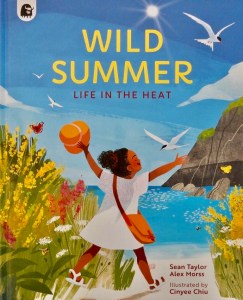
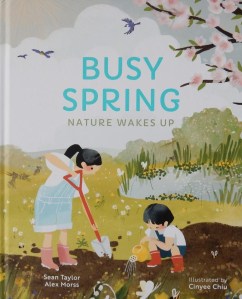
Wild Summer: Life in the Heat

Wild Summer: Life in the Heat
Sean Taylor & Alex Morss, illustrated by Cinyee Chiu
Happy Yak

Like many of us, the little girl character in this narrative non-fiction book, is eagerly anticipating the summer. It’s coming, her nature-loving Grandpa tells her, mentioning some of the signs of seasonal change. He also says that close to his new abode is something exciting he wants to show his granddaughter, who acts as narrator.

Grandpa is right: summer with its blue skies and warmer days, does come. The girl reminds him of the thing he mentioned and together they pack a bag and set out along the track.

As they walk the girl notices the abundance of plants and minibeasts, wondering aloud if they want summer to last forever. Grandpa doesn’t supply an immediate answer but responds by suggesting they continue looking and then decide, although he does mention water as being a factor to consider.
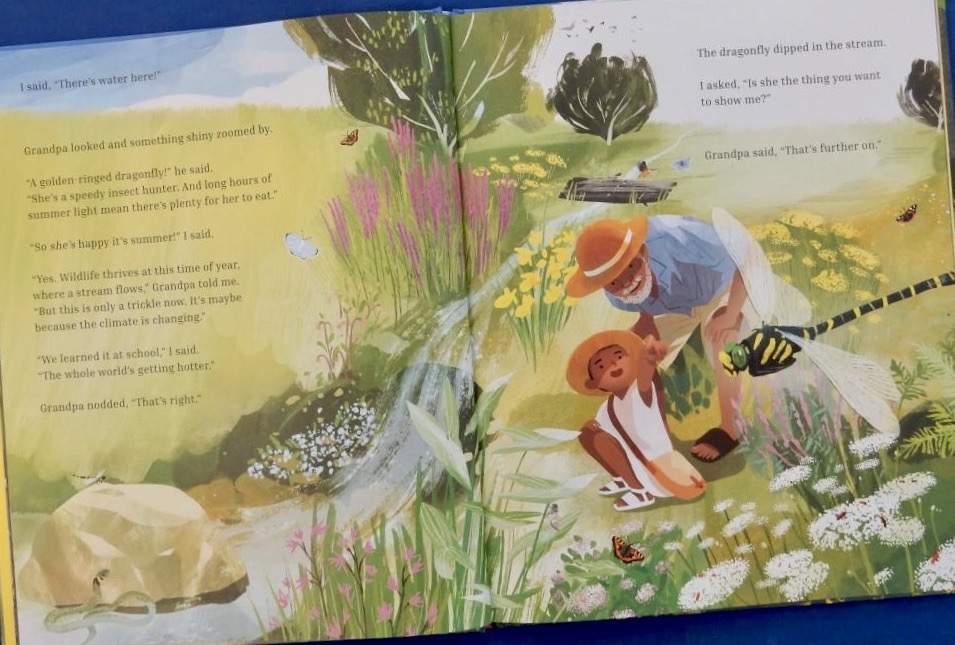
Stopping by a stream Grandpa points out a golden-ringed dragonfly and tells his granddaughter a little about the insect. He also points out the mere trickle of water suggesting this could be a result of climate change, a topic the girl has learned about in school.

Further on in the increasing heat, the child expresses a wish to find some shade, and Grandpa likens her to many of the wild flora and fauna, explaining how some respond. They reach a place with trees blackened due to a fire the previous summer, talking of the pros and cons of such events.

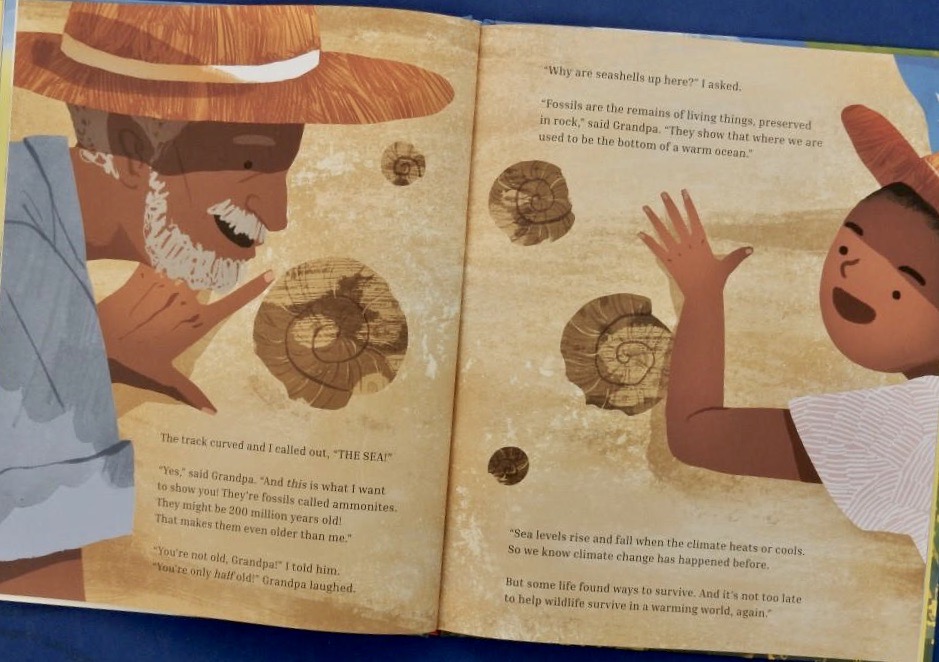
Eventually they reach a spot at the edge of the seashore where they find what they’d come for.

Then they continue walking, on the beach now; Grandpa draws attention to some summer-loving Arctic terns, before with the ‘summer forever’ question duly answered, they cool off in the sea.

A companionable walk, and for the little girl, a wonderful learning journey with her Grandpa who educates her in the best possible way, never forcing, merely gently guiding.

Straightforward back-matter comprises an explanatory spread explaining “What is summer?, another giving facts relating to ways some land animals have adapted to better cope with heat. There’s one looking at the evolutionary changes of plants to cope with hot, dry summers and the final one looks at ocean life and how climate change is taking effect while the last page suggests some ways to get involved in wildlife protection.

With its wealth of ecological information and bright, detailed illustrations bursting with wonderful plants and animals to explore and enjoy. this is a terrific book to share either before or after a walk in nature, whether or not it ends on the beach. There’s lots to inspire awe and wonder here.

A New Friend

A New Friend
Lucy Menzies and Maddy Vian
Frances Lincoln Children’s Books

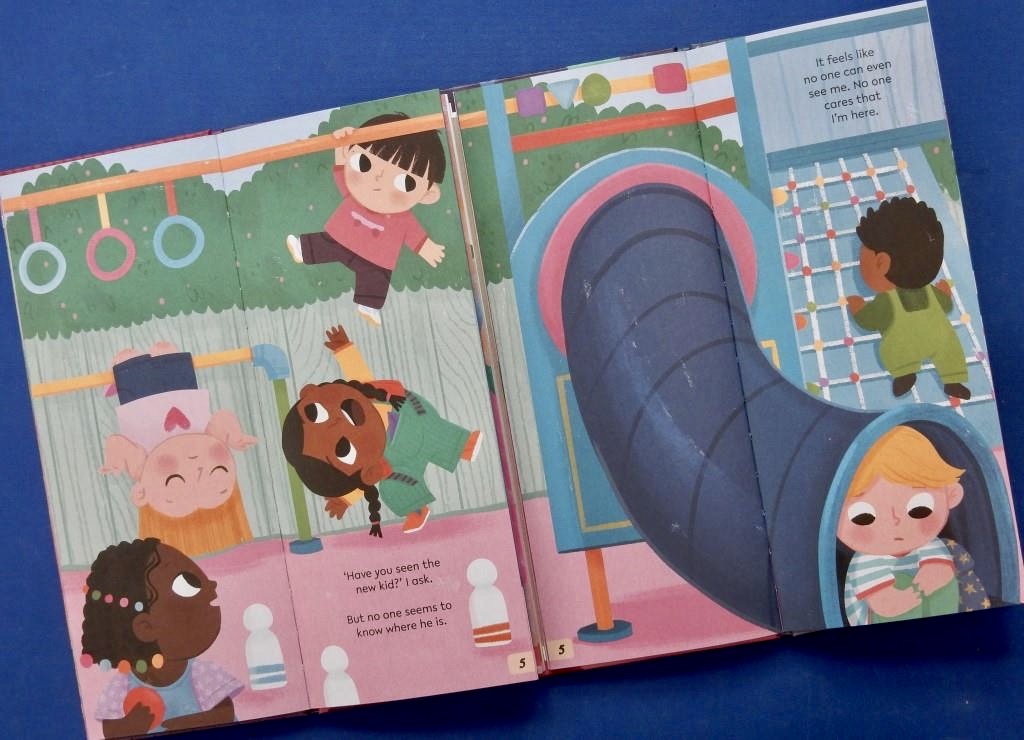
This truly heartwarming story is told from the perspectives of two children, Mae and Joe and it’s a terrific demonstration of there being two sides to every story. On the left side Mae introduces herself telling readers of her excitement about there being a new arrival in town for whom she has written a special letter to give him at school. At playtime though, she’s unable to find him anywhere.

Joe, the new boy tells his story on the right side explaining that he and his dad have just moved to a new home and now everything feels strangely different. He’s eager to make new friends like his dad says but Joe feels invisible in the playground, wishing he could be back playing space adventures with his old friends. Then suddenly …

Could this be the start of an exciting friendship, and further space adventures perhaps …

A smashing, cleverly conceived book that will help young children understand the importance of empathy and how sometimes being in an unsettling, worrying situation might lead to misunderstandings or misconstrual on a newcomer’s part. Both children however show courage: Mae for her persistence and determination to show kindness, Joe for facing up to his fears. Close perusal of Maddy Vian’s bright, inclusive illustrations will reveal lots of galactic theme details such as the sticker on Mae’s letter, toy rockets and Joe’s backpack.

The Sea Below My Toes

The Sea Below My Toes
Charlotte Guillain and Jo Empson
QED

Part of the Look Closer series and following on from The Ground Beneath My Feet and others, and also presented concertina style, extending to 2.5 metres, author Charlotte Guillain and illustrator, Jo Empson, take readers on an investigation into what goes on beneath the sea.

With wet suits on, our journey moves down through the various zones beginning near the surface in the Sunlight Zone. Here there’s a forest of kelp, an algae that is the food source and safe habitat for lots of different creatures. Among the kelp sea otters can be found swimming, diving, and perhaps using rocks to break apart the shells of animals it intends eating. Shoals of mackerel too, move through the water at the surface, as do Stellar sea lions and ghostly moon jellyfish. Then a little lower the surface-breathing orca might be found, hunting for food.

The next layer is the Twilight Zone and it’s there that the ocean begins getting darker and more shadowy. There all manner of strange and wonderful marine creatures can be seen, perhaps even an almost transparent glass octopus or a barreleye fish with its see-through head. Some of the creatures at this level are bioluminescent including the lanternfish and one kind – the swell sharks – emit a green light, possibly to attract a mate. One of the oldest animals – the vampire squid – has been around deep in the ocean for about 300 million years. Amazing! You’ll likely notice tiny particles drifting downwards from above : called marine snow this shower comprises poo and decaying flora and fauna from the upper layers, and is food for many creatures.

At a depth of about one kilometre the Midnight Zone begins; there the water is almost freezing and sunlight cannot penetrate. This level is home to some weird creatures including gulper eels, about 200 species of anglerfish, and chimera (ratfish). Beware of atolla jellyfish with their long trailing tentacles that might sting should you get too close. Go down further and there is the Abysmal Zone: very few fish live so deep due to freezing temperatures and enormous water pressure from above, but you might come across snailfish or the Kaup’s arrow tooth eel and there are tube worms.

There too is melted rock – magma – that sends bubbles out through hypothermal vents on the seabed: it’s there that the tube worms find the bacteria they feed on. it’s also where underwater volcanoes form from hardened magma.

In addition to the wealth of animals and plants, we also find out about the technology used under the sea, from scuba breathing equipment to oil pipelines and deep sea submarines; and come to know about the impact humans have had on under the sea.

With its informative text, this is a book that readers will want to revisit many times as they continue to be fascinated and awed by this incredible subaquatic world. A world that Jo Empson portrays so superbly in her richly hued painted, stencilled, and collaged illustrations that are teeming with life.
Definitely one for home and primary classroom collections.

A Quokka For the Queen

A Quokka For the Queen
Huw Lewis Jones and Fred Blunt
Happy Yak

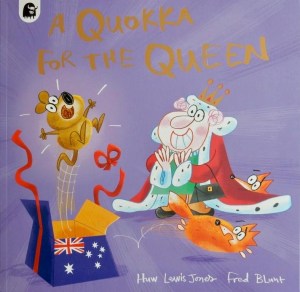
Having read this madcap rhyming royal romp it’s difficult to decide who had more fun, author Huw Lewis Jones creating his alliterative animal gifts – 40+ possibilities, though only 21 in her majesty’s summing up list, or Fred Blunt illustrating same in his splendiferous playful pictures.

It’s her royal highness’s birthday and she’s already received a vast number of presents when one more is duly delivered, having come all the way from Australia. Imagine her surprise when from the parcel leaps a Quokka, a creature unfamiliar to her highness; but she quickly takes a shine to the animal, deciding that this particular birthday will be different. She and her new furry friend will be the givers of presents.

Now being who she is, the Queen has a lot of people whom she deems must be the receivers of their gifts, from the butler and the baker to soldiers and sailors, and from a poet to the prime minister (really?).

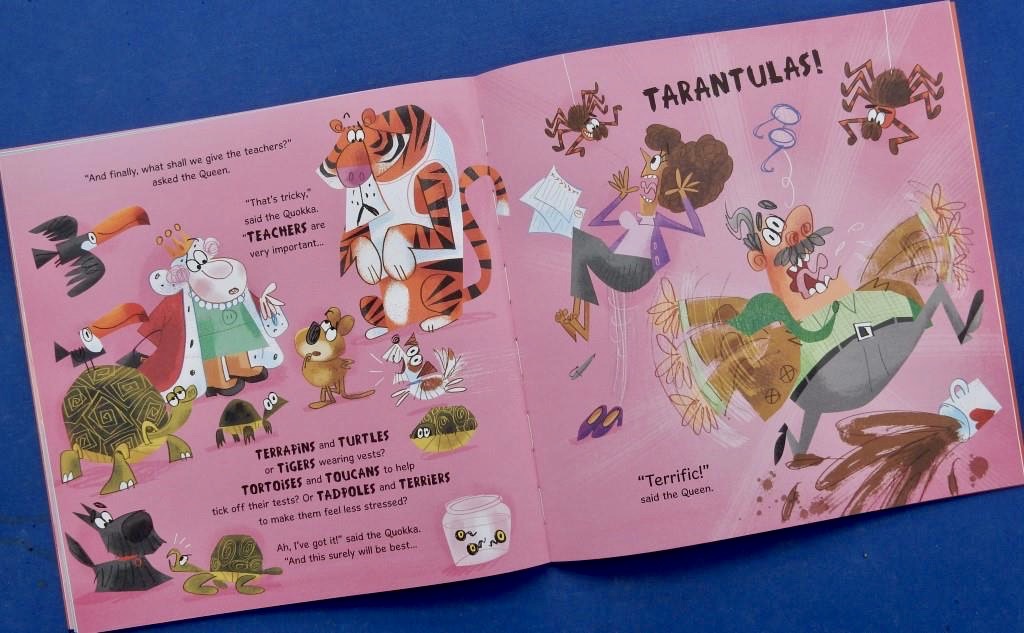
Fortunately for her, the Quokka is a superb suggester of suitable animals, including tarantulas for all those important teachers – hmm!

Mightily impressed by the efforts of the Quokka, she then realises that she’s forgotten about asking her helpful friend to choose something for itself. I wonder what the Quokka’s choice will be …

The perfect picture book to share in celebration of the Queen’s Platinum Jubilee and at any time thereafter.

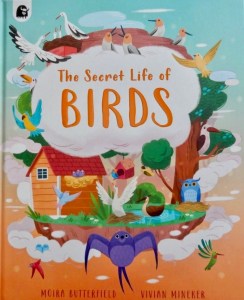
The Secret Life of Birds

The Secret Life of Birds
Moira Butterfield and Vivian Mineker
Happy Yak

Following The Secret Life of Trees and The Secret Life of Bees, the same author and illustrator bring us a book on the world of birds. Readers are in the hands or rather wings, of Speedy the swift, that acts as guide and narrator on this varied glimpse into the world of our feathered friends.

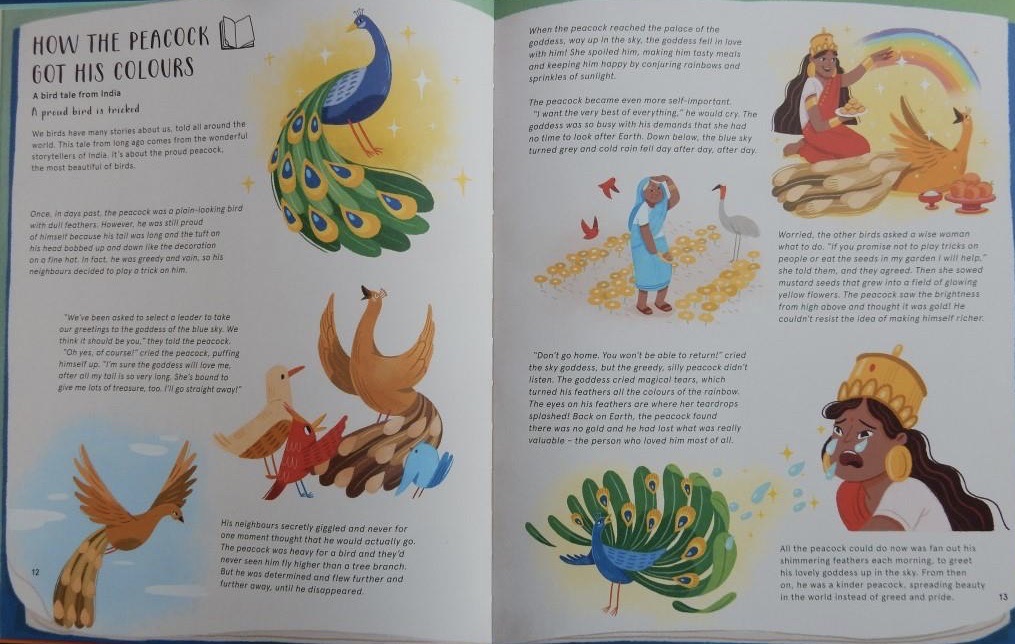
Did you know – well so Speedy says – swift chicks do press-ups on their wingtips to make themselves stronger. This is just one of the cool facts Moira includes herein, along with some stories and Vivian Mineker’s splendid illustrations that really help bring both information and folk tales to life. One of the latter comes from India and is called How the Peacock got his Colours. We read how one peacock, full of self-importance despite his plain, dull feathers was tricked into paying a visit to the sky goddess and in so doing acquired not only his stunning tail plumage, but also some kindness and humility.

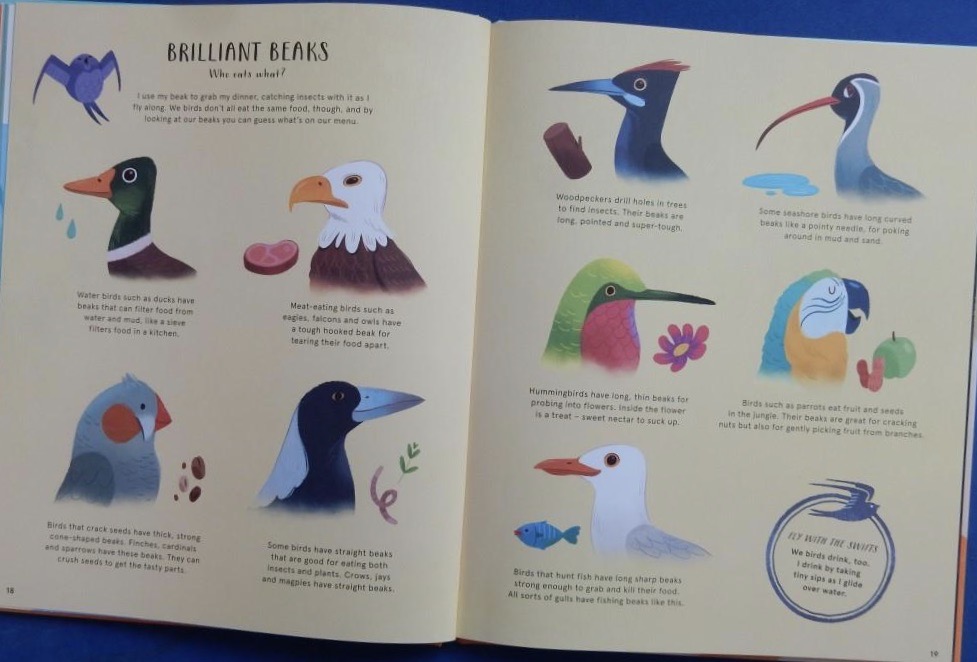
There’s information relating to avian anatomy, growth and development, feathers and their functions, survival, a close up on beaks;

we meet some nocturnal hunters, find out about bird calls and bird song, visit a variety of nests – swifts return to the same one each year repairing it if necessary, look at the stages in the development of a chick from egg to fledgling, there’s a spread on journeys on the wing, are introduced to some record breakers and discover sadly, that all over the world there are endangered birds and finally are some tips on how to help the birds that live close to our homes.

There’s something for everybody here; it’s a good introduction to the topic and a book to add to family shelves and primary classroom collections.

Smile Out Loud / Marshmallow Clouds

Smile Out Loud
Joseph Coelho and Daniel Gray-Barnett
Wide Eyed Editions

I’m sure that like me, many others have in the past couple of years of mandatory mask wearing in so many places, wondered how to show somebody that we are giving them a smile. Perhaps if I’d had a copy of Smile Out Loud then I could have performed one of Joseph’s 25 ‘happy poems’ poems in a shop or elsewhere. I wonder what the reaction would have been to The Dinosaur way of walking funny, which is to Pull your trousers up / as far as they will go, / stick your bottom out / and walk like a chicken / … But instead of clucking – / … let yourself roar! / Like a dinosaur, / … a roar dinosaur! Then there’s The Ballerina way that involves a turn, a spin, a leap followed by Plié! Plié! Petit / Jeté / flutter and glide / the day away.

I’m always plugging the power of the imagination so I really like Imagination Running Free where the instructions are to tell the audience for a read aloud of this poem to close their eyes and imagine the scenarios presented by Imagine your legs / are two conker trees! Imagination running free. // Imagine your knees / are stripy like bees! / Imagination running free. // Imagine you’re running with / toes wet / legs wooden / knees stripy! I love too how Daniel Gray-Barnett has clearly let his imagination run free for this accompanying illustration. 

There are poems to read and act out in a group, one or two to inspire readers to create poems of their own, a funny one that uses spoonerisms and lots more besides. Certainly you should find something to help cheer up not only yourself but those who hear the tongue-twisters, riddles and giggle inducers. So, get a copy for home or school and spread a little sunshine thanks to Joseph’s words and Daniel’s lively, inclusive illustrations.

Marshmallow Clouds
Ted Kooser and Connie Wanek, illustrated by Richard Jones
Walker Books

Subtitled ‘Poems Inspired by Nature’, this is a dreamlike, often pensive collection of thirty poems, each a beautiful word picture placed under one of four elemental section headings: Fire, Water, Air, Earth and all intended, as Kooser says in his afterword, to “encourage you to run with your own imagination, to enjoy what you come up with.”

Being a tree person I was immediately drawn to Trees, the final four lines of which are:
They don’t ask for much, a good rain now and then,
and what they like most are the sweet smells
of the others, and the warm touch of the light,
and to join the soft singing that goes on and on
.
Beautiful words and equally beautiful art by Richard Jones, whose illustration here reminded me so much of one of the places where I pause to sit on my walk and look up at the surrounding understory.

Tadpole too is a poem I found great delight in reading, having recently watched a pool full /of swimming tadpoles, / the liveliest of all punctuation.

No matter where you open the book though, you will find something that’s a joy to read aloud again, and again; something thoughtful and thought-provoking, something likely to make you look at things around you differently. What more can one ask?

A little bit of Respect

A Little Bit of Respect
Claire Alexander
Happy Yak

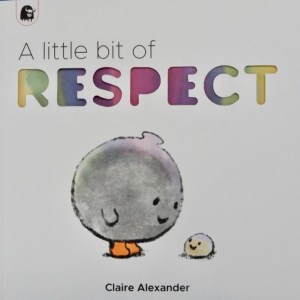
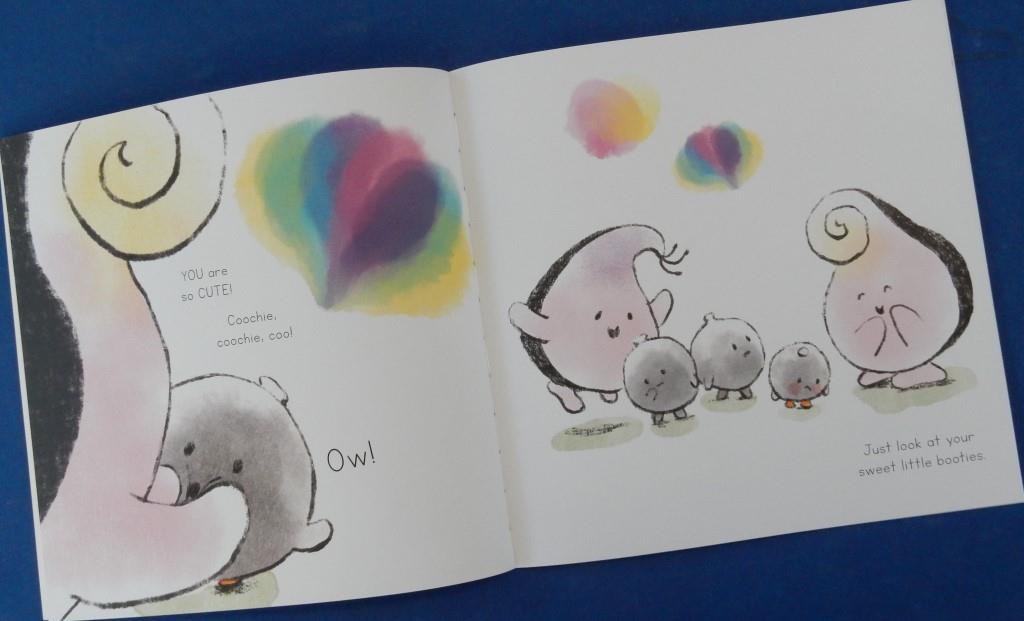
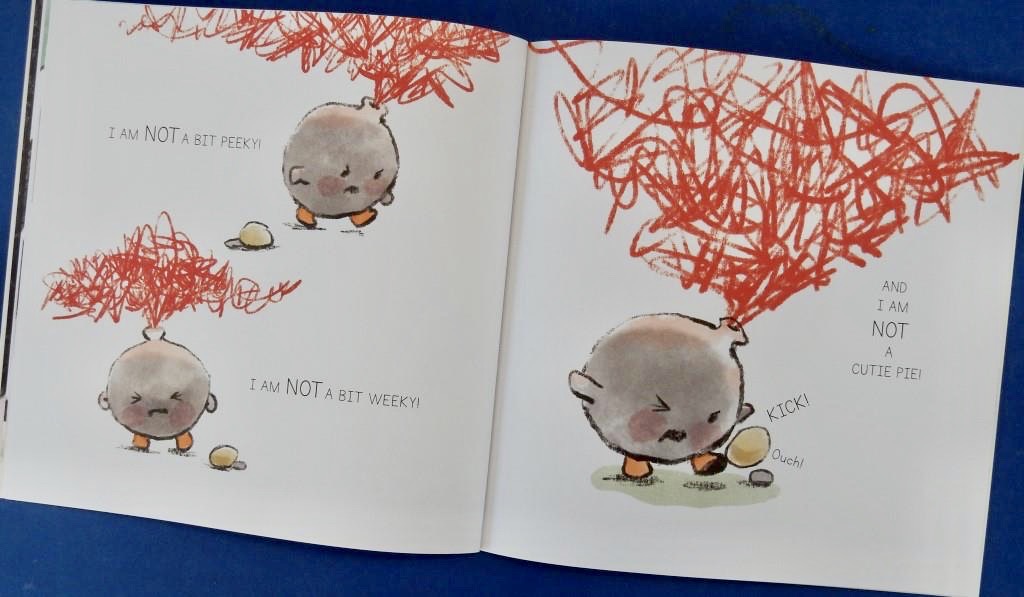
In this episode the Ploofers land their rainbow cloud on an island they’ve not visited before and start getting to know its residents. Initially things go well and all is amiable between visitors and residents but then one of the latter singles out Little One making him the centre of attention, which he finds very upsetting and demeaning.

Being called ‘cutie pie’ and told he looks ‘a bit peeky, weeky’ is the last straw; feeling frustrated and insignificant, Little One’s temper gets the better of him.

But then thankfully, he finds support and empowerment from an unexpected source with whom he shares how he’s feeling.

“Well, I don’t like it when you call me cute. It makes me feel small. I may be small but I still need a little bit of respect,” he tells the islander who caused his discomfiture. What will be the outcome of his new found assertiveness? Having stood up for himself, will Little One receive an apology?

With a surprise just before the end, Claire Alexander’s heartwarming tale of self-respect, respecting others and finding a friend to share your problem with, offers another important life lesson to young children, as well as lots of starting points for Foundation Stage circle-time discussion. I love the cutaway rainbow lettering on the front cover and the way Claire captures the feelings of Little One throughout.

Flooded

Flooded
Mariajo Ilustrajo
Frances Lincoln Children’s Books (First Editions)

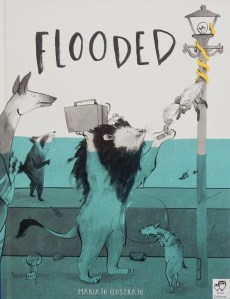
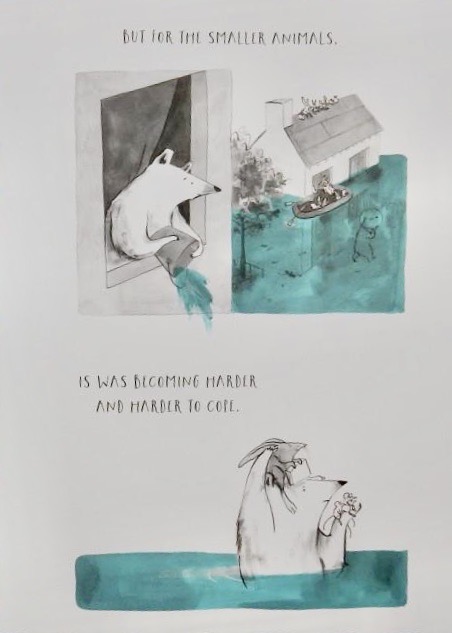
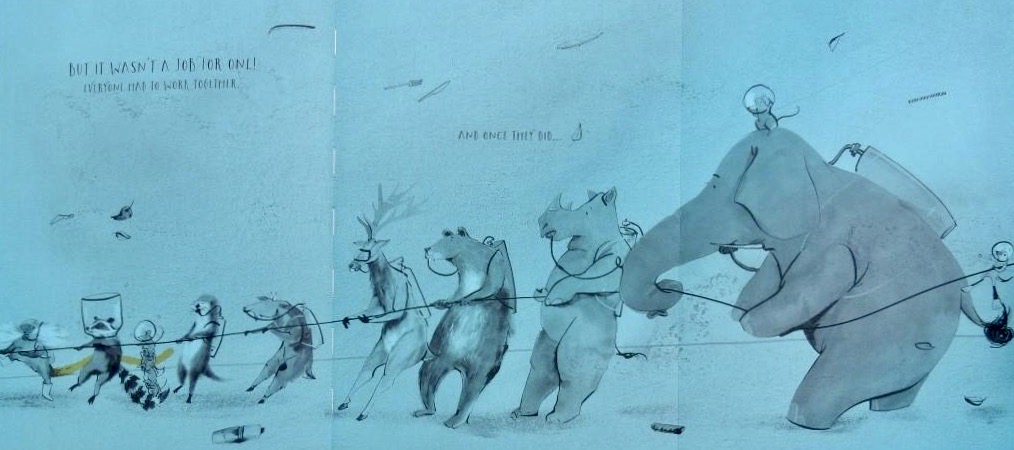
Full of water, wit and a little one’s bit of wisdom is this debut picture book from Mariajo Ilustrajo, about a city inhabited solely by animals. It happens one summer beginning on a day just like all the others except that the entire place is rather wet. Initially all the residents except one are happy to use the excess of water as a chance to splash about in wellies and carry on with life as normal, merely making it a topic of conversation and a source of fun.

As the water level keeps on rising there remains a lone voice that shows increasing concern as most others become further involved in their own issues, until that is, some of the smaller animals start having problems.

Eventually a small volume of water has become an enormous problem, impossible for anyone to ignore; but is there anybody that knows what should be done? Happily yes and at last that little creature is able to voice a simple (and we readers would think, obvious), solution. With the entire population working as a team …

the plug is extracted and the drowning of the city is finally halted. Yes, new problems arise and have to be dealt with, but happily now community collaboration rules and solves …

This tale of pulling together in times of need is wonderfully illustrated by an exciting newcomer using ink and graphite and digitally coloured. The text is kept to a minimum allowing the wealth of funny details in each scene to do much of the storytelling.

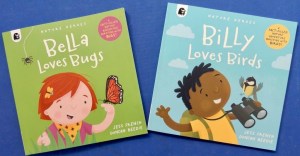
Bella Loves Bugs / Billy Loves Birds

Bella Loves Bugs
Billy Loves Birds

Jess French and Duncan Beedie
Happy Yak

These two narrative non-fiction picture books are written by zoologist, naturalist and vet, Jess French whose passion for wildlife shines through in both Nature Heroes titles wherein she uses the titular children as narrators.

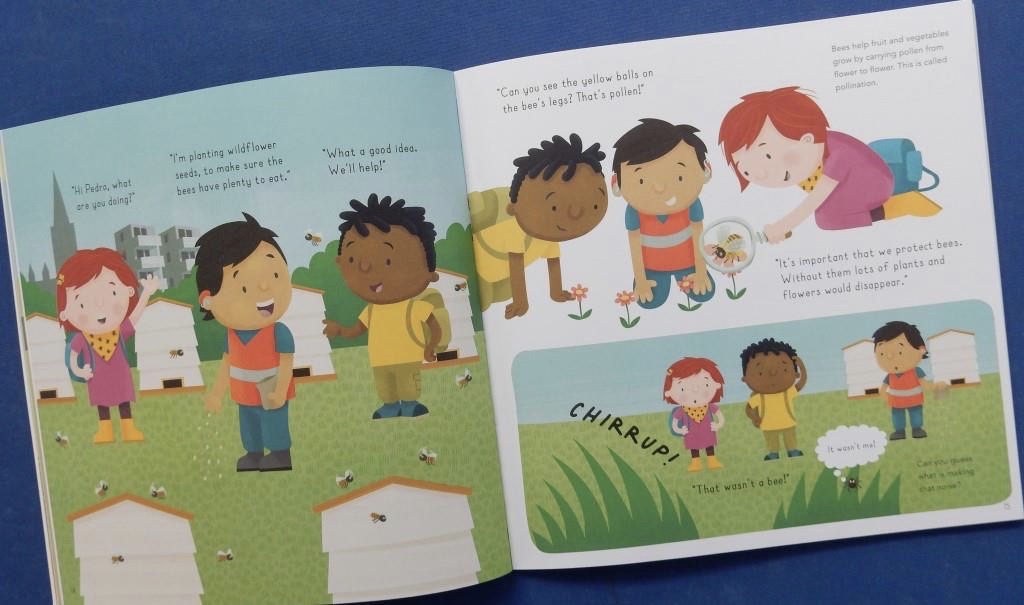
Bella is an aspiring entomologist who shares a day in her life with readers and it’s certainly a very exciting one with lots of discoveries. Her first task is to collect garlic mustard to feed her caterpillars and then with a few useful bug hunting items she sets out to look for minibeasts and to meet up with some of her fellow nature hero friends.
By following Bella’s interactions with her friends and the additional facts this becomes a learning journey for readers who encounter social insects – ants in particular – a honey bee collecting nectar and others around their hives,

several jumping bugs and then a “fluttery butterfly” (why a non-native monarch?). Their next stop is at a pond, absolutely alive with water creatures on and below the surface; time for some pond-dipping (with an adult close by).
As they go into the forest Bella makes several discoveries – woodlice, a wolf spider with her eggs, and inside her trap she finds a stag beetle and a stag beetle grub. Down comes the rain bringing out the slugs and snails, and then it’s time to head home where something else exciting happens inside her vivarium.
Look out for the spider that makes occasional comments along the way.

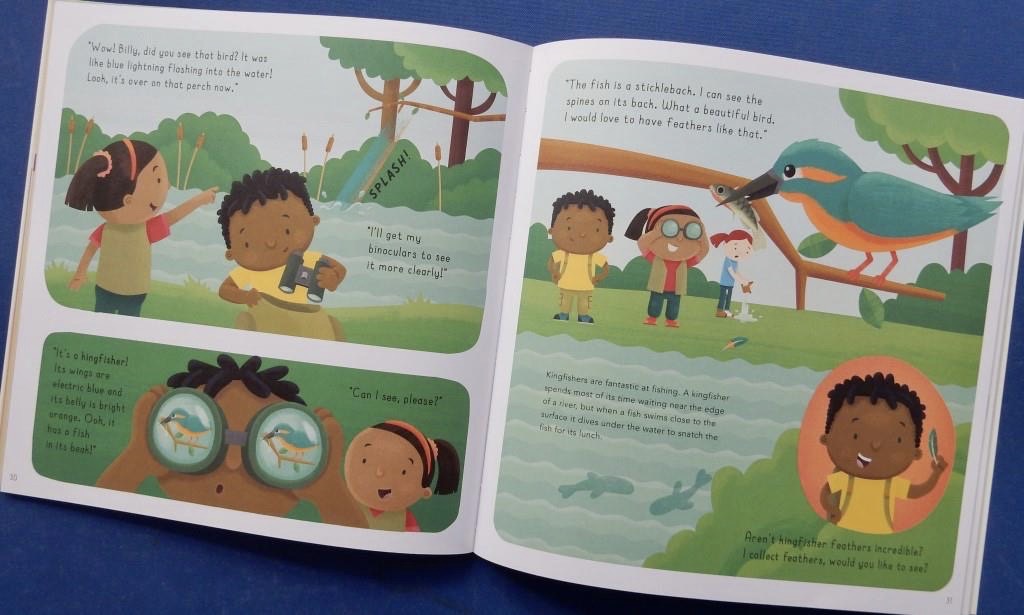
Bird loving Billy (in the company of a talking tit) spends a day at forest school, sharing his observations with readers and his friends about the wealth of birds they encounter. There’s a woodpecker, a dunnock nest with several eggs including one of a different colour and there’s great excitement when Billy spies a kingfisher and comes across a beautiful feather to add to his collection.

Eventually he reaches the tit nest box located high in a tree where there are little chicks just preparing to leave the nest.

Bursting with information engagingly presented in the words and in Duncan Beedie’s amusing illustrations, both books should encourage youngsters to go outdoors to investigate and one hopes, appreciate the wonders of nature that’s all around us.

An Artist’s Eyes

An Artist’s Eyes
Frances Tosdevin and Clémence Monnet
Frances Lincoln Children’s Books

As the story opens adult Mo and young Jo are out walking together. Readers are invited to notice their eyes – they have the same friendliness, shape and smallness but Mo’s eyes are different: she has artist’s eyes. As they walk through various different natural places Mo comments imaginatively on their surroundings: she sees the seascape as ‘a dazzling duck-egg blue, a swirl of peacocks and the inky, indigo of evening, whereas Jo says it’s “so blue!” As they continue Jo describes the forest literally as “green” whereas Mo sees “a shiny apple-green, the lime of gooseberries, and the spring zinginess of moss.”

The field of yellow flowers are “bright yellow” to Jo and Mo notices variations in shades. “Notice how light changes the colour. See the mellow yellow of melons and the pale pastel of primroses.” Jo’s response is despondent: he becomes angry and frustrated at not seeing like an artist.

Patiently, Mo encourages him to trust his own eyes and little by little Jo begins to see what they show him; and what they show him as he deploys his imaginative powers to the full are patterns, textures, shapes and more.

No, he doesn’t see as Mo sees but he does now see with artist’s eyes.

Assuredly, with Clémence Monnet’s gorgeous mixed media illustrations, and Frances Tosdevin’s empowering story, this is a book that, shared with the right adult, will encourage youngsters to accept, employ and make the most of the unique skills they have, as well as conveying the idea that everyone can see like an artist and describe imaginatively what they see.

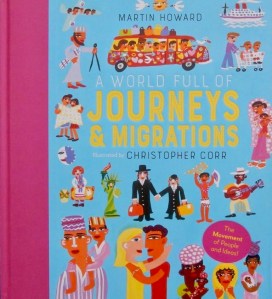
A World Full of Journeys & Migrations

A World Full of Journeys & Migrations
Martin Howard and Christopher Corr
Frances Lincoln Children’s Books

Migration has been very much in the news for the past several years with stories of people fleeing wars in Syria and Afghanistan, overcrowded and flimsy craft undertaking hazardous crossings of the Mediterranean and the English Channel and refugees attempting to cross land borders of eastern European countries to reach the European Union. This book chronicles that migration is not a recent phenomenon but something that began 70,000 years ago when the first people started to spread out from Africa to inhabit the whole globe.

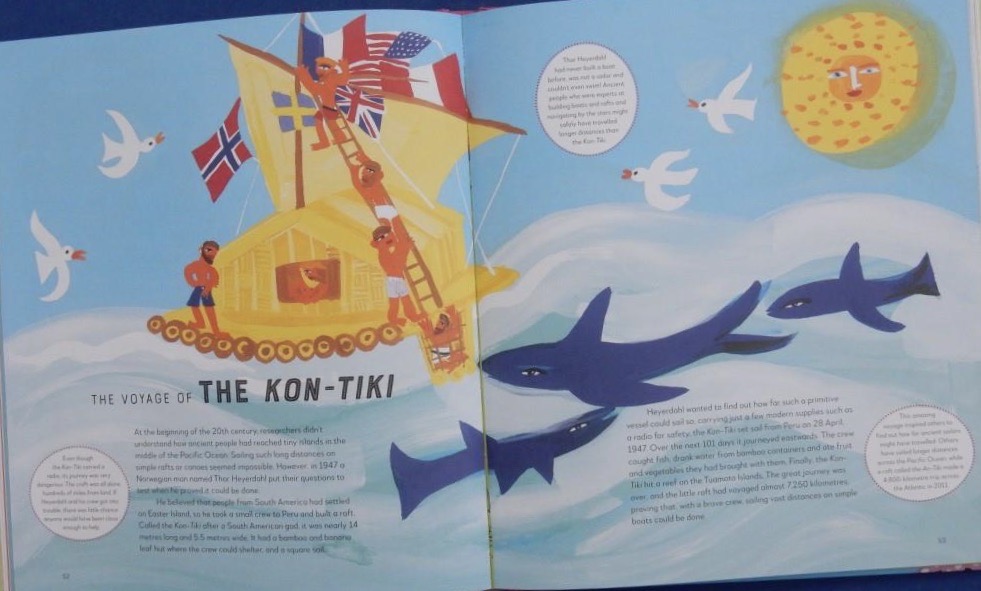
Author Martin Howard and illustrator Christopher Corr explore some fifty instances through history, continent by continent covering a large variety of relevant topics. These include navigational journeys of discovery by Marco Polo and Christopher Columbus, as well as Thor Heyerdahl’s Kon-Tiki,

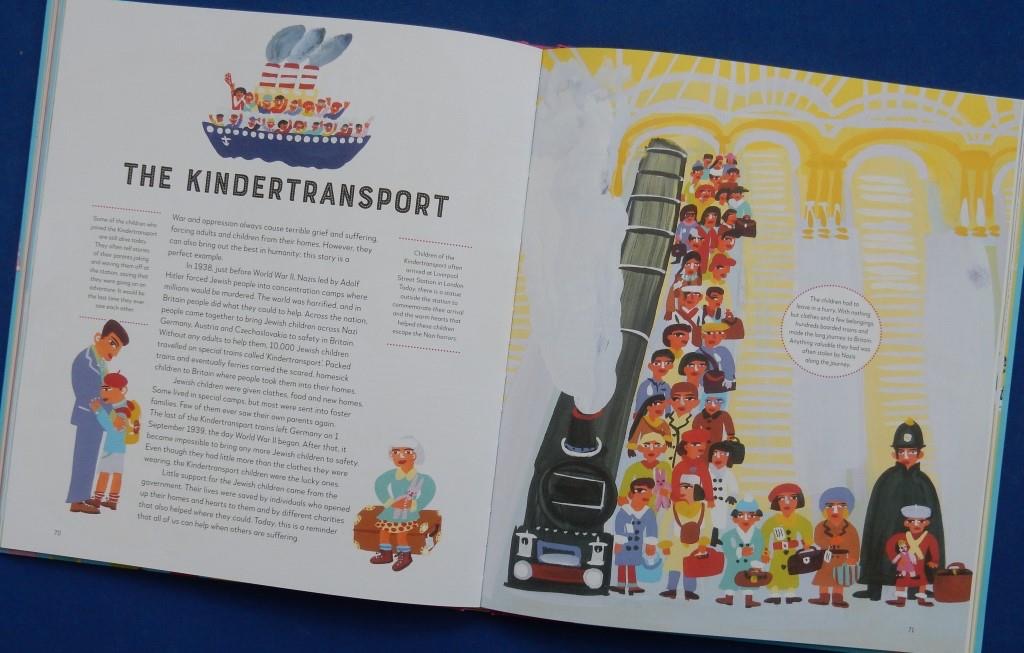
which emulated primitive vessels of ancient peoples; forced migration of slaves such as those of African peoples from their homelands to American colonies; colonial journeys for power and profit including those of the British to India and many European countries to Africa and various other parts of the world. Also included is an excellent example of what humans can do for those on whom great suffering is inflicted, the Kindertransport British people set up to bring Jewish children to Britain to prevent them being sent to concentration camps by the Nazi regime.

What is key no matter the reason, is that with the movement of people comes a wealth of new, potentially enriching ideas. The author acknowledges that in a book such as this it’s impossible to cover everything and it’s an amazing thought that as he says, inside everyone of us is a ‘kaleidoscope of human history and thousands of stories of travel and adventure.

Christopher Corr’s distinctive illustrative style is ideal for the book making what would otherwise be quite a demanding subject much more accessible.

Nen and the Lonely Fisherman / Love Grows Everywhere

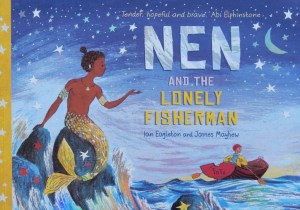
Nen and the Lonely Fisherman
Ian Eagleton and James Mayhew
Owlet Press

Far out to sea lives Nen; he’s a merman who loves exploring but nonetheless has an empty feeling in his heart. Every night he sits beneath a starry sky singing to the sea whose waves carry his words of hope but Nen remains alone when he returns to the seabed.

Despite his father Pelagios’s warnings, Nen’s explorations of the world beyond his own lead him to discover fishing boats beyond which lives Ernest, a lonely fisherman who also feels something is lacking in his life.

One night Ernest hears Nen’s song and feeling something in his heart, he sets off in his boat to find the owner of this magical voice. So it is that a bond develops between Nen and Ernest. However Pelagios urges his son to stay away from the humans who are harming the oceans. Nen pays no heed however for he feels that the gentle, kind Ernest is special and their nightly meetings continue.

As Pelagios’ anger and sadness increase they unleash a terrible storm that puts Ernest’s life in danger as he’s thrown from his rickety boat into the foaming deep. Can Nen possibly come to his rescue

and if so, might it just change the mind of his father?

Washed through with an important conservation message, Ian Eagleton’s soft-spoken, lyrical tale of acceptance and love is compelling and perfectly paced, helped in no small part by James Mayhew’s powerfully atmospheric illustrations that include a wonderful full-length vertical scene of Nen searching the depths for Ernest, as well as small vignettes and double page spreads.

There’s love too in:

Love Grows Everywhere
Barry Timms and Tisha Lee
Frances Lincoln Children’s Books

‘Love grows everywhere…
From country farm to city square
From desert village, hot and dry,
to mountain home where eagles fly
.’
Through Barry Timms’ gentle rhyming text and Tisha Lee’s vibrant illustrations we share a family’s love, not only for one another but also for the plants they grow, nurture, sell, and give to members of their local community, newcomers especially. When reading this It’s impossible not to feel the various ways love is shown and shared

be it within the family, the richly diverse community or anywhere else: for love is a gift that helps to make the world a brighter, happier place; it keeps on growing and there’s sufficient for everyone, everywhere. It might just take some time for its magic to happen.

How wonderful it would be if this heartfelt book could show the way to everyone, in every place where such love is yet to manifest itself.

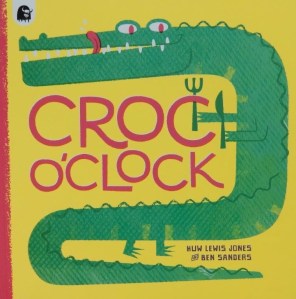
Croc O’Clock

Croc O’Clock
Huw Lewis Jones and Ben Sanders
Happy Yak

It’s feeding time for the crocodile with a seemingly insatiable appetite and goodness me does he love to boast about it as he keeps the zoo keepers busy all around the clock. “At one on the zoo clock, / the keepers give to me… / A MOUNTAIN OF MACARONI!” But that merely fills a small space in his tummy and the greedy beastie needs feeding on the dot of every hour. Moreover he has a cumulative song to tell readers what he eats.

At 2:00 there are two cups of tea and another mountain of macaroni; at 3:00 there are three french fries—and two cups of tea, and yet another mountain .…
And at 4:00? “4 pumpkin pies / 3 french fries / 2 cups of tea / And a mountain of macaroni!”
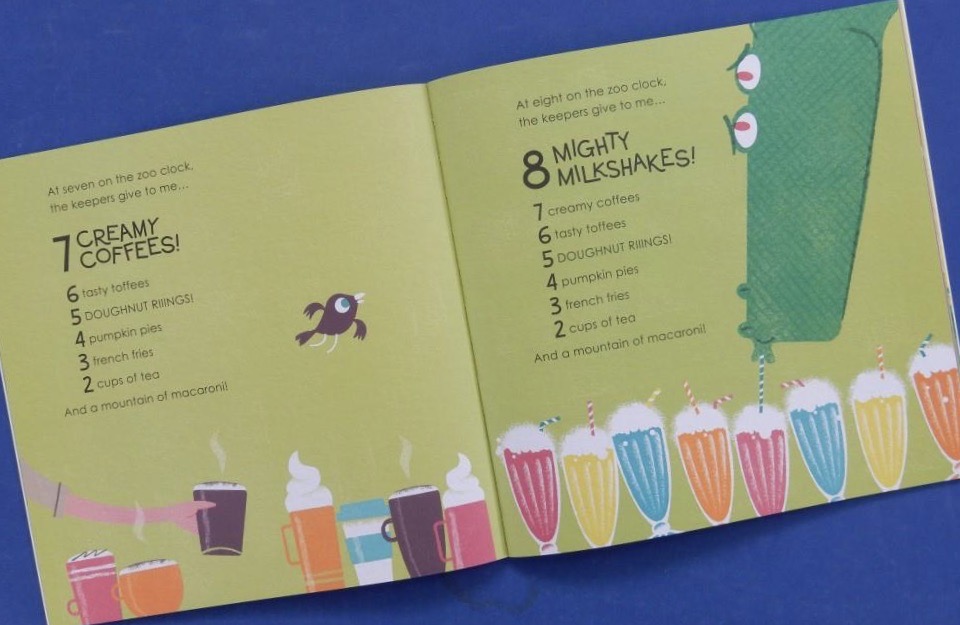
Five o’clock is time for some sweet stuff: 5 doughnut rings etc. More sweets at six in the form of 6 tasty toffees and as the clock strikes 7, 8, 9, 10, and 11 our every growing creature consumes 7 creamy coffees,

8 mighty milkshakes, 9 cherry cheesecakes, 10 jumbo jellies and 11 lemon lollies. Does he never get tummy ache one wonders?
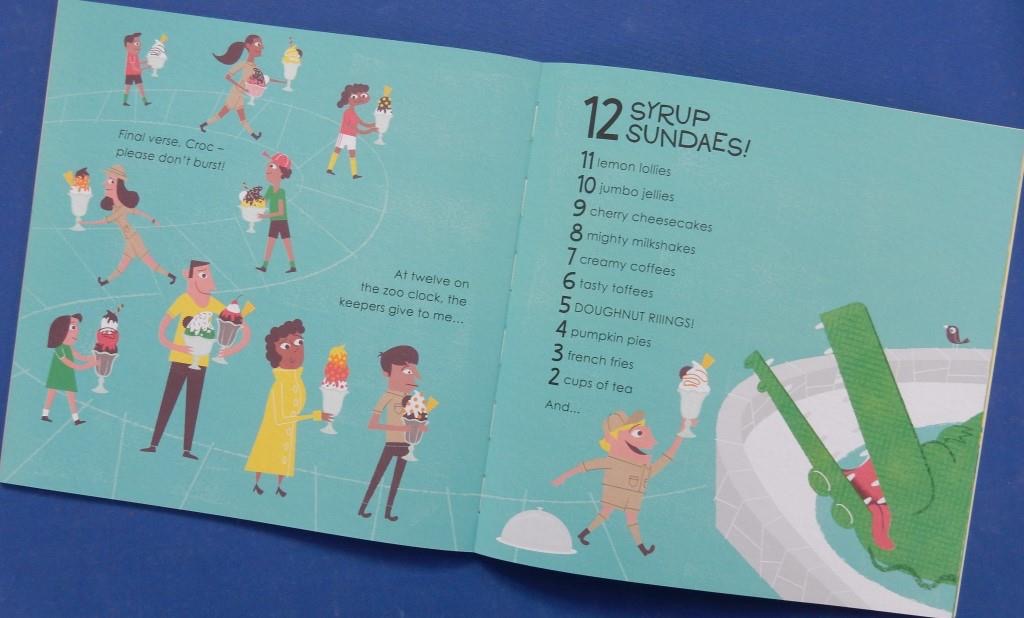
Twelve o’clock brings 12 syrup sundaes

but hello- no mountain of macaroni? Now those keepers have finally decided that the crocodile’s diet is sadly lacking in veggies. What will the narrator’s reaction be to the next offering? …

Youngsters will delight in singing to the tune of ‘The 12 Days of Christmas, Huw Lewis Jones’ satirical take on the popular seasonal song, as they watch the croc’s continuing overconsumption overseen by the zookeepers with the assistance of some visitors, shown in Ben Sanders bright, bold stylised illustrations.

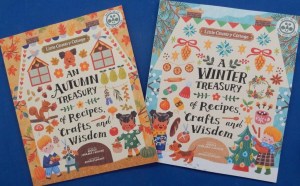
An Autumn Treasury of Recipes, Crafts and Wisdom /A Winter Treasury of Recipes, Crafts and Wisdom

An Autumn Treasury of Recipes, Crafts and Wisdom
A Winter Treasury of Recipes, Crafts and Wisdom

Angela Ferraro-Fanning and AnneliesDraws
Ivy Kids

With the seasons seemingly accelerated and all overlapping this year, (we’ve been picking blackberries for several weeks already and as I write we’re barely starting September) it’s good to have a pair of nature-centred books that point out to readers the best that each season offers.

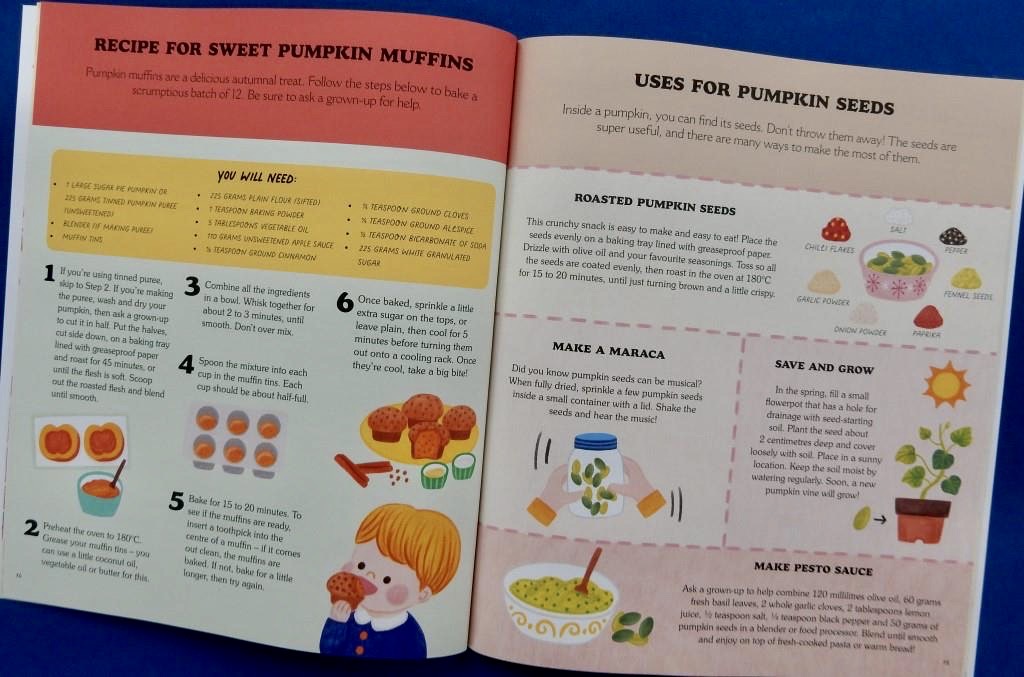
The first reminds us that when it comes to harvesting autumn’s bounties, there are edible riches galore – various varieties of apples, pears, pumpkins and corncobs are traditional autumnal offerings. These can be enjoyed not only by we humans, but animals and birds too. It’s good to see youngsters being introduced to the idea of seasonal eating with recipes for such yummy things as pumpkin muffins, as well as apple chips, alongside that of zero-waste. (There’s a spread on using apple/pear cores and peelings, and another on uses for pumpkin seeds.)

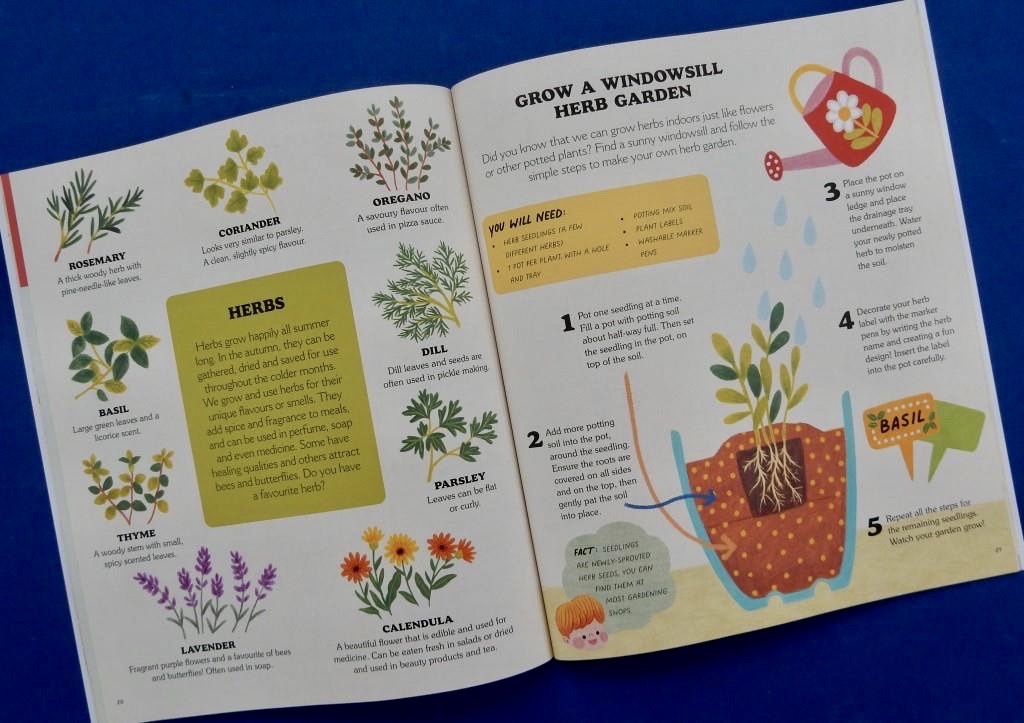
It’s great to get children outdoors no matter the time of year so those seasonal gardening and growing projects are one way to encourage that. However those herein can be done even without a garden: herbs for instance, can be grown on a windowsill in city or town.

Crafts too are included: those acorn cap candles reminded me of tiny floating divas; then what about making your own lip balm, or a gratitude tree? Step by step instructions are provided. So too are snippets of seasonal information and there’s a wealth of autumnal illustrations executed in colour pencils by AnneliesDraws. A fun, eco-friendly compilation.

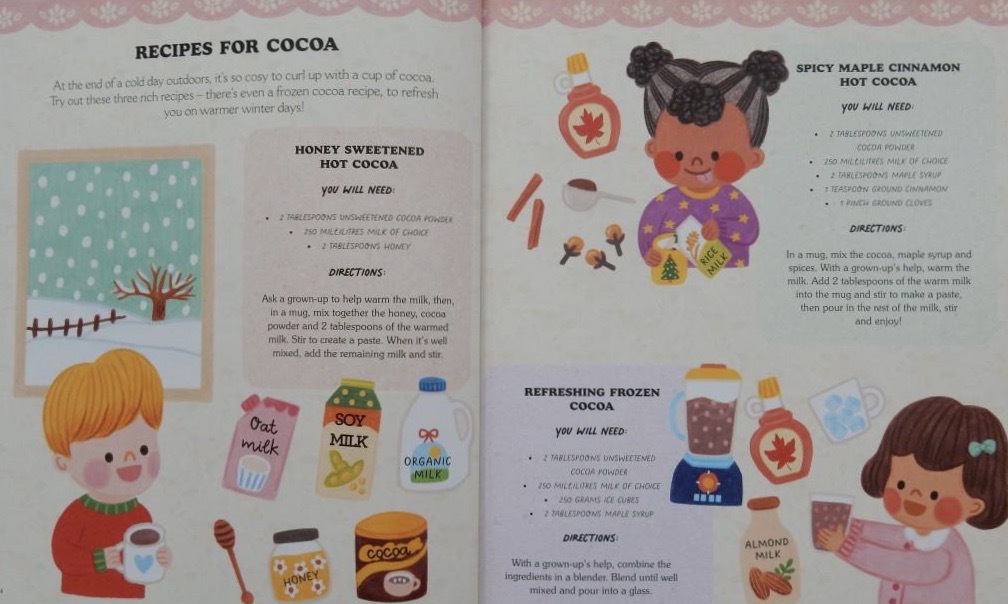
As is A Winter Treasury of Recipes, Crafts and Wisdom. It’s good to see kale featured as one of winter’s veggies and interestingly I’ve not really considered that citrus fruits are a winter crop, though the author offers plenty of recipes for making edible treats using them, as well as some crafts. More to my taste are the bread making recipe (love the idea of adding spinach juice to the mix) and the three cocoa recipes – now there’s a thought (step-by-step instructions given).

Like the autumn book, woven into the activities are snippets of factual information including an entire spread on wildlife. With darkness coming so early in the day, Winter is my least favourite season: this book certainly suggests a wealth of ways to make the most of what it has to offer.

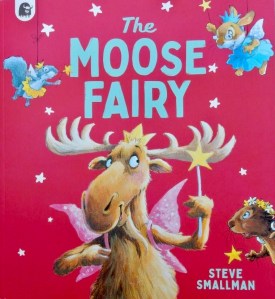
The Moose Fairy

The Moose Fairy
Steve Smallman
Happy Yak

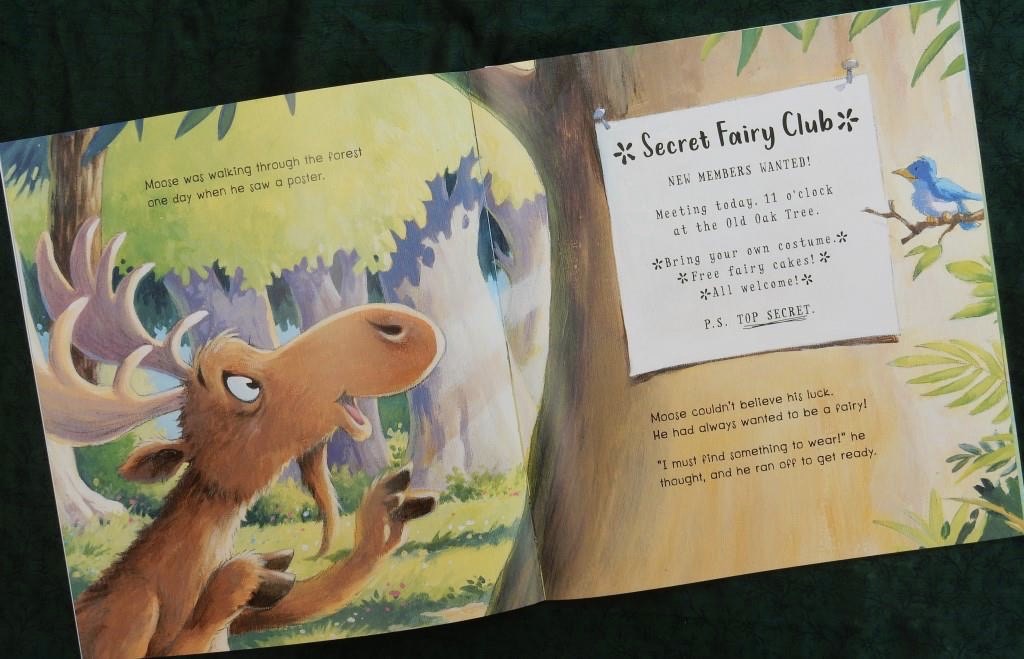
Moose has always yearned to be a fairy so he’s over the moon when he spots a sign advertising for new members of the Secret Fairy Club.

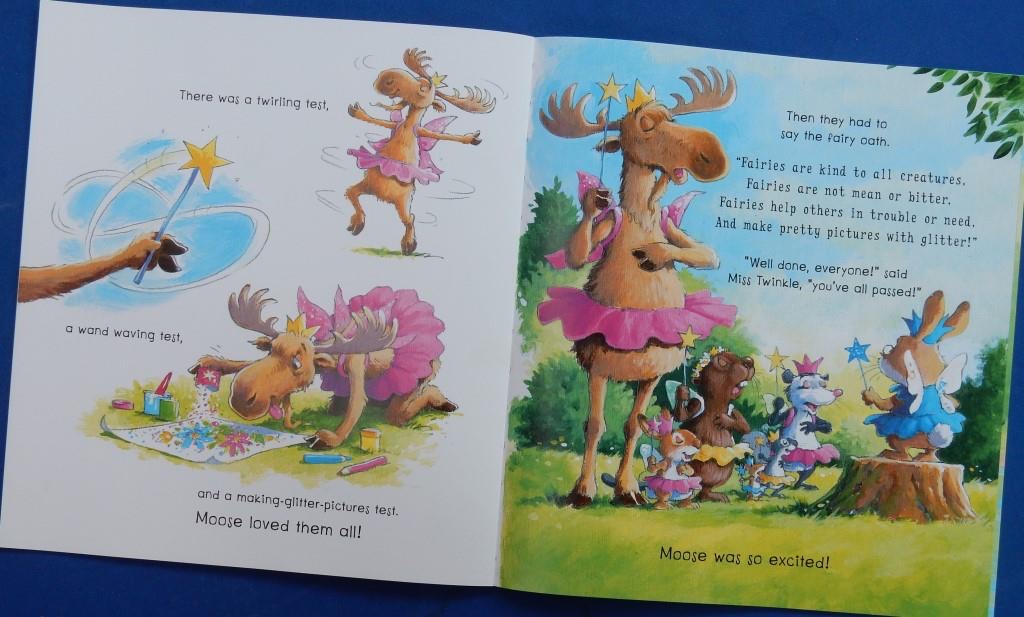
Having put together what he thinks is the most suitable gear and donned same, he feels totally fabulous. Until that is, he arrives at the venue and realises that he dwarfs all the other potential members, some of which are anything but welcoming. Not so however the head fairy who invites him to do the tests along with the other would-be joiners.

With admission to the club gained Moose needs to use the secret knock to open the door of the clubhouse but although he succeeds in so doing, the door is so tiny, he can’t fit through and the others merely shun him.

Poor Moose walks sadly away and takes a dip in the river, hoping to shrink himself. There he encounters Fox with whom he shares his problem and rather too much other information.

Back inside the clubhouse, some of the other creatures are now seeing the error of their ways when suddenly an unwanted intruder arrives and just manages to squeeze himself through the door.

Perhaps now Moose has an opportunity to show he’s a true fairy no matter his size. A fairy that lives up to the oath: ‘Fairies are kind to all creatures, / Fairies are not mean or bitter, / Fairies help others in trouble or need …’

With its mix of humour, hope and determination, Steve’s heartwarming story about being yourself and accepting others unconditionally no matter their appearance is a delight to share. Moose is a smashing character splendidly portrayed by the author whose quirky, vibrant illustrations are a mix of suitable silliness and sparkling enchantment. And I absolutely love Steve’s wise words in the dedication to his grandchildren.

Animal Colours, Animal 123 and Animal ABC

Animal Colours, Animal 123, Animal ABC
Nikolas Ilic
Happy Yak

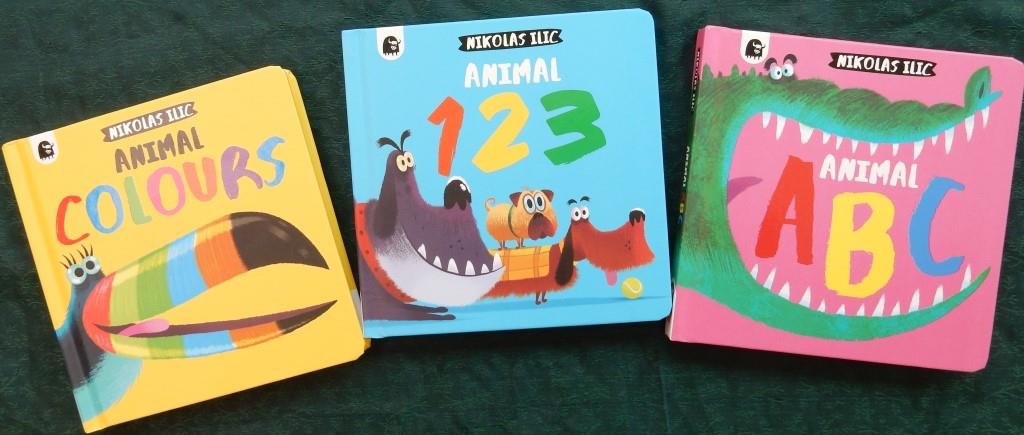
Three titles in a new First Concepts series feature some wonderfully wacky animal characters.

In the Colours book a twisty twirly snake and a grabbing crab introduce red, both fox and orangutan have orange fur, lion and a quacking duck are yellow, green is the skin of both a crocodile and a wide-mouthed frog, blue are the whale and a tweeting bird while other creatures are purple, pink, brown, grey, black or white. Then come multi-coloured chameleon and rainbow-beaked toucan, with the final spread showing all the animals featured.

123 has a different animal for each of the numbers 1 to 12 a double spread being allocated to a honey loving bear, 2 sharp toothed crocs, 3 racoons, 4 playful dogs, 5 staring black cats, six BAA-ing sheep, 7 grumpy frogs, 8 clucking chickens, 9 mucky pigs, 10 munching rabbits, 11 COO-ing pigeons and twelve toothy fish; and the final spread shows them numbering off with an invitation to count them one by one.

As well as being introduced to the alphabet in Animal ABC, little ones can discover an interesting fact about each of the featured creatures. For instance, did you know that a Gecko can’t blink so cleans its eyes by licking them with its long tongue?

Young children don’t acquire concepts from books but through a variety of experiences; these playful board books will help concept development but most important, they’re fun to share.

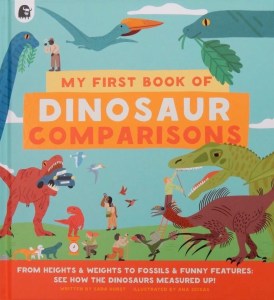
My First Book of Dinosaur Comparisons

My First Book of Dinosaur Comparisons
Sara Hurst and Ana Seixas
Happy Yak

Authors are always looking for new ways to present dinosaurs to young enthusiasts who seem to have an insatiable appetite for these prehistoric creatures.

Herein Sara Hurst compares dinos. with vehicles, predators, humans and modern day foods among other things. With a body longer than a tennis court, Diplodocus needed to munch through around 33kg of ferns daily – that’s the equivalent of a human gobbling 66 boxes of cereal every single day – imagine that!

First though come an explanatory spread explaining comparisons, a pronunciation guide to dinosaur names and a time line.
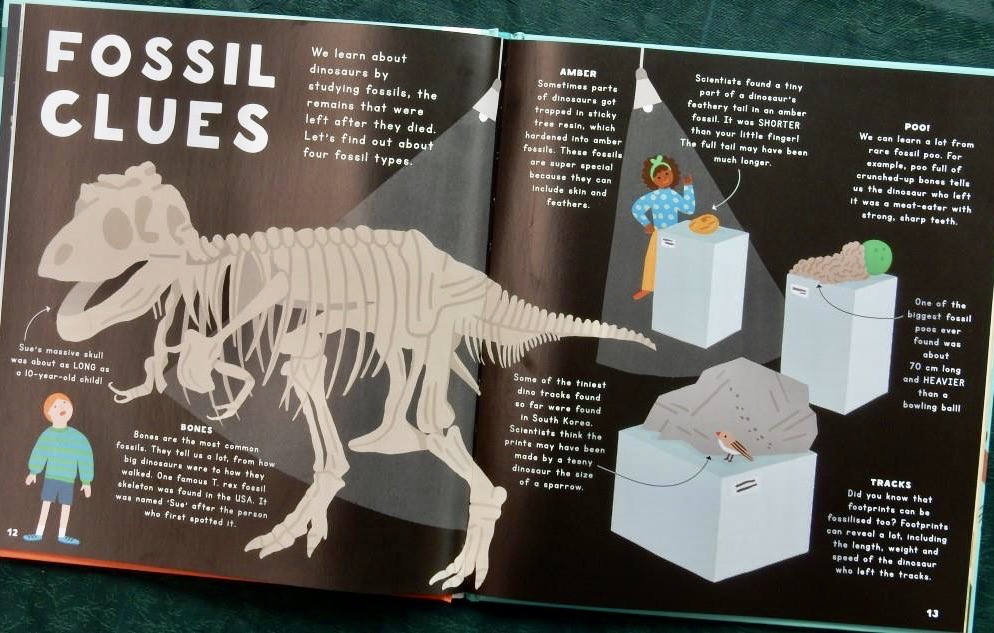
The comparisons start on the Fossil Clues pages where readers learn for example, that one of the largest fossil poos ever found was around 70cm long and weighed more than a bowling ball.

I was fascinated to discover that a dinosaur’s age is calculated by counting the growth rings inside its bones (in a similar fashion to trees I imagine).
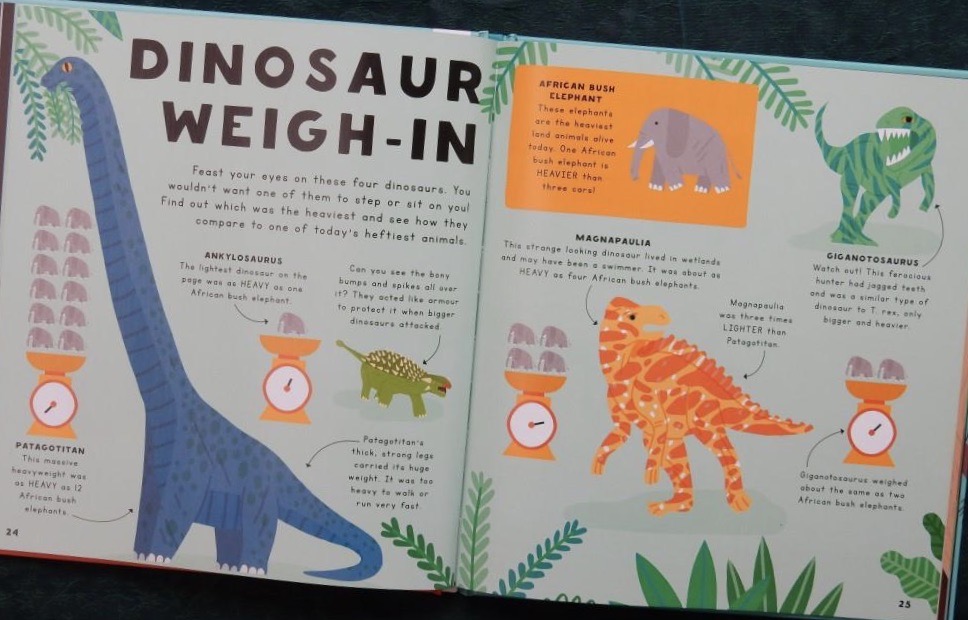
Other spreads look at the super skills of a variety of dinosaurs – Dromiceiomimus was about as speedy as an ostrich and twice as fast as the fastest man sprinter. Other spreads explore defence, food, weight

hunting ability, self defence and more, concluding with what was the likely cause of dinosaurs dying out.

In addition there’s a scattering of quizzes (answers at the back) and the entire book is brightly and dramatically illustrated by Ana Seixas.

Race Cars

Race Cars
Jenny Devenny ed. Charnaie Gordan
Frances Lincoln Children’s Books

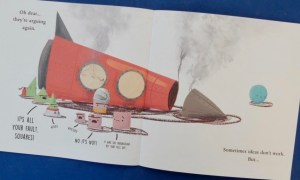
This book, is the result of a collaboration between author/illustrator Jenny Devenny who uses the metaphor of a car race to introduce institutional and systemic racism to children, and diversity and inclusion expert, Charnaie Gordon who edited the story. (Both have written an introductory note).

Meet best friends Chase and Ace. Chase is a black race car; Ace a white race car and they both love racing. Chase is super speedy and in his first year of entering, becomes the very first black car ever to win the ‘world-famous, annual race-car race.’ To his Ace friend who finishes fourth , it matters not: place is unimportant. However the race committee (all except the youngest, pink-tyred Grace, being white male autos) are anything but happy and resolve to alter some of the rules in favour of the white cars, thus disadvantaging the other cars in future races.

The route change they introduce for non-white cars

enables Ace to win the next race the following year and in the subsequent one, an official stops Chase before he enters the magic forest, demanding to be shown his ID. These two demonstrations of blatant discrimination result in Chase failing to qualify for the next year’s race. Now Ace starts to think perhaps something isn’t right: but even worse, Chase now feels inferior.

At a further committee meeting, Grace quietly talks of making the race ‘fair and equal for all’, but only one or two others agree, while the rest, fearing change, keep quiet.

The following year Chase is there spectating and supporting his friend who starts off at super speed. But as Ace approaches the magic forest, he notices something he’d not previously been aware of

and decides to take the route intended for non-white cars. Consequently he gets lost.

Back at the track the committee are worried about their star race car Ace not having crossed the line. Now, Grace knows she must speak out and so she does, with the result that Chase agrees to search for his friend … and finally they finish the race together.

Designed to be accessible to a young audience, and intended as a starting point for opening up discussion, this book has been engineered to tackle a difficult and sensitive topic. To this end there are discussion notes after the story. Almost every time I turn on the news I hear something alarming and upsetting concerning the ill-treatment of a person or persons of colour, so it’s clear that opportunities such as this book offer to get children talking are much needed.

The Encyclopaedia of Unbelievable Facts

The Encyclopaedia of Unbelievable Facts
Jane Wilsher and Louise Lockhart
Frances Lincoln Children’s Books

Many of us turn red in the face when feeling embarrassed but have you ever wondered about your insides? Embarrassment causes adrenaline to be produced and this helps increase blood flow, one consequence of which is that the stomach lining becomes red, so we blush both internally and externally.

Equally amazing is that our hair contains minute traces of gold, with babies having more than adults. Both are covered in the Human Body the opening part of this unusual encyclopaedia of trivia.

In case you’ve ever wondered what astronauts do with their dirty laundry, what happens to their wee, or what happens when an astronaut wants to scratch an itchy nose while wearing a space helmet, you’ll discover the answers along with those to over 45 more questions in the Space section of this book.

It’s not only STEM topics that are included herein though. There are sections entitled Customs & Culture, Our World and finally Arts & Entertainment. If you want to know Donald Duck’s middle name, you’ll find the answer there.

For each theme Louise Lockhart provides a wealth of offbeat, stylish illustrations, mostly small but some whole page ones too.

No matter whether you want to ask questions in a quiz with your friends or family, or just fancy dipping in to discover some new factual bits and pieces, then here’s a book for you; this reviewer certainly learned a fair bit.

Ancient World Magnified

Ancient World Magnified
David Long and Andy Rowland
Wide Eyed Editions

New in the interactive ‘Magnified’ series, this is one of those books where you think, ‘I’ll just spend a few minutes reading this’ and hours later you’re still totally immersed, using the magnifying glass provided inside the front cover.

Starting with Mesopotamia in what is today parts of Iraq, Iran, Syria and Turkey, author, David Long and illustrator Andy Rowland take readers time travelling to visit sixteen ancient civilisations, providing a taster of what life was probably like in each one. I was pleasantly surprised to learn that here where civilisation is thought to have begun, men and woman were mostly treated as equals.

From there we move to (c. 4000-1500 BC), a large area now in India and Pakistan, the Indus Valley Civilisation, in which I have a particular interest having once visited not Harappa or Mohenjo-daro featured here, but another more southern site, Lothal.

I have to admit though I’d never heard of Olmec, central America’s first civilisation in what is Mexico today, nor the Kingdom of Aksum (120BC – 850 AD), one of Africa’s greatest empires much of which is in modern Ethiopia and we learn, among the first of the great civilisations to convert to Christianity. 

Also new to me is the Xiongnu Empire in what took up large parts of today’s northern China, Siberia and Mongolia, formed when several tribes of nomadic peoples came together under a ruler named Modu, controlling an area almost as big as Europe. 

Each of these fascinating civilisations is allocated a double spread most of which is taken up with a riveting, highly detailed illustration by Andy Rowland. There are also two or three paragraphs giving information about location, daily life, buildings, what made it prosper etc. and there are ’10 things to spot’ on every spread. Not easy in several cases but should you wish to look, the answers are supplied at the back of the book, along with a famous figures gallery, almost 60 more things to find in the busy scenes, a timeline and glossary.

Recommended especially for young history enthusiasts, as well as those who love search-and-find books.

The Dinosaur Awards

The Dinosaur Awards
Barbara Taylor, illustrated by Stephen Collins
Frances Lincoln Children’s Books

Here’s a novel way of presenting dinosaurs to youngsters, not that a good many of them wouldn’t devour almost any dino. related book they can get their hands on, such is the seemingly never ending enthusiasm for these prehistoric creatures.

This one uses a combination of quirky, almost cartoonish digitally created illustrations and a wealth of intriguing facts about lots of different dino. species, some well known, others less so. I met a few for the first time herein, one being Majungasaurus that receives the ‘Cunning Cannibal Award and lived on Madagascar during the Cretaceous Period between 84 and 71 million years ago – assuredly a VERY scary predator.

Almost all the winners, be they famous or lesser known, are allocated three or four paragraphs, a captioned framed portrait of the award receiver along with its trophy or medal and one or more larger illustrations. There’s also a databank with name pronunciation and meaning, where it came from, diet, and size, plus in some instances a short humorous cartoon strip, in others some additional trivia.

So, if you’ve ever wondered what might make Ouranosaurus so special, not only did it have a ‘Super Sail’ along its back and tail, but also a duck-like beak and two bony bumps in front of its eyes.

Whereas Troodon’s claim to fame was its enormous eyes (about 5cm across), so it received the “What Big Eyes You Have’ award.

There’s even a ‘King of Rock ’N’ Roll medal and that goes to Cryolophosaurus (aka Elvisaurus’ on account of its funky head crest thought to resemble that 1950s quiff of the rock legend).

With plenty here to amuse and inform, this works either as a dip in and out book, or a longish read straight through, in which case you’ll encounter around fifty incredible prehistoric creatures from our planet’s past – worthy winners all.

Busy Spring: Nature Wakes Up

Busy Spring: Nature Wakes Up
Sean Taylor , Alex Morss and Cinyee Chiu
Words & Pictures

If you live in the northern hemisphere, like me you have probably been noticing beautiful wild flowers – snowdrops, daisies, celandines and primroses springing up, an abundance of catkins, blossom starting to open on trees, pussy willow buds bursting; as well as the occasional bee and butterfly. We even saw frogspawn a couple of times last week (the end of February). Definitely spring, with its promise of so much, is my favourite season and this year it seems even more important than ever to celebrate its arrival.

That is exactly what the two children in this beautiful book (written by children’s author Sean Taylor and ecologist Alex Morss) are doing. The older girl acting as narrator, tells us how what starts out as a hunt for Dad’s fork so he can plant some carrots turns into an exploration of the family’s garden. ’Everything smelled like wet earth and sunshine.”

“The spring sunlight is nature’s alarm clock,” Dad says, taking the opportunity to mention pollination.
Both girls are observant, asking lots of questions and noticing signs of new life all around – tadpoles,

a bird building its nest and a wealth of minibeasts – ants, woodlice, worms and beetles and several species of butterfly, as well as playfully emulating some of the creatures they discover.
Throughout, Dad subtly provides snippets of relevant information concerning life cycles, habitats

and what causes the seasons; and throughout the children’s sense of excitement is palpable.

Cinyee Chiu’s illustrations are absolutely gorgeous, beautifully composed and carefully observed.

At the back of the book are several pages of more detailed information about spring and how it affects the flora and fauna, as well as some suggestions for ways children can get involved in helping nature in its struggle against climate change.

A must have book for families with young children, as well as foundation stage settings and KS1 classrooms.

Love

Love
Corrinne Averiss and Kirsti Beautyman
Words & Pictures

Young Tess is part of a loving family – love surrounds her like the ‘light inside one of Daddy’s little houses.’

However, when the time comes for her to start school, the worries creep in. School is big and scary – nothing like that warm scarf that she feels wrapping around her when she goes out with her parents. Will the love still find her?

Her mother tries reassuring her saying as they part by the gate, that love will still find her even when they’re apart “like a string between us – it can stretch as far as it needs to.”

Tess though isn’t sure. Her understanding teacher offers some comfort – ‘Tess noticed a little thread between them. That felt nice.’

Little by little she continues discovering new strings of connectedness, friendship and love throughout the day.

Come hometime though, the anxiety returns when her mother is late to collect her.: that string doesn’t appear to be connecting Tess to anything or anyone. Finally, however, there with an explanation and a string-fixing hand, stands Mummy and all is well once more.

Enormously reassuring for young children who experience separation anxiety, Corrinne cleverly uses the string trope to make tangible the bond between loved ones in her story. But she makes it all the more impactful – love connects us no matter the distance between us – with her own ‘candle house’, ‘warm scarf and other metaphors. Employing a limited colour palette to great effect, Kirsti Beautyman’s sequence of textured illustrations are full of feeling, be that love, tenderness, worry, or empathy.

The Secret Life of Trees

The Secret Life of Trees
Moira Butterfield and Vivian Mineker
Words & Pictures

Oakheart the Brave, oldest tree in the forest wherein it stands, acts as narrator of this revealing look at what happens beneath the bark and ‘neath the branches, below the roots even, of trees –arguably THE most important life form on our planet. Some of what we read contains truth in the form of fiction, some is fact.

To begin this fascinating book, Oakheart tells of how a marauding mouse seizes the acorn containing the very seed from which emerges the little shoot that is to become our enormous narrator.

He goes on to regale readers with arboreal tales including a version of an Indian one, The Banyan Tree, as well as The Sky-High Tree from Hungary

and some season-related stories: from Scotland comes The Fairy Tree, from Norway, The Summer Storm and with its autumnal setting we have The Tree of Life from Persia, while the final tree tale Magic in the Forest comes from Britain and is a legend about the wizard , Merlin.

There’s plenty of science too, relating to photosynthesis;

facts and figures about the oak’s growth; information about its animal inhabitants – small and very small; how trees communicate; seasonal change is discussed and much more, concluding with the all-important How to be Tree-Happy that explains briefly how to care for our precious trees and how you might grow one yourself.

Moira’s mix of information and story works wonderfully so the book should have a wide appeal; every spread offers an exciting visual experience too. I love the different viewpoints and clever ways of presenting information such as that of Secrets Inside Us.

Thank you Oakheart for your special gift.

Trail Blazers: Stephen Hawking / Little People Big Dreams: Ernest Shackleton

Trail Blazers: Stephen Hawking
Alex Woolf, illustrated by David Shephard
Little Tiger (Stripes Publishing)

‘Be inspired’ says the first line of the blurb of this book. Who could fail to be inspired by reading about Stephen Hawking, an incredible individual who refused to be defined by his illness and which he never allowed to hold him back from pursuing his awesome scientific dreams, and whose life story is told therein by historian Alex Woolf.

It’s both a biography and a science book – ‘A life beyond limits’ as the subtitle says. Alex Woolf explains by means of an informative narrative together with David Shephard’s illustrations and clear diagrams, Stephen Hawking’s scientific discoveries (panels giving theoretical summaries are provided)

and the challenges he faced through much of his life.

There’s just enough detail of the genius’s revolutionary theories and of the key questions cosmologists have sought answers for, to inspire but not overwhelm readers from the top of KS2 onwards.

The narrative begins with a summary of the history of black holes theory, a brief explanation of the space-time continuum and a mention of other mathematicians and physicists involved in the theory.

There’s also information about Stephen’s formative years: I was particularly interested and amused to read of his family’s trip to India when the car got caught in monsoon floods and had to be towed to safety. (Sounds to me like an almost familiar incident!).

Children will be interested to learn that during his under-grad. days Stephen was far from hard-working and later calculated that he’d spent on average just one hour a day studying, spending much of his time rowing or at the boat club; getting by on his utter brilliance and managing to talk his way into getting a first in his Oxford degree.

It was when he became a student at Cambridge that both Stephen’s clumsiness and his resulting focus on his intellect began to take hold. A diagnosis of the incurable amyotrophic lateral sclerosis (ALS) might have overwhelmed even the most determined of people. Not so Stephen whose propensity to ask difficult questions and to put forward new theories without fear of being wrong is exemplary.

“Look up at the stars and not down at your feet. Try to make sense of what you see and wonder about what makes the universe exist. Be curious. “ So says the final quote – truly inspiring and one hopes, motivating …

Strongly recommended reading for older children.

Little People, Big Dreams: Ernest Shackleton
Maria Isabel Sánchez Vegara, illustrated by Olivia Holden
Frances Lincoln Children’s Books

This addition to the popular series of biographical stories presents the famous Antarctic explorer Ernest Shackleton from the time he was a child growing up in rural Ireland dreaming of wider horizons, when even at a young age, he showed the qualities of a good explorer – optimism, idealism, patience and courage.

We learn of his participation as a young man, in expeditions endeavouring to reach the South Pole. Then how, inspired by Roald Amundsen, he planned to cross Antarctica from sea to sea, via the pole.

This expedition aboard Endurance, began in August 1914 with a crew of 28 enthusiastic, optimistic men and assorted animals. After months crossing the ocean, the ship became trapped in ice;

and so it remained for nine months with their calm leader doing his utmost to keep the spirits of his crew high, until the ice began to break up their ship.

Though there was scant hope of a rescue, Ernest never lost hope of saving his crew, and finally he and five of his men reached a whaling station. Then, having found help, he returned and brought his crew back home, Incredible though it may seem, every one of them survived.
With his unfailing optimism, Shackleton, a true inspiration to countless others, died at the young age of 48, as the final timeline shows. A true inspiration to young readers too, especially at this time when remaining optimistic is to say the least, challenging for us all.