One Cherry, One Cheetah

Originally published as a smallish hardback, it’s great to see this available in board book format.

A dozen exquisite watercolour and gold leaf paintings, all except one of wild animals, are to be found in this super-stylish counting book. To start with there is just one cherry – it’s almost begging to be eaten immediately. Turn the page and there are two regal dogs face to face . and ‘two balls, one big, one small.’ Then follow three bears, three bowls, three silver spoons.’ The next spread gets one wondering: why ‘Four fine foxes, sharing strawberries’ but they have only three strawberries.

Next come five elephants, elegant for sure, walking nose to tail but one of the them is sans elegant Indian style regalia. why one wonders. The six cheetahs are clearly having fun playing pat-a-cake, each pair with tails entwined. The seven pandas – giant ones – have ‘pretty painted parasols,’ five of them: two are sharing and another has a fan. (Love the alliteration in that sentence.)

Eight clever otters, two sporting sunhats, juggle with small stones
The nine white mice, so we are told, are ‘happy as can be’ though I have to say that to me at least two look rather downcast as they partake of the tea served with a ladle from a large pot into tiny china teacups..
Then, we have the one cheetah again, only now it has ten cherries. What do you think it will do with those? The final spread reveals all, or rather, a cheetah, thoroughly sated, one imagines, beside a row of …

Make sure to peruse the endpapers, they too are lovely: the front depicts ornately decorated numerals plus the cheetah and a cherry; the final one is a chart of numbers 1 to 10 but there’s no cheetah in sight. Maybe it’s exhausted from orchestrating the numbers at the front.

Every illustration offers both a wealth of aesthetic possibilities and opportunities for speculative and extended talk with a young child.

Ming the Panda

When a young child is unable to sleep, Mama tells a story about a very special panda who brought love and hope to millions of people. It’s the real-life story of Ming, the first baby Giant Panda to be brought to London Zoo in 1938, who became a wartime symbol of courage and hope. The little panda began its life in the mountains of China. As she grew in size, she also grew in bravery and one day she began a journey that took her all the way to London Zoo. There she was looked after by a kindly zookeeper – his very first panda – that he named Ming (a Chinese name that means Brightness).

People came from near and far to visit the panda and they even wrote her messages and sang to her. One very special visitor was a young princess, who later became Queen Elizabeth. Ming’s fame spread all around the world but then war broke out and bombs fell on London. Despite this, brave Ming helped those who visited her until one day, transported in her mind to the snowy Chinese mountains. she died. However, her memory continued to act as a shining light bringing hope to the people.

Ming’s inspiration also brought hope at worrying times to the little child hearing her story and it is to be hoped to other children who need help to be resilient whatever trouble they face.

Jake Hope’s sensitively told narrative – a story within a story – reads aloud well and together with Yu Rong’s beautiful illustrations, a combination of Chinese folk art paper-cutting and pencil drawing, make this a child-friendly way to start discussing issues such as war and animals being kept in captivity.

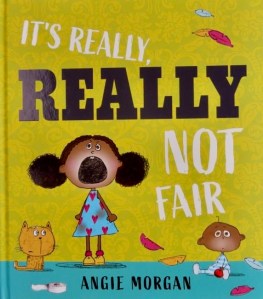
It’s Really, Really Not Fair

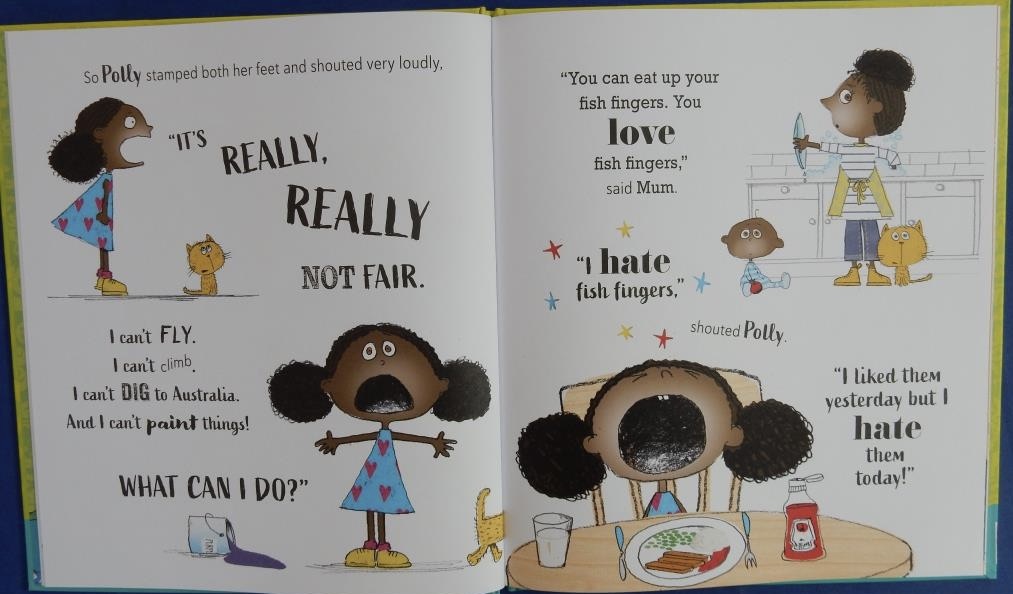
Nothing in her life is fair according to Polly. She wants to fly like a pigeon, climb a mountain, dig her way to Australia and paint the house, but her Mum says no to them all. “It’s REALLY, REALLY NOT FAIR!” Polly shouts, stamping and stomping. Instead of all these outlandish ideas, Mum suggests her daughter should eat her fish fingers; but Polly has now decided that she hates them

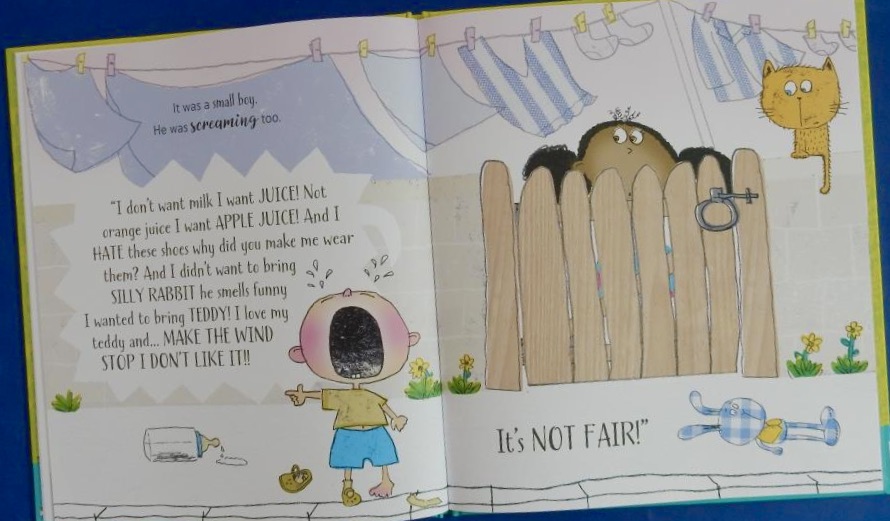
and starts screaming very loudly. Finally she’s all screamed out and it’s then she hears a loud noise on the opposite side of the garden gate. It appears that the little boy next door is prone to screaming too. Shock horror.

Mum excuses his behaviour by saying it could be because he’s tired. This prompts Polly to feel tired too and look forward to tomorrow and some more crazy notions. Fortunately Mum is on hand to come up with an acceptable counter suggestion before Polly falls fast asleep.

Angie Morgan’s insightful story, which explores the idea of fairness with gentle humour, will resonate with parents and carers; young listeners will be introduced to the notion that not getting what you want doesn’t mean that it isn’t fair. Polly’s melodramatic behaviour is brilliantly portrayed as she learns that important life lesson.

Dragon Cat

A cracking collection of over fifty new poems from Pie Corbett, many of which are of a playful nature, several of which sent me back to my childhood. One of the latter is The School Photo when I was dared to do just what the narrator describes, ‘One year I was placed right on the end / of the line – the idea was that we all stood still while the camera panned round. / I waited till it had taken our side, jumped down and raced behind the rest of the school – to reappear the other end.’ The problem for me was that I got caught in the act.

Another is Owl where one of the verses goes like this:
Owl, owl, / head spinner, fly-by-night,silent flight, / feared by mice and voles. / Owl, owl, / is it true that you’ve taken up residence / in a hole in the trunk of a tree?
An owl had definitely taken up residence in the large oak tree in our garden and I used to get out of bed and sit waiting for it to appear.

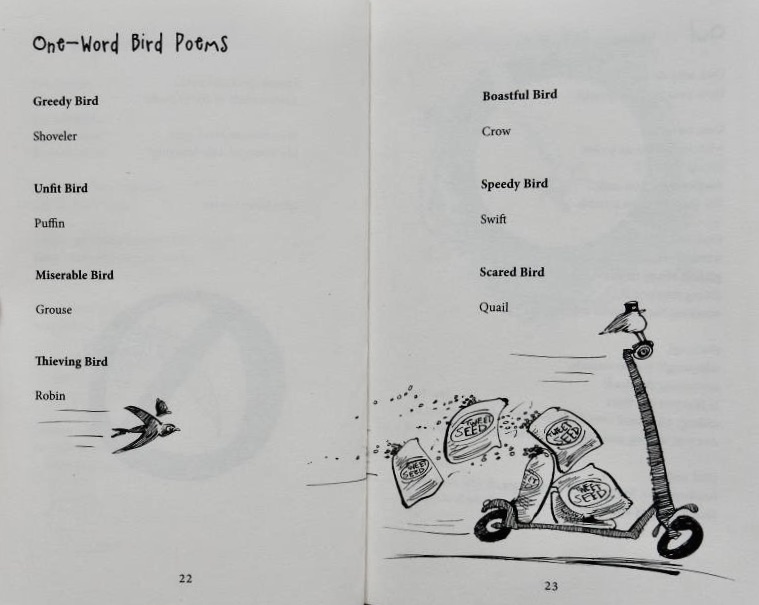
Many of the poems are ideal as models to inspire children’s creativity. One such is When I Blew the Magic Dust, which goes on to use this line to begin three subsequent verses. Another is One -Word Bird Poems.

As a Result is great for starting with an image – in Pie’s poem, ‘As a result of dark clouds – snowmen gather at dusk./ As a result of snowmen – no carrots for lunch.’ Children can then explore and create their own concatenations of images and ideas.

This collection is a veritable treasure trove of imagery and the poems are a delight to read aloud.
Pie has used a variety of techniques and poetic forms – acrostics, kennings, riddles and more and employed lots of word play. Indeed there’s humour aplenty, not least in Tom Morgan-Jones’ black and white illustrations.

A must have book for poetry collections both at home and in the classroom. I can’t close without mentioning Torn by War – Ukraine, Palestine and Too Many More: I’d buy the book for this one alone.

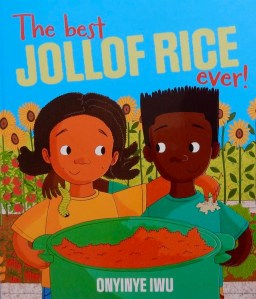
The Best Jollof Rice Ever!

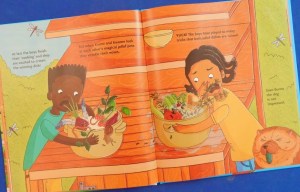
Meet Kamsi and Kwame, best friends, each of whom declares that jollof rice is their favourite food and that their respective mums make the best jollof. Jollof is a yummy, spicy rice and vegetable dish that originated in West Africa and is now known and enjoyed all over the world. To settle the matter Kamsi has a suggestion. “Let’s each make our own jollof and see which is really the best … “ Off they dash into the garden to start collecting ingredients. They both like playing tricks and each chooses judiciously, selecting items with that in mind. Kamsi adds some nettles to Kwame’s mix and Kwame puts a bright green caterpillar into Kamsi’s pot and both continue adding other ingredients – muddy puddle water, ants for spice and dried-up chewing gum.

A mess they each create for certain. Did they forget what the competition was supposed to be about – not the worst jollof assuredly.

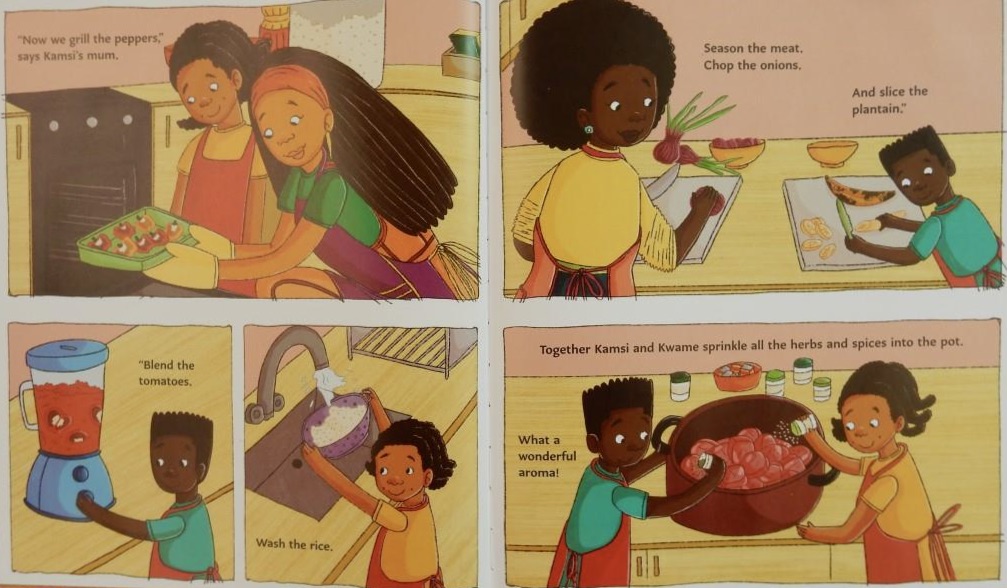
Meanwhile the mums have been busy in the kitchen creating the boys’ favourite dish and invite them to come inside and assist.

This they do and then everyone sits round the table to share a meal. Mmmmm! It’s the best ever jollof. “See, alone we make good jollof …” Kwame’s mum says. “But together we make the best jollof! declares Kamsi’s mum. The boys agree – working together is THE way to go; even though playing an occasional trick on one another is fun.

Vibrantly illustrated, this is a truly tasty story cooked up by Onyinye Iwu for whom it’s her first book as author/ illustrator. My mouth’s watering at the thought of that collaborative dish. I’ll have to try the recipe on the final page.

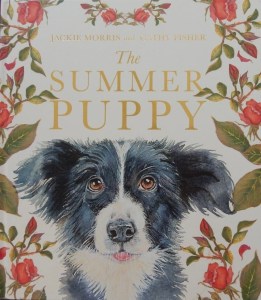
The Summer Puppy

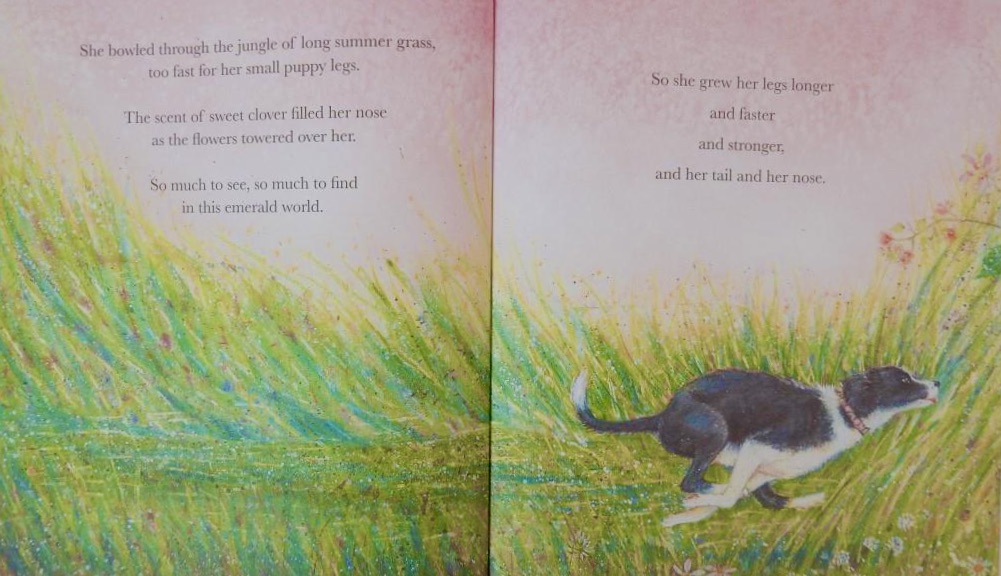
This truly beautiful book was inspired by memories of a real and much-loved dog that belonged to Jackie’s daughter and tells the story of Rosie and her first summer spent at their Pembrokeshire home. Cathy Fisher, the illustrator lives in Pembrokeshire too and it’s evident how much they both put into creating the tale. Jackie’s lyrical descriptions of the countryside: ‘The scent of sweet clover filled her nose / as the flowers towered over her. // So much to see, so much to find / in this emerald world.’

and in complete harmony with the words are the magnificent illustrations of the dog exploring its environment with its child owner. Through the changing seasons from early summer to autumn and the onset of winter, they investigate the woods, fields and beach.

Every turn of the page brings fresh delights for readers and listeners, including this reviewer who is cynophobic (but also a lover of the natural world) and likely to encourage lots of people to embrace the great outdoors and explore the joys of nature.

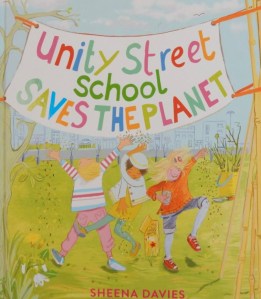
Unity Street School Saves the Planet

The Green Team – Fern, Verdun, Jade and Silas, not forgetting Selva their toucan puppet assistant visit Unity Street School. They talk about climate change, explaining how our planet is getting too hot and how bad that is for wild life and for humans. The children come up with a great idea: they will create their own wild, green space to look after at school. It’s to be situated in the old playground behind care-taker, Mr Moss’s tidy grass.

A fortnight later the Green Team return with litter-picking equipment, Mr Moss clears the playground, the children collect all manner of rubbish, most of which can be recycled and then comes the planting. Beans and hedge saplings are supplied by the Green Team, the children plant the beans in jars and Mr Moss plants a cherry tree. They also make a pebble pond.

Then it’s the holiday, after which the work, (including a fund-raising yard sale), continues through to spring when wildflower seeds are scattered and the beans and hedge saplings planted in the earth.
Weeks pass and eventually —- hurrah! Later that summer Unity School community’s hard work has paid off: something really exciting has happened.

An inspiring story of conservation and rewilding. that one hopes, will inspire others to think of ways to help our precious planet, having been shown the way by Unity Street School.

Food For All

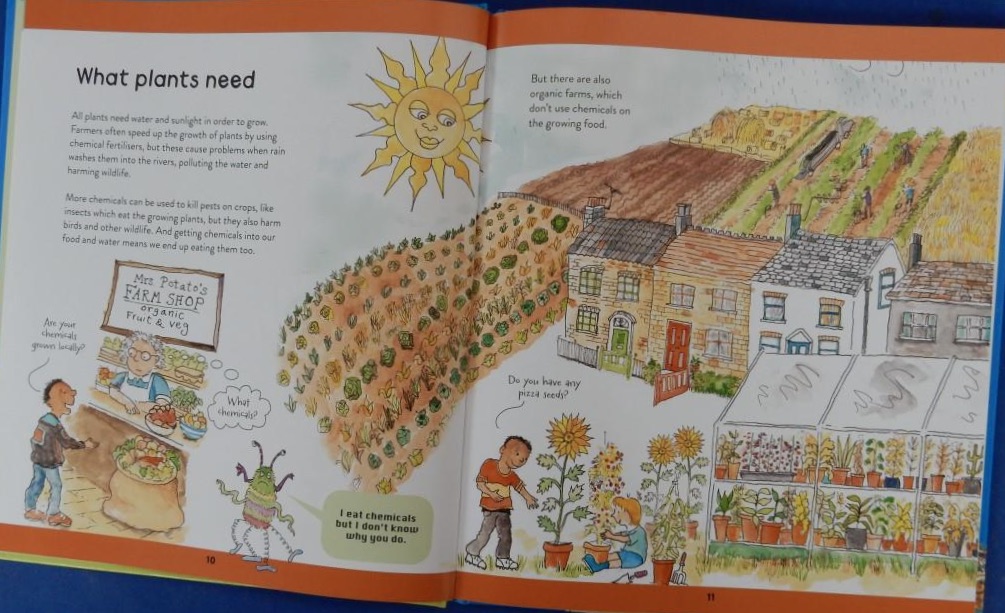
We all – humans and creatures large and small – need food of some sort in order to live. Some, including lots of humans eat other animals, some eat plants and some eat fish and other sea creatures. Interestingly, as the extraterrestrial creature that comments on various pages informs us, the largest creature on planet earth – the blue whale – eats krill, one of the tiniest. It’s not the only being that makes thought-provoking comments from time time time; so too do various animals and humans of different ages.

Almost twenty aspects of food and feeding are explored starting with growing food for both human consumption and for animals. This is followed by a look at what plants require to grow and the topic of chemicals is mentioned – their uses and the harm they cause.

There’s a spread about harvest and a look at associated festivals in various parts of India.
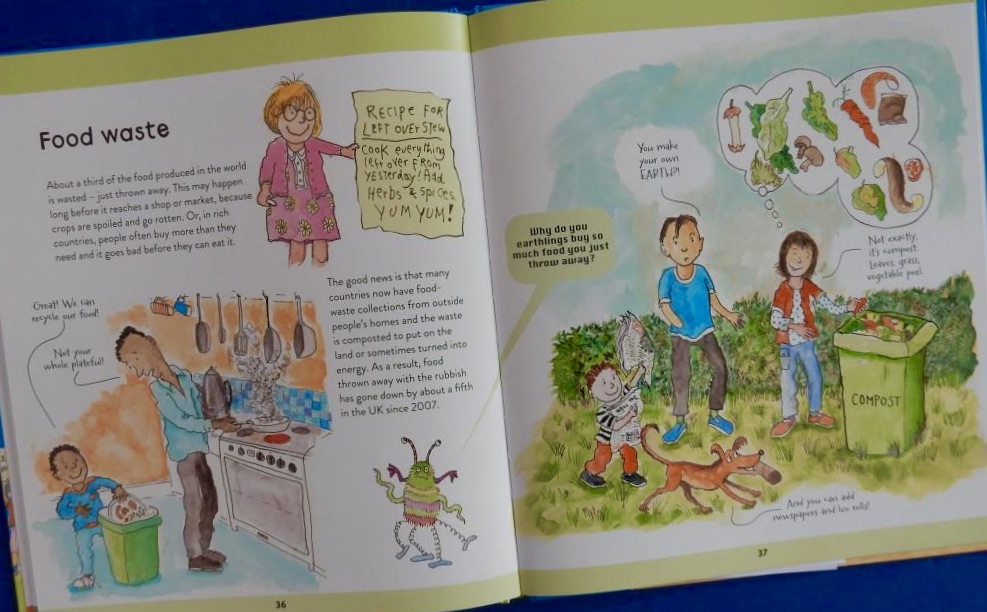
For me the most distressing fact is that despite there being more than enough food in the world for everyone, starvation still abounds and even in rich countries like the USA and Great Britain, there are many people who need to regularly rely on food banks. Equally shocking is that there is an awful lot of food wastage.

But, as we read, there are things that all of us can do.

Mary Hoffman’s engaging style makes a wealth of information easily digestible for primary age readers and Ros Asquith’s droll illustrations help keep the tone of the whole book light and inviting. A thought-provoking book that offers a wealth of discussion topics.

Blue Jelly and Strawberries

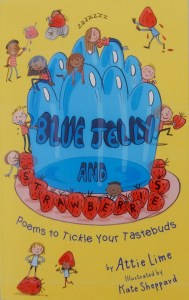
Brimming over with playful notions is this debut collection of poems by Attie Lime, with black and white illustrations by Kate Sheppard.

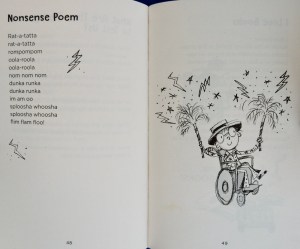
Herein you’ll find whimsical wonderings (What can you carry in your hat?) and thought provoking possibilities – What might your magic bean grow? and What would you do if you were spring? – ‘hang jellybeans from all the trees’ like the author maybe, curious questions (do triceratops wear pyjamas?) and nonsensical wordplays – ‘im am oo / sploosha whoosha / flim flam floo!’

All of these and many others powerfully convey the message that language is fun. Nevertheless my very favourite poem is I Love Books – a straightforward tribute to the vast variety of books and by implication what might be found within.

I also love The Pancake of Positivity the first two verses of which go thus:
My pancake is a CANcake / full of positivity / bursting full of yes-es / so sweet and syrupy. // My pancake is a problem-solver / helpful, kind (and sticky) / it finds a way to save the day / when life gets really tricky.

There are concrete poems of the curious kind as well as an acrostic and several quatrains. All this adds up to a book with something , make that many somethings, to please young readers and listeners; if you are a KS1 teacher definitely share this with your class; if you’re a parent who wants your child to discover the joys of poetry then get them a copy.

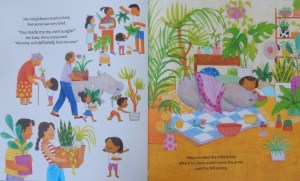
Little Rhino Lost

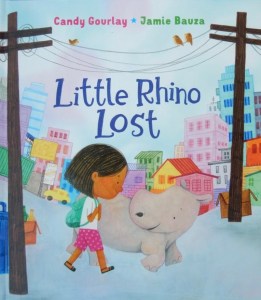
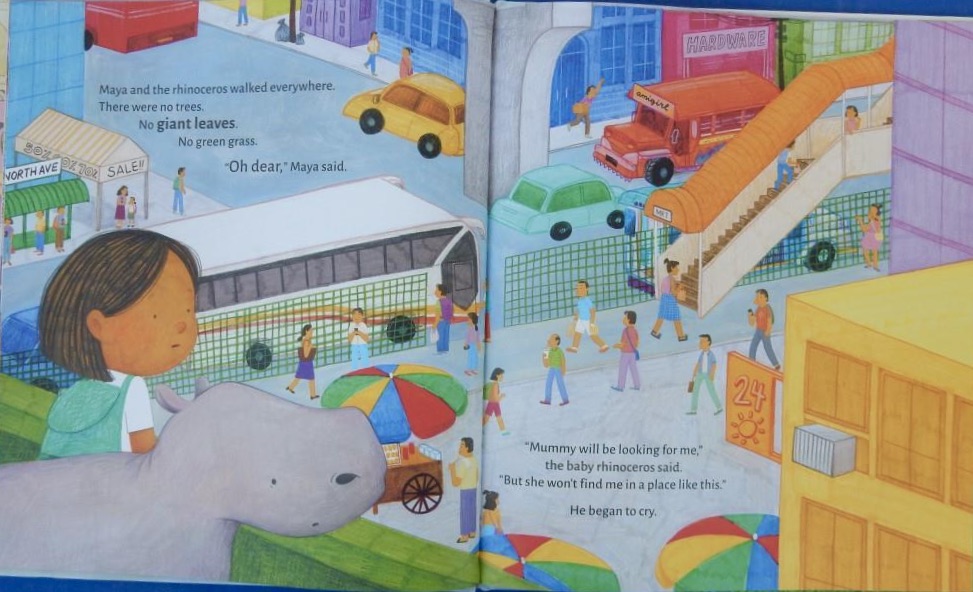
As she wanders in the huge grey urban jungle that is her home city, Maya comes upon a lost baby rhinoceros. She wants to help the creature but needs to know what his home looks like. The baby rhinoceros describes a place full of green plants and trees but as they wander, nowhere looks anything like that,

so May takes the rhinoceros back home with her. She feeds him and with the help of her kind neighbours, does her best to make him feel at home.

The following morning there’s no sign of baby rhino but instead a note to her from the mother rhino thanking her for her care. Despite knowing that her little friend is safely back home she misses him and wonders if he might come a visit. To that end she sets about turning her garden into a wonderful green space and her neighbours do likewise so that the city gradually becomes somewhere a little rhino could call home.

This charming story about determination, kindness, community and environmentalism, is set in the Philippines, the author Candy Gourlay’s home country. Would that urban dwellers be they in Manila, (the city depicted in some of Jamie Bauza’s scenes) or elsewhere in the world, come together in a similar way to help make all our cities greener.

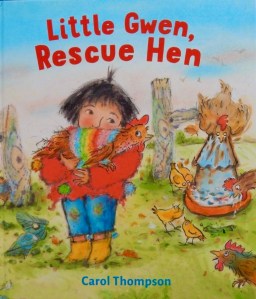
Little Gwen, Rescue Hen

Life is very unpleasant for the hens at the chicken farm. They’re packed tightly in cages, each day feels the same and as she’s constantly pecked by other hens, one little hen loses lots of feathers. Eventually she feels too tired to lay a single egg; but then one day, things change. She’s gently lifted, placed in a dark container and a voice tells her not to be frightened. Then she’s on the move inside the box, heading for an unknown destination.
After some time, the box is carefully put down and opened. The little hen emerges into the brightness of the outside world beyond the confines of her previous existence. There are so many new things to discover and new friends too. But one thing the little hen misses is her feathers that would have protected her from chilly winds, very hot sunshine and incessant rain.

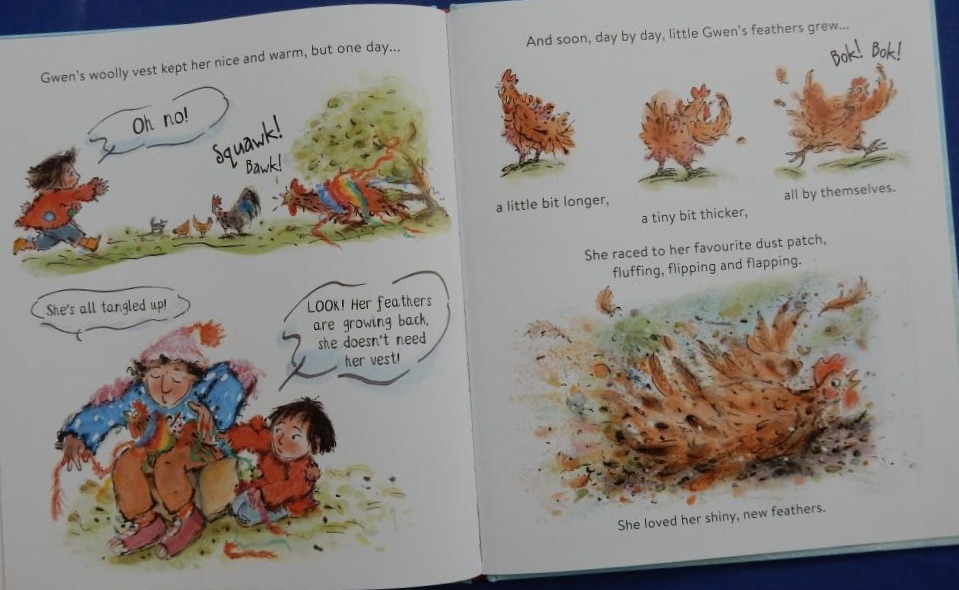
Fortunately the providers of her new home decide to make her a warm vest to wear until her feathers grow back and they decide to call the hen little Gwen. Gwen feels nice and cosy in her new garment until she gets tangled in some twigs that unravel the stitching.

However, with her feathers gradually growing back Gwen no longer needs it. Then one day before sunrise little Gwen goes a-wandering and what an exciting day she has before snuggling down to sleep in her warm safe little chicken house. It’s there that one morning, one of her kind human rescuers discovers a special surprise in the straw. Now what could that be?

This story is a great way to introduce quite young children to animal rights issues and will stimulate lively discussion in a KS1 classroom. Carol Thompson’s illustrations speak volumes as we follow Gwen’s move from terrible conditions to those where she’s treated well and thrives.

Squeak! Squawk! Roar!

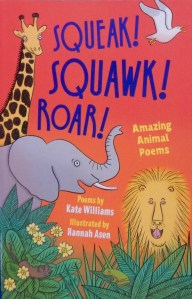
It’s good to see that Kate Williams, contributor to a fair few anthologies now has her first solo collection comprising fifty five poems and great fun it is too. Essentially it’s a celebration of the tremendous variety of animals that share our planet, but Kate also draws our attention to the plight of so many amazing animals on account of the selfish or thoughtless actions of humans in one way or another. Take for example Jungle Shrink that tells of the destructive effects on the animal inhabitants when tree felling machines go into action, ‘Brmmmm-thud! Brmmmm-thud!’ . And Sharp Wrecked: ‘Gentle as the sliding tide is gentle, / peaceful as the lolling waves are peaceful, rare as her forebears once were plentiful, / harmless as the jagged junk is harmful, / vulnerable as never before, / is turtle.’
No matter where you open the book, the author’s love of earth’s fauna is evident.

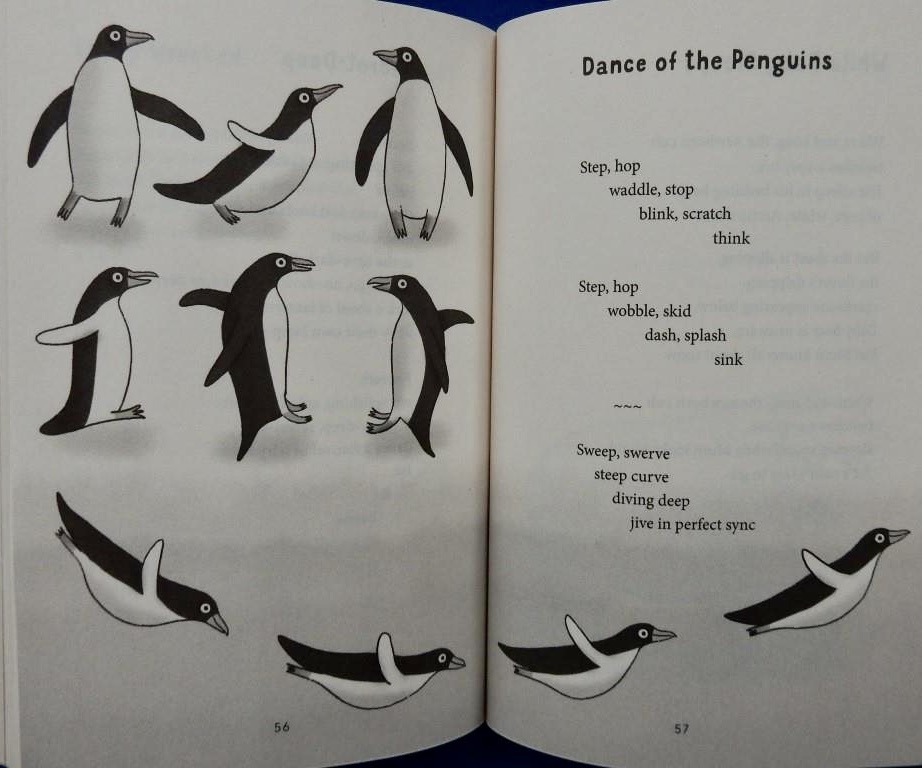
It’s not easy choosing just a few to draw attention to, but on the day of writing as well as the above mentioned, I was especially drawn to Dance of the Penguins, a superb portrayal of a sequence of penguin movements;

also Foal in the Field, a delightful account of one foal’s transition from a ‘lazing, dozing; bundle in the grass’ to a ‘ skipping, gliding; // dancer in a golden glow.’

and Albatross
‘Lone ocean bird
surfing the sunset’s glow –
so bright, so white
so graceful, so grand
so calm
so strong
solo’

Adding to the enjoyment are Hannah Asen’s black and white illustrations of many of the featured creatures from mice to monkeys, swans to snails and cows to cobras.

Definitely recommended for solo reading and for classroom sharing. Great to dip in to as well as using as part of an animal theme (so long as you remember the fine line between ‘using’ and ‘abusing’ the poems).

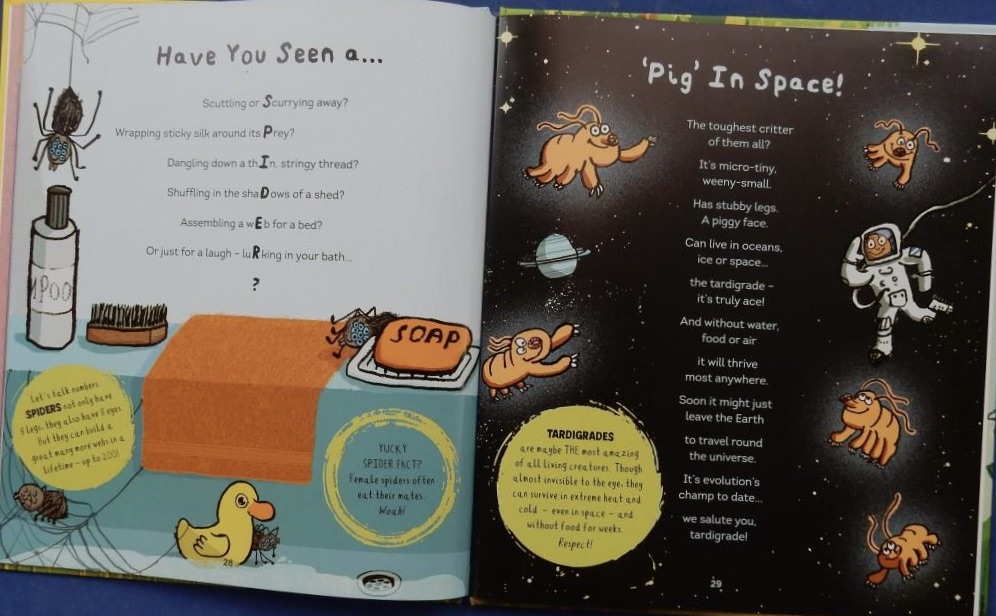
Boing!

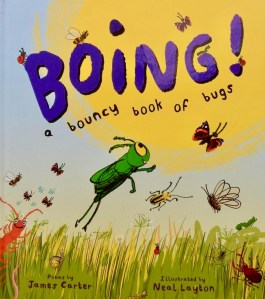
James Carter has penned twenty four poems on the topic of bugs and minibeasts, each one bugtastiically and playfully illustrated by Neal Layton.
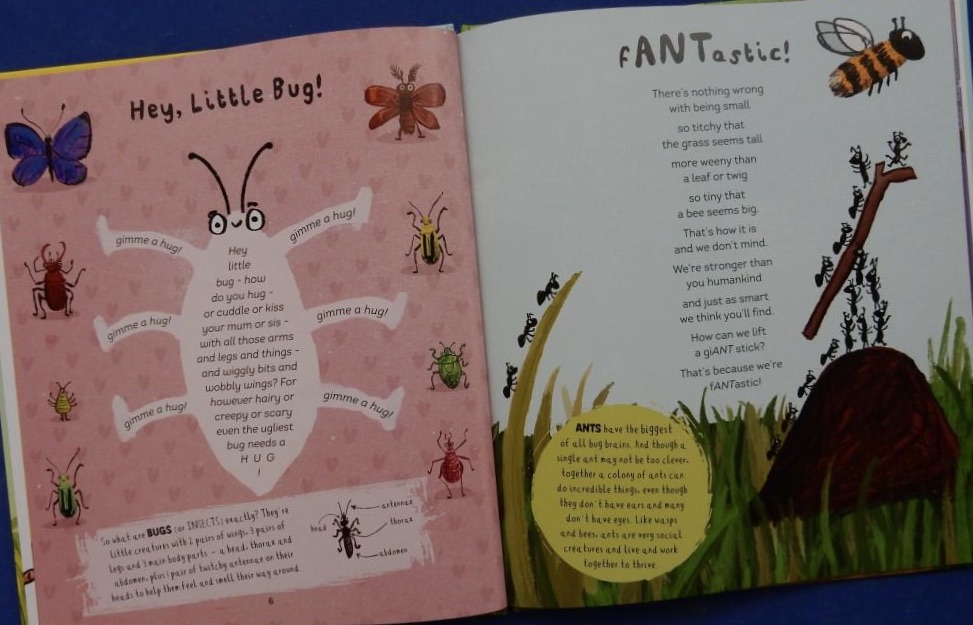
First come the bugs, or insects if you prefer to be more scientific. This larger section of the book comprises a few general, inclusive bug poems and then moves on to specific insects. On this occasion, two that particularly tickled my fancy are fANTastic wherein the titchy, tiny ants speak for themselves, asserting, ‘We’re stronger than / you humankind // and just as smart / we think you’ll find. // How can we lift / a giANT stick? // That’s because we’re // fANTastic!’

I have to admit that I’m a bee supporter and so was immediately was drawn to What Can It Be …? where we read of the insect bee-ing among other things, a ‘flower-lover’ , … ‘planet-aider, pollinator, super stinger, syrup-bringer’. (The super-stinger is only true of the female bees, so we read in the ‘fab fact time’ note beneath the poem.
There are also poems featuring a grasshopper, a flea (or several), a butterfly, a caterpillar, a moth, a wasp, a ladybird, a firefly; we share the details of a day in the life of a dung beetle, hear from a dragonfly, eavesdrop on a conversation between a spider and a fly, start itching as we read of bed bugs, followed by a mosquito. (Keep your insect repellant handy.)
The second section has six ‘minibeasts’poems: herein we encounter a silvery trail leaving, ‘sticky riddle’ writing snail, a millipede, a spider

and finally a ‘micro-tiny, / weeny small’ tardigrade.
A collection that’s full of fun poems, sprinkled with facts, exuberantly illustrated and well worth adding to a classroom collection or home bookshelves. I’m sure if you start reading one or two aloud, there’ll be requests for ‘MORE PLEASE!’

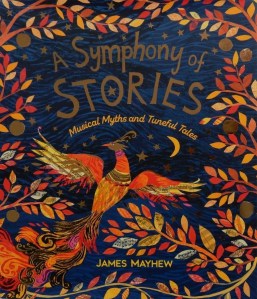
A Symphony of Stories

This stunner of a book is a companion to James’ Once Upon a Tune. Herein the author/artist features works by composers from different parts of the world that will be familiar to many – Saint-Saëns, Vivaldi, Debussy, Holst and Stravinsky – and also introduces a work new to me and I suspect many other readers, a famous Chinese piece by Chen Gang and He Zhanhao . As the author says in his introduction, ‘Most of the stories are retold from the original tales that inspired the composer.’

First, readers are invited to Saint-Saëns’ The Carnival of the Animals which is cleverly imagined with a regally-attired lion cheerily introducing the show in a sequence of riddling descriptions as the various creatures participate in a procession through the streets of Paris.

Next is Vivaldi’s The Four Seasons wherein the author uses his own research into the composer’s life imagining him being inspired by living in the countryside. Third, Claude Debussy’s The Sunken Cathedral has its origins in an ancient Breton myth and plunges us into a tragic love story.

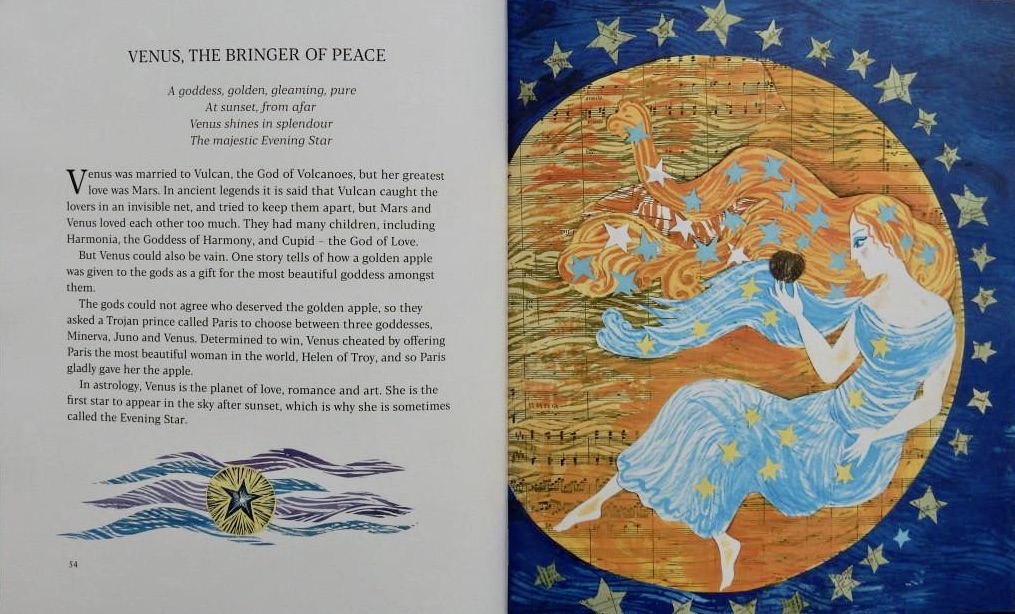
The focus of The Planets (Gustav Holst) are stories of the Roman gods and goddesses that they were named for.

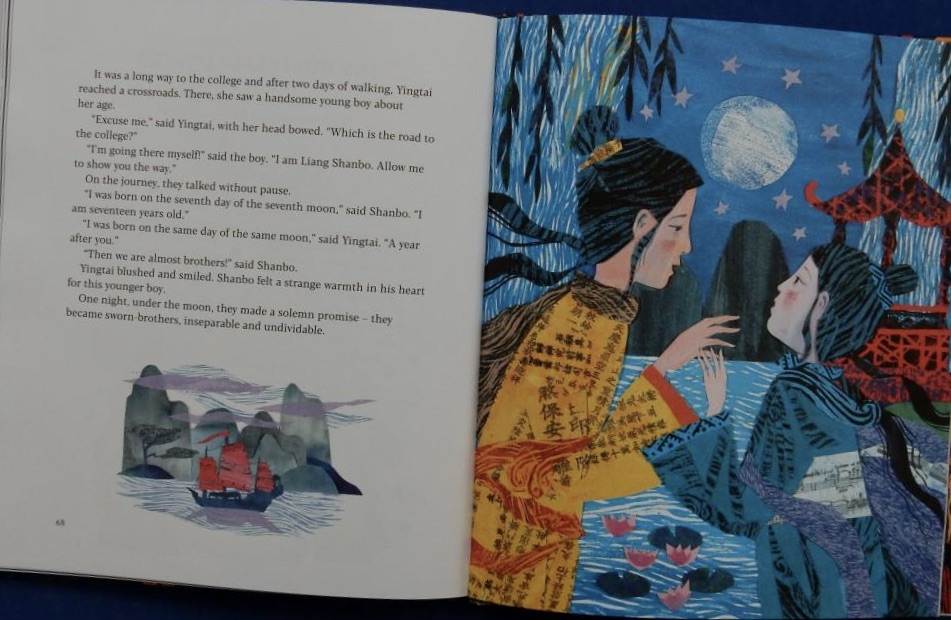
Also with its roots in tragedy, a Chinese legend of thwarted love The Butterfly Lovers tells of a girl who. to fulfil her longing to be educated, disguises herself in her brother’s clothes. On her long walk to the college clad in male attire she encounters a boy who offers to show her the way. The two become ‘sworn-brothers’ undividable: the boy, Shanbo forms a very deep bond with Yintgai but can the two ever be united?

Originally written for a ballet, Stravinsky’s The Firebird is the final piece, as engagingly told as the previous stories. Having visited magical realms, readers are brought back to reality with some musical notes from the author and the book concludes with some recommended recordings of the music to stream or download.

An absolutely terrific celebration of creativity through art, music and words. A book to keep and to give.

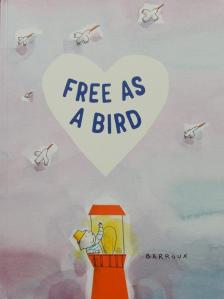
Free As A Bird

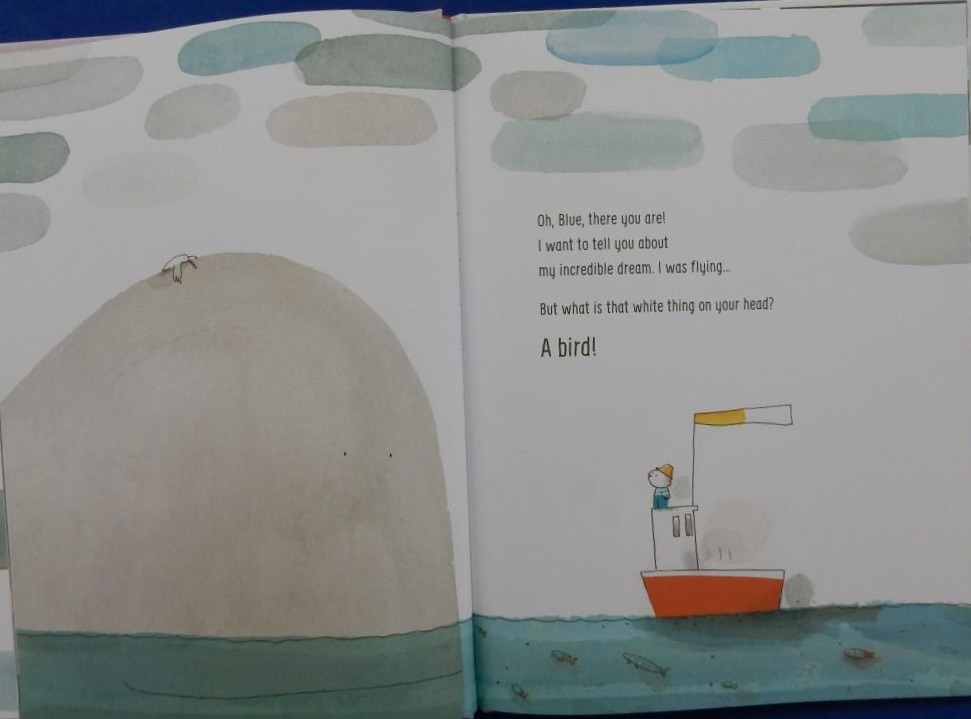
One morning Jonas the lighthouse keeper wakes having spent the night dreaming of flying over the ocean like a bird and rushes off excitedly to tell his friend Blue, the whale all about it. When he finds his friend, there on her head is a bird.

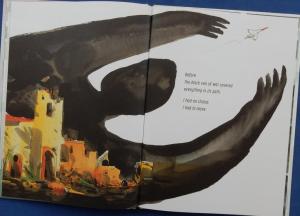
It’s completely exhausted and scarcely alive. Back at the lighthouse the friends know they need to take special care of the little creature. Fortunately Blue is able to understand the meaning of his tweets. The bird has flown from a distant country that was once a beautiful place; that however was before the war came and the bird had no choice but to flee and undertake a perilous journey in the hope of finding a safe haven.

Little by little the bird grows stronger and his song fills the air around. Many other birds come too, all singing a similar song of hope and freedom as they recover sufficiently to venture forth to find homes elsewhere. Not so their friend the first little bird; he’s found a place of happiness, a home at the lighthouse, just the place to raise a family .…

Illustrated in pen and watercolour, Barroux’s simple, compassionate and hugely powerful story told with great empathy, uses the bird metaphor effectively to convey the on-going plight of refugees from so many different parts of the world. If only they could all find a safe haven like the little bird did.

Blue Monster / Not Fair, Bear!

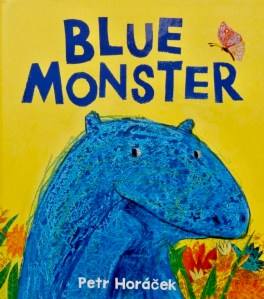
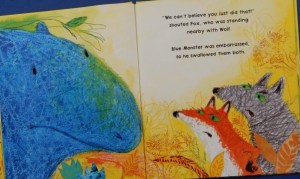
Bored with no-one to play with Blue Monster decides to ask Rabbit; but Rabbit is sleeping and doesn’t hear the request. Blue Monster repeats it much louder, waking Rabbit this time. Rabbit though refuses so the monster proceeds to swallow Rabbit. The trouble is he does’t merely swallow Rabbit: oh no! This crazy creature also swallows in turn Rabbit’s leporine friend, Raccoon, Fox and Wolf.

Having done so he realises his actions were not appropriate, let alone kind. Moreover with all his friends inside his tummy, who can Blue Monster play with? Overcome with guilt and sadness he sits beside a tree and yawns. You can guess what happens next but what will the outcome be? Will Blue Monster truly see and error of his ways?
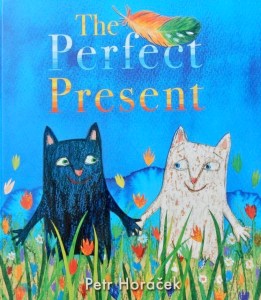
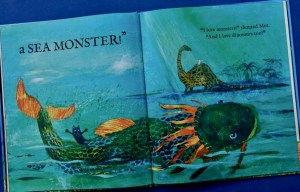
Illustrated with his usual panache, Petr Horáček’s tale is a surprising mix of friendship and silliness; it’s also a tad anarchic and a terrific read aloud that will both shock and amuse young listeners as well as being a great starting point for discussion be that in the classroom or at home.

There’s further undesirable behaviour and friendship tested in

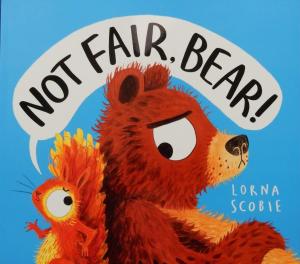
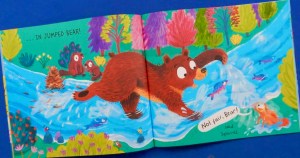
Squirrel and Bear are best friends, doing everything together. Being besties though doesn’t mean they enjoy the same things.and the huge difference in their size can sometimes cause issues regarding playing. One day Bear chooses only activities that Squirrel deems unfair. The tree climbing ends with Squirrel cascading into a bush, Squirrel isn’t a swimmer so the river fishing leaves Squirrel feeling left out and so it goes on.

Come the evening Squirrel is feeling pretty dismal and off he goes to sleep. Not so Bear who disturbs Squirrel’s slumbers announcing that it’s playtime. An angry Squirrel tells Bear that the next day will be “DIFFERENT”.
Before long it’s evident that games played Squirrel’s way don’t work for Bear and the two have a tiff resulting in Squirrel telling Bear that he no longer wants to play with him.
Can the two find a way to enjoy each other’s games without falling out? Maybe, but will what they do please all the other creatures too? Lorna Scobie’s lively, funny story about learning to compromise is dramatically presented both in words and pictures. It’s followed by a ‘Big Feelings’ spread for children and adults to talk about together either at home or in a foundation stage setting.

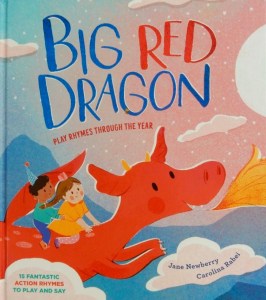
Big Red Dragon: Play Rhymes Through the Year

From dinosaurs to diggers and rattle snakes to robins, this lively collection of fifteen playful action rhymes will soon have young children, be they at home or in an early years setting, eagerly participating in both actions and words.

The festival related rhymes are arranged through the year starting with the titular Big Red Dragon for Chinese New Year, then the Easter Bunny, Halloween Fun and Happy Diwali and Naughty Reindeer.
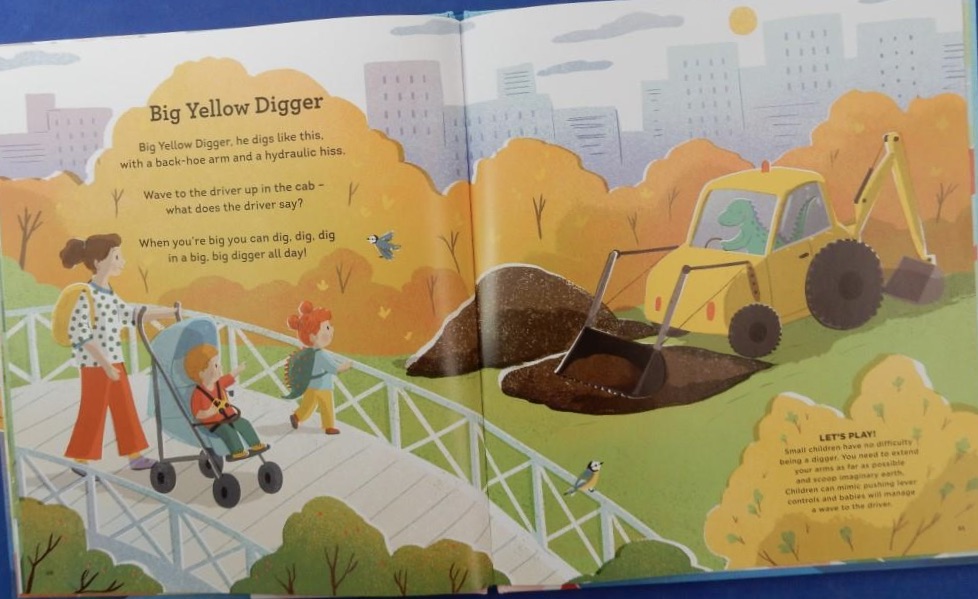
Each rhyme has a ‘Let’s Play’ suggestion set into the illustration giving ideas for ways little ones can join in, although some rhymes themselves will suggest movements and sounds, for instance toddlers might like to emulate the dragon’s paws and wings ‘clap clapping’, and ‘flap flapping’ with possible shouts of “Boing!’ as accompaniment.

Carolina Rabei’s playful illustrations are an ideal match for Jane Newberry’s rhymes;

her visual images are vibrantly coloured, textured, perfectly in tune with the words and sure to appeal to young children.

Definitely worth adding to foundation stage collections: I envisage it being used in lots of story time sessions when it will unobtrusively help develop children’s verbal and visual learning.

This Is Happy!

Happiness can be found in the very smallest of things, but we need to slow right down and look carefully. Only then will we truly appreciate what a wonderful world surrounds us. The adult carers in this book are aware of this and do all they can to ensure that the children have as many opportunities as possible tto discover it too. The children experiment with paints, plant seeds and watch them grow,

get right up close to damp earth after a rain shower They frolic on the seashore, lie flat in the grass on their tummies and investigate using all their senses. There are birthdays to celebrate with energetic dancing and delicious food, muddy streams to splash in, opportunities to let their imaginations take flight in a variety of ways – inventing new stories ,

entering those in books and perhaps even visiting distant galaxies as they stand beneath a starry sky.
Maybe the very best of all though is to be found when snuggled up with family members …

Lyrically and engagingly written by Anna Ross with Debi Gliori capturing the rapturous moments the diverse cast of five families enjoy.

Slow down and share this delightful book with the little ones in your life; it’s never too soon to introduce young children to mindfulness.

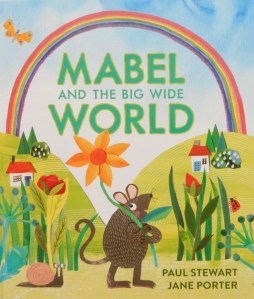
Mabel and the Big Wide World

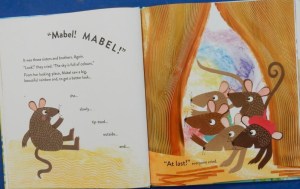
Mabel mouse lives happily in a barn with her five siblings, Martin, Marjorie, Marcel, Max and Millicent and is perfectly content in this enclosed world. She has no intention of venturing into the big wide world when her brothers and sisters invite her to accompany them. She does though on occasion watch them frolicking with one another outside but despite it appearing fun, she stays put. The seasons come and go; the other mice tell her she’s missing so much but she’s put off by the possibilities of great big hairy things and teeny-weeny scary things.

One day however the sky is full of colour: a beautiful rainbow has appeared and having seen it,

Mabel slowly, slowly creeps outside to get a better view. WOW! An arc of colours stretches right across from hilltop to sea as the rain continues falling gently. This is a day Mabel doesn’t want to end as she frolics in the wet with her siblings enjoying every moment.

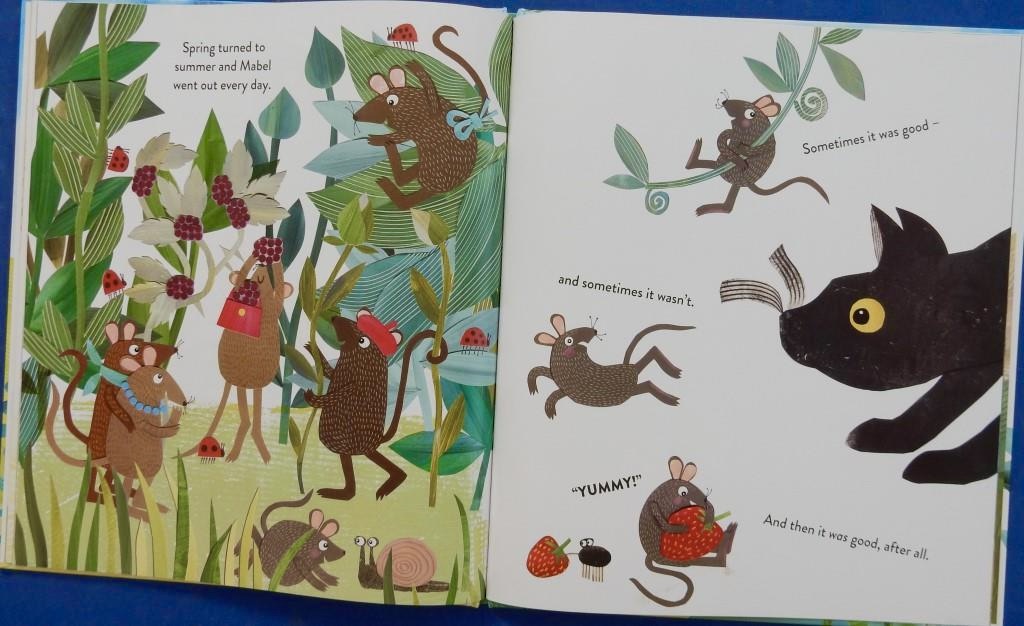
Then back in the barn, which now feels very small, Mabel creates an inside rainbow to remind her of the wonders beyond its confines. Seasons come and go but now Mabel makes the most of the great outdoors, taking in her stride whatever happens.

One night there’s a thunderstorm. It frightens all the other mice but not so Mabel: “It’s just the weather showing off,” she reassures them. Autumn brings fallen leaves to romp in and winter ’s snowfall provides plenty of snow from which to make a snowmouse.


Meanwhile in the barn exciting things have happened too: Mabel is no longer the smallest mouse: she has lots of new brothers and sisters including Marco. He might just need a bit of encouragement to go outside like his big sister did.

Young humans will immediately recognise those feelings of uncertainty and fear that Mabel experiences, feelings that little by little change into a self-confidence, which enables them to take delight in the freedom and opportunities the outdoors brings. Jane Porter’s distinctive richly coloured, collage style illustrations together with Paul Stewart’s storytelling written from Mabel’s viewpoint make for a reassuring book to share with young children at home and in an educational setting.

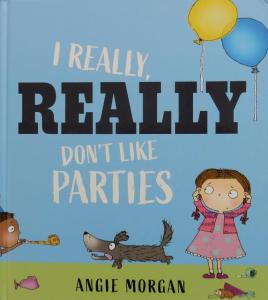
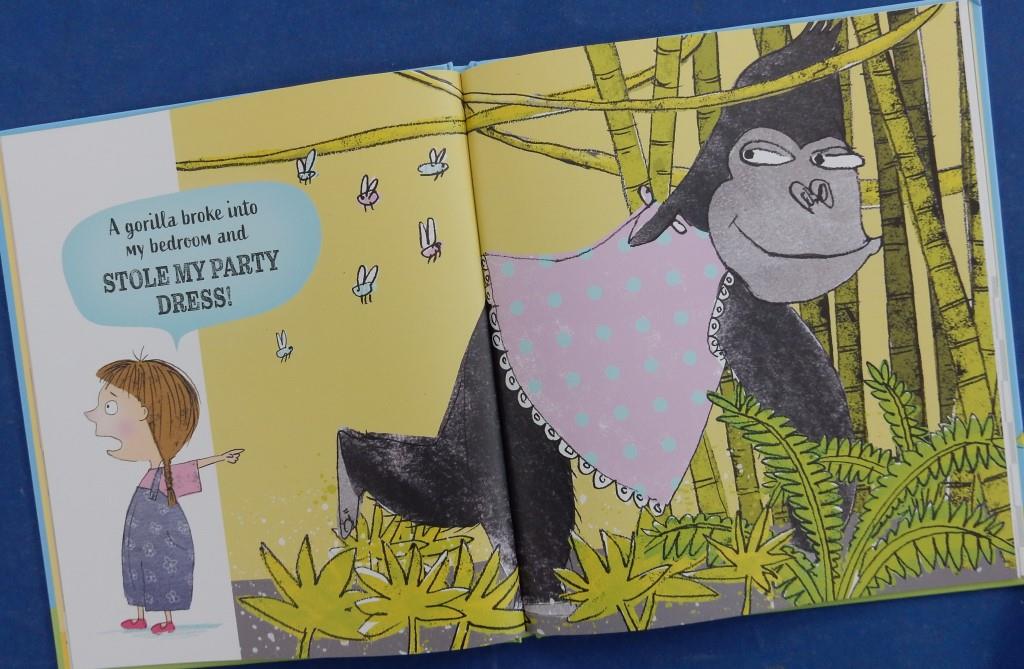
I Really, Really Don’t Like Parties

When Dora discovers an envelope containing an invitation to Rashid’s birthday party at the bottom of her book bag, her heart sinks: she does not like parties at all. Mum insists it will be fun but Dora is creative thinking up all kinds of reasons why she can’t possibly go, even if her friends will all be there.

Mum is having no nonsense though and packs her off to the party.

Dora is right about it being a very noisy affair but does her best to participate in some of the games. Then comes the teatime announcement. Dora dives under the table and there to her surprise finds she’s not alone. Tom is already there and he’s tucking in to a plate of food which he shares with Dora: that’s two party haters and two new friends having a great time together.

Some time later Dora receives another party invitation. I wonder what her reaction will be to this one.
As a young child I would have been a Dora, though I probably wouldn’t have invented such wonderful excuses nor gone under the table and I know a number of children who feel the same about hectic noisy parties now.

Angie Morgan’s illustrations of Dora’s excuse sequence are both hilarious and heartfelt. She cleverly uses humour – visual and verbal – to convey a very important message: we are all different in our response to loud, busy situations and Dora’s feelings about them are perfectly valid.

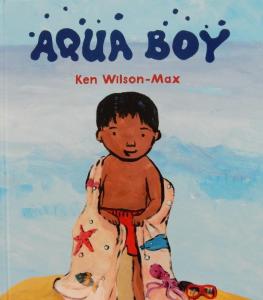
Aqua Boy

Islander Aaron lives by the sea with his parents and elder sister, Angel. Mum and Dad are ocean guardians, volunteers performing a vital role in trying to keep the beach clean. His sister is at home in the water as well as on land and loving to plunge into the waves, she calls herself Coral Girl. Aaron would dearly love to do the same but he’s frightened of going under water. When he shares his fear with his Mum, she tells him that it will happen one day, “when you least expect it.” Dad is equally reassuring when Aaron joins him in the boat as they head out to check on the sea creatures.

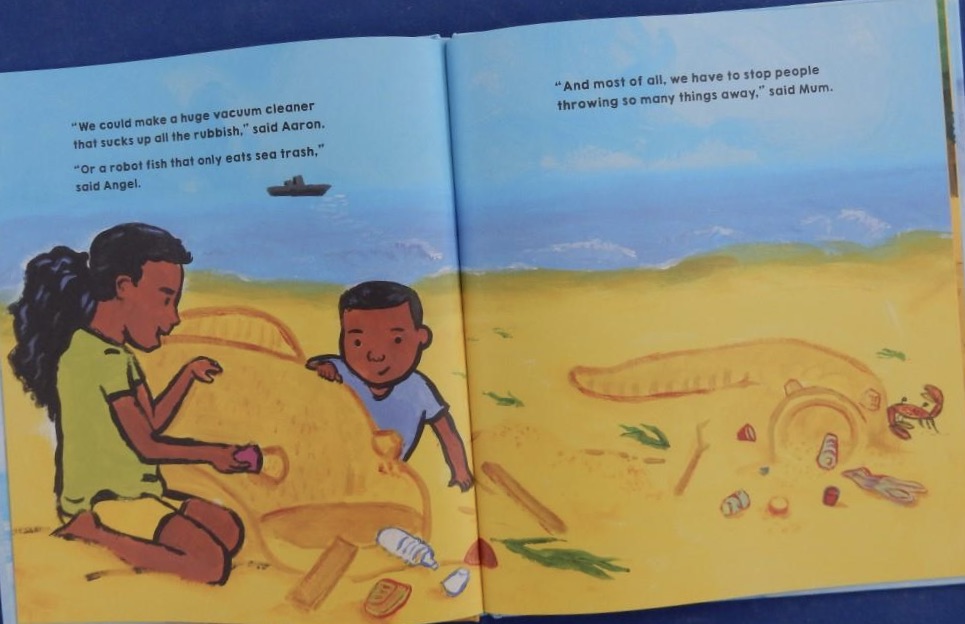
That night a huge storm blows up and the following morning the beach is littered with rubbish. The ocean guardians set to work clearing it up, Aaron and Angel imagining ways they might ‘clean up the ocean for good.’

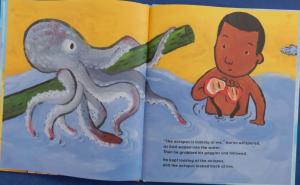
All of a sudden, Aaron spots an octopus, stranded, so Dad says, on the sandy shore. Dad entices it with a length of wood. The children watch as gradually the creature wraps itself around the stick and Dad wades out into the sea. Grabbing his goggles, Aaron follows looking right at the octopus, the creature looking directly at him as it slowly releases its hold on the wood

and swims free below the surface.

The boy then puts on his goggles, breathes deeply and immerses himself, watching the movements of the octopus. Once his friend has swum away Aaron stands up and there, fear finally gone, he is really happy and ready to embrace a new way of being an ocean guardian. He learns about the creatures he sees underwater, helps care for them and never stops hoping his octopus friend will return.

This timely, gentle tale of environmental guardianship with Ken Wilson-Max’s vibrant scenes that portray both family love and the vital role ocean guardians play, will one hopes, highlight to young children the importance of caring for marine life and ensuring that they play their part by taking their rubbish home as well as helping to keep beaches clean. A final spread gives some octopus facts and underscores the outcomes of ocean pollution.

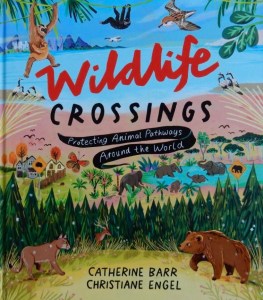
Wildlife Crossings

Human activity has an ever increasing impact upon the natural environment. Deforestation, agricultural expansion and urban development all have adverse consequences for the animals with whom we share our planet. This book looks at some examples of how this disruption is being ameliorated by taking positive action.
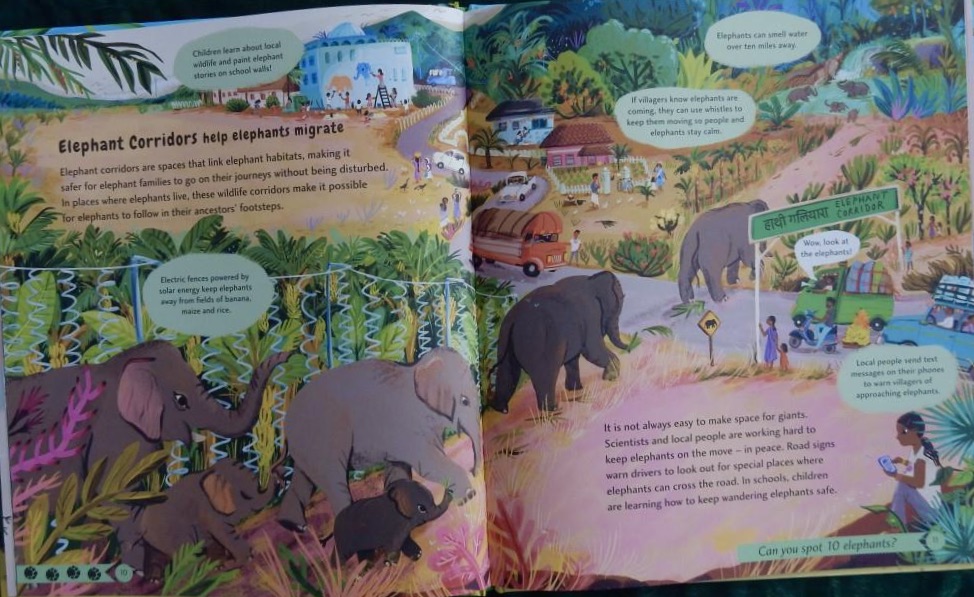
Catherine Barr allows readers to track the journeys of seven animals in different parts of the world and discover how ‘wildlife corridors’, together with education programs, are enabling precious wild creatures to survive. The first destination is India, in particular an area where the ancient paths elephants follow to find food and water are blocked by roads and railway tracks, so in order to facilitate their migration, elephant wildlife corridors have been created. Solar powered electric fences help keep the elephants out of crops that are important for the local village people who inform one another when the elephants are on the move.

UK readers may be aware of the disastrous decline in the hedgehog population but thanks to the work of the the UK Hedgehog Street campaign especially, Hedgehog Highways, people have been encouraged to leave holes in their fences to allow hedgehogs safe free passage as well as to create hedgehog friendly spaces in their gardens.

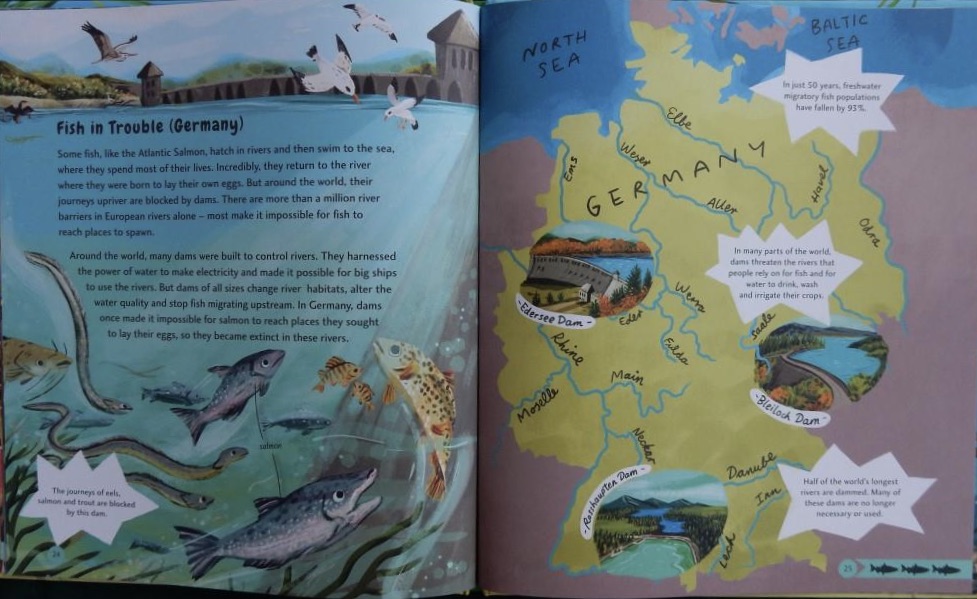
Bird migration flyways around the world with wetland stopovers, aerial bridges to help gibbons across forest gaps in China, fish ladders for migrating salmon to pass dams and weirs,

bear bridges across busy highways in Canada and cougar crossings in the USA are the other examples featured. Each one is allocated two double spreads where Catherine’s words are integrated into Christiane Engel’s detailed scenes of each location, one presenting the problems the second, how they are being solved. A final spread gives brief illustrated paragraphs about seven other animals whose ancient paths have been disrupted.

A book to raise awareness among children who one hopes, will find ways to support the vital work being done. Highly recommended for primary school collections.

The Boy Who Loves To Lick The Wind

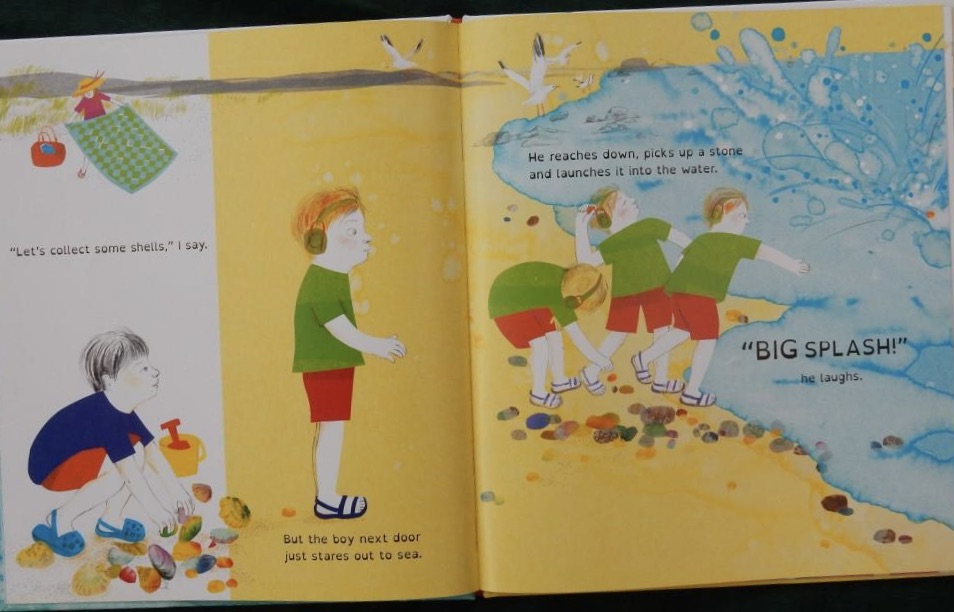
This story features two boys – the narrator who is dark haired, and his blonde neighbour. Puzzled by the blonde boy’s behaviour, the narrator speaks to the boy’s mother who responds thus, “He’s licking the wind. You should try it.” She goes on to invite the inquirer to join them on a visit to the beach, the place where the best winds can be found. Off they go with ‘the boy next door showing his excitement by his actions and the sounds he makes. Once at the beach he dashes onto the sand stands still and begins his licking ritual, ignoring an invitation to collect shells, Instead he picks up a stone and tosses it into the water.

The two boys then spend time throwing stones until mum calls them for lunch. The boy bites into his sandwich, tosses it away and shows distress, which his mum deals with calmly.

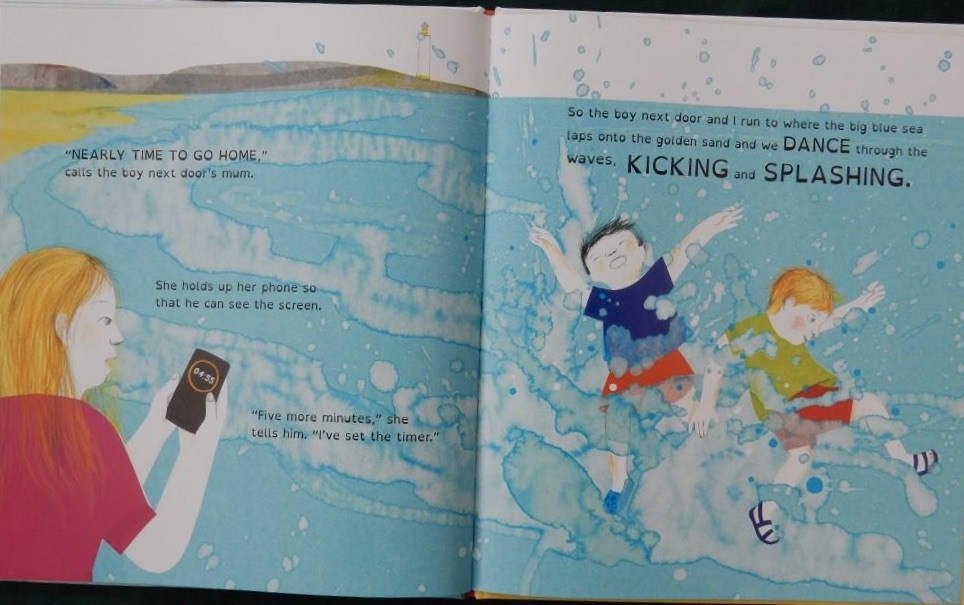
Meanwhile the narrator starts collecting smooth stones and using them to make a castle. Just as he finishes the boy next door runs up, grabs the top stone and hurls it into the sea. The boys then take turns dismantling the castle splash by splash till nothing remains. They jump, spin and yell into the wind till Mum calls to give her son a five minute warning before it’s time to return home. This prompts both boys to dash into the sea and dance around.

The beeper sounds indicating it’s time to leave, which causes the boy to cover his ears and cry. Again Mum is empathetic and they head towards the car but before they reach it, both boys give one final tongue swirling lick of the wind. How wonderful it feels.

The following day in school the narrator tells his class during a circle time session about their day at the beach; his friend demonstrates and then they all lick the wind together.

Some child listeners and adult readers aloud will understand from the outset that the narrator’s new friend is neurodivergent. That means that his brain works in such a way that he experiences and interacts with the world differently from neurotypical people. The story, related and illustrated with great empathy, is an ideal way to introduce neurodivergence to primary school children.

Zooming the Zoo

There are over sixty poems in this splendid collection. Most are light-hearted in tone but nonetheless the author often uses humour to put across serious ideas, my most favourite being Just Let Me Read, which wearing my teacher’s hat, is spot on and absolutely in the spirit of a recent Guardian report about the joy having been sucked from the education system by the present government. The poem begins thus: ‘Just let me read / Without counting commas / Identifying idioms / Noticing nouns / Analysing analogies // Just let me feel a sense of wonder / / Without asking me to wonder / How it was achieved.’ Himself an ex-teacher, Dougherty doesn’t say that this should never be done, rather that it should not be the raison d’etre for asking children to read something.

I’m sure children will be amused by When You’re a Kid about them being able to sit on a loo seat the wrong way round and pretending to be riding a motorbike, whereas teachers cannot do this. I guess it rather depends where the loo happens to be: this teacher is able to do so in the privacy of her own bathroom.

Another poem I particularly like is the three-liner In the Library, which says so much in so few words. Another is Learning to Walk about the importance of risk-taking in learning.

The author’s early life in Ireland is the subject of both Taking My Children to Larne in which he recalls a time during The Troubles when bombings were as he says ‘normal’. It’s also mentioned in The First Time I Went to Scotland wherein he remembers being searched before entering shops in Northern Ireland.

Finally, I suspect everyone will be amused at the titular poem about a Zoom meeting that doesn’t quite go to plan on account of animal mishaps.

Whatever your children’s feelings about poetry, it’s definitely worth sharing some of John’s work with them; I’m sure you’ll find poems to please everybody. Individual readers will enjoy Tom Morgan-Jones’ black and white illustrations.

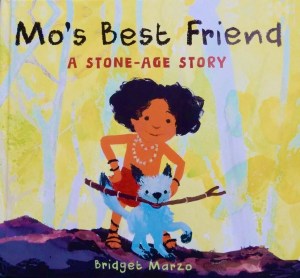
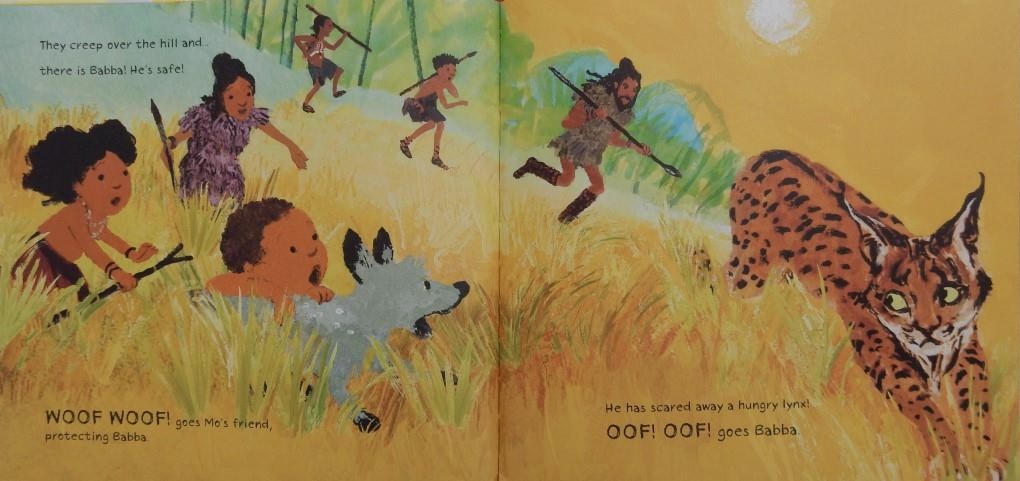
Mo’s Best Friend

This story was inspired by an amazing discovery almost thirty years ago, of footprints – one of a child, the other a dog – by archaeologists working in the Chalet cave in France.
Mo and her family live in the Stone Age, the little girl’s main role being to watch over baby Babba, her fast crawling sibling who isn’t yet aware of danger. Mo has a favourite place away from the rest of her family, a kind of den where she takes her food and listens to the sounds around.

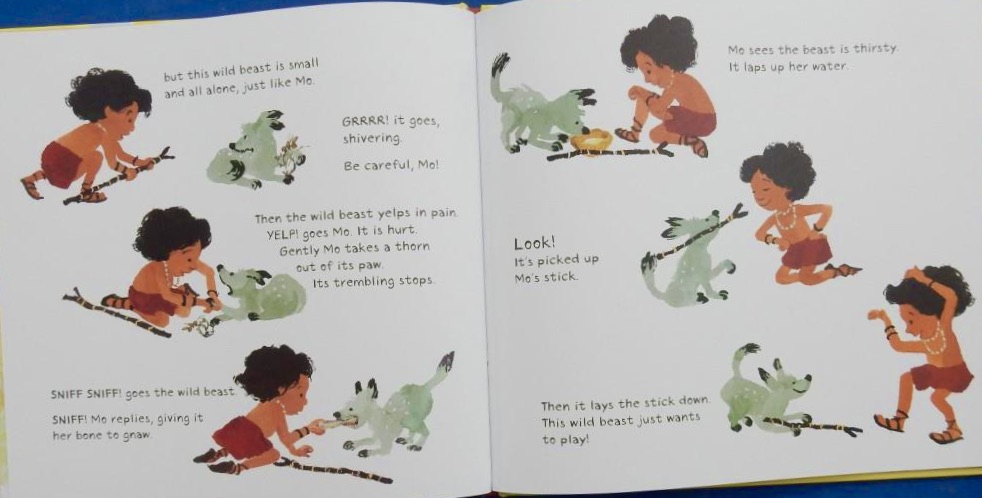
One day when so doing, she hears an unfamiliar YIP YIP coming from a bush. Despite what she’s been told about wild creatures being dangerous, Mo goes to investigate and discovers a small animal, all by itself. When it starts yelping, she looks closely and finds a thorn in its paw. Having had the thorn removed, the little animal wants to play and the two form a friendship, playing together all afternoon.

Then comes a call from Ma summoning her daughter and Mo decides to introduce her new friend to the family. Their reaction is one of horror and they scare the little creature off. Almost simultaneously they realise Babba is missing and a search begins with Mo leading the way. Suddenly Mo notices a footprint and then they hear a ‘WOOF WOOF!’ It’s her new friend and to almost everyone’s surprise, he’s protecting little Babba from a hungry lynx.

Henceforward, its’s not only Mo who has a new friend. I wonder what they decide to name him …

Bridget Marco’s scenes of the simple hunter/gatherer lifestyle of the family group are executed in gouache, and the ochre hues employed are true to the archaeological evidence and cave paintings from 25 thousand years ago. Back matter provides a spread showing stone-age survival skills including flint knapping, and there’s also reproductions of the photos of the human and dog footprints found in the cave.

Diary of an Accidental Witch: Magic Ever After / The Story Shop: Detective Dash / Nikhil and Jay Flying High

This image has an empty alt attribute; its file name is dscn9922-1.jpg

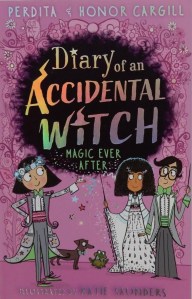
The Easter holidays are fast approaching for Bea Black. First though she needs to discover what is wrong with her Dad. In addition there’s the upcoming annual Eggastraordinary Eggy Day and Bea is still working on improving her spelling. To keep her sweet, Bea is helping at Taffy’s teashop and being paid in cakes. You may be surprised to learn that Bea’s Dad is also working obsessively on his spells, which makes his daughter suspect that something is up.


When Taffy takes Bea into her confidence things become clearer but she’s charged with keeping Taffy’s proposal plan a secret, which is far from easy. Why, Dad wants to know, can’t he wear his favourite scruffy jumper to the venue; after all it is supposed to be a newt-watching trip..


Despite near disaster, the couple agree to get married and then there’s just the matter of a wedding and all that entails, to focus on. Bea is definitely going to need lots of help from friends and family.
Without giving too much away, let’s just say that Bea’s final diary entry in this book starts ‘BEST.NIGHT.OF.MY.LIFE’.


You can’t ask for more and readers will certainly be more than satisfied. Team Cargill and Saunders have again created a winner.

This image has an empty alt attribute; its file name is dscn9918-1.jpg

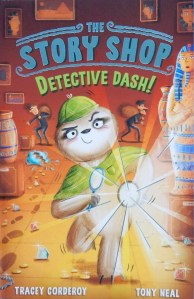
When shopkeeper Wilbur and his assistant, Fred Ferret arrive in their shop early one morning they’re puzzled to hear a strange sound. It turns out that a ferret has fallen asleep and is snoring. Once awake she introduces herself as Snoozy Suzy saying she’s eager for an adventure.

Suzy elects to be a detective, Fred adds some ingredients to the Story Pot, stirs the mix, and POP! the two of them find themselves in The Museum of Wonder where they learn, a robbery has taken place. Suzy informs the strange man, Ivar Plan busy with a display of lamps, that they’re there to solve the case of the cursed teeth. It turns out that Ivar is actually a robber and the lamps are part of his clever plan to steal priceless articles from the museum. Can Suzy and Fred save the day?


In episode two I S-Pie Trouble!, the pair are at the seaside where one of the posh hotels is in uproar due to the disappearance of Chef Humble who is supposed to be presenting his delicious new creation, the ‘Whatever You Wish For Pie’ at a banquet that coming Friday. After a night’s sleep Fred and Suzy peruse the clues they’d found the previous day and are about to have breakfast when they learn that a new chef has turned up offering to step in and save the banquet – at a price. Things seem decidedly fishy to the detective duo. Will they find the real chef in time for the Friday night banquet?


The riverside village of Watery Bottom is where the third episode is set. Here Suzy and Fred are tasked with discovering the truth about the Demon Duck of Doom. To do so they need to participate in a Doomseeker Expedition led by young April Button. But what is she up to and why?


Full of surprises, this fourth Story Shop book with its wealth of fun illustrations is again just right for younger readers.

This image has an empty alt attribute; its file name is dscn9938-1.jpg

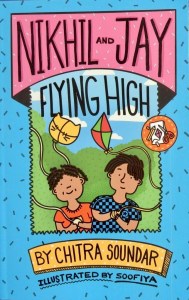
The fourth book in the charming series for new solo readers starts one rainy day when Appa goes out to the shed to retrieve to board so the boys can play Dayan but the cat distracts him, he takes a tumble and injures his ankle. Can several rounds of the game, together with a cup of tea and a packed of frozen peas on his foot make him feel better?


Three further stories about the everyday life of Nikil, Jay and their parents follow. They participate, somewhat reluctantly at first, in the local Clean and Green Club at the neighbourhood park and then decide it’s a more enjoyable way to spend a Saturday than they’d anticipated.
Next comes a day of kite flying though they unexpectedly have to make the kites themselves as those that had been ordered aren’t delivered in time and finally, Jay gets himself in a stew about tidying up and soon discovers that doing things without his brother is far less enjoyable than doing them together.


As always bold, cheerful black and white illustrations by Soofiya complement Chitra’s telling of these tales, which are based on her own upbringing.
The Shape of Rainbows

There’s a zippy zing to the poems herein – nearly fifty in all – and they simply cry out to be read aloud to, and by, primary children. Although on second thoughts that excludes Breakfast unless you are a pronunciation wizard and can say ‘Greg / Gges / Segg / Ggse’ as well as R a ndo m because how it looks on the page is part of the fun.

There’s one poem where every single word (and there are rather a lot) begins with the letter A either in its lower case or capital form. It’s title is Adam’s Apple and it tells of a boy who consumed nothing but apples until something unpleasant happened to him and then, on the advice of adults, he changed his diet.

When I was a classroom teacher, be that in the foundation stage, KS1 or KS2, we had a daily ‘together time’ session for children to share their ideas, things they’d made etc and I always shared a poem. Neal’s latest collection is one I would definitely add to my ‘go to’ books of poems to use in such sessions. What child wouldn’t want to hear The Day I Ate My School wherein the young narrator apologises for having consumed a most unlikely school dinner, or learn of an Interstellar Mum and I would certainly encourage everyone to Grab a Book and as Neal says in the opening lines ‘Open it / Relish it / Ogle it / Cherish it ‘ …

Will Hughes adds to the fun of every spread with one of his zany black and white illustrations.

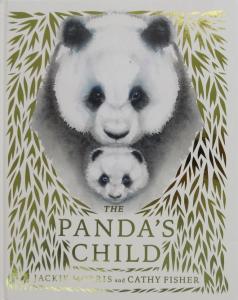
The Panda’s Child

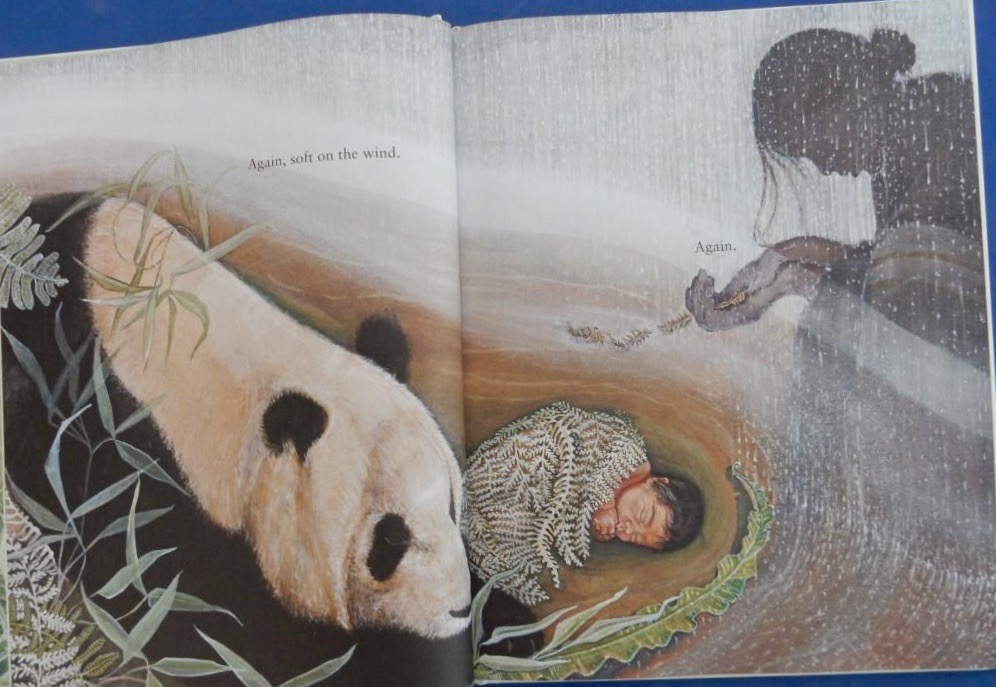
Left behind by her fellow villagers as they walked in the forest, a mother lies down with her baby boy in the warm sun. She drops off to sleep briefly and wakes to discover the infant has gone. After three days of searching the villagers conclude that the baby must have been taken by a creature of some kind or perhaps the forest spirits.

The mother refuses to give up though and continues searching alone, hope gradually fading the longer she looks. But then, drifting on the wind she hears something: could it be? Wonder of wonders, in a cave beside a large ursine creature lies her child, alive after seven days.

The bear – a she panda – must have kept the baby alive, the villagers decide, and henceforward, they have a strong bond with the animal. They also have a special bond with the little child.

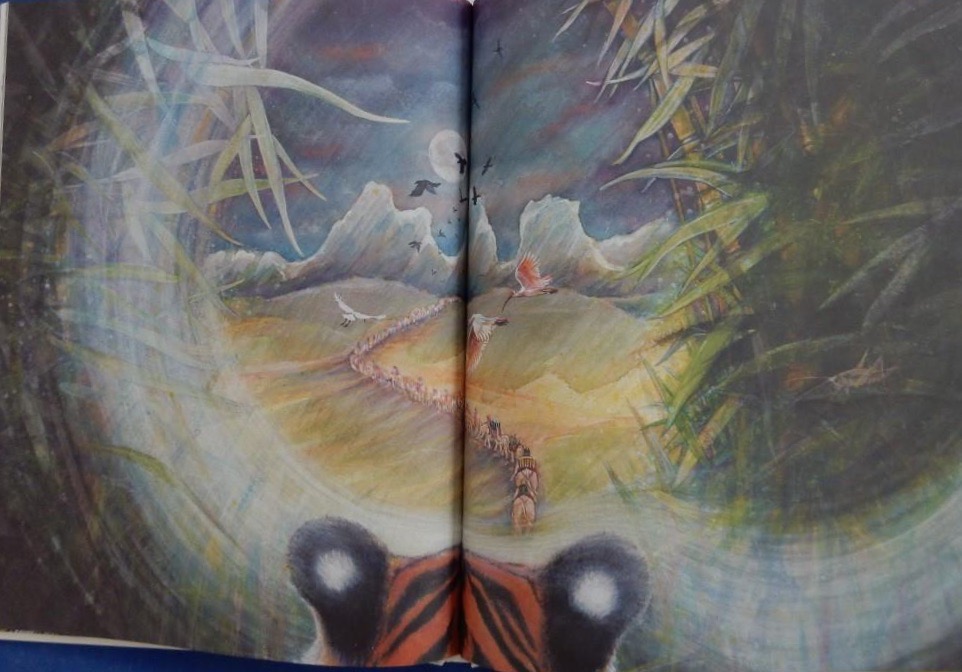
The years pass and on the child’s ninth birthday some strangers ride into the village. It’s evident from their lavish dress these are rich people, accompanied by large hunting dogs and elephants most of which bore cages of animals of various kinds. One cage however is empty. The villagers hope that by ignoring the visitors, they would move on but the boy, attracted to the horses, approaches them and is told they are searching for a black and white creature. Said creature is to be a gift for a great ruler, Alexander. Eventually the riders depart, only to return several days later. This time the empty cage has been filled by a black and white animal: the panda’s child. The boy begs them to take him with them to ensure the creature remains alive and eventually they agree, to the horror of the entire village. But has the child really betrayed all those responsible for keeping him safe? Or does he have another reason for wanting to accompany the wealthy travellers even if it means risking his own life?

Hugely moving, Jackie Morris’s spellbinding tale with Cathy Fisher’s mesmerisingly beautiful illustrations will stay with readers long after the book has been closed. With its environmental and conservation themes it will appeal to a wide age range and would make a wonderful present for a lover of the natural world.

The Star Whale

What a truly beautiful celebration of some of the world’s natural beauty is this book containing forty poems penned by zoologist/ writer Nicola Davies, each one accompanied by a stunning painterly illustration by Petr Horáček.

It’s impossible for me to choose absolute favourites, such are the riches contained herein but one I was instantly drawn to today is Kingfisher, the opening and closing lines of which are: ‘A strike of turquoise lightning / Swallowed by its own reflection / … ‘And nothing matters in the world / But this small glint of wonder.’

It seems as though Nicola visited our re-wilded garden for her description of the kind of garden she loves – a place where ‘stems make a jungly chaos / and beetles prowl.’ … ‘Where wildflowers bloom to feed the butterflies / and bees.’ … ‘where neat and tidy are forgotten / and nature rules.’

As trees are my favourite thing in the natural world, I was also attracted to Mama Tree wherein the description of interconnectedness goes like this: ‘ Mama tree is talking to her children. / Through fungal fingers that wrap around her roots / she reaches out like any mother / to touch, to feed, to warn.’ If I sat beneath the tree Petr has painted for this poem, I don’t think I’d want to move. for a long time.

In this wonderful book you will also be able to fly on the back of a bat and ’learn all the star-scattered secrets of night,’ meet a morning raven, attempt to get your tongue around the moth alphabet, join the Earth in her seasonal dance around the sun; be enchanted by the colours of a dragonfly; you could even encounter a dinosaur or two.

A book to keep and a book to give.

The Most Famous Rhinoceros

The inspiration for this moving story reimagined by Dianne Hofmeyr, was Albrecht Durer’s celebrated woodcut print of the rhinoceros sent from India to Portugal in 1515, the woodcut now being housed in the National Gallery of Art, Washington.

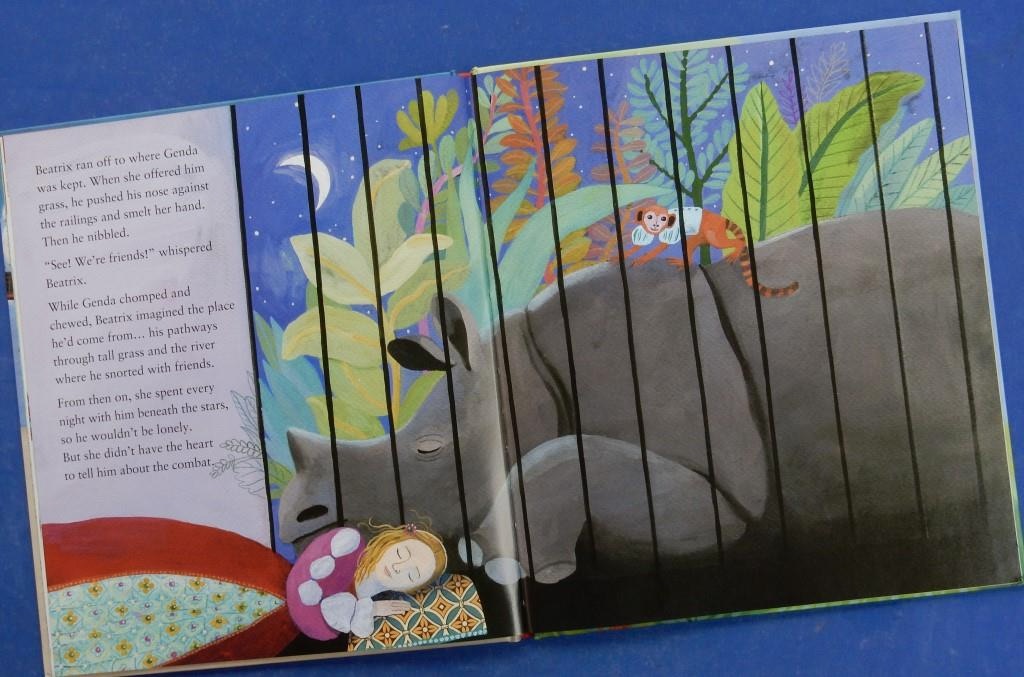
We read how Princess Beatrix and her sister receive a one-horned animal as a gift from the Sultan of Gujarat, a creature Beatrix hopes will be a unicorn. However she’s disappointed to see standing on the sea shore straight off the ship, a very large bulky beast with a small stubby horn on the tip of its nose. Genda, is what she names the gift. Her father informs her it is a rhinoceros and mounting his stallion, he leads the animal, along with a host of other creatures, the queen and her entourage through the crowds to the palace.

Beatrix has already formed a bond with the rhino and is horrified to hear the following day, the king announcing a fight between the rhino and an elephant to settle a squabble between her two brothers.
From then on she sleeps alongside Genda’s enclosure every night leading up to the combat, a matter she doesn’t tell her new friend about.

However, come the day of the contest, the two animals face one another but no fight ensues, no matter how much enticement the creatures receive.

What will be the fate of Genda? Her brother João demands he be sent away but Beatrix begs that the rhino is returned to India and given his freedom. Not long after a ship sets sail with Genda on board and Beatrix bids her friend a fond farewell but …

Animal lovers horrified at the treatment of creatures such as Genda in this story, sent over vast distances in return for favours from their recipients, will applaud Beatrix’s caring attitude and desire to get this gift sent back from whence he came. Simona Mulazzani’s richly ornate illustrations capture beautifully the period in which the events are set, making the telling even more poignant. They show the contrasting natural beauty of the rhino with the elaborate finery of the human characters and the adornments placed upon Genda for the parade and the fight.

Welcome to Wild Town

Welcome to Wild Town
AF Harrold and Dom Conlon, illustrated by Korky Paul
Otter-Barry Books

Have you ever wondered what it means to be truly wild? No? Then you really should pay a visit to Wild Town, for which Korky Paul has provided a map to peruse before arrival. Like the poems, the town is organised into several areas or sections and having, like Dom Condon, signed The Wild Agreement, readers are free to enter therein.

As a vegan, I’m happy to see that our first location is Herbivoreville. However after sampling several of the poems I’m not sure how relaxed I feel here, especially after reading Harold’s Wild Town Proverb #1: ‘A weed’s just a plant / growing in the wrong place. // Tell that to the fly-trap / latched onto / my face.

Playful, yes, as are The Rabbit’s Prayer and Dom’s Elephant Cleaner: ‘ The Elephants empty the bins in twos, / then wash he floors and clean the loos. / They wipe the tops with hairy mops – / one works hard whilst the other stops – / and yet the truth, I must confess, / is that they leave the house a mess.’

Moving on, the Fluttertown offers an opportunity to stay at Chrysalis Hotel, though after reading this in Harold’s description, “Squeeze in and relax // Relax so much you turn to mush – / become a soup filling the room.” I might just give it a miss and move on with some trepidation to the Carnivore Quarter, stopping only on account of Dom’s The Rule Breaker because I tend to be a rule breaker: here are a couple of the verses:’We crept outside when it was dark / We climbed the fences int he park / We did the things they said we couldn’t / We didn’t stop at things we shouldn’t . … We wouldn’t eat the food they grew / We wouldn’t learn the things they knew / We ran and played and sang out loud / We stood up tall and were not bowed’.

All manner of animals reside in this environment, significantly the lions and cheetahs – they feature in several poems; the ducks in Wolf Park are a pretty intolerant lot causing a to do on account of the streaker in Harald’s Going Green or A Worrying Sight in Wolf Park wherein you’ll meet a man who, so he says, has started photosynthesising. He’s so doing to save the planet.
Next stop is The Quiet Side of Town and there I loved He Lives on Slow Lane where in the final verse Dom says, “He’s the oldest of the wild ones / he’s the freest of the free / he’s the calmest in the forest / and he’s often called a tree.’ – a wonderful description of my favourite thing in the natural world, Wild Town or wherever.

It’s now time for Leaving Wild Town but first I certainly will do as Dom asks: ‘Let this landscape / draw itself upon your skin / marking the heart // with an X’. That shows just how much this reviewer has enjoyed a foray into such a special place where both the verbal and visual pictures leave an indelible memory. May the wild go with you too.

Sala, Mountain Warrior

This image has an empty alt attribute; its file name is dscn9570-2.jpg


Sala, Mountain Warrior
Wakanyi Hoffman and Onyinye Iwu
Otter-Barry Books


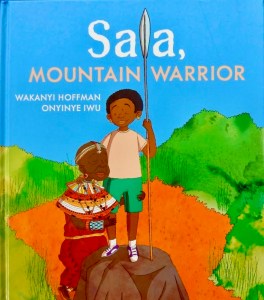
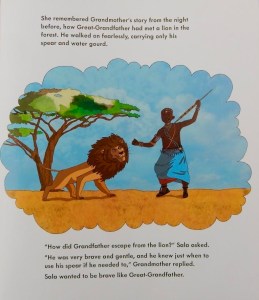
When Sala sees a poster announcing a school camping trip that involves climbing a mountain near her Grandmother’s village, she’s excited at the prospect but also rather worried. Nevertheless, with her Grandmother’s stories, encouragement and a week’s preparation, she registers for the climb – the only girl to do so. She wants to be brave like her Great-Grandfather.

This image has an empty alt attribute; its file name is dscn9571-2.jpg

Before the climbers leave, her Grandmother gives her a water gourd as a good luck present and after a long journey in the school bus, they reach the bottom of the mountain. There they make their base camp.


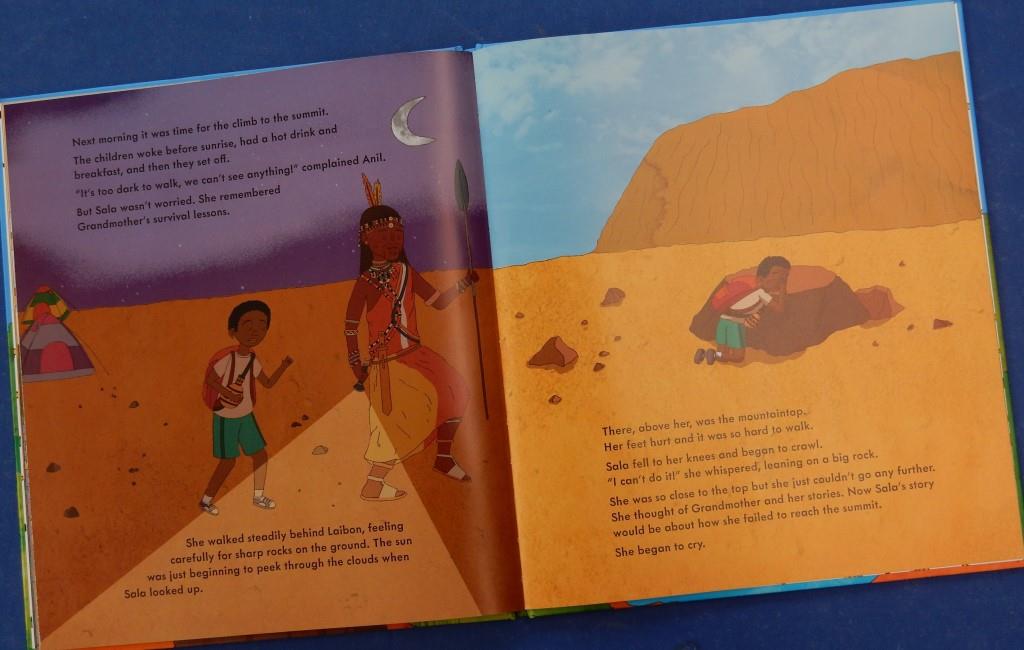
Early the following morning their mountain guide. Laibon, leads them on the first stage of the climb, which they do by afternoon. Next day , the climb is harder work and not everyone reaches the third campsite. Sala perseveres despite feeling a bit shaky and eventually gets to the field of ‘Forever Flowers’ as Laibon calls them, showing the girl his beads and giving her words of encouragement. That night Sala’s dream is of those pink flowers, but all too soon it’s time for the last leg of the climb. Setting off before sunrise, Sala starts to doubt herself.

This image has an empty alt attribute; its file name is dscn9561-2.jpg

Can she make that final push? Yes, with a special something given to her by Laibon.
Back at base camp after their descent, the climbers are greeted by the entire party and somebody unexpected is there too, with something extra special for Sala.


Author, Wakanyi Hoffman’s uplifting present-day story was inspired by her childhood memories of spending school holidays in the foothills of Mt. Kenya where her grandmothers passed down their indigenous knowledge and wisdom through the telling of stories. Onyinye Iwu (you will likely recognise her name if you’re familiar with the Too Small Tola tales) illustrates the text with a colour palette that captures the natural hues of the setting, the intricacy of the Samburu peoples’ beaded accessories and the feelings of the climbers, especially Sala.


An empowering book that deserves to be in every primary school collection.


Rubbish? Don’t Throw It Away!

Rubbish? Don’t Throw It Away!
Linda Newbery and Katie Rewse
Otter-Barry Books

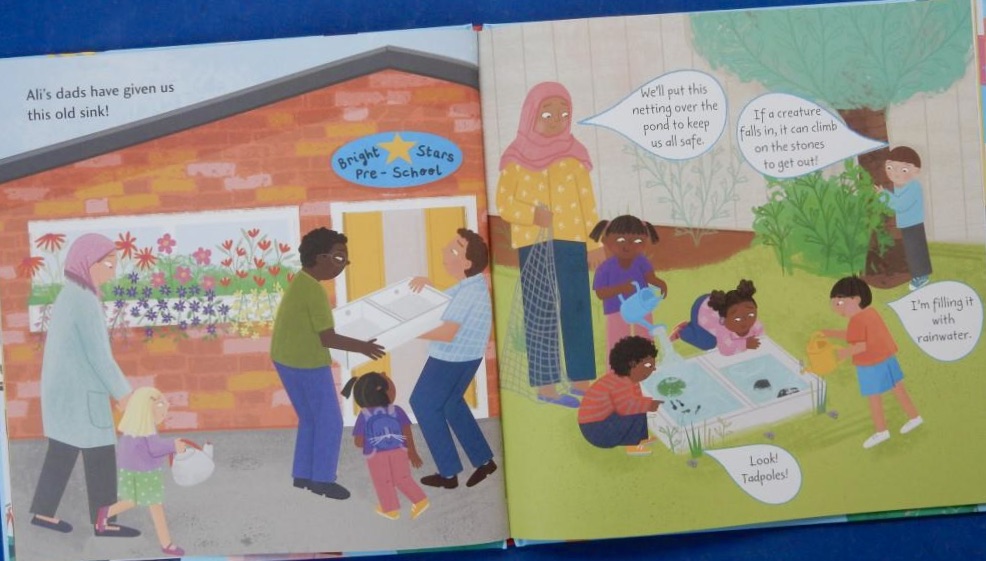
Members of Dragonfly Class are having an upcycling day and they’re all excited. Lucy found lots of pine cones in her grandad’s garden and she and her friends decide to turn them into owls. 

Yasmin’s mum has donated lots of old coat-hangers – just the thing to use for making mobiles and paper plates are ideal for masks.
Ali’s dads have brought along a large sink and this makes a splendid pond; 

others have brought a leaf collection; this becomes a collage; Mohammed’s enormous box is perfect for a fort ; a length of fabric is fashioned into lots of different items. 

Christmas wrapping paper becomes all manner of funky hats 

and the parents and care-givers involve themselves in creating a mosaic for the garden; the garden is also where old tyres become planters while back indoors odd socks are super puppet bases and there are lots of clever ways to put other old items to use again too.

Not only have these children had terrific fun, they are never going to look upon ‘old rubbish’ without thinking, what can this be turned into?

This inclusive community of adults and children are a great demonstration of working together for the good of our precious environment. After sharing author and environmental campaigner, Linda Newbury, and illustrator Katie Rewse’s story, why not hold a similar event in your early years setting.
(Simple instructions for each activity are provided at the end of the book as almost all of them will need adult assistance.)

A Dinosaur at the Bus Stop

A Dinosaur at the Bus Stop
Kate Wakening, illustrated by Eilidh Muldoon
Otter-Barry Books

Like her previous books of poems for children, Kate Wakeling’s new collection is full of musicality and playfulness: every one of the almost forty offerings cries out to be read aloud either to yourself, family members or school friends. As the subtitle says, there are ‘Poems to Have Fun With’. It’s certainly true of My Cold (which it’s suggested is read ‘aloud while pinching your nose’). Here’s how it begins; ‘I’ve got this cold / and it’s terrible. // First I had a tickle / in my throat. // Then came a trickle / of gunge / out of my left nostril.’

How many children will have thought of naming their toes, I wonder. They might after reading The Names I Give My Toes: 1. Tiny Tara / 2. Wilbur the Wonky / 3. Mr Medium /4. Fancy Fiona (who wishes she was a finger / 5) Big Angry Bob . The other five are also named and equally funky

I can’t see many people reading The Washing Machine Jive and doing as the author says ‘pull up a chair’ . I certainly couldn’t: rather I found myself needing to be on my feet moving around as I read: ’Your pyjamas are bopping, / your socks can’t stop hopping, / your T-shirts are wriggling, / and your pants? Yep, they’re jiggling.’

Much gentler is In the Quiet of the Trees, my favourite of all the poems herein and it describes beautifully the way I feel in a forest: “The forest is a special kind of still. // In the quiet of the trees, / I breathe deep as roots. // … and in the quiet of the trees / I become / a special kind of me.’ 

You’ll also find riddles on the theme of oceans and mini-beasts – great to inspire children to try writing their own. Also great for getting children writing is Eleven People on the Bus and there’s even a fart poem – a sensible one so we are told.

Eilidh Muldoon’s drawings augment but never detract from the inventiveness of the poems and will certainly appeal to young readers.

A book I strongly recommend adding to home bookshelves and Foundation Stage and KS1 class collections.

A Child Like You / People Power: Peaceful Protests that Changed the World

A Child Like You
Na’ima B. Robert and Nadine Kaadan
Otter-Barry Books

Beautifully illustrated and presented, speaking directly in a sensitive, heartfelt manner to young readers, author Na’ima and illustrator Nadine celebrate the four children featured, whose actions will surely act as a rallying cry for all children, showing that no matter what, there is always hope.

Inspired by young campaigners and activists, Greta Thunberg, Yusra Maardini, Marley Dias 

and Iqbal Masih, the book highlights the issues of climate change, the refugee crisis, the under representation of black girls in children’s stories, child labour and enforced slavery. 

These four youngsters show the way that other children too – children like them – can also be the change, make the change happen and inspire others to make changes, to speak out strongly on behalf of the dispossessed and the oppressed – to stand up for human rights and make our world a better place for everyone.

A book for all KS1 classrooms.

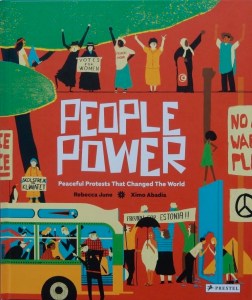
People Power: Peaceful Protests that Changed the World
Rebecca June, illustrated by Ximo Abadia
Prestel

Rebecca June and Ximo Abadia provide readers with a close up look at thirteen revolutionary movements that protested peacefully in various parts of the world, allocating two spreads to each one.

It’s amazing to think that in the UK women have had the vote for less than a century; ‘Votes for Women’ was the battle cry of the women’s suffrage movement on a march through the streets of London one rainy, wintry day in 1907 in what became known as the Mud March; but it took more than twenty years of protesting to achieve their goal.

It was women too, who campaigned peacefully by surrounding the US airbase in the English countryside where nuclear cruise missiles were stored. Their actions were an inspiration to anti-nuclear movements throughout the world.

There are examples of people power from other continents such as the Montgomery Bus Boycott where in 1955, Rosa Parks refused to give up her seat to a white woman and the boycott, which lasted a year, forced the city to change its rules on racial segregation on its buses. Sadly racial discrimination is still with us, both in the USA and throughout the world; hence the necessity for the Black Lives Matter demonstrations prompted by the unlawful killing of the African American, George Floyd by a police officer.

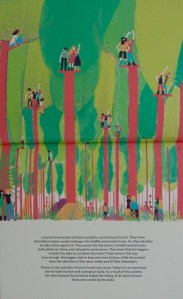
Environmental activists too have a place in this book with Greta Thunberg and her Fridays For Future movement involving young people; but new to me are the ‘Defenders of Pureora Forest’ whose protests against deforestation of this New Zealand tropical rainforest, an important site in Maori culture, saved the forest and led to the ending of felling by the New Zealand Government of all native forests owned by the state.

These and the other movements featured are described in Rebecca June’s straightforward, engaging but never preachy text, and Ximo Abadia’s stylised, often arresting illustrations, both of which convey the message that peaceful protest can effect change, every single voice matters and nobody is too young to start getting involved to make the future better for all of us; what’s needed is optimism, determination and a strong sense of hope.

An important book for primary classrooms everywhere.

Small Stanley’s Big List of Scary Stuff

Small Stanley’s Big List of Scary Stuff
Angie Morgan
Otter-Barry Books

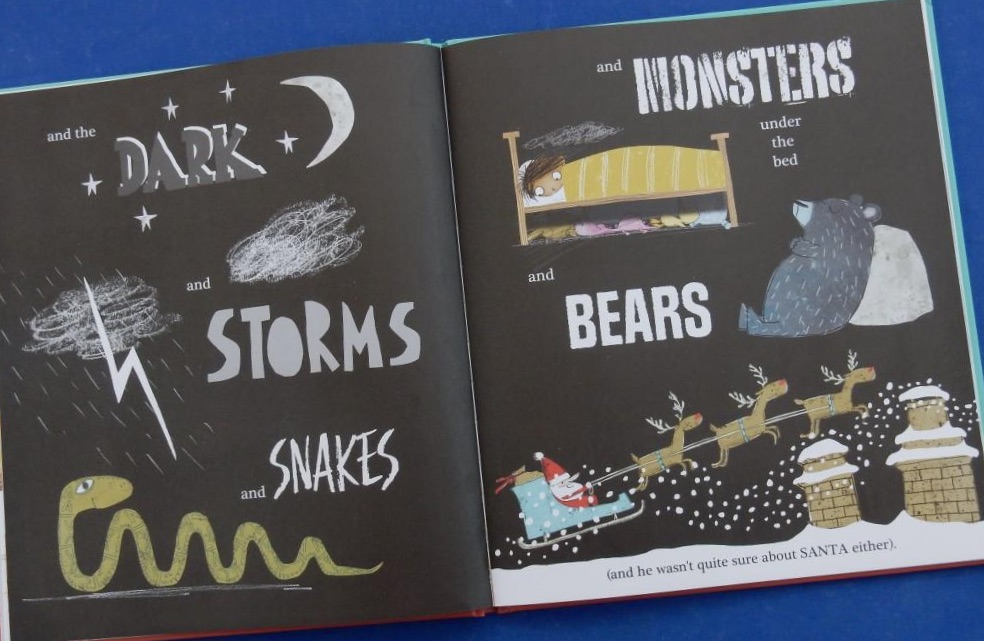
We all worry from time to time but I doubt many people have lists of worrying things as long as Stanley’s. Though this small boy’s world feels bursting with horrors, he longs to be brave like the superheroes he reads of. Instead however, he compiles a ginormous list that never stops growing, for wherever he goes, whatever he does, Stanley thinks of another item to add to his list

– even not having his list with him. It’s no surprise then that he stops playing with his pals – it’s just too difficult; but eventually things get totally out of hand.

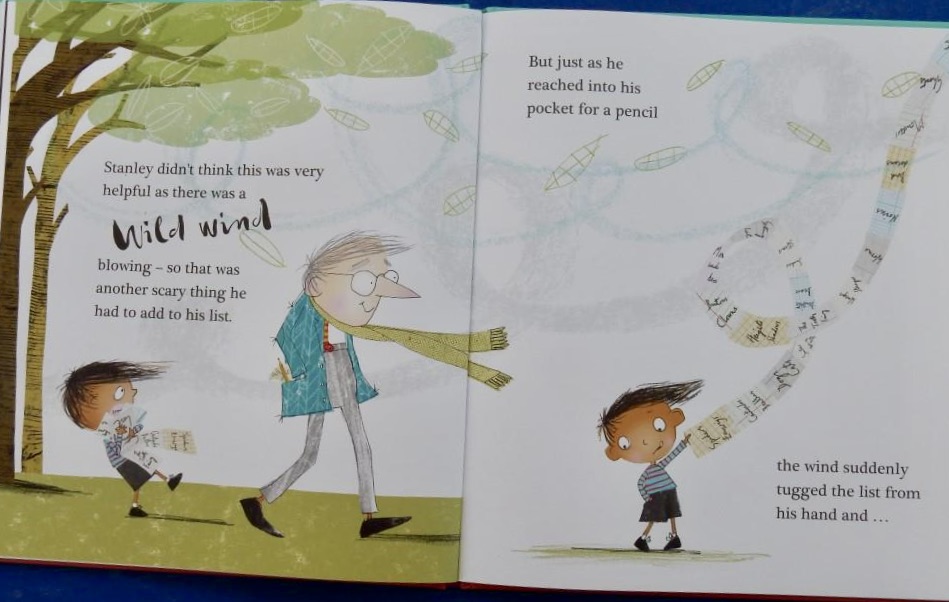
Off goes Stanley to consult his Grandad who suggests a walk in the fresh air. In itself this is a good remedy for worries; but no sooner had they ventured out than a wind gets up. Another scary thing and one that snatches the list right out of Stanley’s hand, up and away.

Needless to say the wind pays no heed to the boy’s cries but as they walk back home, he feels strangely lighter and decidedly playful. He even goes so far as to accept his friend’s invitation to play. Hurrah! And now playing with friends has replaced list making, though very occasionally Stanley does wonder what happened to that tally of terrifying items.

The book concludes with Stanley’s short list of helpful hints about feeling scared, for those who read his story.

Angie Morgan’s mixed media illustrations are full of amusing details that both children and adults will appreciate though the former may need help reading the tiny writing on some of Stanley’s lists. Her vibrant artwork really brings to life Stanley’s emotions; and the interconnectedness of the words and pictures works splendidly.

Counting in Green / Bee Activity Book

Counting in Green
Hollis Kurman and Barroux
Otter-Barry Books

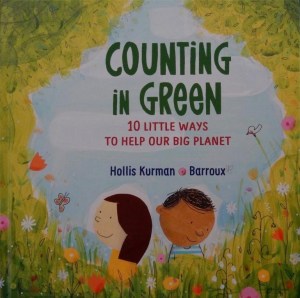
So much more than a mere counting book: this collaboration between Hollis Kurman, a climate activist and Barroux, an award winning illustrator presents as the subtitle says, ’10 little ways to help our big planet’. Little ways they may be; but if everyone followed all ten or even most of them, what a BIG difference that would make to our precious Mother Earth.

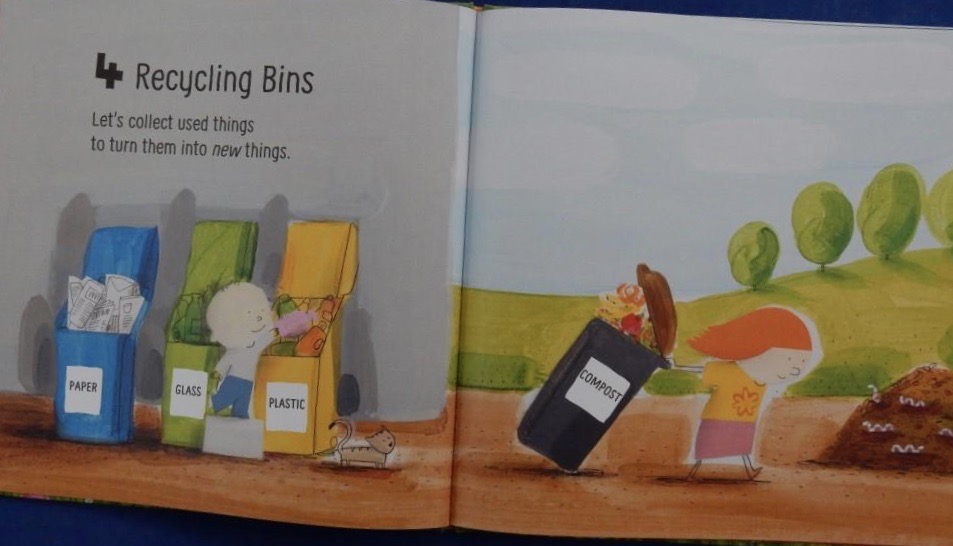
The actions include planting a new tree, eating meat free meals, recycling and reusing, 

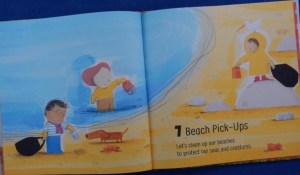
taking our own bags when we go shopping so as to avoid plastic, getting involved in a beach clean-up, 

cultivating a garden that encourages bees and butterflies.

Barroux’s gently humorous illustrations are inclusive and work well with the straightforward text; and the final spread concludes with this challenge to young readers: How many ways can you think of to go green? That would make an excellent starting point to get a class of primary children thinking about this vital topic.

The final endpapers offer some relevant websites as well as a paragraph about the interconnectedness of everything on earth, which’s why getting involved is so vital.

Bee Activity Book
Patricia Hegarty and Britta Teckentrup
Little Tiger

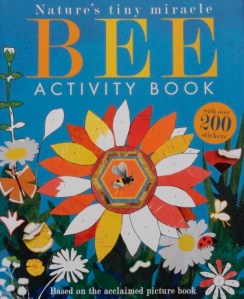
This activity book is based on Patricia Hegarty’s text and Britta Teckentrup’s illustrations for the buzz-ingly bee-utiful original picture book Bee:Nature’s tiny miracle published a few years back.

Herein several settings are used – a meadow full of wild flowers, a pond, a riverside, a woodland clearing – as backdrops for the wealth of bee-related activities. You will find word searches, bee parts to label, mazes, spot the difference, things to count, scenes to colour, and others to complete using the stickers at the back of the book, as well as mosaics that also require colouring and the placing of stickers.

There’s a wealth of fun learning between this book’s covers – an ideal way for youngsters to enjoy some nature-related, screen-free time.

The Emerald Forest

The Emerald Forest
Catherine Ward and Karin Littlewood
Otter-Barry Books

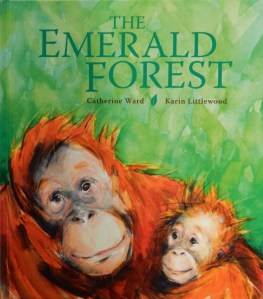
A mother orangutan lives with her children in a green Sumatran forest that is teeming with wildlife. She teaches her little ones the vital life skills they need to survive but one day she hears a loud CRASH! that sends birds every which way and then she sees smoke starting to permeate the canopy. Orangutan moves her family away from the noise and smoke and for a time things are apparently back to normal.

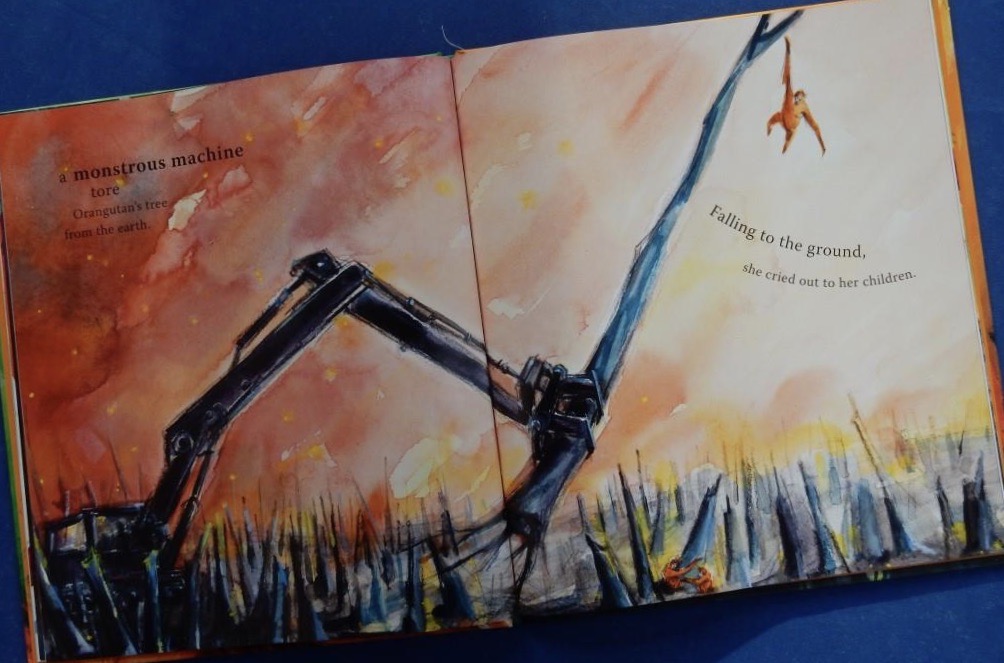
Then again comes that terrible sound, raging like an enormous beast, accompanied by clouds of dark, dense smoke. Suddenly Orangutan and her tree are crashing earthwards.

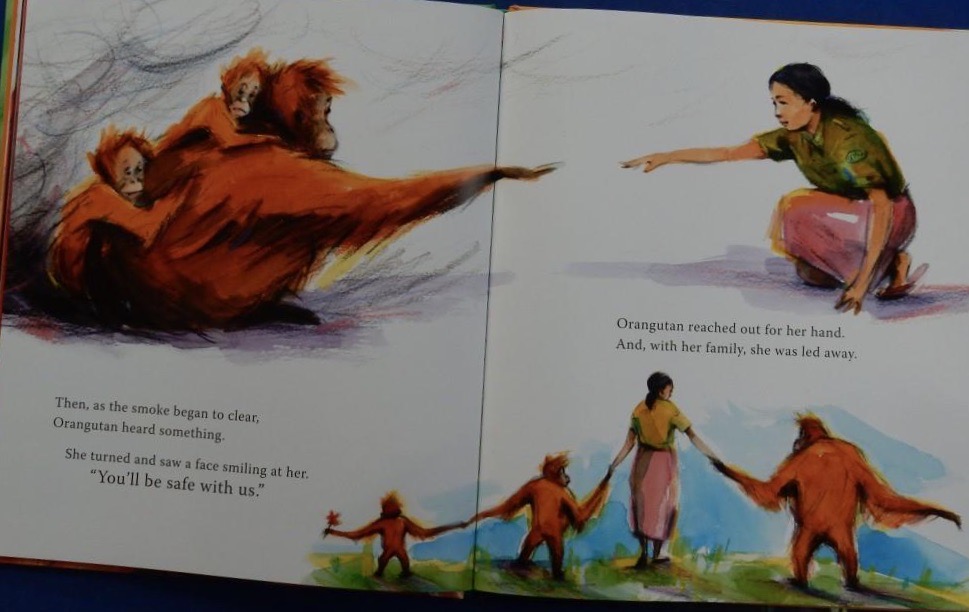
At first it seems there’s no escaping the fires all around, but as the smoke starts to clear a smiling face and an outstretched hand appear. Help has come in the form of a woman who leads the orangutan mother and her family to a place of safety; a green, tree-filled place where they can live alongside other creatures.

The island of Sumatra has lost nearly half of its rainforest in the last thirty or so years but this poignant picture book is one of hope: the place where the fictional orangutan family found safety is based on the Bukit Tigapulu National Park on the island of Sumatra. (Notes inside the back cover give details of the Emerald Forest setting of the story as well as facts about the critically endangered orangutans.)

Author Catherine Ward’s passion for wildlife conservation is apparent in her compelling prose and Karin Littlewood’s pictures have a power and poignancy of their own that makes the book even more impactful.

Something About A Bear

Something About A Bear
Jackie Morris
Otter-Barry Books

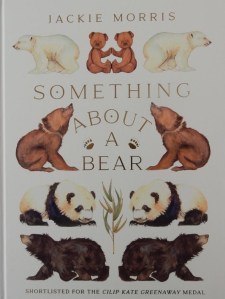
This is a new large-format edition of Jackie Morris’s ode to bears. It begins with a large brown bear nose to nose with a teddy bear and the words, ‘Let me tell you something, something about a bear.’ Readers are then introduced to eight kinds of bears through stunning watercolour illustrations and a poetic text.

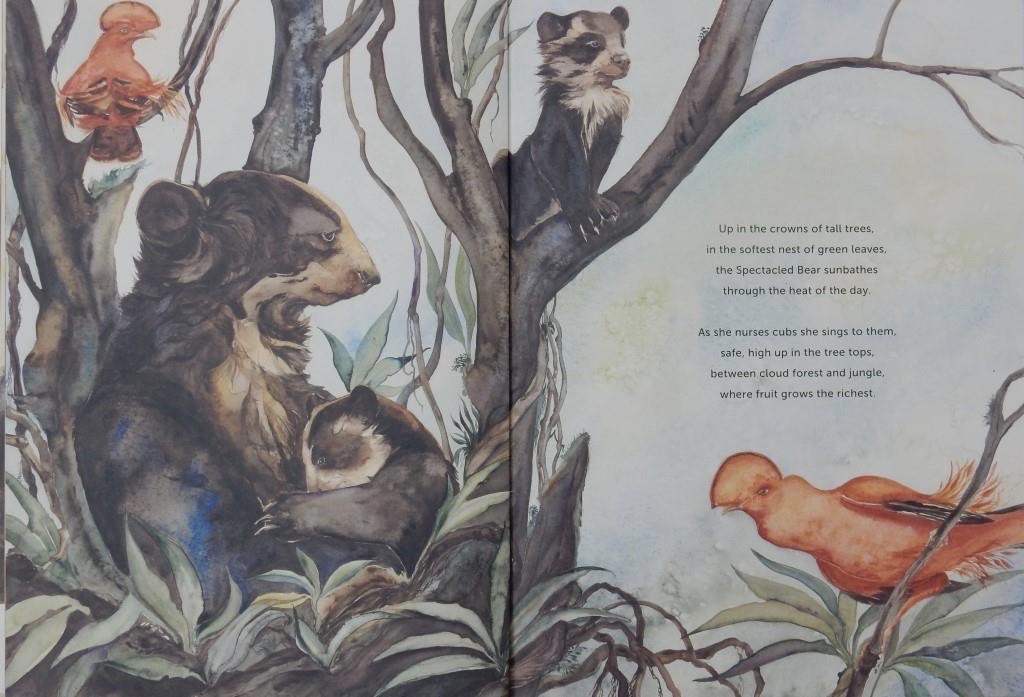
Each turn of the page takes us to the natural environment of one sort of bear or another starting with Brown Bear watching salmon in a river. On a mountainside in China, a Panda is shown nurturing its child ‘Born as soft and small as peaches.’ Next we see a Sloth Bear carrying her cubs on her back set against ancient Mughal architecture; a Spectacled Bear with cubs high up in the canopy of a South American jungle;

from her nest an enormous Asian Moon Bear waits and watches, all set to go a-hunting. Now you might be surprised to learn that Polar bears are not white – their fur is ‘hollow’, their skin, black. Nor is the American Black bear always black; it could be cinnamon or honey coloured and even, rarely, white.
The very essence of each one of the magnificent ursine creatures is captured in Jackie Morris’s awesome paintings and it’s incredible to see the range of browns she uses. A considerable amount of information is included in the main narrative, which eventually comes full circle to the two we met on the first spread, closing with the words, ‘the very best bear of all is YOUR bear. Two further spreads give additional notes on each bear featured. A terrific gift book for bear lovers of all ages.

Eco Girl

Eco Girl
Ken Max-Wilson
Otter-Barry Books

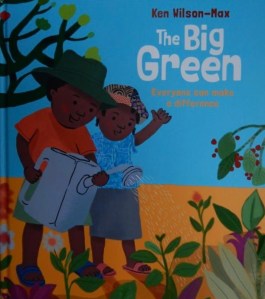
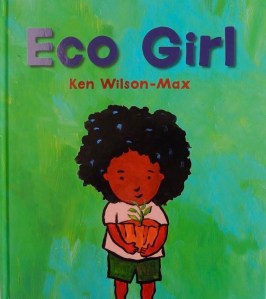
Eve loves the forest beside her home; she loves the animals and birds, but most of all she loves the trees, her favourite being the Baobab tree. Do those trees talk to one another, she wonders wishing that she could be a Baobab and hence talk to the other trees. To be a tree is to be patient her mother tells her and later her father says that each tree plays its own special role in caring for the living things in the world.
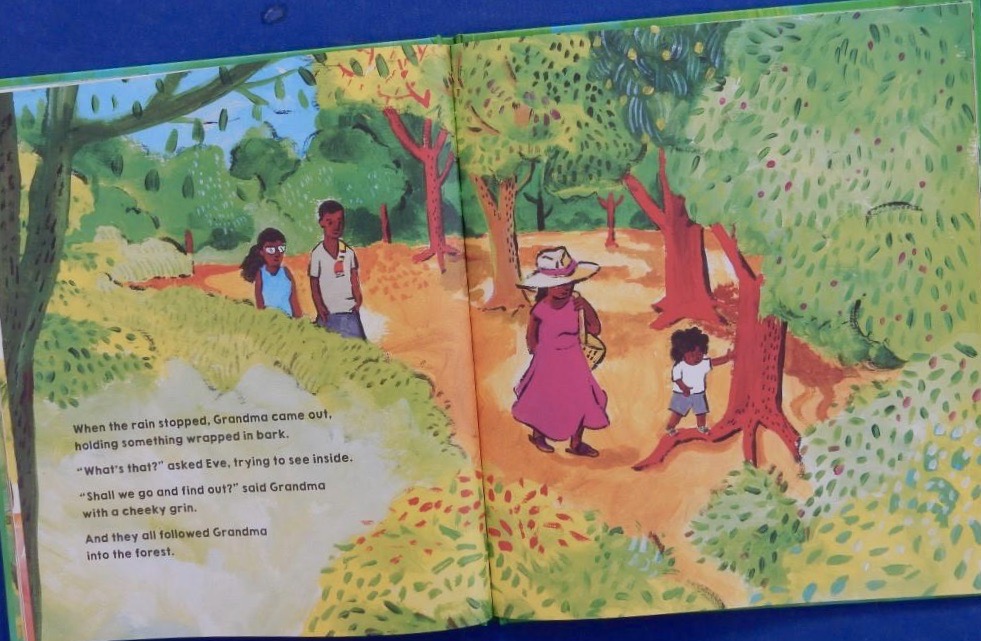
Soon after, on a pre birthday visit to her Grandma deep in the forest, after remembering to be patient on their long walk, Eve asks her grandmother, “Would you talk to me if I was a Baobab tree?” Delighted by the response and Grandma’s mention of the next day being a special day, Eve can hardly wait.

Next morning, she gets a magical surprise. Carrying something, Grandma leads her into the forest.

What could it be? It’s something very special that Eve must plant, love and take care of, something that will connect her for ever with the forest she so delights in. That, she proudly assures her Grandma, is something she definitely can do. Many happy returns of the day, Eco Girl.

Heart-warming and inspiring, this is a lovely demonstration of the importance of planting and nurturing trees wherever you live in the world. I love the vibrant colours of the illustrations, especially the variety of greens in the forest landscape.

(After the story are some tree facts including a mention of Wangari Maathai who started the Green Belt Movement in Kenya.)

Stories of Peace & Kindness for a Better World / Human Kindness

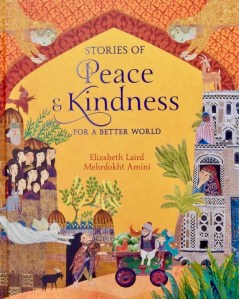
Stories of Peace & Kindness for a Better World
Elizabeth Laird, illustrated by Mehrdokht Amini
Otter-Barry Books

This book contains Elizabeth Laird’s lively retellings of seven folktales from various parts of the world – Ethiopia, Sudan, Palestine, Yemen, Afghanistan, Syria and China – each of which is intended to inspire hope and reconciliation following recent conflict or war; and each of which is elegantly illustrated by Mehrdokht Amini. In view of the on-going Russian attacks on Ukraine it couldn’t be more appropriate and timely.

In the first story from Ethiopia a fight between two dogs, one small, one large quickly escalates into a battle between two clans wherein lives are lost on both sides. Can the words of a wise old man show the fighters the error of their ways?

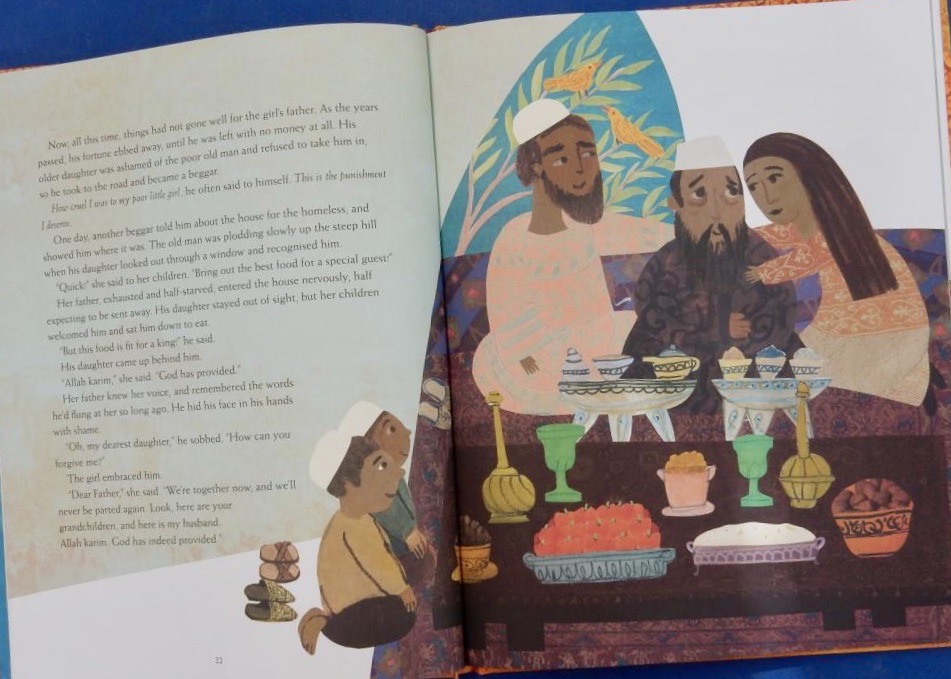
It’s the discovery of buried treasure, and an act of forgiveness that ultimately lead to a reunion of a father and the younger of his two daughters in Allah Karim, the tale from Sudan.

A Palestinian shepherd tries and succeeds in showing a rich sultan what real kindness is; and a camel is fundamental in an ageing father’s choice of an heir to rule his kingdom in Yemen. There’s a selfish Emir ruling a great kingdom in Afghanistan: can the angel that appears in his dream cause him to change his ways and become a caring ruler? From Syria comes a tale wherein a woodcutter ventures onto an island, persuades the resident lion to allow him to take away some of the wood to sell thus saving himself and his family from starving, only to spurn the lion when he tries to join a party he’s hosting: what does that mean for the woodcutter/lion friendship? Finally in the Uighur story from China the Khan’s nine princess daughters eventually bring peace and happiness to the kingdom of Kashgar and best of all is the fact that it’s done without fighting.
Rich in pattern, the illustrations are infused with a gentle humour that subtly convey both the futility of hostility and fighting, and the joy brought about by peace.

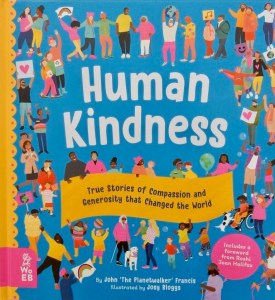
Human Kindness
John Francis and Josy Bloggs
What on Earth Books

Starting with some examples from his own life, author and Planetwalker John Francis explores aspects of kindness before moving on to look at the history of kindness from the times of prehistoric humans to the present. He uses evidence from archaeological findings and ancient texts presenting a variety of versions of the ‘Golden Rule’ from different world views.
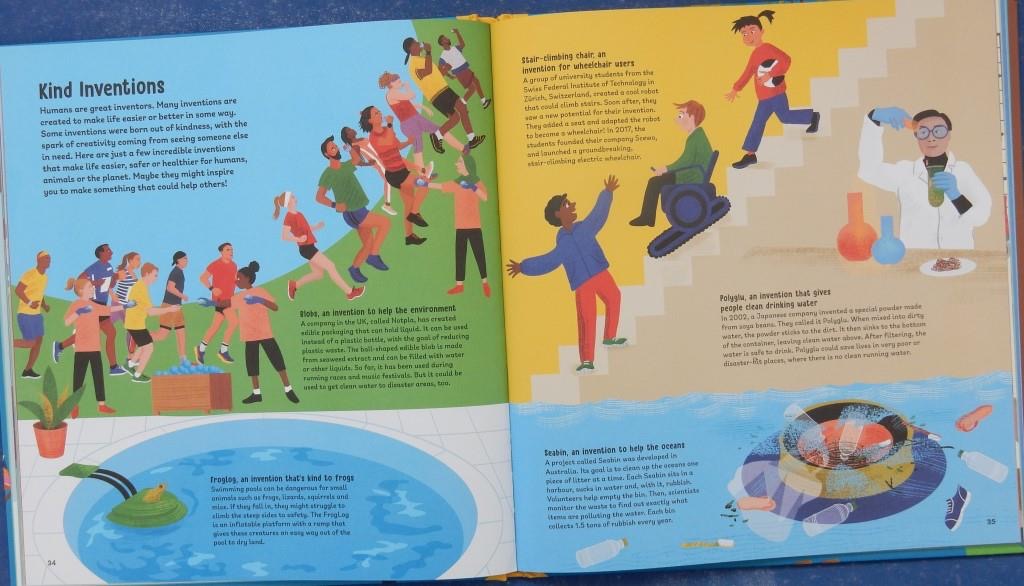
One section of the book is devoted to stories of kindness from all over the world and include such people as Malala Yousafzai, Harriet Tubman, Harold Lowe (a junior officer on the Titanic), healthcare workers and healers, people who have raised money for various charities concerned with education, hunger prevention, healthcare provision and animal welfare. Did you know that there are inventions that arose out of the imaginations of individuals who saw the need for creating a means to make life better for humans, for animals or for the planet?

There’s also information on the science of kindness – how being kind and compassionate benefits our health and happiness, and some examples of ways children can be kind.

Be they large or small, acts of kindness make the world a better place so, with its warm, bright illustrations by Josy Bloggs, this is a book that I’d like to see in primary classrooms and on family bookshelves.

The Perfect Present / Tofu Takes Time

The Perfect Present
Petr Horáček
Otter-Barry Books

Mot and Tom are the best of friends; they also share a birthday on which they exchange gifts. Tom gives Mot a multi-coloured feather which his friend imagines might be from the world’s most spectacular bird. Mot gives Tom a marble, also multi-coloured; could that perhaps be the universe’s smallest planet. Tom would love to give his friend an entire ocean alive with creatures large and small, perhaps even a monster

and a host of wild animals like lions, monkeys and an elephant. Mot’s choices to give Tom are hills, rivers, forests and mountains, the sun too.

Having spent a long time in all these imaginings the two friends go outdoors to play in the rain

and then back indoors after a bath together they share a scrumptious birthday tea. I wonder what Tom and Mot decided was the best present of all as they snuggled down ready for sleep.

Petr Horáček’s vibrant mixed media illustrations radiate the warmth these two moggy pals share in this gorgeous celebration of friendship and the power of the imagination that’s perfect for giving and sharing with young humans on any day but perhaps birthdays especially.

Also showing the importance of spending time together is

Tofu Takes Time
Helen H. Wu and Julia Jarema
Beaming Books

Instead of popping to the supermarket to buy readymade tofu, it’s a case of PLINK PLANK PLUNK followed by CLICK CLACK WHIRRRR as Lin’s grandmother, NaiNai begins making tofu from scratch, watched by the little girl who is impatient to see the finished product. But all good things take time and patience, and that is what NaiNai tells Lin from the outset as she gradually involves her in some of the tofu-making tasks including straining the soy milk, lemon squeezing

and squishing and moulding the curds into shape.

However, as Lin gradually learns, the tofu making process not only takes time, it takes the whole universe too. It takes the seed from soil and sunshine, the cloth from thread and fibre,

weight and space, stories and pictures from books: and most of all, it takes spending precious time with her much-loved grandmother.

Julia Jarema’s illustrations have a feeling of gentleness, as they alternate between details of the tofu-making and Lin’s imaginings in Helen Wu’s tasty tale of patience and delayed gratification. Her inclusion of playful, onomatopoeic language and NaiNai’s repeat phrase add to the fun for young listeners; and her ‘more about tofu’ and author’s note will interest both adults and youngsters with an interest in cooking.
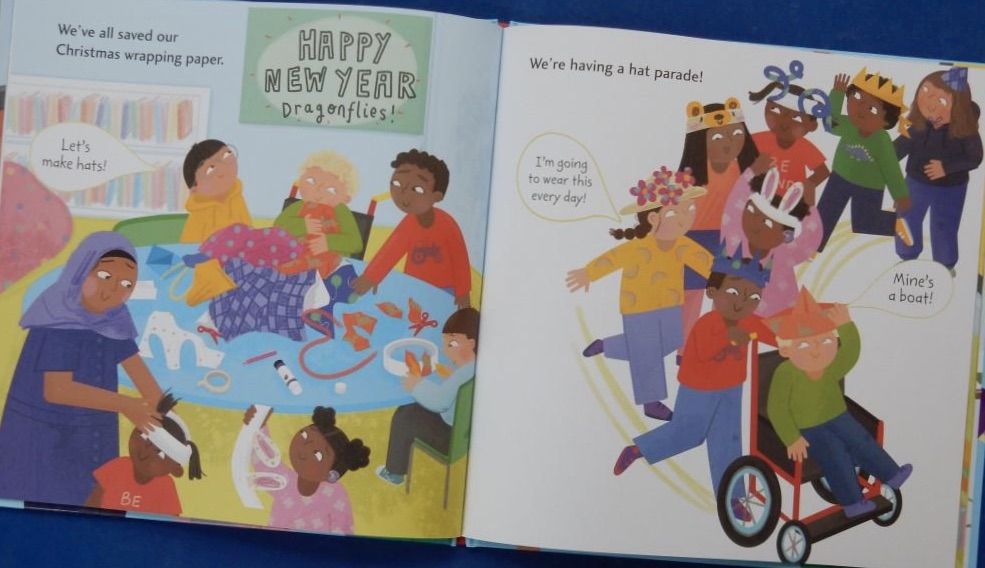
Don’t!

Don’t!
Marie-Louise Fitzpatrick
Otter-Barry Books

Geraldine has a new baby brother and she’s experiencing the turbulent feelings that many elder siblings go through when it’s no longer the case of ‘there was Daddy and Mummy and me.’

Baby Boo is, let’s say, demanding and forceful; he can roar, he can kick and he can bite. Now Geraldine can do all these things too and she’s certainly not going to be overlooked. Consequently she roars at her toys – very loudly, she demonstrates her kicking skills with Mummy instead of a football

and she bites her Daddy on the leg. Her parents are not pleased; only her toys appear empathetic towards young Geraldine

and soon there’s a tearful huddle of little girl and three cuddly elephants, a crocodile and a kangaroo.

Then suddenly baby Boo cries too and this changes things completely: “Don’t cry baby Boo,” says big sister reaching out to him. Now there is Daddy and Mummy, Geraldine and Boo, a happy family and they all love each other.

Sensitively written and illustrated, Marie-Louise beautifully captures the feelings of a young child adapting to a new baby in the family. I’d strongly recommend families in a similar situation to the family in the story to get hold of a copy of this lovely book and share it with the big brother or sister. It’s a good one to add to foundation stage collections too.

Turtle Bay

Turtle Bay
Saviour Pirotta and Nilesh Mistry
Otter-Barry Books

The conservation message in this story is even more pertinent now than when the book was first published about 25 years back.

Essentially it’s a look at the breeding process of Japanese loggerhead turtles, but it’s much more too.
Taro is firm friends with Jiro-San whom in response to his sister calling the man weird, the boy says is “old and wise and full of wonderful secrets.” The two spend a lot of time on the beach where Tiro has already learned both how to care for some of the sea creatures and how to be mindful and watch what’s happening in the rockpools.
Now Jiro-San is often to be seen sweeping the rubbish and broken glass from the beach or sitting on a rock watching and listening and one day that is how Taro finds him. He’s preparing for the return of his “old friends”, Jiro-San explains to the boy.
Having spent the following day together sweeping the beach and placing the rubbish in Jiro-San’s cart, he invites Taro to meet him that evening by the big rock. He does, but that’s not when they see the particular friends the old man has been talking about.

That happens a few days later, when accompanied by his somewhat reluctant sister, Taro heads off to the usual meeting spot. Suddenly something emerges from the water: it’s a mother turtle, come to lay her eggs on the beach, which she does before heading back to the sea to let the other turtles know the beach is safe. The following evening a band of female turtles arrive and lay their eggs in holes on the sandy shore.

Some weeks later Jiro-San and the two children observe the nocturnal emergence of hundreds of baby sea turtles and see them scuttling down to the sea.

Nilesh Mistry’s gorgeous blue, yellow and lavender-hued scenes show these events and create a sense of calm and of wonder that will be shared by children who read or listen to Saviour Pirotta’s perfectly paced tale with its important messages about caring for the environment, mindfulness, patience and being open-minded about people.

(There’s additional information about saving sea turtles at the end of the book.)

Mrs Noah’s Song

Mrs Noah’s Song
Jackie Morris and James Mayhew
Otter-Barry Books

The third in this series wherein Jackie Morris’ lyrical words are visually sung in collage style art by James Mayhew, is again gorgeous. Together they tell a magical tale about how Mrs Noah brings song back into the world. Music and song are a way of connecting people no matter where they are and Mrs Noah assuredly unites her family by singing to the children, morning, noon and night, while Mr Noah listens enraptured.

One morning the children ask Mrs Noah where she learned to sing and she tells them sadly that it was “Far away and long ago.” Called by the sunshine, the children then leave, save the youngest who asks the singer, “Why are you sad?” Having given an explanation about remembering her mother and grandmother, Mrs Noah says that-sometimes the sadness caused by missing somebody you love is a good kind of feeling.

They then both venture outside to greet the day watched by Mr Noah who had heard what was said.

Outside it’s time for a singing lesson, which must start with learning how to listen properly – eyes closed, ears open wide, wide. After a while the youngest child joyfully announces, “I can hear the garden singing.” And, it most certainly was, with birdsong, humming bees, dragonfly wings rattling and a gentle breeze setting the leaves in musical motion.

Mr Noah gets busy fashioning a huge hammock and they all spend a blissful night under the stars listening to the magical music created by the natural world together with Mrs Noah’s songs.

Next morning having slept soundly, to everyone’s delight they’re woken as the sun rises, by the dawn chorus. United in song, united in music, united in love. If only it could be so the world over, if only …

Like many people in our current turbulent world with wars and people forced to flee, Mrs Noah was actually a refugee who had to start her life anew in an unknown place; she knew that music could be a way of helping her children develop a sense of belonging in a new land. Music speaks a universal language, one that transcends barriers and that’s something that’s vitally needed in our divisive world. “If music be the food of love, play on.” So said Duke Orsino in the first scene of Twelfth Night. Let it be so.

On My Papa’s Shoulders

On My Papa’s Shoulders
Niki Daly
Otter-Barry Books

The little boy narrator in Niki Daly’s compelling picture book has just started school. He’s fortunate to have members of his extended family to take turns to walk with him through the busy town to the school gate.

Mama is a quick walker and so they always arrive in plenty of time for goodbye kisses before the bell rings. Gogo likes to leave early so the two of them can avoid the busy road and along the quiet way they find lots of look at and chat about, and perhaps even pause over.

Gogo is full of wise words, talking to her grandson about how he should be gentle with his friends.

Rainy days are reserved for Tata who is fond of puddle splashing, though his more easily tired legs mean he prefers the shortcuts and needs to pause for a rest en route – the perfect opportunity for a spot of whistling. In addition to whistling, hugs are Tata’s speciality.

“But the days I love the best are when Papa takes me to school.” That’s what our narrator tells us from his vantage point on Papa’s shoulders: it’s a place where he’d like to stay for ever but knows that when they reach the school gate that “I love you” exchange is coming and their parting will only be while Papa goes off to work on a building job while the little one joins his friends in the classroom for a spot of building of his own – make sure you look at his finished construction.

Yes this gorgeous, gently humorous book truly does celebrate that father/son bond, but it also celebrates the bond between the boy and the various other members of his family – each one offering something different.

One I’d strongly recommend adding to foundation stage collections and to family bookshelves, especially if there’s a child around the school starting age. Why not start by sharing it on Father’s Day this June.

Wanda

Wanda
Sihle Nontshokweni & Mathabo Tlali, illustrated by Chantelle & Burgen Thorne
Otter-Barry Books

“Intombi mayizithembe mayazithe, Wanda. Be confident. Trust in yourself.” So says Wanda’s Mama in this uplifting story starring a girl with a wonderful head of hair that makes her feel anything but confident as she’s teased by unkind members of her class. Unbeknown to her Mama, who spends ages combing her daughter’s hair each morning, before she goes into her classroom Wanda usually changes her hairdo making the ‘big switch’ so that her teacher won’t call her hair a “bird’s nest”. However on this particular day she’s late and unable to make the alterations.

Mrs Stewart sends her to find an Alice band in the lost property box and this she wears throughout school time.

On the way home she sadly tells herself that maybe after all, she’s not that proud African queen with beautiful hair, ‘strong like clouds’, as her Mama tells her every morning. However on her return she’s greeted by her Grandmother who, after a distraught Wanda has shared how she feels, is able to help her swallow all that sadness, partly by giving her a scrapbook that they look at together. Therein Wanda sees pictures of African women with amazing hairstyles, each one of them beautiful and every one of them, deservedly famous;

then on the final page is her own mother. At last Wanda can truly embrace her own hair, especially with a bit of extra knowledge from her gran concerning the secret of her crown – “Water and 100% olive oil.”
Next morning,, it’s a proud, emotionally strong Wanda who waits at that bus stop.

This heartfelt look at how society can drain the positivity instilled by a loving family, is a powerful reminder that everyone has the right to feel confident to celebrate their culture and that we should all share in that celebration rather than attempt to undermine it. The broad themes of the story – self belief and kindness, with its compelling, vibrant illustrations, make this a book to share with primary classes wherever they are.

A Little Bit of Hush

A Little Bit of Hush
Paul Stewart and Jane Porter
Otter-Barry Books

Squirrel and her babies live in a big tree; so too do all sorts of noisy birds. Their cacophony is such that the baby squirrels are unable to get to sleep so their mother decides to consult Owl. Having heard her problem Owl brings out a jar containing so he says, “A Little Bit of Hush”. Squirrel is somewhat puzzled that she can’t see anything in the jar so Owl demonstrates the way in which it works and goes on to show her his special invention, a Silence Catcher.

The two of them then embark on a magical journey through the woods with Owl capturing the hush between the Blackbird’s song and its alarm call, and encourages Squirrel who finds some of his own – the hush within a hollow tree stump, a hush deep down in some fallen leaves.

Owl then captures the stillness after an acorn drops before it bounces on the forest floor and even the silence between lightning’s flash and thunder’s roll. All these Owl stows in pockets of peace and pouches of stillness and hush; then back in his workshop he uses these ingredients, creating a special mixture that he puts into a jar for Squirrel to take back to her family.

The noise outside her front door is louder than ever when she returns, but now she has her own bottle of helpful hush. Will it work its unique magic on the five squirrels?

I love this idea and tried it out on my walk after this book had arrived in the post. It certainly made me more mindful of the spaces between the natural sounds that surrounded me as I stopped and sat for five minutes just listening.

With its examples of natural sounds, though interesting in themselves, but which can sometimes becomes distracting, Paul Stewart’s story shows the importance of silence in our busy world. Like Squirrel we all need times without noise either to drift off to sleep or as a kind of sacred space into which we can retreat and be contemplative. In her collage illustrations, Jane Porter beautifully captures the noisy woodland environment of the creatures’ quest for peace and quite, amusingly portraying the various sources of the distractions.

Water: Protect Freshwater to Save Life on Earth

Water: Protect Freshwater to Save Life on Earth
Catherine Barr and Christiane Engel
Otter-Barry Books

I was surprised to learn from this absorbing book that despite 70% of the Earth’s surface being covered by water only 3% of all of that is freshwater, most of it existing in polar ice sheets. These because of global warming, are starting to melt at an alarming rate.

Having given readers that information and more in the opening pages of this book, author Catherine Barr presents eleven further spreads, illustrated with lots of detail by Christiane Engel. These look at a variety of topics including the water cycle, freshwater habitats (some of the Earth’s most endangered environments); water power (the pros and cons); the impact of climate change on farming; the importance of careful usage of freshwater (there’s mention of the impact of large companies using more than their fair share of this precious resource).

It’s alarming to read the way in which polluted water – 80% of Earth’s wastewater – is adversely affecting freshwater habitats, killing wildlife and poisoning drinking water.

Of the final three topics: one explains that despite many women and girls still having to walk considerable distances from their village homes to access water, the provision of pumps and taps close to where they live is enabling girls living in some sub-Saharan African villages to go to school regularly and giving their mothers time to work.

Another calls on humanity to act now to protect vital freshwater; and this is followed by a look at some of the ways readers can use water judiciously: Take action to shrink your water footprint! urges the author. If those of us fortunate enough to have ready supplies of water at the turn of a tap followed the suggestions perhaps we can still make that all important difference in what is the UN’s Water Action Decade (2018-2028).

Women Who Led The Way

Women Who Led The Way
Mick Manning and Brita Granström
Otter-Barry Books

Herein, team Mike and Brita celebrate 21 inspiring women adventurers and explorers from all over the world, going back as far as the 9th century. Speaking for themselves, these women are exemplars of the huge amount of courage, determination and sheer power their achievements demonstrate against the odds: boundary breakers all for sure.

A new name to me, the first to tell her story is Aud (the deep-minded), daughter of a Viking ruler of the Hebrides, who, after her warrior son was killed in battle, secretly had a ship built and then together with a loyal crew of twenty warriors, captained a voyage of escape and discovery, eventually starting a Christian settlement on an Icelandic hillside.

French woman Jeanne Baret, disguised herself as her beloved husband’s manservant in order to accompany him on a voyage that eventually took them around the world, exploring and collecting specimens of plants, shells and stones for study, retiring to her native France ten years later, after the death of her husband.

Not all the women travelled so far from home though: In the 18th-19th century Caroline Herschel whose vision was damaged by childhood Typhus, became an astronomer who not only discovered eight comets, but was awarded a gold medal by the Royal Astronomical Society, even being elected an Honorary Member.

Some of the others featured will likely be familiar names to readers – adult ones at least. There’s Mary Anning, Harriet Tubman who escaped slavery to become an army scout and political freedom activist, undercover journalist Nellie Bly, Bessie Coleman the first African-American and Native American female to hold a pilot’s licence, Amelia Earhart (first woman pilot to fly the Atlantic), archaeologist Mary Leakey and nature conservationist Jane Goodall.

It’s impossible in a short review to name all those included herein but we meet Barbara Hillary polar explorer;

the first woman to climb to the top of Everest, and the first female amputee to climb both Everest and Mt. Vinson. Wow! “Set your goals high in life and don’t stop until you reach there.” are words spoken by this inspirational mountaineer on the final spread.

Set into many of Brita’s arresting scenes along with the main narrative, are small illustrated fact boxes, some giving dramatic moments in the life of the featured woman, others providing brief details of another one or two who followed in her footsteps.

One can’t help but feel awed by the achievements of every single one of those exceptional women. Adults who want to inspire children, either in school or at home, to reach high and never stop believing in themselves, should make sure they read this book.