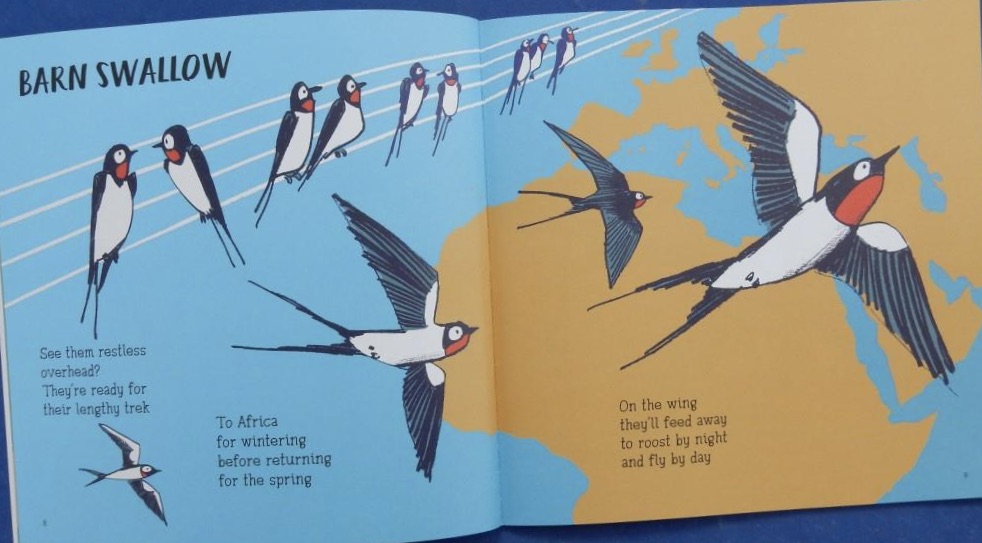
Poet / writer James Carter and illustrator James Munro have again joined forces on a natural history book, this time on the topic of animal migrations.
Through the former’s rhyming narrative and the latter’s bold, bright illustrations readers are introduced to nine migrating species. First though, there is an introduction to the concept that all creatures may undertake migration.
Whether they travel over land, through water or the sky, the selected animals undertake long, often difficult journeys. From Barn Swallows
to Monarch Butterflies, salmon to humpback whales or Christmas Island Red Crabs to humans, we learn more about the different animals and the reasons for their migrating.
Did you know that the globe skimmer dragonfly can journey up to 6,000 kilometres, travelling from India to Africa, island hopping en route to lay eggs and their offspring making the return journey? Some feat.
Included in the final narrative section, is information about animal navigations and unusual migrations making this an ideal introduction to the whole topic.
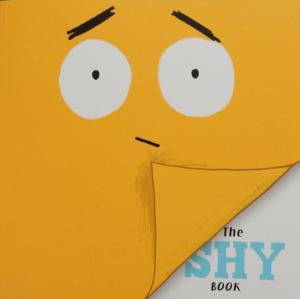
The Shy Book Howard Pearlstein and James Munro Graffeg
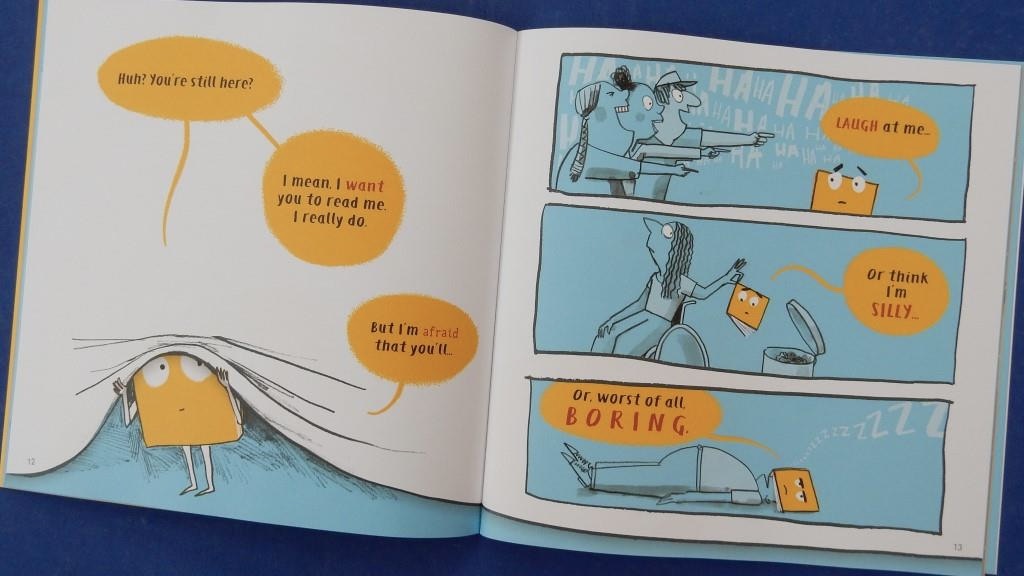
This interactive picture book is a novel way of introducing young children, particularly those about to start nursery or school, to a way of coping with their fears about meeting new people and coping with new situations. Its narrator is the titular book and it really does want to be read despite its extreme nervousness. It’s worried, sometimes to the point of dizziness, in case a reader finds it laughable, silly or much worse, boring …
‘go ahead … pick a different book’ it suggests. But what if instead a reader keeps turning the pages? Could they come upon the narrator’s suggestion and gently discover a non-threatening way to feel brave, despite feeling shy as the book does, especially at the outset?
Howard Pearlstein’s clever idea is simply presented, and brought to life by James Munro’s droll illustrations. Empowering and amusing.
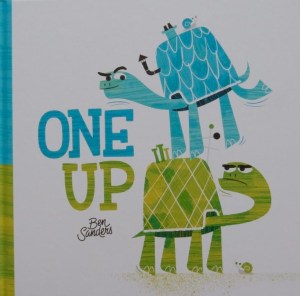
One Up Ben Sanders Little Tiger
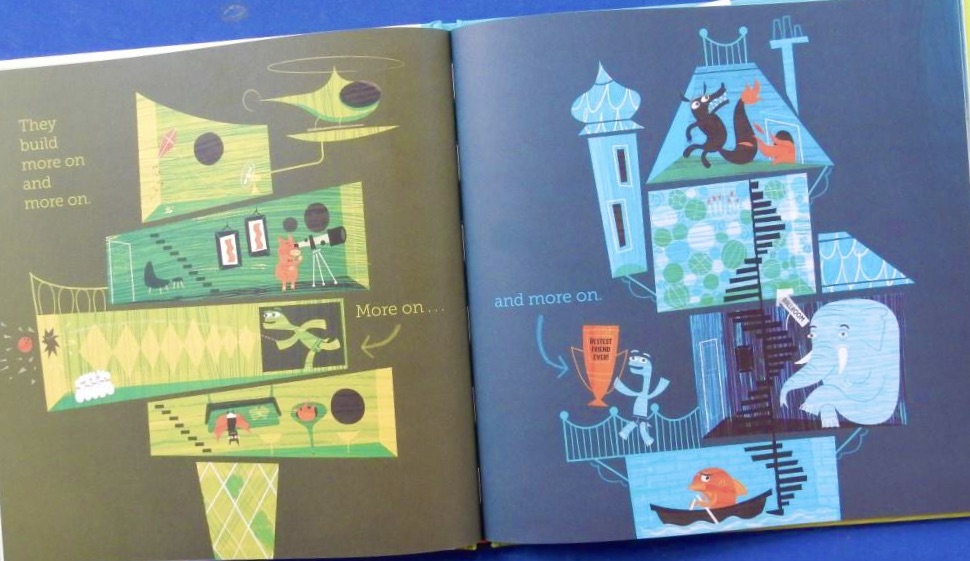
Blue and Green are tortoises and they’re best friends. But which is the bestest? That is a cause for competitiveness as each tortoise adds to his shell, making it bigger and bigger, until things get more than a bit out of hand, not to mention out of shell. Both Blue and green are way, way up in the sky
whereas their places of residence remain on the ground and the who is best issue is still unresolved. For a reason unknown to both characters, Blue and Green start craving gelato. But they might have to wait a long while before that desire is satisfied. What in sky’s name can they do? And will they remain best friends?
With inventive, increasingly detailed illustrations of the competitive craziness resorted to by Green and Blue, plus the fun final twist, this is an amusing read aloud that shows the inventiveness of the characters (and the book’s author/artist). With an abundance of visual humour, both children and adult sharers will find themselves laughing as things get progressively precarious.
Betsy Buglove and the Brave Butterfly Catherine Jacob and Lucy Fleming Scholastic
Nature lover Betsy Buglove, she who saved the bees, returns for a new adventure. It begins as she and her best friend Stan are in the garden and a bee buzzes along with an urgent message about a butterfly that needs their help. They follow the bee next door and there discover the juice cups they left on the grass earlier and inside one a butterfly is trapped in the sticky dregs.
Having successfully extricated the butterfly, its wings soon dry and off it flies.
Shortly after a cry comes from Betsy’s dad. The leaves of his vegetables and flowers have been badly nibbled. Off goes Dad to get his bug spray leaving Betsy examining a thistle plant in the grass. Thereon, with the aid of her magnifying glass, she sees lots of caterpillars munching away its leaves. Caterpillars she and Stan soon find out, belong to the butterfly they’d rescued earlier on.
Can they persuade Betsy’s dad to leave a patch of thistle and other weeds for the caterpillars? Fortunately they can; but what happens thereafter?
Will it be another case of mission accomplished for team Betsy and Stan?
With Catherine’s jaunty rhythmic text where the rhyme doesn’t falter and Lucy’s scenes containing an abundance of flora and minibeasts, this is a book that’s just right for sharing with young nature enthusiasts, as well as to encourage those less keen (happily I’ve only ever encountered a few,) to find out what they’re missing. Everyone can do their bit to help insects. At both ends of the book are fact pages about butterflies.
Watch Them Grow! James Carter and James Munro Graffeg
Author James Carter and artist James Munro have joined forces to present the life cycles of nine different animals starting with the Emperor Dragonfly and concluding with a human. Before these is an introductory poem inviting readers to ‘Watch them grow!’. Following the featured animals are a spread about baby animals names – young children will be amused to learn that it’s not only cows whose babies are called calves: so too are those of six other animals. And, the term hatchling can be applied to baby crocodiles, turtles, tadpoles and newts in addition to baby birds. Then comes some straightforward information about axolotls; (these, unlike other amphibians never become adult; instead they retain their gills and remain in the water); and a paragraph explaining that male seahorses give birth to babies (fries, hundreds of them)
as well as some facts about parenting in emperor penguins, Australian marsupials and others. All this James Munro has captured in his playful illustrations, each of which is a combination of reality and fun.
The Invention Julia Hubery and James Munro Graffeg
How do you get all the seemingly exceedingly busy people who live in the same block of flats as you do to take time to interact with one another? That’s what Fili, who lives in said flats with her caretaker Dad wonders as she watches their comings and goings with barely a ‘hello’ being spoken day in day out.
However young Fili isn’t one to feel sad and do nothing about the situation; instead she thinks further, talks with her Dad and then sets to work, making … an Invention, As yet she’s unable to explain how it works, nor what it does
but what is evident is that it keeps getting larger and larger and everybody is interested in Fili’s mysterious creation. Eventually someone asks, ‘ … how will you know when it’s finished?’ Fili responds that she’ll need everyone’s help with that.
One day she delivers invitations to all the residents of their block, thus arousing further curiosity on their part. Needless to say the Invention party is well attended although at first the attendees are somewhat nonplussed at the Invention’s lack of action.
Now Fili’s plan moves up a gear, “Will you help to start it?’ she asks. Immediately everybody begins twiddling and fiddling, and more importantly, giggling and chatting until finally … There we have it: one little girl, one idea, one supportive parent, a lot of determination to build, not just her invention but a collaborative community.
James Munro’s superbly quirky illustrations are perfect for Julia Hubery’s straightforward droll telling about a child with a good idea, ingenuity and lots of determination, and the bringing together of people to form a real community.



 Red Reading Hub - Jillrbennett's Reviews of Children's Books