An Invitation to the Ballet Theatre

An Invitation to the Ballet Theatre
Charlotte Guillain, illustrated by Helen Shoesmith
Welbeck Editions

At this time of year especially, an invitation to participate in a special VIP tour of the world of the ballet theatre, particularly when it culminates in watching a performance of Swan Lake on stage is very enticing. This invitation enables the reader to go on a virtual outing to the world of ballet that begins with an empty auditorium capable of seating over two thousand people. Next comes a look at what happens in the costume department where, beneath a gate-fold, there’s a designer fashioning a ball gown for the dancer who is to play the part of Cinderella in an up-coming show, as well as other people hard at work. 

I never before realised that there is a ballet-shoe manager responsible for checking that every dancer’s pointe shoes fit properly and that the right ones are always available. We explore the crucial warm-up routines, the clothes worn for training, see the various ballet positions and movements being practised in a morning class and then watch what happens in the rehearsal studio where the dancers spend a fair part of the day. 

Those of us who just go and enjoy a ballet performance don’t stop to think about the considerable amount of stress, both physical and mental, that dancers are under, nor about the importance of a dancer’s diet. These aspects require expert support to ensure the performers stay healthy in mind and body. To that end there is a healthcare suite wherein we see dancers working with weights, gyrotonic equipment for stretching and toning, doing Pilates exercises and consulting the experts available.

We also visit the orchestra pit, and the make-up room: I was surprised to find that most ballerinas apply their own make-up prior to going on stage; this involves accentuating features to make sure they are seen clearly under the bright stage light no matter where members of the audience are sitting.

Produced in consultation with English National Ballet’s Ballet Futures programme, this terrific, highly informative, beautifully illustrated book, is one to include in classroom collections, to give to youngsters who aspire to be become dance performers, or indeed to any child who is going to a visit to the theatre to watch a ballet.
One Little Bird

One Little Bird
Sheryl Webster and Helen Shoesmith
Oxford University Press

Rosa the robin isn’t one to stand by and do nothing when a man chops down the tree in which she’s nesting. Rather than finding another tree as the fellow says, she snatches up his hat, flies to his chimney and proceeds to nest therein.

She doesn’t leave things there either. Instead, she issues a rallying cry, “Animals, everywhere! We must stop people from taking our homes!”

Before long, Rosa is the talk of the forest, the tropical jungle, the grasslands, and the animal residents thereof, having lost their own homes, move into those of the destructive humans who have made them homeless.

Needless to say this infuriates the fellers, the jungle clearers and the road builders and eventually both animals and humans are incensed. The news gets back to Rosa and she realises that things have to change: surely a harmonious co-existence is possible.

Again Rosa sends her words over land and sea, summoning both animals and humans to a meeting and having heard both sides say exactly the same thing, she delivers a stark reminder to the destroyers of the animals’ homes.
From that day on, things begin to change for the better …

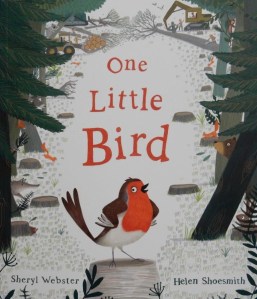
Sheryl Webster’s Rosa certainly had the courage of her convictions in this fun cautionary tale that might well serve as a call to young humans to become environmental activists too. Helen Shoesmith’s cover illustrations definitely depicts her as a bird with attitude, while her scenes of Rosa’s actions and their results are amusingly portrayed with a wealth of diverting detail on every spread.

A Christmas Carol / A Cat’s Christmas Carol

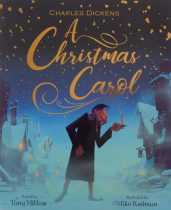
A Christmas Carol
retold by Tony Mitton, illustrated by Mike Redman
Orchard Books

In faultless rhyme, poet and author Tony Mitton tells the story – albeit a somewhat shortened one – of the Charles Dickens Christmas classic that begins on Christmas Eve with the miserly Scrooge responding to his clerk Bob Cratchit’s Merry Christmas wishes thus “Christmas? Humbug … A feast for foolish men.”

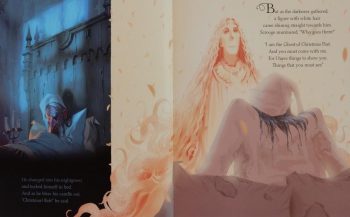
Then back in his room, come the ghosts – first that of Marley and later in turn, those of the Ghost of Christmas Past,

the Ghost of Christmas Present and the Ghost of Christmas Future, each one eerily portrayed in Mike Redman’s atmospheric filmic spreads.

As you’ll know, the vision of Bob’s invalid son looking so frail and ill, and that of all the working poor toiling to earn but a pittance, result in a change of heart in old Scrooge who instead of Scrooge the Miser is transformed into ‘Scrooge, the Man / who keeps as kind a Christmas / as any person can.’

This book offers a highly accessible introduction to the famous seasonal classic for children.

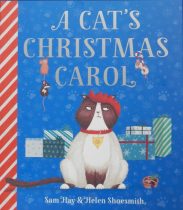
A Cat’s Christmas Carol
Sam Hay & Helen Shoesmith
Simon & Schuster

It’s Christmas Eve and closing time in the large department store. The shoppers have gone and the staff are on their way out bidding each other a “Merry Christmas”.

That leaves just Clawdia the security guard’s cat and a trio of mice that have come in out of the cold. Clawdia attempts to apprehend them but they lead her on a merry chase all round the store, stopping from time to time to point out things that make her ponder on the past, present and future,

and begin to question her “Christmas is for sillybillies” attitude.

But then she receives an unexpectedly kind invitation from the tiny rodents she’s been chasing. That’s not quite the end of the kindness though: there’s an even bigger surprise in store and it’s one that results in a wonderful family Christmas Day for the moggy, the mice and the warm-hearted, welcoming humans with whom she gets into proper festive mood.

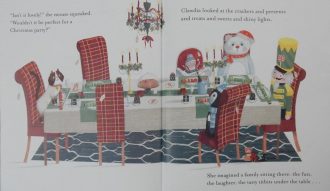
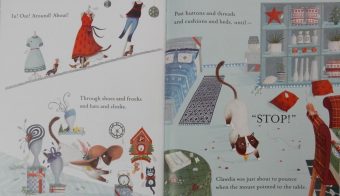
Helen Shoesmith’s hilarious scenes of the chase around the store

and the superbly expressed feelings of both animal and human characters bring out the warmth and humour of Say Hay’s story: just right for spreading some seasonal cheer at home or in the classroom.