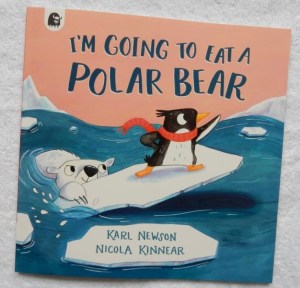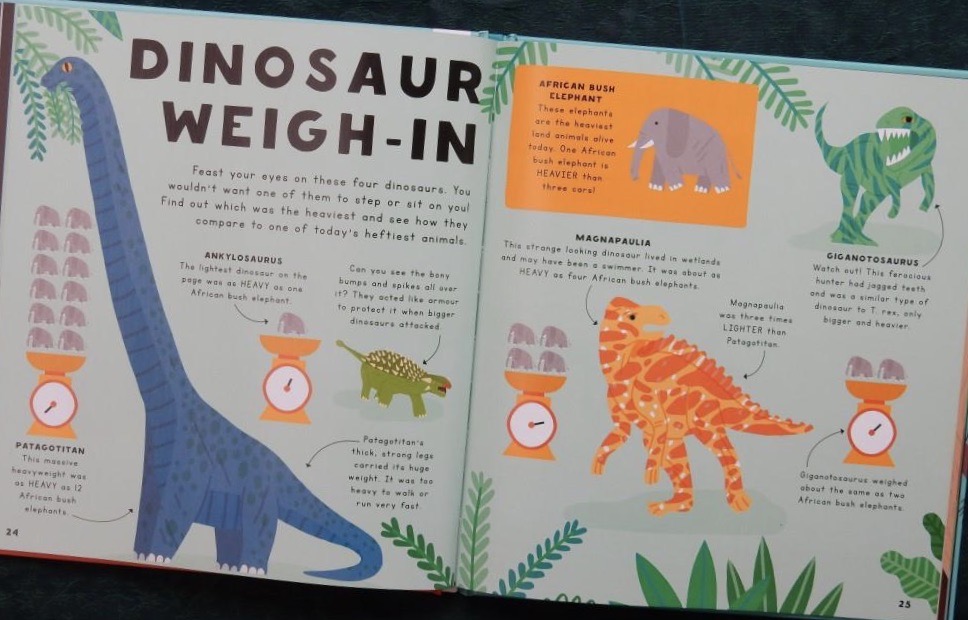
I’m Going To Eat A Polar Bear

Despite being very hungry, a little penguin turns down the offer of fish, declaring it boring and instead demanding ‘something new. Something soft … and fluffy!’ One of the older penguins recalls hearing of something matching that description called a ‘bolar pear’. Off sets the little penguin, full of bravado, on a mission to find and eat a bolar pear, despite not knowing what such a creature actually looks like.

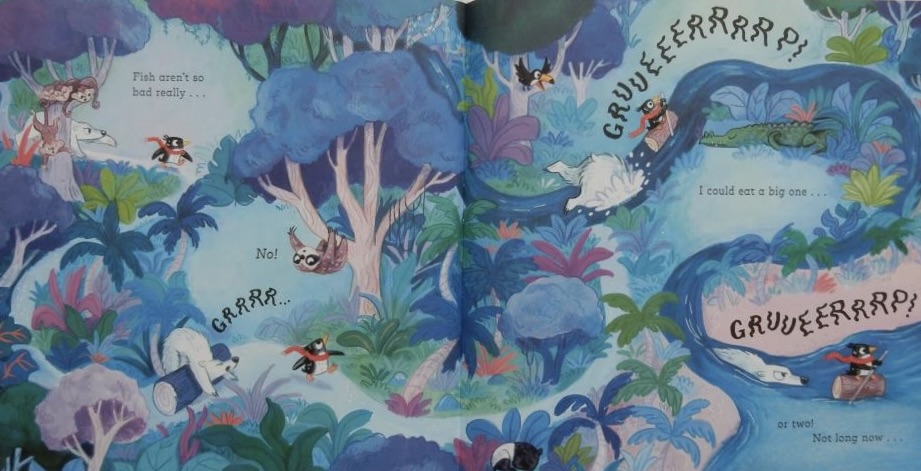
After a long journey over land, sea and the occasional croc. and the dismissal of warnings about the bear’s enormity, the little penguin finally arrives at the North Pole, the place where polar bears live.

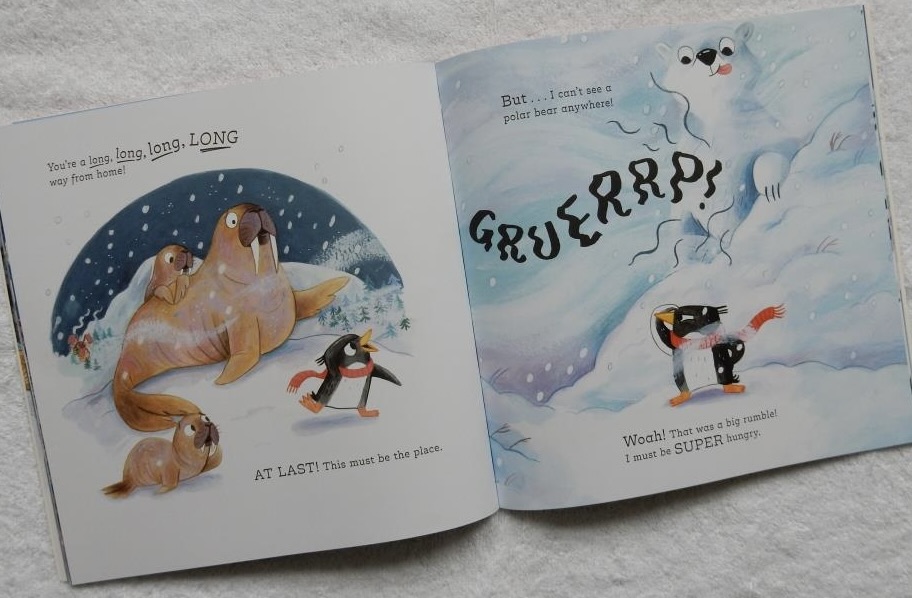
Our bear seeker has an extremely rumbly tum but apparently not much common sense, for the little penguin decides that there are no polar bears, not even a tiny one, anywhere. Back home to some fish is the only option, that, or remain hungry. Little does said penguin realise that an equally hungry polar bear has been following close behind all the time.

This is one of those books that is sure to have young listeners yelling, “it’s behind you” as the story progresses and the totally oblivious little penguin almost ends up becoming the next meal for a polar bear, rather than the other way round. Children will love being in the know with the author in this tongue-in-cheek tale, the drama of which is captured with aplomb in Nicola Kinnear’s story-telling sequences.

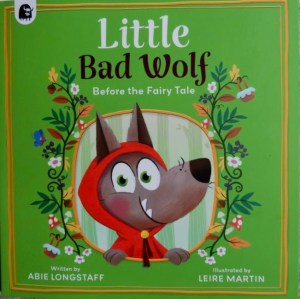
Little Bad Wolf

This is not so much a fractured fairytale more a fairytale prequel.
We first meet the wolf – Baby Wolf – as a cute looking creature but with the habit of gobbling up anything that makes him cross. This distresses his mother and also on his first day at school, the teacher and fellow pupils. Needless to say Wolfie does not get the Star Pupil badge at the end of the week.
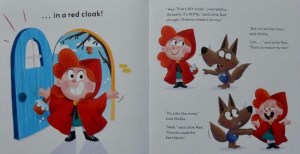
The following week though, our lupine resolves not to eat anything annoying, the result being he’s Star Pupil that Friday. His Dad is especially proud and makes Wolfie a swishy red cloak onto which is stitched a golden heart. Almost immediately Wolfie gets blueberry jam on the cloak’s hem.

One lunchtime the cloak disappears and who should arrive the next day but Little Red; guess what she was wearing. Wolfie is certain the garment is his but Little Red comes up with reasons why it’s hers

and this makes him want to revert to his old ways, but the teacher grabs him just in time. Little Red is absent the day after: she’s moved to Australia, so the teacher tells Wolfie who thinks he’ll never regain his cloak.

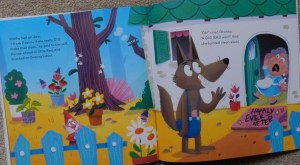
Years pass, Wolfie grows big and and stops (more or less) consuming annoying things. Then who should appear in the woods but a considerably larger Little Red, still wearing the cloak. “Everyone calls me Little Red Riding Hood now, because of my famous cloak,” she announces, going on to tell Wolfie that she’s off to visit Granny. Now, thinks Wolfie, this is my opportunity to find out if Granny really did made the cloak so he dashes off beating Red to Granny’s abode

and stows her safely away. Rather than spoil this hilarious story, that’s where I’ll leave things.

This is a great read aloud: when I shared it with a five year old relation, her ten year old brother stopped what he was doing to listen in, transfixed by the story even though he couldn’t see Leire Martin’s dramatic portrayals of the action with their fun details.

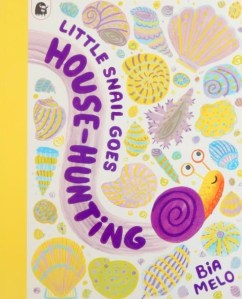
Little Snail Goes House-Hunting

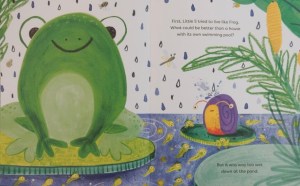
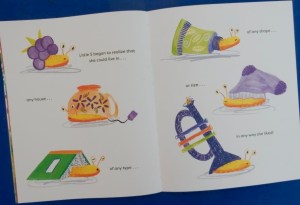
Little Snail is an ordinary little snail living in Snail Garden in an ordinary house. Despite loving her large family, Little S sometimes feels rather different and consequently wants to try something different too. She decides to go house-hunting and off she goes hither and thither trying out different life styles, Her first idea is to try living like Frog; yes Frog’s house has its own swimming pool but Little S finds it’s far too wet.

An upside-down house like the bats doesn’t suit her either, nor does the countryside where she feels a tad stuck and as for a house share – that’s a definite no on account of the crowd. Transformational living is another no thank you, as is an underground abode.

Off goes Little S to pay a visit to her aquatic cousins with their variety of houses and even after trying so many different ones, none of them feels like home. A realisation takes place

and back she goes towards Snail Garden in her perfectly sized, perfectly shaped house and there her appearance proves inspirational..

Young children will love following Little Snail as her quest takes her far and wide and will be much amused at the final outcome of her travelling. The story is illustrated with zany humour in Bia Melo’s bright, textured, patterned scenes.

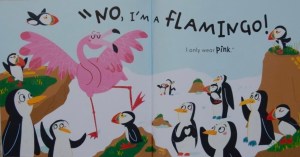
No, I’m a … Flamingo!

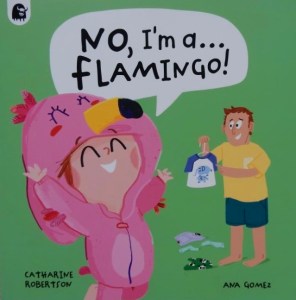
Like many three and a half year olds, the little girl narrator of this story only ever wants to wear one particular item of clothing. In this case a pink flamingo onesie. I had a relation who at the same age insisted on wearing what she called her fruit shorts wherever she went.

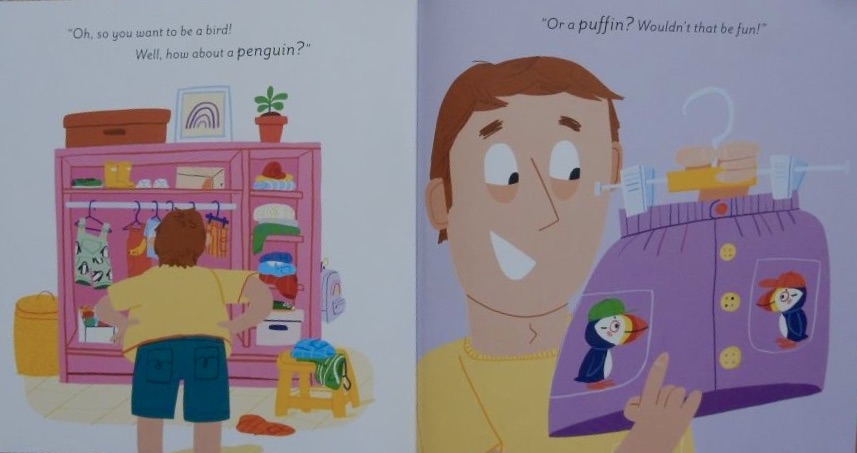
Our narrator’s patient Dad suggests that as it’s very hot, she should put on her elephant T-shirt. You can guess the response. A panda themed offering is similarly rejected. So, he tries clothes depicting a different sort of bird – a penguin, or a puffin perhaps?

“NO, I’M A FLAMINGO! I only wear pink.” comes the reply.

Now this Dad knows something about flamingos that his little daughter does not. At her age, flamingos are grey and only turn pink when they’re older. Time to find that old grey T-shirt.

Suddenly the little girl is a flamingo no longer so Dad quickly produces some jazzy shorts. Dad might know more about flamingos but our narrator is a creative thinker … Will they ever leave the house and if so, what will that little girl be wearing?

The combination of Catherine Robertson’s text that takes the form of the dialogue between father and daughter and Ana Gomez’s disarmingly charming scenes will ring true with many adult sharers whereas young listeners will find the little girl’s choice entirely logical and delight in the final twist to the tale.

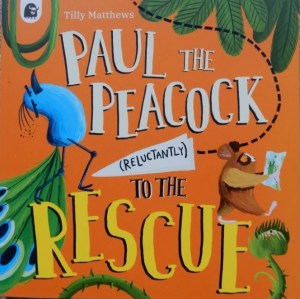
Paul the Peacock (Reluctantly) To the Rescue

Time was Paul the Peacock was the most egotistical creature in the forest but recently he’s endeavouring to live up to his new persona as Mr Nice. It’s exhausting however and he longs for a brief spell of peace and quiet. While snatching a few relaxing moments alone, his slumbers are disturbed by the arrival of a letter. This he throws away without bothering to open it and continues snoozing, albeit briefly, for a few minutes later, there is Norris clutching the now opened letter and looking very worried. The letter is from Paul’s cousin Connie the Peahen far away and Paul’s help is urgently required.

Immediately Norris packs their bags and off they sail to save the day, After a testing journey over stormy waters, through a horrendously hot deserts, up the side of a bubbling volcano they eventually reach the forest. Now to find Connie. The local creatures are unhelpful but then a gorilla appears and points to the direction in which Connie lives. Or does she? All they discover when they reach the spot is one egg in an abandoned nest. Norris begins a series of attempts to get the egg to respond. They’re on the point of giving up and returning from whence they came when the egg cracks revealing a perfect peachick.
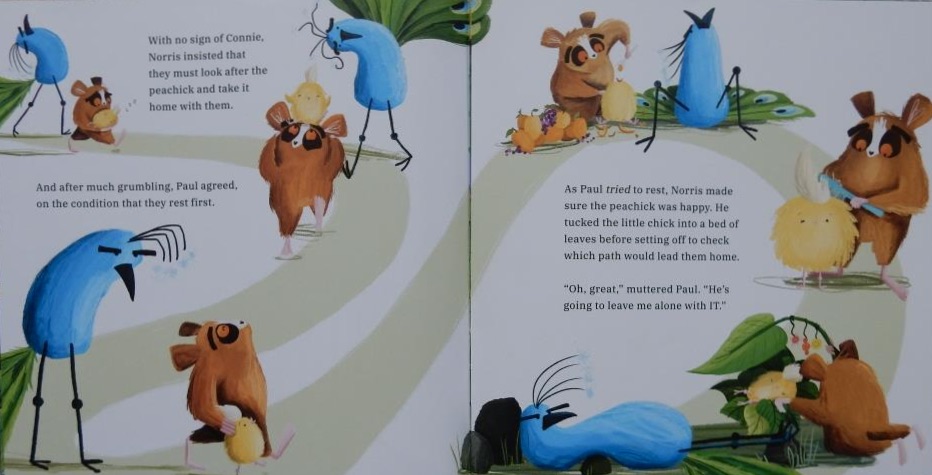
At Norris’s insistence Paul agrees that after he’s rested they should take it home with them.

Norris goes to find the best route and Paul convinces himself that he’s been left by his best pal. Not by Chick though: the fluffy creature has already become a Paul devotee.

Next morning with the three of them reunited, they prepare for the homeward journey. Suddenly Connie appears whereupon Paul decides that he and Norris have one final task before their departure …
Thanks to Chick, Paul has learned that caring has something to offer even the most selfish animal.

A droll telling that carries vital messages about loving and caring and the environment, with some deadpan comic incidents theatrically portrayed in Tilly Matthews’ scenes.

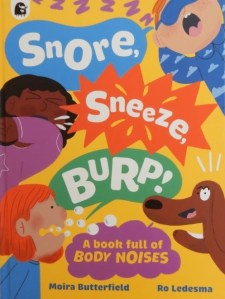
Snore, Sneeze, Burp!

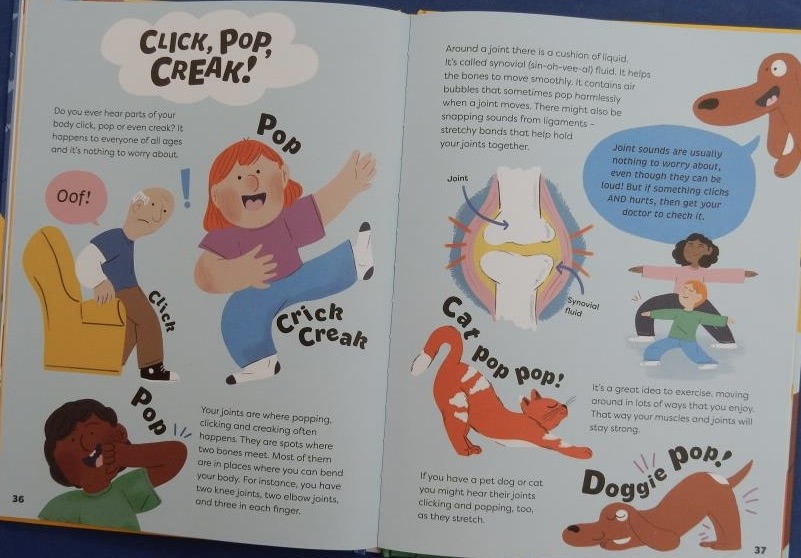
Body emanations, be they sounds or smells often feature in books; this one focuses on the former. In the company of some children and Charlie, a ‘brainy’ dog, readers will discover why we humans (and other animals) are sometimes noisy by accident.

In addition to the titular burps, snores and sneezes, several other sounds are discussed. I had to laugh when I read that the scientific term for the gurgling noises caused by muscles moving food and liquid through the stomach and intestines is borborygmi.

As well as those snorty snores lots of people make when they’re asleep, sometimes a person might talk in their sleep. Children, we read, sleep talk more often than adults.
Hiccups are particularly annoying especially when they seem to start for no apparent reason and none of the cures suggested work for me. Apparently hundreds of years ago elves were blamed for hiccups in England.

Other spreads explore those clicks, creaks and pops that various joints in our bodies might make;

sounds a doctor may explore with a stethoscope; deliberate noises we make to convey a message such as clapping to show appreciation; ‘shushing’ to indicate to ‘be quiet’ and finally comes what is deemed the best sound of all – laughing. The book ends with some suggestions about how to be a ‘body noise hero’.

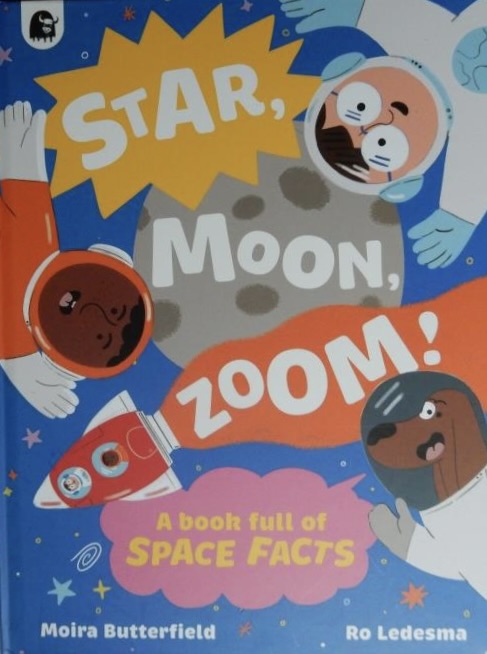
Moira Butterfield has a special skill: when writing for primary age children, especially those in KS1, she includes lots of facts but the style she adopts makes it seem as though she is talking directly to readers. There’s often a gentle humour that engages children from the outset and Ro Ledesma captures that gentle humour in her bright, colourful illustrations.

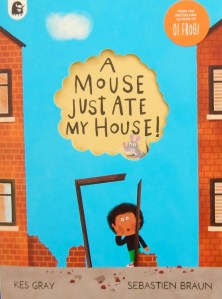
A Mouse Just Ate My House!

The narrator of Kes Gray’s text speaks in rhyme as he relates the disaster that has befallen him, or make that sequence of disasters. There’s a mouse in his house and she has nibbled, munched and chomped her way through pretty much everything except the resident himself. First, as you might expect she sank her teeth into the skirting board but as soon as the narrator had retired to bed, she got started on the downstairs rooms and their contents.

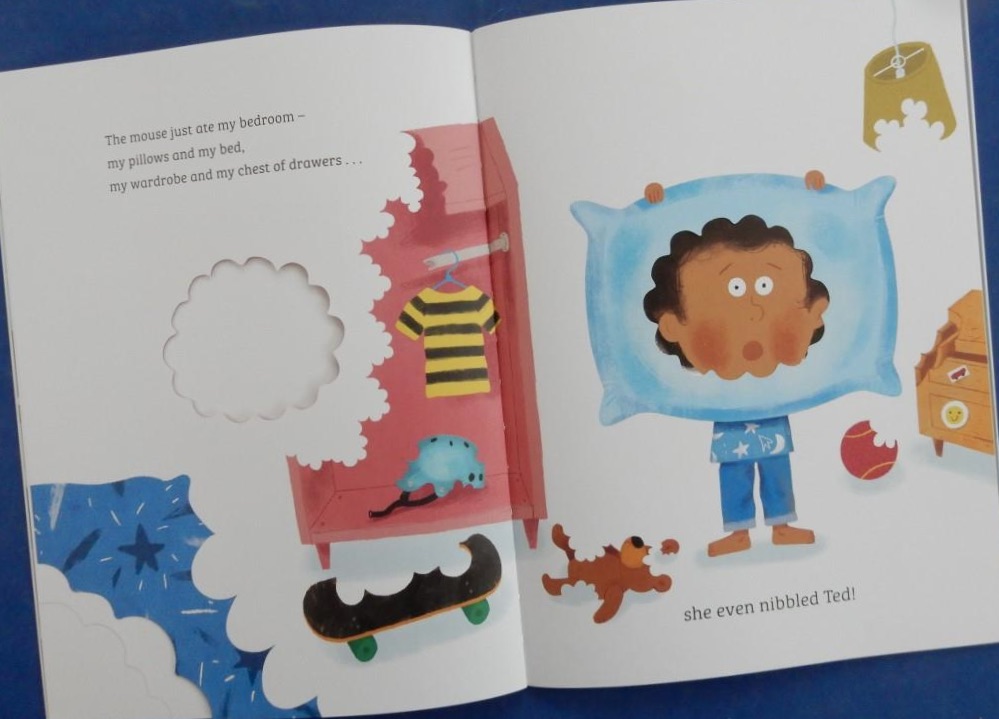
Traps proved totally ineffective, indeed they merely served as part of the rodent’s repast before she proceeded to the bathroom, followed by the bedroom,

where not even poor Ted escaped from a severe nibbling. Other deterrents – a cricket bat, the neighbour’s cat

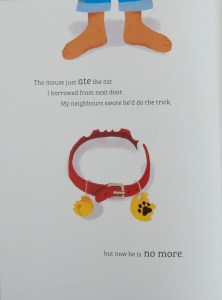
and pest controller and much more failed to survive. It will come as no surprise to readers that the mouse’s belly appears to have increased in size considerably after all this but there’s no sign of her suffering from indigestion or nausea. How is that possible?

This whole sorry saga is heightened by Sebastien Braun’s dramatic, hole-strewn depictions of the trail of destruction.

With an absolutely delicious throwaway final twist this one has winner stamped all over it. Listeners and readers aloud will relish it.

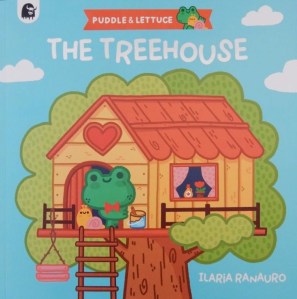
Puddle & Lettuce: The Treehouse

Meet best friends Puddle, a frog and Lettuce, a snail. Puddle’s little house beside the pond is perfect for a frog and Lettuce’s warm, cosy house on her back is perfect for a snail. They share each other’s special interests: Lettuce loves to listen to Puddle play his guitar and Puddle relishes the cakes Lettuce loves to bake.

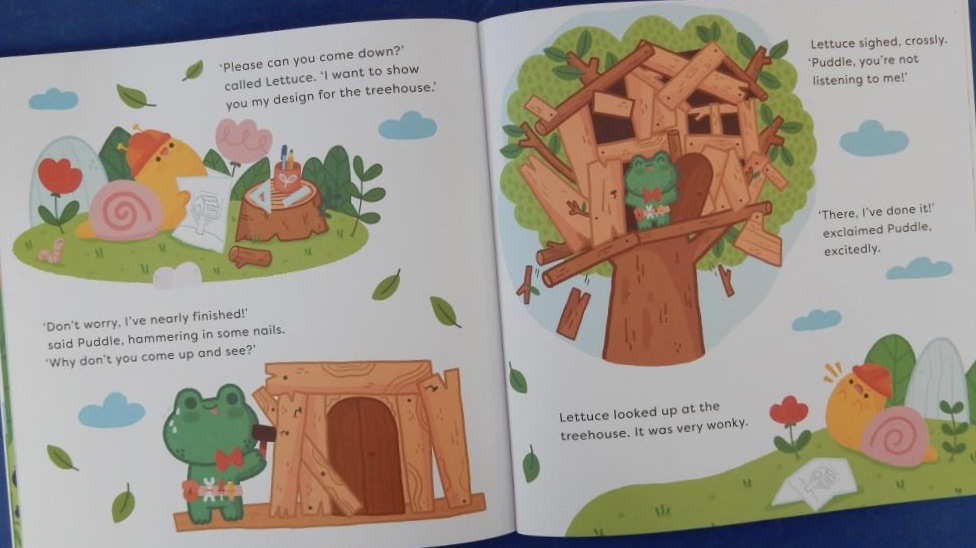
One day Lettuce pays a visit to Puddle but the latter suggests they go to Puddle’s much larger house. Suddenly they have an idea: a treehouse that is big enough to accommodate them both. However in his enthusiasm to start building Puddle dashes off to collect suitable bits of timber and doesn’t hear what his friend has said regarding the drawing of plans.

So, with the job complete Puddle excitedly calls his pal to come up and join him. The problem is the treehouse is way too far up for Lettuce to reach. A sudden realisation dawns. Can they work together and create a treehouse that is just right for them both, a place wherein they can both enjoy sharing their favourite things – pancakes especially?

With an important message about seeing things from another person’s viewpoint, this story with its endearing characters, will likely make young humans think about how they treat their own friends.

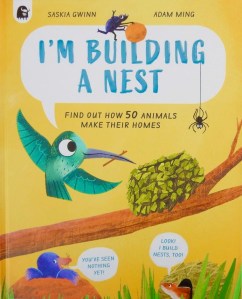
I’m Building A Nest

Author Saskia Gwinn entrusts Bird to act as our guide in this journey to discover how other creatures build their homes.. We meet more than fifty large and small : can any of them surprise Bird and show that their home is best?

First Bird visits other nest builders including a stork that reuses its stick nest year after year, a trumpeter swan that builds a nest on a beaver’s floating lodge and a red-headed woodpecker that pecks a hole in a tree trunk.

Next to be investigated are spiders. these eight-legged arachnids make webs for a variety of purposes. The garden web spider’s web is an insect trap; the golden diving bell spider weaves a web under water to trap air then uses it as a submarine and the crab spider makes a balloon of silken threads that float on the wind, enabling it to find a new home. Is Bird impressed by these? Well yes, but not persuaded.

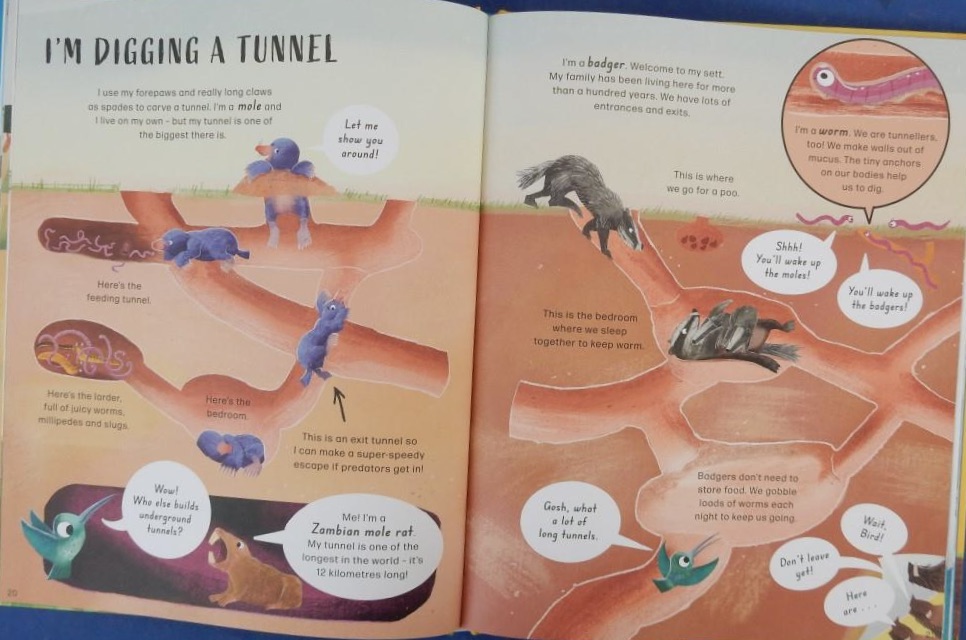
Do you know which animal’s home has a feeding tunnel, a larder and a bedroom as well as a super-speedy escape tunnel? It’s a mole, one of the tunnellers we meet.


These are just some of the places of residence Bird discovers, but at the end of a long learning journey, there’s been a change of heart in our feathered escort. It concludes, ’Every home is best for the clever creature that made it.’

Curious young readers will enjoy discovering the wealth of animal homes on our planet and be amused by the speech bubbles and Adam Ming’s playful illustrations.

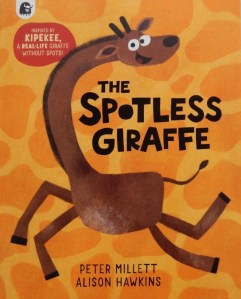
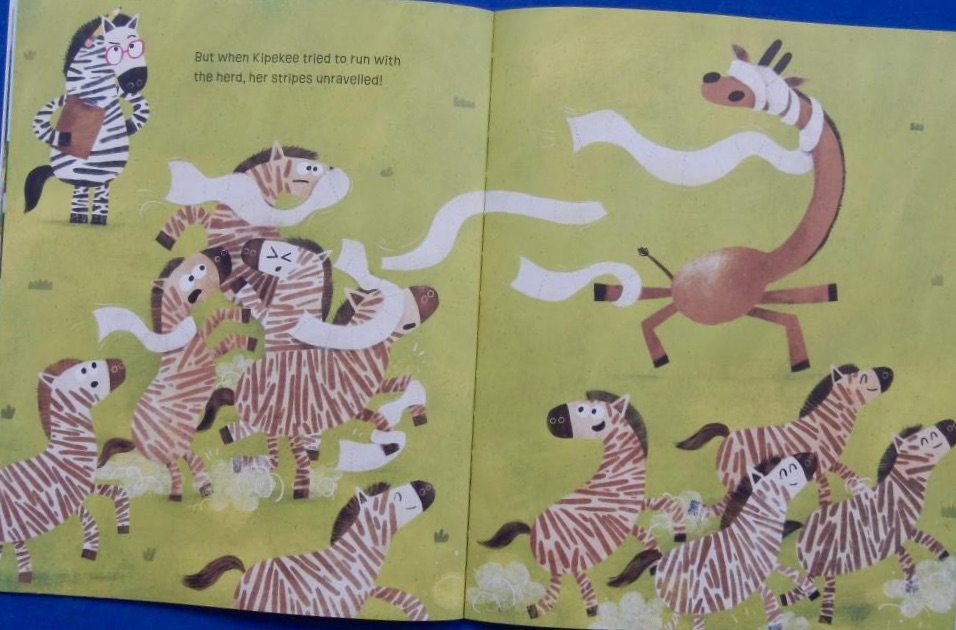
The Spotless Giraffe

It’s Kipekee the giraffe’s first day at school but she doesn’t know which class she should go to. Some of the other animals offer to help: Hana Hippo suggests that with a brown coat, she should join the camel class; Azar Aardvark ties a false hump onto the giraffe’s back but it comes adrift during a swim; Azar then proposes Llama Class but Kipekee lacks a woolly coat and Hana Hippo’s offering of a woolly rug flies off in the wind. So maybe Zebra Class is the one for the giraffe

but no.

This leaves only Gazelle Class and despite having no horns Kipekee heads there sporting something given by Hana – uh-oh!

Eventually, having seen the sign for Giraffe Class, Kipekee takes matters into her own – err, neck and is soon settled in there. The class sign is suitably updated and come the end of the first week, a celebration is held.

This heart-warming story of embracing our differences, uniqueness, acceptance, friendship and inclusion is based on the true story of Kipekee, the first giraffe without spots born in the USA, in a Tennessee zoo in 2023. Alison Hawkins’ entertaining scenes of the events will help young children relate to the important message of the tale.

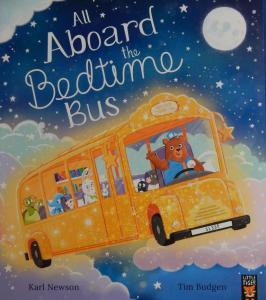
It’s Time For Bed

The queue for a special bus is long, so don’t delay:don those pjs and get ready to come aboard with a host of other sleepy heads. Dreamland awaits; here come the passengers singing their yawns away on a magical journey from one stop to the next till they finally reach Slumber Land with teeth already brushed and bedtime stories read.
An enchanting combination of Karl’s lulling rhyming text with its repeat refrains and Tim Budgen’s playful scenes of the dreamy journey that’s just right for getting human toddlers ready for bed and sending them calmly off to sleep.

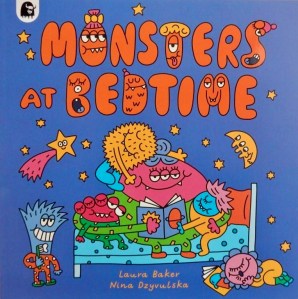
The fourth in the Monsters series is a really fun pre bedtime read. In Laura Baker’s rhyming text and bold bright illustrations we follow the funky, mischievous monsters through their end of day, eventually somewhat sleepy, routine. (So glad I’m not the large story sharer shown in Nina Dzyvulska’s reading scene. Even wearing my teacher’s eyes everywhere hat, I think I’d miss some of the monster mischief going on there.)
Don’t be surprised if your own little human monster wants to spend a long time poring over every spread, relishing all the mischief as well as searching for the bat monster lurking in each vibrant illustration.

Also on the bedtime theme is:

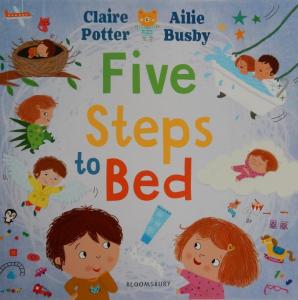
Two young children describe the transition from their mother-annoying bedtime preparations to her thoughtful ruse of asking her offspring to help improve the evening situation before it gets out of hand. The children decide the steps they need and illustrate each with a picture. The pictures are then ordered and used to create a routine comprising bath (what kind would they choose), followed in turn by toothpaste, pyjamas, bed and finally, dream – what weird wonderful one would they want.
Young listeners can, having heard the story, help create their own bedtime routine.

Paul the Peacock

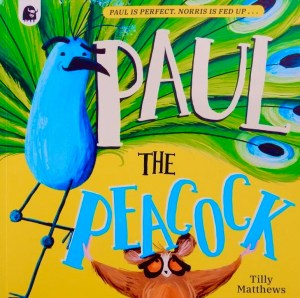
It’s clear from the outset that Paul considers himself an entitled peacock. He has the biggest nest, the most loyal friend and his pride and joy – the most beautiful feathers in the forest. His trusty pal Noris the loris ensures that Paul receives plenty of pampering every single day until one evening a fierce storm blows up. Norris is sent out for more branches to strengthen Paul’s nest but the loris has had enough of his feathery friend’s arrogance and bossiness.

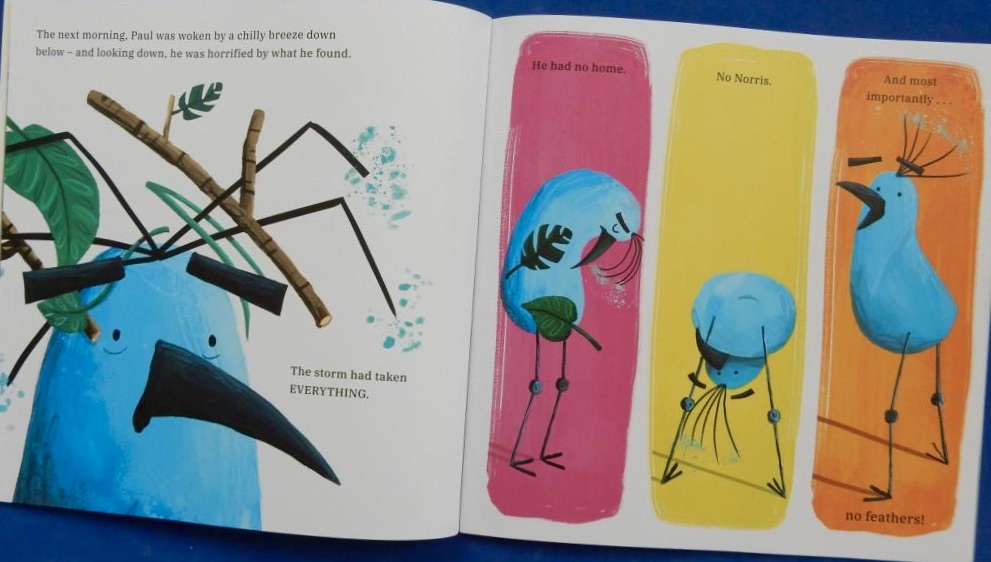
The following morning Paul wakes to discover disaster has struck: he no longer has a home, Norris and worst of all, his feathers have gone – every single one.

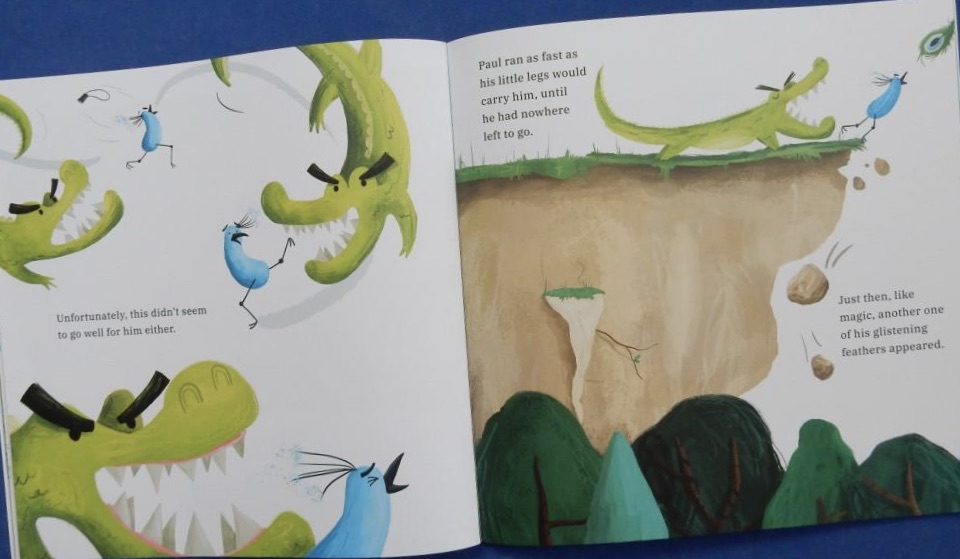
For the first time ever, the peacock heads out on his own to search for those missing feathers; Paul is nothing without his plumage so he’s determined to retrieve every single one. Now politeness is not a quality Paul possesses so he goes about demanding the animals he comes upon with one of those feathers to return it immediately; either that or he attempts to snatch it back.

Hmm, you’ve a lot to learn Paul and you’re going to have to do it the hard way, and eventually he does.
Could those same creatures that he’s treated so badly enable Paul to discover that there’s something even more important in life than himself and his appearance?

Tilly Matthews’ fun fable demonstrates the importance of considering the feelings of others as well as being able to show humility and value one’s friends. The illustrations are full of drama and details that will amuse both young listeners and adult sharers of the book. Lots to think about and discuss here.

All You Need To Know About Dogs

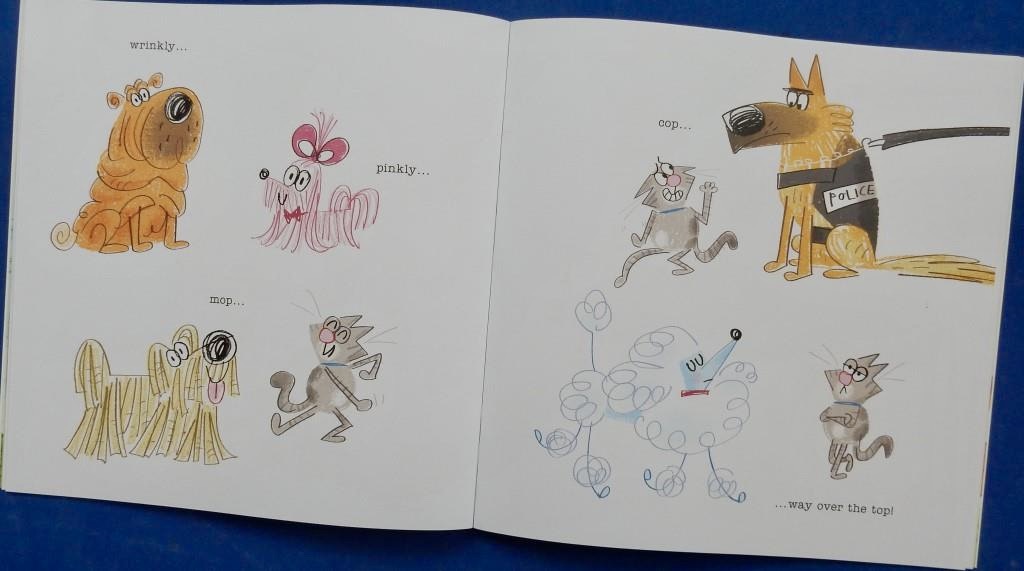
Now I’m no lover of cats, far from it – they bring me out in an itchy rash, neither am I a dog lover (having been mauled by an Alsatian as a child). However I am a fan of Fred Blunt’s picture books. which is why I read this. It’s told by a matter of fact cat and indeed there are actually two versions. The first is extremely brief, blunt you might say and is over in one spread; the second is the extended one for which our narrator employs rhyme to talk about the various breeds of dog

and to inform us of the many reasons dogs are stupid. For instance despite their having an excellent sense of smell, they use it for ridiculous activities. Then there’s what they do with their poo and as for the fur … It’s hard not to agree with all that moggy has said thus far.

In contrast when you come to cats, they are just cats,

only with some felines you get rather more than you bargained for and when a scary moment arises dogs come into their own. It’s assuredly the case here for loyalty reigns and a dog might just turn out to be the best friend of all.

Both cat and dog lovers of all ages will lap this up; so too will those who enjoy wit and a good laugh.

Torla & Smorla and the Lower Than Average Cloud

Meet giraffe friends, Torla and Smorla with their star patterned coats. One day the two are out on a ‘longer-than-average walk’ when Smorla comments on the beautiful day. However with Torla’s head engulfed by a fluffy white ‘lower-than-average cloud’, as her friend tells her, nothing is visible but white. Her concerns about seeing where she’s going are quickly allayed when Smorla offers to take the lead, saying that sooner or later the cloud will disappear.

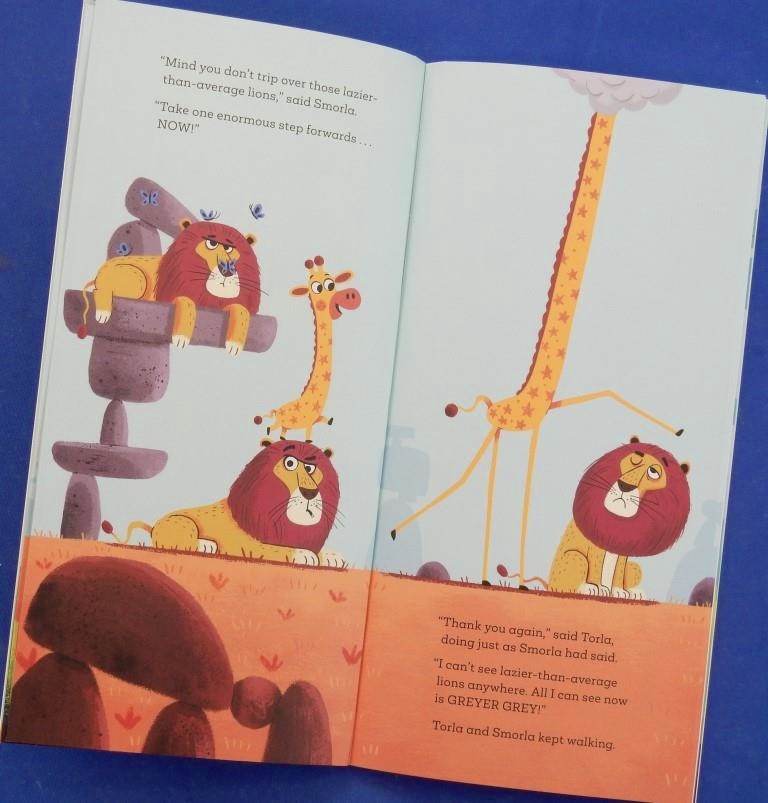
Now trust is crucial in such situations and Torla totally trusts her pal, following her instructions carefully. In this way (but now seeing grey) she avoids bumping into a tree (taller than average), tripping over ‘lazier-than-average lions’;

she navigates a path without getting scratched by the ‘pricklier-than-average bushes’. By now the cloud has become an even greyer grey.

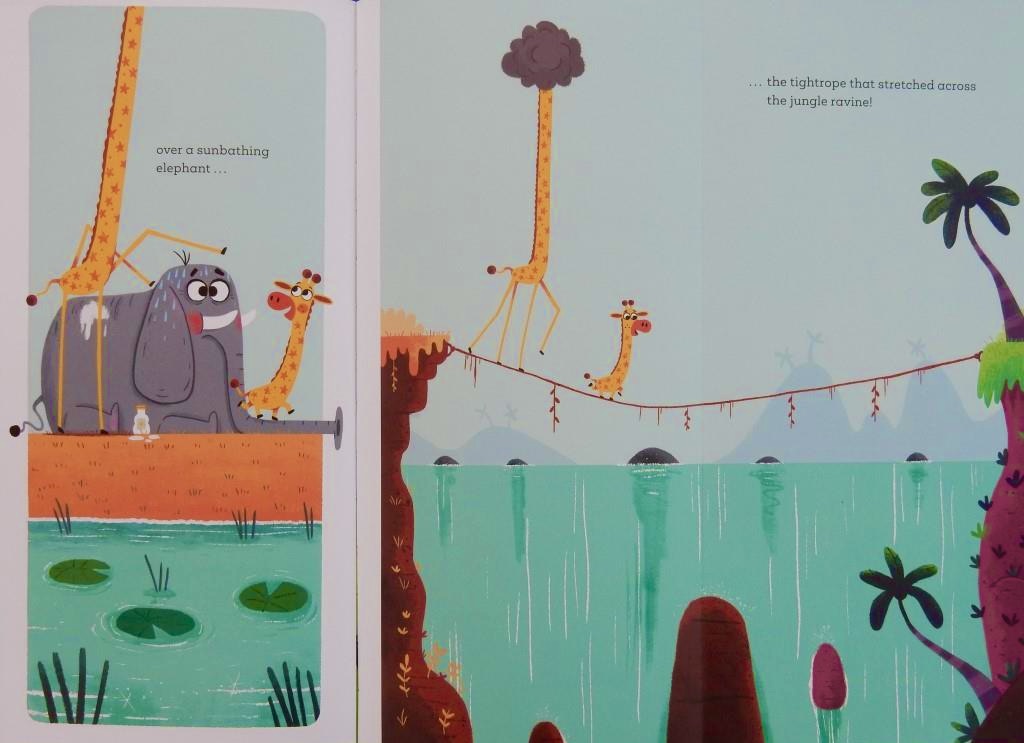
They stop just before a chasm in their path where Smorla tells her friend to bend her knees and do her biggest forward jump ever. Safely across, they walk round crocodiles practising yoga and bingo-playing hippos, over an elephant enjoying the sun, across a tightrope traversing a ravine,

past dancing flamingos until finally they stop. Down comes heavy rain from the now black cloud above Torla’s head. Now can you believe it but Smorla just happens to have a pocket within which she has something else that’s bigger-than-average. Can you guess what?

Children will love the animal antics of the bit part players almost as much as the dialogue between the giraffe characters, which as one would expect of Ken Grey, is wonderfully droll.

Monsters At School

My goodness! How glad am I that I’ve never had to teach a class anything like the one in this third book featuring the monsters created by Laura Baker and Nina Dzyvulska.

Now the monsters are having their first day at school and as it begins we see them setting off and approaching the entrance. Once inside they start getting up to all kinds of ridiculousness but that’s in-keeping with the “Yes, it’s free-play time!’ line in the rhyming text.

Lunch time, as you might expect, is a very messy affair, after which, out go the monsters to expend some of their energy in the yard, swinging, sliding, skipping and more. Back indoors an art session gets under way with the Dog Monster noisily making its presence felt as it sets all the other monsters off on a chase. Near chaos ensues but eventually everyone settles down again until it’s time to go home. PHEW!

The vibrant, action-packed illustrations are hilarious especially those of monster mayhem, which at one point author Laura Bakesr describes as ‘Catching, snatching, steering, clearing! Climbing up the walls.’
Young children will delight in this madcap romp and have great fun looking for Monster Dog hiding (often in plain sight) on every spread.

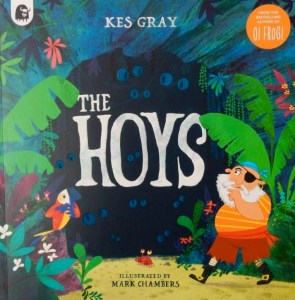
The Hoys

ARRR! Me hearties! How many of you have ever wondered what a hoy is? No? Well, you are about to find out in this zany piratical tale.

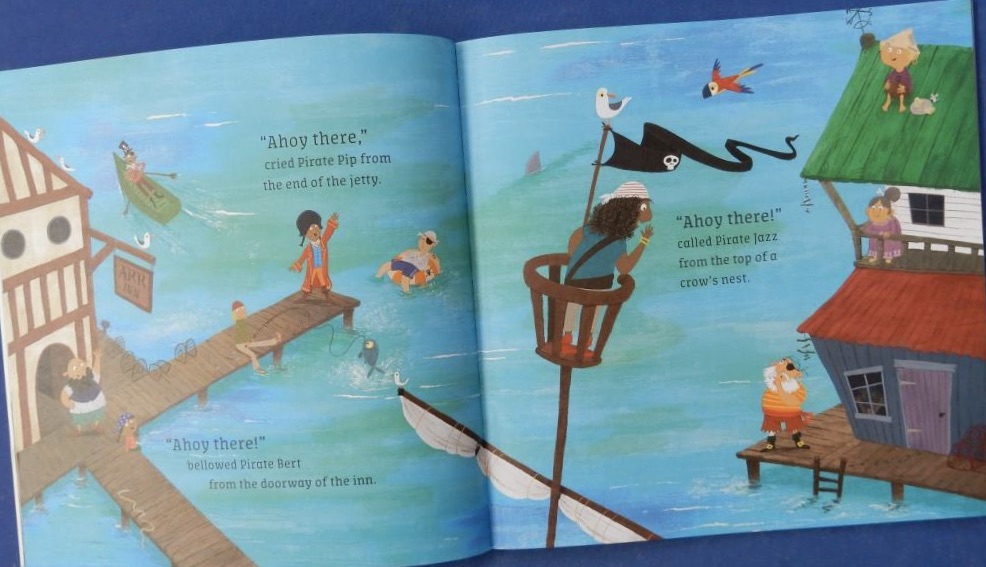
When his friends call out ‘Ahoy There’ Pirate Jake is confused – what are these hoys and where can he find them?

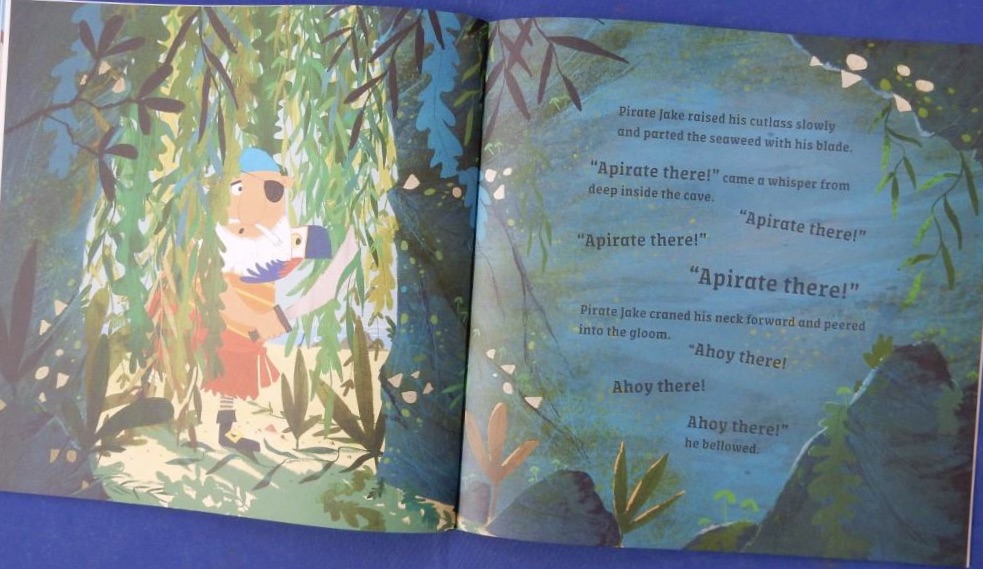
His hoy hunt around the harbour proves unsuccessful so Pirate Jake goes on a very long and very miserable walk along the beach during which he argues with his parrot and having run out of beach, ends up at the bottom of a tall cliff. There, in the sand, he discovers a trail of strange- shaped footprints …

Now where might they lead, the two wonder and who do they belong to? They decide to follow them and see.

‘Ahoy there!” he calls on entering a well-concealed cave. Could this place contain the answer to Pirate Jake’s puzzlement; will he perhaps end up feeling like a true pirate at last?
Ho! Ho! Ho! To reveal the ending would make me a story-spoiler.

Mark Chambers’ bold bright art, some scenes bursting with fun piratical details, is perfect for Kes Gray’s crazy telling, which contains some smashing descriptive phrases. A thoroughly enjoyable read aloud and one to re-read come ‘talk like a pirate day’ this year’s being on 19th September.

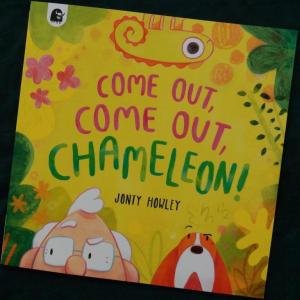
Come Out, Come Out, Chameleon!

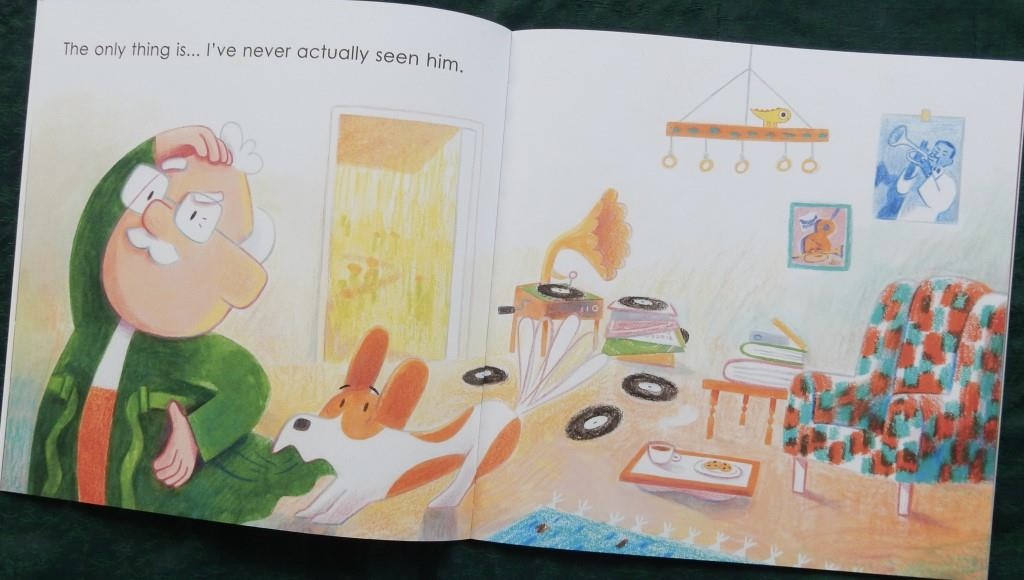
“I have a pet chameleon,” announces the white-haired man standing outside his home on the first spread. Beside him is his dog whose gaze is directed towards a rooftop weathervane whereon, as observant readers/listeners will see, is said chameleon. Turn over and the chameleon’s owner tells us, “The only thing is … I’ve never actually seen him.” Surely this guy needs new specs.

He continues sharing with us his possible sightings, each of which he immediately dismisses: “I thought I caught a glimpse of him among the flowers. But it must have been a trick of the light.”
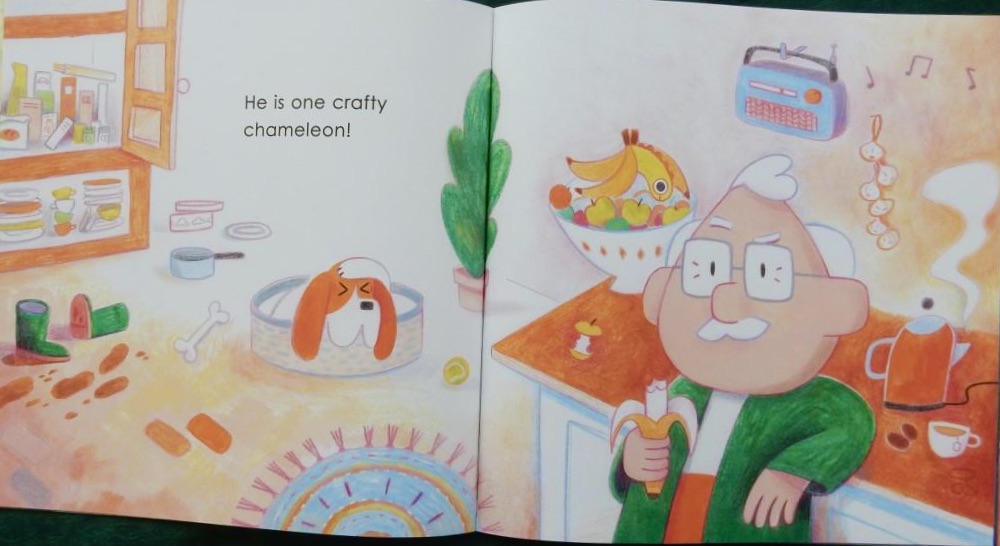
All the while the chameleon is hiding in plain sight: the dog can see it, so too can we readers. On one spread the creature is sitting in the fruit bowl disguised as a banana;

turn the page and he’s lurking among the socks strewn across the bedroom floor.

Audiences will delight in both the playful way the pastel illustrations contradict the words and the dog’s attempts to help the man spot his chameleon: canine body language and facial expressions speak volumes. Eventually the owner succumbs to the possibility that his chameleon doesn’t actually exist. This prompts the dog to come up with a way to solve the chameleon conundrum and hurrah! it works – for a while at least.

Brilliant interactive fun for the very young and their adult story sharers. The simple text also makes this a good book to offer children in the early stages of their reading journey

The Secret Life of Bugs

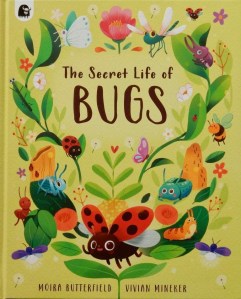
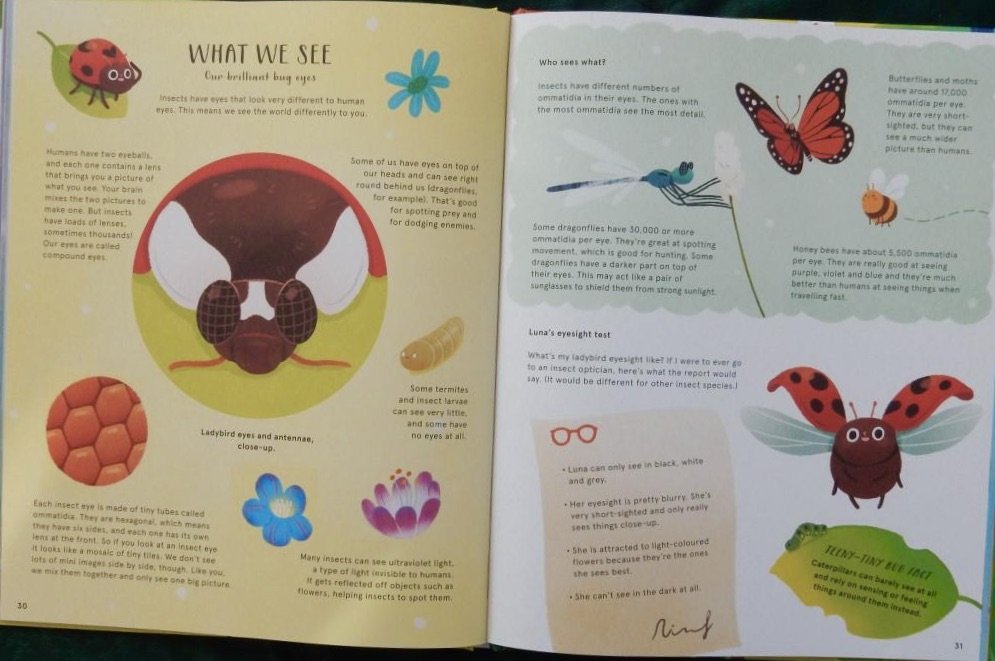
In the latest of The Secret Life series Luna the ladybird takes readers on a journey into the world of insects that includes traditional tales as well as information. She begins by presenting her own life story starting when she was one of a cluster of tiny eggs on the underside of a leaf through her metamorphosis until she became a bright red ladybird with seven black spots. I was surprised to learn that there are over 5,000 different kinds of ladybirds in the world. On the next spread, using herself as exemplar, Lily presents the body parts that are similar in all insects as well as talking about some of the differences such as mouthparts. Did you know ladybirds and many other insects smell by means of special organs on their feet?

After this is a traditional tale (one of the five included in this book) How the Butterflies Got their Colour, based on a legend told by native American People living in the Arizona desert.

Insect homes, night fliers, nesting habits are the topics of the next three spreads.

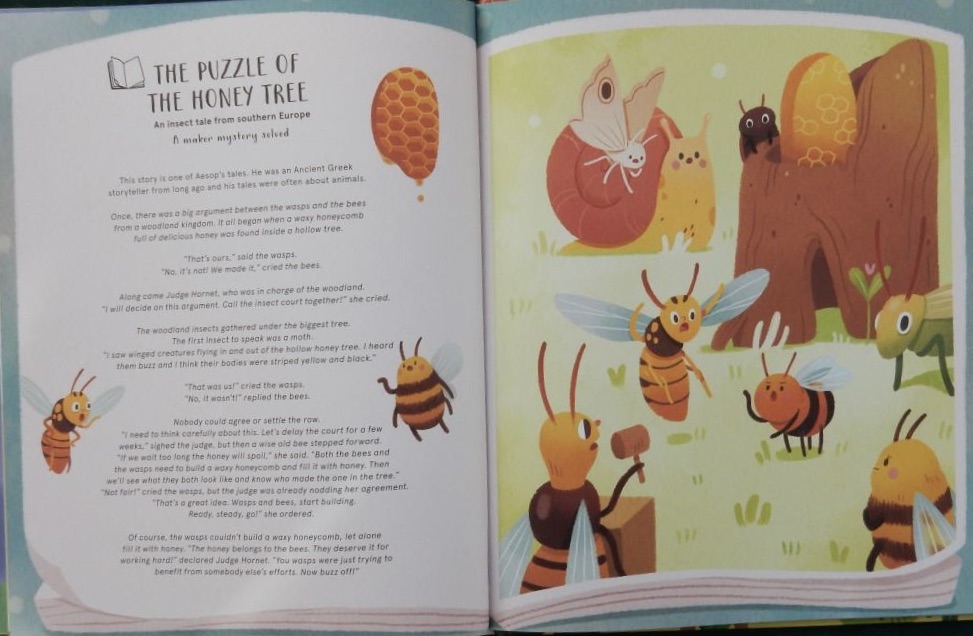
I laughed as I read The Puzzle of the Honey Tree, a traditional tale from southern Europe wherein the bees and the wasps in a woodland kingdom argue over the ownership of a honeycomb containing yummy honey. The idea of the rival factions having to go before an arbitrator really amused me.

Other spreads offer facts on swimming bugs, noisy ones, very large and very small bugs, how bugs see,

some insect ‘superpowers’ and more, concluding with pages encouraging young readers to get involved in helping insects survive so they can continue their vital work on our planet. There are also bug stories from Ancient Greece, Brazil and South America.

In my experience most young children are fascinated by insects; this book will surely further fuel their interest in and understanding of, these important creatures.

High-Five Me! In the Jungle / High-Five Me! At the Farm / Ancient Greece Pop Ups

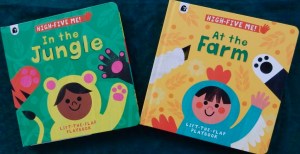
These are the first two in a new board books series. Each has five double spreads, a simple, bouncy rhyming narrative written by Jess Hitchman and a sequence of vibrant, uncluttered scenes by Carole Aufranc.
In In the Jungle little ones will meet Tiger, Chimpanzee, Parrot

and Sloth, each one peeping from a large flap waiting to be high-fived by a young child and the final one has a mirror hidden beneath its flap. This will encourage little humans to high-five themselves.
Equally playful, At the Farm, Horse, Cow, Sheepdog, and Sheep await a little human’s high-five and sometimes introduces the sound the animal makes.
These are just right for the very youngest children; they will love the playful nature of the books and I suspect, want to share them with an adult (or older sibling) over and over again.

For much older children is:

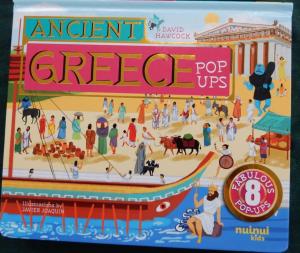
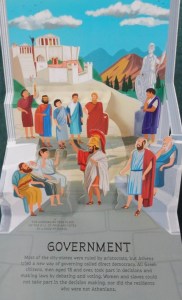
Ancient Greece often forms part of the upper KS2 history curriculum for it gives children an opportunity to gain some understanding of the culture of an ancient civilisation and how this has influenced the way life is lived today. In Ancient Greece for instance, only Athenian men aged 18 and over were able to make laws by debating and voting; neither women nor slaves could participate in decision making in the direct democracy practised in Athens.

Elements of Greek mythology are also taught to 10/11 year olds and this too is the subject of two of the dramatic pop-up spreads in the book. Included as well are brief facts relating to Athens (circa 500 BCE), trade, war and heroes. With its diorama style art by Javier Joaquin, primary teachers may like to include this in their resources to whet the appetites of learners.

Are You A Sleepy Monster?

This image has an empty alt attribute; its file name is dscn9891-1.jpg

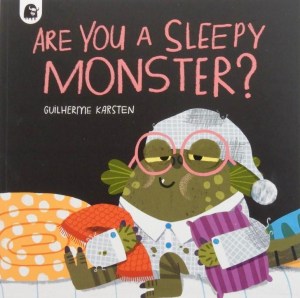
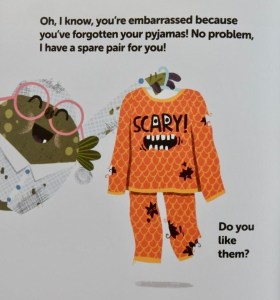
It’s time for bed and Karsten’s lovable monster is back, pyjama clad, inviting little ones to join a ‘Sleepover for Monsters’. In case you’re wondering where you’ll sleep, it will be under the bed along with your slumber host. Did I hear a protest – something about sleeping ON the bed? Surely not. Away from malodorous, noisy little humans is to be your place of slumber especially as Monster has even gone to the trouble to provide you with a pair of PJs for the occasion.


This image has an empty alt attribute; its file name is dscn9892-1.jpg

Was that a case of naysaying to being under the bed and an insistence on your scary host climbing up and joining you for a lie down atop the bed? Well, it would appear that the bed is invitingly soft and there’s even a cuddly teddy provided: ZZZZZ …

Time to pull up the duvet and turn out the lights as you, the reader gets in and puts your head on the soft pillow next to your host. Sweet dreams.


With its chatty interactive text, monstrous twist and delectable illustrations, this is certain to be a winner of a bedtime tale. It certainly was with this reviewer.

I Love You to the Moon and Back All Year Long / I Love You

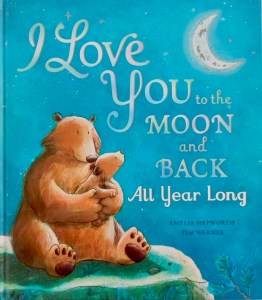
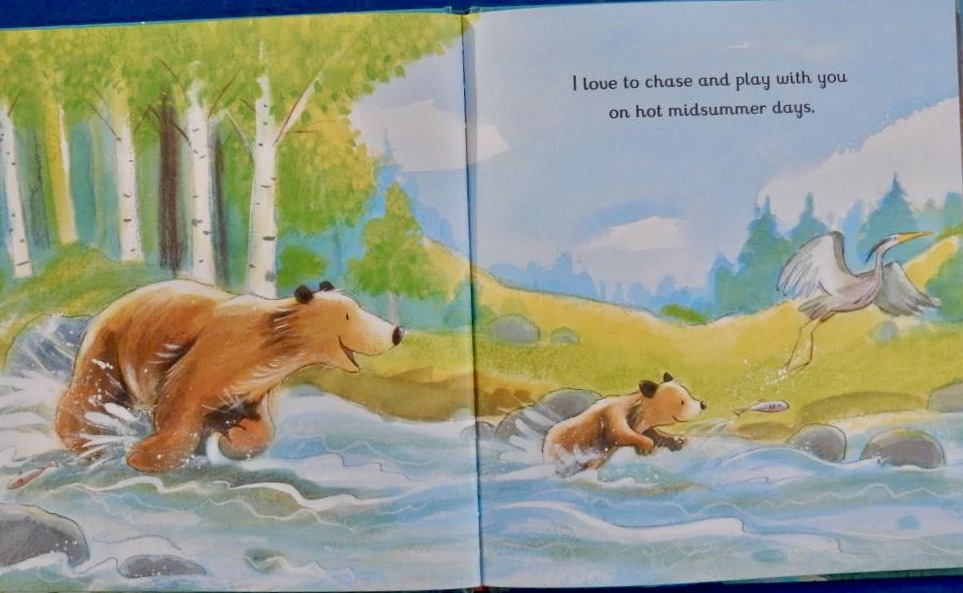
The thoroughly appealing bears – adult and cub – return in a fourth book by team Hepworth and Warnes. This time we follow the two through the year as they enjoy the changes each season offers, from a snowy winter, shoots heralding the arrival of spring, the warmth of summer, the scrunchy autumn leaves and the return of winter’s snow when the bears snuggle up together in the cave that gives them shelter.

Amelia’s gentle, lyrical text tells what the adult bear loves doing with the little bear be that watching the sun melt the snow, holding paws, cavorting in the river’s sparkling water,

meeting friends or holding the little one aloft beneath the swirling snowflakes of a winter sky at night. “I’m grateful for the love we share / that shines the whole year through.”

So too does the shared love between adult and child, which is captured beautifully in Tim’s playful seasonal scenes. These sometimes include other creatures such as a heron, frogs, furry woodland animals and other bears. Share at bedtime whatever the season.

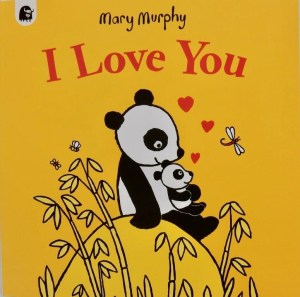
How many ways are there to say, ‘I love you’? We follow a pair of pandas, one large, one small, as they spend time together discovering ever more ways they can show their love – from a bowl of juicy berries to building bricks, and pebbles in a pail

to a picnic on a blanket. The author uses lots of playful language, especially alliteration as the two characters make the most of one another’s company

Employing similes inspired by their activities and surroundings, the text is written in rhyme and illustrated with a minimal colour palette that makes the images stand out from the mustard yellow pages, this is an anthem to love. I wouldn’t advise picking this up and reading it sight unseen to a young child, as it’s important to get the rhythm right to do justice to the phraseology.

There is certainly plenty to talk about and enjoy with little ones who are likely to have their own ideas to add to those of the pandas.

The World’s Most Atrocious Animals

The World’s Most Atrocious Animals
Philip Bunting
Happy Yak

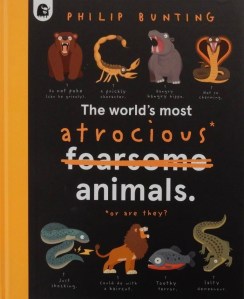
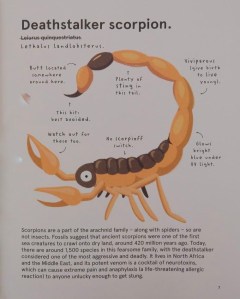
In the third of this fact-filled series Philip Bunting introduces readers to over fifty of the scariest creatures in the natural world, each of which is given both its Latin name and amusing Bunting tag. Thus the death stalker scorpion or Leiurus quinquestriatus is also Lethalus landlobstrous – very appropriate since a sting from this North African nasty can be excruciatingly painful and can cause anaphylaxis.

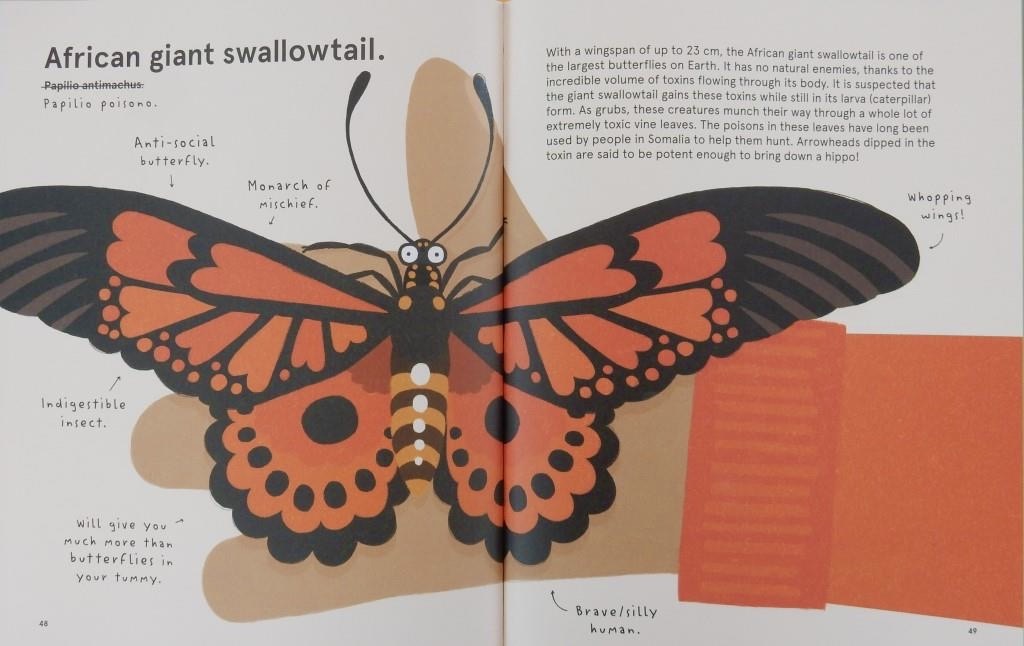
In similar fashion to the previous titles, the author uses a plethora of puns, some of which will really make you laugh (or groan depending on your mood): a group of orcas ‘sing together to form an orcastra’ and the African amphibian Trichobatrachus robustus – hairy frog to you and me – is ‘known to kermit hideous crimes’ and an encounter with an African giant swallowtail ‘will give you more than butterflies in your tummy’ – that is on account of the vast volume of toxins that flow through its body.

Moreover, should you find yourself paddling on the shores around Madagascar, Mauritius or other countries located in the Indian Ocean, be very sure not to set foot near a geography cone snail; the potent venom of this predatory mollusc could, if the nasty creature chose to inject you, finish you for good since there’s no known antivenom. No wonder that so we read, the beast has ‘shelled out extra for. a fancy pattern’.

Maintaining a good balance between humour and straightforward information, along with large, striking illustrations, Philip Bunting covers a wide range of animals of the truly scary sort. Anyone with an interest in animals, especially of the atrocious or fearsome kind, will love this book; it’s a great addition to The World’s Most …. Animals’ series.

Snug As A Bug?

Snug As A Bug?
Karl Newson and Alex Willmore
Happy Yak

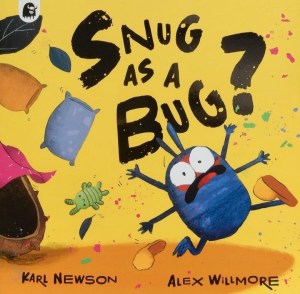
‘I’m as snug as a bug in a rug, I am. / As snug as a bug could be. / There has never been a bug / in THE WHOLE WIDE WORLD / so happily snug as me!’ So says Ronald, the little bug, from the comfort of his conker shell bed but little does he know how short a time this will last, for no sooner are the words uttered than there comes a DING-DONG! at his door.

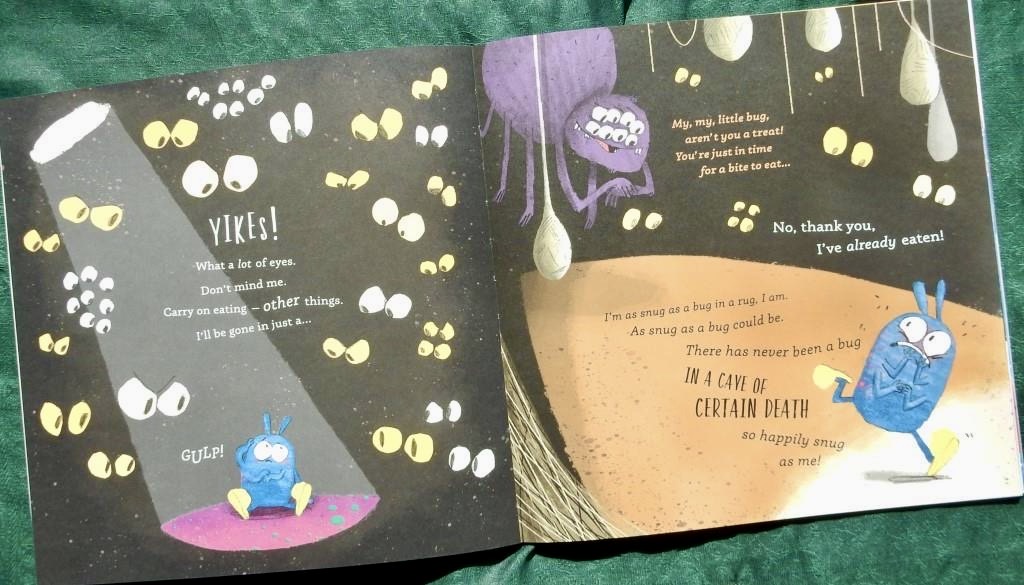
Suddenly our bug is dashing off on a very dangerous adventure, hotly pursued by a series of hungry creatures, all with the intention of making little Ronald their dinner. As he runs as fast as his tiny legs can carry him, through a dark cave,

woods and along a river bank, as he floats along just out of reach of pursuers,

even as he’s washed over a waterfall, he keeps insisting ‘I’m as snug as a bug in a rug, I am! … ‘

Can he possibly make it back to that cosy place from whence he started? Will he really ever be that snug bug again? Small he may be but our bug is mighty too, so you’ll never know – unless you get hold of this smashing book. Meanwhile keep your fingers crossed for Bug.

There’s a delicious deliberate dissonance between Alex Willmore’s highly dramatic scenes of the chase and chasers, and Karl’s narration. A story time treat for both young listeners and adult readers aloud.

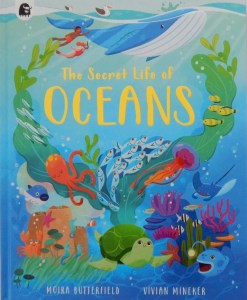
The Secret Life of Oceans

The Secret Life of Oceans
Moira Butterfield and Vivian Lineker
Happy Yak

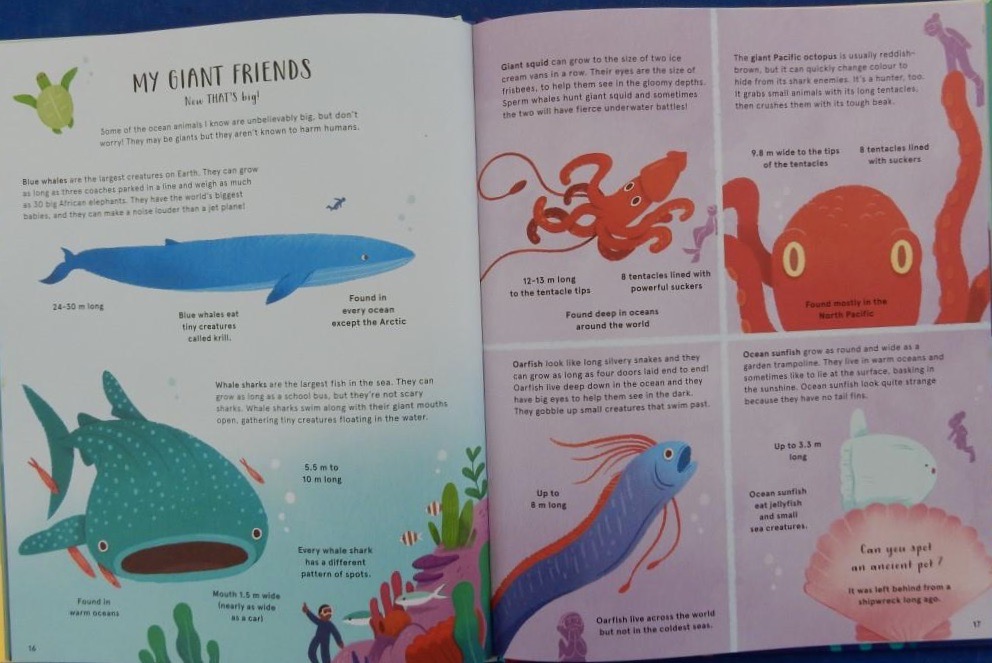
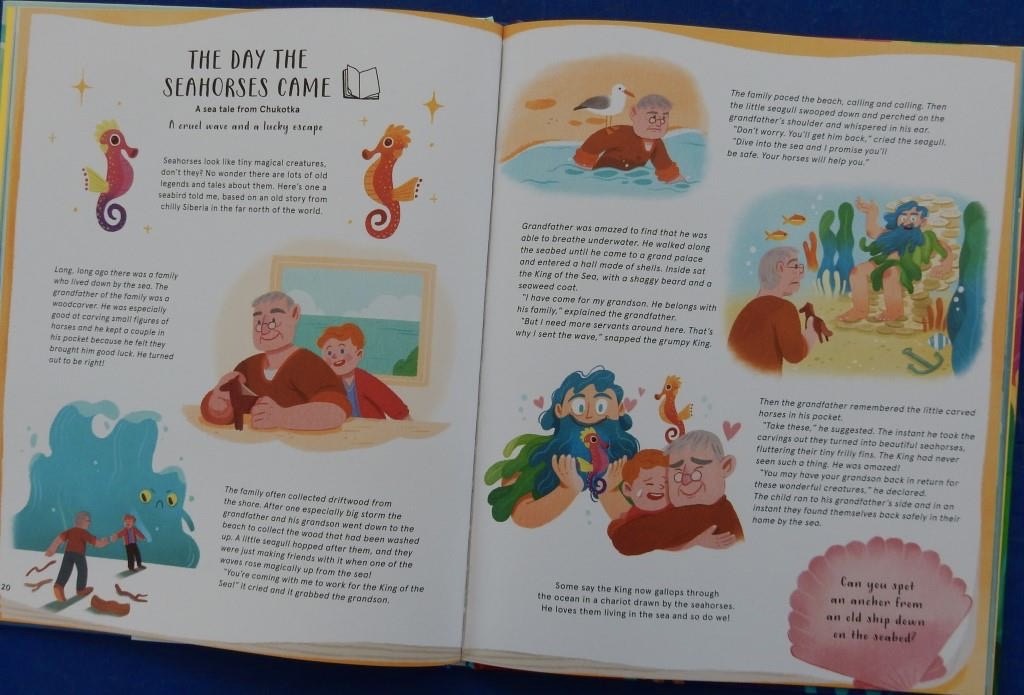
In this book, which is a mix of science and traditional stories from various parts of the world, we’re in the company of Tia the green turtle, famous for her swimming prowess and beautiful shell. Having introduced herself and told the story of how she was born, Tia takes readers on an exploration of some of the secrets of marine flora and fauna starting with those relating to sea turtles like herself and other turtles that live in the world’s various oceans (there’s a map showing these).

Diving down through the zones of the ocean all the way to the abyss, we encounter marine inhabitants large and small from giant squids and blue whales

to microscopic zooplankton and phytoplankton and sea-horses, to mention just a few.

Other topics are included such as ways of communicating – did you know that bottlenose dolphins each have their own unique whistle sound or that blue whales make low rumbling sounds that can travel as far as 3200 km through the water? There’s a look at the ocean’s gardens, the chilly, slippery stormy spots formed of ice and snow, an encounter with fearsome creatures with ferocious-looking teeth. And, we find out something about ocean currents, some special coastal features, what it’s like living and working by, and with, the sea.

Many of the spreads have a ‘can you spot’ feature to encourage younger readers to use their powers of observation. The two final spreads are devoted to the endangerment of turtles and what we humans can do to help them. There are also five traditional stories from various parts of the world.

With bright, bold illustrations infused with humour, and a thoughtfully presented, engaging text, this is enjoyable learning for primary children.

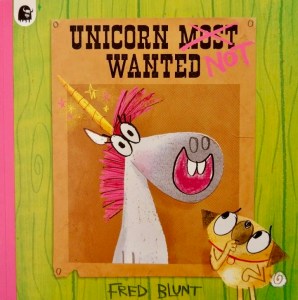
Unicorn Not Wanted

Unicorn Not Wanted
Fred Blunt
Happy Yak

Acknowledging that there is already a plethora of unicorn picture books on the market, Fred Blunt offers something rather different: a cowboy story set of course, in the Wild West – or does he?

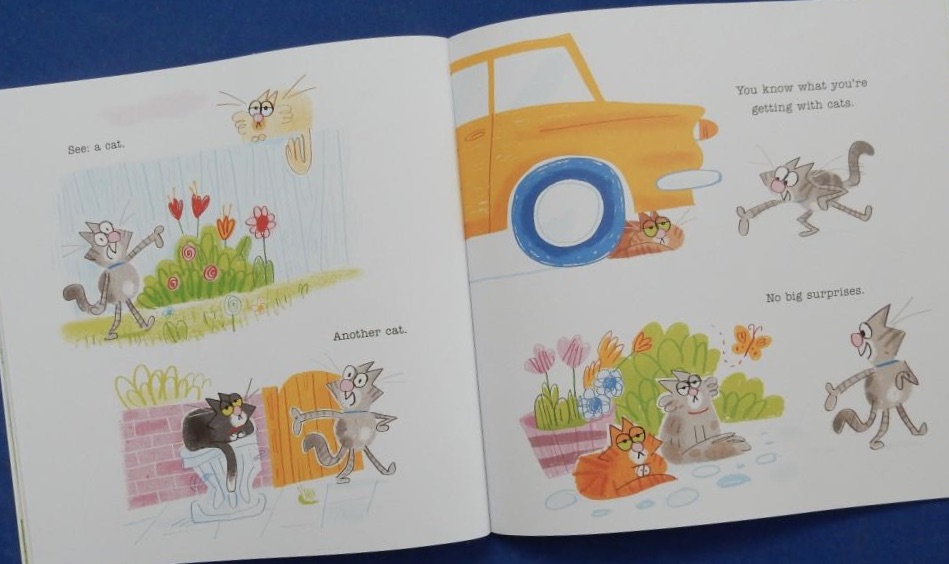
Unfortunately, despite the author having declared this book a unicorn-free zone, a one horned ungulate – a female one – and a pug in disguise have managed to sneak themselves in and once there make it their mission to find acceptance in the narrative, no matter what.

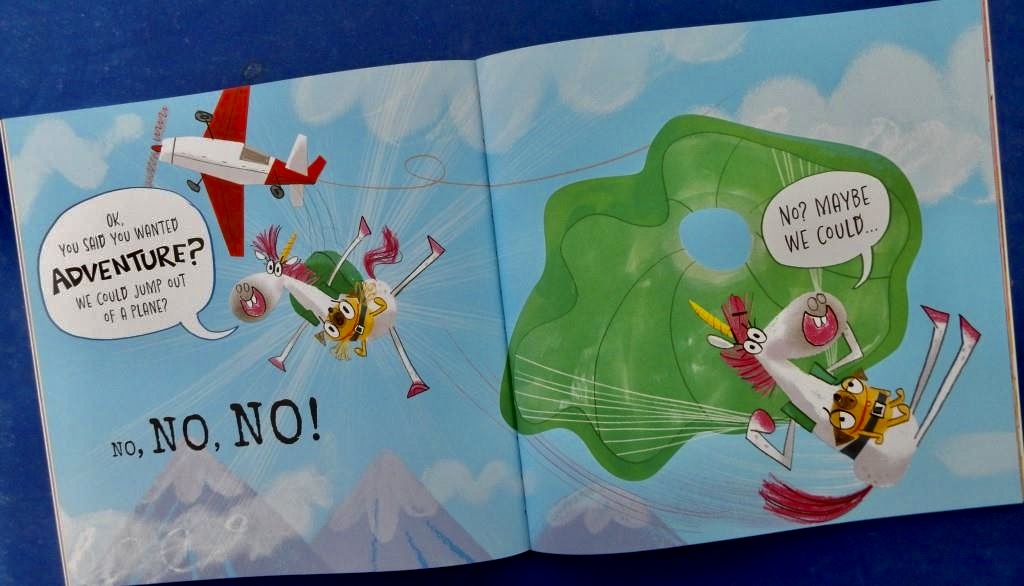
Little by little they wheedle themselves more and more into the limelight with stunts involving aerobatics,

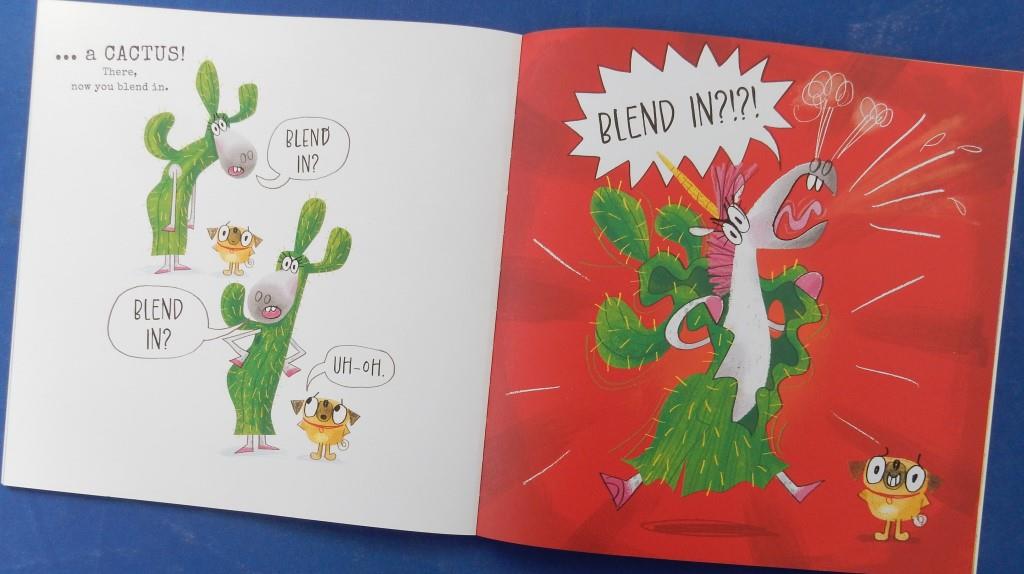
wrestling and superhero-ing until the storyteller resorts to a costume cover-up.

But is it a success? Umm …

The main characters are an absolute hoot, their body language and facial expressions are superbly silly and brilliantly done, while the banter between the two and the narrator is highly entertaining.

All in all so much better that a run-of-the-mill unicorn story that will be enjoyed by young unicorn lovers, NOT unicorn lovers, and adult sharers, who can have enormous fun reading this aloud. This one certainly did. YEE HAW!

Monsters in Trucks / Tiny T.Rex and the Grand Ta-Da!

Monsters in Trucks
Laura Baker and Nina Dzyvulska
Happy Yak

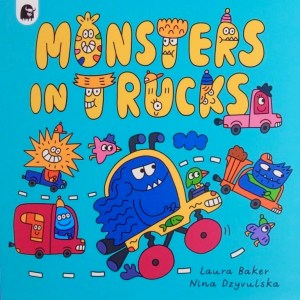
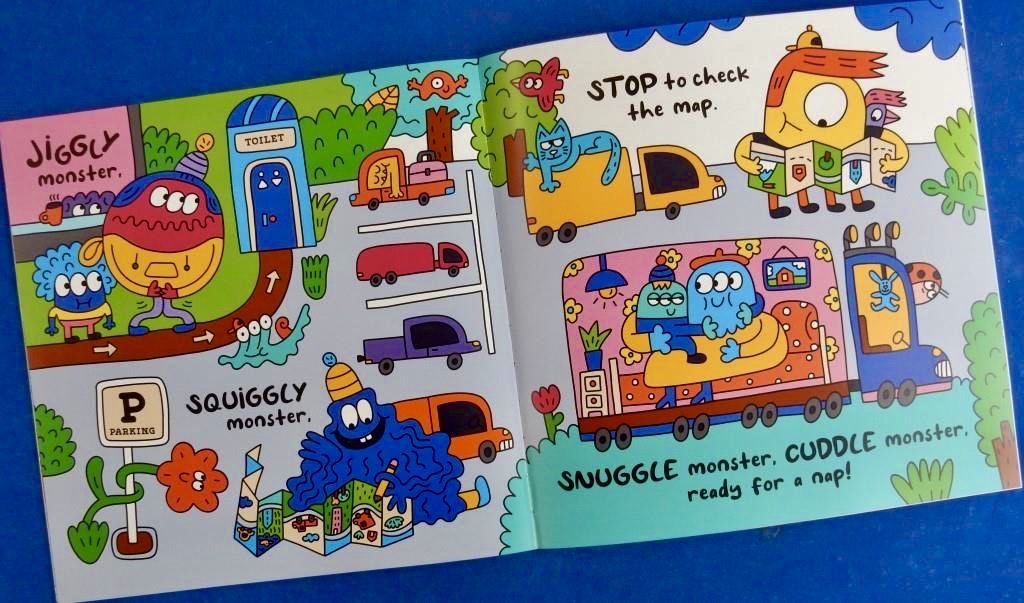
Put together two subjects popular with young children – monsters and trucks – and you’re surely on to a winner.

That’s what we have in this picture book that takes us to a world populated by truck-driving monsters. They come in all shapes and sizes, some happy, others downright grumpy; there are more than forty kinds in all, many in one way or another engaged in the construction of a monster city. Some however, appear to have other things in mind such as partying and there’s one among their number that’s a thief on the loose; he needs to be apprehended and fast.

Can little humans pick a favourite: it might be grump monster (so busy being grumpy that he drives right into a big hole), roar monster, prickly monster, tickle monster, or perhaps jiggly monster who is in the queue for the loo.

I loved the snuggle and cuddle monsters.

Laura Baker’s rhyming romp of a text and Nina Dzyvulska’s vividly coloured scenes work well together, the fun details of the latter offer plenty to talk about. Further fun comes in the form of a ladybird that lurks in every scene.

A sharing of this book in an early years setting may well result in an outbreak of monster creativity.

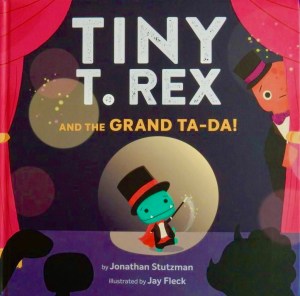
Tiny T.Rex and the Grand Ta-Da!
Jonathan Stutzman and Jay Fleck
Chronicle Books

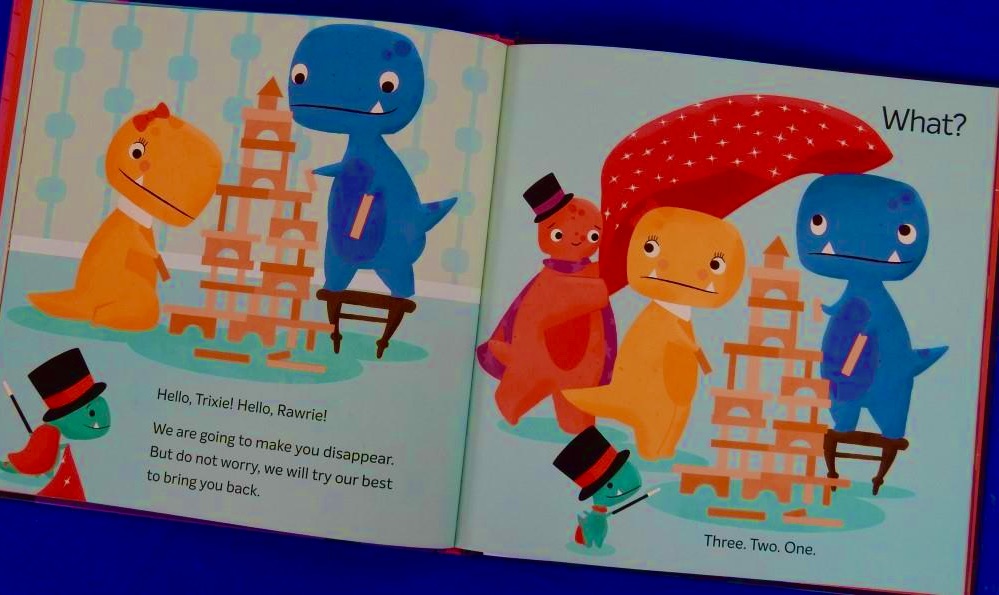
Tiny R.Rex and Pointy, the delightful dinos. are back and having seen a poster for the school talent show, have decided to enter. Tiny is fairly confident but Pointy is more than a tad apprehensive. Then inspiration comes in the form of their hero the Amazing Presto whose book they turn to. ‘Magic is meant to be shared’ they read: that means their joint skills could carry them through.

First though they need to train, so they don top hats, wield wands, appoint an assistant – Bob the teddybear – and choose their special magic word.

Magic though, especially a disappearing trick, doesn’t just happen; mistakes are part of the learning process

and their confidence starts to wane. Time to go back to the drawing board. Then after some very careful planning and a creative boost, the two are ready to step forward and face the audience – well almost. Suddenly Pointy is overwhelmed by nerves: can he summon his inner courage and make an appearance after all?

Patience, perseverance and supporting one another are key in this latest outing for Tiny and Pointy, with the former taking centre stage in terms of the narration. There’s food for thought at the show’s finale.

As always this dino. duo are charmers and are likely to win new human friends after a sharing of the vibrantly illustrated story.

Ava Loves Rescuing Animals / Pedro Loves Saving the Planet

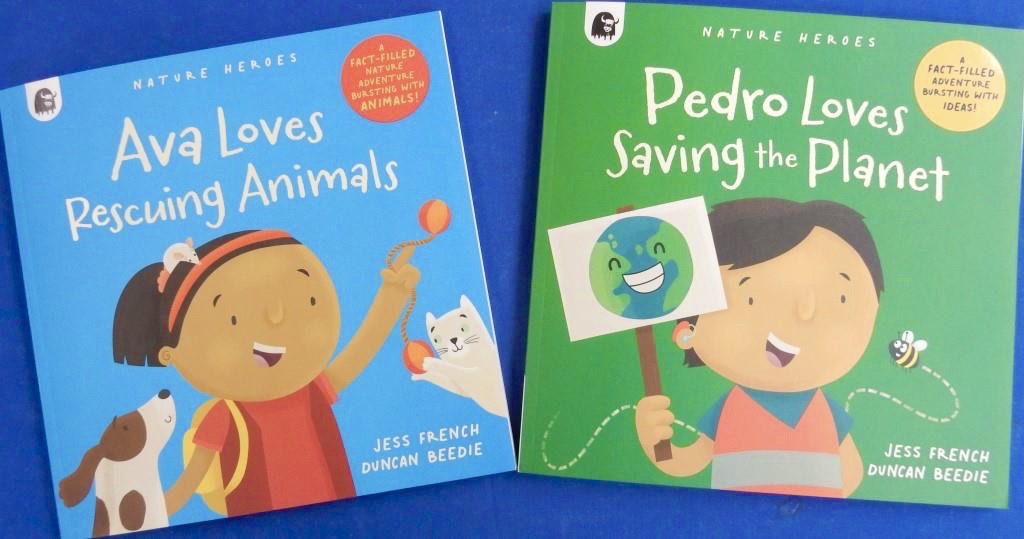
Ava Loves Rescuing Animals
Pedro Loves Saving the Planet

Jess French and Duncan Beedie
Happy Yak

These are additions to the Nature Heroes series where the focus is on a group of friends who love nature and being outdoors: essentially each one is a fact-filled picture book story.

In the first we meet Ava who lives with her grandparents They run an animal rescue centre that provides a temporary home for all kinds of animals, be they pets or wild creatures, large or small.
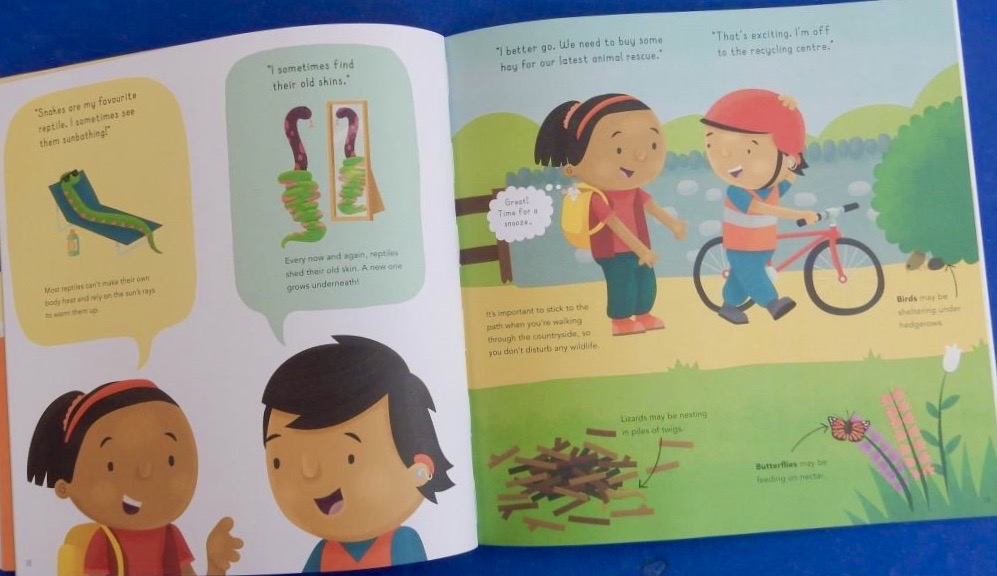
Accompanied by a tiny white mouse, Ava takes a walk around the centre and its environs as they head to the pet shop to buy hay for the animals soon to be cared for by her grandparents. On the way Ava stops at a pond containing frogs and lots of frogspawn and gives readers information on a frog’s life cycle and introduces some other amphibians.
We follow Ava on her ‘adventure’ during which she meets Pedro, the narrator of the next book,

and a lizard that narrowly escapes being run over by his cycle wheels. The entire walk turns into a fascinating learning journey for readers as they are introduced to various mammals – some of them record breakers, and find out about basic animal groups, ecosystems, habitats and more. Ava also meets another friend, Billy, who narrated Billy Loves Birds. Finally we discover the identity of the creatures that have just arrived at the rescue centre during their absence.

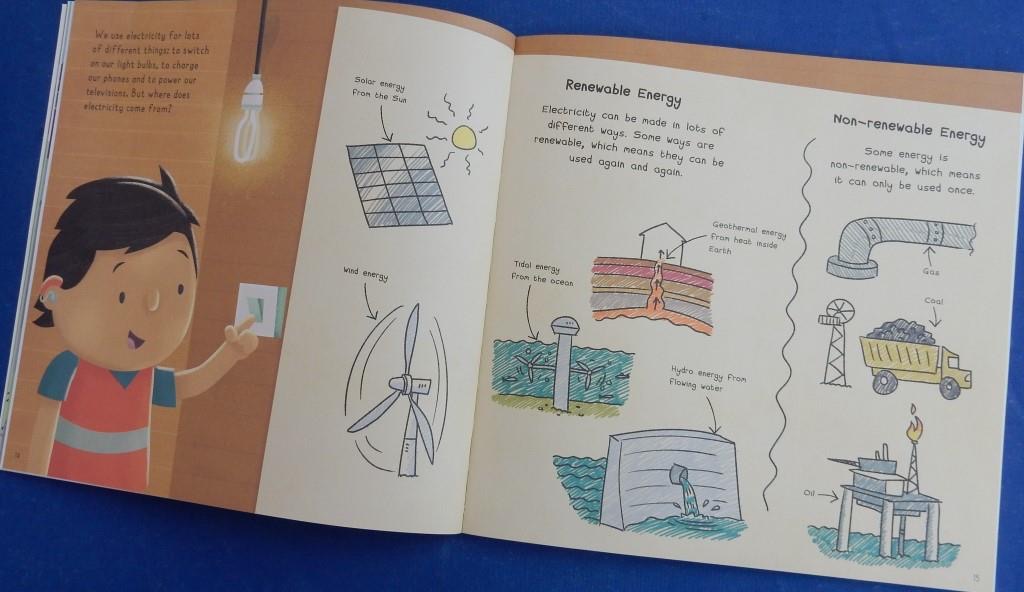
Pedro is an eco-warrior and in Pedro Loves Saving the Planet he and his older brother spend a day in the eco club’s new cabin. They choose to walk to their destination and encounter others who are using planet-friendly means of transport. Then once inside the cabin Pedro talks about renewable and non-renewable energy,

ways of saving water, points out that the cabin is built from sustainable materials, which leads on to a presentation of the 7 Rs (things that everyone should always keep in mind)) and other vital topics such as how to grow your own food, composting, the importance of trees, how to save energy at home, and the joys of being outside in green places.

Both books are illustrated by Duncan Beedie whose amusing art work underscores naturalist/vet Jess French’s informative, enjoyable texts. It’s never too early for young children to start learning about the importance of environmental care and the impact their actions have, both now and for the future. These books are spot on for foundation stage and KS1 class collections.

Our Beach / Walter the Wonder Snail

Our Beach
Rebecca Smith and Zoe Waring
Harper Collins Children’s Books

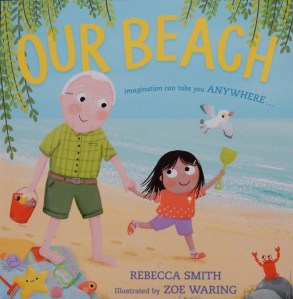
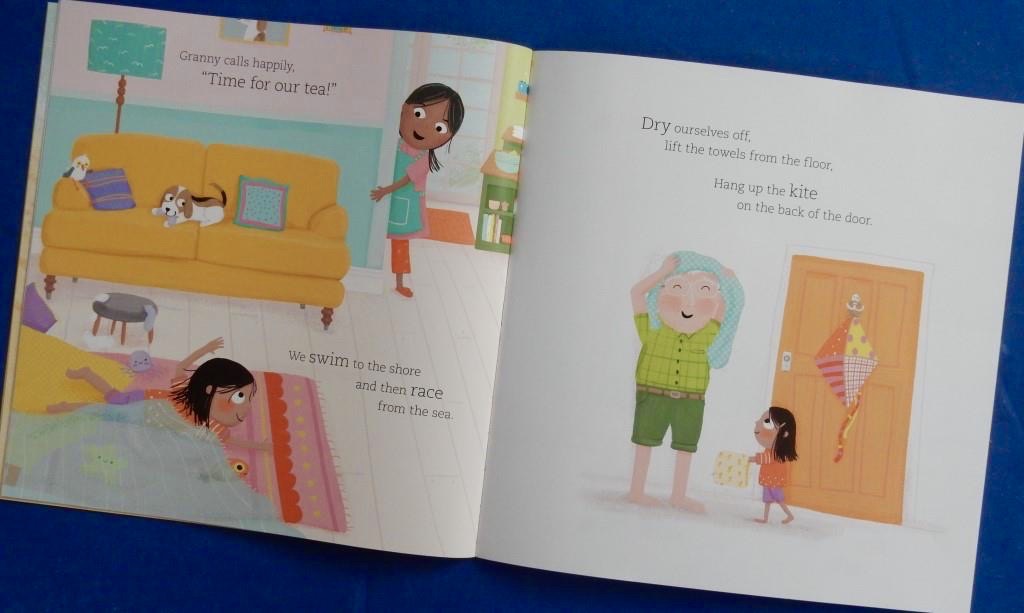
It’s wonderful what a collection of bits and pieces can lead to and that’s what we discover in this story of a little girl and her granddad who spend the day together.

As the book opens we see the two hand in hand, grandad carrying a large bag, making their way towards the sea shore.

They enjoy exploring rock pools, collecting seashells and pebbles and most important each other’s company.

Then comes a sudden change and a spread shows what is really happening before the flights of fancy recommence, and with them, the resurfacing of precious memories. It’s Gran’s “Time for our tea!” announcement that brings the two back to reality,

somewhat reluctantly perhaps as they eek out their imaginative experience for as long as they can before sitting down to share the tasty meal set out on the table.
A delightful celebration of the power of the imagination and a special intergenerational bond.

Walter the Wonder Snail
Neil Clark
Happy Yak

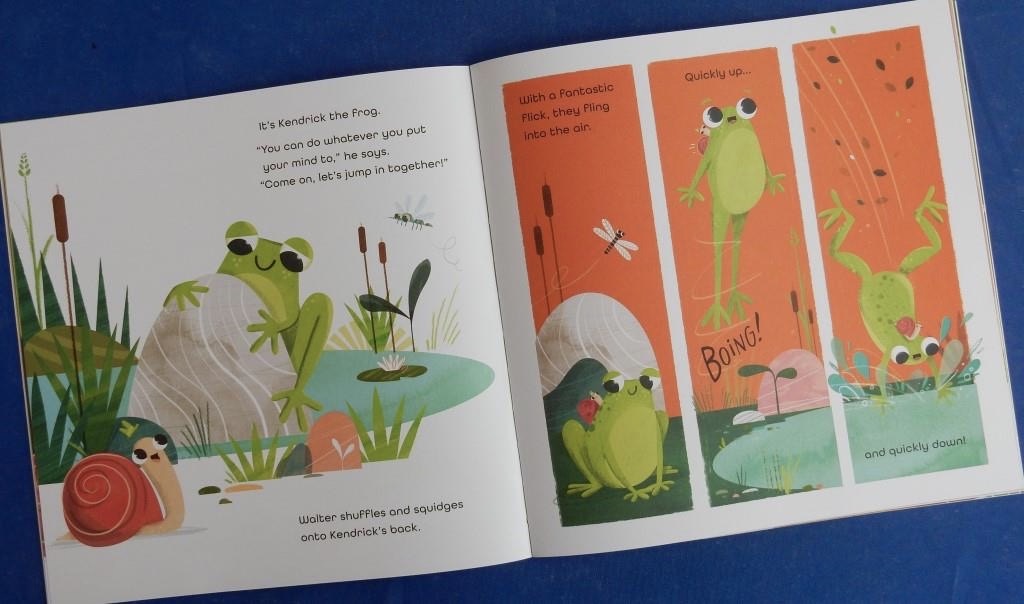
Tired of the tedium of leaves, Walter the Snail believes there must be more to life; he longs to escape the confines of his leafy existence and discover what the wider world offers. With hat atop his horns and shell packed, off he slides into the great unknown.

Our intrepid traveller faces challenges aplenty on his journey, but there are plenty of other creatures ready and willing to offer encouragement and help.

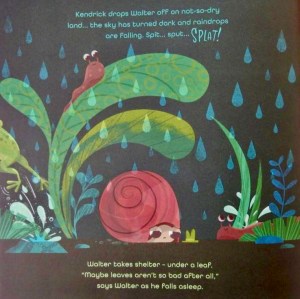
Nonetheless Walter is also able to adapt to a variety of terrains and weather conditions,

and to think outside the box, especially when it comes to making his way back home.

On his return Walter imparts some wise words to his fellow snails: “I know that anyone can do anything they put their mind to.You’ve just got to think big!” That’s a vital life lesson for young humans too and one they’ll learn subconsciously through Neil Clark’s wise words and his diverting, richly coloured, scenes of Walter’s travels. I love the variety of viewpoints and page layouts.

Rich in classroom potential but above all, a thoroughly enjoyable story.

Are You A Monster?

Are You A Monster?
Guilherme Karsten
Happy Yak

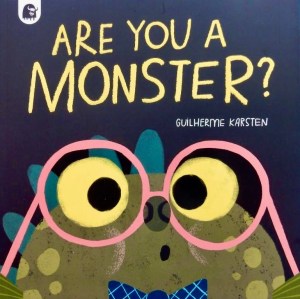
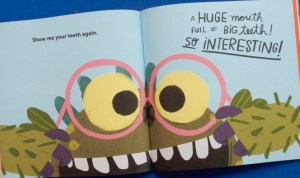
Essentially this is a fun interactive challenge wherein the ‘really bad’, bespectacled, reptilian monster protagonist speaks directly to readers informing us that this beastie wants a monster buddy to participate in doing scary things. Said monster however isn’t making things easy. It has a fair few characteristics on its necessities list for a companion and won’t tolerate anyone that doesn’t come up to the mark. End of story. What! Part way through the book? Or maybe beneath that rough skin, there lies a heart that might just be ready to change.

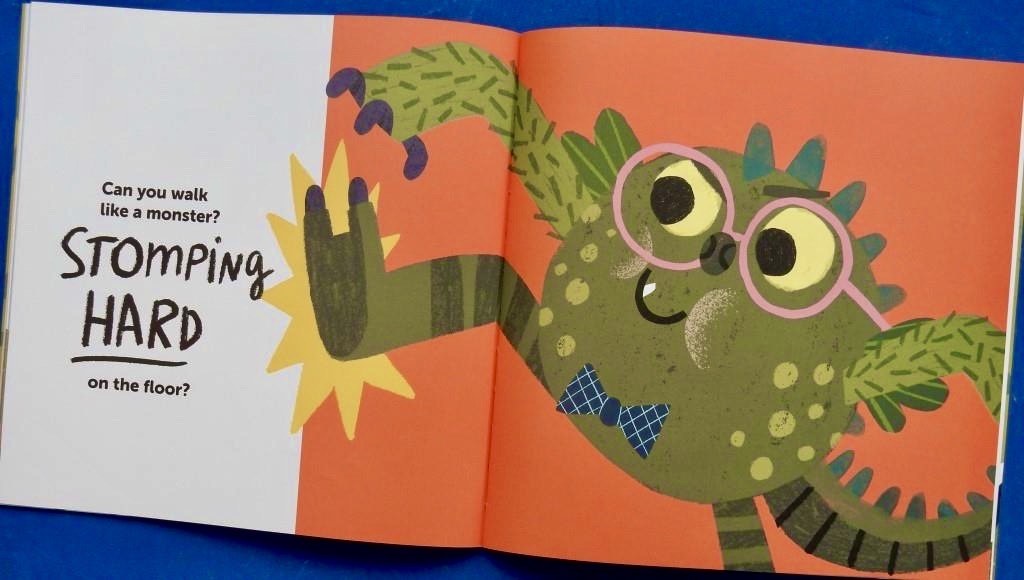
Little ones will love romping and stomping,

growling and galumphing to prove their worth in front of this demanding monster and they will certainly enjoy the final reveal too.

Guilherme Karsten’s illustrations are great fun as well. His monster practically leaps off the page at times and despite not trying to be, the monstrous character is highly endearing. Add to that the way the presentation of his monologue breaks into appropriately monstrous size print in places offering adult sharers a great opportunity to let rip along with their young audiences, you’re in for a lively story session when you read this one.

Oh, Armadillo! This Party’s All Wrong!

Oh, Armadillo! This Party’s All Wrong!
Ellie Irving and Robert Starling
Happy Yak

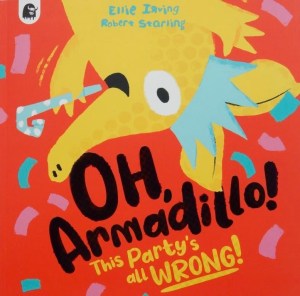
Kind, gentle Armadillo lives deep in the rainforest and longs to make friends: however he has a tendency to get everything wrong. One day he has an idea: perhaps if I throw a party I will make a few friends, after all everyone loves parties. Having made invitations off he goes to deliver them. The first goes to Jaguar who is hoping a large springy sponge cake will be on offer. Back home goes Armadillo, creating so he hopes, the perfect sponge cake.

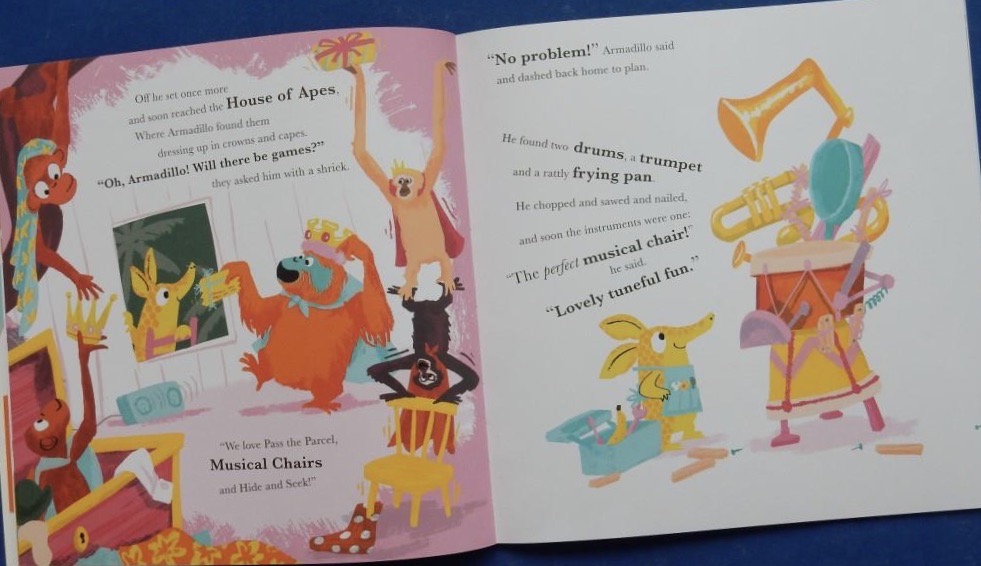
Out he goes again, next stop the Apes: they want games especially musical chairs, pass the parcel and hide and seek. Armadillo rushes home and gets to work …

Then for the balloon loving Lemurs, Armadillo fashions what he hopes is the perfect balloon, sufficiently large for lots of passengers.

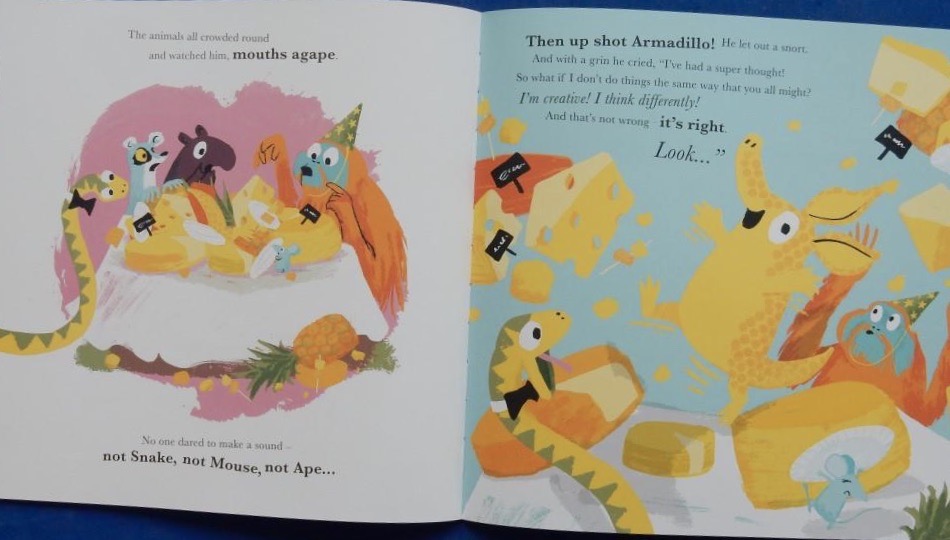
On party day our host eagerly awaits his guests and having welcomed them all, announces the fun and games. Seemingly though Armadillo’s ideas are rather different from what the other animals are anticipating: shock horror! He’s devastated by their reactions, so is this the end of his party and hoped-for friendships?

Happily not. An accidental trip that sends him hurtling onto the sponge cake and thence into the air and finally back to earth doesn’t just render the guests speechless but it makes Armadillo see things in a different light; he’s ready to acknowledge and even take pride in his divergent thinking and creativity.

Will he persuade the others to join him in some truly original ways of having fun? You bet … And as for finding friends, certainly, but Armadillo stays true to himself, muddled and different. Hurrah!

A smashing story to show children, especially those who like the protagonist think differently, that rather than a problem, it’s something to celebrate.

Beware the Blue Bagoo

Beware the Blue Bagoo
Karl Newson and Andrea Stegmaier
Happy Yak

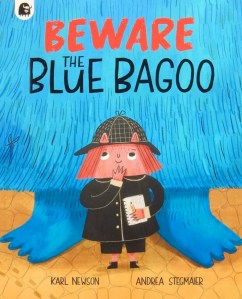
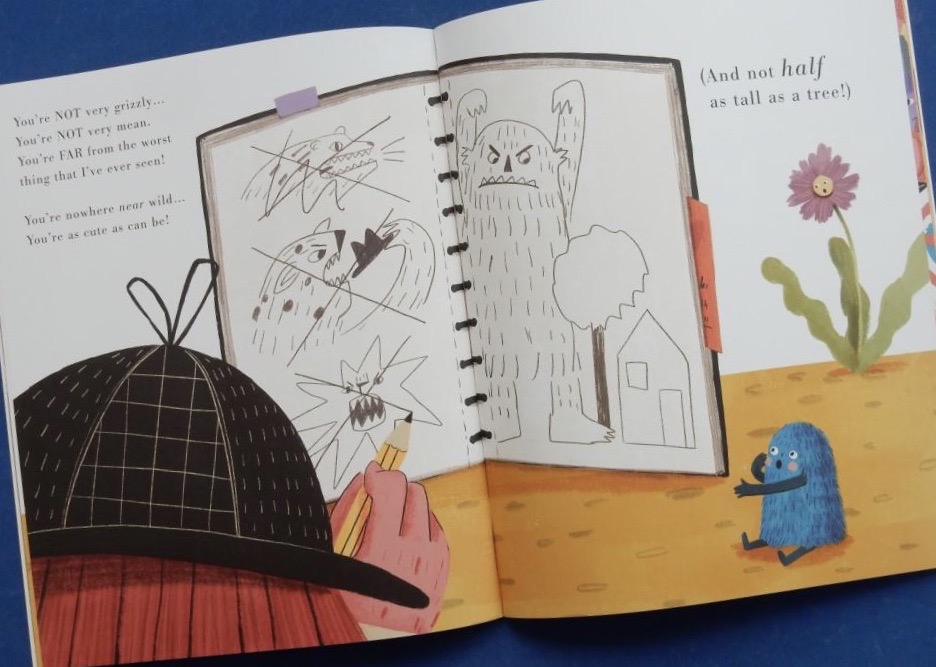
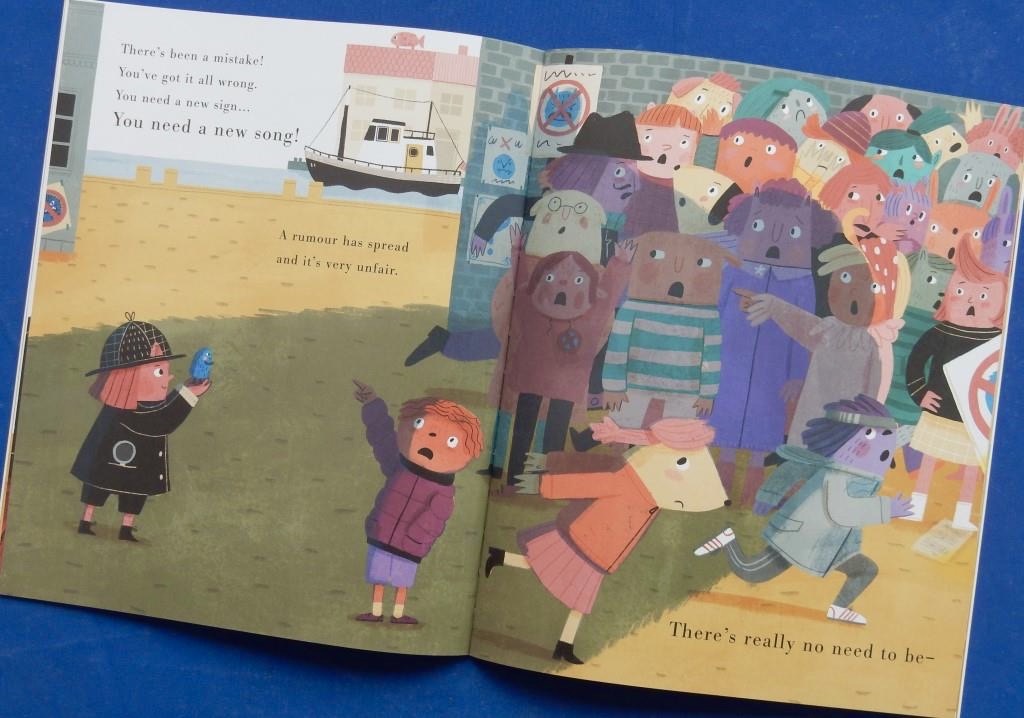
Rumours are rife about the Blue Bagoo: a mean marauding monster to be feared, that is for certain. But wait a minute: has anyone actually met or even seen this beastie that supposedly likes to dine on humans. Now there’s a young detective determined to uncover the truth. She roams the streets finding plenty of people ready to make statements about the monstrosity but what she discovers is something of a surprise.

Can she convince her fearful fellow townsfolk that they’ve got it all wrong? Or is it her that’s wrong after all …

Rumours are nasty things, they spread rapidly causing people to jump to conclusions about all kinds of things rather than finding the truth for themselves. Nobody should make a judgement about another person based on hearsay or appearance. With its cleverly executed twist, Karl’s rhyming account of the escalating rumours in the seaside community of Rumourville, and one person’s resolve to find the truth, contains a crucial message for us all. It’s one that’s particularly pertinent in our troubled times of misinformation. Andrea Stegmaier’s illustrations are terrific fun
and the way she varies the layout of her spreads keeps the visual impact high; there’s a smashing portrait style close up and a fair degree of quirkiness throughout.

Add this to your list of must reads.

We Disagree About This Tree / The Big Christmas Bake / A Family Christmas

We Disagree About This Tree
Ross Collins
Nosy Crow

The duo from There’s a Bear on My Chair are back and as usual they are disagreeing: why break an established habit just because it’s the festive season?

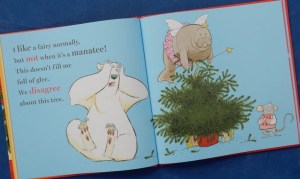
Mouse is excited when Bear bursts through their front door clutching a large Christmas tree and urges him to relax and leave the adorning to him. Inevitably Bear soon begins making disparaging comments about Mouse’s efforts and this precipitates back and forth critical animosity, culminating in tree overload

and disaster. However, not everything is a cause for contention thanks to two neatly wrapped packages waiting to be opened. Have the two bickerers finally found a way to share a Merry Christmas?

The interplay between Ross Collins’ sparkling verse telling together and his superbly expressive illustrations that are simply bursting with humour, is wonderfully done and will appeal to both young listeners and adult readers aloud.

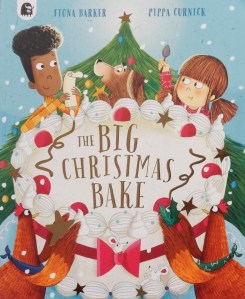
The Big Christmas Bake
Fiona Barker and Pippa Curnick
Happy Yak

Author Fiona and illustrator Pippa cook up a wonderful festive tale based on the structural rhythm of the traditional Twelve Days of Christmas.

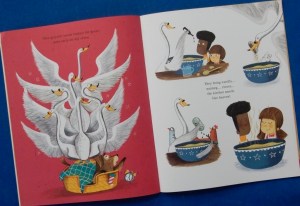
On the first day of Christmas two children head to the kitchen and begin to make a Twelfth Night cake. The list of ingredients is long and they wonder where everything will come from. Happily however, day after day for the next eleven days animal friends of all shapes and sizes show up bringing in turn, dried fruit, flour, sugar, candied peel, eggs, spices

and all the other things needed, until on day ten, ten lords come leaping in ready to carry the cake to the stove for baking. All that’s left then is the piping pipers to show up on the eleventh day to add the finishing touches so that come Twelfth Night, the most incredible confection is set on the table ready for every single one of the contributors to enjoy. I wonder who finds the bean that was hidden in the mix …

A tasty treat indeed and don’t forget to check out the recipe after the story.

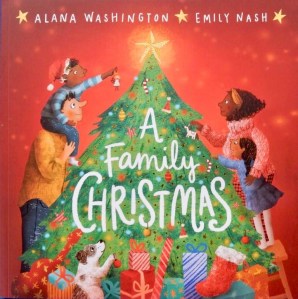
A Family Christmas
Alana Washington and Emily Nash
uclan publishing

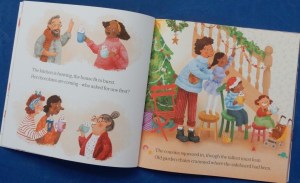
With echoes of Clement Clarke Moore’s ‘Twas the Night Before Christmas Alana Washington relates the events of a family’s Christmas day. There’s excitement about the arrival of guests and a kitchen of hot chocolate drinkers with cousins squeezing close together clutching their mugs.

Then at dinner time, dish after dish of delicious food is served up, an unexpected visitor turns up and when everyone is bursting with extra helpings of pudding, it’s time for a toast to the host.
In order to work off some of that food, family members go for a walk, followed by further indoor festivities: dancing and games, singing and the playful adornment of those who take a snooze.
With the washing up duly done, it’s present time at last. Darkness comes all too soon and some of the family must head for home, but there’s one final treat still to come: something big and extra bright high up in the sky. What better way to end the day than by sharing a special story and watching a sprinkling of snow fall before snuggling down in bed after a perfect family celebration.

With joyful scenes of togetherness, Emily Nash’s gently humorous art captures so well that magical feeling of the festive season described in the author’s text.

History’s Biggest Show-Offs

History’s Biggest Show-Offs
Andy Seed, illustrated by Sam Caldwell
Happy Yak

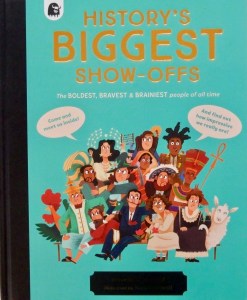
What is it about some people that makes them want to show off about their achievements? Have you ever wondered who the biggest braggers of all time might be? If so then Andy Seed has done the work for you, presenting in his lighthearted style, the flashiest boasters in the history of humankind.

The book is divided into three main parts entitled People in Charge, People Who Think Up Stuff and People Who Create Things; however if readers prefer they can look instead at different time periods: ancient (c.6000 BCE to 500 CE), post-classical (c.500-1500 CE), early modern (c1500 – 1800 CE) and modern (c. 1800 to the present).

We’re introduced to eleven rulers, five of whom were women. These include Hatshepsut, an ancient Egyptian pharaoh, Tarabai who at just twenty five, took over the leadership of the Marathas after the death of her husband and proceeded to show off her military skills to overcome the Mughals; and Christina of Sweden, she who was super-brainy and loved to read. Among the men was Mansu Musa who when on Haj, took 12, 000 servants each with a bag of gold to give away en route to Mecca.

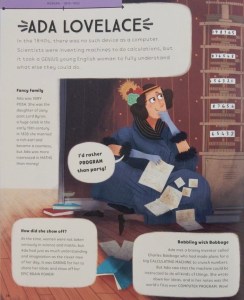
Those with a scientific or technological bent include the first ever computer programmer, Ada Lovelace

and Ynes Mexia, an intrepid plant collector from the early 20th C who discovered 500 new species and had fifty plants named after her. Having studied at Brunel University, I have to mention the ace engineer, Isambard Kingdom Brunel who, with help from his father, built the first ever tunnel beneath a river (The Thames) and who sadly died before his exceedingly costly Clifton Suspension Bridge was finished.
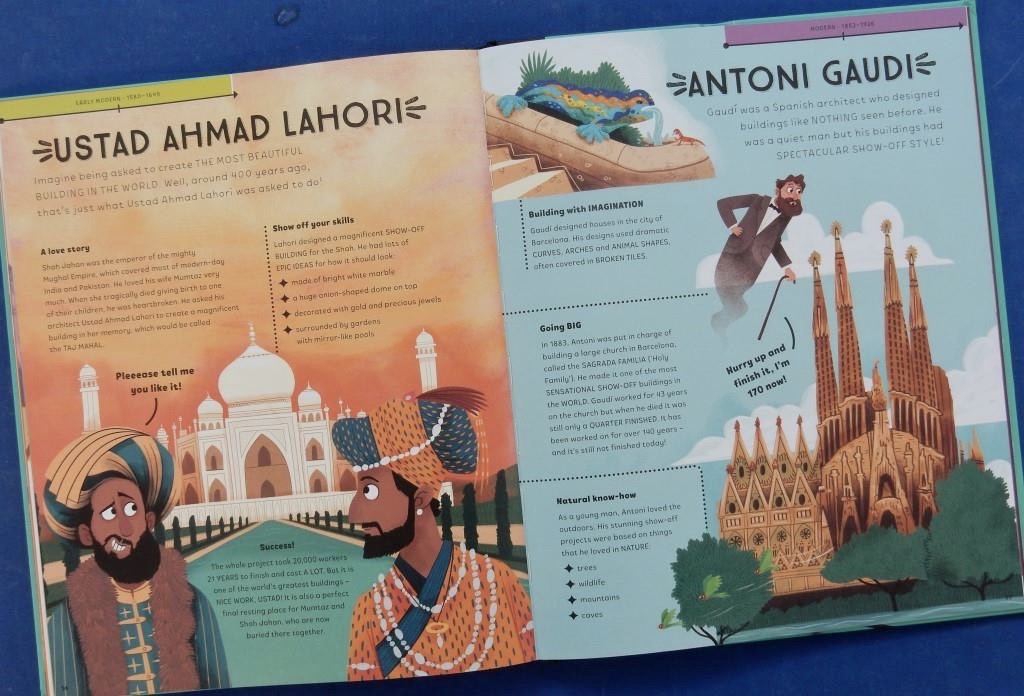
Finally come the creative types: Ustad Ahmad Lahori was asked by Shah Jahan to create a building in memory of his beloved wife Mumtaz and that’s how the magnificent Taj Mahal came to be. Another show-off architect Antoni Gaudi is famous for Barcelona’s still unfinished Sagrada Familia.

There’s a wealth of bling too, as Andy Seed’s humorous writing brings all these and more back to life and he’s even included some quizzes to ramp up the fun. Talking of fun, Sam Caldwell’s zany illustrations certainly add more of that in abundance: even the timeline will make readers giggle.

Kitsy Bitsy’s Noisy Neighbours / Blue Badger and the Big Breakfast

Kitsy Bitsy’s Noisy Neighbours
Polly Faber and Melissa Crowton
Nosy Crow

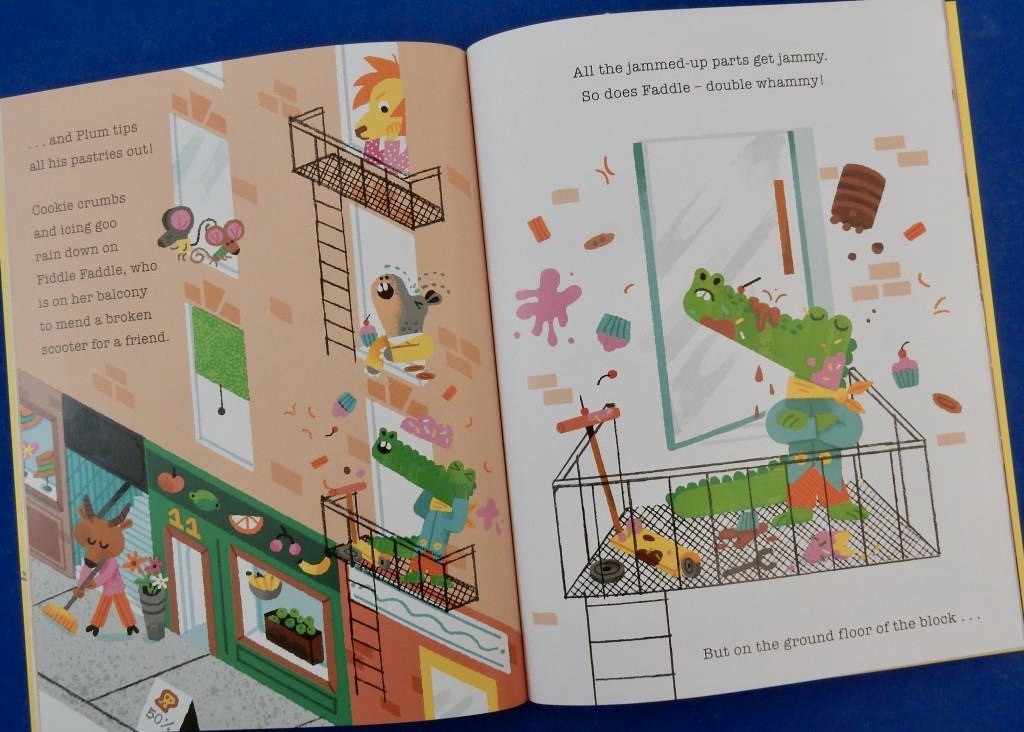
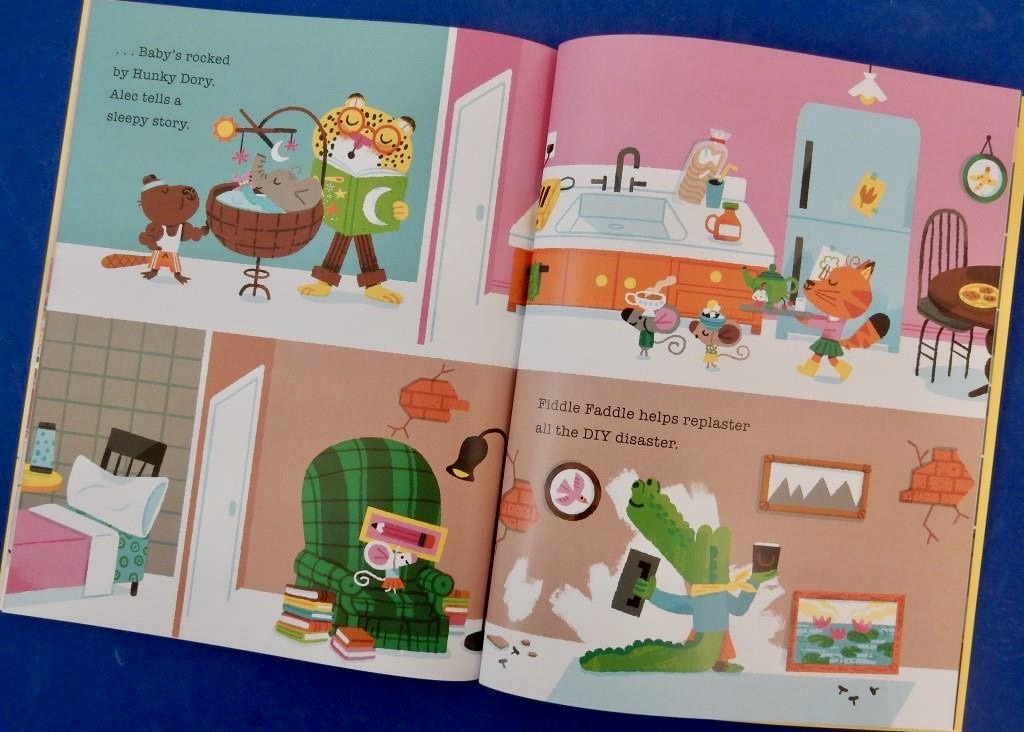
Life is peaceful in Park View Rise until that is, the sounds of diva Honky Tonk practising her scales and weight lifter Hunky Dory’s exercise regime travels downwards to awaken Tippy Toes’ baby from a much-needed nap, whose wailing upsets Smart Alec hard at work on his latest book. He then resorts to a spot of cacophonous DIY instead and so on until there’s total chaos with flying cakes and other sweet confections.

However just as a fight is breaking out, ground floor resident, Kitsy Bitsy, senses something is amiss and up the stairs she goes to act as peacemaker and guide in how to move forward after the issues her fellow residents have unwittingly caused.

The combination of Polly Faber’s roll off the tongue rhyming text and Melissa Crowton’s comical scenes of the ever increasing chaos and its solution, make this a smashing read aloud to share at home or with a class. Listeners will love the funny names of the characters and their activities, as well as exploring the wealth of detailed illustrations in this celebration of community and high-rise living. 

Blue Badger and the Big Breakfast
Huw Lewis Jones and Ben Sanders
Happy Yak

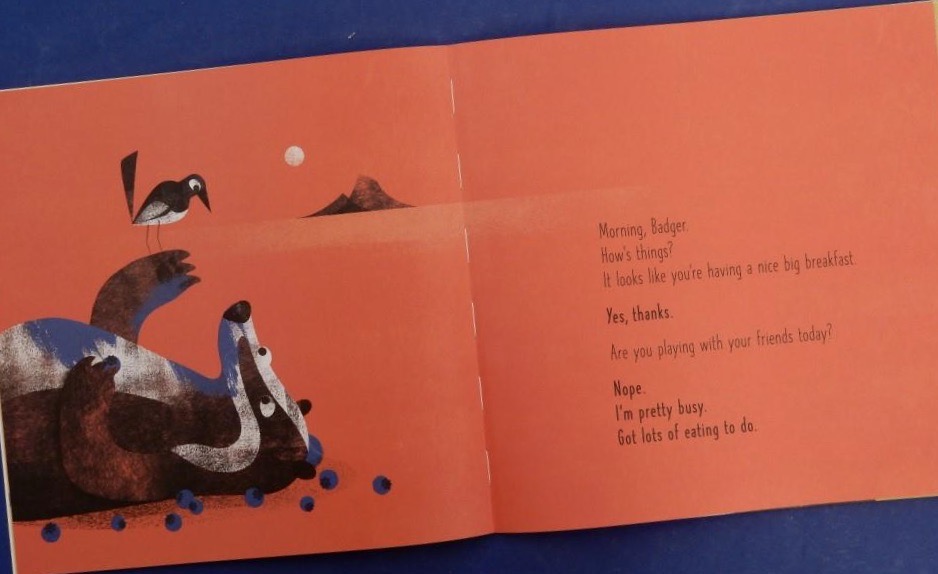
In this second story, despite a blue tinge around his rear Badger no longer feels blue; how could he when he has a delicious breakfast of blue berries to feast upon. 

His best pal Dog however is decidedly sad on account of his lost ball; but even when he discovers this, Badger continues consuming his berries. Has he though unknowingly consumed Dog’s ball too? Owl’s remark certainly makes him think it’s a possibility so Badger goes off and offers to play with Dog. Will he do anything else besides?

With a witty finale, this tale of friendship and putting right what you may however unintentionally have done wrong, will with its deadpan humour both verbal and visual, make child audiences and those who share it with them laugh. The observant among them will also long to shout out to Badger what they’ve noticed but he obviously hasn’t, so busy sating his appetite is he.

Valentine’s Guest House / We Are the Shapes

Valentine’s Guest House
Sam Sharland
Child’s Play

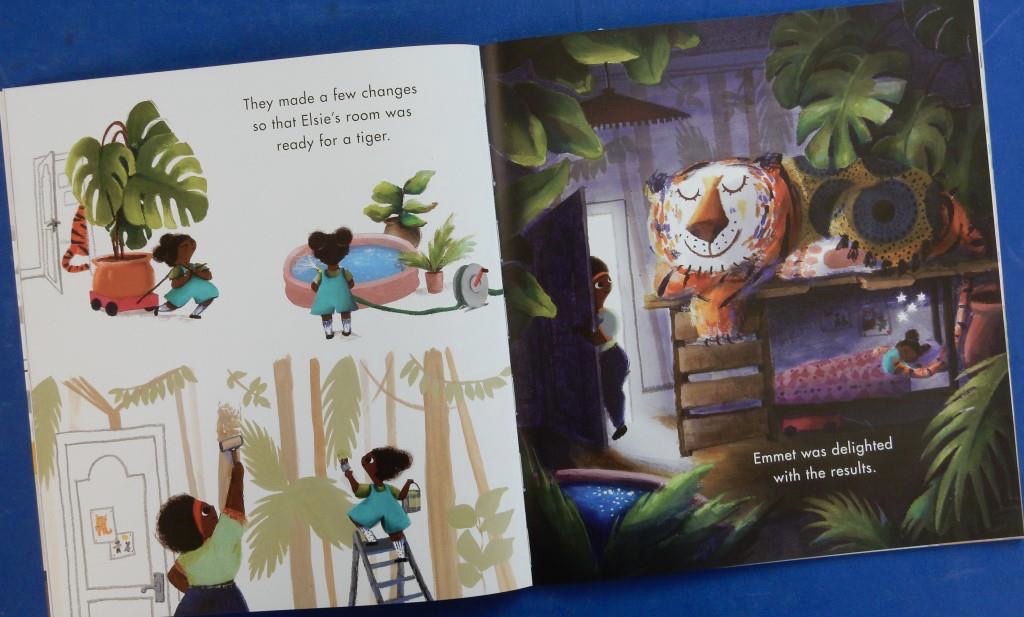
With its first rate service, Valentine’s guest house is a popular place to stay. When the owner’s daughter opens a storeroom and discovers a large tiger with a big smile inside asking for accommodation she is astonished. However despite her mum Valentine saying they don’t have a spare room, Elsie is determined to help. She offers to share her room with Emmet and she and her mum rearrange things in preparation for the new guest. 

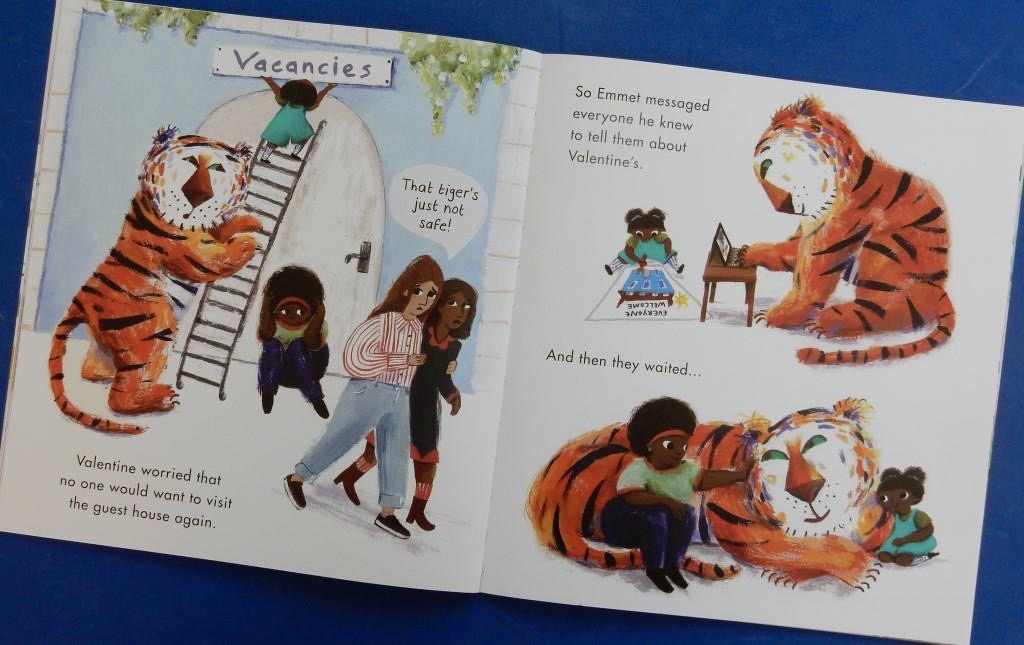
Sadly however, the other guests are far less accommodating and leave as fast as they can.

As his hosts put up a ‘Vacancies’ sign, a grateful Emmet gets busy messaging all his friends and acquaintances about Valentine’s 

and after a long wait, the guest house is once again thriving, albeit with a different clientele. Then follow some imaginative modifications to the building: a lift is installed, the door is enlarged when a huge guest arrives, a rooftop hole provides a room with a wonderful view, there’s a cool spot for a pair that like to chill and underground spaces are created for those accustomed to a subterranean lifestyle.

Harmonious living is the way to go as is shown in Sam Sharland’s gently humorous scenes of the guests’ comings and goings and further comings; but there’s one guest who isn’t going anywhere: you can guess which one that is.

A delightful picture book debut with vital messages about acceptance, inclusivity and empowerment.

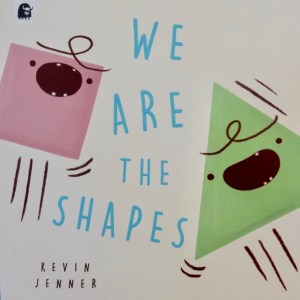
We Are the Shapes
Kevin Jenner
Happy Yak

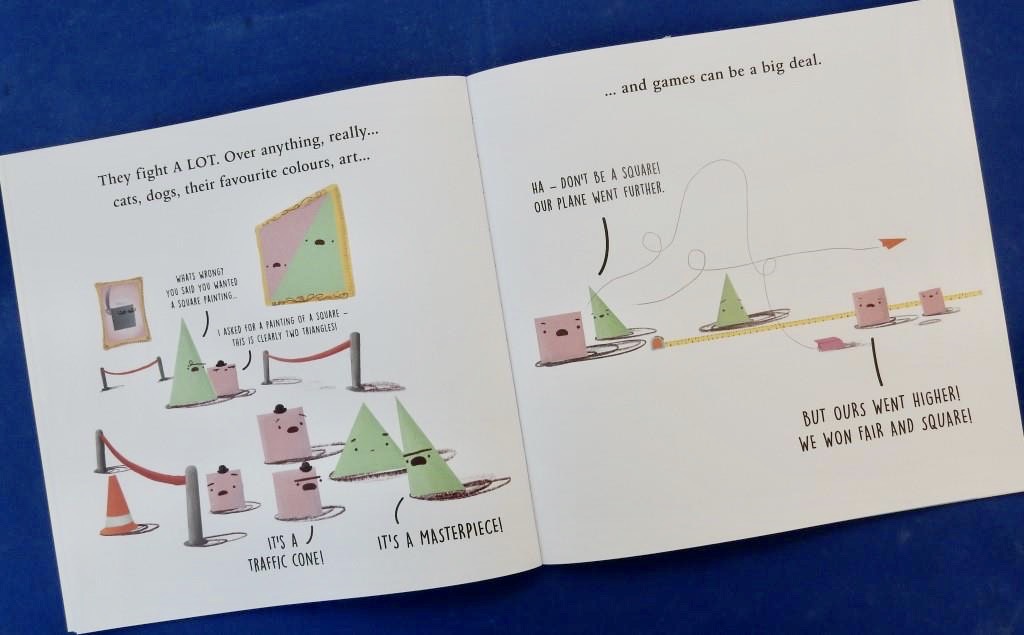
There are the squares – honest, supportive even, and reliable, dislikers of difference; there are also the triangles – creative, edgy, odd and happy to be different. Triangles consider squares boring.
These two groups do not get on at all, in fact they have diametrically opposing views on everything and are positively hostile towards one another. 

Then there are circles: they know the issues existing between squares and triangles but believe that if they were prepared to ‘roll with their differences’, the two parties could get along.

Can they rectify things between these opposing factions? It’s worth a try: consider this equation – triangles + squares = rocket to the moon. So maybe … but then just when things seemed to be going well, a row breaks out. 

Is circle able to turn this situation around? Perhaps with a bit of creative thinking and a new and tasty notion.

How much better it is to accept and celebrate difference. Learning to get along with those who seem – superficially at least – to be different from ourselves is an important life lesson all young children need to learn, (though perhaps it’s their parents for whom difference is an issue not the youngsters themselves). So it’s appropriate to share this easy to relate to book with its satisfying solution at home as well as in the classroom. With its easy-to-read text, it’s also a book that KS1 readers might well be able to enjoy reading for themselves.
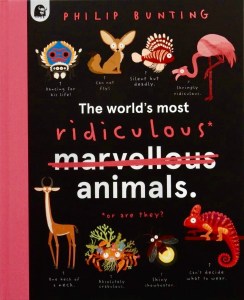
The World’s Most Ridiculous Animals

The World’s Most Ridiculous Animals
Philip Bunting
Happy Yak

This is another of Philip Bunting’s playful, punning but highly informative books about animals, some of which, with their unique adaptations, you may never have come across before. Those adaptations, in case you’ve not guessed, are what make them ridiculous.

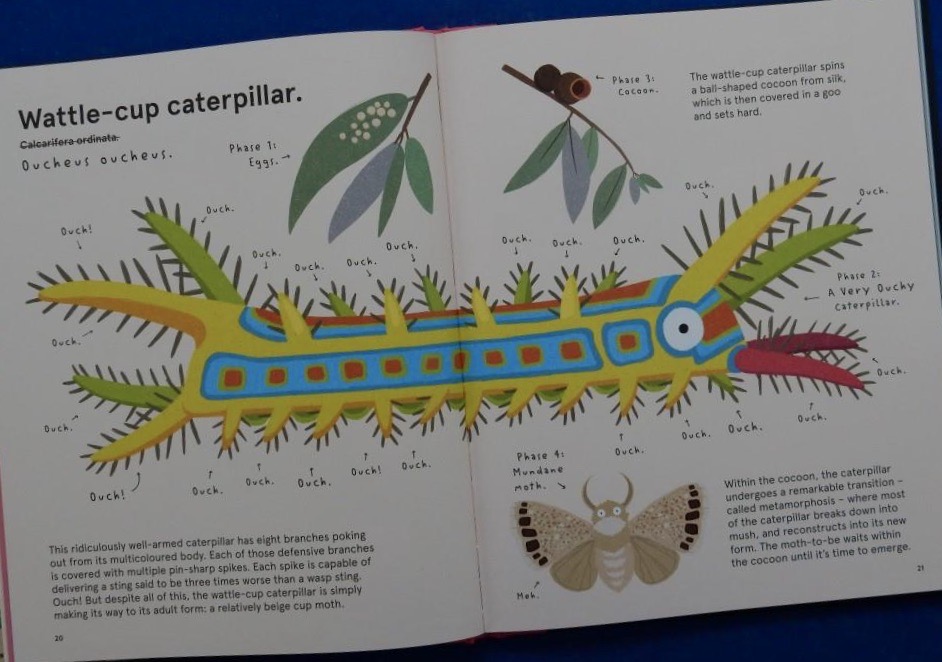
That Wattle-cup caterpillar (courtesy of the author aka Oucheus ouches) almost leapt off the page at me. It’s fortunate that it didn’t however for it has eight branches covered in pin-sharp spikes and that’s an awful lot of potential ouches. The moth stage (we’re shown all four stages) is by comparison a pretty dull specimen.
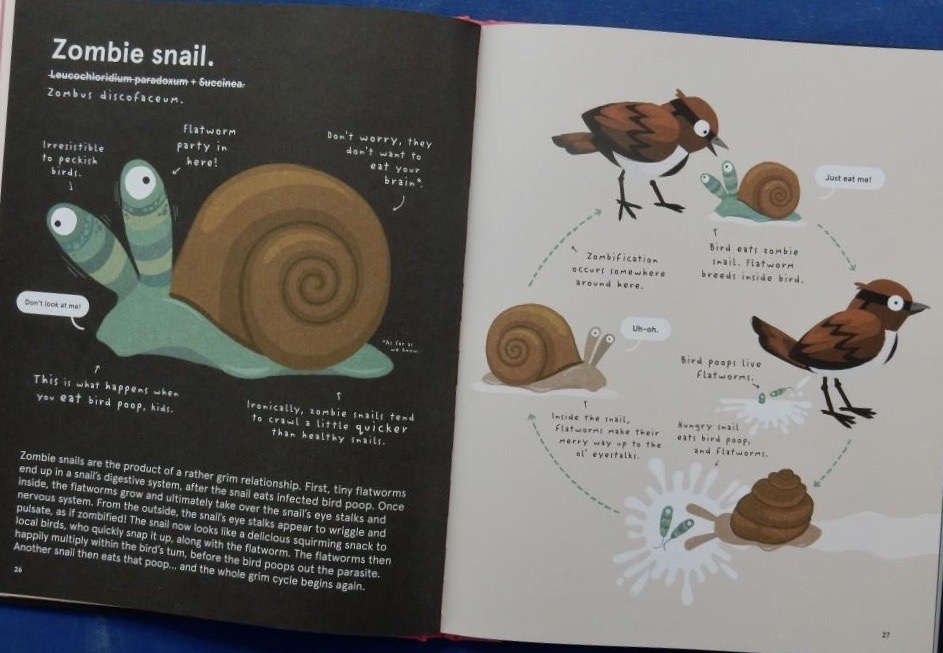
Also new to this reviewer is the Zombie snail (Zombie discofaecum). Now any child bonkers enough to contemplate tasting a morsel of bird poop will dismiss the notion instantly having read the concise paragraph giving graphic details of this snail’s life-cycle. On the other hand some youngsters like to set up snail races and this species would make a good participant in such an event as, so we learn, zombie snails tend to crawl a little faster than healthy ones. The very notion of having those eyestalks invaded by Leucochloridium, (a parasitic flatworm) and then being mind-controlled is enough to turn anyone’s stomach.
Turning to a sea dweller, well maybe I wouldn’t relish turning to this one were I swimming in the shallows around Northern Australia, but anyhow this shaggy shark (Eucrossorhinus dasypogon, or Beardus weirdus if you prefer), has facial fronds that are thought to assist in camouflaging the creature and also sense its surroundings as the woebegone waits for its next meal.

No matter your preference among the world’s fauna – fish, insects, mammals, birds. molluscs or whatever, you’ll likely discover something new in this highly humorous book that makes learning terrific fun as well as an educational activity. With its funny but anatomically accurate illustrations, eyes notwithstanding, this is a book that will appeal to a wide age range and is definitely one to add to home and school collections.

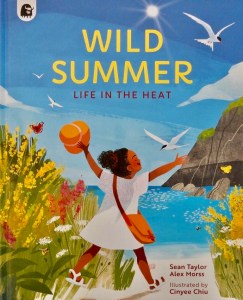
Wild Summer: Life in the Heat

Wild Summer: Life in the Heat
Sean Taylor & Alex Morss, illustrated by Cinyee Chiu
Happy Yak

Like many of us, the little girl character in this narrative non-fiction book, is eagerly anticipating the summer. It’s coming, her nature-loving Grandpa tells her, mentioning some of the signs of seasonal change. He also says that close to his new abode is something exciting he wants to show his granddaughter, who acts as narrator.

Grandpa is right: summer with its blue skies and warmer days, does come. The girl reminds him of the thing he mentioned and together they pack a bag and set out along the track.

As they walk the girl notices the abundance of plants and minibeasts, wondering aloud if they want summer to last forever. Grandpa doesn’t supply an immediate answer but responds by suggesting they continue looking and then decide, although he does mention water as being a factor to consider.
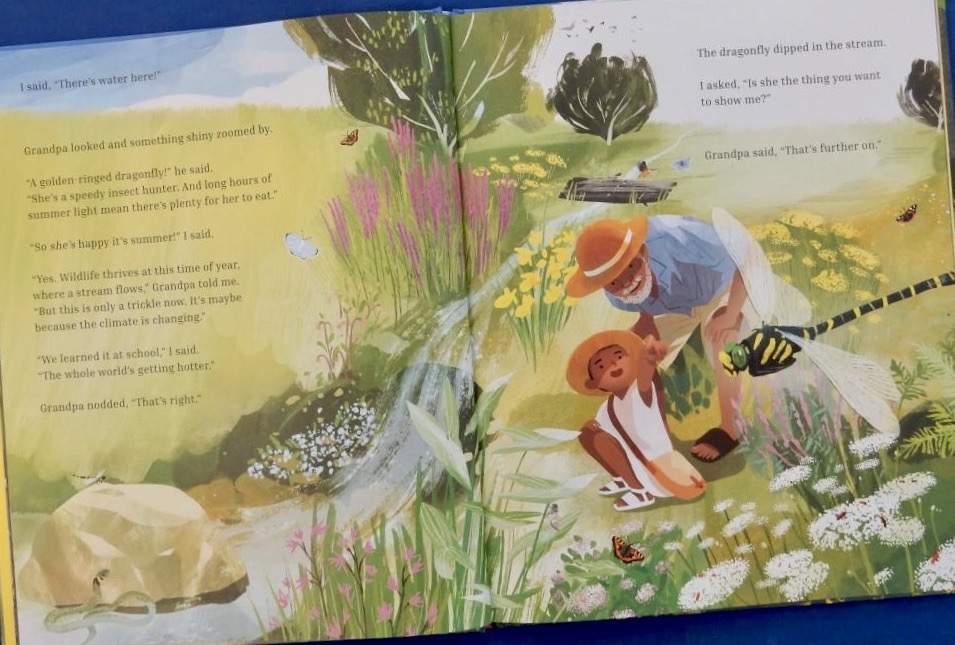
Stopping by a stream Grandpa points out a golden-ringed dragonfly and tells his granddaughter a little about the insect. He also points out the mere trickle of water suggesting this could be a result of climate change, a topic the girl has learned about in school.

Further on in the increasing heat, the child expresses a wish to find some shade, and Grandpa likens her to many of the wild flora and fauna, explaining how some respond. They reach a place with trees blackened due to a fire the previous summer, talking of the pros and cons of such events.

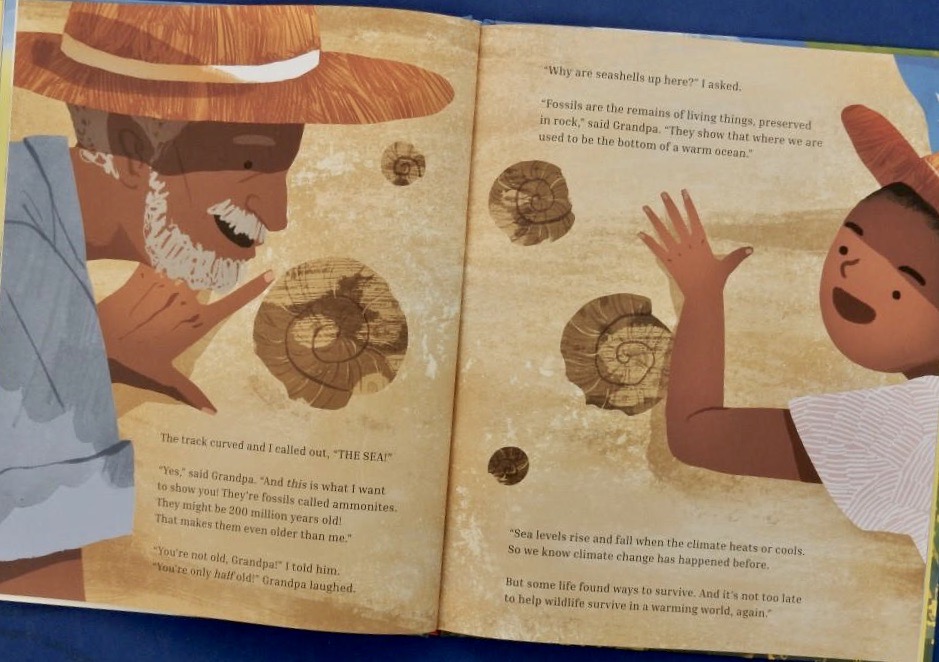
Eventually they reach a spot at the edge of the seashore where they find what they’d come for.

Then they continue walking, on the beach now; Grandpa draws attention to some summer-loving Arctic terns, before with the ‘summer forever’ question duly answered, they cool off in the sea.

A companionable walk, and for the little girl, a wonderful learning journey with her Grandpa who educates her in the best possible way, never forcing, merely gently guiding.

Straightforward back-matter comprises an explanatory spread explaining “What is summer?, another giving facts relating to ways some land animals have adapted to better cope with heat. There’s one looking at the evolutionary changes of plants to cope with hot, dry summers and the final one looks at ocean life and how climate change is taking effect while the last page suggests some ways to get involved in wildlife protection.

With its wealth of ecological information and bright, detailed illustrations bursting with wonderful plants and animals to explore and enjoy. this is a terrific book to share either before or after a walk in nature, whether or not it ends on the beach. There’s lots to inspire awe and wonder here.

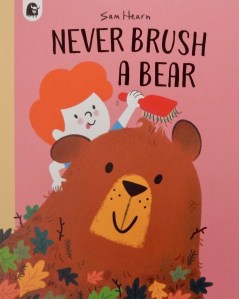
Never Brush A Bear

Never Brush A Bear
Sam Hearn
Happy Yak

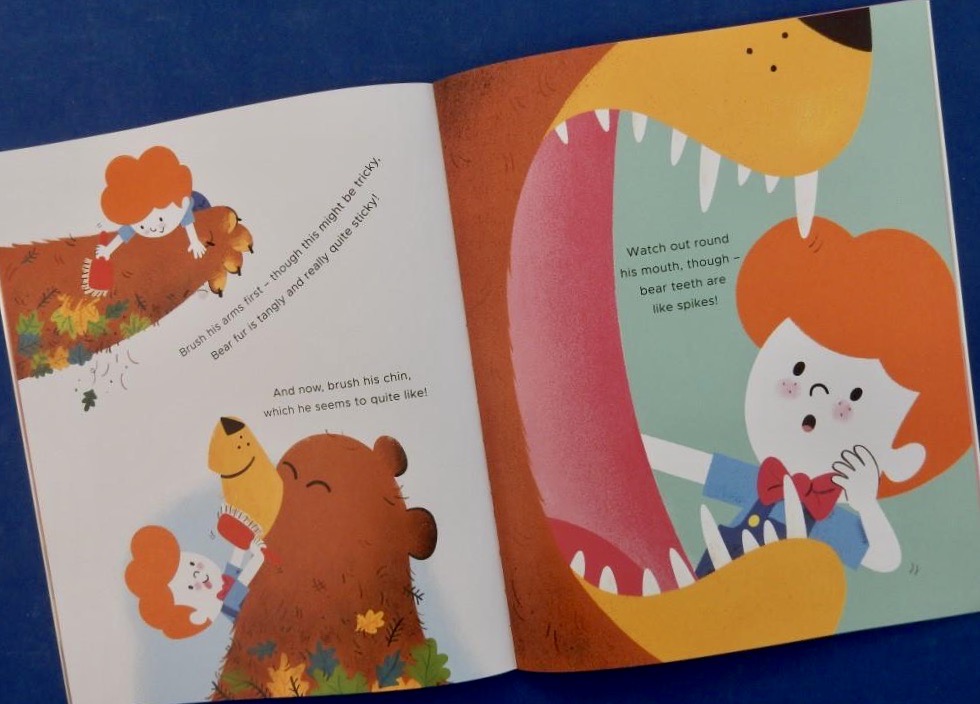
Young Herschel is a budding hair stylist, a coiffeur of creatures; as yet though he’s not brushed the hair of a bear, but despite warnings of the possibility it could result in his demise, Herschel is determined so to do. So, brush in hand, he goes into the woods where he eventually approaches a cave. Could this be the place to find what he seeks?

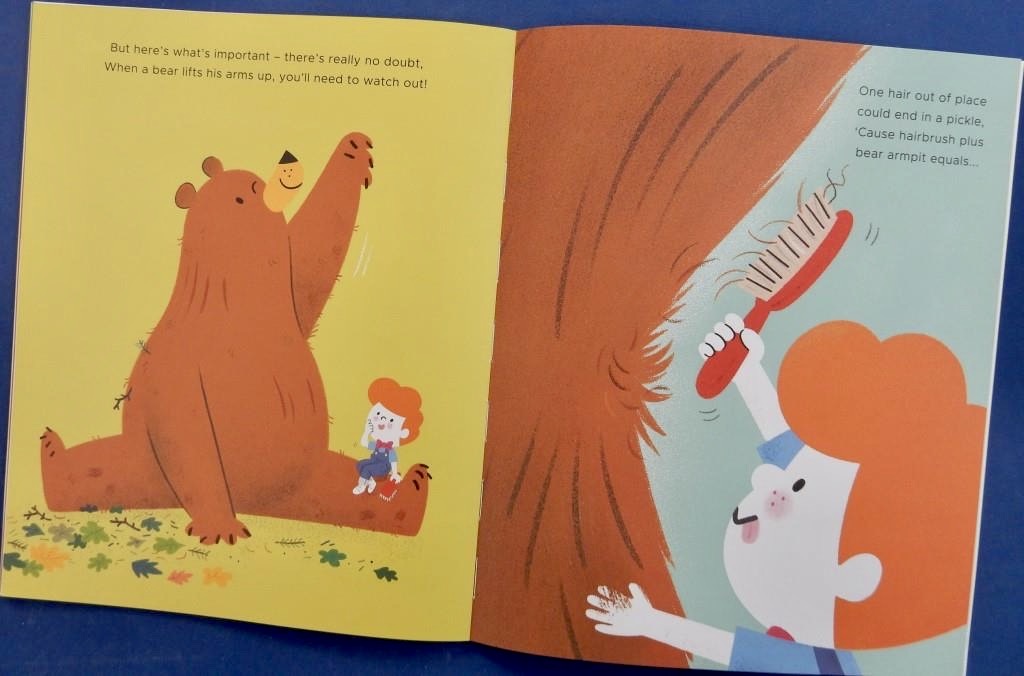
GRRRR! A ginormous wild bear is within though despite his dishevelled state, he’s not really very wild at all, rather he looks as though he could be friendly. Definitely up for some tonsorial treatment thinks Herschel starting with the creature’s arms, followed by his chin.

With his brush Herschel continues working around the bear’s body, aware of the likelihood of the occasional stinky part. What our stylist isn’t expecting however is what happens when his brush comes in contact with the ursine’s hirsute armpit…

The result is that both parties find themselves cascading downhill at breakneck speed only to end up on their bums somewhere decidedly damp and gunky. Time to start again my friend.

Despite the slightly clunky rhyme at times, with its bold, bright cartoonish style illustrations this whimsical tale of ambition and determination is huge fun; requests for re-reads will be likely after you share it with young children.

A Quokka For the Queen

A Quokka For the Queen
Huw Lewis Jones and Fred Blunt
Happy Yak

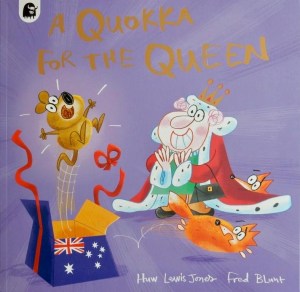
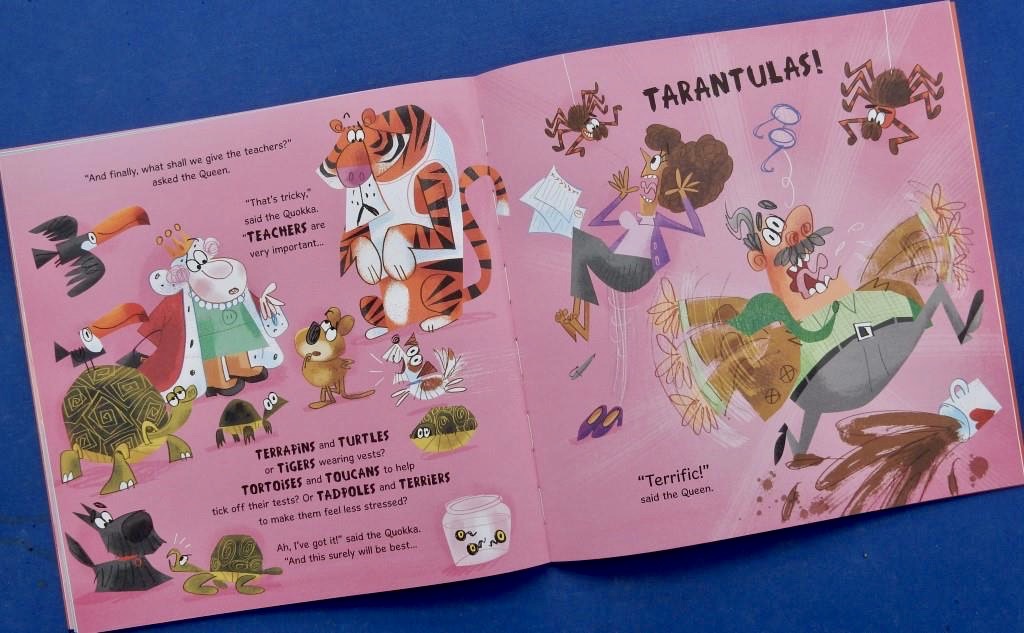
Having read this madcap rhyming royal romp it’s difficult to decide who had more fun, author Huw Lewis Jones creating his alliterative animal gifts – 40+ possibilities, though only 21 in her majesty’s summing up list, or Fred Blunt illustrating same in his splendiferous playful pictures.
It’s her royal highness’s birthday and she’s already received a vast number of presents when one more is duly delivered, having come all the way from Australia. Imagine her surprise when from the parcel leaps a Quokka, a creature unfamiliar to her highness; but she quickly takes a shine to the animal, deciding that this particular birthday will be different. She and her new furry friend will be the givers of presents.
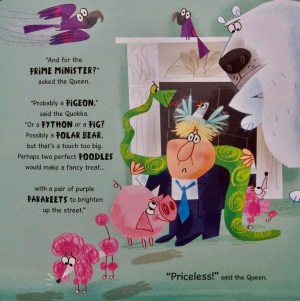
Now being who she is, the Queen has a lot of people whom she deems must be the receivers of their gifts, from the butler and the baker to soldiers and sailors, and from a poet to the prime minister (really?).
Fortunately for her, the Quokka is a superb suggester of suitable animals, including tarantulas for all those important teachers – hmm!

Mightily impressed by the efforts of the Quokka, she then realises that she’s forgotten about asking her helpful friend to choose something for itself. I wonder what the Quokka’s choice will be …

The perfect picture book to share in celebration of the Queen’s Platinum Jubilee and at any time thereafter.

The Secret Life of Birds

The Secret Life of Birds
Moira Butterfield and Vivian Mineker
Happy Yak

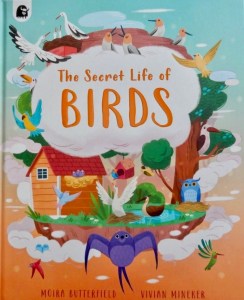
Following The Secret Life of Trees and The Secret Life of Bees, the same author and illustrator bring us a book on the world of birds. Readers are in the hands or rather wings, of Speedy the swift, that acts as guide and narrator on this varied glimpse into the world of our feathered friends.

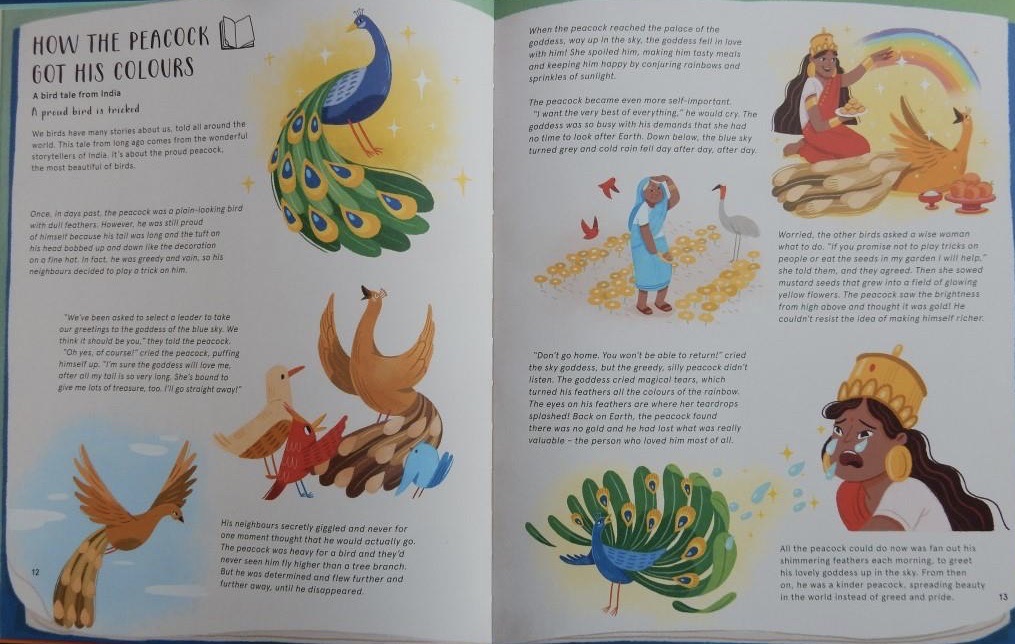
Did you know – well so Speedy says – swift chicks do press-ups on their wingtips to make themselves stronger. This is just one of the cool facts Moira includes herein, along with some stories and Vivian Mineker’s splendid illustrations that really help bring both information and folk tales to life. One of the latter comes from India and is called How the Peacock got his Colours. We read how one peacock, full of self-importance despite his plain, dull feathers was tricked into paying a visit to the sky goddess and in so doing acquired not only his stunning tail plumage, but also some kindness and humility.

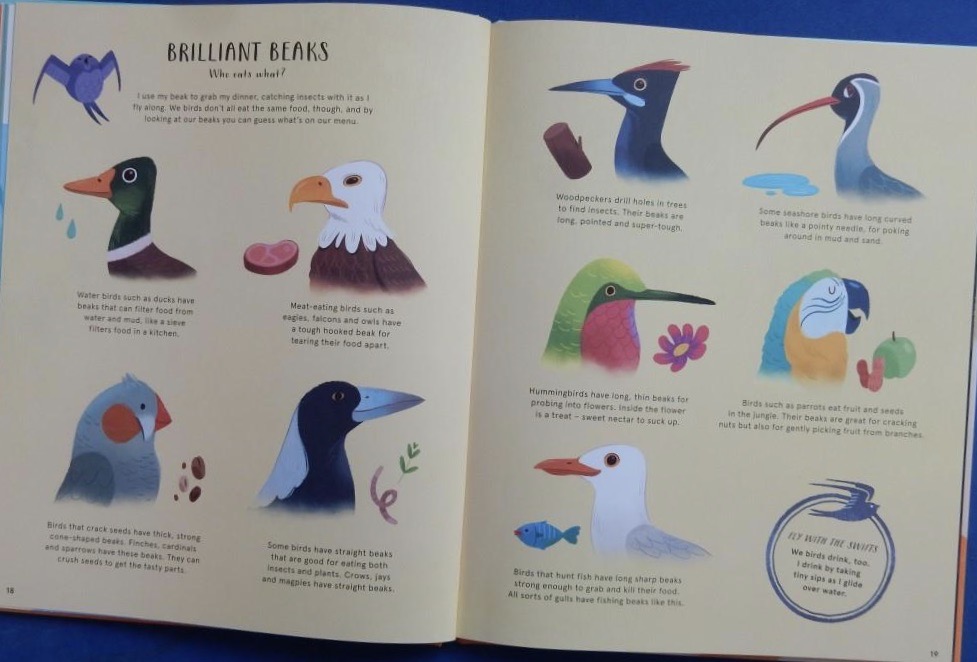
There’s information relating to avian anatomy, growth and development, feathers and their functions, survival, a close up on beaks;

we meet some nocturnal hunters, find out about bird calls and bird song, visit a variety of nests – swifts return to the same one each year repairing it if necessary, look at the stages in the development of a chick from egg to fledgling, there’s a spread on journeys on the wing, are introduced to some record breakers and discover sadly, that all over the world there are endangered birds and finally are some tips on how to help the birds that live close to our homes.

There’s something for everybody here; it’s a good introduction to the topic and a book to add to family shelves and primary classroom collections.

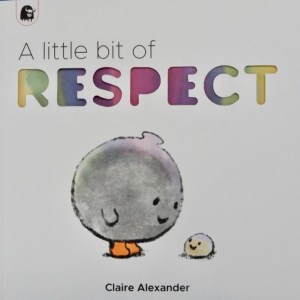
A little bit of Respect

A Little Bit of Respect
Claire Alexander
Happy Yak

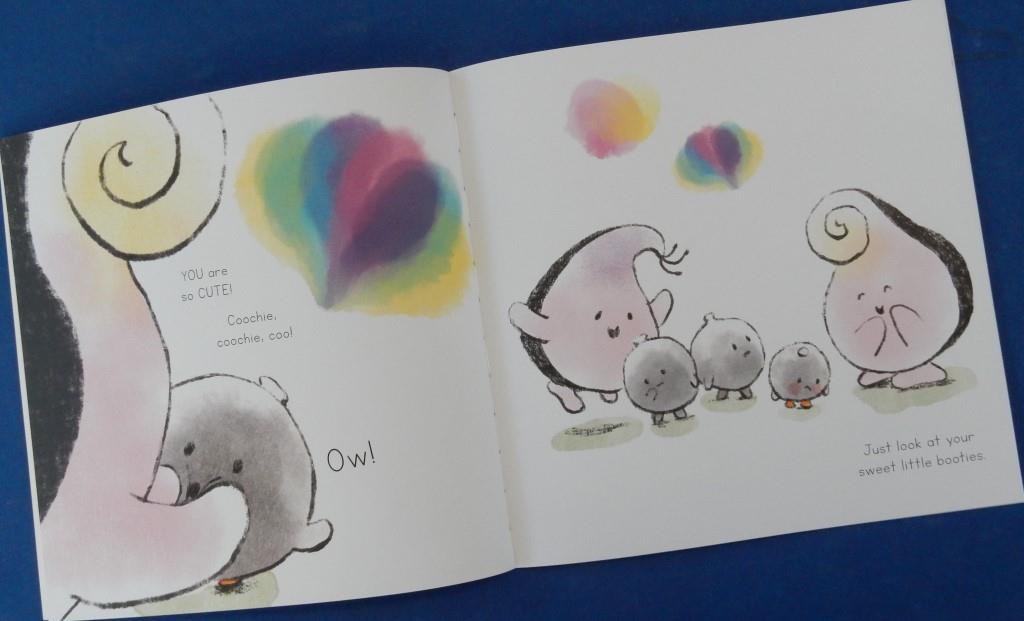
In this episode the Ploofers land their rainbow cloud on an island they’ve not visited before and start getting to know its residents. Initially things go well and all is amiable between visitors and residents but then one of the latter singles out Little One making him the centre of attention, which he finds very upsetting and demeaning.

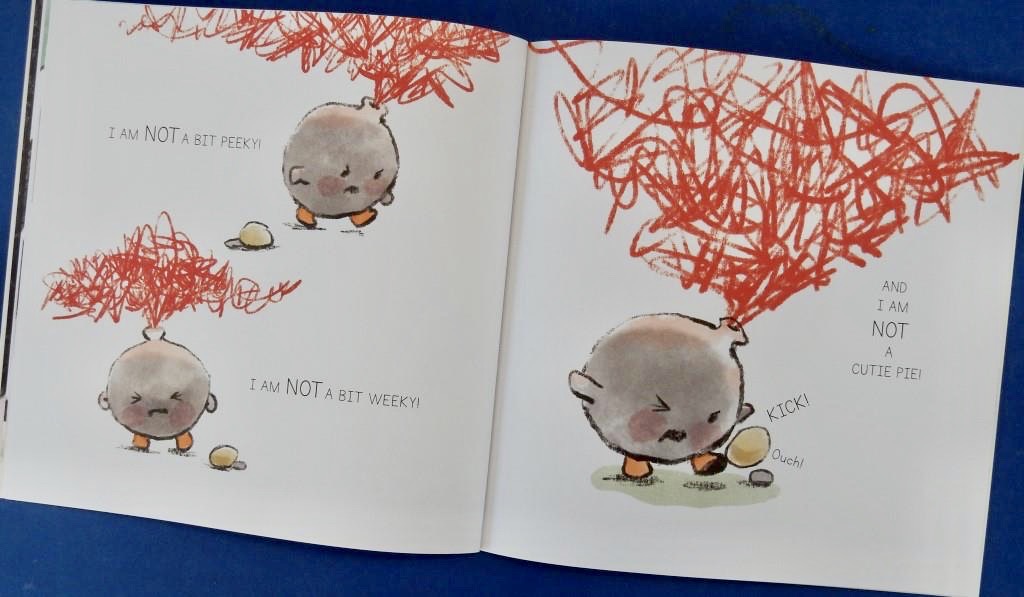
Being called ‘cutie pie’ and told he looks ‘a bit peeky, weeky’ is the last straw; feeling frustrated and insignificant, Little One’s temper gets the better of him.

But then thankfully, he finds support and empowerment from an unexpected source with whom he shares how he’s feeling.

“Well, I don’t like it when you call me cute. It makes me feel small. I may be small but I still need a little bit of respect,” he tells the islander who caused his discomfiture. What will be the outcome of his new found assertiveness? Having stood up for himself, will Little One receive an apology?

With a surprise just before the end, Claire Alexander’s heartwarming tale of self-respect, respecting others and finding a friend to share your problem with, offers another important life lesson to young children, as well as lots of starting points for Foundation Stage circle-time discussion. I love the cutaway rainbow lettering on the front cover and the way Claire captures the feelings of Little One throughout.

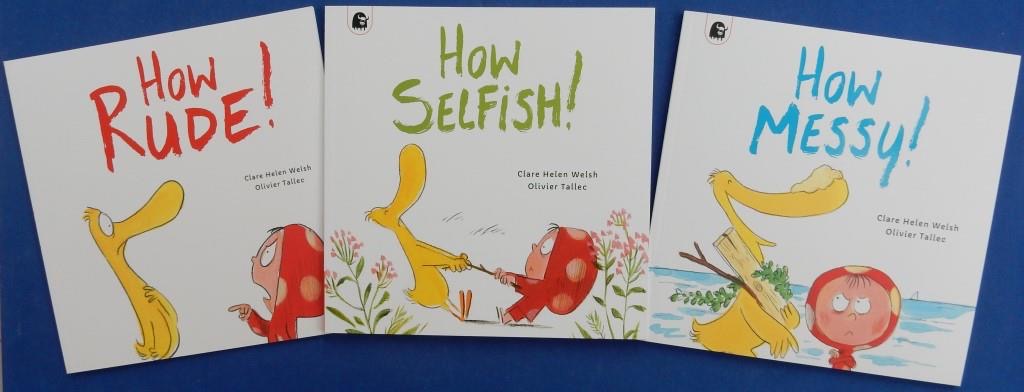
How Rude! / How Selfish! / How Messy!

How Rude!
How Selfish
How Messy!

Clare Helen Welsh and Olivier Tallec
Happy Yak

How superb! are both Clare’s words and Olivier Tallec’s pictures for the books in this series, each being told mainly through Dot and Duck’s dialogue.
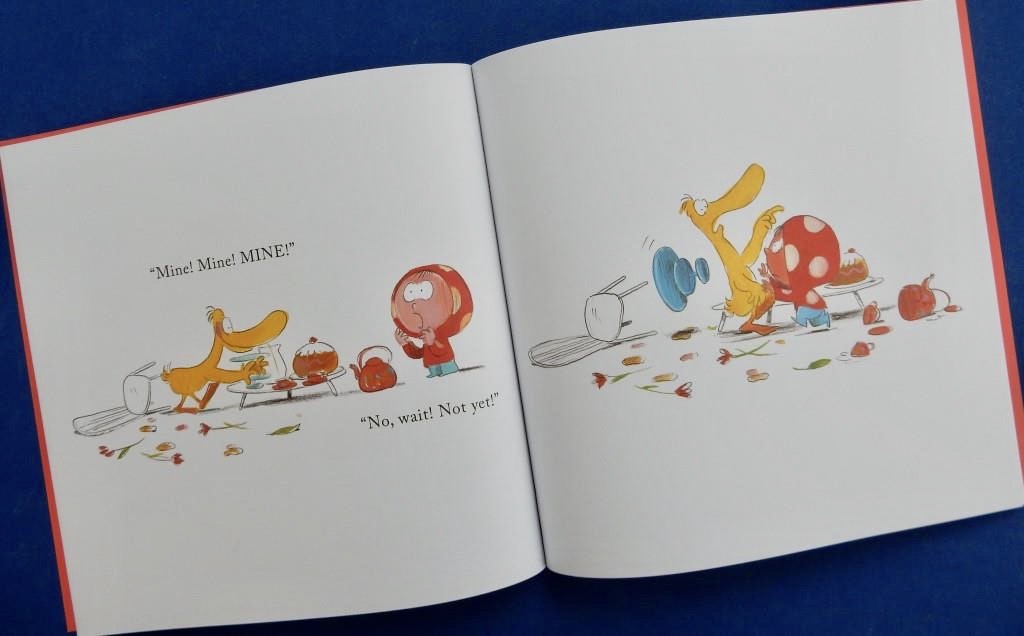
In How Rude! Duck arrives at Dot’s for a tea party. From the start his thoughtless behaviour sabotages Dot’s every effort as he complains about the food and the drink, while Dot does her upmost to keep calm: one can see her frustration mount as her cheeks grow redder and redder until she decides to retaliate.

However, after apologies from both sides, all ends happily with smiles and evidence of an important lesson learned.

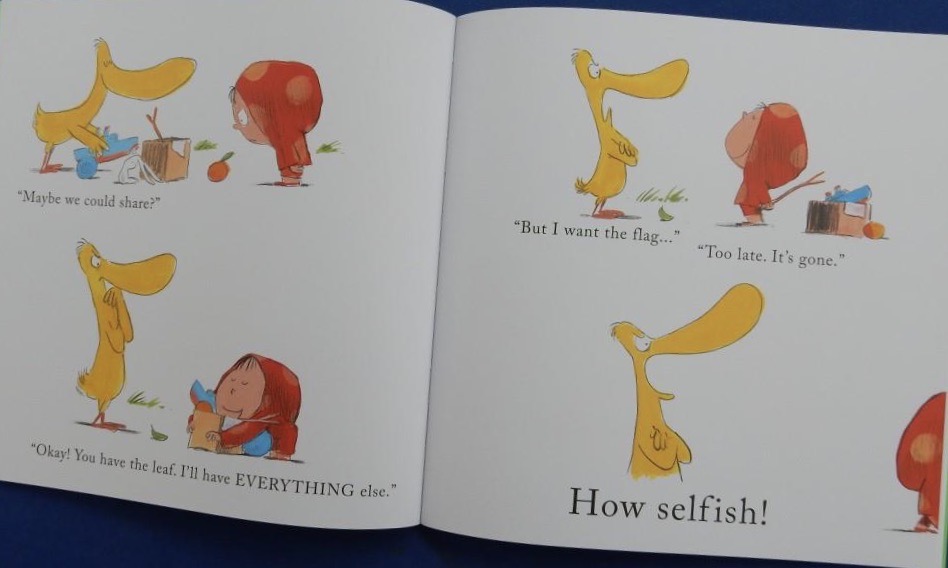
Another vital life-lesson for young children is brilliantly delivered in How Selfish! and now it’s Dot who starts off behaving in a problematic manner. First she destroys the flowers Duck is holding. Then claiming it’s her sword, she snatches the stick Duck has found, hopefully for a flag,. A squabble ensues with yellings of “Flag” and “Sword” and grabbings of said stick. Duck then tries a spot of negotiating: “Swap the flag for a rabbit?” to which Dot responds “That’s MY toy!”
Duck then suggests sharing: but clearly Dot’s notion of sharing doesn’t quite fit Duck’s bill.

Is there a way out of this stand-off? Yes there is, for Duck now delivers the most devastatingly powerful of childhood intentions, “I’m telling on you …”
There’s a rapid acquiescence from Dot that means Duck then has all the toys. Dot though has the stick/ flag but that’s not quite the end of this selfish, crazy contretemps. There are grumps on both sides and pretty soon, boredom. A compromise perhaps? … Definitely one to provoke in depth discussion this.

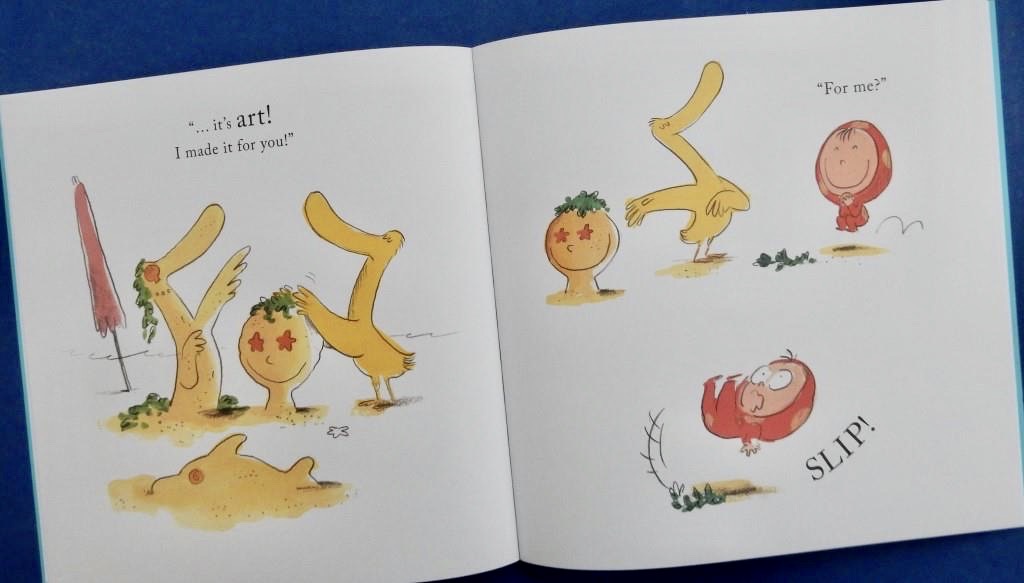
What to do when one person’s messiness is another person’s creativity: that dilemma is at the heart of How Messy! Now Duck and Dot are at the seaside and after a pancake breakfast, sally forth onto the beach to play. While Dot is carefully crafting, placing each item with the utmost precision, Duck gathers flotsam and jetsam and proceeds to make an octopus, which he proudly shows Dot. Totally unimpressed, she tells Duck he’s messy.

“ … It’s not mess …it’s art! I made it for you!” he tells her about his next piece of work and this looks as though it might just win Dot over until …

Now things are indeed pretty messy. Time for a think … followed by a clever piece of collaborative work.

But the best laid creations of Dot and Duck cannot compete with the forces of nature. Could a dip save the day for them both …

Vive la difference! say I.

With oodles of empathy and delightful humour, these books are pitch perfect for foundation stage settings, nurseries and families with young siblings. They’re absolutely certain to result in giggles aplenty and reflections on best how to treat other people.

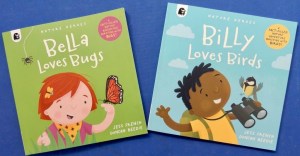
Bella Loves Bugs / Billy Loves Birds

Bella Loves Bugs
Billy Loves Birds

Jess French and Duncan Beedie
Happy Yak

These two narrative non-fiction picture books are written by zoologist, naturalist and vet, Jess French whose passion for wildlife shines through in both Nature Heroes titles wherein she uses the titular children as narrators.

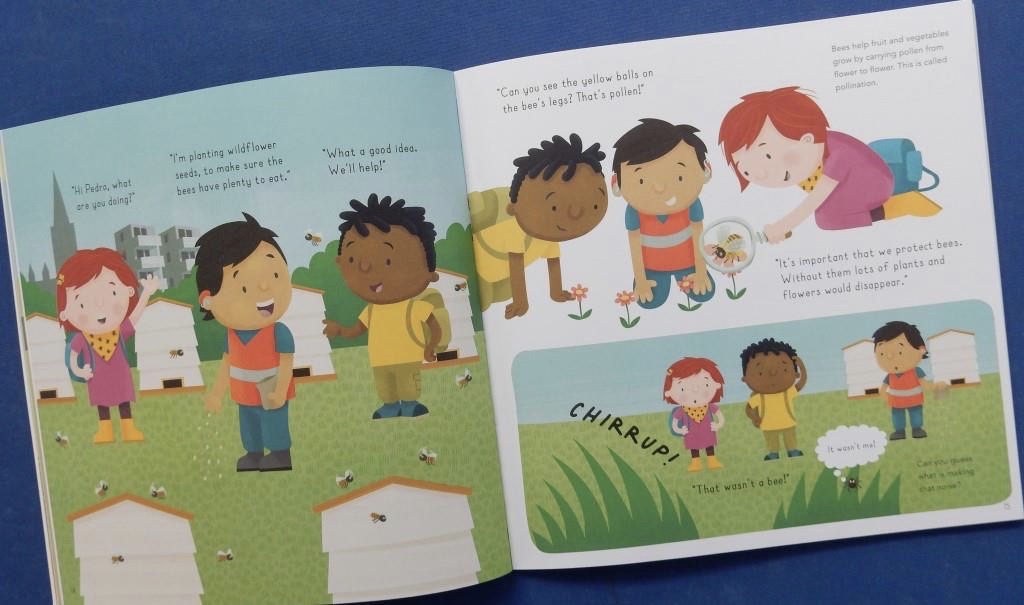
Bella is an aspiring entomologist who shares a day in her life with readers and it’s certainly a very exciting one with lots of discoveries. Her first task is to collect garlic mustard to feed her caterpillars and then with a few useful bug hunting items she sets out to look for minibeasts and to meet up with some of her fellow nature hero friends.
By following Bella’s interactions with her friends and the additional facts this becomes a learning journey for readers who encounter social insects – ants in particular – a honey bee collecting nectar and others around their hives,

several jumping bugs and then a “fluttery butterfly” (why a non-native monarch?). Their next stop is at a pond, absolutely alive with water creatures on and below the surface; time for some pond-dipping (with an adult close by).
As they go into the forest Bella makes several discoveries – woodlice, a wolf spider with her eggs, and inside her trap she finds a stag beetle and a stag beetle grub. Down comes the rain bringing out the slugs and snails, and then it’s time to head home where something else exciting happens inside her vivarium.
Look out for the spider that makes occasional comments along the way.

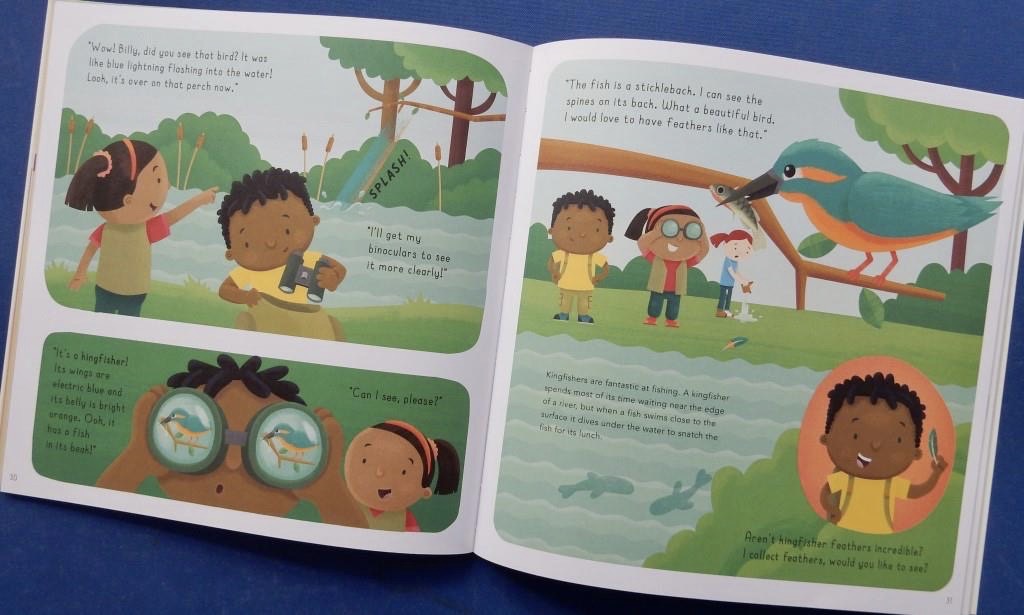
Bird loving Billy (in the company of a talking tit) spends a day at forest school, sharing his observations with readers and his friends about the wealth of birds they encounter. There’s a woodpecker, a dunnock nest with several eggs including one of a different colour and there’s great excitement when Billy spies a kingfisher and comes across a beautiful feather to add to his collection.

Eventually he reaches the tit nest box located high in a tree where there are little chicks just preparing to leave the nest.

Bursting with information engagingly presented in the words and in Duncan Beedie’s amusing illustrations, both books should encourage youngsters to go outdoors to investigate and one hopes, appreciate the wonders of nature that’s all around us.

A Quartet of Board Books

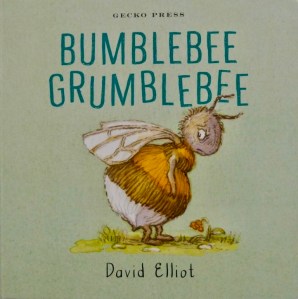
Bumblebee Grumblebee
David Elliot
Gecko Press

Brilliantly playful is David Elliot’s sequence of rhyming scenarios. We see, among others, an elephant donning dance gear, hence elephant balletphant; there’s a rhinoceros dropping a yummy ice cream cone and becoming crynocerus; pelican rushing to put its botty on a potty – pelican smellican; and when the bumblebee breaks its pull-along toy it becomes grumblebee. Last of all comes turtle – now what could the grinning creature be about to do …
This is just the kind of book to encourage very young children to delight in hearing and creating language and adult sharers will have fun as they read it aloud be that at home or in an early years setting.

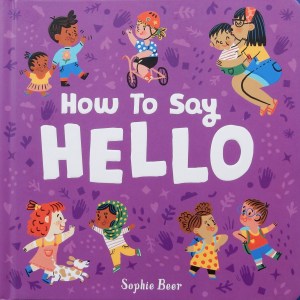
How To Say Hello
Sophie Beer
Little Tiger

At the start of the pandemic people had to look for alternative ways to greet one another rather than with a hug or a kiss. Those are two of the ways illustrated in this board book; however some of the others – elbow bumping, smiling, fist bumping, waving would have been acceptable even before restrictions were lifted. How lovely it is to be able once again to give somebody a high five, a cuddle, to greet somebody with the offer of a snack, all of which Sophie Beer portrays in her latest inclusive book for adults to share with toddlers: there’s plenty of fun detail to enjoy in each inviting spread, while so doing.

Sing A Song Of Kindness
Becky Davies and Ciara Ni Dhuinn
Little Tiger

‘Sing a song of kindness, / a pocket full of joy. / Share a slice of friendship /with every girl and boy.’ That’s the first verse of the title song in this board book for which Becky Davies has adapted the words of ten favourite nursery rhymes and songs so that each one offers ideas of friendship, kindness, consideration or compassion.
Each one is illustrated by Ciara Ni Dhuinn who uses images of plants and animals to create gorgeous scenes that offer adult sharers and their little ones plenty to pause and talk about as they sing their way through this book, which is best kept until children are familiar with the originals.

Thank You, Little Rabbit
illustrated by Michelle Carlslund
Happy Yak

It looks as though Little Rabbit is going to have a busy day. As she wanders in the woods she notices her friend Little Squirrel is distressed. He’s hungry and unable to find food but Little Rabbit directs him to search in just the right place (little ones can assist by pulling the ribbon tab) to find a rich source of nuts. She also comes to the aid of Mama Goose and her little ones; they’re lost on their way to warmer climes for the winter. Little Frog has become separated from his friends and Little Rabbit offers a comforting hug and points them out. The result of all that helping is a lot of happy friends and a Little Rabbit who receives a big hug from a parent rabbit.

Little humans should certainly feel part of the action as they manipulate the tabs to reveal the outcomes of Little Rabbit’s helpfulness depicted in Michelle Carlslund’s empathetic illustrations as the story is read aloud.

Croc O’Clock

Croc O’Clock
Huw Lewis Jones and Ben Sanders
Happy Yak

It’s feeding time for the crocodile with a seemingly insatiable appetite and goodness me does he love to boast about it as he keeps the zoo keepers busy all around the clock. “At one on the zoo clock, / the keepers give to me… / A MOUNTAIN OF MACARONI!” But that merely fills a small space in his tummy and the greedy beastie needs feeding on the dot of every hour. Moreover he has a cumulative song to tell readers what he eats.

At 2:00 there are two cups of tea and another mountain of macaroni; at 3:00 there are three french fries—and two cups of tea, and yet another mountain .…
And at 4:00? “4 pumpkin pies / 3 french fries / 2 cups of tea / And a mountain of macaroni!”
Five o’clock is time for some sweet stuff: 5 doughnut rings etc. More sweets at six in the form of 6 tasty toffees and as the clock strikes 7, 8, 9, 10, and 11 our every growing creature consumes 7 creamy coffees,

8 mighty milkshakes, 9 cherry cheesecakes, 10 jumbo jellies and 11 lemon lollies. Does he never get tummy ache one wonders?
Twelve o’clock brings 12 syrup sundaes

but hello- no mountain of macaroni? Now those keepers have finally decided that the crocodile’s diet is sadly lacking in veggies. What will the narrator’s reaction be to the next offering? …

Youngsters will delight in singing to the tune of ‘The 12 Days of Christmas, Huw Lewis Jones’ satirical take on the popular seasonal song, as they watch the croc’s continuing overconsumption overseen by the zookeepers with the assistance of some visitors, shown in Ben Sanders bright, bold stylised illustrations.

Delightfully Different Dilly

Delightfully Different Dilly
Elizabeth Dale and Liam Darcy
Happy Yak.

Meet Dilly the adorable baby penguin that’s born with a difference: she has only one leg and so doesn’t do things quite the same way as the other little penguins. Instead of waddling she hops and revels in so doing, impressing the other little ones who try to emulate her with only a modicum of success. However they all have fun together

and Dilly’s difference is totally accepted by the young penguin generation as well as her parents.

Not so the other parents however: set in their ways and with a narrow view of life, they upset Dilly by thoughtlessly telling her to stop being different.

Then Dilly gets an opportunity to demonstrate to all the adult penguins just how awesome her difference makes her: indeed she becomes a superhero and in so doing shows the entire colony how much diversity should be valued.

Despite its chilly setting, with its theme of acceptance, Elizabeth Dale’s is a warm-hearted story to share and discuss with little humans. Liam Darcy’s illustrations are splendidly expressive and gently humorous perfectly complementing the text.

The Moose Fairy

The Moose Fairy
Steve Smallman
Happy Yak

Moose has always yearned to be a fairy so he’s over the moon when he spots a sign advertising for new members of the Secret Fairy Club.

Having put together what he thinks is the most suitable gear and donned same, he feels totally fabulous. Until that is, he arrives at the venue and realises that he dwarfs all the other potential members, some of which are anything but welcoming. Not so however the head fairy who invites him to do the tests along with the other would-be joiners.

With admission to the club gained Moose needs to use the secret knock to open the door of the clubhouse but although he succeeds in so doing, the door is so tiny, he can’t fit through and the others merely shun him.

Poor Moose walks sadly away and takes a dip in the river, hoping to shrink himself. There he encounters Fox with whom he shares his problem and rather too much other information.

Back inside the clubhouse, some of the other creatures are now seeing the error of their ways when suddenly an unwanted intruder arrives and just manages to squeeze himself through the door.

Perhaps now Moose has an opportunity to show he’s a true fairy no matter his size. A fairy that lives up to the oath: ‘Fairies are kind to all creatures, / Fairies are not mean or bitter, / Fairies help others in trouble or need …’

With its mix of humour, hope and determination, Steve’s heartwarming story about being yourself and accepting others unconditionally no matter their appearance is a delight to share. Moose is a smashing character splendidly portrayed by the author whose quirky, vibrant illustrations are a mix of suitable silliness and sparkling enchantment. And I absolutely love Steve’s wise words in the dedication to his grandchildren.

Animal Colours, Animal 123 and Animal ABC

Animal Colours, Animal 123, Animal ABC
Nikolas Ilic
Happy Yak

Three titles in a new First Concepts series feature some wonderfully wacky animal characters.

In the Colours book a twisty twirly snake and a grabbing crab introduce red, both fox and orangutan have orange fur, lion and a quacking duck are yellow, green is the skin of both a crocodile and a wide-mouthed frog, blue are the whale and a tweeting bird while other creatures are purple, pink, brown, grey, black or white. Then come multi-coloured chameleon and rainbow-beaked toucan, with the final spread showing all the animals featured.

123 has a different animal for each of the numbers 1 to 12 a double spread being allocated to a honey loving bear, 2 sharp toothed crocs, 3 racoons, 4 playful dogs, 5 staring black cats, six BAA-ing sheep, 7 grumpy frogs, 8 clucking chickens, 9 mucky pigs, 10 munching rabbits, 11 COO-ing pigeons and twelve toothy fish; and the final spread shows them numbering off with an invitation to count them one by one.

As well as being introduced to the alphabet in Animal ABC, little ones can discover an interesting fact about each of the featured creatures. For instance, did you know that a Gecko can’t blink so cleans its eyes by licking them with its long tongue?

Young children don’t acquire concepts from books but through a variety of experiences; these playful board books will help concept development but most important, they’re fun to share.

My First Book of Dinosaur Comparisons

My First Book of Dinosaur Comparisons
Sara Hurst and Ana Seixas
Happy Yak

Authors are always looking for new ways to present dinosaurs to young enthusiasts who seem to have an insatiable appetite for these prehistoric creatures.

Herein Sara Hurst compares dinos. with vehicles, predators, humans and modern day foods among other things. With a body longer than a tennis court, Diplodocus needed to munch through around 33kg of ferns daily – that’s the equivalent of a human gobbling 66 boxes of cereal every single day – imagine that!

First though come an explanatory spread explaining comparisons, a pronunciation guide to dinosaur names and a time line.
The comparisons start on the Fossil Clues pages where readers learn for example, that one of the largest fossil poos ever found was around 70cm long and weighed more than a bowling ball.

I was fascinated to discover that a dinosaur’s age is calculated by counting the growth rings inside its bones (in a similar fashion to trees I imagine).
Other spreads look at the super skills of a variety of dinosaurs – Dromiceiomimus was about as speedy as an ostrich and twice as fast as the fastest man sprinter. Other spreads explore defence, food, weight

hunting ability, self defence and more, concluding with what was the likely cause of dinosaurs dying out.

In addition there’s a scattering of quizzes (answers at the back) and the entire book is brightly and dramatically illustrated by Ana Seixas.

The World’s Most Pointless Animals: Or Are They?

The World’s Most Pointless Animals: Or Are They?
Philip Bunting
Happy Yak

Author/illustrator Philip Bunting presents an irreverent look at some of the world’s most weird and wonderful creatures that we’re fortunate (or sometimes less so) to share our planet with. Take leeches for instance: I don’t consider myself particularly fortunate to have to live with those (despite their use by doctors) but like all the other animals from axolotls to zooplankton included herein, these hugely successful sucking parasites have undergone adaptations that have enabled them to survive, indeed to thrive. And as the author says in his introduction ‘Each creature is an illustration of Darwinian evolution, and, every animal has a unique yet important role to play on our precious planet. I was amazed to read that a leech has 32 brains. But what does it use them for?


Let’s get right up close to some of the others then starting with the capuchin monkey (Cebus imitator renamed here ‘Peepee stinkipawas). These particular primates – the most intelligent of all known New World simian species –
use simple tools to procure foods they want to sink their teeth into. You certainly wouldn’t want to share their seeds or insects though, for the males make a habit of peeing on their hands and washing their feet in their urine. Yuck!

Seemingly the only raison d’être for Daddy longlegs (other than to scare some people silly) is to act as a ‘valuable source of food for birds on every continent, except Antarctica. WIth more than 15,000 species of these spindly-legged insects, that amounts to a vast number of satisfied birds.

Turning to ocean dwellers, jellyfish are hugely successful medusozoa, sorry ‘wibblious wobblious ouchii’ that are about 95% water. Apparently of the possible 300,000 species estimated by scientists, so far only 2,000 have been found including moon jellyfish that can clone themselves, and immortal jelly fish. The latter can reverse its life cycle reabsorbing its tentacles becoming a blob-like cyst again which then begins over … Awesome!

Bursting with facts presented in a manner that’s huge fun and highly accessible including quirky labelled illustrations – Bunting clearly enjoyed creating these, not least inventing daft new names for every creature included – this book has a more serious mission too; To celebrate the diversity of the animal kingdom and to remind us of the fragility of the ecosystems that together make up Planet Earth.

Give a child this book to get immersed in and you could put them on the path to becoming a zoologist. I’m off to see how many Lumbricus terrestris (aka Squiggleous wriggleous) I can spot brought up after the recent rain shower – I might even be able to make a clew – that, I learned from the spread featuring same, is the collective name for a group of earthworms.