My Mum / Come What May

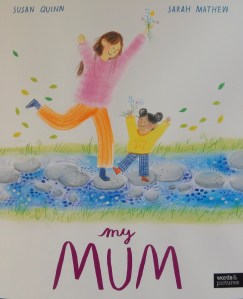
Mums do so many things for their little ones and this book is a warmly appreciative and loving way to celebrate the day to day adventures they have big and small, told from the viewpoint the little girl narrator. To a mother fixing a child’s broken toy or running through a wildflower meadow and then making a daisy chain may not seem particularly significant but to her offspring, they mean the world. So too of course, do those days at the seaside, building sandcastles, searching for shells, wave jumping and making seaweed crowns. It’s evident that the mum featured loves to encourage and participate in imaginative play; and no matter the weather,
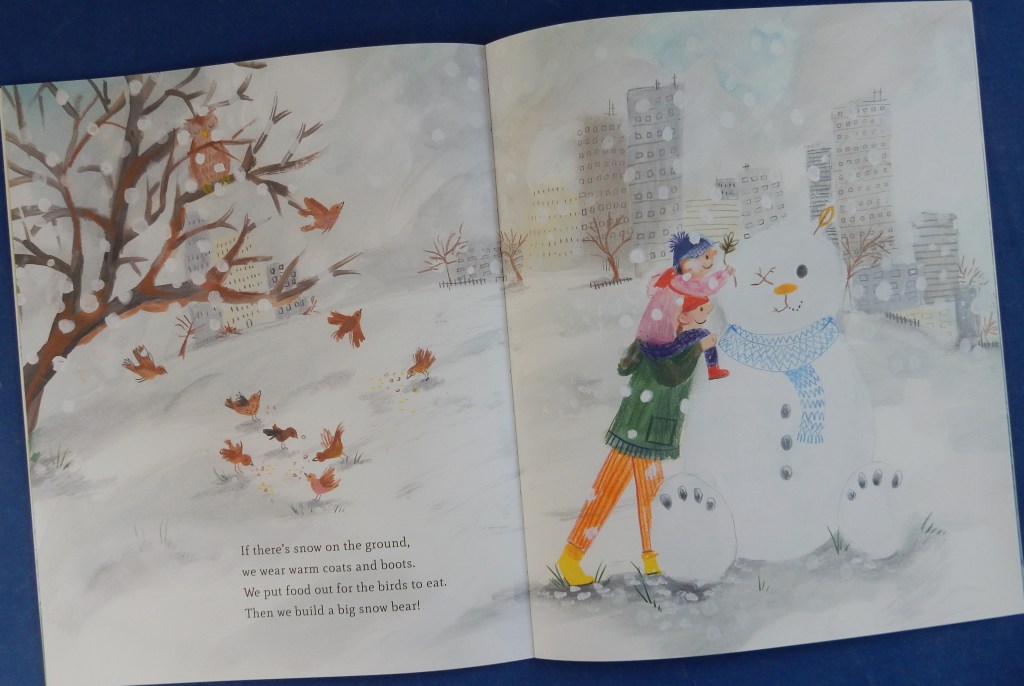
day or night, she’s close by to make things turn out right.

Sarah Mathew’s vibrant mixed-media illustrations are a delight, full of small details for mums and small children to explore and enjoy together. With Mother’s Day approaching, perhaps after several readings, a child could be encouraged to make up their own pictorial celebration of ‘My Mum.

As this story opens Large and Small are doing some baking but it’s not going well for Small AT All. Things are getting dropped, spilled, broken and everywhere is splashed with cake ingredients.
Both cooks want to scream and shout but Large declares love for Small “come what may”. The best way to defuse the situation is to get outside into the fresh air, have a walk and maybe a little picnic in the countryside.

This gives Small an opportunity to indulge in some what ifs, imagining being in turn a roaring dinosaur,
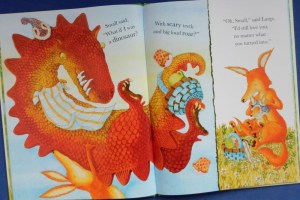
a tiger, a buzzing stinging insect; but for each comes the response ‘I’ll love you come what may’ from Large. Bad mood or good, Large’s love is unconditional, so too is that of Small.

Some of the adults who share this with their little ones are likely to be those who enjoyed the delights of Debi’s No Matter What first published twenty five years ago.
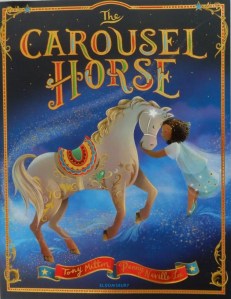
The Carousel Horse

This is an enchanting story of a fairground merry-go-round horse that longs for adventure.
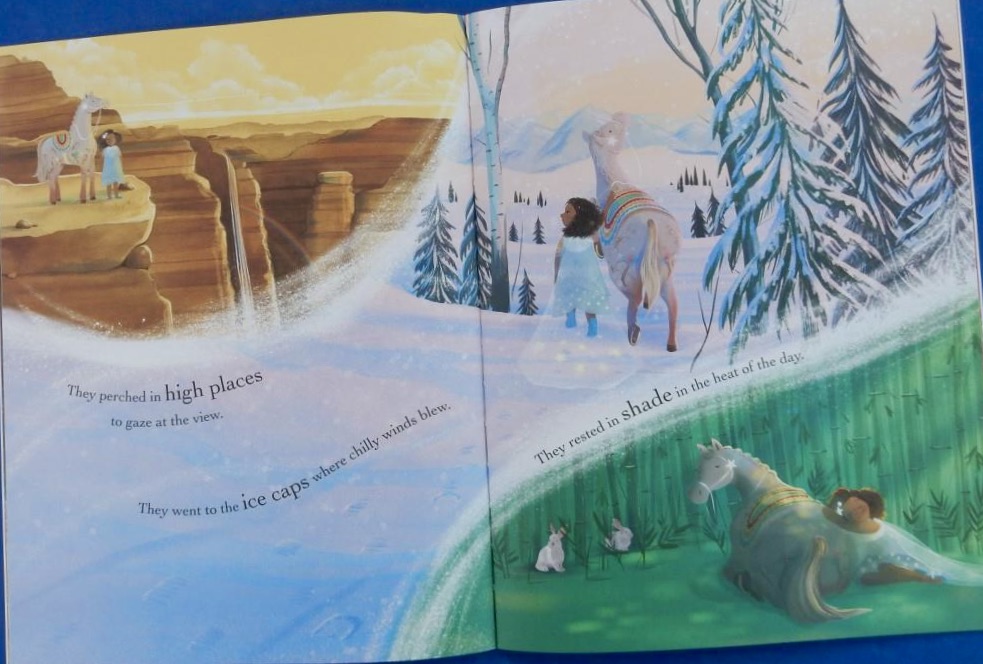
One night when the people have all left and the horse expresses a desire to fly to the moon, there appears before him a shimmery princess who tells him to let go of his fear and make his wish. Having done so, with the princess on his back the horse rises up, up far above the fairground eventually coming to land on the moon. From there they stand and look around admiring the beautiful colours of the distant earth. They then return to the world below and set forth to explore: they visit places high and low, hot and cold;

they watch dolphins leaping and swans swimming. No matter where they go, though the horse feels the need for a sense of purpose, a place where he belongs. So, at the princess’s suggestion, he returns from whence he came,

thereafter providing the fairground visitors fun aplenty, but safe in the knowledge that at full moon time should that urge arise, a wish will see him and the princess reunited, ready to take another magical journey together..

Told in perfect rhyme, this tale of wish fulfilment and finding where you truly belong is a joy to share: observant readers/listeners will notice that the painted scenes atop the carousel and the animals below that provide the rides – rabbit, dolphin, squirrel, swan, frog are all encountered in the dreamtime journeys so magically depicted in Penny Neville-Lee’s scenes.

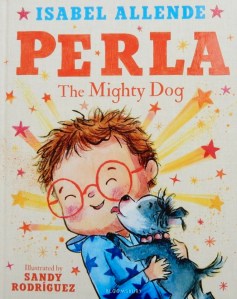
Perla The Mighty Dog

Isabel Allende’s debut picture book is narrated by Perla, a pooch with self-attributed superpowers. The first is, ‘I can make anybody love me.’ The second is ‘I can ROAR like a lion.’ The latter is pretty astounding given Perla’s diminutive size.

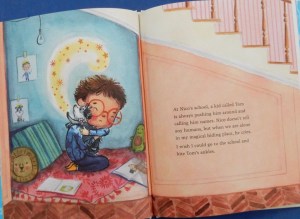
When the Rico family arrives at the animal shelter looking for a guard dog, Perla employs superpower number 1, which makes young Nico Rico fall for the pooch. For him no other will do but to convince the other Ricos, Perla uses the lion-like roar and that seals the deal. Once in the Rico’s residence – a big old house that once ‘belonged to a wizard’ who still apparently visits leaving sprinklings of magic dust behind – Perla gets to know the family members better. That includes forming a pact with Lucy, the somewhat lazy moggie.

What would satisfy Perla the most though is to be able to help Nico, who unbeknown to the humans in the family, is being bullied at school.

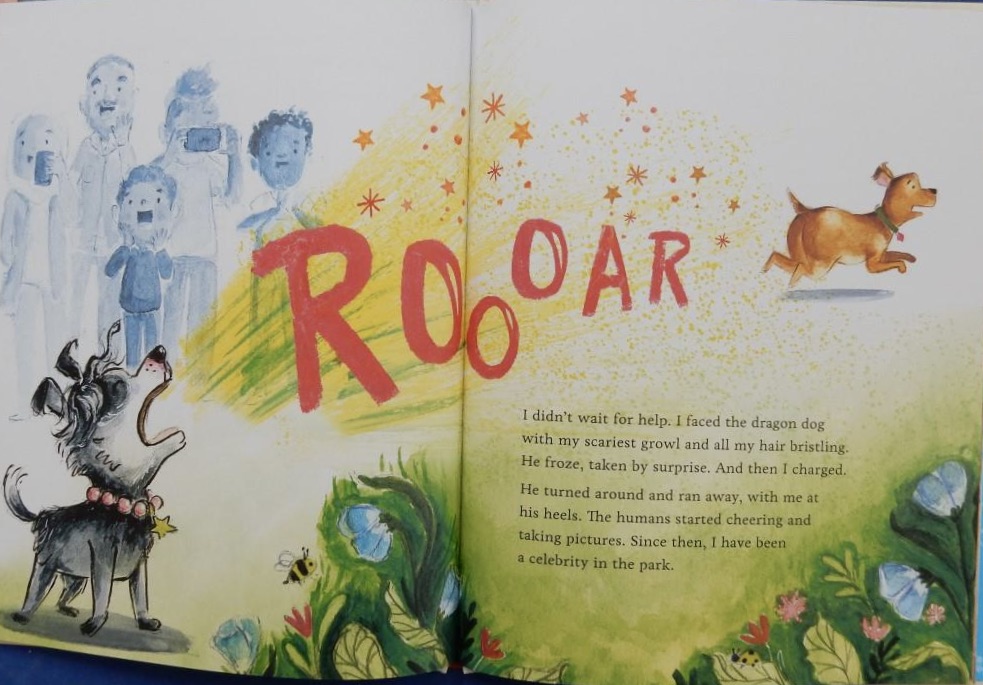
Then one Saturday when playing ball with Nico, an incident with a squirrel results in Perla facing up to a very large, fearsome dog by roaring and charging, the result being celebrity status for Perla.

This prompts Nico to ask magnificent Perla to teach him superpower number 2, aka the mighty roar; this the obliging pooch promptly does with some slightly alarming but ultimately satisfying results for both Nico and Perla.

It’s the latter’s winsome narrative, with its vital message about finding the courage to stand up to bullies, which makes this book such an enjoyable read aloud. That and Sandy Rodríguez’s spirited, splendidly expressive ink and watercolour scenes.

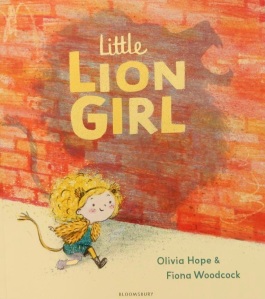
Little Lion Girl

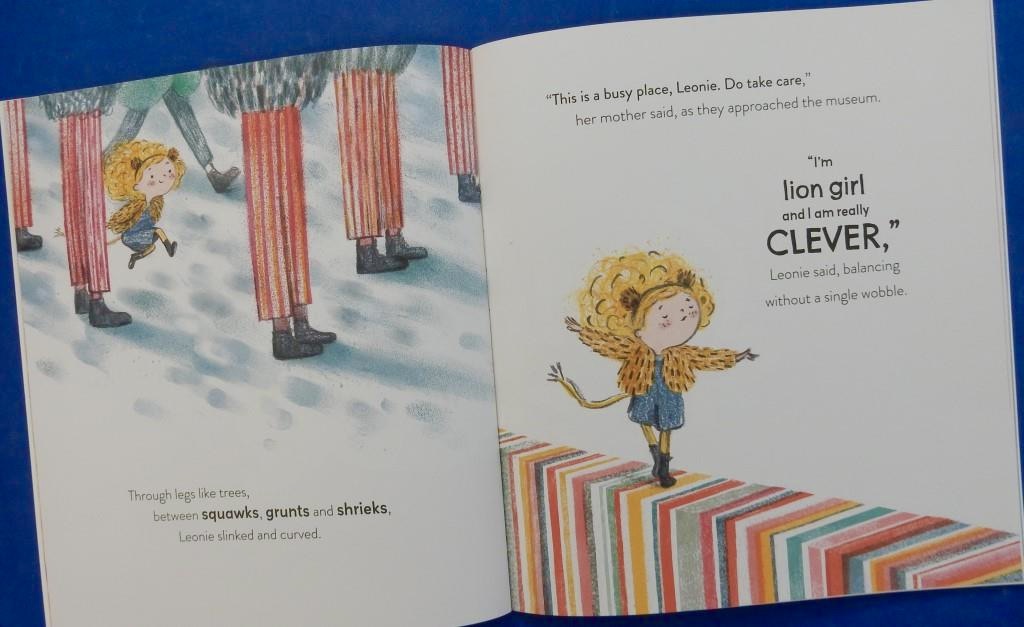
Leonie and her mother are city bound when they board the train for a day’s adventure. As Leonie looks around her everyone she sees is somewhat extraordinary. This prompts her to become a brave little lion girl and swinging her tail, she roars, determined to make the most of all the sights and sounds the city has to offer.

“I’m a lion girl and I’m totally amazing!” she says as she views the exhibits in the museum gallery.

What wonders she sees all around and after some refreshments in a cafe, off dashes Leonie across the square and climbs right up to the very top of a fountain where she proclaims herself king of the city.
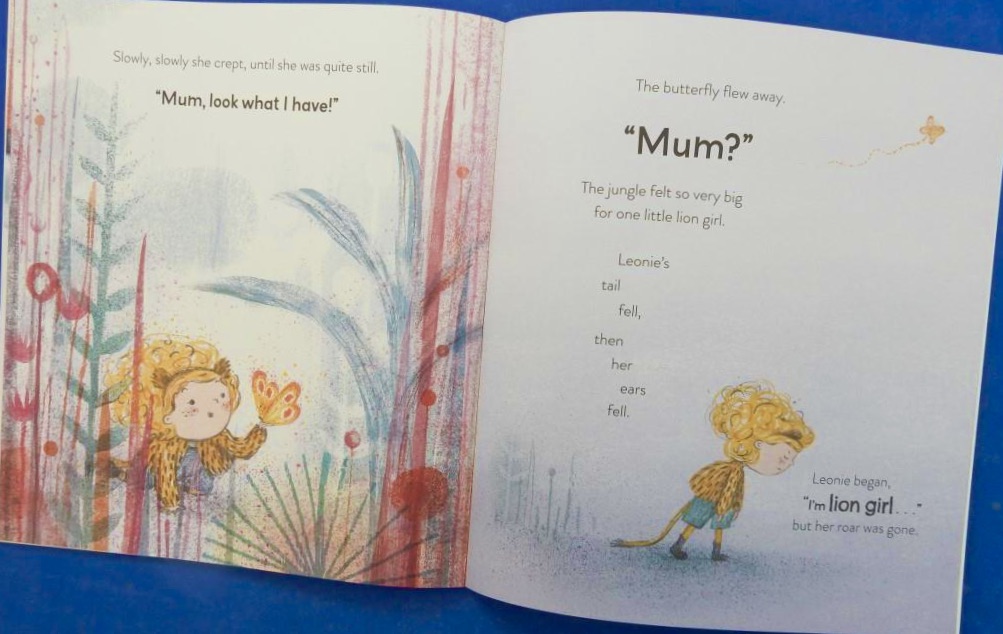
But when she sees a butterfly while her mum is chatting to a friend, Leonie forgets mum’s warning to take care and dashes off in pursuit.

Suddenly her surroundings seem to engulf her and that little lion girl discovers her roar has disappeared along with her pride. Huddling in the shadows she hears a very loud “Leonie!” Her fears begin to dissipate and as her mother embraces Leonie her roar starts to grow within once more. “I’m lion girl and I love you” she says giving her mum a tight hug.

This is such a lovely story of the power of the imagination and coming to understand the vital importance of having a loving someone to look out for us and help us become whatever we want. Told through Olivia Hope’s lyrical text and Fiona Woodcock’s vibrant, wonderfully expressive illustrations working in perfect harmony creating a roarsome story to share and discuss with young children at home or in an educational setting.

A Fairy Called Fred

Fred is a fairy who works in the Department of Dresses in the Wish Granting Plant where the fairies respond to countless requests for ball gowns from princesses. He loves the job but he too has a wish – he longs to find a wish-mail in his tray. Joshua Reed is a little boy who longs to got to his friend Claire’s party but it has a princess theme and Joshua doesn’t have a dress. Off goes his letter to the Wish Granting Plant where top designer Bella hands Joshua’s request to Fred. Can Fred help? He’ll need to get busy right away, which of course he does.

Meanwhile Josh waits in hope and then to his joy there comes a knock on his window. The transformation begins and ‘fashionably late’ he arrives at Claire’s house. Wow! There stands a smiling boy in his awesome attire and shortly after there stands Claire with something for Josh.

For Fred though, it’s late; time for him to leave the party and return from whence he came. There waiting for him is a very special award for his very special design.

Celebrating diversity and being yourself, this magical reworking of Cinderella is a joy to read aloud and Josh in his dress with its sparkles and spangles is a joy to behold.

Does A Bear Wash Its Hair?

In this sequel to Does a Monkey get Grumpy? author Moira Butterfield turns her attention to animals’ daily routines. You may well be surprised to read that many animals – certainly the fifteen featured in this book – devote a considerable amount of their time doing the same things we humans do, although they don’t go about them in the same way. They are nonetheless, creatures of habit.

Whereas we humans normally use soap and water to keep ourselves clean, brown bears lick their fur, slurping up whatever is attached to it, sometimes tasty bugs, so they get a reward as well as a wash. Certain fish including green moray eels visit coral reef cleaning stations where cleaner wrasse nibble off unwanted bugs and flaking scales: a win/win process.

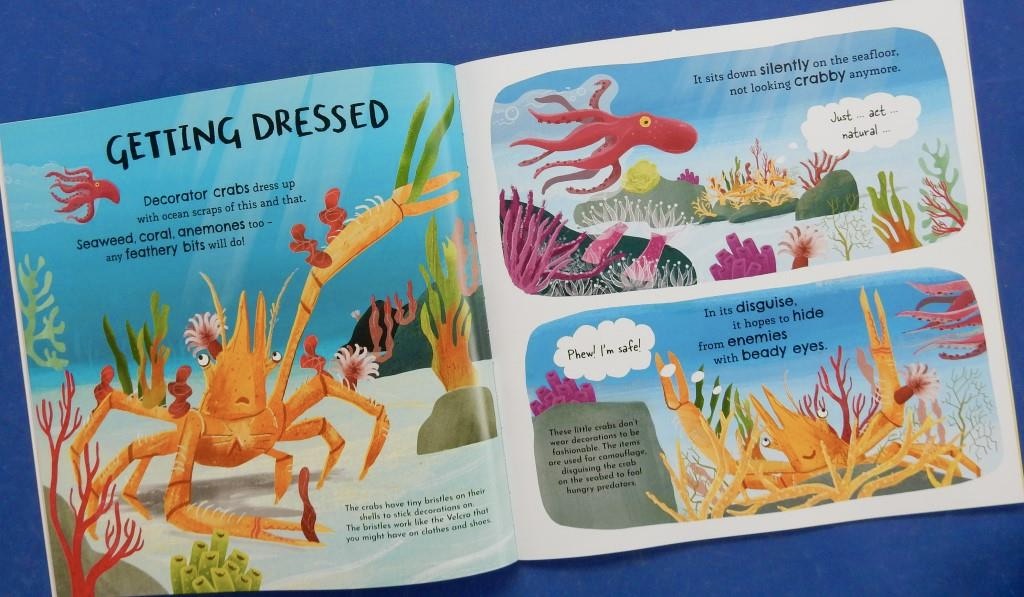
Did you know that decorator crabs dress themselves up with bits and pieces from the ocean, these they stick onto tiny bristles on their shells, the intention being that so disguised they won’t be easily preyed upon by hungry enemies.

Young readers will be amused to discover that young meerkats have lessons – hunting lessons where they learn how to bite off a scorpion’s sting. Before swallowing a scorpion though, they roll it in the sand to rub off any poison.

Poo is a topic that seems to fascinate most young children and I suspect they will laugh at the thought of a sloth descending from its tree once a week to take a ‘big poo’ excreting a third of its body weight. Having made a poo pile, sloths then need to bury it to prevent enemies discovering where they live.

Tidying,

co-operating, making friends, teeth cleaning, eating meals and sleeping are habitually done by animals of various kinds.

All these are described in Moira’s bouncy rhythmic text (with additional factual snippets) and illustrated in Adam Ming’s amusing scenes making this a really fun way of teaching children the many similarities between humans and other animals..

Wowzers!

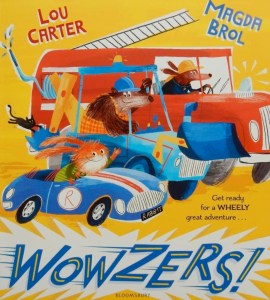
Rabbit has been saving up to buy a new car. When he finally has the money, off he goes to the garage and there purchases a snazzy blue sports car. Away he zooms to show it to his pals, the first being Bear. But within minutes our lapine character is suffering from digger jealousy, fire-engine envy,

sailing boat begrudgement and more. Each time he sets eyes on a means of transport he considers superior to his own, back home he goes and adds something extra before setting out again to show off his ‘perfect’ car . Seemingly though he’s thwarted at every turn of the steering wheel.

Eventually considering himself the proud owner of the BEST vehicle around, Rabbit zips through the countryside

eventually reaching a bridge where his friends call to him to stop and assist with a rescue. What will Rabbit do, whizz past completely ignoring the pleas of his pals or will friendship prevail?

Young children will love joining in with the ‘WOWZERS’ and ‘VROOMs of Lou Carter’s rhyming narrative as they follow the zany modifications Rabbit makes in his endeavours to impress, which Magda Brol depicts in her zany scenes. With important messages about learning to be content with what you have and friendship being way more important and satisfying than belongings, this is a story to share and talk about with foundation stage/KS1 children.

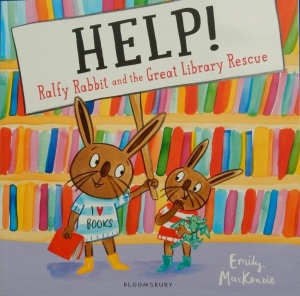
HELP! Ralfy Rabbit and the Great Library Rescue

This is Ralfy’s third adventure and he has a mission. When he and his little brother Rodney visit the library, their favourite place, they are devastated to discover that everything has been cleared away. Miss Page the librarian tells them that because there aren’t enough people using the library nowadays, it is to close the following day. “It would take a magic dragon to save it now,” she says sadly.

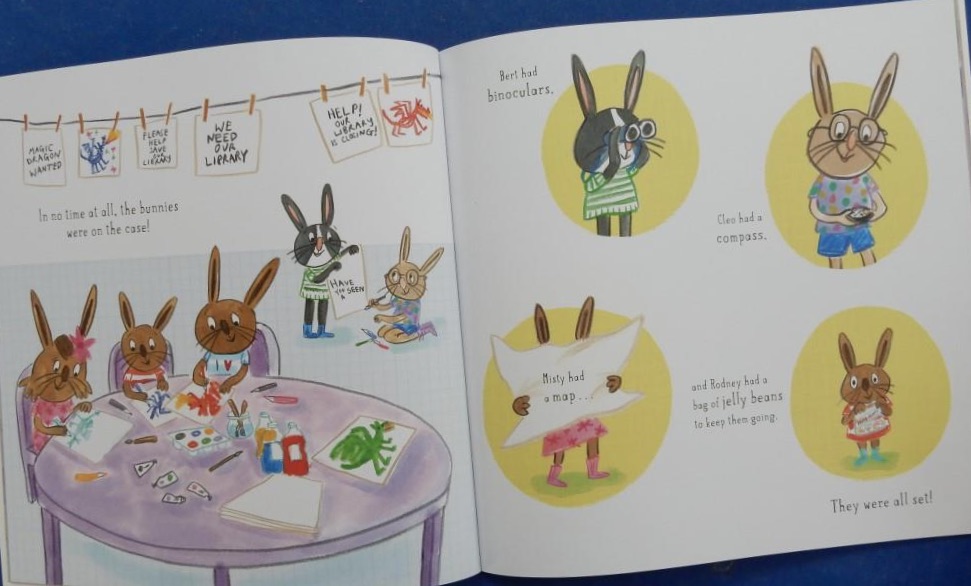
Taking her words literally the rabbit brothers round up all their book-loving friends and before long they’ve got all they need for their dragon search.

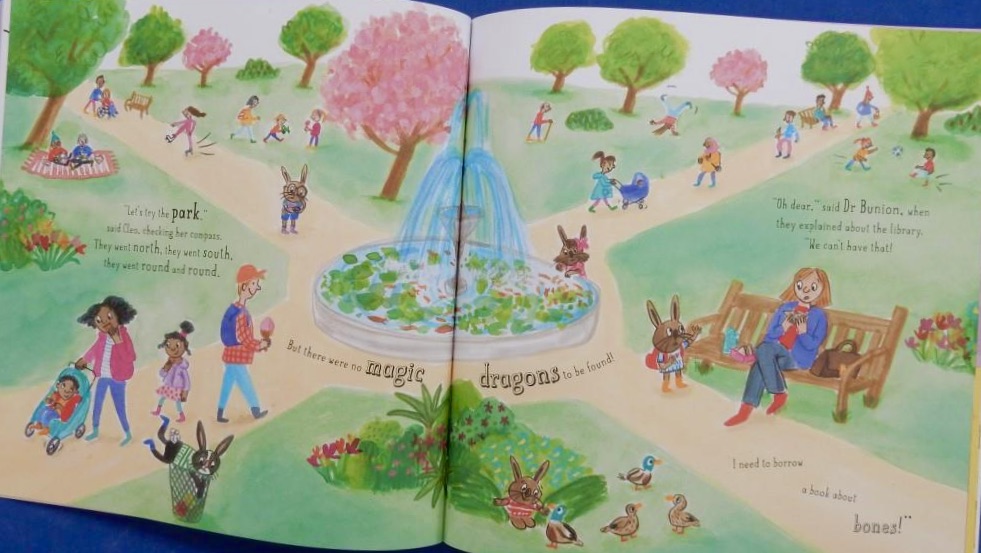
Off they go, first stop the zoo where they speak to zoo-keeper Mr Dung, who on hearing the news , realises how much he needs the library. So too do all the other people Ralfy and Rodney talk to: the doctor,

the sweet shop owner, and many others are horrified at the imminent loss of the invaluable resource.

Back home go Ralfy et al feeling utterly dejected and next morning they walk, equally sadly, to say goodbye to the librarian. What do you think they find?

Emily’s illustrations are full of details that will make both young children and adults smile and the characters’ expressions speak volumes. Together with its vital messages about the importance of a library in the community and the role everyone can play to bring about change, this is a story to share at home, in the classroom and of course in libraries – long may they survive and flourish.

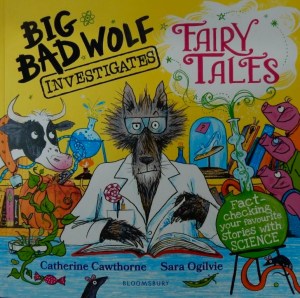
Big Bad Wolf Investigates Fairy Tales

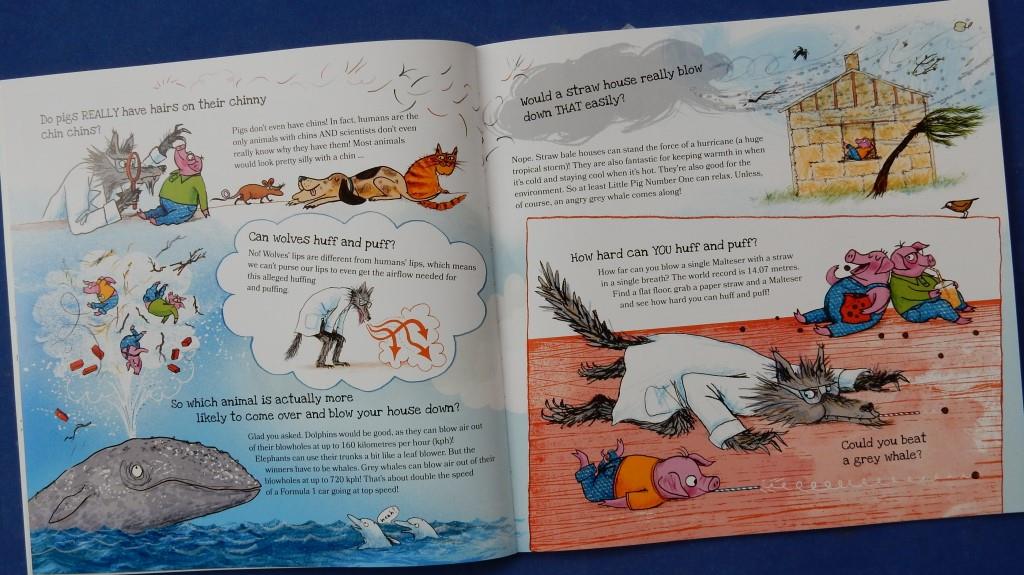
Behind every fairy tale is a ‘what if ?‘. Behind all scientific discoveries also lies a ‘what if ?’. Bring the two together as author Catherine Cawthorne does here and the result is a really fun debunking of six of the most popular fairy tales by none other that the lupine villain of several of them.

First to come under his scrutiny is The Three Little Pigs and here, as with the others, he presents the story first and then on the next spread, proceeds to ask some somewhat crazy science questions. All this is illustrated in hilarious cartoon strip style by Sara Ogilvie. Readers learn that in fact, let alone not having hair on their chin chin chins, pigs don’t even have chins; it’s only we humans that actually have chins. As for a wolf huffing and puffing to blow down a house, even one made of straw: no chance there on account of having the wrong kind of lips. A whale would certainly do way better but then what would one of those be doing on land in the first place? Should little humans wish to test their own huffing and puffing, there’s a suggestion using a paper straw and a Malteser.

What about a gingerbread house: have you ever pondered upon what would happen to a gingerbread house in the rain? Probably not but courtesy of our scientifically minded wolf, you can try the gingerbread collapsibility test and find out.

As for that cunning pea test in The Princess and the Pea, the Queen devises to determine who is a real princess – it’s totally nonsensical: nobody could feel a single pea through all those mattresses. All you need to confirm this is a small Lego head (or a dried pea), all the pairs of pants you can find (don’t raid the dirty washing basket though) and a wooden chair. What fun – a Princess Bottom Pants Sensitivity Test.

Brilliantly quirky is the way Catherine and Sara have created this STEAM book that children will absolutely delight in. There are hours of investigative fun as well as hilarious retellings energetically illustrated by Sara.. Some of my family members tried out the huffing and puffing test and had great fun but came nowhere near the world record mentioned in the text.

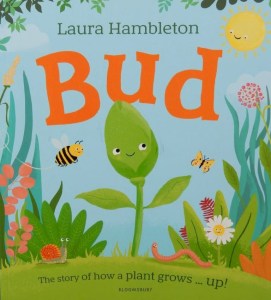
Bud

Tucked up tight in a snug red plant pot in a cosy greenhouse is Bud. Each morning Bud is warmed by the sun and come the evenings, the Moon arrives to tell fascinating tales of the Big Outside. Then one day it’s time for Bud to be replanted in the great wide world beyond the greenhouse. Placed between the nettles and tree roots, Bud’s roots reach down into the cold soil and the stem grows upwards. However, the Big Outside is not at all like Bud has imagined: it’s chillsome and scary and full of unfamiliar things, some of which make weird noises.

No matter where Bud looks there’s more danger – howling winds, flying footballs, pecking birds and nibbling insects. Missing the safety of the greenhouse, Bud cries out asking to go home but there’s no answer.

Then along flies Buzz: Buzz snuggles beneath Bud’s leaves, the two fall asleep and thus a friendship is forged. Henceforward, no matter the weather be it heavy rain, crashing storms, wild winds or freezing frost Bud continues to grow, the two have each other as comfort

and before long Bud makes other insect friends too. Perhaps life in the Big Outside isn’t really so bad after all, Bud decides.

One day Bud wakes to discover yet another new friend: now side by side stand two fully blooming roses – Bud and Rose.

Gently educational, this story of plant growth, illustrated with a gentle humour, is a charmer to share with young children especially prior to planting seeds. With themes of anxiety and fear of new situations, it’s also a reassuring book to discuss as children move from a nursery setting into a reception class, for instance.

The Girl and the Mermaid

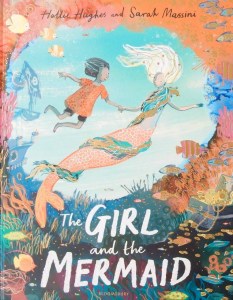
Readers follow the touching and uplifting story of Alina and her granny, residents of a lighthouse. Every evening the two share tales of mermaids woven by Granny as she sips her tea but now these wondrous stories have become faded and forgotten, gone from her memory. Broken hearted at the pain this causes her granny, Alina’s greatest desire is to bring back those stories.

Then one day as she gazes out to sea, she’s surprised to see a mermaid dive from the nearby rocks. The mermaid calls to her urging, “Swim with me … through swirling, whirling ideas to where your granny’s stories are, and many more besides.” Knowing for certain now that Granny’s tales were true, the girl plunges into the waves and follows the mermaid. She discovers wondrous sights such as coral reefs, sunken treasure, shoals of shining fish and other wonders of the deep.

She also encounters other merfolk and receives something special to take back home.

Back at the lighthouse once again, Alina knows it’s now her task to ensure that the tales are kept alive and help them fly far and wide. She’s now Alina the Lightkeeper who will keep Granny’s stories brightly burning.

What a wondrous book to share with children at home or school. The portrayal of the relationship between the two generations is superbly portrayed in both Hollie’s lyrical rhyming text and Sarah’s watercolour scenes that will surely tug gently at the heartstrings of adult readers aloud.

We Are The Wibbly!

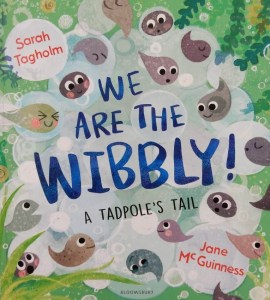
I found myself smiling all the way through this. It’s narrated by a member of the Wibbly community and as the book begins they’re all floating gently along in a relaxed manner encased in their protective jelly coating. But then, ‘OH MY CRIKEYS!’ the narrator’s eggy pals start breaking out of the wibbly and undergoing rapid changes, something our storyteller isn’t keen on doing but feels obliged so to do in order to keep up with the others.

Before long, they’ve all grown tails and become tadpoles, water-flying everywhere. No more relaxing henceforward. Instead there’s this water-flying to become skilled at

and a sudden sprouting forth of new limbs, first back ones and then front ones with which to grab tasty tidbits, after which comes tail shrinkage. Yikes! There are some dangerous furry hungry monsters lurking at the ready on land; this requires some swift water-flying to safety.

Finally – whoopee! Every wibbly is now a frog.
Such a hilarious, heartfelt tale of the narrator’s epic journey from frogspawn to frog, at the heart of which is being ready for change and a fear of feeling left behind

With a bubblesome underwater setting Jane McGuinness’s humorous illustrations are just right: a perfect complement for Sarah Tagholm’s wacky words. Together they offer a wonderfully engaging and memorable rendition of an aspect of springtime zoological ontogeny for the very young.

Pirates of Darksea / Interdimensional Explorers: Alien Apocalypse

One night Christopher writes a letter to Captain O’Malley, legendary pirate and ruler of Darksea, a secret kingdom deep in the Atlantic Ocean, begging for adventure for himself and his younger brother Max, but he receives no response. Two years later a parrot appears at Max’s bedroom window with a letter for Christopher – a letter from Captain O’Malley who is to embark on a perilous quest. But Christopher is now ill in hospital fighting for his life. What would you do if there was a possibility of a job with a reward that could help cure your brother? Max joins the parrot in a rowing boat heading for a rendezvous on the Stolen Sunrise.

Imagine the boy’s surprise when he discovers that the captain is a Pirate Queen. She offers him a deal if he’s willing to take the risk and join the crew right away, destination Darksea before the ‘Rogue Wave’ a powerful enemy comes. Of course, Max agrees. However it turns out that the Captain hasn’t told him the whole truth: the magic has dwindled drastically, this monstrous enemy is gobbling up the Darksea island of Maremaris, and the Captain needs a particular sword – the Curse Cutter. A bargain is struck: if Max helps the Captain acquire the sword, he can take some magic for his brother. A perilous task awaits.

What follows is a gripping adventure with mutiny, wraiths, fleeing mermaids and a monstrous shark man. Max’s bravery and love for his brother is the fuel that keeps him going as he faces at times, seemingly impossible challenges. After all he puts himself through though, is it even possible to save his Christopher? I just couldn’t put this down until I found out and I suspect many child readers will do the same. I love how Catherine Doyle ( a new writer to me) weaves humour and the importance of camaraderie into this thoughtful tale; the characters she’s created – human and otherwise – are truly memorable.

At the start of this second adventure Danny’s Grandad does two things: he announces that he’s going on a cruise with Maureen, his ‘fancy woman’ as Danny’s Mum calls her. He also hands Danny a small package containing a key that means he’s now an official Apprentice Caretaker of the secret Interdimensional Lost Property Office.

Off goes Grandad leaving Danny, his best friend Modge and cousin Inaaya to cope with Returns Day in his absence. Very soon they discover that a very special star has been stolen from the vaults, it’s up to Danny and his team to expose a conspiracy and hopefully, save the whole universe. To do so they have to contend with Goregotha hordes and weird cult members: are they up to it? And who can be trusted? As this quirky intergalactic adventure twists and turns it will surely keep readers riveted as they are sucked into the fantastic world that Lorraine Gregory has created and Jo Lindley illustrated. What I enjoyed most though, was the strong bond between Danny, Inaaya and Modge who have each others’ backs no matter what.
Highly recommended.

Once Upon A Storytime / Grandmas are the Greatest

These are both Bloomsbury Children’s Books publications – thank you to the publisher for sending them for review.

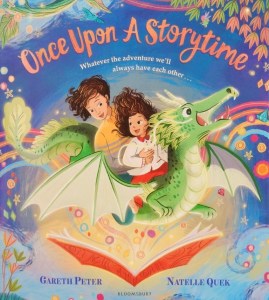
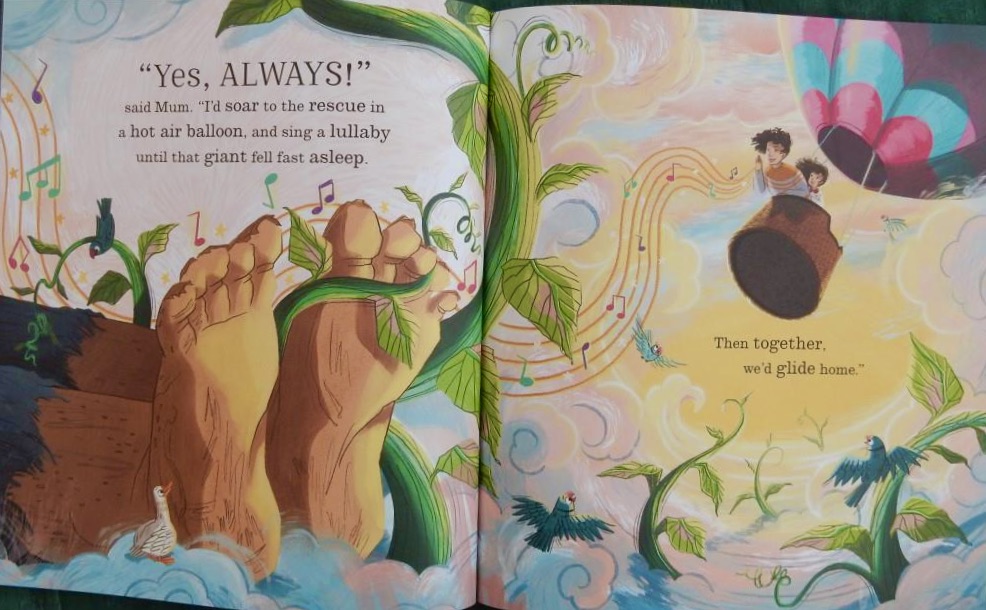
Every night Nia and her mum lose themselves in a bedtime story, usually featuring the story components Nia likes most. One night after the story ends, Nia asks, “What if I get lost, like the children in that book?” She describes a scary scenario from a fairy tale, going on to ask if her mum would rescue her and her mum explains just how she’d rescue her. Nia continues conjuring up scary scenes and for each one her mum describes a rescue operation prefacing her plan with a reassuring “Yes, always!”

Nia comments on how brave her Mum is.

Mum then turns things around asking Nia, “But what if I was lost?” Her daughter responds positively and having established that they are both brave and always there for one another, it’s time to switch off the light, Mia safe in the knowledge that their adventures will always have a happy ever after ending.

With dragons, unicorns, wicked witches,

brave princesses, treasure and faraway lands, this is an enchanting bedtime book and one that shows young children stories can empower them. Natelle Quek’s scenes call forth wondrous images and with her clever use of dark and light hues, truly bring the nicely flowing story to life. Young listeners will love identifying the classic fairy tales from which Nia gets her storylines.

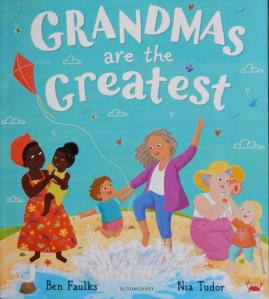
Taking little ones through every type of brilliant grandma, author Ben Faulks and illustrator Mia Tudor’s elevating book is a heartfelt celebration of intergenerational love. Prompted by a question from one small child to her Grandma, readers are introduced to all kinds of grans, each one special in her own way. Among others we meet an actor, a gardener, an ambulance driver, an acrobat and a mountaineer, there’s even a secret spy grandma. The important thing though, is that every one of them shares a relationship with her grandchild that is as precious and dependable as the Grandma who responds to the opening query.

Joyfully written and illustrated, this is a delight for any Grandma to share with her own grandchild or grandchildren.

Please!

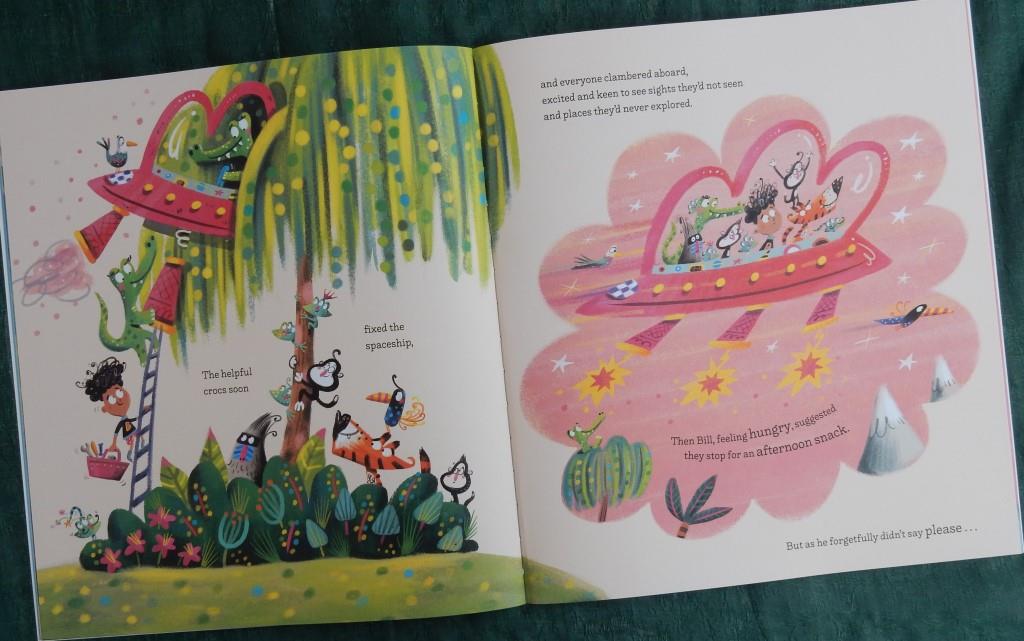
Deliciously anarchic and utterly bonkers, this is the story of what happens to young Bill who stops at an ice-cream van, forgets to be polite and say please. He’s kidnapped by alien toads and taken into their spaceship, which crashes in the middle of a jungle. Surprisingly the crocs that lurk therein fix the spaceship, climb aboard too and off they go again.

Soon Bill feels hunger pangs and wants to stop for a snack but guess what: he forgets to say the vital words and oops! they all tumble on top of a yak. Will he ever learn to be polite? Not before the yak charges into a fairy-tale land with witches, knights, wizards and others, some decidedly bellicose …

Further chaos follows of a very wet kind, which seems to jump start the politeness cells in Bill’s brain: “Just stop this now, PLEASE!” he yells. Lo and behold, almost before you can say farewell, the lad finds himself back where he started, beside Mr Simon’s ice-cream van where again he now knows to say please. However, there’s another very important little word that he forgets to use. Uh-oh! …

Simon Philip’s hilarious text and Nathan Reid’s equally hilarious scenes of Bill’s lesson-learning journey will certainly have children and adult readers aloud, laughing at every turn of the page and the former one hopes, will not be forgetful when they request lots of re-readings of the book.

One Goose Two Moose / Ten Little Ducklings

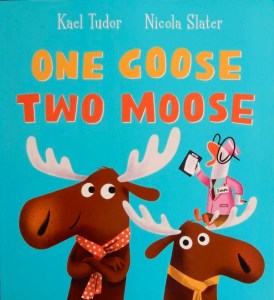
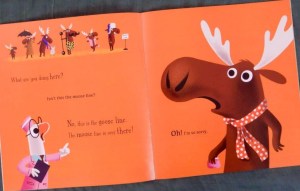
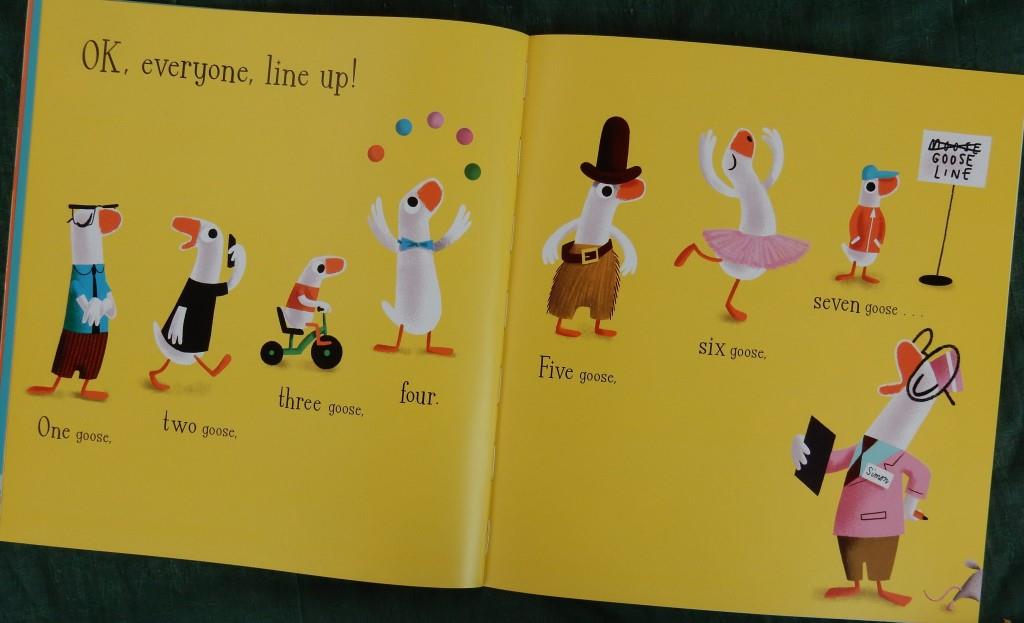
Under the direction of a rather bossy goose named Simon, a queue, no make that two queues, are forming outside an ice cream shop. There’s a goose line and a moose line. The trouble is the customers are having trouble getting in the assigned lines. Should I say it’s mainly the Moose that keep getting it wrong to the considerable annoyance of Simon Goose.

Whether it’s intentional or down to the fact that none of the queuers can read the signs, it’s somewhat chaotic. Eventually though after a lot of angst on Simon’s part, there is a line with seven geese, one behind the other. Are those in said line now about to take turns to make a purchase of some delicious frozen confection of their choice?

Look carefully in the bottom right corner of Nicola’s spread showing the seven; there’s something lurking that might just sabotage the entire system. I wonder who gets the last laugh …

Debut author Kael Tudor’s text is huge fun with some cheeky counting opportunities included, and illustrator Nicola has clearly enjoyed herself creating snazzy attire for the moose and geese. Young listeners will delight in the daftness of the whole thing and demand “Read it again” each time you share the story.

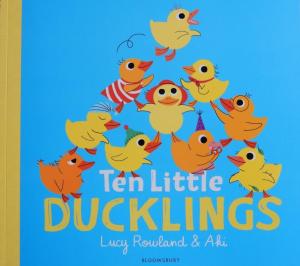
‘The sun is up, / it’s a brand new day. Ten little ducklings / want to play.’ And play they surely do in this delightful, interactive, rhyming game of hide-and-seek. First they splash around in the pool, swimming, diving, floating and fishing. Thereafter they zoom around on their scooters, take to the sky in hot air balloons, frolic in the farmyard, explore the jungle, have a snowball fight, attend a chaotic birthday tea, spend time on the beach and eventually tire themselves out ready for bed.

Before Lucy Rowland’s rhyming text begins, is a spread whereon each duckling is named and there’s a never mentioned eleventh character, a little mouse that triumphantly calls, ‘I see you, duckling!’ on every spread bar the final one whereon we assume, he reads the weary ducklings a bedtime story. Aki’s bright scenes have just the right amount of detail for little children who will have great fun finding whichever duckling is hiding in plain sight in every playful situation. I wonder if they might, on a second reading, go back and try naming the one they need to find each time.

Meet the Dinosaurs

Countless young dinosaur devotees will doubtless be eager to clamber into the jeep along with the child driver and her canine friend, belt themselves in securely and set off on a dinosaur safari that, after a visit to a modern day museum, zooms back in time to when the dinosaurs roamed the Earth many millennia ago.
On arrival, the visitors park the jeep, climb out and onto the back of a massive Brontosaurus that is ready and waiting to take them off to meet lots of other dinos. Some, such as the chatty Stegosaurus Diplodocus and Triceratops with its eight hundred teeth, are hospitable, giving the visitors information about themselves and their lifestyle. Others including Allosaurus,

Spinosaurus, the Velociraptors and Tyrannosaurus are ready to talk about themselves but far from friendly, indeed they’re fearsome carnivorous beasties. Not so however, those Pterodactyls that swoop above the jeep as the visitors realise it’s time to head home once more.

Caryl Hart has included a wealth of fascinating facts in her ebullient rhyming narrative that reads aloud really well and in combination with Bethan Woollvin’s instantly recognisable, bold, bright scenes, equally alive with detail, make this action packed adventure one that listeners will want to embark on more than just once or twice.

Pablo and Splash

Pablo and Splash are penguin pals living in Antarctica. Pablo, a home-loving creature, is perfectly satisfied with life; he loves the cold climate, the ice and consuming krill at every meal. Splash is more adventurous and yearns for a holiday in a warm sunny destination. After puzzling about how to get to a new exciting place, the two cascade into a scientist’s laboratory. The owner clearly has designs on them but they make a getaway thanks to her TimeBender machine,

next stop not sunny Fiji, the Bahamas or the Costa del Sol and fortunately not the sun (though that destination is a narrow miss); rather they find themselves in the Cretaceous Period. There aren’t any mocktails or water slides as Splash was hoping; instead the sandy terrain is full of very hungry dinosaurs and other prehistoric creatures. Fortunately the friends succeed in evading the beasties. Not so the TimeBender however; this is badly damaged by the dinos.

Can the penguins manage to fix the ailing machine or are they doomed to be forever stuck far far from their lovely icy home? As always it looks as though it will be down to Pablo to come up with a solution.

This crazy comedy is Sheena Dempsey’s first graphic novel creation and what fun it is. The penguins’ facial expressions are a hoot and their bubble speak full of giggle-inducing ‘krilly’ word play. I suspect you’ll find it hard to resist this one. Let’s hope we see more of this delectable duo.

Kites and Lemonade

This image has an empty alt attribute; its file name is dscn9874-1.jpg


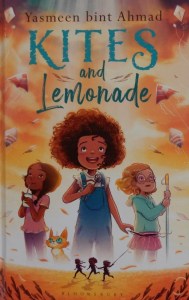
Leena has recently moved into a new apartment in Riyadh with her mum and dad who has a new job on a construction site in the city. On account of her selective mutism (a complex childhood anxiety condition that makes her unable to speak in new social situations) she knows that meeting new people will be an enormous challenge. However, lying in bed on her first night she focuses on what her grandmother said just before the move: “Don’t be afraid of change, Leena. Embrace it. Make new friends and, you’ll see, exciting things will happen.” Suddenly she hears soft meowing outside and there in the courtyard looking up at her is a gorgeous honey-coloured cat.

The following morning Leena is starting her new school but things begin badly for she’s unable to return the greeting from JoJo, when the two encounter one another.. However she soon meets Rima who is blind and before long she feels sufficiently relaxed to talk to her. Rima tells her that she sees with her imagination and does her best to make Leena feel welcome and thus a new friendship begins.
In the classroom their teacher informs the children of a kite festival being held in two weeks; then Rima continues, talking of a kite-making workshop when her mum’s special lemonade will be on sale to raise money for the charity both her mother and Leena’s work for. But on the Saturday of the workshop somebody sabotages some of the lemonade by adding salt. Who would do such a thing?


During the next few days, Leena and Rima decide to make a kite for the festival together, the cat makes several more appearances, Leena wakes one morning to find an old rusty key on her pillow, the two girls decide to ask JoJo to join them in making the kite, a confession is made and JoJo shares her second secret. This results in the discovery of an old underground workshop beneath their building containing inventions, books and even a robot.


When the girls’ kite is ready for testing they go to the park and there encounter a boy who is very disparaging about their effort and continues to be antagonistic when they’ve made adjustments to the kite. With very little time before the big day, it begins to look as though the girls will not be able to participate after all. But then they make another visit to the underground workshop: what will be the outcome?


Understanding, forgiveness and resilience are key in this story of friendship that will keep readers rooting for the girls as they learn more about themselves and each other throughout the book.

What You Need To Be Warm

In 2019 Neil Gaiman author and UNHCR Goodwill Ambassador, asked his Twitter followers, ‘What reminds you of warmth?’ He received thousands of replies and from these he composed a freeform poem in aid of UNHCR’s 2019 winter appeal.

The images Gaiman gathered signifying warmth range from clutching a baked potato

to ‘The tink tink tink of / iron radiators /waking in an old house. / To surface from dreams in a bed , / burrowed beneath blankets / and comforters,’ …to ‘the wood burning / in the stove’ .
There is hope though for the poem concludes thus, ‘You have the right / to be here.’
Thirteen artists: Yuliya Gwilym, Nadine Kaadan, Pam Smy, Daniel Egnéus, Beth Suzanna, Marie-Alice Harel, Petr Horáček, Chris Riddell, Bagram Ibatoulline, Benji Davies, Majid Adin,

and Richard Jones each provided an original illustration. Twelve illustrators offered comments printed at the back of the book. Oliver Jeffers created the stirring cover art and this important, compelling book is the result.

A wonderfully warm glow emanates from his cover images: would that such warmth be offered to all refugees and other people displaced of necessity around the world. With both the on-going conflict in Ukraine and now that in Israel and Gaza, its humanitarian message is even more urgent today than it was four years back when the tweet went out.

A donation of £1.55 from each sale of the book in the UK and at least 40p from sales in other territories will be donated to the UN Refugee Agency.

The Big Dreaming

This image has an empty alt attribute; its file name is dscn0026-1.jpg


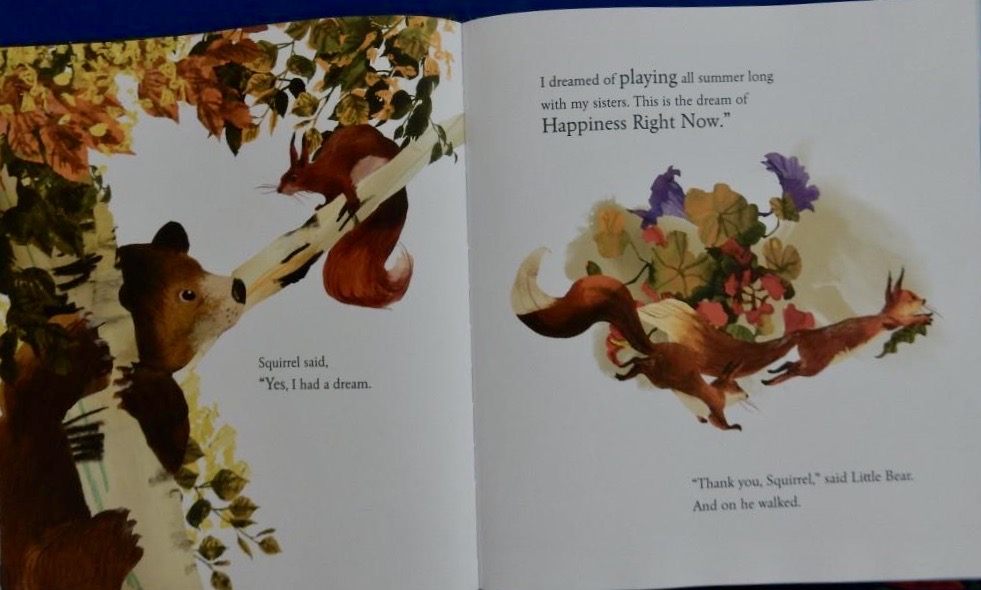
Little Bear has never experienced the long winter hibernation before so when he’s told of the Sleep he’s nervous about this unknown event. Together Little Bear and Big Bear decide that what’s coming is a Big Dreaming. But then Little Bear worries that he’ll run out of dreams and end up with a ‘Big Nothing’.
He decides to go in search of some dreams and off he goes through the forest till he meets a squirrel. “Squirrel, Squirrel, Squirrel,” he says. “We’re getting ready for the Big Dreaming, / we’re getting ready for the Sleep. / Do you have any spare dreams, / for when we sleep, deep, deep?” Squirrel offers his dream of ‘Happiness Right Now’


This image has an empty alt attribute; its file name is dscn0027-1.jpg

Little Bear’s next encounter is with a rabbit. He repeats his question (children will already be joining in) and Rabbit tells of the ‘Dream of Coming Home Safe’, and Wolf, the next creature Little Bear meets, talks of the ‘Always Having Hope’ dream.

As Little Bear heads for home, down comes the snow: the Cold has come. Now the ursine cub worries about getting back home in time for the Big Dreaming. But then he remembers dreams that he’s gathered from the other creatures and with the help of those, he finds his way back home to Big Bear.

This image has an empty alt attribute; its file name is dscn0028-1.jpg

Finally the two curl up together and dream and dream …


Poignant and lyrical, Michael’s telling will especially resonate with adult readers aloud who know of his covid journey and children will request frequent re-readings of the book which will give them the opportunity to savour such lines as ‘the light in the moon went out. / Like a candle blows out in the wind.’ They’ll savour too, Daniel Egnéus’s beautiful illustrations with their different perspectives and gorgeous autumnal colour palette, which then changes with the seasons. I hope that they will absorb the life lessons the story gently imparts.


I wonder what your answer might be should you be asked by a little human to offer your special dream.


You Can’t Let an Elephant Pull Santa’s Sleigh

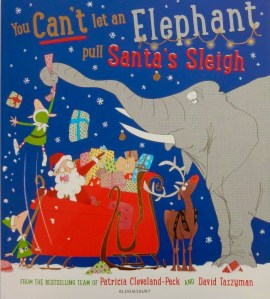
This is the sixth in the splendidly silly ‘You Can’t Let an Elephant’ series by team Cleveland-Peck and Tazzyman and it’s full of the Christmas spirit – sort of!

Not only does Patricia consider the elephant as a no go creature for the titular task but she also proffers reasons for not allowing racoons to decorate your tree,

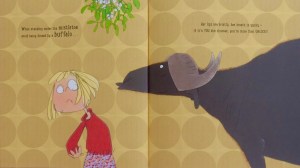
keeping nanny goats away when you open our presents, preventing elephant seals from attempting to illuminate the outside of your home. Moreover you should not try pulling a cracker with an alpaca and when it comes to a giraffe, filling his stocking would seriously deplete Santa’s present store. Unless you want Christmas chaos rather than a seasonal feast, then never ever appoint a wildebeest as head chef; steer clear of a buffalo when you’re close to the mistletoe

and penguins as carol singers are, let’s say, anything but tuneful. And so it continues, much to the distress of the named creatures. Surely there is something the only too willing workers might be able to do to bring Christmas cheer?

Hilarious illustrations in combination with a terrific read aloud text will assuredly bring young listeners plenty of Christmas cheer when you share this.

Here are few ideas as to why an elephant is unsuitable for the role of Santa’s sleigh puller:
Faith (4) The sleigh would just keep spinning around.
Sam (8) An elephant would be FAR too clumsy. Plus it would fall asleep on the job and third it would be impossible unless you had one hundred bottles of magic powder.
Emmanuelle (11): It’s far far too heavy and would never get airborne. Also it would be much too difficult to put a harness around it. Also no elephant in the whole world has a red nose and you need at least one of that kind to pull Santa’s sleigh or you can forget the whole thing.

Brilliant Black British History

I wonder how many people know that the first humans in Britain were Black. Migrating from other parts of the world, around 12,000 years ago, they had dark skin, lived in Britain for 7,500 years before the first white Britons came and built Stonehenge and brought farming.

After introducing these first migrants, readers are taken through the Romans, Tudors, Georgians, Victorians, the World Wars, all the way up to the Windrush generation, the colour bar, colonial independence and current Black British culture. Something I discovered was that Dr Charles Drew, a Black American who came to help Britain in World War 2, invented a way to store and ship blood. This saved the lives a thousands of sick and injured Britons, and still does today.

Skilfully interweaving British and world history, the author doesn’t shy away from difficult topics such as slavery

and colonialism, dealing with them frankly.

There’s a spread highlighting Black heroes from World War One, another presenting Black people who make Britain Great, a look at contemporary Black British culture

and there’s a final page on Black Lives Matter, reminding us that there is still work to do to fight racism.

WIth effective use of a variety of layouts, this excellent book is beautifully illustrated by Kingsley Nebechi; it’s informative, eye-opening and a must for every school library.

Finn’s Little Fibs

Finn’s Little Fibs
Tom Percival
Bloomsbury Children’s Books

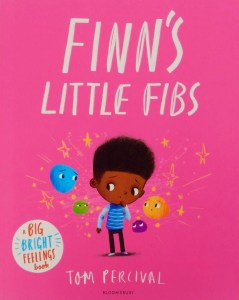
Finn is super-excited; he and his little sister, Simone, are spending a few days staying at Grandma’s house: It’s a place full of beautiful but fragile things but his over excitement while playing with his ball indoors results in the accidental breakage of her clock. His efforts at mending it don’t work so, a worried Finn tells a lie, blaming the breakage on his sister.

No sooner is the lie out of his mouth than POP! a little blob appears, noticed only by Finn, although Grandma clearly has doubts about the plausibility of what he’s said.

This makes the boy panic: out comes another lie, followed immediately by another blob. The lying escalates and by the end of the weekend Finn is besieged by blobs and he’s feeling so upset with what he’s done that he can’t enjoy himself. It’s time for big brother to admit the truth but has he got the courage?

Happily yes, the blobs disappear and his understanding Grandma accepts his apology.
With everything back as it should be, the rest of the holiday is great and Finn resolves to always try and tell the truth.

As always, in his latest story in the Big Bright Feelings series, Tom describes the physical sensations and feelings that beset the guilty Finn in a way young children can relate to, and his illustrations with the waxing and waning of the blobs do a wonderful job in showing his changing emotions. A great starting point for discussions on the importance of being honest, taking responsibility for your wrong doing and forgiveness.
A must to add to foundation stage class collections and family bookshelves if you have a young child.

The Thunk

The Thunk
Michelle Robinson and Deborah Allwright
Bloomsbury Children’s Books

Unlike everyone else, Hector Voltaire is convinced that one day he will find the legendary, supposedly extinct, Thunk. Such is his enthusiasm that his schoolmates tease him for believing in the wondrous being, but does this deter Hector? Certainly not, he’s all the more determined, though he knows his mission will require skill, patience and a fair bit of equipment; the last he crams into his backpack.

Off he goes and whereas his map reading skills let him down, his powers of observation definitely don’t. Eventually his reward comes in the form of the somewhat malodorous creature he seeks, out for an afternoon stroll.

Pretty soon though, it becomes evident that Hector is going to have to make use of his counting skills, for he’s in for a very large surprise. Hurrah! Now everybody must surely believe the lad about the creature’s existence; but will he go back and divulge what he now knows, or draw up another plan?

What a great read aloud. Young listeners, be they at home or in the classroom, will take great delight in accompanying Hector on his expedition of discovery presented through Michelle’s rhyming narrative and Deborah’s dramatic scenes of the Thunk hunt.

More Peas Please!

More Peas Please!
Tom McLaughlin
Bloomsbury Children’s Books

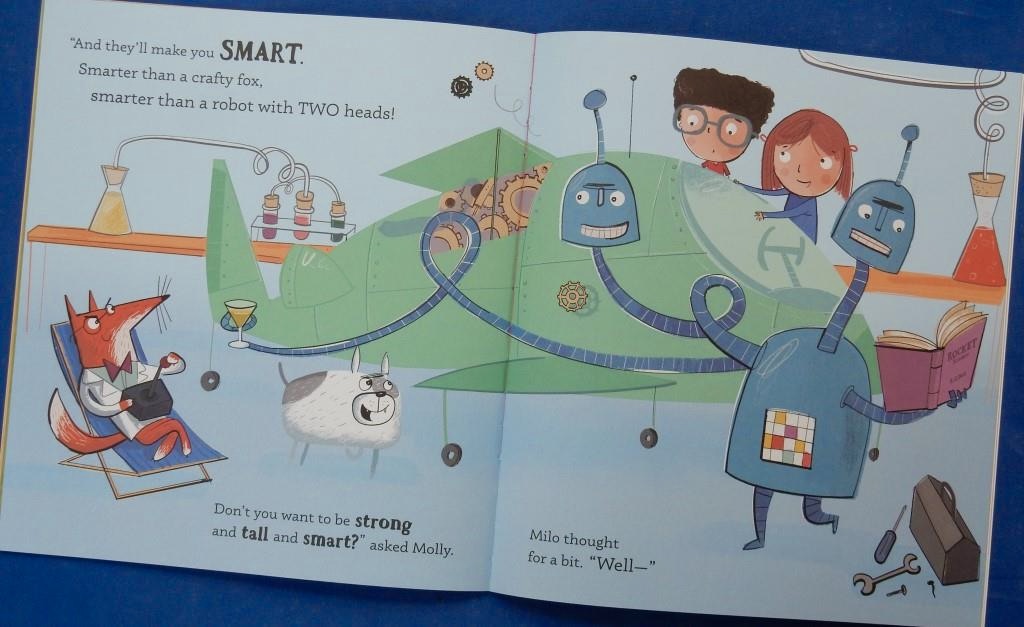
One supper time – on a Tuesday to be precise – Milo and Molly are sitting having their supper of lasagne and peas. Having wolfed down his lasagne Milo jumps up with a shout of “Finished!” His sister tells him otherwise and a conversation ensues, with Milo giving all manner of reasons why he can’t possibly eat the tiny roly objects, relating to their greenness, shininess and bounciness, as well as their sheer number.

Molly listens carefully and then gives her side, speaking of their strength-giving properties, as well as their ability to make Milo taller and super-smart. 

She then seizes her brother’s plate but can she manage to persuade him to return to the table and polish off those peas? He certainly appears to be having a change of heart about them …

With Milo’s fanciful food notions about harmless little spherical seeds and a surprise twist, this amusing story, hilariously illustrated by the author, is one to share with young picky eaters especially, though it will more than likely please the palates of other young children too. I especially love the way Tom McLaughlin brings Milo’s imaginings to the page. 

Broccoli anyone?

Zeki Goes To The Park / Grandads Are the Greatest

Zeki Goes To The Park
Anna McQuinn and Ruth Hearson
Alanna Max

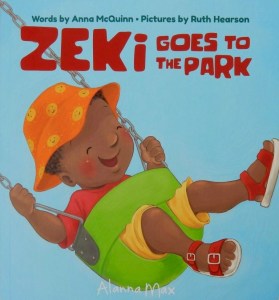
Another wonderfully loving little book starring the adorable Zeki. It’s a hot, sunny day and we join him and his Mummy as they set off for the park. There they meet up with some friends, Yu, her mummy and little baby sibling.

Zeki and Yu do the usual things that toddlers do in such situations such as use the swings (with parental help of course), build sandcastles

and bury themselves in the sand before sitting down with the others for a yummy picnic under the trees. Come sundown, they bid farewell to one another and set off home with their respective parents.

Anna McQuinn’s use of joyful, sometimes exuberant language as befits Zeki and Yu’s rides on the springy horses and their splashing in the cool water is a delight to read aloud and every one of Ruth Hearson’s illustrations radiates the wholehearted playfulness and focussed concentration of small children when engaged in activities they enjoy.

Perfect for sharing with toddlers around the age of Zeki and sufficiently robustly constructed to stand up to all the re-readings the book will surely have.

Grandads Are the Greatest
Ben Faulks and Nia Tudor
Bloomsbury Children’s Books

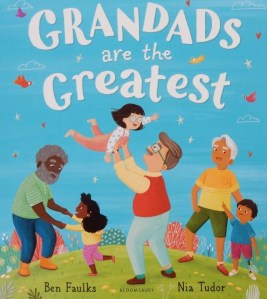
It’s the day of a special picnic – Grandads’ Summer Picnic – and it’s being held in a large field full of wild flowers and trees; an idyllic spot for each child to introduce his or her own very special grandad. This they do through Ben Faulks’ jaunty rhyming text and Nia Tudor’s wonderfully warm, inclusive illustrations, each with a wealth of details and an evident abundance of joy being able to share that special intergenerational love.

One grandad is a baker, famed for his yummy cakes, another is a retired builder; there’s an explorer,

an inventor, a barber, a fisherman who likes to tell salty tales, a magician who appreciates help from his young apprentice, a hang-gliding enthusiast, and a grandad who spends lots of time sharing books and singing songs with his young grand-daughter, someone who’s always there when a bit of extra comfort is required. Every one of them is different but all show an abundance of love to his grandchild.

Ideal for sharing with a grandparent on their special day in early October, but equally one to read with young children on Father’s Day coming up in June. (in the UK)

Meet The Weather

Meet the Weather
Caryl Hart and Bethan Woollvin
Bloomsbury Children’s Books

Team Hart and Woollvin follow their introductions to the planets and the oceans with an opportunity for young children to go adventuring a third time and find out about different kinds of weather. Meet the Weather sees a little girl and her canine companion soaring through the sky in a magical hot air balloon. On their journey they’ll meet shape-shifting clouds, wild whooping whooshing winds, lightning along with booming thunder, a destructive tornado that twirls and whirls sending everything in its path skywards. 

Then there’s the cold murky fog with its damp greyness; 

the snow that can transform the land into a carpet of white, the radiant sunshine that makes the world joyful; the vital rain to refresh the natural world and help it grow, and finally perhaps most beautiful of all, a glorious rainbow where the sun meets the raindrops.

Young children will love copying the various onomatopoeic sounds Caryl includes in her rhyming text and enjoy exploring the land- and sky-scapes presented in Bethan’s dramatic, vividly coloured illustrations in this book which provides a subtle STEM lesson woven into a fun story.