The Girl Who Planted Trees

The Girl Who Planted Trees
Caryl Hart and Anastasia Suvorova
Nosy Crow

On learning from her grandpa that the mountain at the foot of which their village home is situated was once covered in a green forest a little girl becomes distraught.

The following morning she sets out up the mountain and at the top begins to dig. Then she plants a single pip and returns home forgetting to water it. When she returns there’s no sign of a shoot and back home Grandpa explains that without water a seed will never grow. Later on she enlists the help of other villagers and after a week she’s ready to return up to the mountain top with a large number of seeds all shapes and sizes. She does this day after day always remembering to water the seeds and it’s not too long before seeds are sprouting up.

Eventually she’s able to show her grandpa the results of her endeavours – a patch of green atop the great grey mountain. But then a fierce storm destroys all the trees.

Refusing to give up, the girl suggests planting more seeds and keeping them close to their home until they’re strong. She and her grandpa do just that and over the weeks their yard becomes filled with pots of thriving seedlings. Then comes the time to transplant them, but the little girl is despondent as she sees that even after all their hard work, it will take ‘a thousand years to cover the whole mountain by ourselves.”
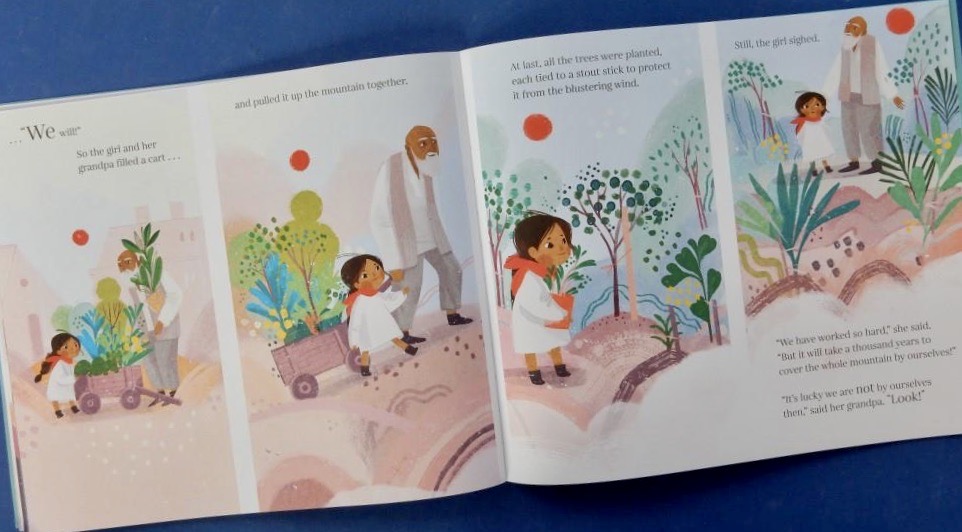
Happily they don’t have to for the little girl has inspired the entire village to help restore the forest to its former greenness – a place where future generations too will appreciate the beauty and richness of nature.

Caryl Hart’s powerful story with its ecological theme shows the importance of conserving our precious trees and is superbly complemented by Anastasia Suvorova’s illustrations showing the changes brought about over the months and years, and all thanks to the determination and resilience of one little girl and a whole lot of pips. A terrific book to share, and bursting with potential for KS1 teachers.
Somewhere

Somewhere
Jeanne Willis and Anastasia Suvorova
Nosy Crow

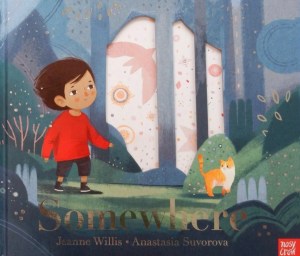
An enchanting story about a little boy and those endless annoying questions that adults ask seemingly ALL THE TIME.

Oscar feels besieged by such irritating interrogations and decides that the best way to avoid them is to take action. Off he goes out of the house, down the garden – just to the bottom – but then suddenly he’s in the middle of …

With not a soul in sight, he can wander where he pleases without such intrusions as “Do you need a wee, Oscar”; play whatever he feels like without any “What are you doing up there, Oscar?” and so he builds himself a camp.


But then as dusk falls, the boy starts missing that familiar “What about a story, Oscar?” and other such words of familiar comfort.

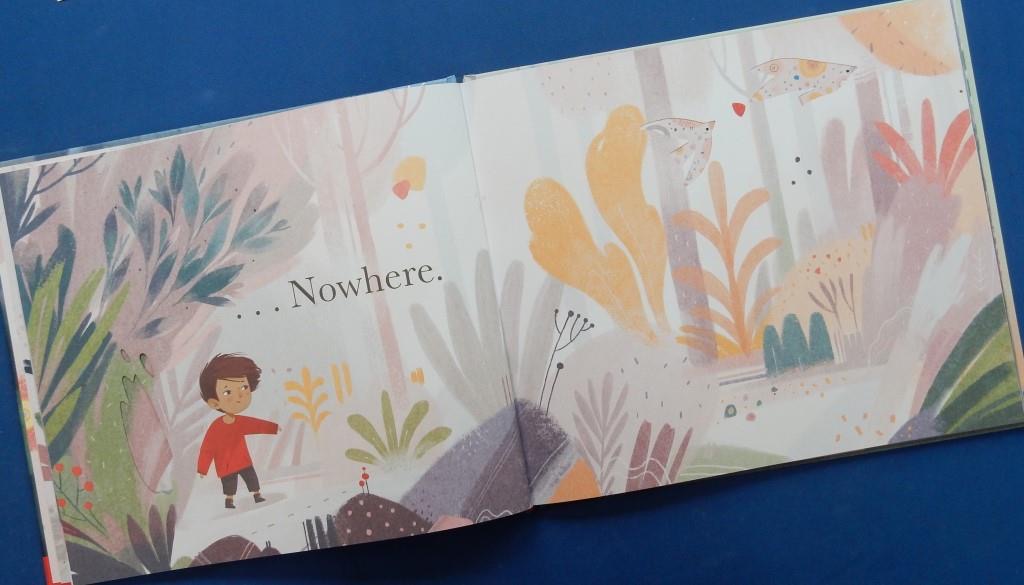
After some self questioning, he decides to head for home but each path he tries ends … Nowhere. And nobody answers his calls until out of the black there emerges a …

Seemingly this little moggy isn’t fond of questions either, so they sit in a companionable silence for a while before Oscar makes a request and the cat responds by leading him … somewhere. In fact a very special place where his homecoming is greeted by, yes more questions, and youngsters will likely guess how Oscar will respond …

The power of the imagination, finding magic in the everyday ordinary and the importance of home are at the heart of this book. Anastasia Suvorova’s chosen colour palette for her scenes of Nowhere and Somewhere are perfect for lending an otherworldly atmosphere to the former as well as creating a seamless continuity between fantasy and reality. Die-cuts on every spread serve to highlight the beautiful texturing of the scenes.
Ideal for family sharing, bedtimes and together times in foundation stage settings.

Shadow

Shadow
Lucy Christopher and Anastasia Suvorova
Lantana Publishing

A little girl and her mother move into a new house. The girl narrator discovers a shadowy boy under her bed whom she names Shadow. They spend time together while the mother who seems completely distracted fails, despite his shape shifting, to see the boy, allowing the two freedom to wander together all through the almost dark house.

One day they go outside and into the woods where the girl is left alone.

After a very long time the girl’s mother finally leaves the house, comes searching for her daughter and the two are reunited.

They return home and then it’s time for mother and daughter to get to know one another again, and for the mother to start letting other people, and the light, back into her world.

There’s a distinct eeriness to Lucy Christopher’s enigmatic story; is it a metaphor for grief, depression or fear perhaps? No matter what, it ends happily as the facial expressions of mother and child on the final page show.

Anastasia Suvorova’s textured digital illustrations are a perfect complement for this rather dark tale for adults and children to share and discuss together.