Avoiding Anxiety in Autistic Children

Avoiding Anxiety in Autistic Children
Dr Luke Beardon
Sheldon Press

Dr Luke Beardon is a passionate autism advocate, particularly, as is evident in this book, the well-being of autistic children. To that end he writes through the autism lens, something that is rarely done, so that readers feel as though they’re wearing the shoes of a child with autism, while directing his wise words to each and every one of us PNTs (Predominant neurotypes) – his term for what other writers might refer to as neurotypicals. I say this for although the book is aimed primarily at parents who have an autistic child, we all, especially those of us in education, need the best possible understanding of autism we can develop, if we aren’t unwittingly to contribute to a child’s distress. Teachers in particular, one hopes, understand that unless a child’s mental well-being is central to their educational experience, no learner, let alone an autistic child will thrive: all else depends upon it.

Who better to put the case for anxiety avoidance that the author, who has a deep and acute sense of understanding of autism acquired through many years of observation, and research (qualitative, I surmise) at Sheffield University’s Autism Centre. Using a ‘difference not deficit’ model, what Dr Luke has written is a distillation of that wisdom and those insights of his. For instance, he strongly makes the case that no two autistic children are exactly the same – why would one expect them so to be – consequently too much generalisation is to be avoided. To this end, he includes in his narrative, many first-person comments and excerpts from case studies.

Central to his approach is child empowerment – the better informed the child, the lower is the risk of anxiety- and he builds upon his foundational ‘autism + environment = outcome’ equation. I was particularly interested to see the comment in the ‘School’ chapter that ‘some children would actually be better suited to doctoral-style learning that secondary-age educational systems’ … ‘if a child is given access to uninterrupted learning … for extended periods of time – then he might be far more able to learn effectively.’ (As a teacher whose preferred age group is the foundation stage wherein even now for the most part, this is what happens, I’ve always wondered why as any child progresses through the education system s/he is subjected to an increasingly -often unnecessarily in my opinion – fragmented curriculum driven by testing and scores.)

Another issue explored is the child’s fear of getting it wrong and the way this can all too easily lead to the individual becoming so inhibited s/he won’t take those vital risks inherent in learning, or indeed try anything new.

Reading this highly accessible, optimistic book, not through the lens of a parent, but a teacher I have tended so far to focus on the school issues, however, every chapter is full of wise words be they related to behaviour, sensory issues (both hypo and hyper sensitivities are discussed), communication, social challenges and well-being, or meltdowns and shutdowns. In the latter chapter, it’s worth stressing these words from one individual relating to meltdowns, “I don’t know when it will happen. I don’t have any warning, and I can’t do anything about it. I live in constant fear because, despite not knowing when it might happen, I know all too well what happens when it does, and there’s nothing I can do about it.’ Just imagine being a child living in constant fear of such an event, which might happen if blame is the reaction of the adult parent/teacher or carer. Reassuringly though Dr Beardon states ‘Your child is not to be blamed for a meltdown: it cannot be helped.’

He also provides some personal stories about reducing anxiety in the same chapter wherein individuals mention meditation, deep breathing, a red card/green card system at school, certain physical activities including trampolining and strimming movements like flapping, rocking and twirling, and being out in nature as being personally helpful in avoidance of anxiety; but the importance of ‘being allowed to be me’ must never be overlooked for as one girl says, “it’s like I’m looked down on just for being myself … I don’t see what’s so bad about me. I like me, why can’t anyone else?” Heart breaking words indeed, but balanced by those of another boy, “Until you’ve been accepted for who you are, you won’t know what an absolute joy it can be!”

The author too ends on an upbeat note, ‘my perspective is that one can absolutely be autistic and in a state of genuine happiness.’ … ‘Never underestimate anxiety, Never underestimate the impact the pure joy of being able to live without it. Never underestimate the impact you can have on your child.’ Now if that doesn’t fly the flag for each and every one of us to increase our understanding of autism, then I don’t know what will.
So yes, this book’s for parents, but it’s also for every member of society, whoever, wherever they are.

The Ice-Cream Sundae Guide to Autism

The Ice-Cream Sundae Guide to Autism
Debby Elley & Tori Houghton, illustrated by J.C. Perry
Jessica Kingsley Publishers

Everyone is an individual be they neuro-typical or neuro-diverse, so there are as many ways of experiencing autism as there are people on the autism spectrum. However there are three things that all those with autism have in common, albeit in different degrees – difficulties with speech and language, difficulties with social skills and rigidity of thought.

Here’s a handy little book to help youngsters, understand the complexities of the condition.

Its authors (both with a wealth of experience relating to neurodiversity) use the ice-cream sundae simile and its ingredients to explain autism in a non-threatening, non-judgemental way to young people, both those with autism and neuro-typicals.

They first did so as editors of AuKids magazine when they published an article called The Autism Sundae Dessert with an aim to show autism, not as a disability but a difference – a dynamically evolving condition.

Such was the response that their article evolved into posters, demonstrations and now, this book, The Ice-Cream Sundae Guide to Autism with its three different flavoured scoops (chocolate ice-cream for speech and language, vanilla for social skills, and strawberry for rigidity of thought; plus extras – chocolate sauce (sensory processing disorder) and a wafer (self-regulation).

Parents, teachers, and others working with youngsters can use the book with its clear, unambiguous illustrations and puzzles

to solve, either with an individual, or a class or group, depending on their personal circumstances. It might act as a starting point for a practical ice-cream sundae making session, or as something to refer to over and over, to help build understanding of the advantages and challenges of autism.

The Spectrum Girl’s Survival Guide

The Spectrum Girl’s Survival Guide
Siena Castellon, illustrated by Rebecca Burgess
Jessica Kingsley Publishers

Sienna Castellon, the seventeen-year-old author is an award winning anti-bullying campaigner and autism advocate; she is on the autism spectrum, and is also dyspraxic and dyslexic, and has ADHD. She is also gifted in physics and maths.

As we learn, her journey thus far has been anything but easy, so who better to write this book subtitled ‘How to grow up Awesome and Autistic’ than she, especially, as she writes in the first chapter, ‘I view my autism as a strength and as an advantage, a modern day superpower.”

Essentially Siena has compiled a comprehensive and detailed manual for readers of twelve plus about living the best life a young female with autism possibly can in a predominantly neurotypical world.

She covers such diverse topics as embracing who you are then deciding with whom to share your autism and how, to clothes and fashion ,

dating, sex and sexuality.

Other sections focus on bullying: face to face

and cyberbullying are covered in separate chapters and strategies for coping with both are discussed.

Self-esteem is key throughout: people with autism do not need pitying, they need understanding is another key message. The neurotypical brain is wired to socialise; in contrast most autistic brains need a fair amount of time alone for the mind to settle and the senses to be soothed.

On the topic of senses, Siena devotes a whole chapter to ‘Managing your sensory sensitivities and sensory overload.’  Siena mentions the relatively simple steps that some supermarkets, cinemas, airports and the like have taken to create a more inclusive environment for people with autism.

Throughout the authorial voice remains both earnest and compassionate; and in between her narrative are some comic style pages drawn by Rebecca Burgess that encapsulate what has been said in a particular section.

Yes, this book has a specific target audience in mind; however the insights it offers need to be shared with everyone. I’m a primary/foundation stage teacher and over the years have taught dozens of children with autism (mainly boys) and have some degree of understanding of neurodiversity. Nonetheless I welcomed the insights I gained from this guide and thoroughly recommend that all educators, parents, indeed anyone who hopes to ensure that all females on the autism spectrum have the very best possible chance to flourish, should read it and carefully consider this enormously wise young woman’s words. Surely that is every one of us, isn’t it?

Can I Tell You … ?

A pair of insightful new additions to the Can I Tell You About series are:

Can I Tell You About Diabetes (Type 1)?
Julie Edge
Jessica Kingsley Publishers
Debbie has had type 1 diabetes since she was six years old and is the only member of her family with the condition. She is able to do everything others can including sports but in addition has to devote time to extra things.
However, despite leading a pretty active life, Debbie’s diabetes is always with her; she cannot forget it – the testing, monitoring of blood sugar, injecting,

DSCN2170

Debbie uses an insulin ‘pen’ for injecting herself

eating, the results of changes such as a cold or dose of flu can bring to her body and what this means for her. Despite her general up-beat tone, Debbie can at times feel a bit fed up, she says. Occasionally this is because of lack of understanding on behalf of other people, sometimes, it is because of her general mood or because her blood sugar levels are too high or too low.
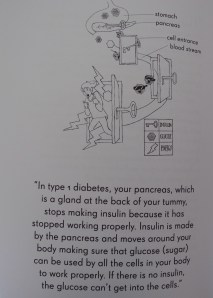
We are also told about the benefits of activity weekends when the young narrator meets up with other children with diabetes. In addition, there is biological information about the role of the pancreas and how its malfunctioning causes diabetes type 1.

DSCN2169

The final part contains information on how to help, aimed at friends, teachers, parents. There is also a list of recommended reading, websites and organisations.
The author, a doctor has been a consultant in Paediatric Diabetes for nearly twenty years and there are numerous drawings by Julia MacConville, further illuminating the written information.
This is an extremely informative, concise explanation and a testament to all those children who like Debbie, manage the complexities of life with type 1 diabetes each and every day of their lives.
I would want to see a copy in every primary school and, at least one copy in any classroom where there is a child with this form of diabetes.
Buy from Amazon

DSCN2173

Can I Tell You About Cerebral Palsy?
Marion Stanton
Jessica Kingsley Publishers
Herein we meet bright, thirteen year old Sophie, who uses a wheelchair, and a talking computer or VOCA for short that she operates with the aid of her personal assistant, to communicate with friends and teachers.
Sophie talks in a matter of fact voice about the reason for her own cerebral palsy and how this affects her; she stresses that her mind is not slow, rather it takes a longer time for her to say something that her friends can say in seconds.
We learn how different parts of the body can be affected by cerebral palsy

DSCN2172

and what this means for people differently affected, sometimes behaviourally or emotionally and sometimes there are hearing or visual challenges.
It’s good to be treated less ‘like a little girl’ by her PA who assists with choice of clothes on shopping expeditions and also to be taken to sporting events by her parents.
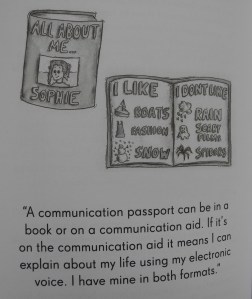
Sophie’s physio. is a great help to her as are the occupational therapist and her speech and language therapist; and she has her own communication passport, which acts as a quick, handy way for people to get to know basic things about her.

DSCN2171

At the end is a section with suggestions for how teachers, teaching assistants, family members, PAs, community members and other professionals can be supportive. There is also a list of recommended organisations and websites.
All this and much more is packed into this short book written by a special needs teacher and mother of a child with cerebral palsy and illustrated with line drawings by Katie Stanton. I came away from it feeling I had learned a great deal, not only about CP but also about how young people such as Sophie have an amazing power to transcend their particular experiencing of cerebral palsy, no matter what.
Highly recommended for teachers, and for students in the fields of social care, health and education as well as young readers in primary schools. In fact it is an excellent starting point for anyone wanting to know more about working with individuals living with cerebral palsy.
Buy from Amazon

Find and buy from your local bookshop:http://www.booksellers.org.uk/bookshopsearch

Special Books for Special Children

Can I Tell You About Stammering?
Sue Cottrell
Jessica Kingsley Publishers pbk
Eleven-year-old Harry has a stammer. He tells us in a straightforward, matter of fact manner how this makes him feel, how his stammer manifests itself and in what situations, and talks about ways that people can be helpful and supportive when he starts to stammer. We hear about his visits to a speech therapist and also about his older brother, who also stammers and how his case differs from Harry’s. The author of this helpful little book is an education consultant and mother of a son with a stammer. She has researched the subject in depth and offers her expert advice via her character, Harry. In her advocate’s words, “Living with a stammer takes bravery and courage.” Sue Cottrell provides all of us, be we teachers, parents, friends or other professionals, with a sensitive and insightful introductory read. The book’s layout and the numerous line drawings by Sophie Khan make it suitable for young readers from around seven or eight; adults could learn from it too.
Buy from Amazon DSCN1566 From the same excellent series is:

Can I Tell You About Adoption?
Anne Braff Brodzinsky
Jessica Kingsley Publishers pbk
Herein Chelsea, a young girl who has been adopted as a baby, gives readers a frank account of the process of her own adoption as well as introducing two of her friends, Adilu from Ethopia and Kira from China who were also adopted. In contrast to Chelsea, they spent time in orphanages and their adoptions were transracial. There is a short section wherein the three children talk of the unanswered questions in all of their lives, there is information about foster homes and discussions on how teachers and parents can help adopted children or those undergoing the process of being adopted. The overall tenor of this book is upbeat and I can envisage it being a great help both to adopted children and those with whom they have regular contact – teachers and children – at school.
Buy from Amazon

DSCN1567 Babies Are Noisy
Anne-Marie Harrison
Jessica Kingsley Publishers
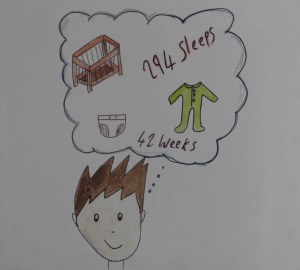
The time around the arrival of a new baby in the family can be one of anxiety and uncertainty for any young child; for children on the autism spectrum that time with all the changes a new baby entails, is likely to be particularly challenging. Subtitled ‘A book for big brothers and sisters including those on the autism spectrum’ this has a boy narrator, Andre who relates his story about having a noisy new baby. “My Baby” he calls the developing infant and we hear how he watched his mother’s stomach growing larger, about visits to the clinic, see a scan and learn how Andre was able to feel the baby kicking when he sat on his mum’s lap.

RSCN1569

Then after the birth come more challenges – presents for the baby, nappy smells, noise – lots of it – and general busyness at home. Being a big brother though can also be rewarding and Andre starts to help with the caring and he anticipates being able to play with his little brother one day. Such is the sensitivity with which the book is written, there is a real sense of it being a child with autism’s voice in this account. The illustrations too have a child-like style. All in all, this unassuming book will be of great benefit to families and professionals working with children particularly those on the spectrum, as part of the preparation for the arrival of a new baby.
Buy from Amazon

Find and buy from your local bookshop: http://www.booksellers.org.uk/bookshopsearch